
Regional summary of 26 dive sites. Figures are averages across the sites that report them (n = sites with a value); each site's own page has its individual values.
⬇ Download this region as a report card
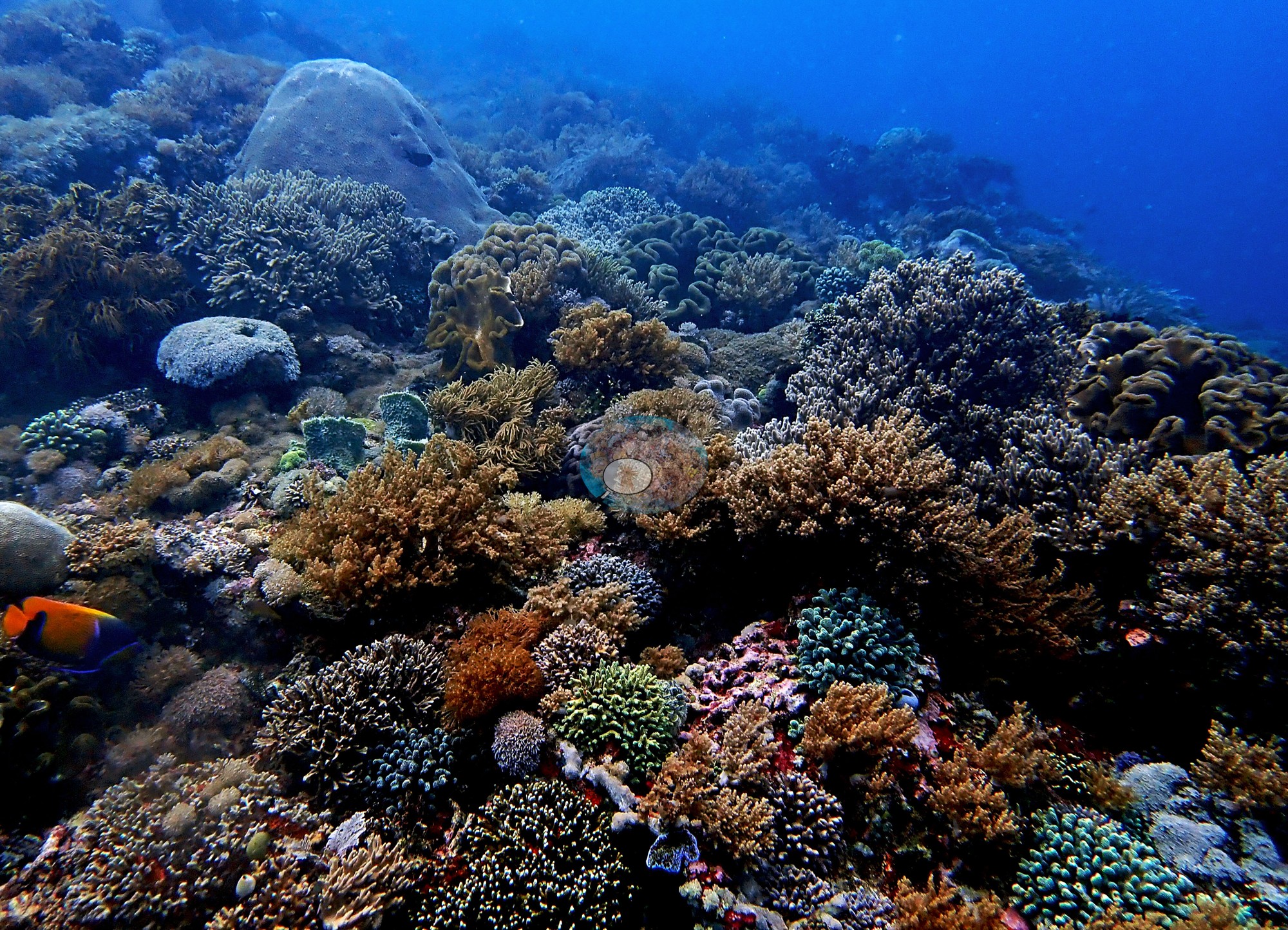

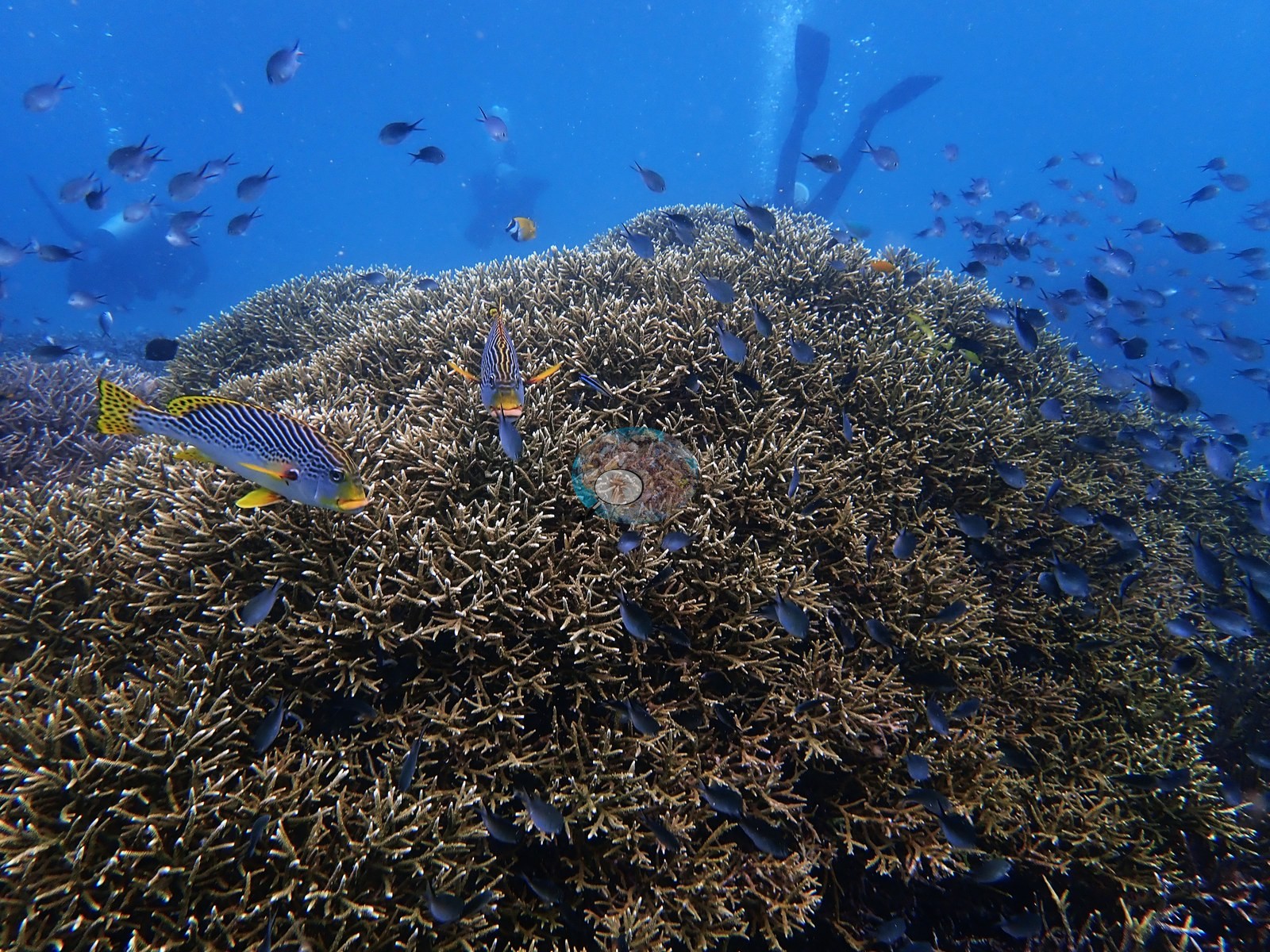
Komodo's current-swept pinnacles, channels, and island reefs, dived in 2009 and 2019, are often almost entirely covered in living coral, with Acropora dominant. Manta cleaning stations drew 20-30 mantas on one dive, while some sites showed partial bleaching or crown-of-thorns starfish.
Heat stress
Long-term record: 7 years since 1985 reached 8 or more °C-weeks at NOAA’s East Nusa Tenggara, West Nusa Tenggara stations. Download the annual DHW data (CSV).
26 sites in this region — click a marker to open that site.
Regional setting
Spalding et al. (2001) treat Komodo within Wallacea, their sub-region spanning Sulawesi and the Nusa Tenggara Islands. They describe mountainous islands with a very complex geological history, active volcanoes along the southern chain, narrow shelves, and deep water between many of the islands. Currents between Sulawesi and the Nusa Tenggara run east in the Northeast Monsoon and reverse in the Southeast Monsoon, while in the Timor Sea to the south they flow west all year. The authors consider conditions here ideal for reef growth: fringing reefs are widespread through the Nusa Tenggara, though their communities were little studied, and well-developed barrier reefs are reported northwest of Sumbawa and north of Flores. They also note that the 1998 bleaching event did relatively little damage over much of the sub-region. Komodo appears in their protected-area list three times, as a 1,733 km² national park (1980), a UNESCO Biosphere Reserve (1977), and a World Heritage Site (1991). Nationally, they estimate about 51,020 km² of coral reef in Indonesia, 18% of the global total, with 443 coral species recorded. Souter et al. (2021) group the Lesser Sunda ecoregion with Southern Java in an East Asian Seas subregion of 4,279 km², 5.5% of the region's reef area.
For that subregion, Souter et al. (2021) report that modeled hard coral cover fluctuated considerably while algal cover declined steadily, but none of its 310 survey sites had a record longer than 15 years, so trends there are uncertain. Region-wide, they link drops in coral cover to the 2010 and 2016 mass bleaching events and list overfishing, coastal aquaculture, siltation, eutrophication, and marine plastic litter as the main pressures. In its 2004 summary for Southeast Asia, Wilkinson (2006) described continuing reef decline, with some signs of recovery in Indonesia, and found that only 10-20% of the region's more than 630 marine protected areas were managed effectively.
Overview
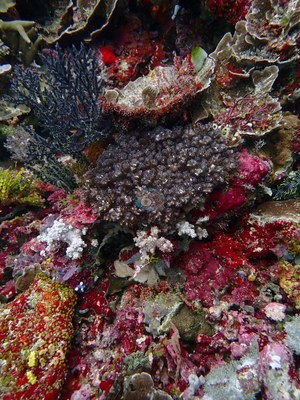
The Komodo sites were dived on an August 2009 trip and a January 2019 liveaboard. They range from current-swept pinnacles and channels (Batu Bolong, The Cauldron, Pengah Kecil) and island reefs (Siaba Besar, Siaba Kecil, Tatawa Besar) to rubble-floored manta cleaning stations (Makassar Reef, Mawan). Sand slopes and critter sites (Secret Garden, Wainilu) and the volcanic base of Sangeang (Hot Rocks, Deep Purple) complete the set. Current shapes much of it: Siaba Kecil and Police Corner are low-relief reefs, flattened by flow yet almost entirely covered in living coral.
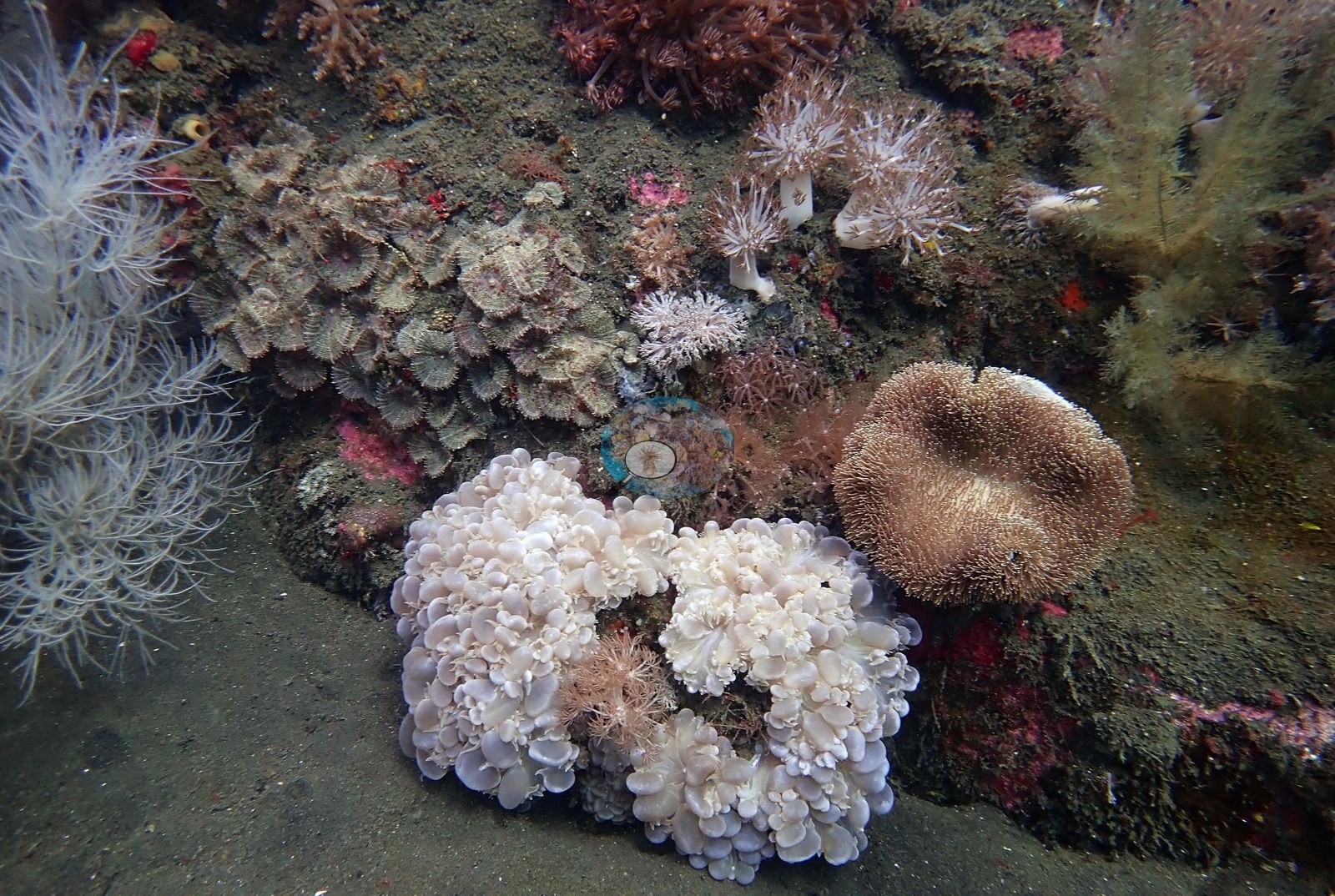
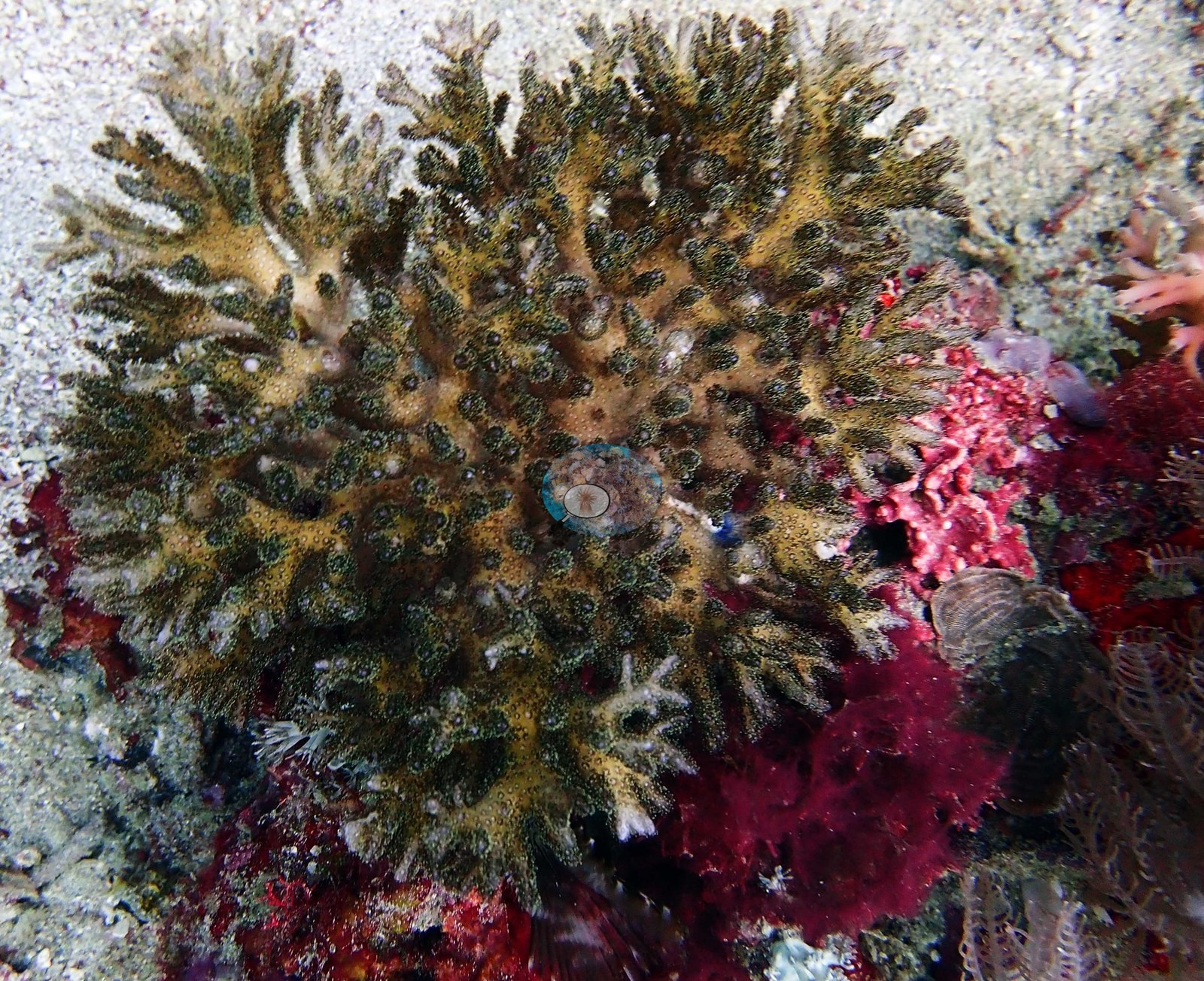
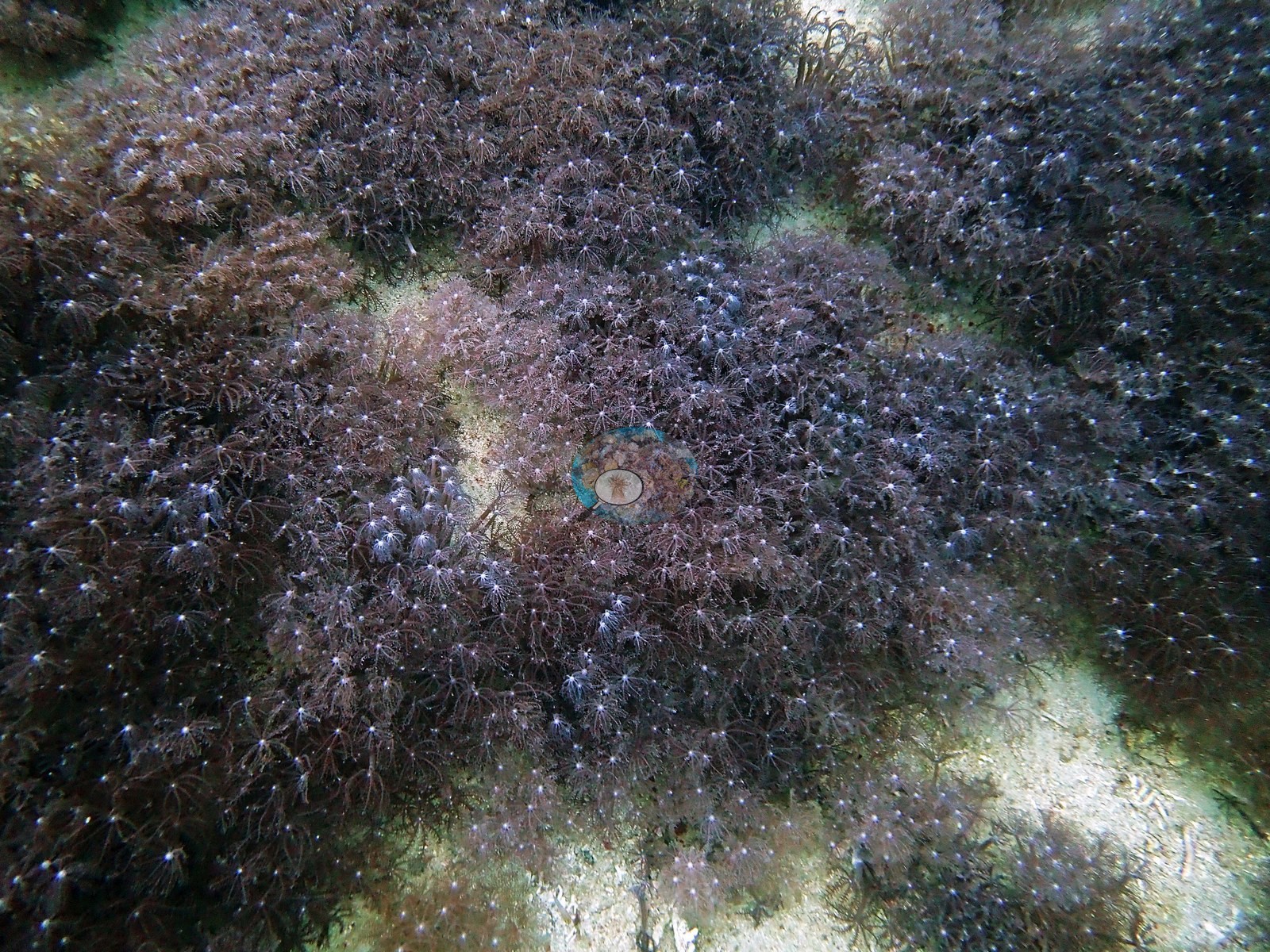
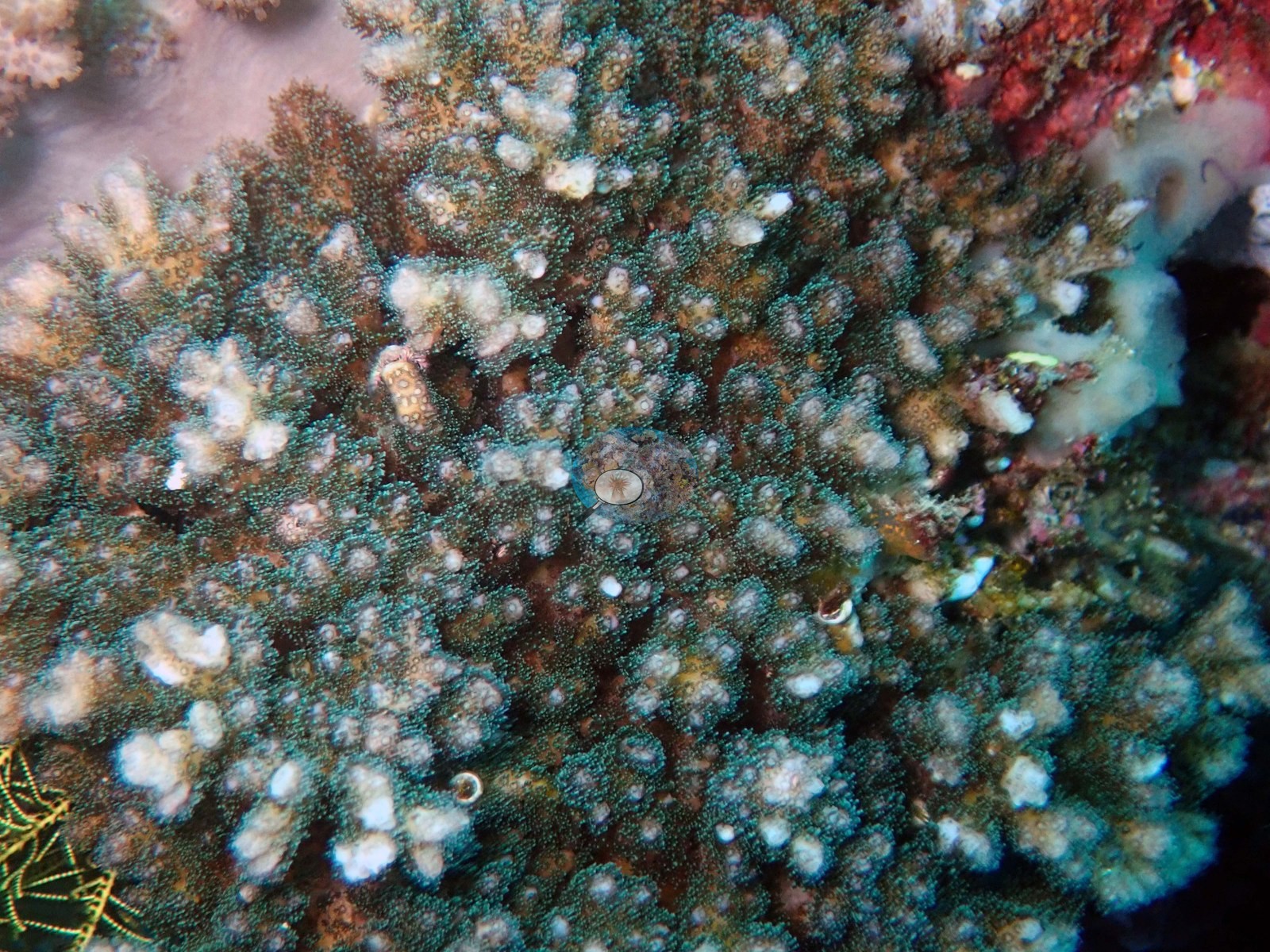
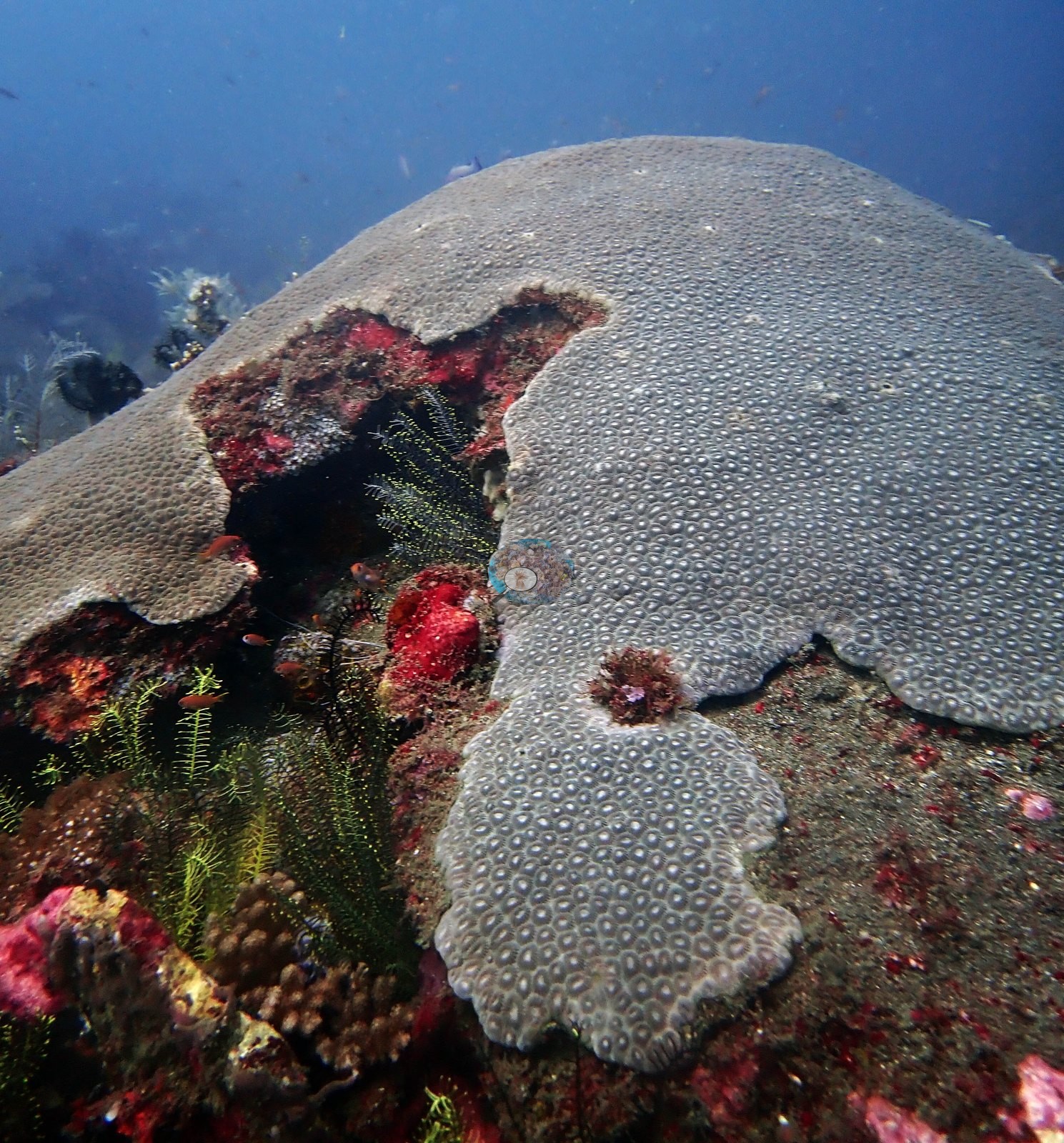
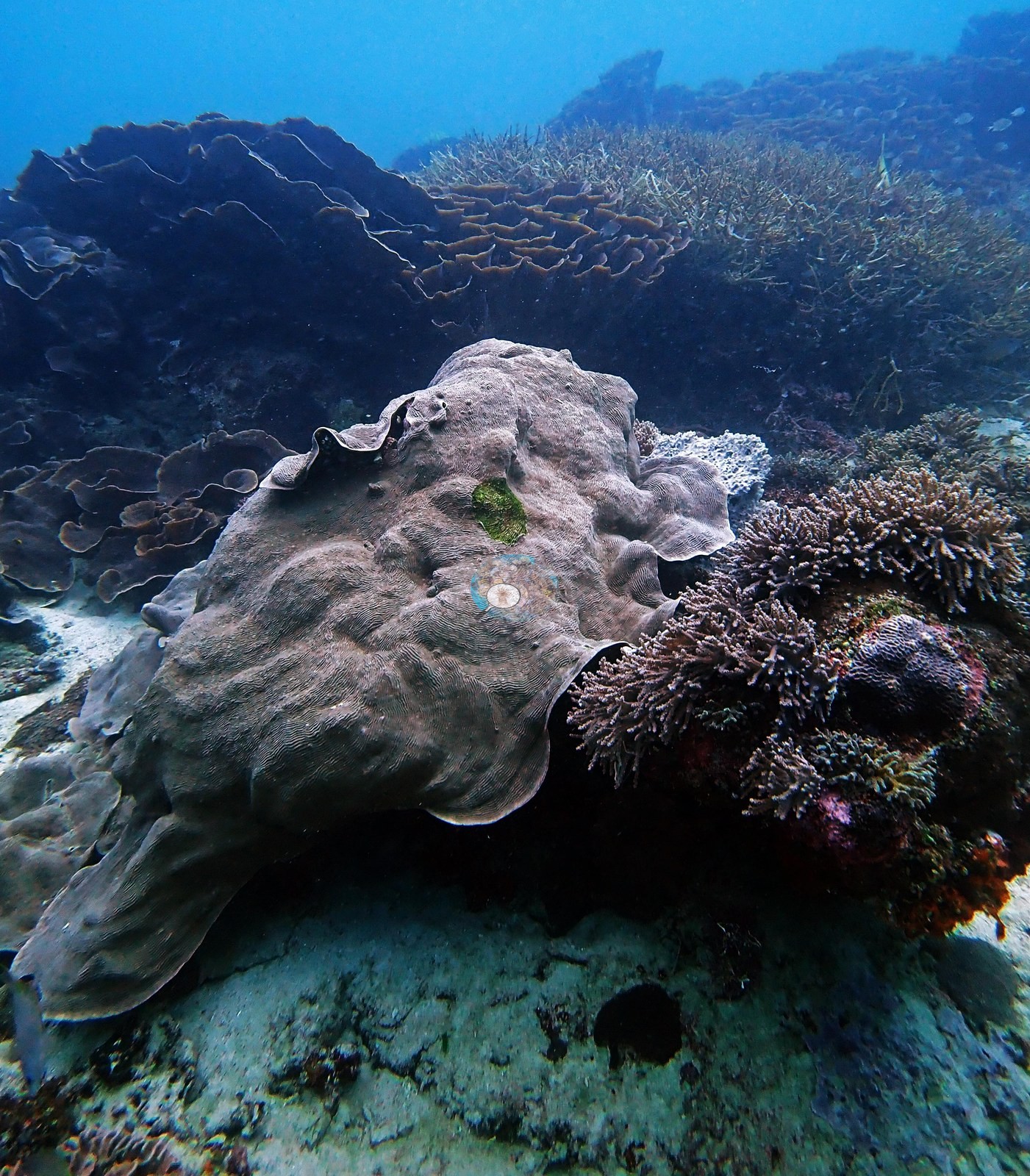
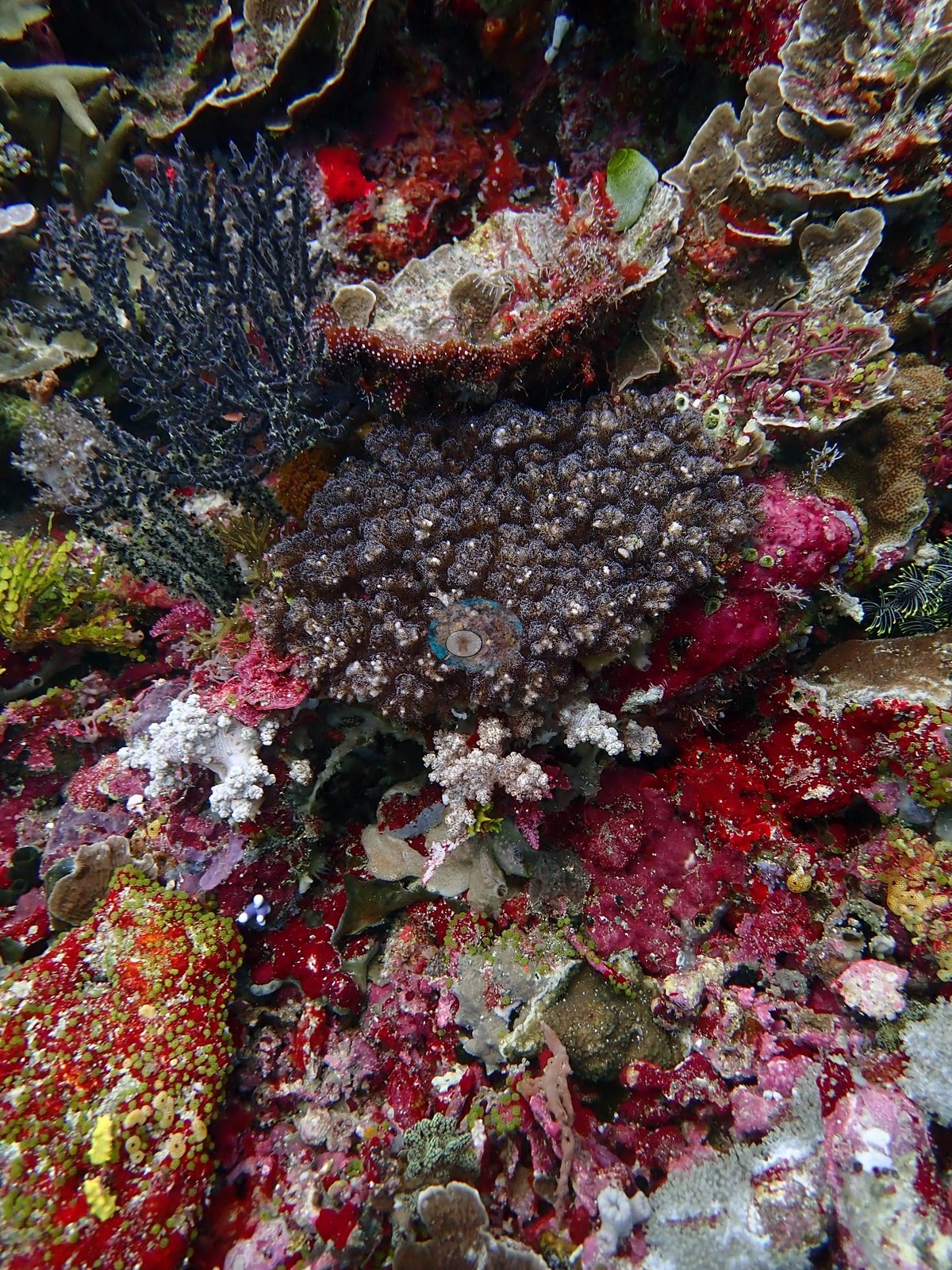
Acropora dominates the hard coral. Anderson estimated patches at Siaba Kecil and Tatawa Kecil at 80-90% cover, which are best-patch figures rather than site means, and Bonsai Rock has a near-monospecific lavender stand at 5 m. Pocilloporids are common throughout, especially Seriatopora caliendrum and Stylophora pistillata, often fluorescent green. Siaba Besar carries enormous old sheets of Pachyseris at 15-20 m. Elsewhere soft coral takes over, notably in the 5-10 m band at Padar Kecil and across most of Secret Garden. Photo-derived indices ranged from 10.7% on the Makassar Reef rubble to 50.4% at Police Corner. The Cauldron and Bonsai Rock both scored 4.75 on the coral health index, far above the 2.5 average.
Tatawa Besar logged 23°C, possibly during an upwelling, while Hot Rocks had warm sand, hot water seeping from cracks, and young coral growing on lava. Stress was recorded at several sites. At Loh Sera nearly all Seriatopora caliendrum were partly bleached at the branch tips, and Pink Beach, dived the same day, had fewer bleached colonies. Deep Purple held at least two crown-of-thorns, one on a fresh white scar. Tatawa Kecil stands partly on bone-white Acropora rubble, and Siaba Besar showed minor Culcita damage. At Police Corner Anderson noted signs of overfishing, and at Siaba Kecil few large fish.
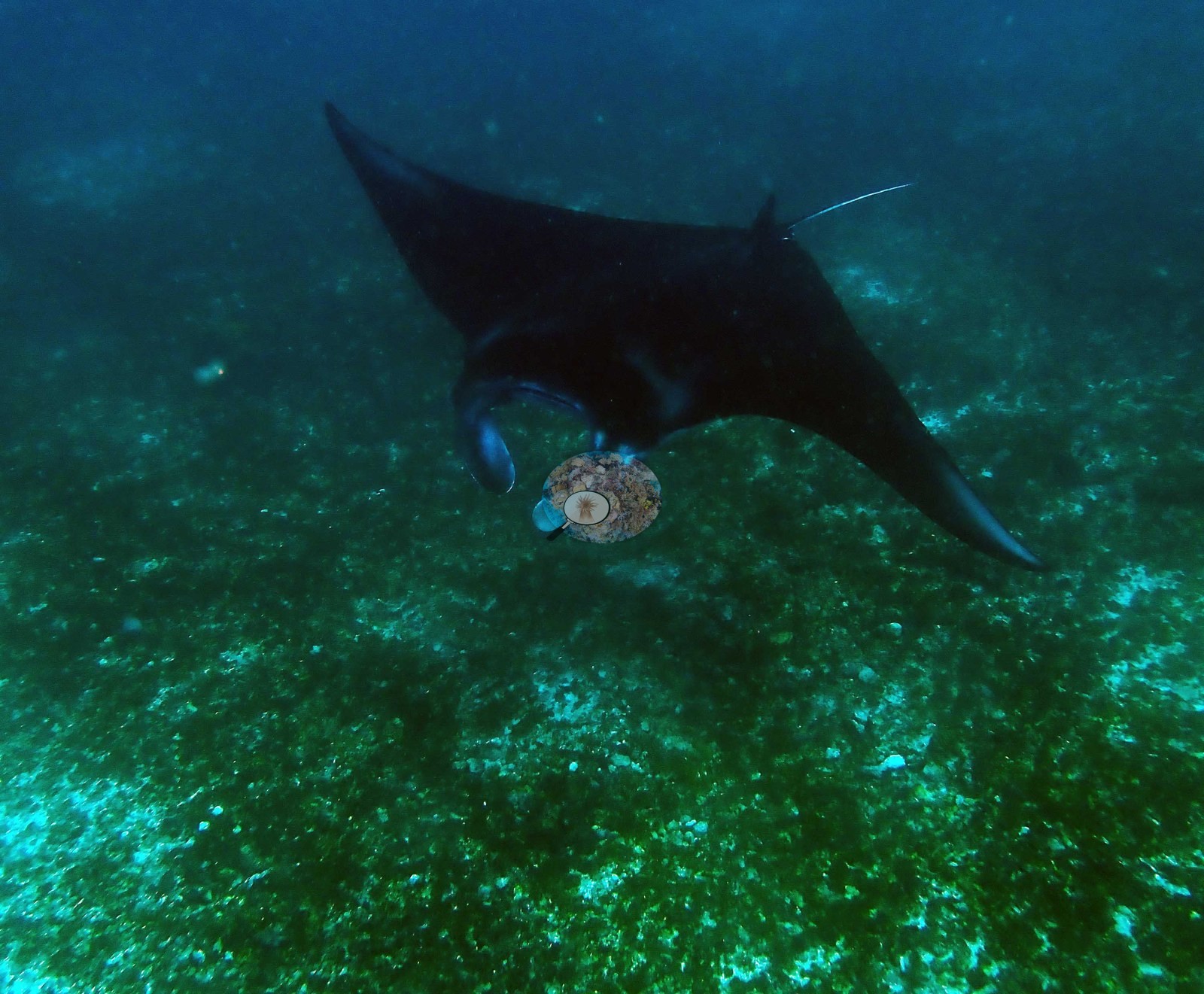
Large animals are a feature: 20-30 mantas on one Mawan dive and a mobula school at Secret Garden. Pygmy seahorses turned up at Hot Rocks, and ornate ghost pipefish at Wainilu.
Highlights
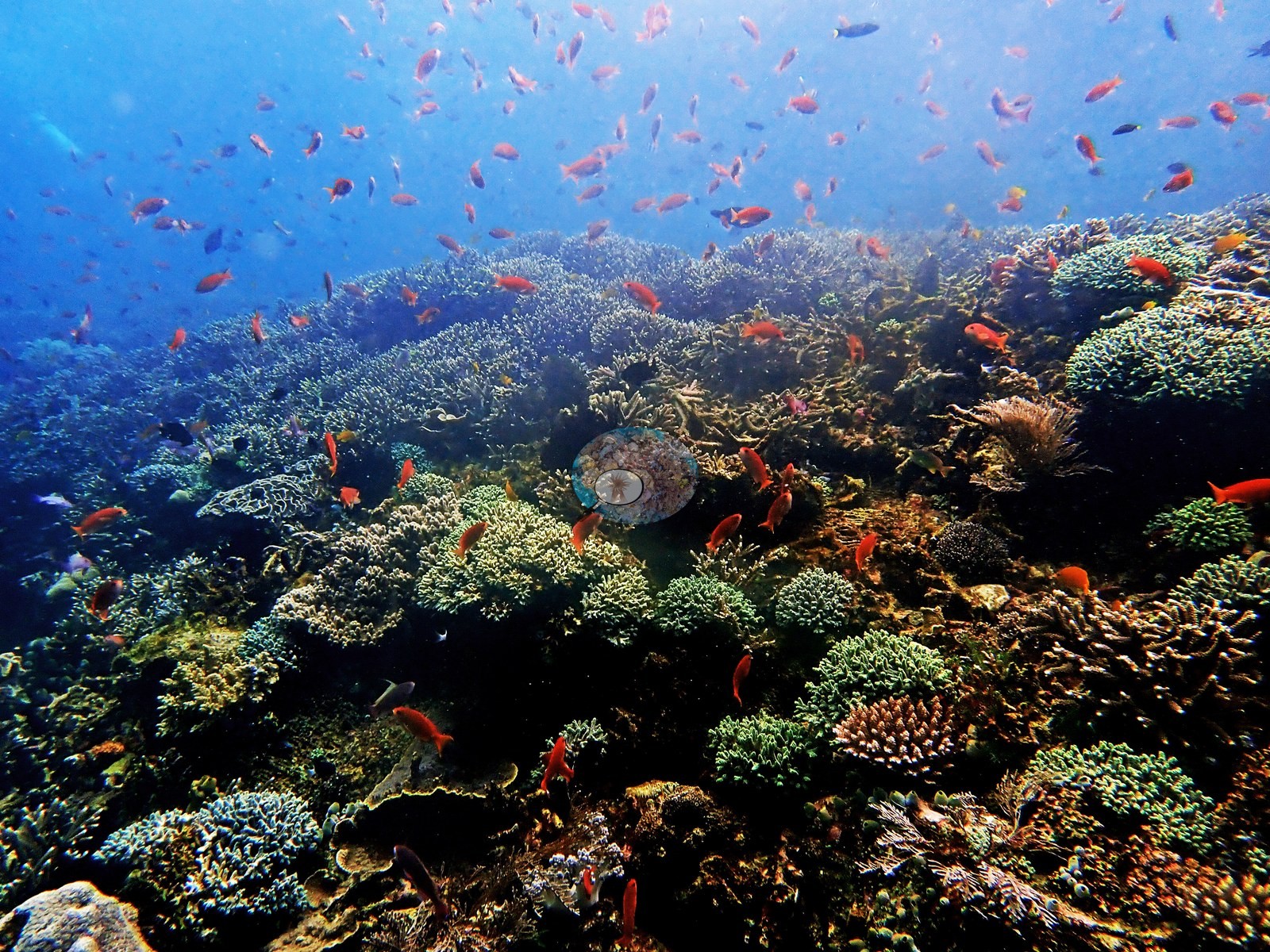
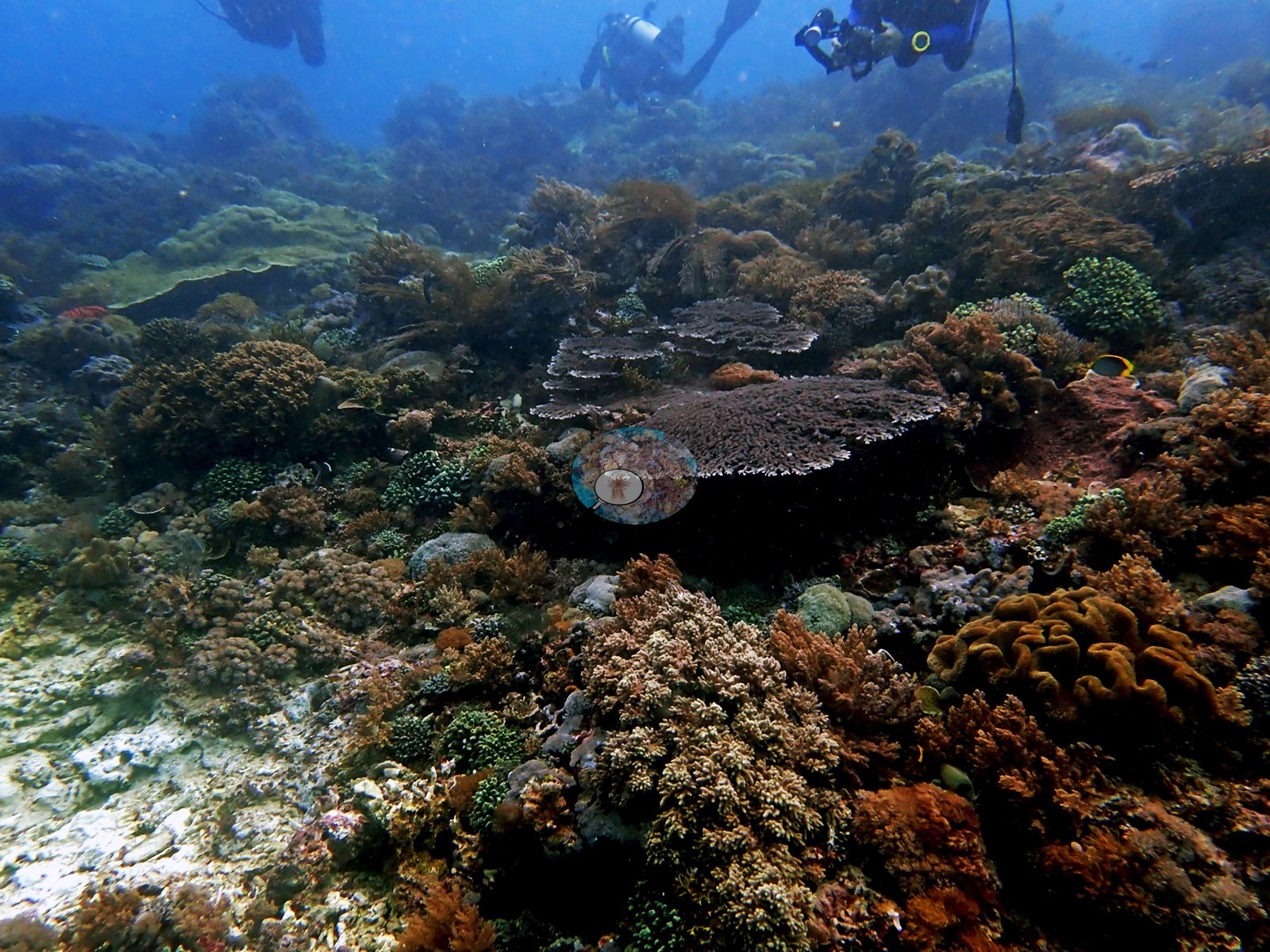
- Near-continuous Acropora at Siaba Kecil and Pengah Kecil; a monospecific lavender stand at 5 m on Bonsai Rock
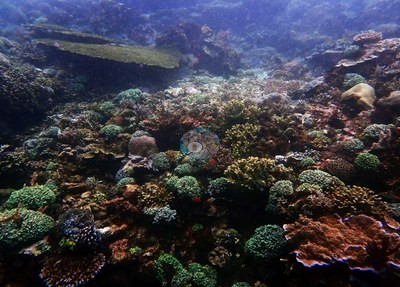 photo: Indonesia - Komodo NP: Pengah Kecil
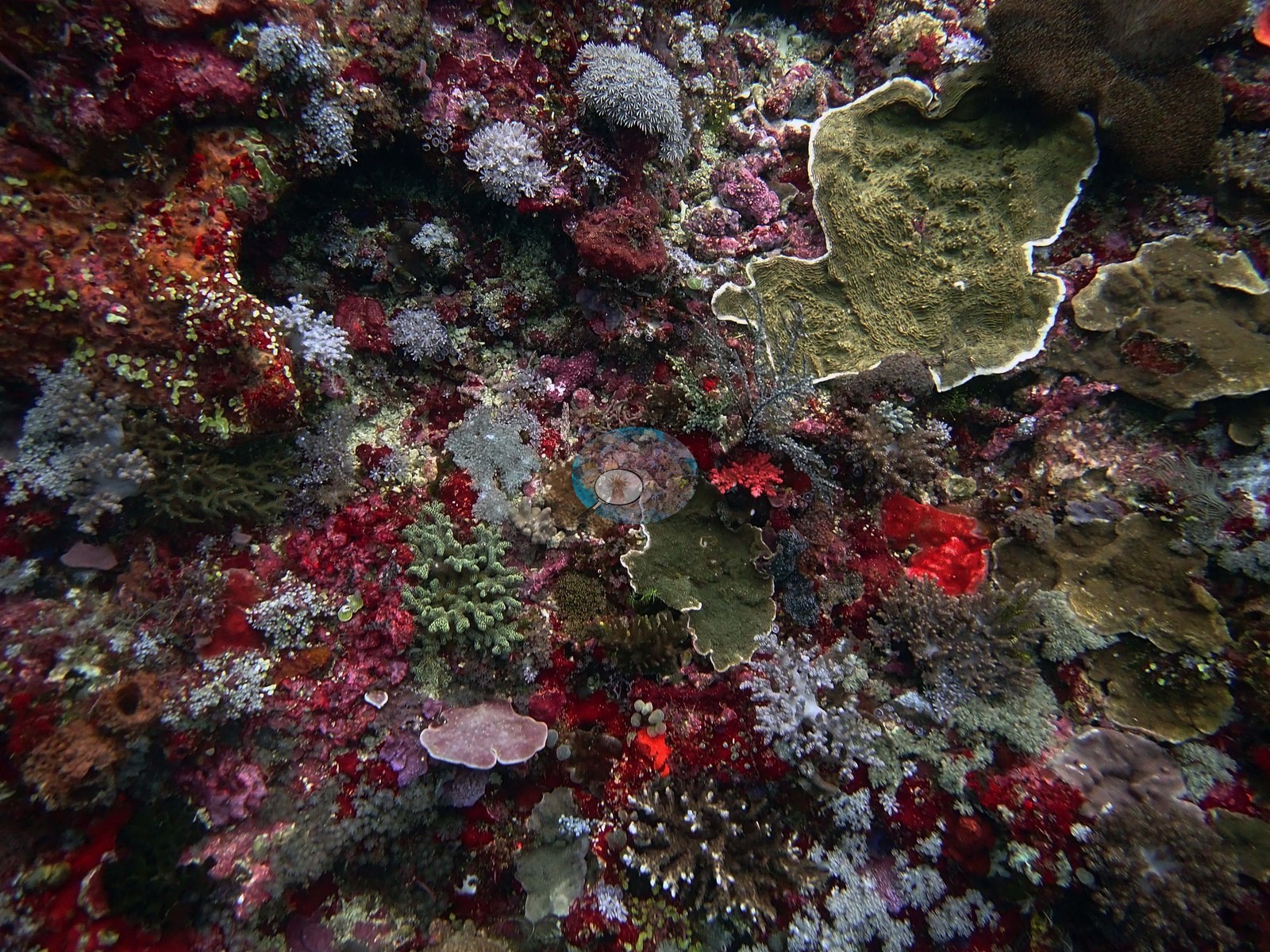
 - Police Corner: a wall to 30 m rising to a high-diversity shallow zone, the highest photo-derived index in the set
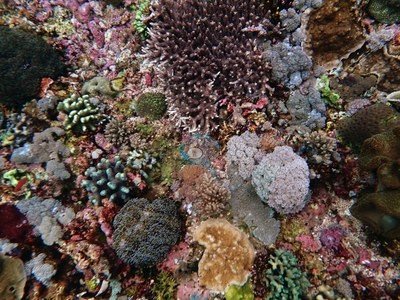 photo: Indonesia - Komodo NP: Police Corner
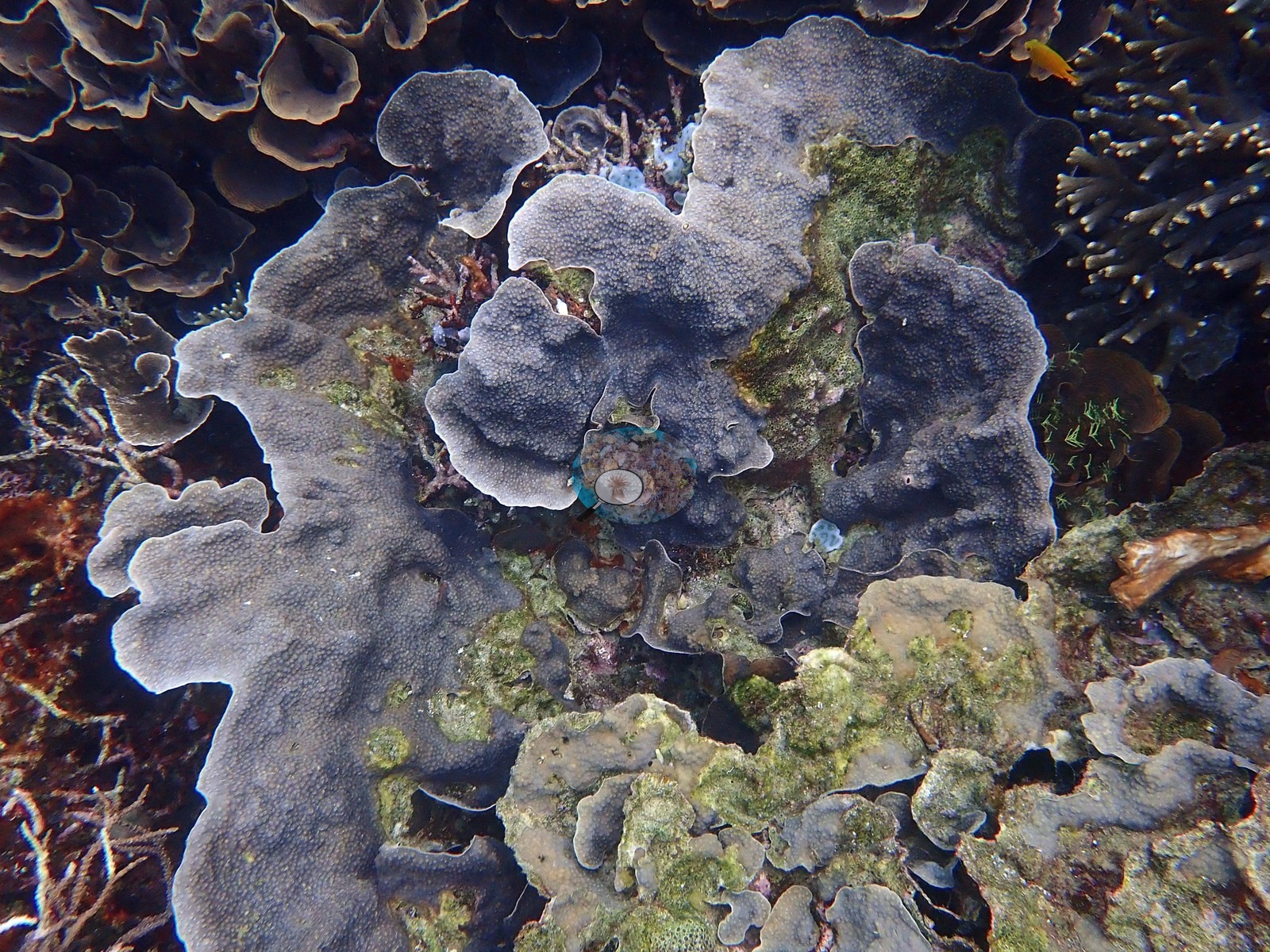
 - Enormous old Pachyseris sheets at 15-20 m on Siaba Besar
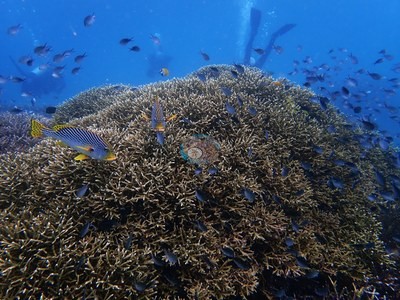 photo: Indonesia - Komodo NP: Siaba Besar
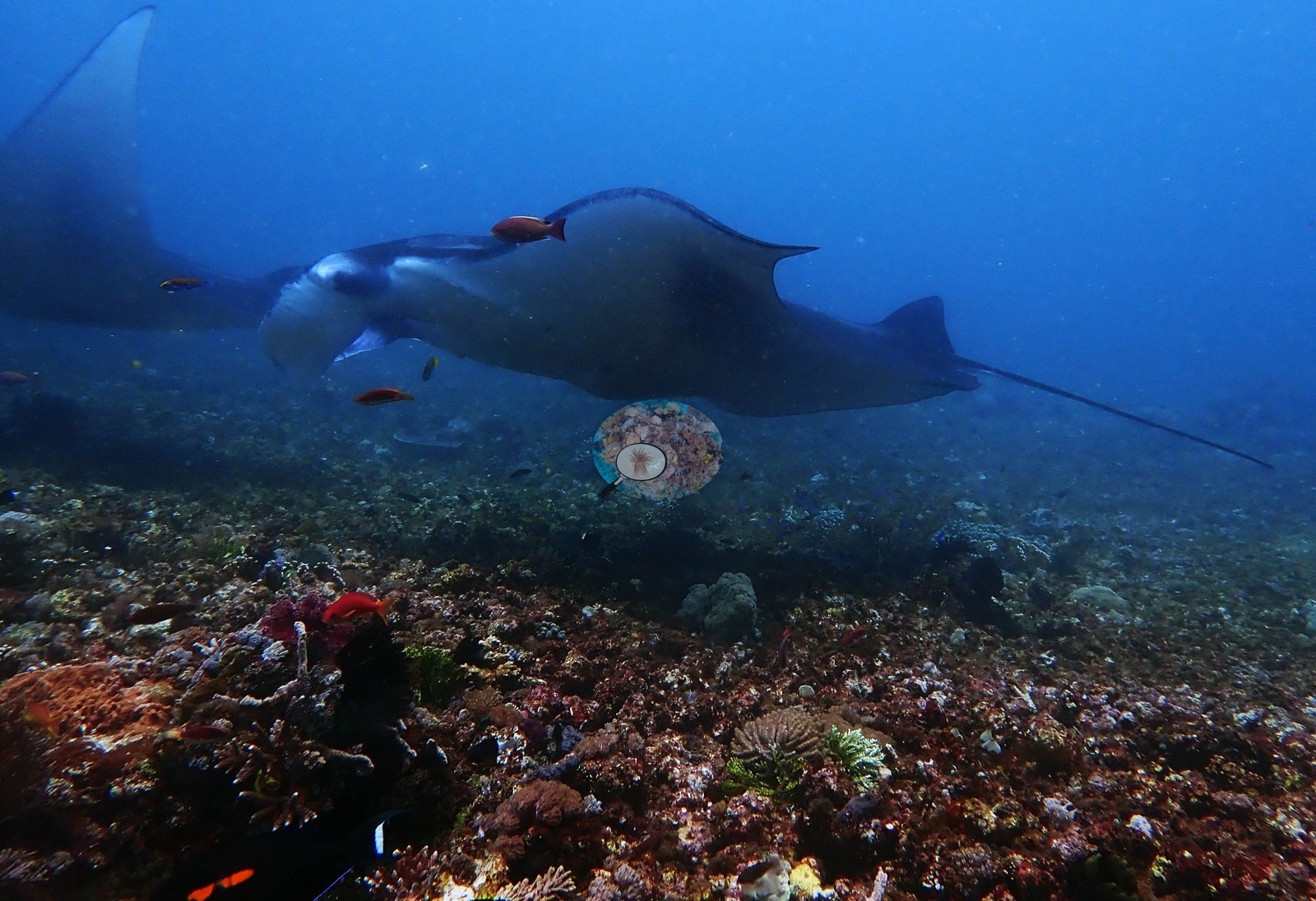
 - Manta cleaning stations at Mawan and Makassar Reef
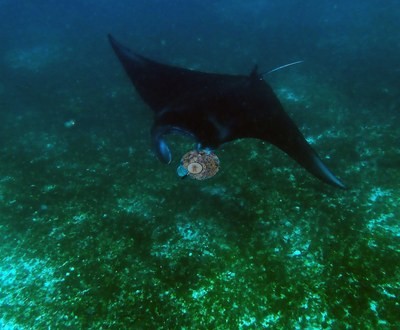 photo: Indonesia - Komodo NP: Makassar Reef / Manta Point
 - Hot Rocks (Sangeang): volcanic seeps, warm sand, young coral community on lava
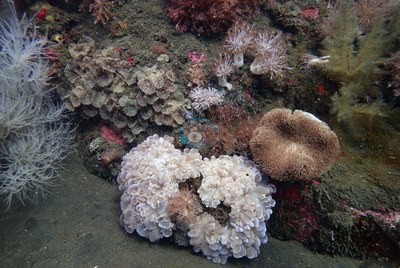 photo: Indonesia - Komodo NP: Hot Rocks (Sangeang)
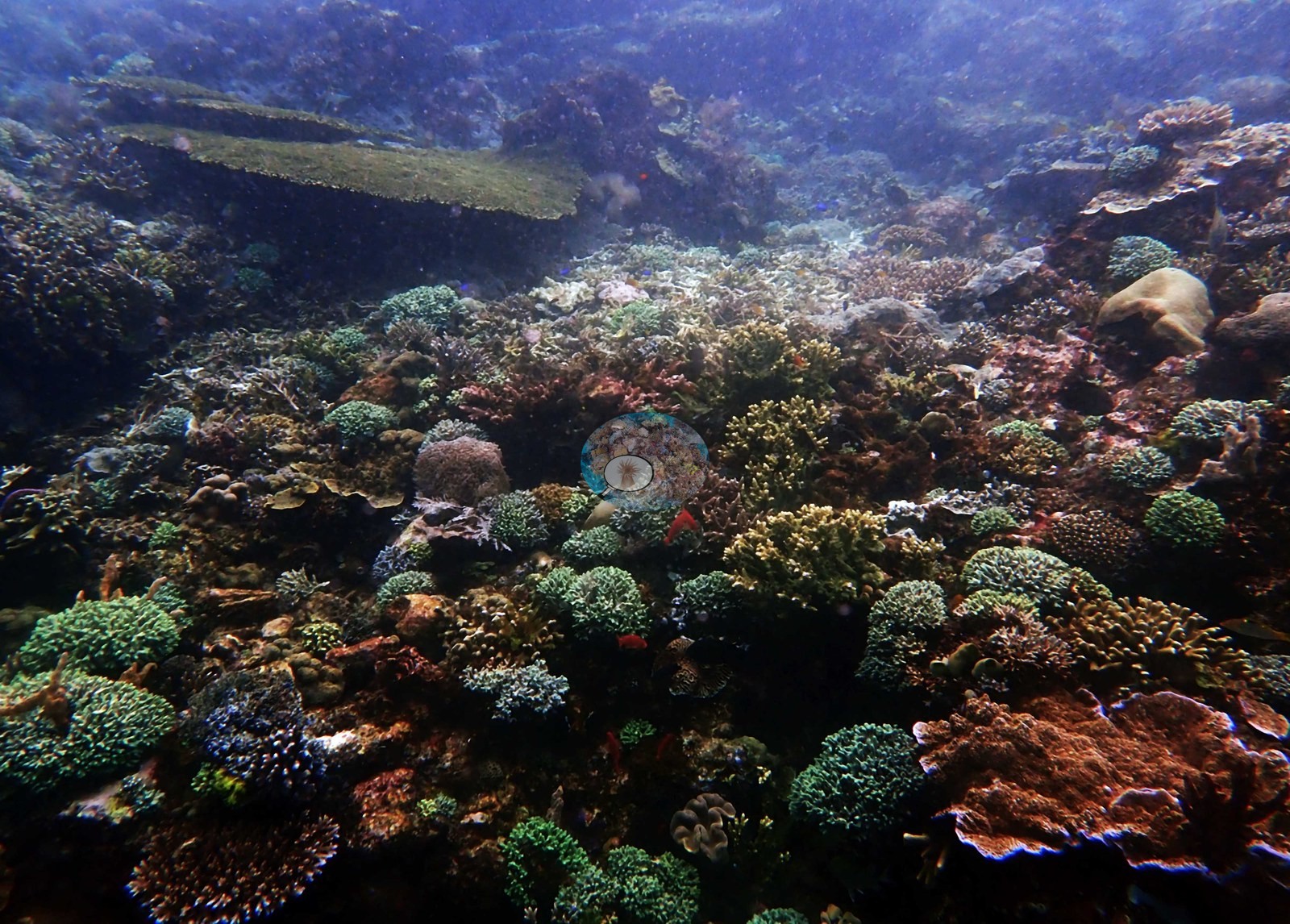
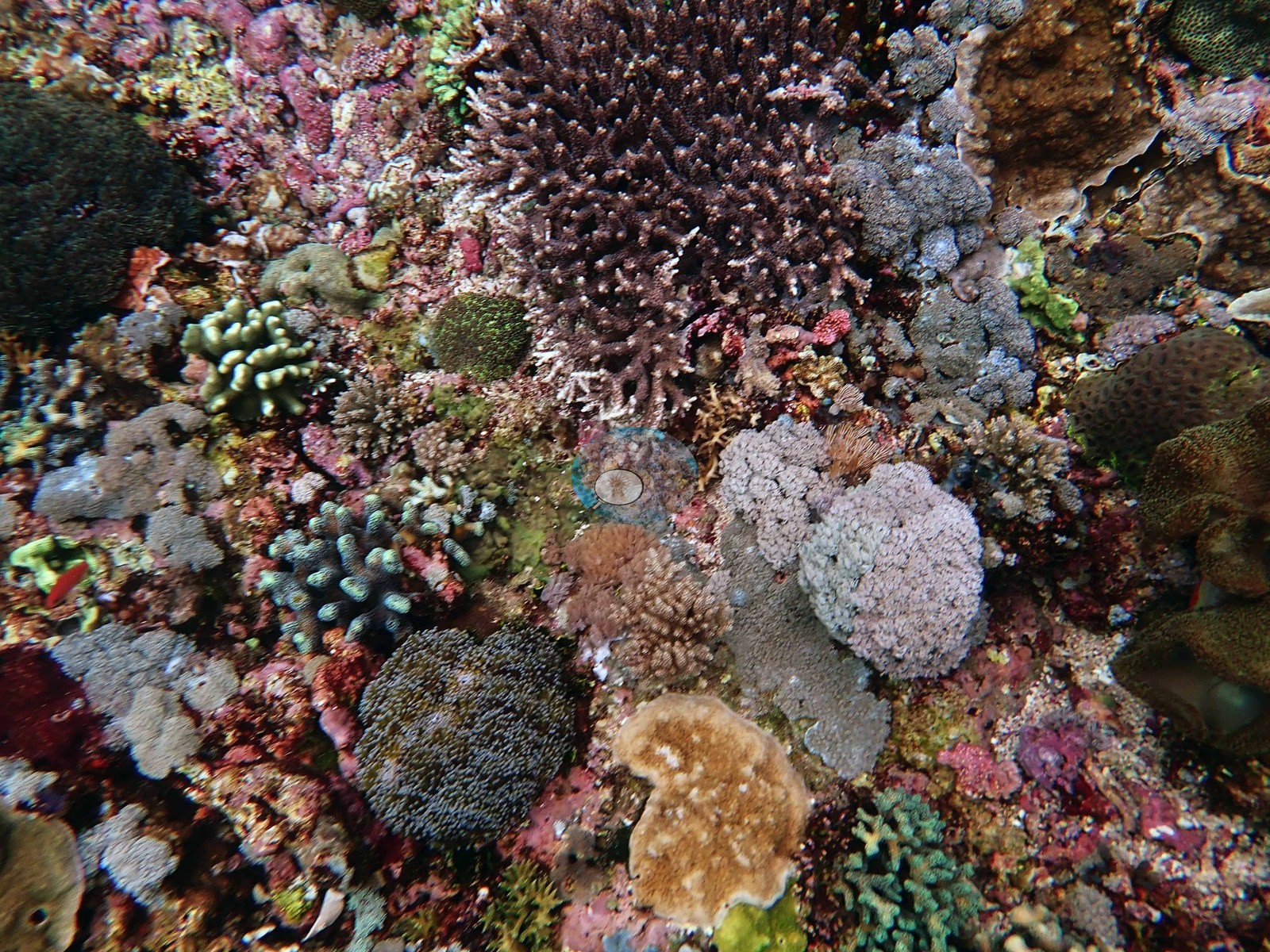
Ini adalah terjemahan mesin dari ringkasan berbahasa Inggris; teks berbahasa Inggris adalah versi yang otoritatif. AI translation of this summary; the English is authoritative.
Regional setting
Spalding et al. (2001) memasukkan Komodo ke dalam Wallacea, subkawasan dalam pembagian mereka yang mencakup Sulawesi dan Kepulauan Nusa Tenggara (Nusa Tenggara Islands). Mereka menggambarkan pulau-pulau bergunung dengan sejarah geologi yang sangat kompleks, gunung api aktif di sepanjang rangkaian selatan, paparan yang sempit, dan perairan dalam di antara banyak pulau. Arus antara Sulawesi dan Nusa Tenggara mengalir ke timur pada Muson Timur Laut dan berbalik arah pada Muson Tenggara, sedangkan di Laut Timor (Timor Sea) di sebelah selatan arus mengalir ke barat sepanjang tahun. Para penulis menilai kondisi di sini ideal bagi pertumbuhan terumbu: terumbu tepi tersebar luas di seluruh Nusa Tenggara, meskipun komunitasnya jarang diteliti, dan terumbu penghalang yang berkembang baik dilaporkan di barat laut Sumbawa dan utara Flores. Mereka juga mencatat bahwa peristiwa pemutihan tahun 1998 menimbulkan kerusakan yang relatif kecil di sebagian besar subkawasan tersebut. Komodo muncul tiga kali dalam daftar kawasan lindung mereka, yaitu sebagai taman nasional seluas 1,733 km² (1980), Cagar Biosfer UNESCO (1977), dan Situs Warisan Dunia (1991). Secara nasional, mereka memperkirakan luas terumbu karang di Indonesia sekitar 51,020 km², 18% dari total global, dengan 443 spesies karang tercatat. Souter et al. (2021) mengelompokkan ekoregion Sunda Kecil (Lesser Sunda) bersama Jawa bagian selatan (Southern Java) dalam subkawasan Laut Asia Timur (East Asian Seas) seluas 4,279 km², atau 5.5% dari luas terumbu kawasan tersebut.
Untuk subkawasan tersebut, Souter et al. (2021) melaporkan bahwa tutupan karang keras hasil pemodelan berfluktuasi cukup besar sementara tutupan alga terus menurun, tetapi tidak satu pun dari 310 lokasi surveinya memiliki catatan lebih dari 15 tahun, sehingga tren di sana belum pasti. Di seluruh kawasan, mereka mengaitkan penurunan tutupan karang dengan peristiwa pemutihan massal tahun 2010 dan 2016 dan mencantumkan penangkapan ikan berlebih, budidaya perikanan pesisir, pendangkalan, eutrofikasi, dan sampah plastik laut sebagai tekanan utama. Dalam ringkasan tahun 2004 untuk Asia Tenggara, Wilkinson (2006) menggambarkan penurunan terumbu yang terus berlanjut, dengan beberapa tanda pemulihan di Indonesia, dan mendapati bahwa hanya 10-20% dari lebih dari 630 kawasan konservasi perairan di kawasan tersebut yang dikelola secara efektif.
Overview
Lokasi-lokasi Komodo diselami dalam perjalanan pada Agustus 2009 dan pelayaran kapal liveaboard pada Januari 2019. Lokasinya beragam, mulai dari puncak karang (pinnacle) dan kanal yang tersapu arus (Batu Bolong, The Cauldron, Pengah Kecil) dan terumbu pulau (Siaba Besar, Siaba Kecil, Tatawa Besar) hingga stasiun pembersihan pari manta berdasar pecahan karang (Makassar Reef, Mawan). Lereng pasir dan lokasi hewan kecil atau critter (Secret Garden, Wainilu) serta kaki vulkanik Sangeang (Hot Rocks, Deep Purple) melengkapi rangkaian ini. Arus membentuk sebagian besar lokasi: Siaba Kecil dan Police Corner adalah terumbu berelief rendah yang diratakan oleh aliran air, namun hampir seluruhnya tertutup karang hidup.
Acropora mendominasi karang keras. Anderson memperkirakan tutupan petak-petak di Siaba Kecil dan Tatawa Kecil mencapai 80-90%, yang merupakan angka petak terbaik, bukan rata-rata lokasi, dan Bonsai Rock memiliki tegakan berwarna lavender yang hampir monospesifik pada kedalaman 5 m. Pocilloporid umum dijumpai di mana-mana, terutama Seriatopora caliendrum dan Stylophora pistillata, sering kali berpendar hijau. Siaba Besar memiliki lembaran Pachyseris tua yang sangat besar pada kedalaman 15-20 m. Di tempat lain karang lunak mengambil alih, terutama pada zona 5-10 m di Padar Kecil dan di sebagian besar Secret Garden. Indeks berbasis foto berkisar dari 10.7% di hamparan pecahan karang Makassar Reef hingga 50.4% di Police Corner. The Cauldron dan Bonsai Rock sama-sama meraih skor 4.75 pada indeks kesehatan karang, jauh di atas rata-rata 2.5.
Tatawa Besar mencatat suhu 23°C, kemungkinan saat terjadi upwelling, sedangkan Hot Rocks memiliki pasir hangat, air panas yang merembes dari celah-celah, dan karang muda yang tumbuh di atas lava. Tekanan tercatat di beberapa lokasi. Di Loh Sera hampir semua Seriatopora caliendrum memutih sebagian pada ujung cabangnya, dan Pink Beach, yang diselami pada hari yang sama, memiliki lebih sedikit koloni yang memutih. Deep Purple menampung sedikitnya dua bintang laut mahkota duri, salah satunya di atas bekas luka putih yang masih baru. Tatawa Kecil sebagian berdiri di atas pecahan Acropora yang putih seperti tulang, dan Siaba Besar menunjukkan kerusakan ringan akibat Culcita. Di Police Corner Anderson mencatat tanda-tanda penangkapan ikan berlebih, dan di Siaba Kecil hanya sedikit ikan besar.
Hewan-hewan besar menjadi ciri khas: 20-30 pari manta pada satu penyelaman di Mawan dan kawanan pari mobula di Secret Garden. Kuda laut kerdil (pygmy seahorse) dijumpai di Hot Rocks, dan ikan pipa hantu hias (ornate ghost pipefish) di Wainilu.
Highlights
- Acropora yang nyaris tak terputus di Siaba Kecil dan Pengah Kecil; tegakan monospesifik berwarna lavender pada kedalaman 5 m di Bonsai Rock
 photo: Indonesia - Komodo NP: Pengah Kecil
 - Police Corner: dinding hingga kedalaman 30 m yang naik ke zona dangkal berkeanekaragaman tinggi, dengan indeks berbasis foto tertinggi dalam kelompok ini
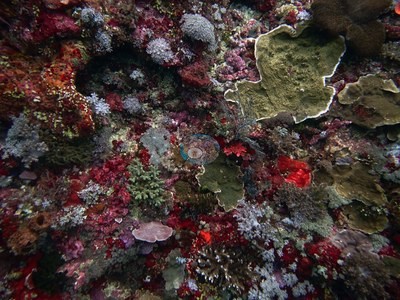 photo: Indonesia - Komodo NP: Police Corner
 - Lembaran Pachyseris tua yang sangat besar pada kedalaman 15-20 m di Siaba Besar
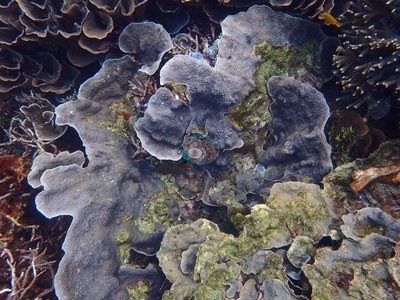 photo: Indonesia - Komodo NP: Siaba Besar
 - Stasiun pembersihan pari manta di Mawan dan Makassar Reef
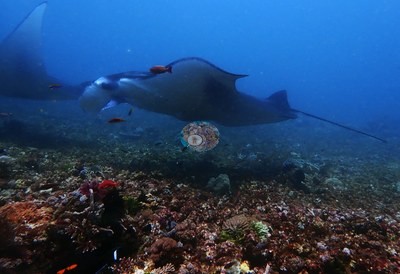 photo: Indonesia - Komodo NP: Makassar Reef / Manta Point
 - Hot Rocks (Sangeang): rembesan vulkanik, pasir hangat, dan komunitas karang muda di atas lava
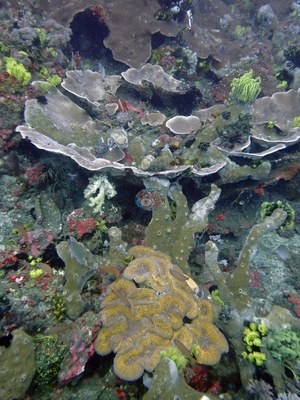 photo: Indonesia - Komodo NP: Hot Rocks (Sangeang)
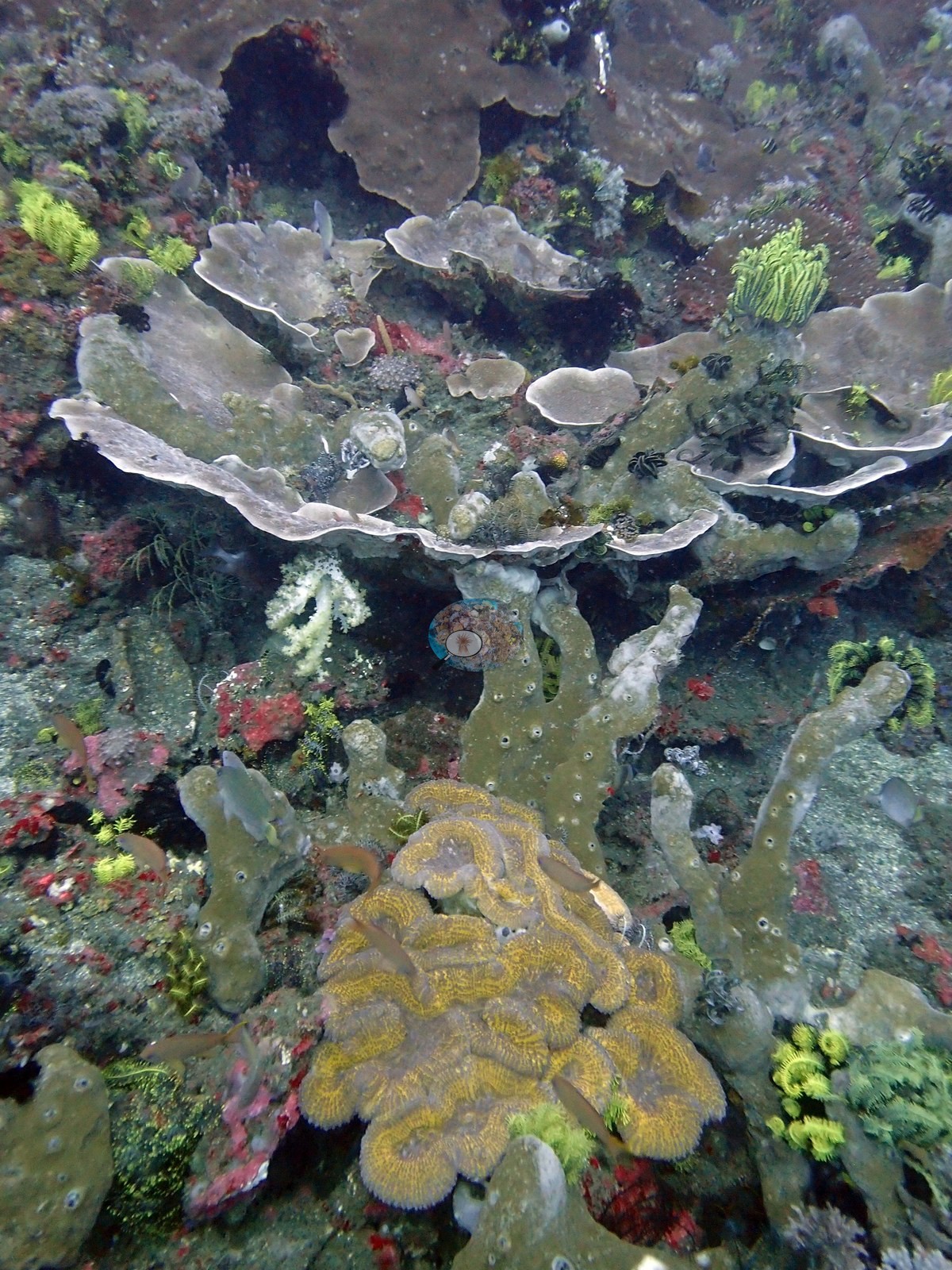
Notable observations
- Indonesia - Komodo NP: Loh Sera: Bleaching: numerous large Seriatopora caliendrum bleached but with live tissue; nearly all S. caliendrum partially bleached at the top (bottoms of branches pigmented), also on the wreck; Anderson unsure of cause
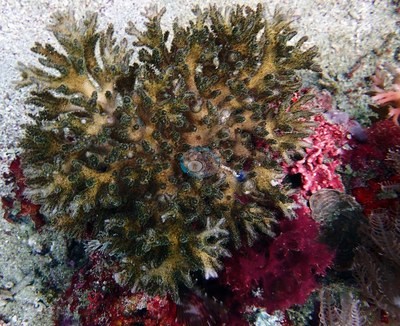
- Indonesia - Komodo NP: Loh Sera: Garbage: surface was covered in garbage
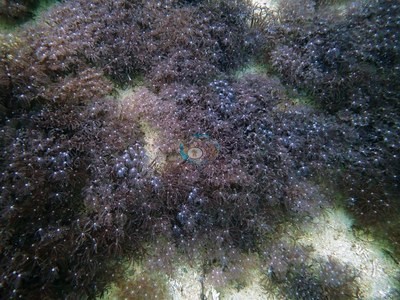
- Indonesia - Komodo NP: Pink Beach (Pantai Merah): Bleaching: some bleaching, but fewer bleached than at the previous site; several pocilloporid branch tips chalky white, unresolved whether pale growing tips or the start of tip bleaching. On the critter-section dive the few Seriatopora caliendrum seen were sickly looking
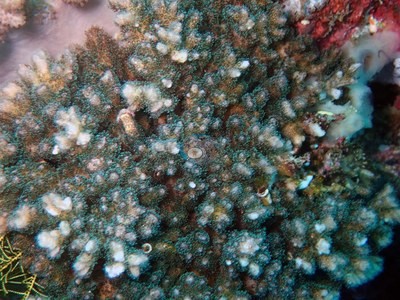
- Indonesia - Komodo NP: Deep Purple: crown-of-thorns starfish (COTS): at least two crown-of-thorns imaged, a probable third; one large individual on a lavender plate with a freshly exposed white scar beneath it. A white lesion on a tan plate has feeding-scar morphology (disease or mechanical mortality not excluded); a few plate margins show paling of unresolved cause
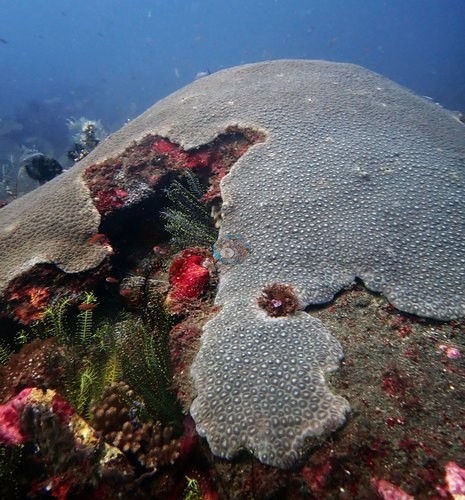
- Indonesia - Komodo NP: Siaba Besar: Culcita damage, though not much; some Acropora mortality as branch-scale white skeleton within healthy thickets
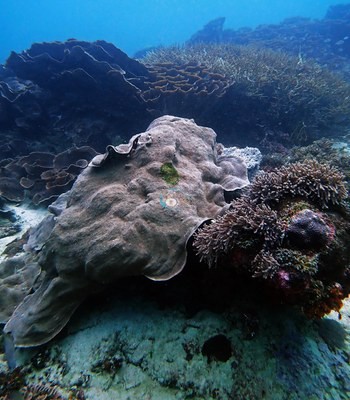
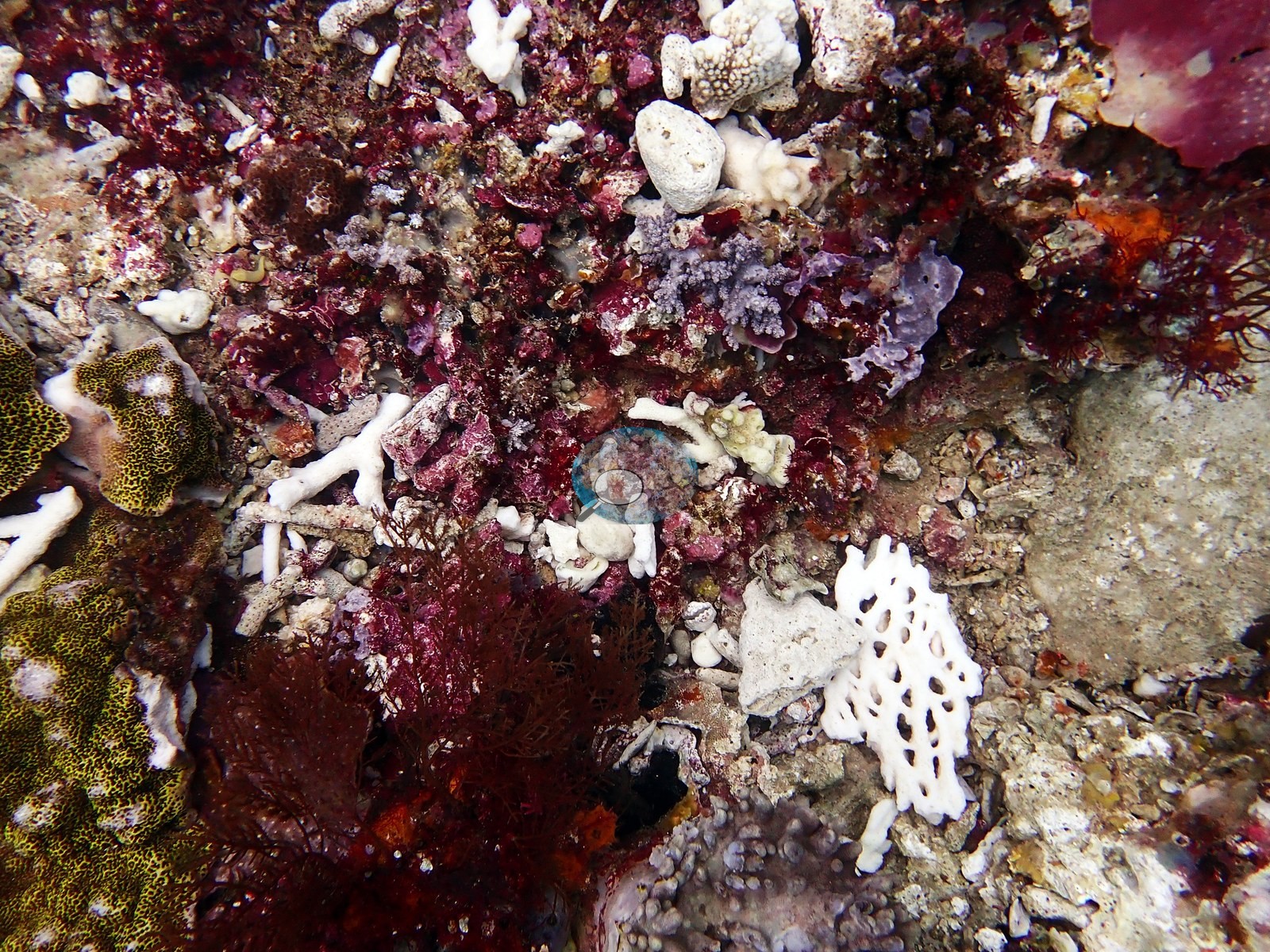
- Indonesia - Komodo NP: Tatawa Kecil: Extensive bone-white broken Acropora rubble beneath and beside live colonies; cause and date not determinable from the photographs
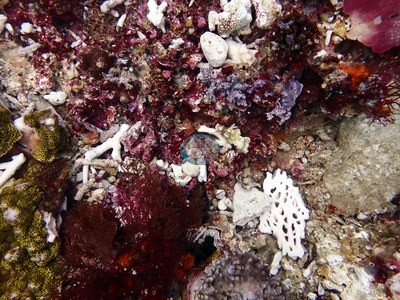
- Indonesia - Komodo NP: Police Corner: Fishing: reef fish community still showed signs of overfishing (Anderson's log)
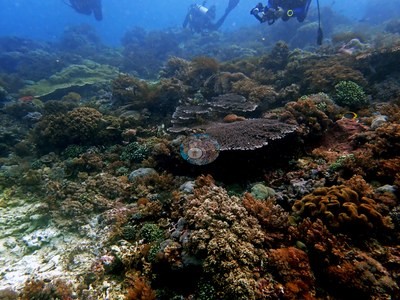
- Indonesia - Komodo NP: Siaba Kecil: Fishing: few large fish, suggesting overfishing
Coral cover over time (pooled)
Sites in this region (26)
- Indonesia - Komodo NP: Batu Bolong
- Indonesia - Komodo NP: Bonsai Rock — 18% coral cover
- Indonesia - Komodo NP: Castle Rock
- Indonesia - Komodo NP: Coral Garden/Canyon
- Indonesia - Komodo NP: Crystal Rock
- Indonesia - Komodo NP: Deep Purple — 26% coral cover
- Indonesia - Komodo NP: Full Moon
- Indonesia - Komodo NP: Hot Rocks (Sangeang) — 9.1% coral cover
- Indonesia - Komodo NP: Loh Sera — 30% coral cover
- Indonesia - Komodo NP: Makassar Reef / Manta Point — 3.3% coral cover
- Indonesia - Komodo NP: Mawan — 14% coral cover
- Indonesia - Komodo NP: Nando Point
- Indonesia - Komodo NP: Orange Grove
- Indonesia - Komodo NP: Padar Island (Padar Kecil) — 8.1% coral cover
- Indonesia - Komodo NP: Pengah Kecil — 30% coral cover
- Indonesia - Komodo NP: Pink Beach (Pantai Merah) — 25% coral cover
- Indonesia - Komodo NP: Police Corner — 22% coral cover
- Indonesia - Komodo NP: Secret Garden — 13% coral cover
- Indonesia - Komodo NP: Siaba Besar — 53% coral cover
- Indonesia - Komodo NP: Siaba Kecil — 25% coral cover
- Indonesia - Komodo NP: Tatawa Besar — 22% coral cover
- Indonesia - Komodo NP: Tatawa Kecil — 32% coral cover
- Indonesia - Komodo NP: The Cauldron / Shotgun — 26% coral cover
- Indonesia - Komodo NP: Three Sisters (Tiga Dara) — 8.3% coral cover
- Indonesia - Komodo NP: Wainilu
- Indonesia - Komodo NP: White Sands
Nearby external survey stations
10 independent survey records within 5 km of a site in this region (deduplicated across sites).
- Reef Check — Mawan (Sector 1) (2020): 10% hard coral cover, 0.91 km from Indonesia - Komodo NP: White Sands
- Reef Check — Mawan (Sector 2) (2020): 8.8% hard coral cover, 0.91 km from Indonesia - Komodo NP: White Sands
- Reef Check — Pengah Kecil (Sector 1) SW Side (2020): 48% hard coral cover, 1.73 km from Indonesia - Komodo NP: White Sands
- Reef Check — Sebayor Kecil (2014): 53% hard coral cover, 3.14 km from Indonesia - Komodo NP: Siaba Kecil
- Reef Check — Siaba Besar (Sector 1) (2020): 51% hard coral cover, 0.49 km from Indonesia - Komodo NP: Tatawa Kecil
- Reef Check — Siaba Besar (Sector 2) (2020): 47% hard coral cover, 0.49 km from Indonesia - Komodo NP: Tatawa Kecil
- WWF-US / WWF-Indonesia — TNK04 (2016): 55% hard coral cover, 3.21 km from Indonesia - Komodo NP: Nando Point
- WWF-US / WWF-Indonesia — TNK05 (2016): 67% hard coral cover, 2.25 km from Indonesia - Komodo NP: The Cauldron / Shotgun
- WWF-US / WWF-Indonesia — TNK06 (2016): 40% hard coral cover, 1.59 km from Indonesia - Komodo NP: Tatawa Besar
- WWF-US / WWF-Indonesia — TNK07 (2016): 34% hard coral cover, 2.14 km from Indonesia - Komodo NP: Wainilu
All images from Coral Reef Diagnostics. Data are from Coral Reef Diagnostics and Reef Check Foundation.
© Coral Reef Diagnostics.
References
- Souter D, et al. (eds) (2021) Status of Coral Reefs of the World: 2020. International Coral Reef Initiative / Global Coral Reef Monitoring Network. [PDF]
- Spalding MD, et al. (2001) World Atlas of Coral Reefs. University of California Press, Berkeley. [PDF]
- Wilkinson C (2006) Status of coral reefs of the world: summary of threats and remedial action. In: Côté IM, Reynolds JD (eds) Coral Reef Conservation. Cambridge University Press, Cambridge. [PDF]