
Indonesia - Komodo NP: Deep Purple
Part of the regional summary: Indonesia - Komodo
More info
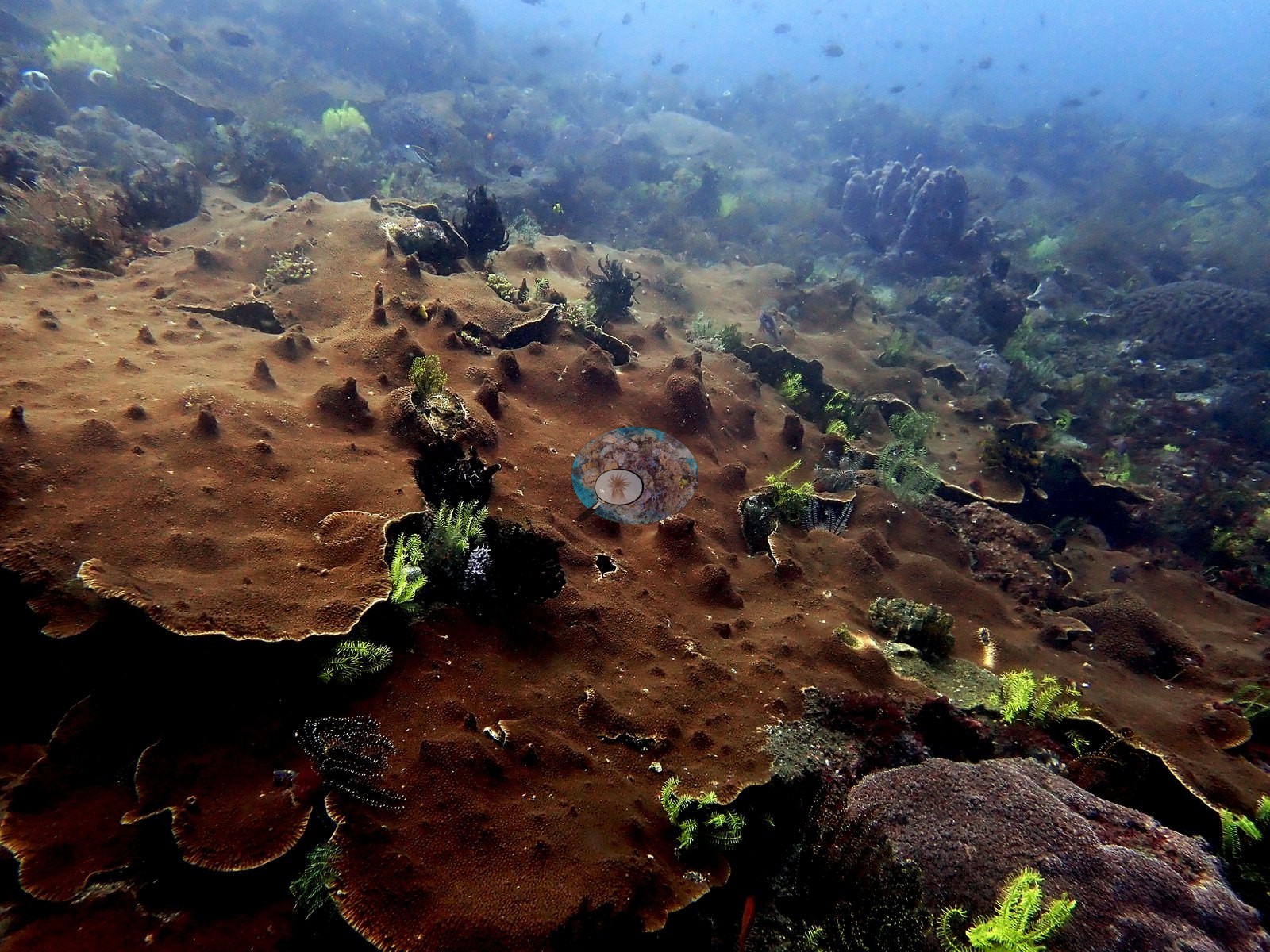
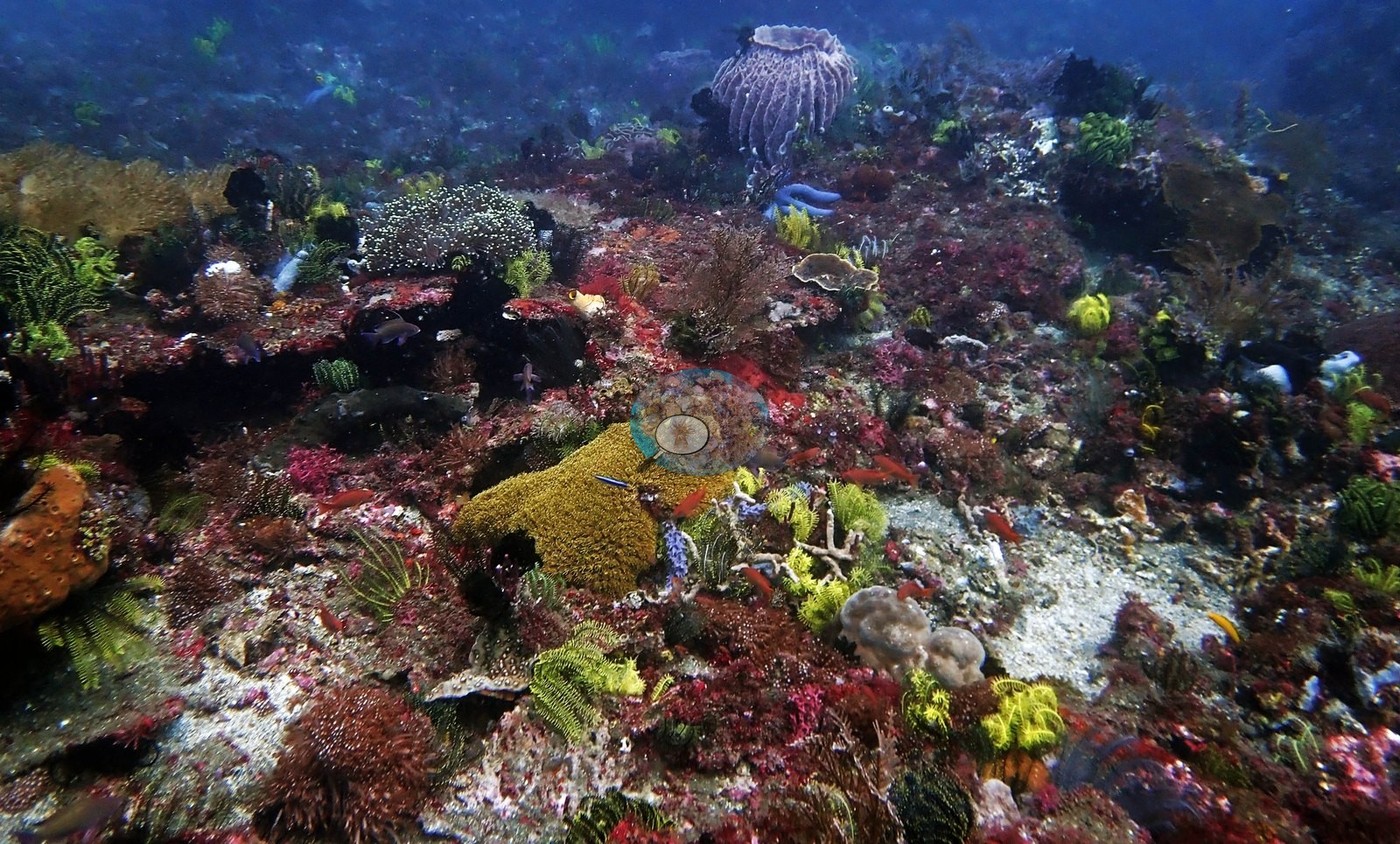
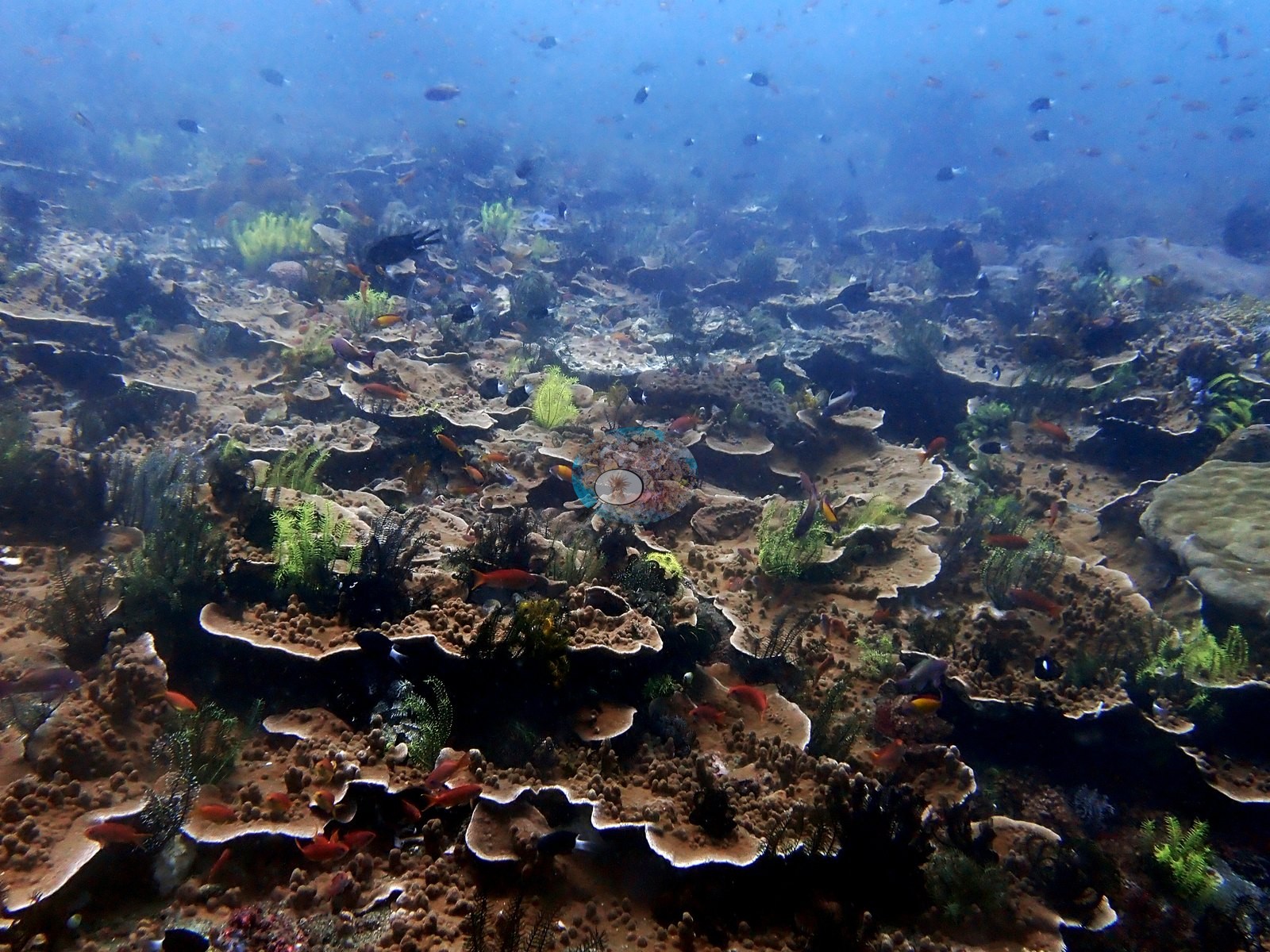
West Nusa Tenggara (NOAA CRW virtual station) · Lesser Sunda ecoregion mean=6.9°C-heating weeksDeep Purple is a deeper, hazy mixed slope of purple and lavender plate terraces, massive Porites domes, and near-monospecific lavender meandroid beds, with very high crinoid density. At least two crown-of-thorns starfish were photographed, with a bright white lesion on one plate showing feeding-scar morphology; no thermal bleaching was seen. A blind Claude computer-vision point count puts coral cover around 26%, below the roughly 40-60% estimated by eye.
Deep Purple adalah lereng campuran yang lebih dalam dan berkabut, berisi teras karang lembaran berwarna ungu dan lavender, kubah Porites masif, serta hamparan karang meandroid lavender yang nyaris monospesifik, dengan kepadatan lili laut yang sangat tinggi. Sedikitnya dua ekor bintang laut mahkota duri terfoto, dengan satu luka putih terang pada sebuah karang lembaran yang menunjukkan morfologi bekas pemangsaan; tidak terlihat pemutihan akibat suhu. Penghitungan titik buta visi komputer Claude memperkirakan tutupan karang sekitar 26%, di bawah perkiraan mata sekitar 40-60%.
Terjemahan ringkasan ini oleh AI; versi bahasa Inggris yang berlaku.
One other CRD dive site within 5 km shown in orange — click a marker to open its page.
20 of these 51 photographs are shown beside the text that discusses them under "Site description" below.
Site description
Setting
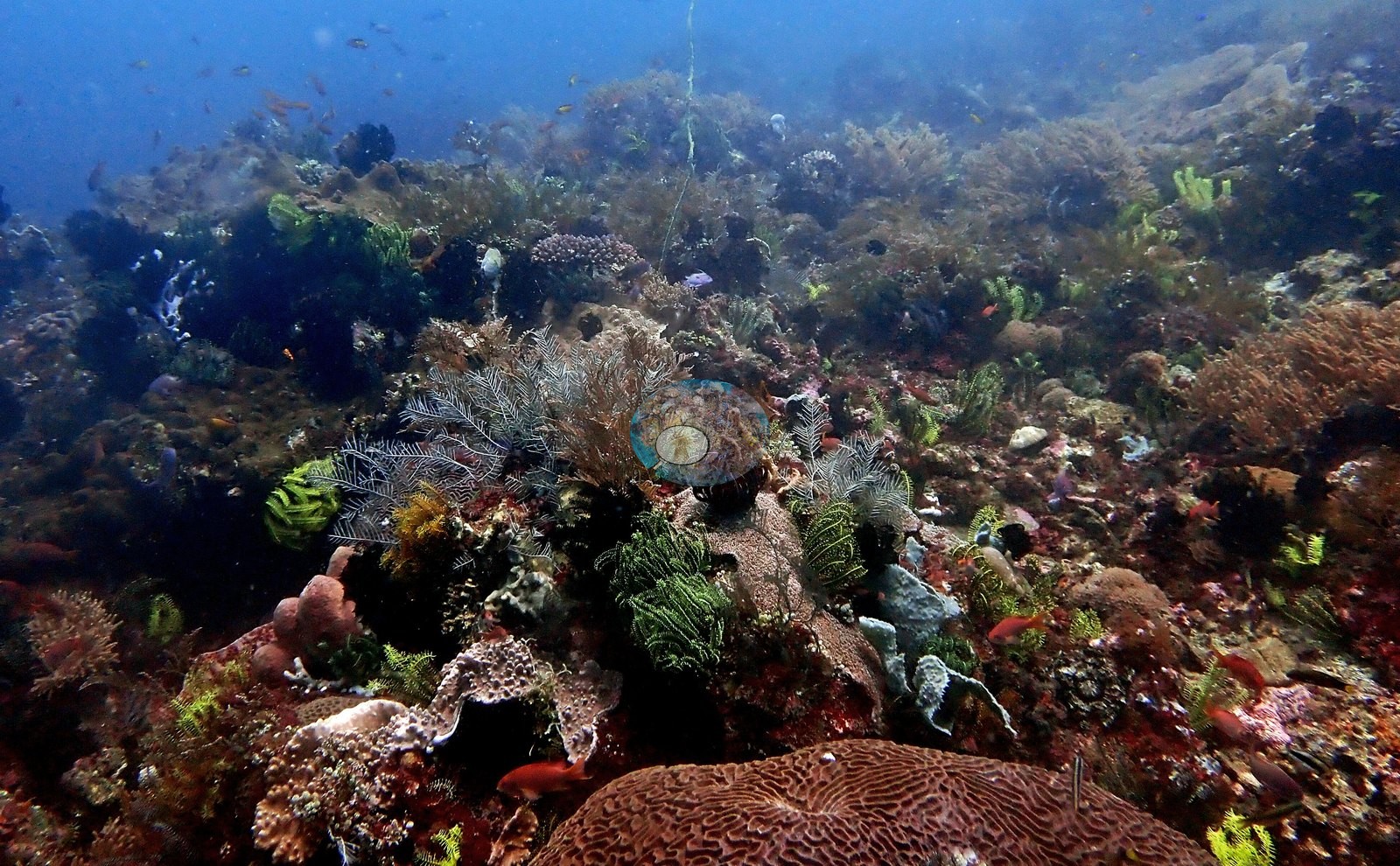
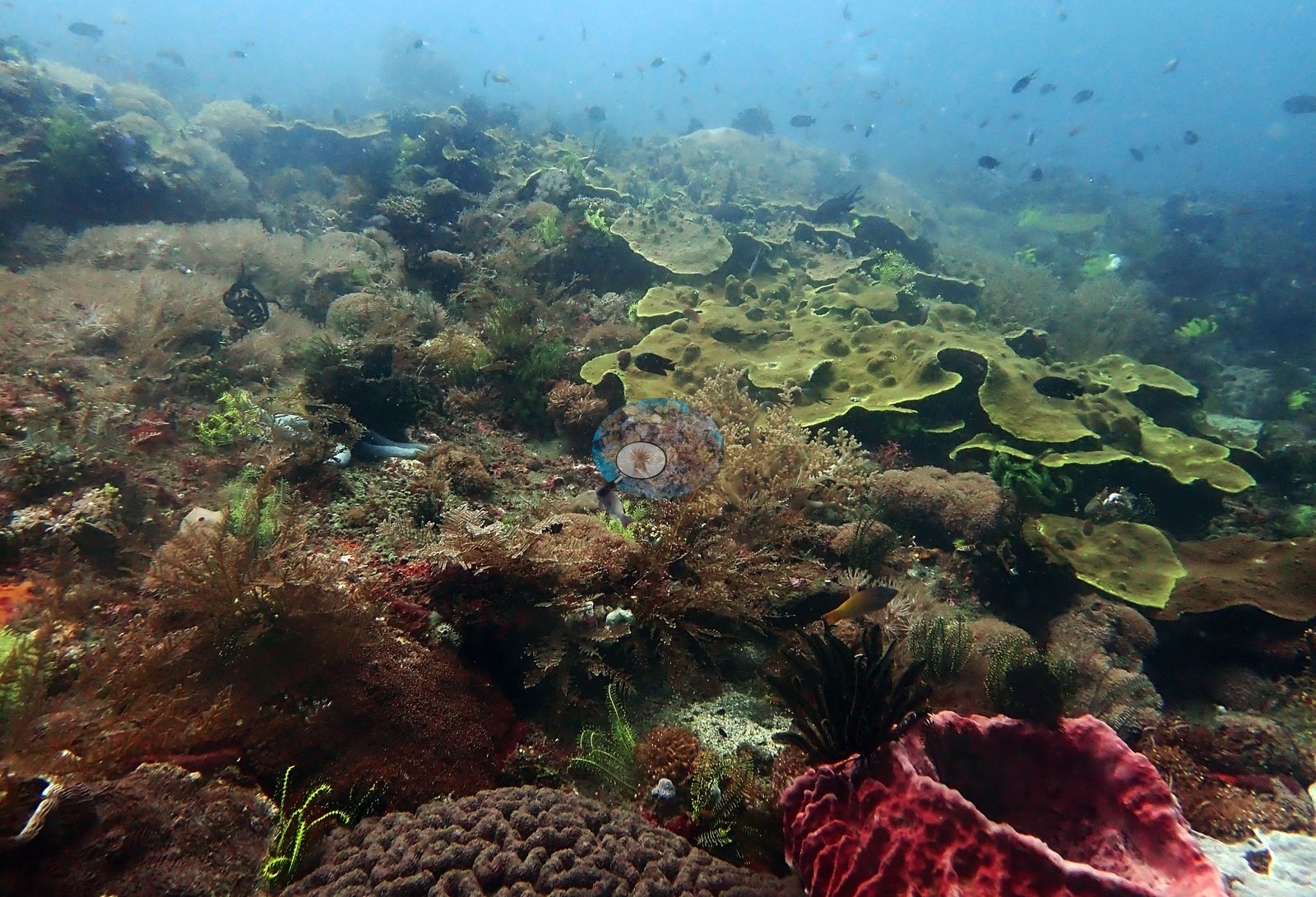
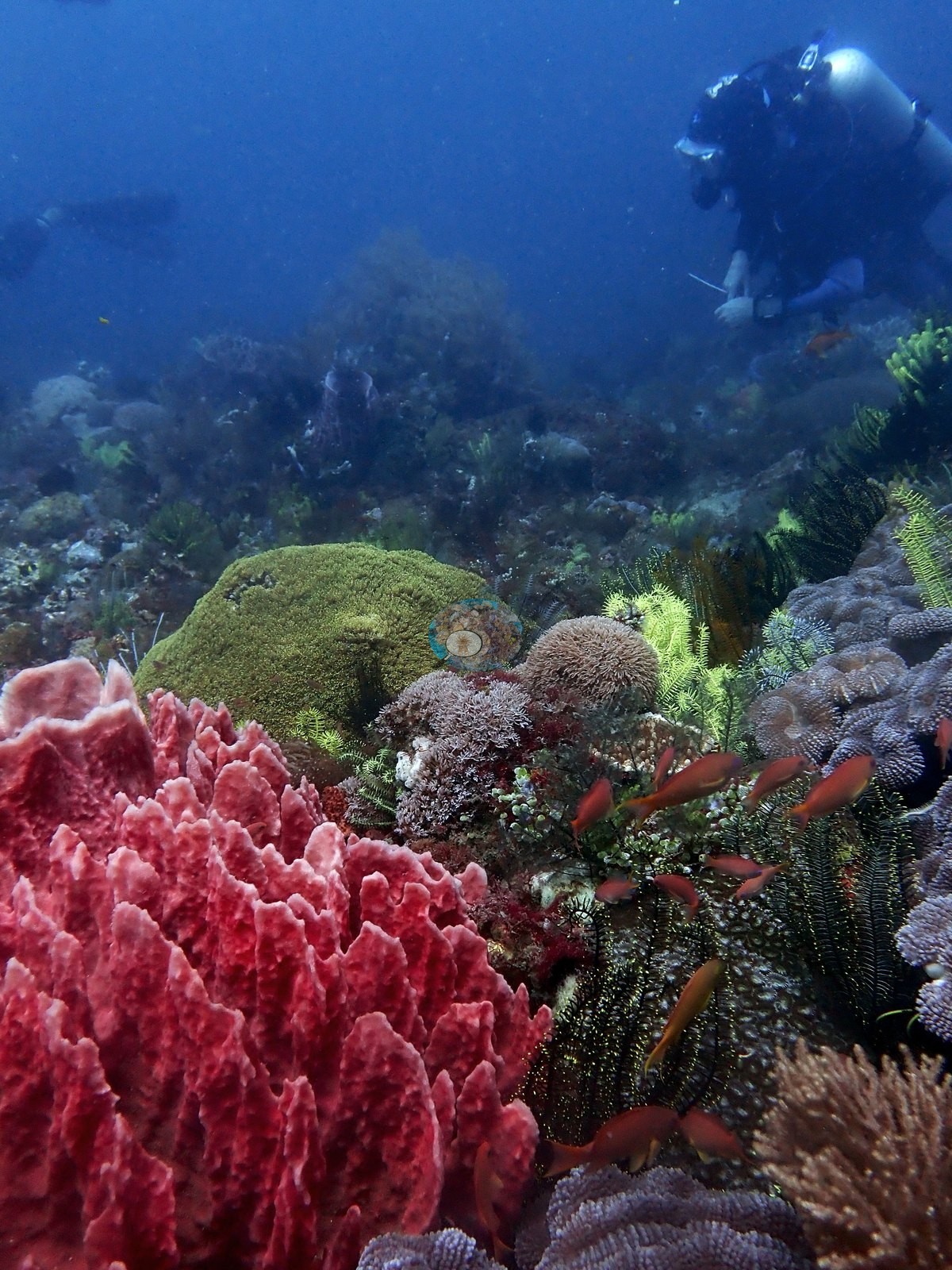
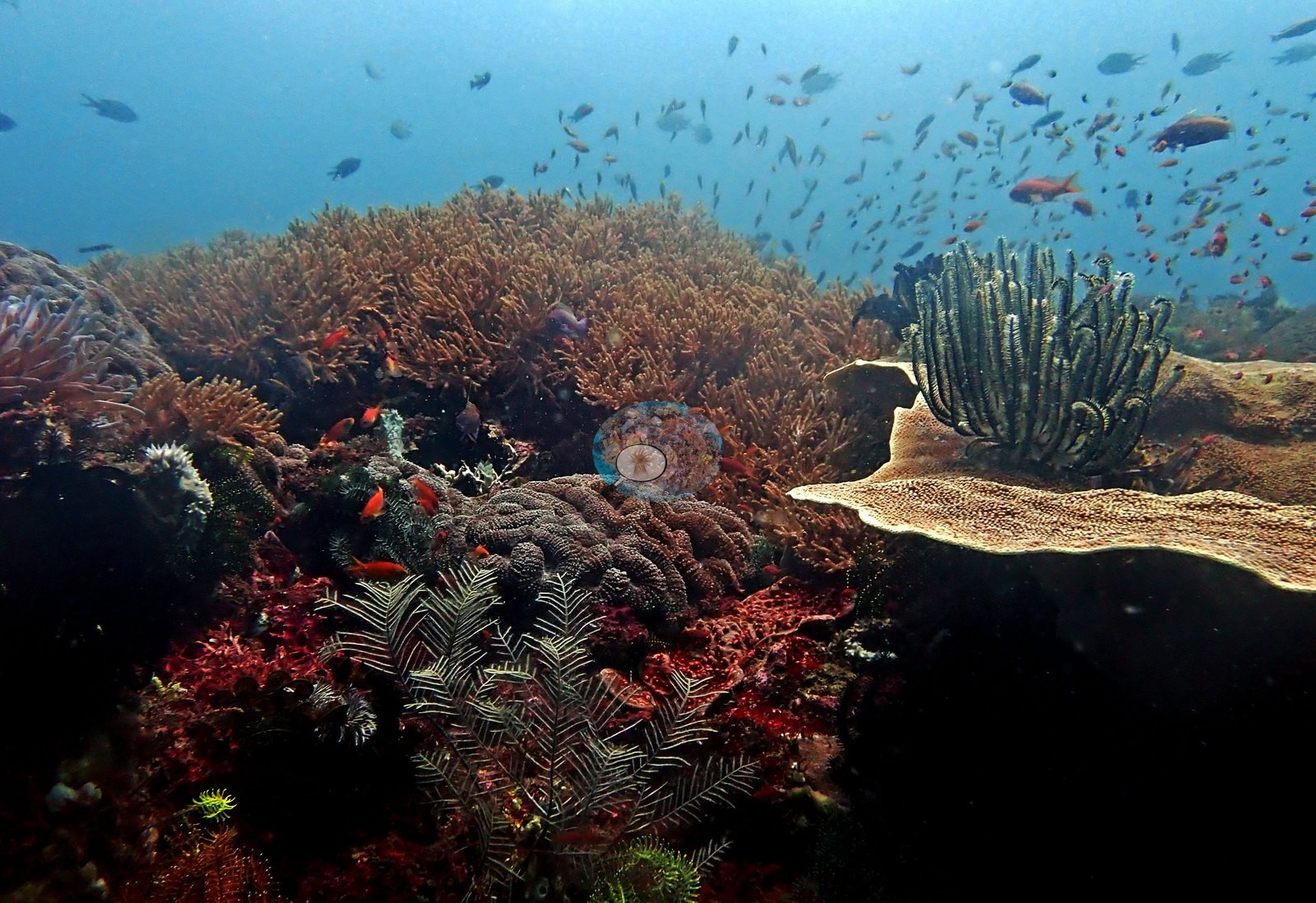
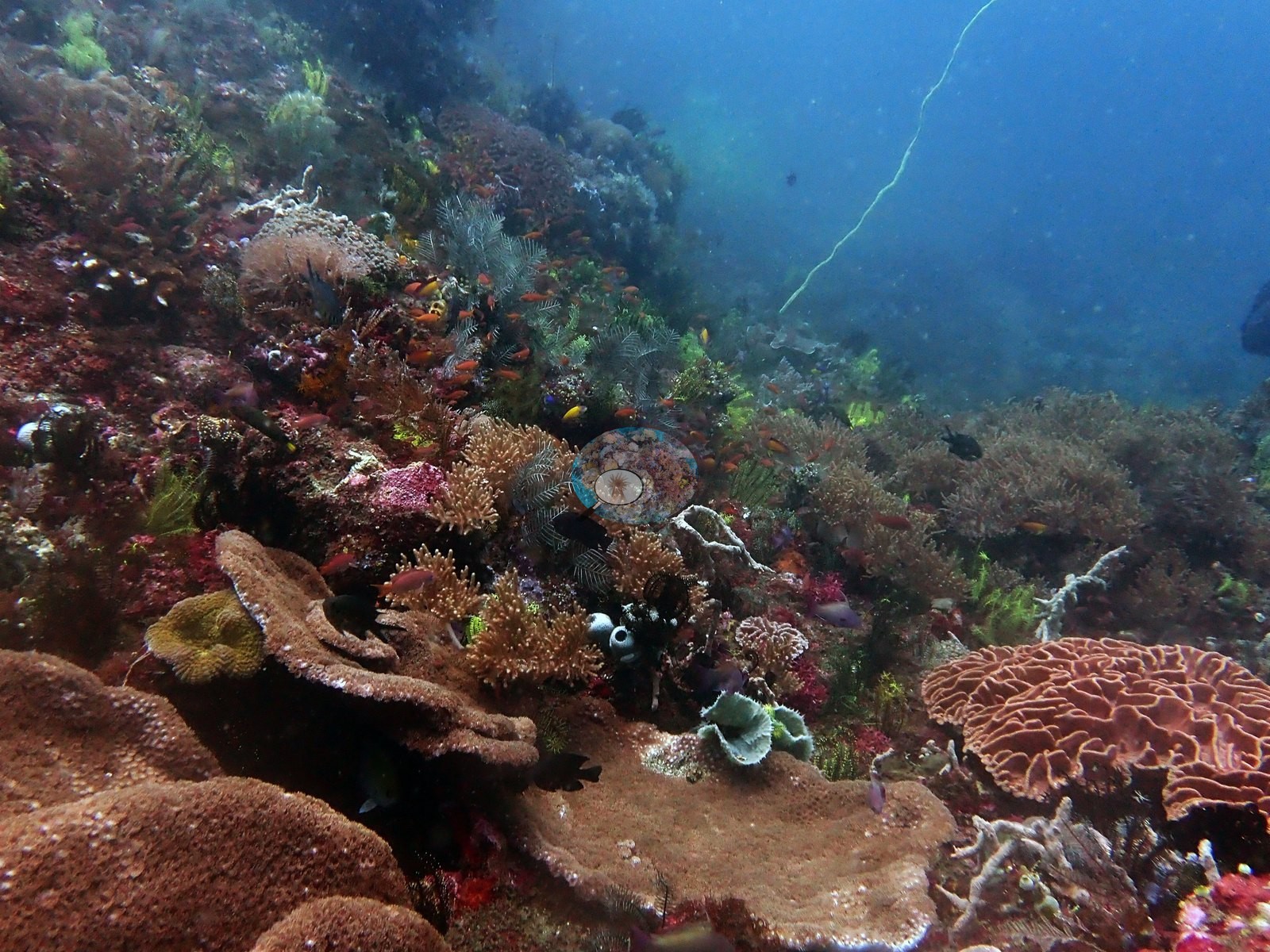
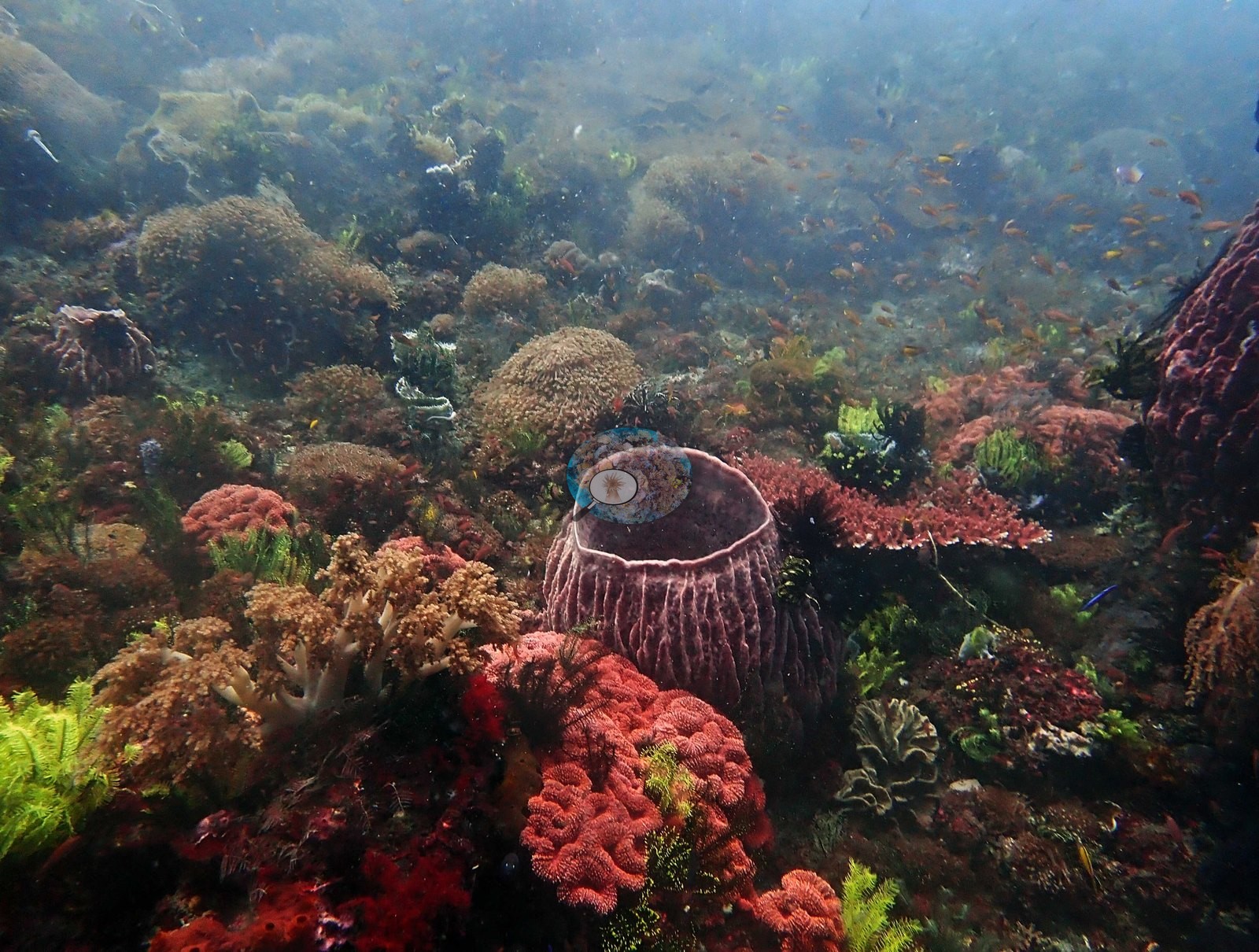
Deep Purple was dived on 20 January 2019 from a Komodo National Park liveaboard: a deeper, lower-light mixed slope rather than a shallow thicket reef (e.g., Image 29).
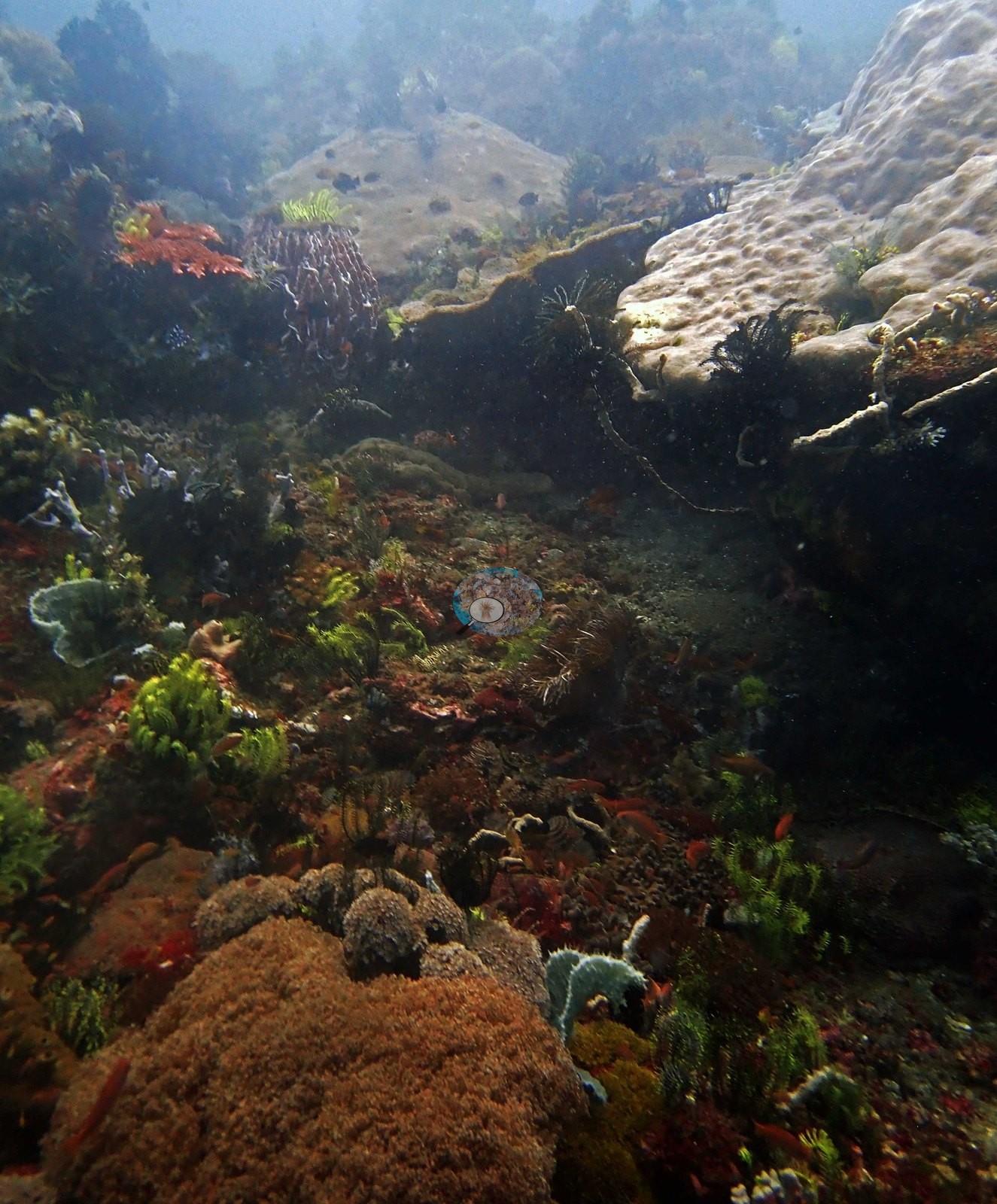
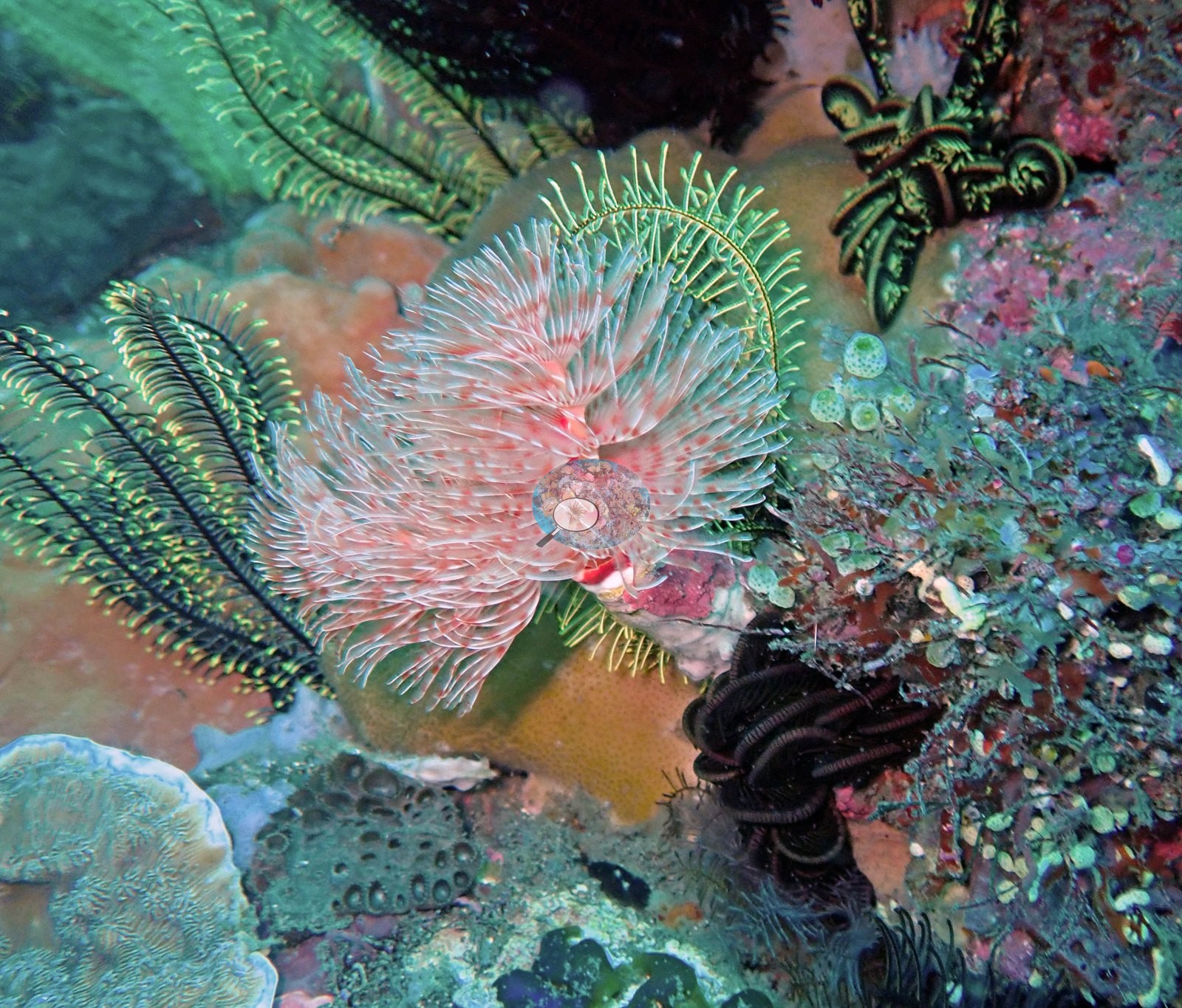
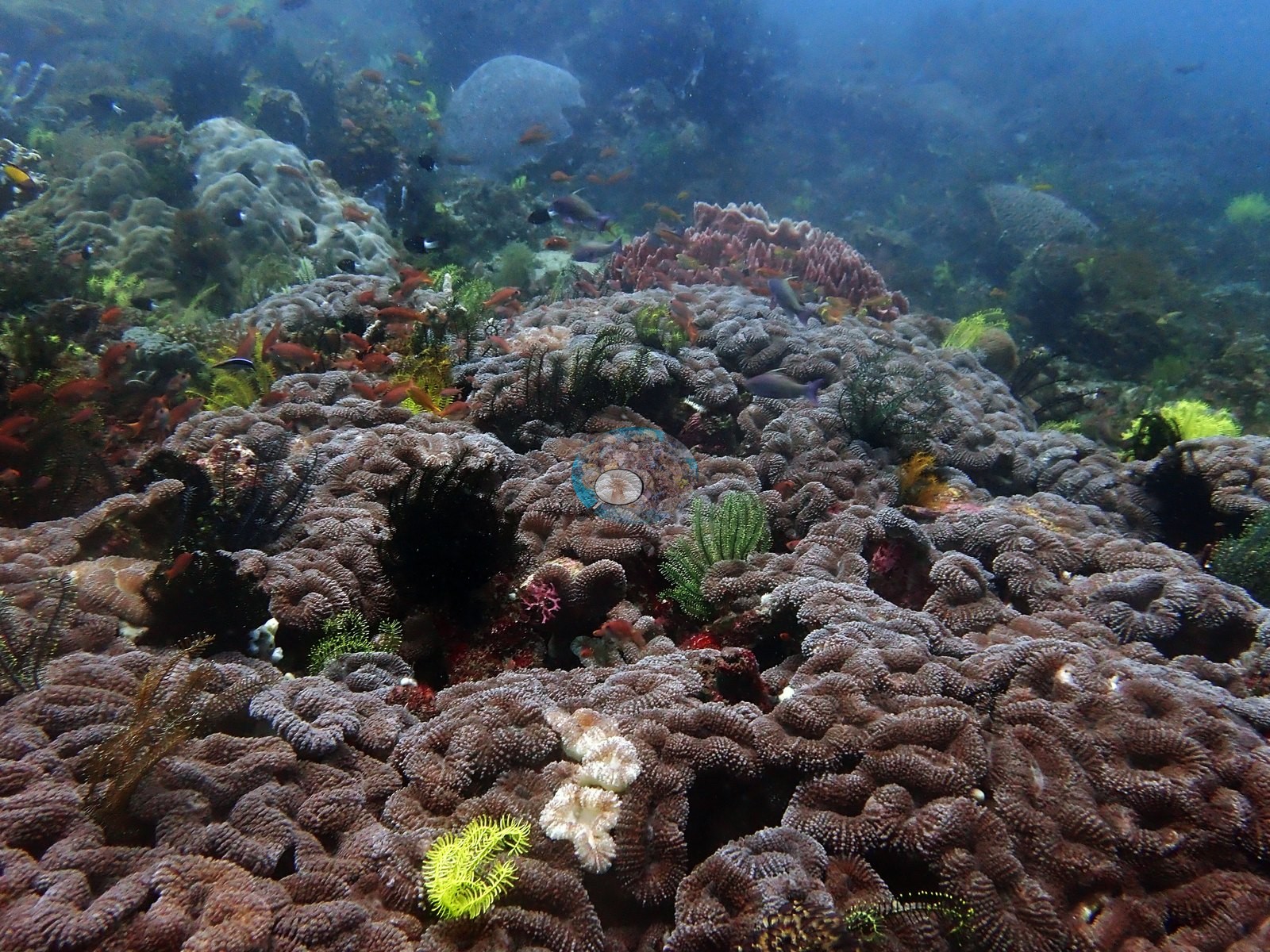
Visibility was soft and hazy with a green cast, the substrate carries a visible silt load and extended crinoids and soft corals indicate current (e.g., Image 4, Image 9).
General benthic features
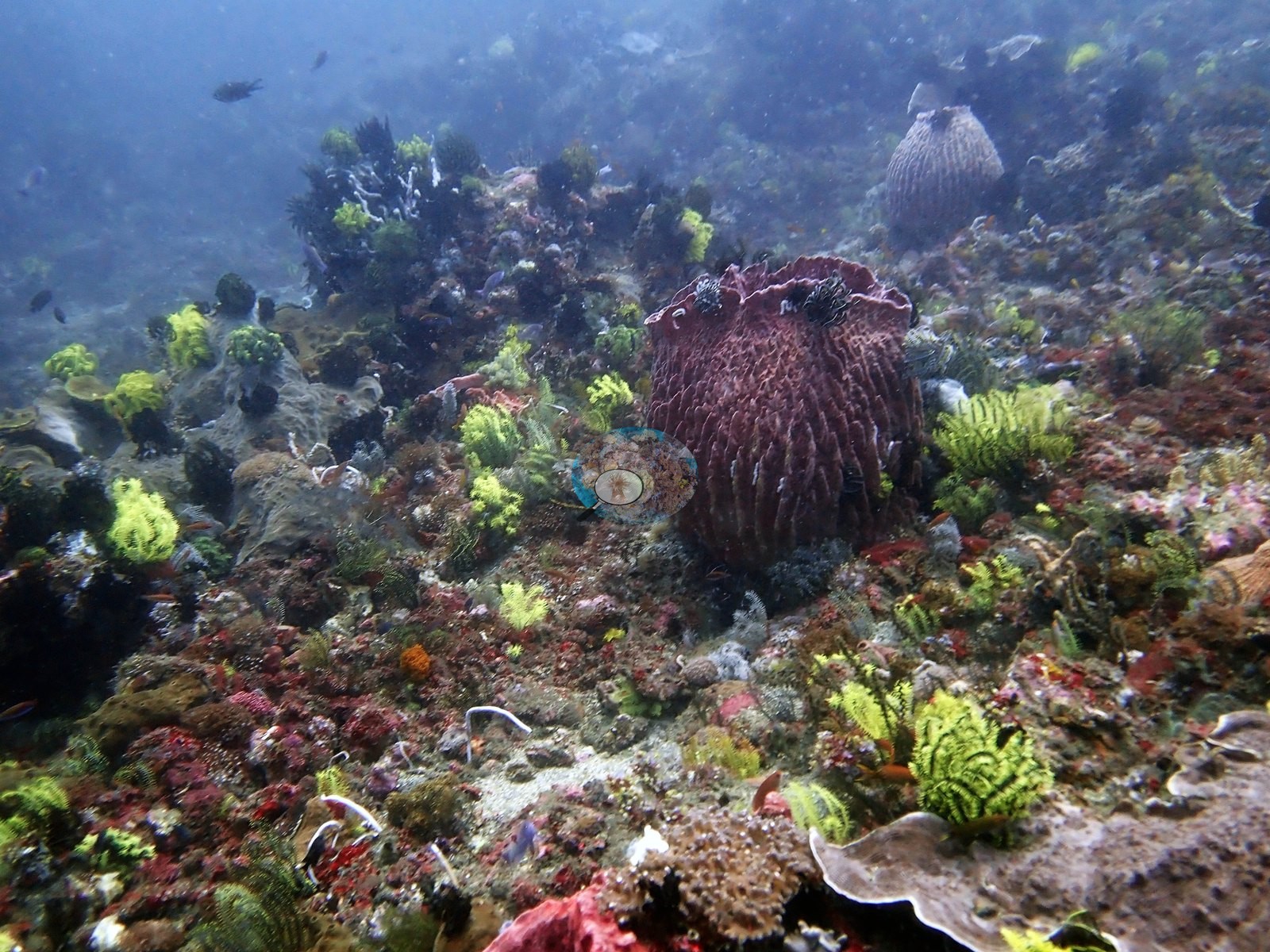
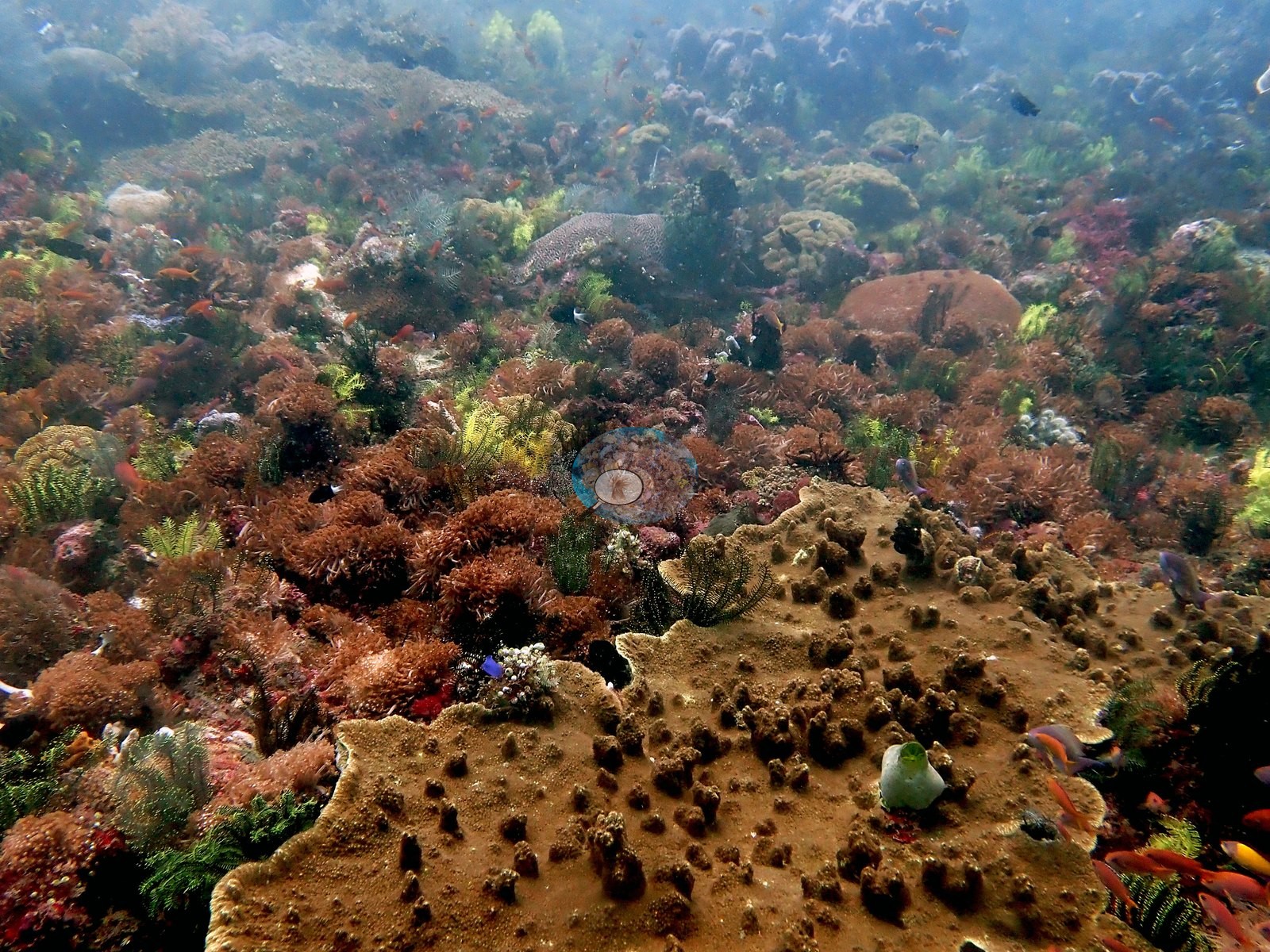
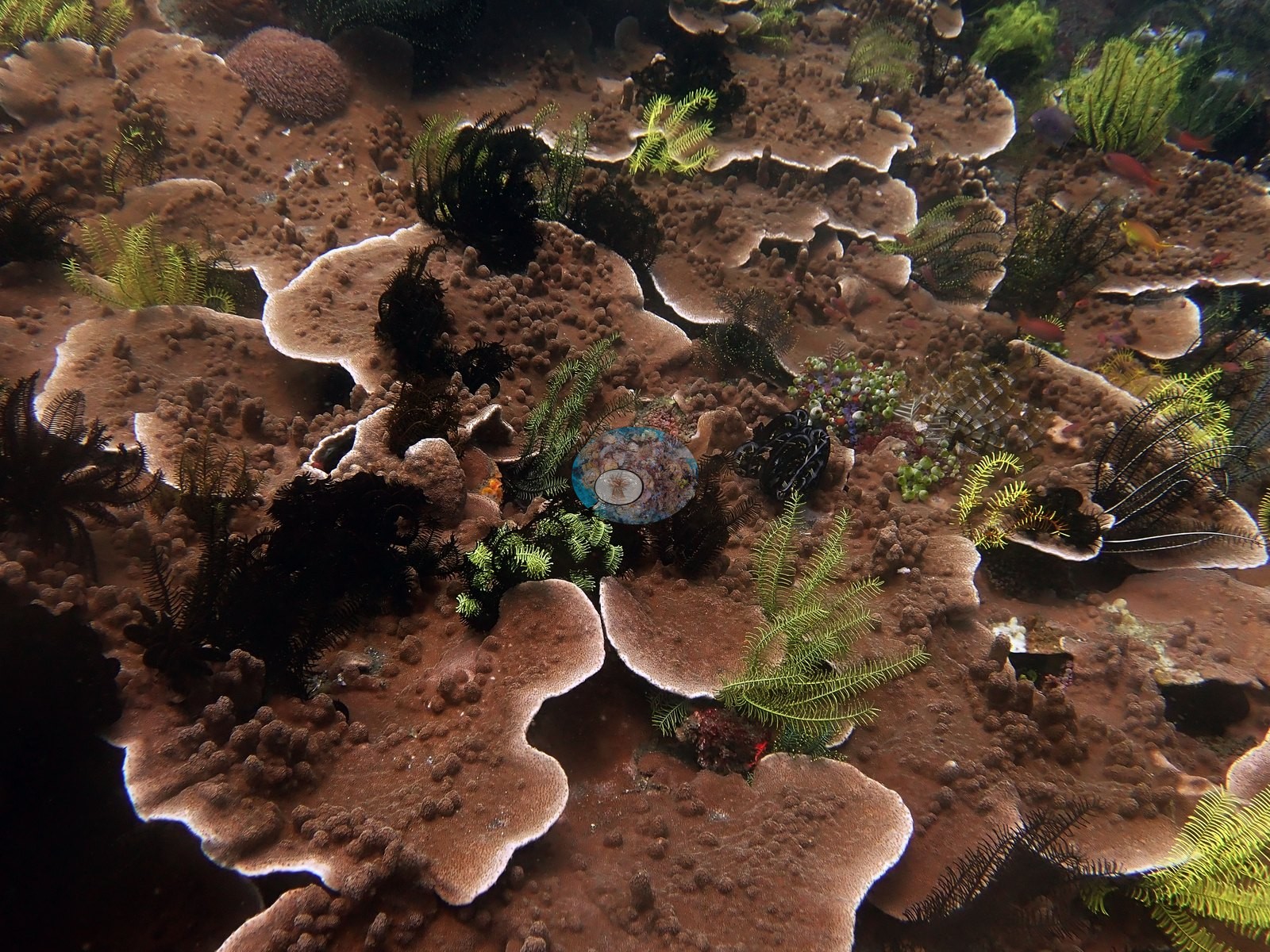
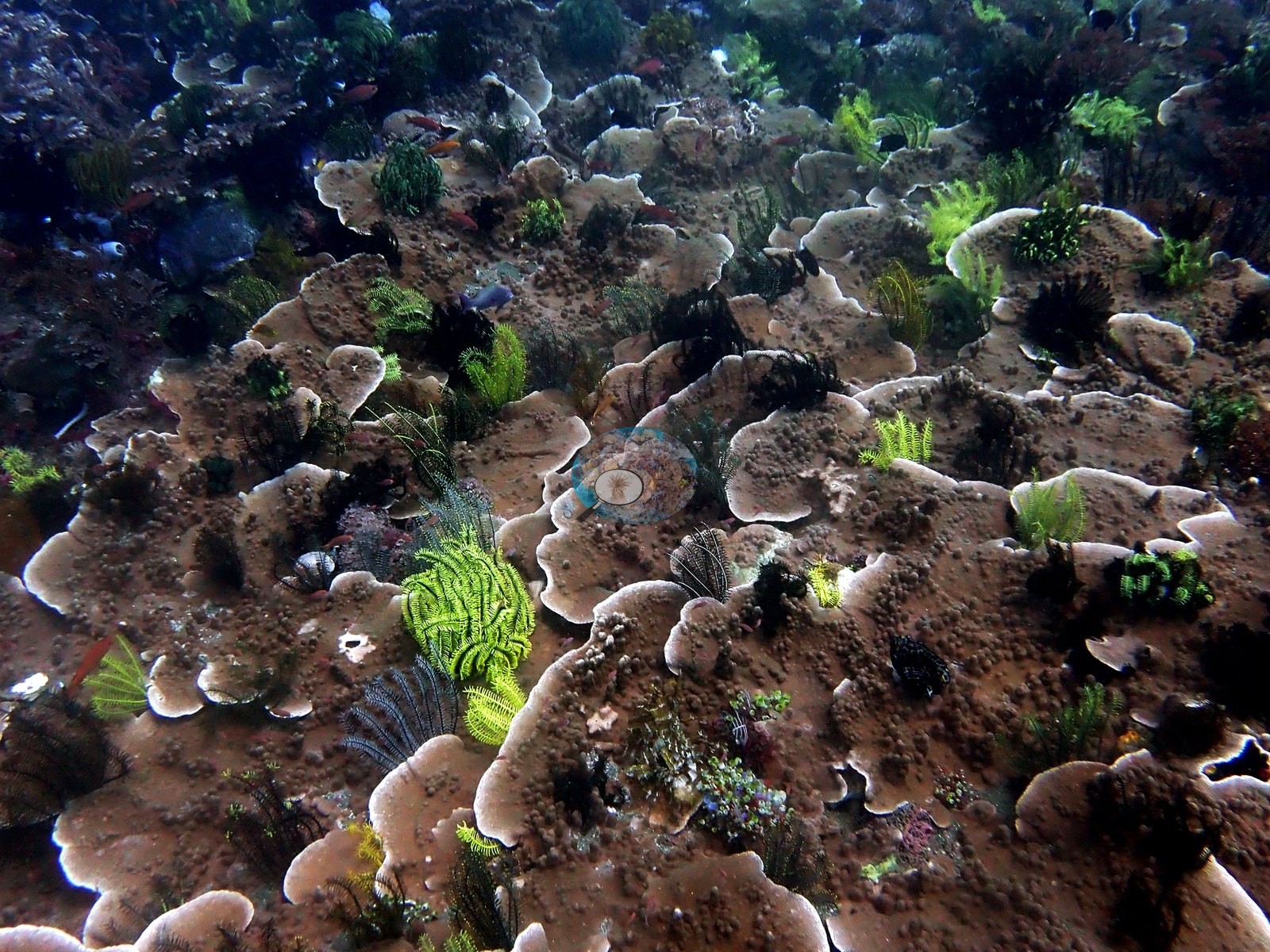
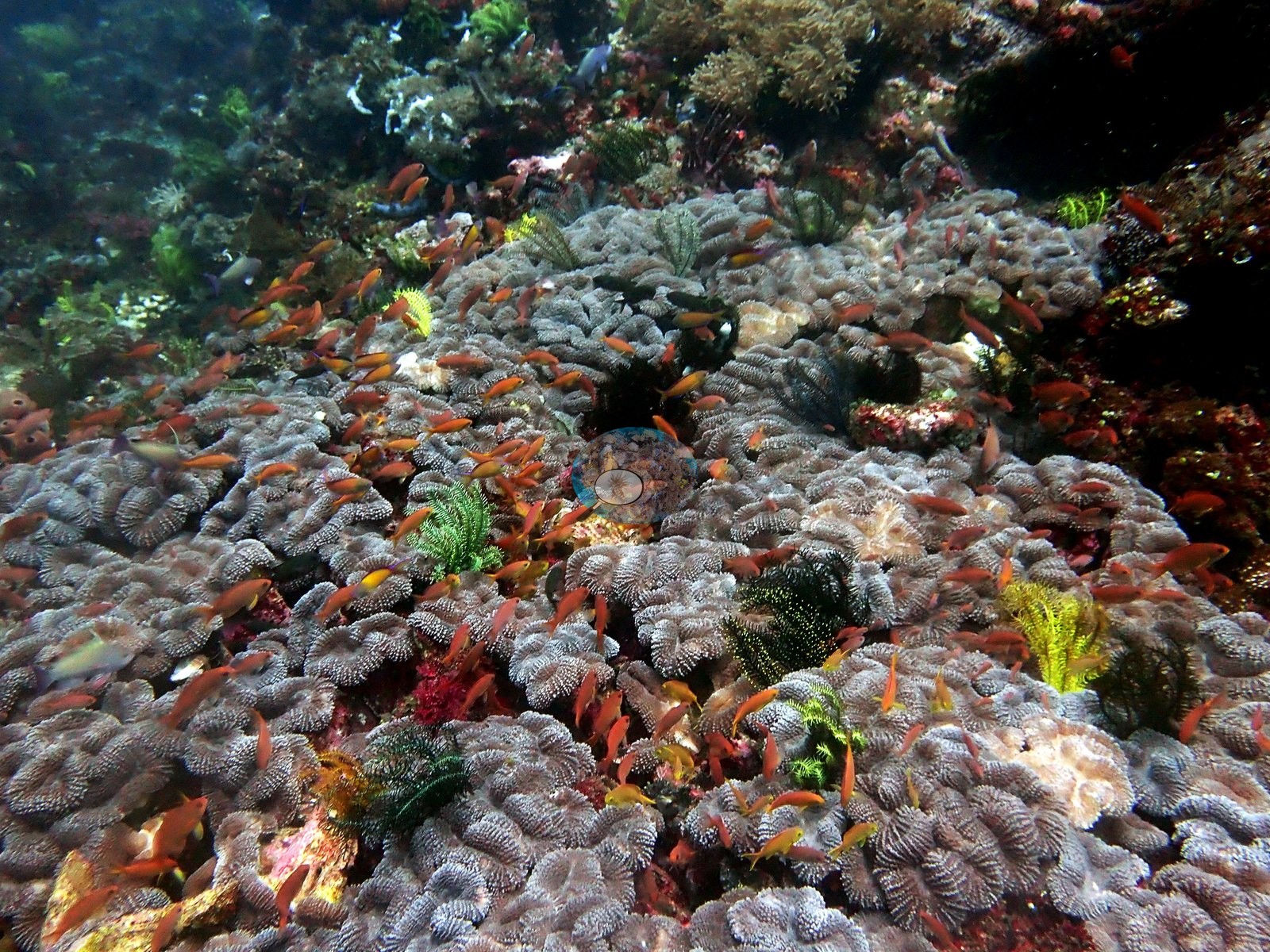
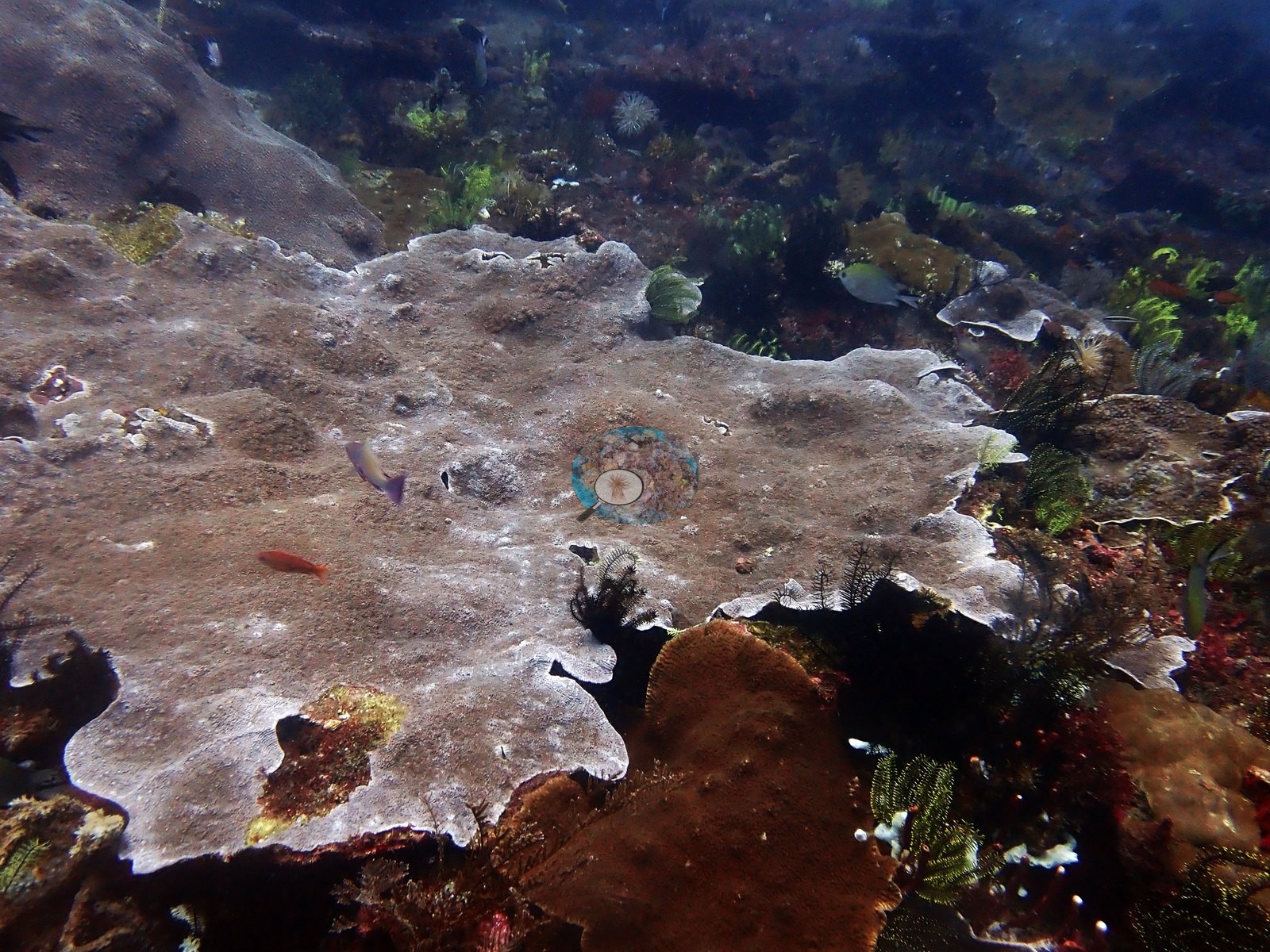
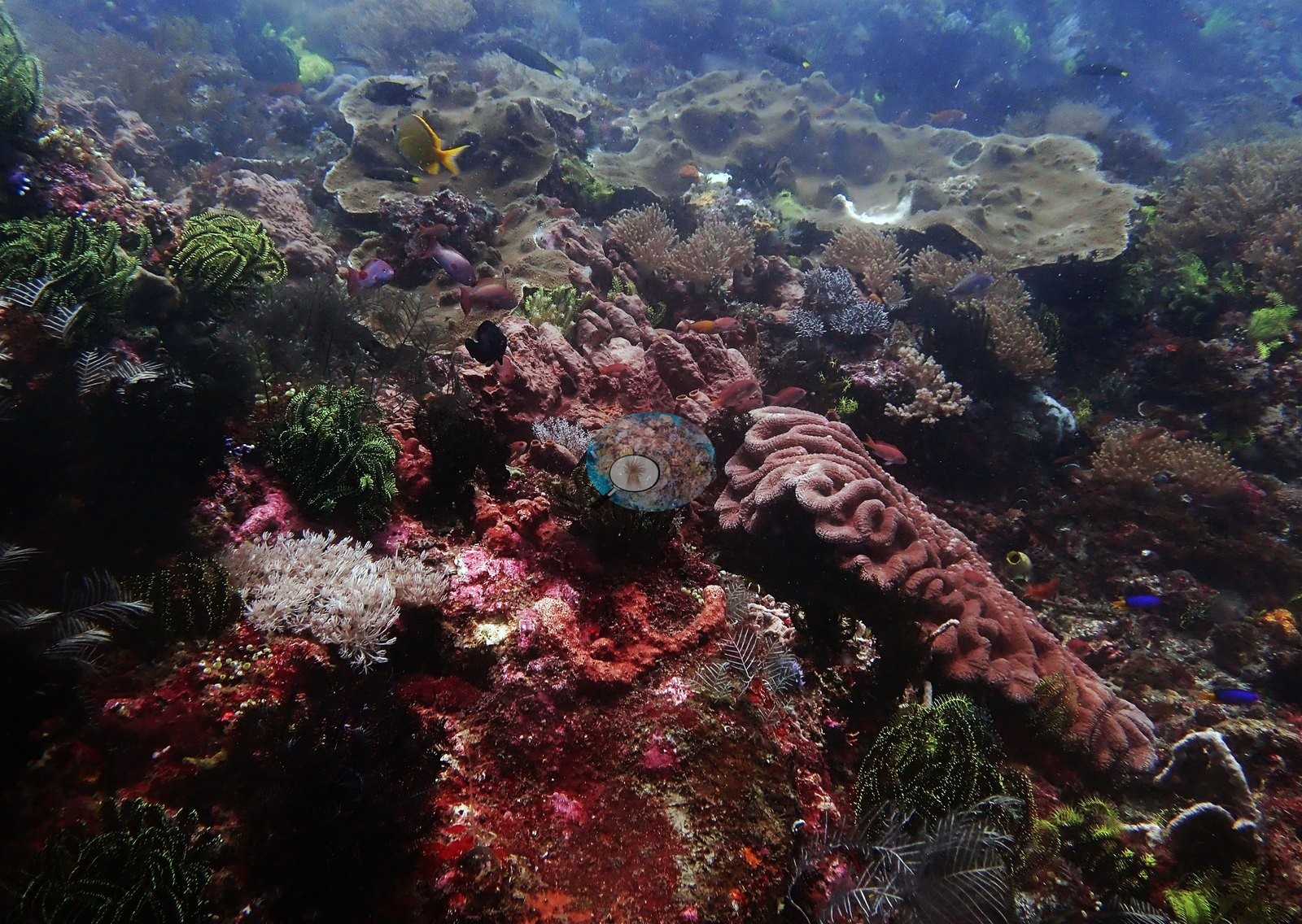
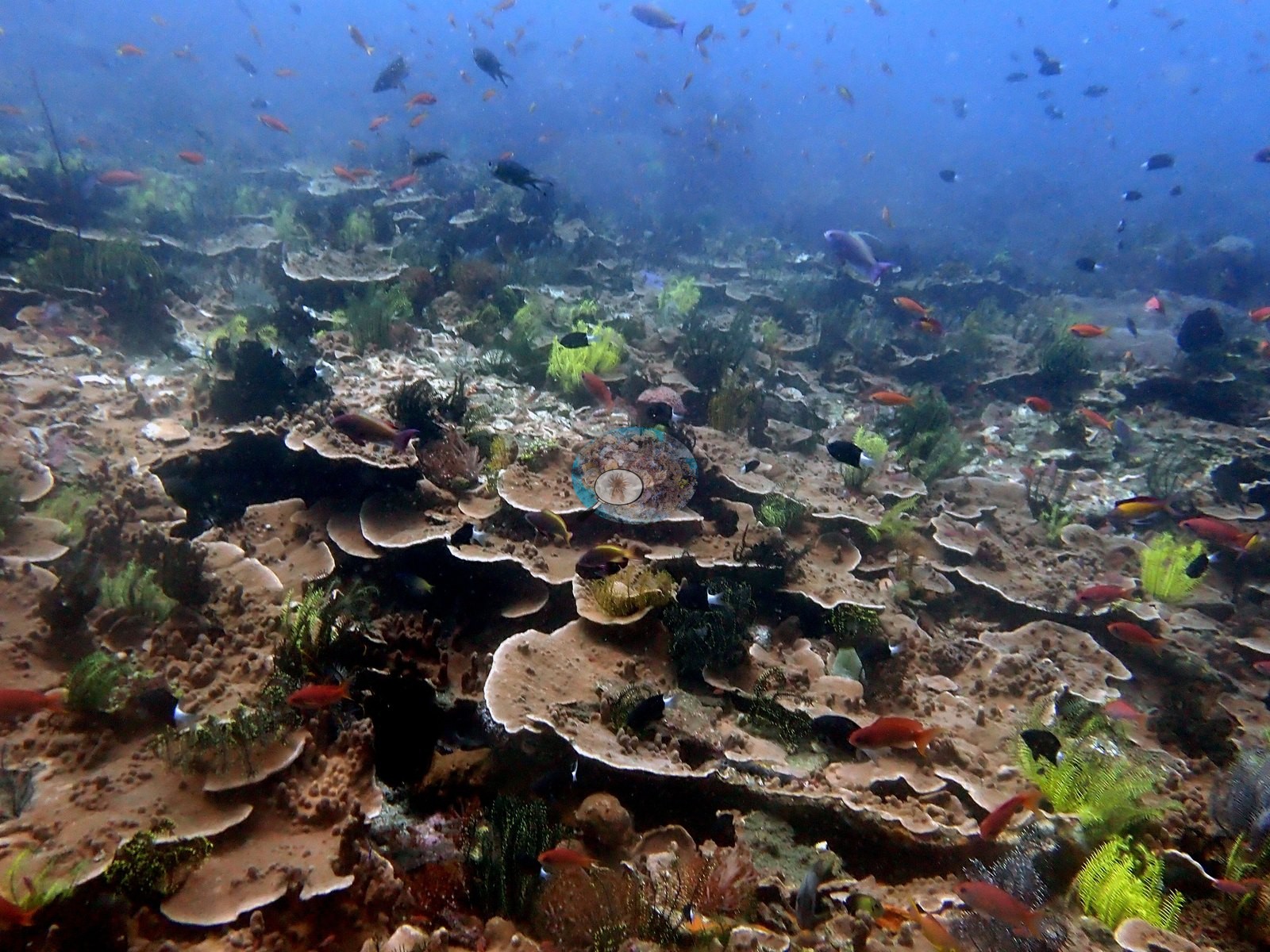
Broad purple, lavender, and tan plate terraces step down moderate relief, broken by massive domes and sponge-rich pockets (e.g., Image 34, Image 35).
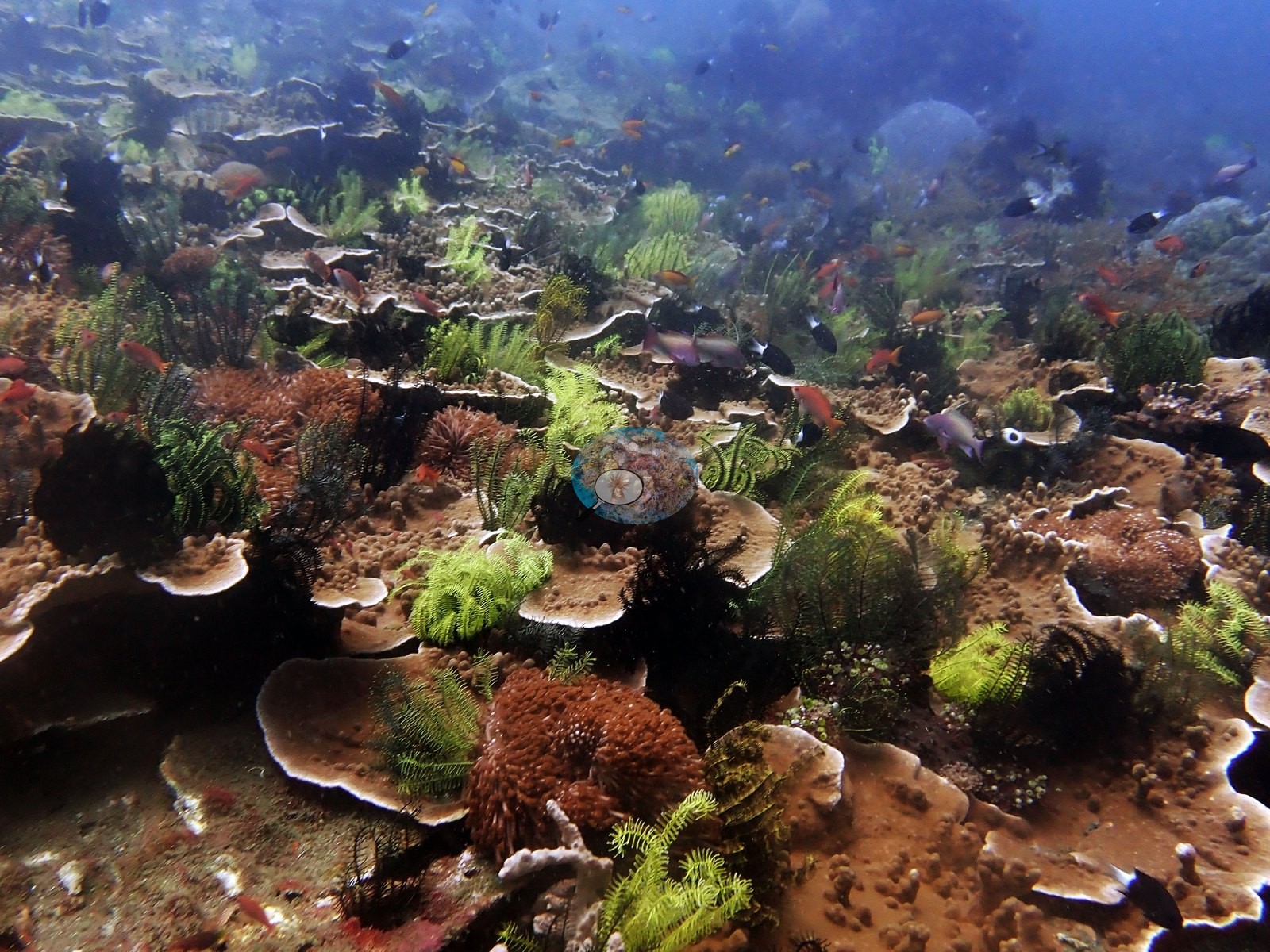
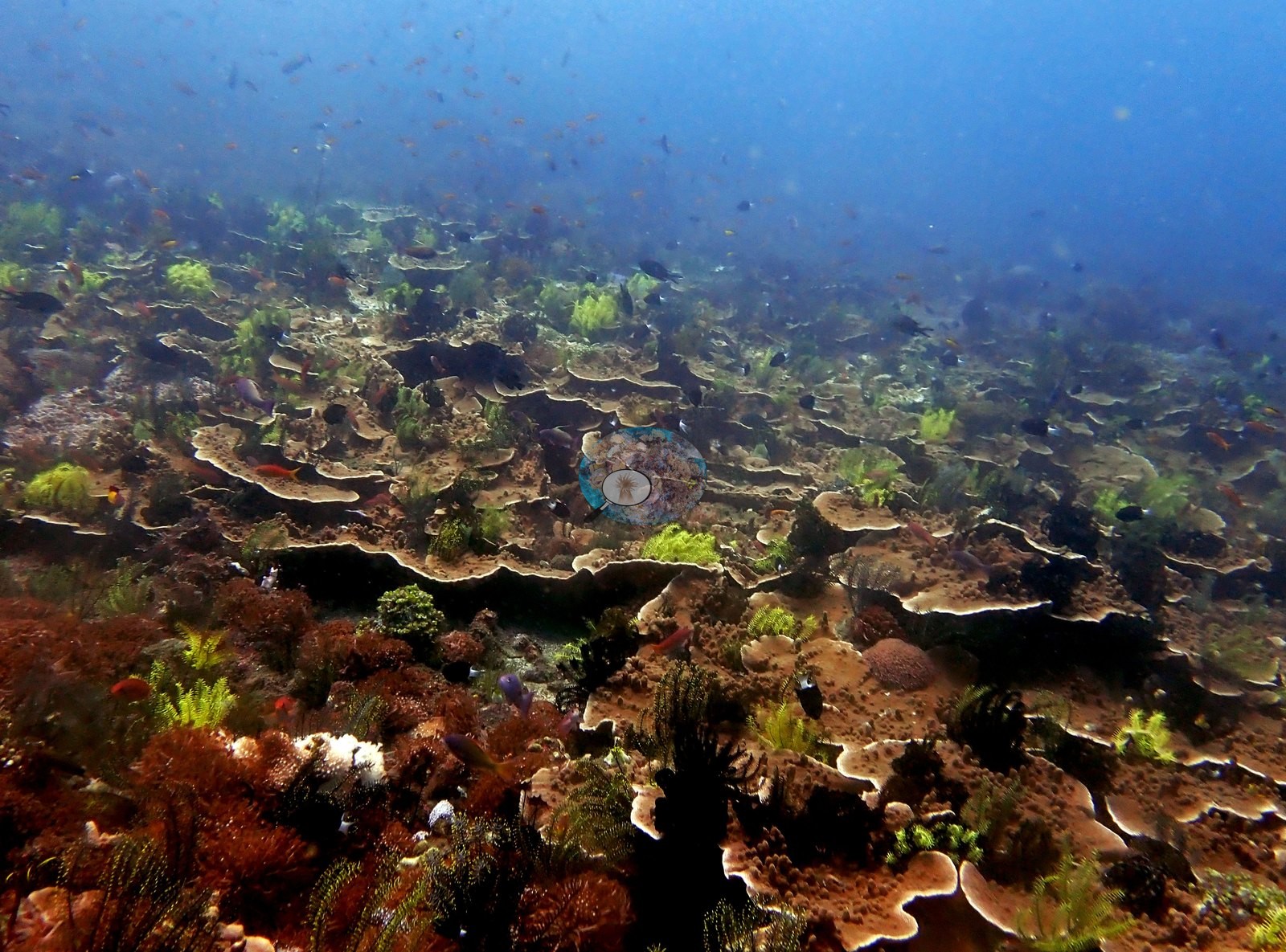
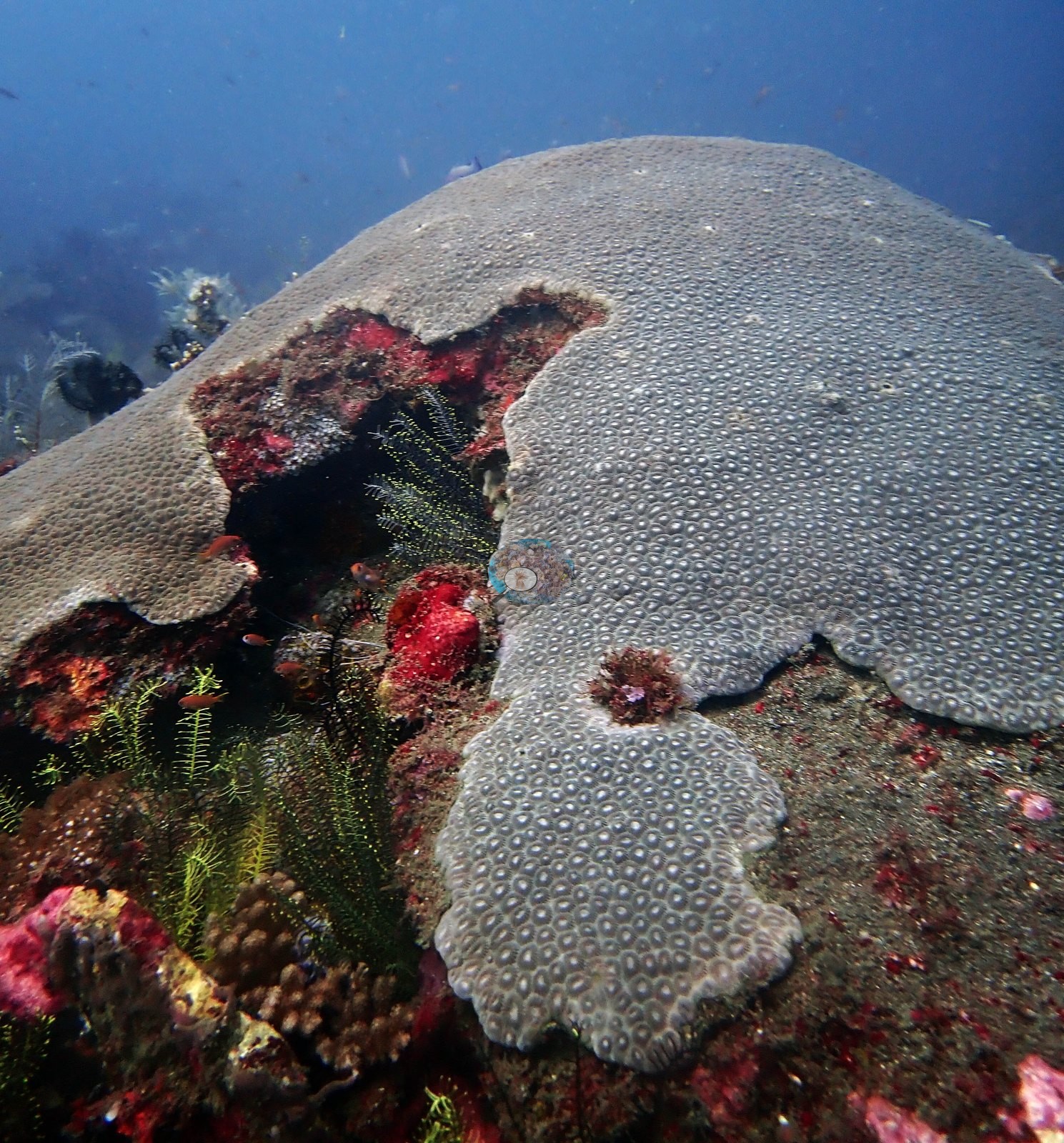
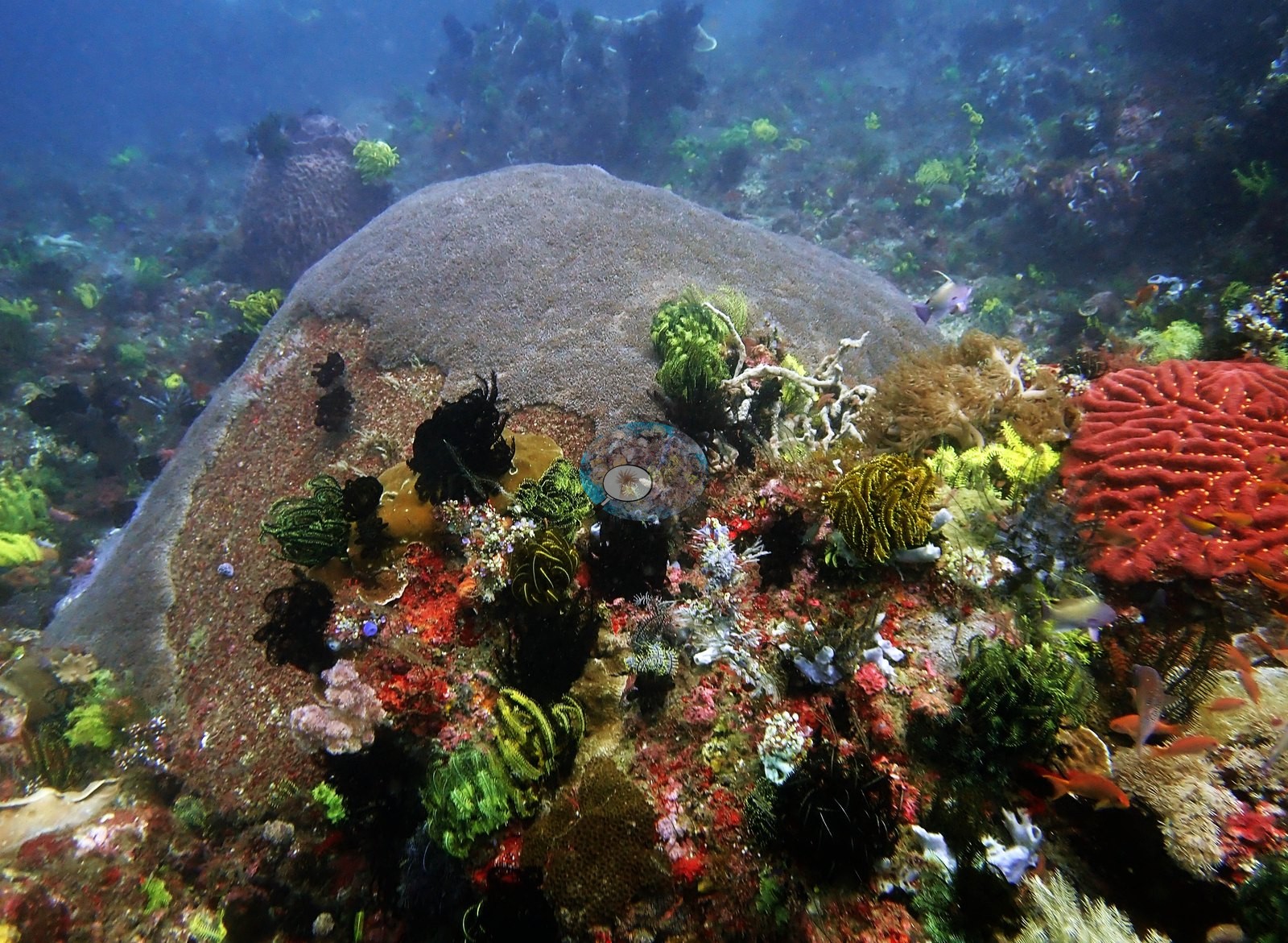
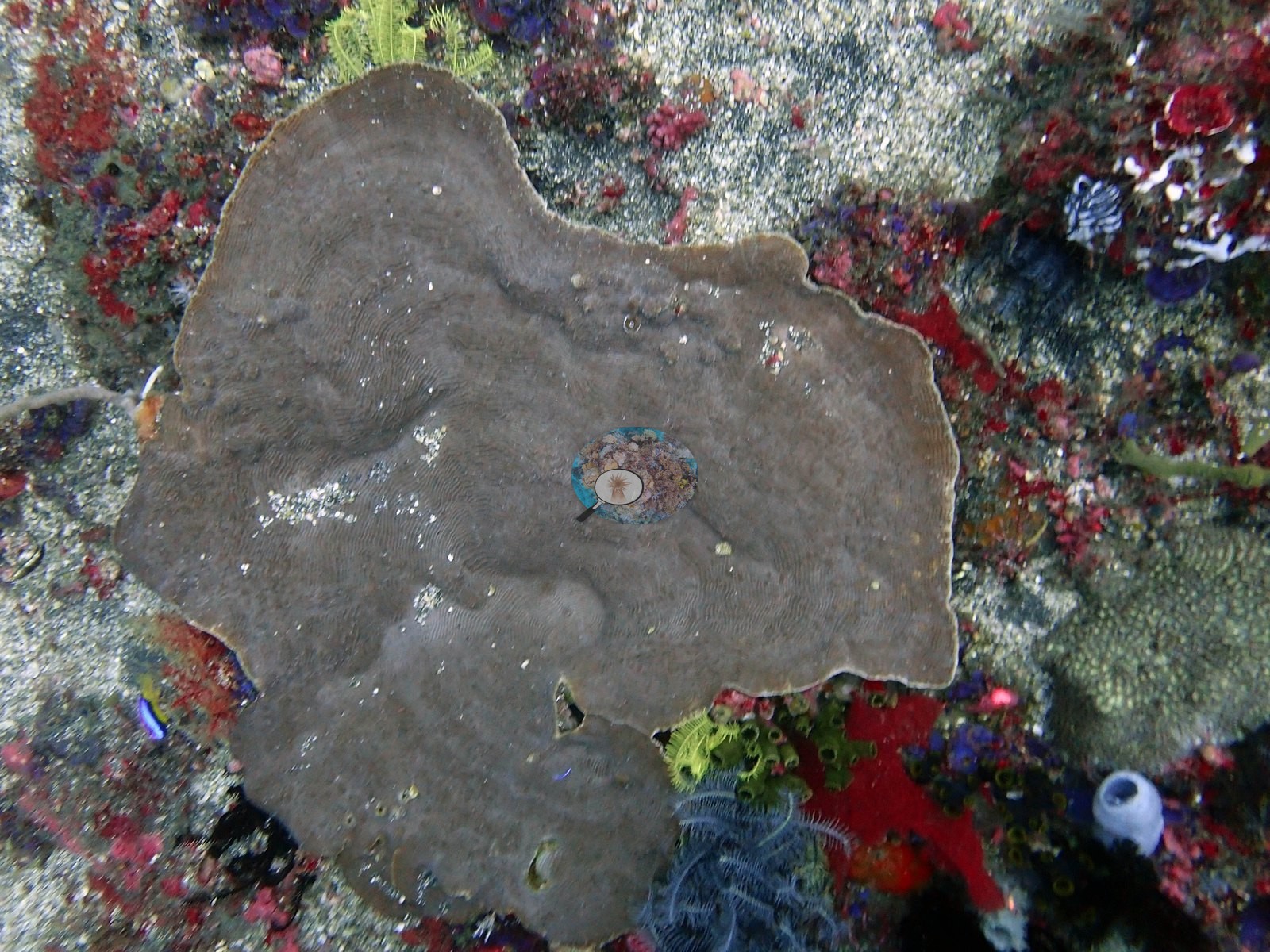
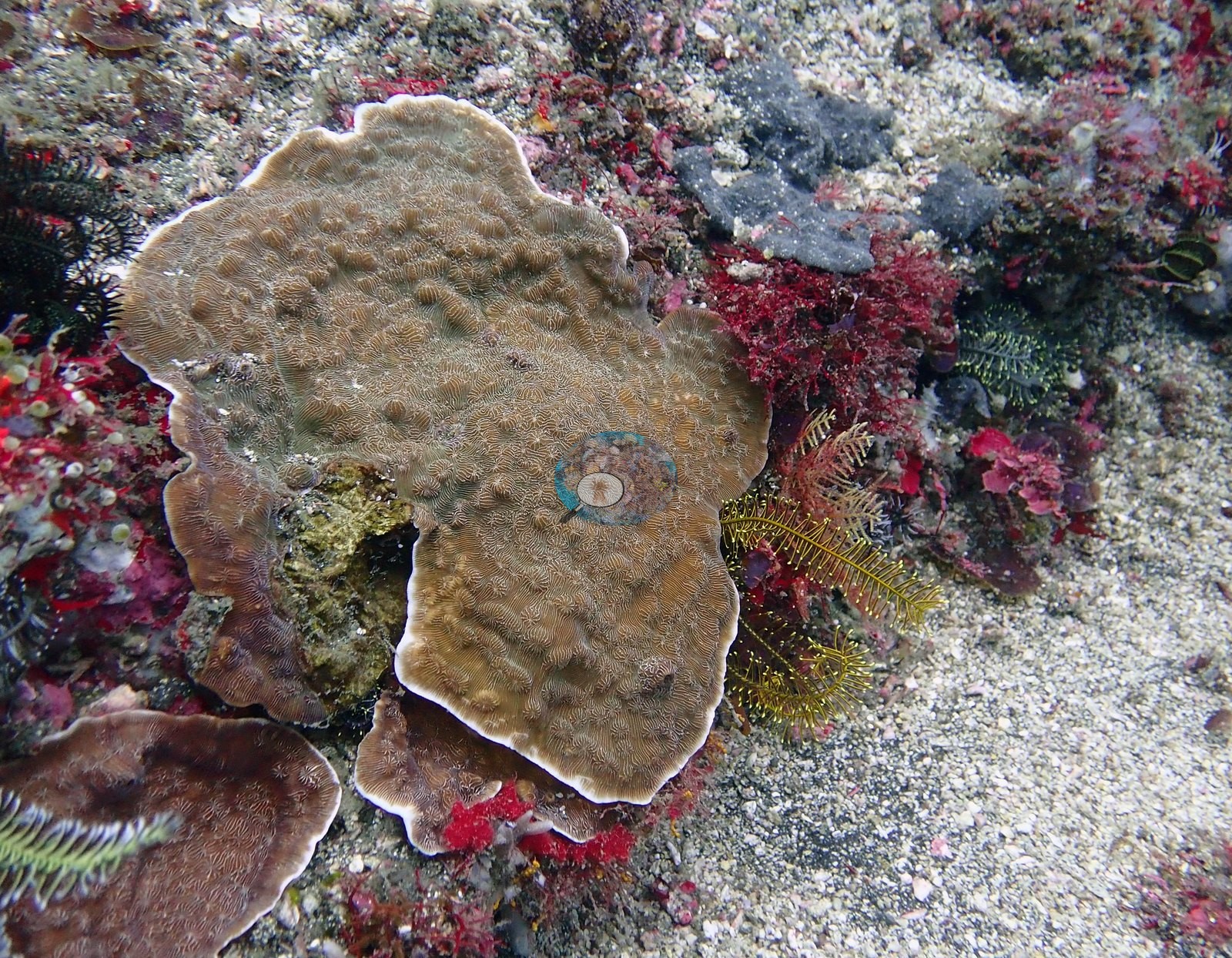
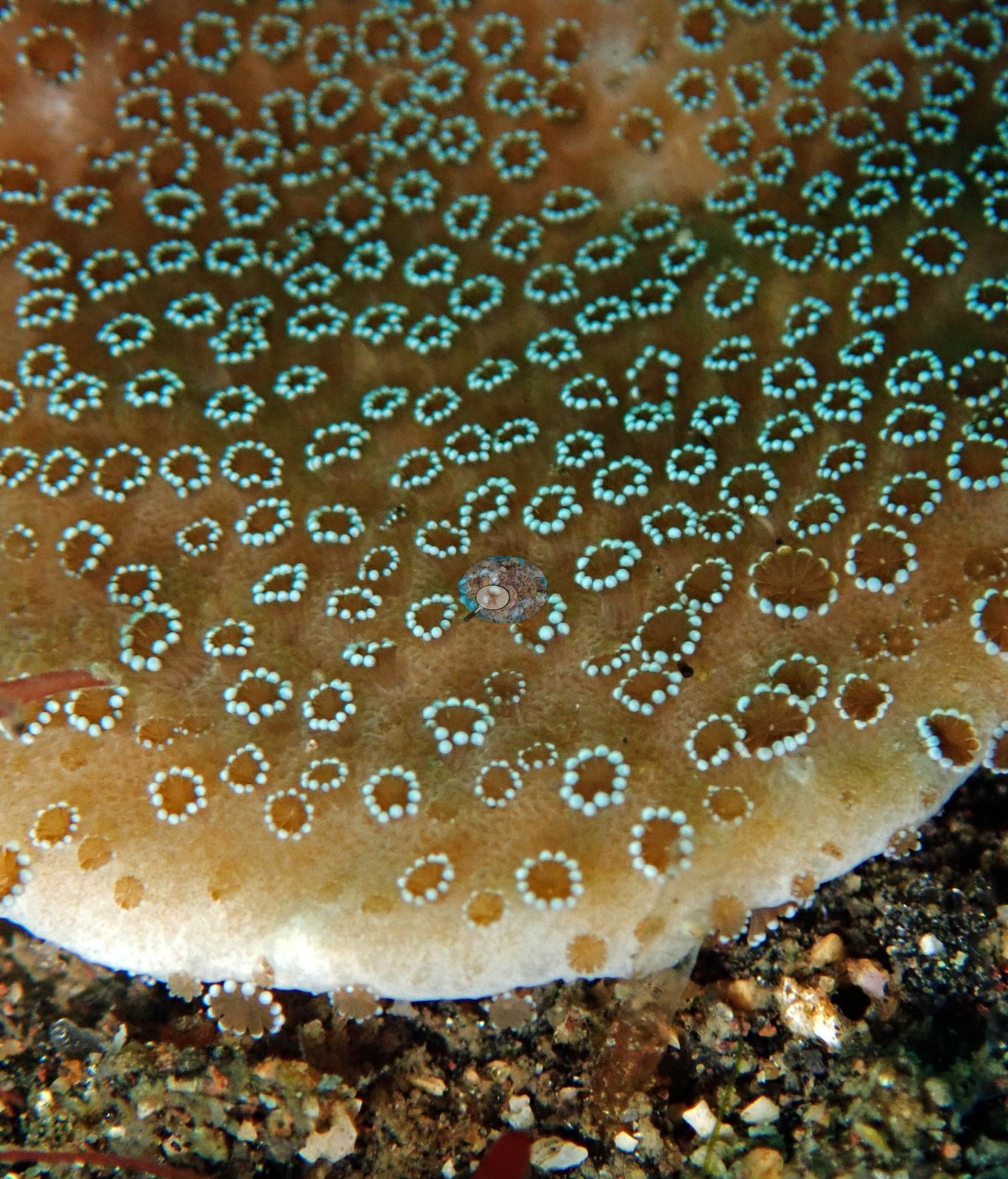
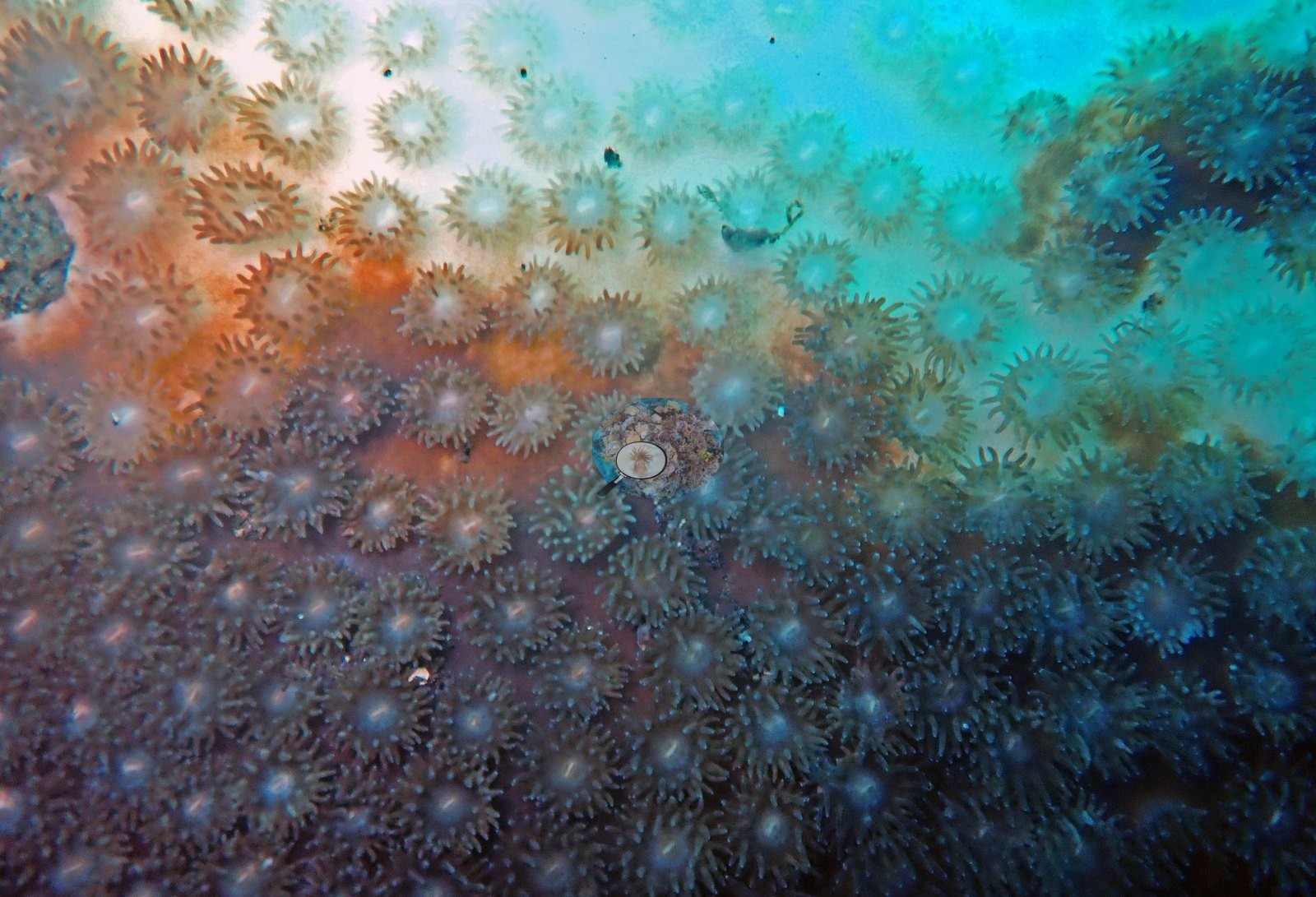
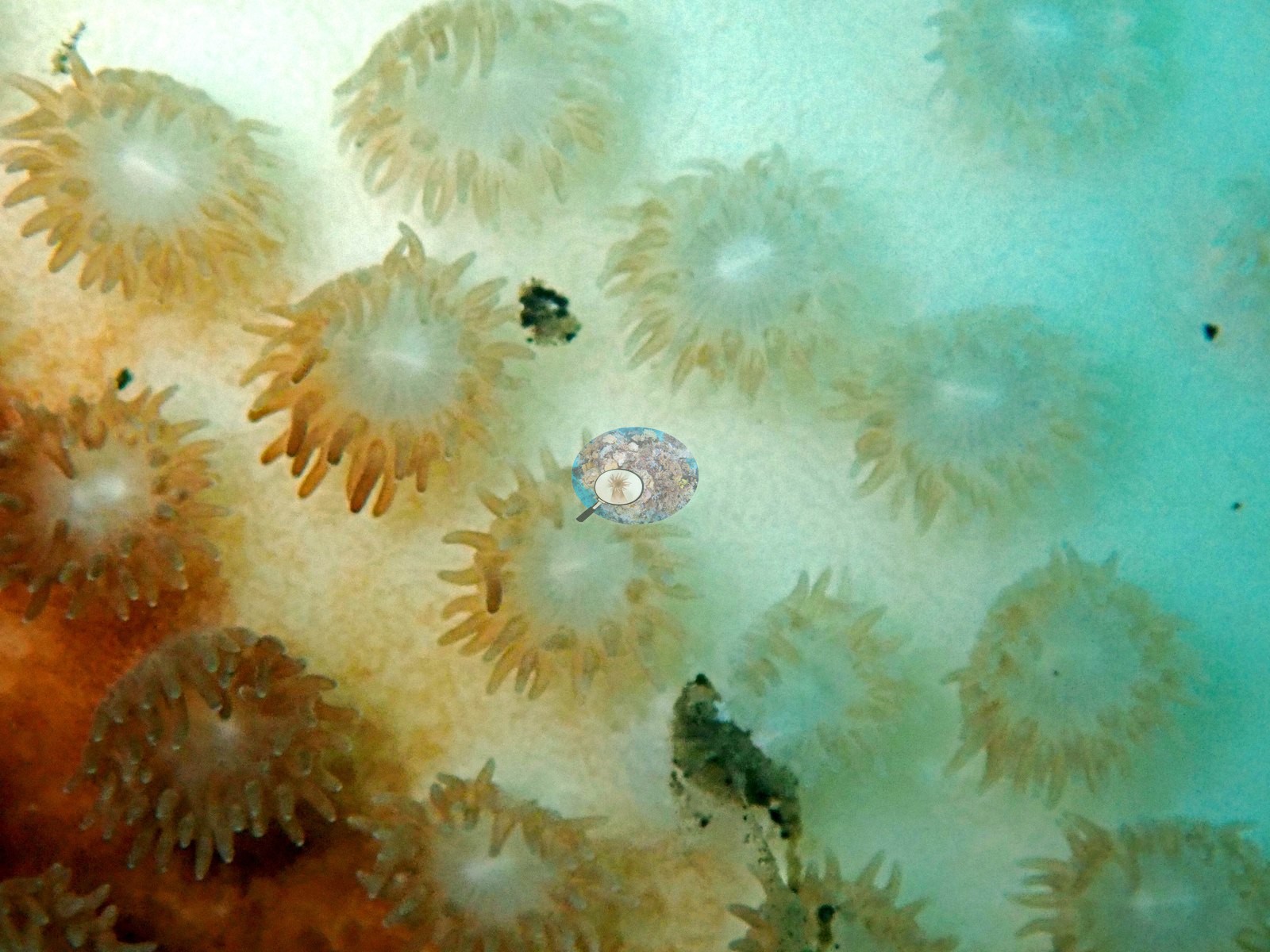
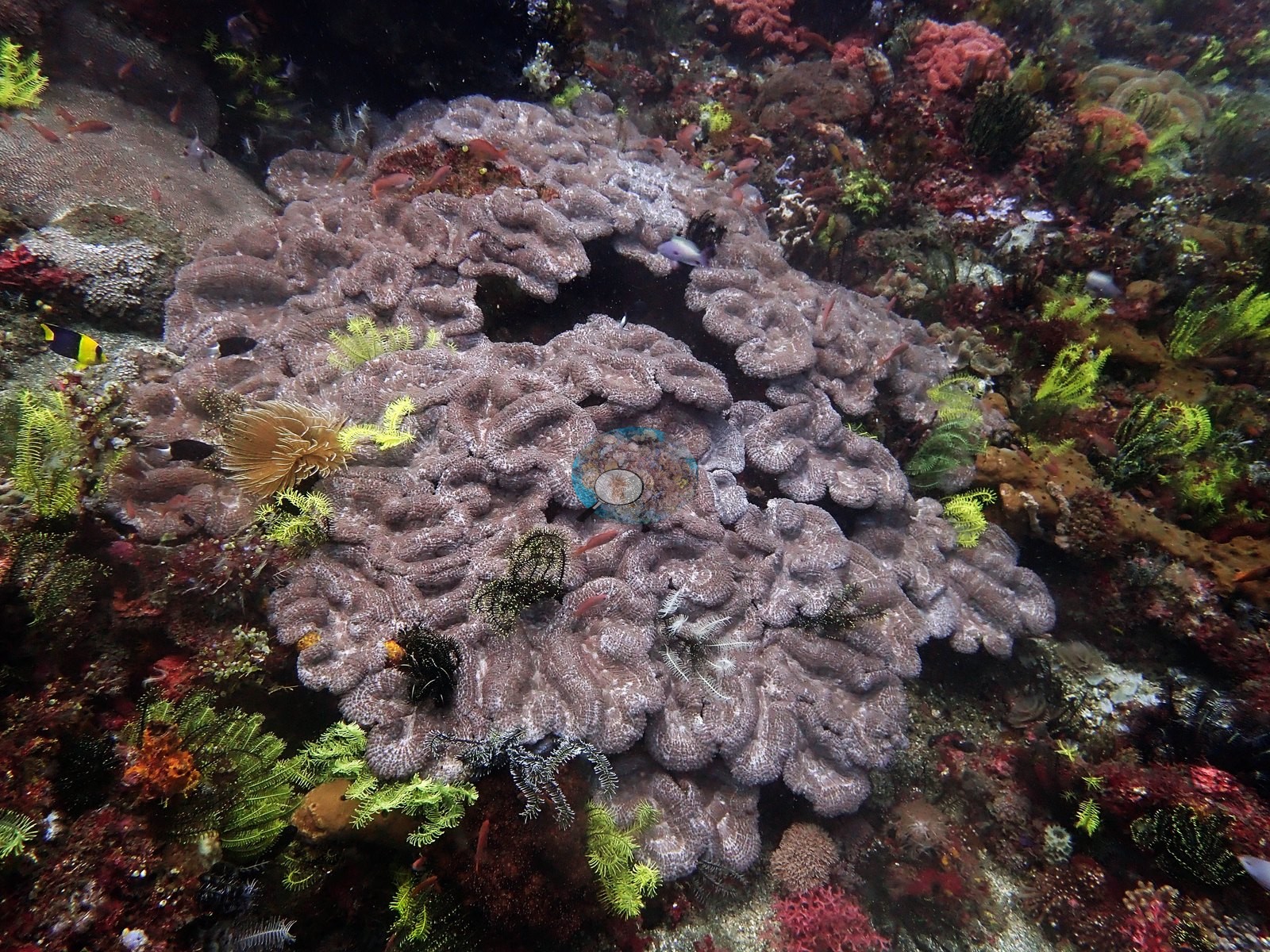
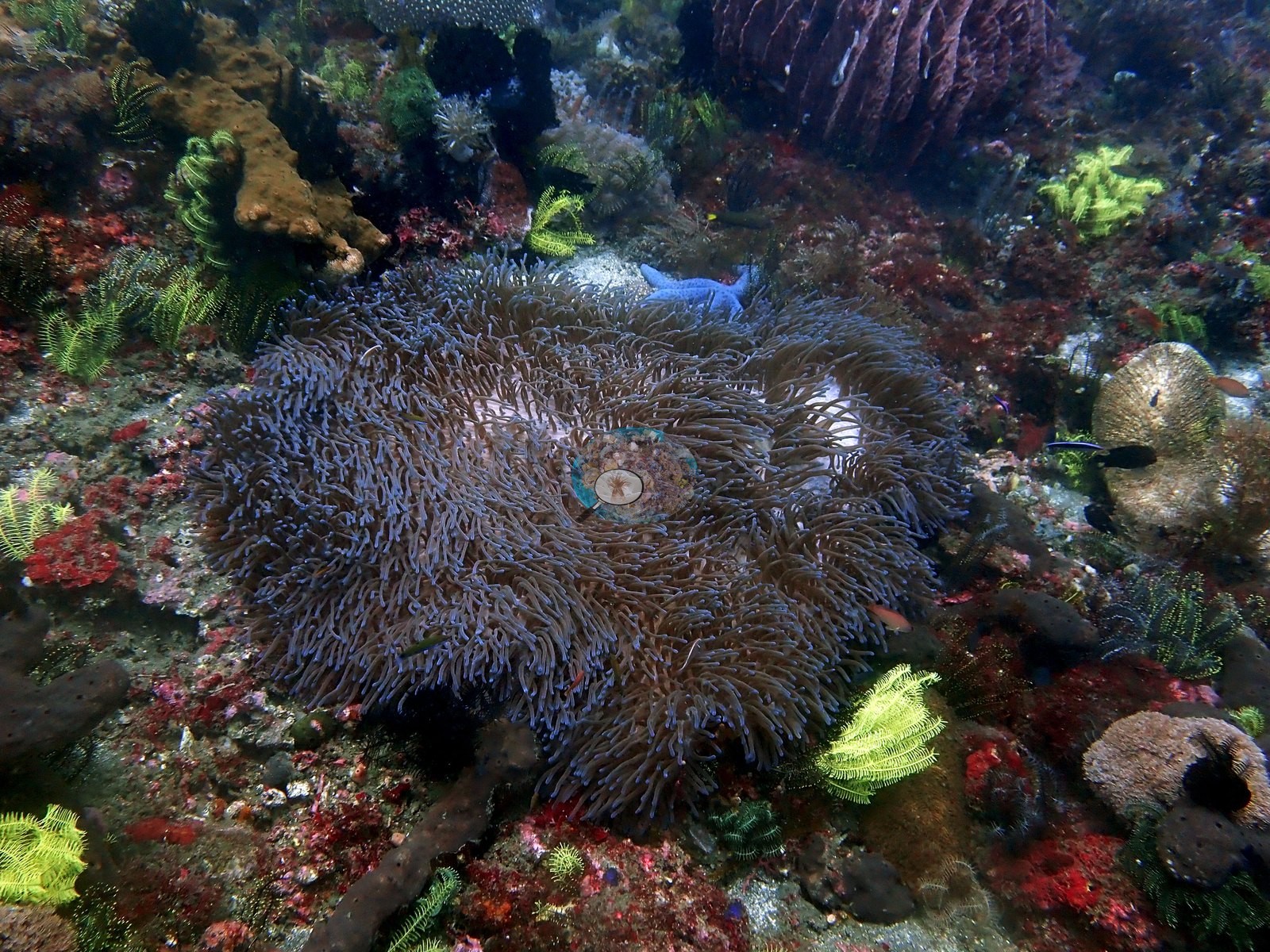
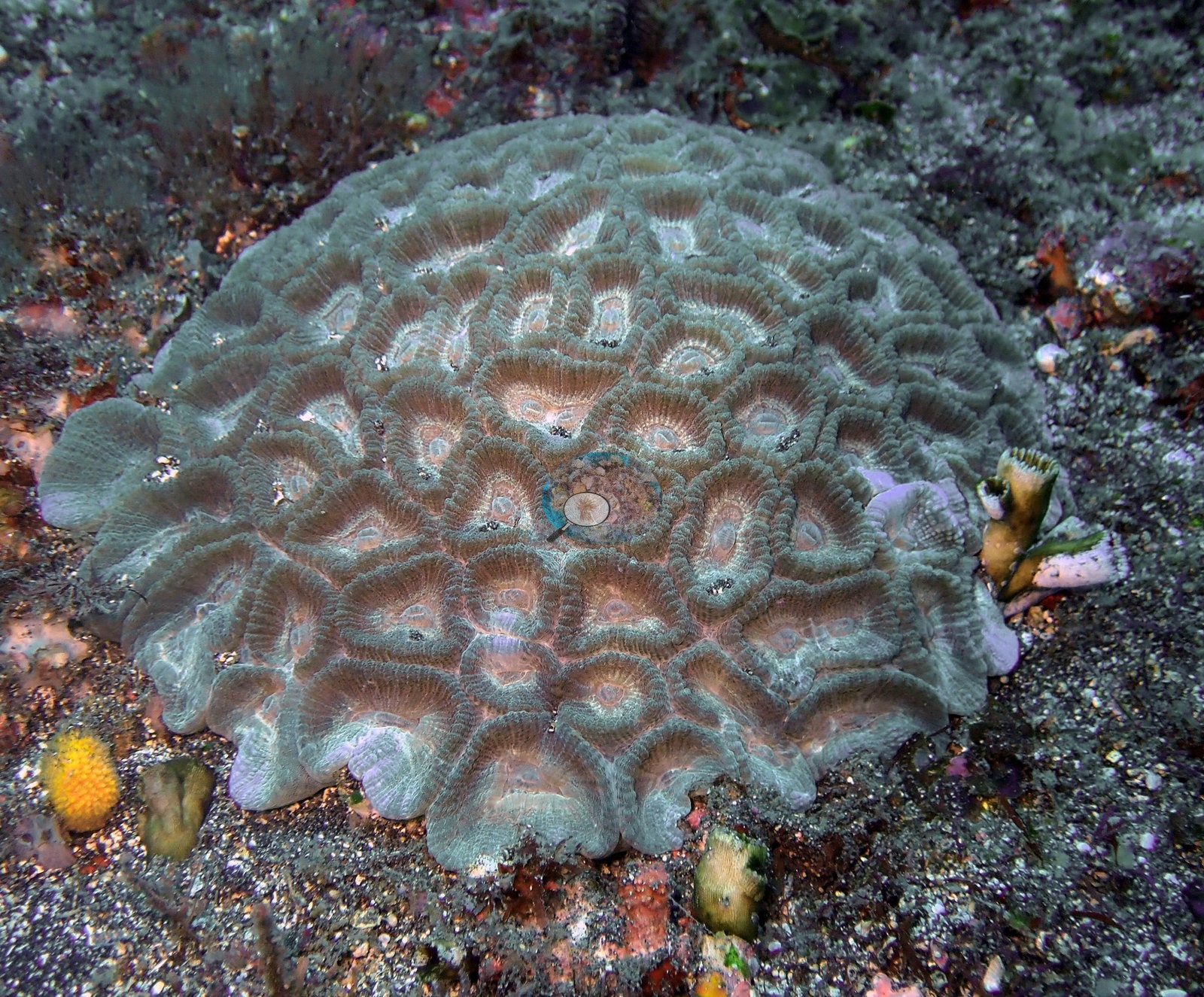
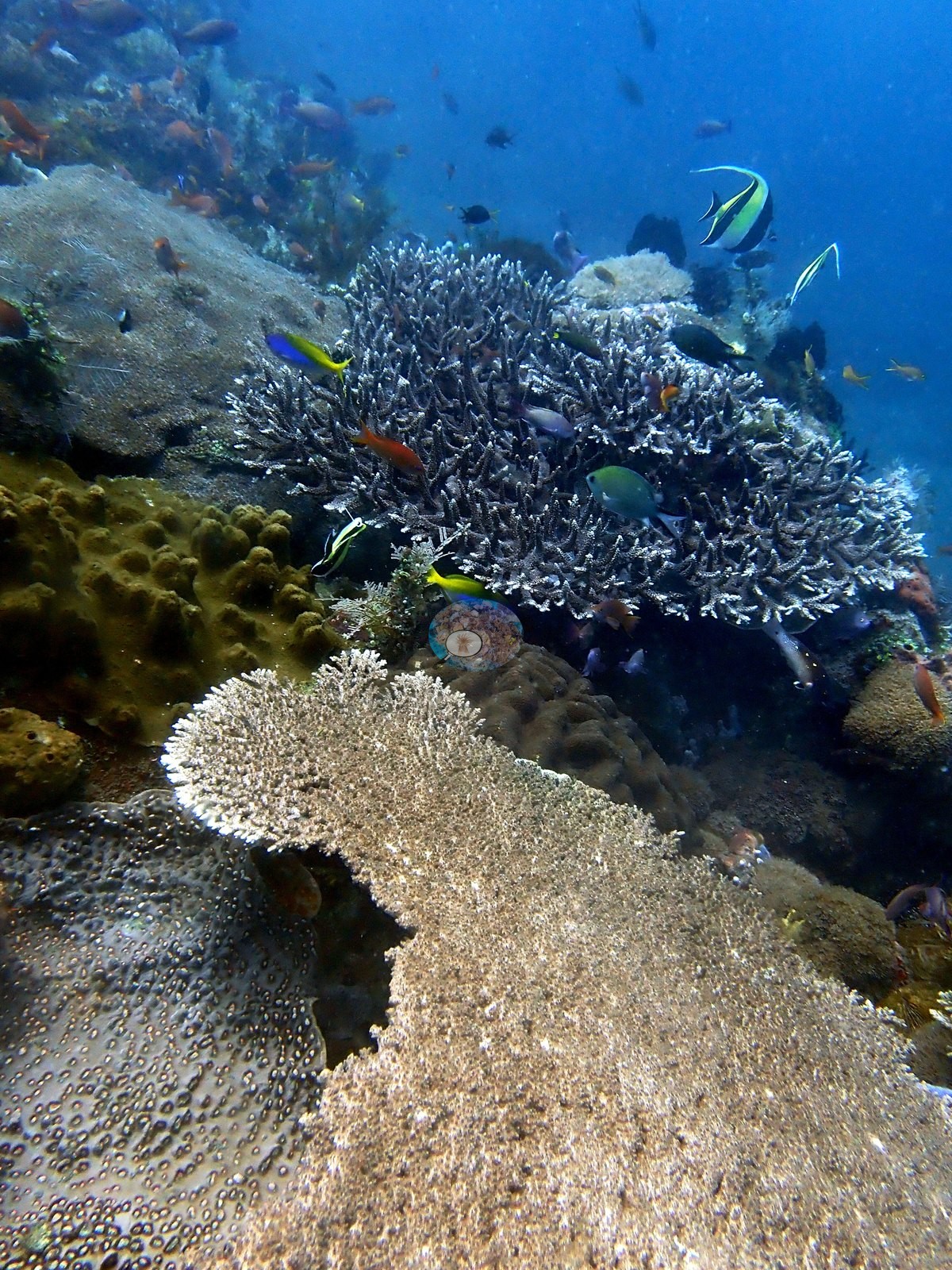
Plating and laminar Montipora-type corals form the shingled backbone, with fleshy meandroid colonies compatible with Lobophyllia or Symphyllia forming near-monospecific lavender beds; Anderson also photographed a large pale-gray Diploastrea dome (e.g., Image 1, Image 8, Image 20, Image 26, Image 28).
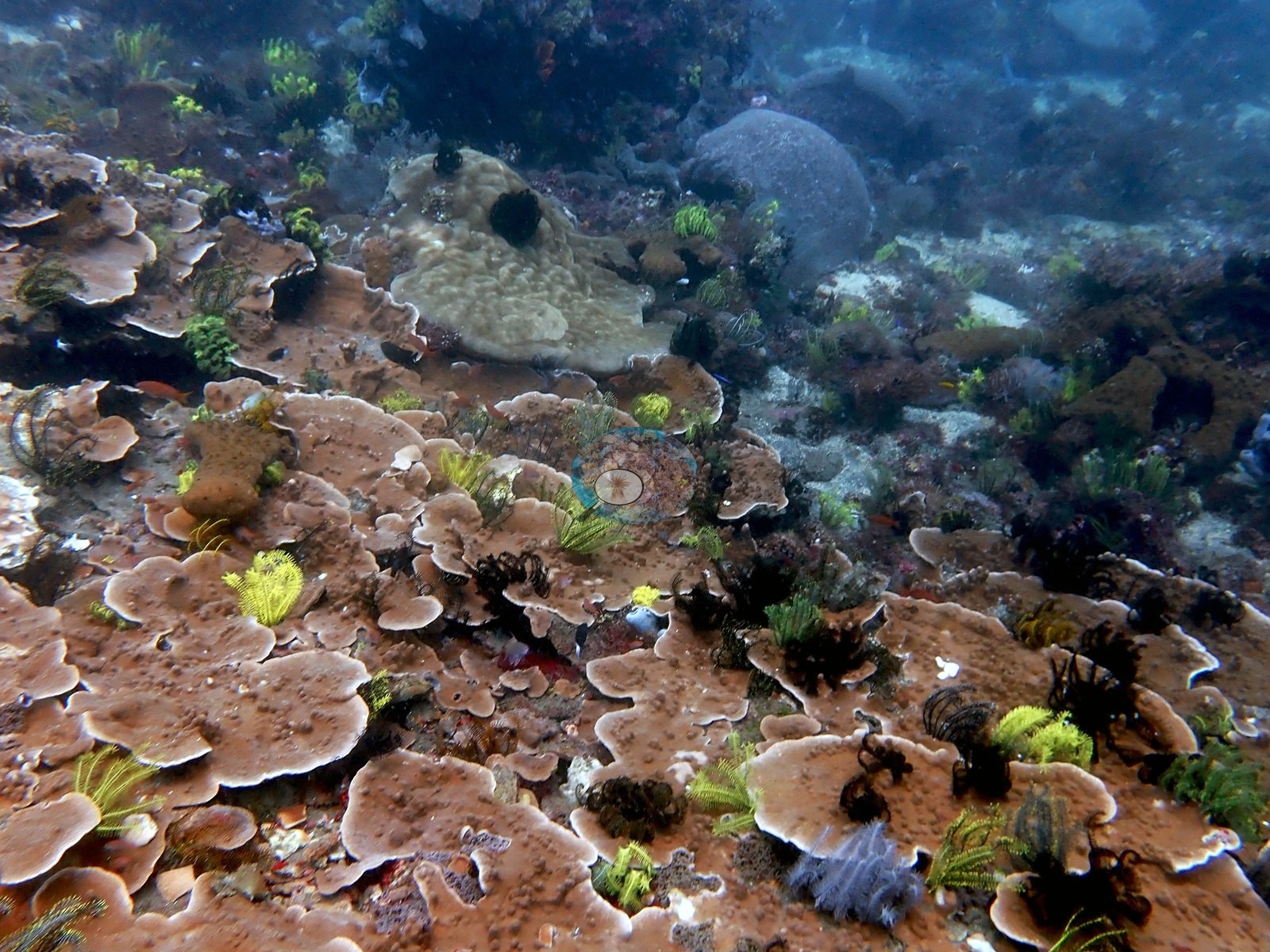
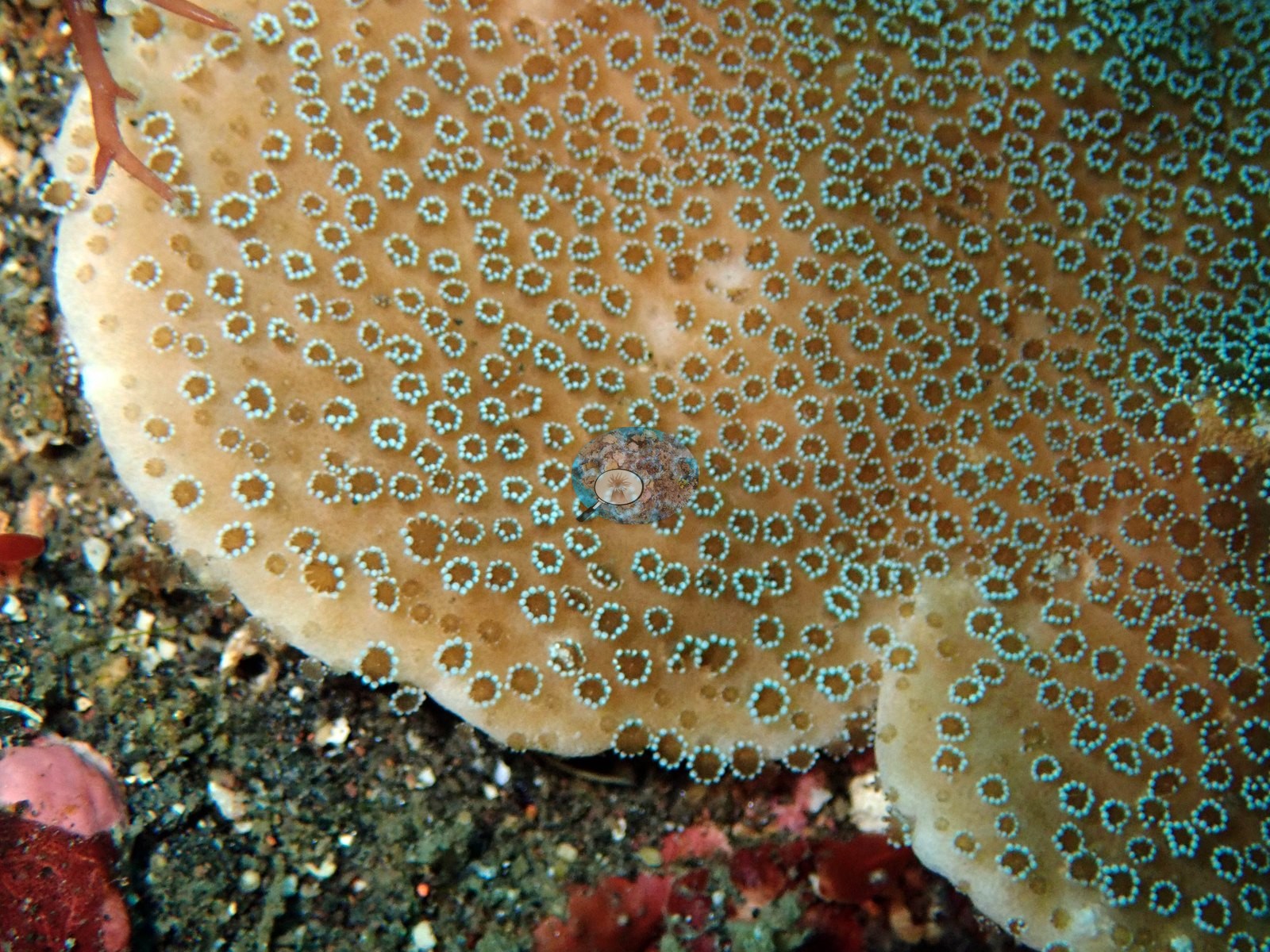
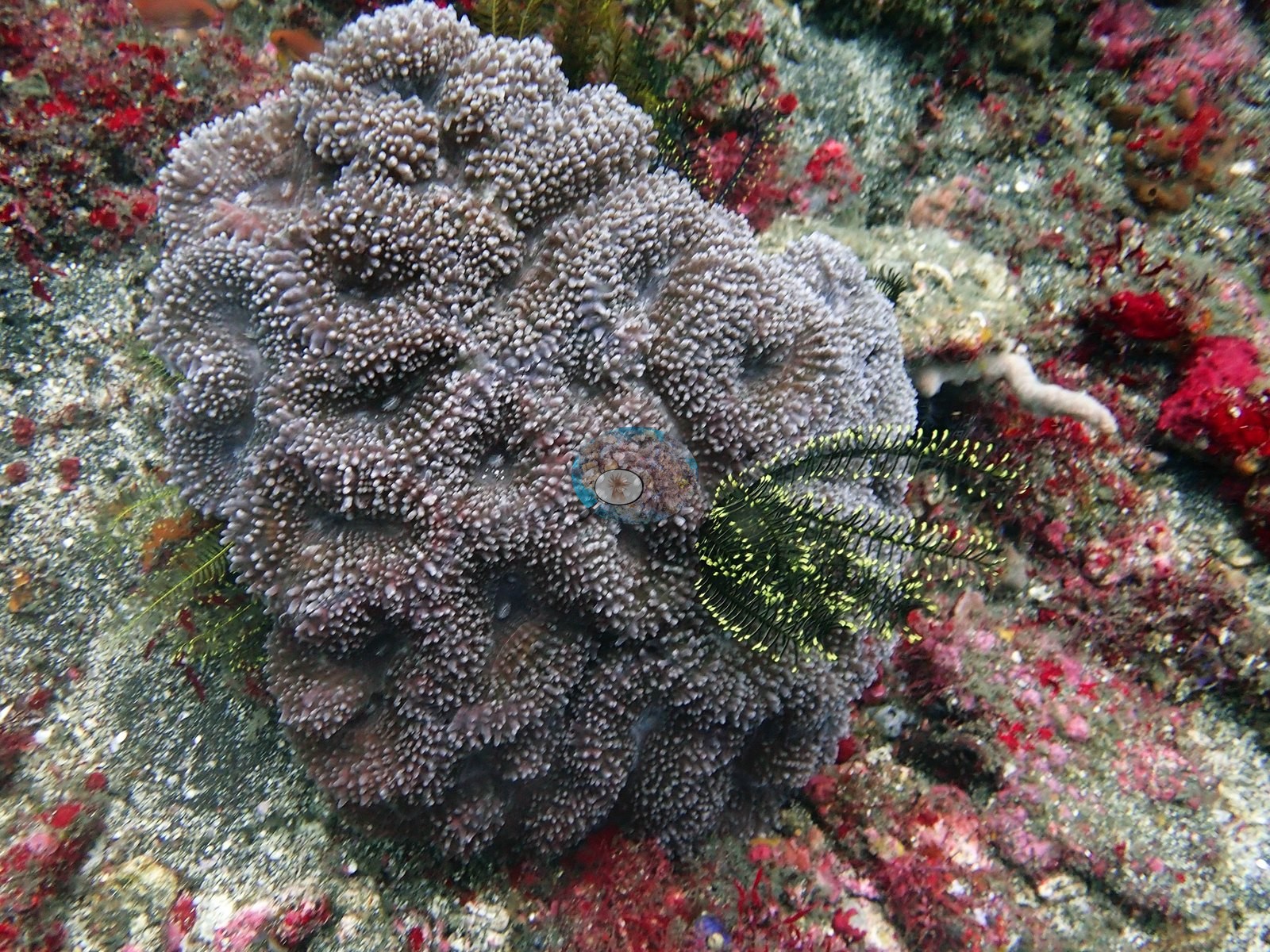
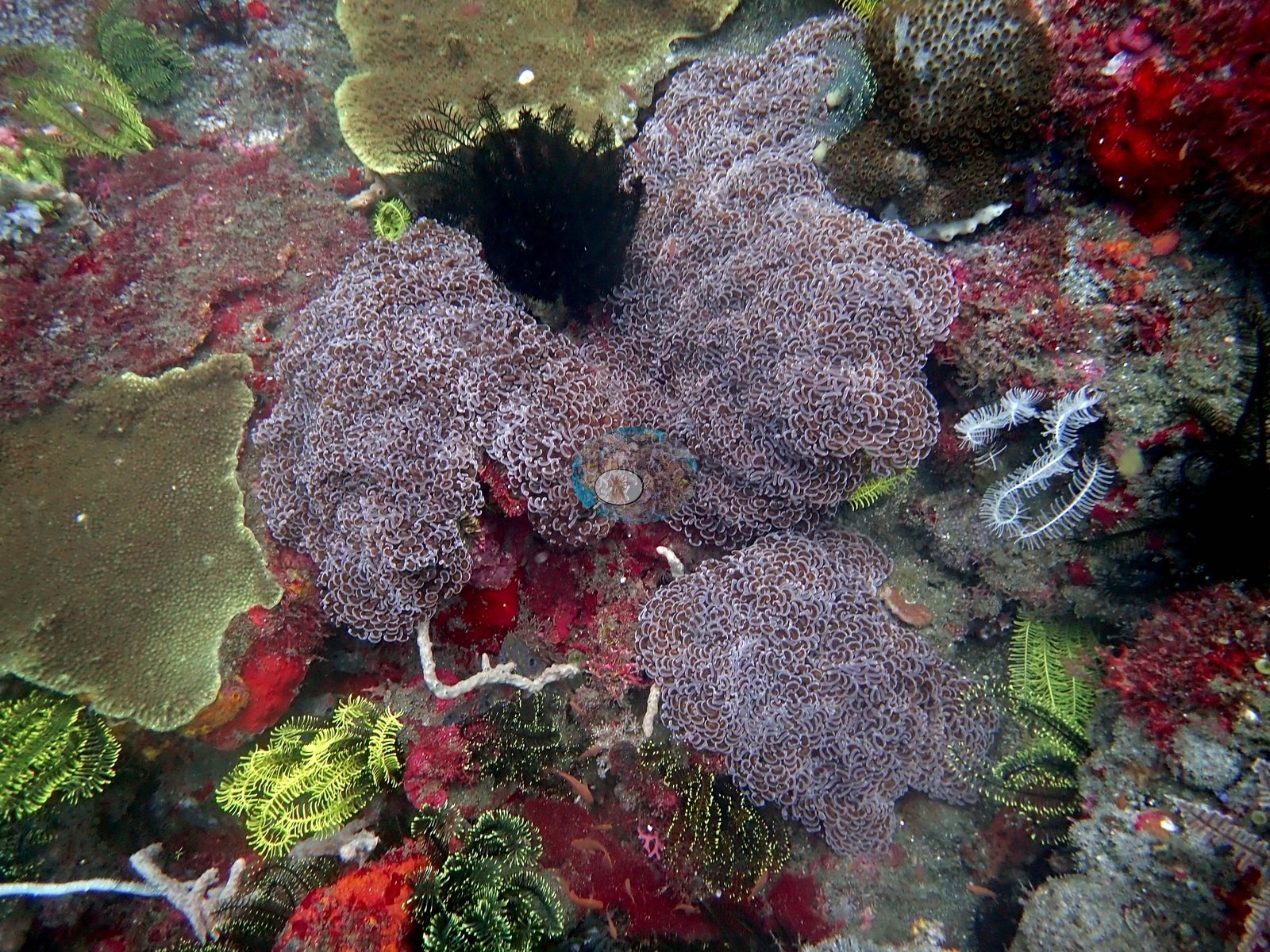
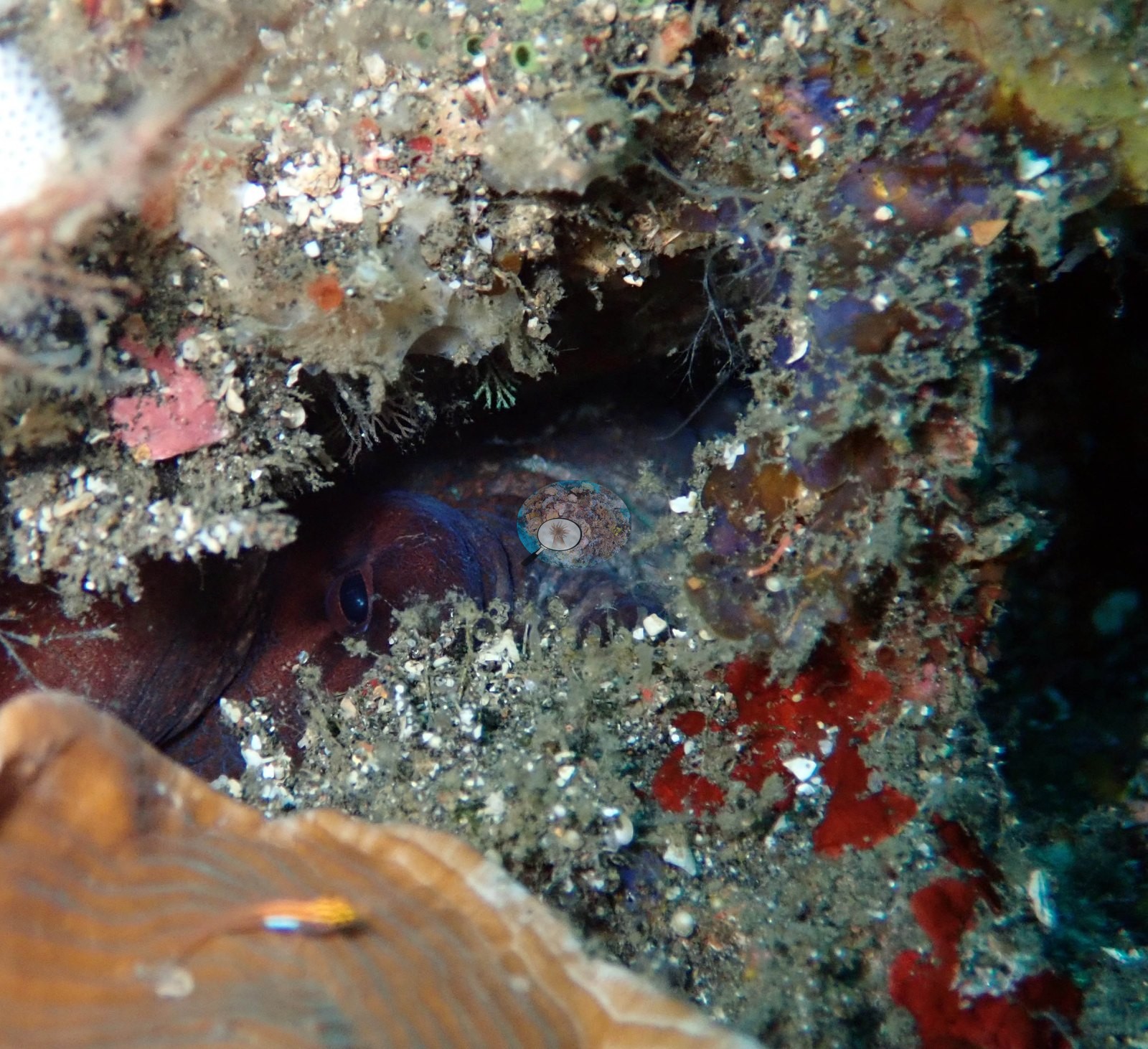
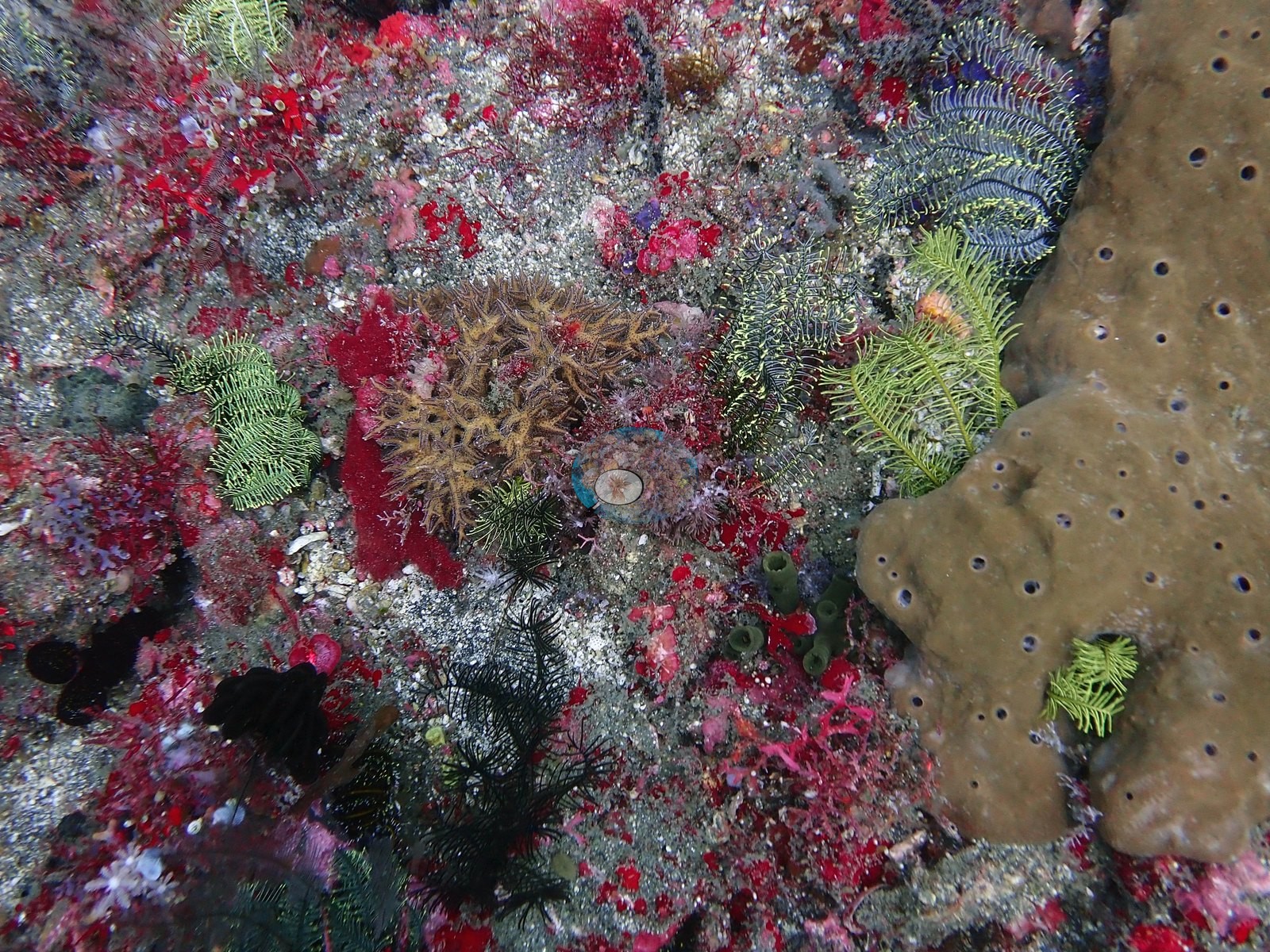
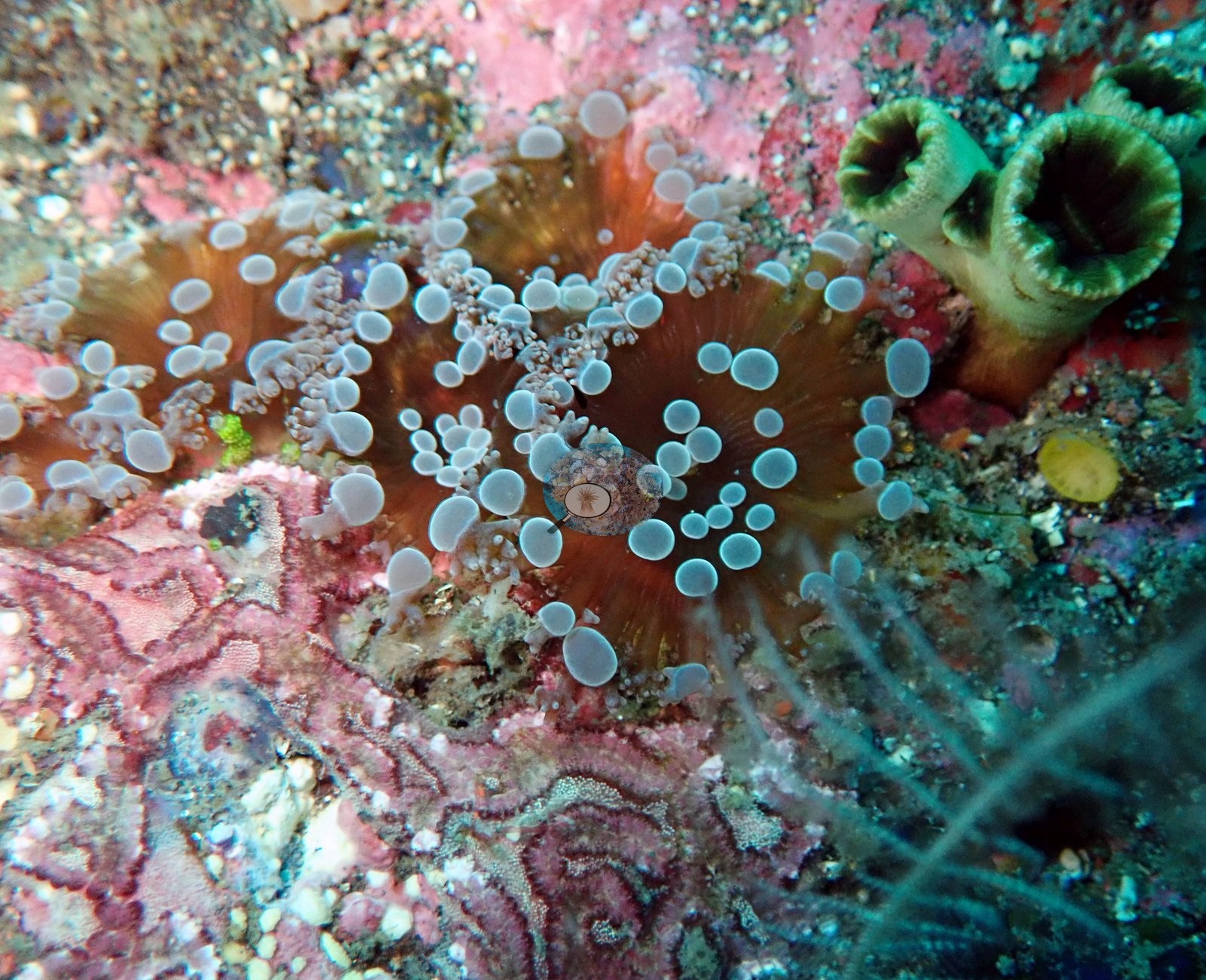
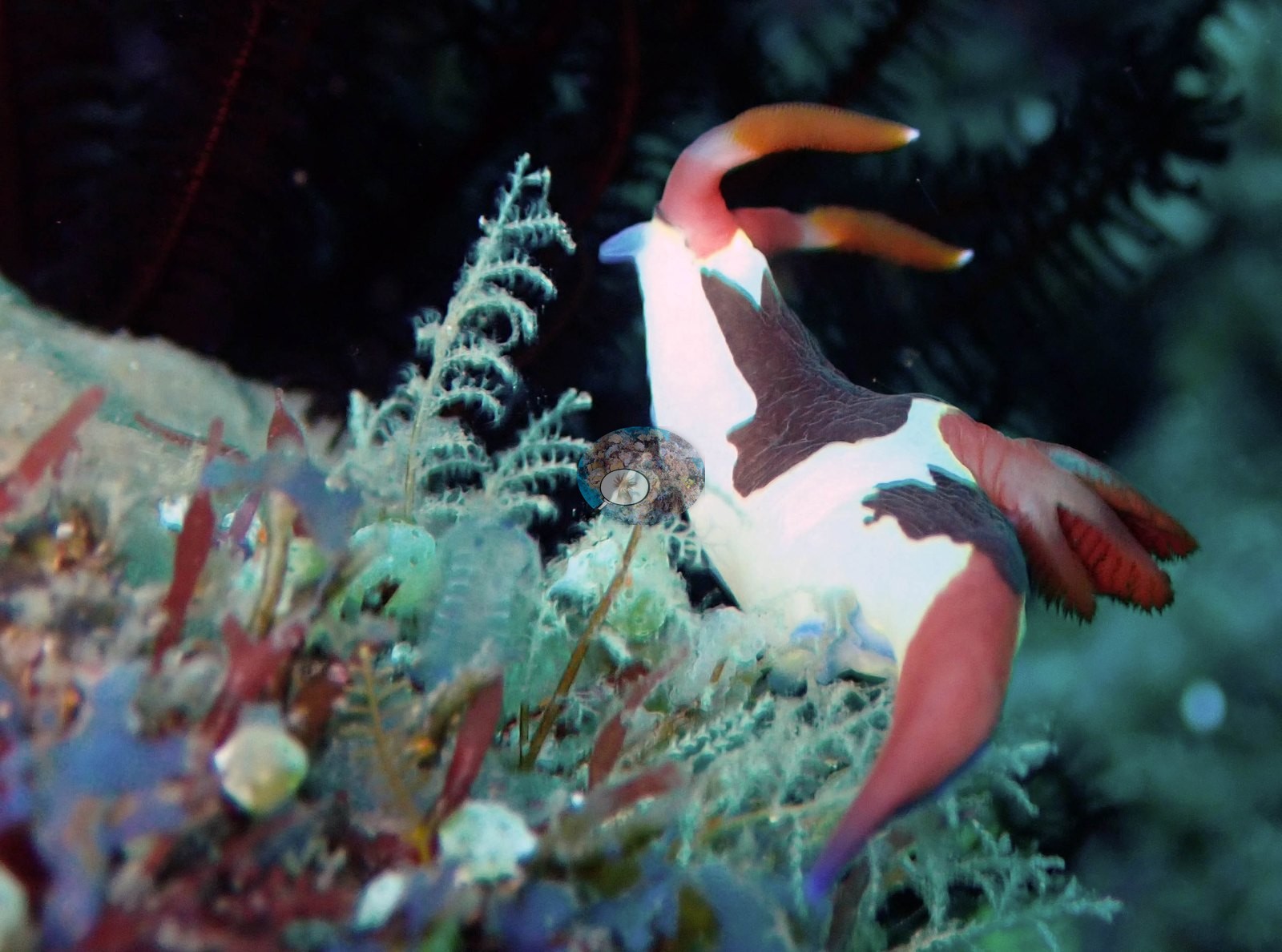
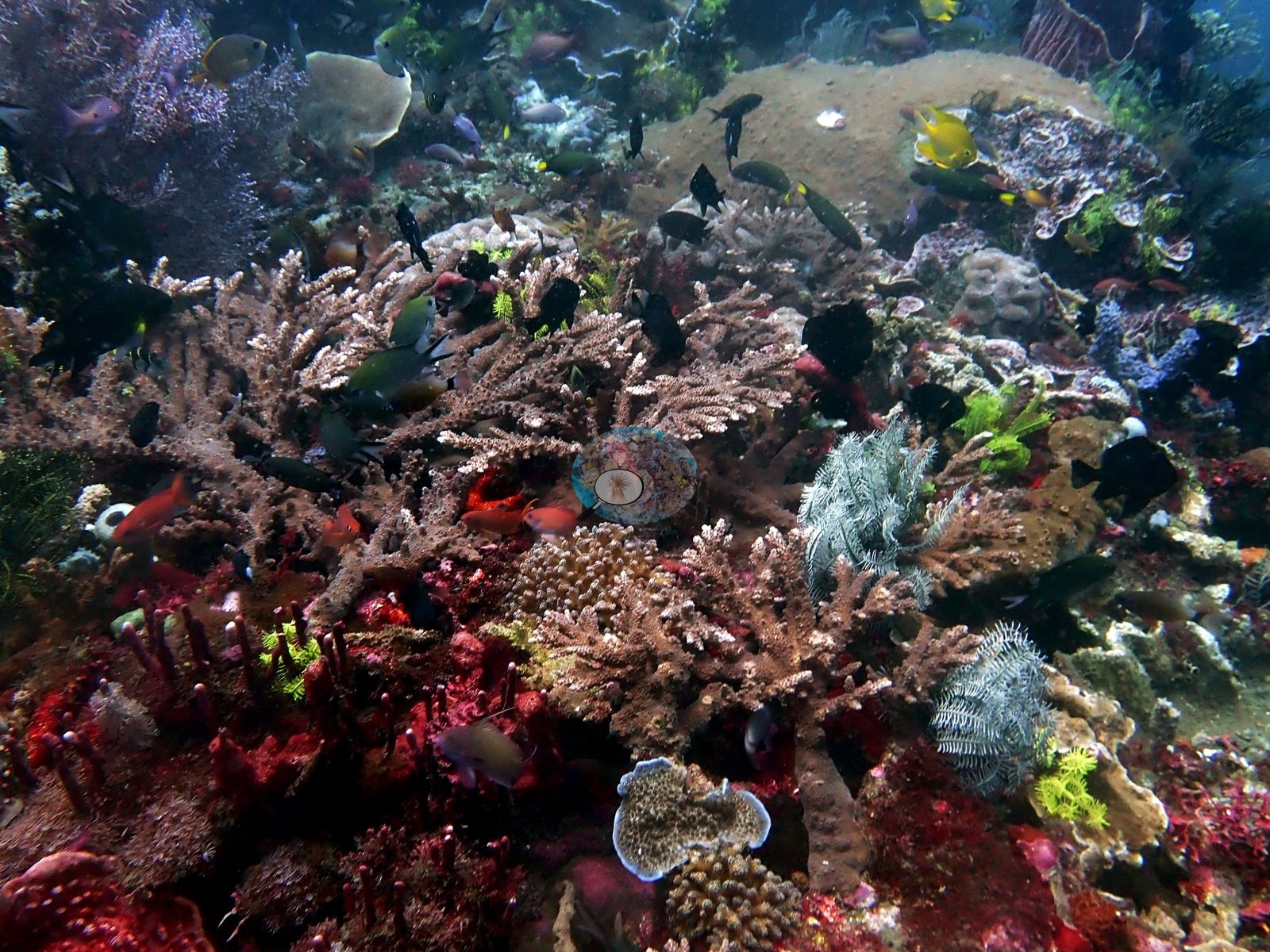
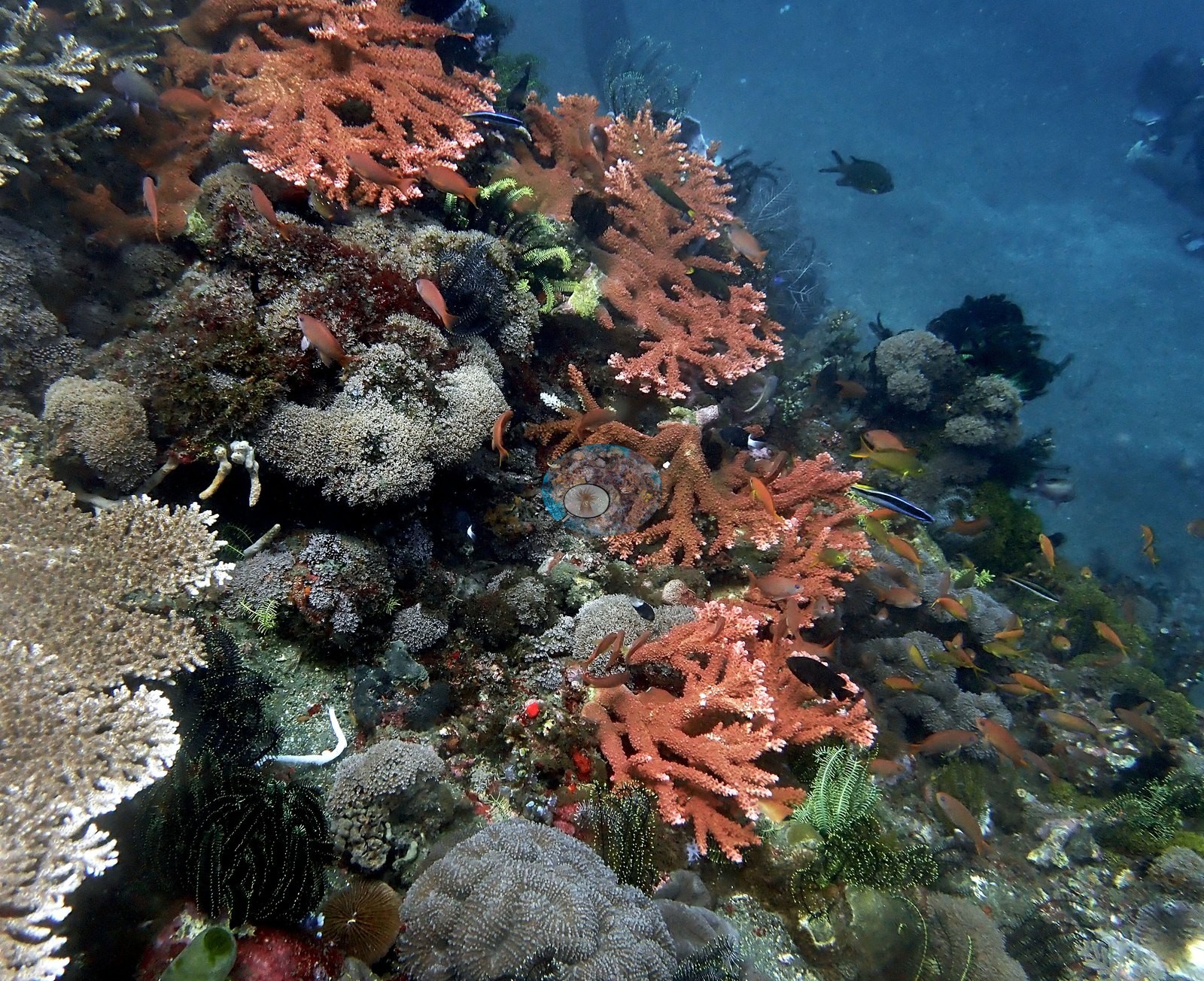
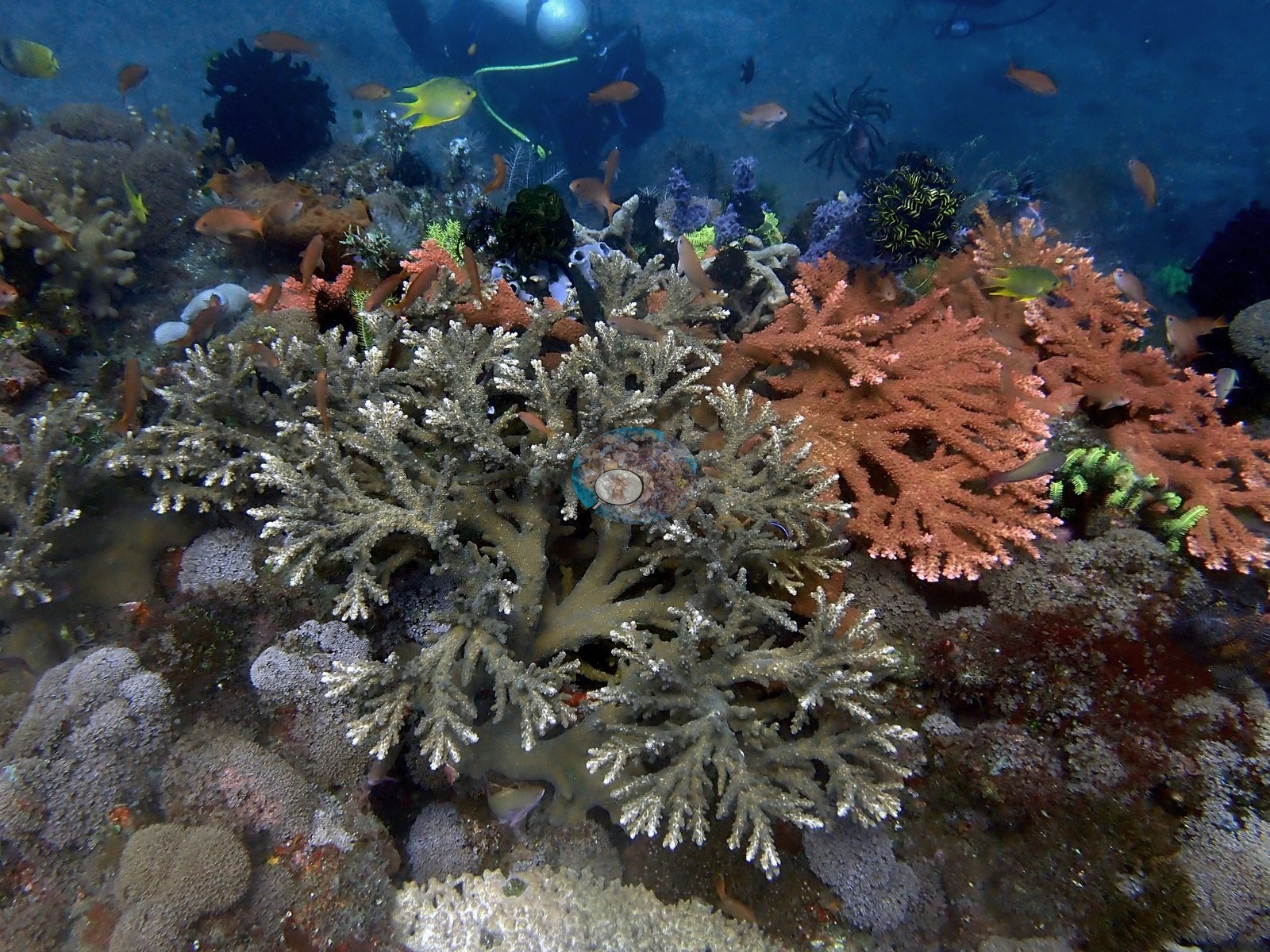
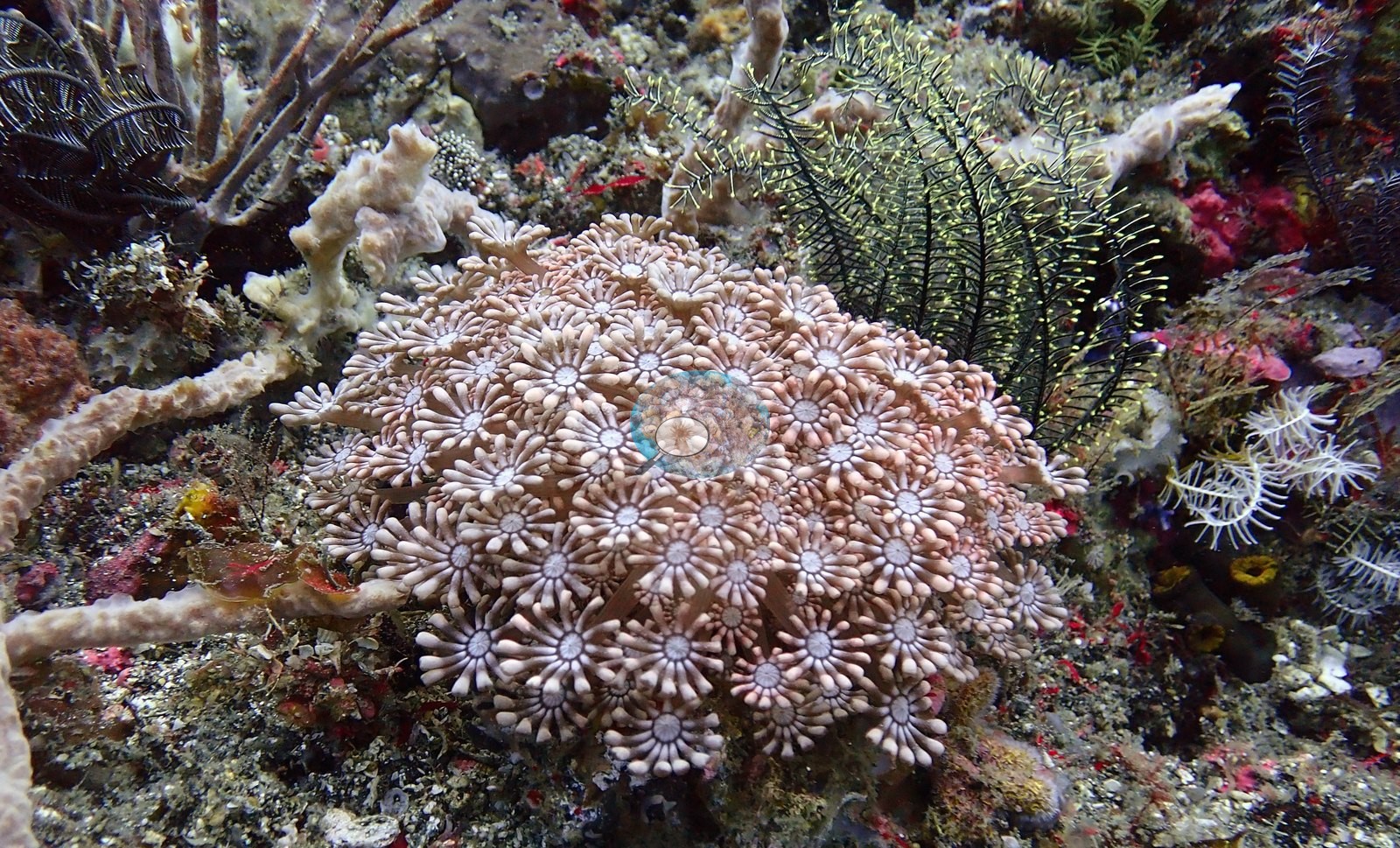
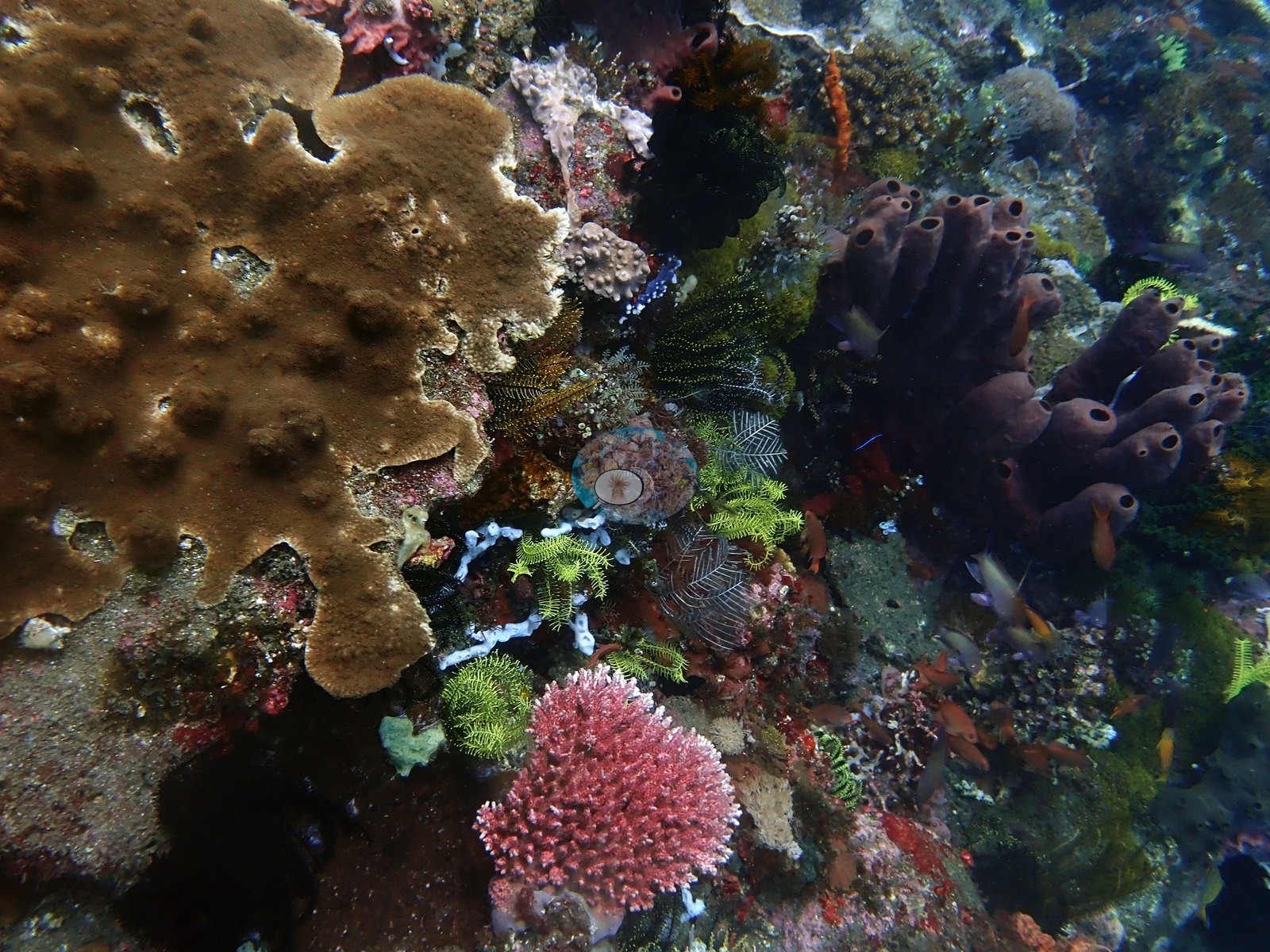
Massive Porites-type domes, Favites- and Platygyra-type brains, tabulate and corymbose Acropora, barrel and encrusting sponges, salmon-pink soft corals, and very high crinoid density round out the reef, and a cryptic octopus was wedged into a crevice (e.g., Image 15, Image 23, Image 30, Image 50, Image 53, Image 55).
Coral cover
Coral cover: 26% — a blind Claude computer-vision point count of 60 of Anderson's edited photographs (20 points per photo; water, fish, and obstructions excluded). Other computer-vision methods are listed in the method table. Cover is meaningful here: the terraces approach continuous living tissue, and imagery suggests roughly 40-60% live hard coral, though haze softens several wide frames and the crown-of-thorns keep that number moving (e.g., Image 37, Image 41).
Stressors
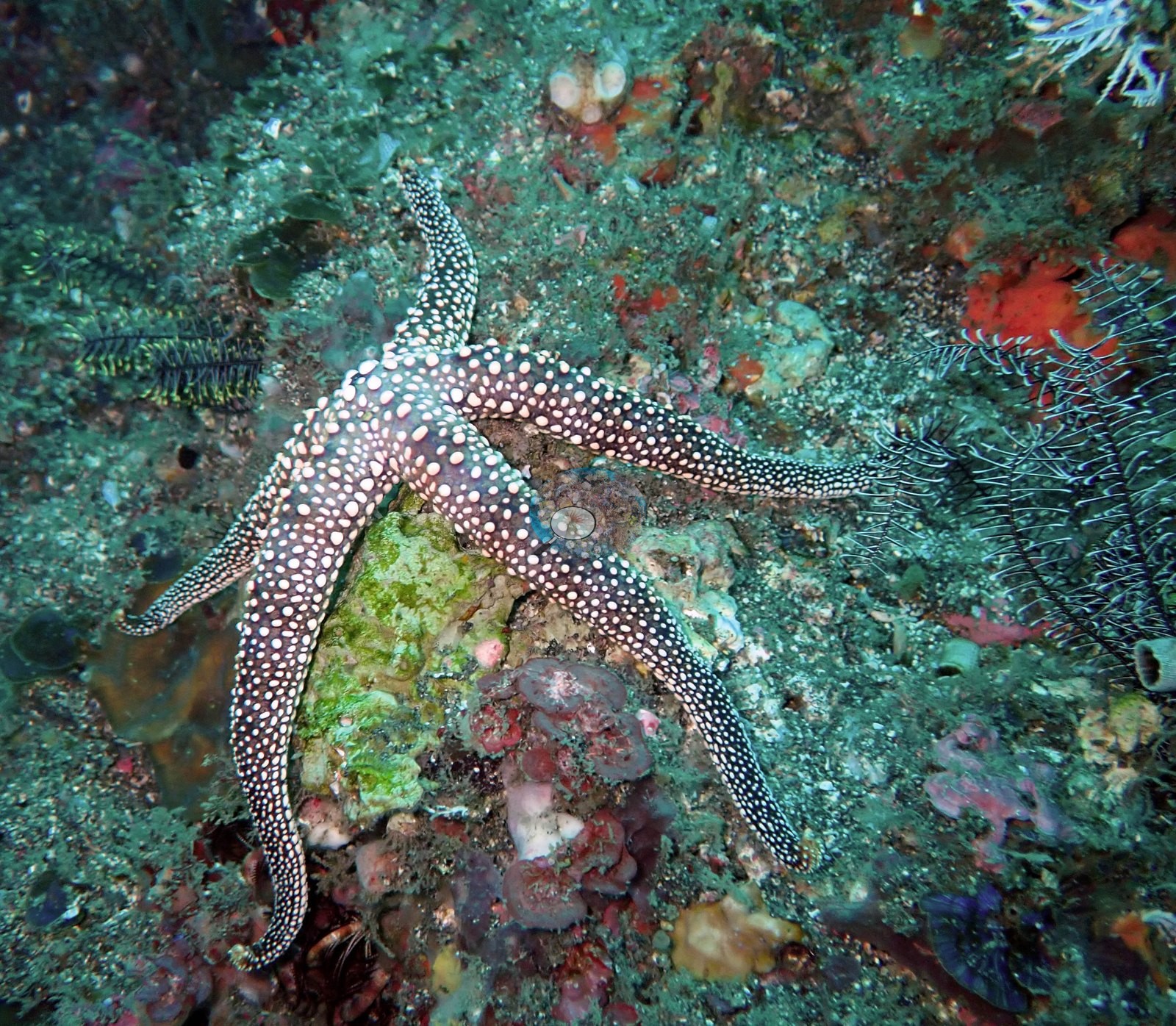
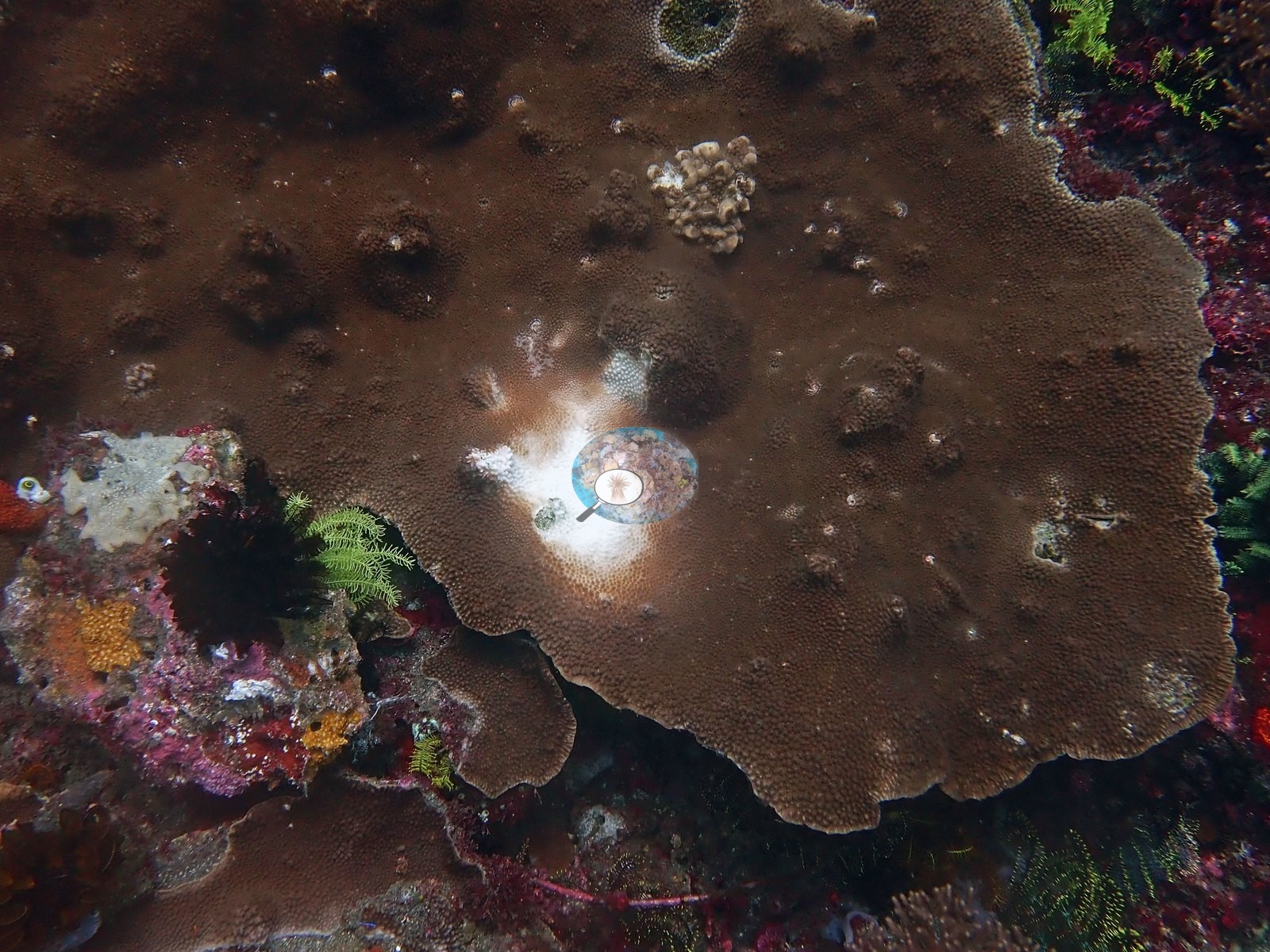
The headline observation is crown-of-thorns: at least two individuals were imaged, with a probable third hosting a commensal shrimp (e.g., Image 6).
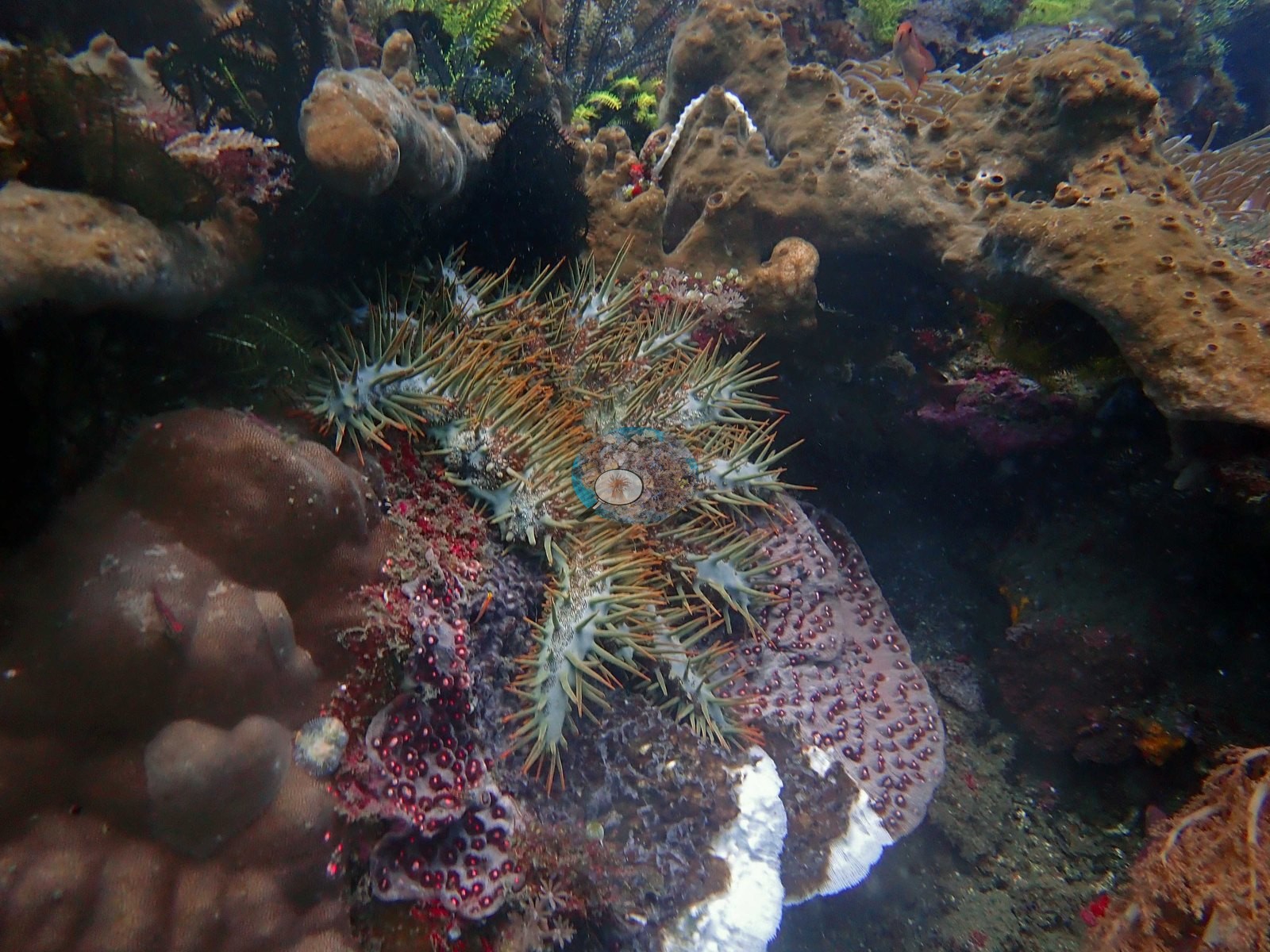
A bright white lesion on one large tan plate has feeding-scar morphology, though disease or mechanical mortality cannot be excluded, and a few plate margins carry pale patches of unresolved cause (e.g., Image 47).
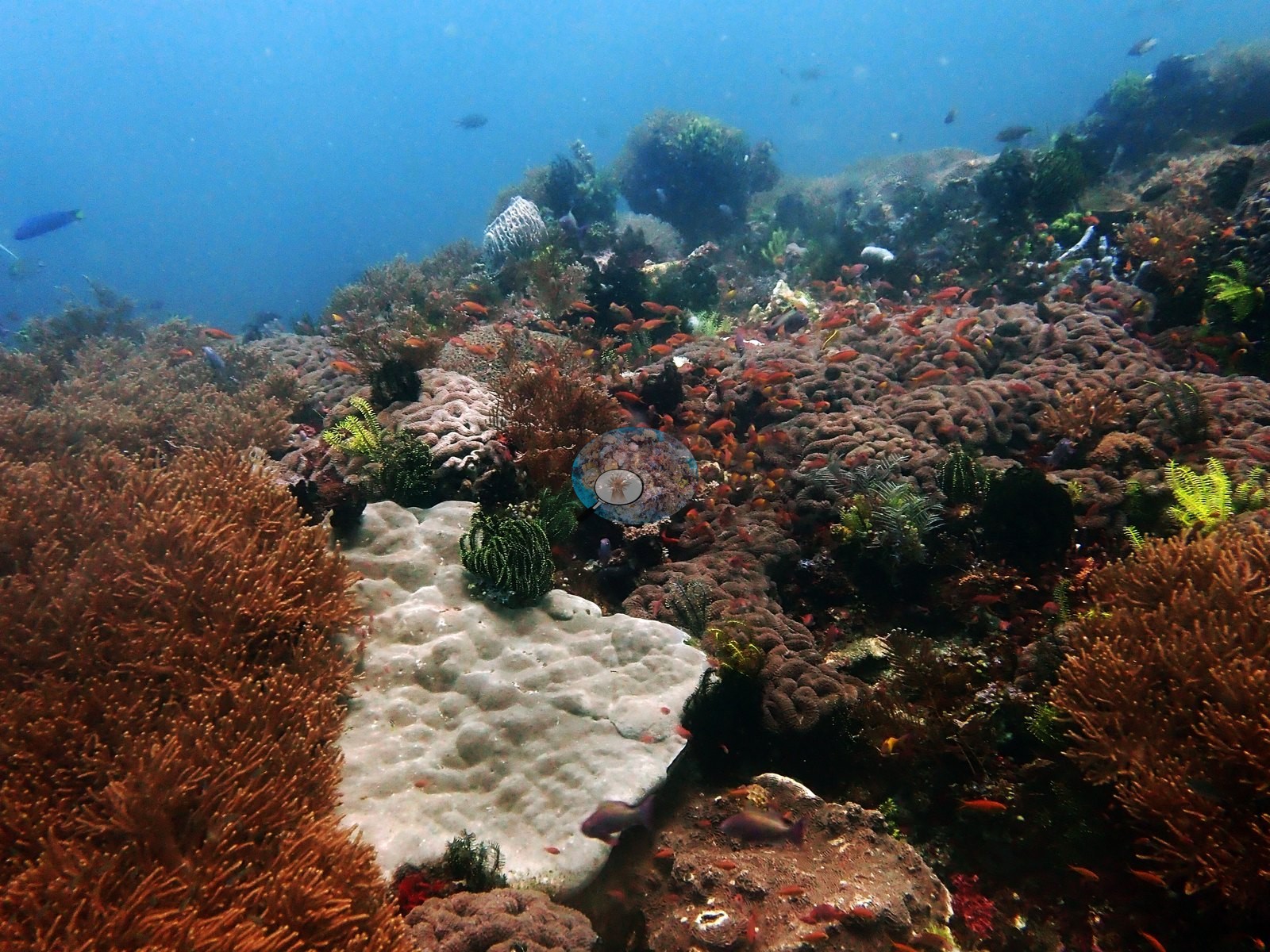
There was no thermal-bleaching signature, no macroalgal overgrowth, and no rubble field.
Comparisons with other data
No prior survey data from this site. If you would like to share yours, please email us.
Dive record
The dive log records 20 January 2019, entry 11:21, a maximum depth of 32.3 m and 27.59 C - the deepest of the three dives that day, sitting between two Hot Rocks dives at Sangeang.
CV model comparison
More info
DINOv3 and CoralSCOP were run on the same photos and are listed for comparison. Coralscapes v2 and v1 were also run but are not shown: Anderson does not consider Coralscapes reliable for these photos. No diver transect exists for this trip, so agreement between the rows is not accuracy, and as of September 2026 no computer-vision method estimates coral cover accurately on new images; treat every row as indicative.| Method | Hard-coral cover (%) |
|---|---|
| In-house DINOv3 | 29.6 |
| CoralSCOP edited | 39.6 |
| Claude (edited photos) | 26.4 |
Data & links
All images from Coral Reef Diagnostics. Data are from Coral Reef Diagnostics.
© Coral Reef Diagnostics.