
Indonesia - Komodo NP: Secret Garden
Part of the regional summary: Indonesia - Komodo
More info
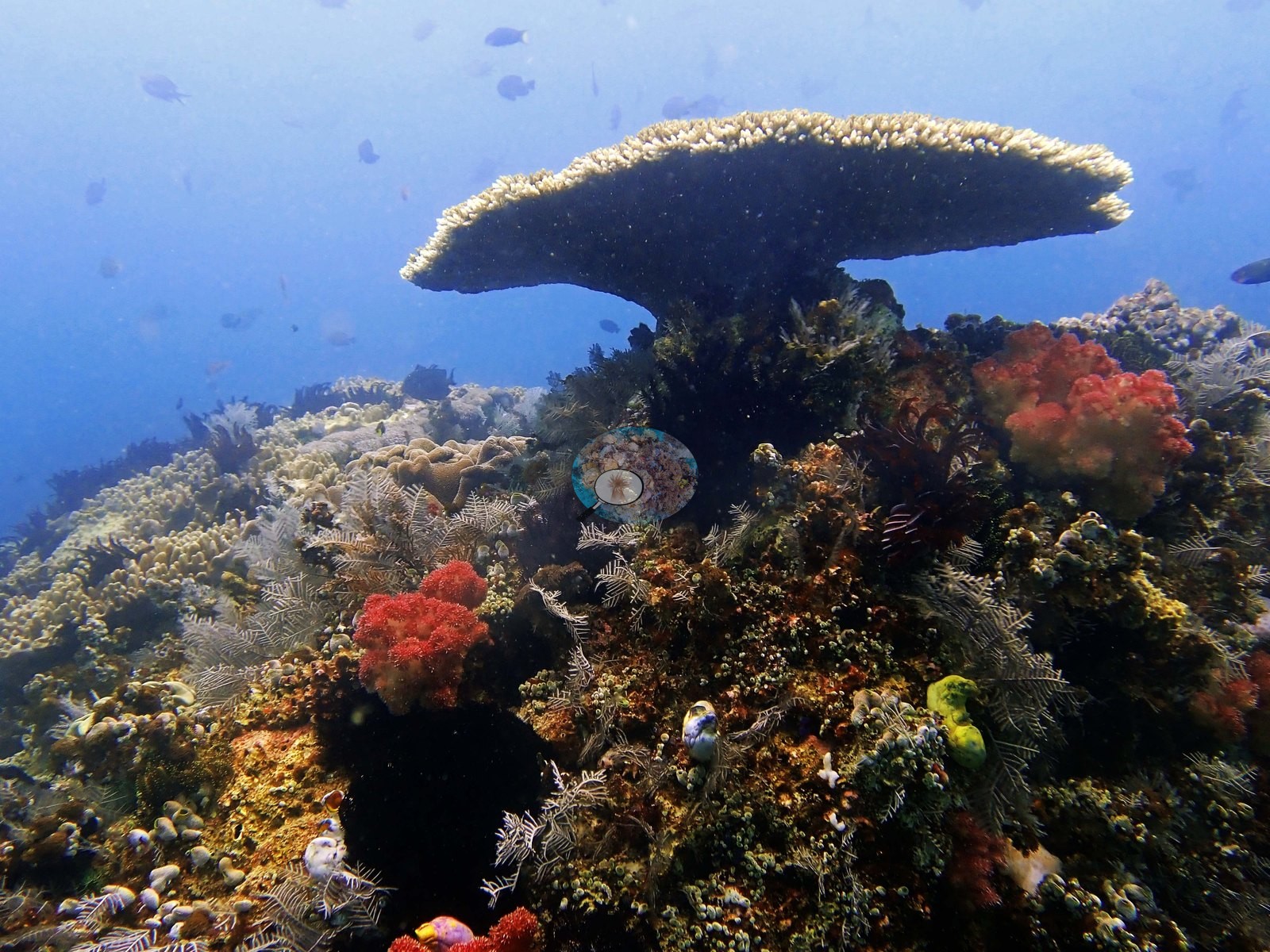
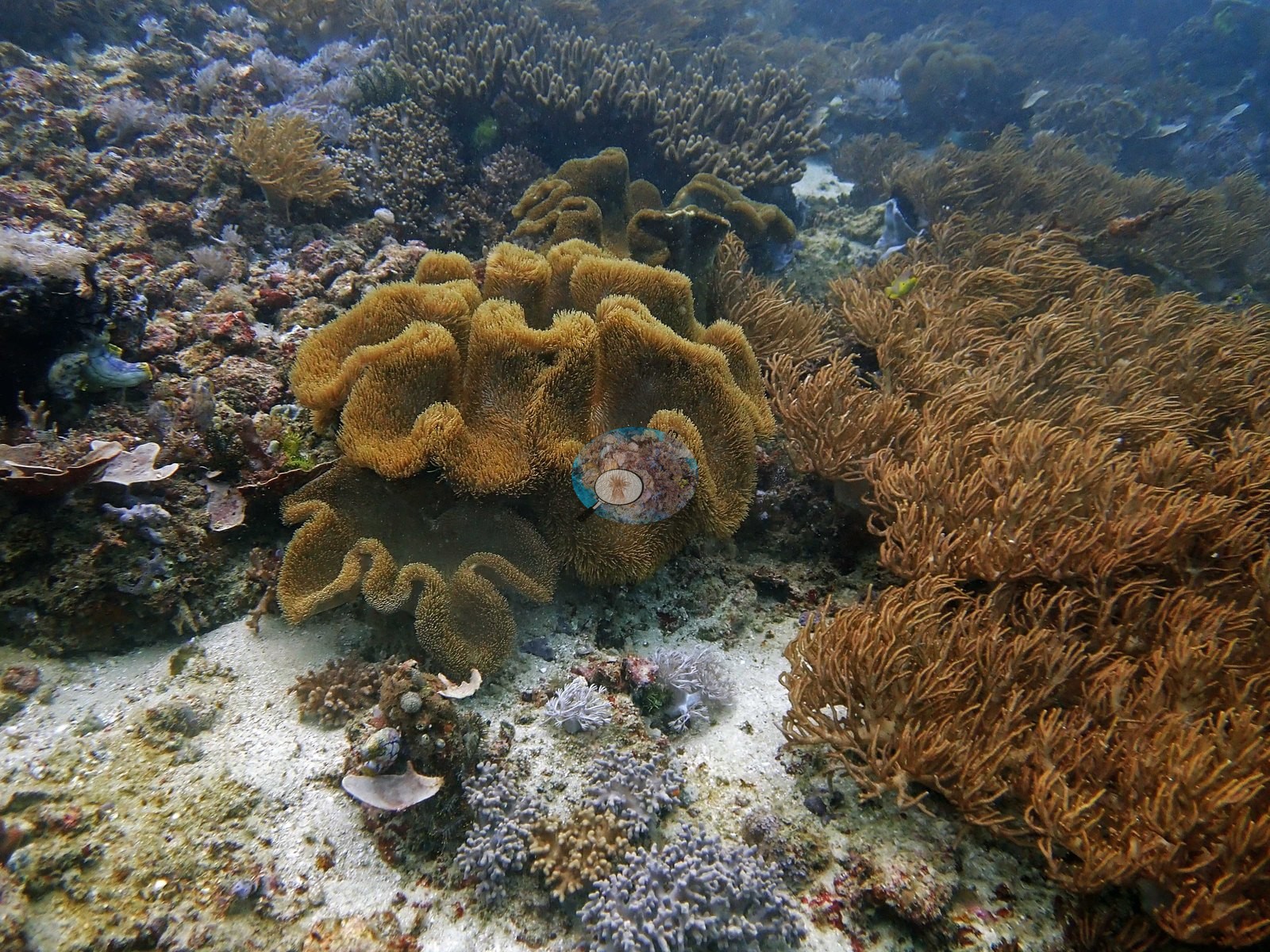
East Nusa Tenggara (NOAA CRW virtual station)Secret Garden is more a soft-coral sand slope than a coral reef, with generally low hard coral cover but a strong critter showing — a school of 7-10 mobula rays circling divers, ghost pipefish disguised as algae, and a huge lionfish-covered Tubastraea colony. A blind Claude computer-vision point count puts coral cover around 13%, though the site itself reads as coral-sparse.
Secret Garden lebih merupakan lereng berpasir dengan karang lunak daripada terumbu karang, dengan tutupan karang keras yang umumnya rendah namun kehadiran biota yang kuat — segerombolan 7-10 ekor pari mobula yang berputar mengelilingi penyelam, ikan pipa hantu yang menyamar sebagai alga, dan koloni Tubastraea besar yang dipenuhi ikan lepu. Penghitungan titik buta visi komputer Claude memperkirakan tutupan karang sekitar 13%, meskipun lokasinya sendiri terkesan miskin karang.
Terjemahan ringkasan ini oleh AI; versi bahasa Inggris yang berlaku.
11 of the 41 photographs on this page are shown beside the text that discusses them under "Site description" below.
Site description
Setting
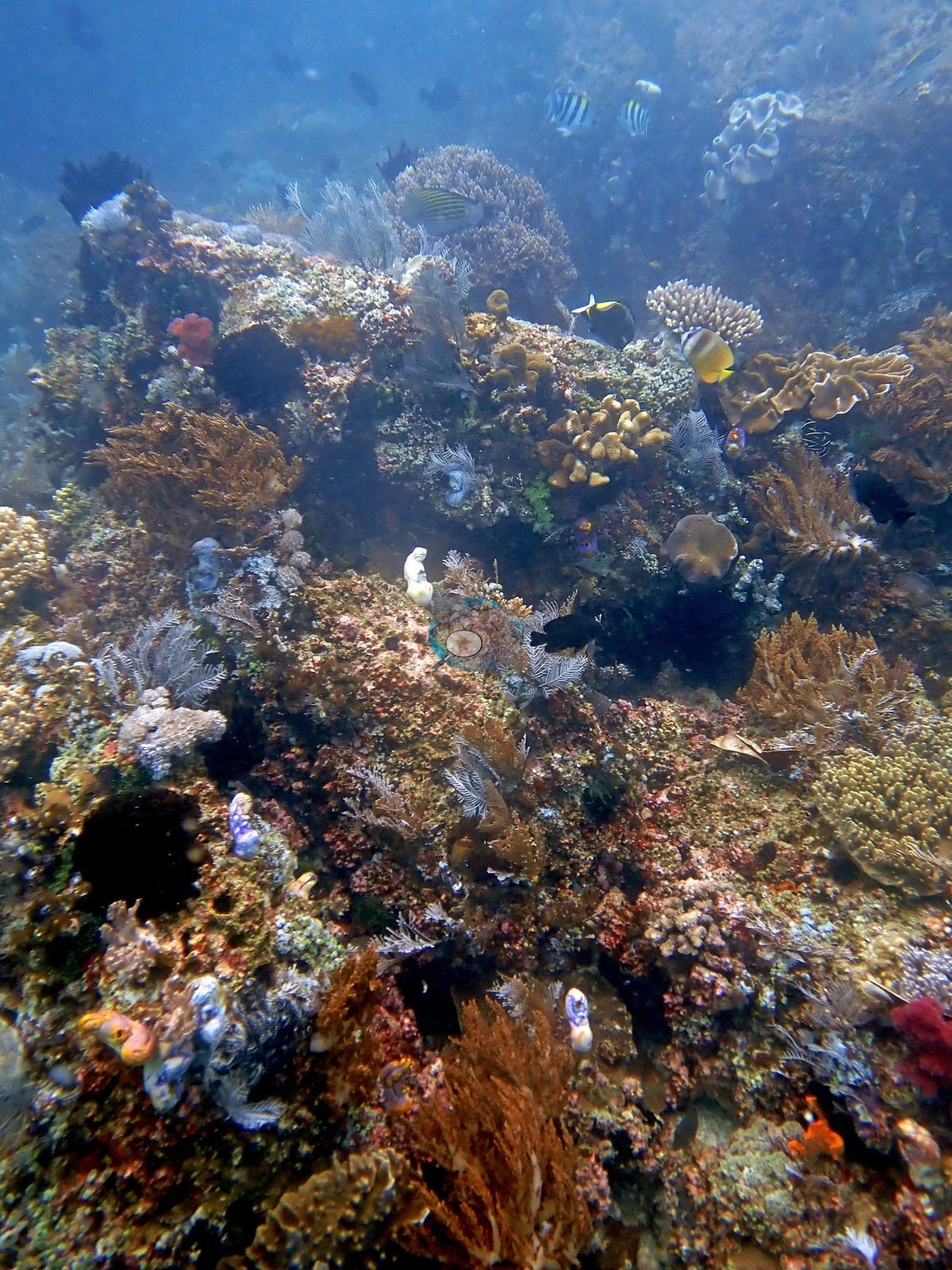
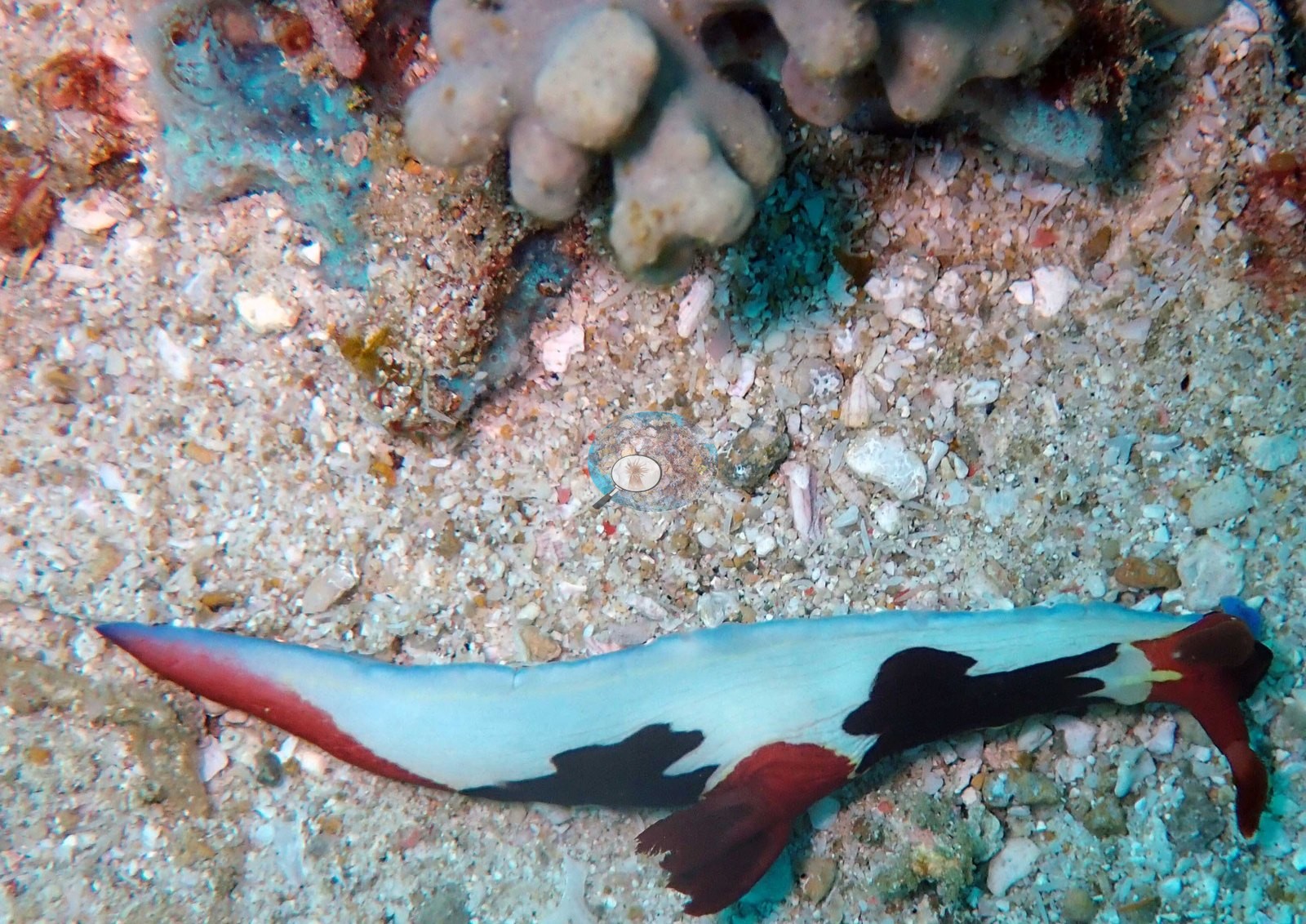
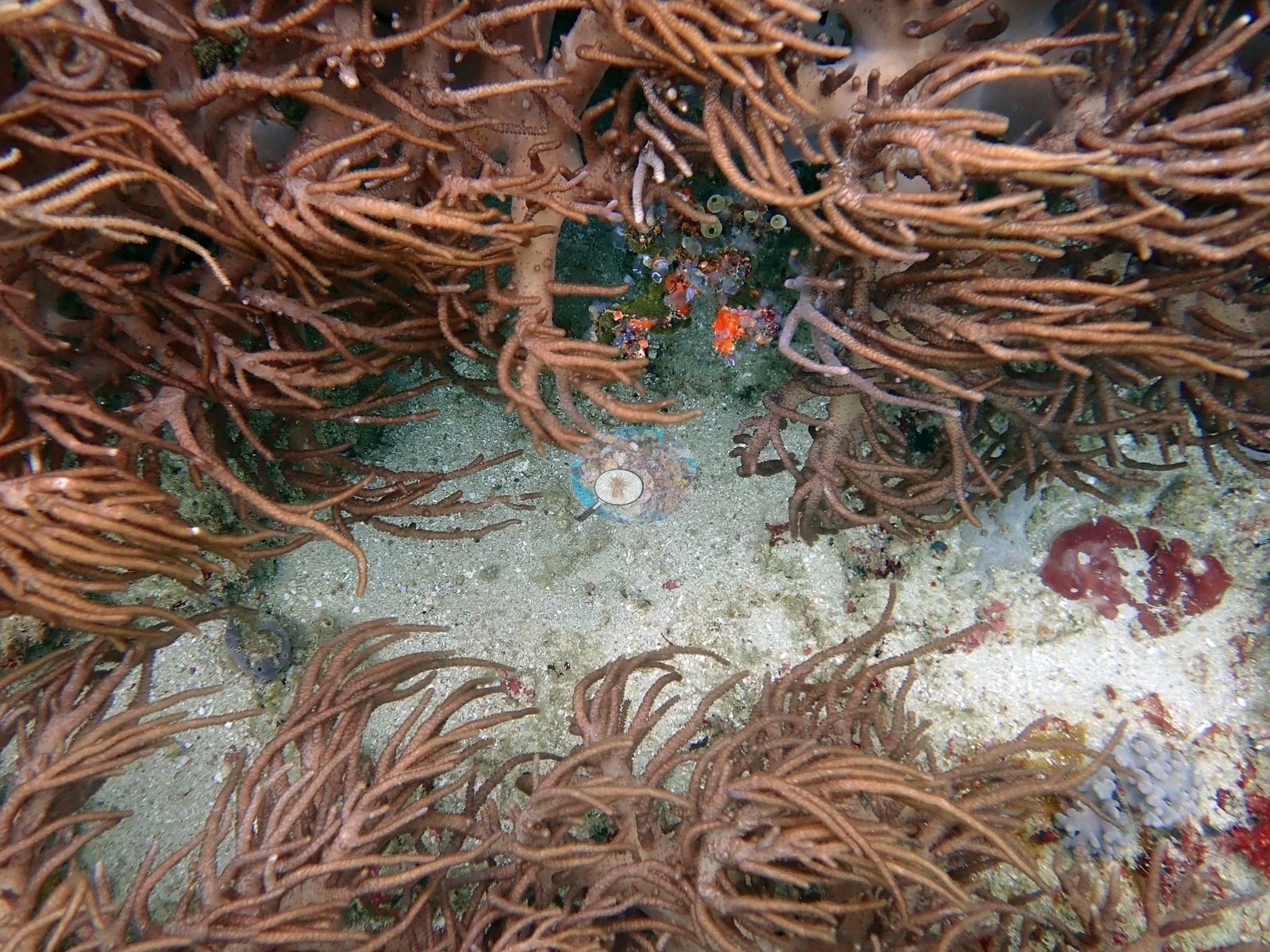
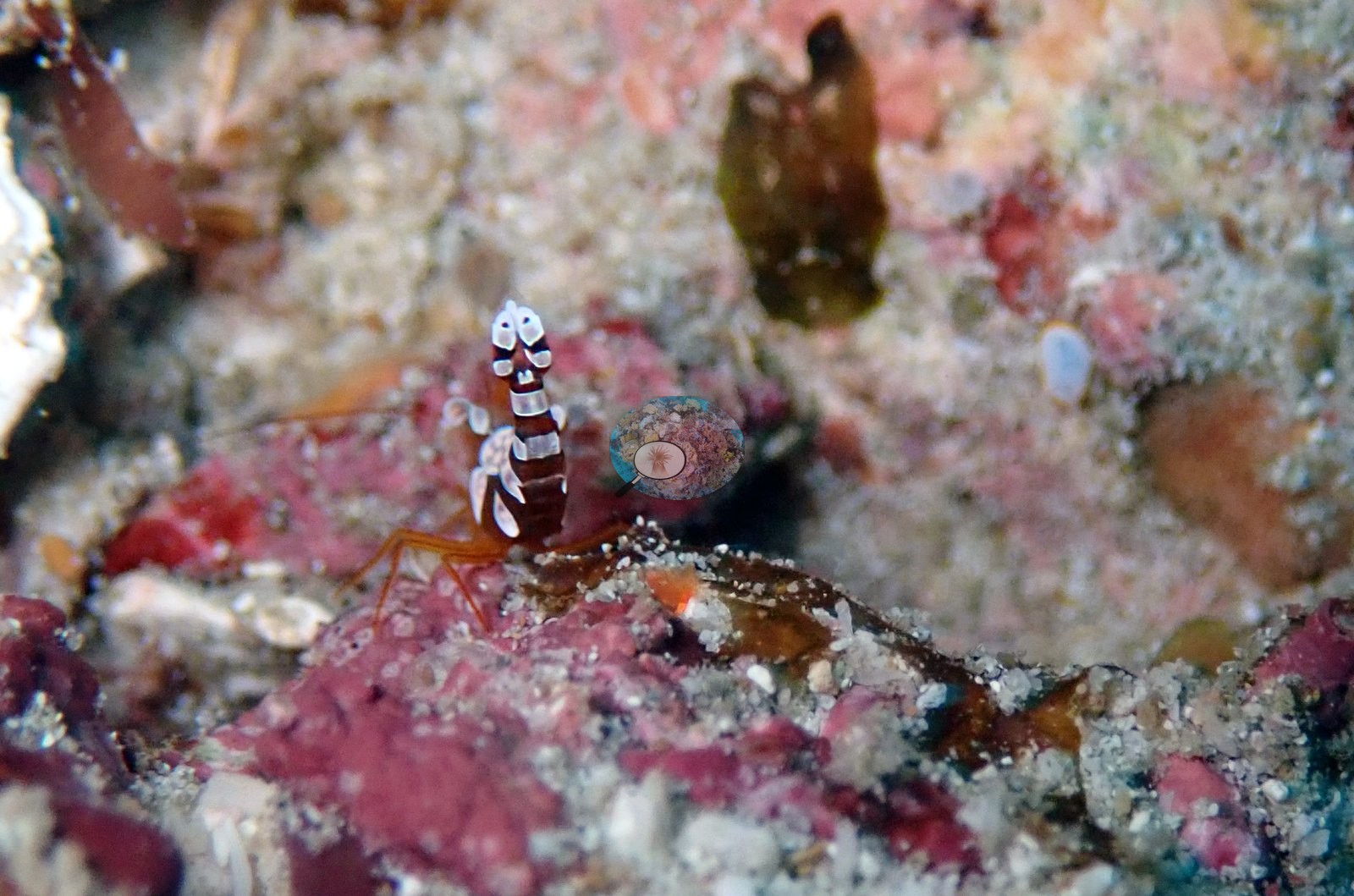
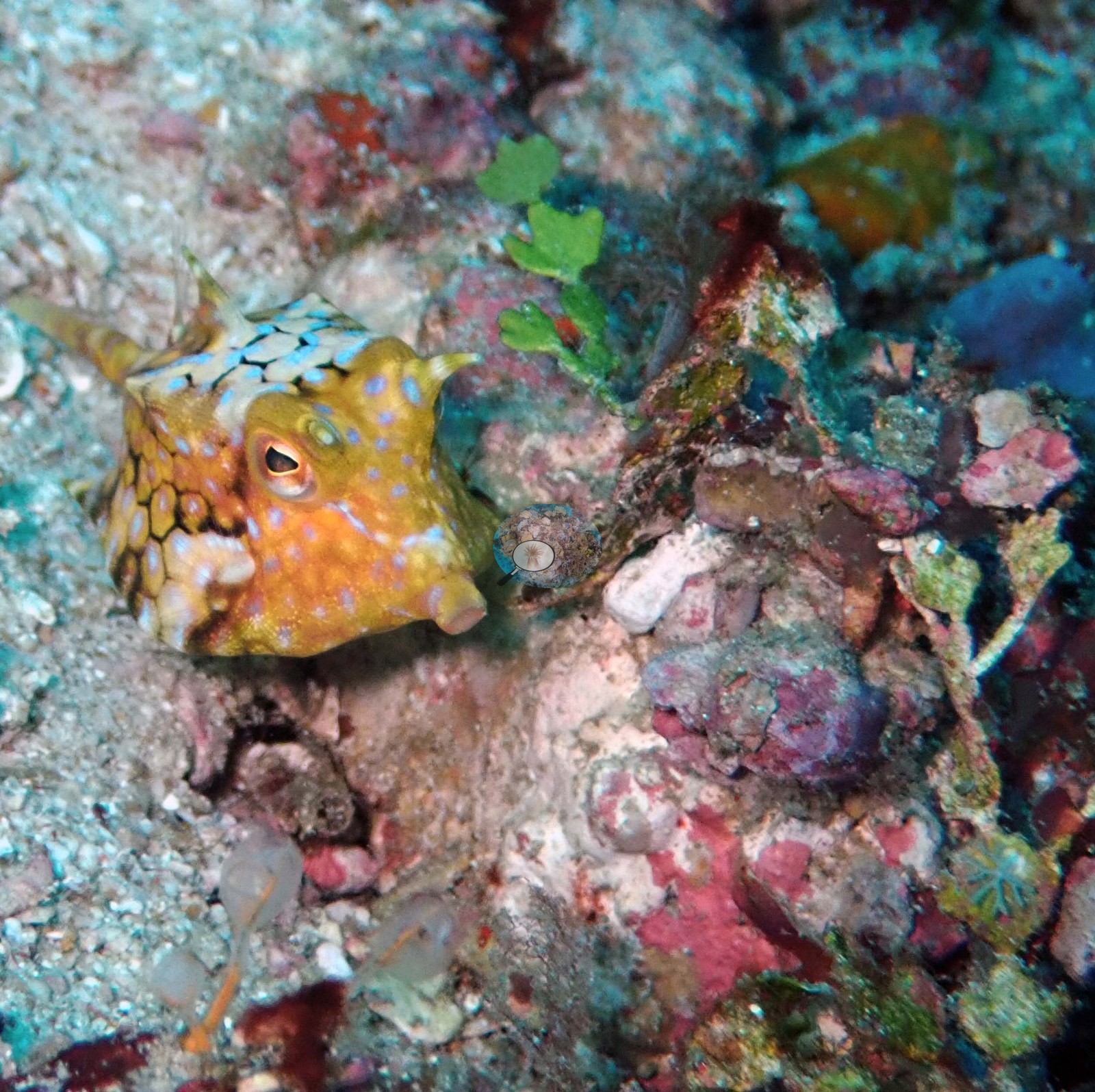
A highly regarded site for hunting for unusual critters (e.g., Image 2). 5-7 m viz, 25°C, mild-medium current.
General benthic features
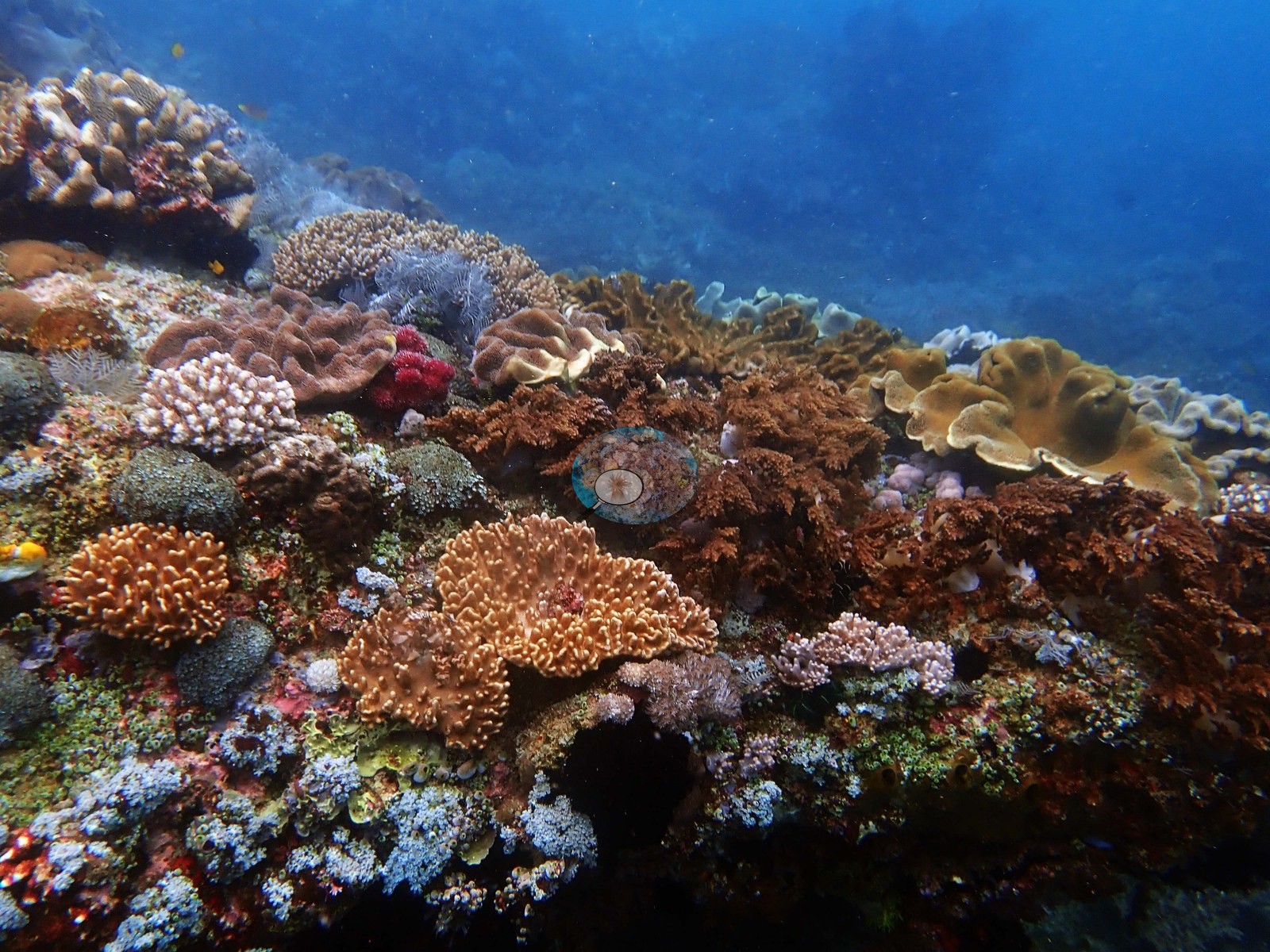
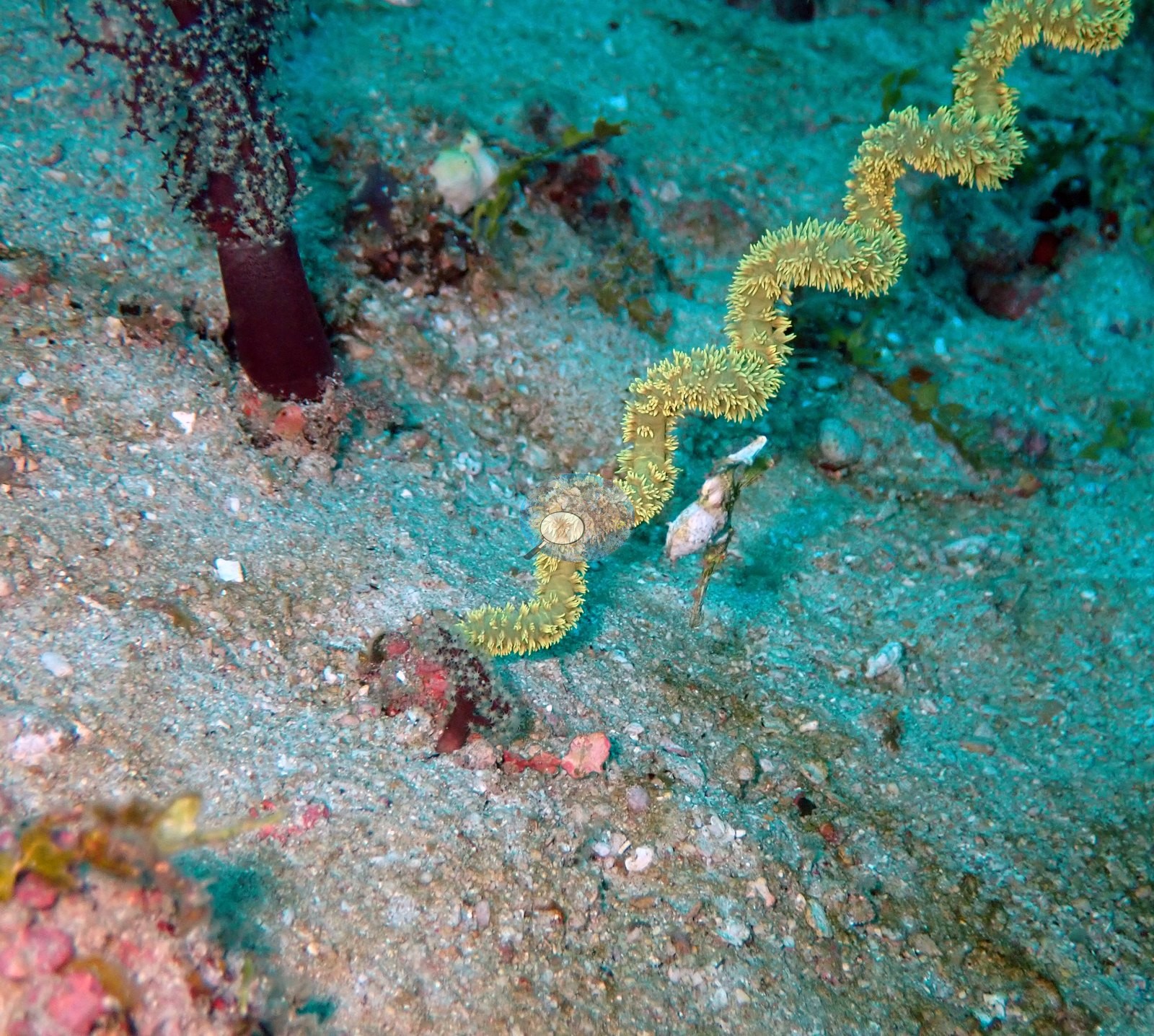
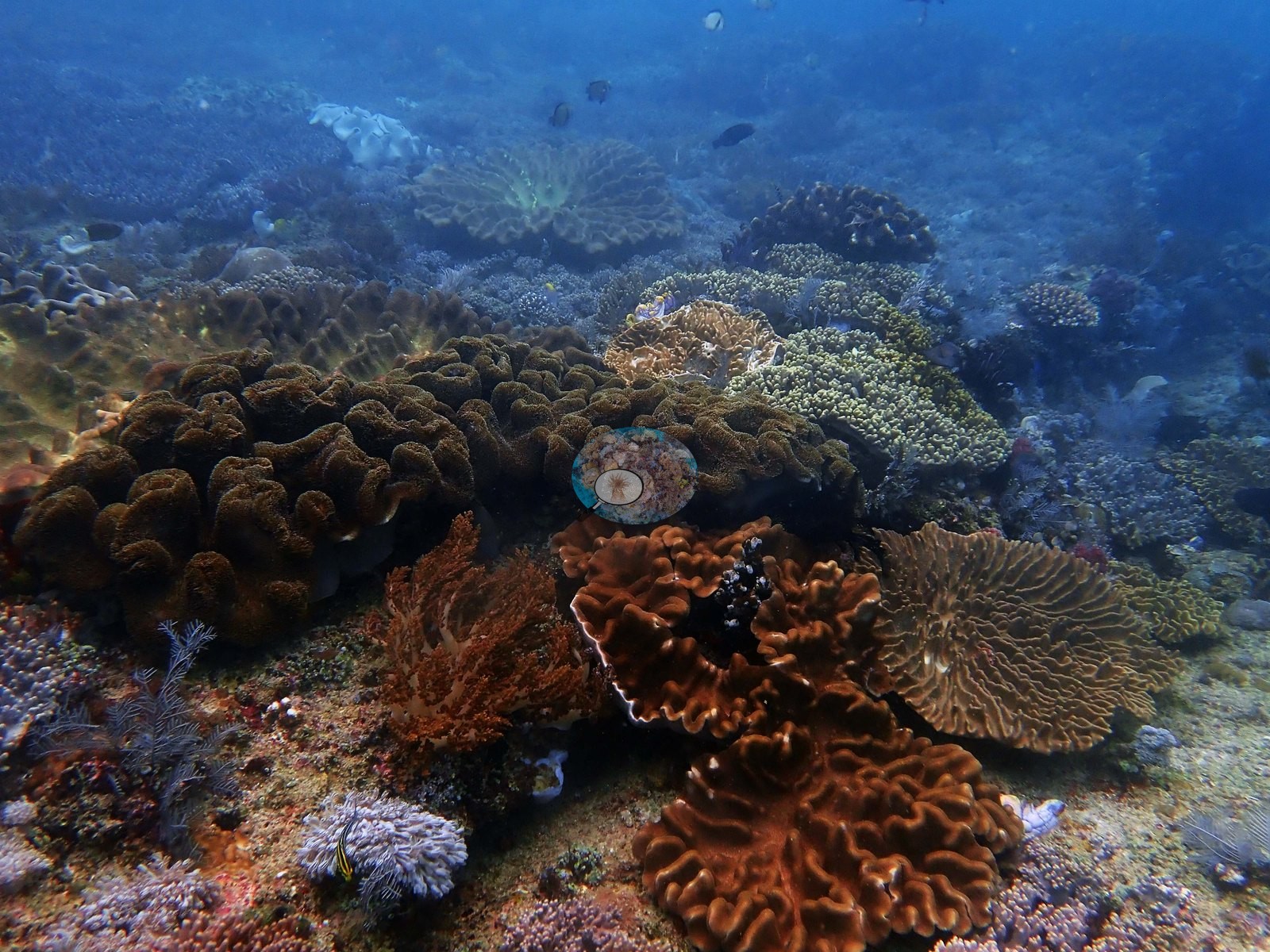
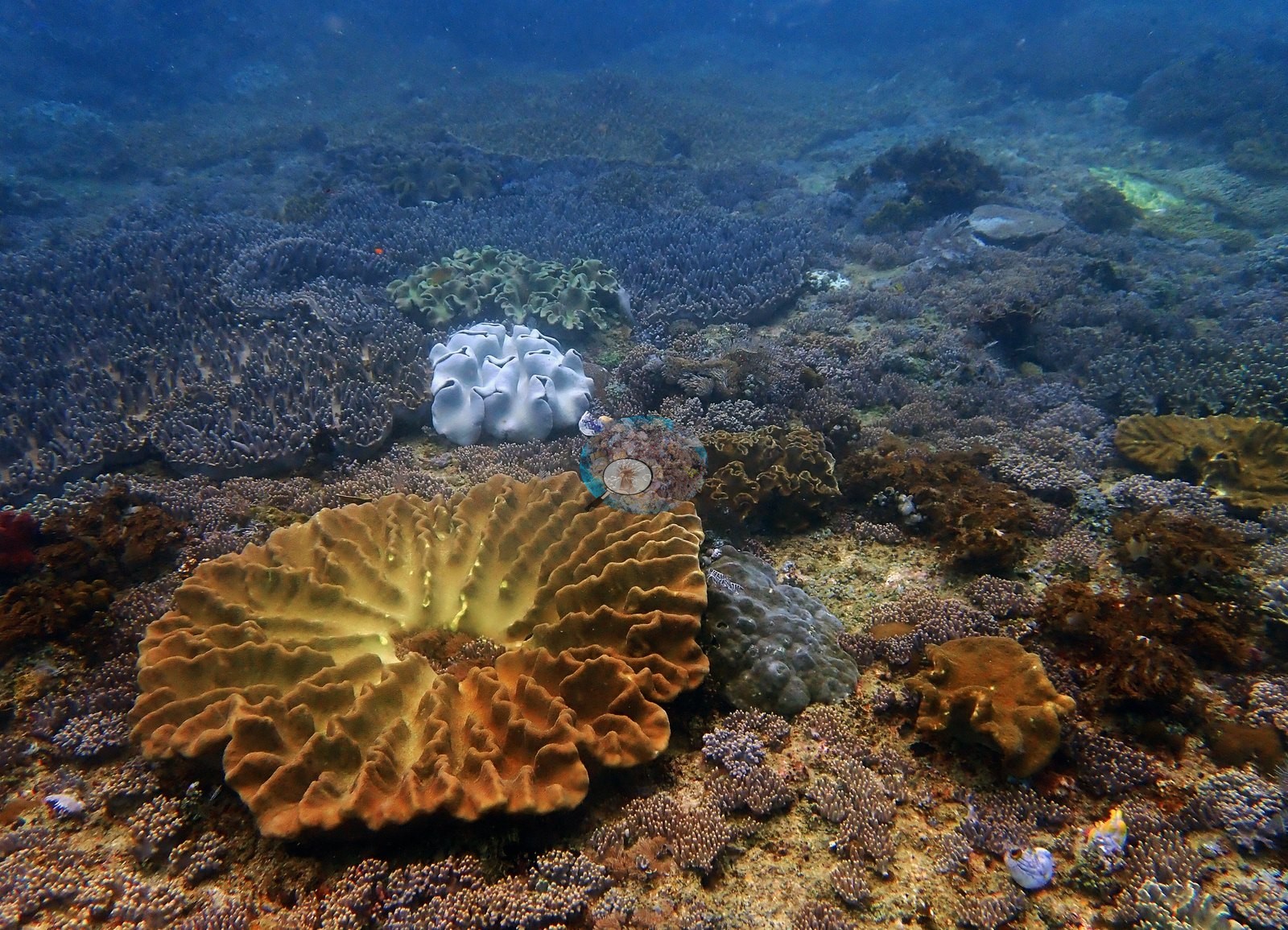
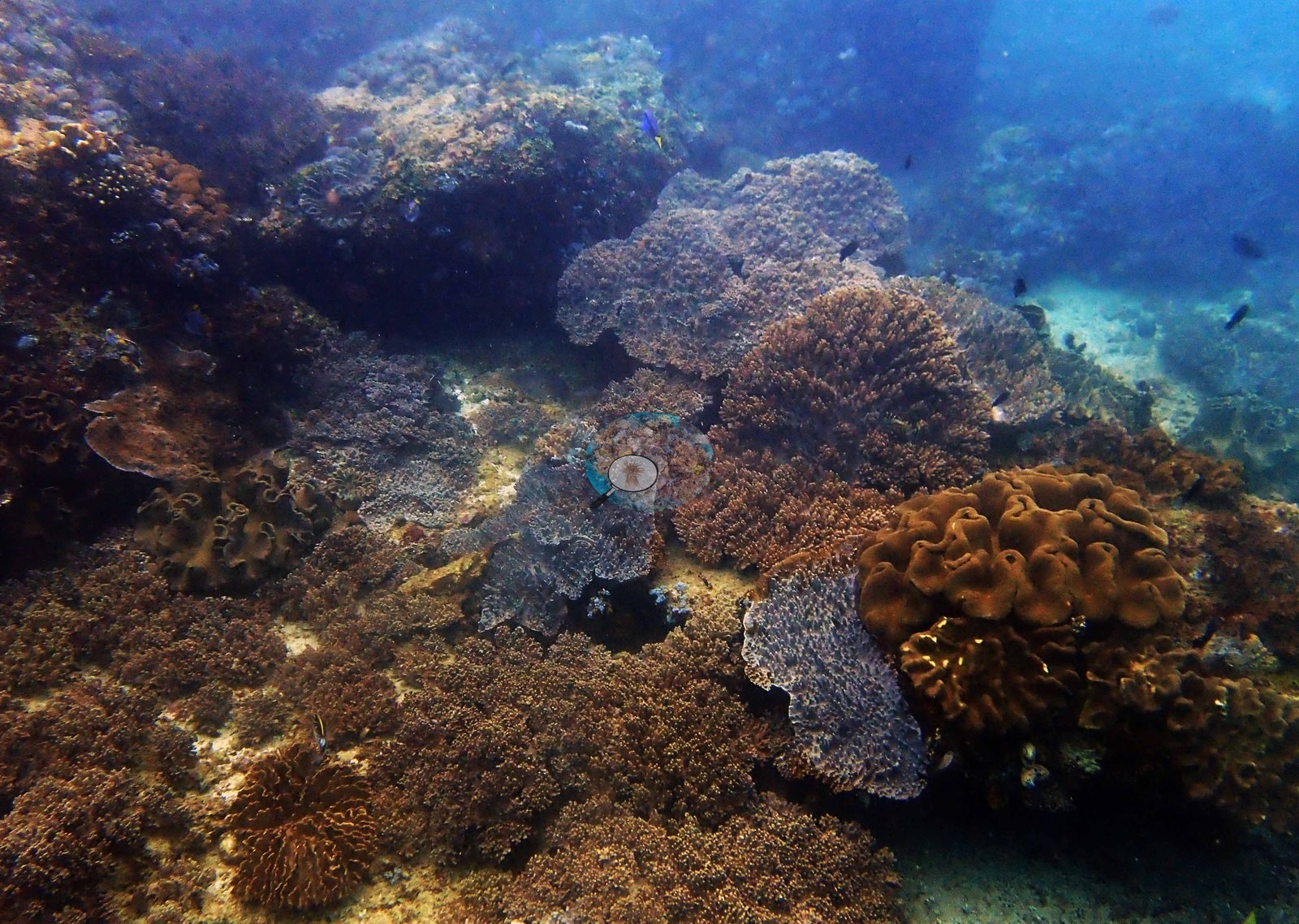
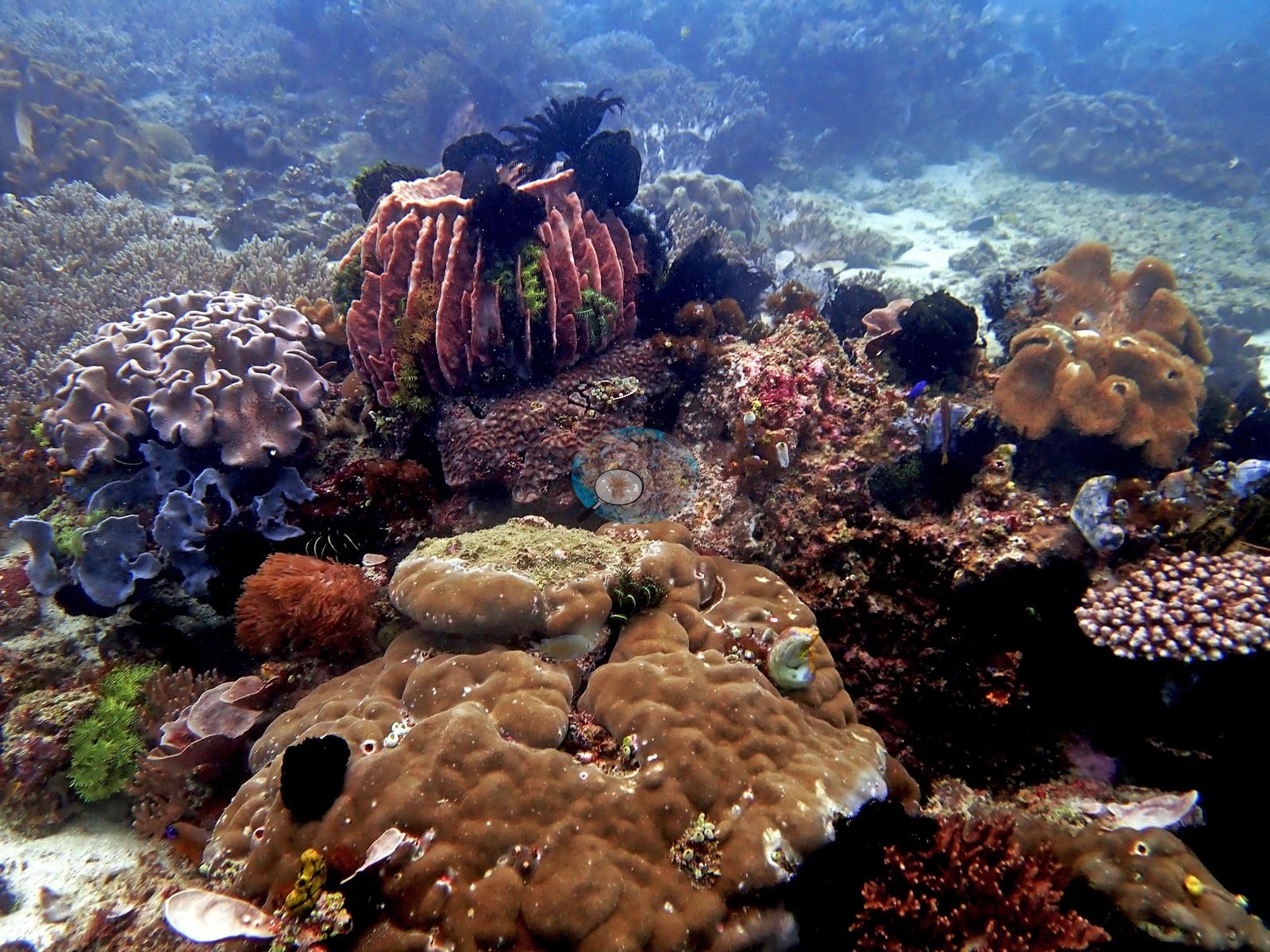
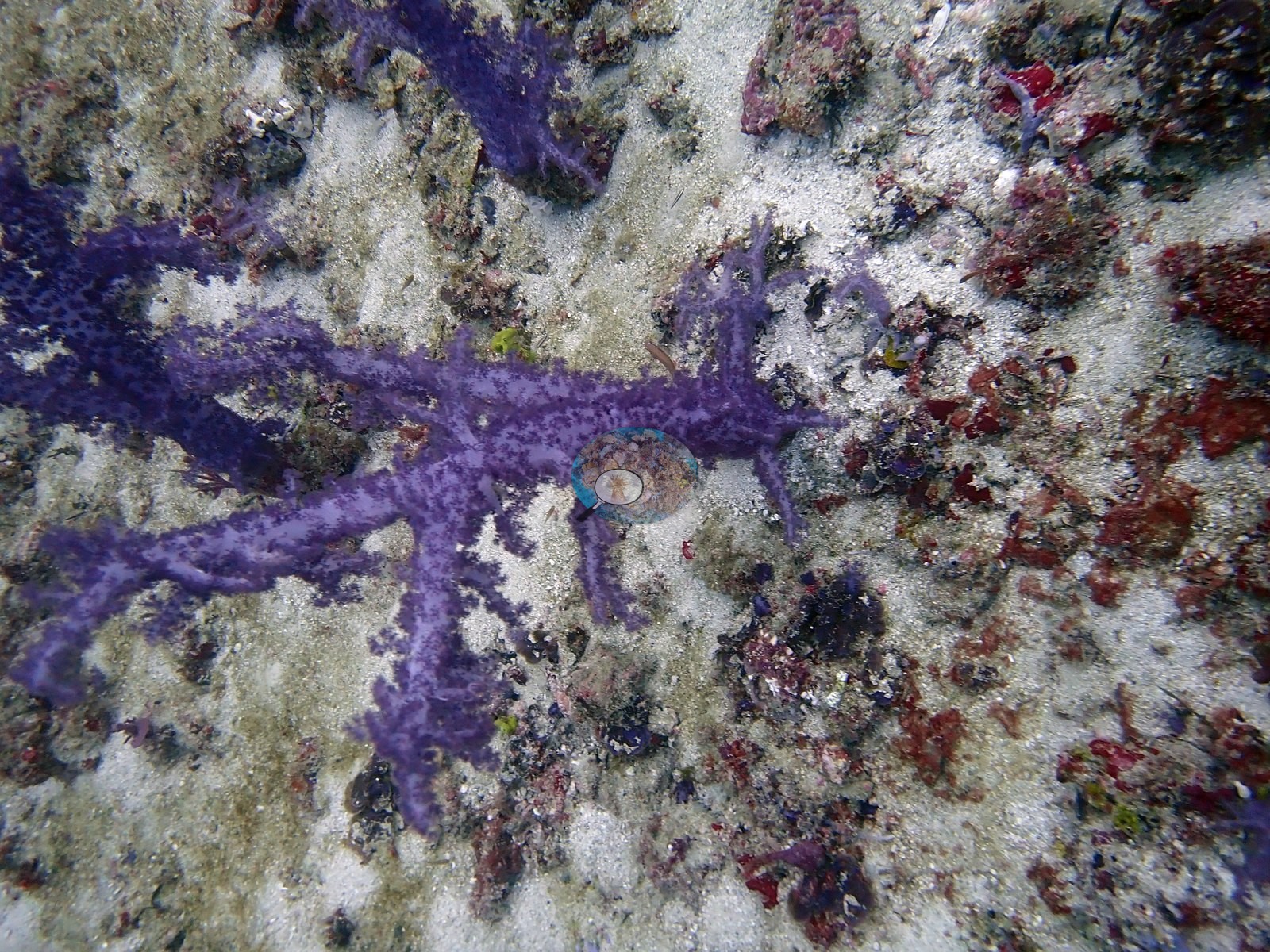
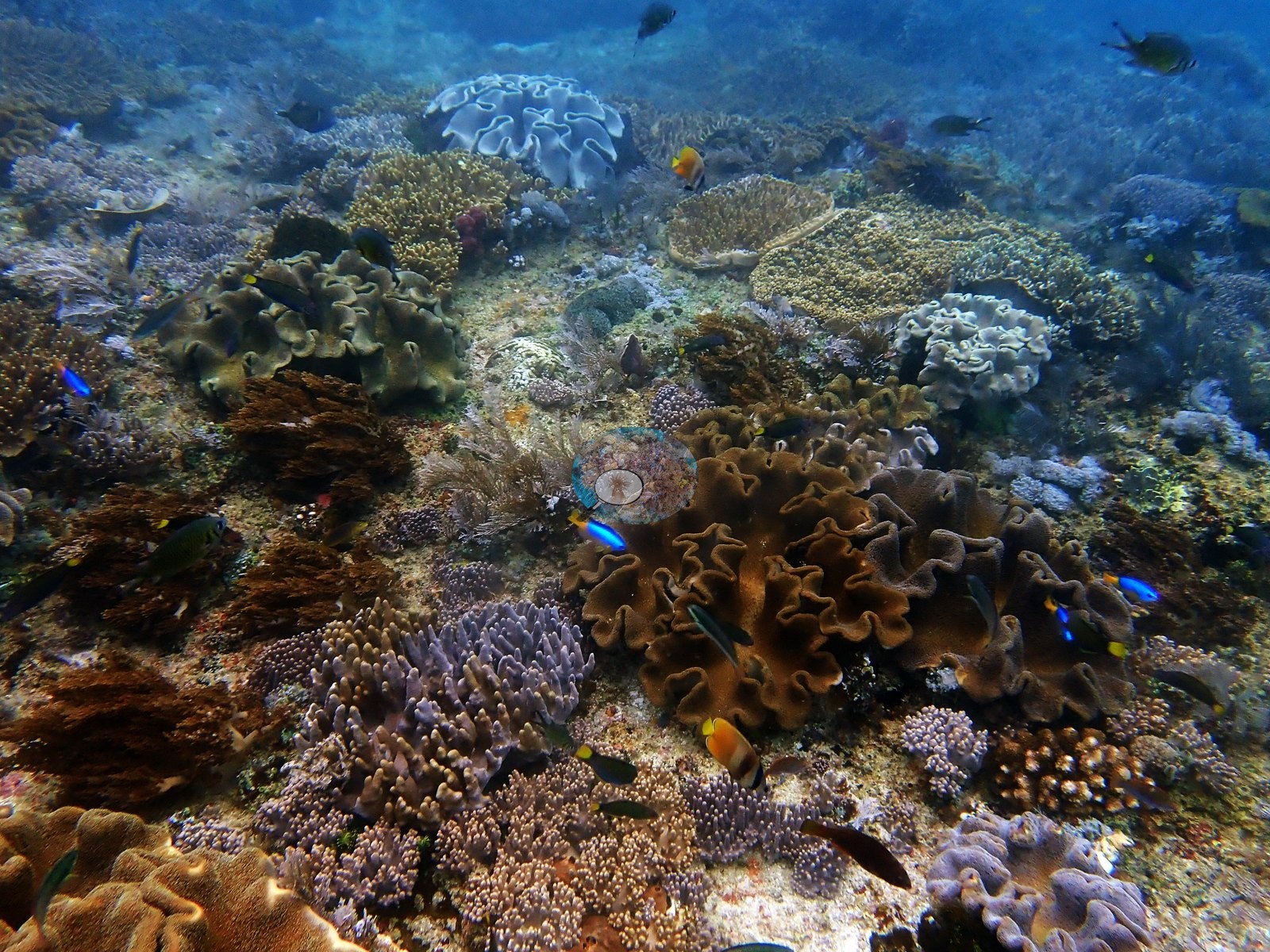
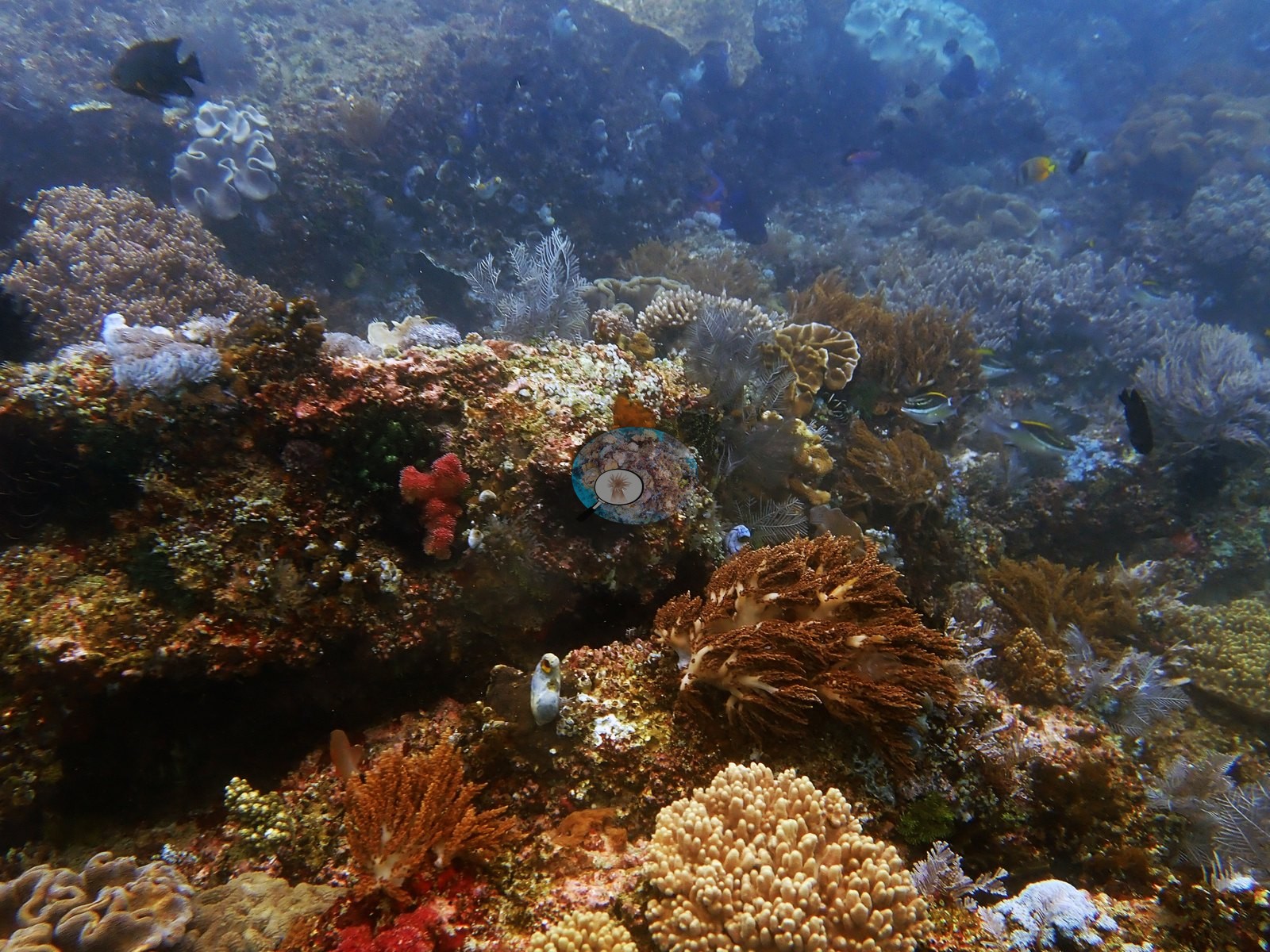
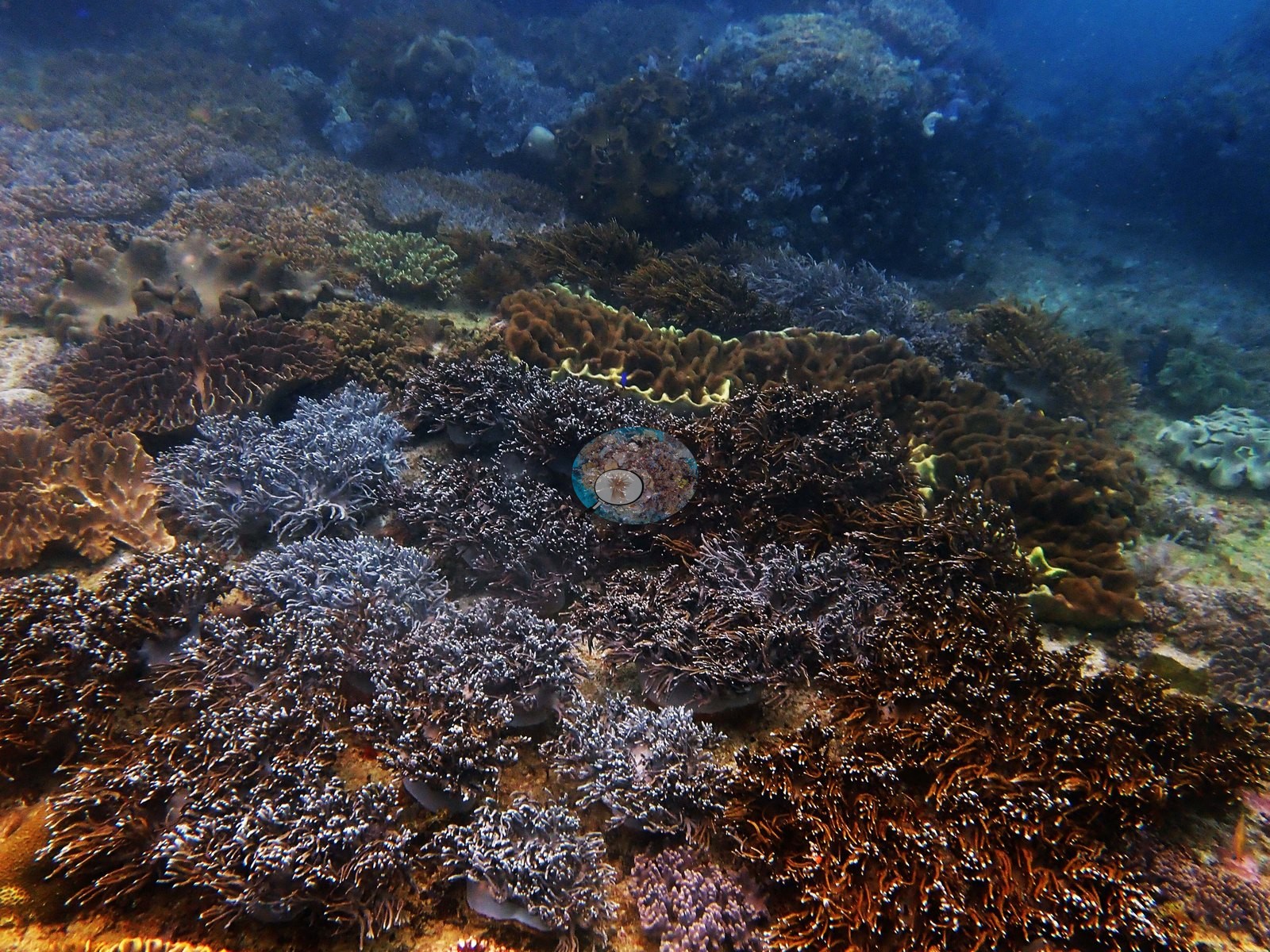
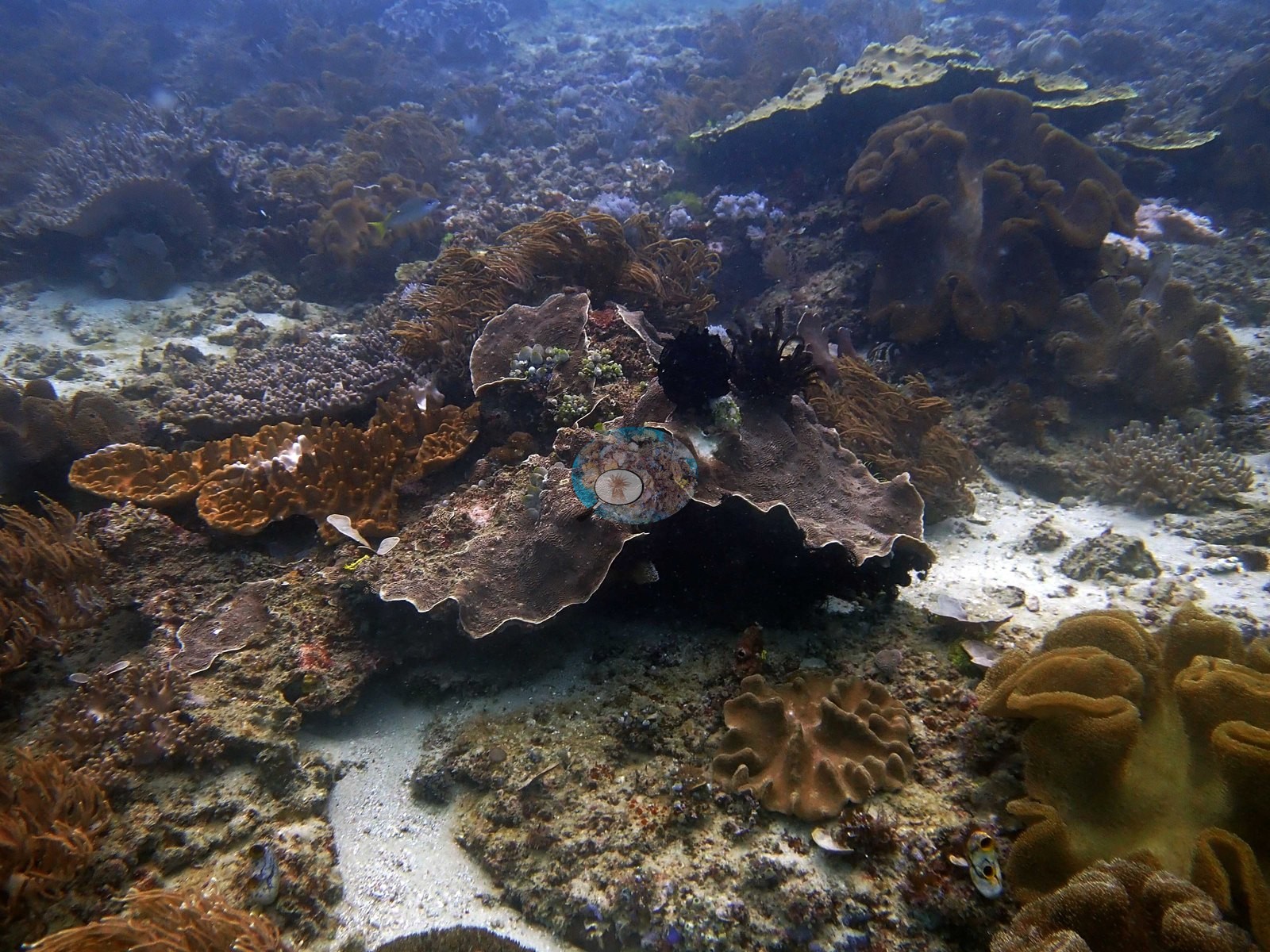
Pocillopora verrucosa, Pocillopora eydouxi, Pachyseris, Porites, and Acropora all present, though in general coral cover was low, and the site was predominantly a sandy slope covered by soft corals (e.g., Image 3).
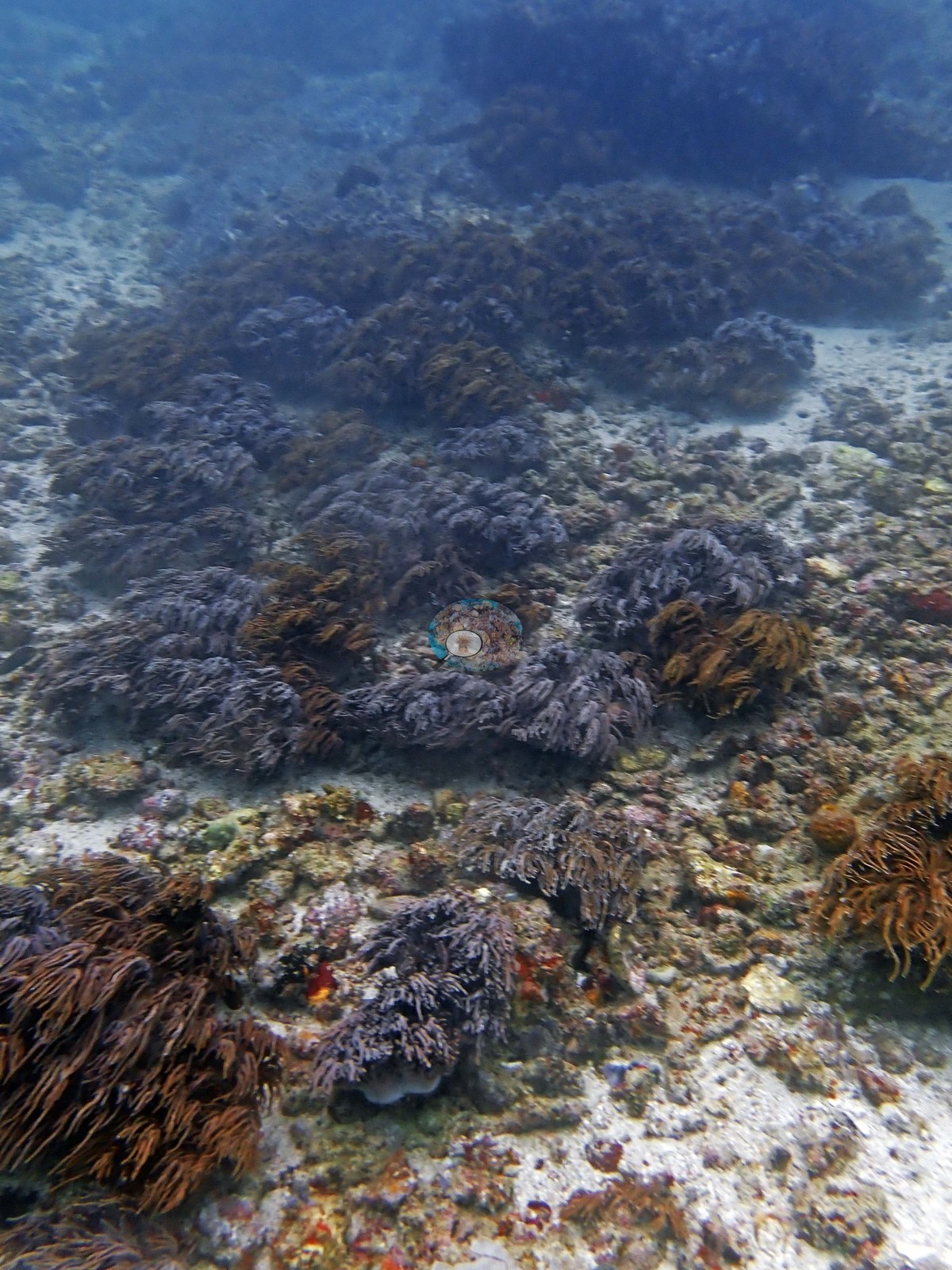
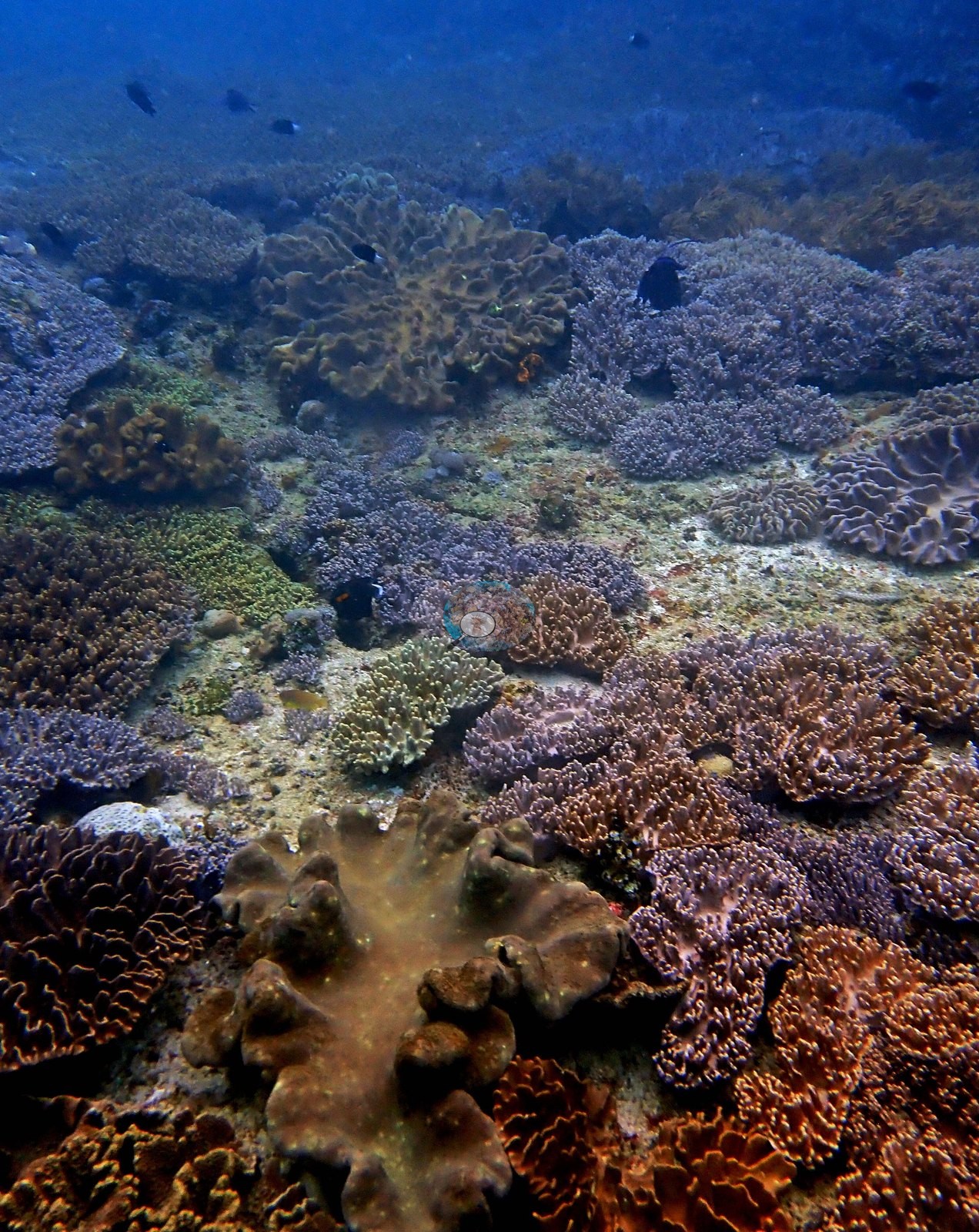
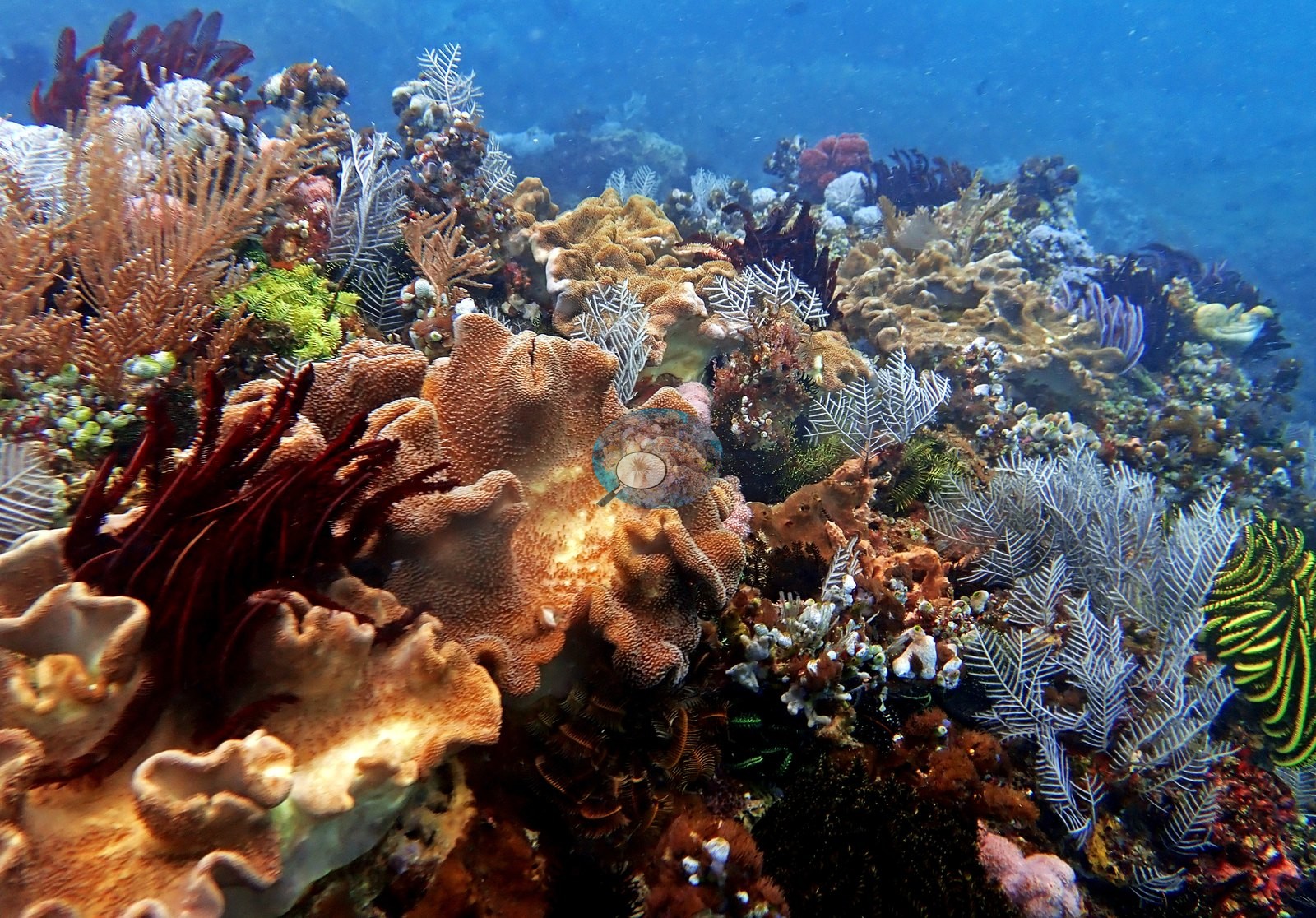
Benthos at 22 m looked like Wainilu (sand+soft coral, hard coral virtually absent). Some fungids. Some tiny Pachyseris colonies. Halimeda (algae) common. Monster Tubastraea colony covered in lion fish. More of a reef structure above 14 m, though still generally low average live coral cover (e.g., Image 5).
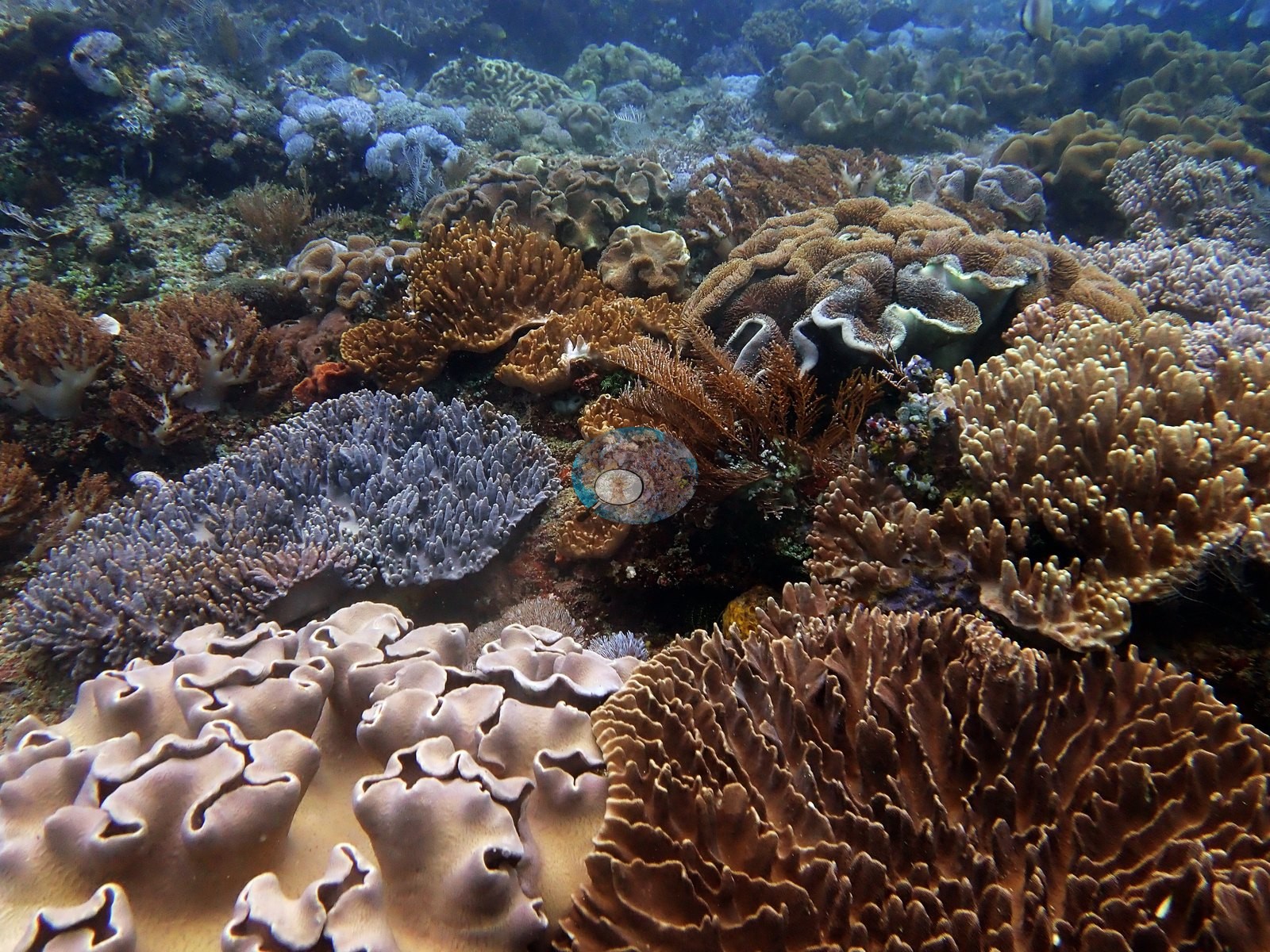
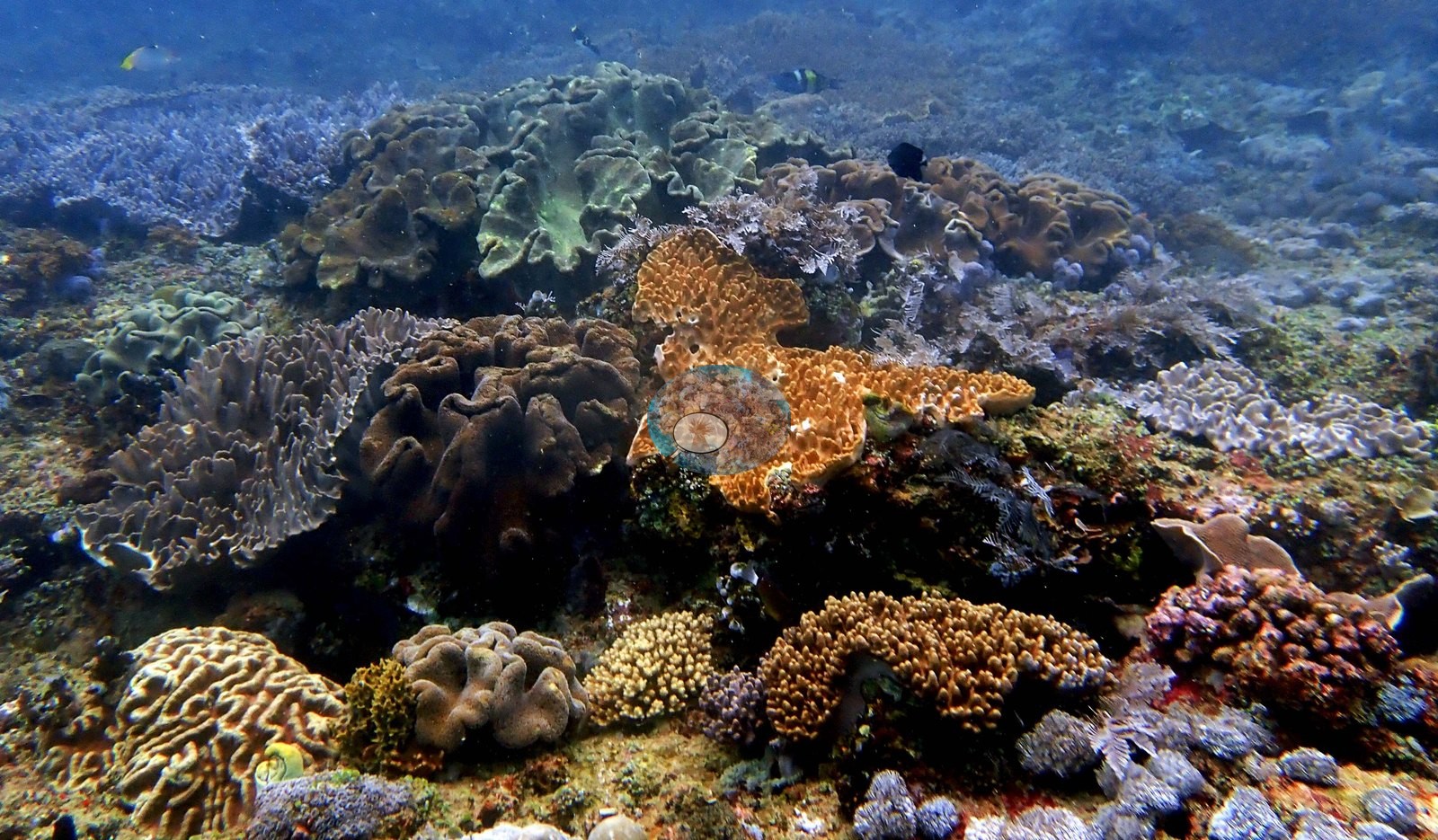
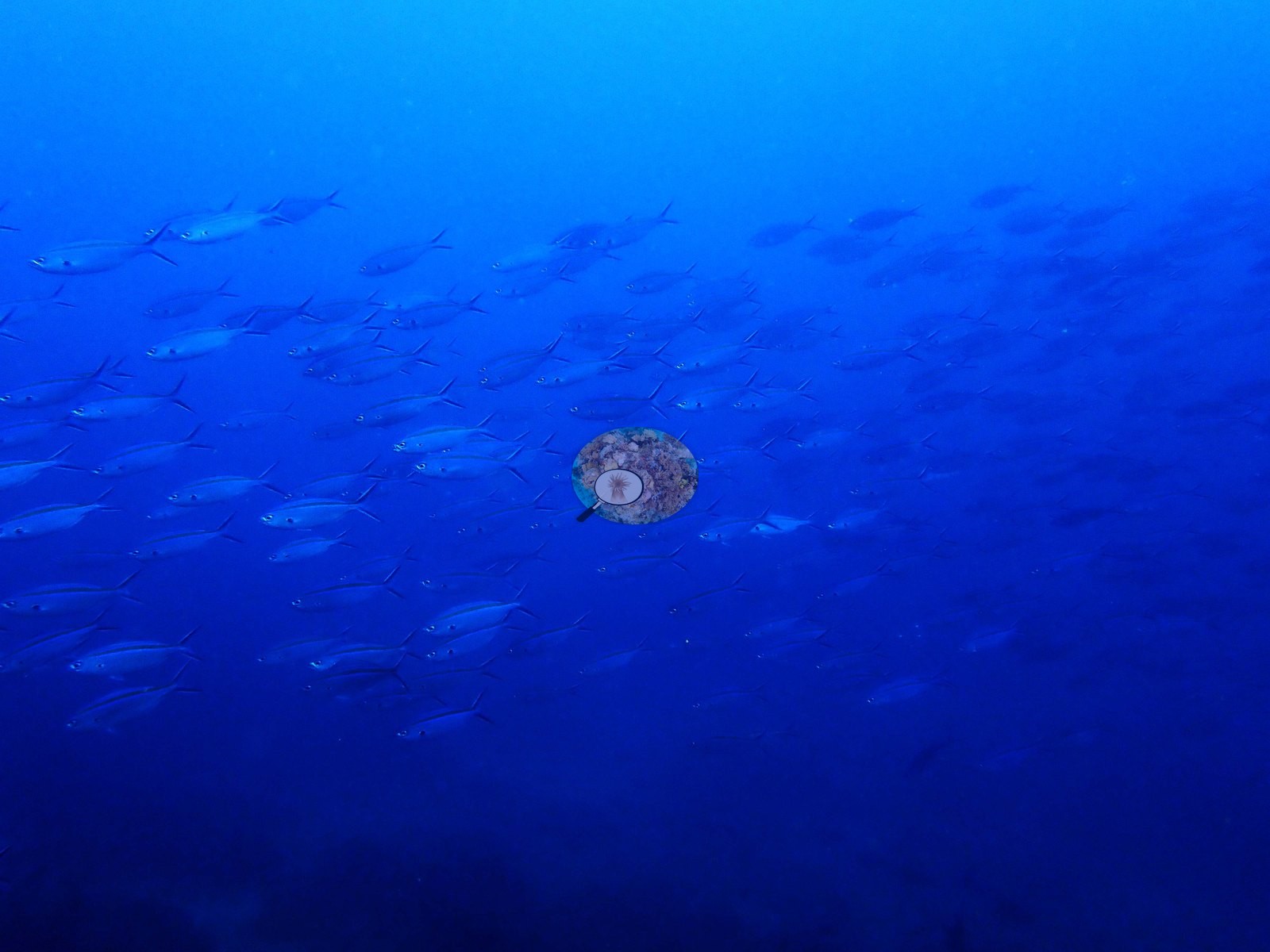
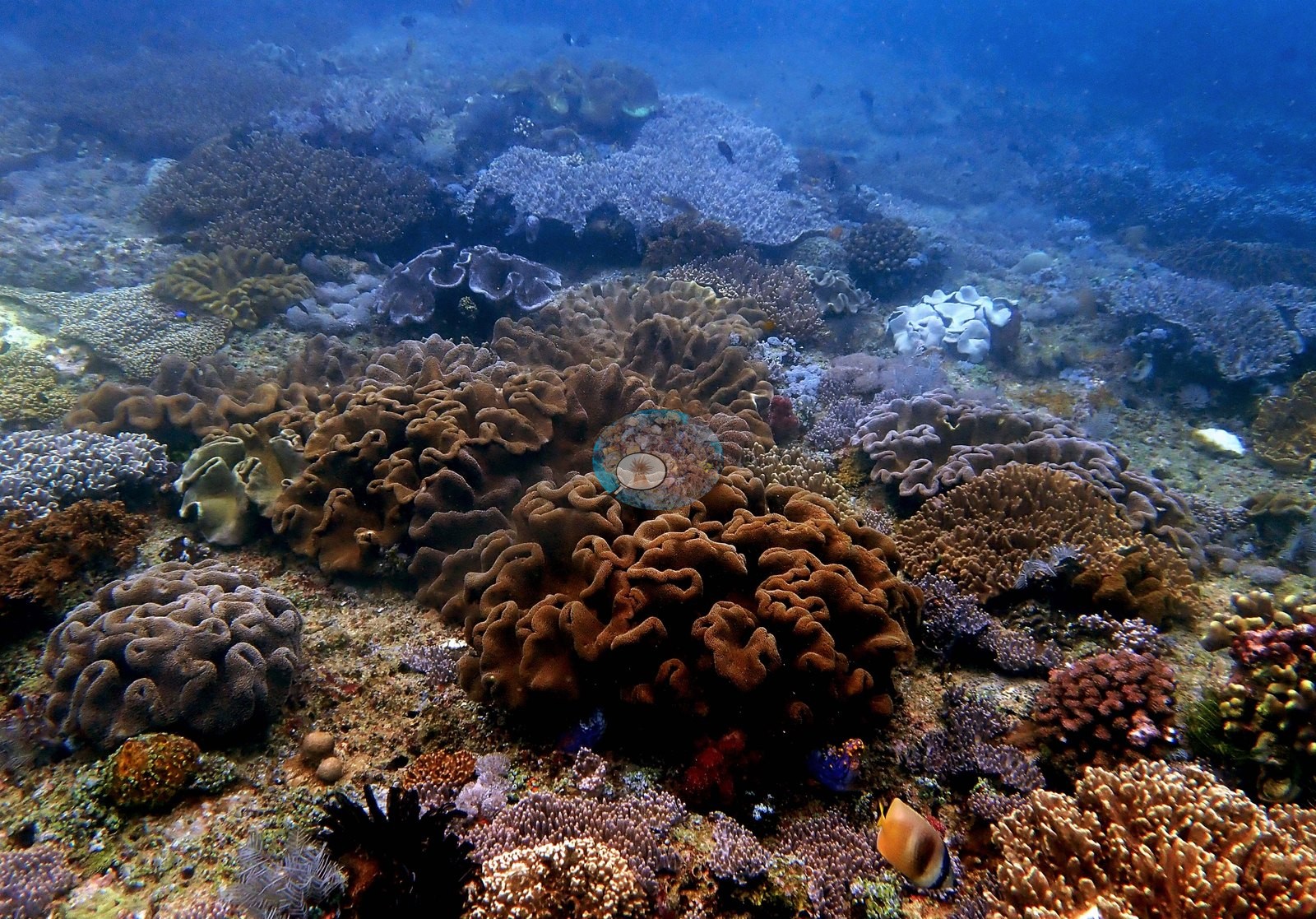
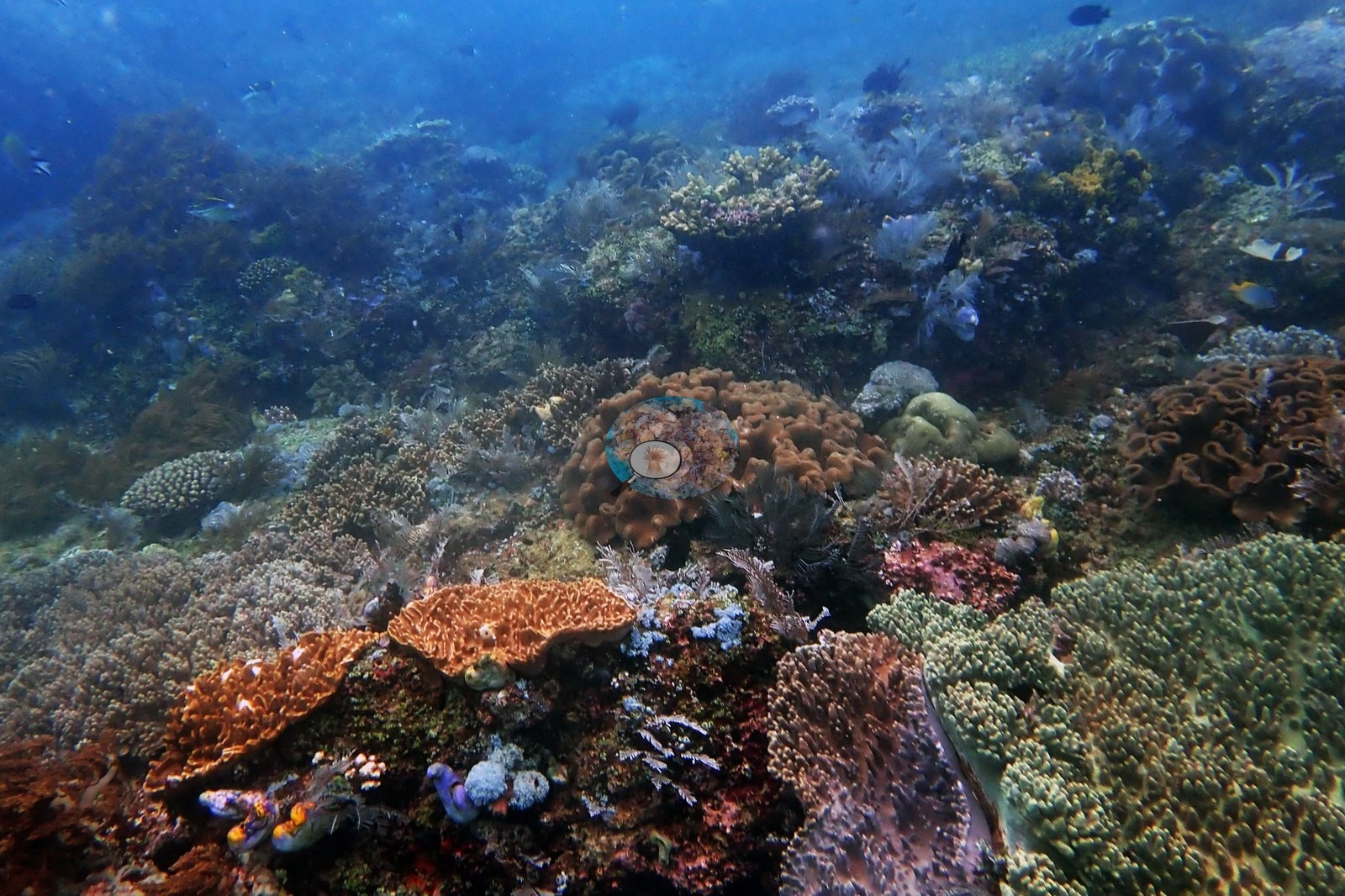
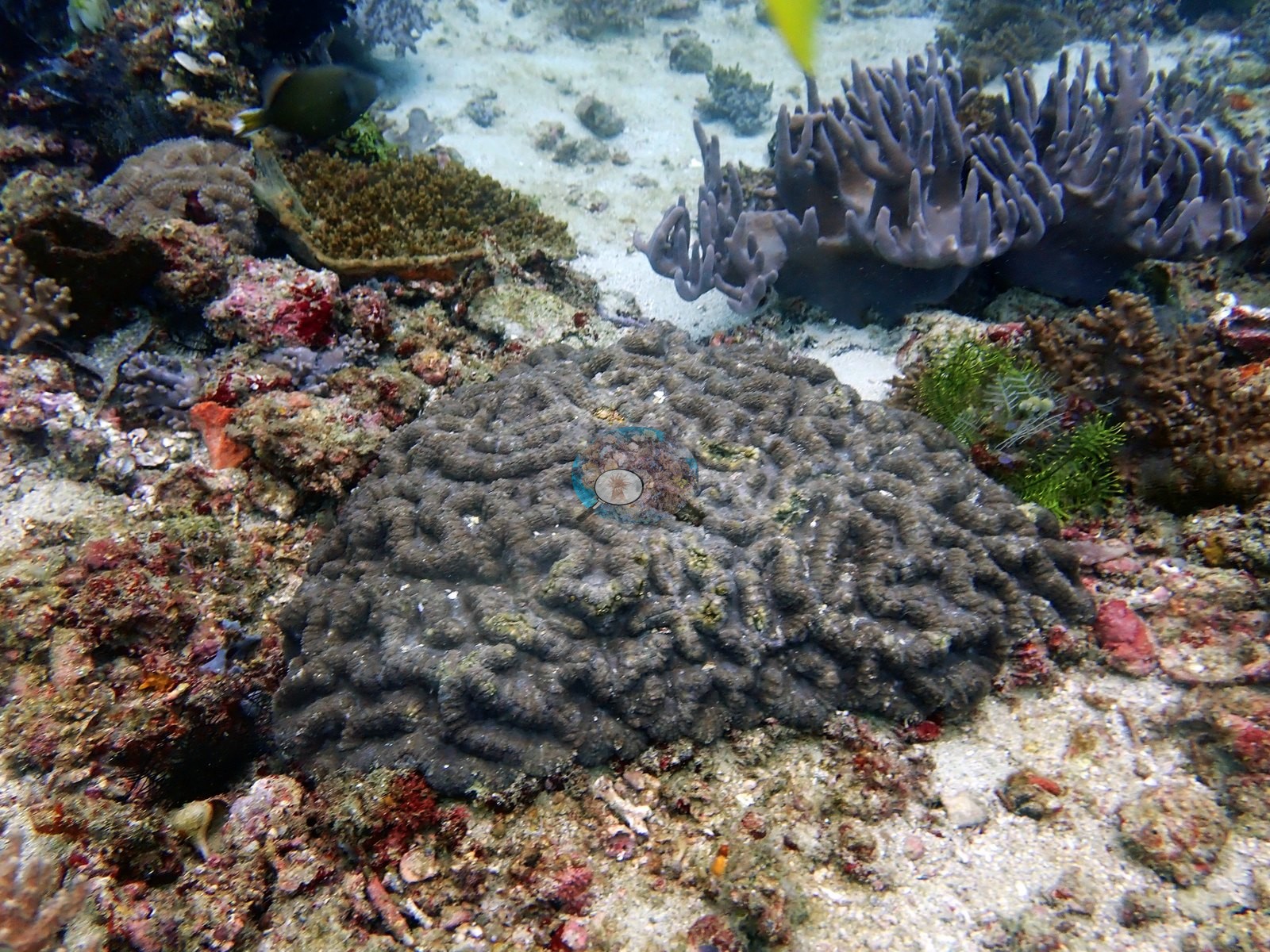
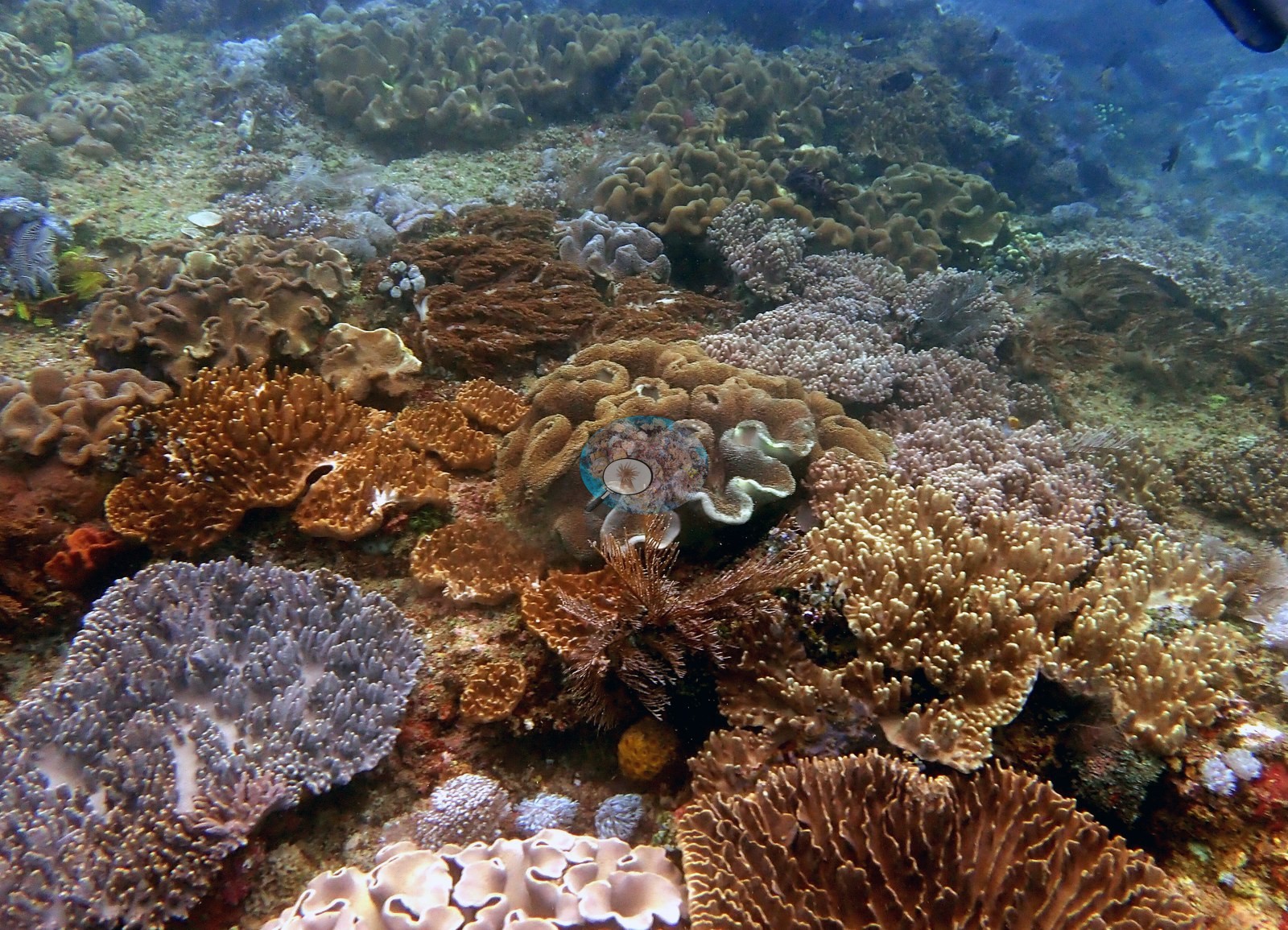
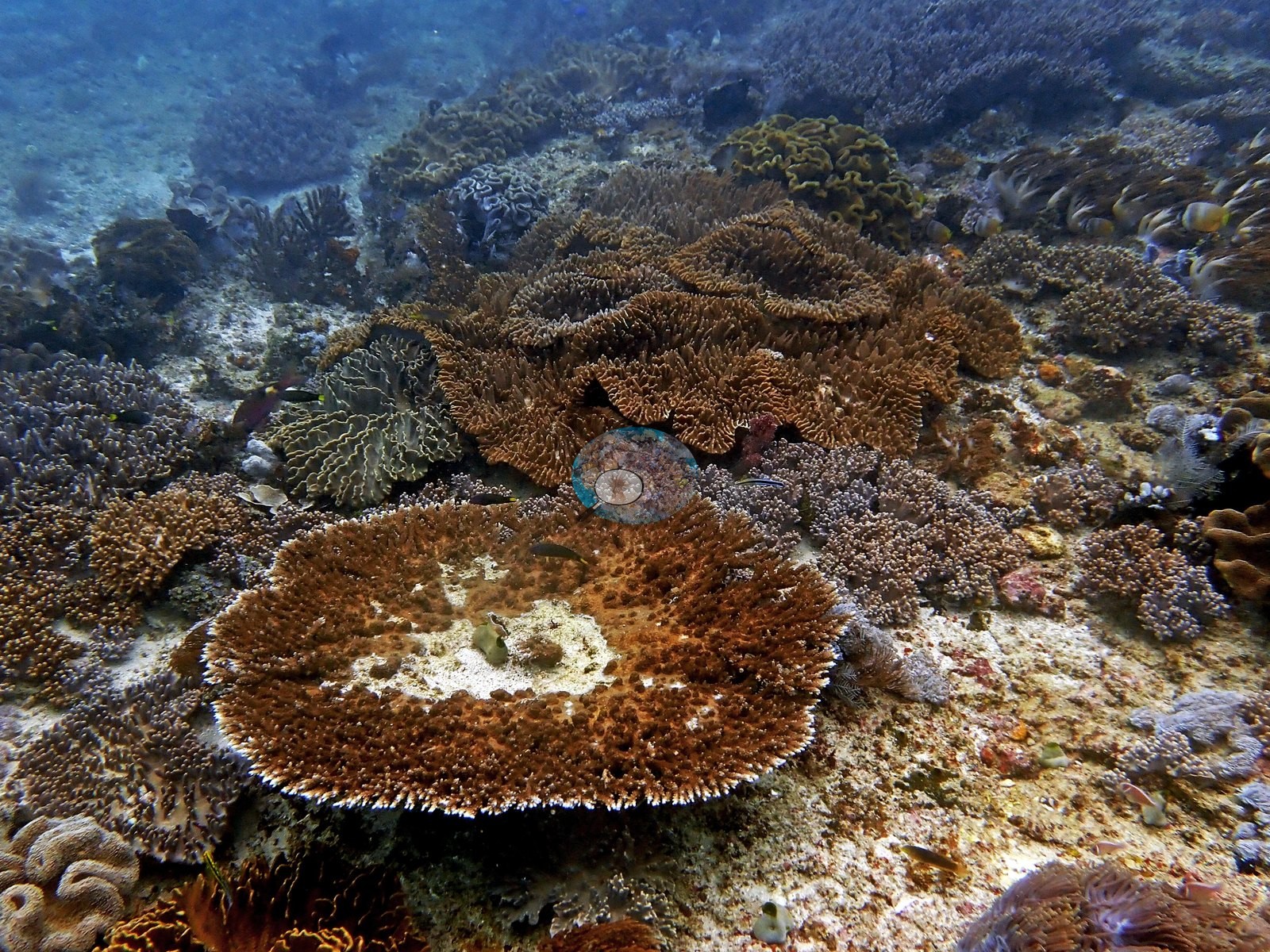
At 10 m, mostly soft coral with some brain corals and poritids. Much more structure at 5-7 m. Appears to be rocks covered in coral rather than structures of coral origin. At least 8-10 species of soft coral at 5 m, where surge was intense (at base of small island). Carpets of soft corals in 6-7 m (most beautiful part of reef) (e.g., Image 4).
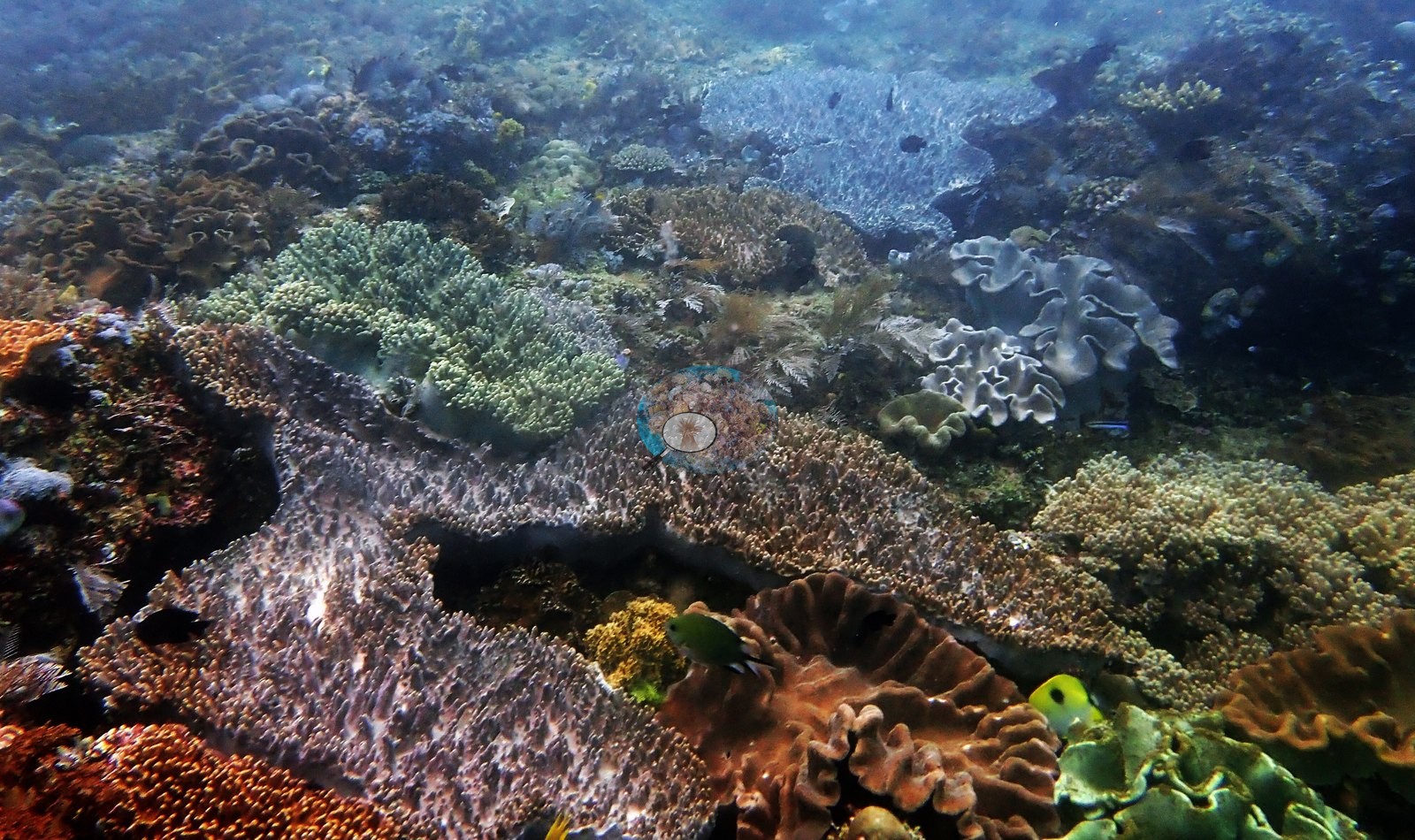
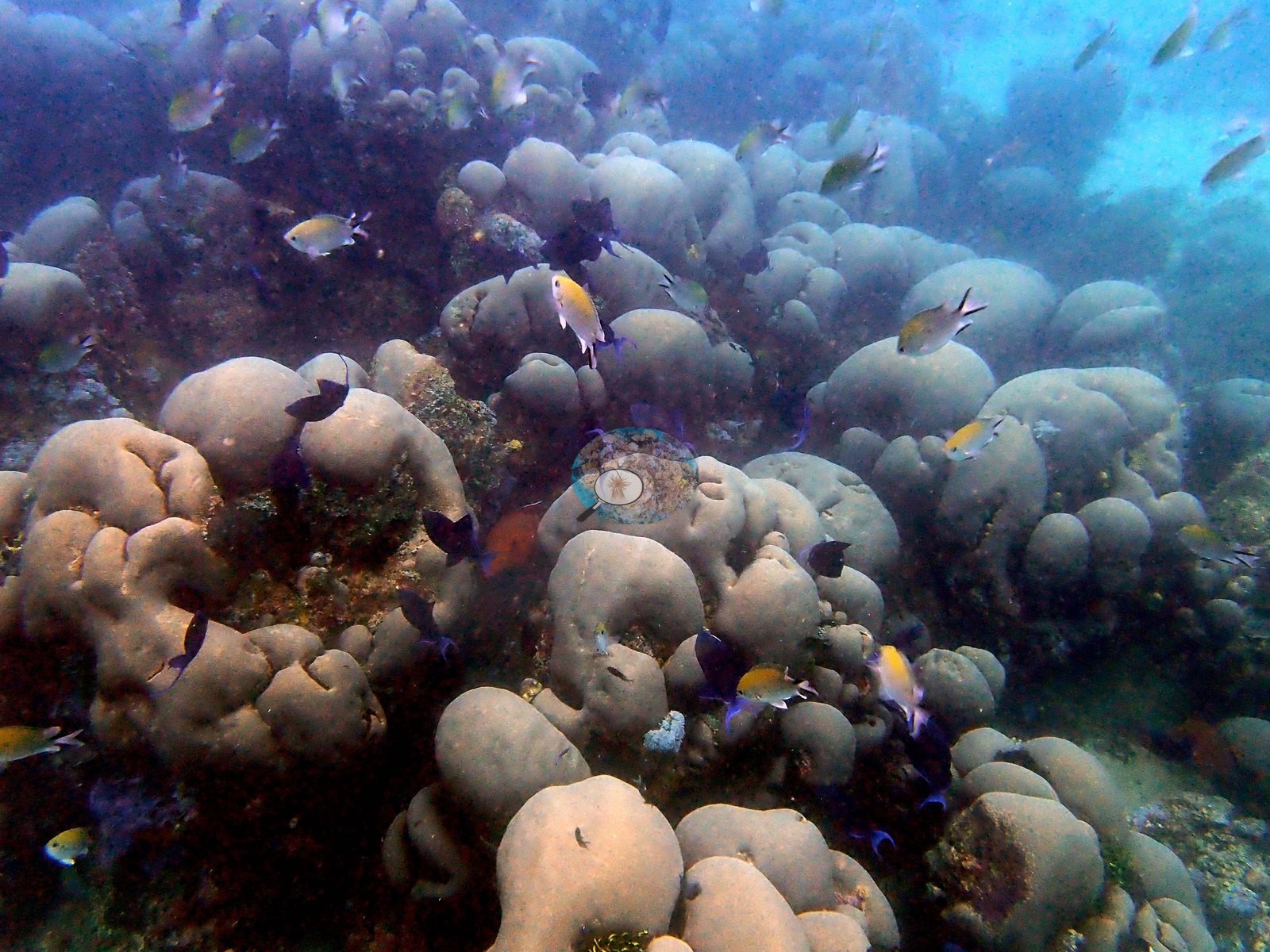
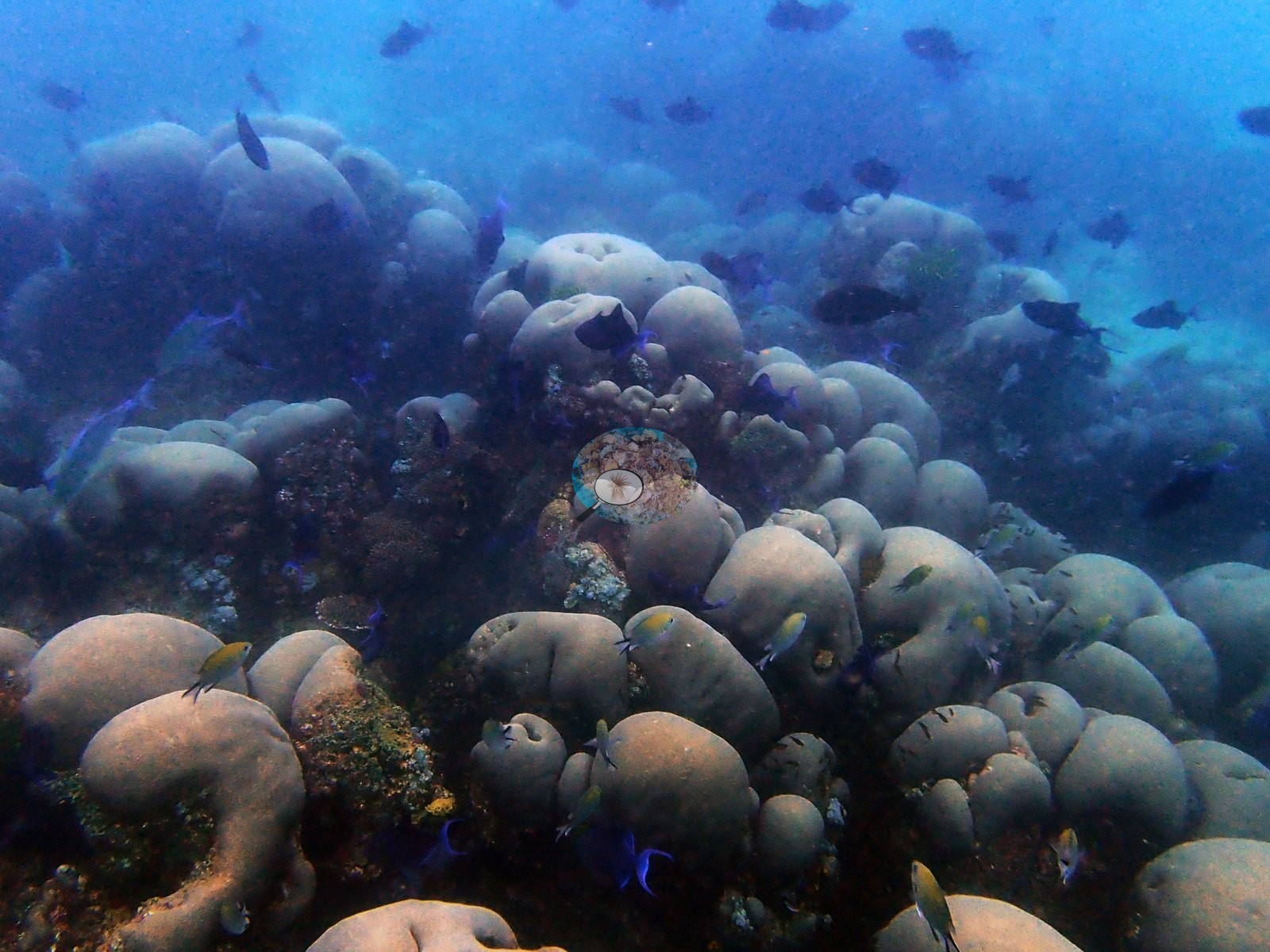
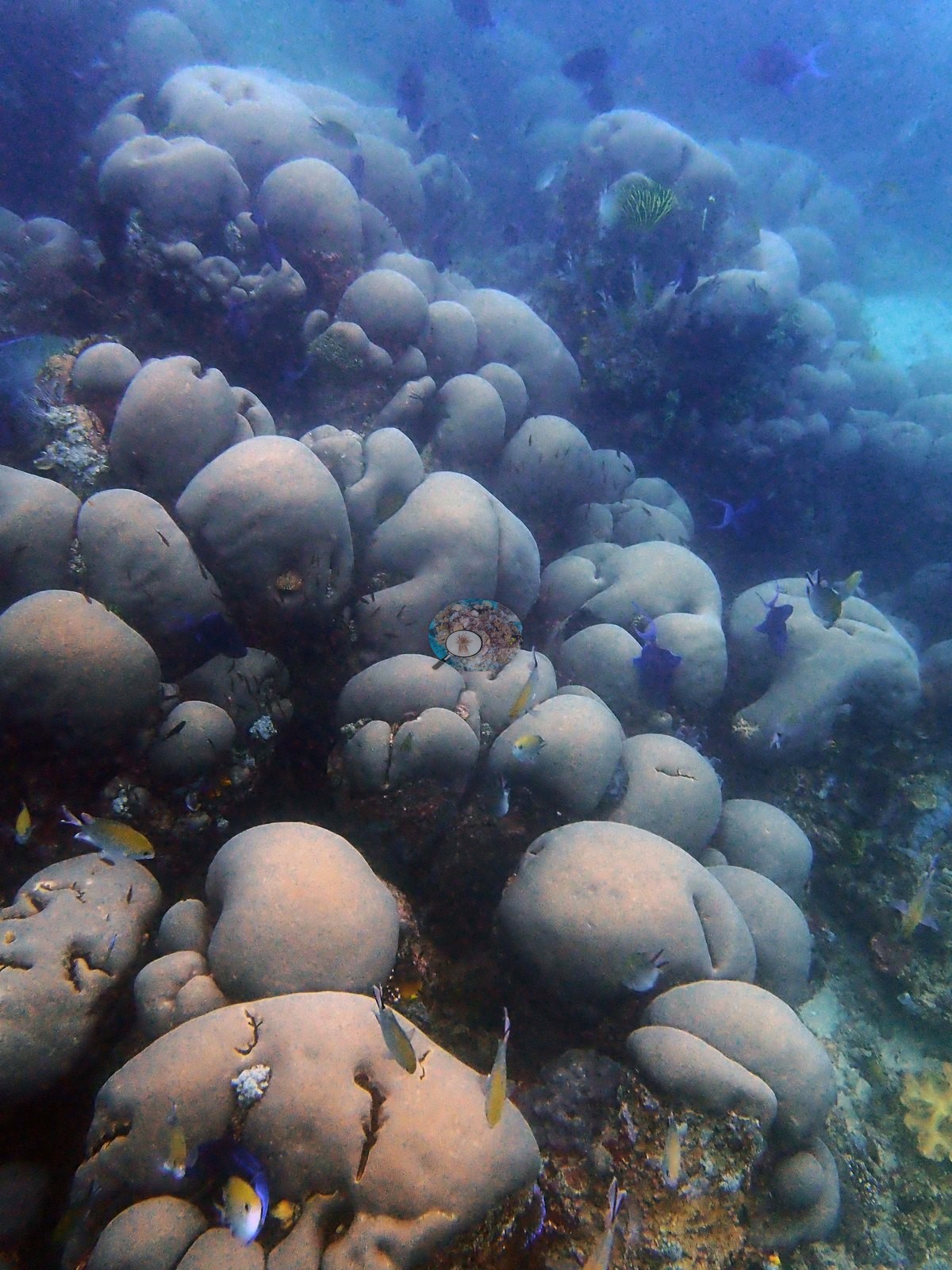
At the end of the dive we passed a dense field of large, smooth, lobate massive coral colonies, compatible with massive Porites though the corallites cannot be resolved in the photographs (e.g., Image 23, Image 29, Image 34).
Coral cover
- Reference: Claude CV point count (this site's photos)
- Coral cover: 13% — a blind Claude computer-vision point count of 39 of Anderson's edited photographs (20 points per photo; water, fish, and obstructions excluded). Other computer-vision methods are listed in the method table.
Stressors
One table colony has a large, irregular patch of dead, sediment-dusted bare skeleton at its center, with living, pigmented tissue around the rim; the cause is not known (e.g., Image 28).
Fish and other fauna
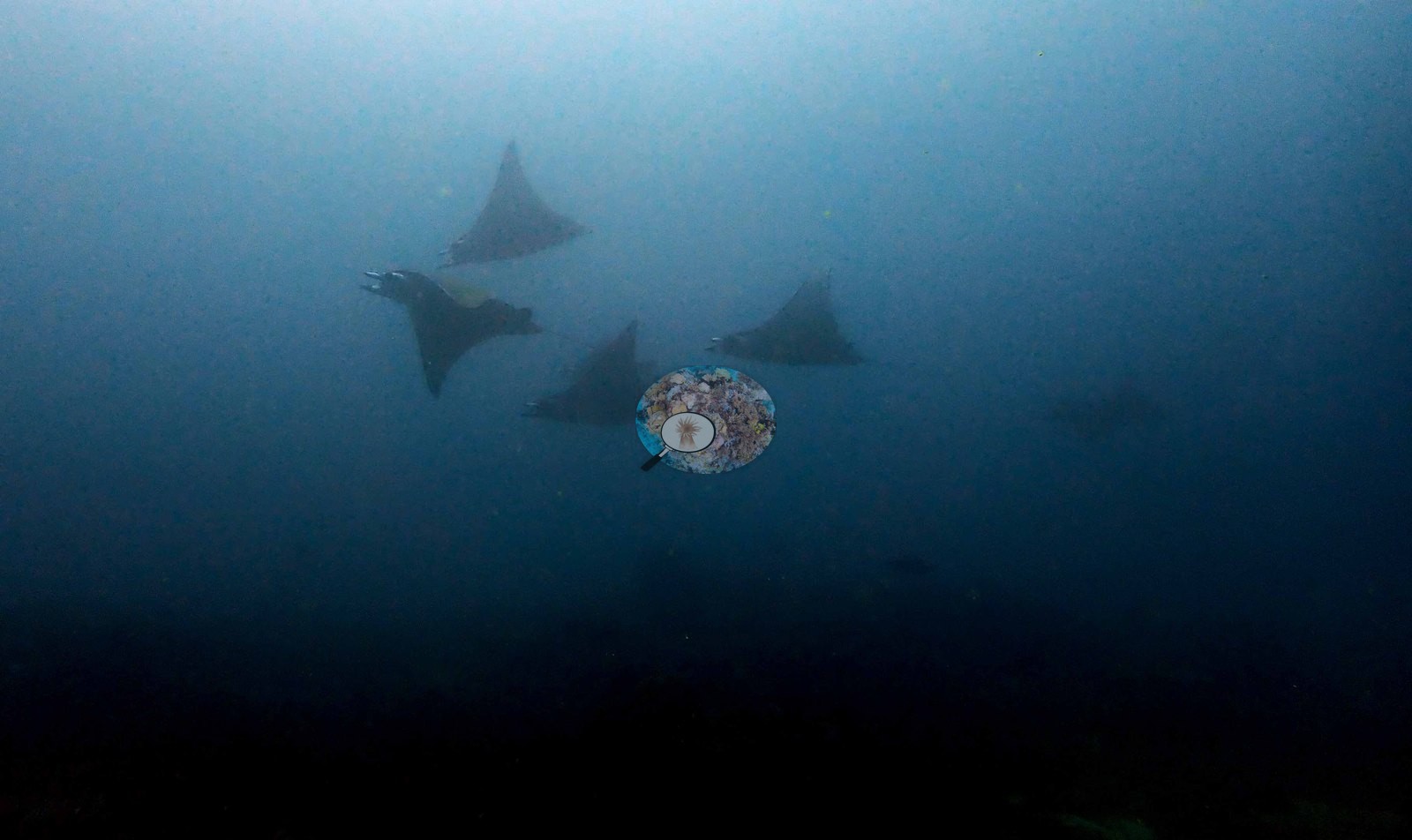
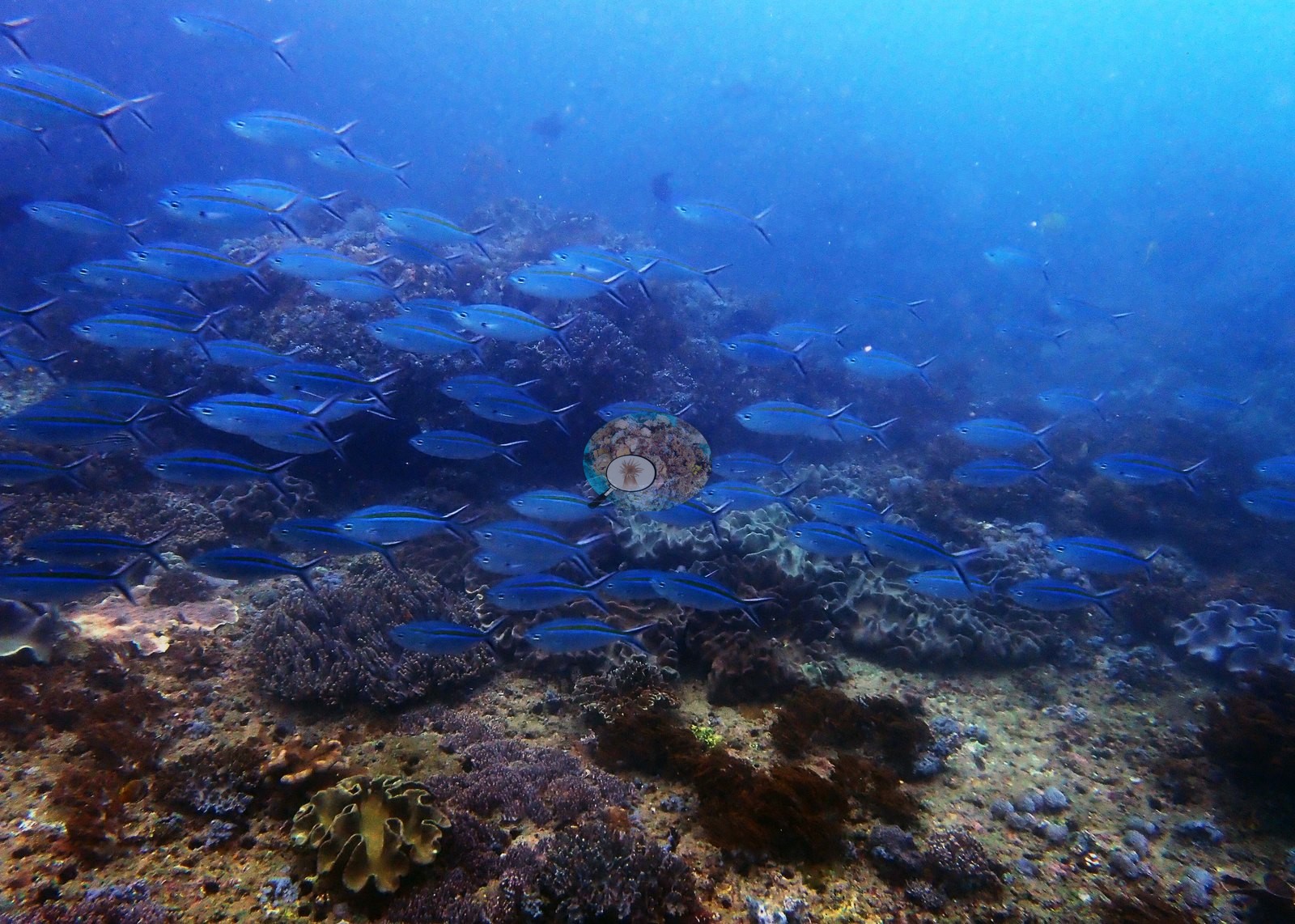
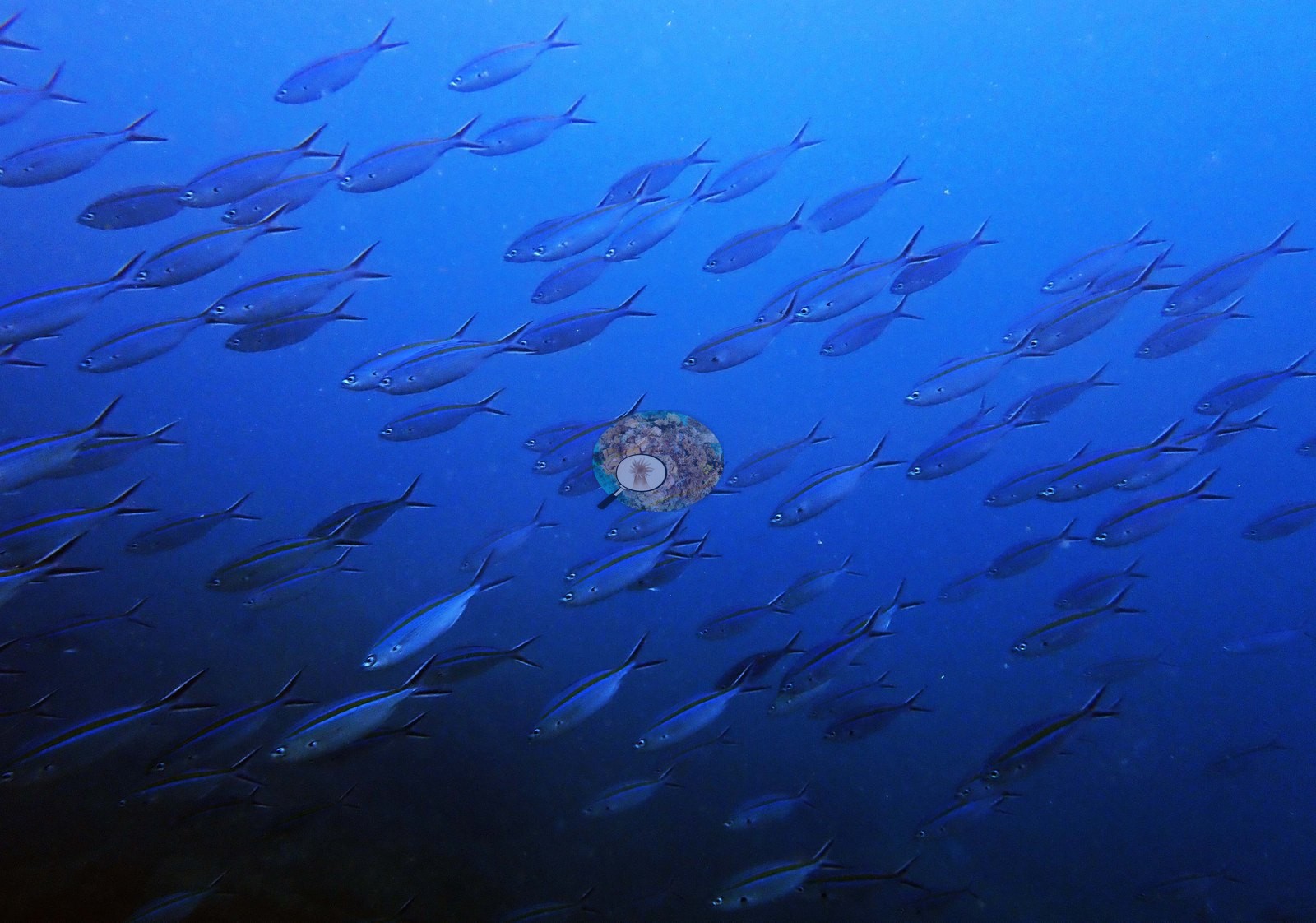
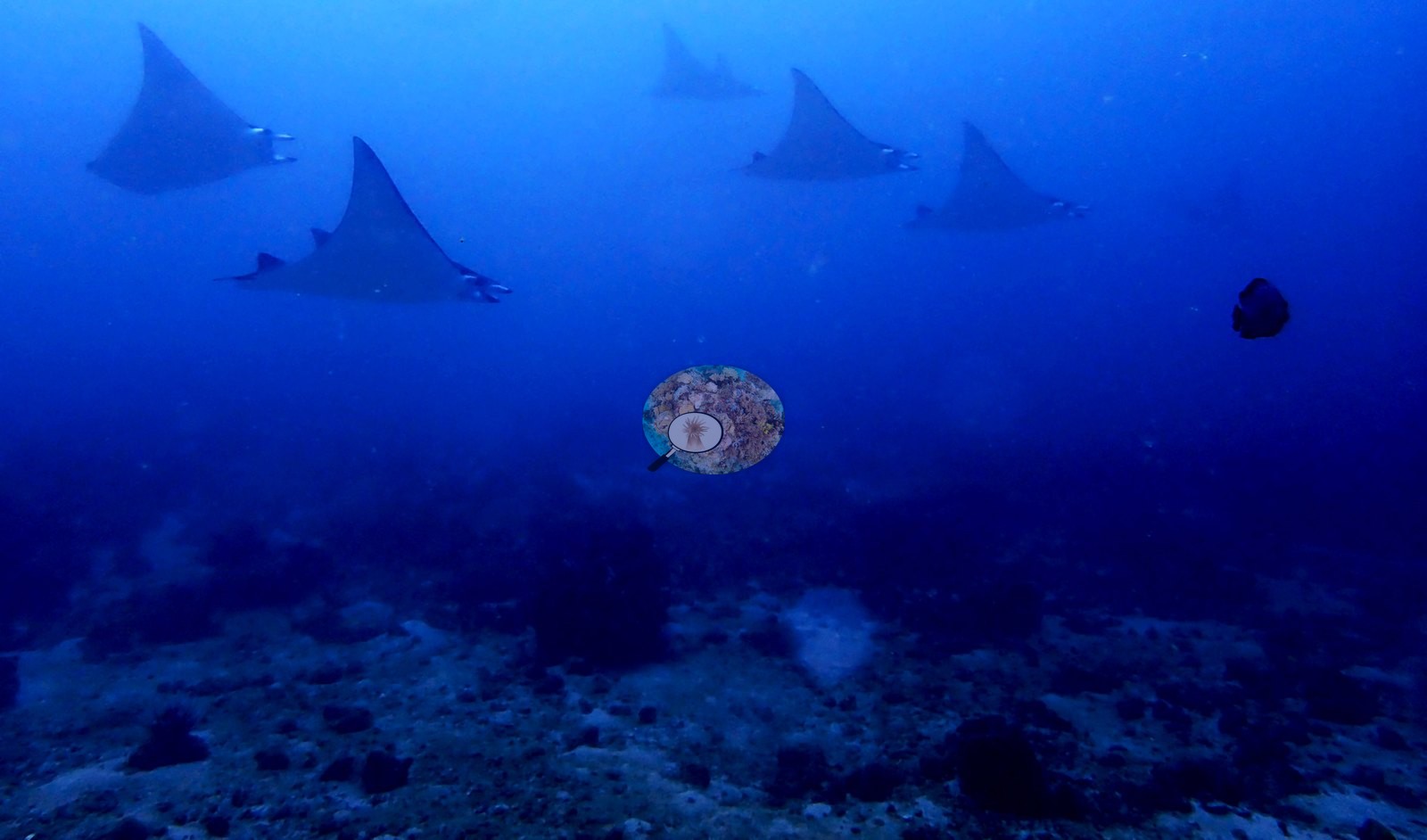
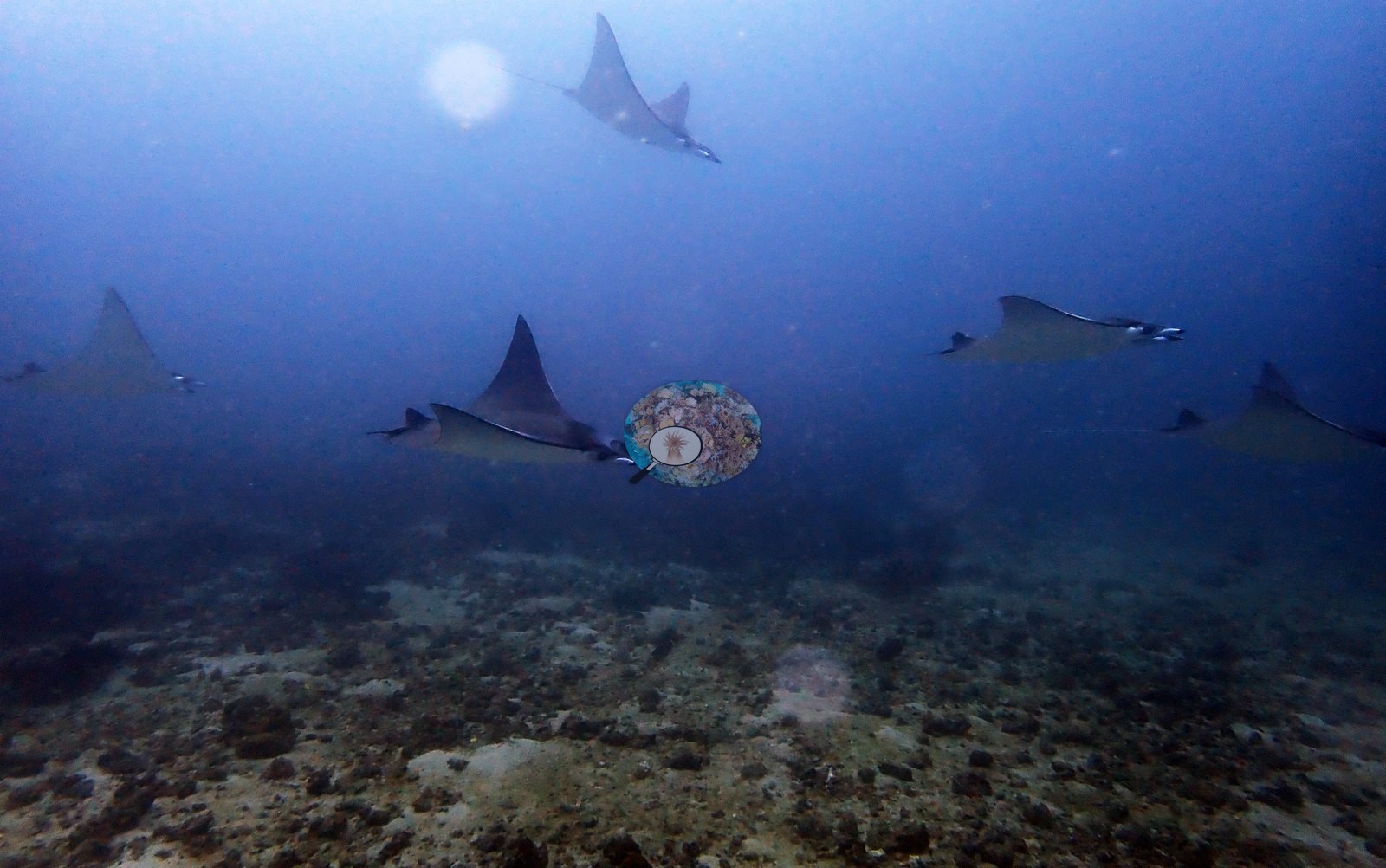
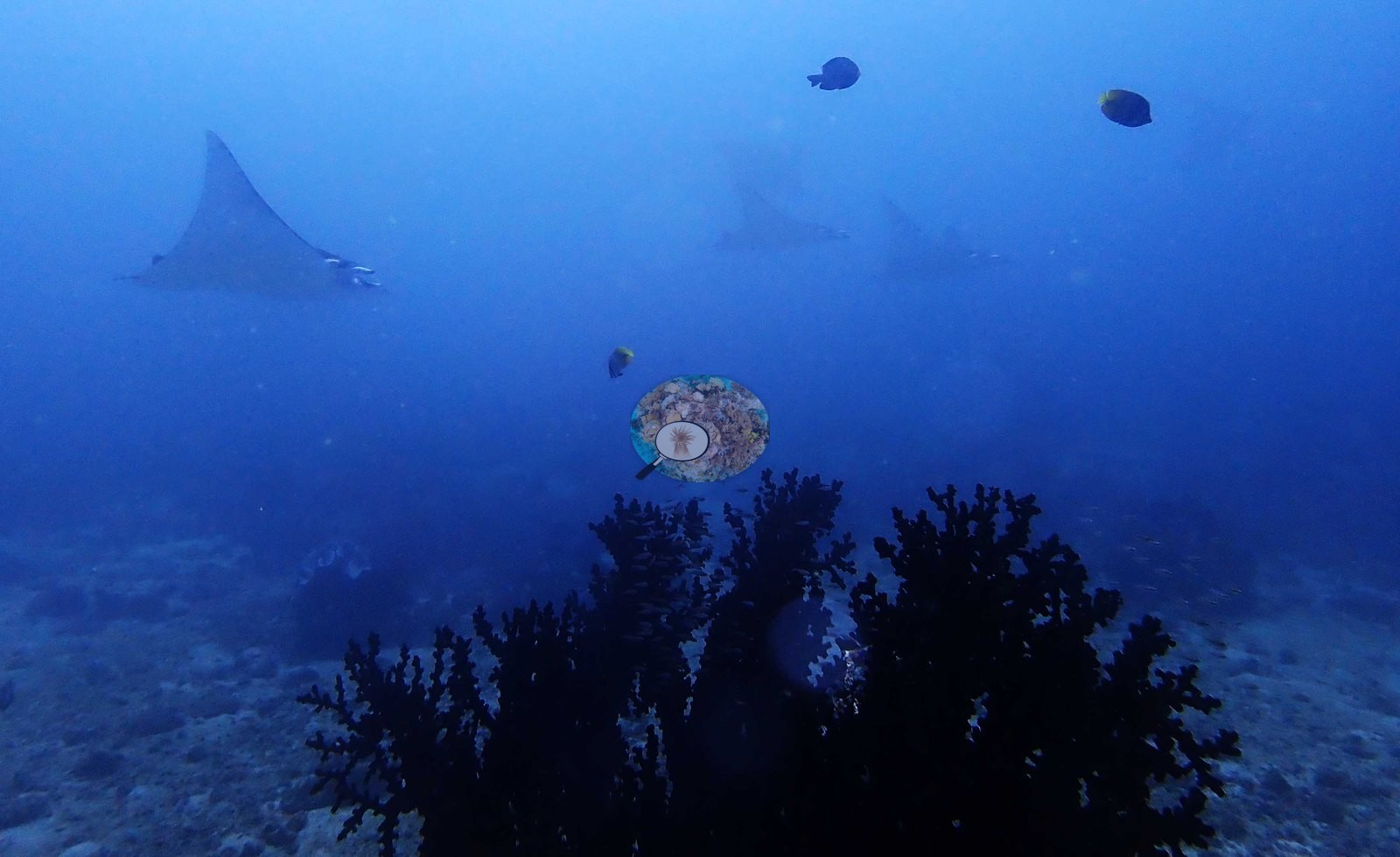
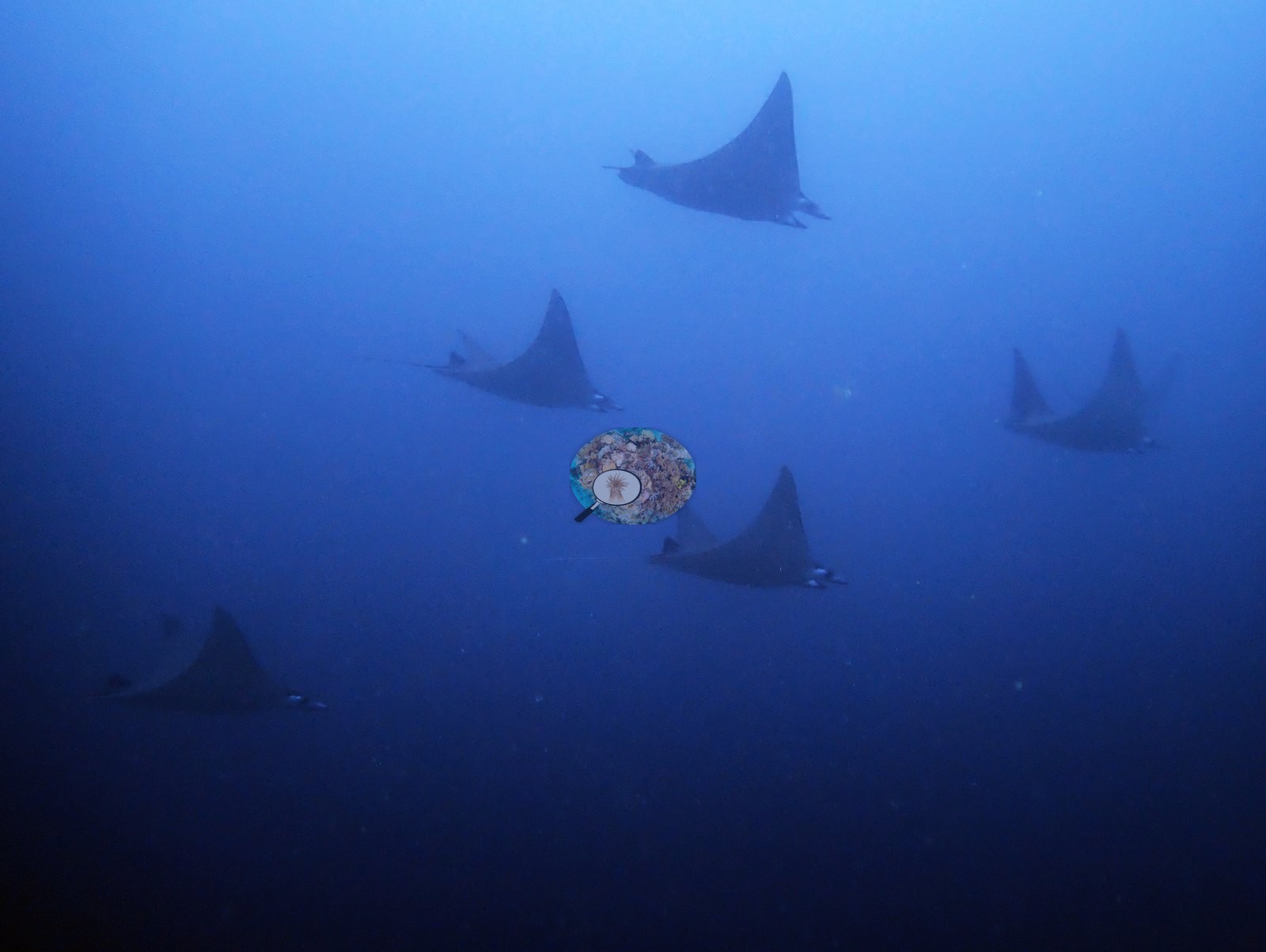
School of 7-10 mobular rays (mini-mantas) encircled us nearly the entire time (got some good pictures) (e.g., Image 10, Image 25).
Various sorts of ghost pipefish disguised as Halimeda (e.g., Image 1).
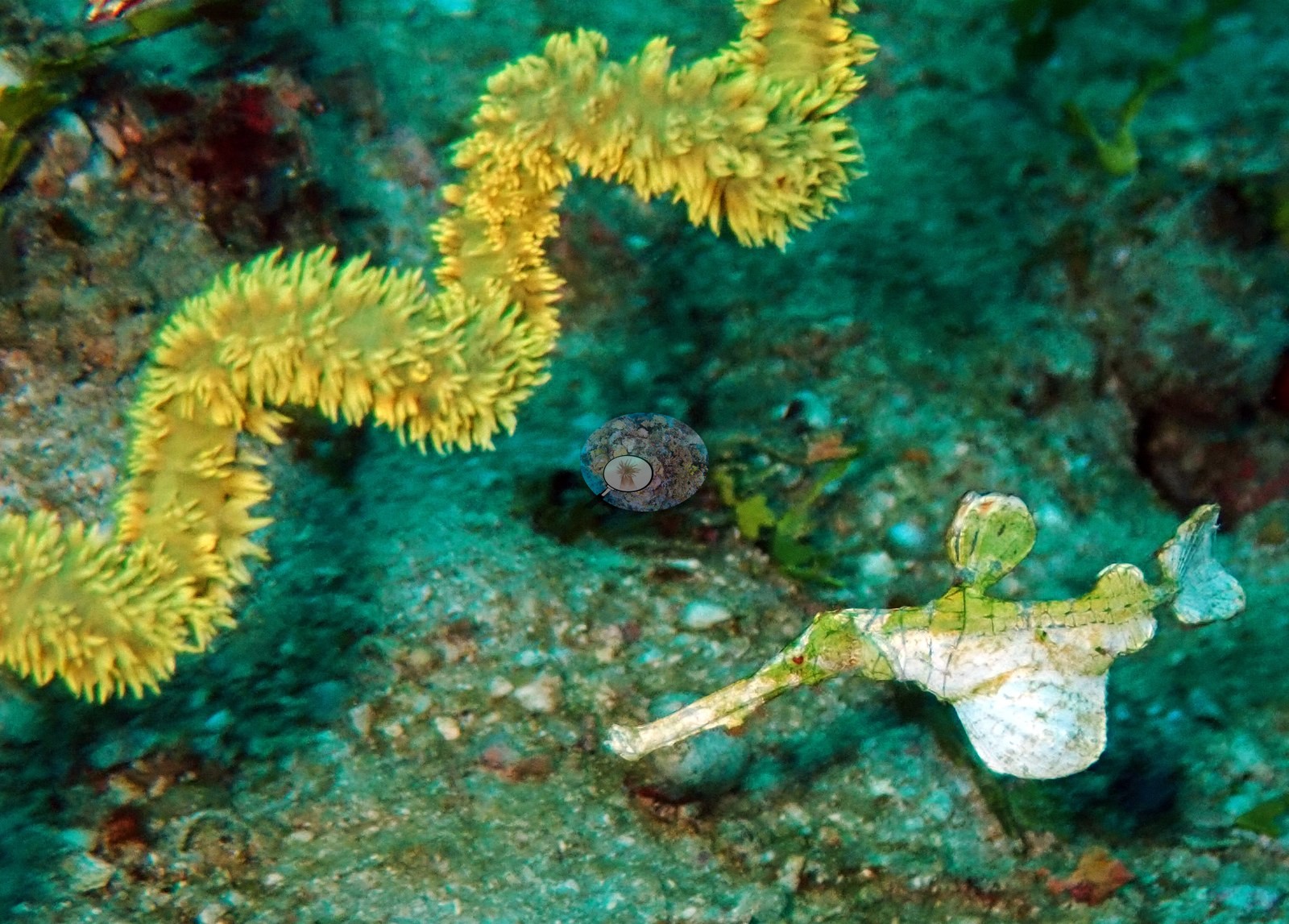
Few big fish except for aforementioned mobular rays. Sexy shrimp. Peacock mantis (hidden).
Comparisons with other data
We found no other surveys at this site as of 2026. If you would like to share yours, please email us.
Dive record
2019-1-23 dive 2: Secret Garden (trip dive 17). 10:52-11:51 (59 min). Max. depth=29.9 m. Average water temperature 26.7°C. 30% oxygen.
CV model comparison
More info
A few colony-focused photos raise the mean; the median is the typical photo. No computer-vision method yet estimates coral cover accurately on new images, so treat this as indicative rather than a measurement; it is revised as the methods improve.More info
DINOv3 and CoralSCOP were run on the same photos and are listed for comparison. No diver transect exists for this trip, so agreement between the rows is not accuracy, and no computer-vision method yet estimates coral cover accurately on new images; treat every row as indicative.| Method | Hard coral cover (%) | Photos (n) ± SE |
|---|---|---|
| In-house DINOv3 | 24.9 | n = 39 · SE 1.9 |
| CoralSCOP edited | 38.0 | n = 39 · SE 3.9 |
| Claude (edited photos) | 12.8 | n = 39 · SE 2.4 |
The two computer-vision methods disagree by 13.1 pp (24.9–38.0%) and read 12.1–25.2 pp above Claude's blind point count (12.8%); the headline is Claude's blind point count because no transect or manual count exists here.
See a more detailed, stand-alone version of this table.
Data & links
All images from Coral Reef Diagnostics. Data are from Coral Reef Diagnostics.
© Coral Reef Diagnostics.