
Indonesia - Komodo NP: Hot Rocks (Sangeang)
Part of the regional summary: Indonesia - Komodo
More info
West Nusa Tenggara (NOAA CRW virtual station) · Lesser Sunda ecoregion mean=6.9°C-heating weeksHot Rocks sits at the base of a dormant volcano, with warm sand and hot water seeping from cracks; coral cover runs low at depth (around 5% by Anderson's own estimate) with soft corals, gorgonians, and a young coral community growing directly on lava, alongside pygmy seahorses and an orangutan crab. A blind Claude computer-vision point count puts coral cover around 9.1%.
Hot Rocks terletak di kaki gunung berapi tidak aktif, dengan pasir hangat dan air panas yang merembes dari celah-celah; tutupan karangnya rendah di bagian dalam (sekitar 5% menurut perkiraan Anderson sendiri) dengan karang lunak, gorgonia, dan komunitas karang muda yang tumbuh langsung di atas lava, bersama kuda laut kerdil dan kepiting orangutan. Penghitungan titik buta visi komputer Claude memperkirakan tutupan karang sekitar 9.1%.
Terjemahan ringkasan ini oleh AI; versi bahasa Inggris yang berlaku.
One other CRD dive site within 5 km shown in orange — click a marker to open its page.
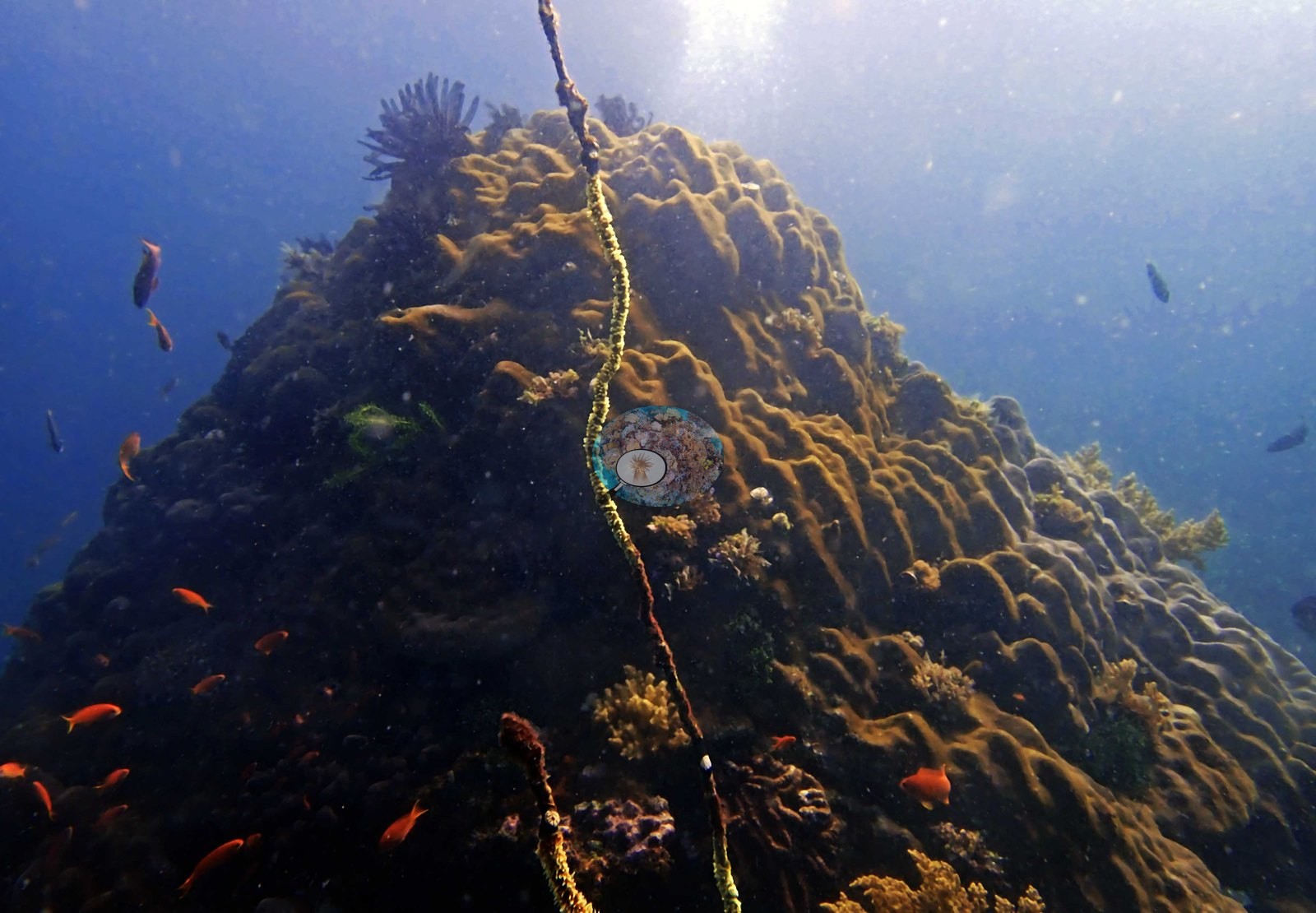
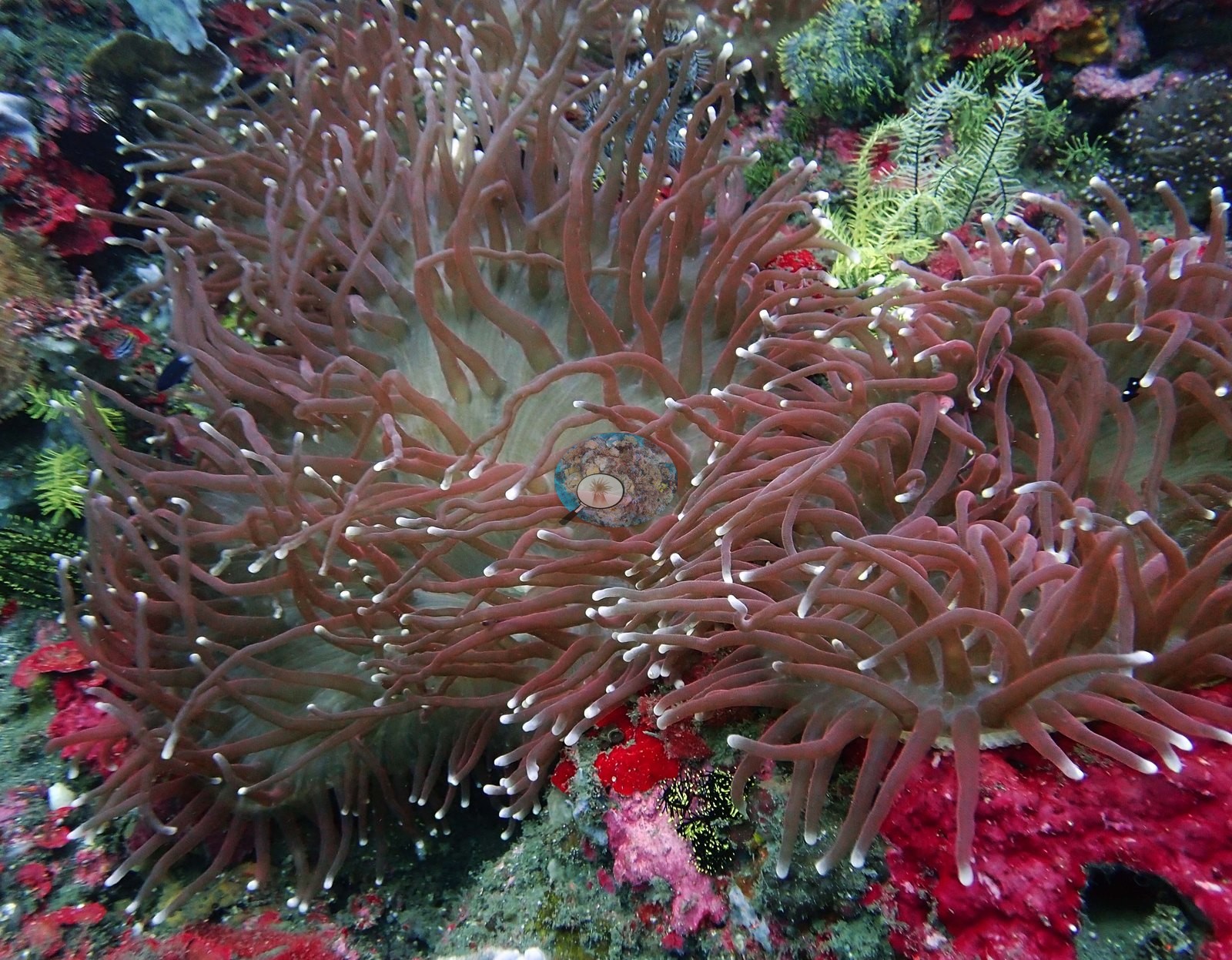
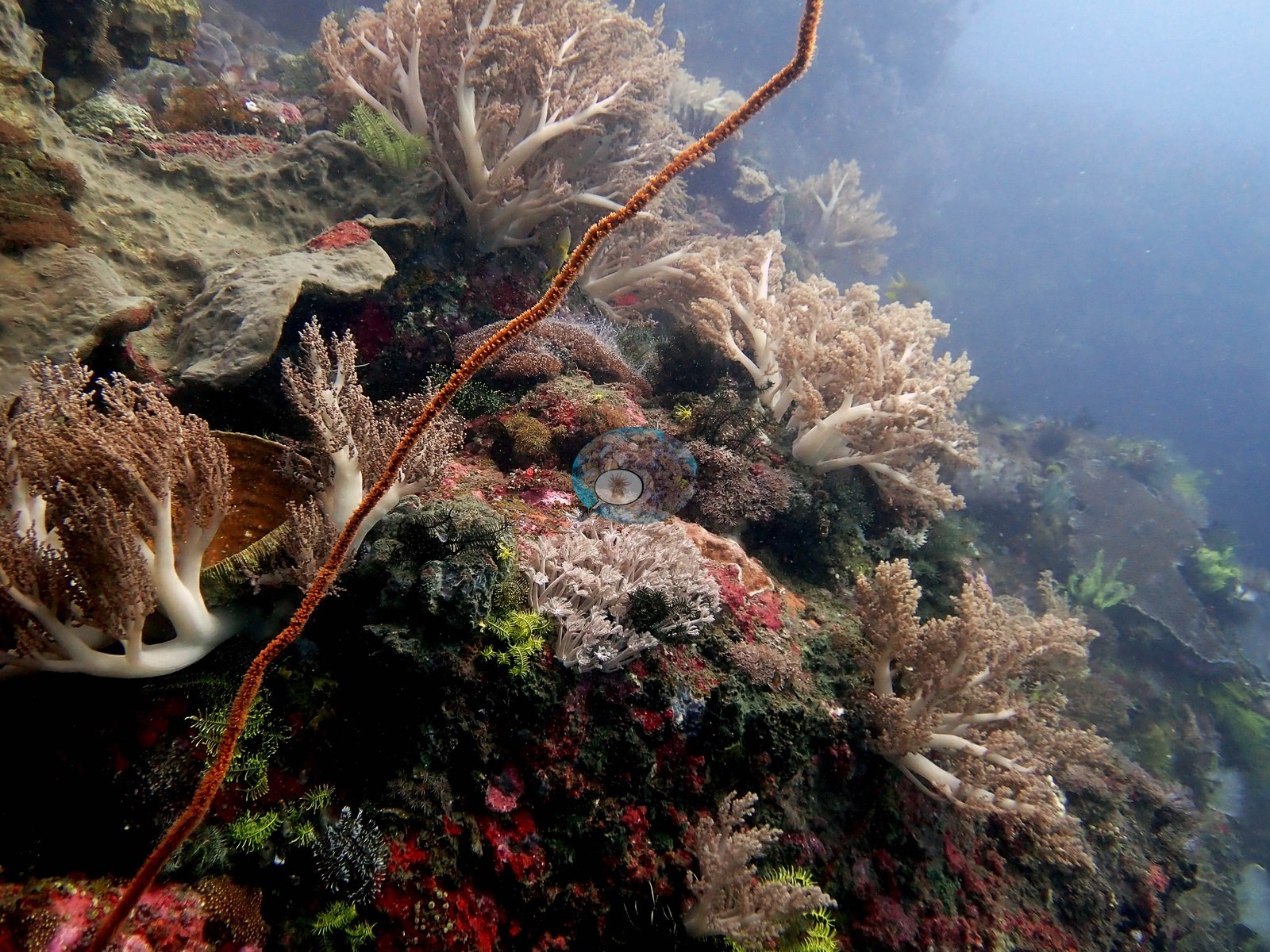
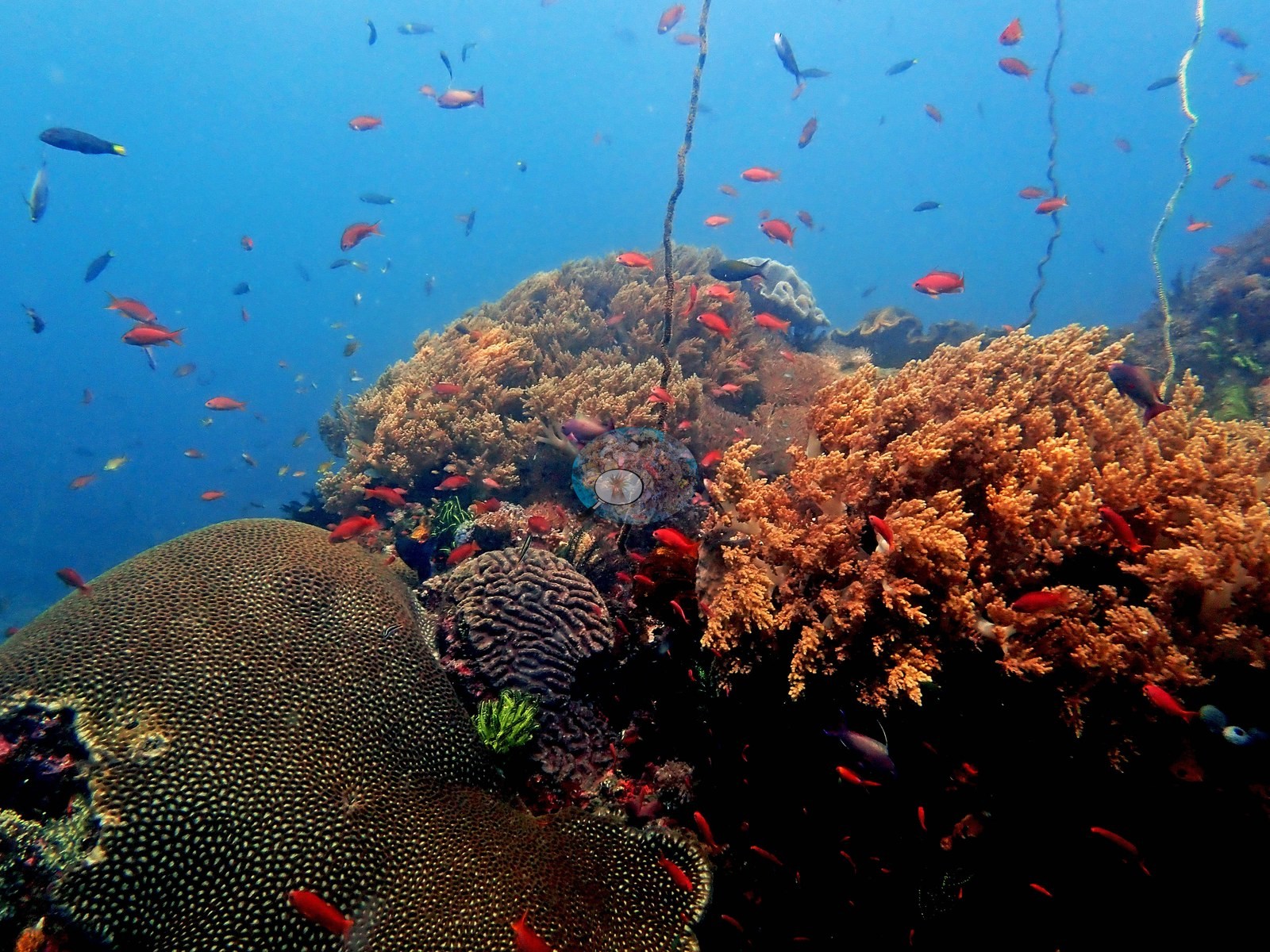
5 of these 50 photographs are shown beside the text that discusses them under "Site description" below.
Site description
Setting
A thermally active site at the base of the active, albeit dormant, Sangeang Volcano. 5-10 m viz, 25ºC. Descended into black sand though the reef structure was nearby. Sand was warm on account of volcanic activity. Hot water seeping from cracks. Worse visibility (5 m) and stronger current than first dive. Very dark at 17 m. Pea green soup-colored water.
General benthic features
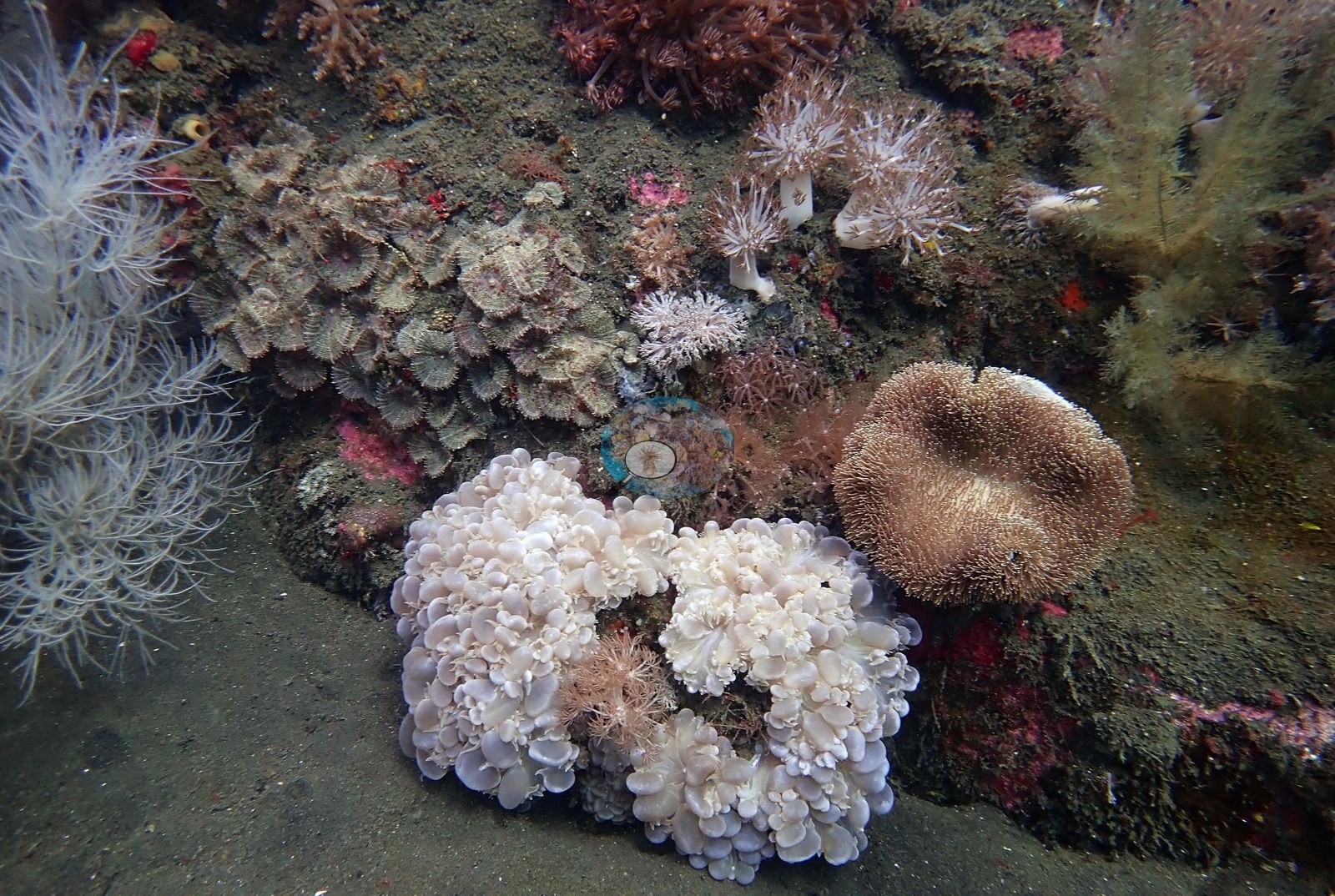
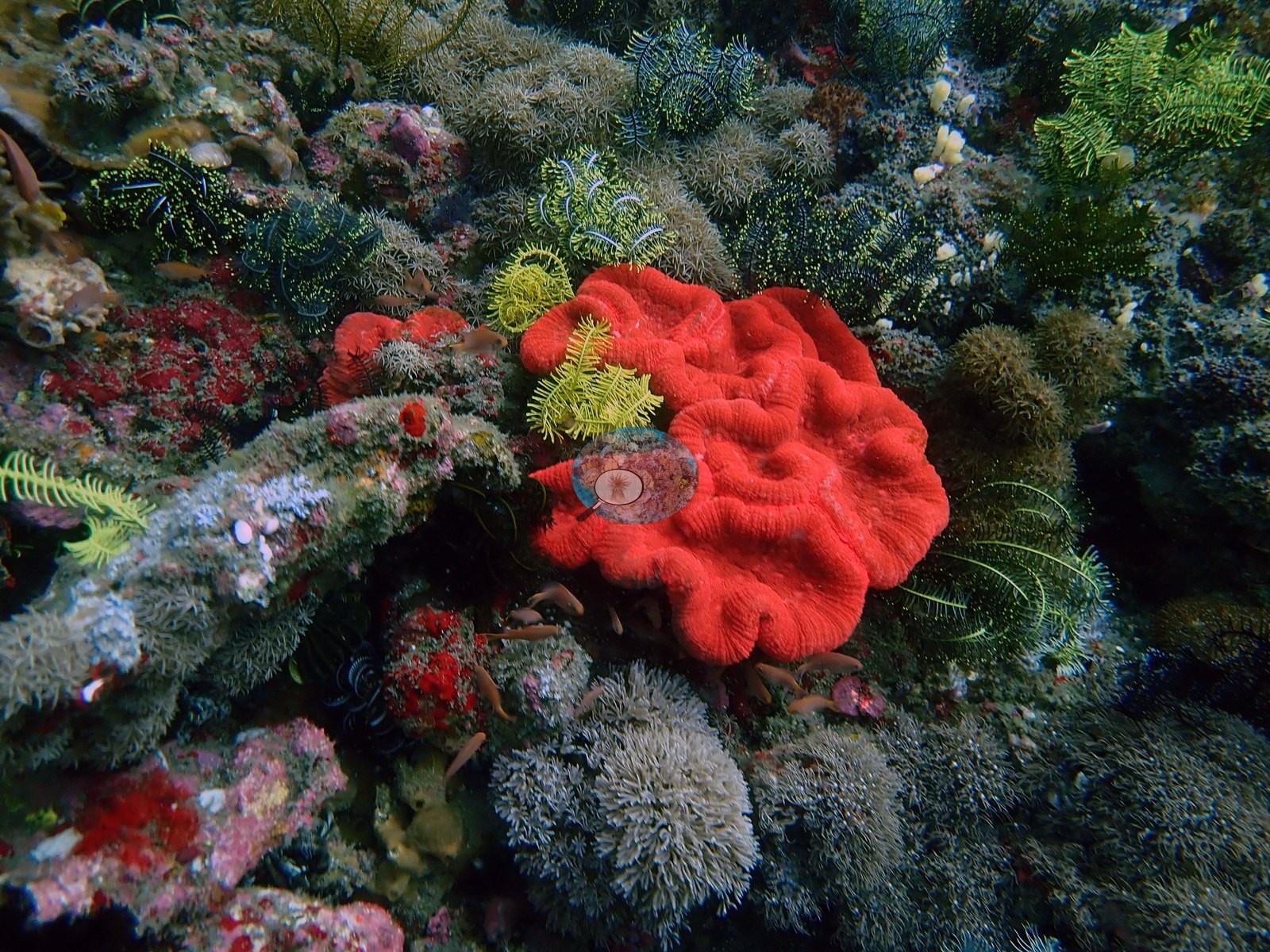
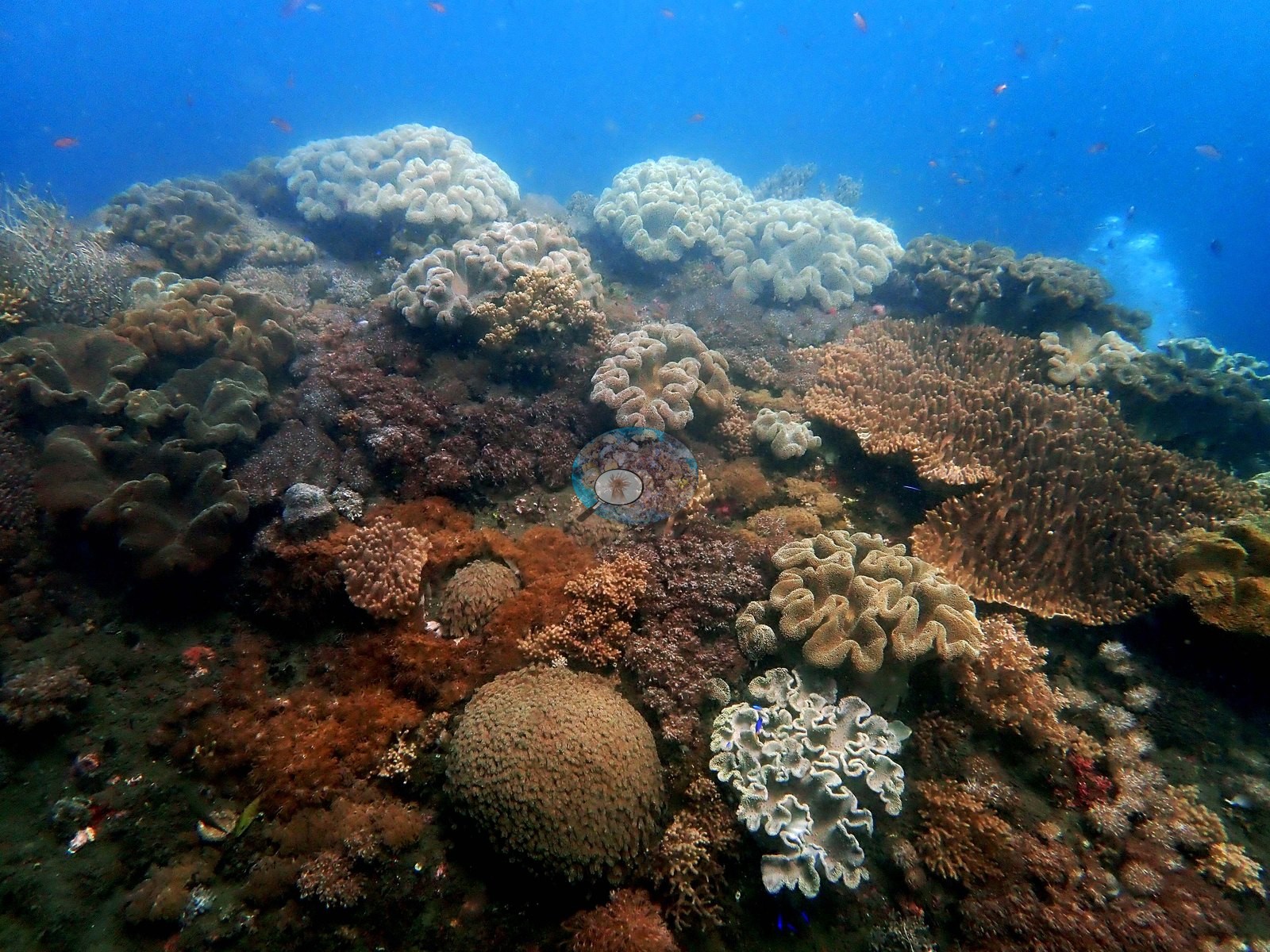
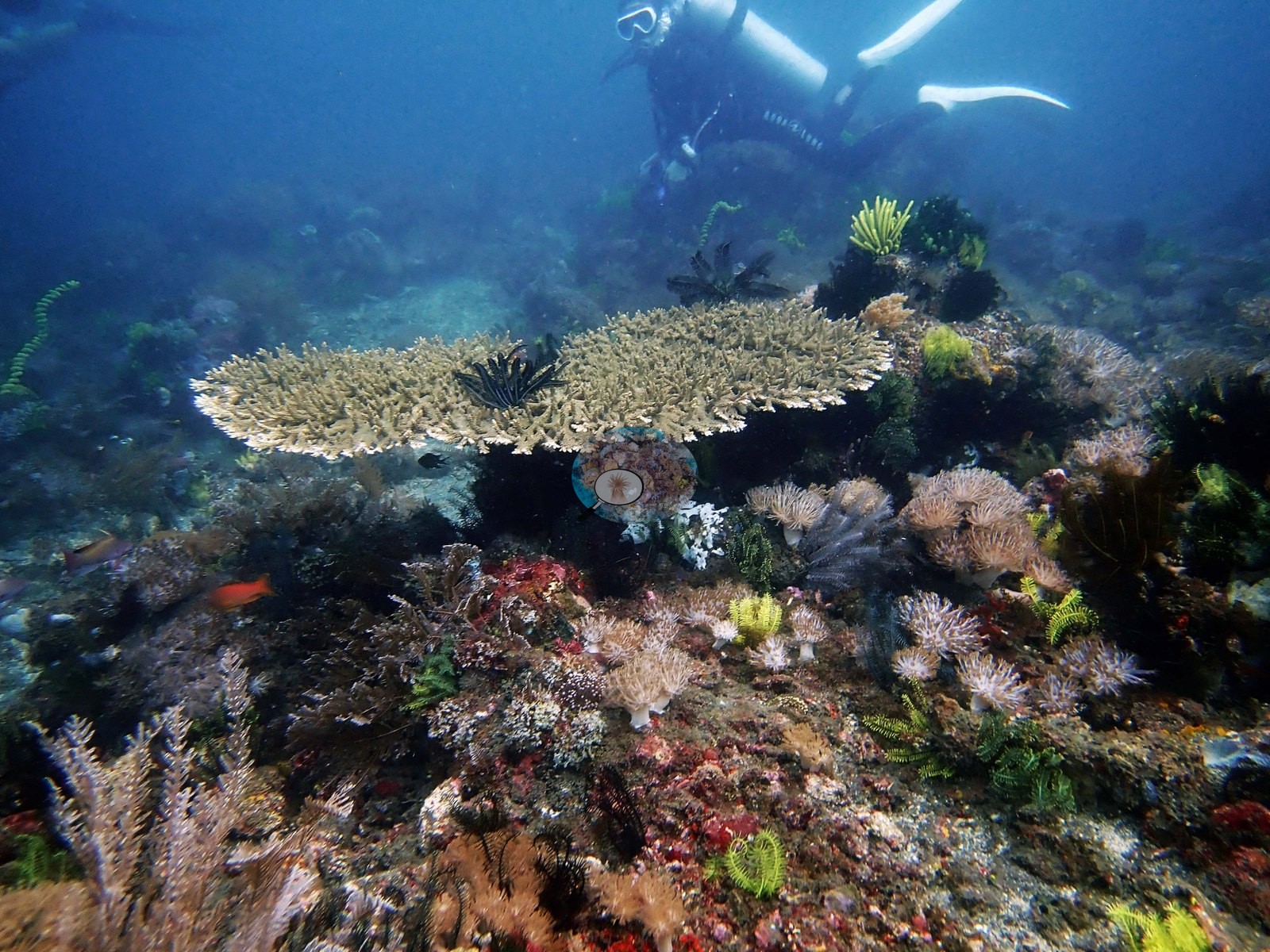
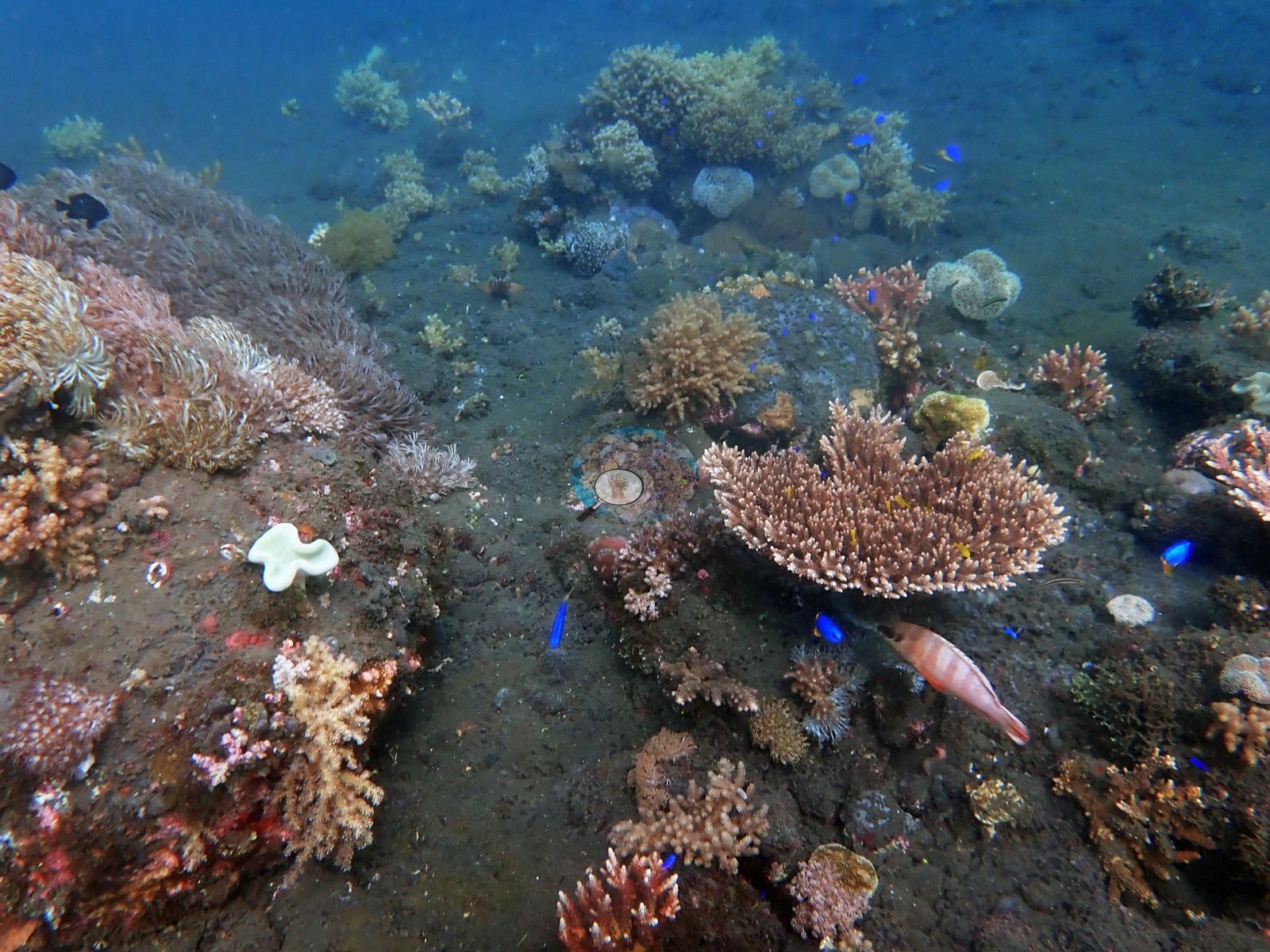
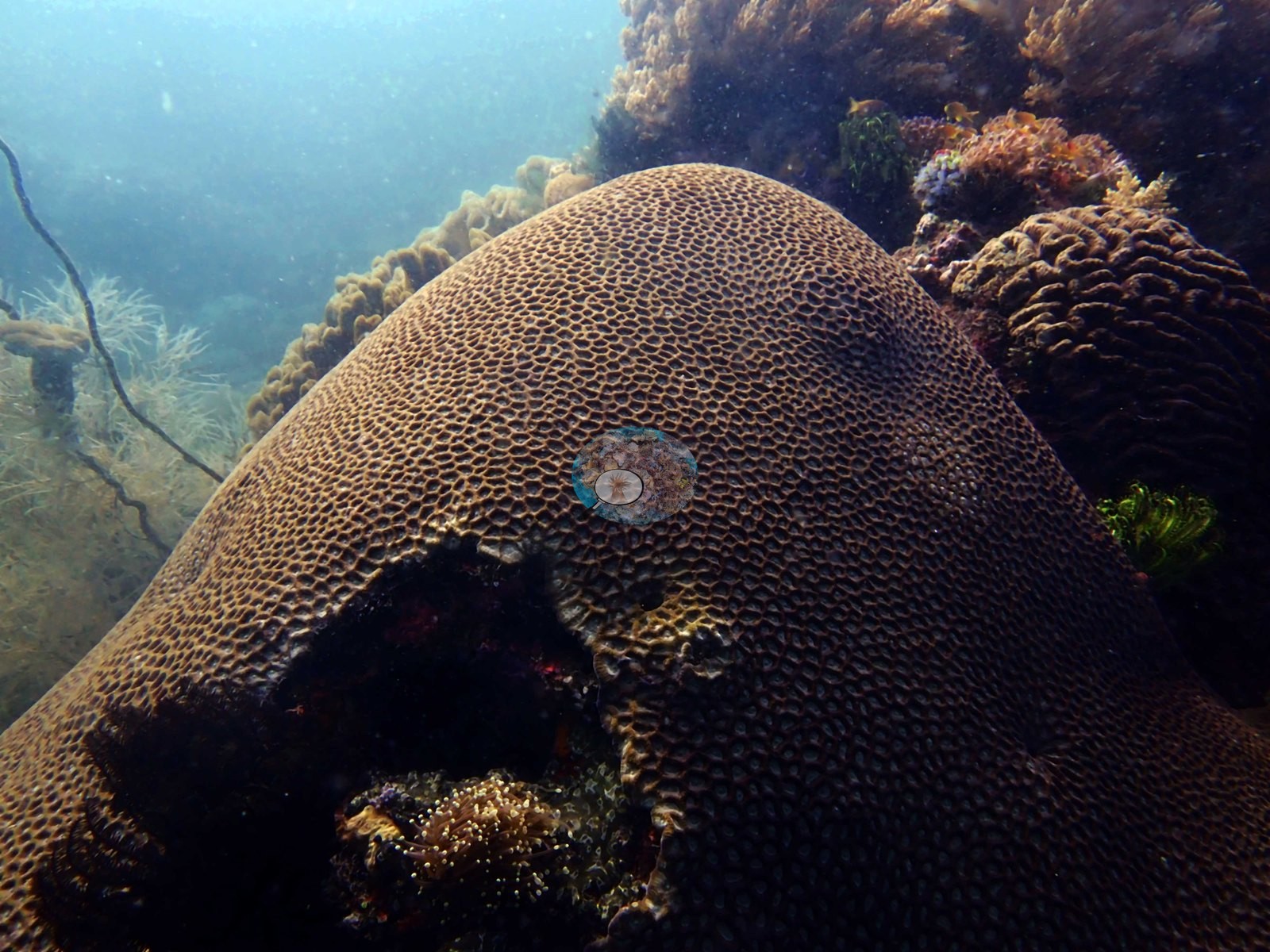
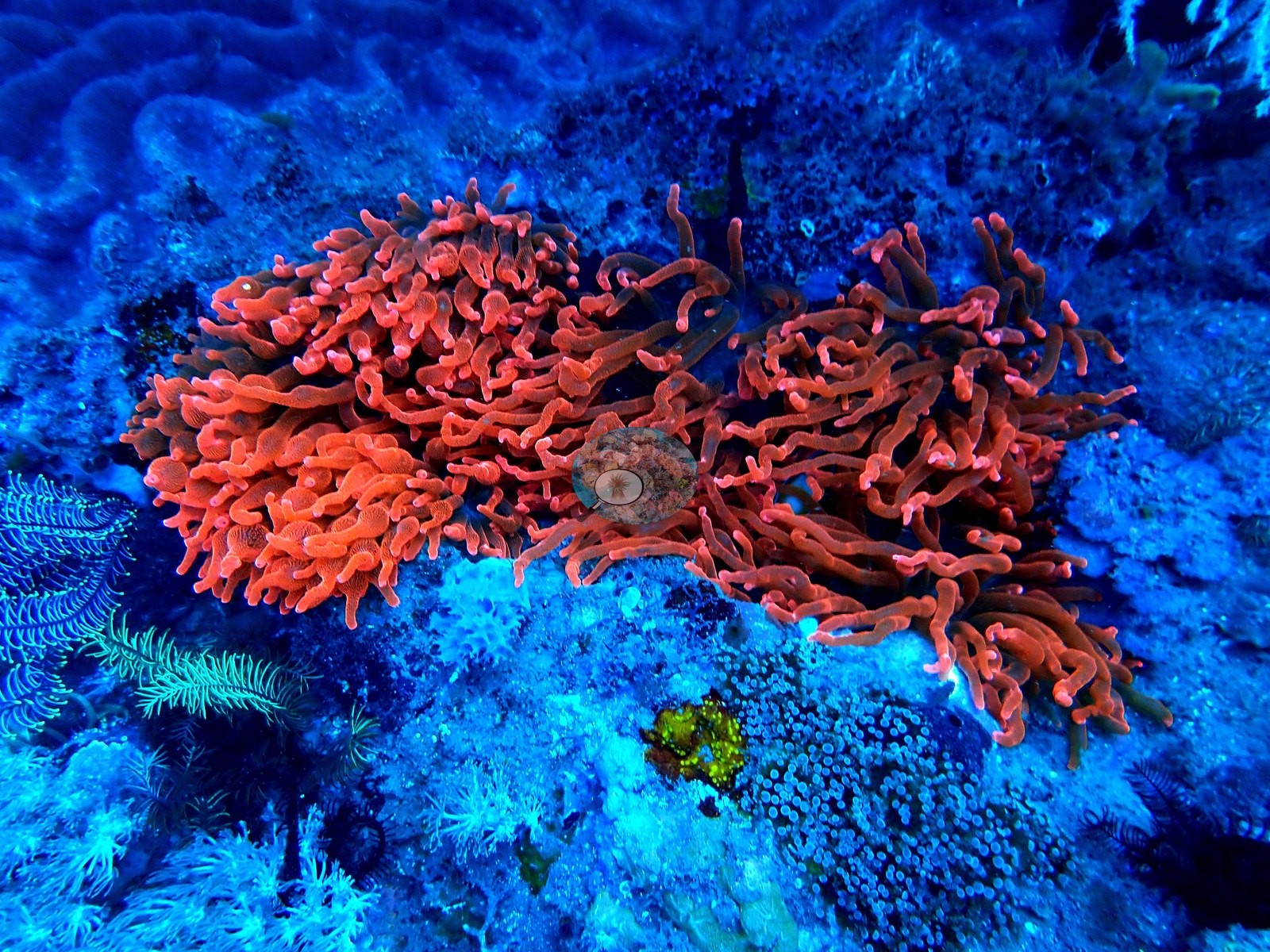
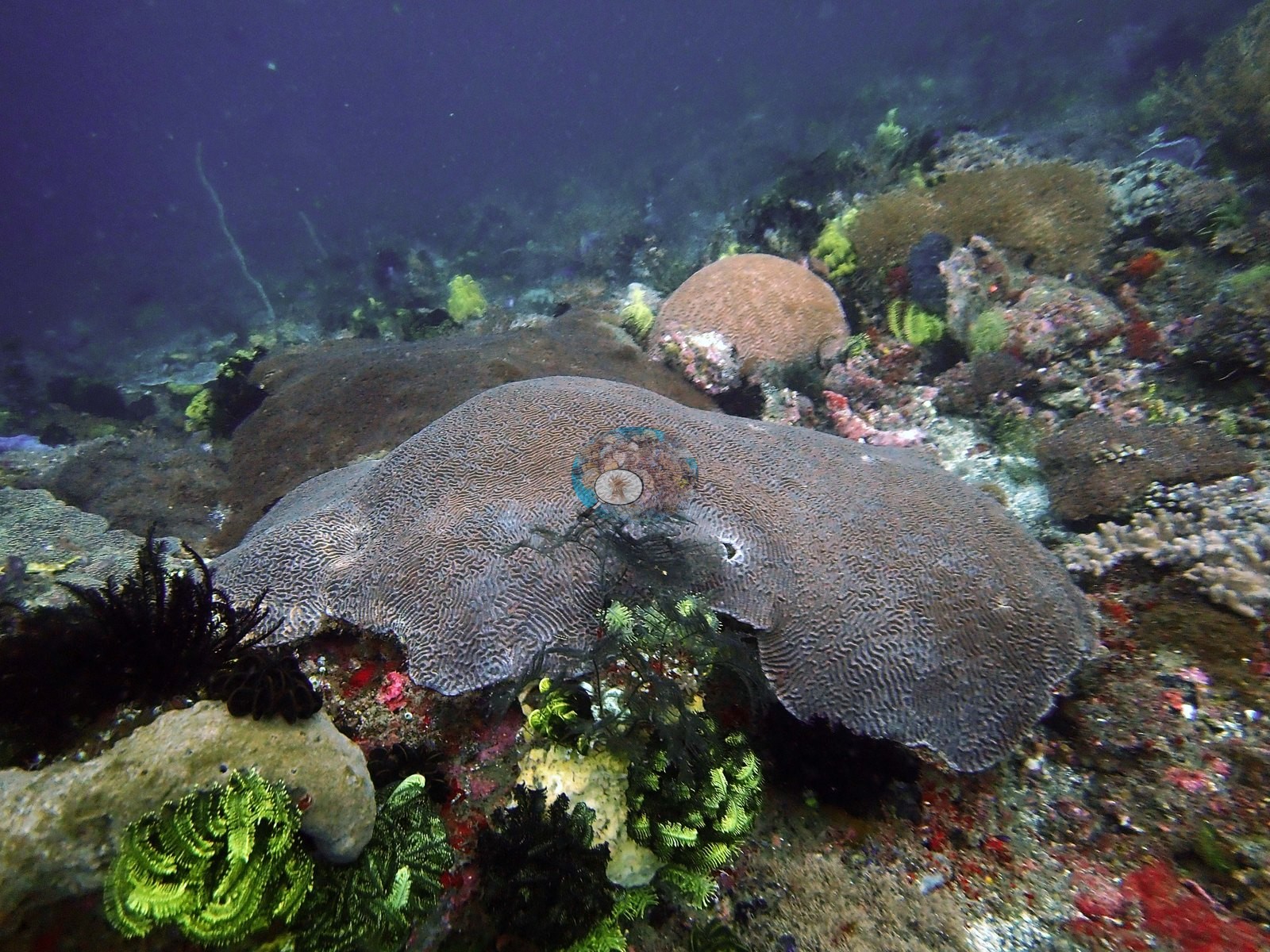
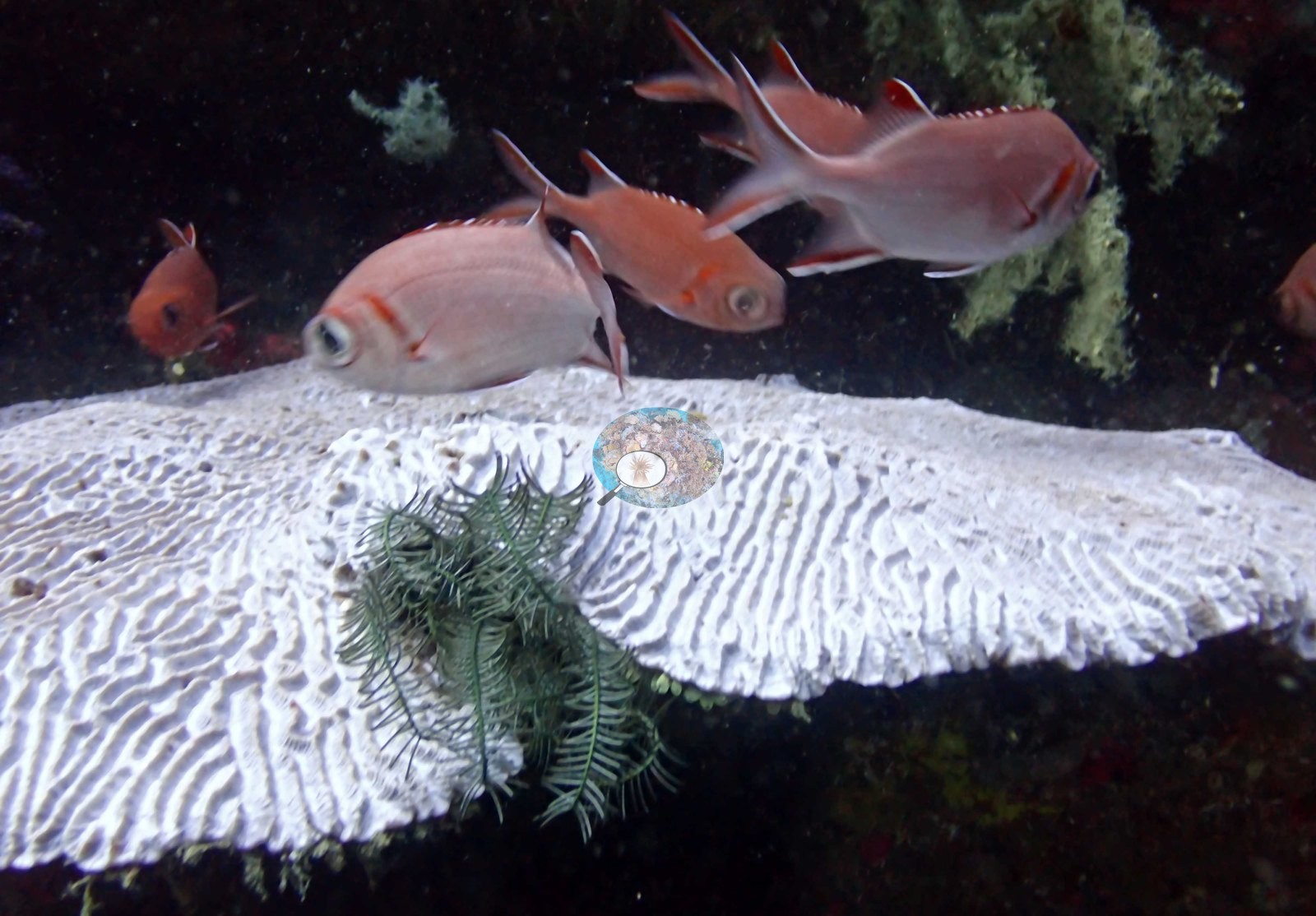
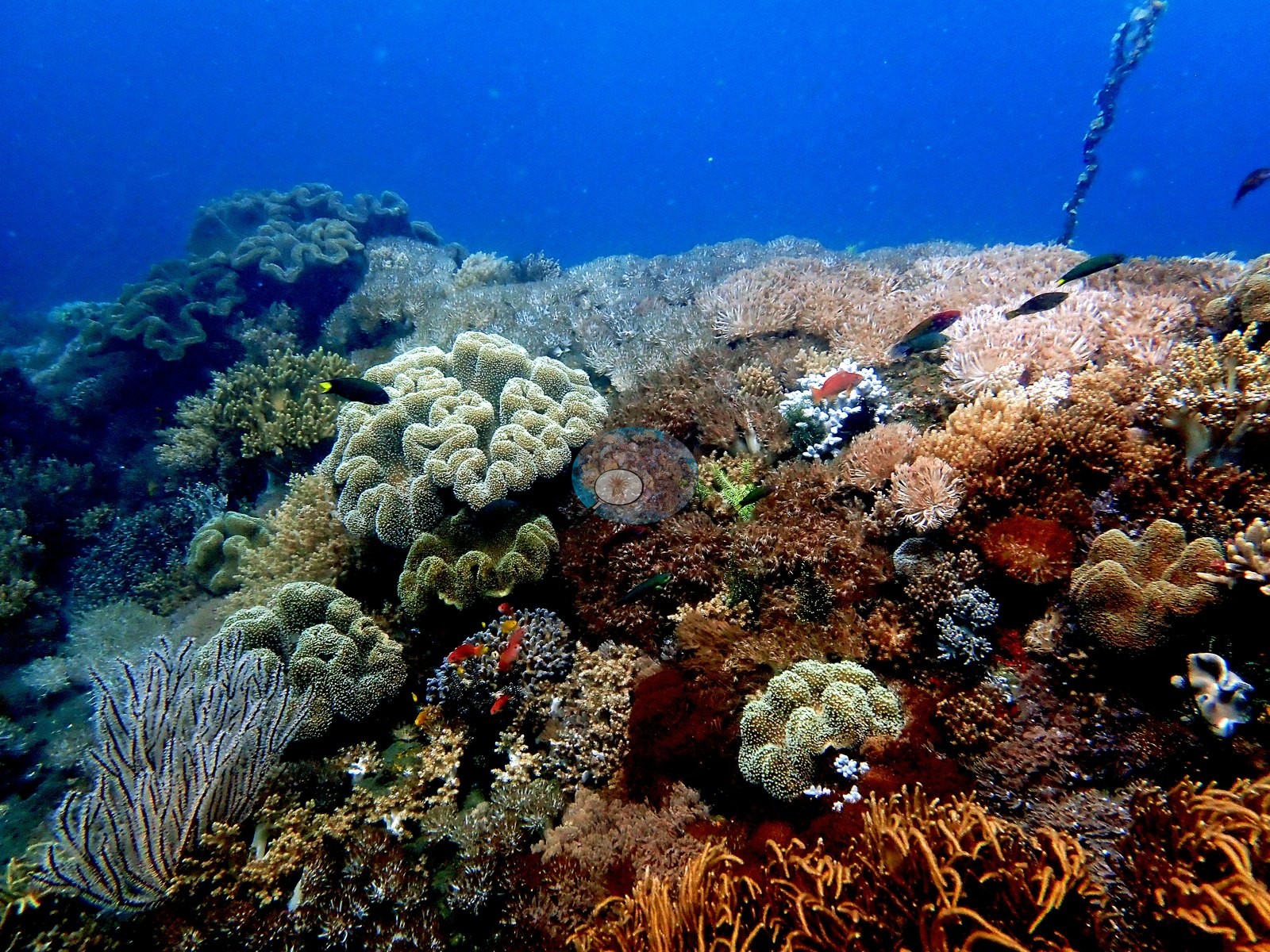
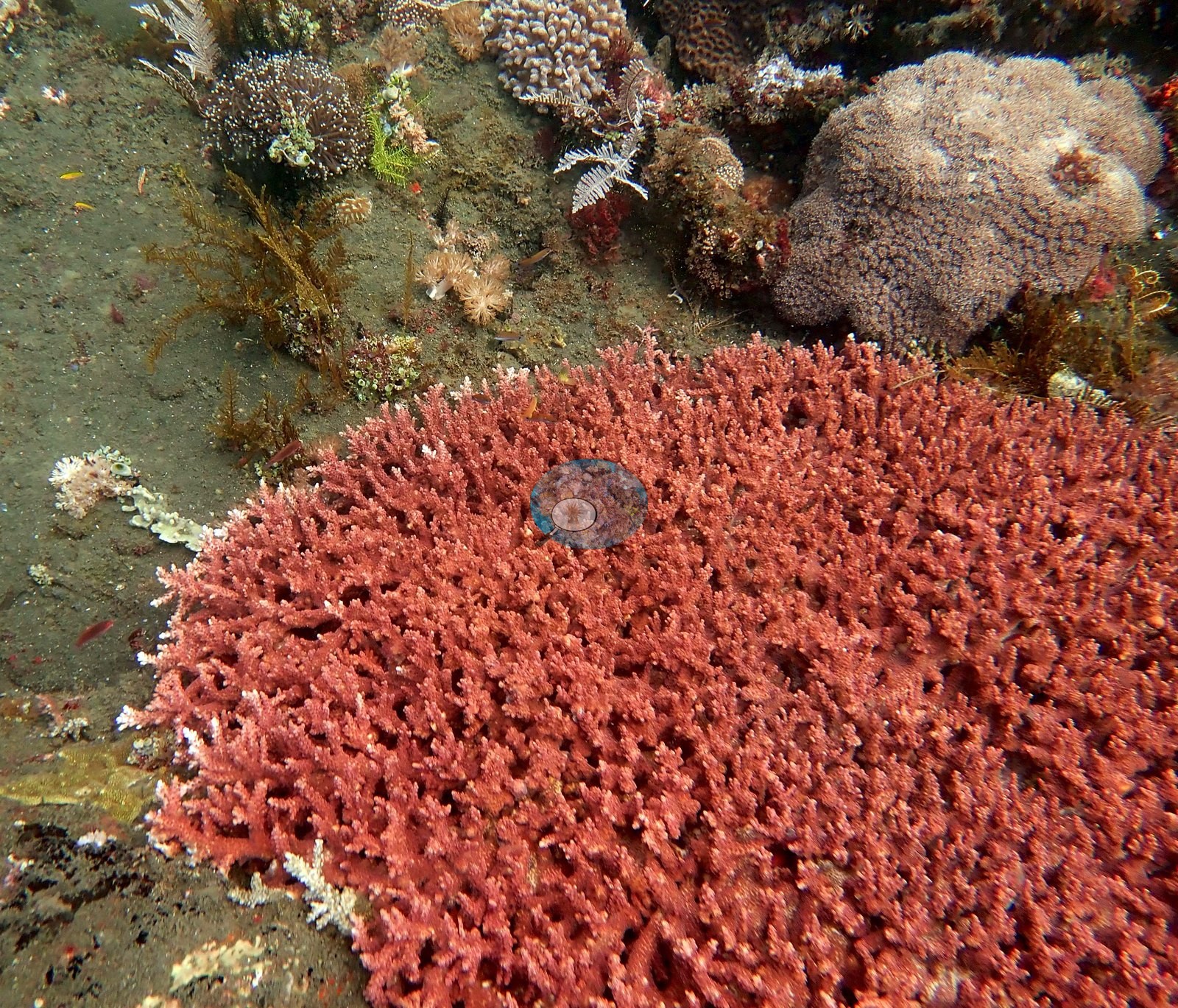
A much older coral assemblage than at “Lava Flow” in the Bandas. Soft corals, stingrays, strange thermoclines, orangutan crab, Seriatopora caliendrum very common at site, young coral community growing on lava, Pocillopora acuta, Euphyllia, Plerogyra both common (e.g., Image 1).
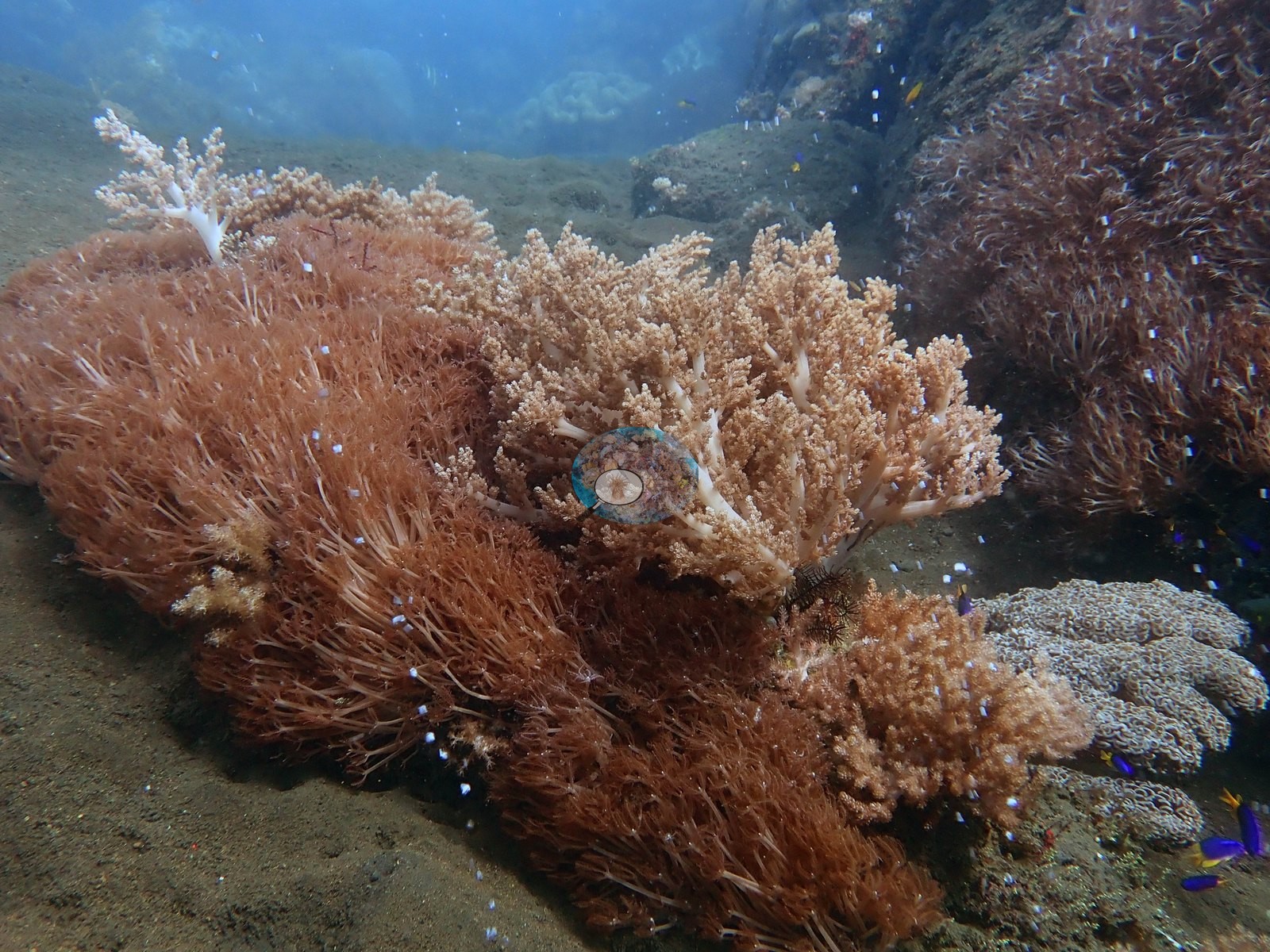
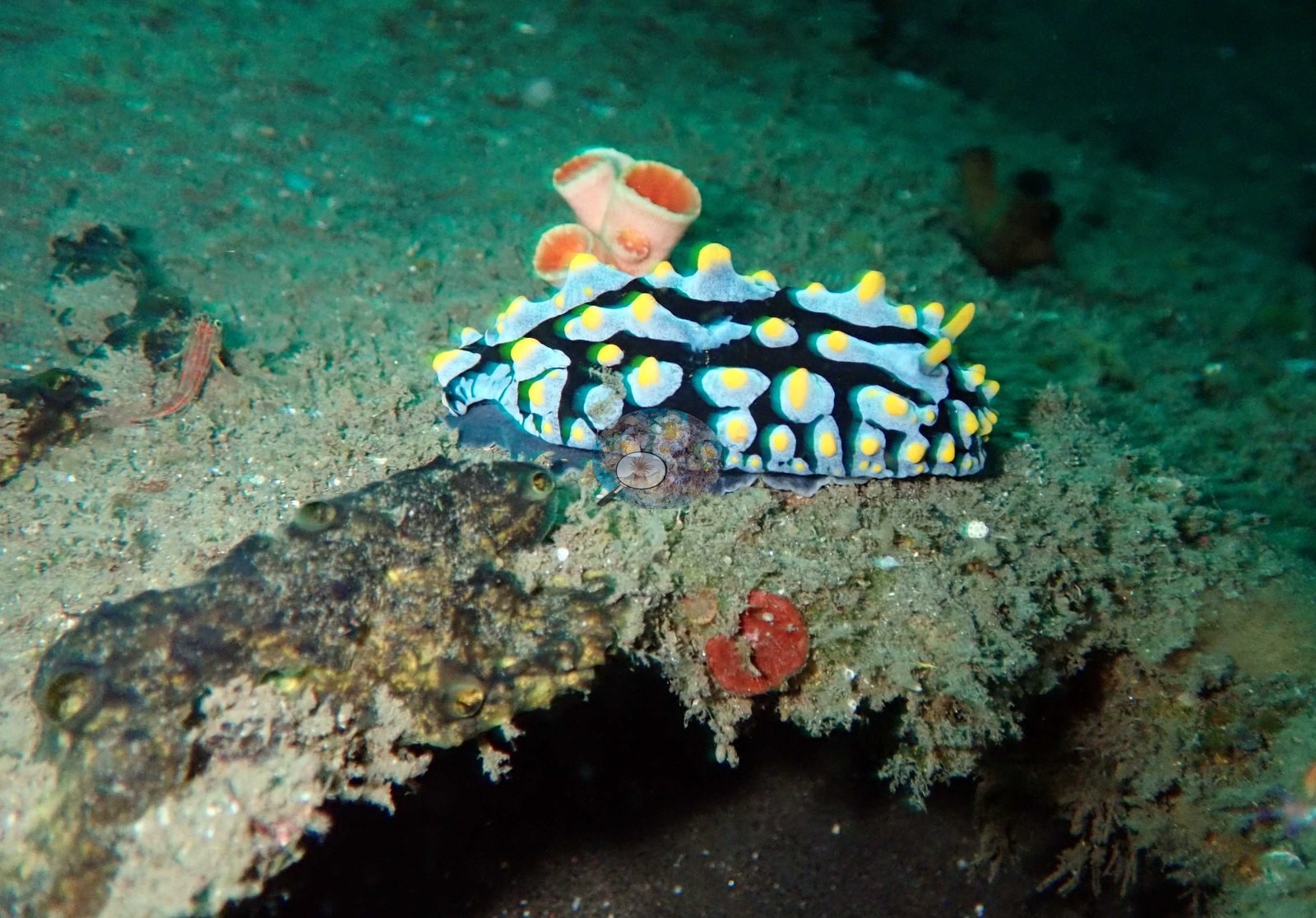
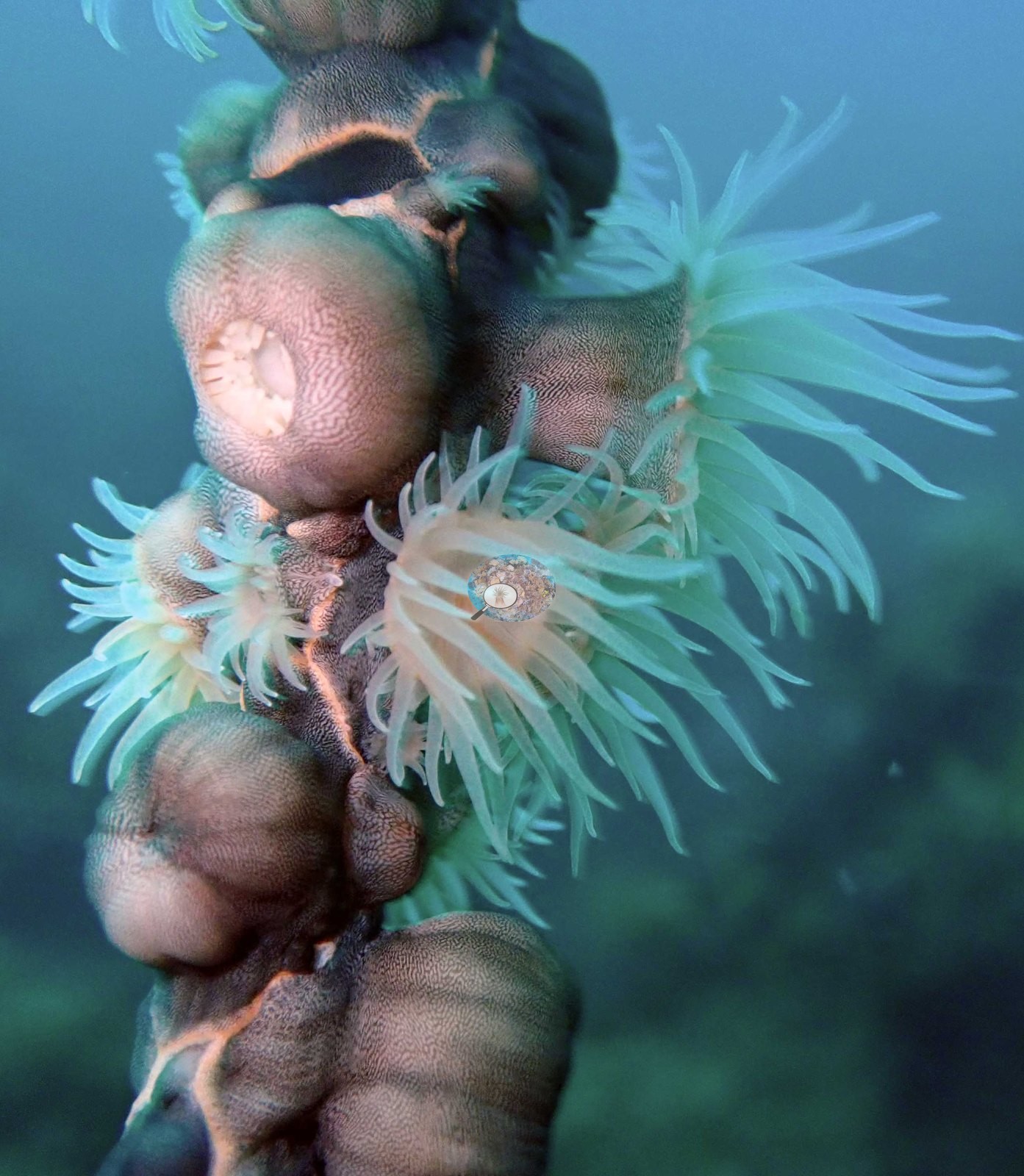
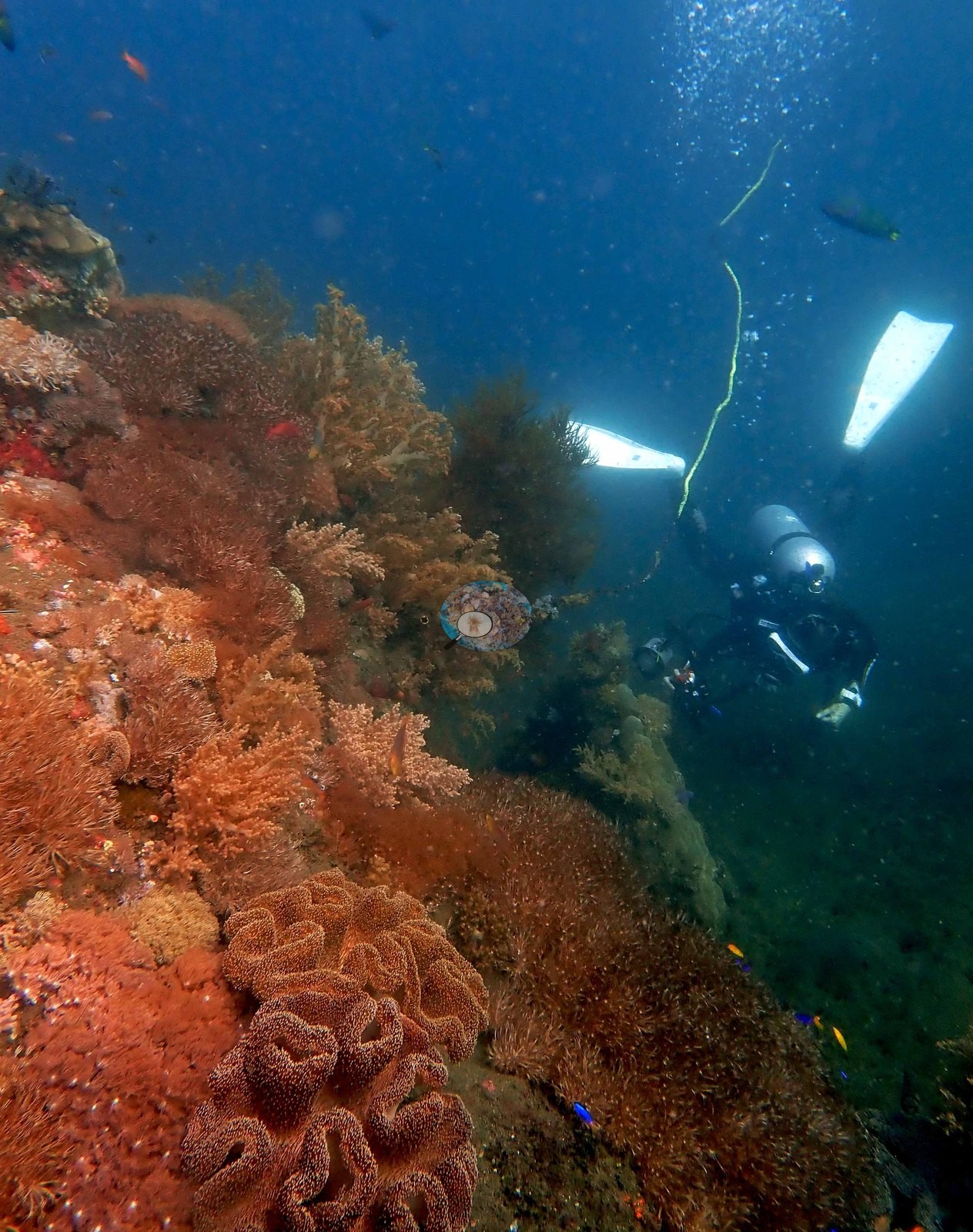
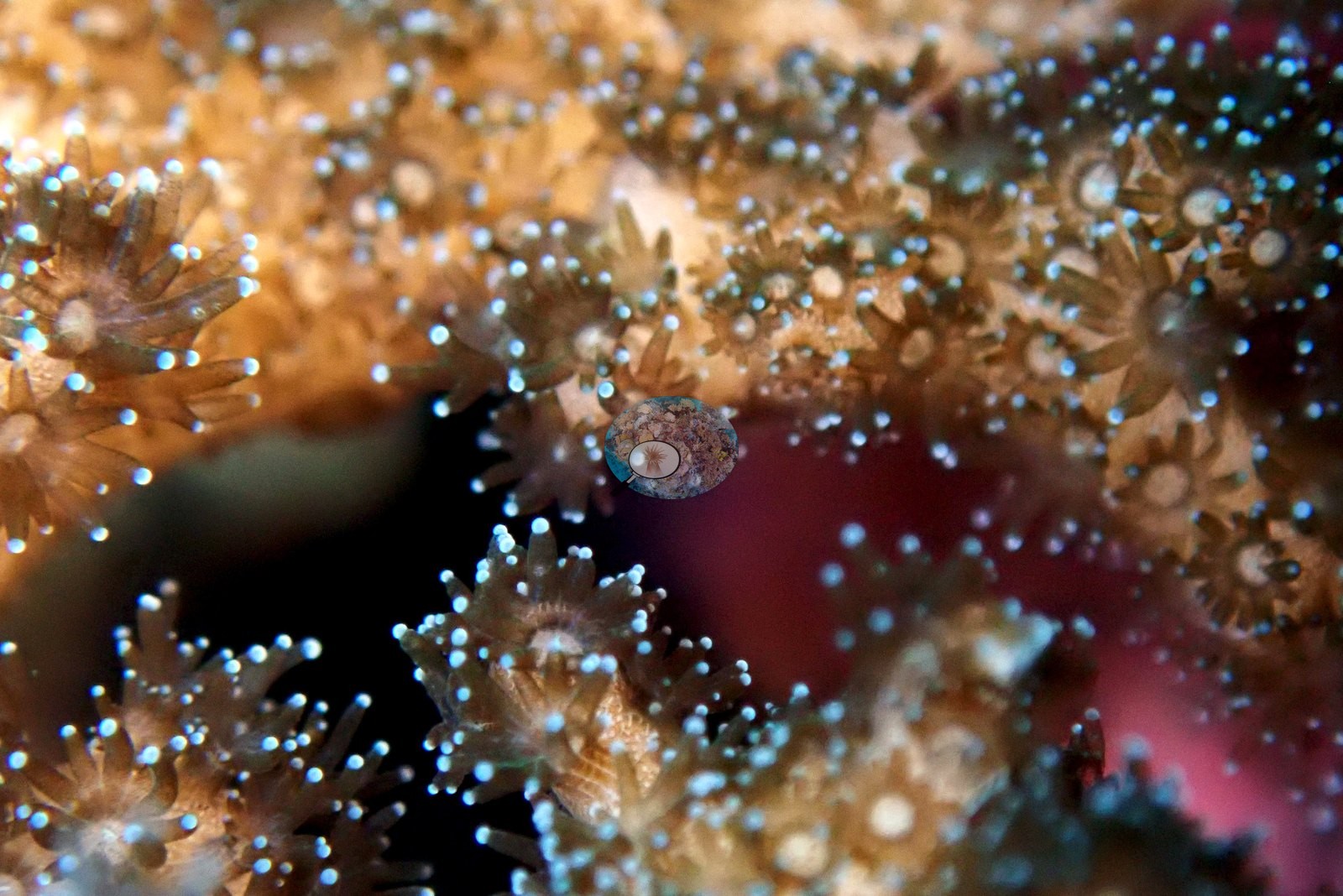
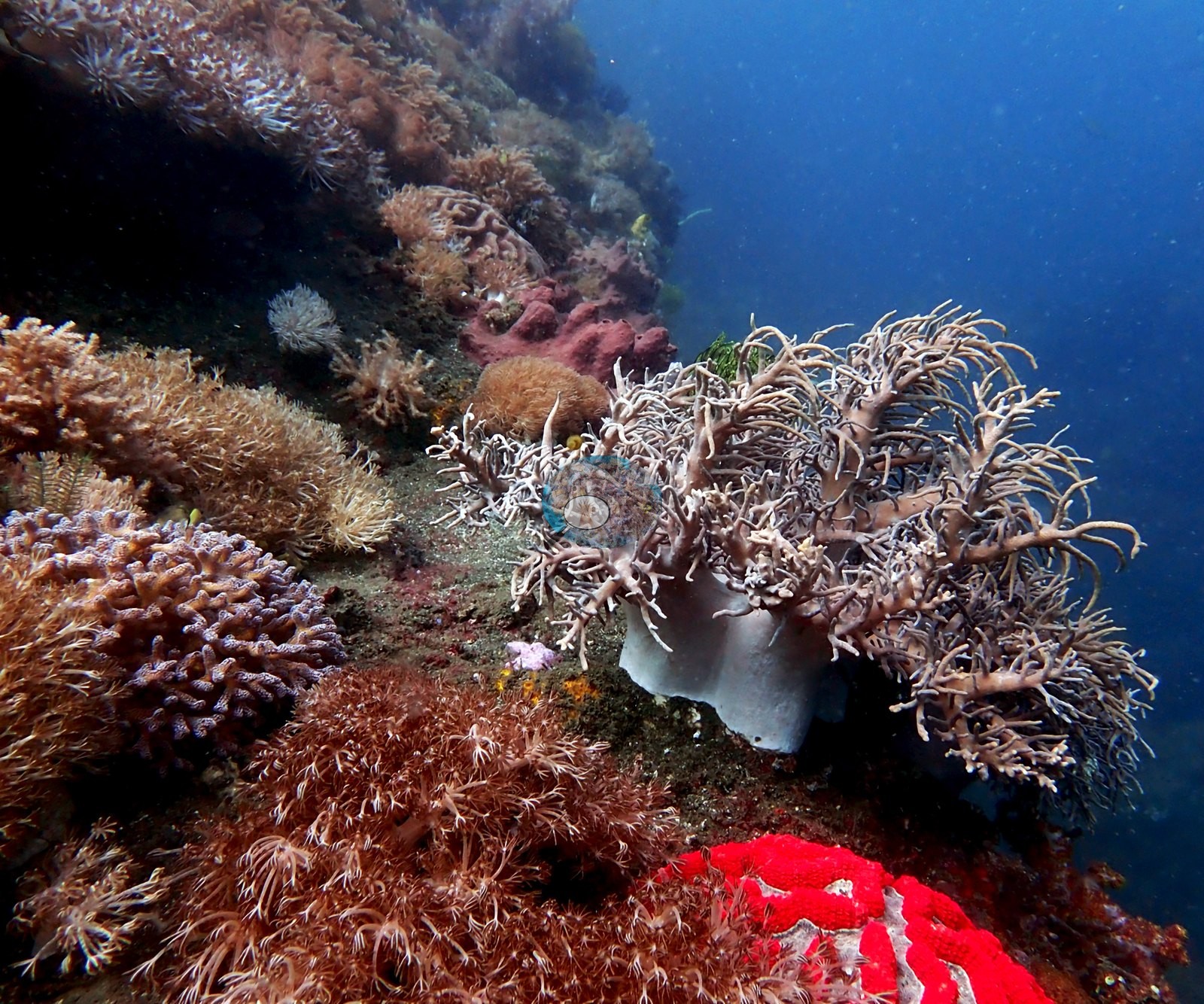
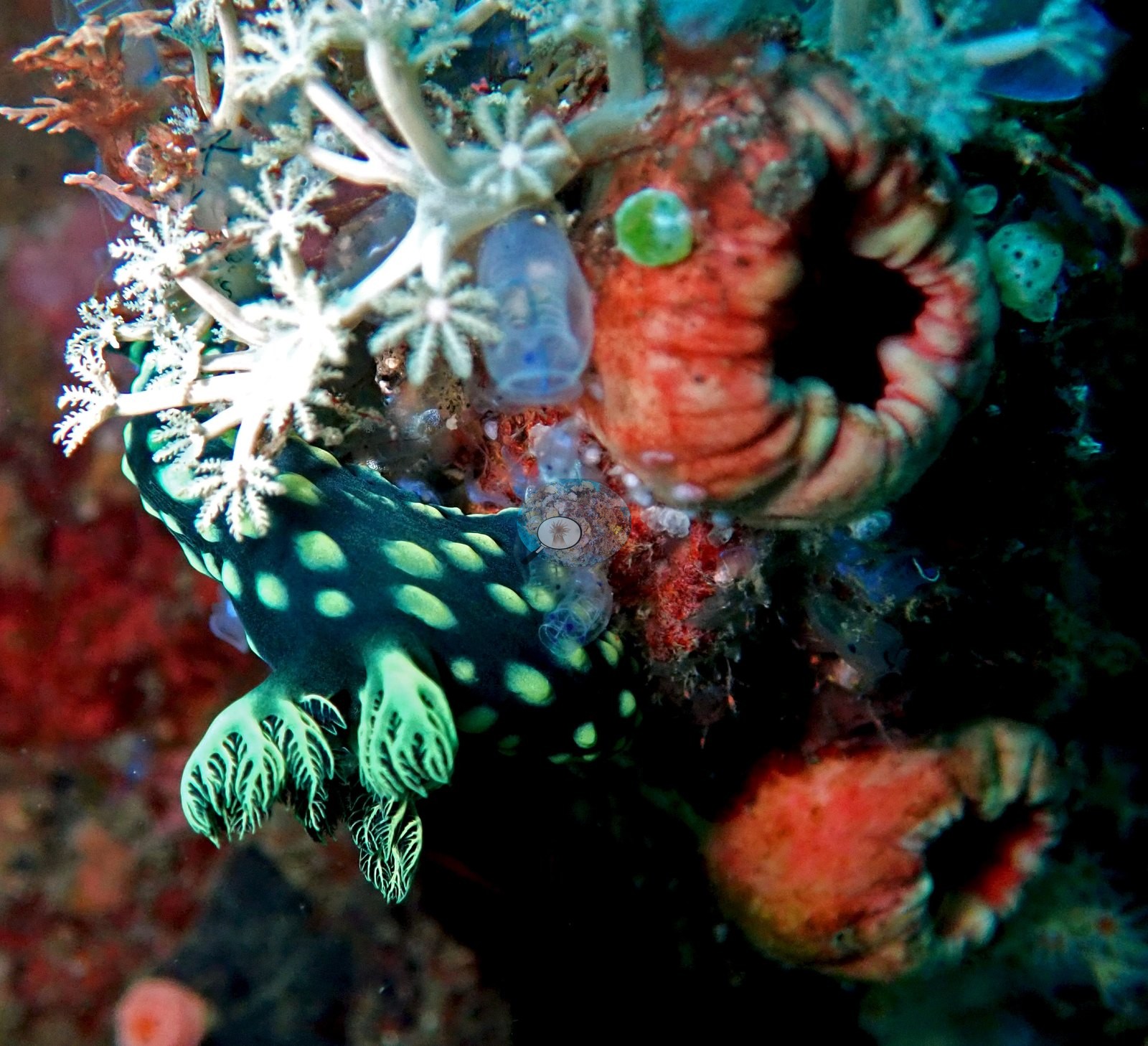
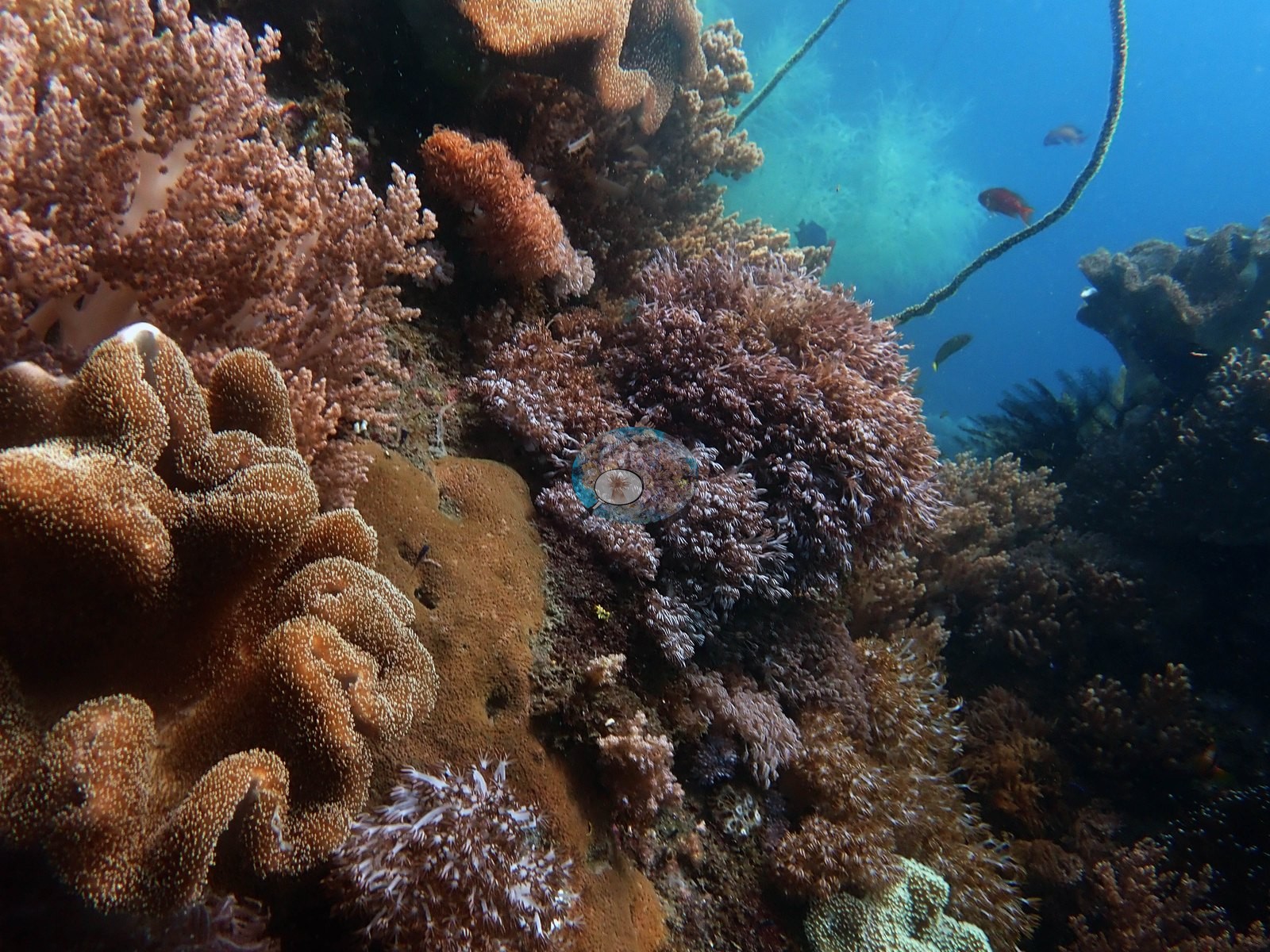
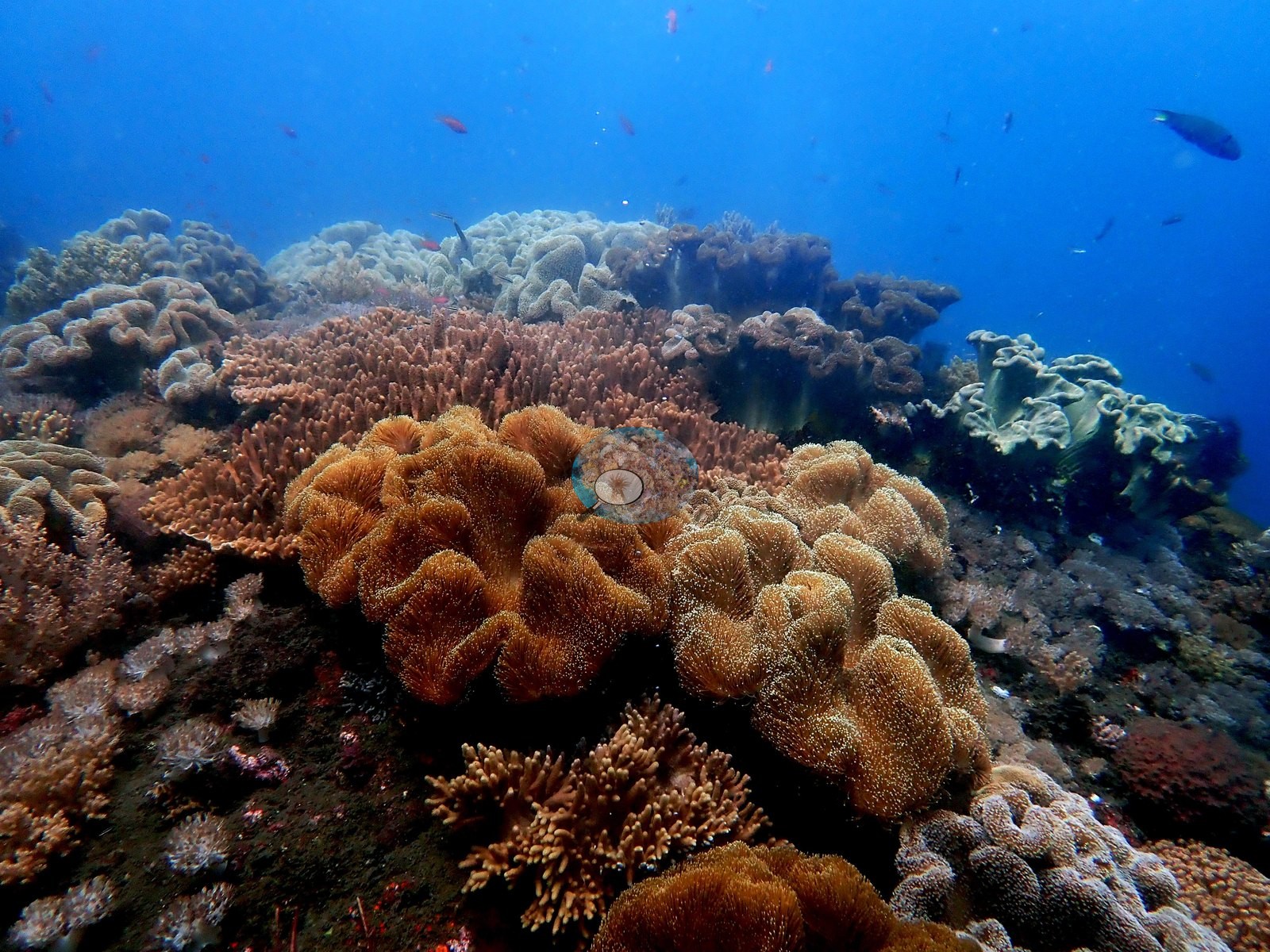
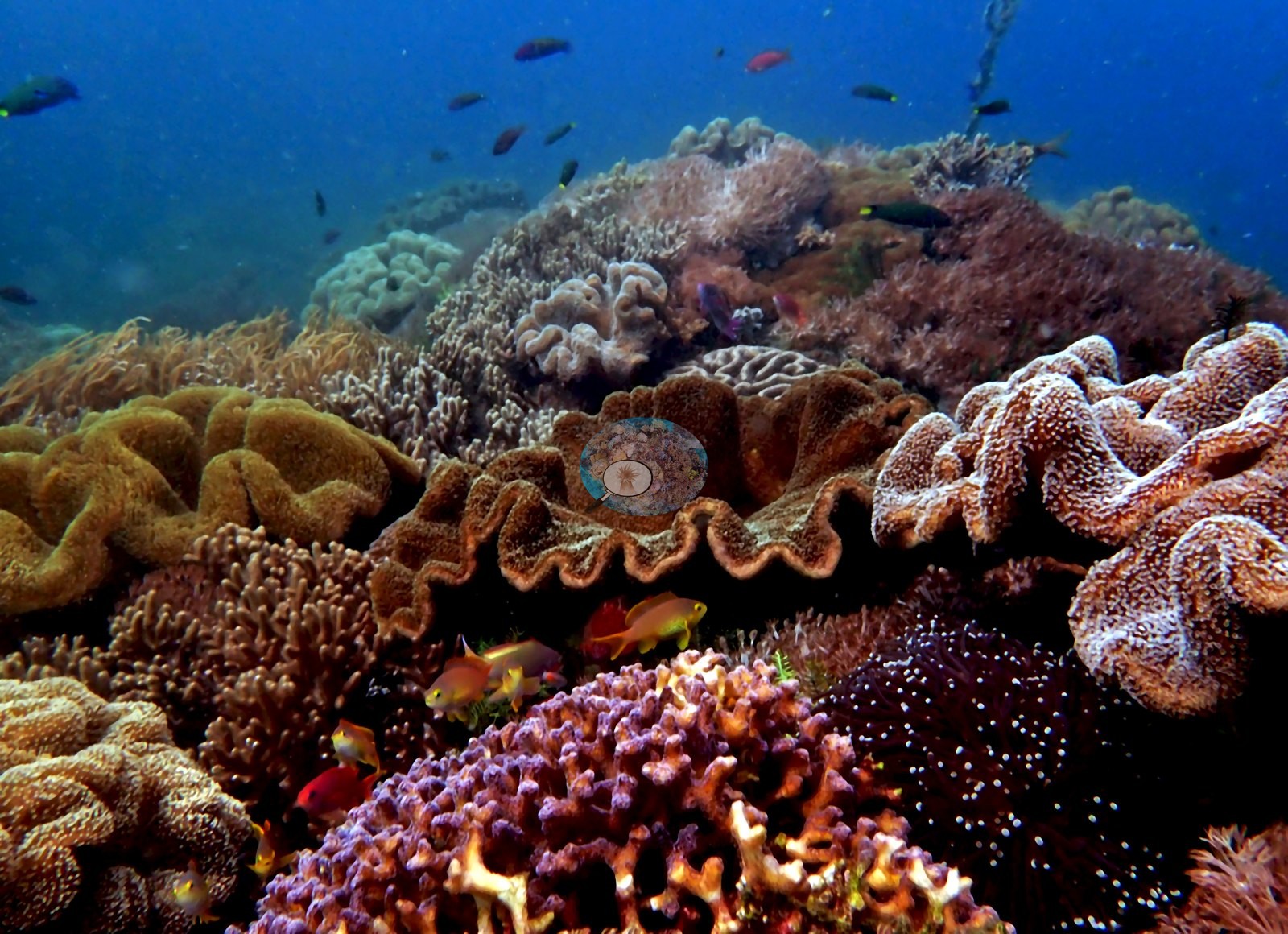
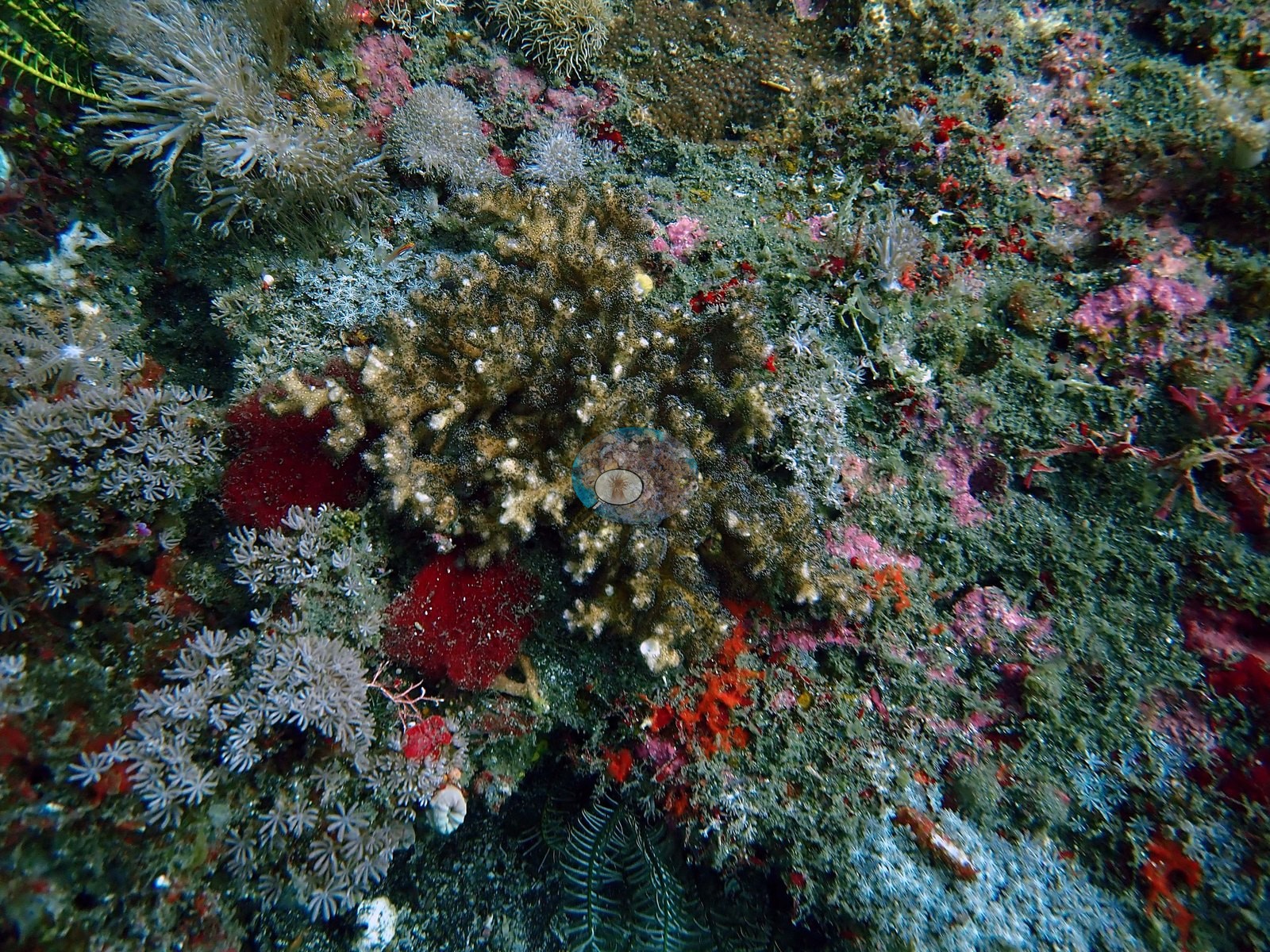
Mostly gorgonians, though some Pachyseris. At 25 m, some areas dominated by corallimorphs. Pocillopora acuta relatively common in areas. Diploastrea, small Galaxea with attack tentacles, weird colonial anemones growing on stalks. Soft coral-dominated @ 13-14 m. Huge brain corals and some large Diploastrea. Really beautiful soft corals at 5-10 m (e.g., Image 3).
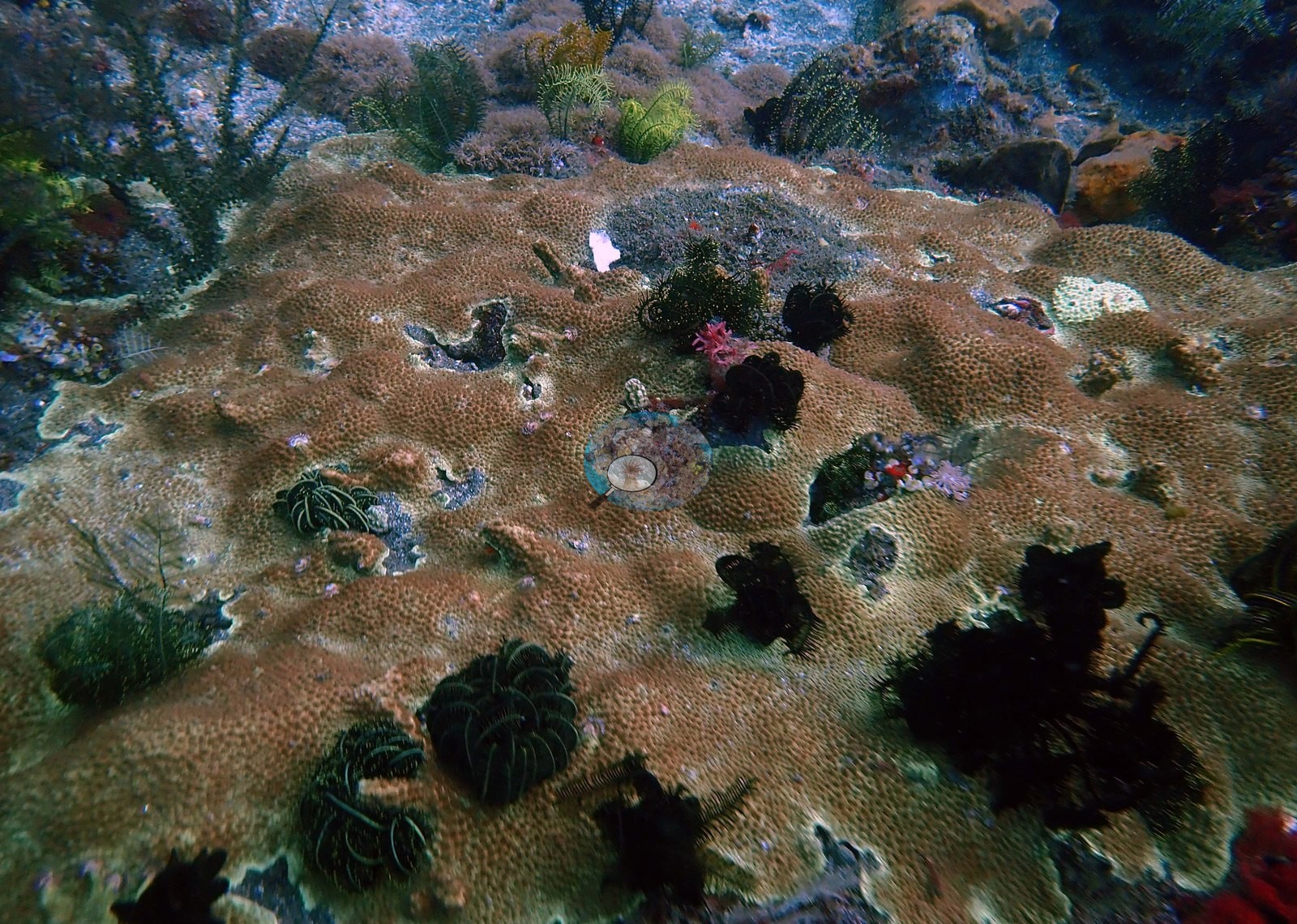
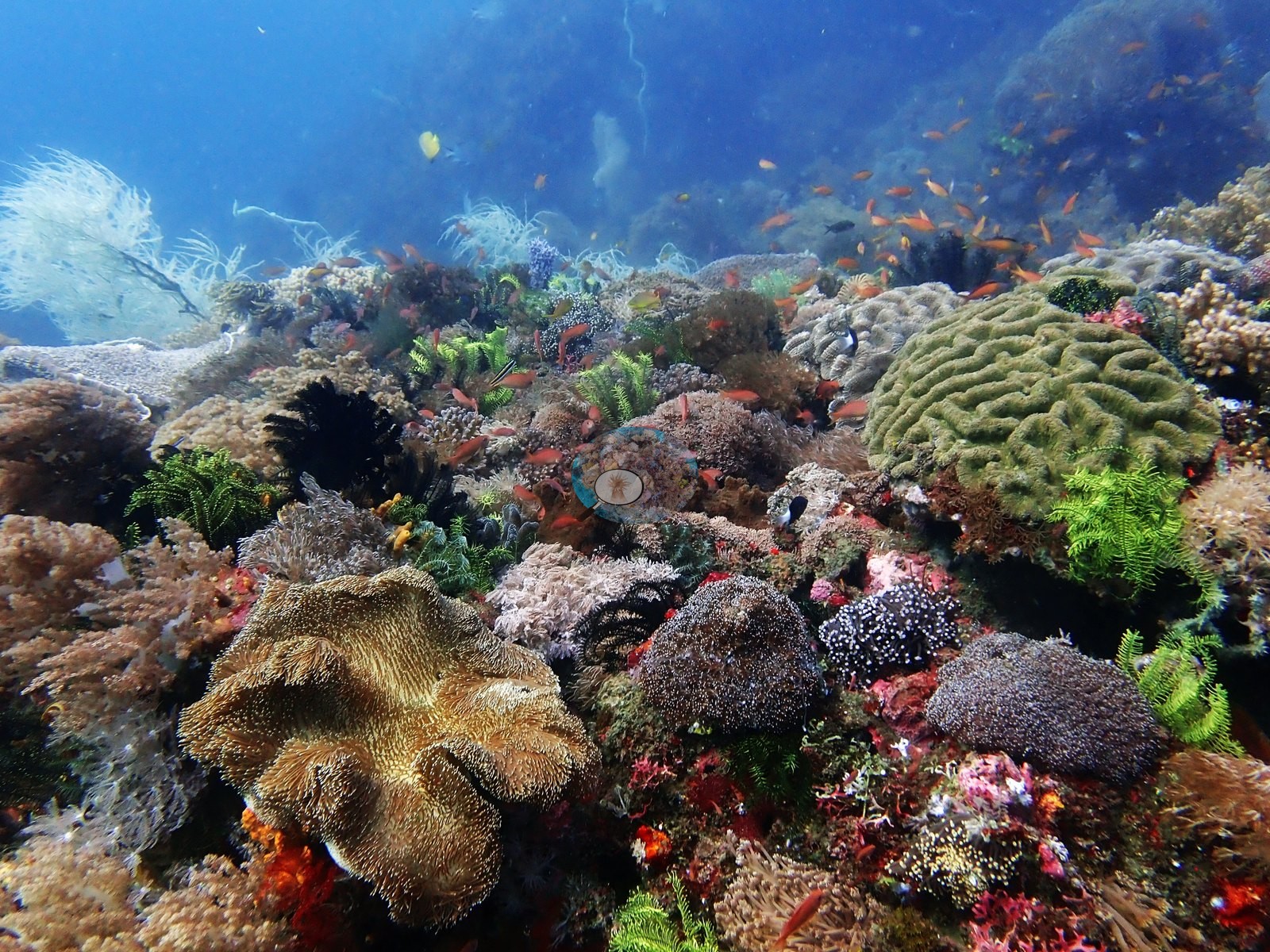
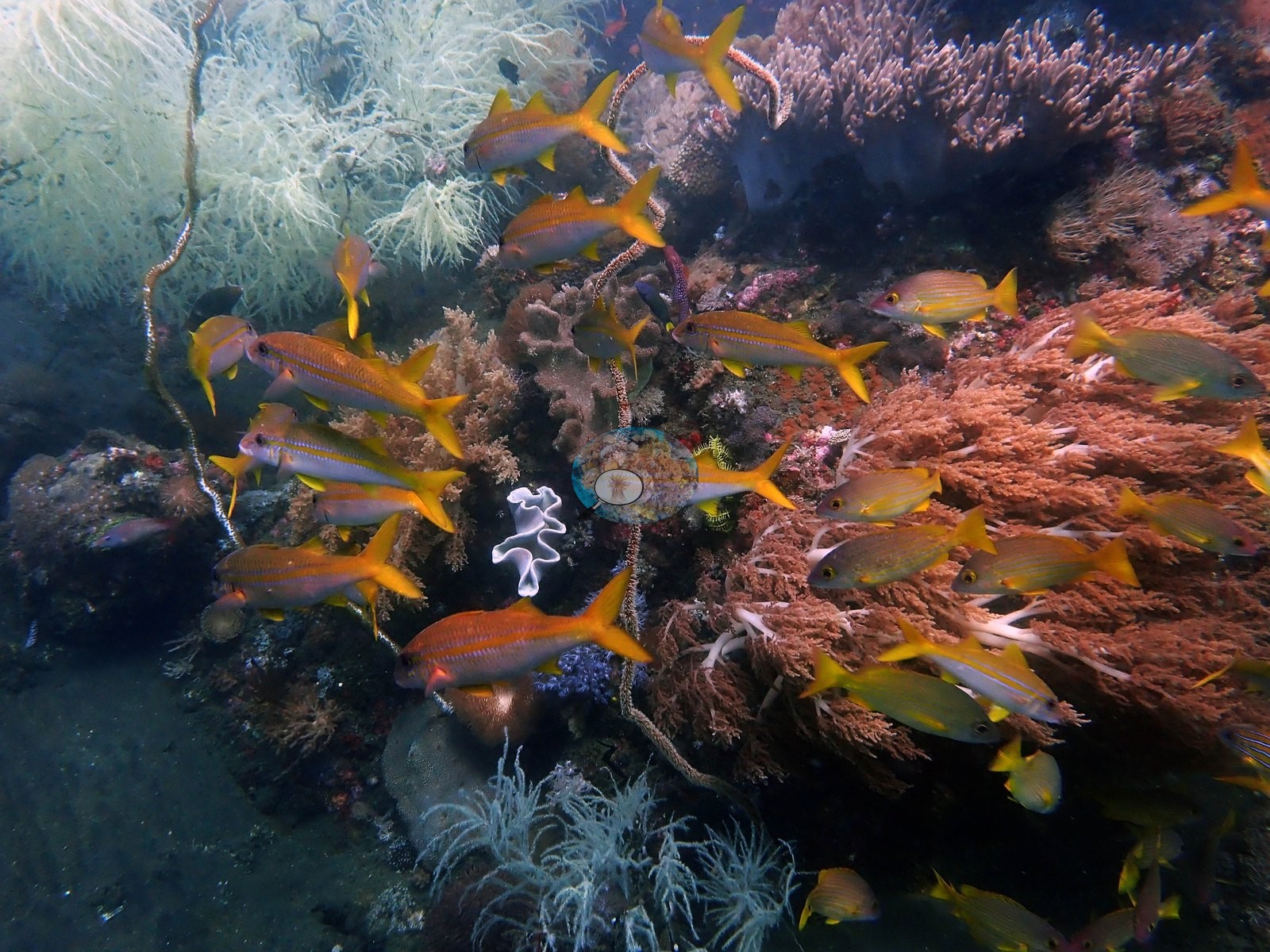
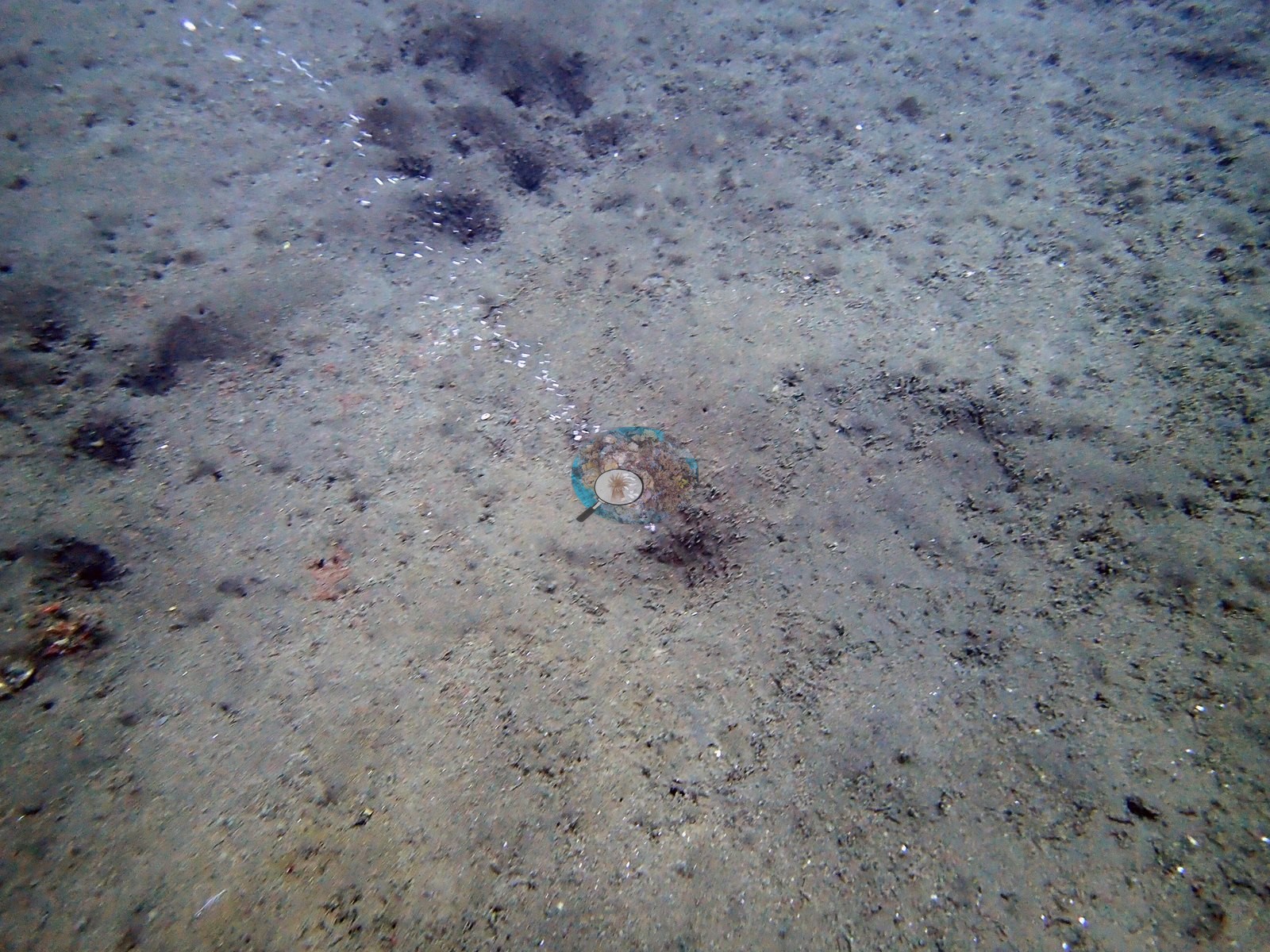
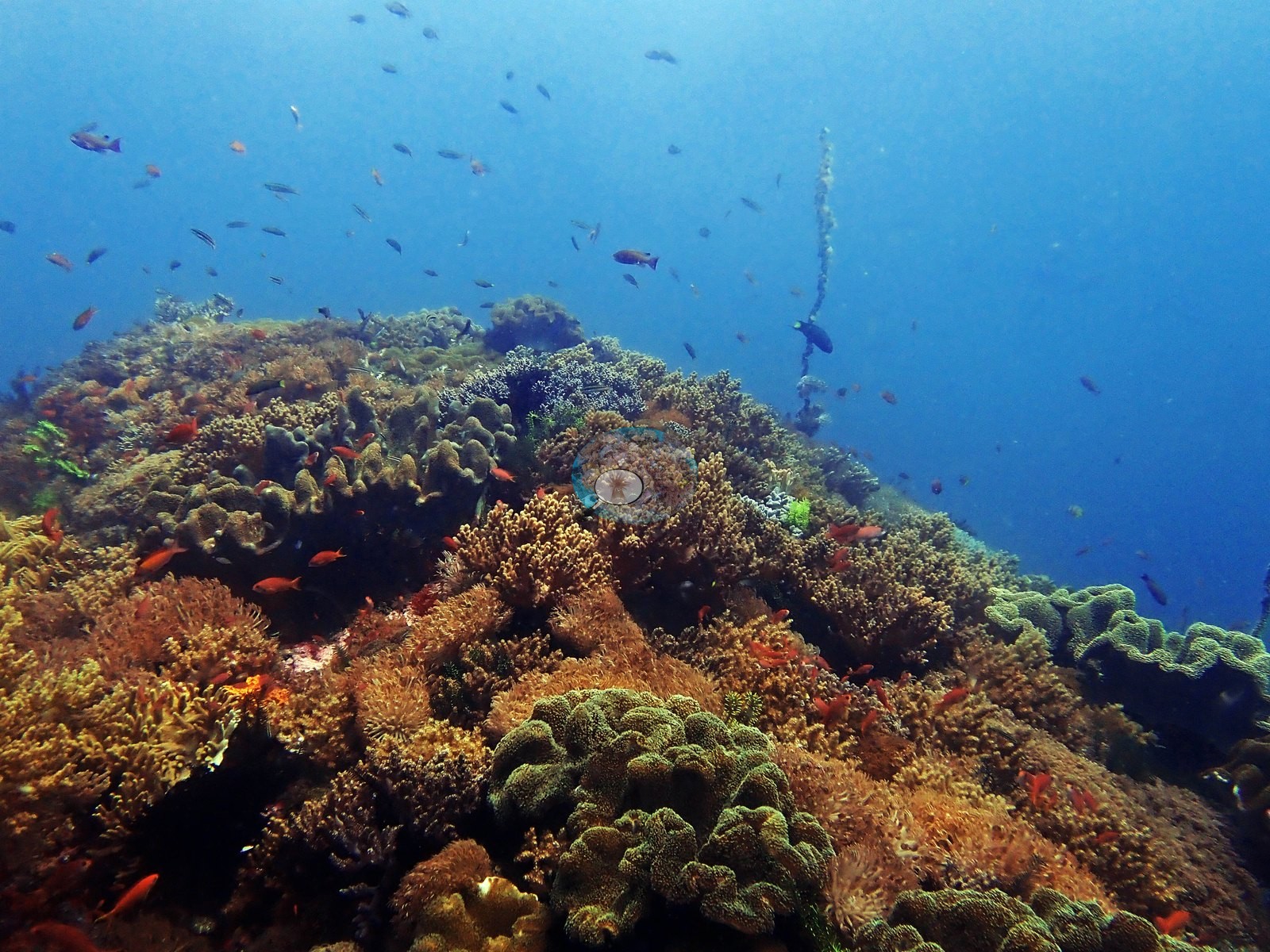
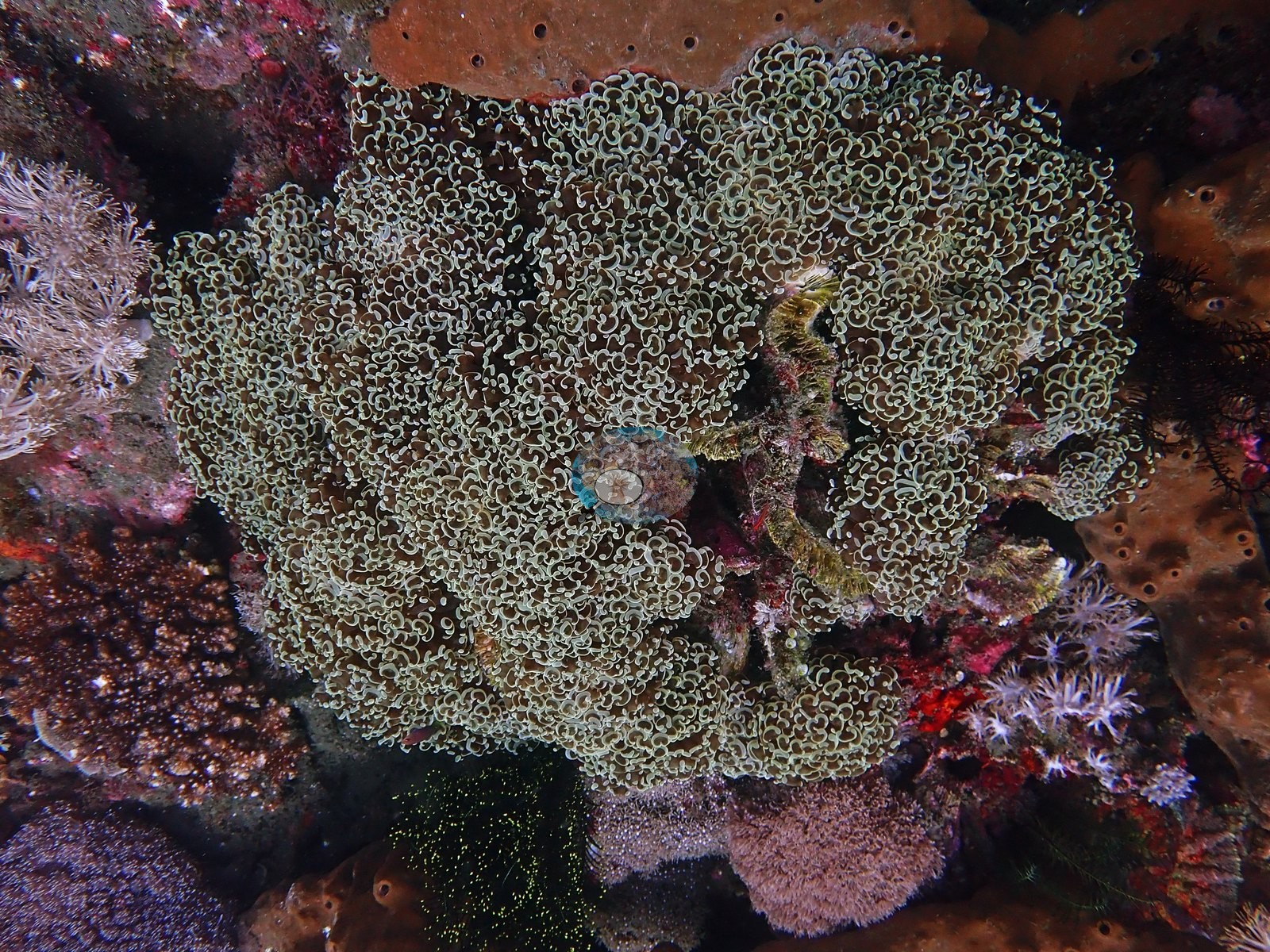
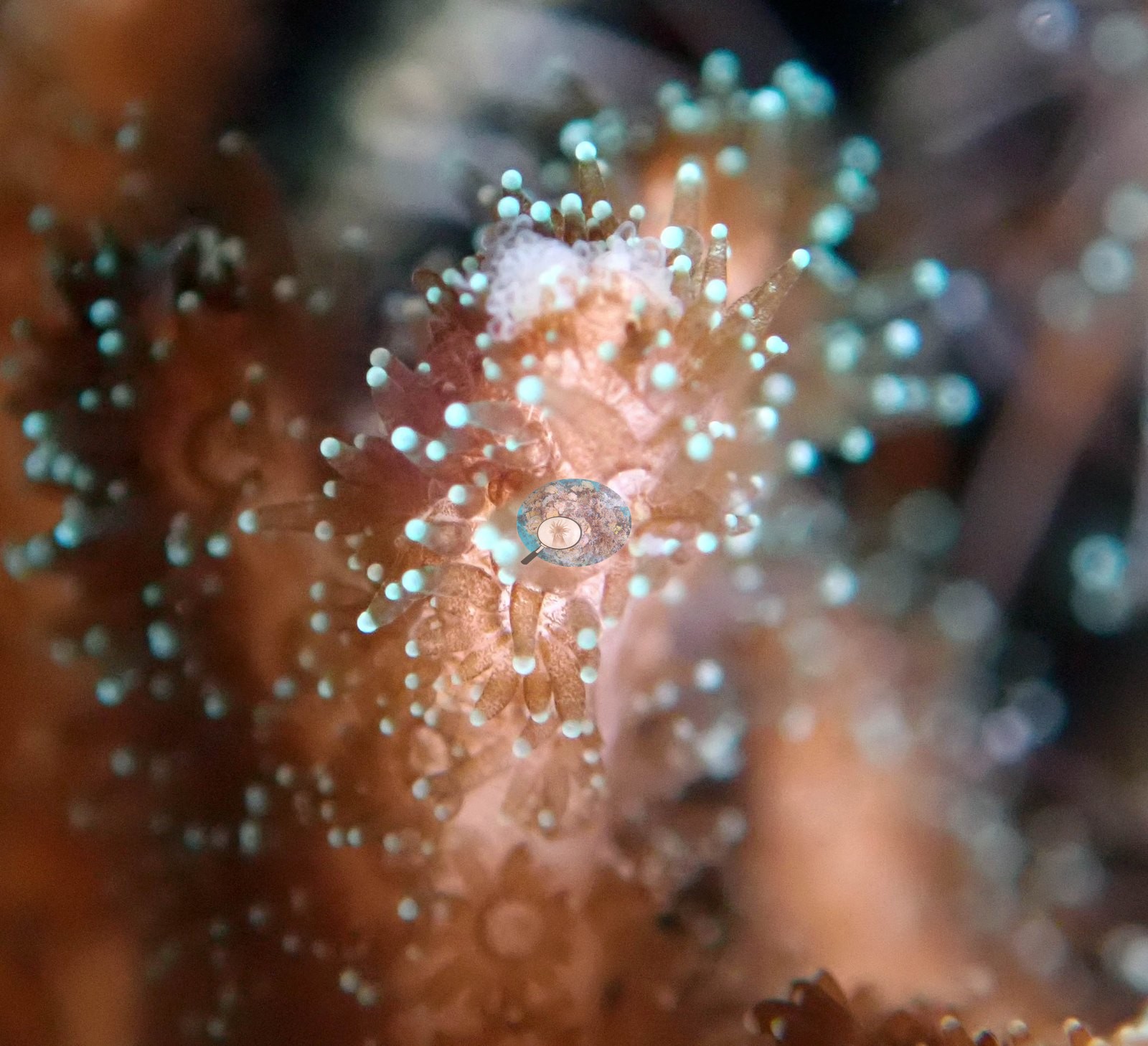
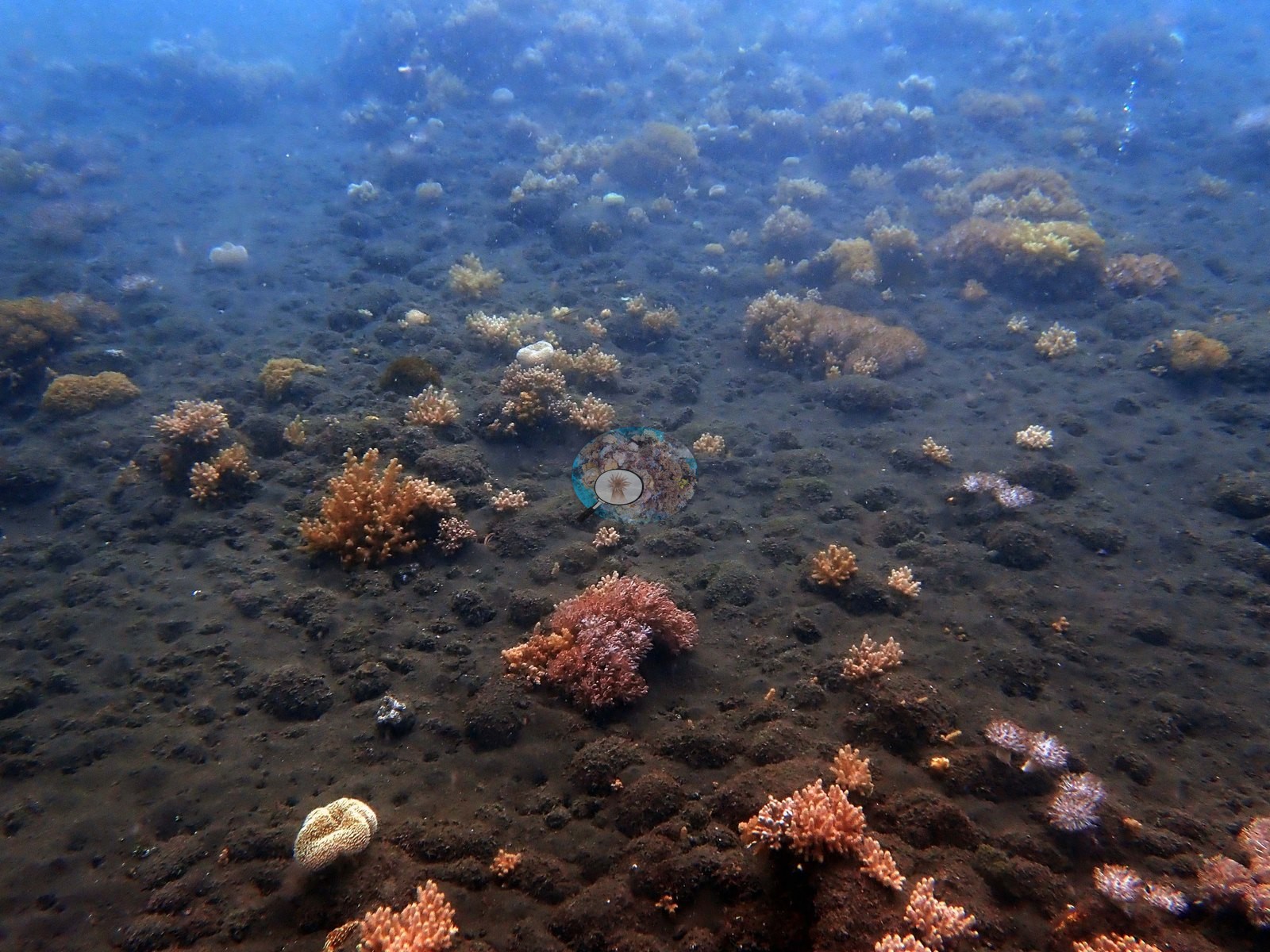
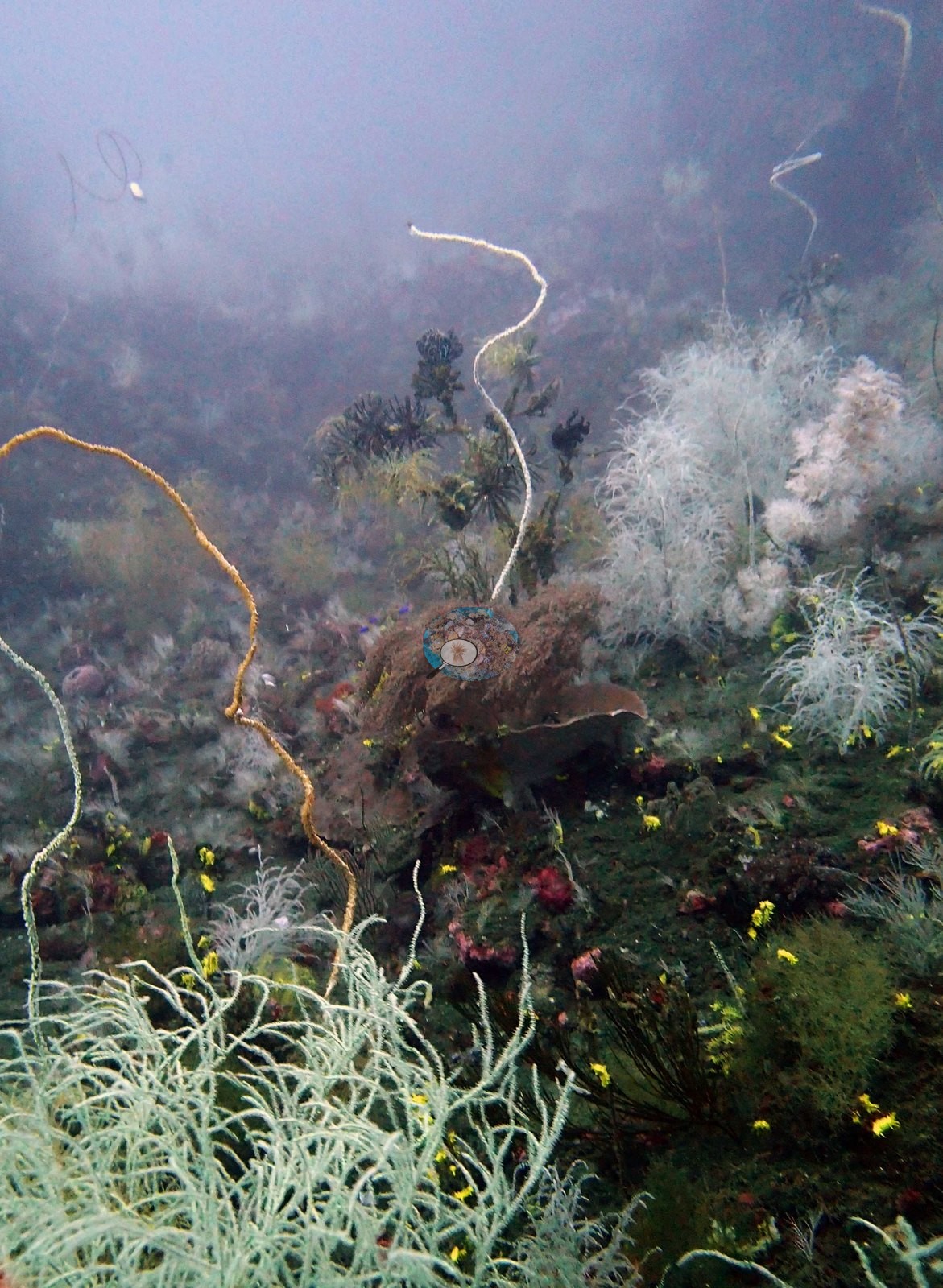
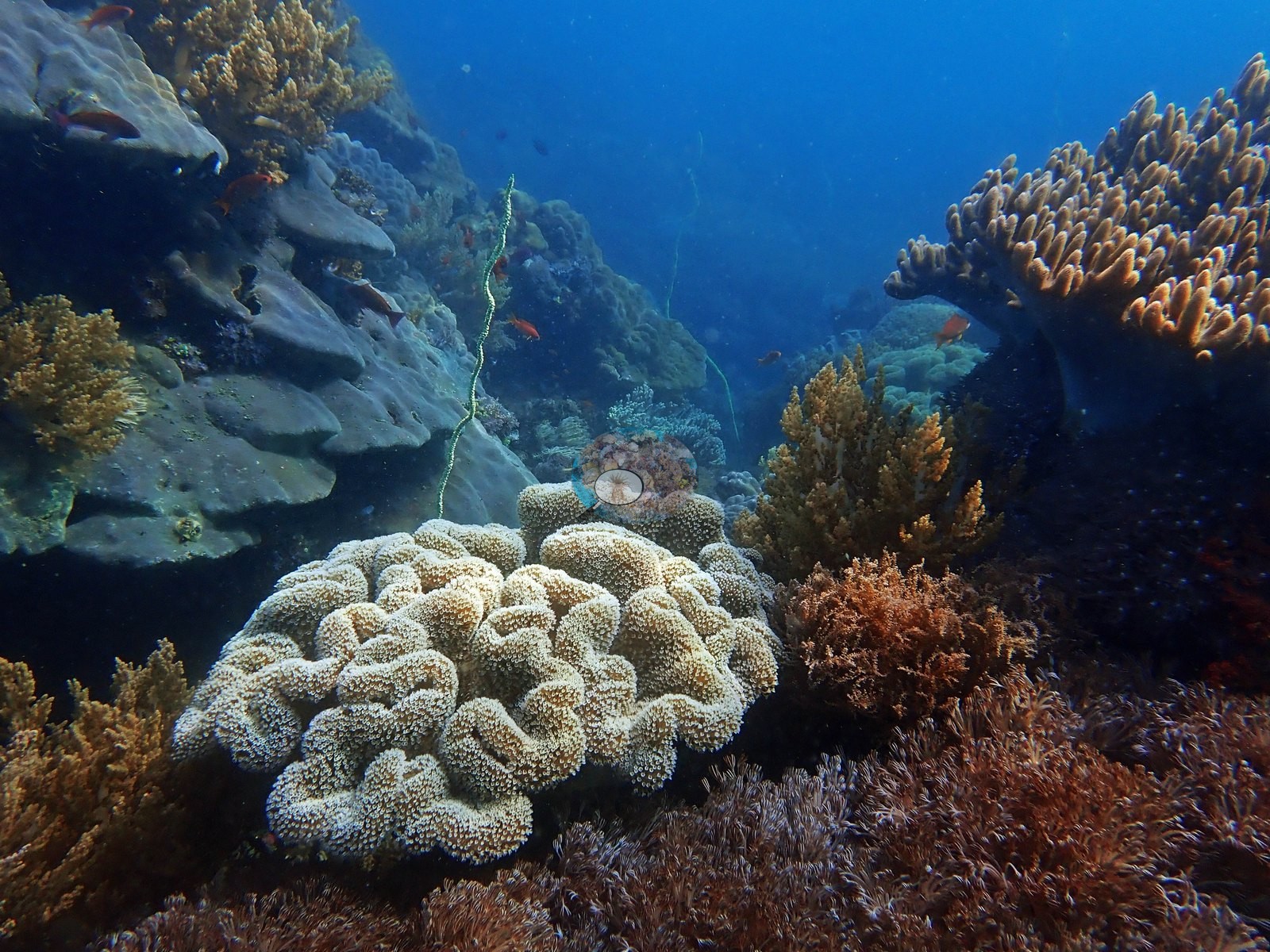
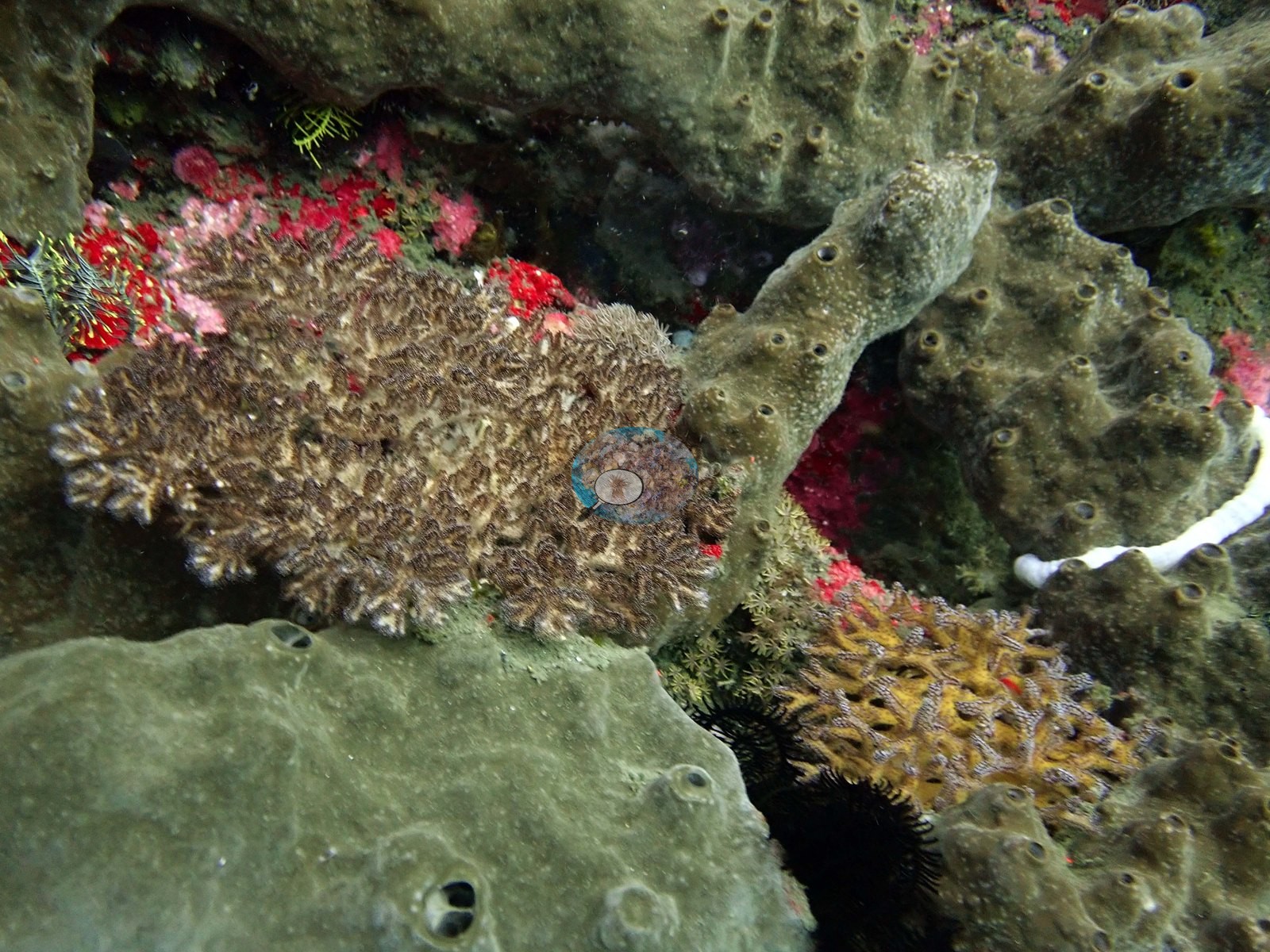
More Porites at 5 m (e.g., Image 4).
Soft corals dominant in many parts of shallows (e.g., Image 5).
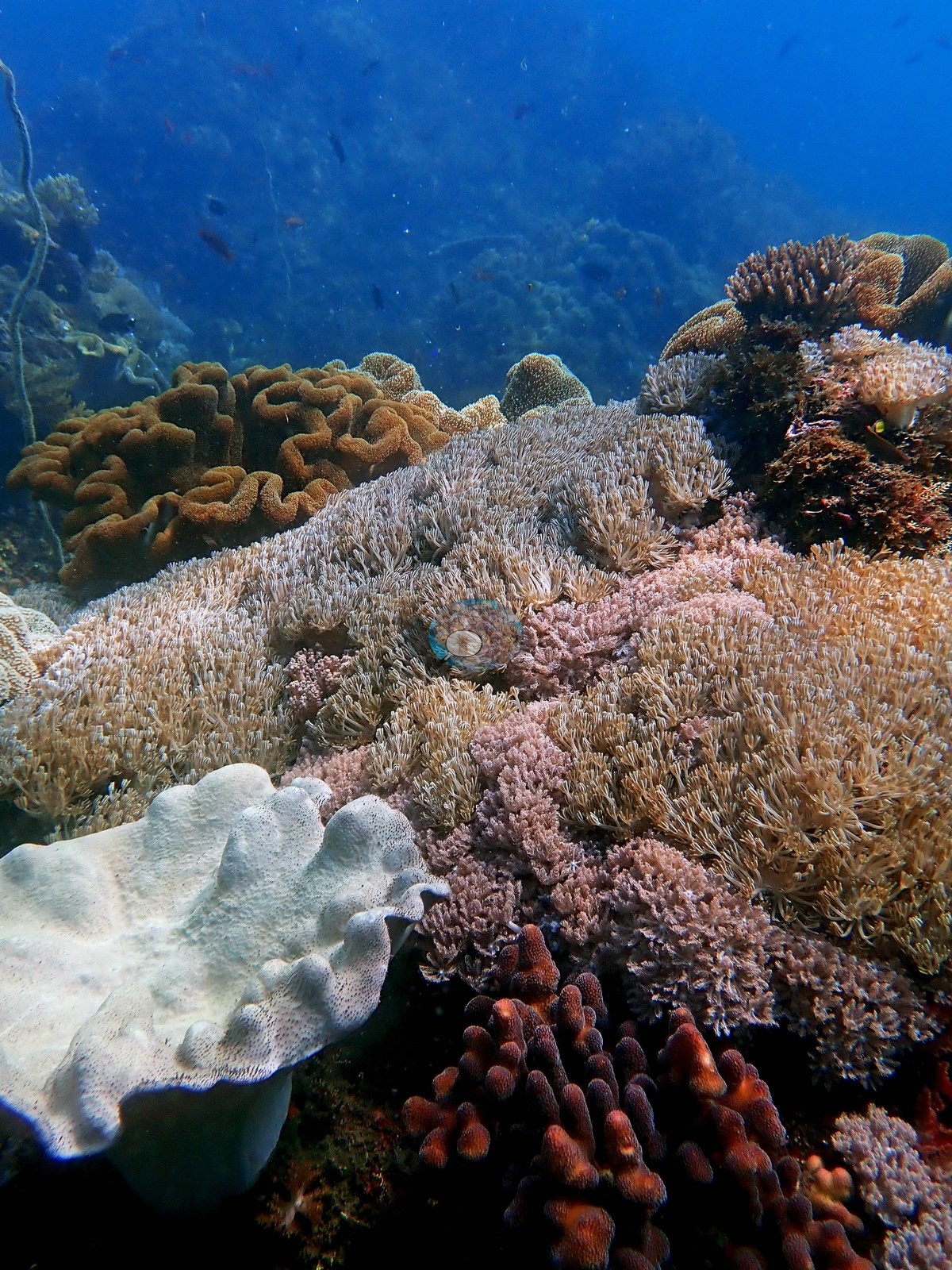
Seriatopora caliendrum, stinging hydroids, Linkia sp. sea stars, Stylophora pistillata, small massive poritids, relatively high average live coral cover @ 15 m. Fungia. Pocillopora acuta, spent long time with pygmy seahorse. Plerogyra and Euphyllia both common. Some small Acropora colonies in the shallows.
Coral cover
Coral cover: 9.1% — a blind Claude computer-vision point count of 120 of Anderson's edited photographs (20 points per photo; water, fish, and obstructions excluded). Other computer-vision methods are listed in the method table. Low average live coral cover @ 28-30 m (~5%). Anderson is still comparing computer-vision models, and these figures will be updated as the methods improve.
Stressors
No crown-of-thorns starfish (COTS) or other corallivores evident.
Fish and other fauna
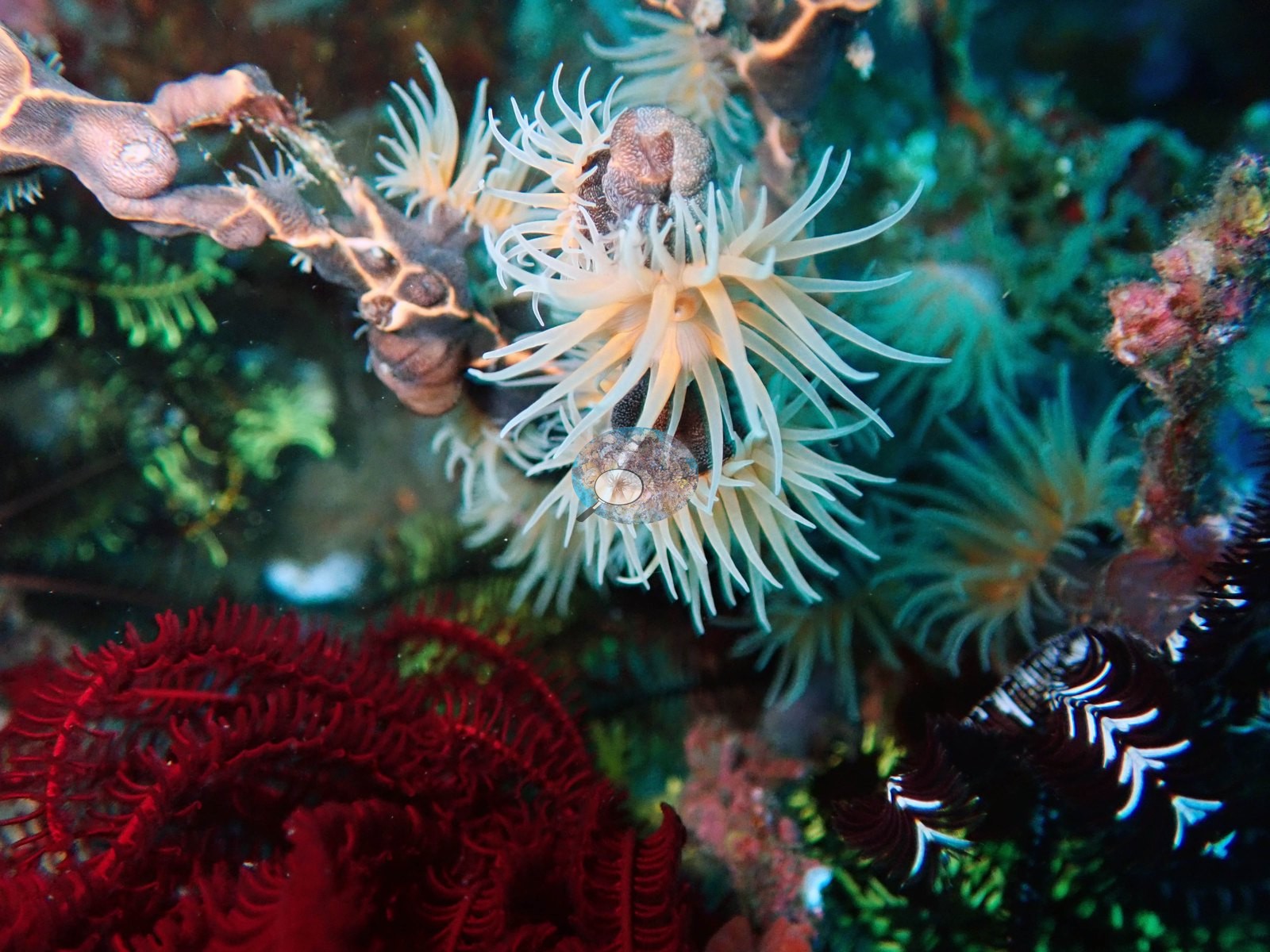
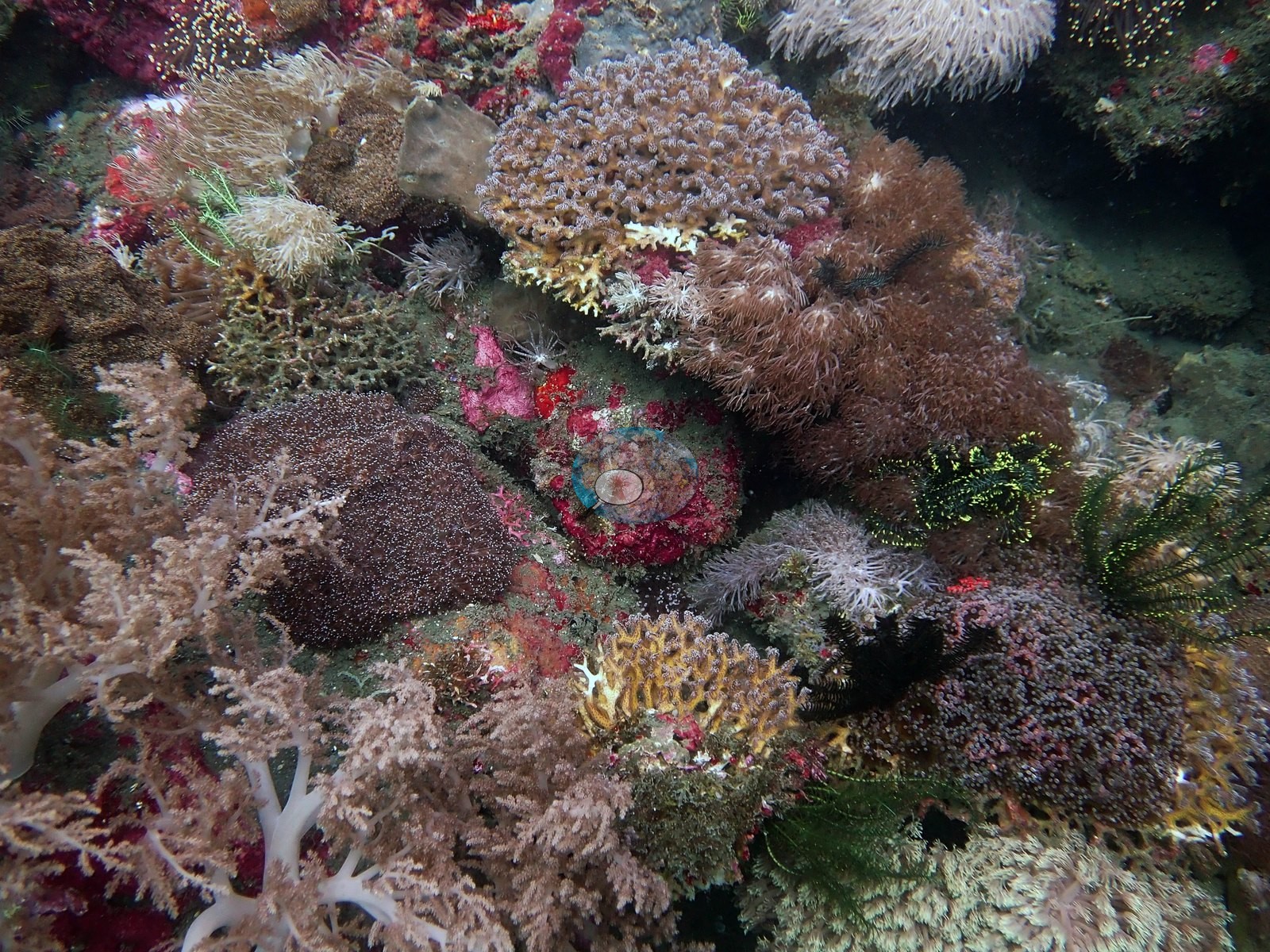
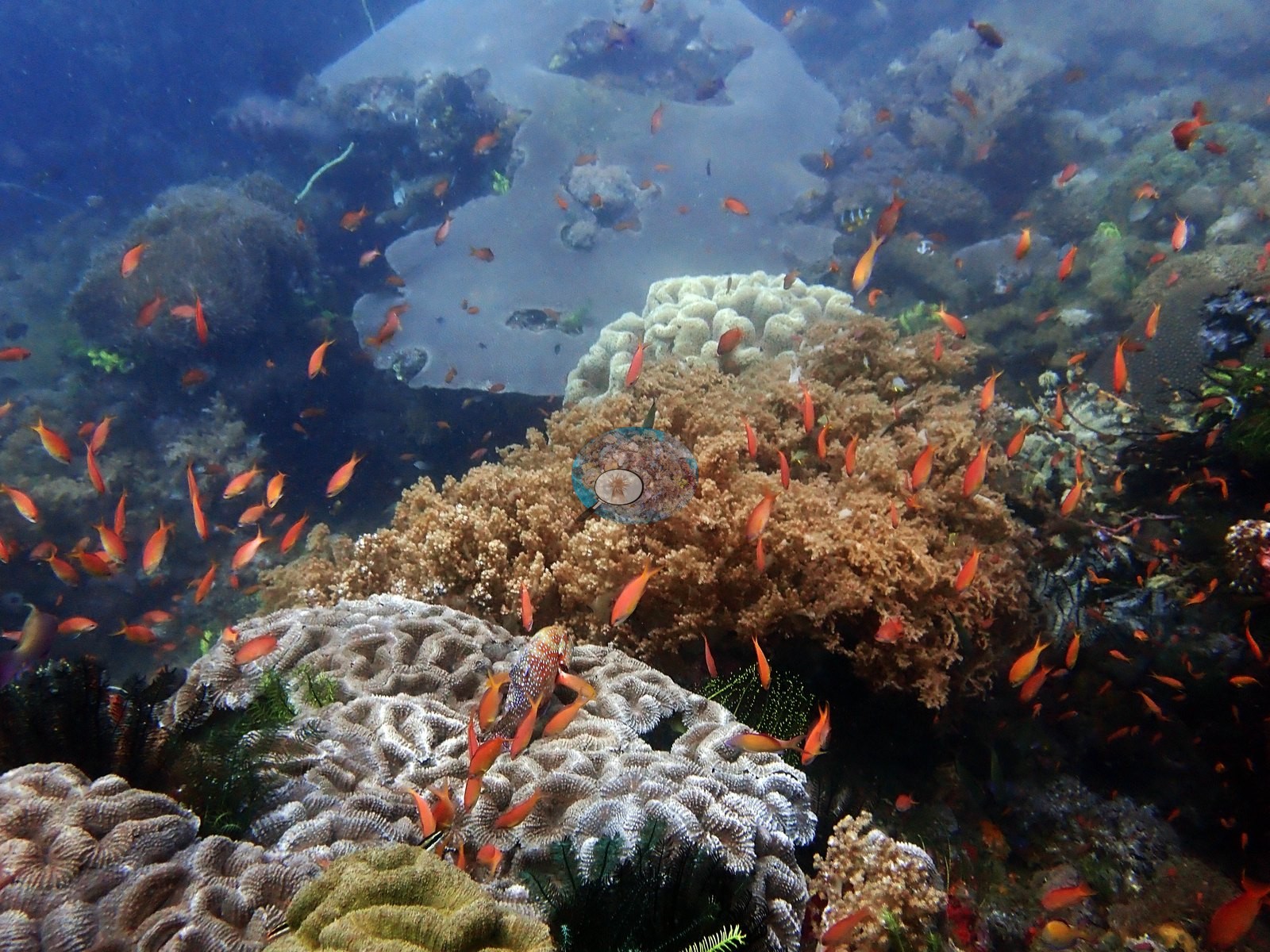
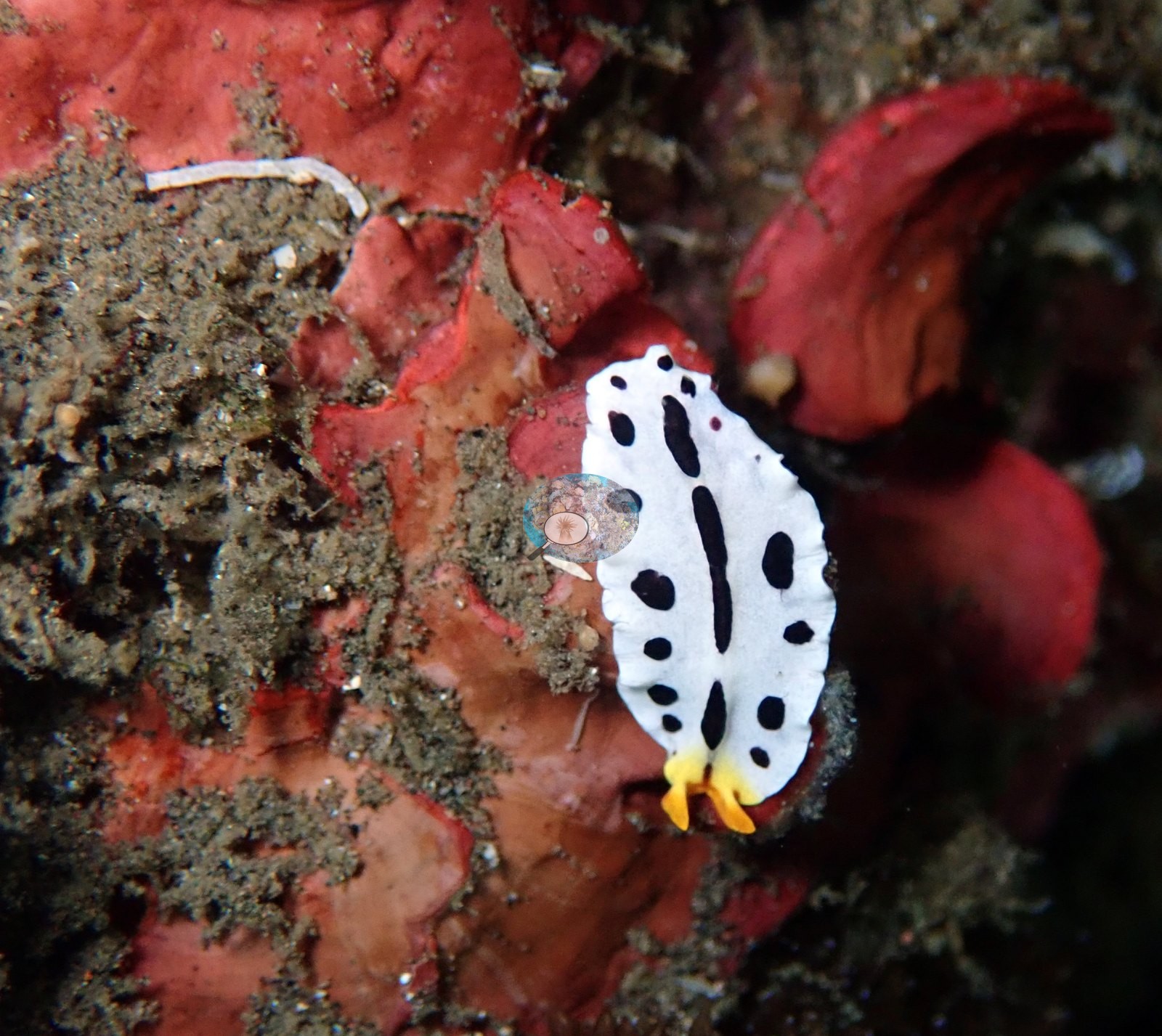
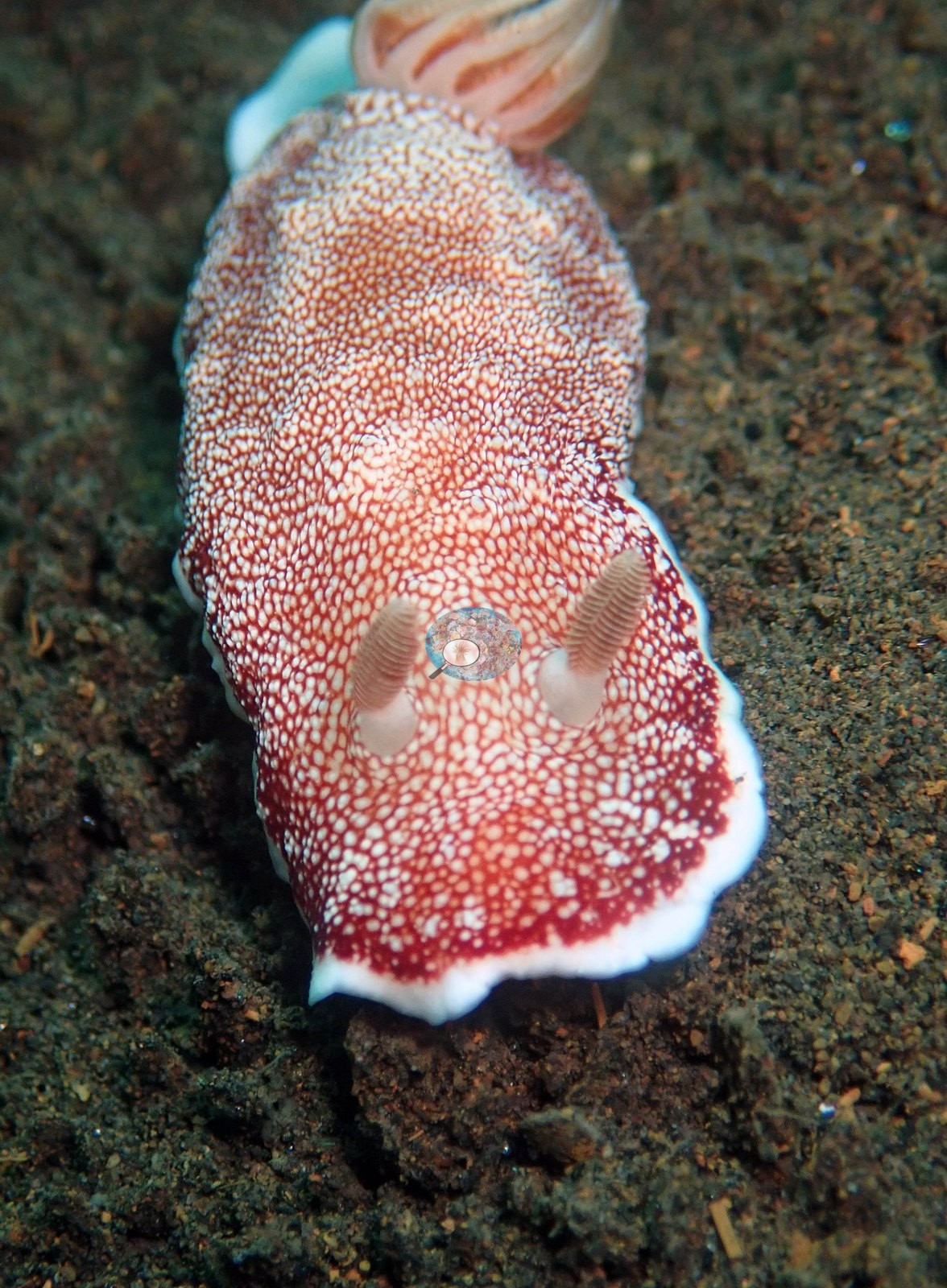
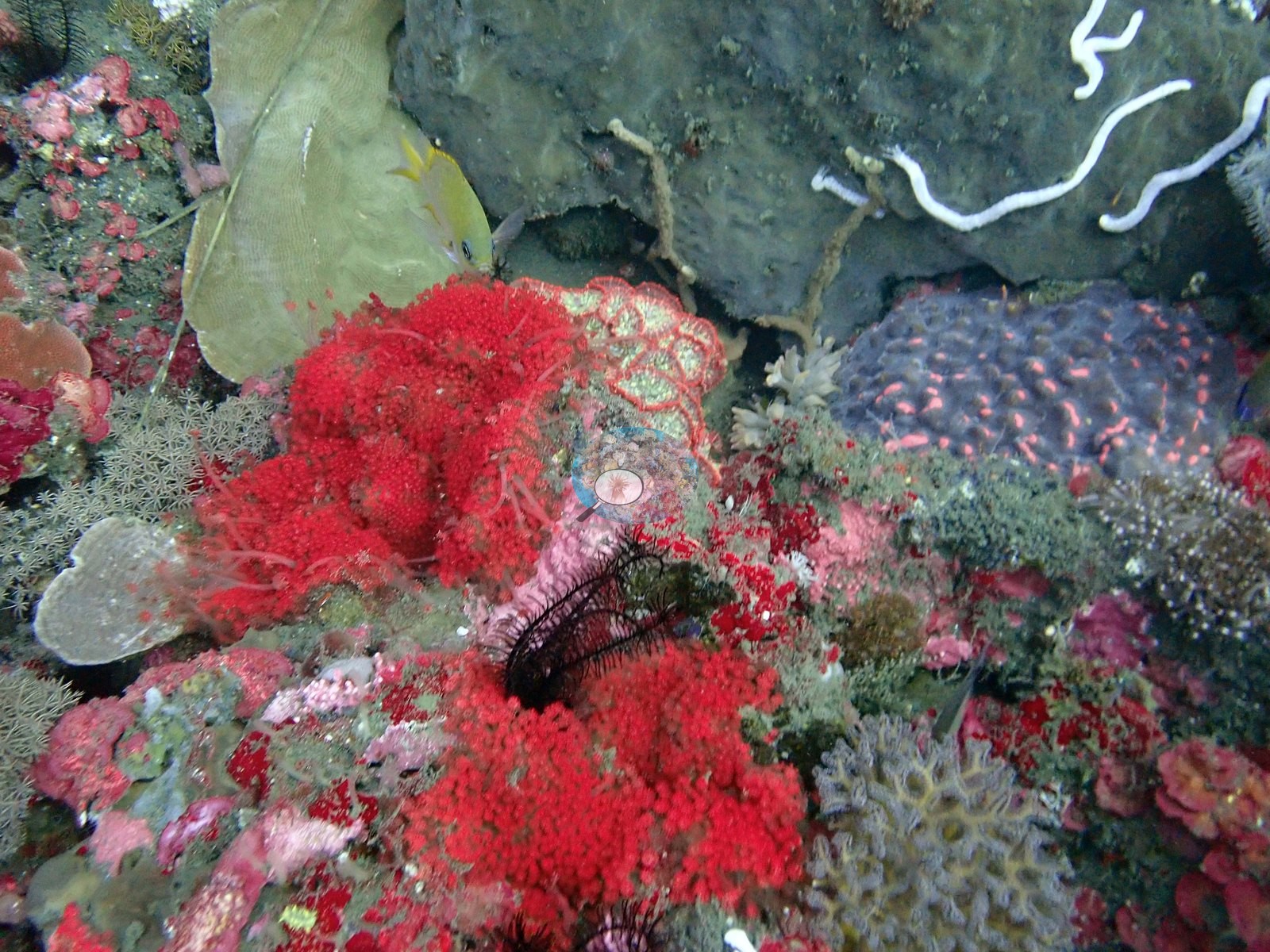
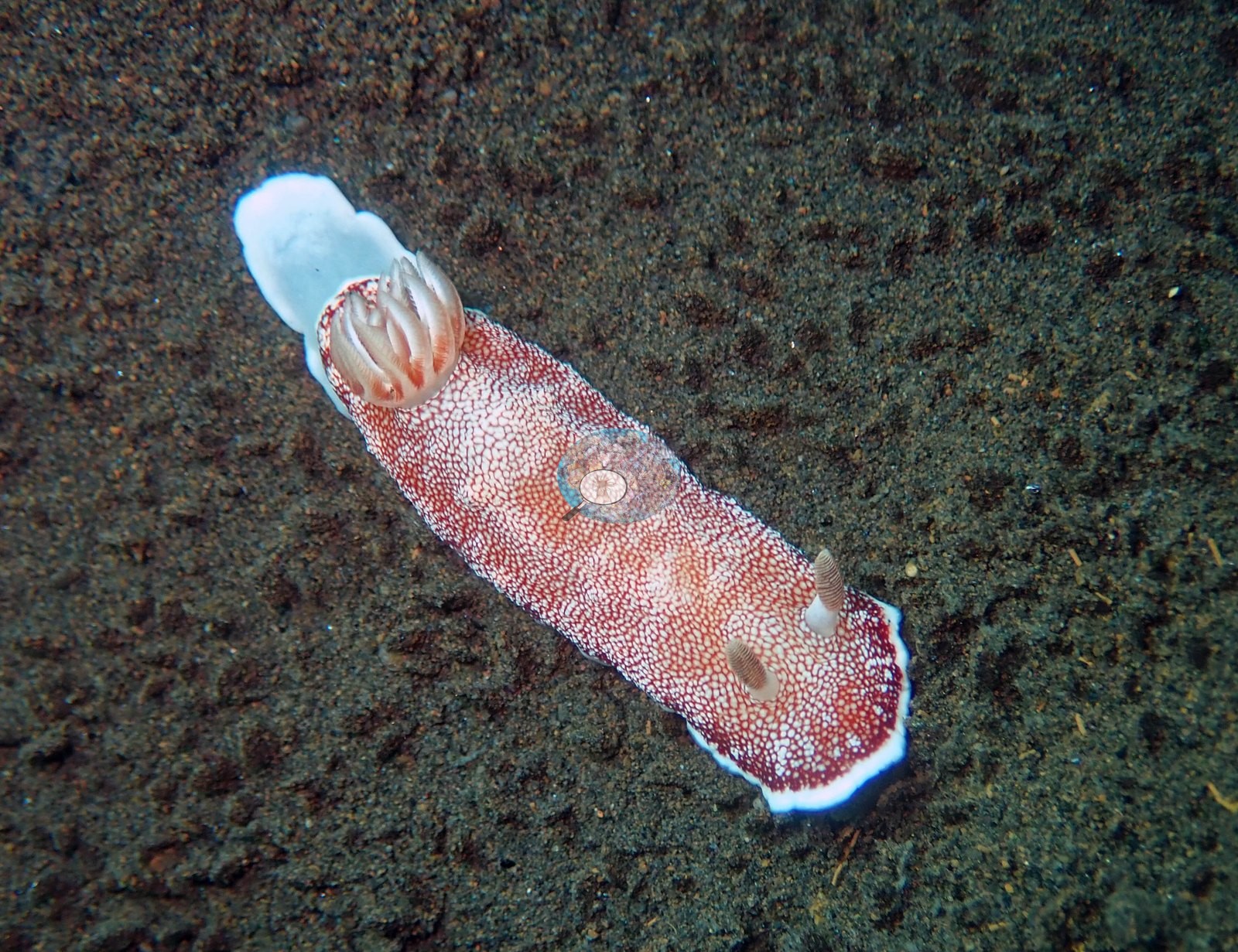
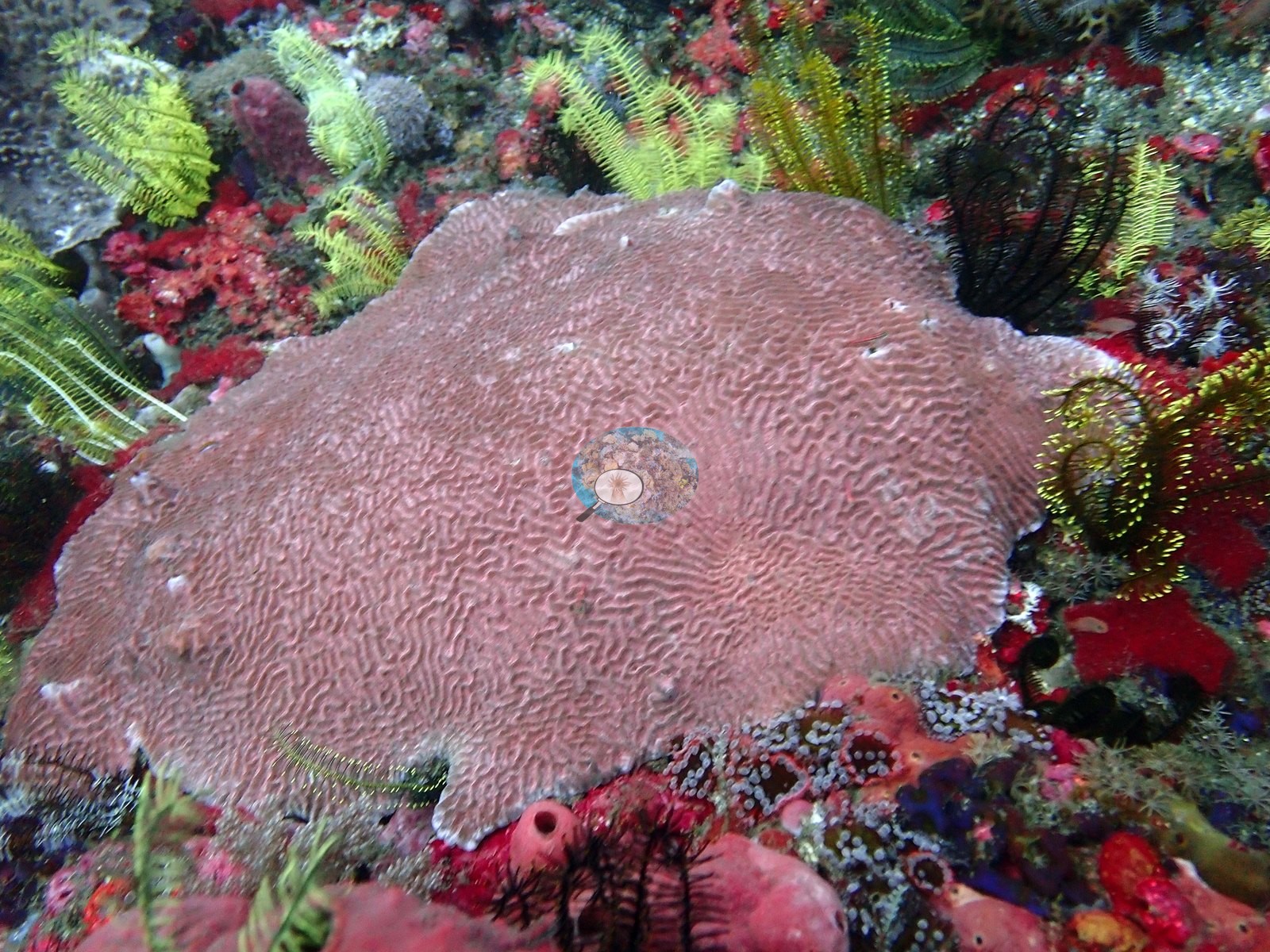
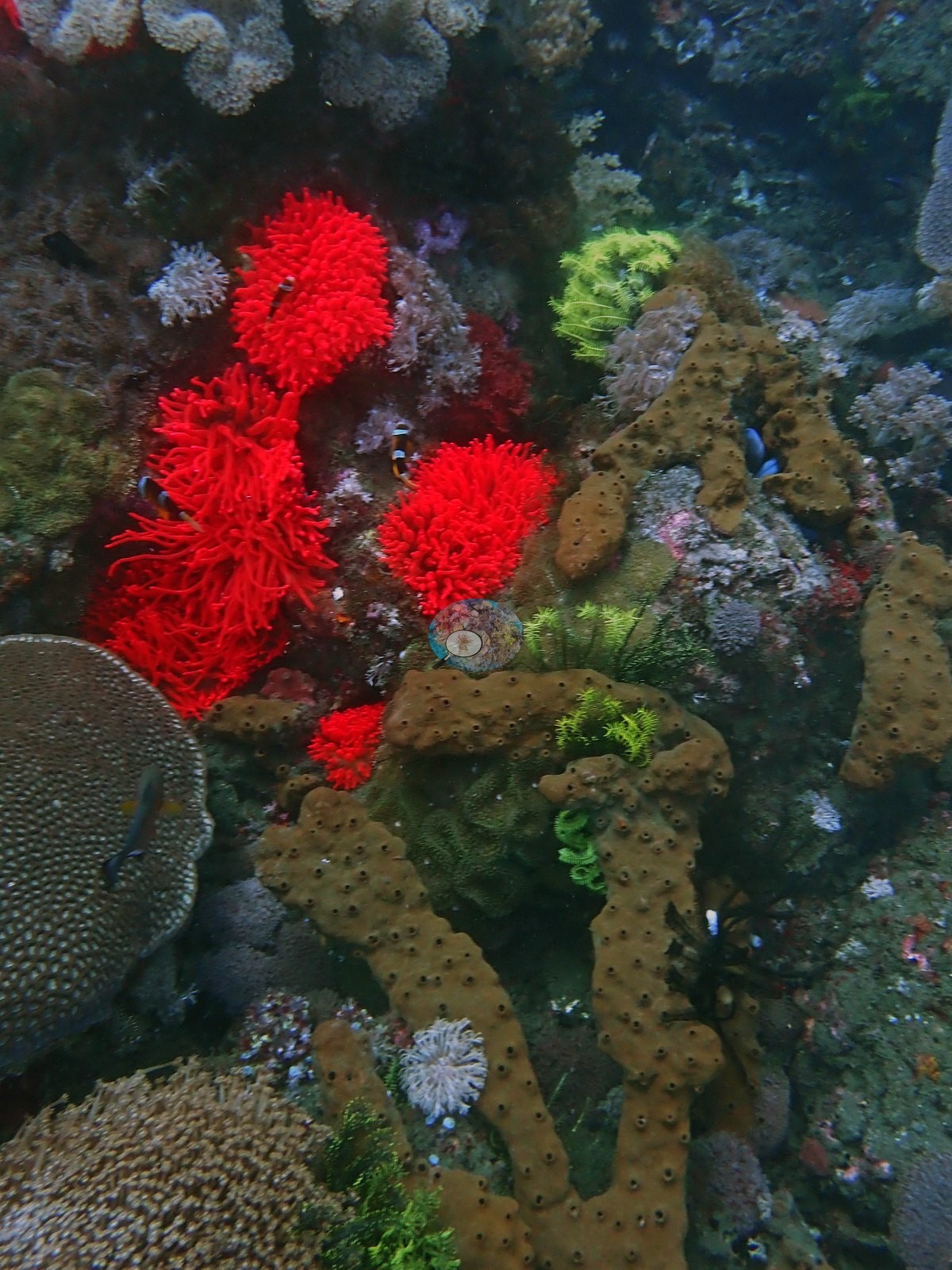
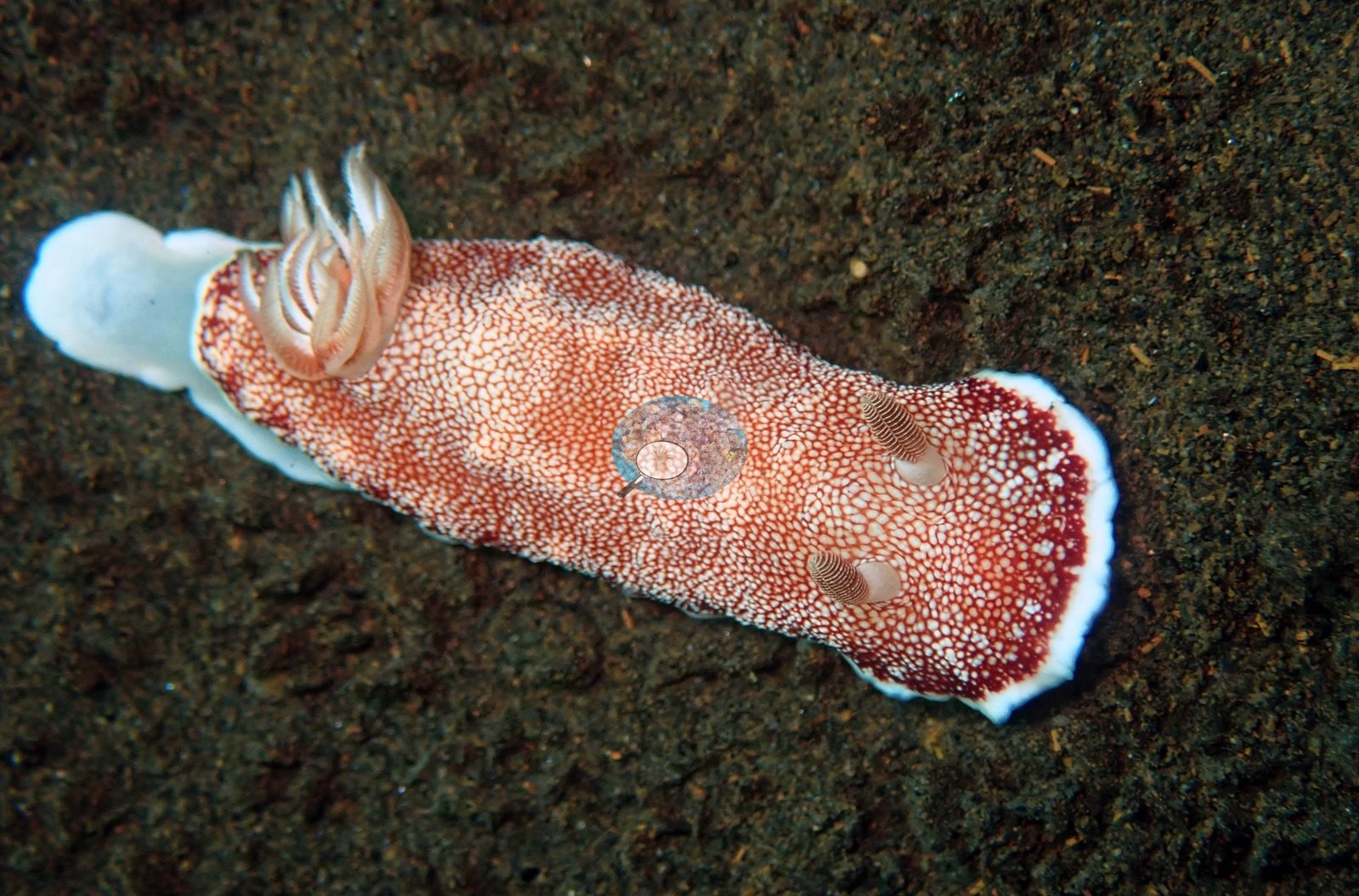
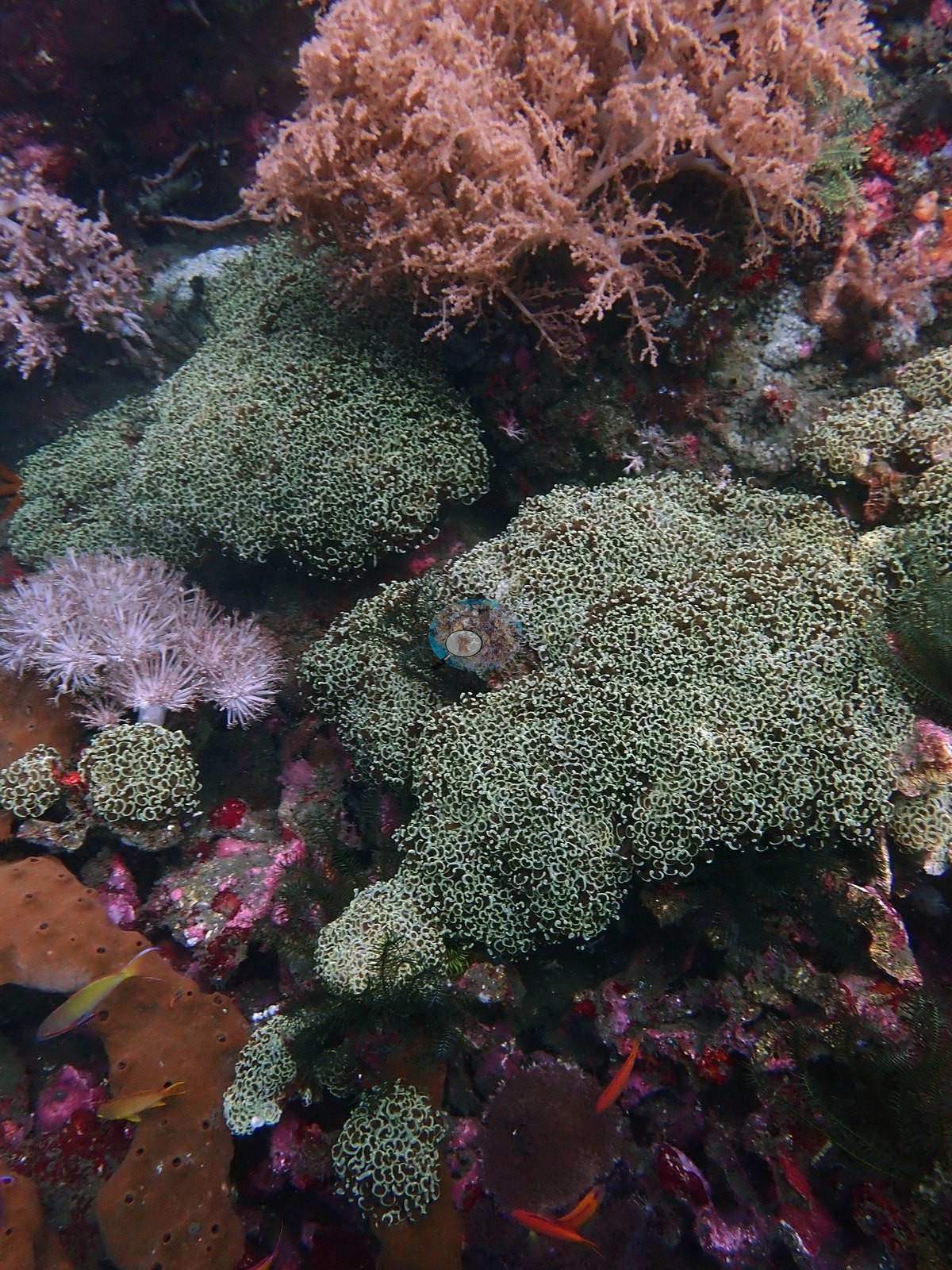
Weird, yellow “Raja Ampat” sea cucumber from Raja Ampat=very common in places, Pocillopora verrucosa. Pygmy seahorses, some large, fluorescent green, foliaceous sheeting corals @ 26-27 m (e.g., Image 2).
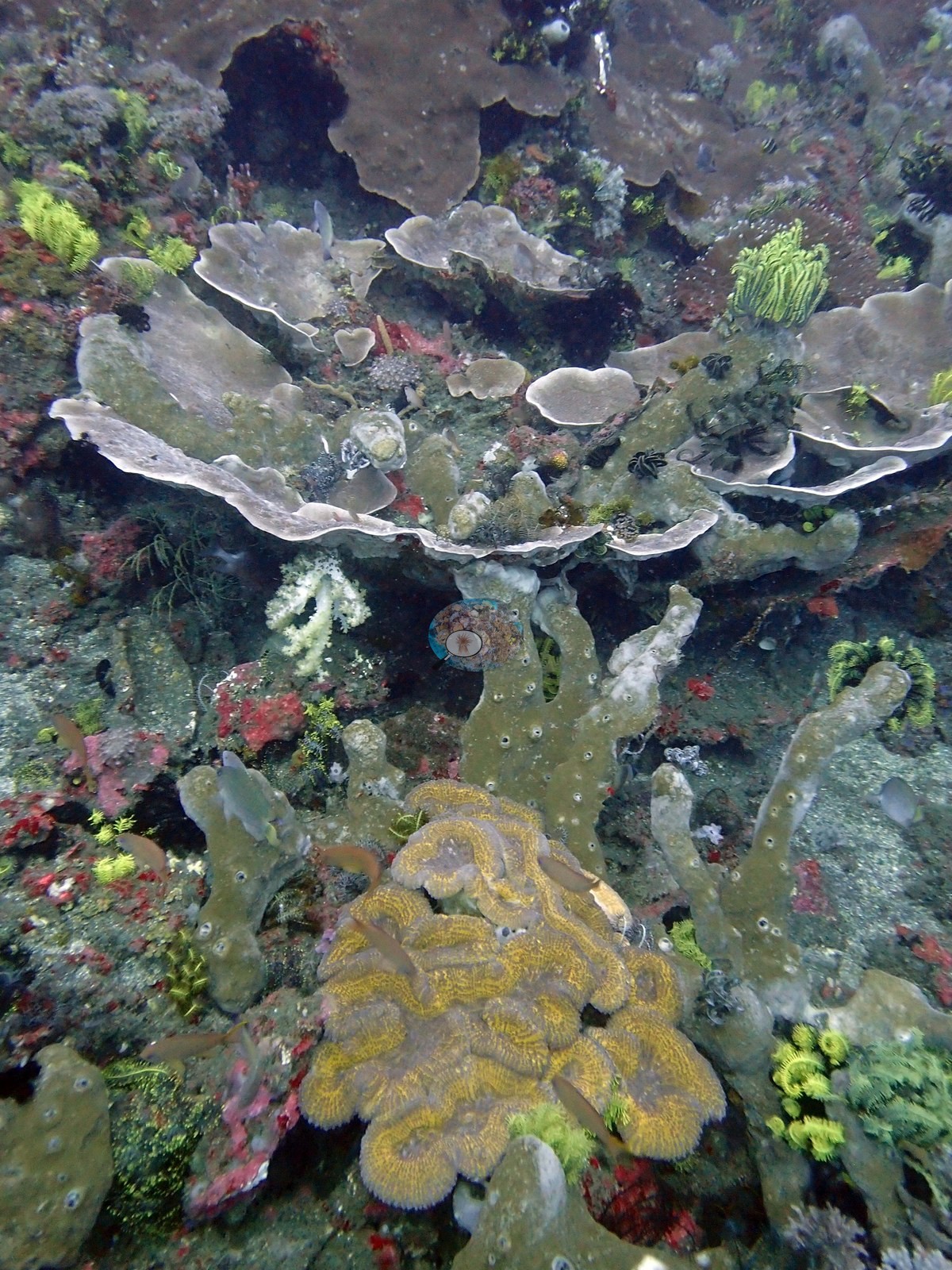
Large Bohar snapper, Stylophora pistillata common in area. Nipple sea anemones also very common. Cool macro life in muck off reef. High cover and diversity of anemones. Many fish but mean size is very small. Yellow-green crinoids everywhere. Some large snapper @ 30 m. Strange colonial anemone living on stalks. Only snapper for large fish though did see stingrays (as at first visit to site).
Comparisons with other data
No prior survey data from this site. If you would like to share yours, please email us.
Dive record
2019-1-20 dive 1: Hot Rocks (#5). 8:07-9:08 (61 min). max. depth=30.5 m. 30% oxygen. 25.6ºC. 2019-1-20 dive 3: Hot Rocks-round 2 (#7). 14:42-15:44 (62 min). max. depth=29.6 m. 30% O2. 26.7ºC.
Other notes
Got good pictures. Common at site but uncommon at others.
CV model comparison
More info
DINOv3 and CoralSCOP were run on the same photos and are listed for comparison. Coralscapes v2 and v1 were also run but are not shown: Anderson does not consider Coralscapes reliable for these photos. No diver transect exists for this trip, so agreement between the rows is not accuracy, and as of September 2026 no computer-vision method estimates coral cover accurately on new images; treat every row as indicative.| Method | Hard-coral cover (%) |
|---|---|
| In-house DINOv3 | 25.8 |
| CoralSCOP edited | 38.1 |
| Claude (edited photos) | 9.1 |
% coral cover by visit
Each visit is analyzed independently; these are not pooled into a single site mean.
| Date | % coral cover | Std. dev. | Frames scored |
|---|---|---|---|
| 2019-01-20 | 9.7% | ±18 | 59 |
| 2019-01-20 | 8.5% | ±17 | 61 |
Data & links
All images from Coral Reef Diagnostics. Data are from Coral Reef Diagnostics.
© Coral Reef Diagnostics.