
Indonesia - Komodo NP: Three Sisters (Tiga Dara)
Part of the regional summary: Indonesia - Komodo
More info
East Nusa Tenggara (NOAA CRW virtual station) · Lesser Sunda ecoregion mean=6.9°C-heating weeksAnderson's least favorite Komodo dive because of an incessant washing-machine current, on a steep slope where the depths are mostly sponges, soft corals, black-coral whips, and foliose plates. The shallows he did rate, with colorful Acropora tables over pink coralline crust and butterflyfish around them.
Satu penyelaman, 23 Januari 2019, 07:30, 50 menit, kedalaman maksimum 29.6 m, rata-rata 15.2 m, 25.6 derajat C, jarak pandang 10 m — penyelaman yang paling tidak ia sukai sepanjang perjalanan karena arus berputar tanpa henti seperti mesin cuci.
Terjemahan ringkasan ini oleh AI; versi bahasa Inggris yang berlaku. Translated from the site’s shorter map summary.
More info
Note: NOAA's regional station series averages 1.0°C warmer than the satellite pixel nearest this site (2.3 km away), which is used here instead.One other CRD dive site within 5 km shown in orange — click a marker to open its page.
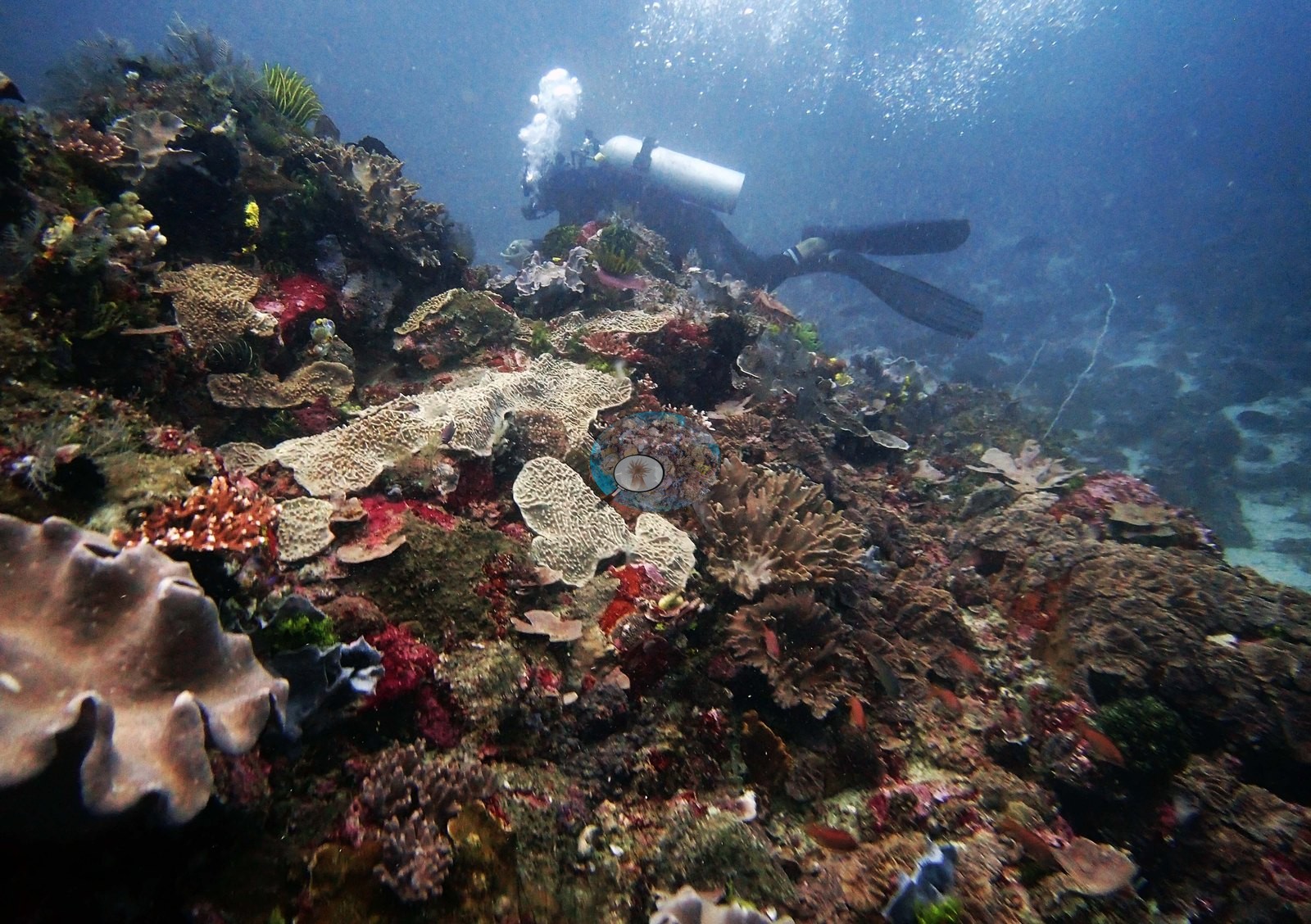
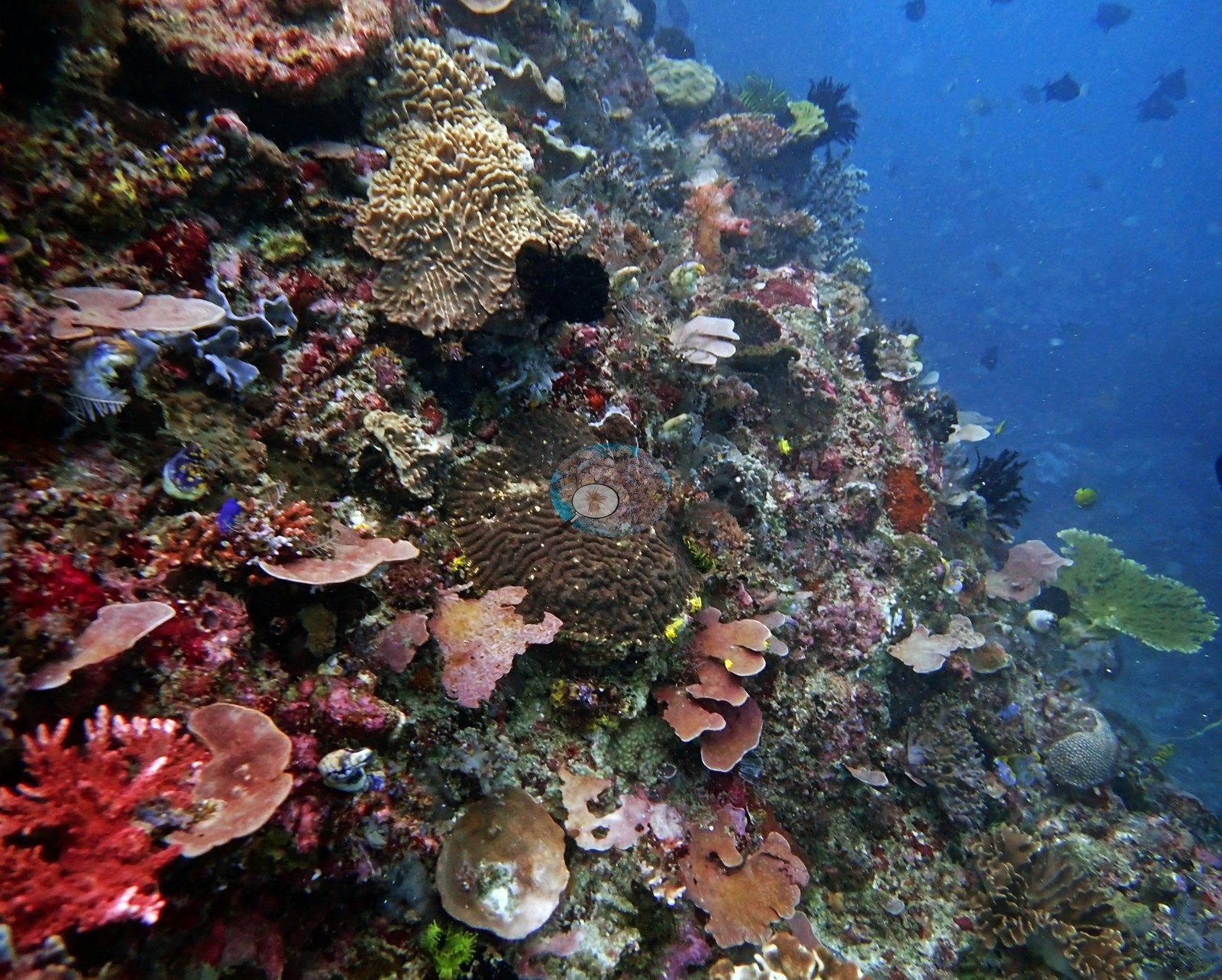
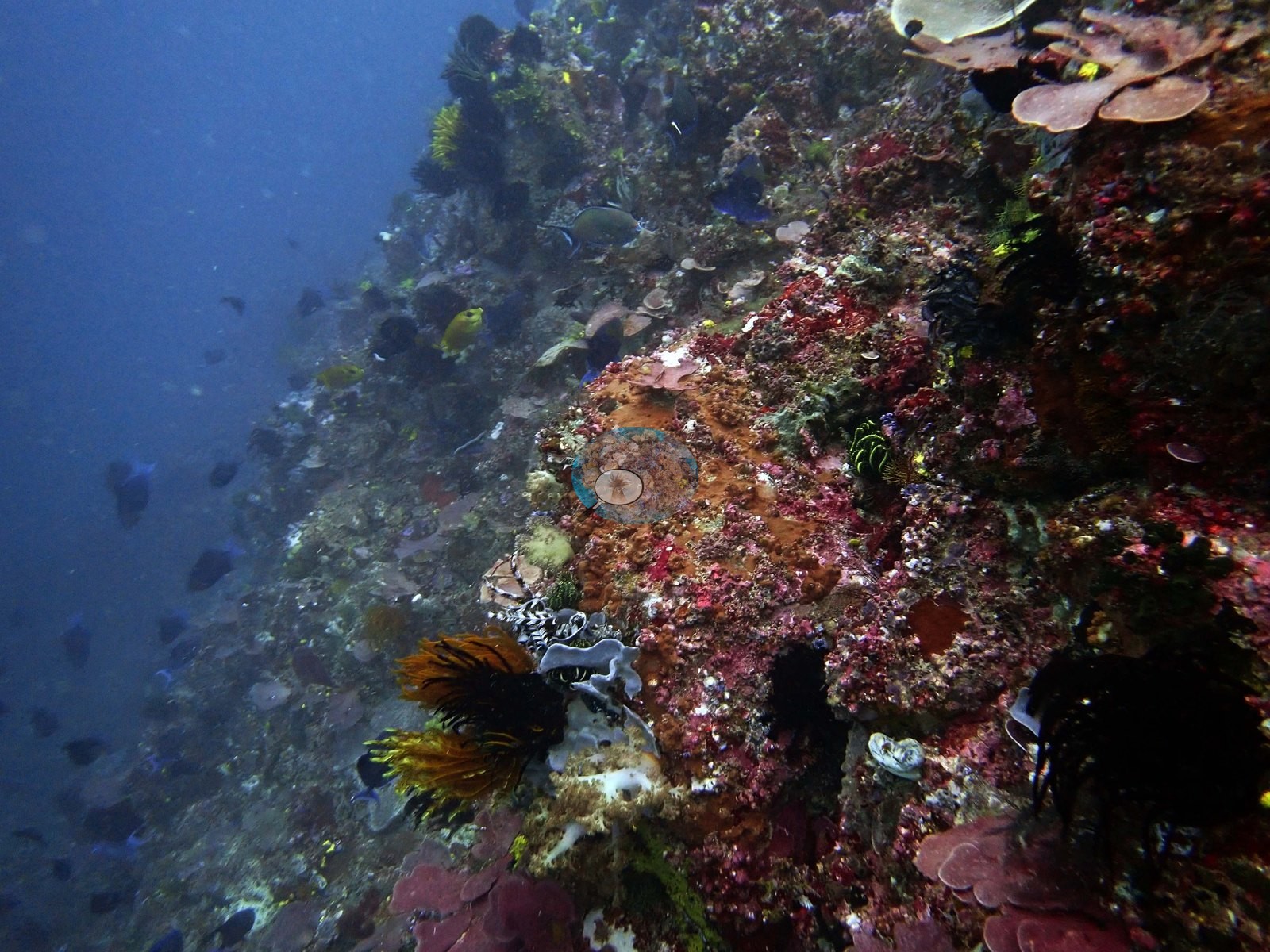
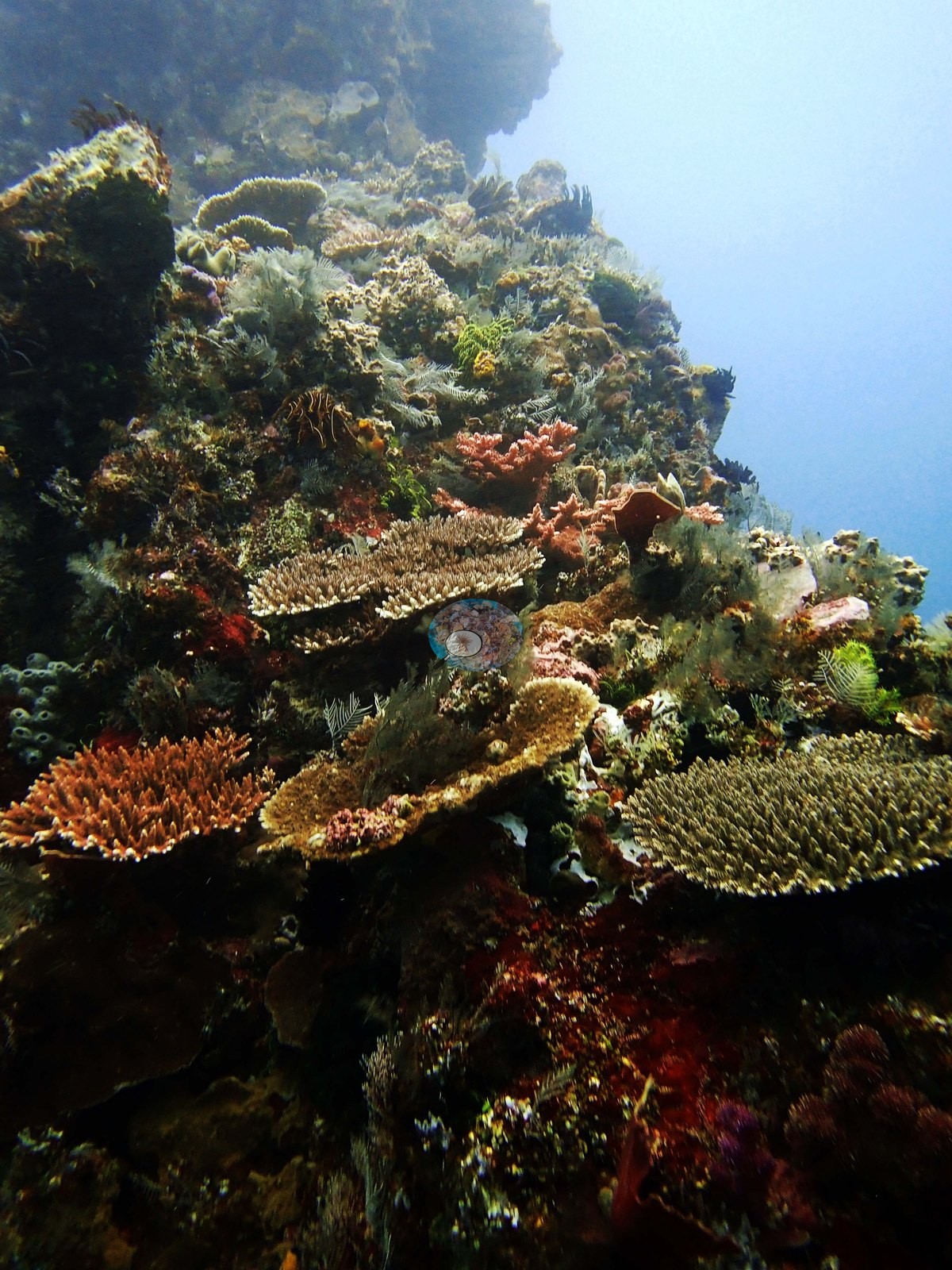
5 of these 37 photographs are shown beside the text that discusses them under "Site description" below.
Site description
General benthic features
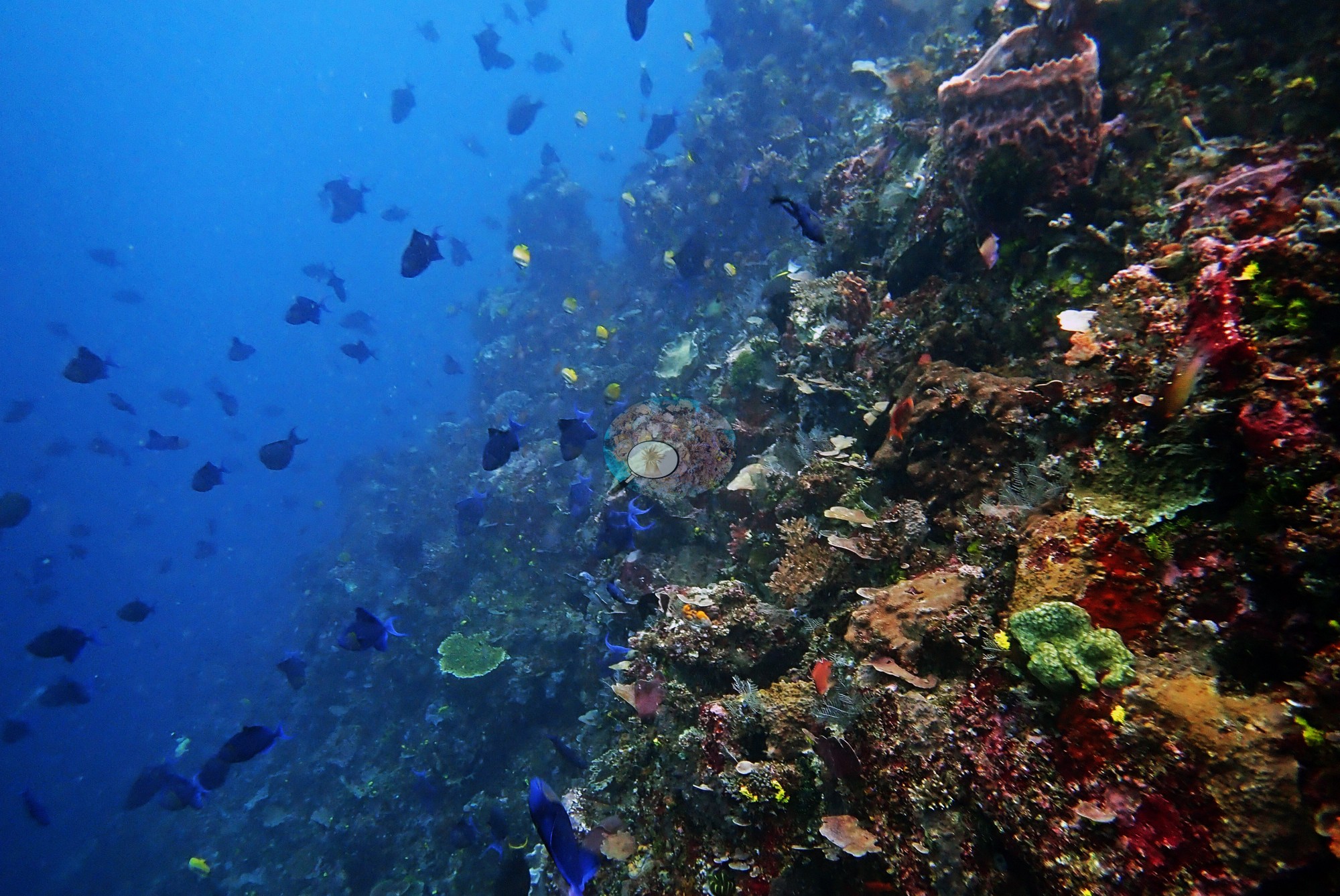
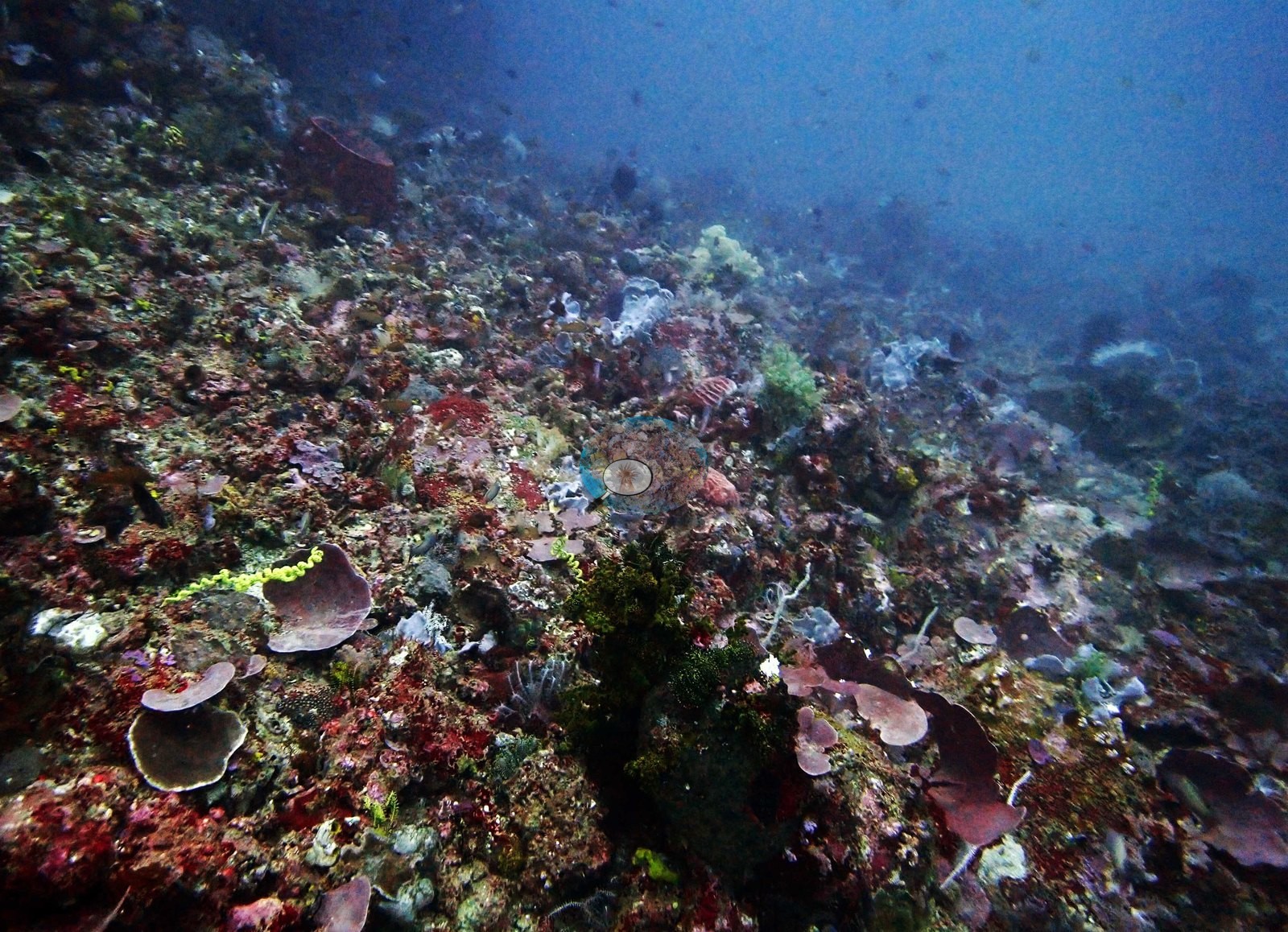
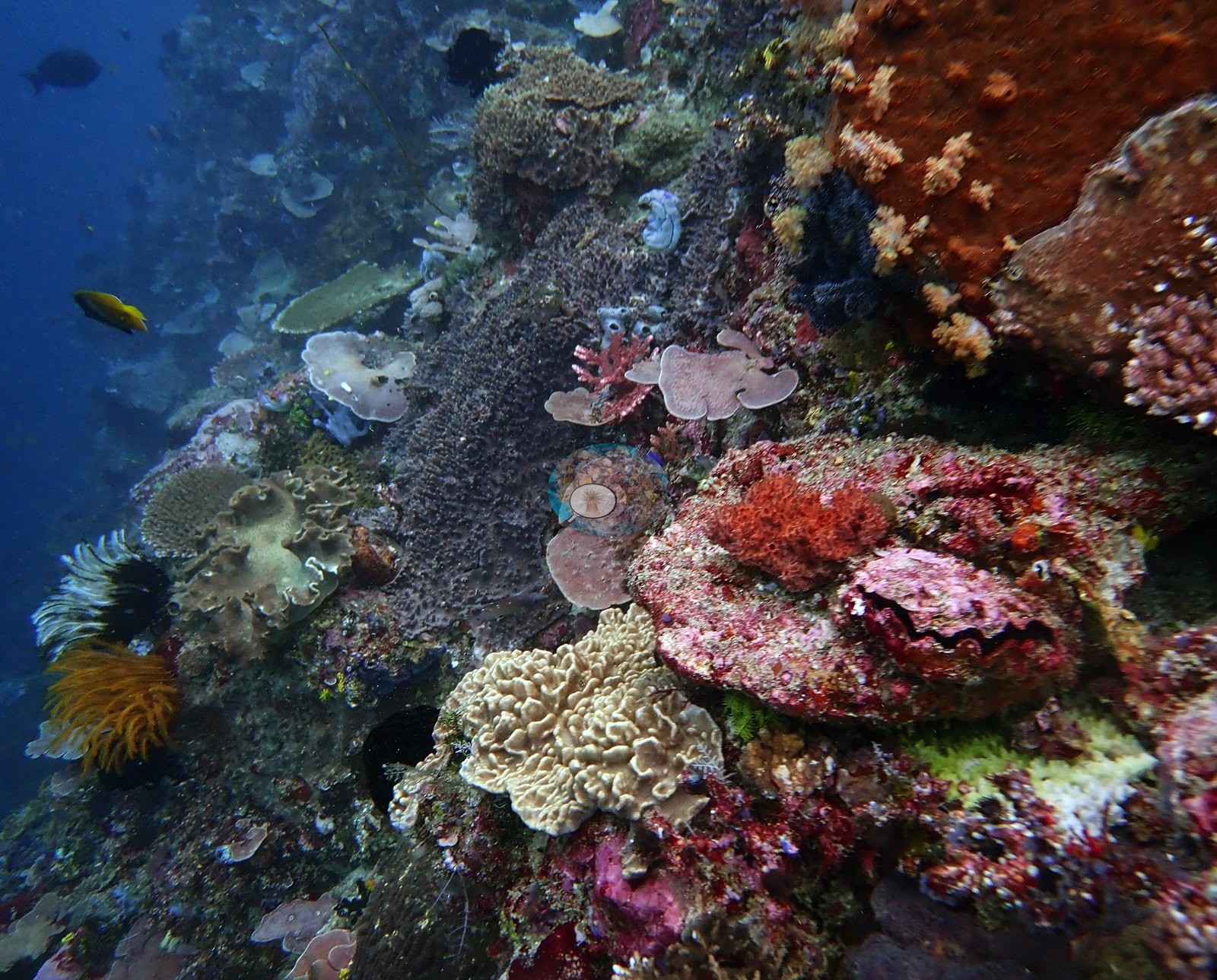
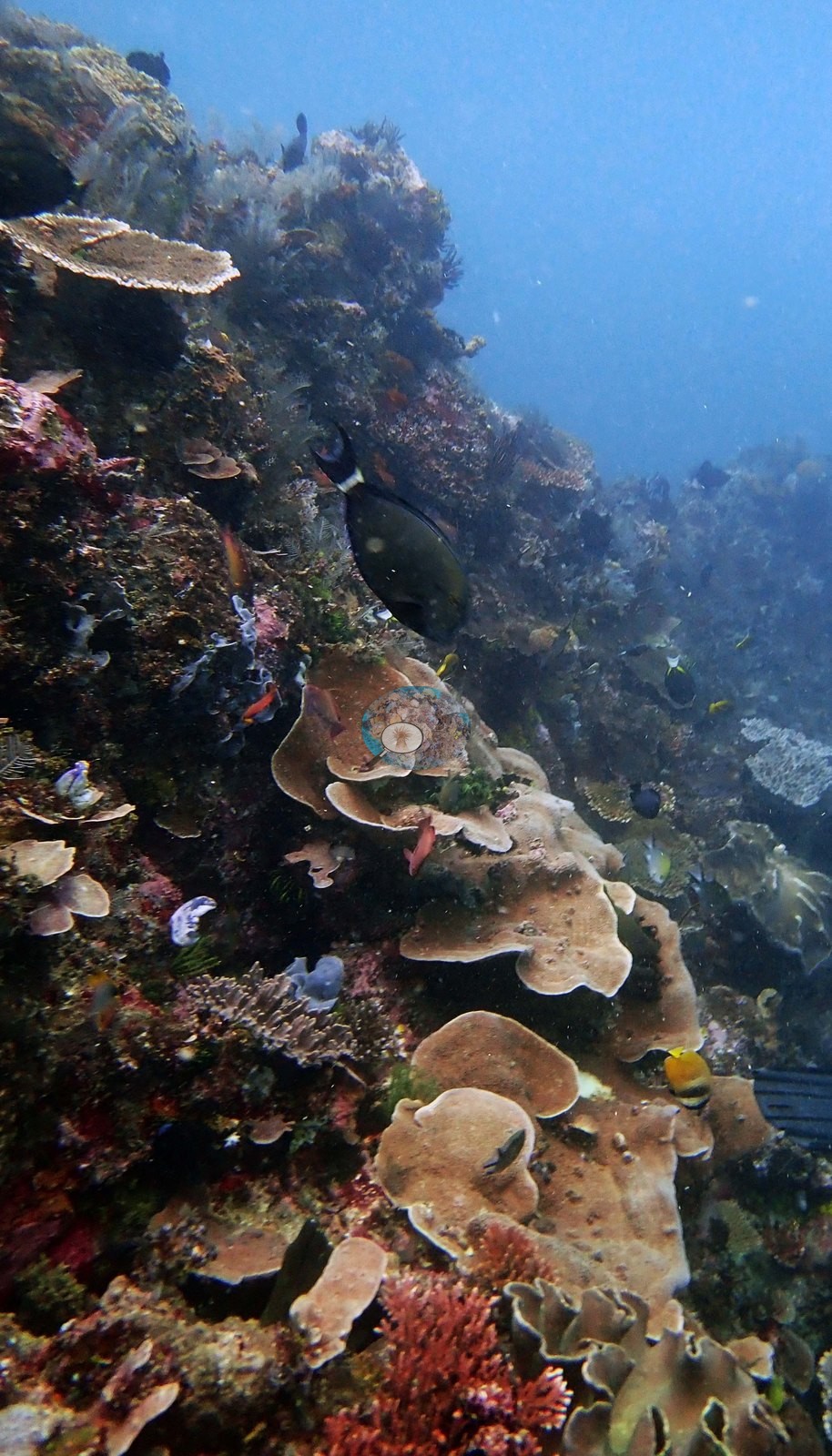
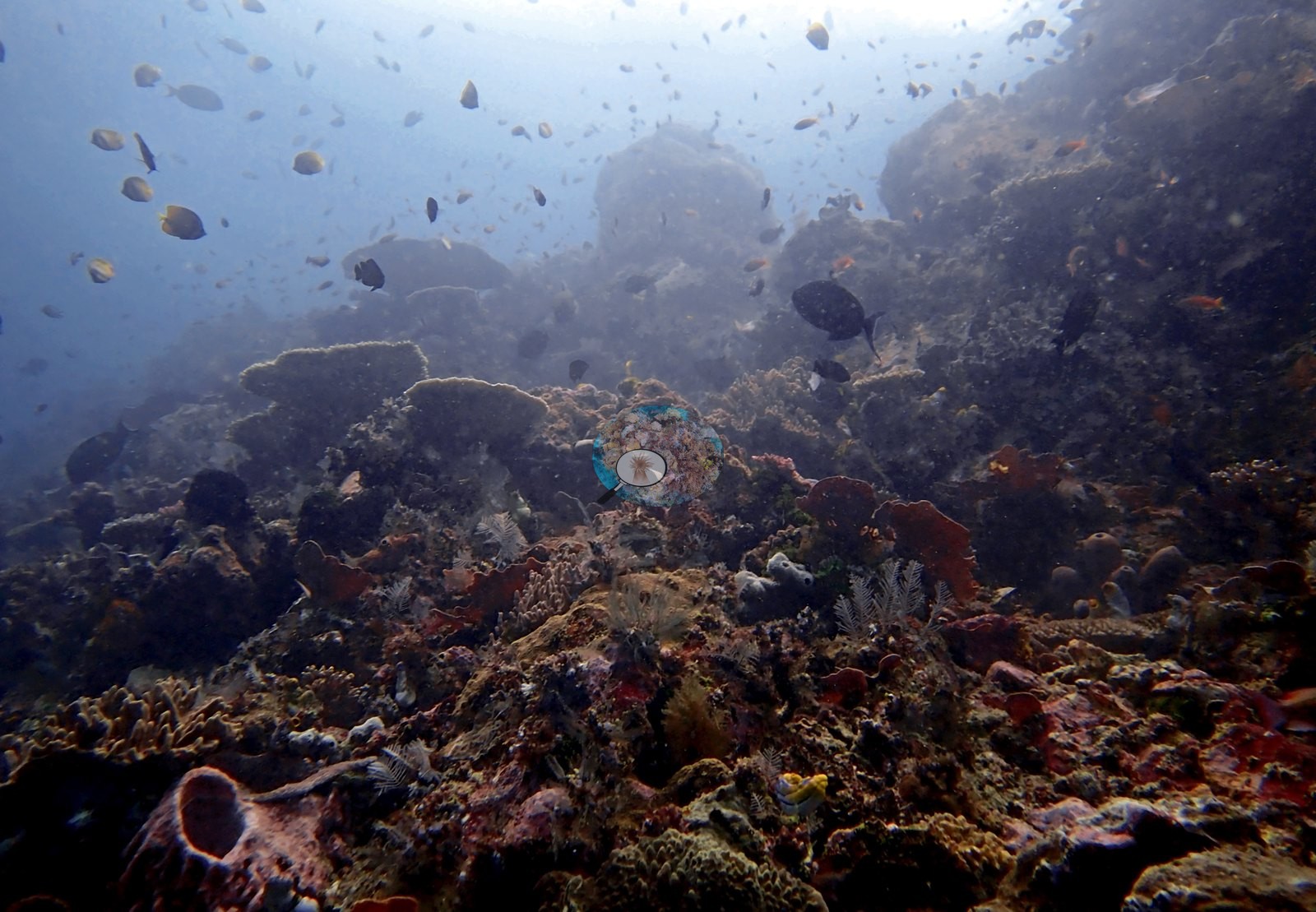
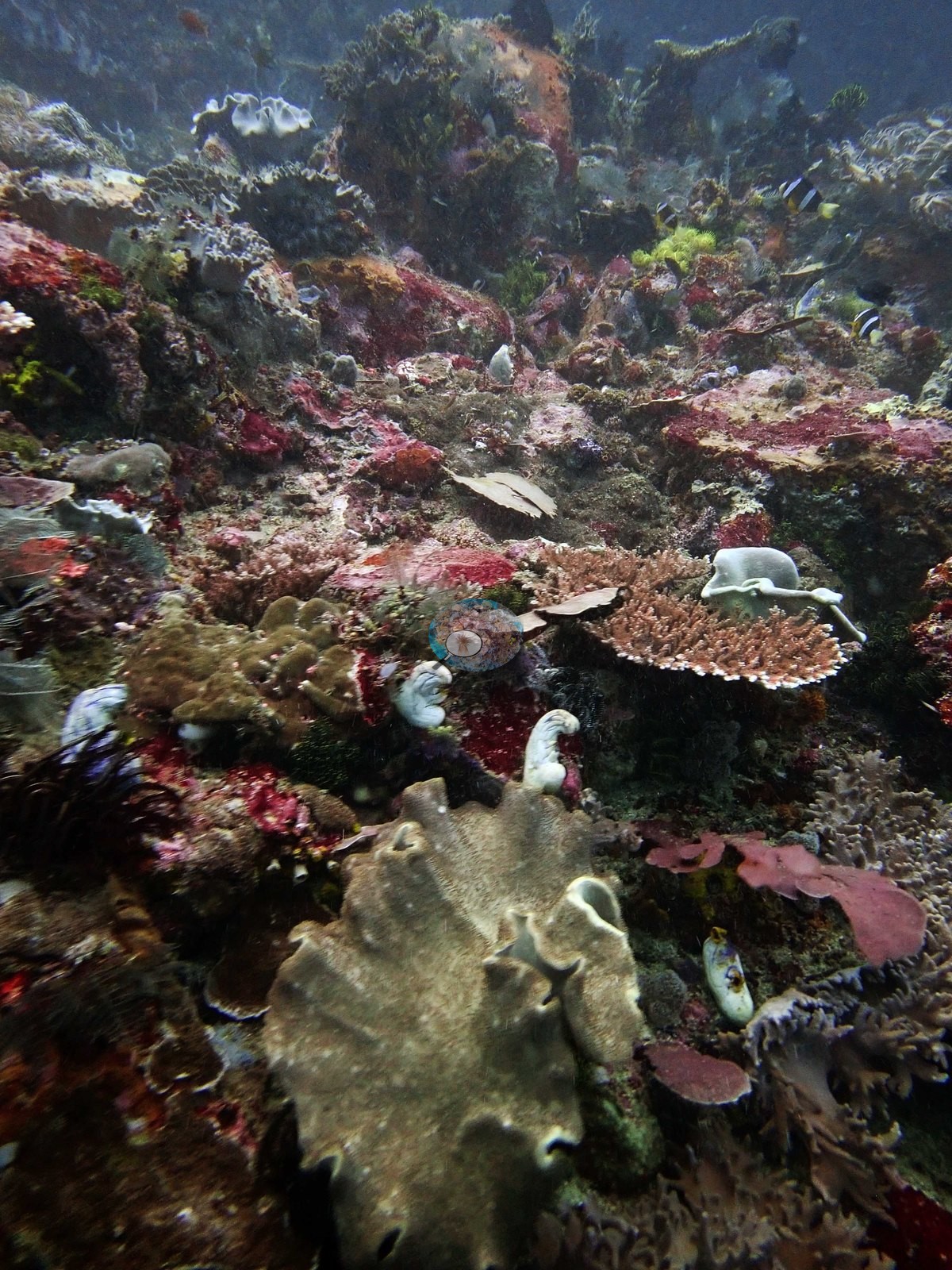
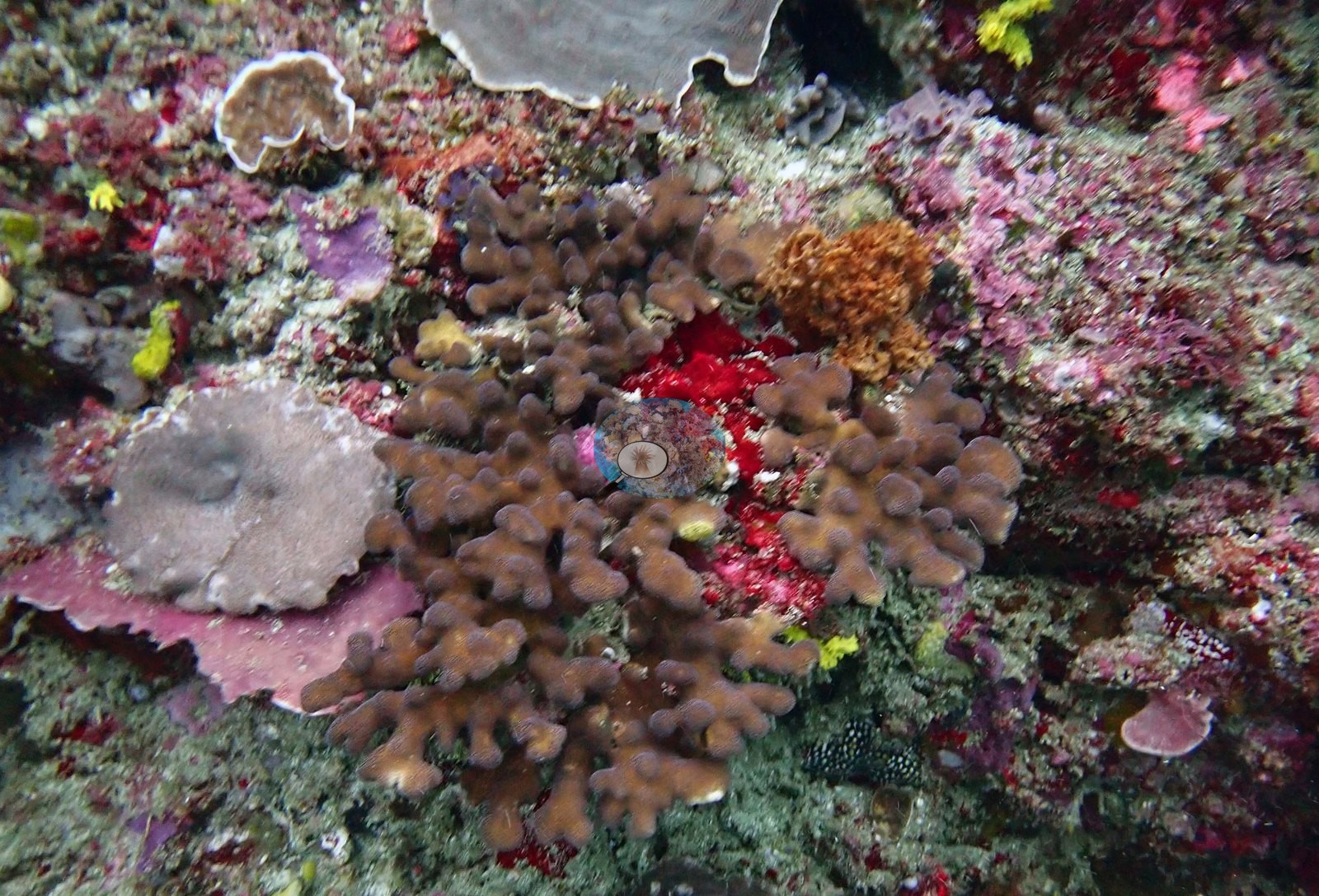
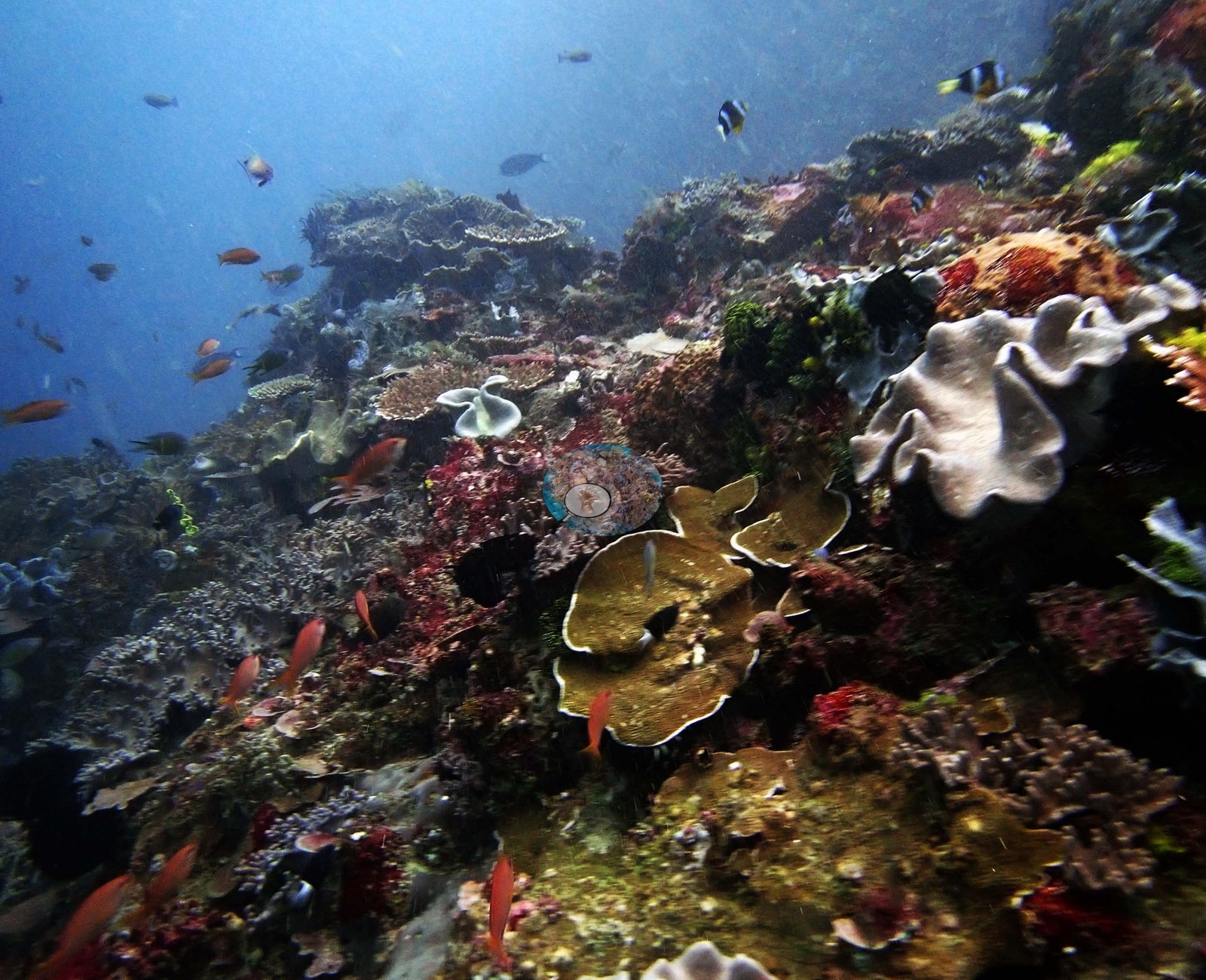
The frames track the depth gradient he describes. The deepest-looking frame is dim and blue-shadowed, a steep slope where the framework is foliaceous: a pale mustard-olive laminar plate with a white margin, stacked foliose sheets, a broad pale leathery soft coral, a tabulate Acropora above, and maroon and red encrusting sponges between, with orange anthias hanging in front of it - directly his note that depth here was mostly sponges and foliaceous sheets, and dark at 24 m because of the early entry (e.g., Image 2).
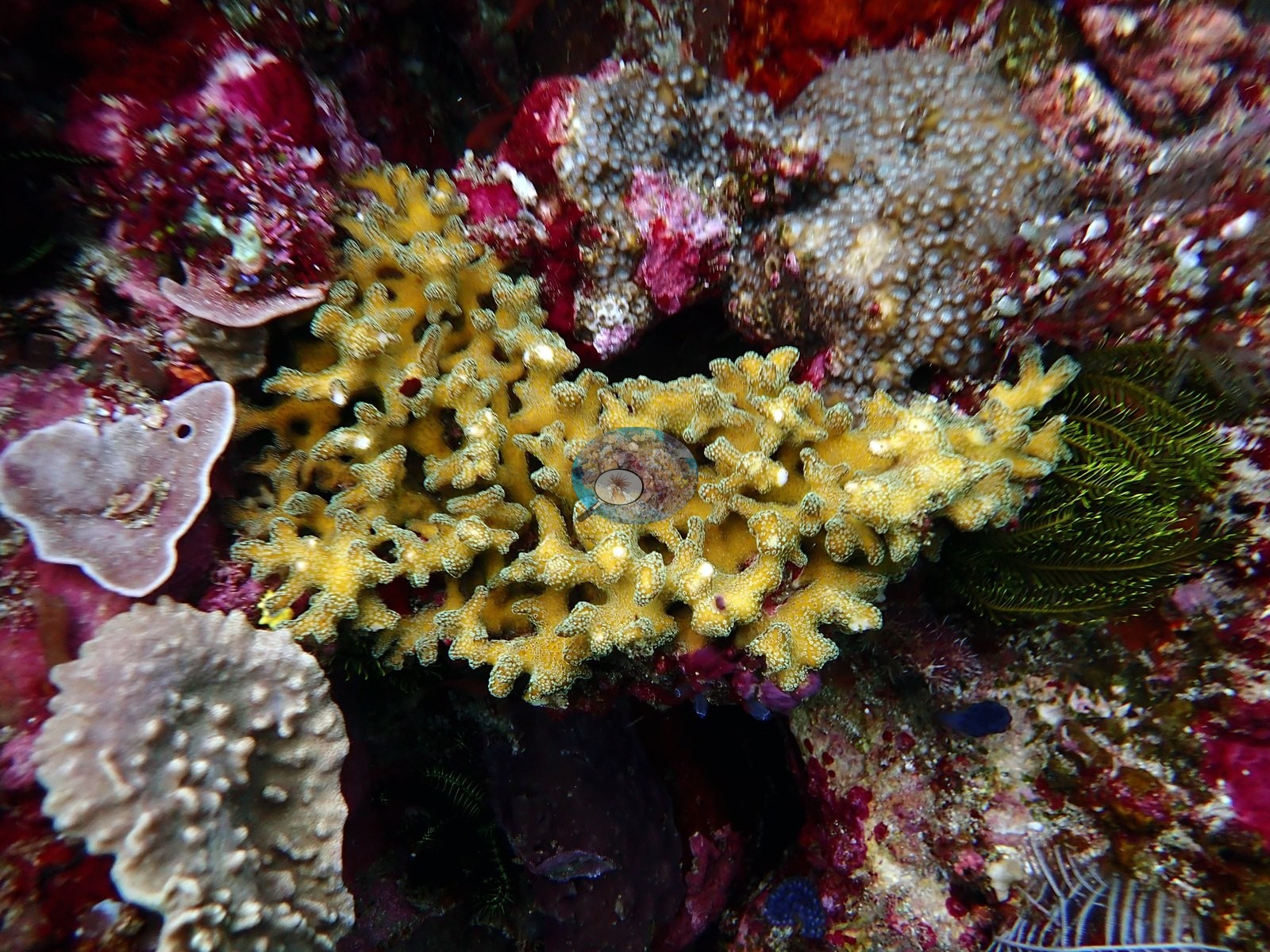
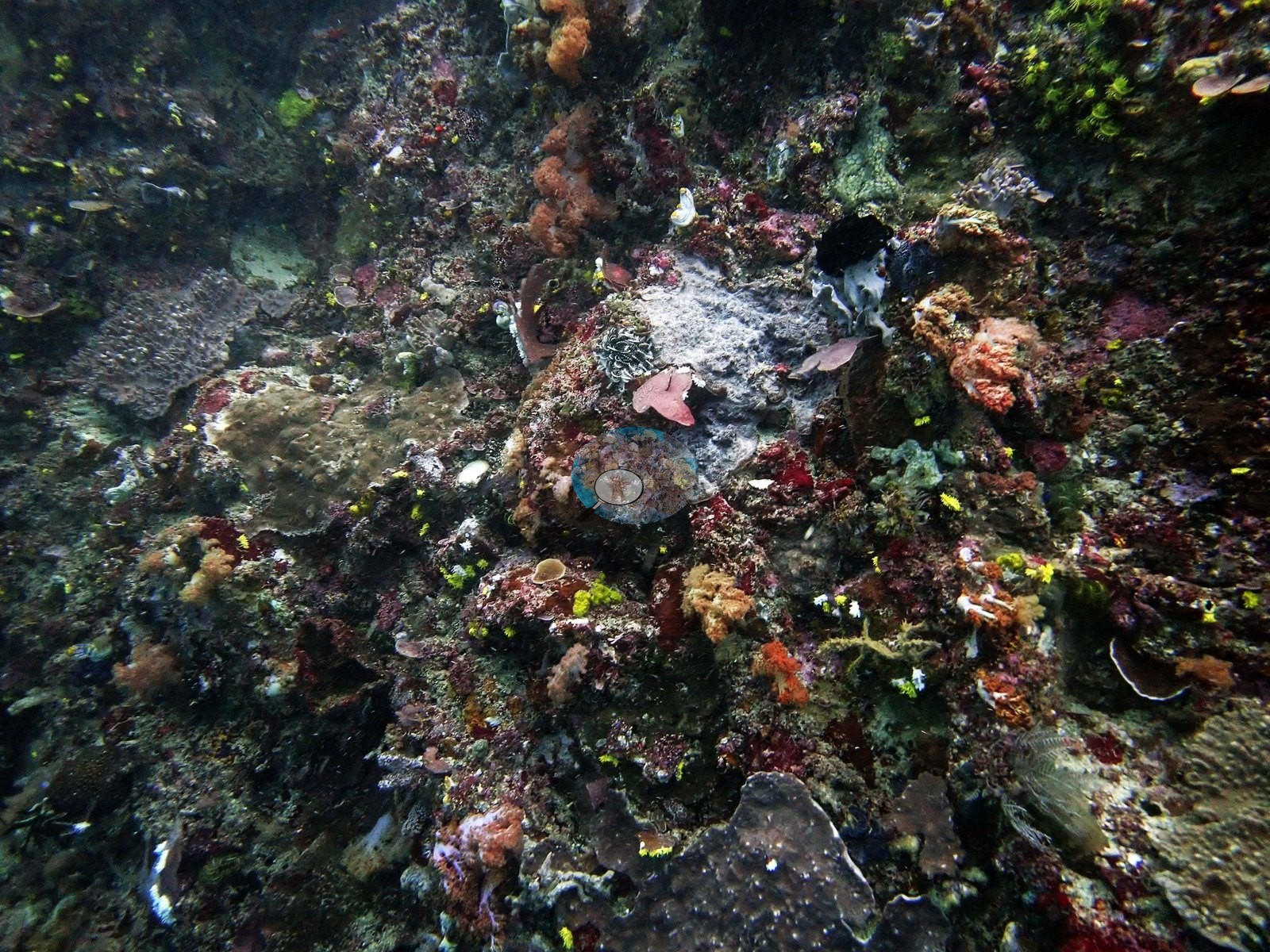
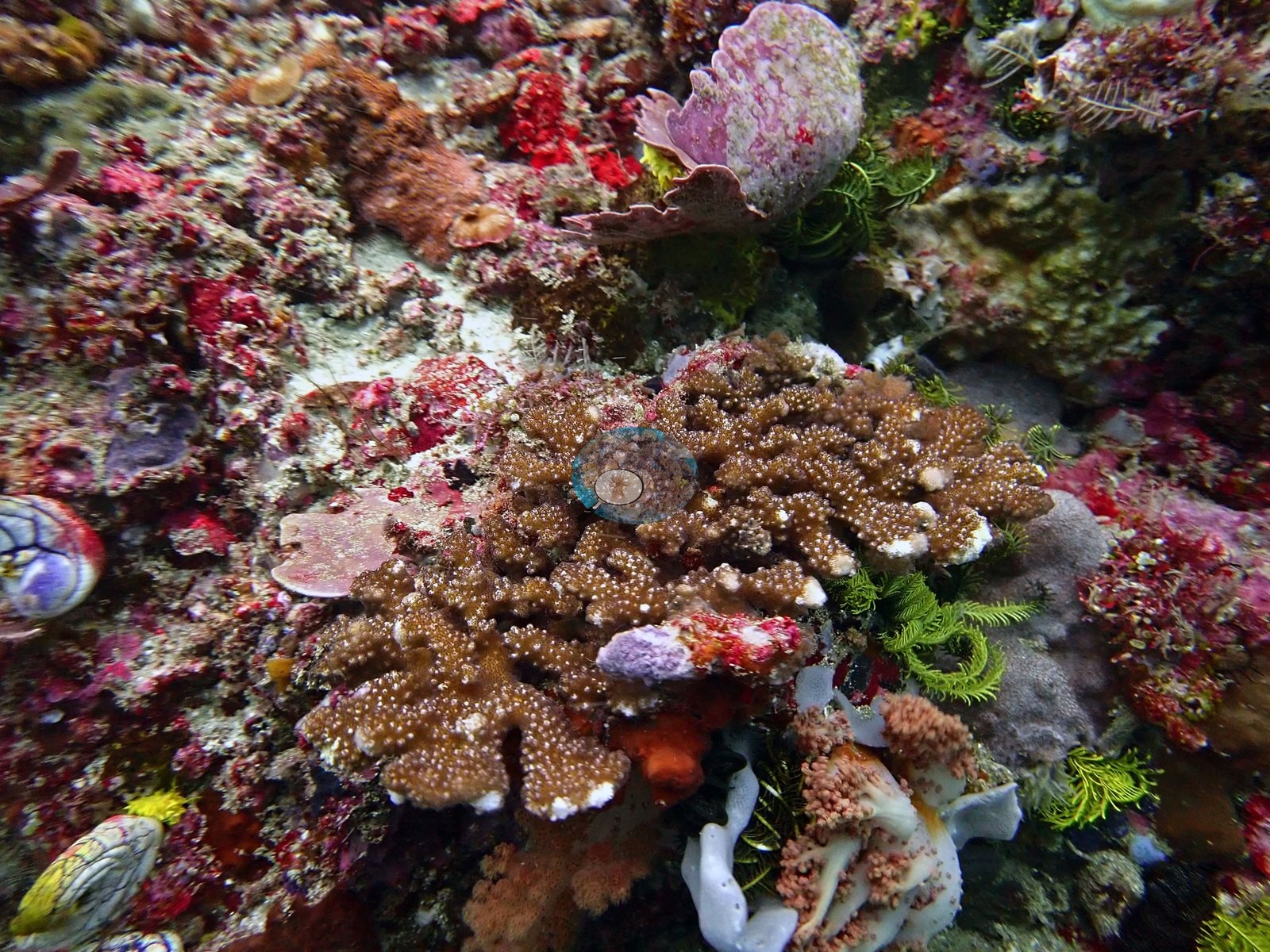
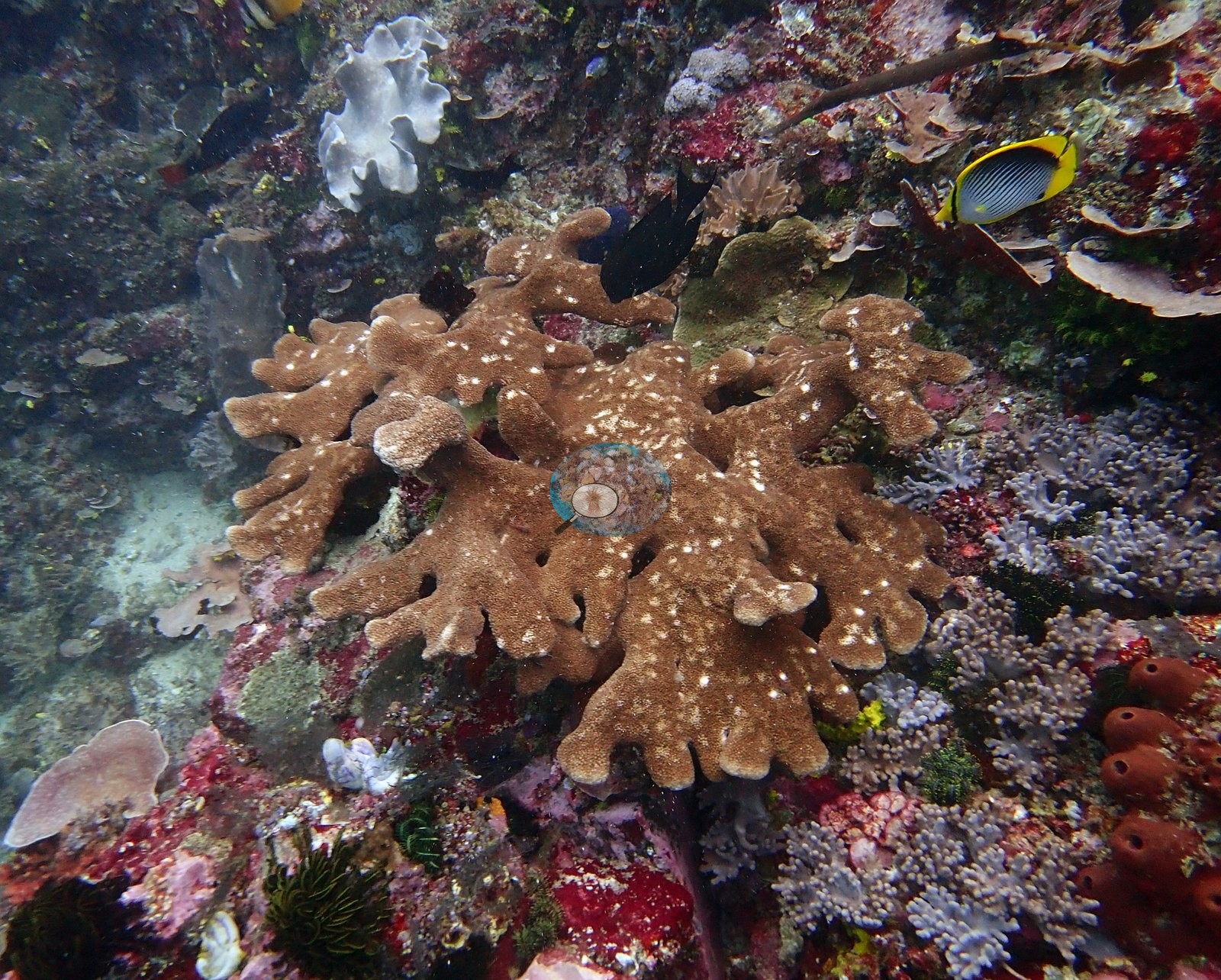
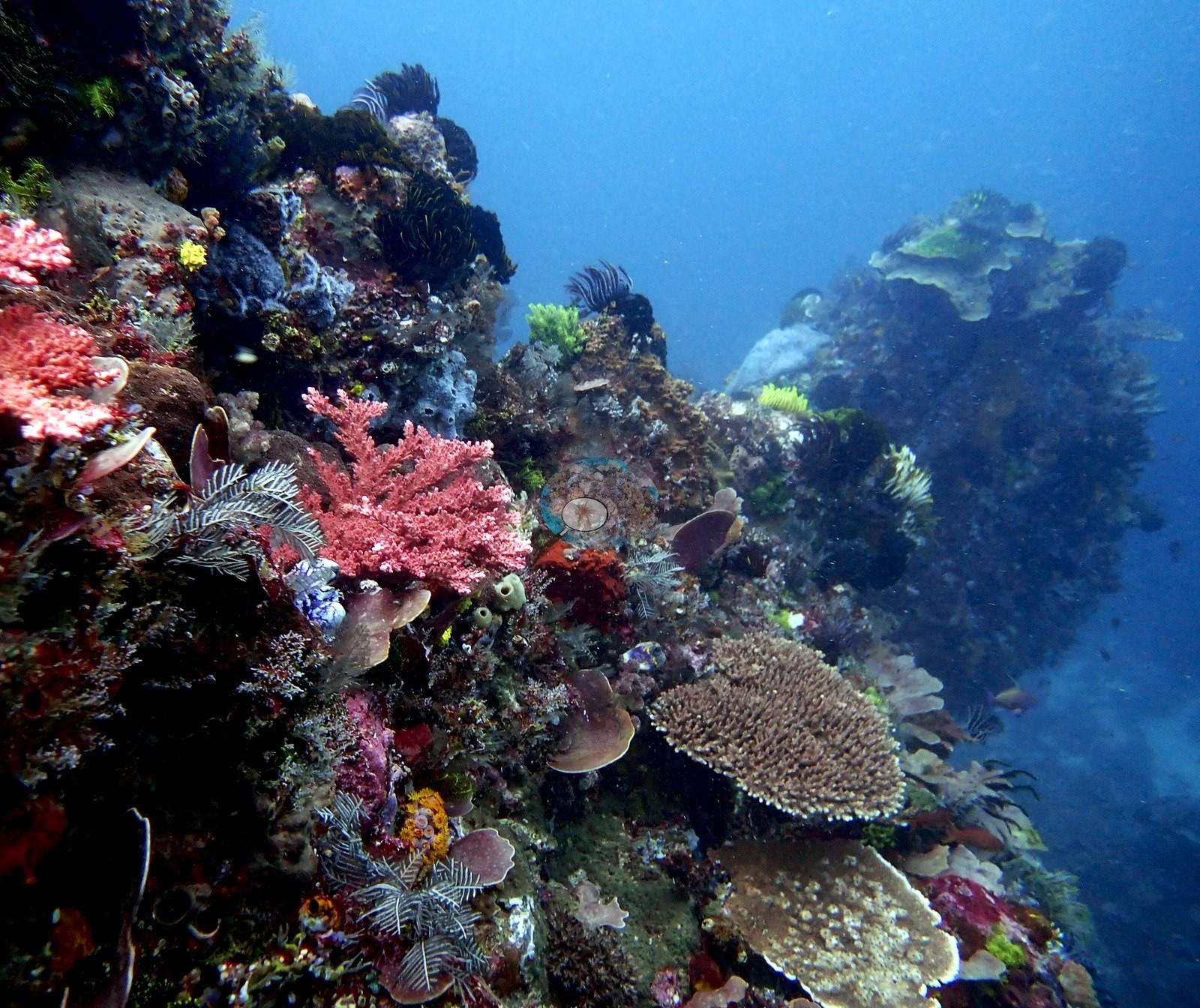
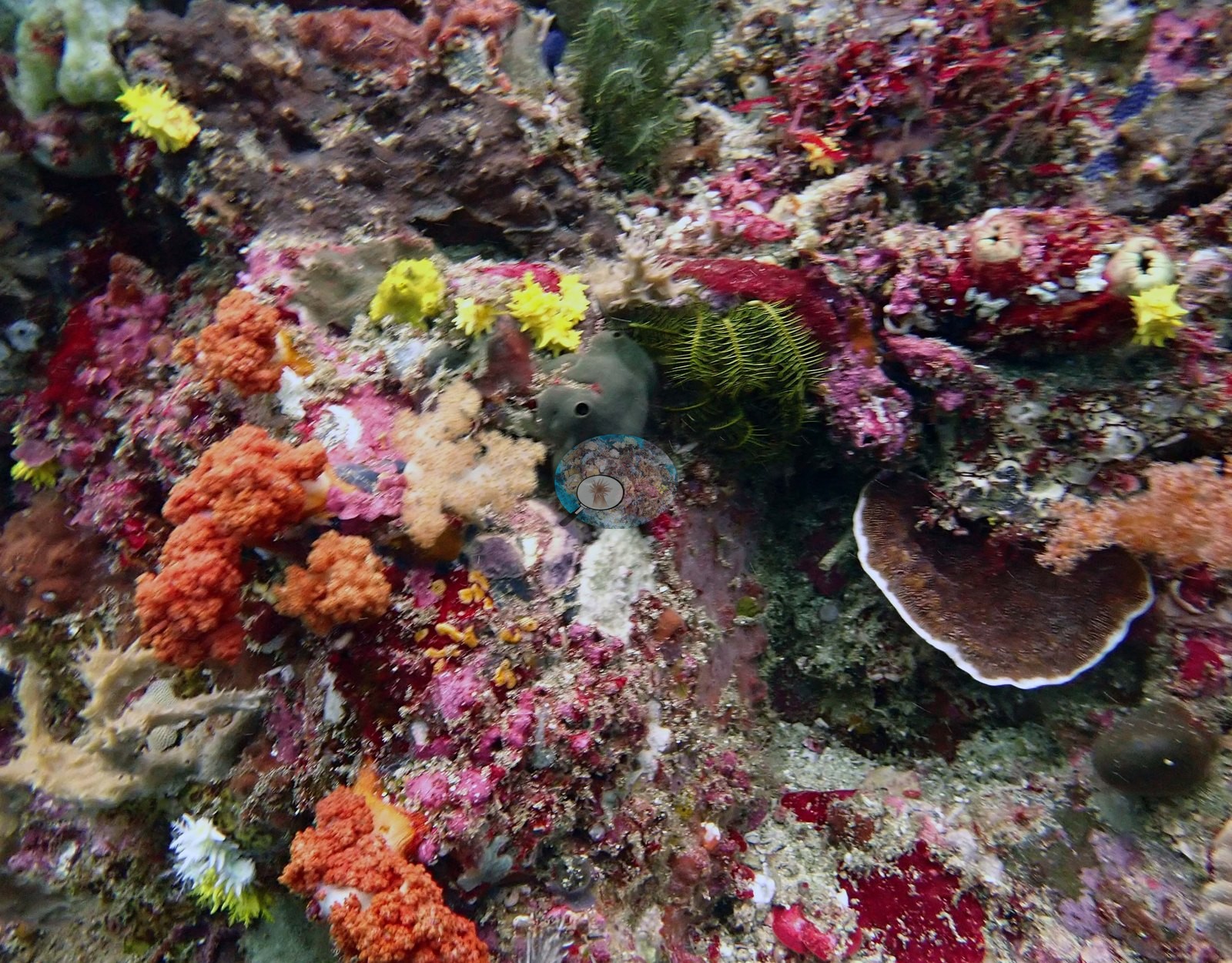
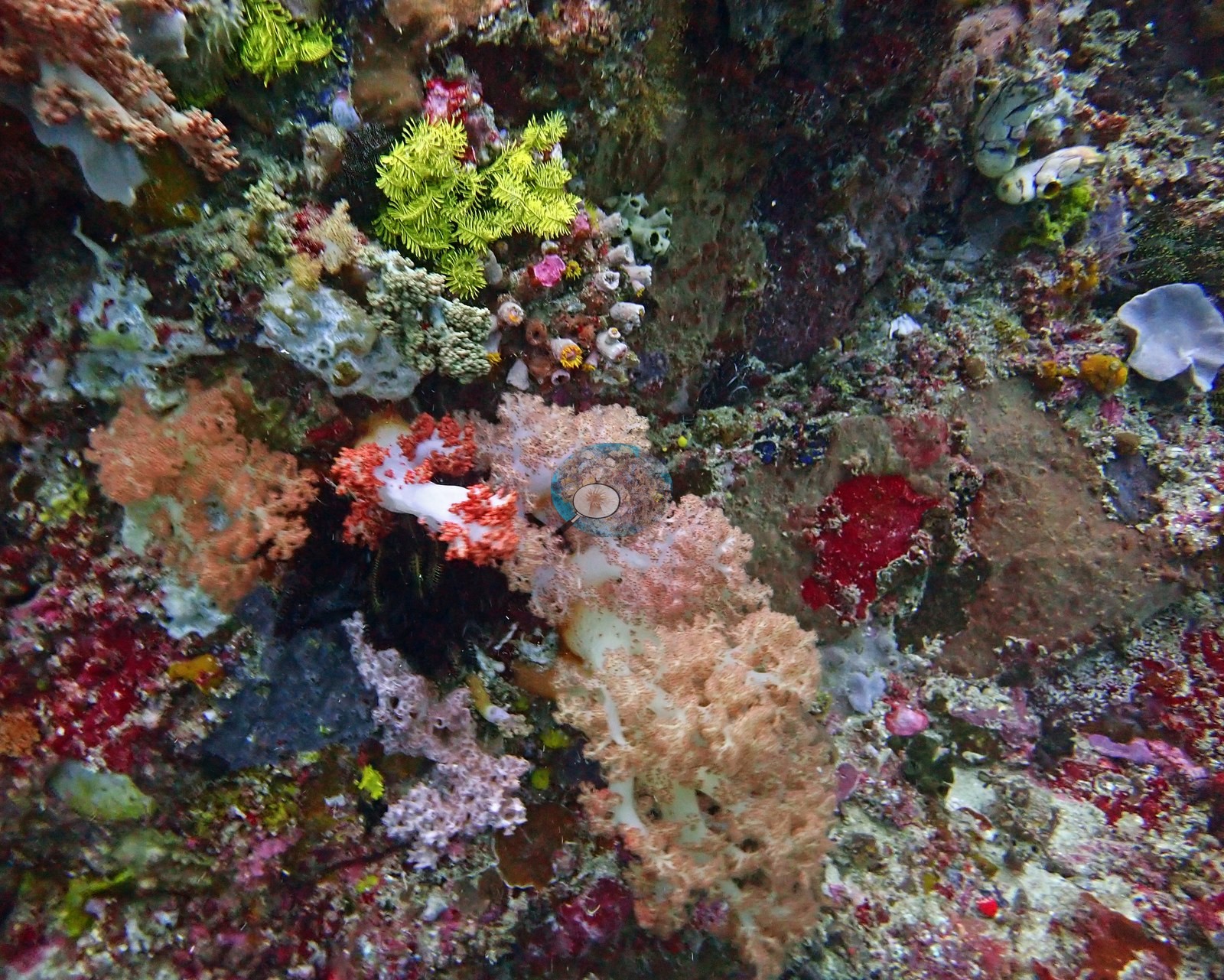
A cryptic close-up from the same band is almost pure invertebrate color with no stony framework at all: salmon and red-and-white Dendronephthya, a yellow-green crinoid, colonial tunicates, pink, and maroon encrusting sponges, and chartreuse algae (e.g., Image 3).
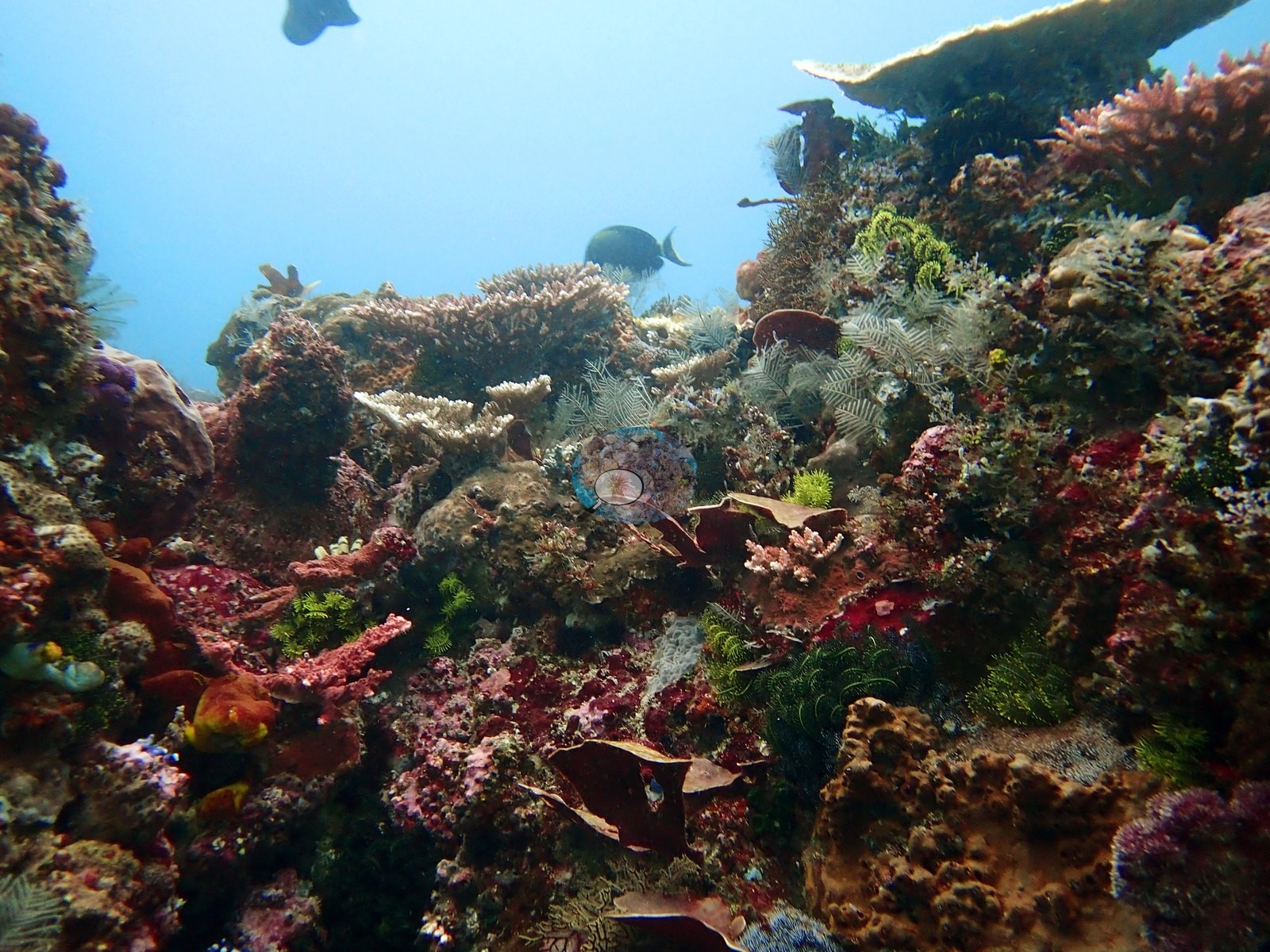
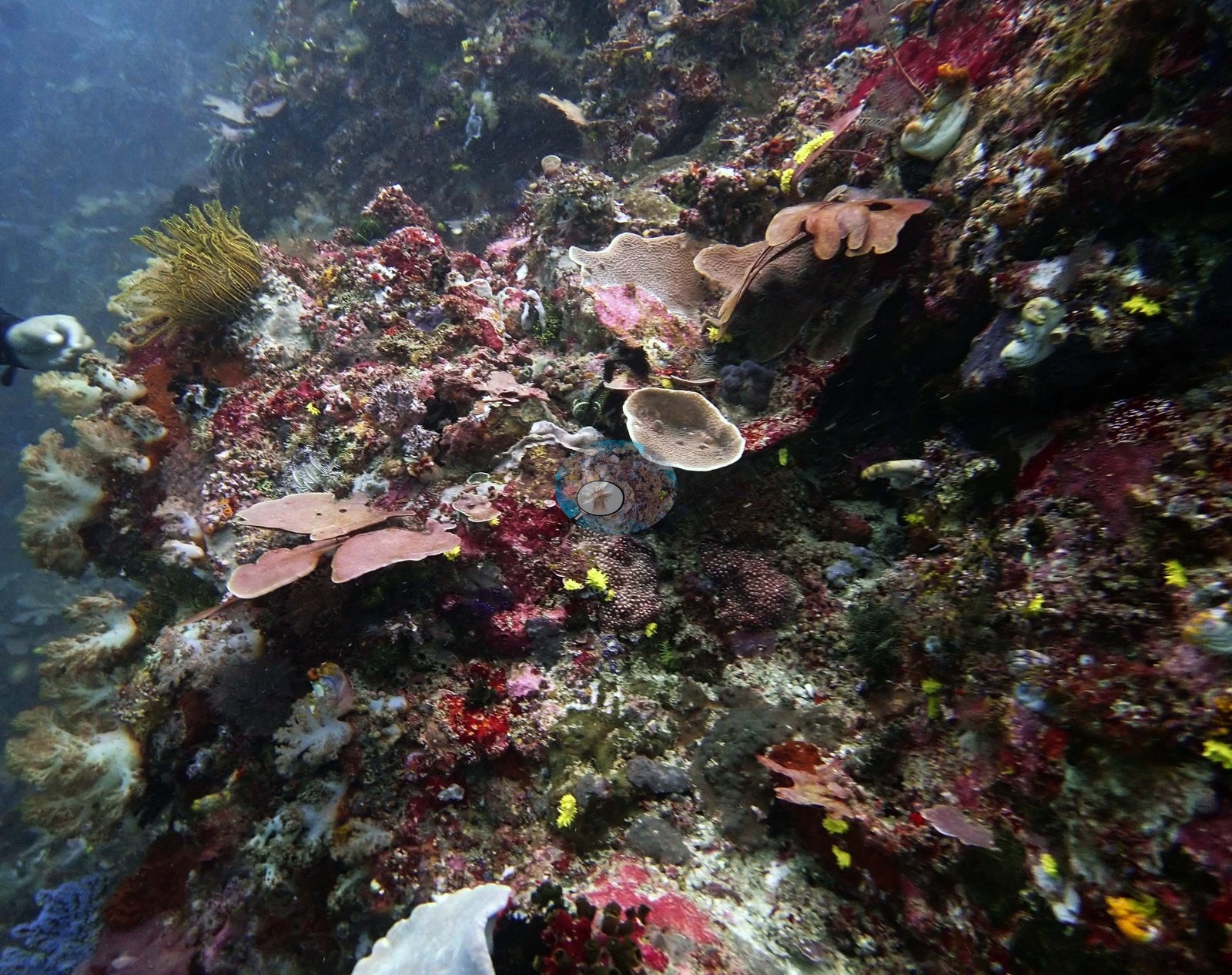
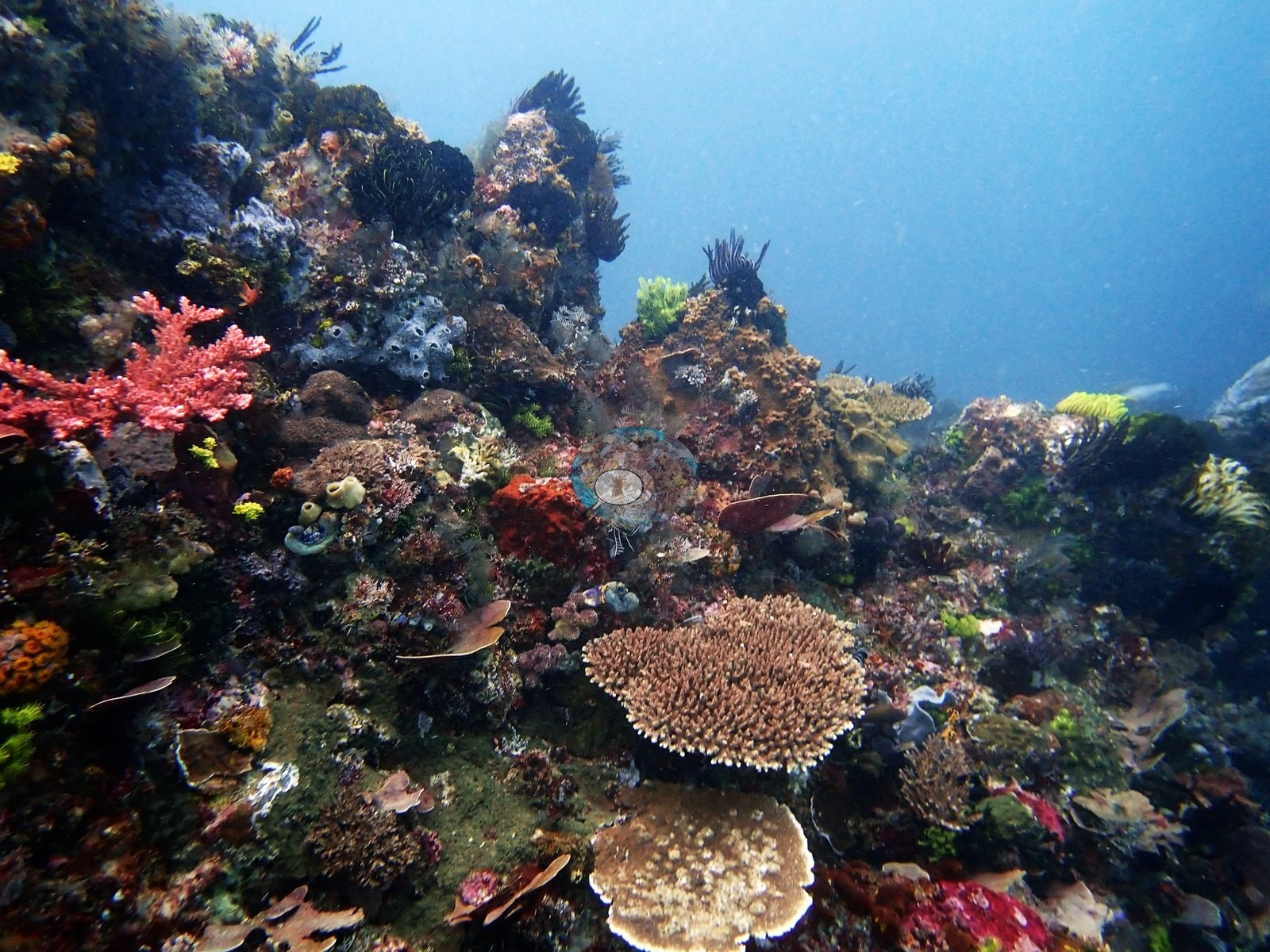
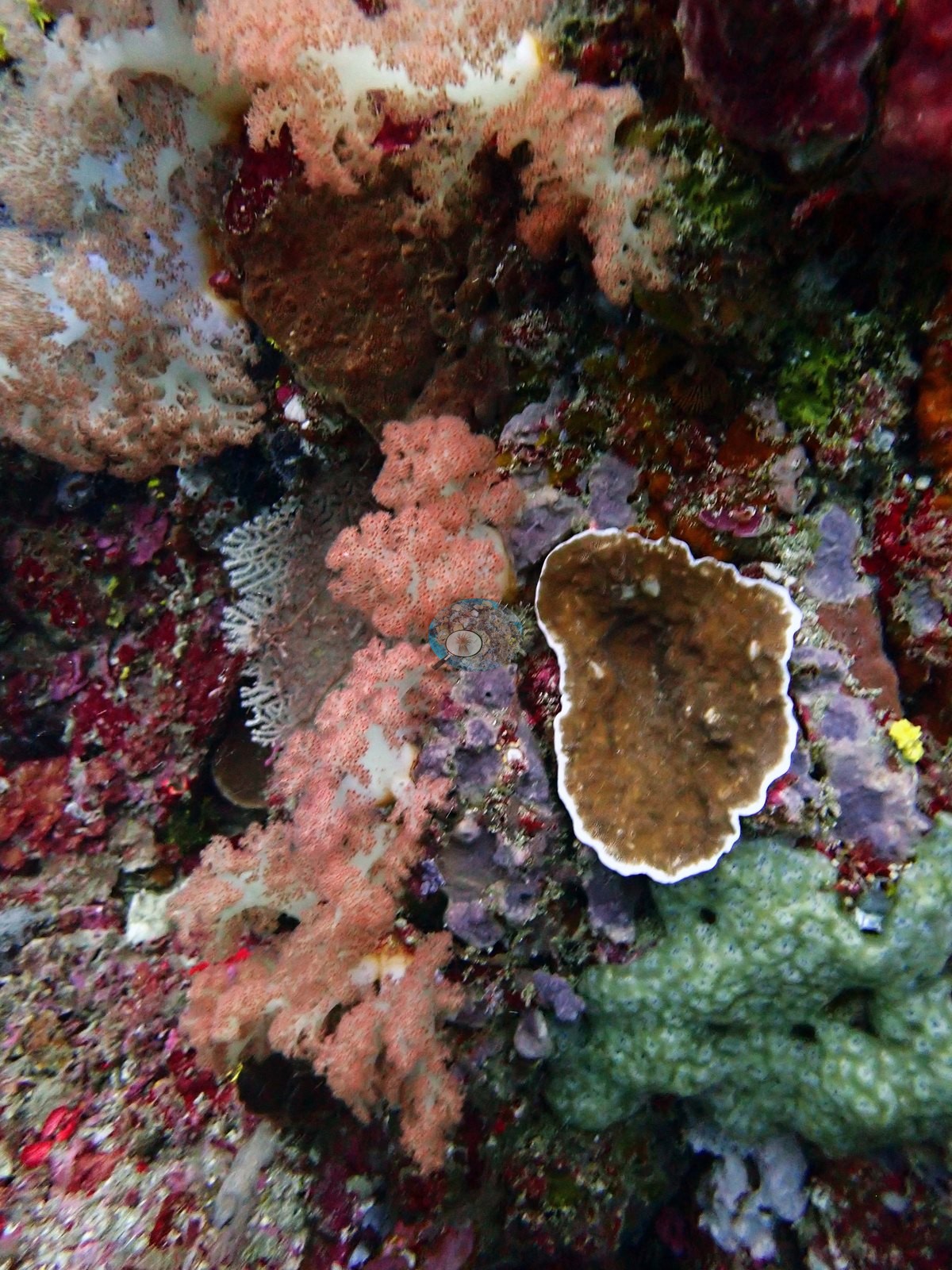
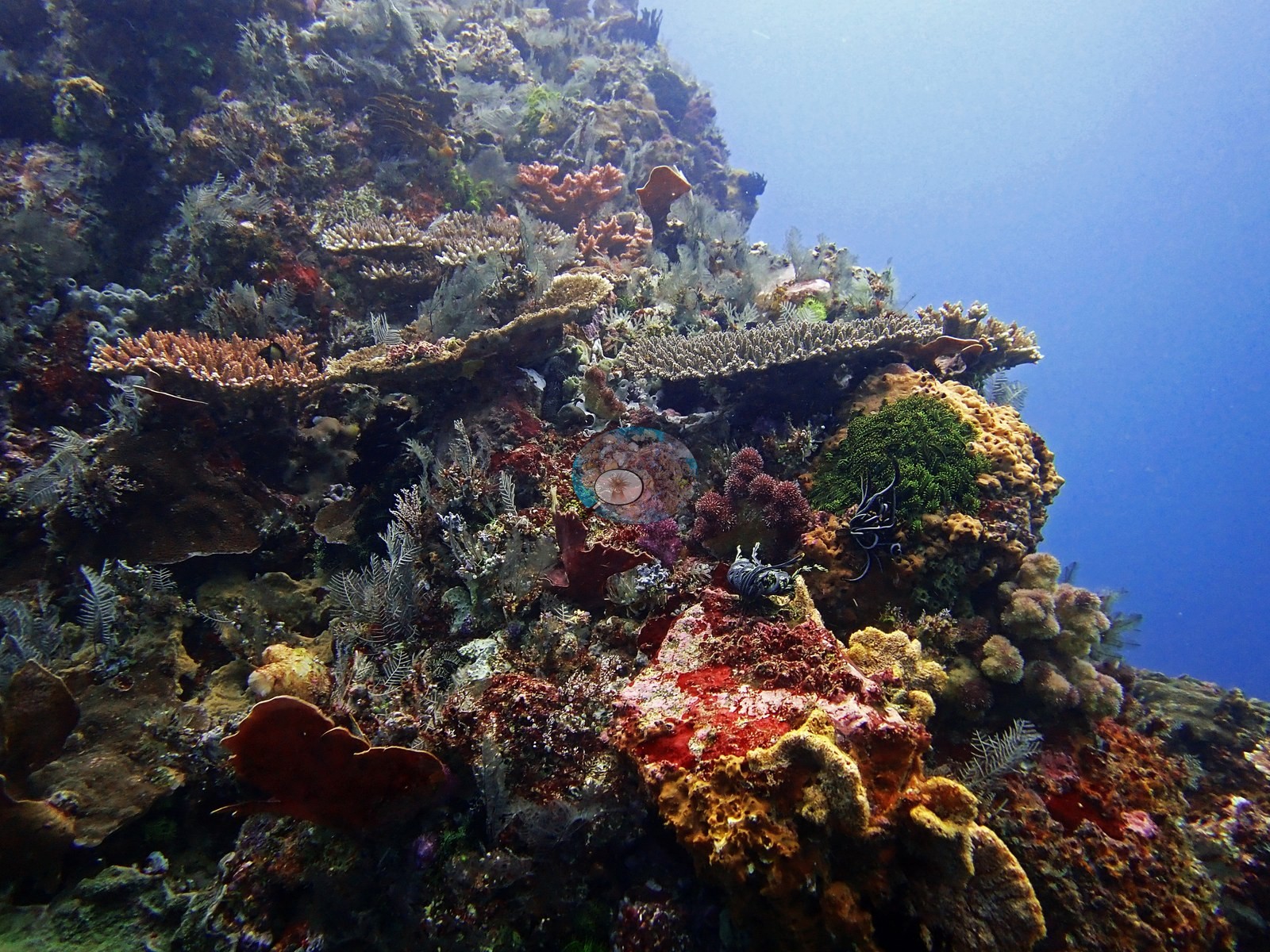
A third slope frame is high-relief and sponge-heavy: broad mustard encrusting sponge sheets, red sponge fans, wiry black-coral whips, a bright green bushy colony, salmon and gray-brown Acropora tables, and small pink corymbose colonies, with open blue water off the flank (e.g., Image 4).
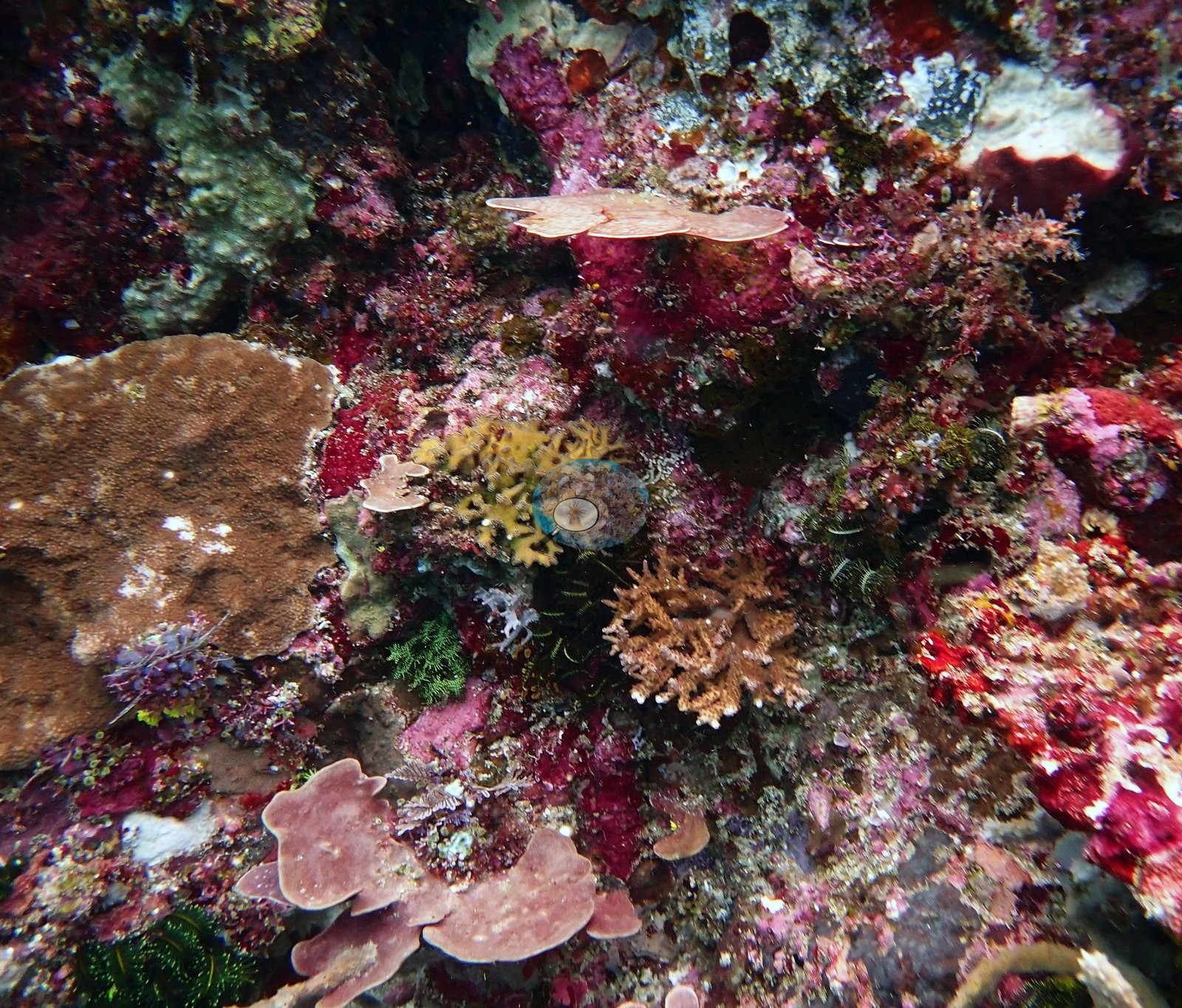
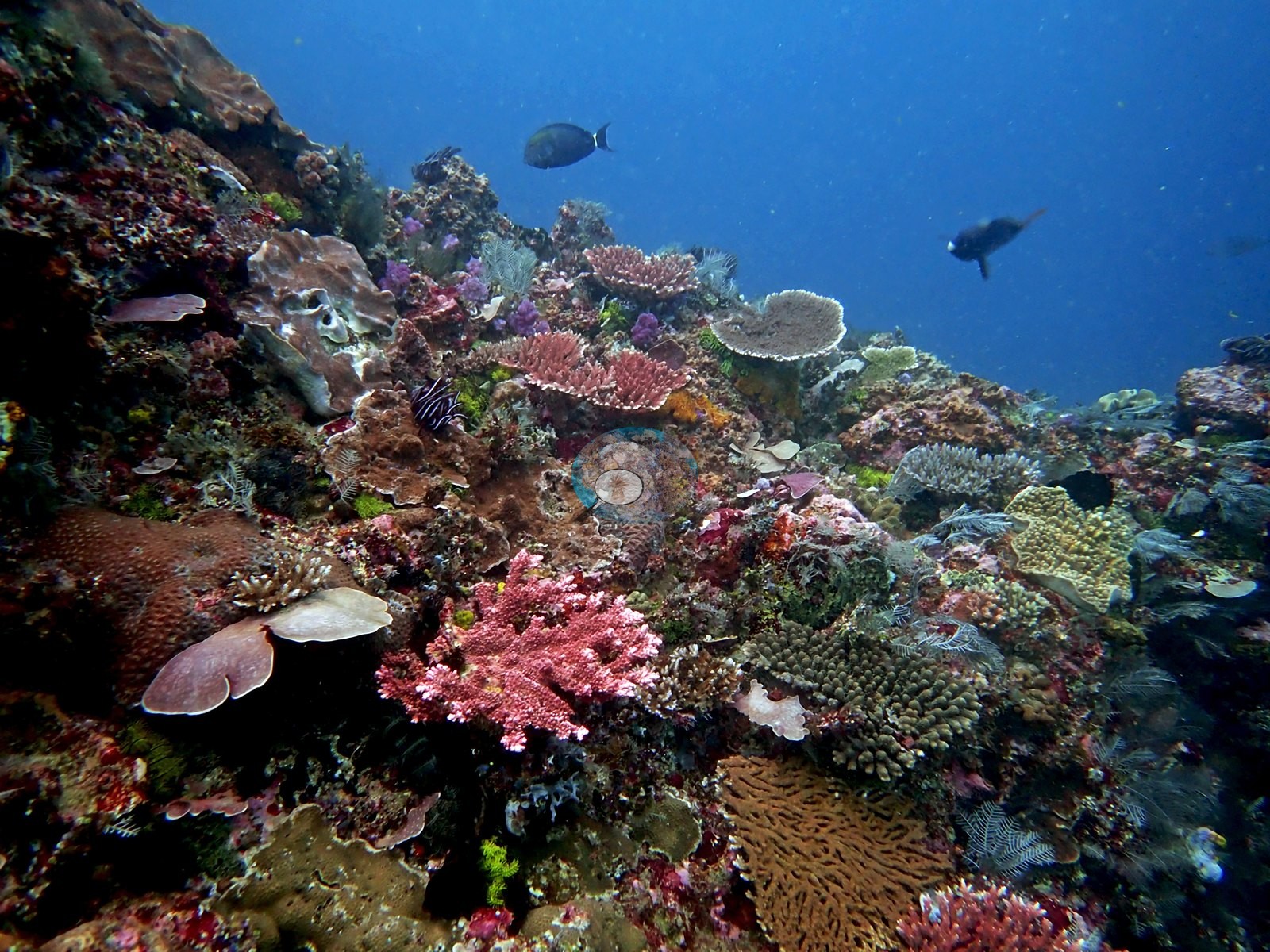
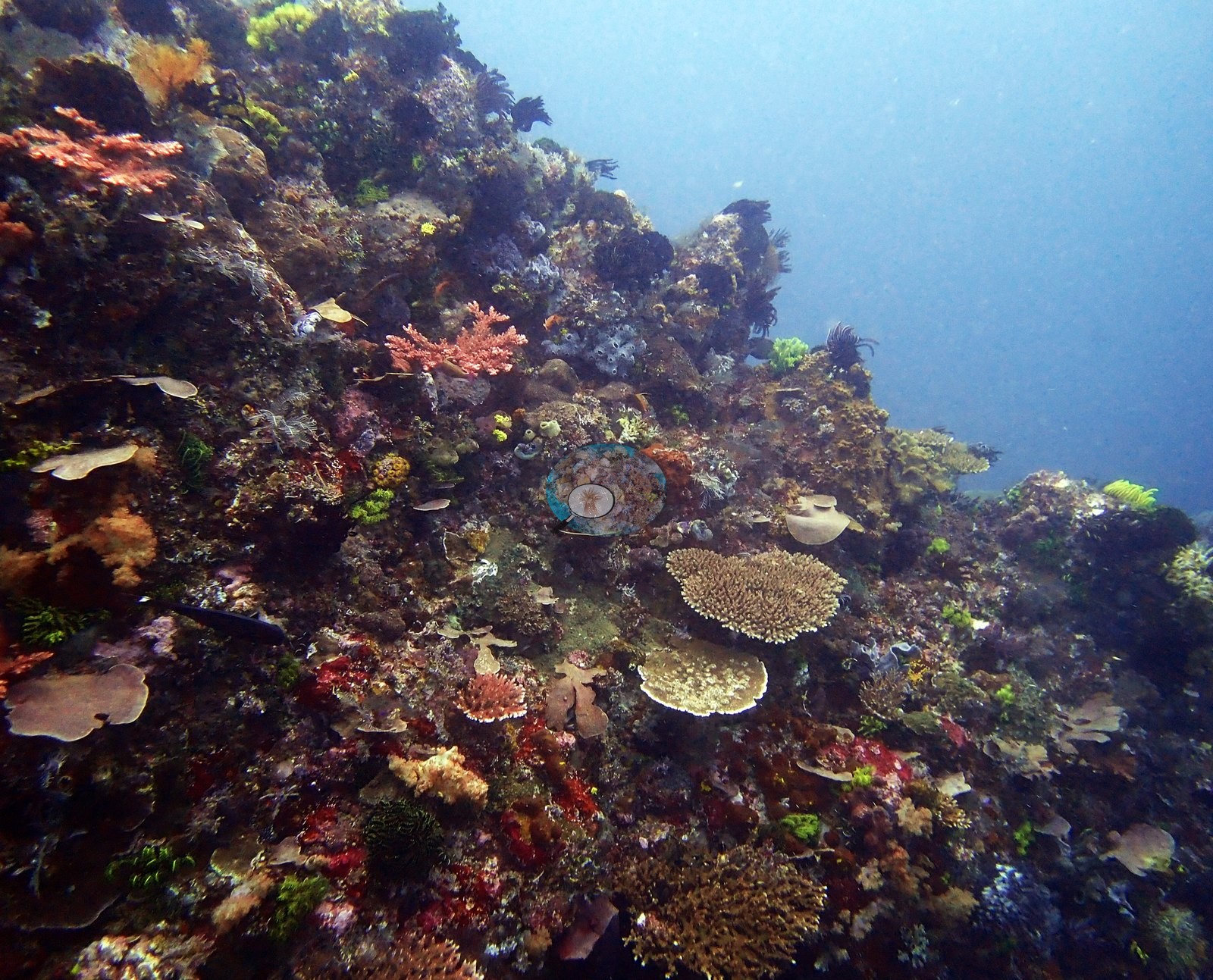
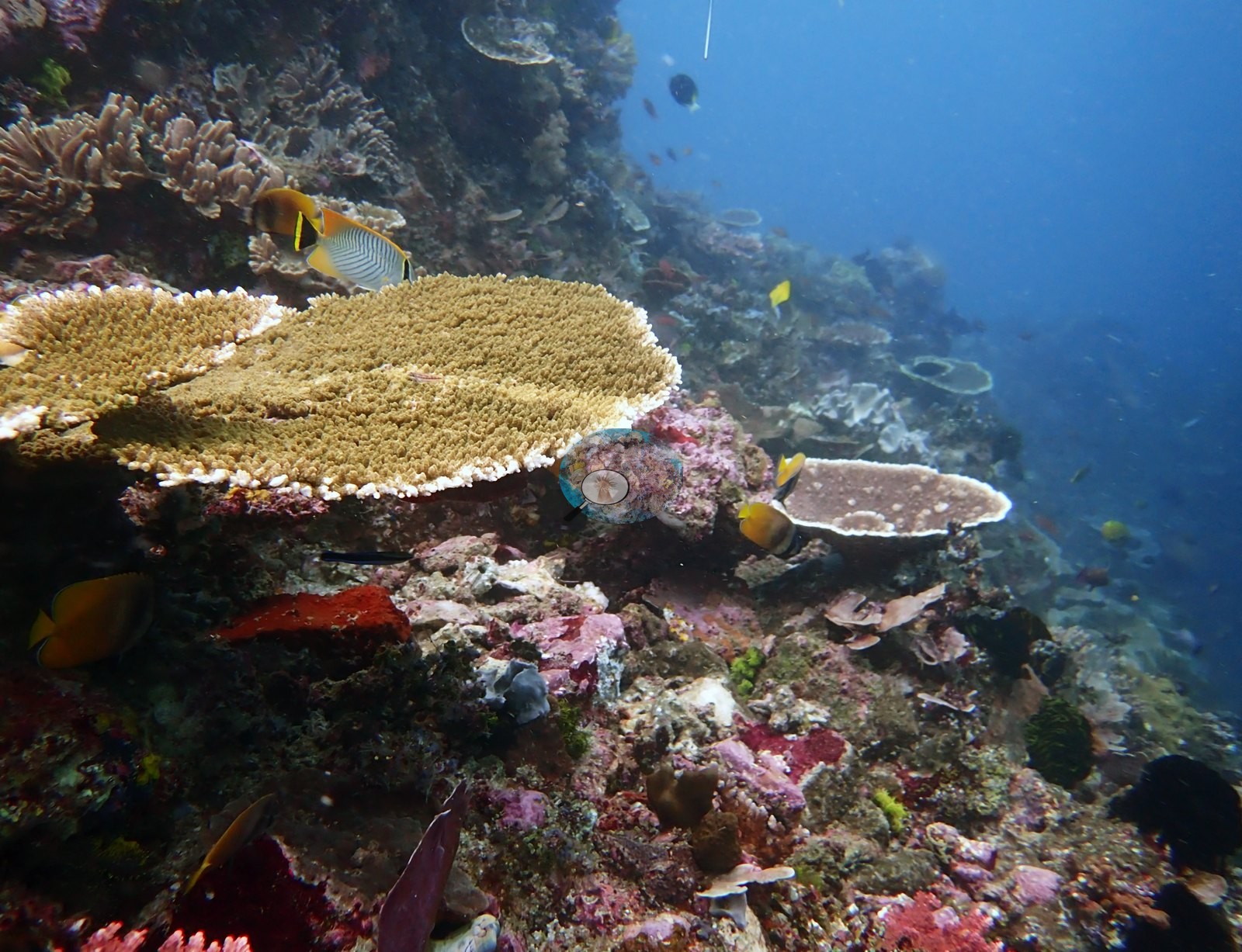
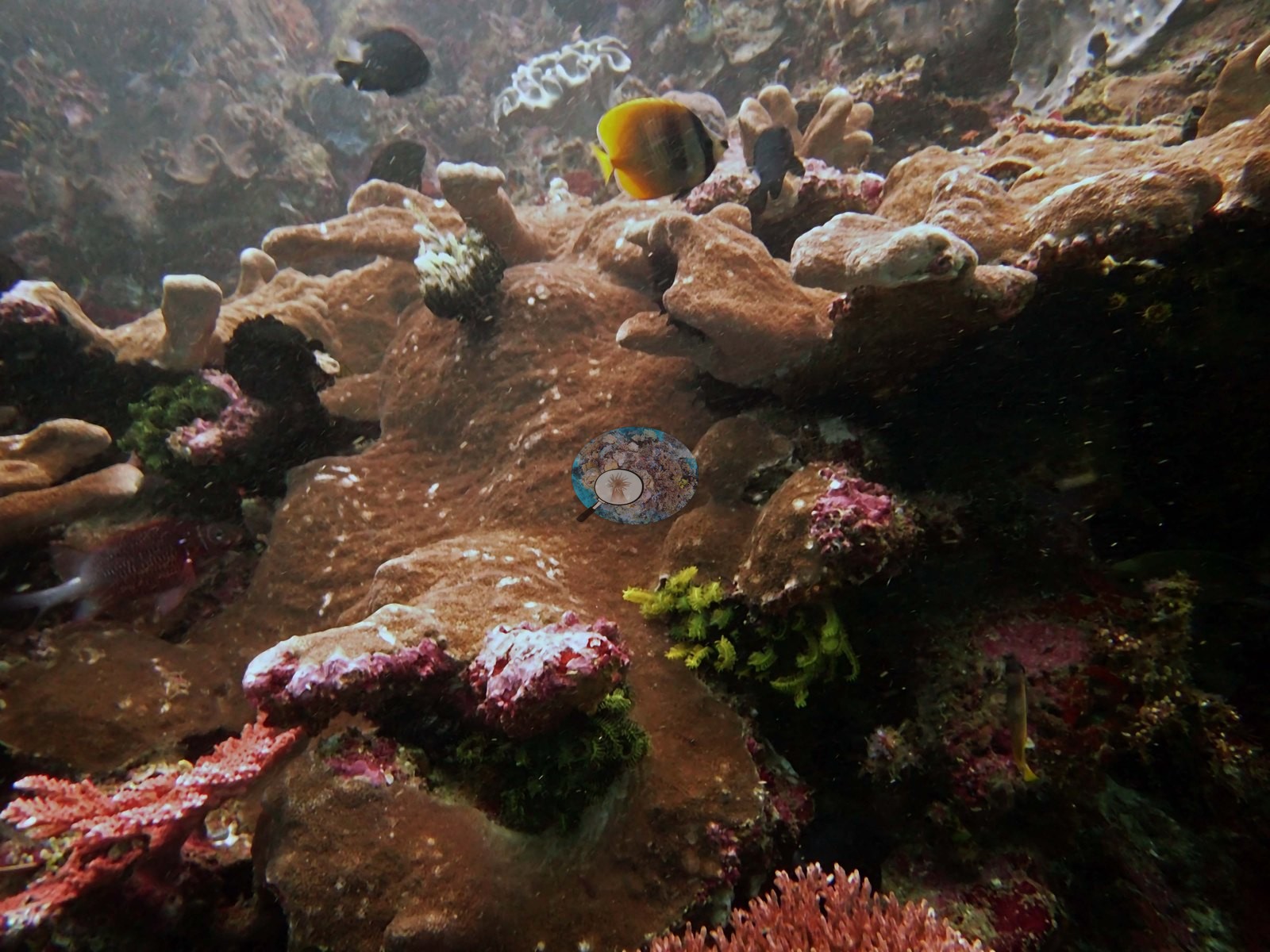
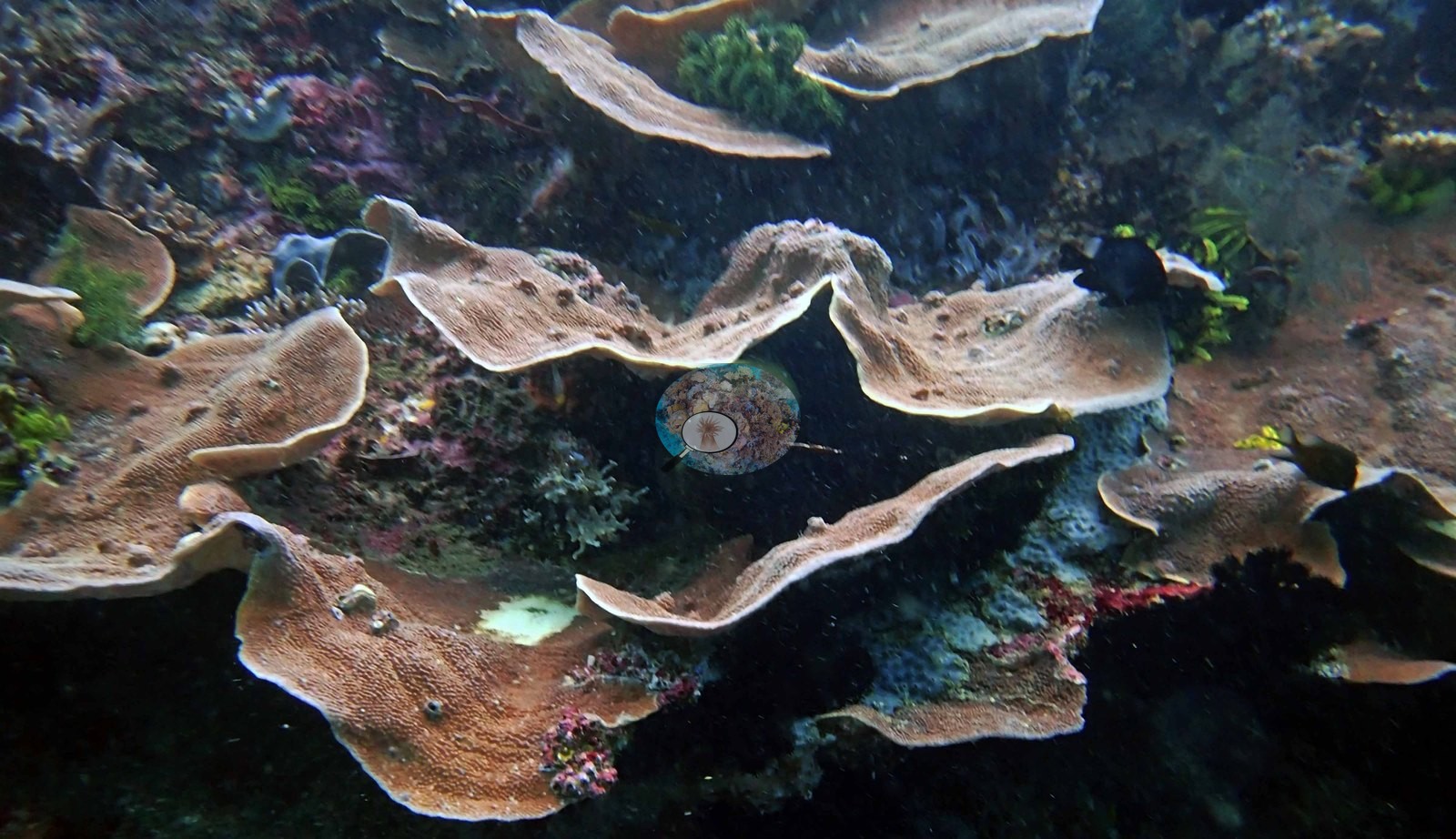
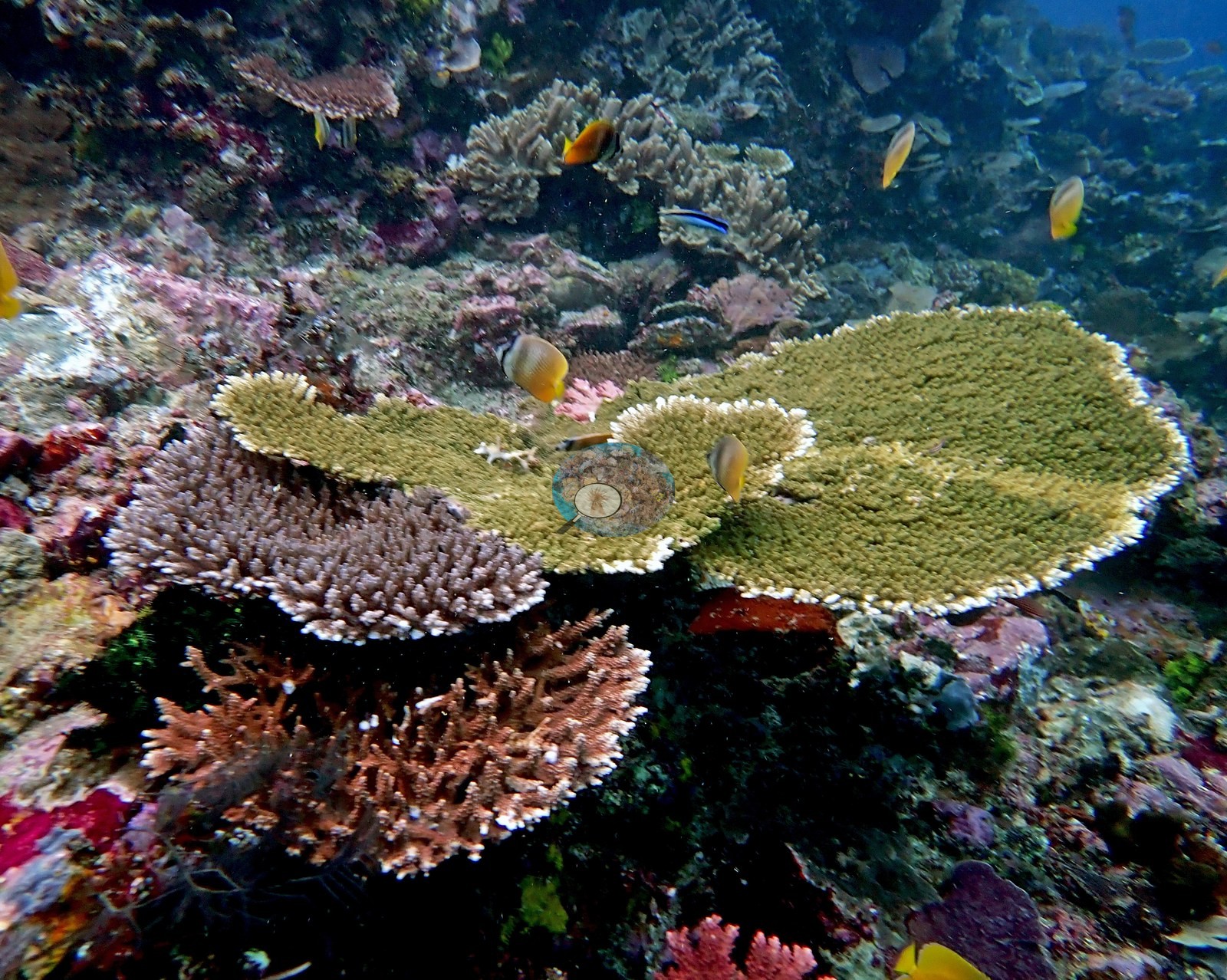
The shallow frame is the one he rated: three Acropora tables together, the largest mustard-olive with a vivid white growing rim, a lavender-gray table beside it, and a salmon branching colony below, on pink crustose coralline algae, with several butterflyfish and a cleaner wrasse (e.g., Image 5).
Coral cover
Coral cover: 8.3% — a blind Claude computer-vision point count of 34 of Anderson's edited photographs (20 points per photo; water, fish, and obstructions excluded). Other computer-vision methods are listed in the method table. These are computer-vision indices over photographs, not a diver transect, and a site where sponges and octocorals hold much of the substrate is a hard case for them. Anderson is still comparing computer-vision models, and these figures will be updated as the methods improve.
Stressors
No bleaching, disease, or predation is resolvable, and nothing man-made appears.
Fish and other fauna
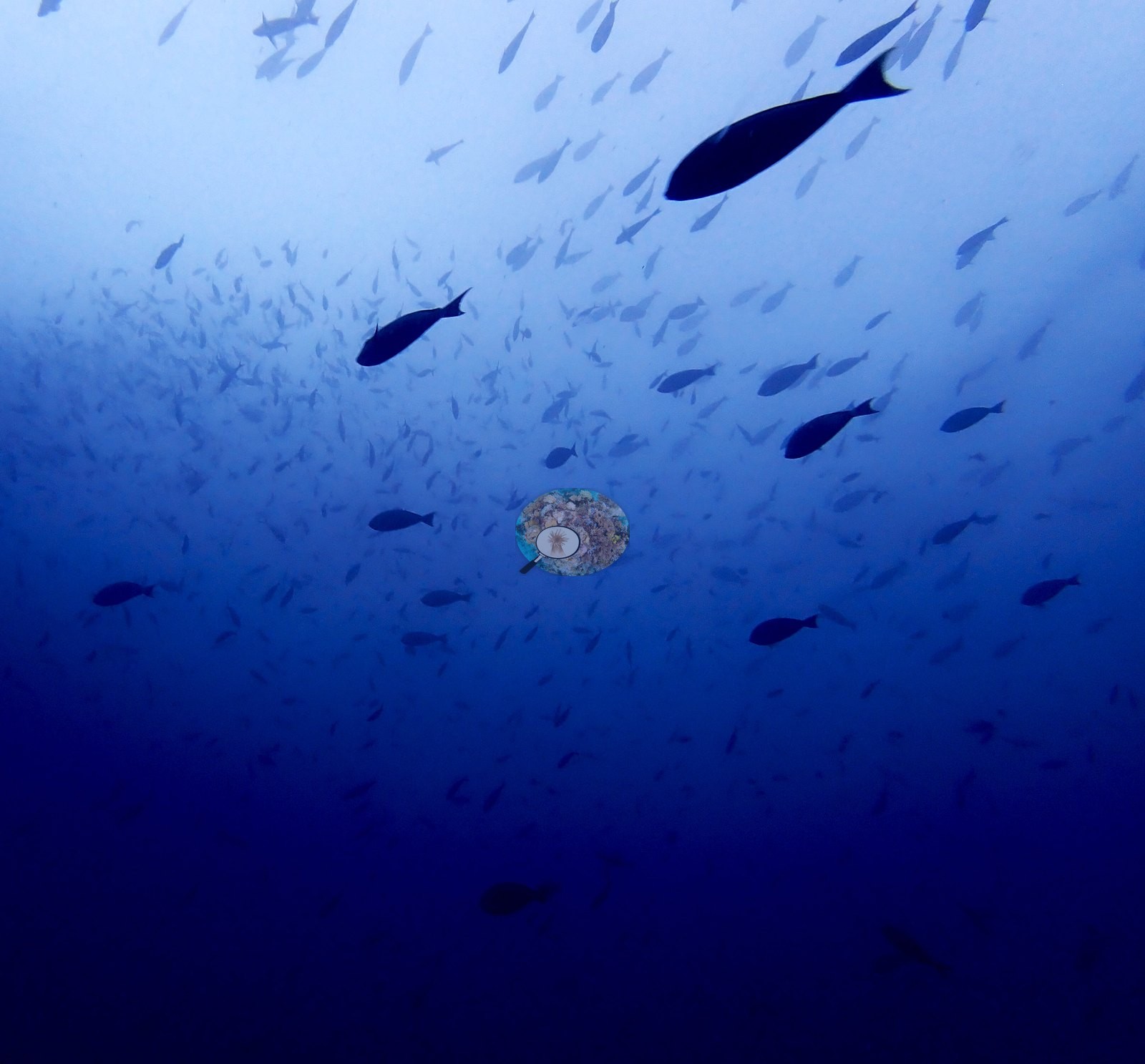
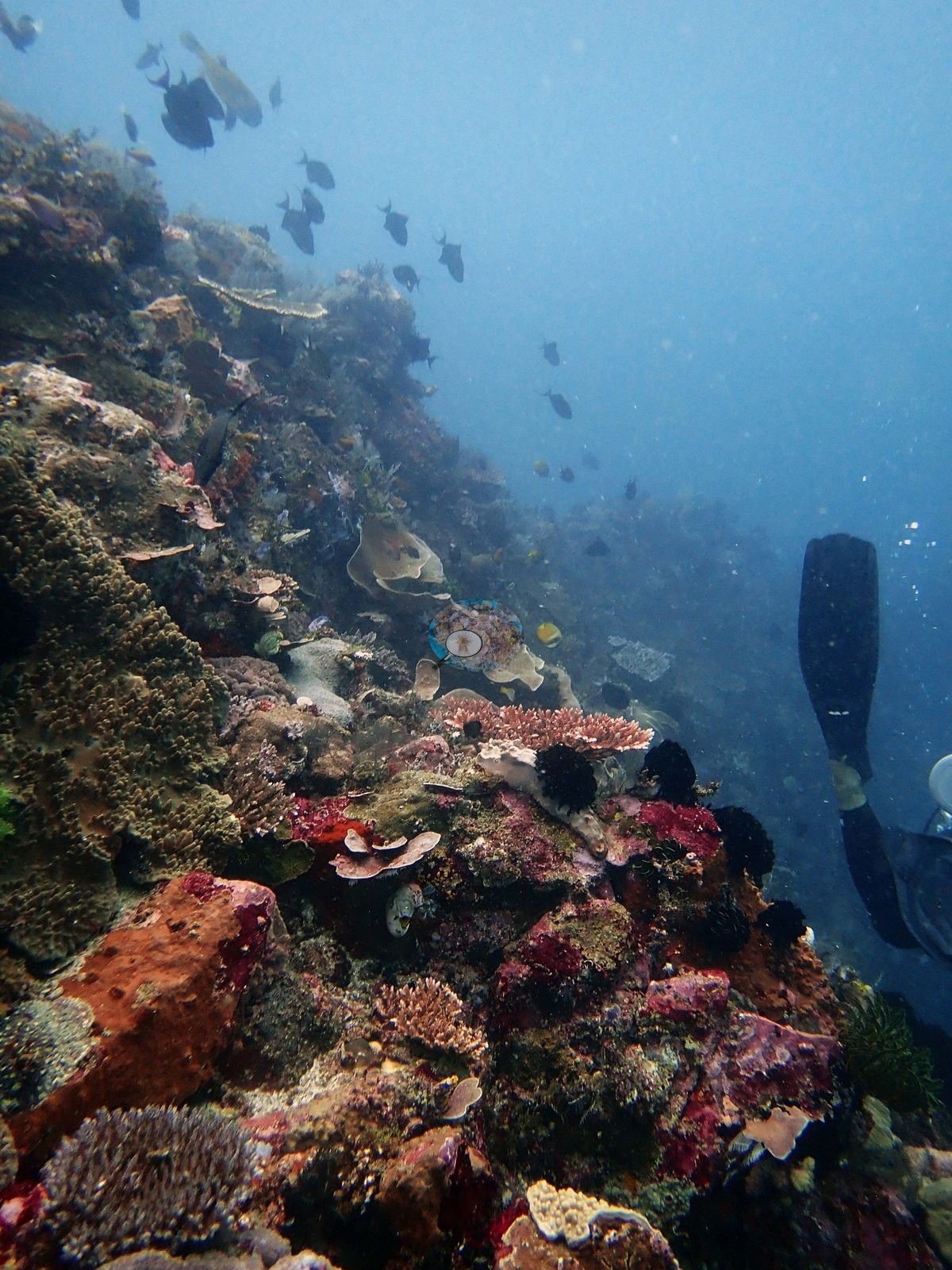
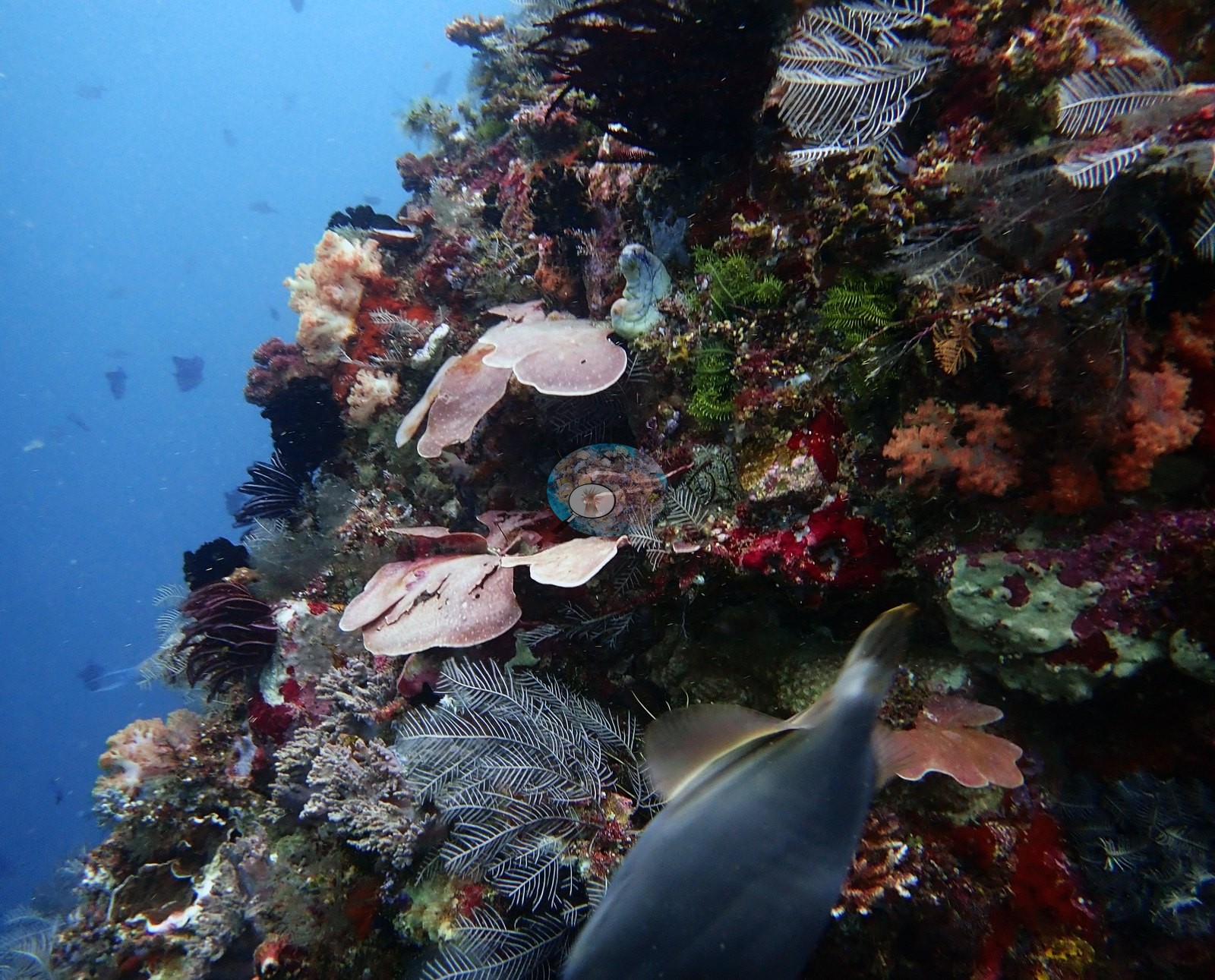
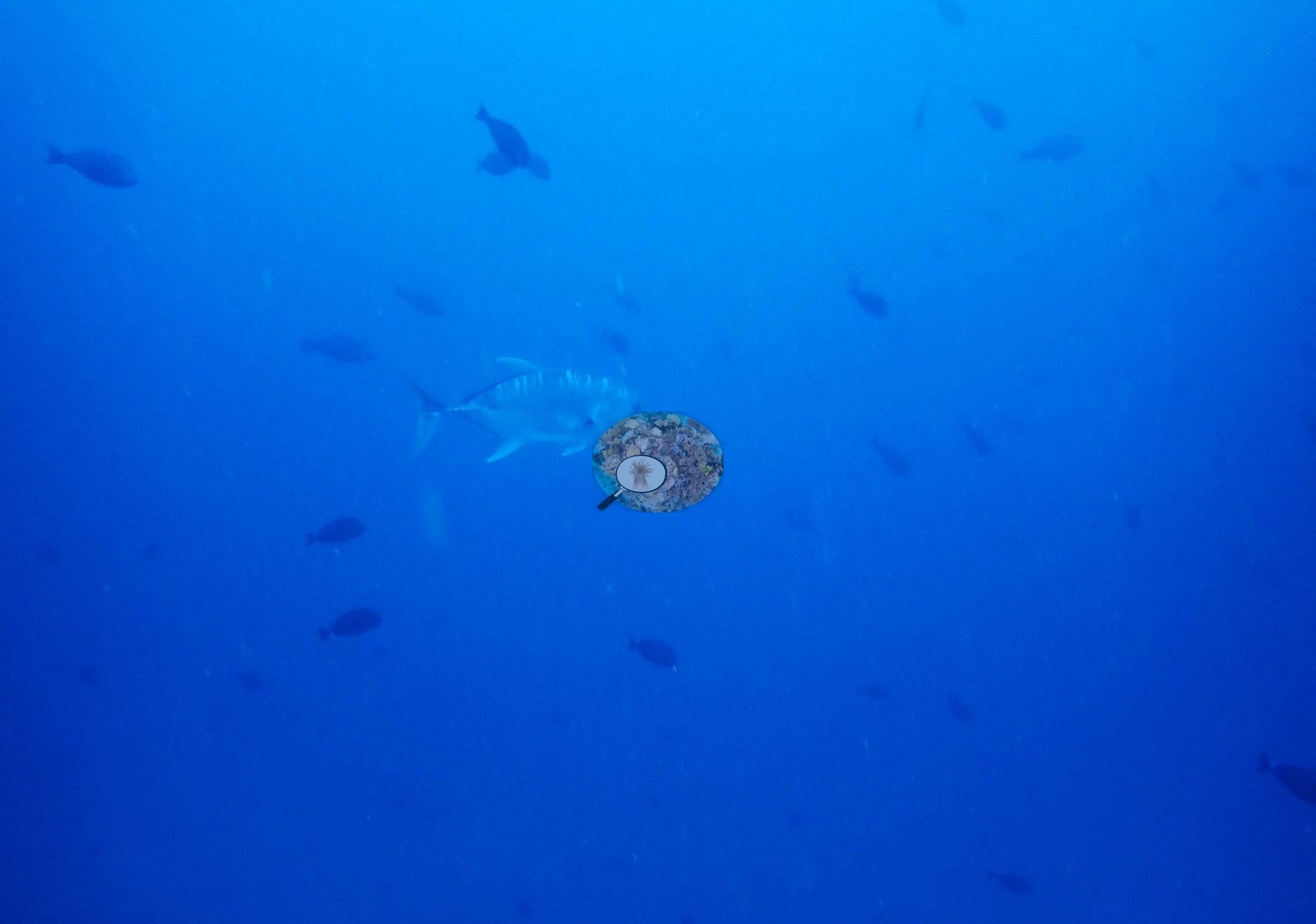
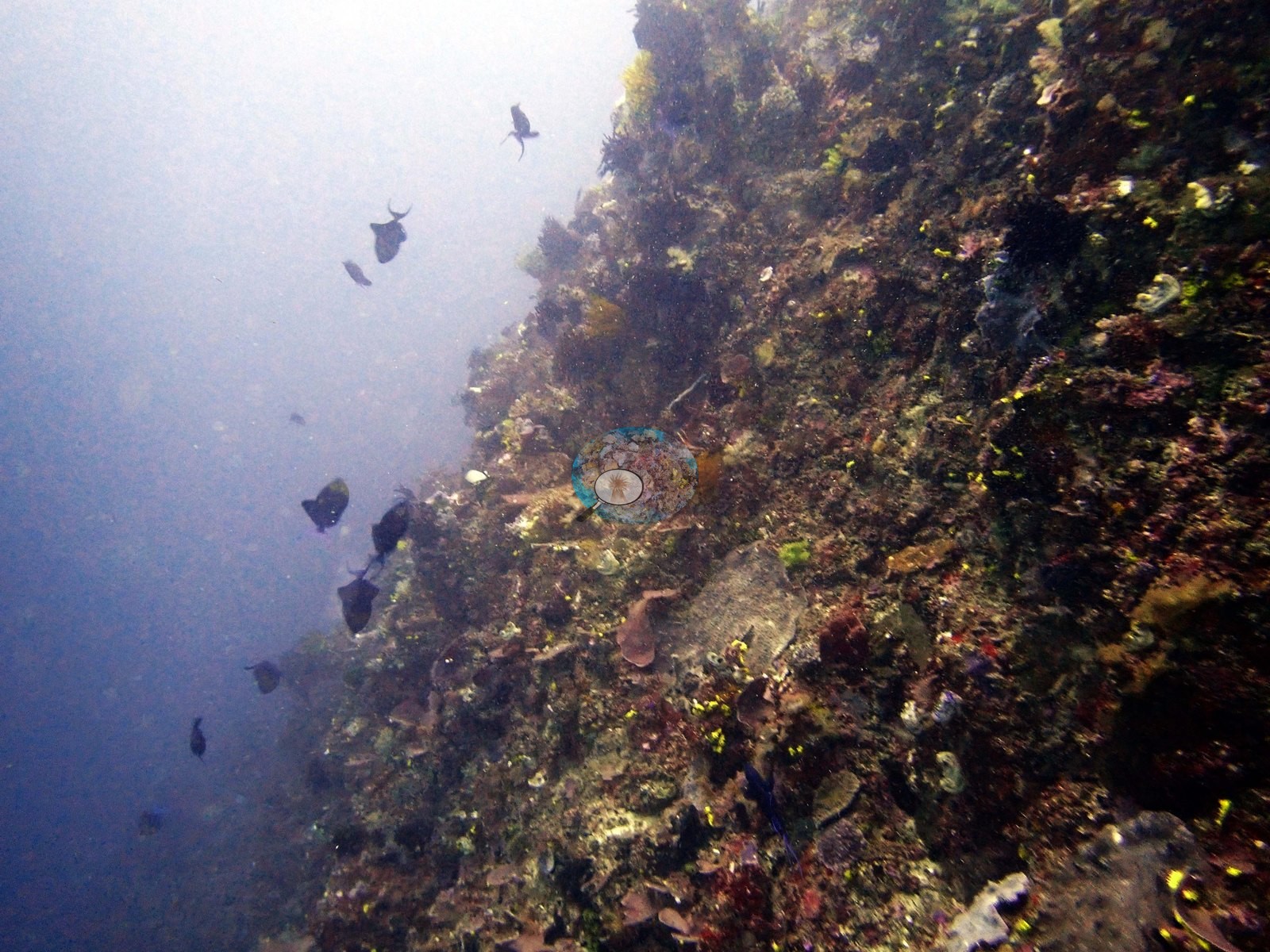
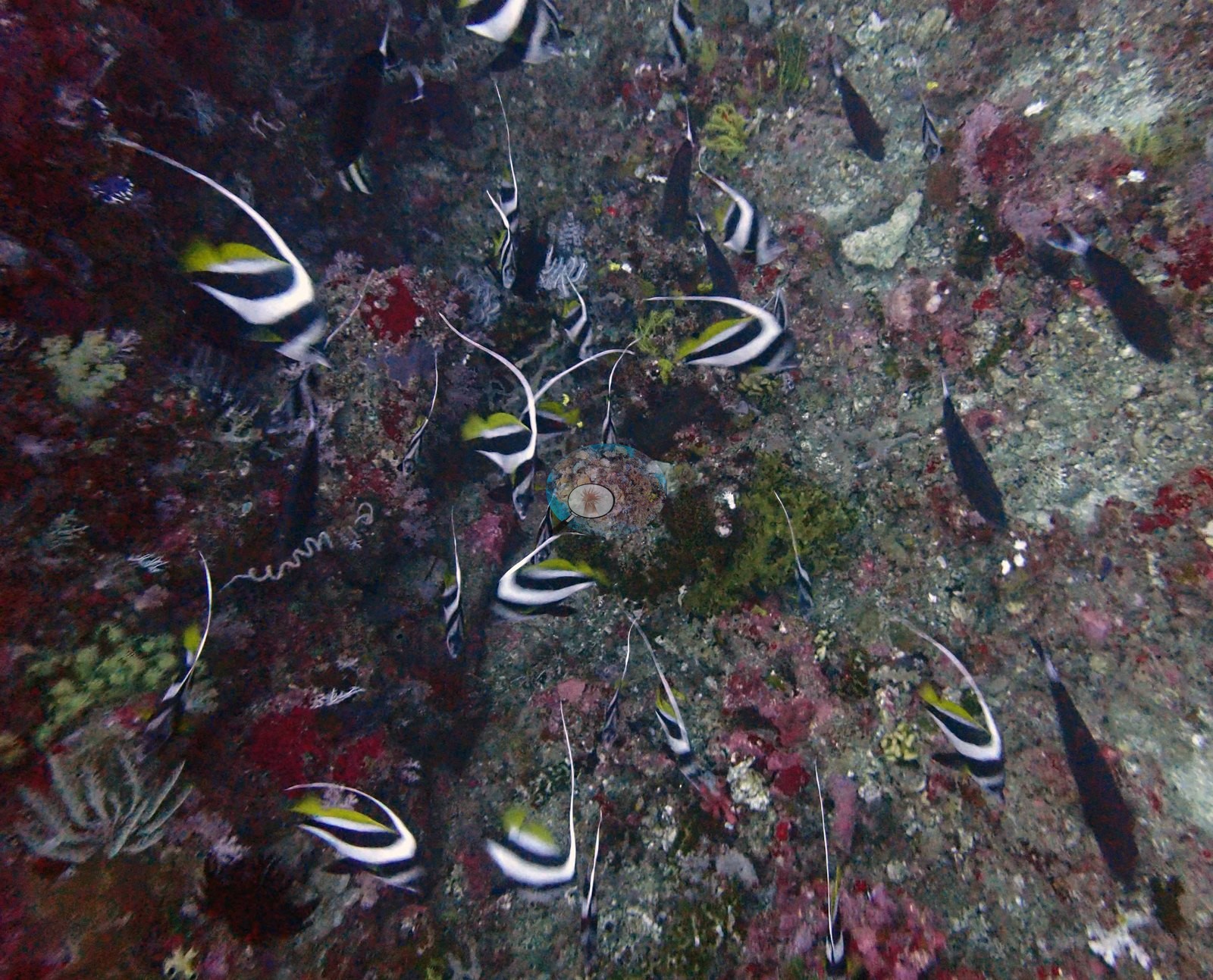
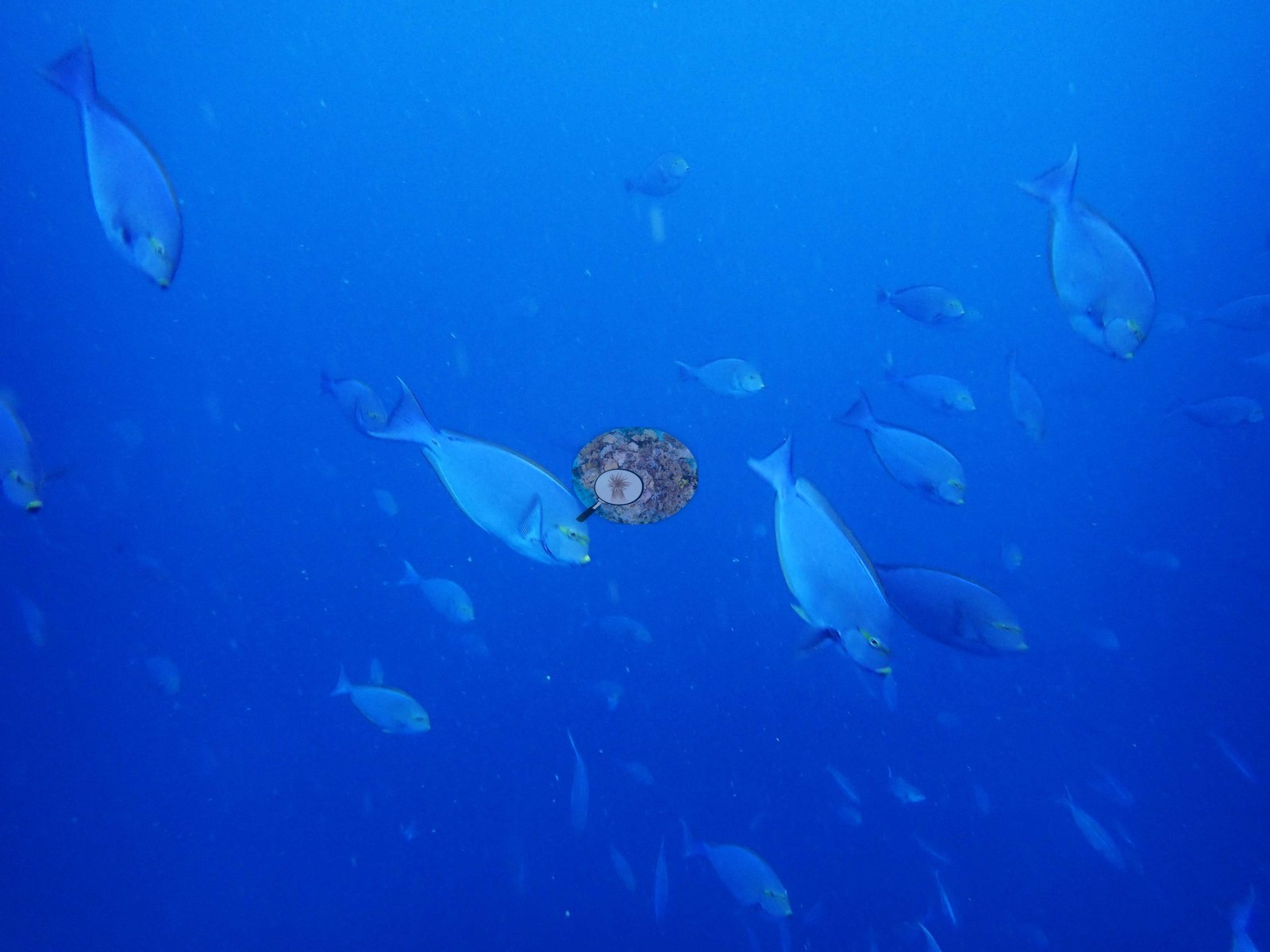
The fifth frame is open blue water with a loose school of unicornfish and no substrate (e.g., Image 1).
Comparisons with other data
Also on record for this site: Saw first giant trevally of trip (much more common in Raja Ampat). Very dark at 24 m on account of doing dive early in morning (7:30). Stylophora pistillata, pygmy seahorse, Pocillopora verrucosa, small poritids, fluorescent orange soft coral, giant Isopora colonies in shallows. Large morays (green), high Acropora cover and diversity in shallows (5-8 m). though difficult to photograph on account of currents.
Dive record
One dive, 23 January 2019, 07:30, 50 minutes, max 29.6 m, average 15.2 m, 25.6 degrees C, 10 m visibility - his least favorite dive of the trip because of an incessant washing-machine current.
CV model comparison
More info
DINOv3 and CoralSCOP were run on the same photos and are listed for comparison. Coralscapes v2 and v1 were also run but are not shown: Anderson does not consider Coralscapes reliable for these photos. No diver transect exists for this trip, so agreement between the rows is not accuracy, and as of September 2026 no computer-vision method estimates coral cover accurately on new images; treat every row as indicative.| Method | Hard-coral cover (%) |
|---|---|
| In-house DINOv3 | 19.7 |
| CoralSCOP edited | 28.5 |
| Claude (edited photos) | 8.3 |
Data & links
All images from Coral Reef Diagnostics. Data are from Coral Reef Diagnostics.
© Coral Reef Diagnostics.