
Indonesia - Komodo NP: The Cauldron / Shotgun
Part of the regional summary: Indonesia - Komodo
2019-01-21
More info
East Nusa Tenggara (NOAA CRW virtual station) · Lesser Sunda ecoregion mean=6.9°C-heating weeksAnderson logged this Komodo channel as his best dive ever in 2009 and returned in 2019 to strong current and thermoclines, passing from dense Acropora thickets and two-meter tables to scoured, soft-coral ground and a sand apron. A longfin batfish, a gliding ray, and a camouflaged ornate ghost pipefish were photographed along the way.
Anderson menyelami lokasi ini pada Agustus 2009 — saat itu dicatat sebagai penyelaman terbaiknya — dan kembali pada 21 Januari 2019 (15:04, 53 menit, kedalaman maksimum 23.5 m, rata-rata 13.1 m, 25.6 derajat C, jarak pandang sekitar 10 m, arus kuat, dan termoklin).
Terjemahan ringkasan ini oleh AI; versi bahasa Inggris yang berlaku. Translated from the site’s shorter map summary.
One independent survey station shown with the program’s logo — click one to see how far it is from this site.
Four other CRD dive sites within 5 km shown in orange — click a marker to open its page.
5 of these 50 photographs are shown beside the text that discusses them under "Site description" below.
Site description
General benthic features
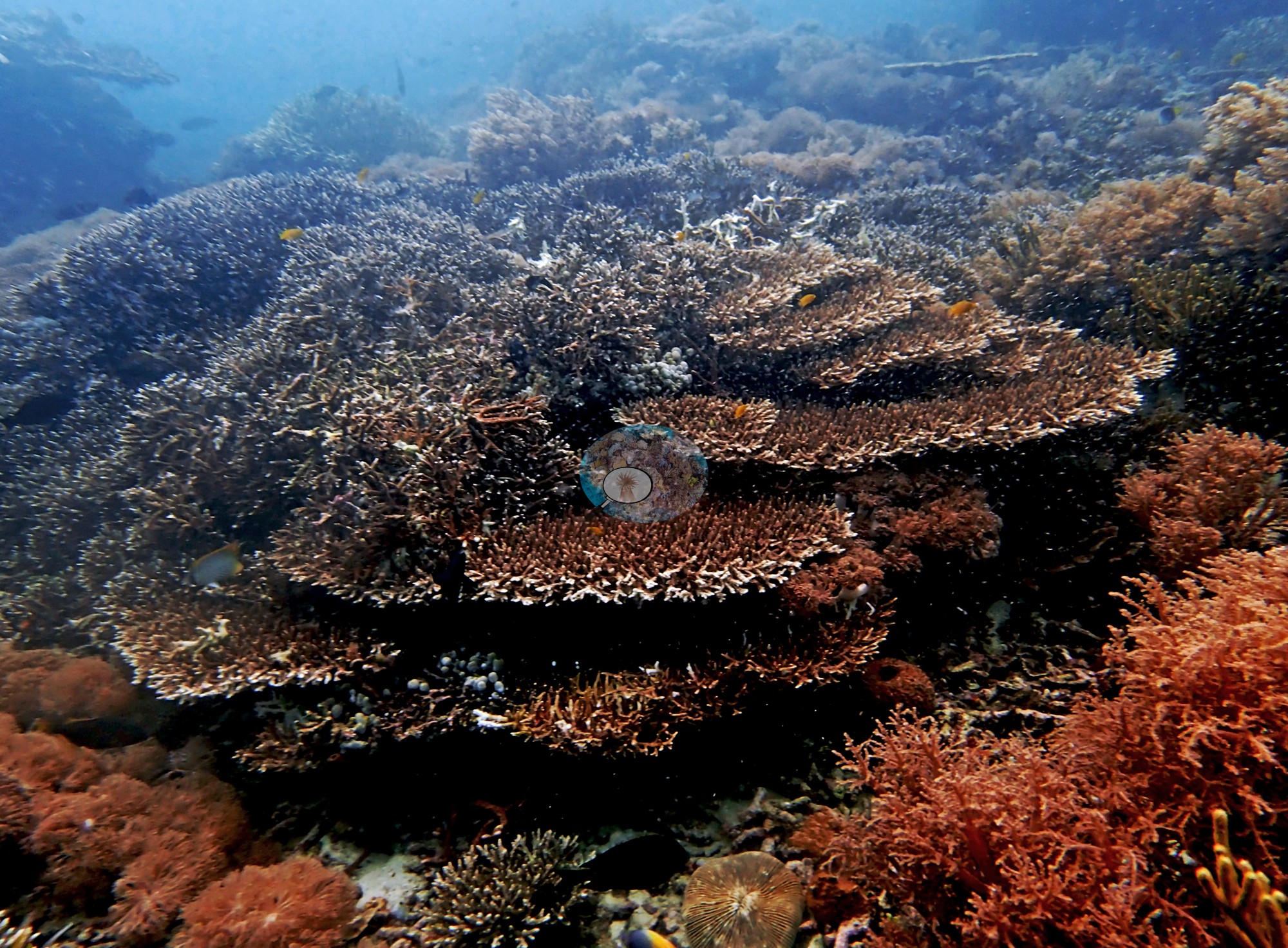
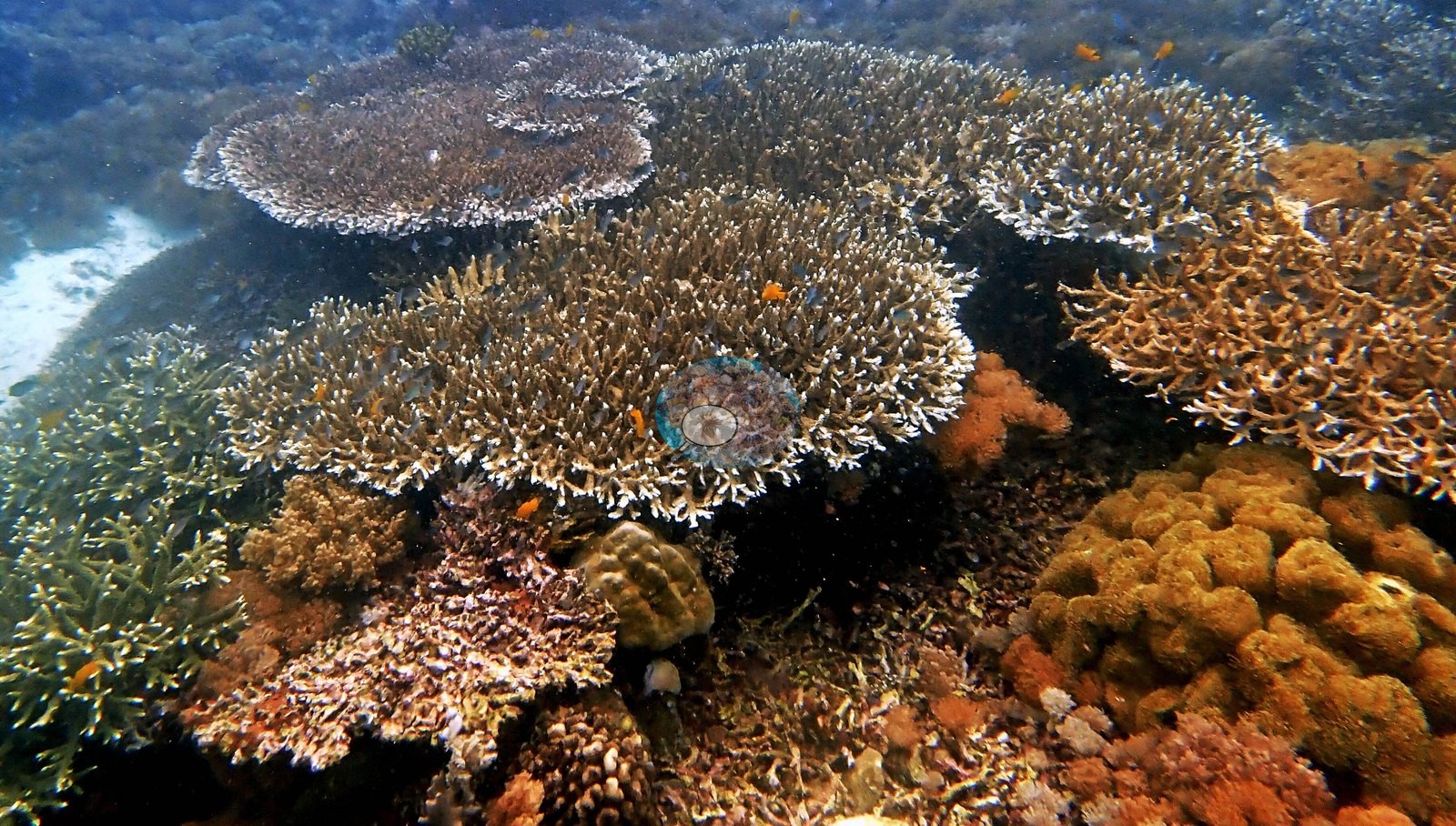
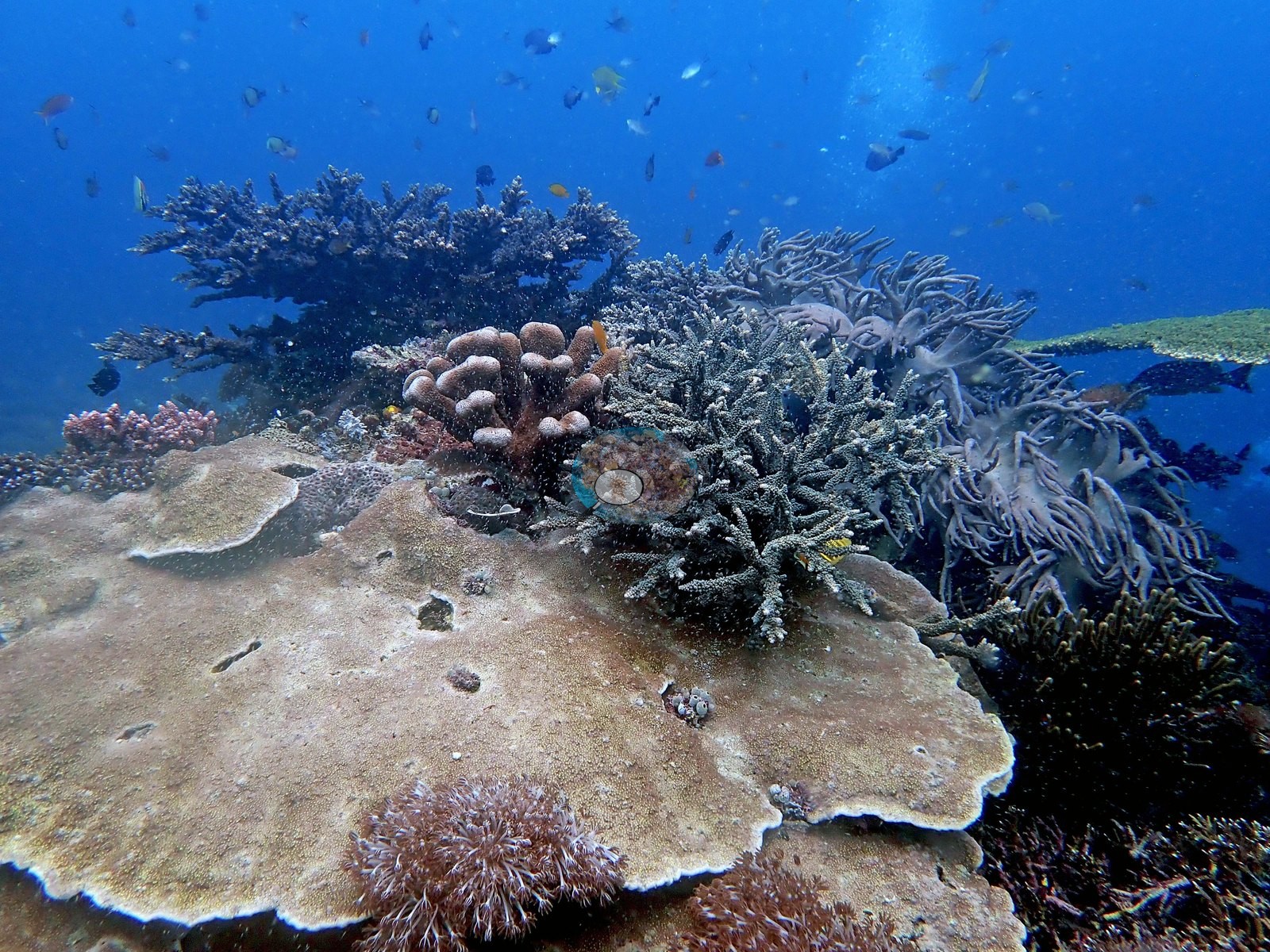
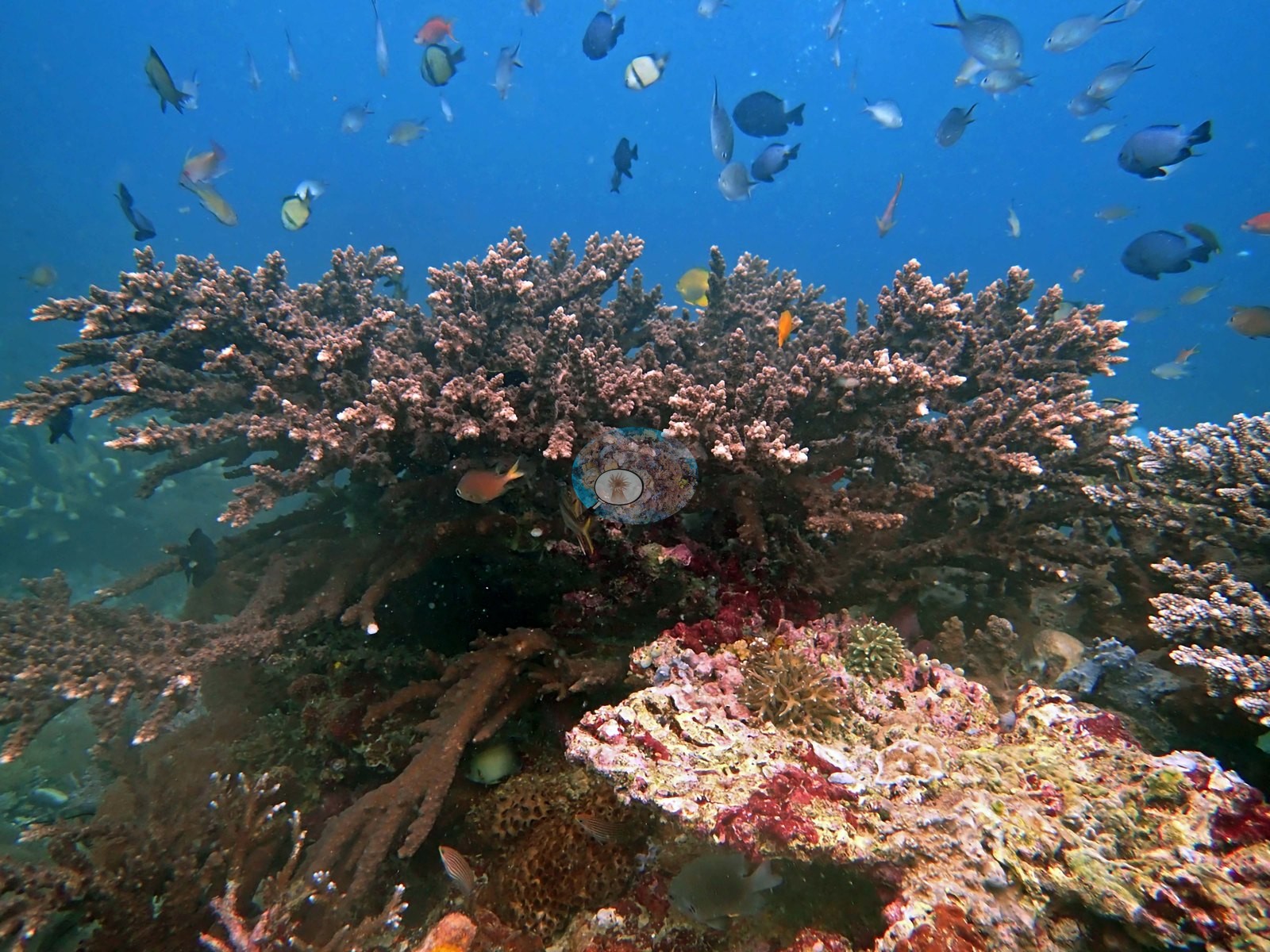
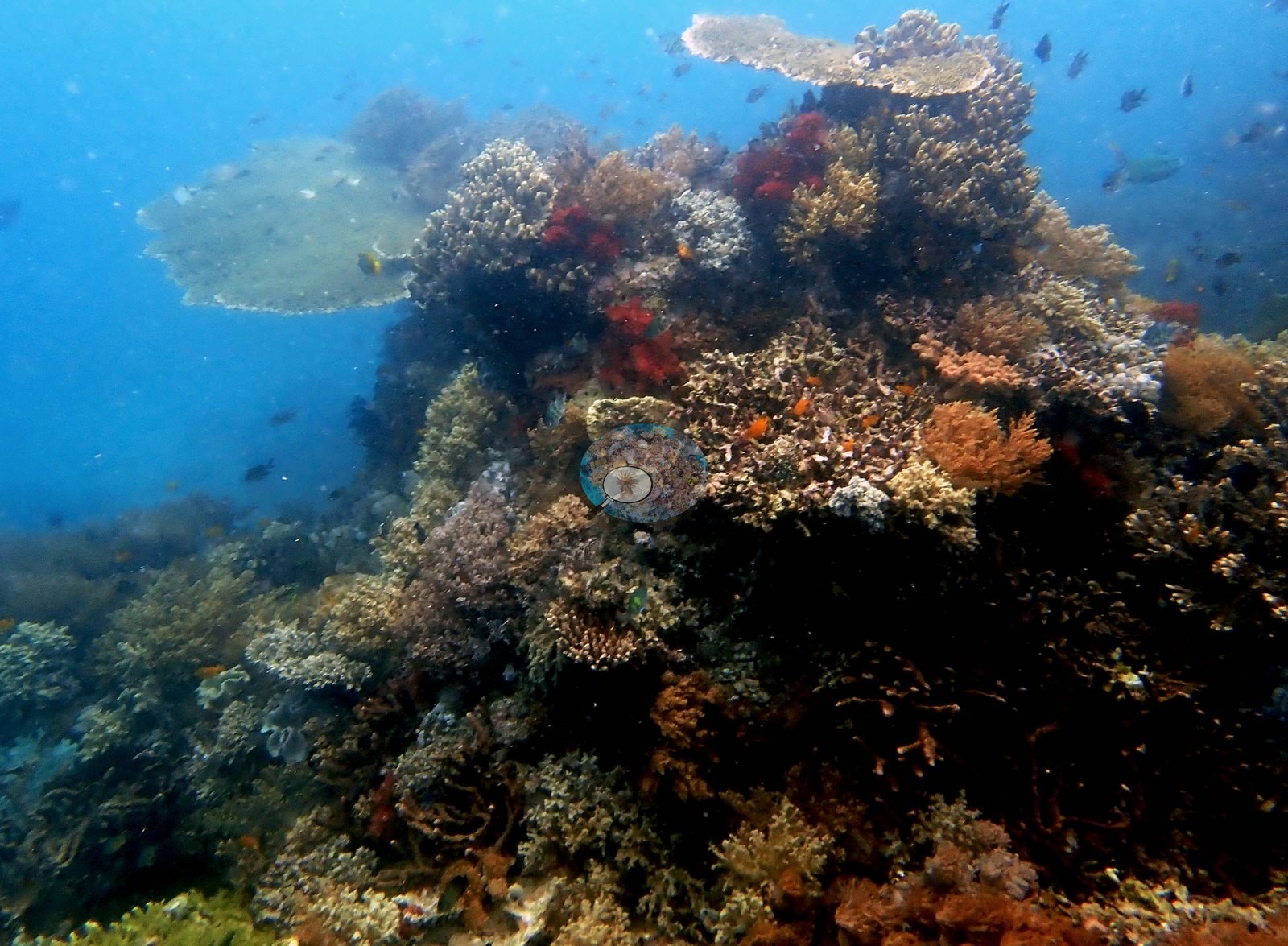
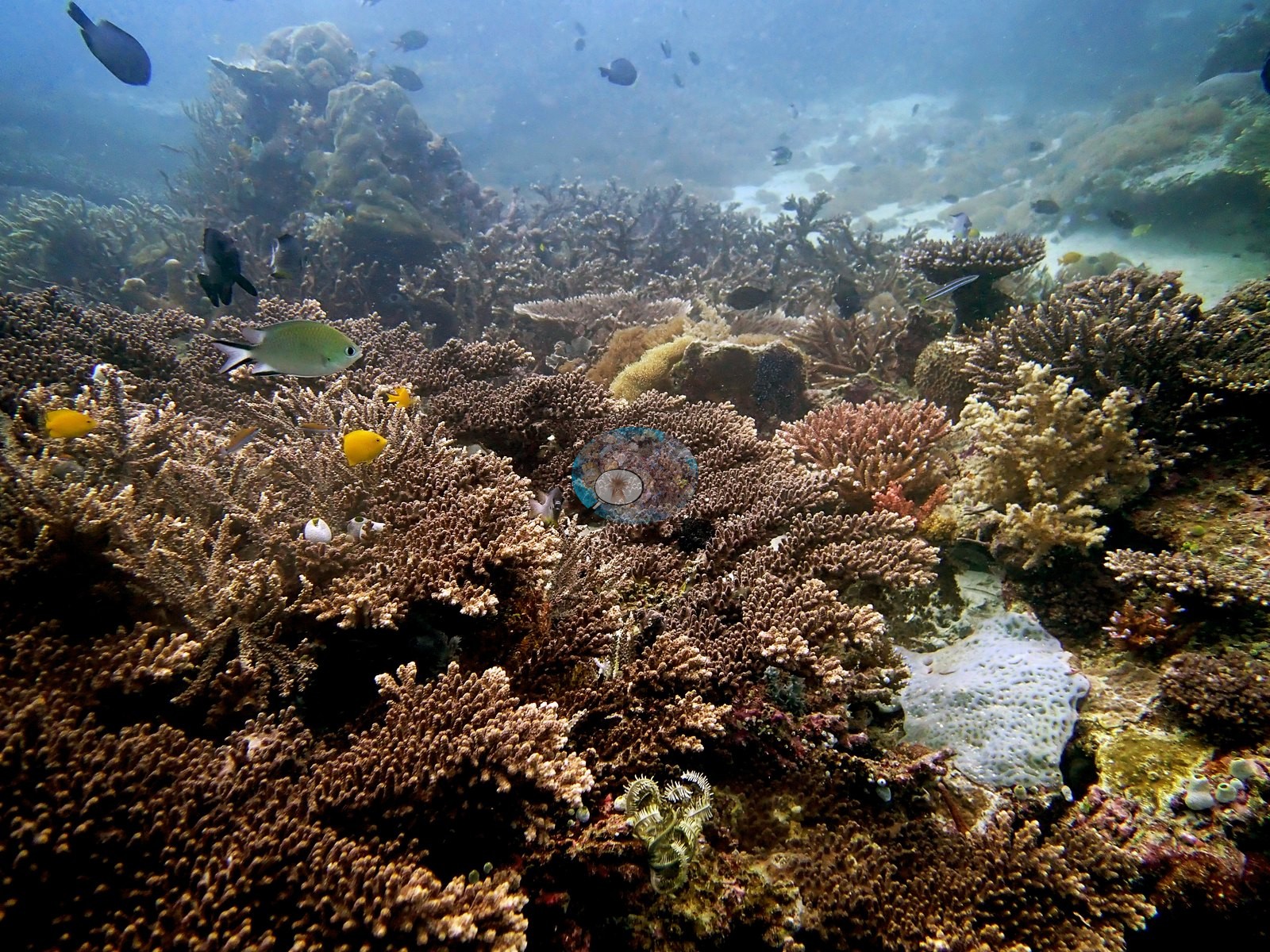
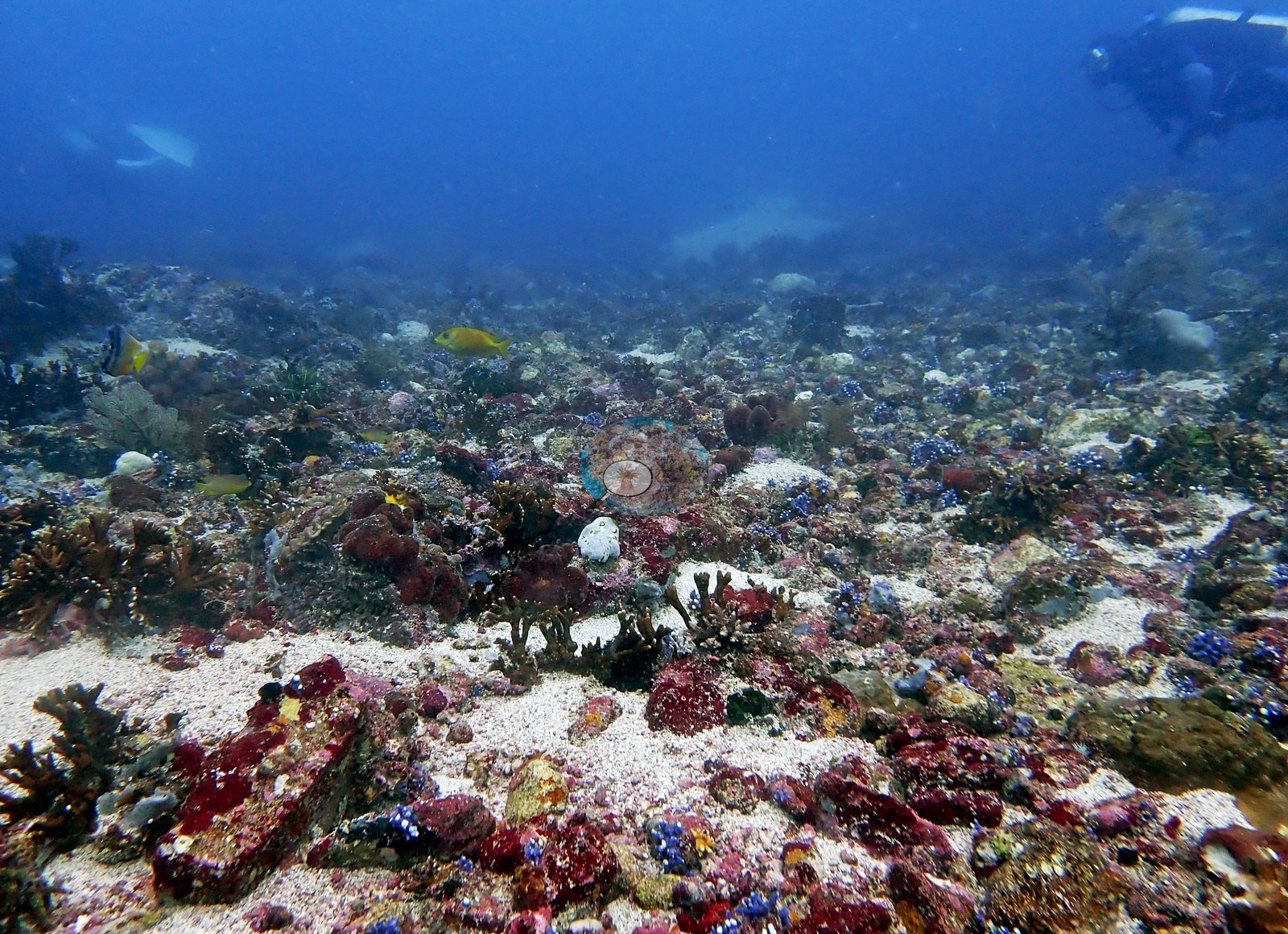
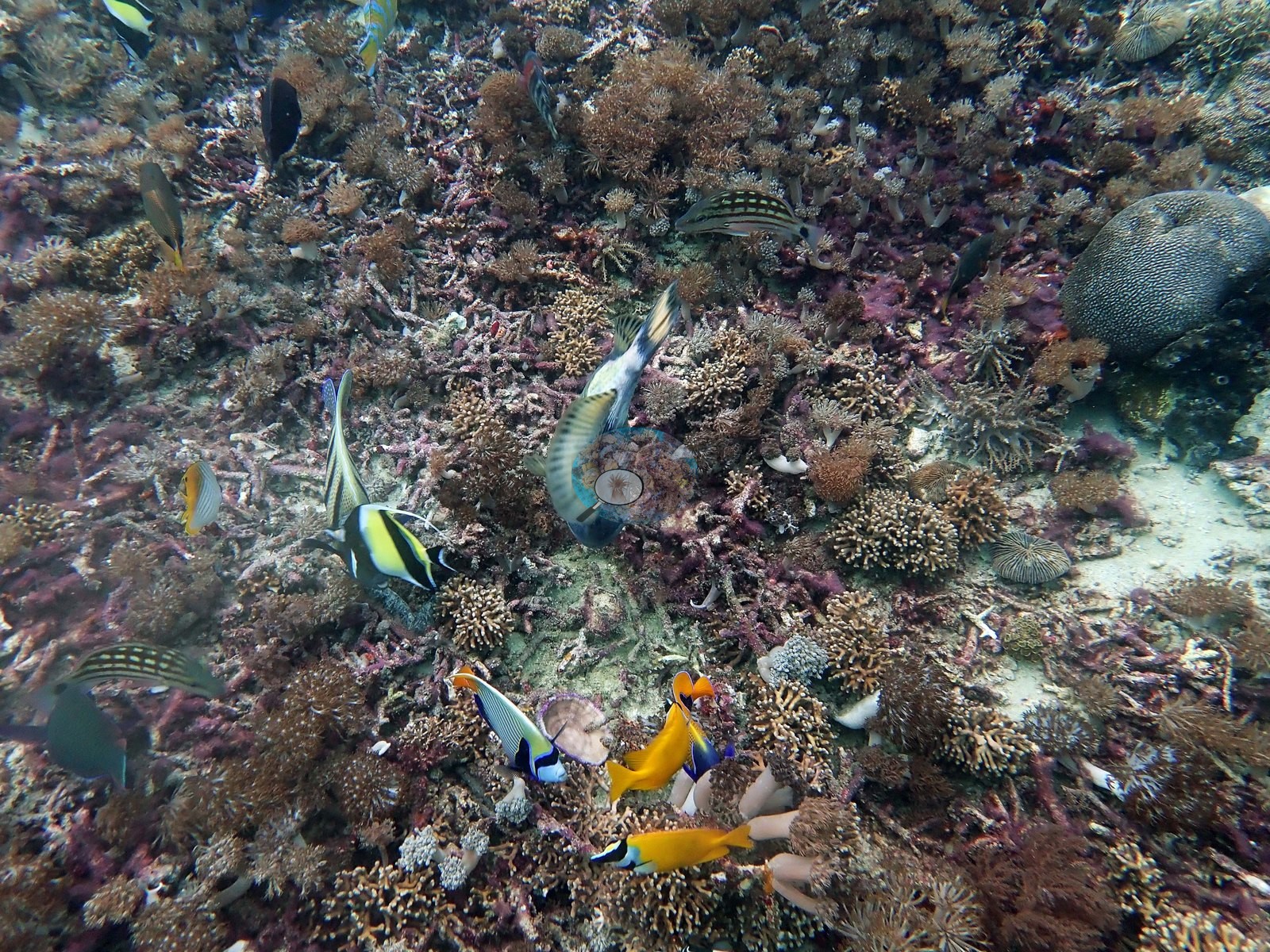
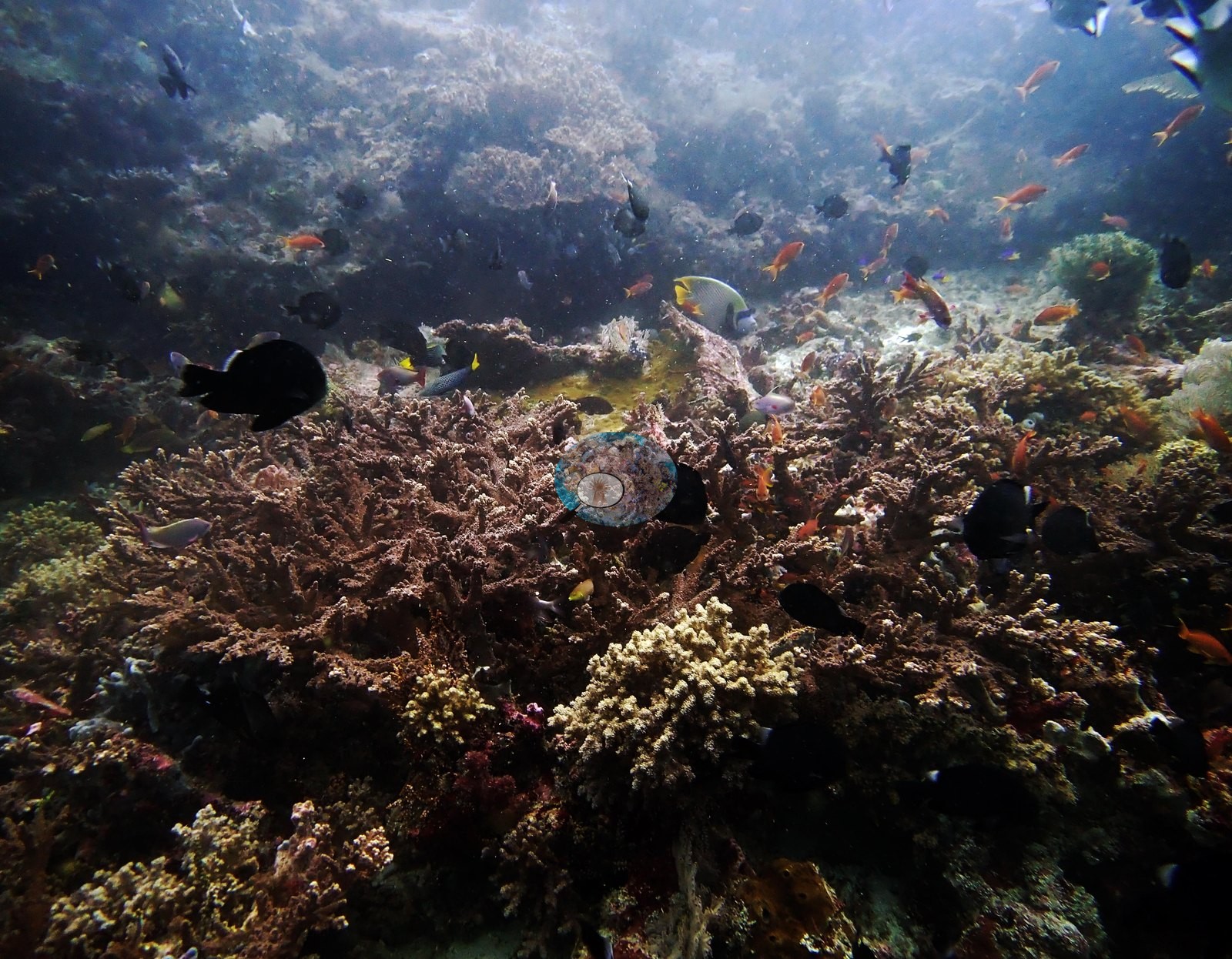
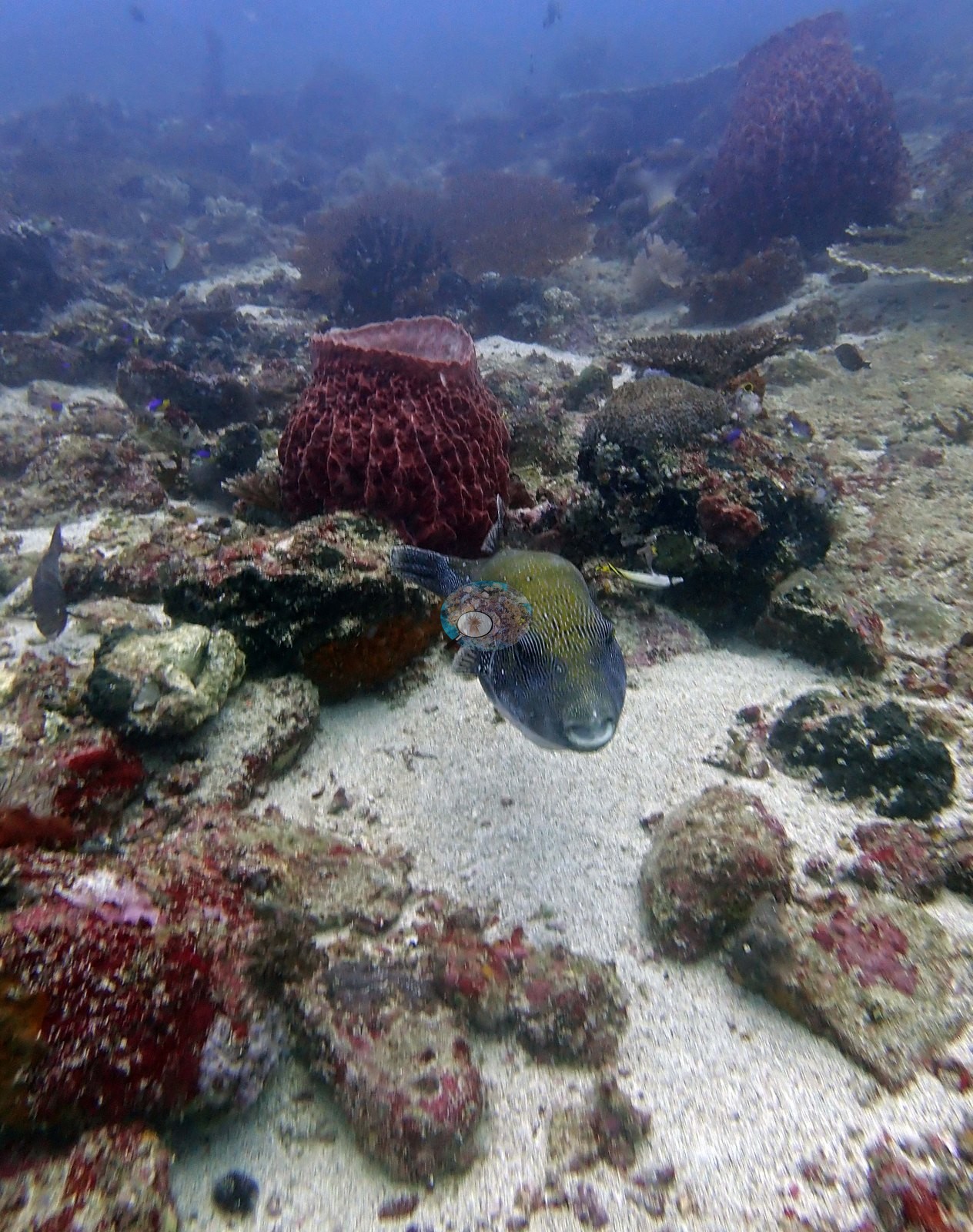
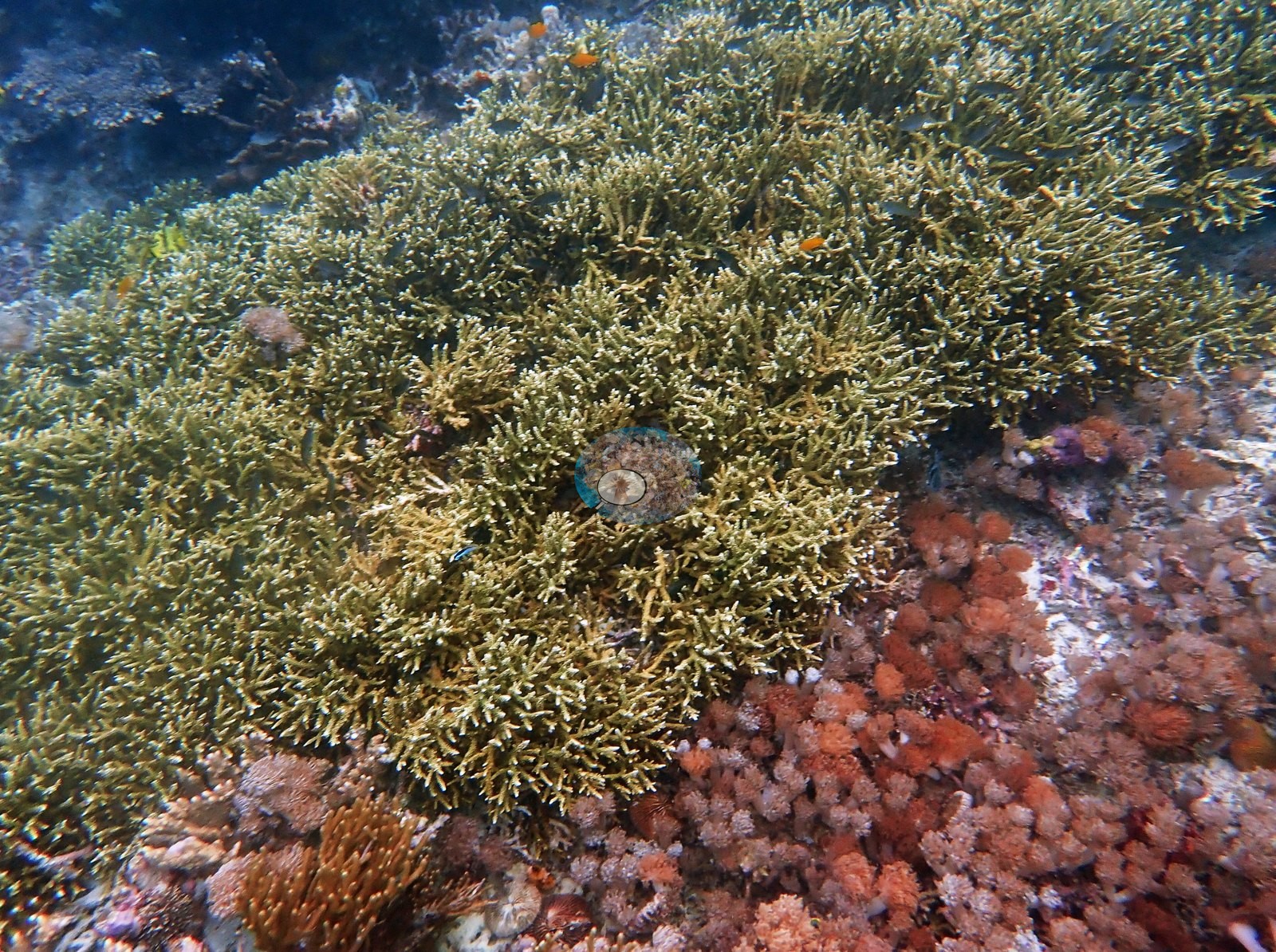
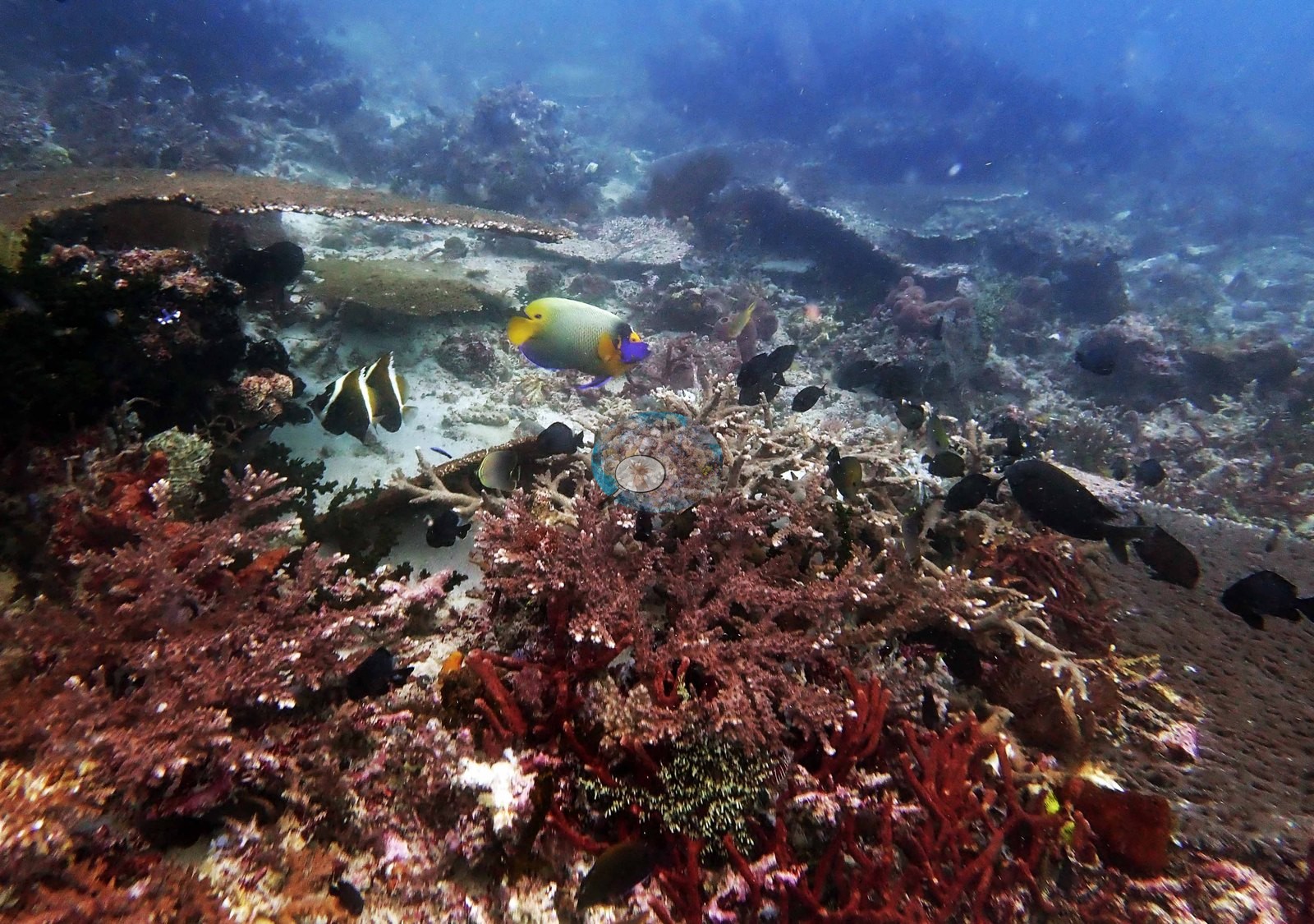
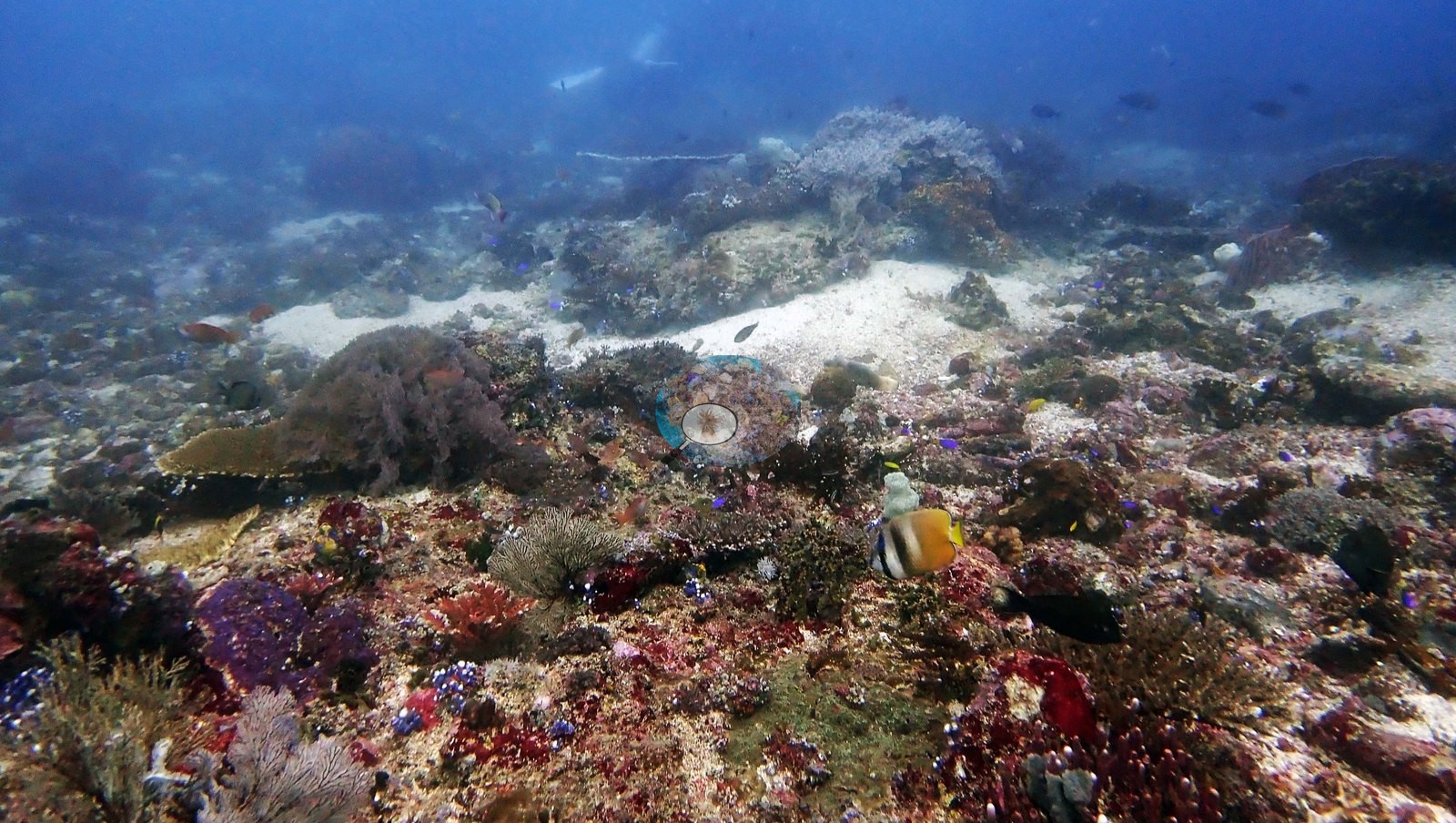
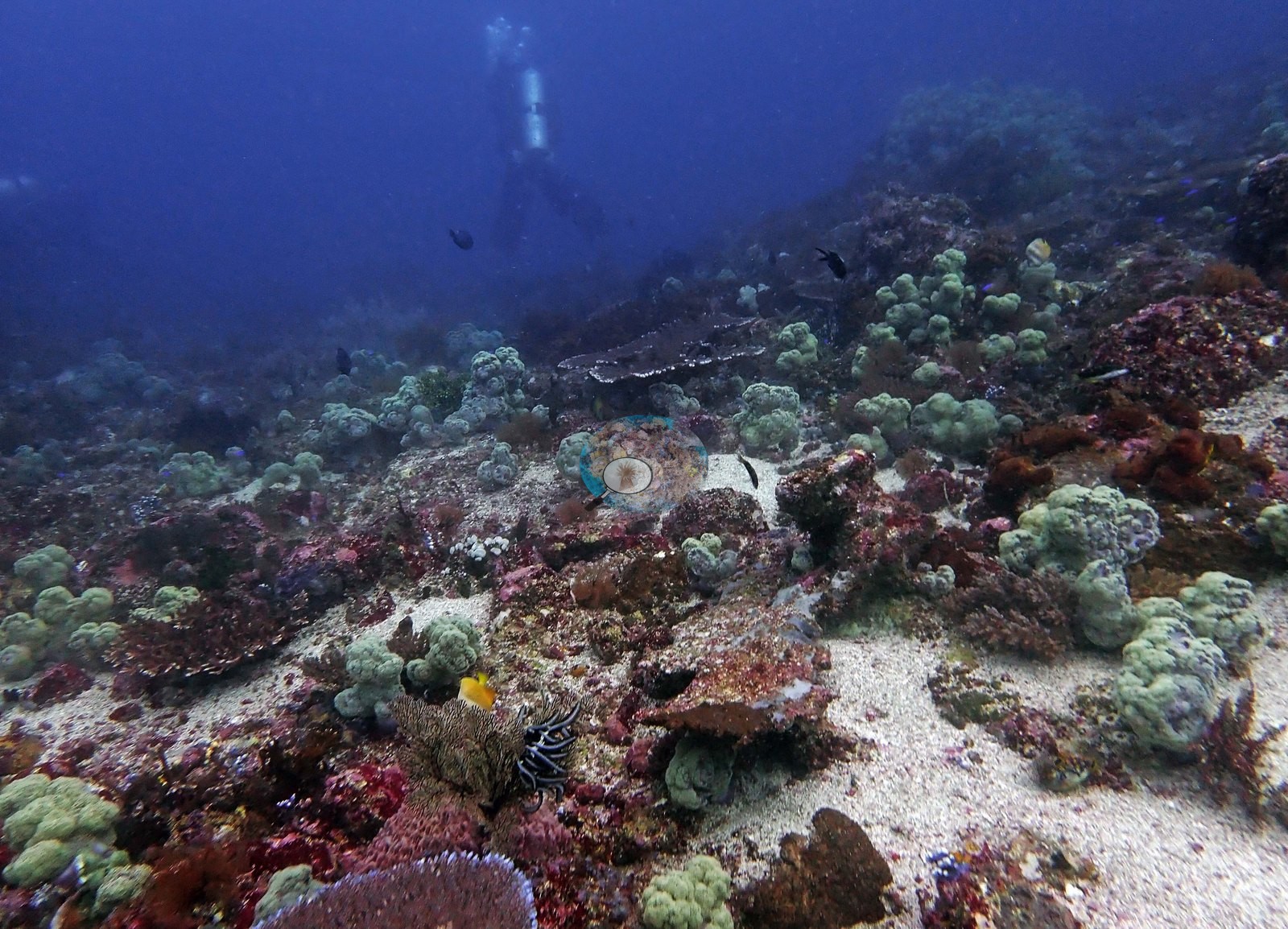
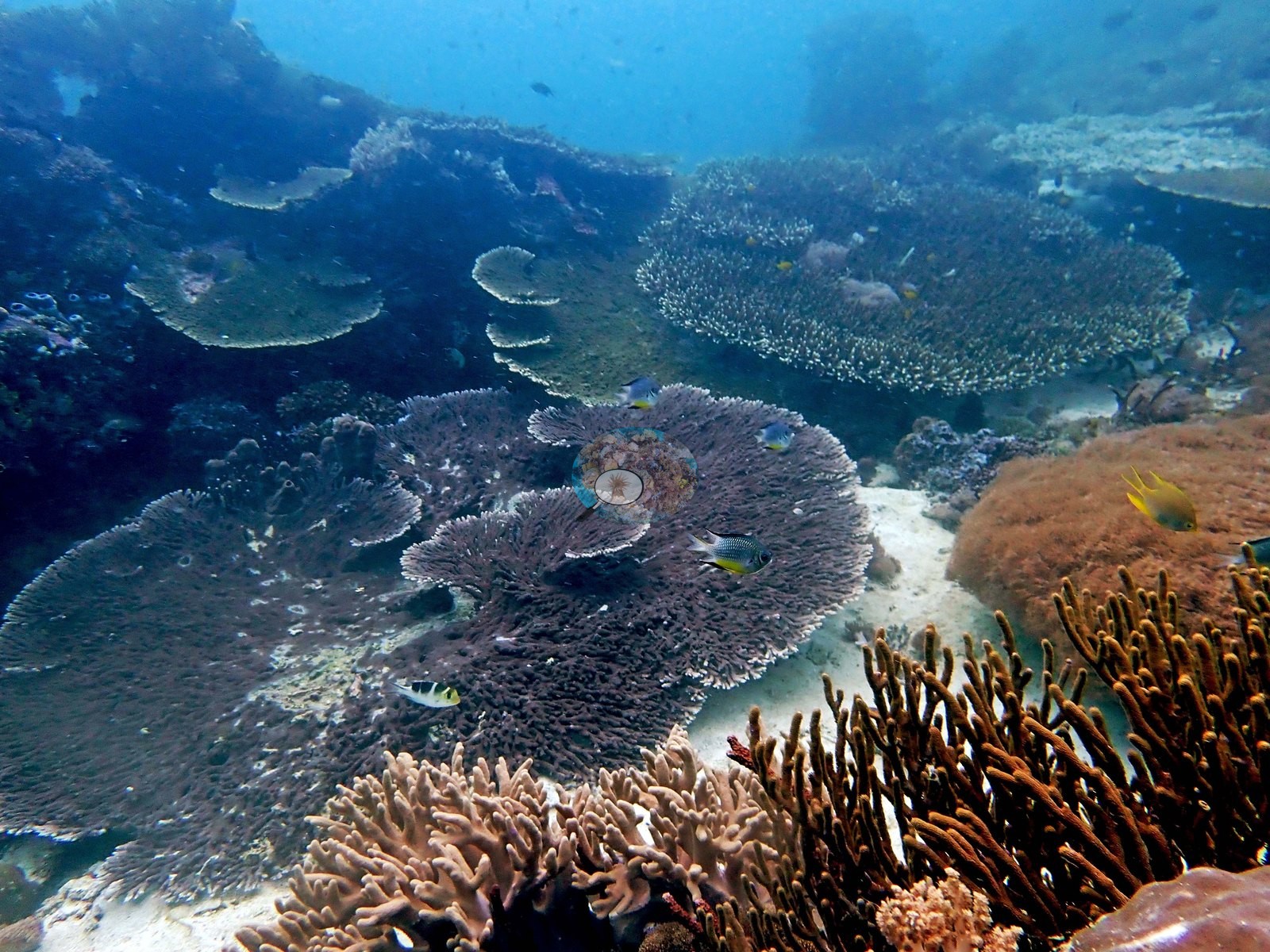
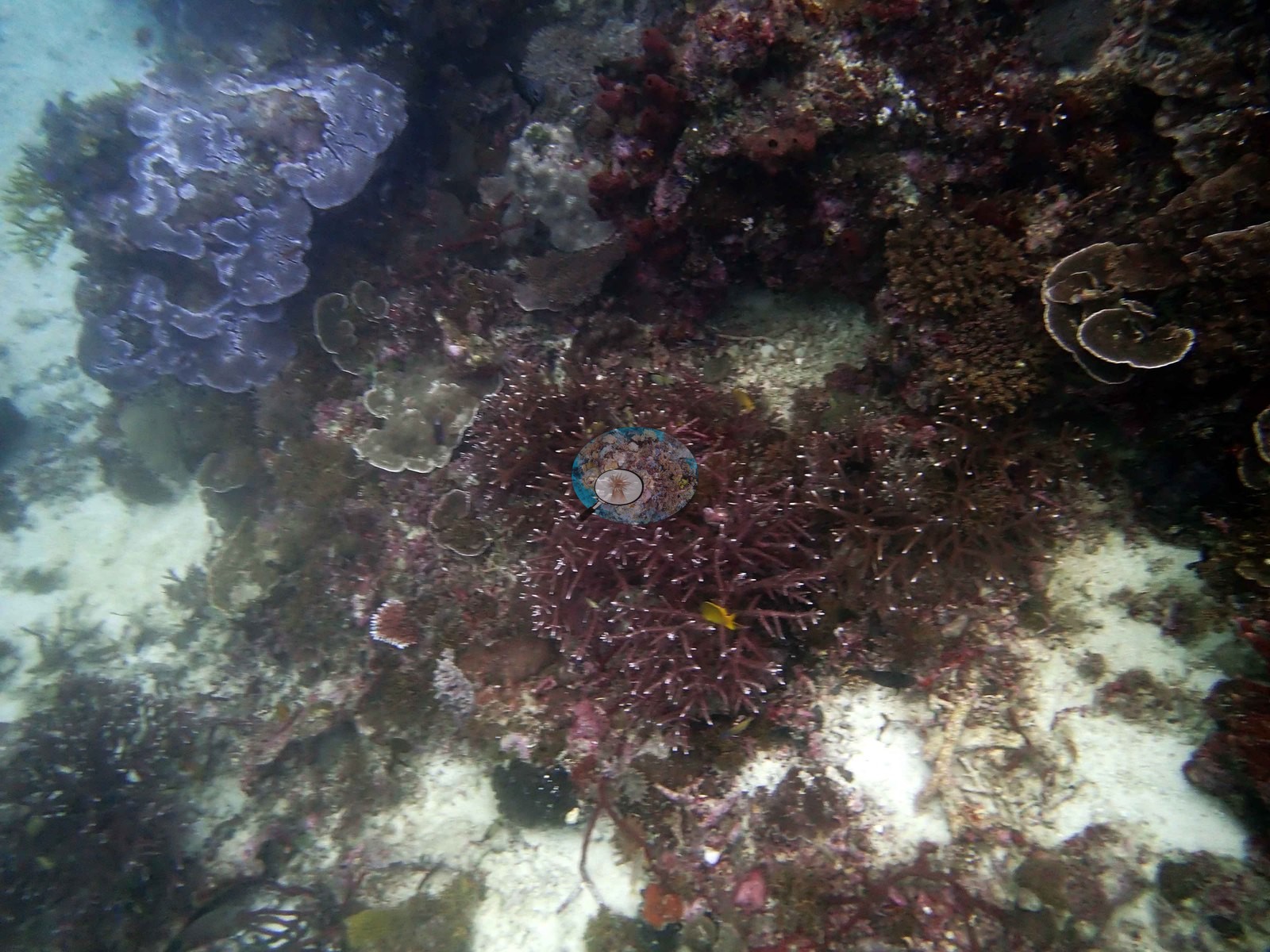
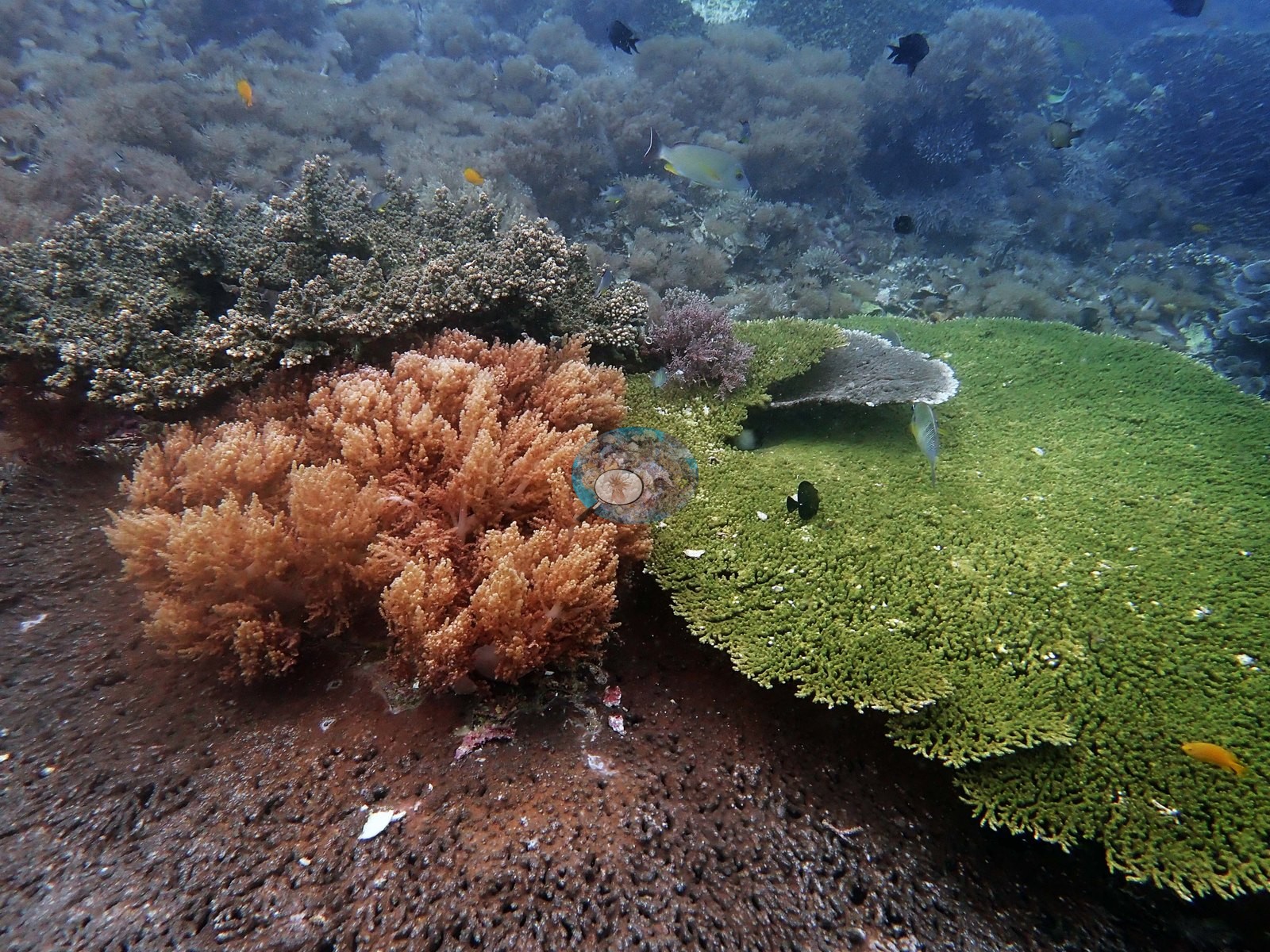
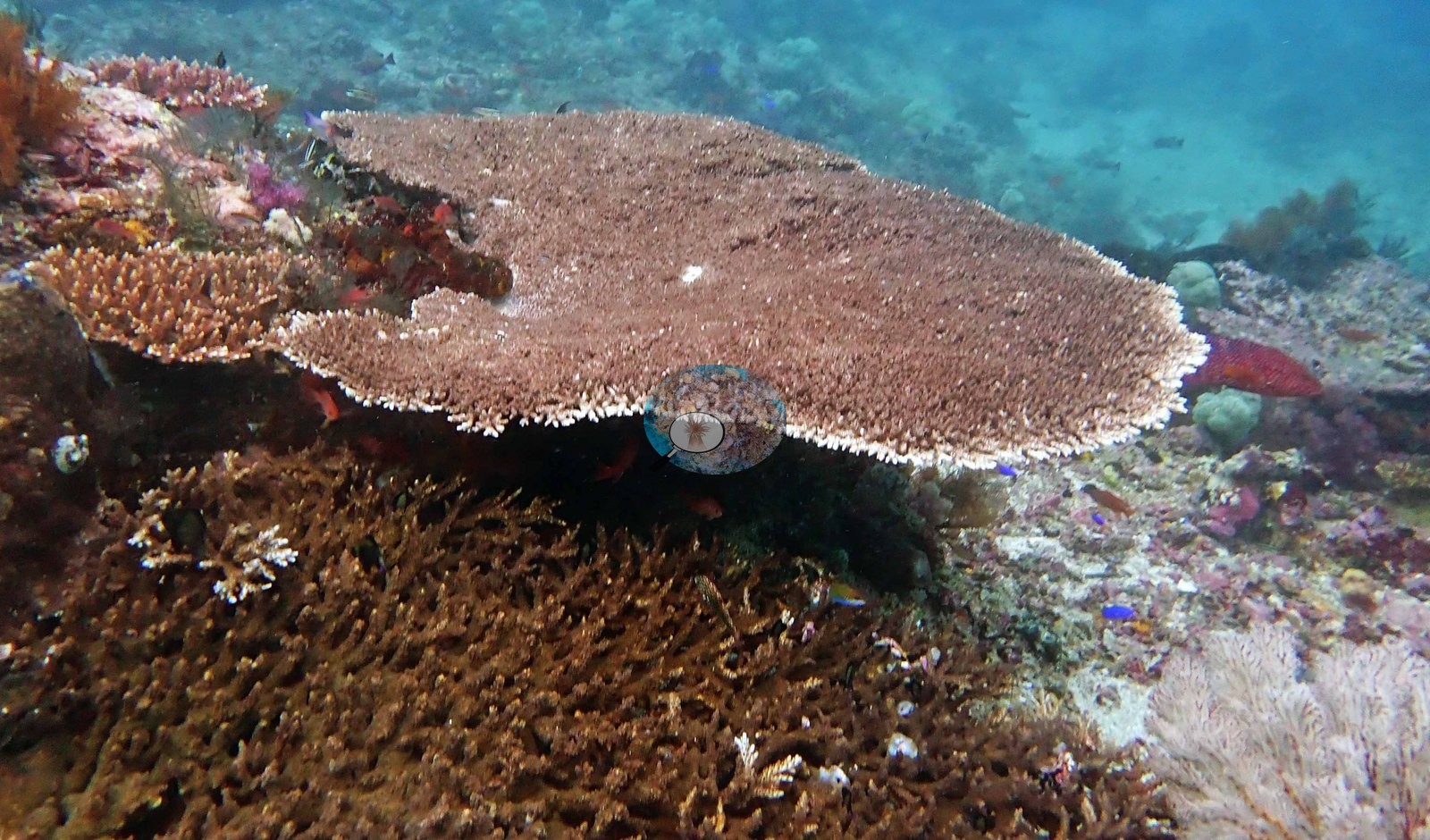
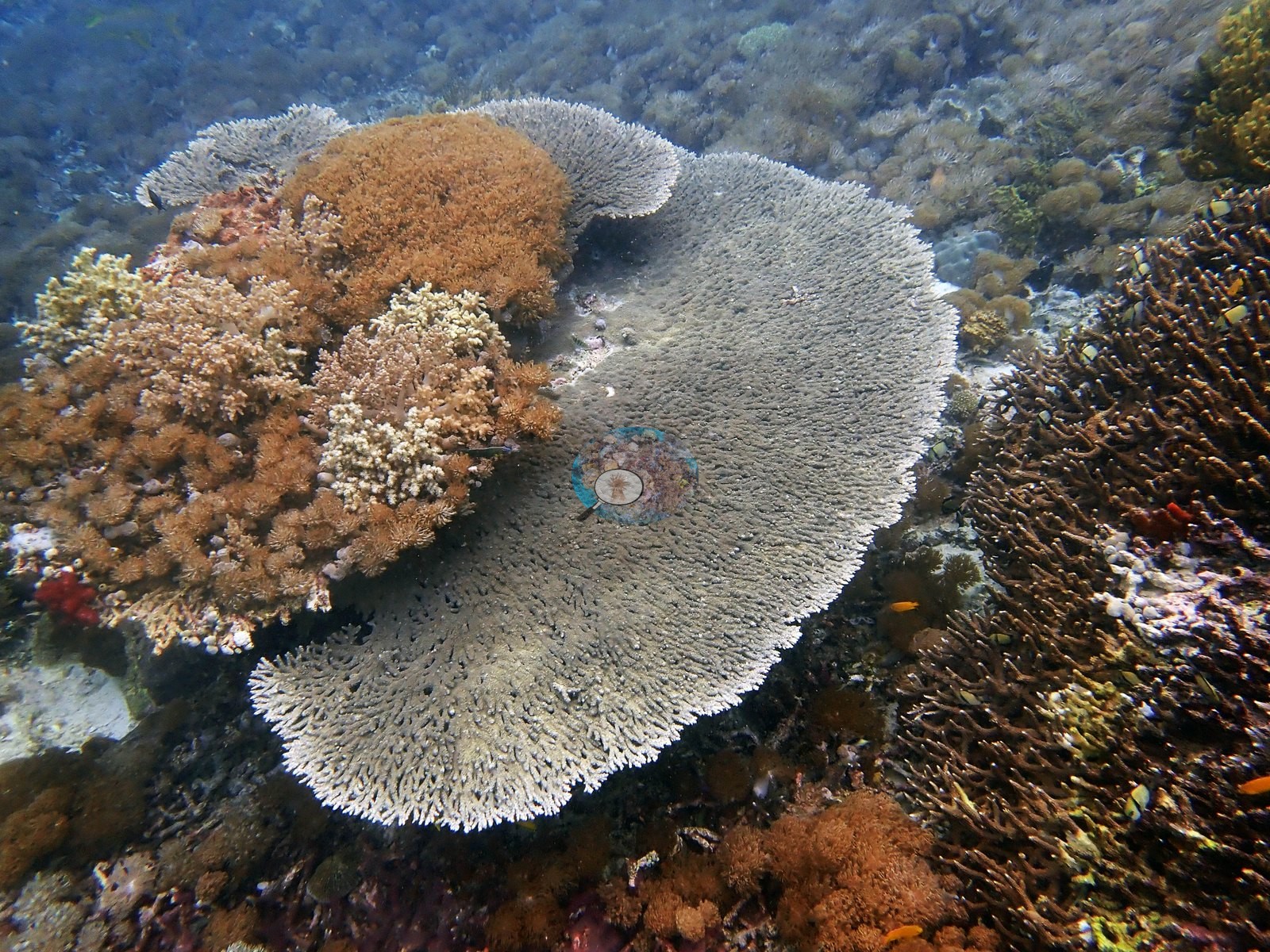
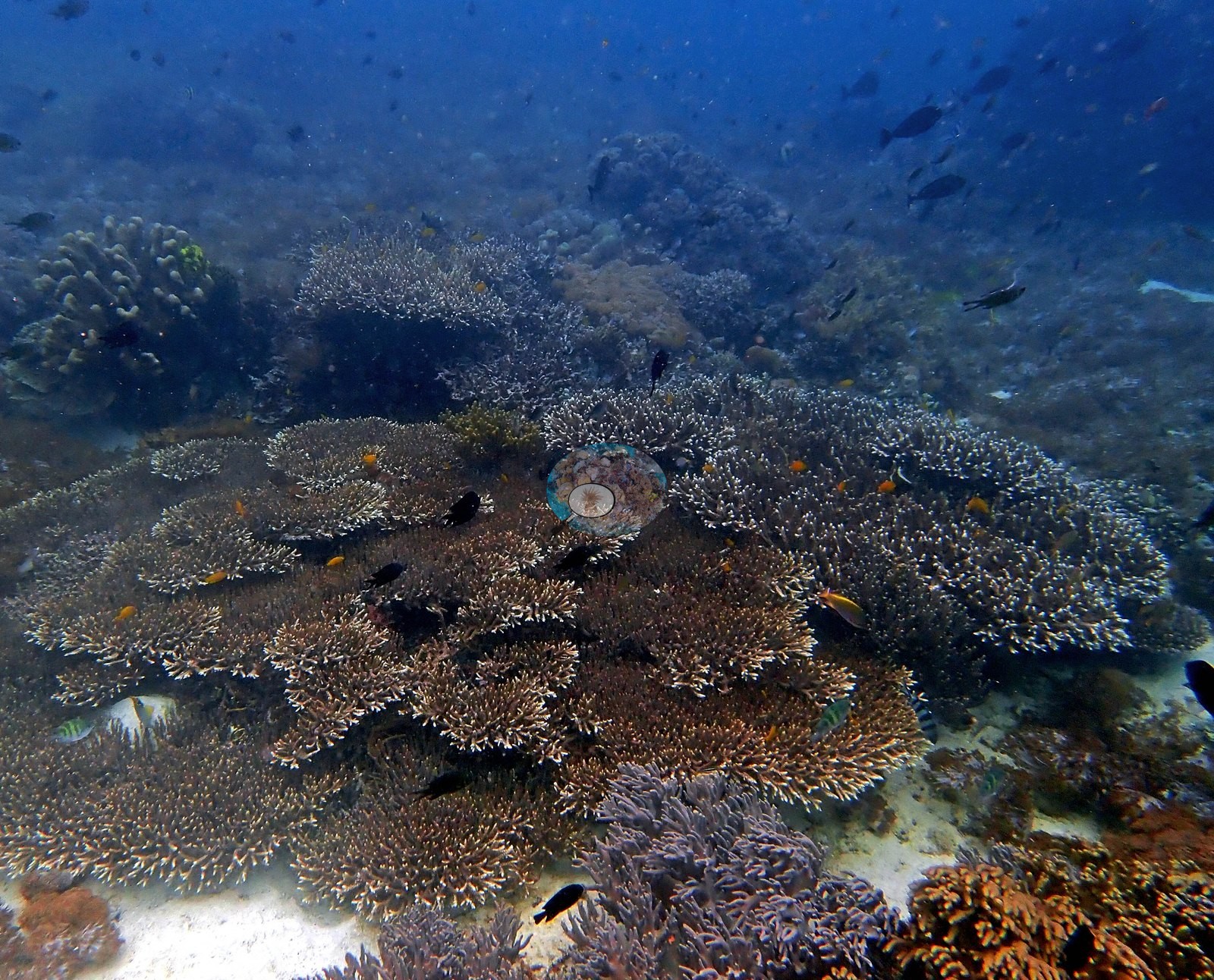
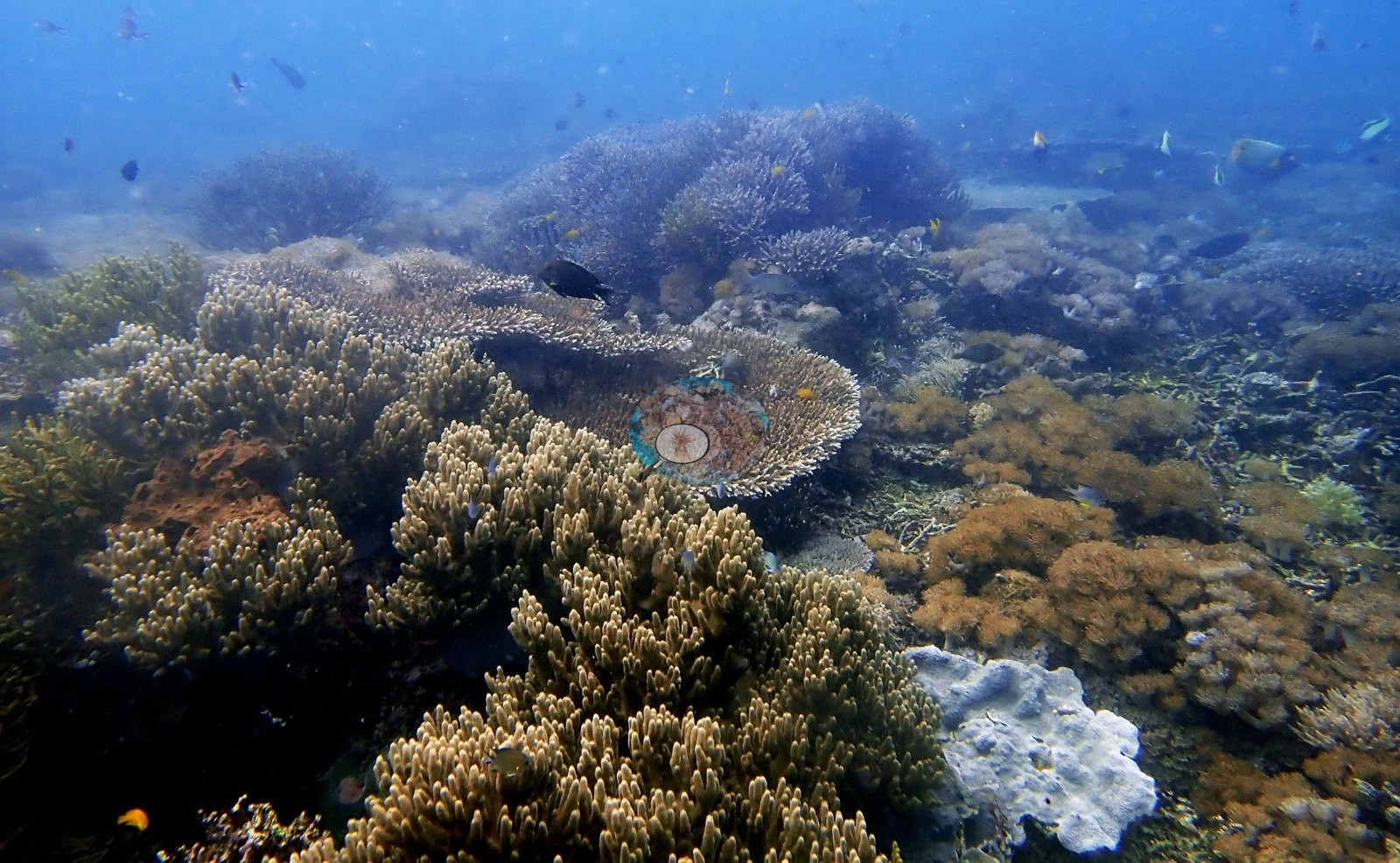
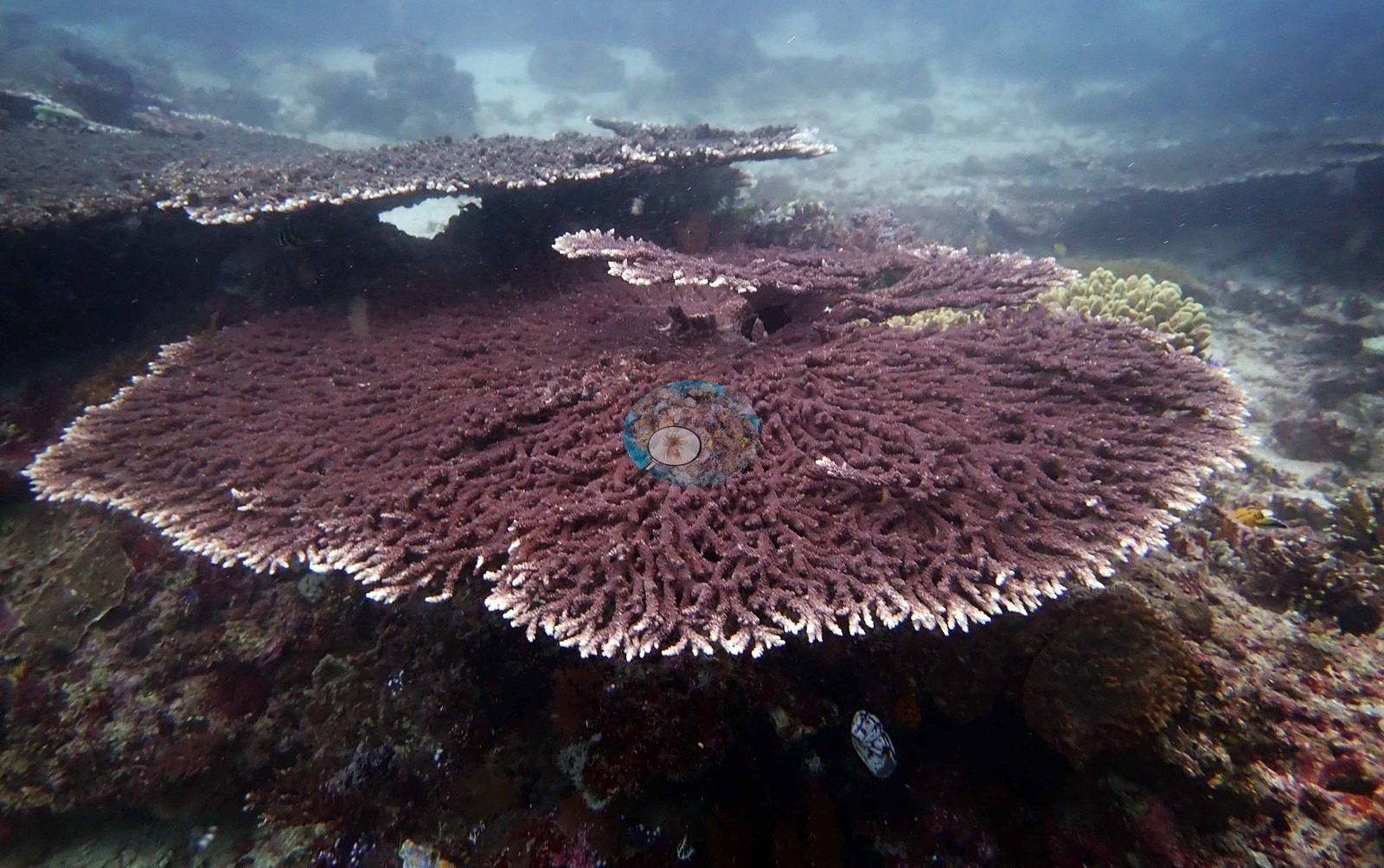
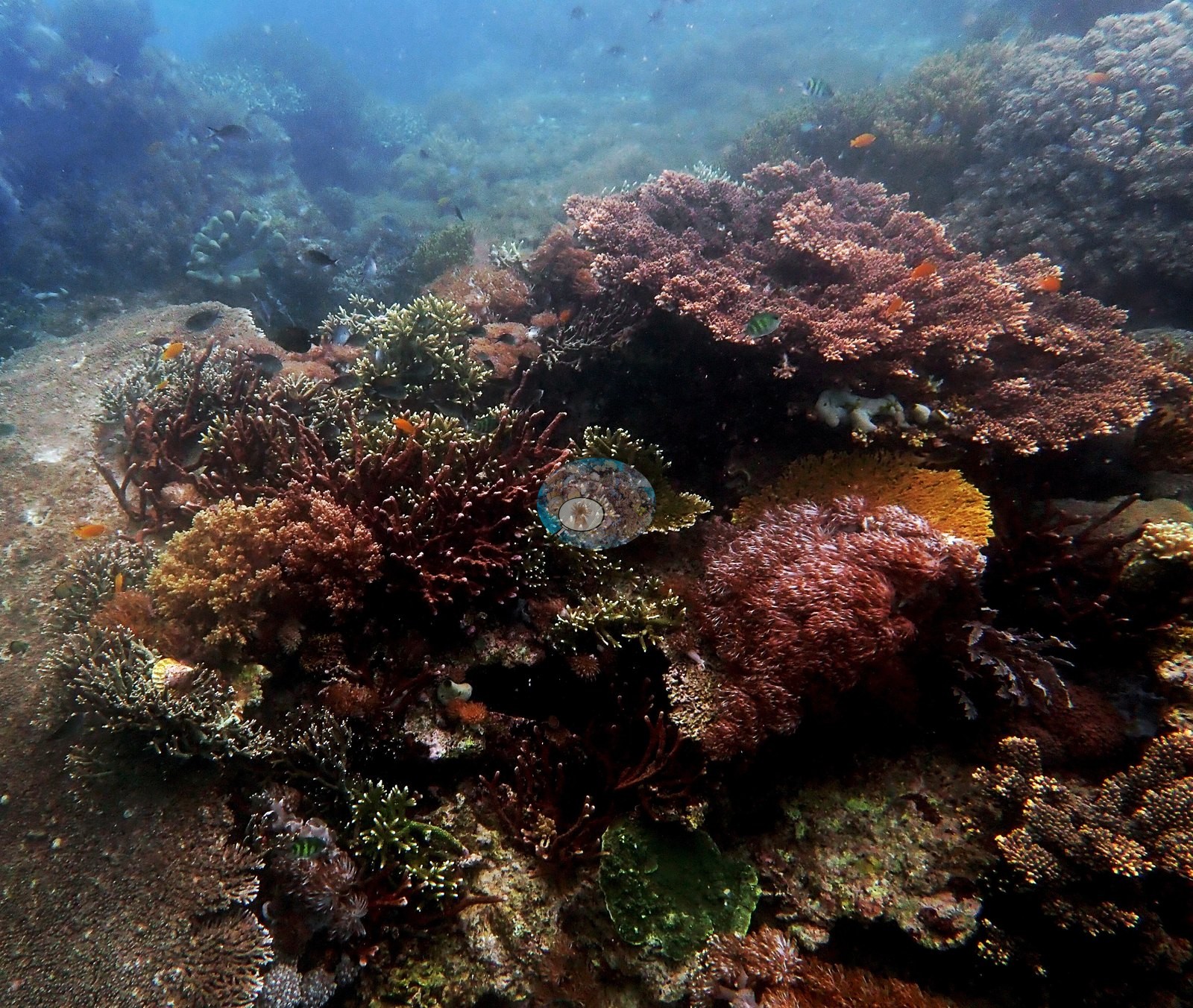
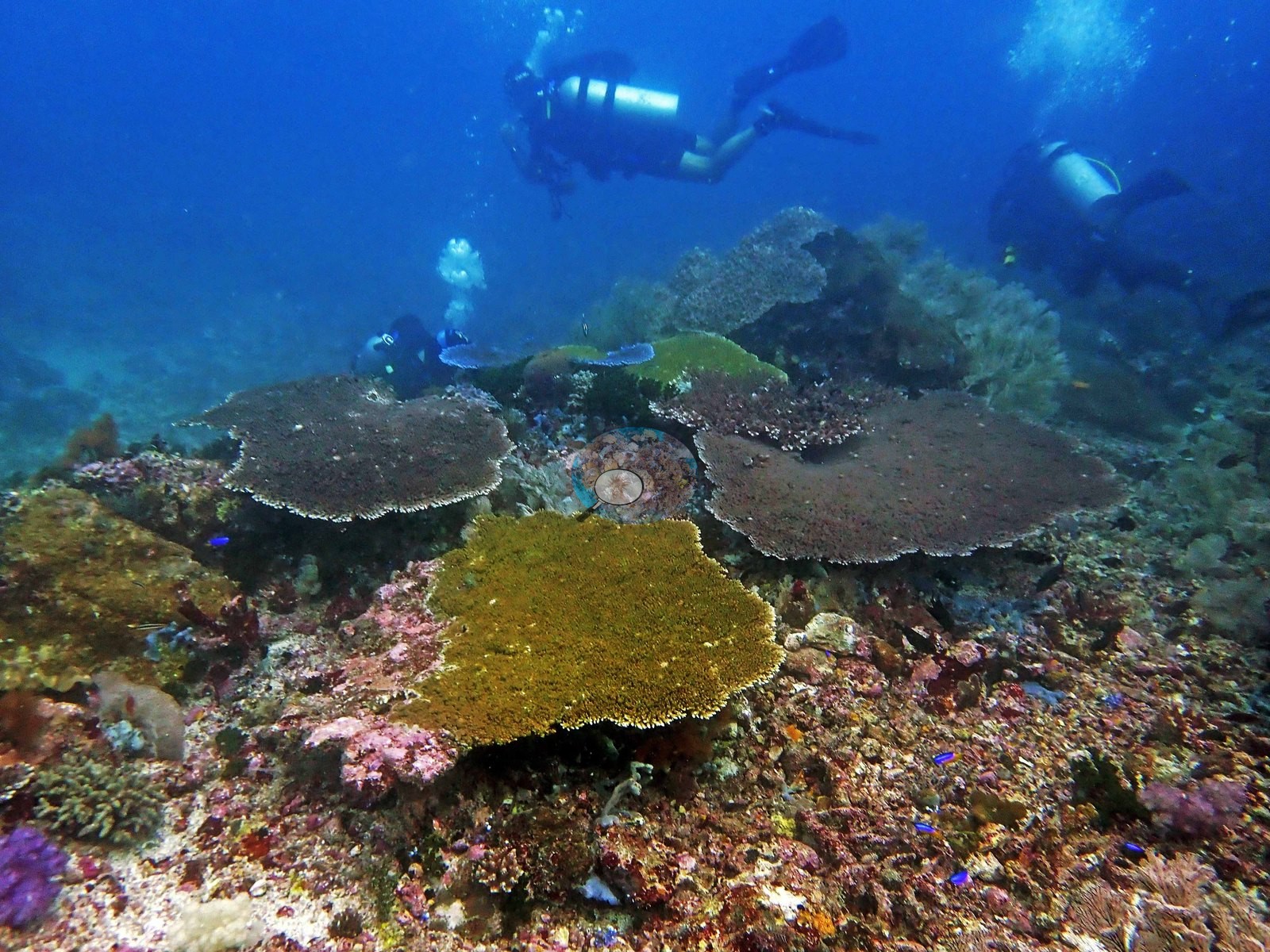
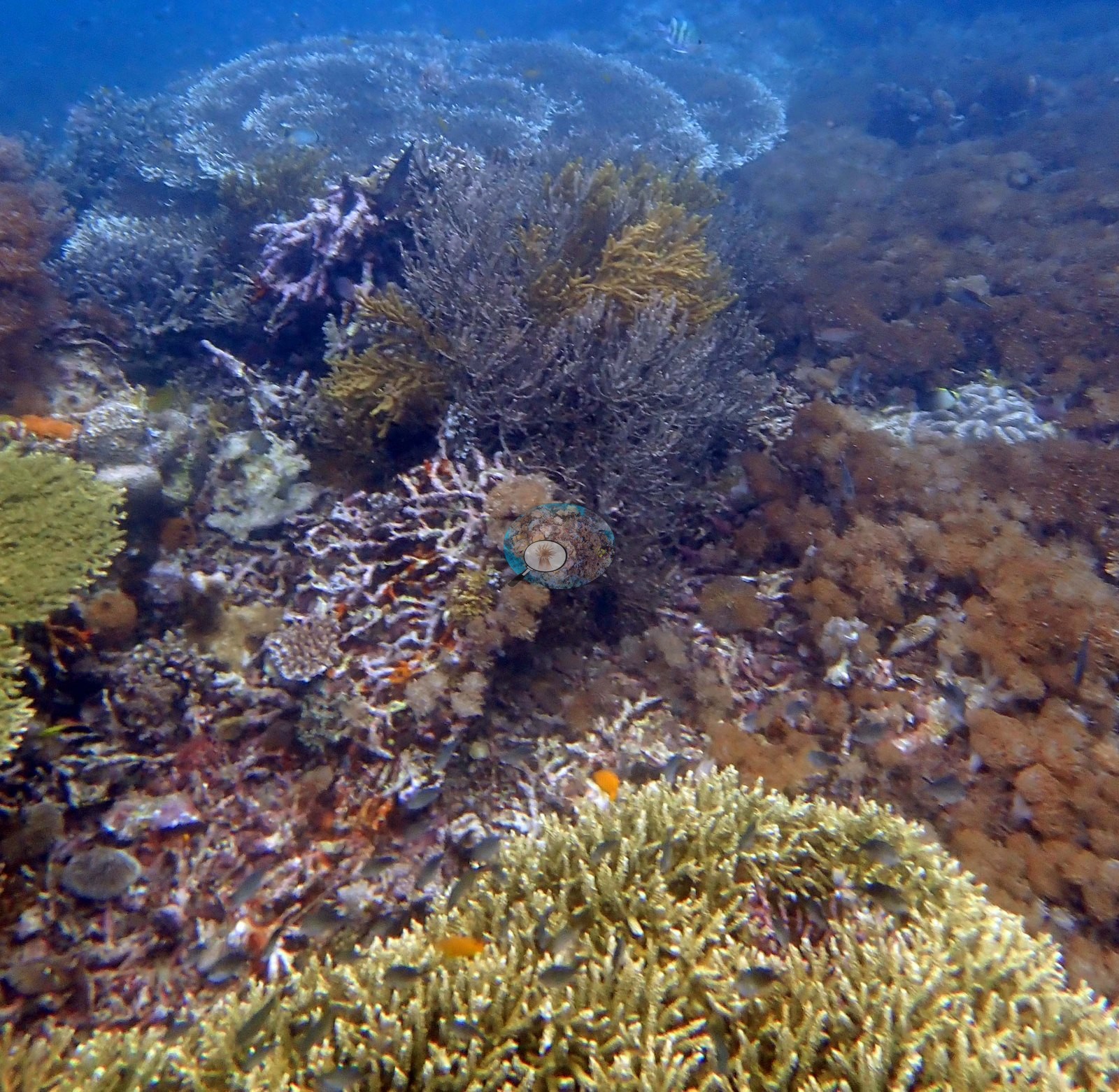
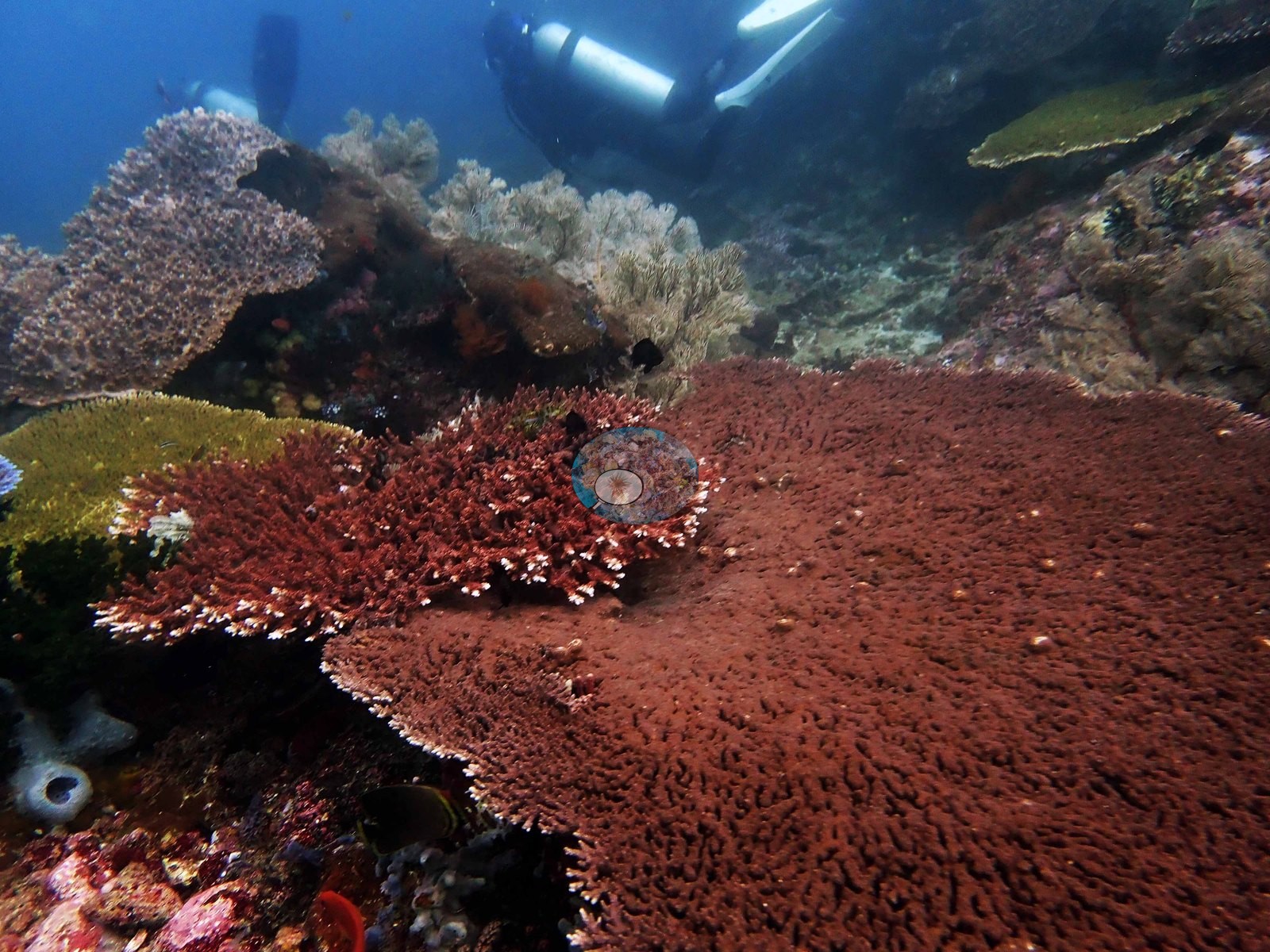
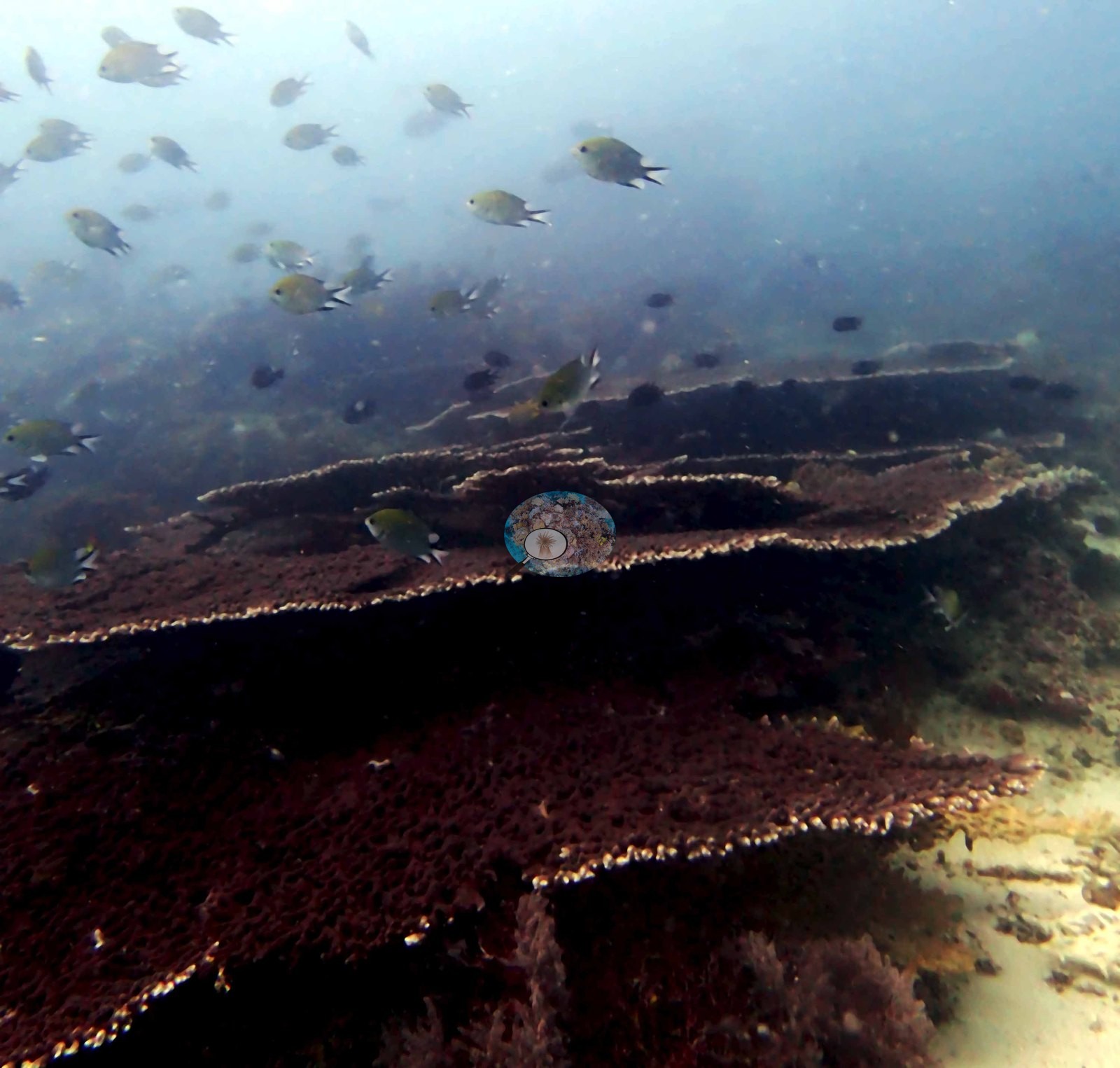
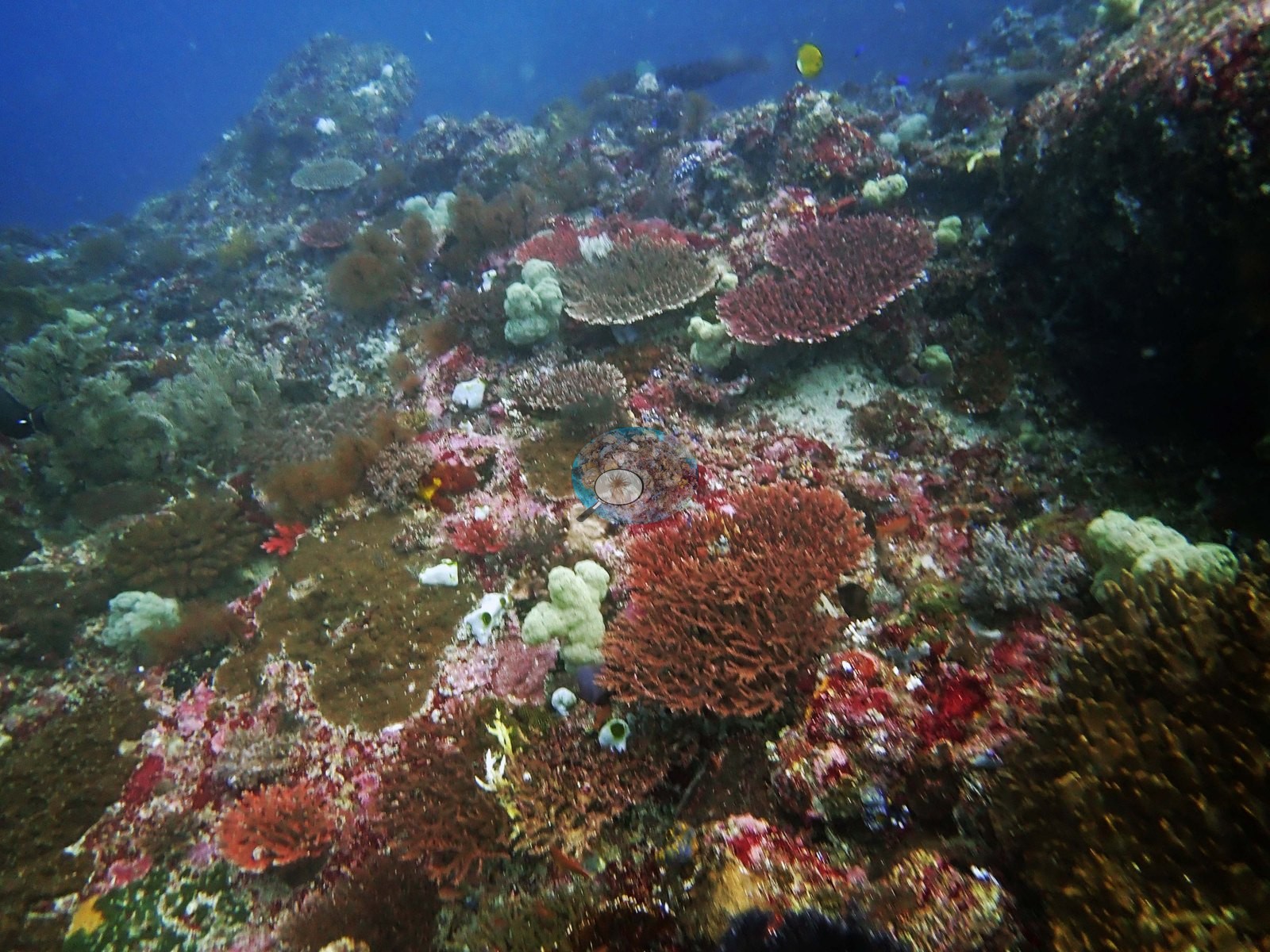
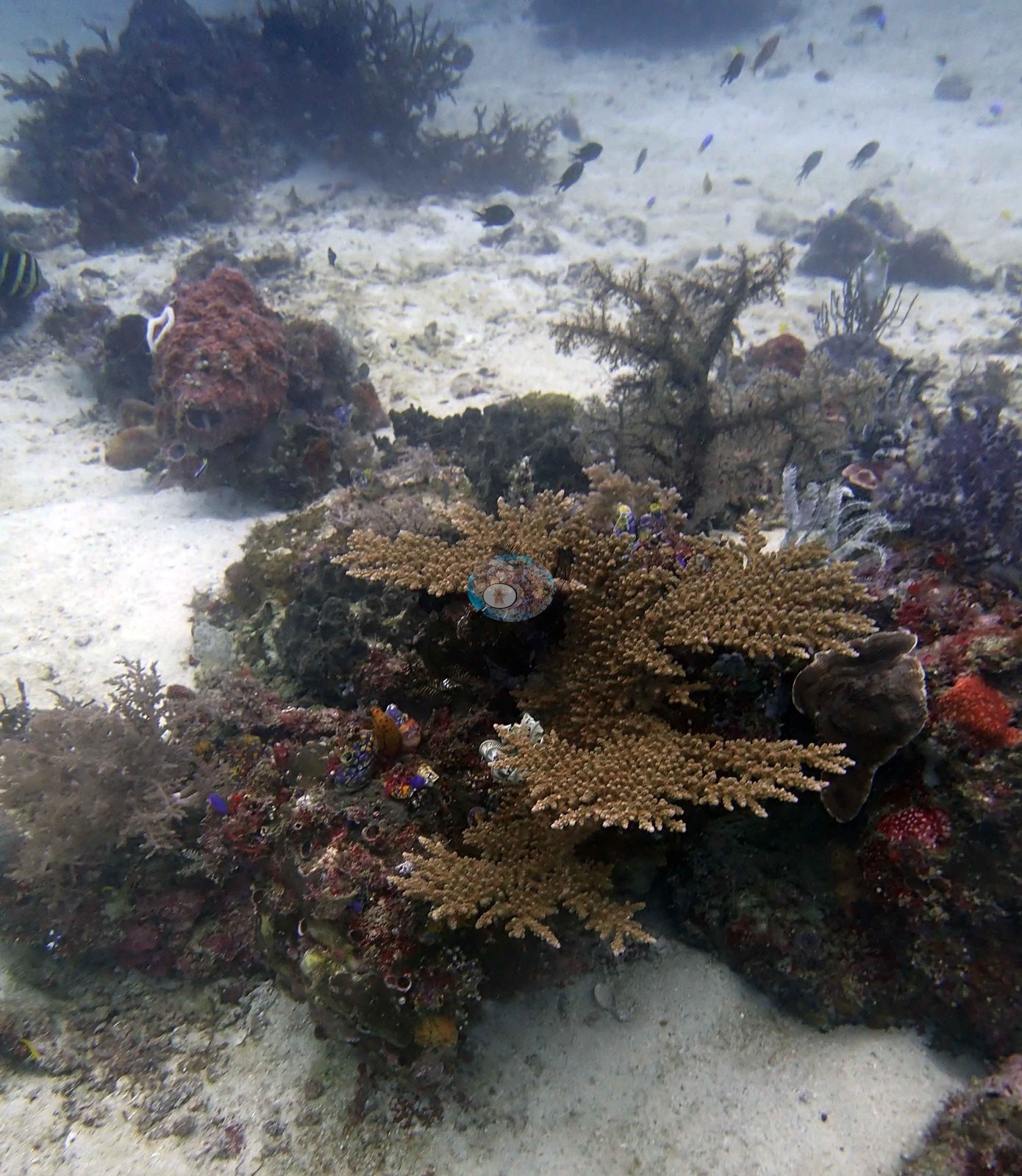
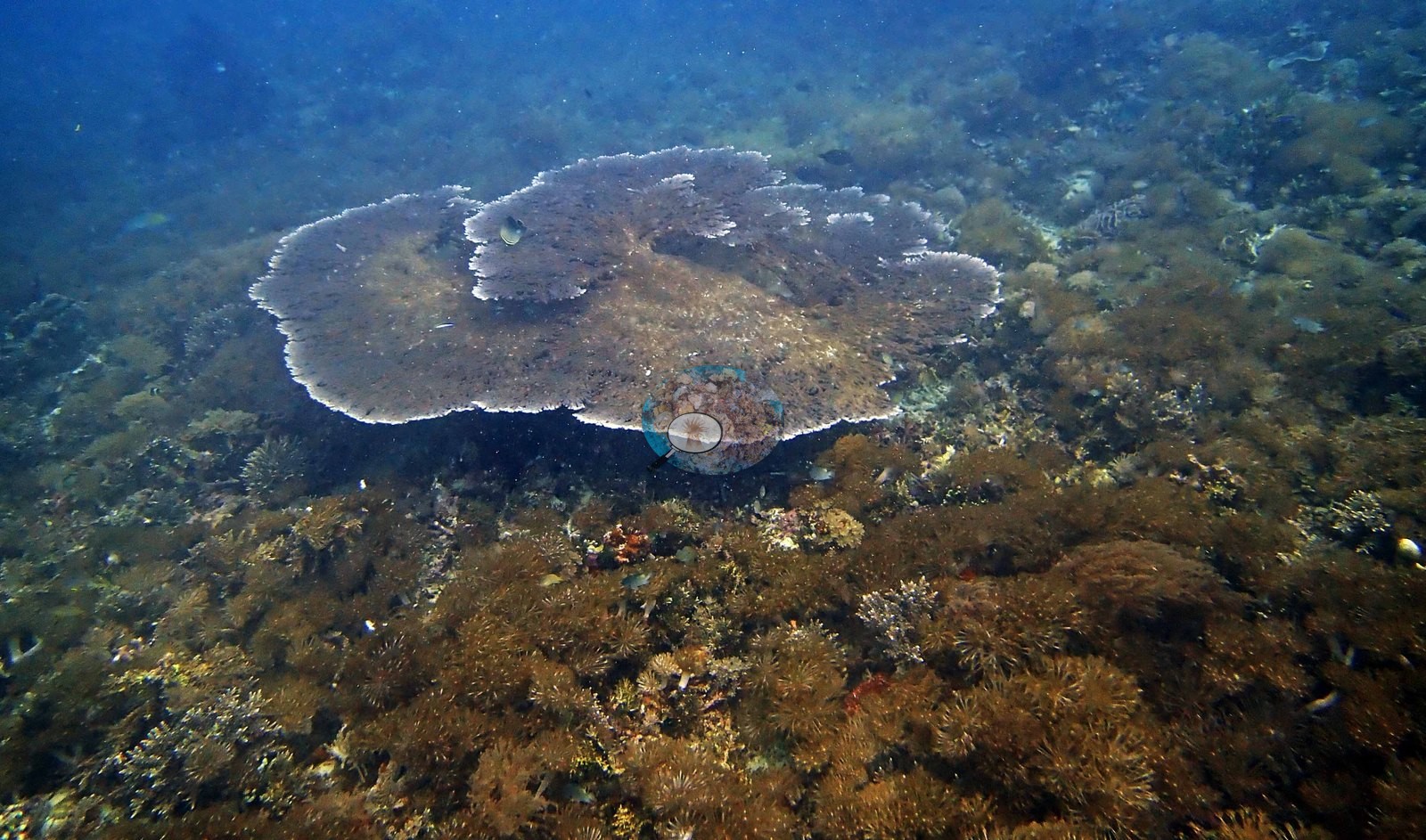
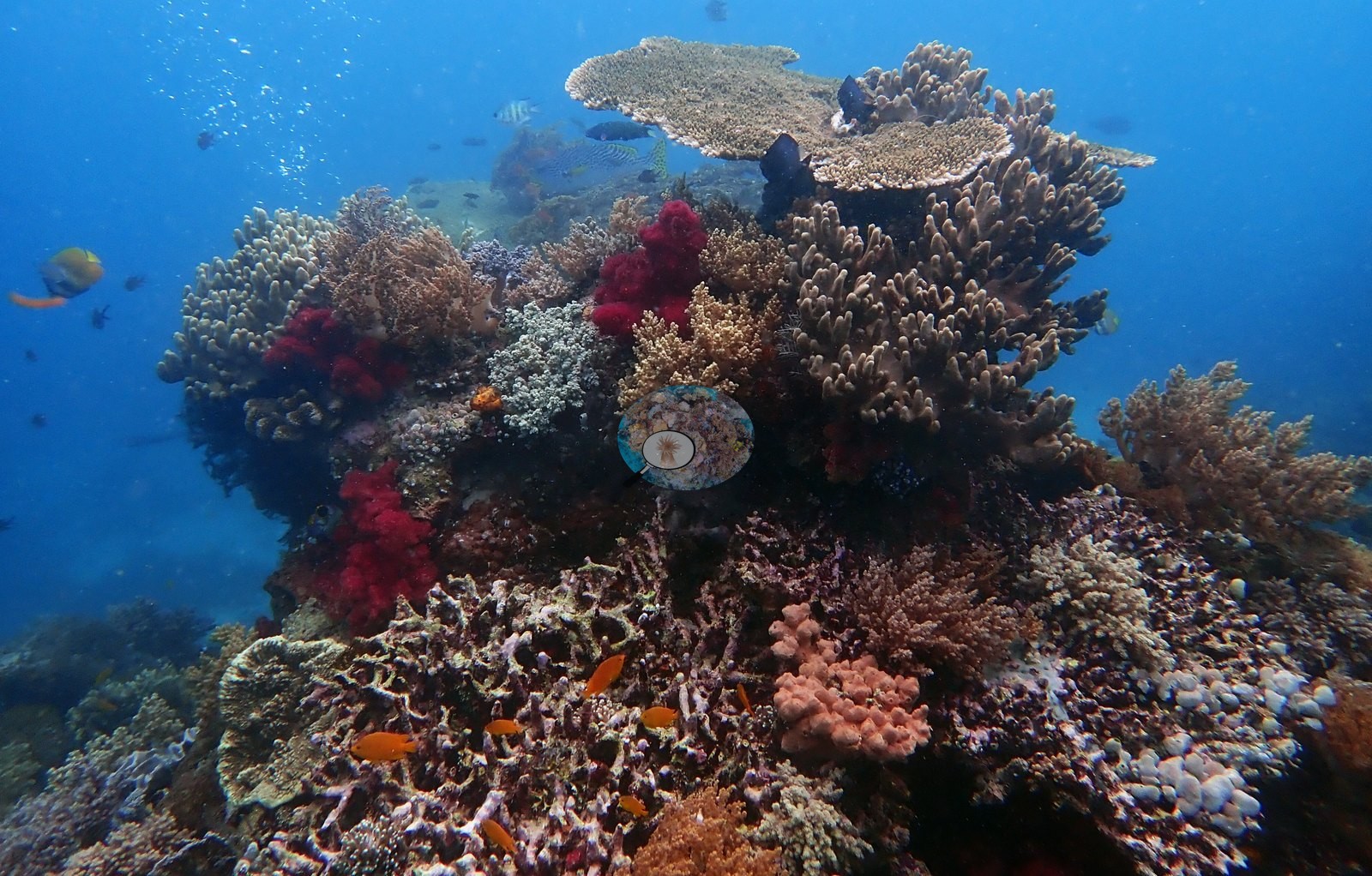
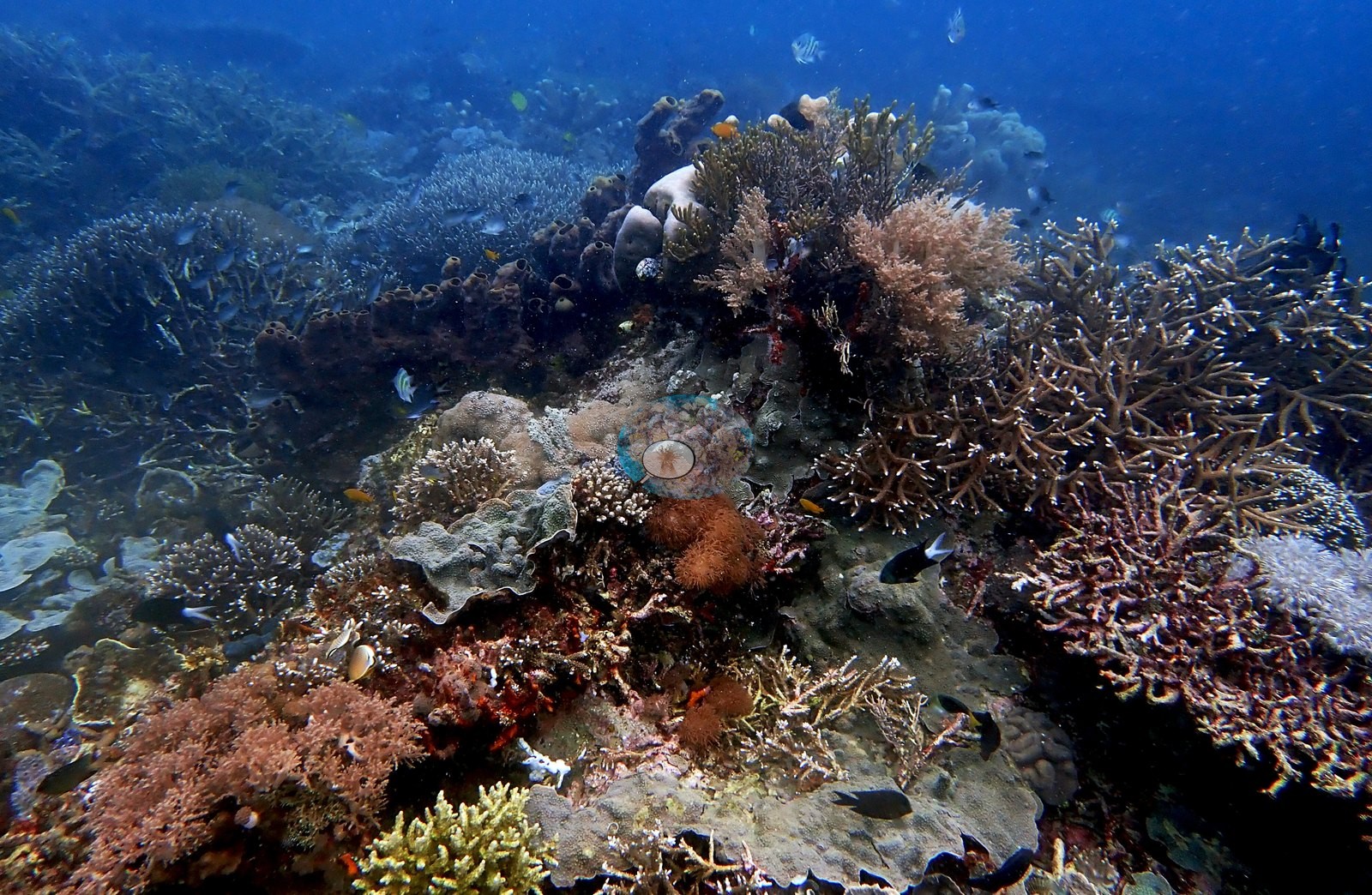
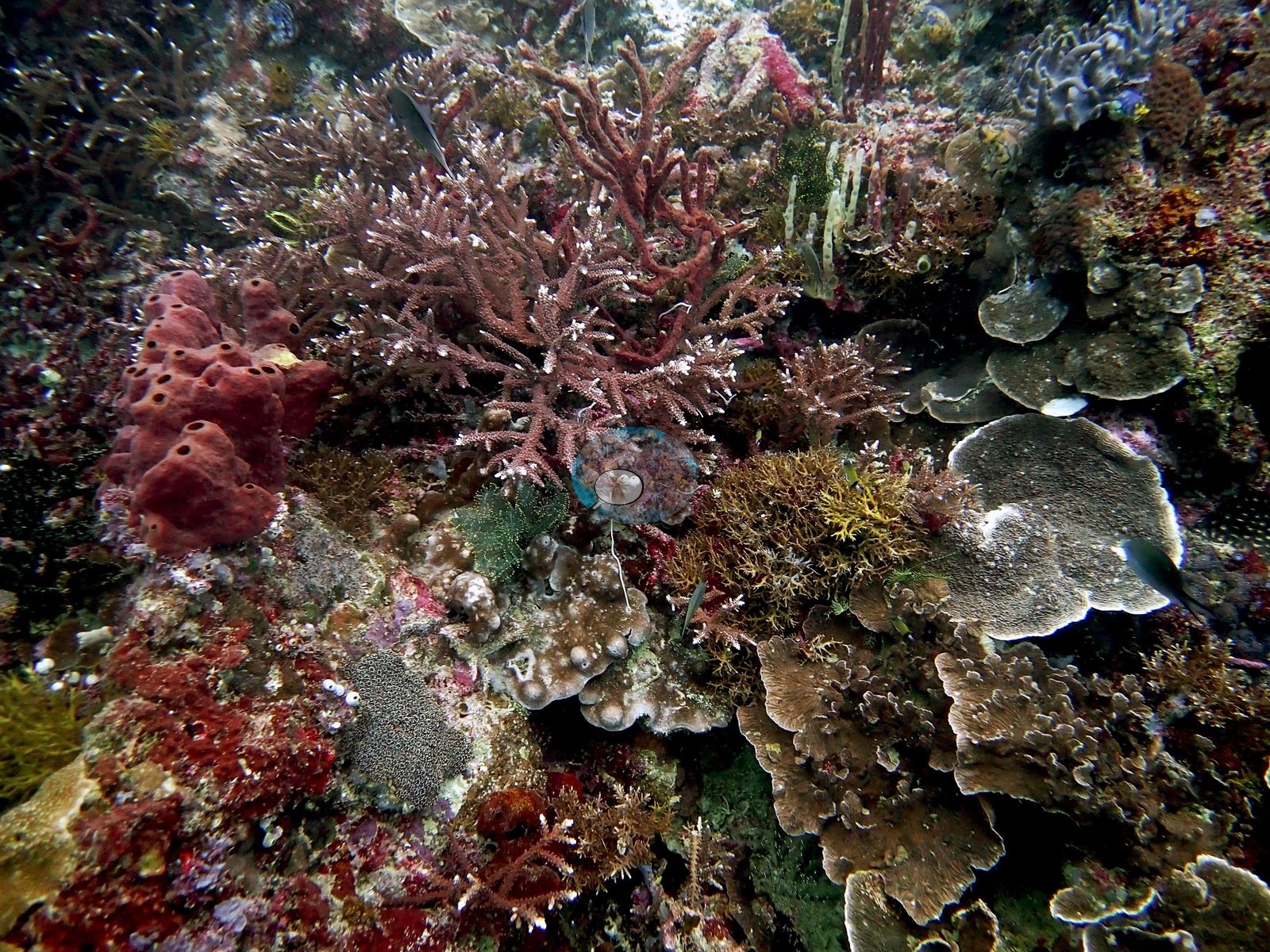
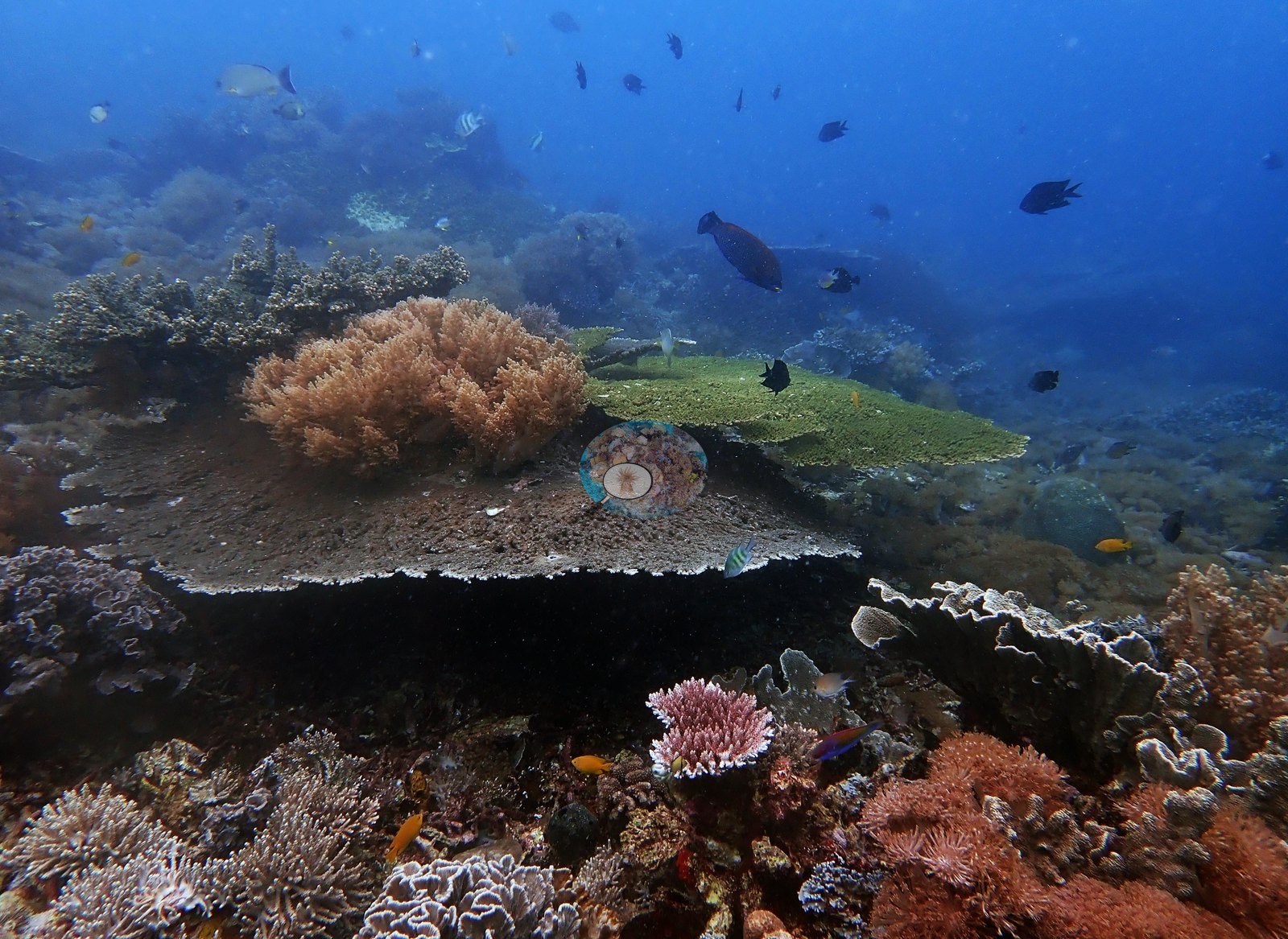
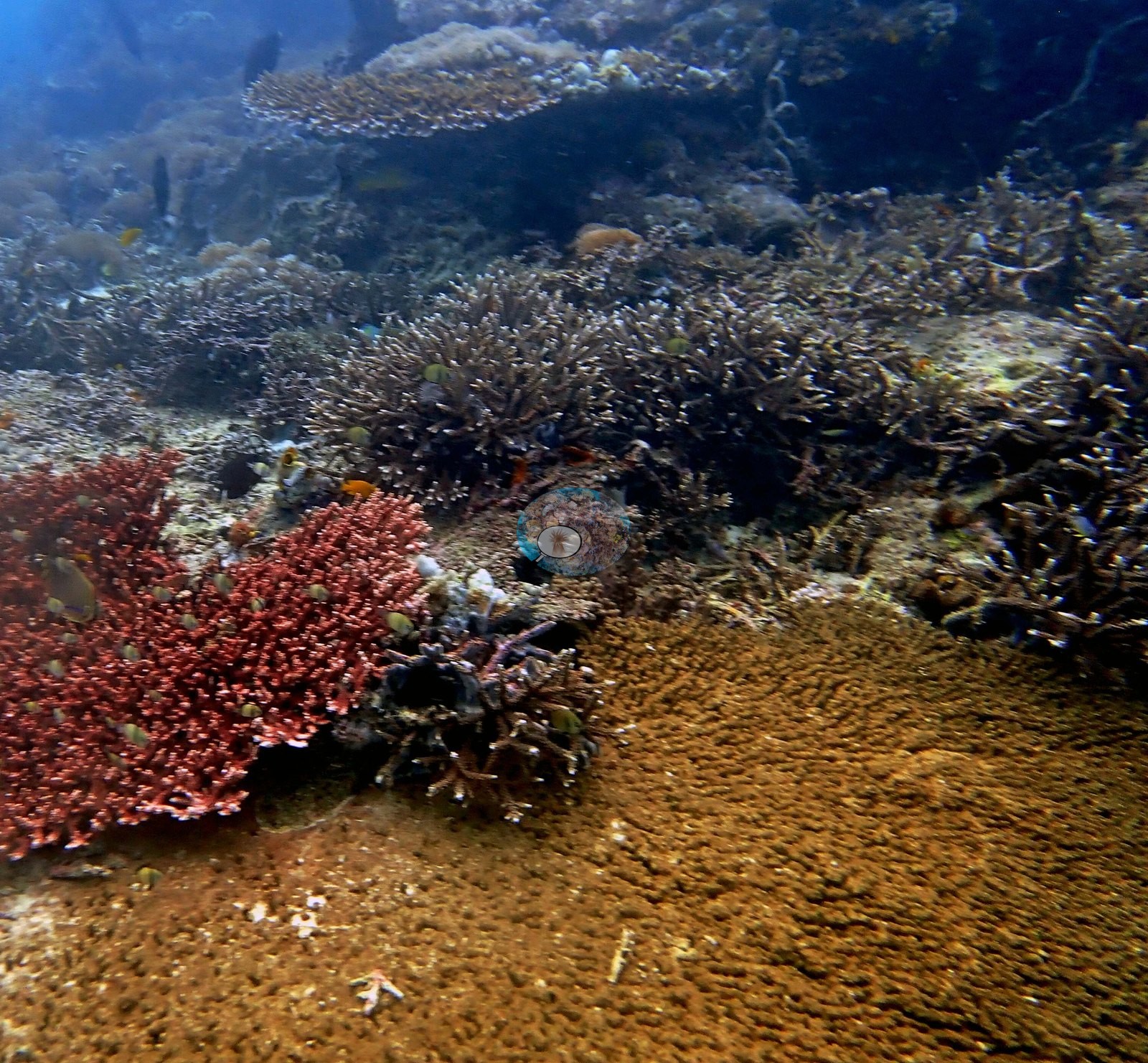
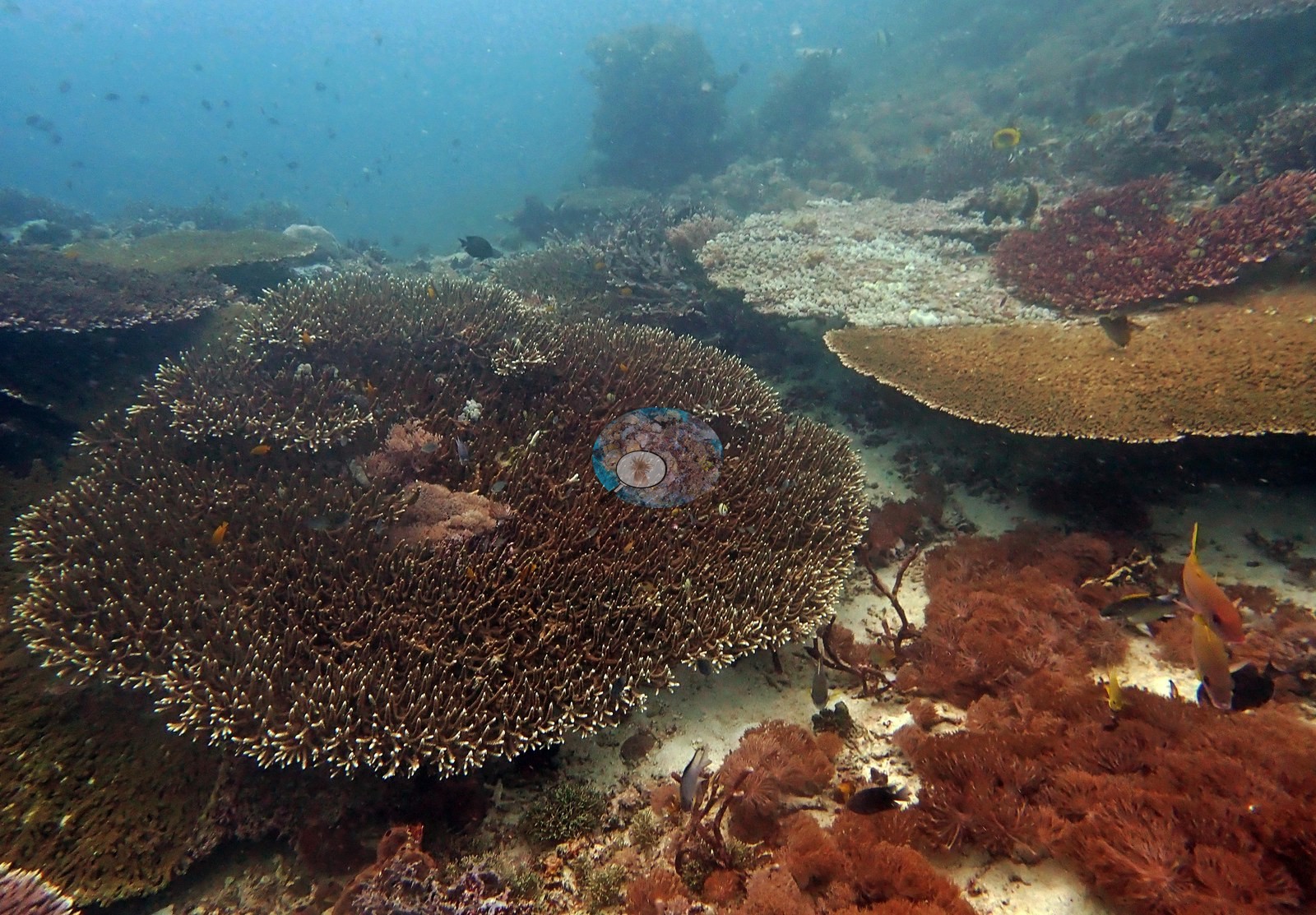
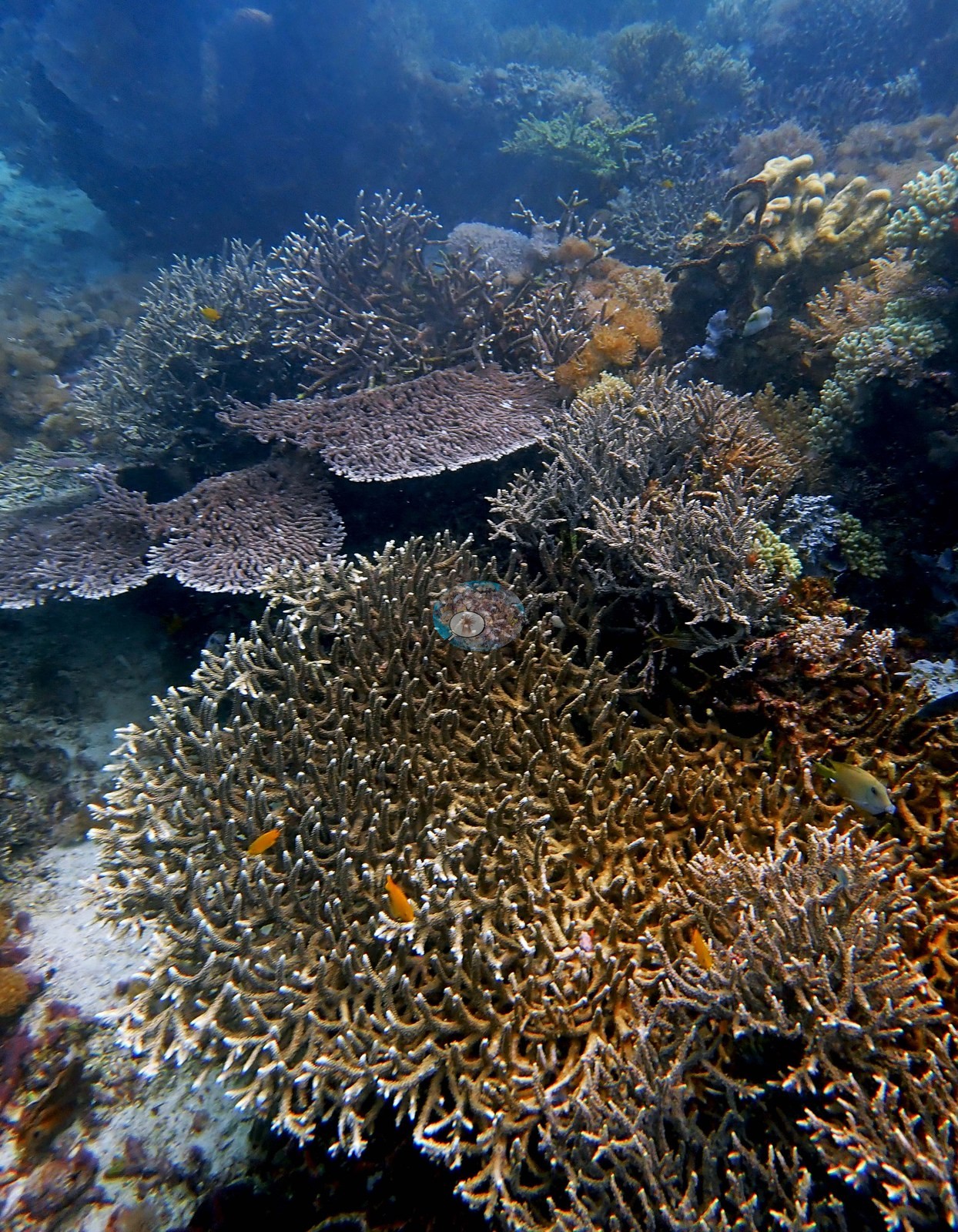
The five frames read as a transect through the habitats he describes. Two are the acroporid community: one wide frame is a dense pale corymbose Acropora thicket in the foreground with several lavender-gray tabulate plates stacked behind it, mustard finger coral above, and olive soft corals between, at near-continuous cover with anthias threading the branches; the other frames two large Acropora tables, the nearer roughly two meters across and brown, the further mustard-tan, above a patch of bare pale rubble, with pink-brown soft-coral carpets and clean sand in the foreground and fusiliers overhead (e.g., Image 4, Image 5).
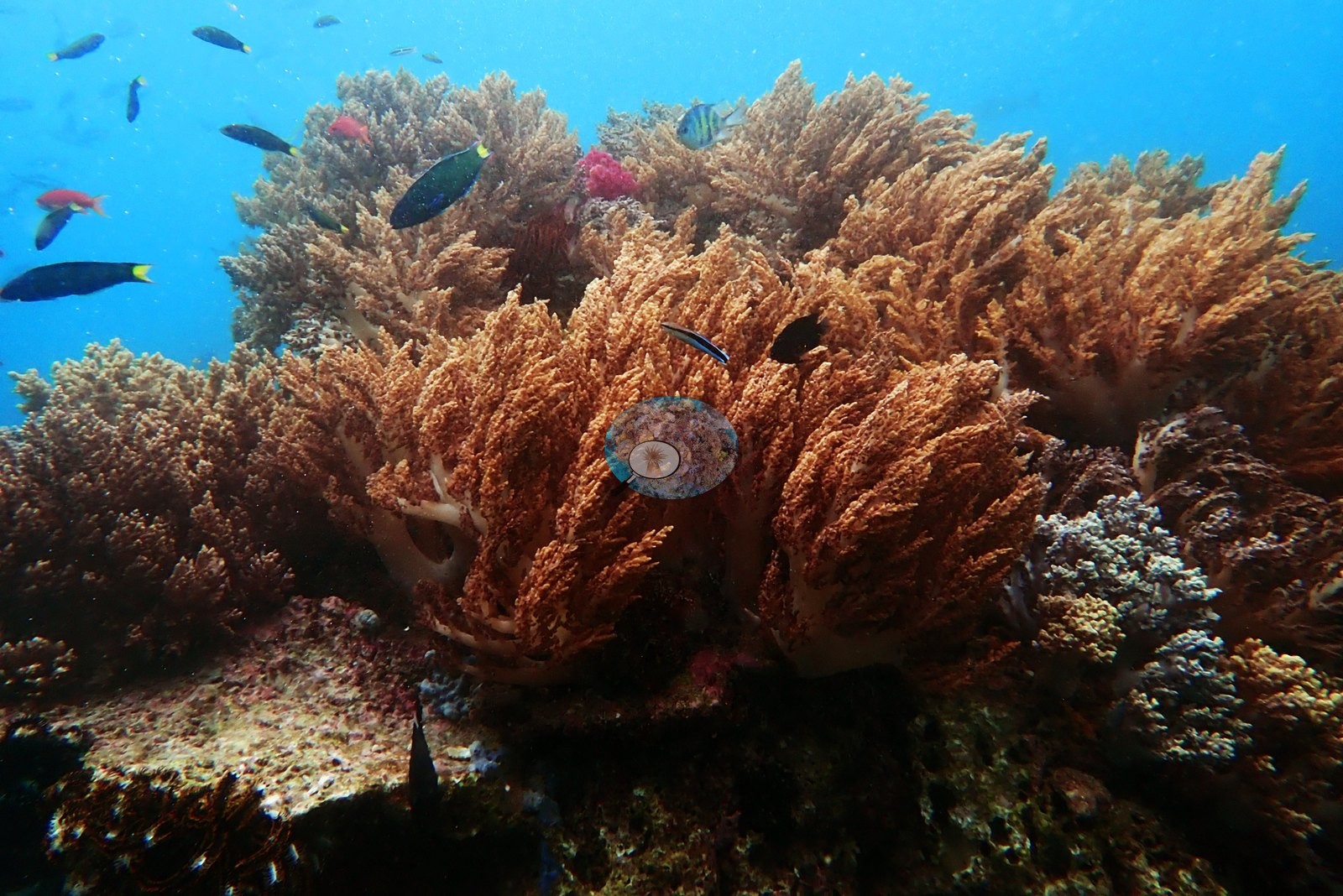
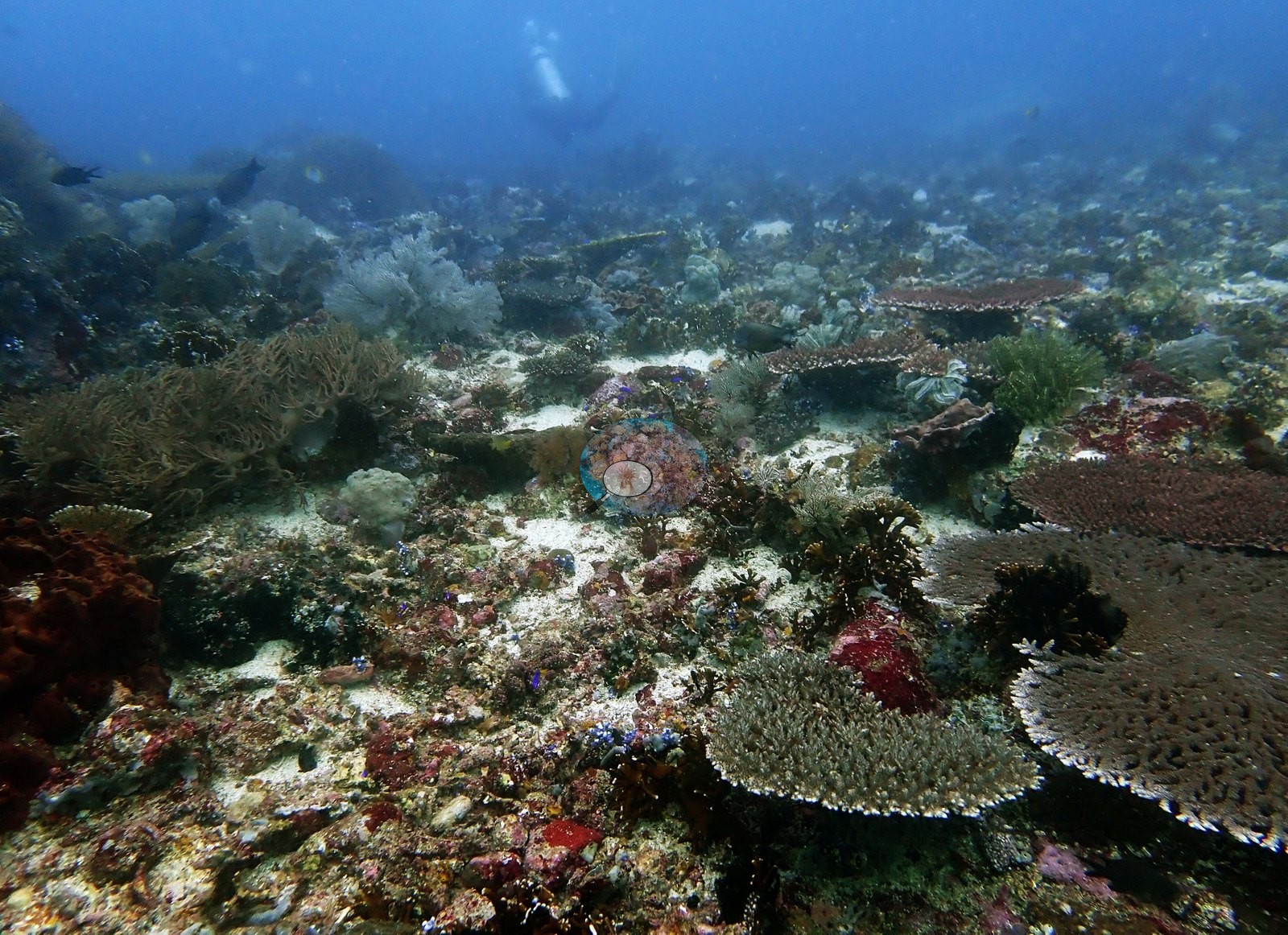
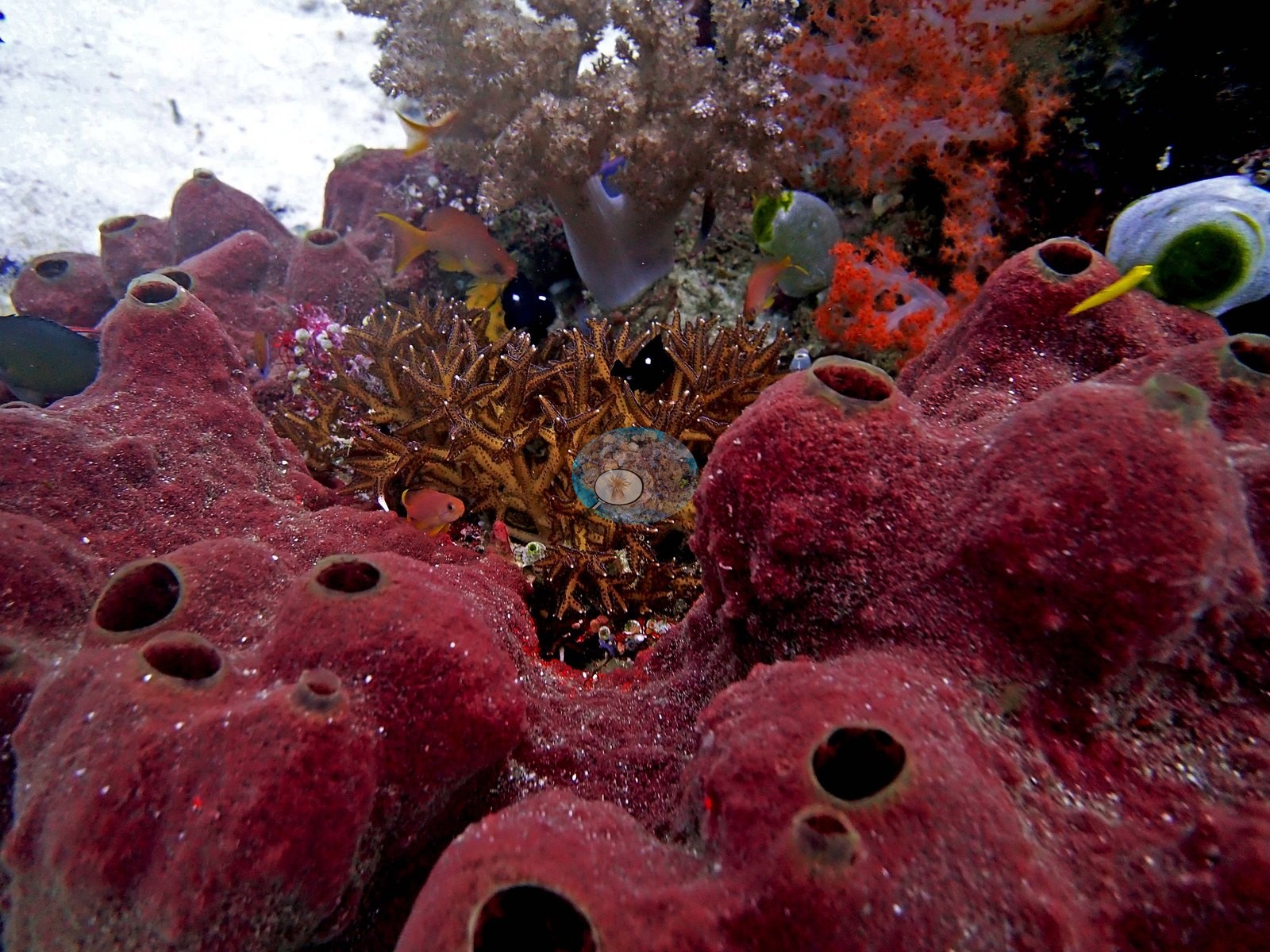
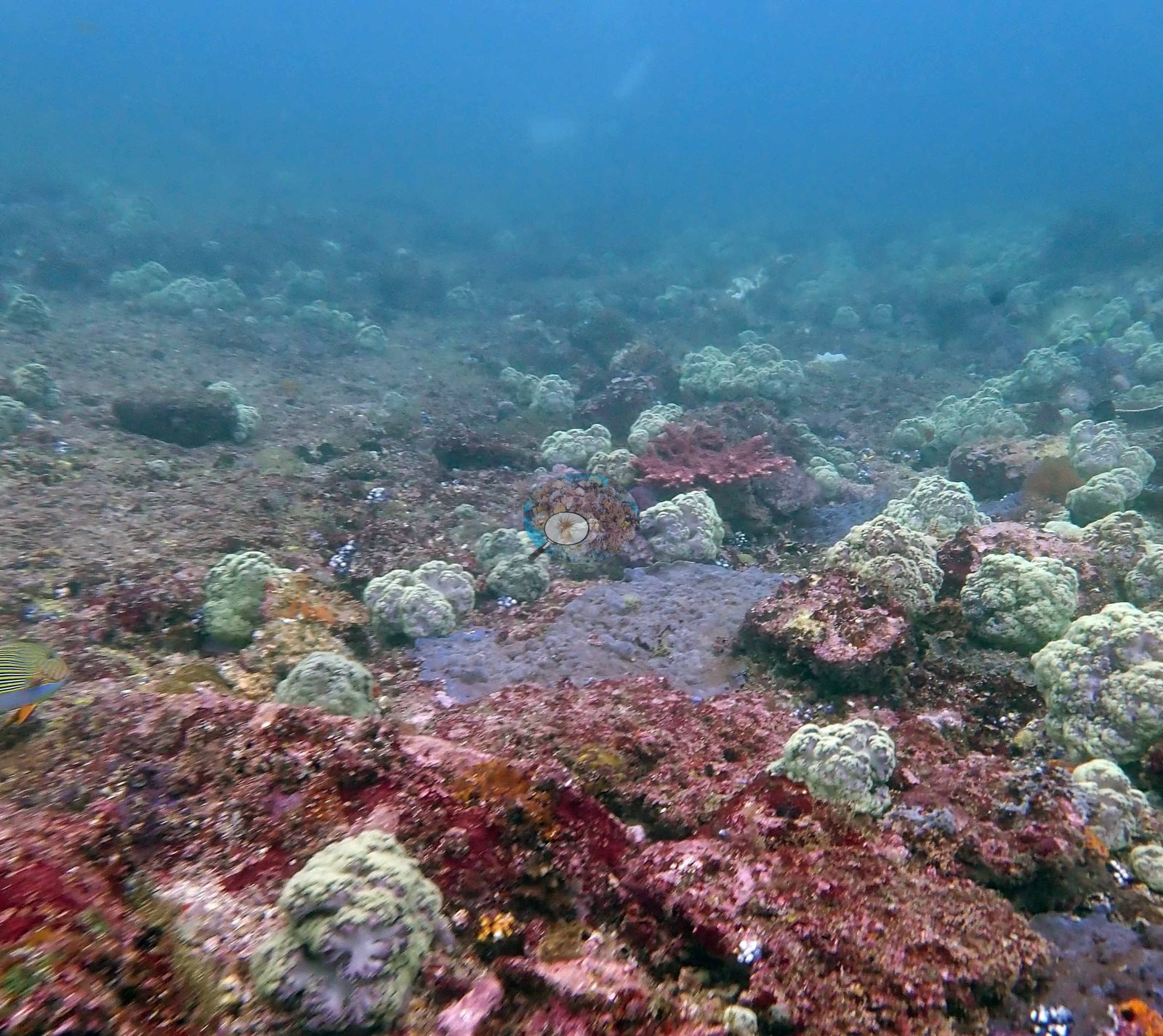
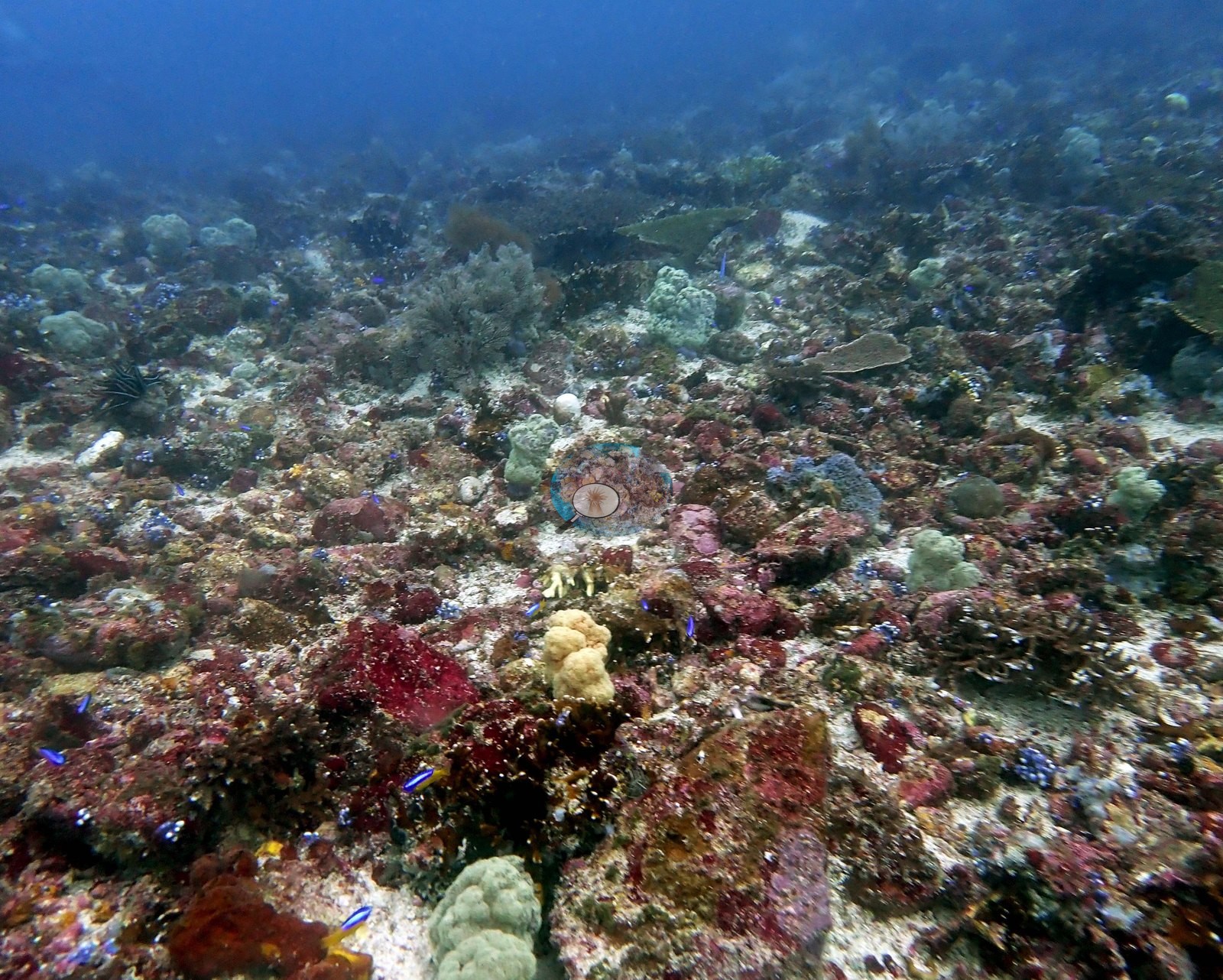
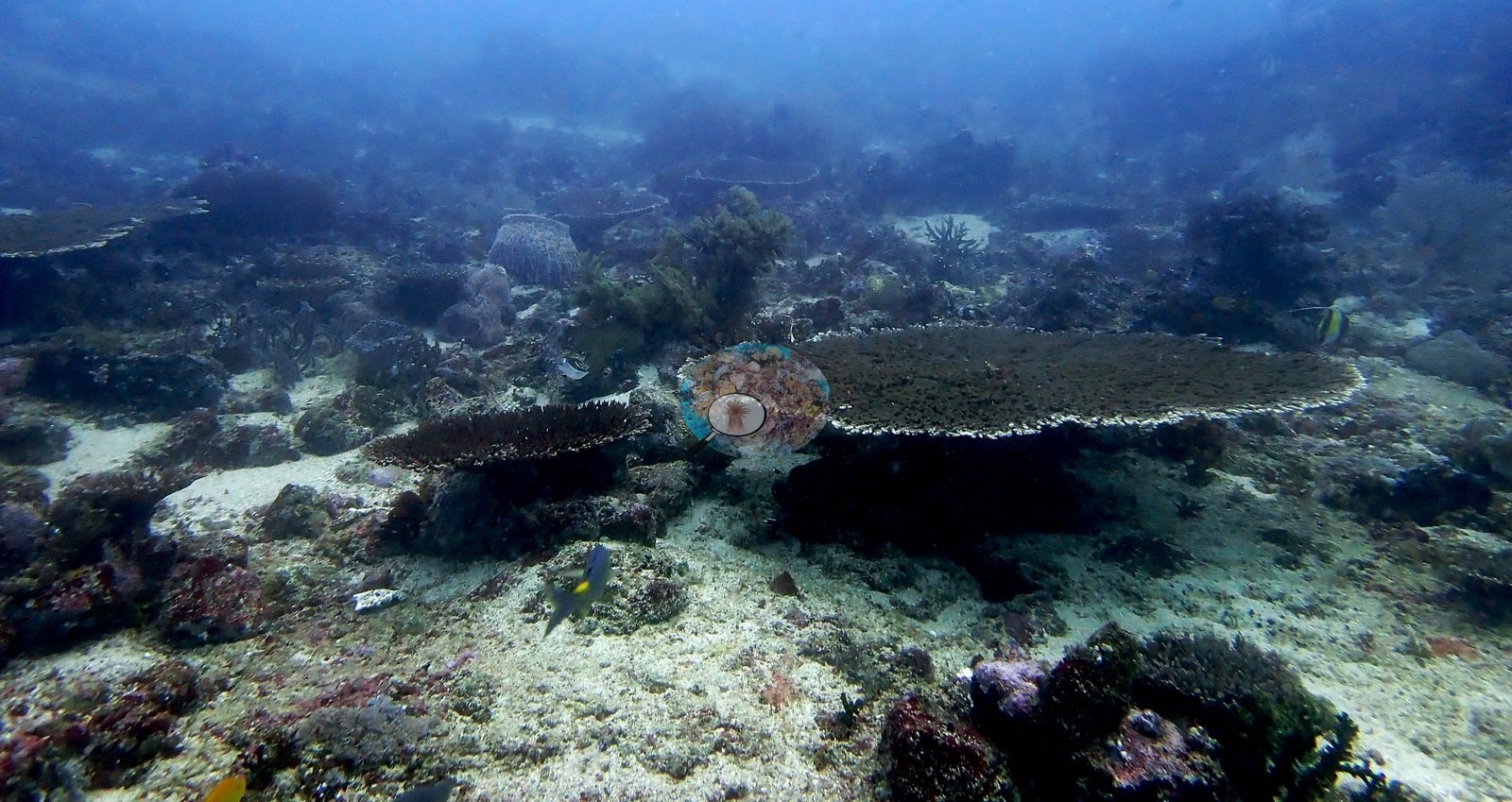
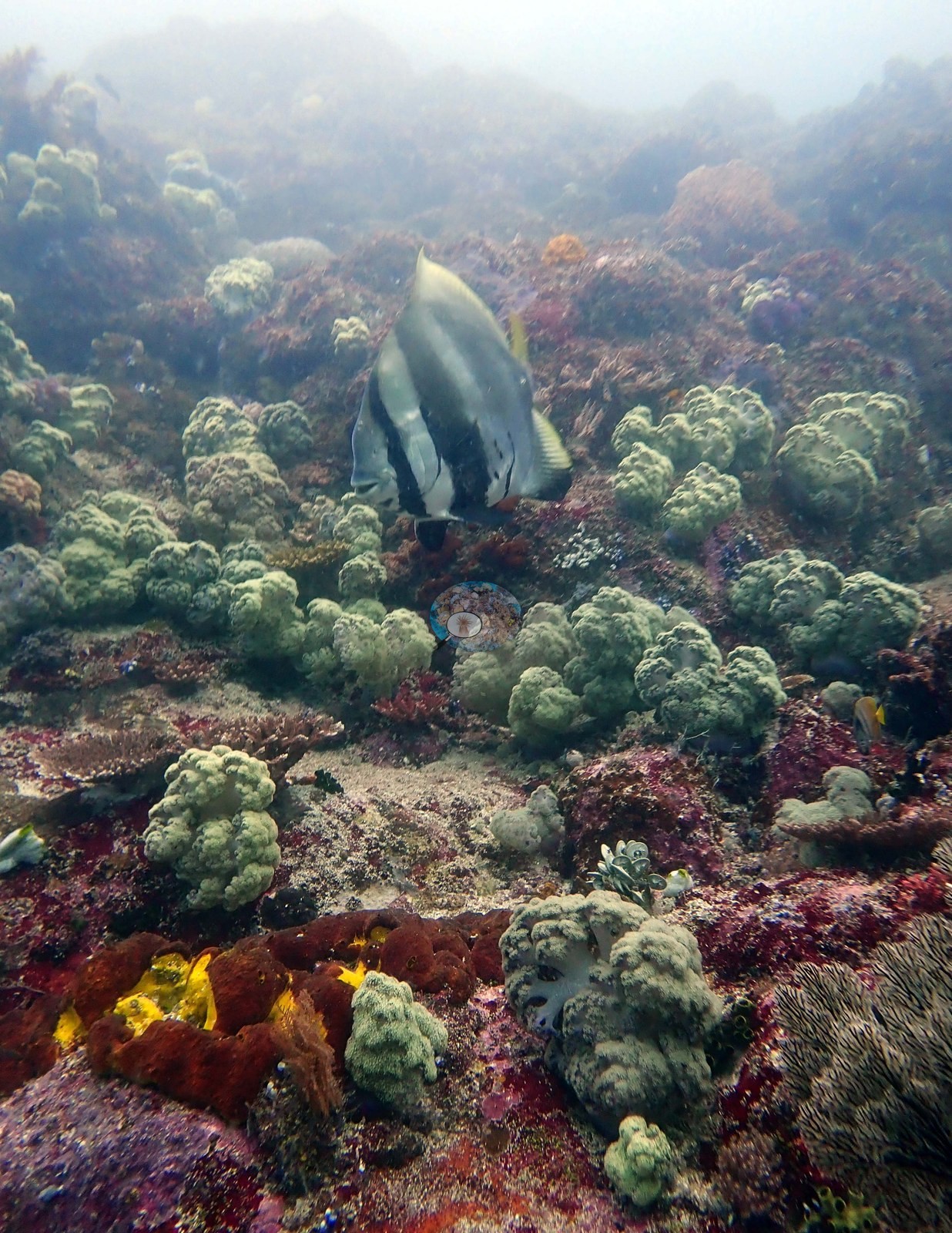
One frame is the scoured, soft-coral-dominated ground: a longfin batfish hanging over a substrate of pale mint-green Sinularia-type heads on dark red encrusting sponge and coralline rock, with a red-and-yellow sponge and a small anemone, in visibly hazy water and with almost no hard coral in view (e.g., Image 3).
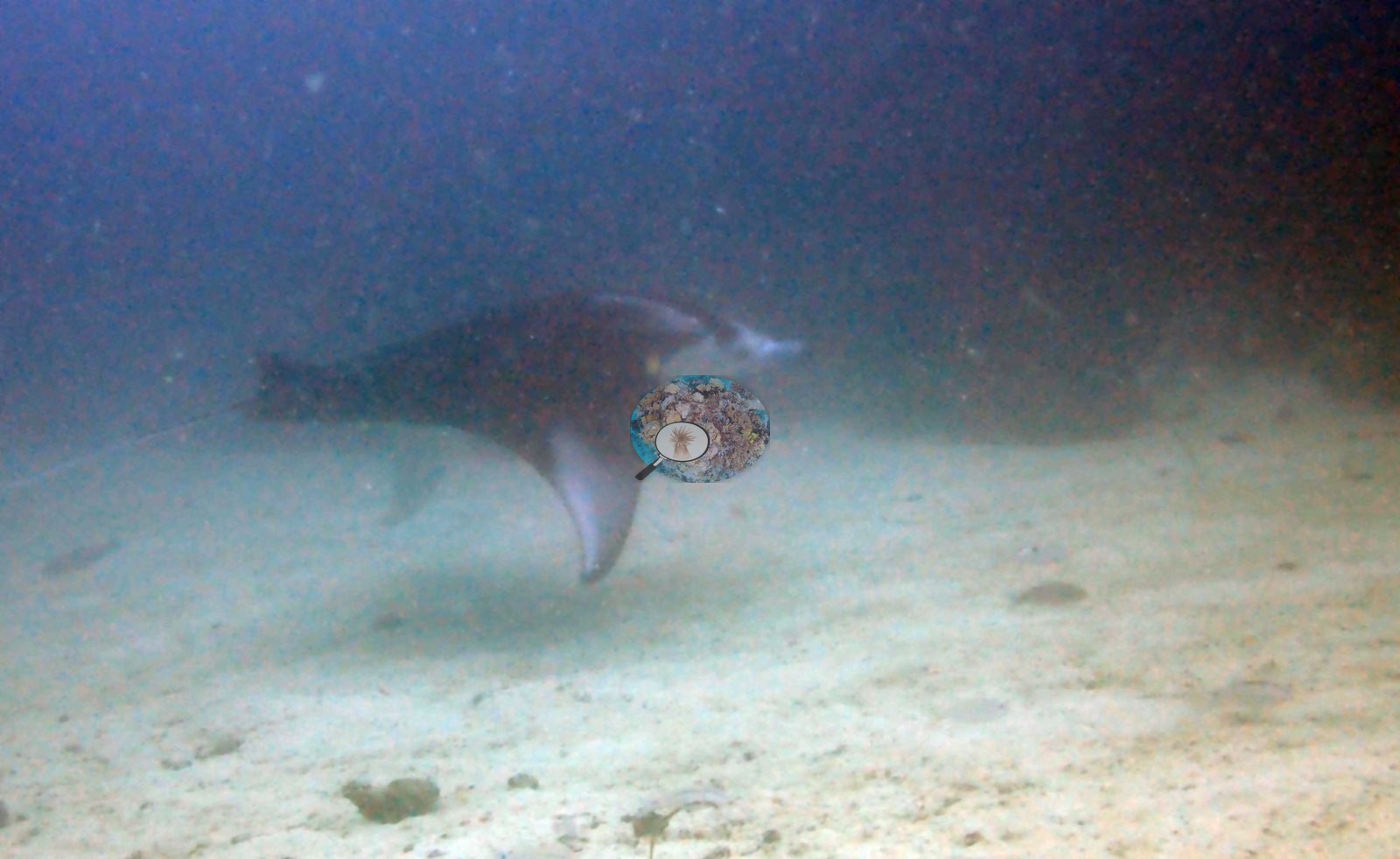
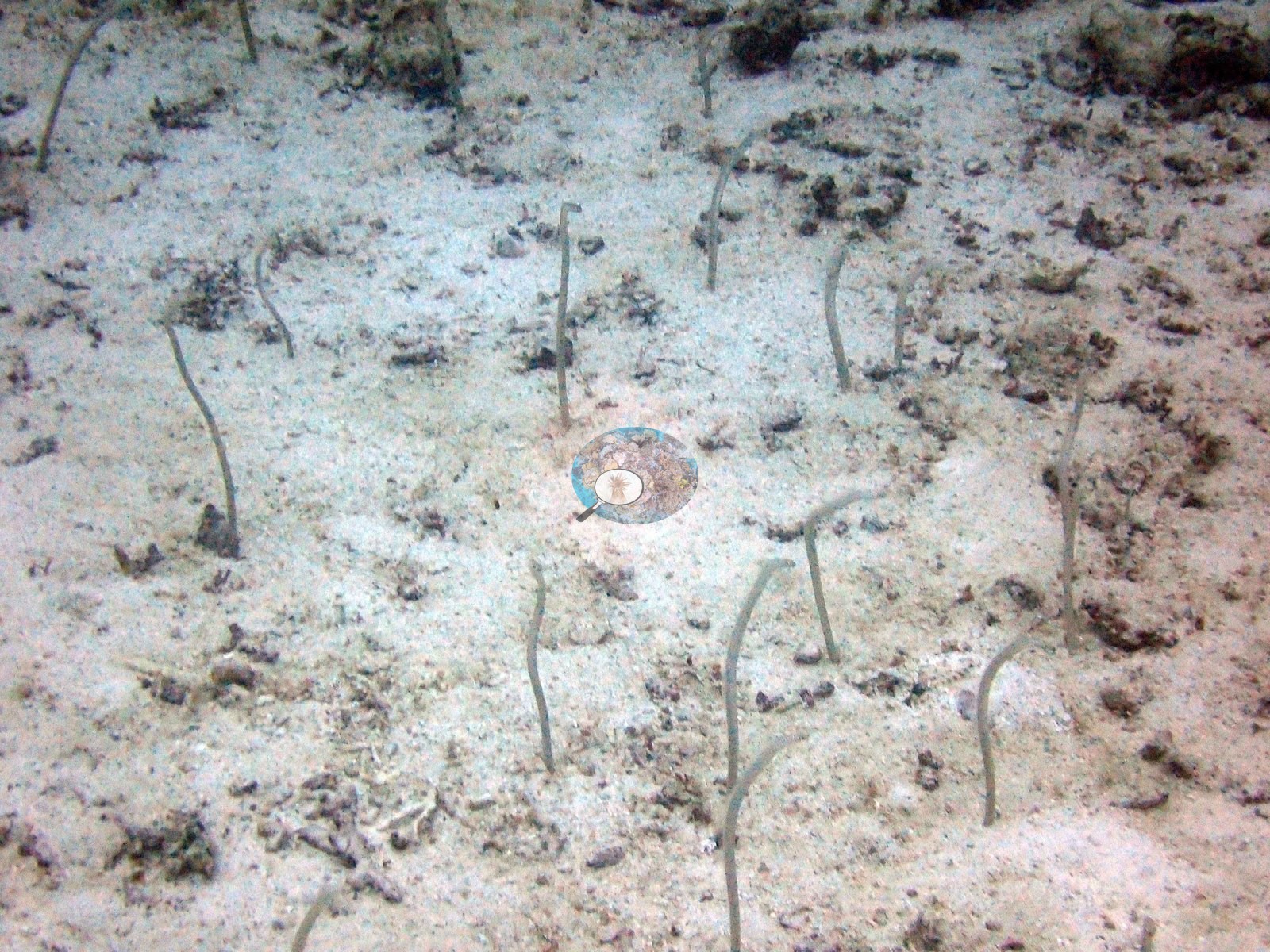
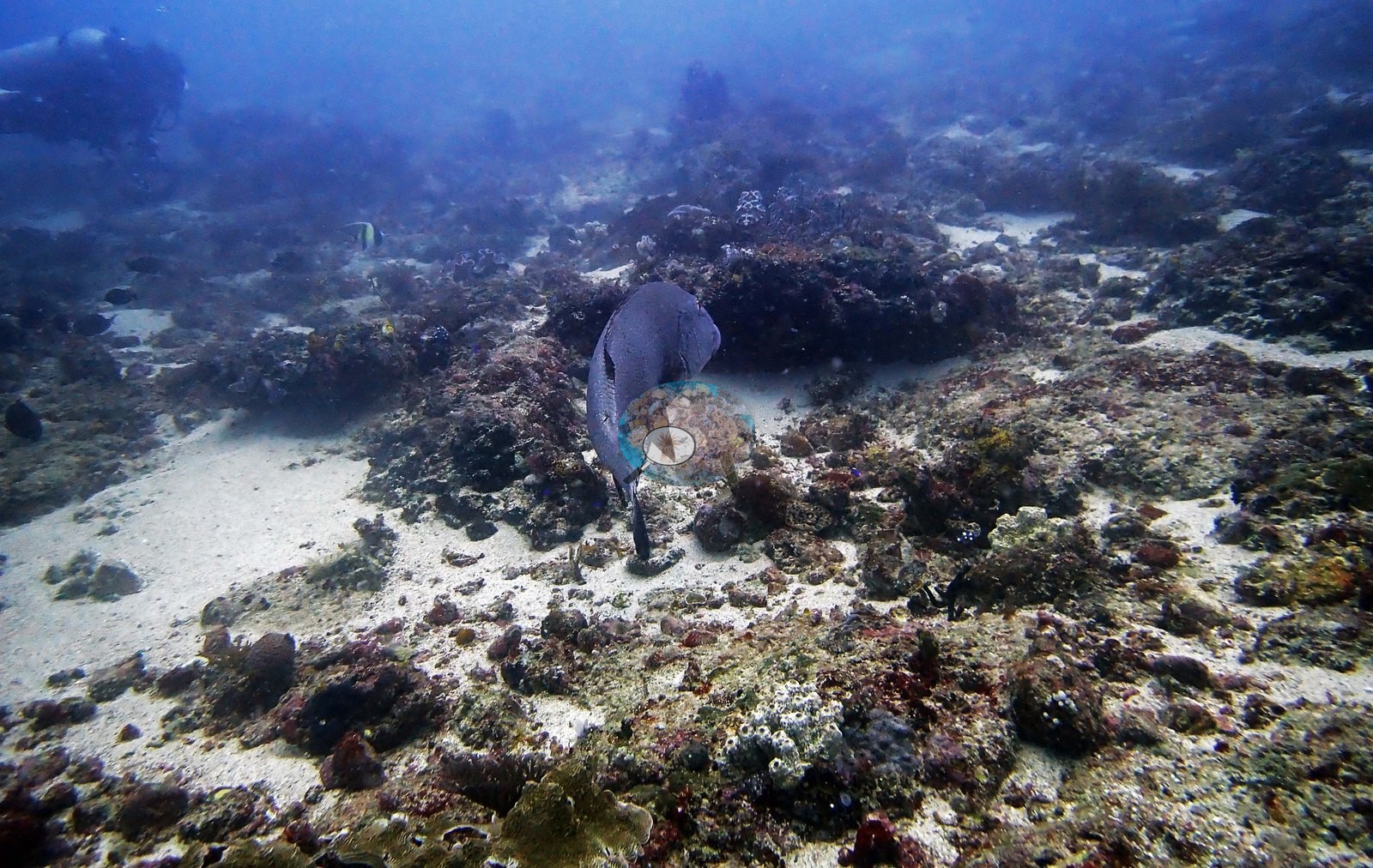
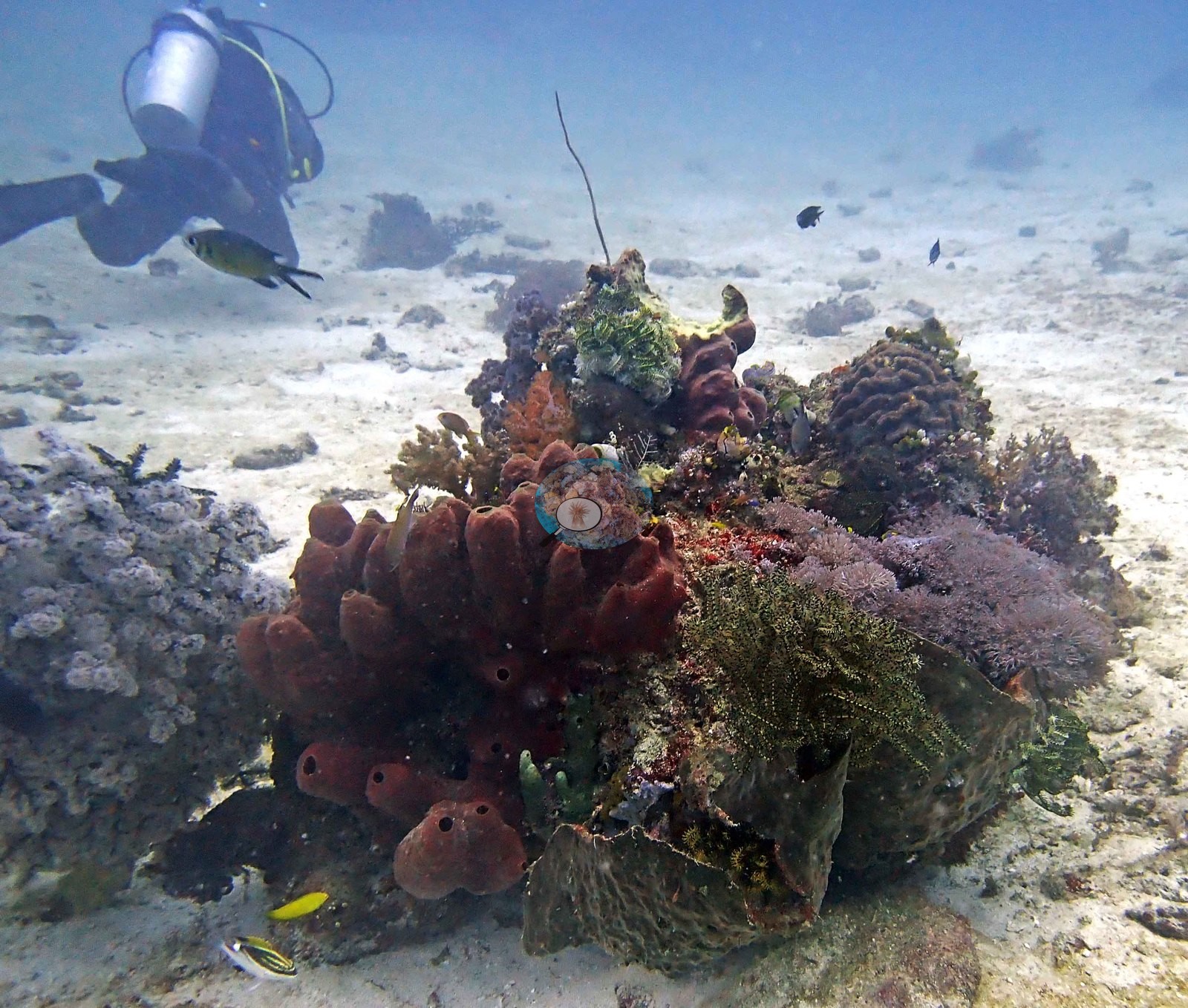
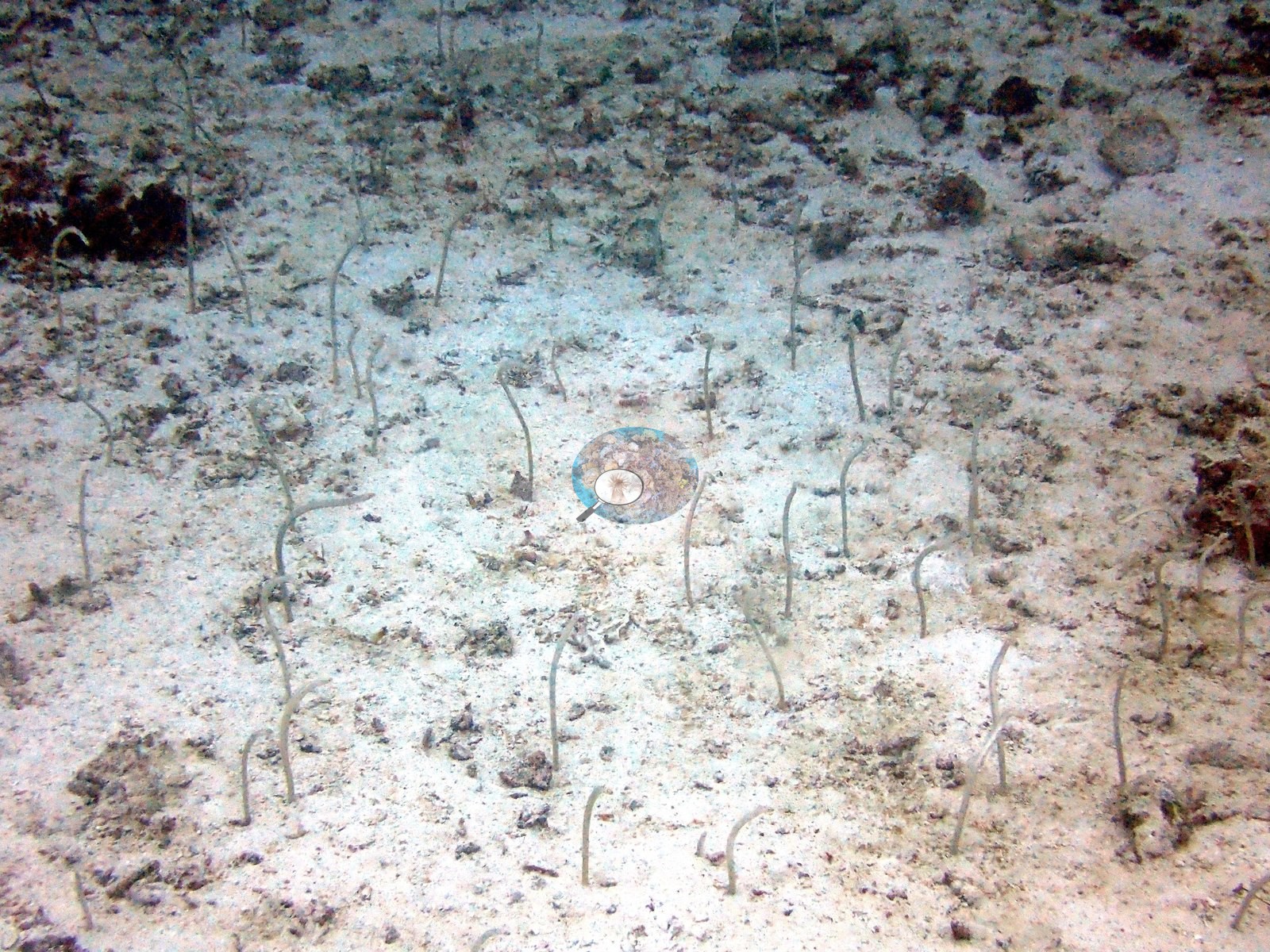
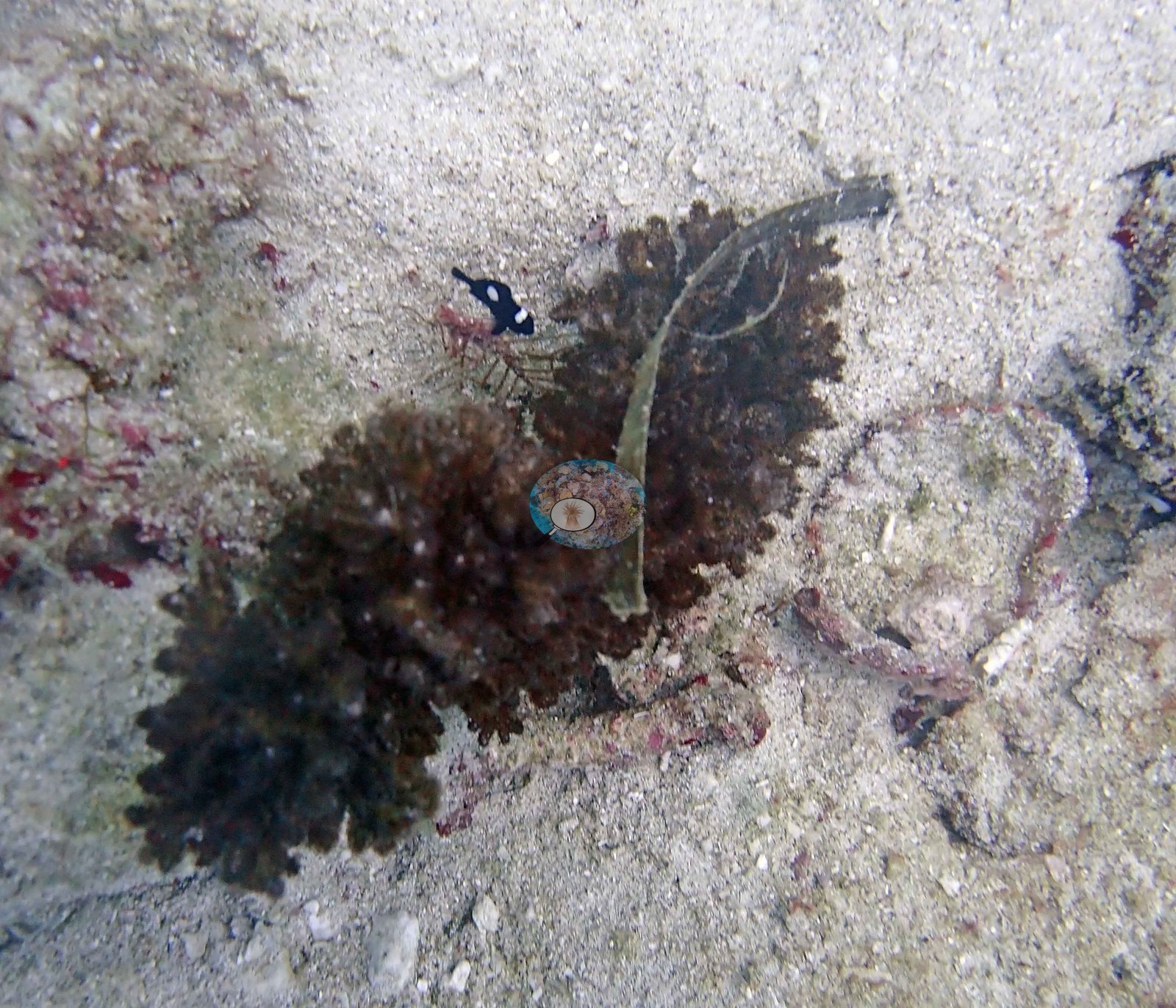
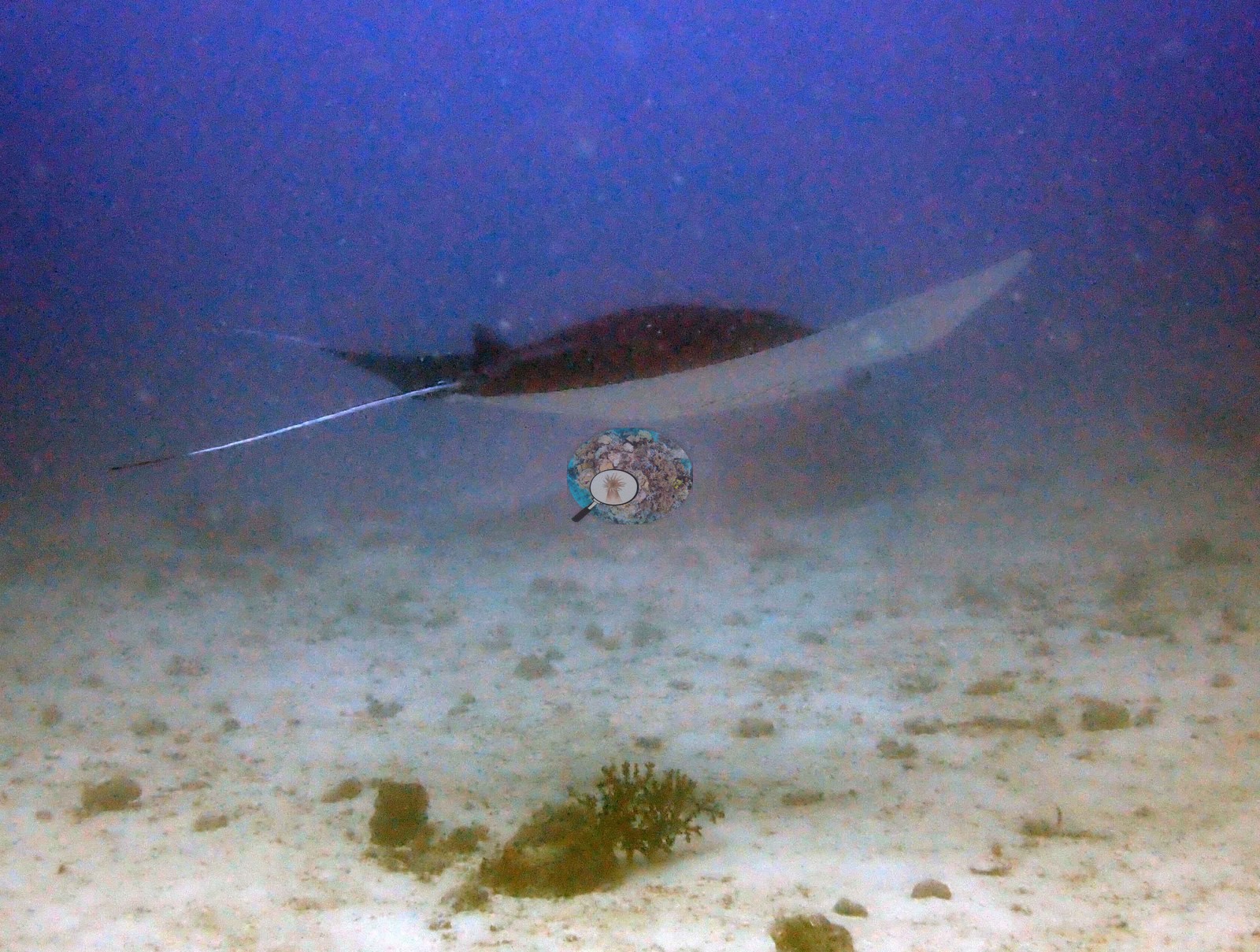
The sand apron gives the other two: a whip-tailed ray gliding low over a coarse sand plain dotted with small isolated coral clumps in murky blue-violet light, and a close frame of a camouflaged ghost pipefish tucked against dark algal clumps on shell sand beside a small black-and-white damselfish - his log records an ornate ghost pipefish at the very end of that dive (e.g., Image 1, Image 2).
Coral cover
Coral cover: 26% — a blind Claude computer-vision point count of 62 of Anderson's edited photographs (20 points per photo; water, fish, and obstructions excluded). Other computer-vision methods are listed in the method table. These are computer-vision indices over photographs, not a diver transect, and each averages across acroporid thicket, scoured soft-coral pavement, and open sand.
Stressors
No bleaching, disease lesions, or predation scars are resolvable, and nothing man-made appears.
Comparisons with other data
Also on record for this site: 2019-1-21 dive 3: Shotgun/Cauldron (#10). I did this dive in 2009 and it was one of my favorite dives I’d ever done. Darkly pigmented Pocillopora acuta @ 22 m (not integrated into reef matrix). Small massive poritids, Tubastrea, high diversity of mostly small Acropora, Pachyseris, Seriatopora caliendrum/Stylophora pistillata, monster snapper, Pocillopora verrucosa. Pocillopora eydouxi=rare, large barrel sponges, encountered area with no coral, only CCA-encrusted rubble. Large nurse shark in the distance (first of trip). Montipora, among the most impressive Acropora of the trip-abundant and diverse.
Dive record
Anderson dived this site in August 2009 - logged at the time as his best dive ever - and again on 21 January 2019 (15:04, 53 min, max 23.5 m, average 13.1 m, 25.6 degrees C, about 10 m visibility, strong current, and thermoclines).
CV model comparison
More info
DINOv3 and CoralSCOP were run on the same photos and are listed for comparison. Coralscapes v2 and v1 were also run but are not shown: Anderson does not consider Coralscapes reliable for these photos. No diver transect exists for this trip, so agreement between the rows is not accuracy, and as of September 2026 no computer-vision method estimates coral cover accurately on new images; treat every row as indicative.| Method | Hard-coral cover (%) |
|---|---|
| In-house DINOv3 | 20.9 |
| CoralSCOP edited | 33.7 |
| Claude (edited photos) | 26.0 |
Independent surveys nearby
 Coral Reef Diagnostics survey
Within 5 km, 1 independent survey station recorded hard coral cover in 2016. The most recent nearby survey is from 2016, so these values predate recent heat stress. This site's own pooled estimate (26%) sits 41.3 points below the range of these surveys (67%); the methods differ, so the comparison is context, not a like-for-like test.
Collected by other programs using different methods, so these are context for the figures above, not a like-for-like comparison. Where a station was surveyed more than once the range is shown. Station names are not dive-site names.
| Agency | Site / location | Date | Hard coral cover (%) | Distance | Link |
|---|---|---|---|---|---|
| WWF-US / WWF-Indonesia | TNK05 | 2016 | 67% | 2.25 km | Amkieltiela, Abdillah T, Amkieltiela A, Andradi-Brown D, Lazuardi E. 2016. Komodo MPA. MERMAID |
Data & links
All images from Coral Reef Diagnostics. Data are from Coral Reef Diagnostics and the organizations named in the data-sources table above.
© Coral Reef Diagnostics.