
Indonesia - Komodo NP: Siaba Besar

Part of the regional summary: Indonesia - Komodo
2019-01-26
More info
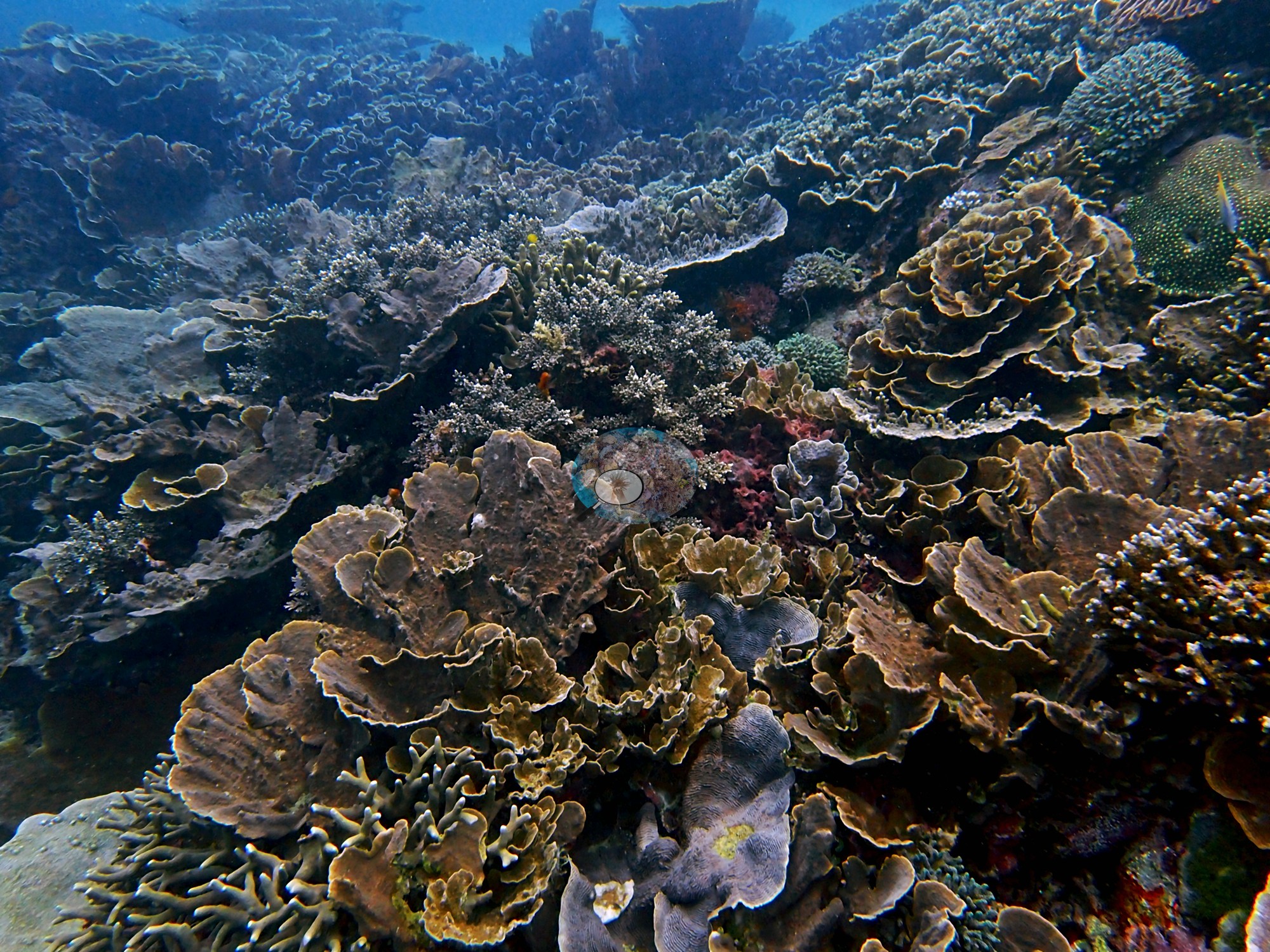
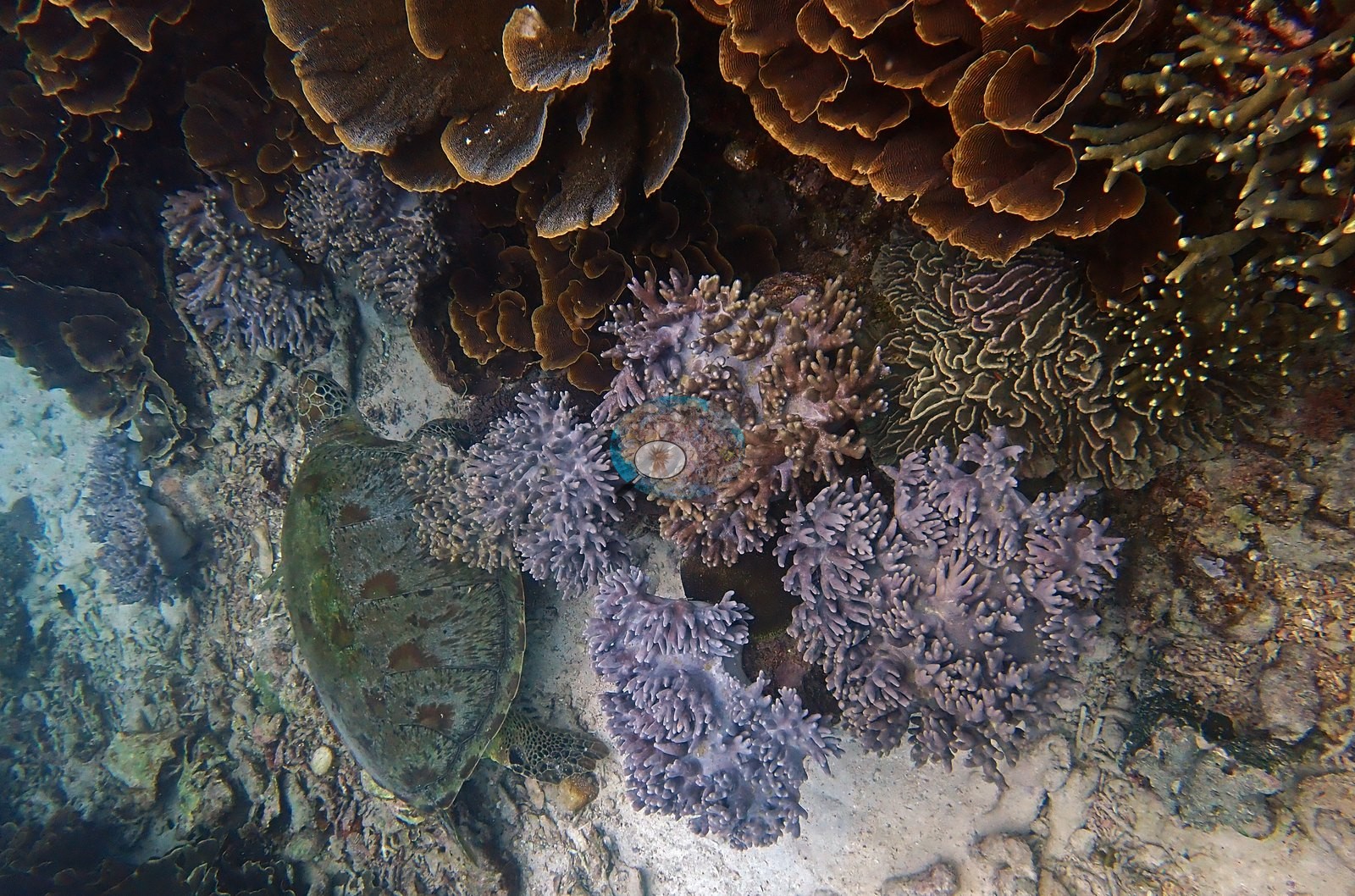
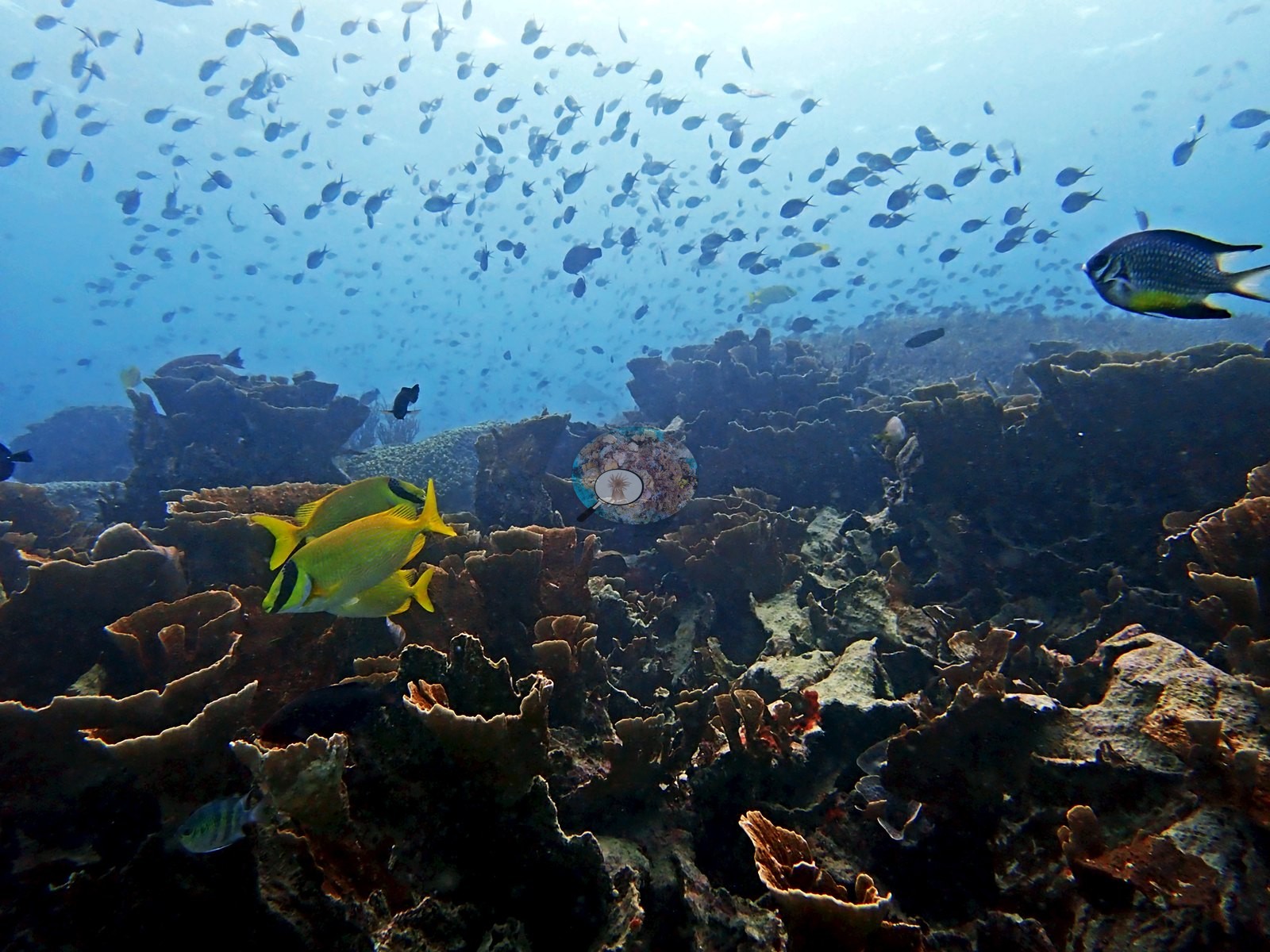
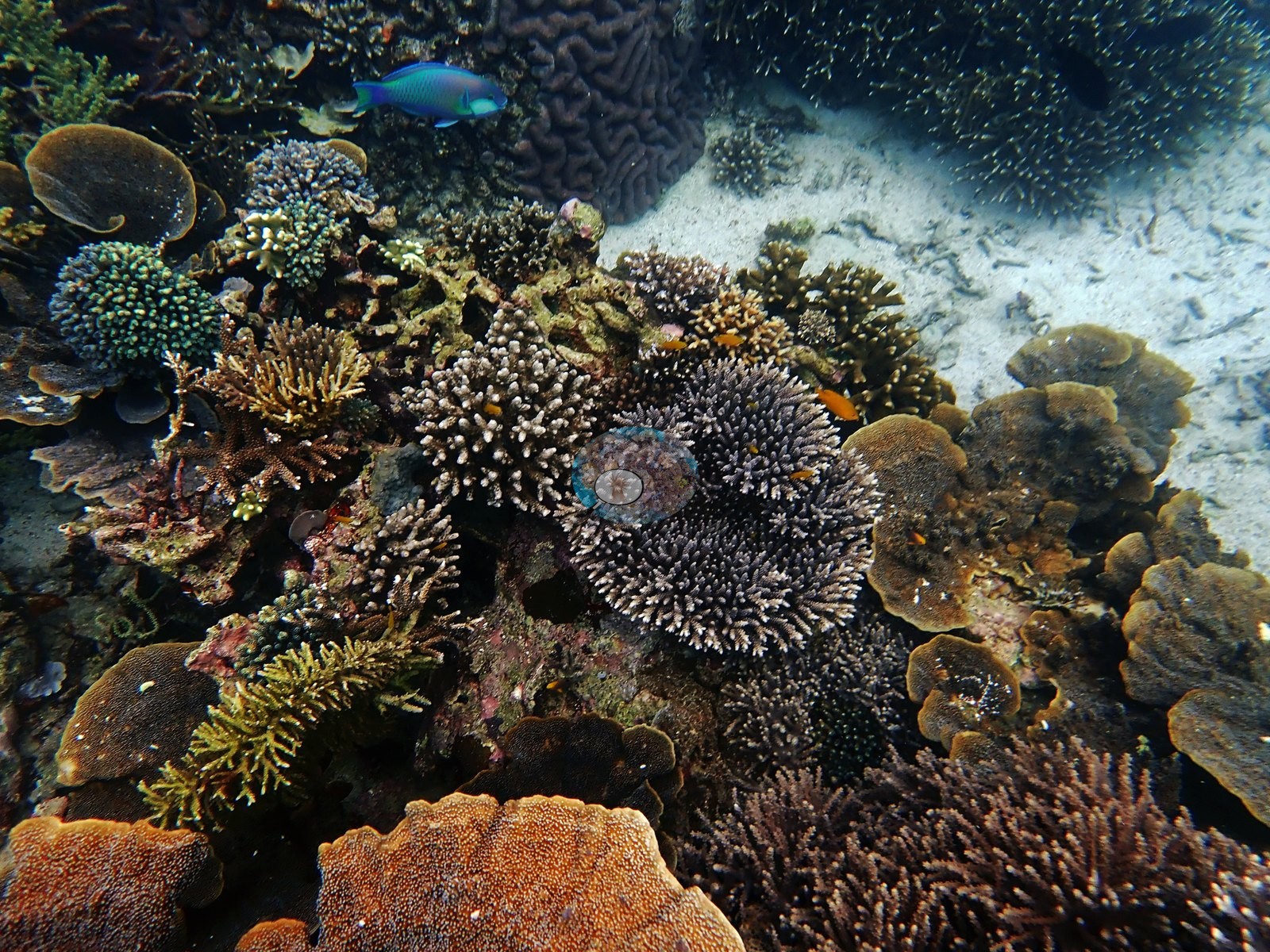
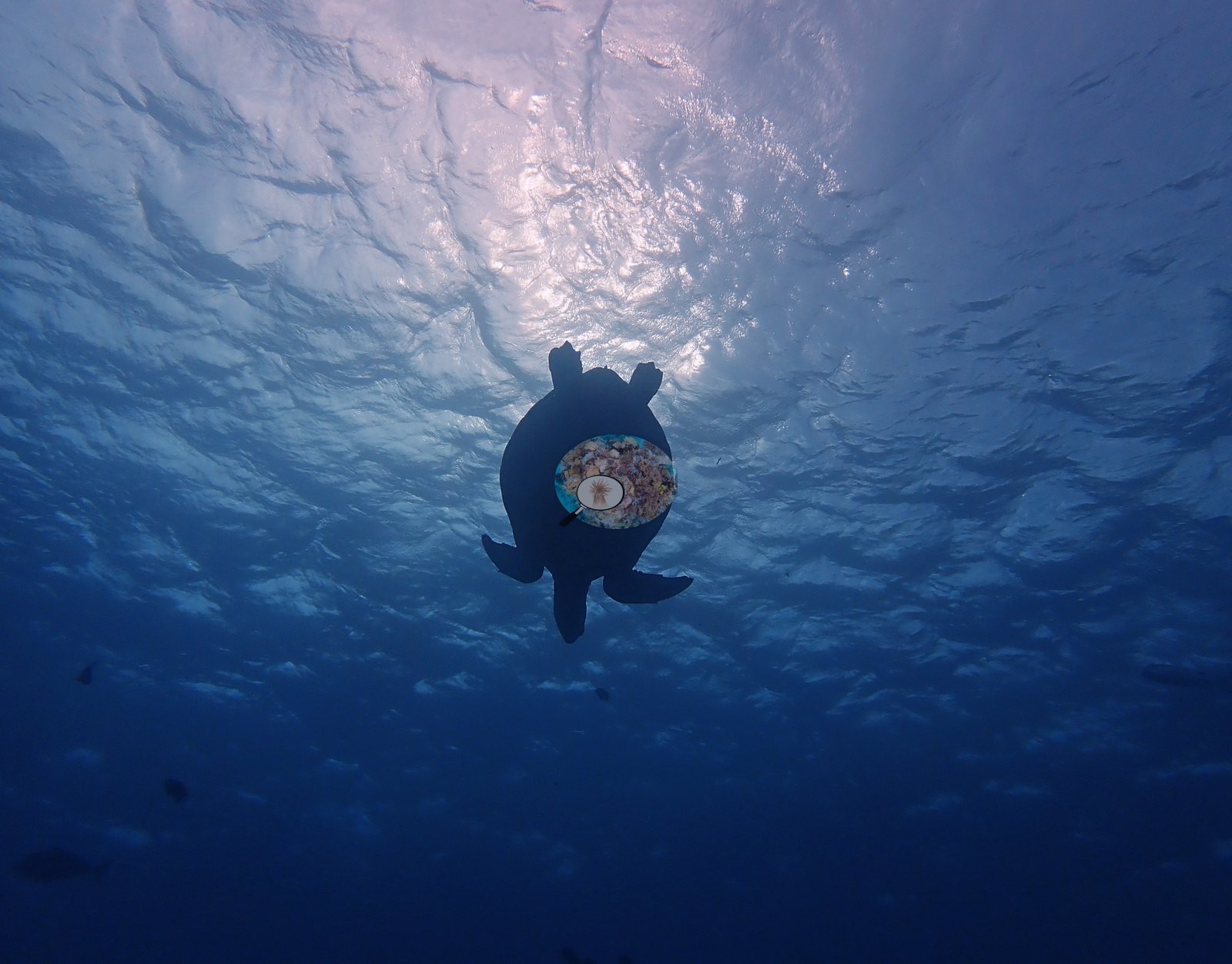
East Nusa Tenggara (NOAA CRW virtual station) · Lesser Sunda ecoregion mean=6.9°C-heating weeksOne of Komodo's best-known hard coral sites, and Anderson found its coral cover absolutely stunning: large, very old Acropora colonies, enormous ancient sheets of Pachyseris at 15-20 m, and fluorescent green Stylophora. Several large green turtles, some possibly pregnant, and garden eels on a sand apron added to the dive, with only minor cushion-star damage.
Salah satu lokasi karang keras paling terkenal di Komodo, dan Anderson menilai tutupan karangnya benar-benar menakjubkan: koloni Acropora yang besar dan sangat tua, lembaran Pachyseris purba yang luas pada kedalaman 15-20 m, serta Stylophora hijau menyala. Beberapa penyu hijau berukuran besar, sebagian mungkin sedang bunting, dan belut taman di hamparan pasir menambah nilai penyelaman ini, dengan kerusakan akibat bintang laut bantal yang hanya bersifat ringan.
Terjemahan ringkasan ini oleh AI; versi bahasa Inggris yang berlaku.
Five independent survey stations shown with the program’s logo — click one to see how far it is from this site.
Seven other CRD dive sites within 5 km shown in orange — click a marker to open its page.
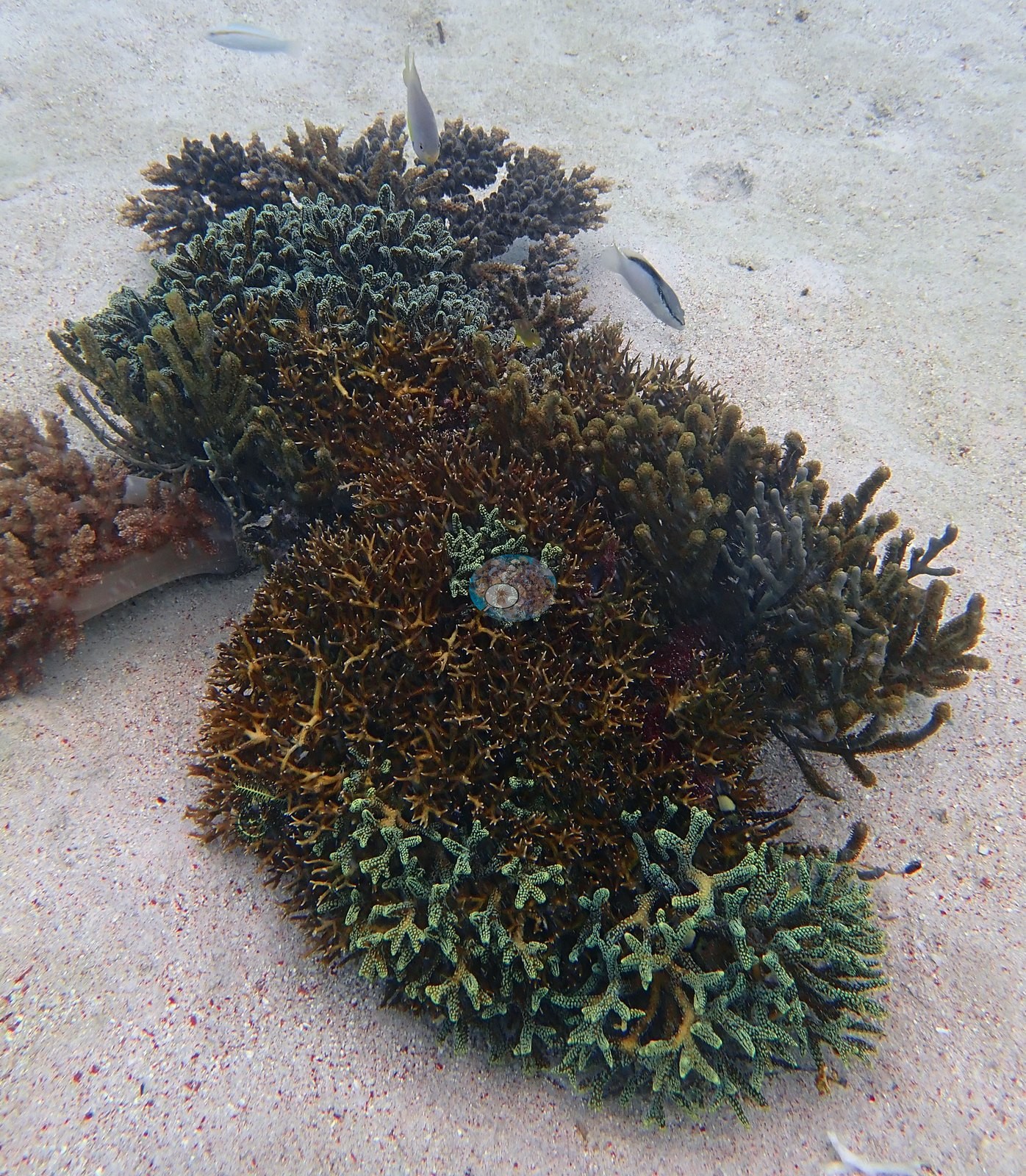
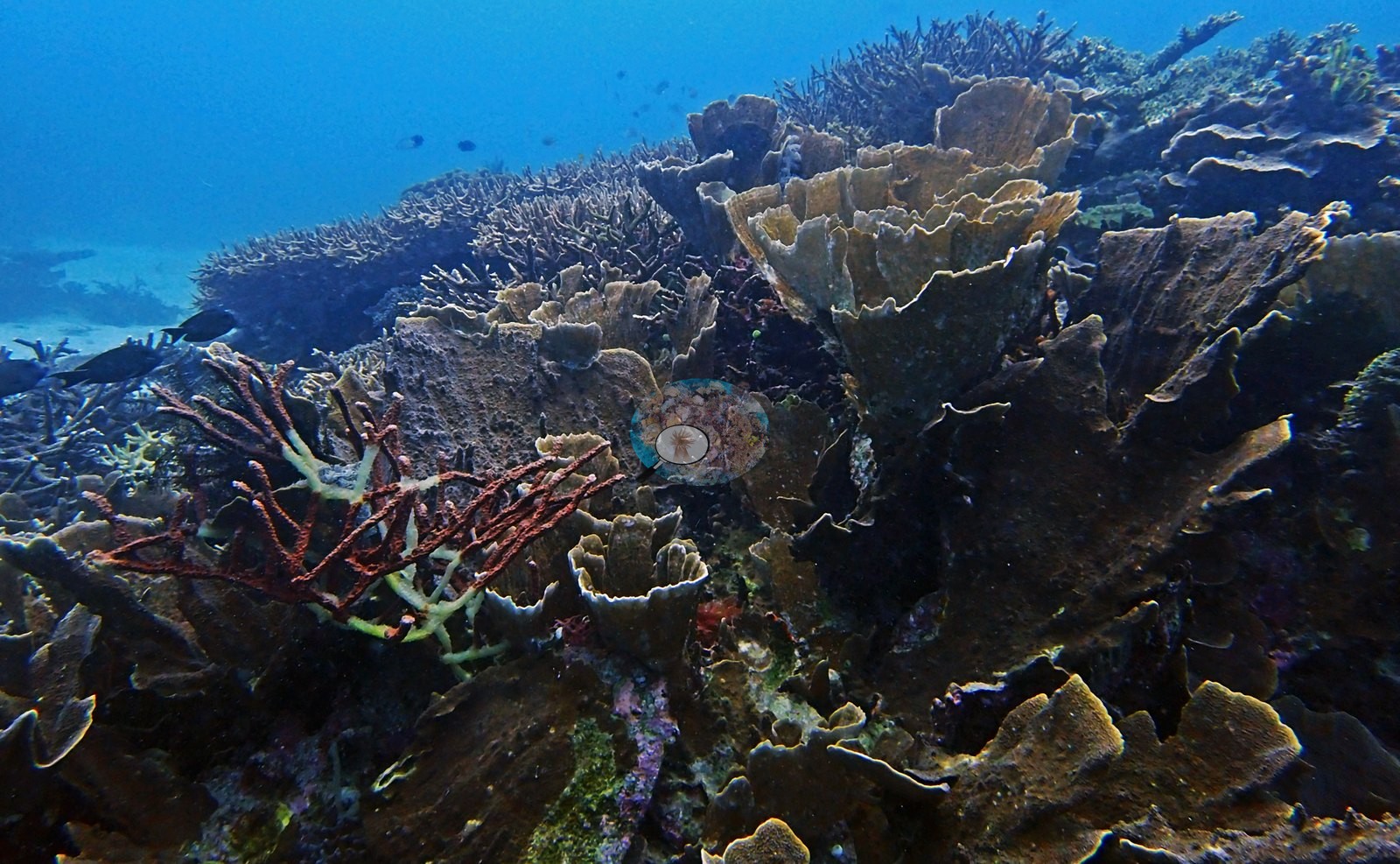
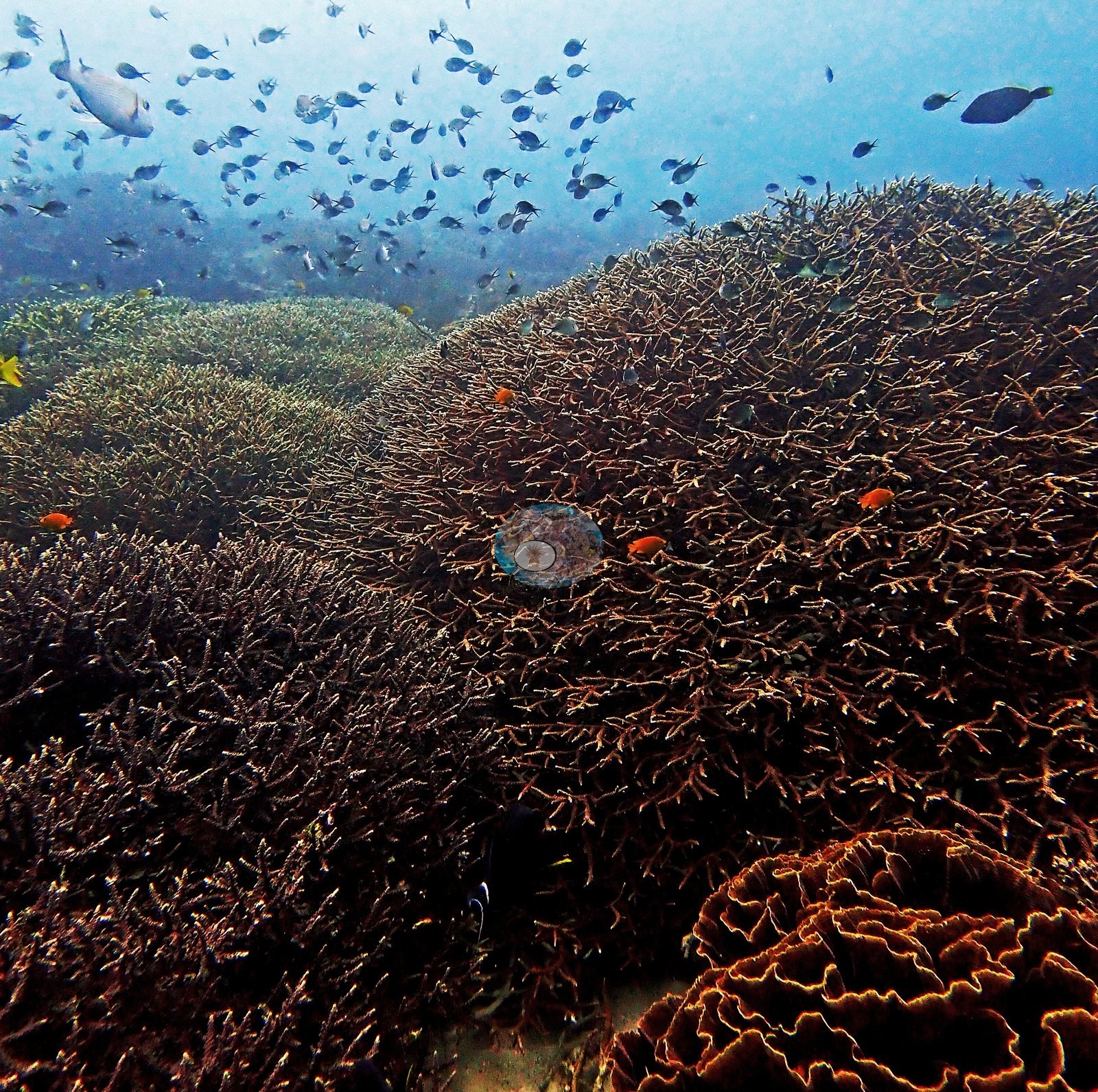
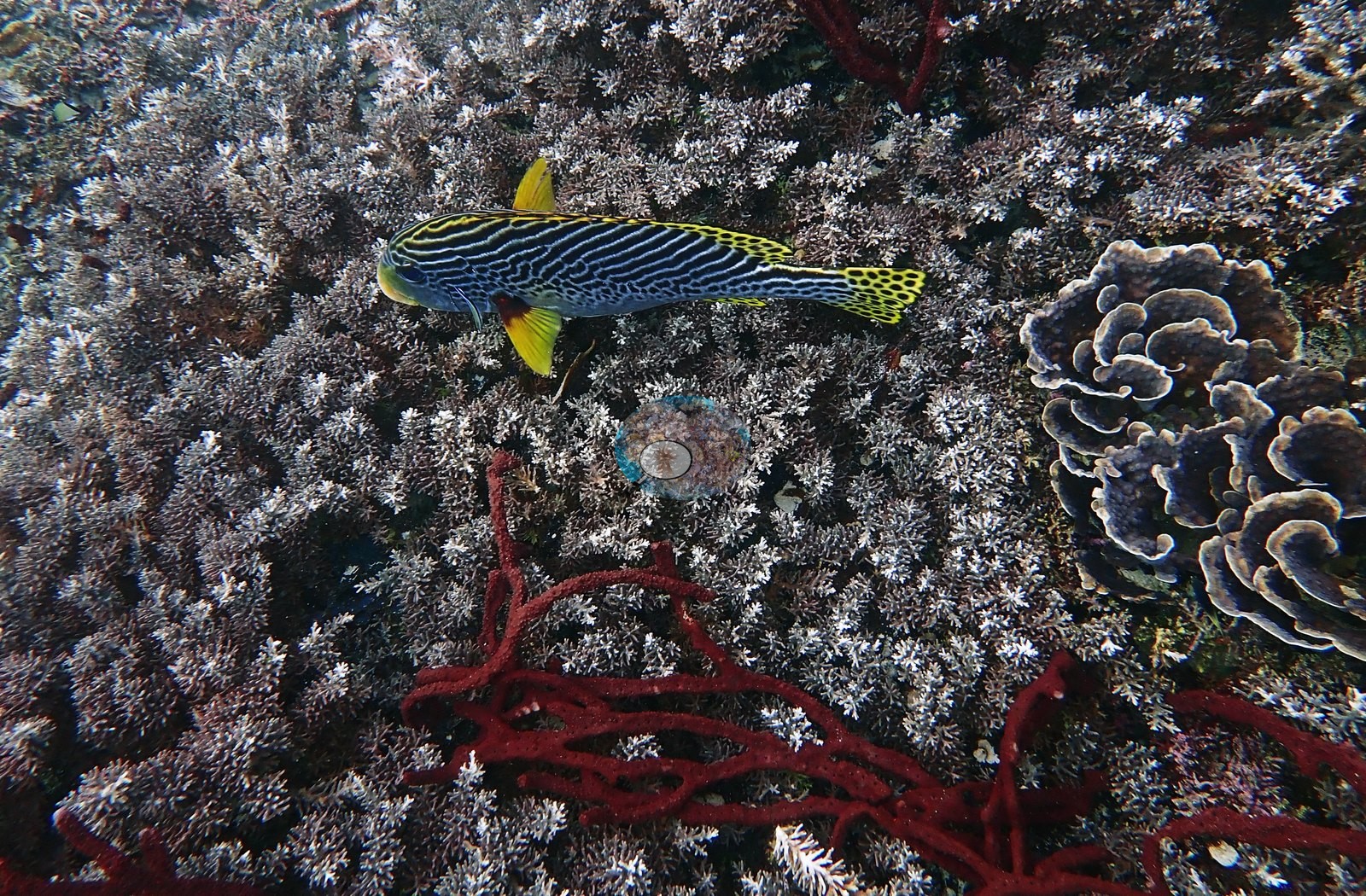
5 of these 50 photographs are shown beside the text that discusses them under "Site description" below.
Site description
Setting
Coral down to 20-22 m. 10 m viz, 26-27ºC. 10 m viz, very mild current.
General benthic features
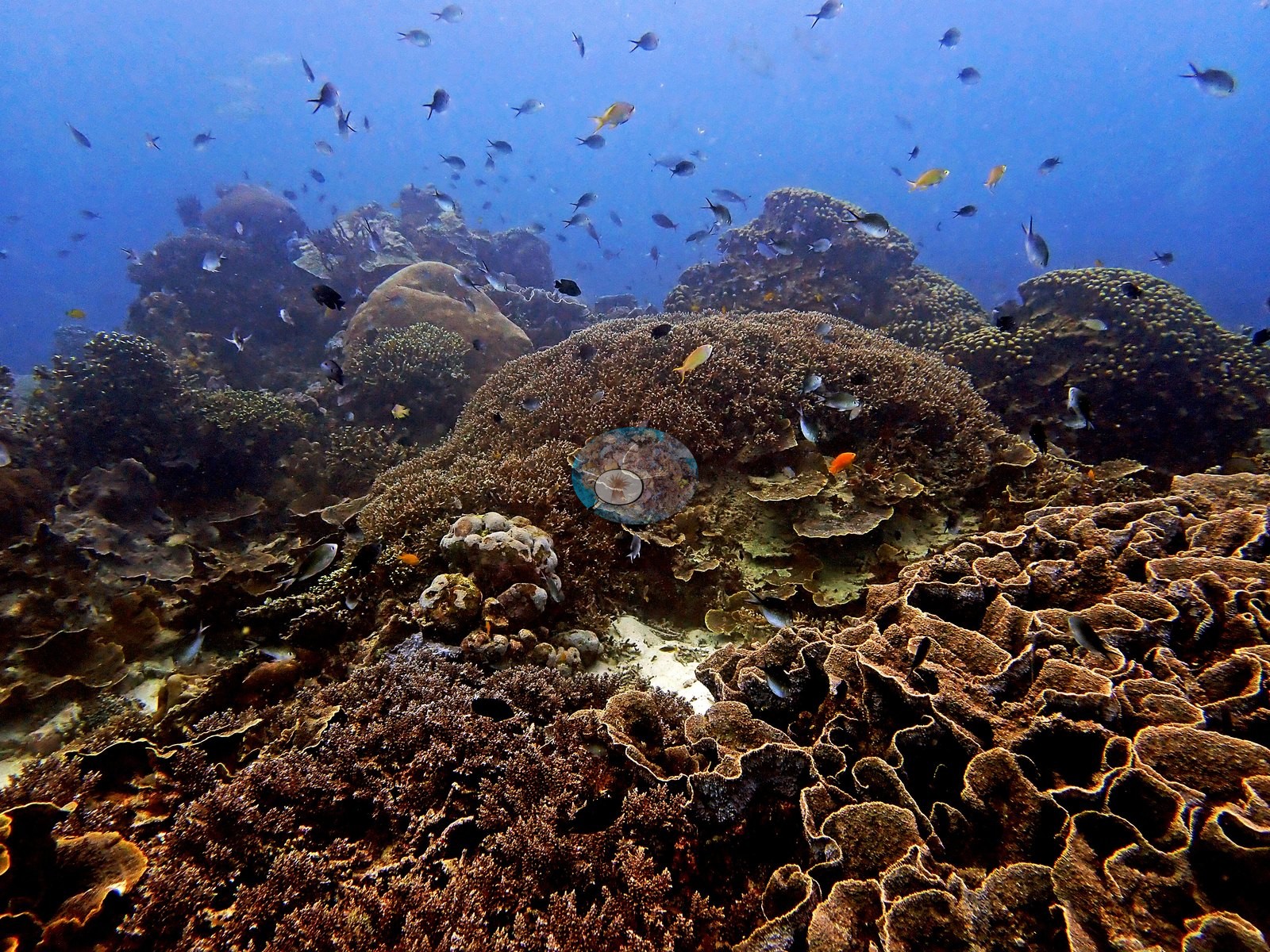
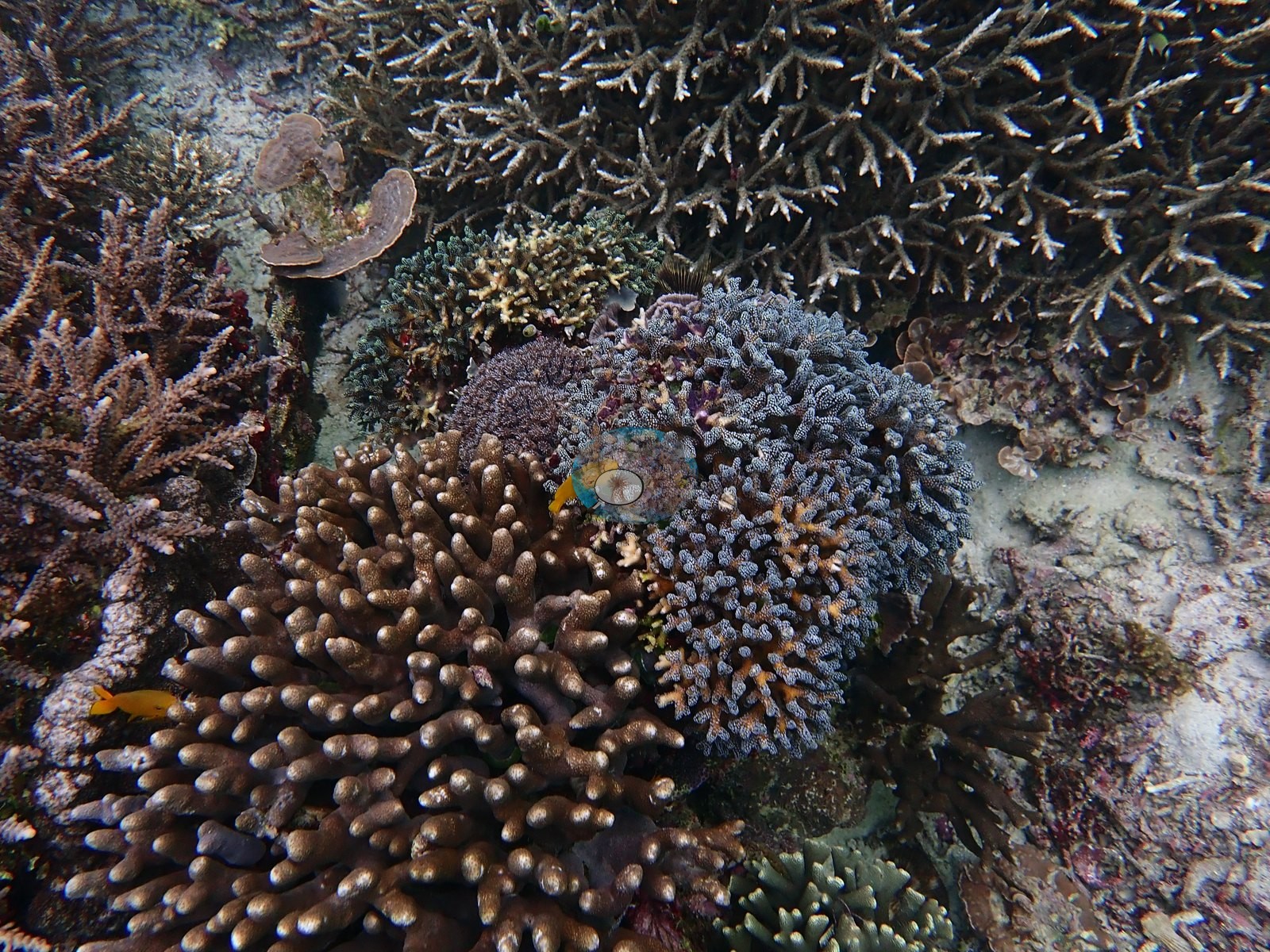
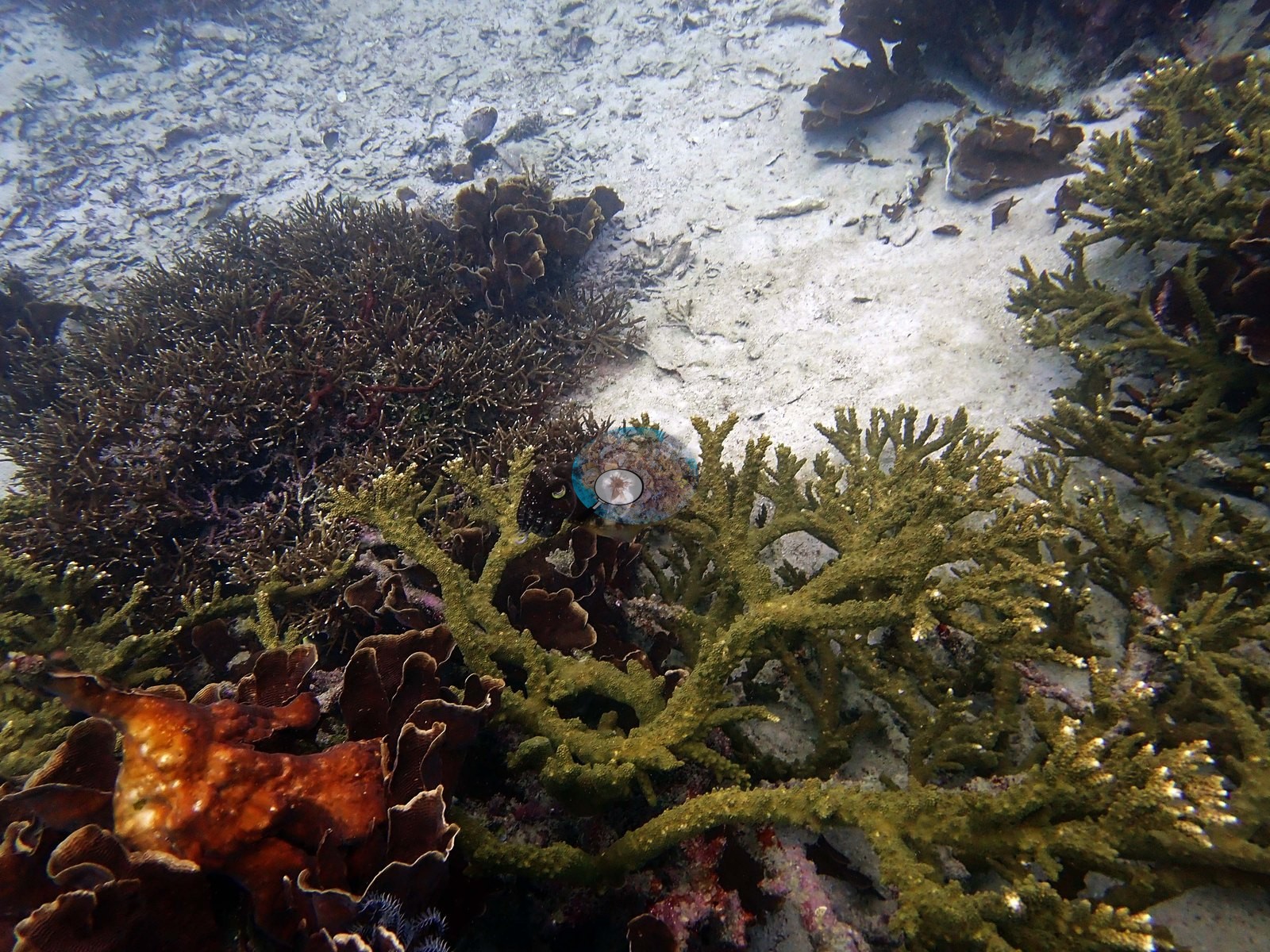
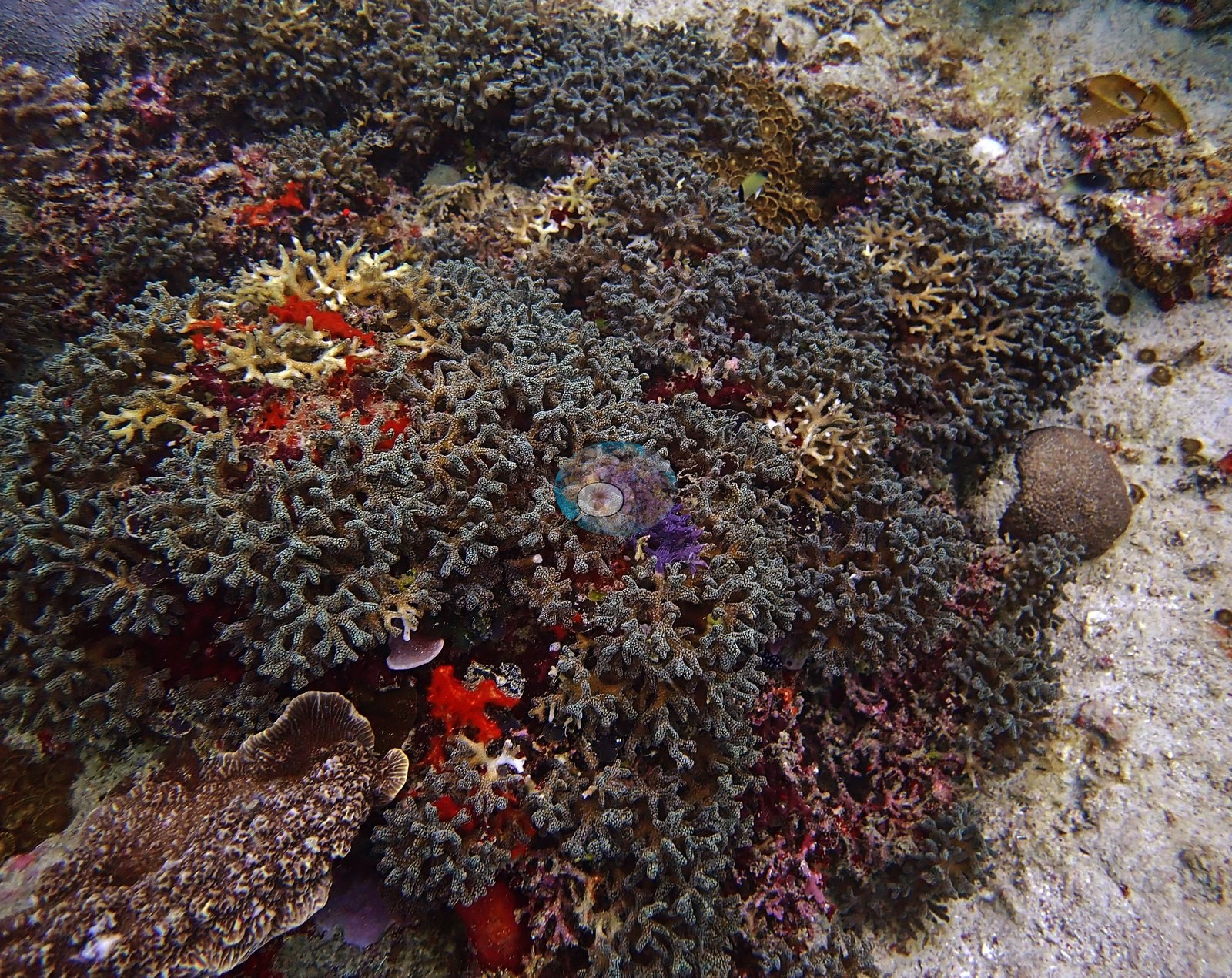
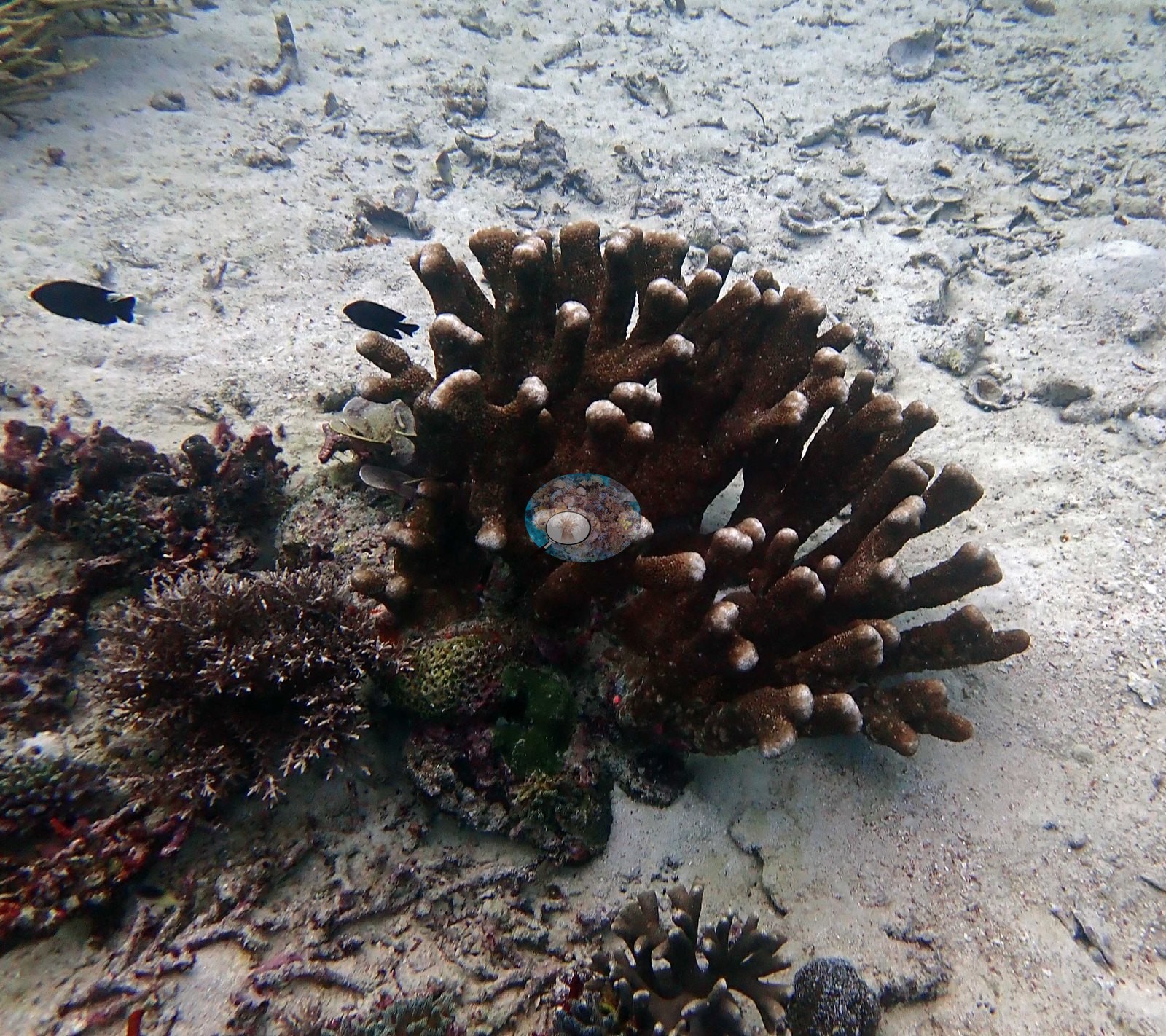
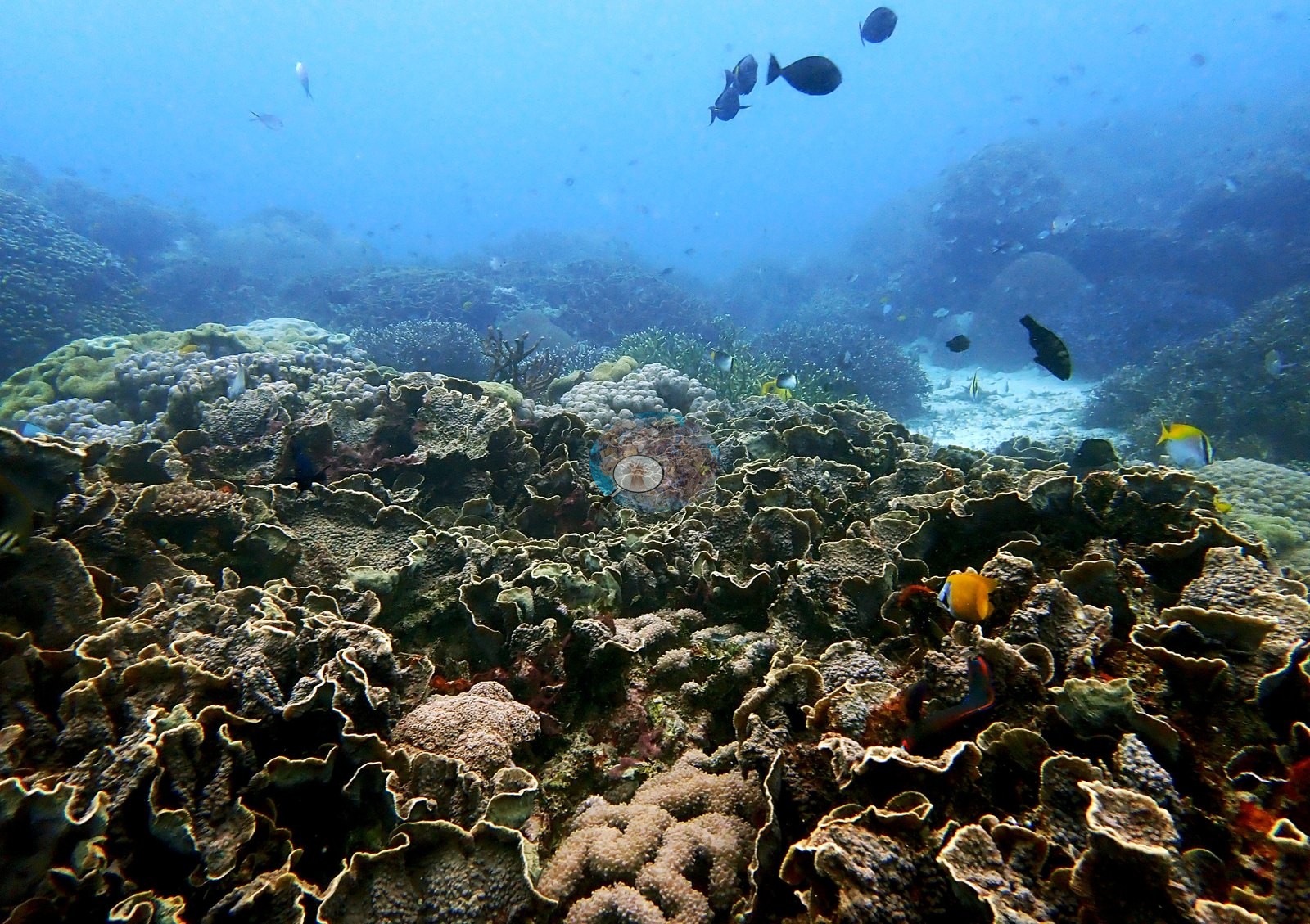
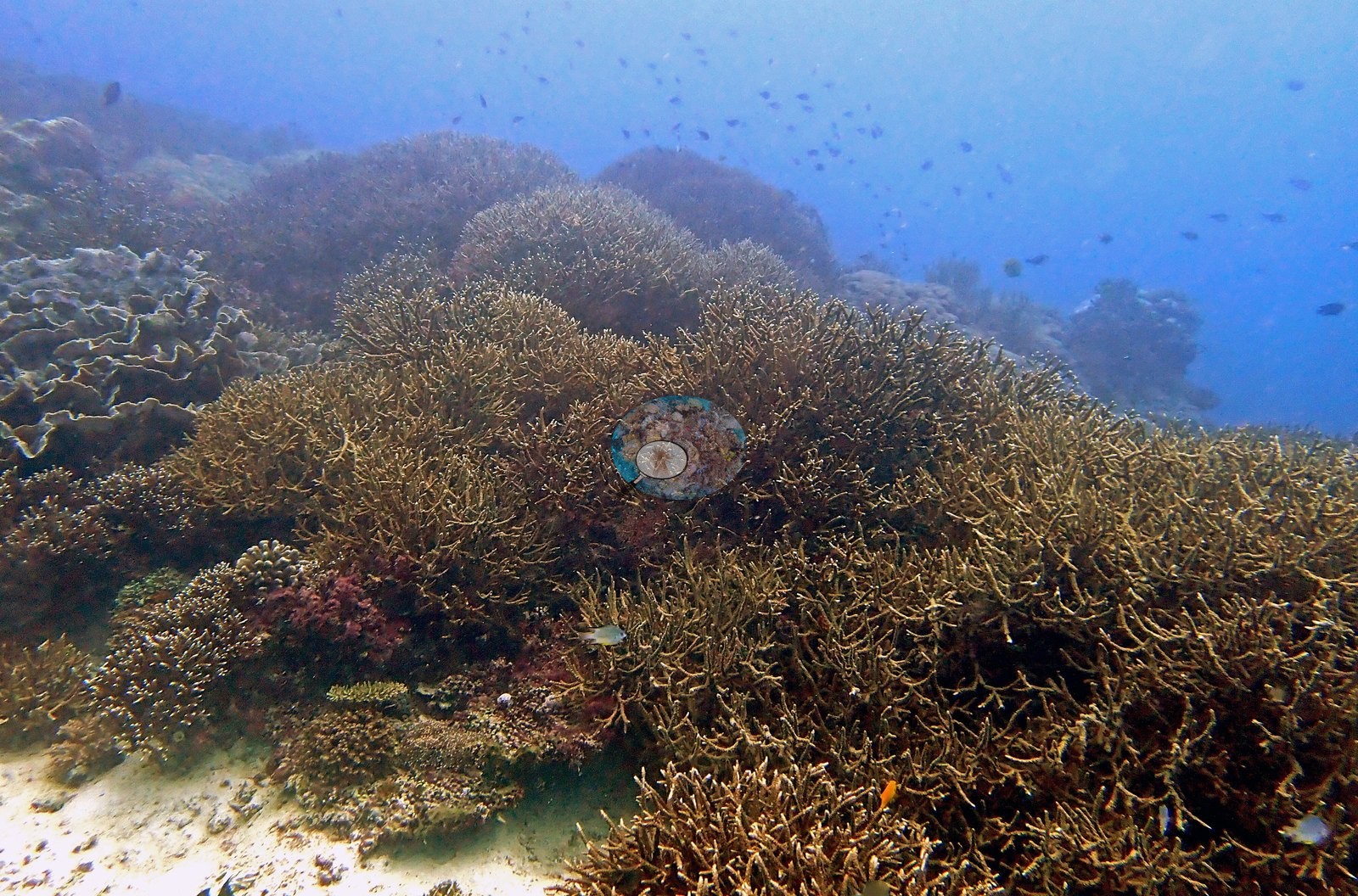
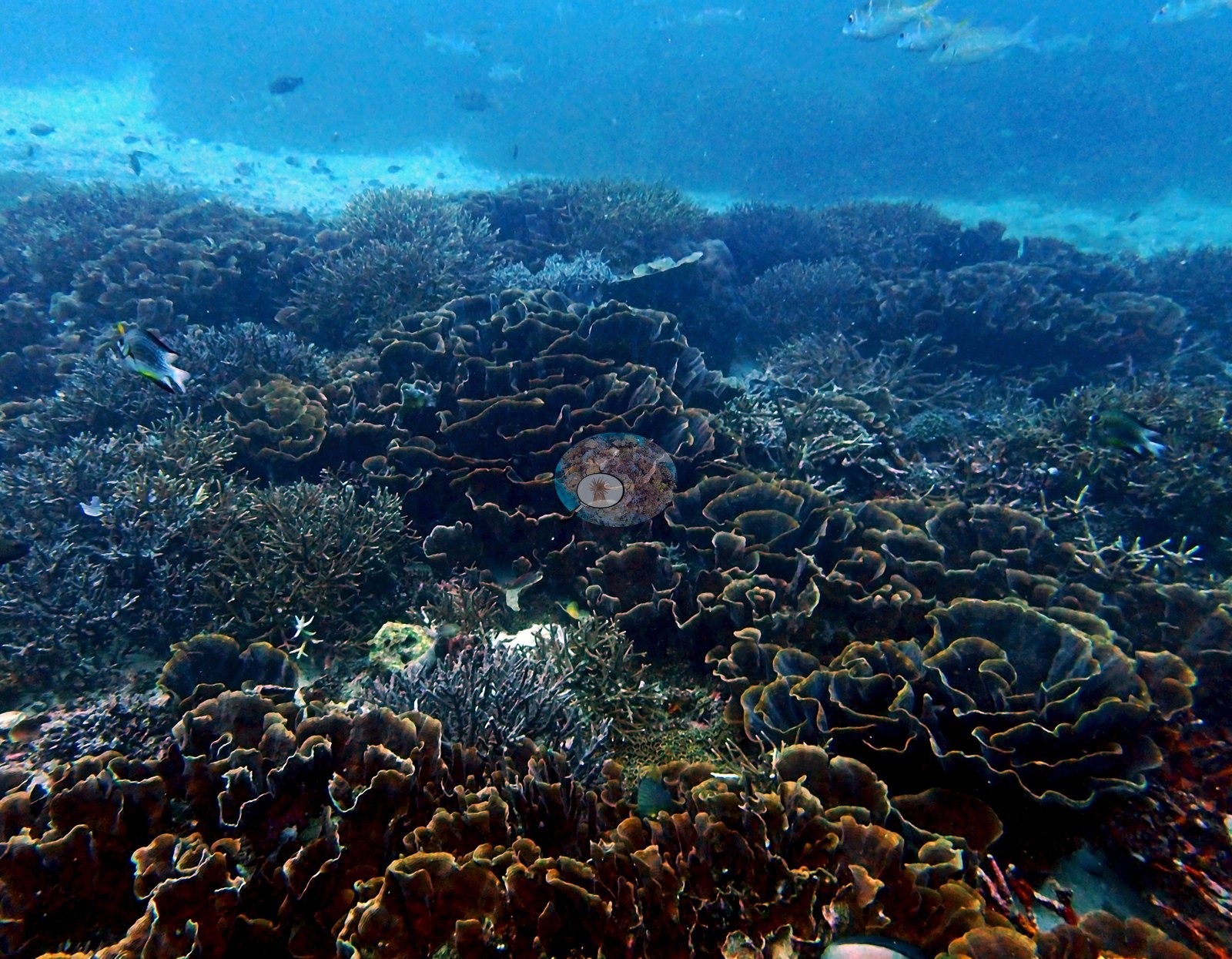
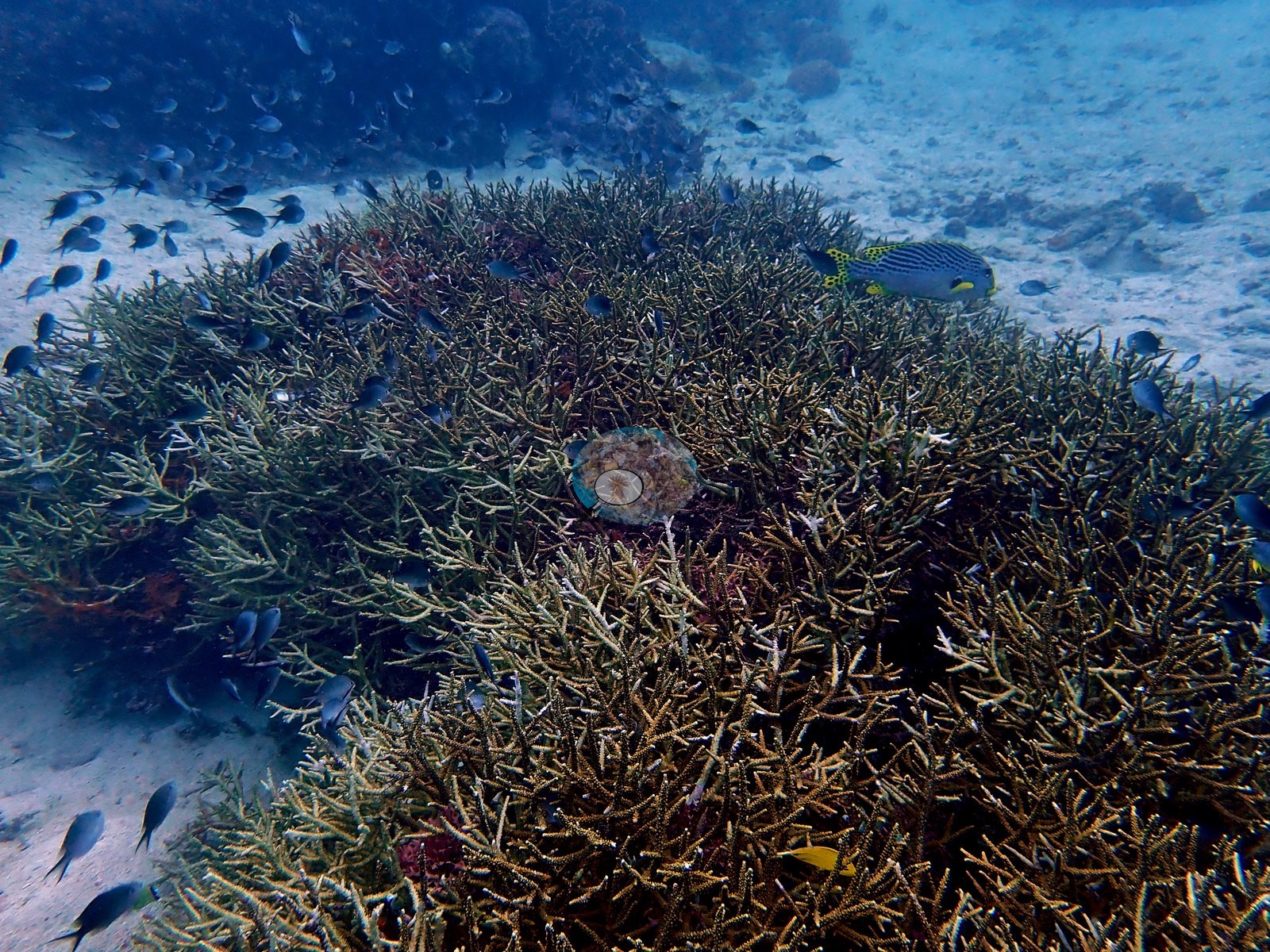
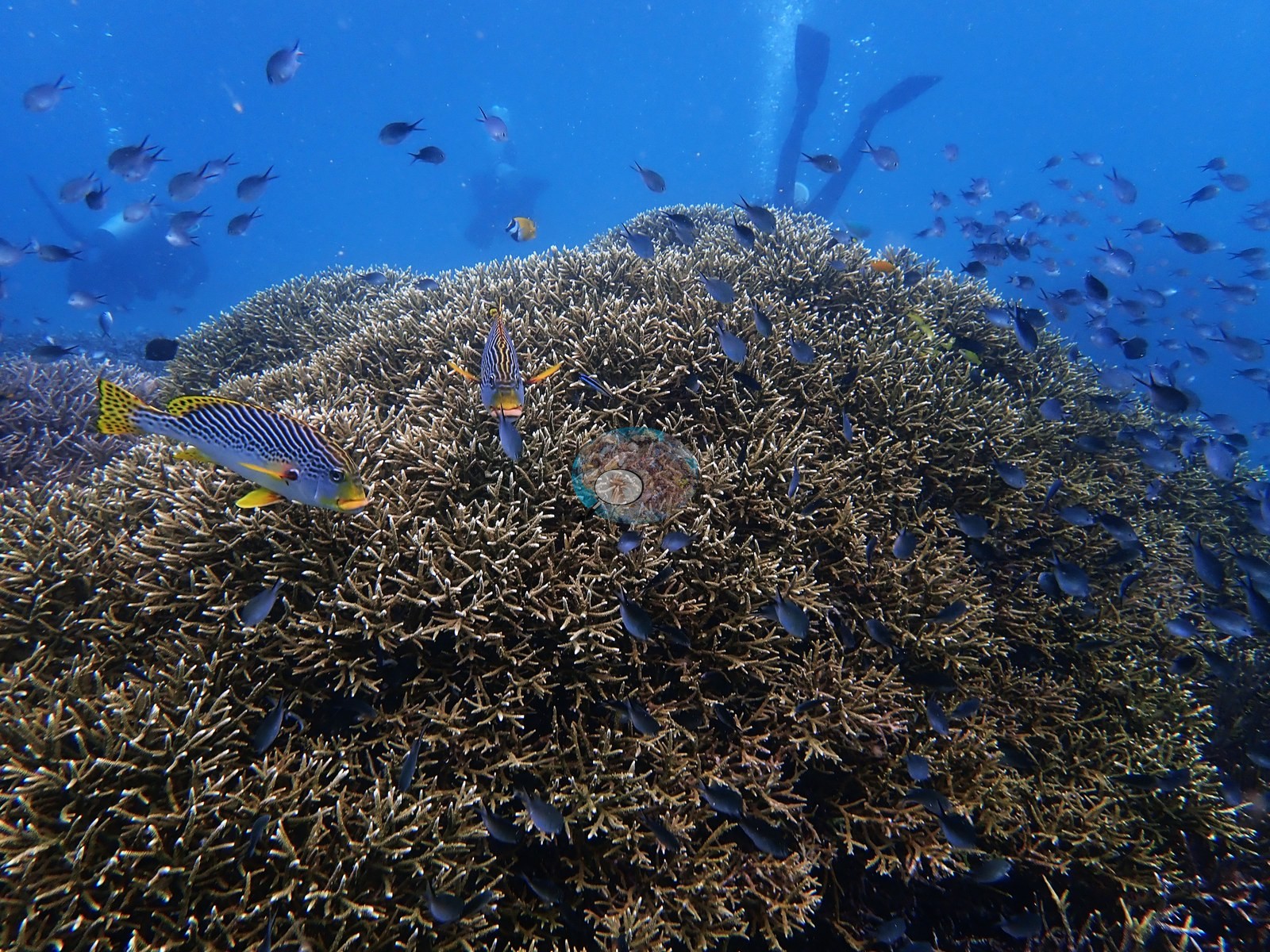
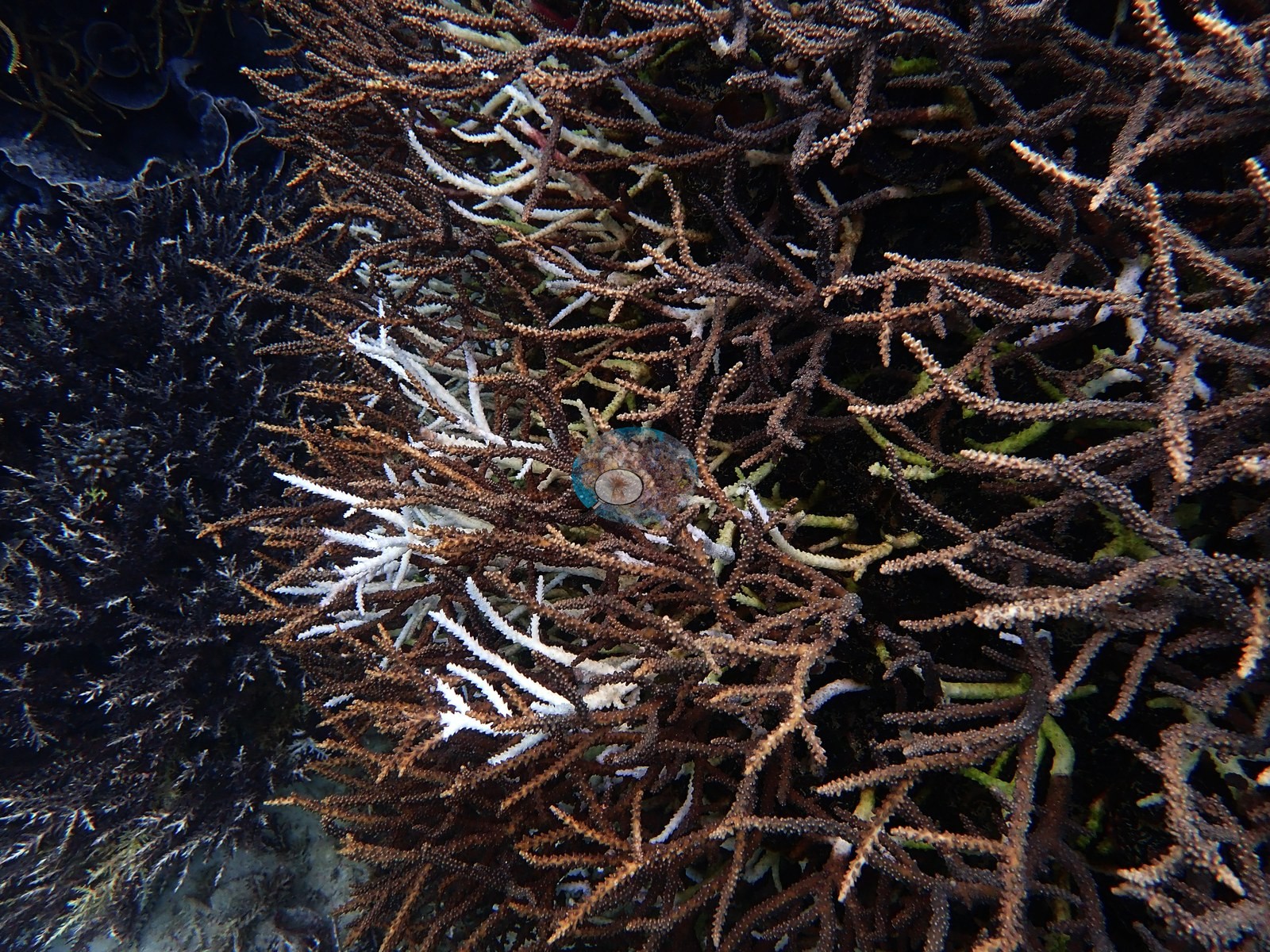
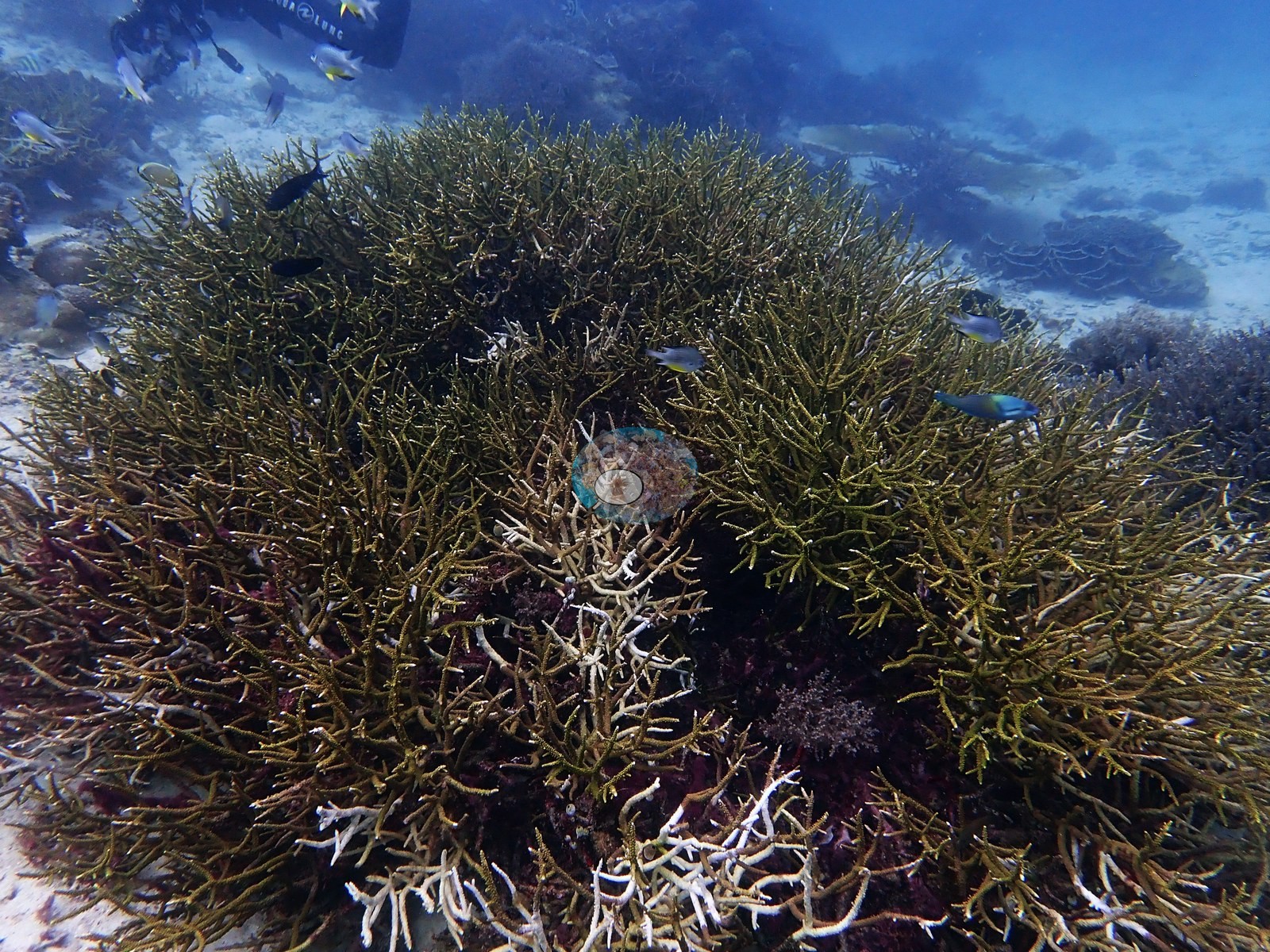
Acropora, large, very old colonies (e.g., Image 1).
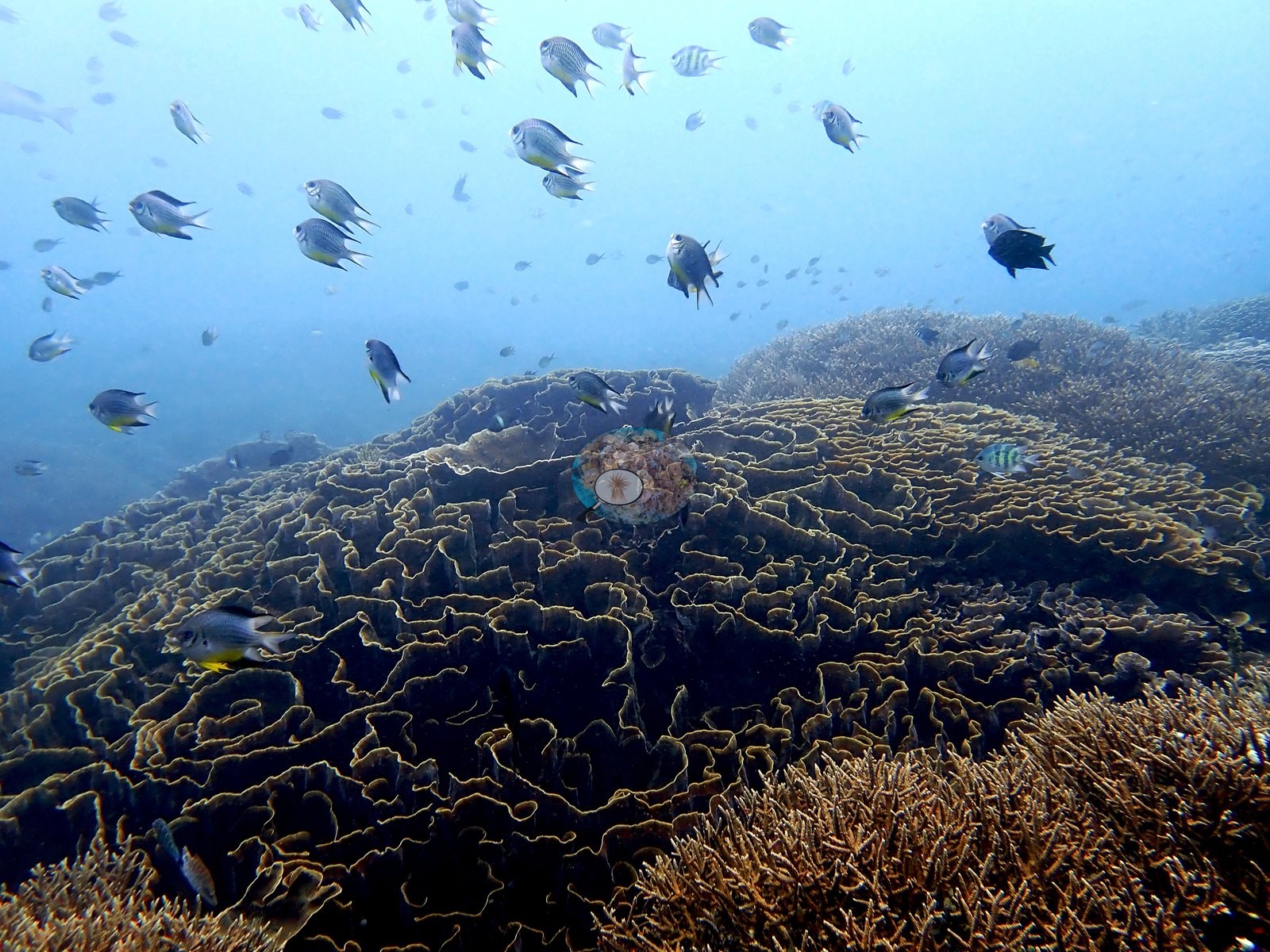
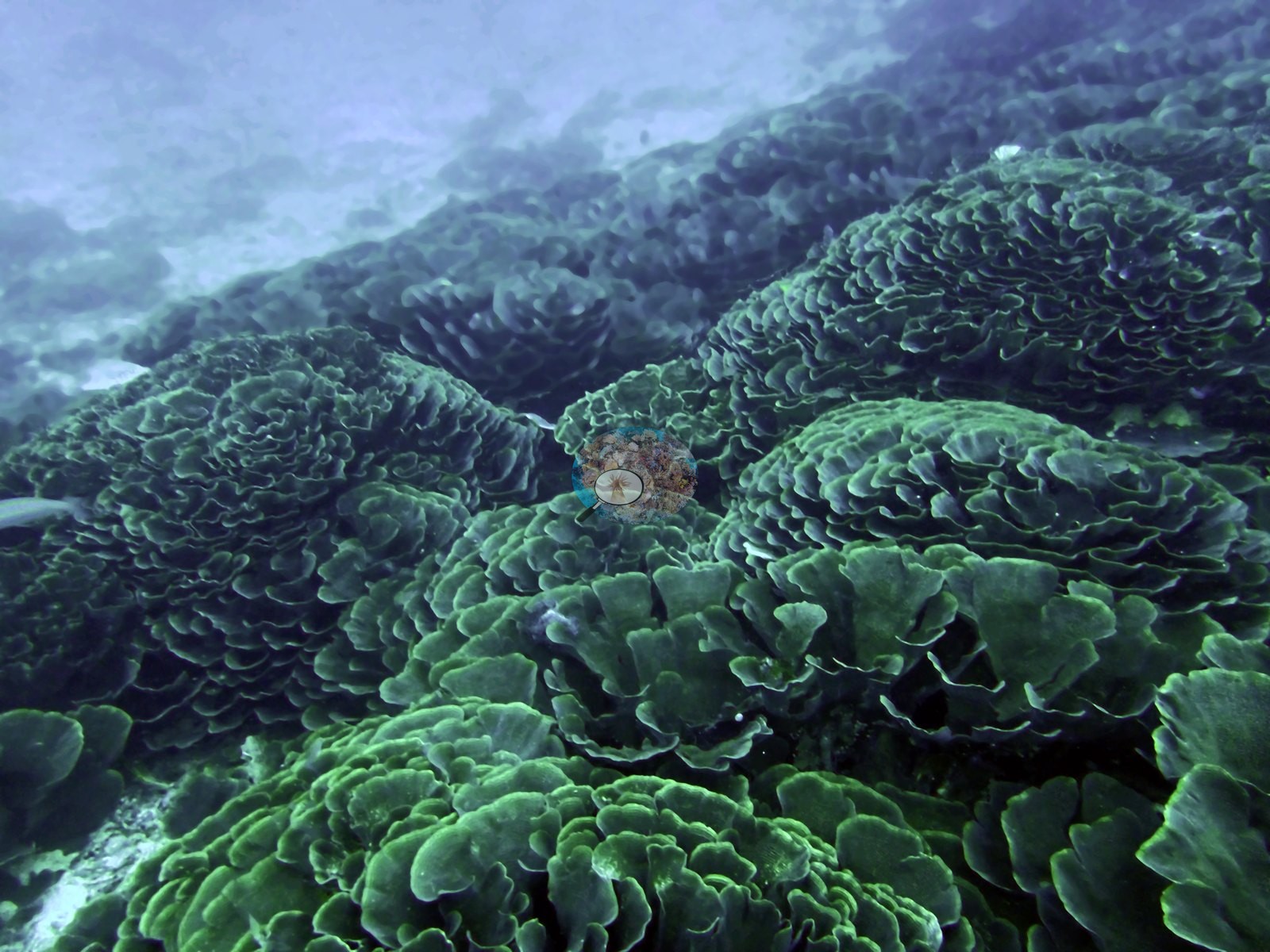
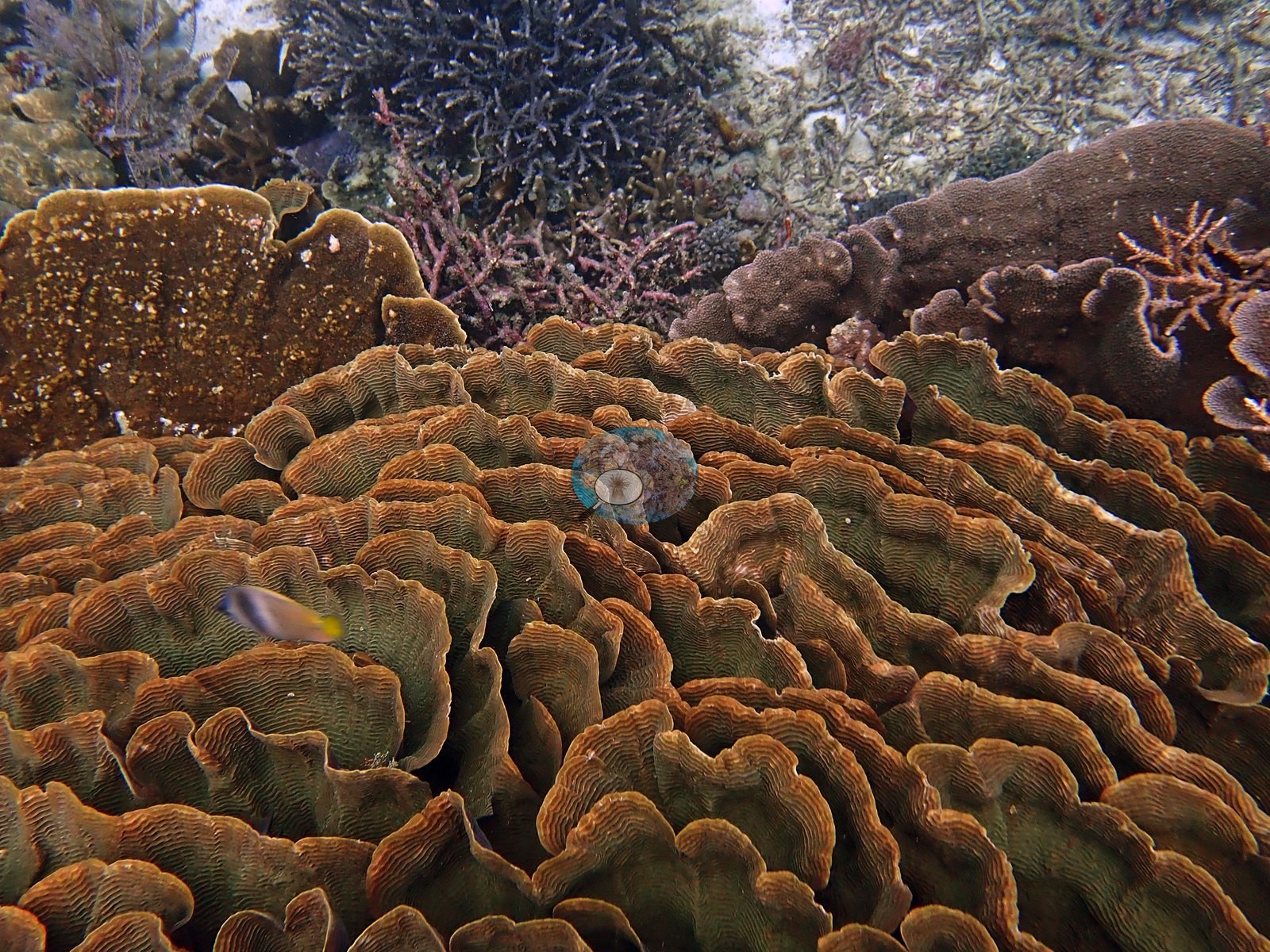
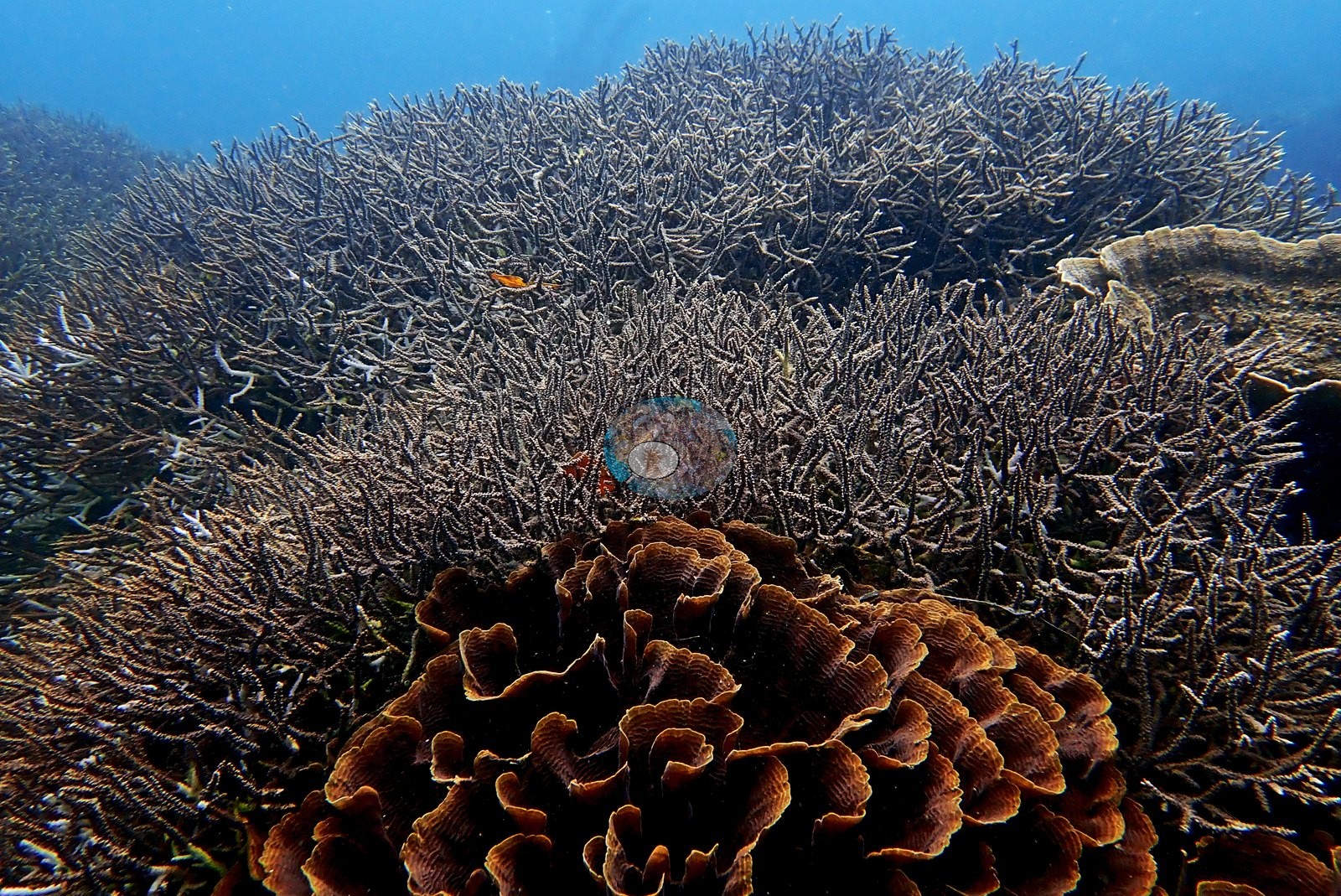
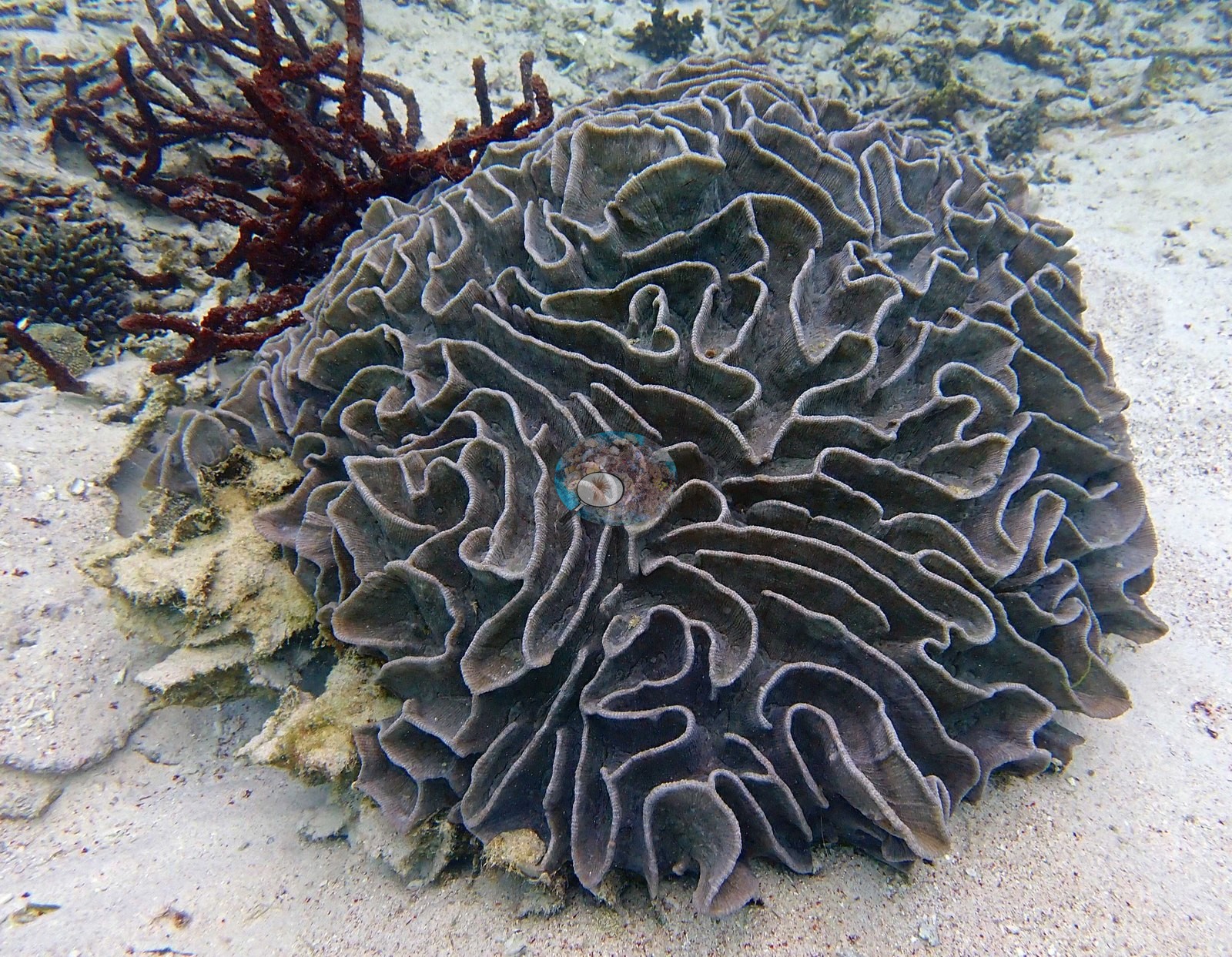
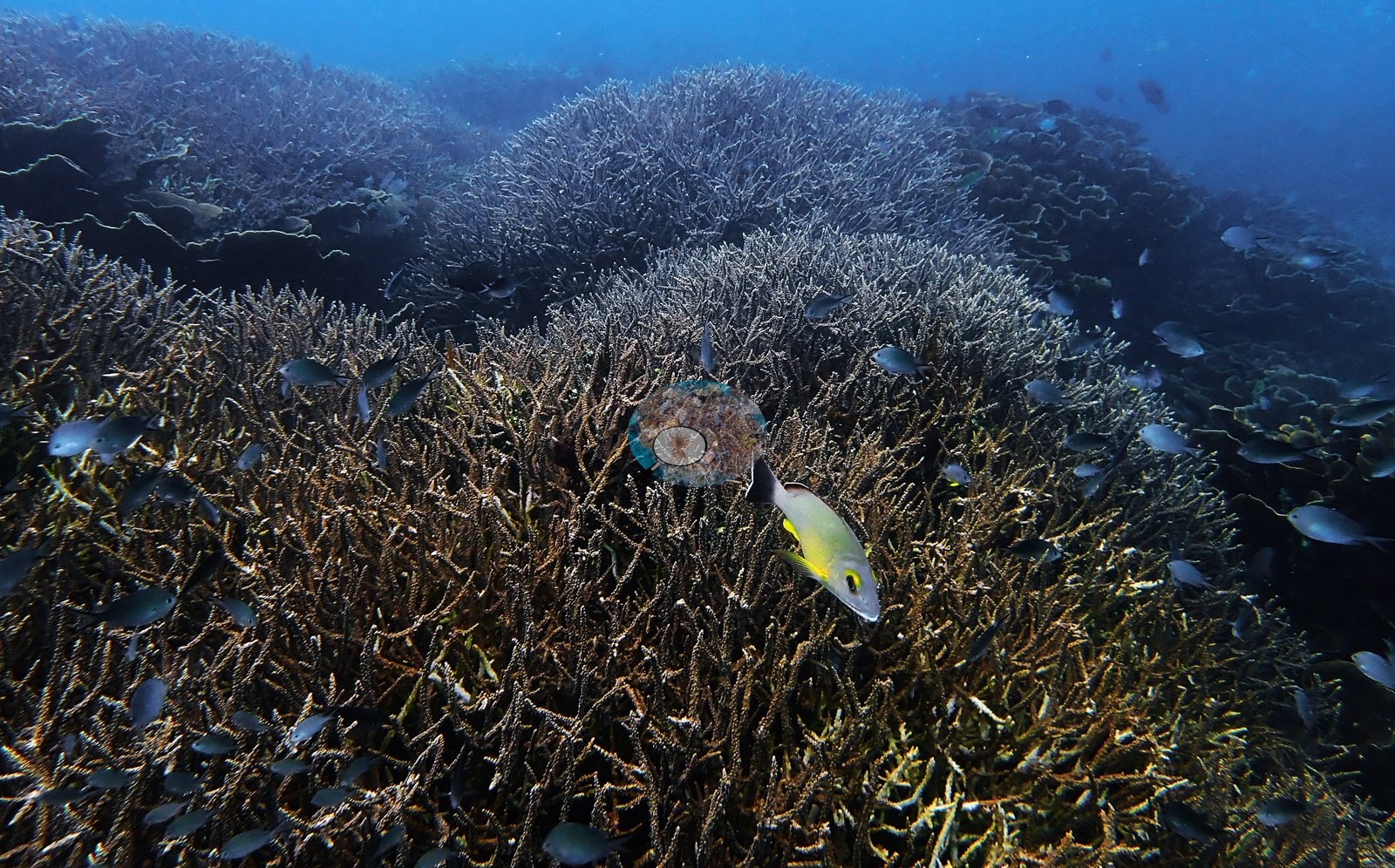
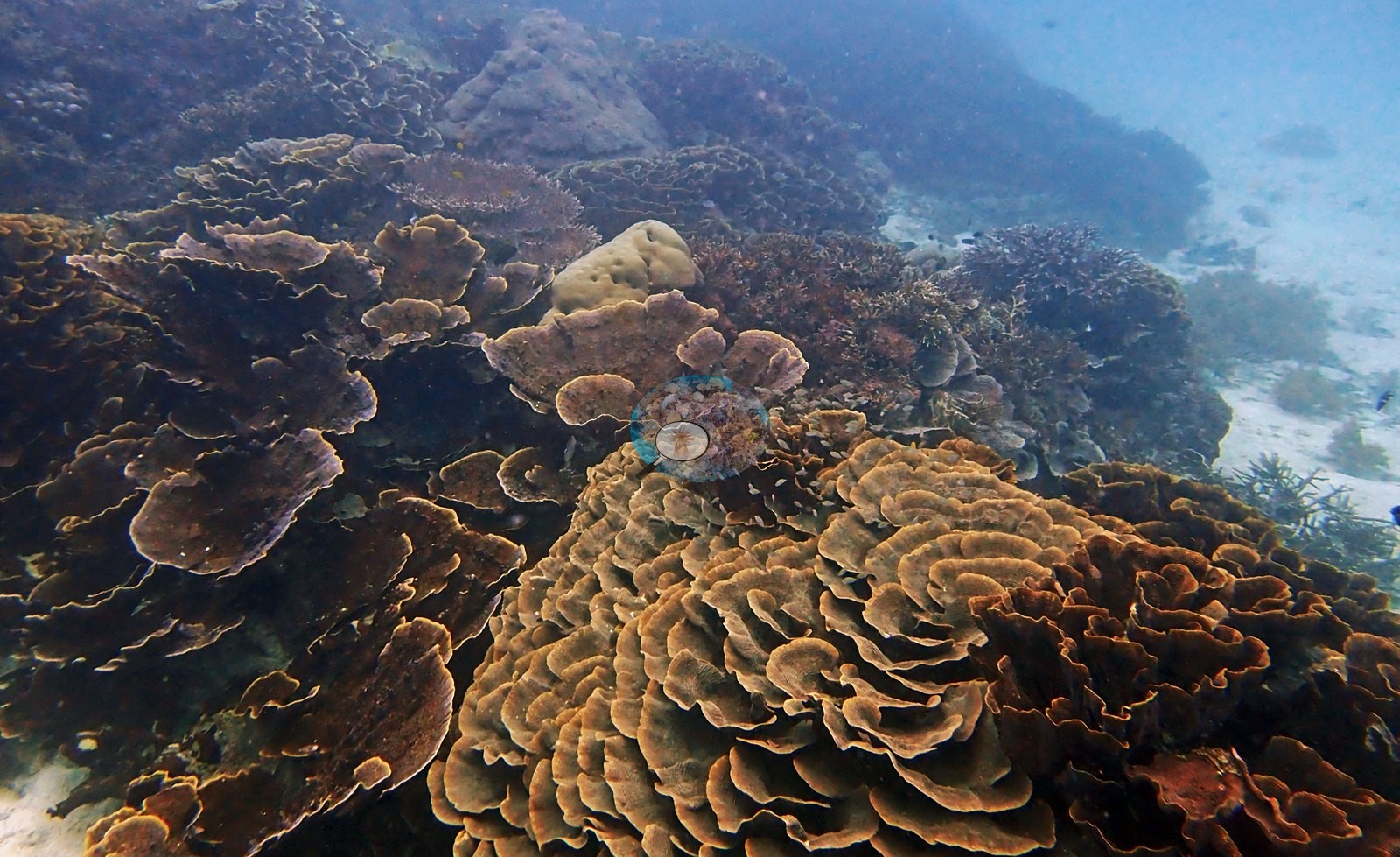
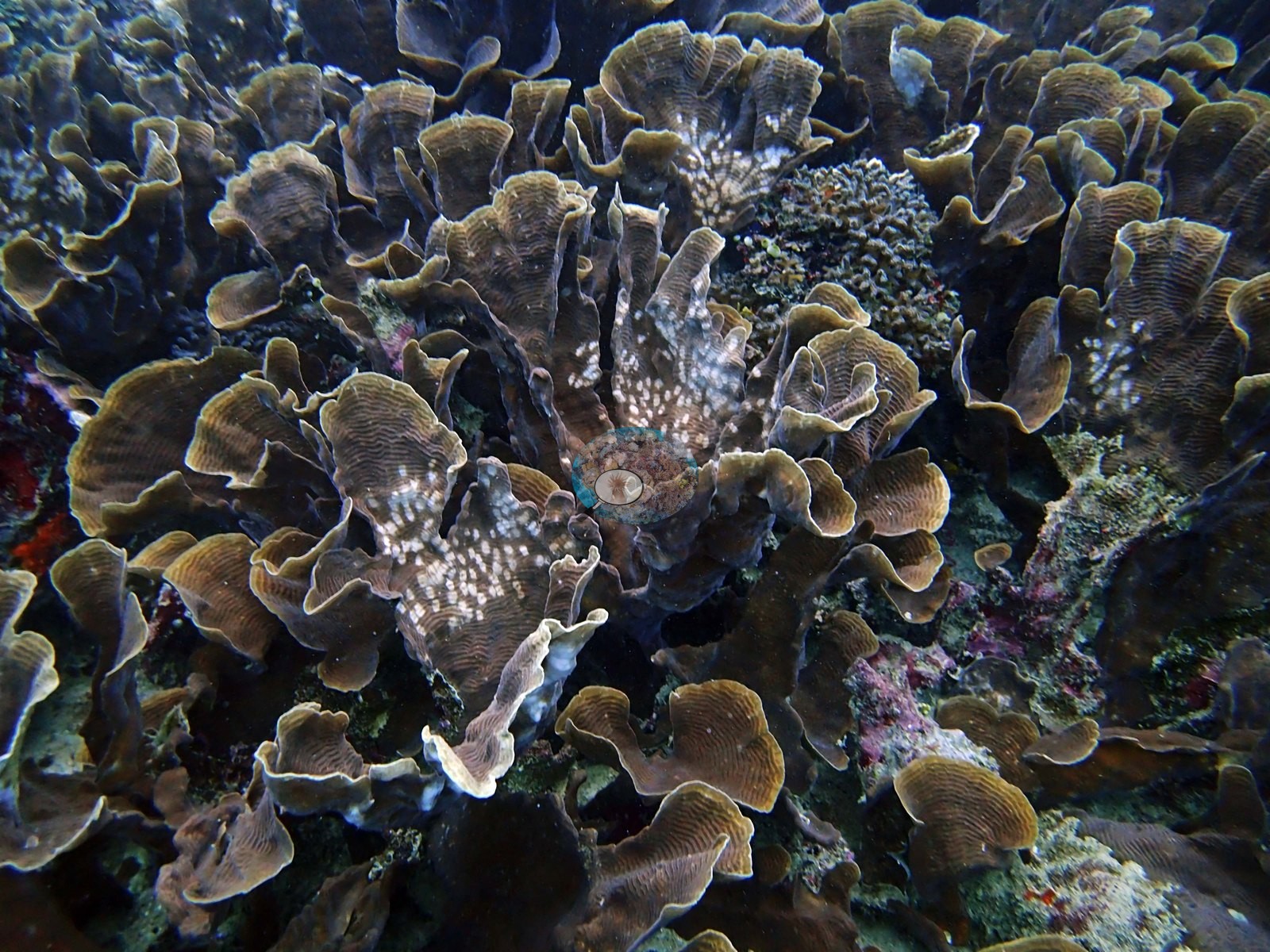
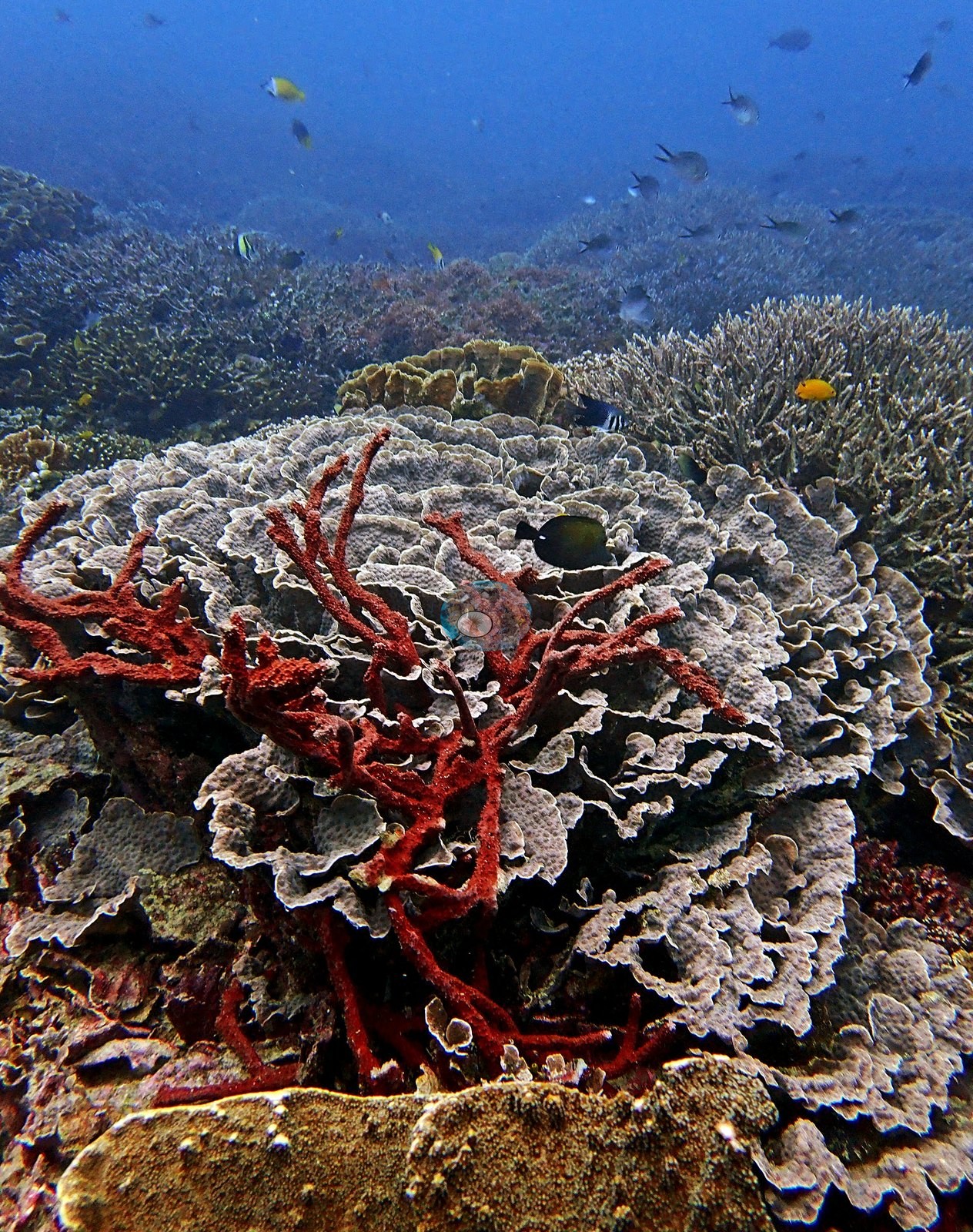
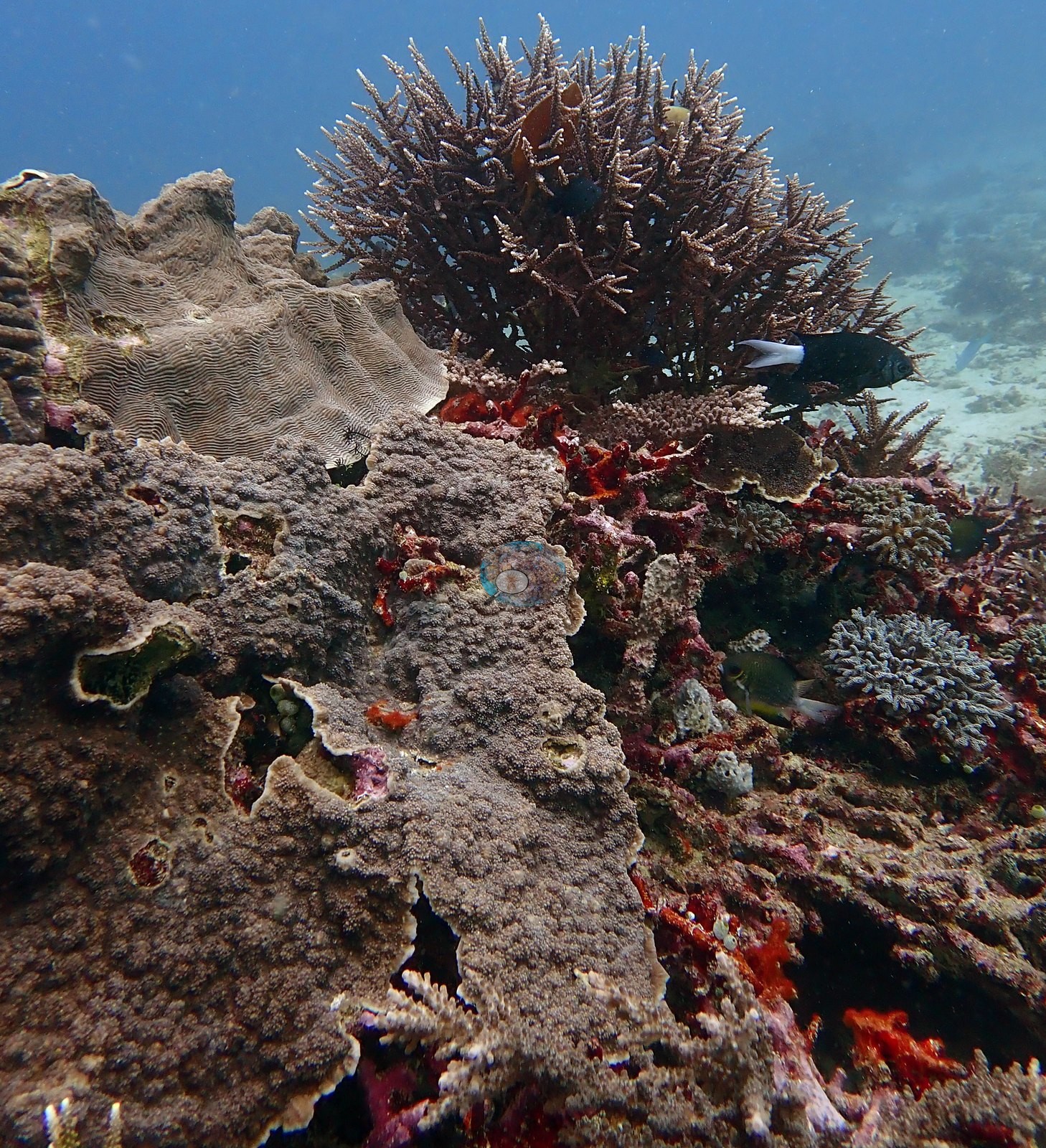
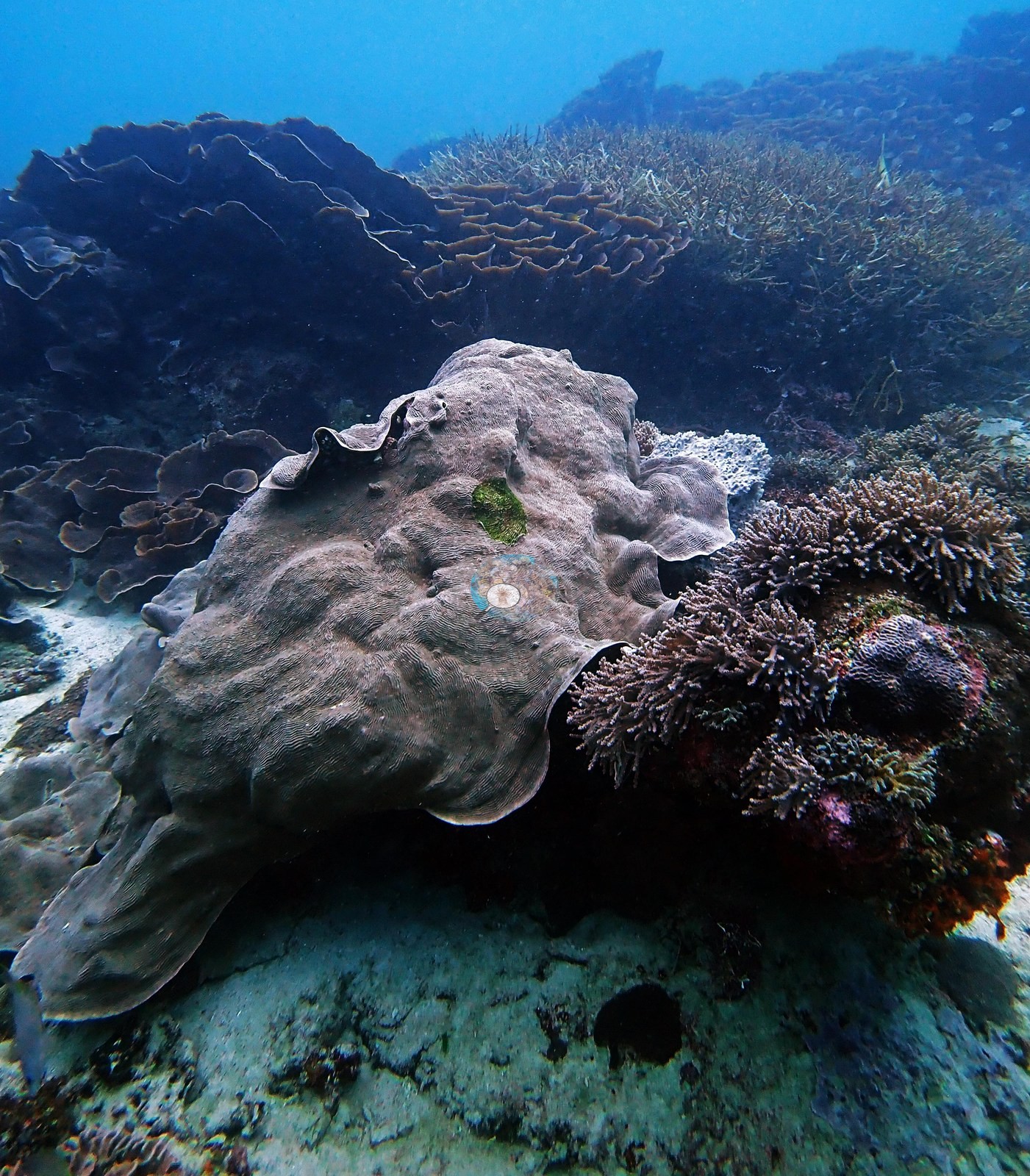
Stylophora, Seriatopora, Pachyseris, and numerous other lettuce corals. Coral assemblage at 5-10 m particularly rich. Merulina, plating Acropora, bottlebrush Acropora, Anacropora, murky, high sediment load, many corals feeding, some Acropora mortality. Enormous/ancient sheets of Pachyseris @ 15-20 m (e.g., Image 2).
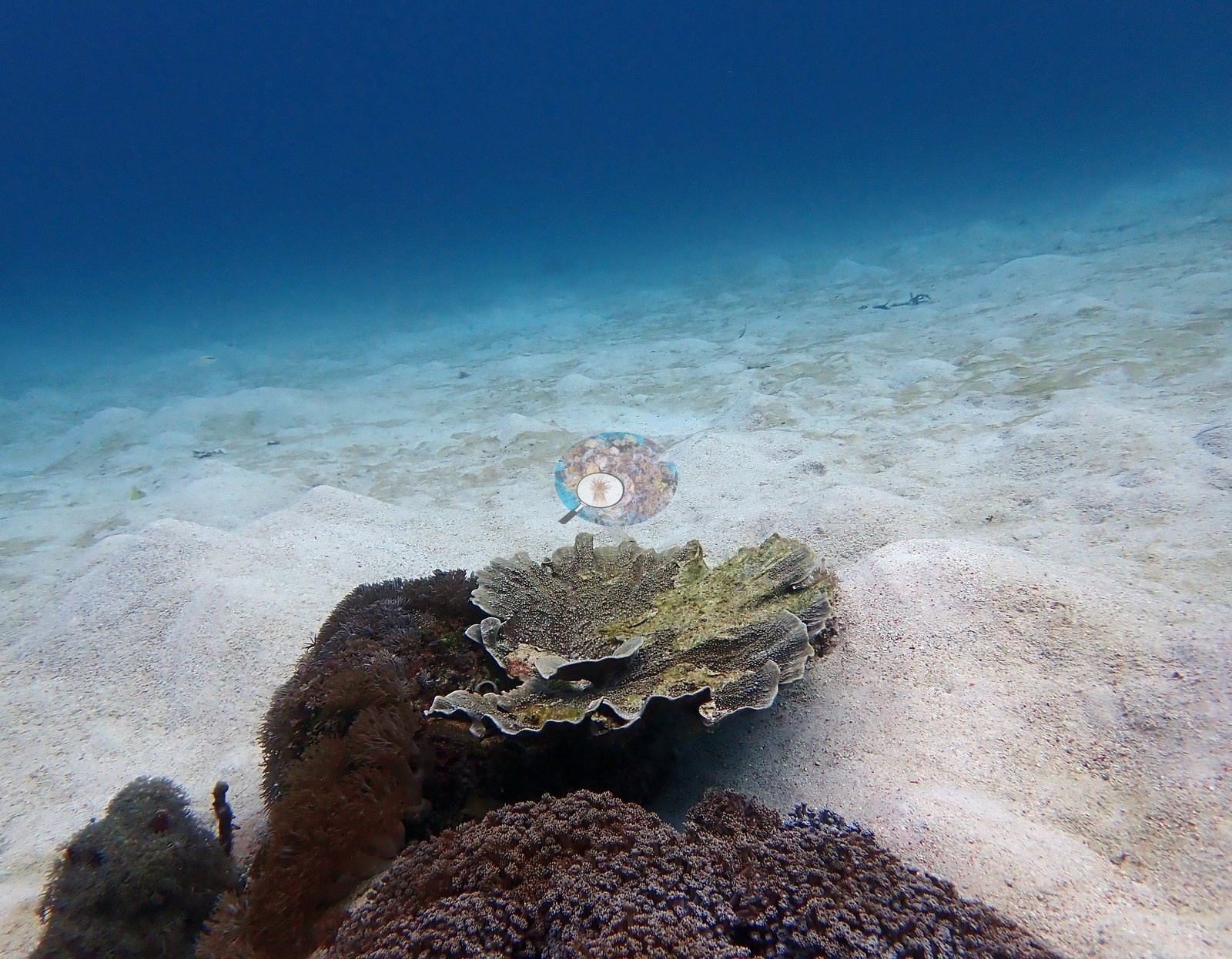
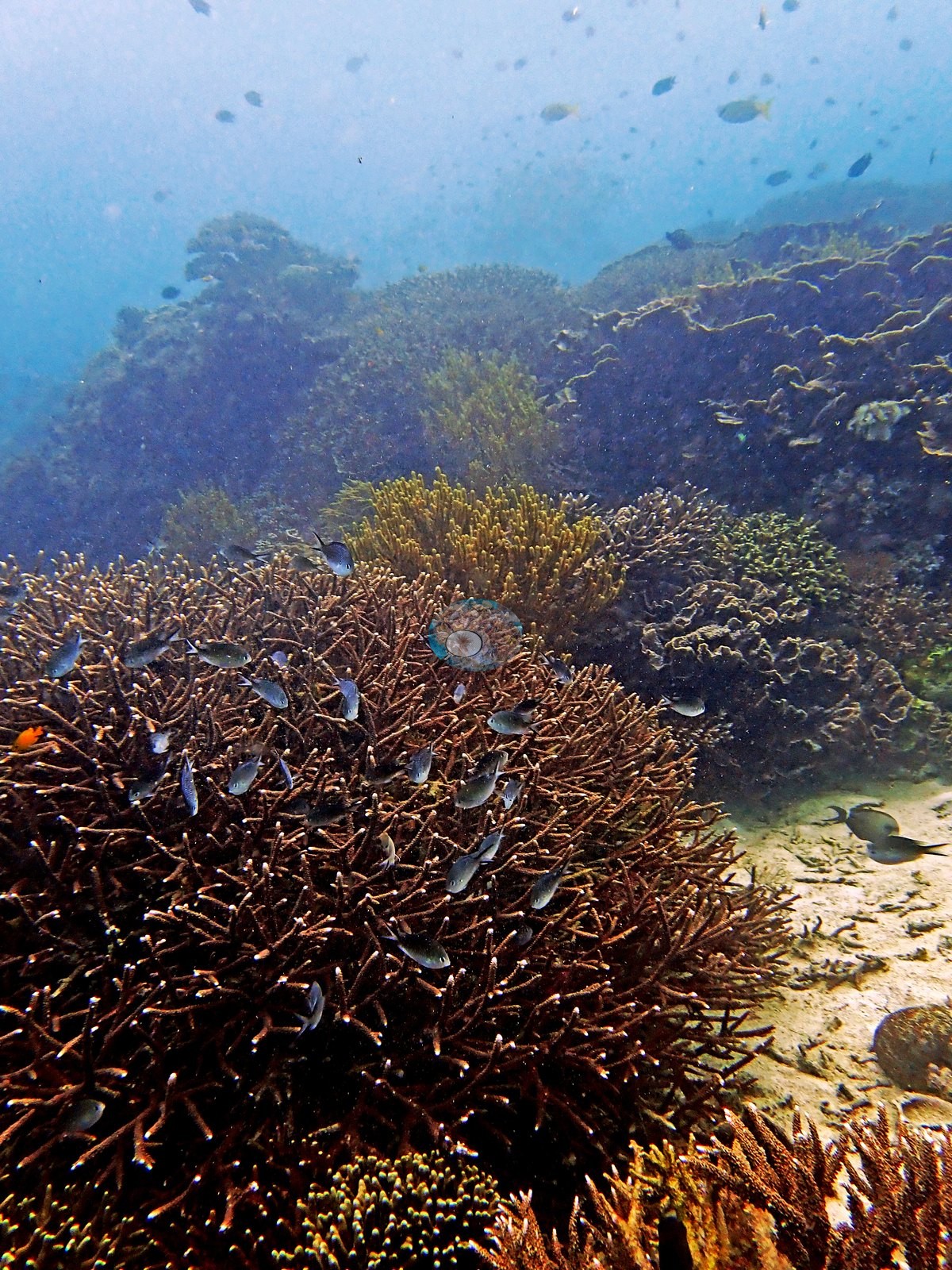
Notable absence of Pocillopora. Large areas dominated by Acropora (e.g., Image 5).
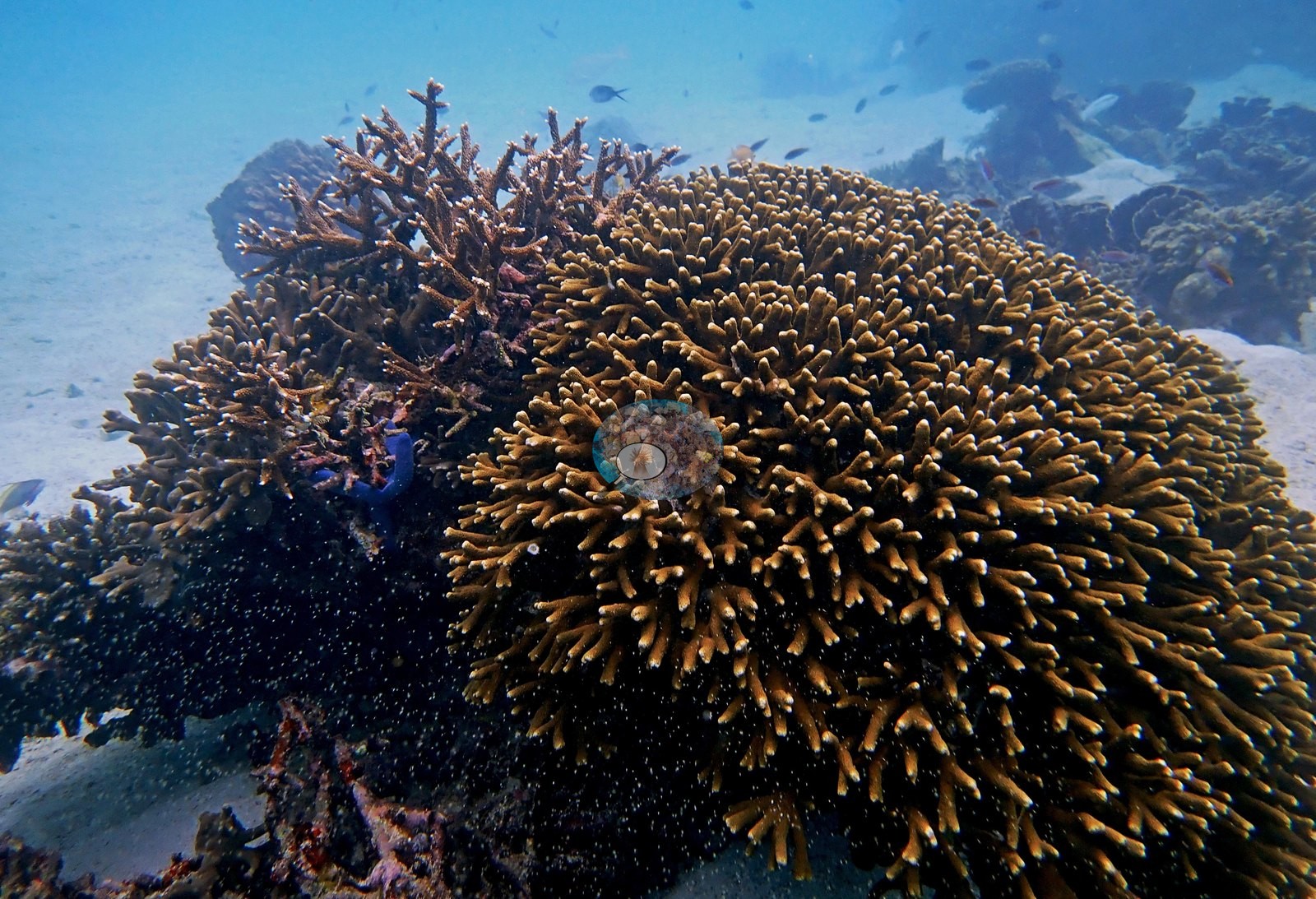
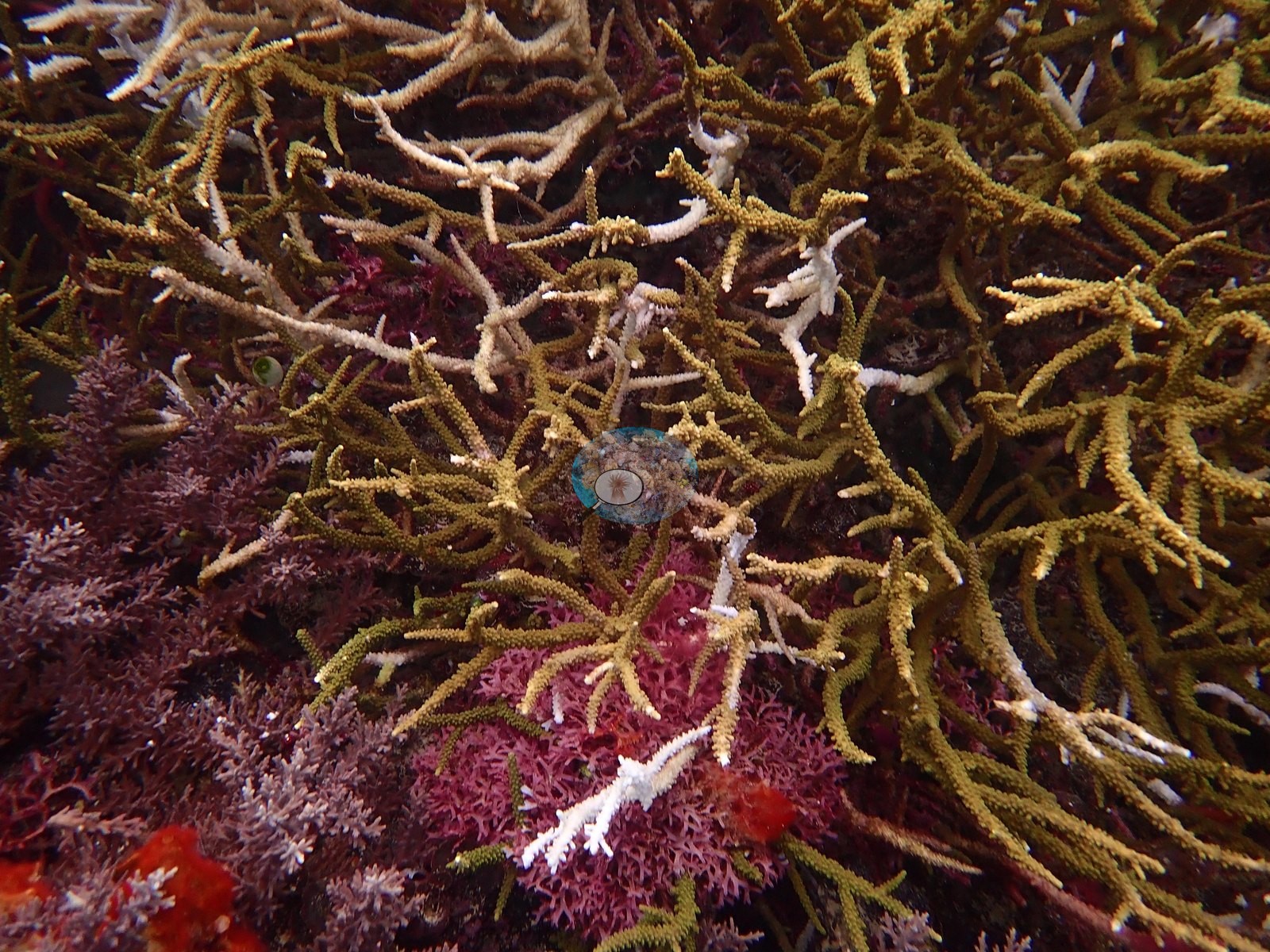
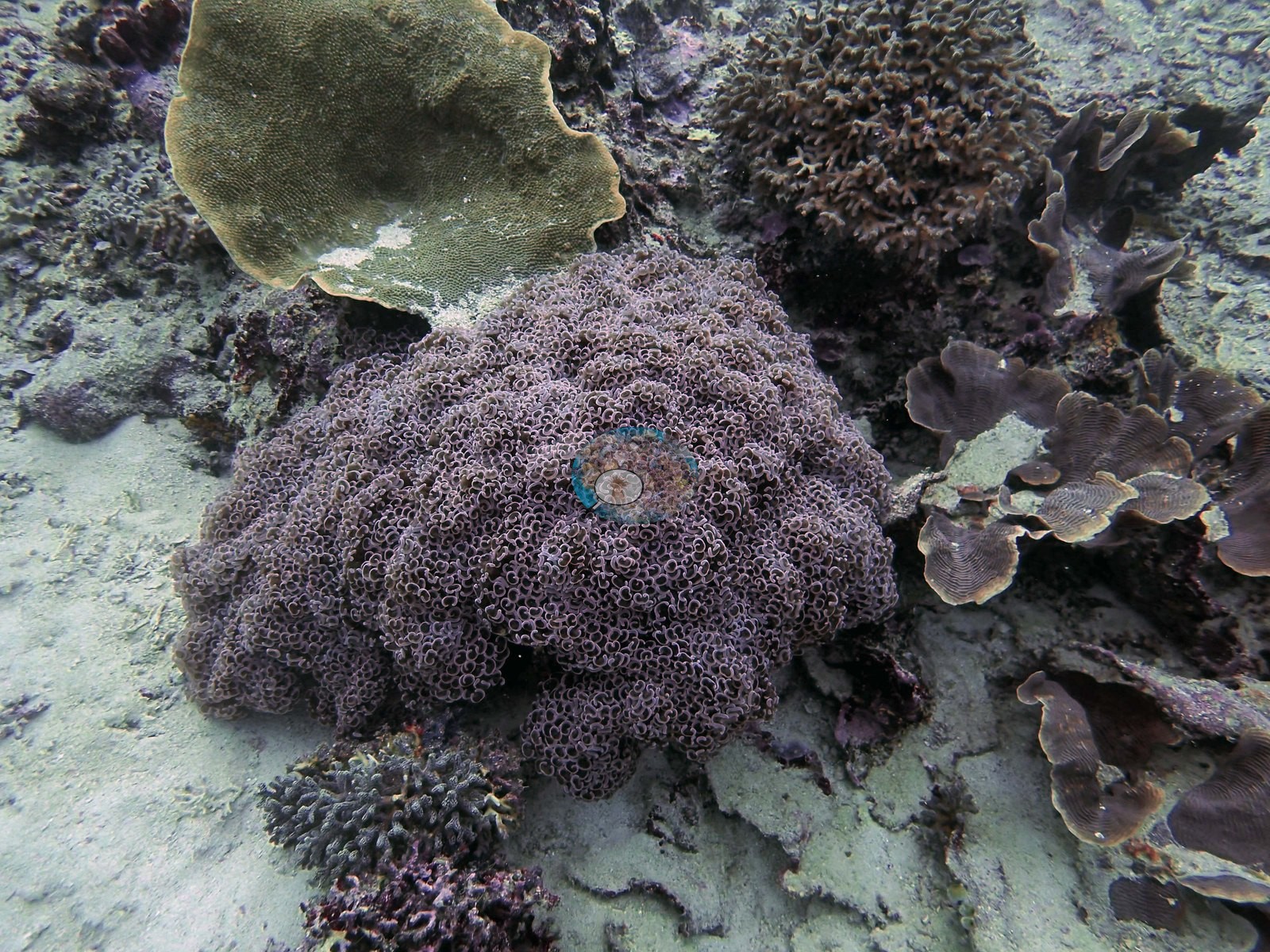
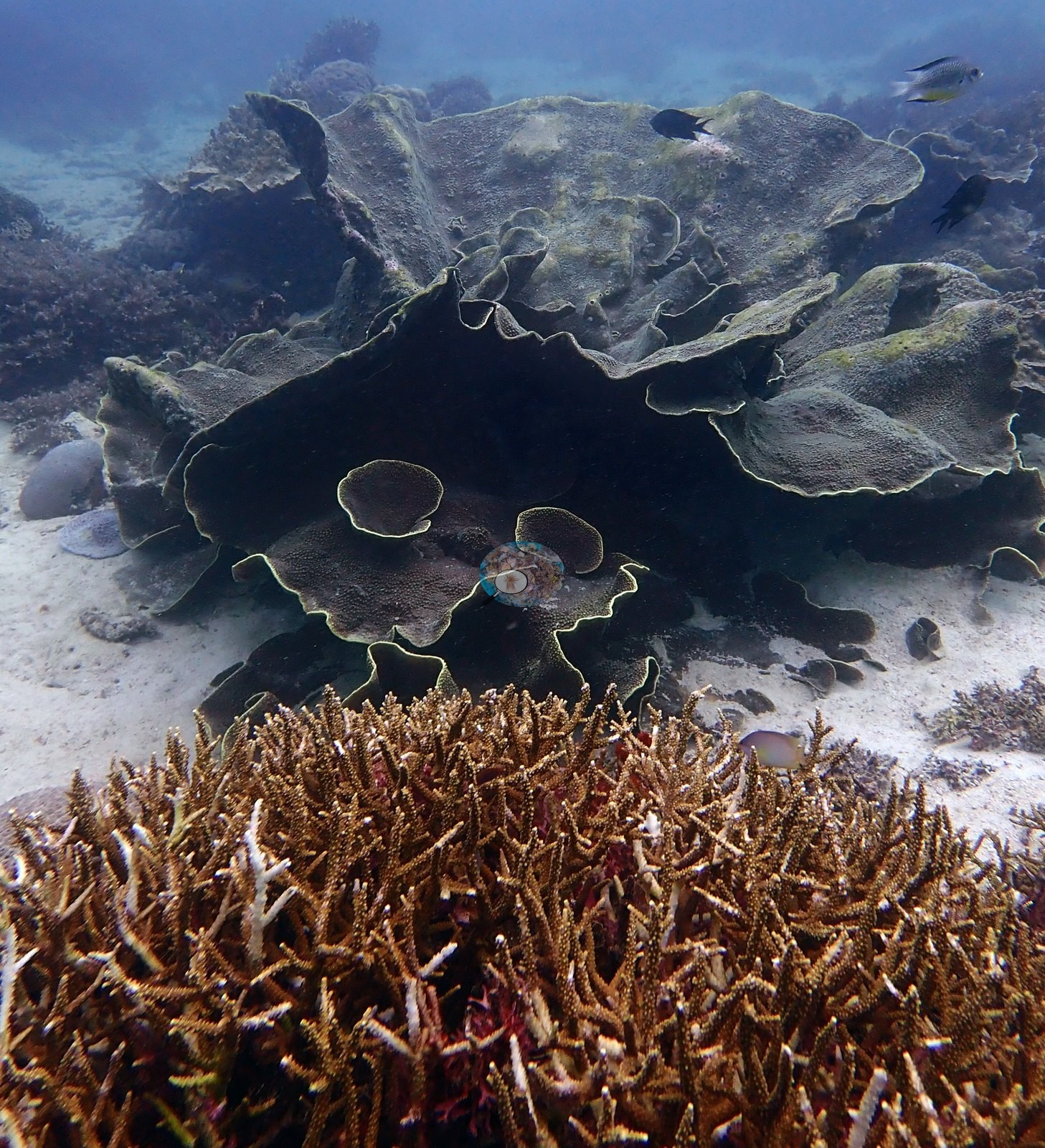
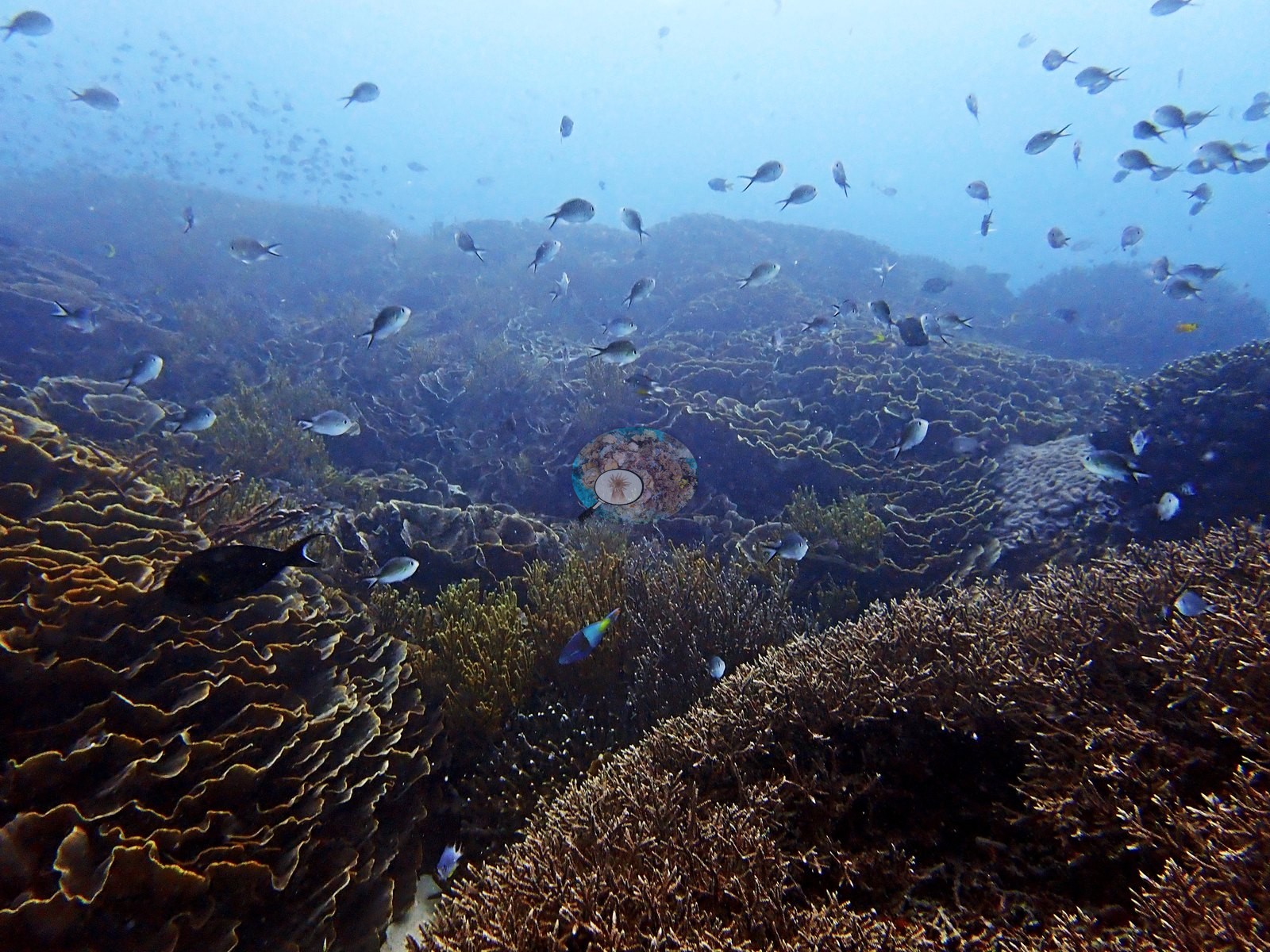
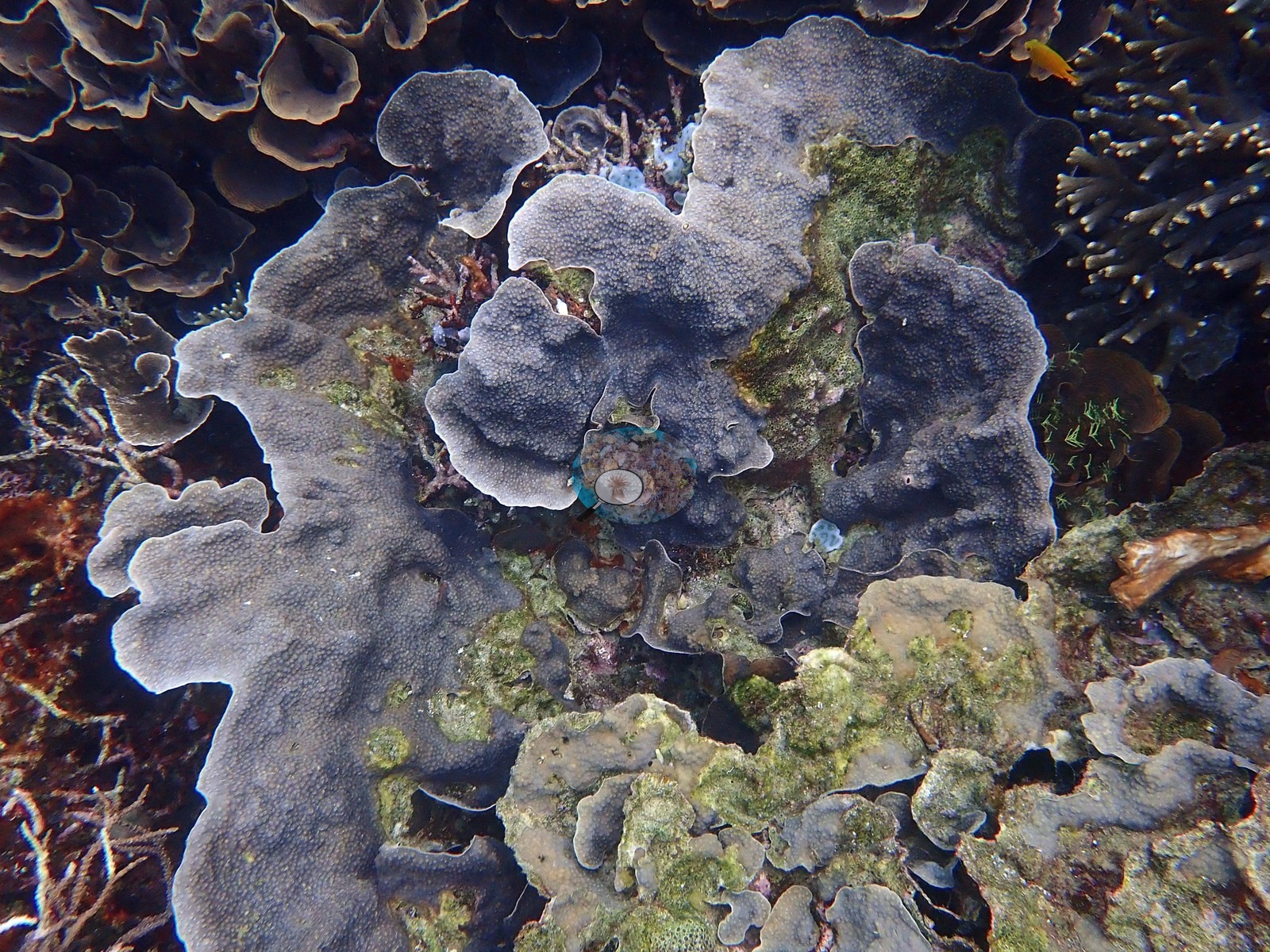
Fluorescent green Stylophora very common at site (e.g., Image 4).
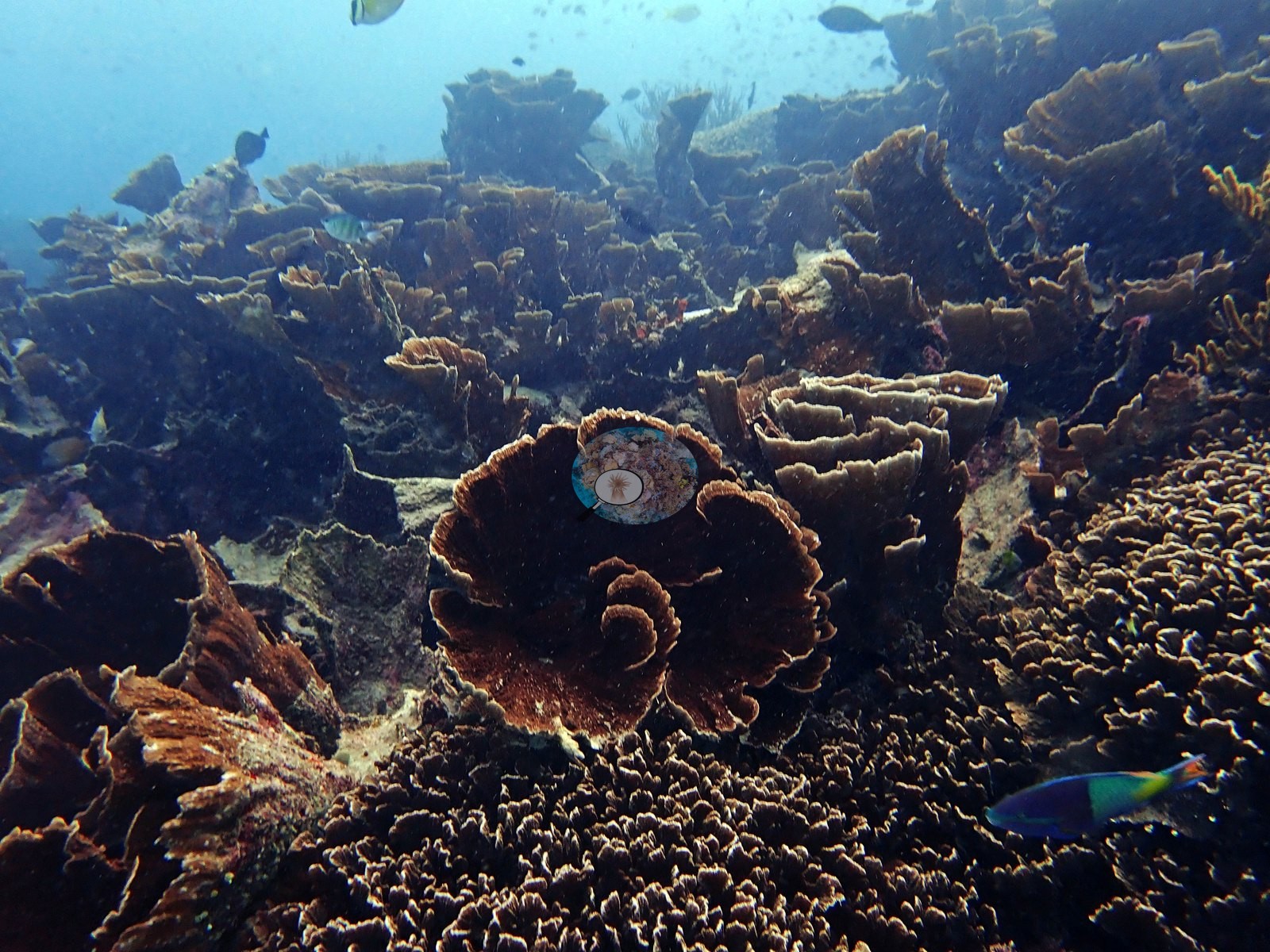
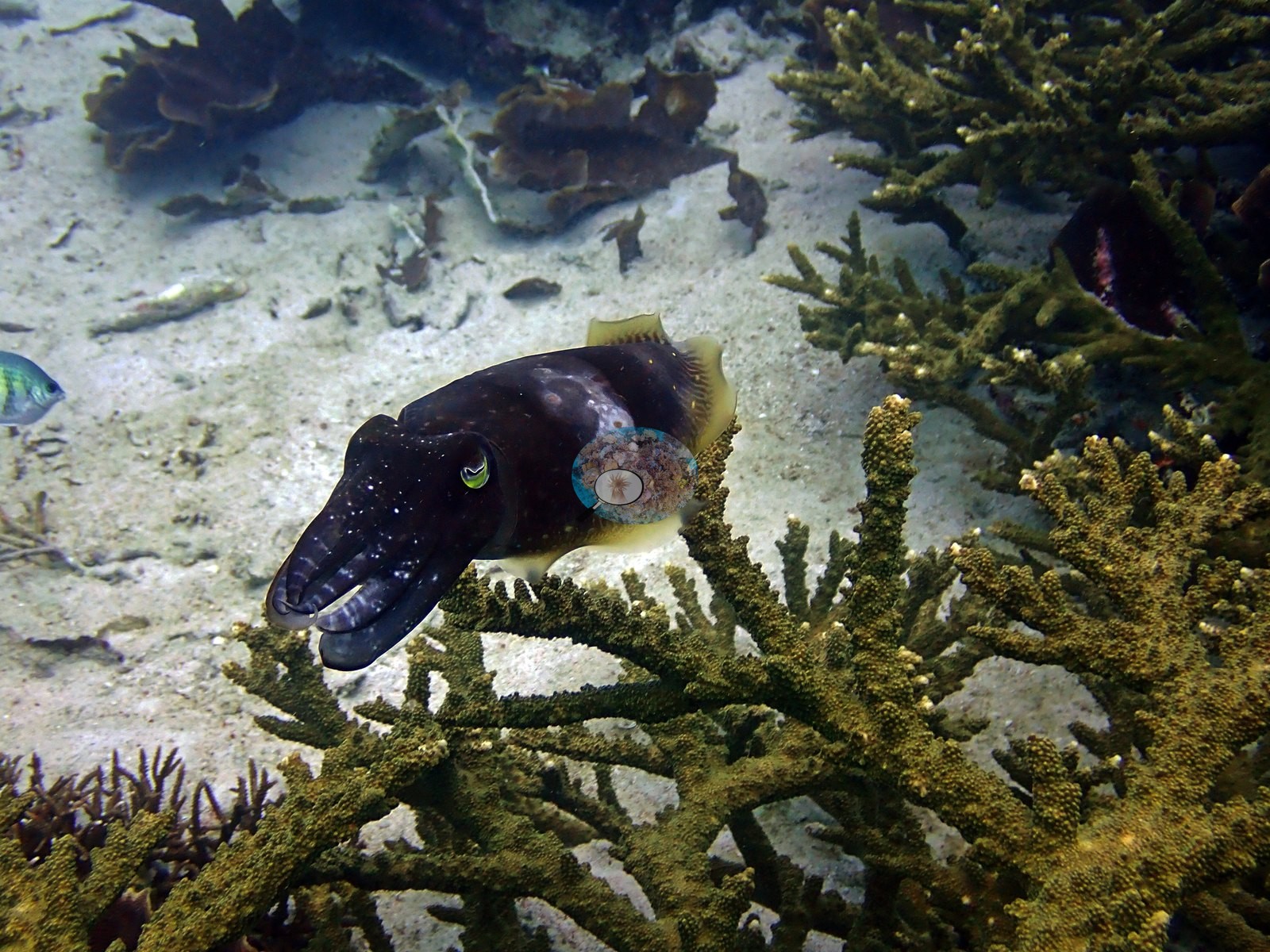
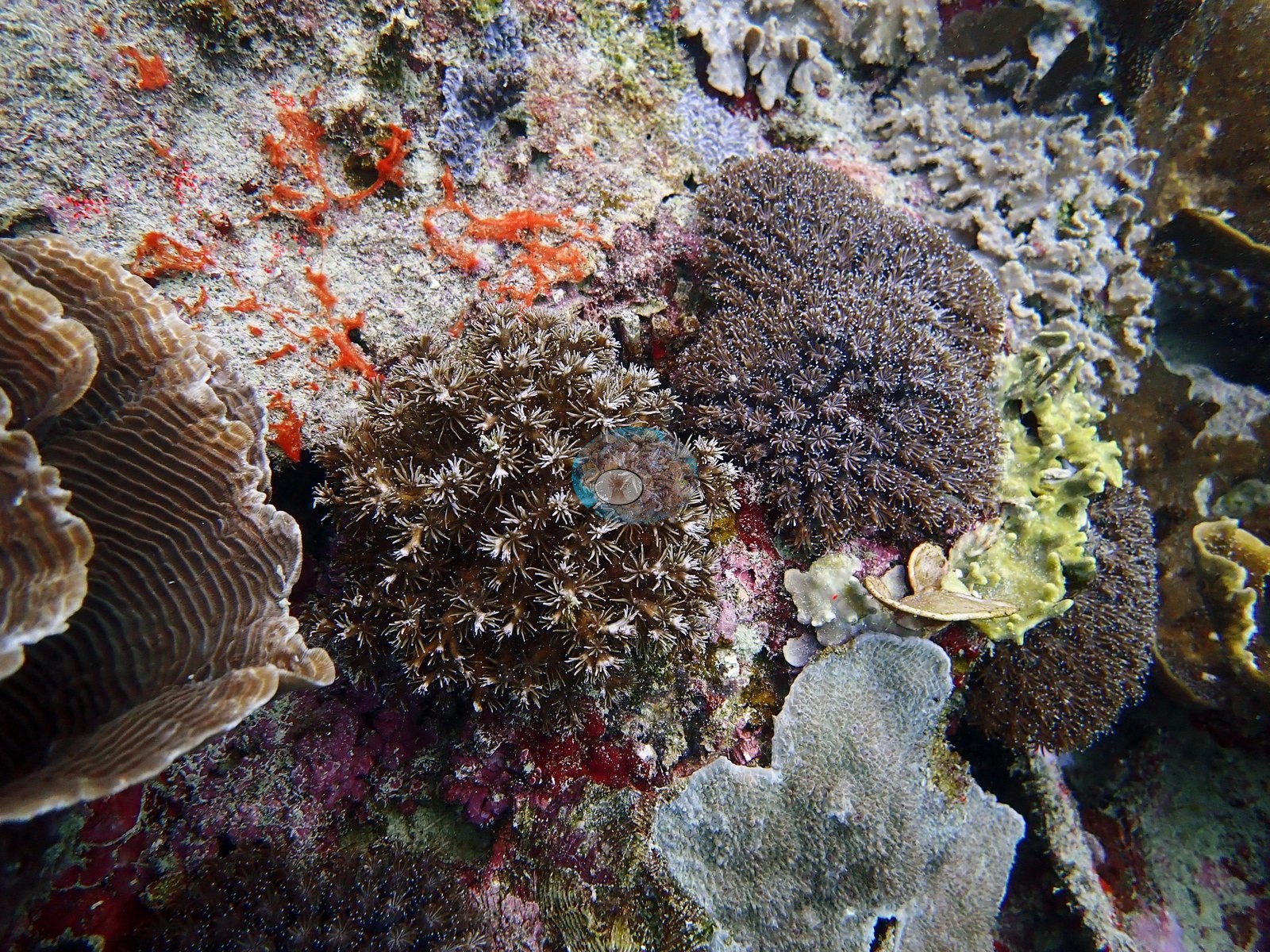
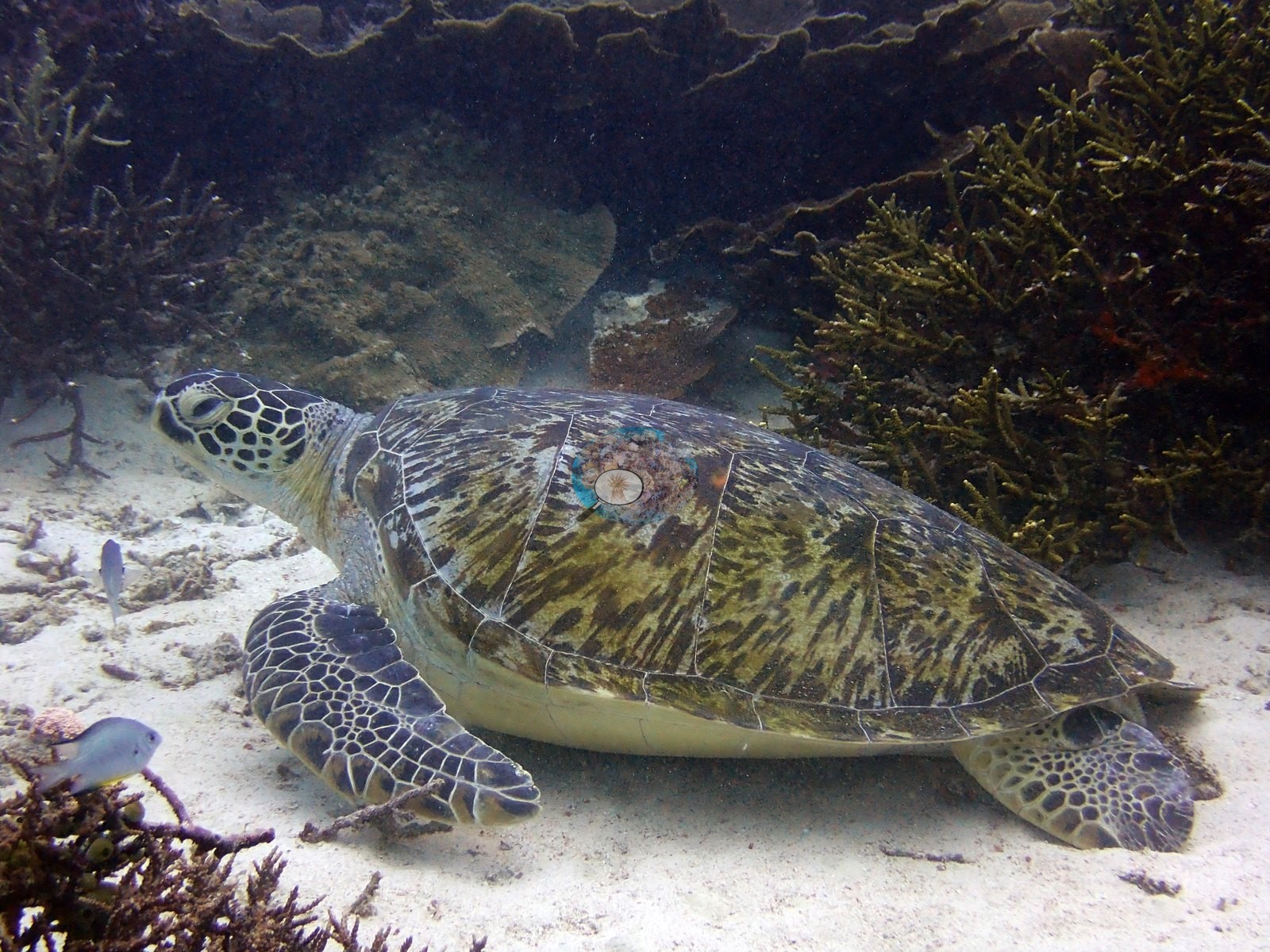
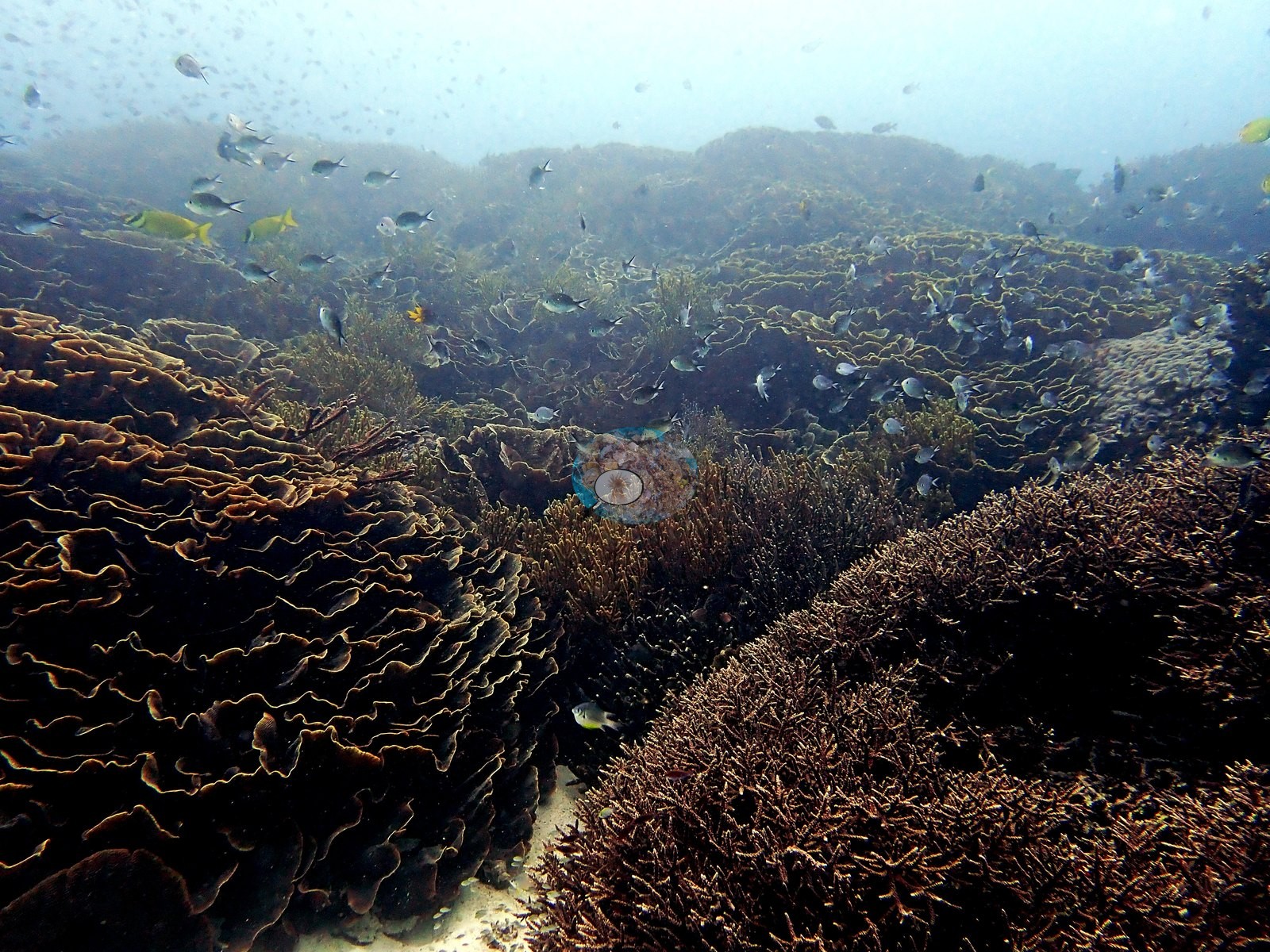
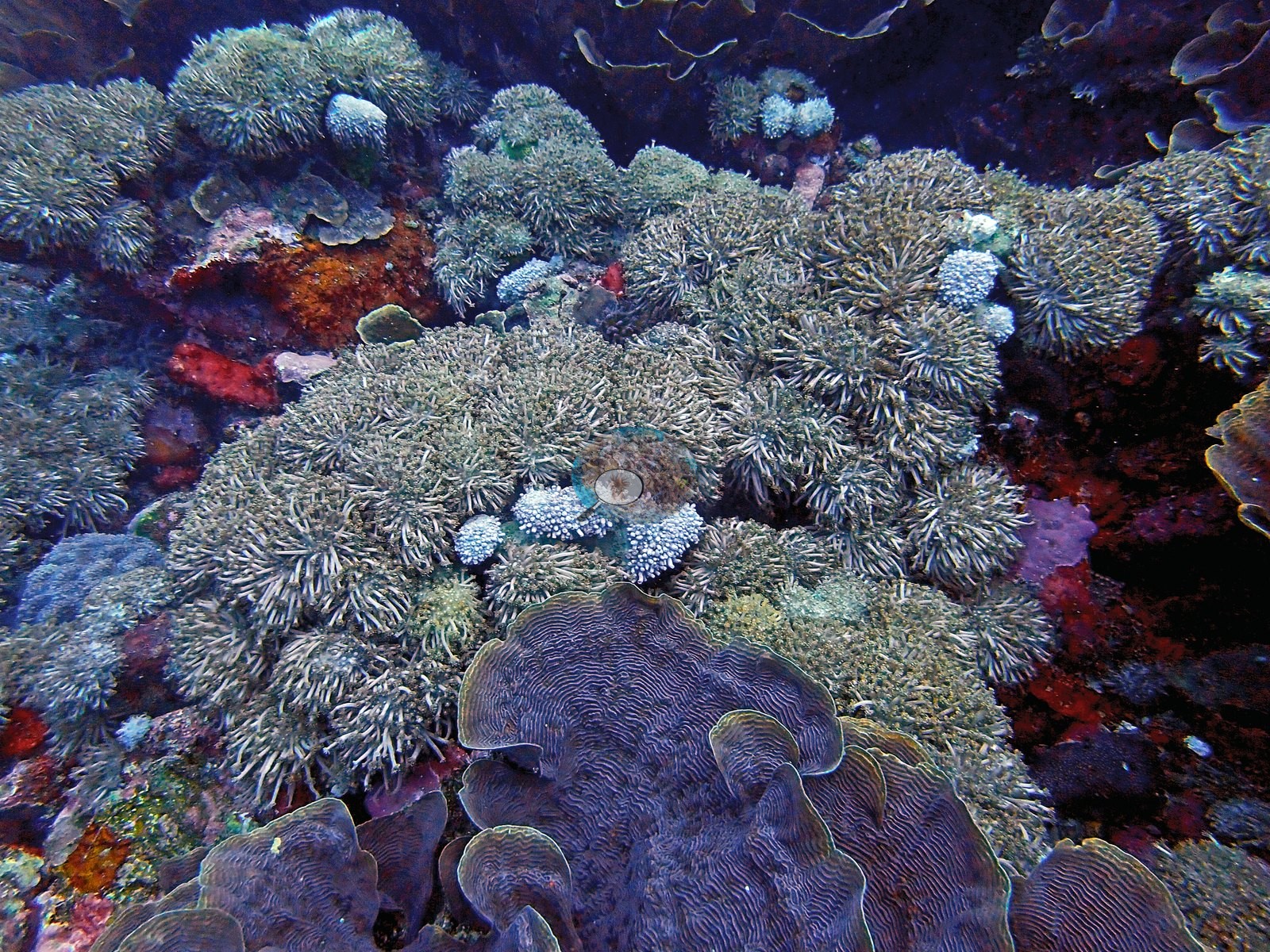
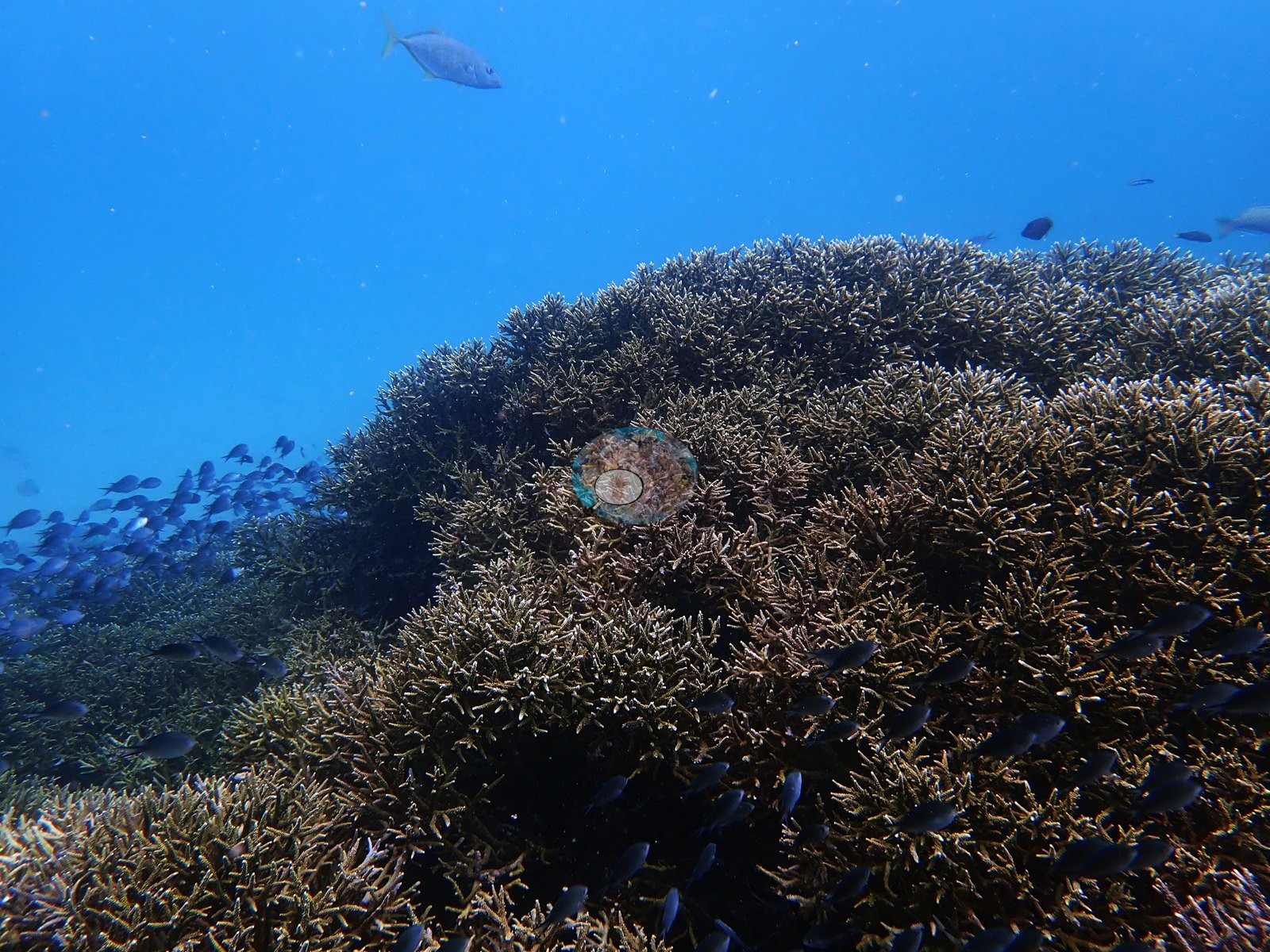
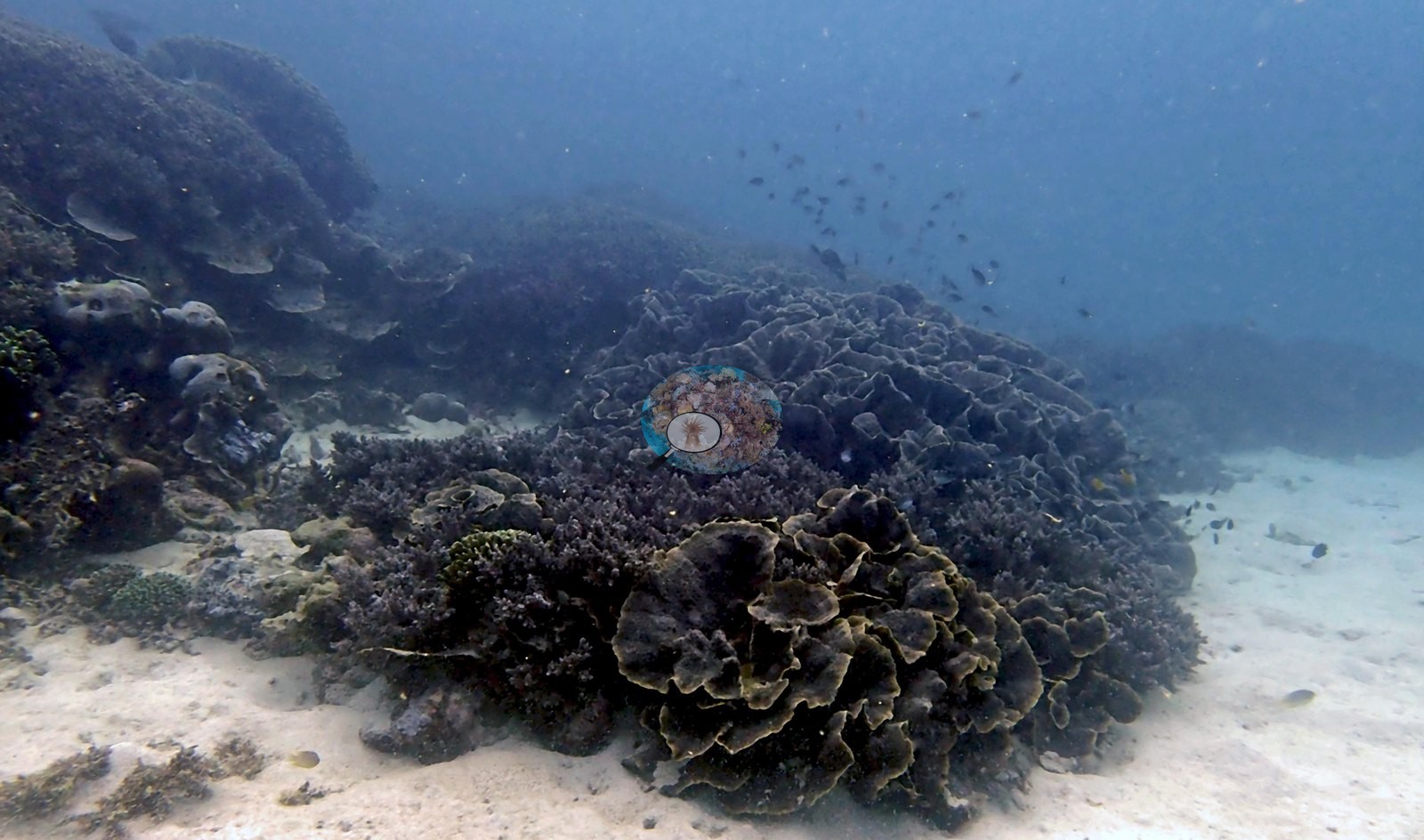
Some Fungia, Pavona, massive Porites (though not a major framework builder), fish life diverse but average size=small (e.g., Image 3).
Beautiful soft corals and sea anemones though this was definitely a hard coral-dominated site. Zoanthids and corallimorphs common. At least five species of soft coral. Finally saw Pocillopora verrucosa at the at the end of the dive @ 6 m. No Pocillopora damicornis/Pocillopora acuta. Pocillopora verrucosa, Seriatopora hystrix, Stylophora pistillata, Seriatopora caliendrum, Acropora (diverse and abundant), Pachyseris (dominant in places), Pavona (including a MONSTER colony), 5-6 large turtles over course of dive, several sharks resting on sand, cuttlefish. Hard coral-dominated site punctuated by large, sandy patches. Tons of large, foliaceous coral colonies, only one of which was Pachyseris. Cabbage/lettuce coral, with tons of huge branching Acropora colonies. Pavona, nurse shark, Euphyllia, 1 Culcita, several species of Galaxea (all small), Montipora, several species of brain coral, Hydnophora, finger Porites, small massive Porites (uncommon), Notable absence of Pocillopora acuta.
Coral cover
Coral cover: 53% — a blind Claude computer-vision point count of 121 of Anderson's edited photographs (20 points per photo; water, fish, and obstructions excluded). Other computer-vision methods are listed in the method table. Absolutely stunning hard coral cover. Very high diversity and cover @ 10 m. Anderson is still comparing computer-vision models, and these figures will be updated as the methods improve.
Stressors
Some Culcita damage, though not much.
Fish and other fauna
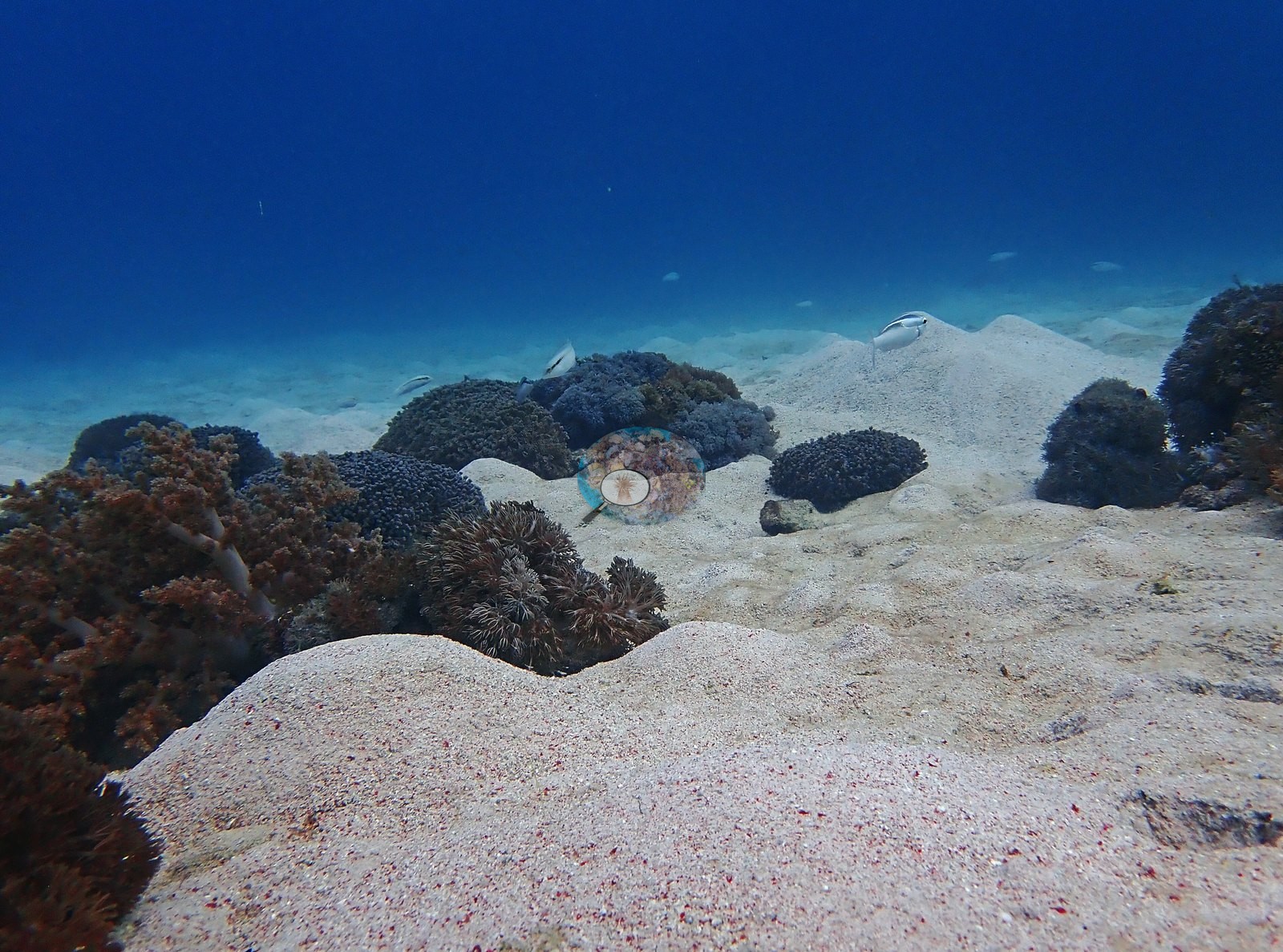
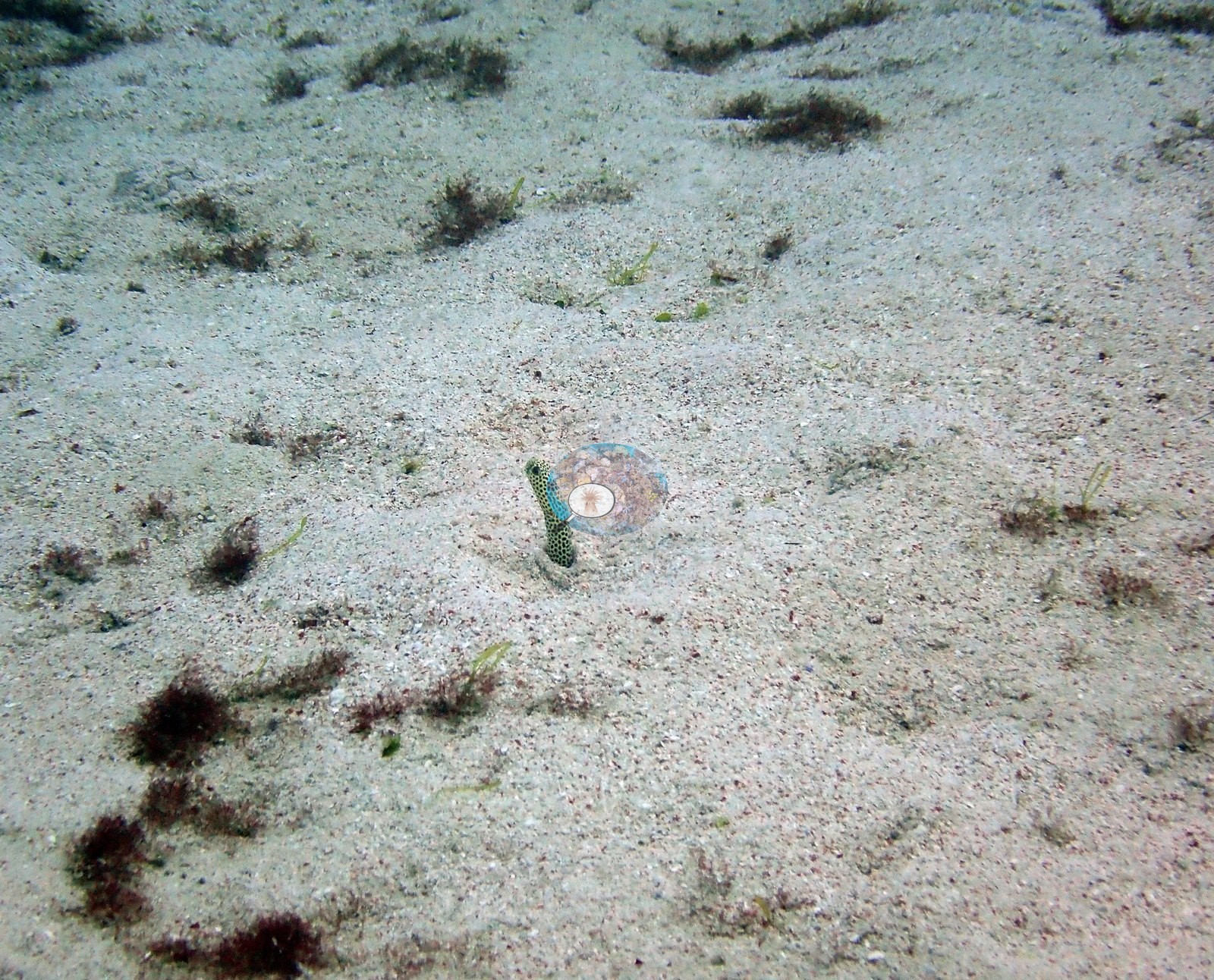
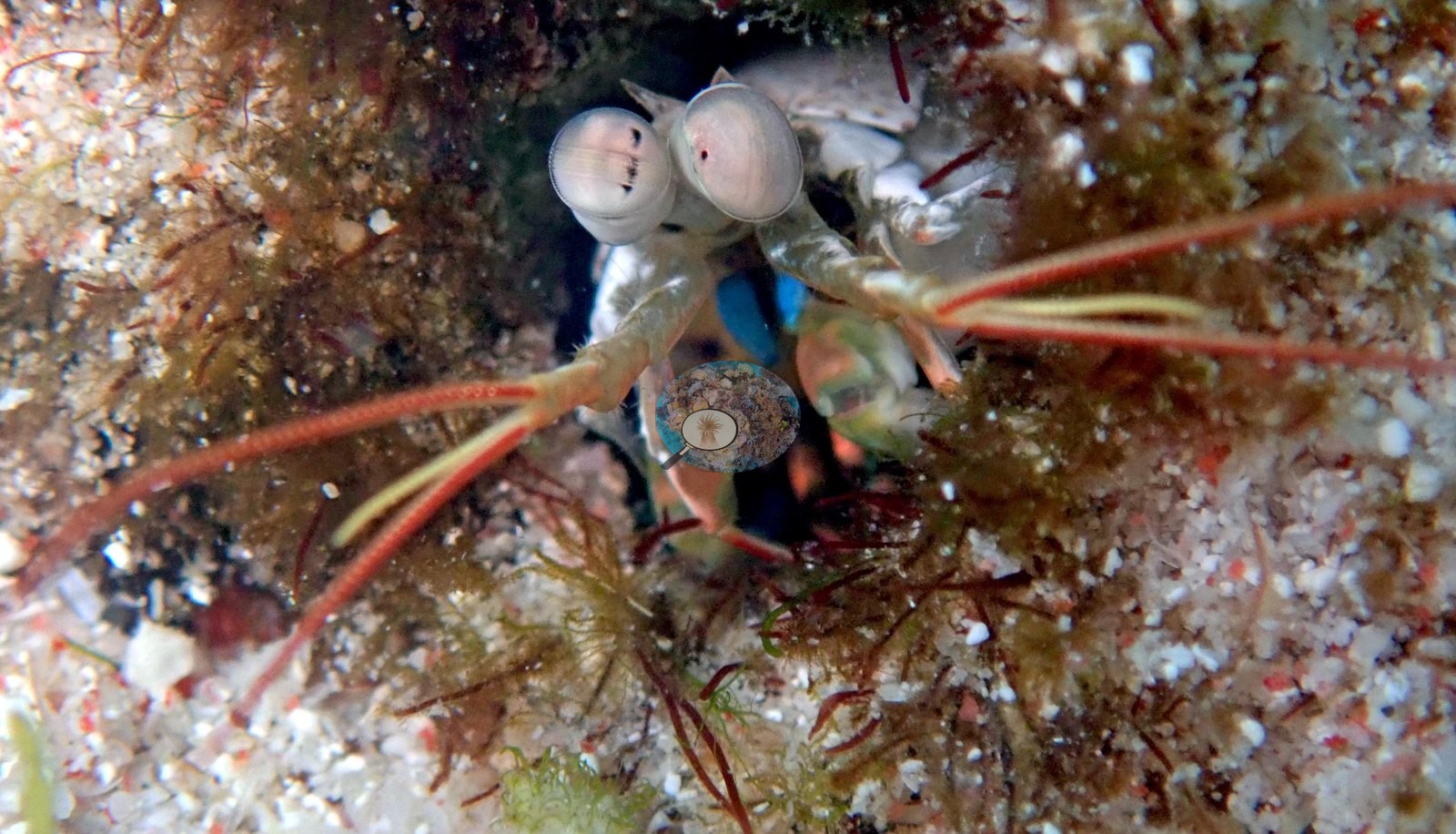
Several large, green turtles, one of which may have been pregnant. Pregnant turtles. Some garden eels in interesting sand apron. Tiny nudibranchs. NBS anemone (small), some algae in sand, Dictyota, some Acropora colonies. Saw a tiny frogfish (no good picture) and baby mantis shrimp (?) in sandy area, where we spent the last third of the dive.
Comparisons with other data
No independent survey was made at this exact site; the nearest ones are listed in the table below.
Dive record
2019-1-19 dive 1: Siaba Besar (#1). 7:28-8:33. Max. depth=19.2 m, dive time=65 minutes. 33% oxygen. 26ºC. 1st dive of the trip and one of the most well known for hard coral. 2019-1-26 dive 3: Siaba Besar (round 2; #30): 15:20-16:26 (66 min). Max. depth=16.2 m. Temp.=26.7ºC. 30% oxygen. Our second dive at this amazing site.
Other notes
Need to look up most common one (called it “Sinularia” though unsure). Need to check on the other species.
CV model comparison
More info
DINOv3 and CoralSCOP were run on the same photos and are listed for comparison. Coralscapes v2 and v1 were also run but are not shown: Anderson does not consider Coralscapes reliable for these photos. No diver transect exists for this trip, so agreement between the rows is not accuracy, and as of September 2026 no computer-vision method estimates coral cover accurately on new images; treat every row as indicative.| Method | Hard-coral cover (%) |
|---|---|
| In-house DINOv3 | 31.6 |
| CoralSCOP edited | 41.5 |
| Claude (edited photos) | 52.9 |
% coral cover by visit
Each visit is analyzed independently; these are not pooled into a single site mean.
| Date | % coral cover | Std. dev. | Frames scored |
|---|---|---|---|
| 2019-01-19 | 55% | ±26 | 55 |
| 2019-01-26 | 52% | ±27 | 66 |
Independent surveys nearby
| Agency / program | Year(s) | Stations / distance | Link |
|---|---|---|---|
| Reef Check | 2020 | 4 stations, 3.84–4.58 km | Records ↓ |
| WWF-US / WWF-Indonesia | 2016 | 1 station, 3.57 km | Records ↓ |
 Dr. Coral (CRD)
Within 5 km, 5 independent survey stations recorded hard coral cover in 8 surveys between 2016 and 2020. The most recent nearby survey is from 2020, so these values predate recent heat stress. This site's own estimate (53%) is indistinguishable from the range of these surveys (8.8–51%): the 1.7-point gap is inside the ±7 percentage-point noise between methods; the methods differ, so the comparison is context, not a like-for-like test.
Collected by other programs using different methods (Reef Check uses point-intercept transects), so these are context for the figures above, not a like-for-like comparison. Where a station was surveyed more than once the range is shown. Station names are not dive-site names.
| Agency | Site / location | Date | Hard coral cover (%) | Distance | Link |
|---|---|---|---|---|---|
| WWF-US / WWF-Indonesia | TNK07 | 2016 | 34% | 3.57 km | Amkieltiela, Abdillah T, Amkieltiela A, Andradi-Brown D, Lazuardi E. 2016. Komodo MPA. MERMAID |
| Reef Check | Mawan (Sector 1) | 2020 | 10% (2 surveys) | 3.84 km | — |
| Reef Check | Mawan (Sector 2) | 2020 | 8.8% | 3.84 km | — |
| Reef Check | Siaba Besar (Sector 1) | 2020 | 51% (2 surveys) | 4.58 km | — |
| Reef Check | Siaba Besar (Sector 2) | 2020 | 47% (2 surveys) | 4.58 km | — |
Data & links
All images from Coral Reef Diagnostics. Data are from Coral Reef Diagnostics and the organizations named in the data-sources table above.
© Coral Reef Diagnostics.