
Indonesia - Komodo NP: Loh Sera
Part of the regional summary: Indonesia - Komodo
More info
East Nusa Tenggara (NOAA CRW virtual station) · Lesser Sunda ecoregion mean=6.9°C-heating weeksLoh Sera is a fringing reef dominated by extensive Acropora sheets and thickets in clear, calm water, with high overall coral diversity, but numerous large Seriatopora caliendrum colonies were found partially bleached at their tips - a notable stressor Anderson flagged as unclear in cause. The surface was also littered with garbage. A blind Claude computer-vision point count puts coral cover around 30%, among the highest of the trip.
Loh Sera adalah terumbu tepi yang didominasi lembaran dan rumpun Acropora yang luas di perairan jernih dan tenang, dengan keanekaragaman karang yang tinggi secara keseluruhan; namun banyak koloni besar Seriatopora caliendrum ditemukan memutih sebagian di ujung-ujungnya — sebuah pemicu tekanan yang menonjol dan yang penyebabnya Anderson catat sebagai belum jelas. Permukaan lautnya juga dipenuhi sampah. Penghitungan titik buta visi komputer Claude memperkirakan tutupan karang sekitar 30%, salah satu yang tertinggi sepanjang perjalanan.
Terjemahan ringkasan ini oleh AI; versi bahasa Inggris yang berlaku.
One other CRD dive site within 5 km shown in orange — click a marker to open its page.
5 of these 50 photographs are shown beside the text that discusses them under "Site description" below.
Site description
Setting
A fringing reef dived at low tide. Corals were exposed to air. 10 m viz and no current=among best diving conditions of trip.
General benthic features
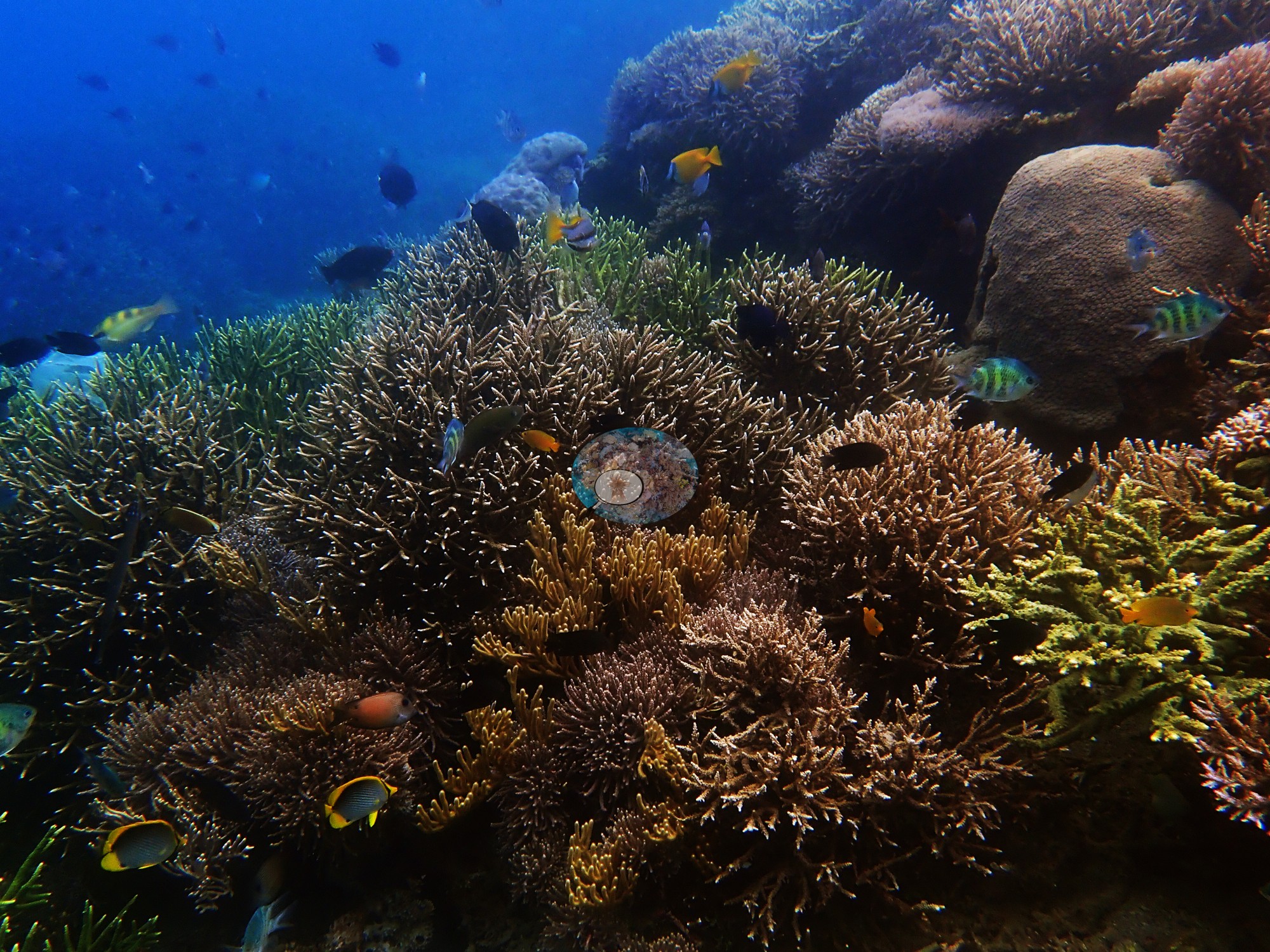
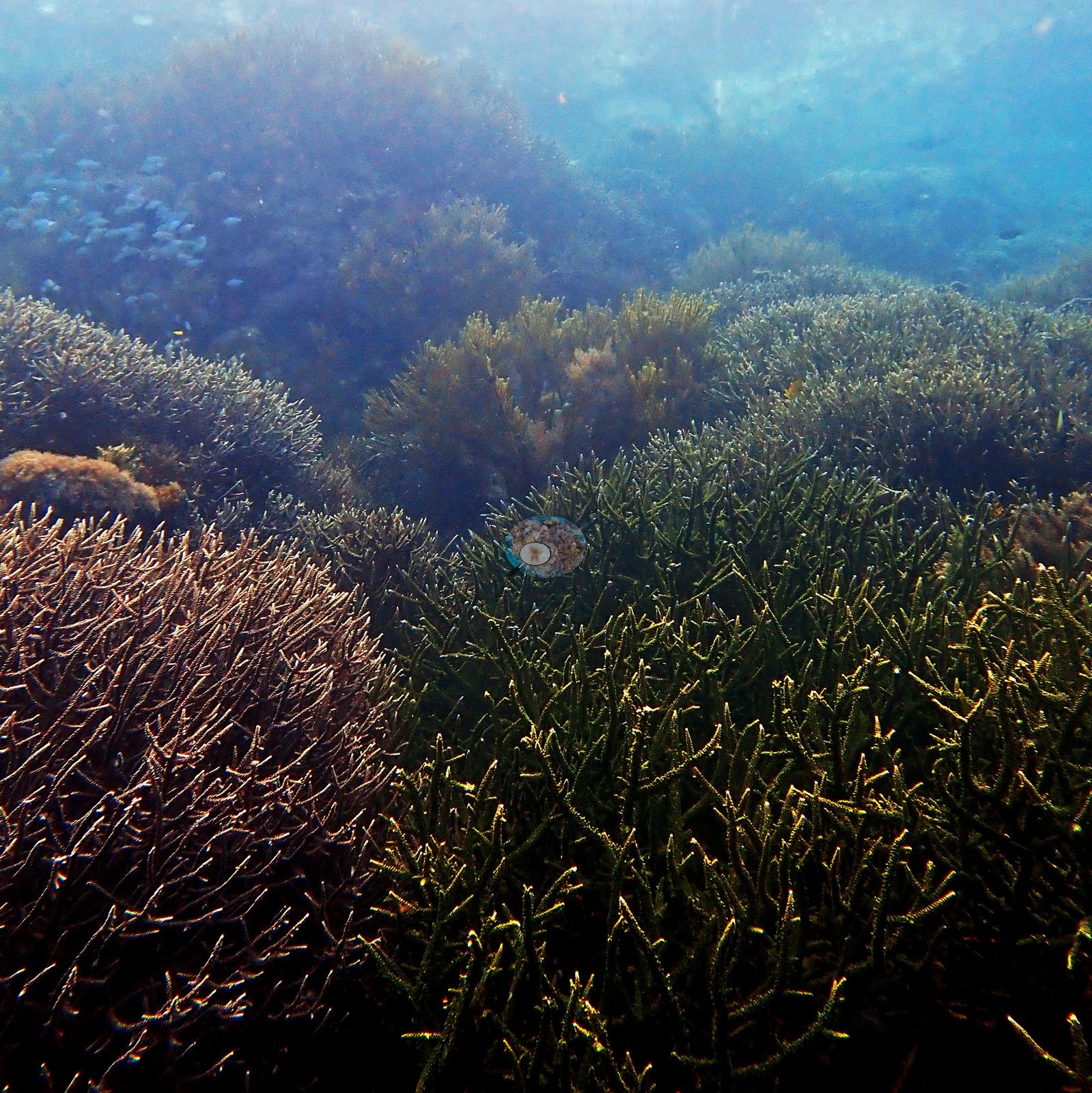
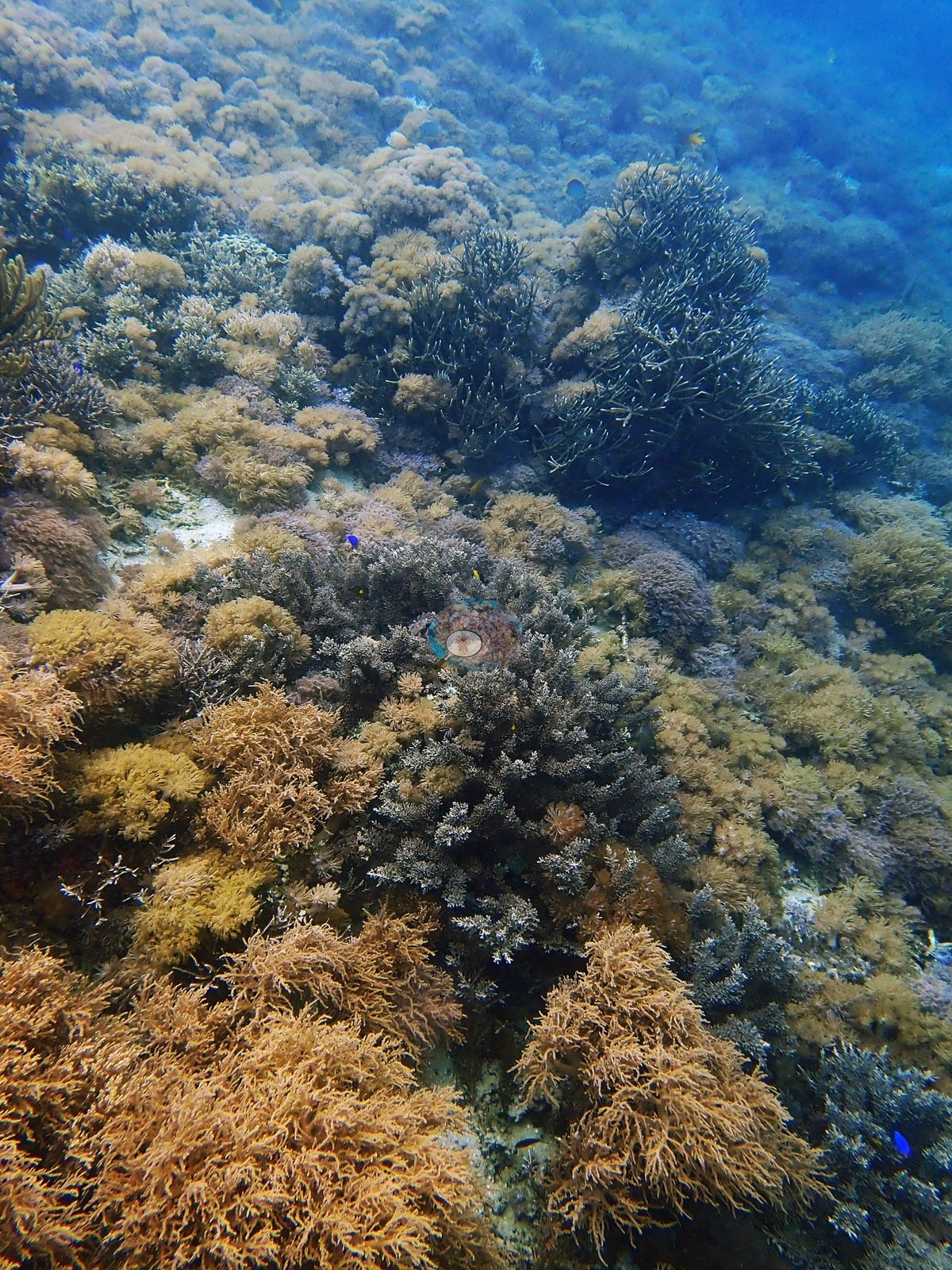
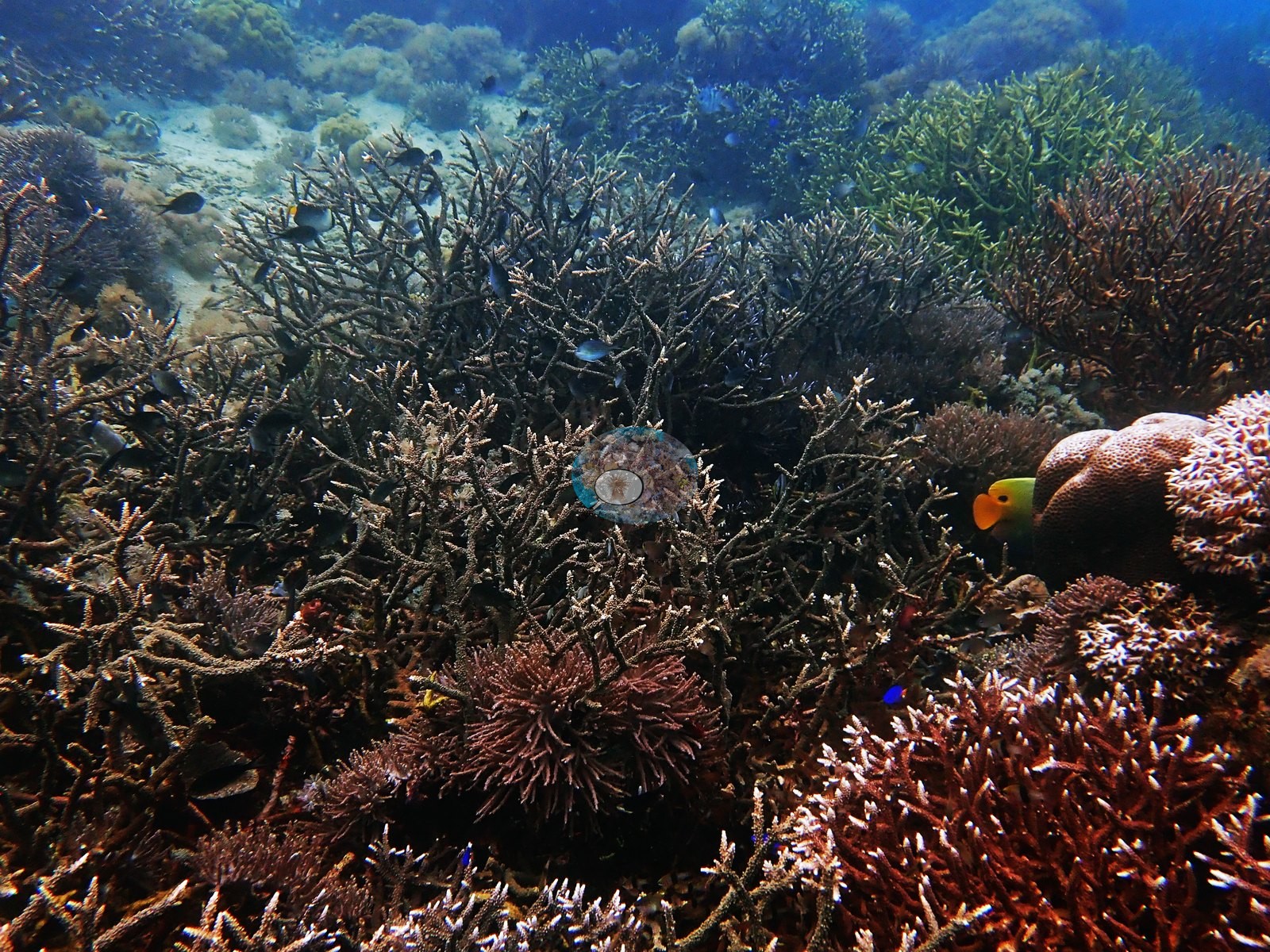
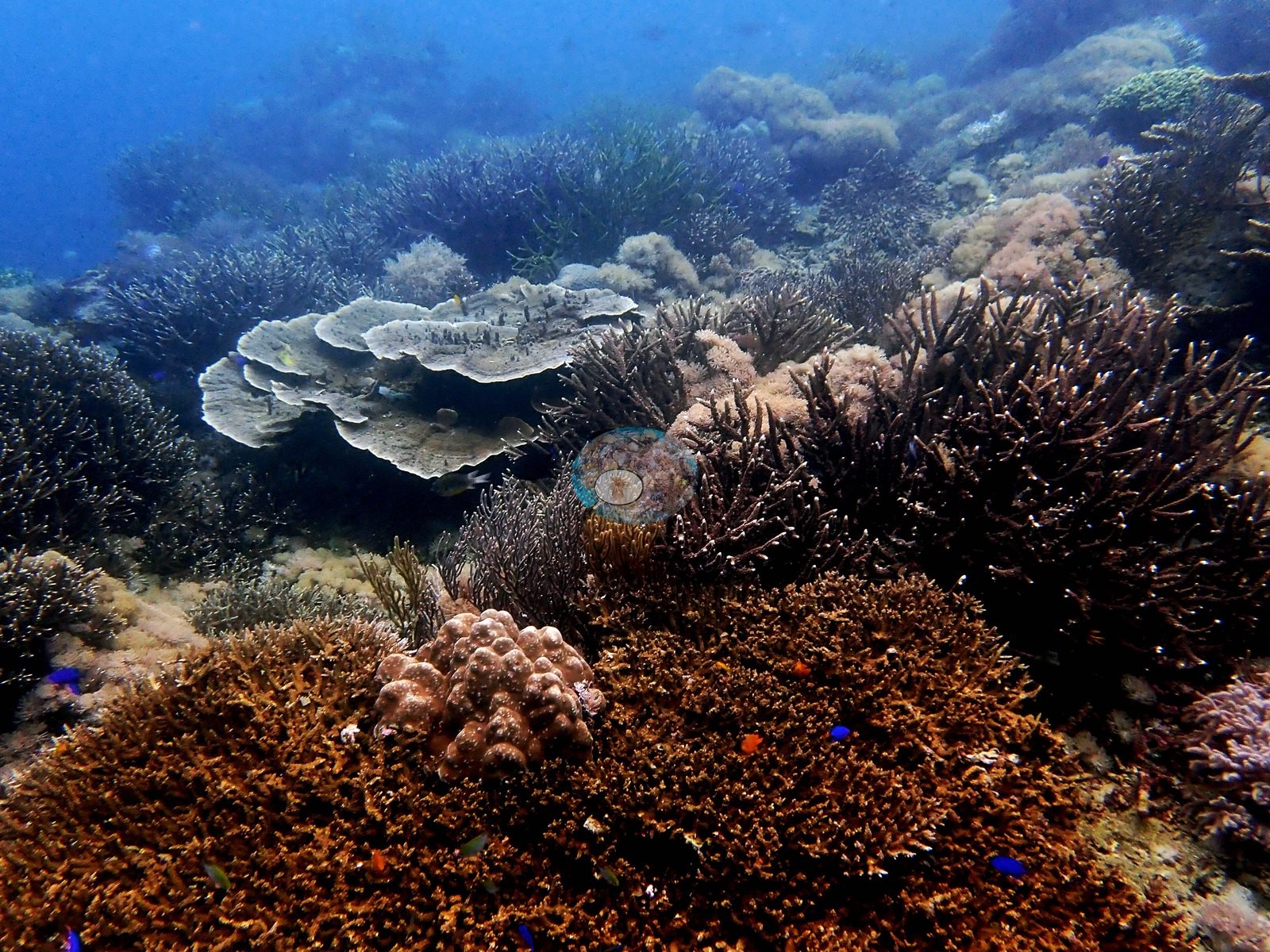
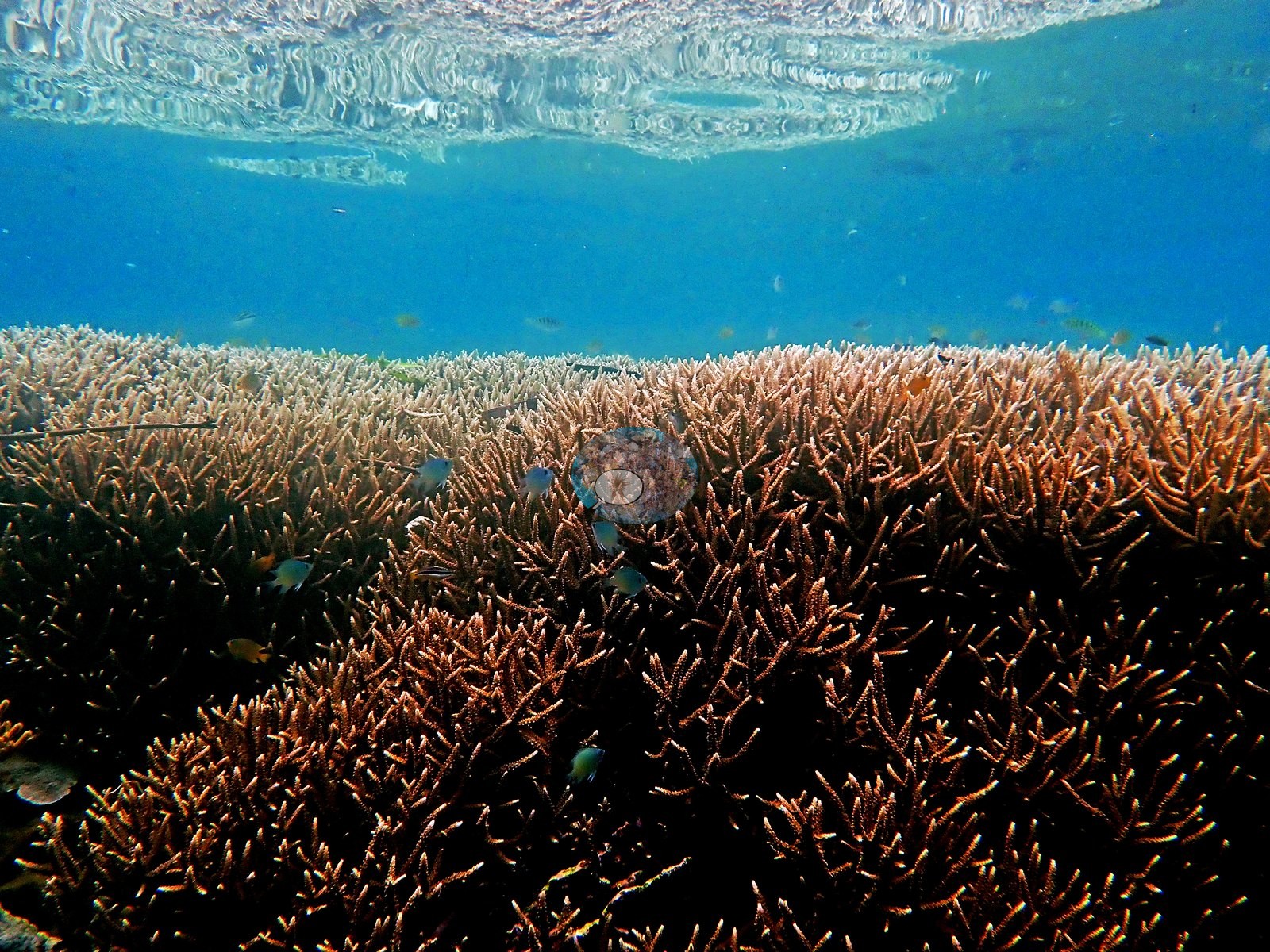
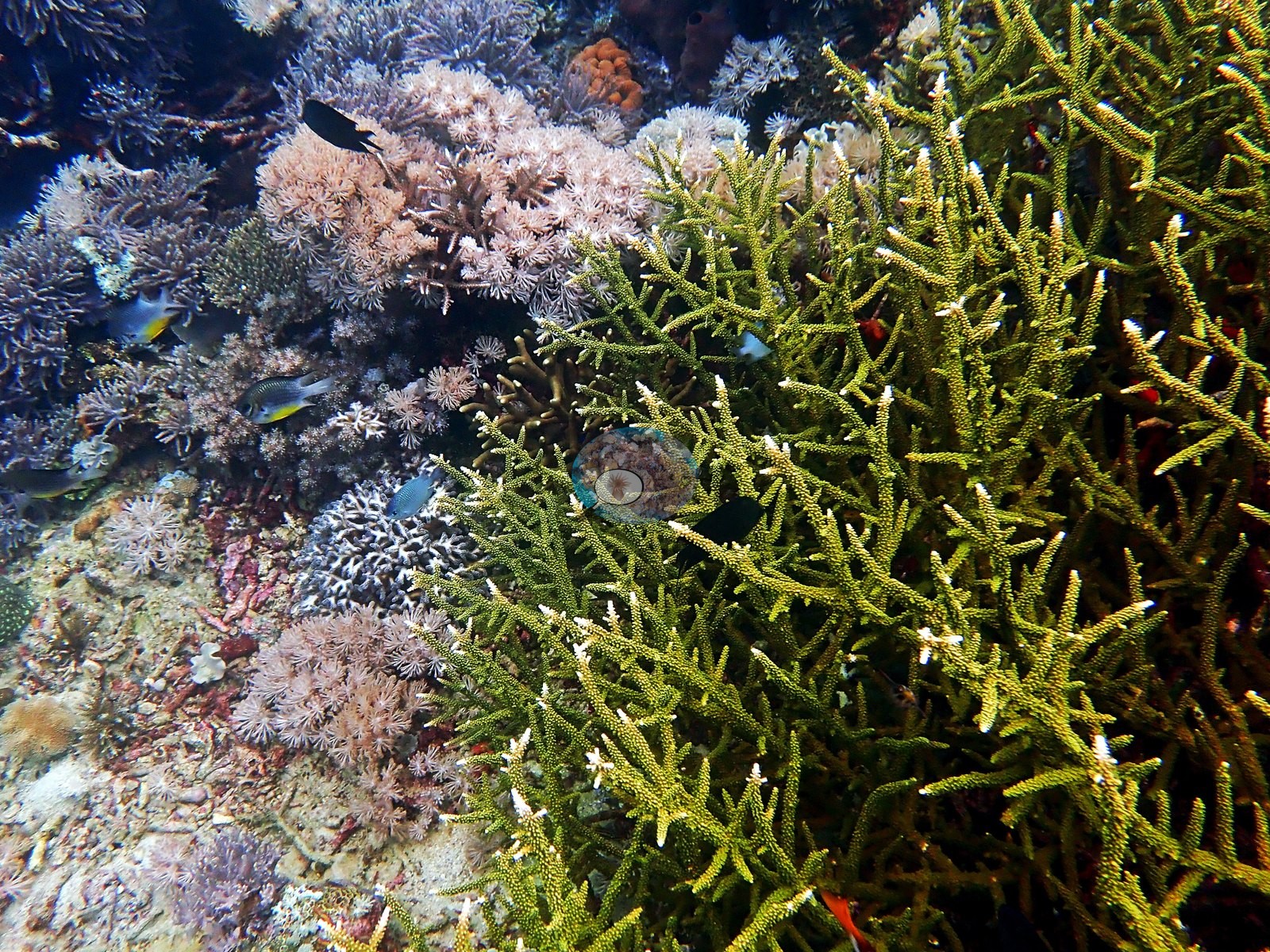
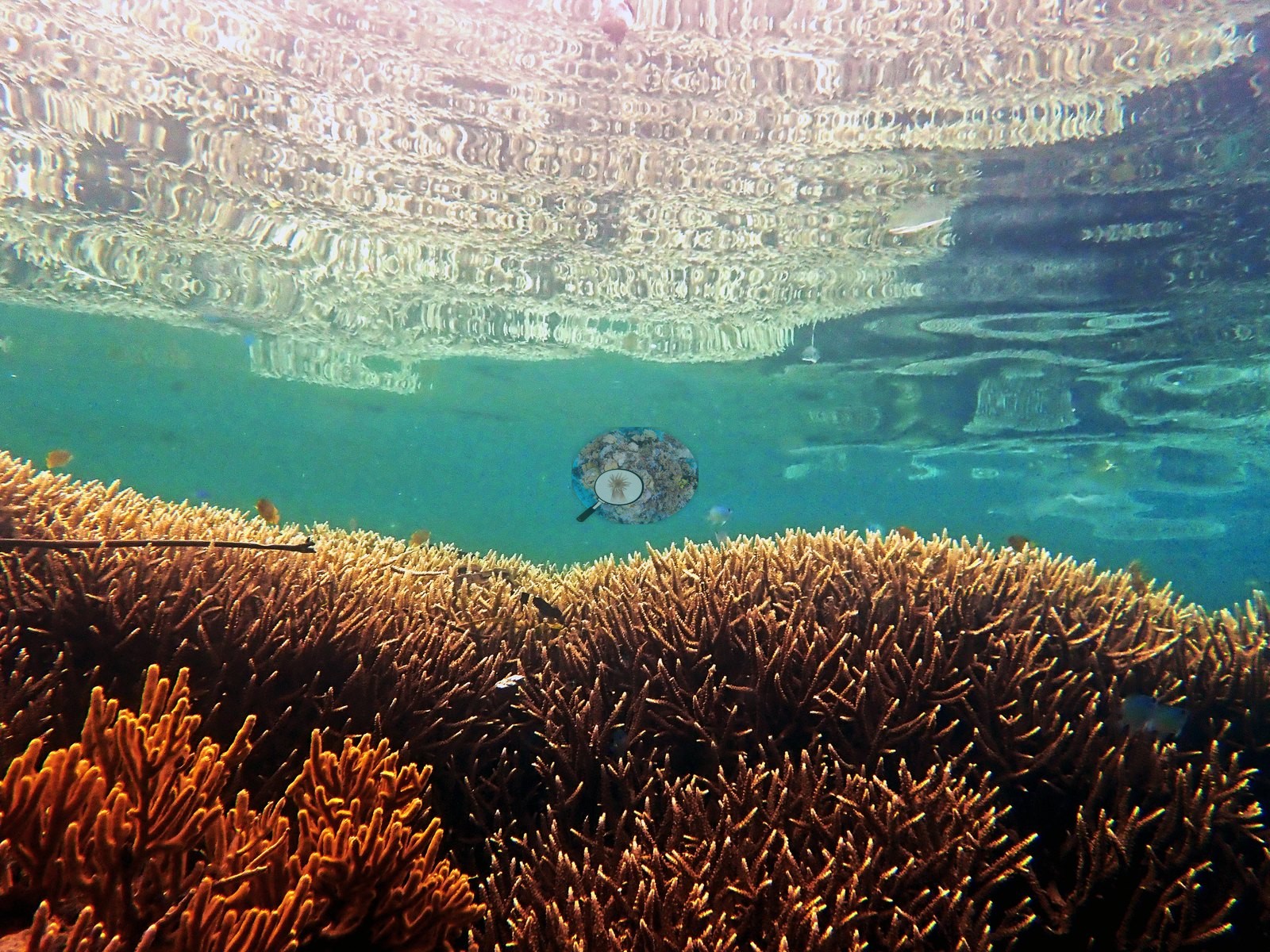
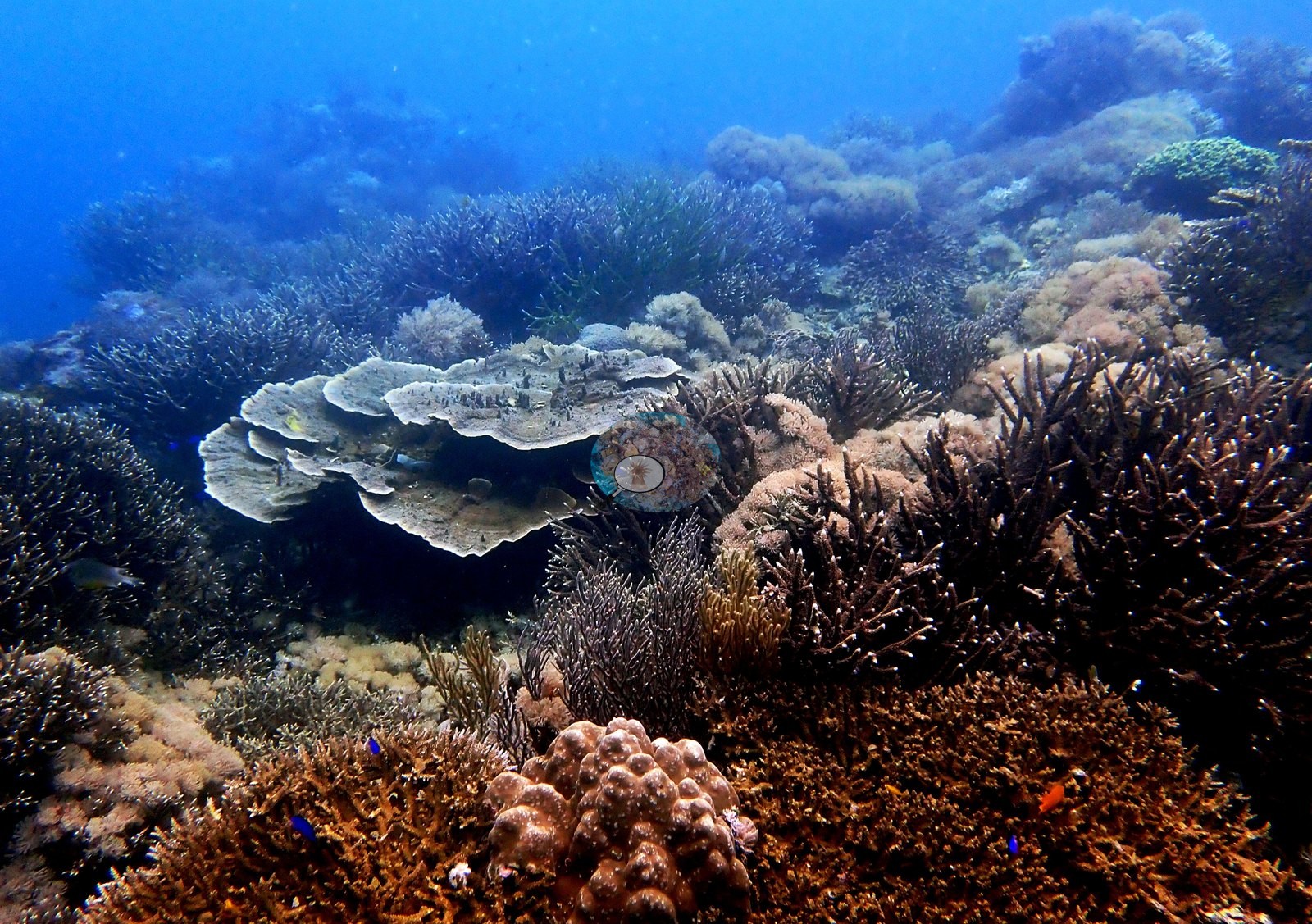
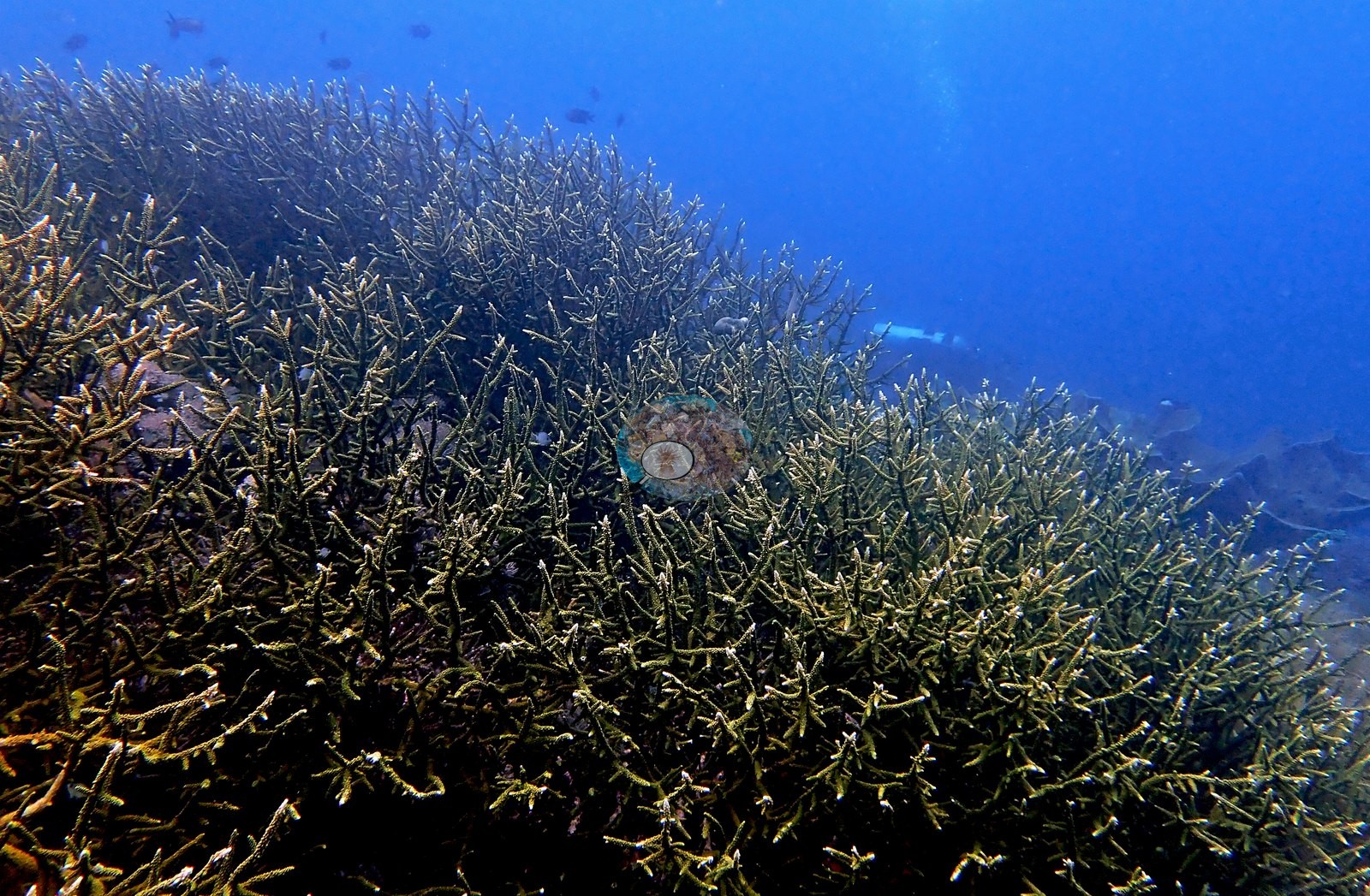
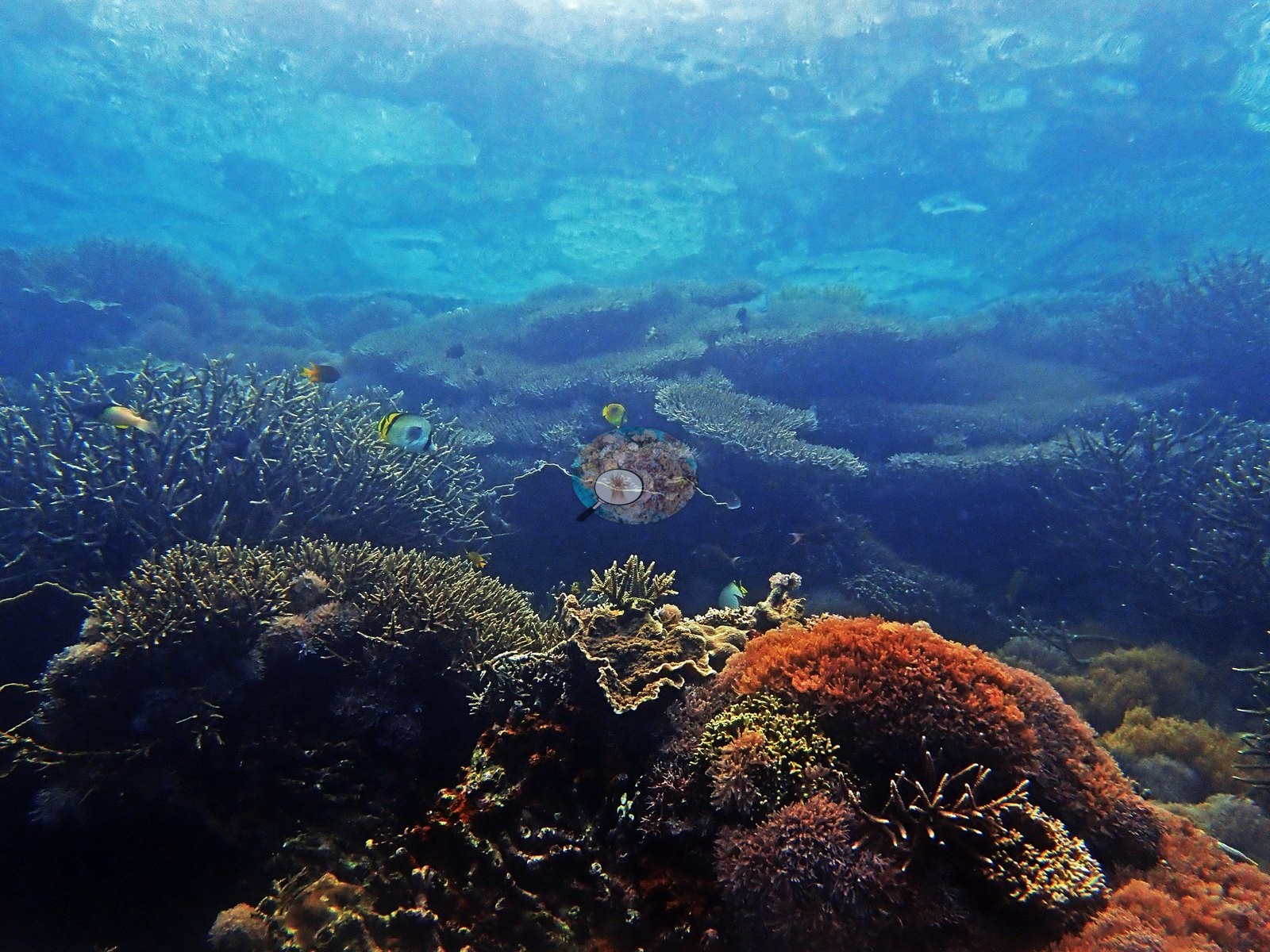
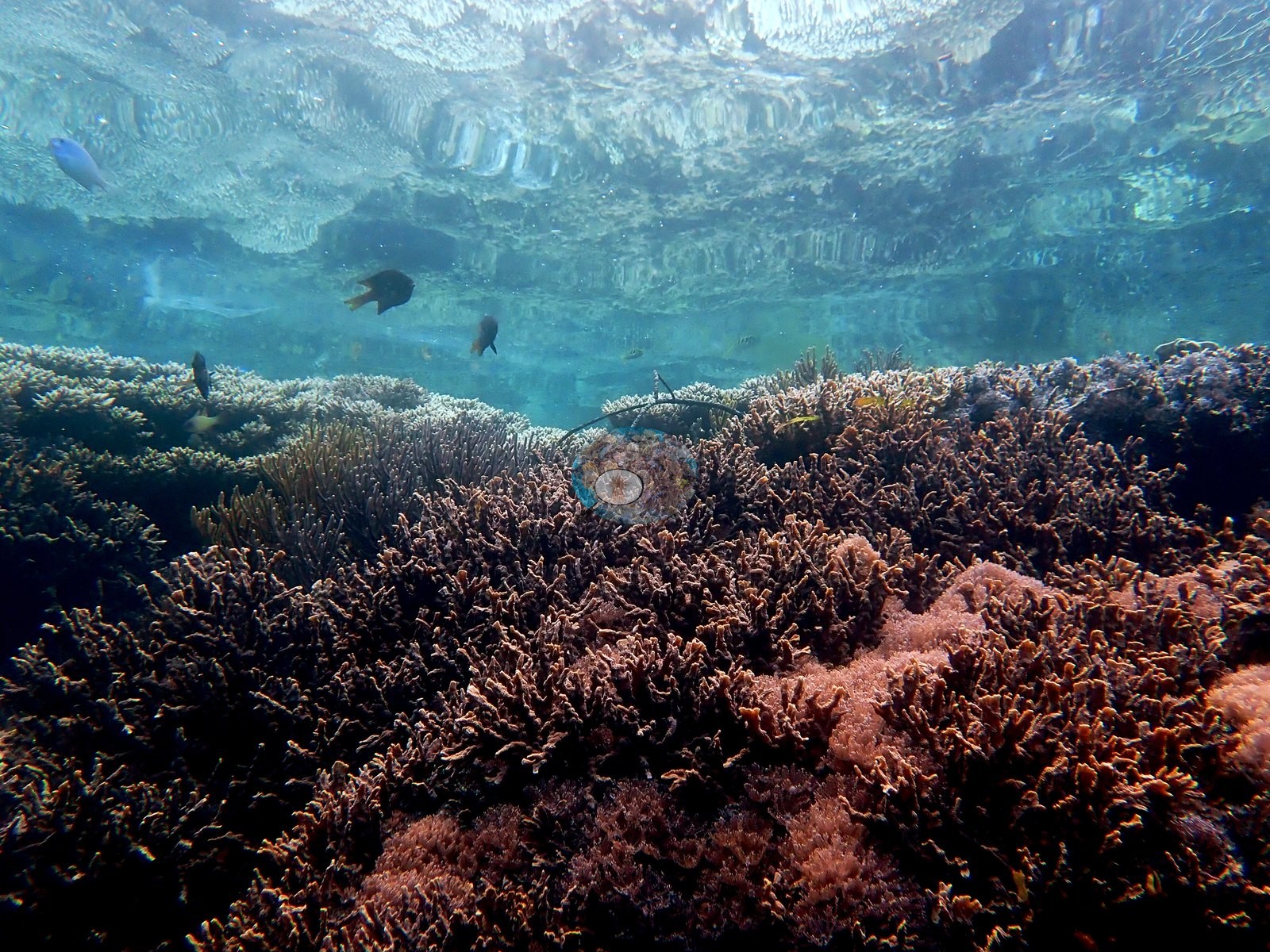
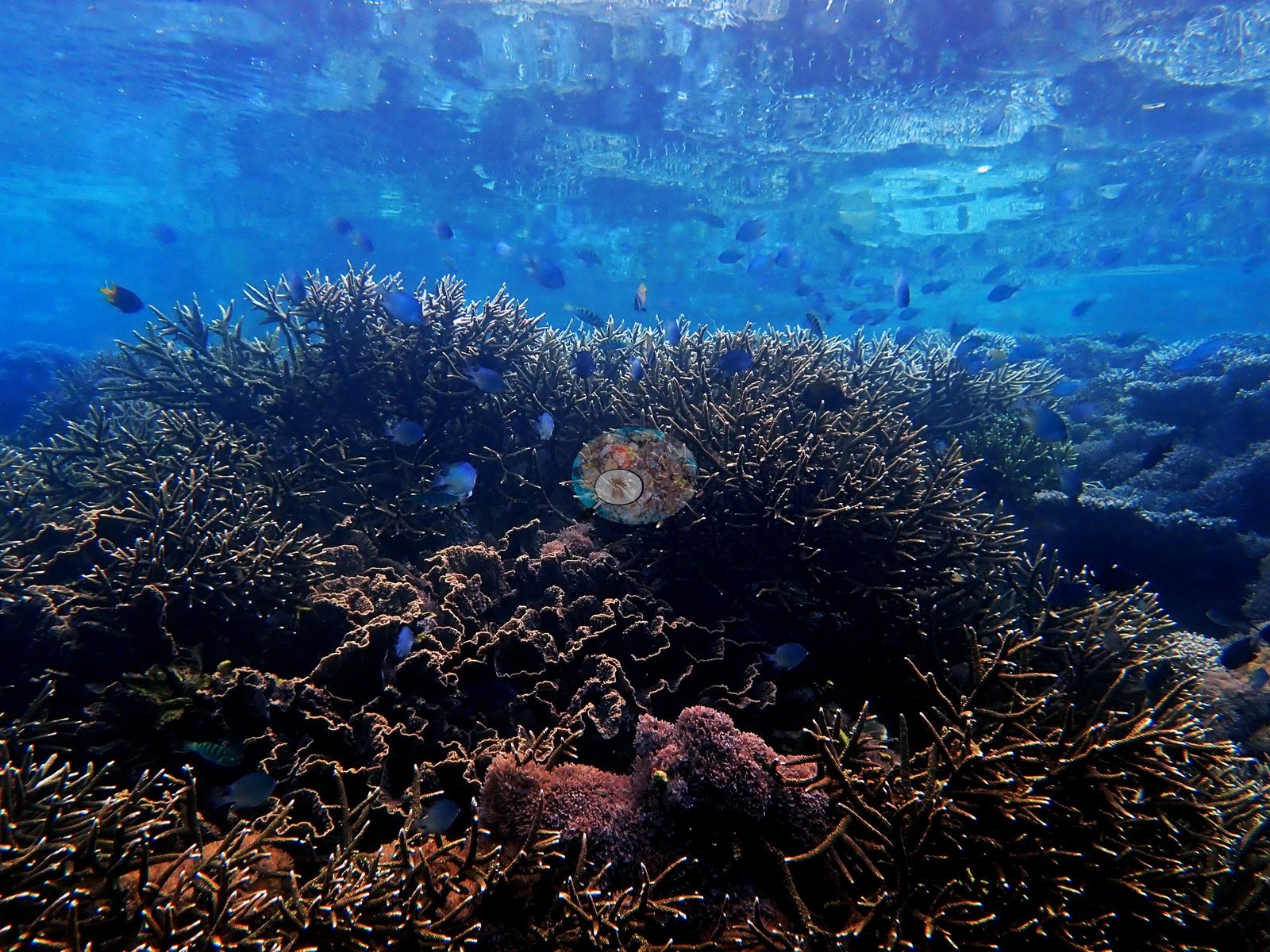
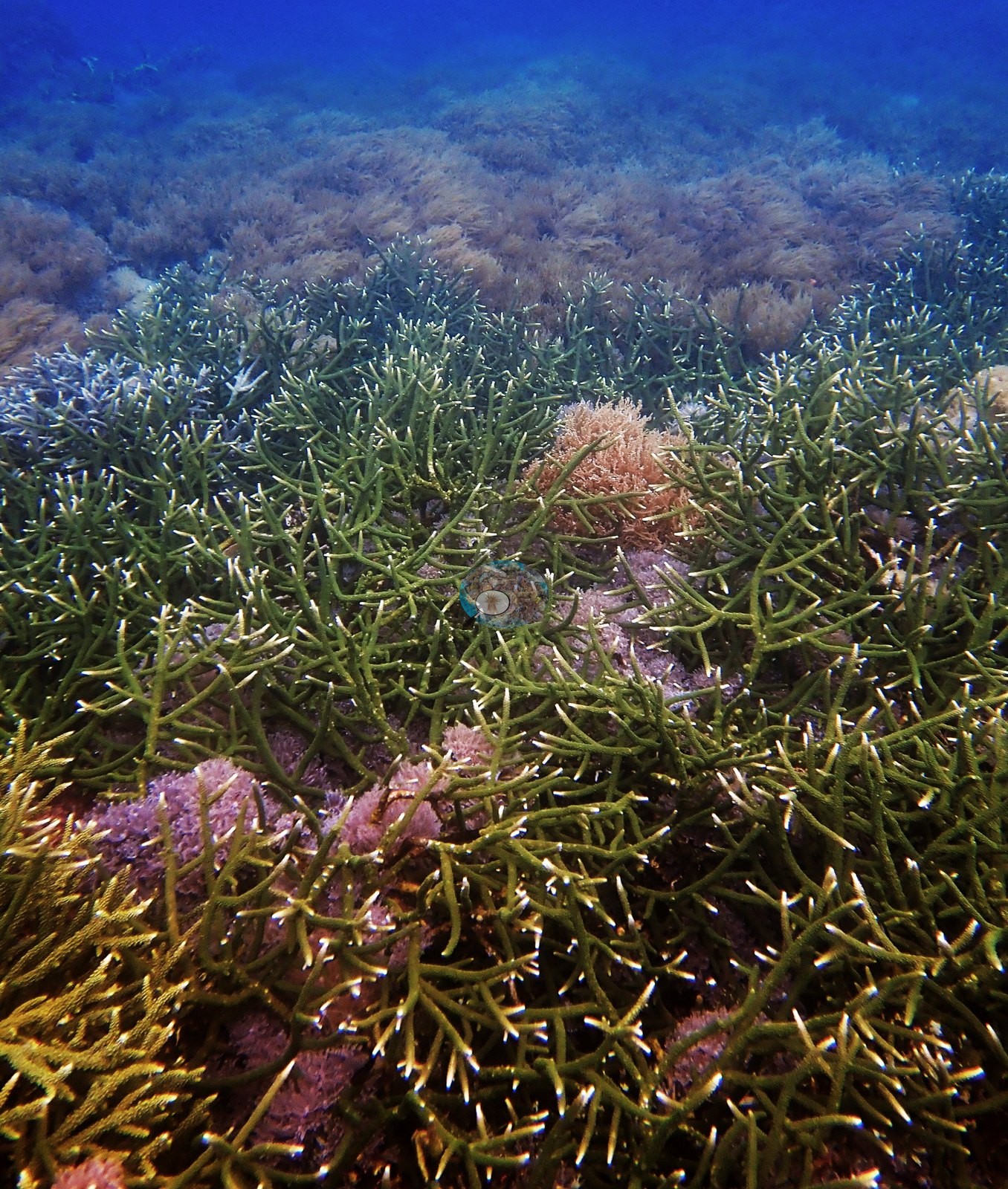
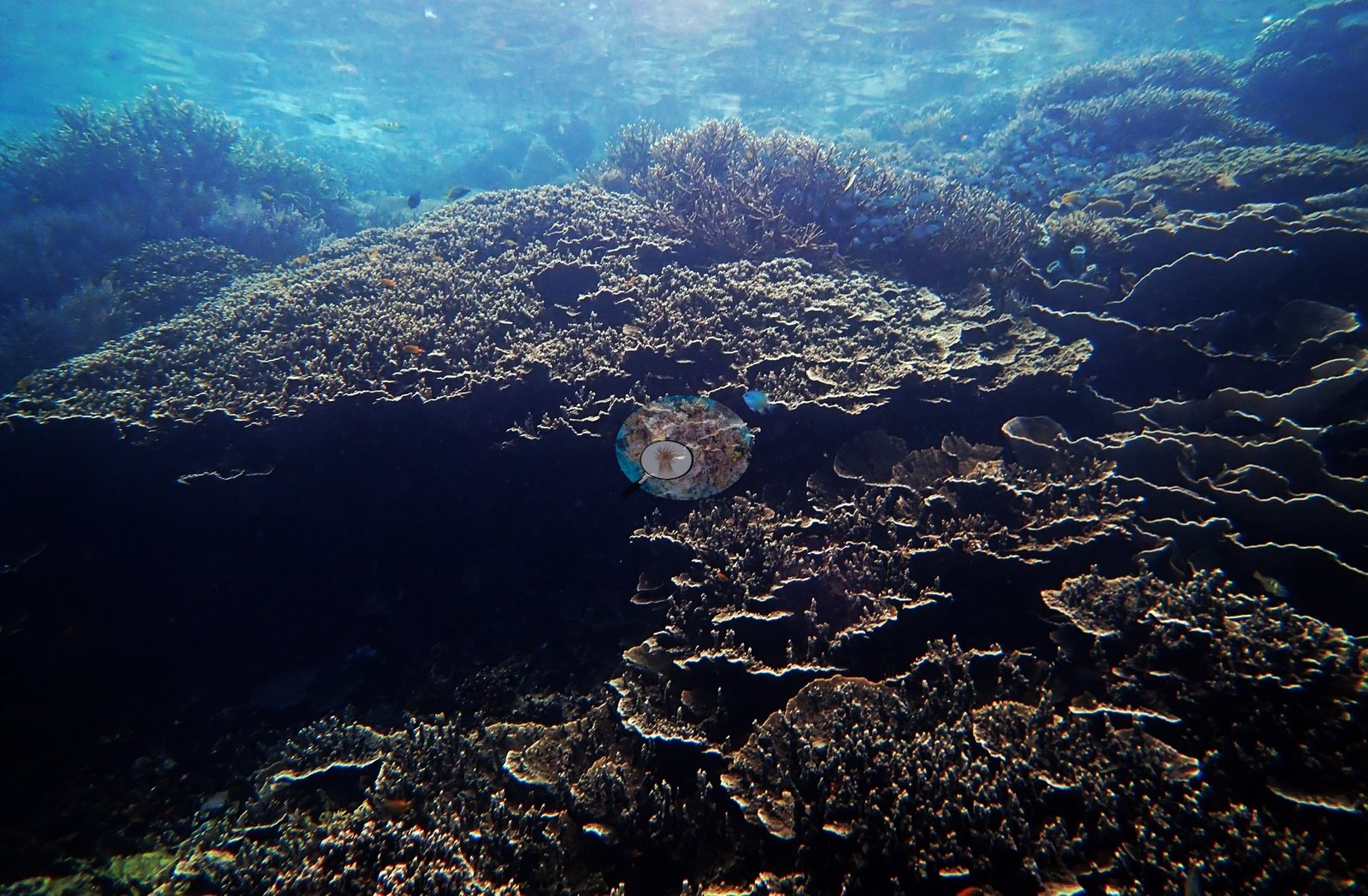
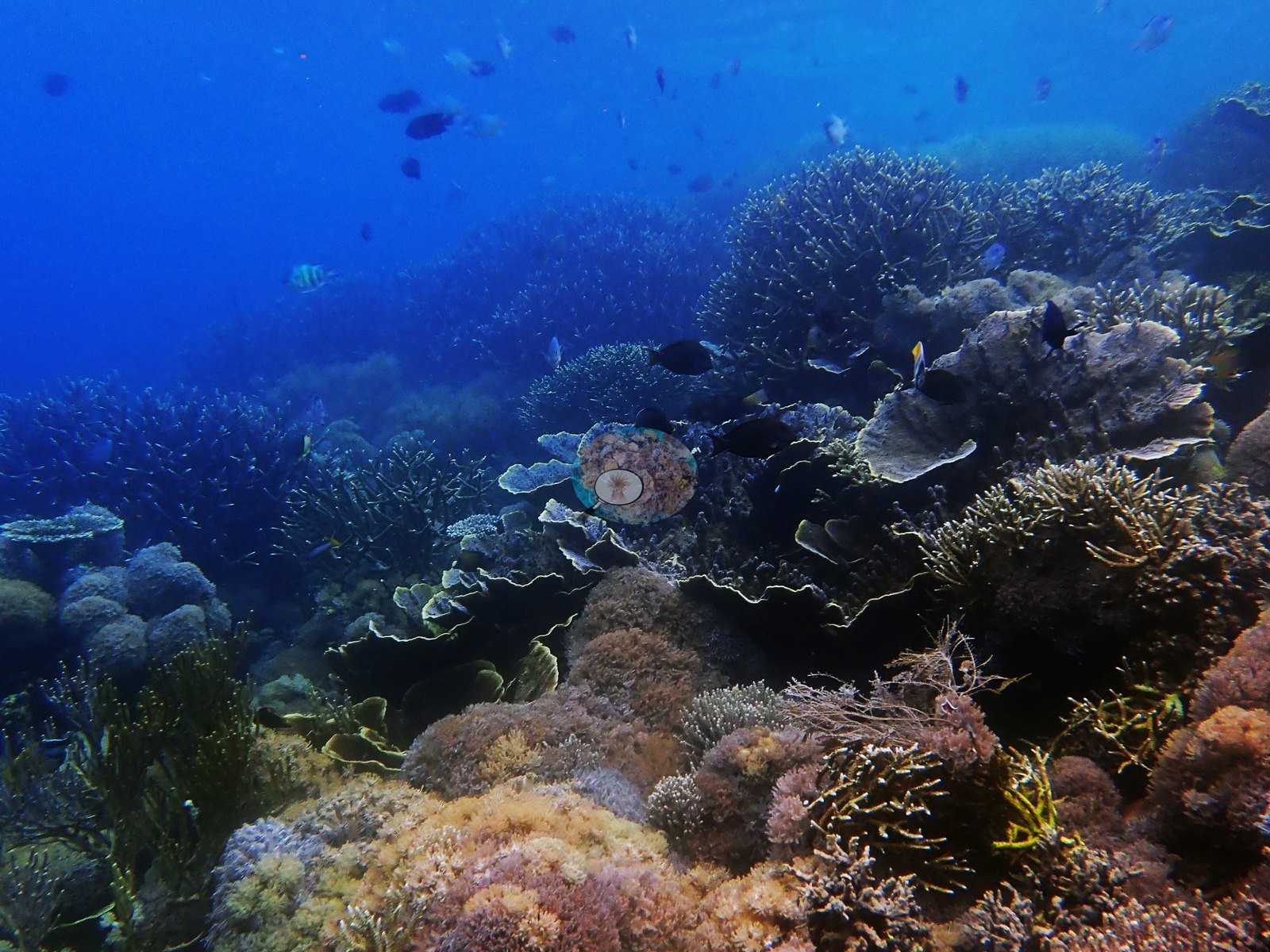
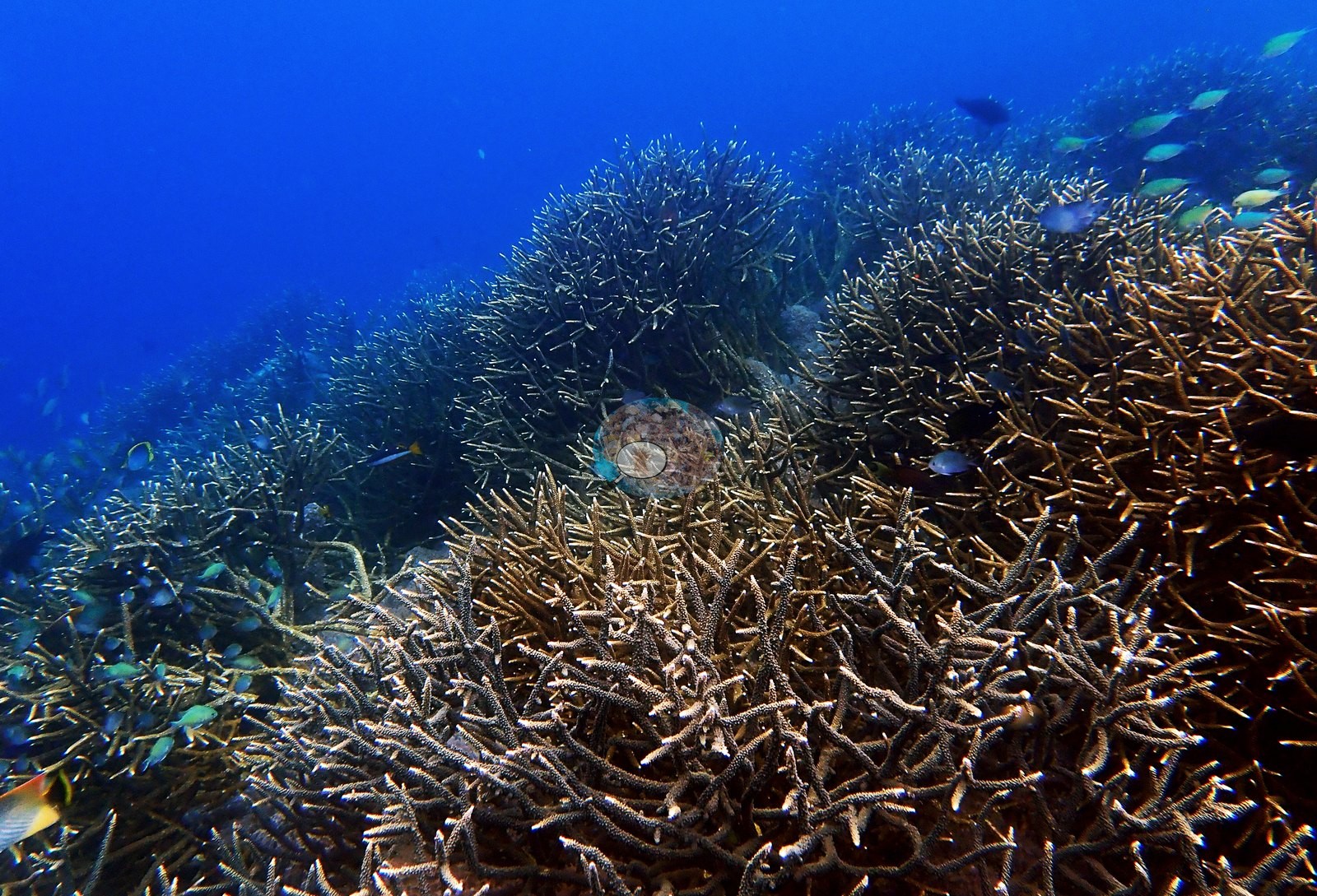
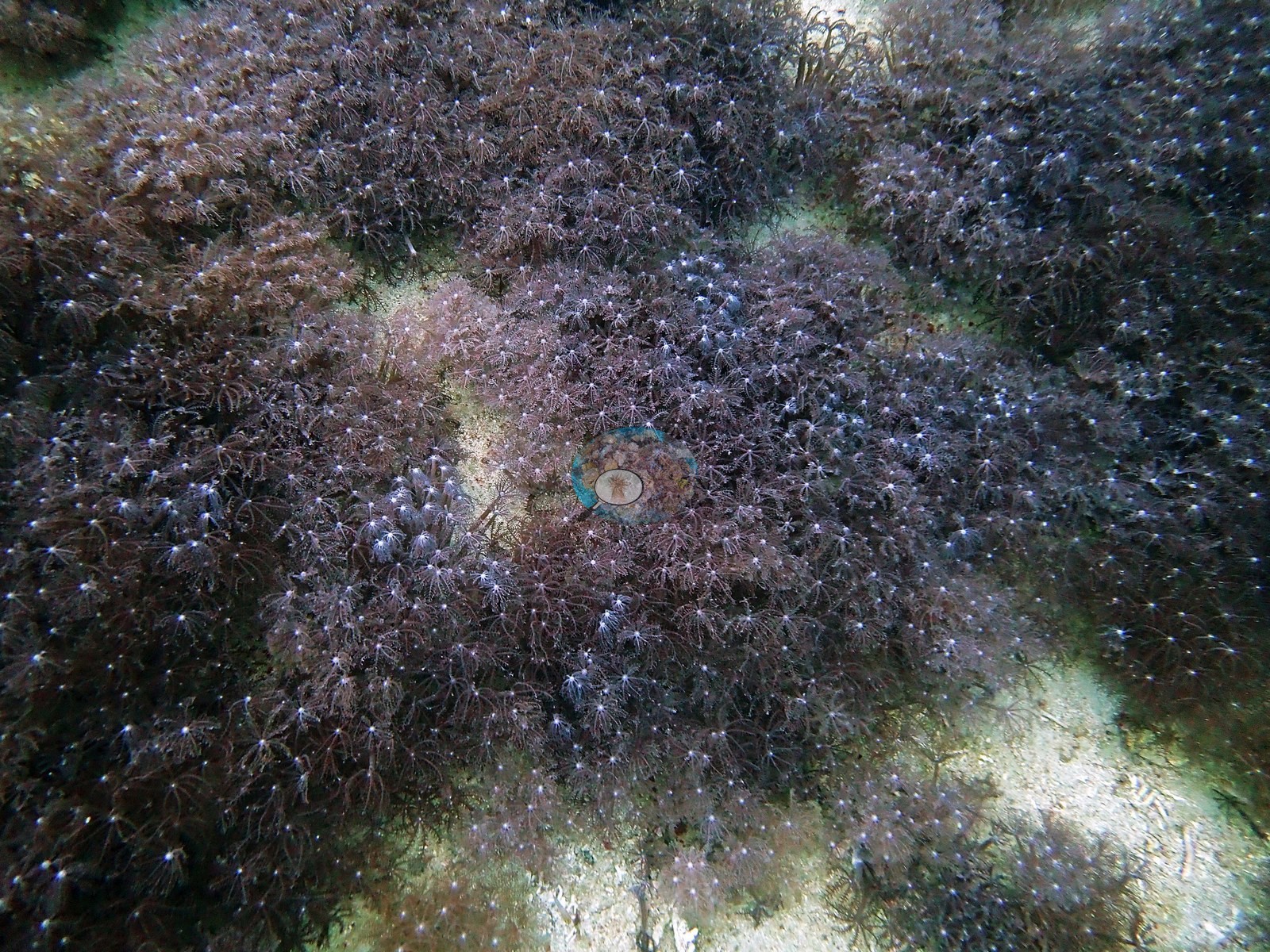
Descended upon sheets of foliaceous corals (unsure of species), as well as vast swaths of Acropora, which dominated the shallows at all parts of dive (e.g., Image 5).
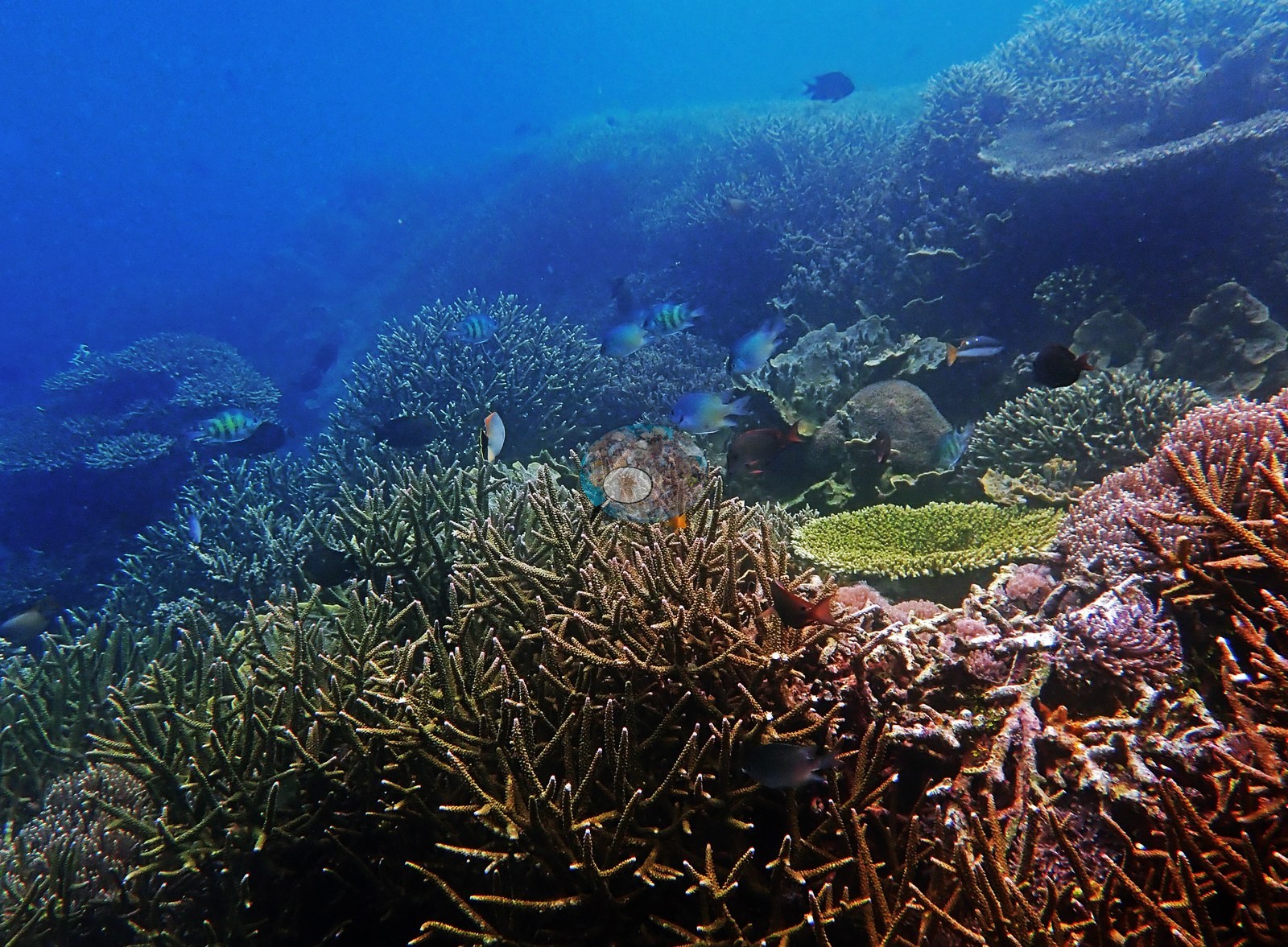
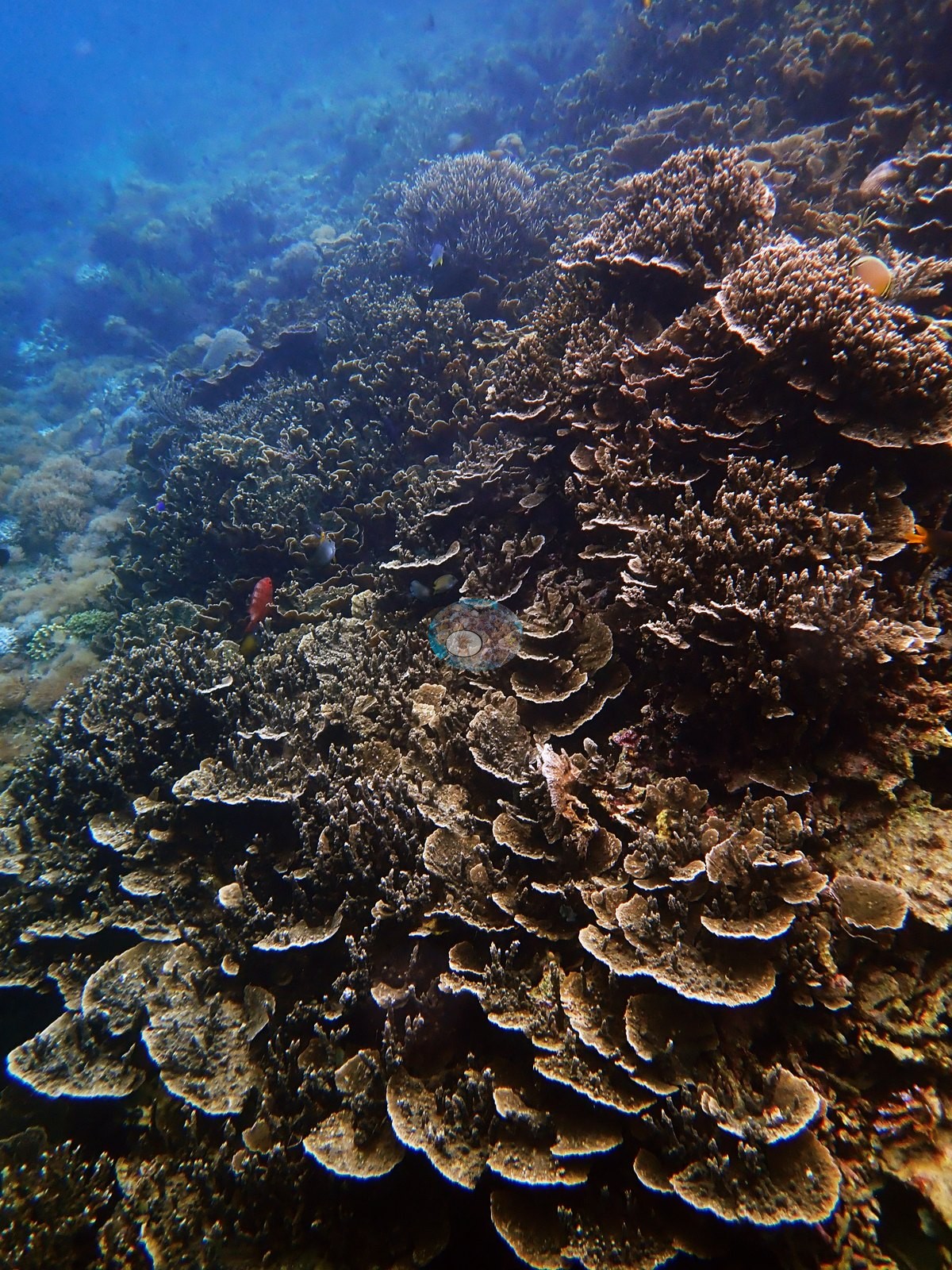
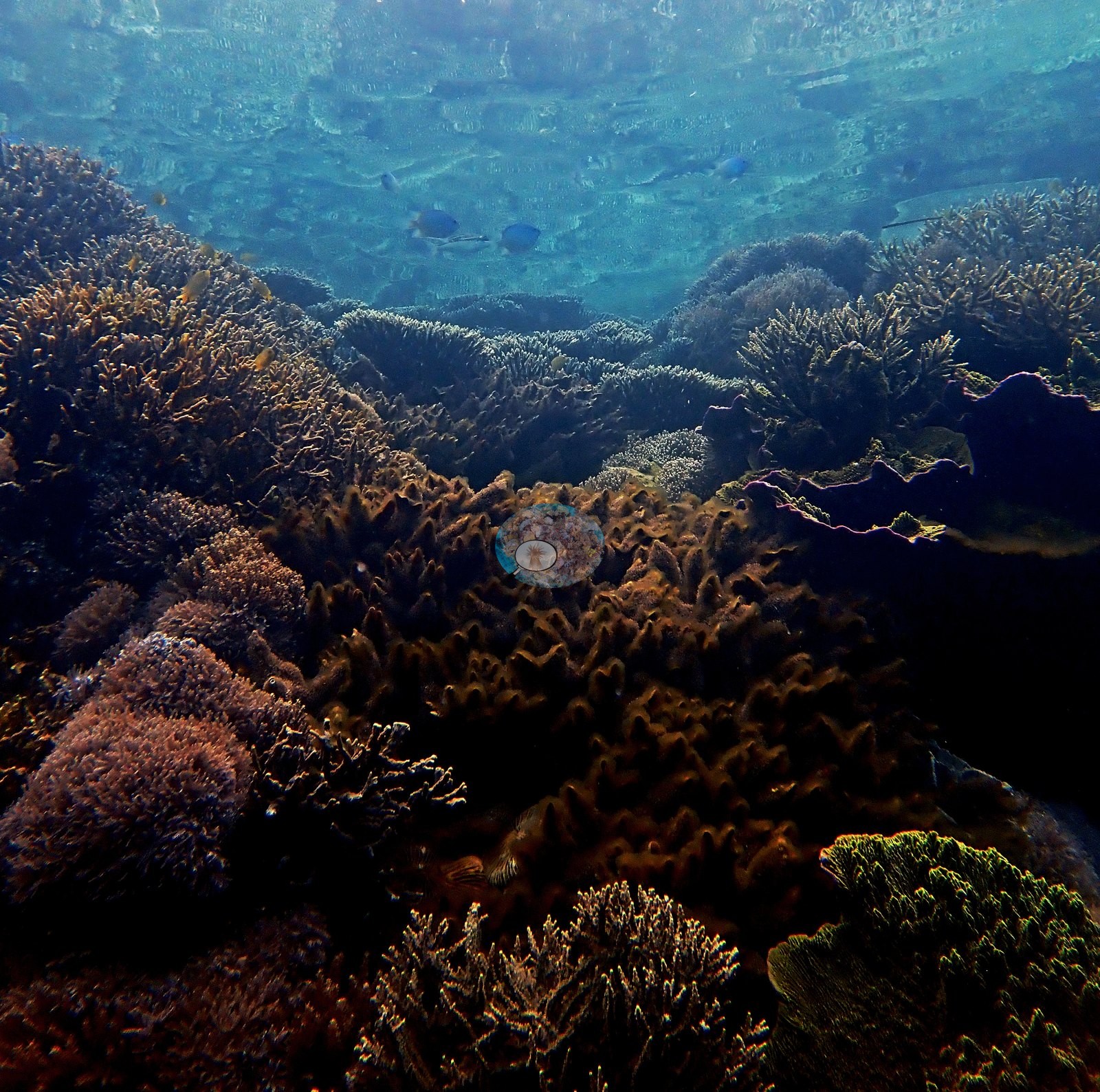
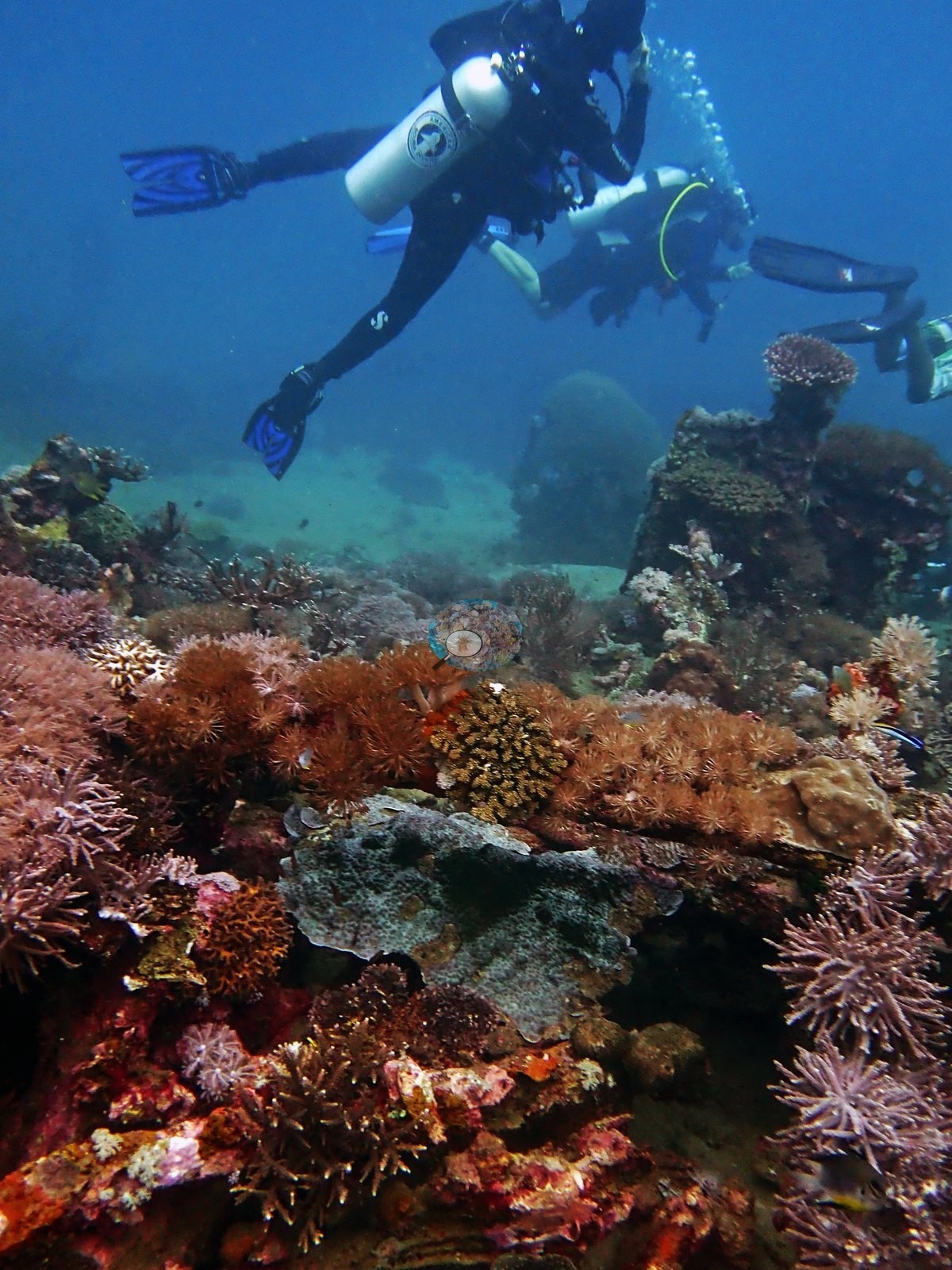
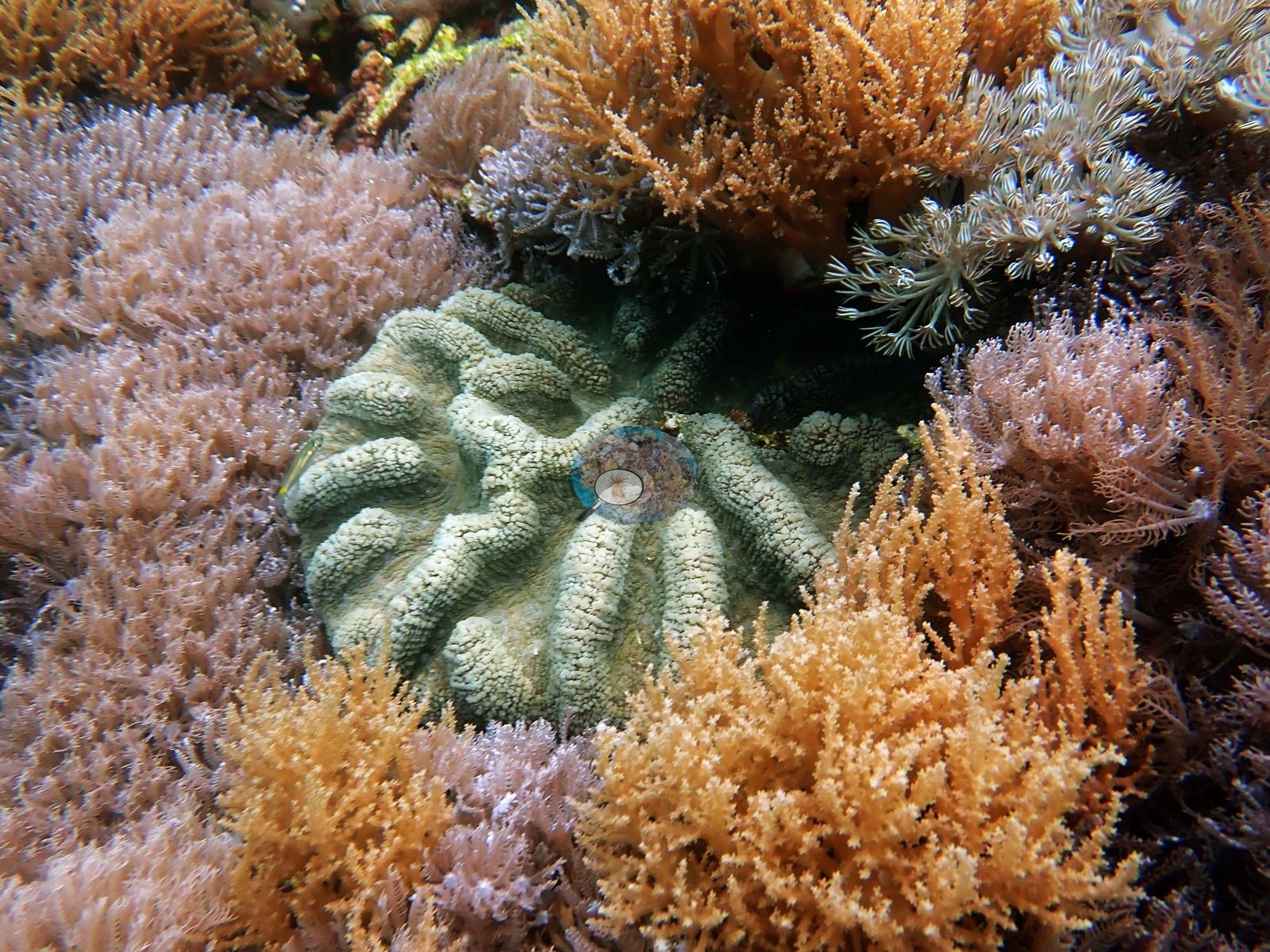
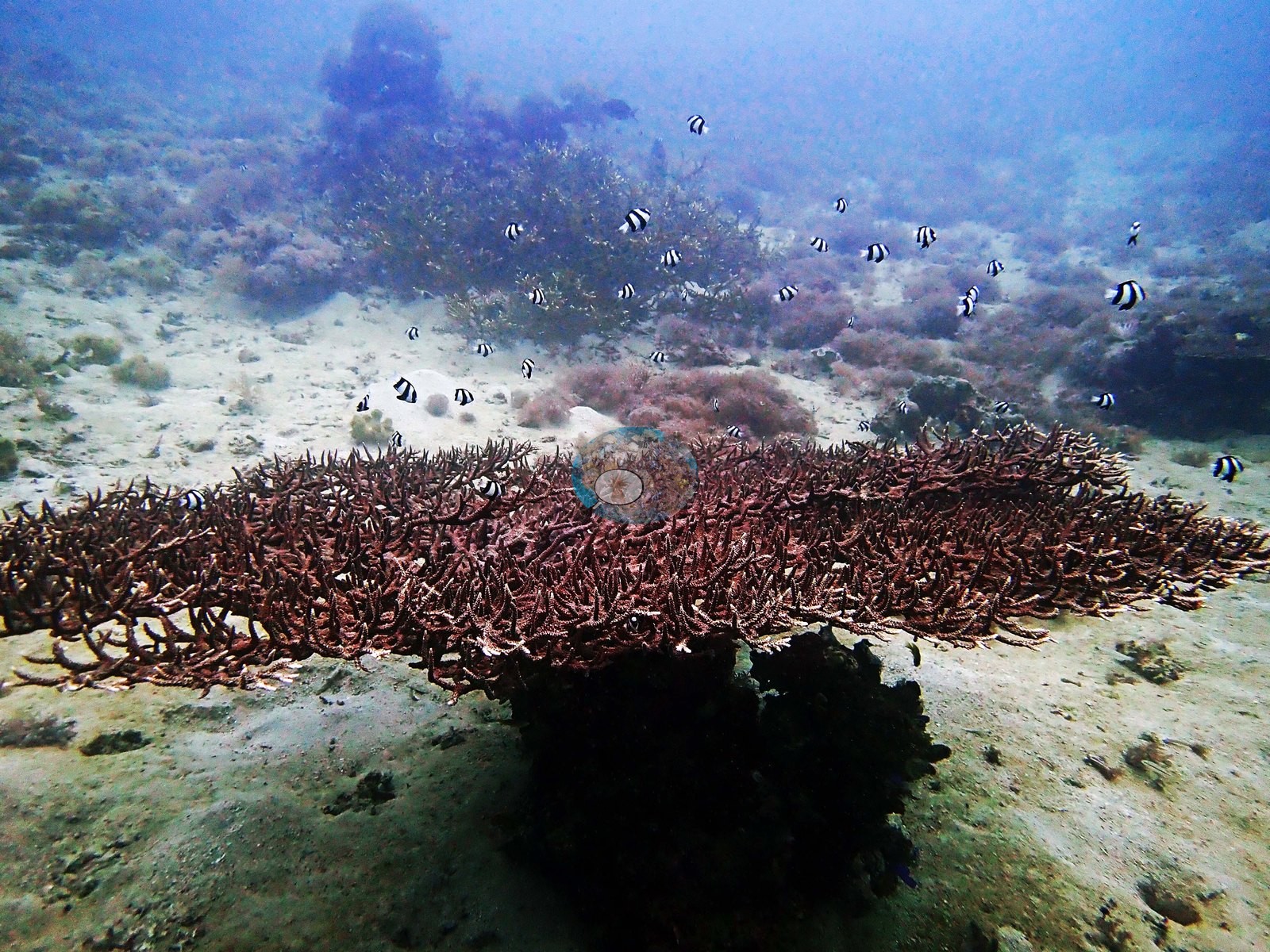
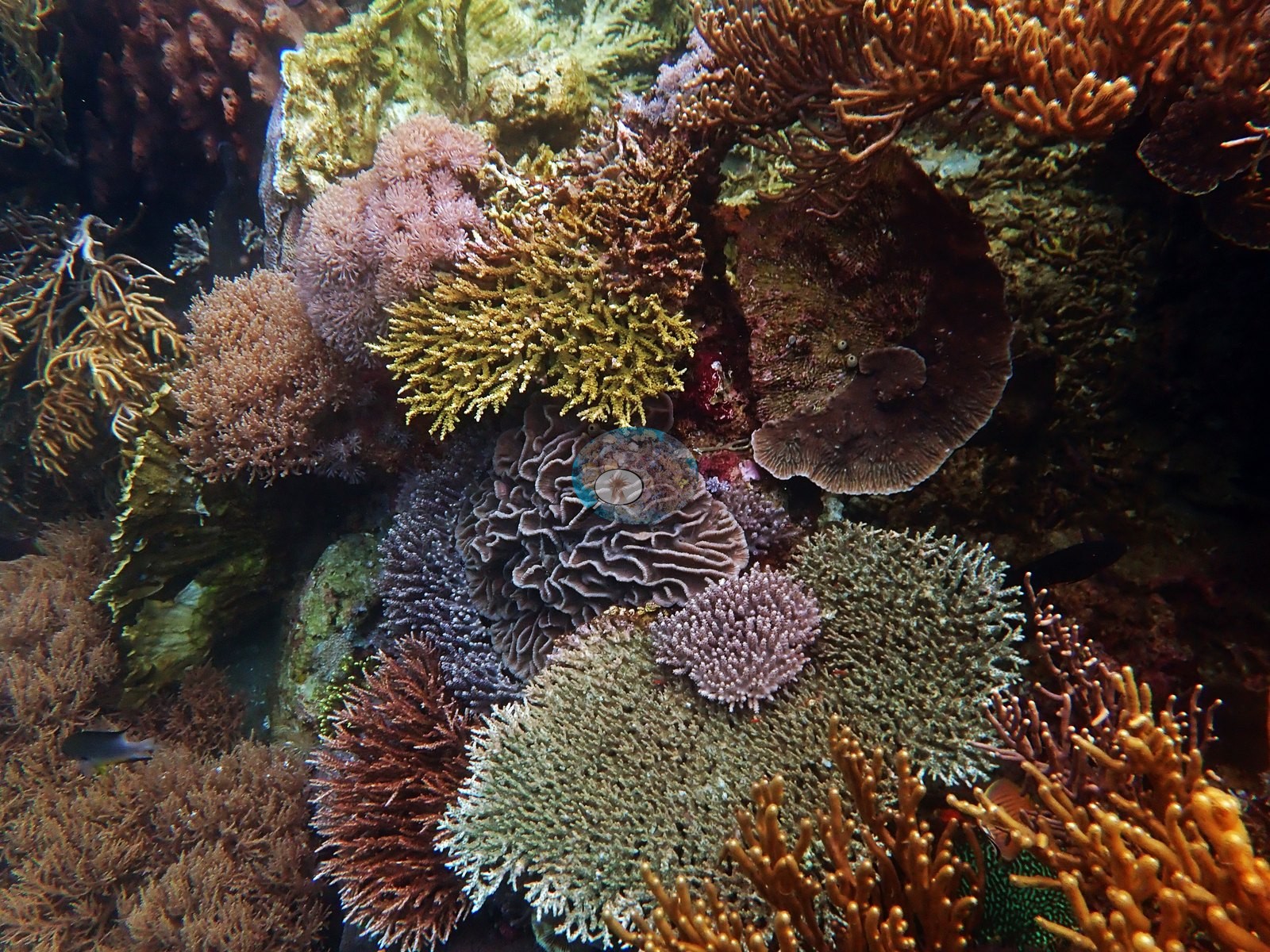
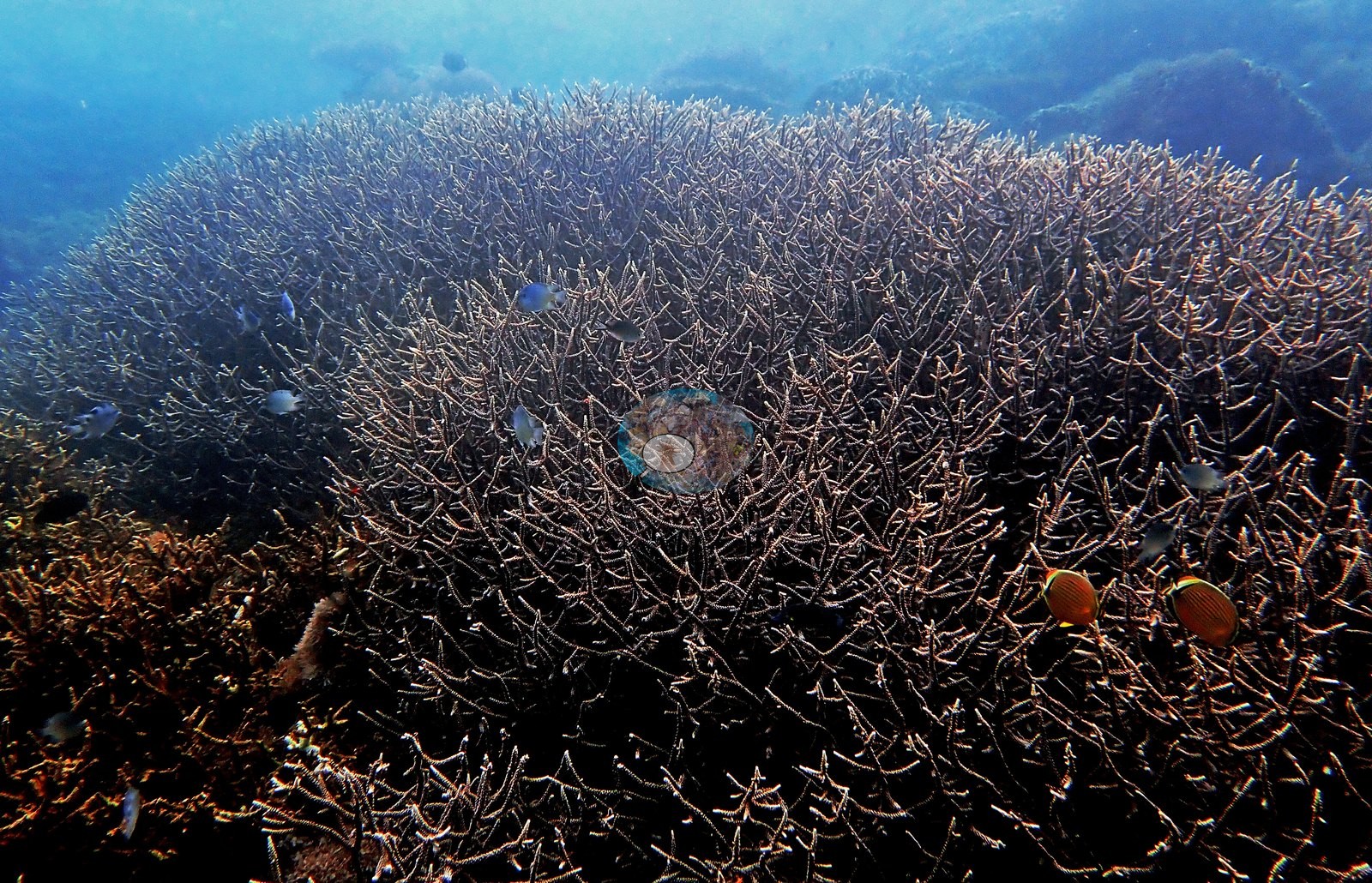
Still, soft corals tended to dominate in many areas. Even saw Anacropora for the first time this trip. Pachyseris and other foliaceous corals common from 2 m to surface, though branching Acropora were the dominant shallow coral. Hydnophora was common at 1 m in many places. Finger Porites, P. rus, and some small massive poritids, though this was not a reef built by Porites (e.g., Image 4).
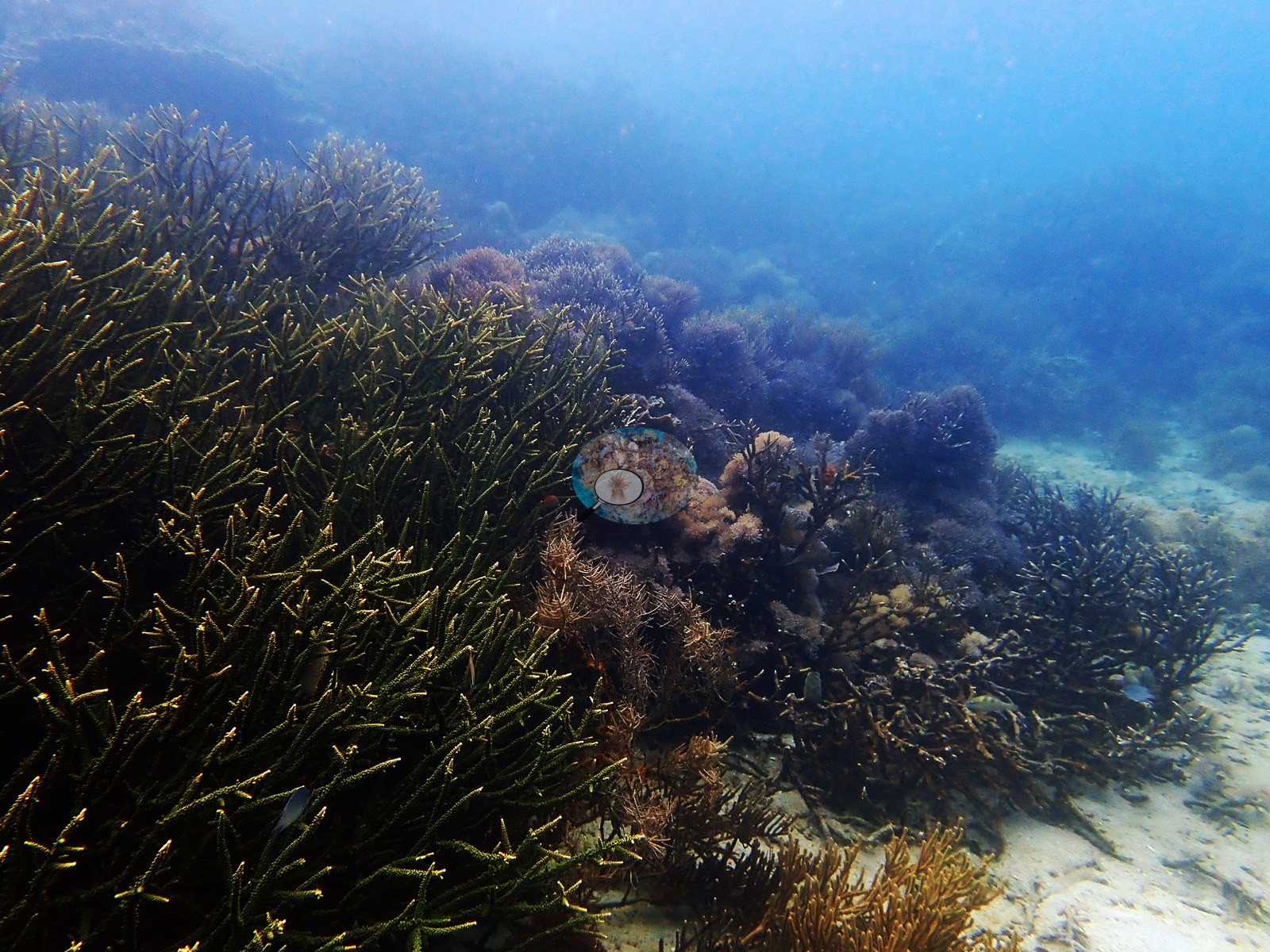
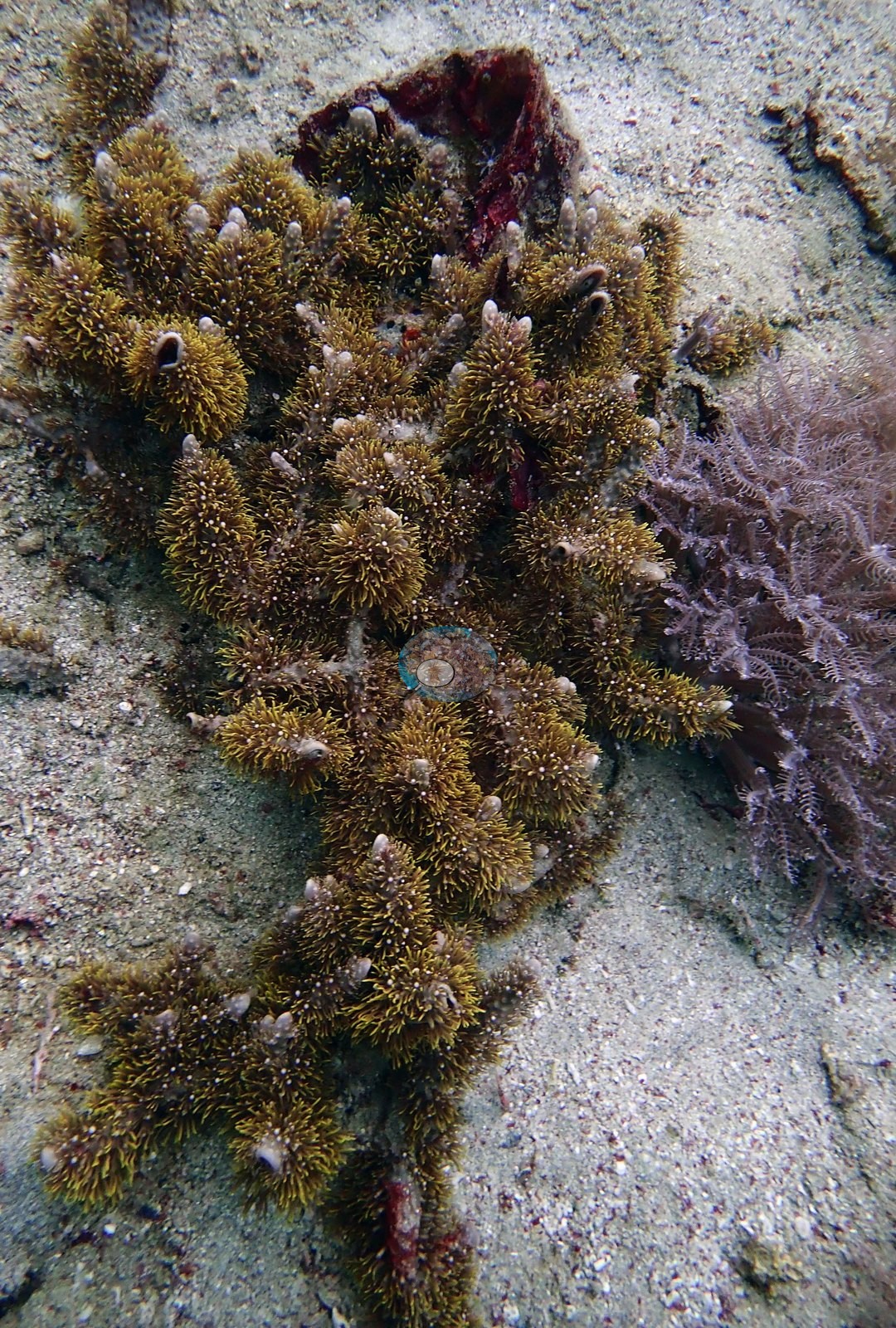
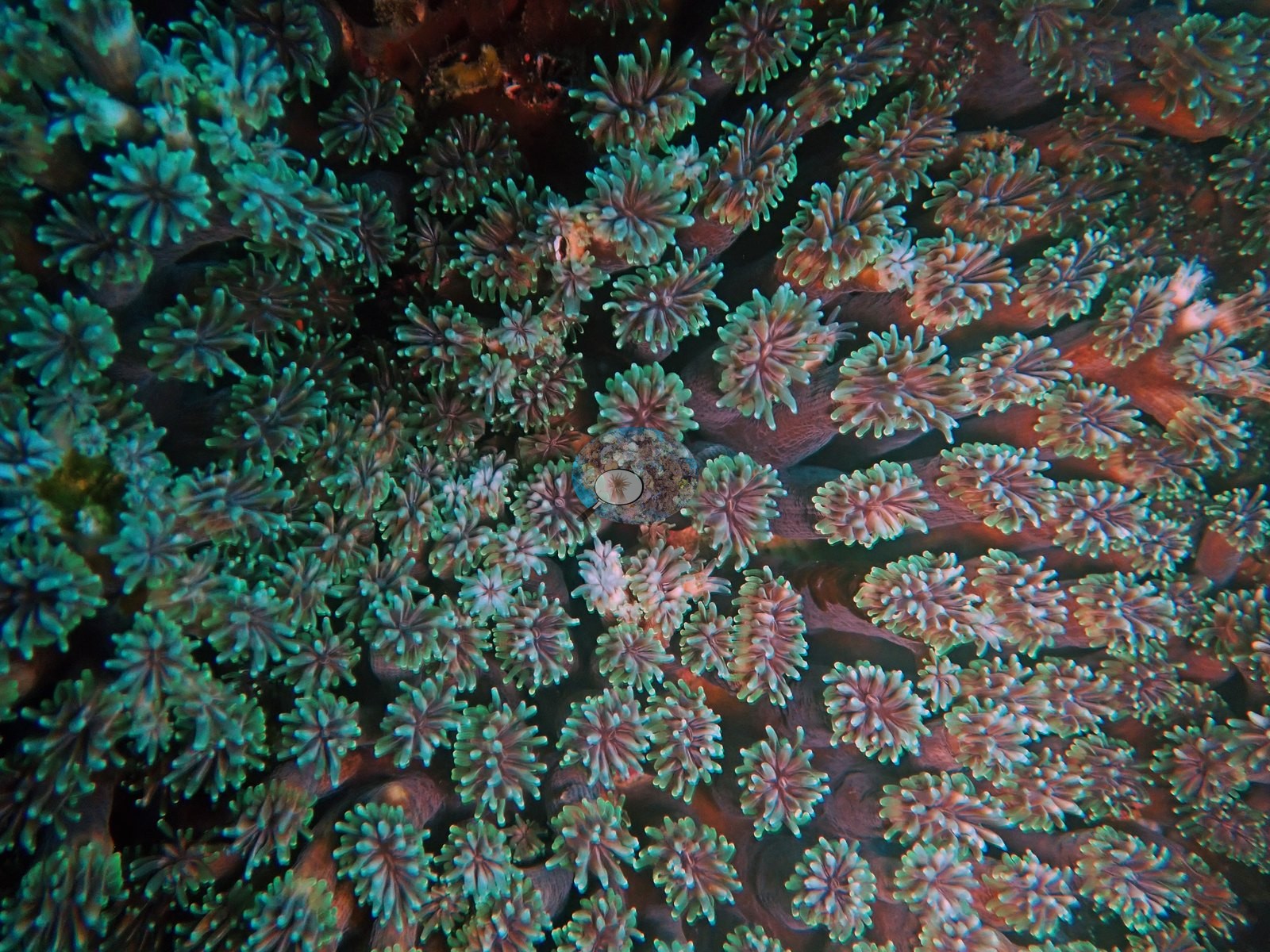
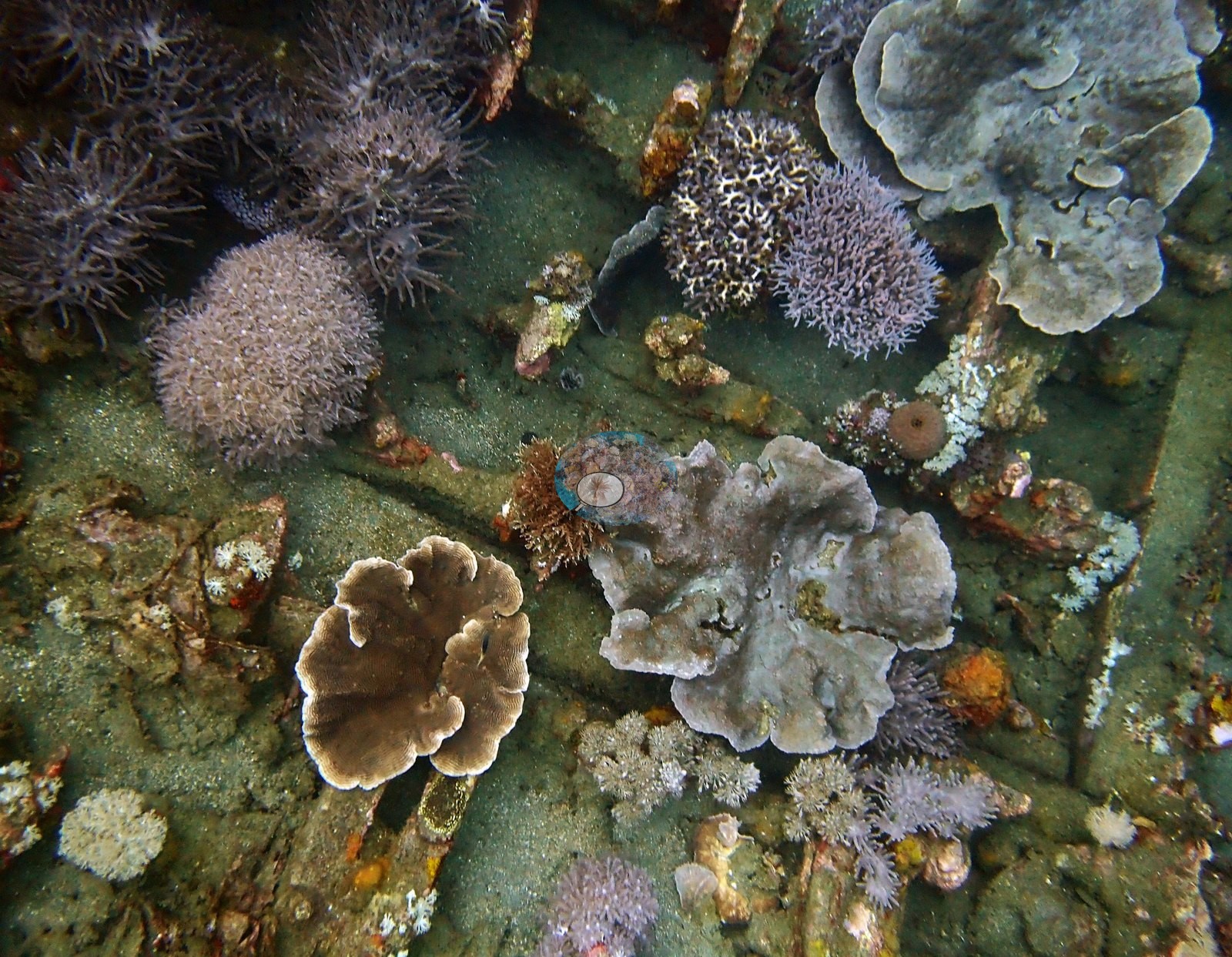
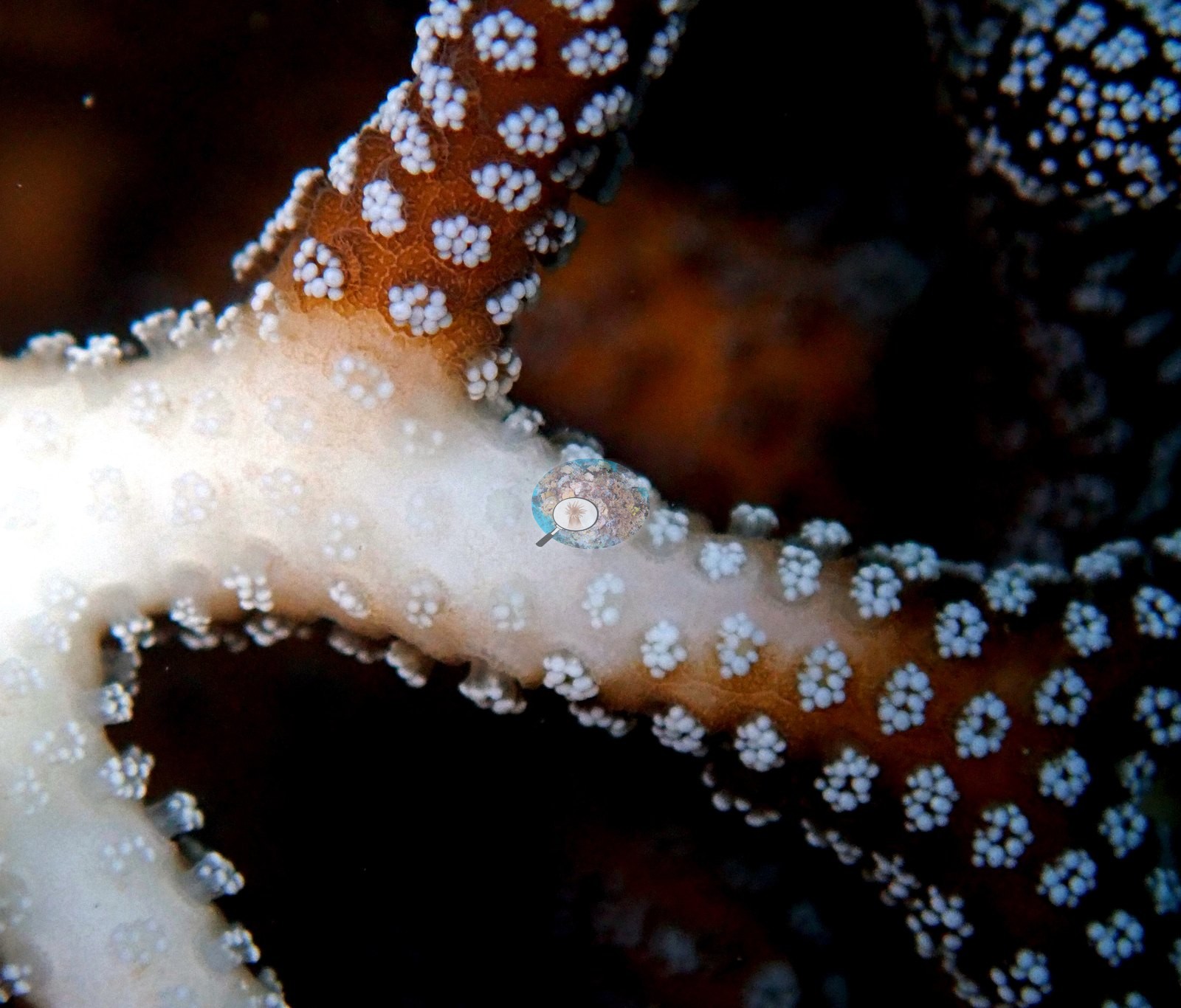
Seriatopora hystrix, Pocillopora acuta, and Pocillopora verrucosa were all common. In fact, this may have been the site with the most Pocillopora acuta. Little coral below 17-18 m: just sand. Stylophora pistillata. Galaxea relatively common (e.g., Image 1).
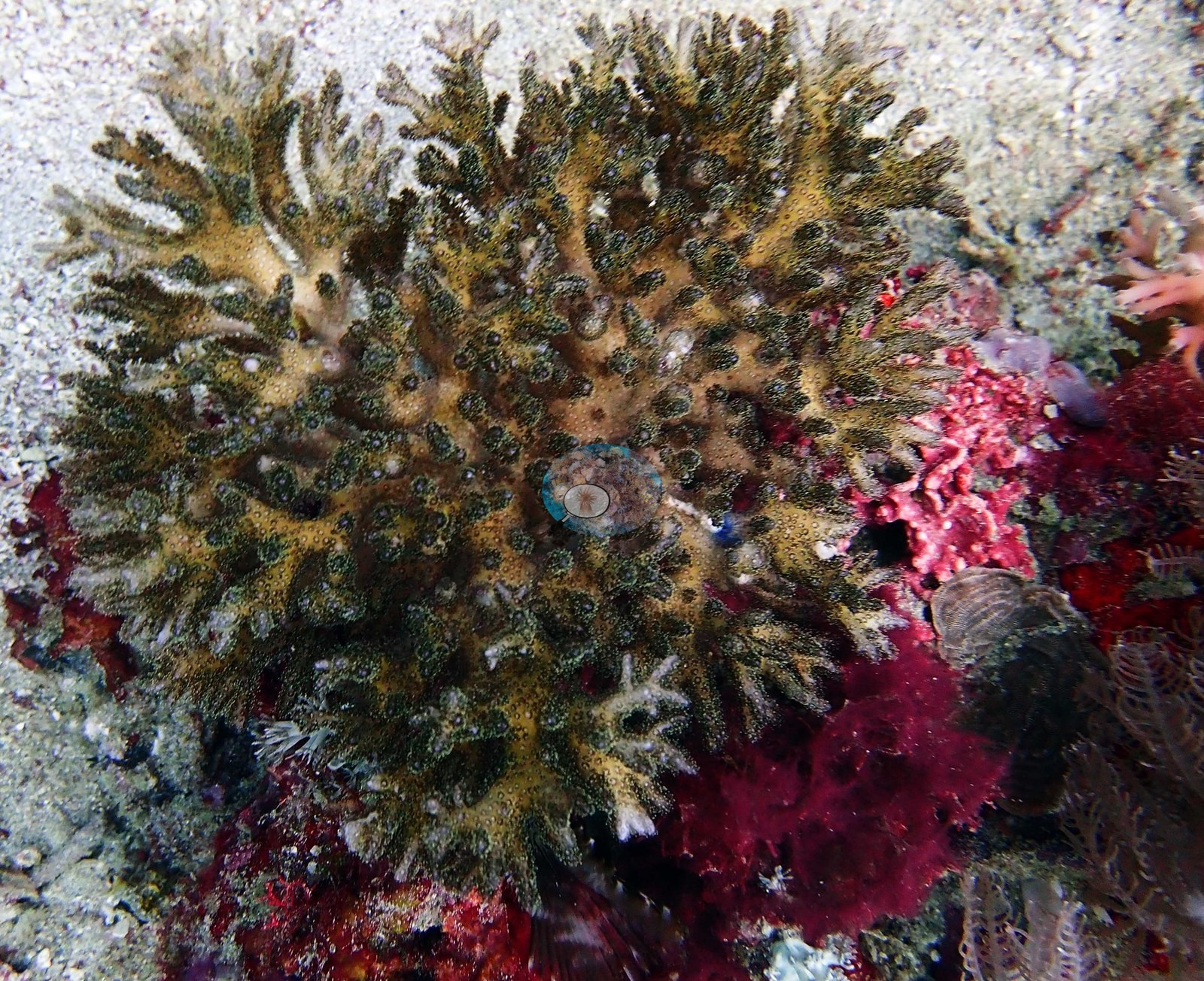
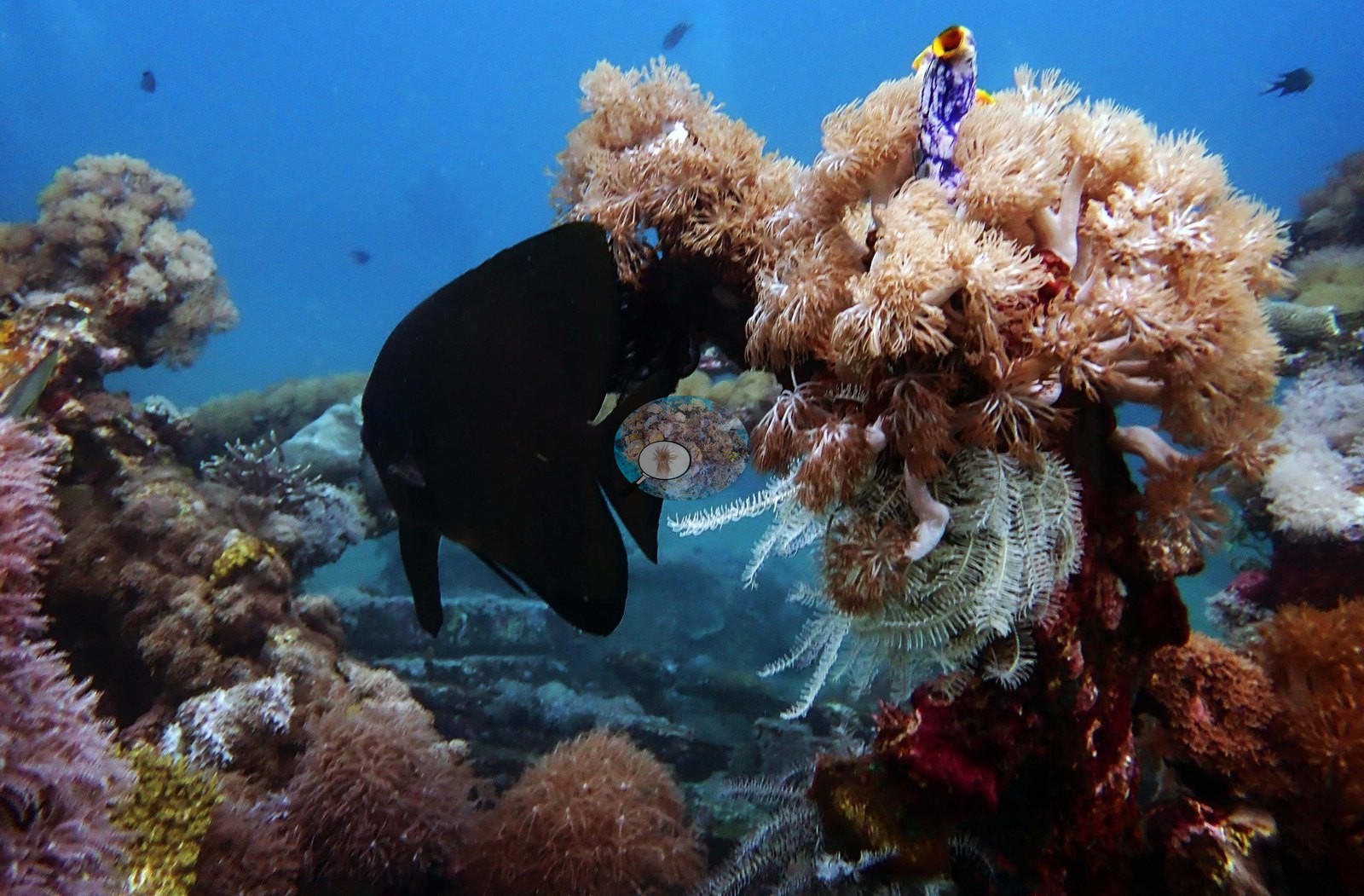
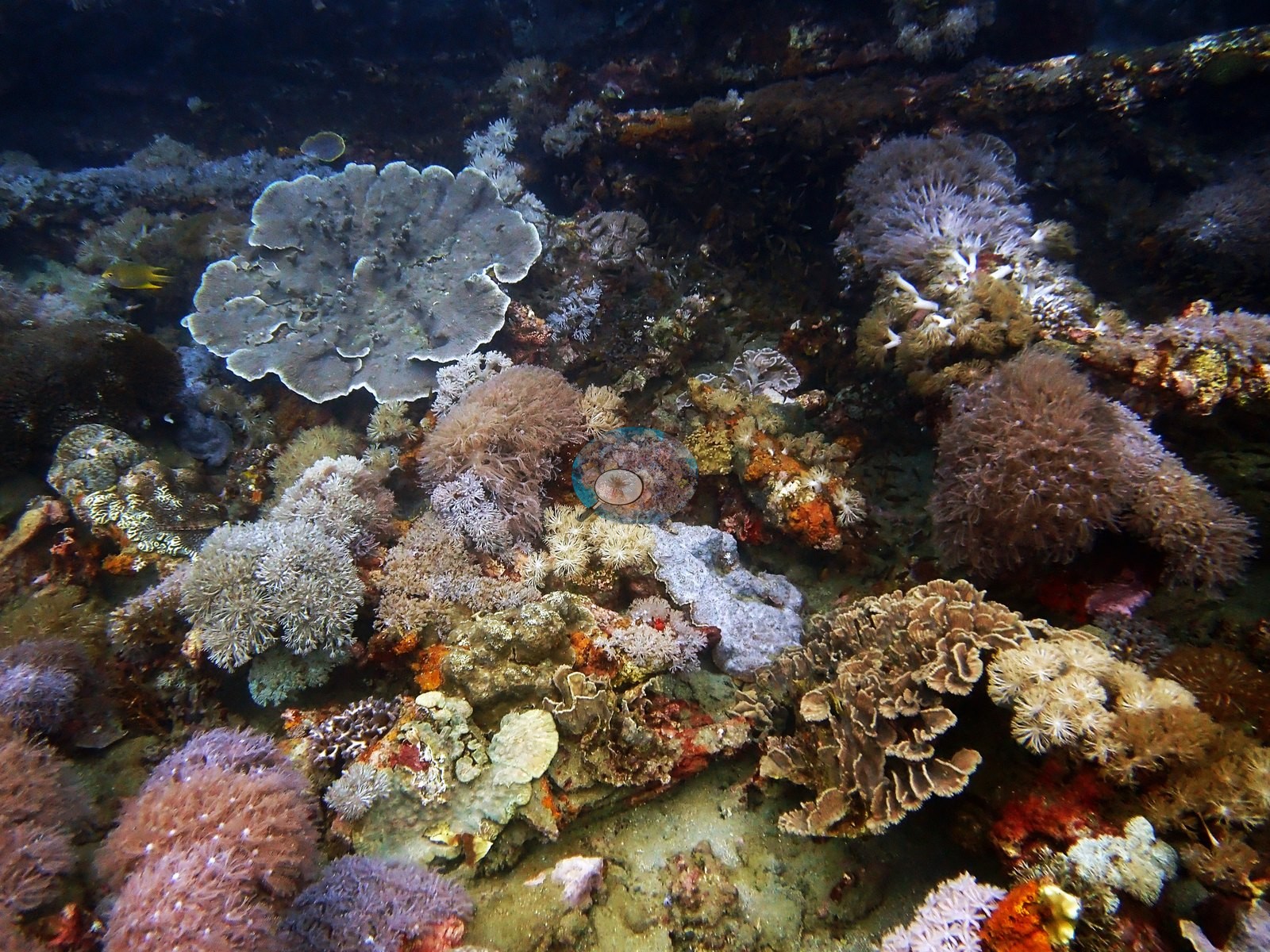
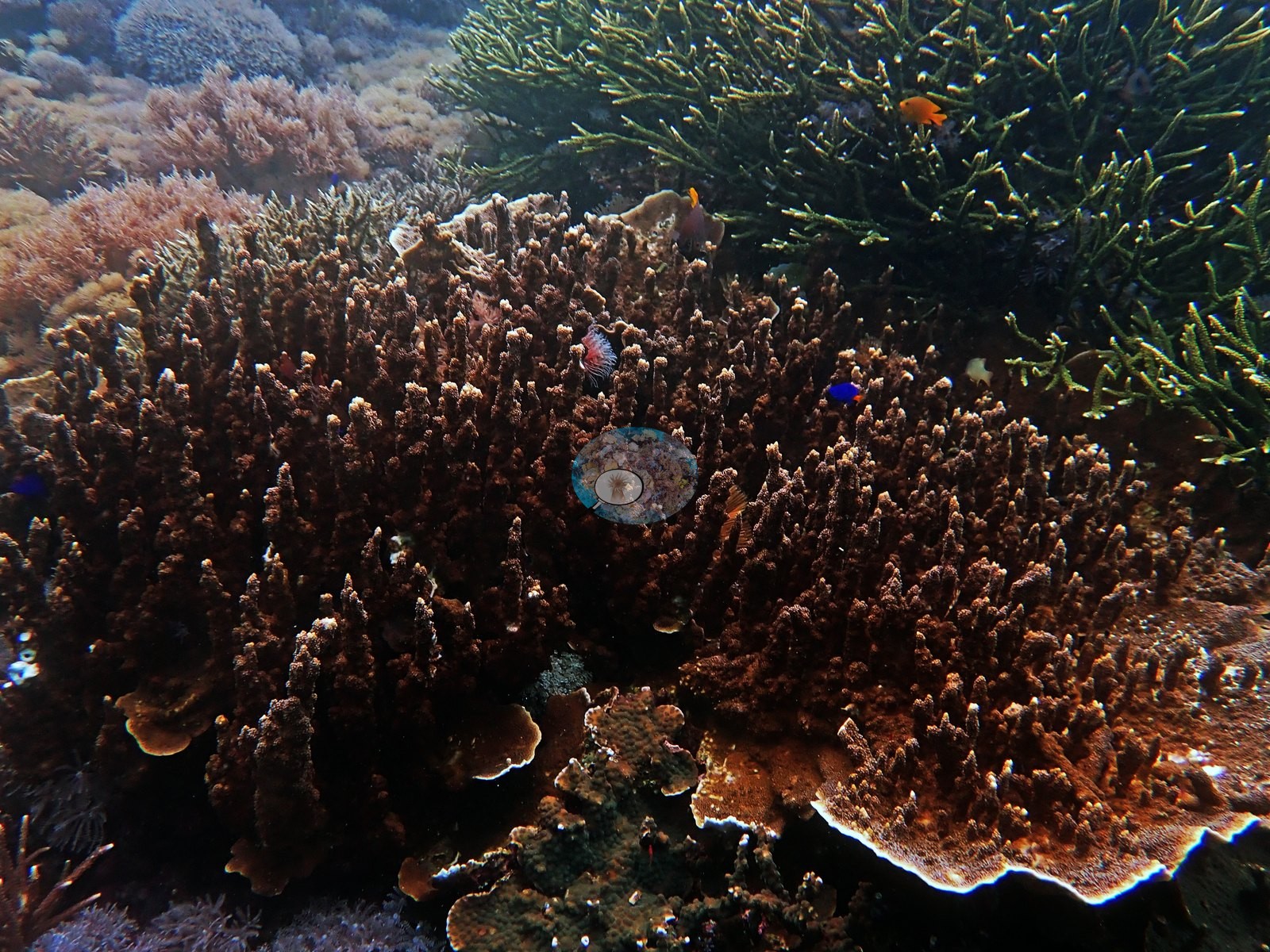
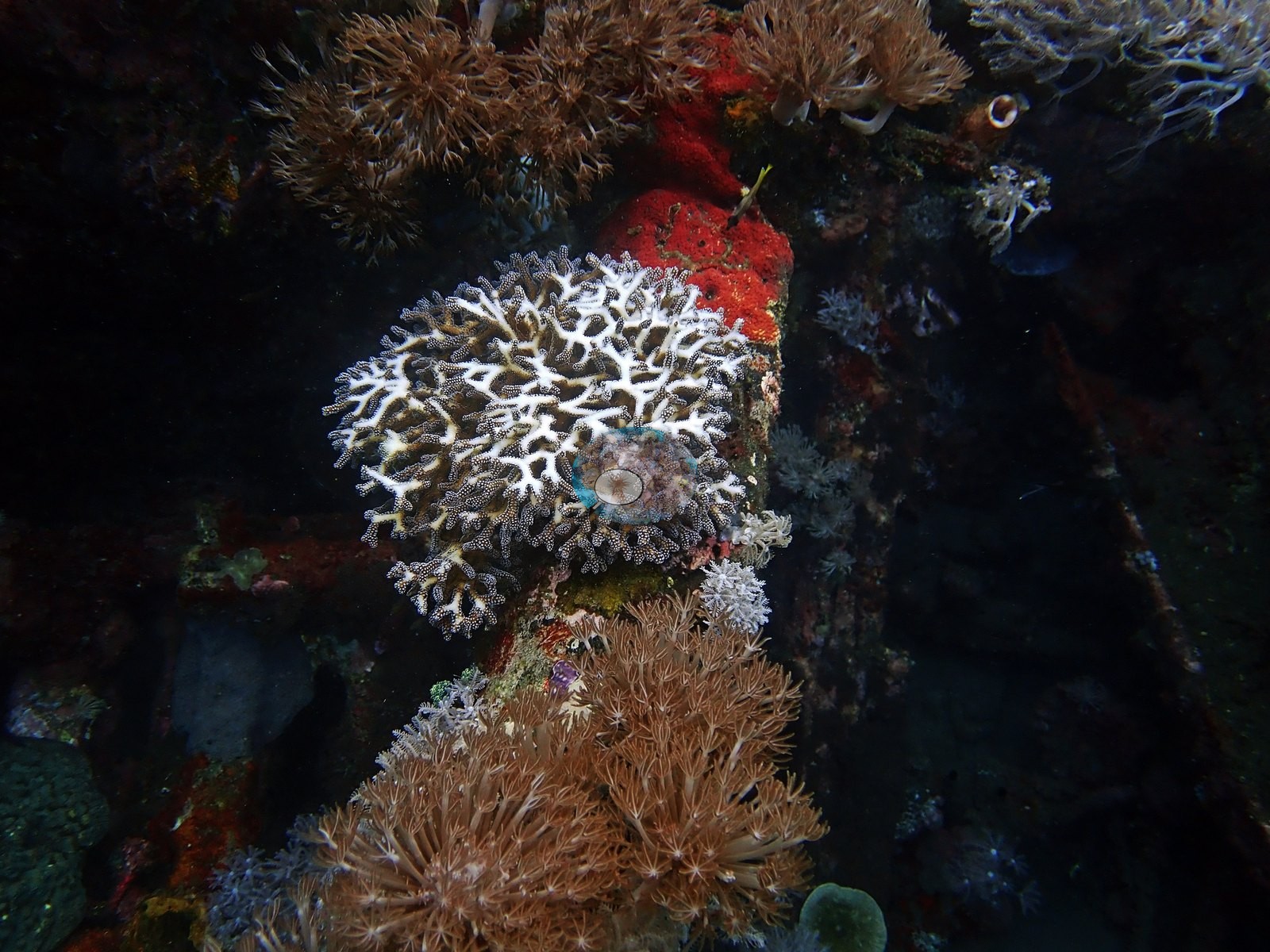
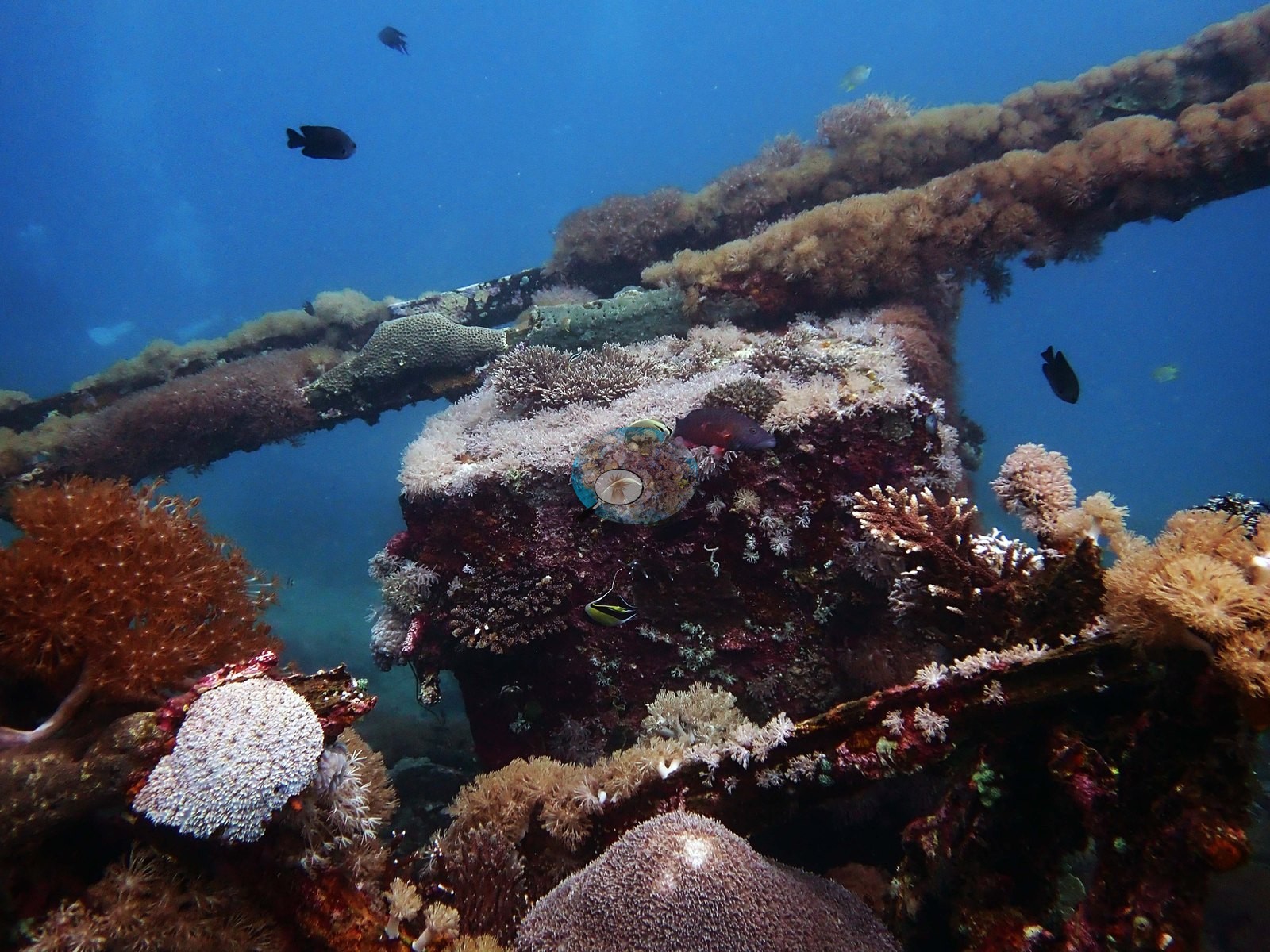
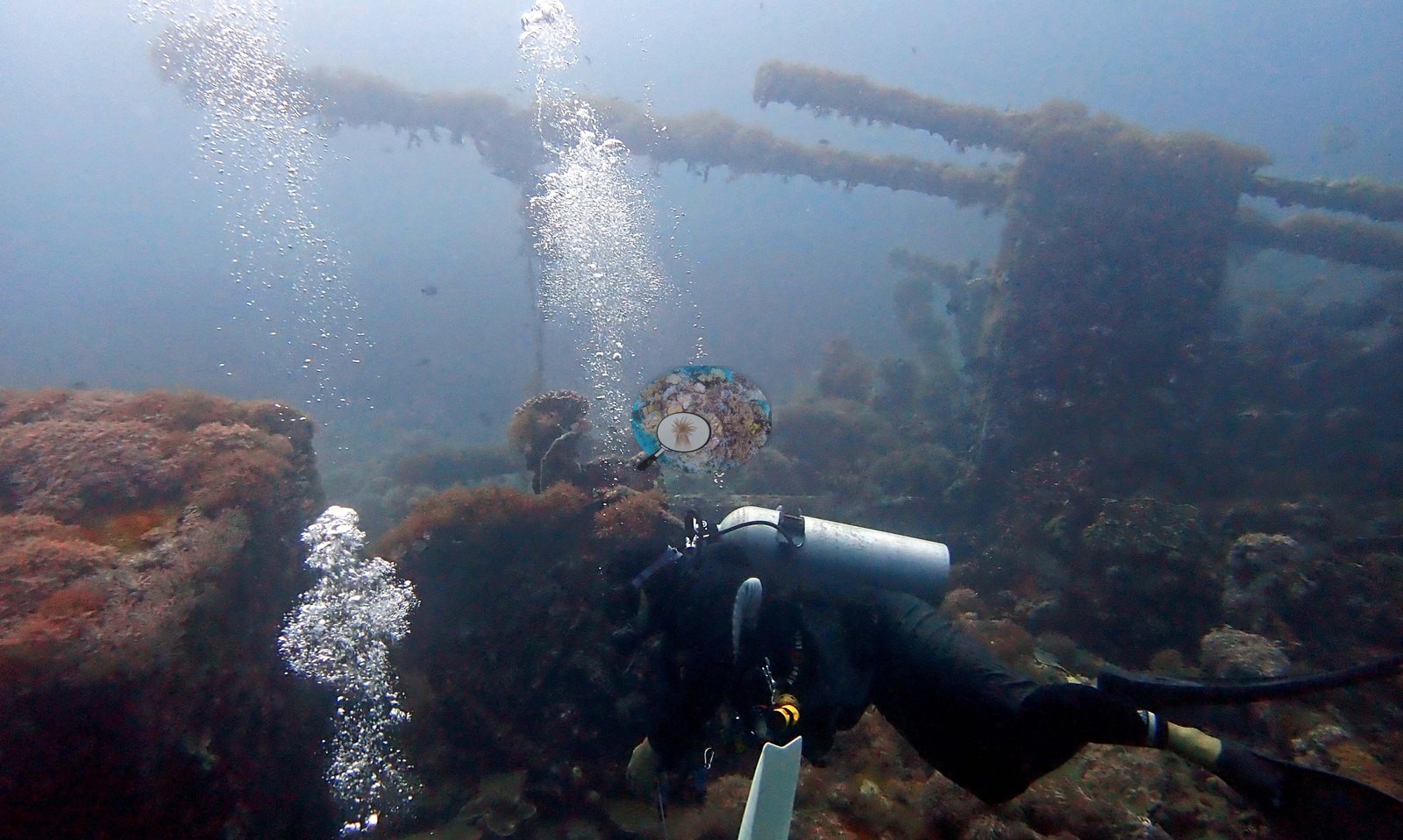
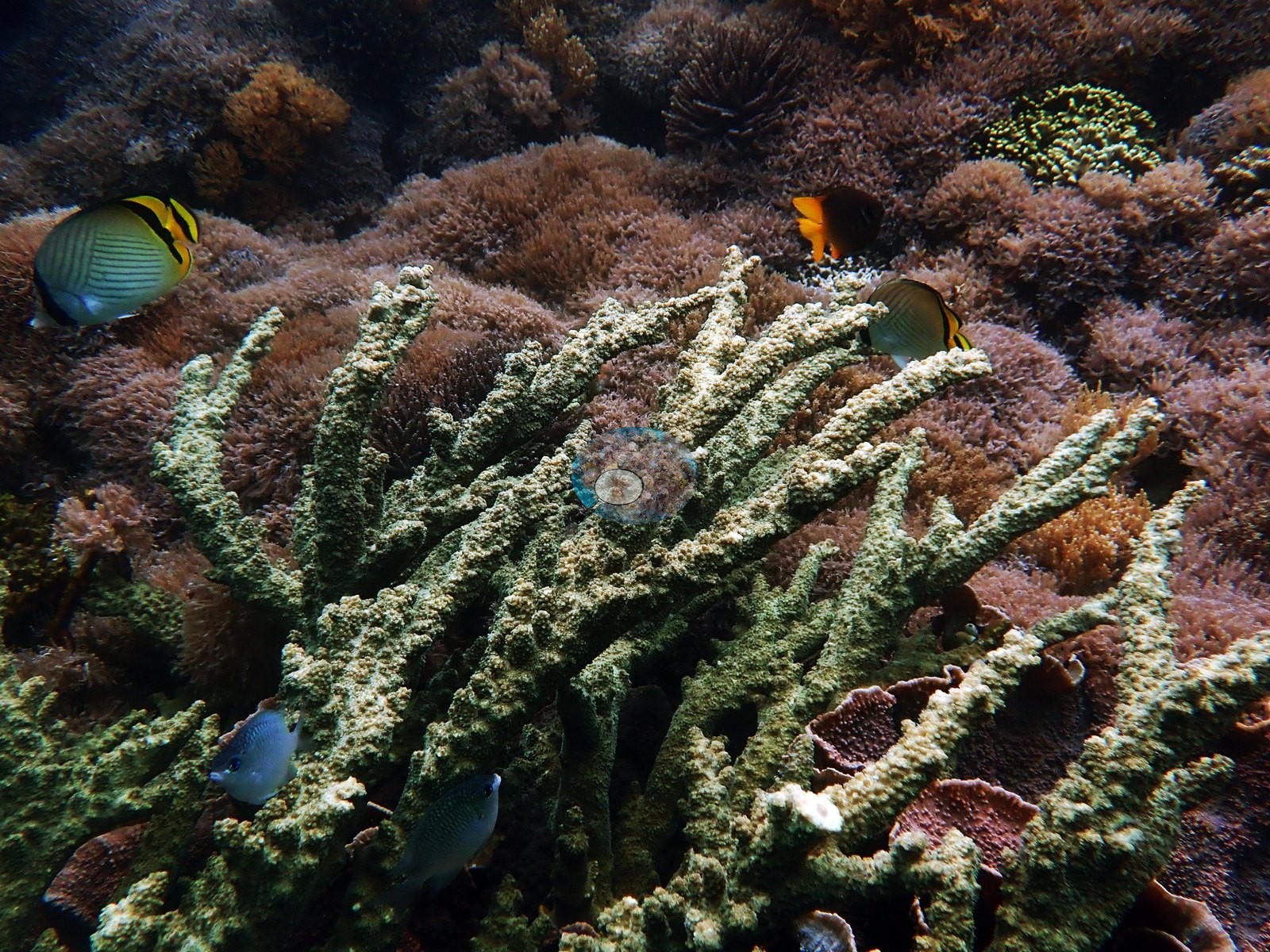
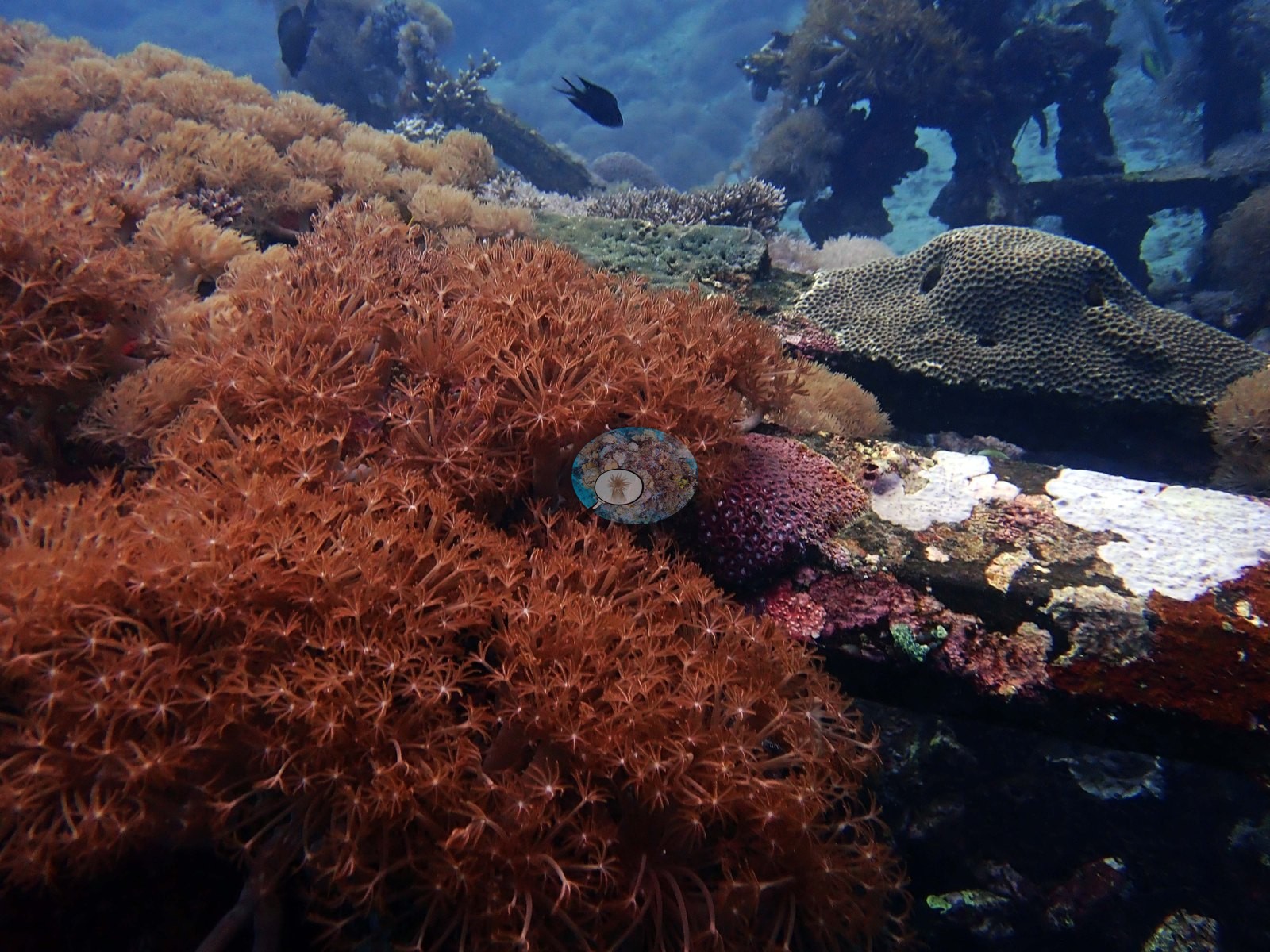
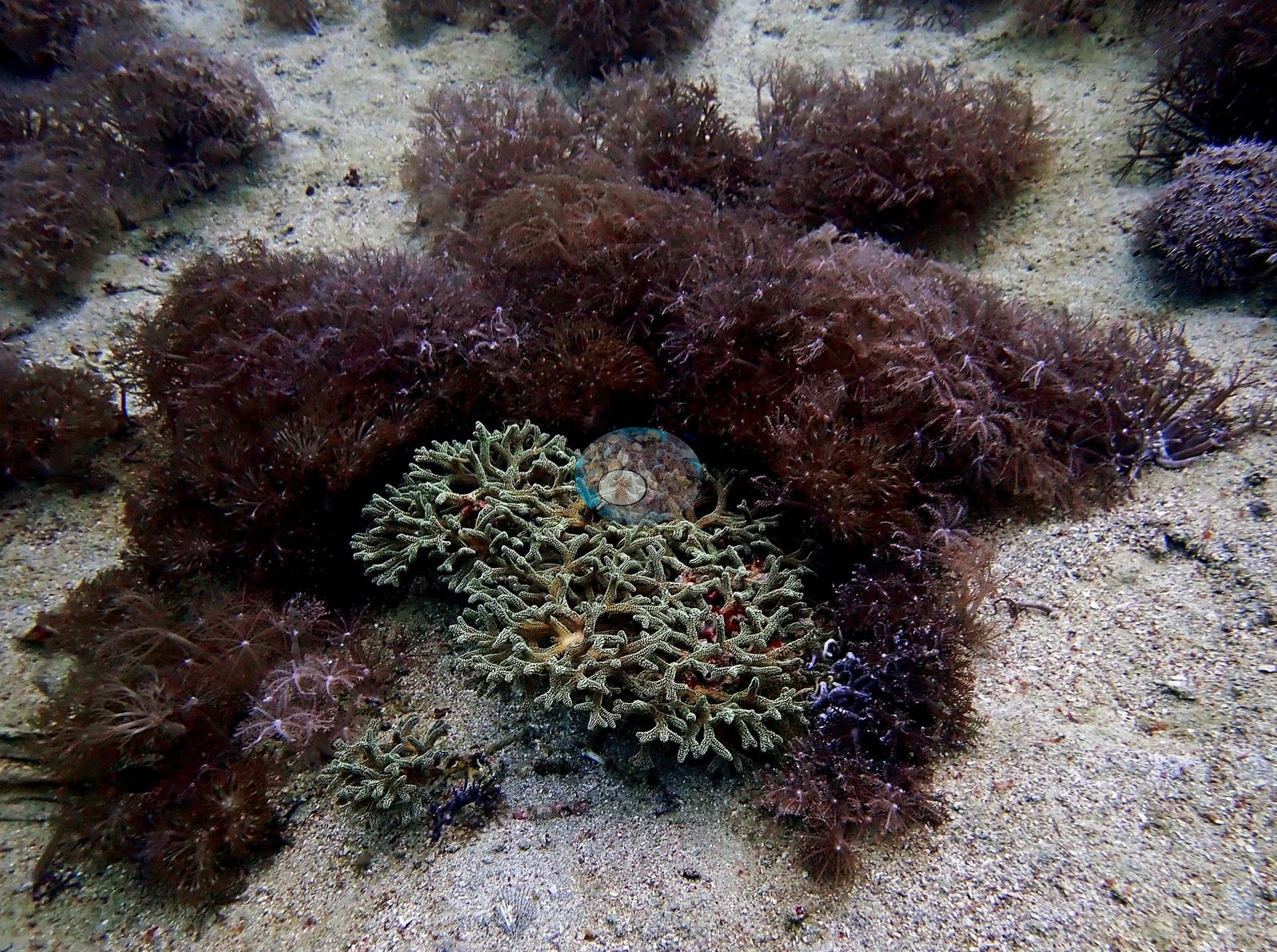
Small wrecked fishing boat covered in soft corals and hard corals (e.g., Image 3).
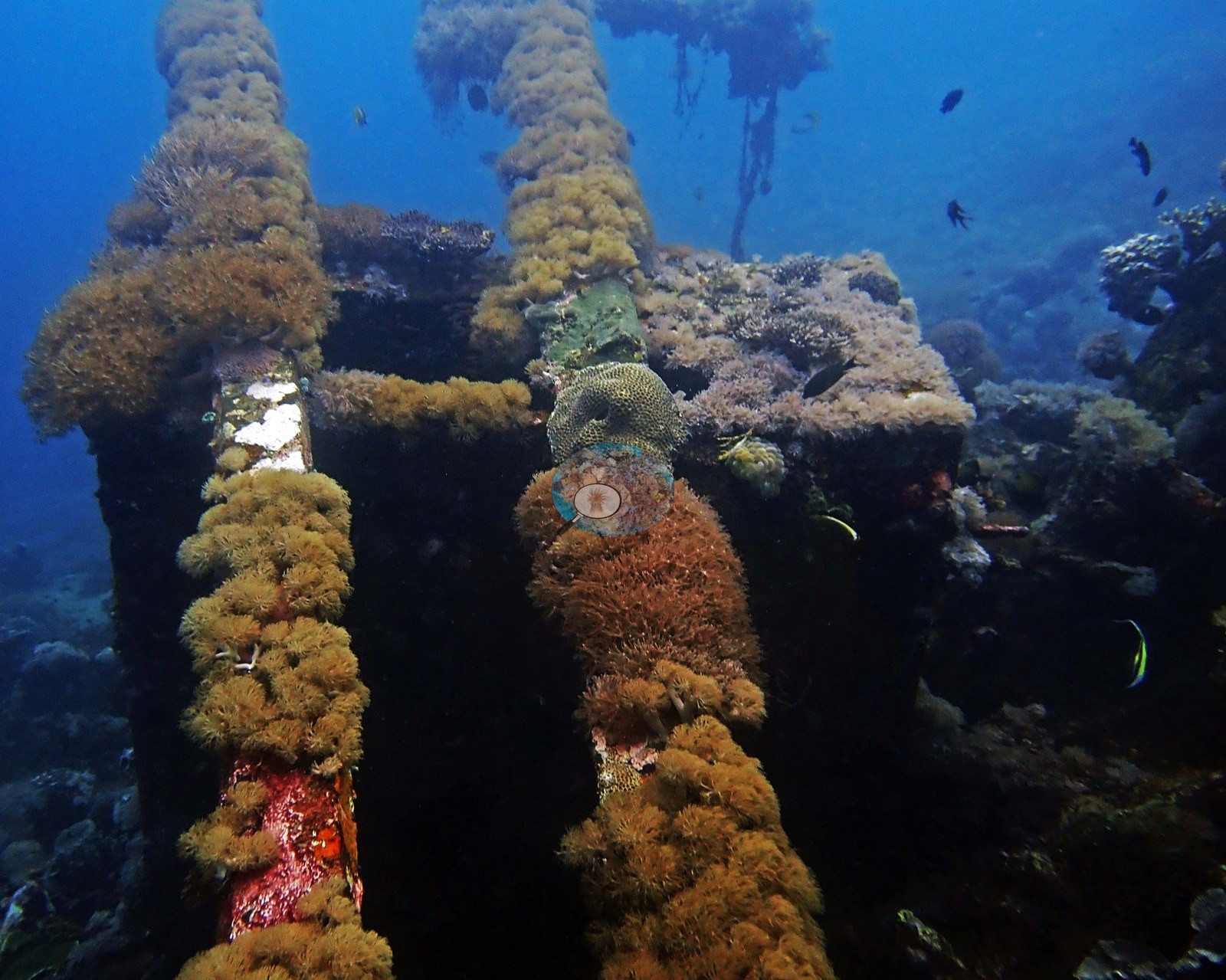
Beautiful. Acropora, Pocillopora acuta, Pocillopora verrucosa, Pachyseris, and 5-10 other species (at least) on the wreck. High Acropora diversity and cover at site (best of trip for cover). Euphyllia, Merulina, Plerogyra, Fungia.
Coral cover
Coral cover: 30% — a blind Claude computer-vision point count of 118 of Anderson's edited photographs (20 points per photo; water, fish, and obstructions excluded). Other computer-vision methods are listed in the method table.
Stressors
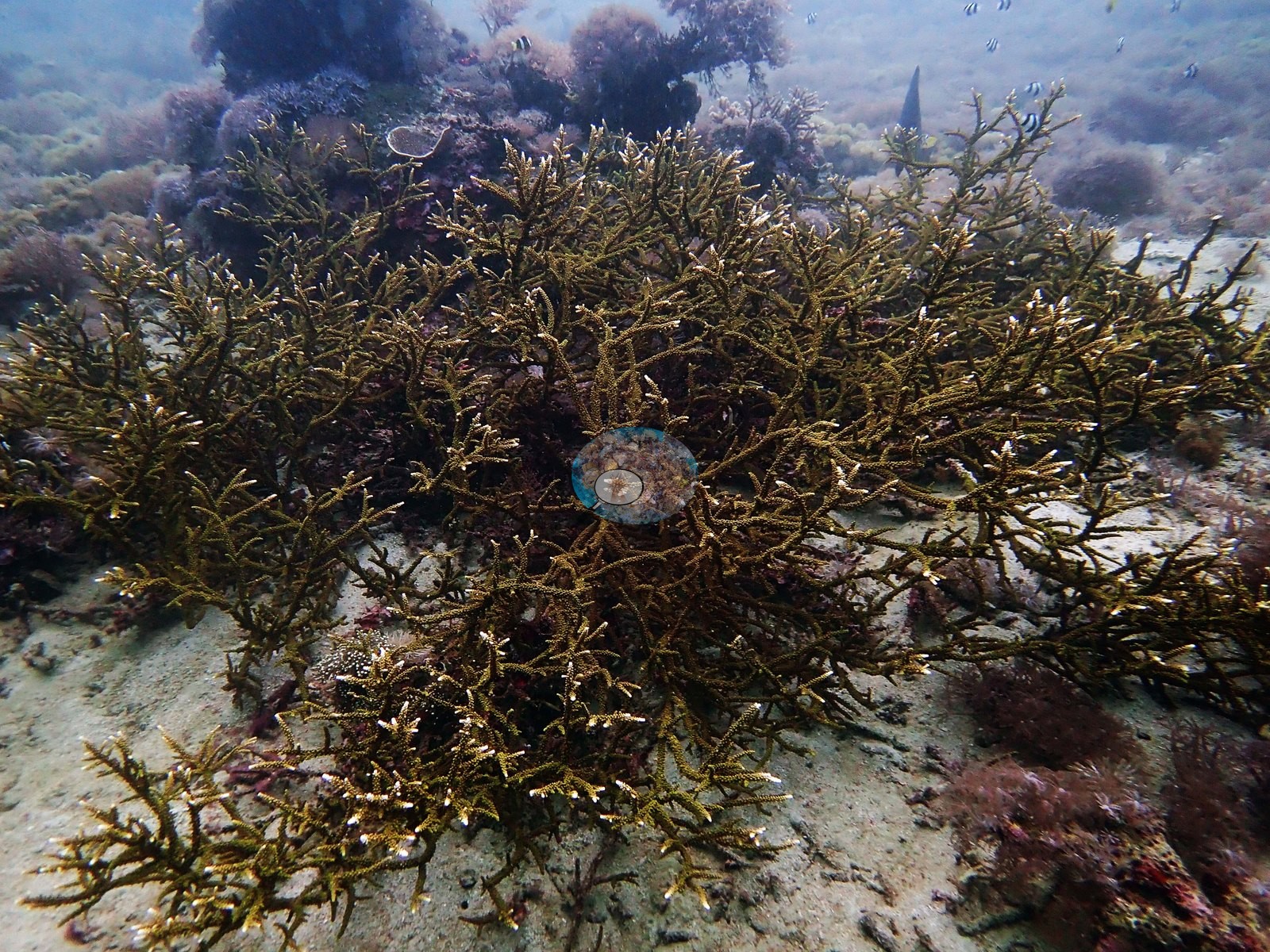
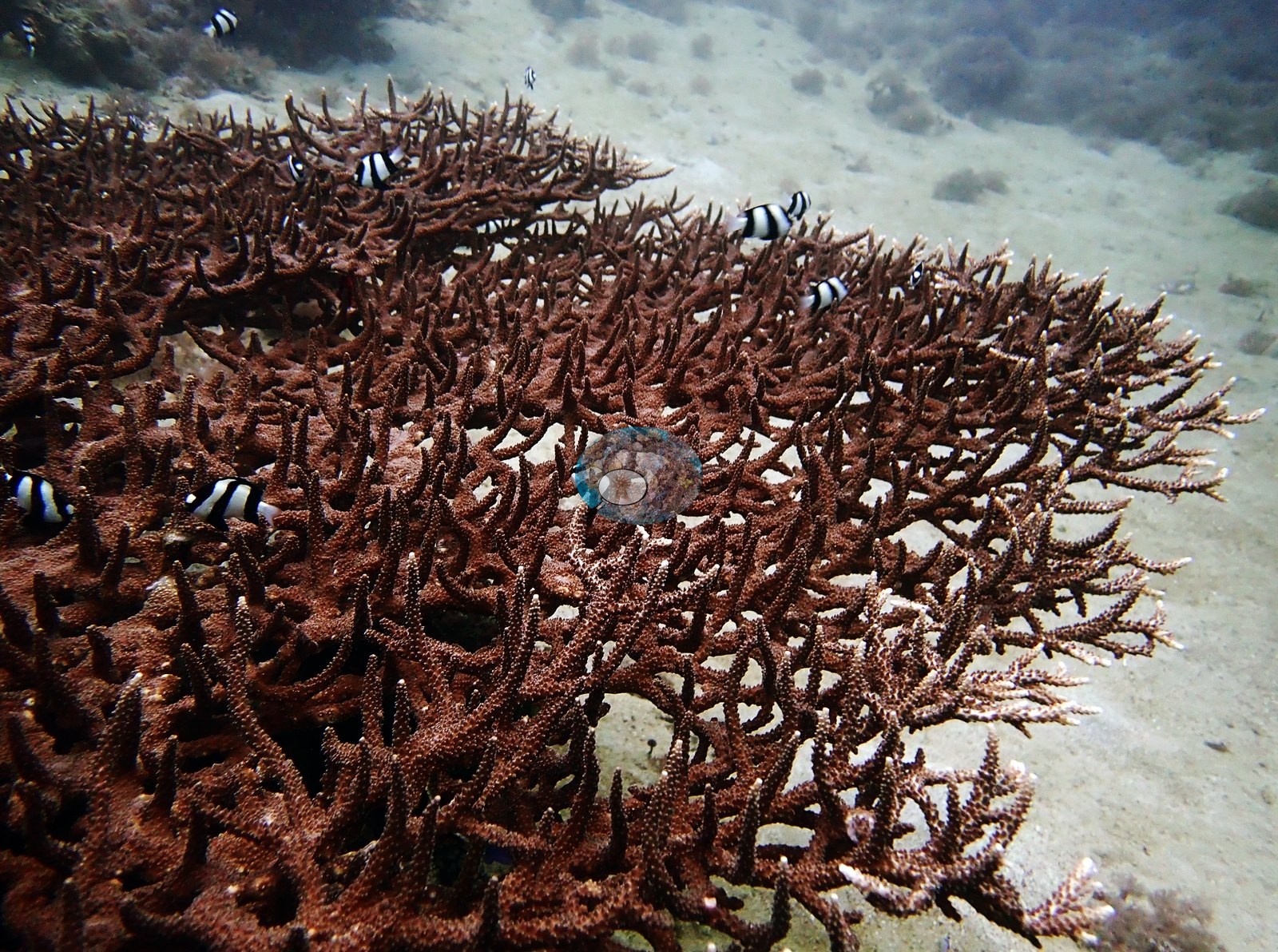
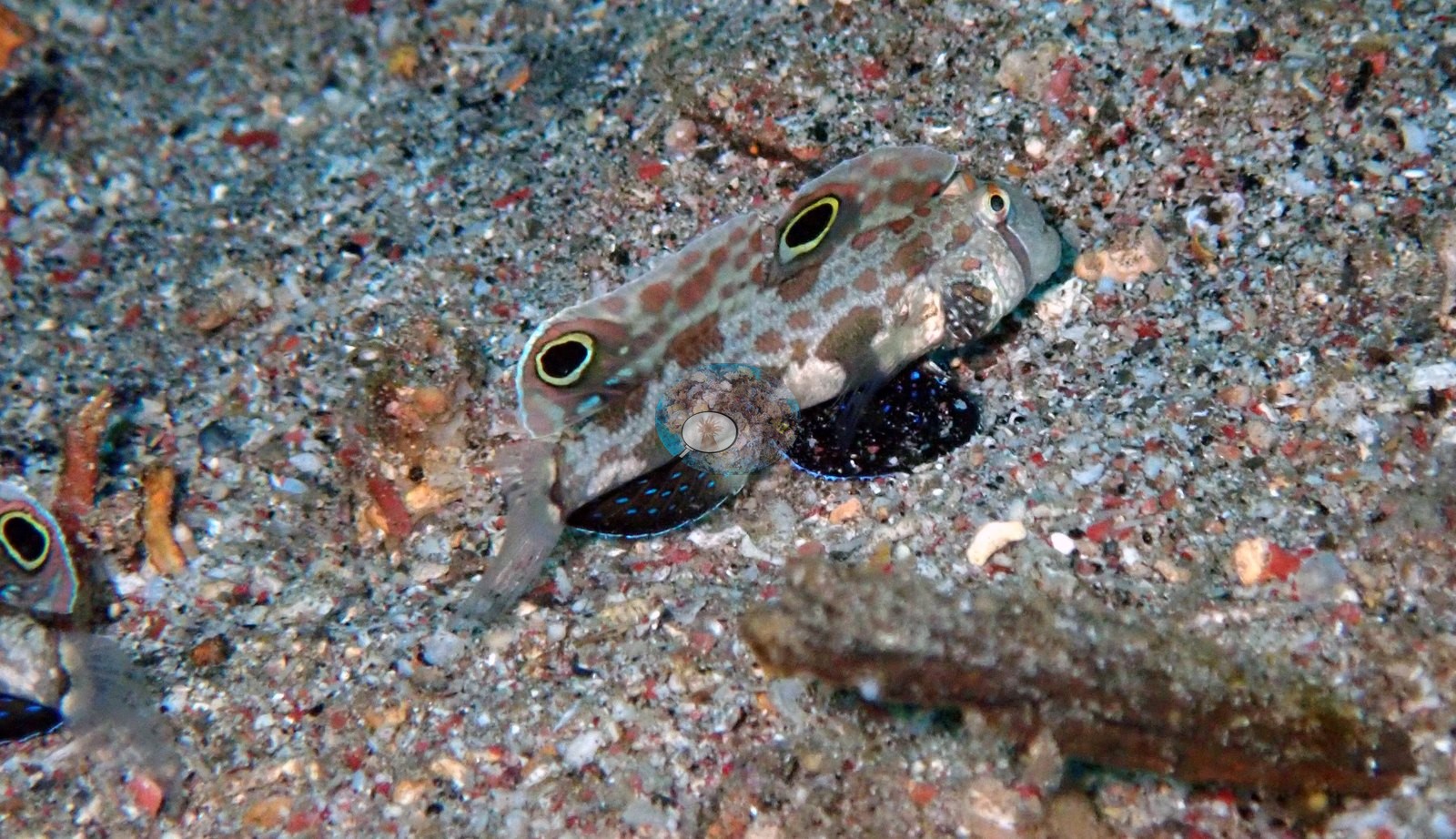
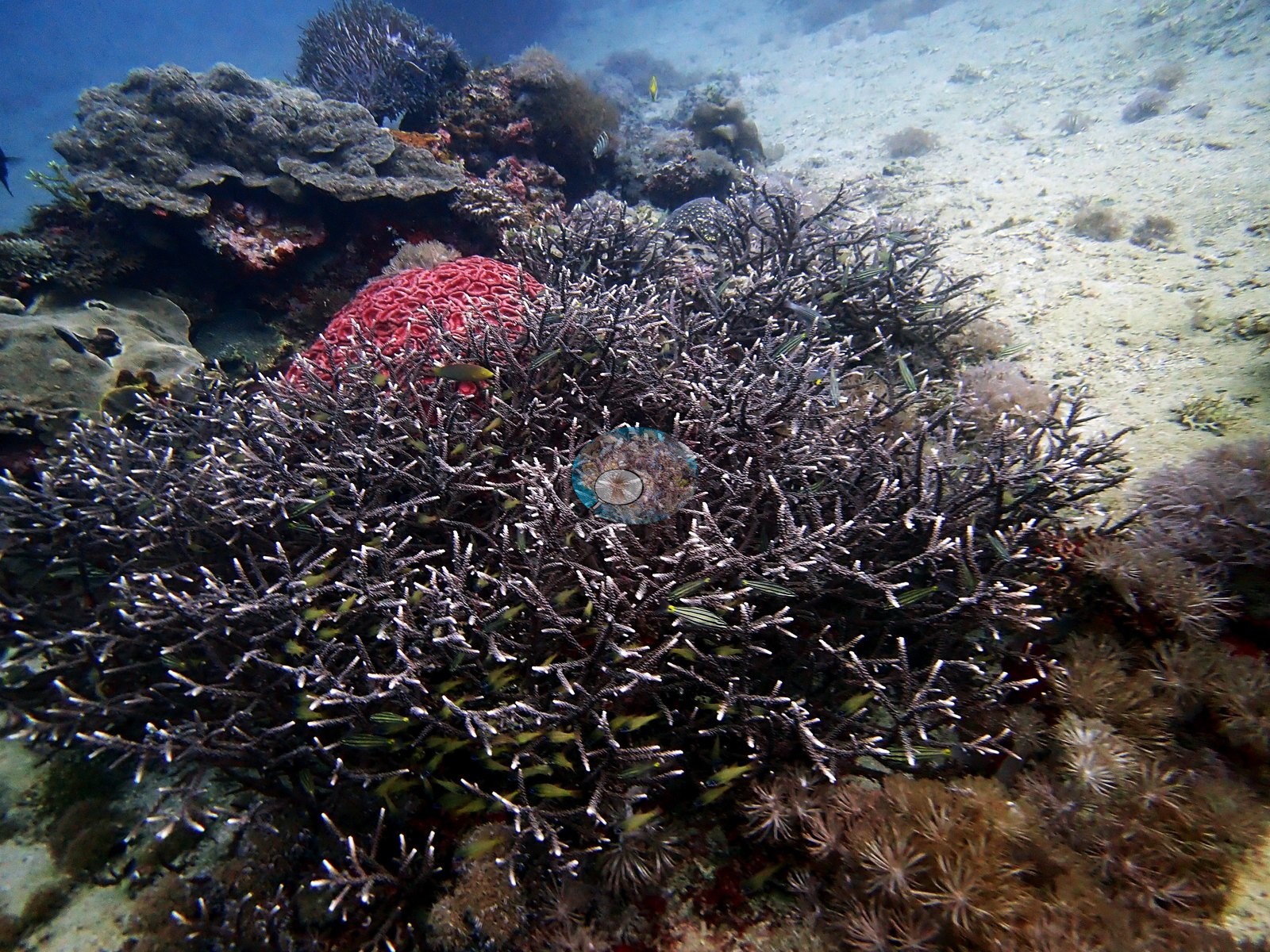
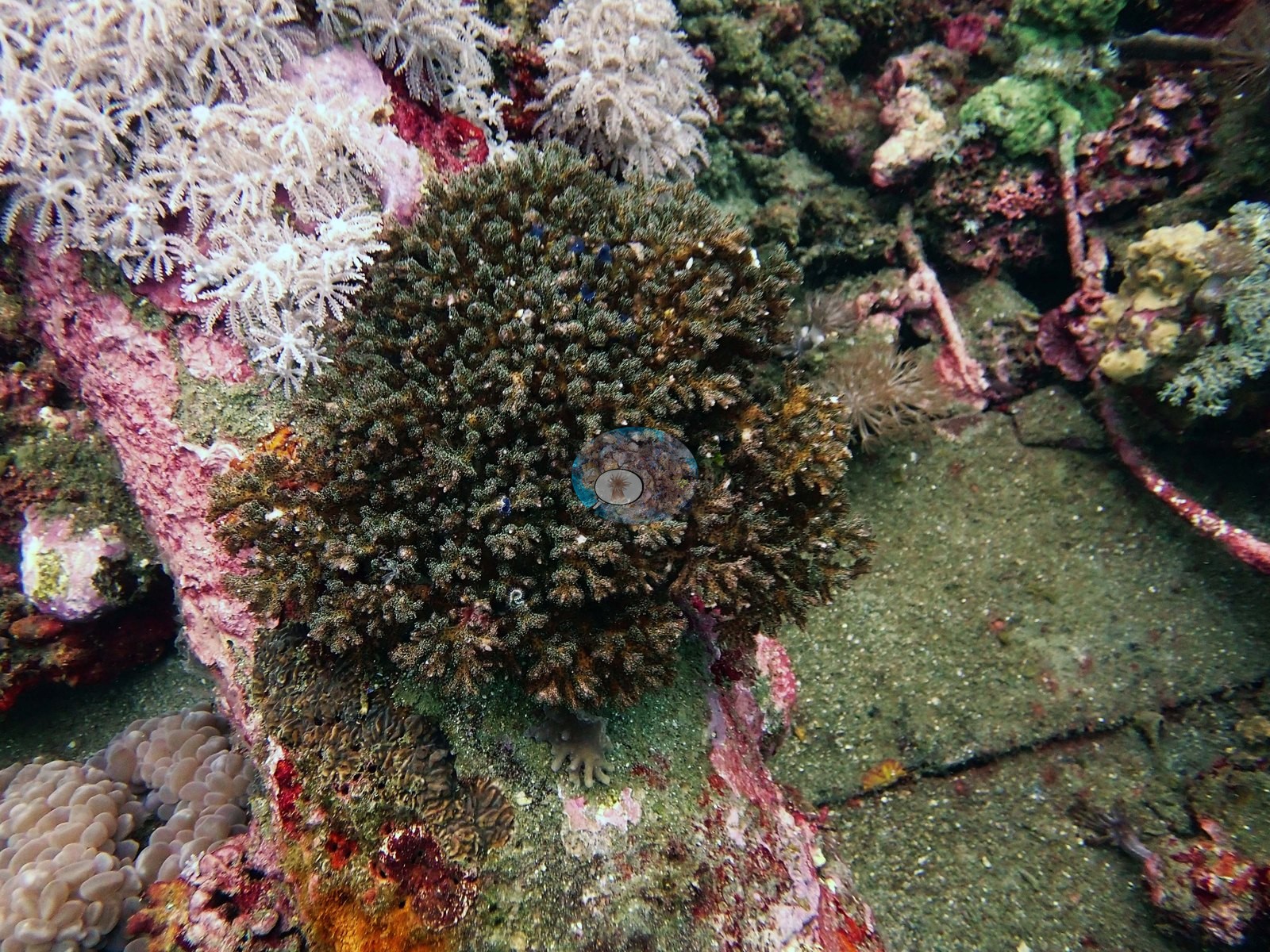
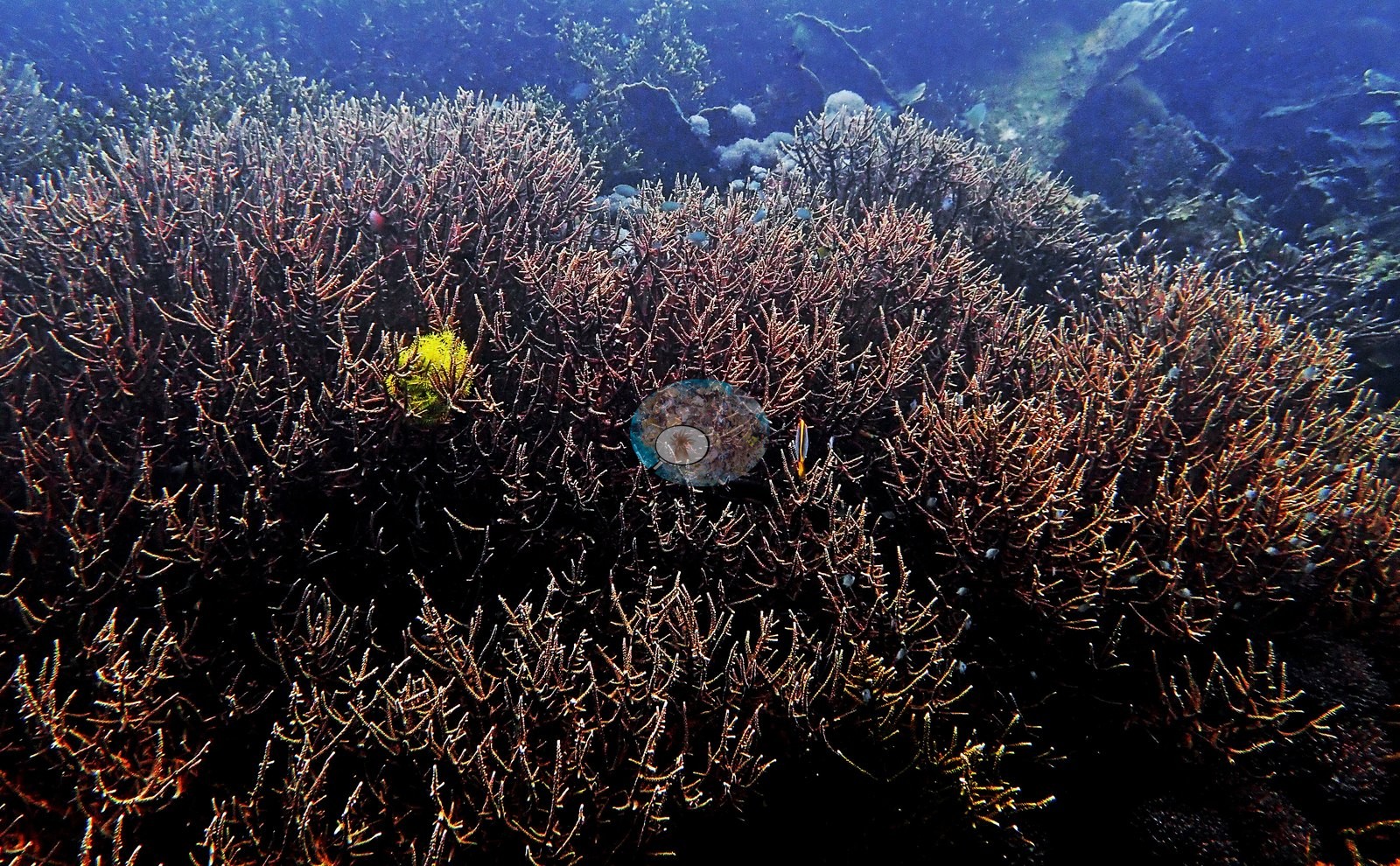
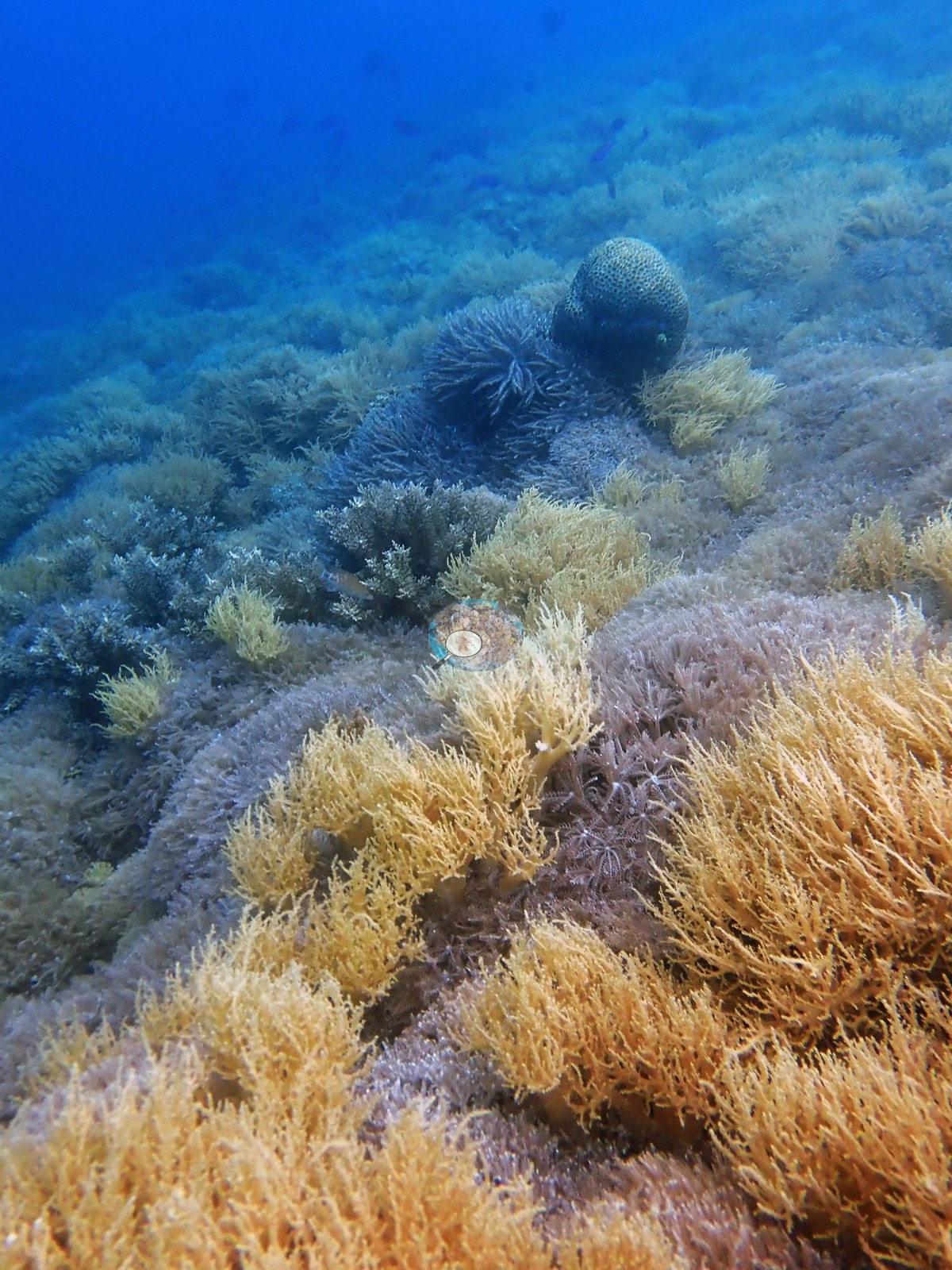
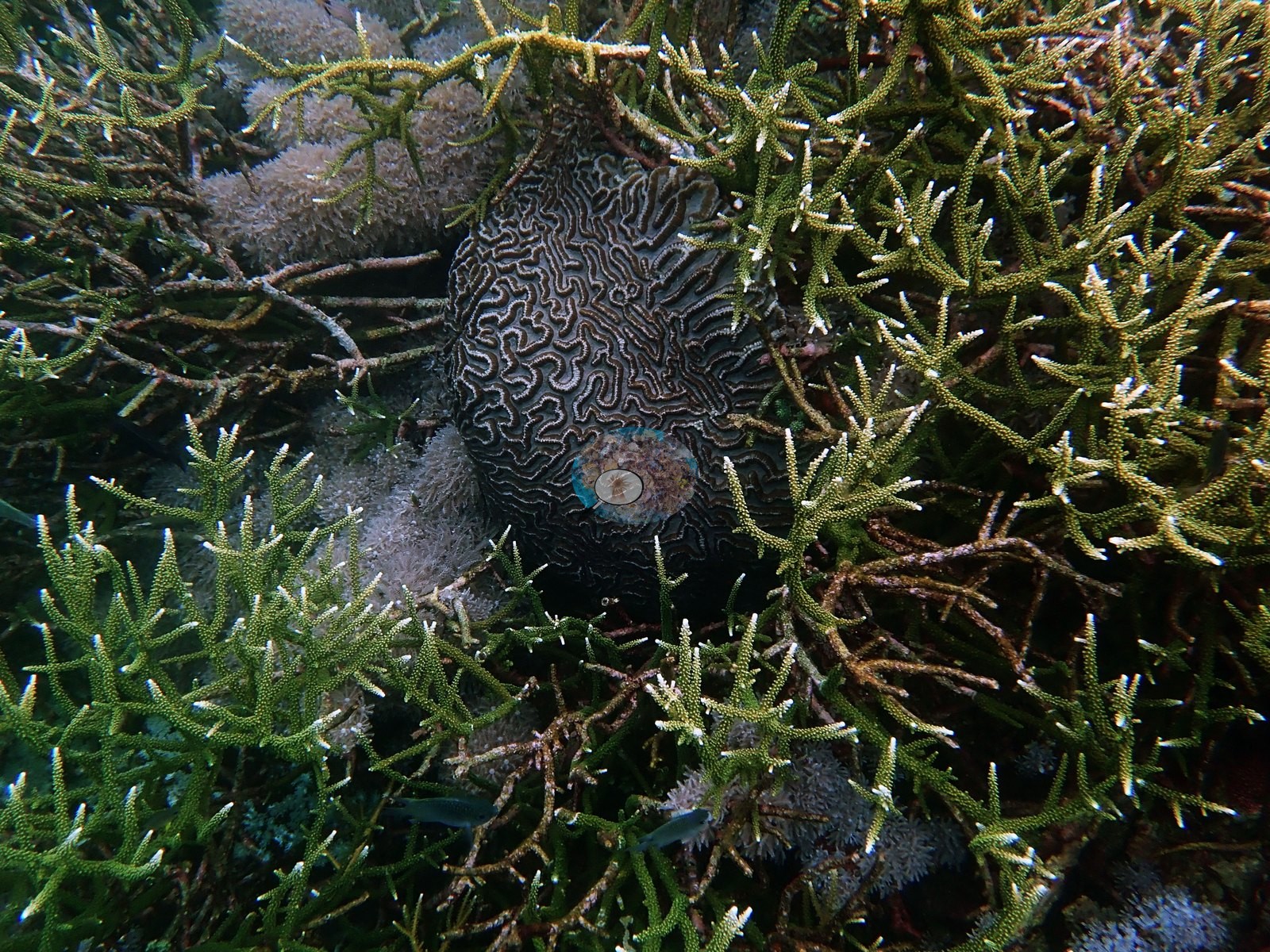
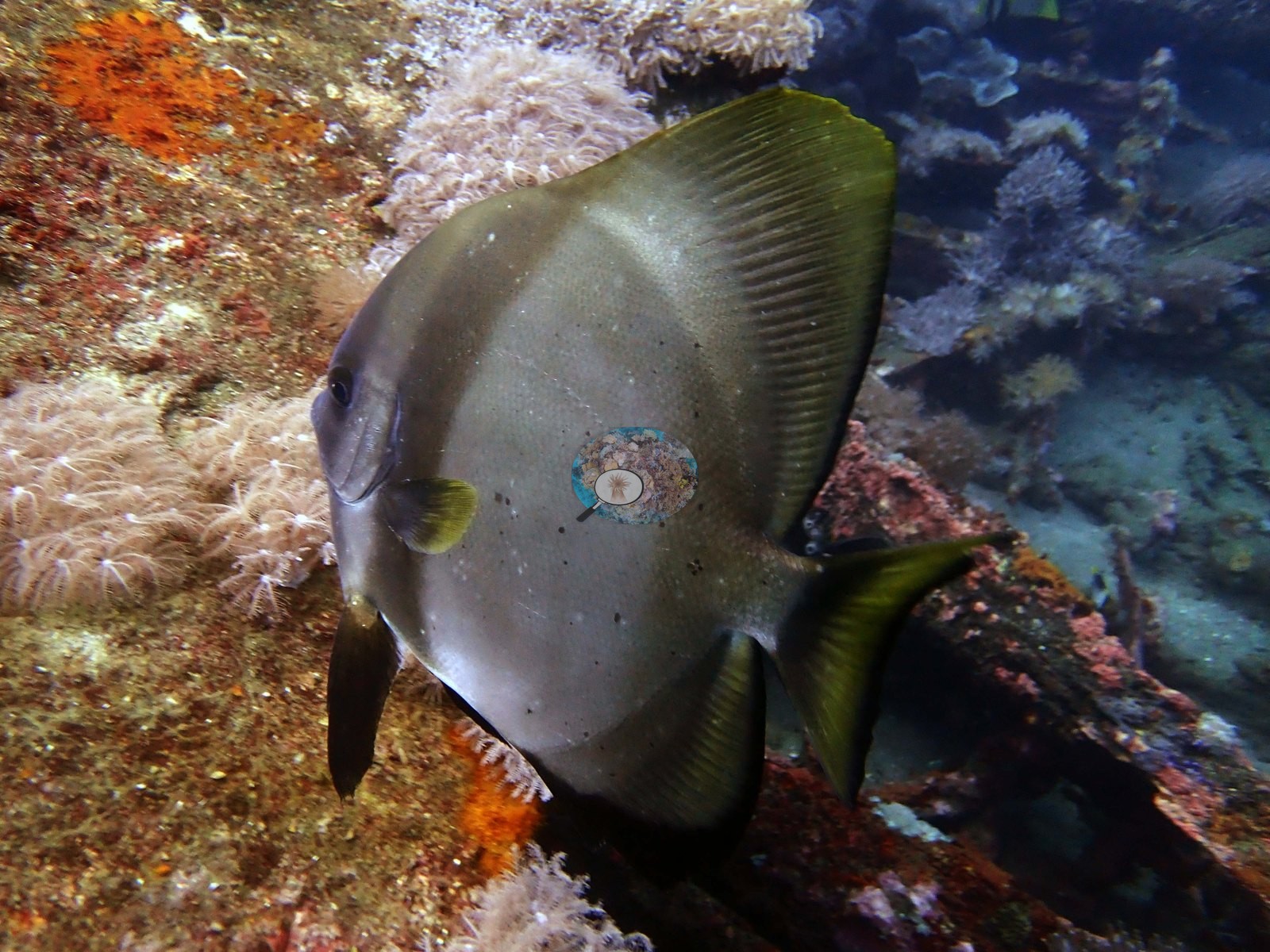
Numerous large, bleached Seriatopora caliendrum with live tissue. Unsure what is going on there. Bleached Seriatopora caliendrum was also found on the wreck. Nearly all Seriatopora caliendrum was partially bleached at top (bottoms of branches were pigmented) (e.g., Image 2).
Surface was covered in garbage. No crown-of-thorns starfish (COTS) or other corallivores evident.
Fish and other fauna
One new nudibranch. Golden sweepers.
Comparisons with other data
No prior survey data from this site. If you would like to share yours, please email us.
Dive record
2019-1-24 dive 1: Loh Sera (#20). 7:50-8:51 (61 min). Max. depth=18.3 m. Temp.=25.6ºC. 30% oxygen.
CV model comparison
More info
DINOv3 and CoralSCOP were run on the same photos and are listed for comparison. Coralscapes v2 and v1 were also run but are not shown: Anderson does not consider Coralscapes reliable for these photos. No diver transect exists for this trip, so agreement between the rows is not accuracy, and as of September 2026 no computer-vision method estimates coral cover accurately on new images; treat every row as indicative.| Method | Hard-coral cover (%) |
|---|---|
| In-house DINOv3 | 34.6 |
| CoralSCOP edited | 45.5 |
| Claude (edited photos) | 29.7 |
Data & links
All images from Coral Reef Diagnostics. Data are from Coral Reef Diagnostics.
© Coral Reef Diagnostics.