
Indonesia - Komodo NP: Mawan

Part of the regional summary: Indonesia - Komodo
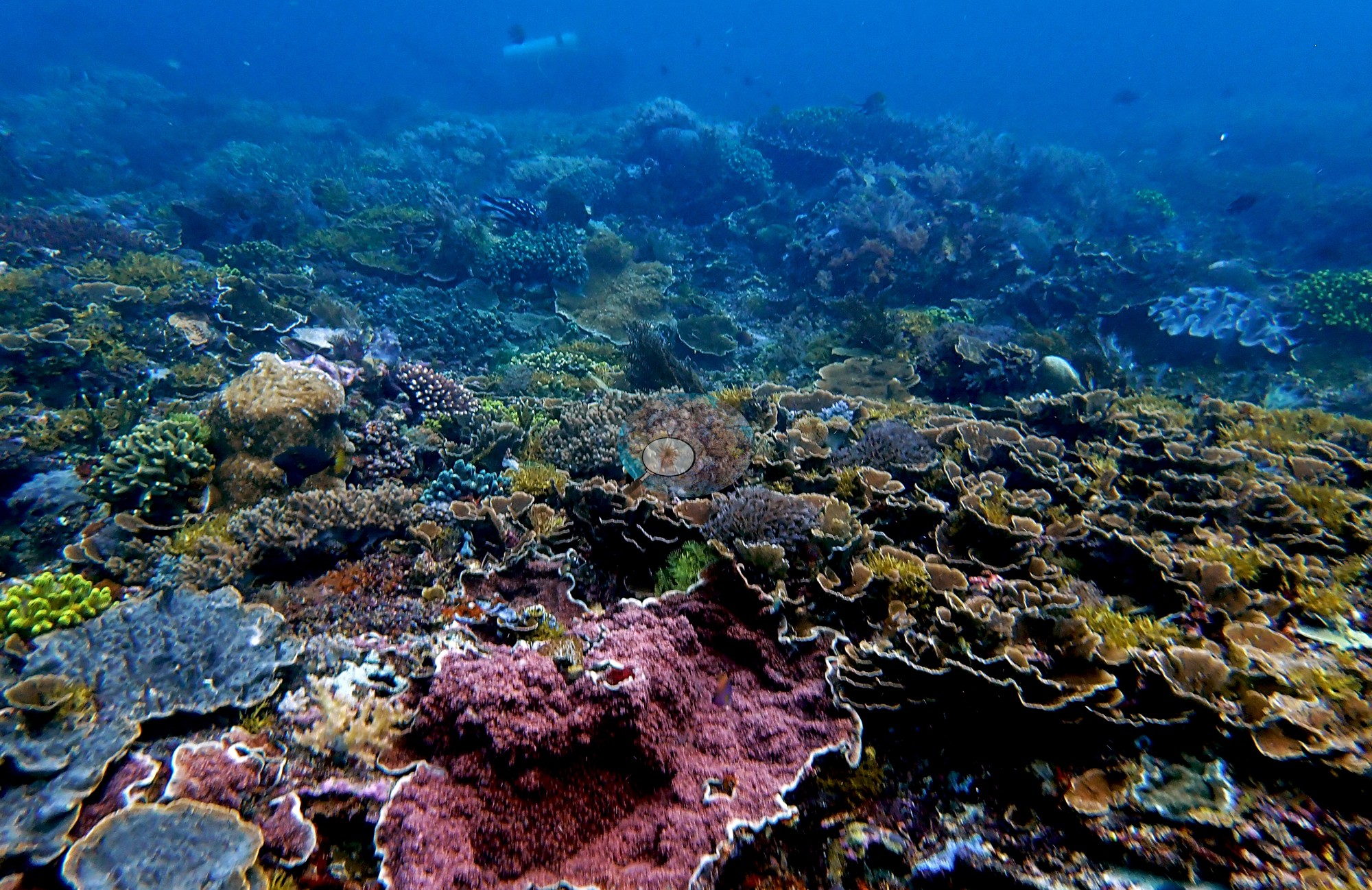
2019-01-25
2019-01-26
More info
East Nusa Tenggara (NOAA CRW virtual station) · Lesser Sunda ecoregion mean=6.9°C-heating weeksA Komodo manta cleaning station visited three times, with 6-30 mantas per dive but unimpressive coral ground of broken Acropora and soft coral on rubble. Away from the station, through the fastest current Anderson had felt in years, lay pristine reef with monster cuttlefish, an enormous Euphyllia, a white frogfish, and many coral species he had never seen before.
Stasiun pembersihan pari manta di Komodo yang dikunjungi tiga kali, dengan 6-30 ekor manta per penyelaman namun dasar karang yang kurang mengesankan berupa patahan Acropora dan karang lunak di atas pecahan karang. Jauh dari stasiun tersebut, melewati arus terkencang yang pernah dirasakan Anderson dalam beberapa tahun terakhir, terhampar terumbu yang masih perawan dengan sotong raksasa, Euphyllia berukuran luar biasa, ikan kodok putih, dan banyak jenis karang yang belum pernah ia lihat sebelumnya.
Terjemahan ringkasan ini oleh AI; versi bahasa Inggris yang berlaku.
Four independent survey stations shown with the program’s logo — click one to see how far it is from this site.
Six other CRD dive sites within 5 km shown in orange — click a marker to open its page.
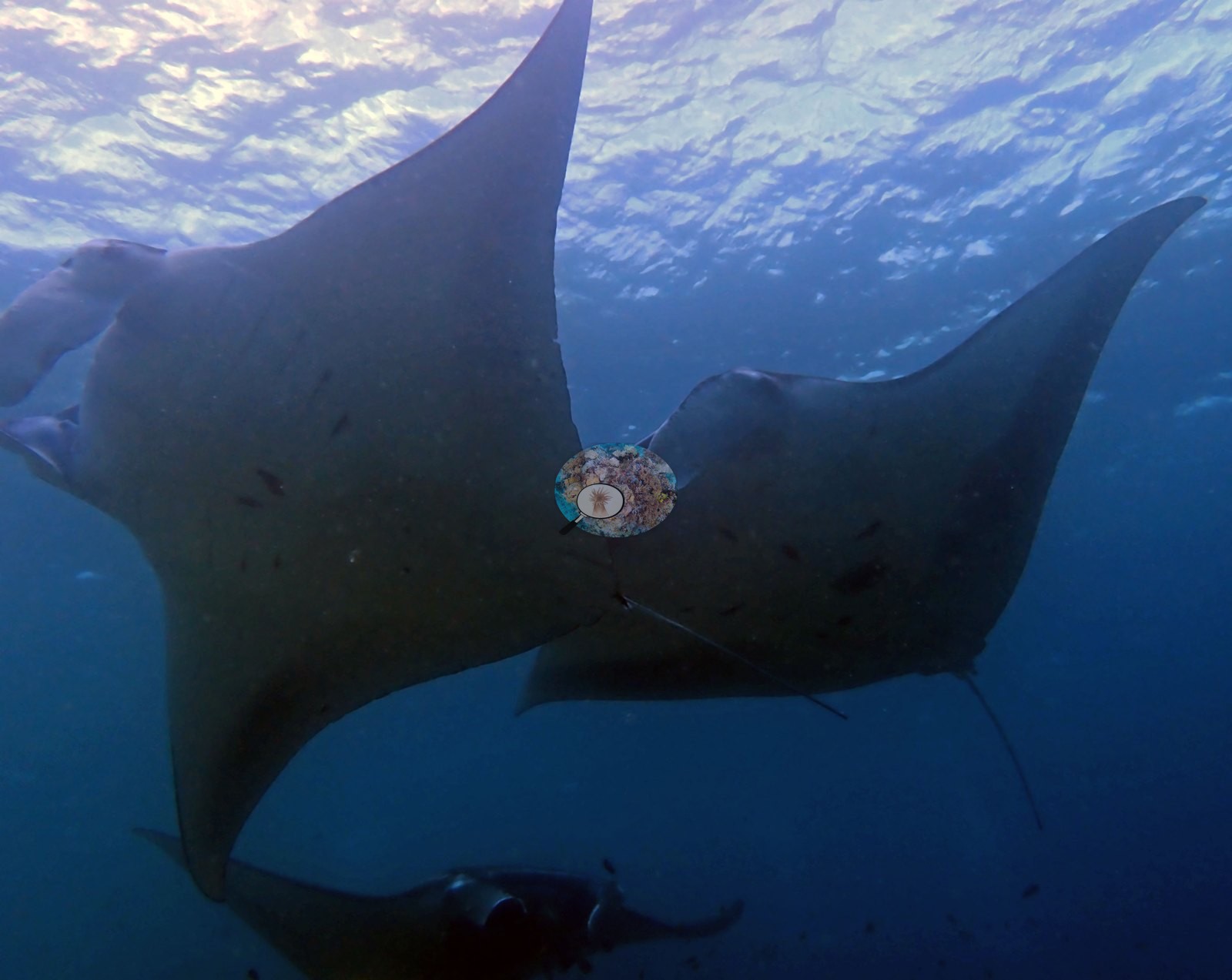
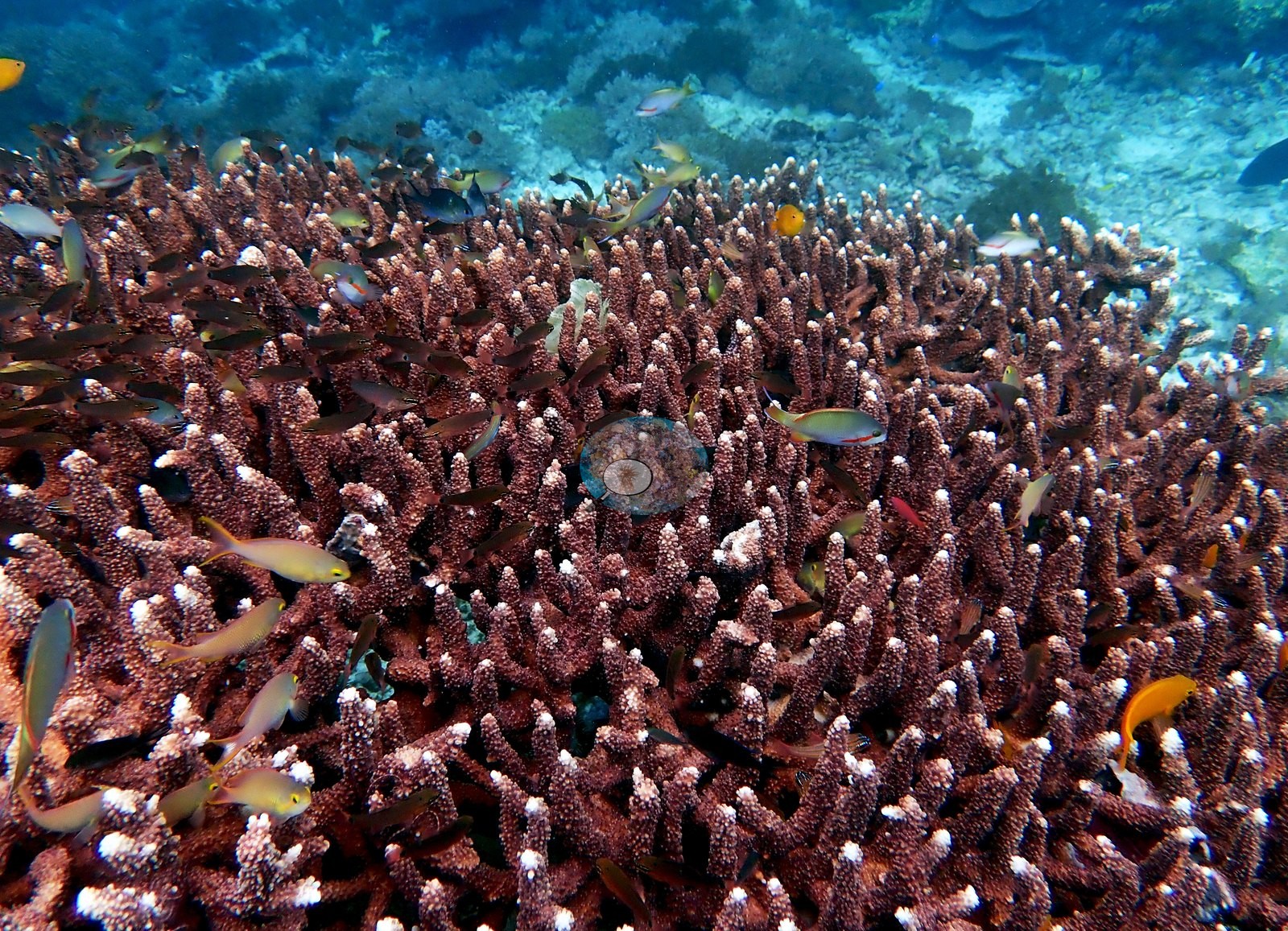
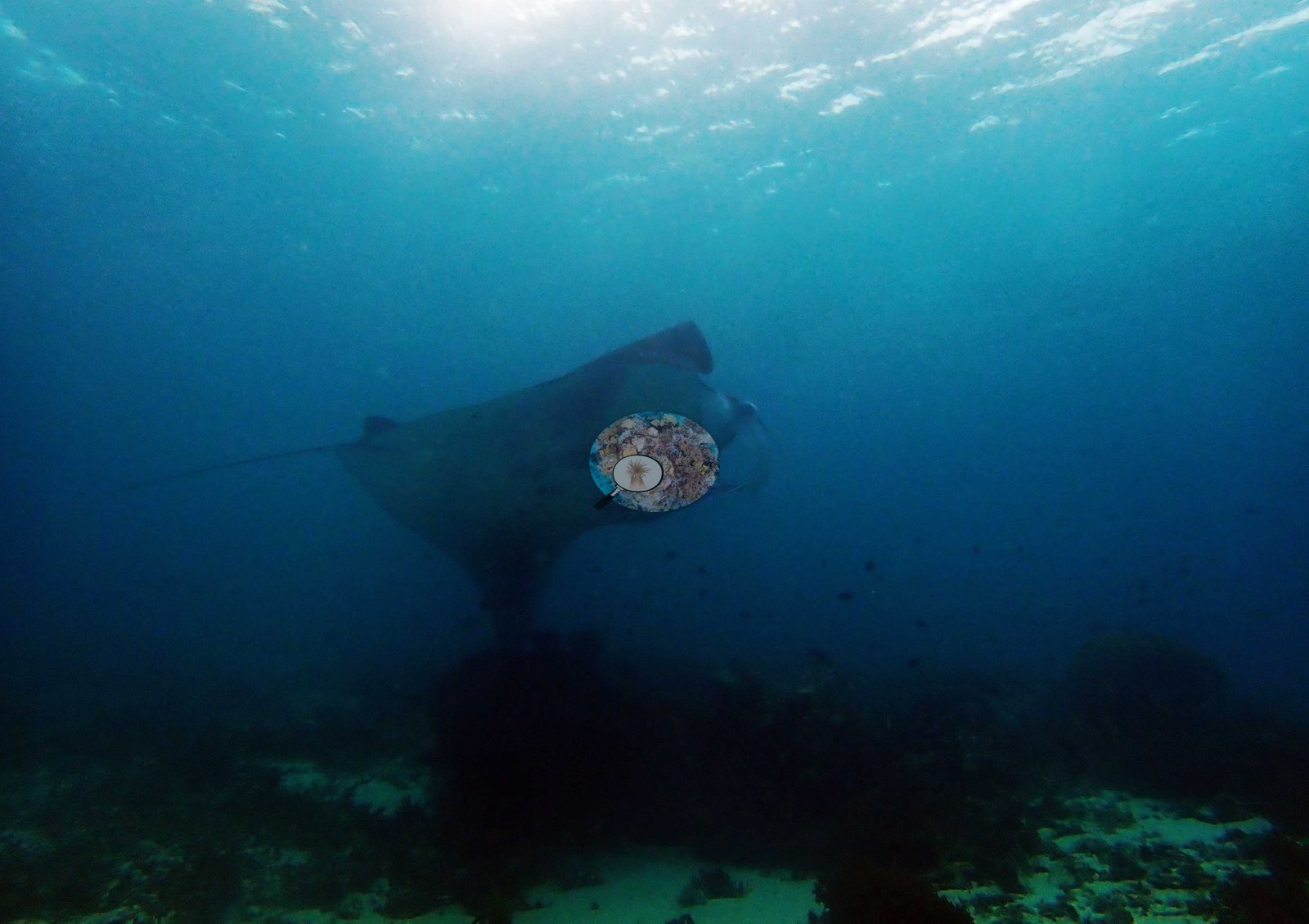
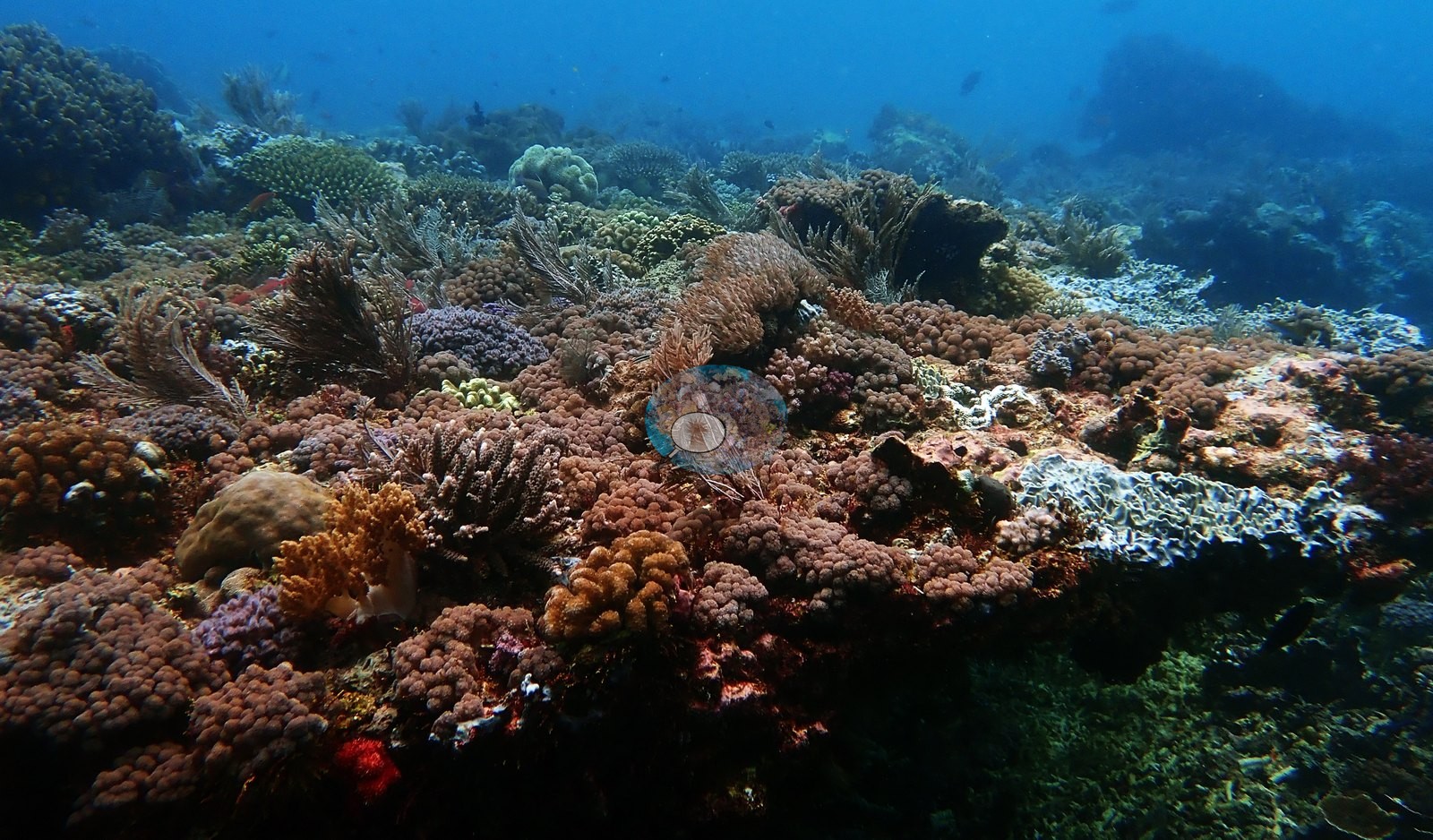
5 of these 50 photographs are shown beside the text that discusses them under "Site description" below.
Site description
Setting
25.6ºC. 31% oxygen. 10 m viz. Extreme current. Eventually hit crazy current that was the fastest I’ve experienced in a long time. Temp.=25.6ºC. 30% oxygen. 25ºC, 10-m viz. Temp.=25.0ºC. Poor viz. High particulate load.
General benthic features
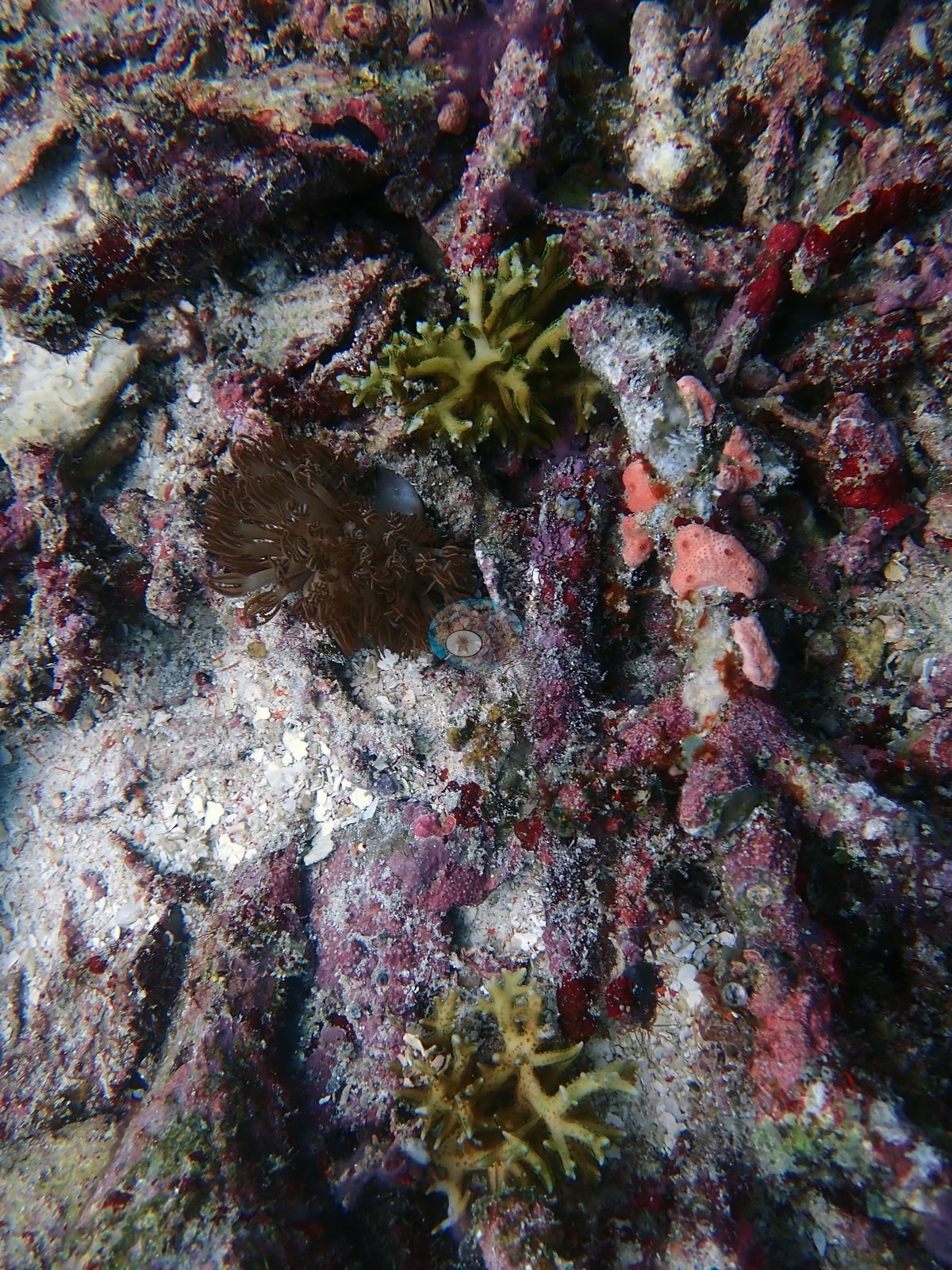
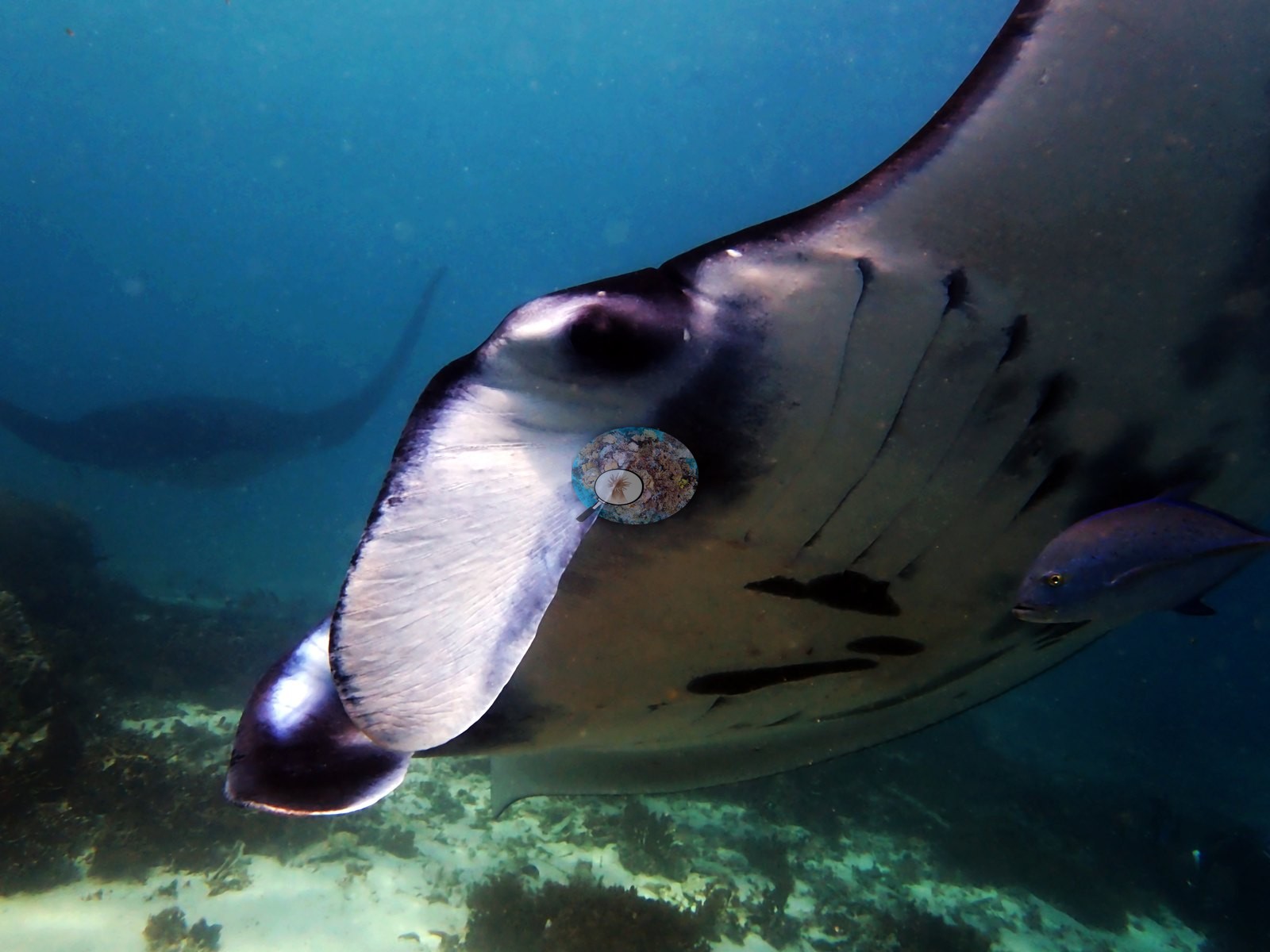
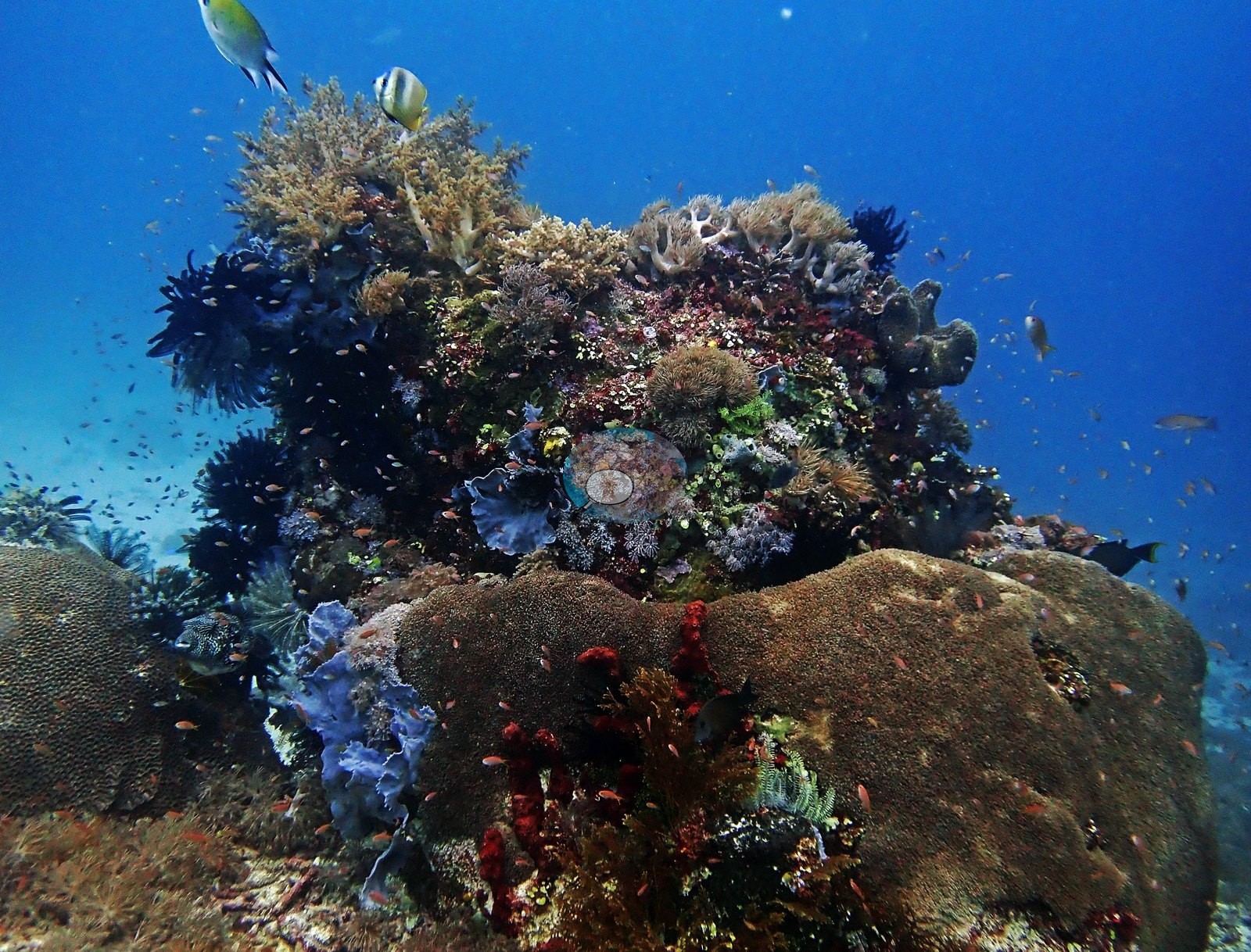
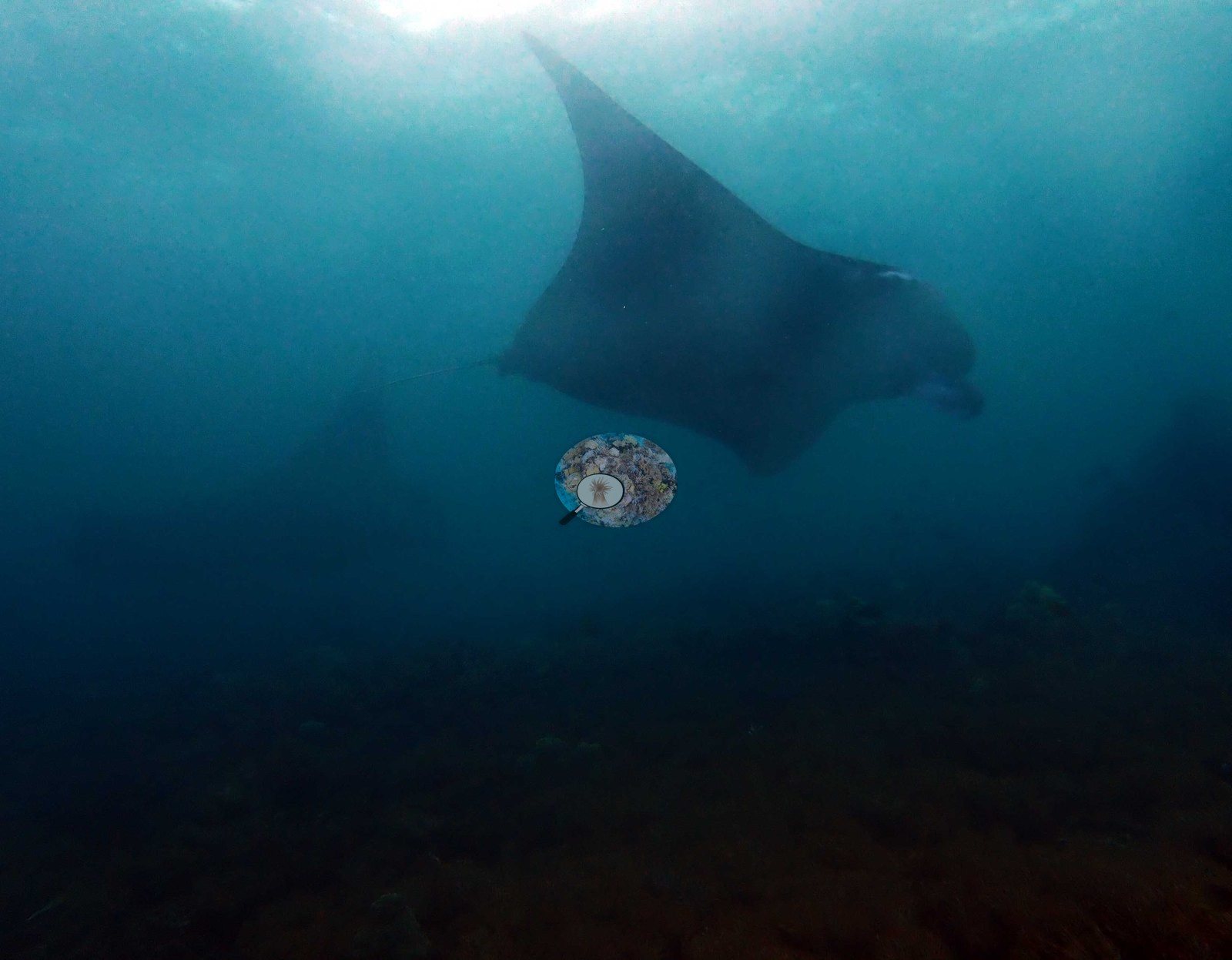
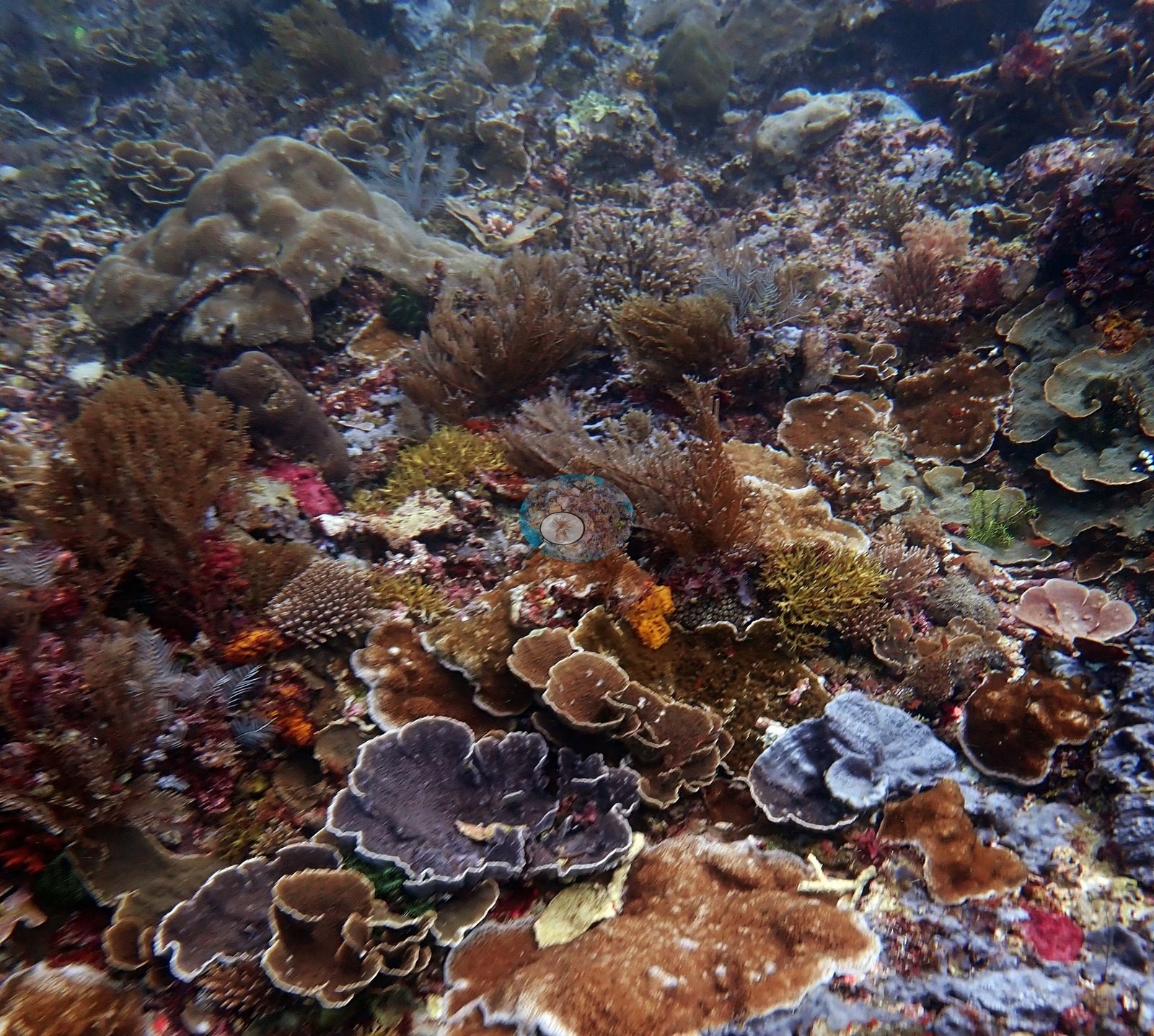
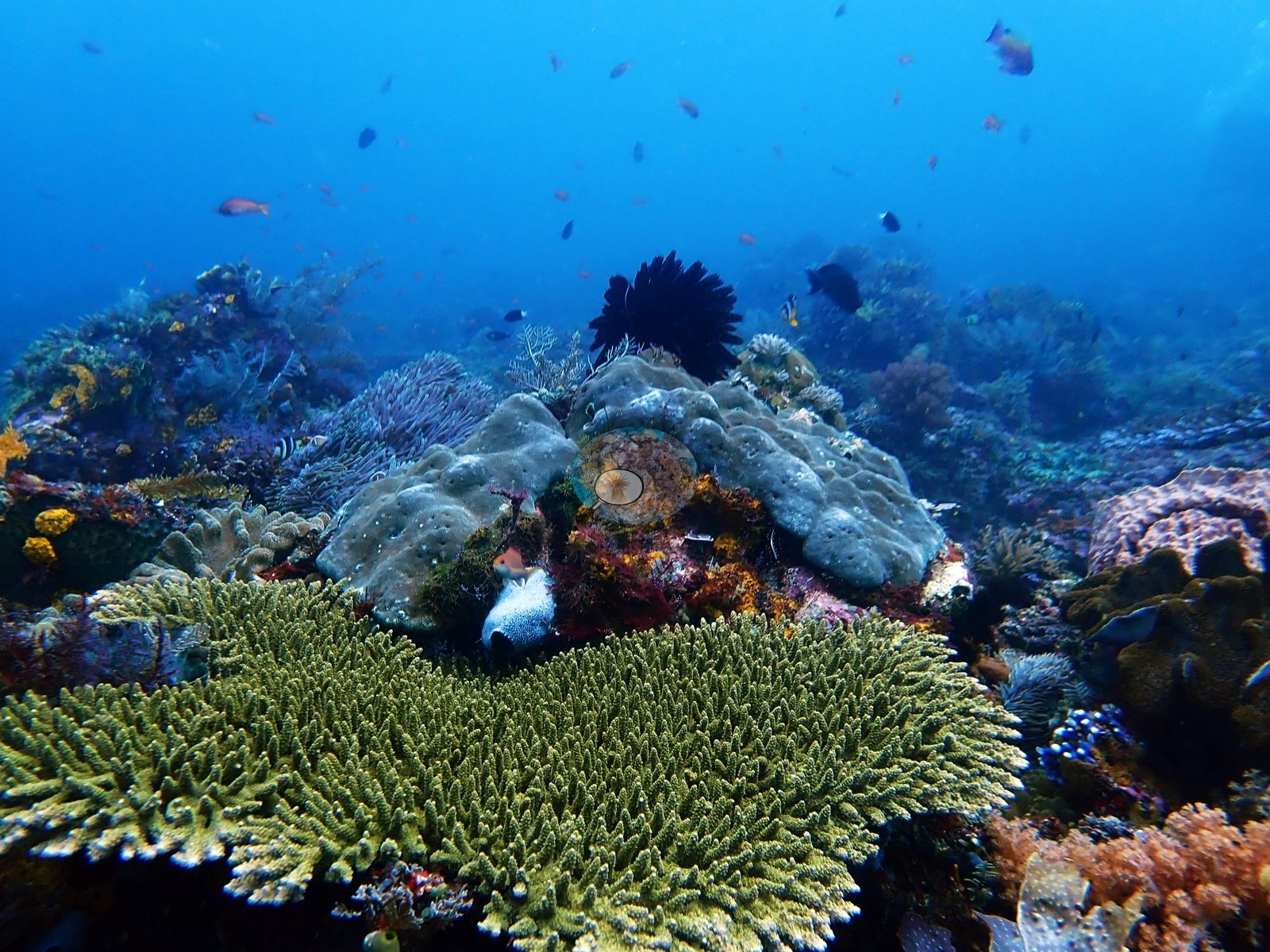
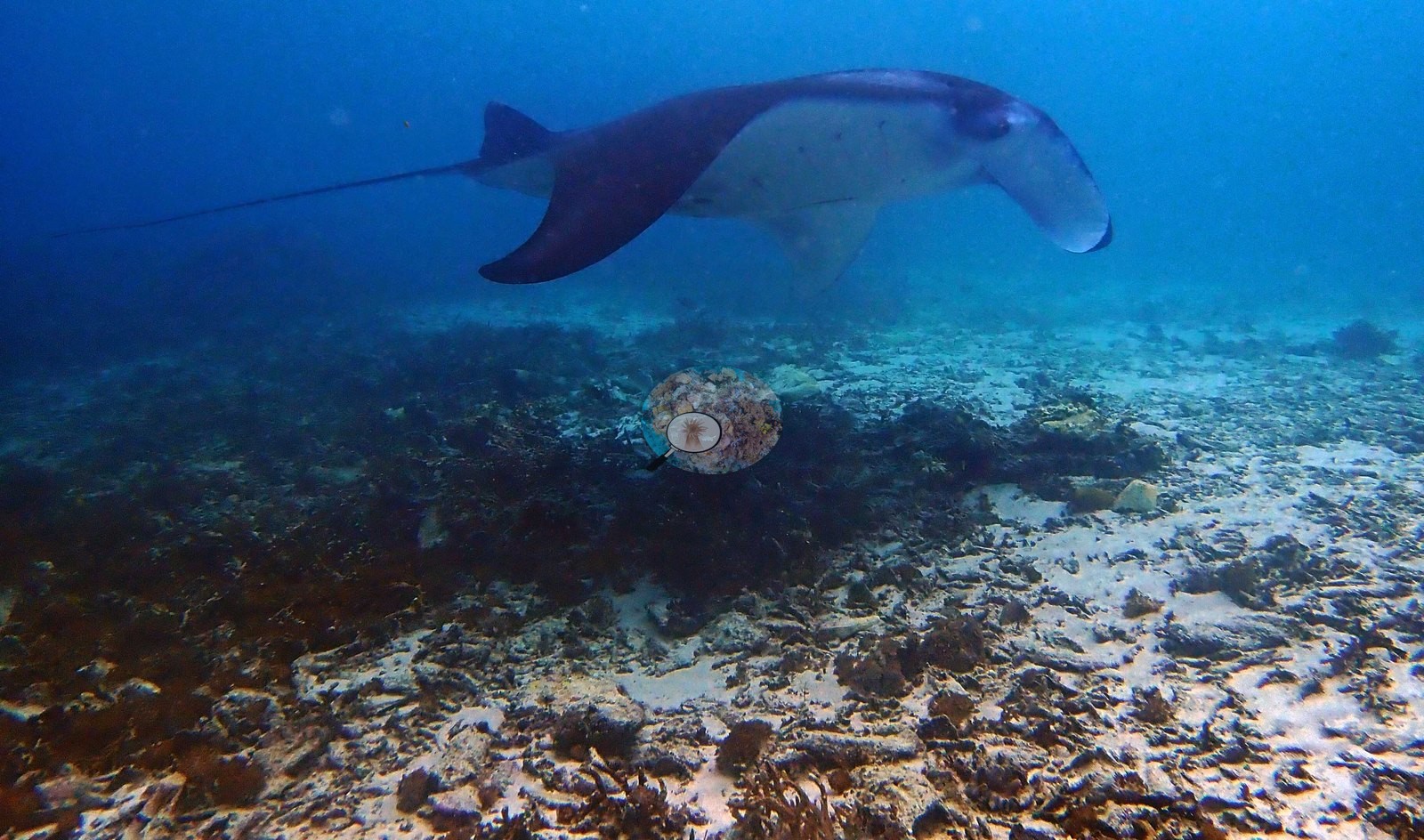
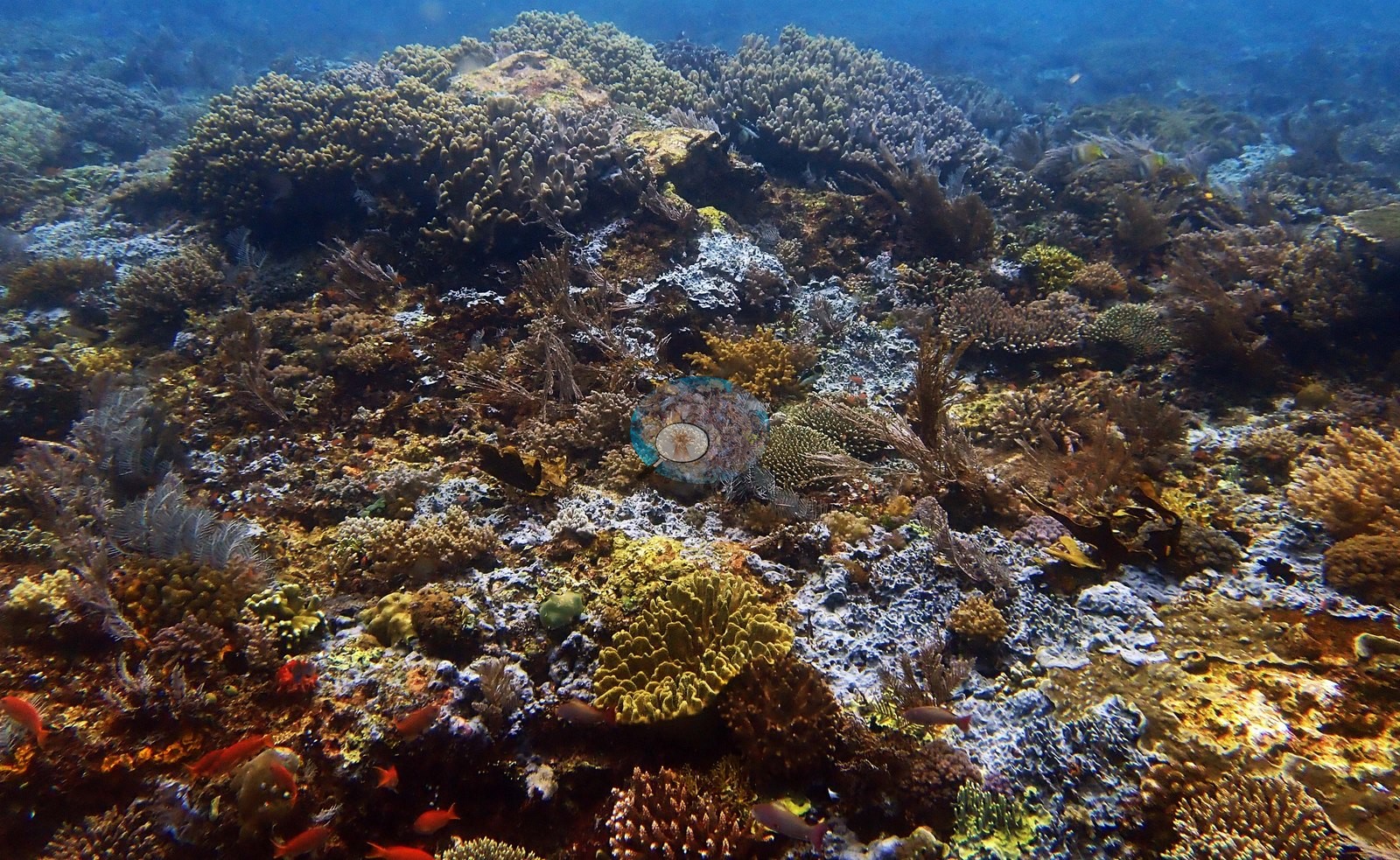
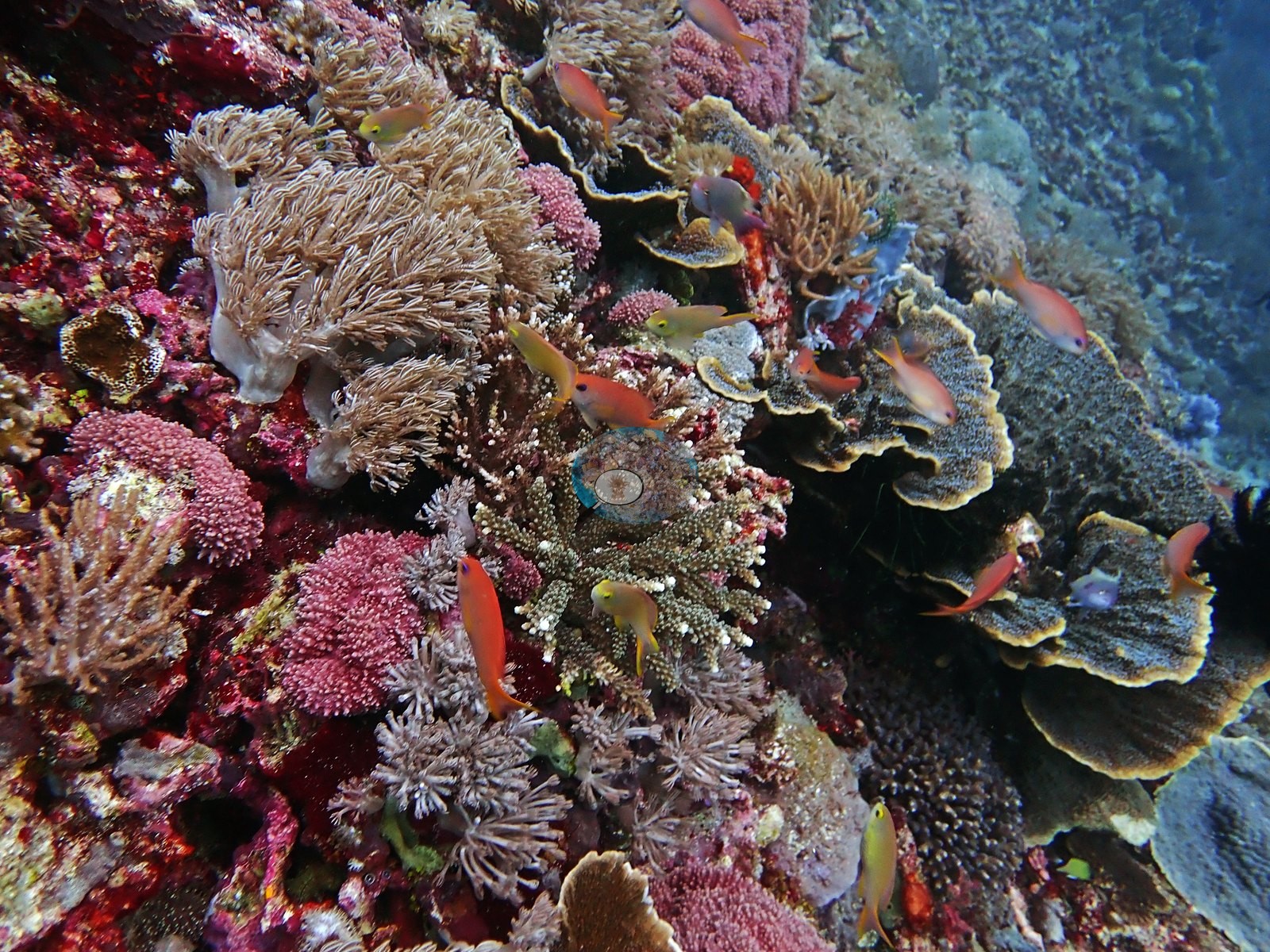
Descended over rubble field colonized by cyanobacteria and soft corals (e.g., Image 1).
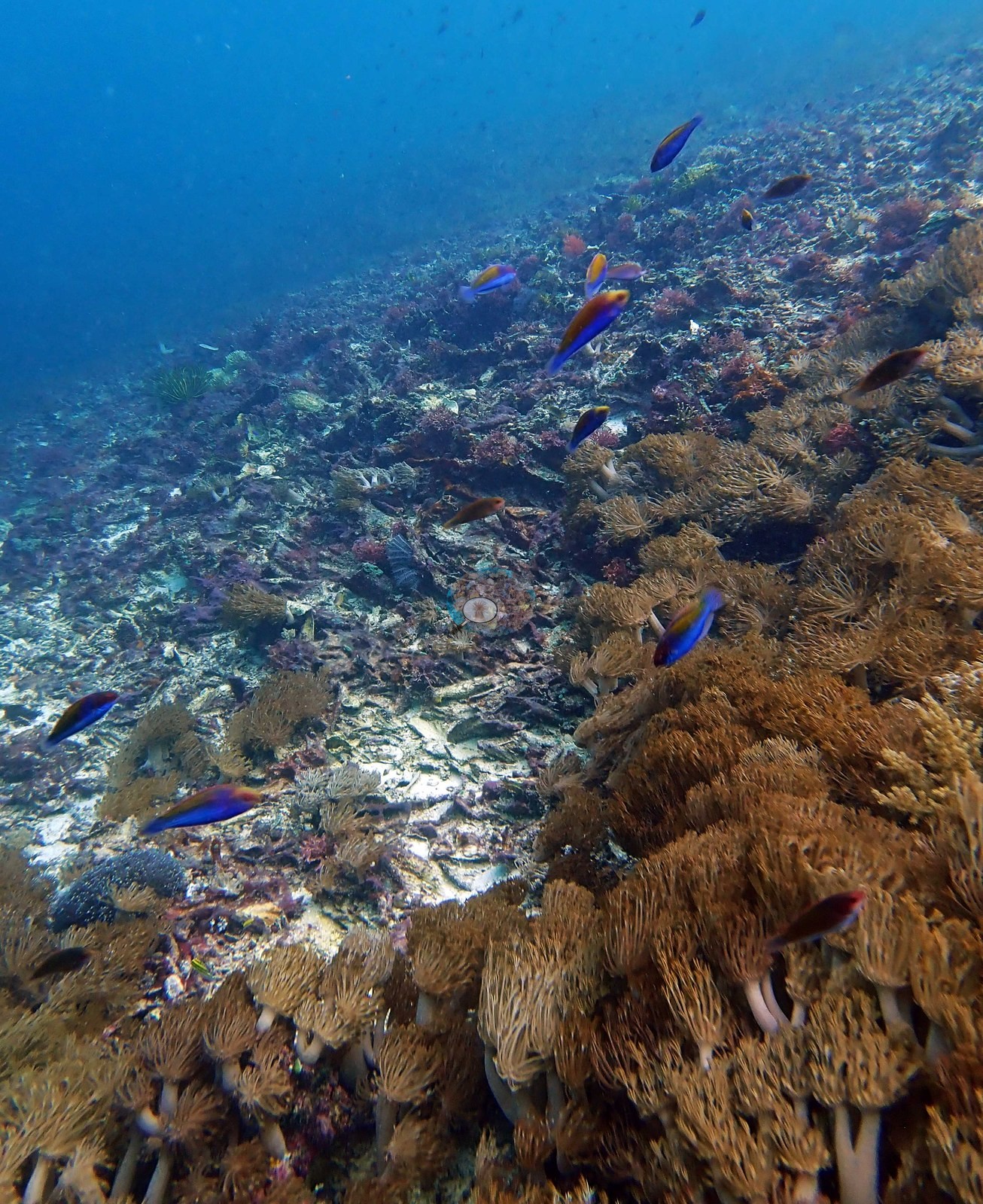
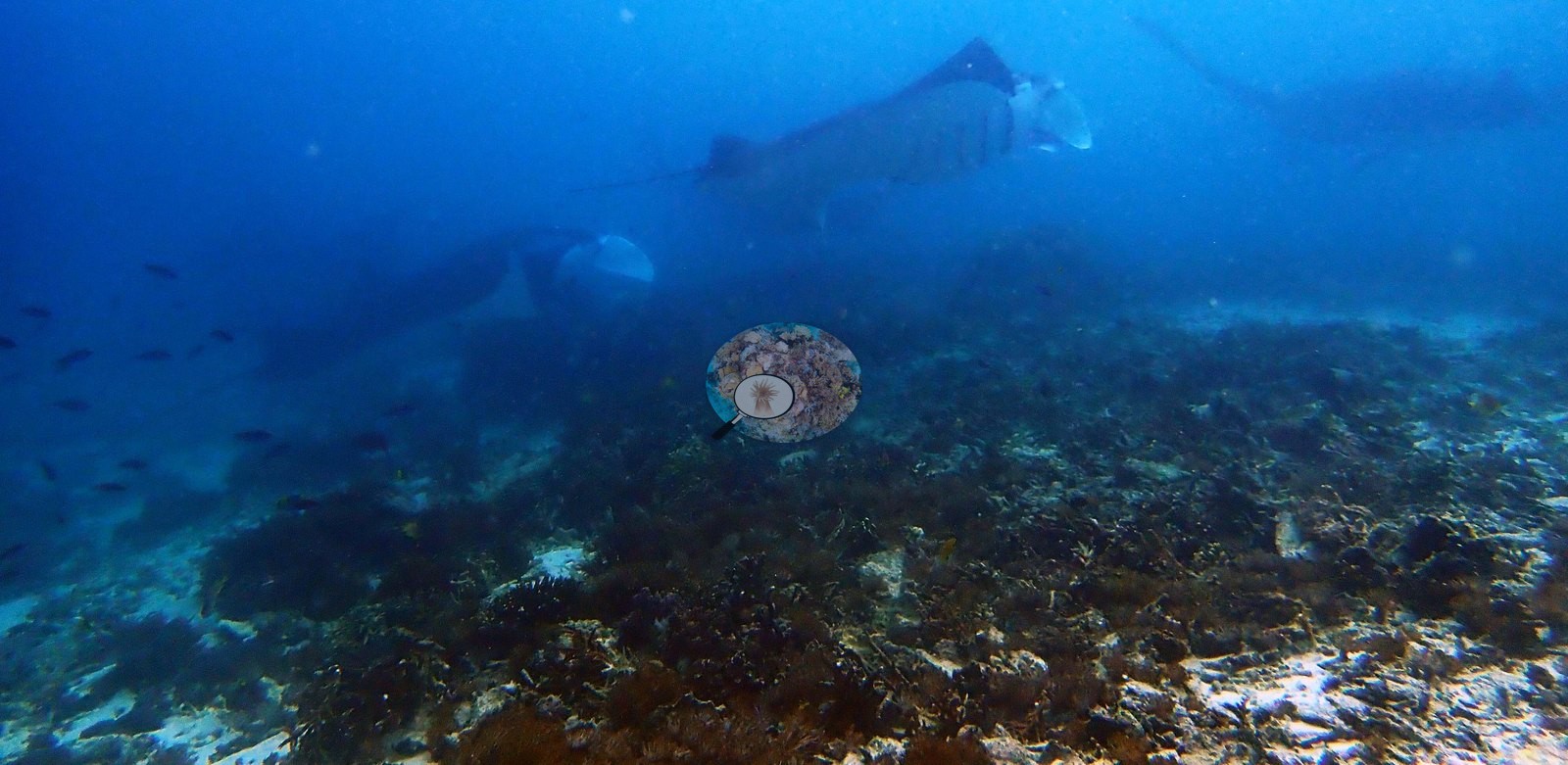
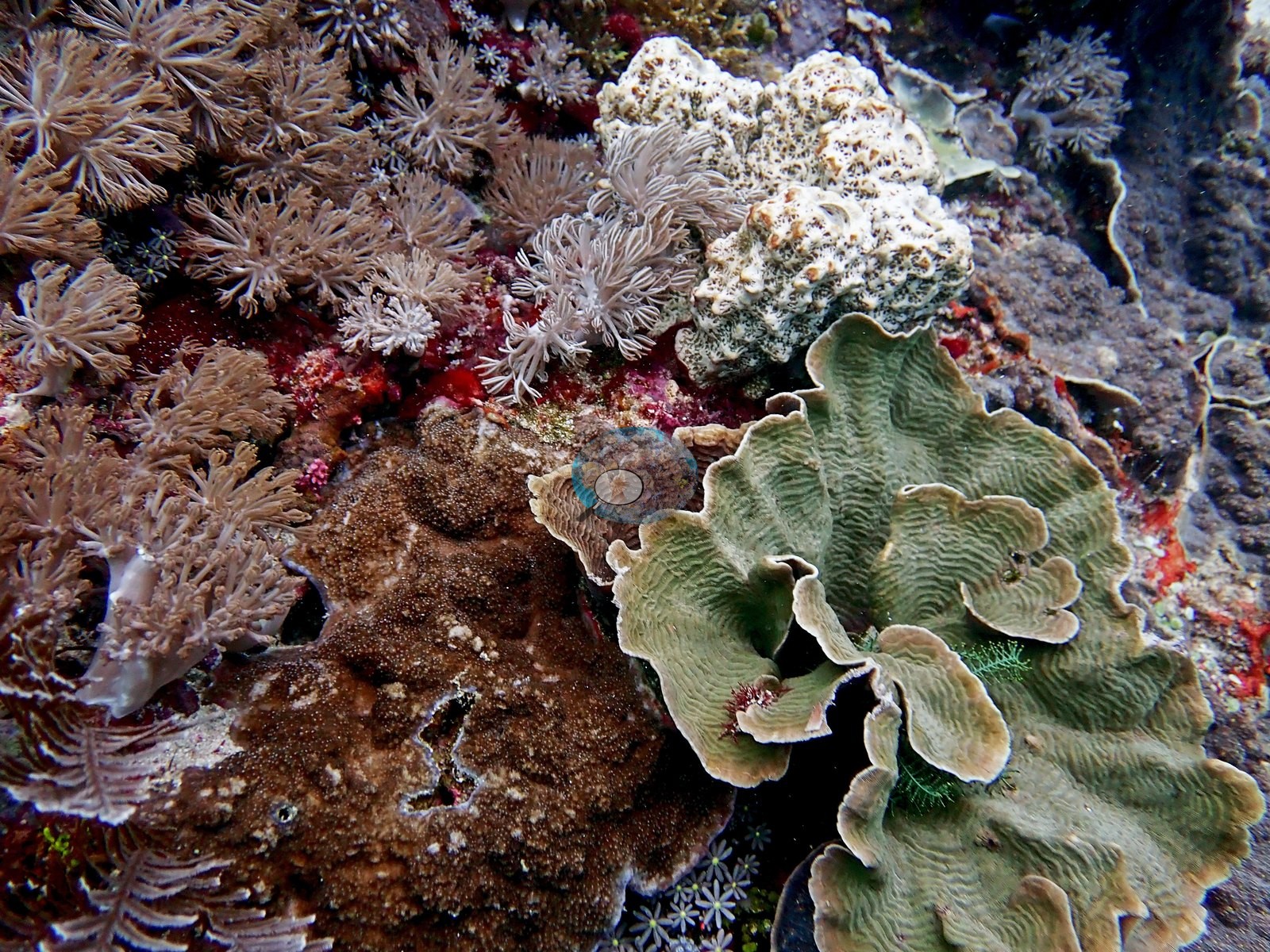
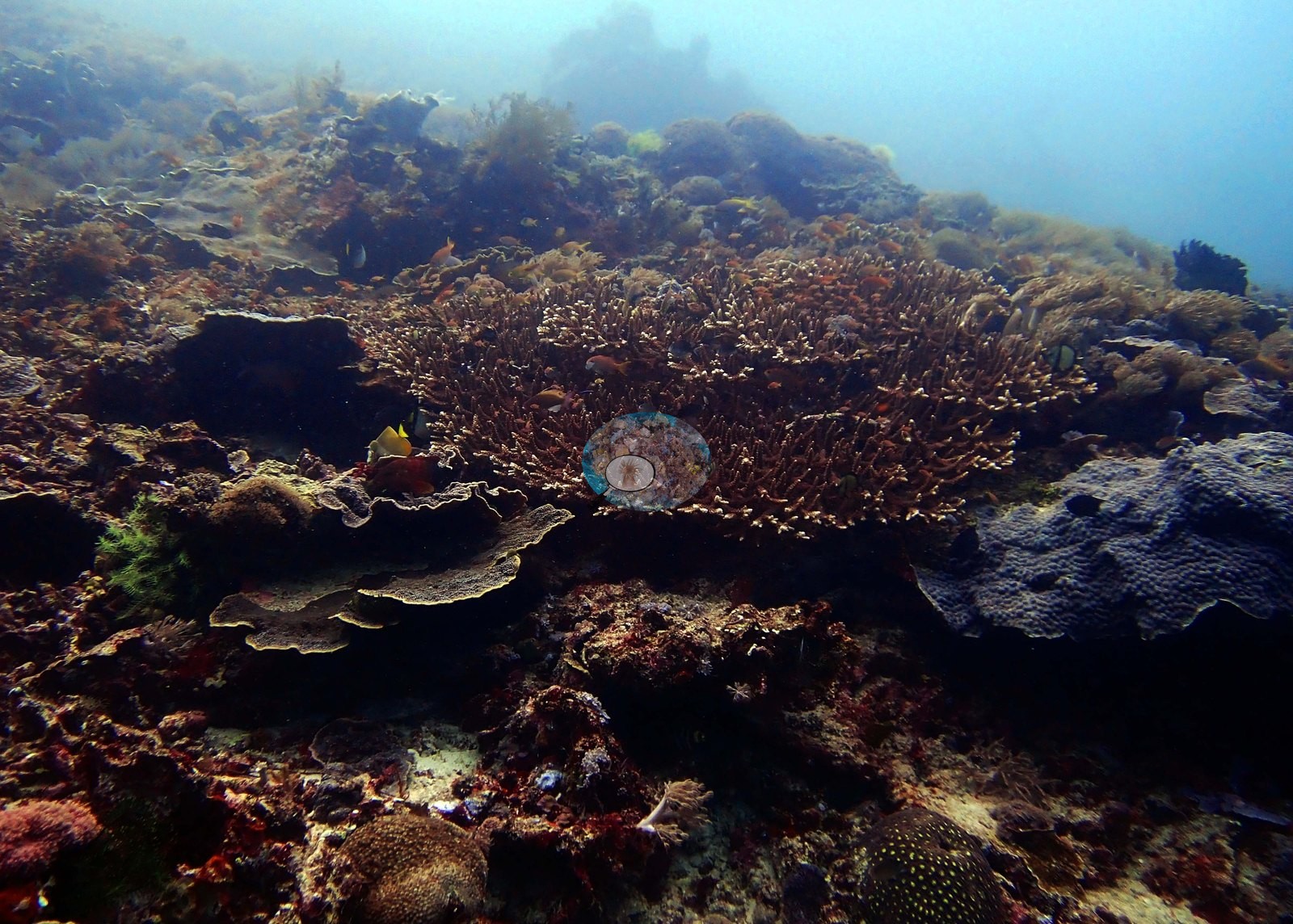
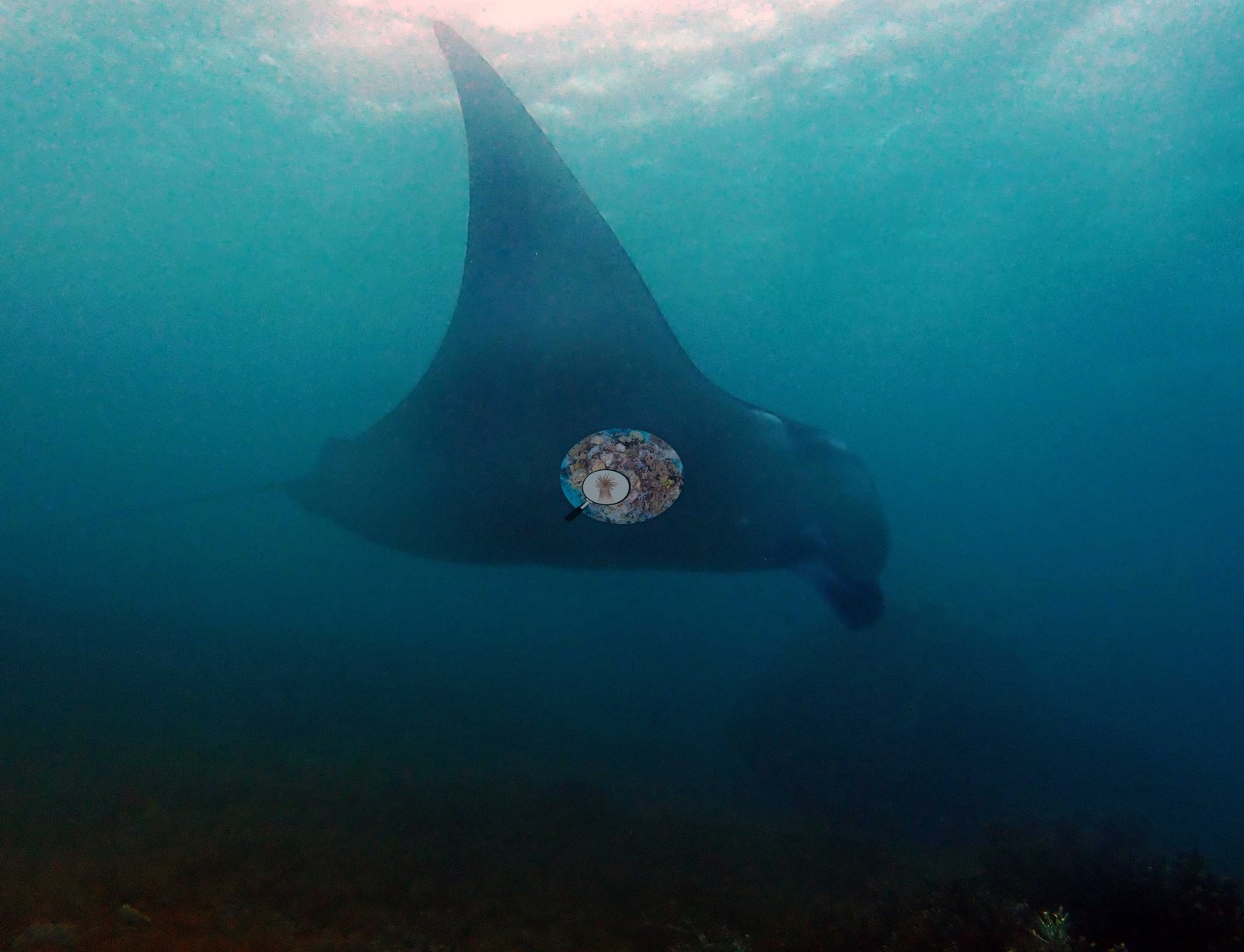
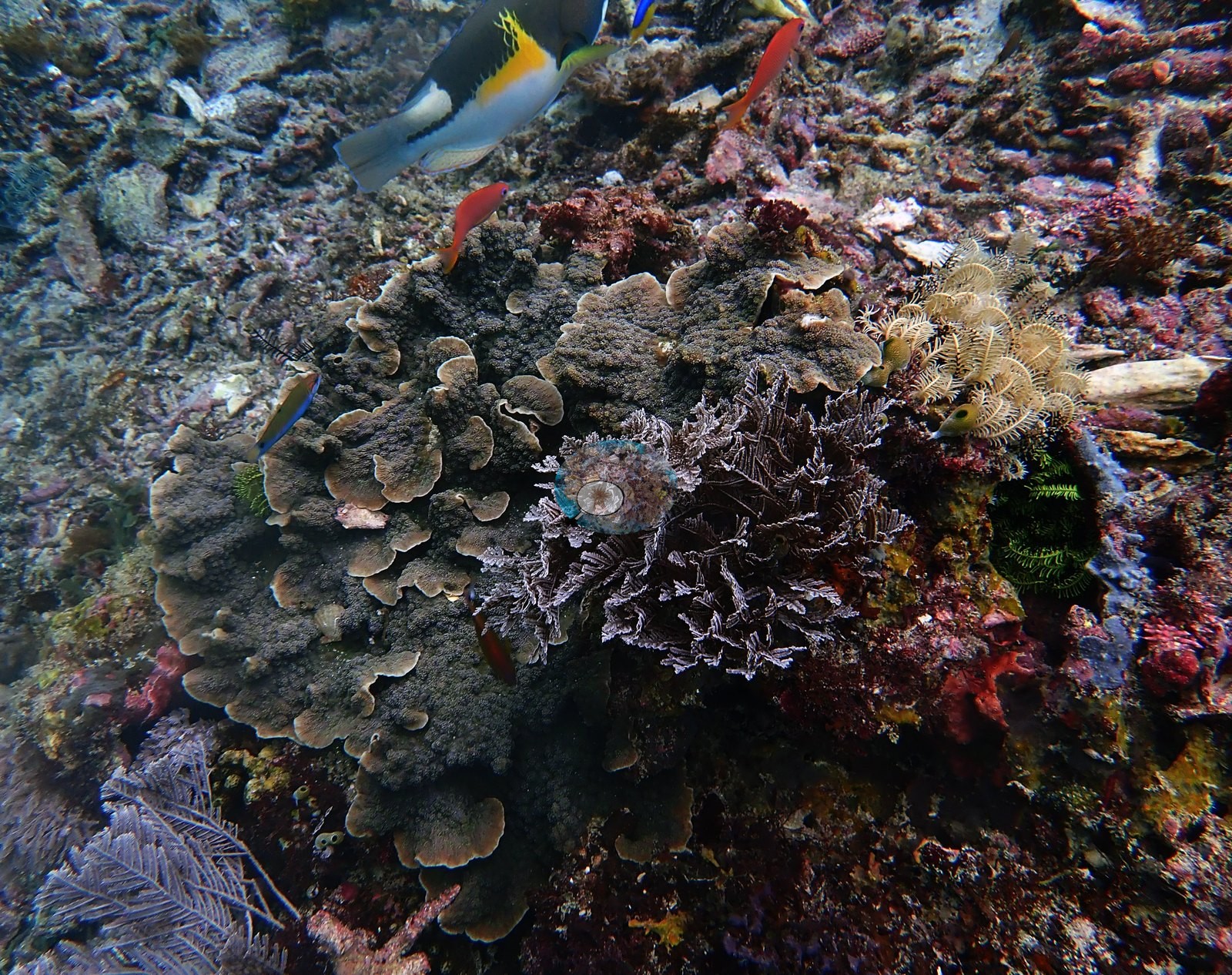
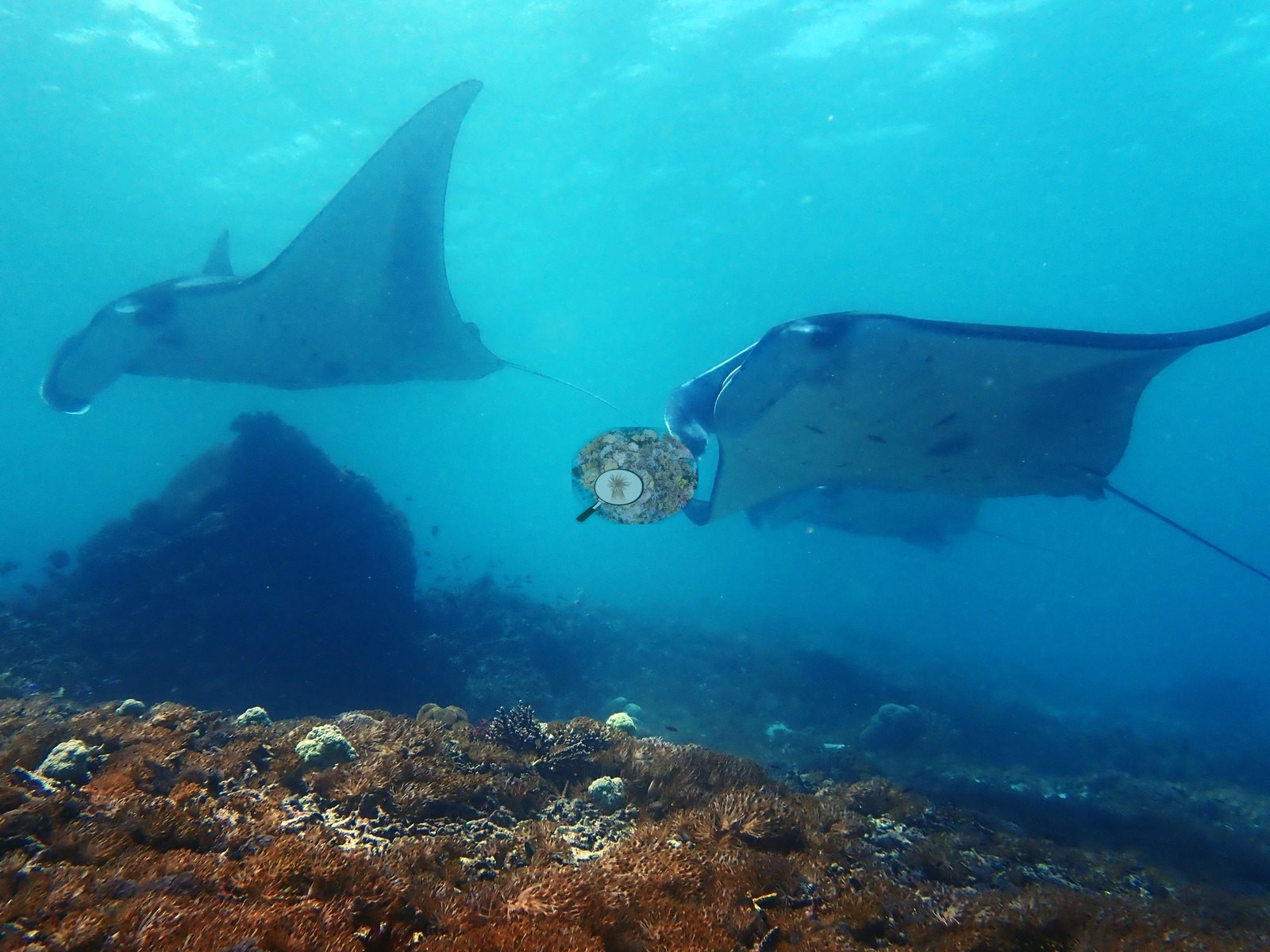
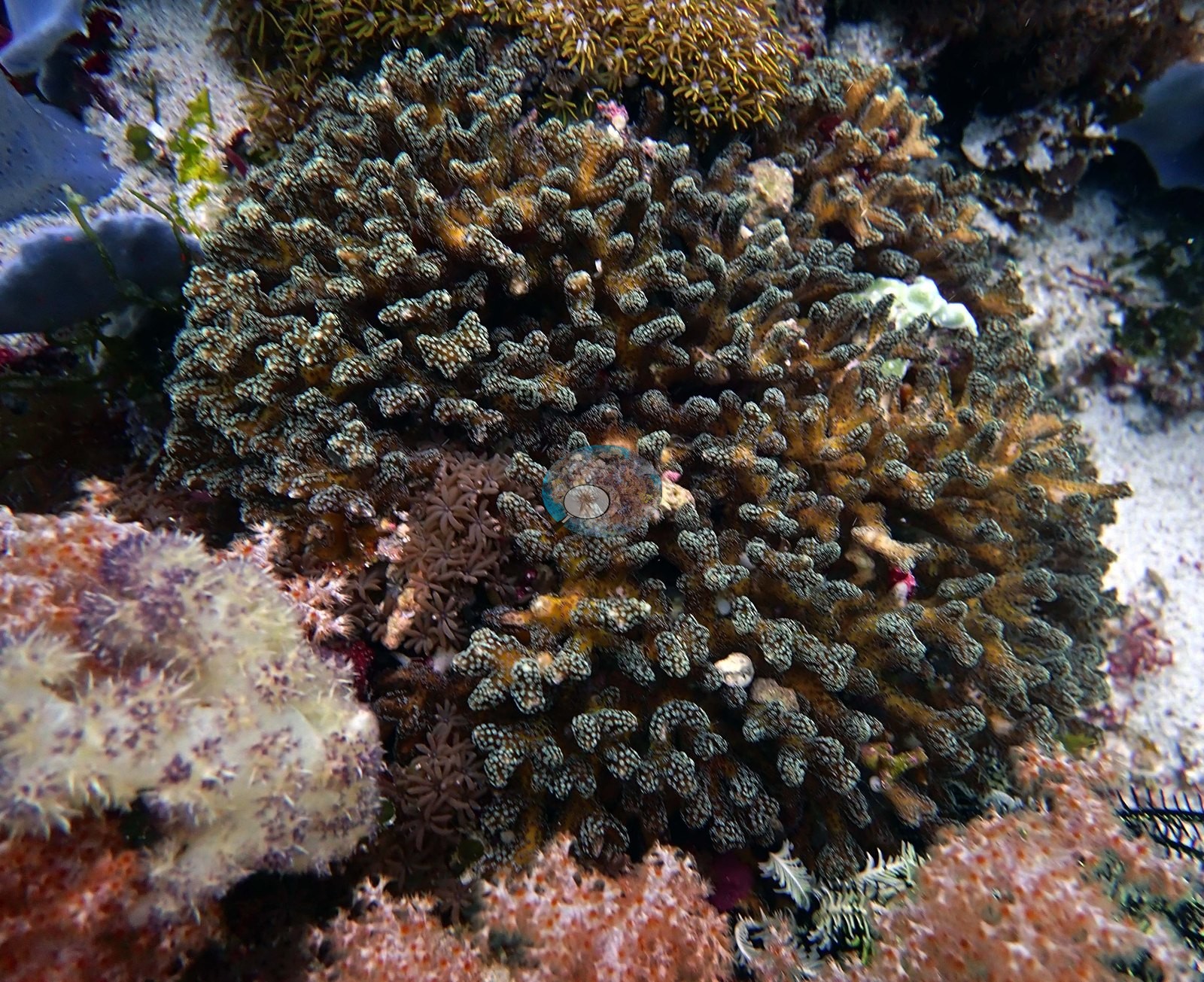
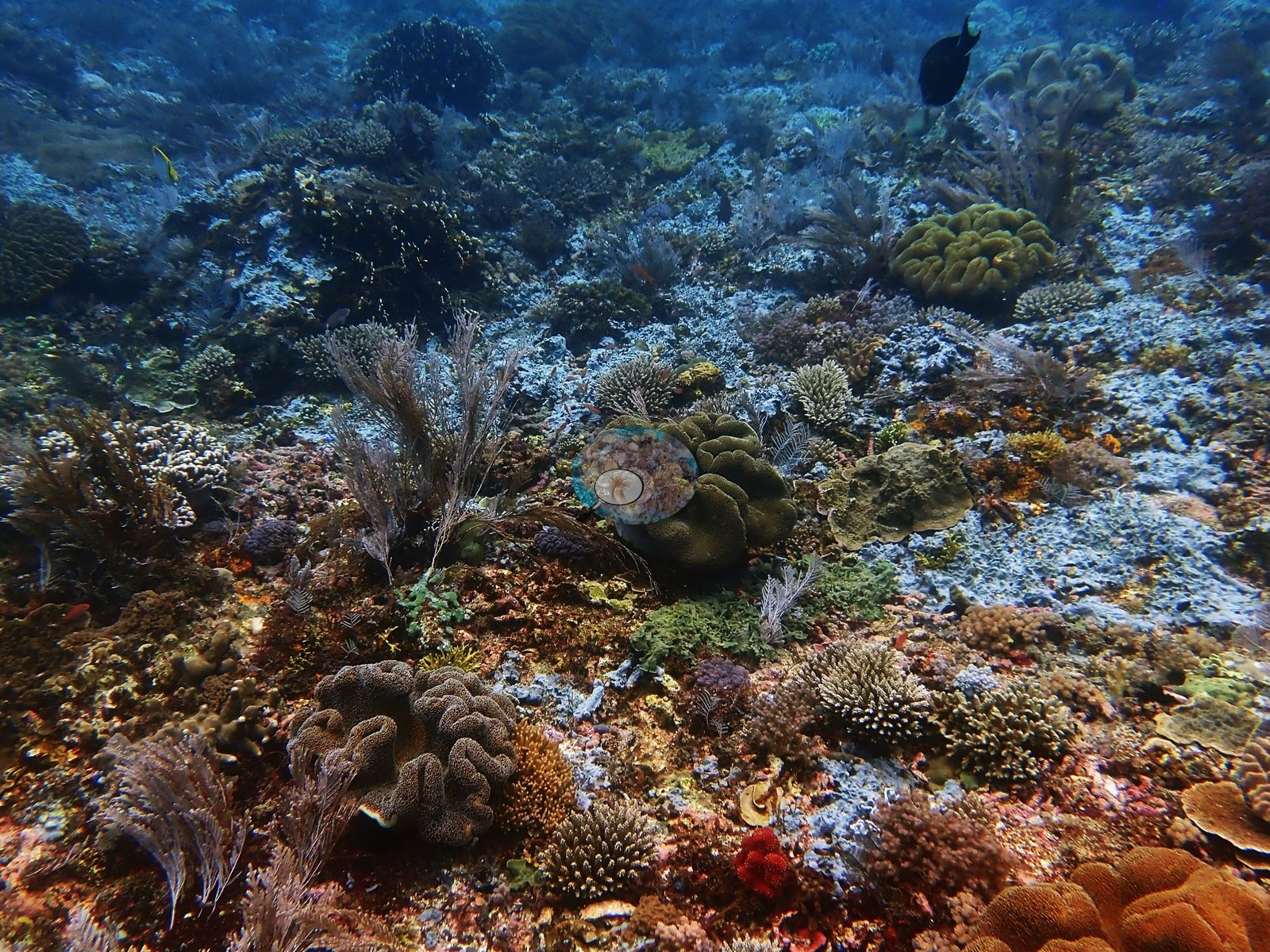
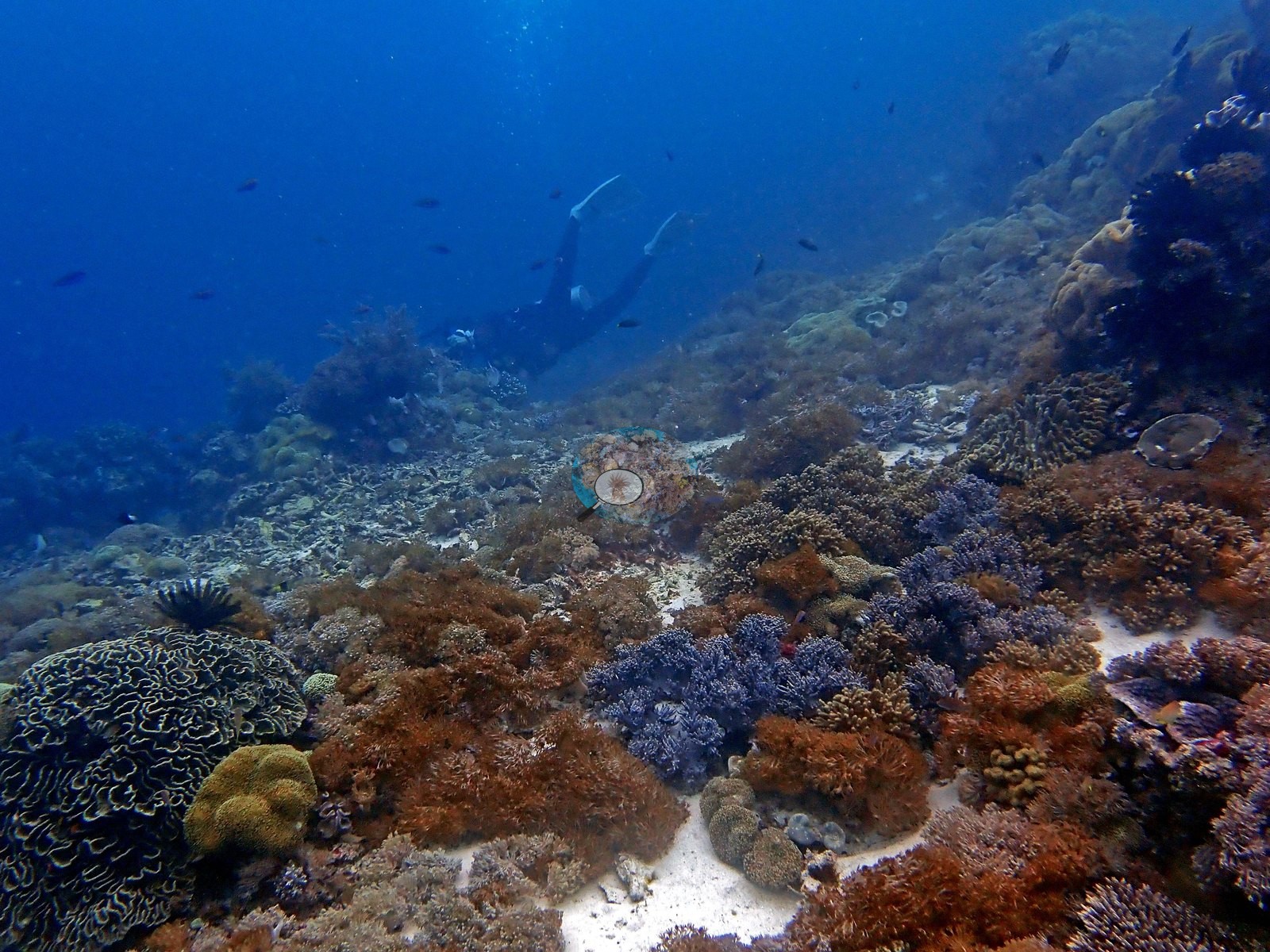
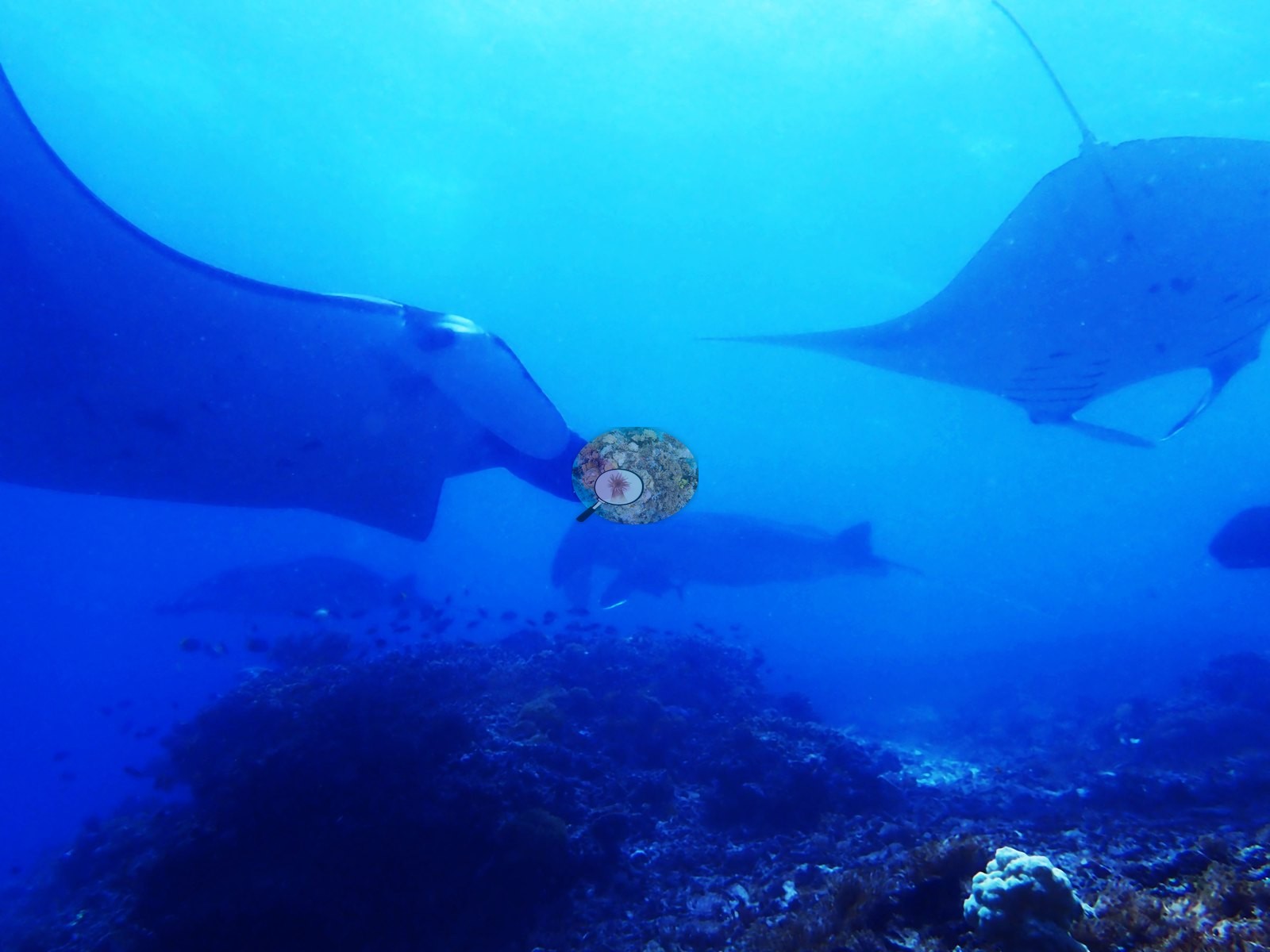
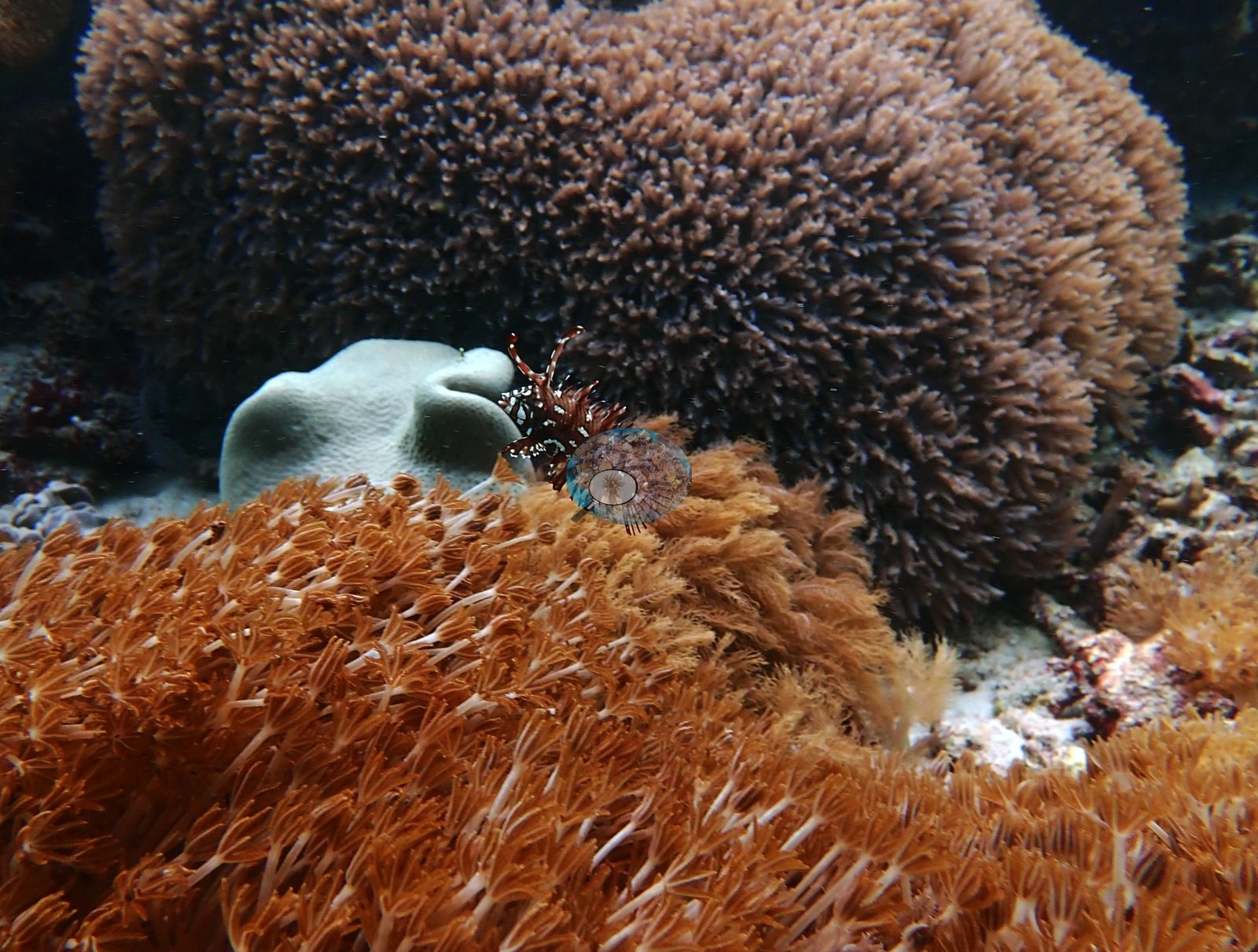
Occasional Acropora, though loads of Acropora rubble. Eventually reached pristine reef with several monster cuttlefish. Stylophora, Seriatopora, Pocillopora acuta, Pocillopora verrucosa, Pocillopora eydouxi, and many species that can tolerate high flow (including many soft corals). Stinging hydroids (the species common in Raja Ampat), brain coral, enormous cuttlefish, Pachyseris (small), small massive Porites, low-relief hard+soft coral community for most of dive (e.g., Image 2, Image 3).
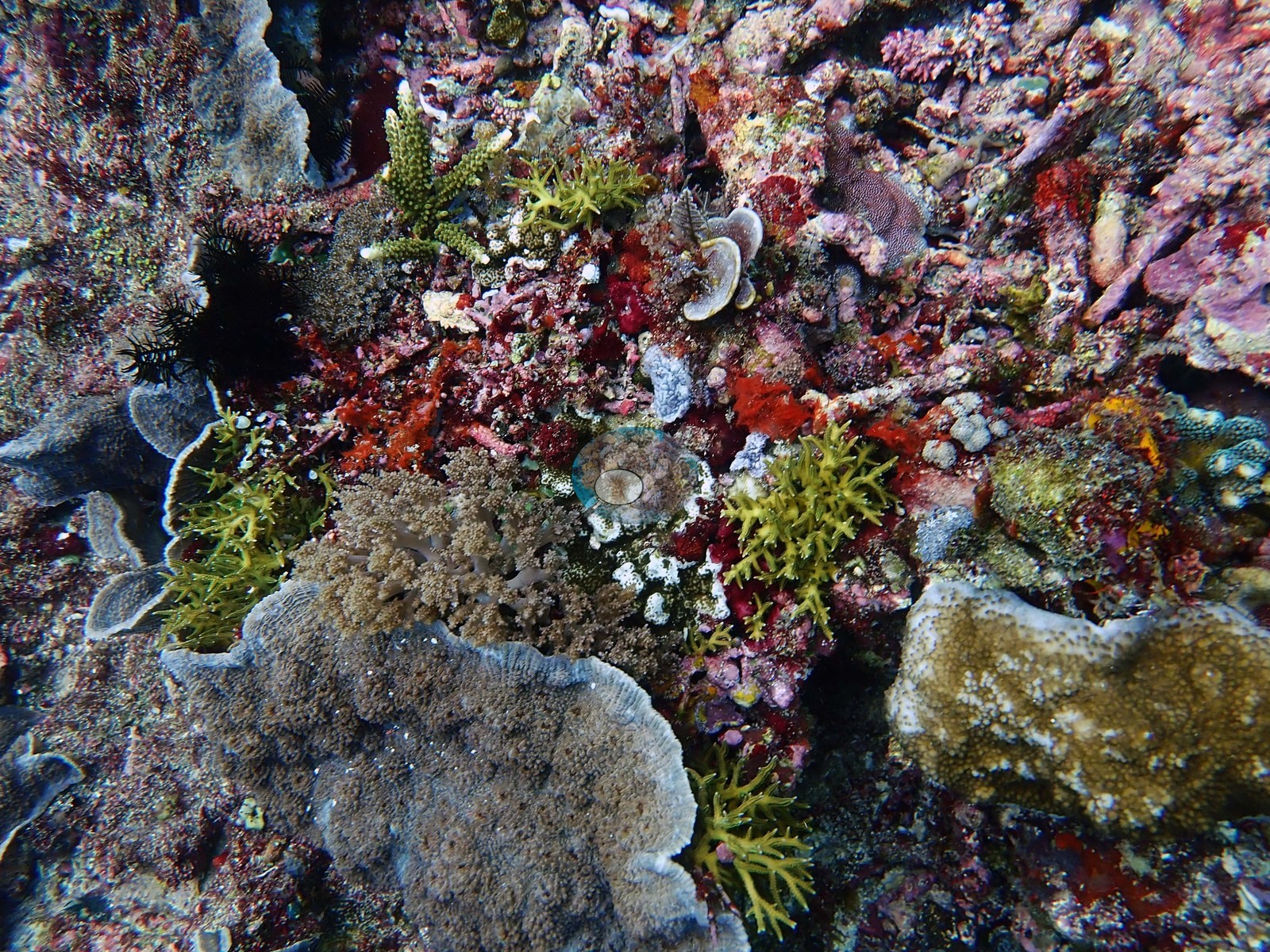
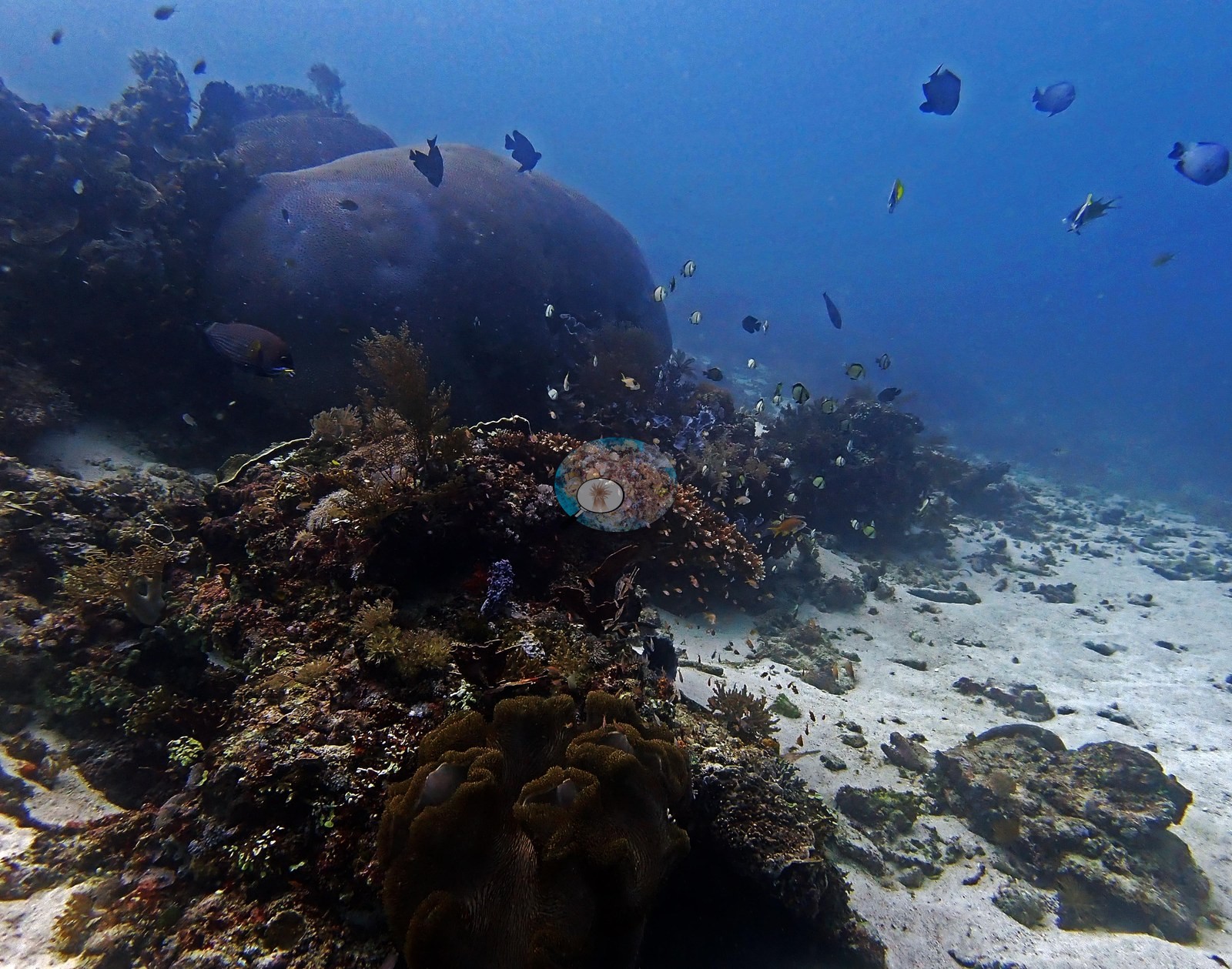
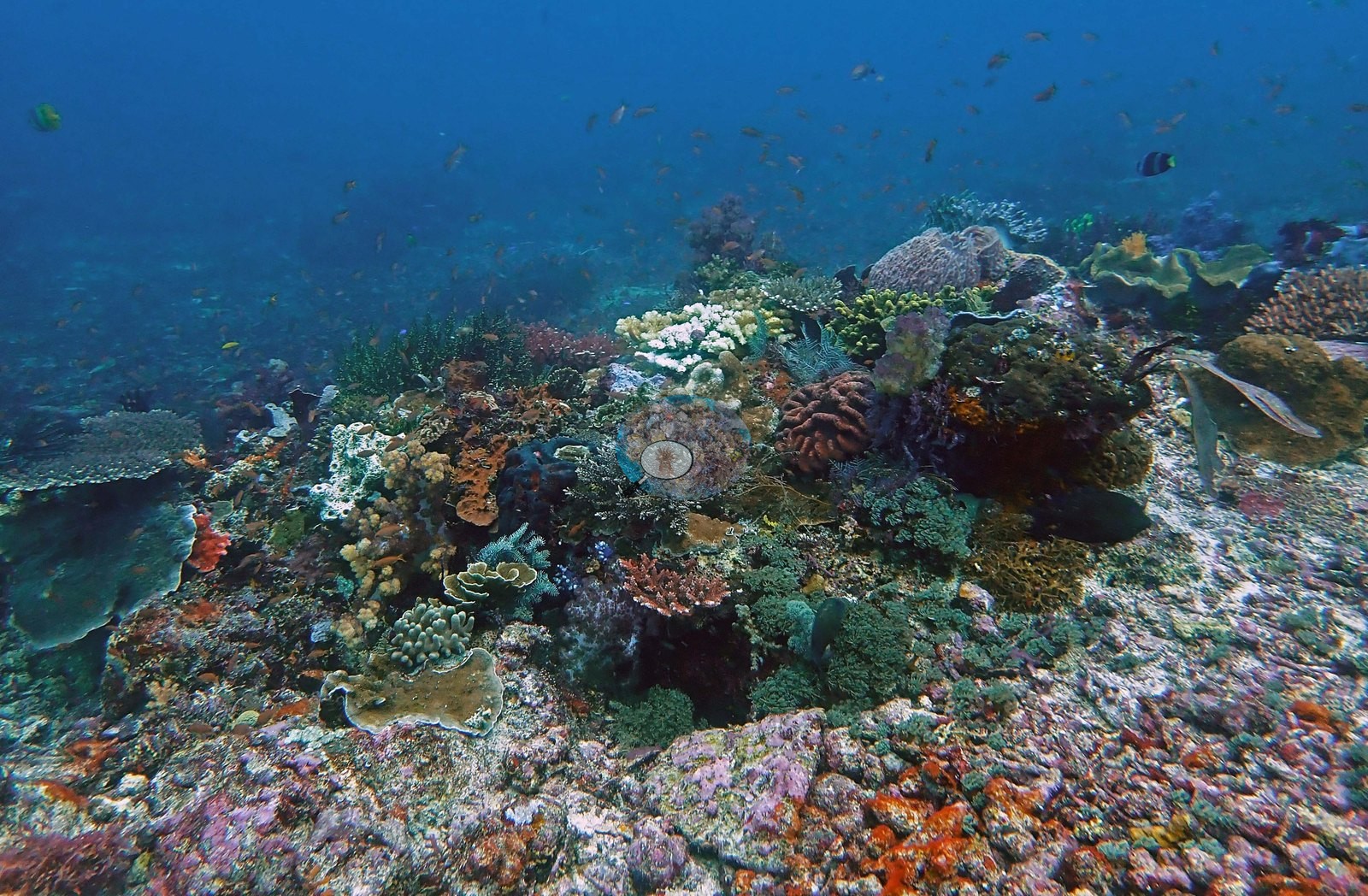
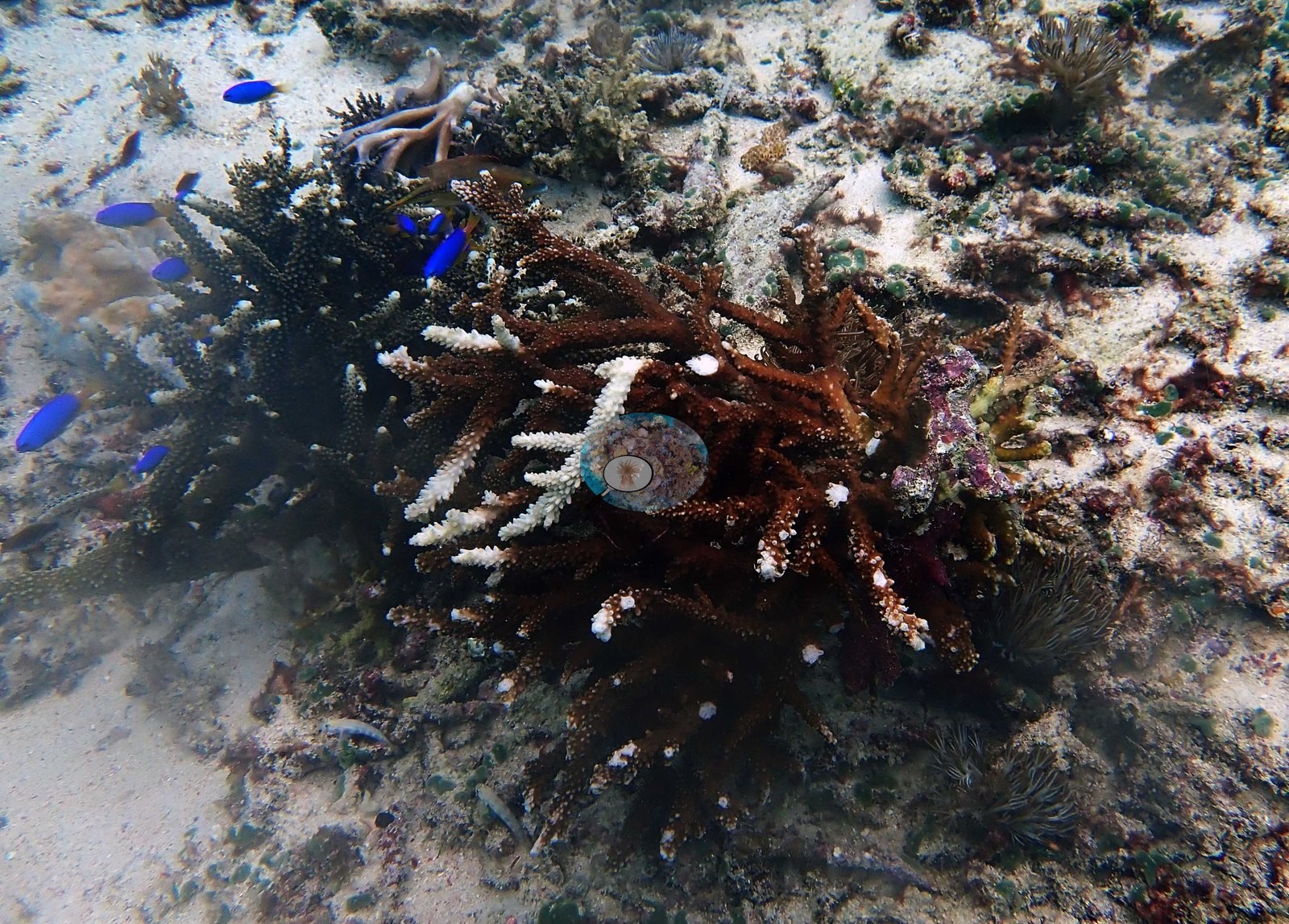
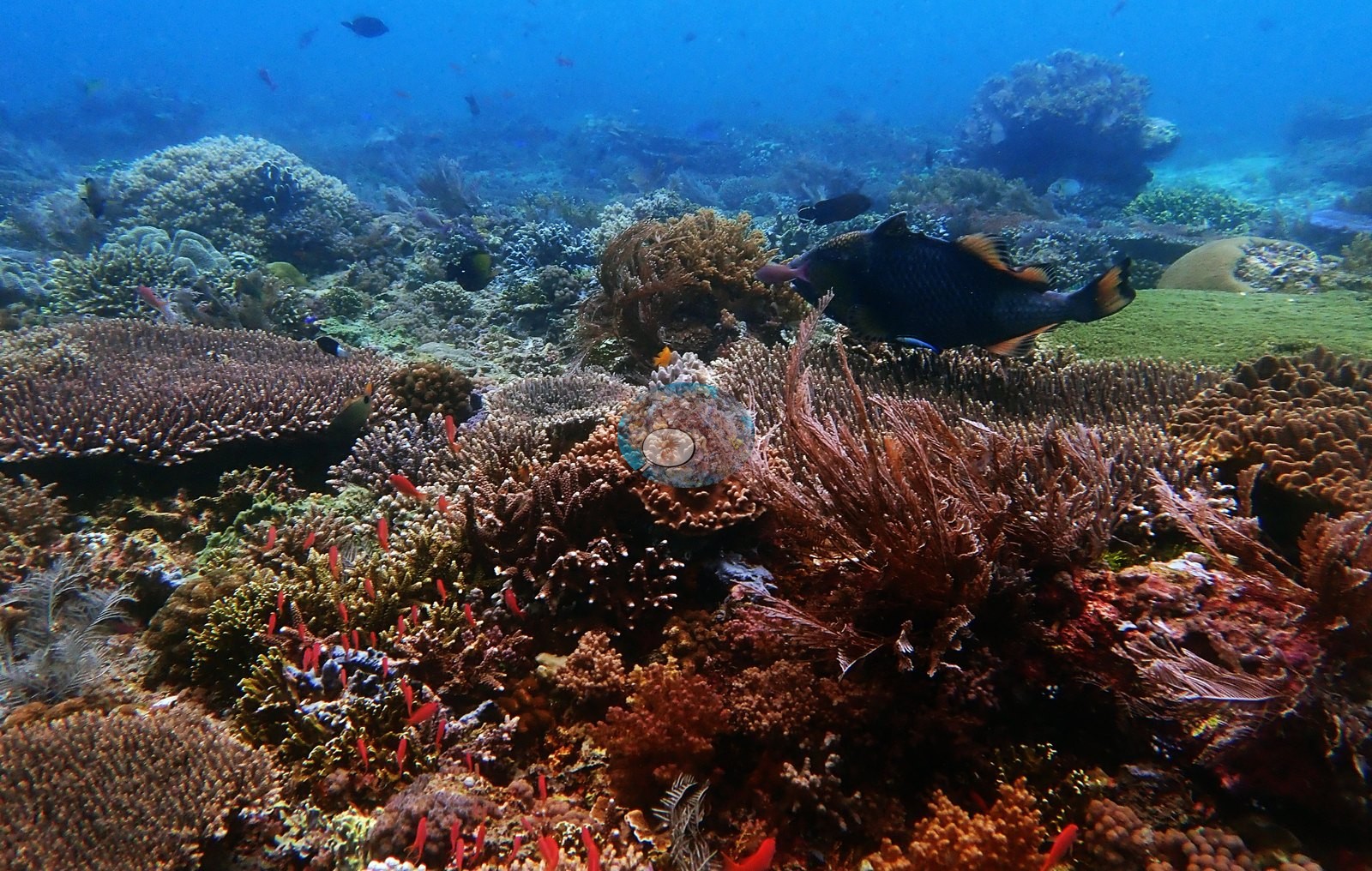
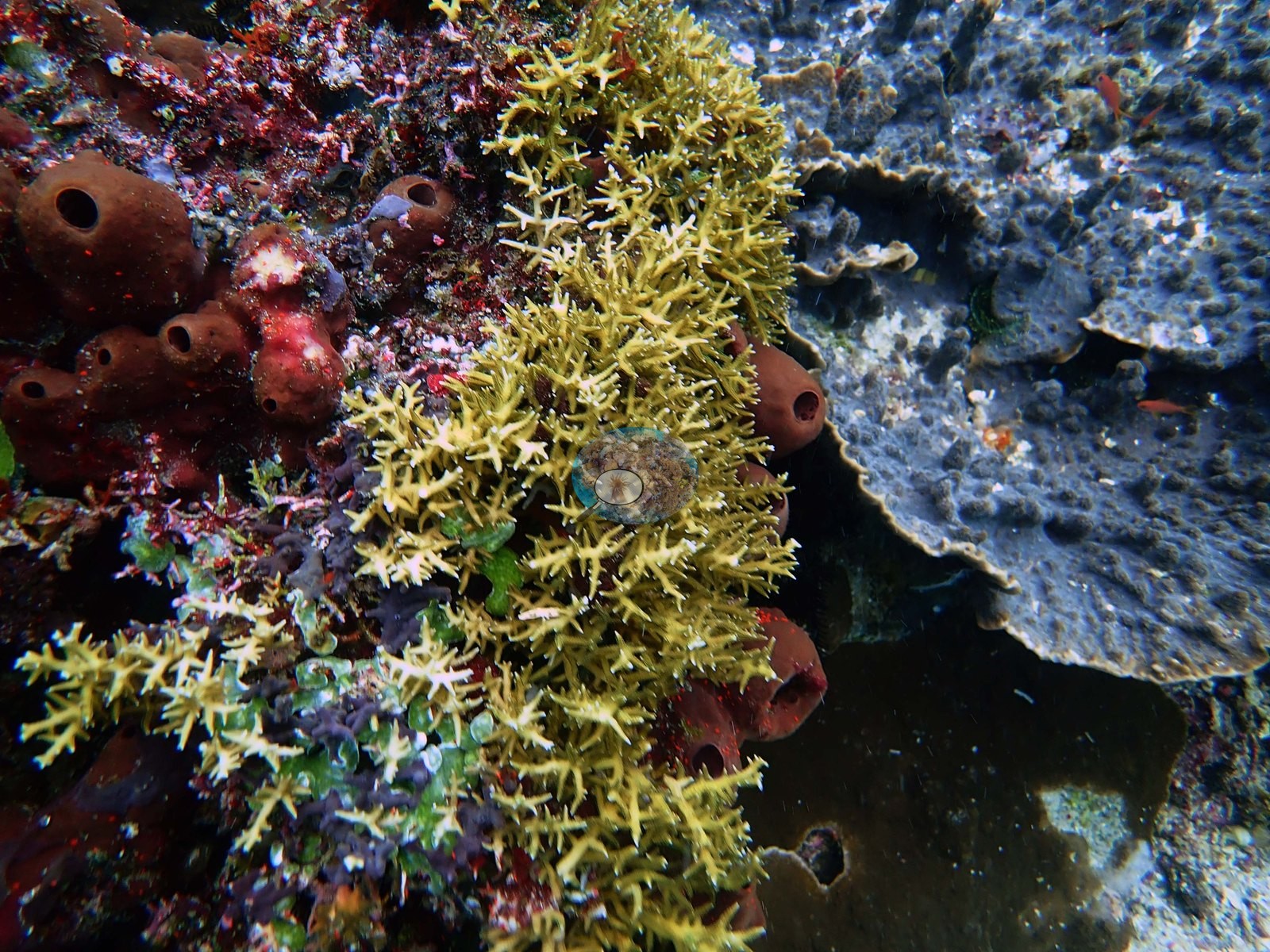
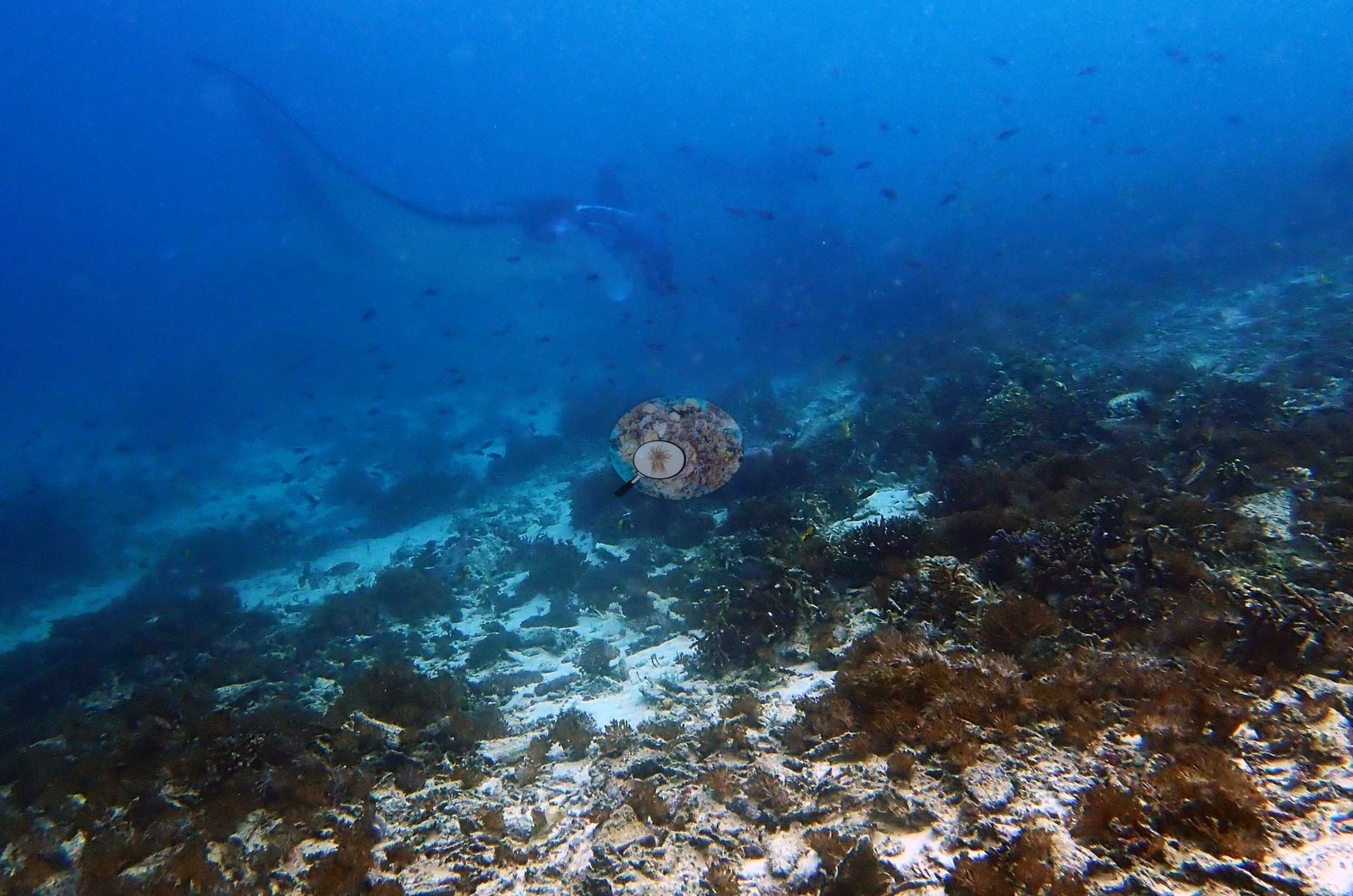
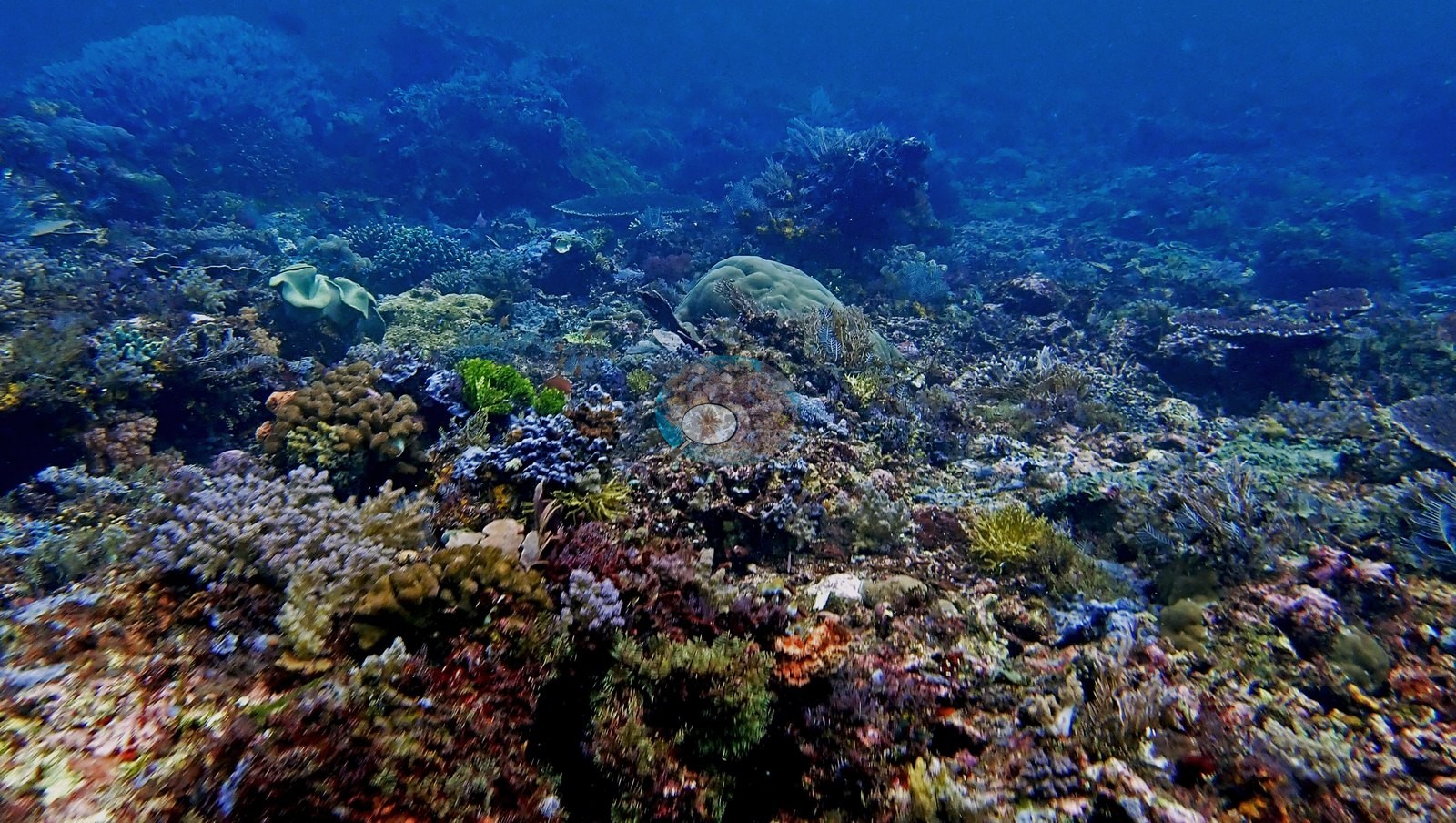
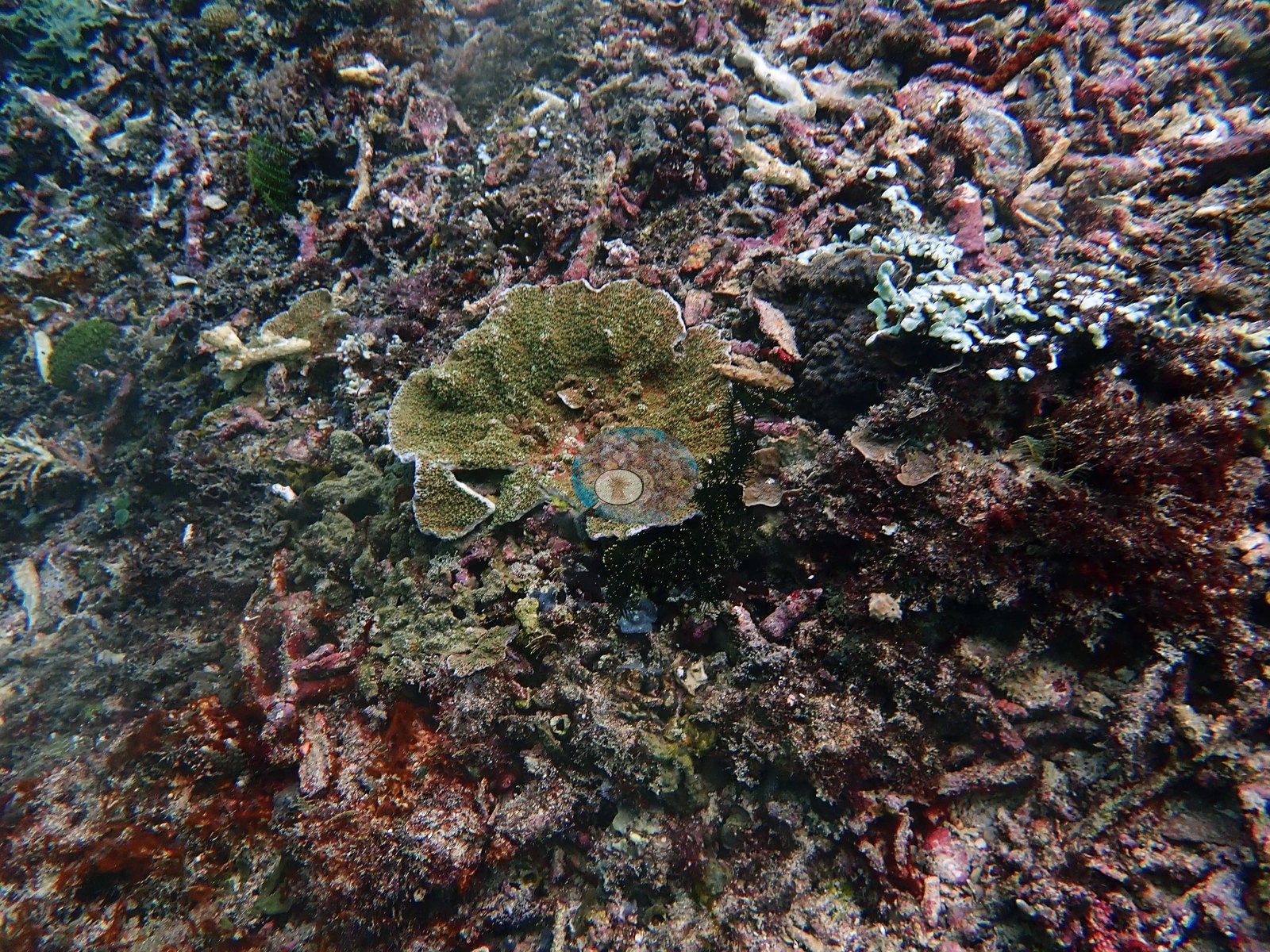
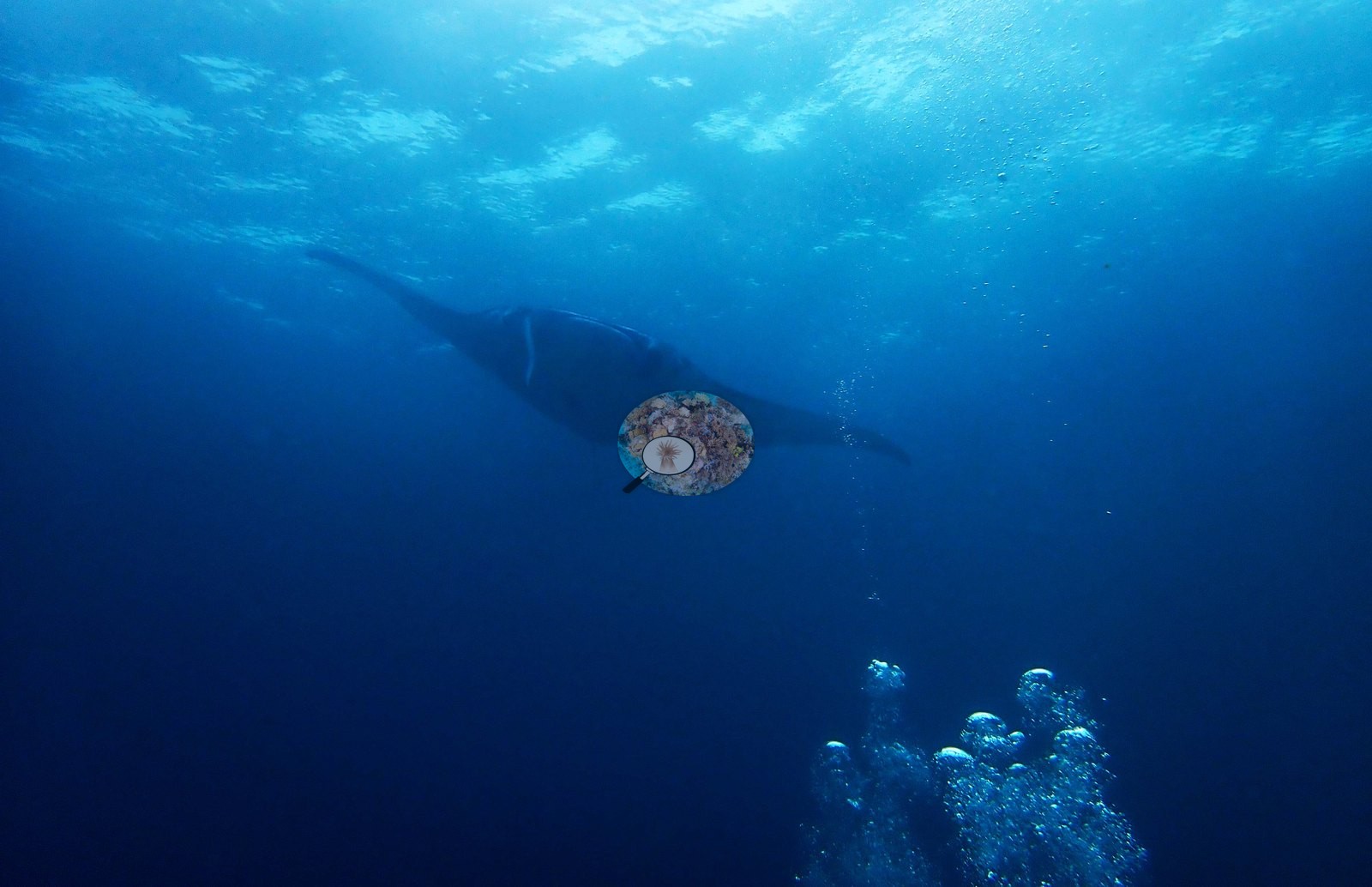
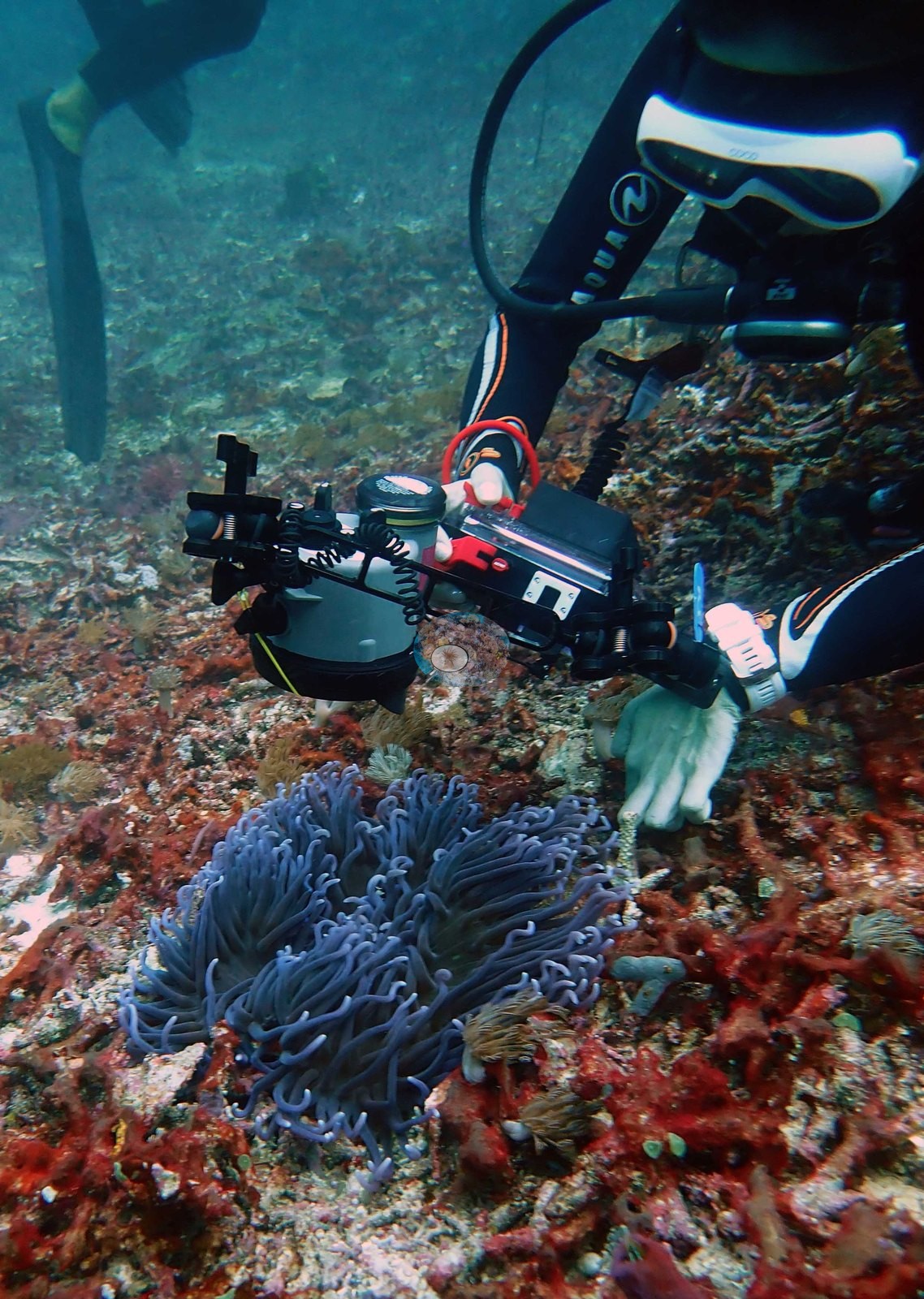
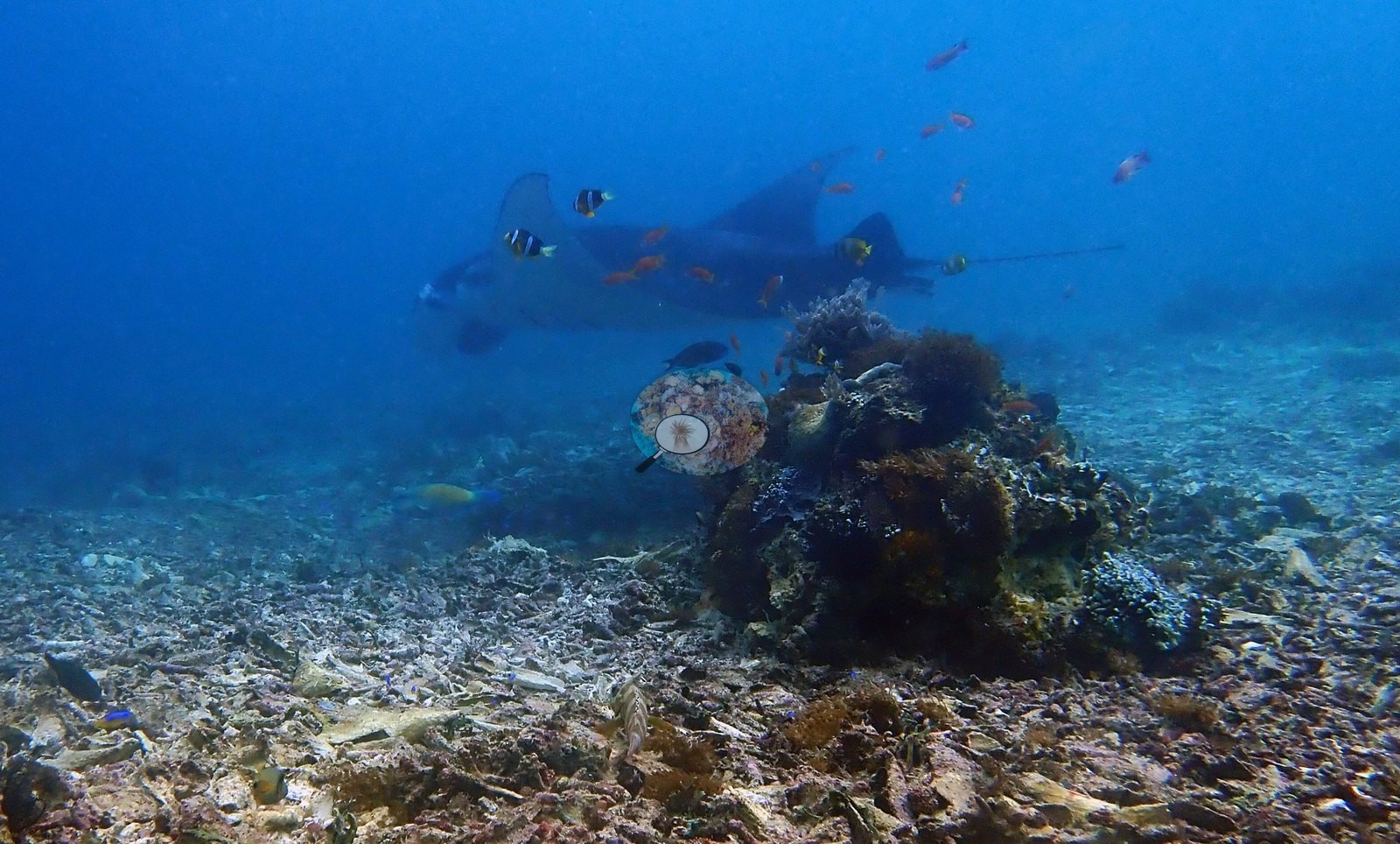
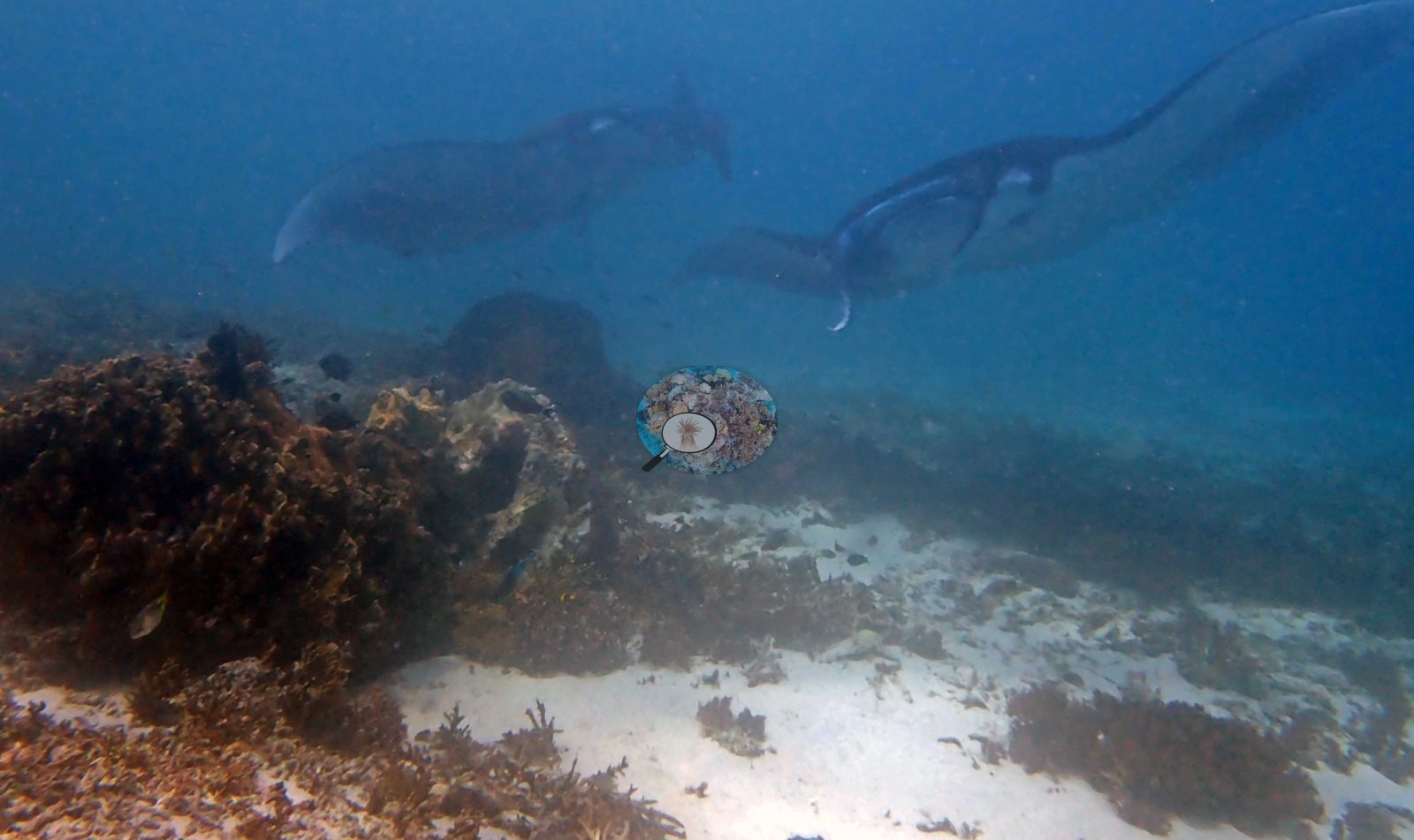
Red fluorescent mussids. Seriatopora caliendrum and Stylophora pistillata very common. Enormous Euphyllia colony. Many species of hard coral I’ve never seen before. Isopora. Plerogyra, Physogyra, abundant, and diverse sea anemones, and many gorgeous nudibranchs. The coral at the cleaning station was not particularly impressive: broken up Acropora, some Seriatopora, mostly soft coral on rubble. Reef was poorly consolidated though in the process of being colonized by CCA (e.g., Image 4).
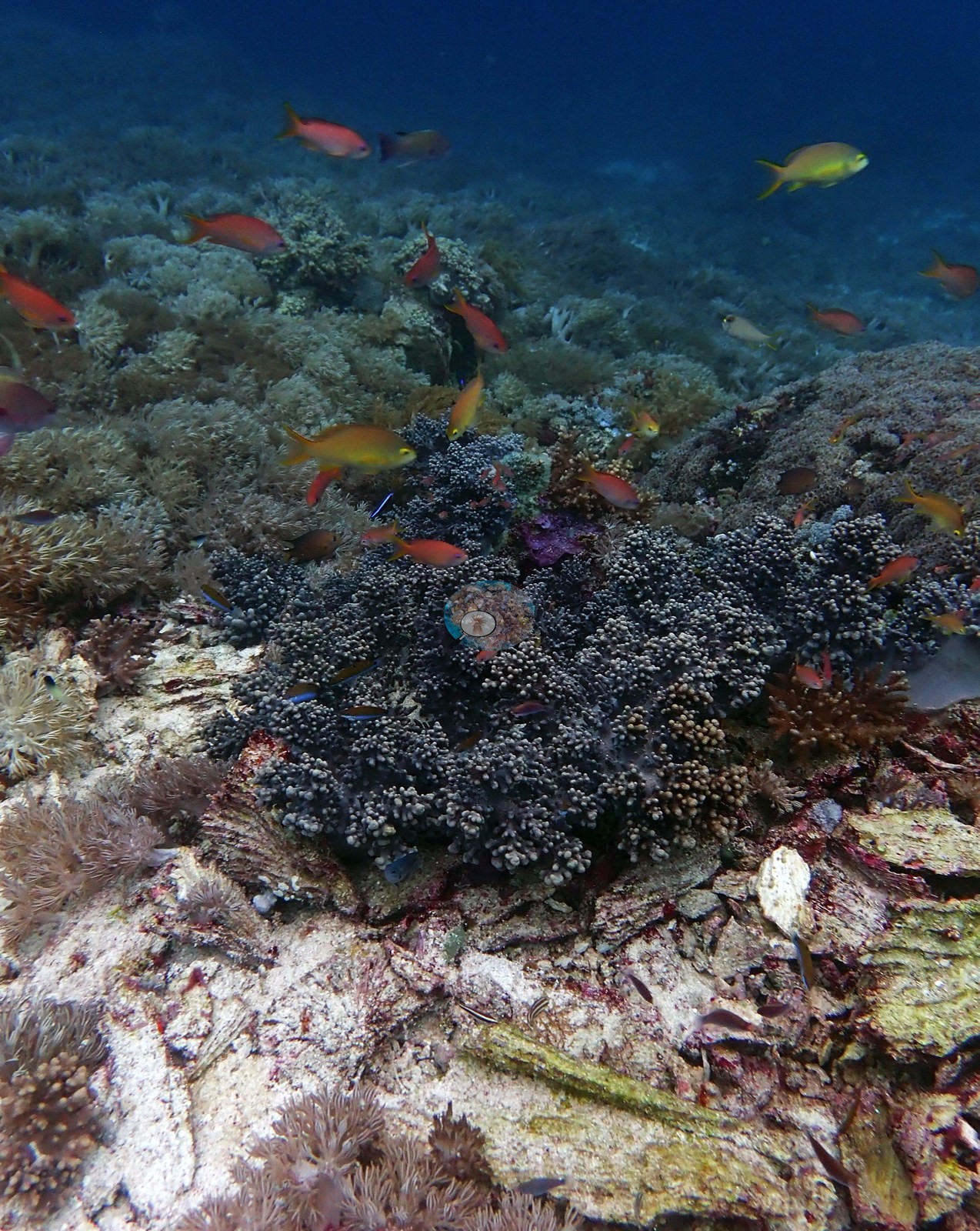
Fire coral, Pocillopora eydouxi, Seriatopora hystrix, and Seriatopora caliendrum/Stylophora pistillata all very common. Massive Porites (small), plentiful soft coral. After 45 minutes, decided to explore the reef, which was surprisingly beautiful. Probably one of the most beautiful hard coral spots of the trip. Stinging hydroids were everywhere. Soft coral common in all areas (e.g., Image 5).
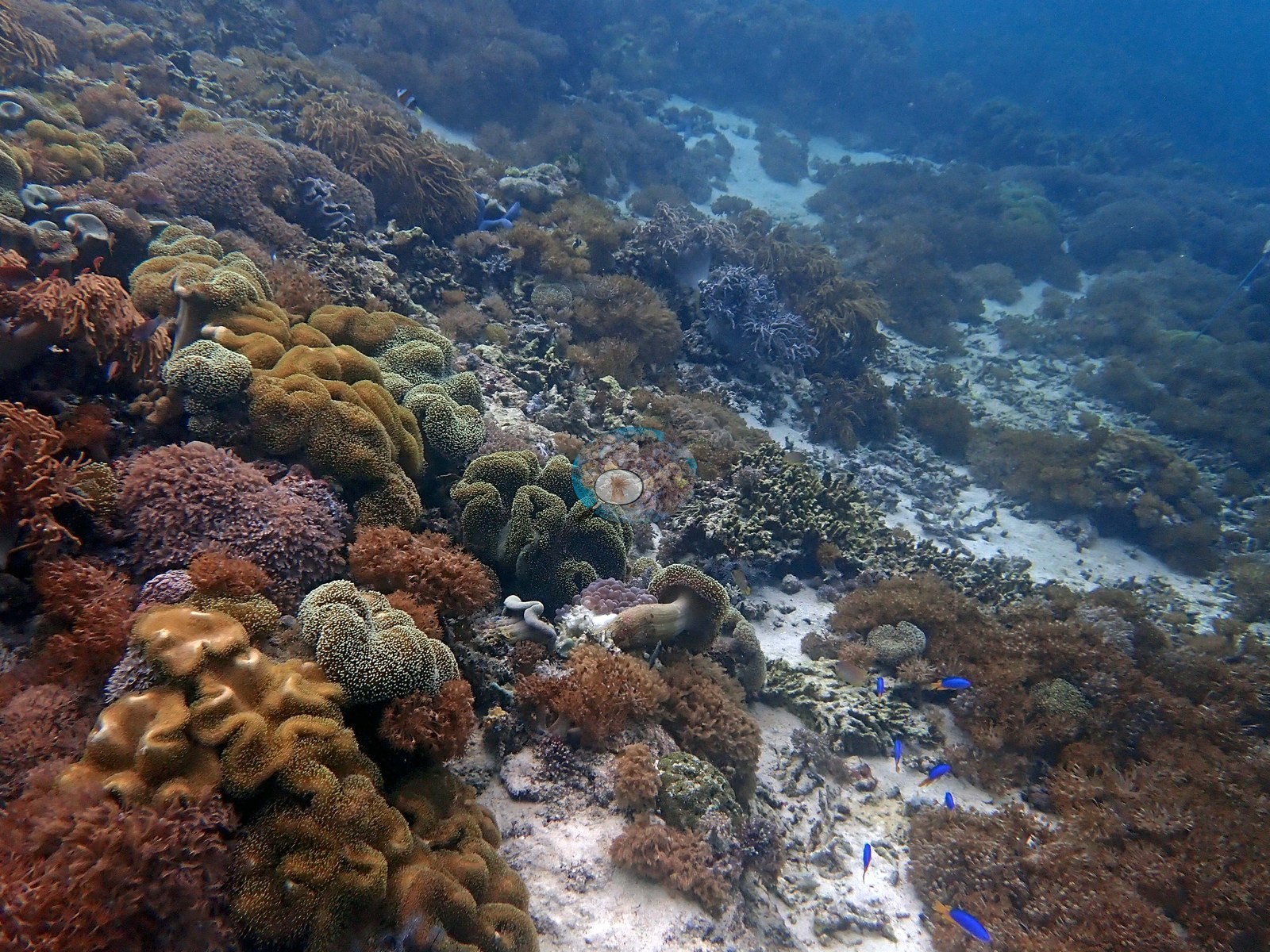
Diverse and abundant Acropora. Anemones. Pocillopora acuta very common, always darkly pigmented. Mixed hard+soft coral community at 8 m. More structure/rugosity than most sites in area. Reef very colorful at 5-6 me, partially on account of a pretty, turquoise blue sponge. Pocillopora verrucosa, Montipora, Galaxea, Pavona. Very diverse hard coral assemblage. Site was mostly unconsolidated Acropora rubble with some CCA. Live Acropora, Seriatopora hystrix, and very small/few Montipora.
Coral cover
Coral cover: 14% — a blind Claude computer-vision point count of 150 of Anderson's edited photographs (20 points per photo; water, fish, and obstructions excluded). Other computer-vision methods are listed in the method table. Anderson is still comparing computer-vision models, and these figures will be updated as the methods improve.
Fish and other fauna
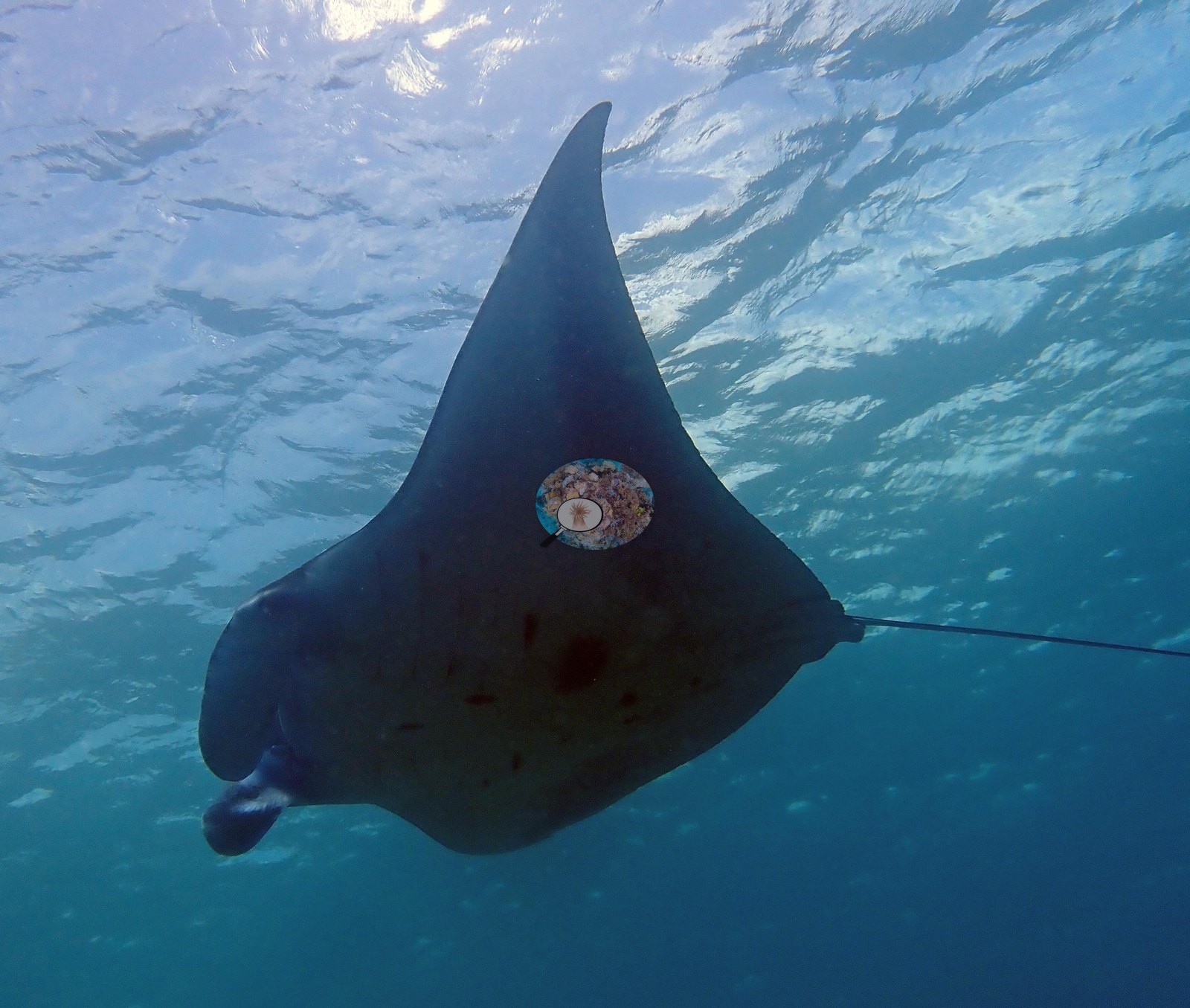
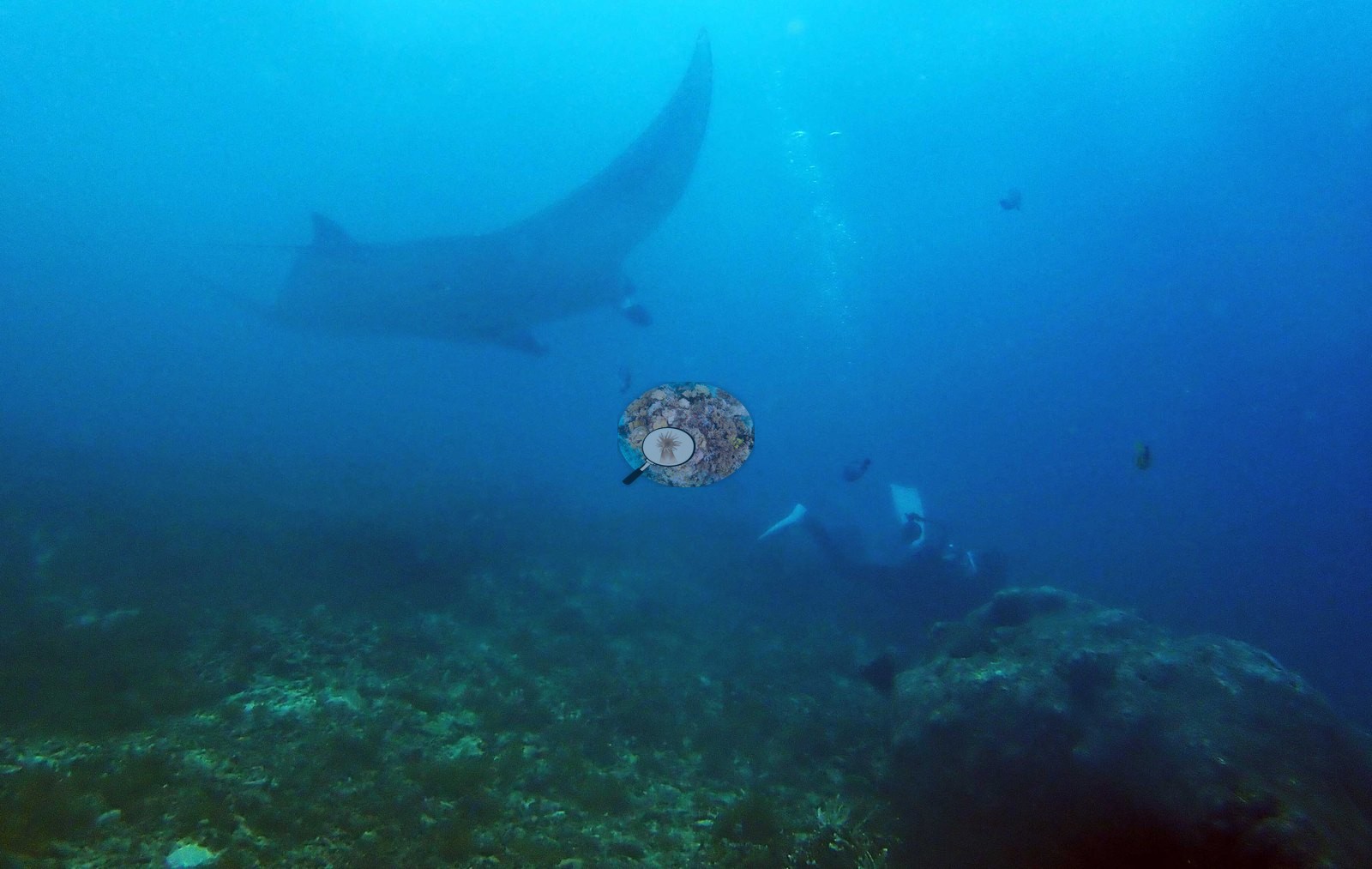
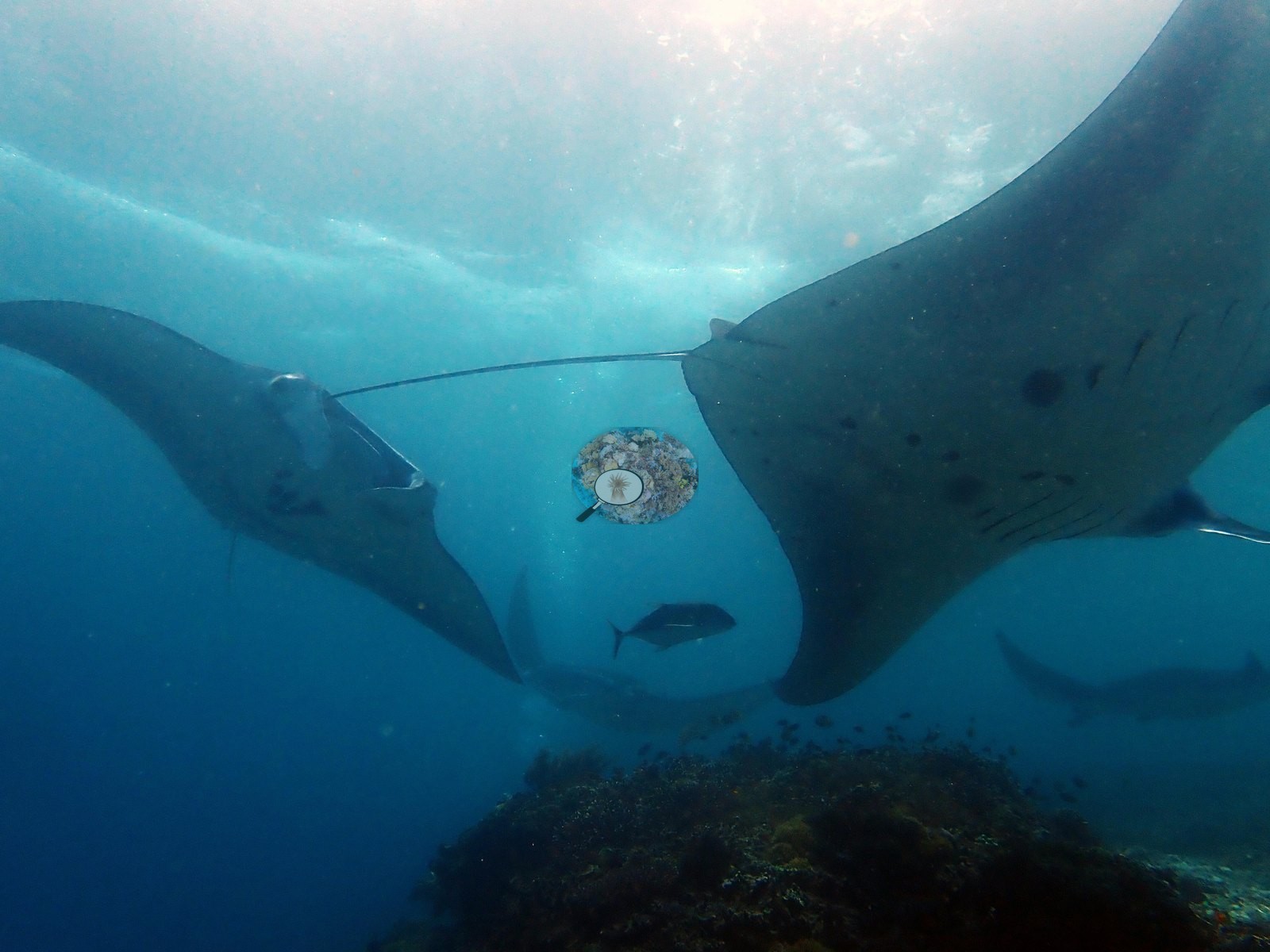
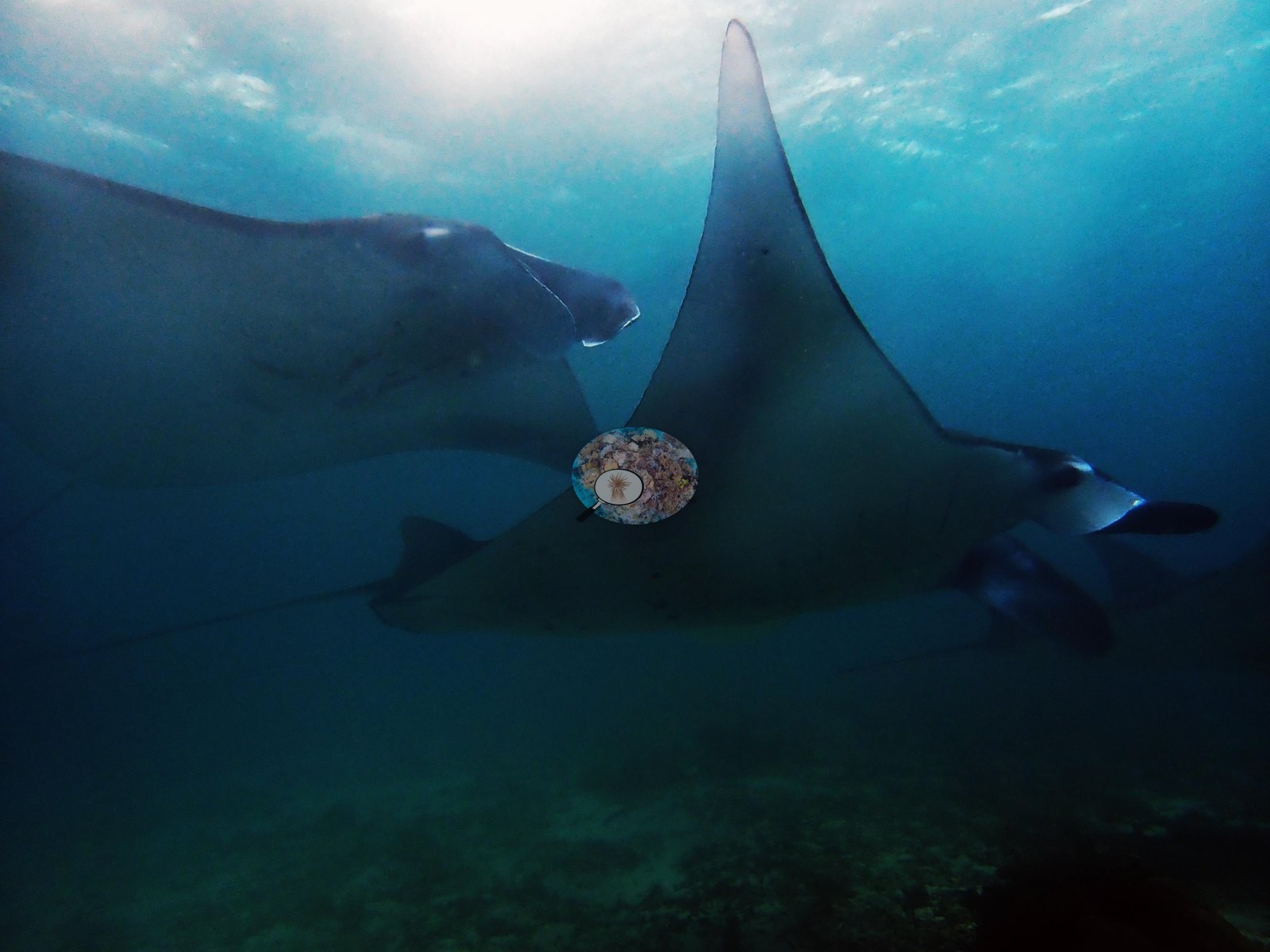
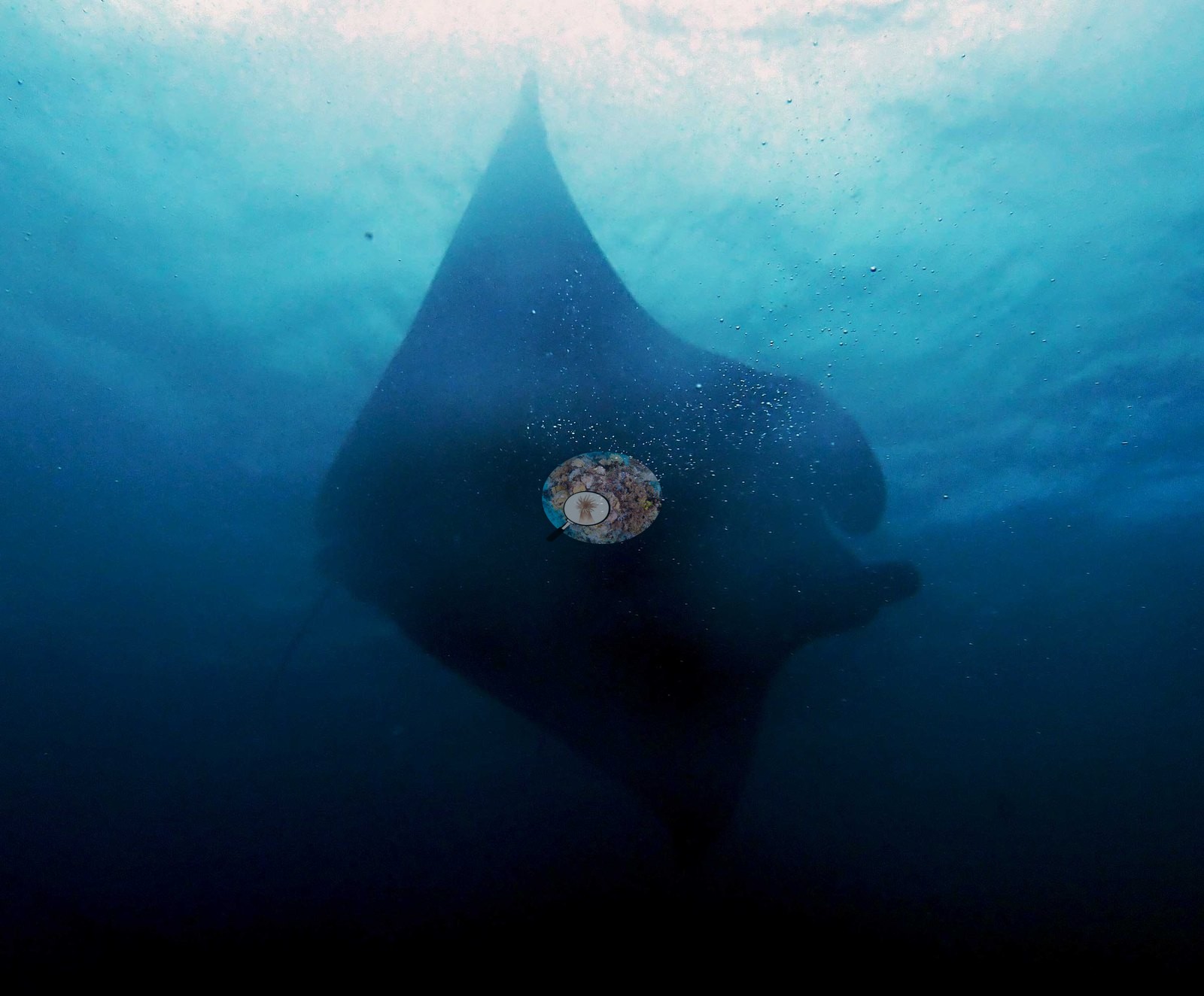
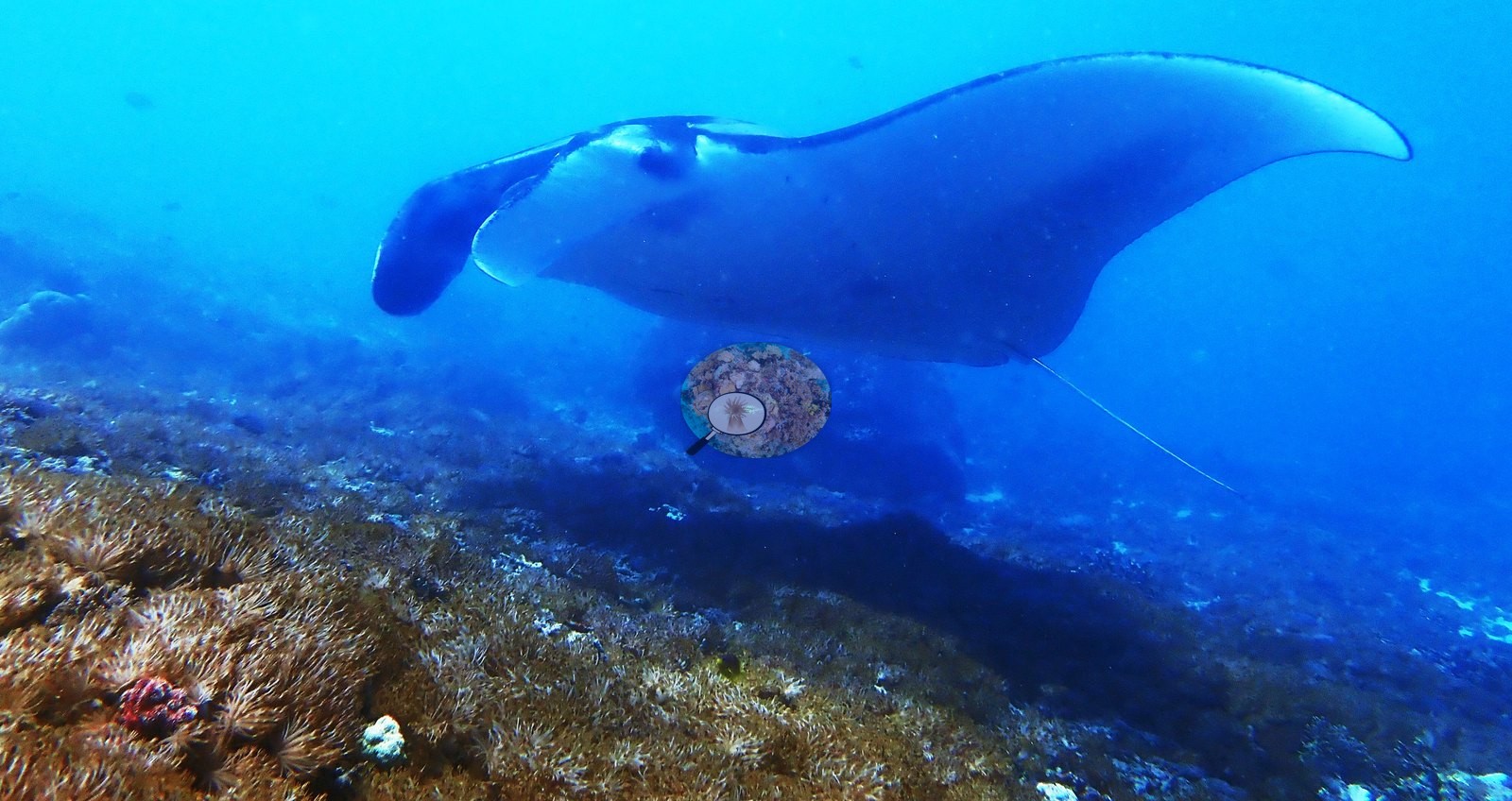
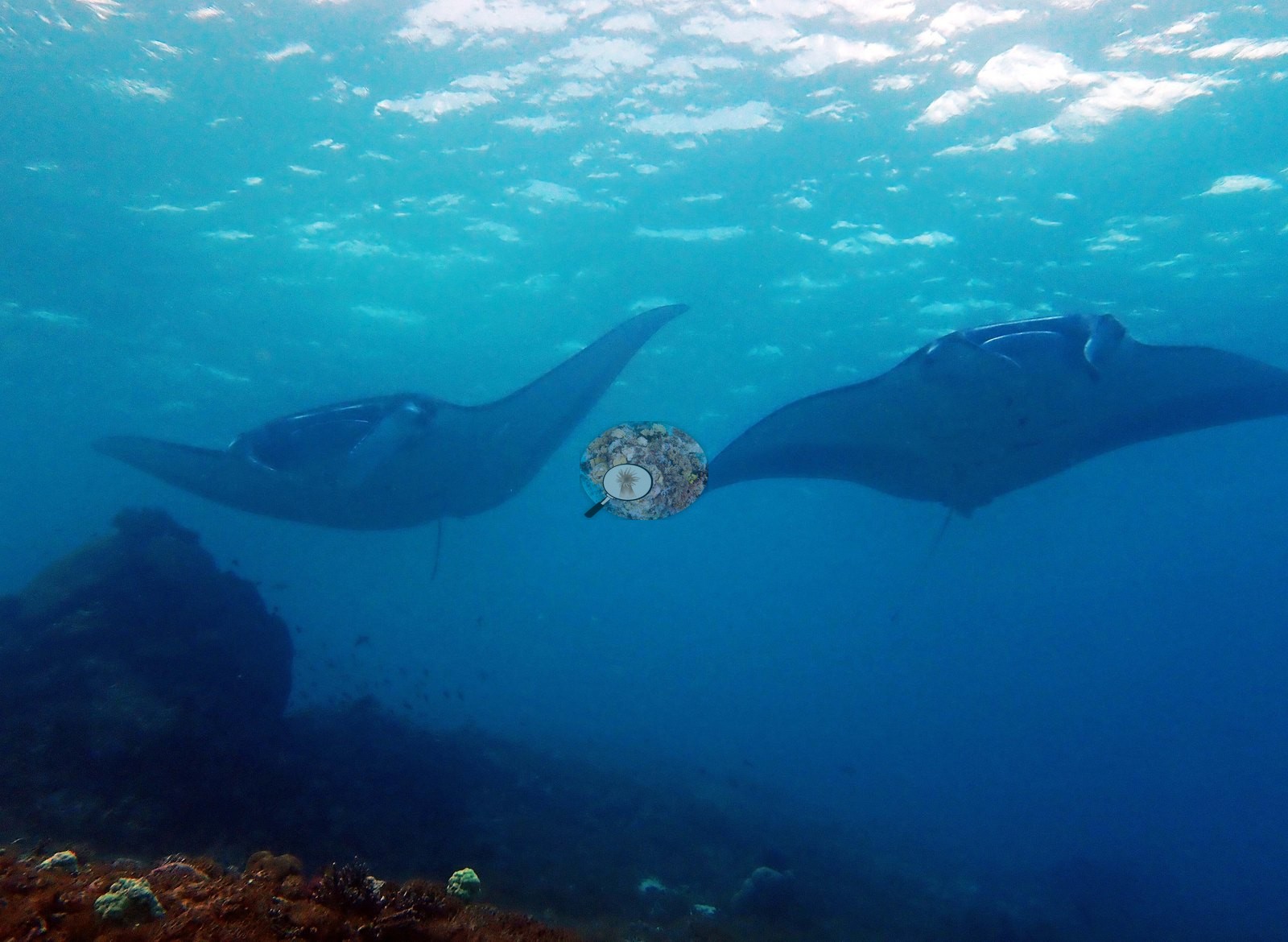
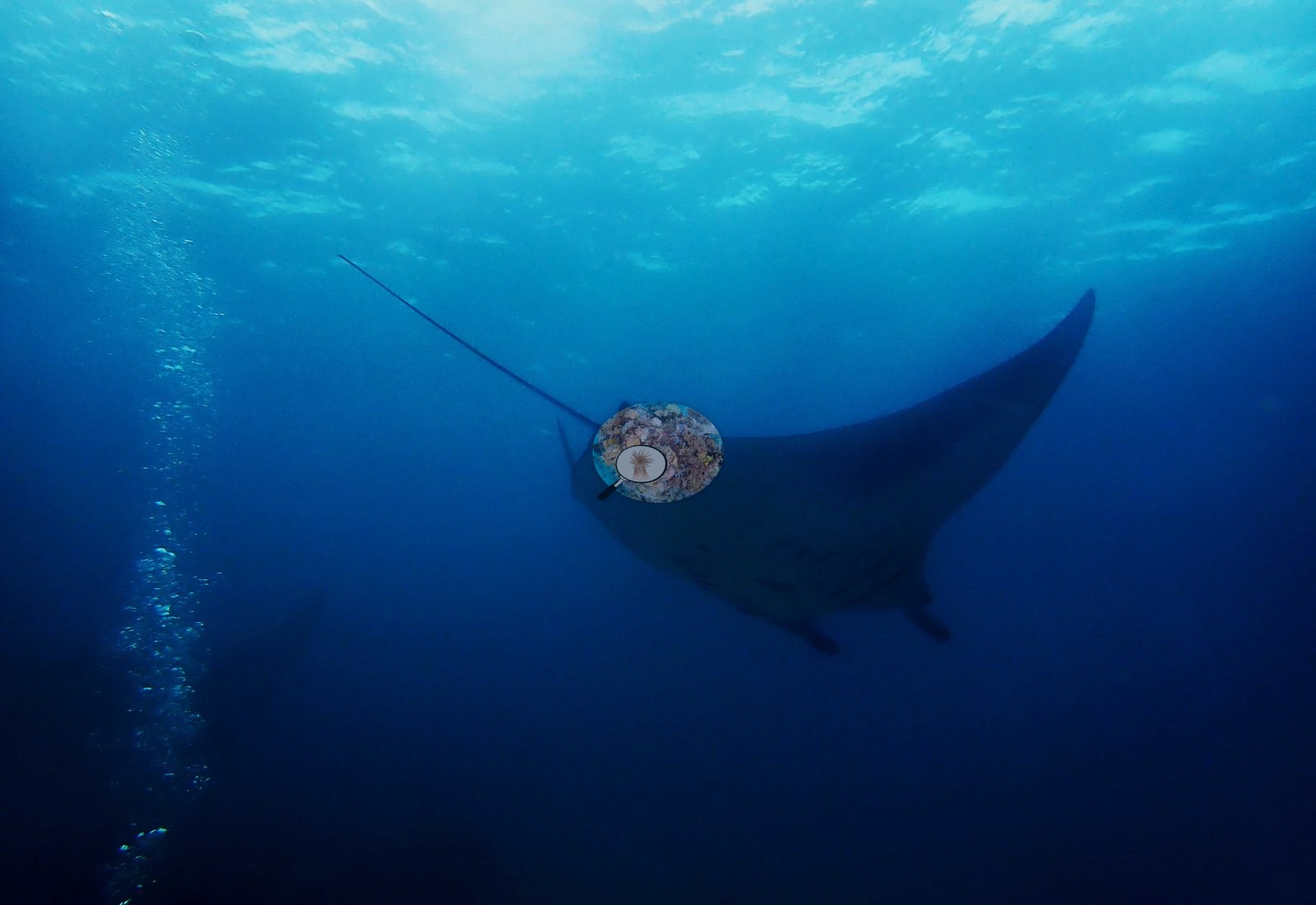
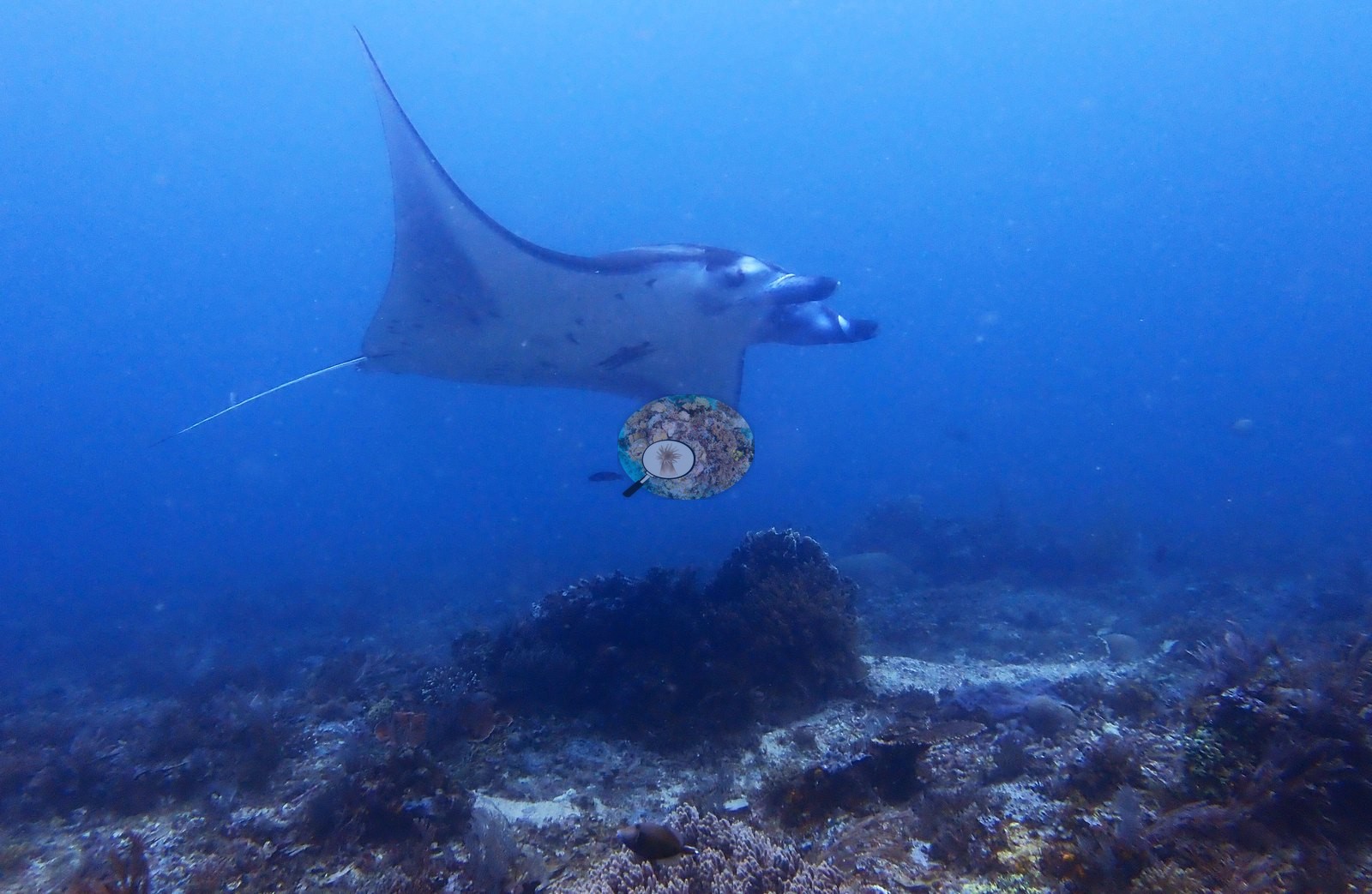
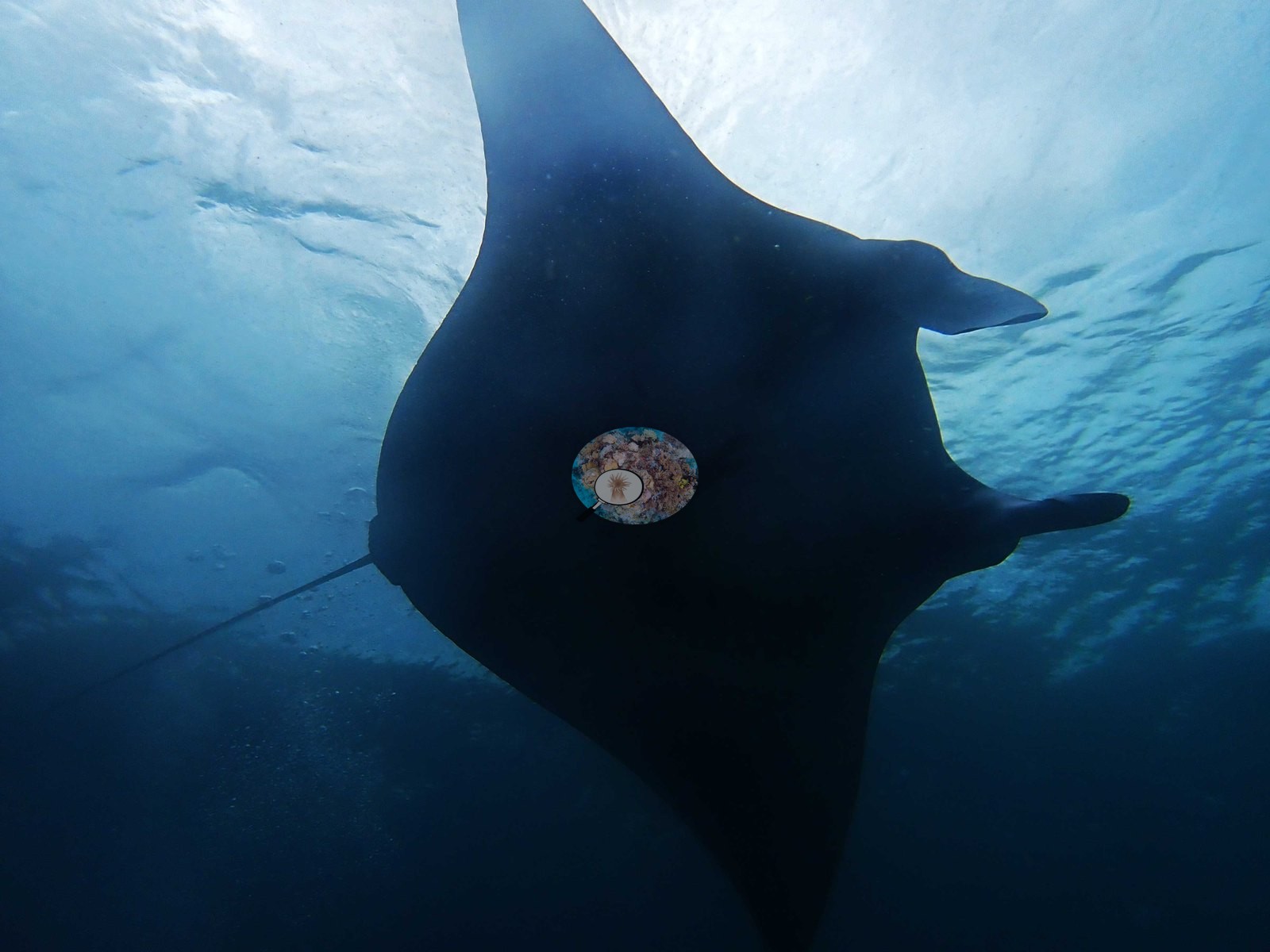
Dead ended at manta, though viz was likely too bad to get a good picture (4-m wingspan). White frogfish in Acropora colony. Razor wrasse x 3 (super beautiful and NBS). Another amazing manta ray dive, albeit with only 6-9 mantas (instead of 20-30). Also saw a black tip reef shark, a giant trevally, and a stingray. Hit the jackpot on this manta ray cleaning station dive, which was absolutely excellent. Probably saw 20-30 different mantas, all in close proximity. Many of the 3-4-m wingspan mantas made very close passes. Could have reached out and touched them.
Comparisons with other data
No independent survey was made at this exact site; the nearest ones are listed in the table below.
Dive record
2019-1-19 dive 3: Mauan/Mawan (#3). 14:54-15:57 (63 min). Max. depth=18.3 m. 2019-1-26 dive 2: Mawan (round 3; #29): 10:52-11:55 (62 min). Max. depth=9.4 m. 2019-1-25 dive 2: Mawan Island (round 2; #25): 10:53-12:00 (67 min). Max. depth=9.1 m.
Other notes
Did not get good pictures due to housing fogging, but it was a breathtaking experience nonetheless.
CV model comparison
More info
DINOv3 and CoralSCOP were run on the same photos and are listed for comparison. Coralscapes v2 and v1 were also run but are not shown: Anderson does not consider Coralscapes reliable for these photos. No diver transect exists for this trip, so agreement between the rows is not accuracy, and as of September 2026 no computer-vision method estimates coral cover accurately on new images; treat every row as indicative.| Method | Hard-coral cover (%) |
|---|---|
| In-house DINOv3 | 20.3 |
| CoralSCOP edited | 29.9 |
| Claude (edited photos) | 14.2 |
% coral cover by visit
Each visit is analyzed independently; these are not pooled into a single site mean.
| Date | % coral cover | Std. dev. | Frames scored |
|---|---|---|---|
| 2019-01-19 | 21% | ±24 | 50 |
| 2019-01-25 | 8.6% | ±15 | 19 |
| 2019-01-26 | 12% | ±15 | 81 |
Independent surveys nearby
| Agency / program | Year(s) | Stations / distance | Link |
|---|---|---|---|
| Reef Check | 2020 | 3 stations, 3.27–3.73 km | Records ↓ |
| WWF-US / WWF-Indonesia | 2016 | 1 station, 4.29 km | Records ↓ |
 Dr. Coral (CRD)
Within 5 km, 4 independent survey stations recorded hard coral cover in 6 surveys between 2016 and 2020. The most recent nearby survey is from 2020, so these values predate recent heat stress. This site's own estimate (14%) sits within the range of these surveys (8.8–48%); the methods differ, so the comparison is context, not a like-for-like test.
Collected by other programs using different methods (Reef Check uses point-intercept transects), so these are context for the figures above, not a like-for-like comparison. Where a station was surveyed more than once the range is shown. Station names are not dive-site names.
| Agency | Site / location | Date | Hard coral cover (%) | Distance | Link |
|---|---|---|---|---|---|
| WWF-US / WWF-Indonesia | TNK07 | 2016 | 34% | 4.29 km | Amkieltiela, Abdillah T, Amkieltiela A, Andradi-Brown D, Lazuardi E. 2016. Komodo MPA. MERMAID |
| Reef Check | Pengah Kecil (Sector 1) SW Side | 2020 | 48% (2 surveys) | 3.27 km | — |
| Reef Check | Mawan (Sector 1) | 2020 | 10% (2 surveys) | 3.73 km | — |
| Reef Check | Mawan (Sector 2) | 2020 | 8.8% | 3.73 km | — |
Data & links
All images from Coral Reef Diagnostics. Data are from Coral Reef Diagnostics and the organizations named in the data-sources table above.
© Coral Reef Diagnostics.