Regional summary of 11 dive sites. Figures are averages across the sites that report them (n = sites with a value); each site's own page has its individual values.
Heat-stress figures: NOAA Coral Reef Watch — Turks and Caicos 5-km virtual station. Each pill links its source record and carries the values behind it.
Regional summary
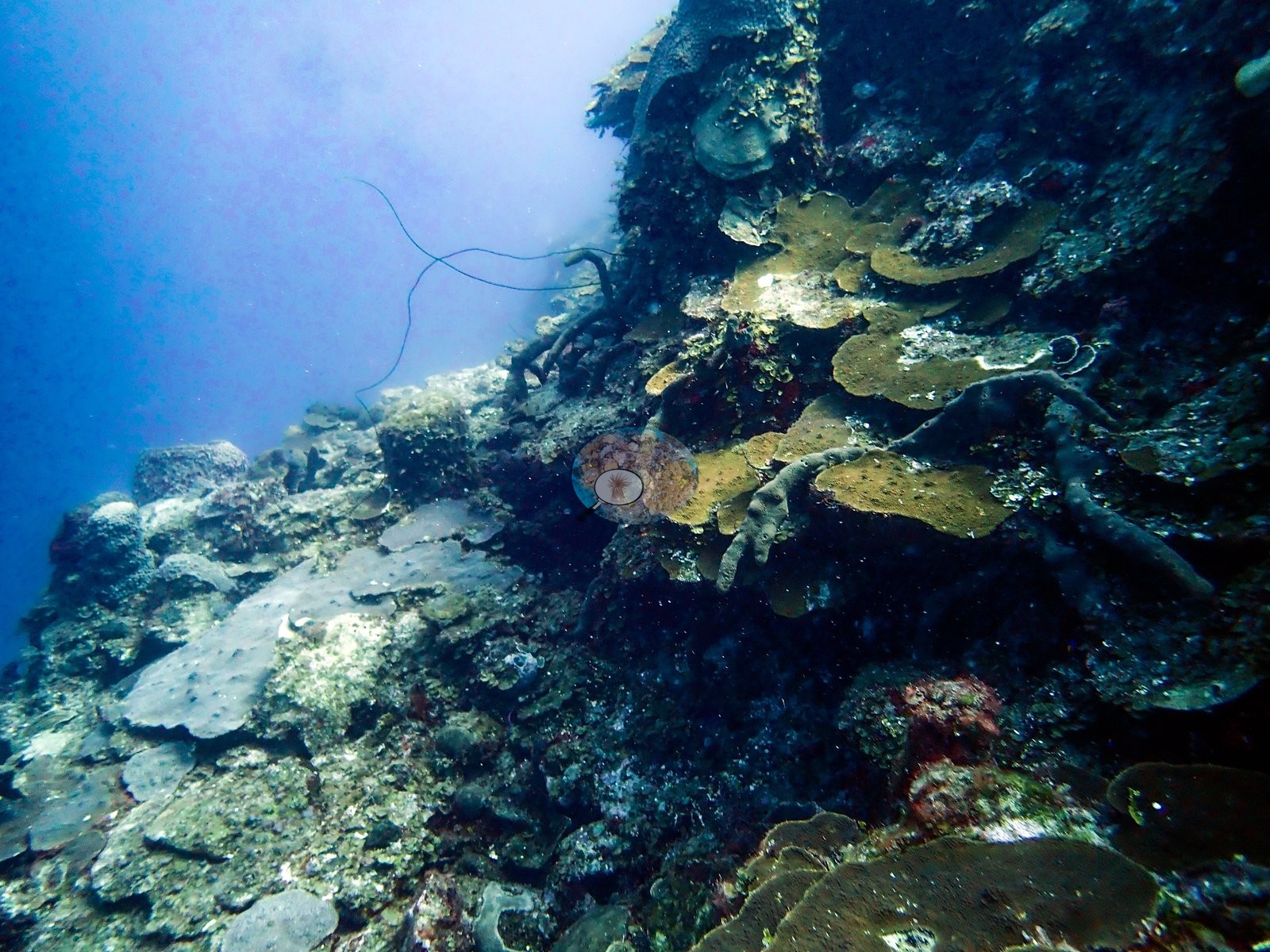
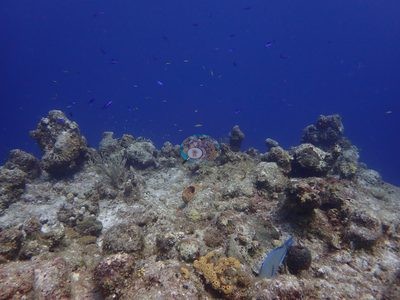
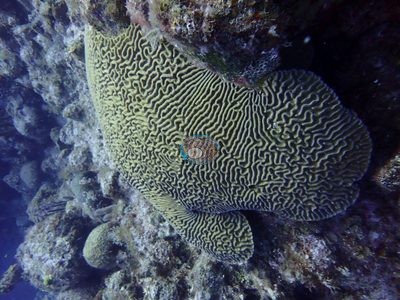
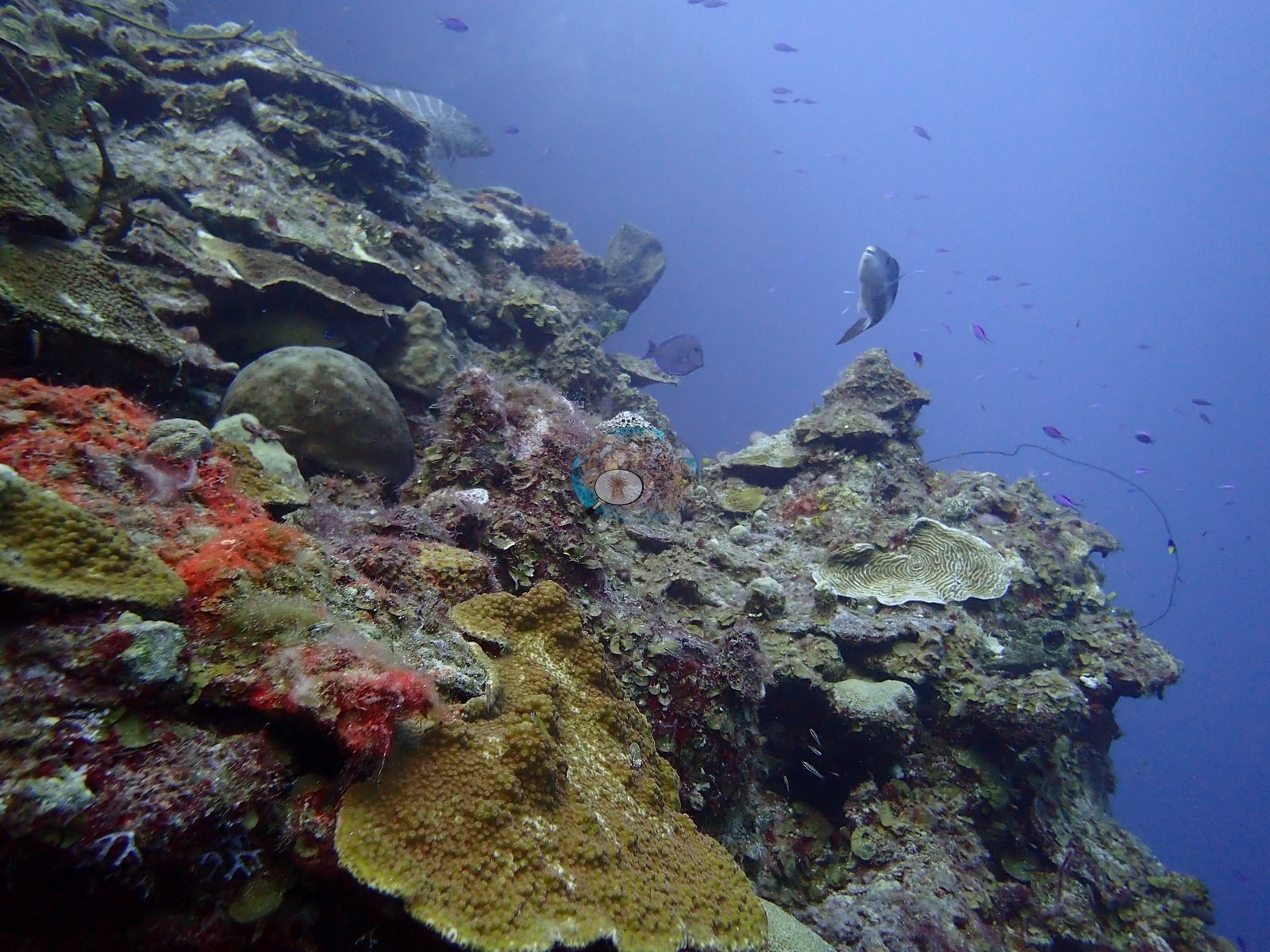
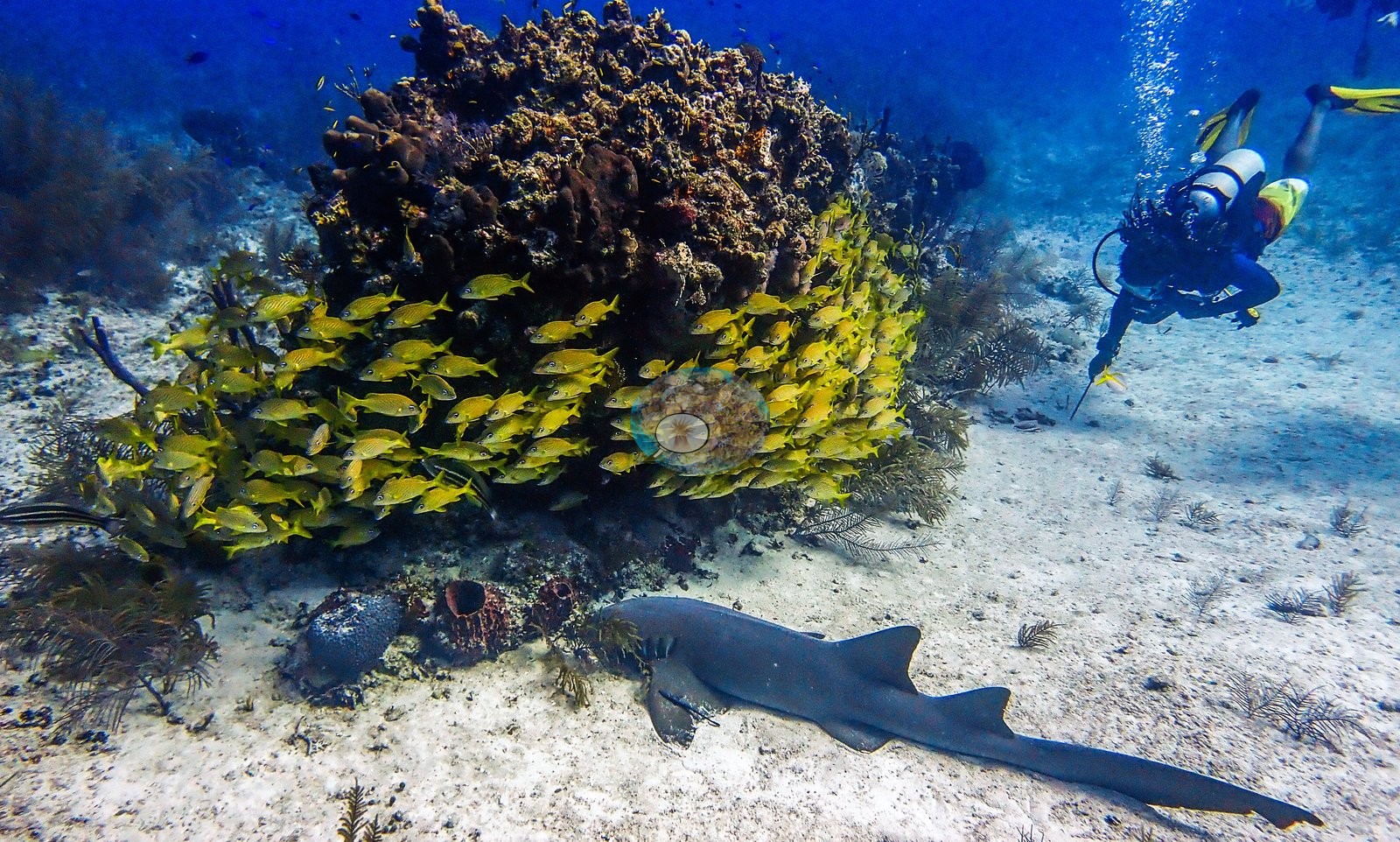
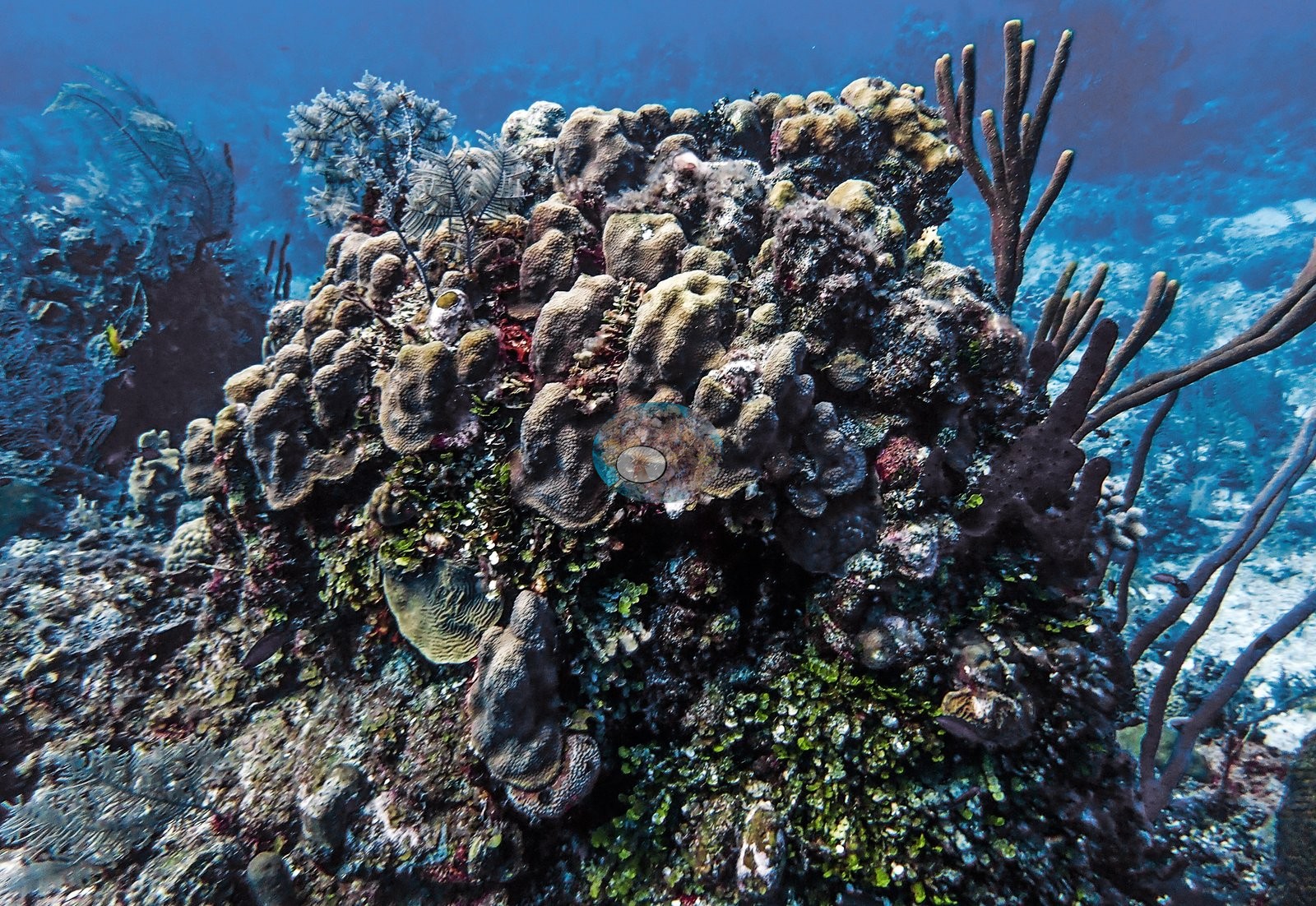
Anderson's 2022 dives off Providenciales, West Caicos, and French Cay are mostly walls of star, brain, and plating corals with large sponges and sea fans. Fresh tissue-loss lesions were photographed at most dived sites, while Caribbean reef sharks were a constant presence.
Heat stress
sea surface temperature (SST) (left axis)DHW under 2DHW 2–3DHW 3–5DHW 5–8DHW 8–10DHW over 10 (🔥 above 12)
Daily SST (line) and weekly maximum Degree Heating Weeks (bars), Jan 2023–Oct 2026, NOAA Coral Reef Watch 5-km Turks and Caicos virtual station. Dashed line: bleaching threshold (maximum monthly mean 28.7°C + 1°C). DHW ≥ 4: bleaching likely; ≥ 8: severe bleaching and mortality likely. A bar is drawn only where DHW exceeds zero, so a stretch with no bar is accumulated heat stress of zero, not missing data — the SST line runs the full period.
11 sites in this region — click a marker to open that site.
Regional setting
The Turks and Caicos Islands form the southeastern end of the Bahamas Platform: limestone islands scattered across the small Turks Bank and the far larger Caicos Bank, together some 8,000 km², whose edges fall away sharply into deep ocean water (Wells 1988; Spalding et al. 2001). Geologically they resemble the Bahamas, and with no rivers, runoff from land is very low. Wells (1988) notes that comparatively little was known about the reefs, relying mainly on surveys by Ray and Sprunt in 1971, a 1984 review by Lott and colleagues, and the 1985 Operation Raleigh expedition. Off Providenciales, a barrier reef lies 2.5–3 km offshore between Northwest Point and Leeward-going-through Cut, enclosing many Acropora patch reefs, and the 35 sites surveyed there in 1985 were judged to be in good condition. The reefs around South Caicos, including the wall off Cockburn Harbour, were considered possibly the most productive in the islands because of nutrient-rich upwelling from the Turks Island Passage. Spalding et al. (2001) record true fringing reef along southern Long Cay, the south coast of South Caicos, and the north coasts of Middle and North Caicos, roughly 37 species of coral and upward of 400 of fish, and hard coral cover averaging 18% on the bank edges in 1999. They add that coral diseases probably contributed to widespread losses of Acropora, though sizable stands of A. palmata survived, and estimate the territory's reef area at about 730 km².
Souter et al. (2021) do not report on the Turks and Caicos separately. The closest grouping in their analysis is Bermuda and The Bahamas, a subregion built on the Bahamian marine ecoregion, where mean hard coral cover dropped sharply between 2002 and 2005 without recovering, going from 17.6% in 1999 to 13.3% in 2019, while algal cover climbed after 2011 to reach 64.4% in 2019. For the Caribbean as a whole, the report links coral losses to the 2005 mass bleaching, hurricanes, polluted, and nutrient-enriched coastal water, and overfishing of herbivores such as parrotfishes, and names invasive lionfish, Sargassum influxes since 2011, and stony coral tissue loss disease (SCTLD) as newer threats, with SCTLD reported from the Bahamas by 2021. Closer to home, Spalding et al. (2001) judged that as of about 2000 the islands' reefs showed little sign of human damage, apart from local nutrient discharge on Providenciales and diver impacts at some sites, but saw proposed harbor and tourism projects on East and South Caicos as a significant emerging threat.
Overview
The Turks and Caicos unit covers eleven sites dived between 31 July and 5 August 2022 off Northwest Point on Providenciales, off West Caicos, and at French Cay, with maximum depths from 25.3 m at Shark Hotel to 32.3 m at Rock and Roll and Spanish Anchor. Six of the eleven are walls or wall cuts. The Amphitheatre has a bowl undercut into the face at 75-85 ft, Coral Stairway has brain and plating corals climbing the wall in step-like tiers, Shark Hotel has a chimney slot, The Gully is a swim-through with undercut walls, Spanish Anchor drops past 150 ft beside a coral-encrusted 1600s anchor, and Brandywine is a West Caicos wall packed with coral to the crest. Eel Garden is low-relief pavement cut by sand channels, Boat Cove is a field of coral-and-sponge mounds over white sand, and the French Cay sites (Rock and Roll, G Spot) are gorgonian-and-sponge plateaus.
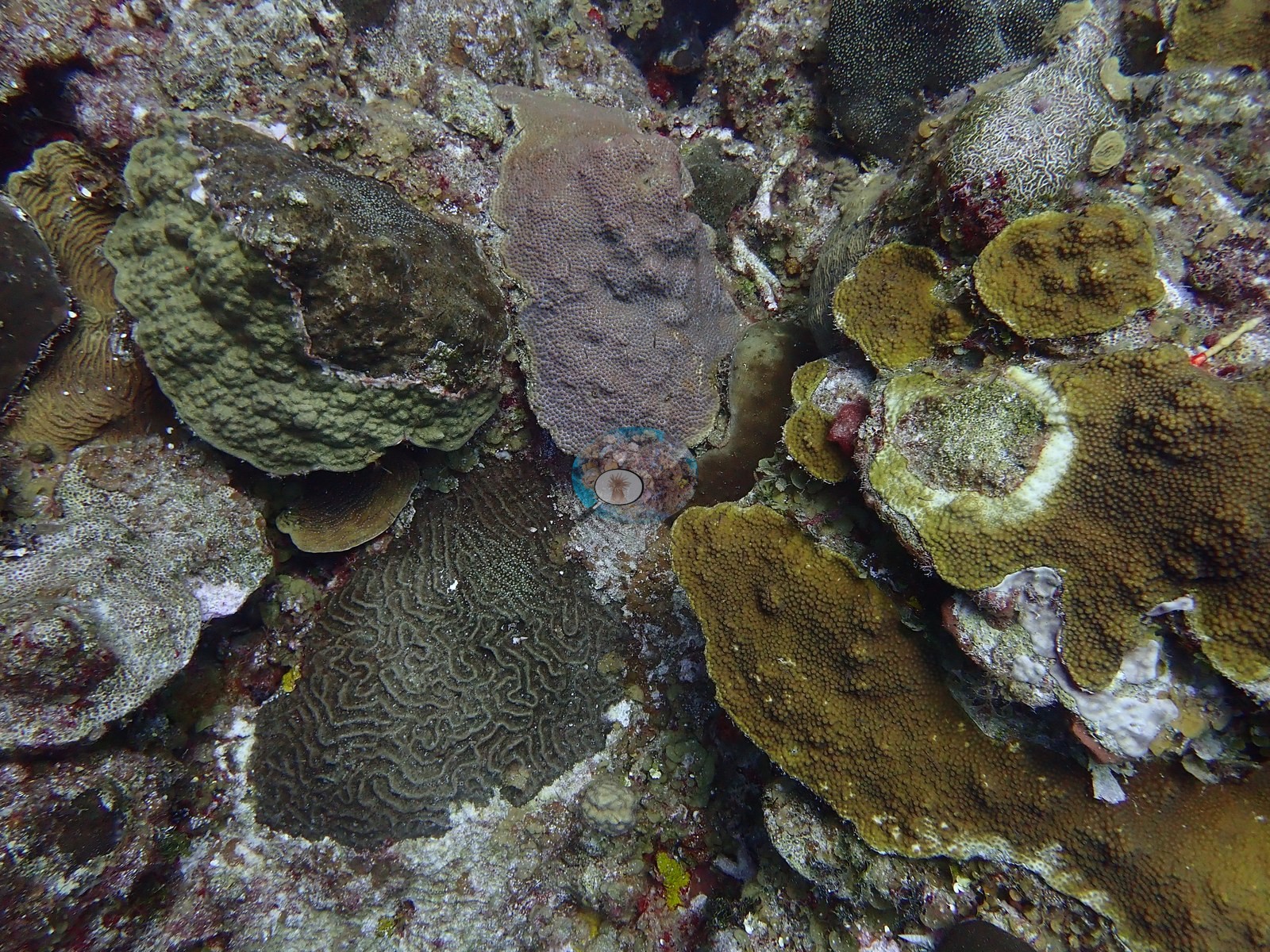
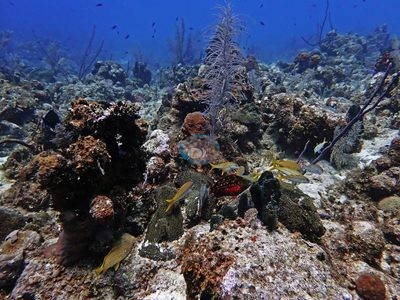
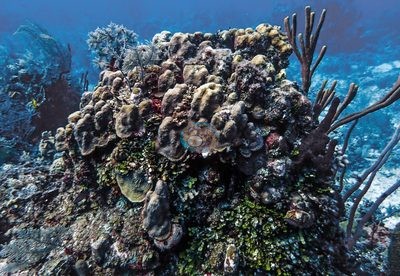
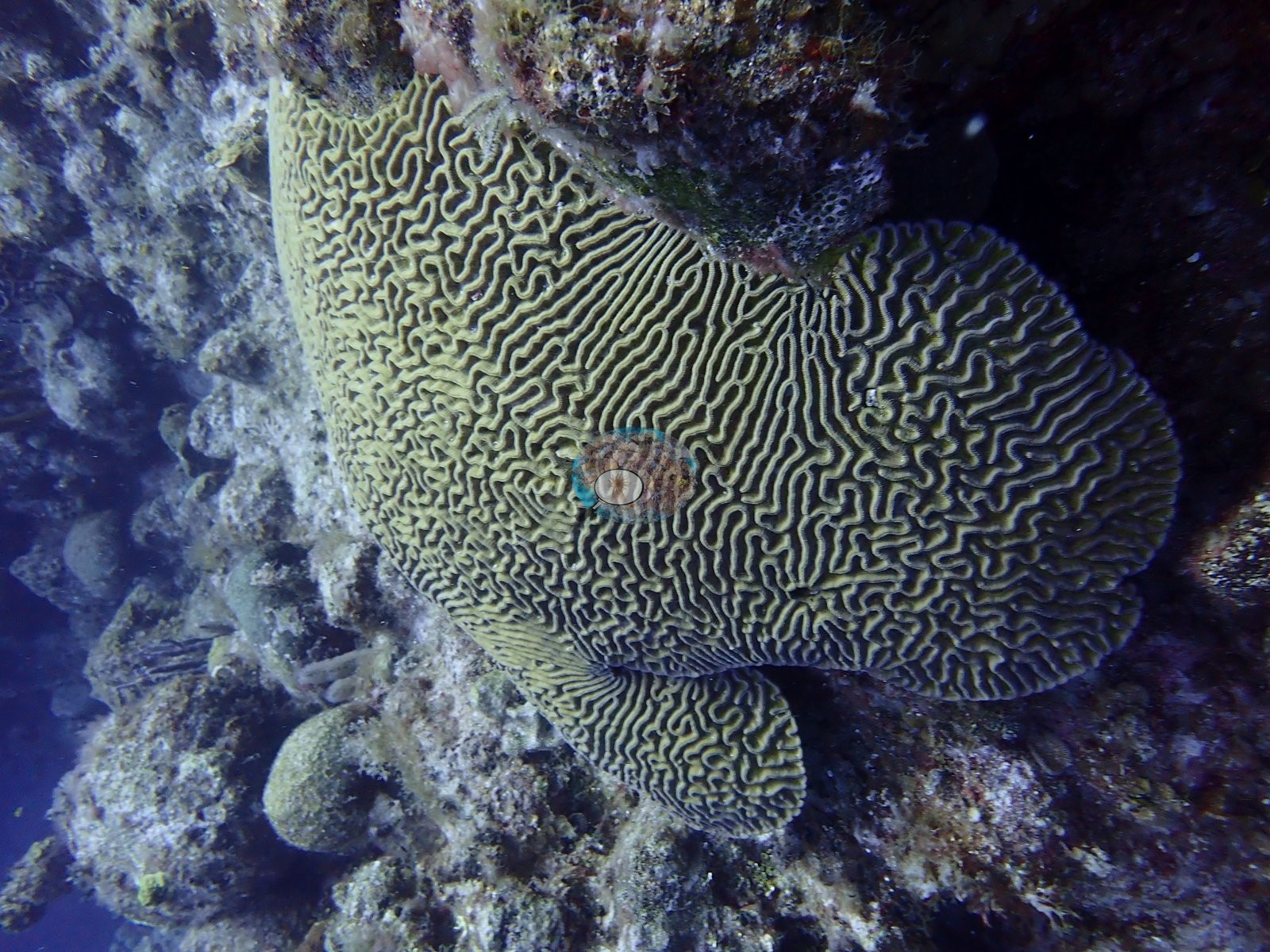
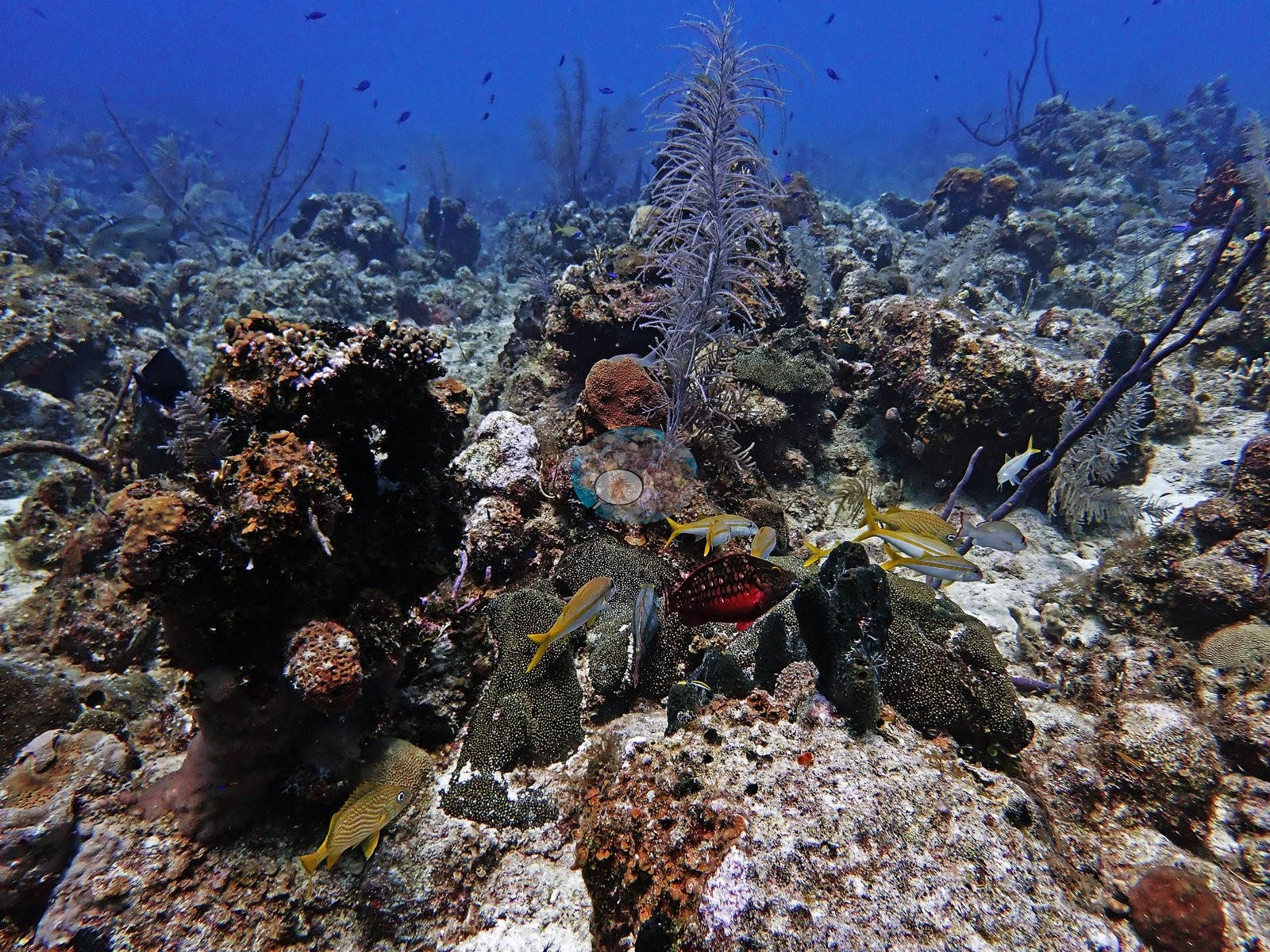
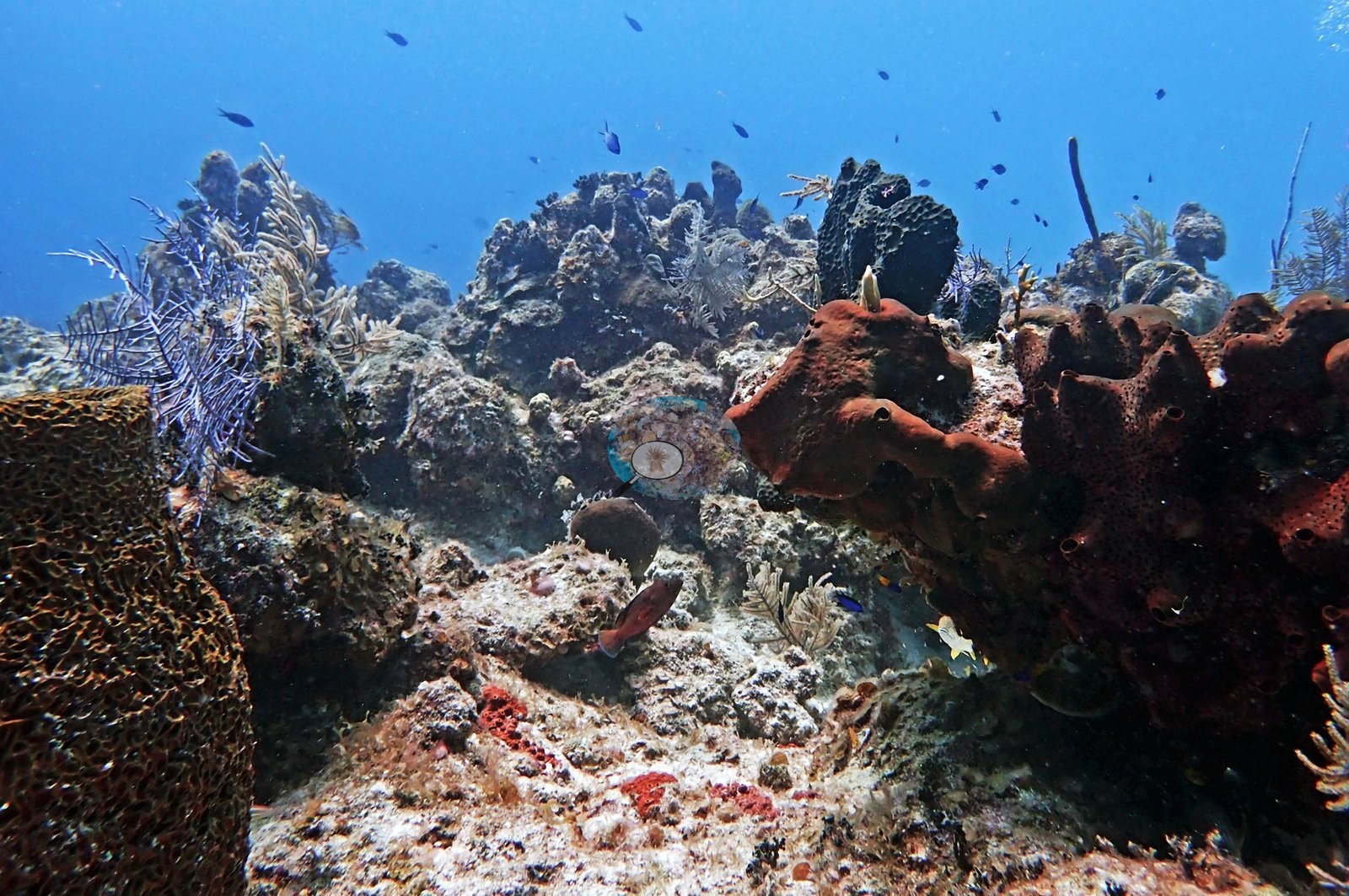
The benthos is dominated by boulder star corals (Orbicella, Montastraea), brain and plating corals, large barrel, elephant-ear, and rope sponges, and dense sea plumes, sea rods, and sea fans. Blind Claude computer-vision point counts of Anderson's photographs put coral cover between 4.6% at G Spot and 20% at Eel Garden, each site the mean of its two dives (Eel Garden includes unedited originals). At most sites these values are upper bounds on living coral, because standing dead skeleton is common: at Coral Stairway whole brain corals kept their shape while dead and overgrown, and at Boat Cove many large colonies had dead, turf-covered centers.
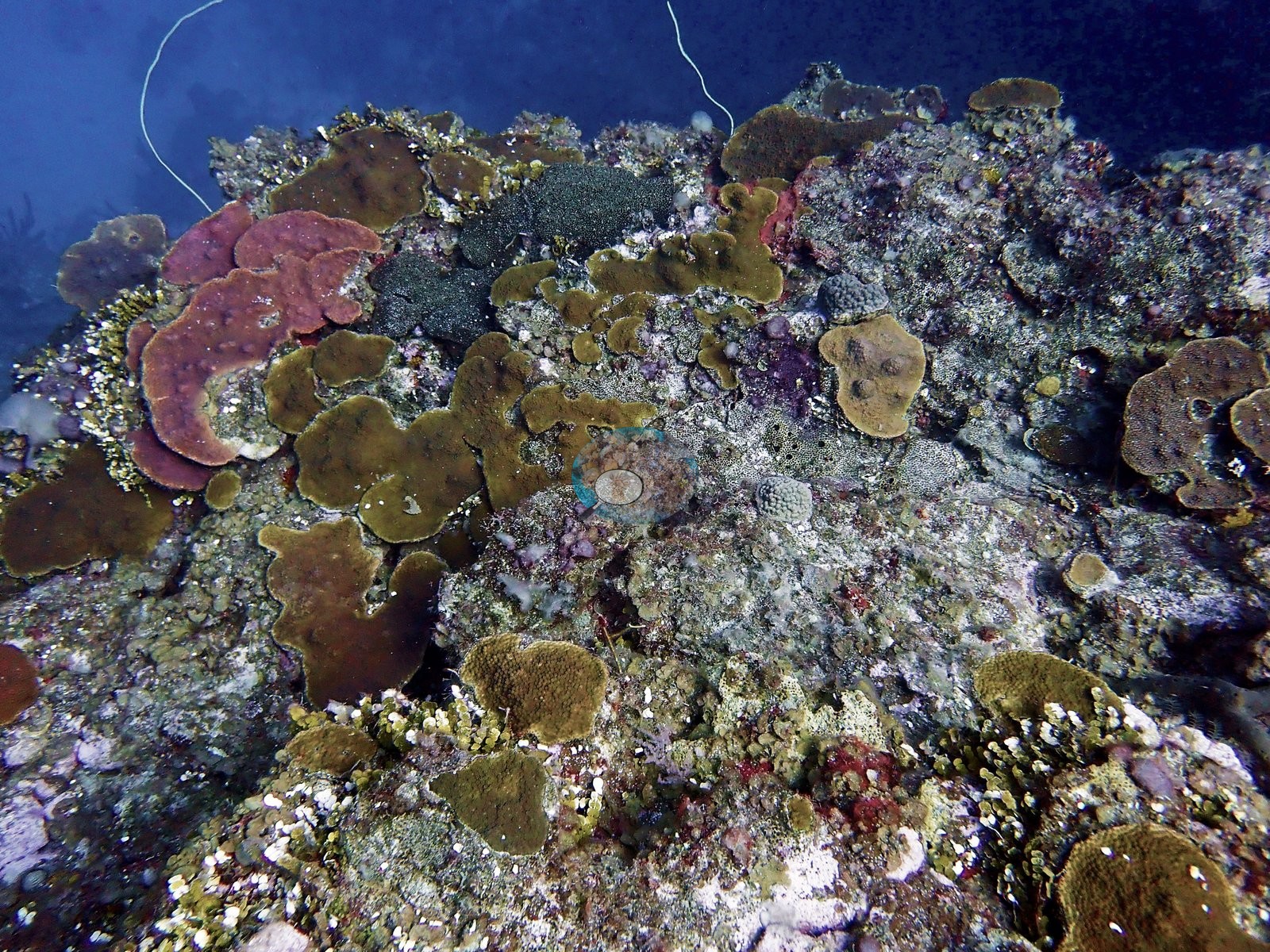
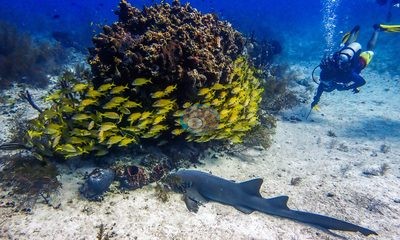
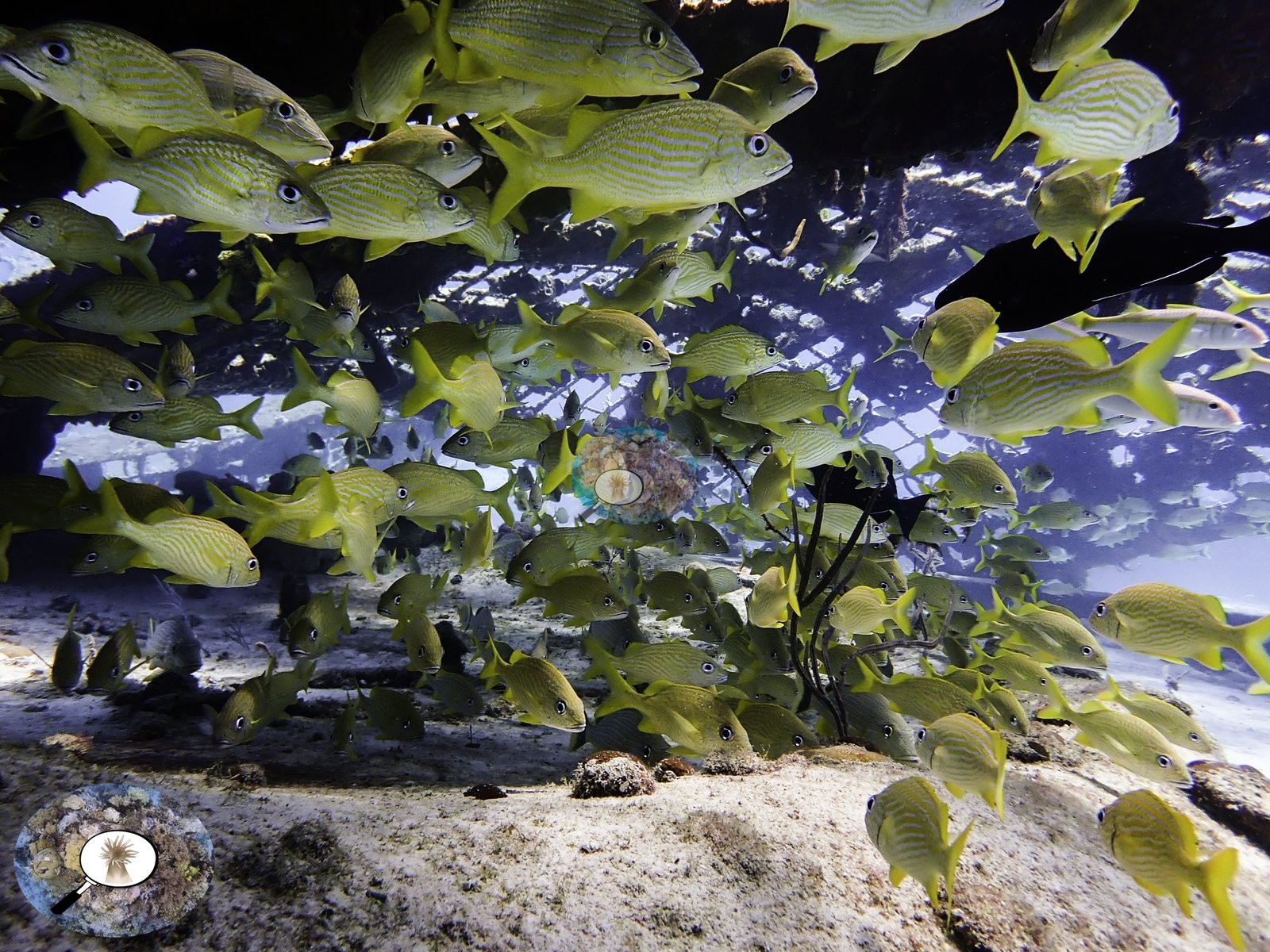
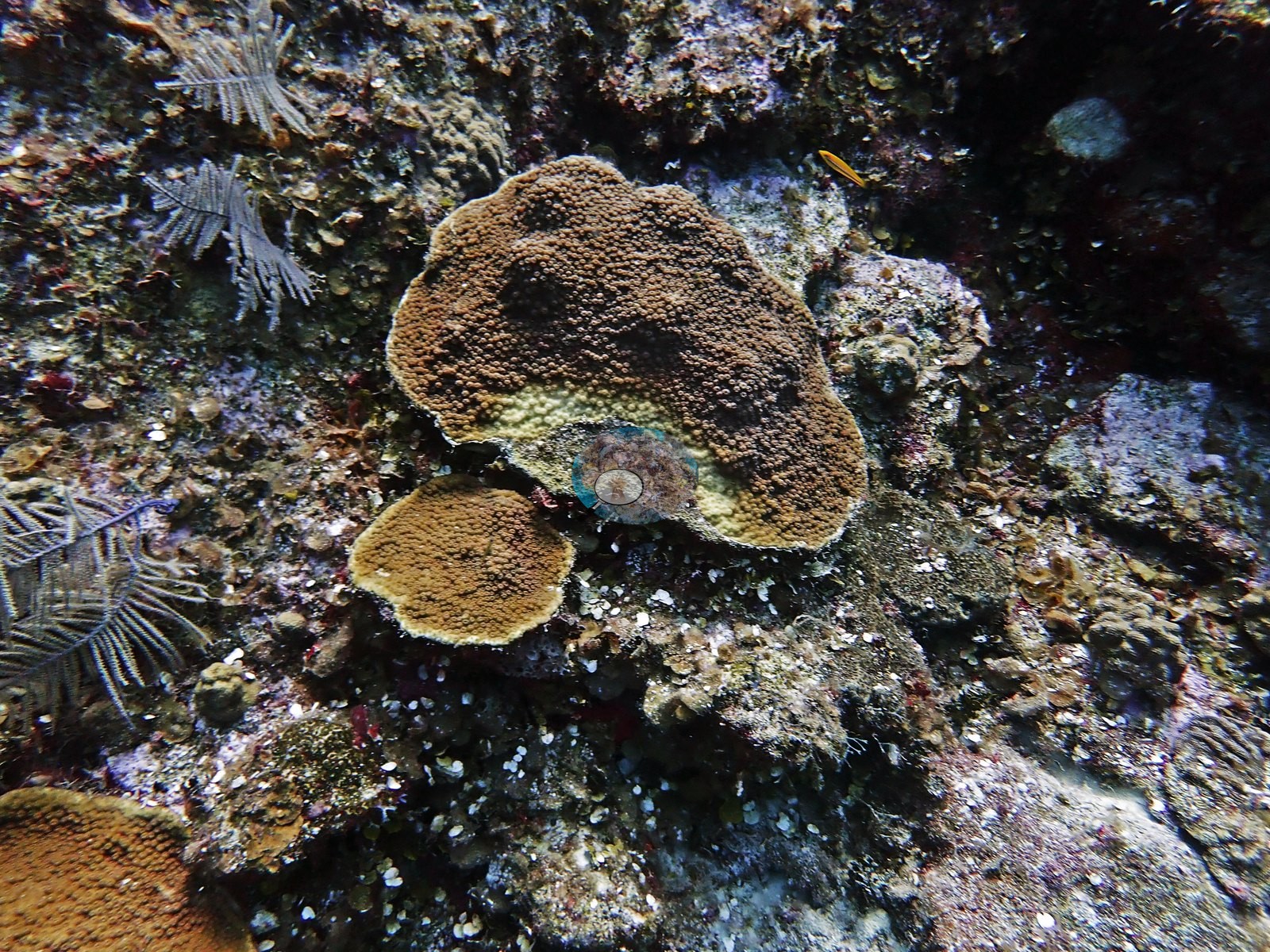
Condition is the main story. Fresh white tissue-loss fronts were photographed at eight of the eleven sites, most heavily at Eel Garden, where some star corals had lost a third to two-thirds of their tissue; at Shark Hotel, where one frame showed ten or more small colonies each carrying its own lesion; and at Rock and Roll. These are described as active tissue loss rather than bleaching, and no syndrome is named from the photographs. Bleaching itself was limited to a few colonies at Eel Garden and single colonies or branches at Thunderdome and Brandywine. Sharks were a constant: Caribbean reef sharks were seen at most sites and nurse sharks packed the reef at G Spot at night, alongside southern stingrays, hawksbill turtles, and horse-eye jacks.
Highlights
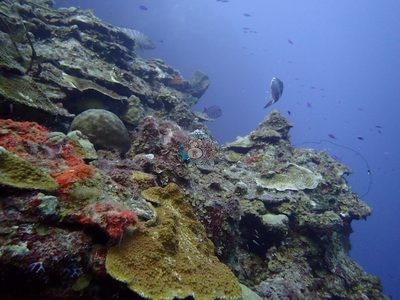
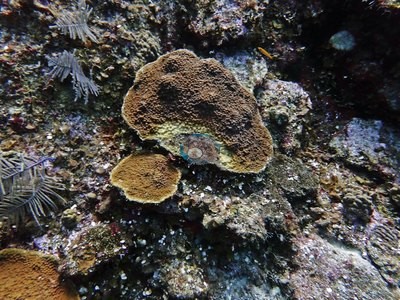
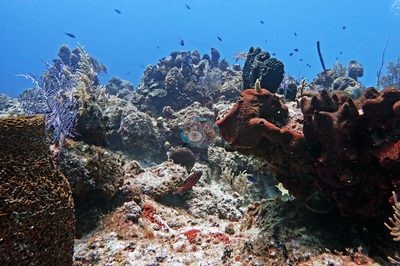
Wall topography off Northwest Point and West Caicos: the Amphitheatre bowl, Coral Stairway tiers, Shark Hotel chimney, The Gully swim-throughphoto: Turks and Caicos - Coral Stairway
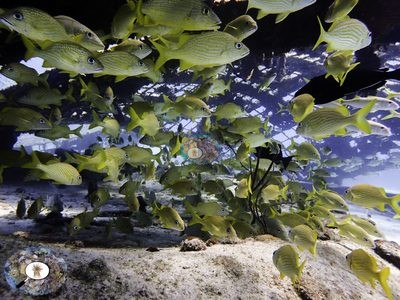
Active tissue-loss lesions photographed at eight of the eleven sites, most heavily at Eel Garden and Shark Hotelphoto: Turks and Caicos - Shark Hotel
Caribbean reef sharks at most sites; nurse sharks at French Cay
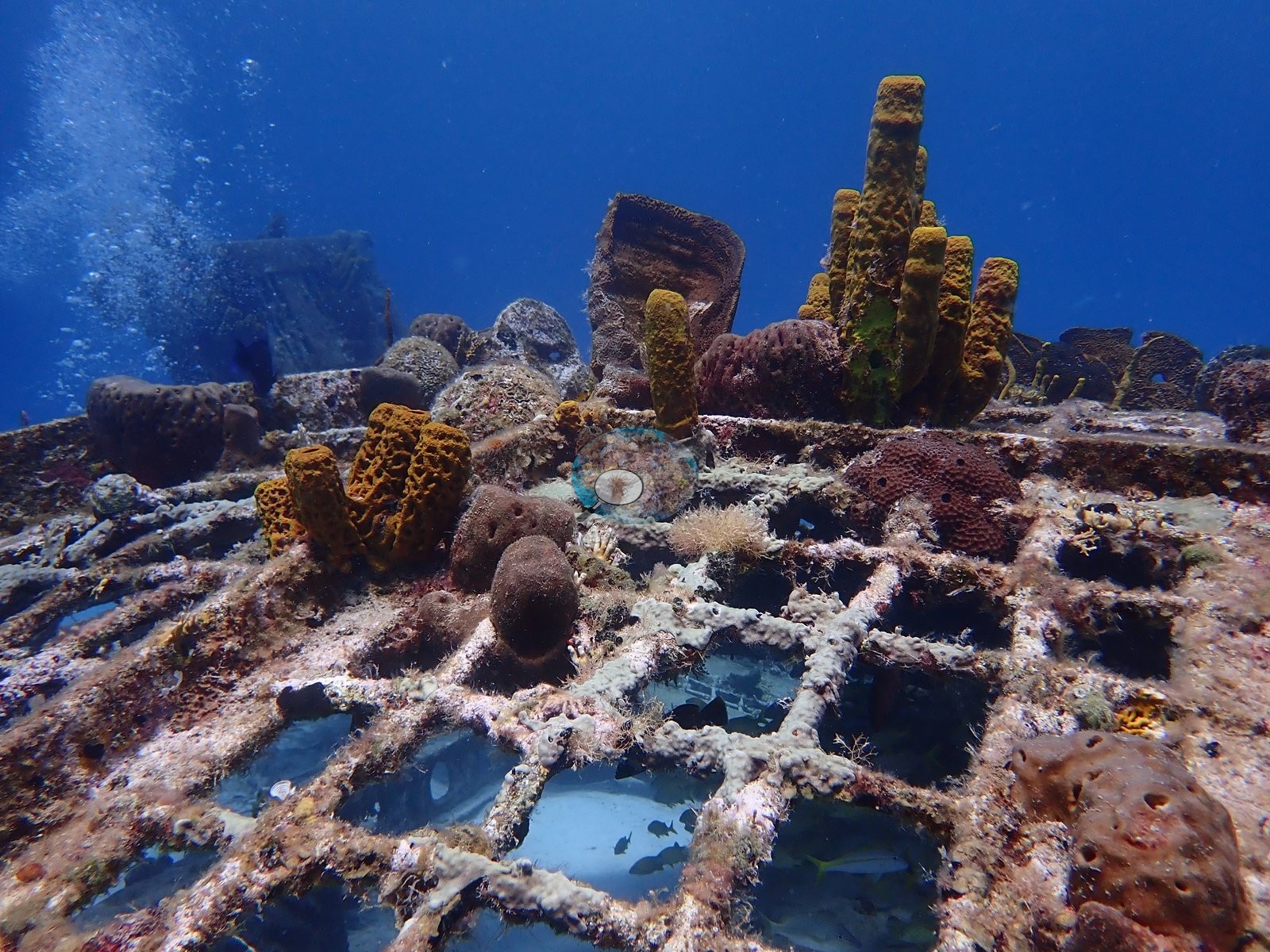
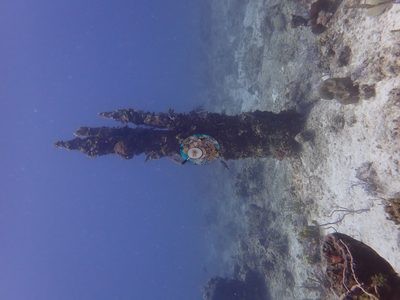
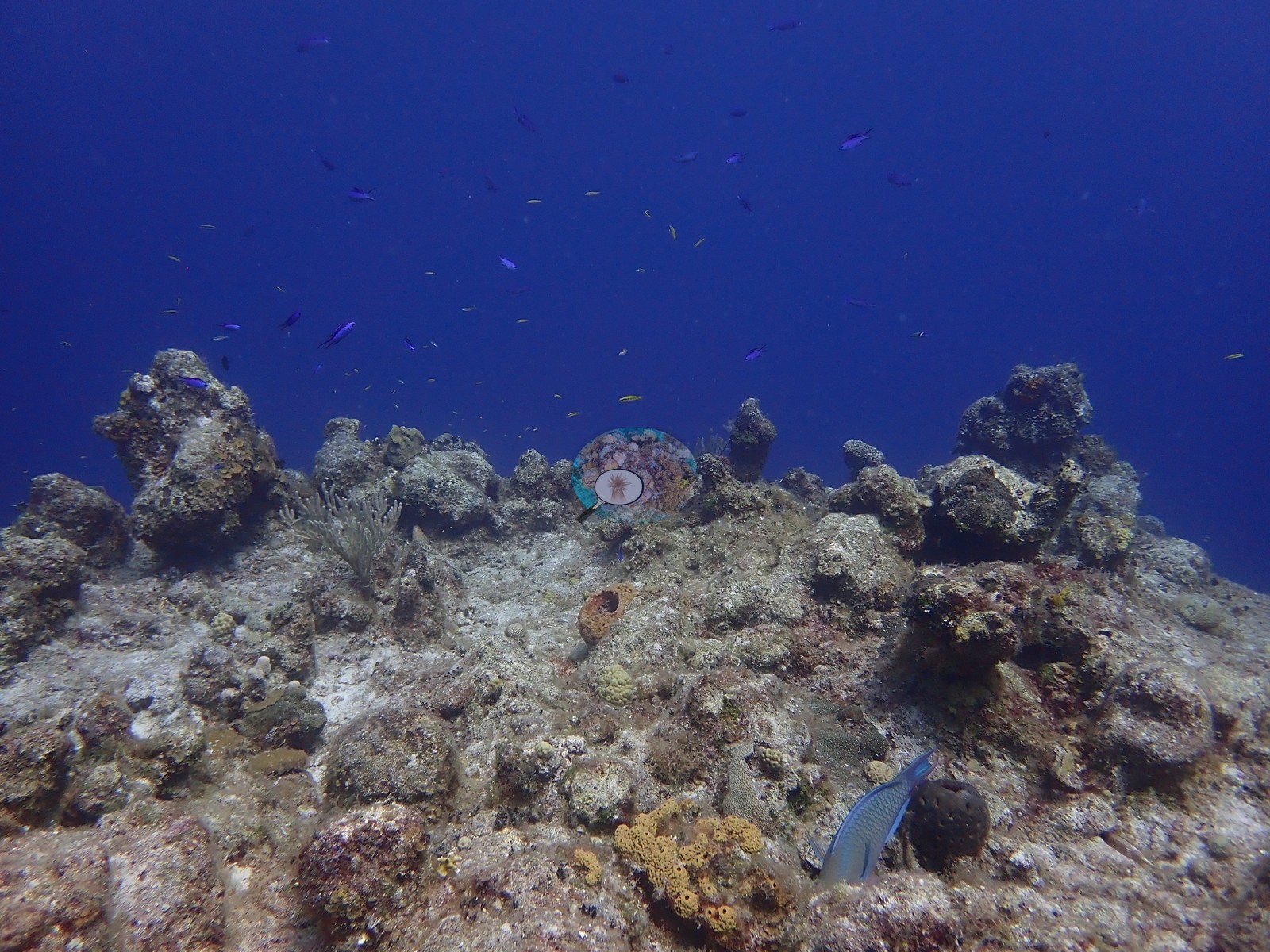
Thunderdome: a collapsed 1980s television-set dome at about 12 m, now crusted with sponges and sun coralsphoto: Turks and Caicos - Thunderdome
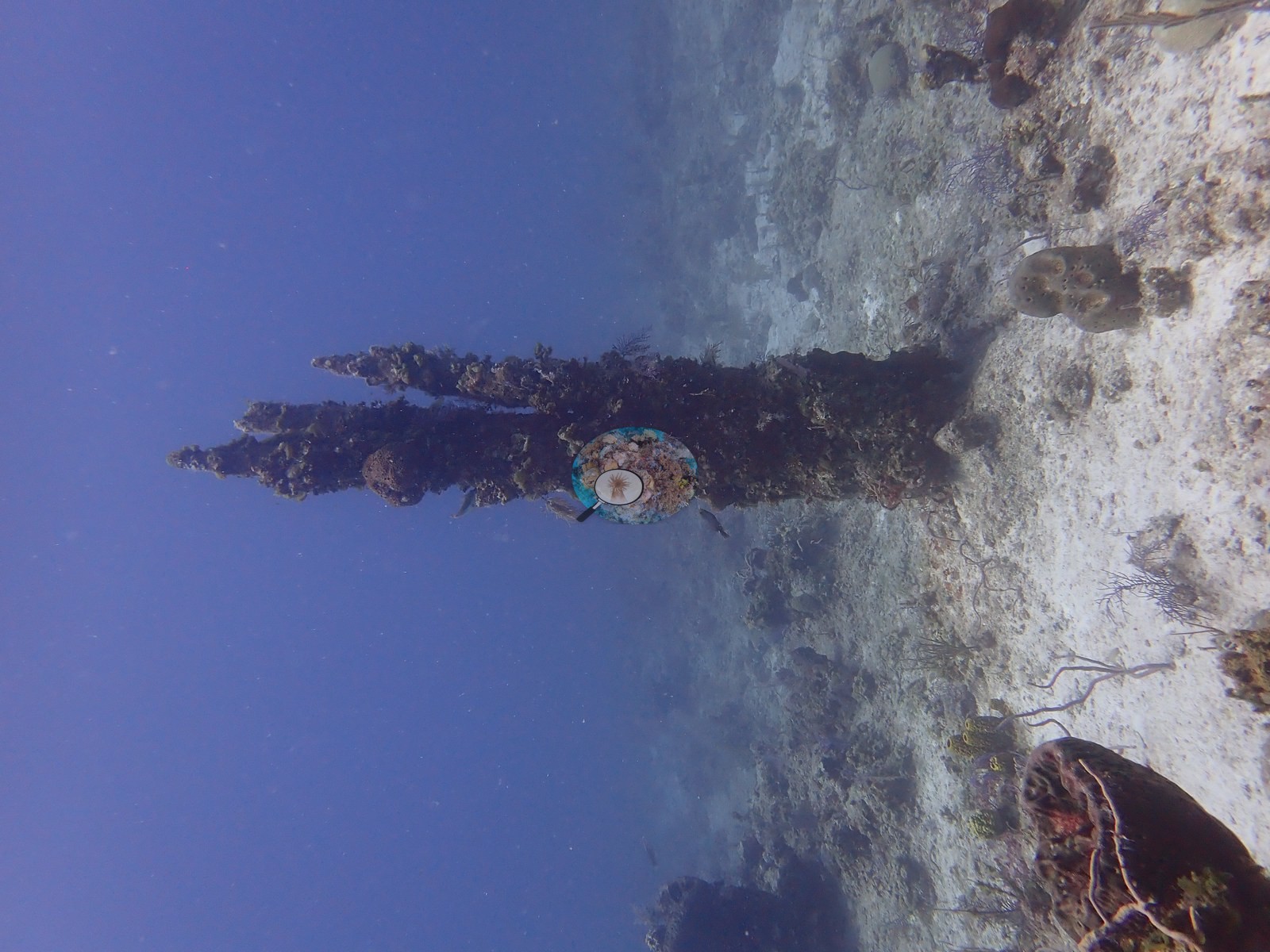
Numbered monitoring tags at Coral Stairway show the reef is formally surveyedphoto: Turks and Caicos - Coral Stairway
Notable observations
Turks and Caicos - Eel Garden: Disease: an active white tissue-loss front spreading across several star corals, some having lost a third to two-thirds of their tissue; ten frames filed as disease documentation; syndrome cannot be called from photographs. Bleaching: a few colonies bleached, one half stark white with polyp structure intact
Turks and Caicos - Shark Hotel: Disease: active tissue loss widespread, about a dozen frames of fresh white lesions on star corals and one shot of ten or more small colonies each with its own lesion; 17 frames filed under disease folders. Gear: monofilament line draped across the wall in 2 day frames
Turks and Caicos - The Amphitheatre: Disease: several corals with bands of stark-white, freshly exposed skeleton, consistent with the tissue-loss diseases then active in the Caribbean
Turks and Caicos - Brandywine: Tissue loss: two plating colonies with white, freshly exposed skeleton along one margin; bleaching limited to a single small colony; no disease diagnosed in the field
Turks and Caicos - Rock and Roll: Disease: at least eight frames show sharply demarcated bands of freshly exposed white skeleton on plating and massive corals; reads as acute tissue-loss disease, not thermal bleaching
Turks and Caicos - G Spot: Tissue loss: several corals with recent tissue loss, consistent with a tissue-loss disease but not diagnosable from a photograph; no bleaching evident
Turks and Caicos - Spanish Anchor: Disease: many plating and brain corals show fresh white tissue-loss margins or are dead under turf
Turks and Caicos - Boat Cove: One boulder coral with a rounded white patch of exposed skeleton, possible partial bleaching or an old localized mortality or predation scar; no bleaching evident elsewhere
Coral cover over time (pooled)
One point per year: the mean of every hard coral cover value available for this region that year — Anderson’s own dives and every independent survey station within 5 km of them. The vertical bar is the full range behind that mean. Different programs use different methods at different stations, so this is a regional summary, not a single comparable series. Years resting on fewer than three values are drawn as smaller points (2005, 2013). Non-CRD points are from Reef Check Foundation and XL Catlin Seaview Survey (University of Queensland). Marker shape: his own dives, other organizations’ surveys.Sites in this region (11)


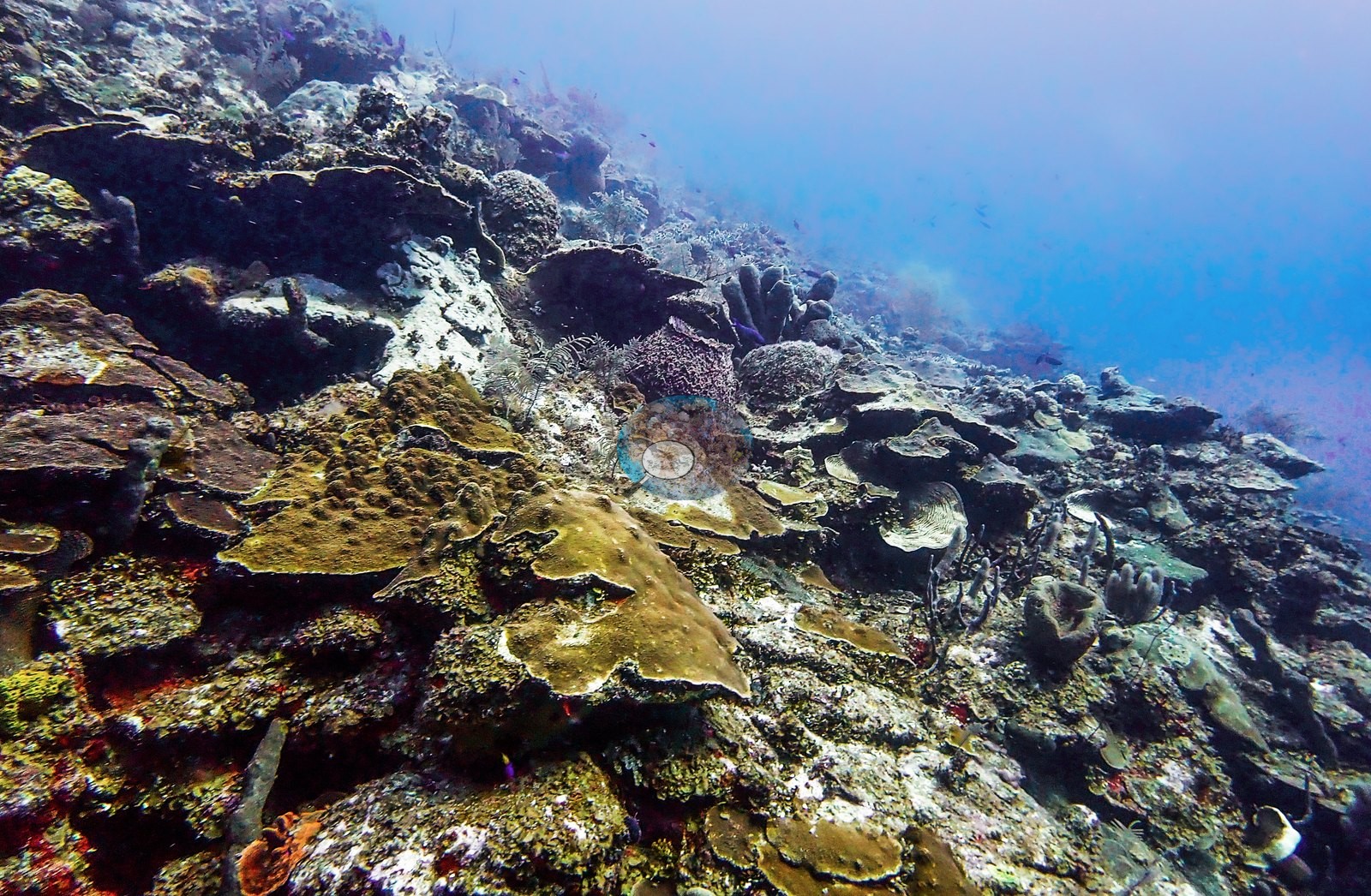

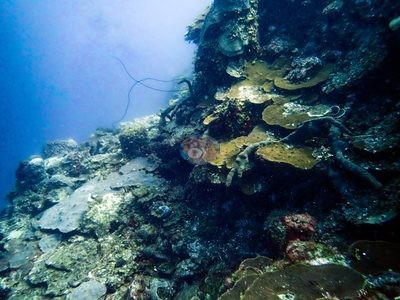 photo: Turks and Caicos - Coral Stairway
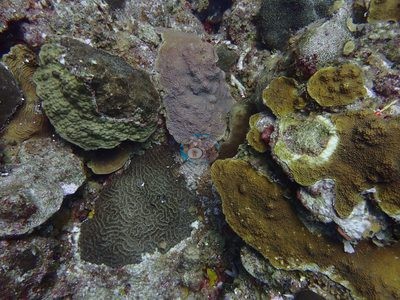 photo: Turks and Caicos - Shark Hotel
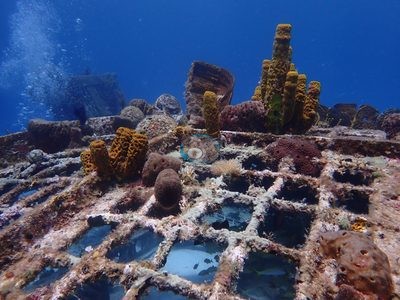 photo: Turks and Caicos - Thunderdome
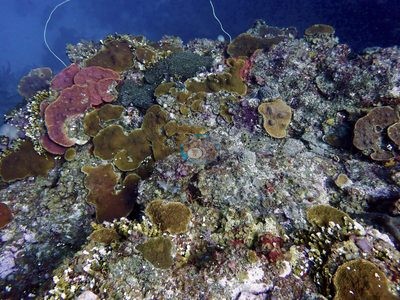 photo: Turks and Caicos - Coral Stairway