
Turks and Caicos - Rock and Roll
Part of the regional summary: Turks and Caicos Islands
More info
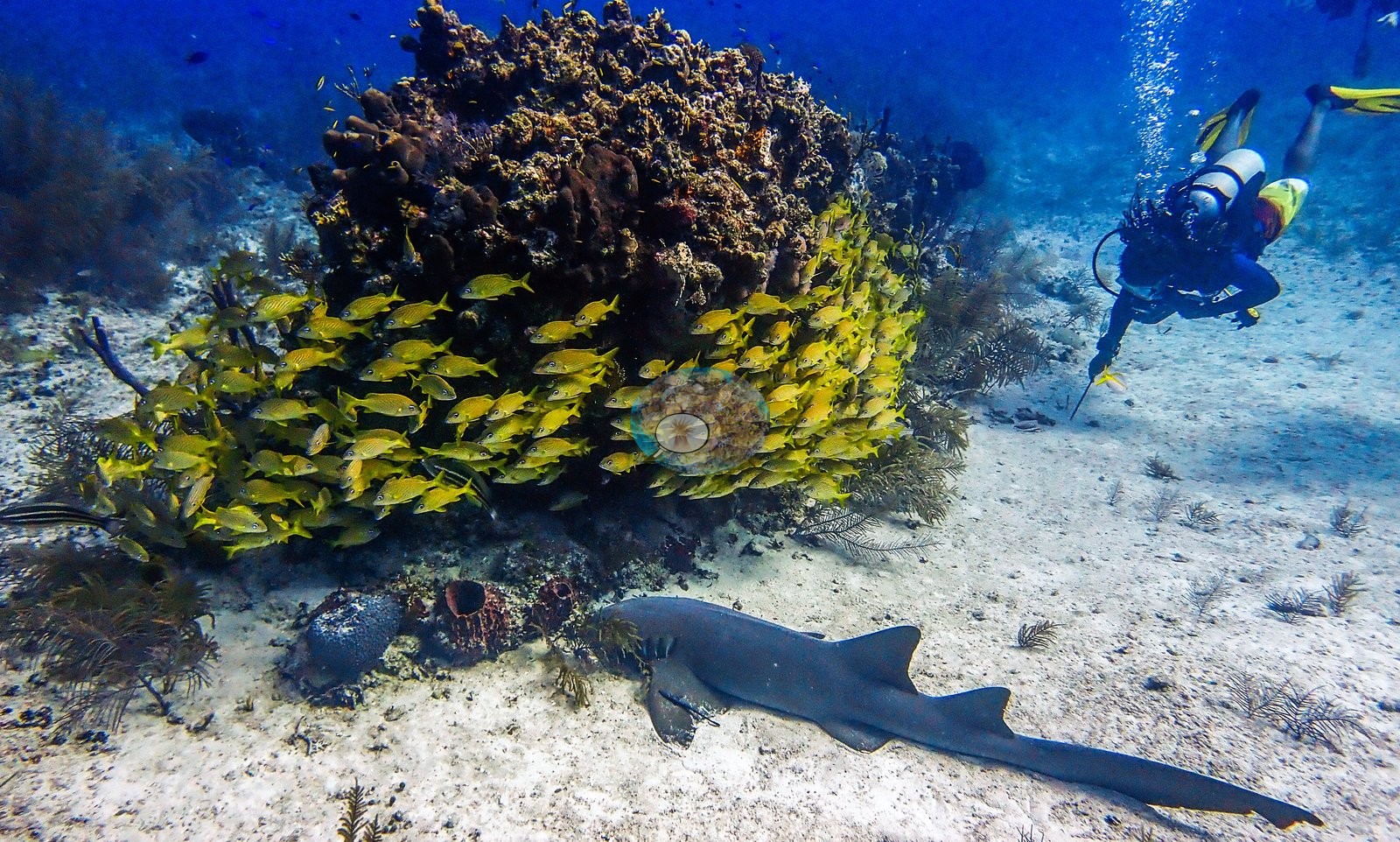
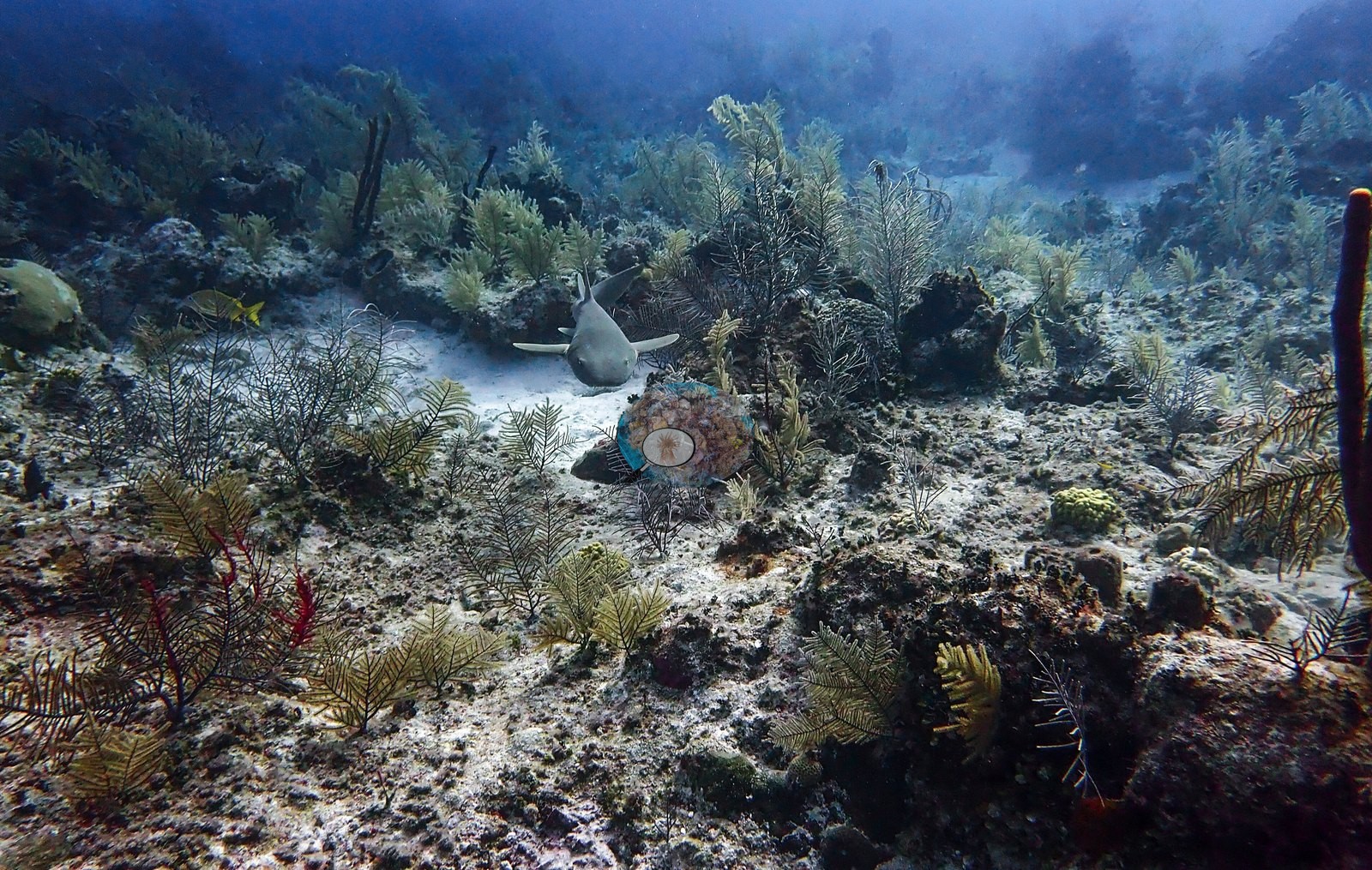
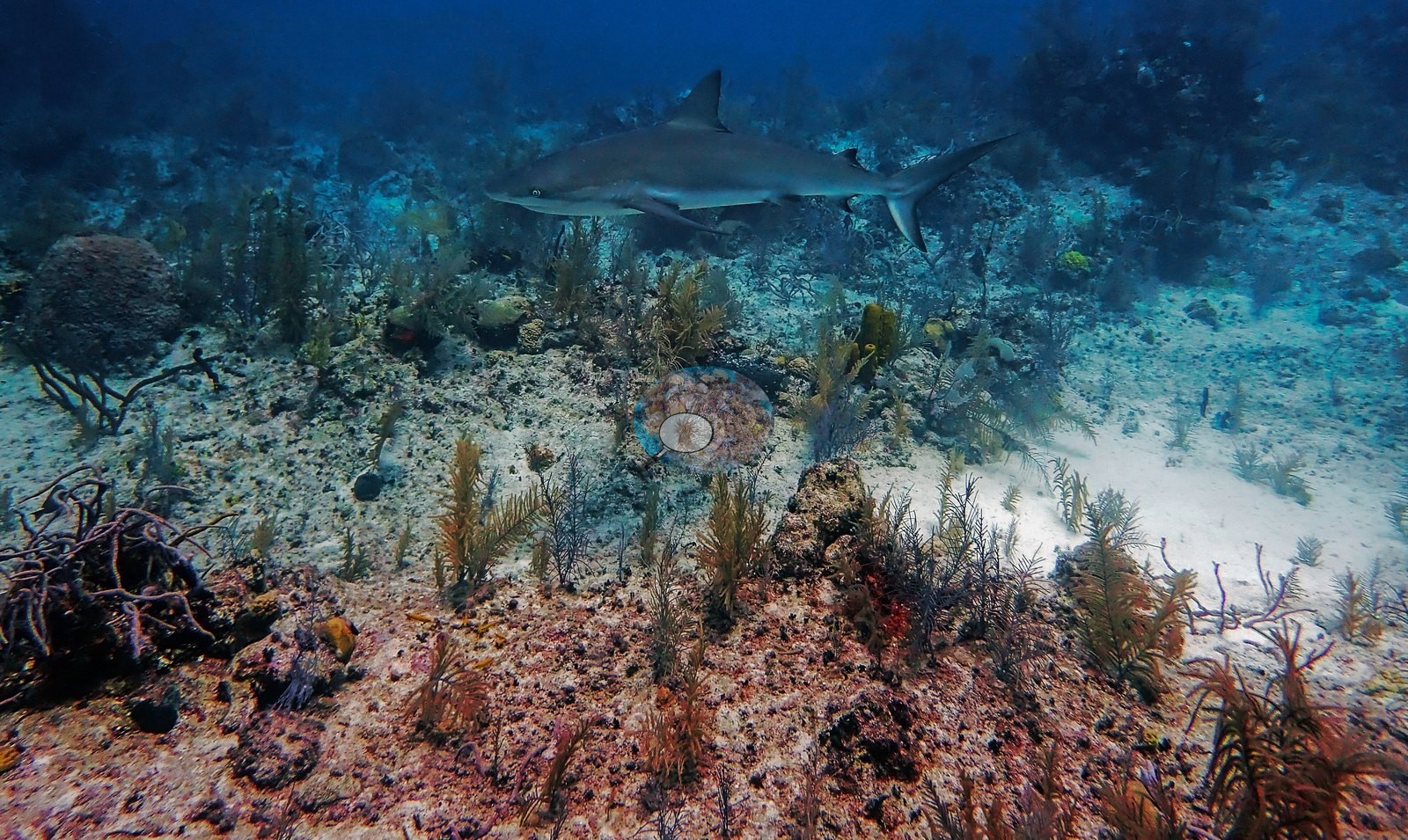
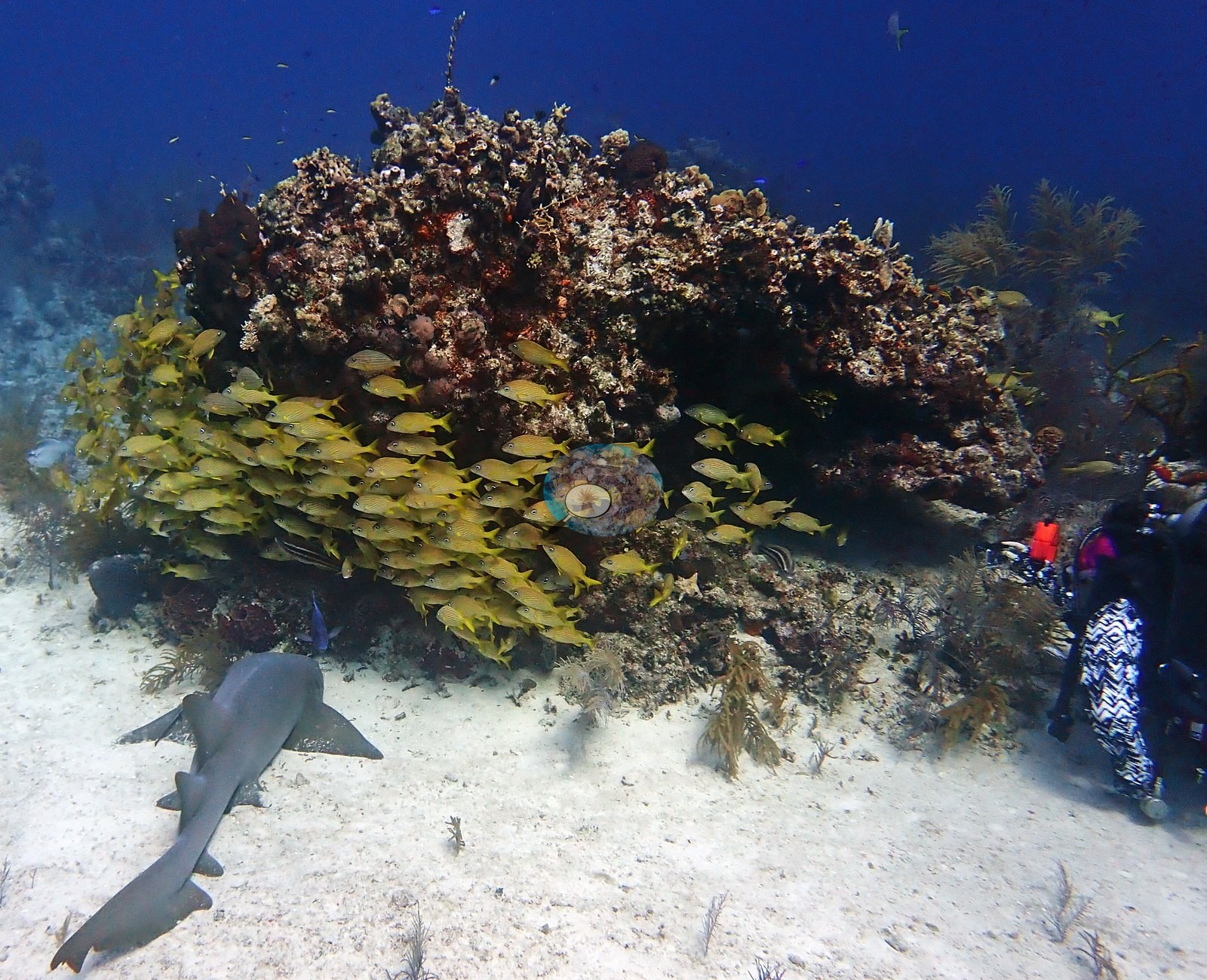
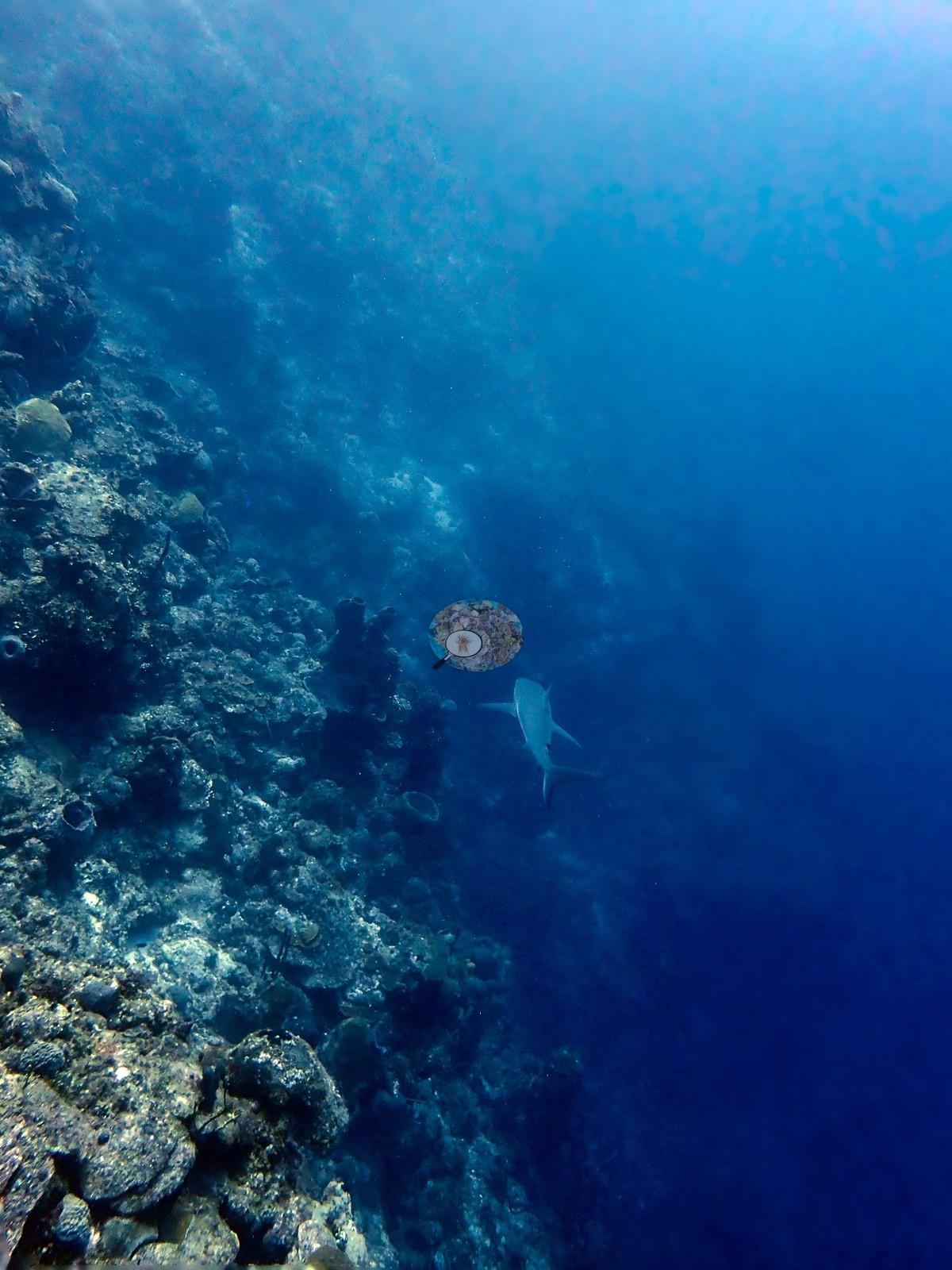
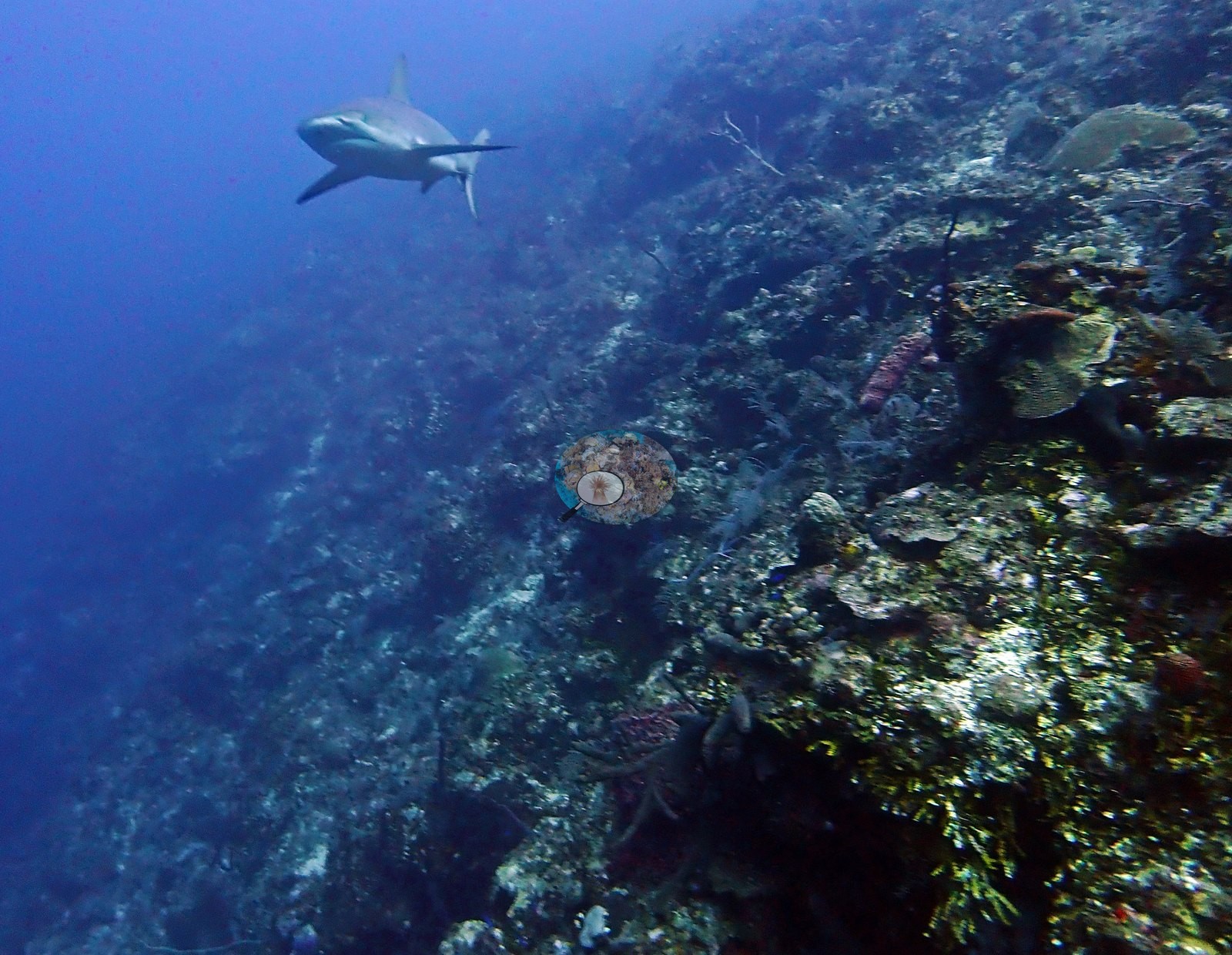
Turks and Caicos (NOAA CRW virtual station) · Bahamian ecoregion mean: 9.1 degree heating weeksRock and Roll at French Cay is known for its sharks: Caribbean reef sharks patrol the drop-off while nurse sharks rest on the sand beneath isolated coral heads wrapped in schools of grunts. Corals improve toward the wall lip, but many close-ups show fresh white tissue-loss bands rather than bleaching.
One other CRD dive site within 5 km shown in orange — click a marker to open its page.
This page shows 50 of the 53 photographs from this site, including every one the text cites.
26 of the 50 photographs on this page are shown beside the text that discusses them under "Site description" below.
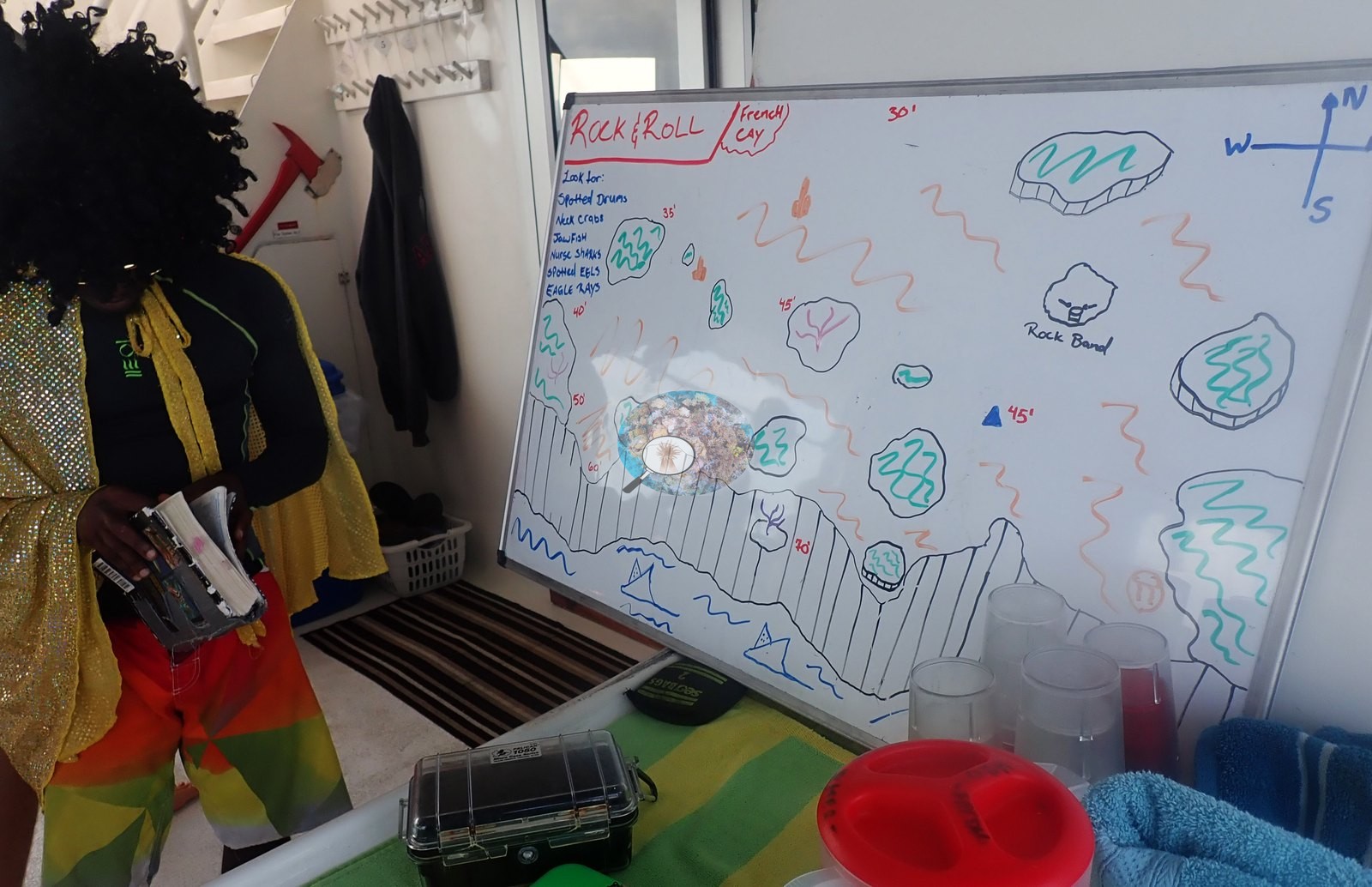
Site description
Setting
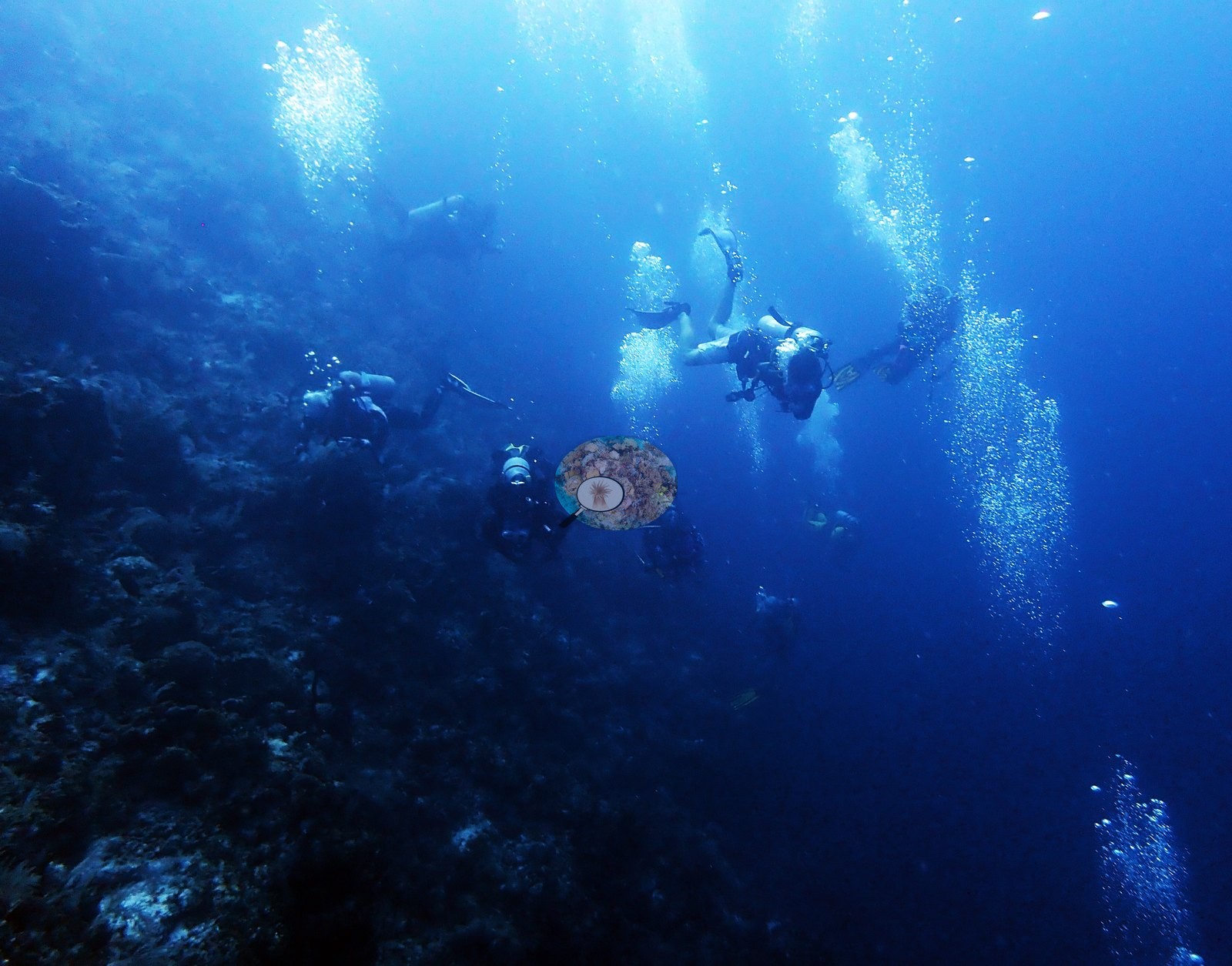
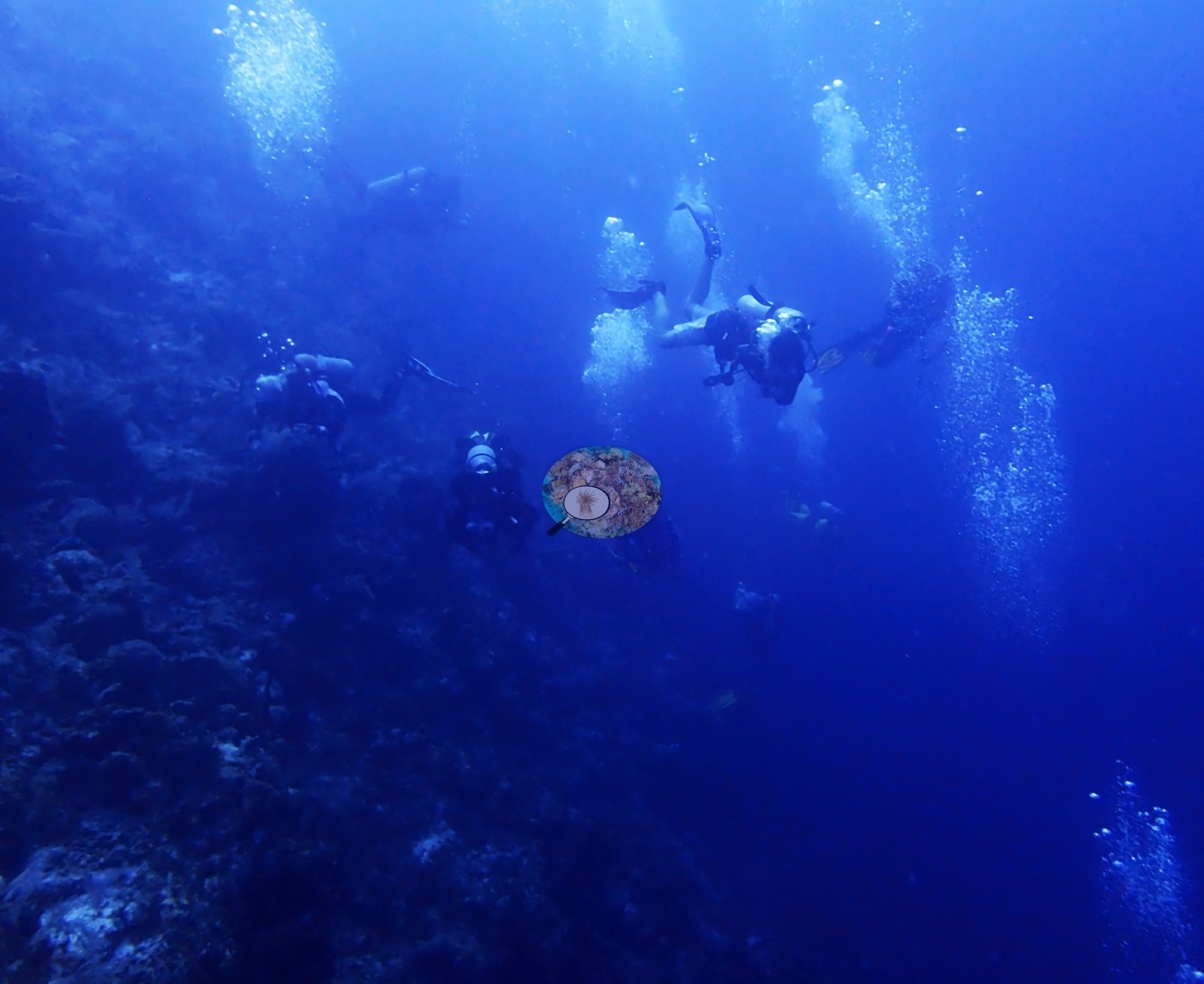
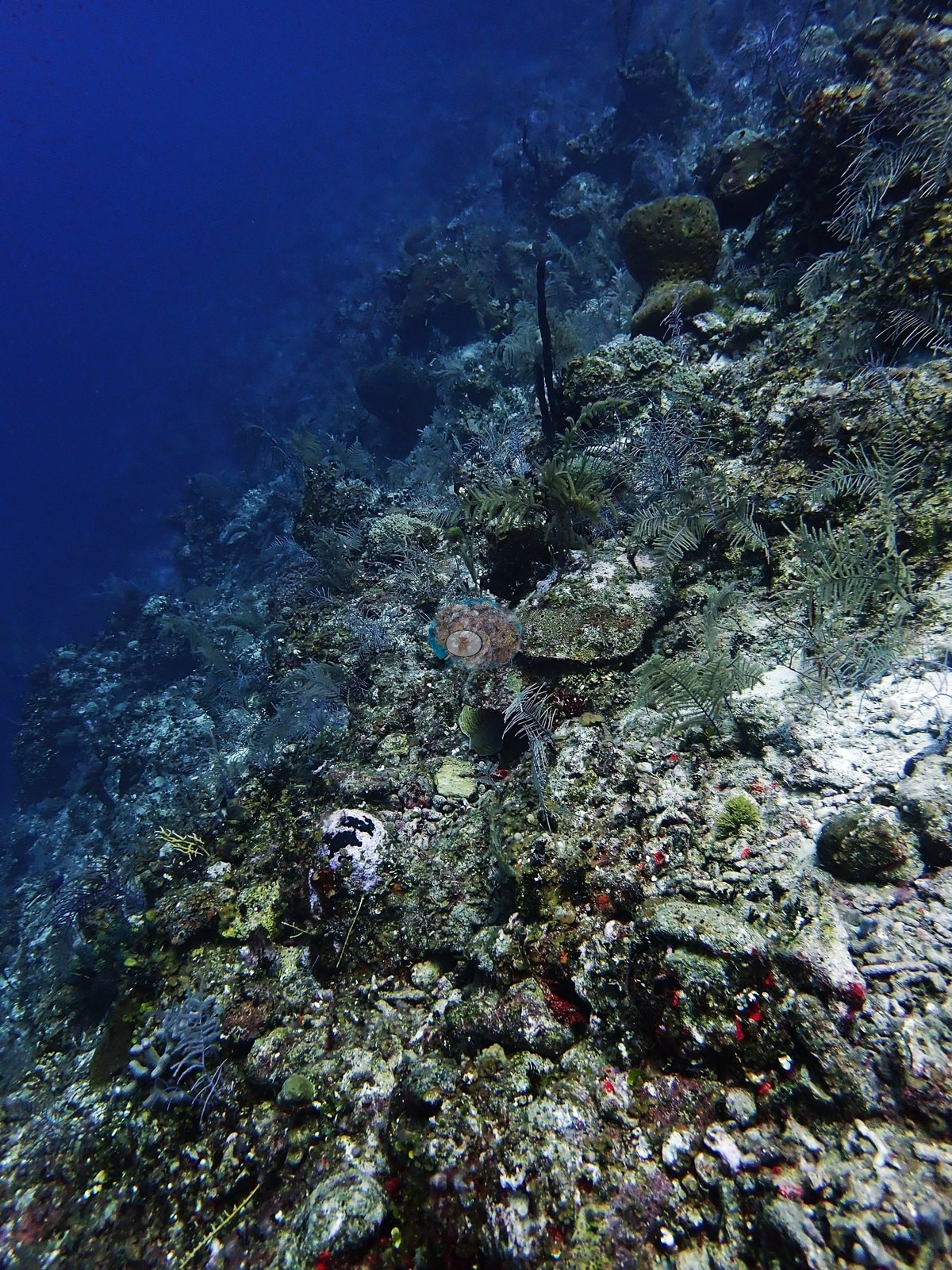
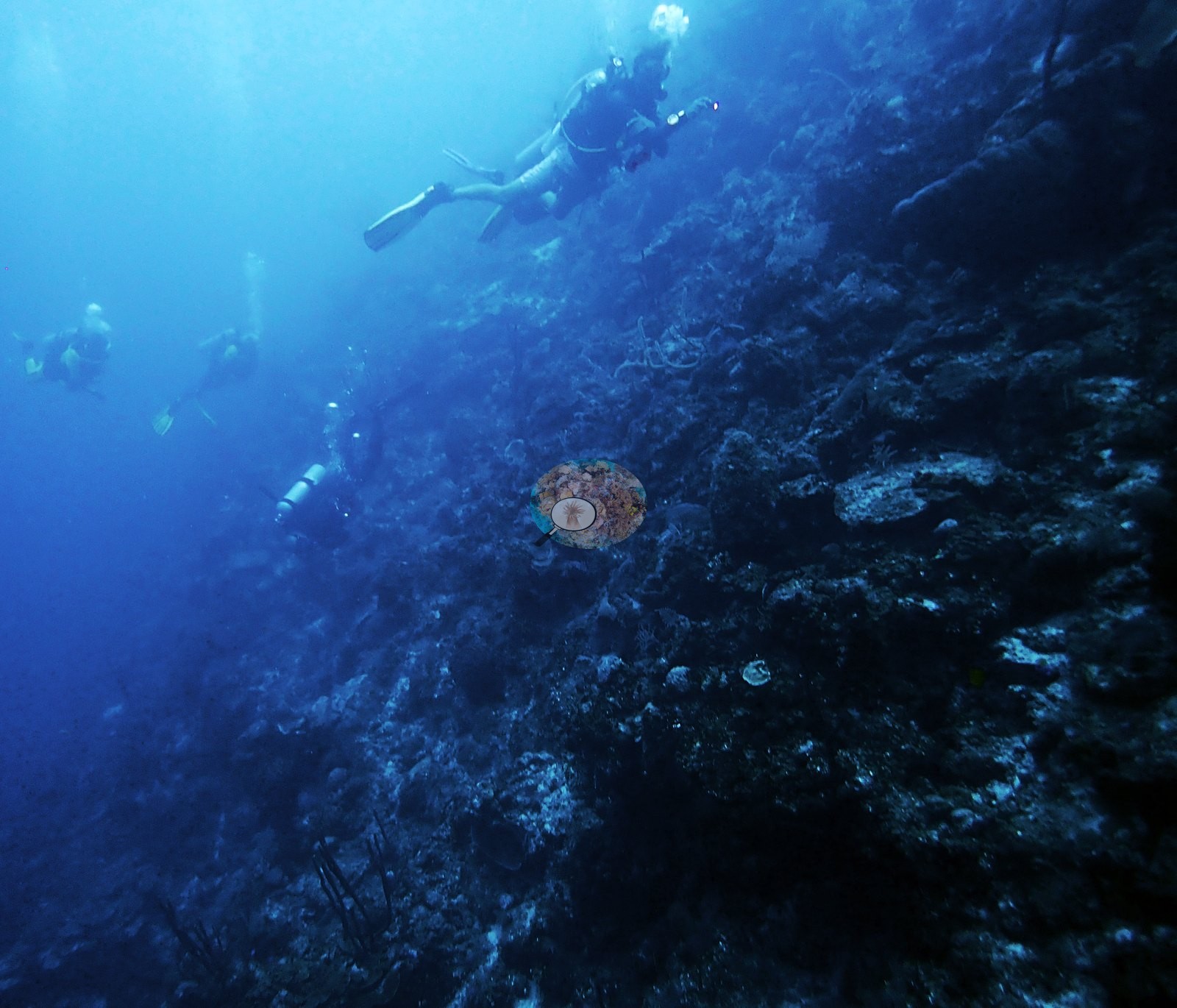
Two settings recur. Second, the wall lip and the near-vertical drop-off beyond it.
General benthic features
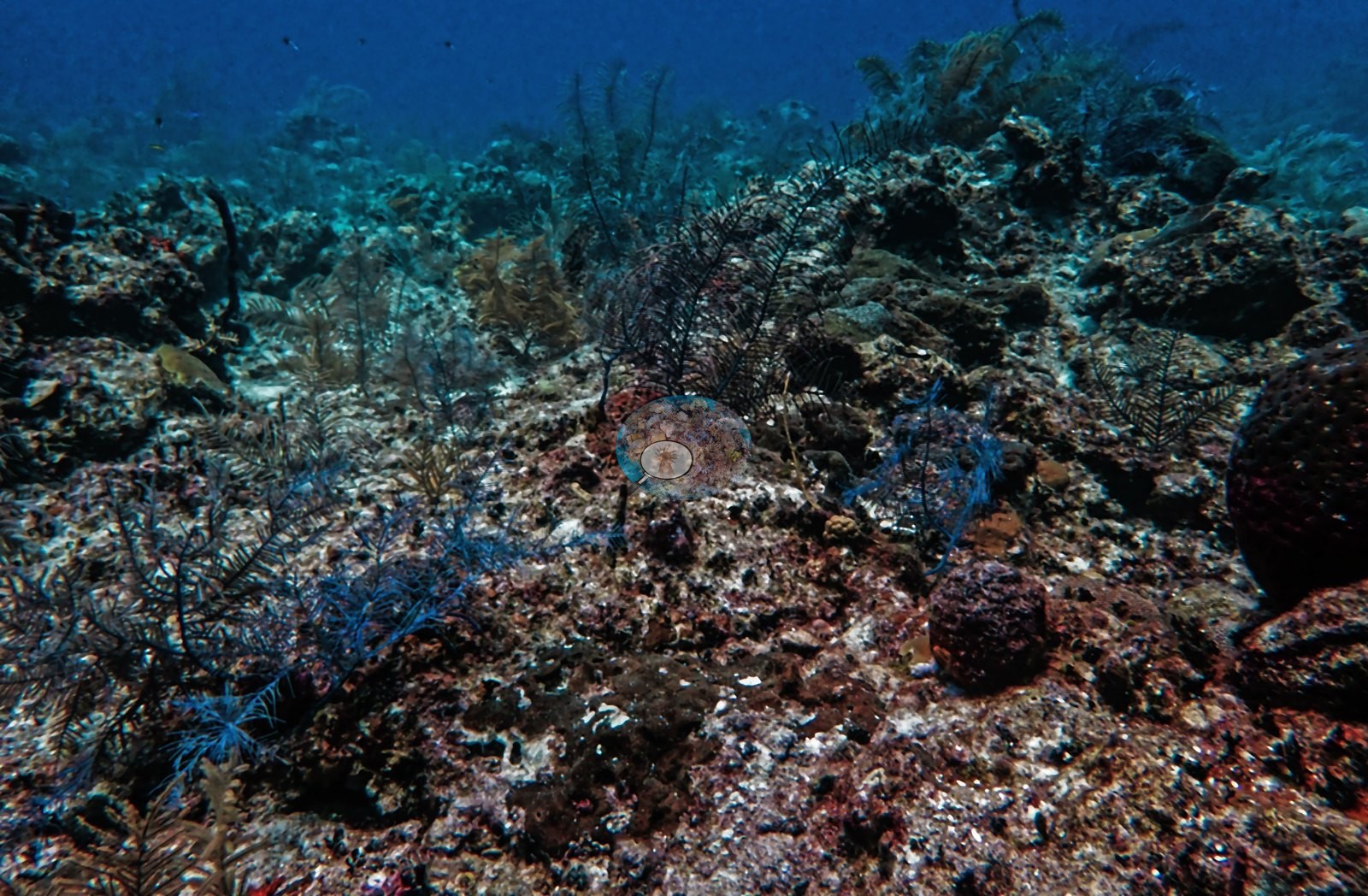
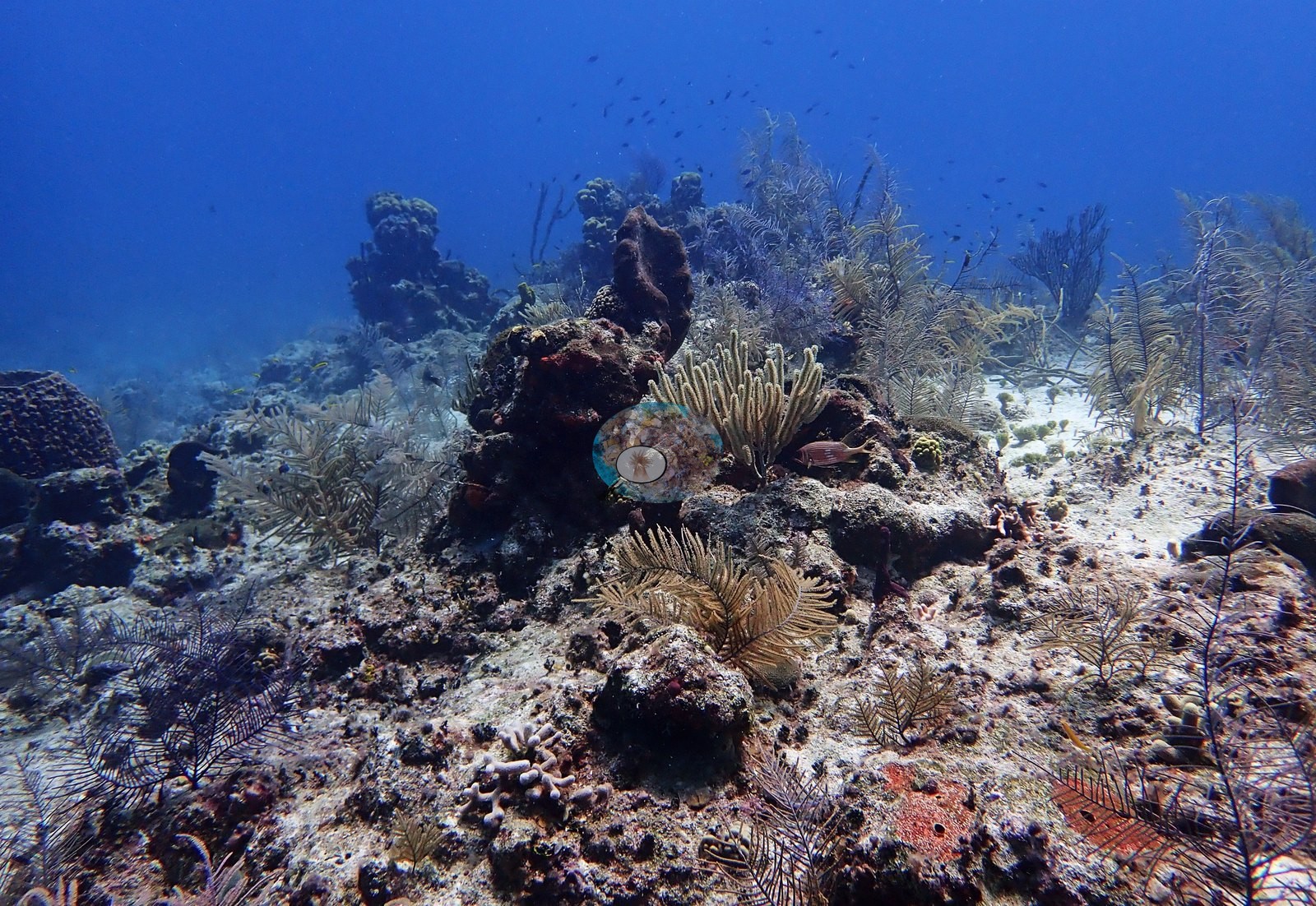
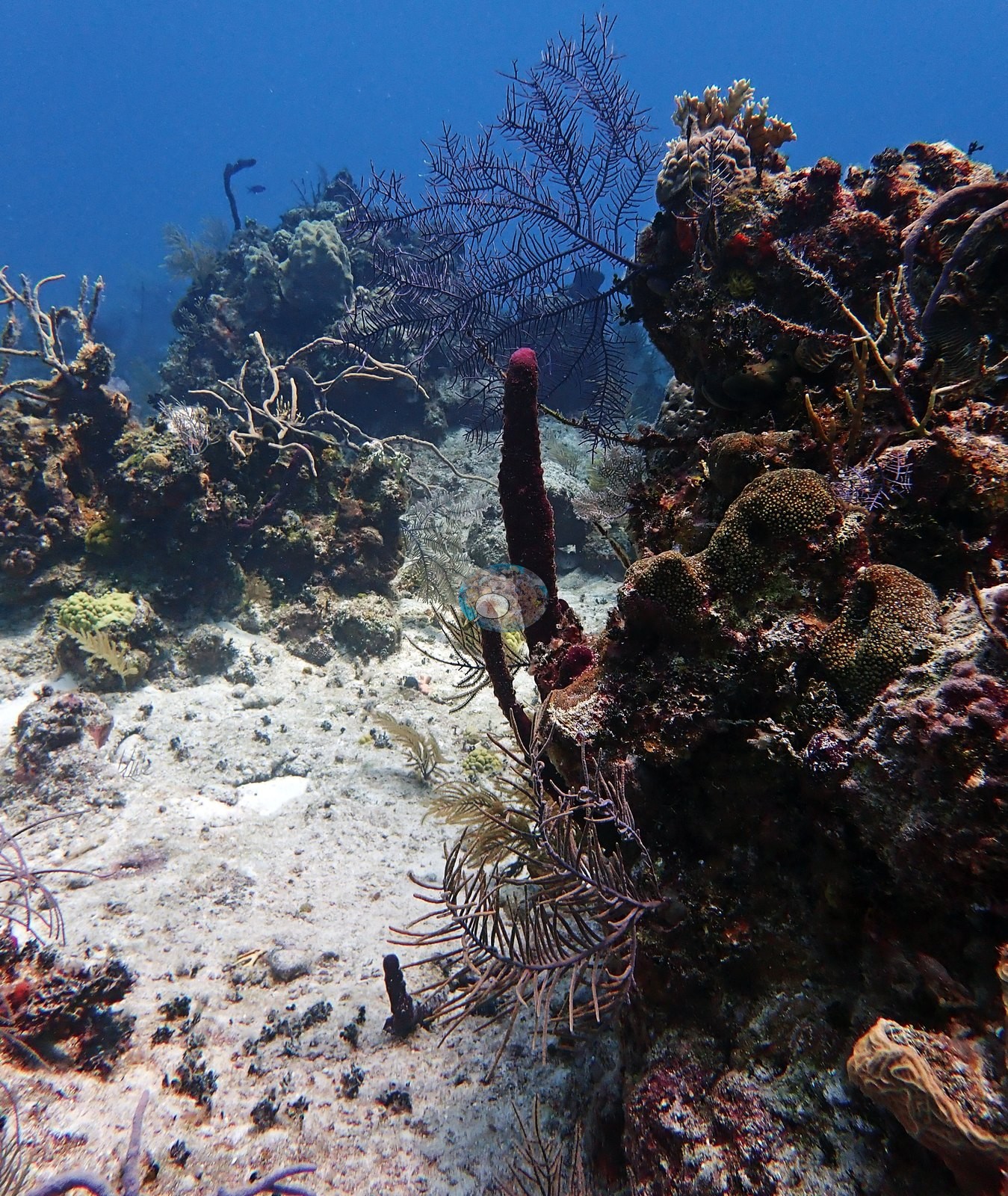
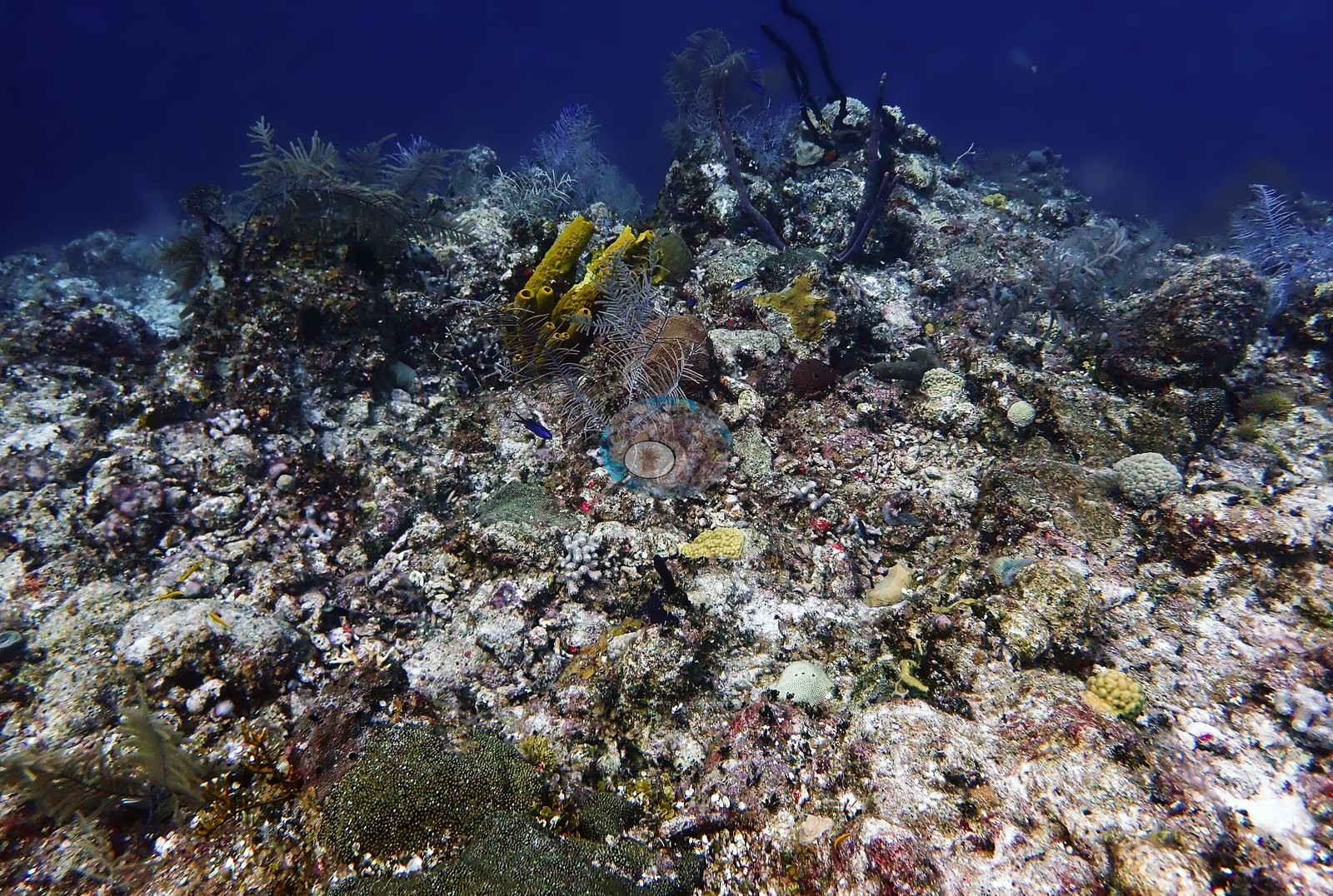
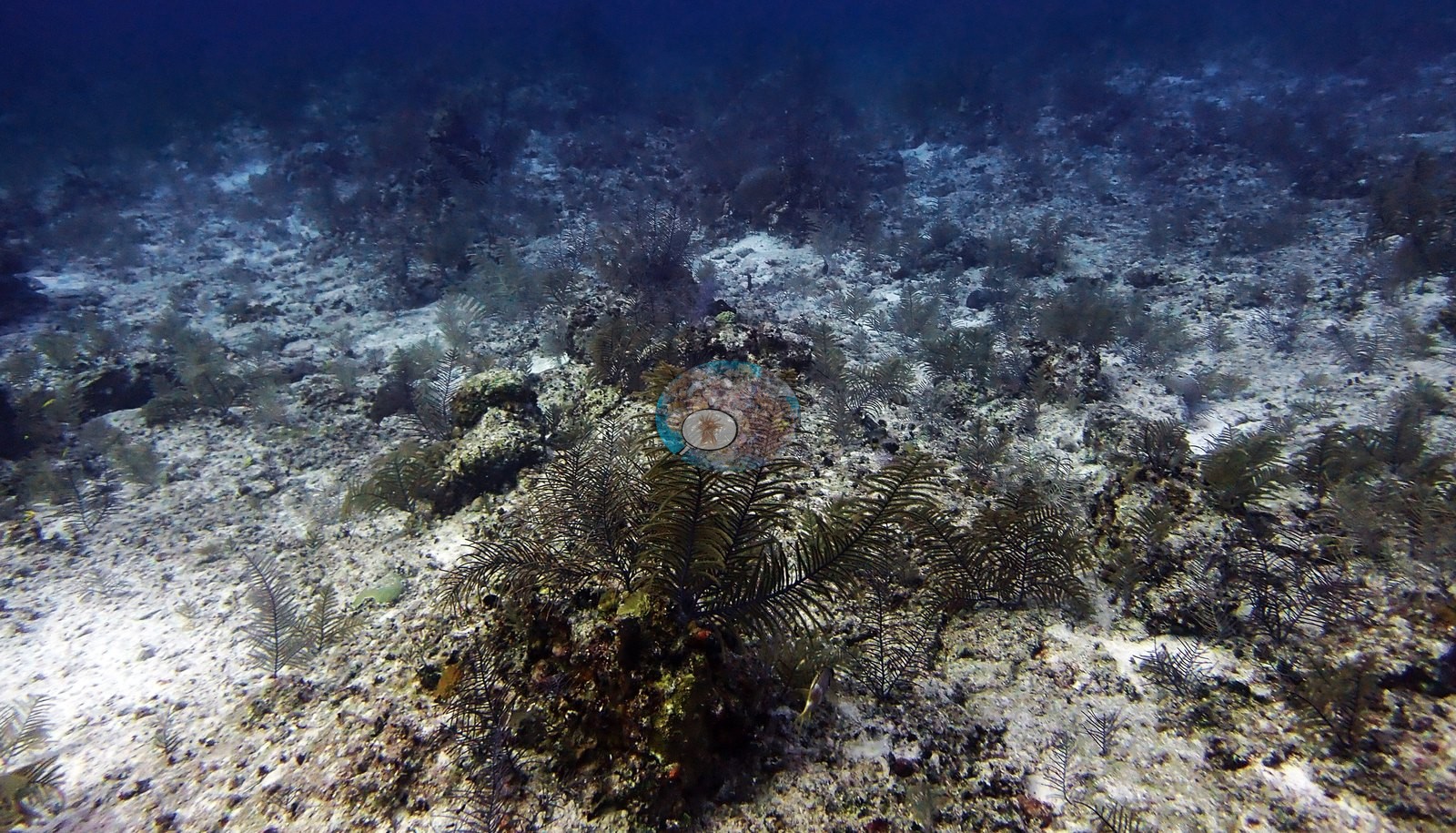
First, a broad low-relief pavement-and-sand plateau at roughly 12-20 m, octocoral country: dense sea plumes and sea rods (Antillogorgia / Pseudopterogorgia, lilac, cream, and golden-brown), purple sea fans, and black wire-coral (Stichopathes) whips over pale turf- and coralline-crusted dead framework, white sand channels between (e.g., Image 17, Image 40, Image 42).
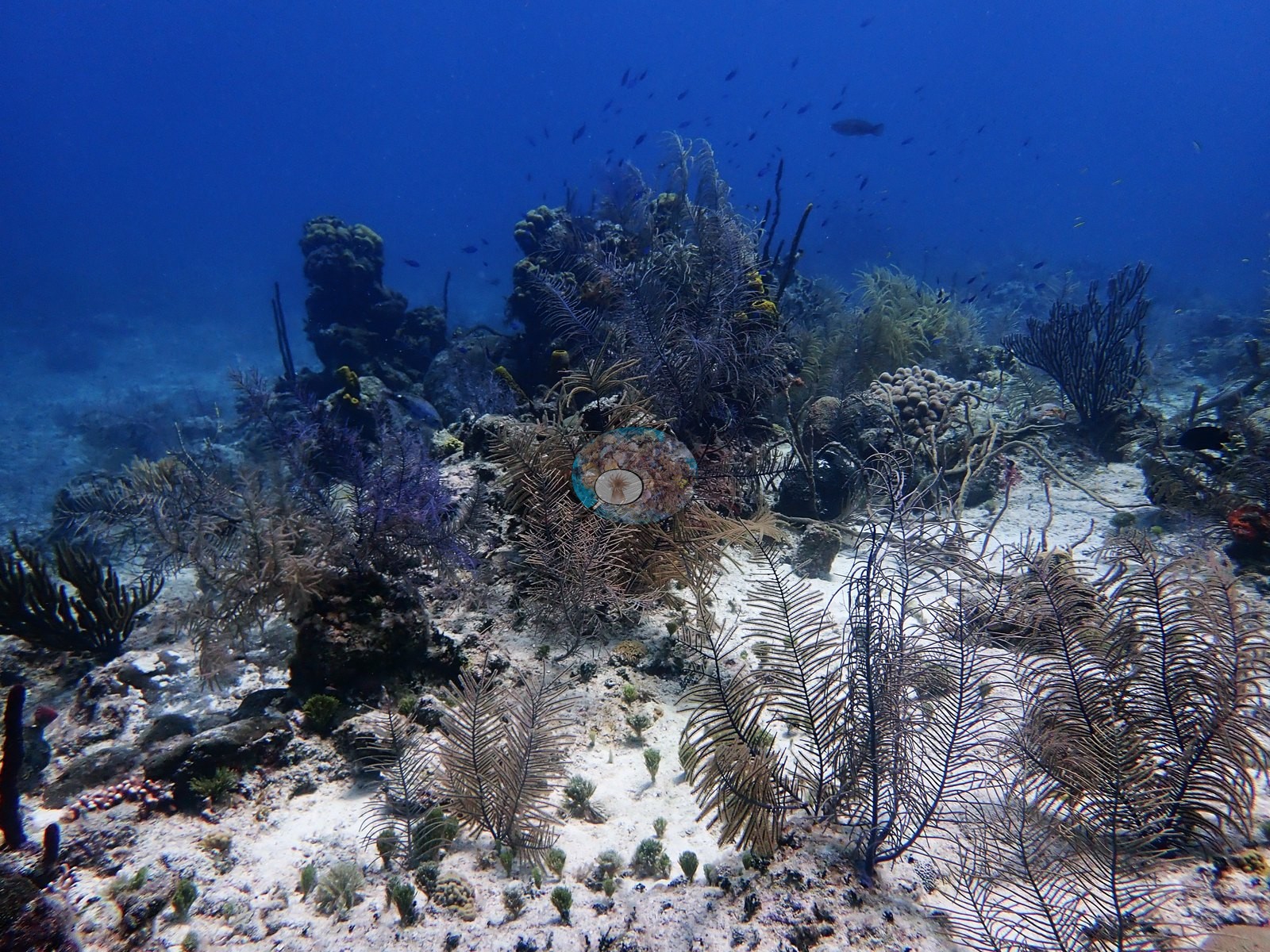
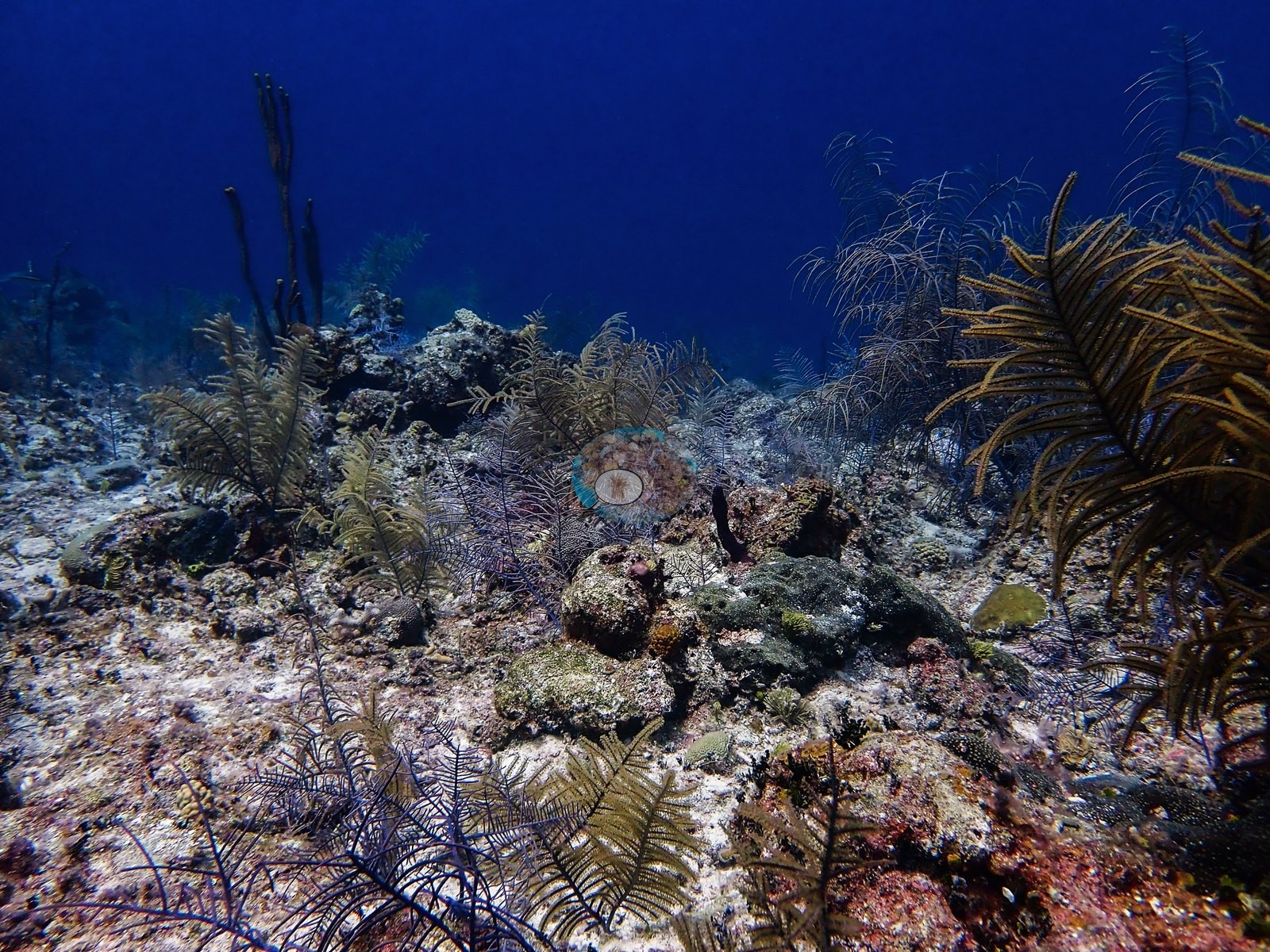
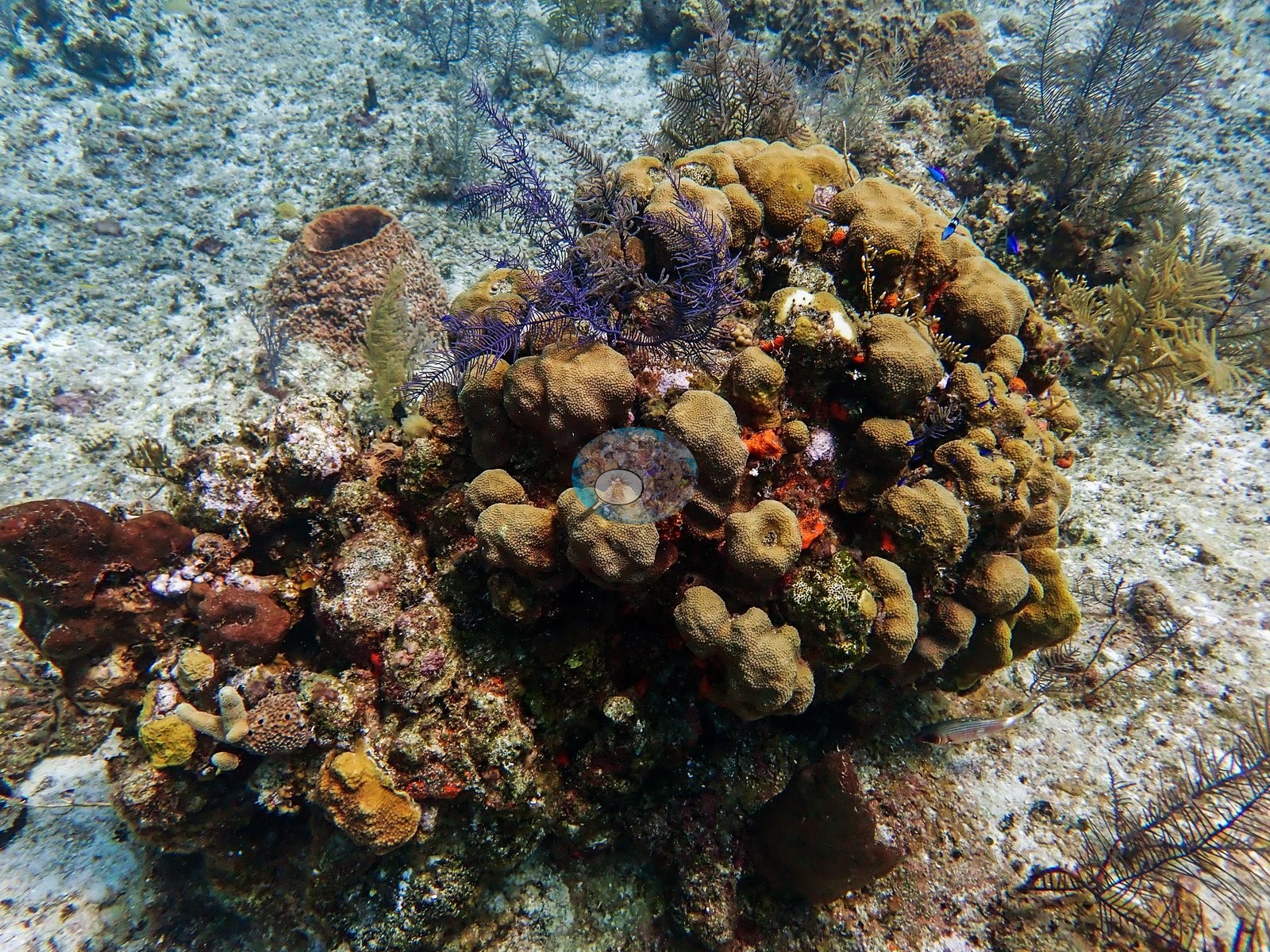
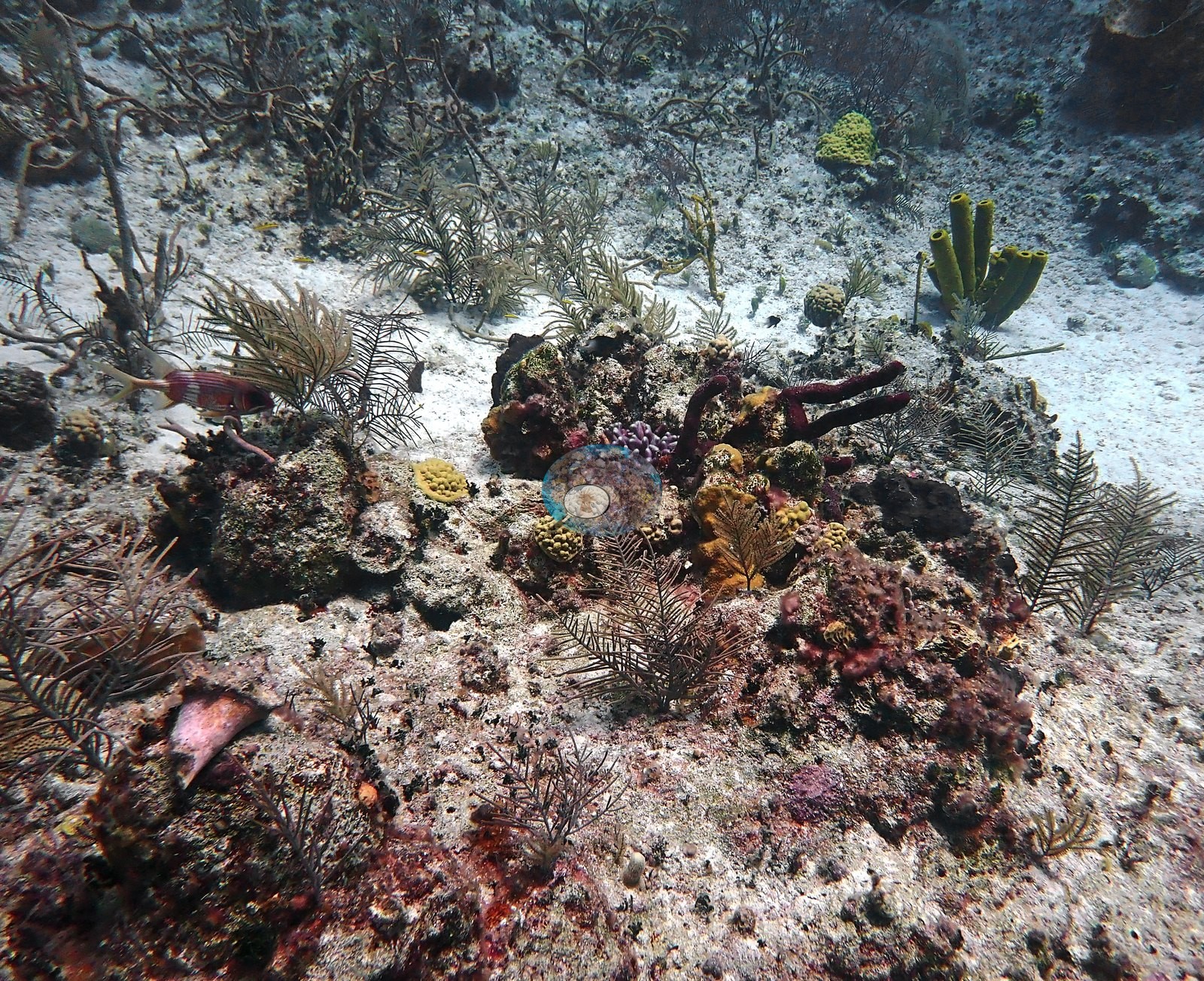
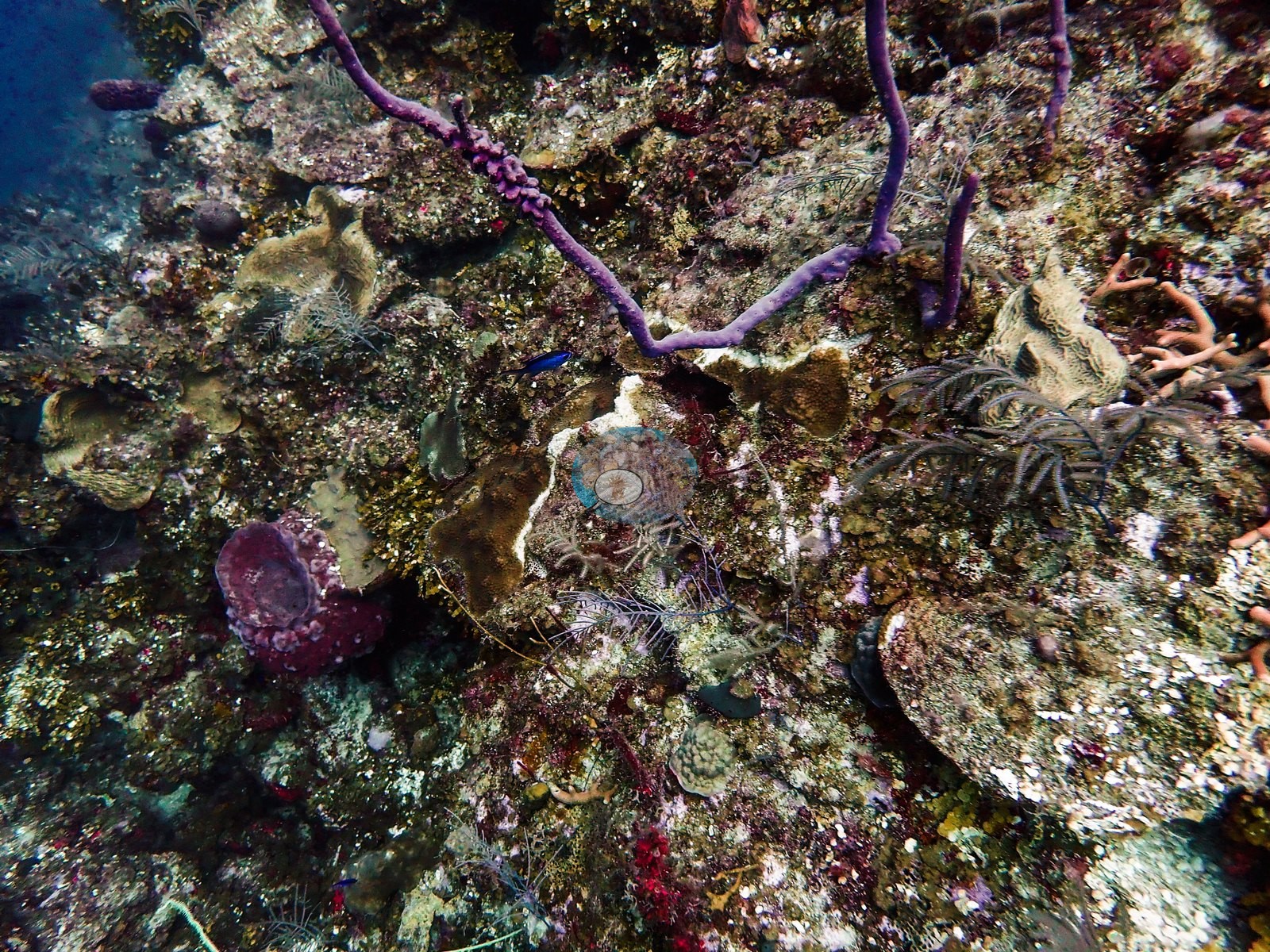
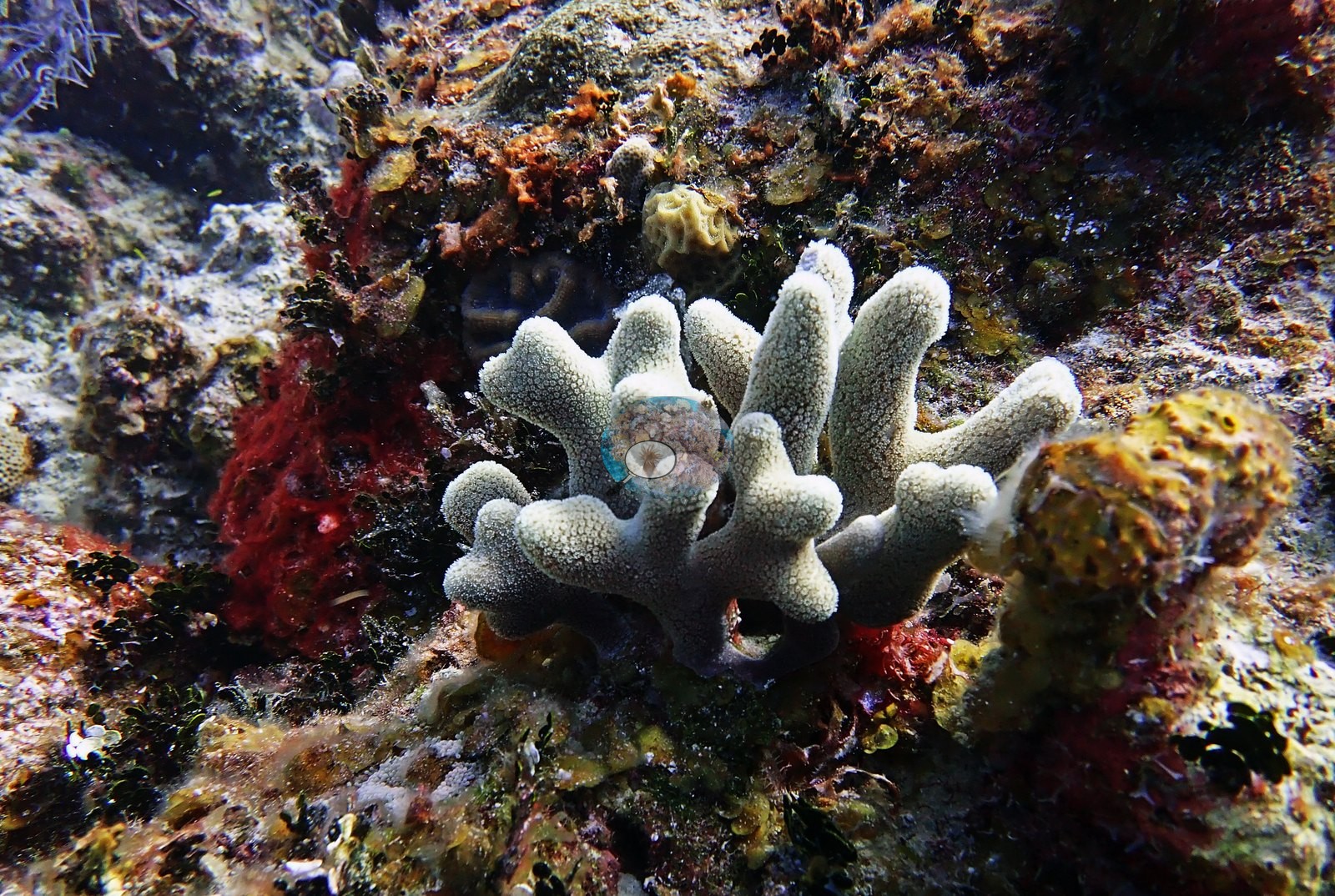
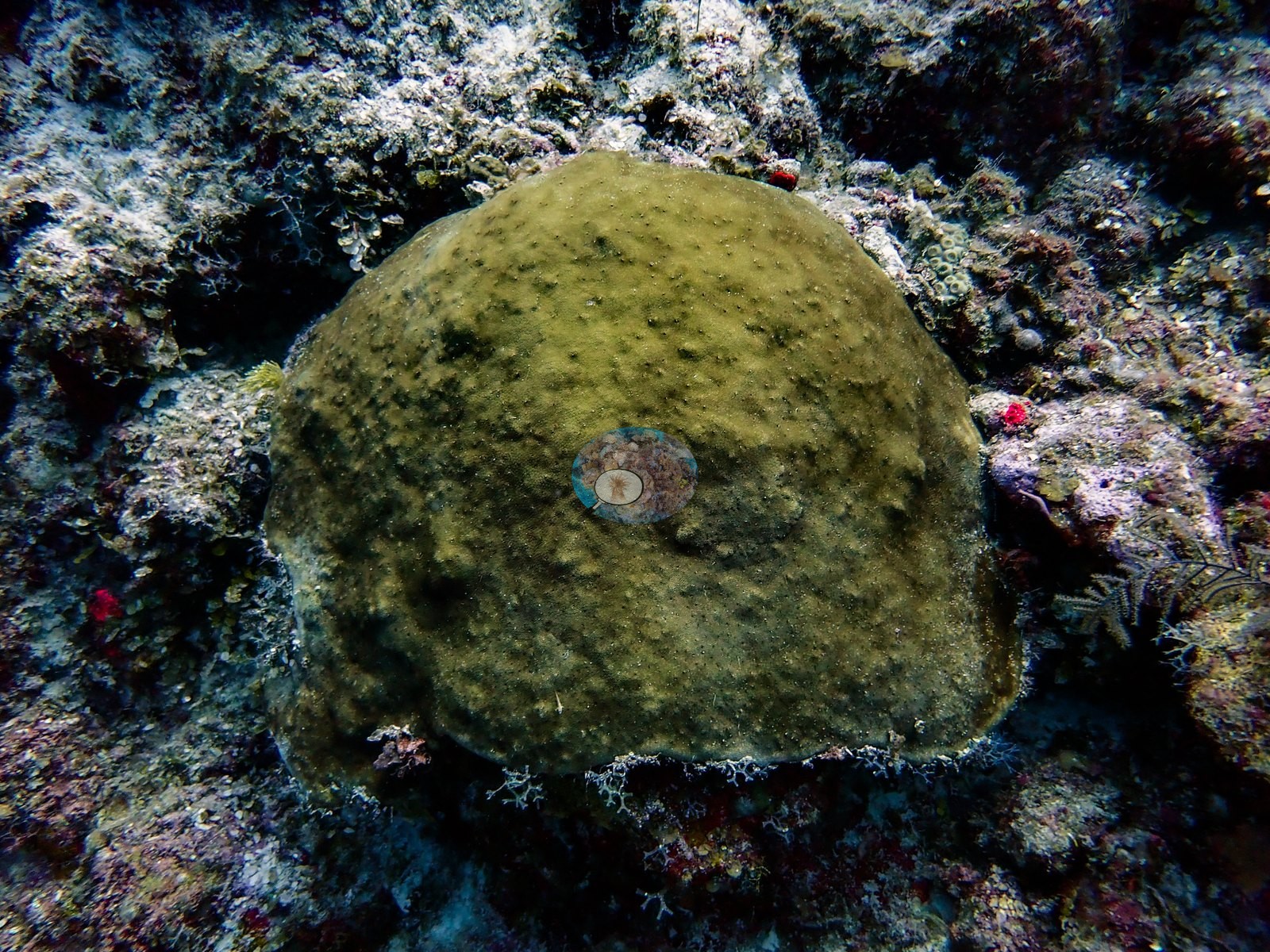
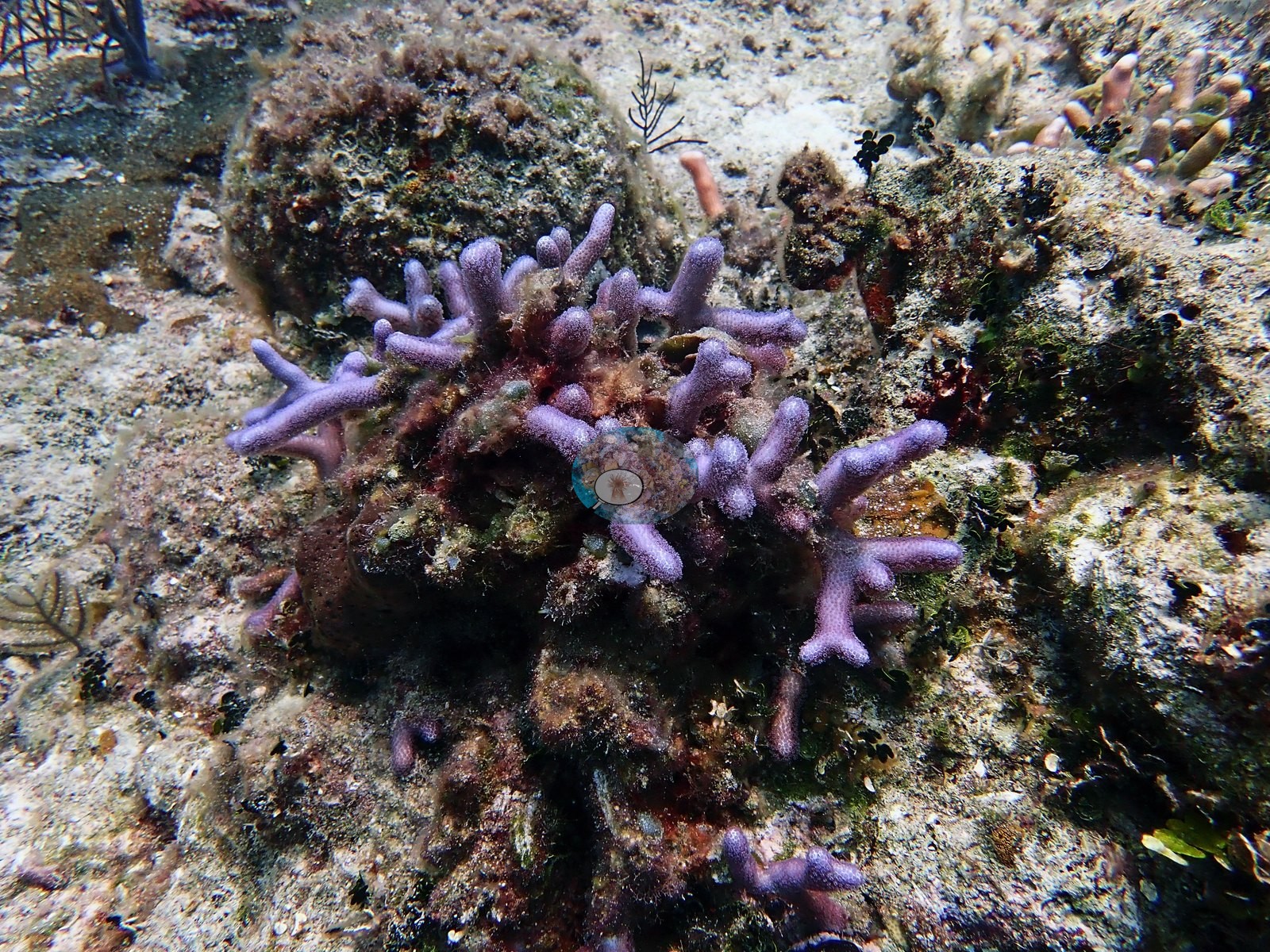
Stony coral here is small and scattered, not structural: mustard Porites astreoides knobs, lavender branching Porites porites, small Siderastrea discs, dark Montastraea cavernosa domes, tan Pseudodiploria / Diploria labyrinthiformis brains (e.g., Image 4, Image 20, Image 54).
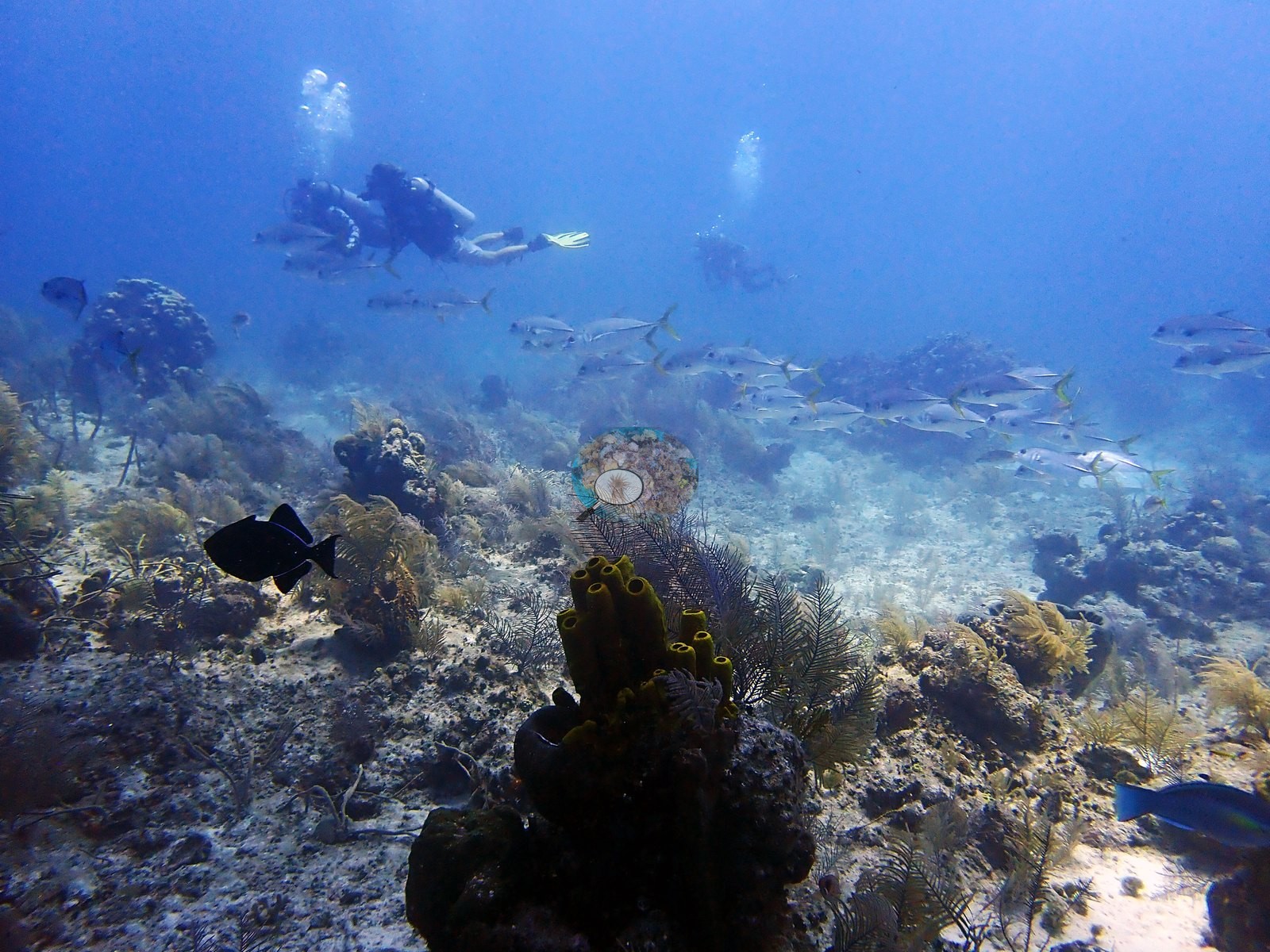
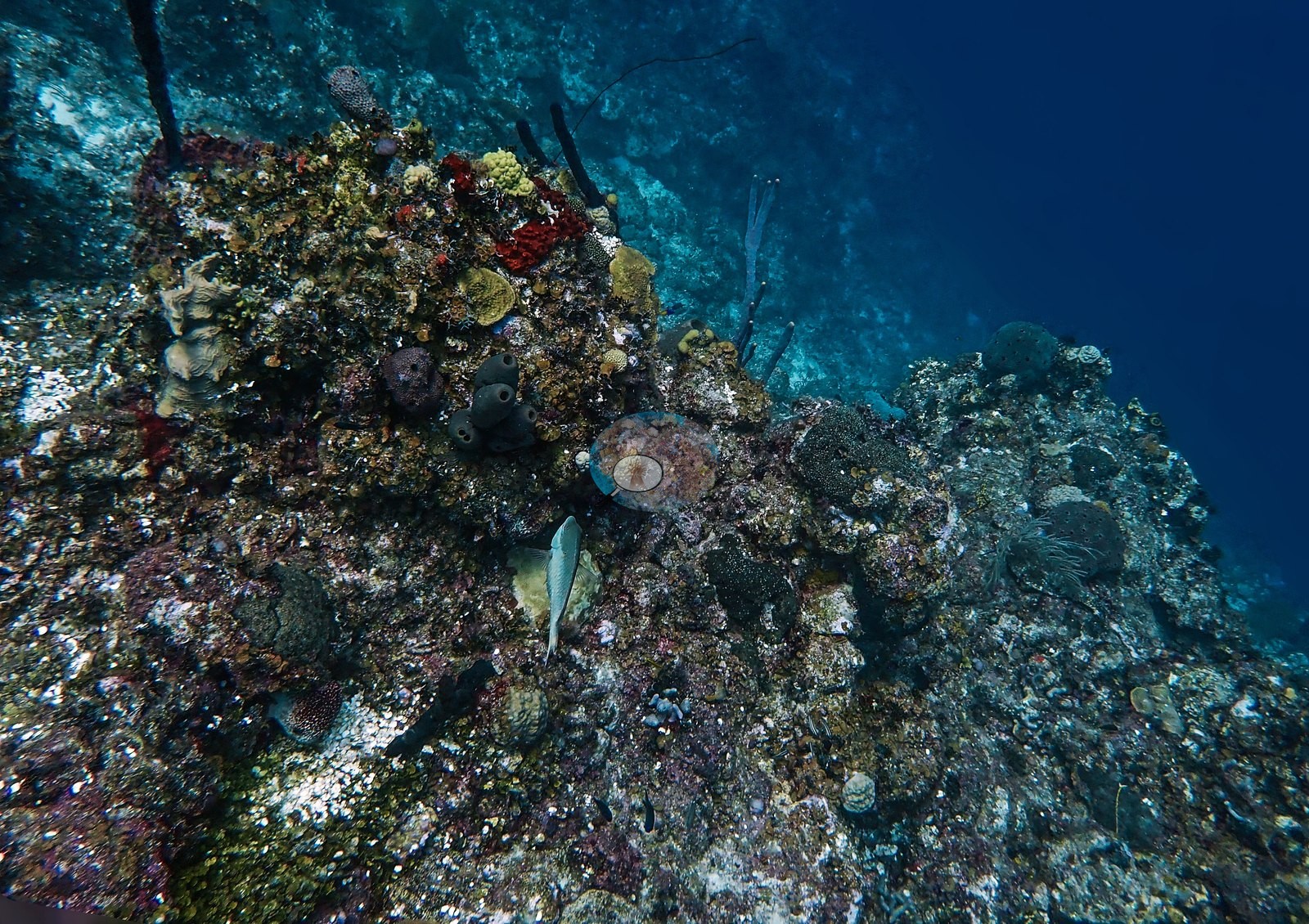
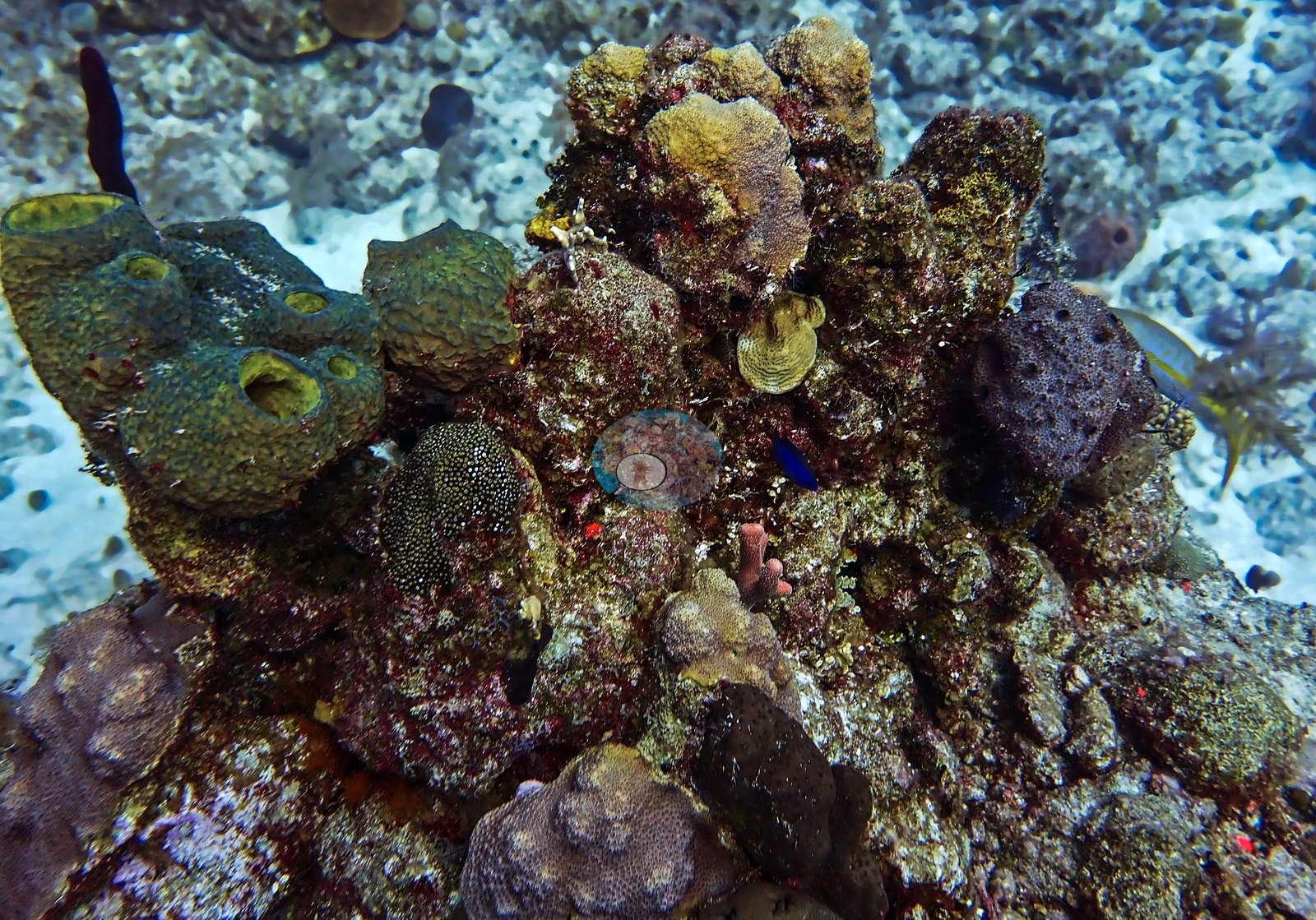
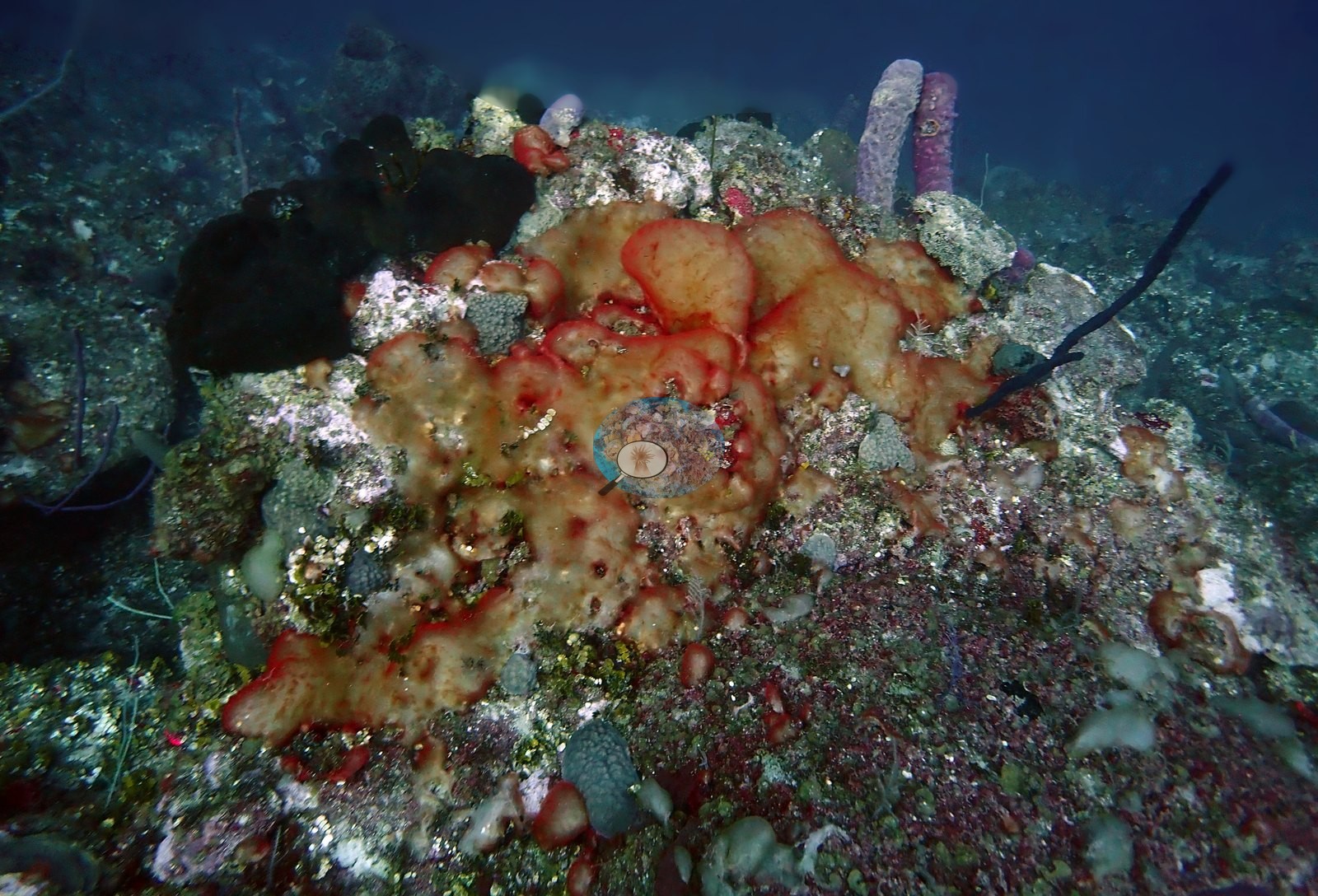
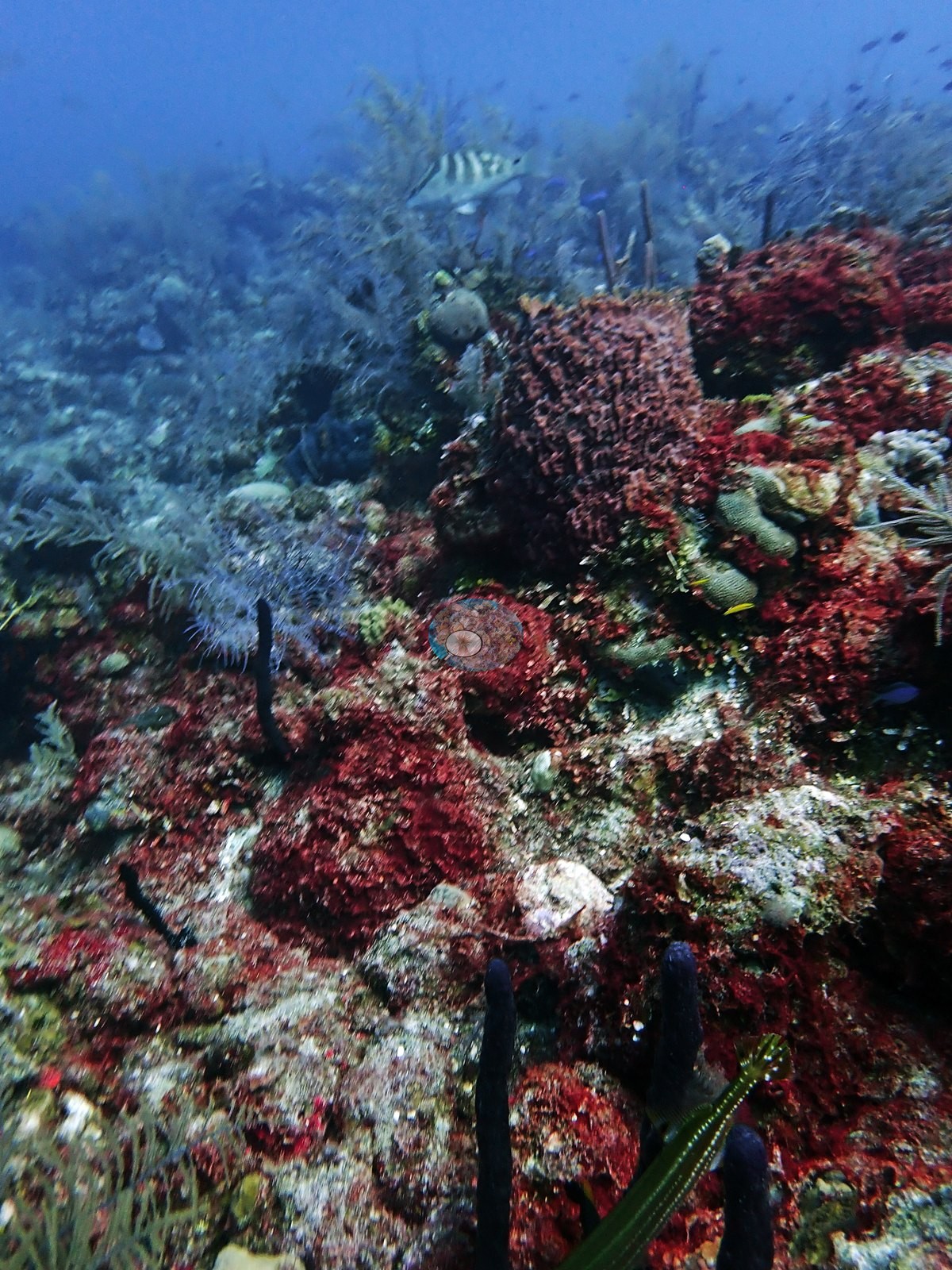
Sponges carry the relief: yellow tubes (Aplysina fistularis), brown multi-osculum tubes (Agelas conifera), orange lobate elephant-ear (Agelas clathrodes), maroon rope sponges, gray vase and barrel sponges, and lilac encrusting sheets overgrowing coral in one frame (e.g., Image 15, Image 38, Image 41).
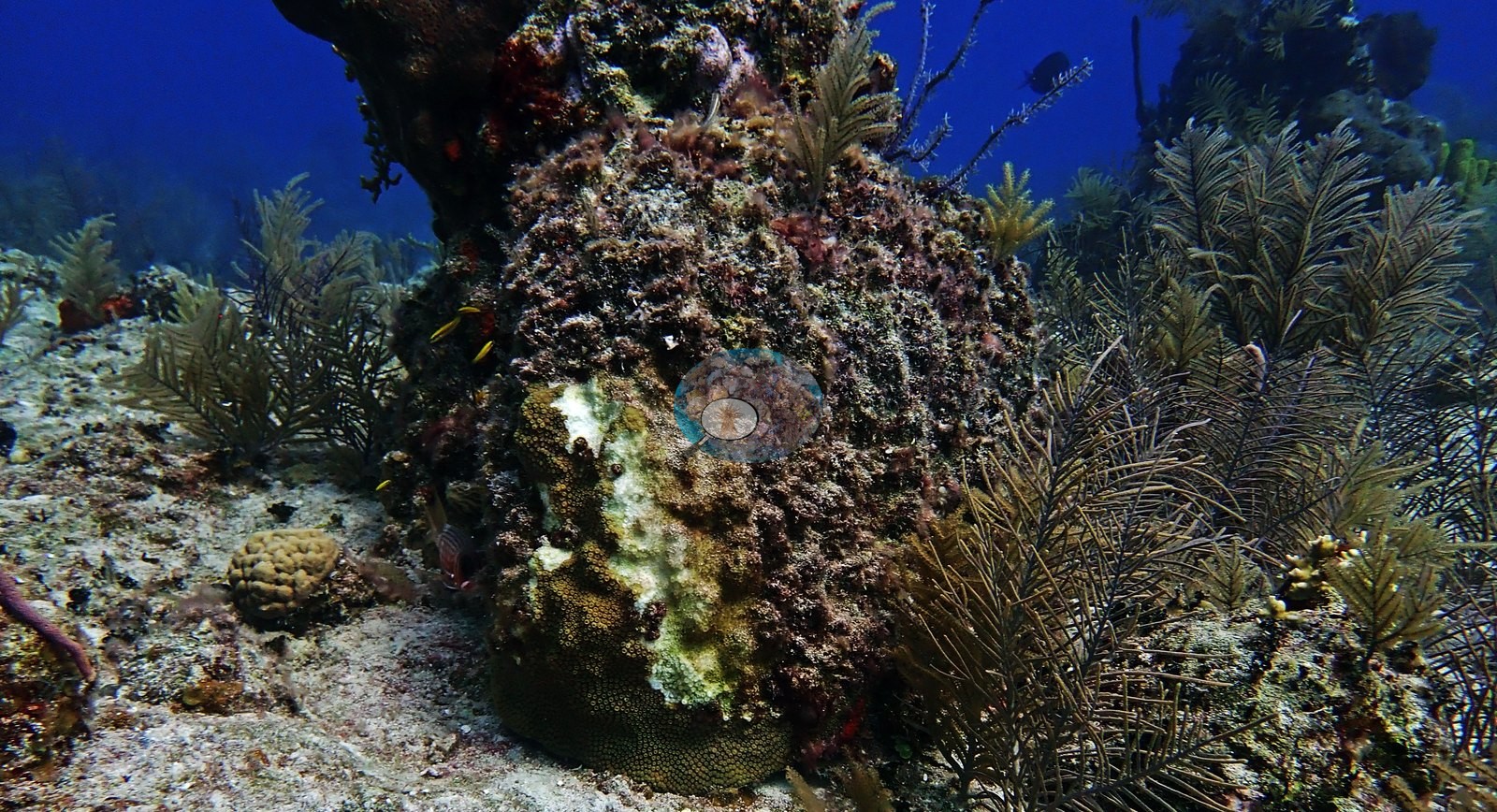
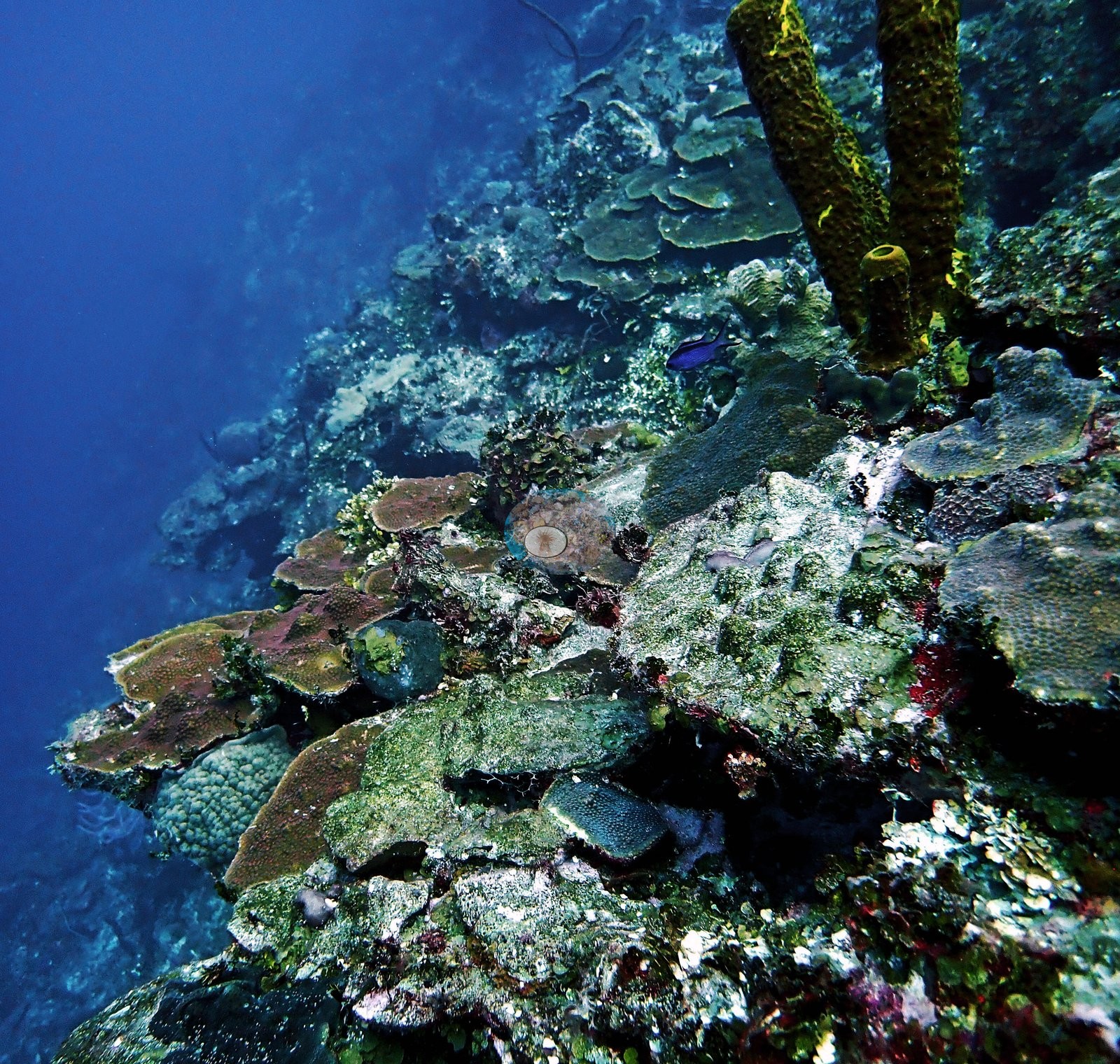
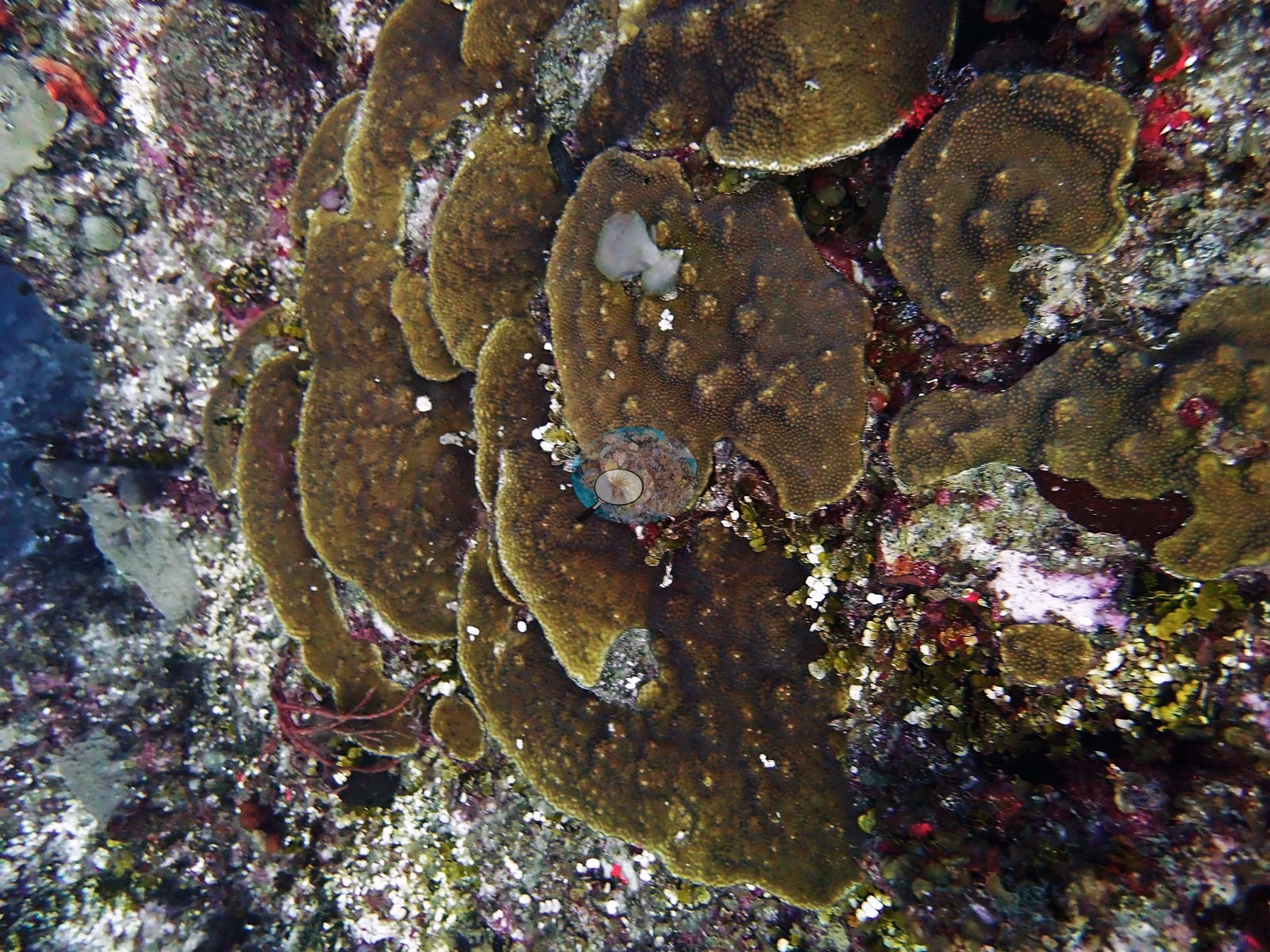
Coral improves markedly at the edge: tiered plating and encrusting Orbicella- and Agaricia-type colonies, some with vivid yellow growing margins, plus knobby Orbicella annularis mounds (e.g., Image 2, Image 3, Image 21).
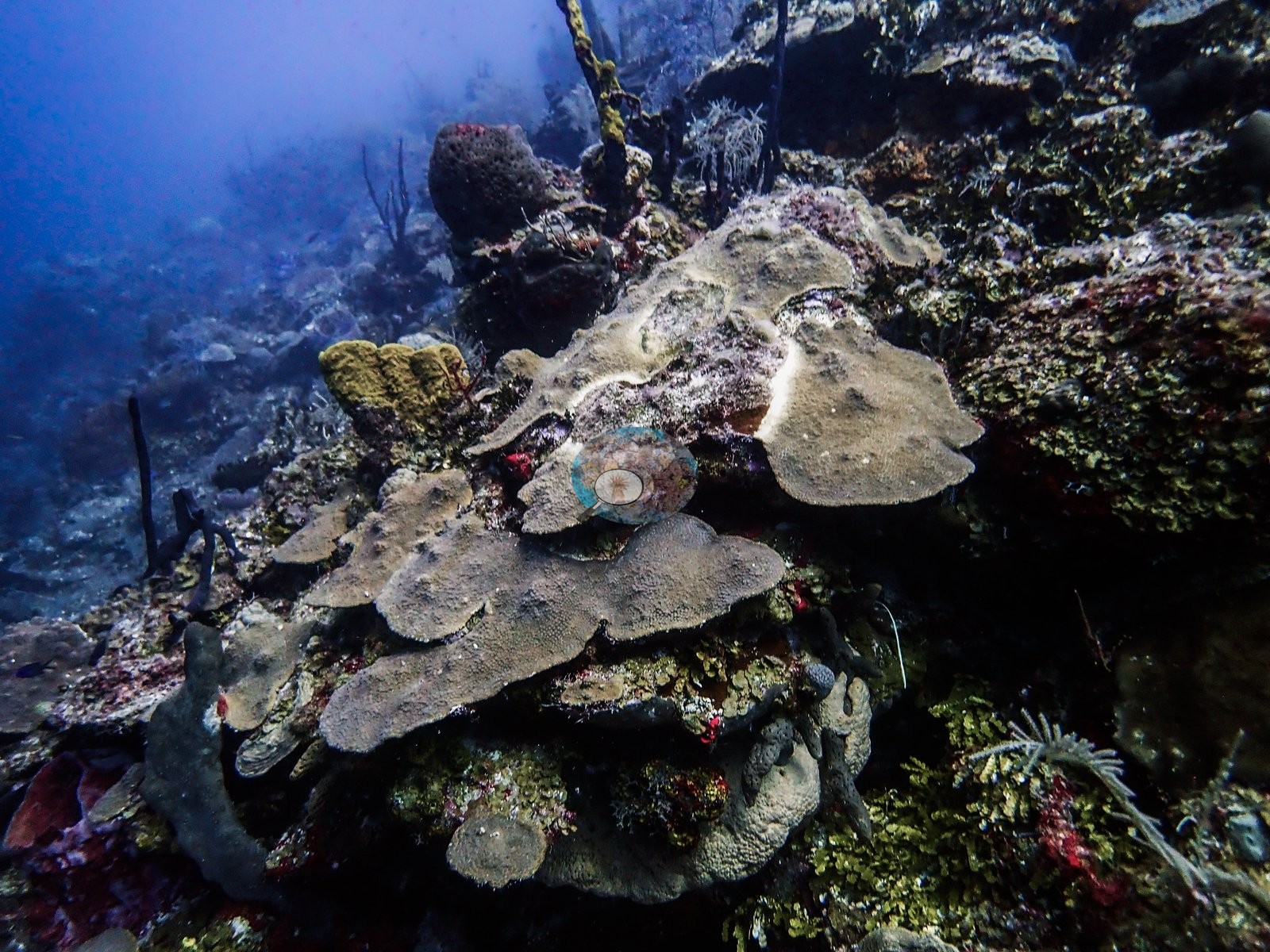
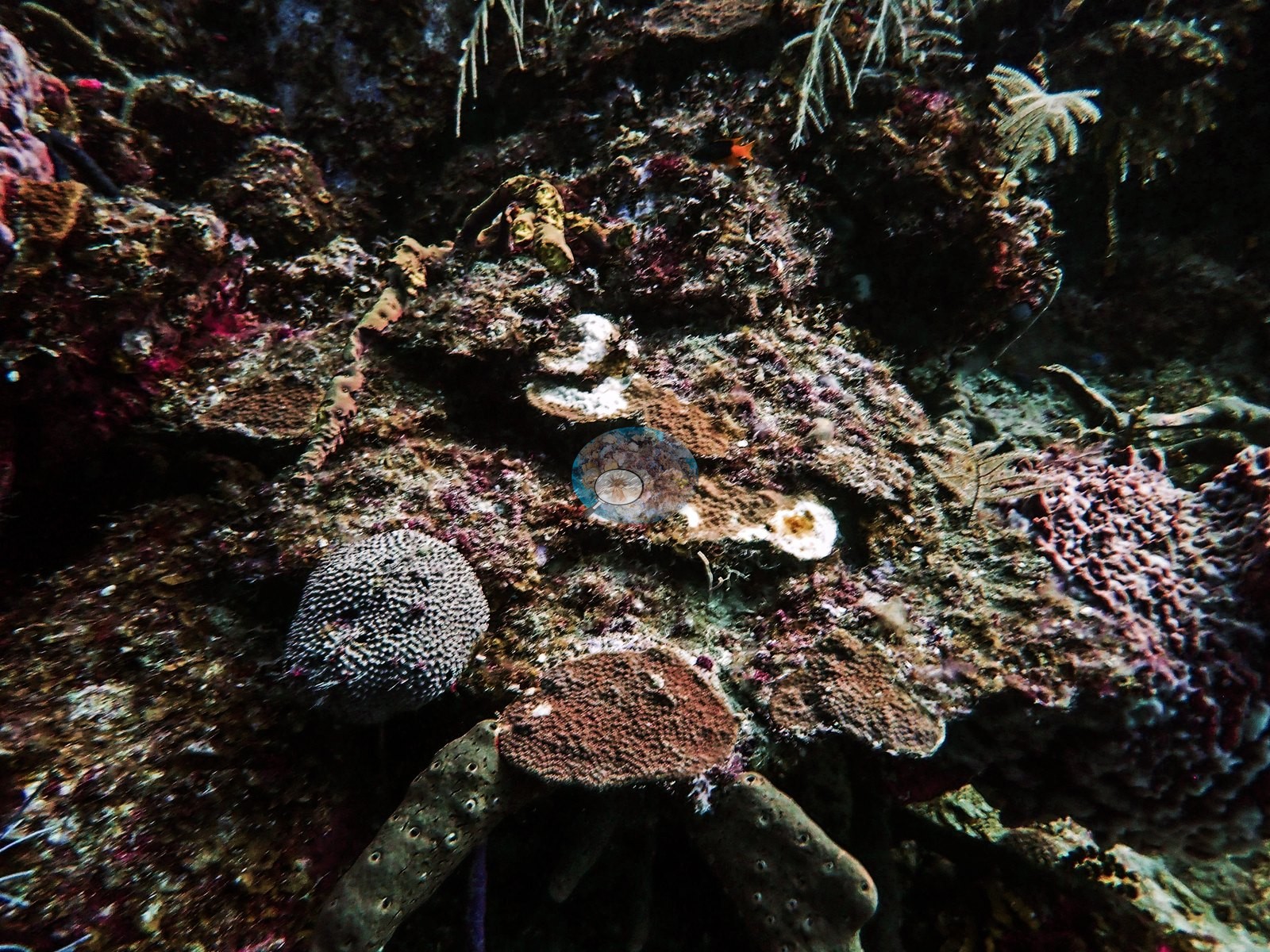
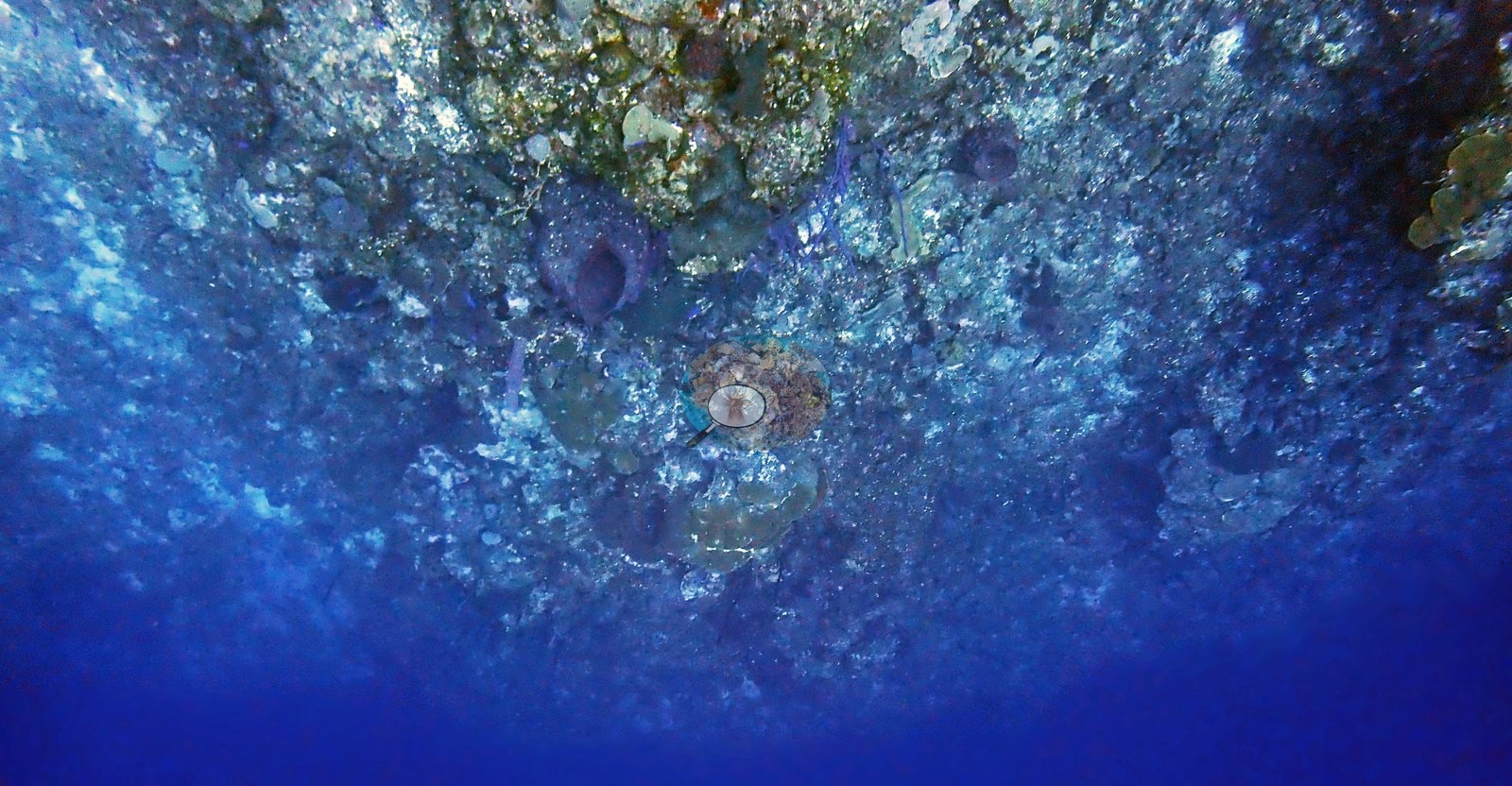
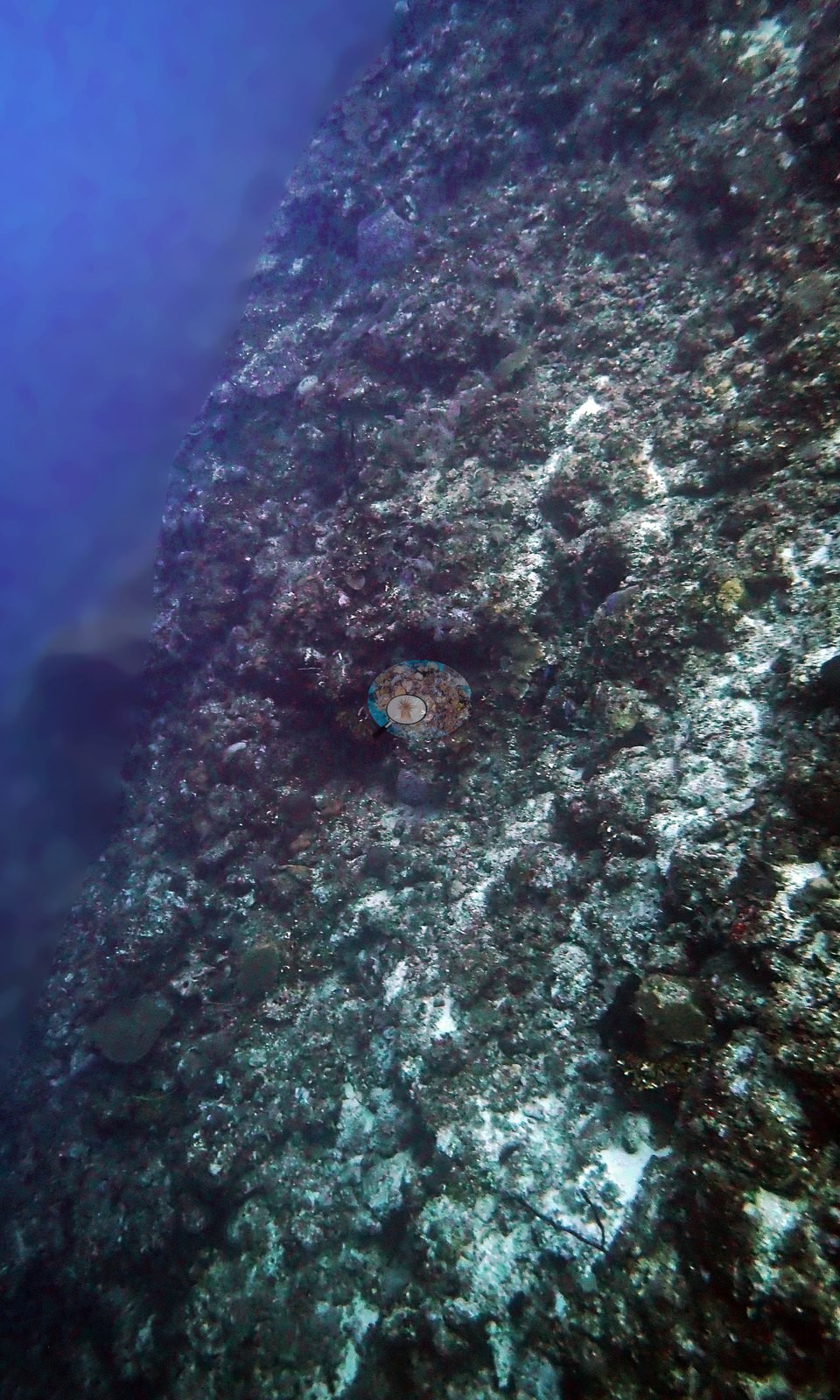
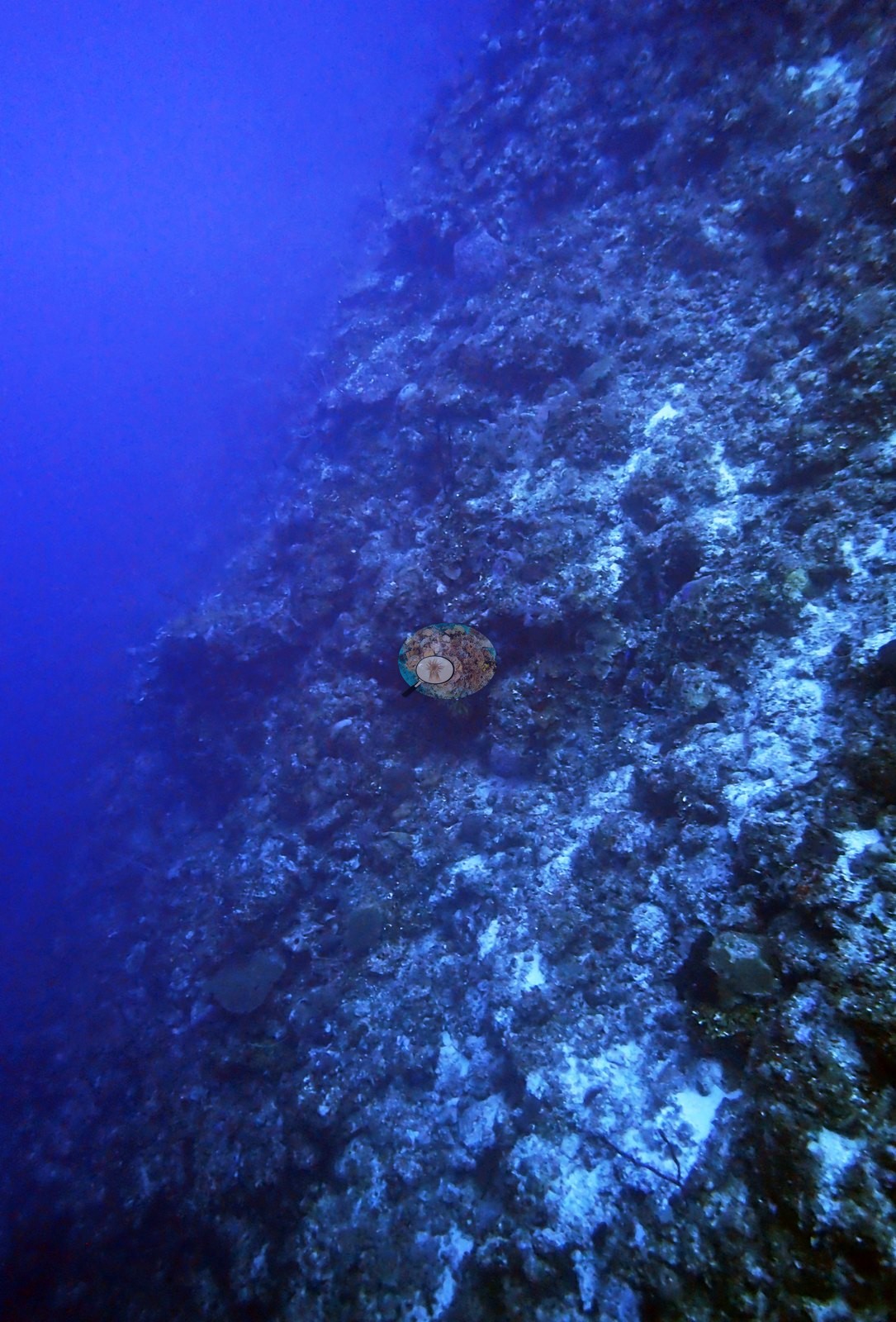
The vertical face is mostly bare framework, white feathery gorgonians, red encrusting sponges, and turf (e.g., Image 5, Image 53).
Coral cover
- Reference: Claude CV point count (this site's photos)
- Coral cover: 5.9% — a blind Claude computer-vision point count of 90 of Anderson's edited photographs (the mean of the two dives' means; 20 points per photo; water, fish, and obstructions excluded). Other computer-vision methods are listed in the method table.
Stressors
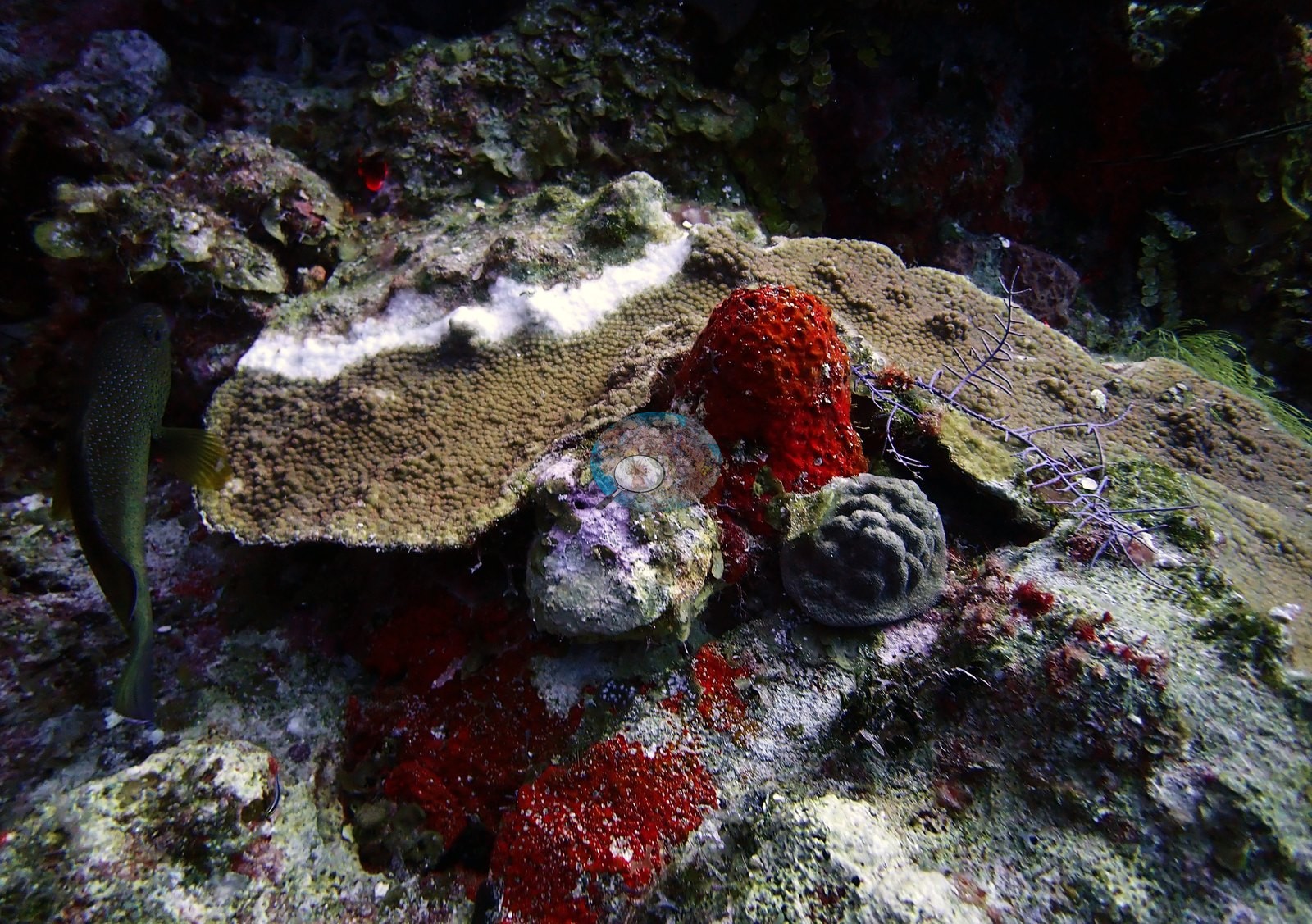
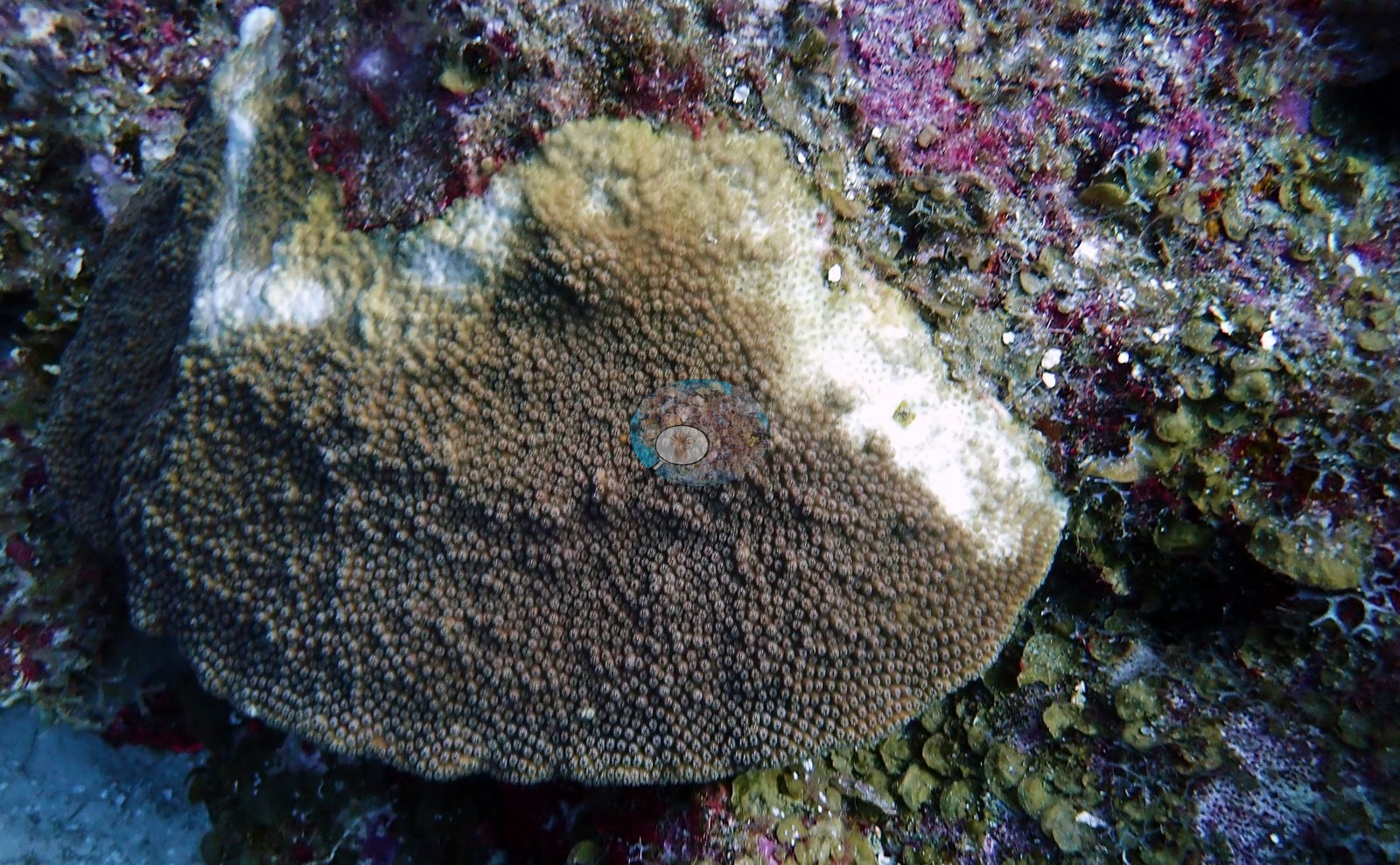
But eight close-ups show sharply bounded bands of freshly exposed white skeleton at colony margins, older dead area claimed by violet crustose coralline algae - active tissue loss rather than bleaching (e.g., Image 29, Image 33, Image 34, Image 51).
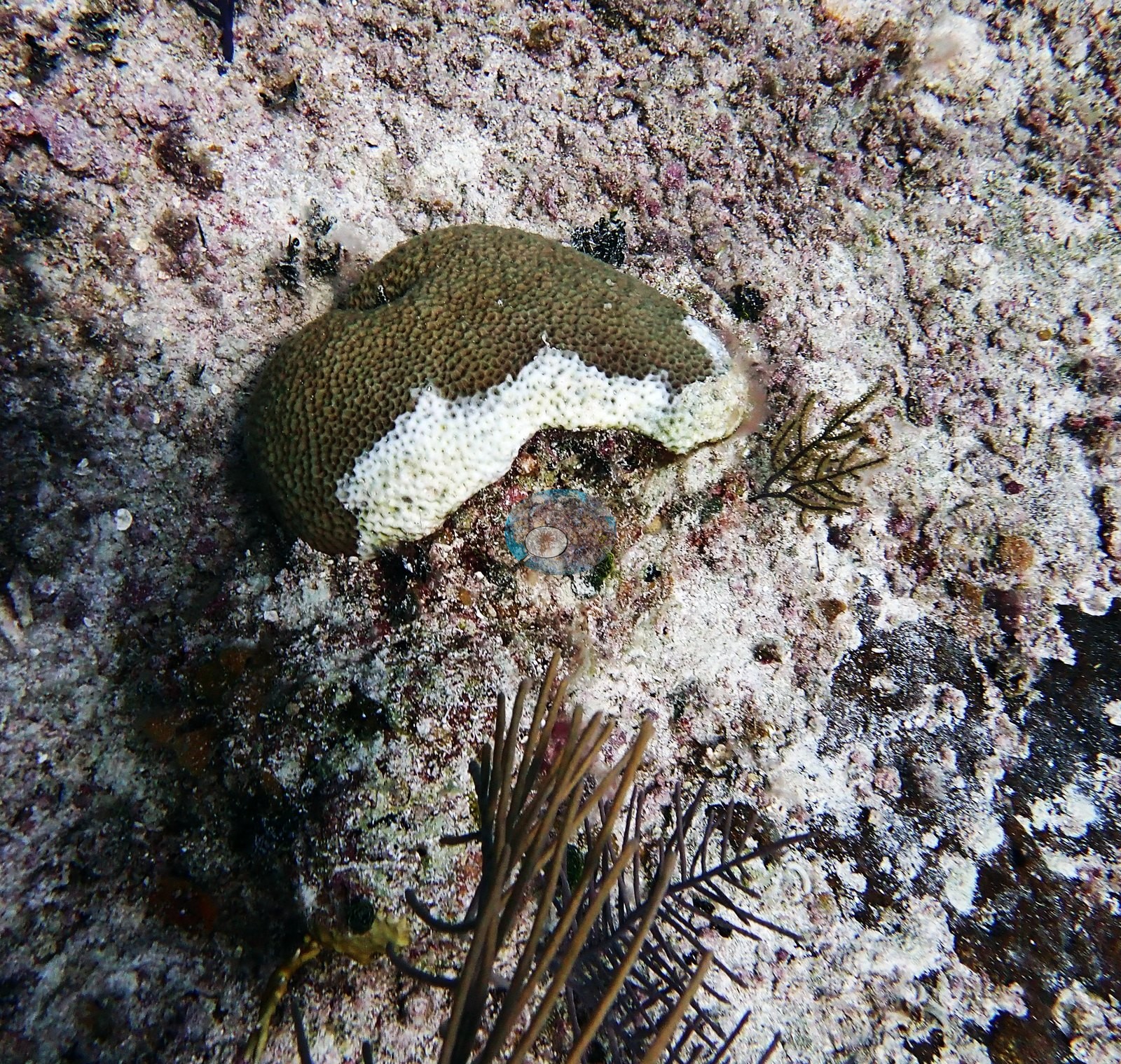
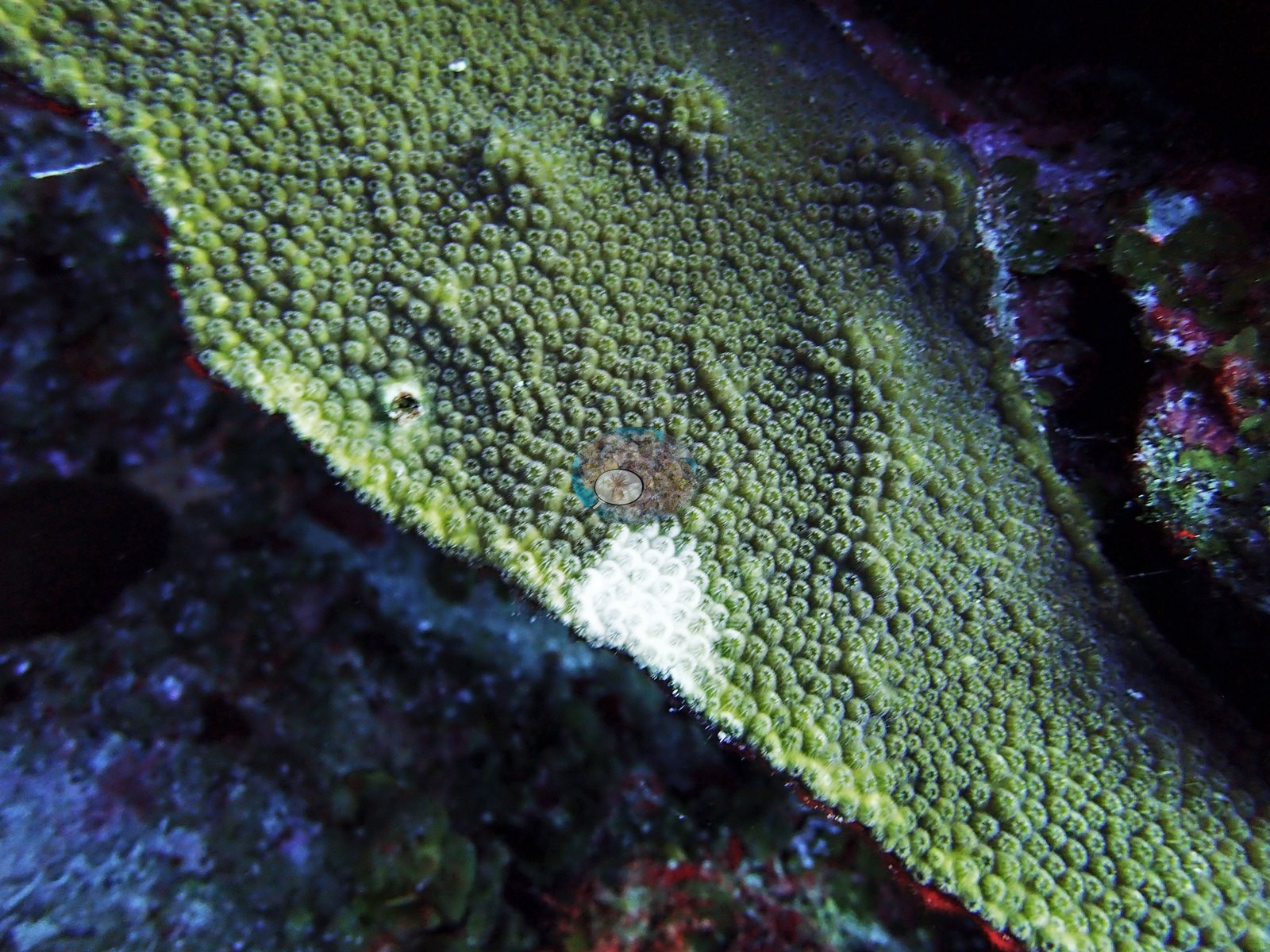
No corallivores evident.
Fish and other fauna
Fauna is the site's signature: Caribbean reef sharks (Carcharhinus perezi) work the drop-off in a dozen frames, and nurse sharks (Ginglymostoma cirratum) rest on sand beneath isolated bommies wrapped in French and bluestriped grunt schools - the defining Rock and Roll image, and what separates this site from G Spot's V-shaped wall notch just east (e.g., Image 27, Image 36, Image 49).
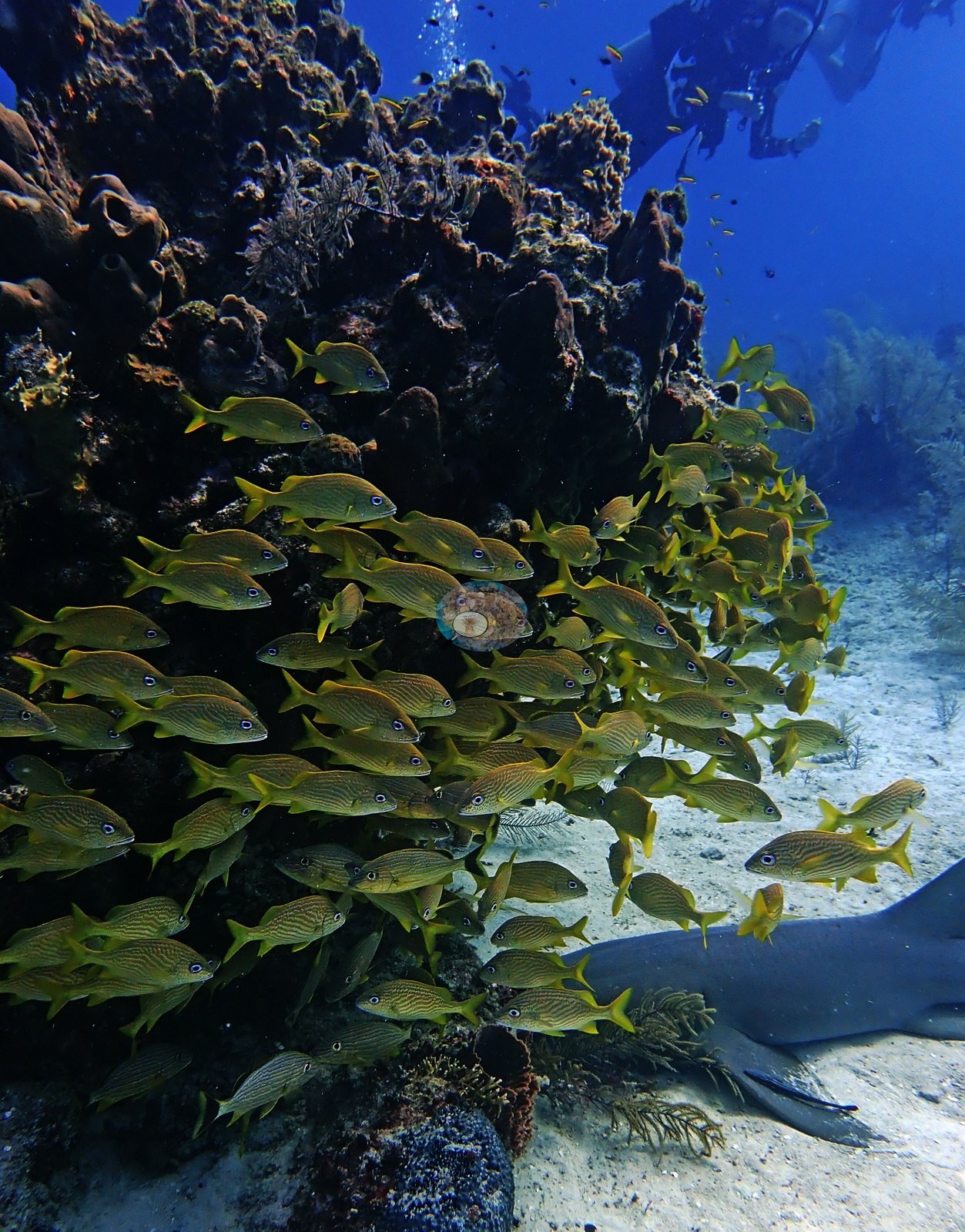
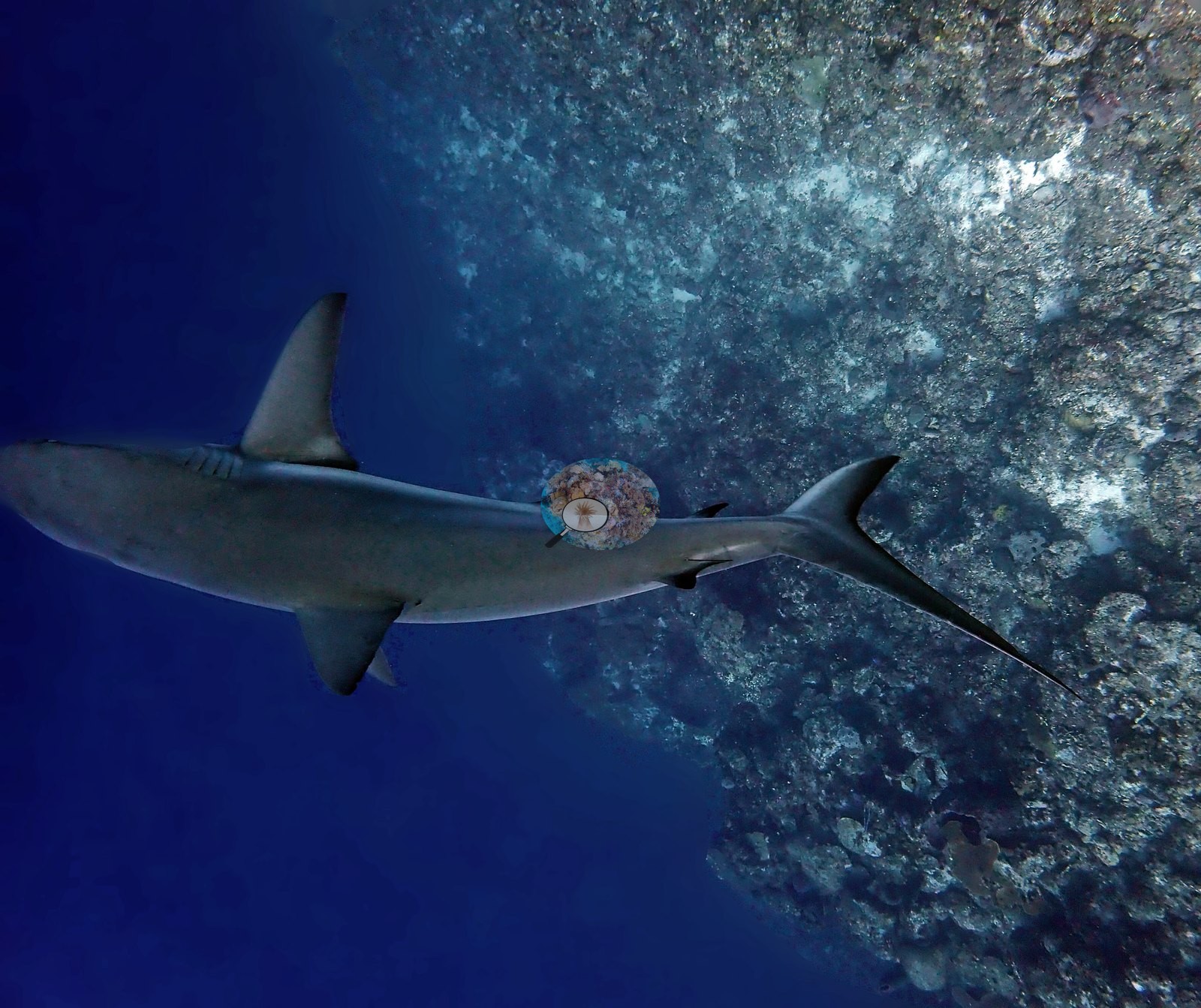
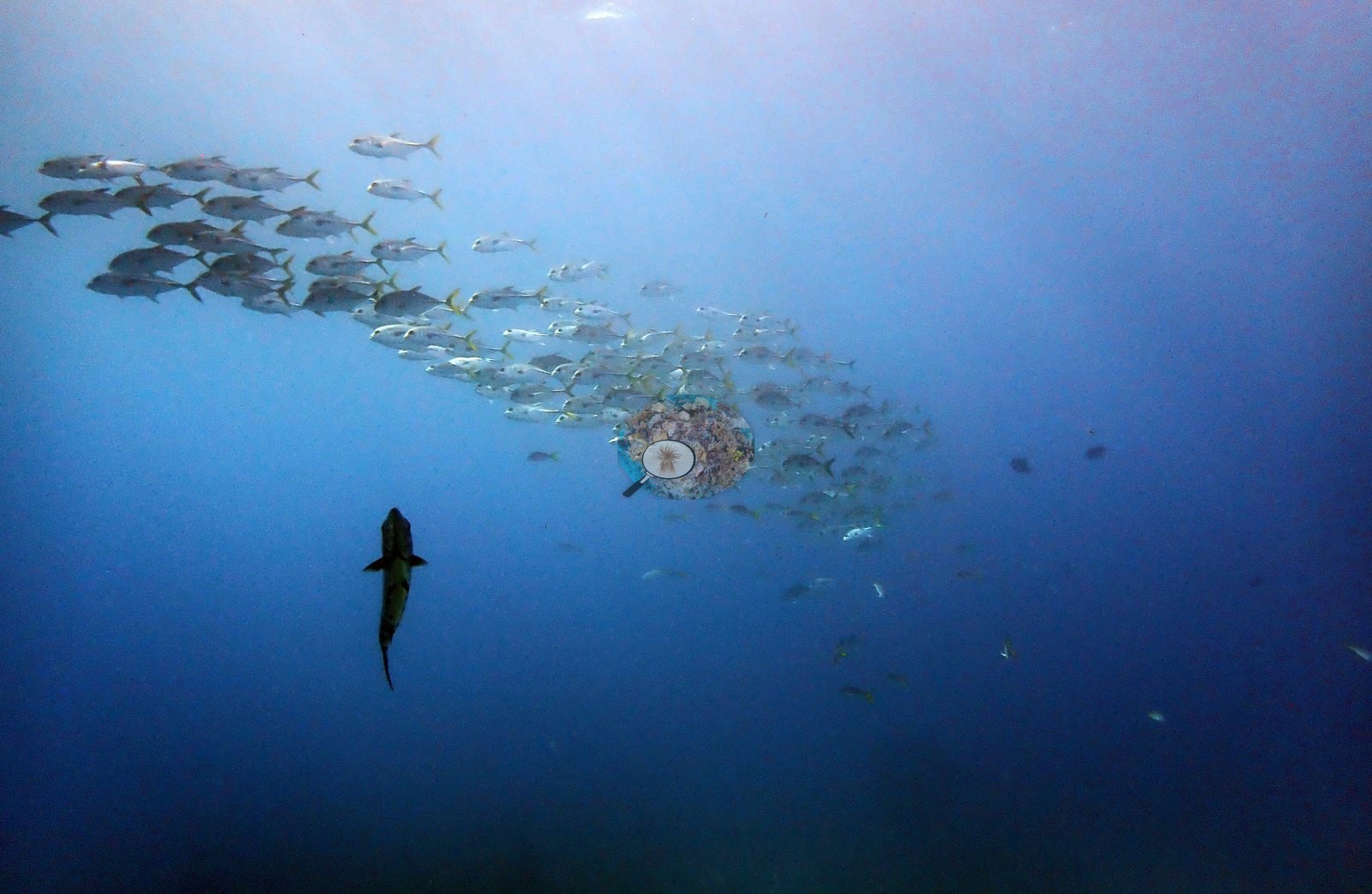
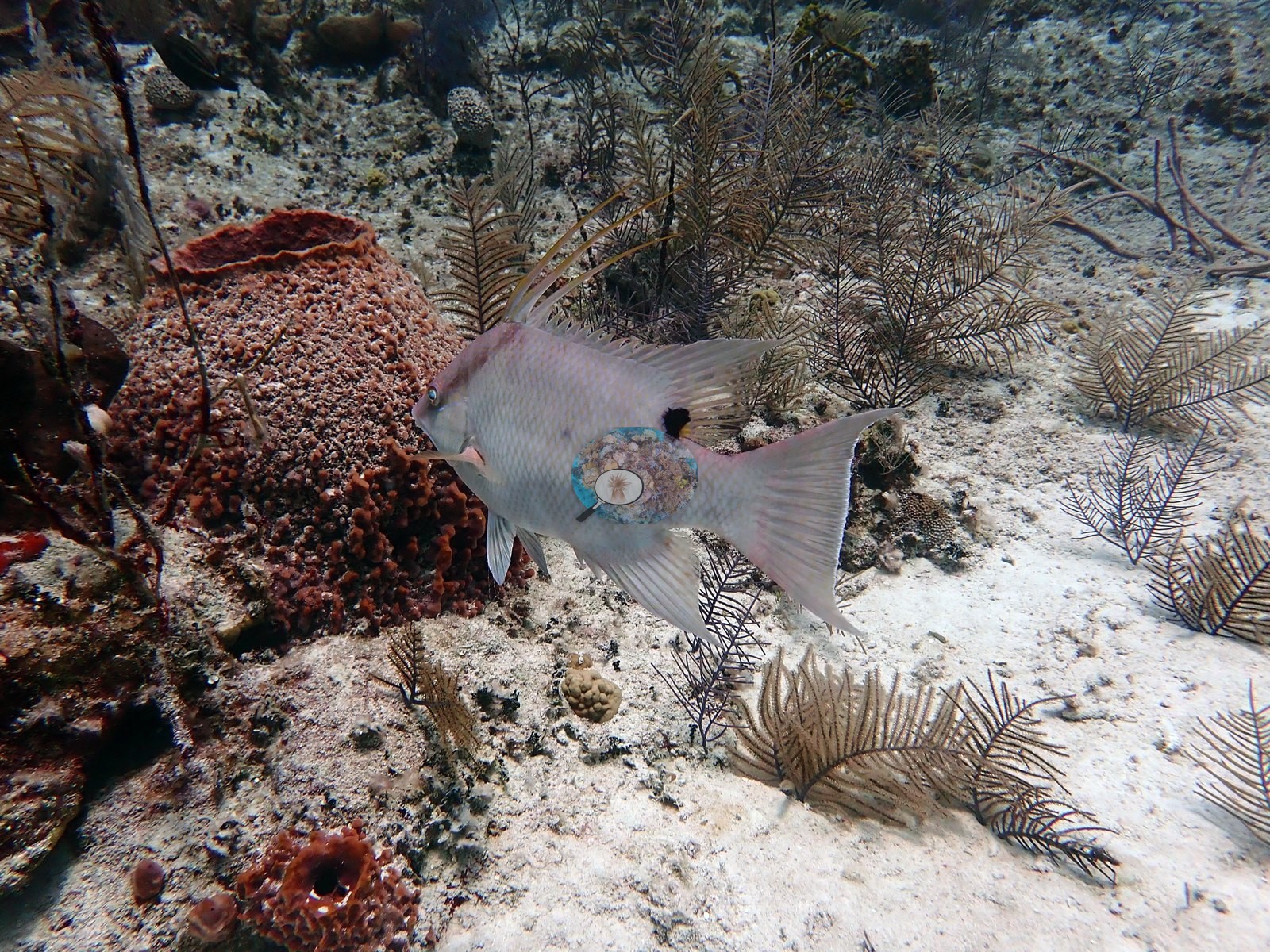
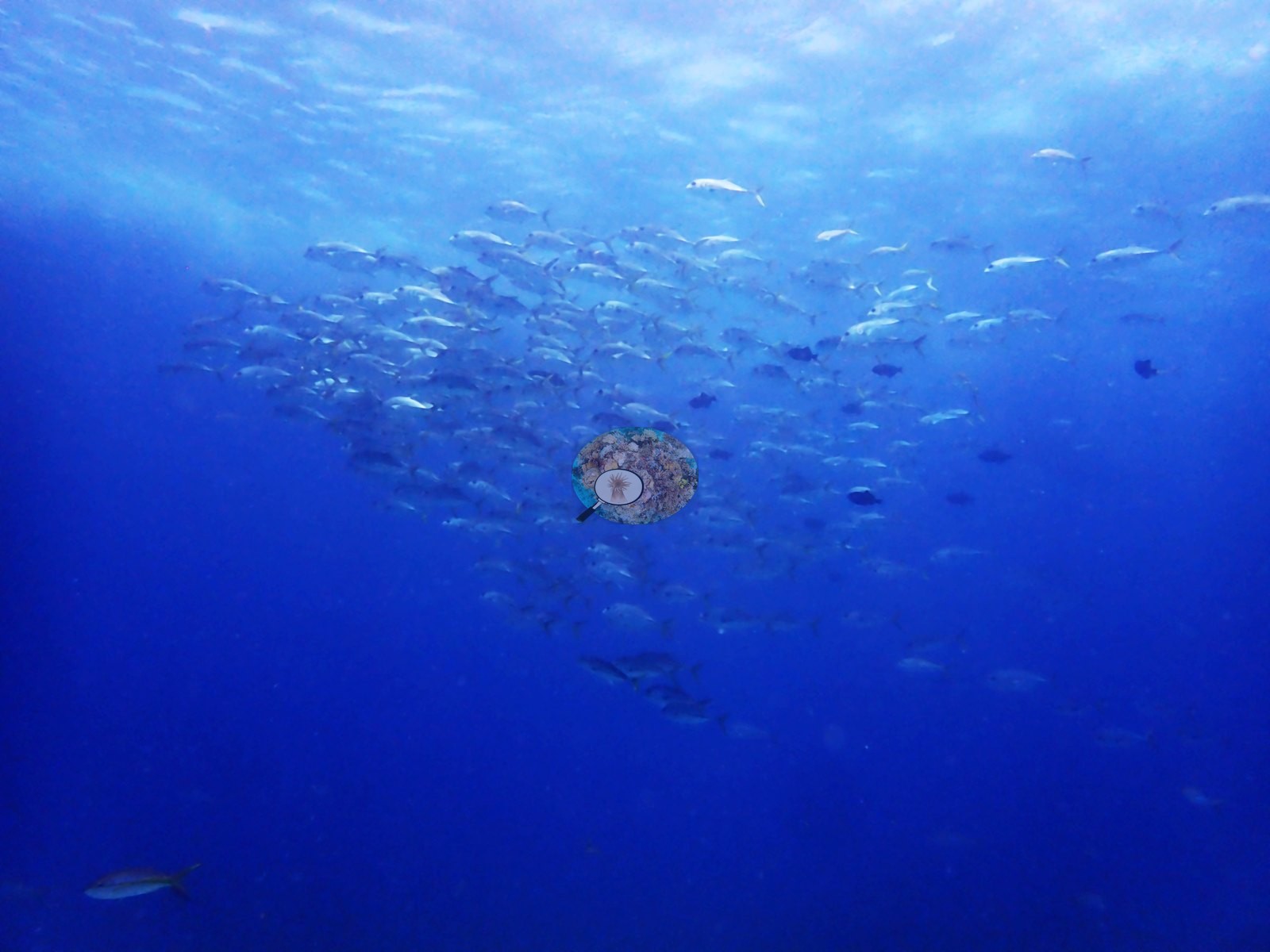
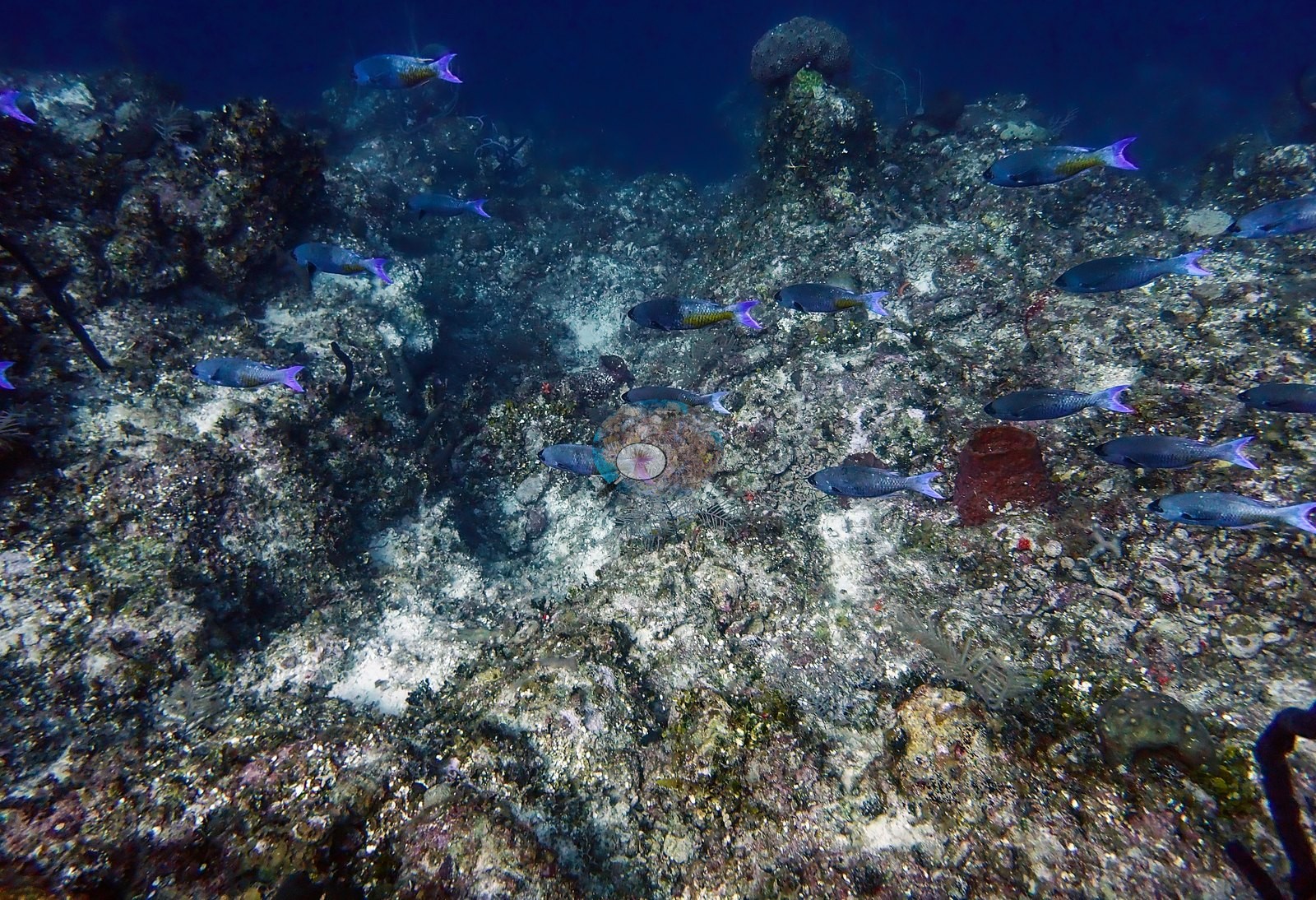
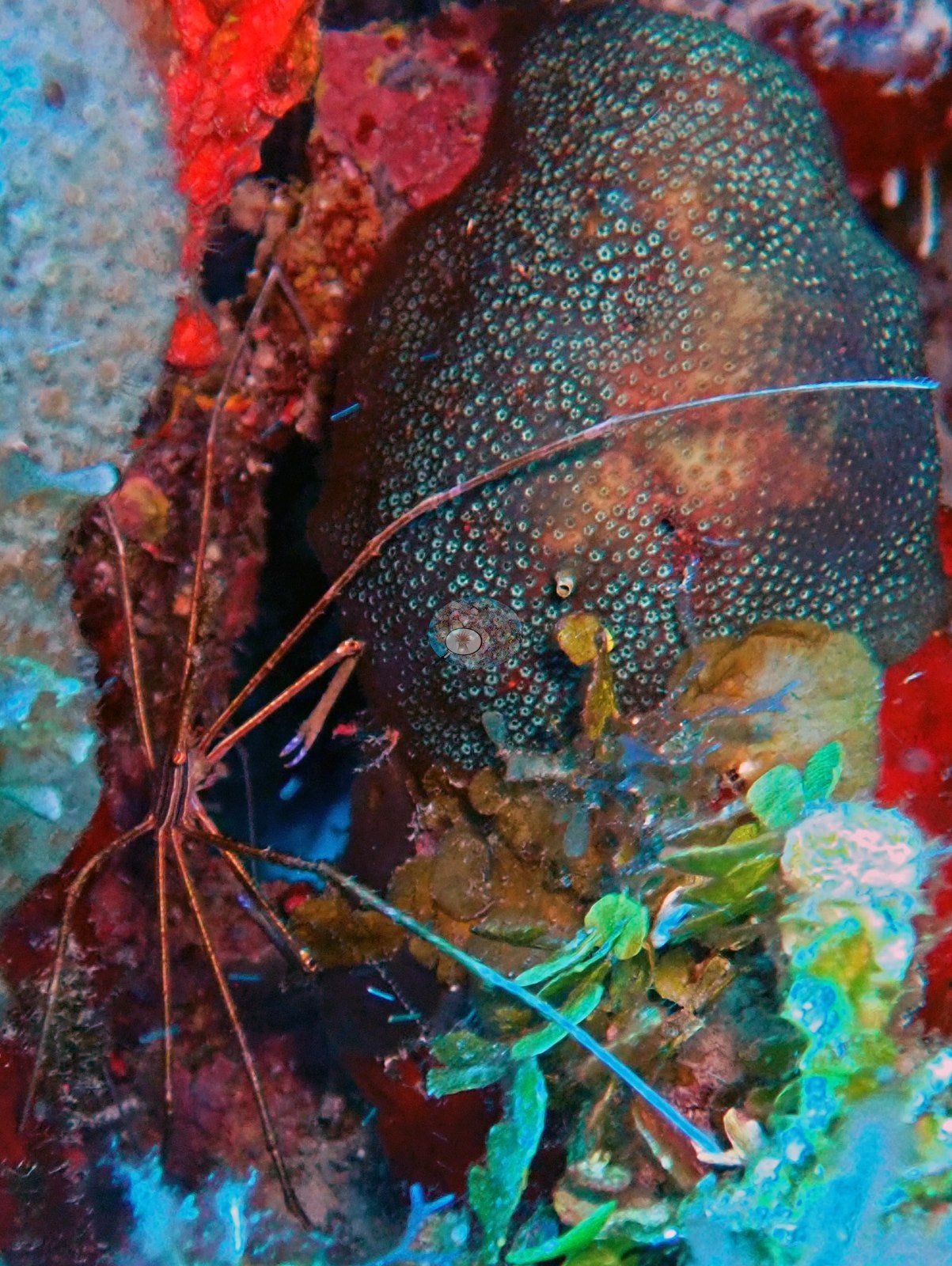
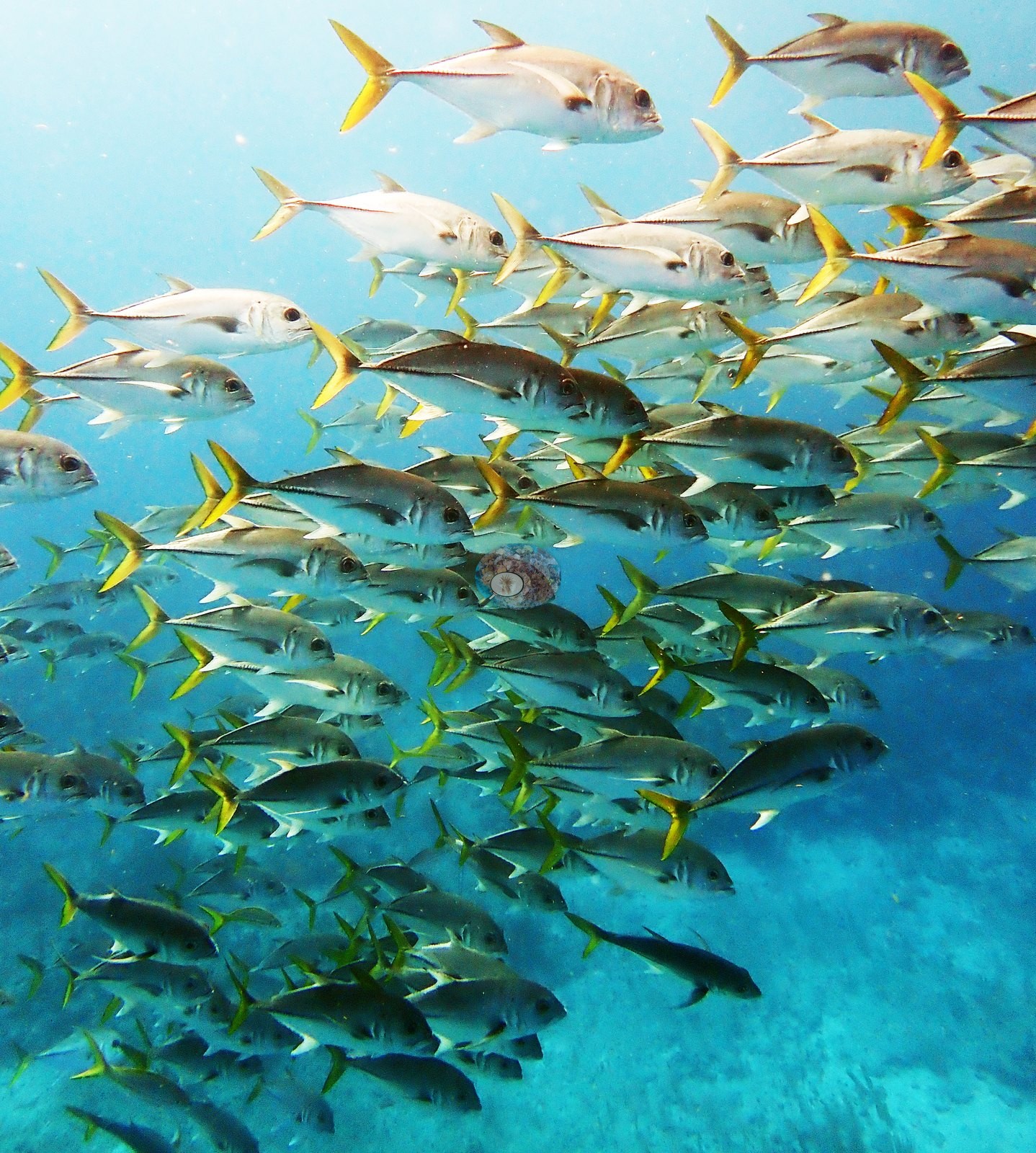
Horse-eye jacks, creole wrasse, barracuda, hogfish, spiny lobster, an arrow crab, and Christmas-tree worms also appear; visibility read 20-30 m on dive 1, hazier on dive 2 (e.g., Image 16, Image 18, Image 26).
Comparisons with other data
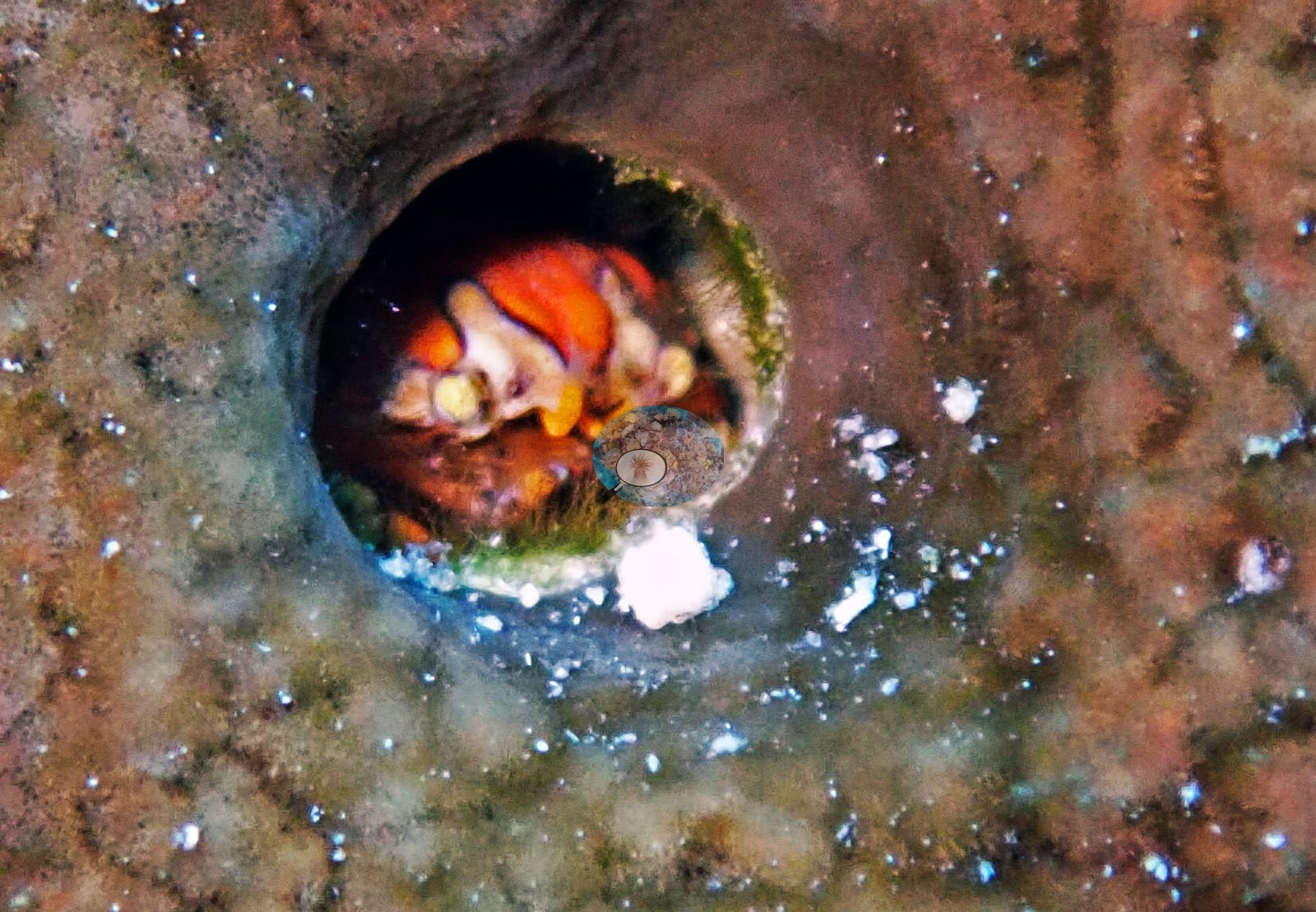
Rock and Roll (French Cay) was dived from the Turks & Caicos Explorer II liveaboard on 3 August 2022 (dives 16-17). Squirrelfish and cardinalfish peer from sponge cavities while schooling horse-eye jacks and barracuda move overhead (e.g., Image 10, Image 25).
Dive record
Rock and Roll, French Cay - described from both dives on 3 August 2022 (entries 08:31 and 11:01; 32.3 m and 29.6 m max).
Other notes
Stony coral here is small and scattered, not structural: mustard Porites astreoides knobs, lavender branching Porites, small Siderastrea discs, dark Montastraea cavernosa domes, tan Pseudodiploria / Diploria labyrinthiformis brains (e.g., Image 4, Image 20, Image 54).
CV model comparison
More info
A few colony-focused photos raise the mean; the median is the typical photo. No computer-vision method yet estimates coral cover accurately on new images, so treat this as indicative rather than a measurement; it is revised as the methods improve.More info
Other rows are for comparison only and are never averaged. No diver transect exists for this trip, so agreement between rows is not accuracy.| Method | Hard-coral cover (%) |
|---|---|
| CoralSCOP edited | 18.7 |
| Claude (edited photos) | 5.9 |
See a more detailed, stand-alone version of this table.
Dive history
| Date | Time in | Max depth (m) | Bottom time (min) |
|---|---|---|---|
| 2022-08-03 | 08:31 | 32.3 | 54 |
| 2022-08-03 | 11:01 | 29.6 | 61 |
Data & links
All images from Coral Reef Diagnostics. Data are from Coral Reef Diagnostics.
© Coral Reef Diagnostics.