
Regional summary of 7 dive sites. Figures are averages across the sites that report them (n = sites with a value); each site's own page has its individual values. Part of the Philippines overview.
⬇ Download this region as a report card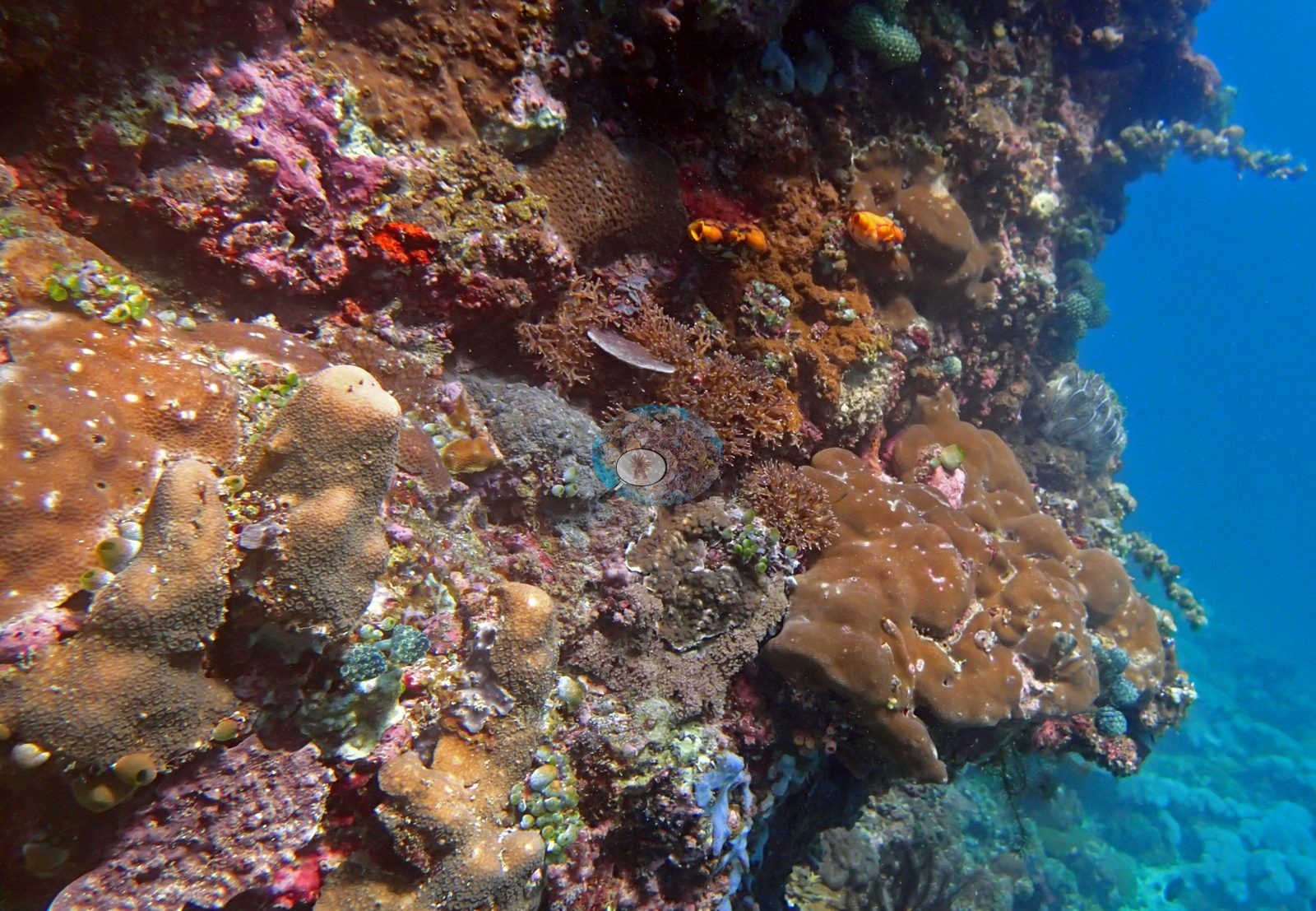

Anilao and Verde Island Passage sites, dived in 2016, range from a pinnacle and boulder complexes to a managed sanctuary with a giant clam garden, with soft corals, sponges, and gorgonians as prominent as hard corals. No site-wide bleaching was seen, only localized white colonies.
Heat stress
Long-term record: 10 years since 1985 reached 8 or more °C-weeks at NOAA’s Central Philippines, Western Philippines stations. Download the annual DHW data (CSV): palawan-north-borneo, eastern-philippines.
7 sites in this region — click a marker to open that site.
Regional setting
Spalding et al. (2001) place the Philippines, with Indonesia, at the center of global coral reef biodiversity and estimate the country's reef area at 25,060 km², with 421 coral species recorded and 577 estimated for its biogeographic region. Around Luzon, they found reefs far from continuous. None are recorded in the far northwest, and the first fringing reefs on that coast are at the Hundred Islands in the Lingayen Gulf, where much of the reef was reported lost to blast fishing. Ash and mudflows from the Mount Pinatubo eruption cut live coral cover on the closest fringing reefs from 60-70% to 10-20%. For southern Luzon, Mindoro, and Marinduque, published information was sparse, although discontinuous fringing reefs occur in many places, notably at Puerto Galera on Mindoro. Their protected-area list includes the Puerto Galera Biosphere Reserve (235.45 km², 1977) and a marine reserve and tourist zone at a site named Sombrero Island (1977). The same account rated 97% of the country's reefs as at risk from human activity. Souter et al. (2021) place the Philippines in the East Asian Seas region, which holds 78,272 km² of reef, just over 30% of the world total.
Wilkinson (2006) reported that, as of 2004, Philippine reefs were among those in Southeast Asia still in decline despite lying in the zone of highest coral diversity. The chief pressures he listed were overfishing and destructive fishing, land-based pollution, sediment from coastal development, dredging, and deforestation, and the reclamation of reef areas for industry, airports, and marinas; he also found that only 10-20% of the region's more than 630 marine protected areas were effectively managed. Across the East Asian Seas, Souter et al. (2021) estimate a relative loss of almost 11% of hard coral between 2005-2009 and 2015-2019, which they link to the 2010 and 2016 mass bleaching events.
Overview
The seven Luzon sites were dived on 30 September and 1 October 2016, four around Anilao and three in the Verde Island Passage. They cover a wide range of settings: a moderate-relief rocky slope of spurs and boulder faces at Ligpo Island, a managed marine sanctuary with a giant clam restocking garden at Dive and Trek, a largely man-made house reef at Monte Carlo Hotel, a silty muck flat dived at night at the Anilao Scuba Dive Center house reef, the pinnacle of Kirby's Rock, the submerged boulder complex of Beatriz Island, and the reef at Sombrero Island. Logged maximum depths ran from 12.8 m on the night dive to 26.2 m at Dive and Trek; Kirby's Rock and Beatriz have no logged depth.
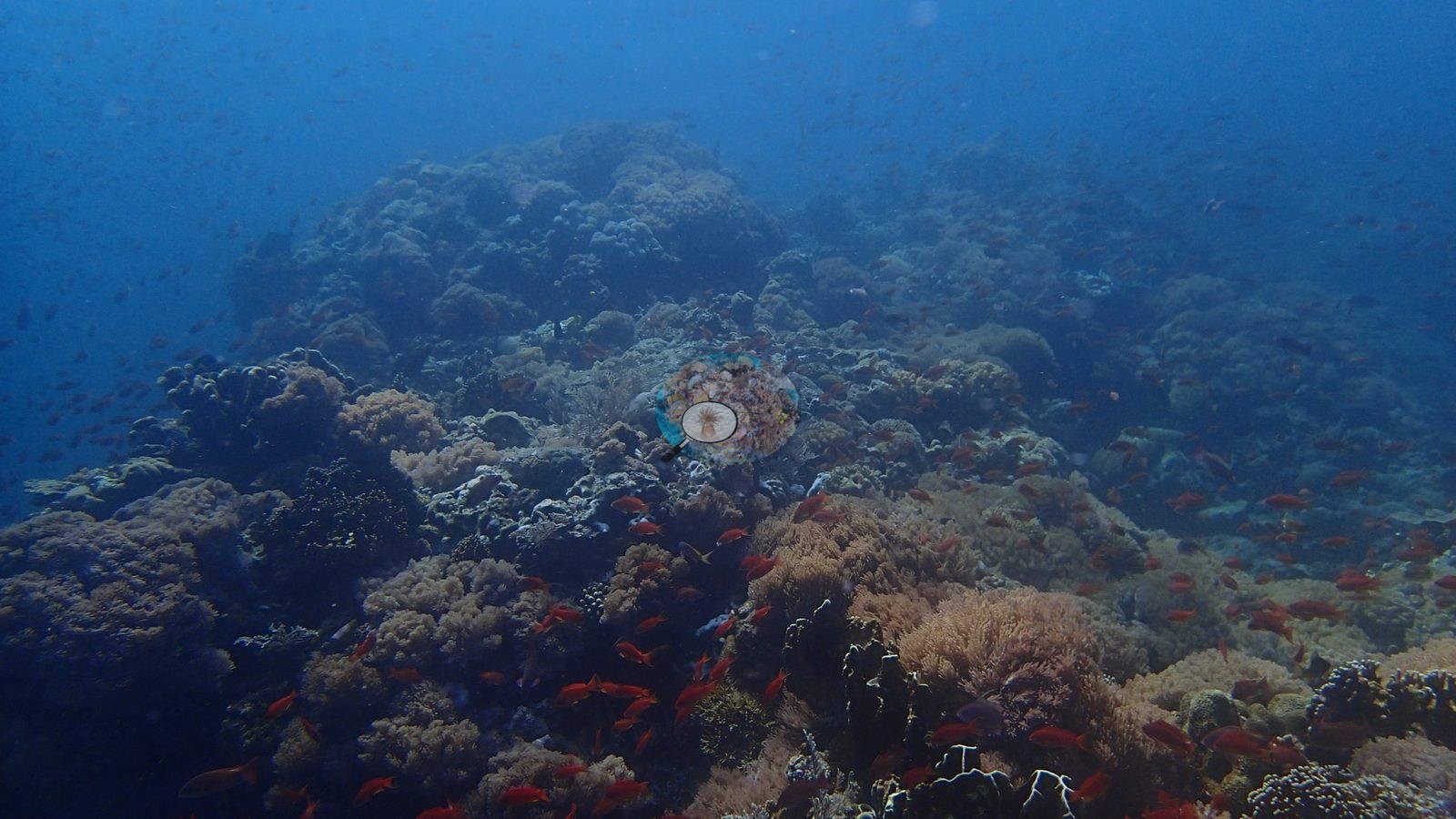
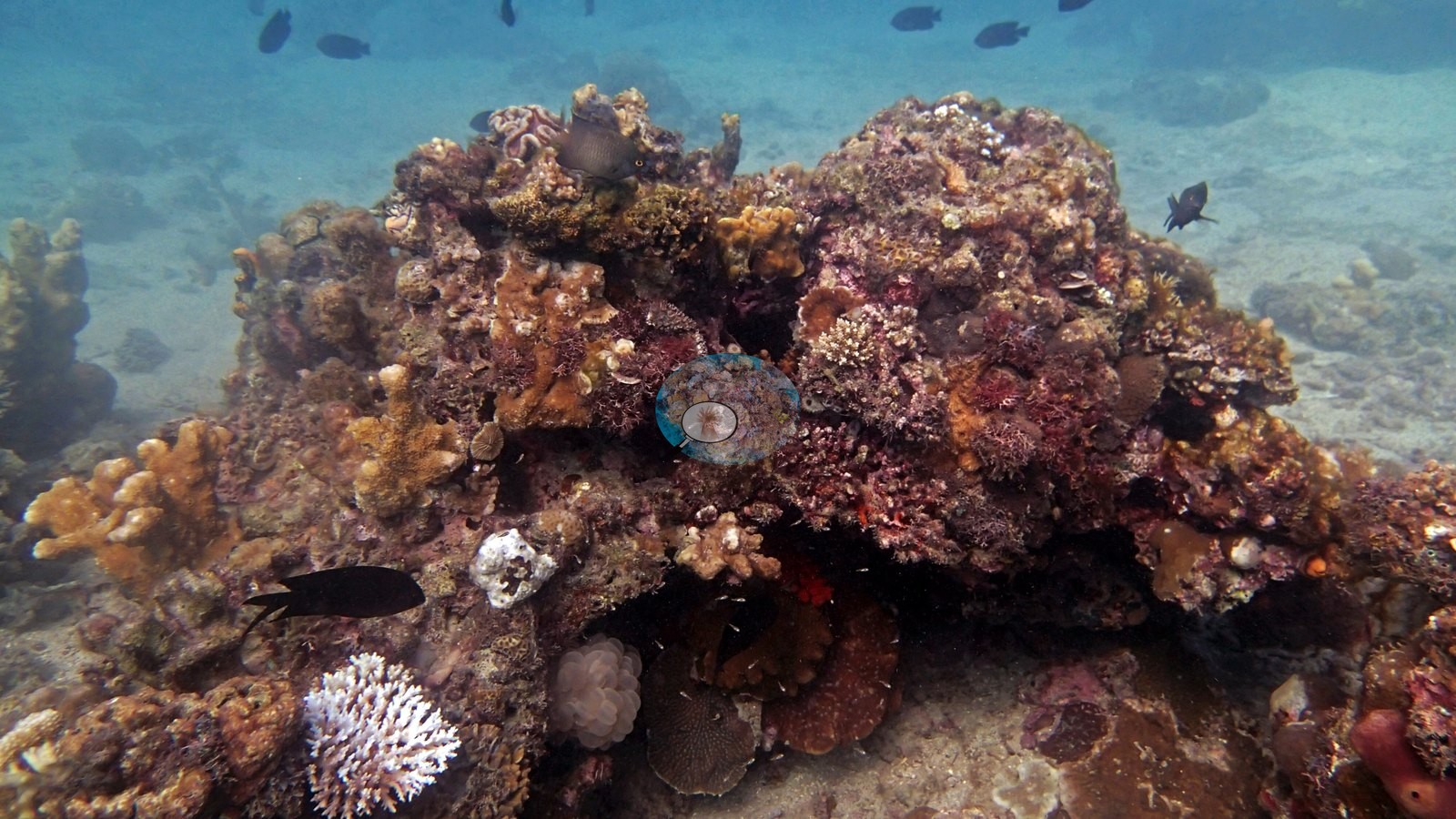
Soft corals, sponges, and gorgonians are as prominent as stony corals across much of the group. Ligpo Island carries dense Dendronephthya, Sarcophyton, and pulsing Xenia fields among barrel sponges, and Beatriz is defined by very large barrel sponges, black coral bushes, and gorgonian fans. Where hard coral dominates, the community is varied: tabular and plating Acropora, foliose Montipora, large scroll Turbinaria, and massive Porites at Ligpo; near-continuous plating and foliose corals on the deeper slope at Monte Carlo, above a zone of free-living mushroom corals; Porites domes over a meter across on the shoulder of Kirby's Rock; and enormous tabular Acropora plates meters across with columnar Porites at Sombrero Island.
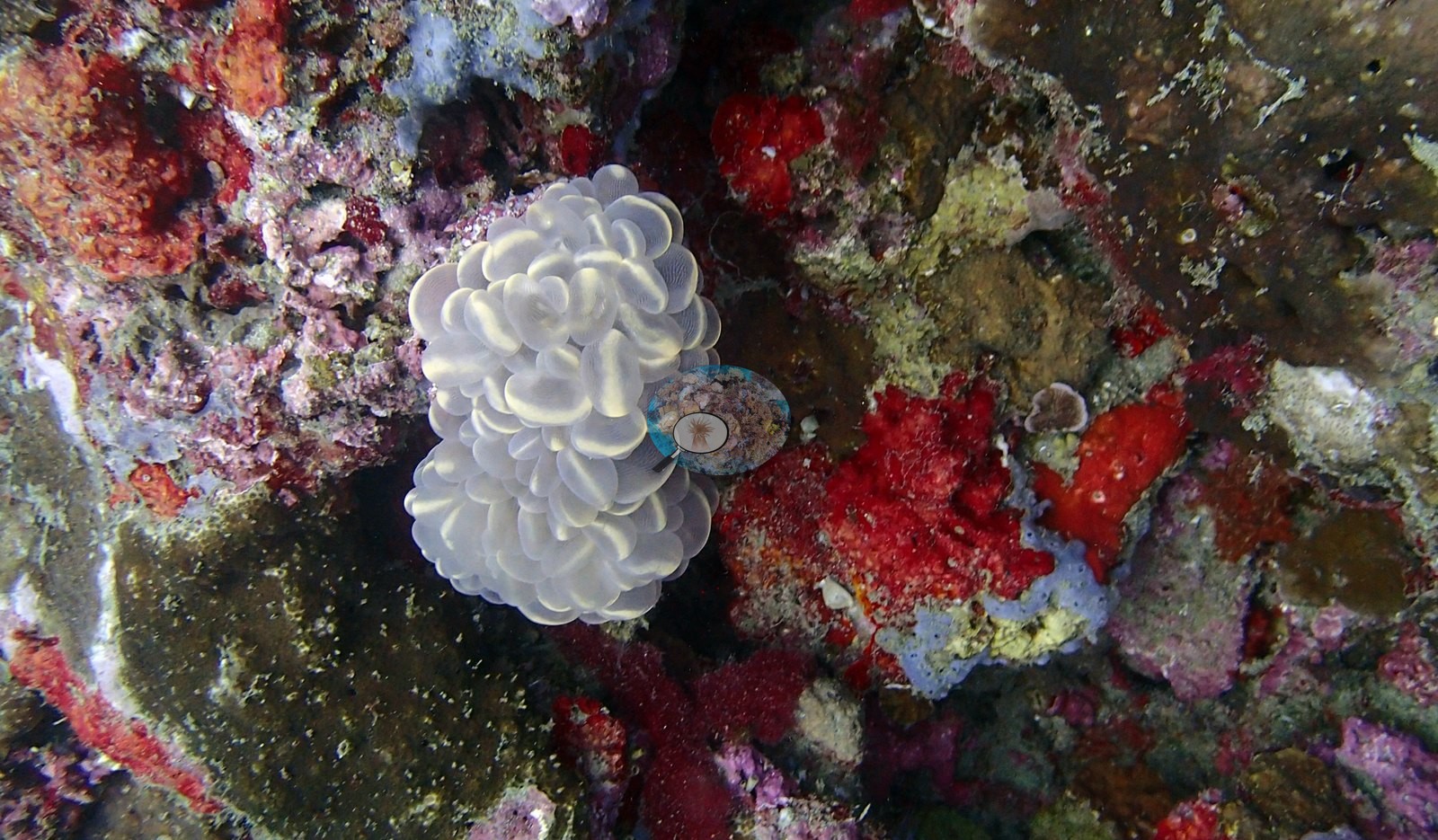
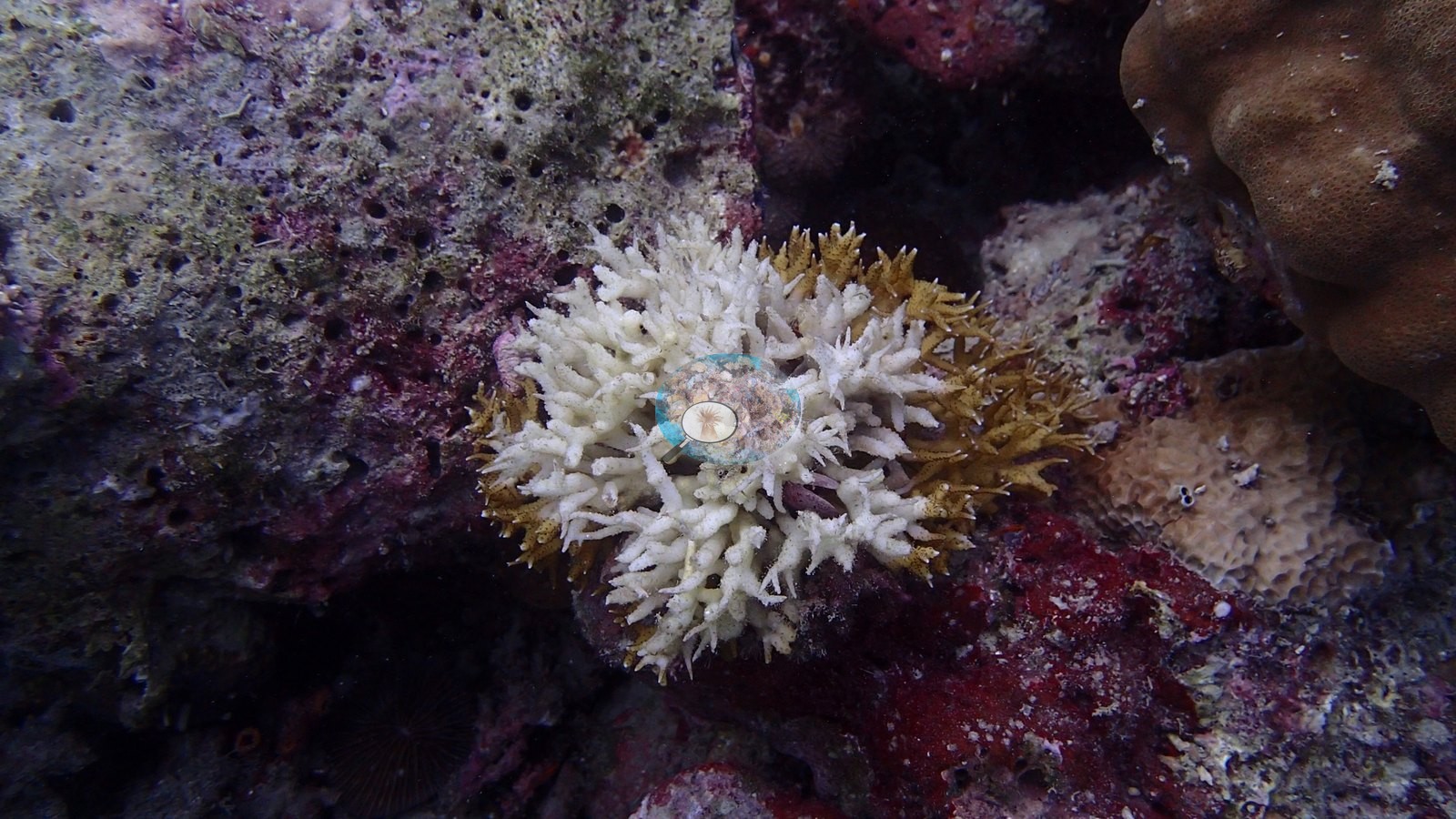
Photo-derived cover estimates ranged from 18.9% at Beatriz to 29.1% at Dive and Trek; no figure applies to the night dive, which was over sediment rather than reef. None of the sites showed a site-wide bleaching signal, but localized flags were recorded at three Anilao sites: a stand of stark-white branching Acropora at Dive and Trek, a stark-white branching colony and a partly bleached host anemone at Ligpo Island, and a partially bleached branching colony at Monte Carlo. Old mortality, rubble, and turf form the background on deeper flanks, and the Monte Carlo shallows were mostly rubble and turf-covered pavement.
Notable sightings include green turtles foraging over the Monte Carlo rubble, banded sea kraits and dorid nudibranchs on the night dive, dense anthias clouds and snapper and fusilier schools at Kirby's Rock, and a school of striped eel catfish at Beatriz, where Anderson's filenames record a probable Bargibant's pygmy seahorse on a gorgonian.
Highlights
- Seven sites dived 30 September-1 October 2016 in Anilao and the Verde Island Passage
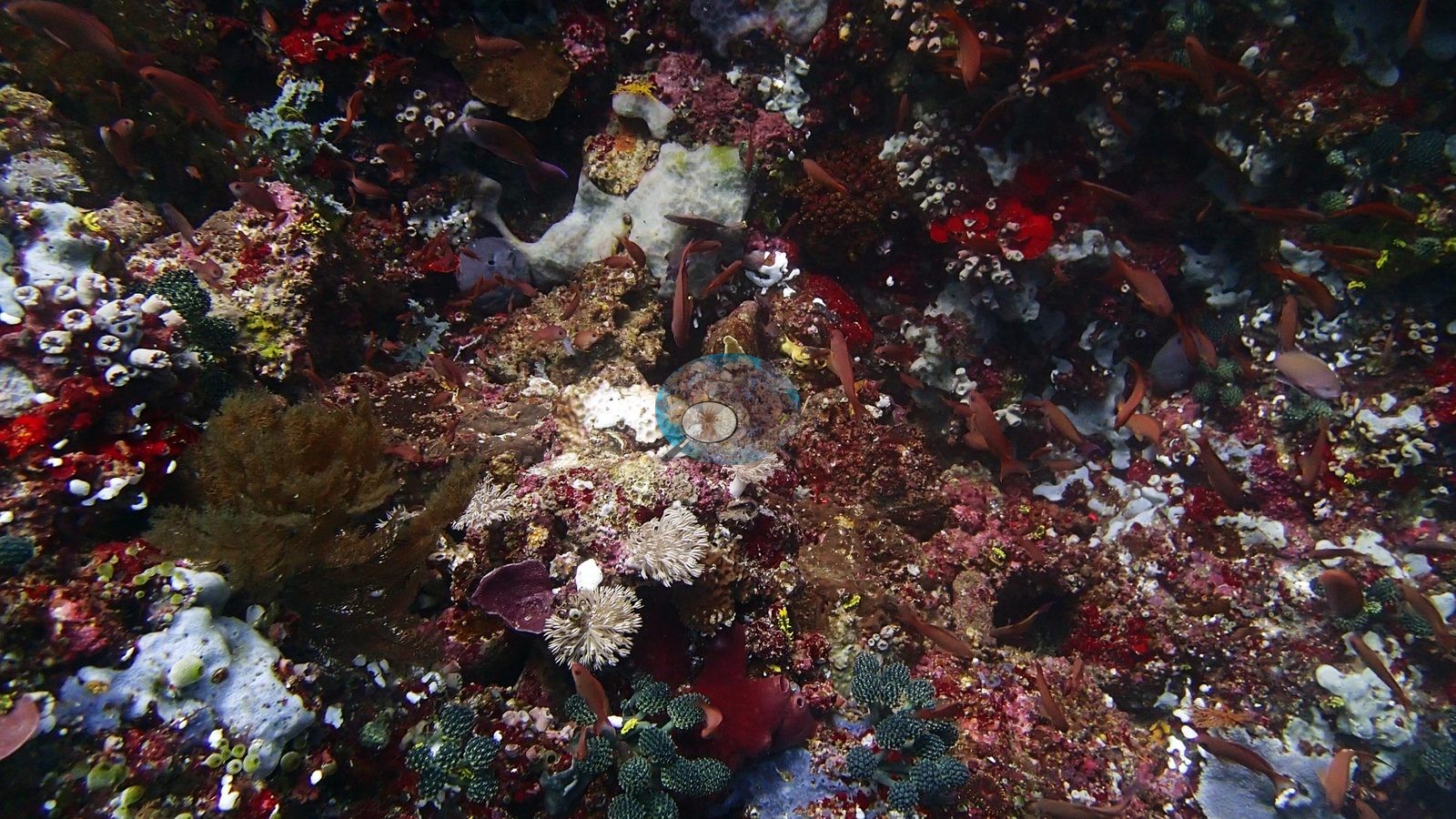
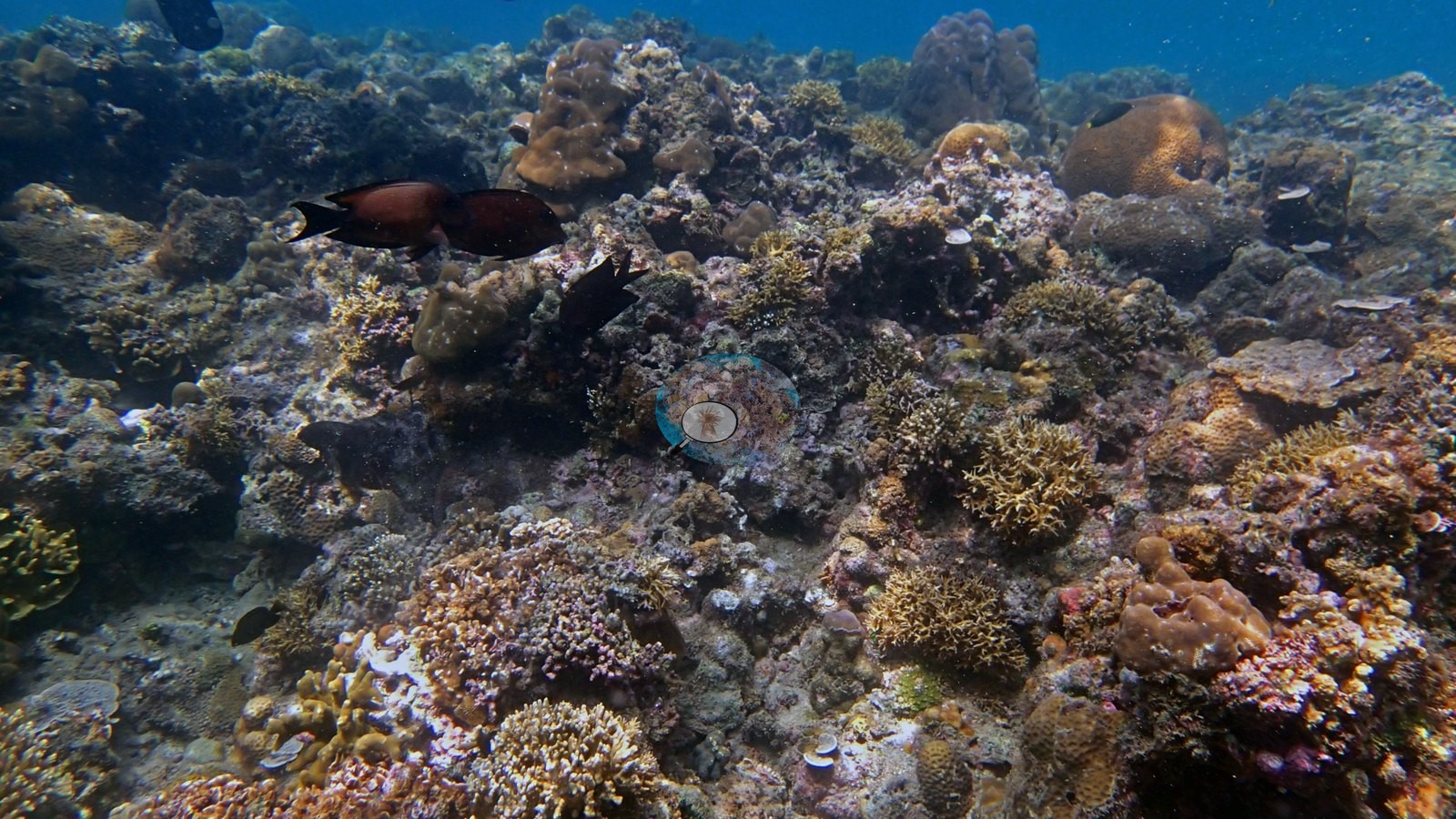
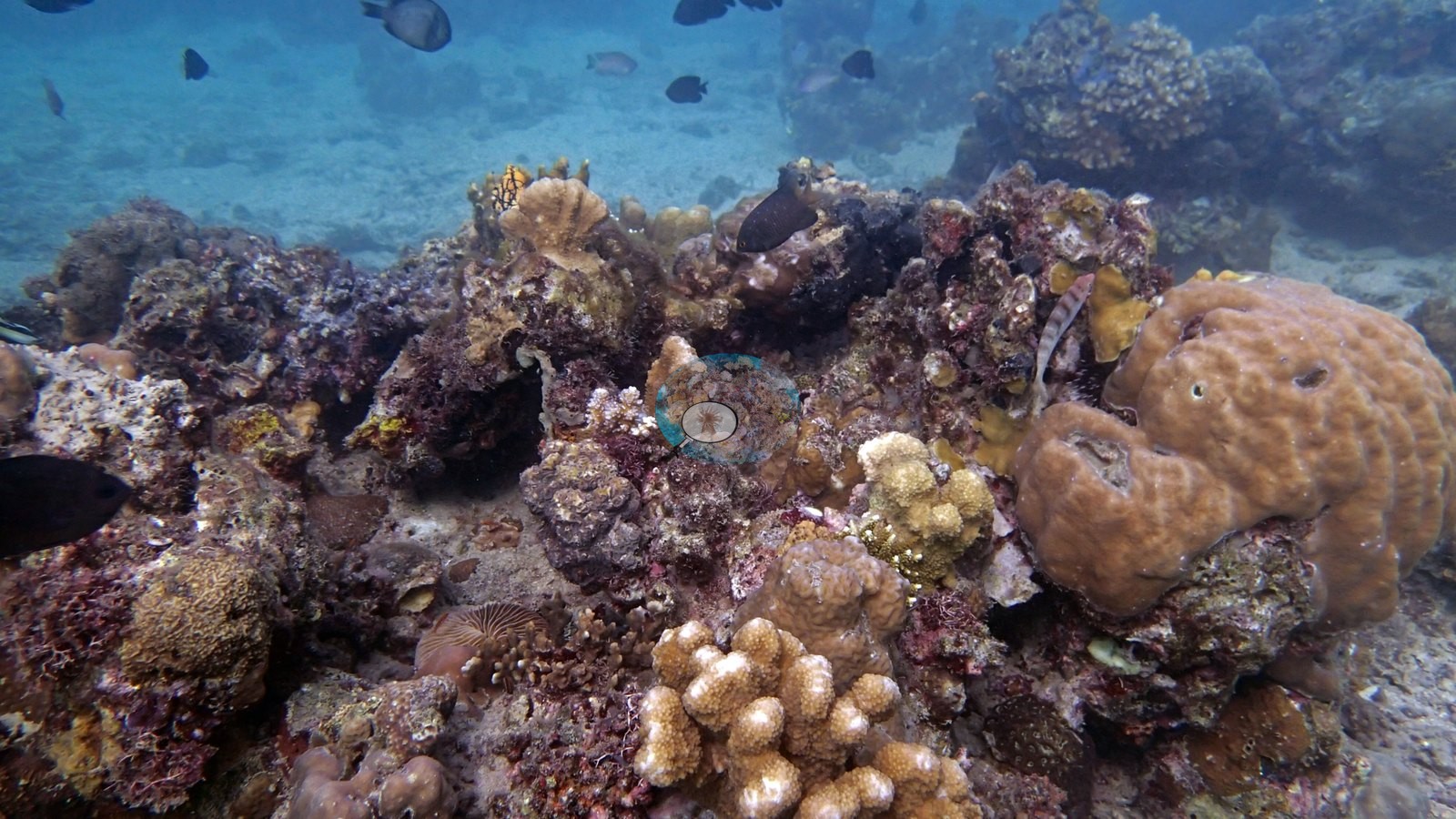
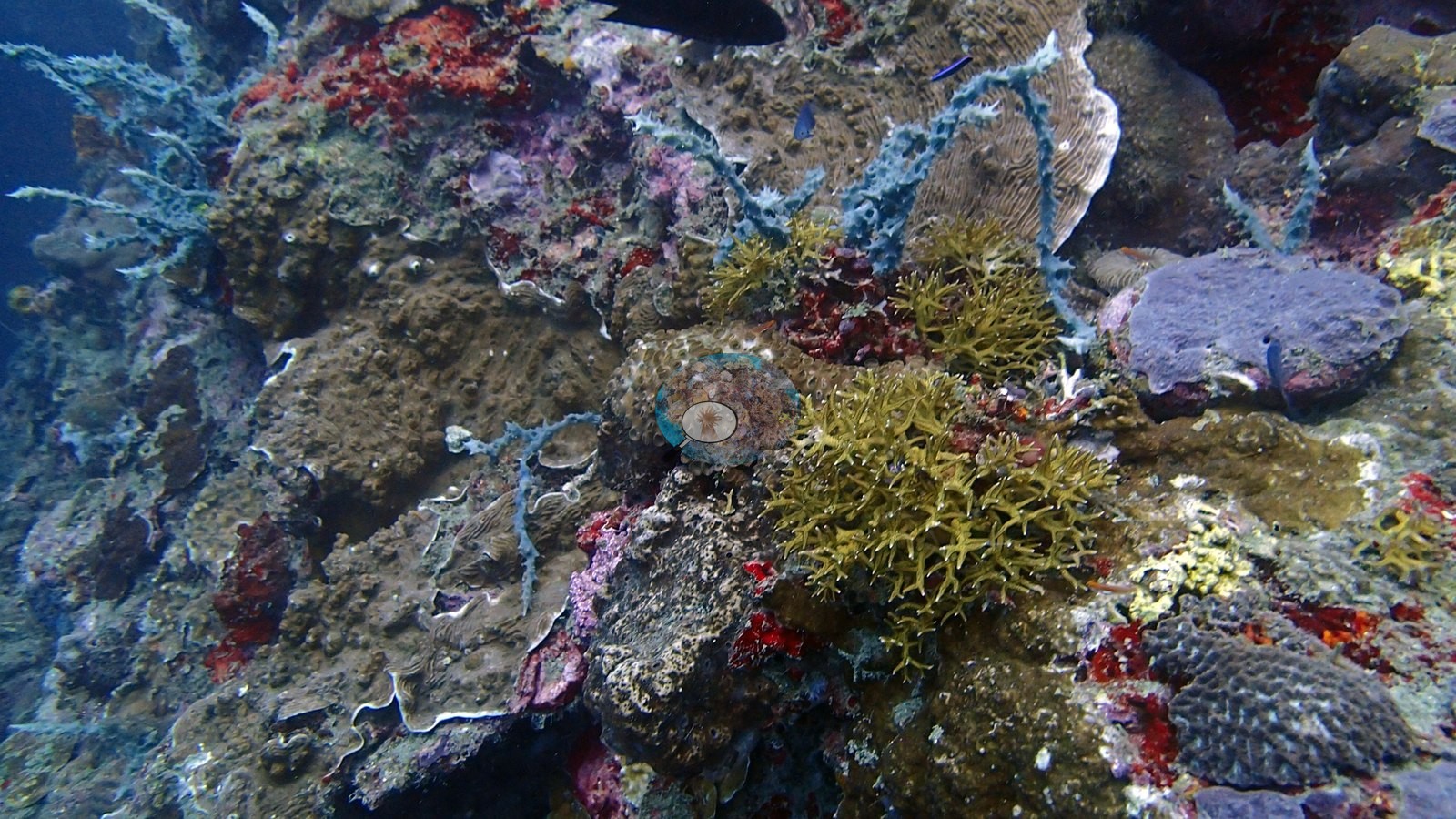
- Sombrero Island: tabular Acropora plates meters across with columnar Porites
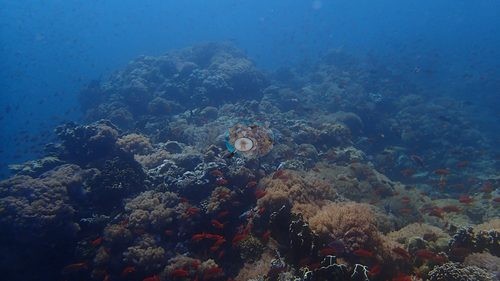 photo: Philippines - Verde Island Passage: Sombrero Island
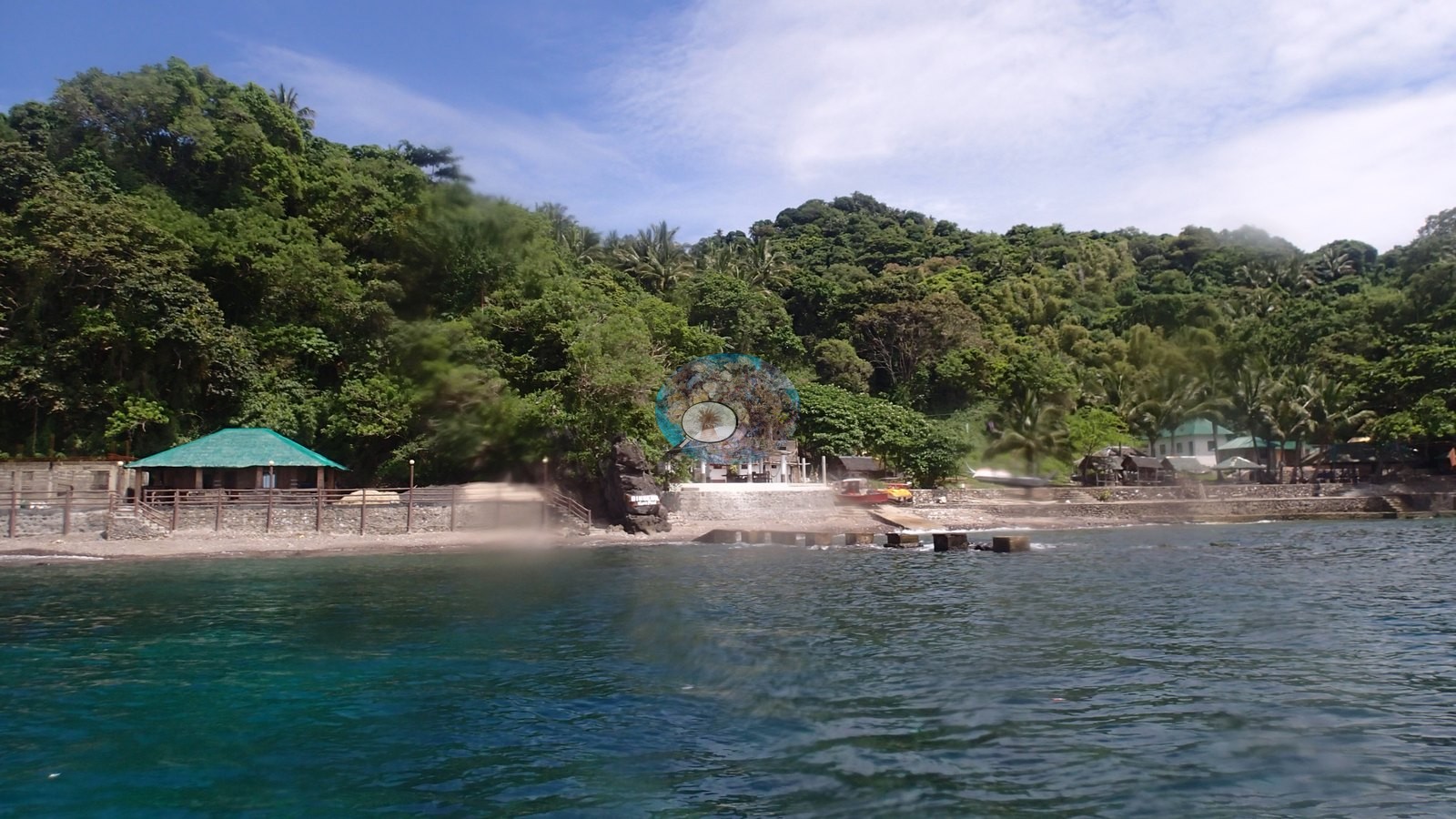
 - Kirby's Rock, near Reef Check's Inner Layag Reef station: a true pinnacle with the strongest fish showing of the seven sites
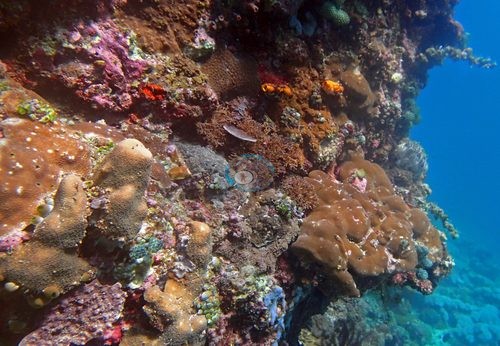 photo: Philippines - Verde Island Passage: Kirby's Rock
 - Giant clam restocking garden across several size classes at the Dive and Trek sanctuary
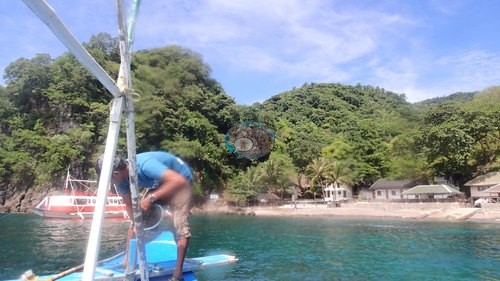 photo: Philippines - Anilao: Dive and Trek
 - Plating and foliose coral field on the deeper slope and deployed coral settlement tiles at Monte Carlo Hotel
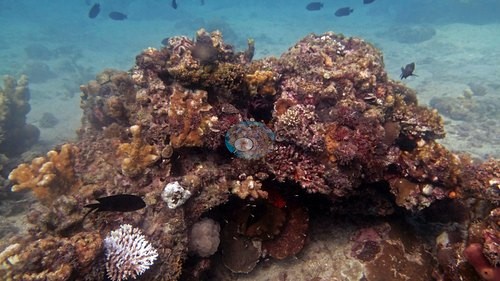 photo: Philippines - Anilao: Monte Carlo Hotel
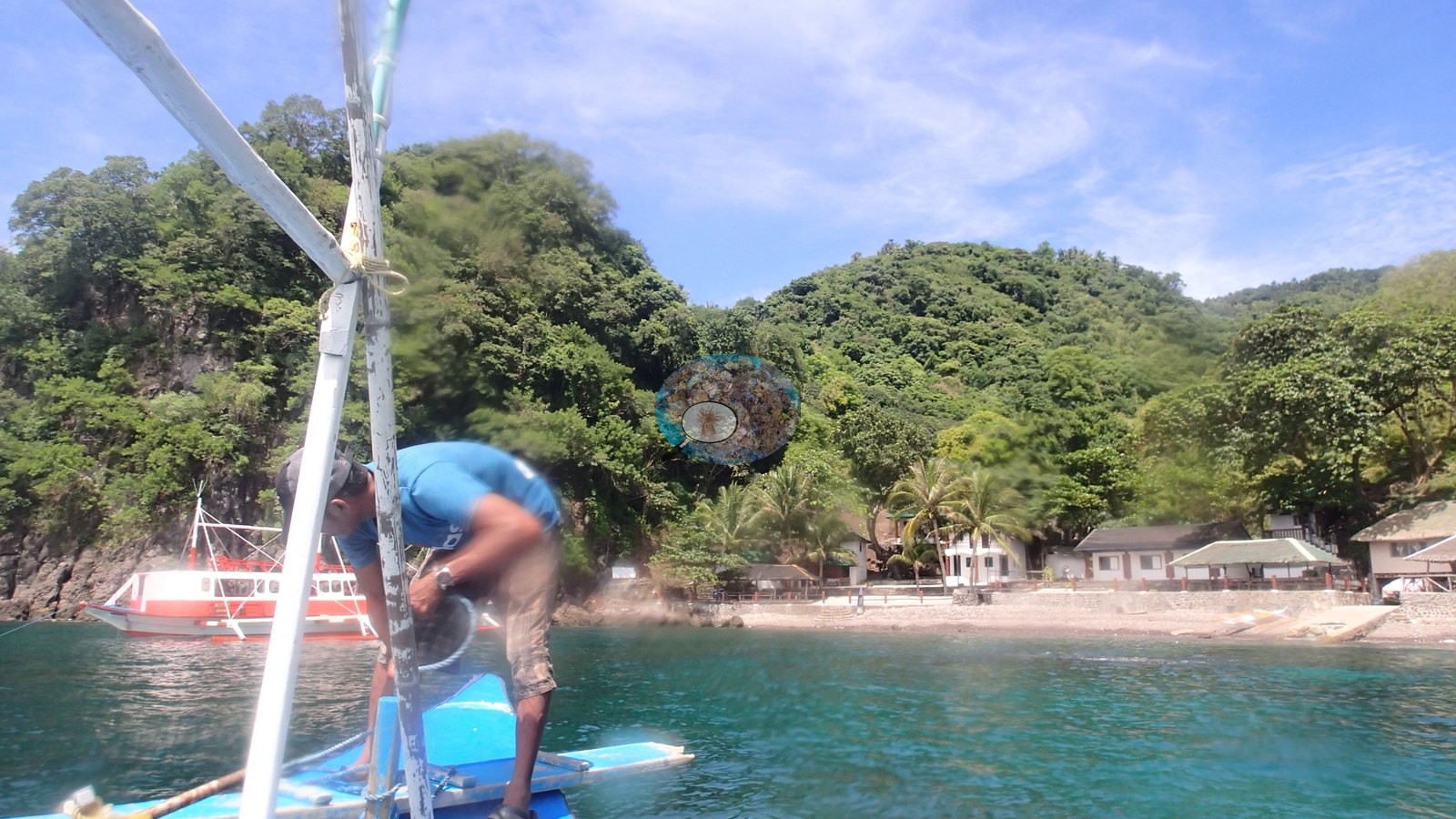
 - Photo-derived cover from 18.9% (Beatriz) to 29.1% (Dive and Trek)
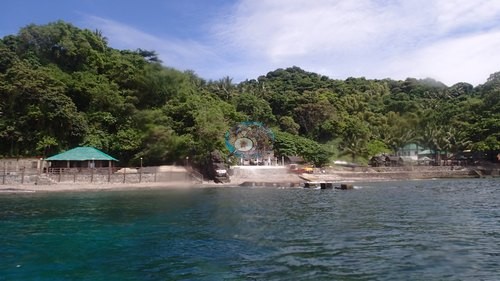 photo: Philippines - Anilao: Dive and Trek
Ito ay machine translation (salin ng makina) ng buod sa Ingles; ang tekstong Ingles ang may-awtoridad na bersyon. AI translation of this summary; the English is authoritative.
Regional setting
Inilalagay ng Spalding et al. (2001) ang Pilipinas, kasama ang Indonesia, sa sentro ng biodiversity ng mga coral reef sa buong mundo, at tinatantya nilang 25,060 km² ang lawak ng mga bahura ng bansa, na may 421 uri (species) ng koral na naitala at 577 na tinatayang para sa biyograpikong rehiyon nito. Sa paligid ng Luzon, natuklasan nilang malayo sa pagiging tuloy-tuloy ang mga bahura. Walang naitala sa dulong hilagang-kanluran, at ang mga unang fringing reef sa baybaying iyon ay nasa Hundred Islands sa Lingayen Gulf, kung saan iniulat na malaking bahagi ng bahura ang nawala dahil sa blast fishing (pangingisda gamit ang pampasabog). Ibinaba ng abo at lahar mula sa pagsabog ng Mount Pinatubo ang live coral cover (sakop ng buhay na koral) sa pinakamalapit na mga fringing reef mula 60-70% tungo sa 10-20%. Para sa timog Luzon, Mindoro, at Marinduque, kakaunti ang nailathalang impormasyon, bagaman may mga putol-putol na fringing reef sa maraming lugar, lalo na sa Puerto Galera sa Mindoro. Kabilang sa kanilang listahan ng mga protected area ang Puerto Galera Biosphere Reserve (235.45 km², 1977) at isang marine reserve at tourist zone sa lugar na tinatawag na Sombrero Island (1977). Sa parehong ulat, 97% ng mga bahura ng bansa ang itinuring na nanganganib dahil sa gawain ng tao. Inilalagay ng Souter et al. (2021) ang Pilipinas sa rehiyong East Asian Seas, na may 78,272 km² ng bahura, bahagyang higit sa 30% ng kabuuan ng mundo.
Iniulat ni Wilkinson (2006) na, noong 2004, ang mga bahura ng Pilipinas ay kabilang sa mga bahura sa Timog-Silangang Asya na patuloy pa ring humihina kahit nasa sona sila ng pinakamataas na diversity ng koral. Ang mga pangunahing panggigipit na kanyang inilista ay ang labis at mapanirang pangingisda, polusyong nagmumula sa lupa, sediment mula sa pagpapaunlad ng baybayin, dredging, at pagkakalbo ng kagubatan, at ang reclamation ng mga bahagi ng bahura para sa industriya, paliparan, at marina; natuklasan din niya na 10-20% lamang ng mahigit 630 marine protected area ng rehiyon ang epektibong napapamahalaan. Sa buong East Asian Seas, tinatantya ng Souter et al. (2021) ang relatibong pagkawala ng halos 11% ng hard coral sa pagitan ng 2005-2009 at 2015-2019, na iniuugnay nila sa mga mass bleaching event noong 2010 at 2016.
Overview
Sinisid ang pitong site sa Luzon noong 30 Setyembre at 1 Oktubre 2016, apat sa paligid ng Anilao at tatlo sa Verde Island Passage. Sinasaklaw nila ang malawak na hanay ng kapaligiran: isang mabatong dalisdis na may katamtamang relief na binubuo ng mga spur at mukha ng malalaking bato sa Ligpo Island, isang pinamamahalaang marine sanctuary na may hardin para sa restocking (muling pagpaparami) ng taklobo sa Dive and Trek, isang house reef na halos gawa ng tao sa Monte Carlo Hotel, isang maputik na muck flat na sinisid sa gabi sa house reef ng Anilao Scuba Dive Center, ang pinnacle ng Kirby's Rock, ang nakalubog na kumpol ng malalaking bato ng Beatriz Island, at ang bahura sa Sombrero Island.
Sa malaking bahagi ng grupo, kasing-prominente ng mga stony coral ang mga soft coral, espongha (sponge), at gorgonian. Ang Ligpo Island ay may siksik na Dendronephthya, Sarcophyton, at mga parang ng pumipintig na Xenia sa gitna ng mga barrel sponge, at ang Beatriz ay tinutukoy ng napakalalaking barrel sponge, mga palumpong ng black coral, at mga pamaypay na gorgonian. Kung saan nangingibabaw ang hard coral, iba-iba ang komunidad: tabular at plating na Acropora, foliose na Montipora, malalaking scroll na Turbinaria, at massive na Porites sa Ligpo; halos tuloy-tuloy na plating at foliose na koral sa 30-40 m sa Monte Carlo, sa ibabaw ng isang sona ng malayang nabubuhay na mushroom coral; mga dome ng Porites na mahigit isang metro ang lapad sa balikat ng Kirby's Rock; at napakalalaking tabular na plato ng Acropora na ilang metro ang lapad, kasama ang columnar na Porites, sa Sombrero Island.
Ang mga pagtatantya ng cover mula sa larawan ay mula 18.9% sa Beatriz hanggang 29.1% sa Dive and Trek; walang numerong naaangkop sa night dive, na isinagawa sa ibabaw ng sediment sa halip na sa bahura. Wala sa mga site ang nagpakita ng bleaching sa buong site, ngunit may mga lokal na palatandaang naitala sa tatlong site sa Anilao: isang kumpol ng lubhang puting branching na Acropora sa Dive and Trek, isang lubhang puting branching na kolonya at isang bahagyang pumuting host anemone sa Ligpo Island, at isang bahagyang pumuting branching na kolonya sa Monte Carlo. Ang lumang mortality (patay na koral), rubble (durog na koral), at turf ang bumubuo sa likuran sa mas malalalim na gilid, at ang mababaw na bahagi ng Monte Carlo ay halos rubble at pavement na natatakpan ng turf.
Kabilang sa mga kapansin-pansing nakita ang mga green turtle (pawikan) na naghahanap ng pagkain sa ibabaw ng rubble ng Monte Carlo, mga banded sea krait at dorid nudibranch sa night dive, siksik na ulap ng anthias at mga kawan ng snapper at fusilier sa Kirby's Rock, at isang kawan ng striped eel catfish sa Beatriz, kung saan nakatala sa mga filename ni Anderson ang isang posibleng Bargibant's pygmy seahorse sa isang gorgonian.
Highlights
- Pitong site na sinisid noong 30 Setyembre-1 Oktubre 2016 sa Anilao at sa Verde Island Passage
- Sombrero Island: mga tabular na plato ng Acropora na ilang metro ang lapad, kasama ang columnar na Porites
 photo: Philippines - Verde Island Passage: Sombrero Island
 - Kirby's Rock: isang tunay na pinnacle na may pinakamasiglang presensya ng isda sa buong biyahe
 photo: Philippines - Verde Island Passage: Kirby's Rock
 - Hardin para sa restocking ng taklobo na may iba't ibang size class sa sanctuary ng Dive and Trek
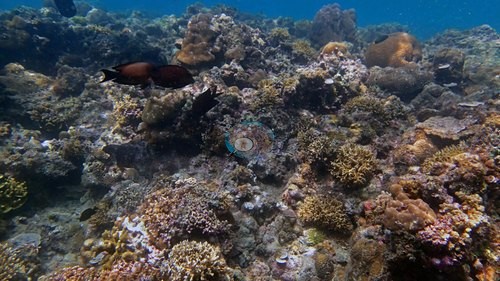 photo: Philippines - Anilao: Dive and Trek
 - Parang ng plating at foliose na koral sa 30-40 m at mga inilagay na coral settlement tile sa Monte Carlo Hotel
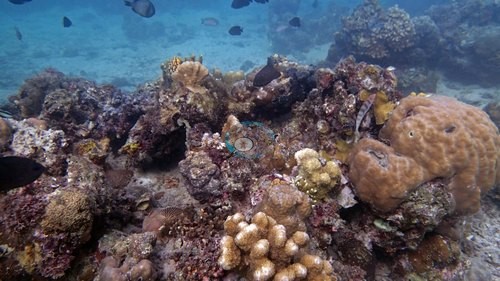 photo: Philippines - Anilao: Monte Carlo Hotel
 - Cover mula sa larawan: mula 18.9% (Beatriz) hanggang 29.1% (Dive and Trek)
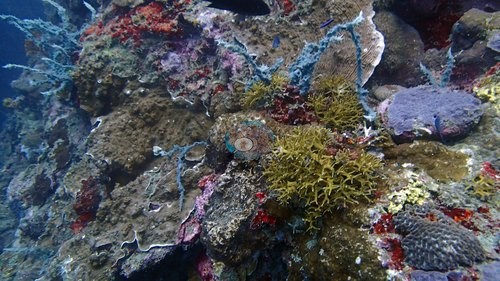 photo: Philippines - Anilao: Dive and Trek
Notable observations
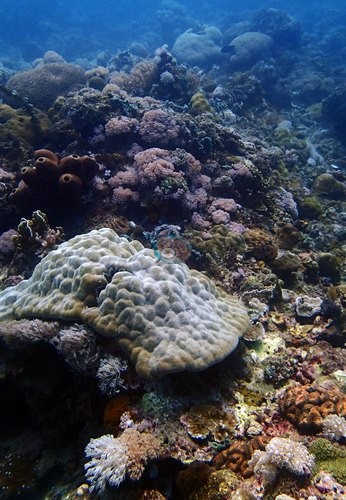
- Philippines - Anilao: Ligpo Island: A host anemone carrying a conspicuous bleached white sector, and one stark-white branching colony amid otherwise healthy growth; no site-wide bleaching signal
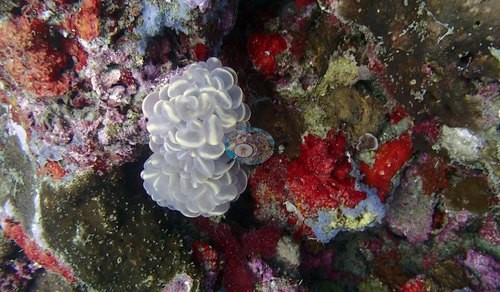
- Philippines - Anilao: Dive and Trek: A stand of stark-white branching Acropora, architecture intact, indicating recent bleaching or very recent mortality; one large host anemone partially bleached
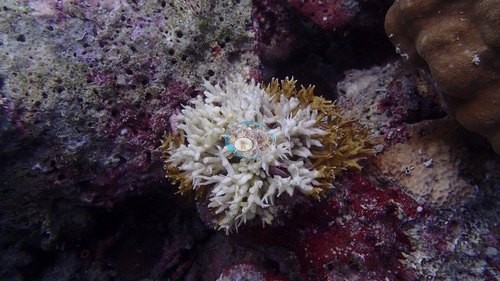
- Philippines - Anilao: Monte Carlo Hotel: One small branching colony with partial bleaching (chalk-white core, pigmented outer branches); single colony, not site-wide
Coral cover over time (pooled)
Sites in this region
- Philippines - Anilao: Anilao Scuba Dive Center house reef (night dive)
- Philippines - Anilao: Dive and Trek — 29% coral cover
- Philippines - Anilao: Ligpo Island — 28% coral cover
- Philippines - Anilao: Monte Carlo Hotel — 22% coral cover
- Philippines - Verde Island Passage: Beatriz Island (Beatrice Rock) — 19% coral cover
- Philippines - Verde Island Passage: Kirby's Rock — 26% coral cover
- Philippines - Verde Island Passage: Sombrero Island — 26% coral cover
Nearby external survey stations
21 independent survey records within 5 km of a site in this region (deduplicated across sites).
Show all 21 records
- Reef Check — Acacia Resort and Dive Center (2010): 58% hard coral cover, 4.05 km from Philippines - Anilao: Monte Carlo Hotel
- Reef Check — Acacia Resort and Dive Center (2012): 56% hard coral cover, 4.05 km from Philippines - Anilao: Monte Carlo Hotel
- Reef Check — Acacia Resort and Dive Center (2014): 56% hard coral cover, 4.05 km from Philippines - Anilao: Monte Carlo Hotel
- Reef Check — Acacia Resort and Dive Center (2017): 49% hard coral cover, 4.05 km from Philippines - Anilao: Monte Carlo Hotel
- Reef Check — Arthur's Rock (2013): 36% hard coral cover, 1.78 km from Philippines - Anilao: Monte Carlo Hotel
- Reef Check — Bagalangit Koala (2010): 70% hard coral cover, 2.02 km from Philippines - Anilao: Monte Carlo Hotel
- Reef Check — Dive and Trek Marine Sanctuary (2014): 70% hard coral cover, 2.22 km from Philippines - Anilao: Ligpo Island
- Reef Check — Inner Layag Layag Reef (2014): 64% hard coral cover, 1.72 km from Philippines - Verde Island Passage: Sombrero Island
- Reef Check — Inner Layag Layag Reef (2014): 64% hard coral cover, 1.72 km from Philippines - Verde Island Passage: Sombrero Island
- Reef Check — Koala, Bagalangit (2010): 70% hard coral cover, 2.40 km from Philippines - Anilao: Monte Carlo Hotel
- Reef Check — Koala, Bagalangit (2011): 72% hard coral cover, 2.40 km from Philippines - Anilao: Monte Carlo Hotel
- Reef Check — Koala, Bagalangit (2013): 60% hard coral cover, 2.40 km from Philippines - Anilao: Monte Carlo Hotel
- Reef Check — Koala, Bagalangit (2017): 39% hard coral cover, 2.40 km from Philippines - Anilao: Monte Carlo Hotel
- Reef Check — Ligaya Bantong Buhay marine protected area (MPA) (2017): 56% hard coral cover, 3.50 km from Philippines - Anilao: Monte Carlo Hotel
- Reef Check — Portulano Marine Sanctuary (2014): 57% hard coral cover, 1.10 km from Philippines - Anilao: Ligpo Island
- Reef Check — San Teodoro (2010): 27% hard coral cover, 1.76 km from Philippines - Anilao: Monte Carlo Hotel
- Reef Check — Tingloy - Poblacion Reef (2014): 89% hard coral cover, 2.40 km from Philippines - Verde Island Passage: Beatriz Island (Beatrice Rock)
- Reef Check — Twin Rocks (2010): 20% hard coral cover, 2.96 km from Philippines - Anilao: Anilao Scuba Dive Center house reef (night dive)
- Reef Check — Twin Rocks (2011): 34% hard coral cover, 2.96 km from Philippines - Anilao: Anilao Scuba Dive Center house reef (night dive)
- Reef Check — Twin Rocks (2014): 30% hard coral cover, 2.96 km from Philippines - Anilao: Anilao Scuba Dive Center house reef (night dive)
- Reef Check — Twin Rocks (2017): 19% hard coral cover, 2.96 km from Philippines - Anilao: Anilao Scuba Dive Center house reef (night dive)
All images from Coral Reef Diagnostics. Data are from Coral Reef Diagnostics and Reef Check Foundation.
 © Coral Reef Diagnostics.
References
- Souter D, et al. (eds) (2021) Status of Coral Reefs of the World: 2020. International Coral Reef Initiative / Global Coral Reef Monitoring Network. [PDF]
- Spalding MD, et al. (2001) World Atlas of Coral Reefs. University of California Press, Berkeley. [PDF]
- Wilkinson C (2006) Status of coral reefs of the world: summary of threats and remedial action. In: Côté IM, Reynolds JD (eds) Coral Reef Conservation. Cambridge University Press, Cambridge. [PDF]