
Indonesia - Banda

Regional summary of 7 dive sites. Figures are averages across the sites that report them (n = sites with a value); each site's own page has its individual values. Part of the Indonesia - Maluku overview.
⬇ Download this region as a report card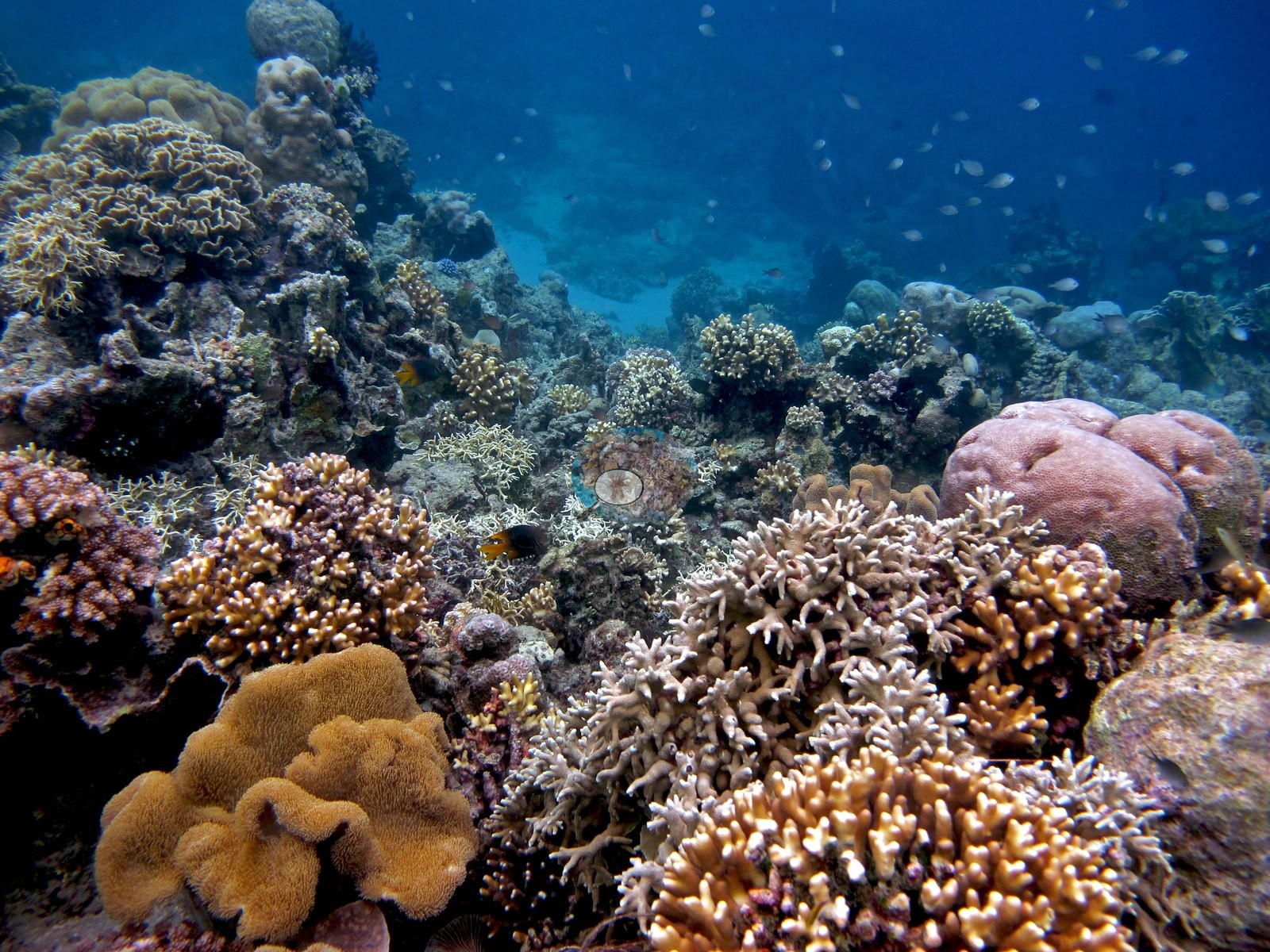

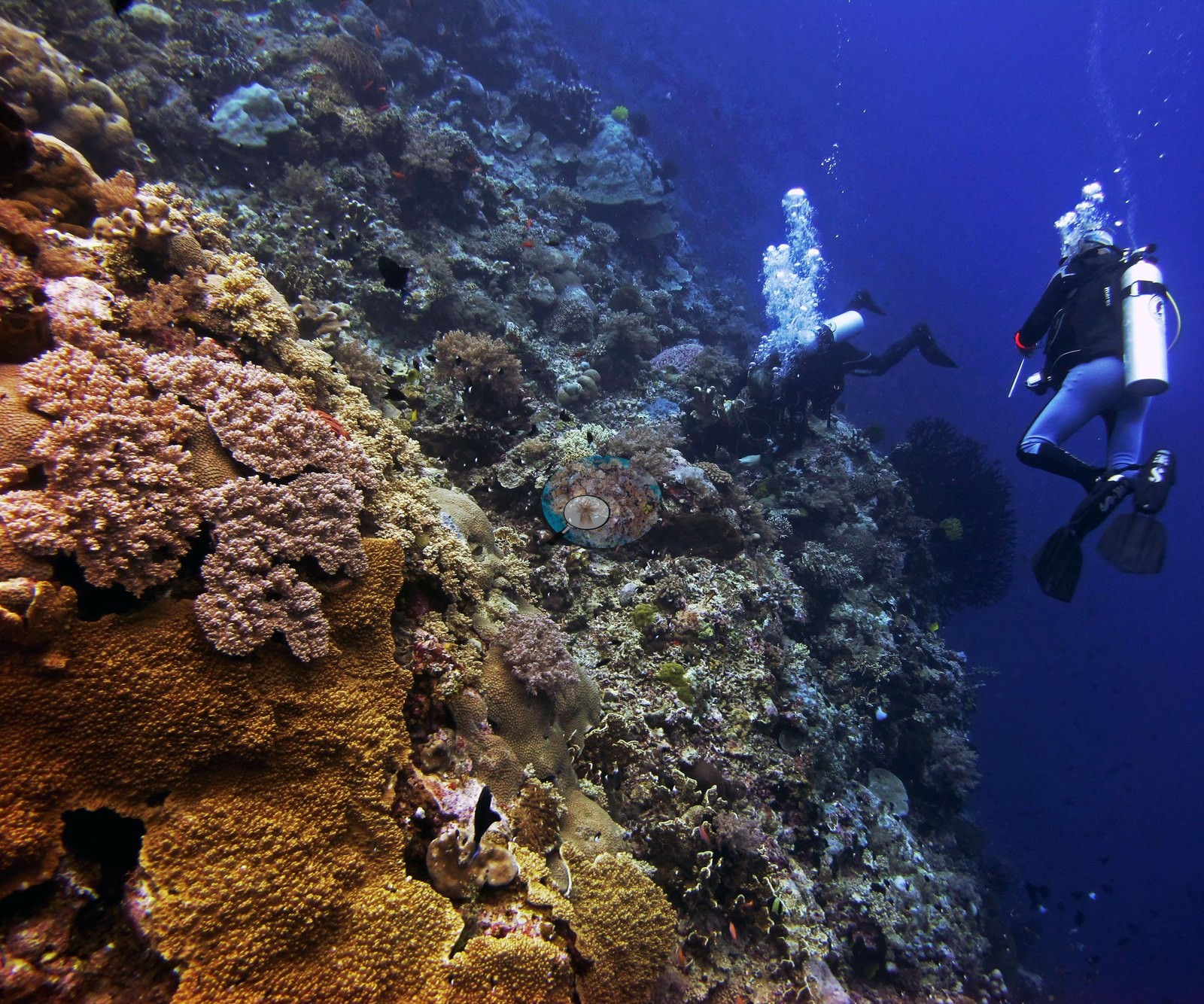
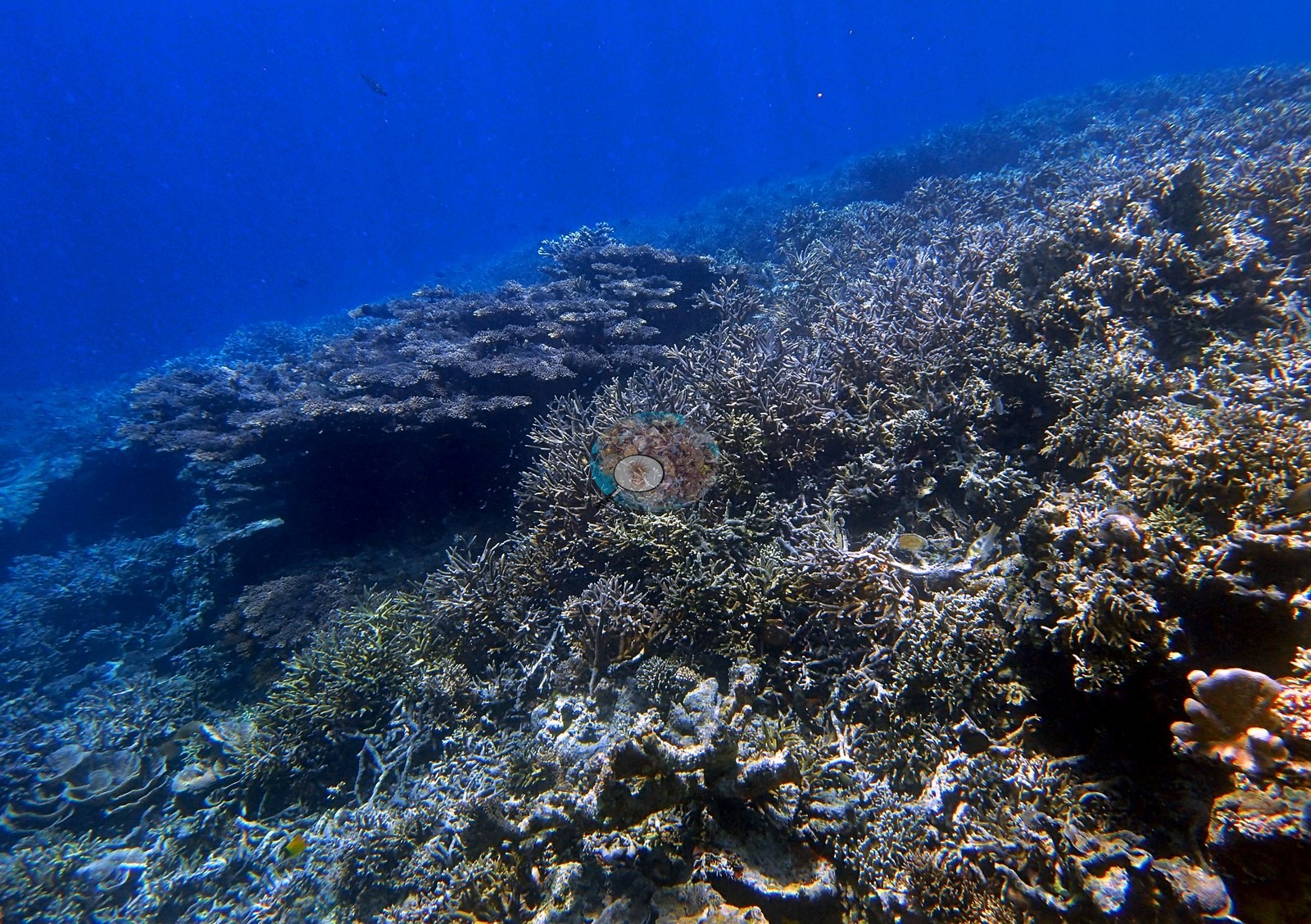
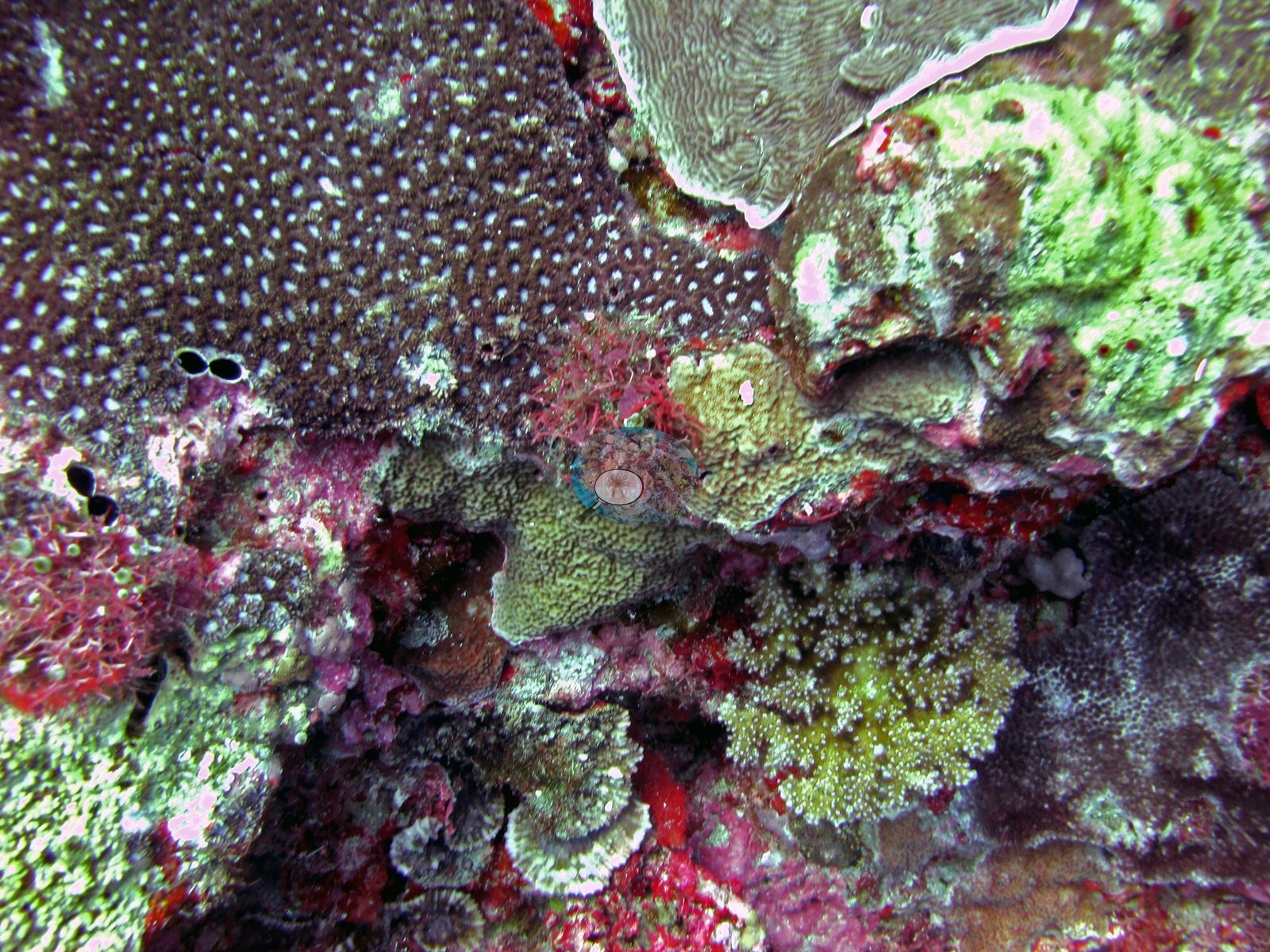
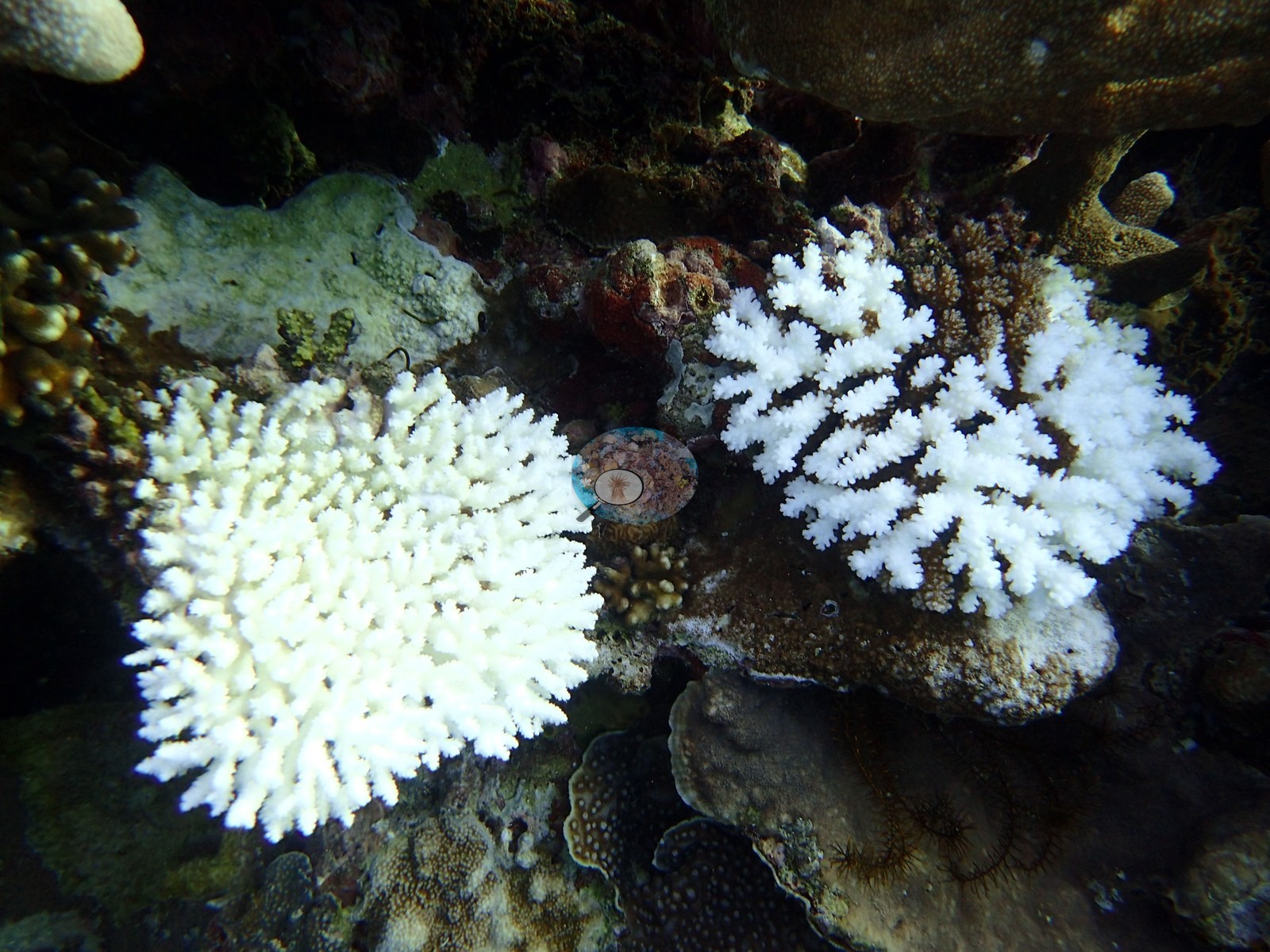
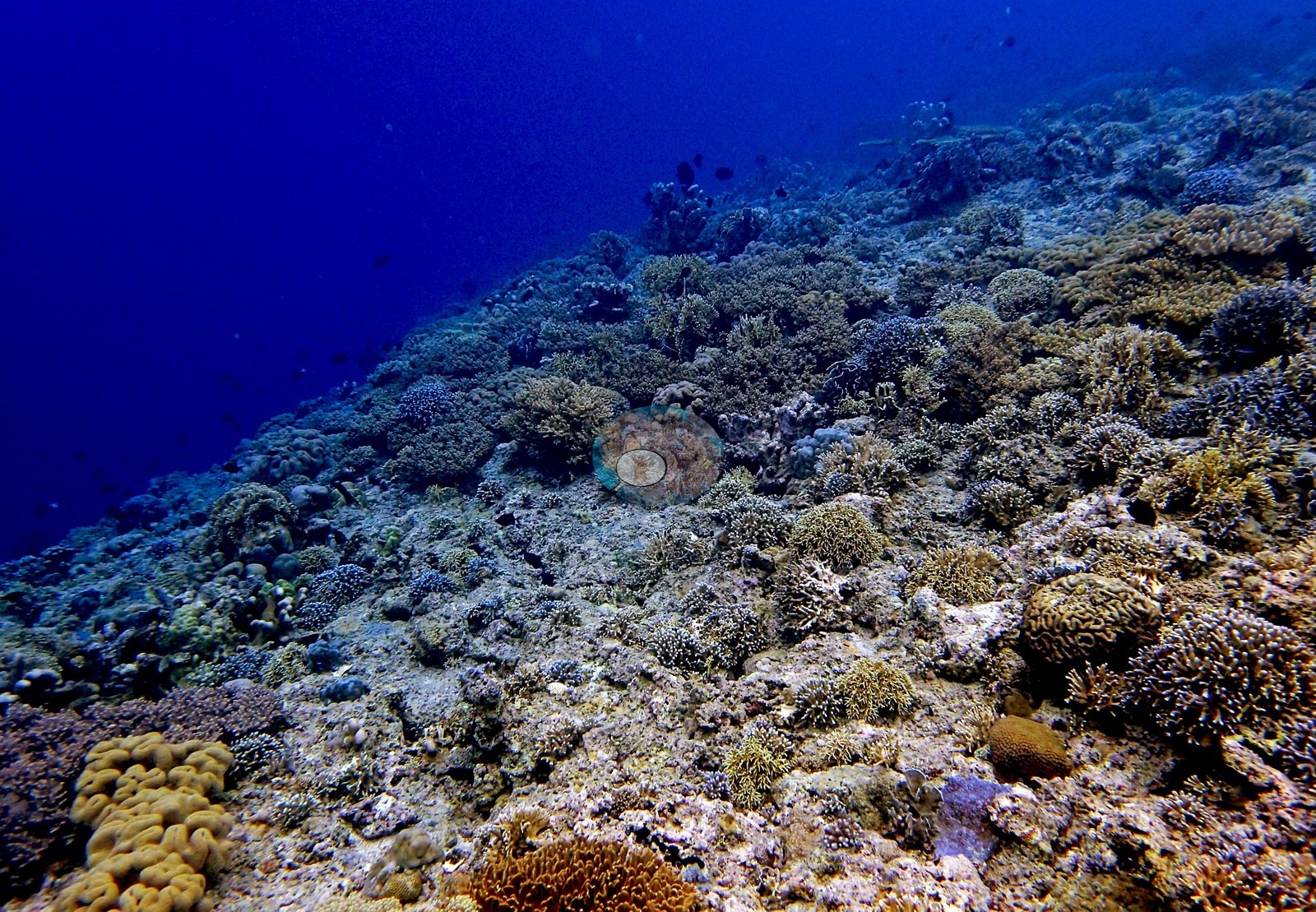
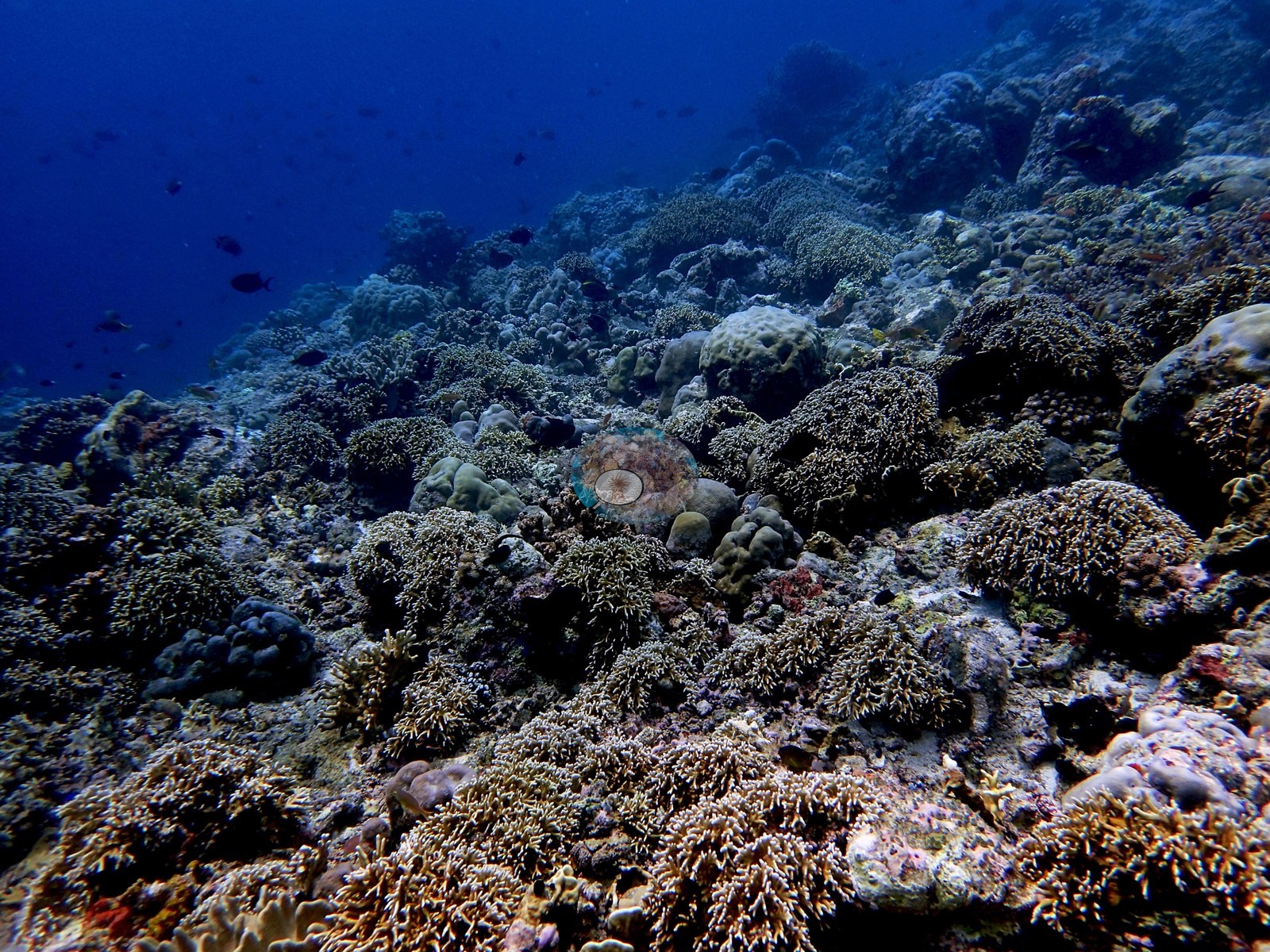
Banda's steep walls, draped in sponges, sea fans, and soft corals, rise to shallow terraces carpeted in Acropora or leather corals, dived in April 2018. On Gunung Api's 1988 lava flow, plate corals now cover the old lava channel almost completely, though localized bleaching was photographed there.
Heat stress
Long-term record: 9 years since 1985 reached 8 or more °C-weeks at NOAA’s Maluku station. Download the annual DHW data (CSV).
7 sites in this region — click a marker to open that site.
Regional setting
In their Indonesia chapter, Spalding et al. (2001) use the Banda Sea mainly as a boundary. A chain of small archipelagos running from Timor east to the Aru Islands traces its southern margin, within a deep-water sub-region (the Moluccas and Irian Jaya) where islands a few tens of kilometers apart can be divided by more than 1,000 m of mostly clear, oceanic water. They add that the western Banda Sea holds many smaller atolls. Their protected-area list includes two sites named for Banda: the Taman Laut Banda Recreation Park (25 km², designated 1977) and the Gunung Api Banda Recreation Park (7.35 km², 1992). For Indonesia as a whole, they estimate about 51,020 km² of coral reef, 18% of the world total, and record 443 coral species, with 581-602 estimated for the wider biogeographic region. Souter et al. (2021) place the Banda Sea ecoregion in an East Asian Seas subregion of 20,568 km² that also covers Halmahera, Papua, Northeast Sulawesi, the Gulf of Papua, and the Arafura Sea.
Souter et al. (2021) estimate that average hard coral cover across the East Asian Seas was 36.8% in 2019, slightly lower than a decade earlier, a decline they tie to the 2010 and 2016 mass bleaching events; within the Banda Sea's subregion, cover swung widely over the record while algal cover held roughly steady. They name overfishing, expanding coastal aquaculture, and siltation and nutrient enrichment from land-use change as the leading regional pressures, and add marine litter, noting that the region may produce as much as half of the world's marine plastic waste. Wilkinson (2006) had earlier reported that Southeast Asian reefs were still declining in 2004, with overfishing and destructive fishing the dominant direct threats, although Indonesia showed some signs of recovery.
Overview
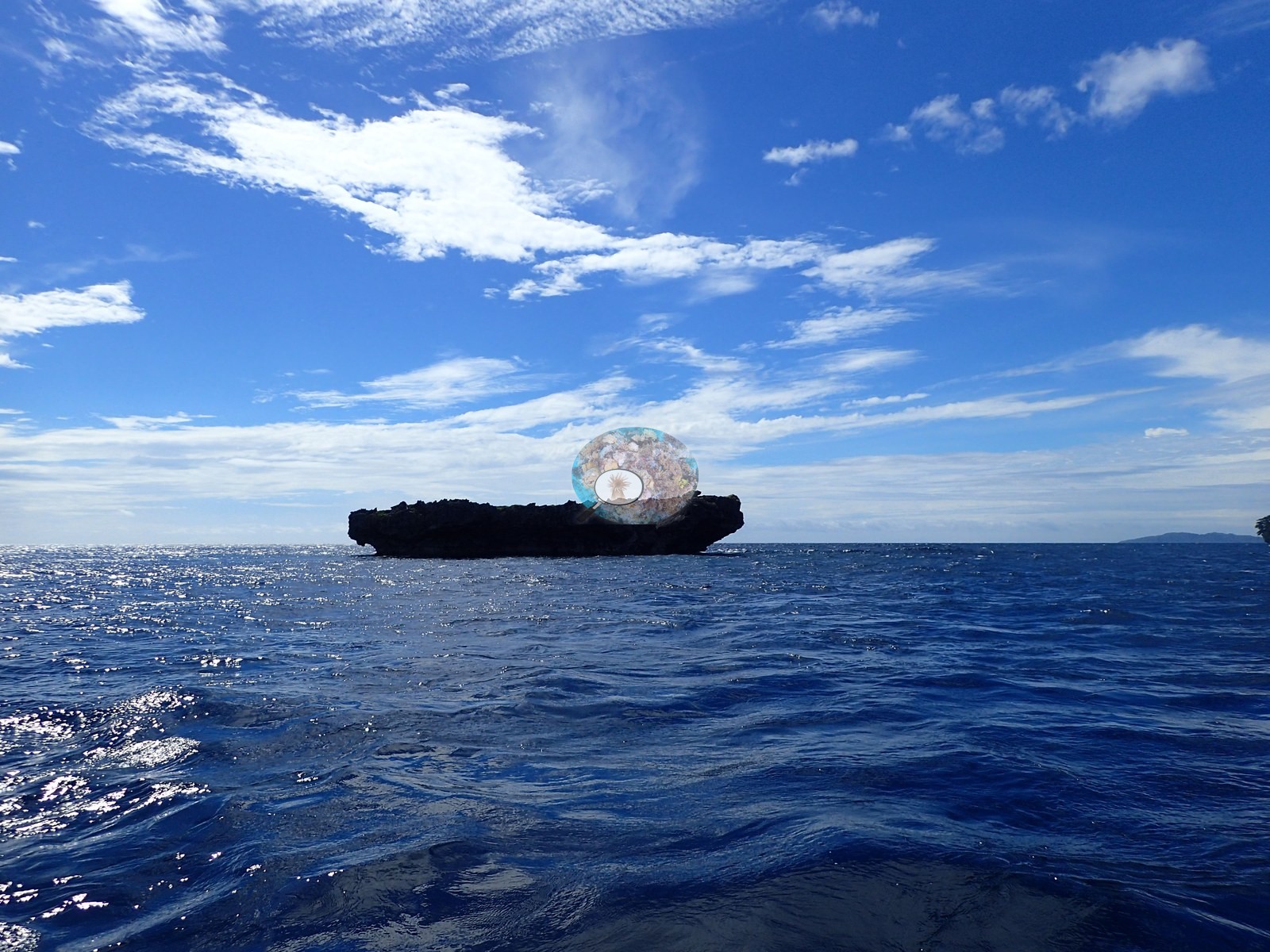
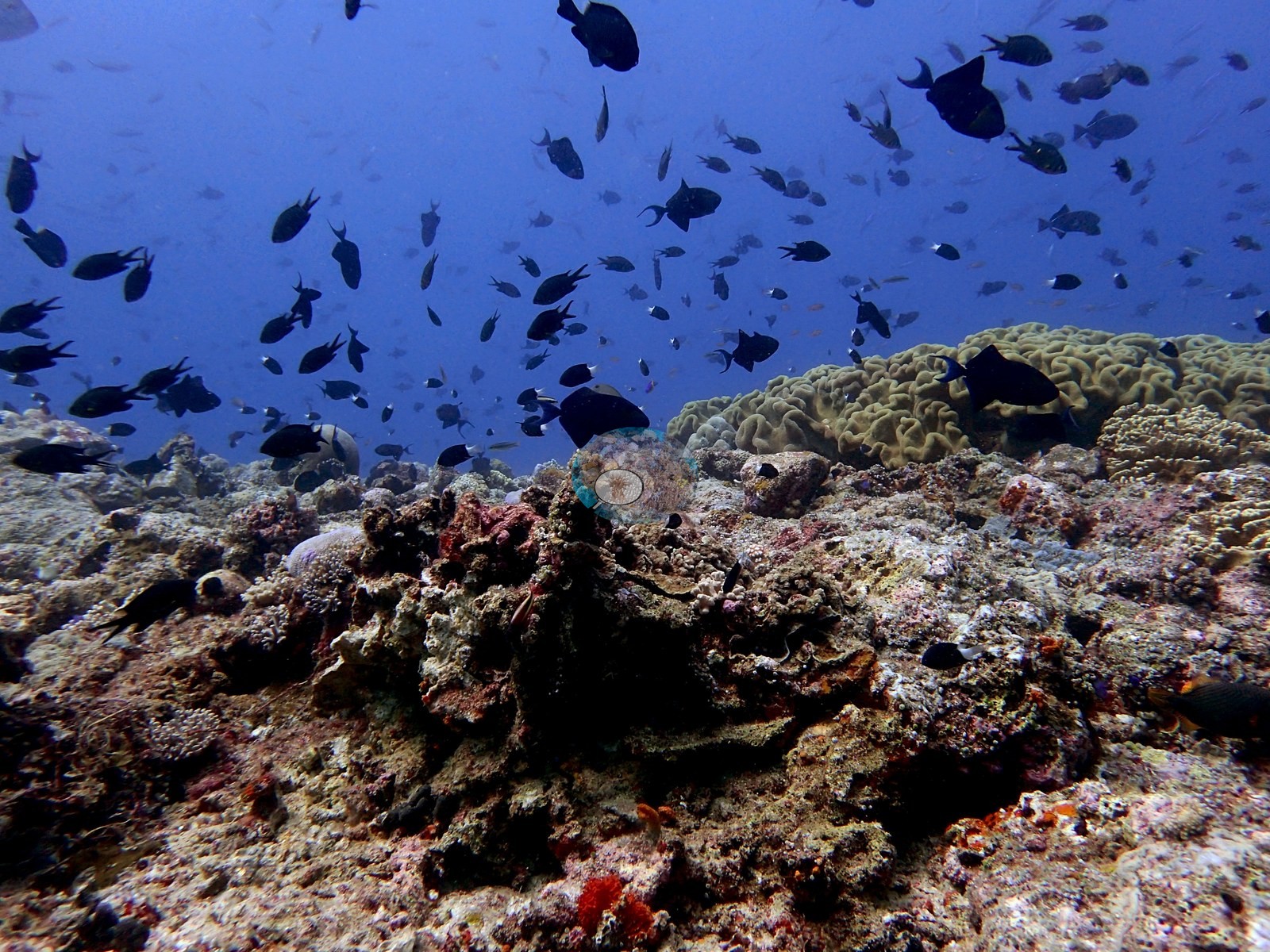
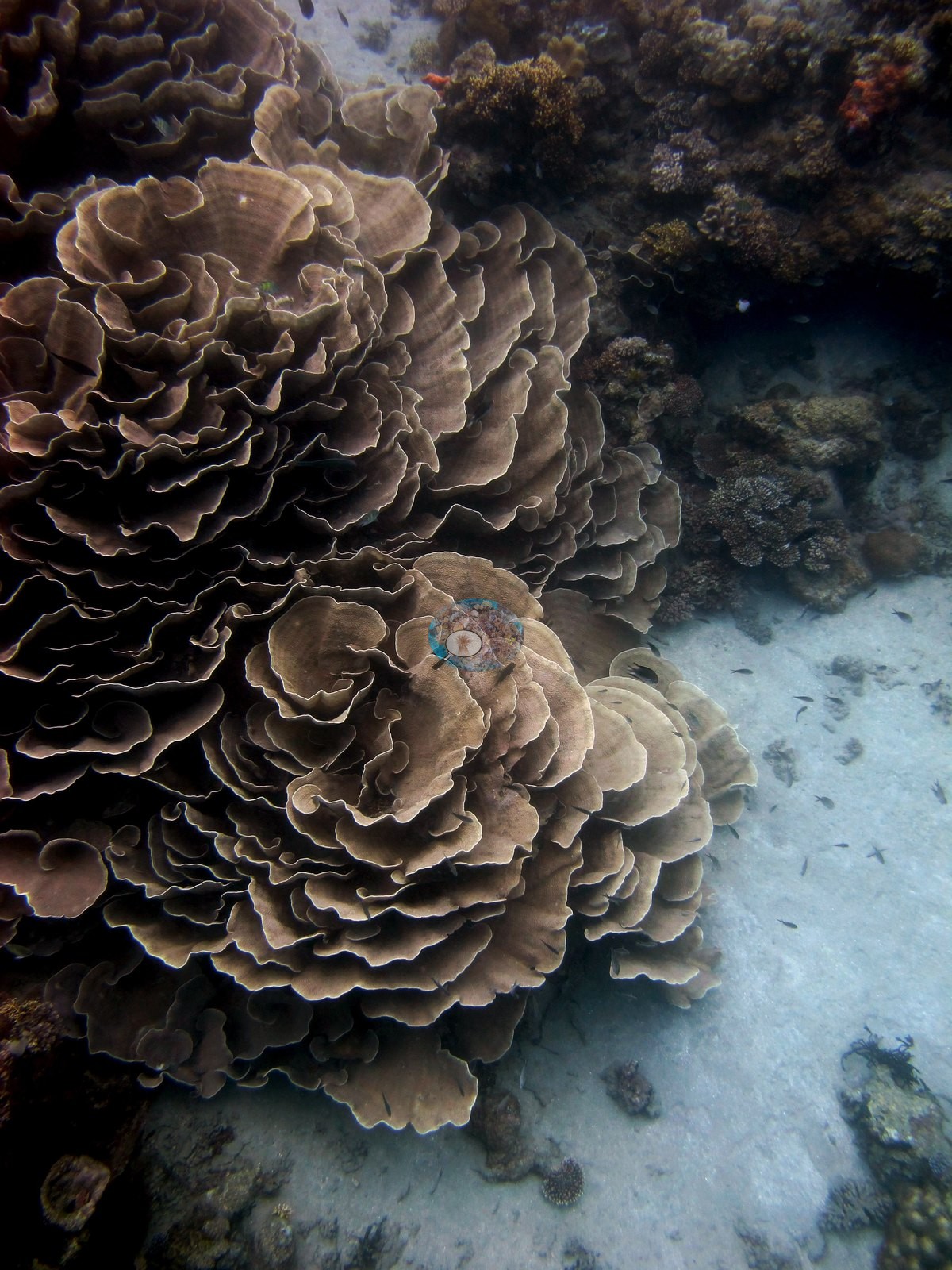
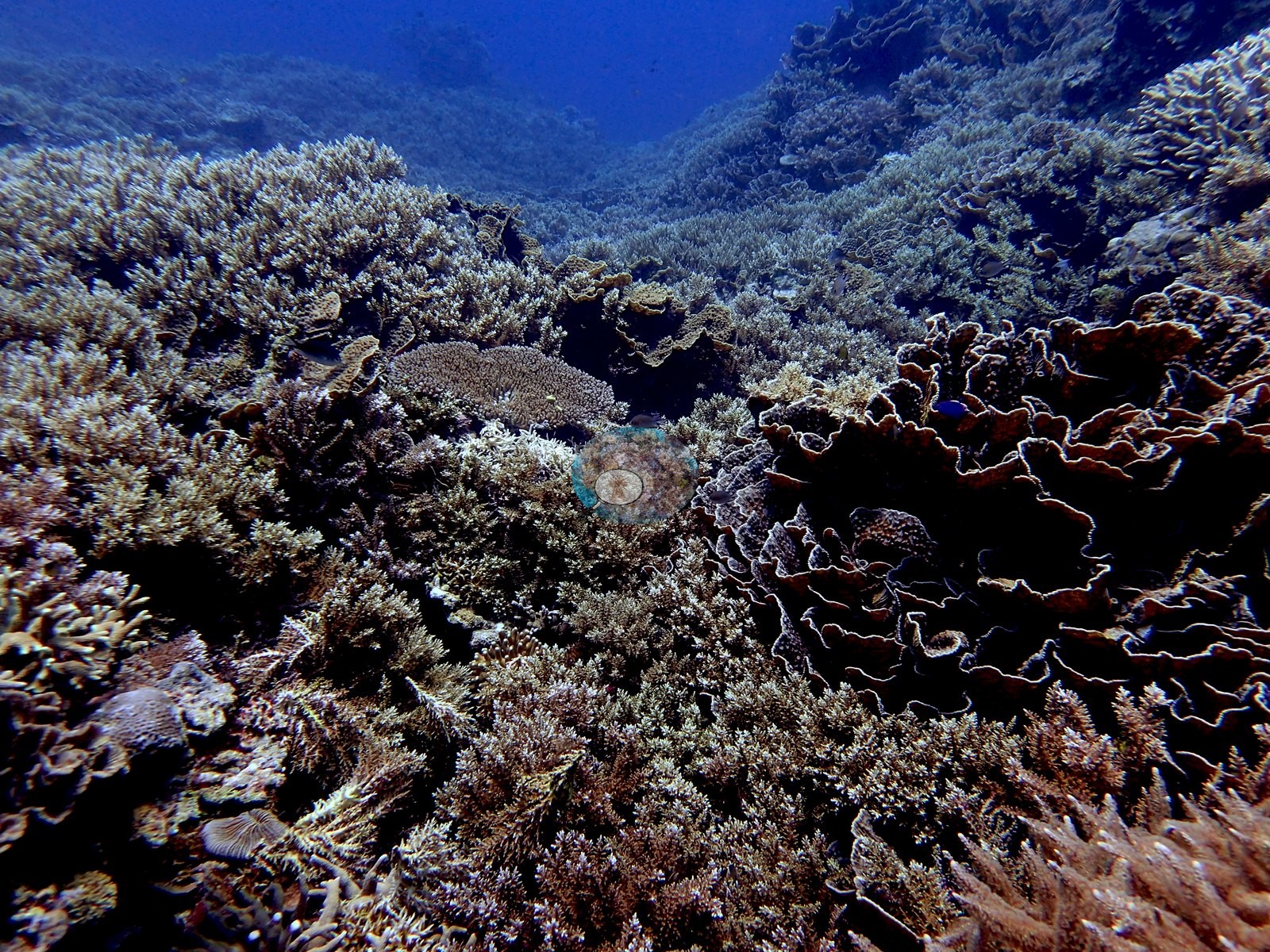
The seven Banda pins come from 25-28 April 2018: Batu Kapal, an isolated pinnacle in the channel northeast of Banda Neira; Lava Flow, on Gunung Api's 1988 flow; Lighthouse; Airport (Banda Ara); Tanjung Pisang (Banana Island); and Shark Point and Goat Hall on Pulau Ai. Water ran 29.4-30.0°C and was mostly clear. Among the six stations whose recorded depth is a scuba dive, maximum depths ran from 13.7 m at Lava Flow and Lighthouse to 30.5 m at Airport, with Shark Point close behind at 30.2 m; at Tanjung Pisang the recorded 2.4 m is a snorkel over the flat, and the dive there reached 31.4 m. The typical profile is a steep wall or drop-off rising to a shallow terrace or crest. The walls are held largely by filter feeders, with barrel sponges, sea fans, black coral, and Dendronephthya; at Batu Kapal the deep face is sheeted in orange Dendronephthya. The tops carry near-continuous Acropora carpets (Tanjung Pisang, Shark Point, Goat Hall, Lava Flow) or wall-to-wall Sarcophyton and Lobophytum leather-coral terraces (Goat Hall, Batu Kapal).
Sites differ sharply. At Lava Flow the old lava channel now carries essentially complete plate-coral cover beside unbroken staghorn thickets and 20-plus hard coral genera, while angular young basalt in the shallows is only sparsely colonized. Lighthouse pairs a rich coral terrace with a slope of bare volcanic boulders, and Airport includes a long monospecific thicket of Turbinaria- and Pachyseris-type plates. Hard coral cover (Claude CV) across seven sites ranged from 16.4% at Batu Kapal to 54.6% at Lava Flow.
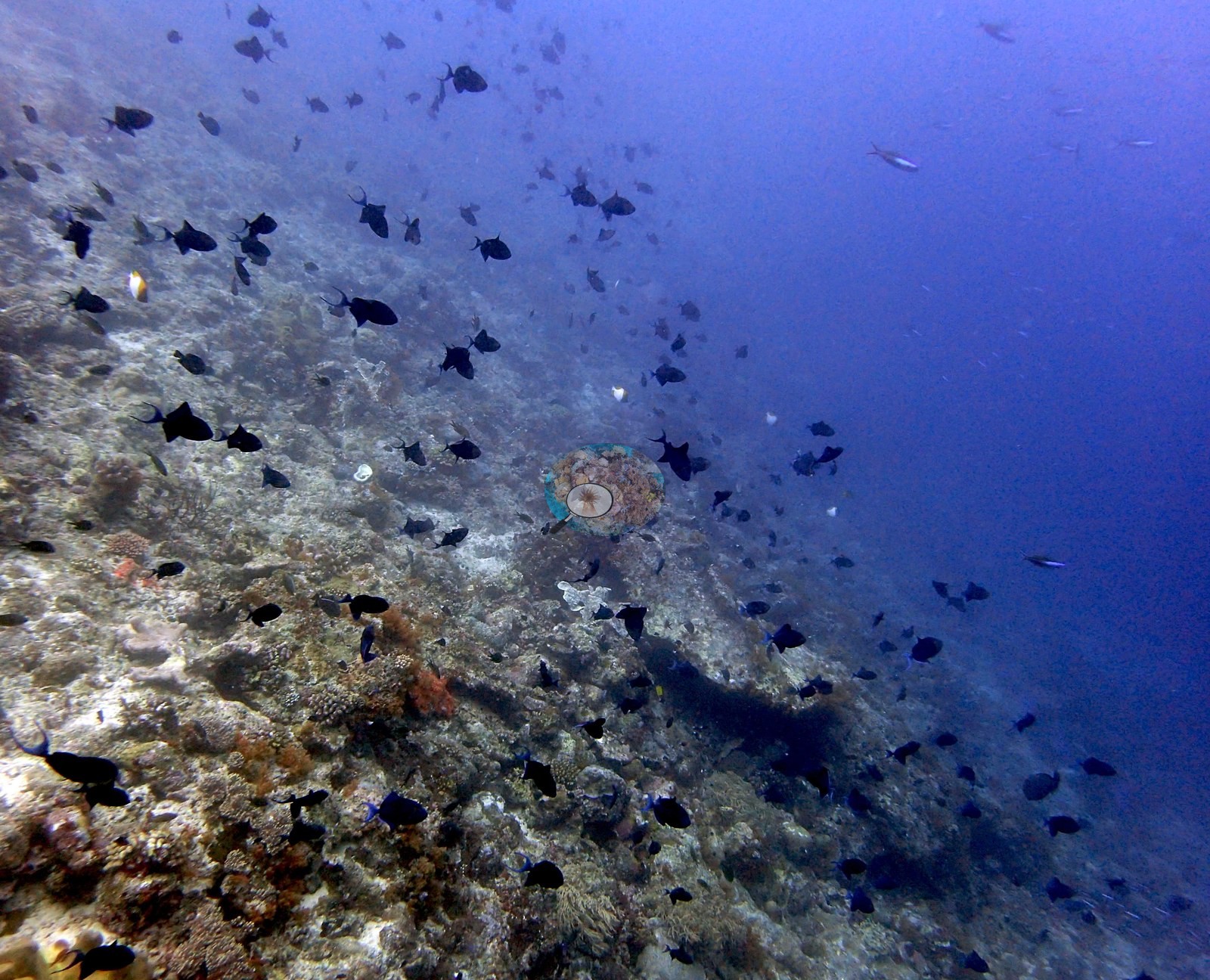
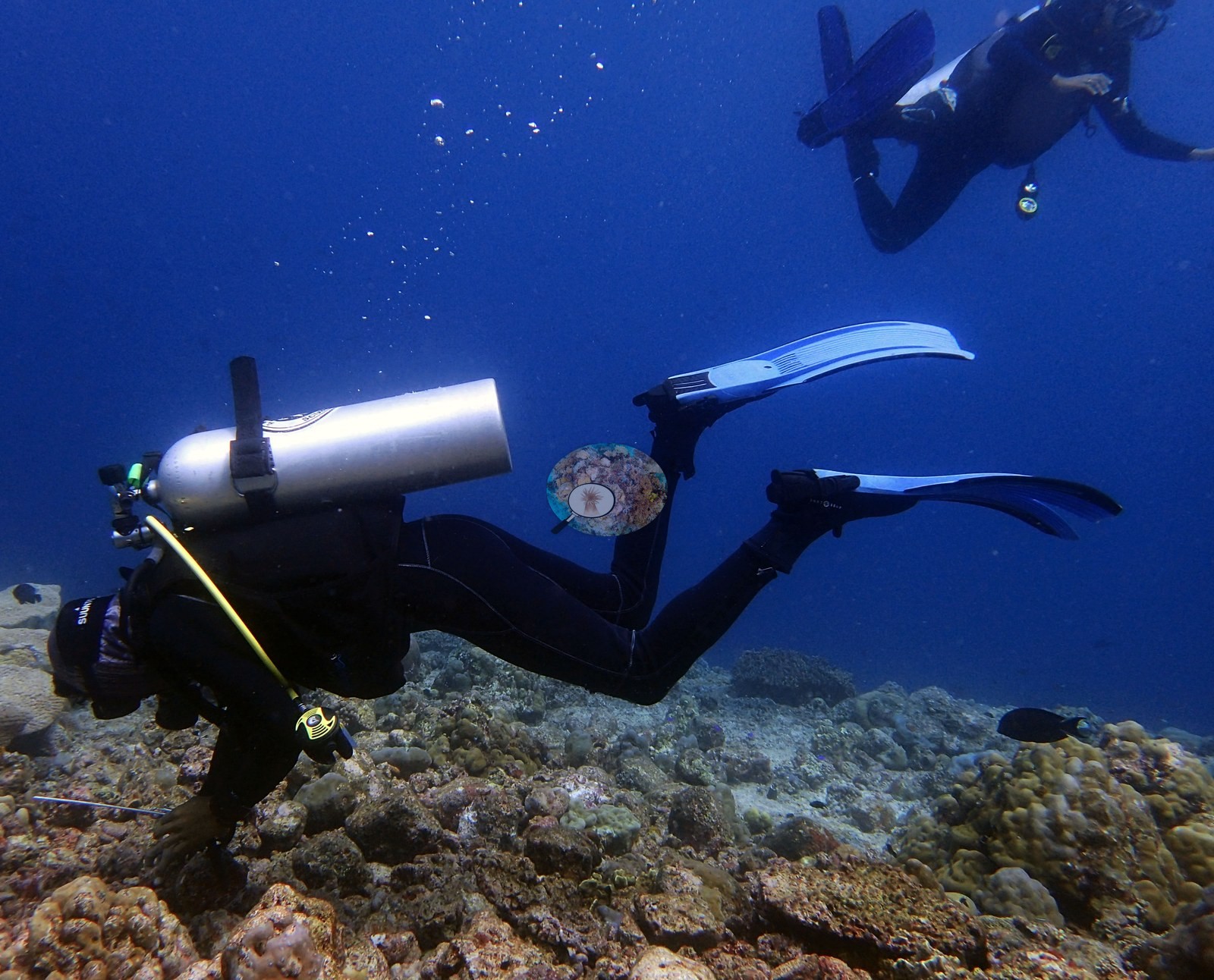
Condition was mixed across the group. Localized bleaching was photographed at Tanjung Pisang (about five large plating colonies stark white with tissue still present), Lighthouse (two bone-white corymbose Acropora), and Lava Flow, where 18 frames show white colonies among pigmented neighbors and 11 show recent staghorn mortality; at Airport, one Stylophora was half bleached and a 2 m Acropora table carried a clean-edged bare patch. Shark Point, Goat Hall, and Batu Kapal showed no bleaching, and no crown-of-thorns was seen on any dive. Hawksbill turtles were photographed at Shark Point and Goat Hall, and Batu Kapal produced a banded sea krait, two large morays, and a clown triggerfish.
Highlights
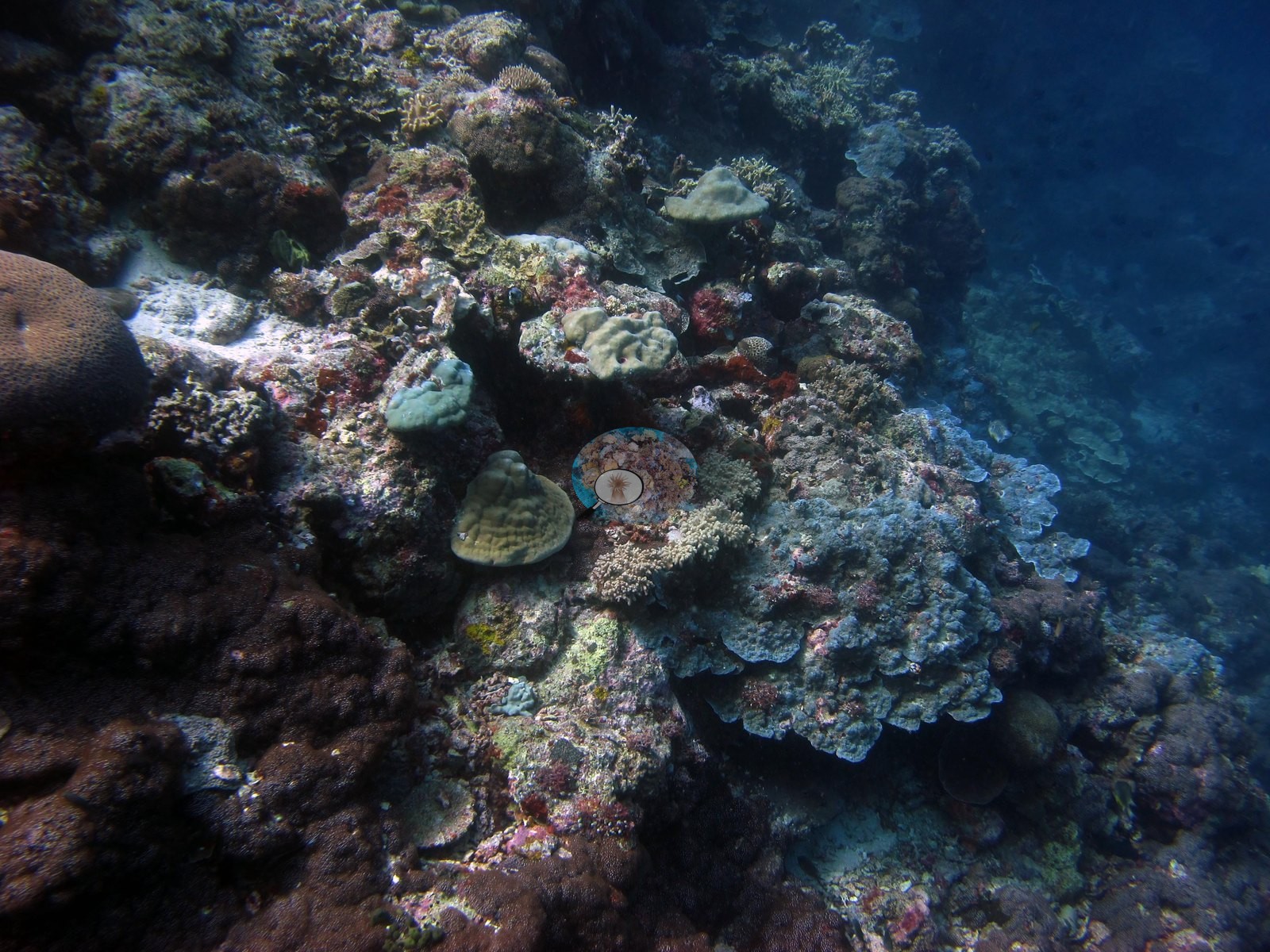
- Lava Flow (Gunung Api): the 1988 lava channel now carries essentially complete plate-coral cover beside unbroken staghorn Acropora and 20-plus hard coral genera
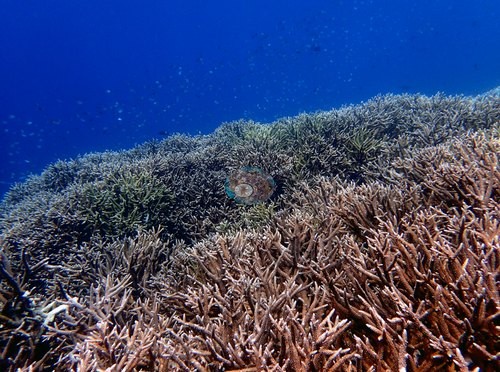 photo: Indonesia - Banda Islands: Lava Flow (Gunung Api)
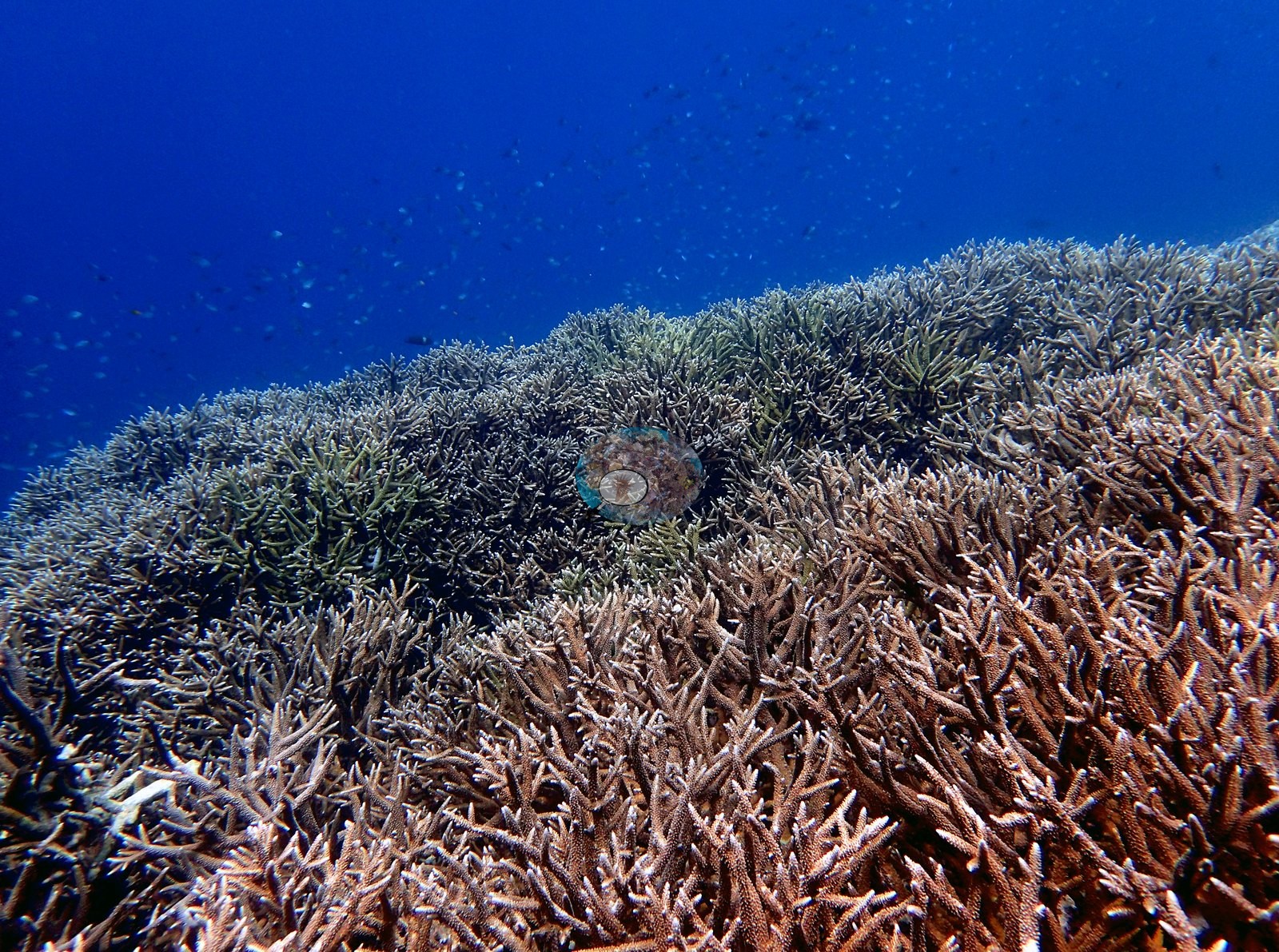
 - Near-continuous Acropora carpets on the reef tops at Tanjung Pisang, Shark Point, and Goat Hall
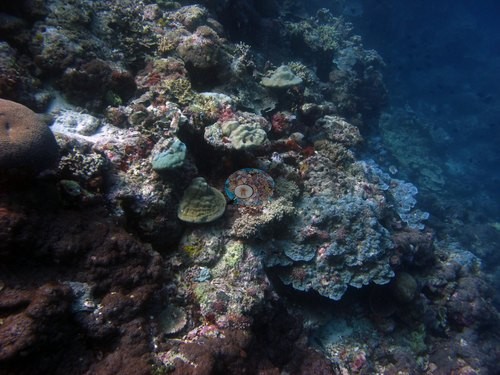 photo: Indonesia - Banda Islands: Tanjung Pisang (Banana Island)
 - Wall-to-wall Sarcophyton leather-coral terraces at Goat Hall and Batu Kapal
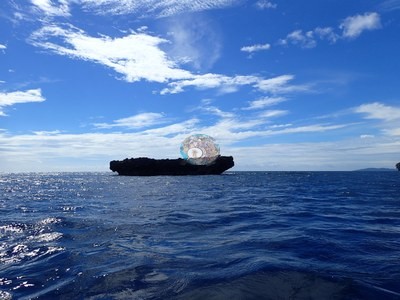 photo: Indonesia - Banda Islands: Batu Kapal
 - Hard coral cover (Claude CV) from 16.4% (Batu Kapal) to 54.6% (Lava Flow) across seven sites
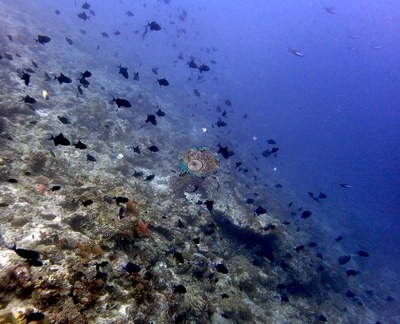 photo: Indonesia - Banda Islands: Batu Kapal
 - No crown-of-thorns seen on any of the seven dives; hawksbill turtles at Shark Point and Goat Hall
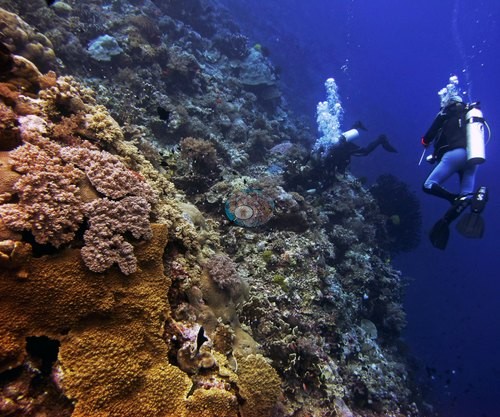 photo: Indonesia - Banda Islands: Shark Point (Pulau Ai)
Ini adalah terjemahan mesin dari ringkasan berbahasa Inggris; teks berbahasa Inggris adalah versi yang otoritatif. AI translation of this summary; the English is authoritative.
Regional setting
Dalam bab tentang Indonesia, Spalding et al. (2001) menggunakan Laut Banda (Banda Sea) terutama sebagai batas. Rangkaian kepulauan kecil yang membentang dari Timor ke timur hingga Kepulauan Aru (Aru Islands) menandai tepi selatannya, di dalam subkawasan perairan dalam (Maluku [Moluccas] dan Irian Jaya) tempat pulau-pulau yang berjarak beberapa puluh kilometer dapat dipisahkan oleh perairan oseanik yang sebagian besar jernih dengan kedalaman lebih dari 1,000 m. Mereka menambahkan bahwa Laut Banda bagian barat memiliki banyak atol yang lebih kecil. Daftar kawasan lindung mereka mencakup dua lokasi yang dinamai menurut Banda: Taman Laut Banda Recreation Park (25 km², ditetapkan 1977) dan Gunung Api Banda Recreation Park (7.35 km², 1992). Untuk Indonesia secara keseluruhan, mereka memperkirakan luas terumbu karang sekitar 51,020 km², 18% dari total dunia, dan mencatat 443 spesies karang, dengan 581-602 spesies diperkirakan untuk kawasan biogeografis yang lebih luas. Souter et al. (2021) menempatkan ekoregion Laut Banda dalam subkawasan Laut Asia Timur (East Asian Seas) seluas 20,568 km² yang juga mencakup Halmahera, Papua, Sulawesi Timur Laut (Northeast Sulawesi), Teluk Papua (Gulf of Papua), dan Laut Arafura (Arafura Sea).
Souter et al. (2021) memperkirakan bahwa rata-rata tutupan karang keras di seluruh Laut Asia Timur adalah 36.8% pada tahun 2019, sedikit lebih rendah daripada satu dekade sebelumnya, penurunan yang mereka kaitkan dengan peristiwa pemutihan massal tahun 2010 dan 2016; di subkawasan Laut Banda, tutupan karang berayun lebar sepanjang periode data, sementara tutupan alga relatif stabil. Mereka menyebut penangkapan ikan berlebih, perluasan budidaya perikanan pesisir, serta pendangkalan dan pengayaan nutrien akibat perubahan tata guna lahan sebagai tekanan utama di kawasan ini, ditambah sampah laut, dengan catatan bahwa kawasan ini mungkin menghasilkan hingga separuh sampah plastik laut dunia. Sebelumnya, Wilkinson (2006) melaporkan bahwa terumbu Asia Tenggara masih terus menurun pada tahun 2004, dengan penangkapan ikan berlebih dan penangkapan ikan yang merusak sebagai ancaman langsung utama, meskipun Indonesia menunjukkan beberapa tanda pemulihan.
Overview
Tujuh titik (pin) Banda berasal dari 25-28 April 2018: Batu Kapal, puncak karang (pinnacle) terpencil di selat sebelah timur laut Banda Neira; Lava Flow, di aliran lava Gunung Api tahun 1988; Lighthouse; Airport (Banda Ara); Tanjung Pisang (Banana Island); serta Shark Point dan Goat Hall di Pulau Ai. Suhu air 29.4-30.0°C dan airnya sebagian besar jernih. Profil yang umum adalah dinding curam atau tubir yang naik ke teras atau puncak terumbu yang dangkal. Dinding-dindingnya terutama dihuni organisme penyaring, dengan spons tong, kipas laut, karang hitam, dan Dendronephthya; di Batu Kapal, sisi dalamnya diselimuti Dendronephthya berwarna jingga. Bagian atasnya memiliki hamparan Acropora yang nyaris tak terputus (Tanjung Pisang, Shark Point, Goat Hall, Lava Flow) atau teras karang kulit Sarcophyton dan Lobophytum yang menutup rapat dari ujung ke ujung (Goat Hall, Batu Kapal).
Kondisi antarlokasi sangat berbeda. Di Lava Flow, saluran lava lama kini memiliki tutupan karang lembaran yang praktis penuh di samping semak tanduk rusa yang tak terputus dan lebih dari 20 genus karang keras, sementara basal muda bersudut tajam di perairan dangkal baru sedikit terkolonisasi. Lighthouse memadukan teras karang yang kaya dengan lereng berupa bongkahan batu vulkanik yang gundul, dan Airport mencakup semak panjang monospesifik berupa karang lembaran tipe Turbinaria dan Pachyseris. Indeks berbasis foto berkisar dari 25.7% di Batu Kapal hingga 44.8% di Airport. Karena indeks ini ikut menghitung karang lunak, nilainya lebih tinggi dibandingkan survei karang keras di dekatnya di lokasi yang didominasi karang kulit (Airport) dan lebih rendah pada semak yang padat (Goat Hall); di Batu Kapal, indeks ini hampir persis sama dengan survei MERMAID yang berjarak 1.57 km.
Kondisi di kelompok ini beragam. Pemutihan karang setempat difoto di Tanjung Pisang (sekitar lima koloni lembaran besar yang putih bersih dengan jaringan yang masih ada), Lighthouse (dua Acropora korimbosa yang putih seperti tulang), dan Lava Flow, tempat 18 bingkai foto memperlihatkan koloni putih di antara tetangganya yang berpigmen dan 11 bingkai memperlihatkan kematian tanduk rusa yang baru terjadi; di Airport, satu koloni Stylophora setengah memutih dan satu meja Acropora berukuran 2 m memiliki bidang gundul bertepi tegas. Shark Point, Goat Hall, dan Batu Kapal tidak menunjukkan pemutihan, dan tidak terlihat bintang laut mahkota duri pada satu penyelaman pun. Penyu sisik difoto di Shark Point dan Goat Hall, dan di Batu Kapal dijumpai seekor ular laut belang, dua belut moray besar, dan seekor ikan pogo badut (clown triggerfish).
Highlights
- Lava Flow (Gunung Api): saluran lava tahun 1988 kini memiliki tutupan karang lembaran yang praktis penuh di samping Acropora tanduk rusa yang tak terputus dan lebih dari 20 genus karang keras
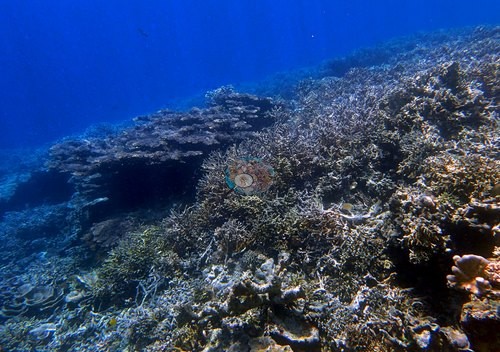 photo: Indonesia - Banda Islands: Lava Flow (Gunung Api)
 - Hamparan Acropora yang nyaris tak terputus di puncak terumbu Tanjung Pisang, Shark Point, dan Goat Hall
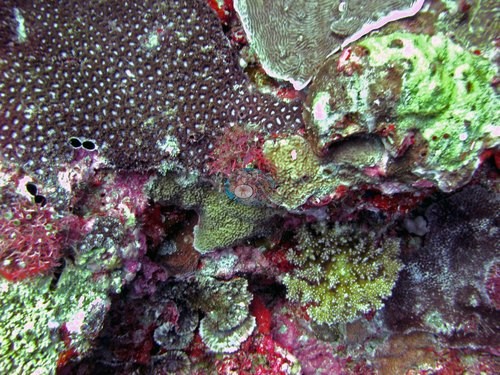 photo: Indonesia - Banda Islands: Tanjung Pisang (Banana Island)
 - Teras karang kulit Sarcophyton yang menutup rapat dari ujung ke ujung di Goat Hall dan Batu Kapal
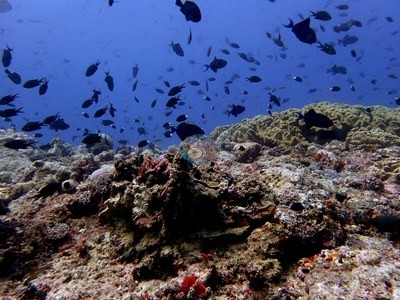 photo: Indonesia - Banda Islands: Batu Kapal
 - Tutupan berbasis foto dari 25.7% (Batu Kapal) hingga 44.8% (Airport); indeks mencakup karang lunak
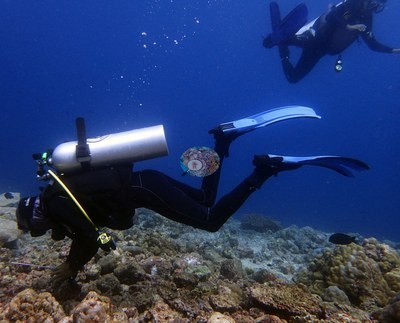 photo: Indonesia - Banda Islands: Batu Kapal
 - Tidak terlihat bintang laut mahkota duri pada ketujuh penyelaman; penyu sisik di Shark Point dan Goat Hall
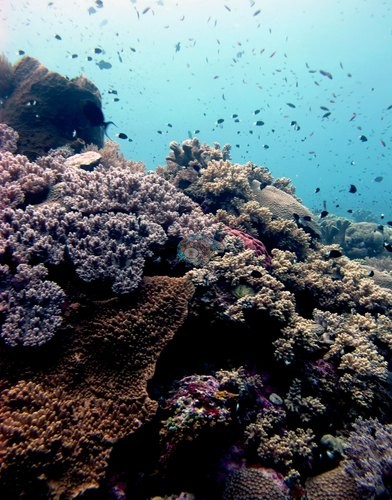 photo: Indonesia - Banda Islands: Shark Point (Pulau Ai)
Notable observations
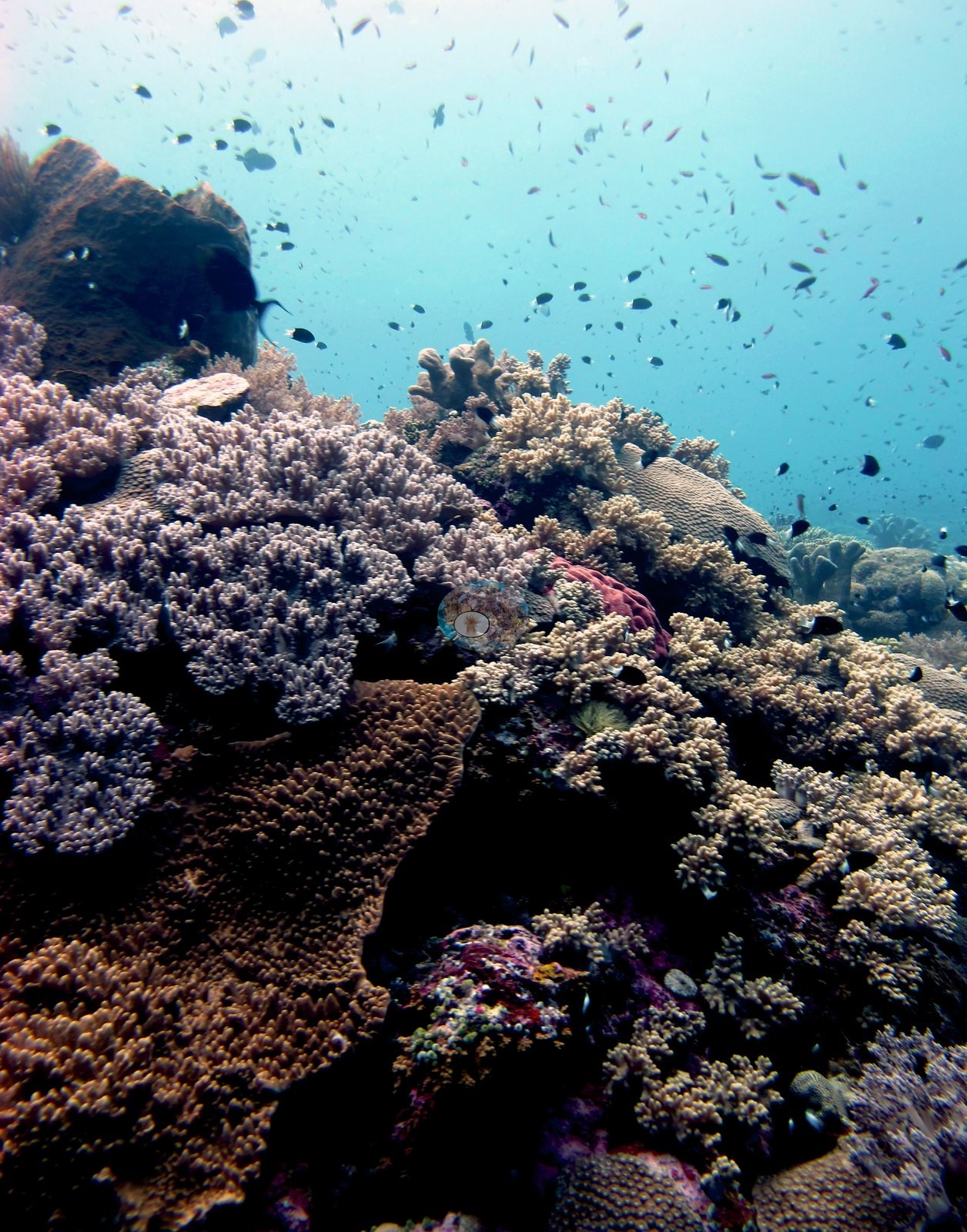
- Indonesia - Banda Islands: Tanjung Pisang (Banana Island): Bleaching confirmed in four frames: a cluster of roughly five large laminar/plating colonies (Turbinaria/Echinopora) stark white with tissue still present, one with a small central necrotic patch; a separate pair of pale Porites-type colonies suggests low-incidence paling scattered across the reef. No crown-of-thorns starfish (COTS), Drupella, or disease
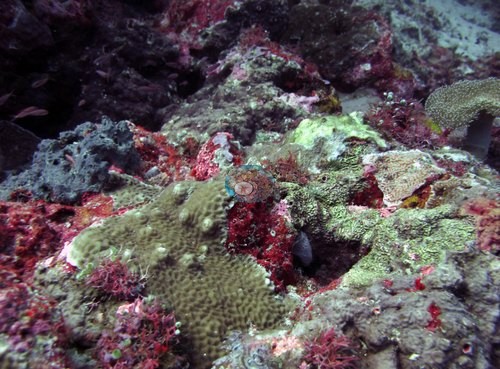
- Indonesia - Banda Islands: Lighthouse: Two corymbose Acropora colonies fully bleached bone-white among normally pigmented neighbors; colony-scale and localized, not a whole-reef event. No COTS or disease seen
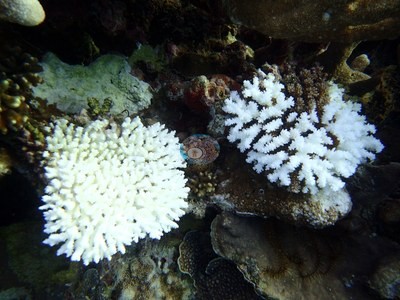
- Indonesia - Banda Islands: Airport (Banda Ara): One Stylophora-type colony stark white to pale green over roughly half its surface (partial bleaching); a ~2 m tabulate Acropora with a sharply bounded bare white patch, consistent with white syndrome or a healed predation scar (the photograph cannot separate them); white lesion bands on a small massive colony and a smaller white patch on a faviid. No COTS
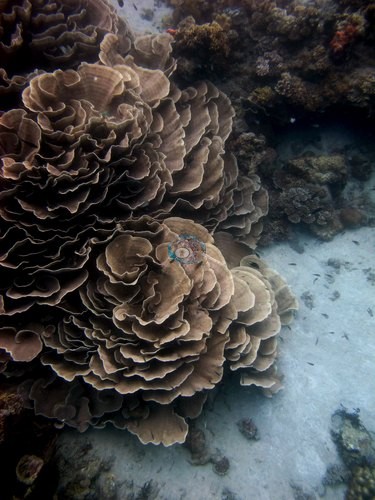
- Indonesia - Banda Islands: Lava Flow (Gunung Api): Eighteen frames with stark-white colonies among pigmented neighbors (low-level, colony-scale bleaching in Acropora, Pocillopora acuta-type, Seriatopora, massive Porites); 11 frames of recent-mortality ground (disarticulated Acropora rubble, standing dead staghorn under turf); parrotfish bite scars on one plate. No Acanthaster or Drupella; cause not asserted
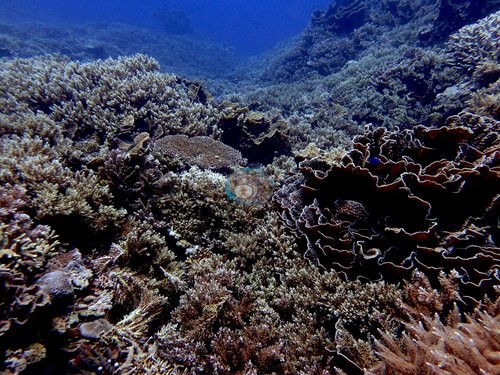
- Indonesia - Banda Islands: Goat Hall (Pulau Ai): Older partial mortality on one large massive dome (turf-fouled denuded patch); a pale lavender dome read as a color morph, not bleaching. No bleaching event, COTS, disease, or Drupella
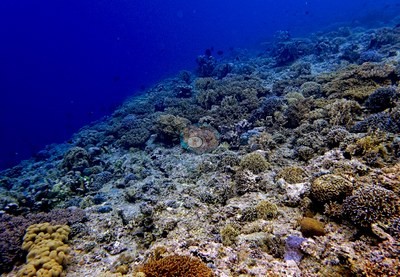
- Indonesia - Banda Islands: Batu Kapal: One pale cream-white massive dome shot at range, logged but not scored; extensive old, consolidated coralline rubble pavement. No COTS, disease, Drupella, or bleaching event
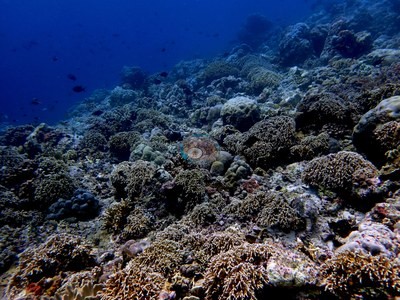
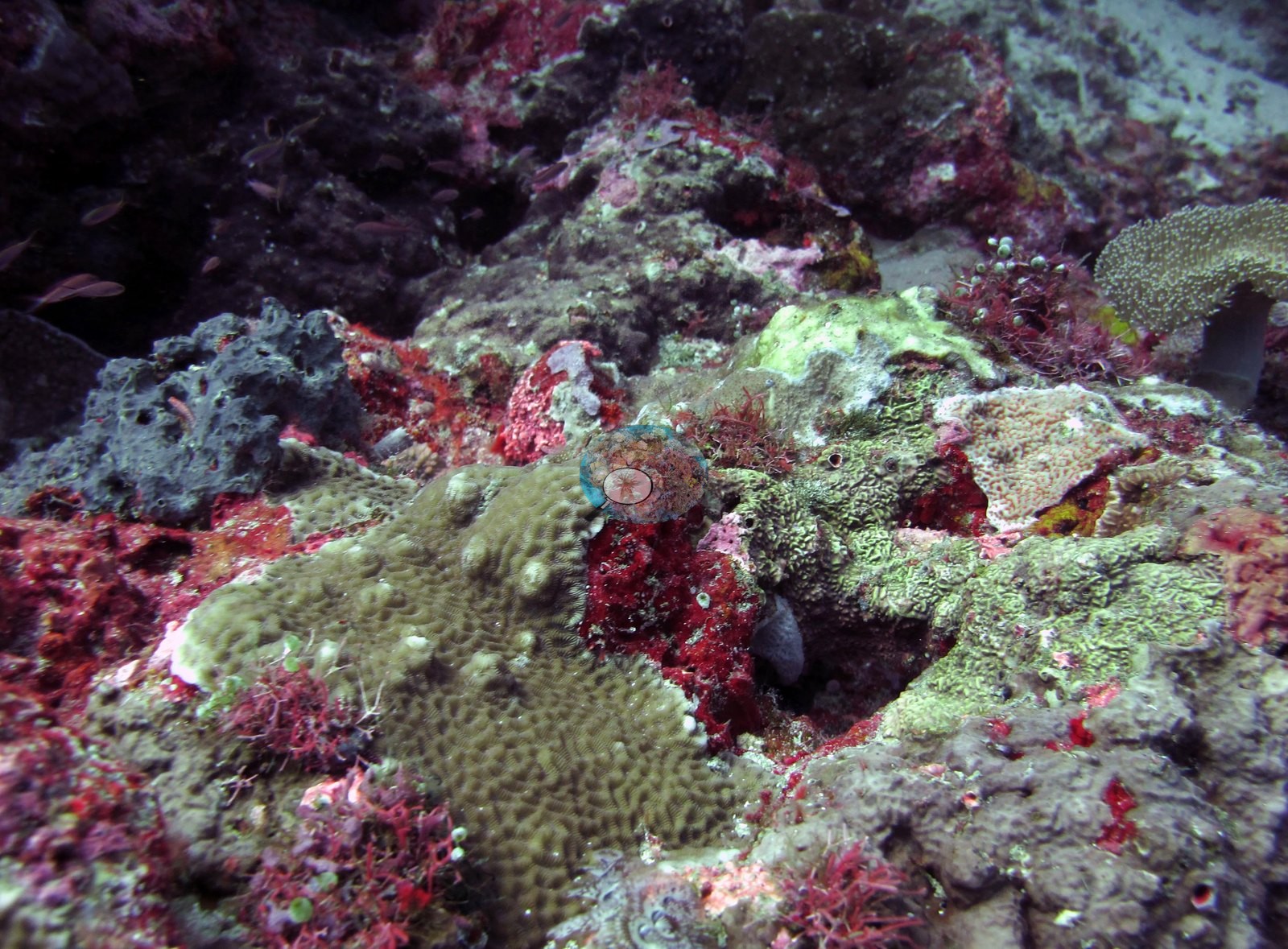
Coral cover over time (pooled)
Sites in this region
- Indonesia - Banda Islands: Airport (Banda Ara) — 38% coral cover
- Indonesia - Banda Islands: Batu Kapal — 16% coral cover
- Indonesia - Banda Islands: Goat Hall (Pulau Ai) — 37% coral cover
- Indonesia - Banda Islands: Lava Flow (Gunung Api) — 55% coral cover
- Indonesia - Banda Islands: Lighthouse — 29% coral cover
- Indonesia - Banda Islands: Shark Point (Pulau Ai) — 33% coral cover
- Indonesia - Banda Islands: Tanjung Pisang (Banana Island) — 36% coral cover
Nearby external survey stations
119 independent survey records within 5 km of a site in this region (deduplicated across sites).
Show all 119 records
- Coral Triangle Center (CTC) — Ay Barat (03) (2012): 61% hard coral cover, 1.02 km from Indonesia - Banda Islands: Goat Hall (Pulau Ai)
- Coral Triangle Center (CTC) — Ay Barat (03) (2019): 60% hard coral cover, 1.02 km from Indonesia - Banda Islands: Goat Hall (Pulau Ai)
- Coral Triangle Center (CTC) — Ay Barat (03) (mean of 2 surveys, 2012–2019) (2019): 60% hard coral cover, 1.02 km from Indonesia - Banda Islands: Goat Hall (Pulau Ai)
- Coral Triangle Center (CTC) — Ay Selatan (22) (2015): 64% hard coral cover, 1.33 km from Indonesia - Banda Islands: Goat Hall (Pulau Ai)
- Coral Triangle Center (CTC) — Ay Selatan (22) (2016): 58% hard coral cover, 1.33 km from Indonesia - Banda Islands: Goat Hall (Pulau Ai)
- Coral Triangle Center (CTC) — Ay Selatan (22) (2017): 49% hard coral cover, 1.33 km from Indonesia - Banda Islands: Goat Hall (Pulau Ai)
- Coral Triangle Center (CTC) — Ay Selatan (22) (2018): 52% hard coral cover, 1.33 km from Indonesia - Banda Islands: Goat Hall (Pulau Ai)
- Coral Triangle Center (CTC) — Ay Selatan (22) (2019): 45% hard coral cover, 1.33 km from Indonesia - Banda Islands: Goat Hall (Pulau Ai)
- Coral Triangle Center (CTC) — Ay Selatan (22) (mean of 5 surveys, 2015–2019) (2019): 54% hard coral cover, 1.33 km from Indonesia - Banda Islands: Goat Hall (Pulau Ai)
- Coral Triangle Center (CTC) — Ay Timur (04) (2012): 44% hard coral cover, 0.32 km from Indonesia - Banda Islands: Shark Point (Pulau Ai)
- Coral Triangle Center (CTC) — Ay Timur (04) (2015): 24% hard coral cover, 0.32 km from Indonesia - Banda Islands: Shark Point (Pulau Ai)
- Coral Triangle Center (CTC) — Ay Timur (04) (2016): 24% hard coral cover, 0.32 km from Indonesia - Banda Islands: Shark Point (Pulau Ai)
- Coral Triangle Center (CTC) — Ay Timur (04) (2017): 19% hard coral cover, 0.32 km from Indonesia - Banda Islands: Shark Point (Pulau Ai)
- Coral Triangle Center (CTC) — Ay Timur (04) (2018): 38% hard coral cover, 0.32 km from Indonesia - Banda Islands: Shark Point (Pulau Ai)
- Coral Triangle Center (CTC) — Ay Timur (04) (2019): 55% hard coral cover, 0.32 km from Indonesia - Banda Islands: Shark Point (Pulau Ai)
- Coral Triangle Center (CTC) — Ay Timur (04) (mean of 6 surveys, 2012–2019) (2019): 34% hard coral cover, 0.32 km from Indonesia - Banda Islands: Shark Point (Pulau Ai)
- Coral Triangle Center (CTC) — Batu Belanda (19) (2019): 23% hard coral cover, 4.36 km from Indonesia - Banda Islands: Lava Flow (Gunung Api)
- Coral Triangle Center (CTC) — Batu Kapal (10) (2019): 31% hard coral cover, 1.85 km from Indonesia - Banda Islands: Batu Kapal
- Coral Triangle Center (CTC) — Gunung Api Selatan (08) (2019): 11% hard coral cover, 2.06 km from Indonesia - Banda Islands: Lava Flow (Gunung Api)
- Coral Triangle Center (CTC) — Gunung Api Timur (07) (2019): 39% hard coral cover, 1.35 km from Indonesia - Banda Islands: Airport (Banda Ara)
- Coral Triangle Center (CTC) — Karaka (06) (2019): 67% hard coral cover, 2.18 km from Indonesia - Banda Islands: Lighthouse
- Coral Triangle Center (CTC) — Lava Flow (09) (2019): 69% hard coral cover, 1.96 km from Indonesia - Banda Islands: Lava Flow (Gunung Api)
- Coral Triangle Center (CTC) — Mangku Batu (20) (2014): 43% hard coral cover, 1.22 km from Indonesia - Banda Islands: Lighthouse
- Coral Triangle Center (CTC) — Mangku Batu (20) (2015): 27% hard coral cover, 1.22 km from Indonesia - Banda Islands: Lighthouse
- Coral Triangle Center (CTC) — Mangku Batu (20) (2016): 33% hard coral cover, 1.22 km from Indonesia - Banda Islands: Lighthouse
- Coral Triangle Center (CTC) — Mangku Batu (20) (2017): 28% hard coral cover, 1.22 km from Indonesia - Banda Islands: Lighthouse
- Coral Triangle Center (CTC) — Mangku Batu (20) (2018): 39% hard coral cover, 1.22 km from Indonesia - Banda Islands: Lighthouse
- Coral Triangle Center (CTC) — Mangku Batu (20) (2019): 34% hard coral cover, 1.22 km from Indonesia - Banda Islands: Lighthouse
- Coral Triangle Center (CTC) — Mangku Batu (20) (mean of 6 surveys, 2014–2019) (2019): 34% hard coral cover, 1.22 km from Indonesia - Banda Islands: Lighthouse
- Coral Triangle Center (CTC) — Pohon Miring (16) (2019): 65% hard coral cover, 3.11 km from Indonesia - Banda Islands: Batu Kapal
- Coral Triangle Center (CTC) — Syahrir Timur (11) (2014): 49% hard coral cover, 1.89 km from Indonesia - Banda Islands: Batu Kapal
- Coral Triangle Center (CTC) — Syahrir Timur (11) (2015): 35% hard coral cover, 1.89 km from Indonesia - Banda Islands: Batu Kapal
- Coral Triangle Center (CTC) — Syahrir Timur (11) (2016): 47% hard coral cover, 1.89 km from Indonesia - Banda Islands: Batu Kapal
- Coral Triangle Center (CTC) — Syahrir Timur (11) (2017): 48% hard coral cover, 1.89 km from Indonesia - Banda Islands: Batu Kapal
- Coral Triangle Center (CTC) — Syahrir Timur (11) (2018): 47% hard coral cover, 1.89 km from Indonesia - Banda Islands: Batu Kapal
- Coral Triangle Center (CTC) — Syahrir Timur (11) (2019): 53% hard coral cover, 1.89 km from Indonesia - Banda Islands: Batu Kapal
- Coral Triangle Center (CTC) — Syahrir Timur (11) (mean of 6 surveys, 2014–2019) (2019): 47% hard coral cover, 1.89 km from Indonesia - Banda Islands: Batu Kapal
- Coral Triangle Center (CTC) — Uring (18) (2019): 44% hard coral cover, 2.95 km from Indonesia - Banda Islands: Tanjung Pisang (Banana Island)
- Coral Triangle Center (CTC) — Waer (17) (2019): 46% hard coral cover, 4.63 km from Indonesia - Banda Islands: Tanjung Pisang (Banana Island)
- Coral Triangle Center (CTC) — Wali (12) (2014): 40% hard coral cover, 2.93 km from Indonesia - Banda Islands: Batu Kapal
- Coral Triangle Center (CTC) — Wali (12) (2015): 37% hard coral cover, 2.93 km from Indonesia - Banda Islands: Batu Kapal
- Coral Triangle Center (CTC) — Wali (12) (2016): 42% hard coral cover, 2.93 km from Indonesia - Banda Islands: Batu Kapal
- Coral Triangle Center (CTC) — Wali (12) (2017): 43% hard coral cover, 2.93 km from Indonesia - Banda Islands: Batu Kapal
- Coral Triangle Center (CTC) — Wali (12) (2018): 42% hard coral cover, 2.93 km from Indonesia - Banda Islands: Batu Kapal
- Coral Triangle Center (CTC) — Wali (12) (2019): 35% hard coral cover, 2.93 km from Indonesia - Banda Islands: Batu Kapal
- Reef Check — Ai Pohon 3 (2018): 43% hard coral cover, 0.67 km from Indonesia - Banda Islands: Goat Hall (Pulau Ai)
- Reef Check — Ai Pohon 3 (2018): 42% hard coral cover, 0.67 km from Indonesia - Banda Islands: Goat Hall (Pulau Ai)
- Reef Check — Ai Pohon 3 (2019): 41% hard coral cover, 0.67 km from Indonesia - Banda Islands: Goat Hall (Pulau Ai)
- Reef Check — Ampas Roti, Gunung Api (2016): 47% hard coral cover, 0.97 km from Indonesia - Banda Islands: Lava Flow (Gunung Api)
- Reef Check — Ampas Roti, Gunung Api (2016): 34% hard coral cover, 0.96 km from Indonesia - Banda Islands: Lava Flow (Gunung Api)
- Reef Check — Ampas Roti, Gunung Api (2018): 26% hard coral cover, 0.97 km from Indonesia - Banda Islands: Lava Flow (Gunung Api)
- Reef Check — Ampas Roti, Gunung Api (2019): 29% hard coral cover, 0.97 km from Indonesia - Banda Islands: Lava Flow (Gunung Api)
- Reef Check — Ampas Roti, Gunung Api (2024): 50% hard coral cover, 0.97 km from Indonesia - Banda Islands: Lava Flow (Gunung Api)
- Reef Check — Banda Besar 4.05 (2018): 85% hard coral cover, 3.14 km from Indonesia - Banda Islands: Batu Kapal
- Reef Check — Banda Besar 4.2 (2018): 47% hard coral cover, 4.36 km from Indonesia - Banda Islands: Batu Kapal
- Reef Check — Banda Besar 4.25 (2018): 35% hard coral cover, 4.60 km from Indonesia - Banda Islands: Batu Kapal
- Reef Check — Banda Besar 4.4 (2018): 42% hard coral cover, 4.87 km from Indonesia - Banda Islands: Tanjung Pisang (Banana Island)
- Reef Check — Bandara (2018): 21% hard coral cover, 1.08 km from Indonesia - Banda Islands: Airport (Banda Ara)
- Reef Check — Bandara (2018): 27% hard coral cover, 1.08 km from Indonesia - Banda Islands: Airport (Banda Ara)
- Reef Check — Bandara (2019): 33% hard coral cover, 1.08 km from Indonesia - Banda Islands: Airport (Banda Ara)
- Reef Check — Batu Belanda (2018): 27% hard coral cover, 3.94 km from Indonesia - Banda Islands: Lava Flow (Gunung Api)
- Reef Check — Batu Belanda (2019): 32% hard coral cover, 3.94 km from Indonesia - Banda Islands: Lava Flow (Gunung Api)
- Reef Check — Batu Belanda (2020): 29% hard coral cover, 3.94 km from Indonesia - Banda Islands: Lava Flow (Gunung Api)
- Reef Check — Batu Belanda (2024): 50% hard coral cover, 3.94 km from Indonesia - Banda Islands: Lava Flow (Gunung Api)
- Reef Check — Batu Belanda (2025): 56% hard coral cover, 3.94 km from Indonesia - Banda Islands: Lava Flow (Gunung Api)
- Reef Check — Batu Kapal (2016): 34% hard coral cover, 1.82 km from Indonesia - Banda Islands: Batu Kapal
- Reef Check — Batu Kapal (2017): 29% hard coral cover, 1.82 km from Indonesia - Banda Islands: Batu Kapal
- Reef Check — Batu Kapal (2017): 30% hard coral cover, 1.82 km from Indonesia - Banda Islands: Batu Kapal
- Reef Check — Batu Kapal (2019): 28% hard coral cover, 1.82 km from Indonesia - Banda Islands: Batu Kapal
- Reef Check — Batu Payung (2023): 44% hard coral cover, 0.52 km from Indonesia - Banda Islands: Goat Hall (Pulau Ai)
- Reef Check — Belakang Selamon (2018): 57% hard coral cover, 3.68 km from Indonesia - Banda Islands: Batu Kapal
- Reef Check — Karnofol (2015): 47% hard coral cover, 4.83 km from Indonesia - Banda Islands: Tanjung Pisang (Banana Island)
- Reef Check — Karnofol (2016): 54% hard coral cover, 4.97 km from Indonesia - Banda Islands: Tanjung Pisang (Banana Island)
- Reef Check — Karnofol (2017): 49% hard coral cover, 4.97 km from Indonesia - Banda Islands: Tanjung Pisang (Banana Island)
- Reef Check — Karnofol (2018): 52% hard coral cover, 4.83 km from Indonesia - Banda Islands: Tanjung Pisang (Banana Island)
- Reef Check — Karnofol (2019): 43% hard coral cover, 4.83 km from Indonesia - Banda Islands: Tanjung Pisang (Banana Island)
- Reef Check — Karnofol (2024): 40% hard coral cover, 4.83 km from Indonesia - Banda Islands: Tanjung Pisang (Banana Island)
- Reef Check — Karnofol (2025): 56% hard coral cover, 4.83 km from Indonesia - Banda Islands: Tanjung Pisang (Banana Island)
- Reef Check — Lampu Merah (2019): 56% hard coral cover, 1.57 km from Indonesia - Banda Islands: Lighthouse
- Reef Check — Lava Flow (2015): 76% hard coral cover, 1.94 km from Indonesia - Banda Islands: Lava Flow (Gunung Api)
- Reef Check — Lava Flow (2016): 64% hard coral cover, 1.94 km from Indonesia - Banda Islands: Lava Flow (Gunung Api)
- Reef Check — Lava Flow (2017): 63% hard coral cover, 1.94 km from Indonesia - Banda Islands: Lava Flow (Gunung Api)
- Reef Check — Lava Flow (2017): 70% hard coral cover, 1.94 km from Indonesia - Banda Islands: Lava Flow (Gunung Api)
- Reef Check — Lava Flow (2018): 68% hard coral cover, 1.94 km from Indonesia - Banda Islands: Lava Flow (Gunung Api)
- Reef Check — Lava Flow (2019): 74% hard coral cover, 1.94 km from Indonesia - Banda Islands: Lava Flow (Gunung Api)
- Reef Check — Lava Flow (2024): 93% hard coral cover, 1.15 km from Indonesia - Banda Islands: Lighthouse
- Reef Check — Lava Flow (2025): 88% hard coral cover, 1.15 km from Indonesia - Banda Islands: Lighthouse
- Reef Check — Pantai Wali (2017): 47% hard coral cover, 2.46 km from Indonesia - Banda Islands: Batu Kapal
- Reef Check — Pisang East (2016): 45% hard coral cover, 1.94 km from Indonesia - Banda Islands: Batu Kapal
- Reef Check — Pisang East (2016): 48% hard coral cover, 1.94 km from Indonesia - Banda Islands: Batu Kapal
- Reef Check — Pisang East (2017): 37% hard coral cover, 2.05 km from Indonesia - Banda Islands: Batu Kapal
- Reef Check — Pisang East (2019): 50% hard coral cover, 1.94 km from Indonesia - Banda Islands: Batu Kapal
- Reef Check — Pisang East (2022): 56% hard coral cover, 1.94 km from Indonesia - Banda Islands: Batu Kapal
- Reef Check — Pohon Miring (2015): 73% hard coral cover, 3.10 km from Indonesia - Banda Islands: Batu Kapal
- Reef Check — Pohon Miring (2016): 61% hard coral cover, 3.15 km from Indonesia - Banda Islands: Batu Kapal
- Reef Check — Pohon Miring (2017): 46% hard coral cover, 3.15 km from Indonesia - Banda Islands: Batu Kapal
- Reef Check — Pohon Miring (2018): 51% hard coral cover, 3.15 km from Indonesia - Banda Islands: Batu Kapal
- Reef Check — Pohon Miring (2019): 55% hard coral cover, 3.10 km from Indonesia - Banda Islands: Batu Kapal
- Reef Check — Pohon Miring (2020): 55% hard coral cover, 3.10 km from Indonesia - Banda Islands: Batu Kapal
- Reef Check — Pohon Miring (2022): 52% hard coral cover, 3.10 km from Indonesia - Banda Islands: Batu Kapal
- Reef Check — Pohon Miring (2023): 58% hard coral cover, 3.10 km from Indonesia - Banda Islands: Batu Kapal
- Reef Check — Pohon Miring (2025): 66% hard coral cover, 3.10 km from Indonesia - Banda Islands: Batu Kapal
- Reef Check — Pohon Tiga (2025): 50% hard coral cover, 1.50 km from Indonesia - Banda Islands: Goat Hall (Pulau Ai)
- Reef Check — Pulau Ay, Lubang Kambing (2015): 23% hard coral cover, 1.27 km from Indonesia - Banda Islands: Shark Point (Pulau Ai)
- Reef Check — Pulau Ay, Lubang Kambing (2016): 36% hard coral cover, 1.27 km from Indonesia - Banda Islands: Shark Point (Pulau Ai)
- Reef Check — Pulau Ay, Lubang Kambing (2019): 40% hard coral cover, 1.27 km from Indonesia - Banda Islands: Shark Point (Pulau Ai)
- Reef Check — Pulau Ay, Lubang Kambing (2019): 35% hard coral cover, 1.27 km from Indonesia - Banda Islands: Shark Point (Pulau Ai)
- Reef Check — Pulau Ay, Lubang Kambing (2024): 47% hard coral cover, 1.27 km from Indonesia - Banda Islands: Shark Point (Pulau Ai)
- Reef Check — Pulau Ay, Lubang Kambing (2025): 51% hard coral cover, 1.27 km from Indonesia - Banda Islands: Shark Point (Pulau Ai)
- Reef Check — Pulau Pisang West (2015): 54% hard coral cover, 1.59 km from Indonesia - Banda Islands: Batu Kapal
- Reef Check — Pulau Pisang West (2016): 55% hard coral cover, 1.59 km from Indonesia - Banda Islands: Batu Kapal
- Reef Check — Pulau Pisang West (2018): 56% hard coral cover, 1.59 km from Indonesia - Banda Islands: Batu Kapal
- Reef Check — Pulau Pisang West (2019): 65% hard coral cover, 1.59 km from Indonesia - Banda Islands: Batu Kapal
- Reef Check — Pulau Pisang West (2019): 58% hard coral cover, 1.59 km from Indonesia - Banda Islands: Batu Kapal
- Reef Check — Rata Eyo (2018): 38% hard coral cover, 3.49 km from Indonesia - Banda Islands: Batu Kapal
- Reef Check — Rata Eyo (2019): 33% hard coral cover, 3.49 km from Indonesia - Banda Islands: Batu Kapal
- Reef Check — Tanah Rata (2015): 38% hard coral cover, 0.96 km from Indonesia - Banda Islands: Lighthouse
- Reef Check — Tanjung Nama (2019): 51% hard coral cover, 4.82 km from Indonesia - Banda Islands: Lava Flow (Gunung Api)
- Reef Check — Tanjung Nama (2025): 44% hard coral cover, 4.82 km from Indonesia - Banda Islands: Lava Flow (Gunung Api)
All images from Coral Reef Diagnostics. Data are from Coral Reef Diagnostics and Reef Check Foundation.
© Coral Reef Diagnostics.
References
- Souter D, et al. (eds) (2021) Status of Coral Reefs of the World: 2020. International Coral Reef Initiative / Global Coral Reef Monitoring Network. [PDF]
- Spalding MD, et al. (2001) World Atlas of Coral Reefs. University of California Press, Berkeley. [PDF]
- Wilkinson C (2006) Status of coral reefs of the world: summary of threats and remedial action. In: Côté IM, Reynolds JD (eds) Coral Reef Conservation. Cambridge University Press, Cambridge. [PDF]