
Regional summary of 11 dive sites. Figures are averages across the sites that report them (n = sites with a value); each site's own page has its individual values. Part of the Fiji - Lau overview. Island summaries: Fulaga, Kabara.
⬇ Download this region as a report card
Heat stress
Long-term record: 11 years from 1985 through 2025 reached 8 or more °C-weeks at NOAA’s Fiji station. Download the annual DHW data (CSV).
11 sites in this region — click a marker to open that site.
Regional setting
The Lau Islands form Fiji's eastern margin, lying along the crest of the Lau Ridge and separated by the Nanuku Channel from the Fiji Platform, which carries the two main islands. Spalding et al. (2001) describe a north-to-south shift along the chain: high volcanic islands prevail in the north, carbonate islands dominate farther south, and atolls and near-atolls occur throughout. The atlas does not mention Kabara or Fulaga by name. Its examples from the far south of the group are Vatoa, a limestone high island ringed by its own barrier reef, the atoll of Vuata Vatoa, and, farther south again, Oni-i-Lau, a small cluster of islands inside a barrier reef. Spalding et al. (2001) put Fiji's reef area at about 10,020 km² nationwide and record some 298 scleractinian coral species, but they caution that, outside the well-studied areas near Suva and on the Great Astrolabe Reef, most Fijian reefs remained poorly known. They also note that the bump-headed parrotfish (Bolbometopon) had gone uncaught in Lau for at least ten years and might have been locally extirpated, and that a warming event early in 2000 bleached 50–100% of corals across wide areas of Fiji, many of which later died.
The sources do not revisit the southern Lau after 2000, so recent conditions are regional. According to Wilkinson (2006), who summarized the 2004 Southwest Pacific assessment covering Fiji, reefs across the region were broadly in good condition, but the extensive bleaching of 2000–2002 had left a mixed record, with full recovery on some reefs and none on others. Human activities and cyclones were the leading threats, crown-of-thorns starfish and disease secondary ones, and overexploitation and pollution clustered around settlements and lagoons. Souter et al. (2021) note that coral cover in the Fiji Islands subregion increased from 2002 to 2008, while Pacific-wide cover declined from about 37% before 1998 to 31% in 2019, chiefly because of bleaching, and fell fastest between 2015 and 2017.
Overview
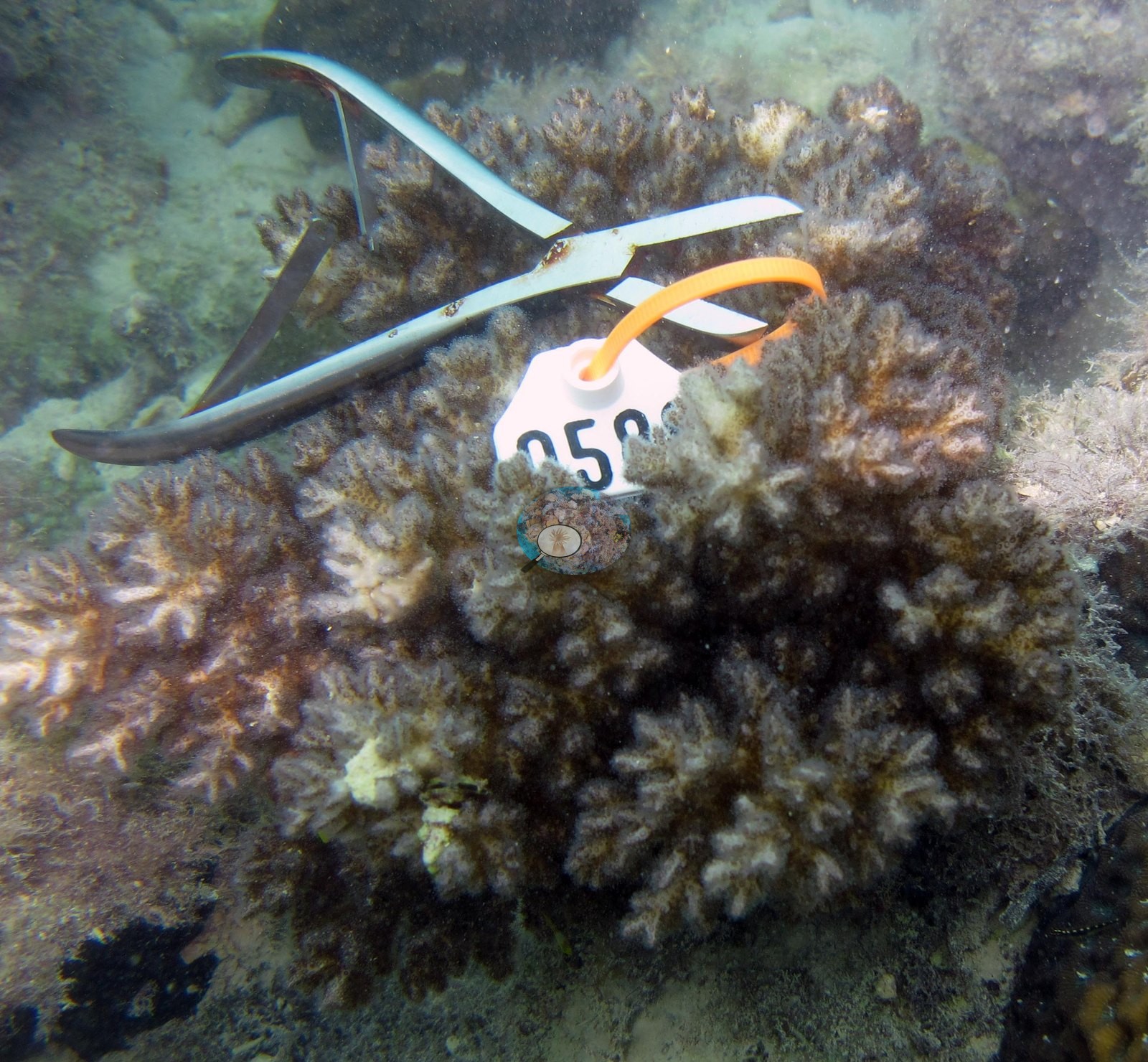
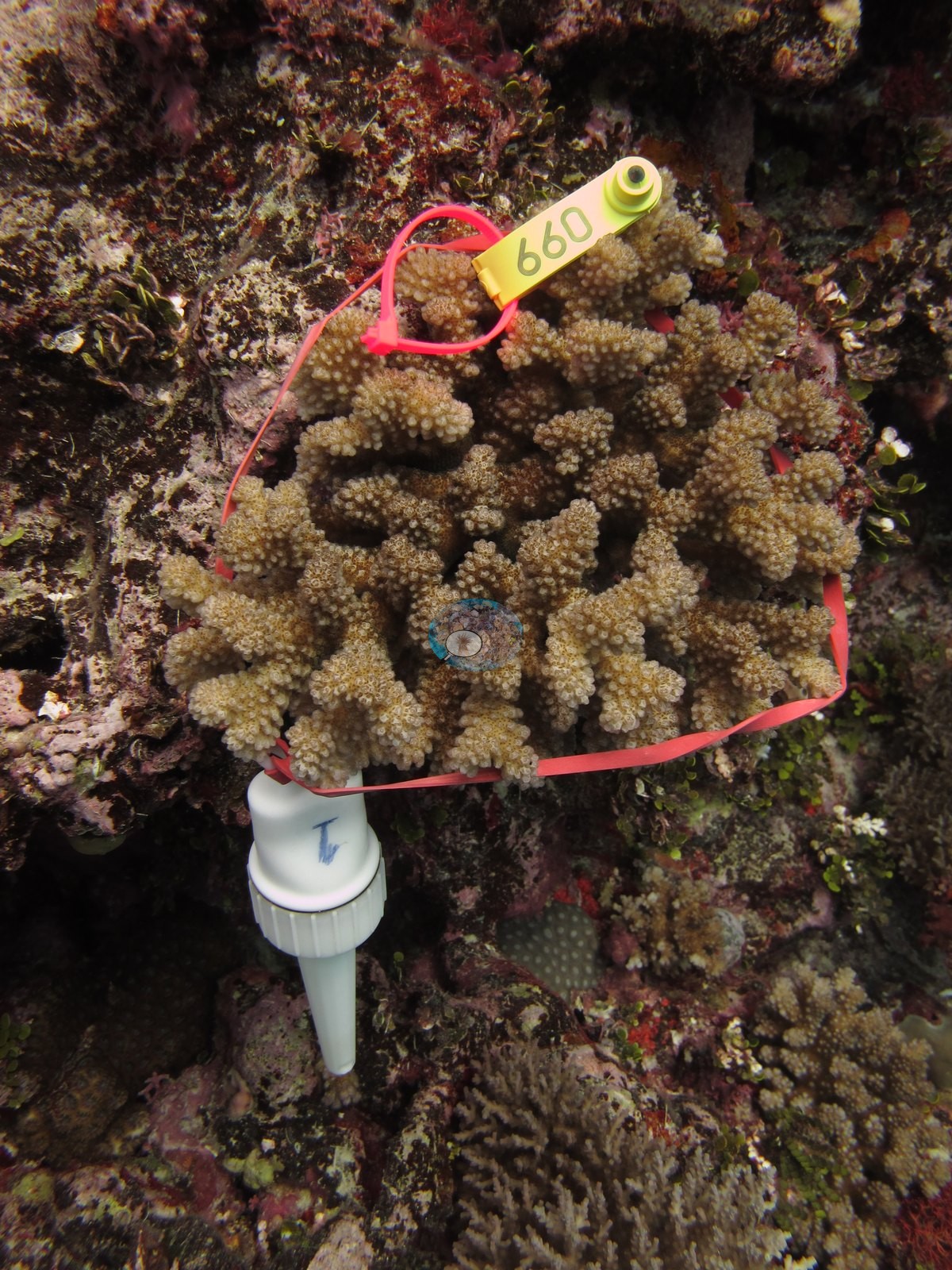
This unit covers six Global Reef Expedition stations at Fulaga, a raised limestone island with an enclosed lagoon, and five at Kabara, both in southern Lau. Fulaga was surveyed on 11 and 12 June 2013 and Kabara on 13 and 14 June. Maximum dive depths run from 4 m at FJFU29 (Anderson's own sampling dive) to 30.2 m at FJKA33. FJFU28 and FJFU29 lie inside Fulaga's enclosed lagoon: at FJFU28 large coral pinnacles rise from a sediment-dominated floor, their tops dominated by Pocillopora, Acropora, and Stylophora, and at FJFU29 Anderson sampled three Pocillopora acuta colonies.
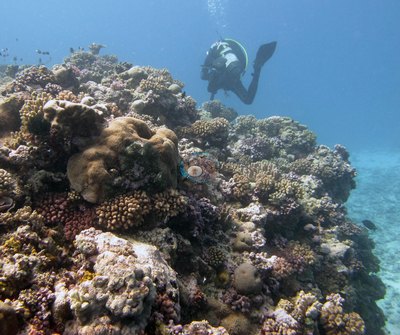
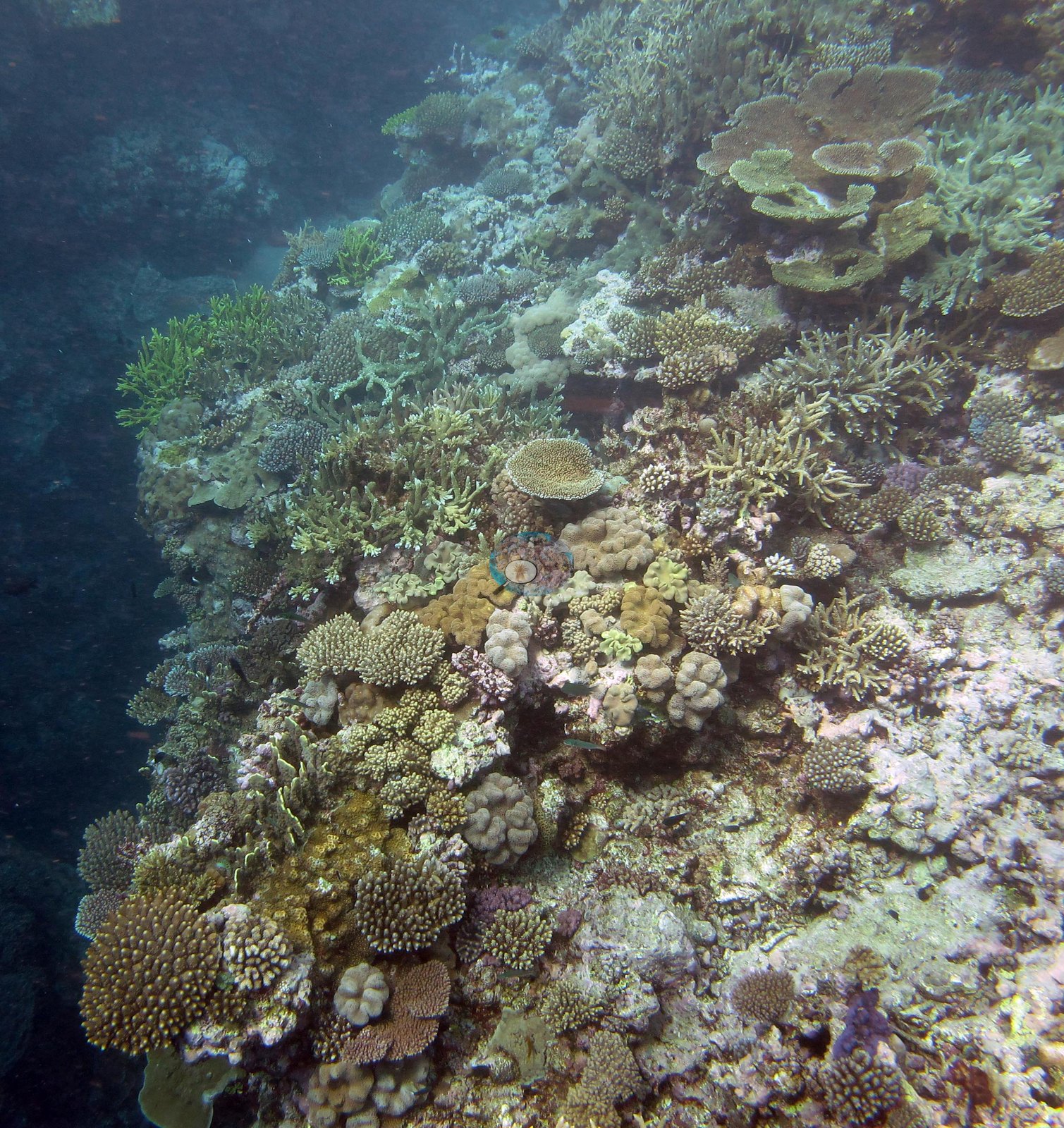
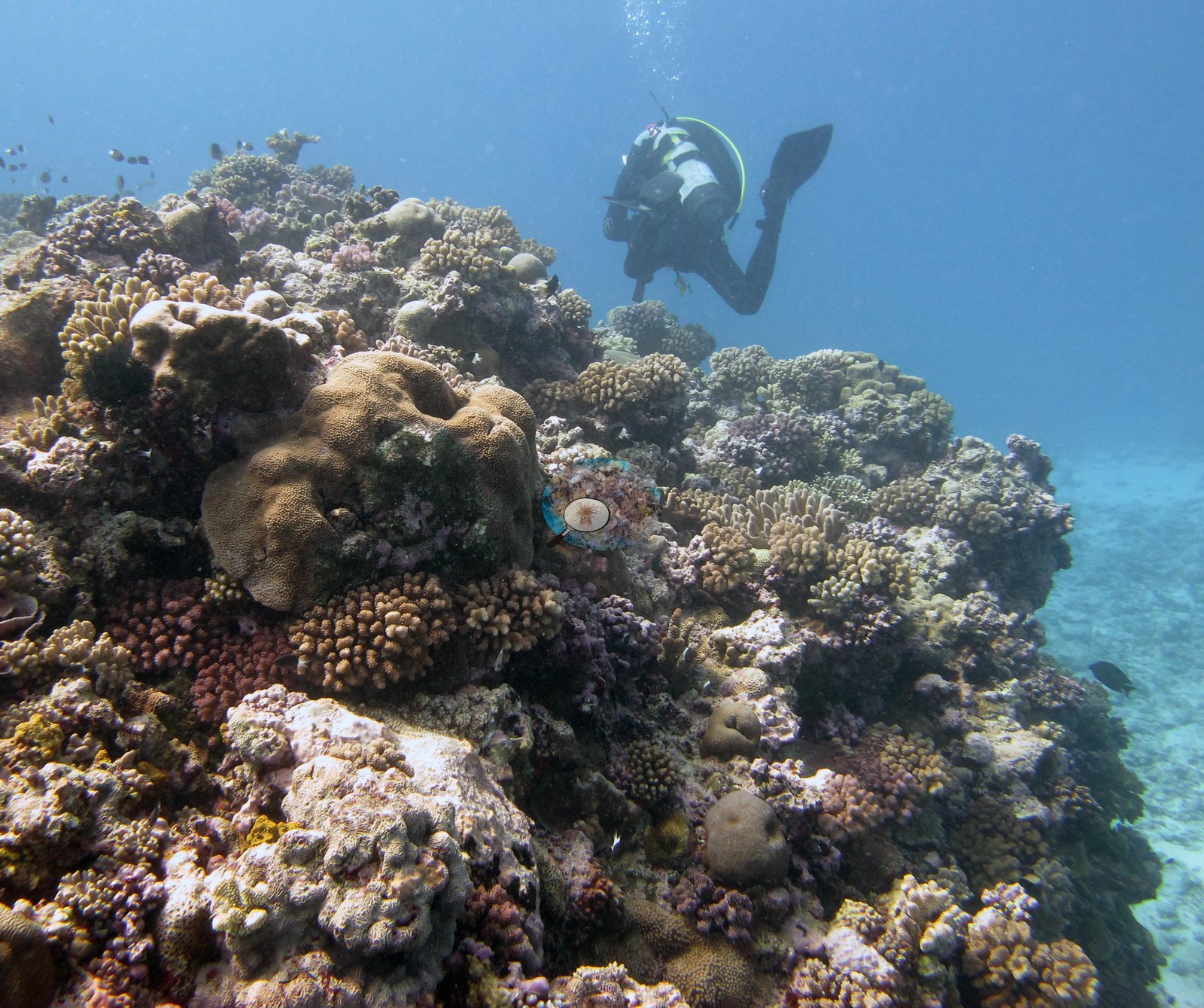
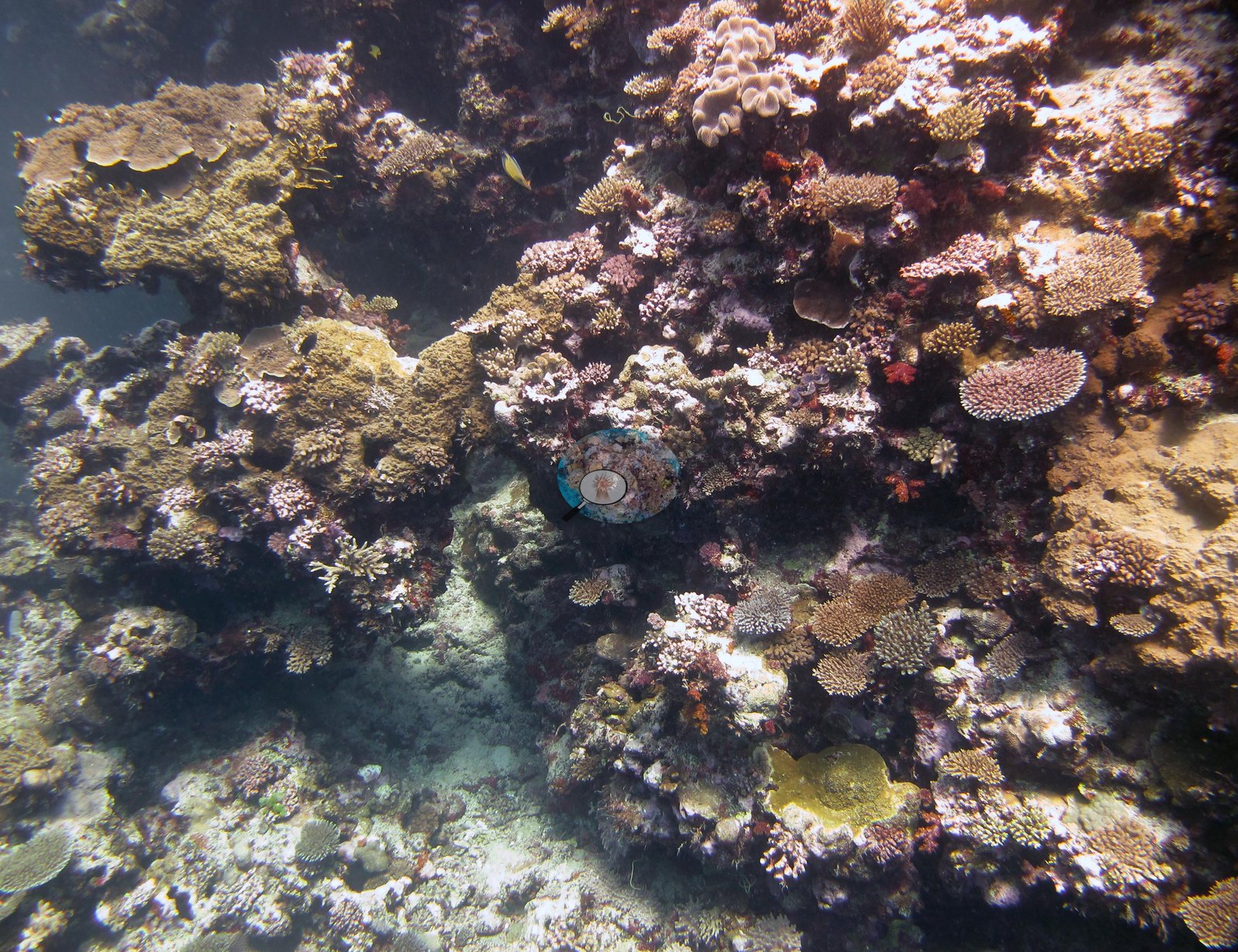
The Fulaga fore reef is described as spur-and-groove, with monospecific stands of plating and foliaceous Pachyseris, Leptoseris, Montipora, and Merulina on gentler slopes and encrusting, laminar growth where the slope approaches vertical. FJFU25 is a near-vertical face with foliose corals under overhangs, a single sea fan, and table and branching Acropora packed along the reef edge. Fulaga cover ran from 35% at FJFU25 to 55% at FJFU26, with 50% at FJFU29, in the lagoon, and 44% on the lagoon pinnacles at FJFU28.
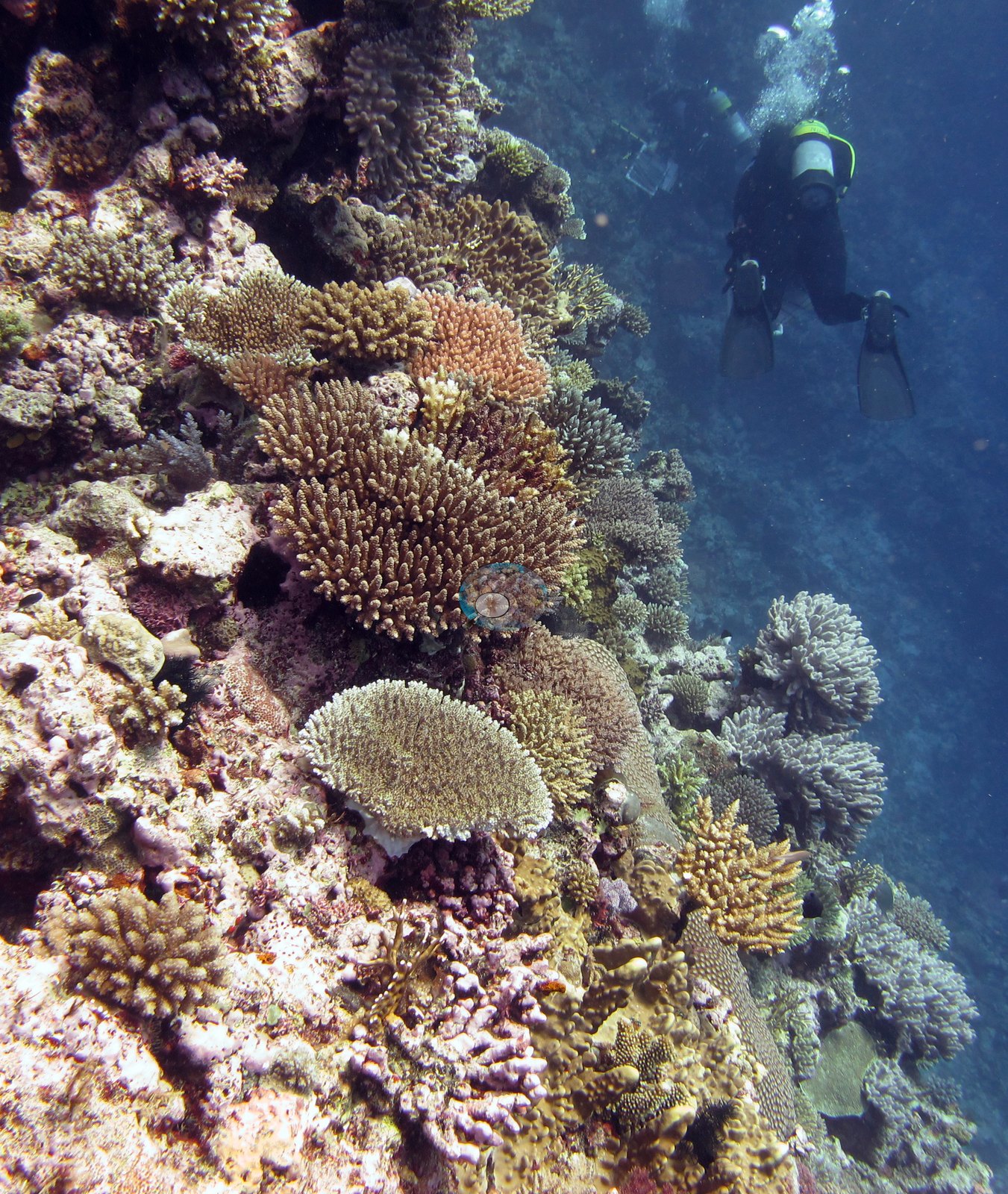
Across the unit, cover ranged from 19% at FJKA34 to 62% at FJKA32, both at Kabara. The terrace at 5-12 m is spur-and-groove, with sediment building up between the spurs, and below about 15 m the slope becomes very steep, with small to medium acroporids and Pocillopora, high coralline algae cover, and little macroalgae. Cover was 62% at FJKA32 and 36% at FJKA31, against 19% to 25% at FJKA34, FJKA33, and FJKA30, where algae covered 57% to 72% of the benthos; at FJKA34 algae held nearly four times the substrate coral did. FJKA31 is a structurally complex, coral-packed crest broken by darker rubble ground, and both FJKA31 and FJKA34 feature exceptionally large Porites heads.
Island-pooled physiological outlier scores were 4.17 at Fulaga and 3.75 at Kabara on a 0-5 scale (5 = no outliers; Mayfield et al. 2017, PLoS ONE); Kabara's corals with an outlier score came from FJKA31, where 1 of 4 was flagged, and no colonies were sampled at FJKA30. All ten Pocillopora colonies Anderson sampled at FJKA31 were partly to fully bleached (20-100% of each colony). The sampling sheet also records one sampled colony at FJFU25 as mostly bleached or very pale, one at FJFU29 as 20% bleached, and one at FJKA34 as 20% bleached at its base, and a small branching colony in one FJFU25 frame is stark white. No crown-of-thorns or disease is recorded.
Highlights
- 62% coral on the Living Oceans Foundation Global Reef Expedition (LOF-GRE) in situ benthic transect at FJKA32, on Kabara's fore reef.
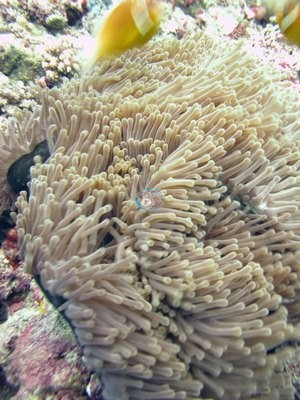
- 55% on the Fulaga spur-and-groove fore reef (FJFU26).
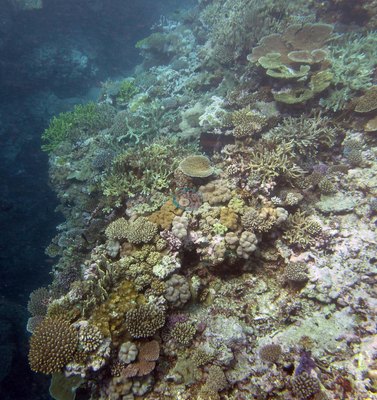 photo: Fiji - Fulaga (FJFU24)
- 50% coral at FJFU29, inside Fulaga's enclosed lagoon.
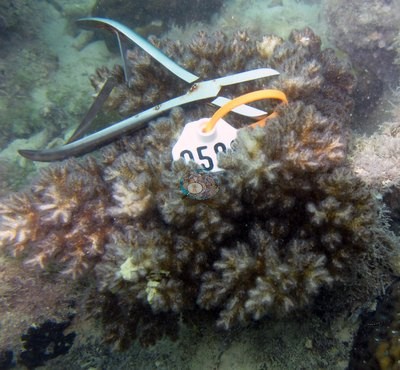
- Coral pinnacles inside Fulaga's enclosed lagoon, topped with Pocillopora, Acropora, and Stylophora, at 44% cover (FJFU28).
- A near-vertical wall with foliose corals under overhangs (FJFU25).
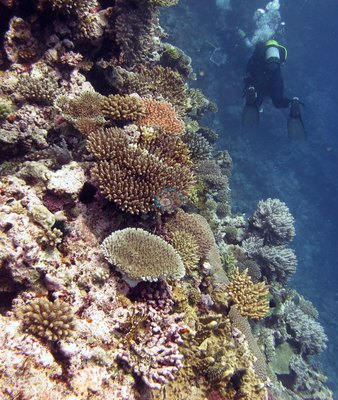
- Cover of 19% to 25% at FJKA34, FJKA33, and FJKA30 on Kabara's fore reef, where algae covered 57% to 72% of the benthos.
Oqo e dua na vakadewa vakamasini ni ivakamacala lekaleka ena vosa vakavalagi; na ivola ena vosa vakavalagi ga e dina ka rawa ni vakararavi kina. AI translation of this summary, low confidence and not yet reviewed by a native speaker; the English is authoritative.
Regional setting
Na Yasayasa vaka-Lau e bati ni tokalau i Viti, e tiko ena dela ni Lau Ridge ka wasea mai na Fiji Platform, e tiko kina na rua na yanuyanu levu, ena Nanuku Channel. E vakamacalataka ko Spalding et al. (2001) na veisau mai vualiku ki ceva ena yatu: e levu na yanuyanu vulikano cecere e vualiku, e liu na yanuyanu ni vatu ni cakau (carbonate) ena yasana i ceva, ka tiko na atoll kei na vanua e voleka ni atoll ena kena balavu taucoko. E sega ni cavuti na yaca i Kabara se Fulaga ena ivola (atlas). Na nodra ivakaraitaki mai na yasana i ceva sara ni yatu o Vatoa, e dua na yanuyanu cecere ni vatu ni lase e vakavolivolitaki ena nona cakau i tuba (barrier reef), na atoll o Vuata Vatoa, ka ena ceva tale, o Oni-i-Lau, e dua na ilawalawa yanuyanu lalai e loma ni cakau i tuba. E vakatau ko Spalding et al. (2001) na cakau i Viti me rauta ni 10,020 km² ena vanua taucoko ka ra volaa e rauta ni 298 na mataqali lase dina (scleractinian), ia era vakaroti ni, vakavo na vanua e vakadidiketaki vakavinaka voleka i Suva kei na Great Astrolabe Reef, e levu na cakau i Viti e se sega ni kilai vinaka. Era kaya tale ga ni sega ni tobo e dua na kalia (bump-headed parrotfish, Bolbometopon) e Lau ena 10 na yabaki se sivia ka rairai sa yali vakavanua, ka dua na katakata ni wasawasa ena itekitekivu ni 2000 a vulavula kina na 50–100% ni lase ena vanua levu i Viti, ka mate e levu vei ira ni oti oya.
E sega ni ra lesu tale na ivola ki na yasana i ceva i Lau ni oti na 2000, sa vakayasana ga kina na ituvaki vou. Me vaka ko Wilkinson (2006), ka vakalekalekataka na vakadidike ni Southwest Pacific ena 2004 ka okati kina o Viti, na cakau ena yasana taucoko e tiko vinaka vakalevu, ia na vulavula levu ni lase ena 2000–2002 e vakavuna e dua na ituvaki veiwasei, eso na cakau e bula tale vakavinaka ka so e sega sara. Na cakacaka ni tamata kei na cagilaba era leqa levu duadua, ka ikarua na crown-of-thorns starfish kei na mate ni lase, ka na vakayagataki vakasivia kei na dukadukali e vakalevu e voleka ni koro kei na wai e loma ni cakau. E kaya ko Souter et al. (2021) ni a tubu na ubi ni lase ena yasana Fiji Islands mai na 2002 ki na 2008, ia ena Pasifika taucoko e lutu na ubi mai na rauta ni 37% ni bera na 1998 ki na 31% ena 2019, vakalevu ena vuku ni vulavula ni lase, ka totolo duadua na kena lutu ena maliwa ni 2015 kei na 2017.
Overview
E tiko ena tikina oqo e ono na vanua ni vakadidike ni Global Reef Expedition e Fulaga, e dua na yanuyanu ni vatu ni lase e cecere ka tiko kina e dua na wai e loma ni cakau e sogo tu, kei na lima e Kabara, e rau tiko ena yasana i ceva i Lau. A vakadidiketaki o Fulaga ena 11 kei na 12 Jiune 2013 ka o Kabara ena 13 kei na 14 Jiune. Na titobu levu duadua ni nunu e tekivu mai na 4 m e FJFU29 (na nunu ni sampling i Anderson) ki na 30.2 m e FJKA33. O FJFU28 kei FJFU29 e rau tiko e loma ni wai sogo i Fulaga: e FJFU28 e tubu cake na ulu ni lase lelevu mai na botoni e levu kina na qele, ka liu ena kedra dela na Pocillopora, Acropora kei Stylophora, ka e FJFU29 a tauri kina e Anderson e tolu na lase Pocillopora acuta.
Na cakau i tuba i Fulaga e vakamacalataki me spur-and-groove, ka tiko na veikoro lase ni dua ga na mataqali ni lase bebeka kei na lase drau ni kau Pachyseris, Leptoseris, Montipora kei Merulina ena taba e malumu, kei na tubu vakavolavola ka bebeka ena vanua e voleka ni tu dodonu kina na taba. O FJFU25 e dua na bati e voleka ni tu dodonu, e tiko kina na lase drau ni kau e ruku ni bati e ubia, dua ga na iri ni wasawasa (sea fan), kei na teveli kei na Acropora vakataba e vavaku tu ena bati ni cakau. Na ubi ni lase e Fulaga e tekivu mai na 35% e FJFU25 ki na 55% e FJFU26, ka 50% e FJFU29, e loma ni wai sogo, kei na 44% ena ulu ni lase e loma ni wai sogo e FJFU28.
Ena tikina taucoko, na ubi e tekivu mai na 19% e FJKA34 ki na 62% e FJKA32, e rau tiko e Kabara. Na ituvatuvu ena 5-12 m e spur-and-groove, ka vakasoqoni na qele ena maliwa ni spurs, ka ruku ni rauta ni 15 m e titobu vakasauri sara na taba, e tiko kina na acroporids lalai ki na veimama kei na Pocillopora, e cecere na ubi ni coralline ka lailai na lumi levu (macroalgae). Na ubi e 62% e FJKA32 kei na 36% e FJKA31, ka ena FJKA34, FJKA33 kei FJKA30 e 19% ki na 25%, ka ubia na lumi na 57% ki na 72% ni botoni; e FJKA34 e voleka ni va na kena levu na lumi mai na lase. O FJKA31 e dua na dela ni cakau e vakaitamera na kena ivakarau ka vavaku na lase, ka musuki ena botoni ni vatu lalai e loaloa, ka rau tiko e FJKA31 kei FJKA34 na ulu ni Porites e lelevu sara.
Na naba ni duidui vakayago ni yanuyanu taucoko e 4.17 e Fulaga kei na 3.75 e Kabara ena ivakatagedegede 0-5 (5 = sega ni duidui; Mayfield et al. 2017, PLoS ONE); na lase e Kabara e tiko na nodra naba ni duidui (outlier score) e lako mai FJKA31, ka 1 vei na 4 a vakatakilakilataki, ka sega ni tauri e dua na lase e FJKA30. Na Pocillopora kece e tini a tauri e Anderson e FJKA31 e vulavula vakaiwasewase se vulavula taucoko (20-100% ni lase yadua). E volai tale ga ena nona ivola ni sampling ni dua na lase a tauri e FJFU25 e levu na kena vulavula se vulavula vakalevu, dua e FJFU29 e 20% na kena vulavula, kei na dua e FJKA34 e 20% na kena vulavula e kena yavu, ka dua na lase vakataba lailai ena dua na itaba e FJFU25 e vulavula sara. E sega ni volai e dua na crown-of-thorns se mate ni lase.
Highlights
- 62% ni lase ena transect ni botoni (benthic) in situ ni LOF-GRE e FJKA32, ena cakau i tuba e Kabara.
- 55% ena cakau i tuba spur-and-groove e Fulaga (FJFU26).
- 50% ni lase e FJFU29, e loma ni wai sogo i Fulaga.
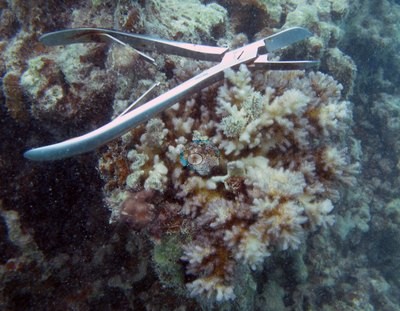
- Na ulu ni lase e loma ni wai sogo i Fulaga, e ubi ena Pocillopora, Acropora kei Stylophora, ka 44% na ubi (FJFU28).
 photo: Fiji - Fulaga (FJFU24)
- E dua na bati e voleka ni tu dodonu, e tiko kina na lase drau ni kau e ruku ni bati e ubia (FJFU25).
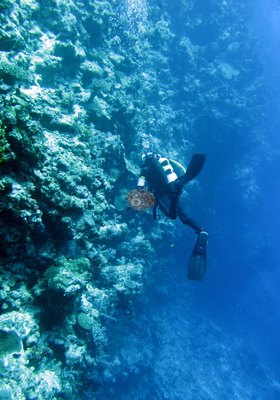
- Ubi e 19% ki na 25% e FJKA34, FJKA33 kei FJKA30 ena cakau i tuba e Kabara, ka ubia na lumi na 57% ki na 72% ni botoni.
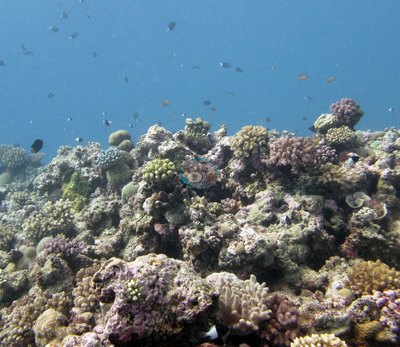
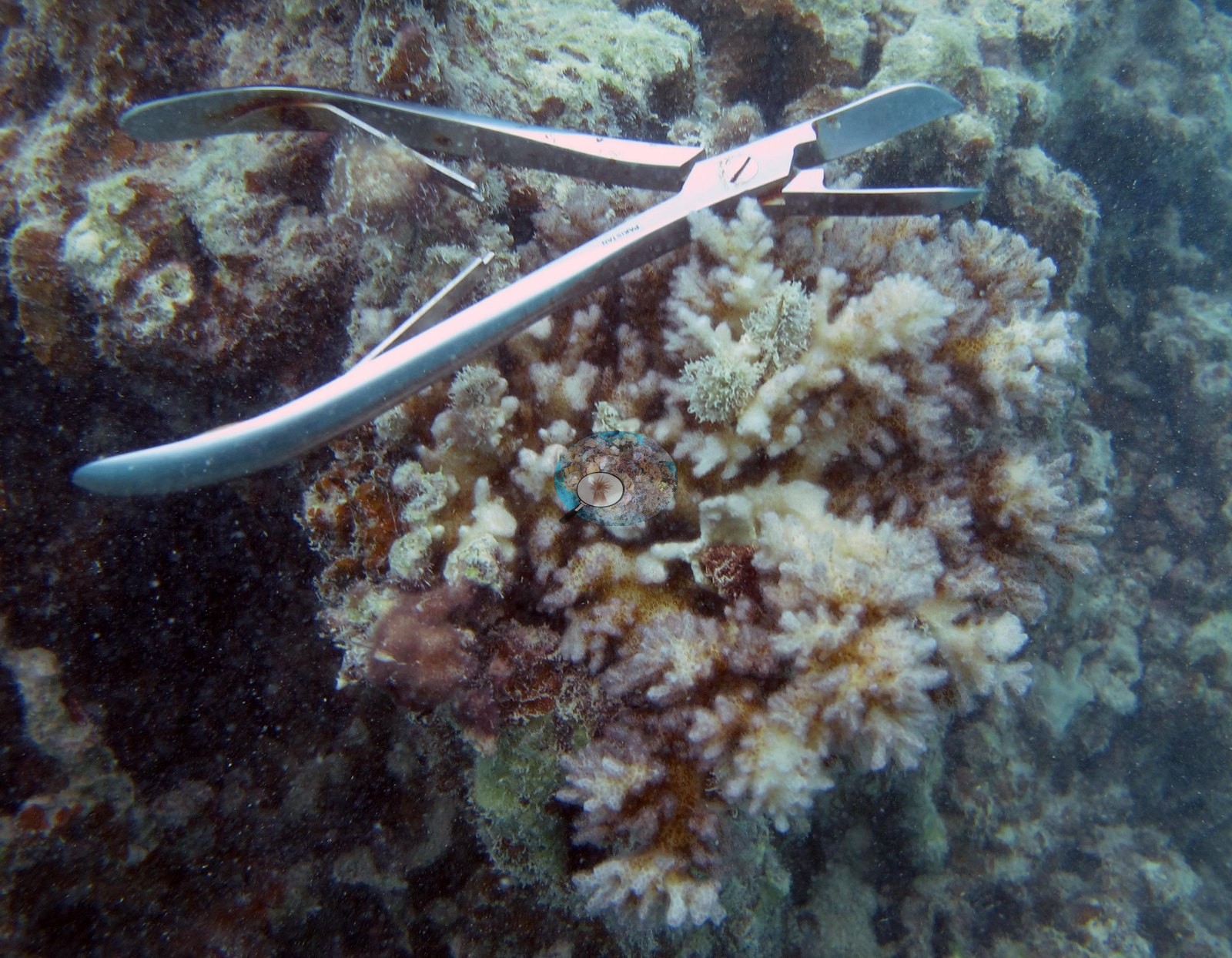
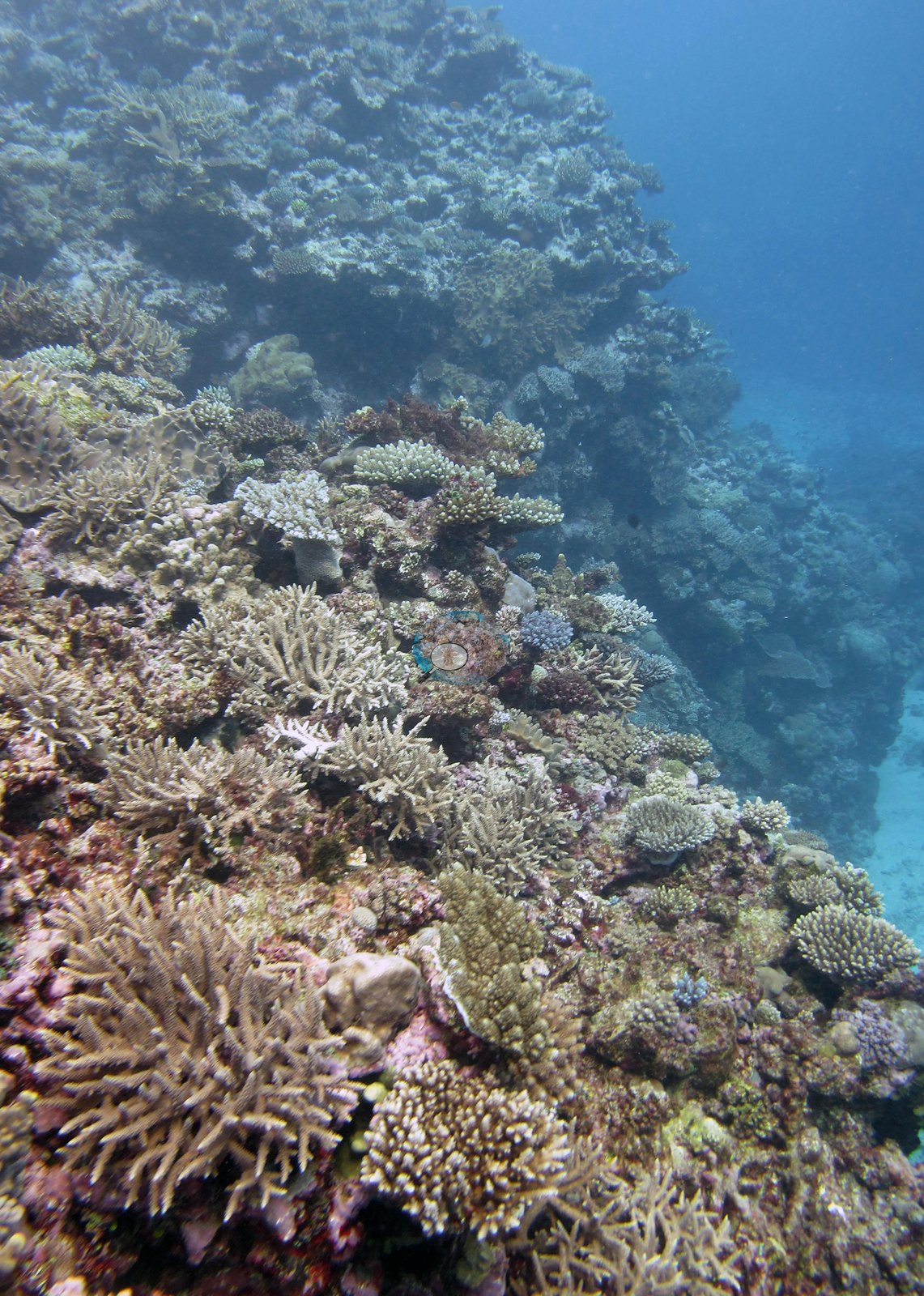
Notable observations
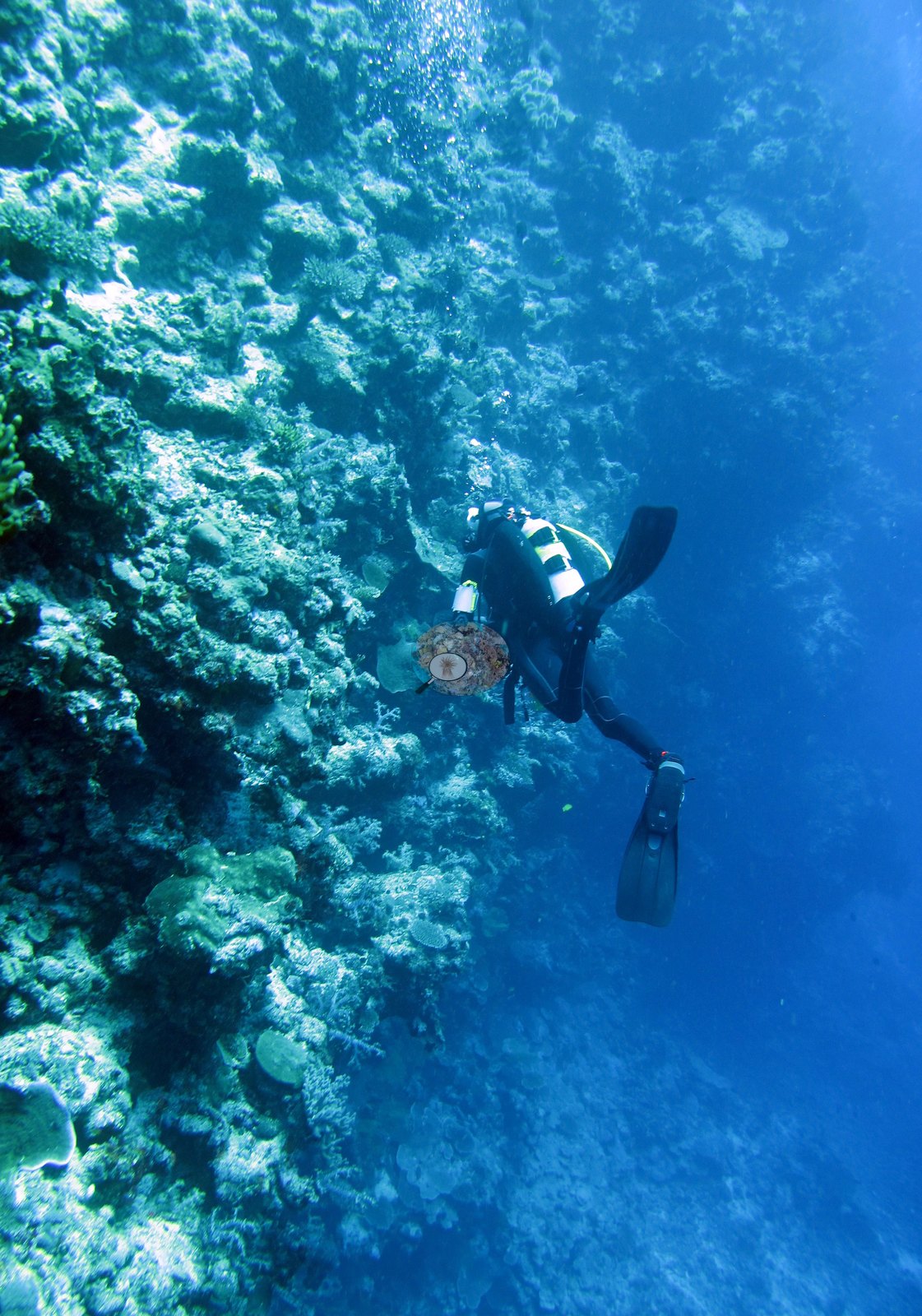
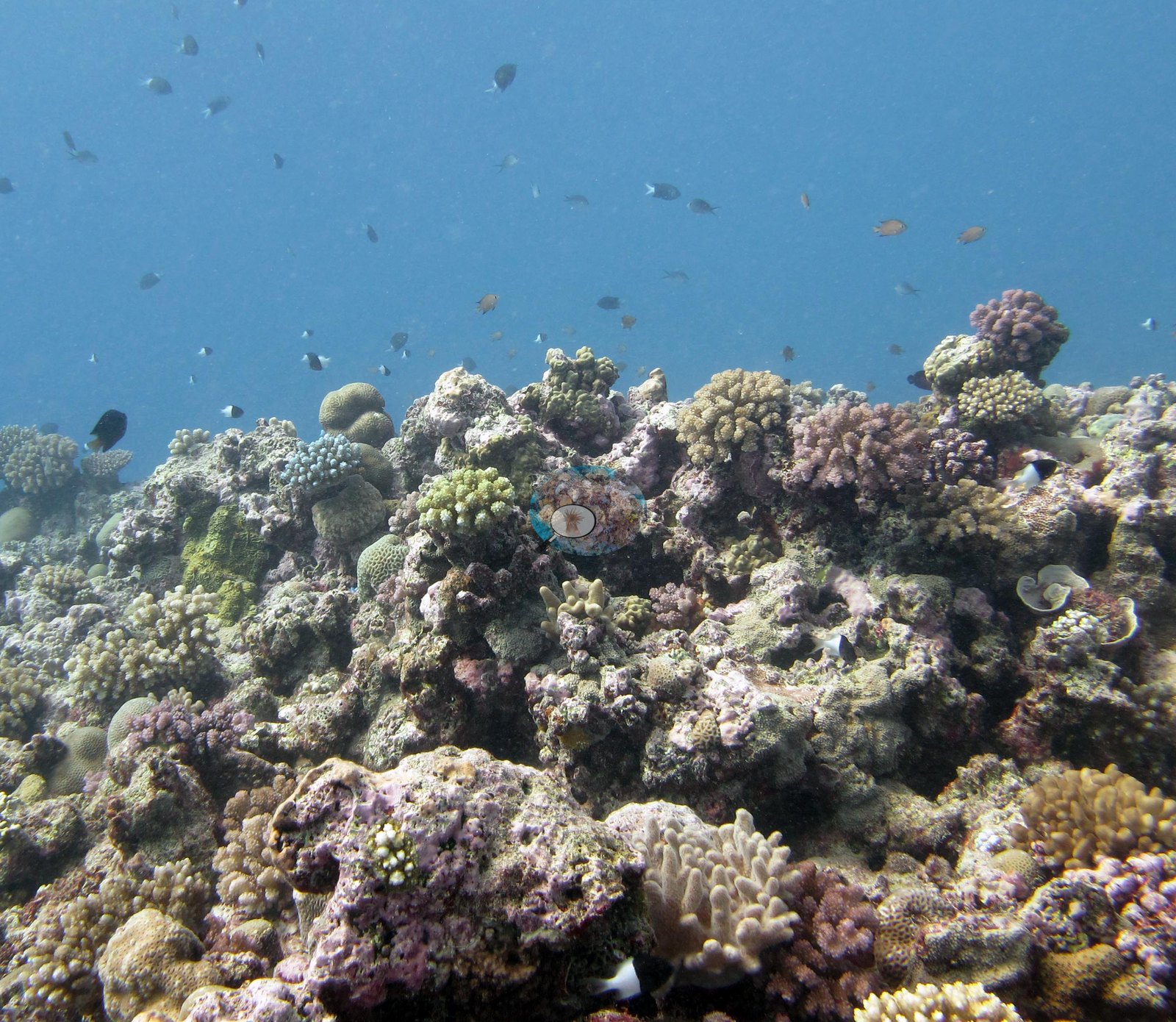
- Fiji - Kabara (FJKA31): Bleaching: Anderson's sampling sheet records all ten Pocillopora colonies sampled here, on both dives, as partly to fully bleached (20-100% of each colony). Island-level molecular screening flagged 1 of the 4 Kabara corals with an outlier score, all from this station.
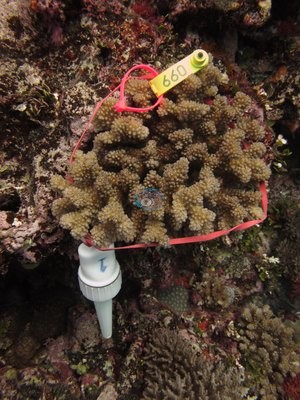
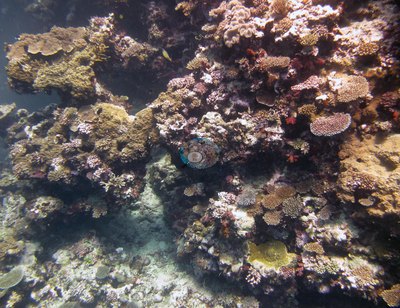
- Fiji - Fulaga (FJFU25): One small branching colony in the overhang frame is stark white - either freshly bleached or recently dead; a single colony in a single frame. Anderson's sampling sheet records one colony sampled here as mostly bleached or very pale.
Sites in this region (11)
- Fiji - Fulaga (FJFU24) — 43% coral cover
- Fiji - Fulaga (FJFU25) — 35% coral cover
- Fiji - Fulaga (FJFU26) — 55% coral cover
- Fiji - Fulaga (FJFU27) — 37% coral cover
- Fiji - Fulaga (FJFU28) — 44% coral cover
- Fiji - Fulaga (FJFU29) — 50% coral cover
- Fiji - Kabara (FJKA30) — 25% coral cover
- Fiji - Kabara (FJKA31) — 36% coral cover
- Fiji - Kabara (FJKA32) — 62% coral cover
- Fiji - Kabara (FJKA33) — 24% coral cover
- Fiji - Kabara (FJKA34) — 19% coral cover
Data are from the Khaled bin Sultan Living Oceans Foundation Global Reef Expedition and Coral Reef Diagnostics.
 © Coral Reef Diagnostics.
References
- Souter D, et al. (eds) (2021) Status of Coral Reefs of the World: 2020. International Coral Reef Initiative / Global Coral Reef Monitoring Network. [PDF]
- Spalding MD, et al. (2001) World Atlas of Coral Reefs. University of California Press, Berkeley. [PDF]
- Wilkinson C (2006) Status of coral reefs of the world: summary of threats and remedial action. In: Côté IM, Reynolds JD (eds) Coral Reef Conservation. Cambridge University Press, Cambridge. [PDF]
- Mayfield AB, Chen CS, Dempsey AC (2017). Identifying corals displaying aberrant behavior in Fiji’s Lau Archipelago. PLOS ONE 12:e0177267. PDF