
Island summary of 5 dive sites. Figures are averages across the sites that report them (n = sites with a value); each site's own page has its individual values. Part of the Fiji - Southern Lau (Kabara / Fulaga) regional summary.
⬇ Download this island as a report card
Heat stress
Long-term record: 11 years from 1985 through 2025 reached 8 or more °C-weeks at NOAA’s Fiji station. Download the annual DHW data (CSV).
5 sites in this region — click a marker to open that site.
Overview
Kabara is a raised limestone island in southern Lau, in eastern Fiji. Five Global Reef Expedition stations were surveyed on its fore reef on 13 June 2013 (FJKA30 to FJKA32) and 14 June 2013 (FJKA33 and FJKA34; Anderson returned to FJKA31 on the afternoon of 14 June to sample six more colonies), at maximum dive depths from 11.9 m at FJKA34 to 30.2 m at FJKA33.
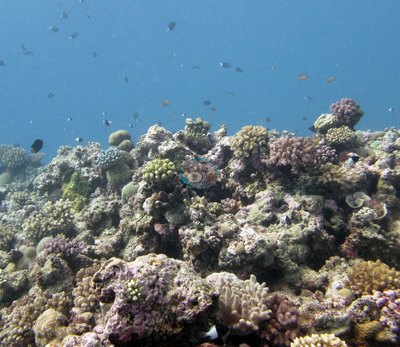
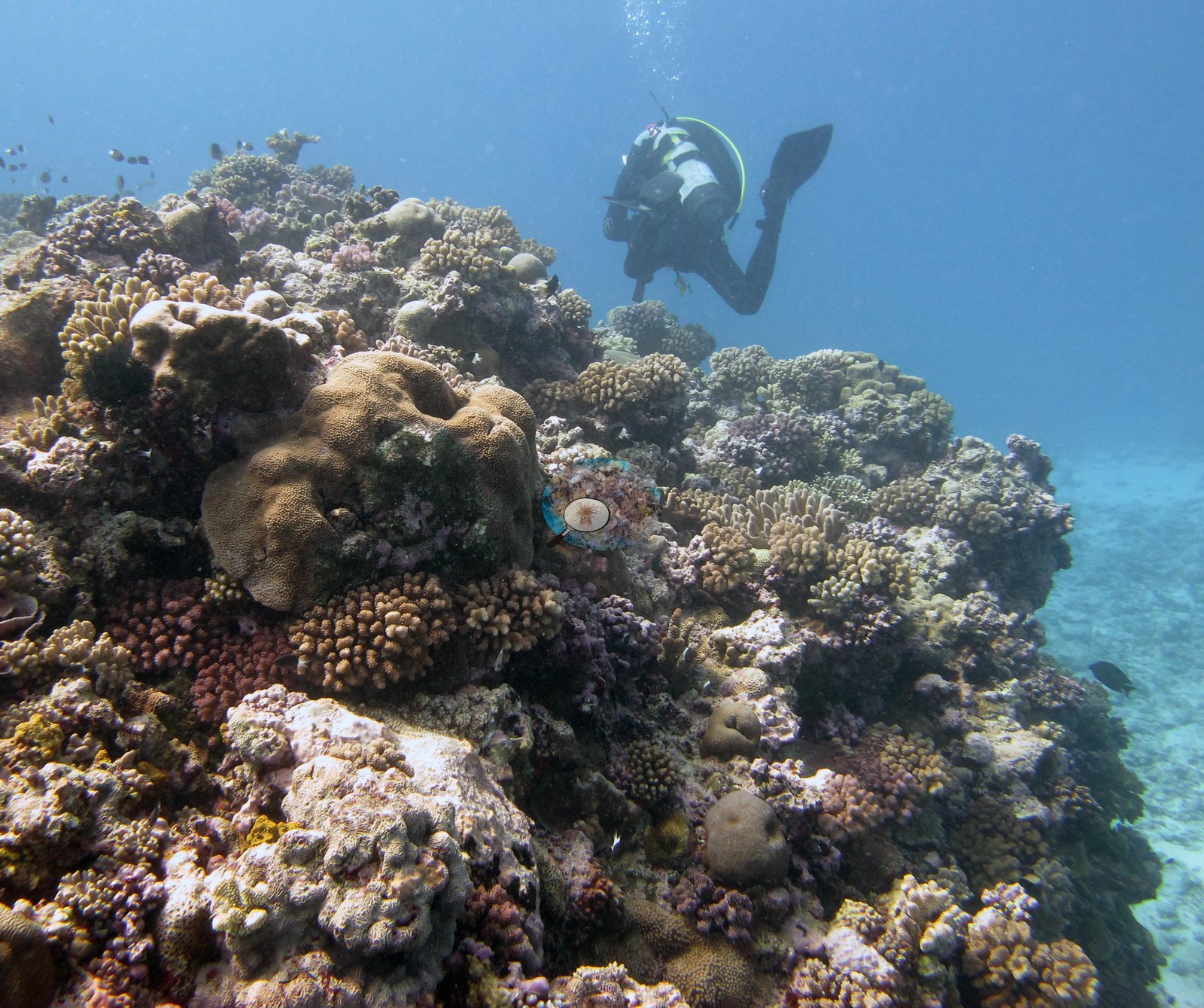
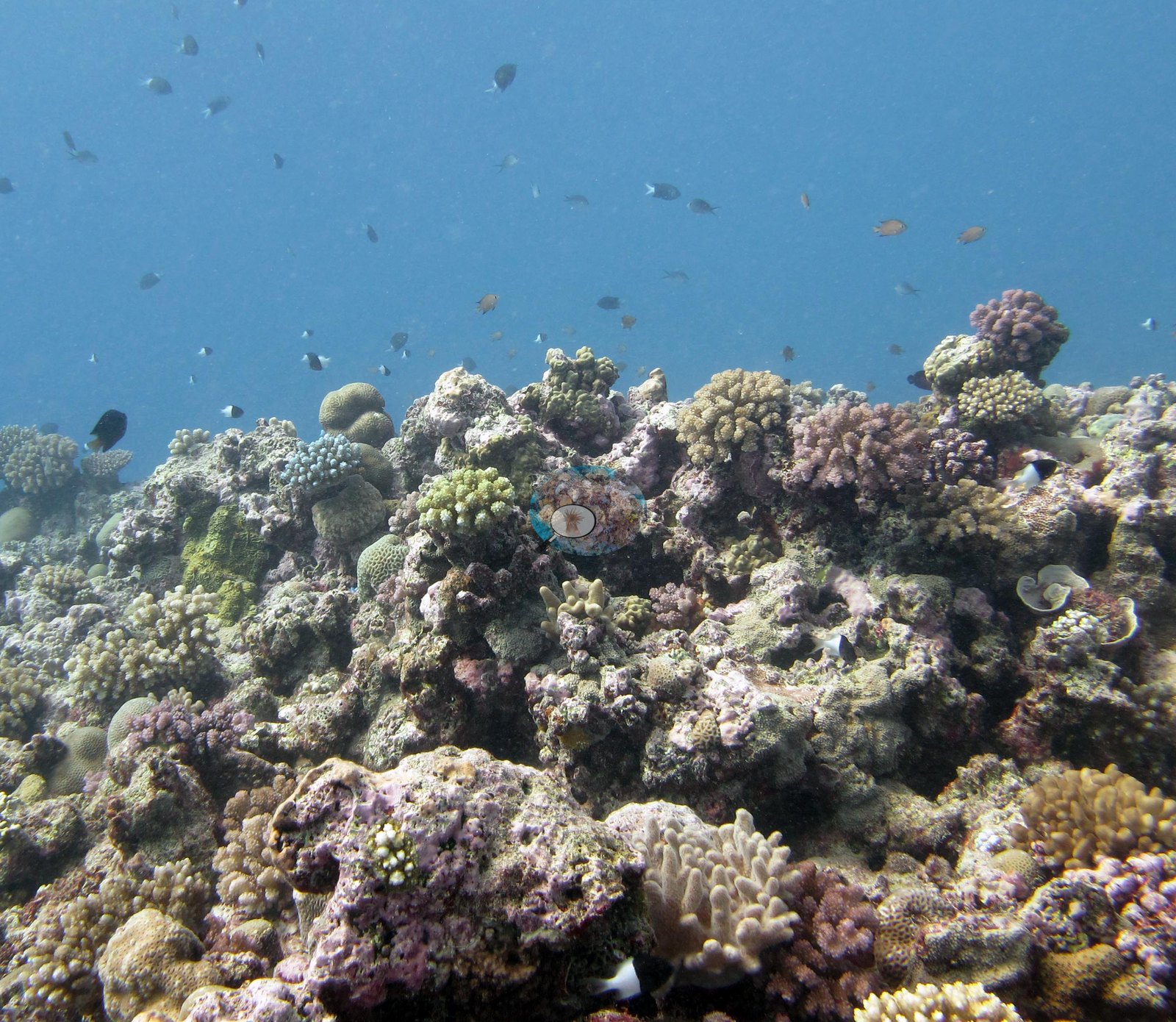
Survey notes describe a terrace at 5-12 m of spur-and-groove reef with sediment collecting between the spurs, turning at about 15 m into a very steep slope of small to medium Acropora and Pocillopora with high coralline algae cover and little macroalgae. Coral cover was 25% at FJKA30, 36% at FJKA31, 62% at FJKA32, 24% at FJKA33, and 19% at FJKA34; algae covered 57% to 72% of the benthos at FJKA30, FJKA33, and FJKA34 (nearly four times the coral at FJKA34). FJKA31 is a structurally complex crest packed with branching and table Acropora, Pocillopora, and massive corals under schools of anthias and chromis, broken by darker rubble ground, and both FJKA31 and FJKA34 have exceptionally large Porites heads.
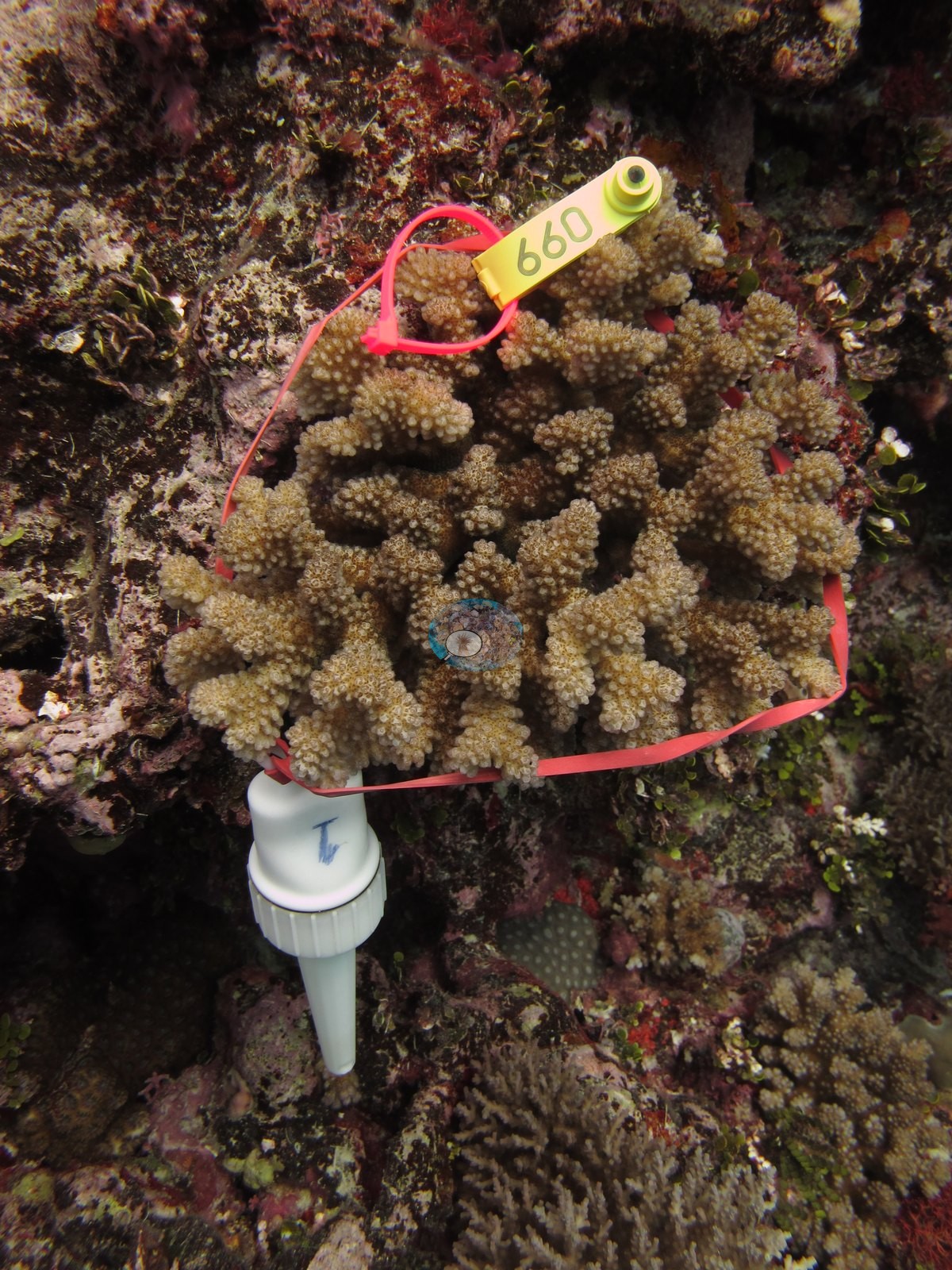
Island-level physiological screening (Mayfield et al. 2017, PLoS ONE) flagged 1 of the 4 FJKA31 corals with an outlier score (island-level score 3.75 out of 5); no colonies were sampled at FJKA30. All ten Pocillopora colonies Anderson sampled at FJKA31 were partly to fully bleached (20-100% of each colony). No crown-of-thorns or disease is recorded, and the FJKA34 photographs show no bleaching, lesions, or crown-of-thorns scarring, though Anderson's sampling sheet records one of the three colonies sampled there as 20% bleached.
Highlights
- 62% coral on the Living Oceans Foundation Global Reef Expedition (LOF-GRE) in situ benthic transect at FJKA32.
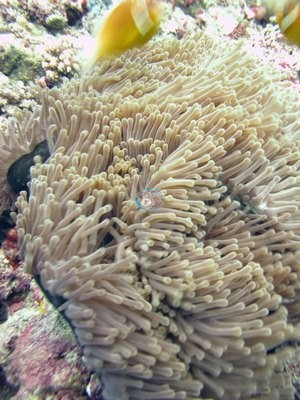
- Cover of 19% to 25% at FJKA34, FJKA33, and FJKA30, where algae covered 57% to 72% of the benthos.
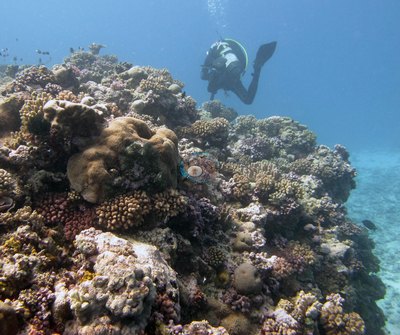
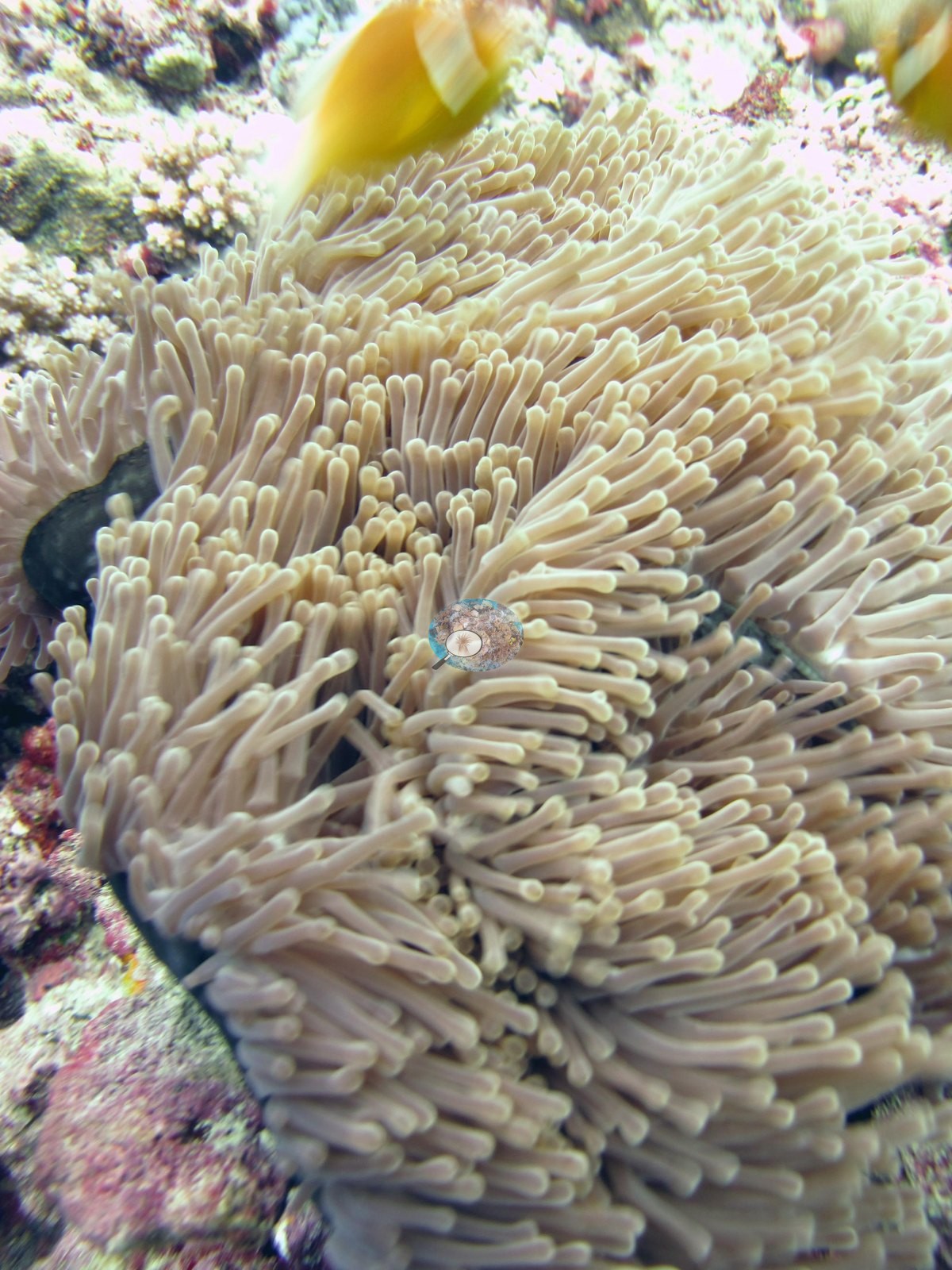
- A structurally complex crest packed with branching and table Acropora under schools of anthias and chromis, beside a huge Porites dome (FJKA31).
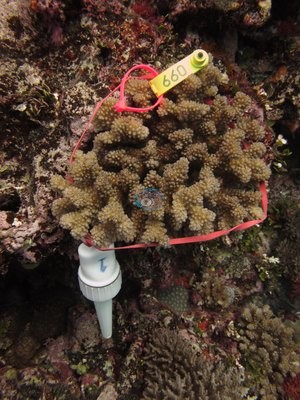
- Spur-and-groove terrain with a dense veneer of small corals over pink coralline pavement and one exceptionally large Porites head (FJKA34).
Notable observations
- Fiji - Kabara (FJKA31): Bleaching: Anderson's sampling sheet records all ten Pocillopora colonies sampled here, on both dives, as partly to fully bleached (20-100% of each colony). No bleaching, disease lesion, or predation scar resolves with confidence in the wide reef frames.
Sites in this region
- Fiji - Kabara (FJKA30) — 25% coral cover
- Fiji - Kabara (FJKA31) — 36% coral cover
- Fiji - Kabara (FJKA32) — 62% coral cover
- Fiji - Kabara (FJKA33) — 24% coral cover
- Fiji - Kabara (FJKA34) — 19% coral cover
Data are from the Khaled bin Sultan Living Oceans Foundation Global Reef Expedition and Coral Reef Diagnostics.
 © Coral Reef Diagnostics.
References
- Global Reef Expedition: Lau Province, Fiji. Field Report (Khaled bin Sultan Living Oceans Foundation), survey notes 2013
- Mayfield AB, Chen CS, Dempsey AC (2017). Identifying corals displaying aberrant behavior in Fiji’s Lau Archipelago. PLOS ONE 12:e0177267. PDF