
Part of the regional summaries: Fiji - Kabara, Fiji - Southern Lau (Kabara / Fulaga), and Fiji - Lau
2013-06-14
More info
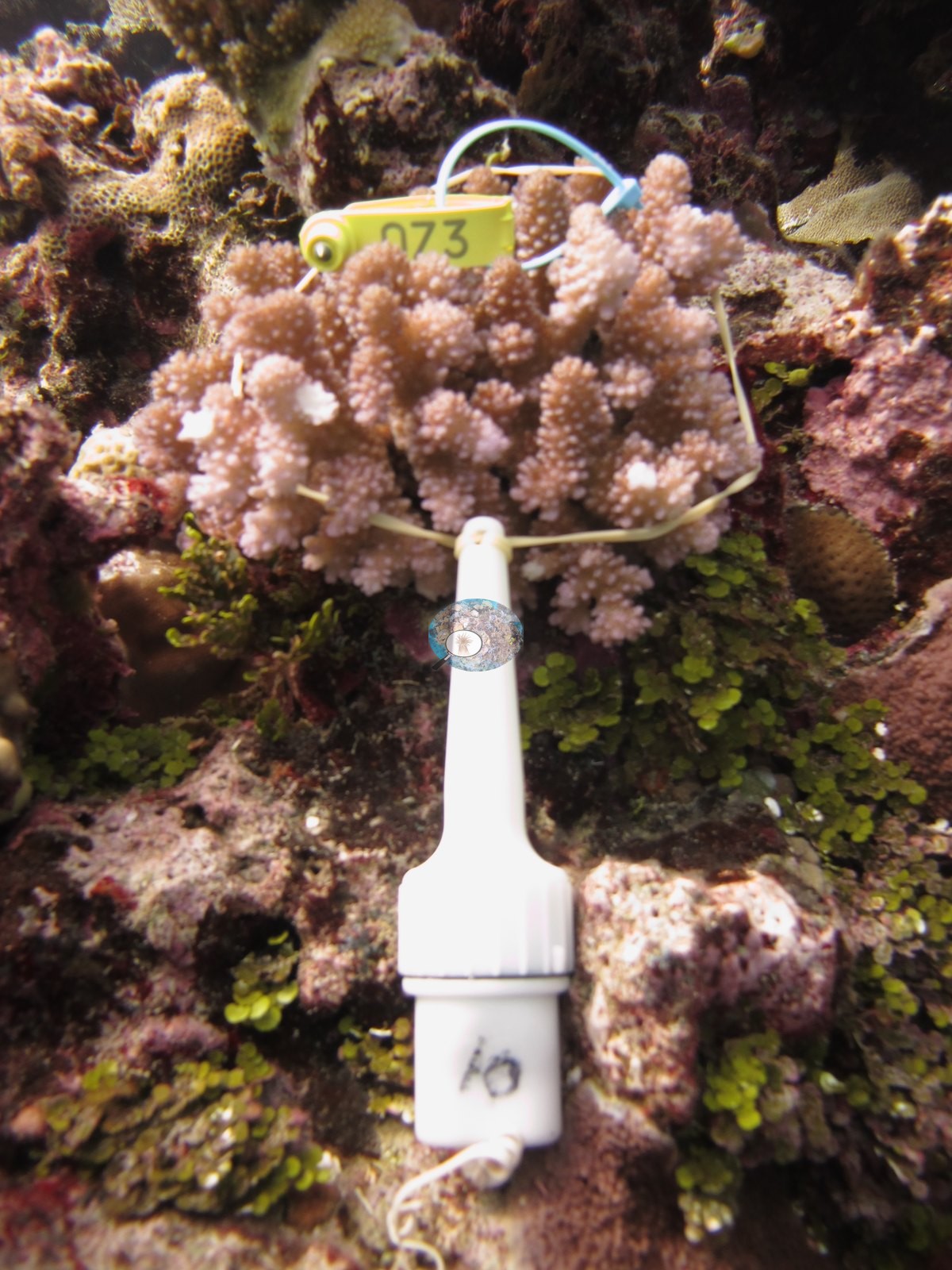
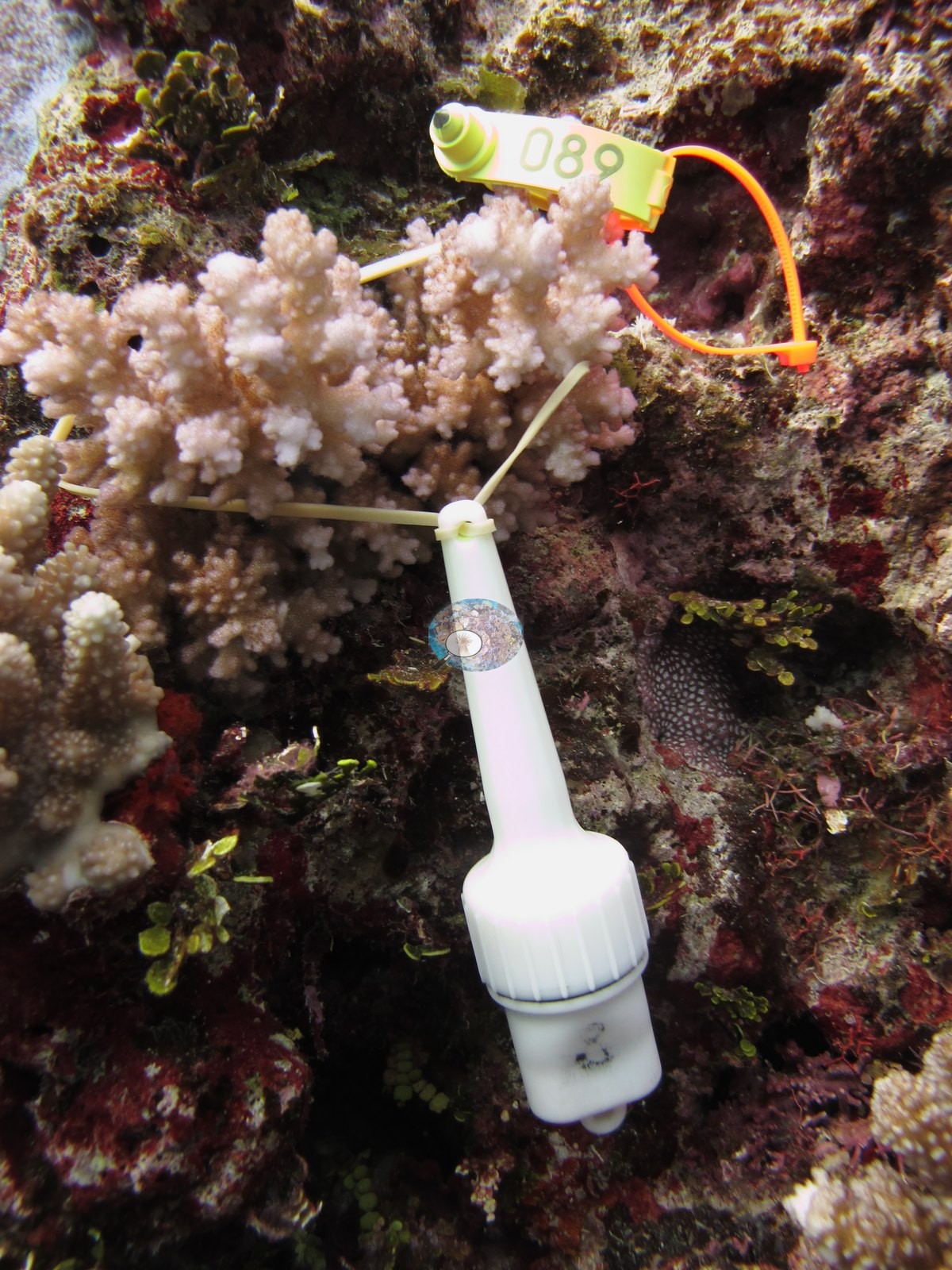
Fiji (NOAA CRW virtual station)A structurally complex Kabara fore reef where the crest and shoulder are packed with pink and cream branching and table Acropora, Pocillopora, and massive corals under schools of anthias and chromis, though darker rubble areas show the site is a patchwork. A huge Porites dome stands out, and all ten Pocillopora colonies sampled here were partly to fully bleached (20-100%, Anderson's sampling sheet). Surveyed on the Living Oceans Foundation's Global Reef Expedition.
E dua na yasana i tuba ni cakau (fore reef) e veibuli vakalevu mai Kabara, ka na dakuna kei na tabana e vonu ena Acropora vakatabataba kei na vakatepeli e roka (pink, cream), Pocillopora, kei na lase levu vakavatu (massive) e ra ni ilawalawa ika anthias kei na chromis, ia na vanua loaloa ni tikitiki ni lase mate (rubble) e vakaraitaka ni veiwaki tu na vanua. E tu vakatani e dua na ulu levu sara ni Porites, ka ra vulavula vakalailai se vakadua kece na tini na Pocillopora a taura kina na ivakaraitaki (20-100%, na ivola ni ivakaraitaki nei Anderson).
AI translation of this summary; the English is authoritative. (low confidence)
CTD-cast midpoint; the cast read 26.7°C throughout; 13 Jun 2013 dive
Four other CRD dive sites with their own pages within 5 km shown in orange — click a marker to open its page.
🗺 Detailed map of the Global Reef Expedition dive sites, Kabara, Fiji (Khaled bin Sultan Living Oceans Foundation; opens in a new window)
Site description
General benthic features
The habitat frames are clear, well-lit, and in good visibility, and they show a coral-dominated fore reef of high structural complexity. The reef top and upper shoulder are close-packed with stony coral: pale pink and cream corymbose Acropora colonies, thin tabular Acropora standing clear on short stalks, tan and olive digitate and branching colonies, knobby Pocillopora-type heads, tan to mustard massive and submassive domes, plating and encrusting colonies filling the spaces between, and pink and mauve crustose coralline algae crusting the framework itself. Fleshy macroalgae are inconspicuous in every frame. The reef shoulder falls away into deep blue water; the coral cover carries right up over the crest and down the visible flank, and the relief is meter-scale and broken rather than flat. The exception, and an informative observation, is a single very large domed, meandering massive Porites head sitting on a much darker, lower-relief rubbly pavement fringed by patches of clean white sand, in noticeably hazier water than elsewhere — a reminder that this site is a mosaic and that the bright, coral-packed reef top is not the whole of it.
Coral cover
- Reference: Khaled bin Sultan Living Oceans Foundation, Global Reef Expedition (in situ transect)
- Coral cover 36%, from LOF-GRE in situ transects (the mean of all of this station's own transects in the expedition's per-transect benthic data) — a diver transect measurement, not a photographic or computer vision estimate.
- The frames here are qualitative only, and the crowded, coral-packed look of the reef-top views must not be read as a cover figure; the transect value is the authoritative one.
- Transect mean 36 ± 6.6% SE (n = 7 transects; Living Oceans Foundation per-transect benthic data); the headline above is this all-transect mean.
Stressors
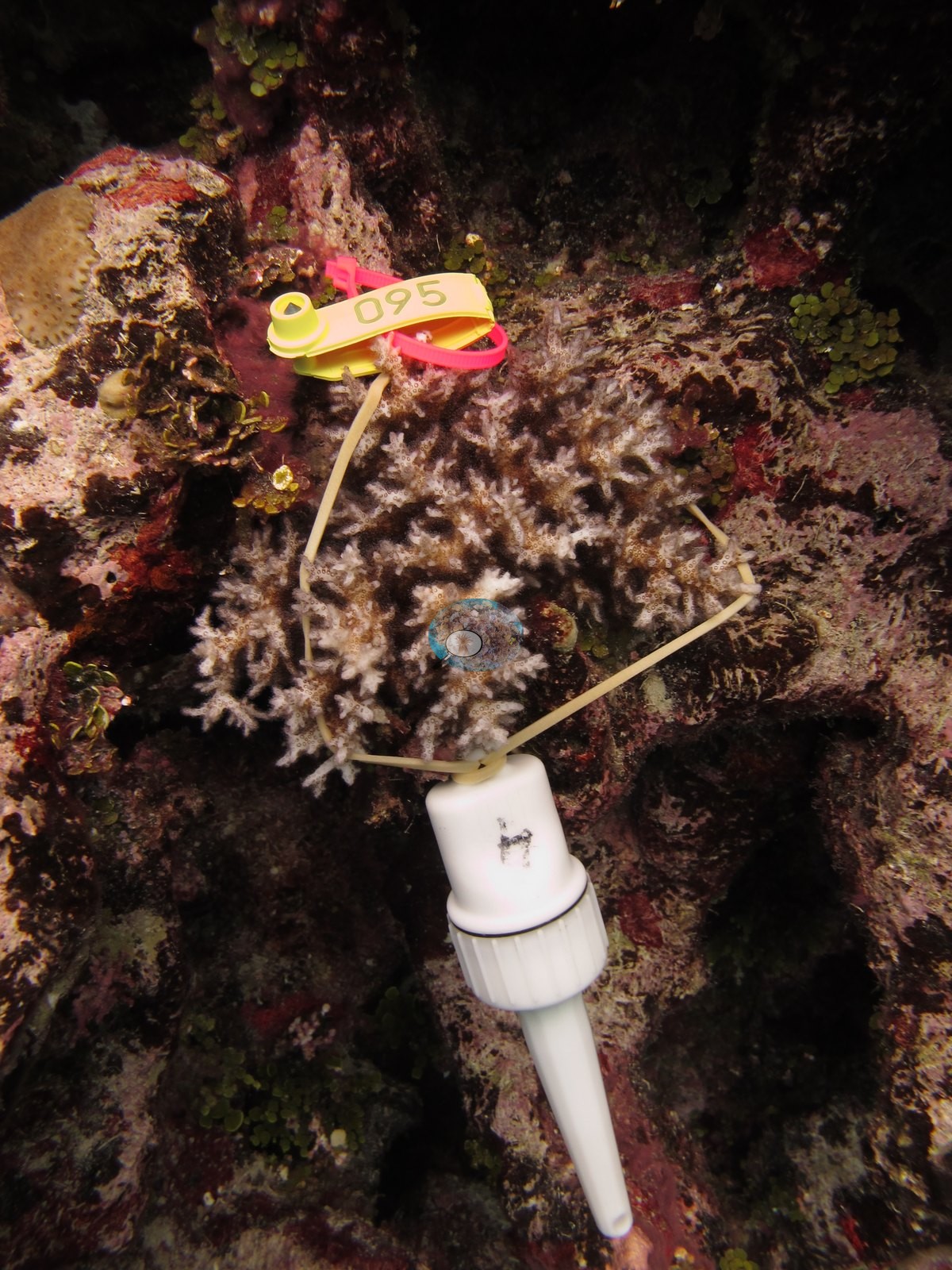
No bleaching, disease lesion, or predation scar resolves with confidence in these wide frames, and none of them can settle the site's depth zonation or the deeper sand-flat community the surveyors described. Anderson's sampling sheet, however, records all ten Pocillopora colonies sampled here, on both dives, as partly to fully bleached (20-100% of each colony). Of the four coral colonies from this site with an outlier score, one (25%) was flagged as a physiological outlier (Mayfield et al. 2017, PLoS ONE). The Living Oceans Foundation transects here recorded 6.4% cyanobacteria and no recently dead coral; they carry no bleaching, disease, or crown-of-thorns field.
Fish and other fauna
Fish are conspicuous without dominating: schools of pink and magenta anthias and blue and green chromis hang over the reef top in three frames, with wrasses and damselfish working the coral.
Comparisons with other data
The expedition's own site table classifies FJKA31 as a fringing reef on an intermediate aspect, surveyed on the fore reef, outside the lagoon. Alongside the hard coral already reported for this site, the same transects recorded 22% crustose coralline algae, 12% turf, 11% macroalgae, 1.9% erect algae, and 6.4% cyanobacteria (54% algae in all). Non-living substrate came to 61% pavement, 1.1% dead coral, 1.6% rubble, and 0.6% sand. Paired fish transects recorded about 47 fish species per transect and about 15 kg per 100 m2 of biomass. The benthic figures are means of all of this station's own transects in the expedition's per-transect benthic records, and the fish figures come from its paired fish transects; all are survey results, not photographic estimates.
Dive record
Anderson dived this station twice, on 13 June 2013 and again on the afternoon of 14 June 2013, when six more colonies were sampled; the expedition team's log records the same 13 June dive.
Other notes
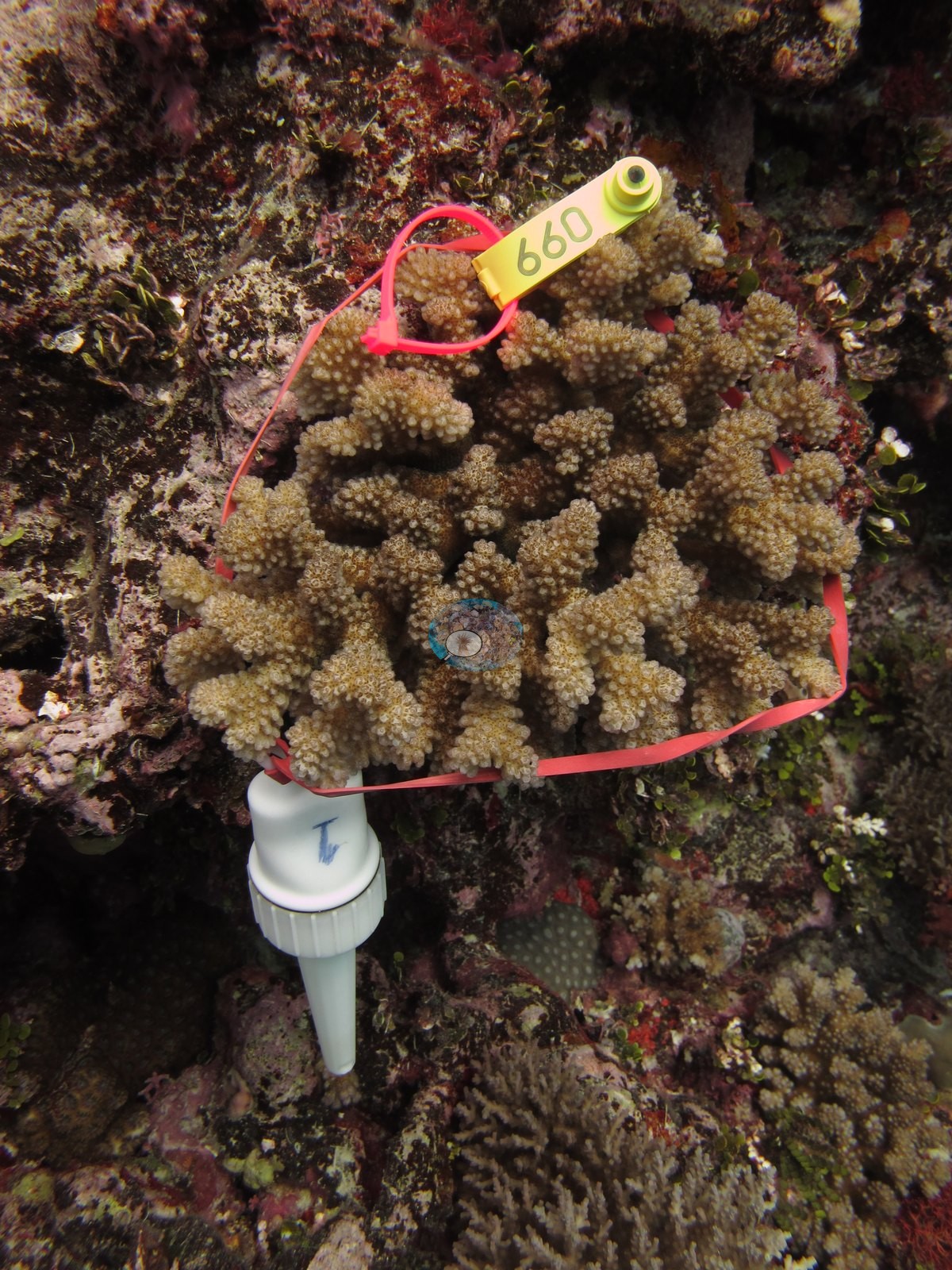
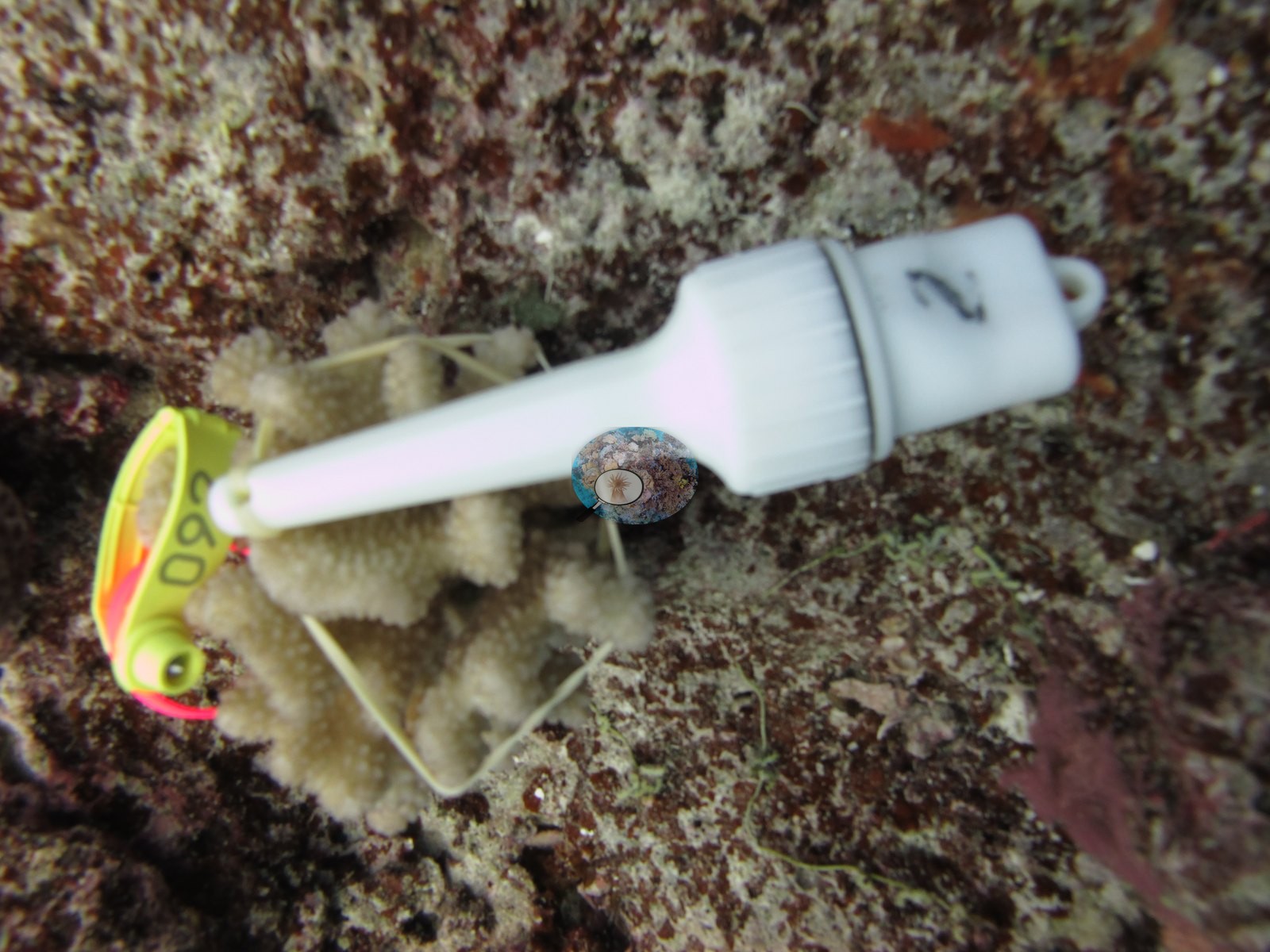
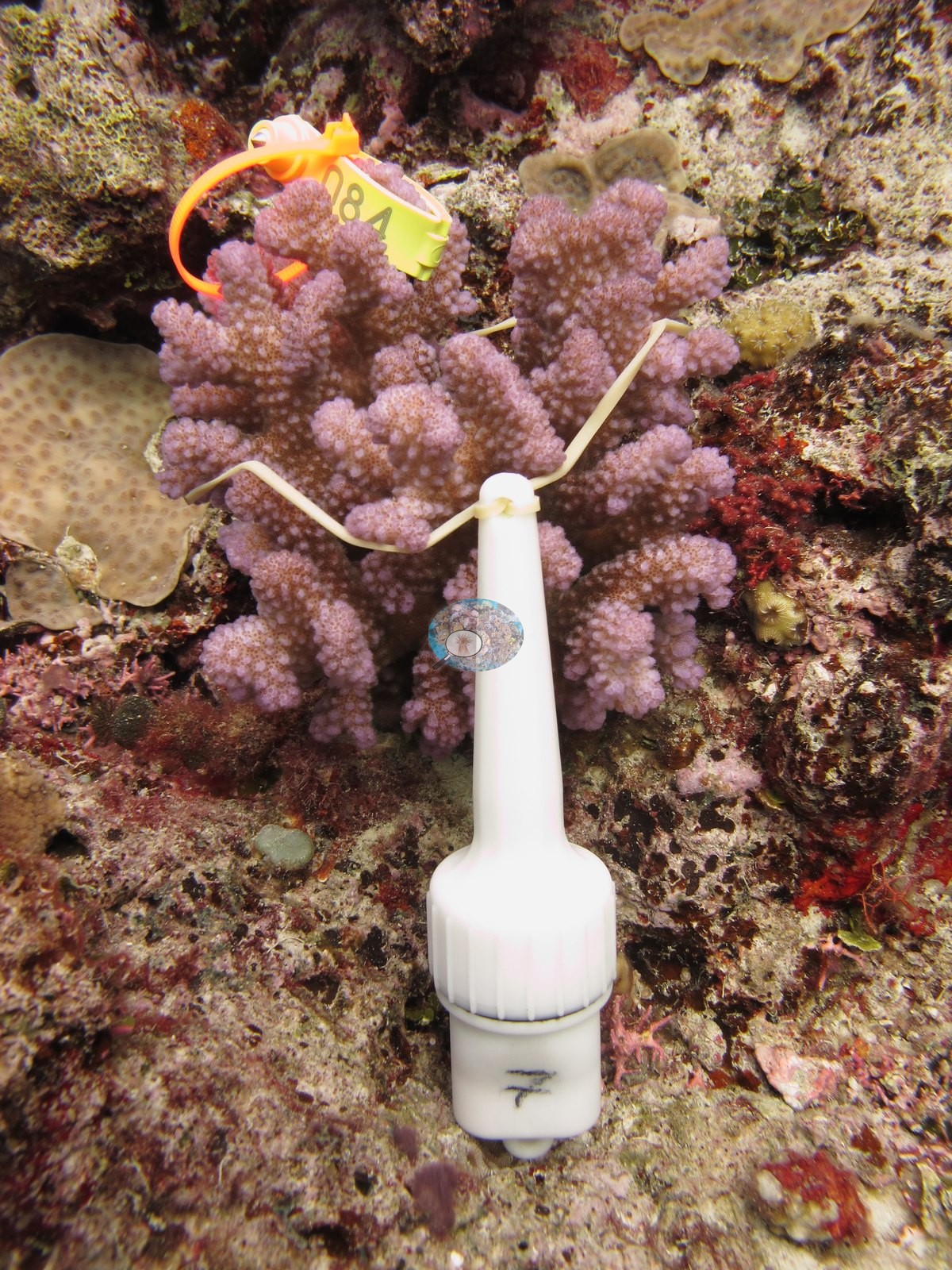
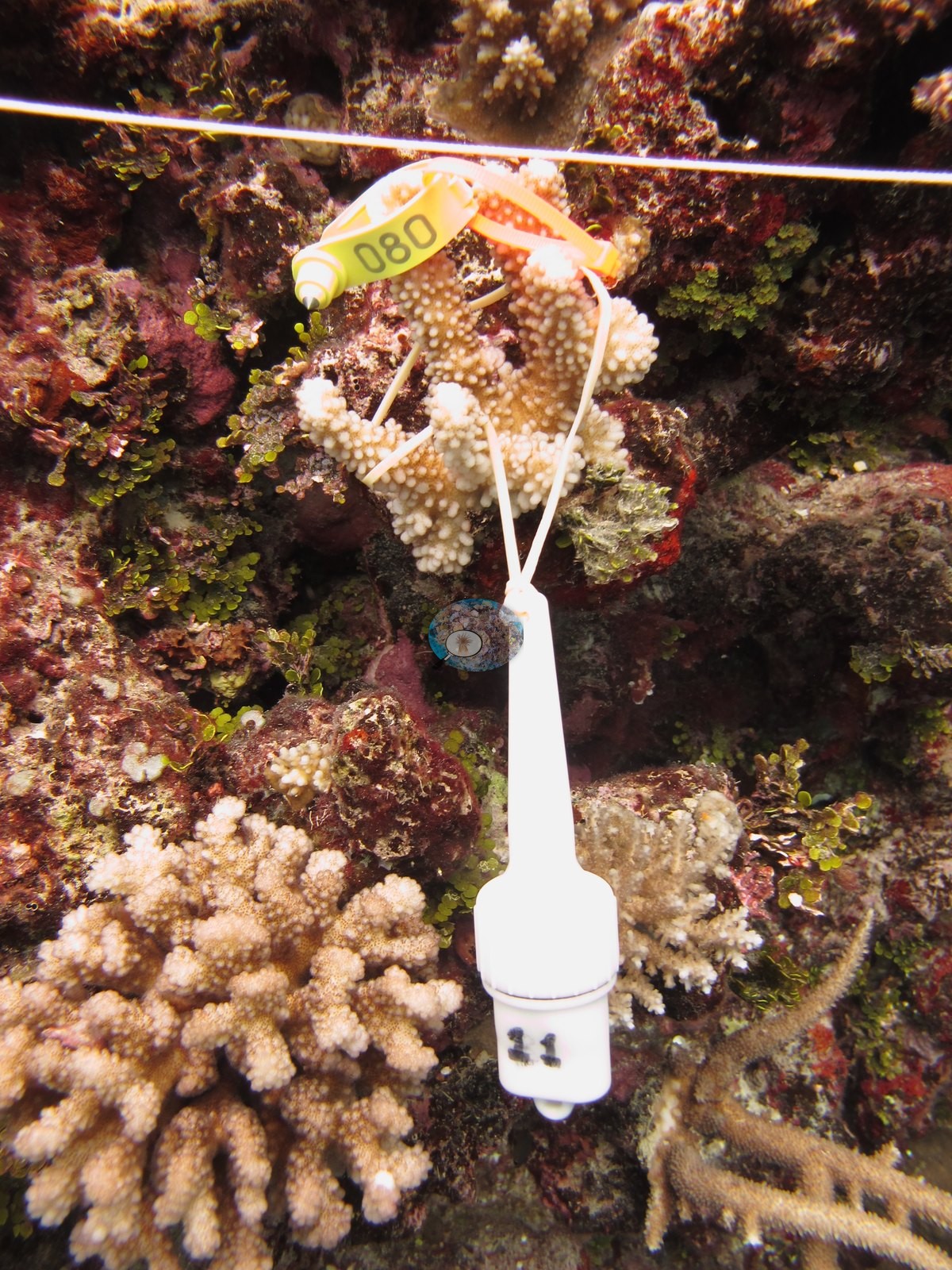
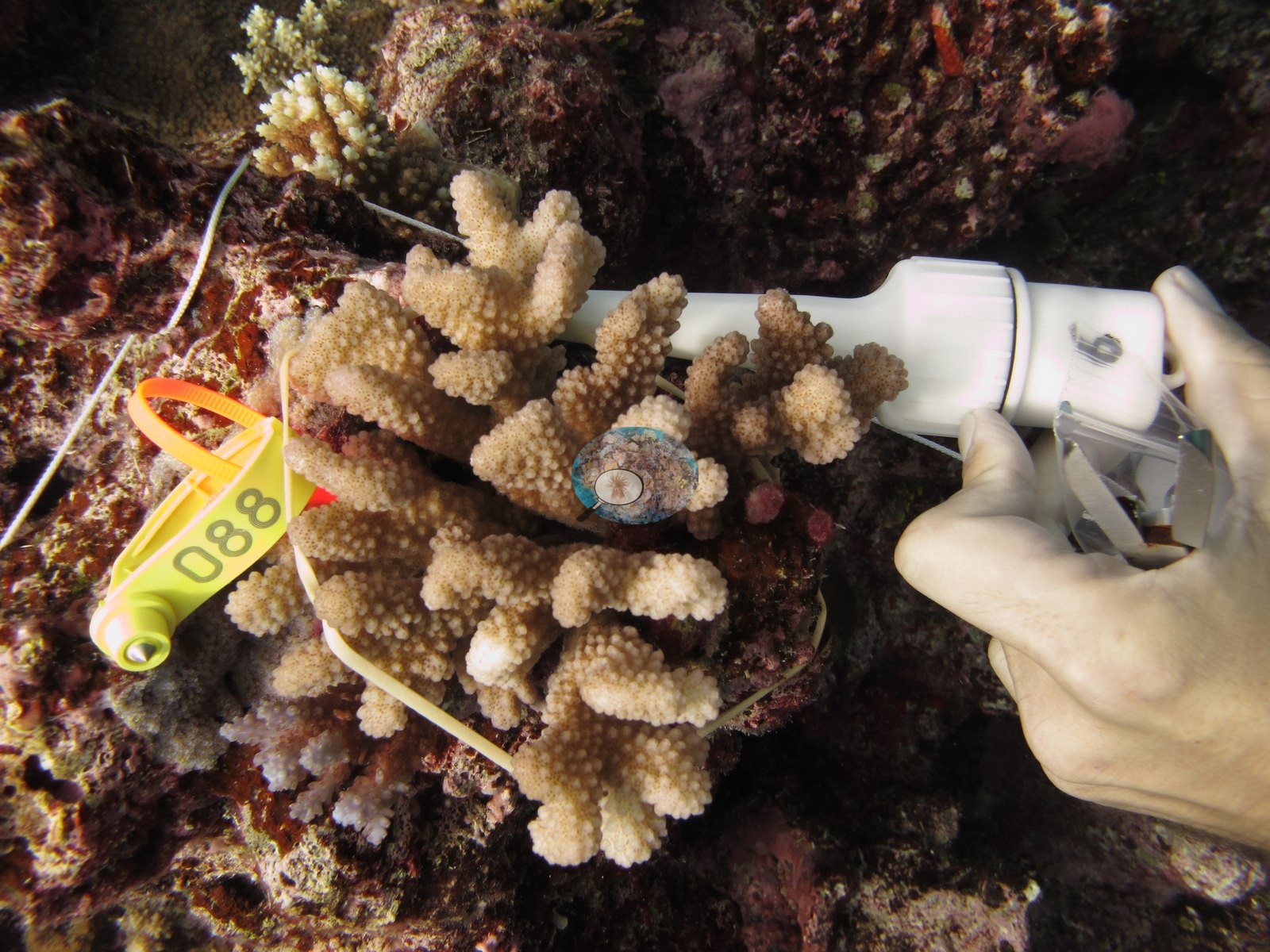
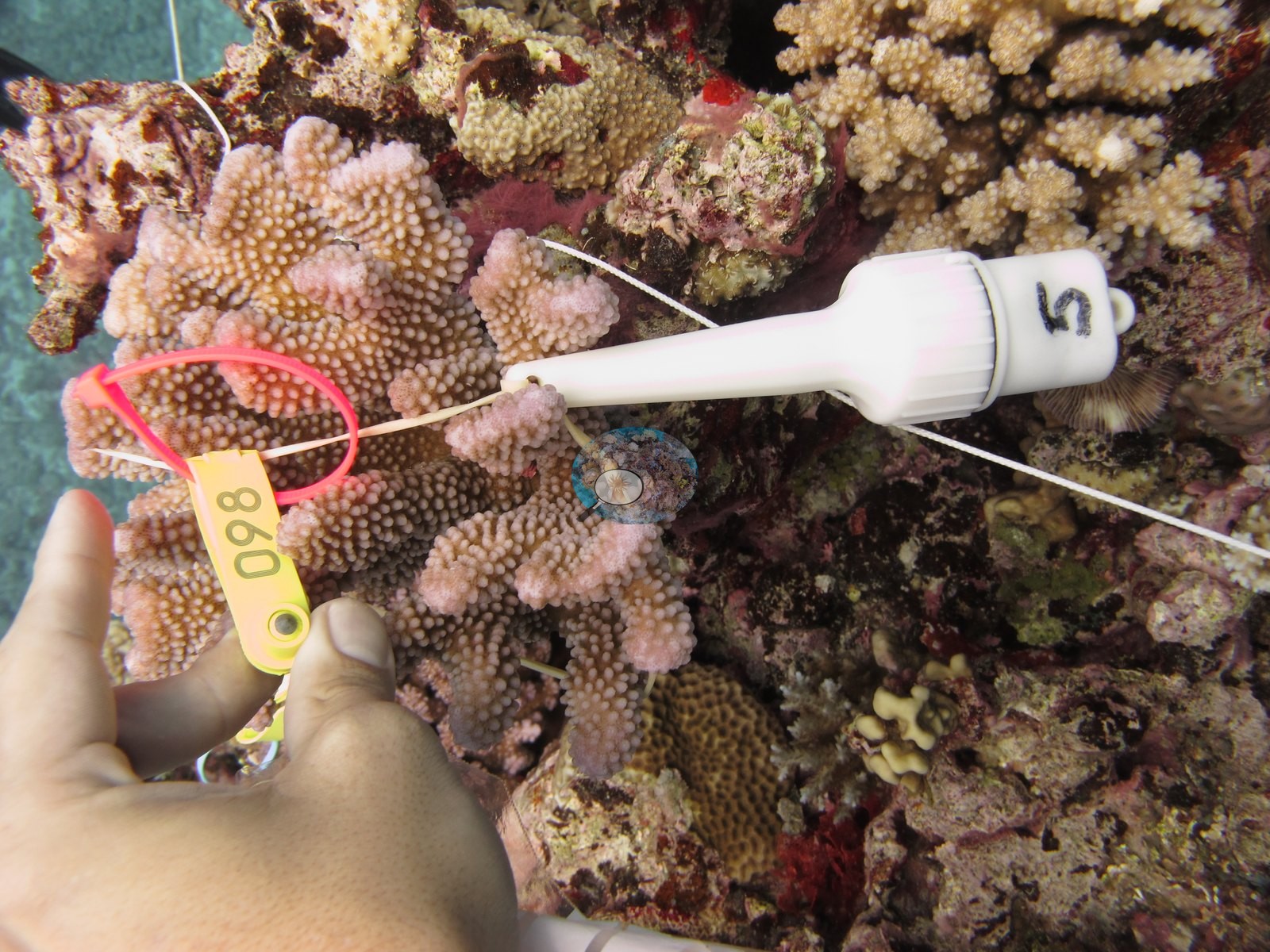
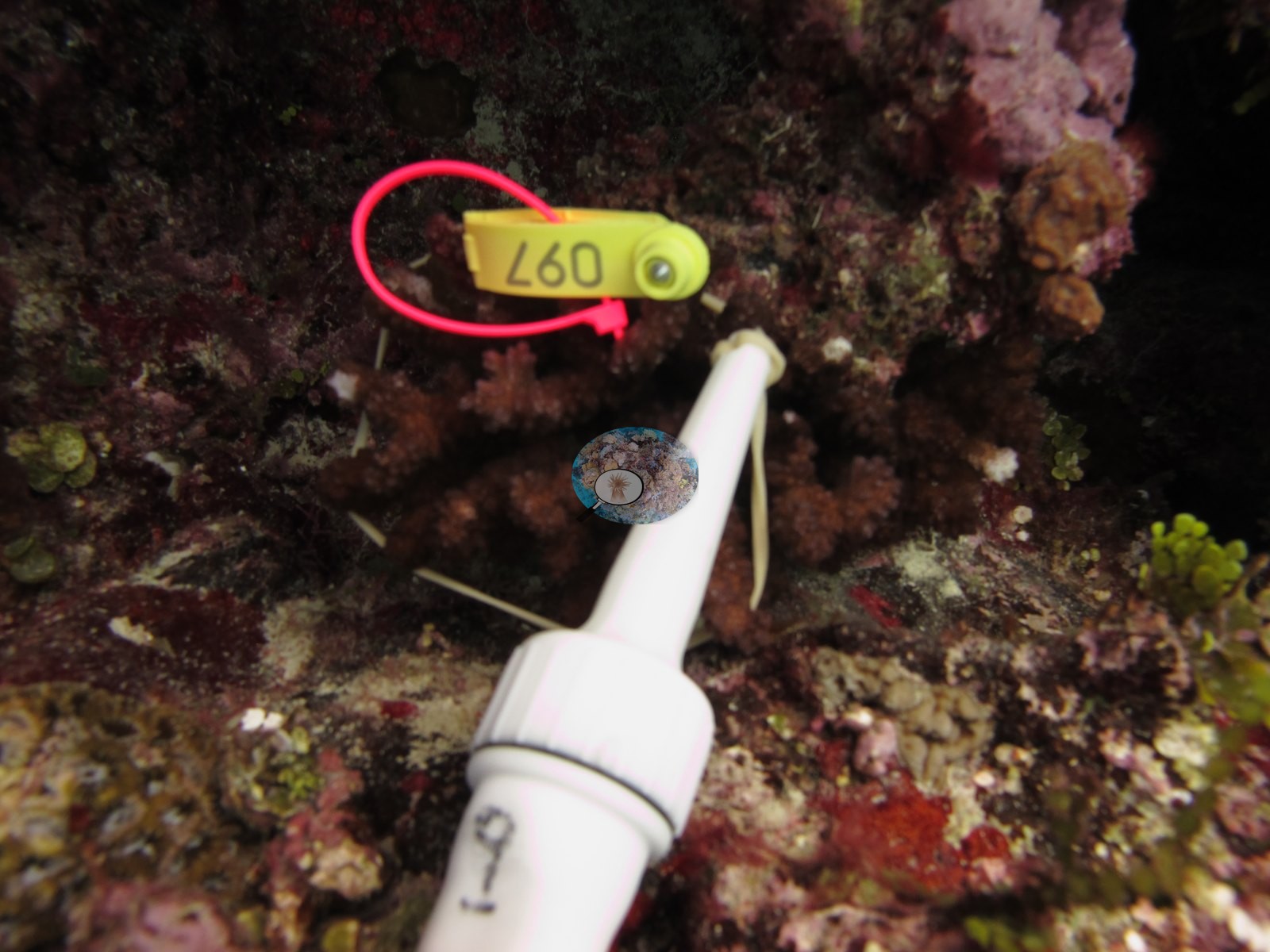
Photo review of 16 staged "habitat" frames plus 11 sampled-colony close-ups (Kabara, Lau Archipelago, 13 Jun 2013). Ten Pocillopora colonies were sampled at this site (colonies 57-60 and 64-69), six of them labeled P. acuta in Anderson's own field records; the sampling sheet records all ten as partly to fully bleached (20-100% of each colony). The 11 staged close-ups are tag, macro, and scale repeats of only four of those ten colonies and describe the colonies, not the reef.
Survey team's site notes: FJKA31 had mixed habitats of shallow fore reef terrace with small acroporid colonies and fore reef sand flats. Large Porites lobata colonies and tabular acroporids occur within the sand flats, especially in deeper areas (30-50 m).
Dive history
| Date | Time in | Max depth (m) | Bottom time (min) |
|---|---|---|---|
| 2013-06-13 | 10:31 | 18.3 | 66 |
| 2013-06-14 | 15:18 | 15.5 | 64 |
Data & links
- Download benthic survey data (CSV) ↗
- Download all LOF-GRE data (933 sites) ↗
- Photo portfolio ↗
- Coral Reef Diagnostics region page ↗
All images from Coral Reef Diagnostics. Data are from the Khaled bin Sultan Living Oceans Foundation Global Reef Expedition and Coral Reef Diagnostics.
 © Coral Reef Diagnostics.