
Part of the regional summaries: Fiji - Fulaga, Fiji - Southern Lau (Kabara / Fulaga), and Fiji - Lau
More info
Fiji (NOAA CRW virtual station)A Fulaga station in Fiji's remote southern Lau group (dived to 4 m), where the transects recorded 50% live coral. Anderson was busy sampling three Pocillopora acuta colonies here, so the account rests on the survey data. Surveyed on the Living Oceans Foundation's Global Reef Expedition.
E dua na vanua ni vakadidike e Fulaga ena yatu Lau i ceva i Viti e yawa sara (a nunu kina ki na 4 m), ka vola kina na transect e 50% na lase bula. A osooso ko Anderson ena kena taura na ivakaraitaki ni tolu na Pocillopora acuta eke, sa vakatau kina na ivakamacala ena iwiliwili ni vakadidike.
AI translation of this summary; the English is authoritative. (low confidence)
CTD-cast midpoint; the cast read 26.0°C throughout
Five other CRD dive sites with their own pages within 5 km shown in orange — click a marker to open its page.
🗺 Detailed map of the Global Reef Expedition dive sites, Fulaga, Fiji (Khaled bin Sultan Living Oceans Foundation; opens in a new window)
Site description
Setting
FJFU29 is a Fulaga station, surveyed on 12 June 2013 during the Khaled bin Sultan Living Oceans Foundation's Global Reef Expedition. Fulaga is a raised limestone island with an enclosed lagoon in southern Lau, Fiji's remote and sparsely populated eastern archipelago.
General benthic features
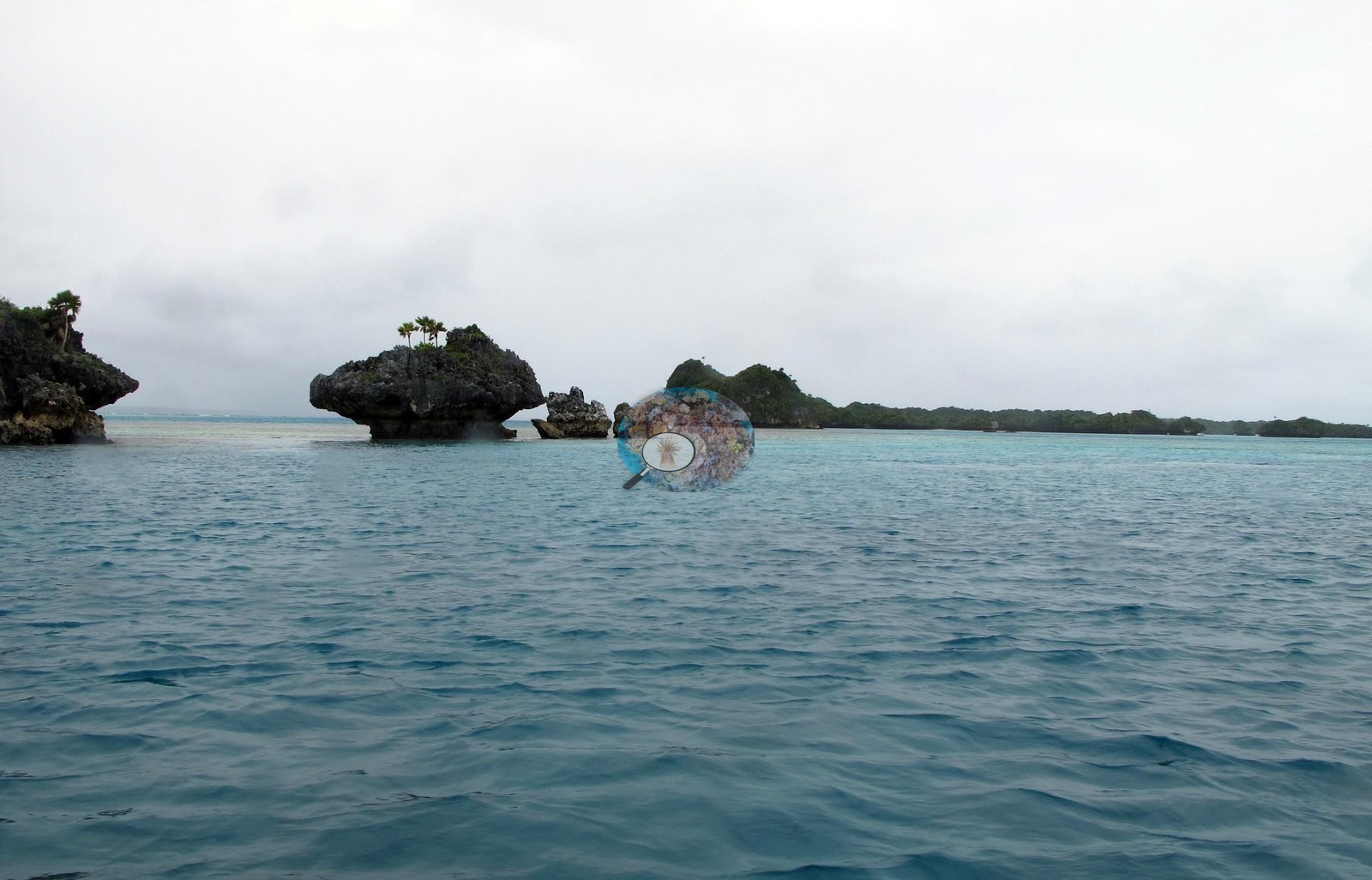
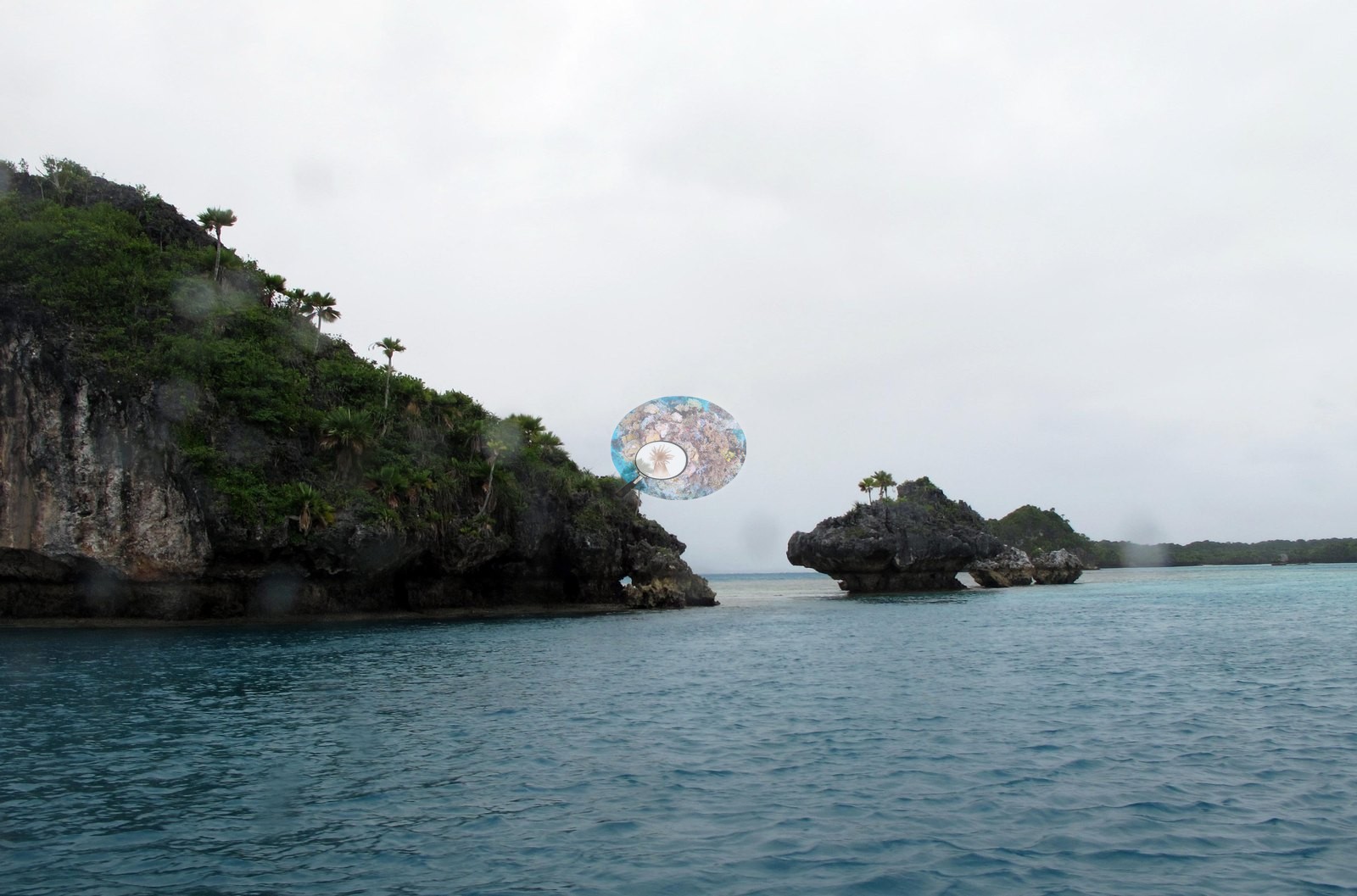
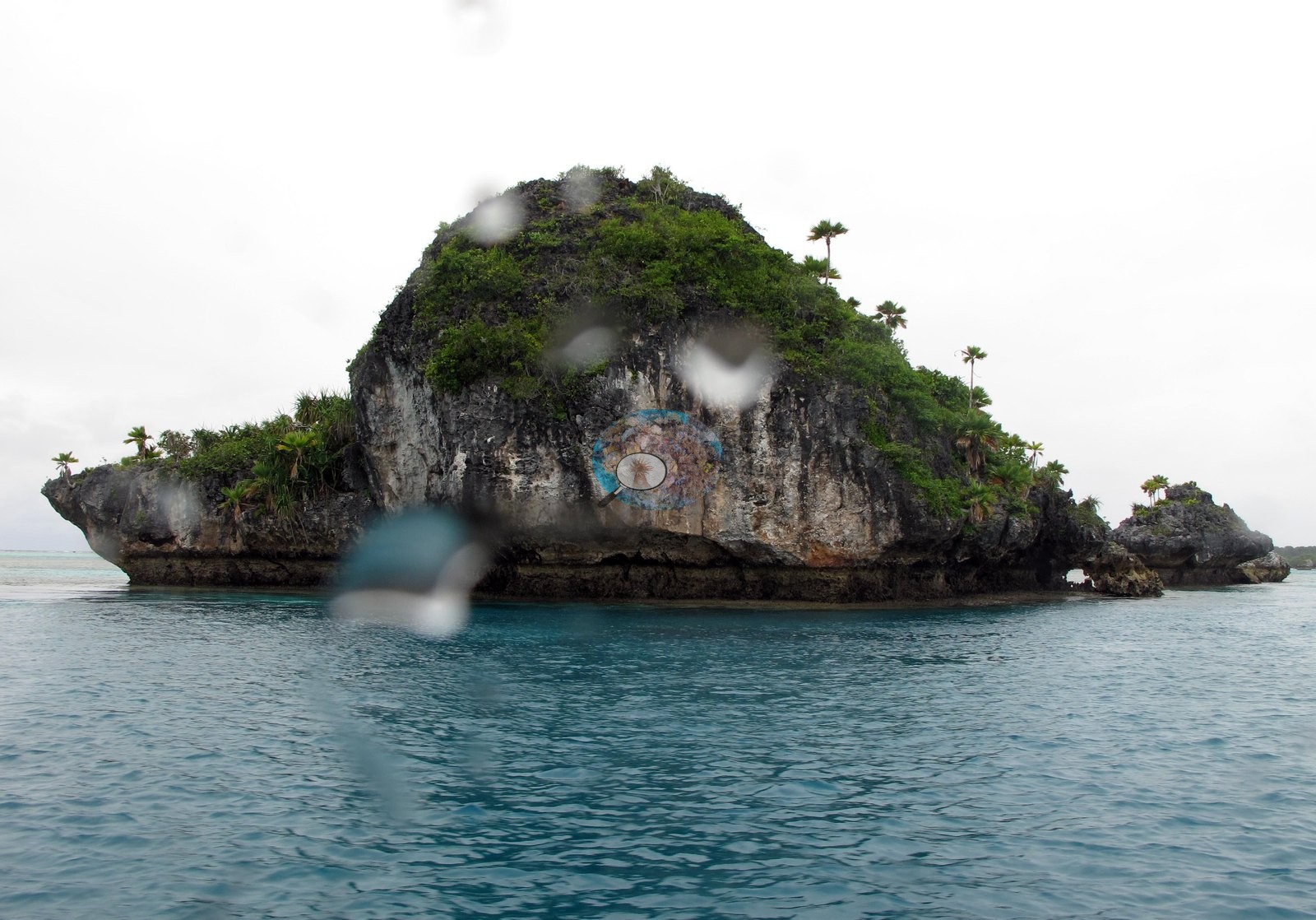
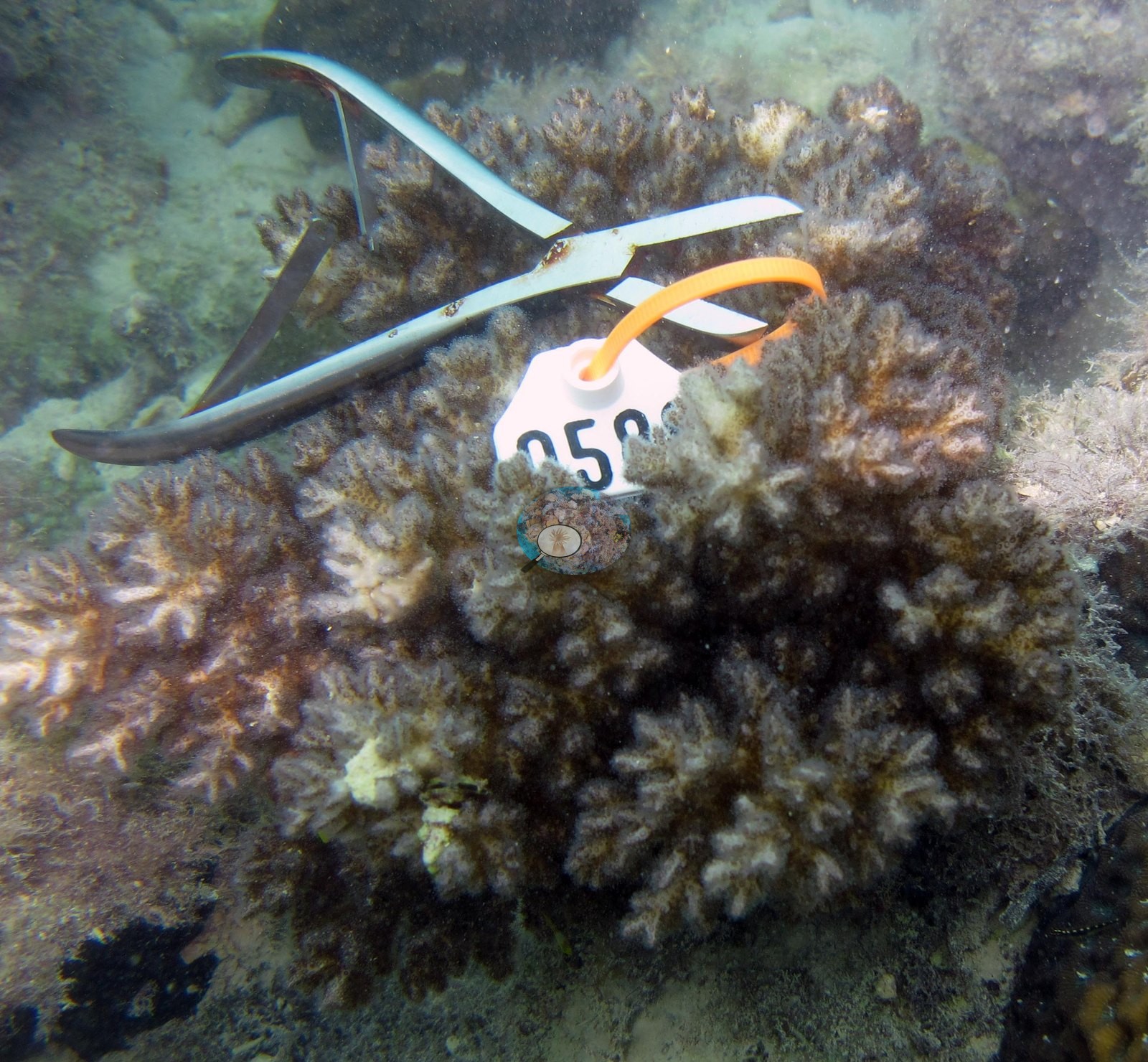
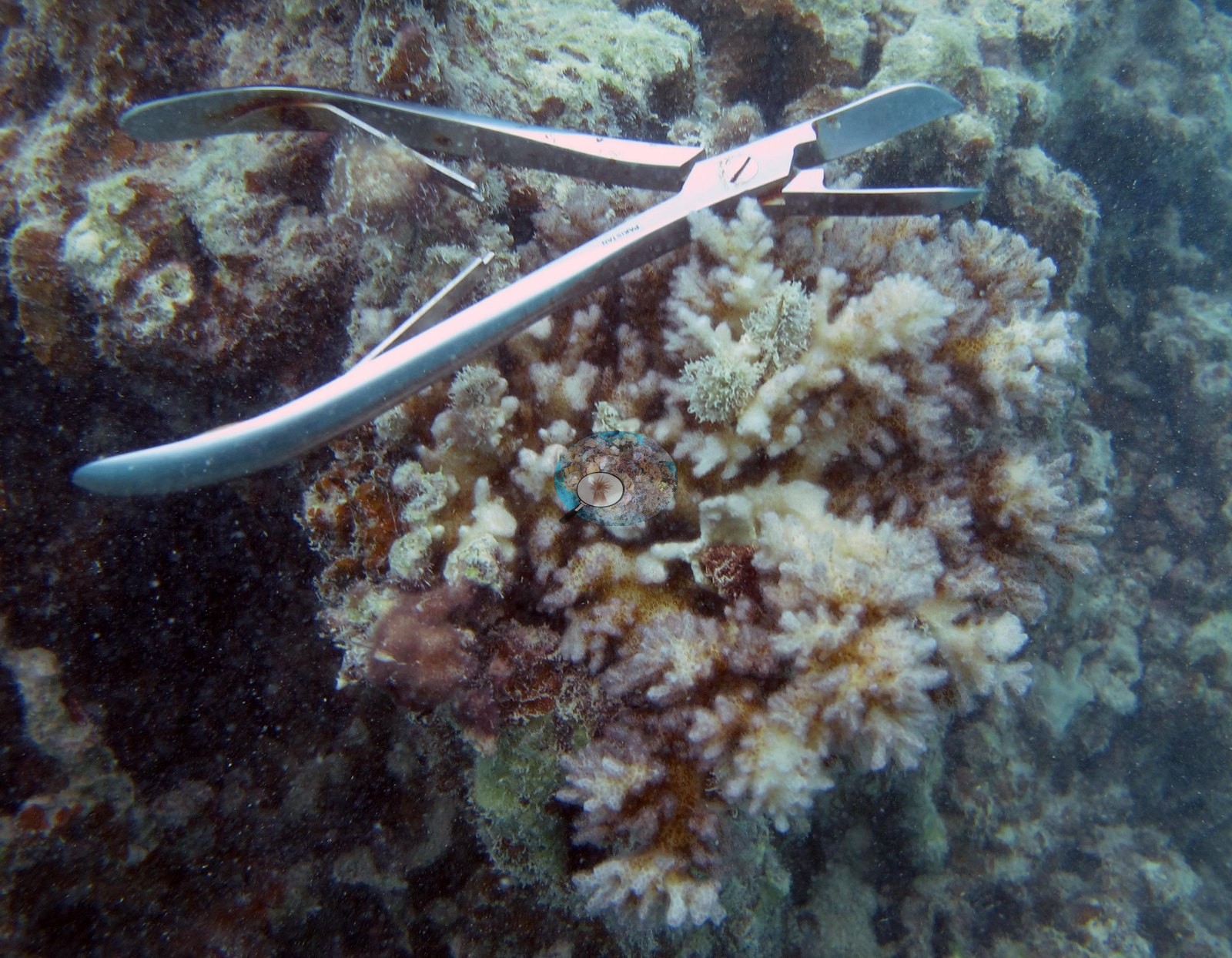
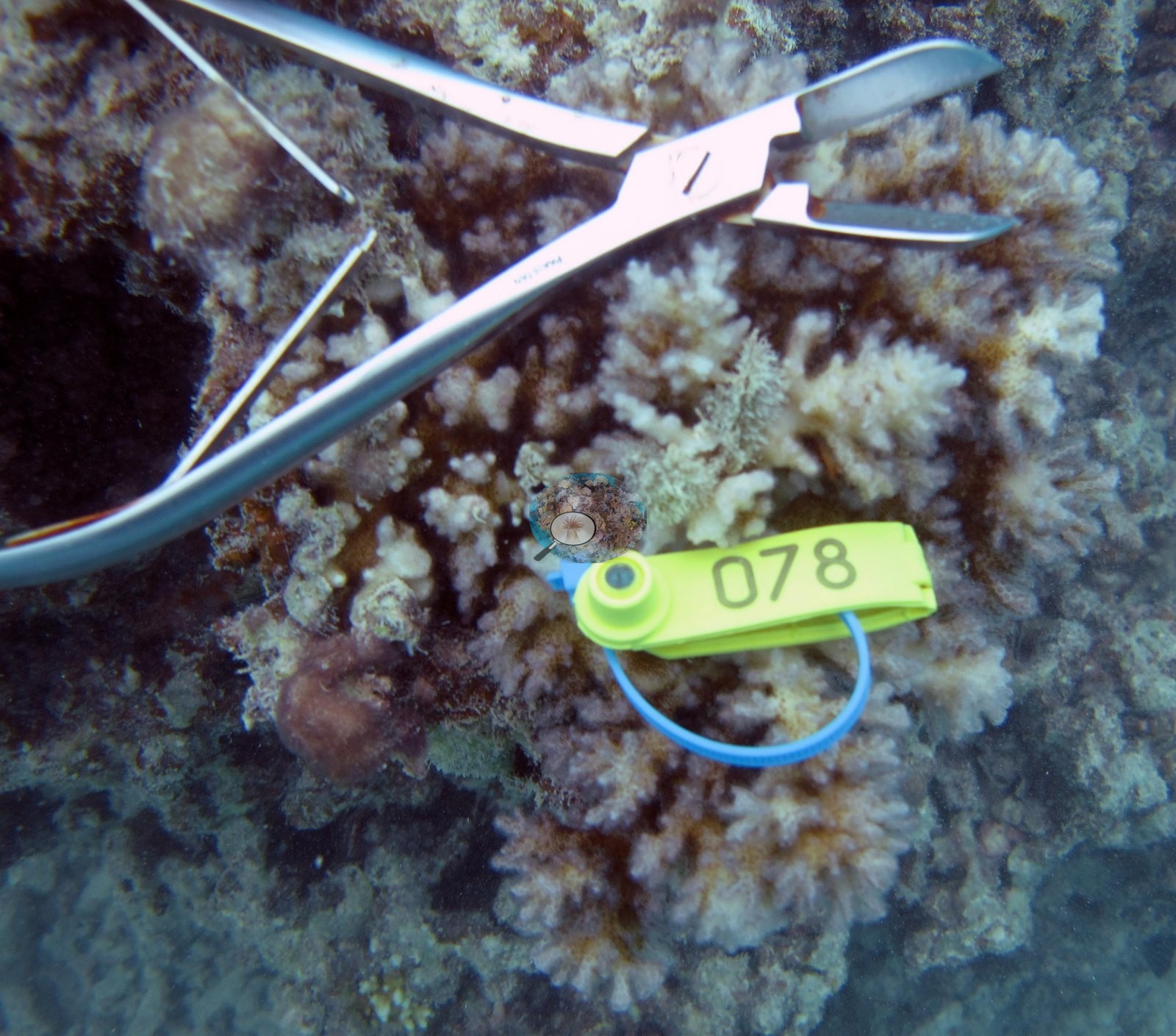
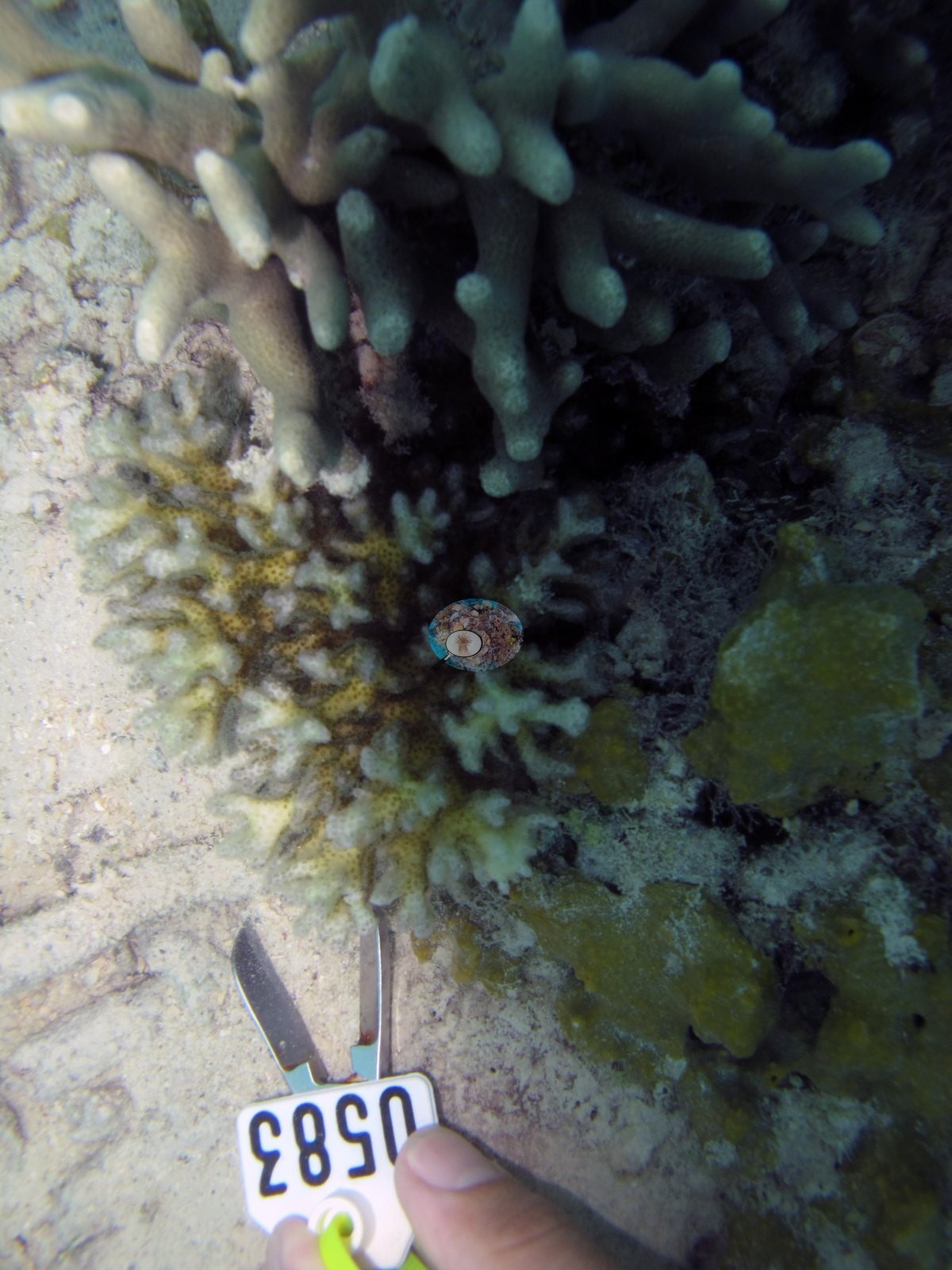
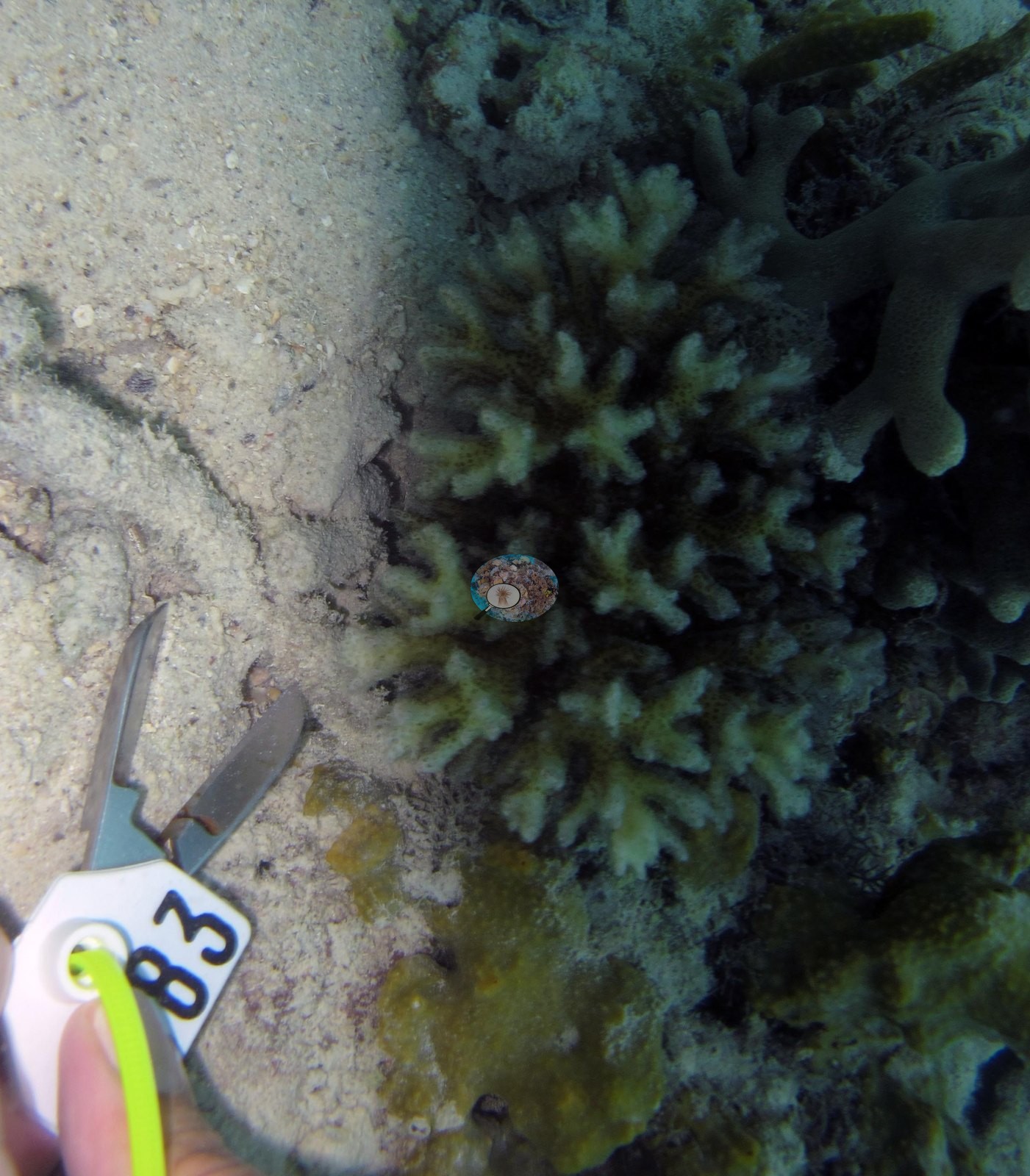
Anderson's own photographs at this station are colony-level sampling shots, not habitat photography: three tagged Pocillopora acuta colonies were photographed at close range with surgical scissors beside them, consistent with a tissue-biopsy sampling dive rather than a reef survey. Three further topside frames show Fulaga's raised limestone islets, palm-topped and undercut at the waterline (e.g., Image 6, Image 7, Image 8), enclosing the lagoon the site sits in; the underwater frames are close-up sampling shots, cutters, and numbered tags on branching colonies, rather than habitat views (e.g., Image 1, Image 2, Image 3, Image 4, Image 5).
Coral cover
- Reference: Khaled bin Sultan Living Oceans Foundation, Global Reef Expedition (in situ transect)
- Coral cover 50%, from an LOF-GRE in situ benthic transect.
- In situ benthic transects recorded 50% live coral cover.
- No algal-cover value was logged for this transect, so the coral figure stands alone and no coral-versus-algae comparison can be drawn here the way it can at the deeper Fulaga stations.
Stressors
Recent thermal exposure at the Fiji virtual station has averaged an annual maximum of 8.9 degree-heating-weeks over 2021-2025 (NOAA Coral Reef Watch), above the 8 DHW level at which severe bleaching and mortality are expected — a figure from a decade after this survey. Anderson's sampling sheet records one of the three colonies sampled here (F55) as partially bleached (20%), and the frames of it show cream-white branches among pigmented ones (e.g., Image 2, Image 3); the other two were recorded as less than 10% and 10-15% pale.
Comparisons with other data
Apart from the Living Oceans Foundation survey shown here, we found no other surveys at this site as of 2026. If you would like to share yours, please email us.
Dive record
Bottom time was 29 minutes on Anderson's own dive, during which the three colonies were sampled; the expedition team's log records the team's separate visit to this station that afternoon.
Other notes
Anderson was busy sampling corals at this site, so the site description is derived from the Living Oceans Foundation's benthic transect data. Three Pocillopora colonies were sampled here (colonies 54, 55, and 56), all three labeled P. acuta in Anderson's own field records, where this station's sample code is FJFL29. Fulaga's reef zones in general (not this station specifically): spur and groove assemblages at fore reef sites; large monospecific stands of foliaceous and plating Pachyseris, Leptoseris, Montipora, and Merulina on more gradual slopes, with encrusting and laminar morphologies more common where the slope becomes close to vertical; gently sloping areas with scattered mounds and spurs of coral framework running perpendicular to the reef crest; and ridges or mounds of coral, perforated by shore-perpendicular channels, running parallel to the reef crest.
Data & links
All images from Coral Reef Diagnostics. Data are from the Khaled bin Sultan Living Oceans Foundation Global Reef Expedition, Coral Reef Diagnostics, and NOAA Coral Reef Watch.
 © Coral Reef Diagnostics.