
Regional summary of 5 dive sites. Figures are averages across the sites that report them (n = sites with a value); each site's own page has its individual values.
⬇ Download this region as a report card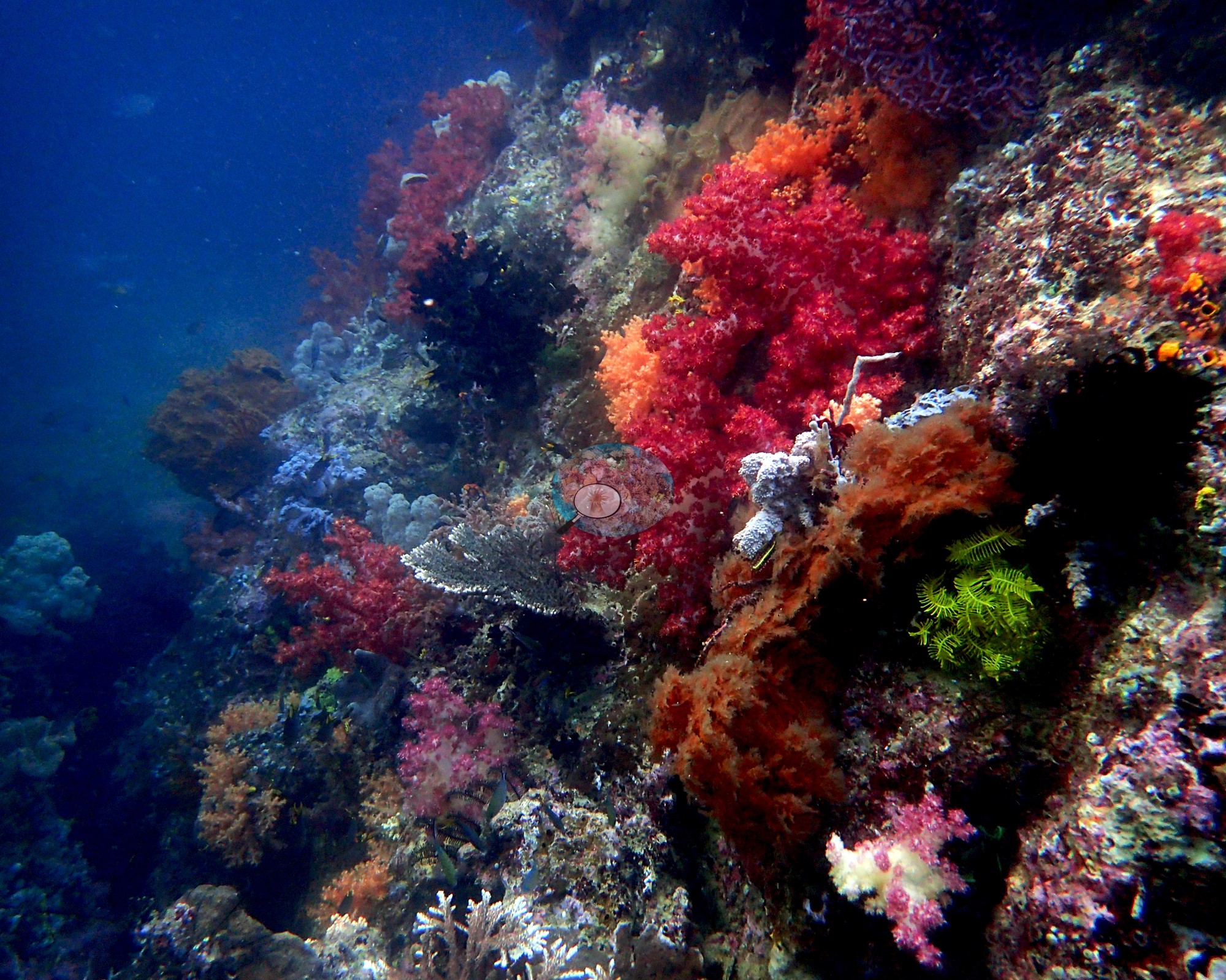

Triton Bay's five sites, dived in October 2018 in turbid, nutrient-rich, high-flow water, are dominated by soft corals, including a naturally white soft-coral forest at Little Komodo. Hard coral clusters in the top few meters, and no bleaching was recorded on any dive.
Heat stress
Long-term record: 5 years since 1985 reached 8 or more °C-weeks at NOAA’s West Papua station. Download the annual DHW data (CSV).
5 sites in this region — click a marker to open that site.
Regional setting
Spalding et al. (2001) do not mention Triton Bay, and they call the coastline of Irian Jaya, on which it lies, very poorly described. Much of that coast is low-lying and takes in heavy river discharge, above all in the south. Along the southeast, reefs give way to mangroves the authors count among the largest in the world, with the forests of Bintuni Bay and the central coast possibly rivaling the Sundarbans in area, while farther west, where the land rises, fringing reefs are reported to be widespread. South of Irian Jaya lies the Arafura Sea, a broad shelf mostly shallower than 100 m whose turbid water contrasts with the clear oceanic conditions elsewhere in eastern Indonesia, and in the Southeast Monsoon winds blow up toward the island's southern shore. Nationally, the authors estimate about 51,020 km² of coral reef in Indonesia, some 18% of the global total, with 443 coral species recorded and 581-602 estimated for its biogeographic region.
Reef Check surveys in 2002-2003 put the Coral Triangle, the area spanning Indonesia, the Philippines, and Papua New Guinea, among the three regions of the world with the least damaged reefs (Wilkinson 2006). The same review singled out Indonesia as a country where clear-felling of tropical forest for timber and oil palm was clearly adding to the sediment reaching reefs. Souter et al. (2021) list siltation and eutrophication from changing land use, overfishing, and the spread of coastal aquaculture among the main pressures across the East Asian Seas, and estimate that the region lost almost 11% of its hard coral, in relative terms, between 2005-2009 and 2015-2019, most of it after the 2010 bleaching event.
Overview
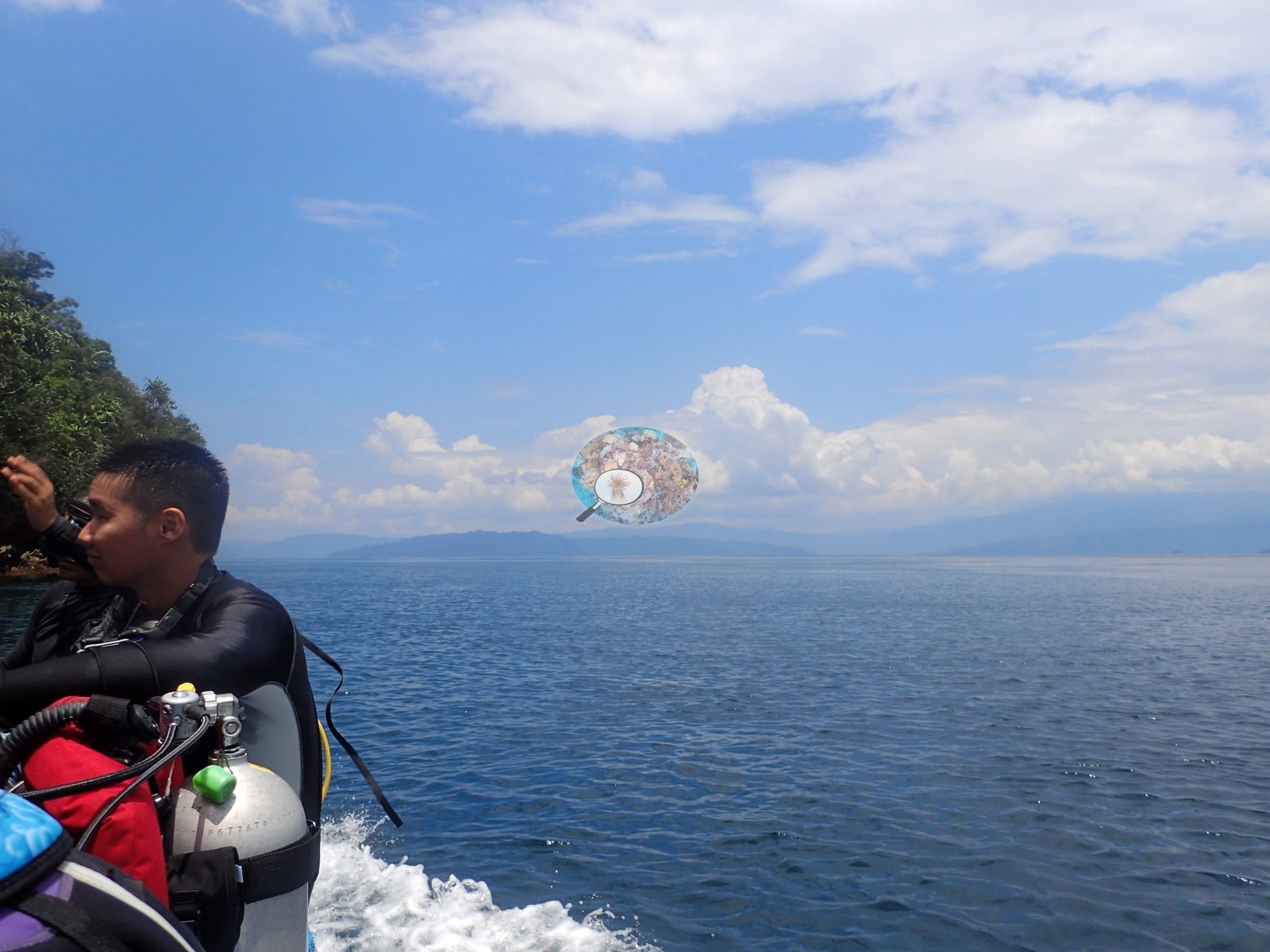
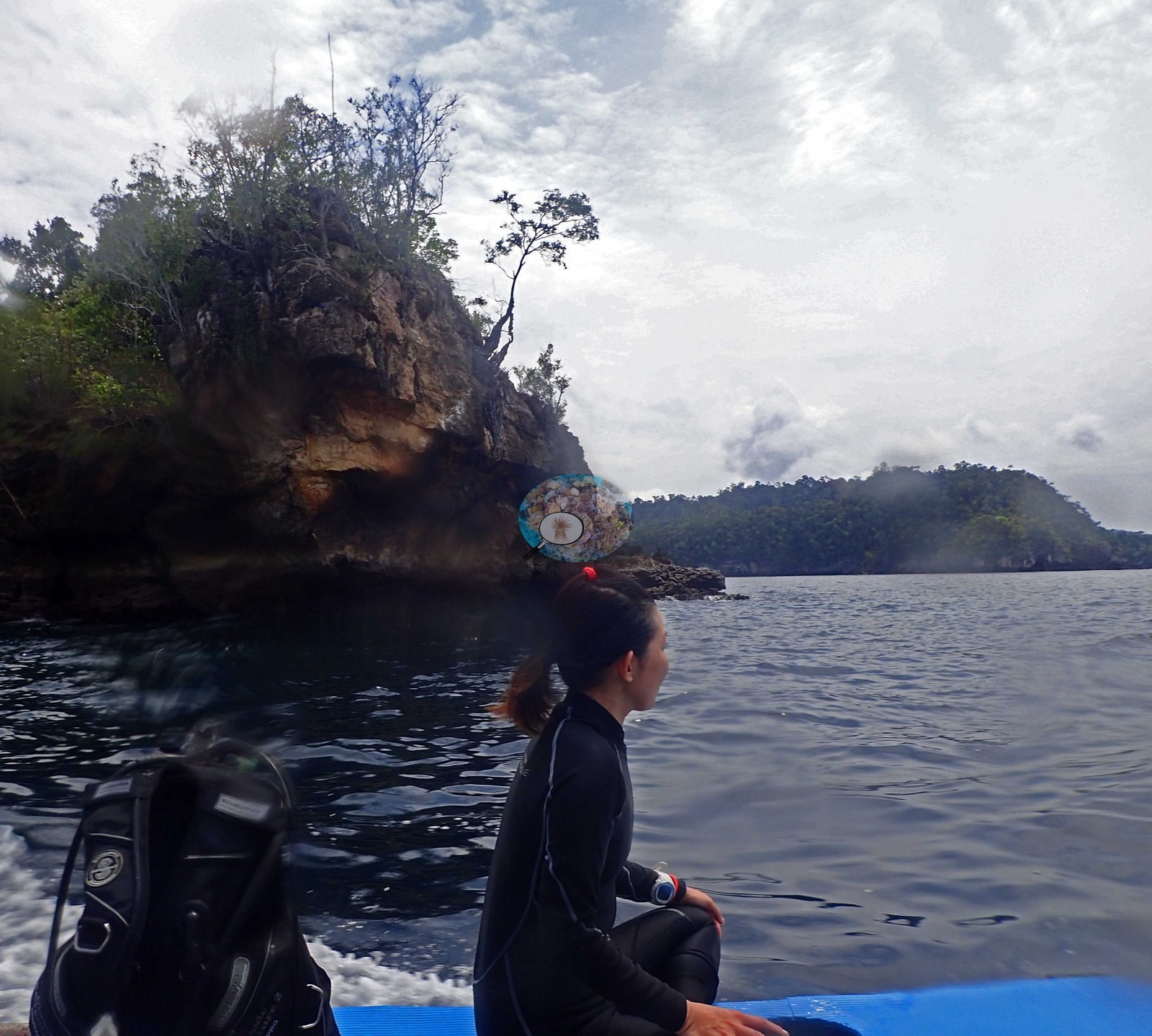
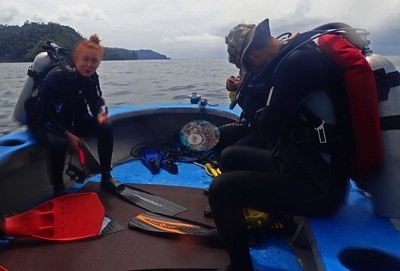
The five Triton Bay pins were dived on 14-15 October 2018. Seruanus and Little Komodo lie on opposite sides of Little Komodo Island, and Anderson found them very different from each other. Last Frontier fringes a steep karst islet with an undercut base and a swim-through. Bo Rainbow is a broad, gently sloping terrace, and Larry Dive Heaven is a depth-zoned slope that levels out at 5 m. The water is turbid and productive, with 2-10 m visibility, cold water intruding to 24 C at Seruanus, and thermoclines at Last Frontier and Larry Dive Heaven. The pins link the soft-coral abundance to high flow and nutrient-rich water.
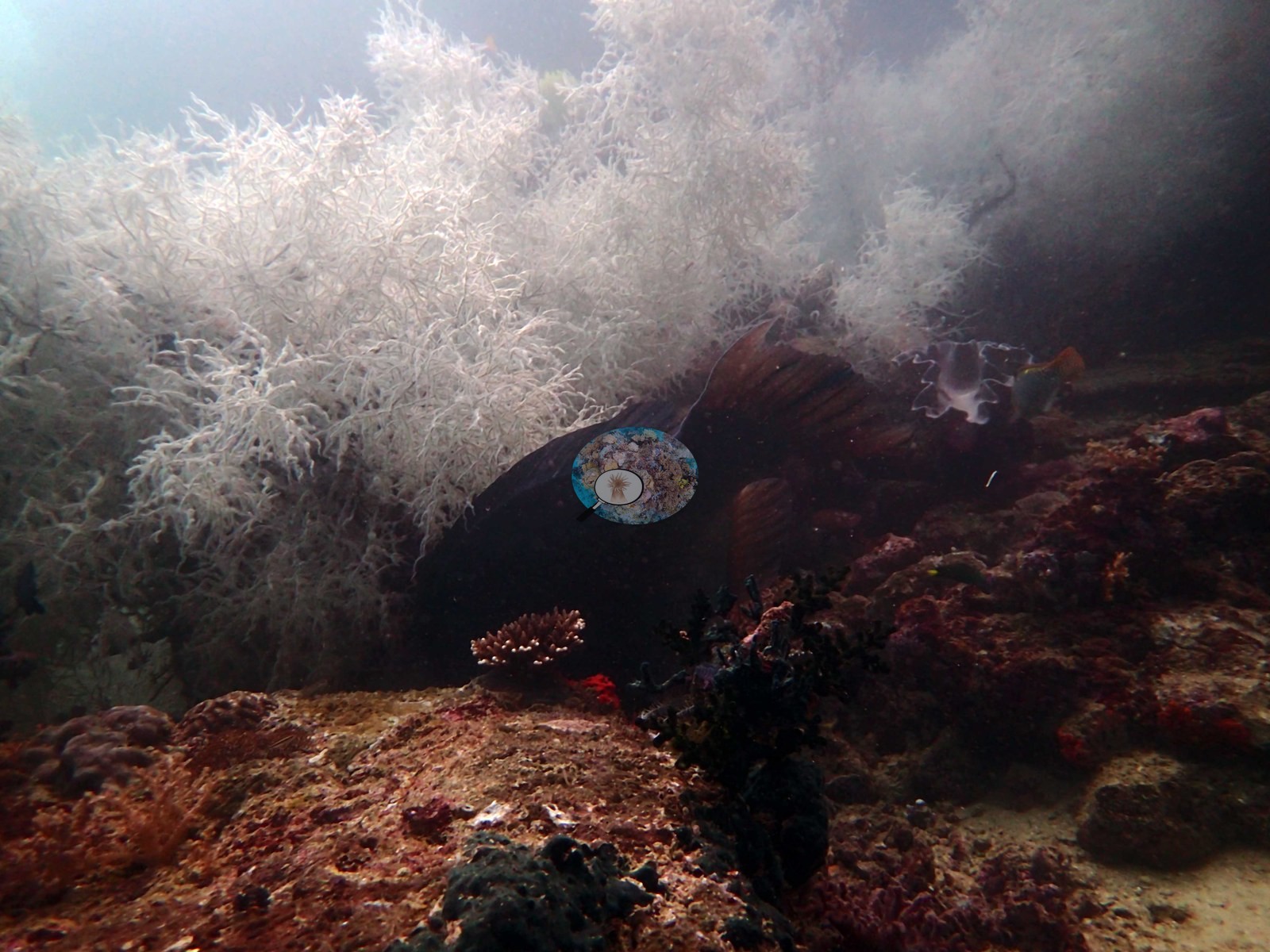
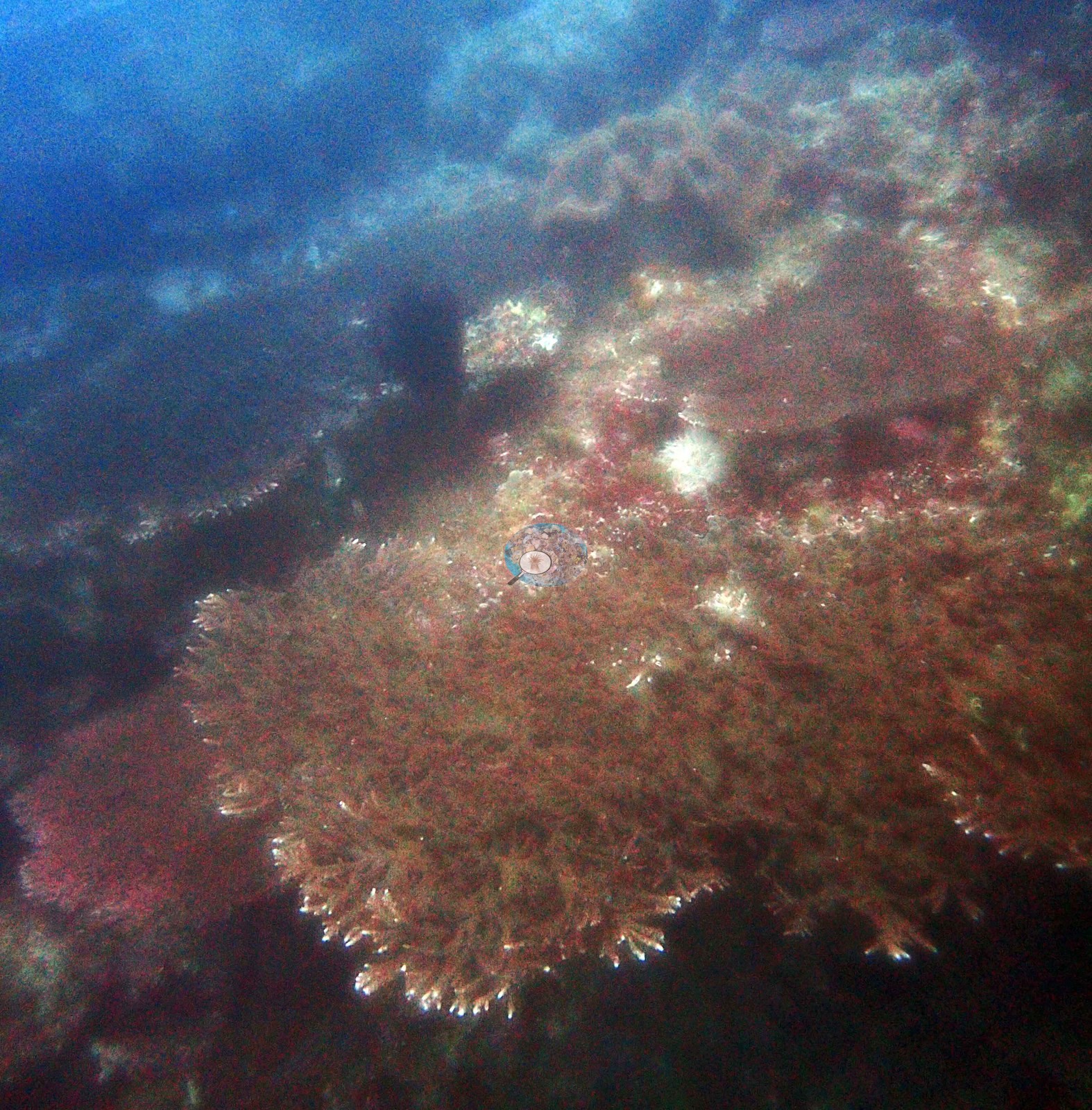
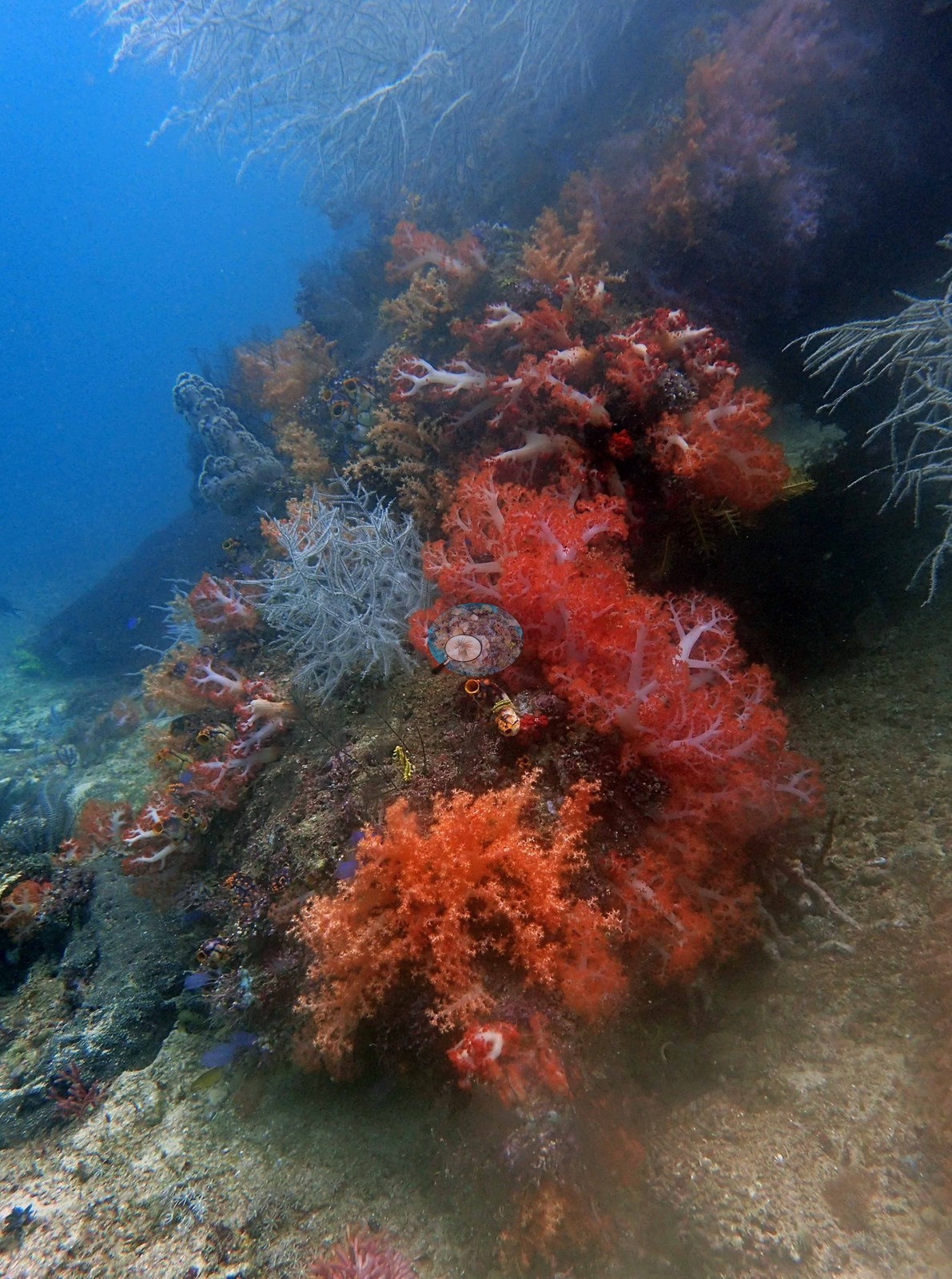
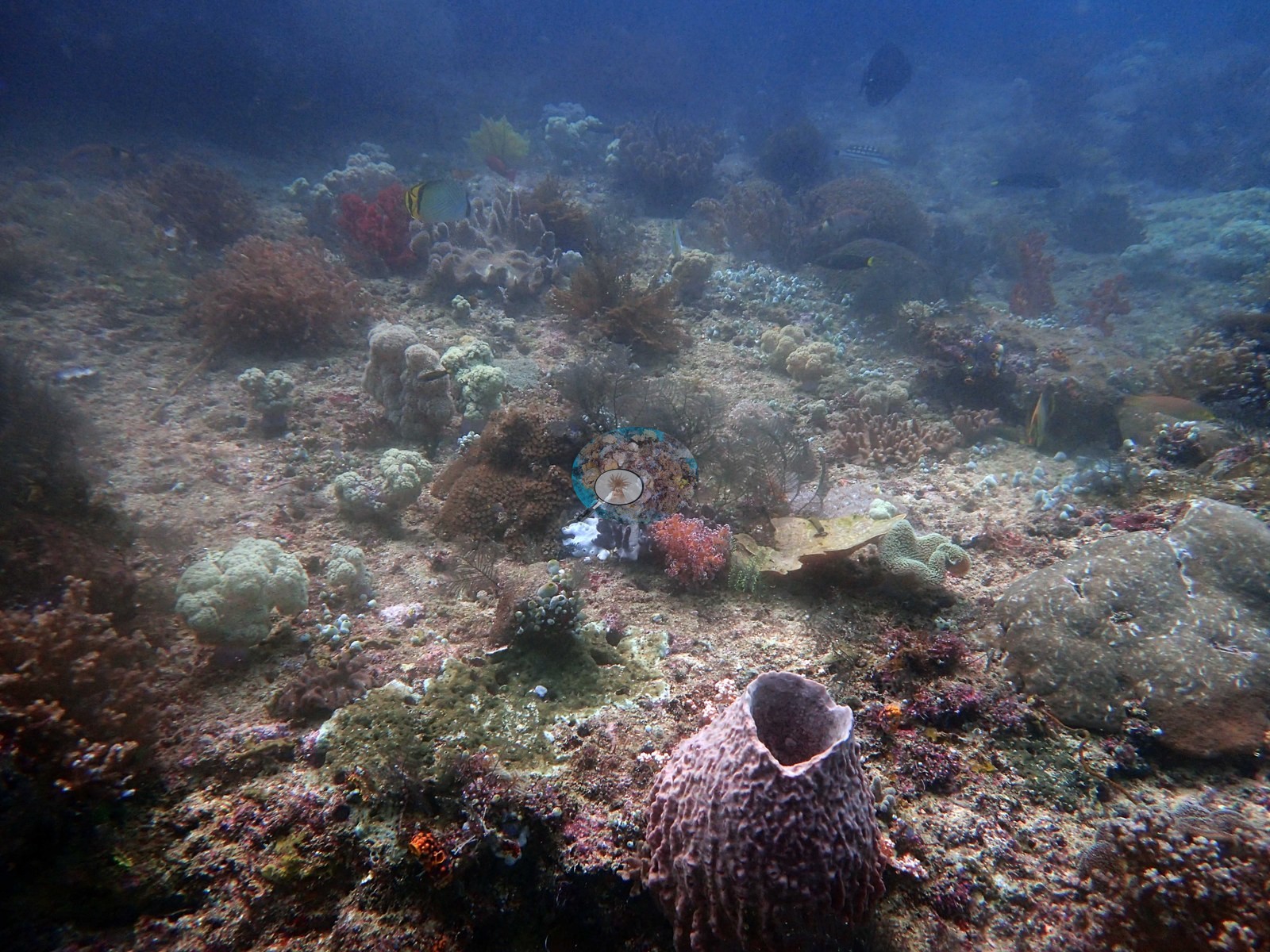
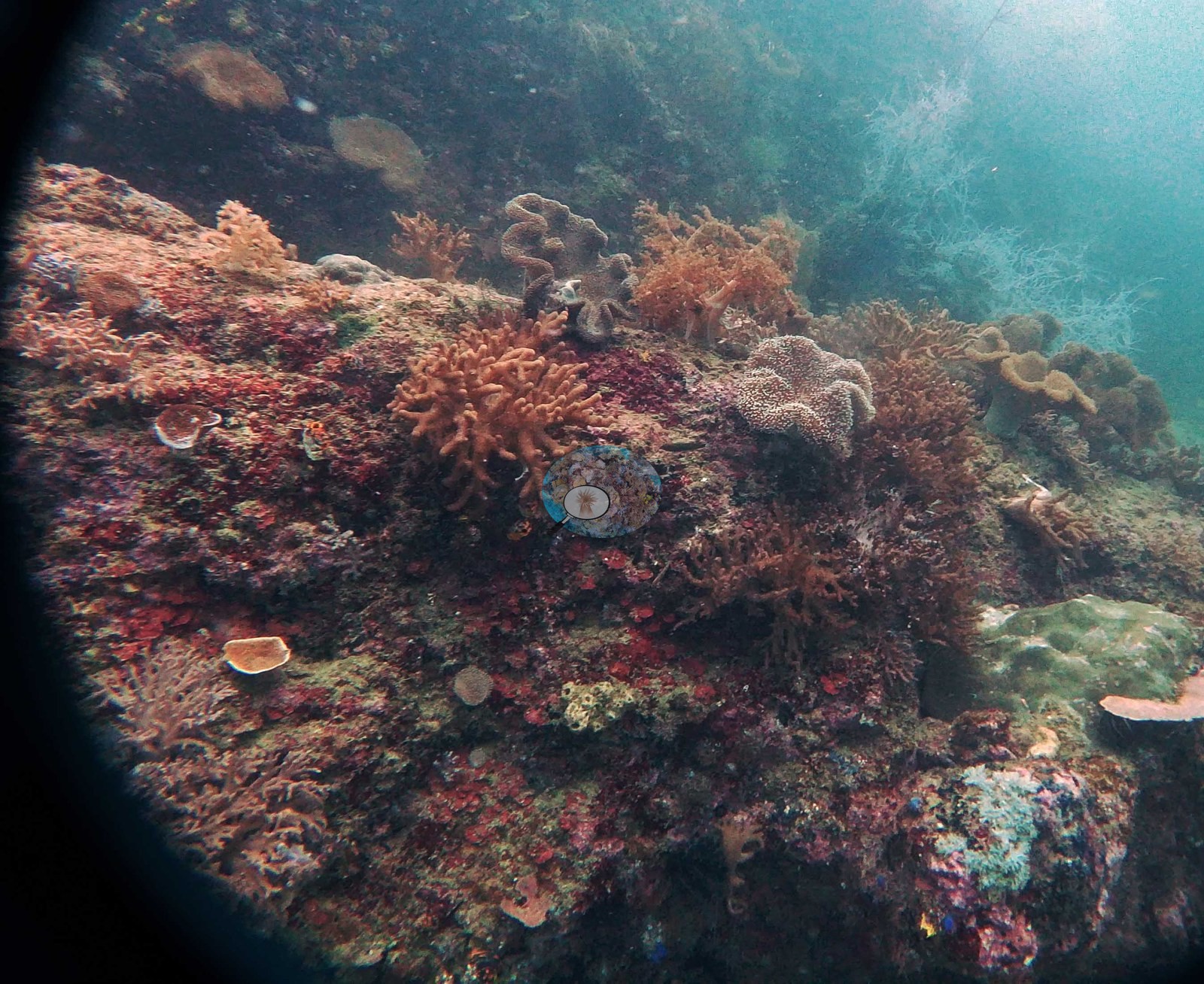
Soft corals dominate every site. Seruanus has tree-form soft corals packed across its slope faces, and Little Komodo a virtually uninterrupted white soft-coral forest at 15-20 m (naturally white, not bleached). Last Frontier carries Sinularia carpets and abundant Sarcophyton, and Bo Rainbow has patches of 100% soft-coral cover. Tubastraea is common at Little Komodo, Last Frontier, and Larry Dive Heaven. Hard coral is concentrated in the top few meters. Acropora grows at 5-7 m around Little Komodo Island, and Last Frontier has a diverse Acropora assemblage at 5-8 m with one table 3-4 m across. Larry Dive Heaven has brain corals at 8-9 m, with Porites bommies and Pocillopora verrucosa above 6 m. Hard coral cover (Claude CV) ranged from 7.8% at Last Frontier to 12.7% at Bo Rainbow across four sites.
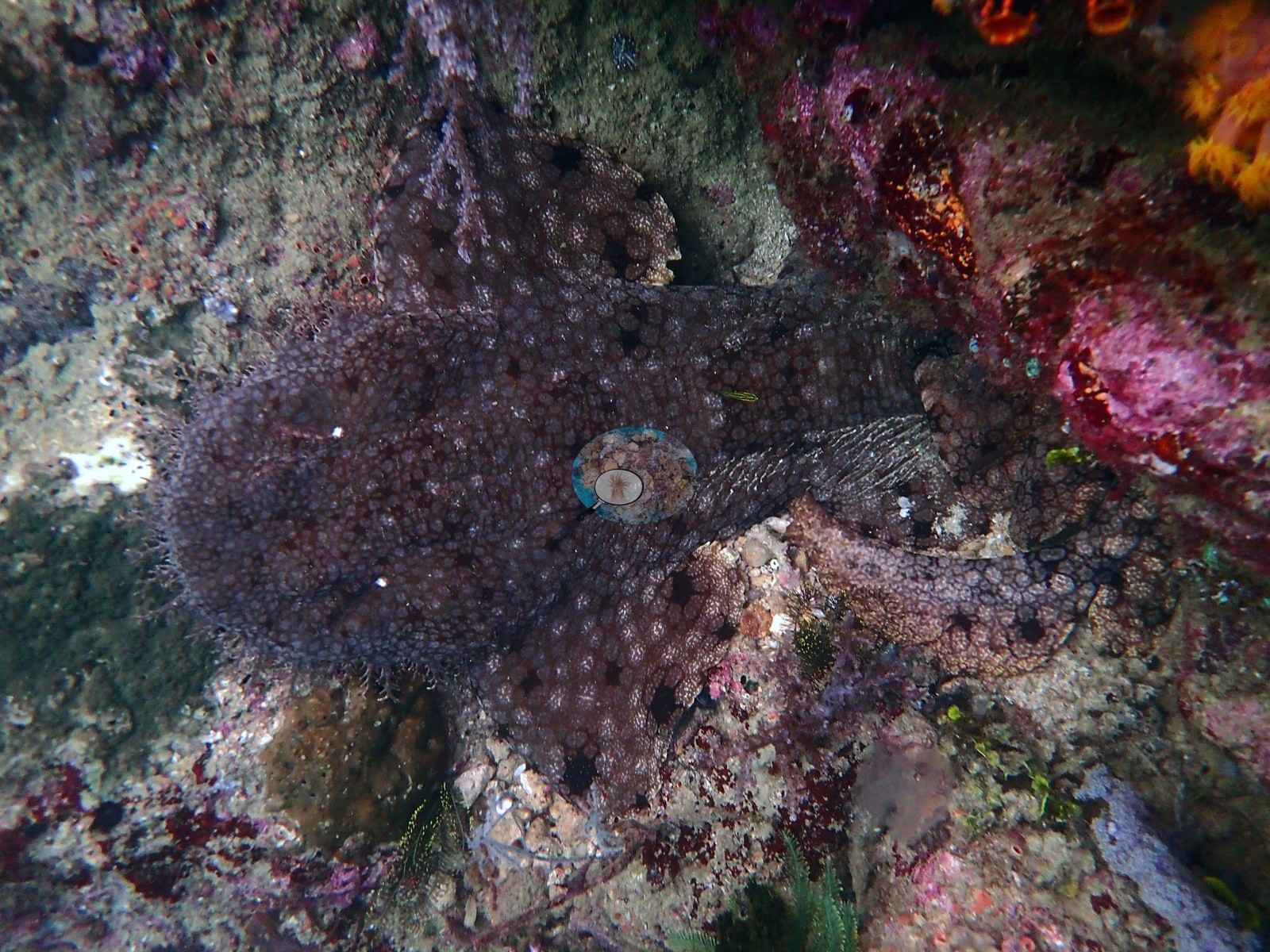
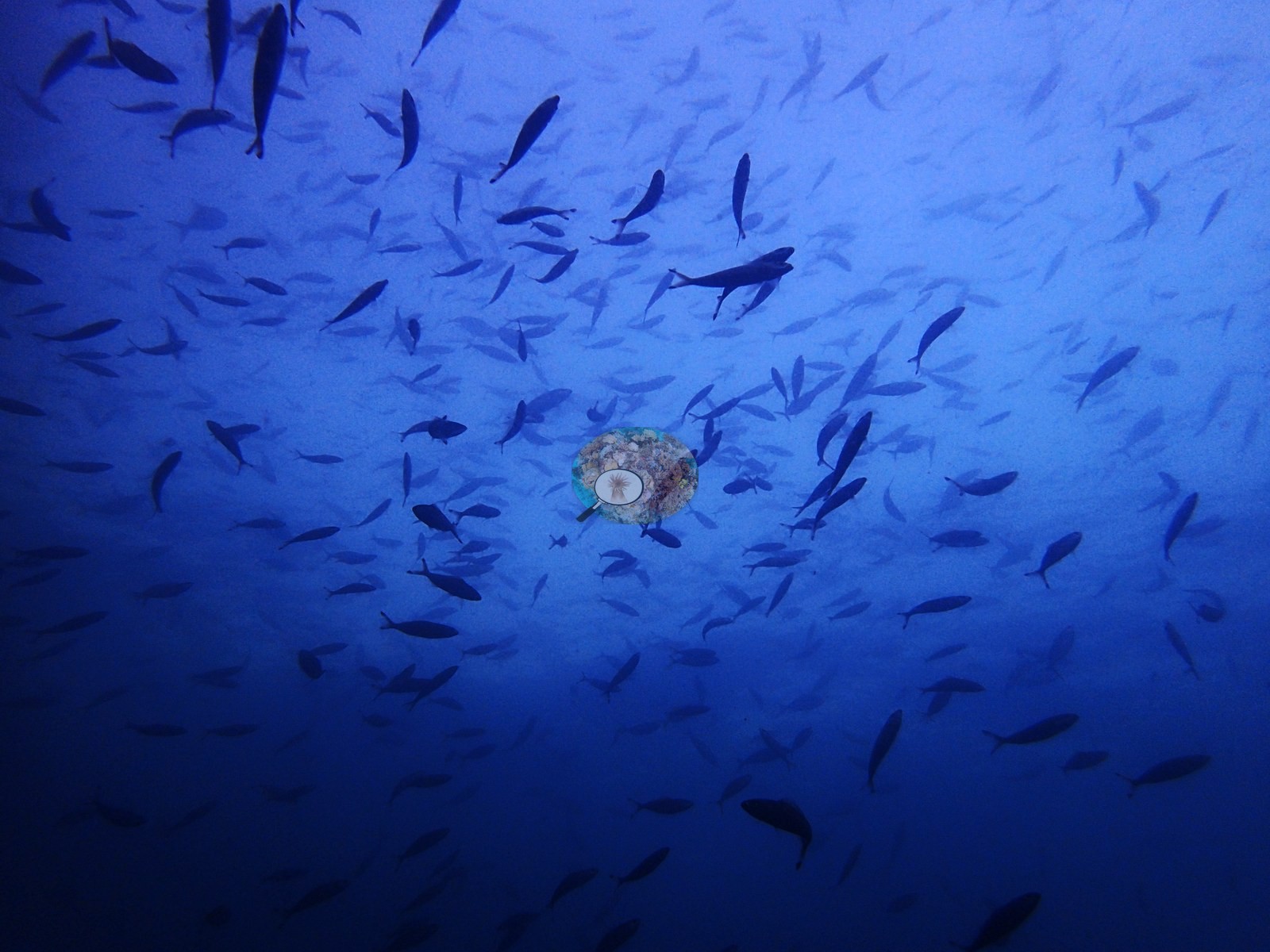
No bleaching was recorded on any dive. The condition signals are local: long-dead, coralline-crusted coral below 20 m at Larry Dive Heaven, an algae-encrusted field at Bo Rainbow, and evidence of overfishing at Seruanus. Fish life was still notable. Little Komodo had staggering biomass at 5-7 m, an enormous bumphead parrotfish, and a wobbegong. Larry Dive Heaven had two octopus and the trip's first sea snake, and Last Frontier had bait balls and the trip's first turtle.
Highlights
- Soft-coral dominated at all five sites, from the white soft-coral forest at 15-20 m at Little Komodo to 100% soft-coral patches at Bo Rainbow
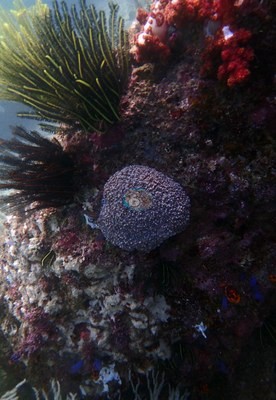 photo: Triton Bay - Little Komodo
 - Hard coral concentrated in the shallows: a 3-4 m Acropora table and high Acropora diversity at 5-8 m at Last Frontier
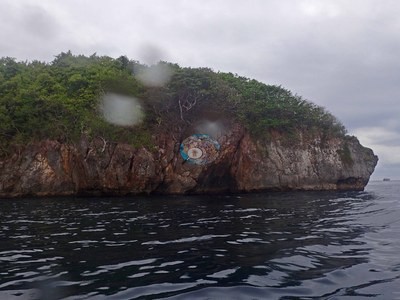 photo: Triton Bay - Last Frontier
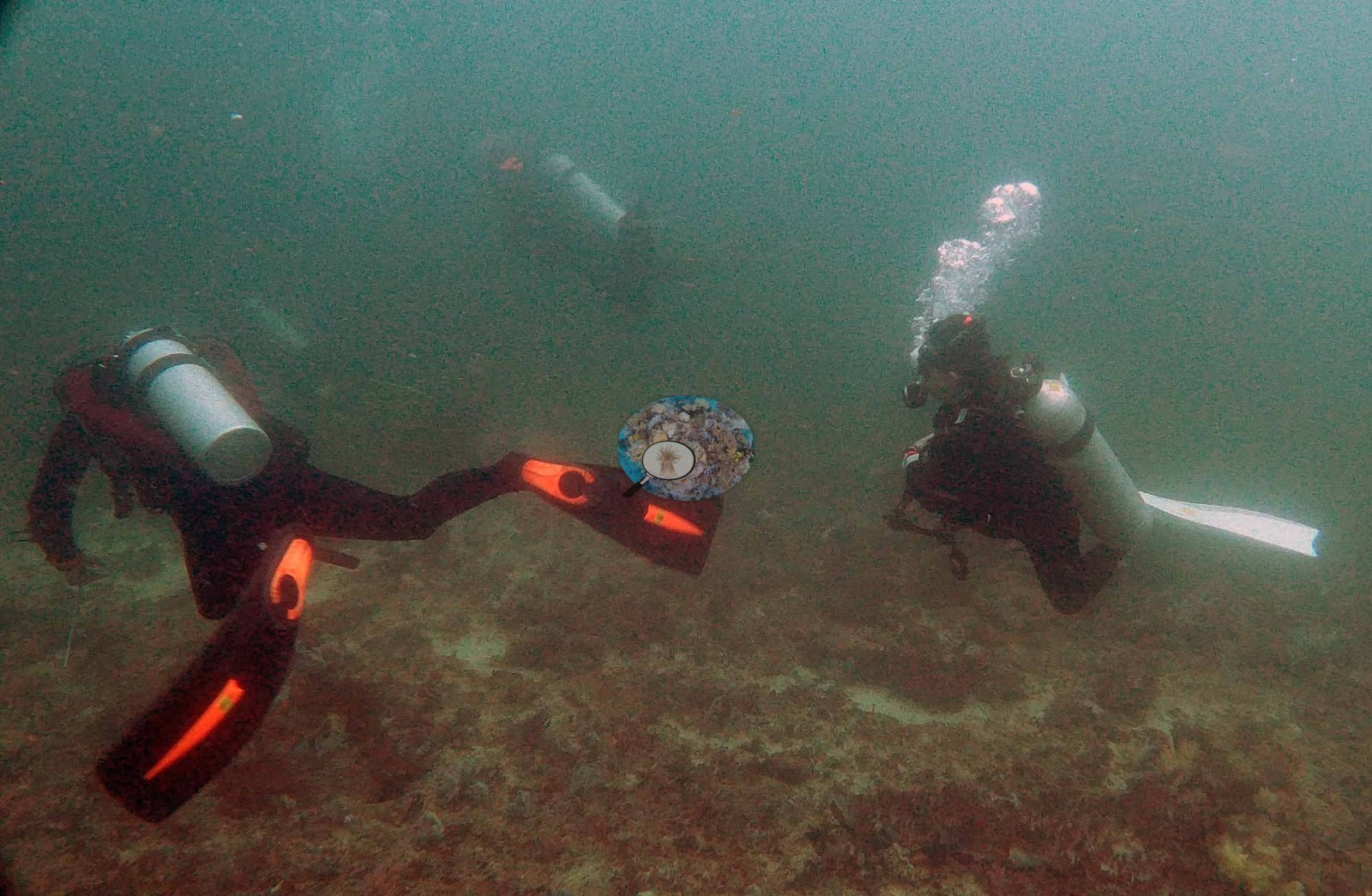
 - Turbid, high-flow, nutrient-rich water with 2-10 m visibility, cold-water intrusion to 24 C at Seruanus, and multiple thermoclines
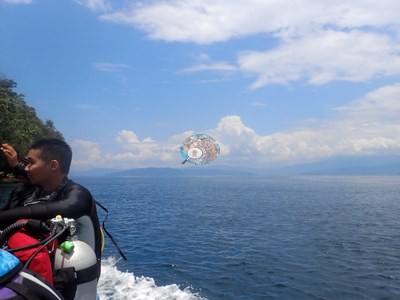 photo: Triton Bay - Seruanus
 - Little Komodo: staggering fish biomass at 5-7 m, an enormous bumphead parrotfish, and Anderson's first wobbegong
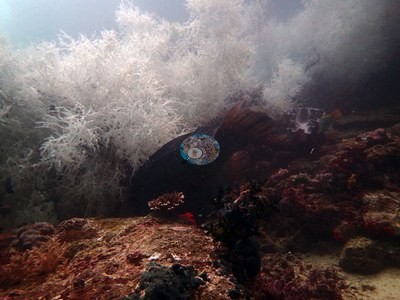 photo: Triton Bay - Little Komodo
 - Larry Dive Heaven: two octopus, ribbon eels, and the trip's first sea snake; Last Frontier: bait balls and the trip's first turtle
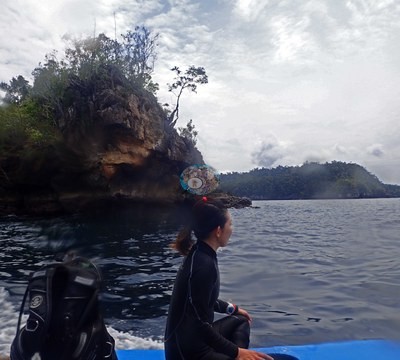 photo: Triton Bay - Larry Dive Heaven
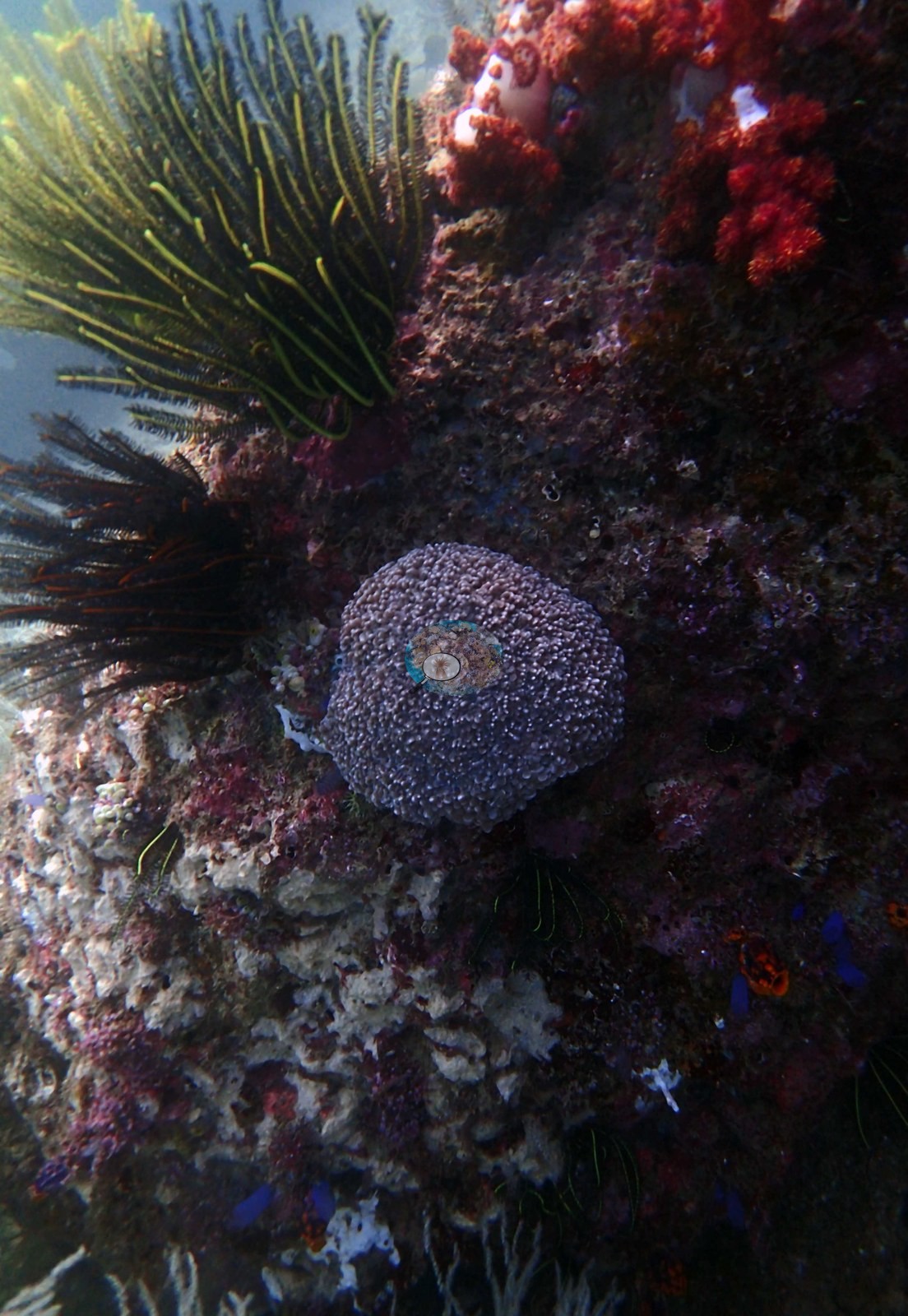
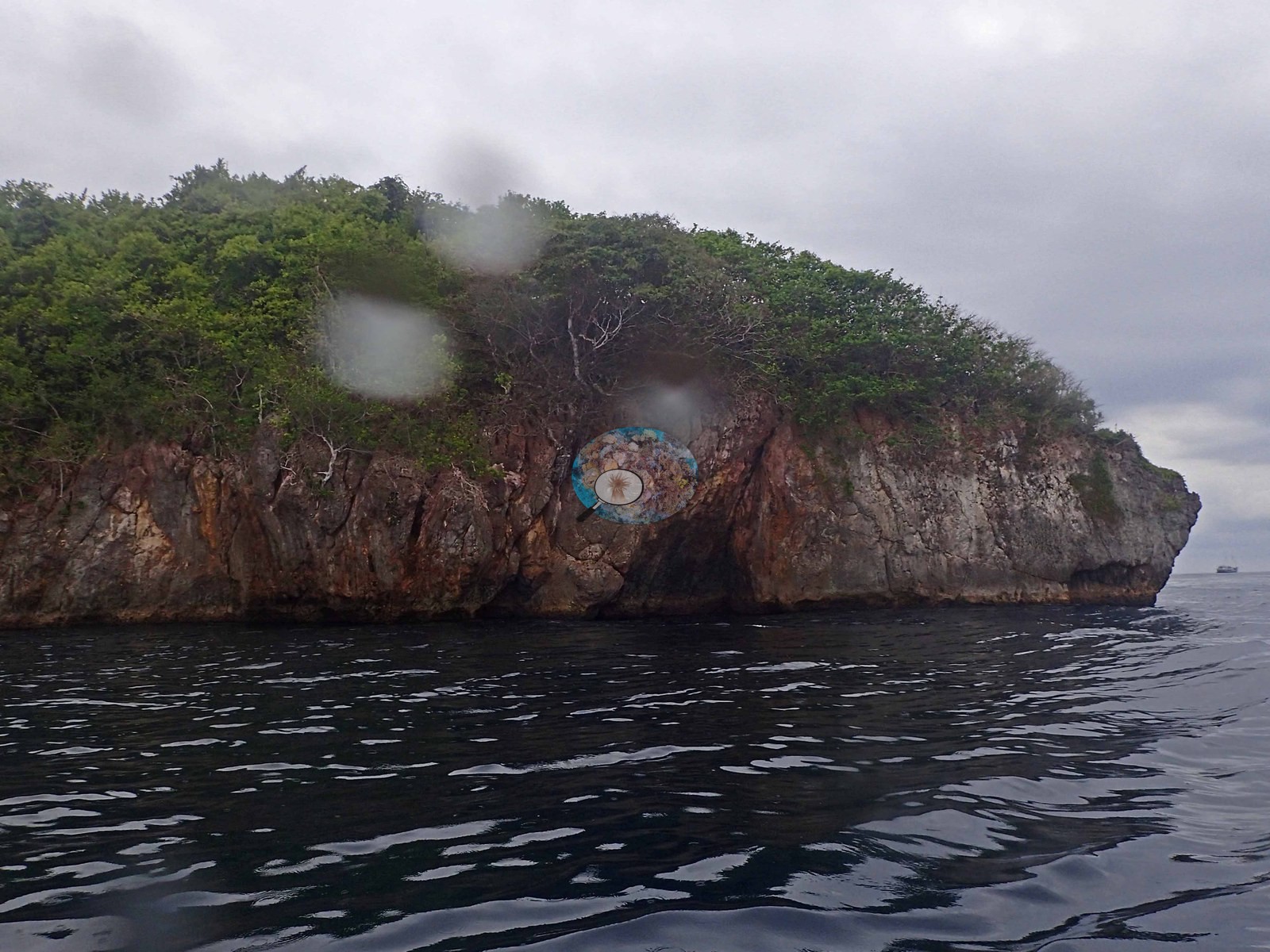
Ini adalah terjemahan mesin dari ringkasan berbahasa Inggris; teks berbahasa Inggris adalah versi yang otoritatif. AI translation of this summary; the English is authoritative.
Regional setting
Spalding et al. (2001) tidak menyebut Teluk Triton (Triton Bay), dan mereka menyebut garis pantai Irian Jaya, tempat teluk itu berada, sangat minim uraiannya. Sebagian besar pantai tersebut berupa dataran rendah dan menerima limpasan sungai yang besar, terutama di selatan. Di sepanjang pantai tenggara, terumbu digantikan oleh hutan bakau yang oleh para penulis digolongkan sebagai salah satu yang terbesar di dunia, dengan hutan Teluk Bintuni (Bintuni Bay) dan pantai tengah yang luasnya mungkin menyaingi Sundarbans, sementara lebih jauh ke barat, tempat daratan meninggi, terumbu tepi dilaporkan tersebar luas. Di selatan Irian Jaya terbentang Laut Arafura (Arafura Sea), paparan luas yang sebagian besar kedalamannya kurang dari 100 m dan airnya yang keruh berbeda dengan kondisi oseanik yang jernih di bagian lain Indonesia timur, dan pada Muson Tenggara angin bertiup ke arah pantai selatan pulau tersebut. Secara nasional, para penulis memperkirakan luas terumbu karang di Indonesia sekitar 51,020 km², sekitar 18% dari total global, dengan 443 spesies karang tercatat dan 581-602 spesies diperkirakan untuk kawasan biogeografisnya.
Survei Reef Check pada 2002-2003 menempatkan Segitiga Terumbu Karang (Coral Triangle), kawasan yang meliputi Indonesia, Filipina, dan Papua Nugini, di antara tiga kawasan di dunia dengan terumbu yang paling sedikit rusak (Wilkinson 2006). Tinjauan yang sama menyoroti Indonesia sebagai negara tempat penebangan habis hutan tropis untuk kayu dan kelapa sawit jelas menambah sedimen yang mencapai terumbu. Souter et al. (2021) mencantumkan pendangkalan dan eutrofikasi akibat perubahan tata guna lahan, penangkapan ikan berlebih, dan meluasnya budidaya perikanan pesisir di antara tekanan utama di seluruh Laut Asia Timur (East Asian Seas), dan memperkirakan bahwa kawasan tersebut kehilangan hampir 11% karang kerasnya, secara relatif, antara 2005-2009 dan 2015-2019, sebagian besar setelah peristiwa pemutihan tahun 2010.
Overview
Lima titik (pin) Teluk Triton diselami pada 14-15 Oktober 2018. Seruanus dan Little Komodo terletak di sisi yang berseberangan dari Little Komodo Island, dan menurut Anderson keduanya sangat berbeda satu sama lain. Last Frontier mengelilingi pulau kecil karst yang curam dengan dasar yang tergerus dan sebuah lorong renang (swim-through). Bo Rainbow adalah teras luas yang landai, dan Larry Dive Heaven adalah lereng dengan zonasi kedalaman yang mendatar pada 5 m. Airnya keruh dan subur, dengan jarak pandang 2-10 m, intrusi air dingin hingga 24 C di Seruanus, serta termoklin di Last Frontier dan Larry Dive Heaven. Titik-titik tersebut mengaitkan melimpahnya karang lunak dengan arus yang kuat dan air yang kaya nutrien.
Karang lunak mendominasi setiap lokasi. Seruanus memiliki karang lunak berbentuk pohon yang memadati permukaan lerengnya, dan Little Komodo memiliki hutan karang lunak putih yang nyaris tak terputus pada kedalaman 15-20 m (putih secara alami, bukan memutih). Last Frontier ditumbuhi hamparan Sinularia dan Sarcophyton yang melimpah, dan Bo Rainbow memiliki petak-petak dengan tutupan karang lunak 100%. Tubastraea umum dijumpai di Little Komodo, Last Frontier, dan Larry Dive Heaven. Karang keras terkonsentrasi di beberapa meter teratas. Acropora tumbuh pada kedalaman 5-7 m di sekitar Little Komodo Island, dan Last Frontier memiliki kumpulan Acropora yang beragam pada 5-8 m dengan satu meja selebar 3-4 m. Larry Dive Heaven memiliki karang otak pada 8-9 m, dengan bongkahan Porites dan Pocillopora verrucosa di atas kedalaman 6 m. Tutupan berbasis foto berkisar dari 16.4% di Last Frontier hingga 42.1% di Bo Rainbow di empat lokasi, dan sebagian besar angka Bo Rainbow berasal dari karang lunak.
Tidak ada pemutihan yang tercatat pada penyelaman mana pun. Tanda-tanda kondisi bersifat setempat: karang yang sudah lama mati dan berkerak alga koralin di bawah 20 m di Larry Dive Heaven, hamparan yang diselimuti alga di Bo Rainbow, dan bukti penangkapan ikan berlebih di Seruanus. Kehidupan ikan tetap menonjol. Little Komodo memiliki biomassa yang mencengangkan pada 5-7 m, seekor ikan kakatua kepala benjol (bumphead parrotfish) yang sangat besar, dan seekor hiu wobbegong. Larry Dive Heaven memiliki dua gurita dan ular laut pertama dalam perjalanan ini, dan Last Frontier memiliki gerombolan ikan umpan (bait ball) dan penyu pertama dalam perjalanan ini.
Highlights
- Didominasi karang lunak di kelima lokasi, dari hutan karang lunak putih pada 15-20 m di Little Komodo hingga petak-petak karang lunak 100% di Bo Rainbow
 photo: Triton Bay - Little Komodo
 - Karang keras terkonsentrasi di perairan dangkal: meja Acropora selebar 3-4 m dan keanekaragaman Acropora yang tinggi pada 5-8 m di Last Frontier
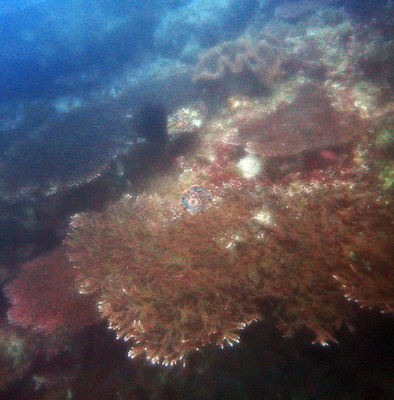 photo: Triton Bay - Last Frontier
 - Air yang keruh, berarus kuat, dan kaya nutrien dengan jarak pandang 2-10 m, intrusi air dingin hingga 24 C di Seruanus, dan beberapa termoklin
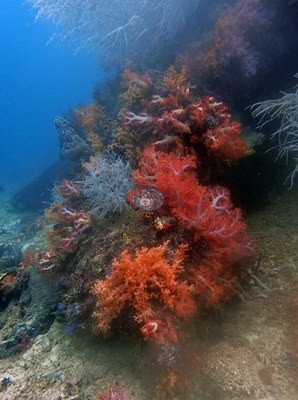 photo: Triton Bay - Seruanus
 - Little Komodo: biomassa ikan yang mencengangkan pada 5-7 m, seekor ikan kakatua kepala benjol yang sangat besar, dan wobbegong pertama yang dilihat Anderson
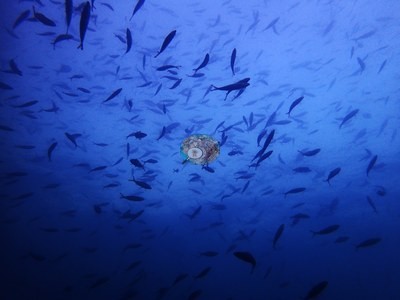 photo: Triton Bay - Little Komodo
 - Larry Dive Heaven: dua gurita, belut pita, dan ular laut pertama dalam perjalanan ini; Last Frontier: gerombolan ikan umpan dan penyu pertama dalam perjalanan ini
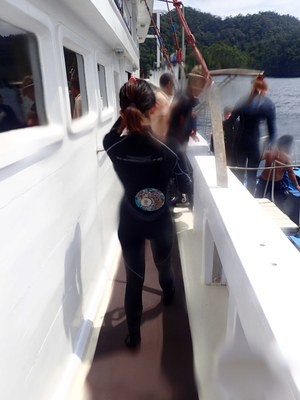 photo: Triton Bay - Larry Dive Heaven
Notable observations
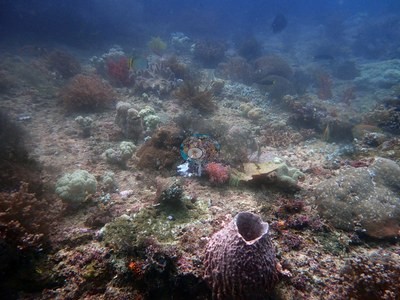
- Triton Bay - Seruanus: Evidence of overfishing, though occasionally some large snapper and angelfish
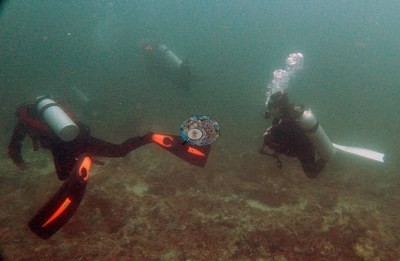
- Triton Bay - Bo Rainbow: Possible minor bleaching/paling, low confidence: at least two small colonies read chalk-white against pigmented neighbors; each could equally be a naturally pale colony or an old mortality scar. The dive record itself notes no bleaching recorded
- Triton Bay - Bo Rainbow: A large algae-encrusted field with almost no living coral, soft or hard, the one clearly degraded patch of the site
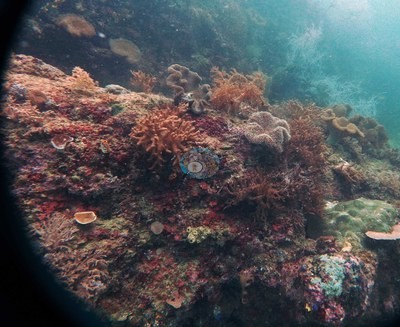
- Triton Bay - Larry Dive Heaven: Large areas of long-dead coral covered by coralline algae at 20 m and a relatively barren stretch at 15 m; old mortality since consolidated, not fresh damage
Sites in this region
- Triton Bay - Bo Rainbow — 13% coral cover
- Triton Bay - Larry Dive Heaven
- Triton Bay - Last Frontier — 7.8% coral cover
- Triton Bay - Little Komodo — 12% coral cover
- Triton Bay - Seruanus — 9.1% coral cover
All images from Coral Reef Diagnostics. Data are from Coral Reef Diagnostics and Reef Check Foundation.
 © Coral Reef Diagnostics.
References
- Souter D, et al. (eds) (2021) Status of Coral Reefs of the World: 2020. International Coral Reef Initiative / Global Coral Reef Monitoring Network. [PDF]
- Spalding MD, et al. (2001) World Atlas of Coral Reefs. University of California Press, Berkeley. [PDF]
- Wilkinson C (2006) Status of coral reefs of the world: summary of threats and remedial action. In: Côté IM, Reynolds JD (eds) Coral Reef Conservation. Cambridge University Press, Cambridge. [PDF]