
Triton Bay - Bo Rainbow
Part of the regional summary: Indonesia - Triton Bay
More info
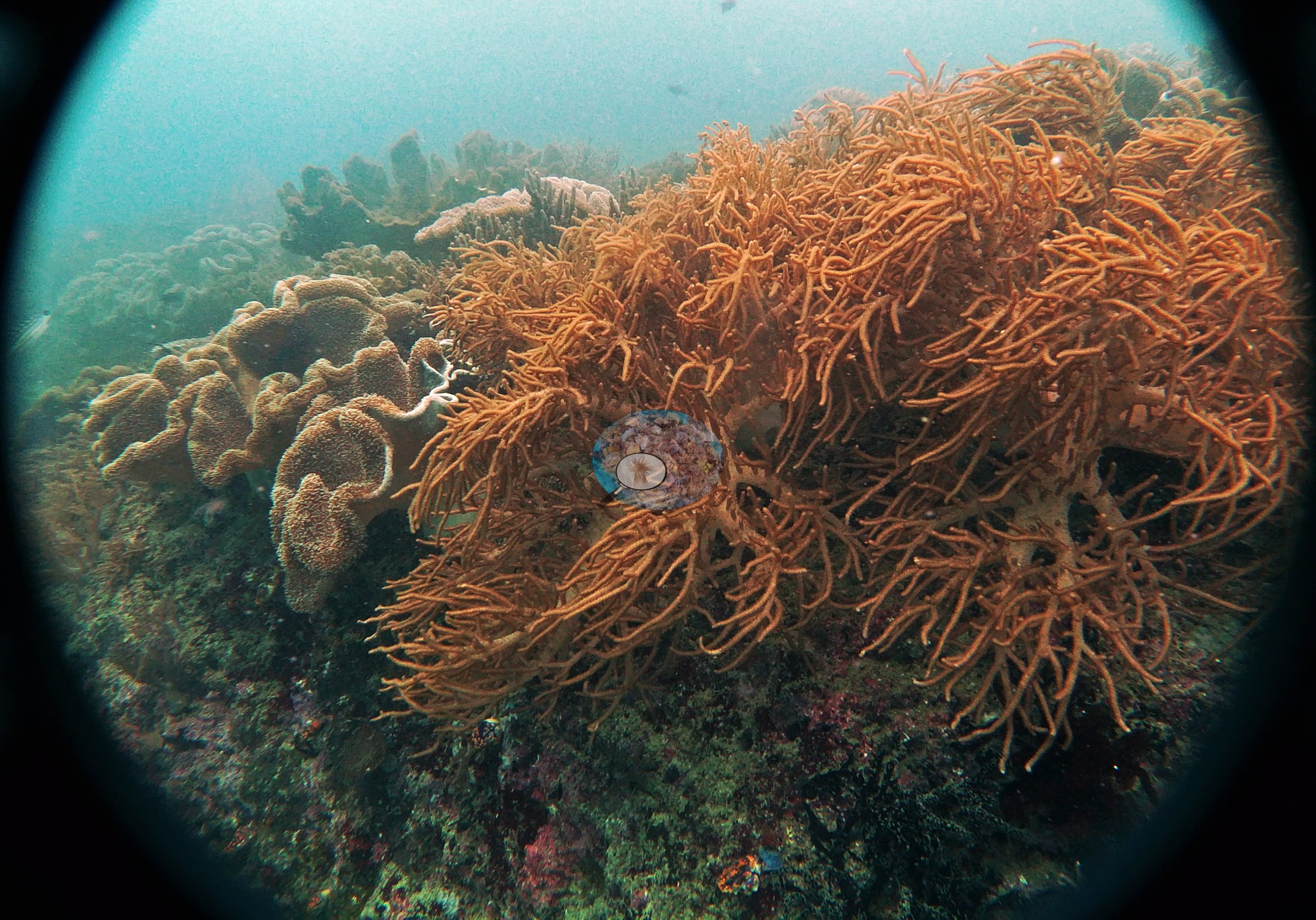
West Papua (NOAA CRW virtual station)Bo Rainbow is a broad, gently sloping terrace where octocorals rather than stony corals dominate much of the bottom - vast monospecific soft-coral meadows and leather-coral fields giving way to dense staghorn Acropora and brain corals where they thin out. No bleaching, disease, or crown-of-thorns starfish (COTS); a blind Claude computer-vision point count puts coral cover around 13%.
Bo Rainbow adalah teras luas yang melandai, tempat oktokoral alih-alih karang batu mendominasi sebagian besar dasarnya — padang karang lunak monospesifik yang luas dan hamparan karang kulit yang memberi jalan kepada rumpun Acropora bercabang dan karang otak di tempat yang menipis. Tanpa pemutihan, penyakit, maupun bintang laut mahkota duri; penghitungan titik buta visi komputer Claude memperkirakan tutupan karang sekitar 13%.
Terjemahan ringkasan ini oleh AI; versi bahasa Inggris yang berlaku.
Four other CRD dive sites within 5 km shown in orange — click a marker to open its page.
5 of these 18 photographs are shown beside the text that discusses them under "Site description" below.
 3
3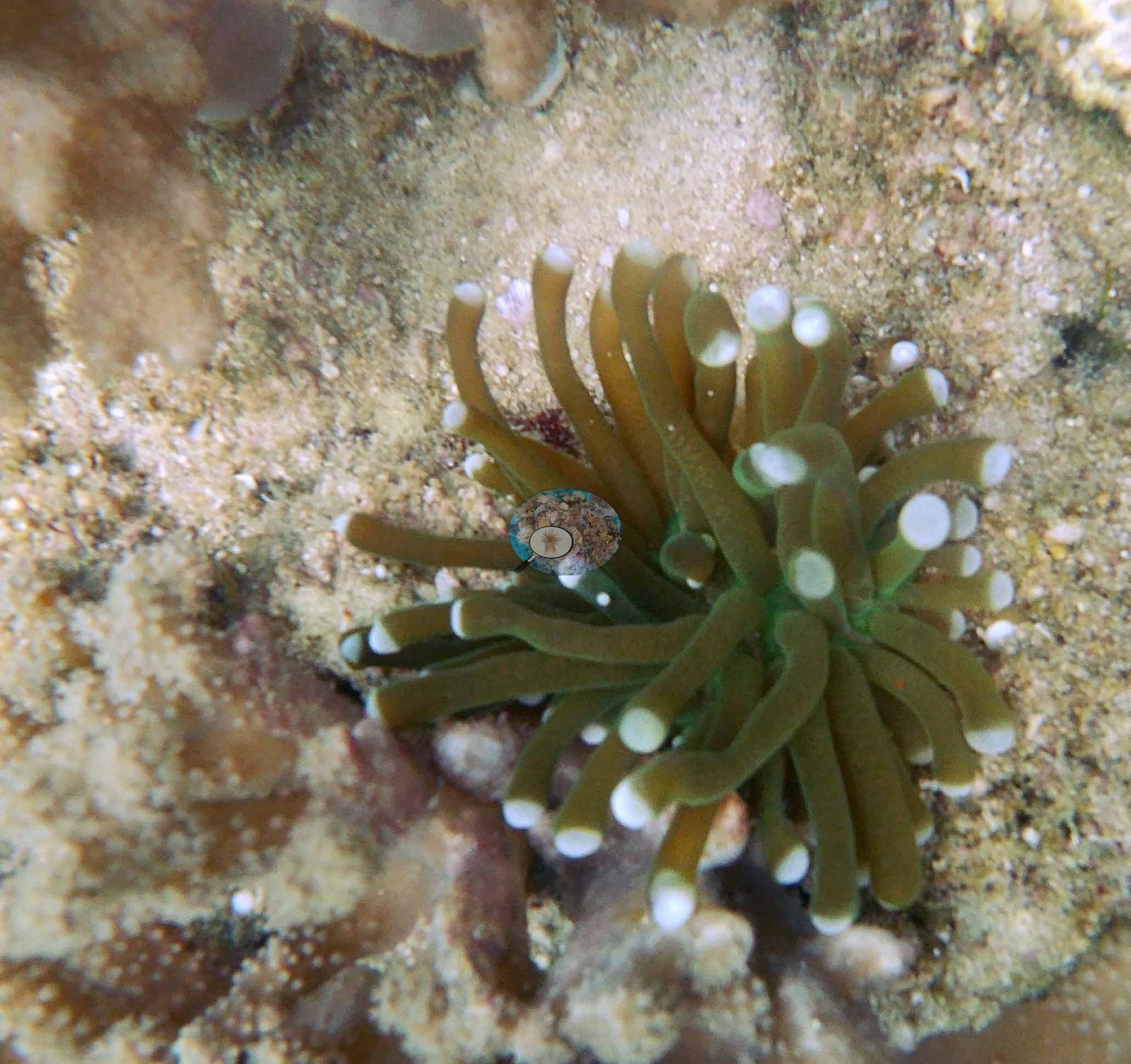 9
9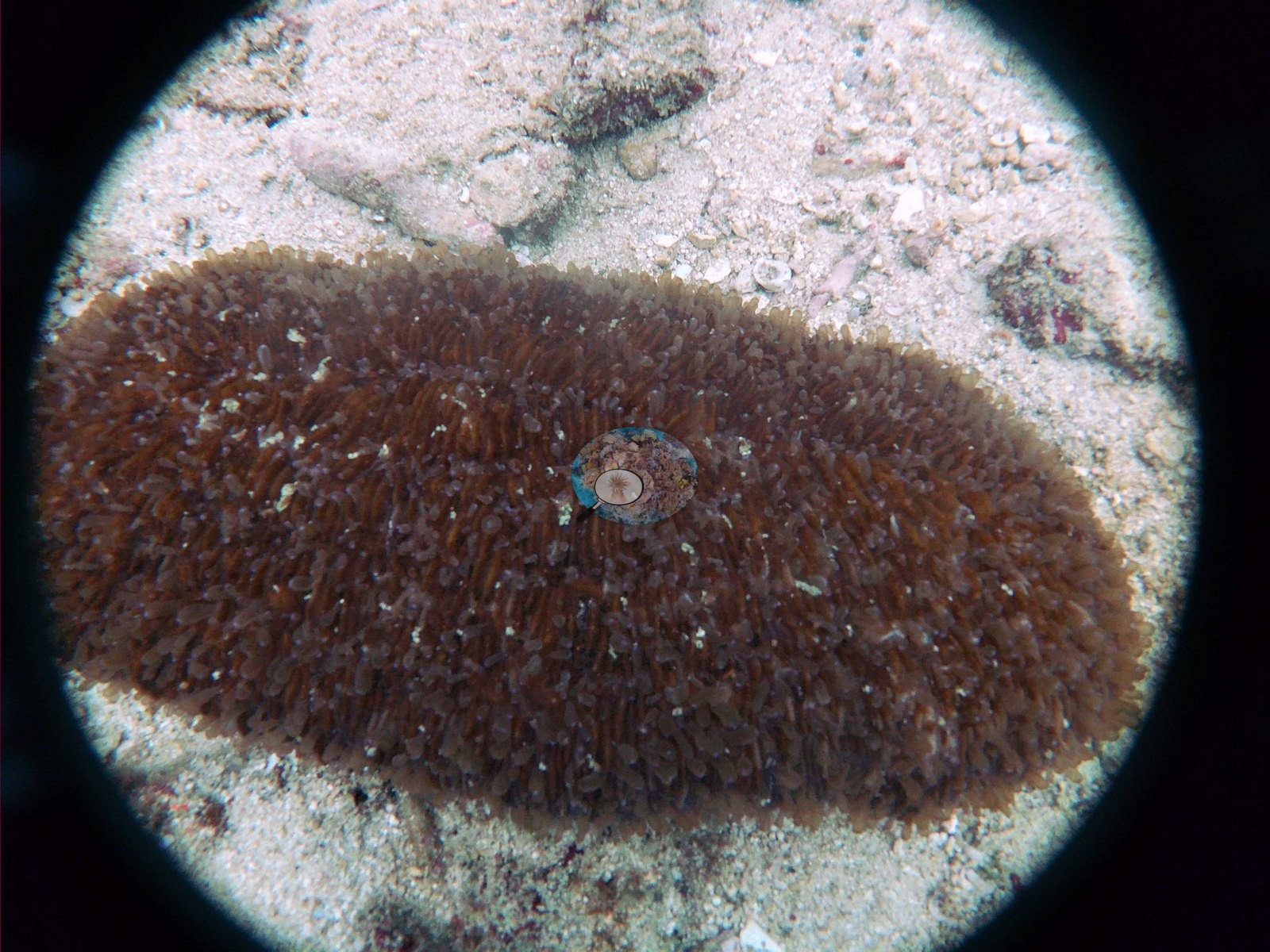 10
10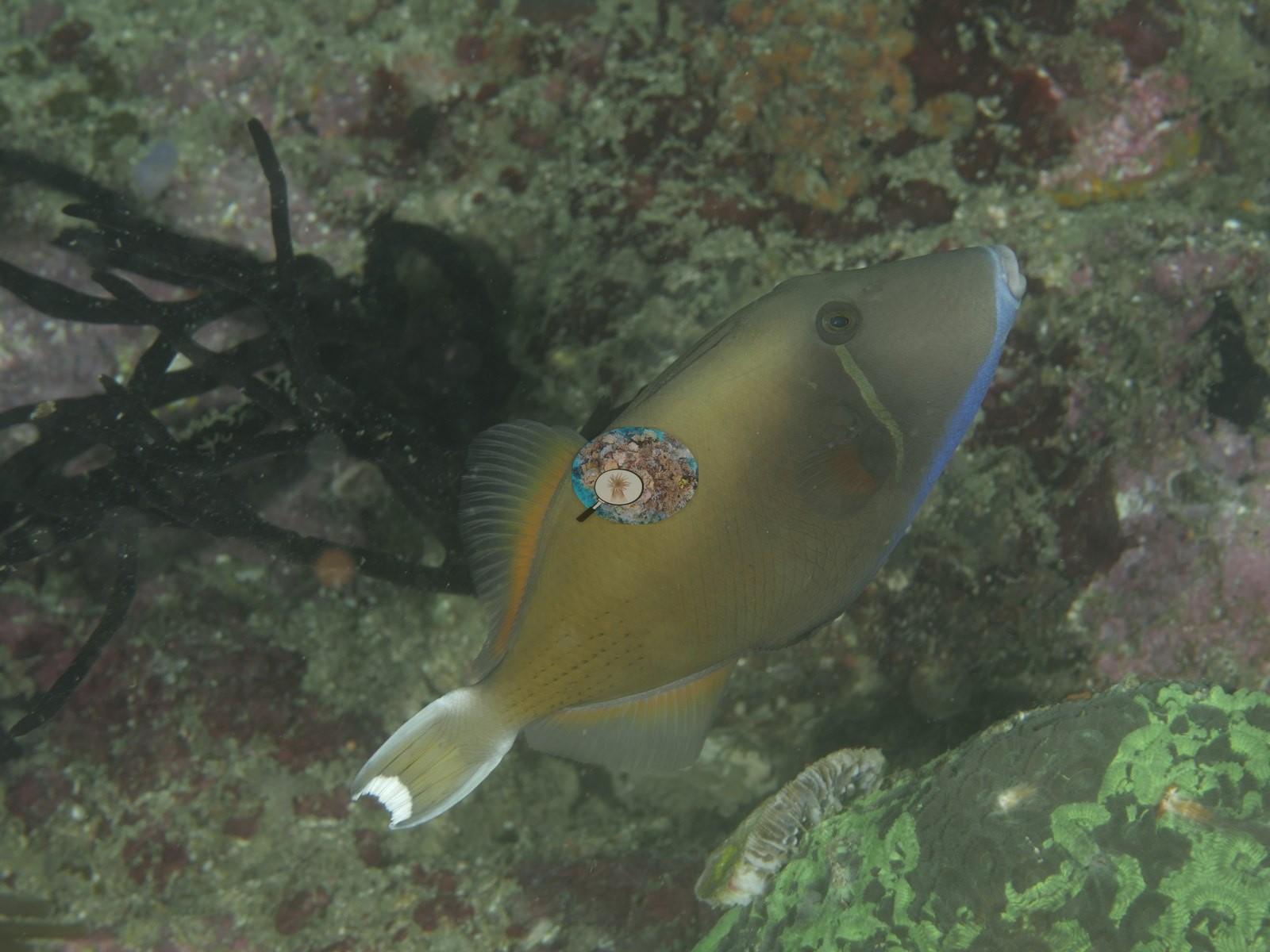 Photo: Pierre11
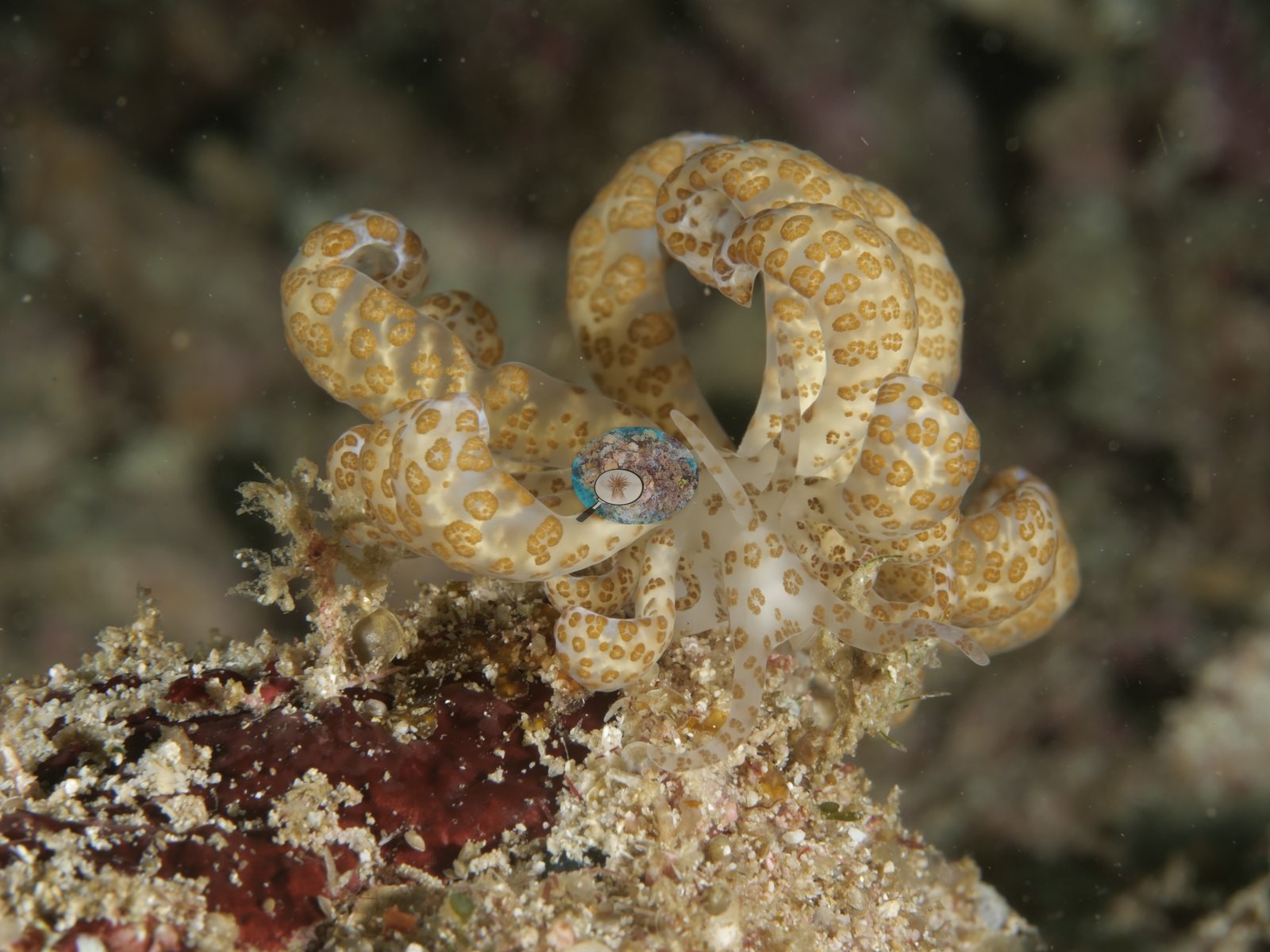 Photo: Pierre12
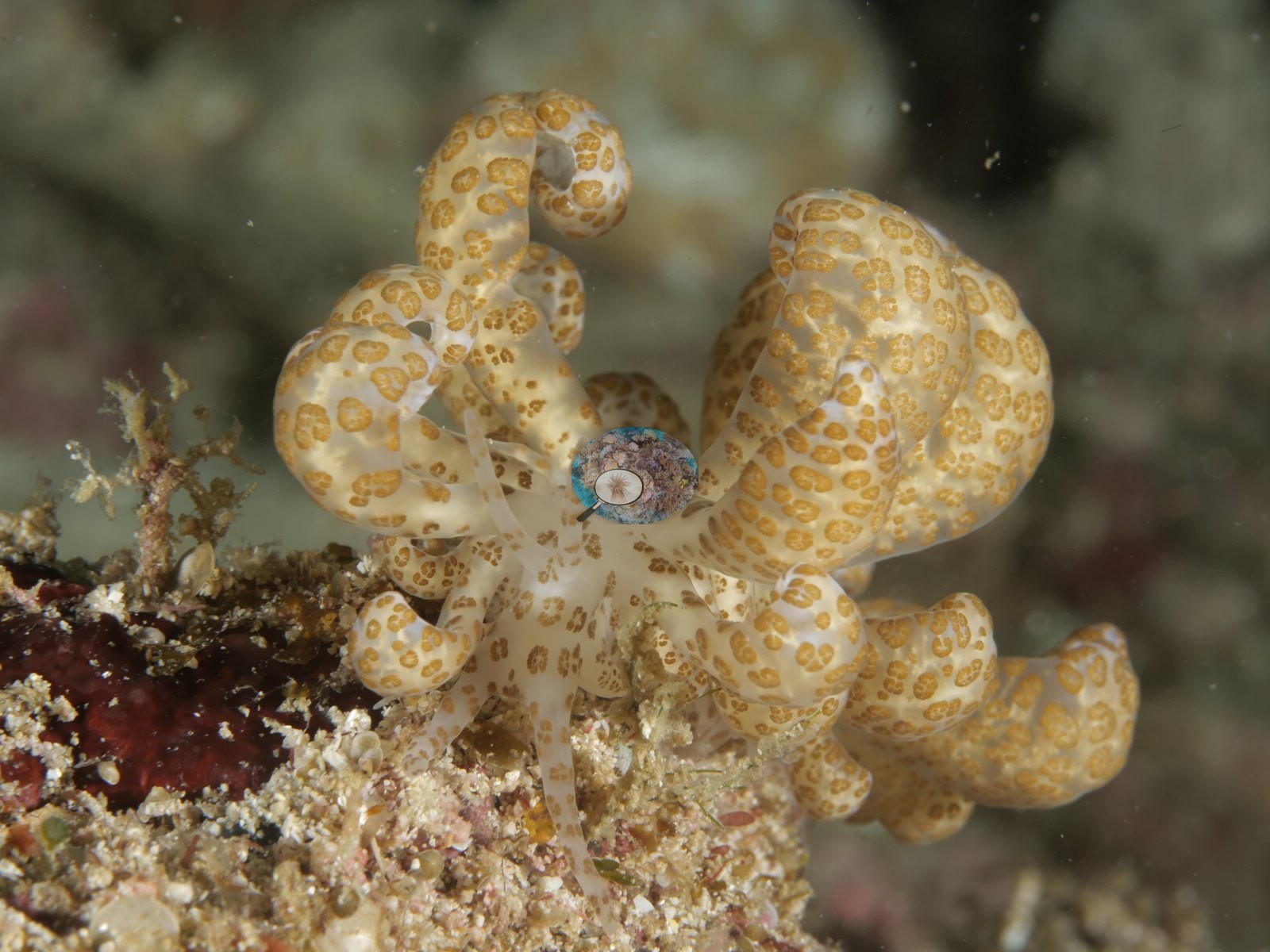 Photo: Pierre13
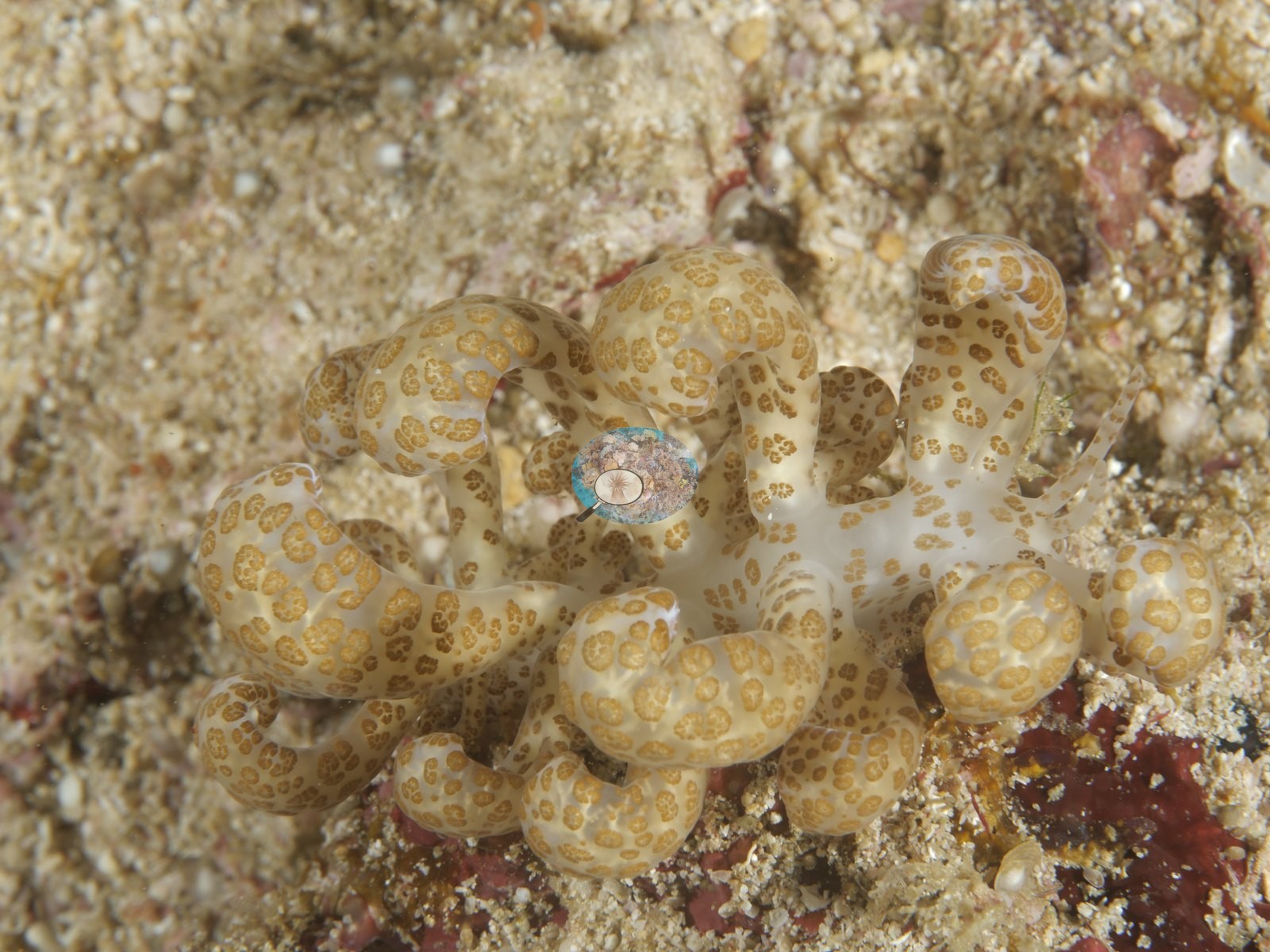 Photo: Pierre14
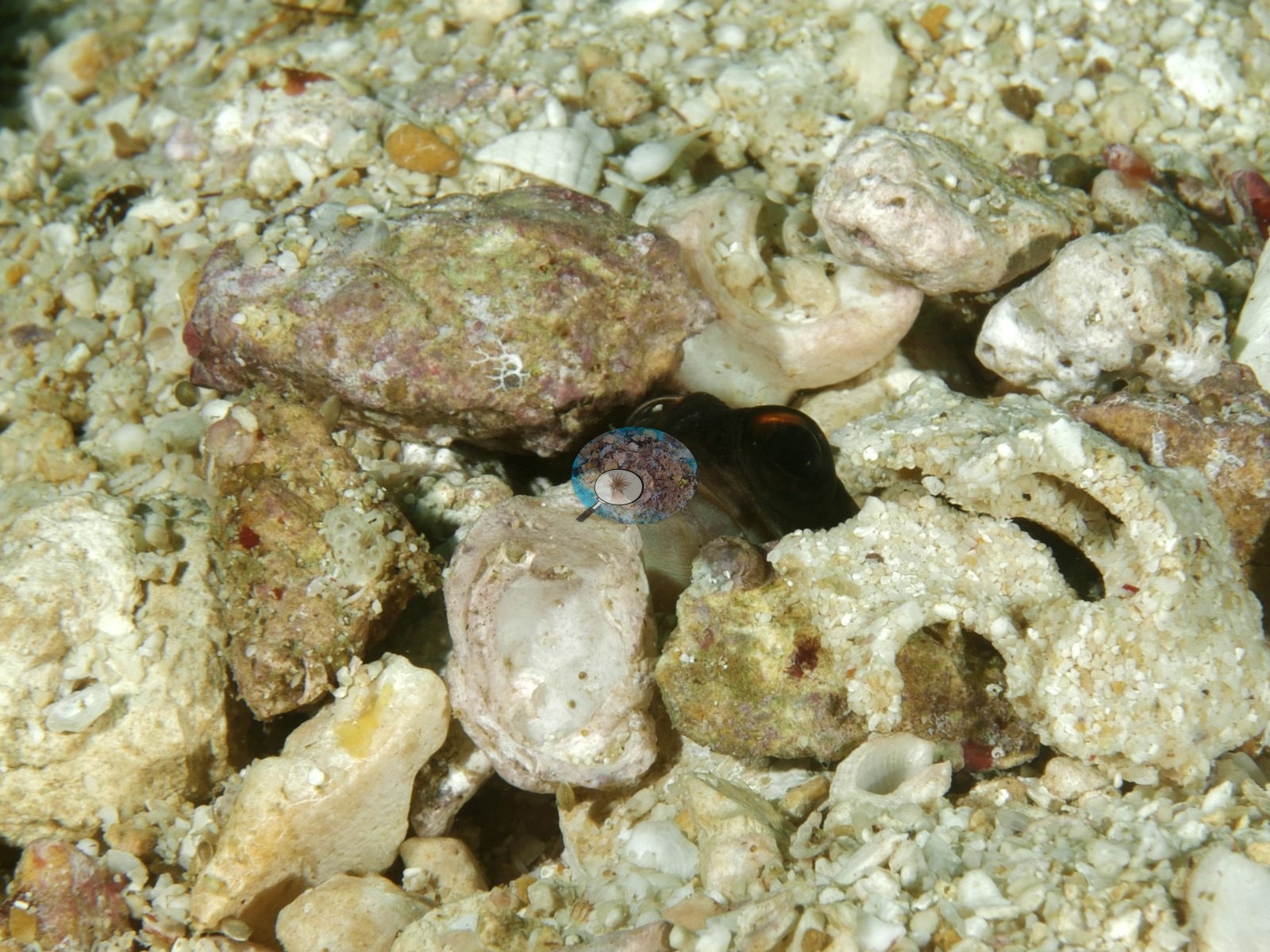 Photo: Pierre15
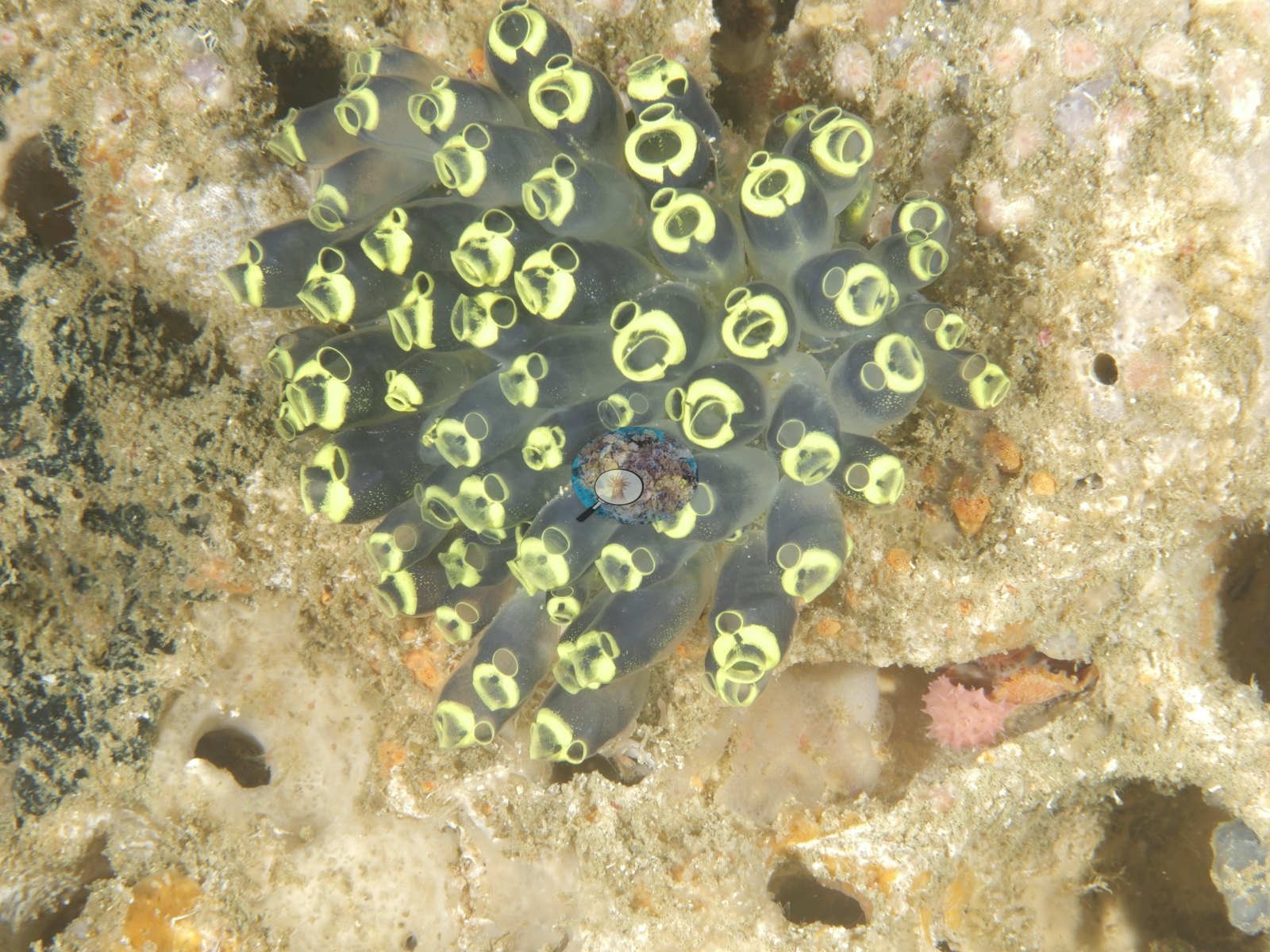 Photo: Pierre16
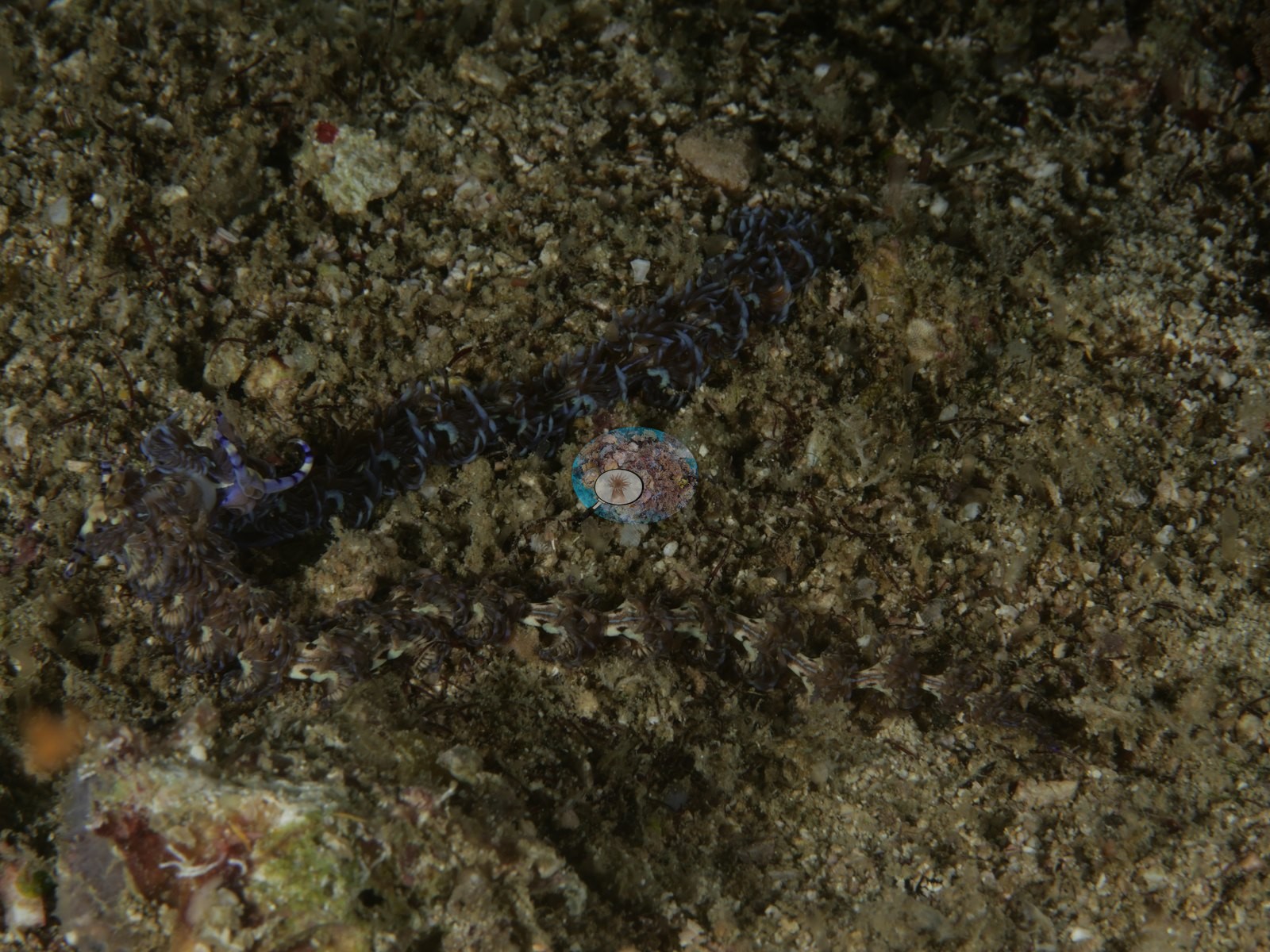 Photo: Pierre17
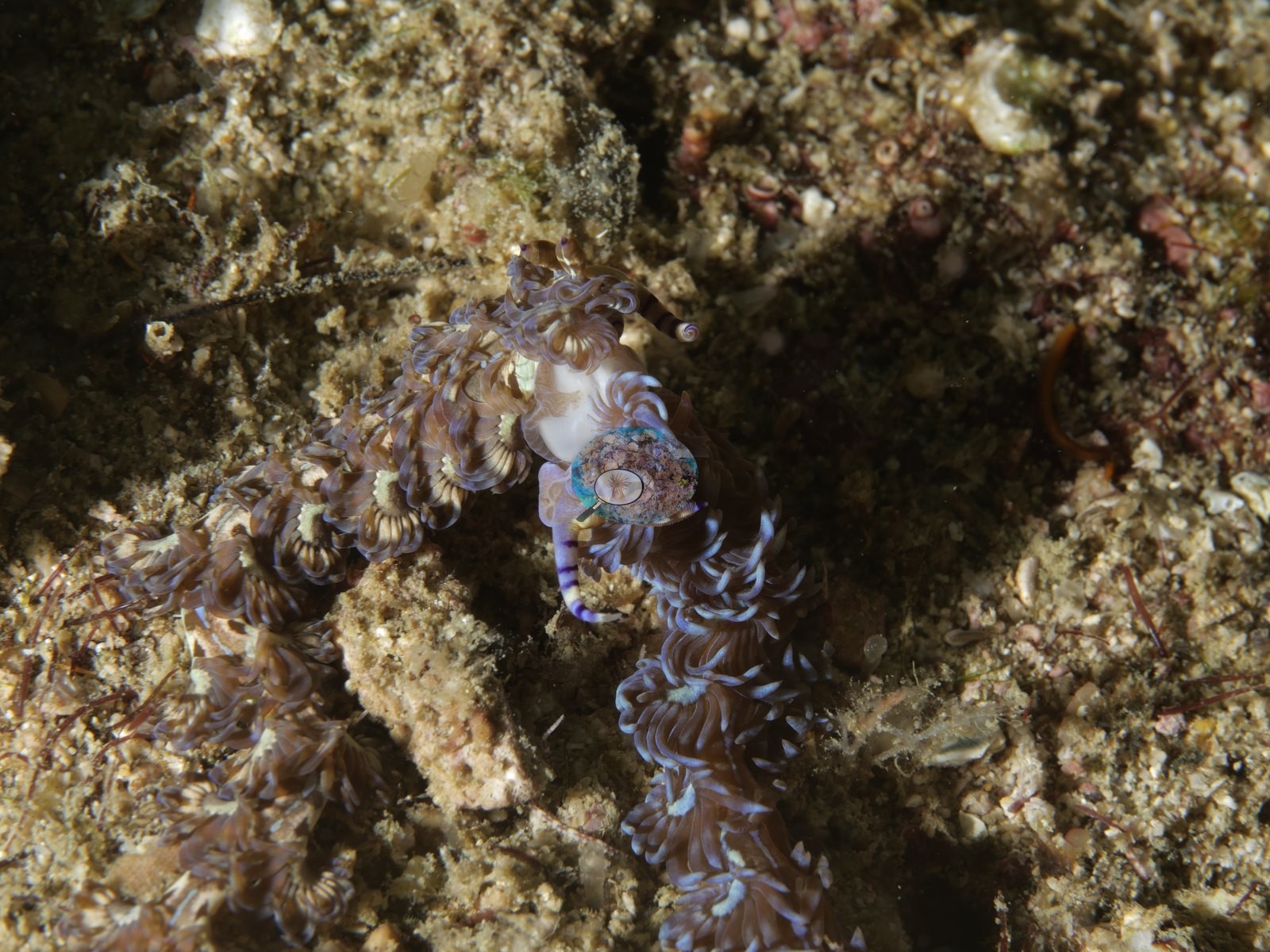 Photo: Pierre18
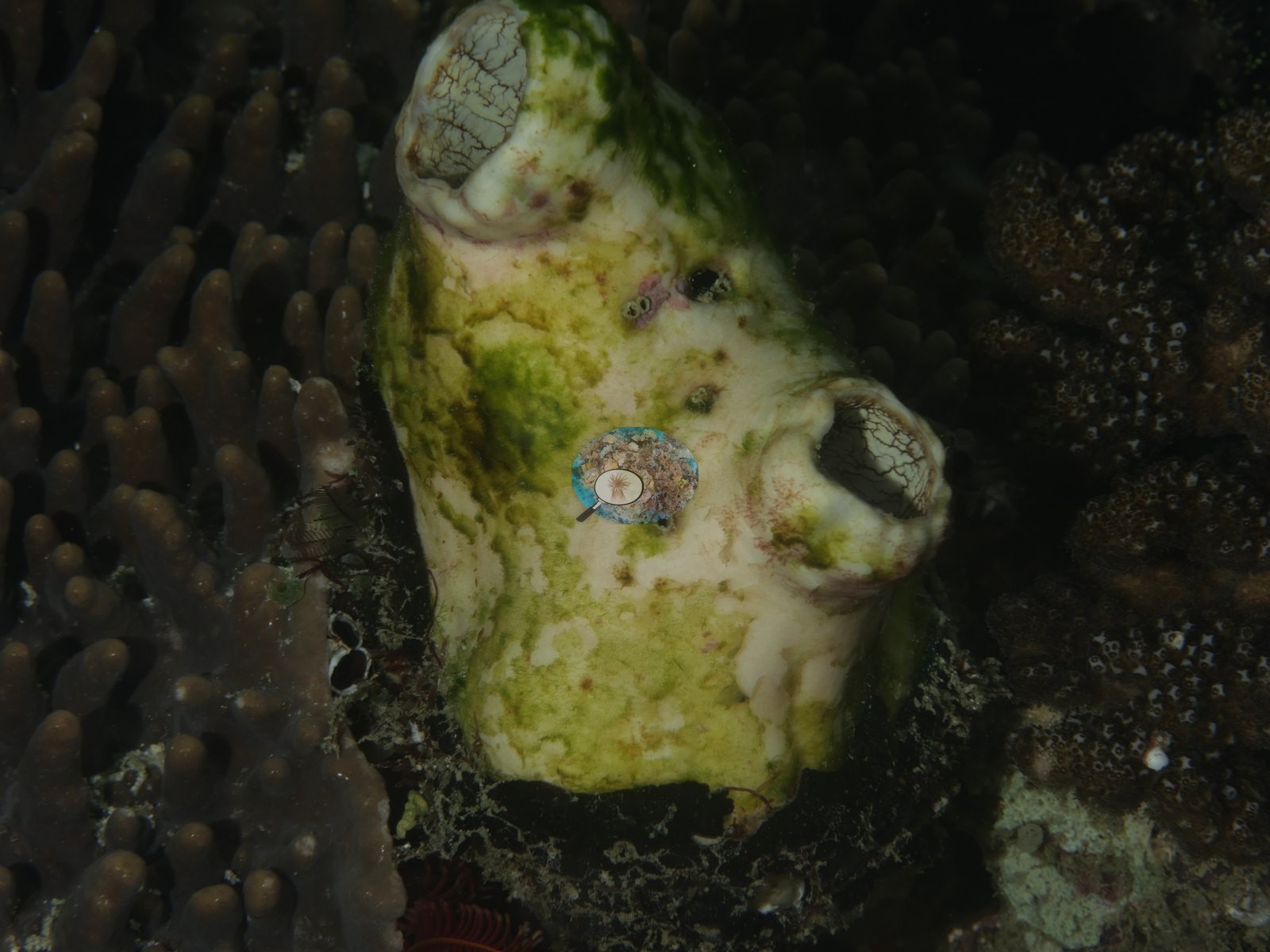 Photo: Pierre19
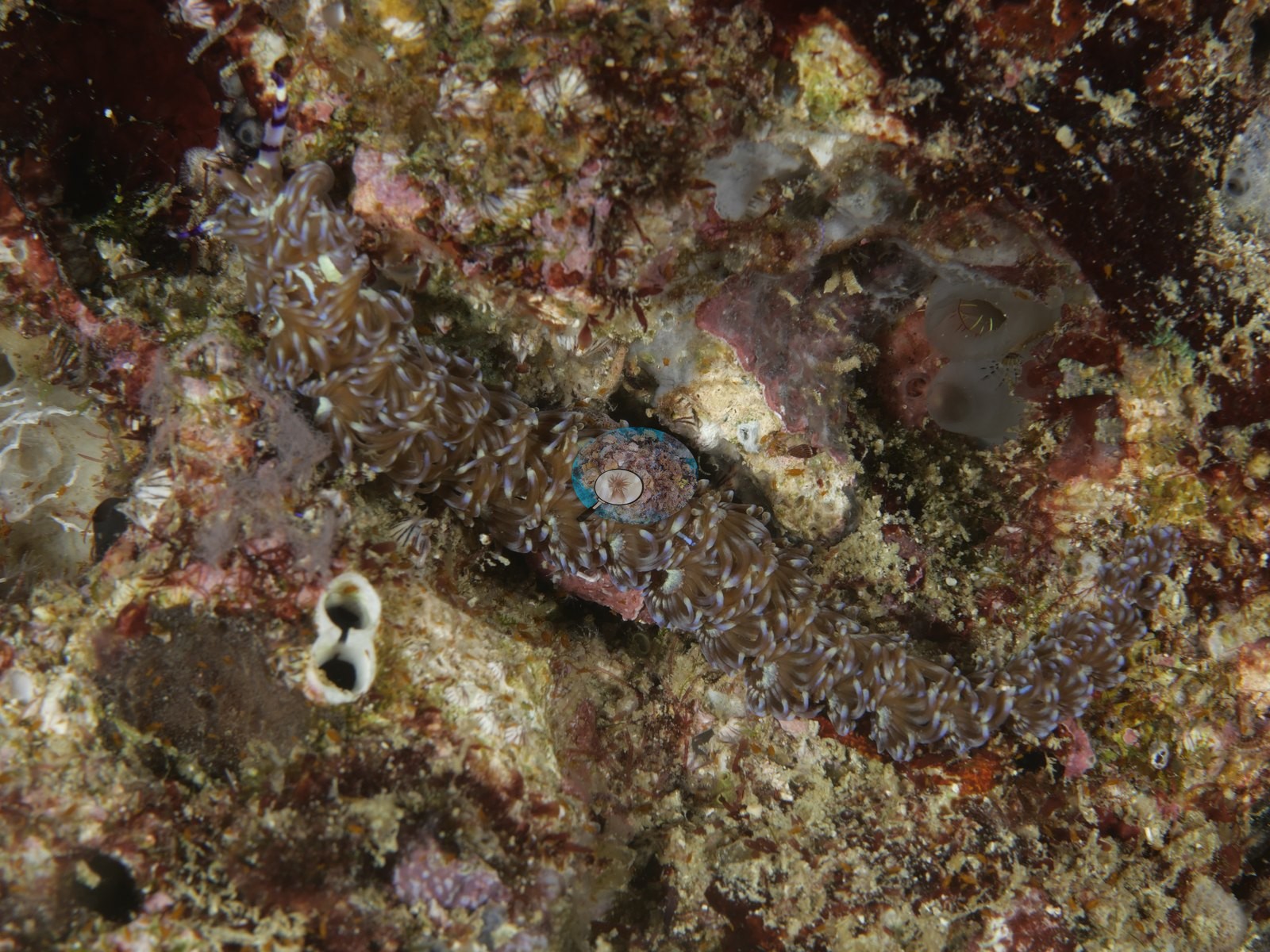 Photo: Pierre
Site description
Setting
This is a broad, gently sloping reef terrace rather than a wall or a pinnacle — the frames repeatedly look out across a wide, low-relief plain of coral and soft coral, with a shallow crest visible up-slope in some frames and one steeper coral-covered flank falling into blue in others. Water is noticeably greener and more particle-laden than at the Dampier Strait sites in this group; visibility is moderate rather than excellent, the far field goes soft green-gray within a modest distance, and there is visible suspended material in several frames.
General benthic features
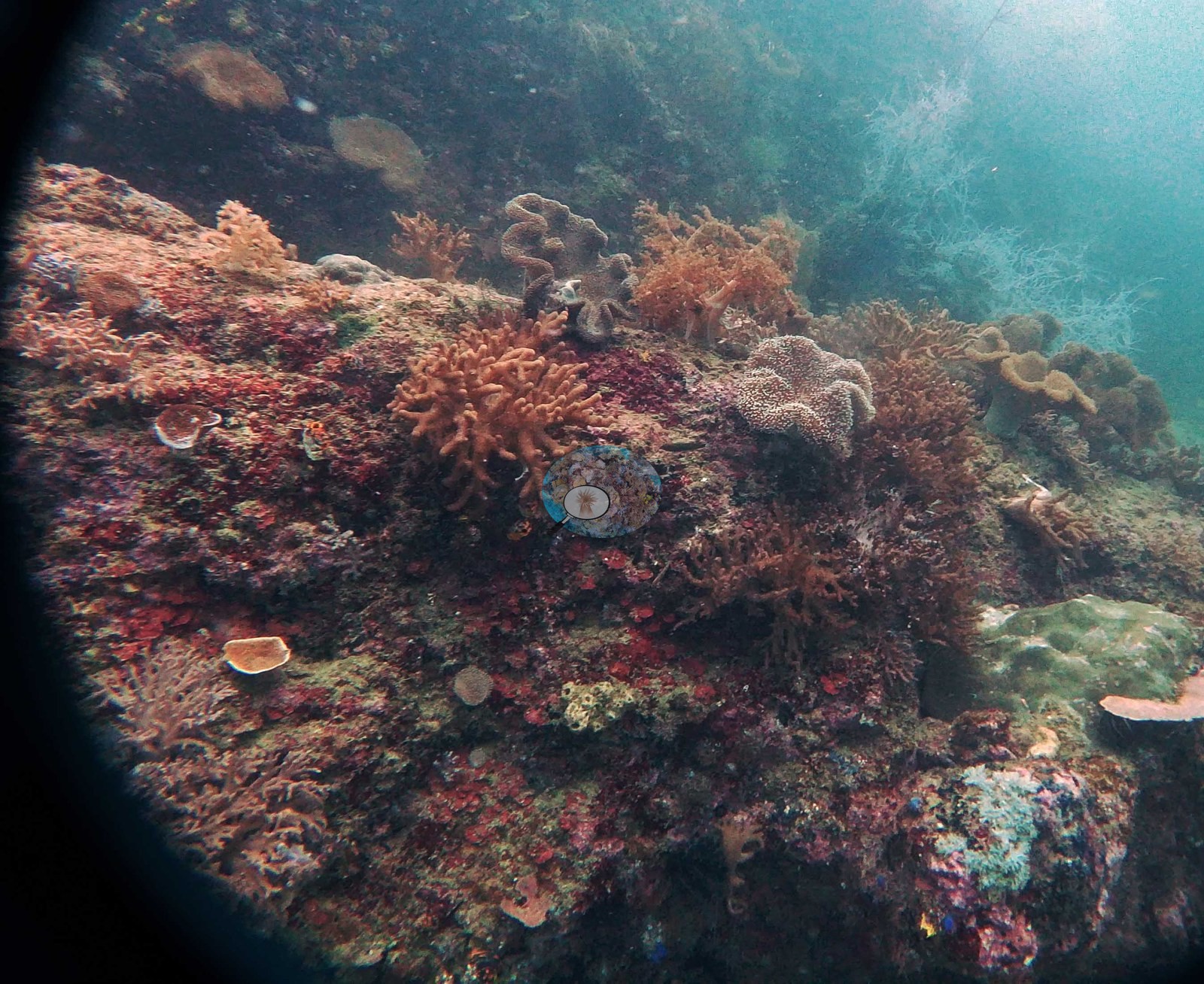
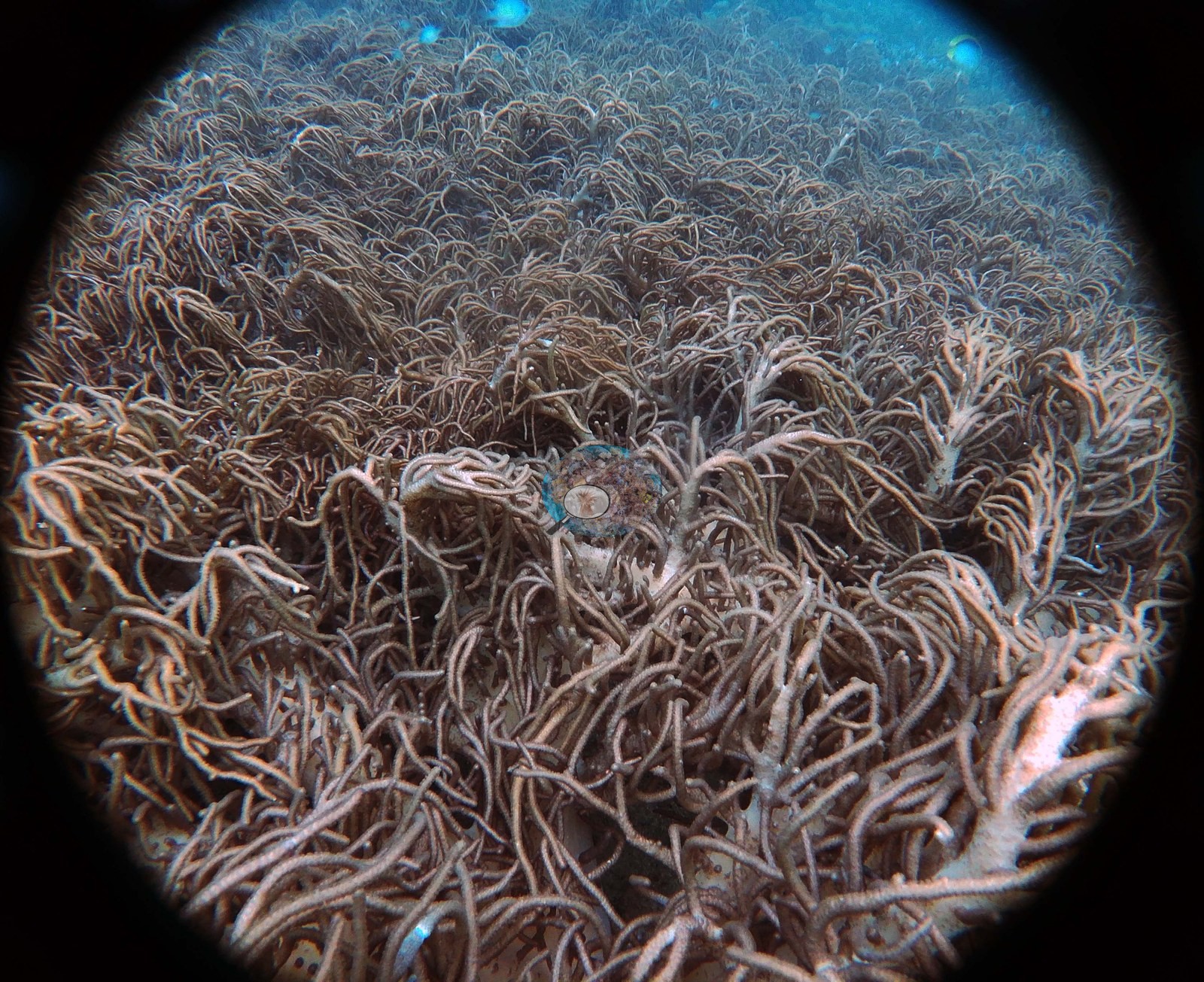
What makes this site distinctive is that OCTOCORALS, not stony corals, dominate large parts of the bottom (e.g., Image 2).
Multiple frames show near-monospecific meadows of a tan-to-rust branching soft coral (the fine, limp, repeatedly-forking Sinularia flexibilis / Litophyton growth form) carpeting the substrate from foreground to horizon, tens of meters across, with only occasional hard coral colonies emerging through them (e.g., Image 4, Image 5).
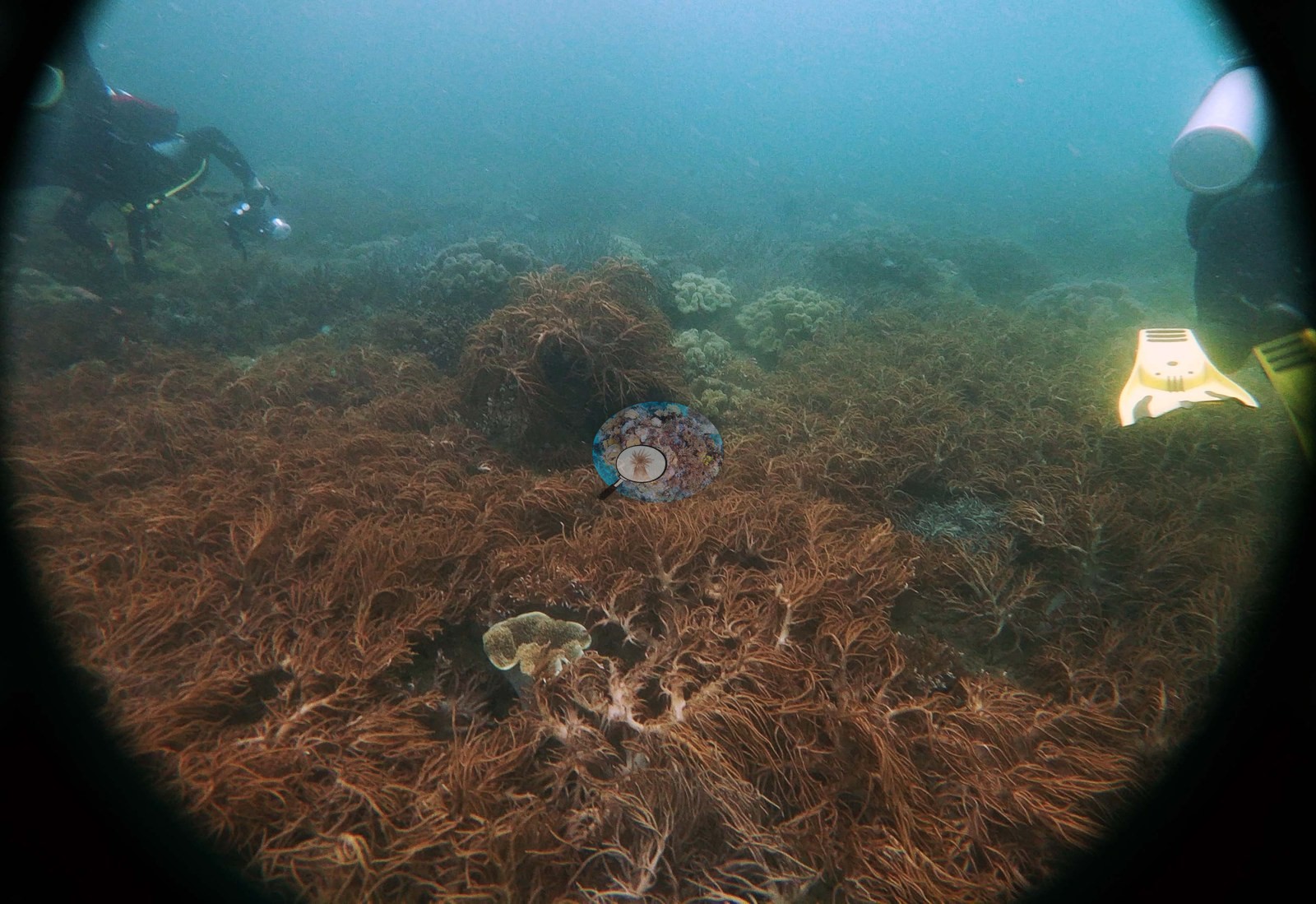
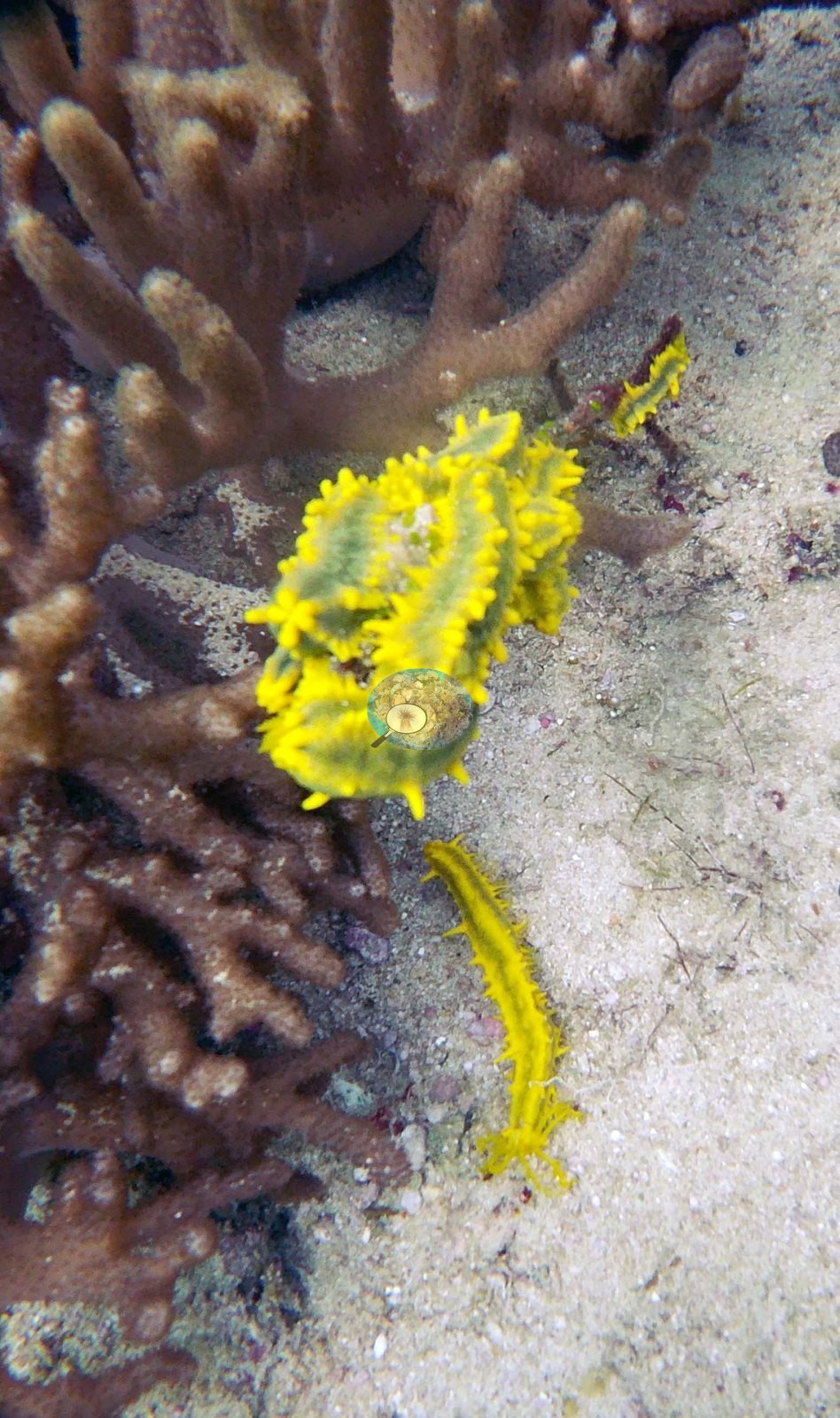
Elsewhere there are dense fields of cream and olive leathery soft corals in folded-cabbage, mushroom, and lobed forms consistent with Sarcophyton and Lobophytum — one frame is nothing but overlapping leather colonies — plus finger and cauliflower leathers consistent with Sinularia. On the steeper, shaded flank the character changes completely into a classic Indo-Pacific soft-coral wall: vivid red, crimson, pink, and salmon Dendronephthya-type tree corals with translucent inflated trunks, one large deep-purple/magenta Dendronephthya clump on open sand, orange and apricot colonies, all interspersed with black-coral bushes (Antipathes-type, pale gray-white feathery trees, several of them large) and fine wire/whip corals. Stony corals are still abundant where the octocorals thin out: dense staghorn and bottlebrush Acropora thickets in tan, mauve, and pale blue-gray, low tabulate, and corymbose plates, big brown digitate colonies, columnar and knobbly branching colonies, large brown foliose plates in overlapping laminae, a big gray-blue meandroid brain colony sitting on open sand with sharply worm-track valleys (Platygyra-type), several massive Porites-form domes, small bushy Pocillopora- and Seriatopora-type heads, yellow-green Turbinaria-like laminae, encrusting sheets, and a solitary polyp with long white-tipped tentacles on sand consistent with Heliofungia actiniformis or a Euphyllia. Anemones are a repeated feature — at least three separate large host anemones, including a gray-brown carpet anemone with tightly curled tentacles (Stichodactyla-type) and a green-tentacled anemone with orange-and-white anemonefish visible at its edge. Other benthos: extensive pink and mauve crustose coralline algae, a lot of it on open dead pavement between colonies; fine turf; dark red and brown fleshy macroalgal tufts; encrusting red, orange, and yellow sponges; scattered purple-and-yellow ascidians; a small pale-blue solitary ascidian; a striking white feather-duster/tube worm crown; abundant crinoids in yellow, cream, black, and banded forms; and a spectacular aggregation of bright-yellow spiky sea cucumbers (the Colochirus robustus look) clustered on sand at the base of a branching colony — the frame Anderson himself filed as "sea cucumber orgy" (e.g., Image 6).
Coral cover
Coral cover: 13% — a blind Claude computer-vision point count of 47 of Anderson's edited photographs (20 points per photo; water, fish, and obstructions excluded). Other computer-vision methods are listed in the method table.
Stressors
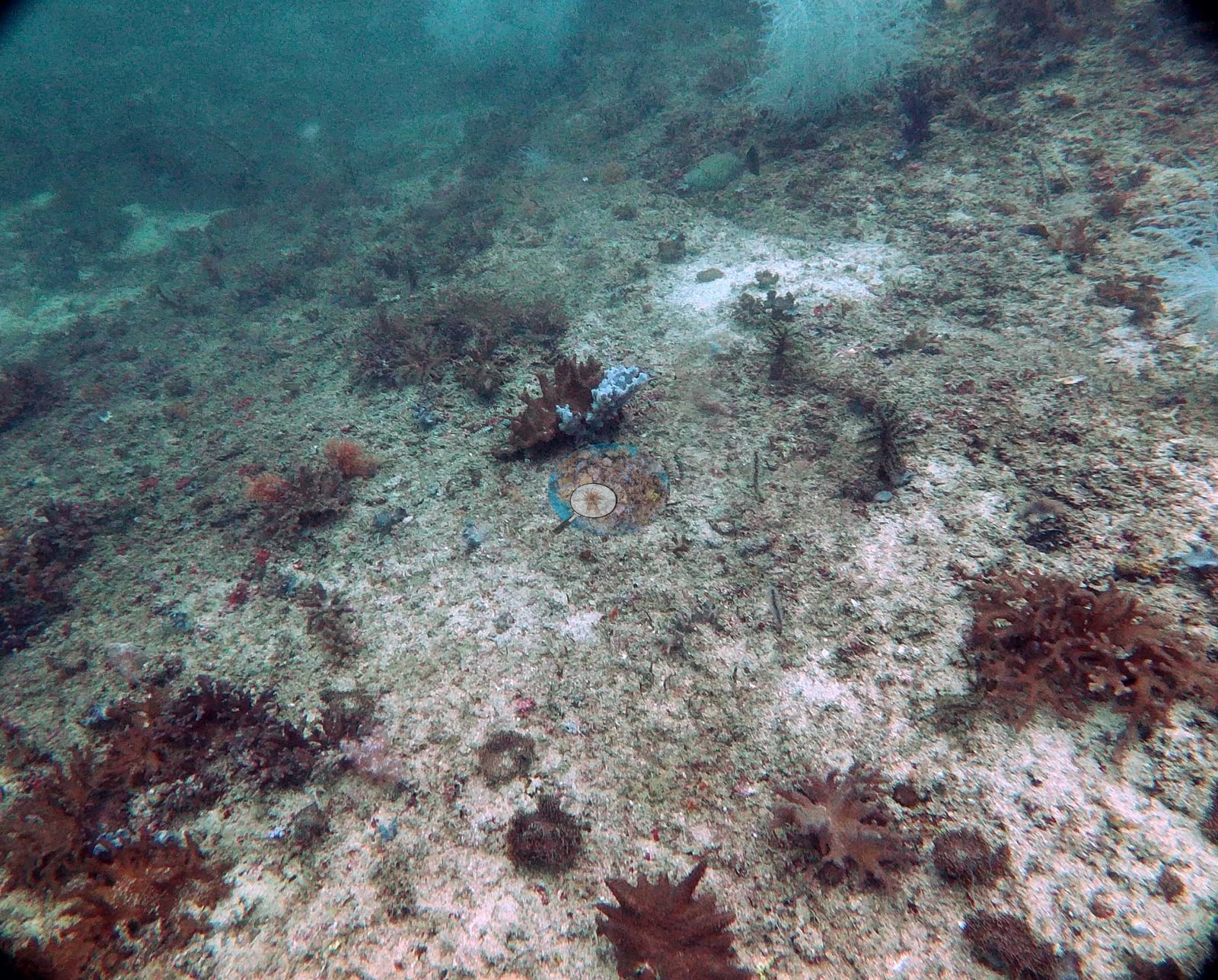
Health: no crown-of-thorns, no disease lesions, no anchor or blast damage, and no widespread bleaching. Two things are worth noting rather than assuming. First, at least two small colonies read as chalk-white against pigmented neighbors (a small pale-blue-and-white branching colony sitting alone in a clearing in the soft-coral meadow, and a white branching colony beside tan acroporids), the same signal flagged at Mioskon and Blue Magic — but here it is isolated and minor, and each of these could also be a naturally pale colony or a partial mortality scar. Second, large tracts of open, coralline-crusted pavement and sand run through the site between the octocoral meadows; that is habitat structure, not necessarily damage (e.g., Image 8).
Fish and other fauna
Fish are present but subordinate to the invertebrates here: chromis and other planktivorous damselfishes over the coral, wrasses including a yellow-headed and a blue-green individual, a small yellow angelfish or butterflyfish, an anemonefish, scattered anthias, and small fish schooling loosely over the crest — no big pelagic aggregation of the kind seen at Blue Magic.
Comparisons with other data
No prior survey data from this site. If you would like to share yours, please email us.
Dive record
Bo Rainbow, dived 15 October on Anderson's 2018 Indonesian liveaboard trip.
Other notes
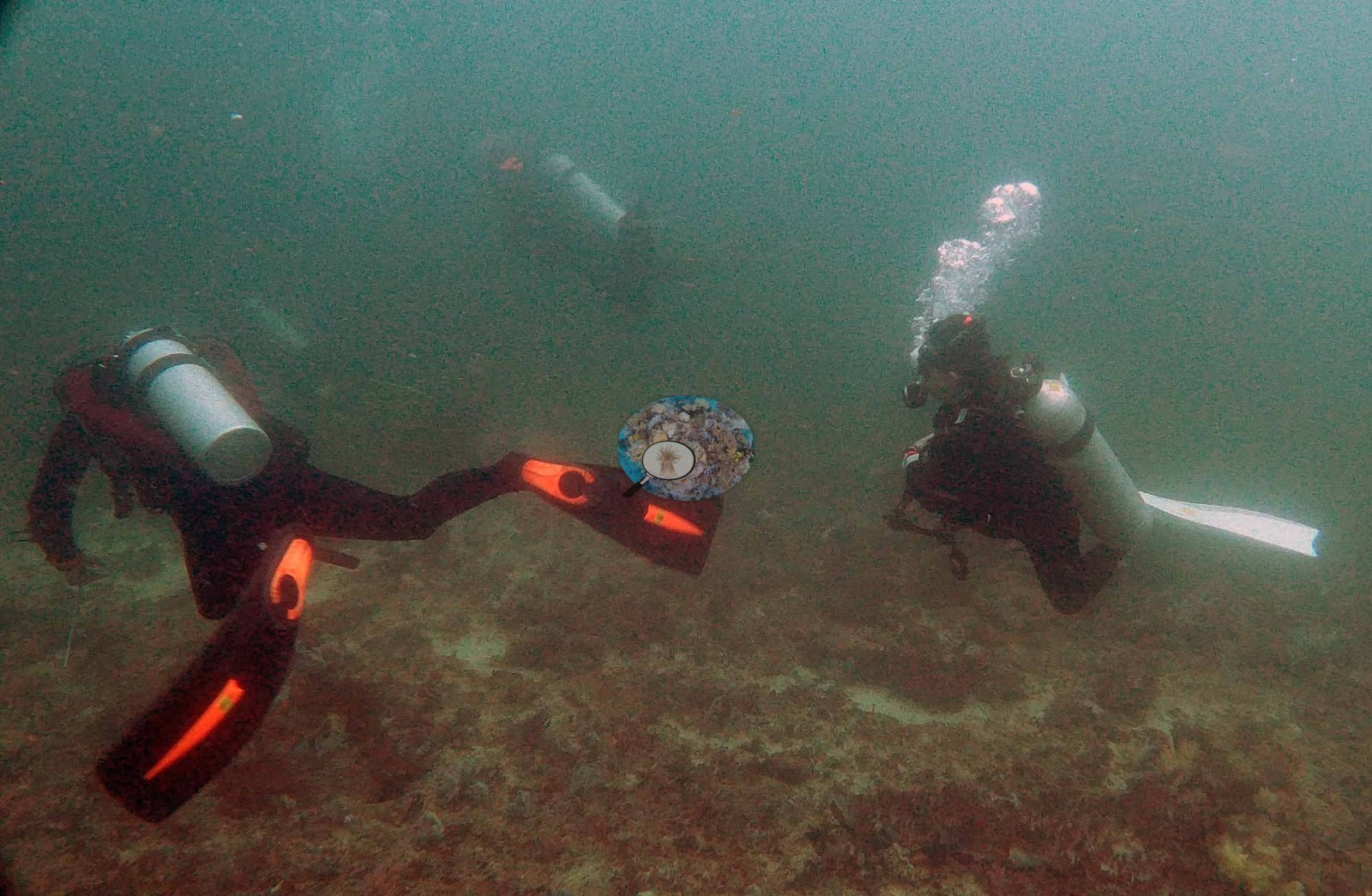
Man-made content: divers appear in about eight frames, including one with a large camera-and-strobe housing on a tray, one with a yellow single-blade fin, and one with distinctive salmon-pink fins.
CV model comparison
More info
DINOv3 and CoralSCOP were run on the same photos and are listed for comparison. Coralscapes v2 and v1 were also run but are not shown: Anderson does not consider Coralscapes reliable for these photos. No diver transect exists for this trip, so agreement between the rows is not accuracy, and as of September 2026 no computer-vision method estimates coral cover accurately on new images; treat every row as indicative.| Method | Hard-coral cover (%) |
|---|---|
| In-house DINOv3 | 22.0 |
| CoralSCOP edited | 42.1 |
| Claude (edited photos) | 12.7 |
Data & links
Images 10–19: Pierre; all other images from Coral Reef Diagnostics. Data are from Coral Reef Diagnostics.
© Coral Reef Diagnostics.