
Triton Bay - Seruanus
Part of the regional summary: Indonesia - Triton Bay
More info
West Papua (NOAA CRW virtual station)Seruanus is a soft-coral-dominated site on the back side of Little Komodo Island, shaped by high flow, turbidity, and nutrient-rich, occasionally upwelling cold water; stony corals were sparse before 10 m, though healthy Acropora and massive corals up to 3-4 m appeared in the shallows. A blind Claude computer-vision point count puts coral cover around 9.1%.
Seruanus adalah lokasi yang didominasi karang lunak di sisi belakang Pulau Little Komodo, dibentuk oleh arus deras, kekeruhan, dan air dingin kaya nutrien yang sesekali mengalami upwelling; karang batu jarang dijumpai di atas kedalaman 10 m, meskipun Acropora yang sehat dan karang masif setinggi 3-4 m muncul di perairan dangkal. Penghitungan titik buta visi komputer Claude memperkirakan tutupan karang sekitar 9.1%.
Terjemahan ringkasan ini oleh AI; versi bahasa Inggris yang berlaku.
Four other CRD dive sites within 5 km shown in orange — click a marker to open its page.
4 of these 17 photographs are shown beside the text that discusses them under "Site description" below.
 6
6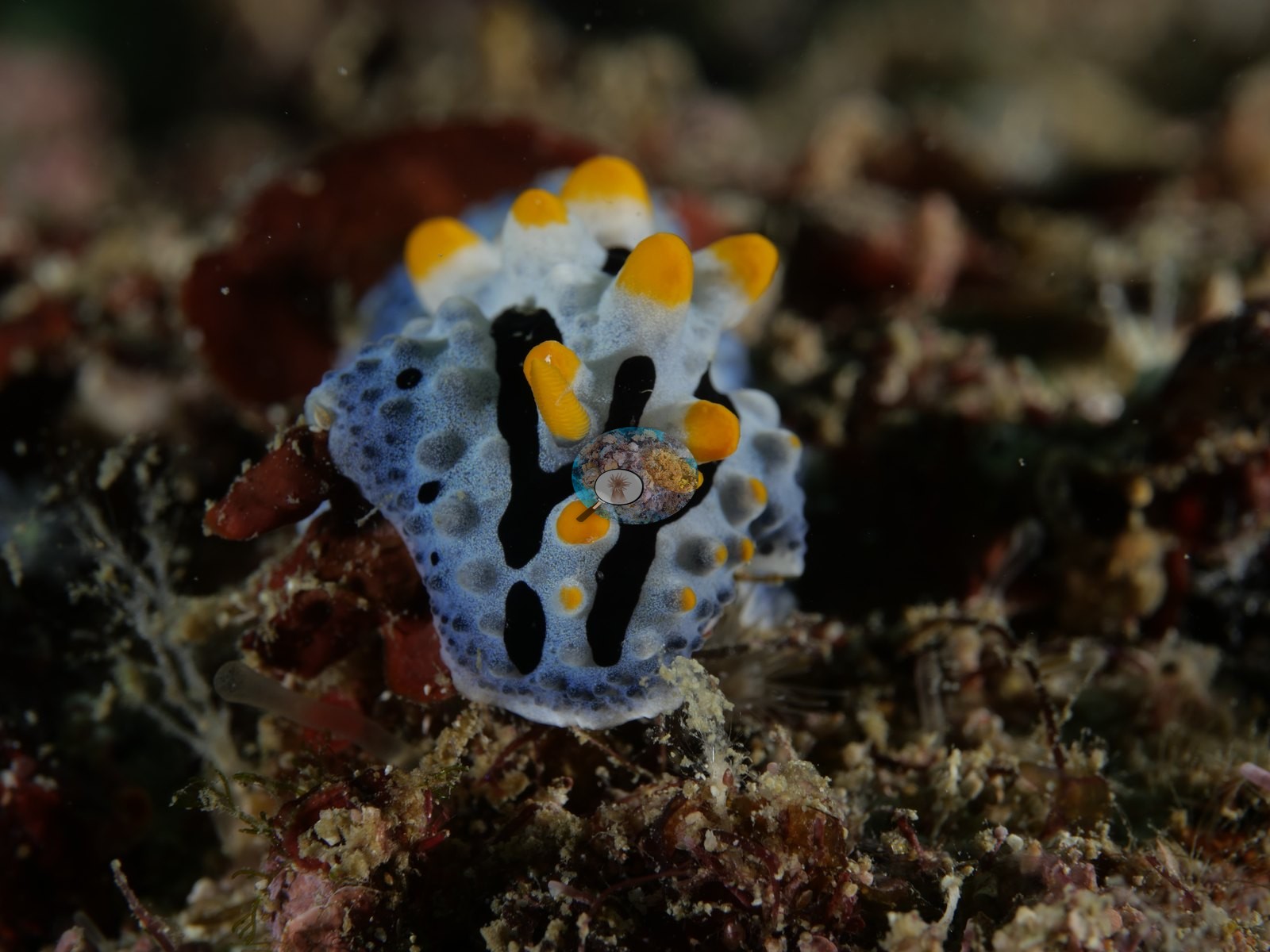 Photo: Pierre7
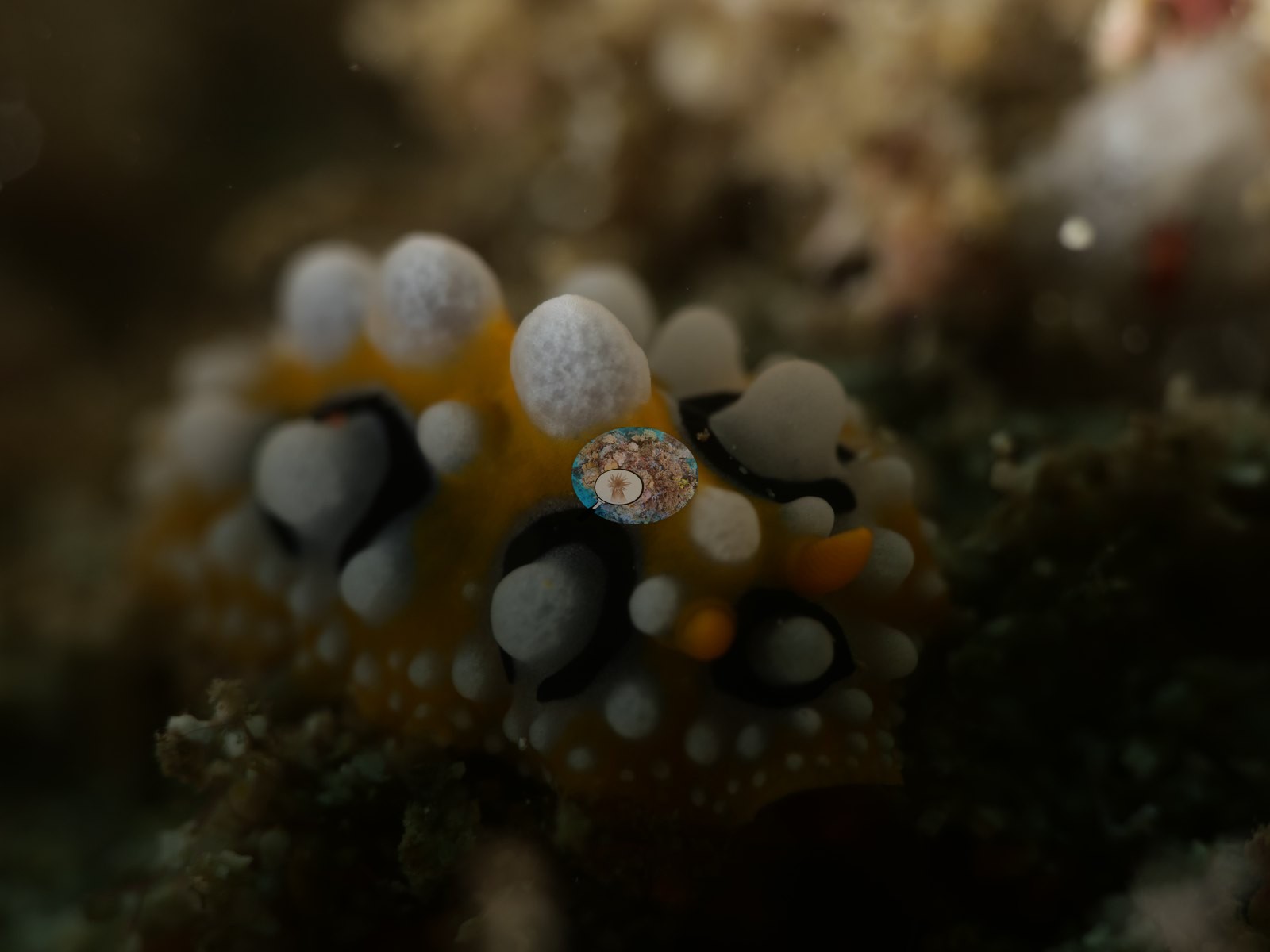 Photo: Pierre8
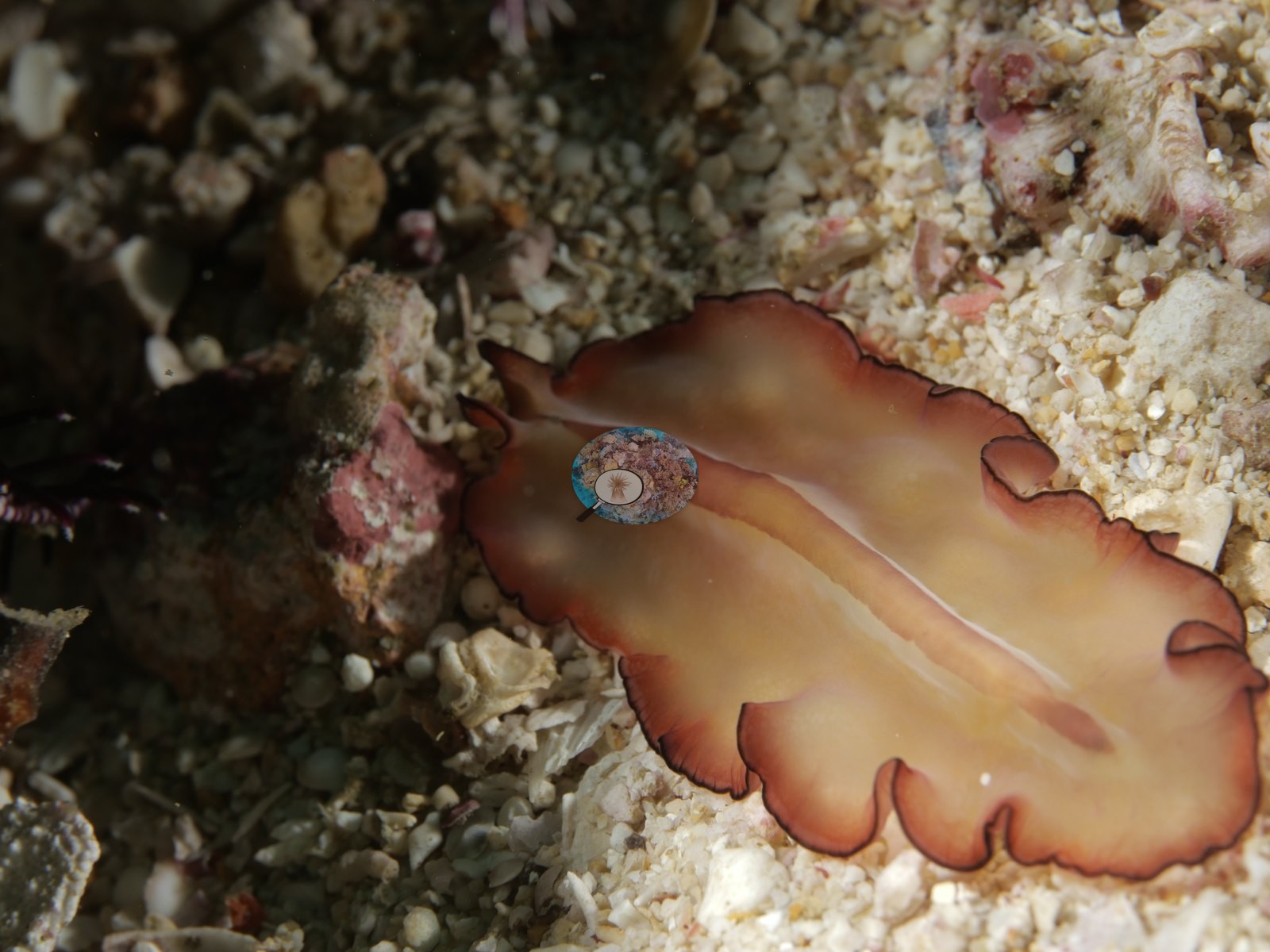 Photo: Pierre9
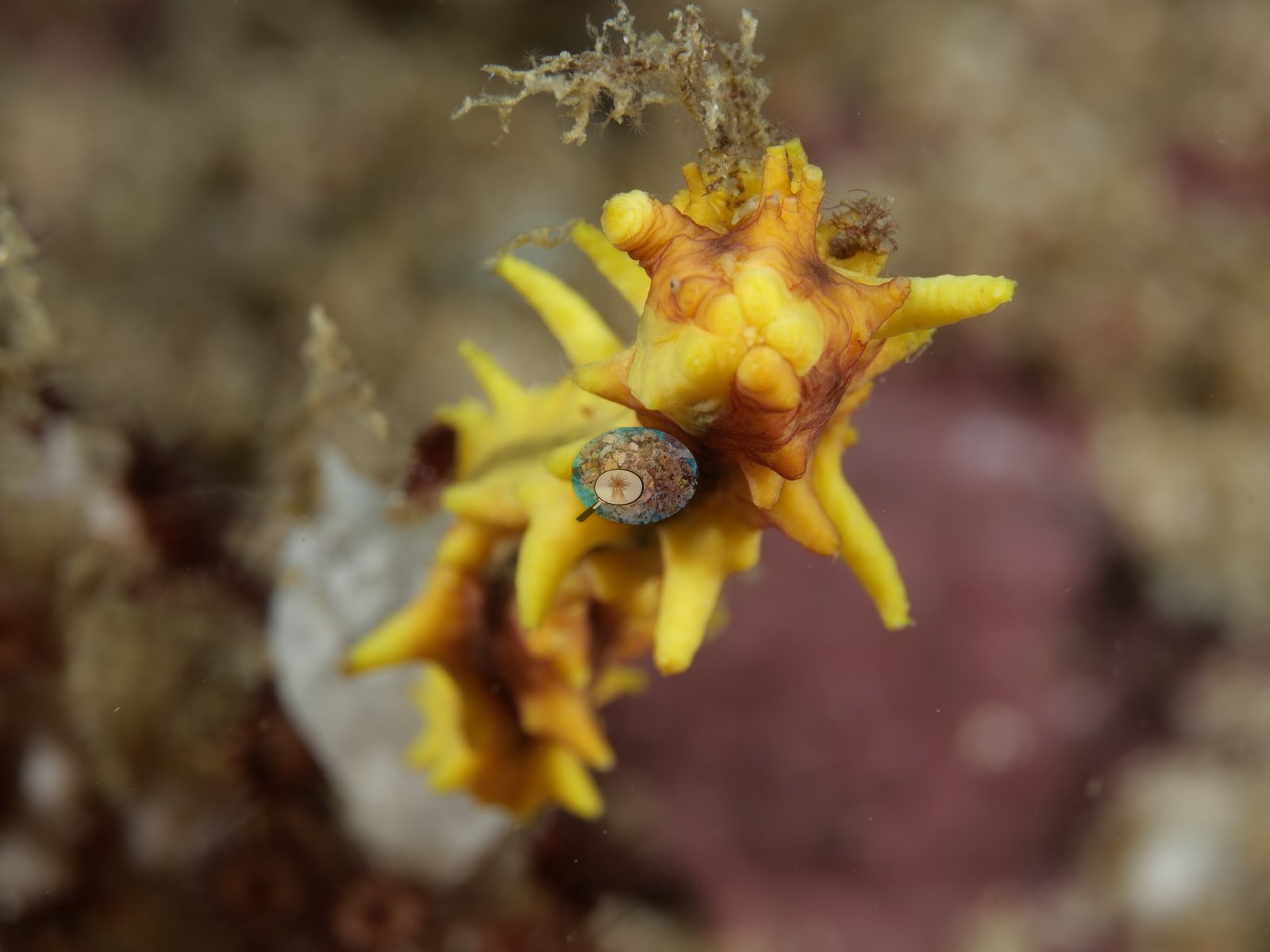 Photo: Pierre10
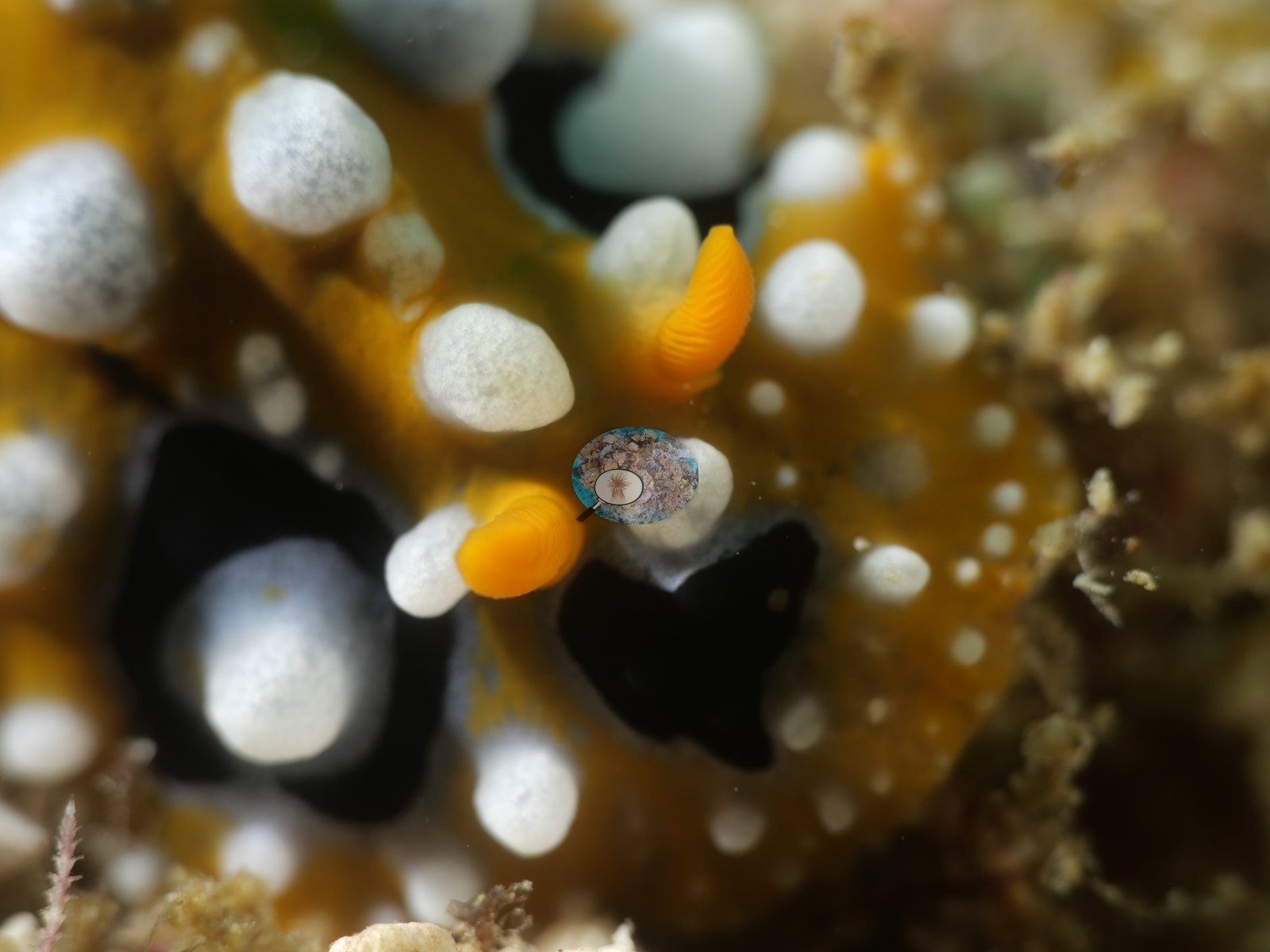 Photo: Pierre11
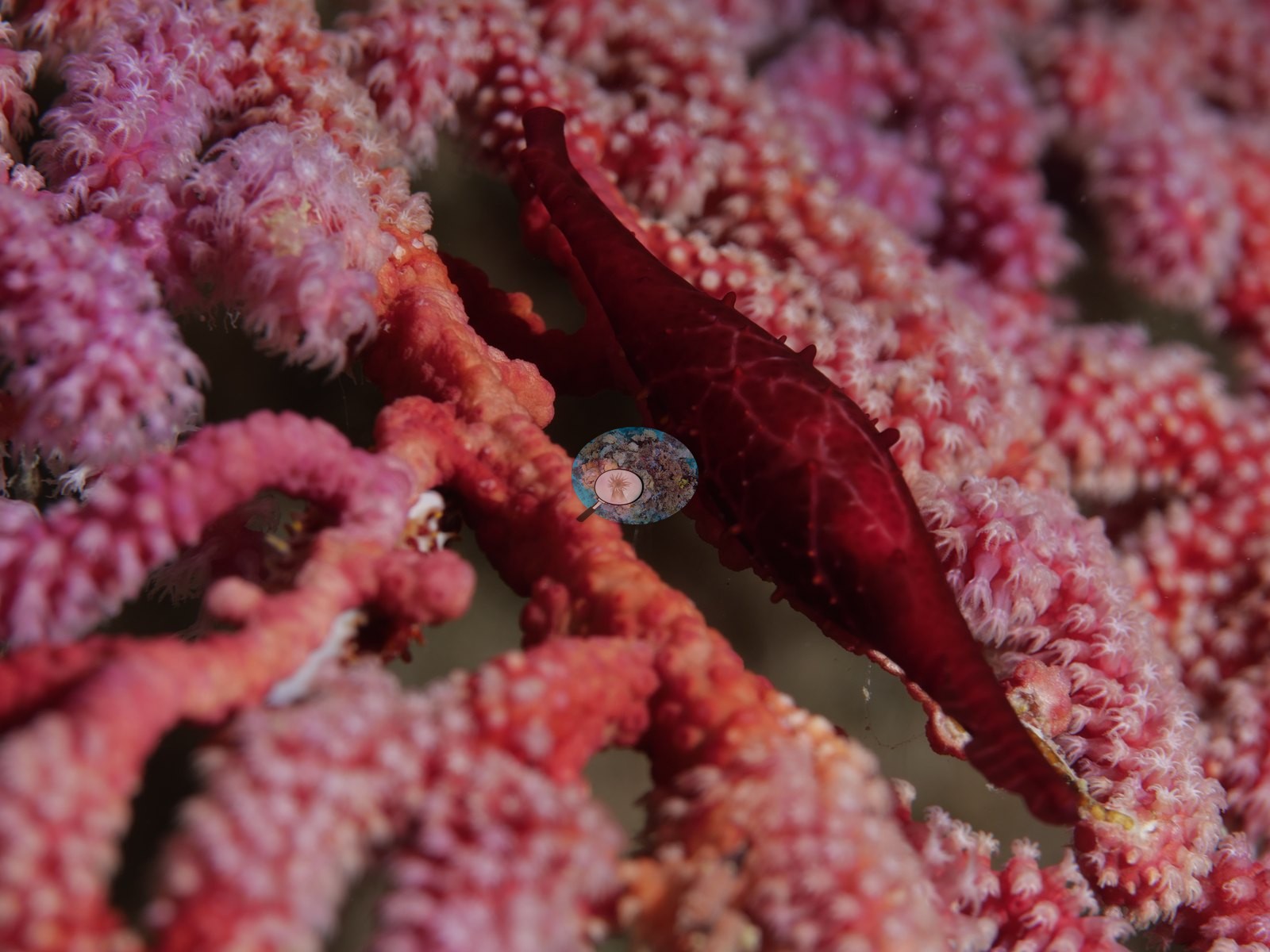 Photo: Pierre12
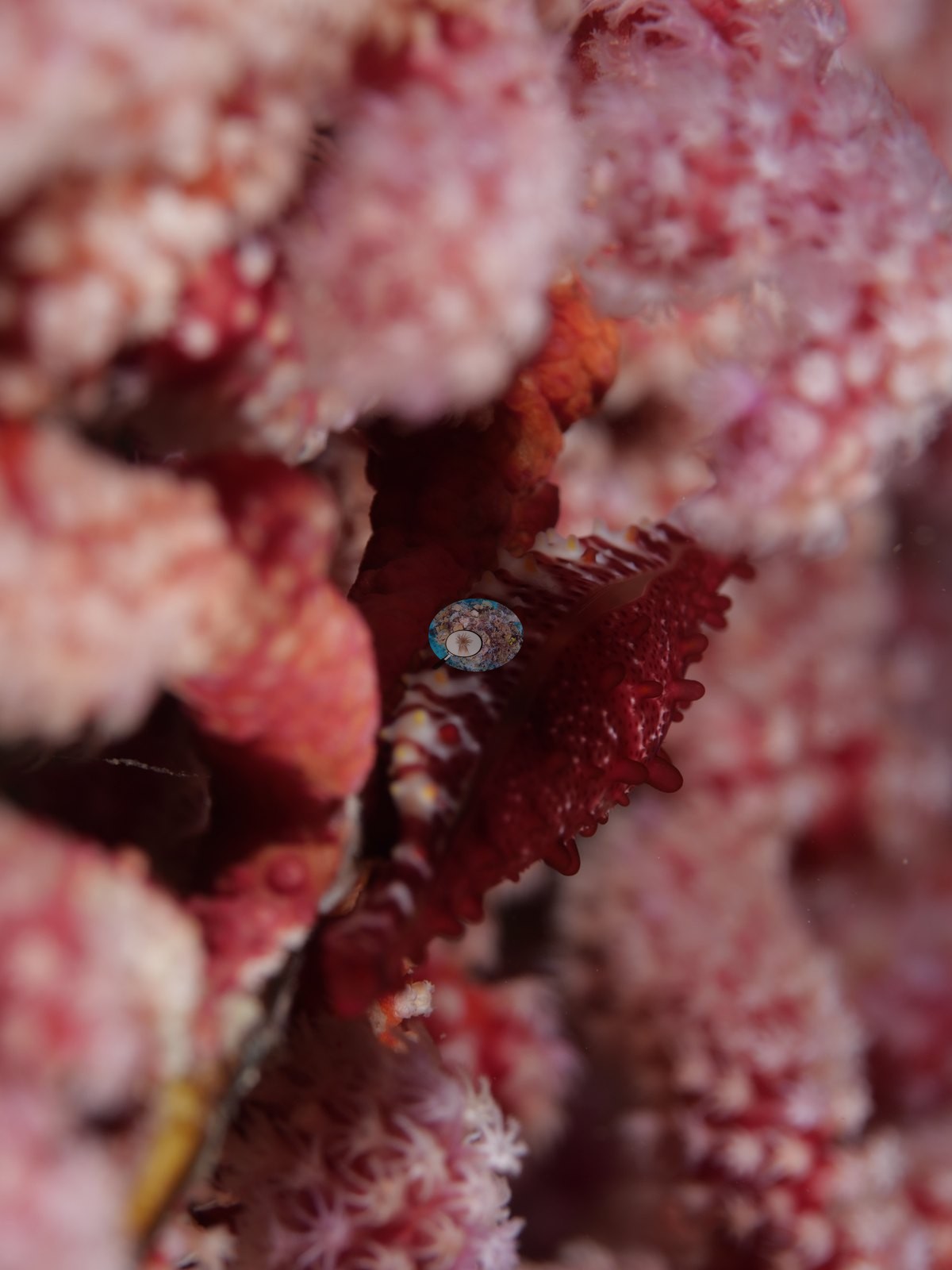 Photo: Pierre13
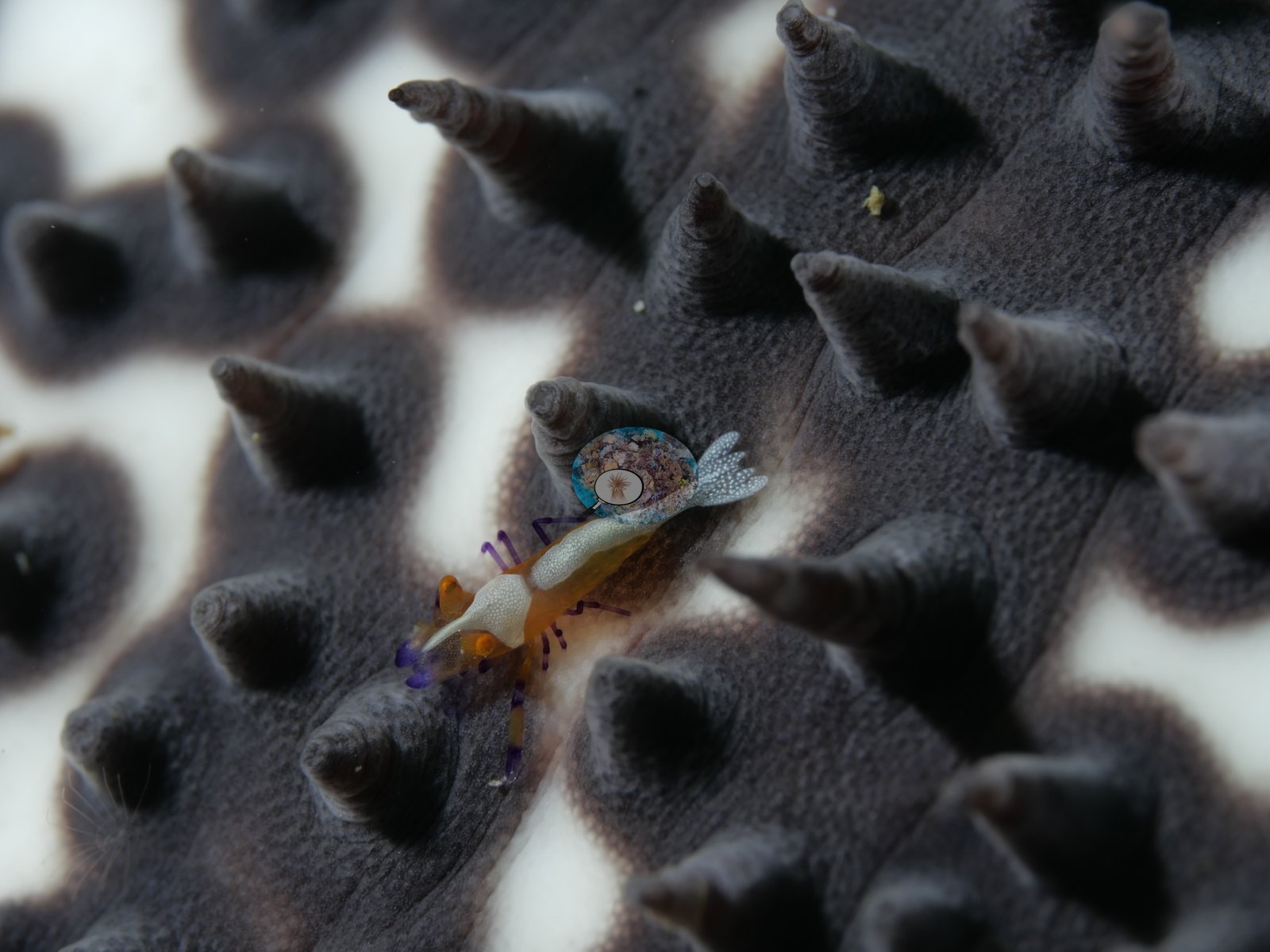 Photo: Pierre14
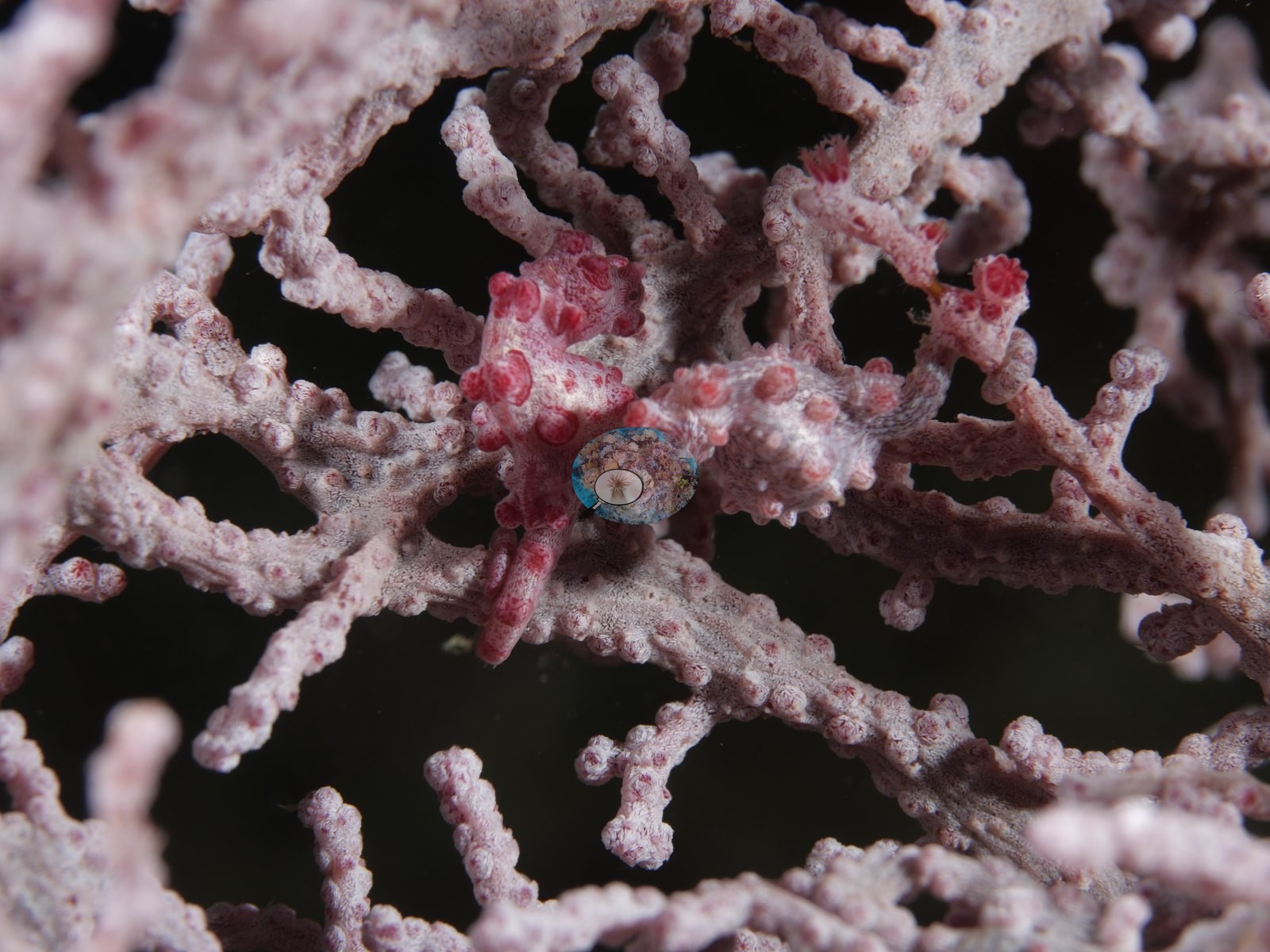 Photo: Pierre15
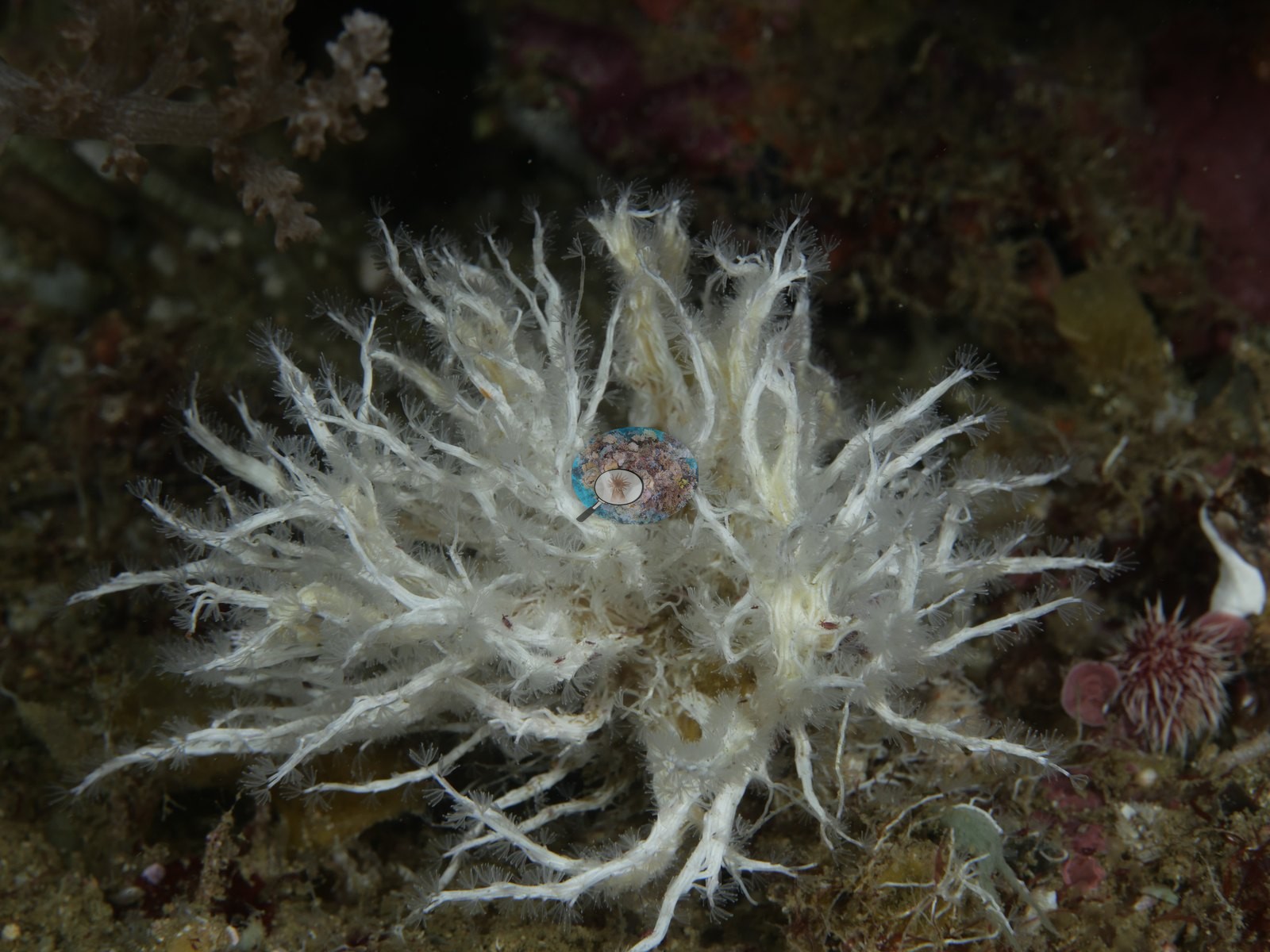 Photo: Pierre16
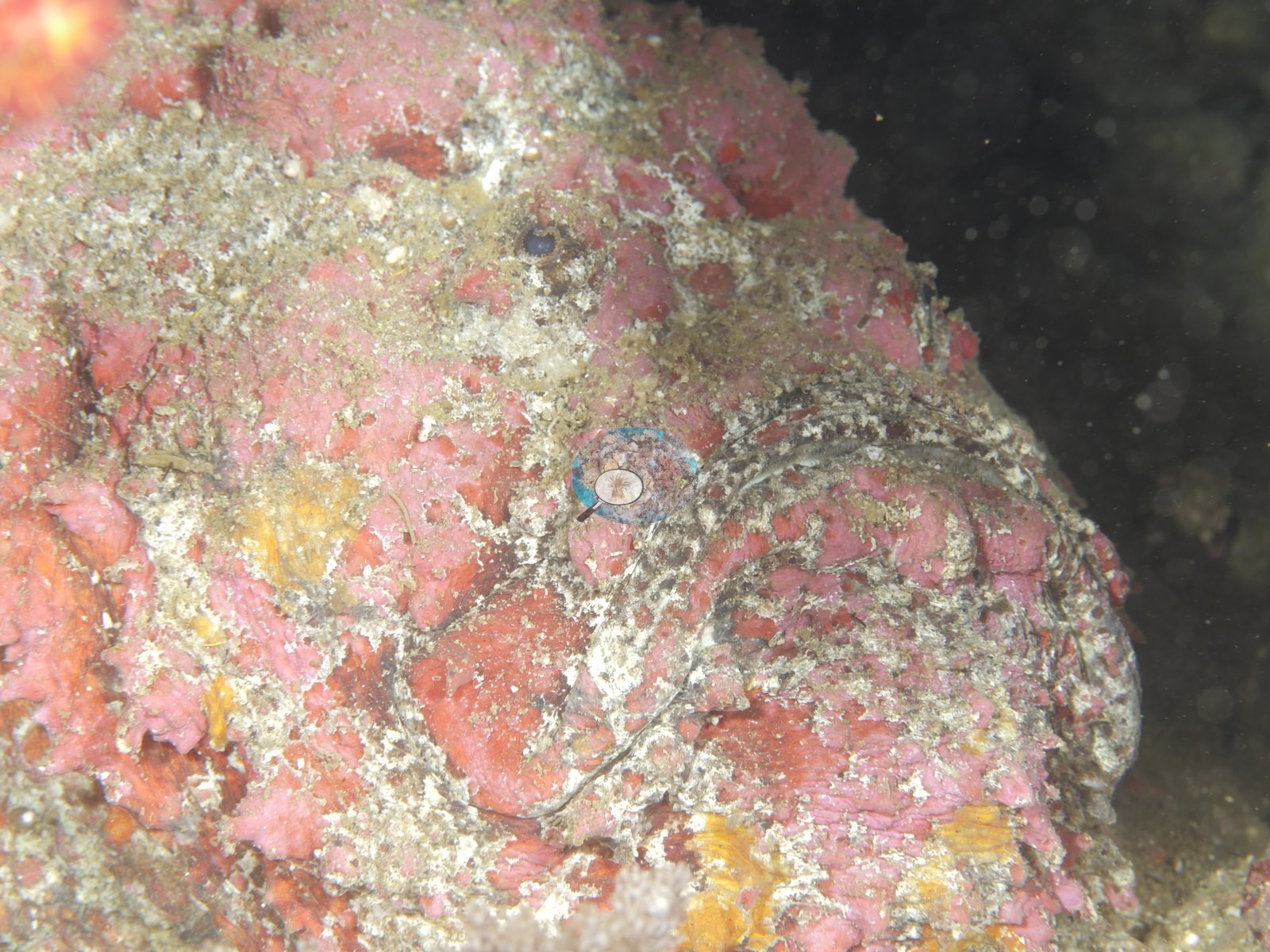 Photo: Pierre17
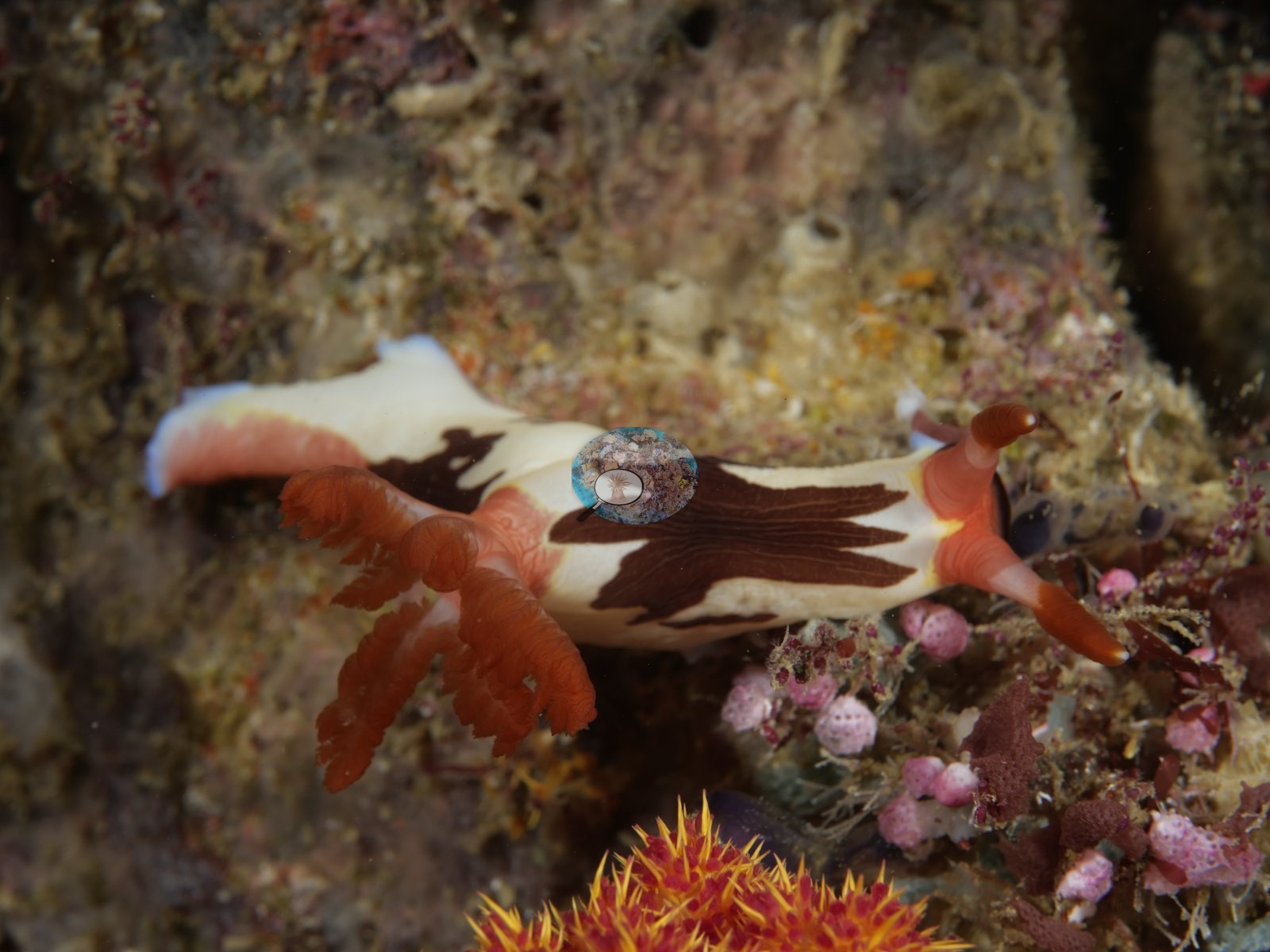 Photo: Pierre
Site description
Setting
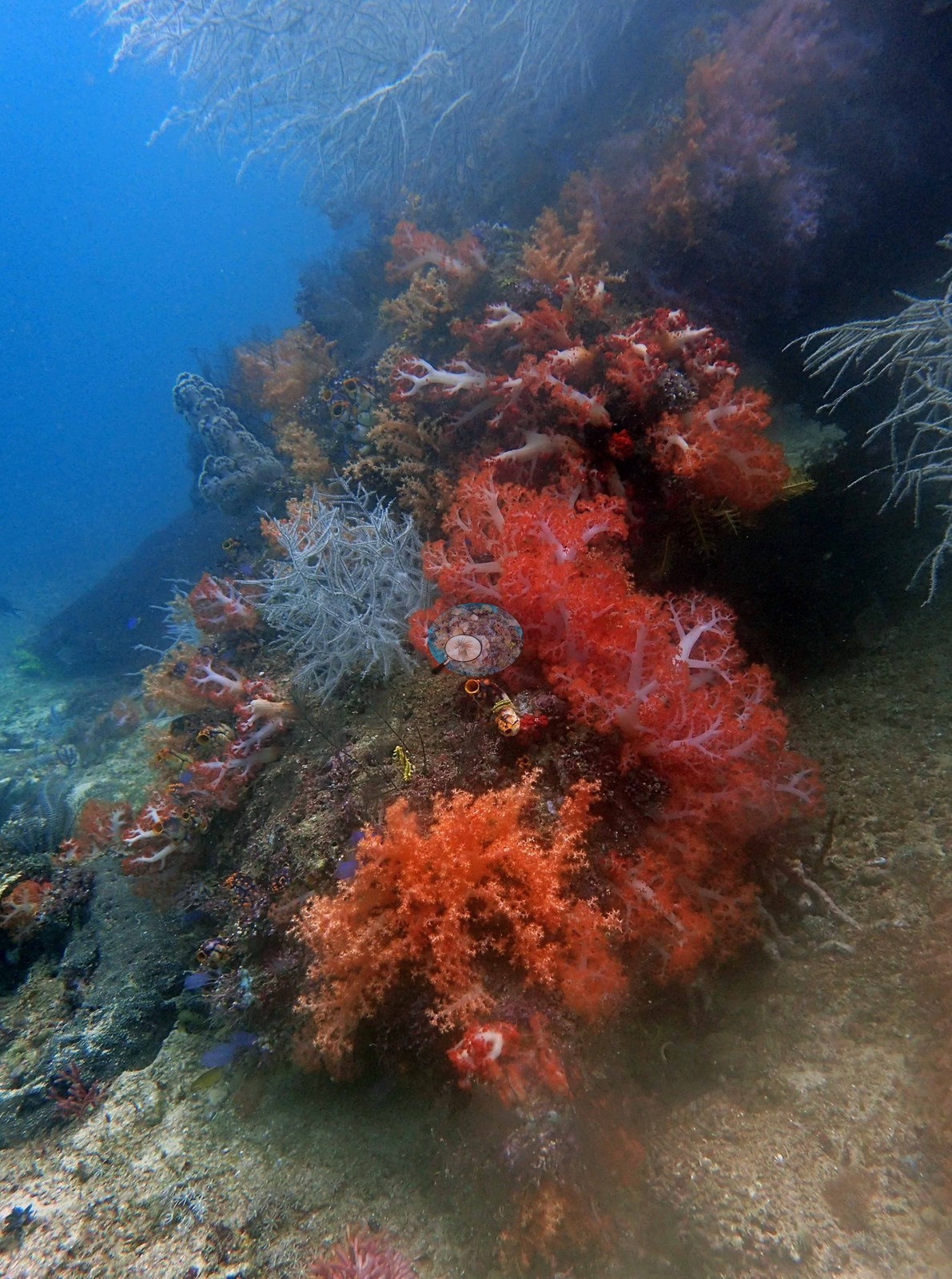
Poor visibility: 7-10 m max with medium, variable current, occasionally with upwelling of cold (24C) water. Proper upwelling? Site appears to be more conducive to soft coral growth: high flow, high turbidity, nutrient-rich seawater (e.g., Image 2).
General benthic features
Low cover of stony corals before 10 m (e.g., Image 3).
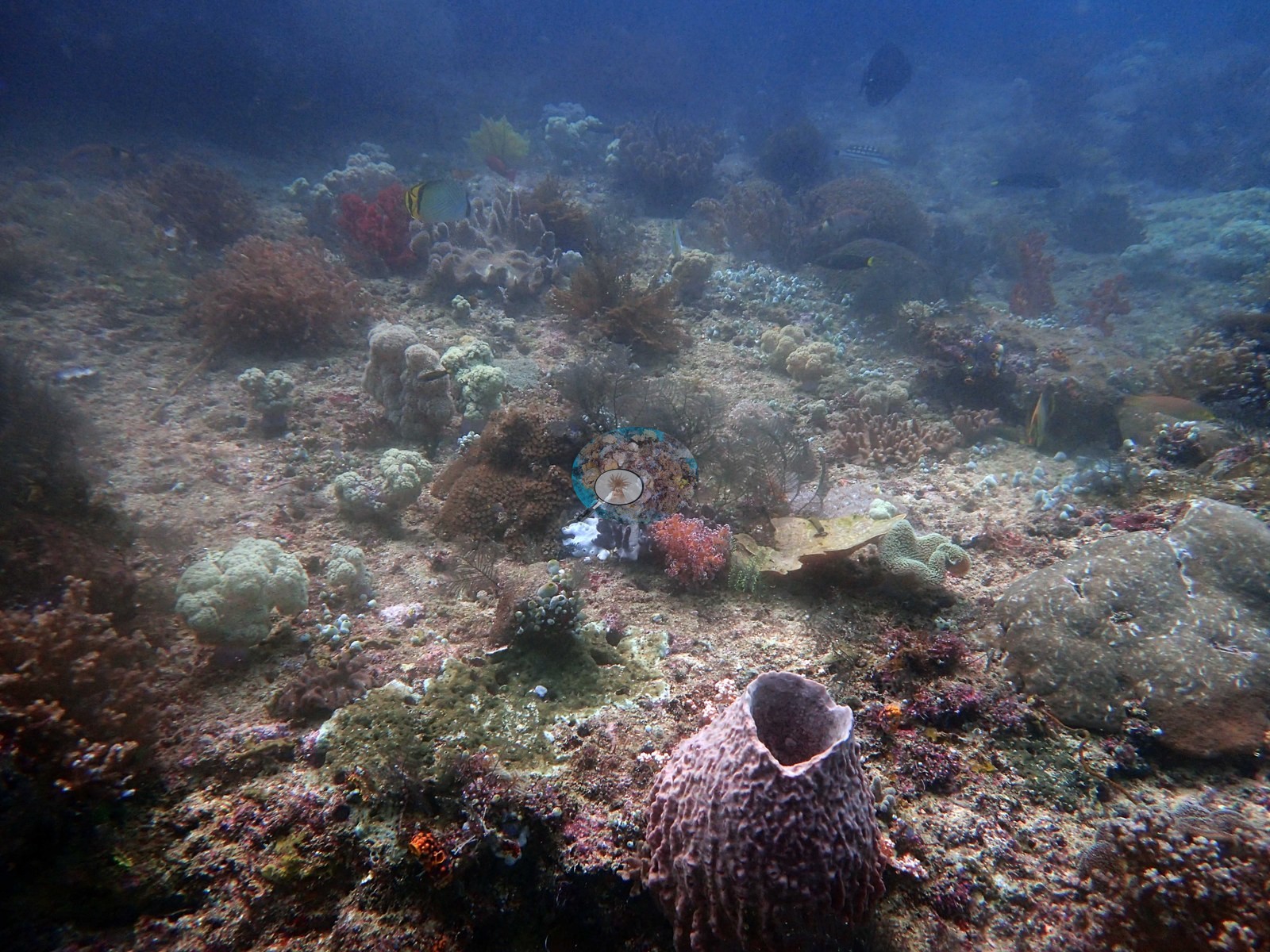
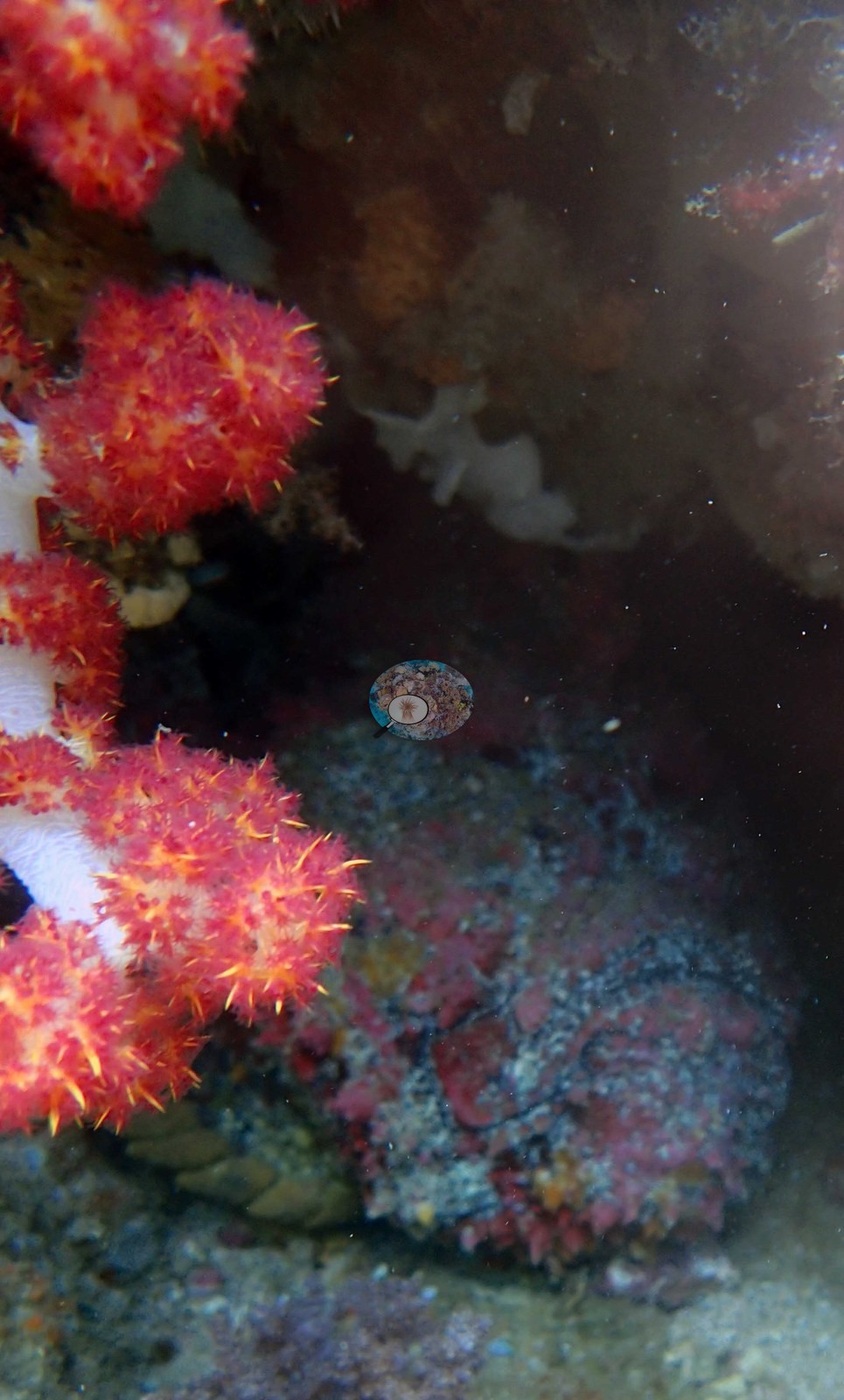
Soft corals impressive at all locations within site (back side of Little Komodo Island). Corals do not appear to have ever been common here before 7 m, though all substrate from base of island to 20 m was potentially of biological origin. High biodiversity of soft corals: gorgonians, encrusting soft corals (like in Balicasag), essentially every type of soft coral, sea whips (e.g., Image 4).
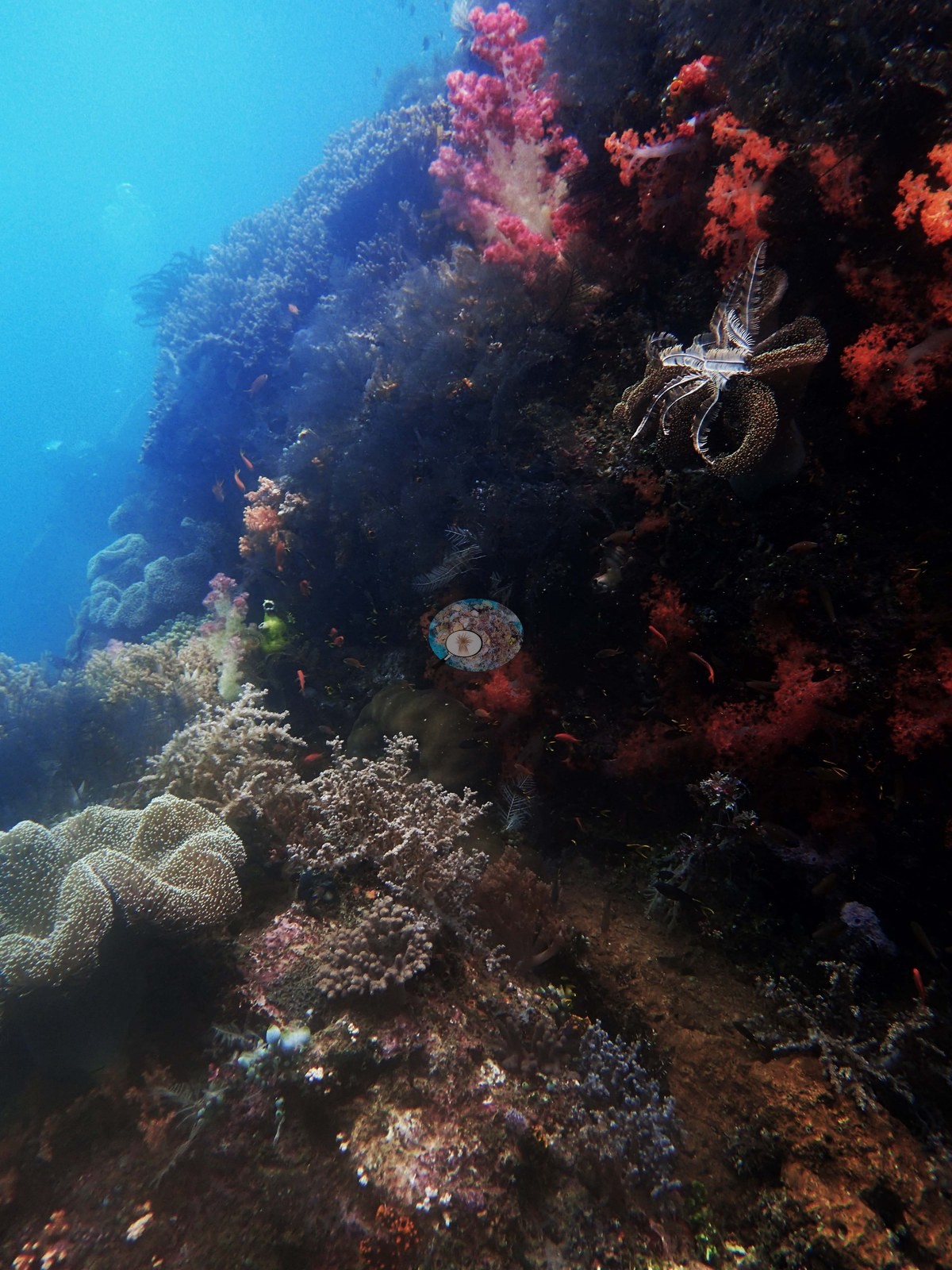
Acropora colonies healthy and fairly common at 5-6 m, though still not a major reef builder. Some massive corals growing up to 3- to 4-m in diameter. Unsure of species (separated corallites). Only one pocilloporid (P. verrucosa?) seen (very dark pigmentation). Reef strikingly colorful in 1-6 m, with corals growing to just below surface (e.g., Image 5).
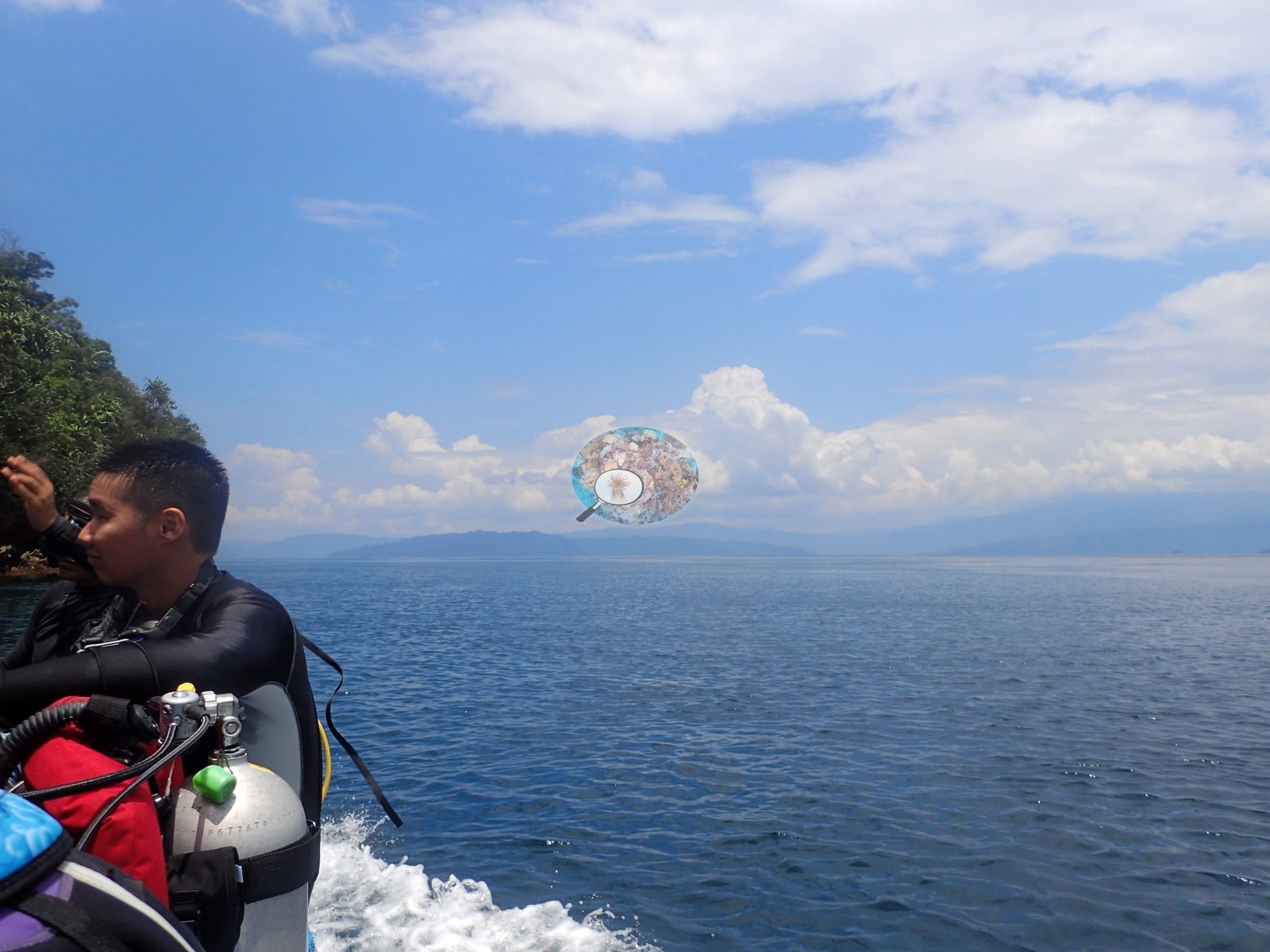
Corals evident from dive boat.
Coral cover
Coral cover: 9.1% — a blind Claude computer-vision point count of 66 of Anderson's edited photographs (20 points per photo; water, fish, and obstructions excluded). Other computer-vision methods are listed in the method table. For pics, see “Triton Bay dive 1: Little Komodo”.
Stressors
No crown-of-thorns starfish (COTS) or other corallivores evident.
Fish and other fauna
Interesting marine life: white nudibranch (see pic), strange sea cucumber (see pic; see cucumbers relatively common.), Plerogyra (rare), some encrusting sponges, barrel sponges less common, evidence of overfishing, though occasionally some large snapper and angelfish. A nudibranch-like sea cucumber (yellow; see pics) was common at site (never before seen).
Comparisons with other data
No prior survey data from this site. If you would like to share yours, please email us.
Dive record
Dive 1: “Seruanus:” The first dive of the Triton Bay-Raja Ampat trip.
CV model comparison
More info
DINOv3 and CoralSCOP were run on the same photos and are listed for comparison. Coralscapes v2 and v1 were also run but are not shown: Anderson does not consider Coralscapes reliable for these photos. No diver transect exists for this trip, so agreement between the rows is not accuracy, and as of September 2026 no computer-vision method estimates coral cover accurately on new images; treat every row as indicative.| Method | Hard-coral cover (%) |
|---|---|
| In-house DINOv3 | 18.7 |
| CoralSCOP edited | 30.6 |
| Claude (edited photos) | 9.1 |
Data & links
Images 6–17: Pierre; all other images from Coral Reef Diagnostics. Data are from Coral Reef Diagnostics.
© Coral Reef Diagnostics.