Island summary of 5 dive sites. Figures are averages across the sites that report them (n = sites with a value); each site's own page has its individual values. Part of the Fiji - Moala Group (Moala / Totoya / Matuku) regional summary.
Heat-stress figures: NOAA Coral Reef Watch — Fiji 5-km virtual station. Each pill links its source record and carries the values behind it.
Island summary
Matuku's silty fore reefs, surveyed in June 2013, held 26-38% coral, including single-species stands of Pavona clavus and Porites rus in a channel and a small seamount top heavily crusted with coralline algae.
Heat stress
sea surface temperature (SST) (left axis)DHW under 2DHW 2–3DHW 3–5DHW 5–8DHW 8–10DHW over 10 (🔥 above 12)
Daily SST (line) and weekly maximum Degree Heating Weeks (bars), Jan 2023–Oct 2026, NOAA Coral Reef Watch 5-km Fiji virtual station. Dashed line: bleaching threshold (maximum monthly mean 28.4°C + 1°C). DHW ≥ 4: bleaching likely; ≥ 8: severe bleaching and mortality likely. A bar is drawn only where DHW exceeds zero, so a stretch with no bar is accumulated heat stress of zero, not missing data — the SST line runs the full period.
5 sites in this region — click a marker to open that site.
Overview
Five Global Reef Expedition stations were surveyed off Matuku, a volcanic island in the Moala Group of Lau Province, on 6 June 2013 (FJMT10 to FJMT12) and 7 June 2013 (FJMT13 and FJMT14). Maximum depths dived ran from 15.8 m at FJMT13 to 29 m at FJMT10.
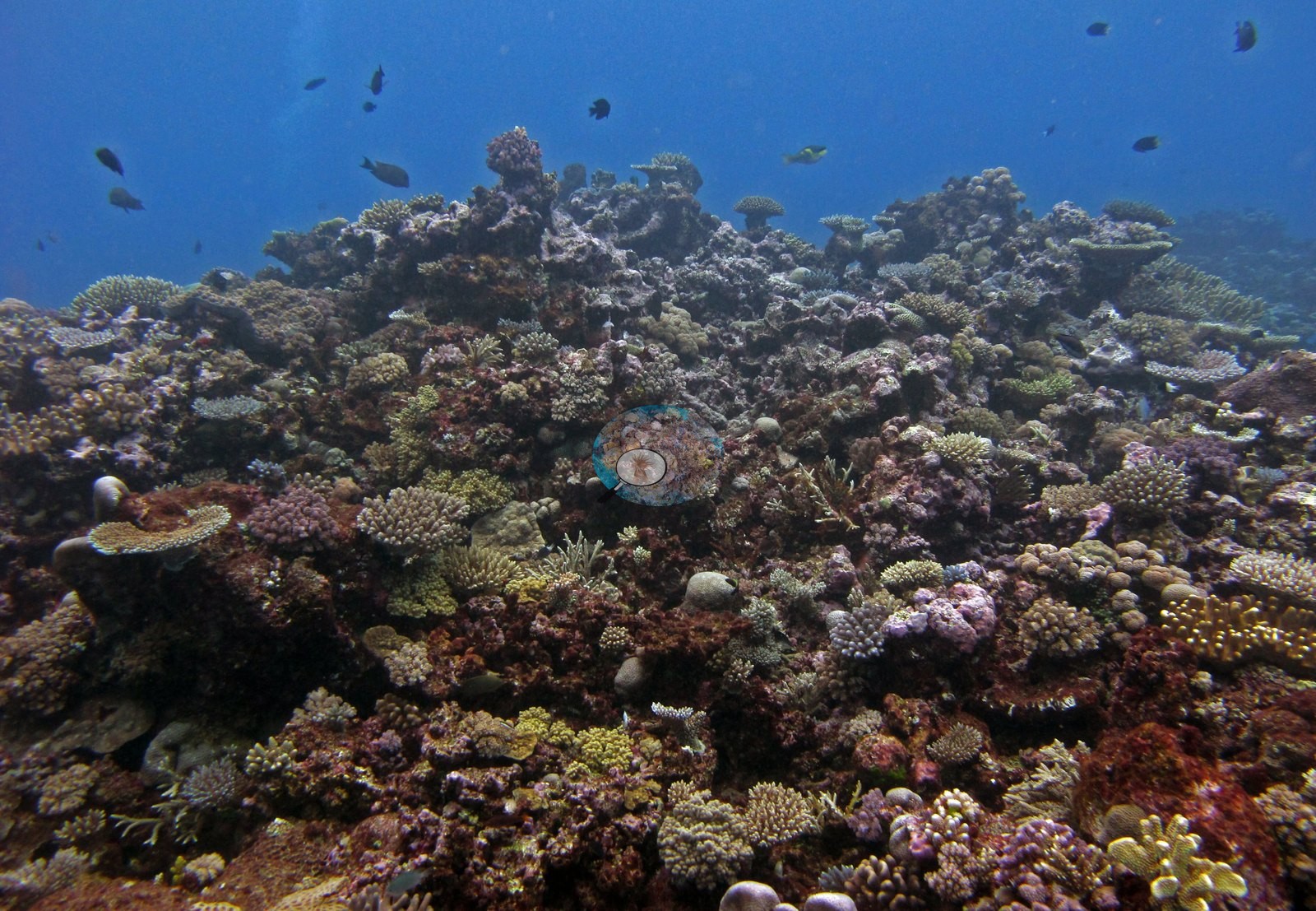
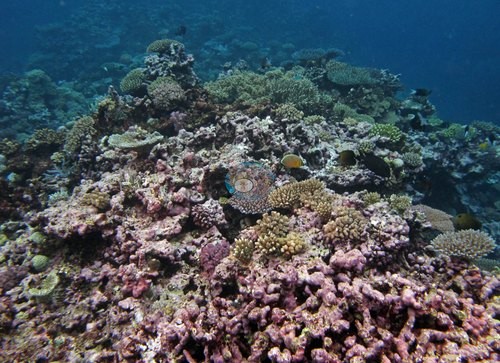
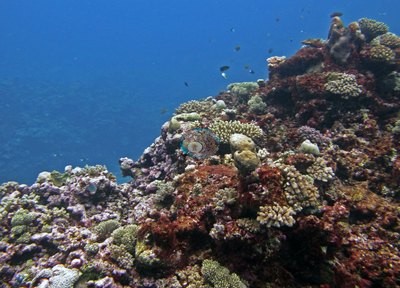
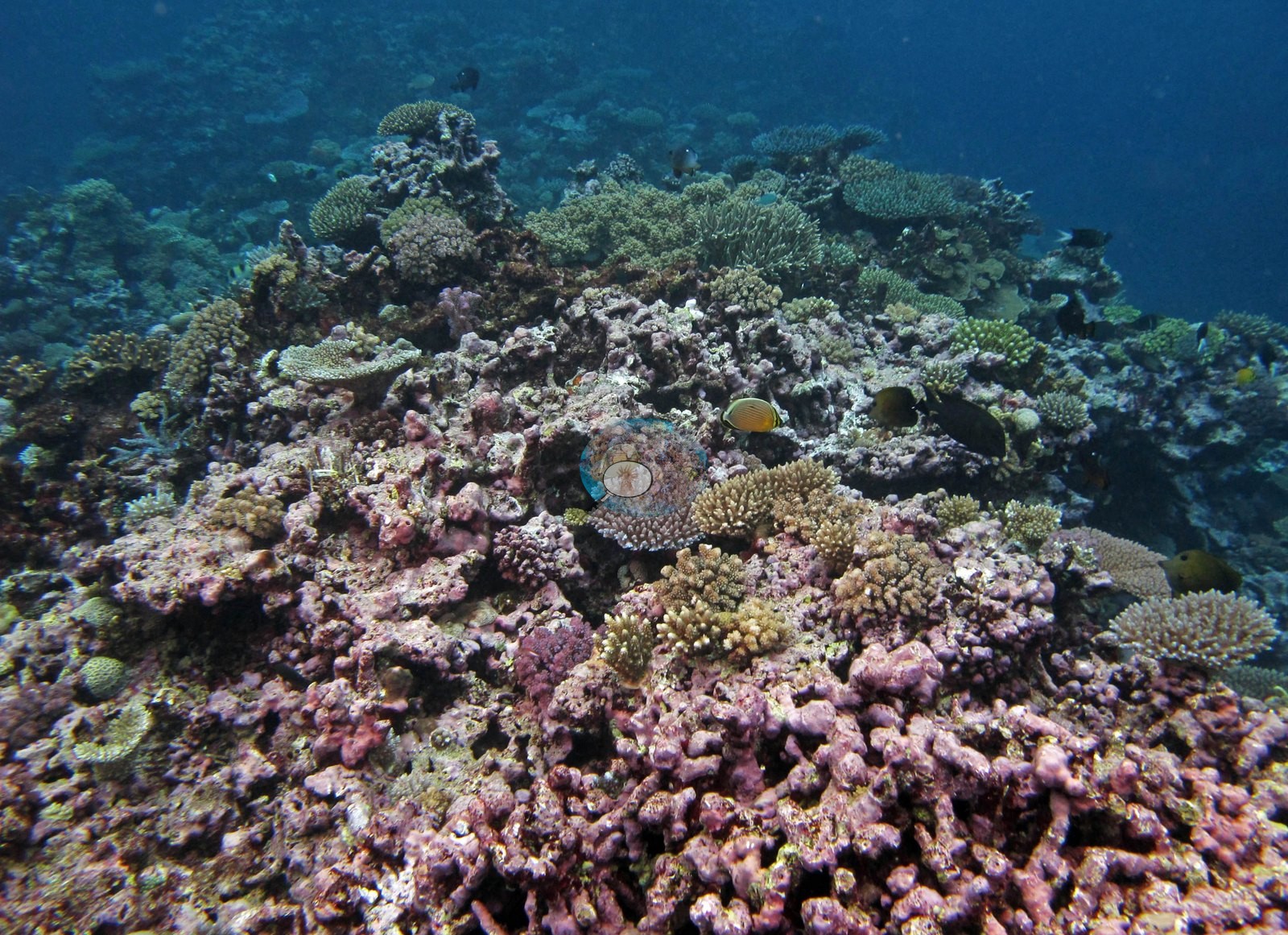
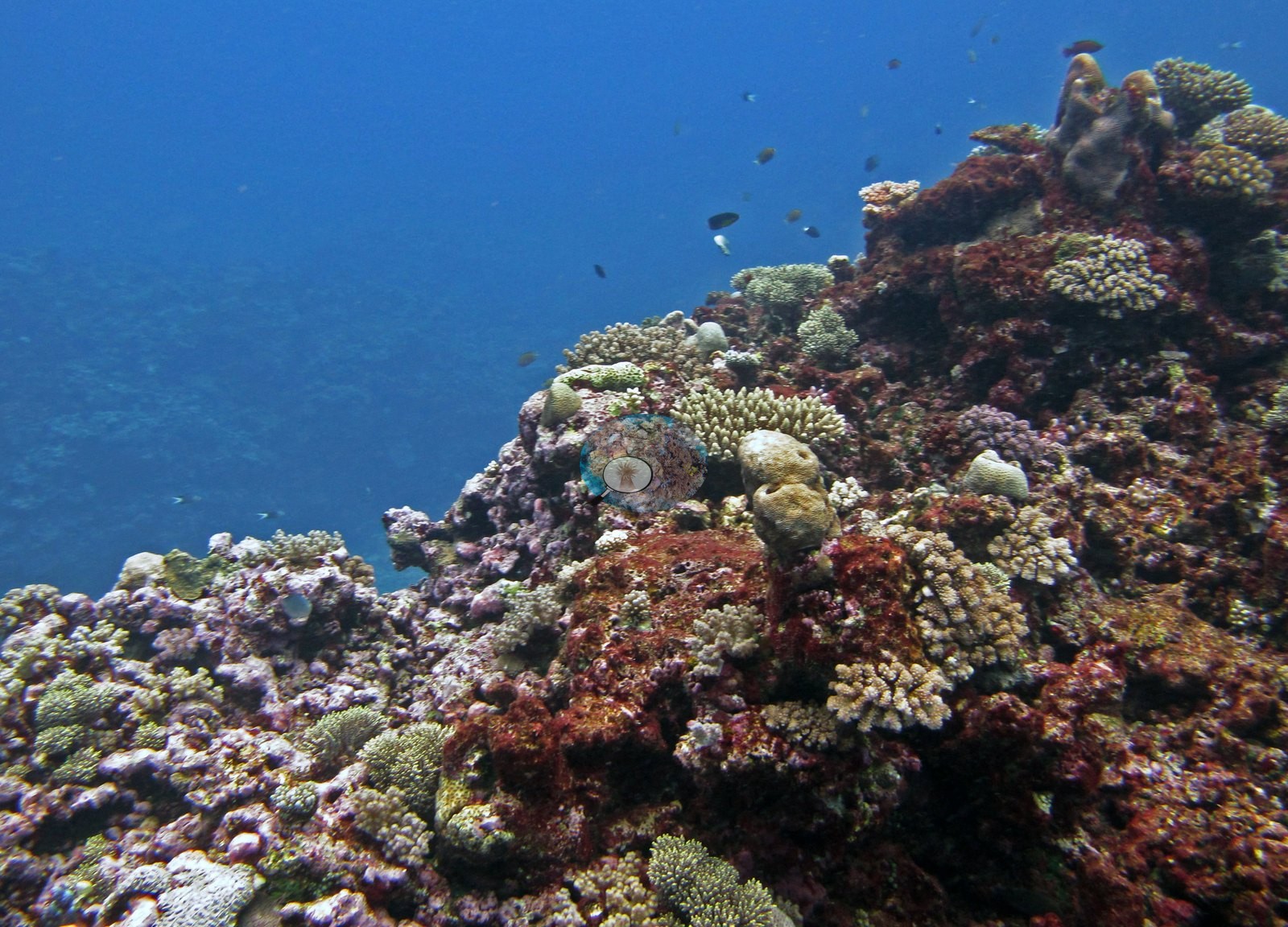
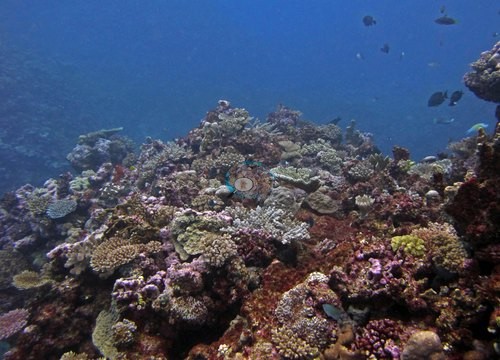
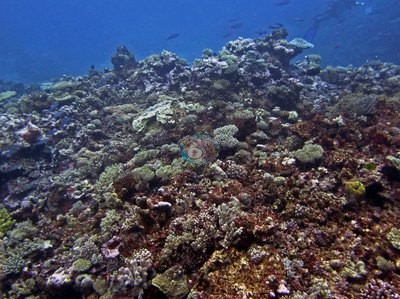
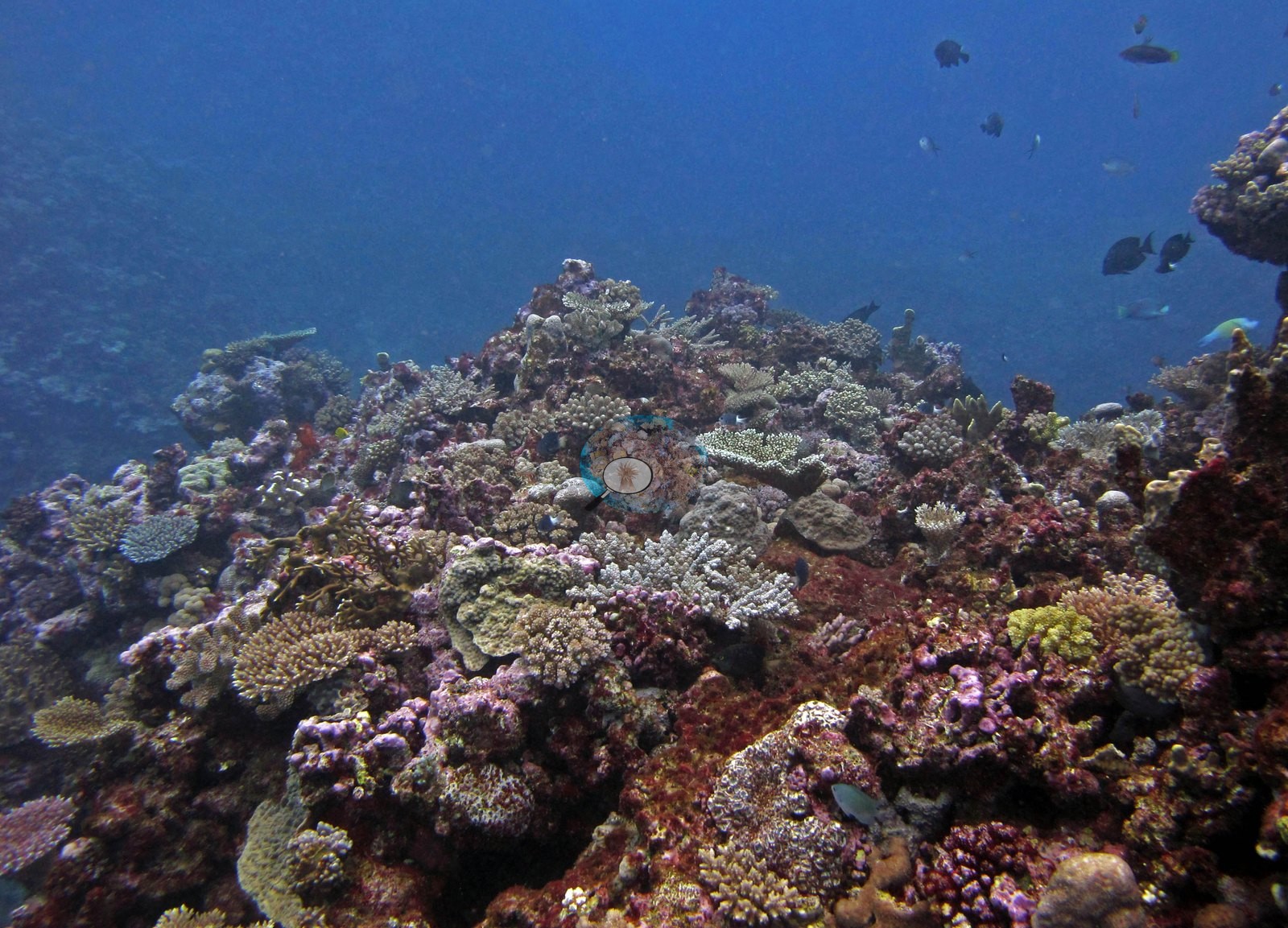
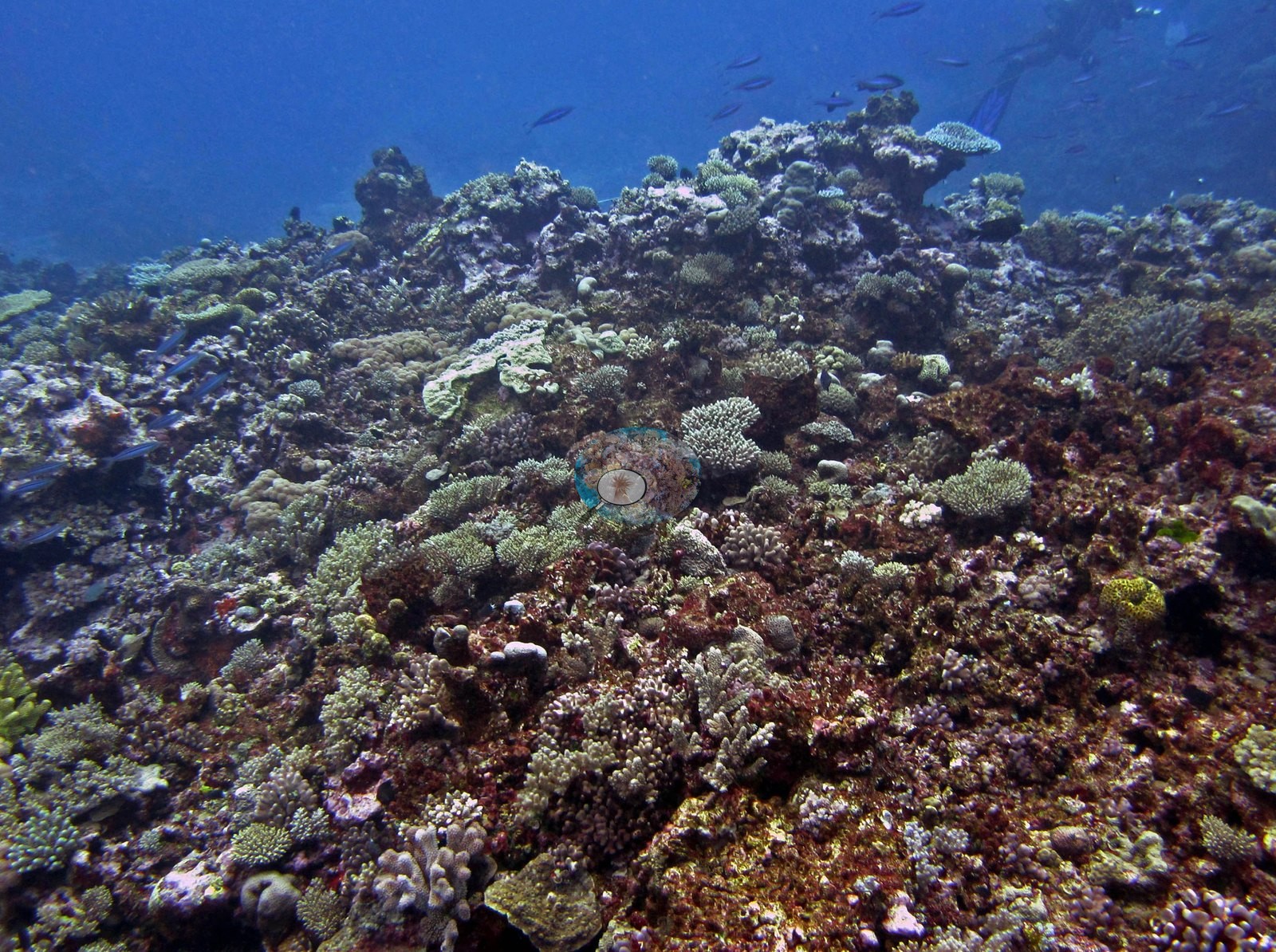
Coral cover was moderate and even, from 26% at FJMT12 to 38% at FJMT10, in poor, silty visibility, and algae covered 35% (FJMT11) to 51% (FJMT14) of the benthos. Survey notes describe fore-reef sand flats at the base of a steep slope with plating Pachyseris and Echinopora and large branching Acropora (FJMT10 and FJMT11), and a channel reef off the west side where single-species stands of Pavona clavus and Porites rus cover almost 20 m of bottom beside several leather corals (FJMT12). FJMT13 is a broad ridge crowded with small table Acropora and Pocillopora that drops away as a near-vertical wall, and FJMT14 is the top of a small seamount where pink coralline algae covers more of the surface than live coral in places, with soft corals a real part of the community and a school of small blue-black fish streaming over the crest.
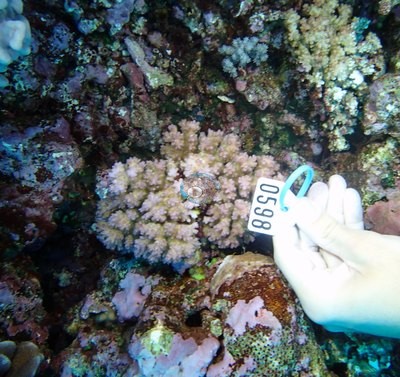
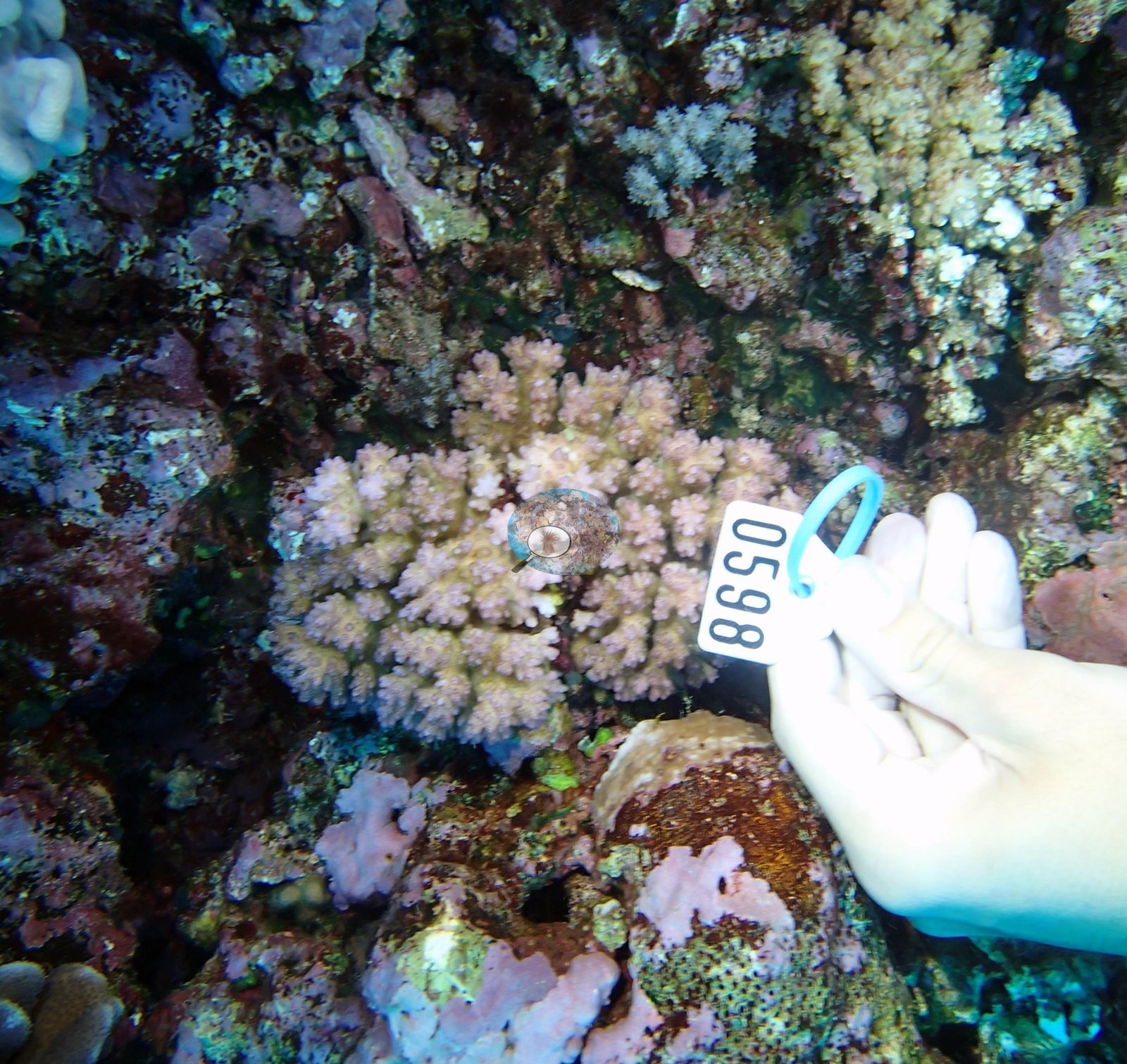
The survey team found coral-eating Drupella snails on several colonies, which may account for recent mortality scars on acroporids. At FJMT14 a small Pocillopora damicornis colony is pale cream at its branch tips with intact tissue, which the photographs cannot separate from natural pigmentation. Island-level physiological screening (Mayfield et al. 2017, PLoS ONE) flagged 1 of the 9 corals with an outlier score (at FJMT13). No station carries a Coral Health Index, and no crown-of-thorns is recorded for Matuku; Anderson's sampling sheet records two of the six colonies sampled at FJMT13 as about 20% and 80% bleached, and one of the diver's FJMT13 frames shows a young, untagged branching colony that is pale and partly bleached.
Highlights
A broad ridge crowded with small table Acropora and Pocillopora, dropping away as a near-vertical wall (FJMT13).
A small seamount top where pink coralline algae covers more surface than live coral in places, and a school of small blue-black fish streams over the crest (FJMT14).
Cover stayed between 26% (FJMT12) and 38% (FJMT10) at all five stations, with 29% on the seamount top (FJMT14).
Single-species stands of Pavona clavus and Porites rus covering almost 20 m of bottom in a west-side channel (FJMT12).
Notable observations
Fiji - Matuku (FJMT11): Corallivores and recent mortality: Drupella snails were found on several colonies, which could account for some recent mortality scars on the acroporids (same survey note on FJMT10, FJMT13, and FJMT14).
Fiji - Matuku (FJMT14): Possible paling: two frames show a small cream-and-tan Pocillopora damicornis colony, darker at the branch bases and pale at the tips. Tissue is intact with no exposed skeleton, and natural pale pigmentation cannot be ruled out; no bleaching is claimed.
4 independent survey records within 5 km of a site in this region (each record counted once; 3 lines, and a line that pools several records says how many).
Reef Check — Dabu Passage (1999): 51% hard coral cover, 4.23 km from Fiji - Matuku (FJMT11)
Reef Check — Maccadame Reef (1999): 56% hard coral cover, mean of 2 surveys (2 m and 10 m), 0.53 km from Fiji - Matuku (FJMT11) (2 records)
Reef Check — North of Arua (1999): 39% hard coral cover, 0.88 km from Fiji - Matuku (FJMT11)


 © Coral Reef Diagnostics.