
Fiji - Matuku (FJMT14)

Part of the regional summaries: Fiji - Matuku, Fiji - Moala Group (Moala / Totoya / Matuku), and Fiji - Lau
More info
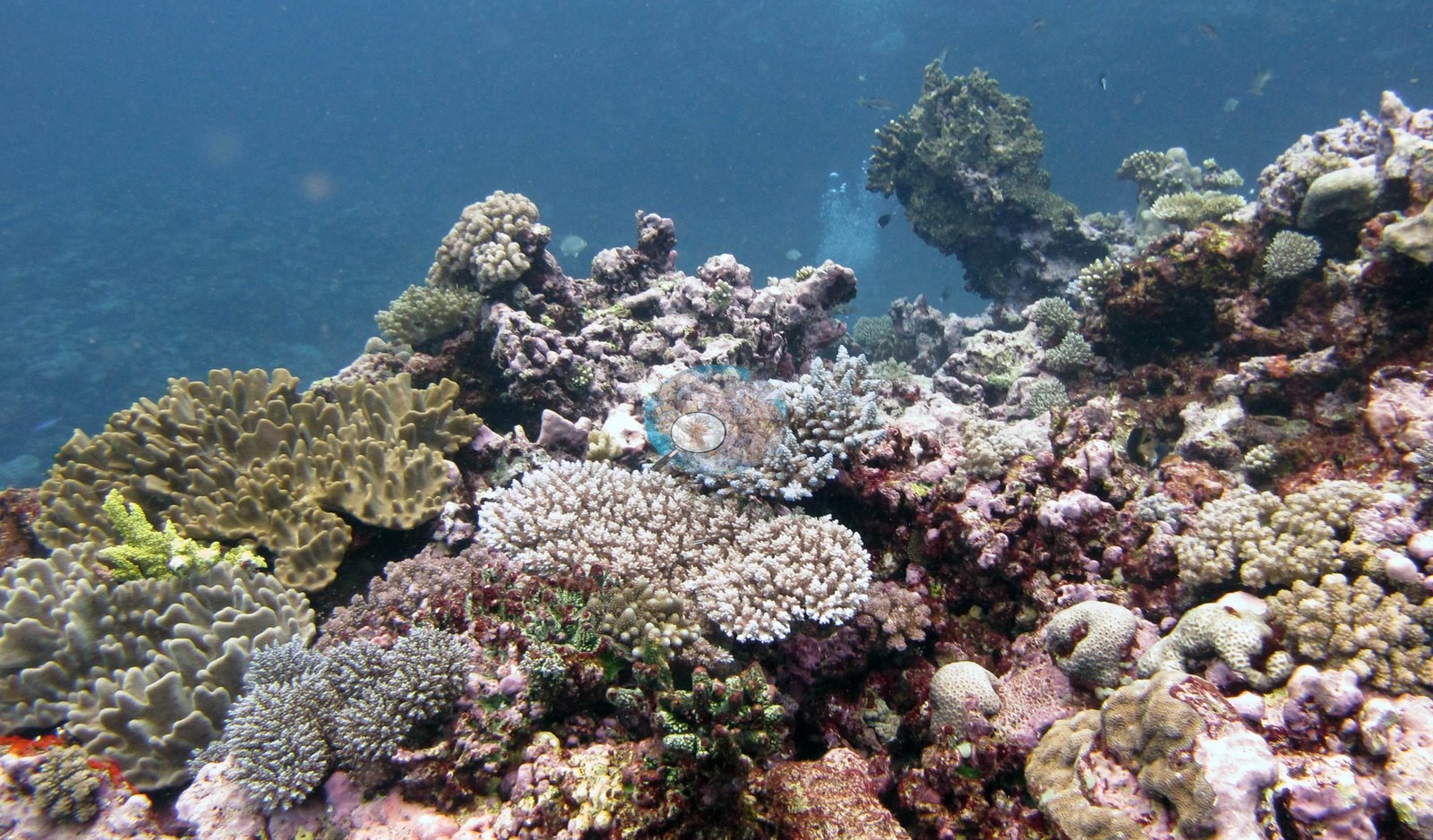
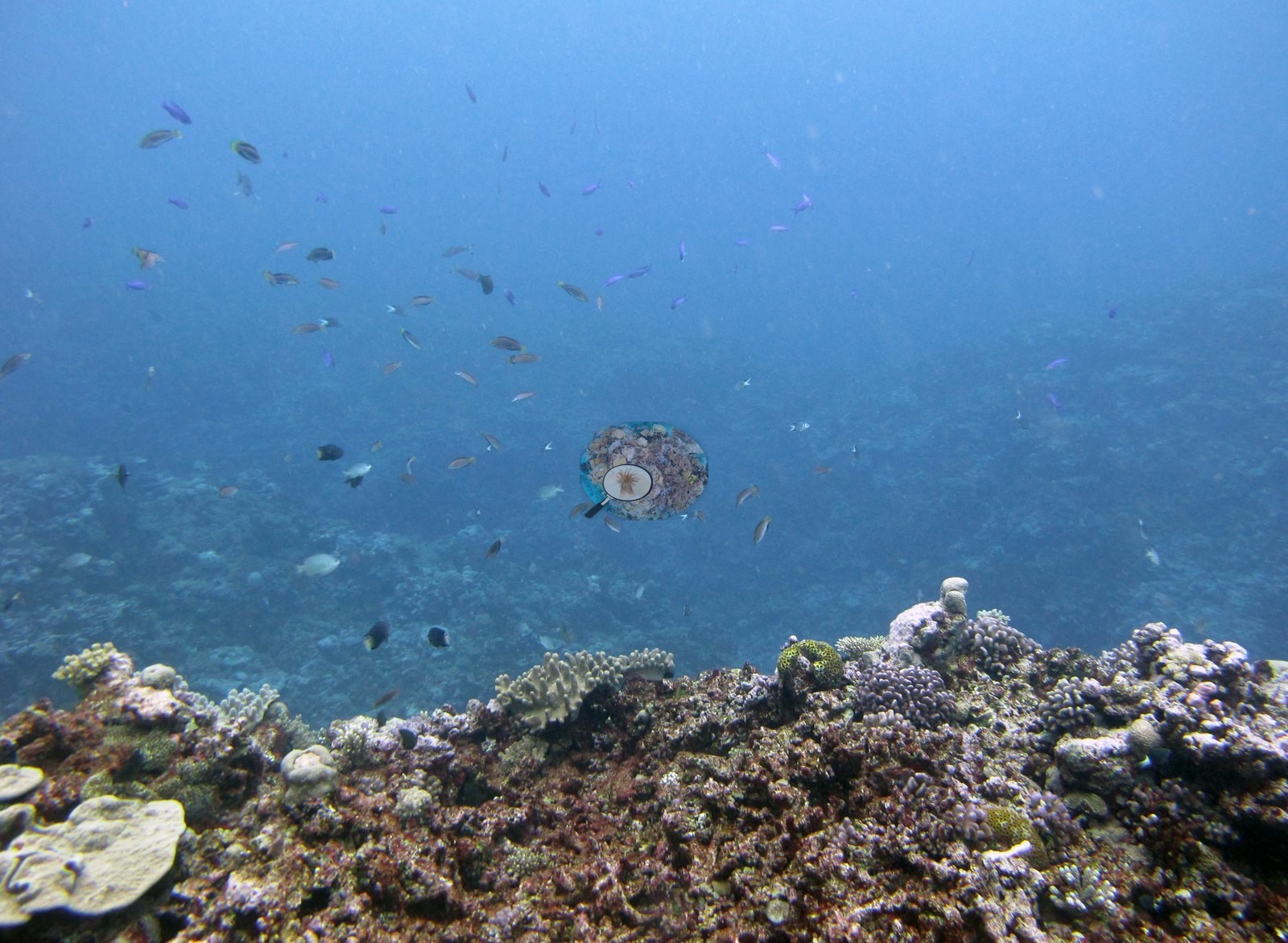
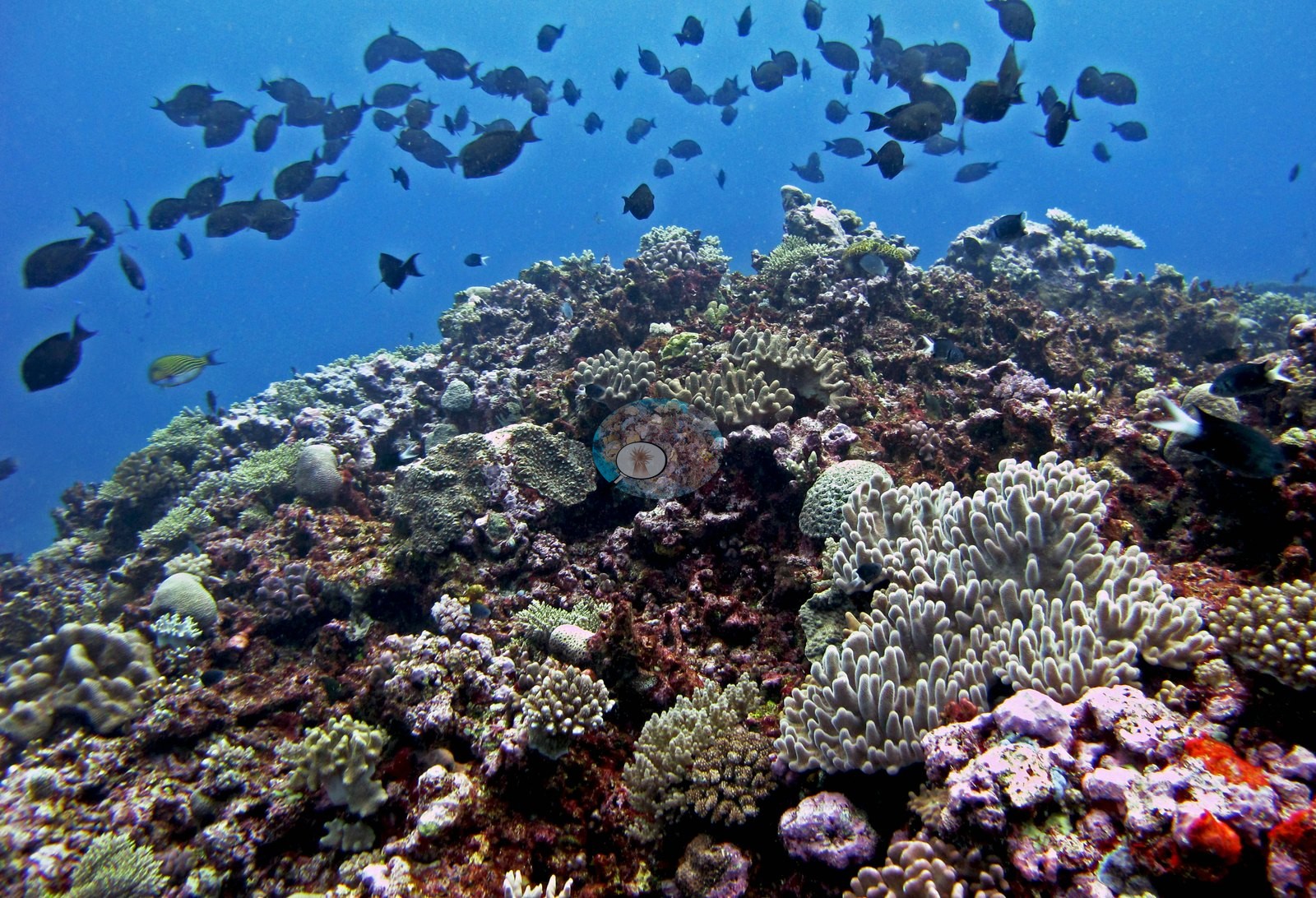
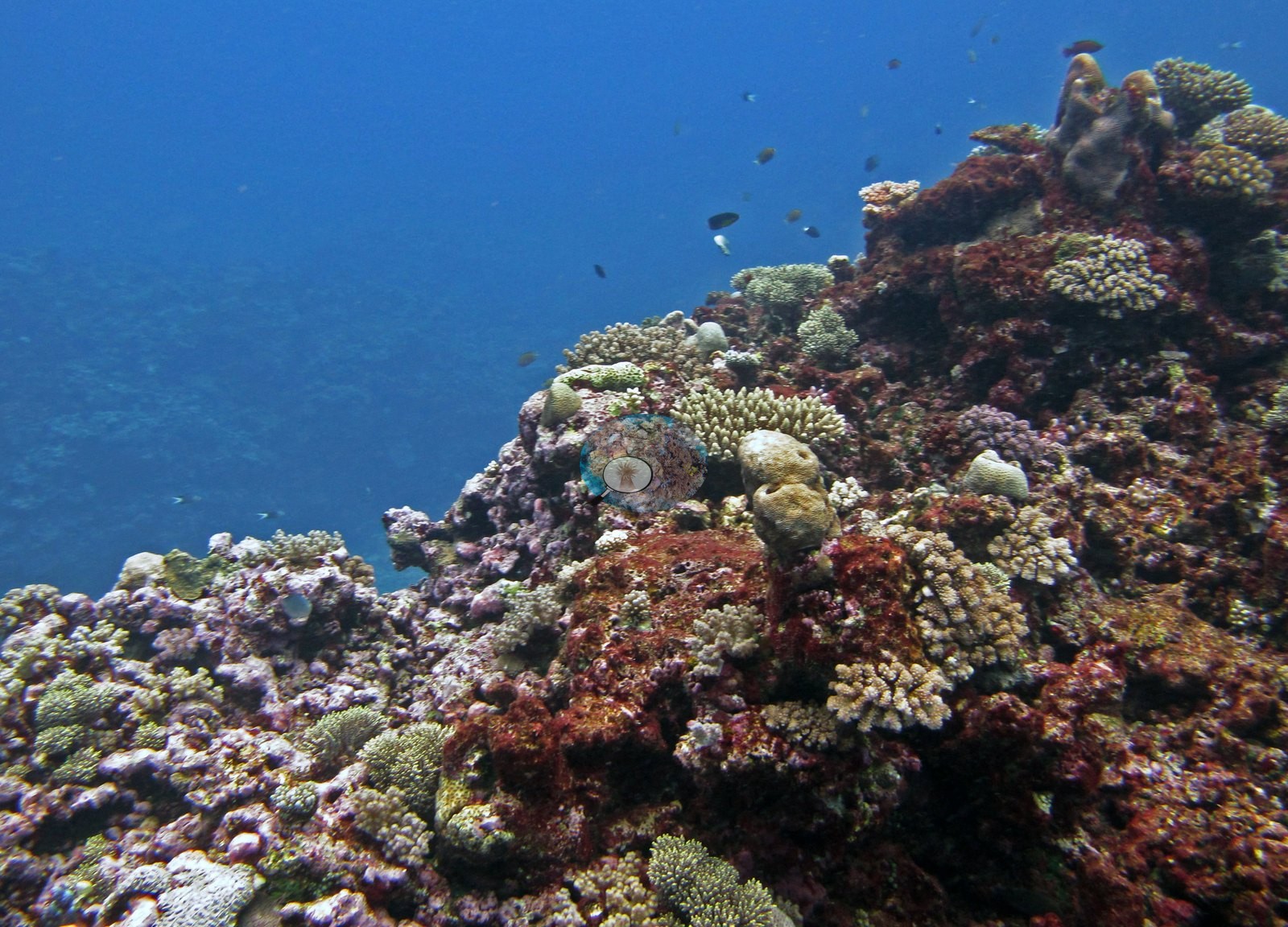
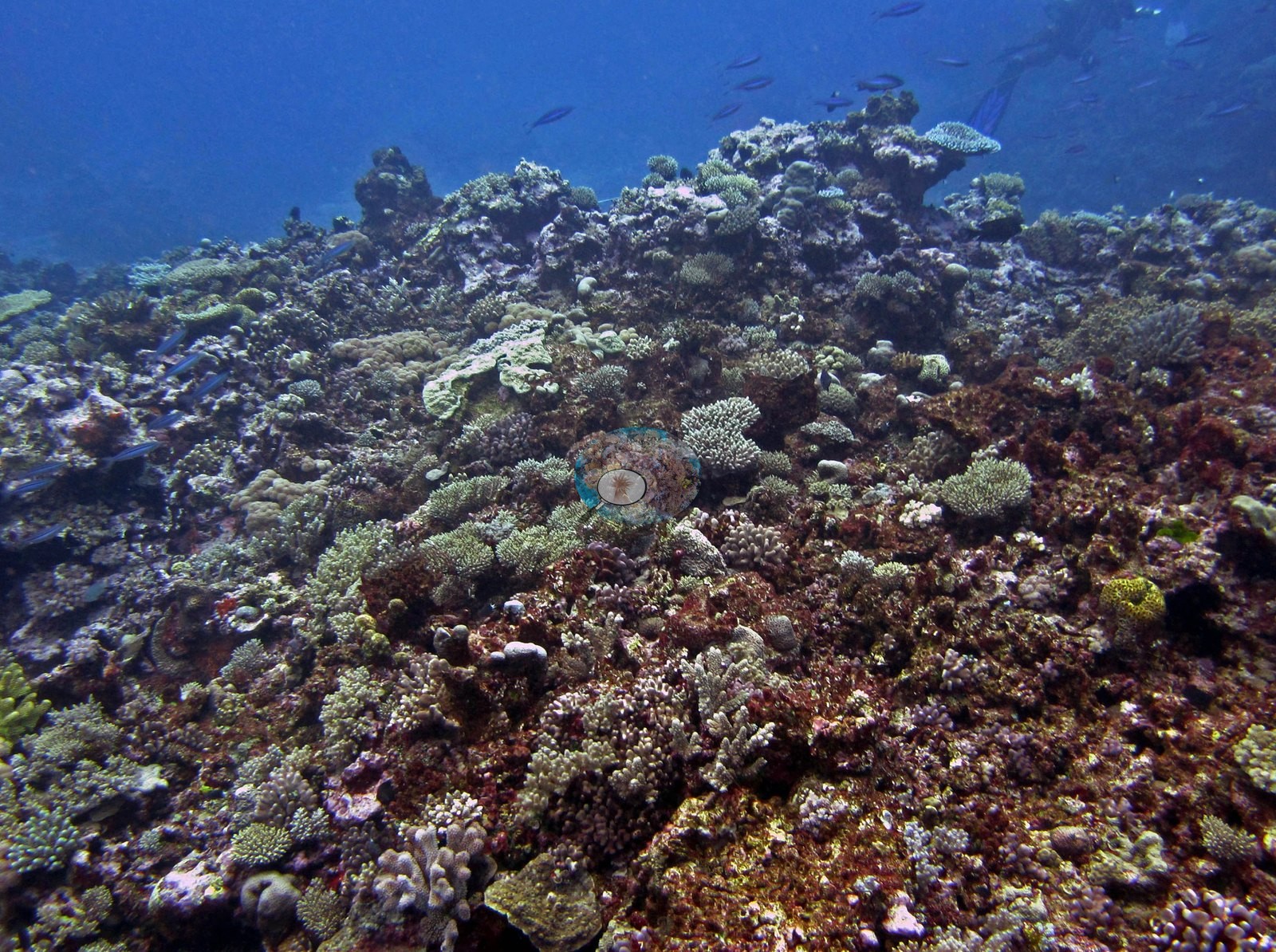
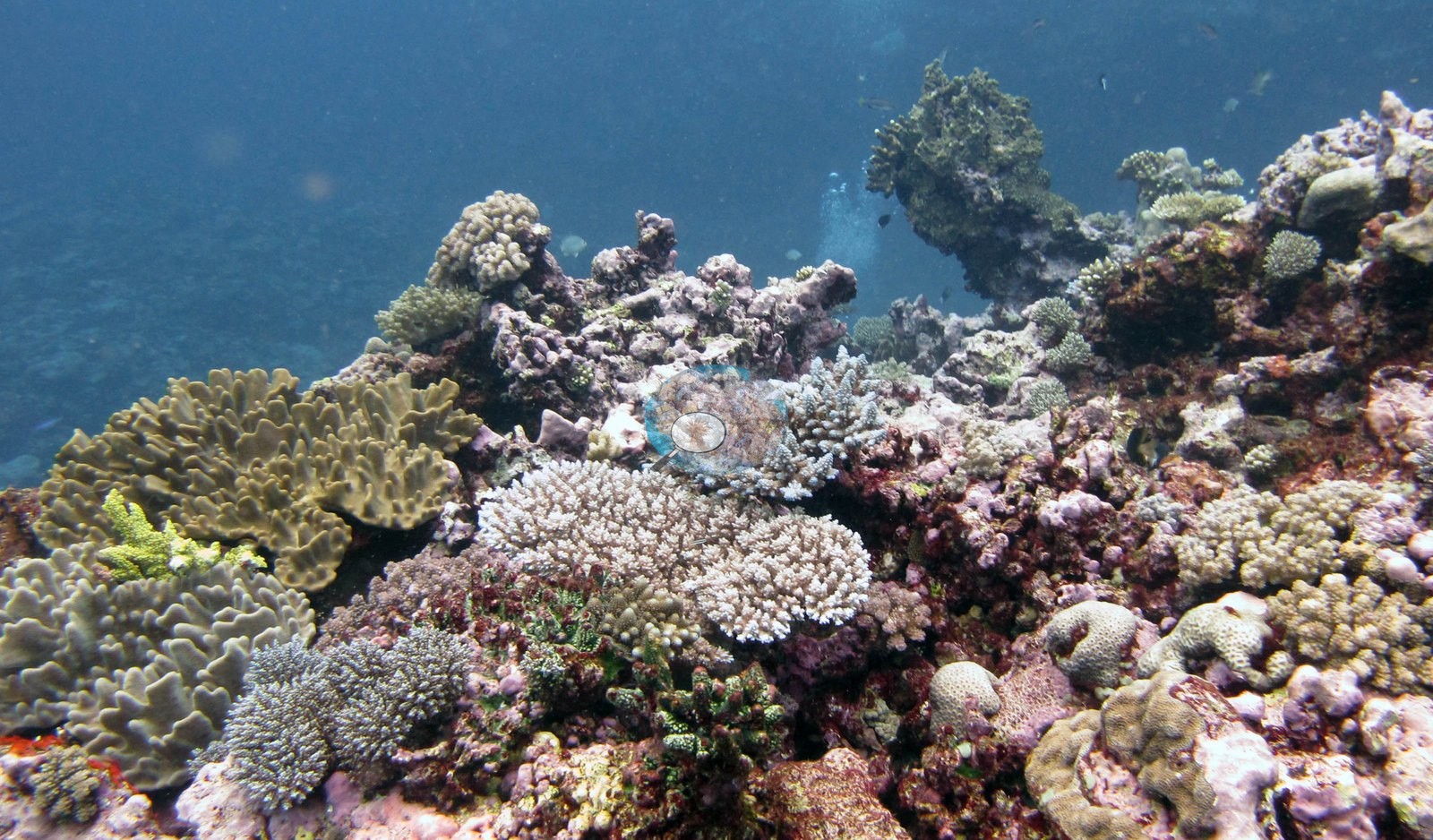
Fiji (NOAA CRW virtual station)A rise on Matuku's fore reef that Anderson recorded as the top of a small seamount, rolling into blue water, where small branching, table, and mounding corals and leathery soft corals sit on framework crusted with pink-red coralline algae that in places covers more ground than live coral does. A school of small blue-black fish streams over the crest, and cover is 29%. Surveyed on the Living Oceans Foundation's Global Reef Expedition.
E dua na vanua cecere ena yasana i tuba ni cakau (fore reef) e Matuku ka vola ko Anderson me dakuna ni dua na ulunivanua lailai e ruku ni wasawasa (seamount), e lutu sobu ki na wasawasa karakarawa, e tu kina na lase lalai vakatabataba, vakatepeli, kei na vakaulu (mounding) kei na lase malumu vakakuli (leathery soft corals) ena ivakatudei e ubi ena lumi vakalase (coralline algae) e roka (pink-red), ka ena so na vanua e levu cake na vanua e ubia mai na lase bula. E dua na ilawalawa ni ika lalai karakarawa-loaloa e qalo sivita na dakuna, ka 29% na ubi ni lase (coral cover).
AI translation of this summary; the English is authoritative. (low confidence)
CTD-cast midpoint of 26.7–26.8°C
One other CRD dive site with its own page within 5 km shown in orange — click a marker to open its page.
10 of the 13 photographs on this page are shown beside the text that discusses them under "Site description" below.
Site description
Setting
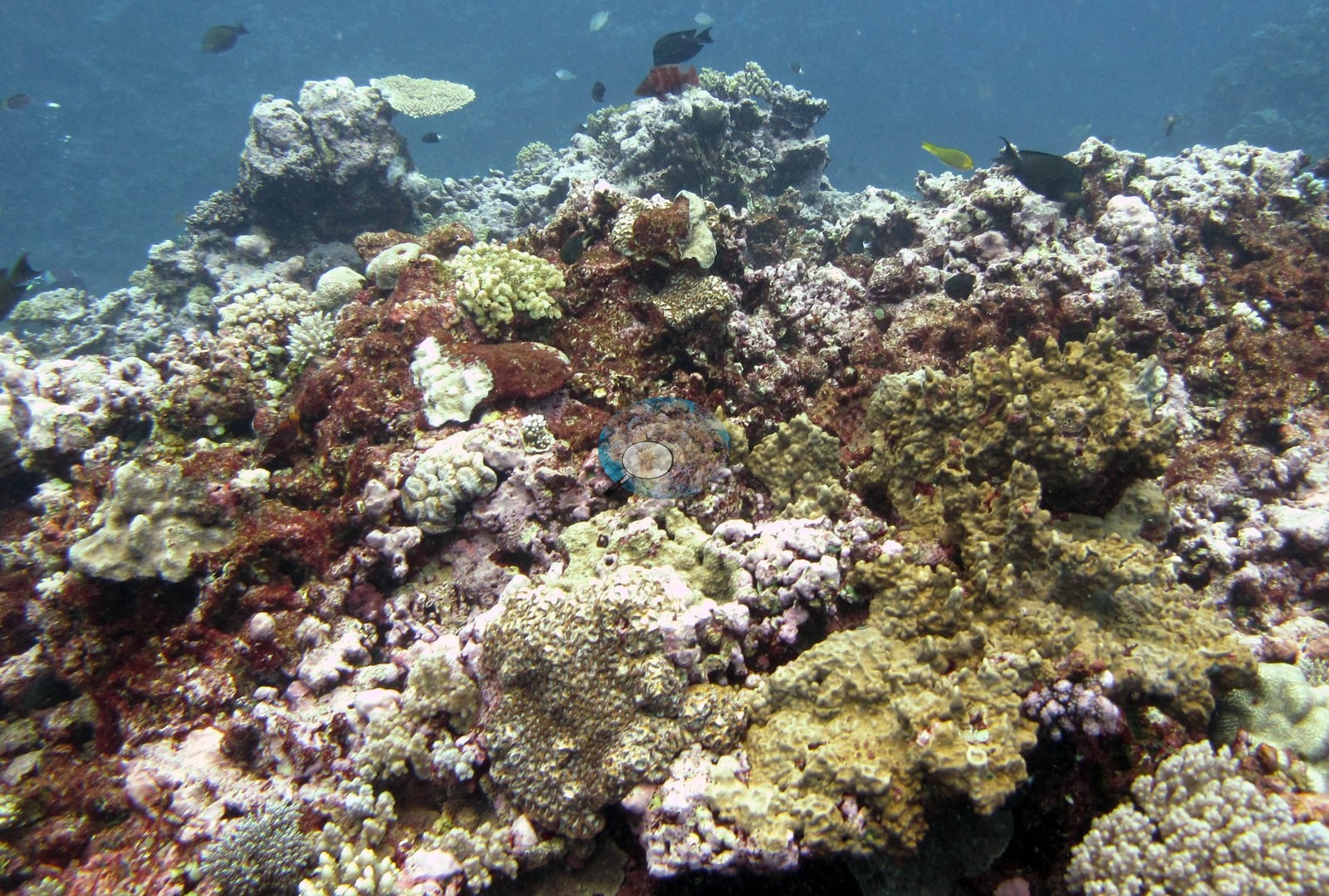
The wide frames give the setting: a low, broad rise that Anderson recorded as the top of a small seamount (e.g., Image 8), rolling over into blue water on more than one side (e.g., Image 2, Image 3, Image 5, Image 6, Image 8).
General benthic features
The surface is a mosaic of small colonies on heavily encrusted framework — pale corymbose and digitate Acropora, knobby Pocillopora-type heads, low tables, smooth to knobbly mounding colonies, mustard and lime encrusting sheets, and upright leafy fronds — with pink, mauve, and deep red coralline crust and rust-red turf between them (e.g., Image 2, Image 3, Image 5, Image 6, Image 9, Image 14).
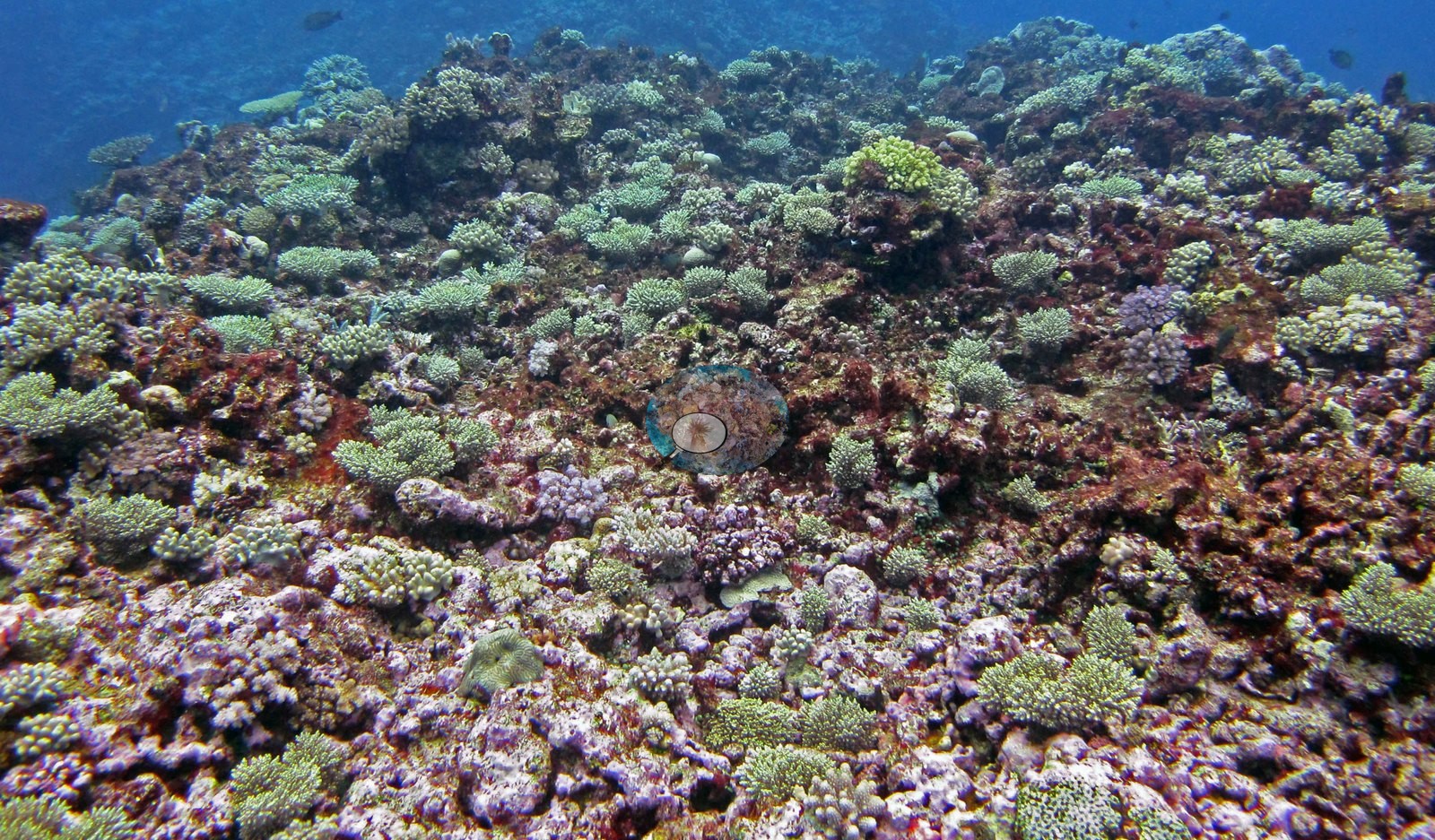
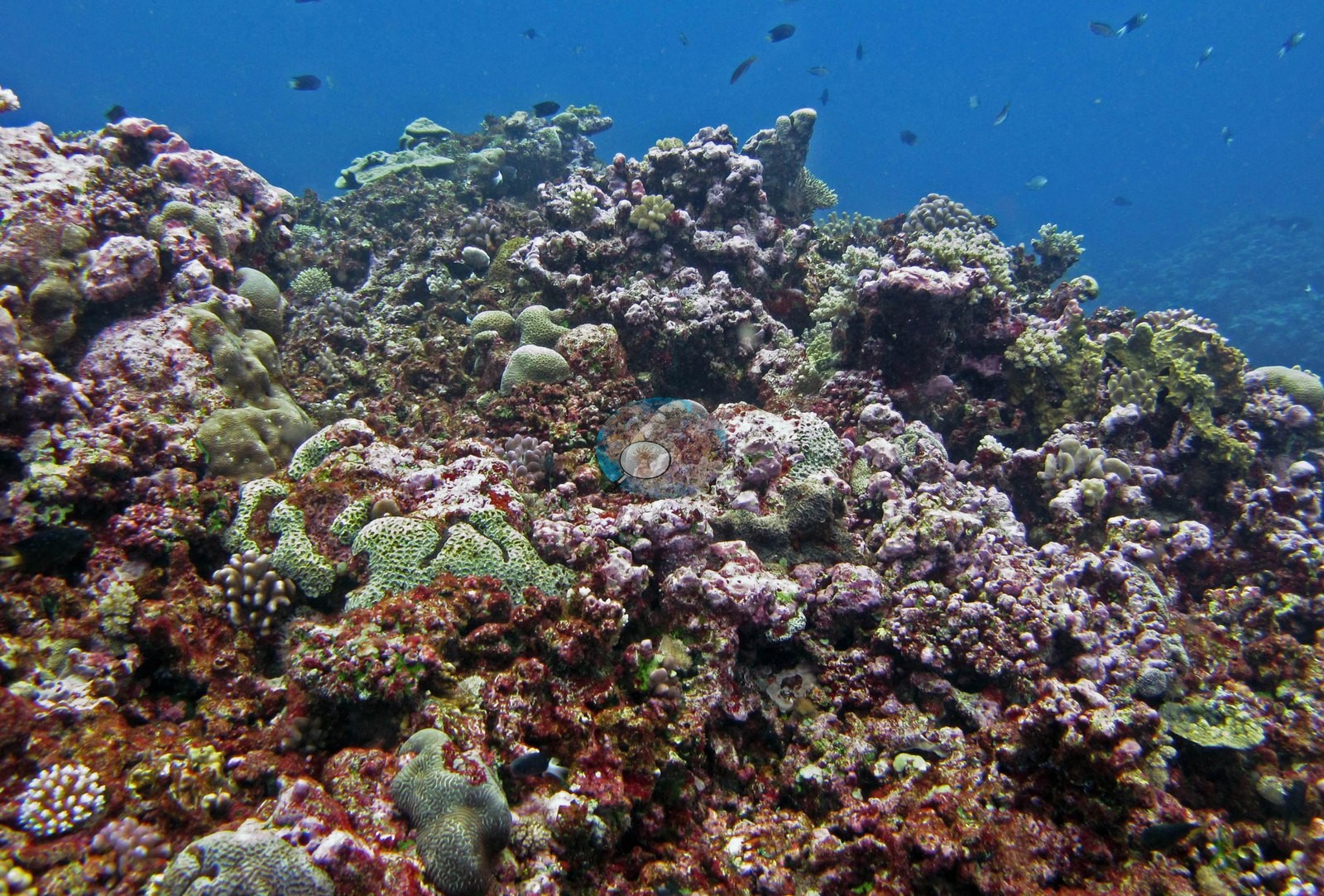
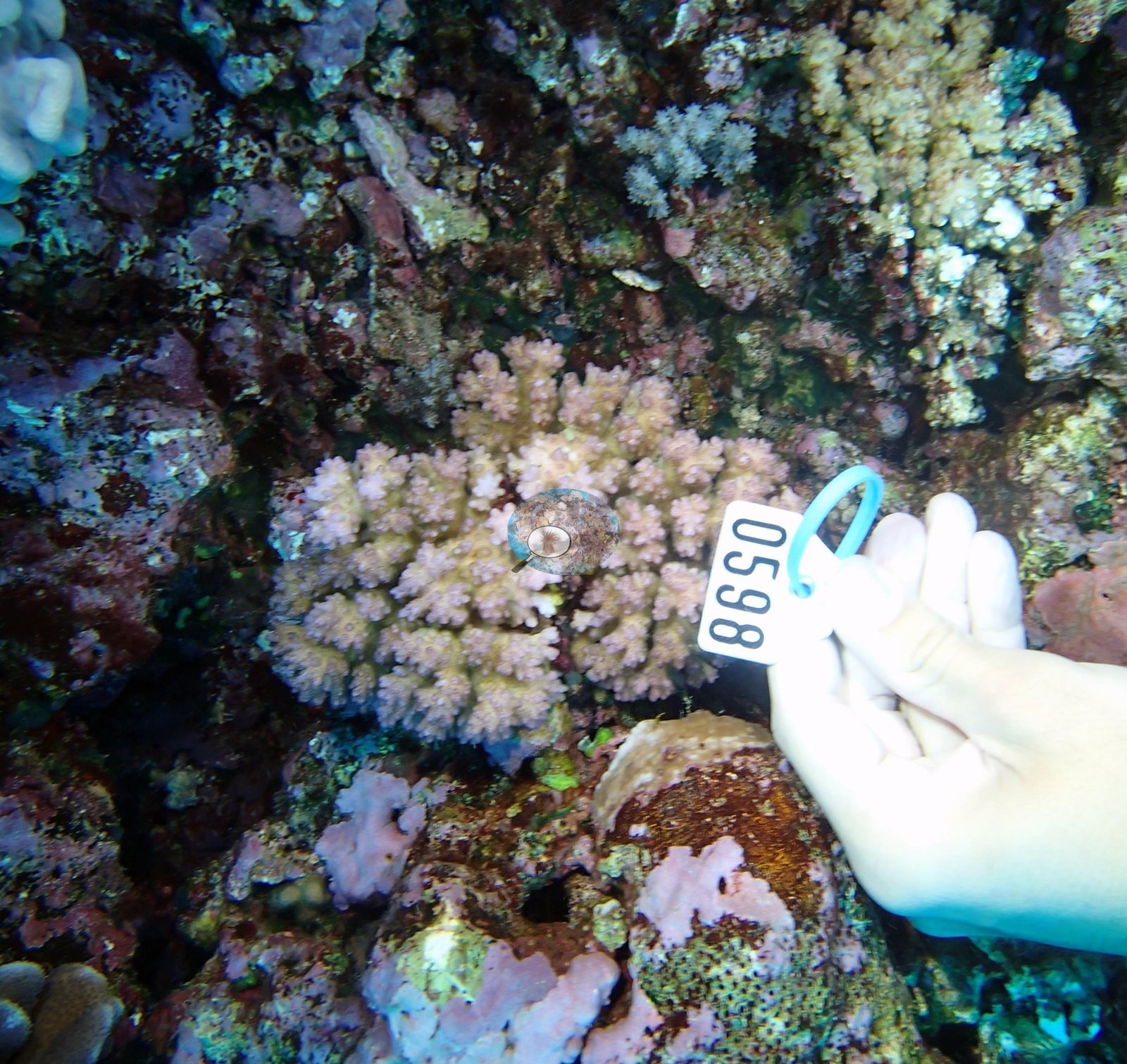
Anderson noted crustose coralline algae in one of these frames (e.g., Image 14), and it is genuinely conspicuous: in several frames the pink-red crust covers more visible surface than the living coral does. Soft corals are present as a real component rather than a footnote — Anderson noted exactly that mix in one frame (e.g., Image 5), and mustard-olive leathery colonies show clearly in it and in the shallow crest frames. Four frames are close work. One is a portrait of a small cream-and-tan branching colony growing out of red coralline crust, which Anderson identified as Pocillopora damicornis (e.g., Image 10): tissue is intact and continuous over the whole colony with darker tan at the branch bases grading to pale cream at the tips, no exposed skeleton and no algal overgrowth — the frames cannot separate natural pale pigmentation from mild paling and no bleaching is asserted here.
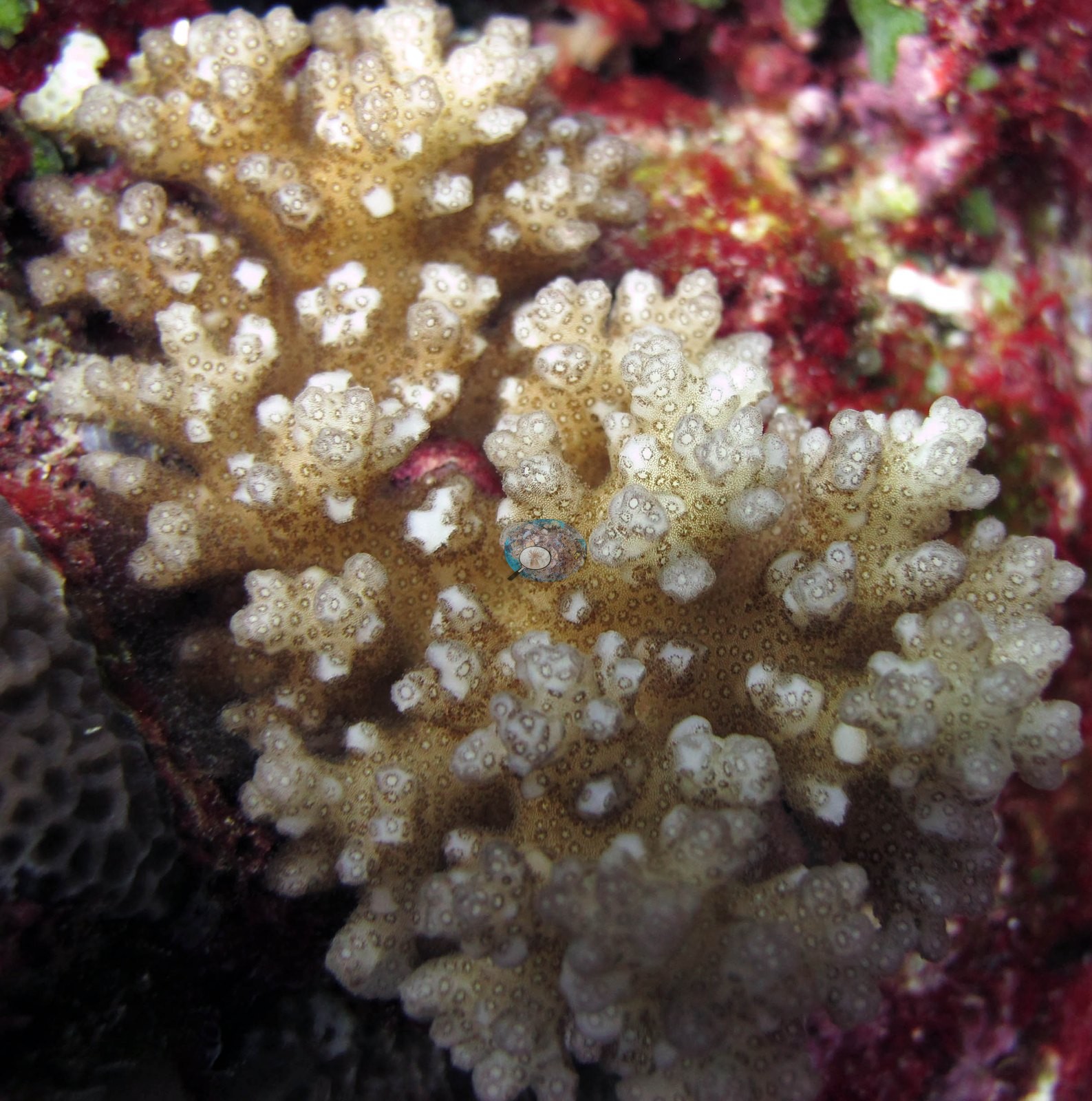
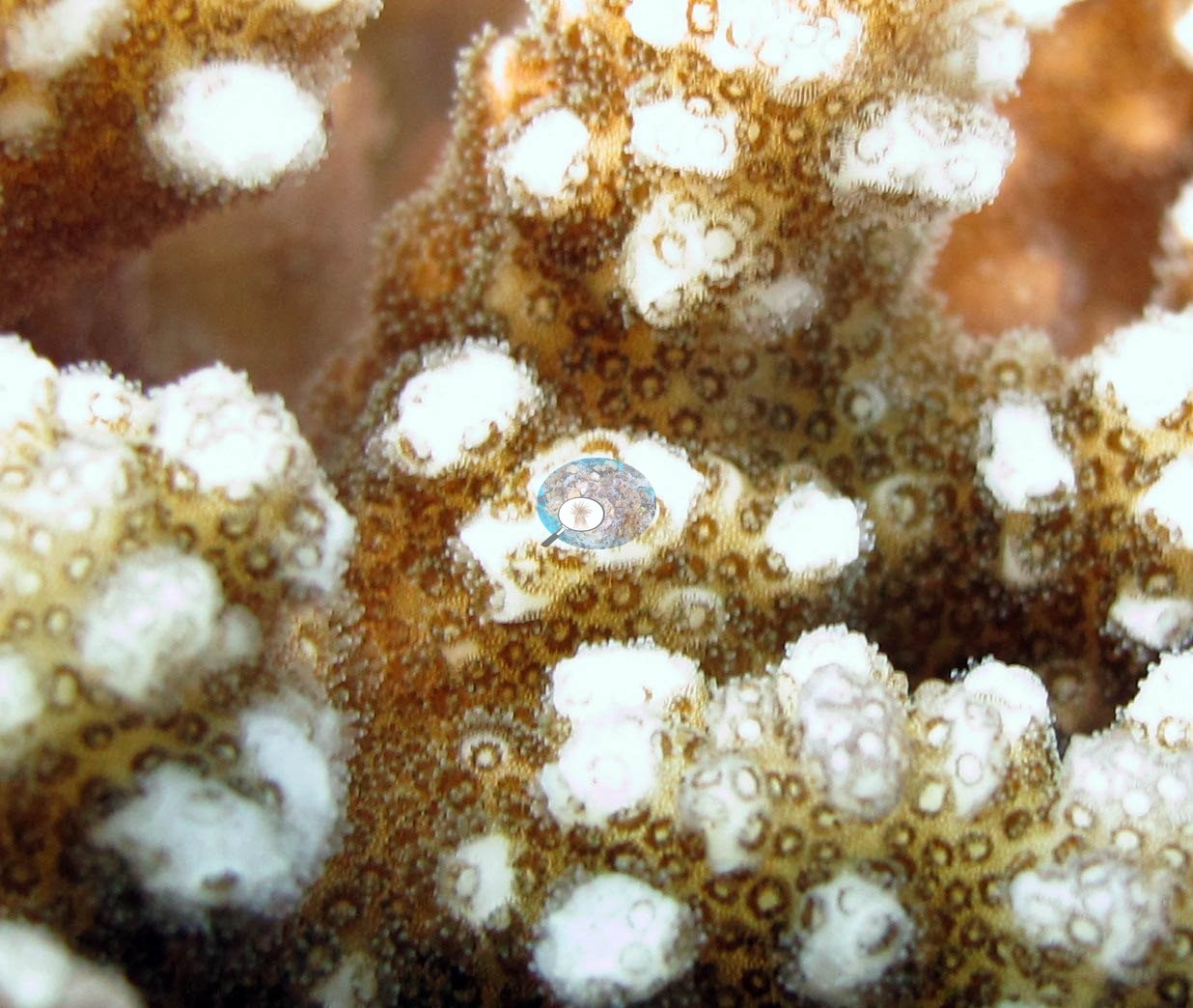
A second is a true macro of expanded white polyps standing out of tan tissue on a Pocillopora surface (e.g., Image 12), normal appearance for a feeding colony.
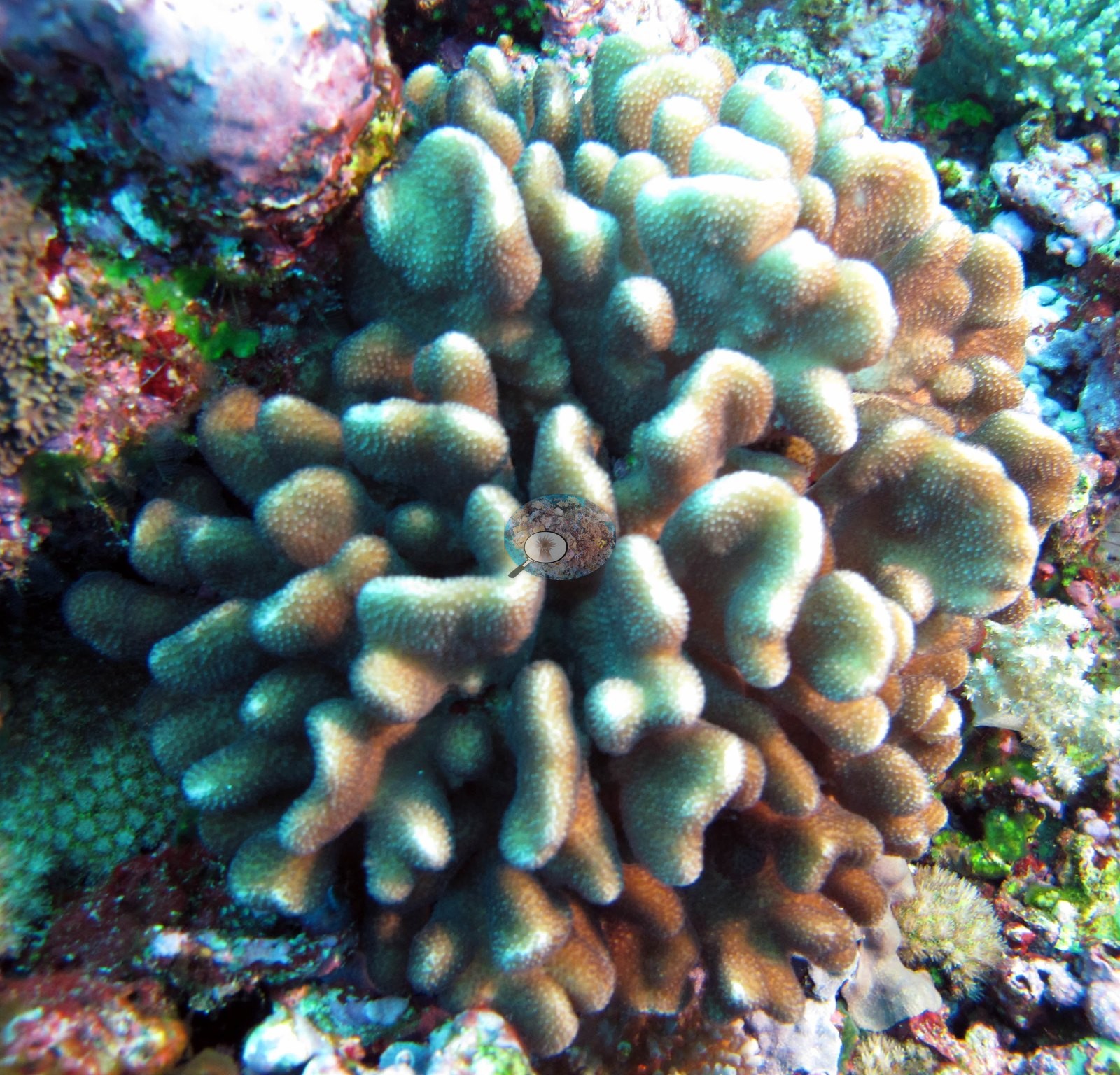
A third is a fully pigmented mint-green and tan colony of thick blunt lobes surrounded by coralline crust and green algal tufts, which Anderson identified as Stylophora pistillata (e.g., Image 13).
Coral cover
- Reference: Khaled bin Sultan Living Oceans Foundation, Global Reef Expedition (in situ transect)
- Transect mean 29 ± 3.5% SE (n = 5 transects; Living Oceans Foundation per-transect benthic data); the headline above is this all-transect mean.
Stressors
No disease lesions, crown-of-thorns feeding scars, predation scars, or fresh mortality are visible in any of this station's frames, although the survey team's notes record Drupella snails and some recent mortality scars on the acroporids. The one coral colony from this site with an outlier score was not flagged as a physiological outlier (Mayfield et al. 2017, PLoS ONE). The Living Oceans Foundation transects here recorded 7.2% cyanobacteria and no recently dead coral on the transect lines.
Fish and other fauna
One frame is a school of small blue-black fish streaming up over the crest against the surface light, the busiest fish frame in the set (e.g., Image 8).
Comparisons with other data
Apart from the Living Oceans Foundation survey shown here, we found no other surveys at this site as of 2026. If you would like to share yours, please email us.
Other notes
About a quarter of this station's frames are close-in colony work rather than habitat photography. All species names above are Anderson's own field calls; the photographs do not independently support them.
Survey team's site notes: Visibility was poor, with a fair amount of suspended sedimentation. Large branching acroporids with some recent mortality was common. Drupella snails were found on several colonies which could account for some recent mortality scars on the acroporids. Plating Pachyseris and Echinopora colonies common at base of slope.
Data & links
- Download benthic survey data (CSV) ↗
- Download all LOF-GRE data (933 sites) ↗
- Photo portfolio ↗
- Coral Reef Diagnostics page for this area ↗
All images from Coral Reef Diagnostics. Data are from the Khaled bin Sultan Living Oceans Foundation Global Reef Expedition and Coral Reef Diagnostics.
© Coral Reef Diagnostics.