Island summary of 5 dive sites. Figures are averages across the sites that report them (n = sites with a value); each site's own page has its individual values. Part of the Fiji - Northern Lau (Vanua Balavu / Cicia / Nayau) regional summary.
Heat-stress figures: NOAA Coral Reef Watch — Fiji 5-km virtual station. Each pill links its source record and carries the values behind it.
Island summary
Cicia's Acropora-led barrier and fore reefs held 38-67% coral in June 2013, the highest Fiji reading; 212 crown-of-thorns starfish were removed from one outbreak reef on the island.
Heat stress
sea surface temperature (SST) (left axis)DHW under 2DHW 2–3DHW 3–5DHW 5–8DHW 8–10DHW over 10 (🔥 above 12)
Daily SST (line) and weekly maximum Degree Heating Weeks (bars), Jan 2023–Oct 2026, NOAA Coral Reef Watch 5-km Fiji virtual station. Dashed line: bleaching threshold (maximum monthly mean 28.4°C + 1°C). DHW ≥ 4: bleaching likely; ≥ 8: severe bleaching and mortality likely. A bar is drawn only where DHW exceeds zero, so a stretch with no bar is accumulated heat stress of zero, not missing data — the SST line runs the full period.
5 sites in this region — click a marker to open that site.
Overview
Cicia is an island in the northern Lau group of eastern Fiji. Five Global Reef Expedition stations were surveyed off it on 18 June 2013 (FJCC44 to FJCC46) and 19 June 2013 (FJCC47 and FJCC48), on barrier reef and fore-reef terraces, at maximum dive depths from 12.2 m at FJCC46 (Living Oceans Foundation (LOF) team log) to 32.3 m at FJCC47.
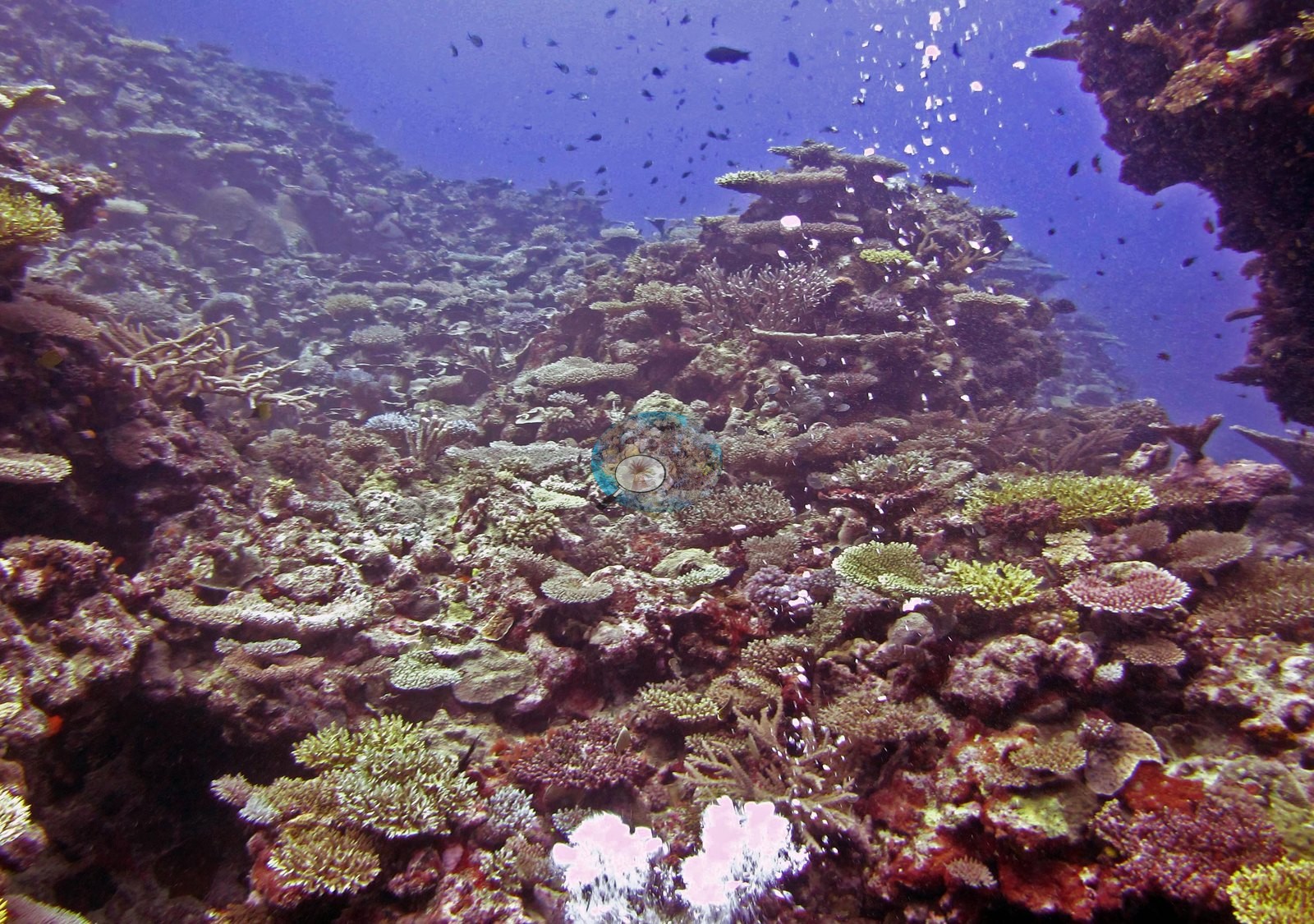
Cicia's reefs are high in coral cover and led by Acropora, with cover from 38% at FJCC47 to 67% at FJCC46. Algae ran the other way, from 26% at FJCC46 to 53% at FJCC47. FJCC46 is a barrier fore reef; the expedition's island-level notes for Cicia's fore reefs describe large Pocillopora eydouxi, Isopora, and big brain and Pavona stands along the slope edge. FJCC45 (50%) is a flat-topped coral mountain paved with table Acropora in cream, sea-green, olive, mauve, and salmon under clouds of anthias and fusiliers, FJCC44 (42%) an Acropora-led reef of large tables and staghorn thickets on a stepped slope, and FJCC48 (47%) a mixed coral garden with an overhanging buttress of plating corals. FJCC47 differs from its neighbors: a low terrace covered in a dense mosaic of small colonies rather than tables.
The field report records an active crown-of-thorns outbreak on a single Cicia reef, where 212 starfish were removed, although no starfish or feeding scars appear in the station photographs. At FJCC45, one frame shows an anchor chain lying across the reef, which Anderson noted as a bad place to anchor. The transects at FJCC46 logged 7.3% dead coral. No station carries a Coral Health Index, and island-level molecular screening found no colonies with an atypical stress profile among those sampled, though Anderson's sampling sheet records two of the colonies sampled at FJCC44 as 80% and 50% bleached and several others as 5–15% pale, and the one colony sampled at FJCC48 (F102) as 5–10% bleached. Sightings include a large feather star and a giant clam at FJCC44 and a small reef shark cruising the deeper slope at FJCC48.
Highlights
67% cover on a barrier fore reef off Cicia (FJCC46).
A flat-topped coral mountain paved with table Acropora stacked like shingles (FJCC45).
Large Acropora tables and staghorn thickets on a stepped slope (FJCC44).
A coral trunk: an overhanging buttress built almost entirely of pale-green plating corals (FJCC48).
A low terrace of small branching, knobby, and encrusting colonies, photographed with the survey team at work on the transect (FJCC47).
212 crown-of-thorns starfish removed from a single outbreak reef on the island, in shallow water (field report).
Notable observations
Fiji - Cicia (FJCC46): Crown-of-thorns outbreak (field report): 212 crown-of-thorns starfish (COTS) were removed from one outbreak reef on Cicia, where hundreds were found in very shallow water down to about 15 m; the report does not tie that reef to a surveyed station. The FJCC46 transects logged 7.3% dead coral. No starfish or feeding scars appear in the photographs of the other Cicia stations.photo: Fiji - Cicia (FJCC44)
Fiji - Cicia (FJCC44): No bleaching, disease lesion, or crown-of-thorns starfish in the habitat frames, but Anderson's sampling sheet records two of the colonies sampled here as 80% and 50% bleached and several others as 5–15% pale.
The mean is an UNWEIGHTED mean of the dive site values — each dive site counts once, whatever its photo count — which is the convention of the published tables and of every other figure on this page. Each value is the one printed on that dive site's own page; a page that prints no value for a method (fewer than 10 photographs) is left out of that method's mean.
This table pools only the 2 dive sites in this unit that have a method comparison; the table for all 10 dive sites is on the Fiji - Lau page.
Deviation from the reference
Over the dive sites where an independent reference exists, Claude (Anthropic), blind point count has a mean absolute deviation of 8.5 pp from it across 2 dive sites. Not in this ranking: CoralSCOP (edited), which measures coral area rather than points. A mean absolute deviation is not an accuracy score: a model with a consistent offset is correctable, while one with the same deviation scattered in both directions is not.
By dive site
Dive site
CoralSCOP (edited)
Claude
Diver transect
FJCC45
41%*
n=18
41%*
n=18
50%
FJCC48
38%*
n=14
39%*
n=14
47%
n under each value is the number of photographs that method scored at that dive site. ⚠ marks a cell that is not an independent check. * marks a value resting on only 10–19 photographs, which is less certain.
Reference: LOF Global Reef Expedition in-water transects (mean of all the station's transects, Living Oceans Foundation per-transect benthic data). Denominator: line/point intercept along the transect; not a photo-point denominator. Source: LOF Global Reef Expedition 2013, per-transect benthic data ('GRE data-full benthic'): the mean of all of each station's transects For all 10 dive sites in the comparison: The transect is THE coral-cover value at every site; the Claude photo estimate is a methods comparison only, never averaged with the transect and never a headline. Site-level only: the photos come from the survey dives, not from the transect points. Few usable habitat photos exist for Fiji: only 10 sites have 10 or more, and 9 of them have fewer than 20 (low-n), so these are not confident site estimates. Accuracy, Claude vs transect, 10 sites: mean difference -5.4 pp (95% CI -12.7 to +1.9), mean absolute difference 10.3 pp, r 0.35. Claude reads lower than the transect at most sites and does not track it from site to site. This is a methods comparison, not a ranking.
Nearby external survey stations
1 independent survey record within 5 km of a site in this region (each record counted once).
Reef Check — Barracuda Point (2006): 59% hard coral cover, 4.99 km from Fiji - Cicia (FJCC44)

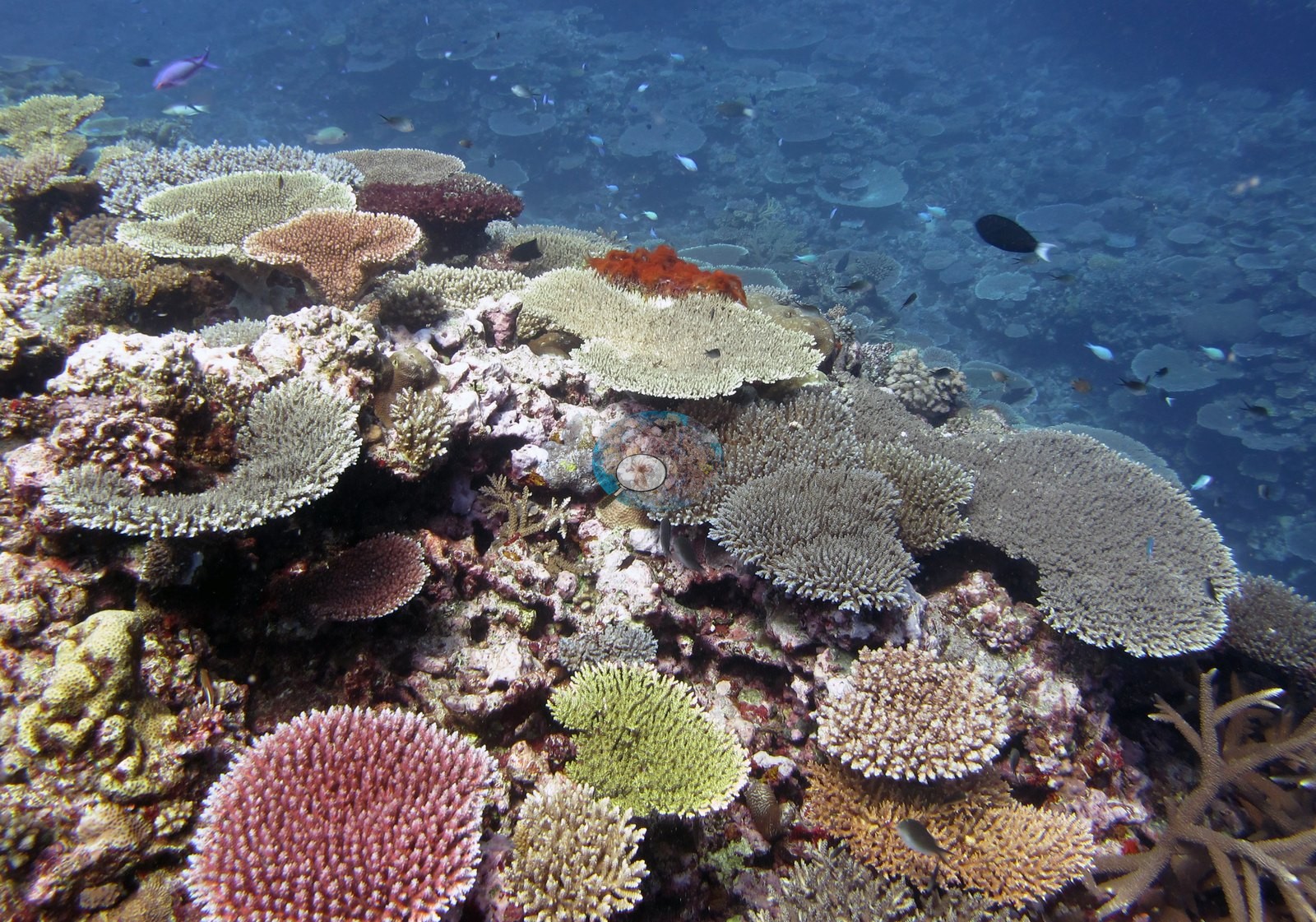

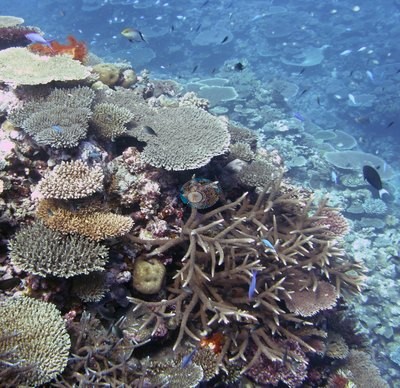
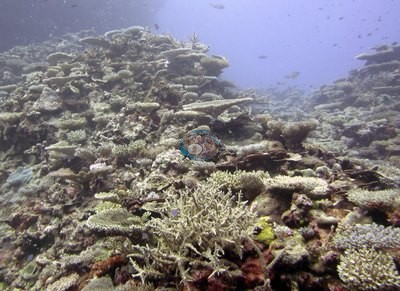
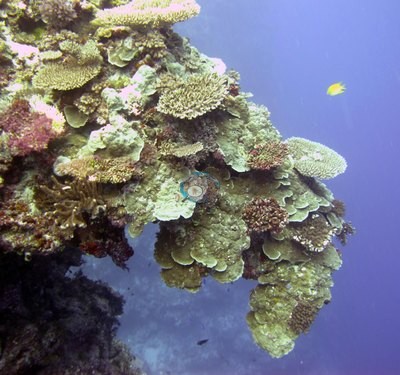
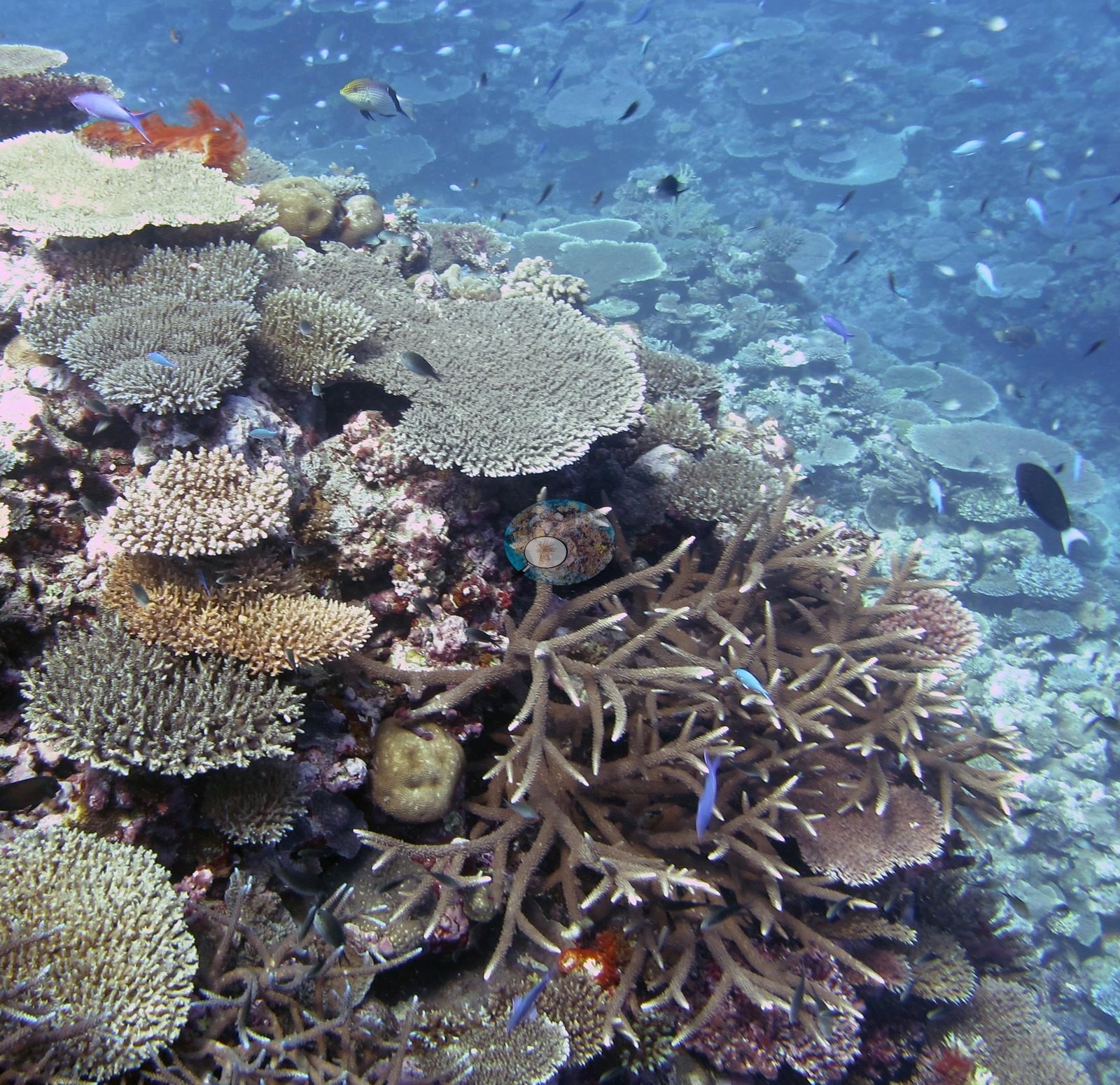
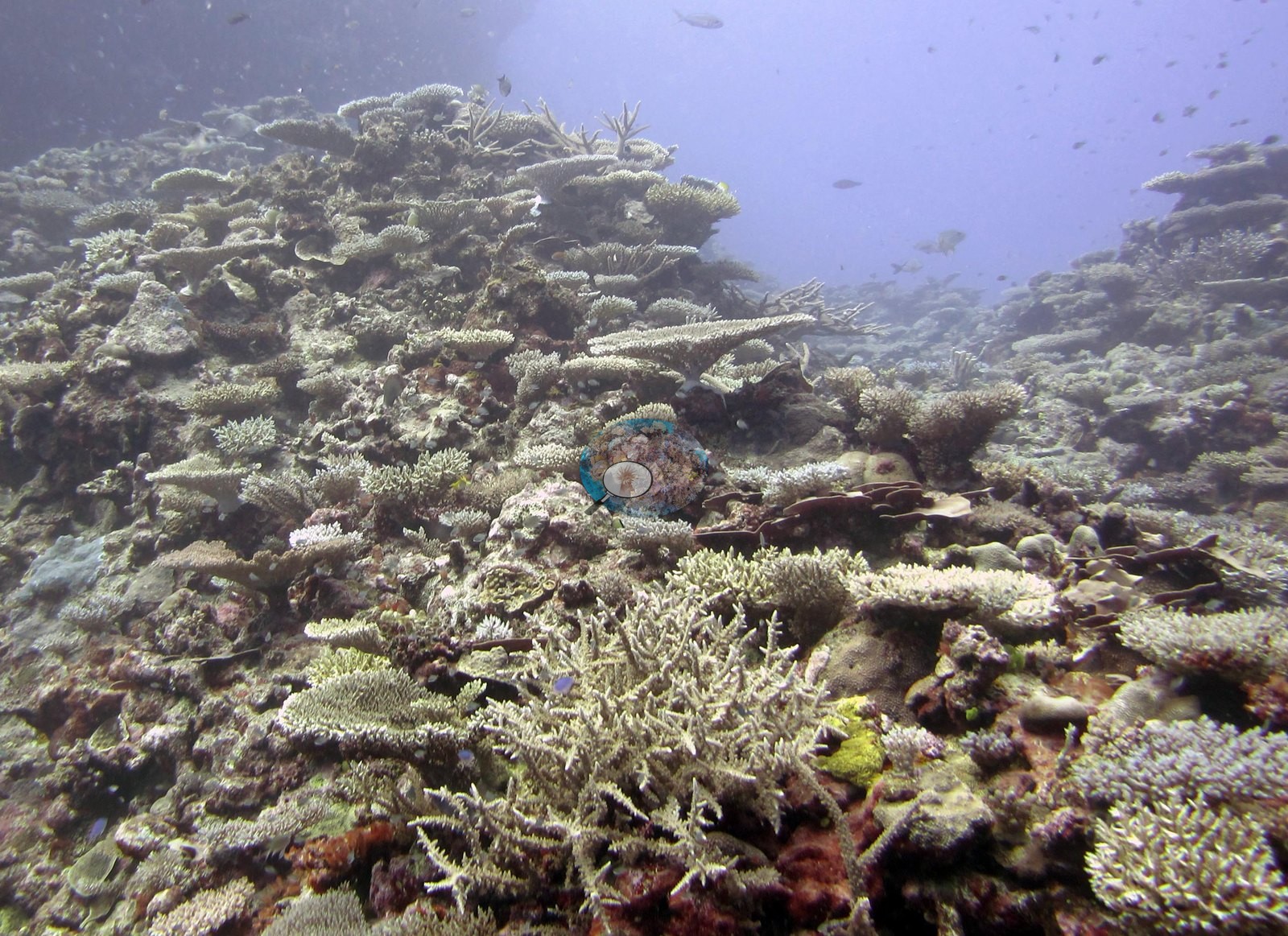
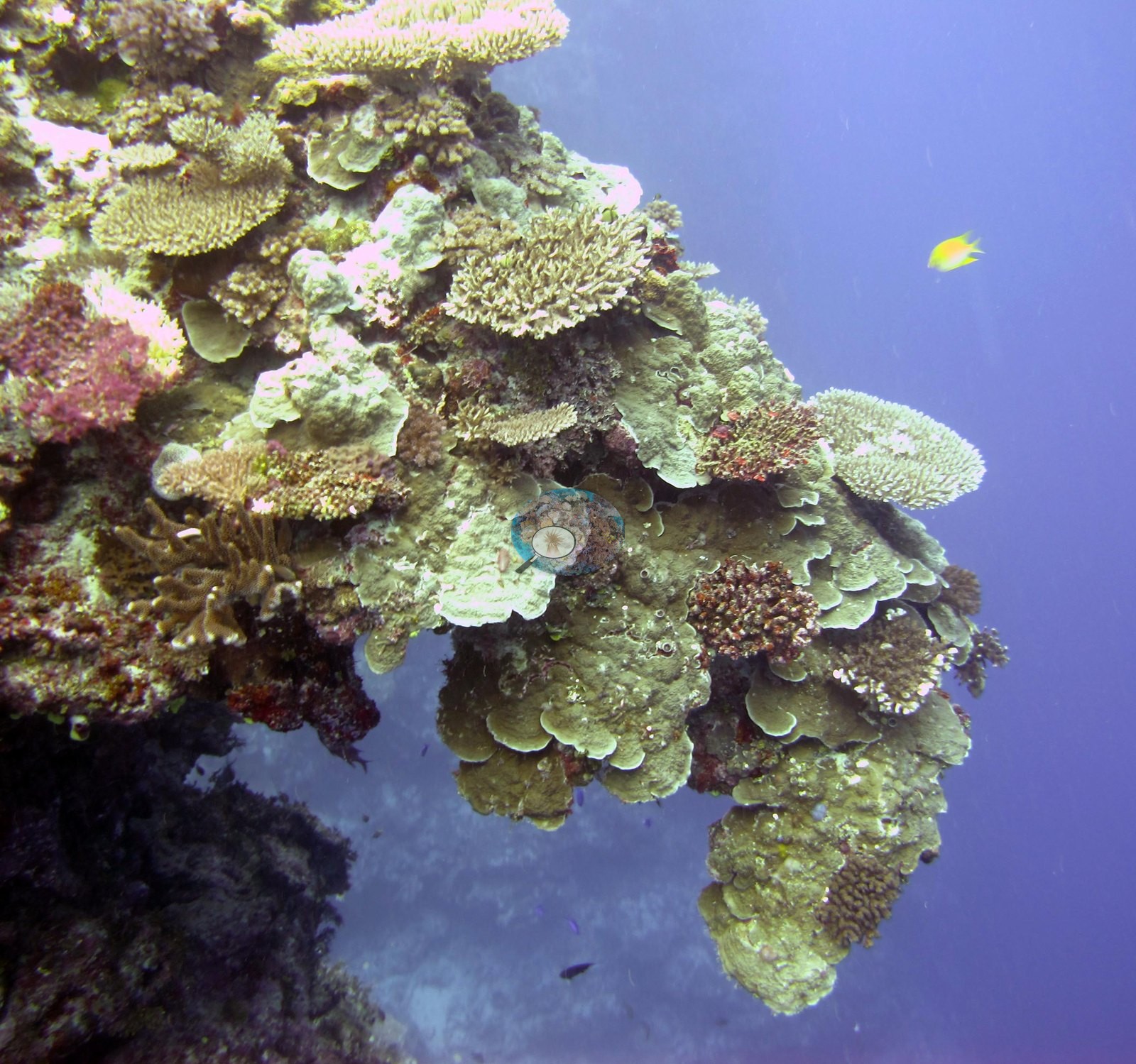
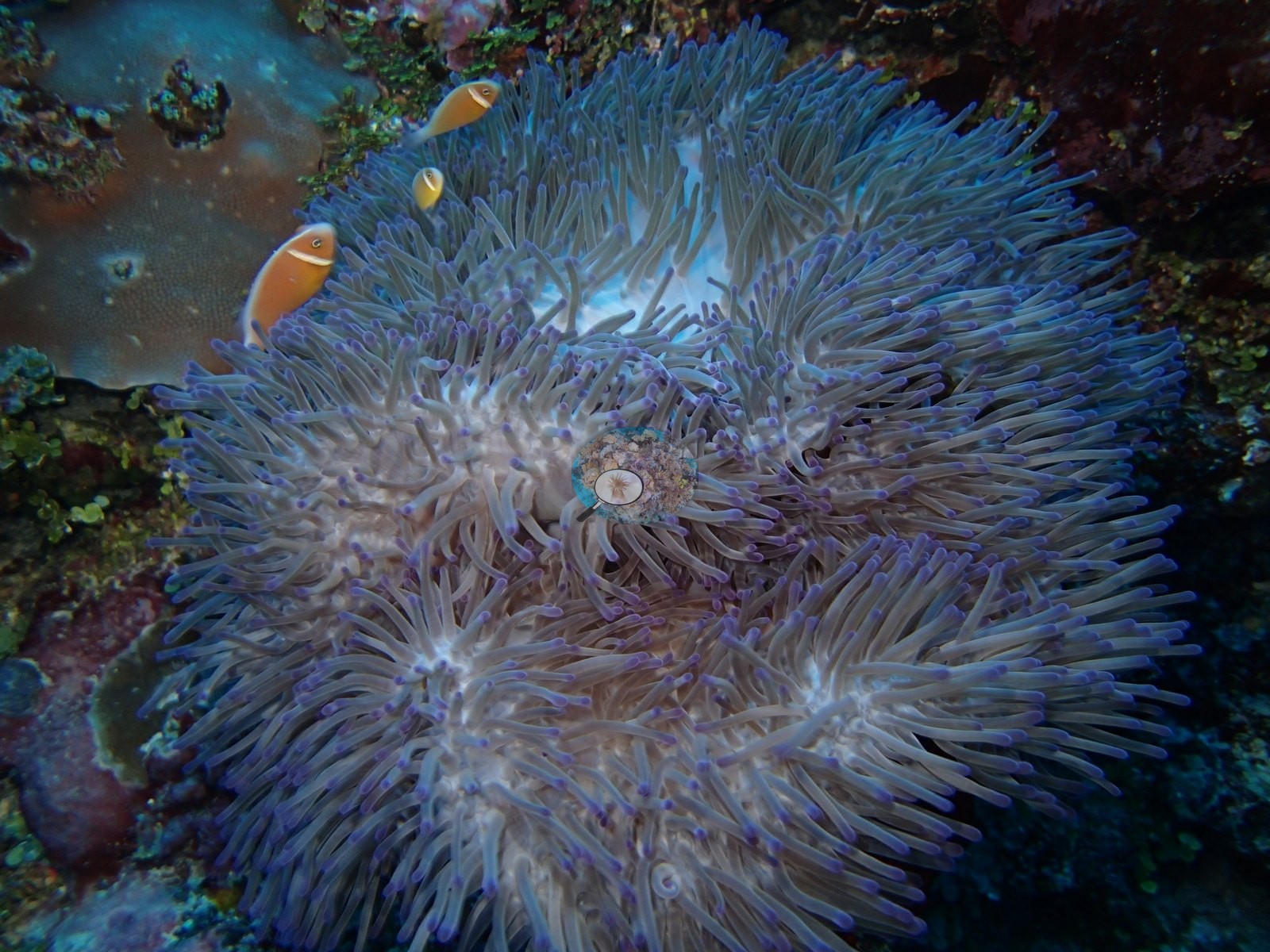
 photo: Fiji - Cicia (FJCC44)
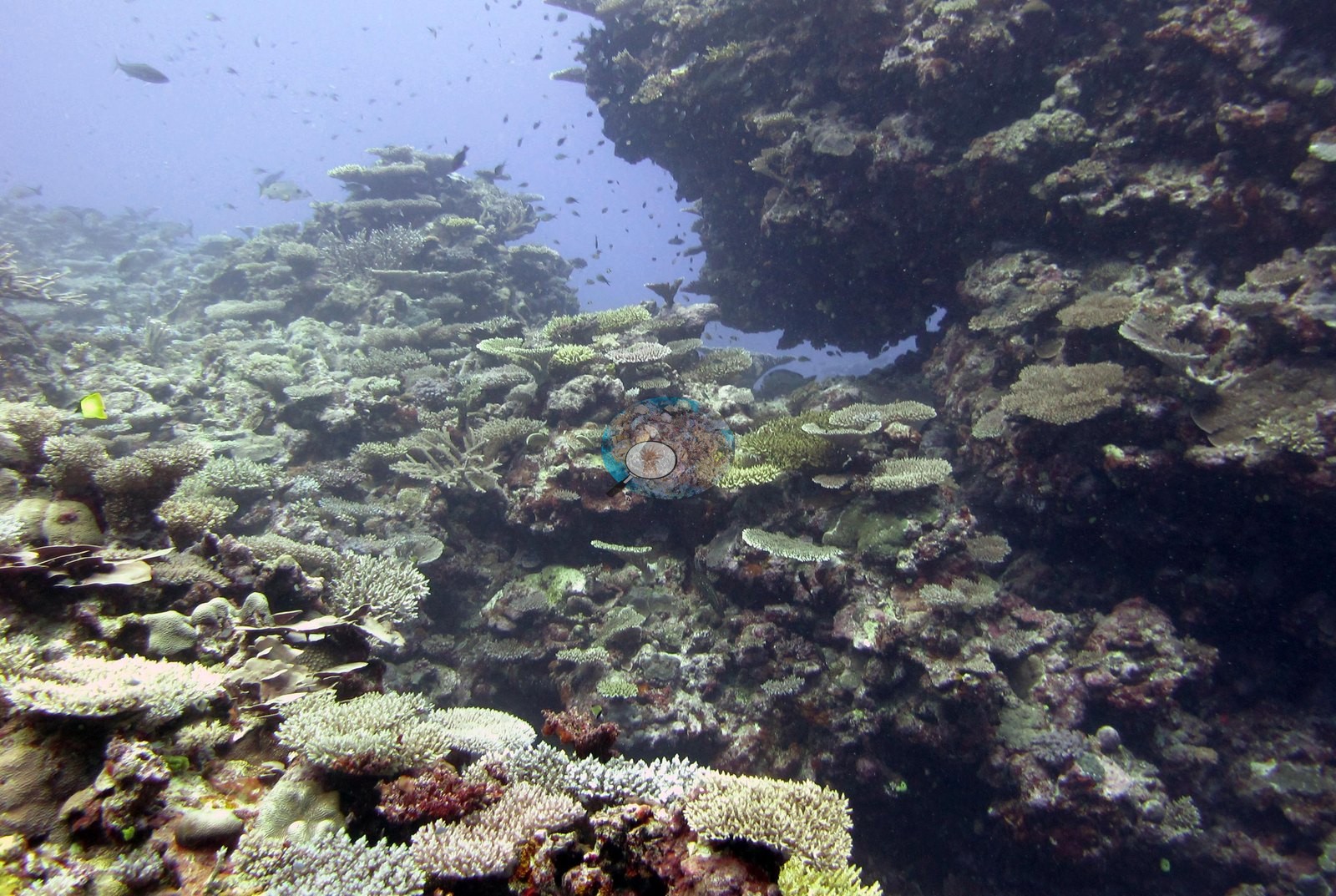
 © Coral Reef Diagnostics.