
Part of the regional summaries: Fiji - Cicia, Fiji - Northern Lau (Vanua Balavu / Cicia / Nayau), and Fiji - Lau
More info
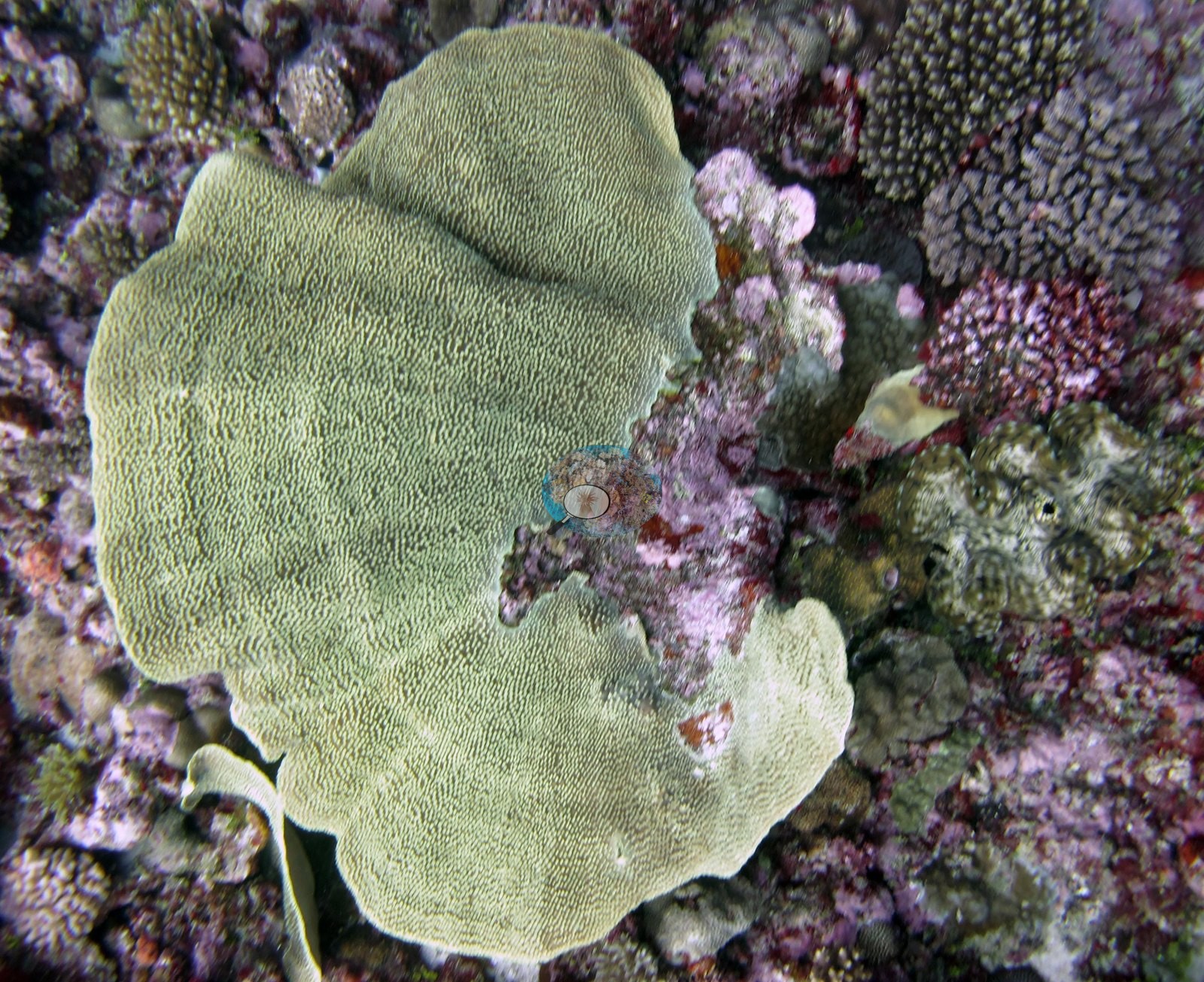
Fiji (NOAA CRW virtual station)Unlike its table-coral neighbors on Cicia, this is a low reef terrace covered in a dense mosaic of small branching, knobby, and encrusting corals, including a large foliose colony Anderson identified as Turbinaria and a massive head identified as a brain coral, at 38% cover. The survey team was photographed at work on the transect, and no bleaching, disease, or crown-of-thorns was seen. Surveyed on the Living Oceans Foundation's Global Reef Expedition.
E duatani mai na nona veiyakavi lase tepeli e Cicia, oqo e dua na vanua raraba (terrace) e sega ni cecere, e ubi ena dua na veiwaki vakavuqa ni lase lalai vakatabataba, vakaibulubulu (knobby), kei na lase e kabita na vatu (encrusting), okati kina e dua na lase levu vakadrau ni kau (foliose) e vakaiyacataka ko Anderson me Turbinaria kei na dua na ulu ni lase levu (massive) a vakaiyacataka me lase vakamona (brain coral), ka 38% na ubi ni lase (coral cover). A tabaki na ilawalawa ni vakadidike ni ra cakacaka tiko ena transect, ka sega ni raici e dua na vulavula, mate, se bula (crown-of-thorns).
AI translation of this summary; the English is authoritative. (low confidence)
CTD-cast midpoint of 27.1–27.2°C
Three other CRD dive sites with their own pages within 5 km shown in orange — click a marker to open its page.
🗺 Detailed map of the Global Reef Expedition dive sites, Cicia, Fiji (Khaled bin Sultan Living Oceans Foundation; opens in a new window)
15 of the 18 photographs on this page are shown beside the text that discusses them under "Site description" below.
Site description
General benthic features
The wide frames (e.g., Image 17, Image 16) show a low-relief terrace shelving off into deep blue — this is not a table-Acropora reef.
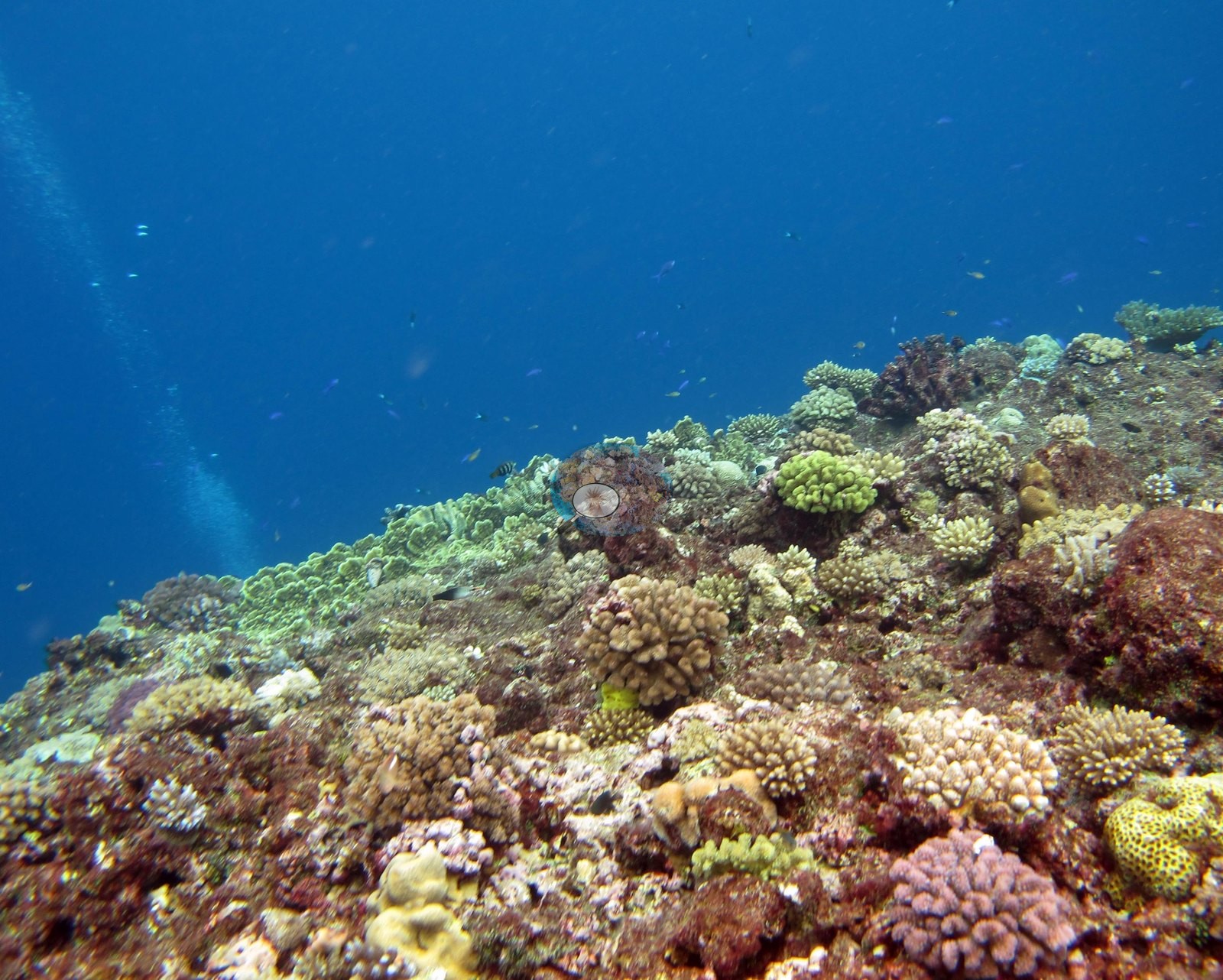
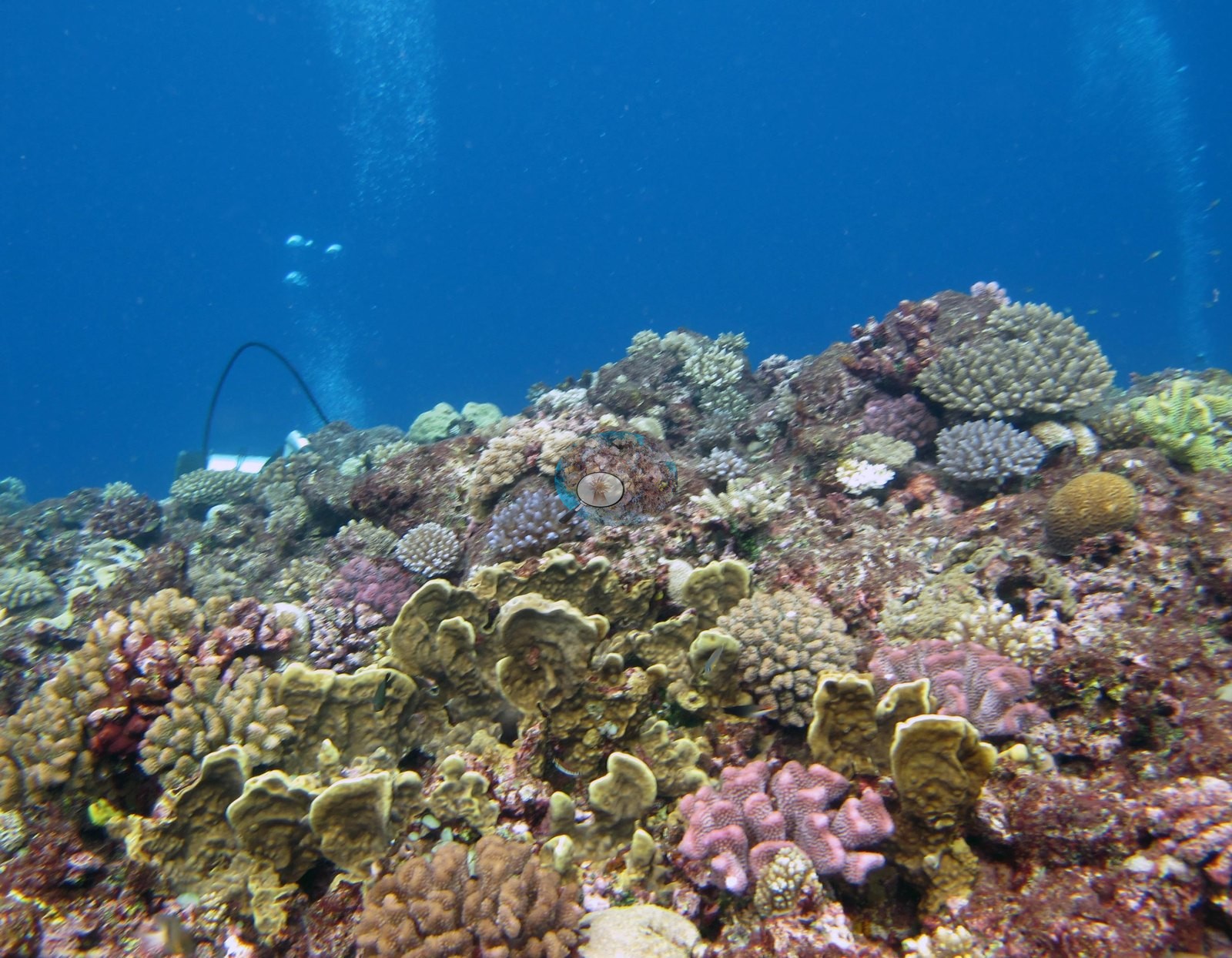
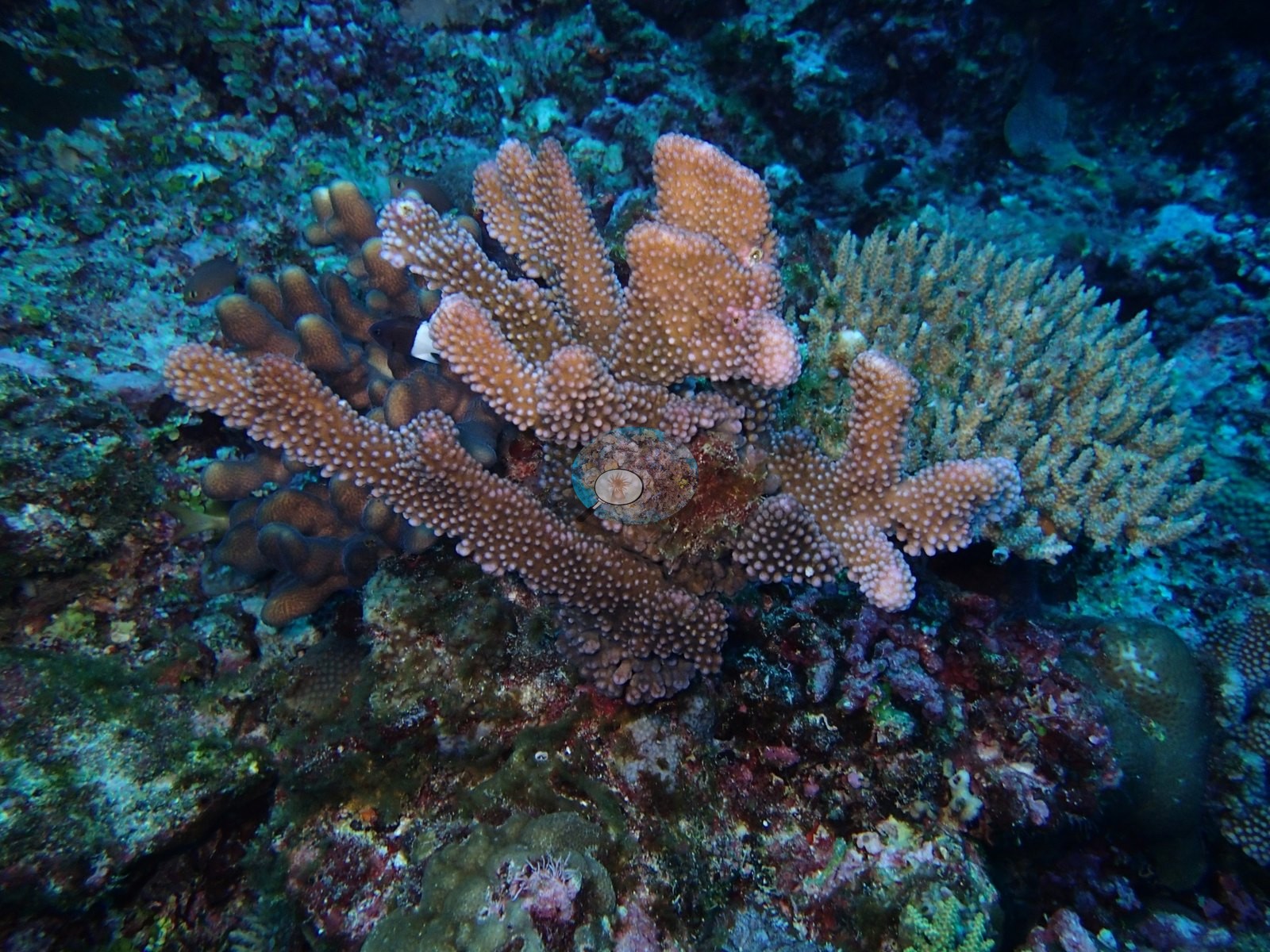
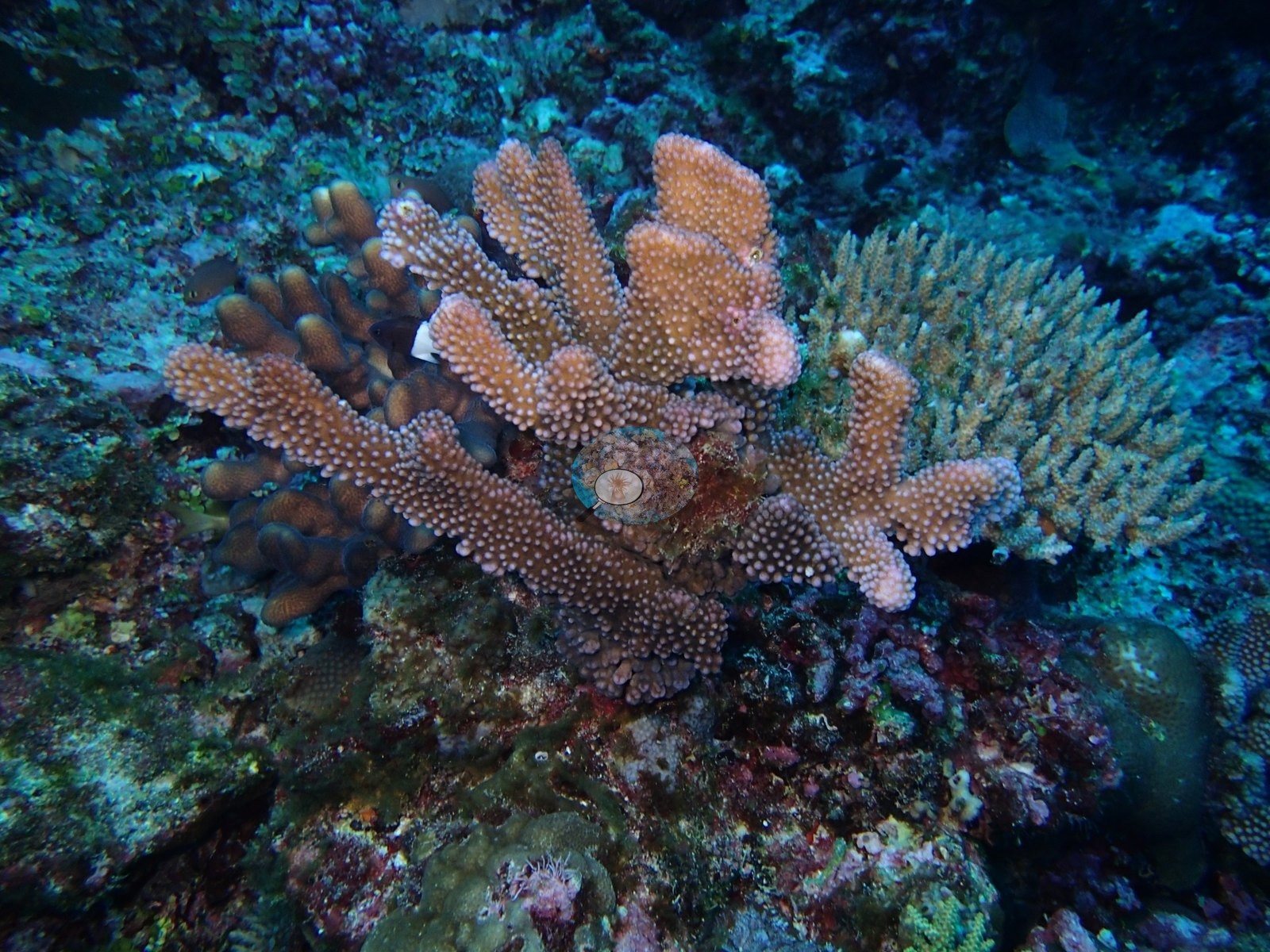
It is a dense, low, short-branched mosaic: small corymbose and digitate acroporids, Pocillopora-like clumps, knobby green and olive mounds, maroon-red encrusting colonies, small massive colonies, ruffled yellow-tan foliose colonies, and pink coralline crust filling the spaces between (e.g., Image 17, Image 16). Two medium-range frames extend the same picture: a thick-branched brown digitate colony with blunt antler-like branches standing over the pavement beside a pale plating colony (e.g., Image 3), and a large pale-green foliose colony with concentric ruffled whorls, in a bed of pink and mauve coralline and small mixed colonies, which Anderson identified as Turbinaria (e.g., Image 14).
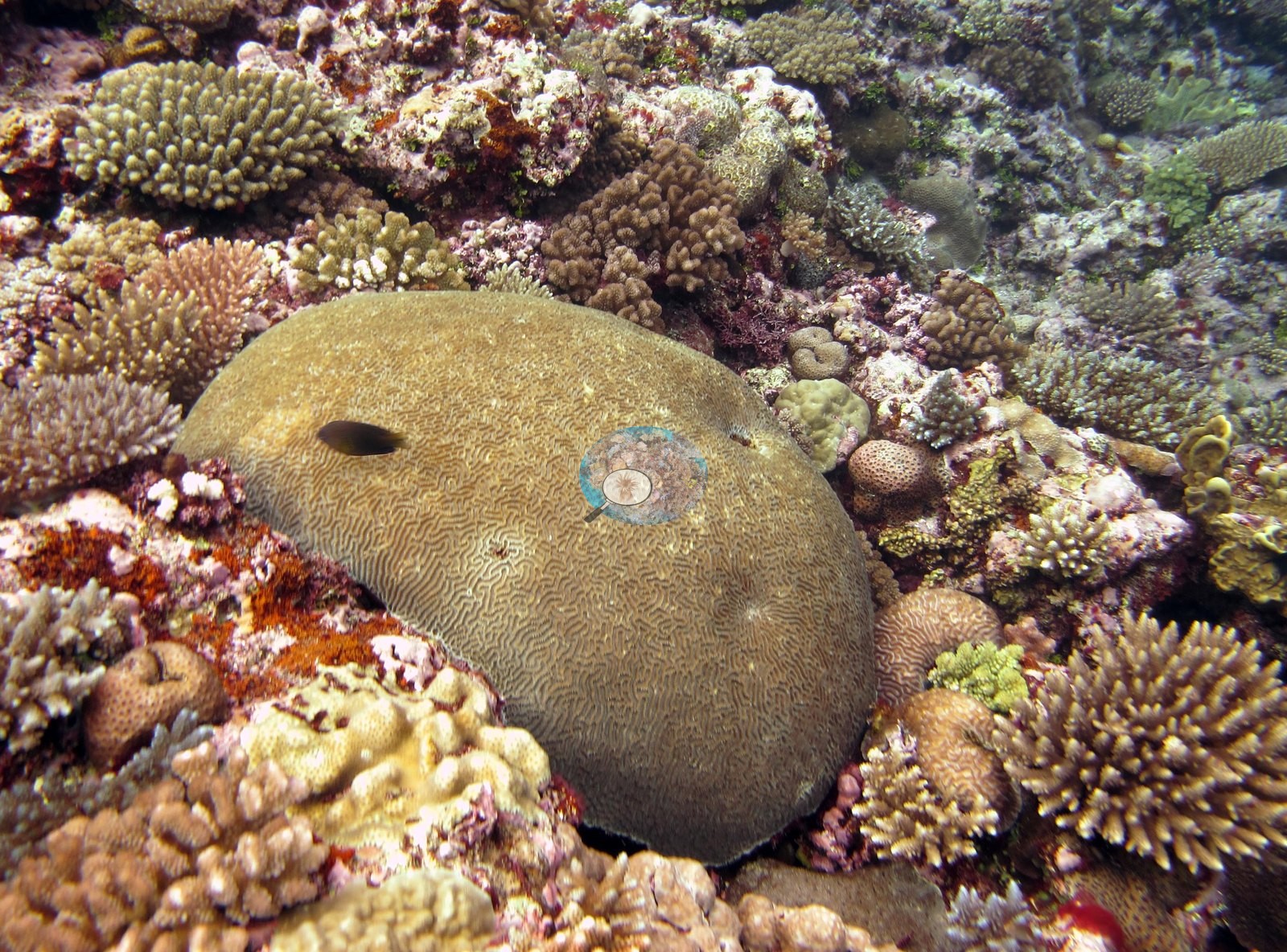
One more frame is a smooth brown hemispherical massive roughly 40 cm across, set in a bed of digitate acroporids, small branching colonies, and red encrusting sponge, which Anderson identified as a brain coral (e.g., Image 15).
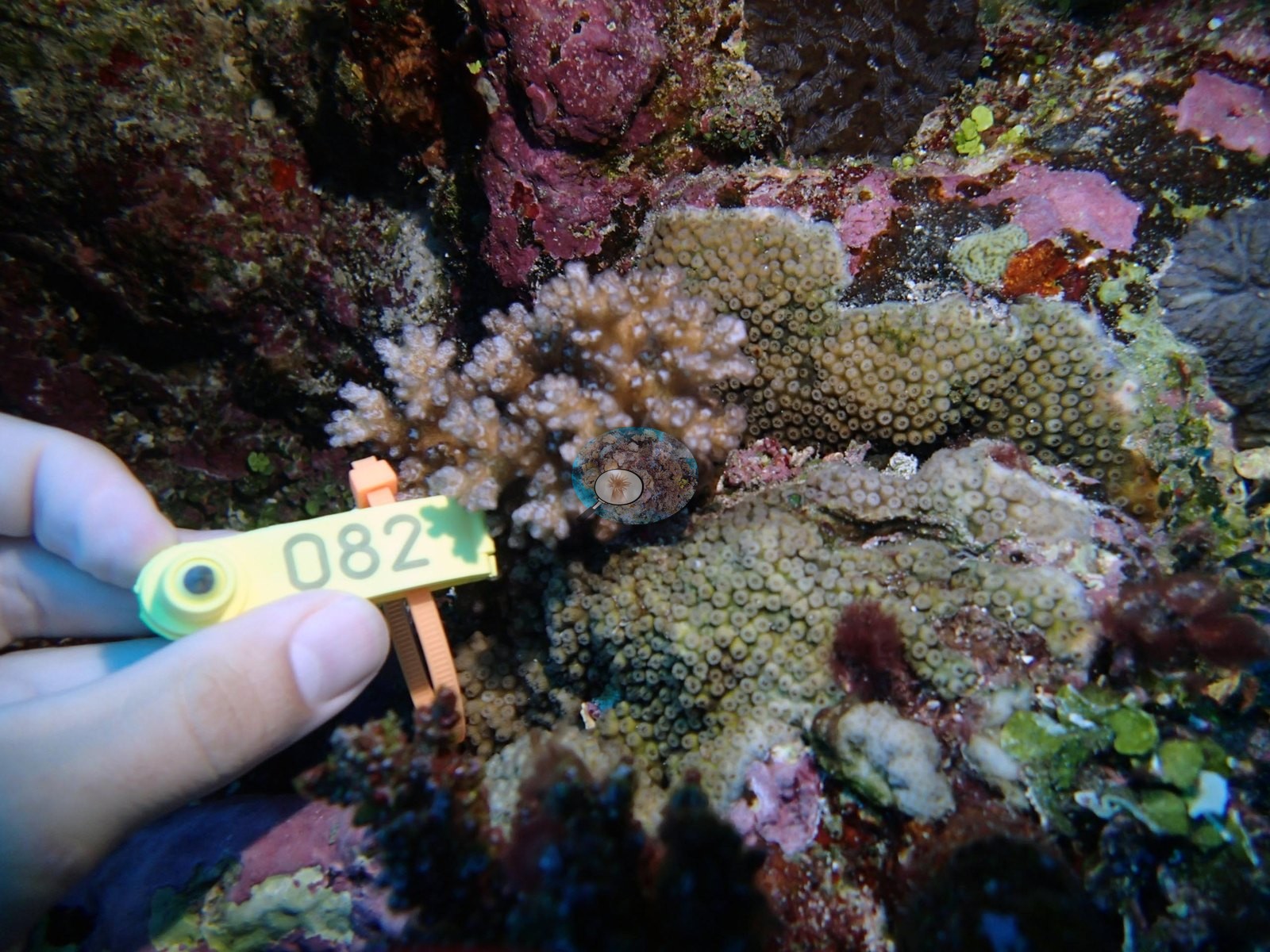
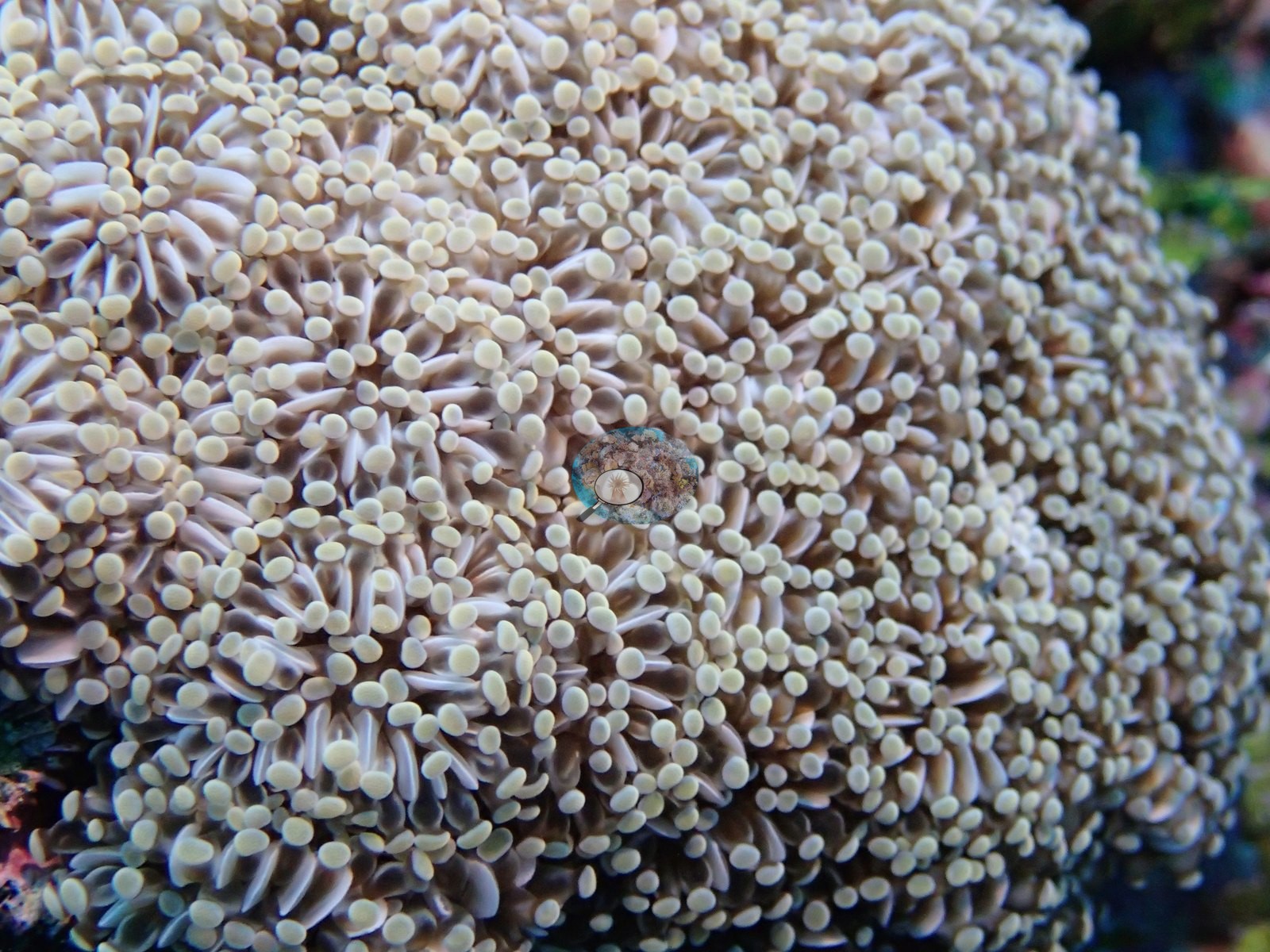
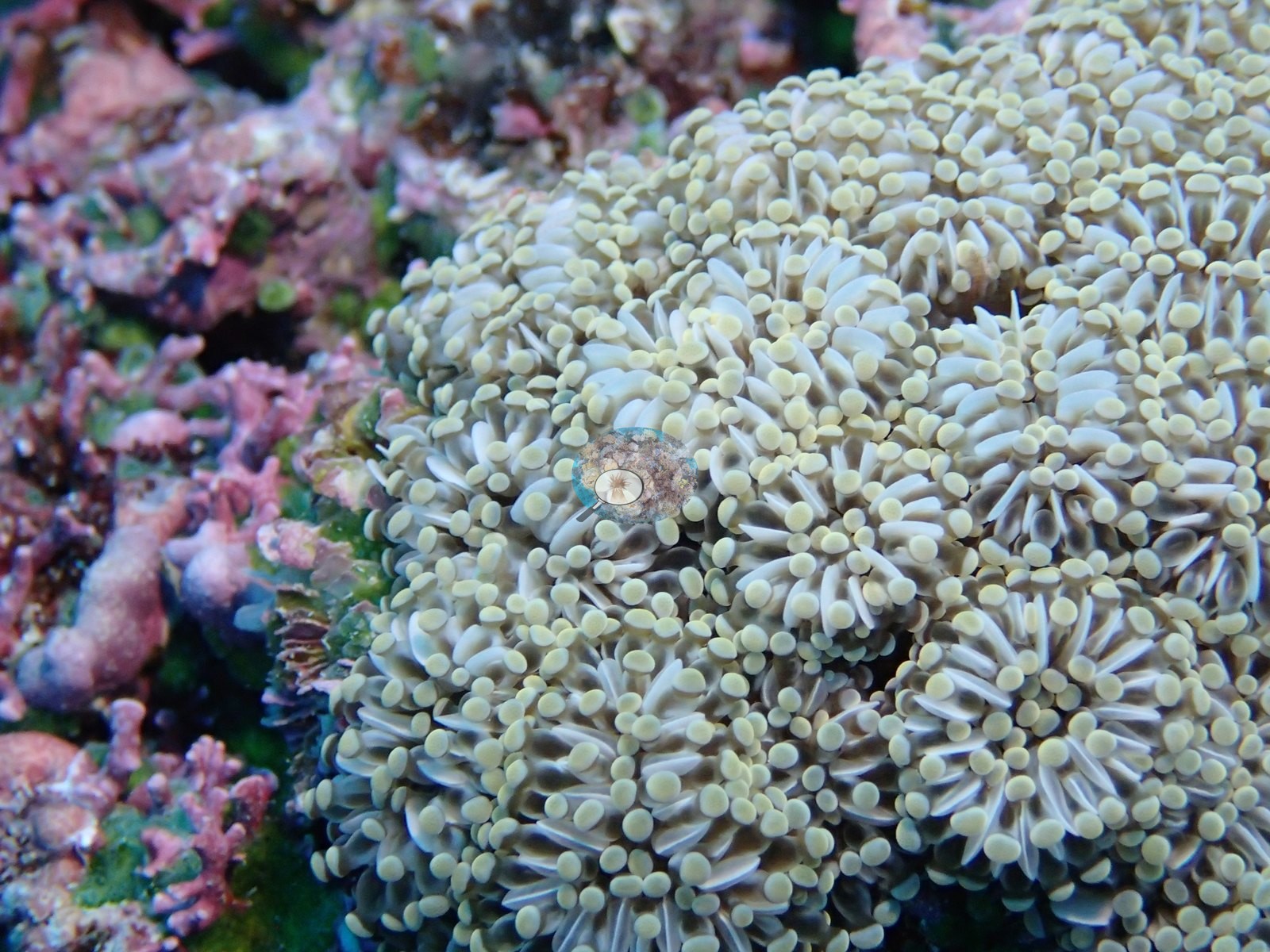
Two more are close-ups of a coral with rows of swollen, bladder-like cream and olive tentacle clusters, ringed by pink coralline (e.g., Image 5, Image 6) — a bubble- or bladder-tentacled growth form; the genus cannot be told from these photographs and none is asserted.
Coral cover
- Reference: Khaled bin Sultan Living Oceans Foundation, Global Reef Expedition (in situ transect)
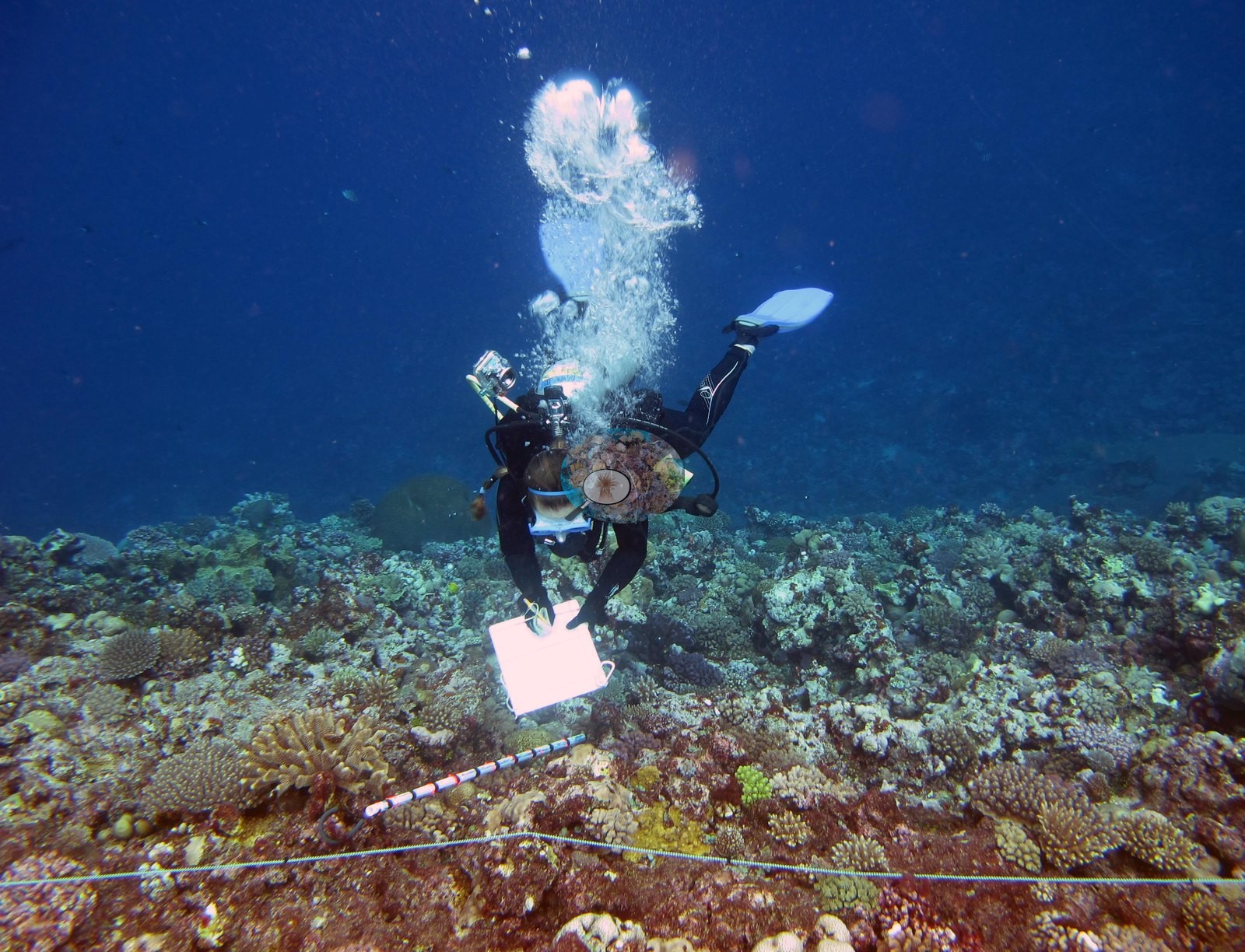
- Coral cover 38%, from the LOF-GRE in situ benthic transect (the mean of all of this station's own transects in the expedition's per-transect benthic data) — the diver transect visible in Image 18, and the authoritative figure for this site.
- What the frames cannot settle: with only two genuinely wide frames, this set cannot characterize the station's spatial variation, and none of the frames is a planar downward view, so nothing here supports a cover figure.
- Transect mean 38 ± 6.1% SE (n = 4 transects; Living Oceans Foundation per-transect benthic data); the headline above is this all-transect mean.
Stressors
No frame in the set shows a bleached colony, a disease lesion, or a crown-of-thorns feeding scar — worth recording because the expedition's 2013 field report records 212 crown-of-thorns removed from one shallow outbreak reef elsewhere on Cicia, not tied to this station; but two wide frames are far too few to say the station was unaffected. The Living Oceans Foundation transects here recorded 1.8% cyanobacteria and no recently dead coral; they carry no bleaching, disease, or crown-of-thorns field.
Fish and other fauna
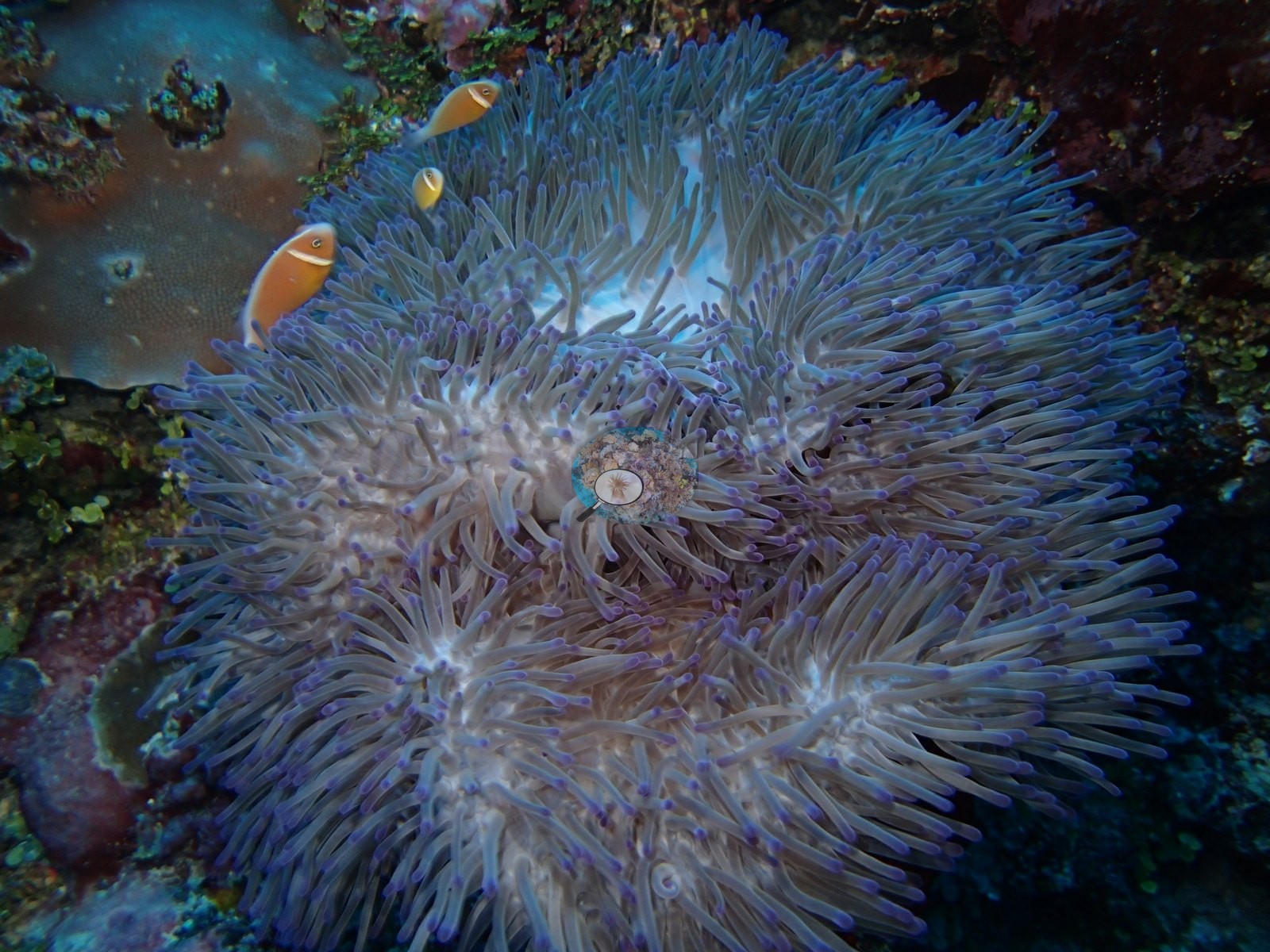
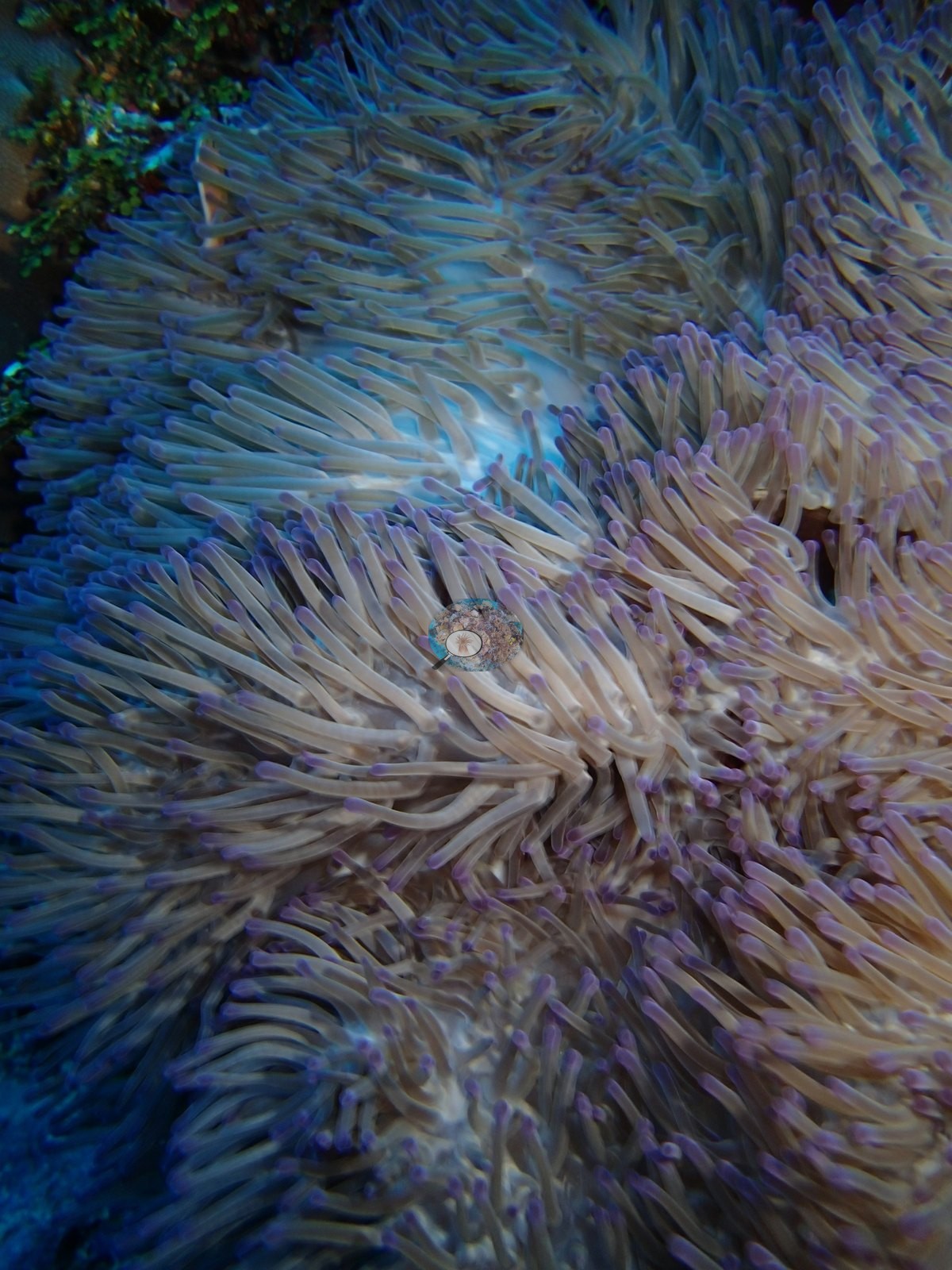
Two frames are a large sea anemone with long, mauve- and lilac-tipped tentacles, an anemonefish visible against it in one (e.g., Image 1, Image 2).
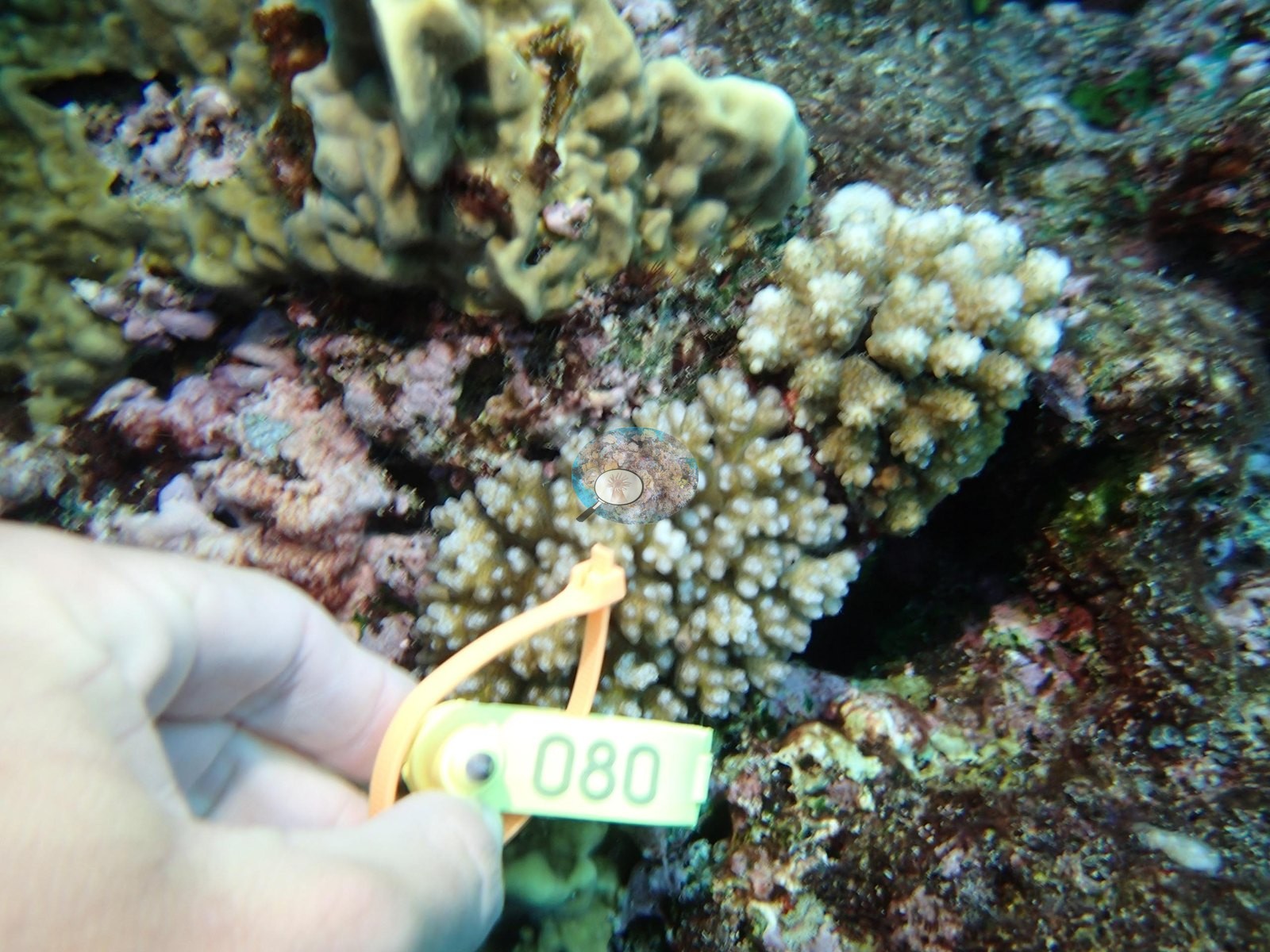
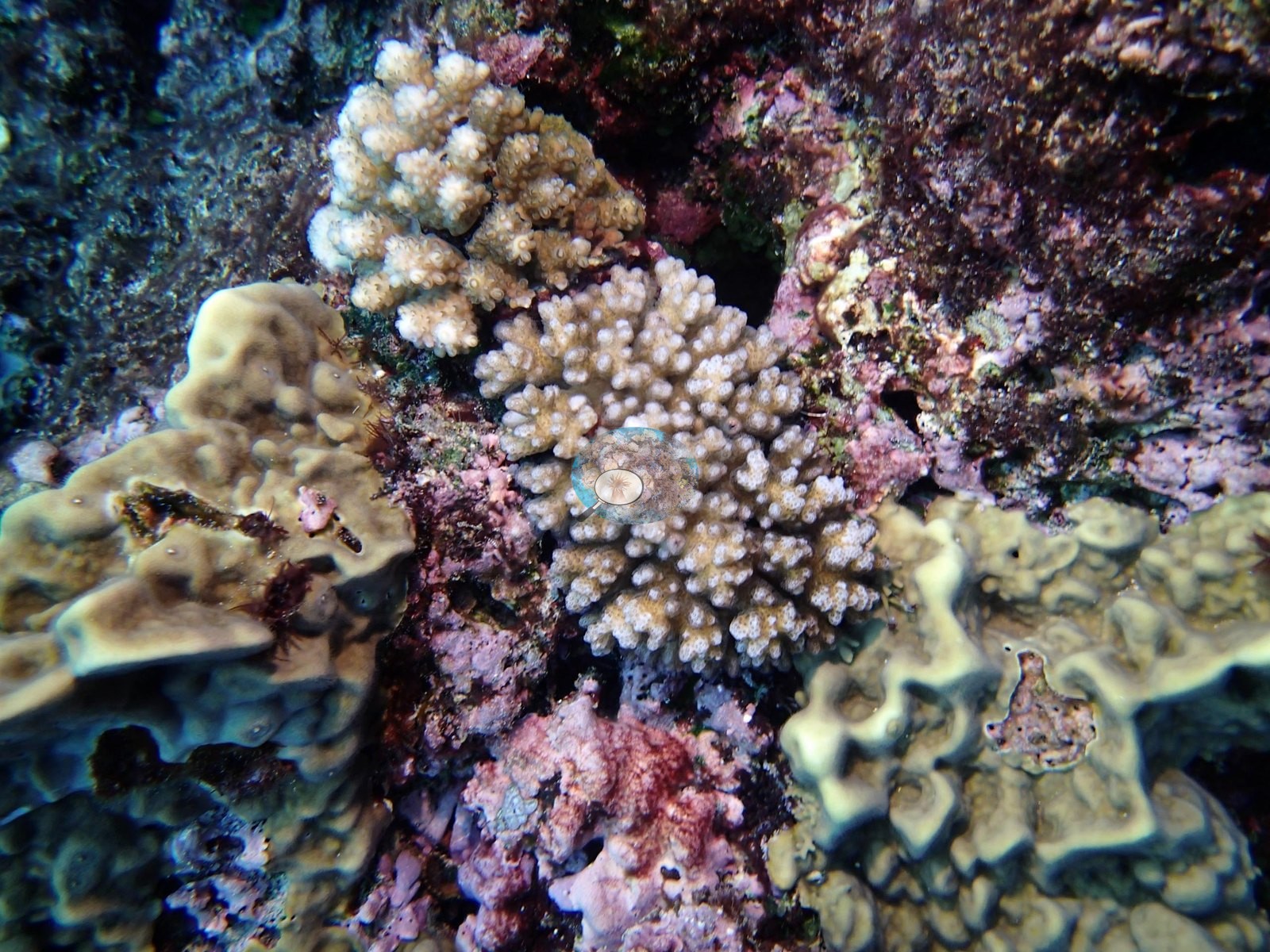
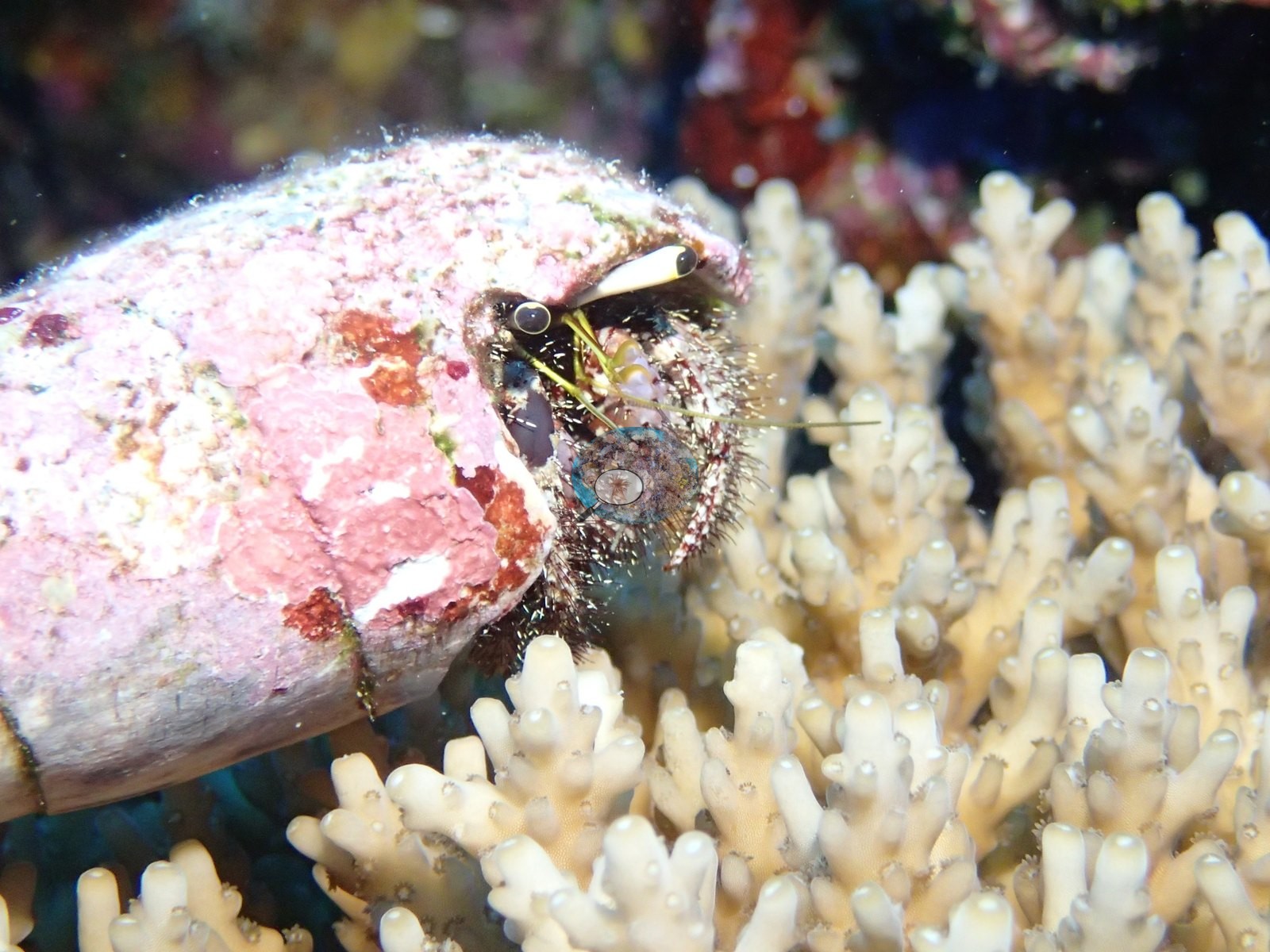
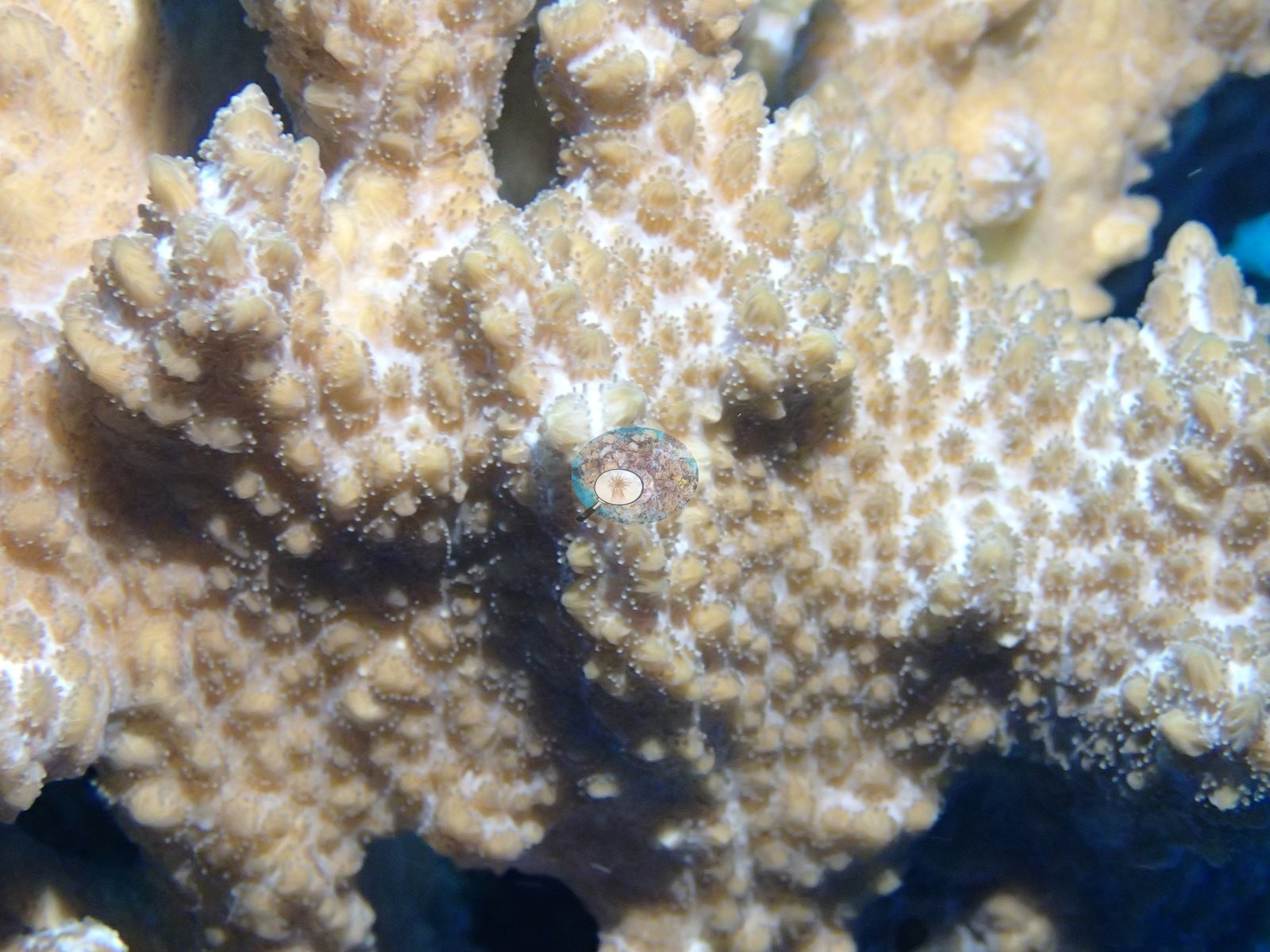
One frame is a hermit crab occupying a shell heavily crusted with pink coralline and encrusting growth, sitting on cream branching coral (e.g., Image 7), and one is a tight macro of cream Acropora branch tips with polyps extended (e.g., Image 8).
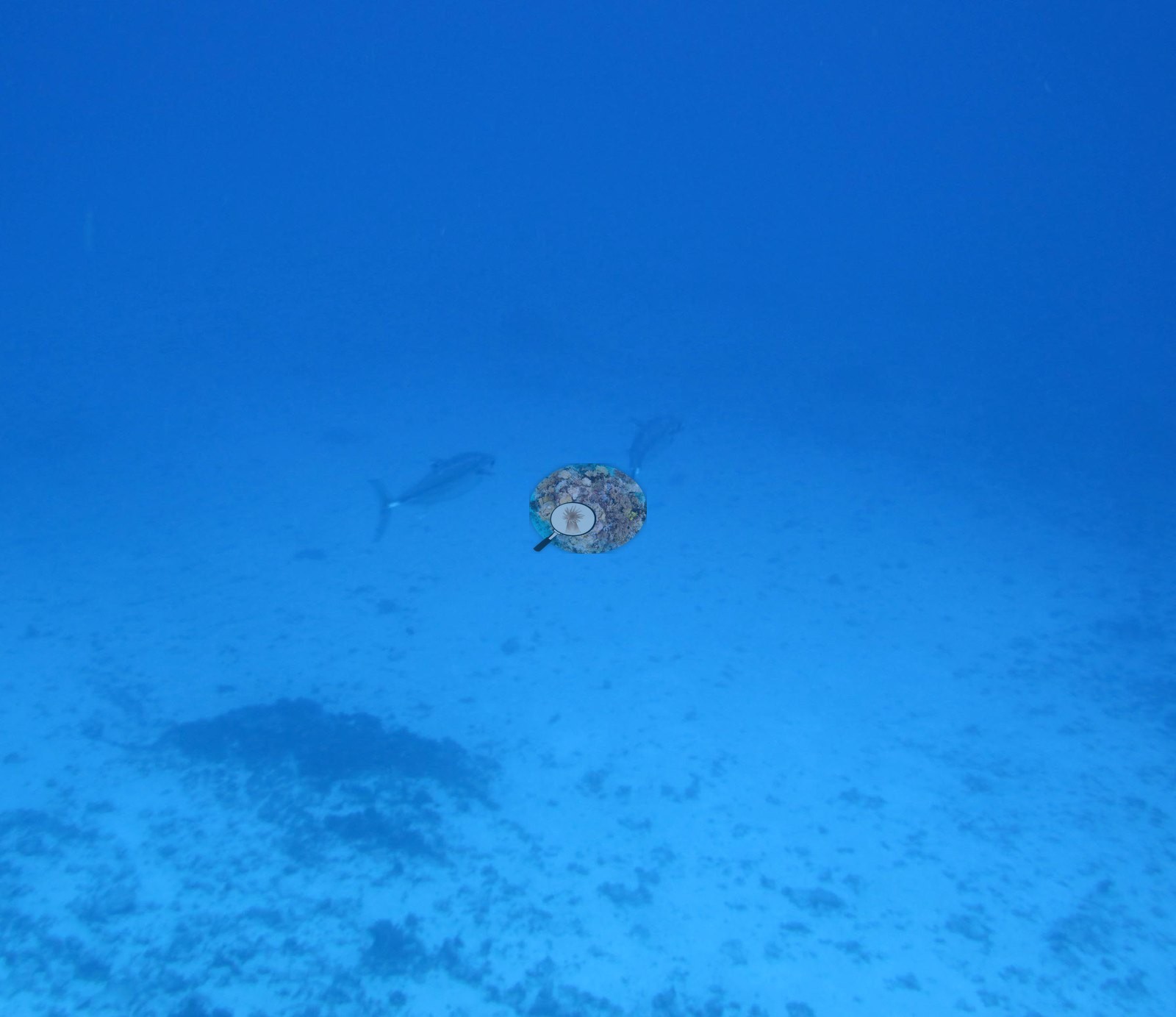
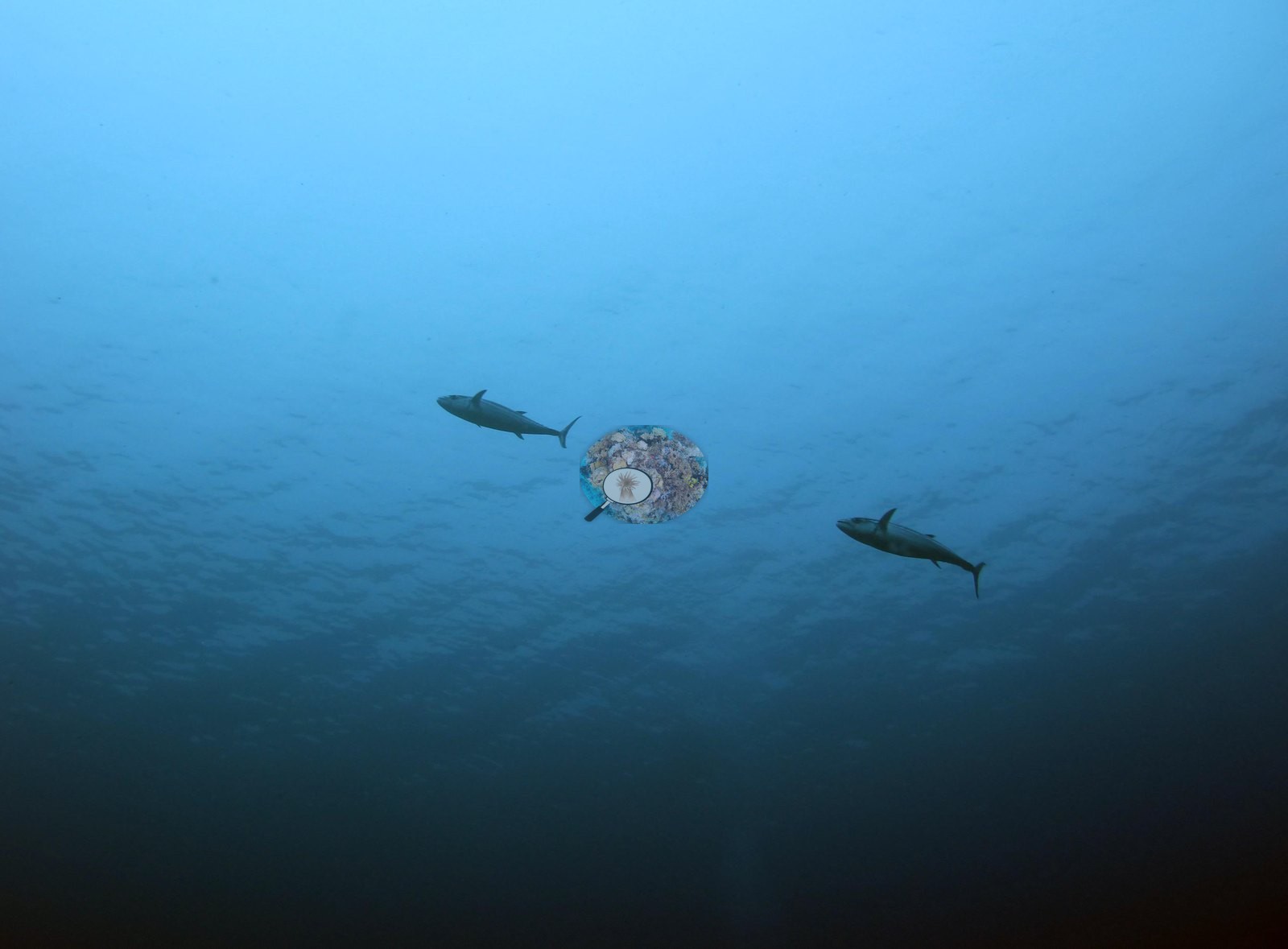
Two frames are open water with pelagic fish and no reef — a sand-floored blue in one and mid-blue in the other, both with fish Anderson identified as tuna, one specifically as dogtooth tuna (e.g., Image 12, Image 13).
Comparisons with other data
FJCC47 (Cicia, Lau Archipelago) was surveyed on 19 June 2013 during the Khaled bin Sultan Living Oceans Foundation Global Reef Expedition. 0% of the corals with an outlier score were flagged as physiological outliers (Mayfield et al. 2017, PLoS ONE). The benthic community is highly diverse and coral-dominated, often with a substantial macroalgae component. Environment and disturbance regime govern benthic community structure. Scleractinian diversity is very high and often dominated by acroporids, pocilloporids, poritids, and faviids. The edge of the shallow slope is often dominated by large Pocillopora eydouxi colonies, thick-branched and elkhorn-like Isopora sp, and unusually large Favia stelligera and/or Pavona maldivensis stands. In the shallower areas, the reef flat was dominated by CCA and is exposed at lower tides. The expedition's 2013 field report records 212 crown-of-thorns starfish removed from one shallow outbreak reef elsewhere on Cicia, not tied to this station.
Other notes
This is a survey-day set rather than a scenic one: only two frames are wide reef views, two are working method frames, six are close-range subject portraits, and two are open blue water. Anderson noted the first at 5 m; the second, of the shallows, is soft but still readable for community composition. Two frames document the survey itself and are the most informative in the set on how this site's data were produced. In Image 18 a diver with a camera and a white dive slate hovers over the low pavement while a transect line runs across the bottom of the frame and a banded scale bar lies on the substrate — the benthic transect being run as the picture was taken. In Image 11 two divers descend through blue water on a shot line, one carrying a white quadrat frame.
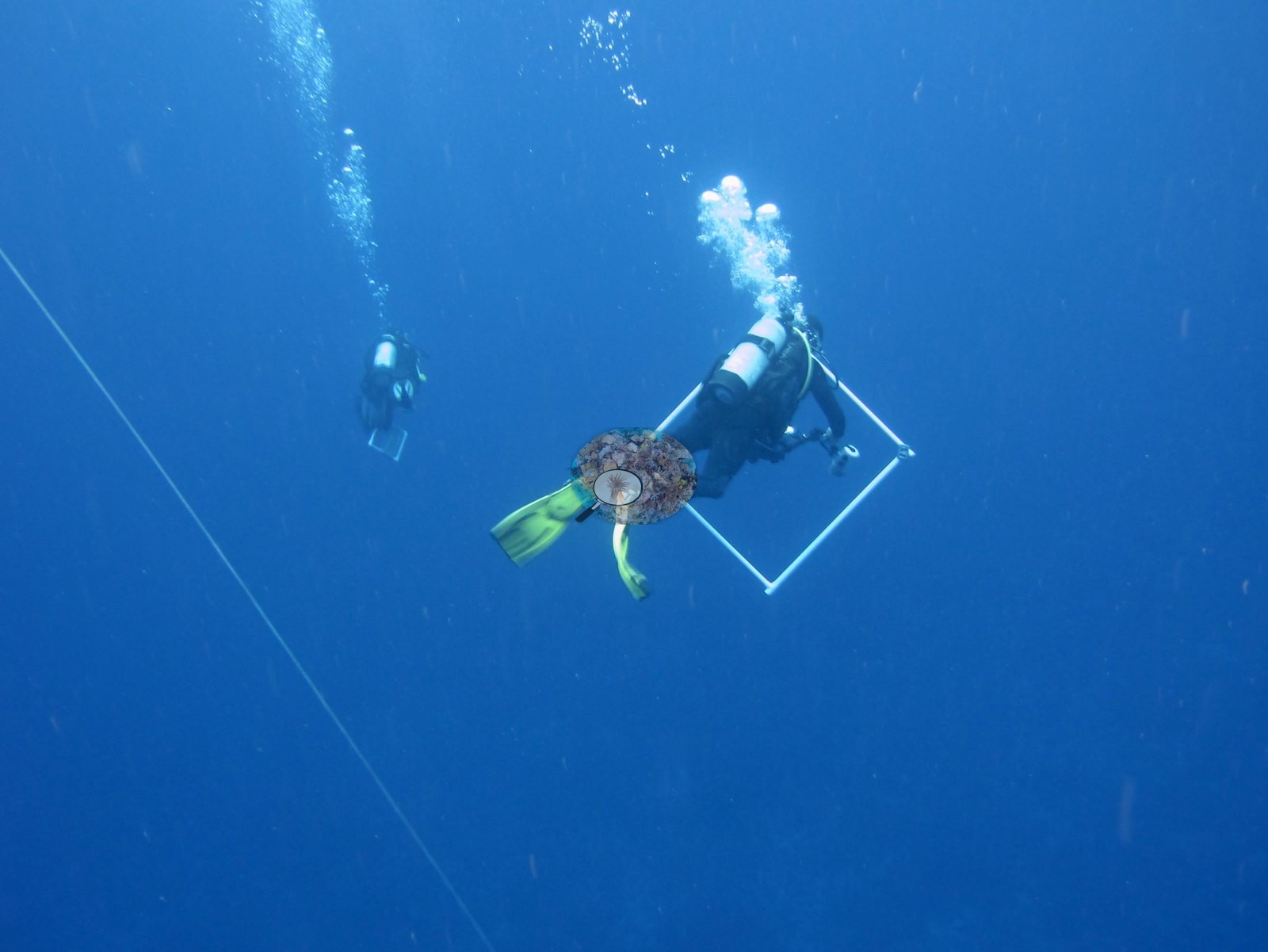
These are survey-gear frames and must not be read as reef cover. Depth is not resolvable from the imagery beyond Anderson's note that (Image 17) was taken at 5 m.
Data & links
- Download benthic survey data (CSV) ↗
- Download all LOF-GRE data (933 sites) ↗
- Photo portfolio ↗
- Coral Reef Diagnostics page for this area ↗
All images from Coral Reef Diagnostics. Data are from the Khaled bin Sultan Living Oceans Foundation Global Reef Expedition and Coral Reef Diagnostics.
 © Coral Reef Diagnostics.