
Part of the regional summaries: Fiji - Cicia, Fiji - Northern Lau (Vanua Balavu / Cicia / Nayau), and Fiji - Lau
More info
Fiji (NOAA CRW virtual station)A mixed coral community: a terrace crowded with colorful branching and table Acropora, massive mounds, and brain corals. Its standout feature is an overhanging buttress built almost entirely of pale-green plating corals, and cover is 47%. Surveyed on the Living Oceans Foundation's Global Reef Expedition.
E dua na isoqosoqo ni lase vakawaki: e dua na vanua raraba (terrace) e vonu kina na Acropora vakatabataba kei na vakatepeli e roka vakaidina, na lase levu vakavatu (massive), kei na lase vakamona (brain corals). Na ka e duatani duadua kina e dua na ivakatudei e dremo tu, e buli vakalevu ga mai na lase vakaiteba (plating) e drokadroka vulavula, ka 47% na ubi ni lase (coral cover).
AI translation of this summary; the English is authoritative. (low confidence)
CTD-cast midpoint; the cast read 26.2°C throughout
One other CRD dive site with its own page within 5 km shown in orange — click a marker to open its page.
🗺 Detailed map of the Global Reef Expedition dive sites, Cicia, Fiji (Khaled bin Sultan Living Oceans Foundation; opens in a new window)
15 of the 17 photographs on this page are shown beside the text that discusses them under "Site description" below.
Site description
General benthic features
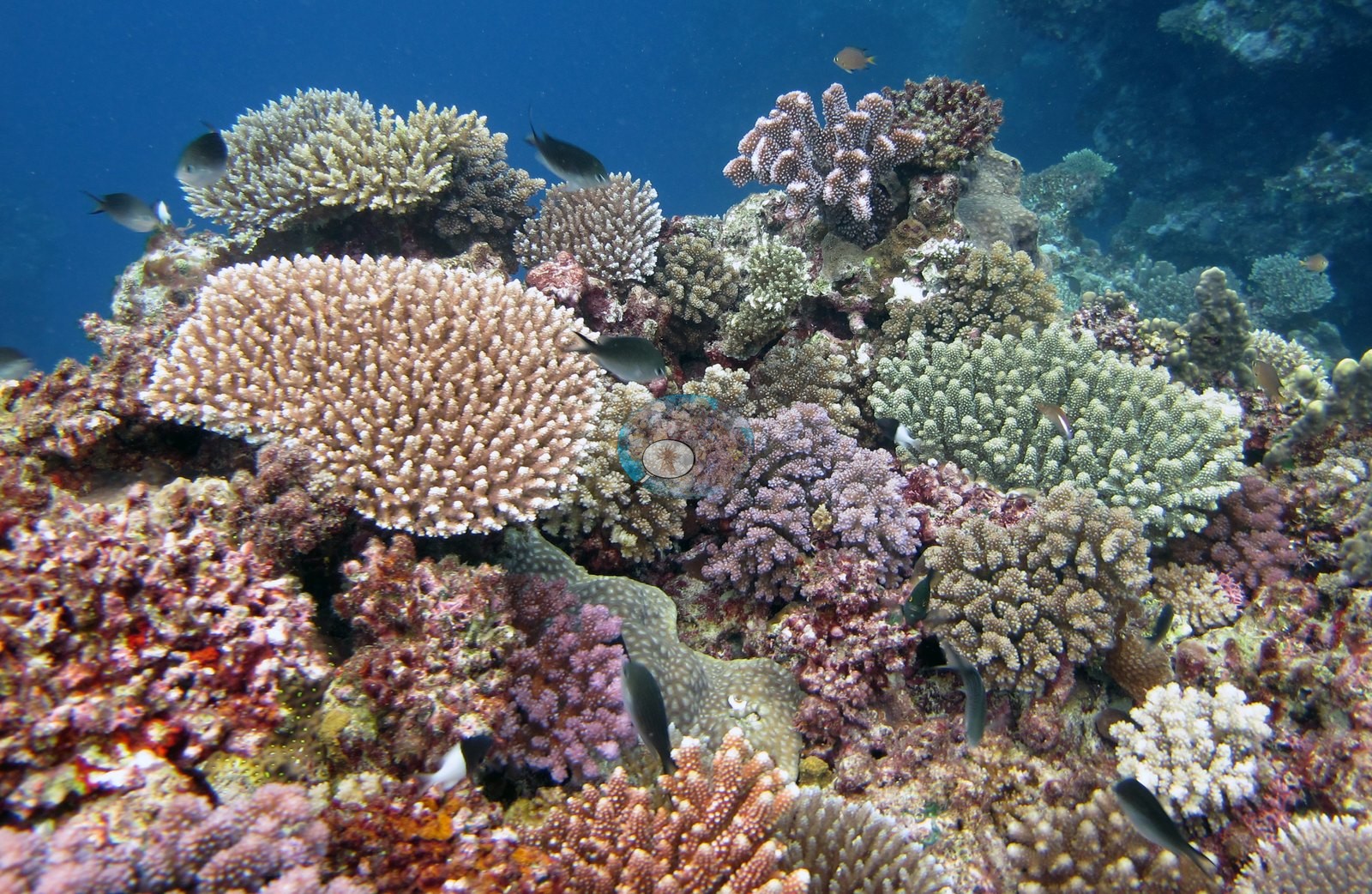
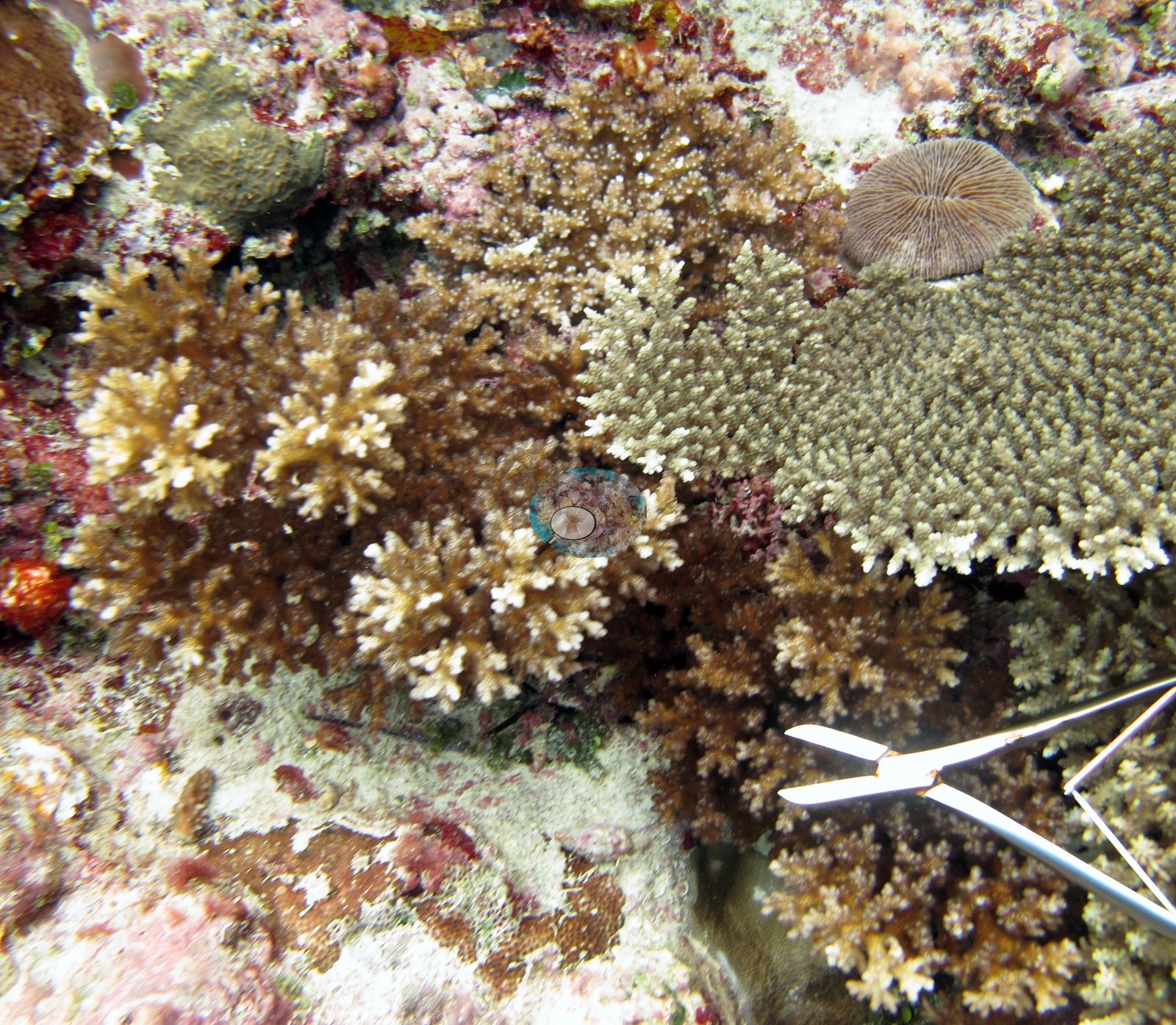
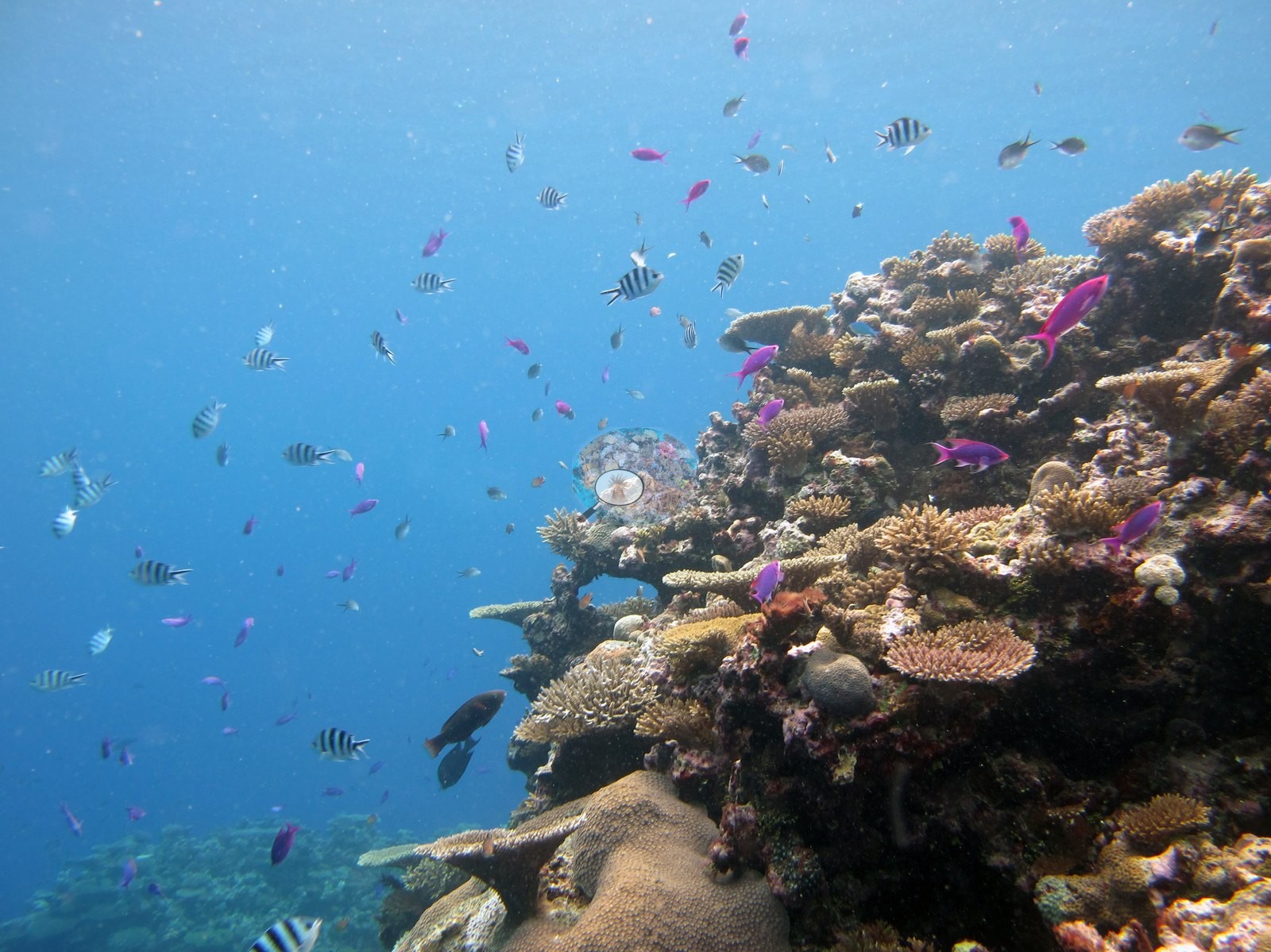
The 14 frames in the station's folder confirm this as a taxonomically mixed site and show its structure. The bright crest frames (e.g., Image 13, Image 10, Image 12, Image 16, Image 15) show a terrace crowded shoulder to shoulder with corymbose Acropora in tan, pink, mauve, and olive, tabulate Acropora tables stacked and overlapping, upright staghorn branches, mustard-yellow massive colonies, yellow encrusting colonies, and brain corals with meandering valleys low in the frame, with anthias, damselfish, and small planktivores over the top.
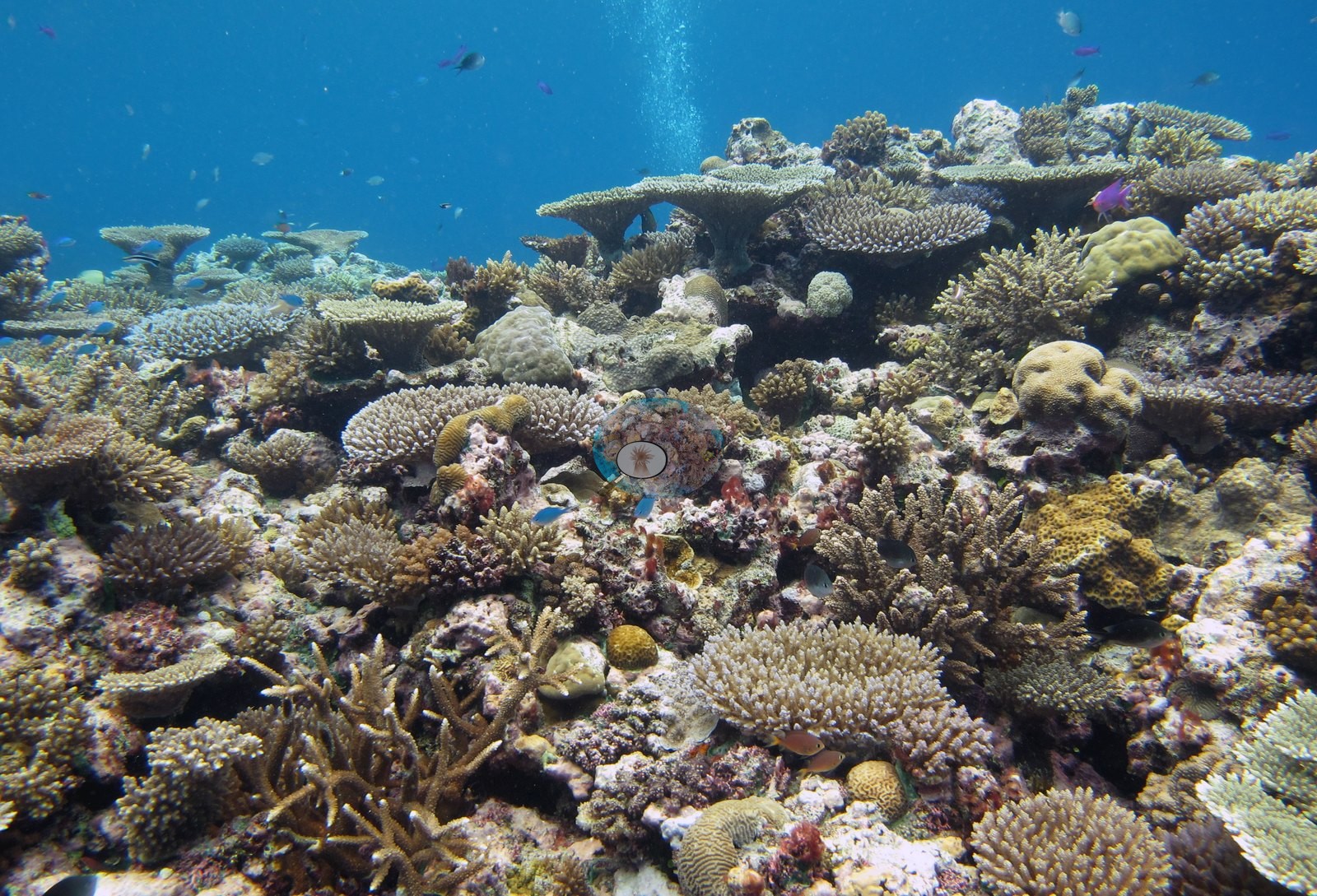
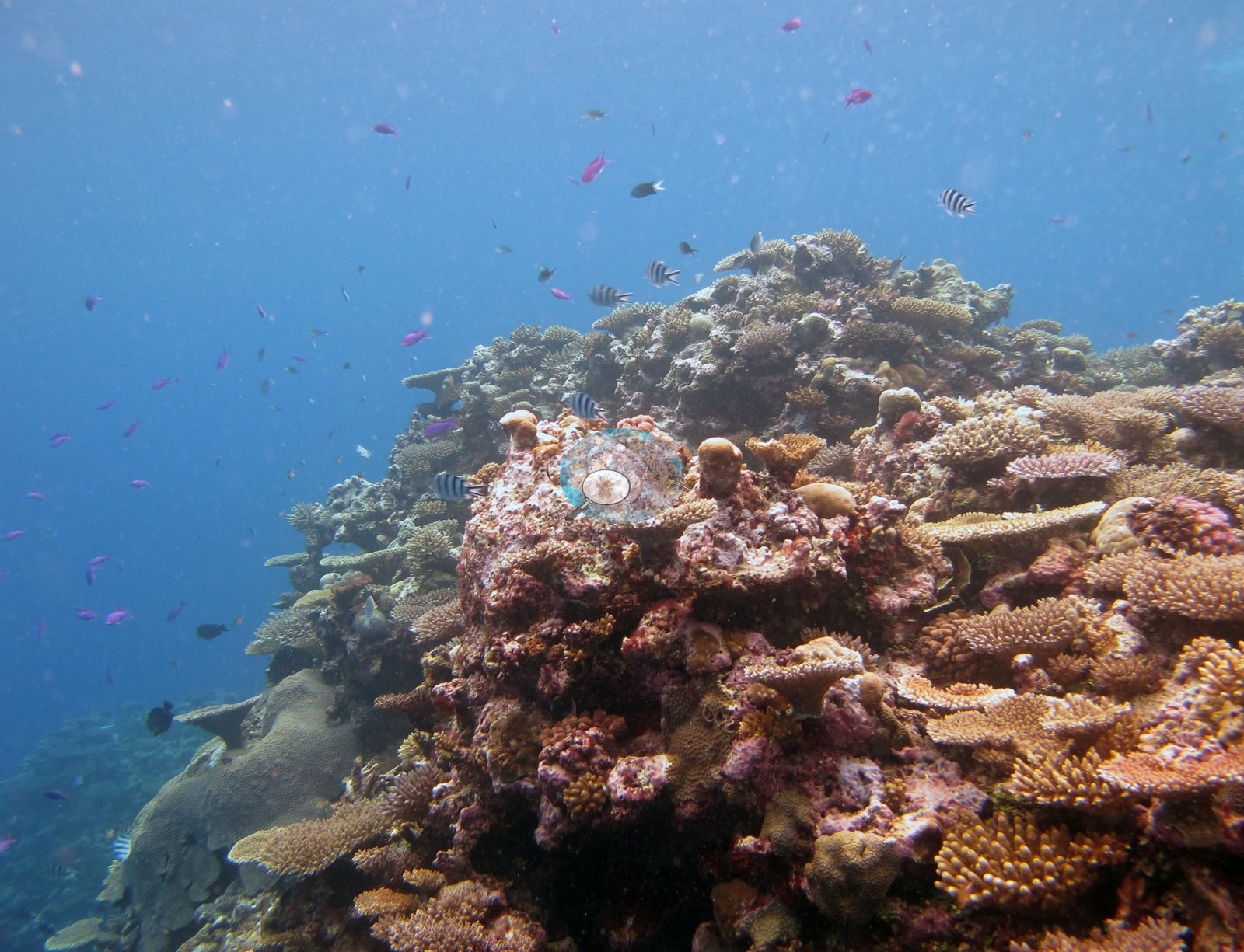
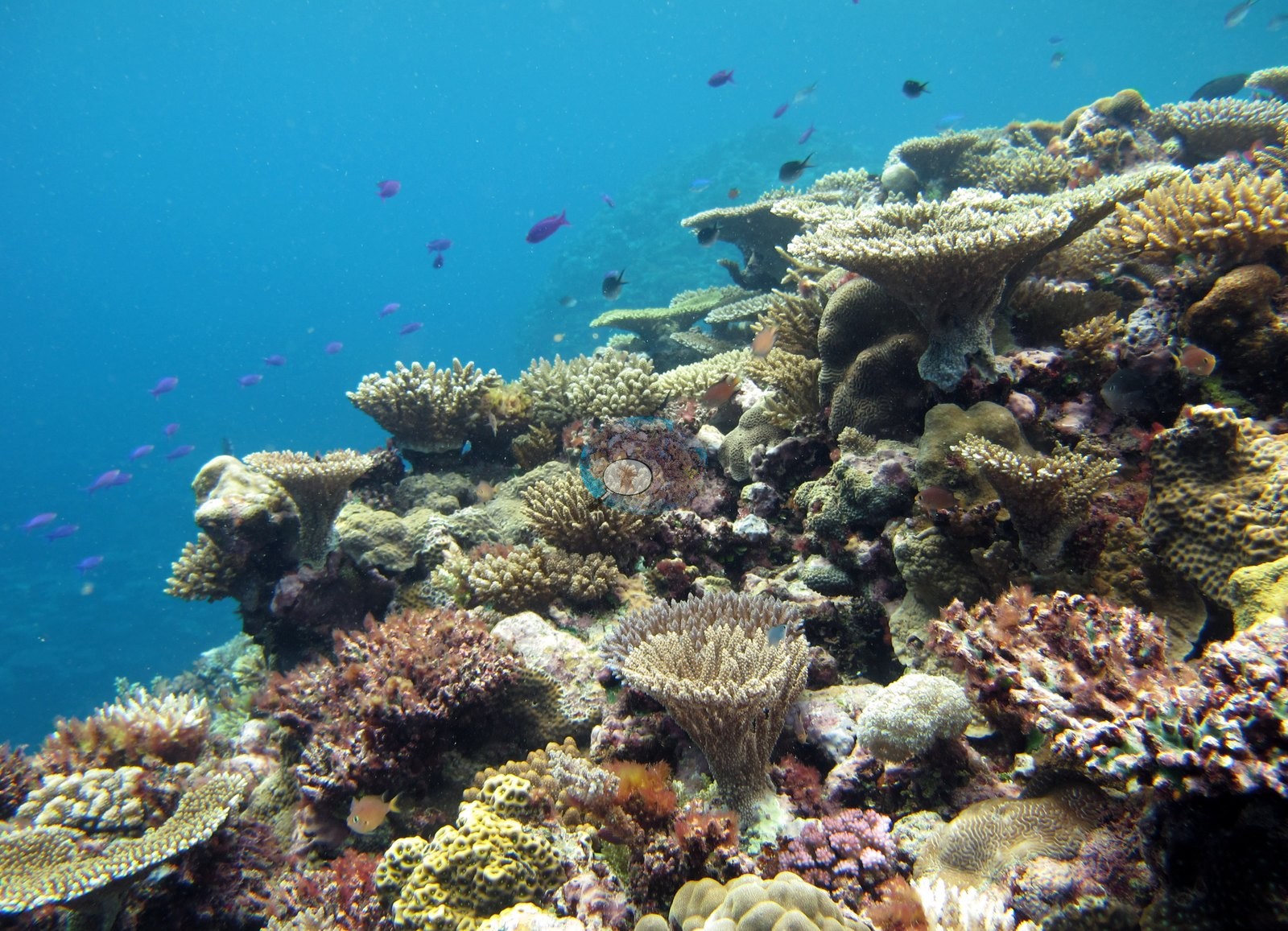
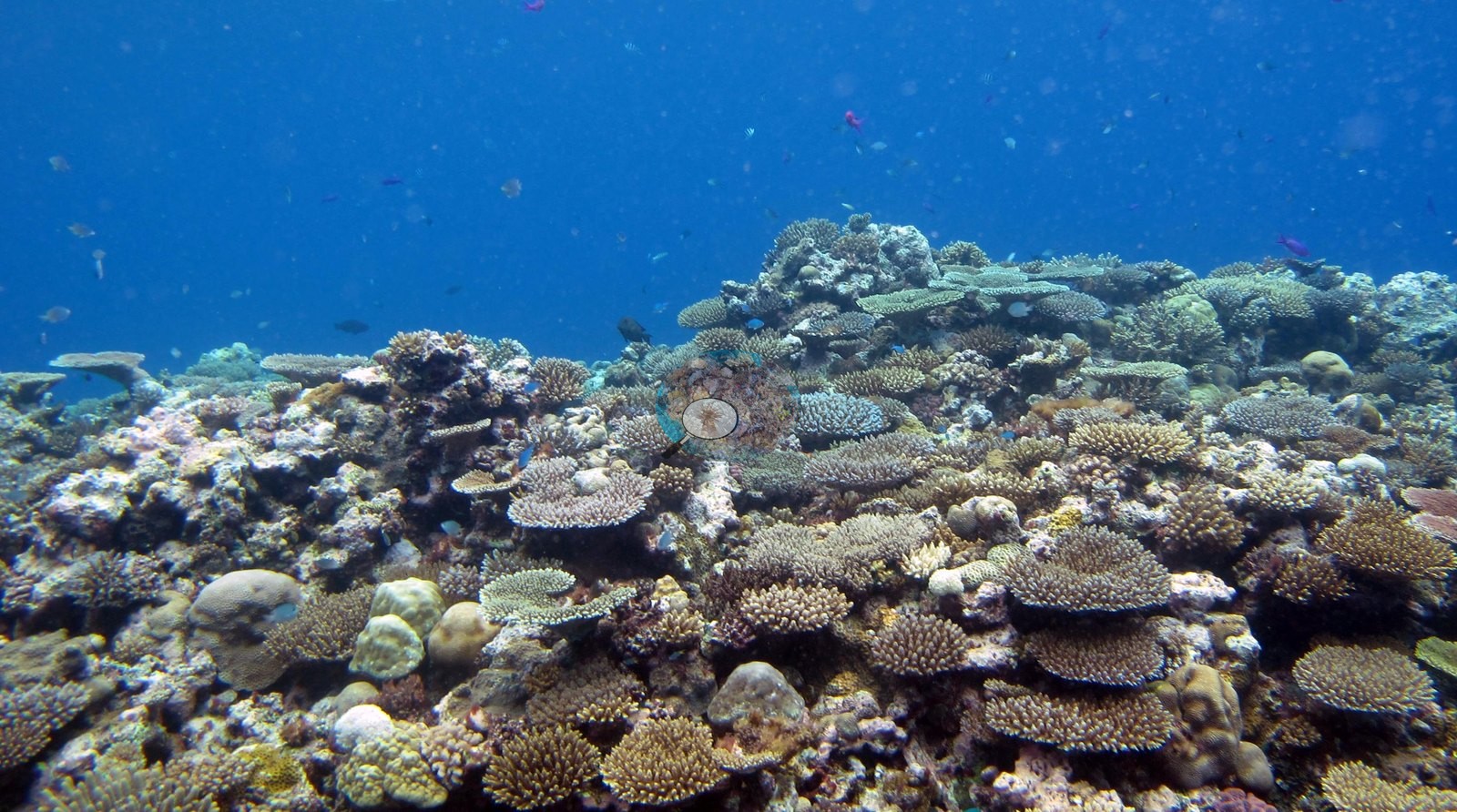
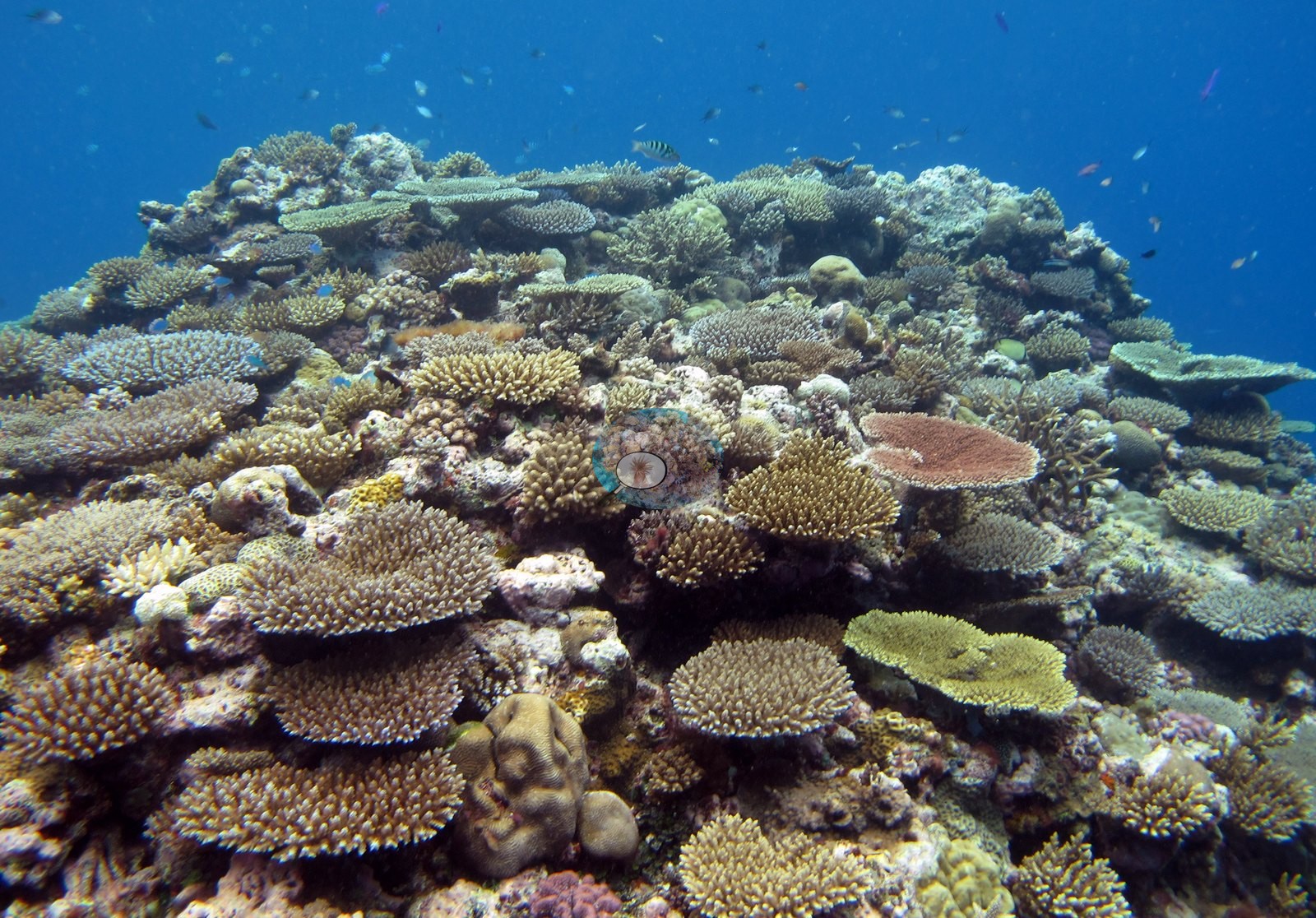
Image 7 isolates the growth form that defines the site: a mushroom-shaped tabulate colony standing clear on a narrow stalk, flanked by lilac corymbose colonies against blue water.
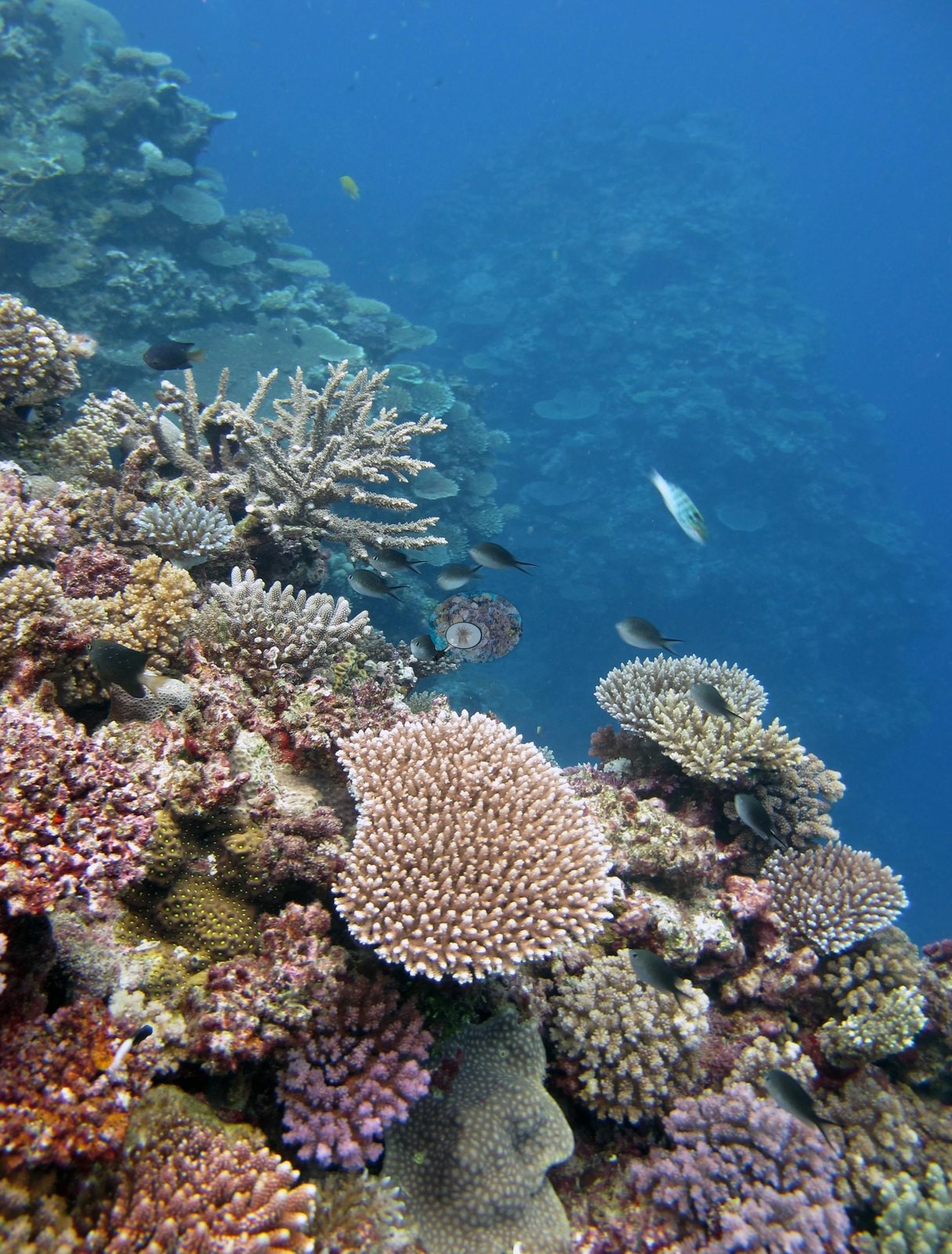
Image 6 is the close-range set-piece — a large flat-topped pinkish-tan corymbose Acropora filling the center, mauve and olive-green corymbose colonies around it, a gray-green lobed leather soft coral, and dark red and orange encrusting algae binding the framework.
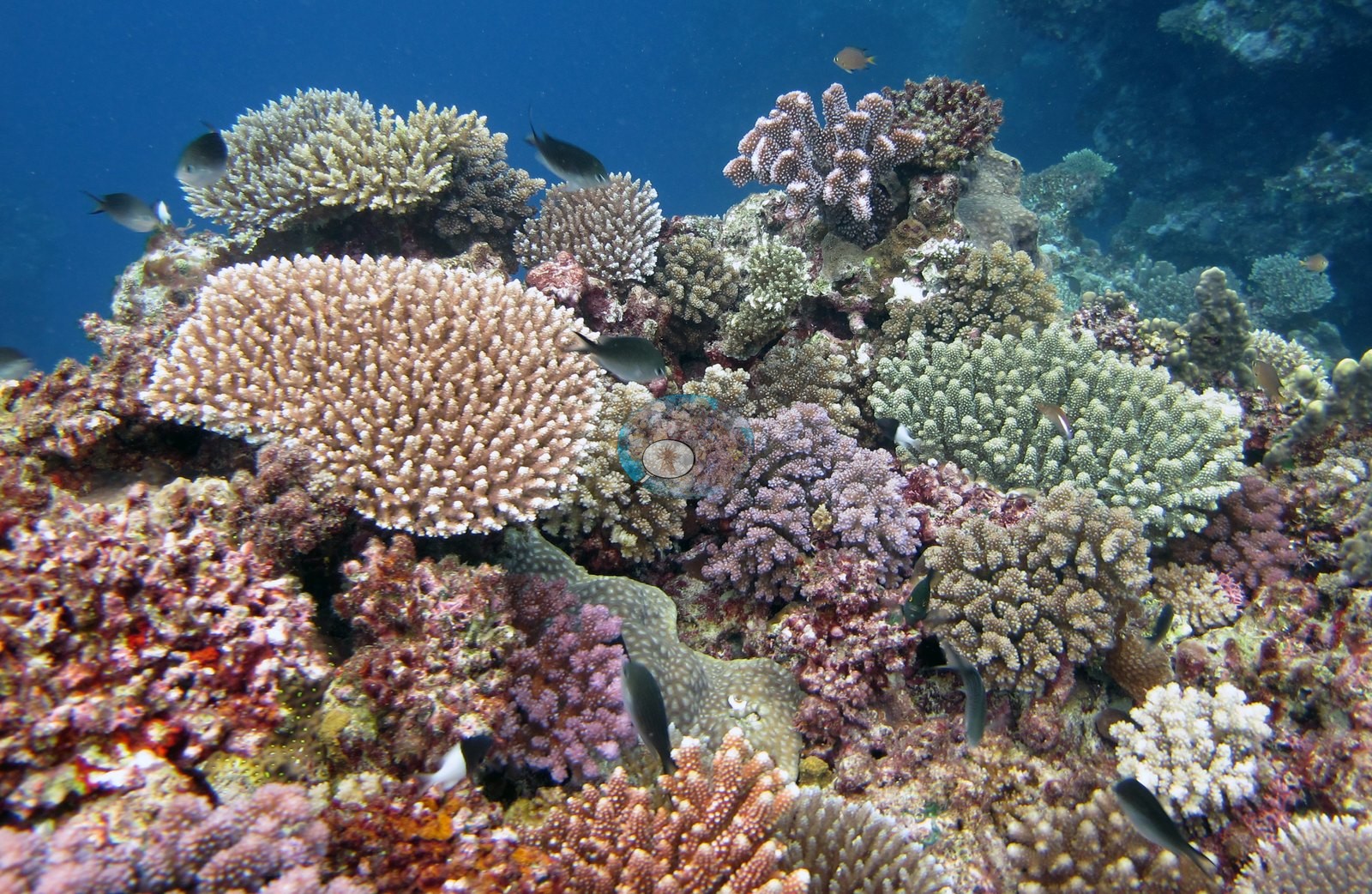
Image 15 pulls back over a whole reef mound tiled with dozens of overlapping tables and corymbose plates. The structural highlight is Image 1, an overhanging buttress projecting out into blue, its underside and flanks built almost entirely of pale-green encrusting and plating corals with tabulate colonies on the upper surface — a shaded, plating-dominated growth form quite unlike the tables above.
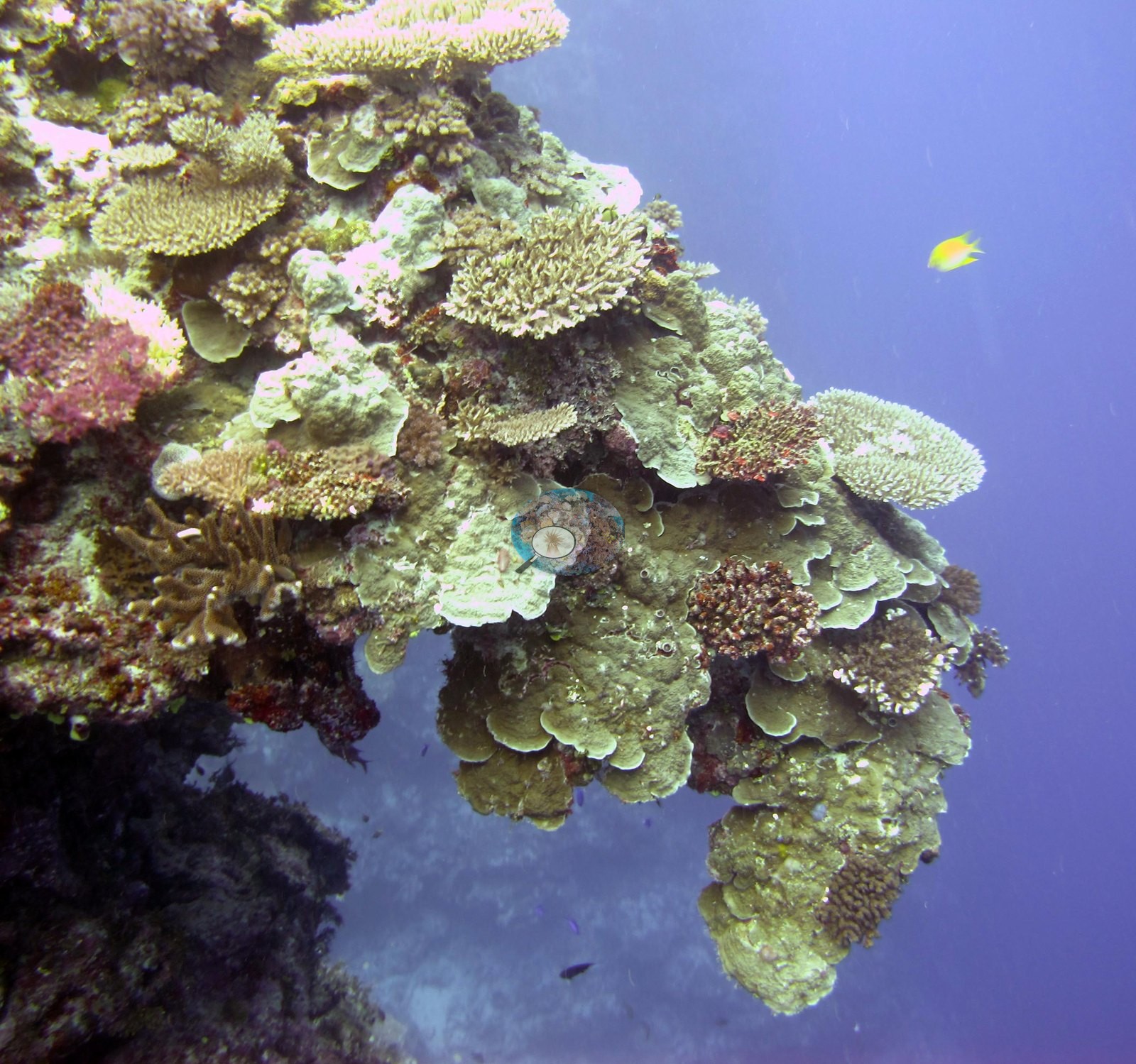
Image 5 looks along the reef edge, where yellow-green digitate and branching colonies and dark red algal patches take over.
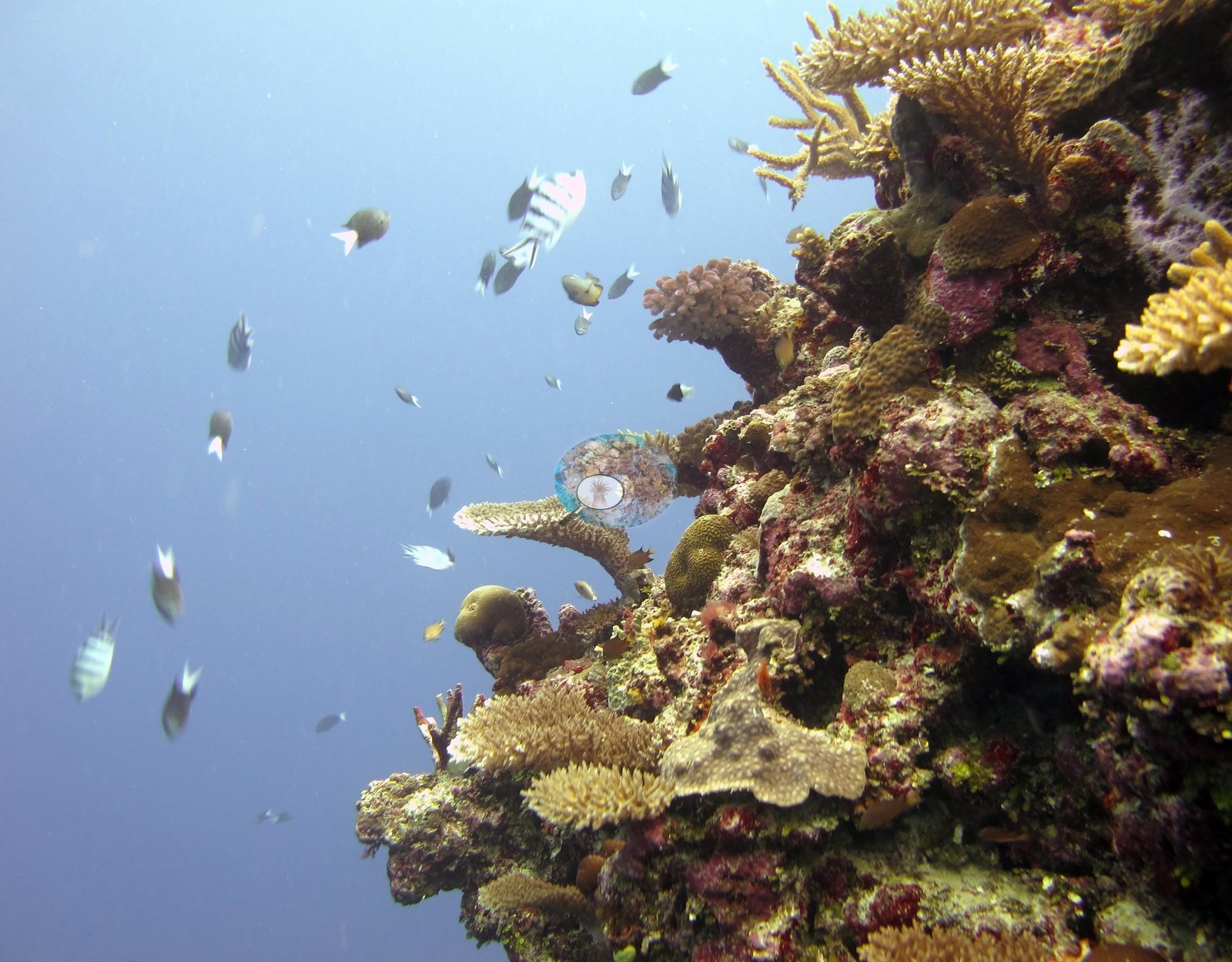
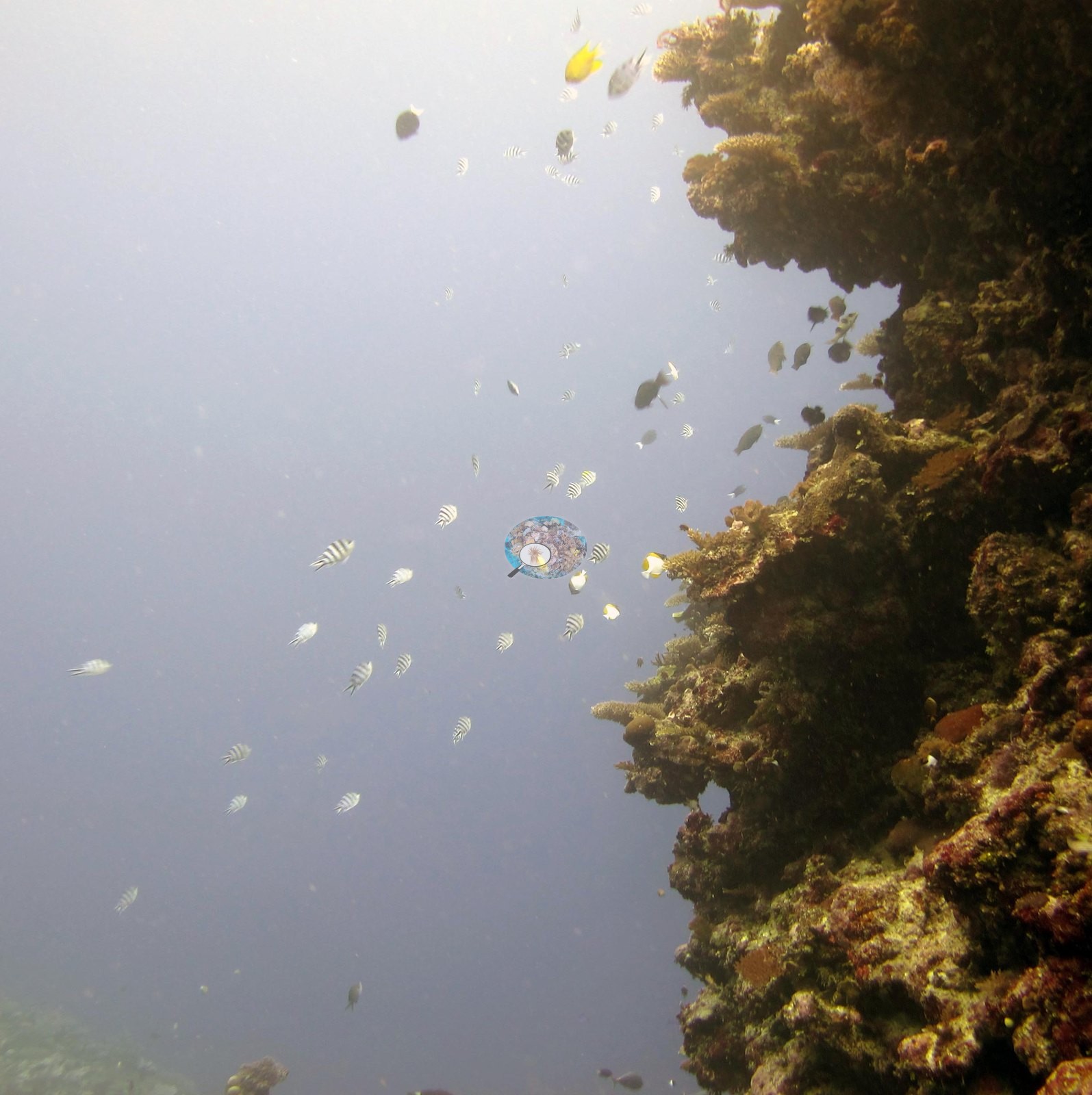
Three deeper frames show the hazier, lower-cover slope — a fish-filled canyon in poor visibility (e.g., Image 2) and a pale pavement-and-rubble slope with striped damselfish and a small reef shark cruising past (e.g., Image 4).
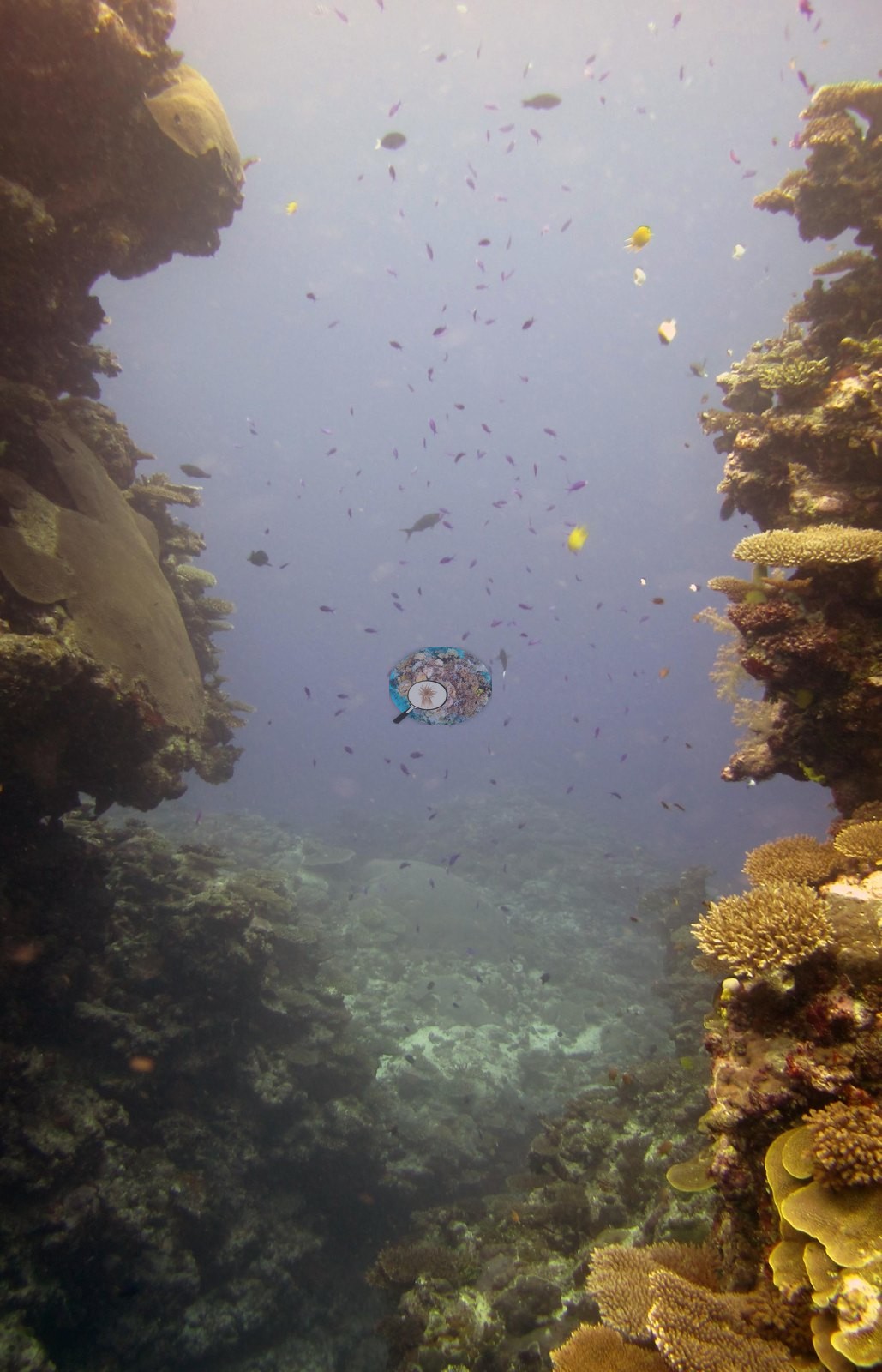
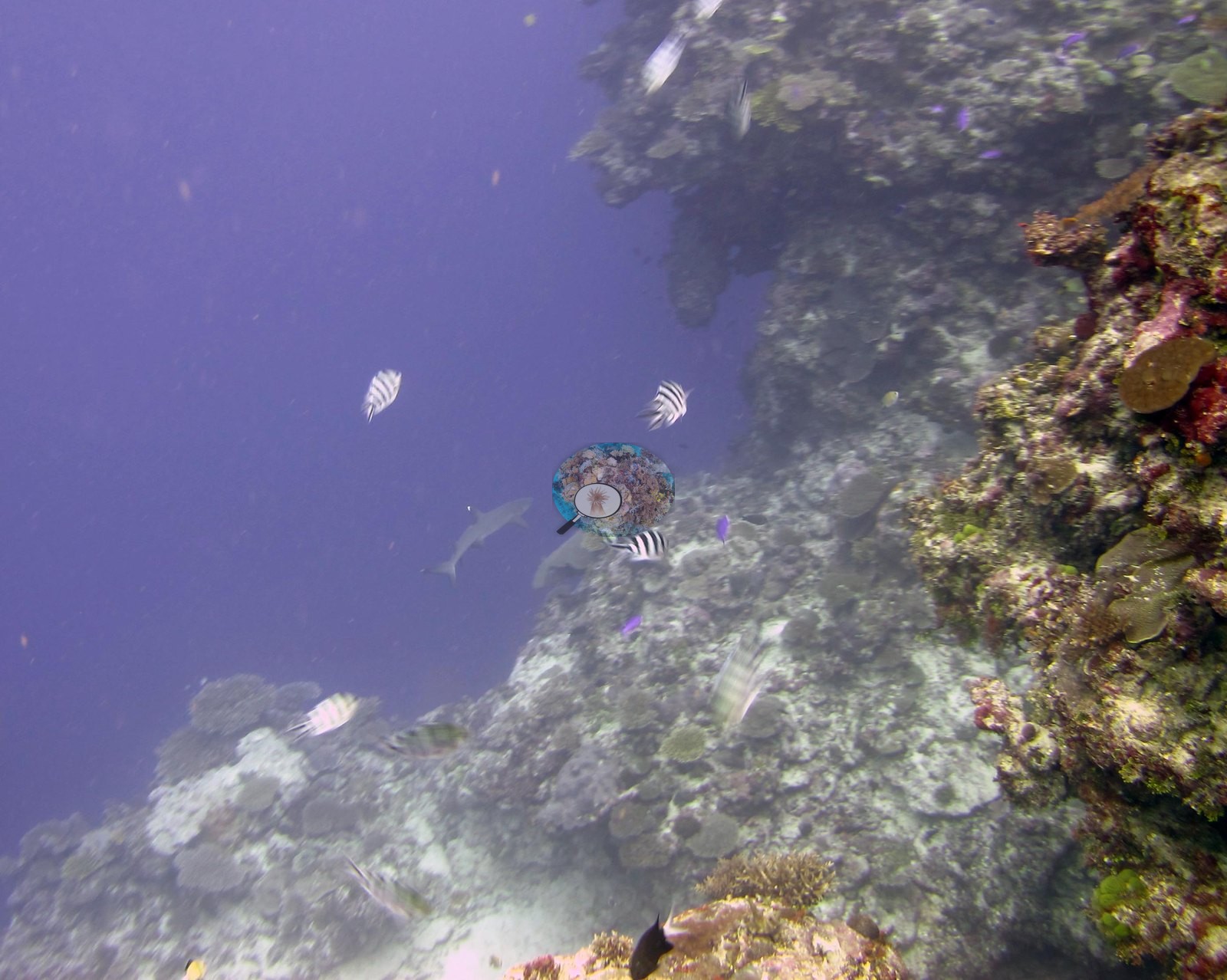
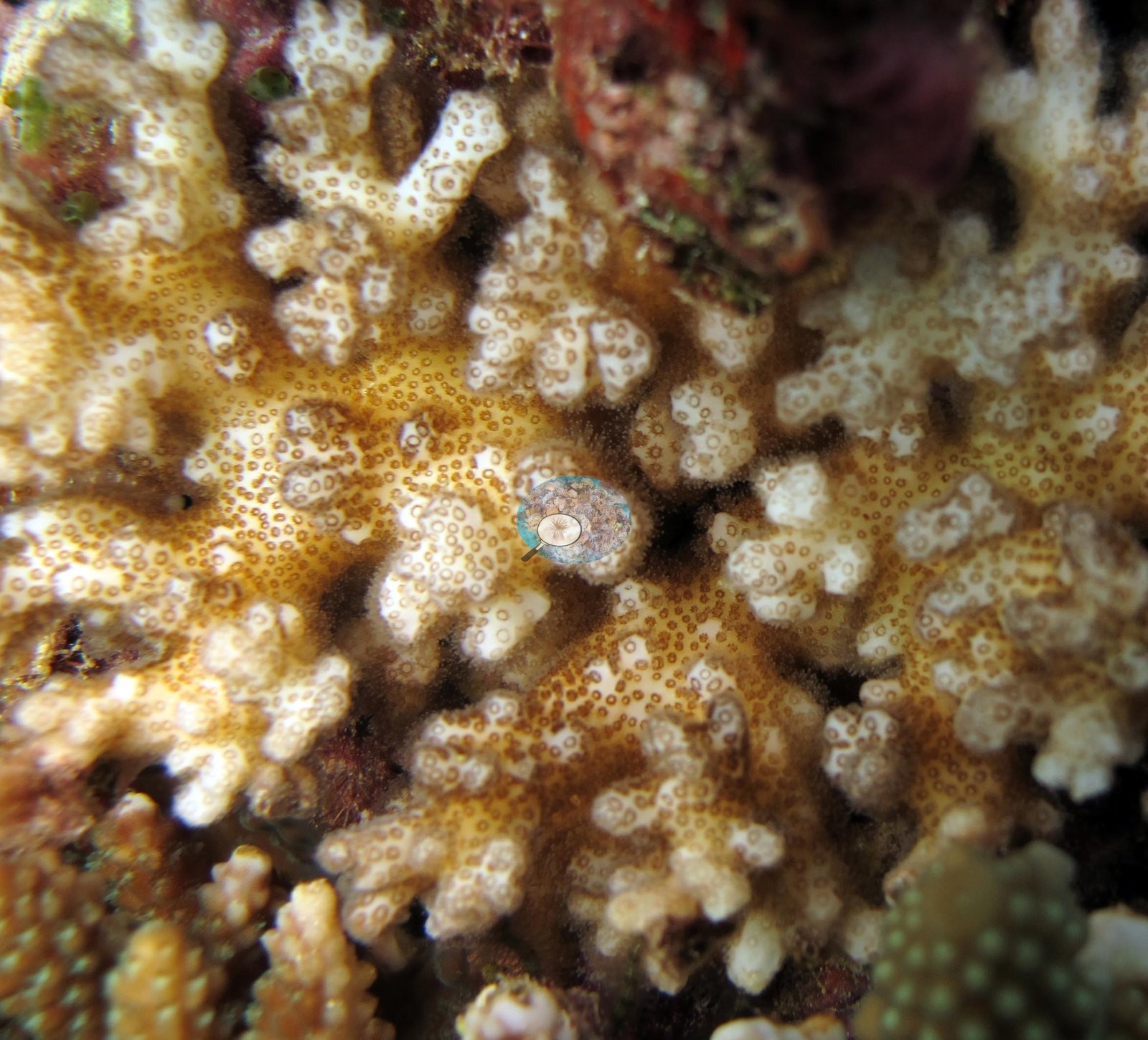
Image 14 is a portrait of a pocilloporid colony Anderson left unidentified: a knobby cream-and-tan branching colony against golden encrusting coral.
Coral cover
- Reference: Khaled bin Sultan Living Oceans Foundation, Global Reef Expedition (in situ transect)
- Coral cover 47%, from the LOF-GRE in situ benthic transect (the mean of all of this station's own transects in the expedition's per-transect benthic data) — a diver transect, and the authoritative value for this site.
- Transect mean 47 ± 15% SE (n = 4 transects; Living Oceans Foundation per-transect benthic data); the headline above is this all-transect mean.
Stressors
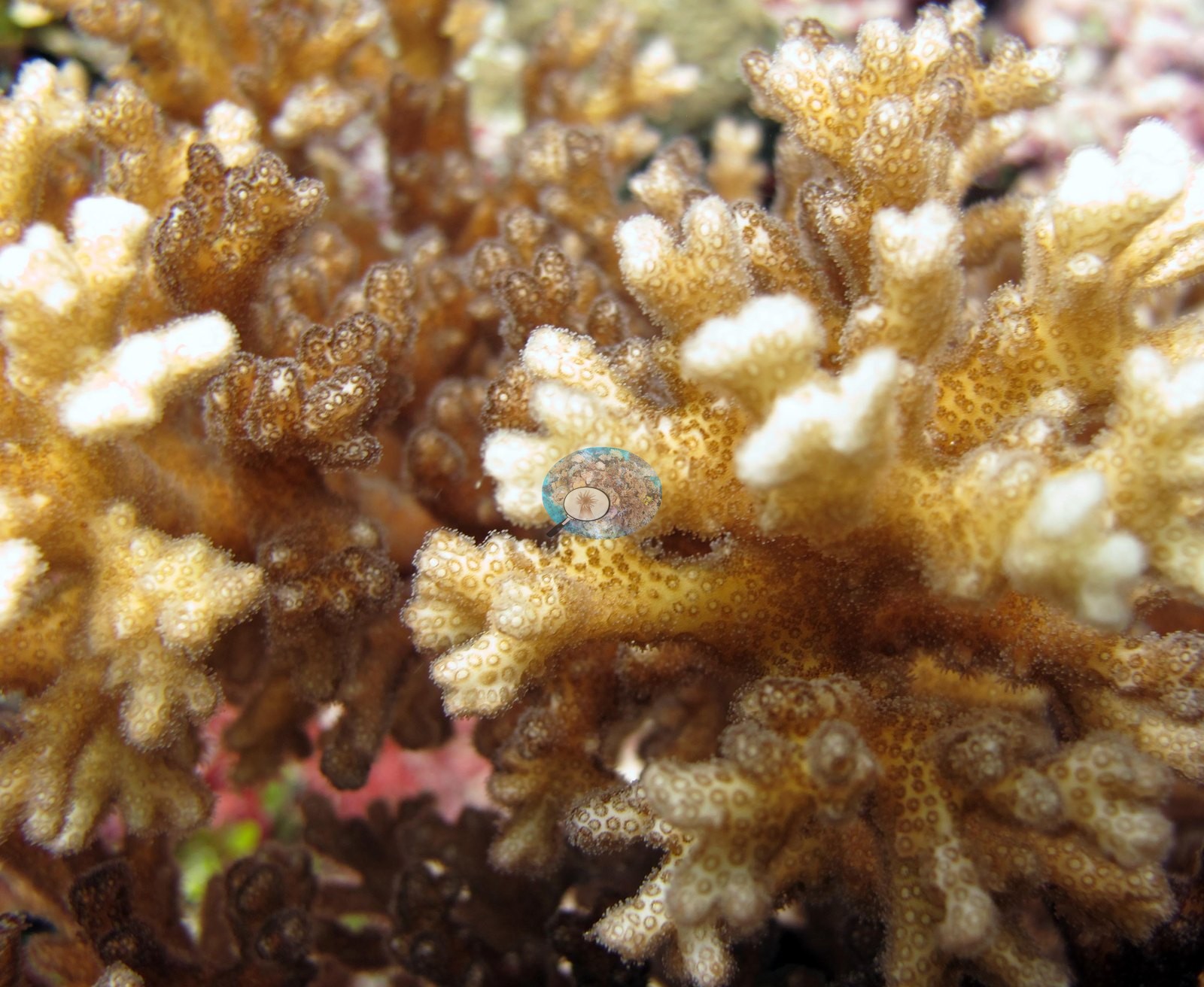
No disease or crown-of-thorns scarring is visible in any frame — though the survey team's own notes for Cicia (retained below) record an active COTS outbreak on one reef elsewhere on the island, which these frames do not show. Anderson's sampling sheet records the one colony sampled here (F102) as 5–10% bleached but otherwise healthy; its macro shows the bleached, white branch ends (e.g., Image 9).
The Living Oceans Foundation transects here recorded 3.8% cyanobacteria and no recently dead coral.
Fish and other fauna
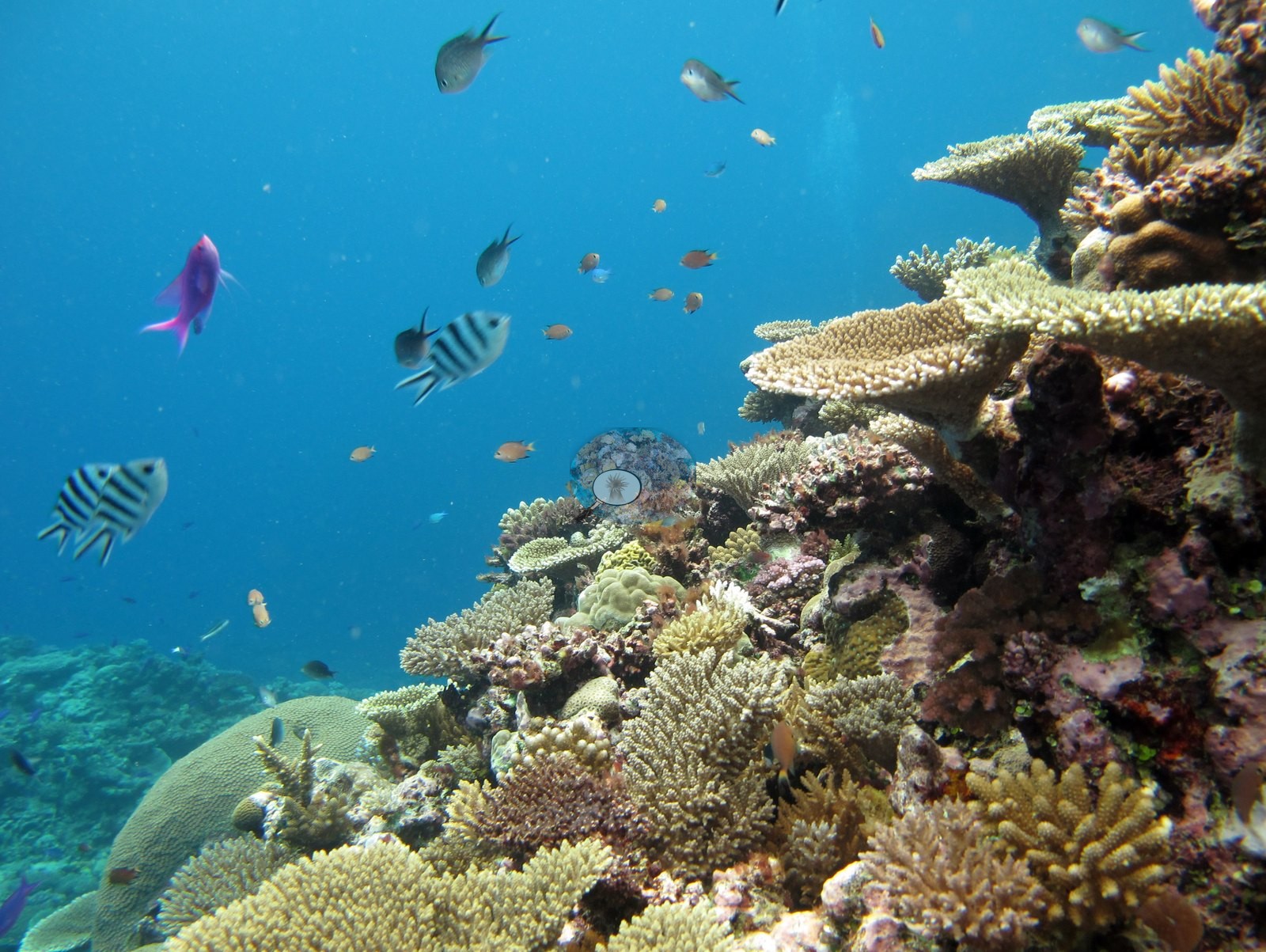
Two frames are fish frames on the reef: "blanketed with fish" (e.g., Image 11), with purple anthias and damselfish massed over a coral mound, and "sergeant majors" (e.g., Image 3) against a hazy wall.
Comparisons with other data
FJCC48 (Cicia, Lau Archipelago) was surveyed 19 Jun 2013 during the Khaled bin Sultan Living Oceans Foundation Global Reef Expedition. The benthic community is highly diverse and coral-dominated often with a substantial macroalgae component. Environment and disturbance regime govern benthic community structure. Scleractinian diversity is very high and often dominated by acroporids, pocilloporids, poritids, and faviids. The edge of the shallow slope is often dominated by large Pocillopora eydouxi colonies, thick-branched and elkhorn-like Isopora sp, and unusually large Favia stelligera and/or Pavona maldivensis stands. In the shallower areas, the reef flat was dominated by CCA and is exposed at lower tides. The expedition's 2013 field report records 212 crown-of-thorns starfish removed from one shallow outbreak reef elsewhere on Cicia, not tied to this station.
CV model comparison
More info
The photo row below is a methods comparison only: it is never averaged with the transect and never used as the headline. It compares site means only: the photos come from the same survey dive as the transect but not from the same points.| Method | Hard coral cover (%) | Photos (n) ± SE |
|---|---|---|
| Transect mean (all transects) | 46.5 | |
| CoralSCOP edited | 38.1* | n = 14 · SE 4.4 |
| Claude (edited photos) | 38.9* | n = 14 · SE 4.7 |
The two computer-vision methods agree within 0.8 pp (38.1–38.9%) and read 7.6–8.4 pp below the in-water transect (46.5%); the headline is the in-water transect because a diver transect is independent of the photographs.
*Based on only 14 reef-habitat photos; this estimate is less certain.
See a more detailed, stand-alone version of this table.
Data & links
- Download benthic survey data (CSV) ↗
- Download all LOF-GRE data (933 sites) ↗
- Photo portfolio ↗
- Coral Reef Diagnostics page for this area ↗
All images from Coral Reef Diagnostics. Data are from the Khaled bin Sultan Living Oceans Foundation Global Reef Expedition and Coral Reef Diagnostics.
 © Coral Reef Diagnostics.