
Saudi Red Sea - Long Reef (Thuwal)
Part of the regional summaries: Saudi Arabia - Jeddah / KAUST (Thuwal) / Rabigh, Saudi Arabia, and Red Sea
More info
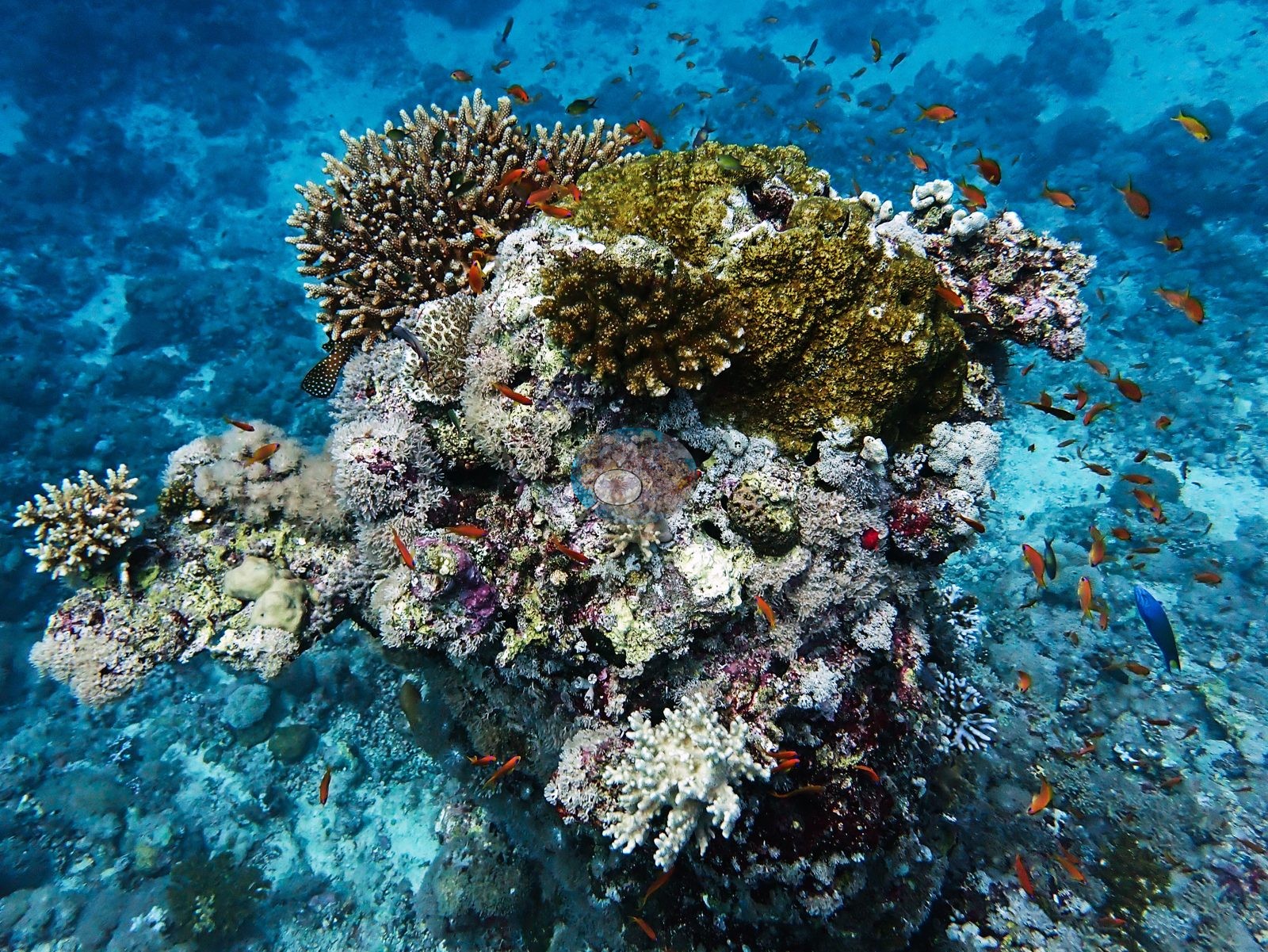
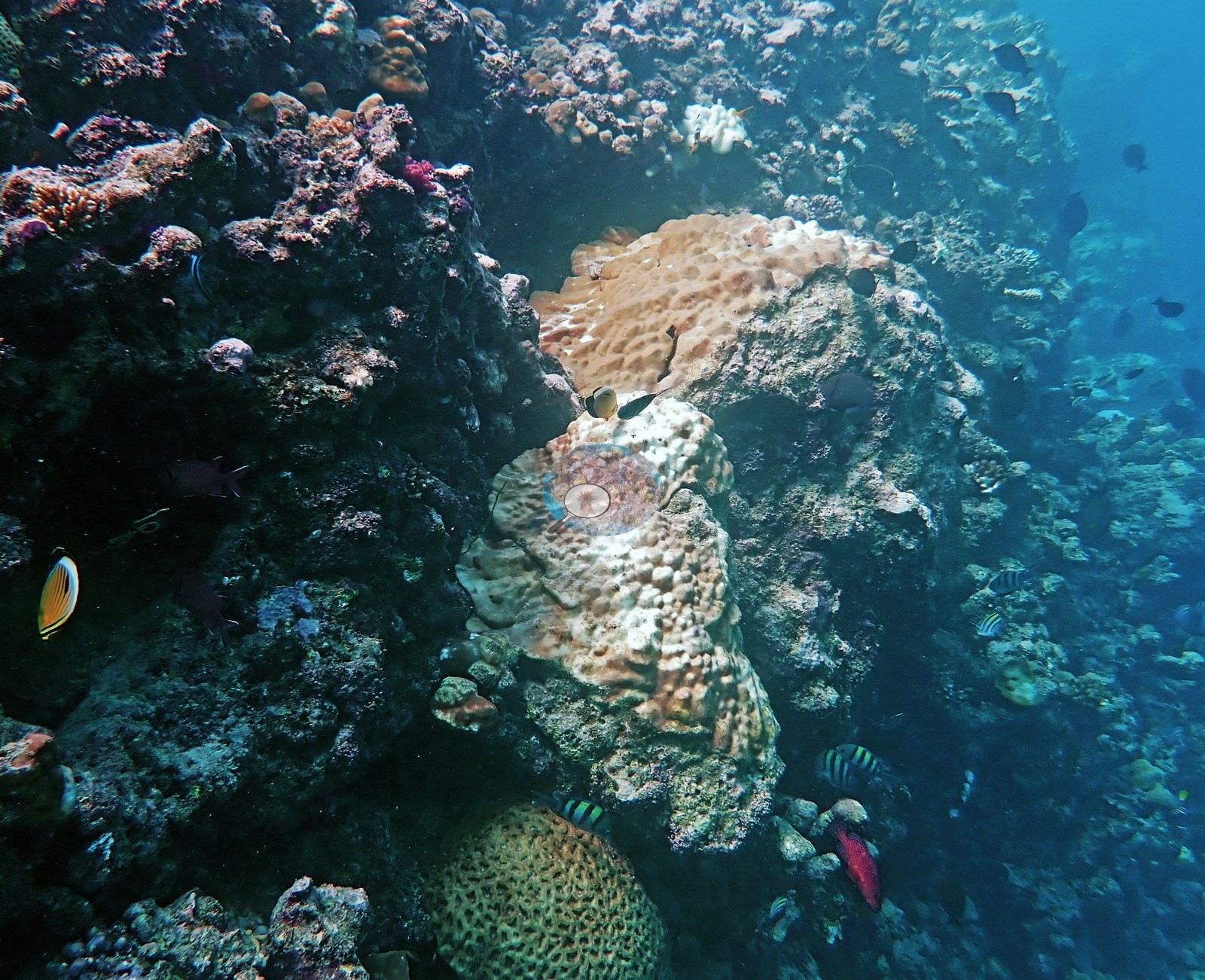
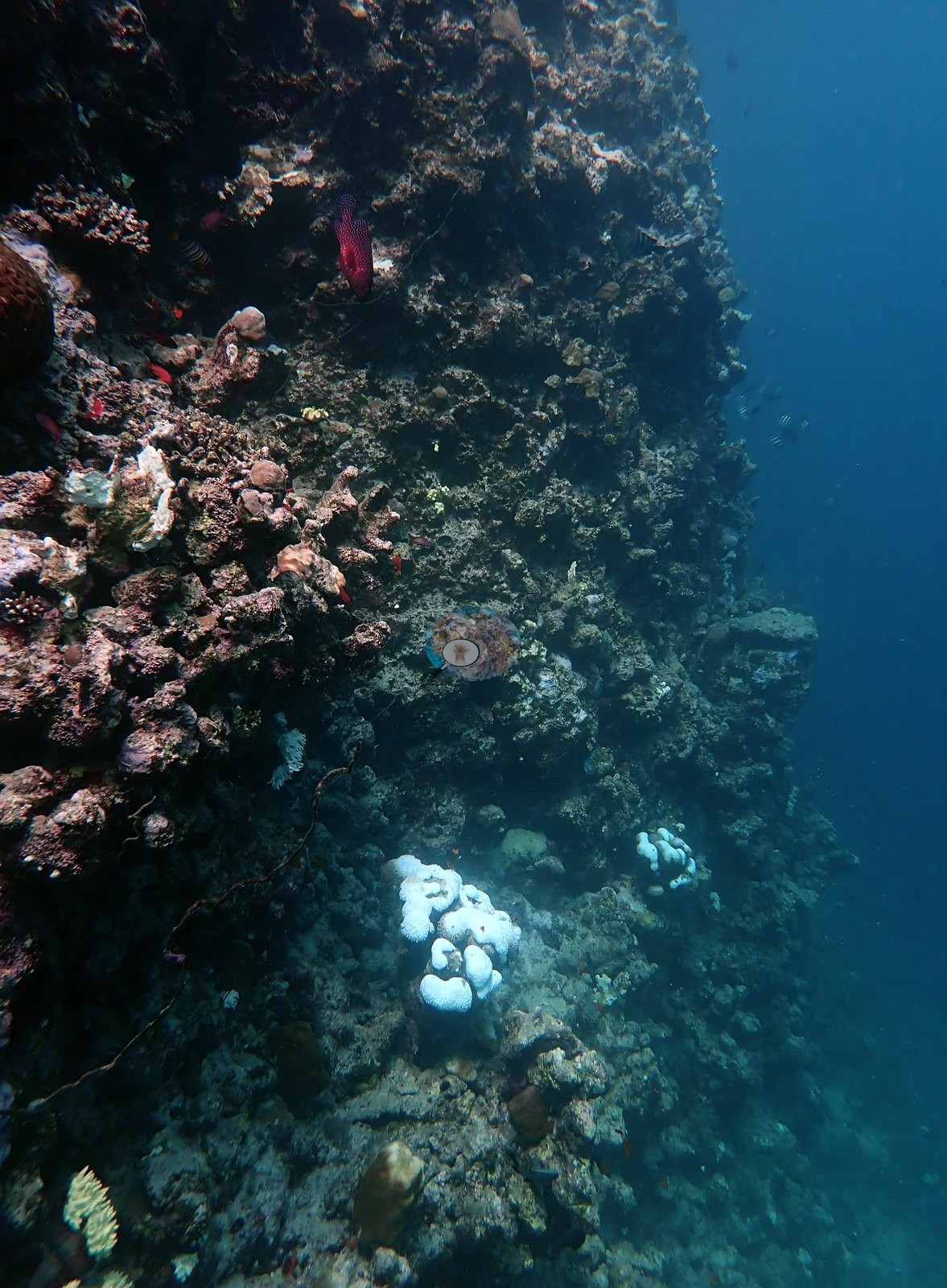
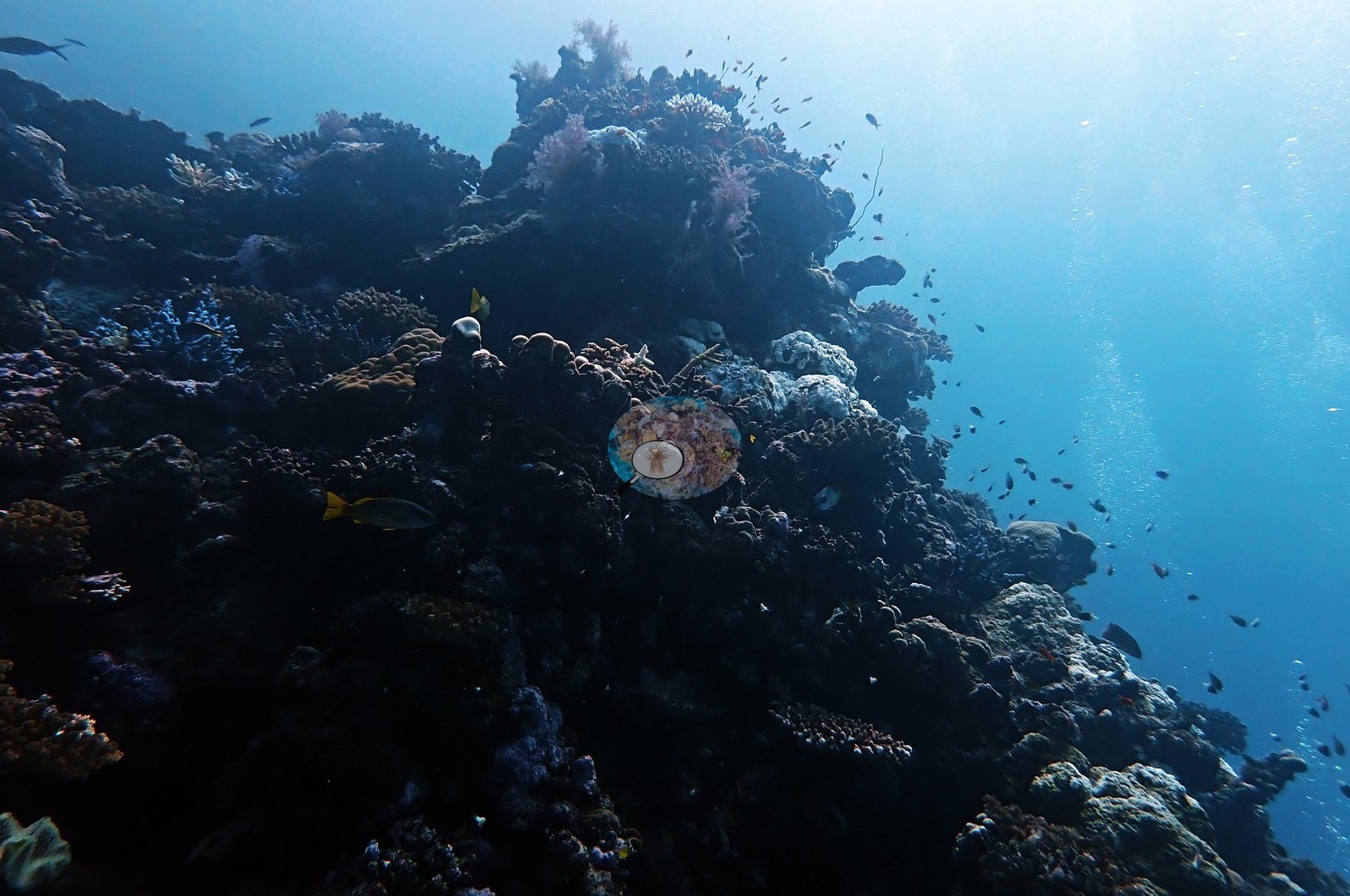
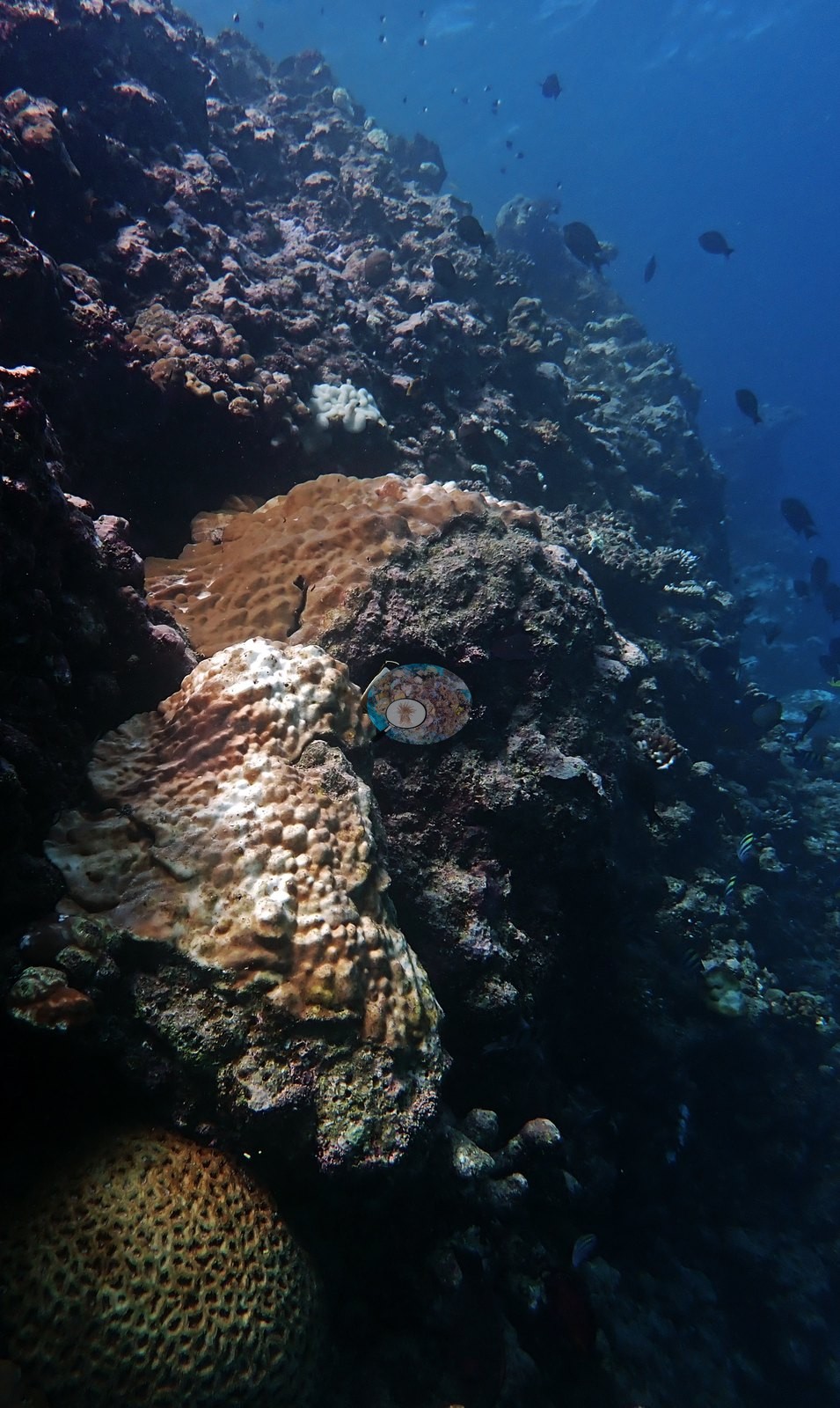
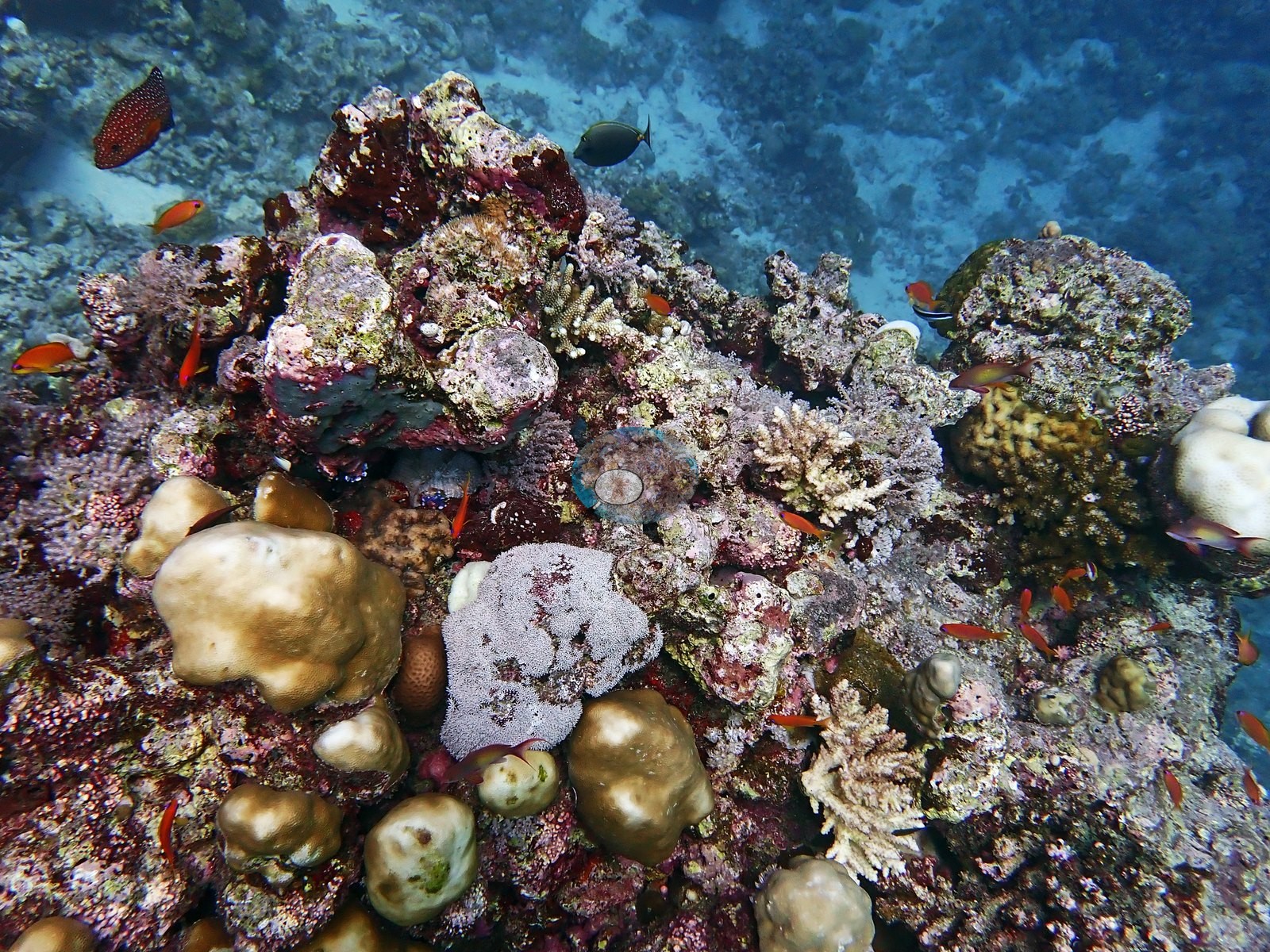
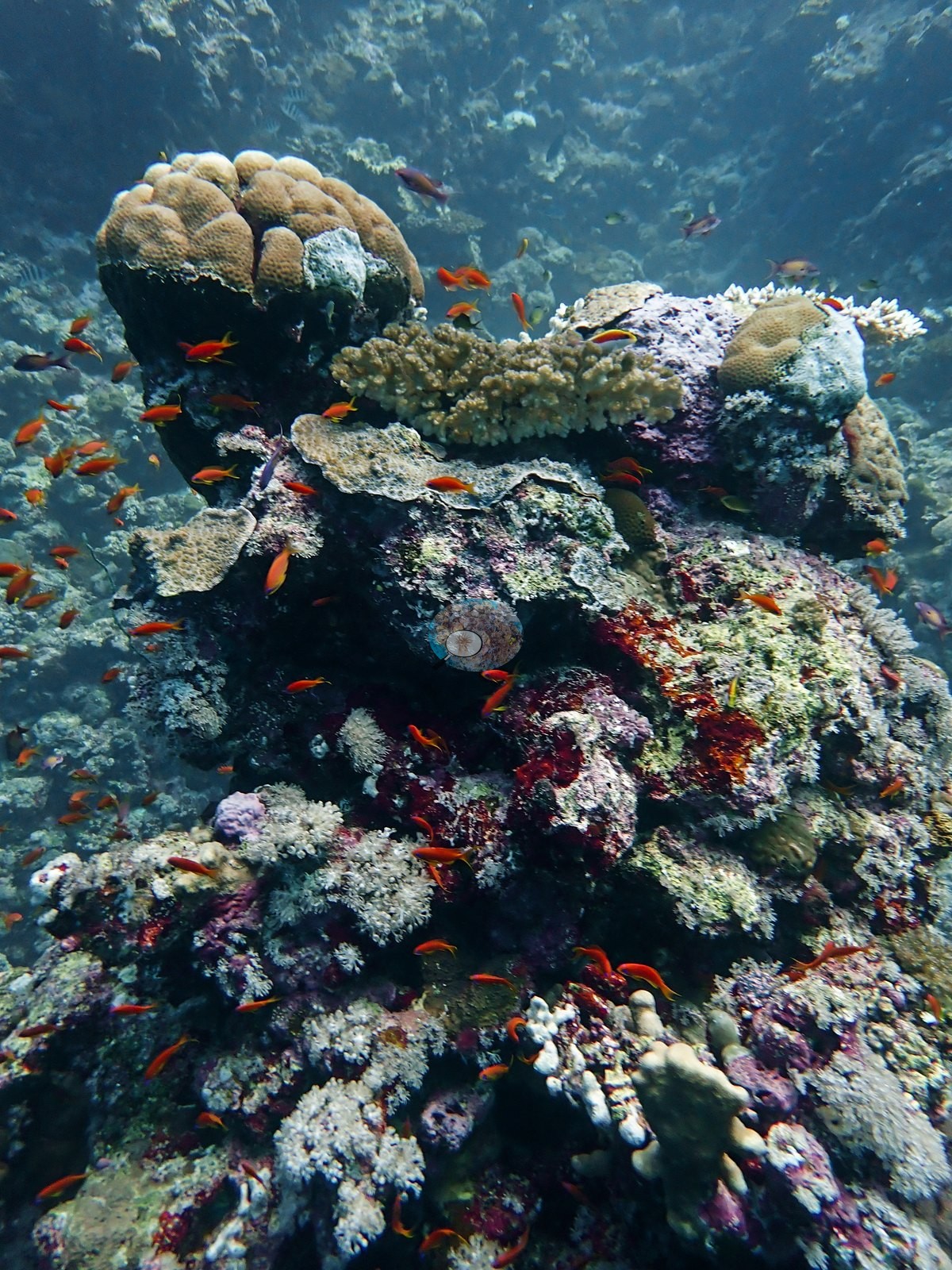
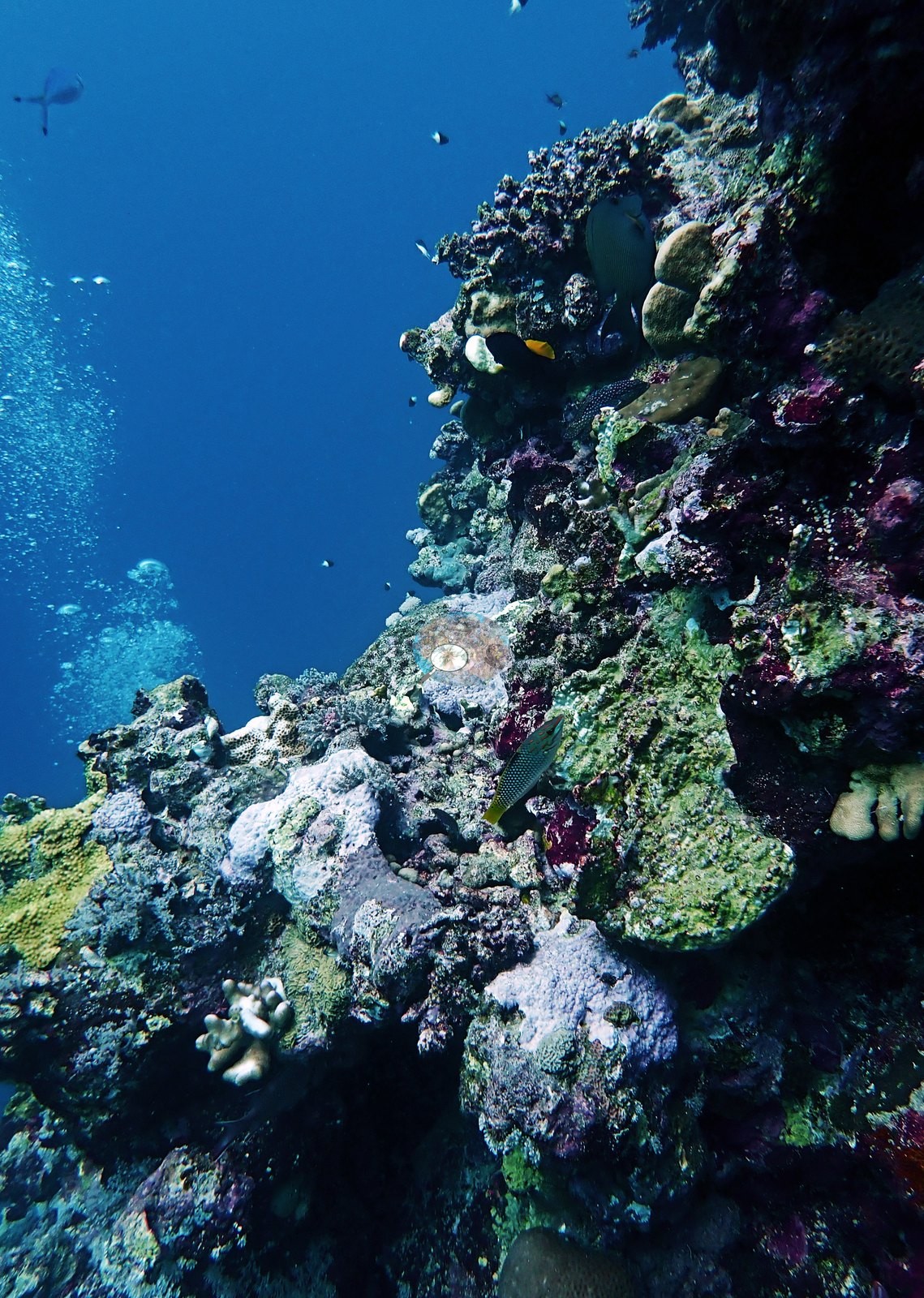
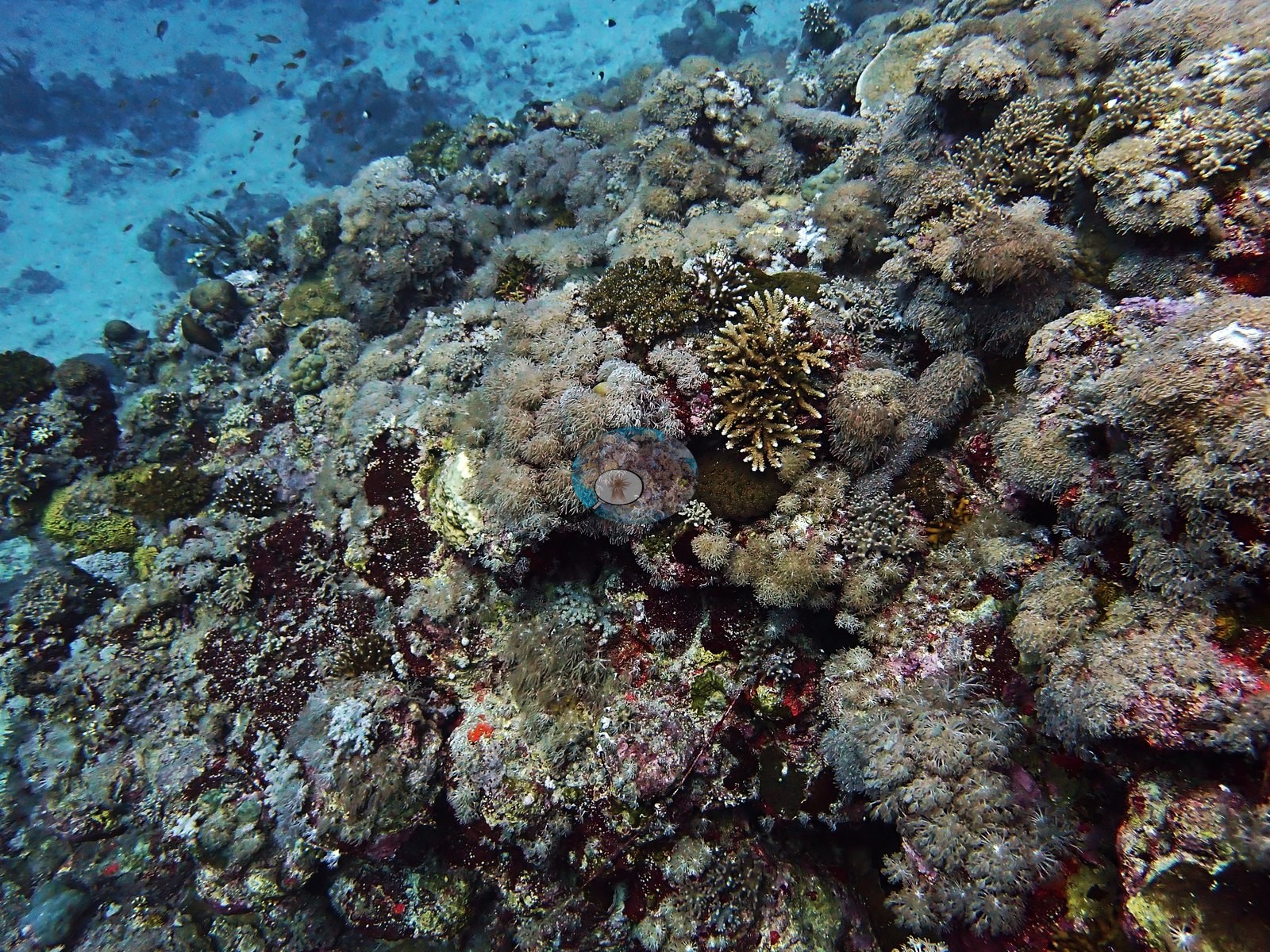
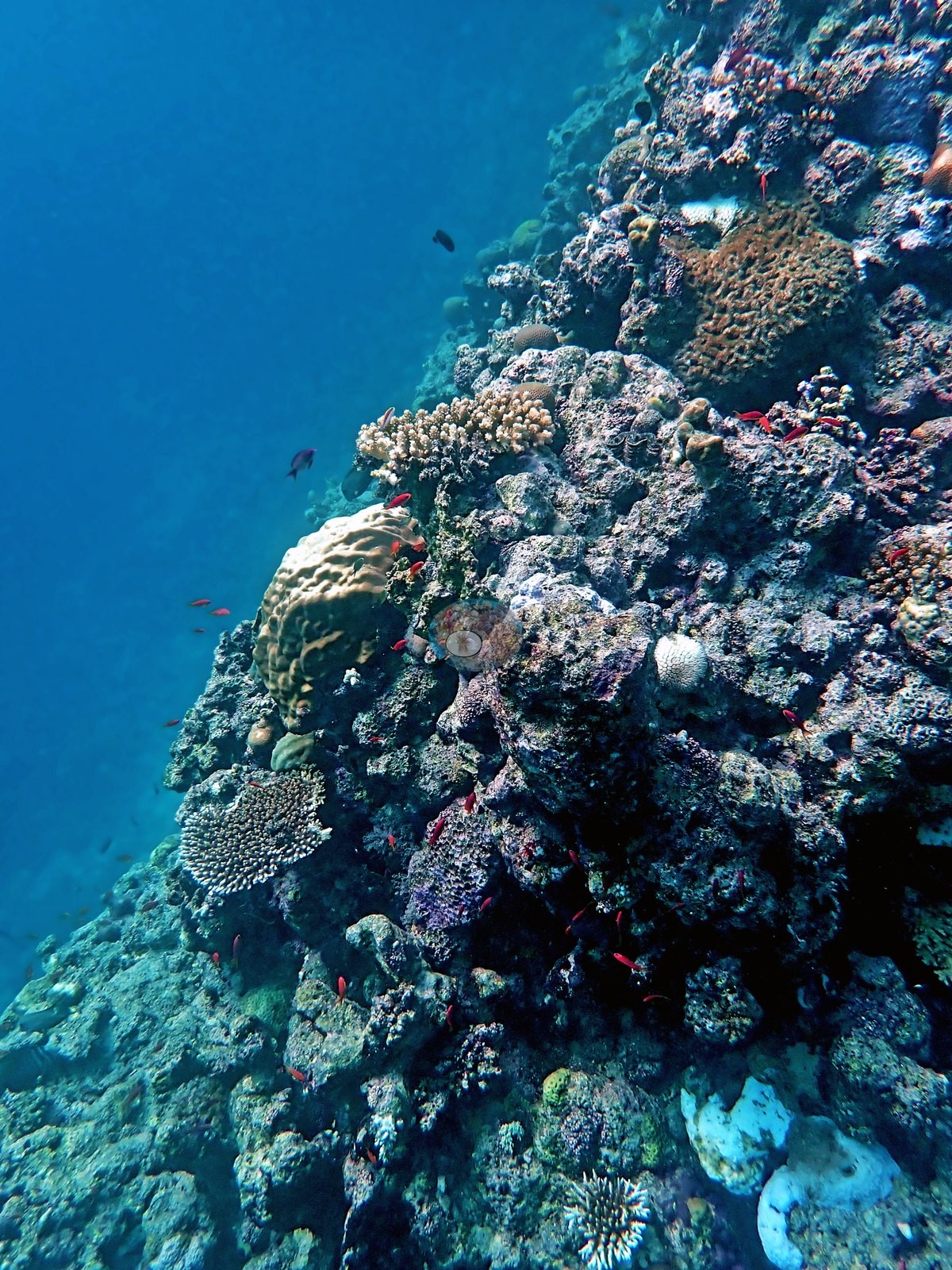
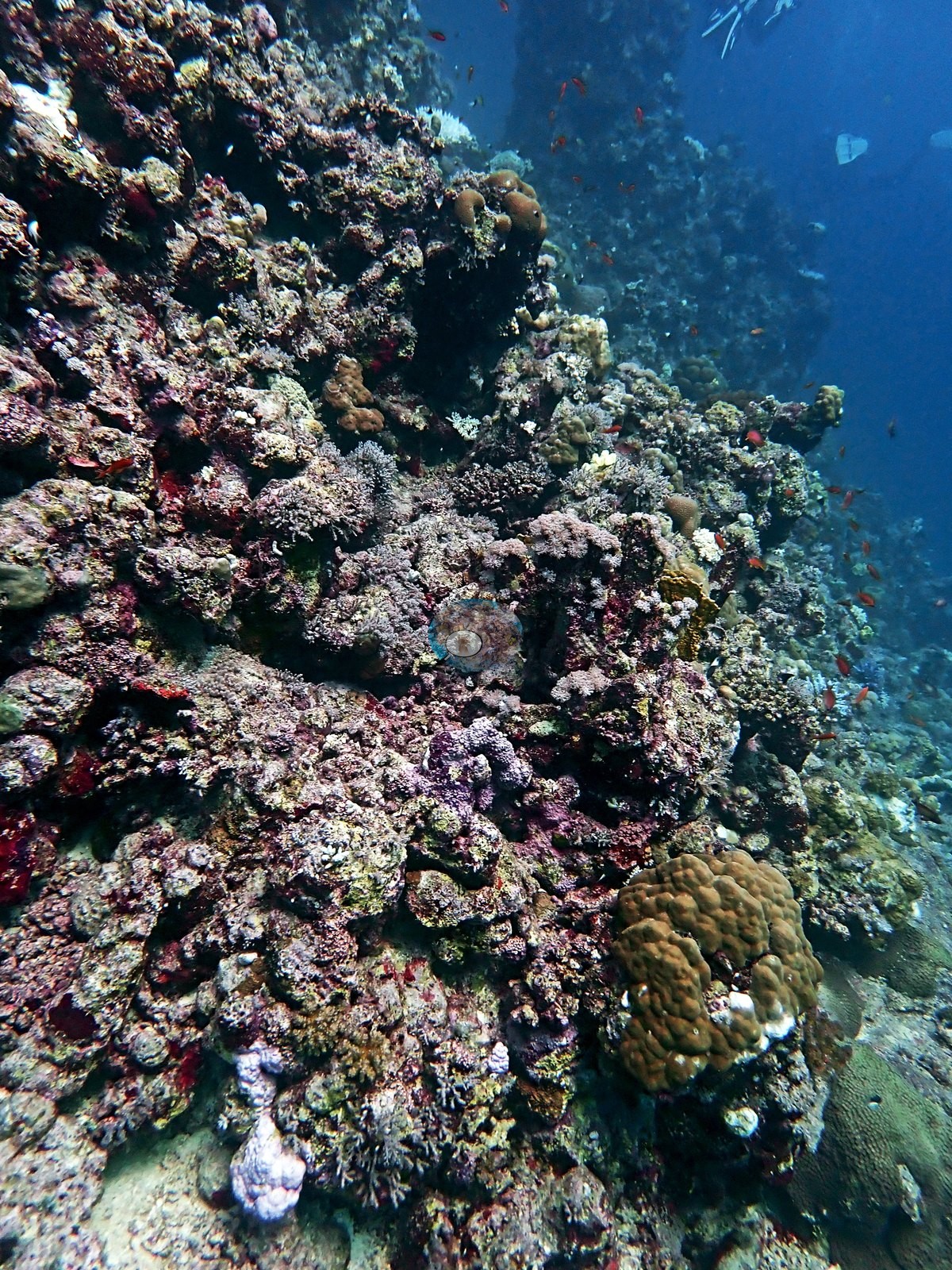
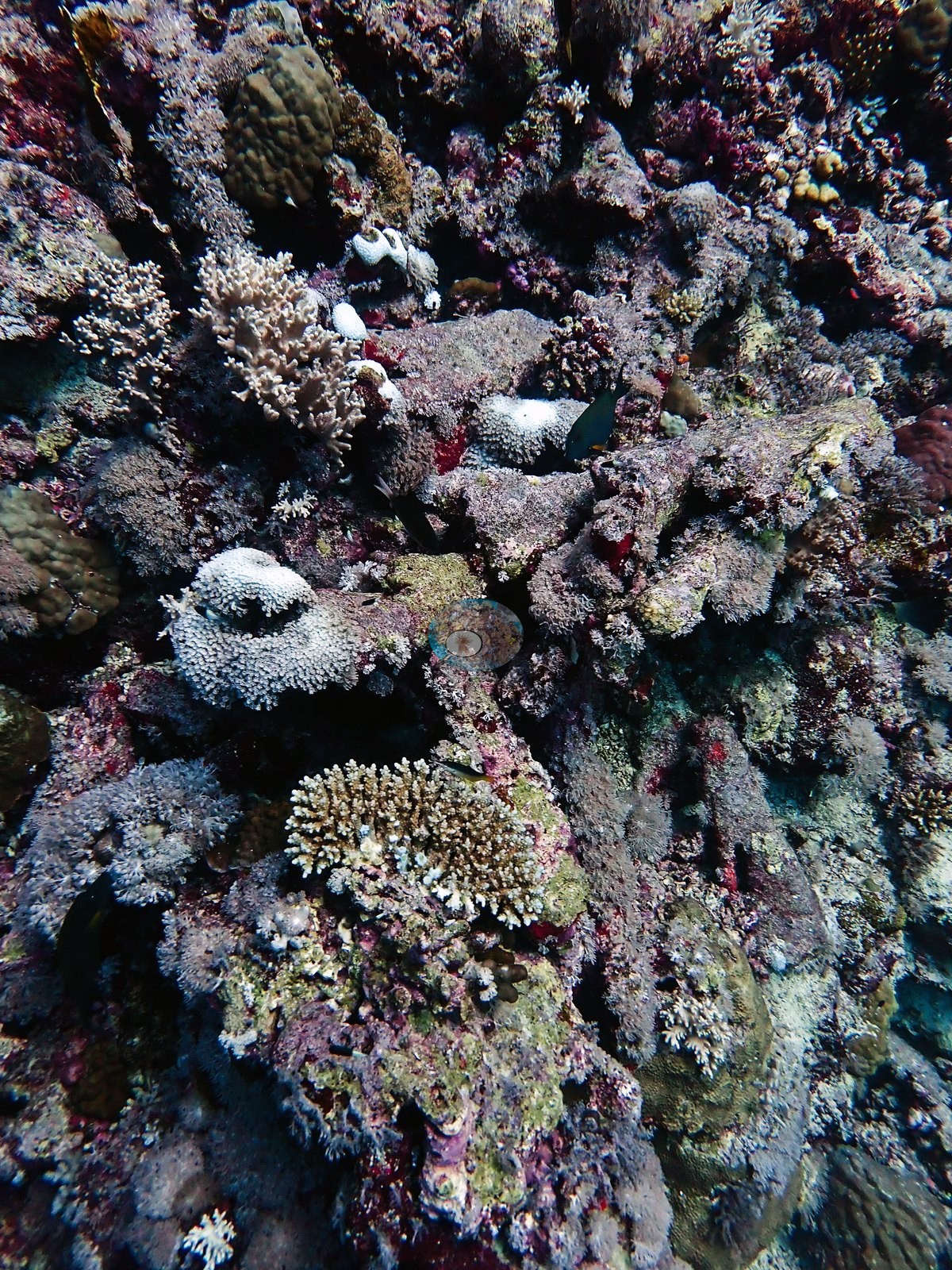
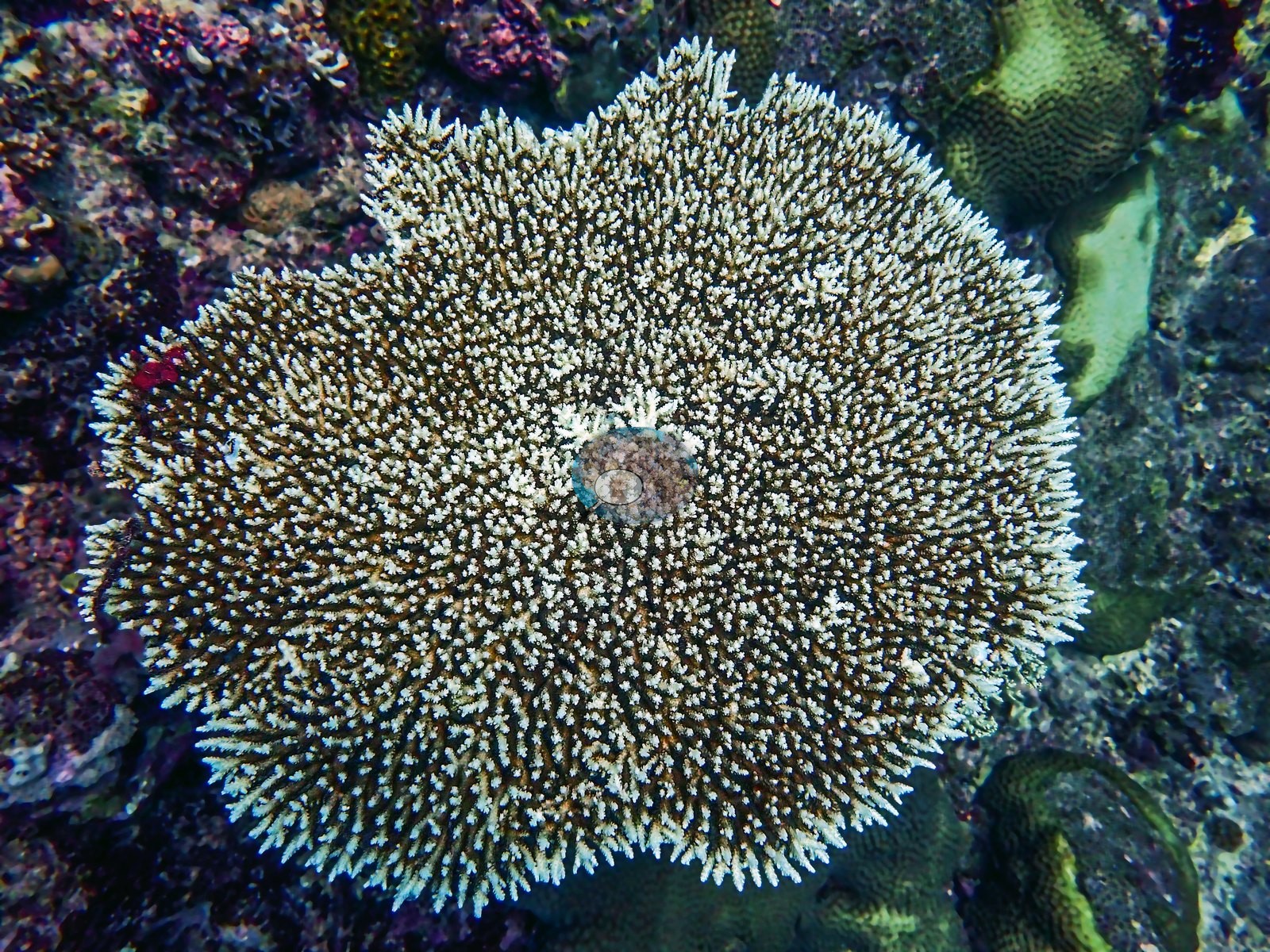
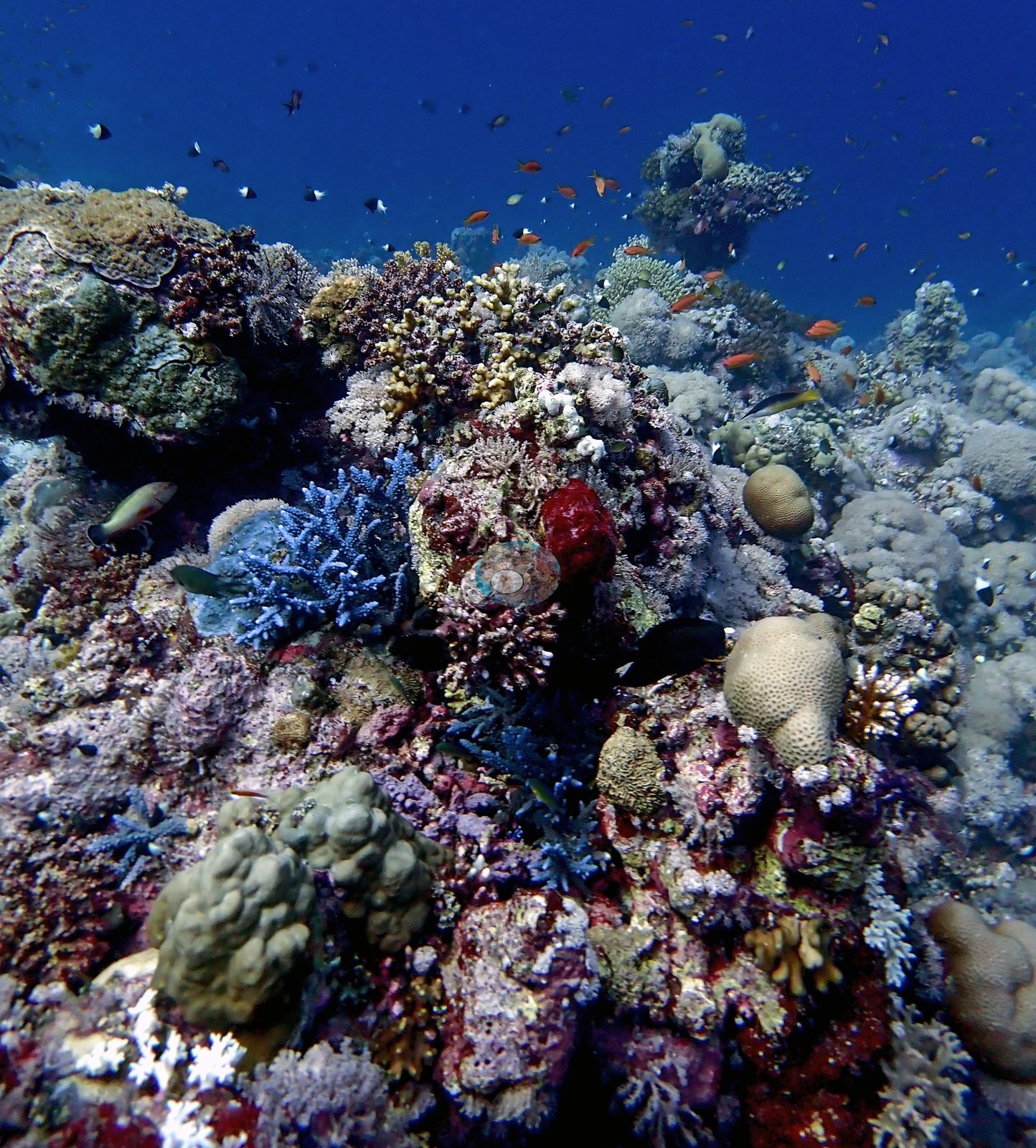
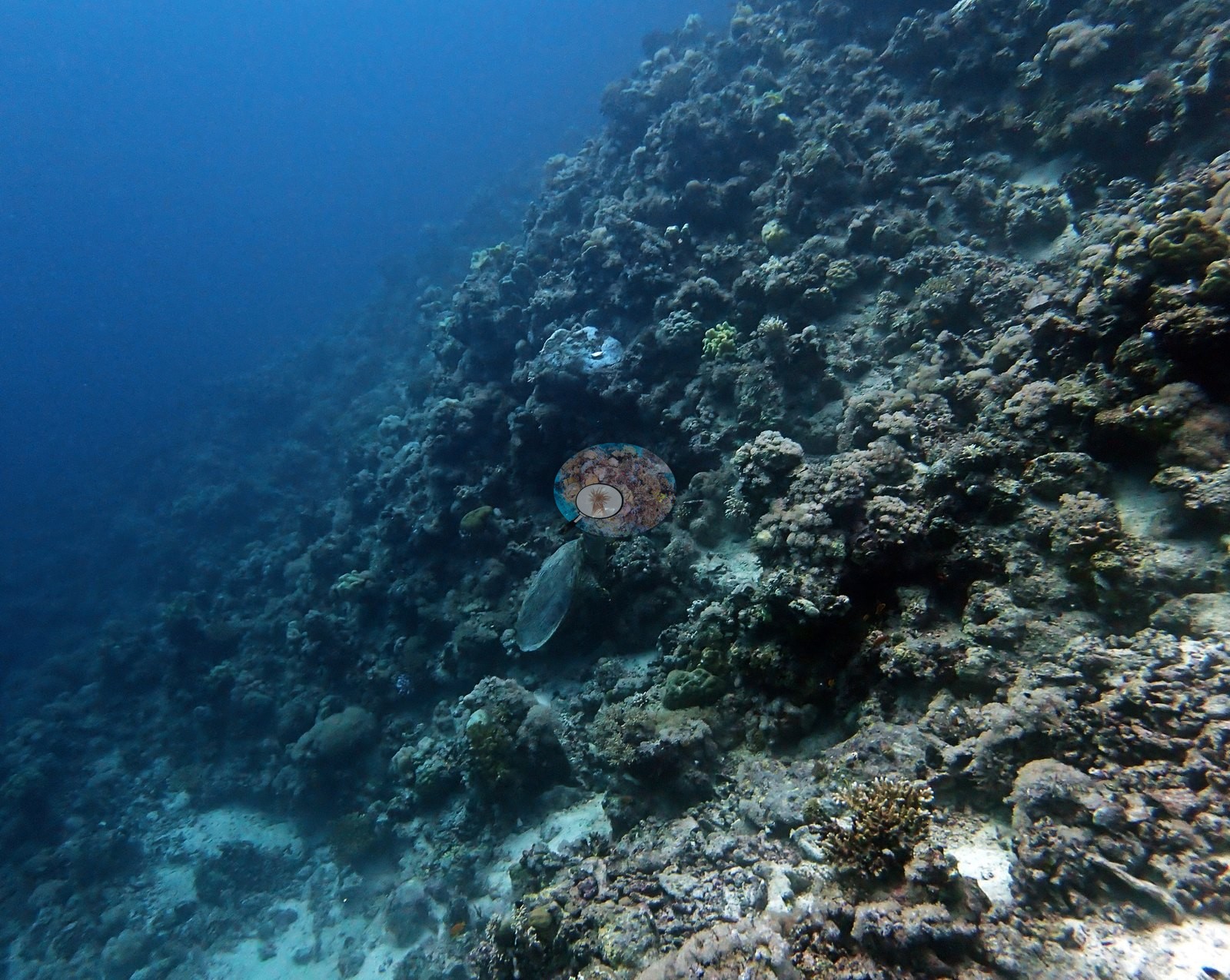
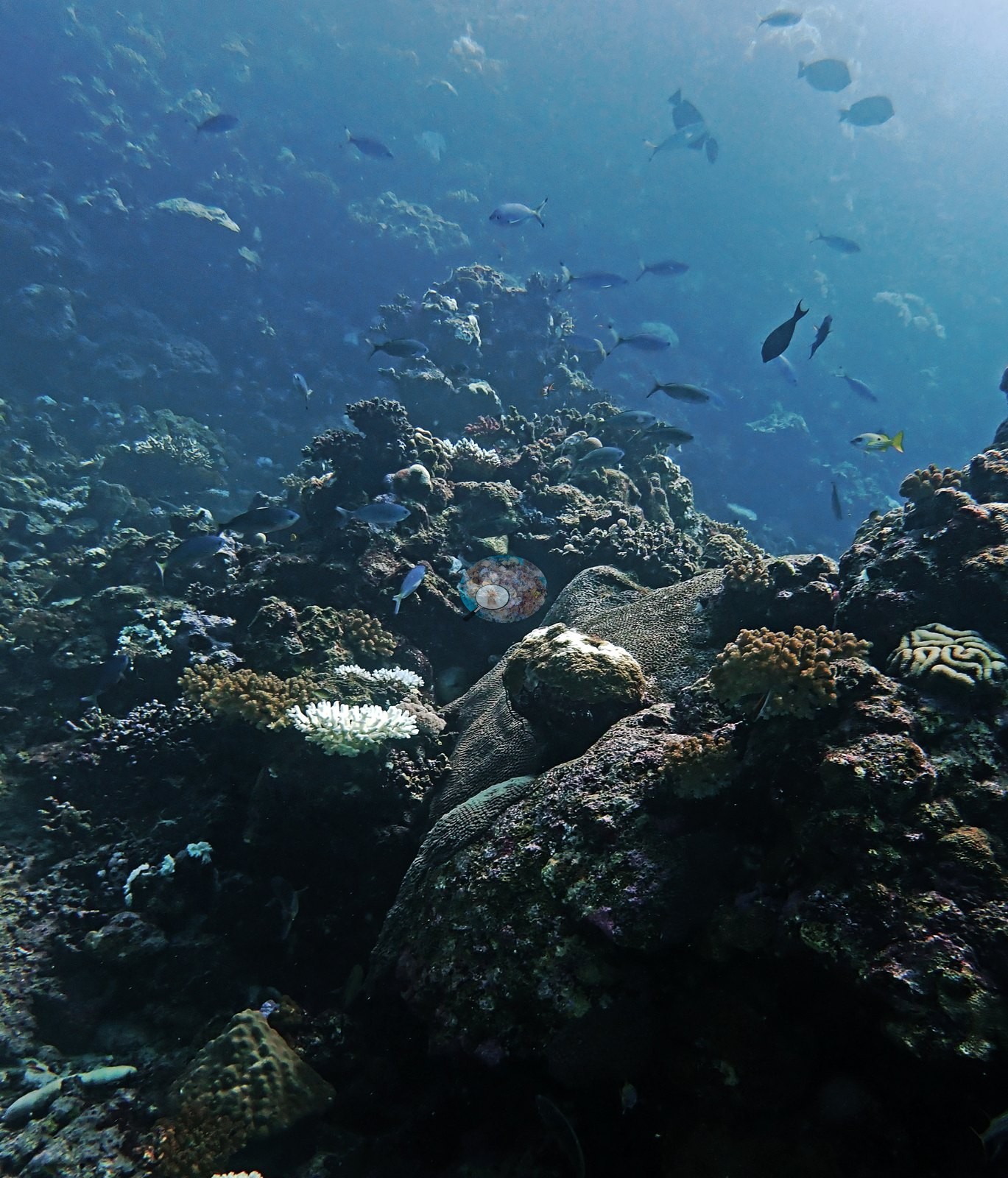
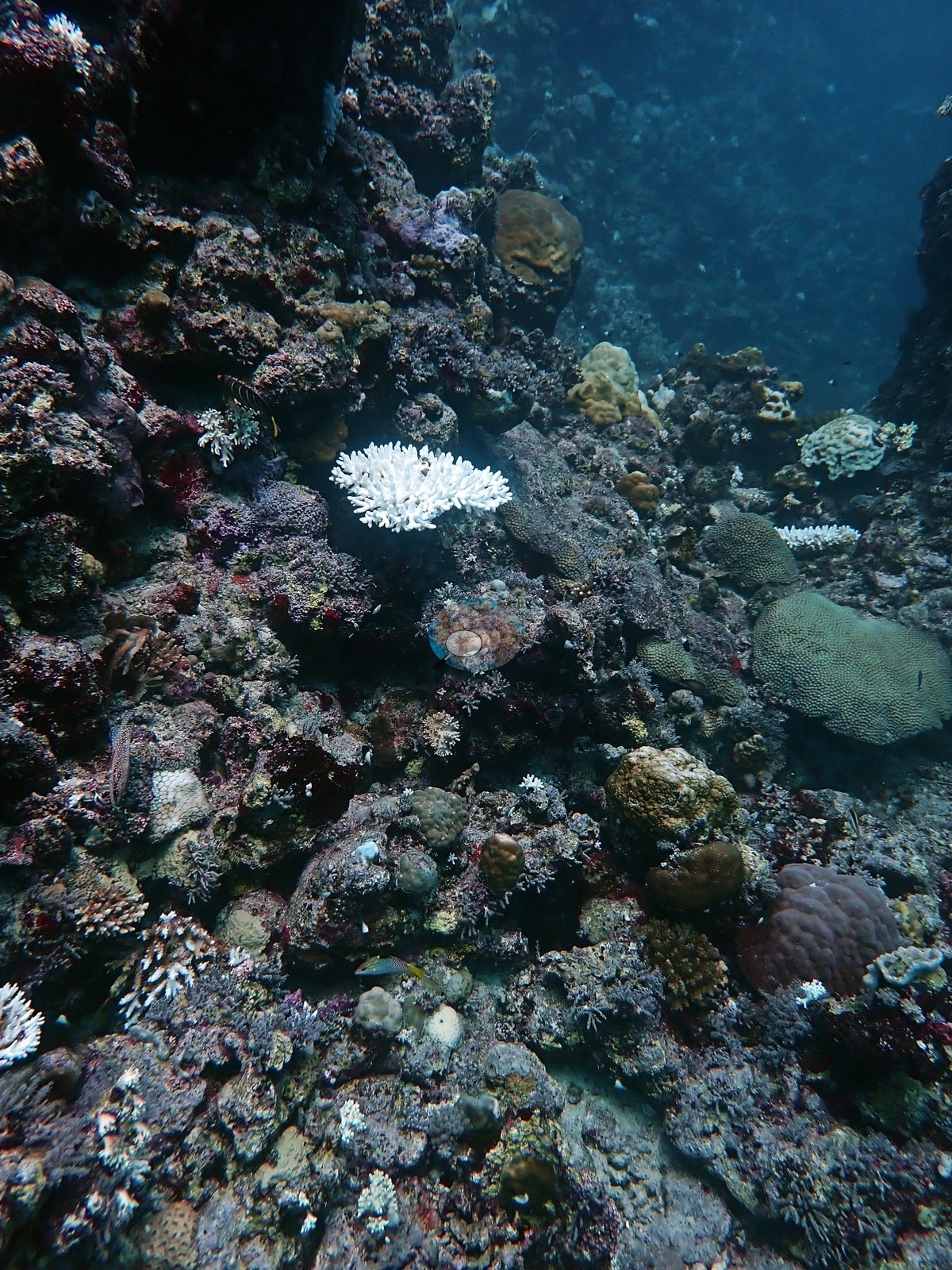
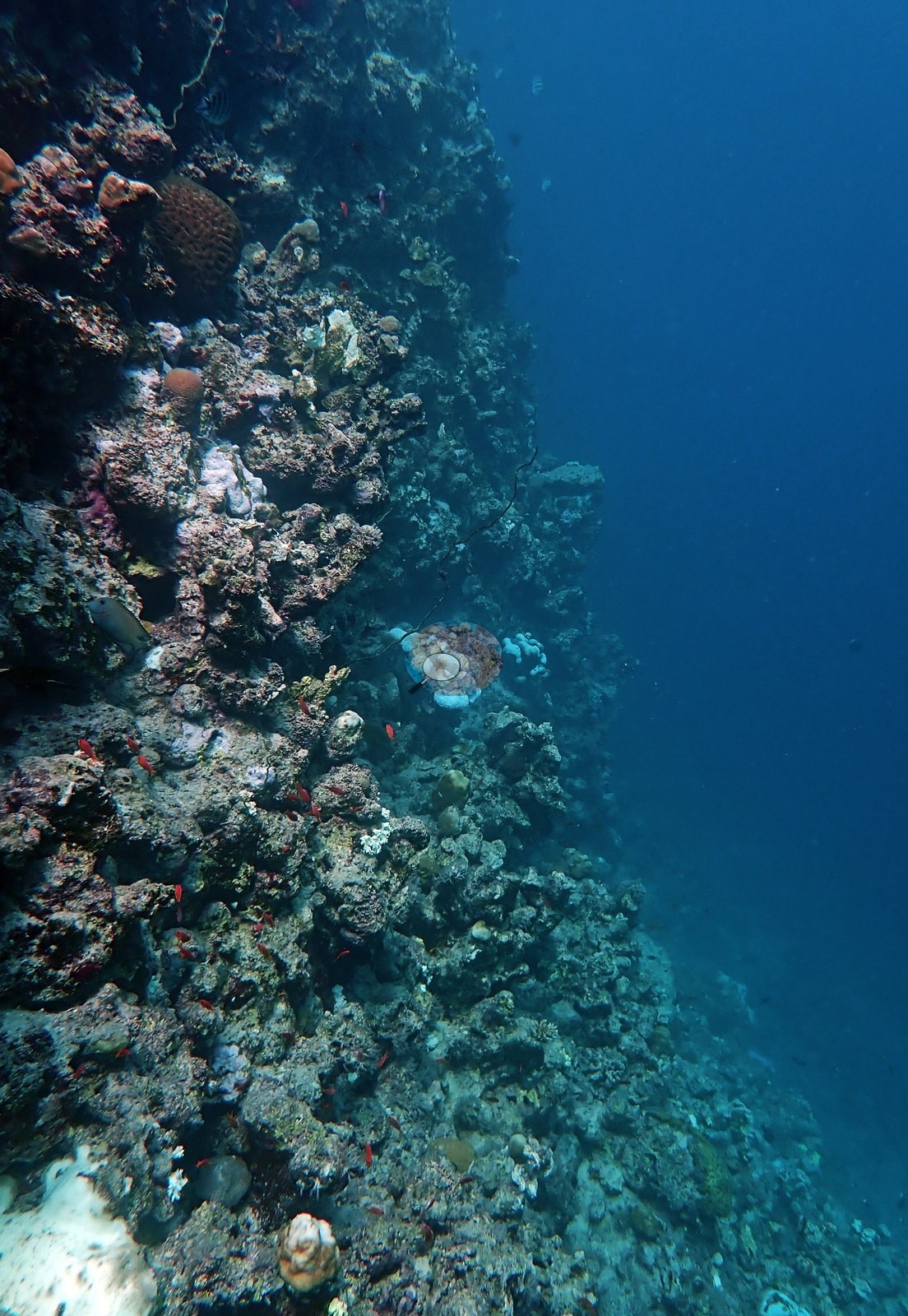
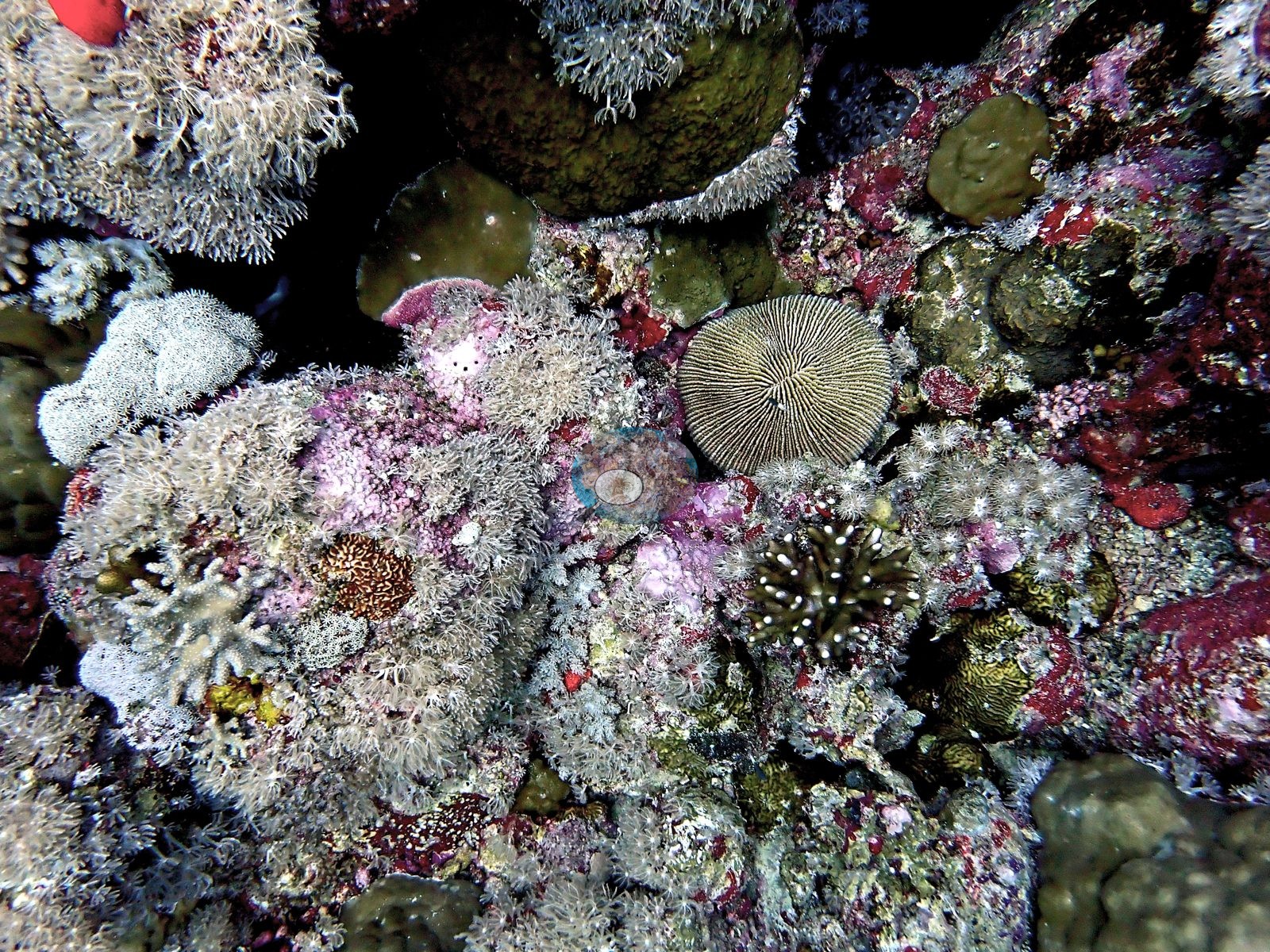
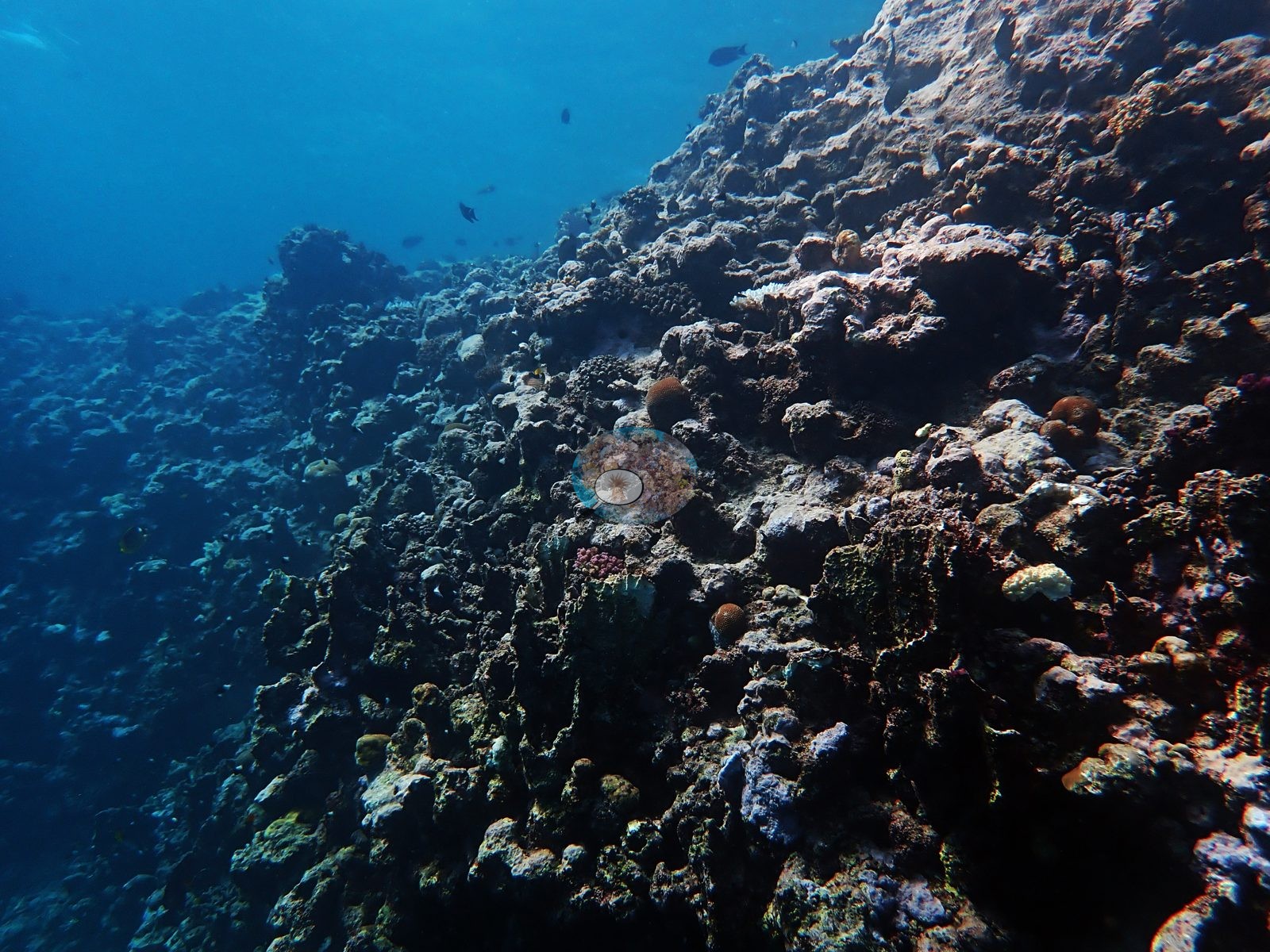
Makkah-Madine Saudi Arabia (NOAA CRW virtual station) · Northern and Central Red Sea ecoregion mean=12.2°C-heating weeksLong Reef is a steep-sided ridge with two very different faces - a densely mixed reef top (Porites, Astreopora, Goniastrea, table, and corymbose Acropora, bound together by heavy pink coralline algae) and a sparser, more sculptural wall dropping into blue water. A single November 2023 visit measured 14% cover with about 20% of coral tissue bleached, and the photographs show a cluster of pale blue-white colonies on the wall plus a few frankly white branching corals on the reef top.
الشعبة الطويلة حيد شديد الانحدار من الجانبين وله وجهان مختلفان جداً: سطح شعبة مختلط بكثافة (Porites وAstreopora وGoniastrea وAcropora الطاولي والعنقودي المسطح، تربطها طحالب مرجانية وردية غزيرة)، وجدار أكثر تناثراً وأشد نحتاً يهبط في الماء الأزرق.
ترجمة هذا الملخص بالذكاء الاصطناعي؛ النص الإنجليزي هو المعتمد. Translated from the site’s shorter map summary.
Three independent survey stations shown with the program’s logo — click one to see how far it is from this site.
One other CRD dive site within 5 km shown in orange — click a marker to open its page.
4 of these 50 photographs are shown beside the text that discusses them under "Site description" below.
Site description
Setting
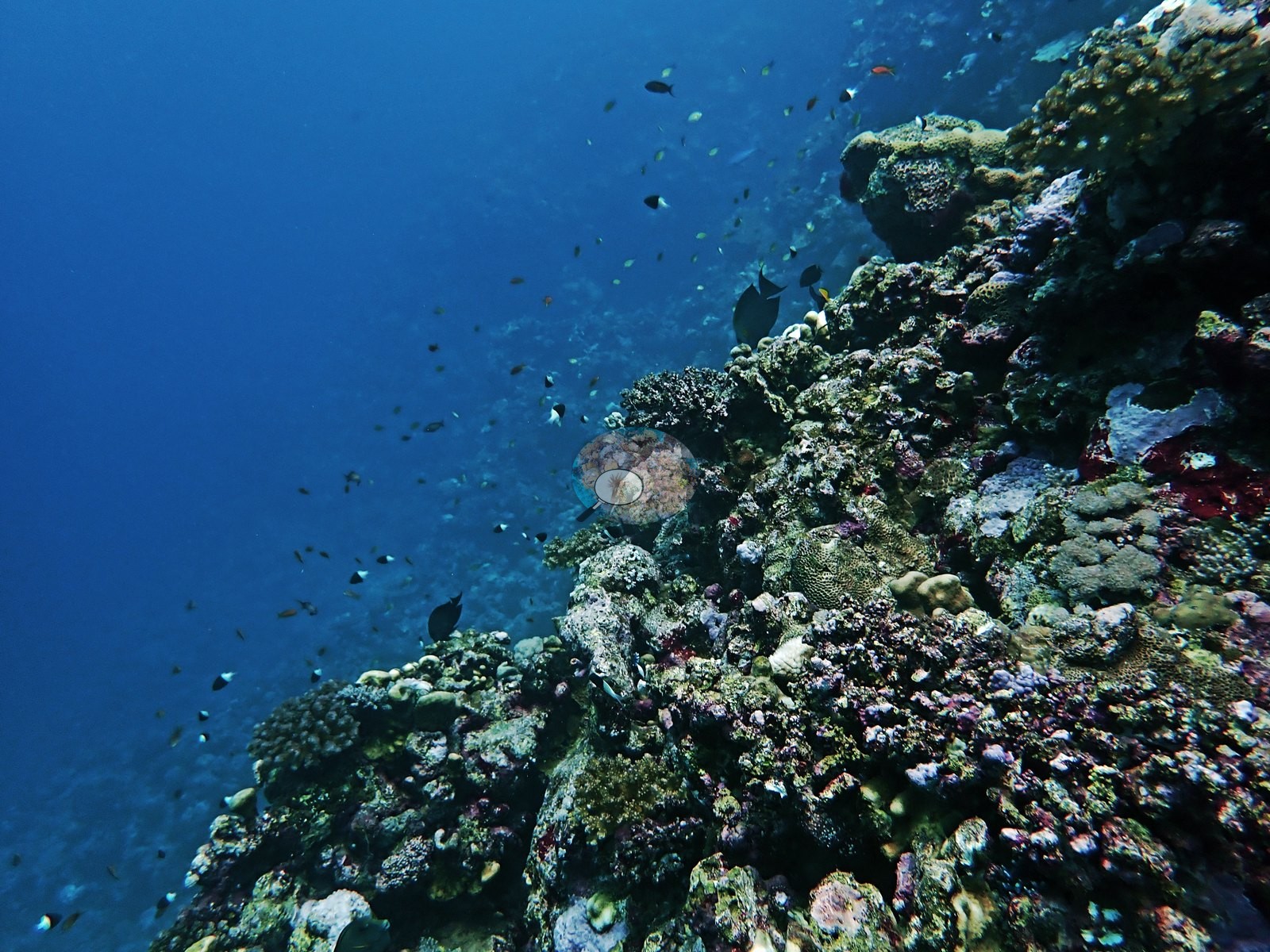
The reef is a long, steep-sided ridge — a near-vertical face on one side dropping into open blue, a broad rounded reef top on the other. The two sides look like different reefs.
General benthic features
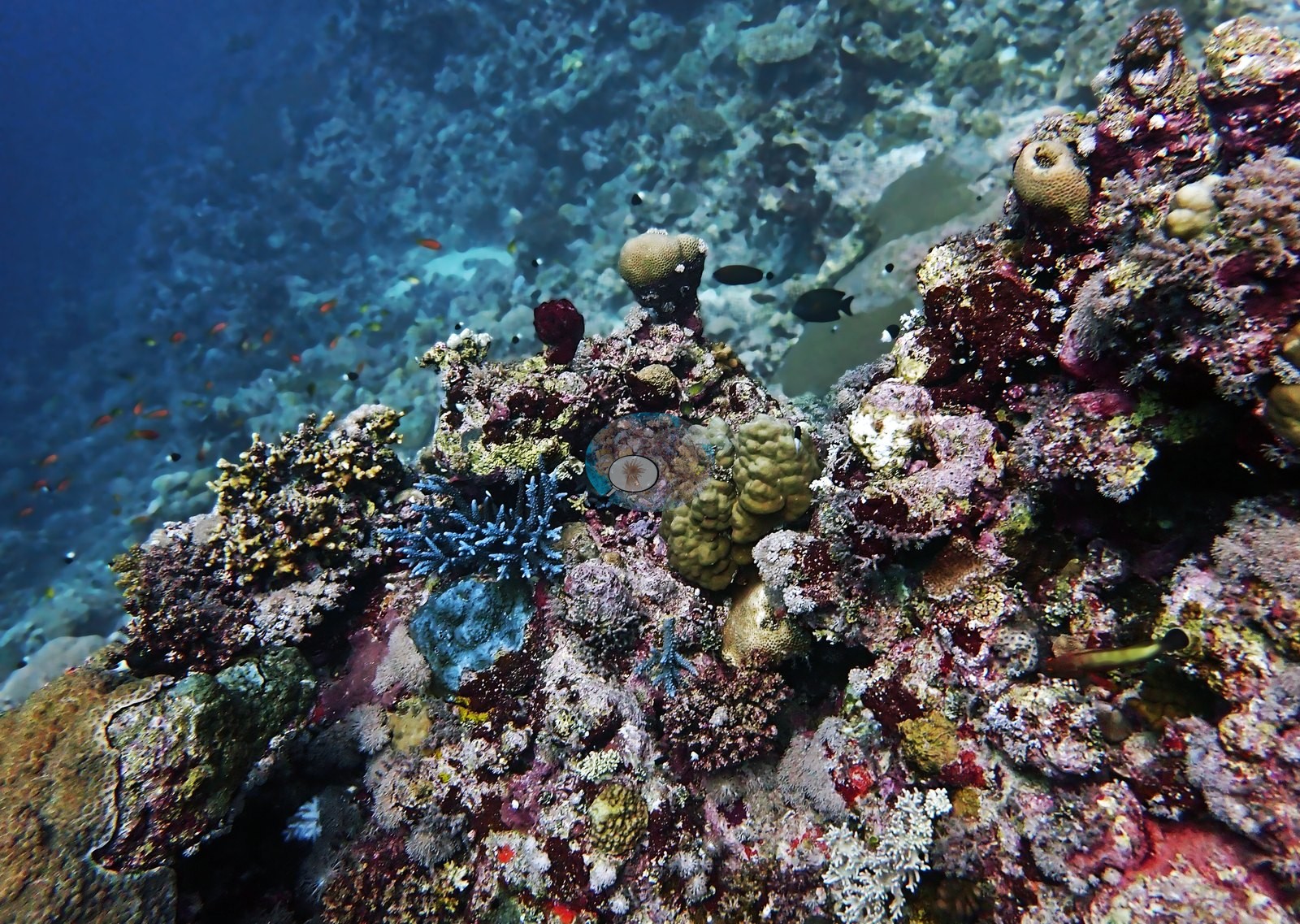
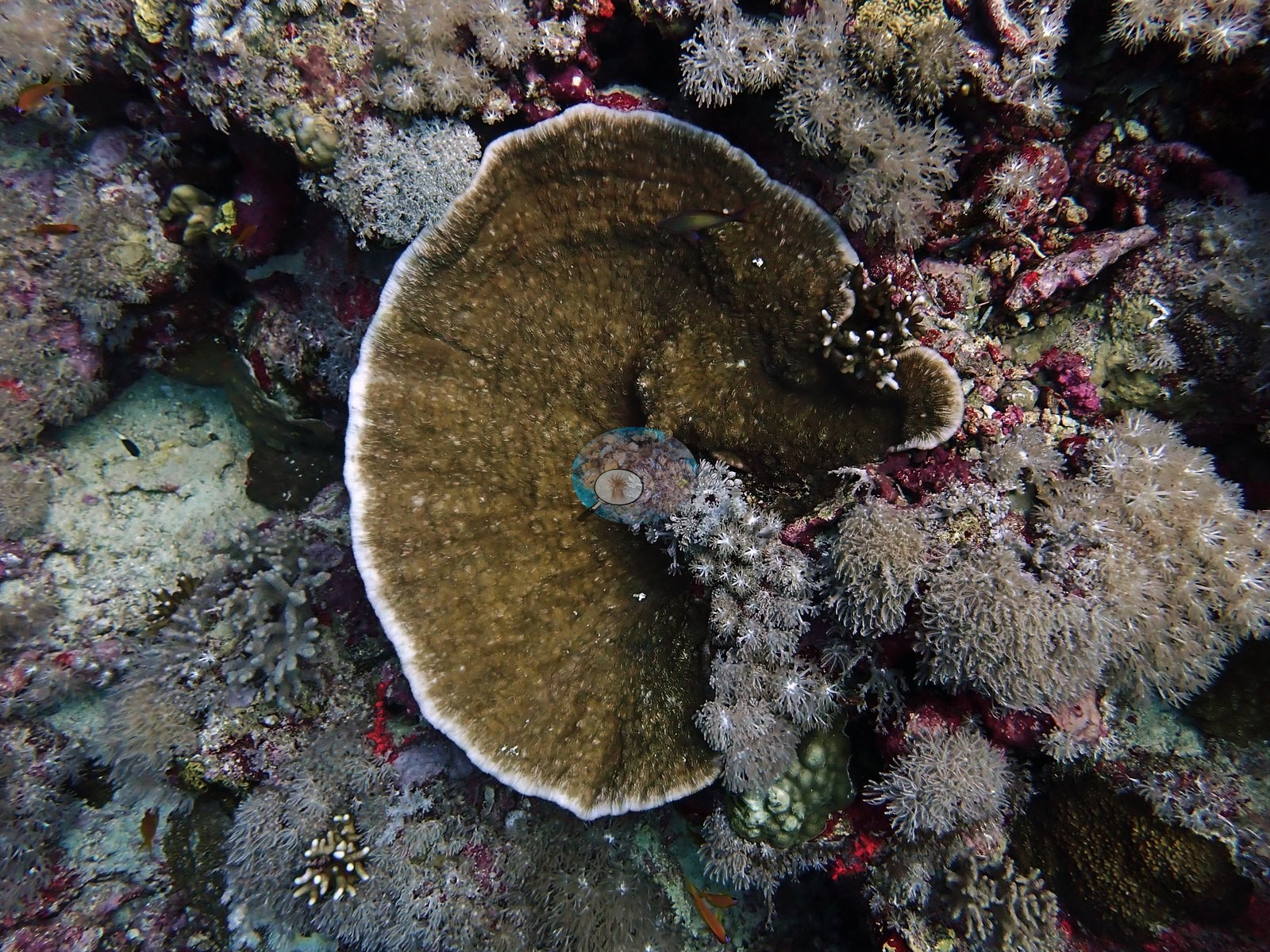
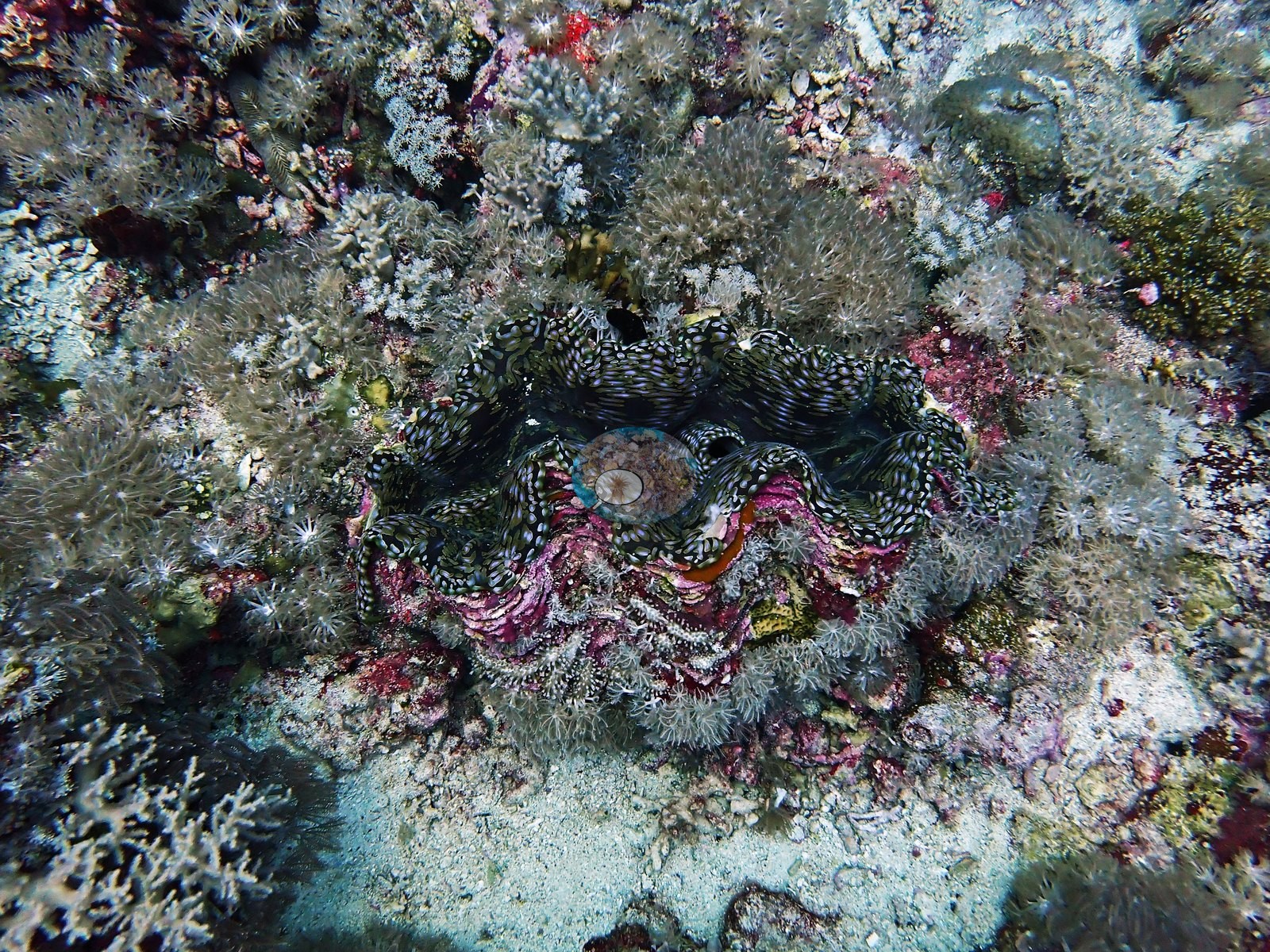
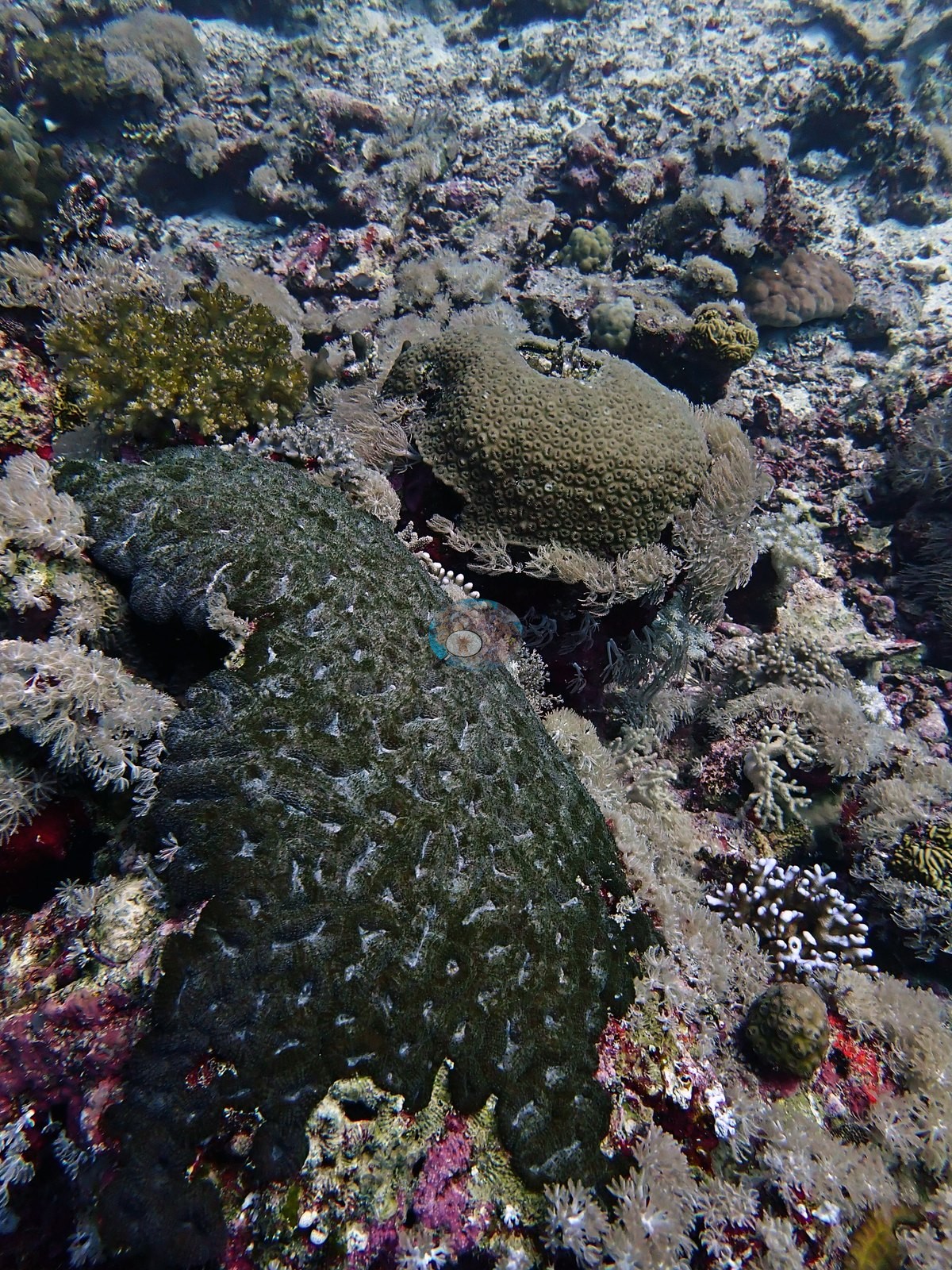
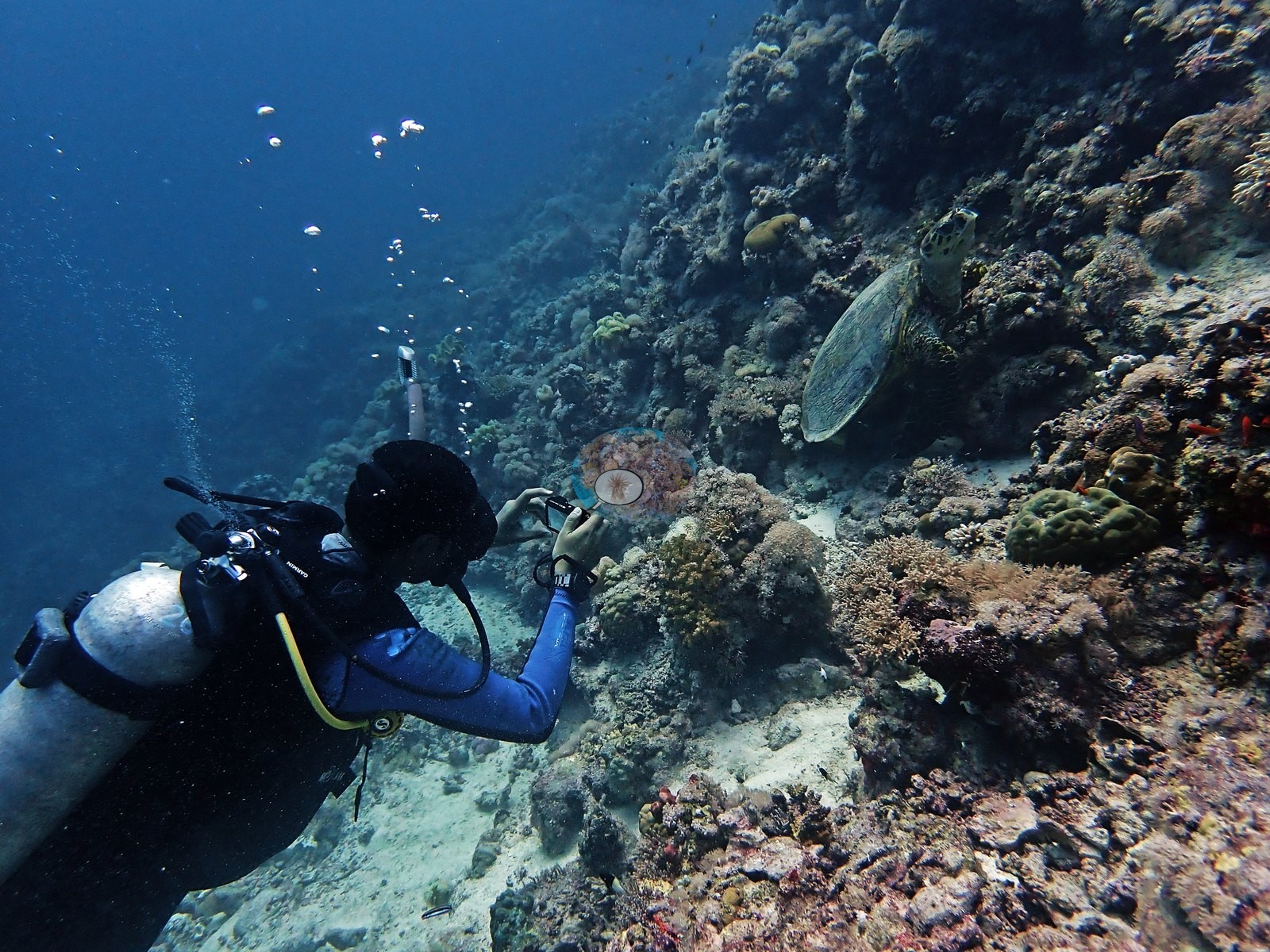
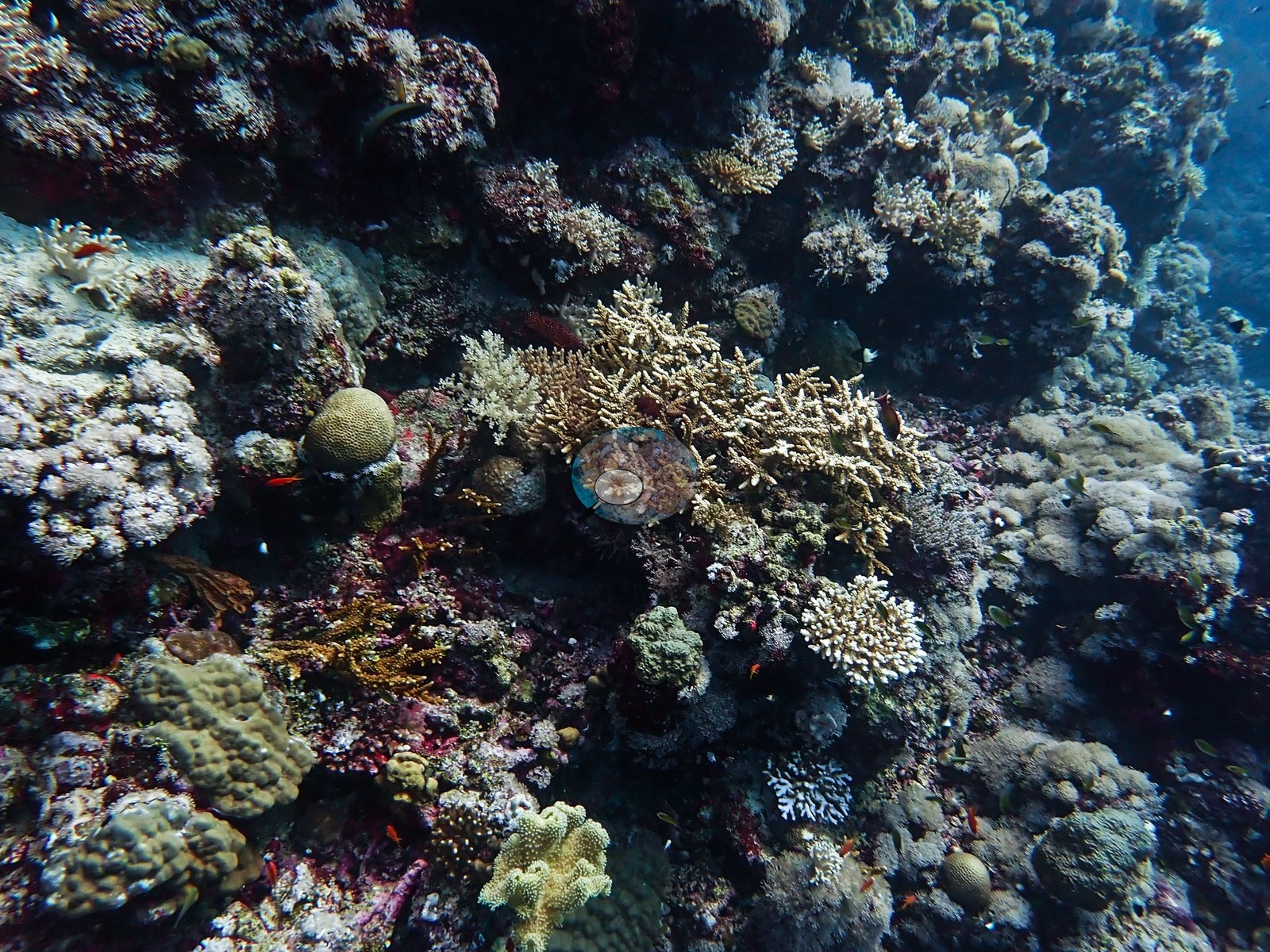
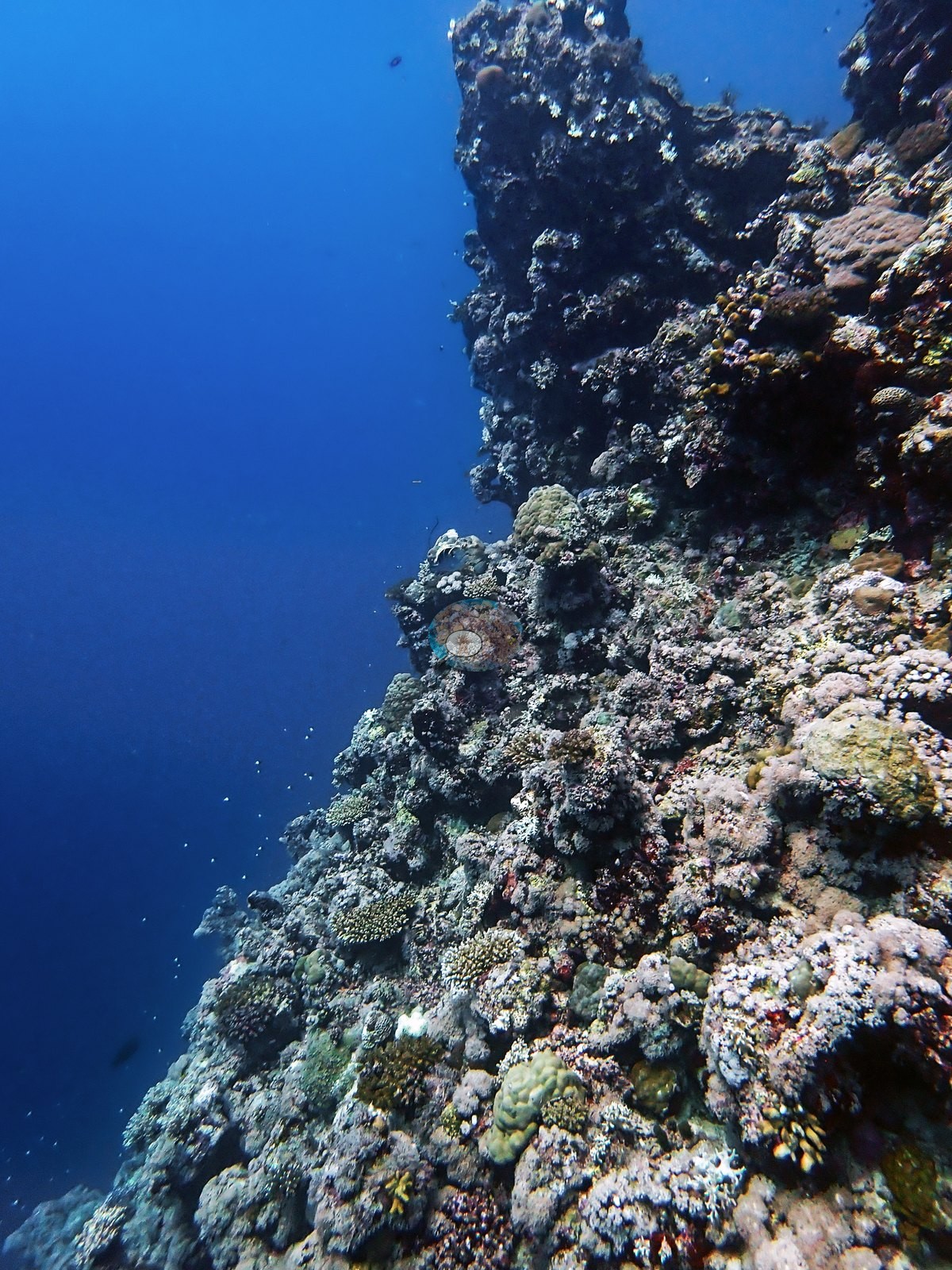
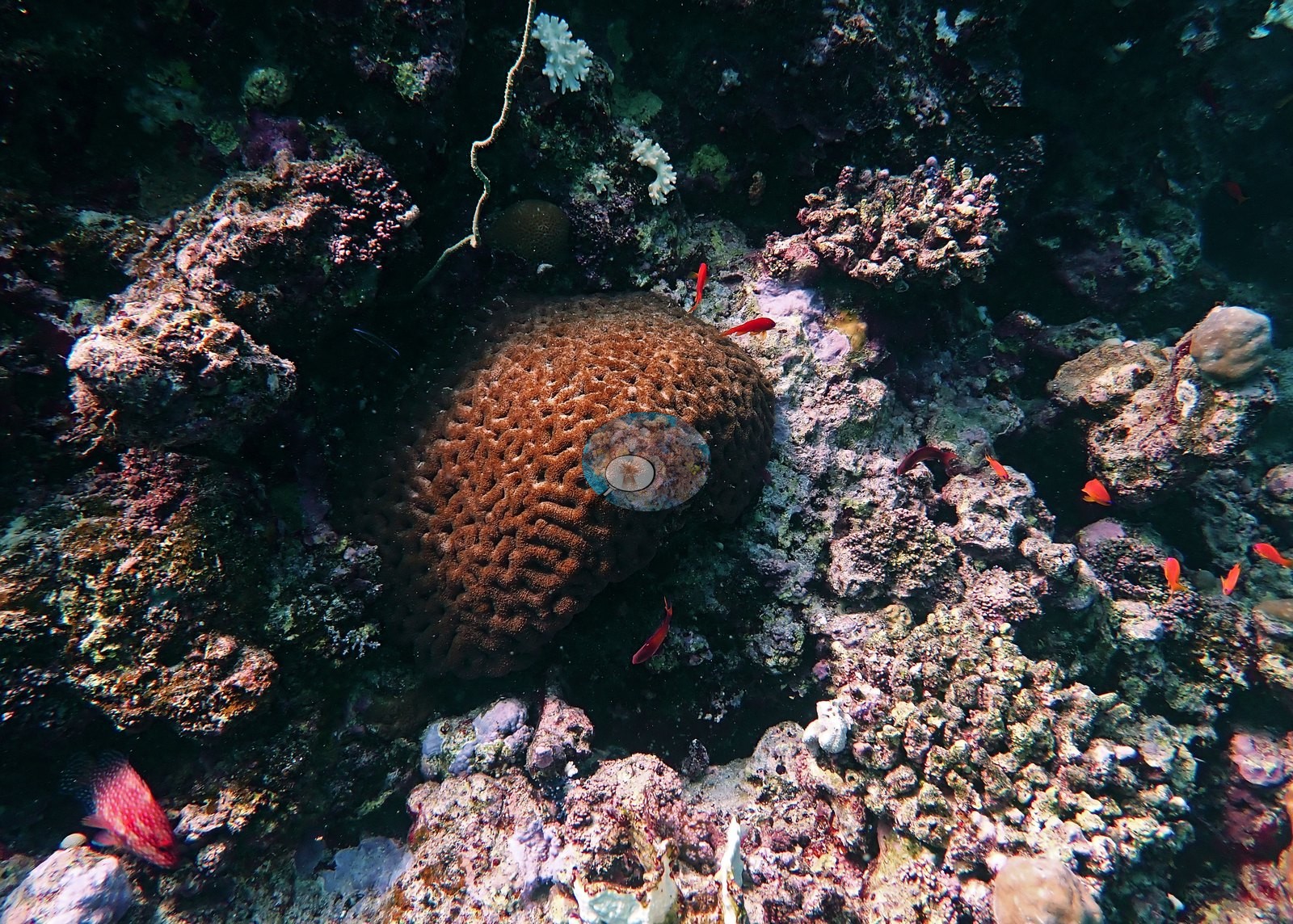
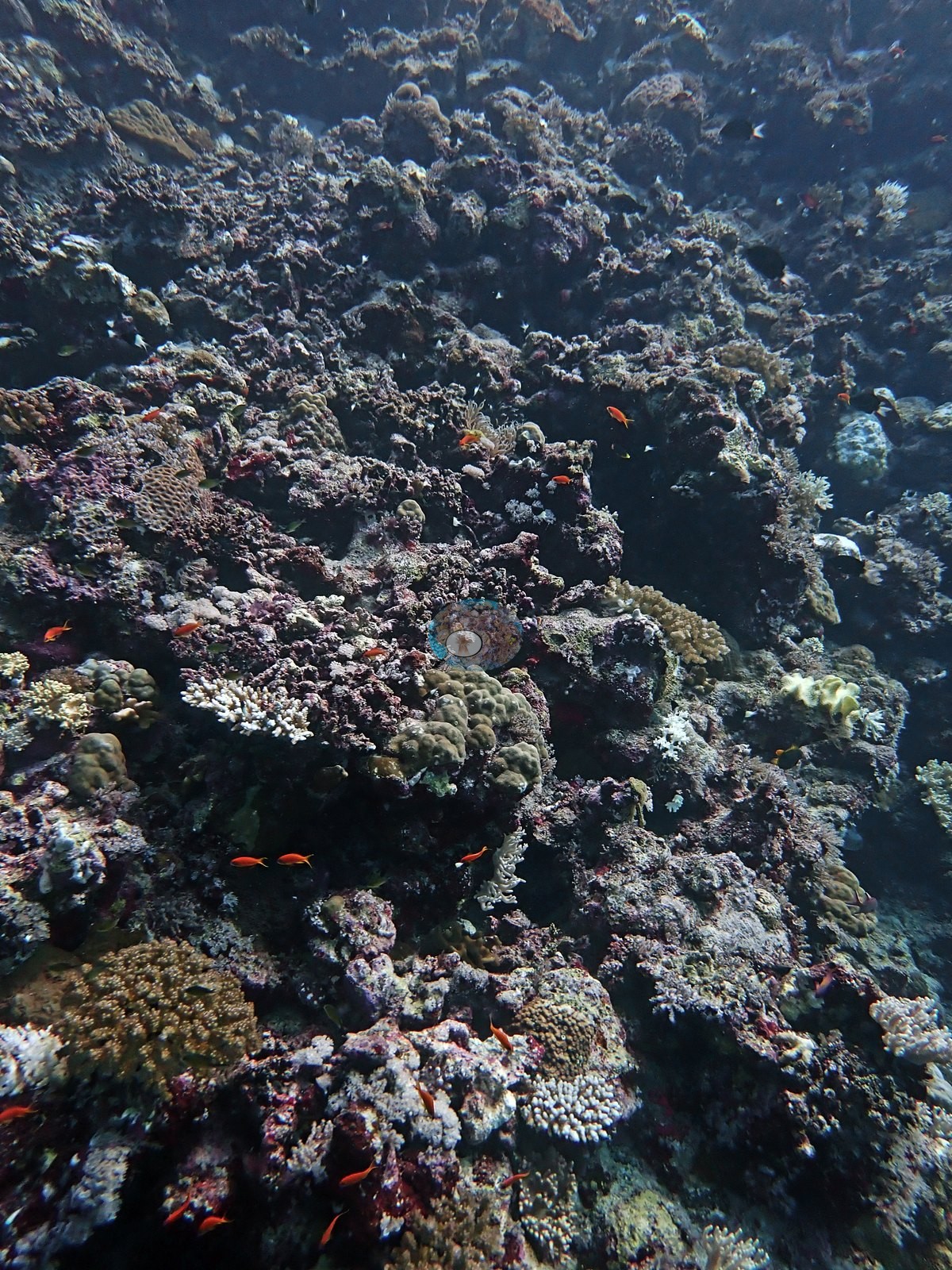
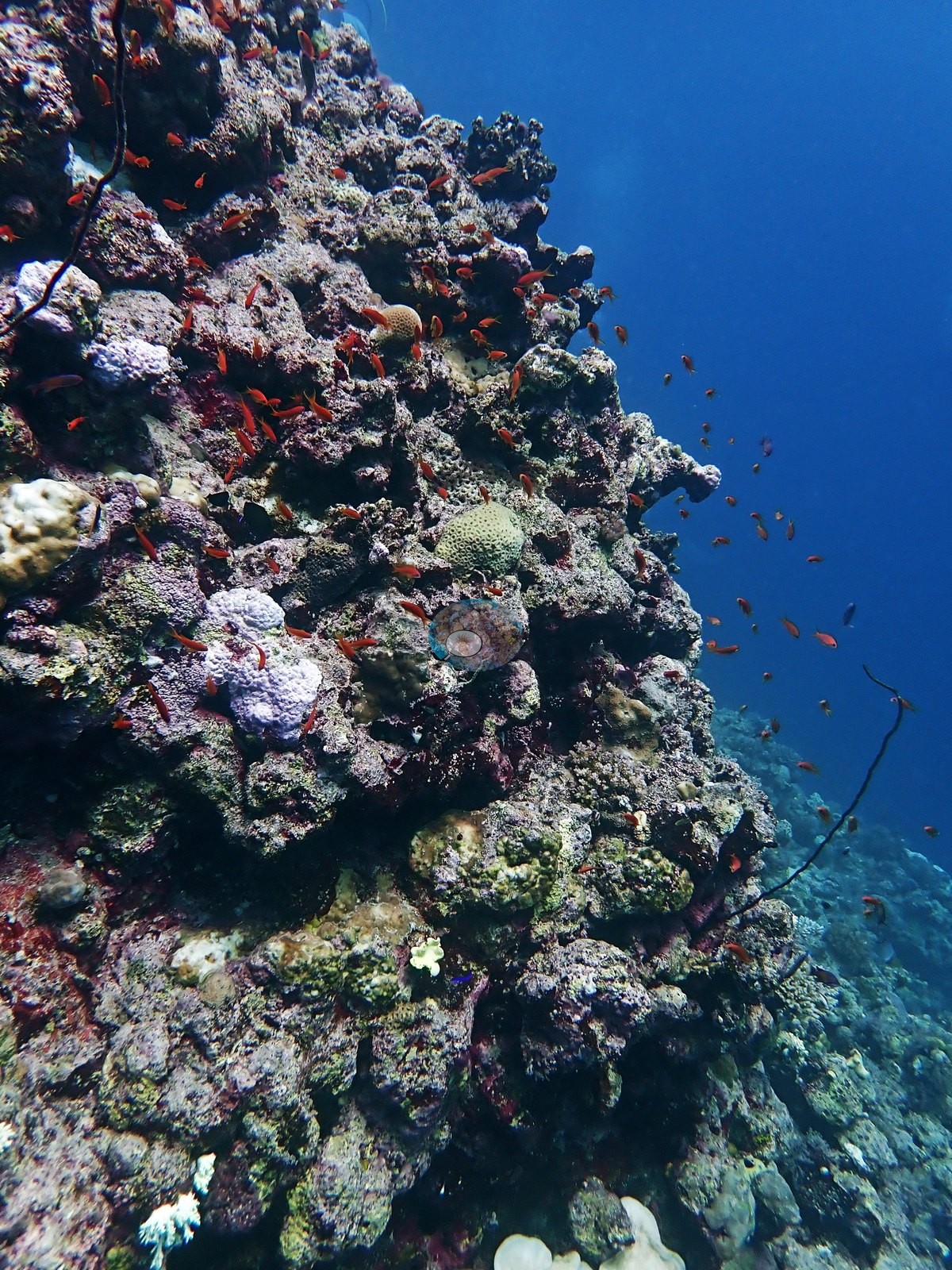
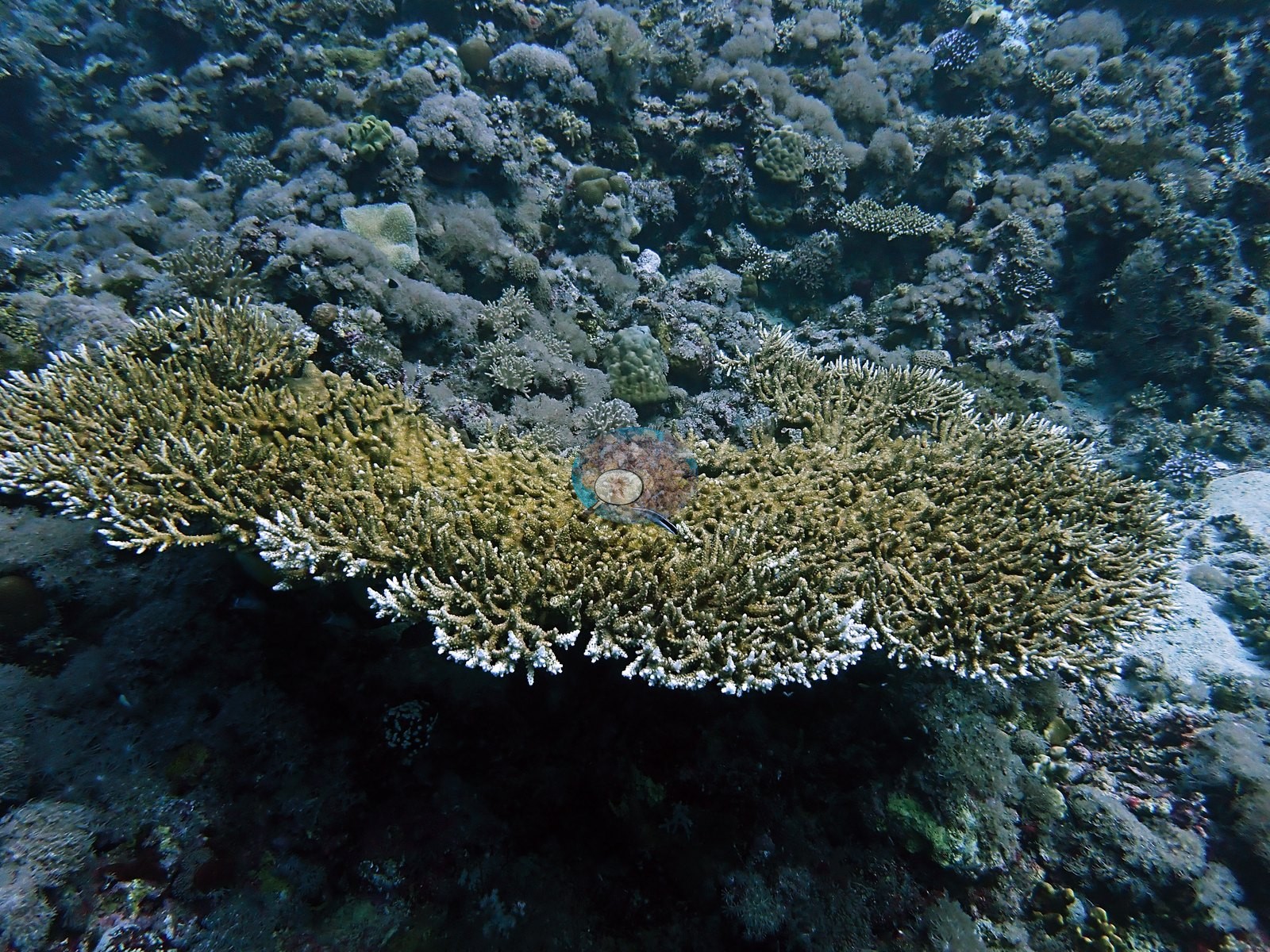
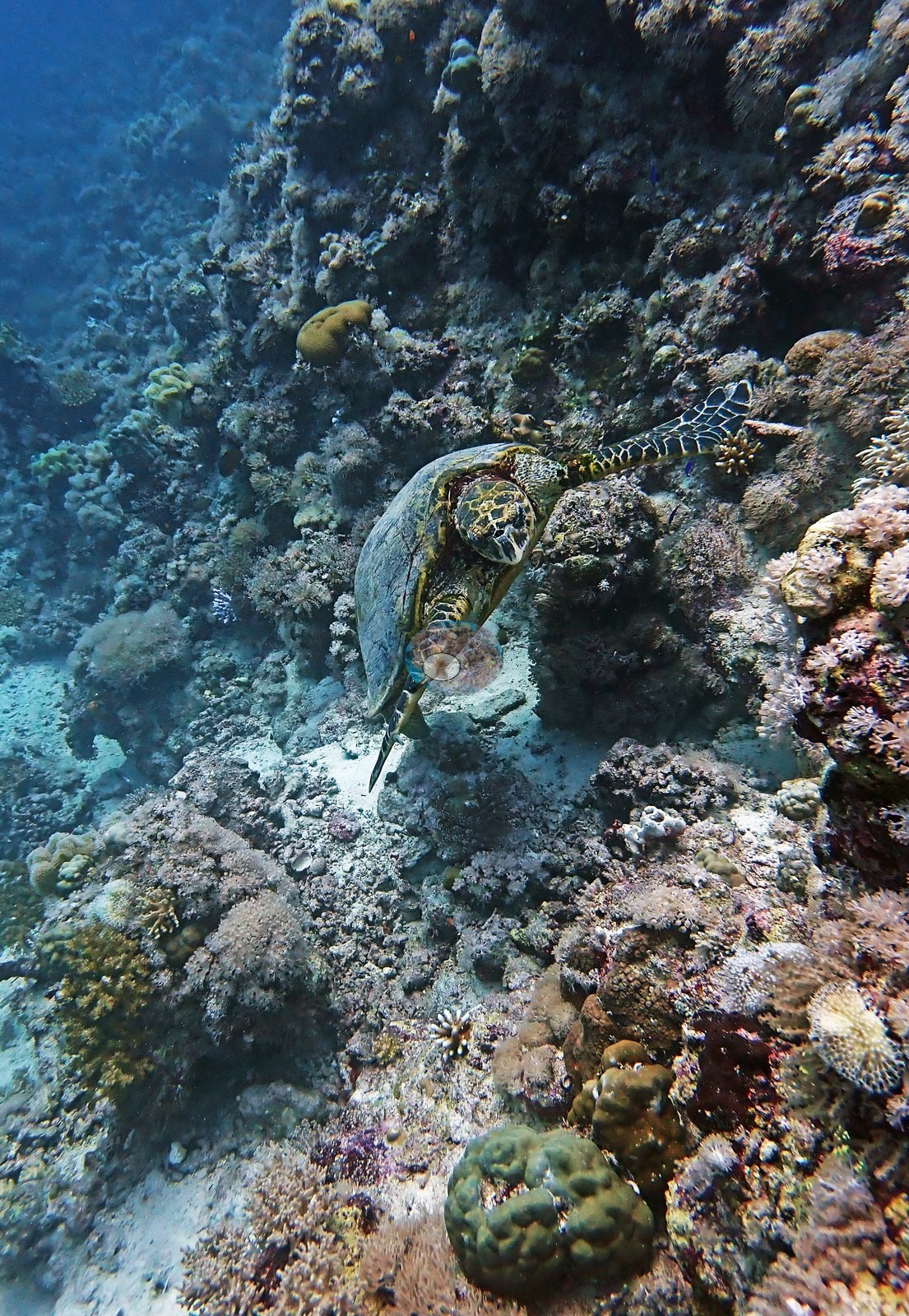
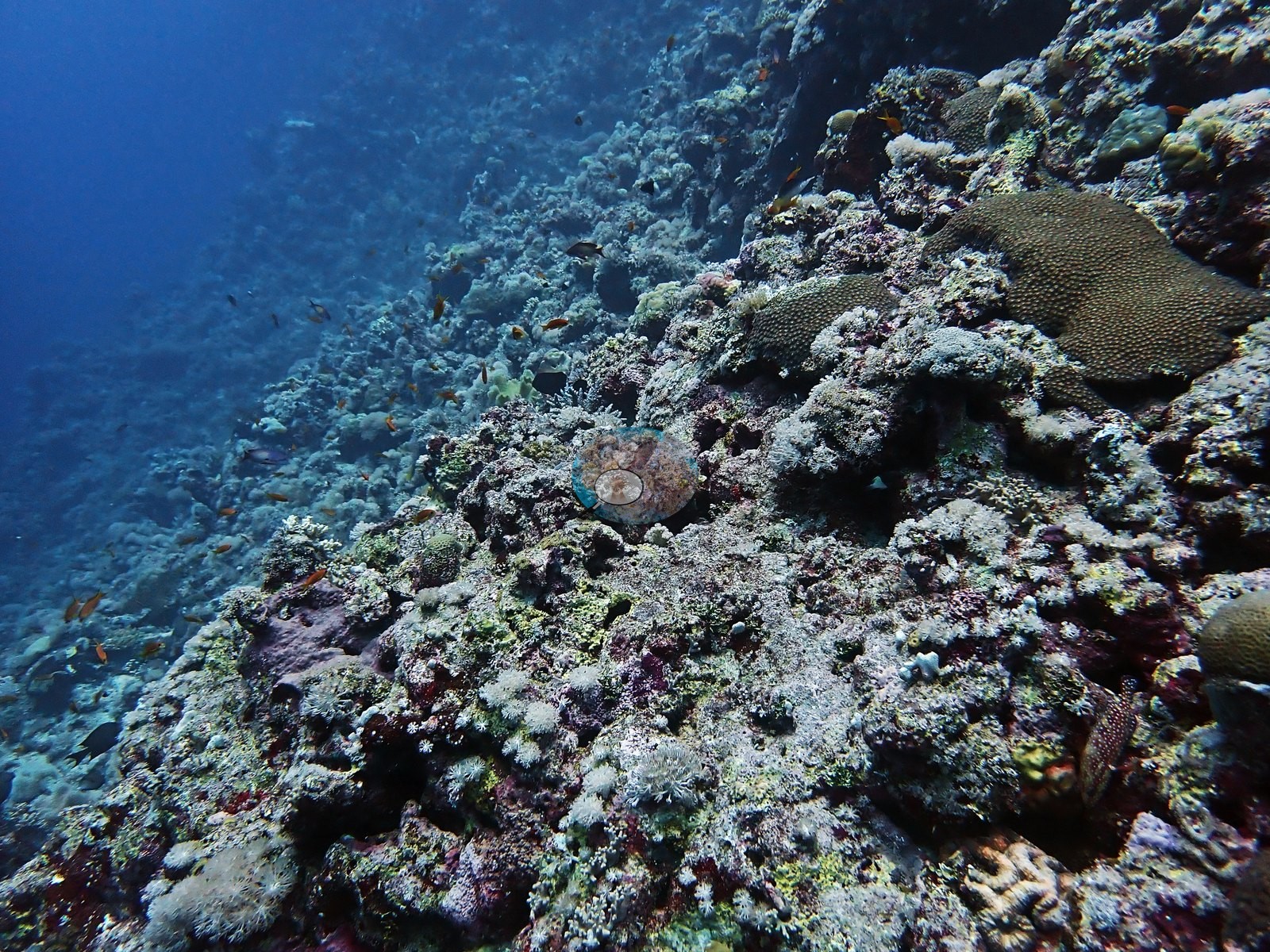
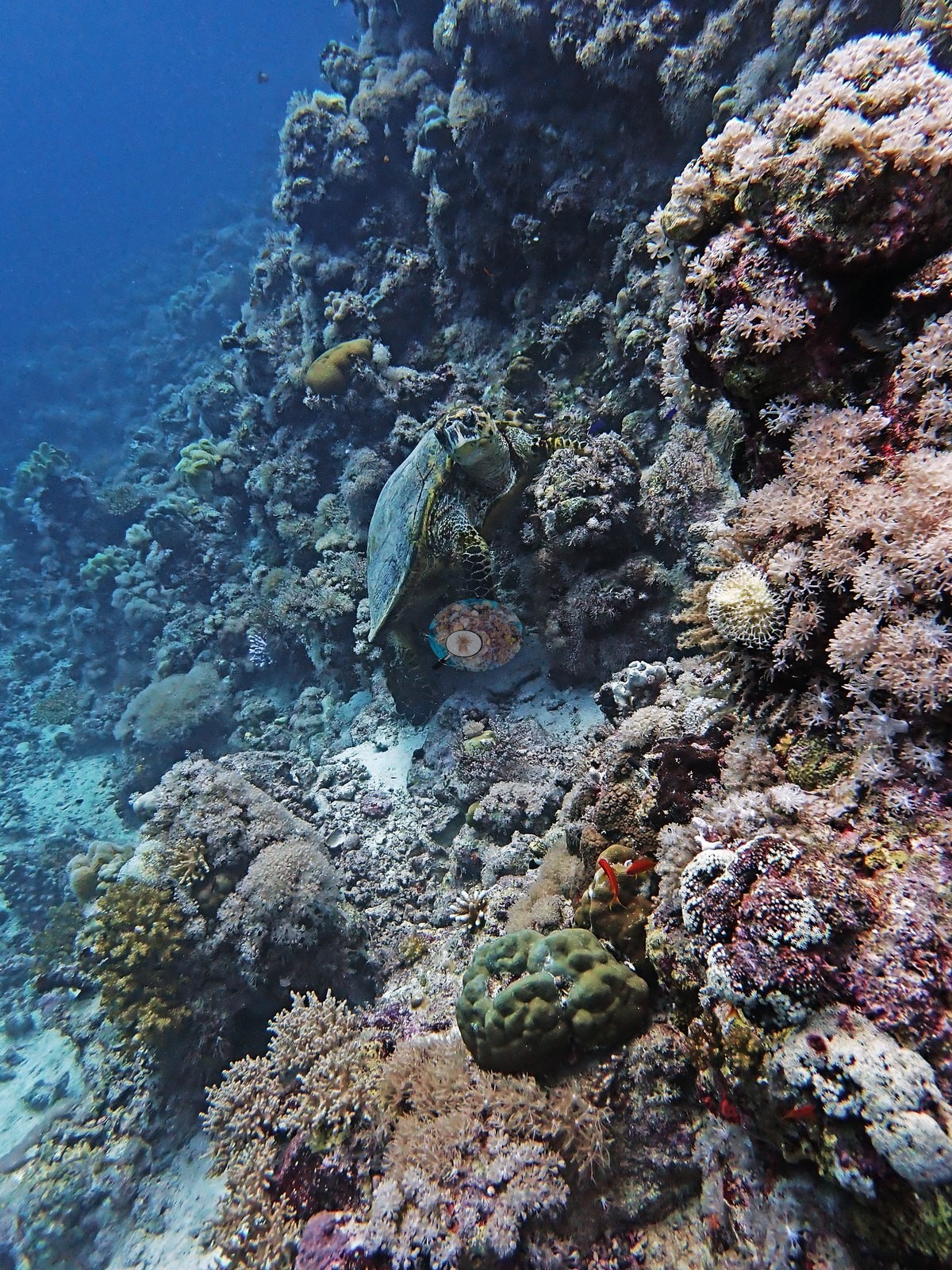
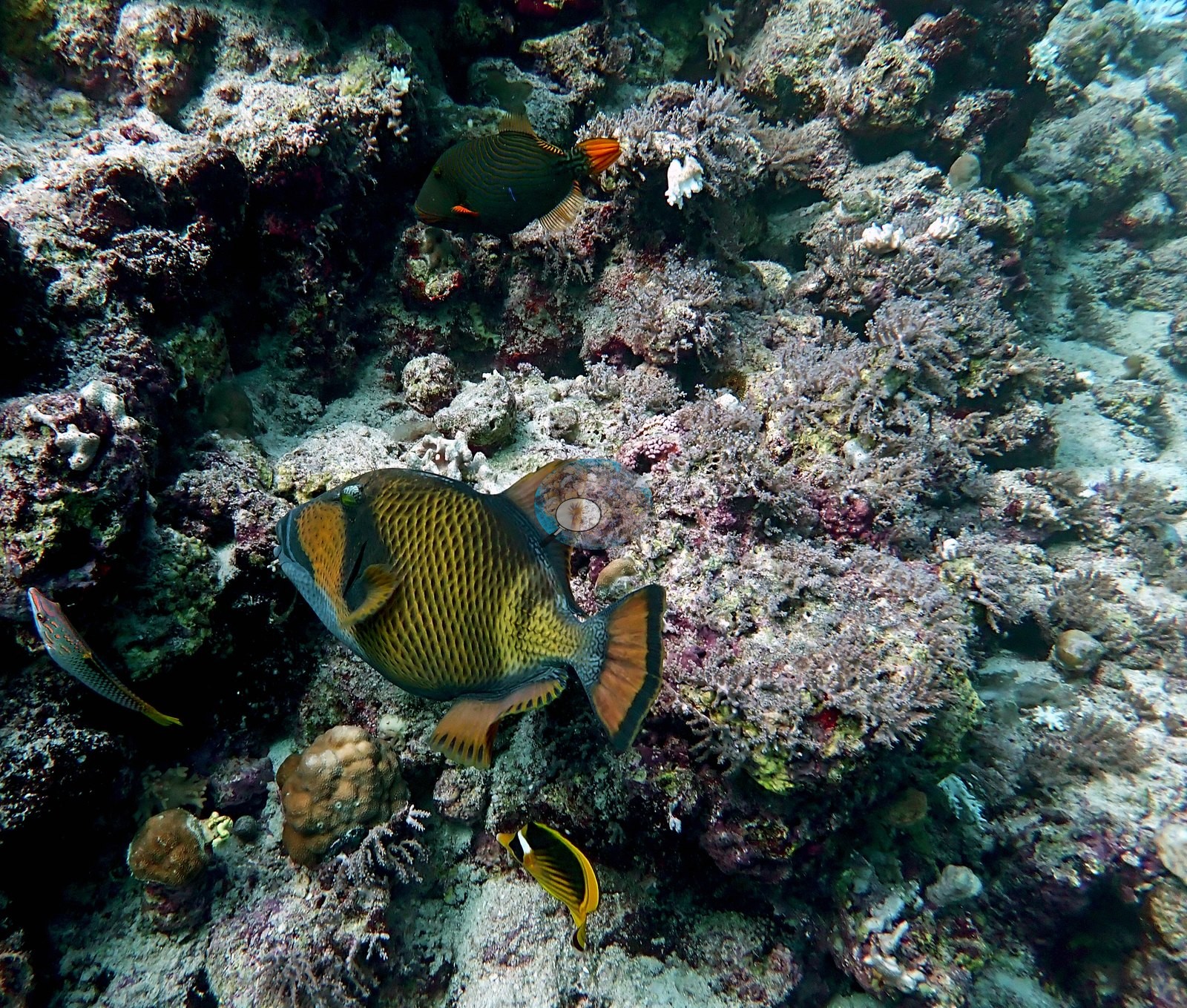
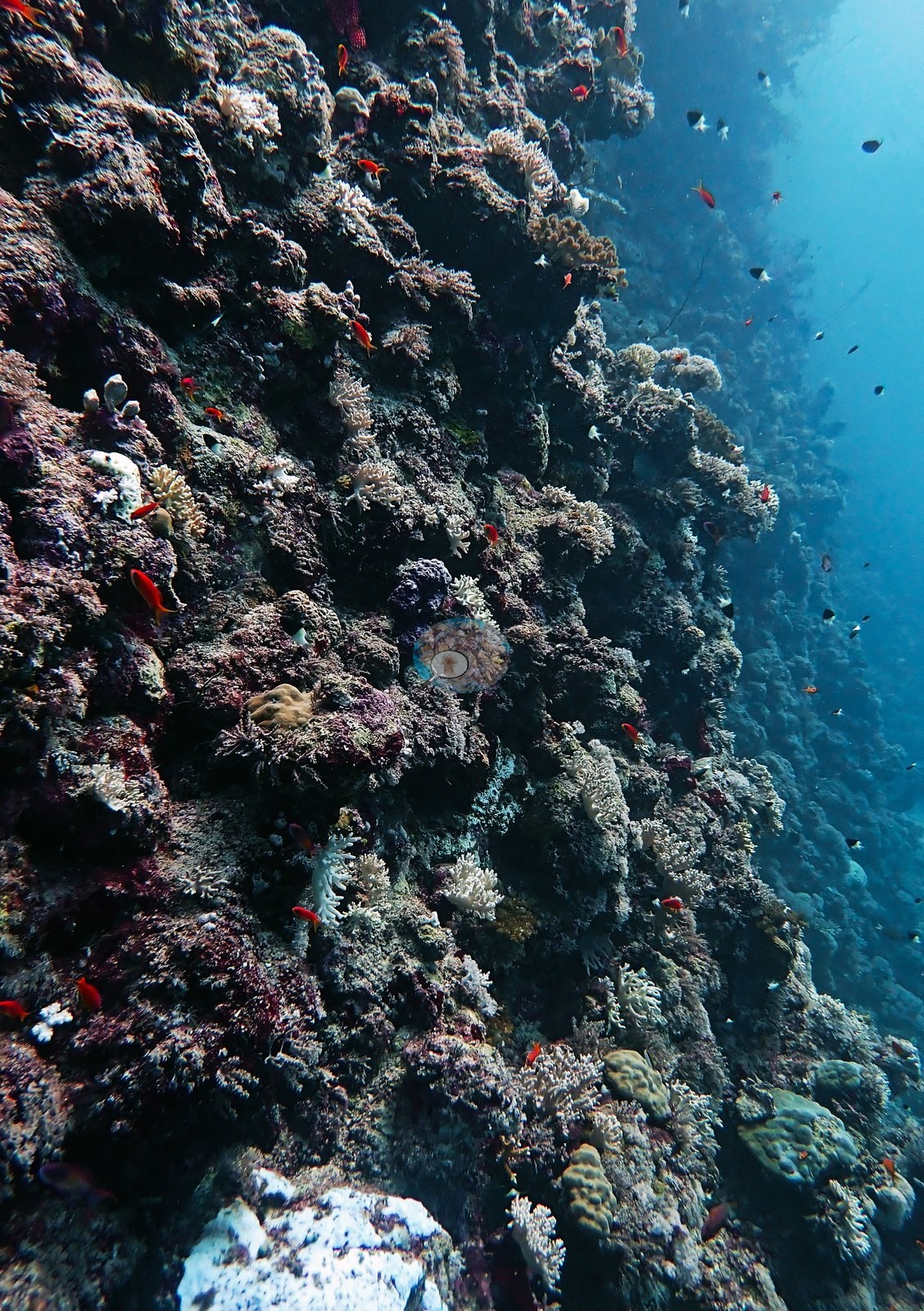
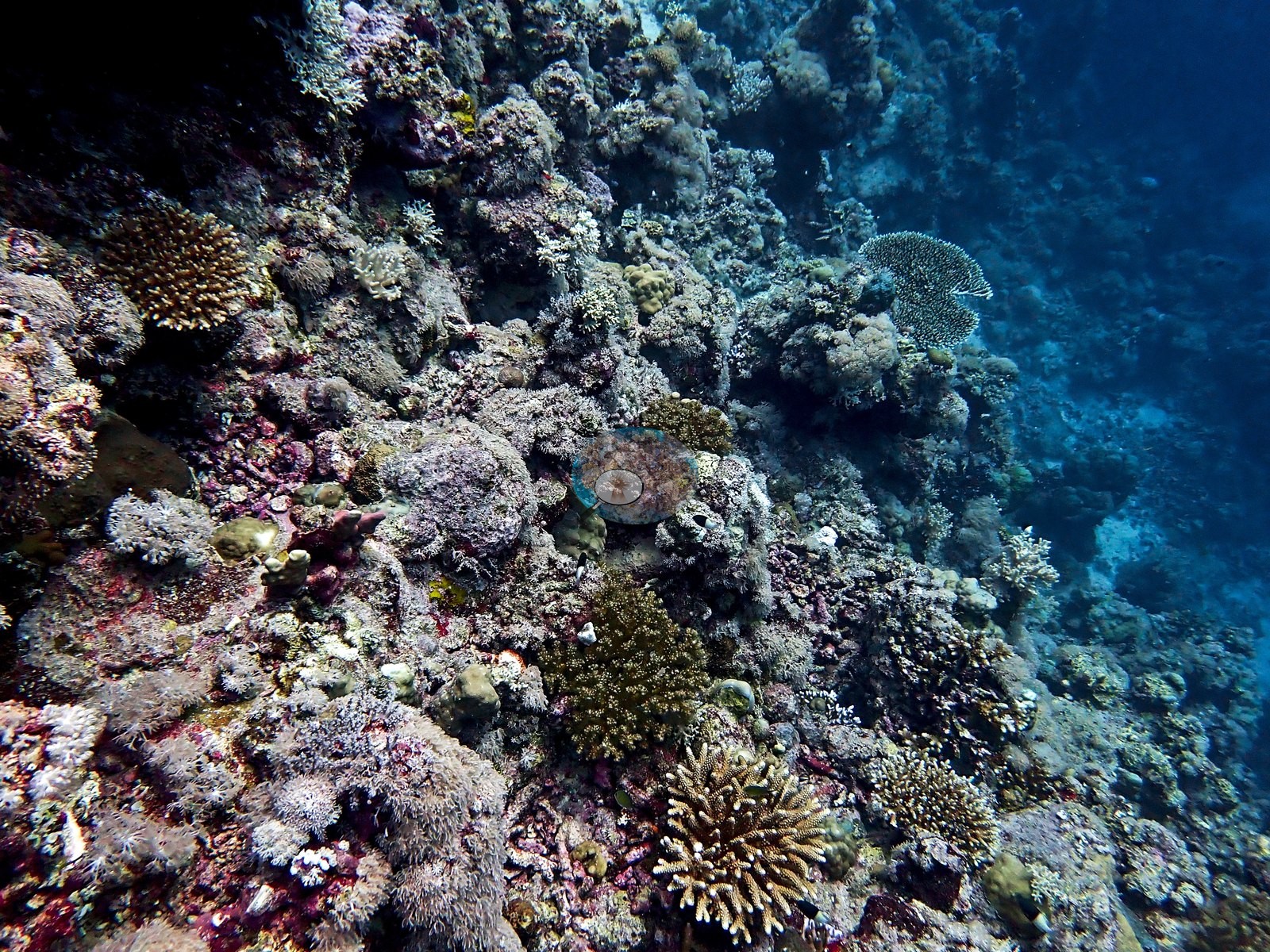
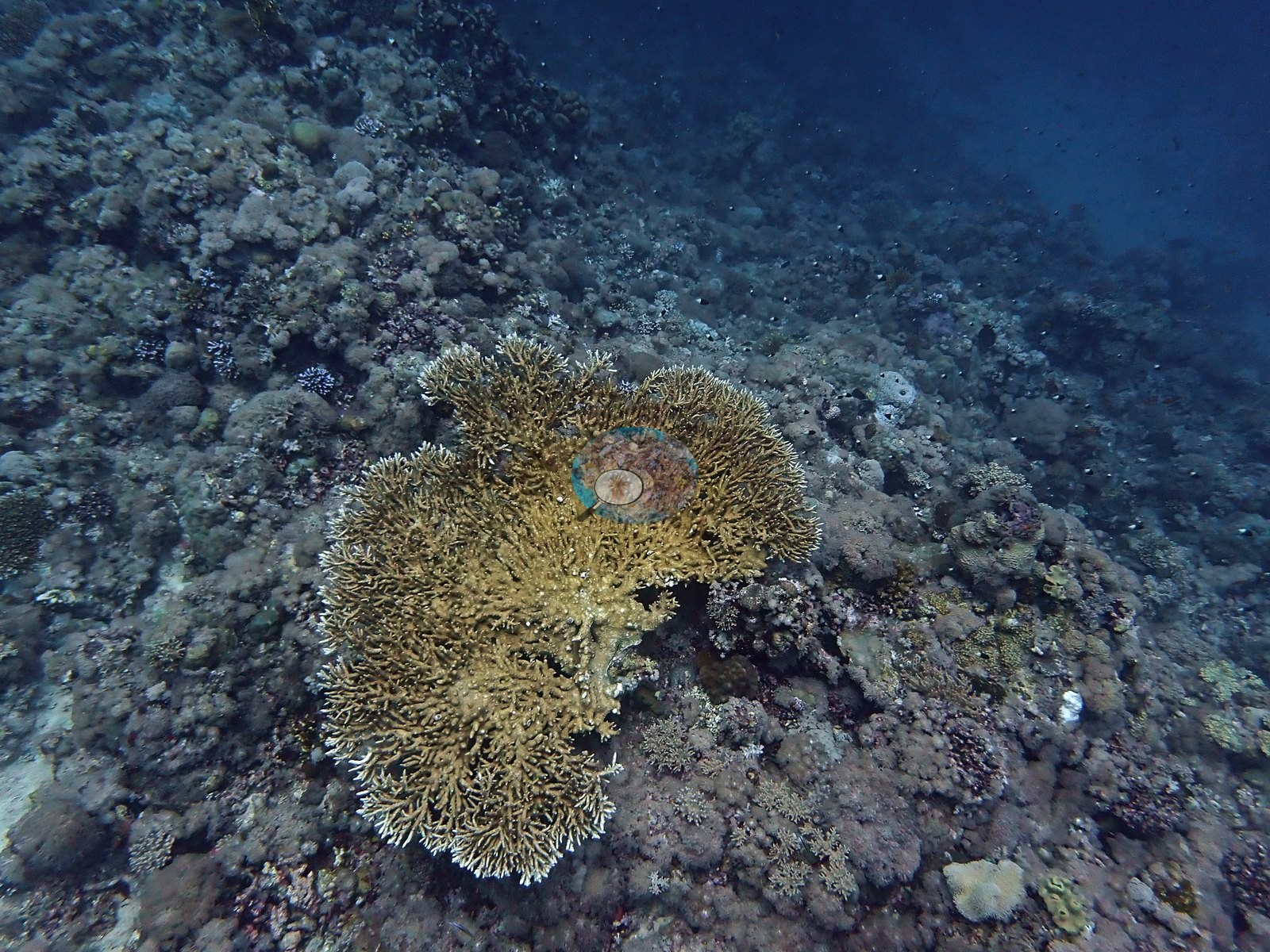
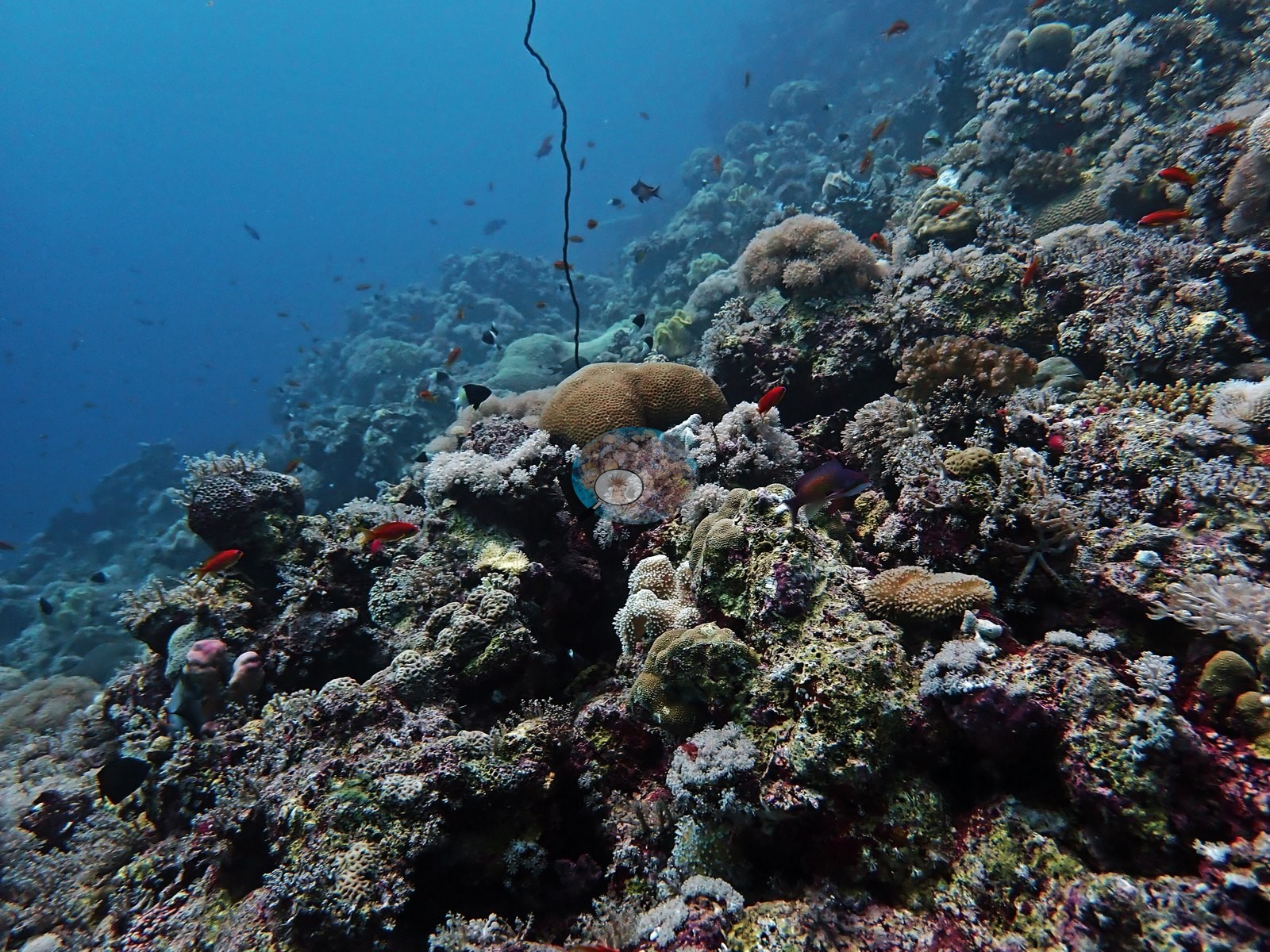
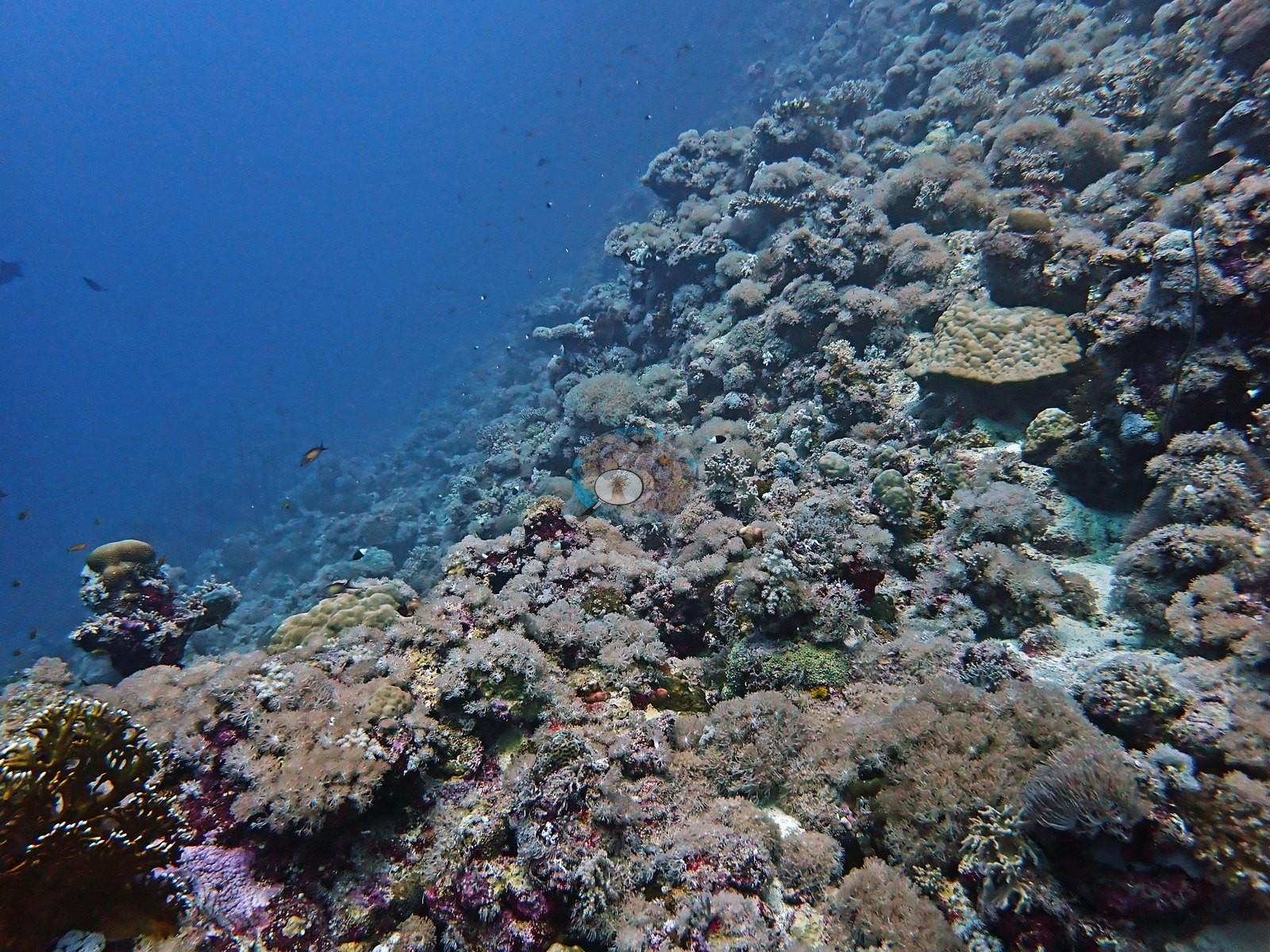
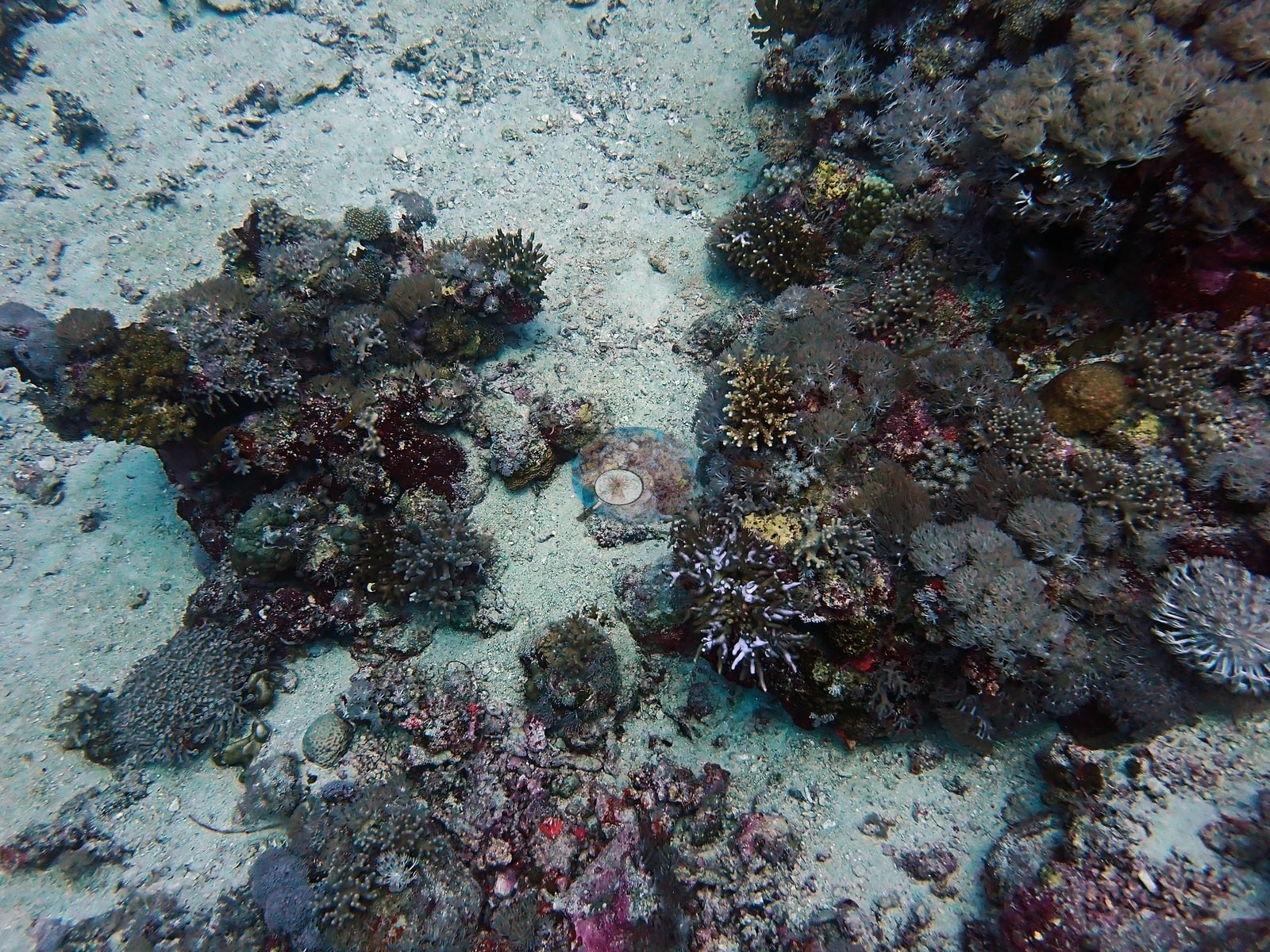
On top, the frames show a genuinely dense mixed community: pale cream and olive knobby Porites, gray-green Astreopora and Goniastrea domes, table and corymbose Acropora, encrusting Montipora-type plates, small pocilloporids, xeniid soft corals with polyps extended, and a lot of pink and magenta crustose coralline algae binding the spaces (e.g., Image 1, Image 2, Image 3).
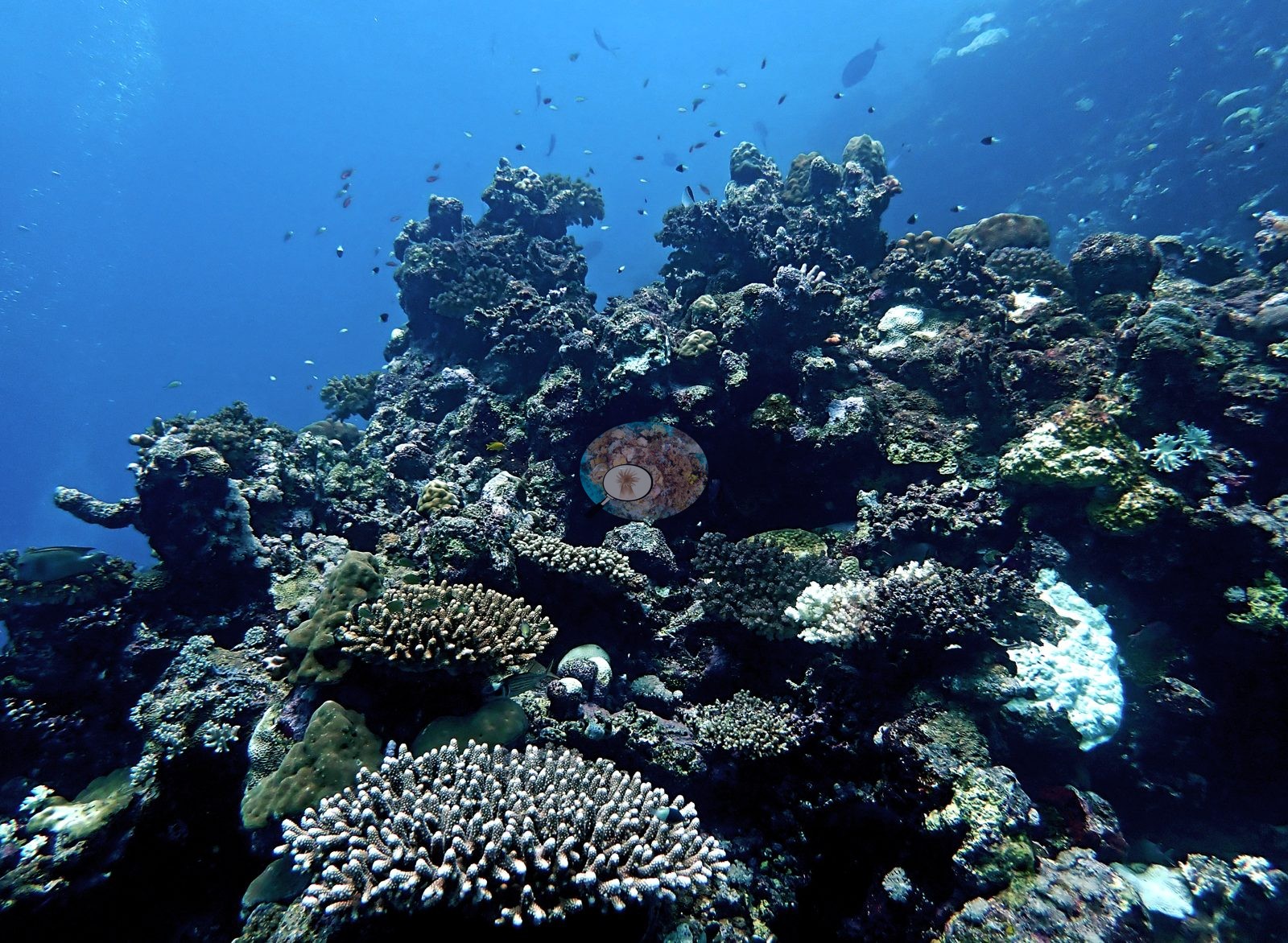
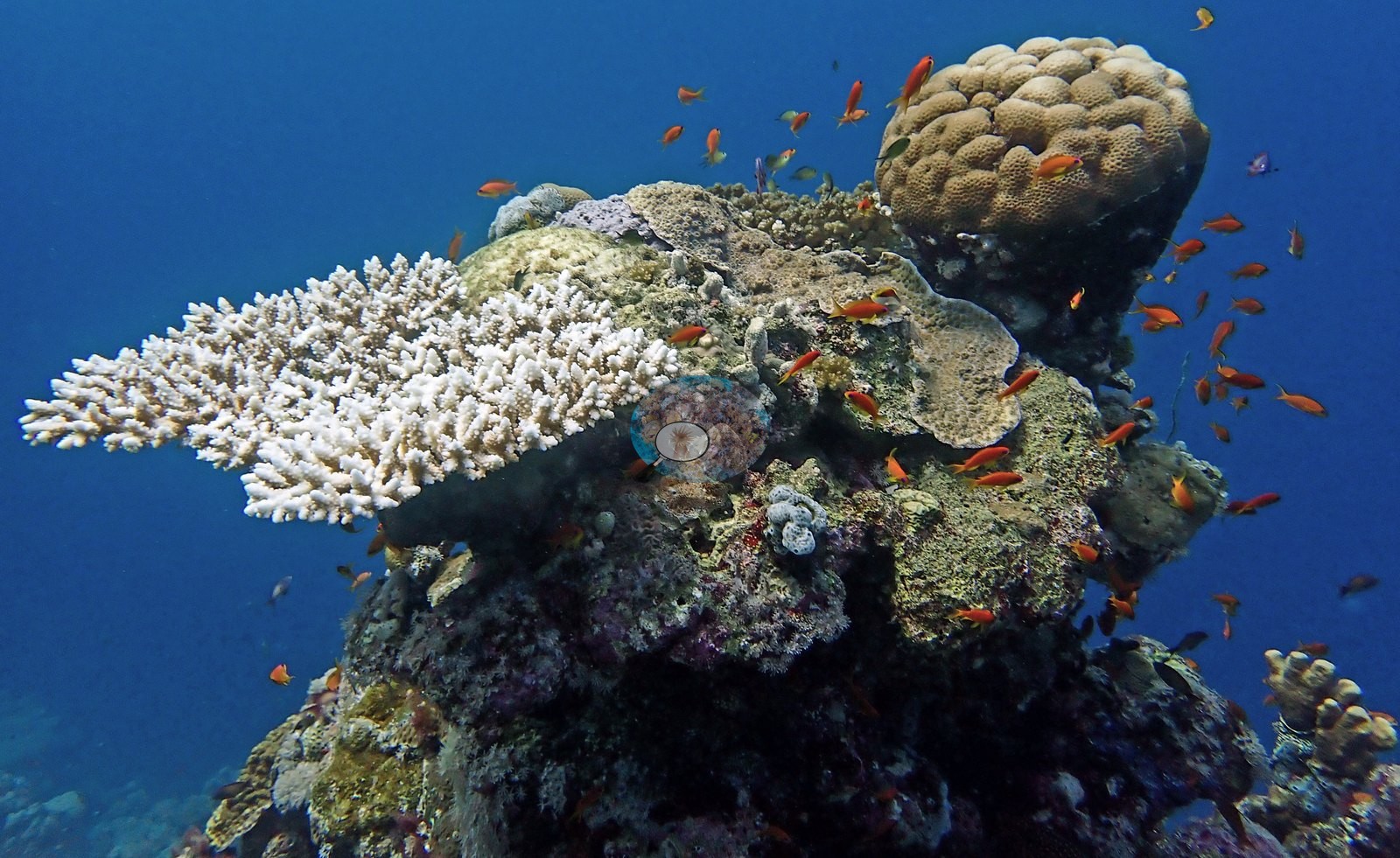
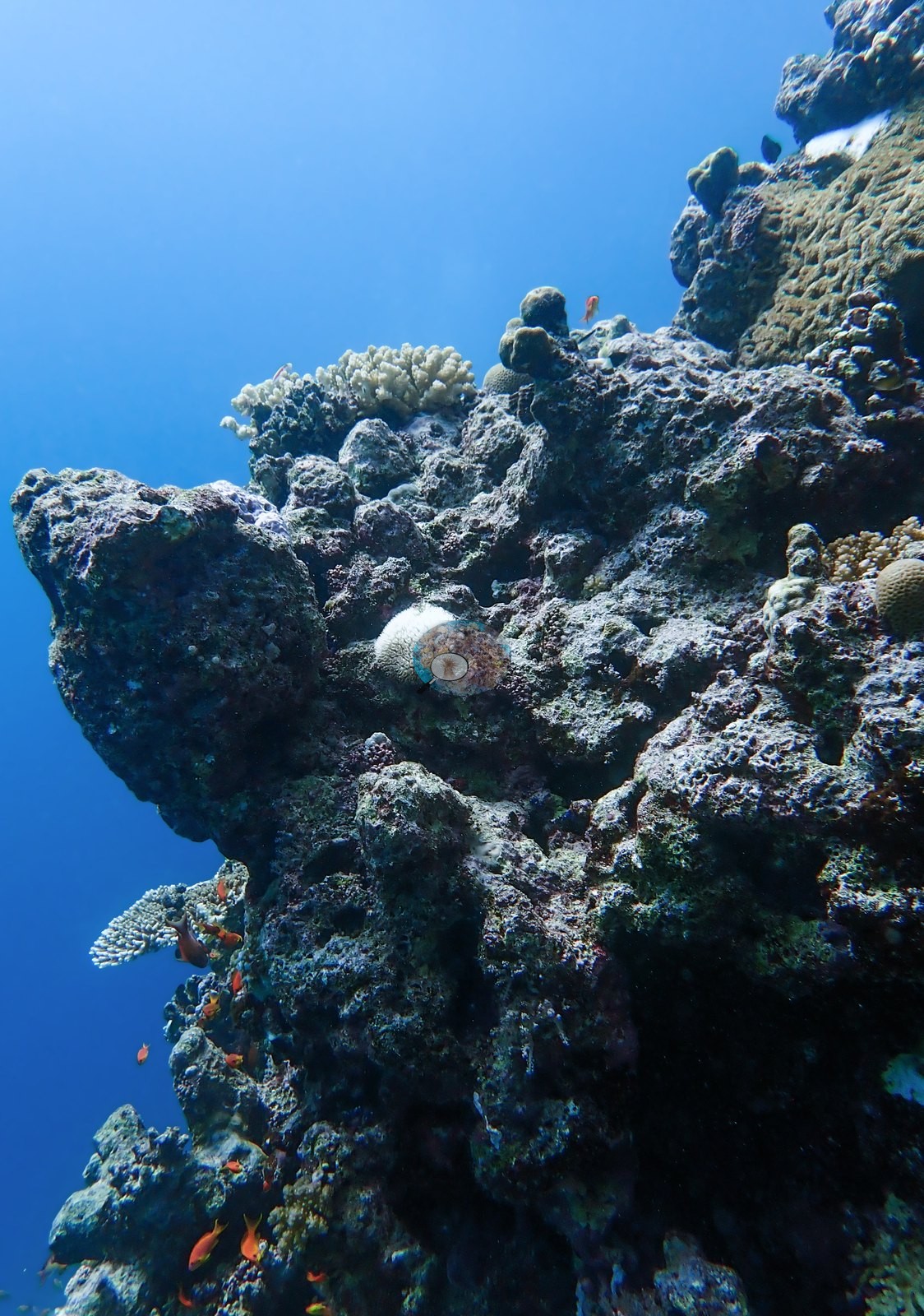
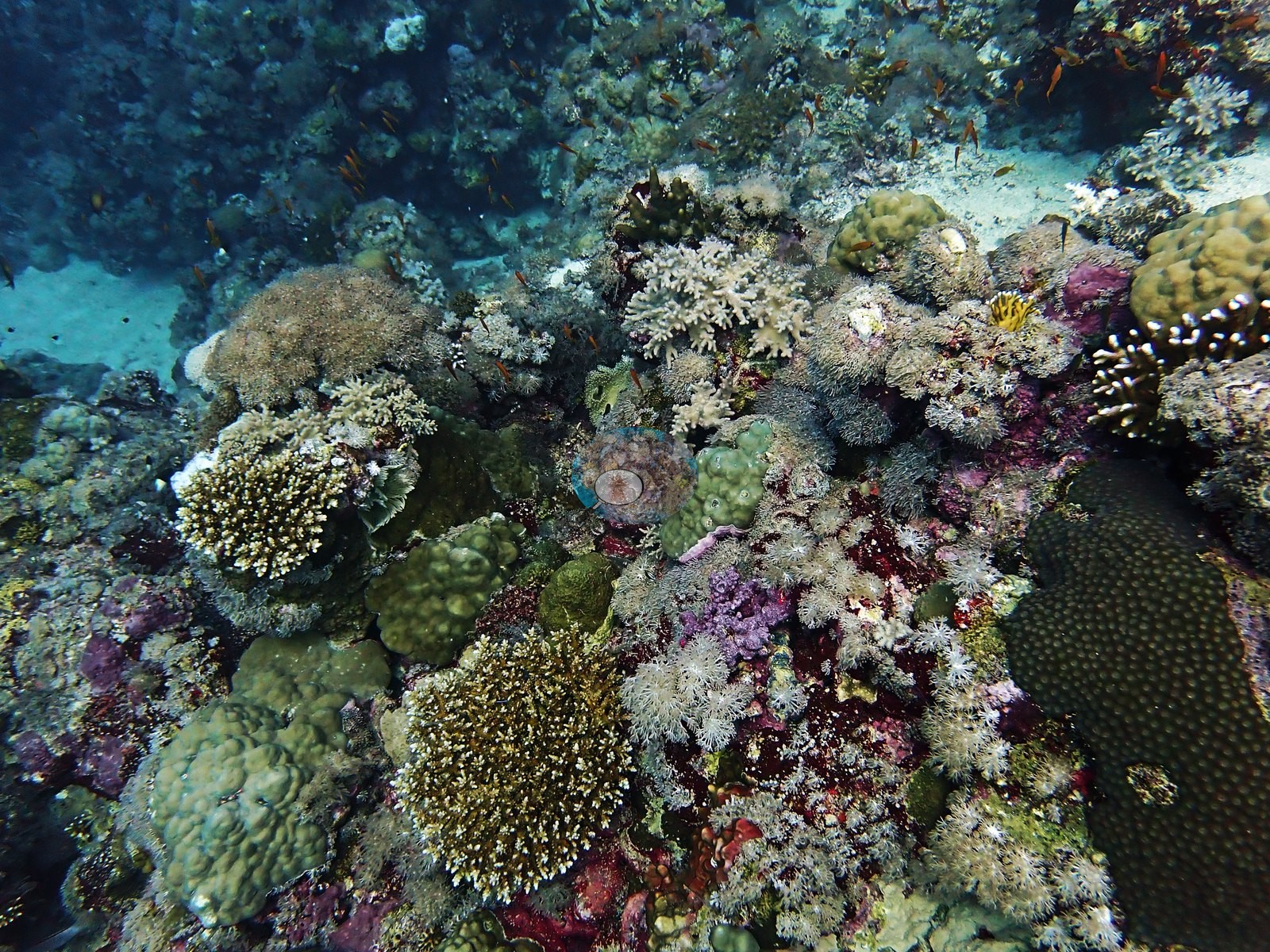
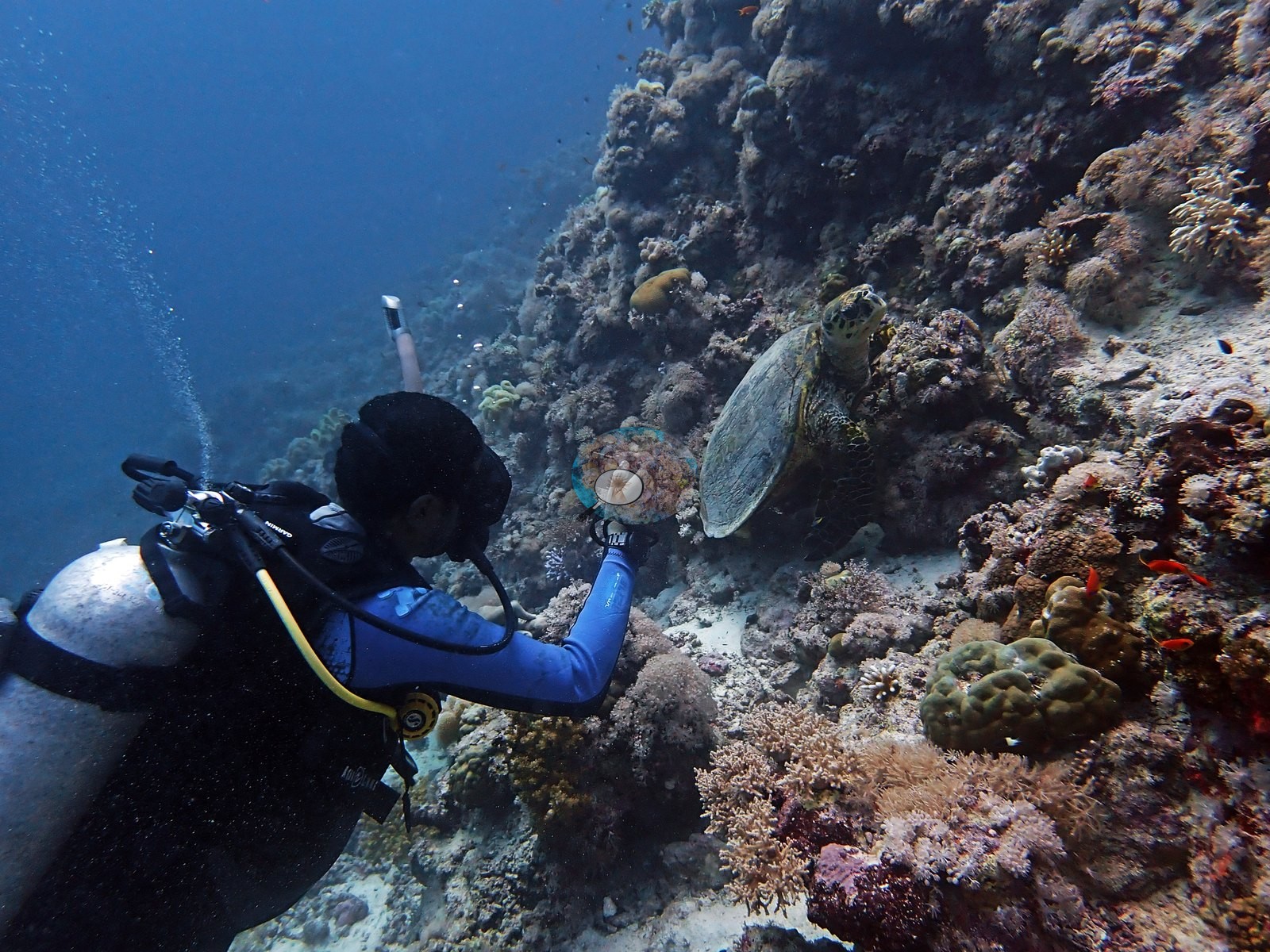
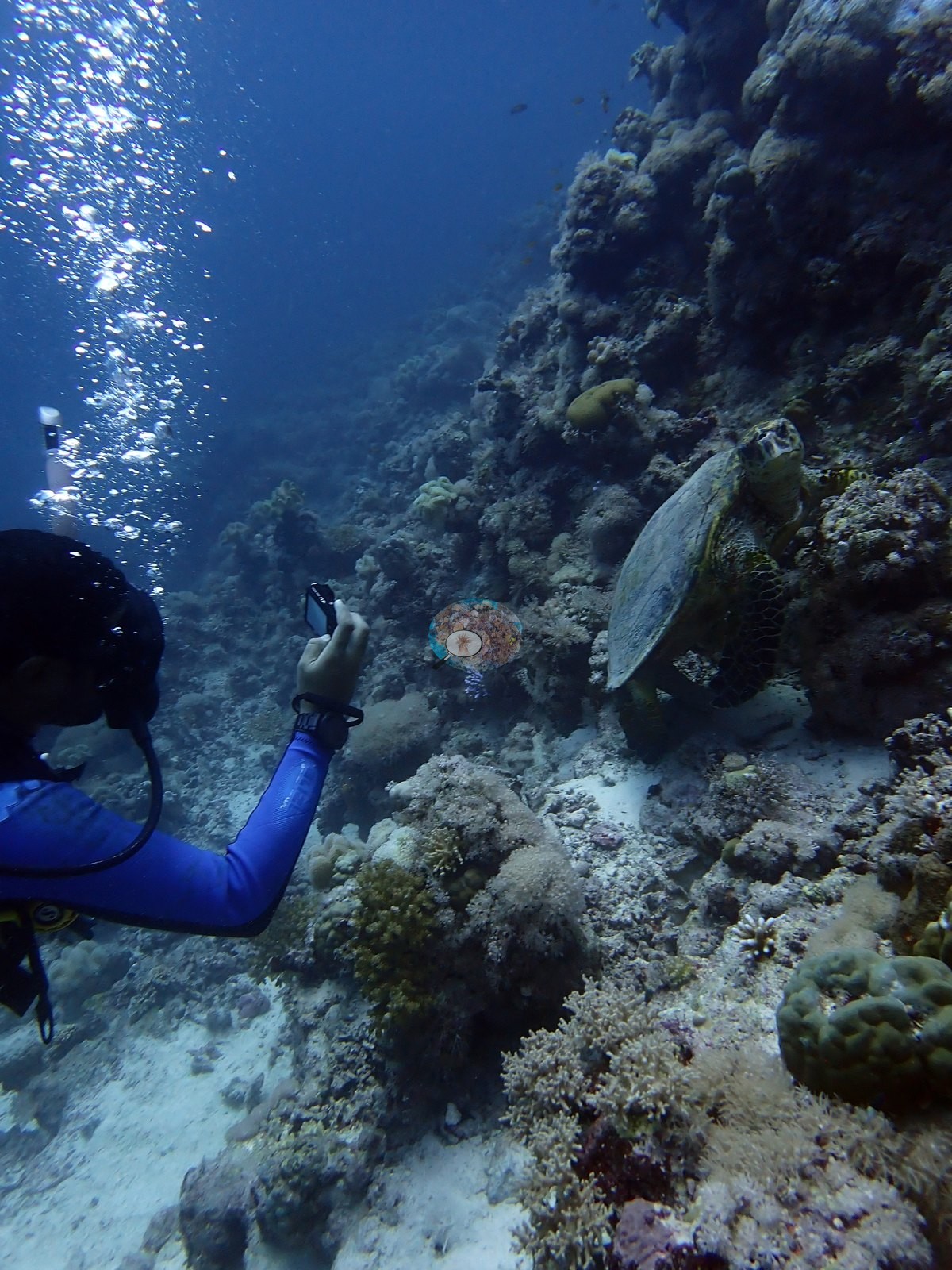
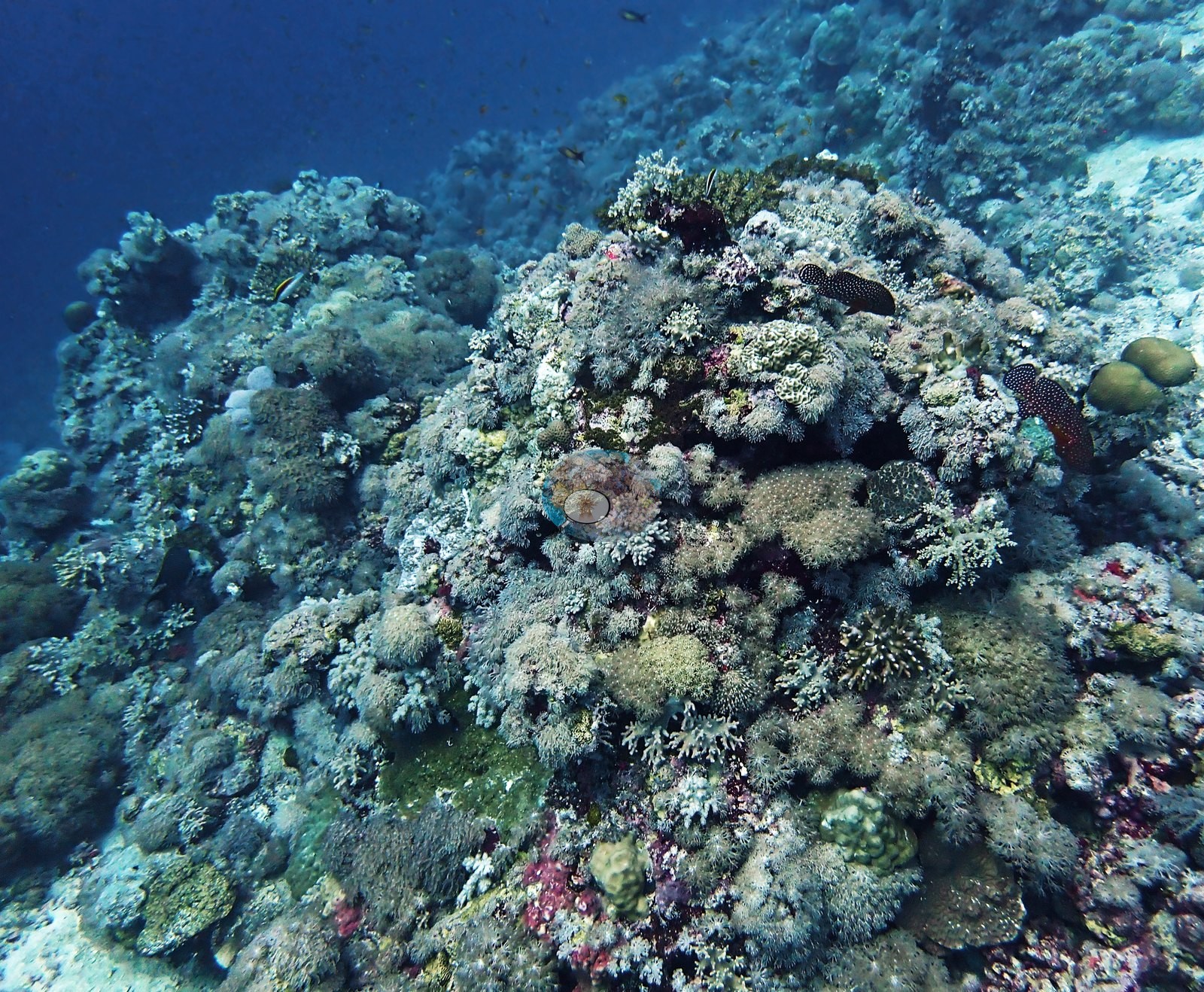
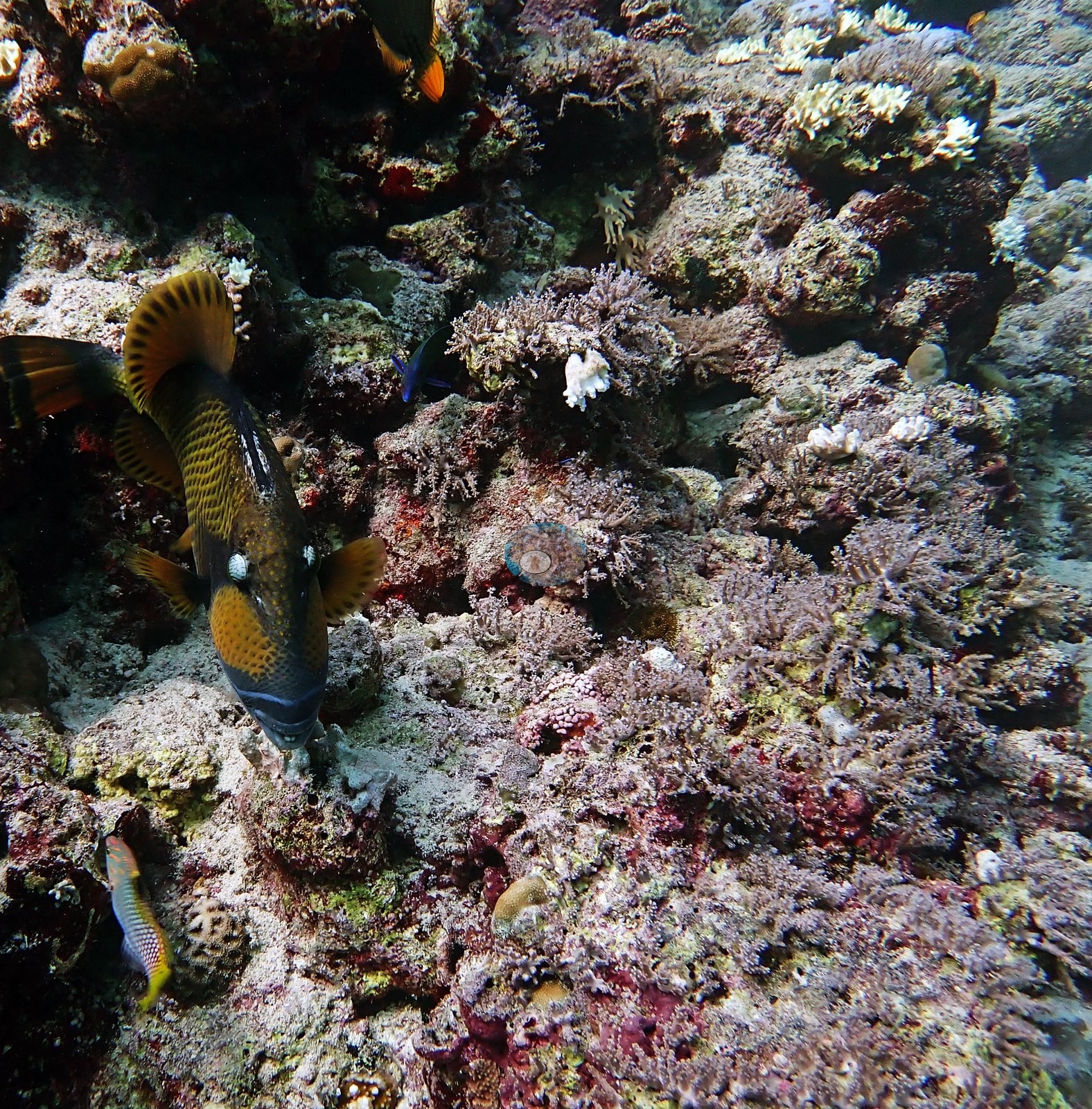
The wall face is sparser and more sculptural — encrusting growth, sponges, coralline, small colonies clinging to a near-vertical surface with anthias hanging off it in red streams (e.g., Image 4).
A pale cream Millepora-type fire coral plate and several table Acropora cantilever off the lip.
Coral cover
Coral cover is 13.9% ± 12.4 across 90 photographs, quoted verbatim from Mayfield, A.B. (2025) Environments 12:248 — Red Sea 2023-24 bleaching; CoralNet point annotation, Appendix A — a manual, diver-annotated CoralNet point count from Anderson's own published work, not a computer vision output and not recomputed here. The site record's prose gives the 17 November visit as 14% cover with 19.6% of coral tissue bleached at roughly 16.5°C-weeks DHW; the site-level fields carry 13.9% and 19.8%.
Fish and other fauna
Fauna is reef-typical for Thuwal in November: dense anthias, coral grouper, surgeonfish, and unicornfish drifting over the crest.
Comparisons with other data
No independent survey was made at this exact site; the nearest ones are listed in the table below.
Dive record
A single afternoon dive to 20 m on 17 November 2023, the second dive of a day that began at Rose Reef, worked with Coastline (KAUST).
CV model comparison
More info
The reference row is this dive site's own published value (Mayfield 2025, Appendix A, 90 photos); the other rows are AREA-level (Thuwal) comparisons, not run on this site's frames. ⚠ The comparison rows are REGIONS, not dive sites: the paper's main tables report cover by region, and this site's own value comes from its Appendix A. ⚠ The manual column and the CV columns are on DIFFERENT FRAME SETS. The published cover spans the region's full photo set (173–2,567 frames, most of them CoralNet robot-labeled); the CV arms ran only on the hand-scored reference subset, which is 6 frames at Thuwal, 274 at Jeddah and 173 at Rabigh. Read Thuwal's model columns as indicative only. CoralNet is n/a by design: the reference set IS the hand-scored set, so those frames carry no independent robot label to compare against. DINOv3 is restricted to frames it never saw, and reads roughly double the published cover at every Red Sea region. ⚠ 'unassigned region' is not a place: 135 frames carry no region label in the CoralNet metadata and map to no published row. It has no manual value and is excluded from the pooled reference. CoralNet automated point classifier: n/a — the reference set IS the hand-scored set; these frames carry no independent CoralNet robot label to compare against CoralSCOP (SAM-based mask-sum), unedited photos: pending — CoralSCOP run: 370/747 images scored at build time CoralSCOP (SAM-based mask-sum), edited photos: pending — CoralSCOP run: 370/747 images scored at build time| Method | Hard-coral cover (%) |
|---|---|
| Manual (published) | 13.9 |
| In-house DINOv3 | 47.5 |
| Claude | 23.9 |
Independent surveys nearby
| Agency / program | Year(s) | Stations / distance | Link |
|---|---|---|---|
| Aeby et al. (2021) | 2015 | 1 station, 1.31 km | Records ↓ |
| Furby et al. (2013) | 2010 | 1 station, 4.67 km | Records ↓ |
| Monroe et al. (2018) | 2015 | 1 station, 1.31 km | Records ↓ |
 Dr. Coral (CRD)Year-average (no detectable trend)
Within 5 km, 3 independent survey stations recorded hard coral cover in 5 surveys between 2010 and 2015. The most recent nearby survey is from 2015, so these values predate recent heat stress. This site's own estimate (14%) sits 13.9 points below the range of these surveys (28–39%); the methods differ, so the comparison is context, not a like-for-like test.
Collected by other programs using different methods, so these are context for the figures above, not a like-for-like comparison. Where a station was surveyed more than once the range is shown. Station names are not dive-site names.
| Agency | Site / location | Date | Hard coral cover (%) | Distance | Link |
|---|---|---|---|---|---|
| Furby et al. (2013) | Offshore reef 1 | 2010 | 31% (3 surveys) | 4.67 km | HeatCRD database |
| Monroe et al. (2018) | Offshore reef 1 | 2015 | 28% | 1.31 km | HeatCRD database |
| Aeby et al. (2021) | Shi'b Nazar | 2015 | 39% | 1.31 km | HeatCRD database |
Data & links
- CoralNet image repository for this region ↗
- HeatCRD database ↗
- (reference) ↗
- Photo portfolio ↗
- Coral Reef Diagnostics country page ↗
All images from Coral Reef Diagnostics. Data are from Coral Reef Diagnostics and the organizations named in the data-sources table above.
© Coral Reef Diagnostics.
References
- Furby KA, Bouwmeester J, Berumen ML (2013). Susceptibility of central Red Sea corals during a major bleaching event. Coral Reefs 32:505-513. DOI
- Monroe AA, Ziegler M, Roik A, Röthig T, Hardenstine RS, Emms MA, et al. (2018). In situ observations of coral bleaching in the central Saudi Arabian Red Sea during the 2015/2016 global coral bleaching event. PLOS ONE 13:e0195814. PDF
- Aeby GS, Shore A, Jensen T, Ziegler M, Work T, Voolstra CR (2021). A comparative baseline of coral disease in three regions along the Saudi Arabian coast of the central Red Sea. PLOS ONE 16:e0246854. PDF
- Mayfield AB (2025). Using Tourist Diver Photos to Assess the Effects of Marine Heatwaves on Central Red Sea Coral Reefs. Environments 12:248. PDF