
Saudi Red Sea - Drogon Corals (Jeddah)
Part of the regional summaries: Saudi Arabia - Jeddah / KAUST (Thuwal) / Rabigh, Saudi Arabia, and Red Sea
More info
Makkah-Madine Saudi Arabia (NOAA CRW virtual station) · Northern and Central Red Sea ecoregion mean=12.2°C-heating weeksDrogon Corals mixes a densely rugose, coral-rich shallow flat with a wide bare sand plain of isolated bommies - the sand plain is what pulls this site's cover down into the low teens despite a visibly rich crest. A large, healthy fluted giant clam was the standout subject; the published record puts 25.2% of coral tissue bleached at the time of this August 2024 dive, though the natural-light photographs are too washed-out to confirm bleaching directly.
يمزج موقع دروغون بين مسطح ضحل غني بالمرجان وشديد الخشونة وسهل رملي عارٍ واسع تتناثر فيه كتل مرجانية منعزلة — والسهل الرملي هو ما يهبط بغطاء هذا الموقع إلى نطاق العشرة بالمئة رغم قمة غنية بصرياً.
ترجمة هذا الملخص بالذكاء الاصطناعي؛ النص الإنجليزي هو المعتمد. Translated from the site’s shorter map summary.
4 of these 50 photographs are shown beside the text that discusses them under "Site description" below.
Site description
General benthic features
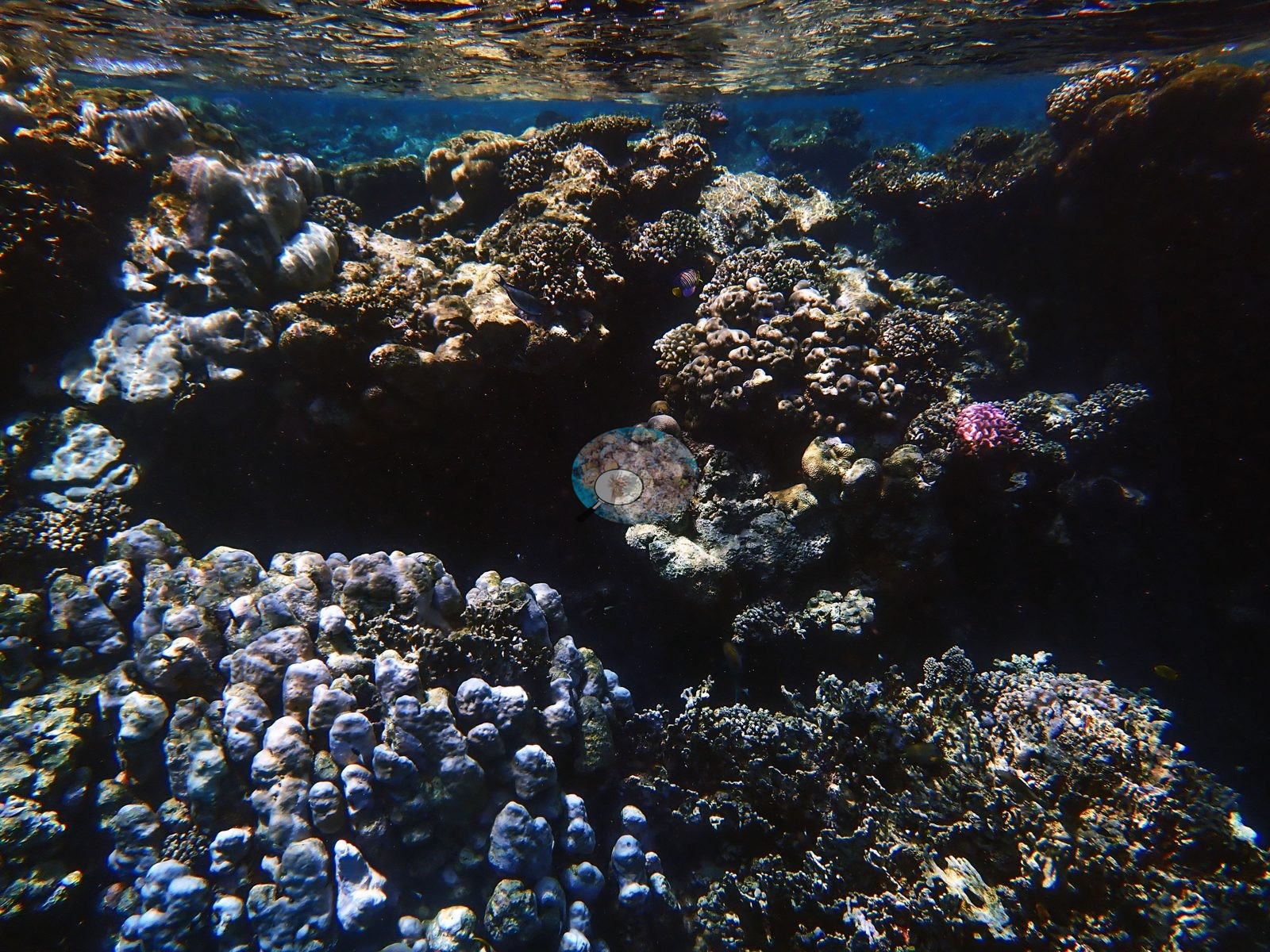
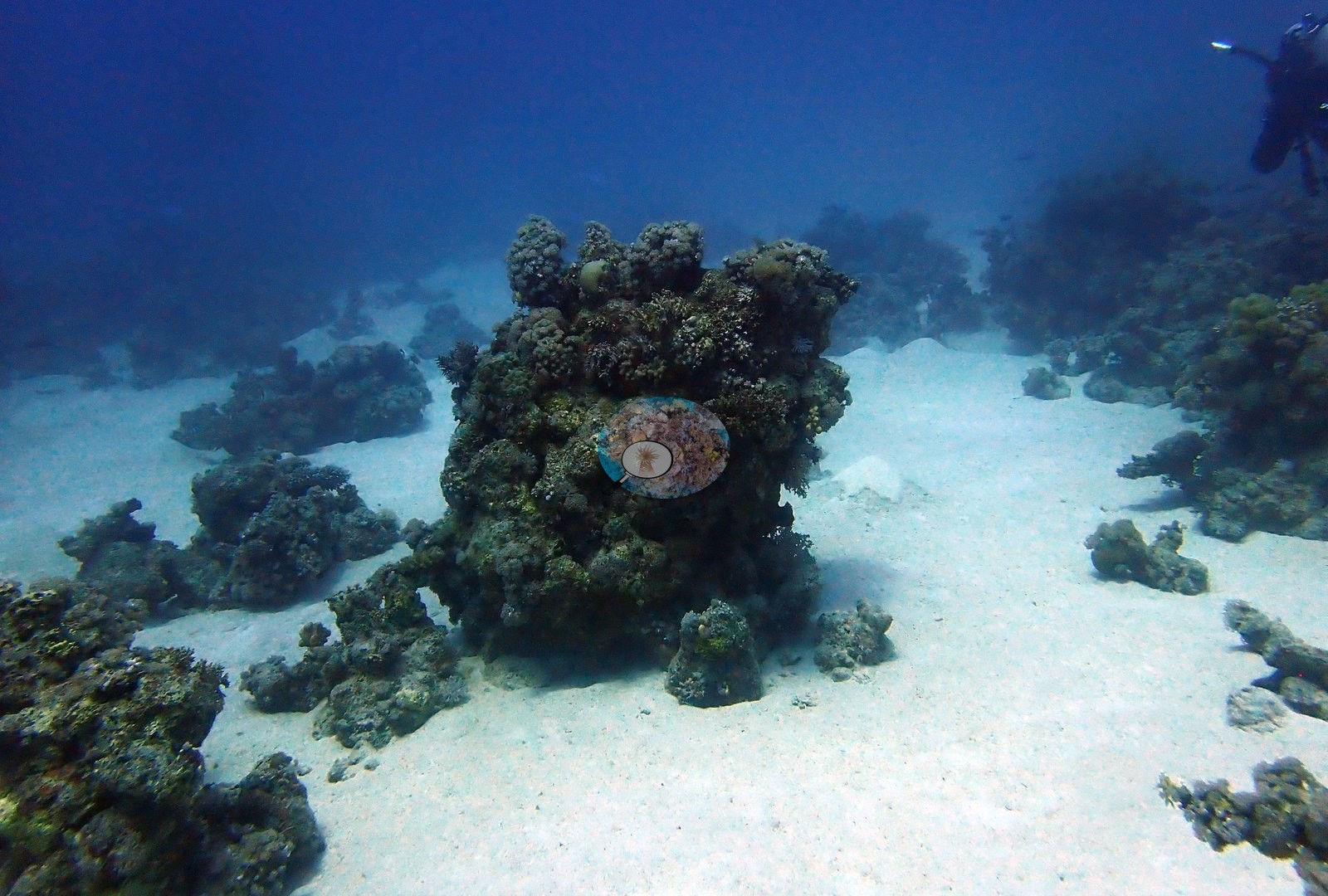
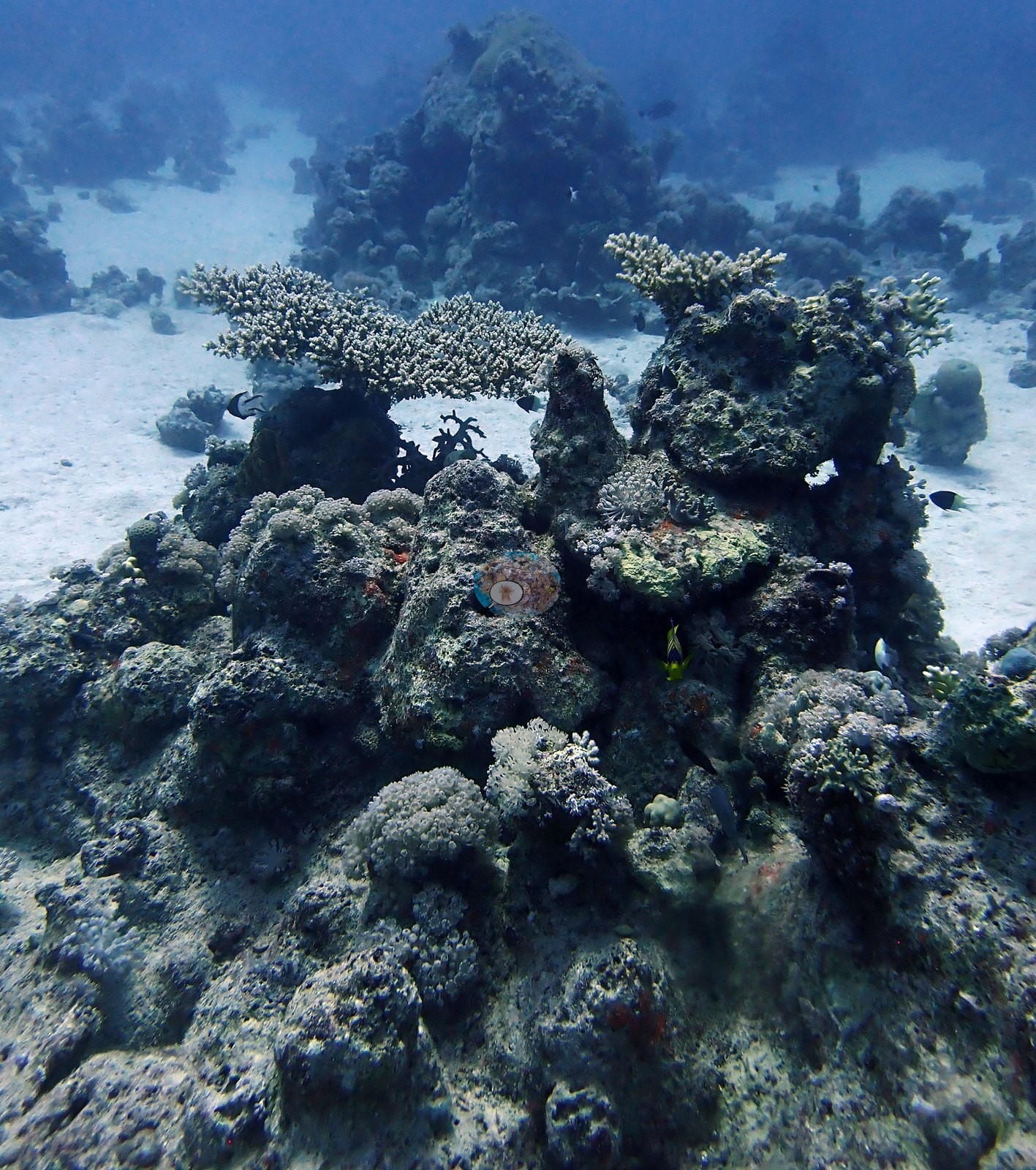
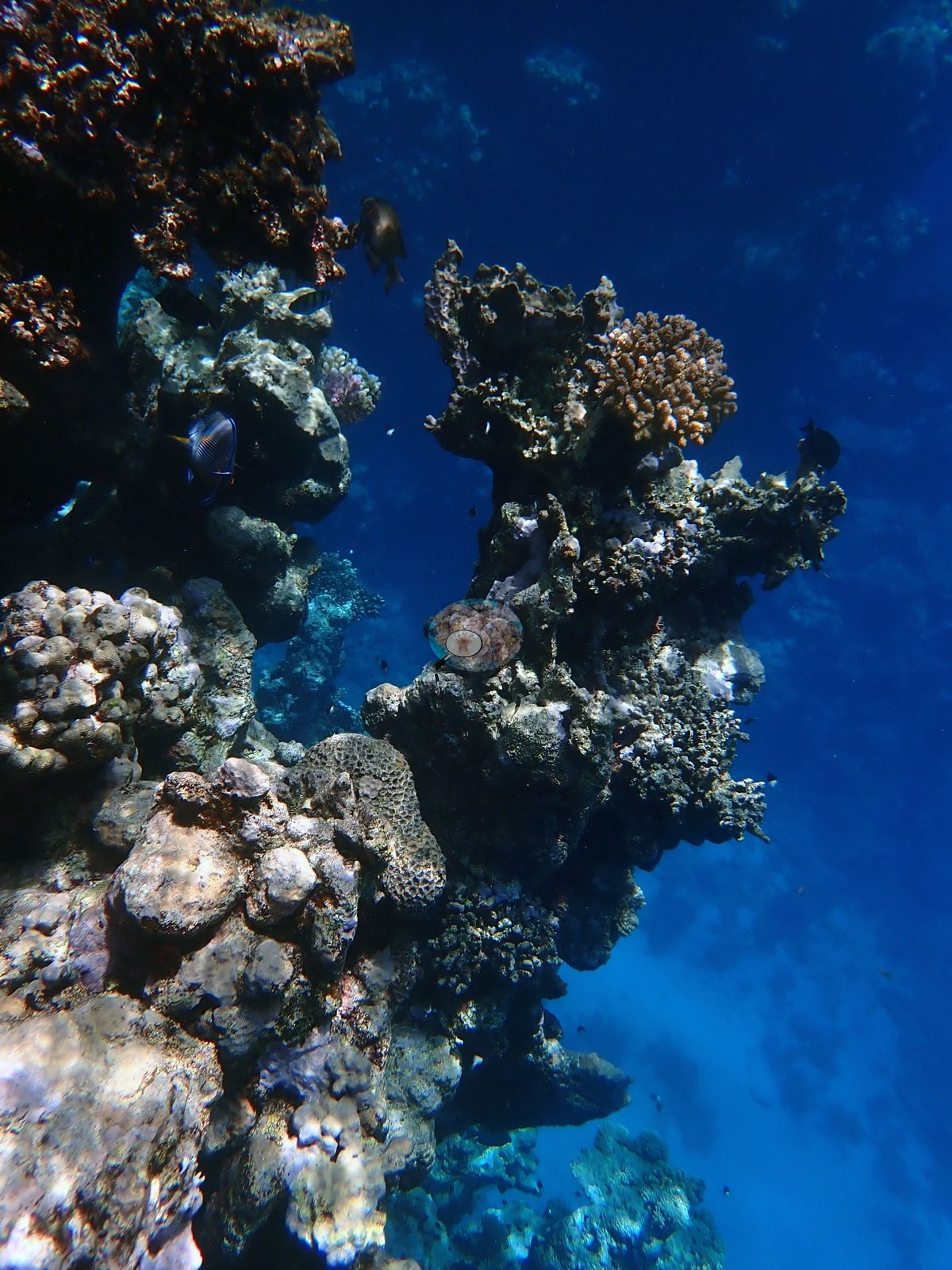
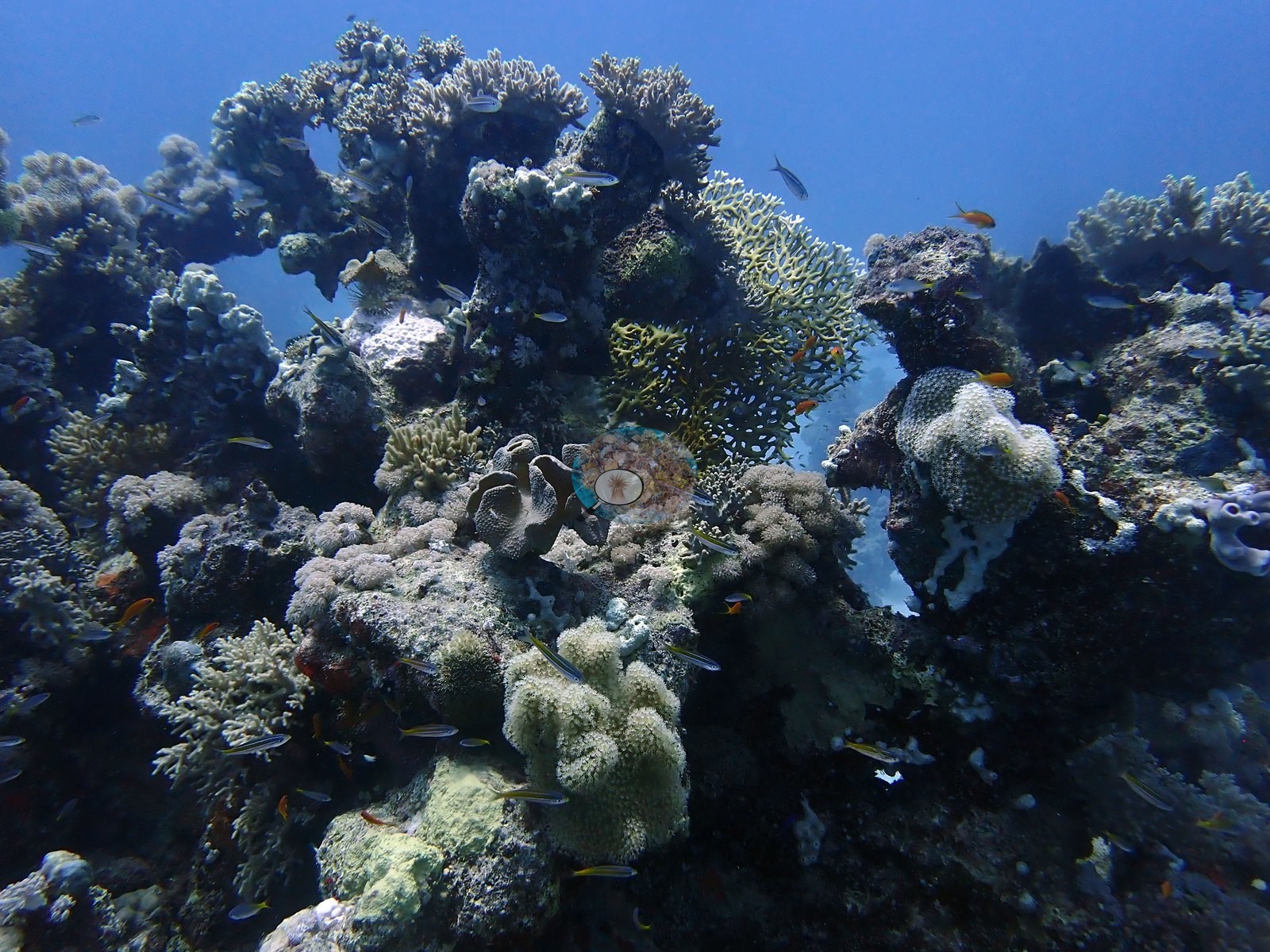
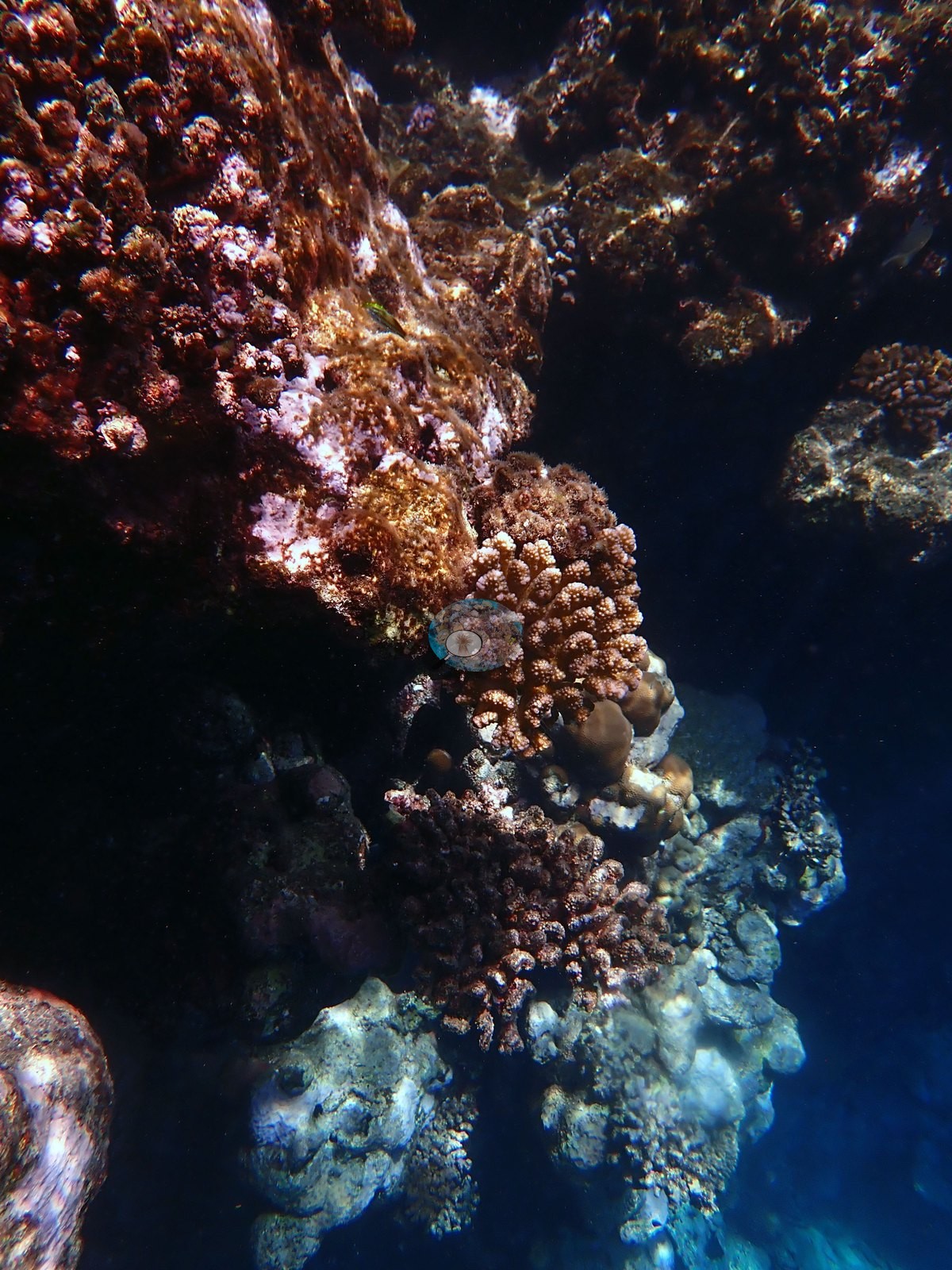
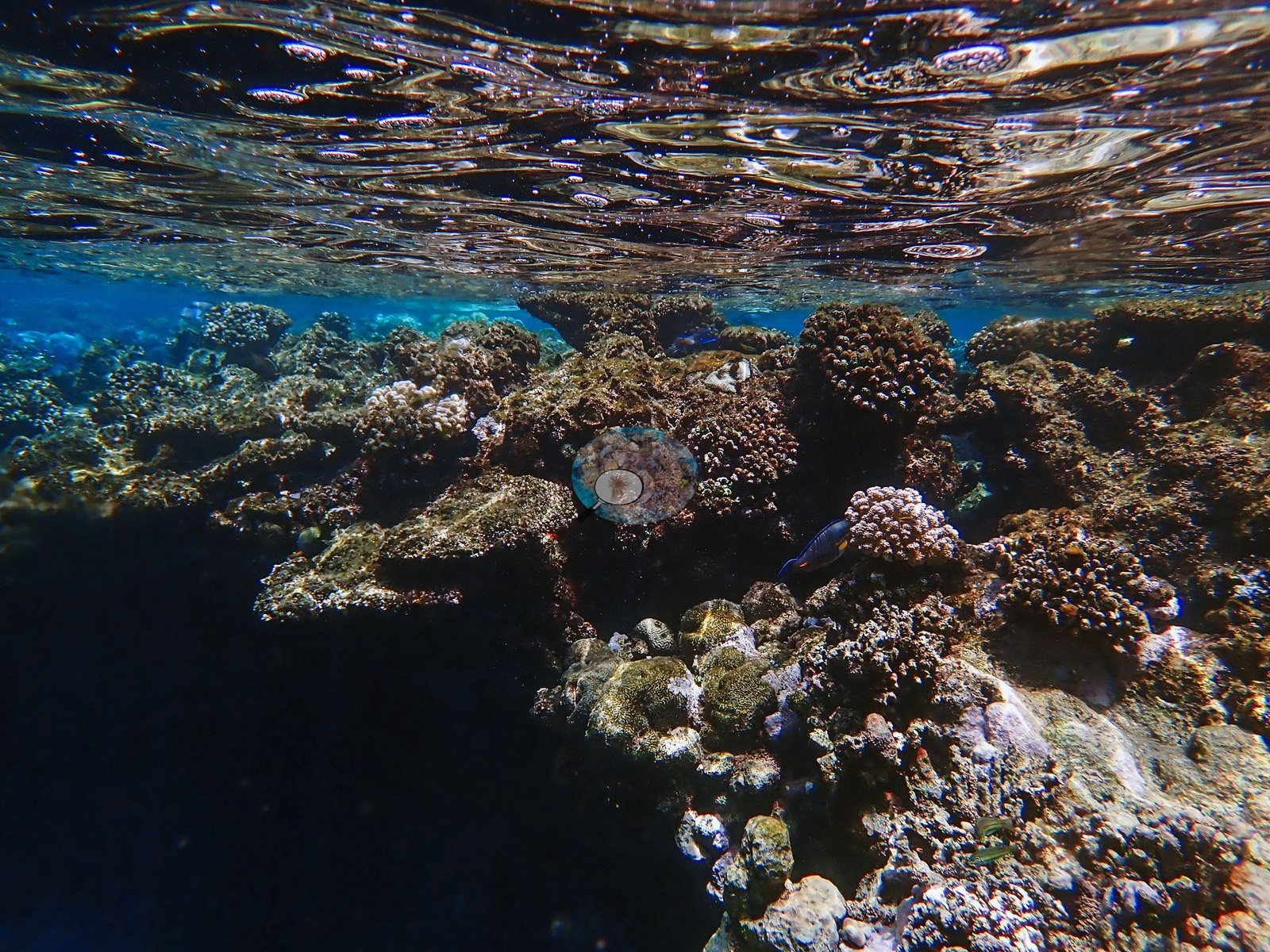
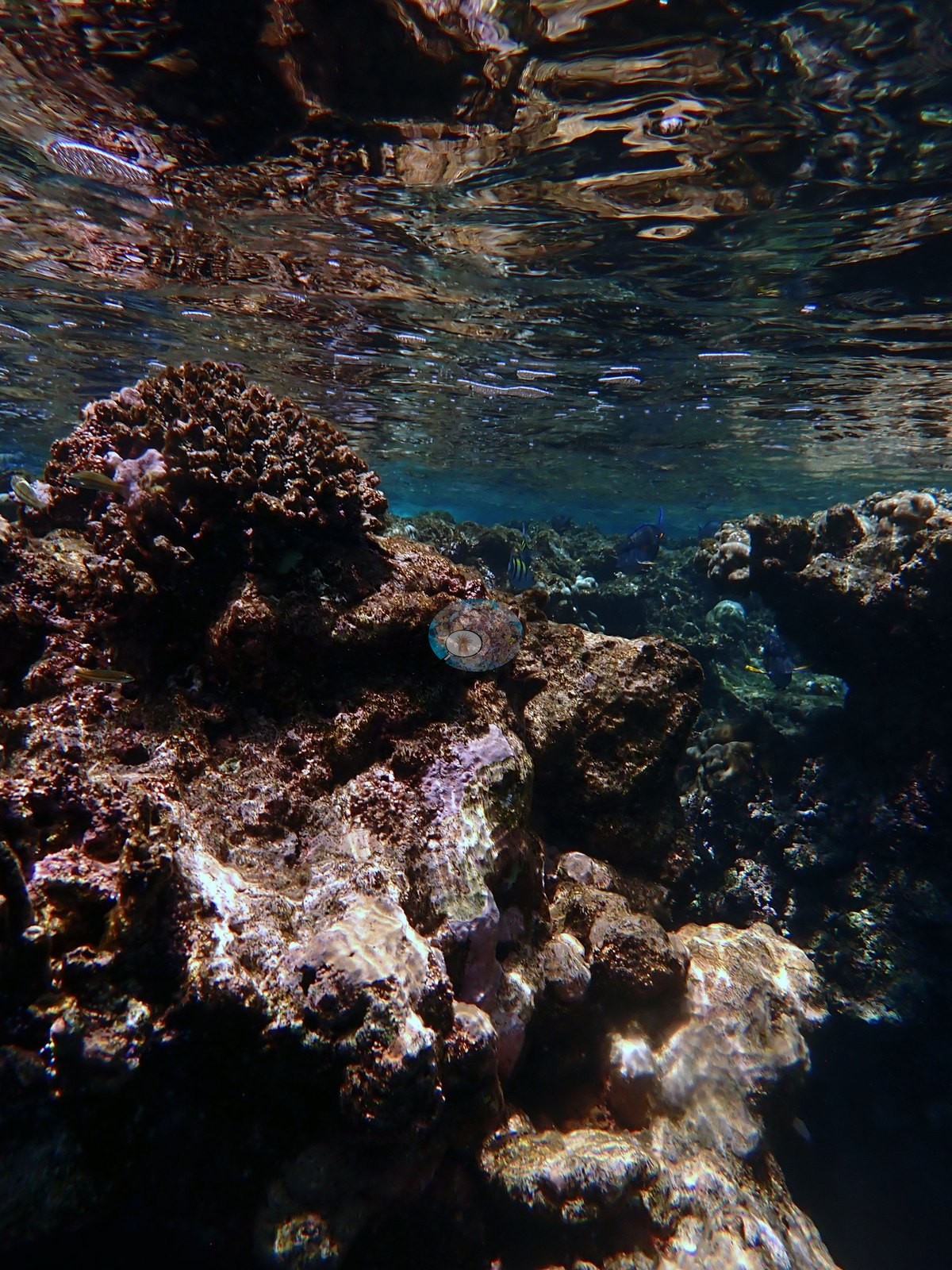
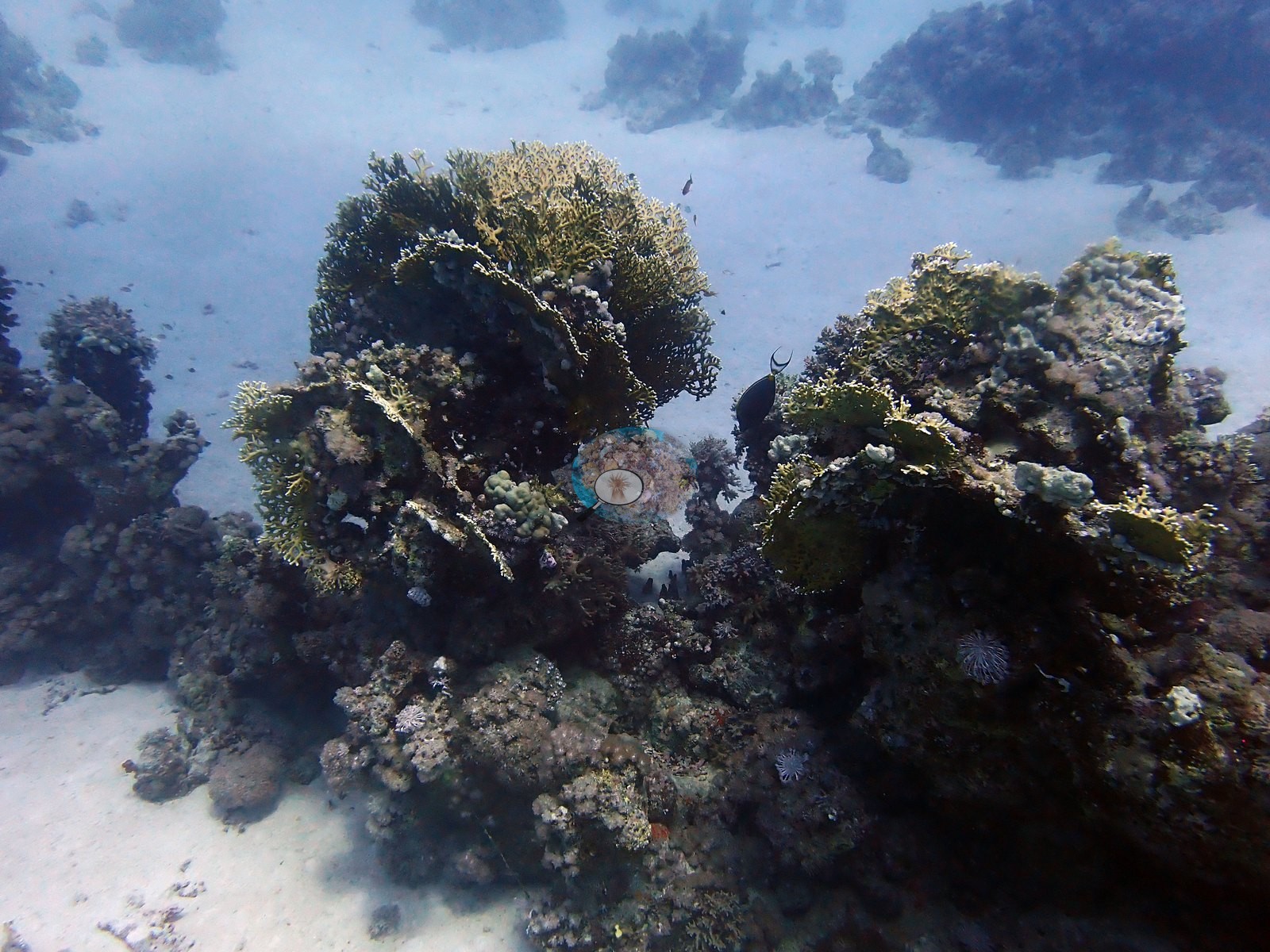
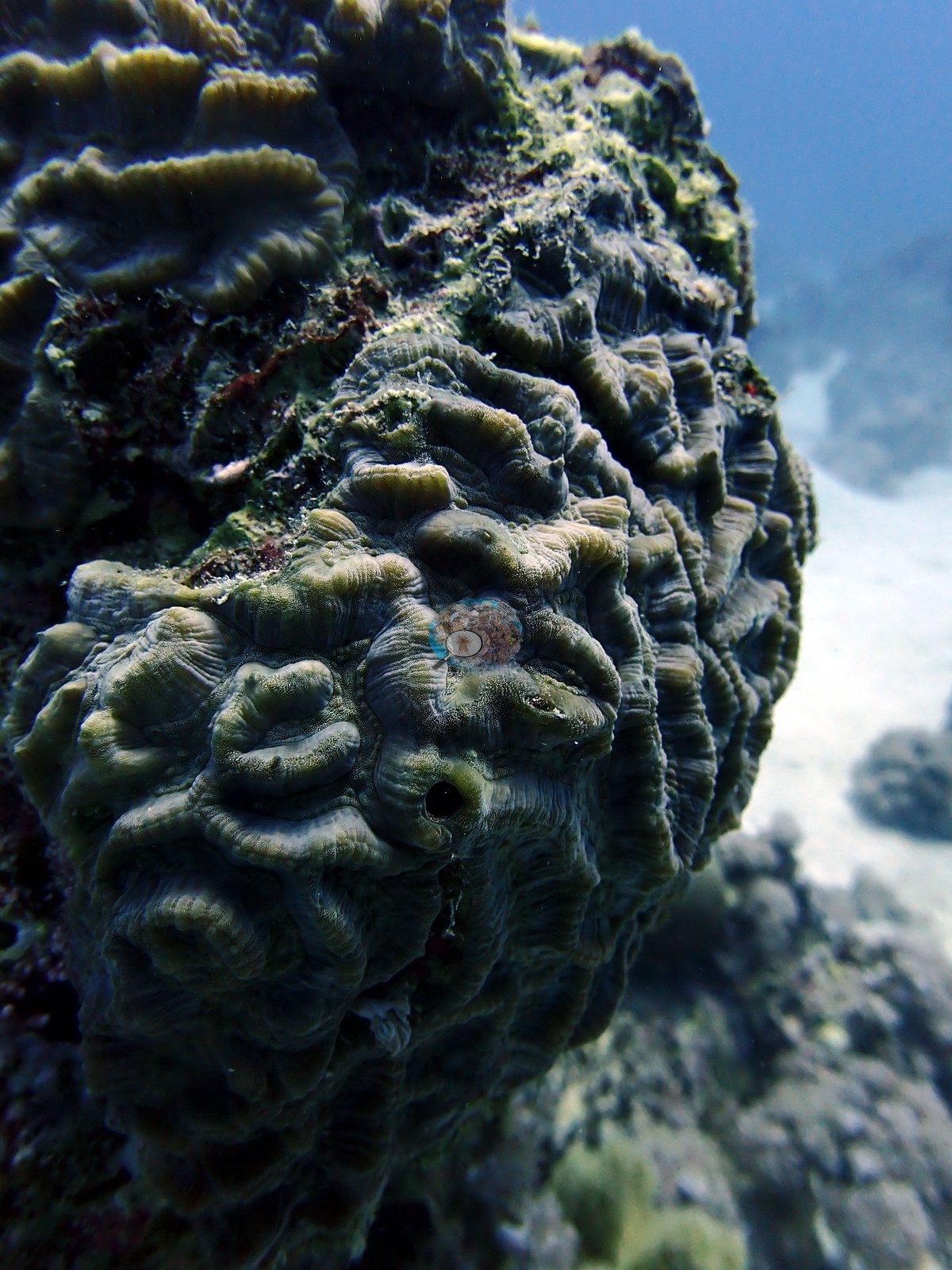
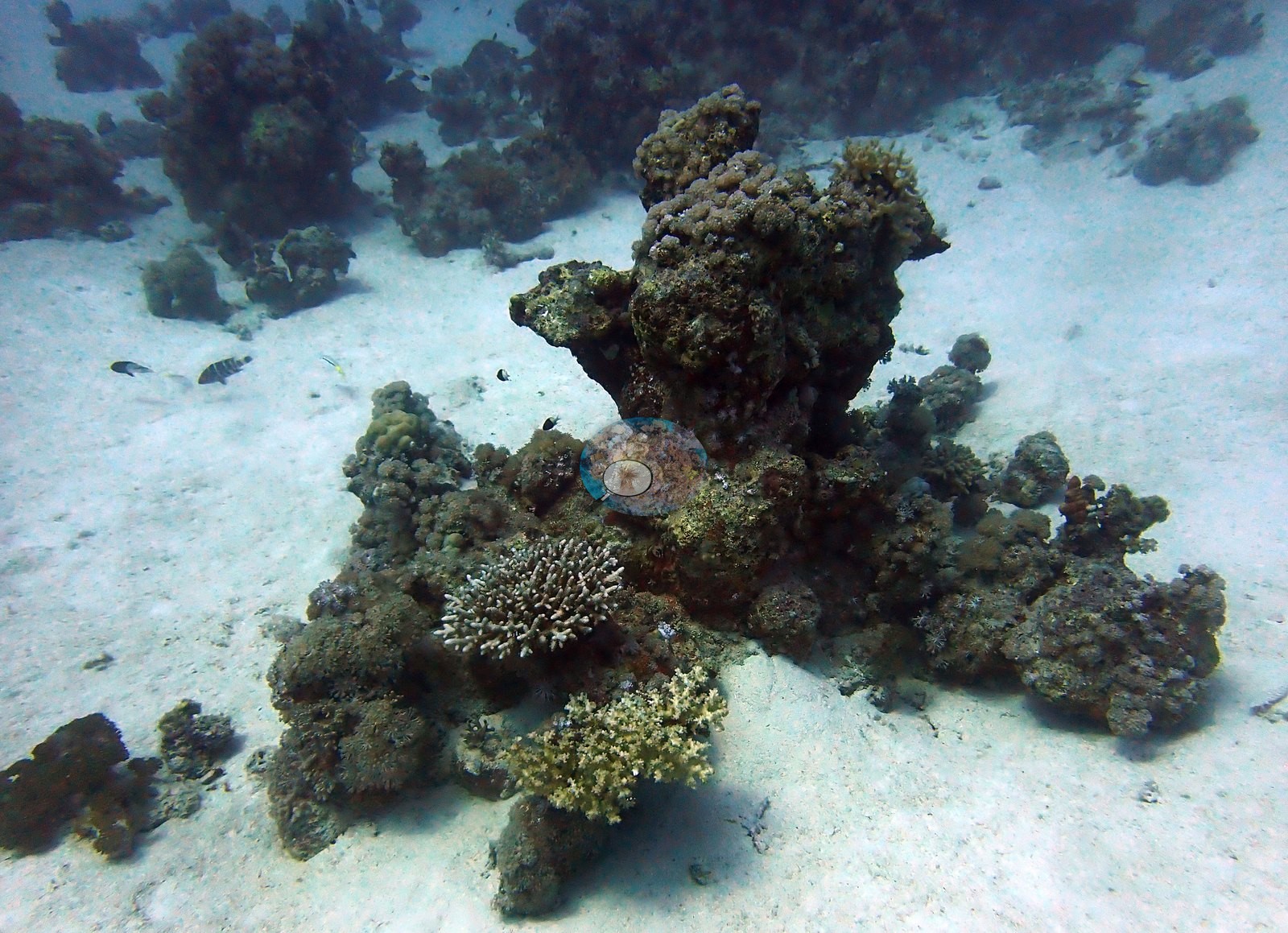
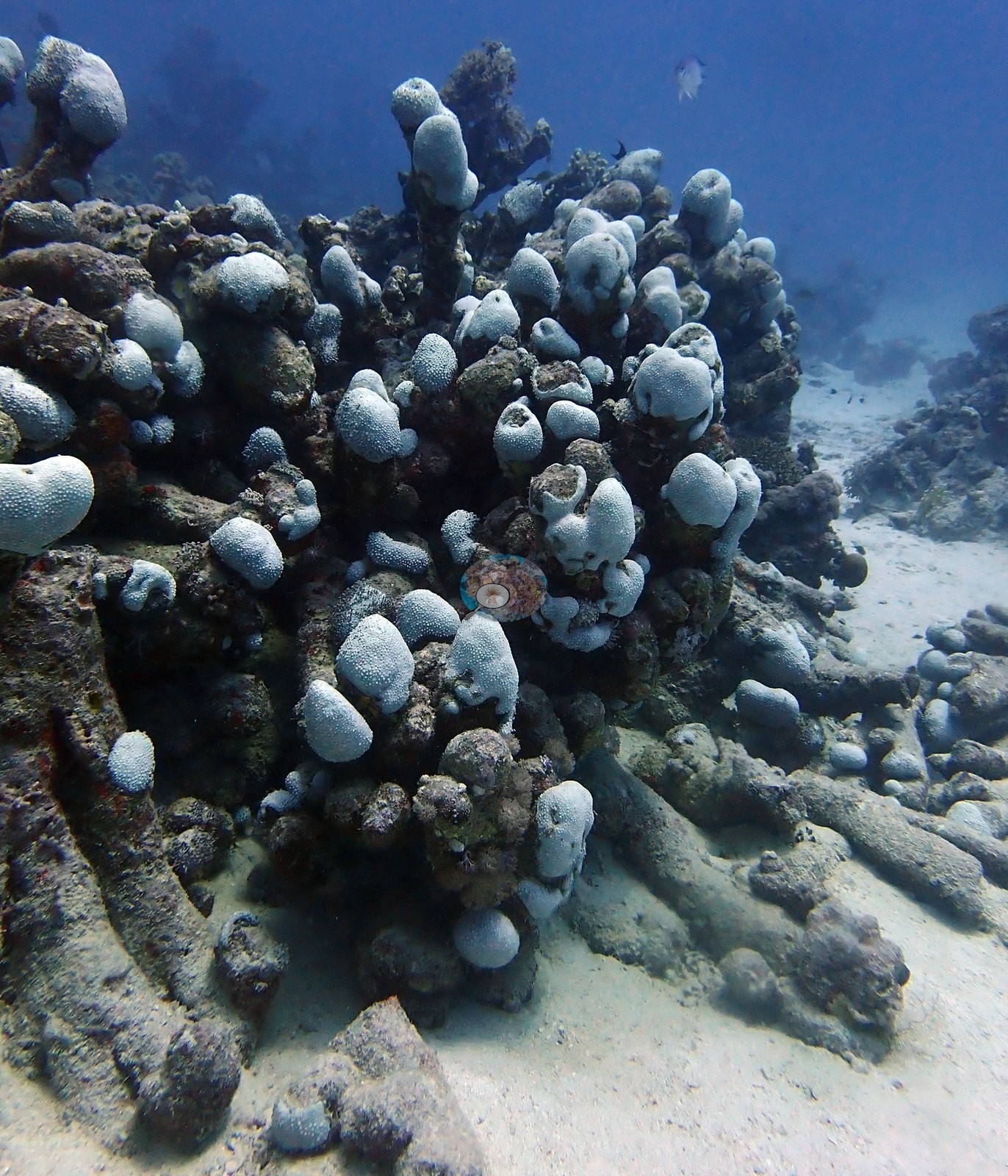
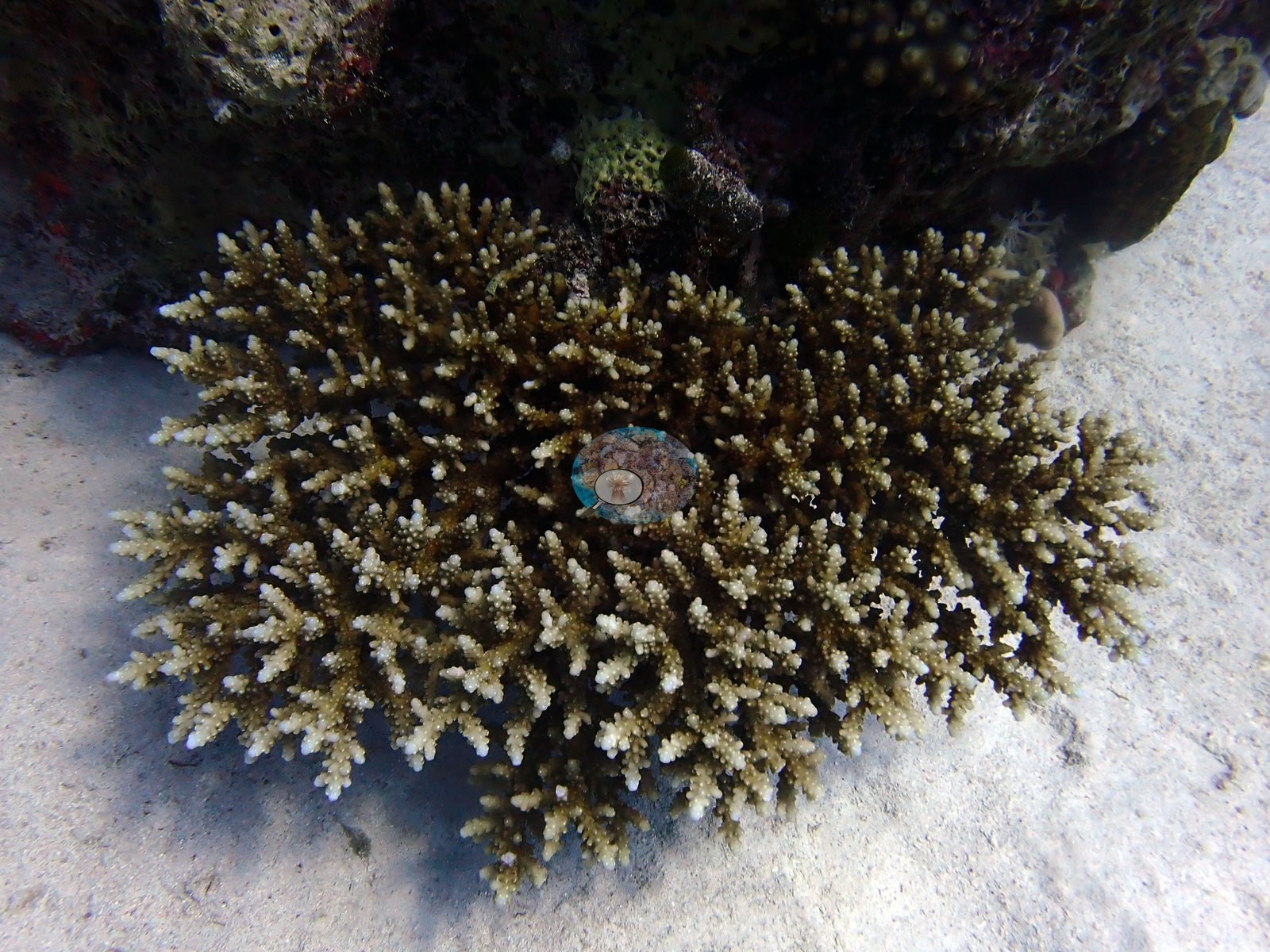
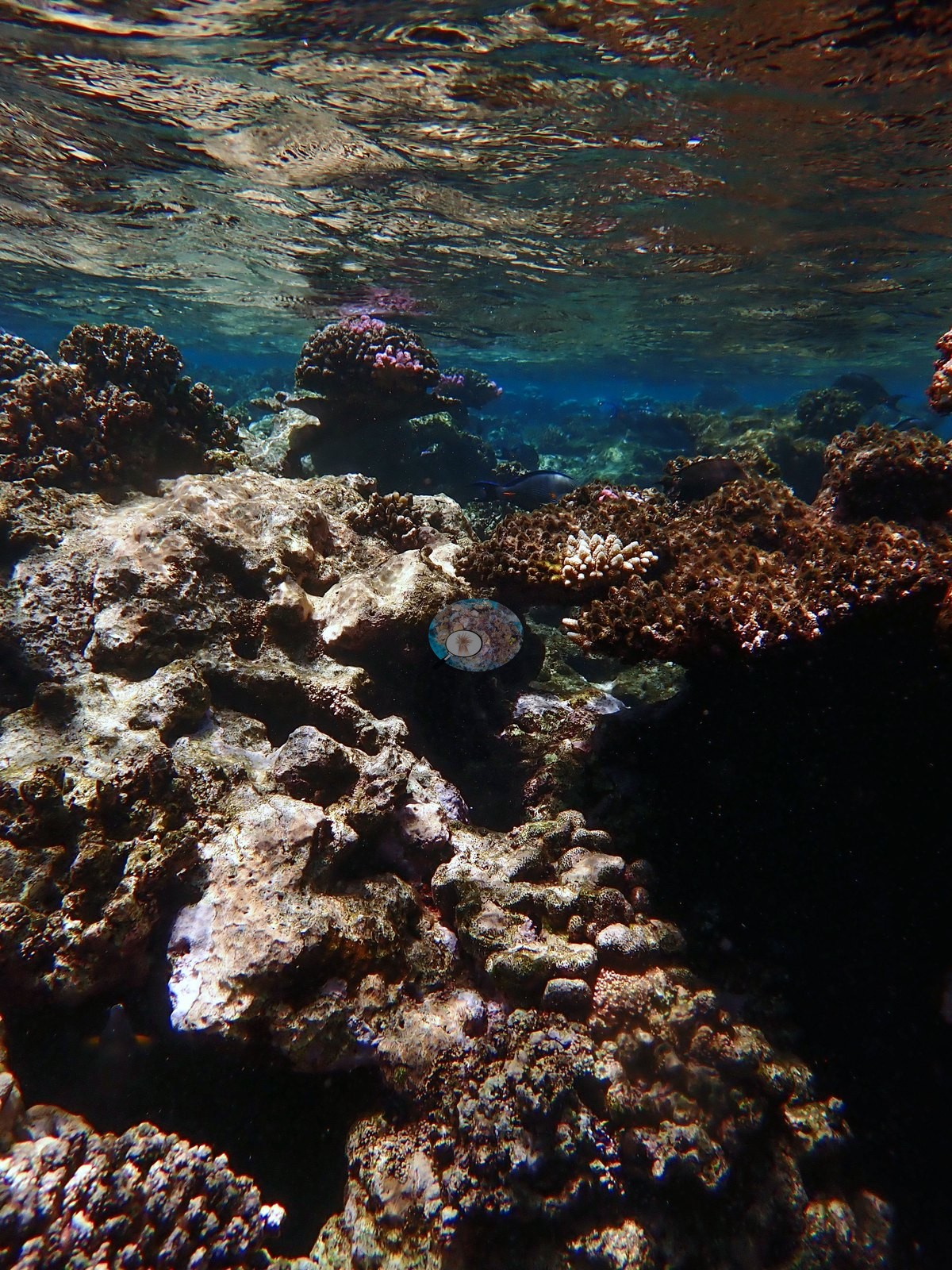
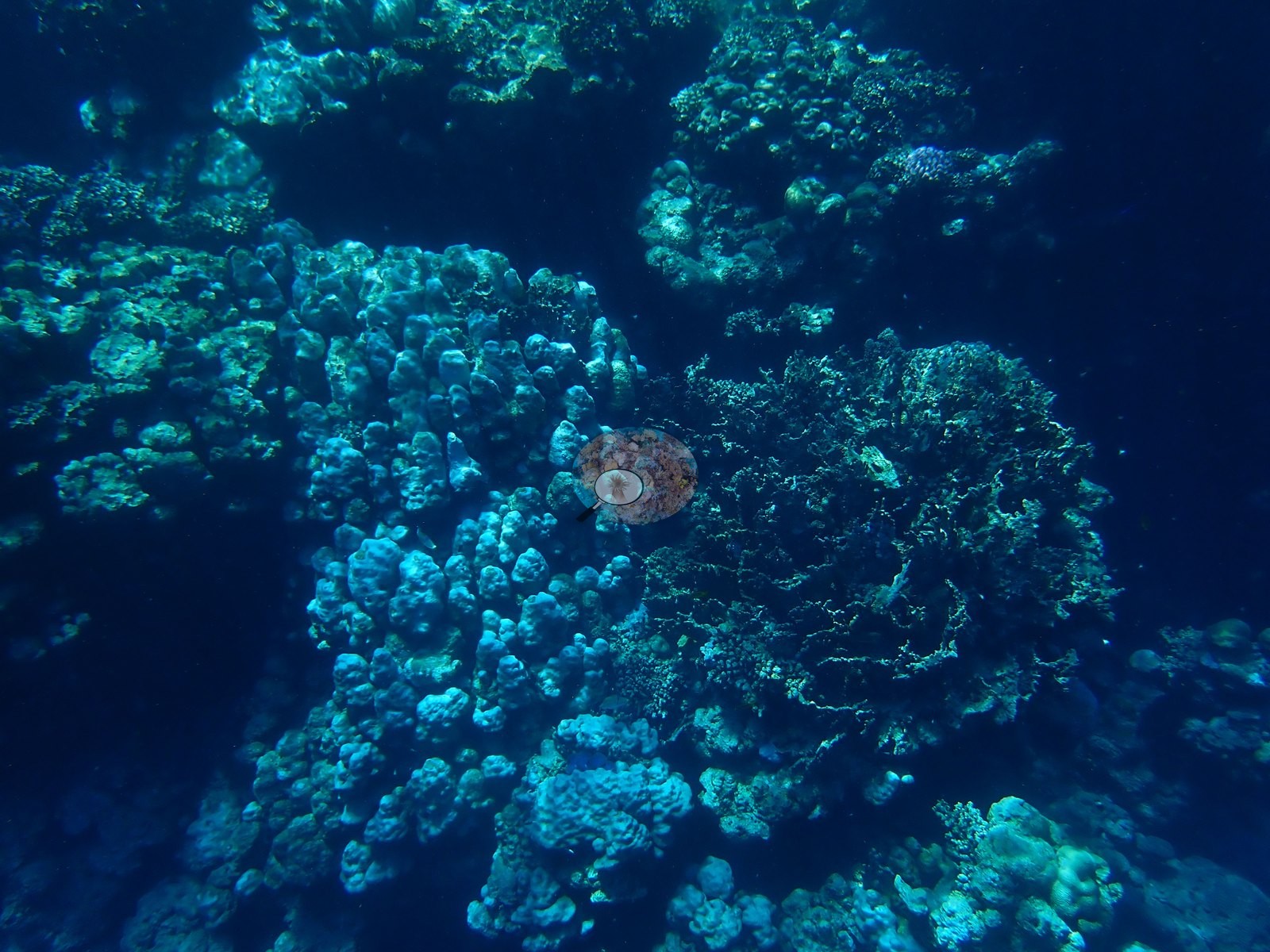
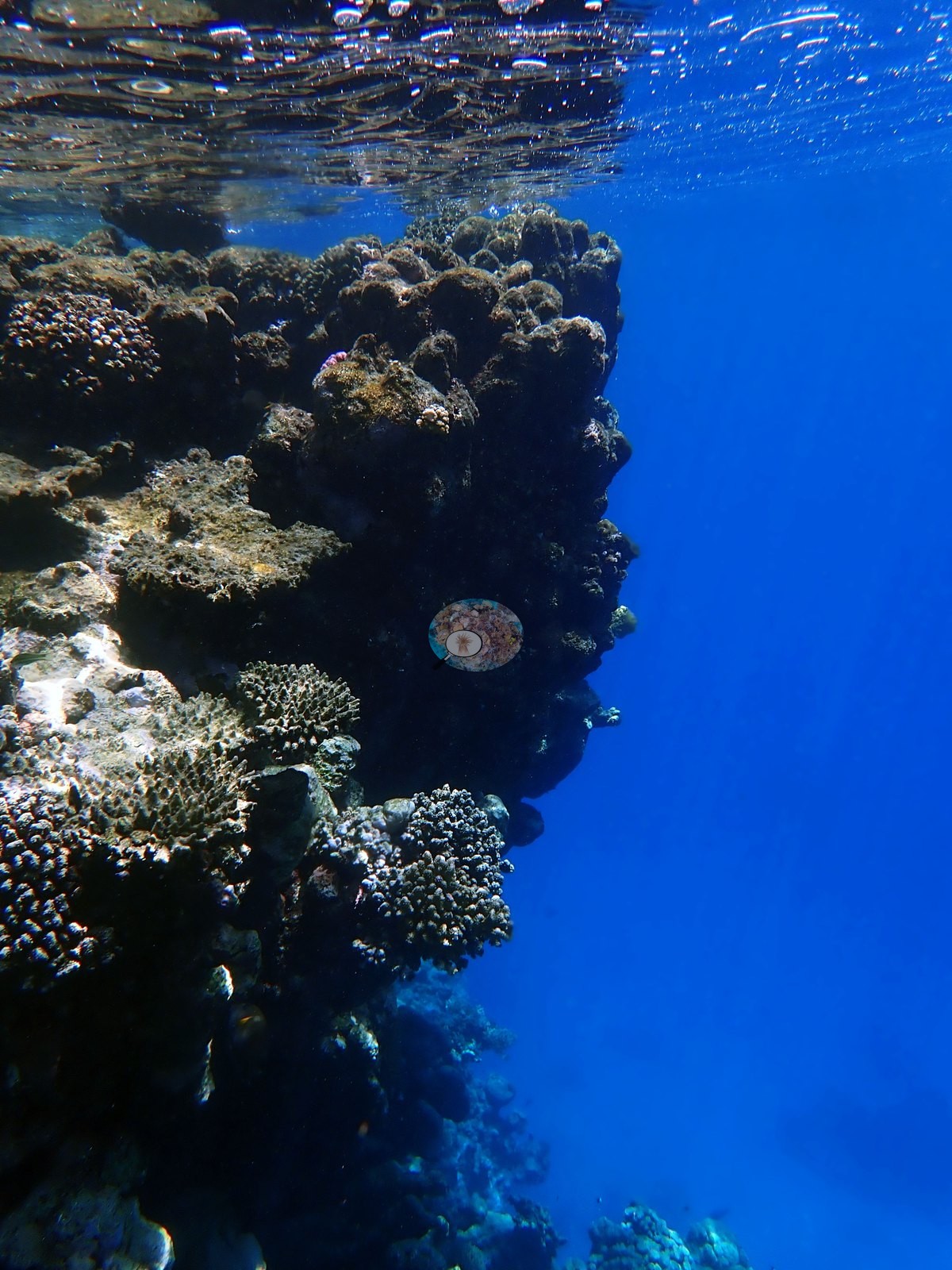
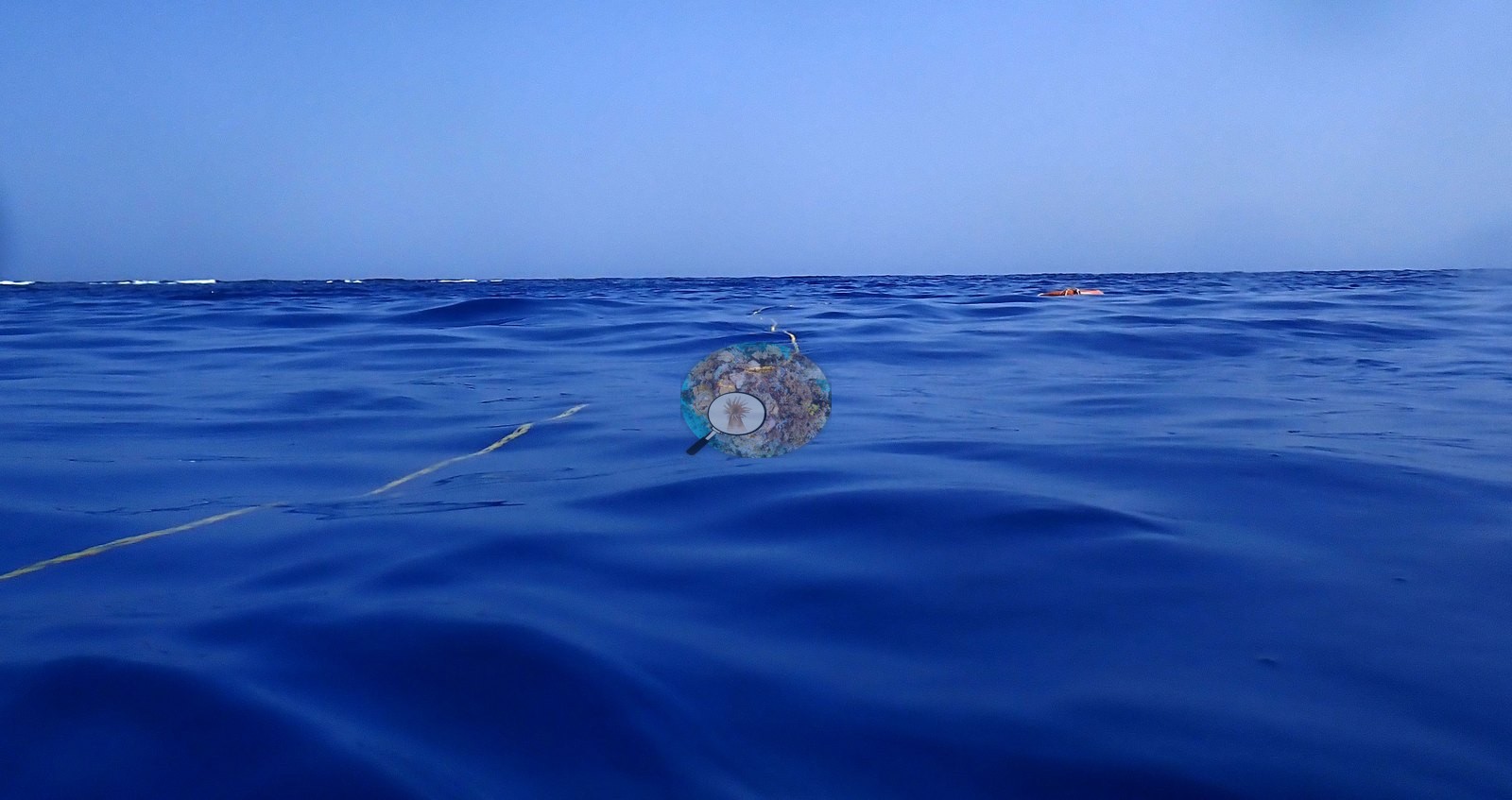
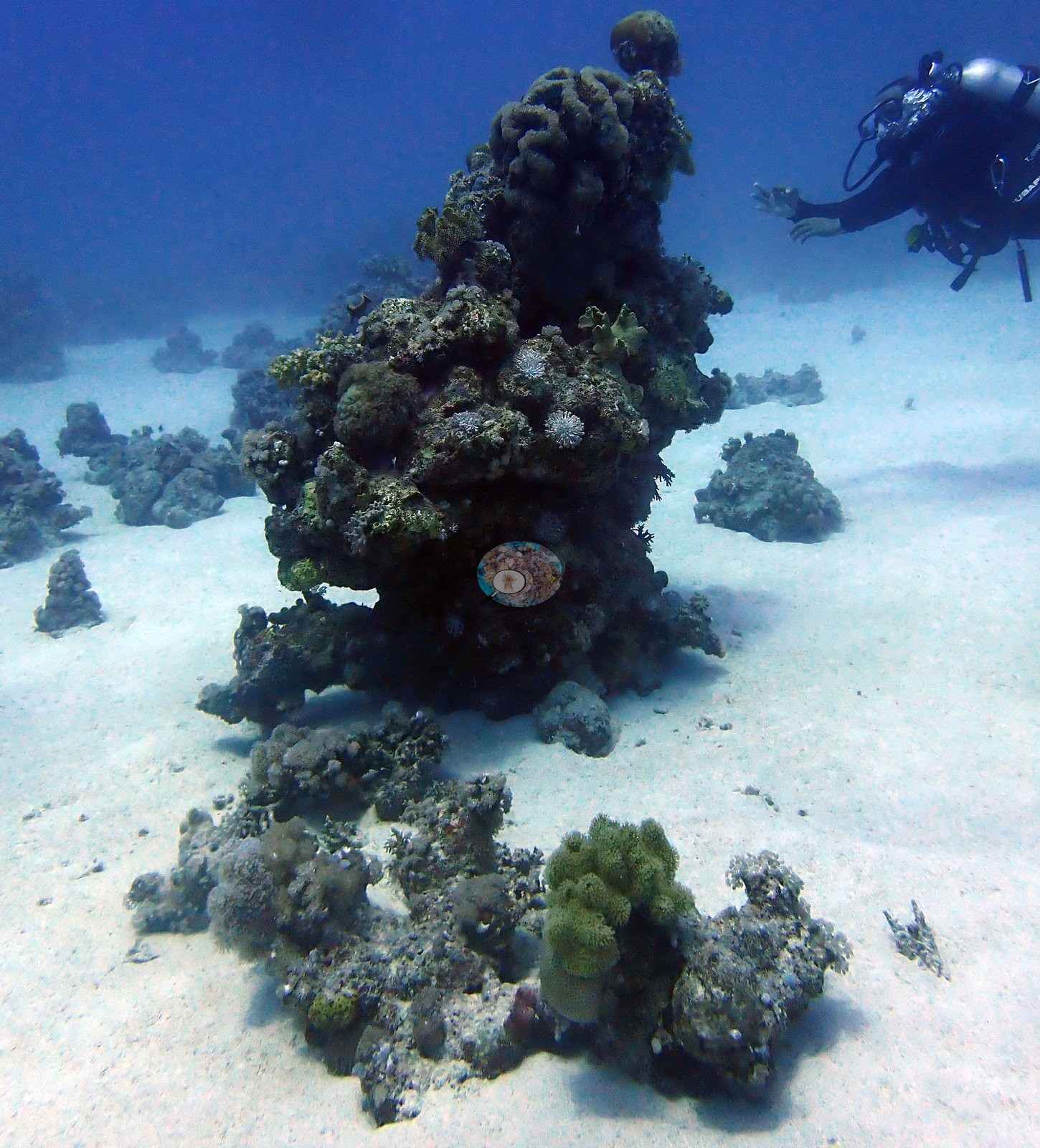
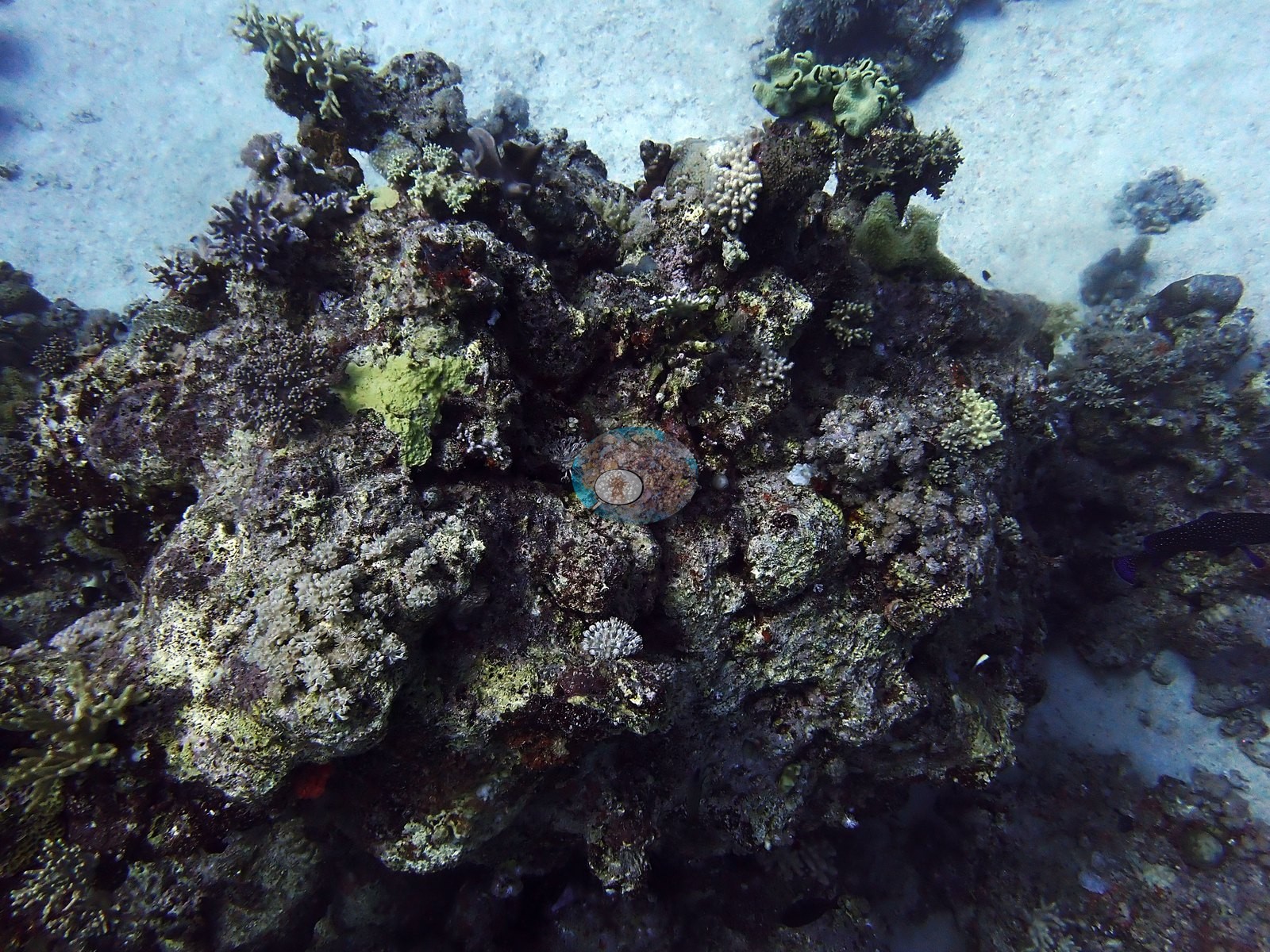
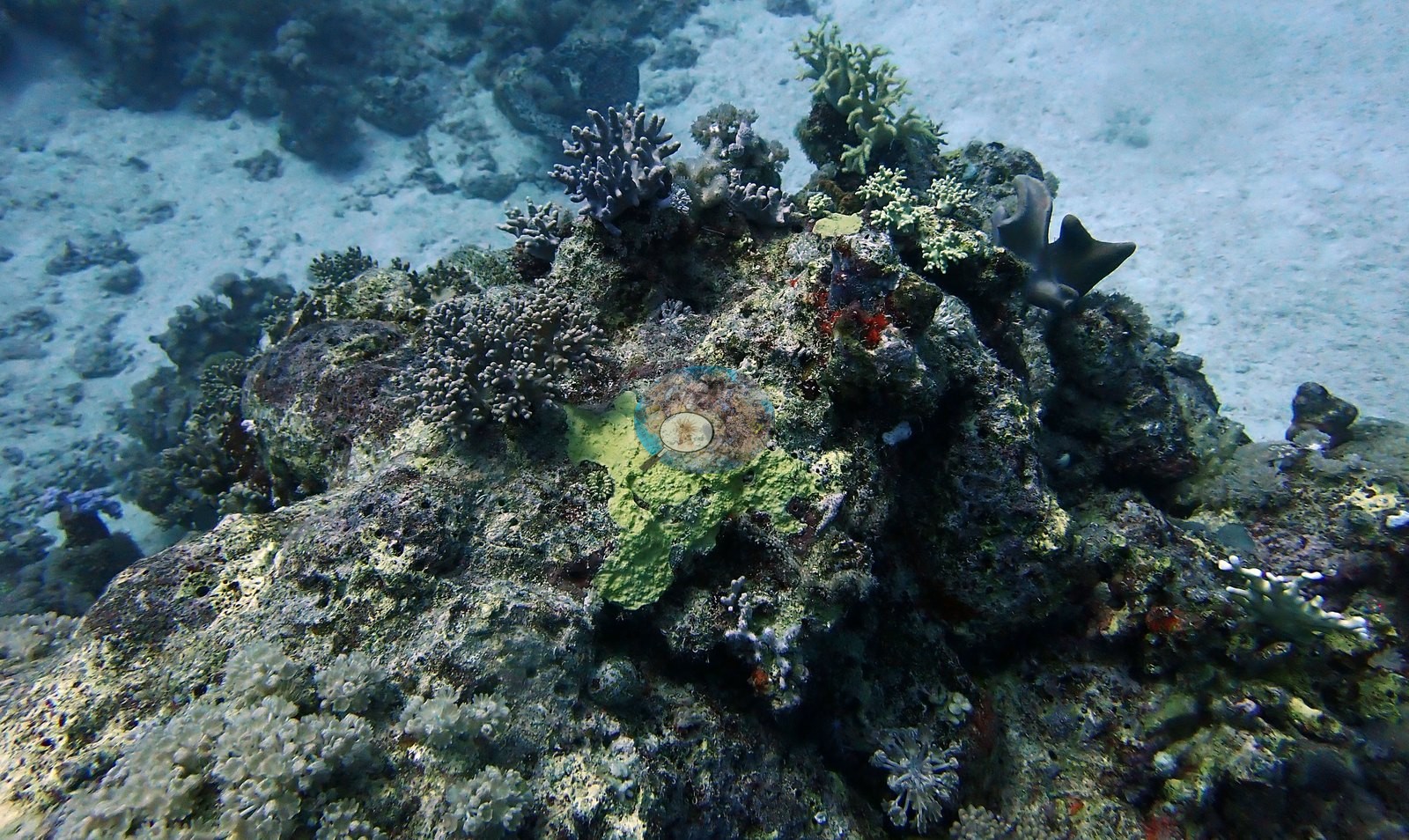
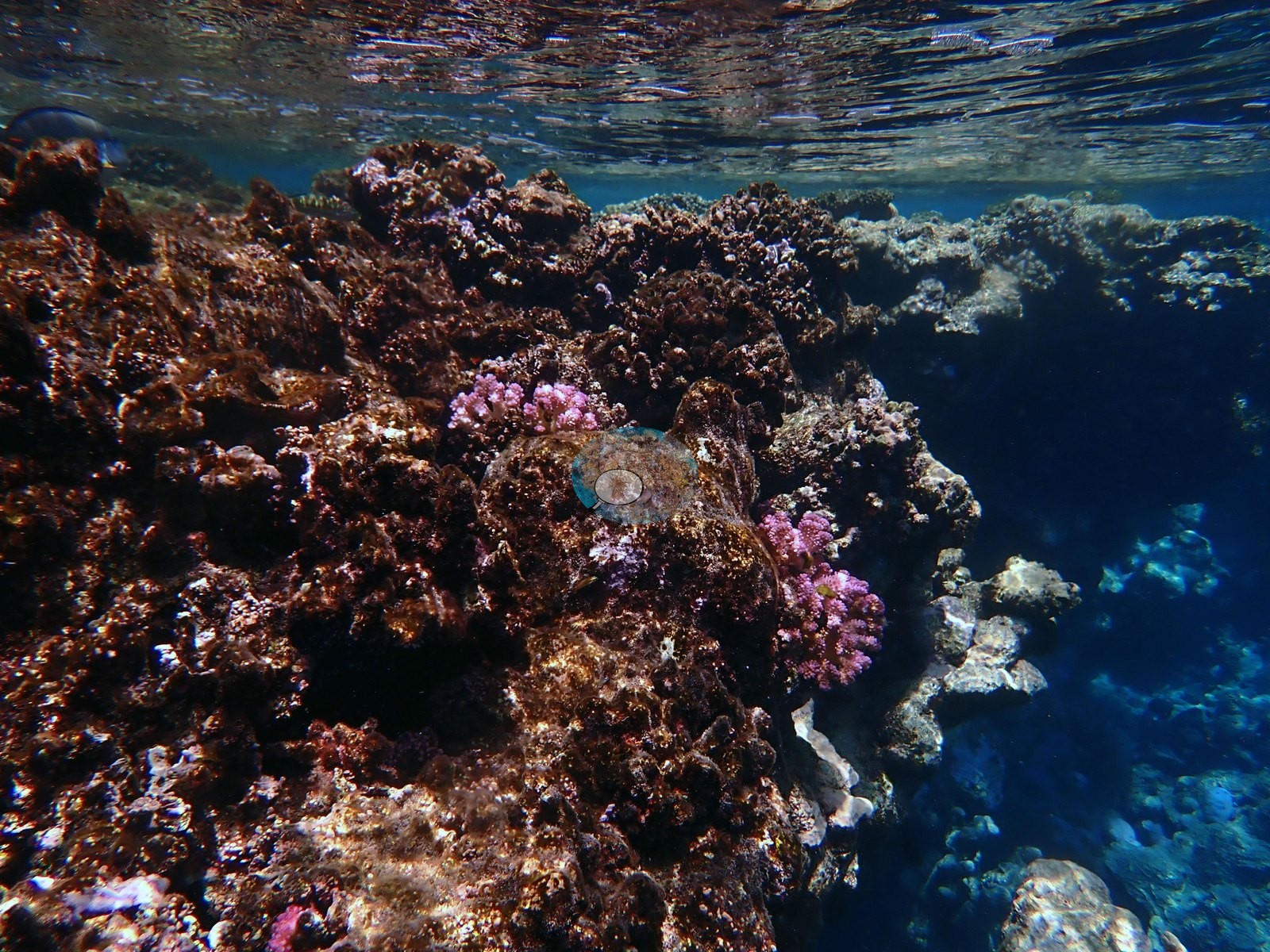
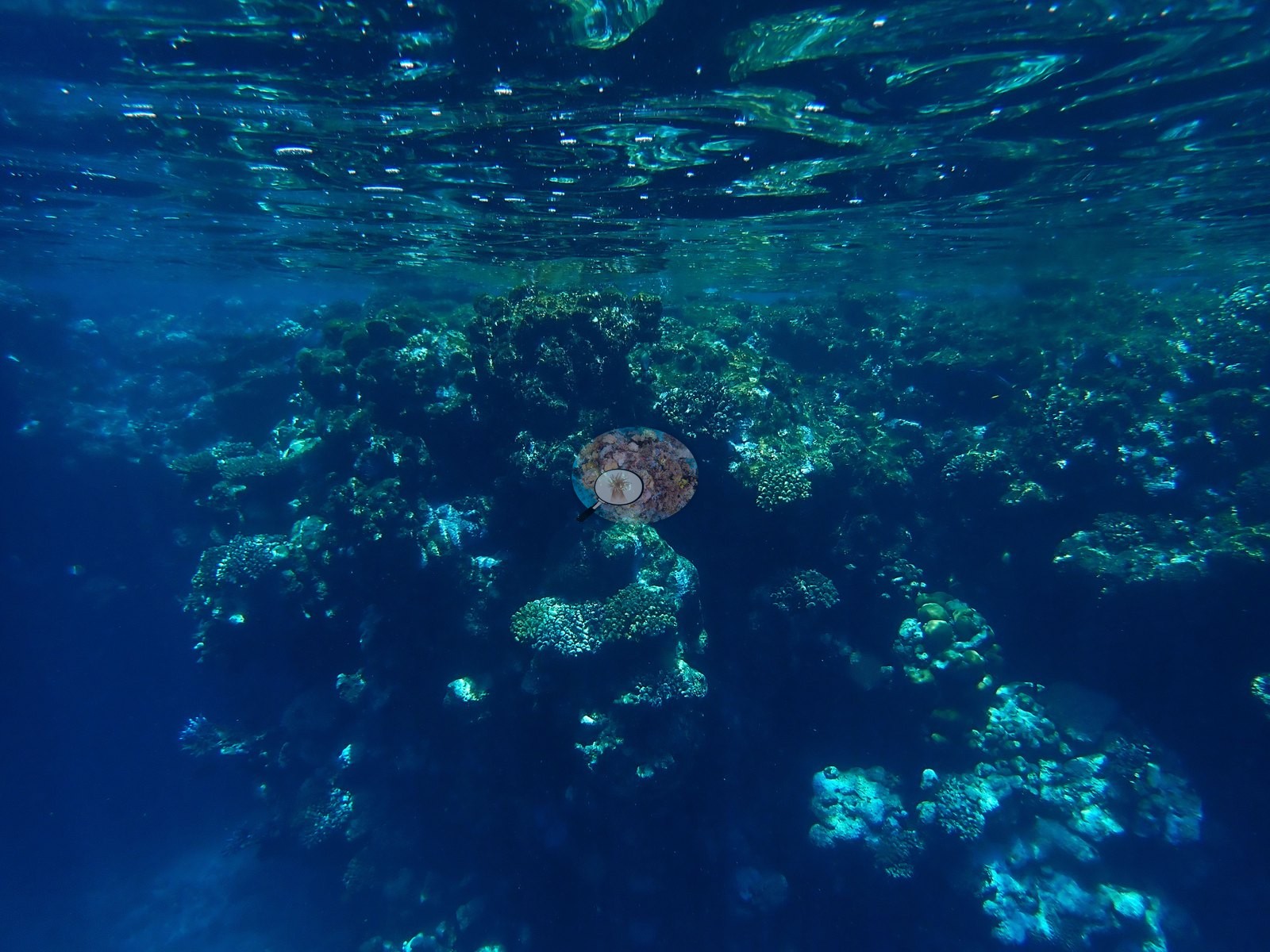
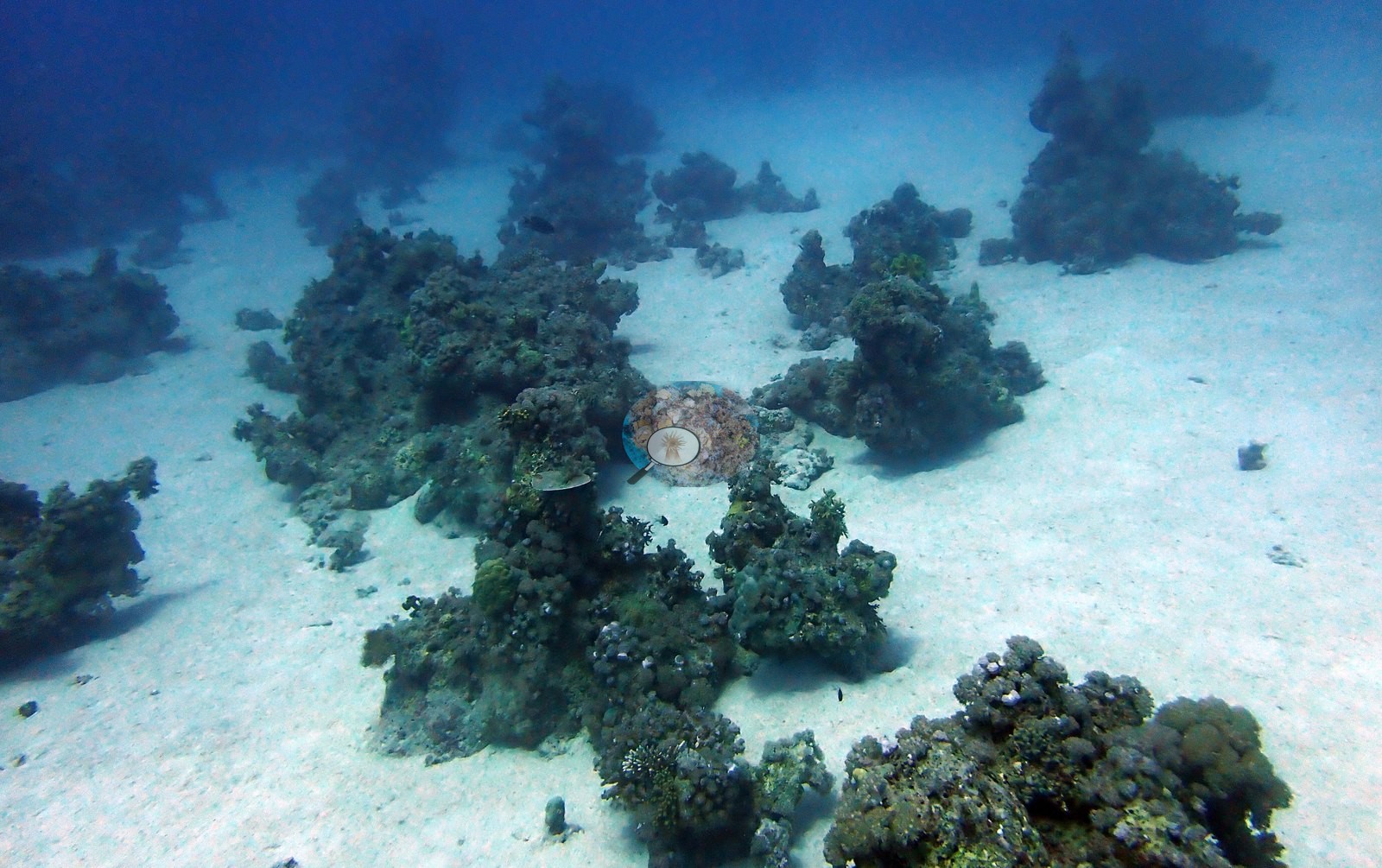
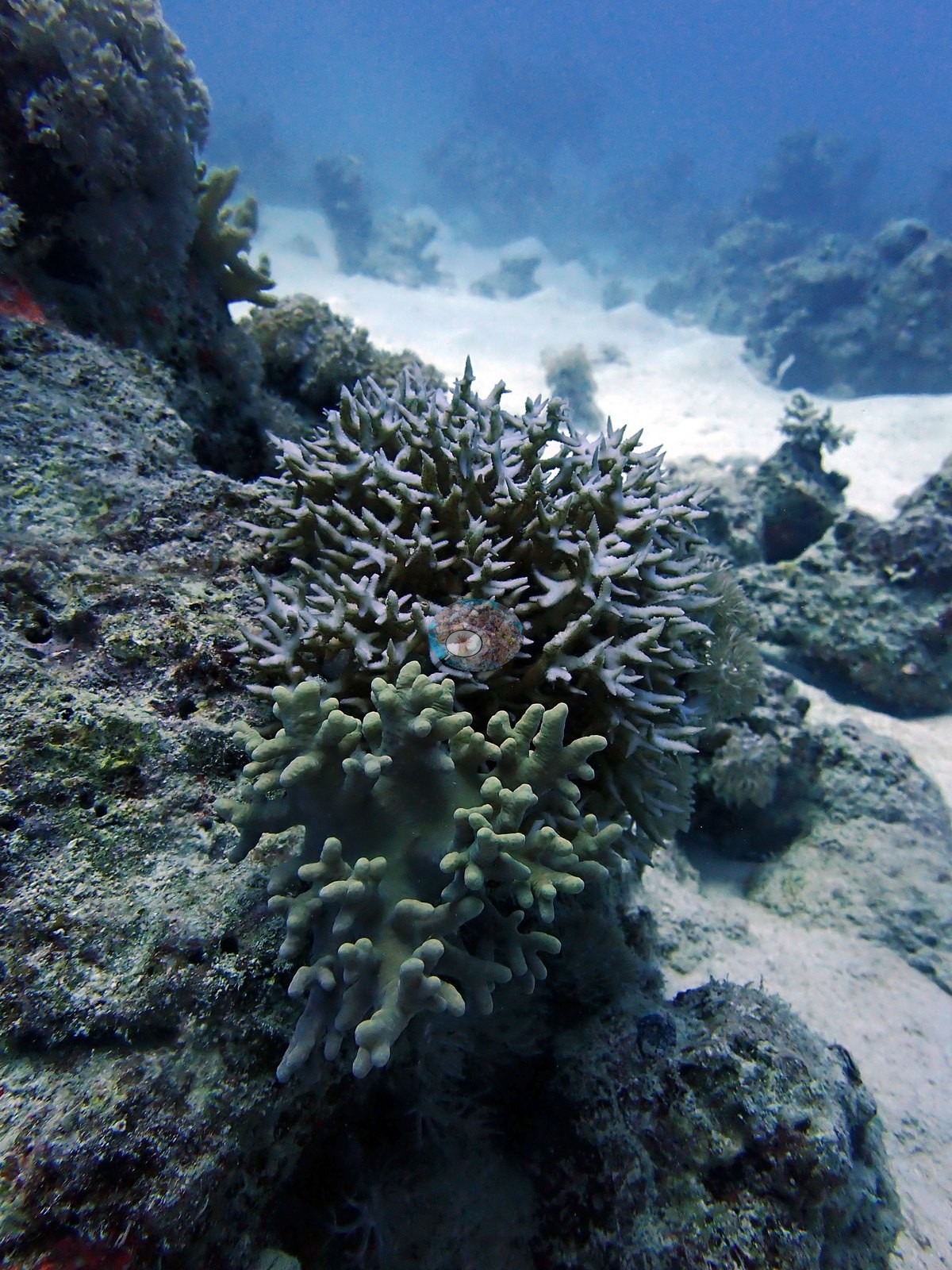
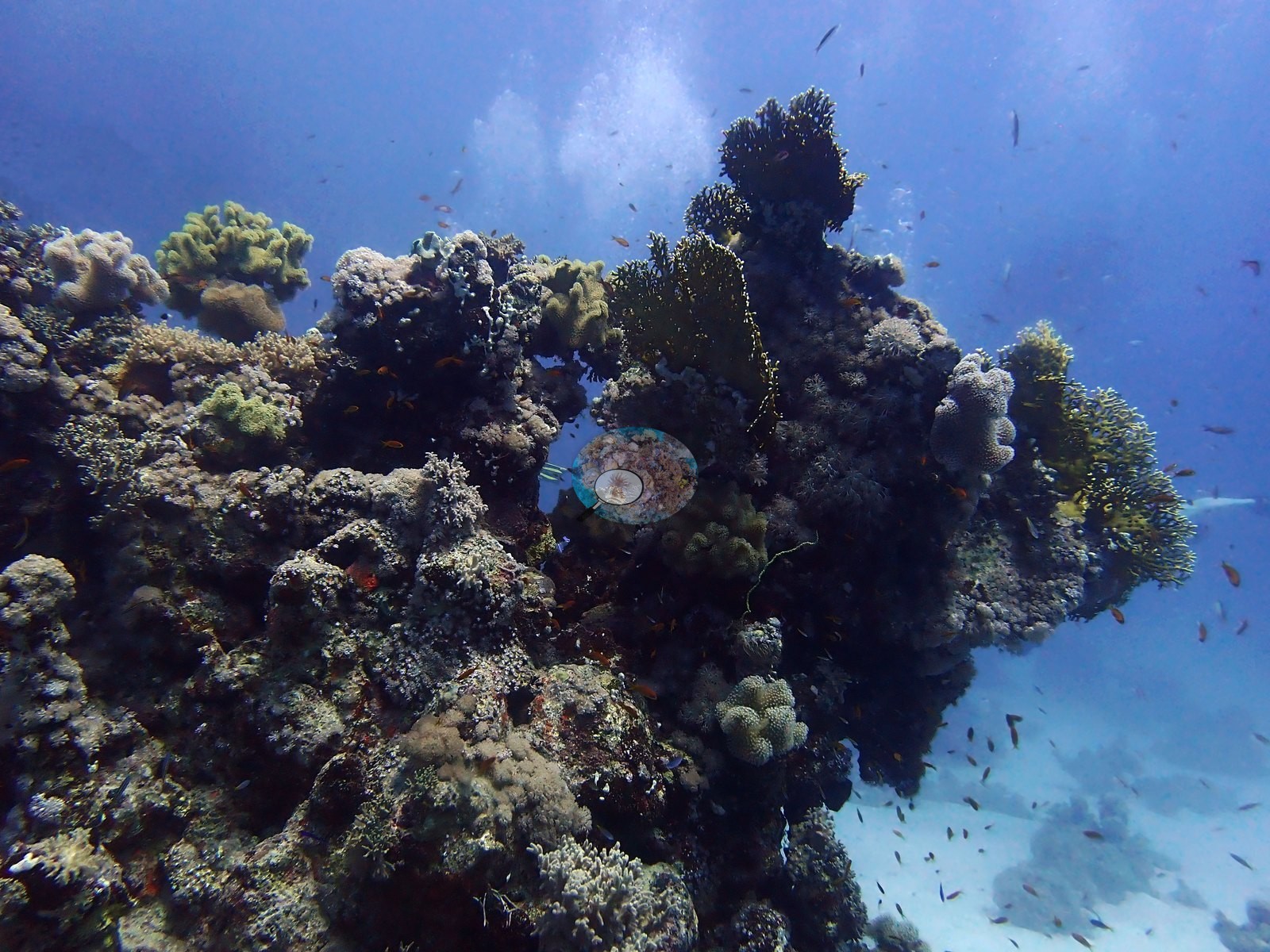
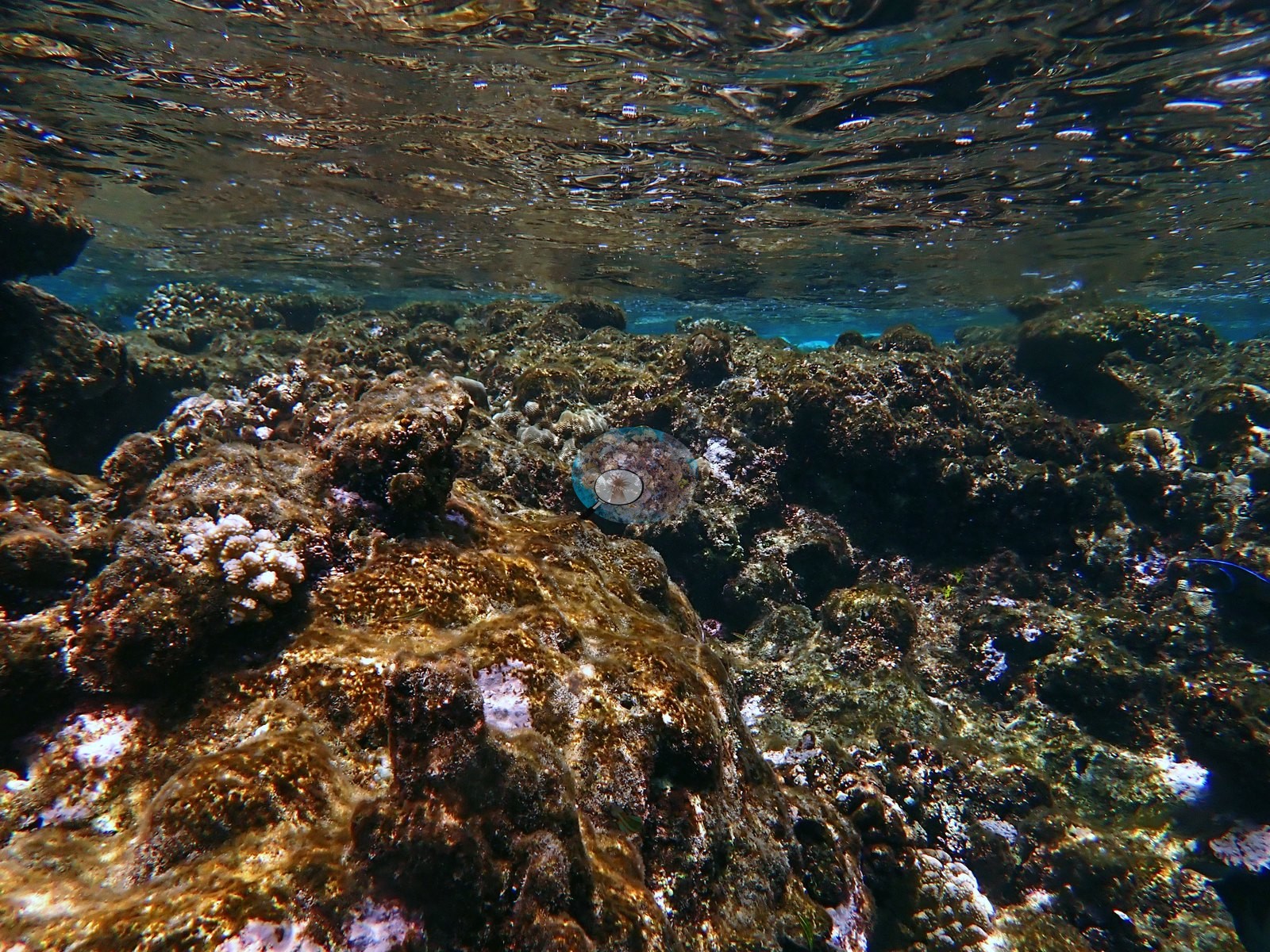
The site has three distinct zones and the frames move between them. A shallow reef flat sits a meter or two under a mirror-calm surface: dark, densely rugose framework with pocilloporids, small Acropora, and encrusting growth packed over it, photographed against the underside of the water (e.g., Image 1, Image 2).
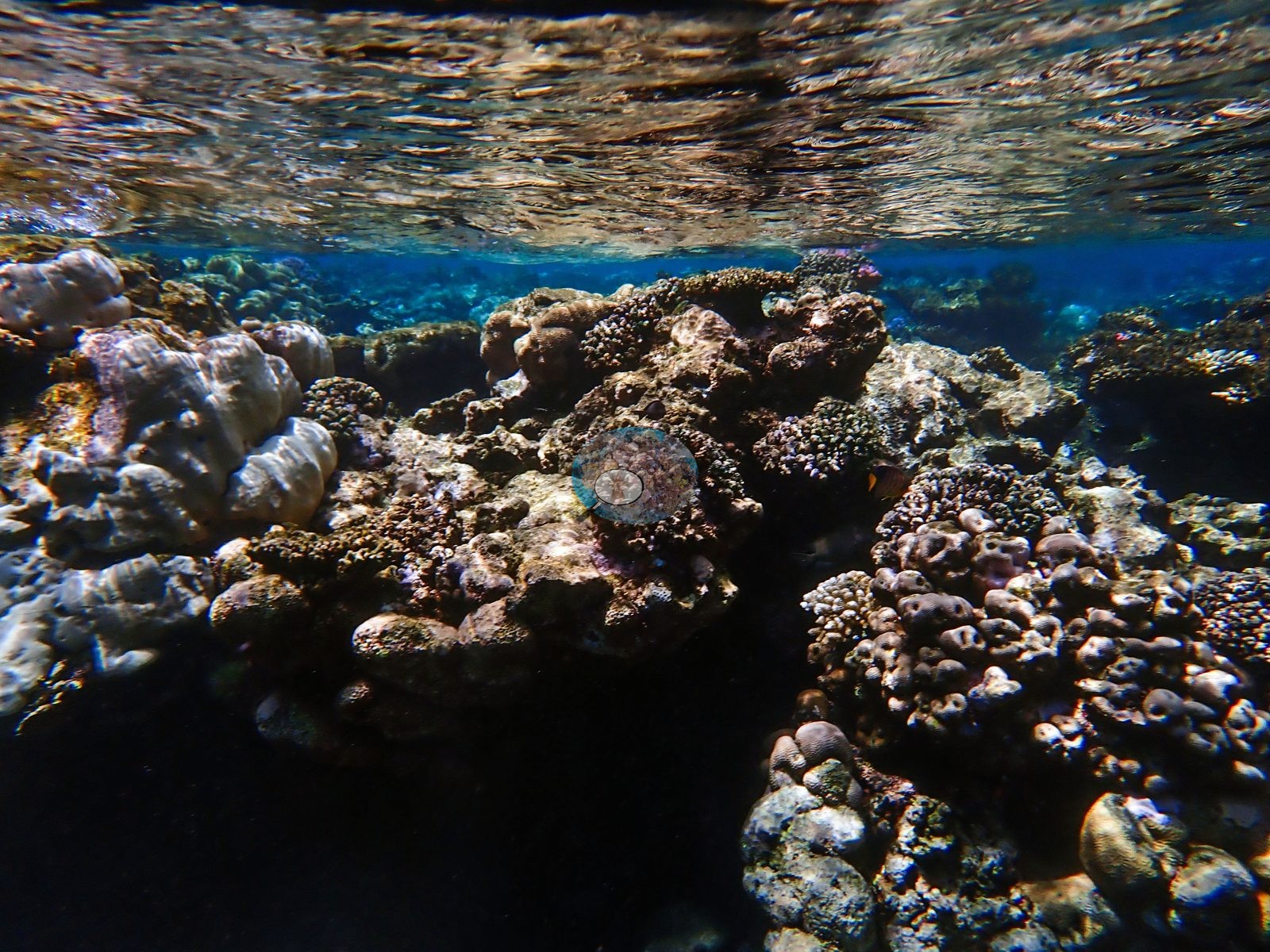
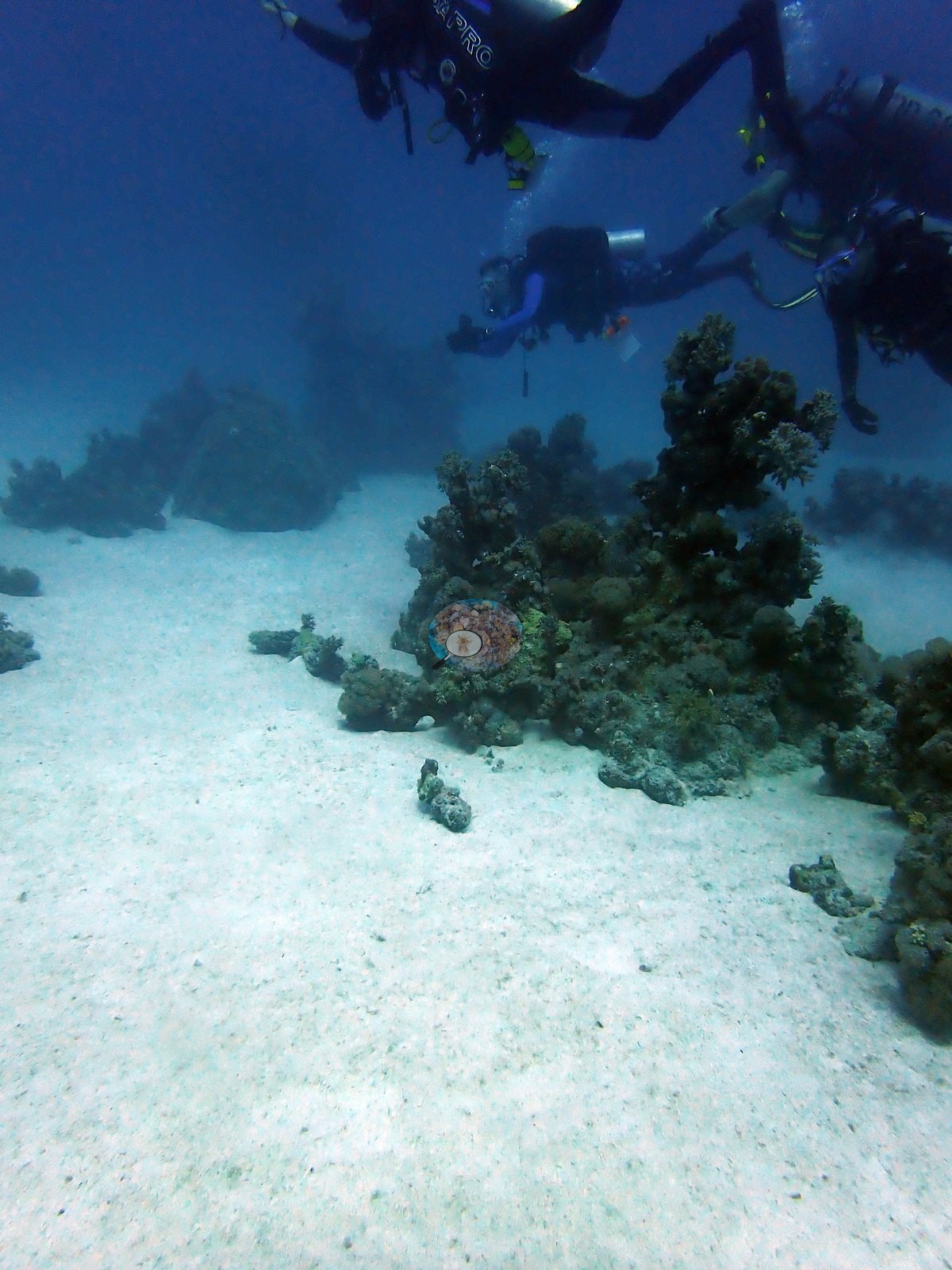
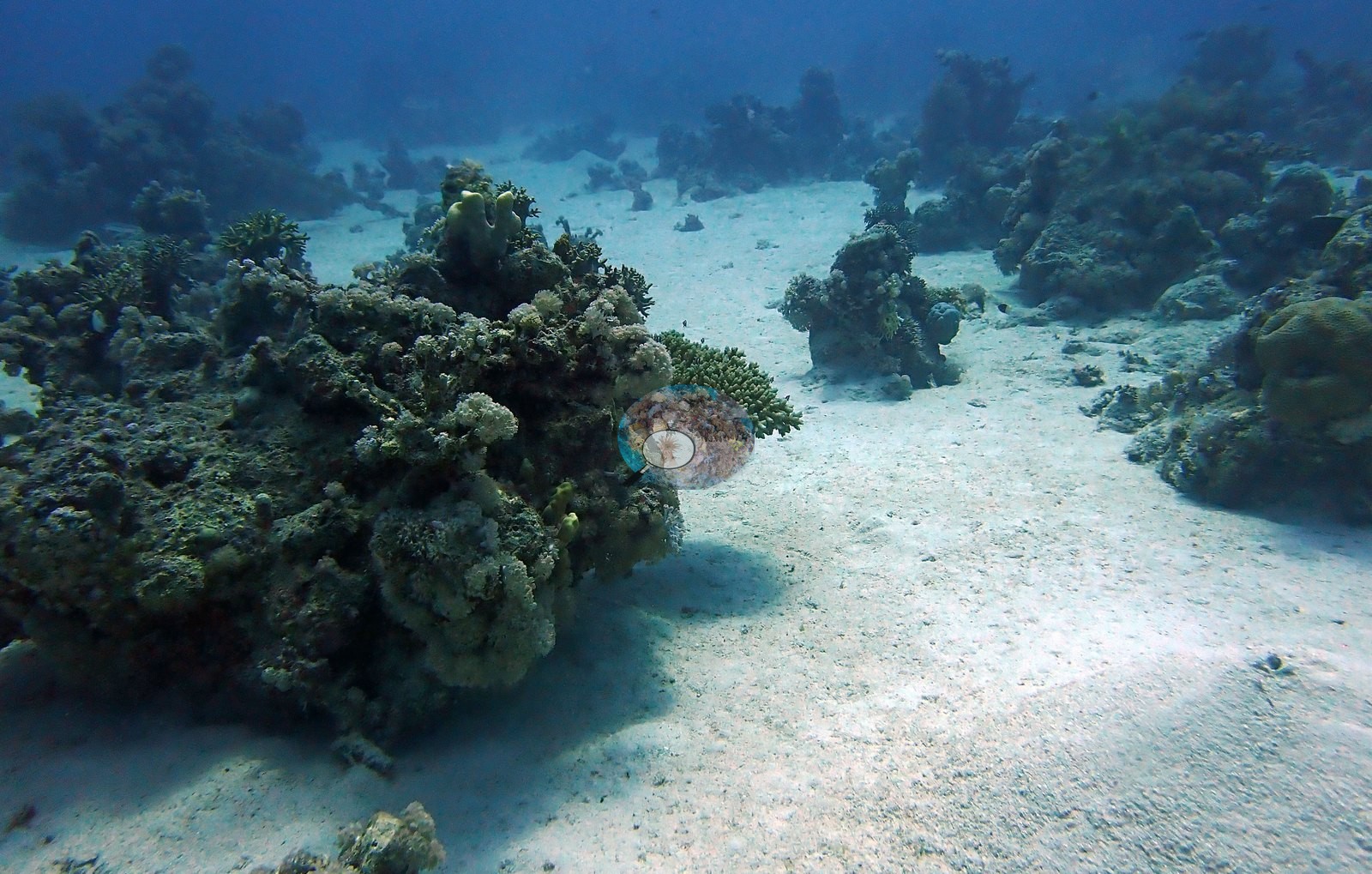
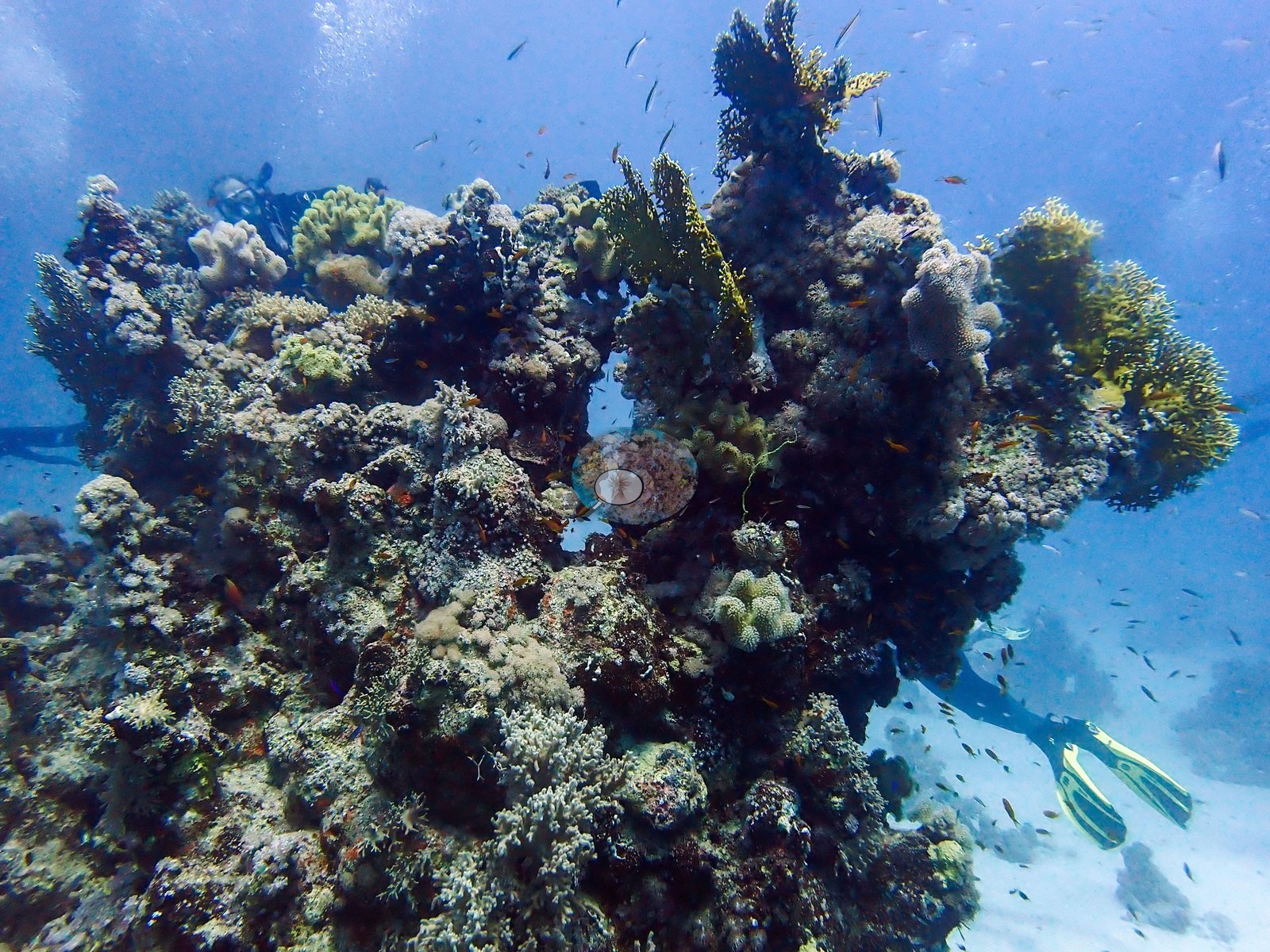
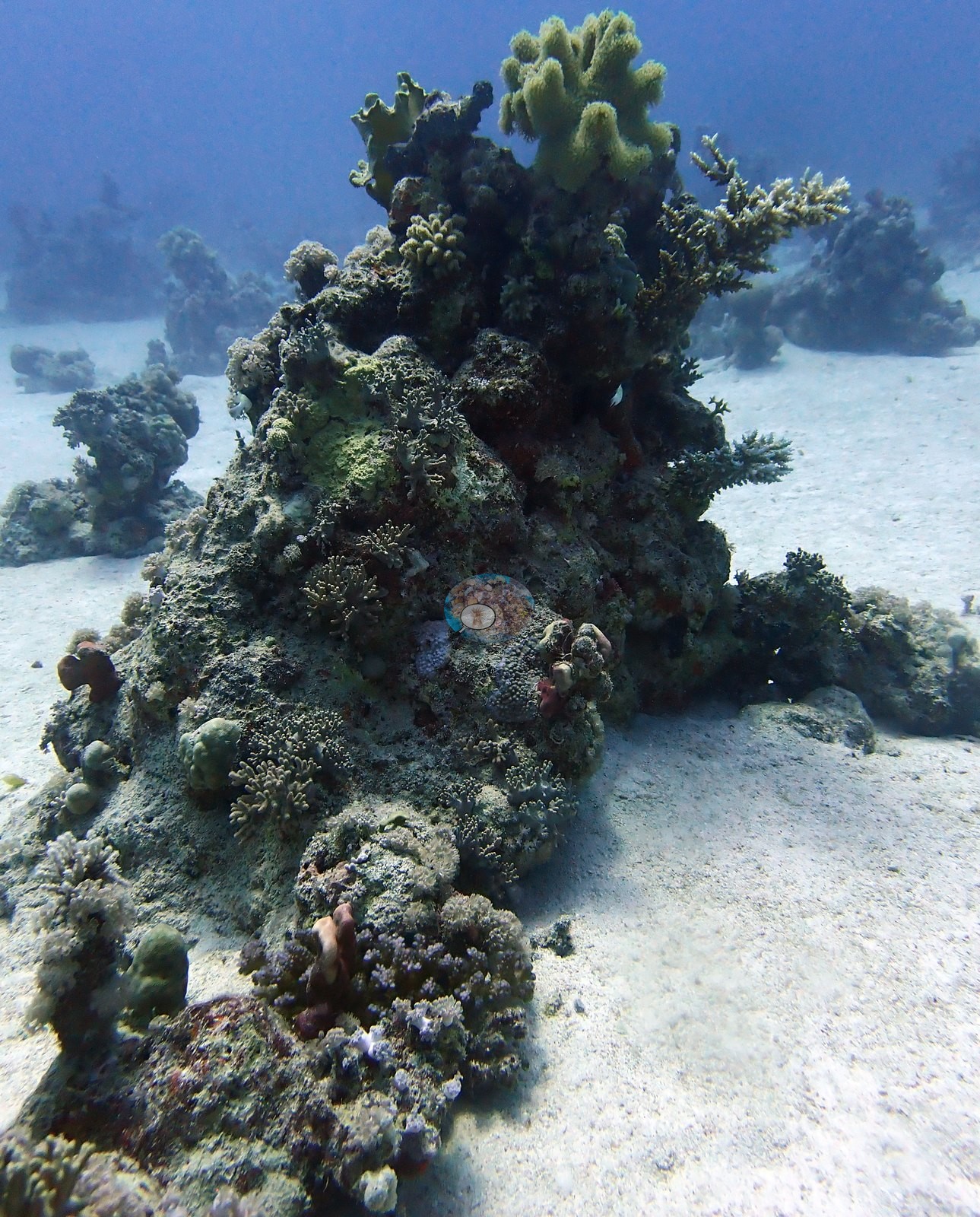
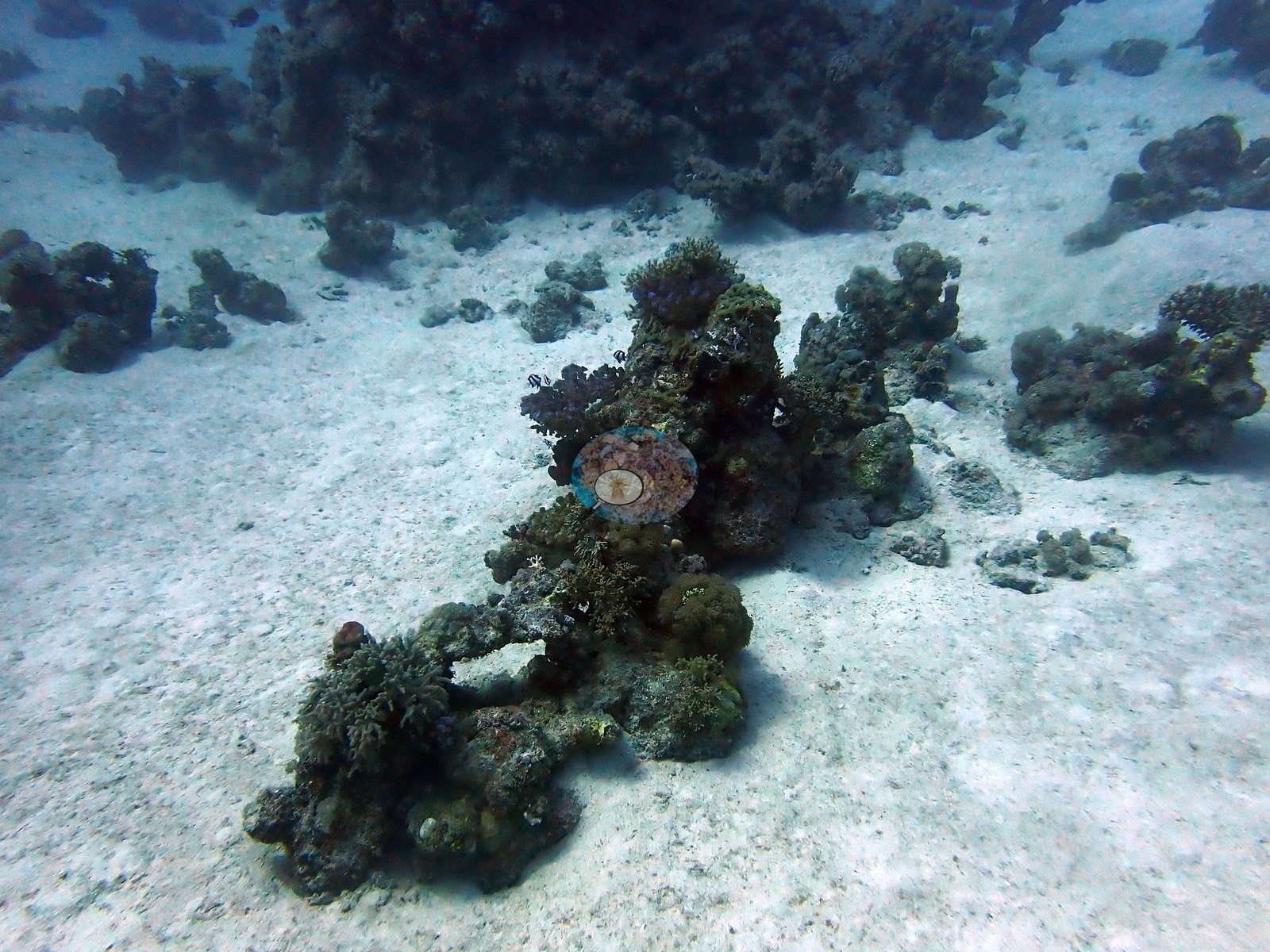
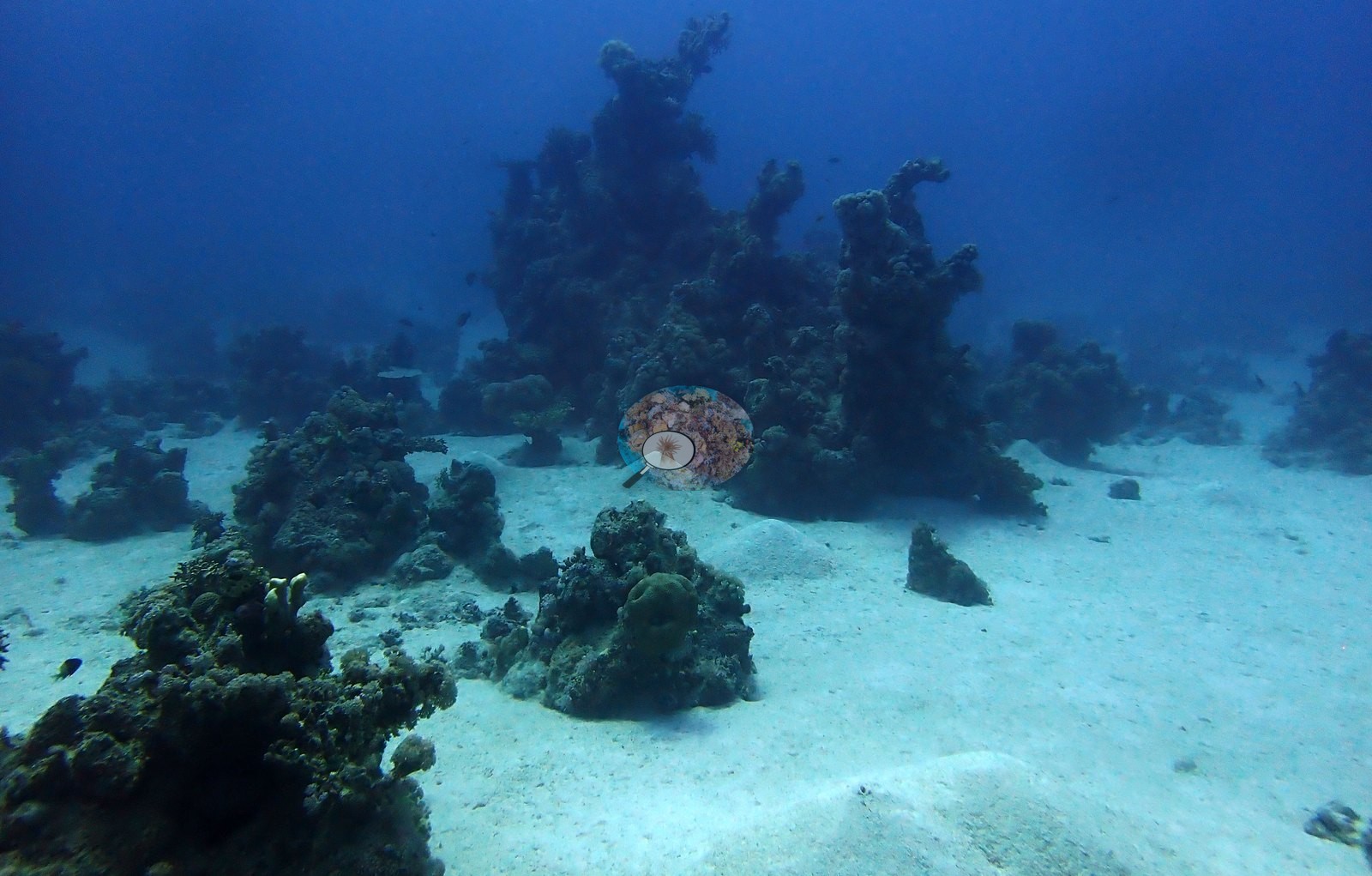
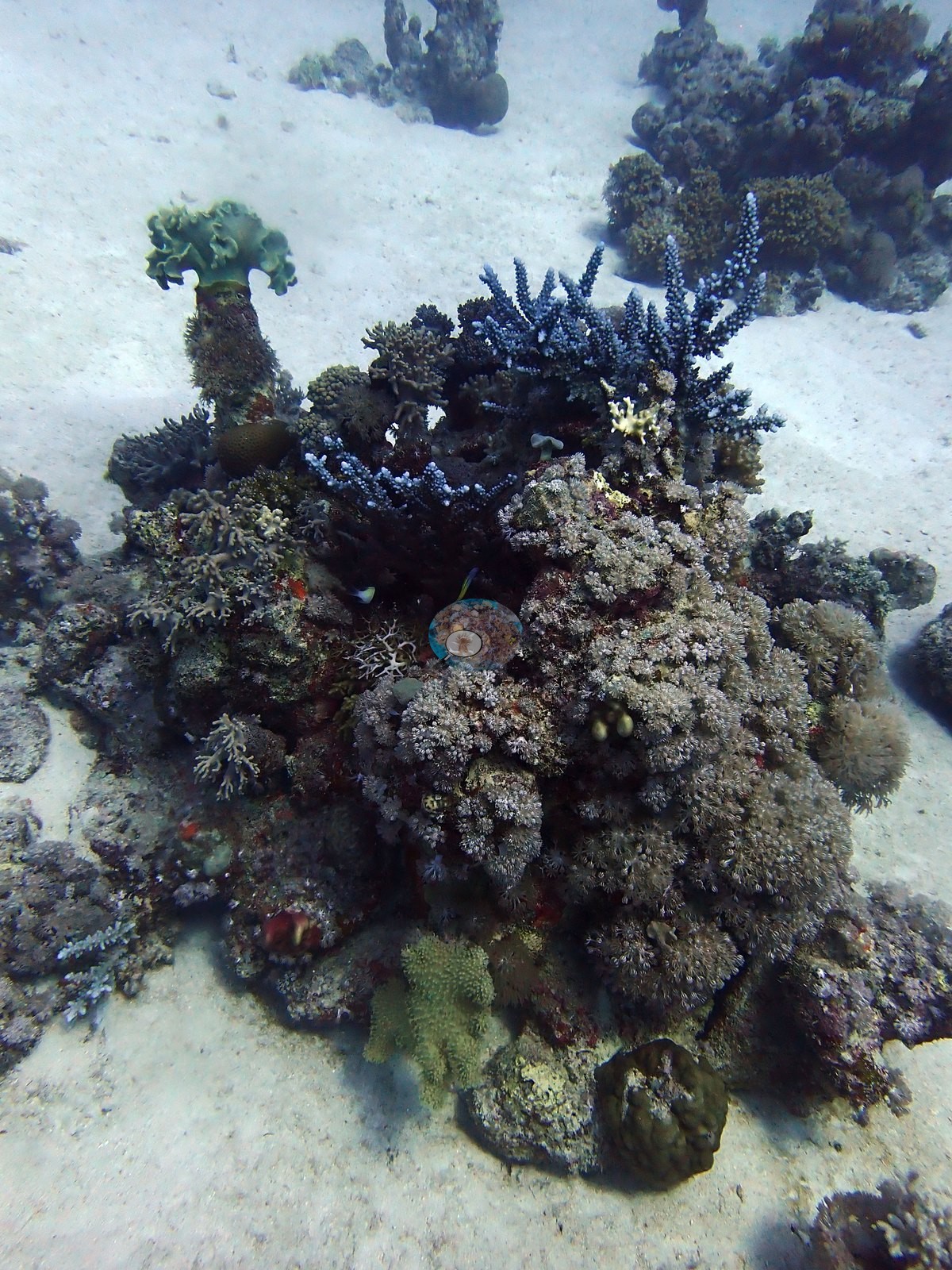
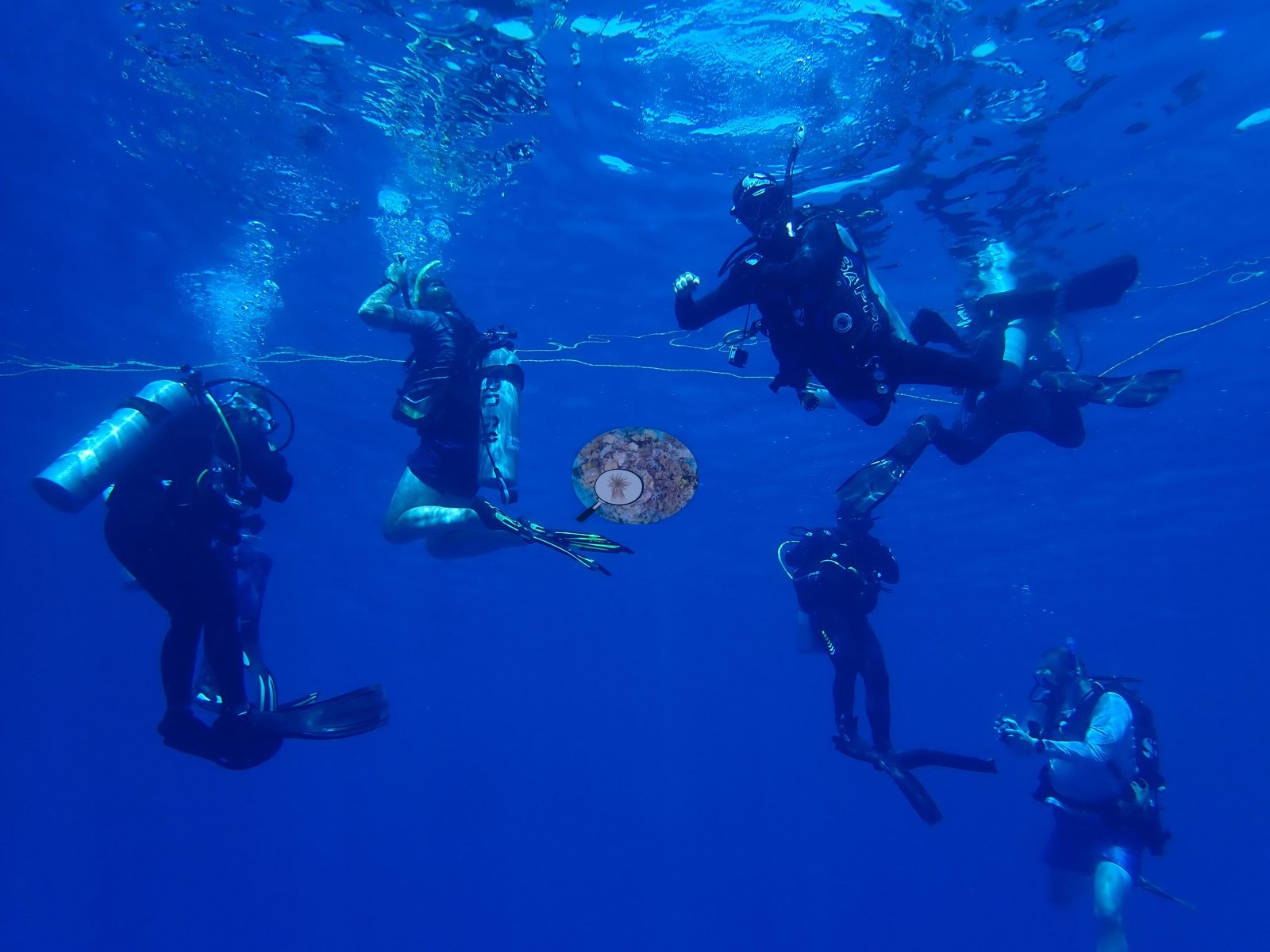
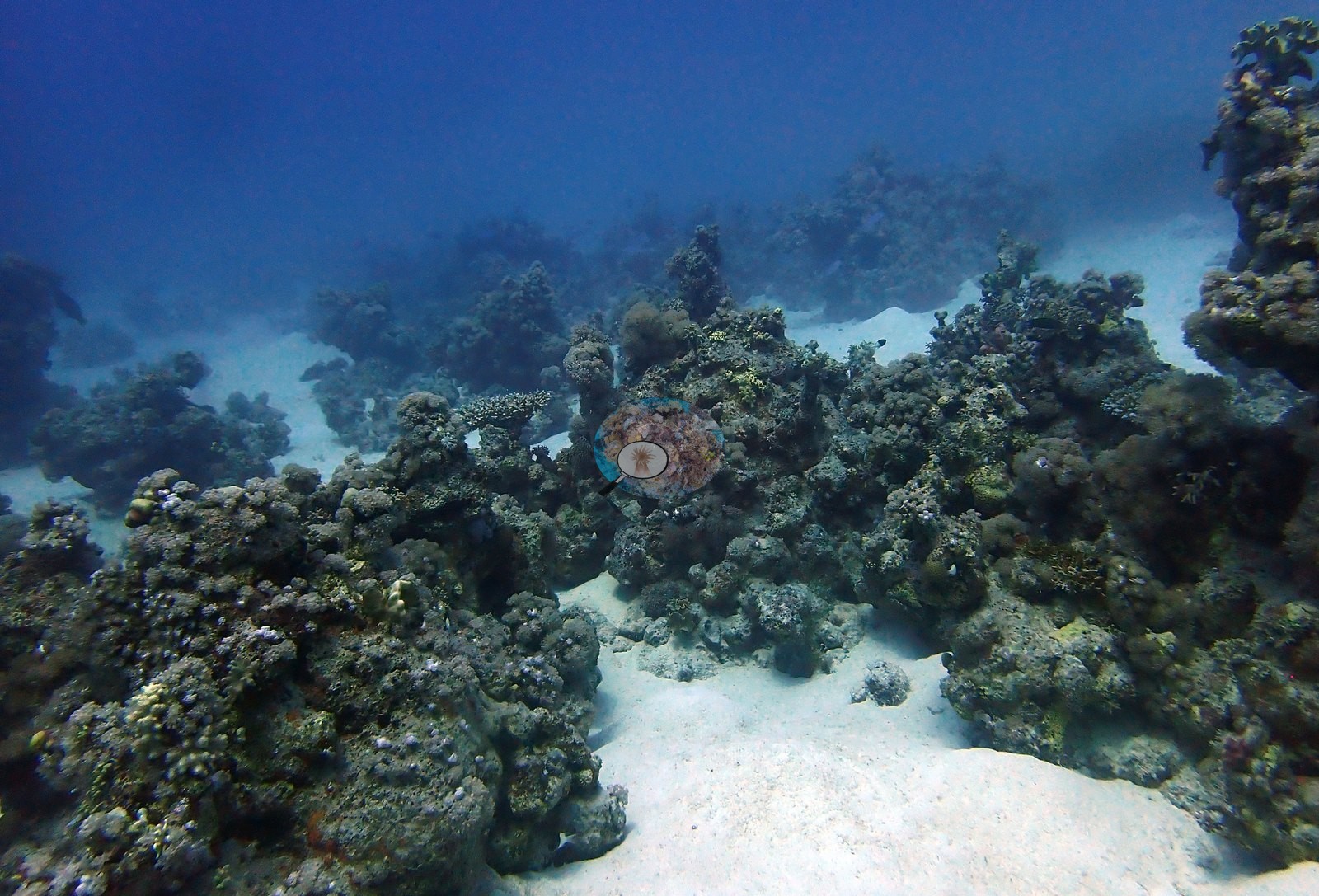
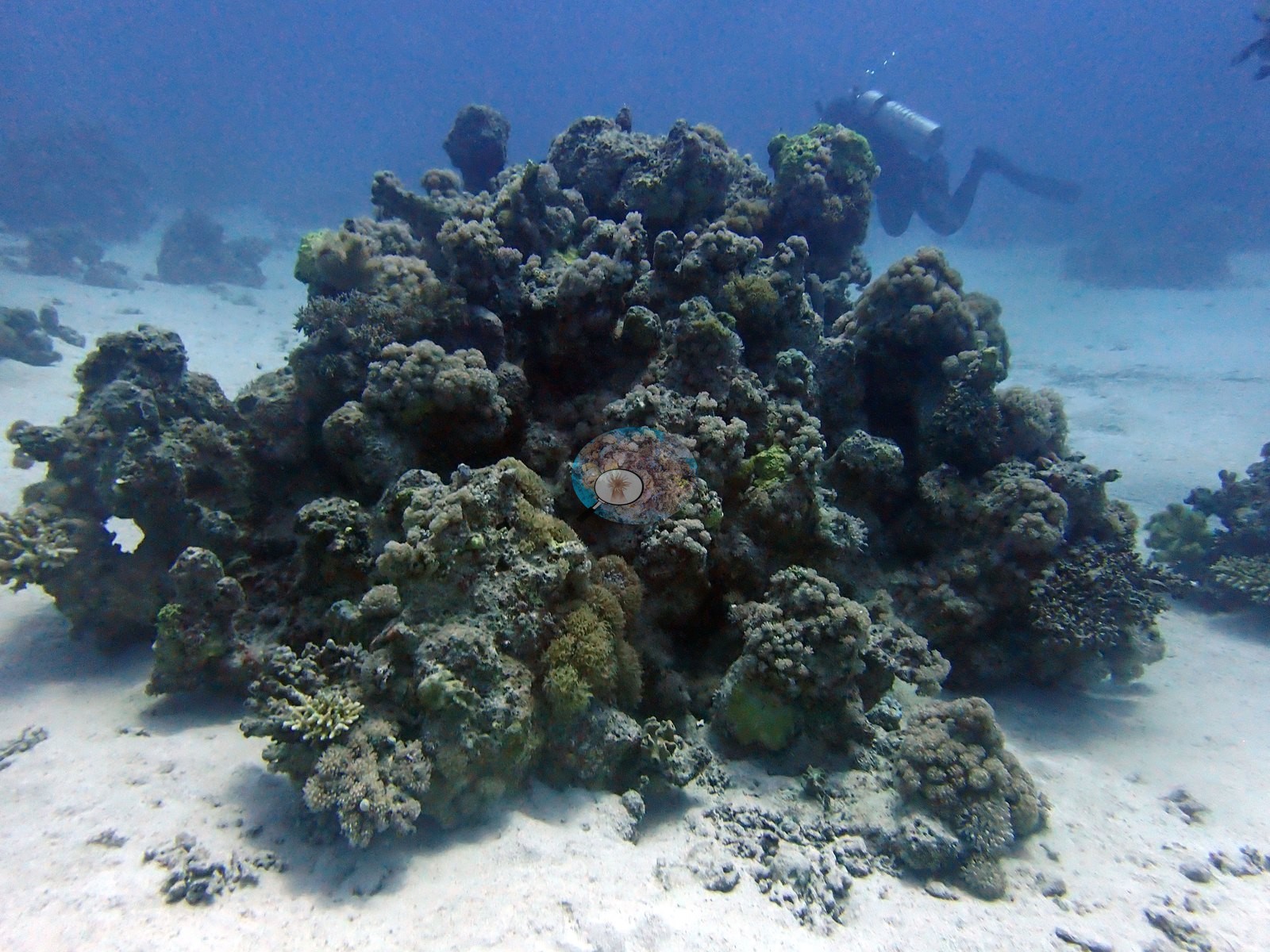
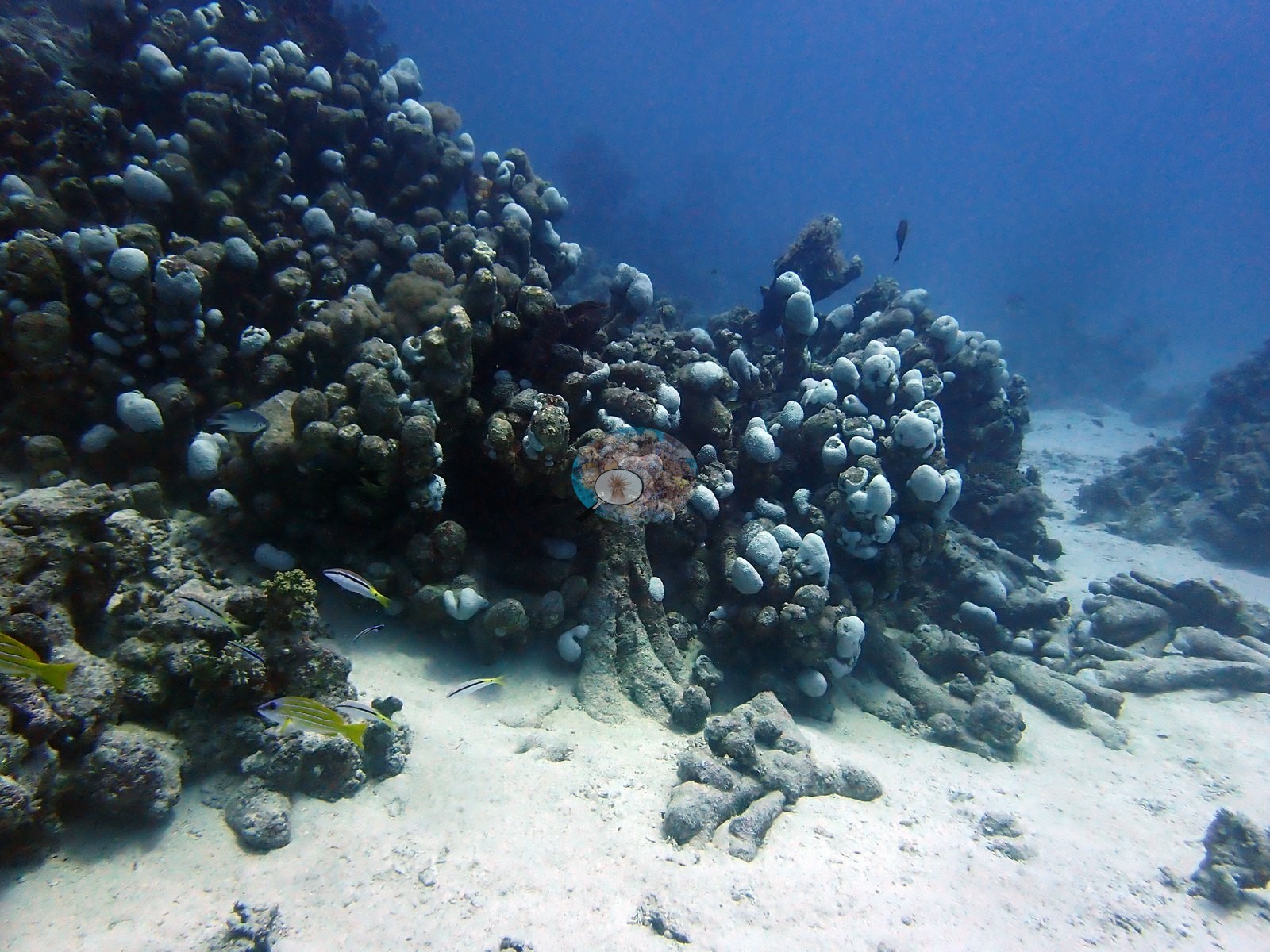
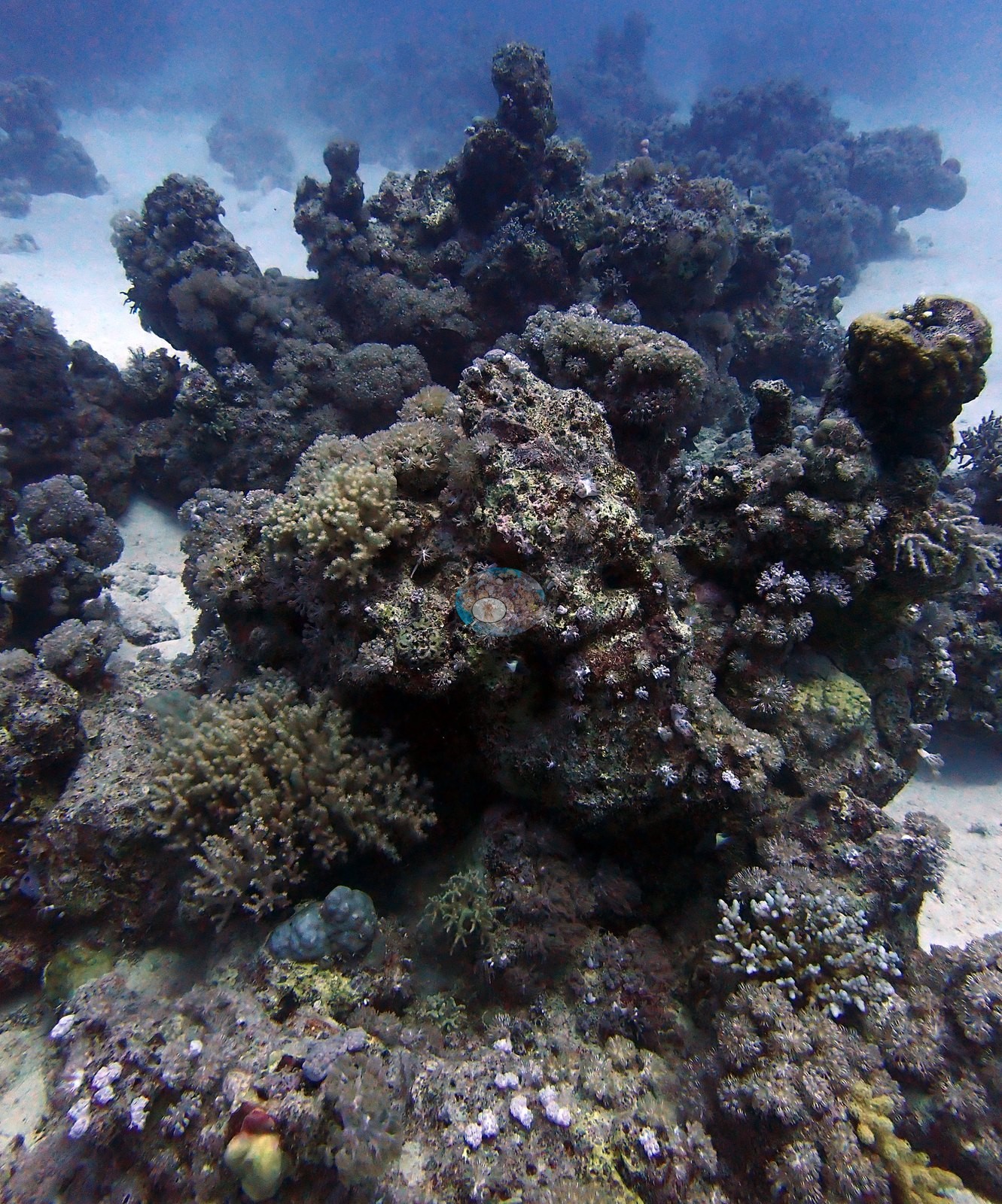
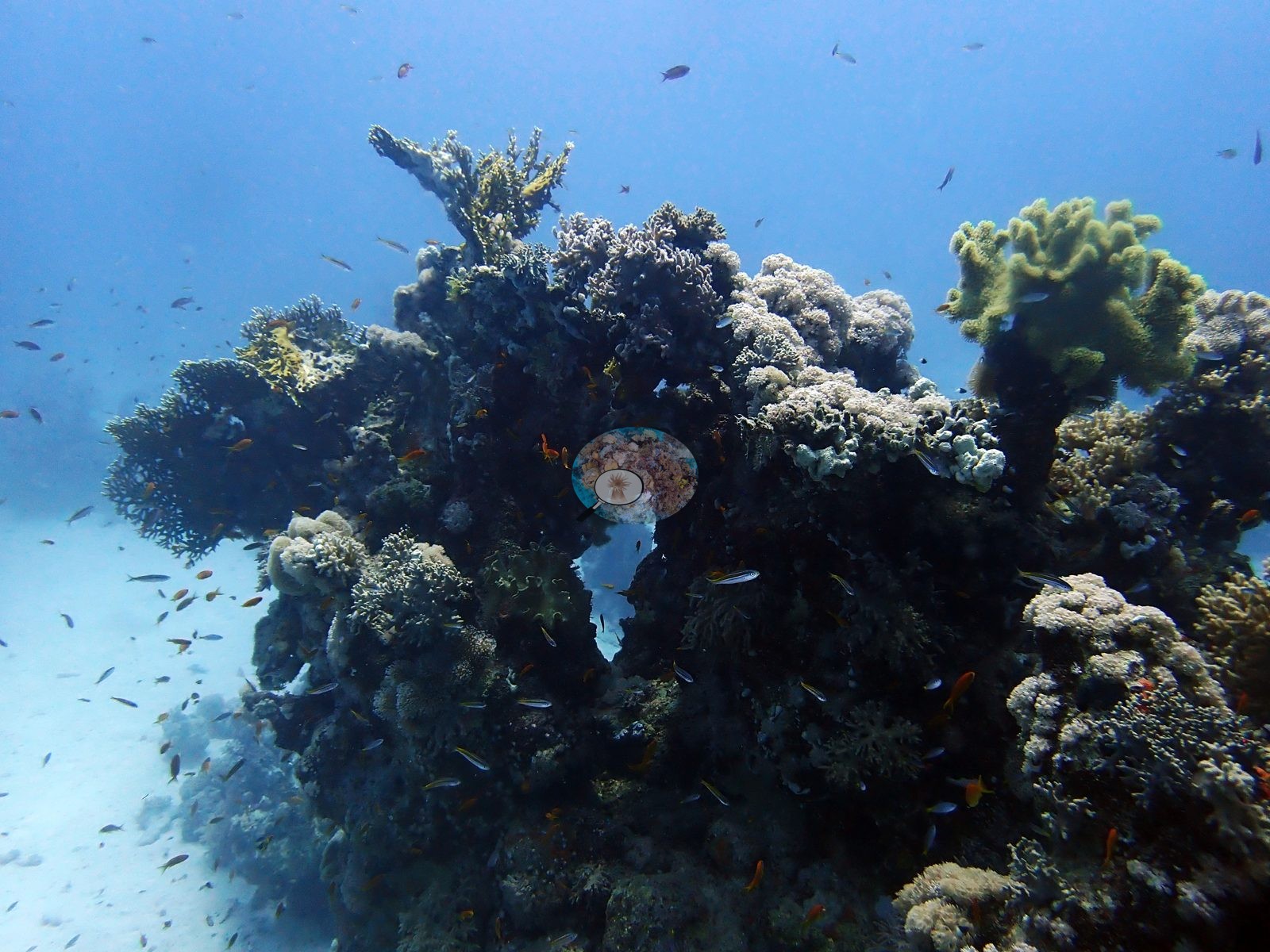
A wide white sand plain below it carries widely spaced, isolated coral bommies with tens of meters of open sand between them — those frames are close to empty, and they are what pulls a site with a rich-looking crest down into the low teens (e.g., Image 3).
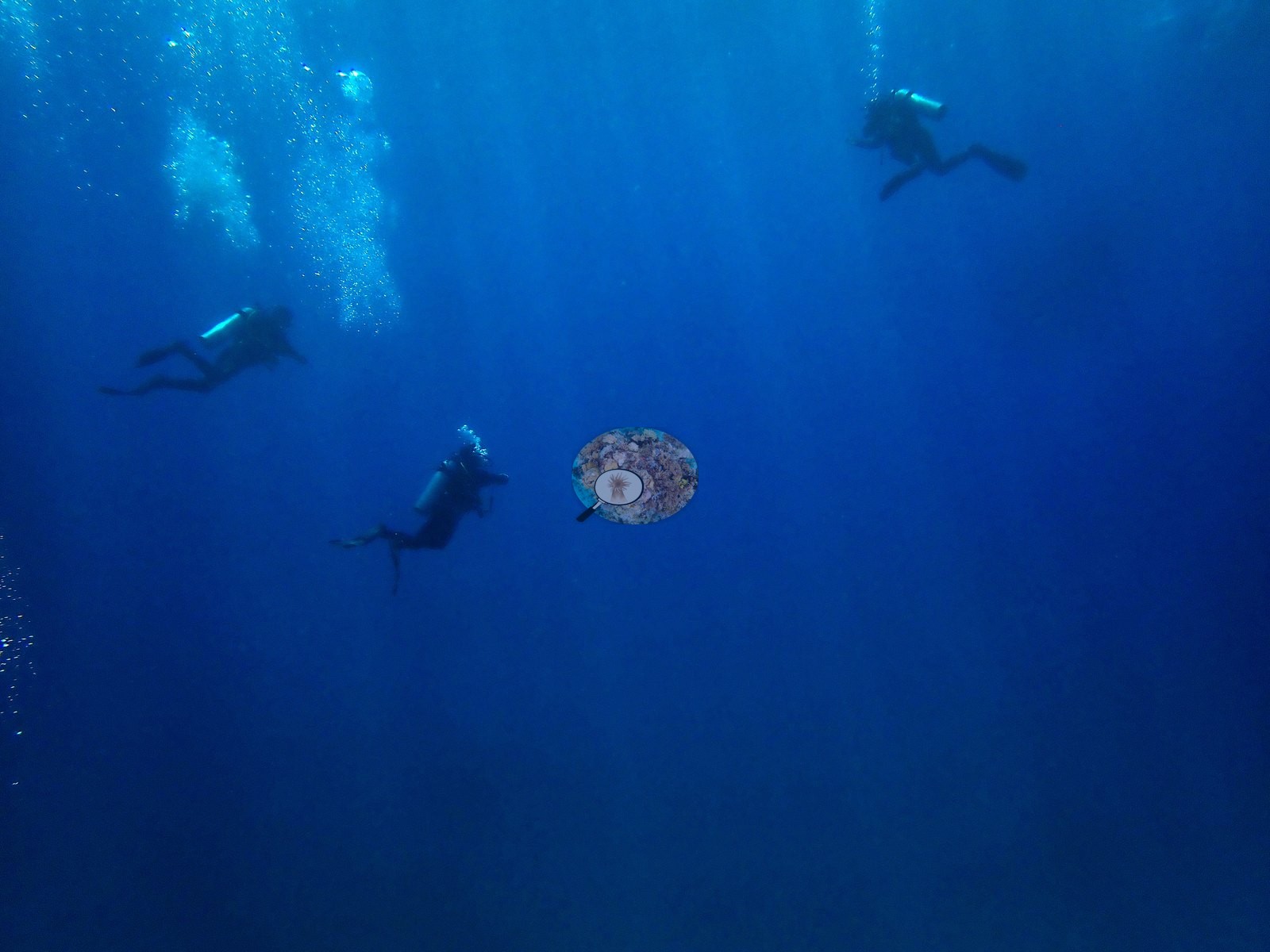
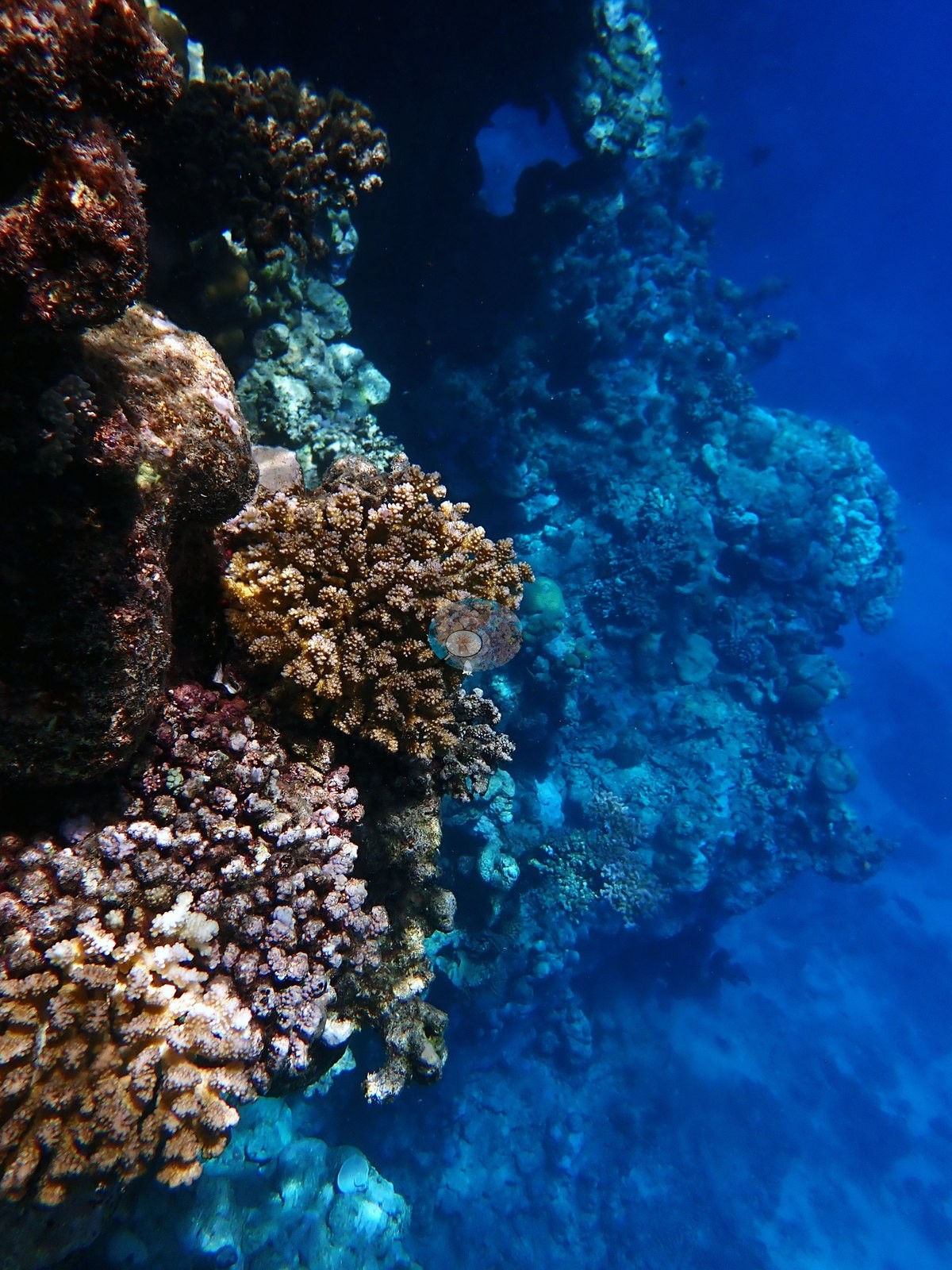
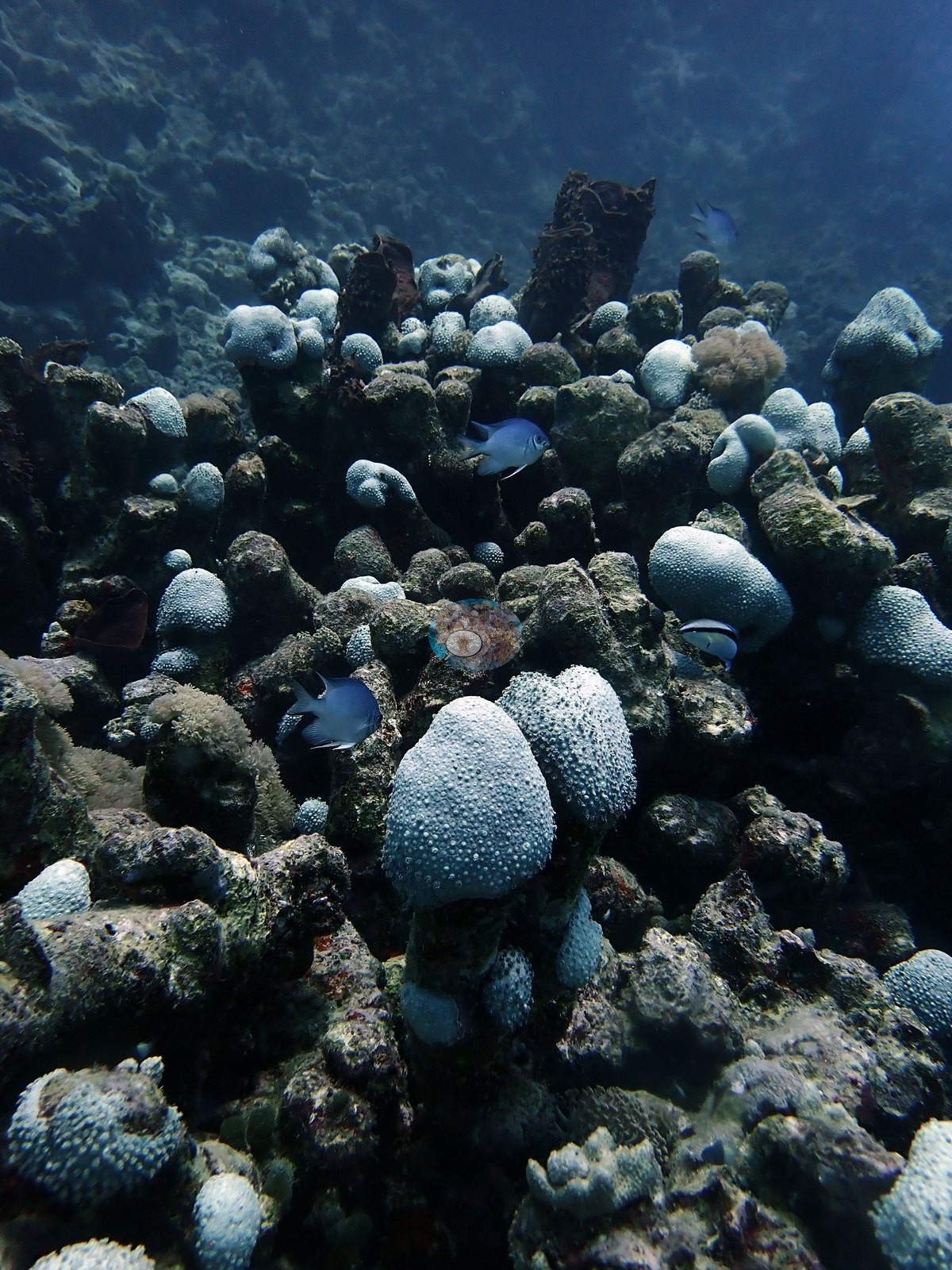
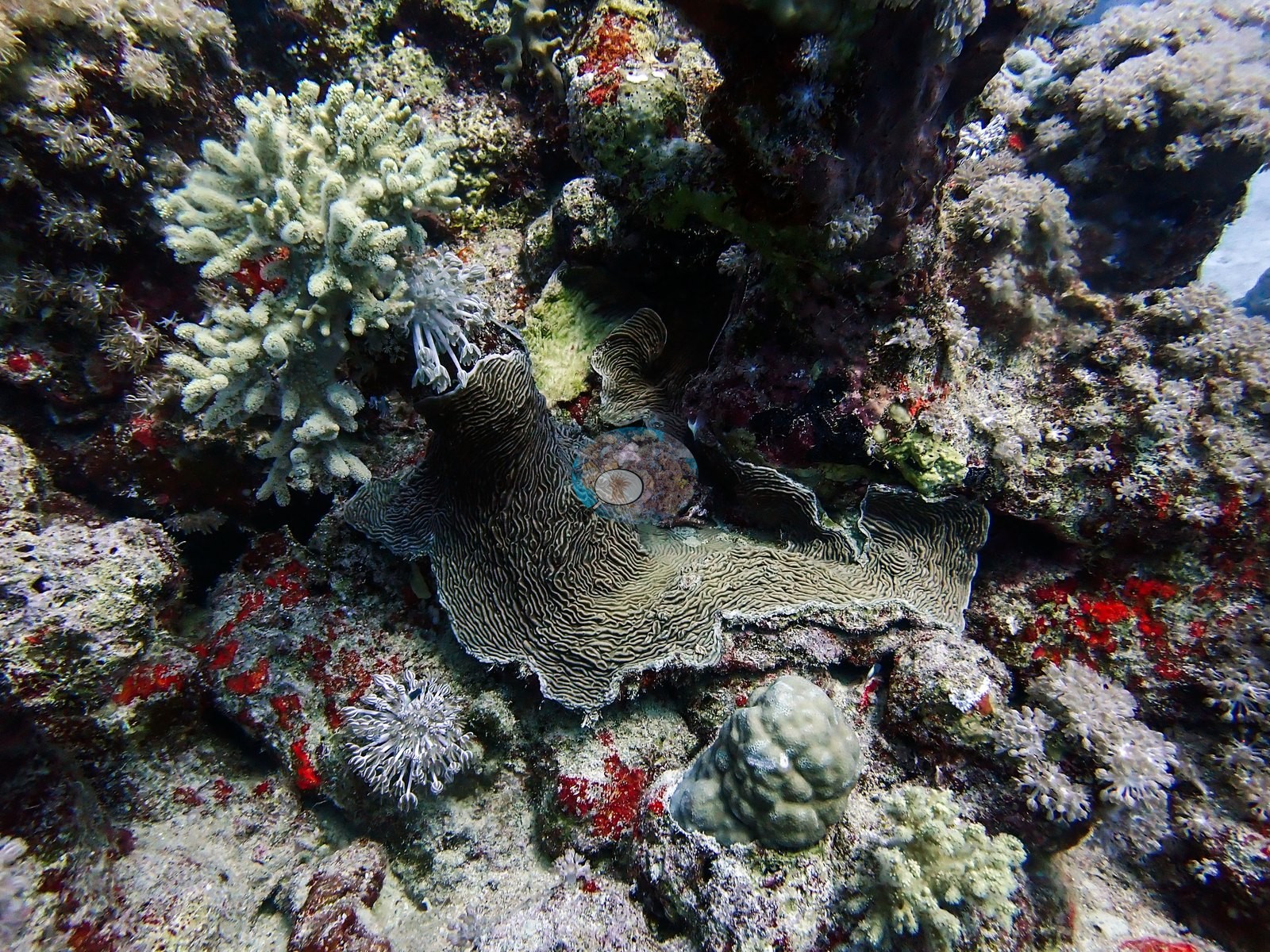
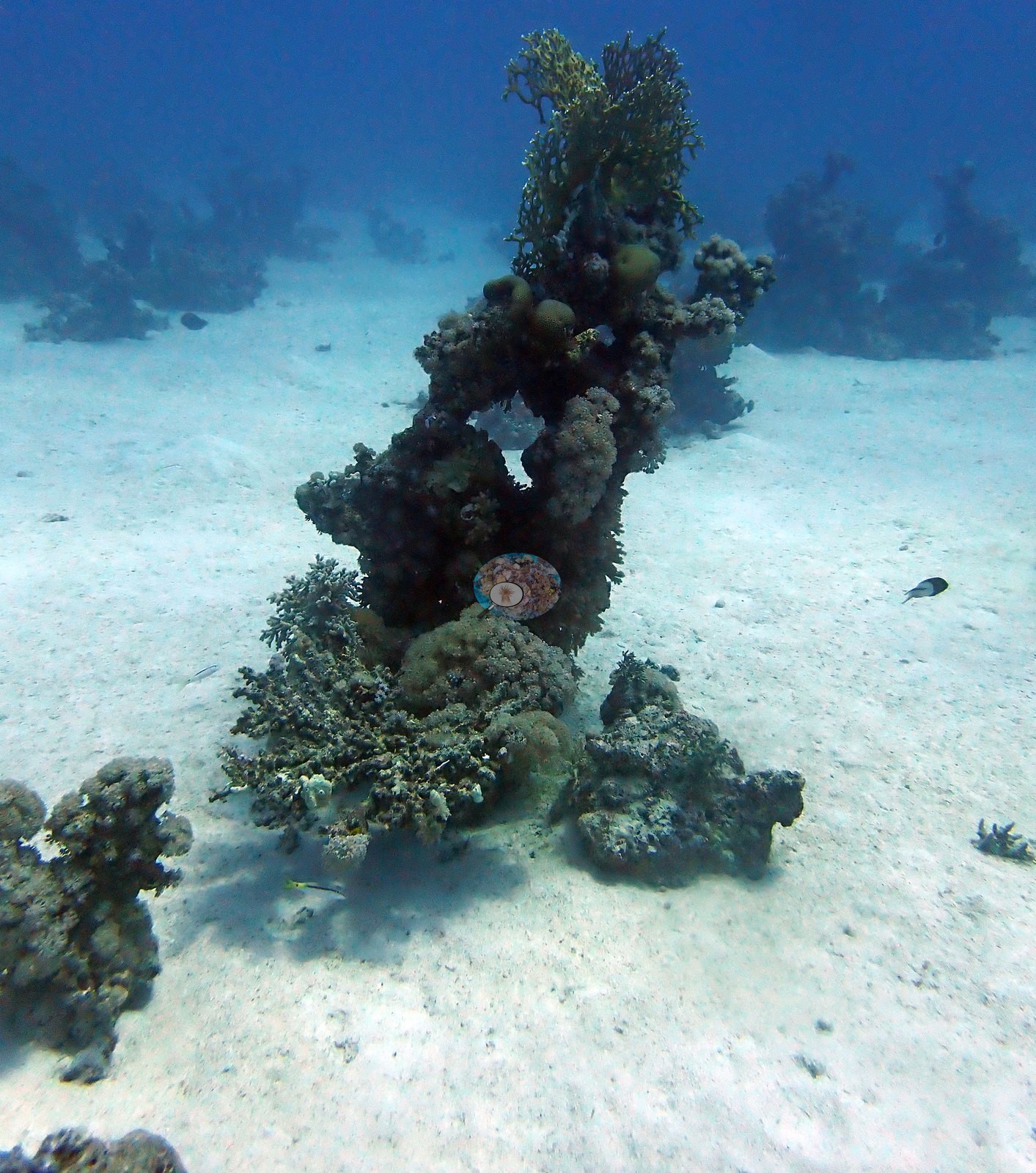
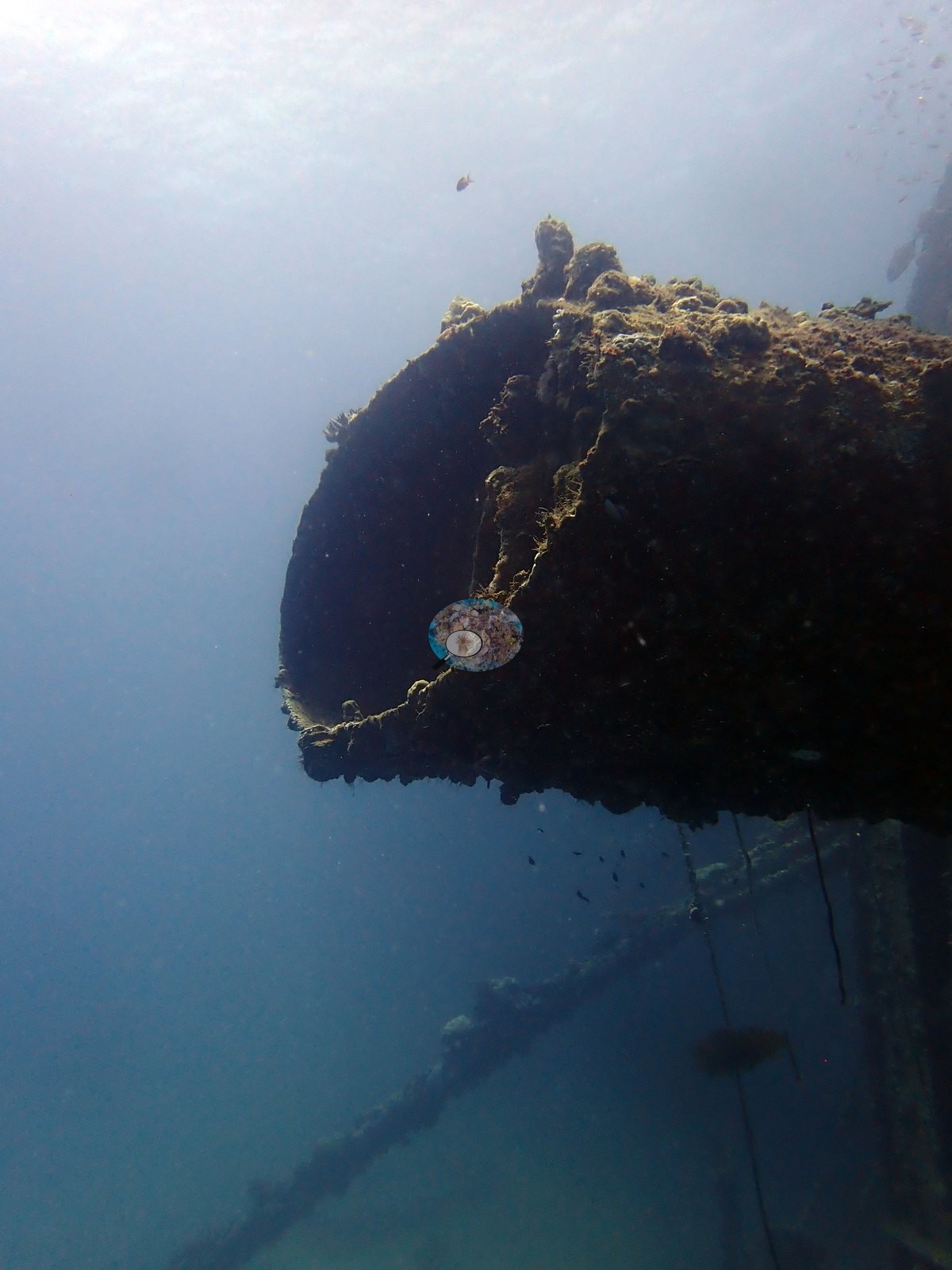
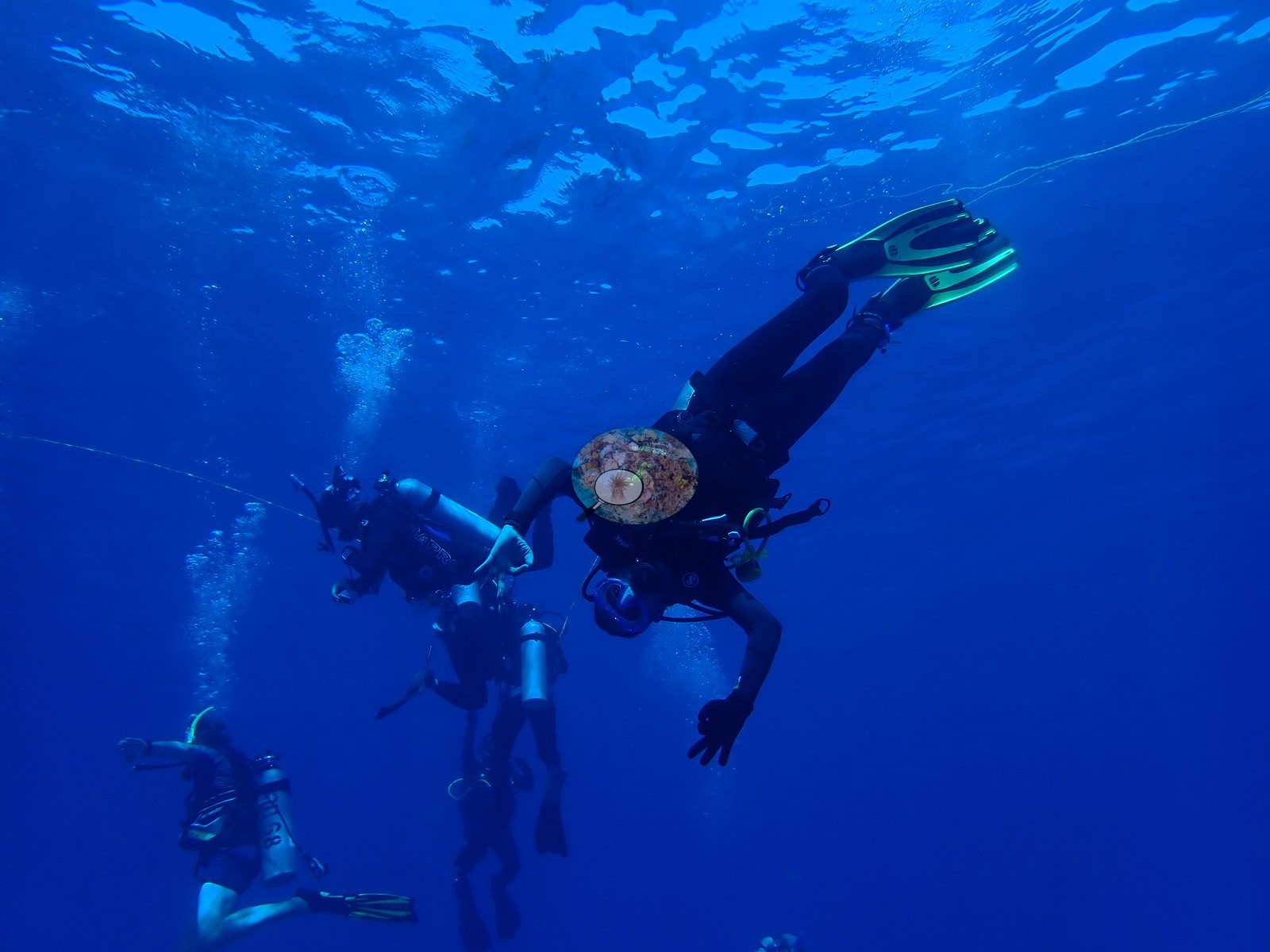
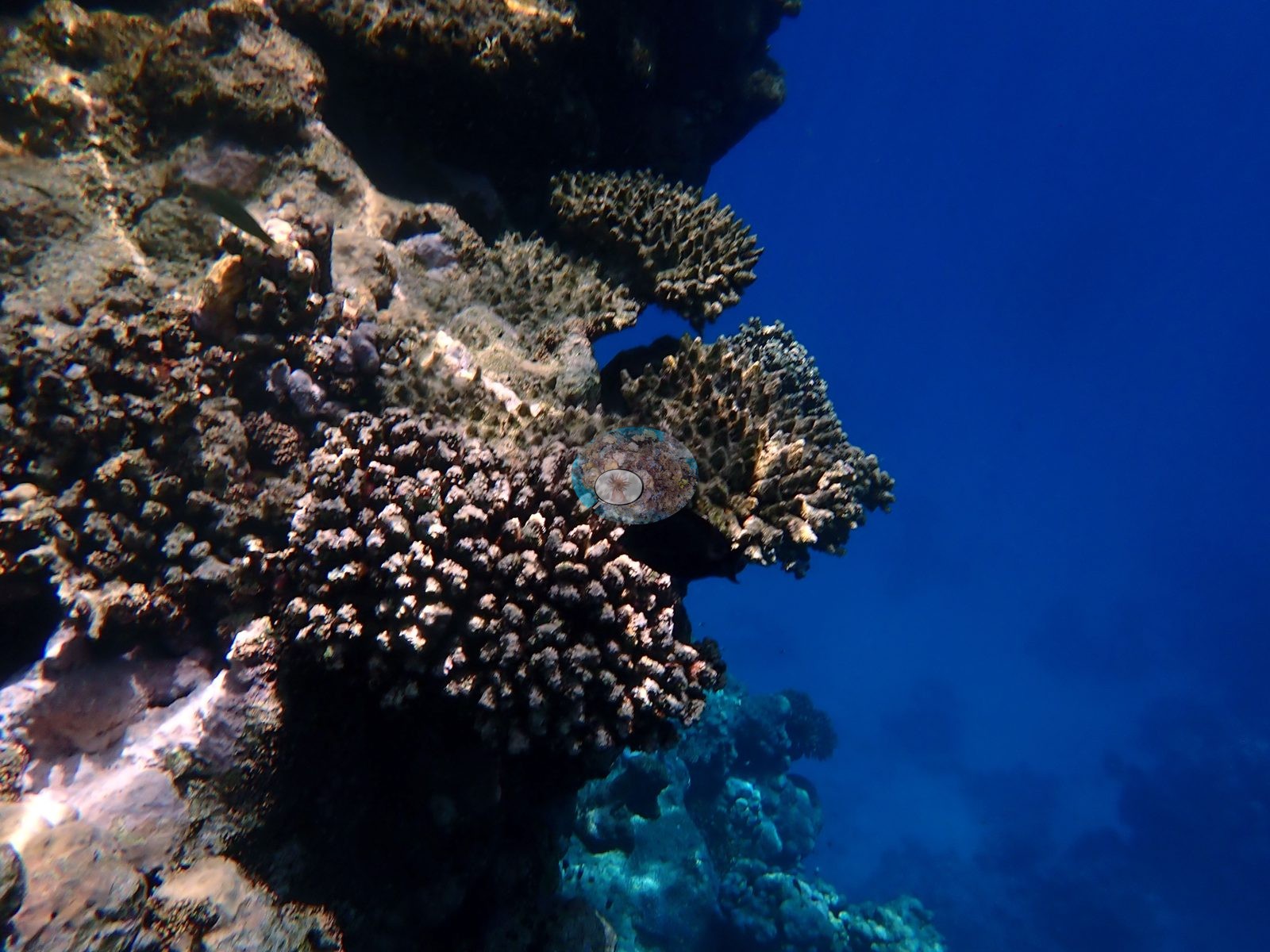
And a reef face drops from the flat into deep blue, hung with tan and mustard corymbose Acropora, pocilloporids, and encrusting Millepora-type plates (e.g., Image 4).
Coral cover
Coral cover is 13.9% ± 12.0 across 67 photographs, quoted verbatim from Mayfield, A.B. (2025) Environments 12:248 — Red Sea 2023-24 bleaching; CoralNet point annotation, Appendix A — a manual, diver-annotated CoralNet point count from Anderson's own published work, not a computer vision output and not recomputed here.
Fish and other fauna
The best single subject of the dive is a large fluted giant clam (Tridacna squamosa) set on sand, its dark olive-green mantle finely speckled and its scalloped shell margins rimmed pink and magenta by encrusting coralline algae, with a skirt of xeniid pulse corals around it.
Comparisons with other data
No prior survey data from this site. If you would like to share yours, please email us.
Dive record
A single dive on 2 August 2024 with Saudia SCUBA, the first of a Jeddah day that continued to Chicken Wreck.
Other notes
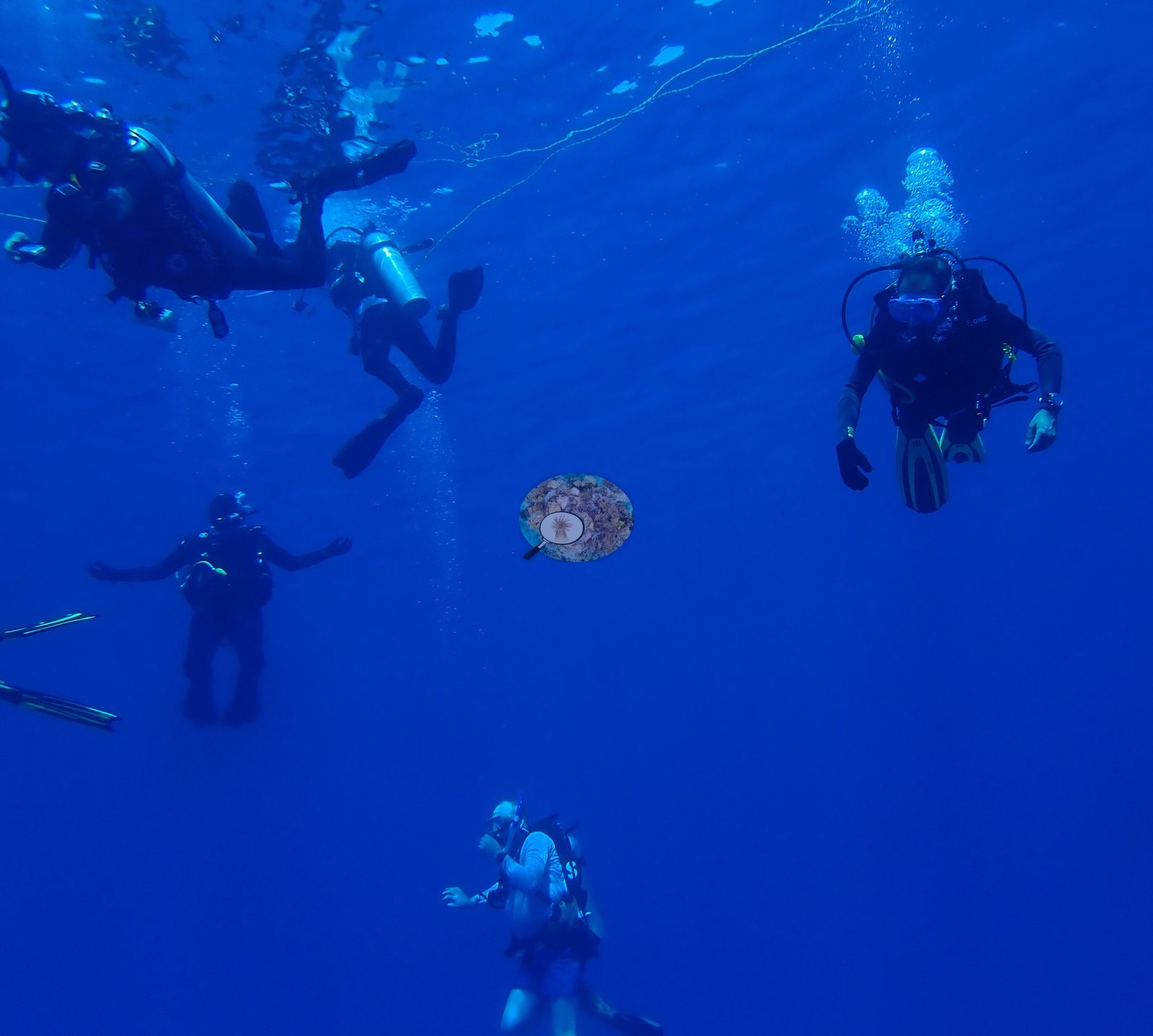
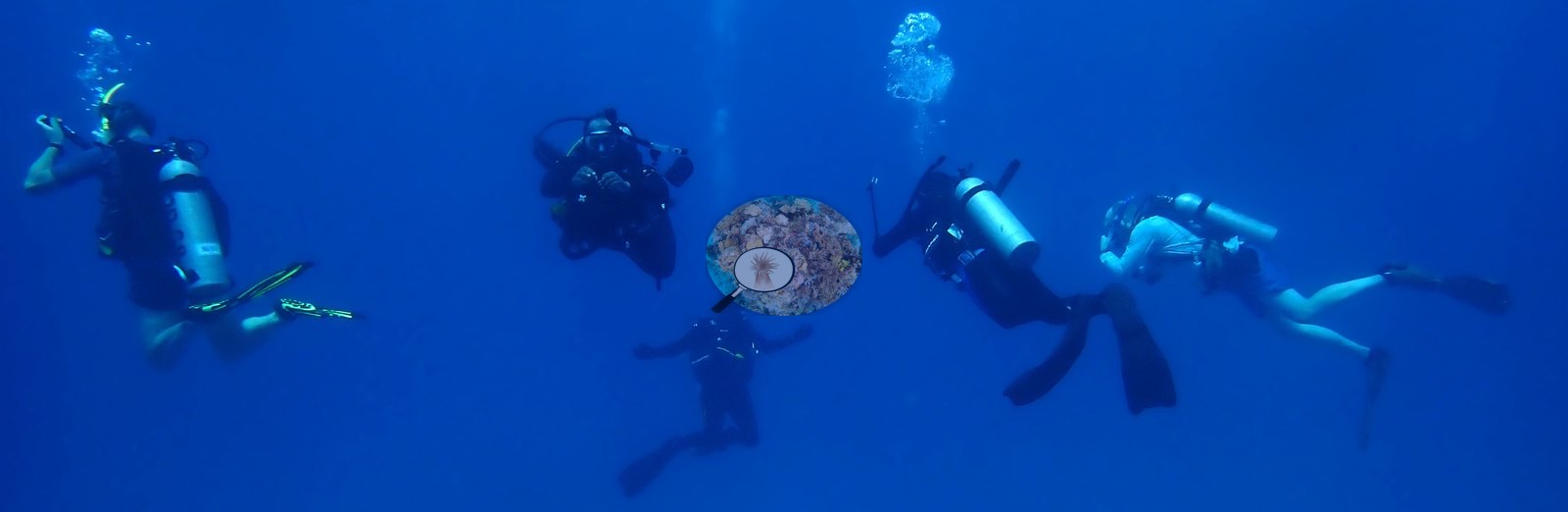
Divers appear in the sand-plain frames, and the topside shots show flat calm off Jeddah.
CV model comparison
More info
The reference row is this dive site's own published value (Mayfield 2025, Appendix A, 67 photos); the other rows are AREA-level (Jeddah) comparisons, not run on this site's frames. ⚠ The comparison rows are REGIONS, not dive sites: the paper's main tables report cover by region, and this site's own value comes from its Appendix A. ⚠ The manual column and the CV columns are on DIFFERENT FRAME SETS. The published cover spans the region's full photo set (173–2,567 frames, most of them CoralNet robot-labeled); the CV arms ran only on the hand-scored reference subset, which is 6 frames at Thuwal, 274 at Jeddah and 173 at Rabigh. Read Thuwal's model columns as indicative only. CoralNet is n/a by design: the reference set IS the hand-scored set, so those frames carry no independent robot label to compare against. DINOv3 is restricted to frames it never saw, and reads roughly double the published cover at every Red Sea region. ⚠ 'unassigned region' is not a place: 135 frames carry no region label in the CoralNet metadata and map to no published row. It has no manual value and is excluded from the pooled reference. CoralNet automated point classifier: n/a — the reference set IS the hand-scored set; these frames carry no independent CoralNet robot label to compare against CoralSCOP (SAM-based mask-sum), unedited photos: pending — CoralSCOP run: 370/747 images scored at build time CoralSCOP (SAM-based mask-sum), edited photos: pending — CoralSCOP run: 370/747 images scored at build time| Method | Hard-coral cover (%) |
|---|---|
| Manual (published) | 13.9 |
| In-house DINOv3 | 34.9 |
| Claude | 27.3 |
Data & links
All images from Coral Reef Diagnostics. Data are from Coral Reef Diagnostics.
© Coral Reef Diagnostics.