
Saudi Red Sea - Abu Galawa (Yanbu)
Part of the regional summaries: Saudi Arabia - Yanbu, Saudi Arabia, and Red Sea
2024-11-08
More info
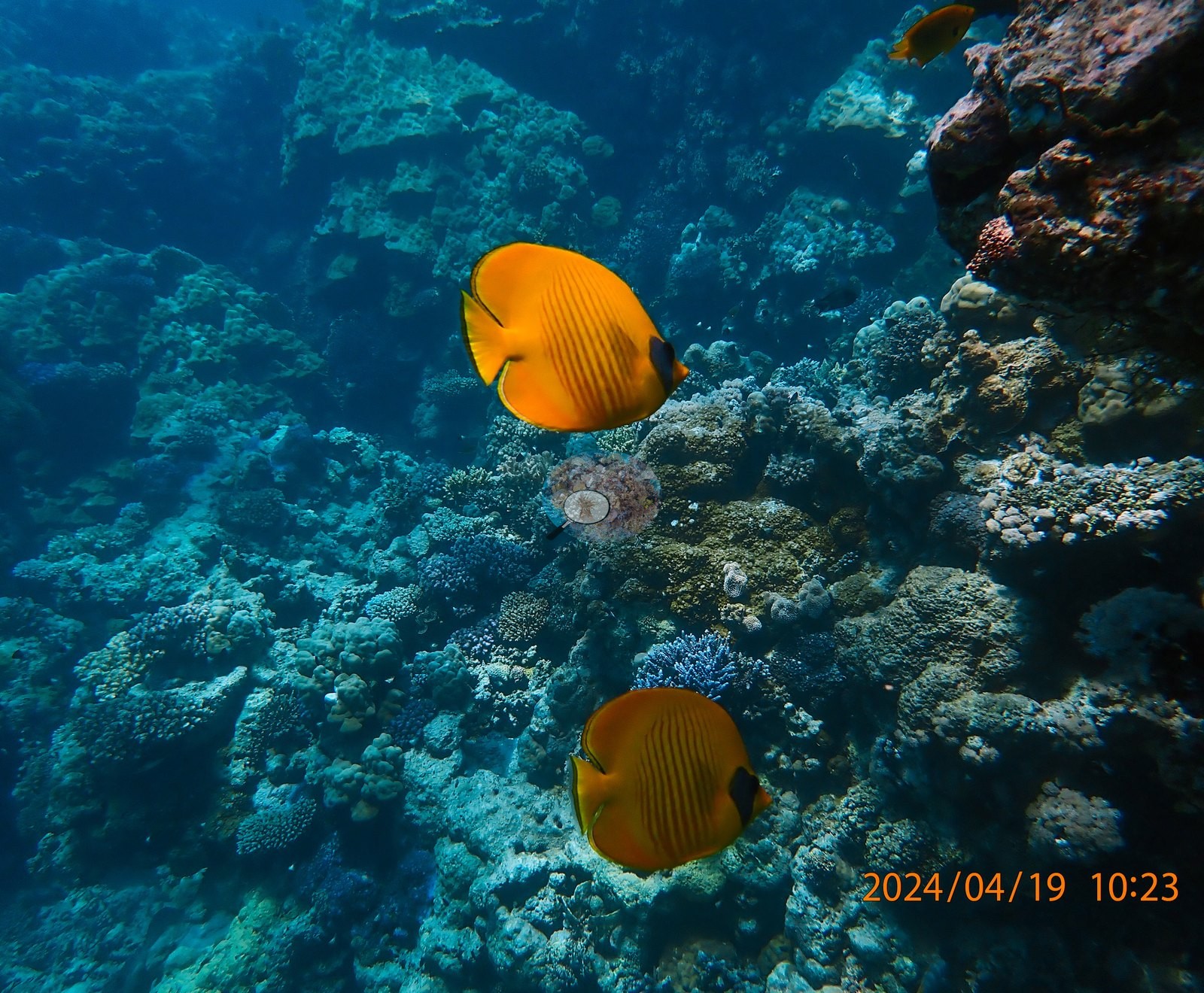
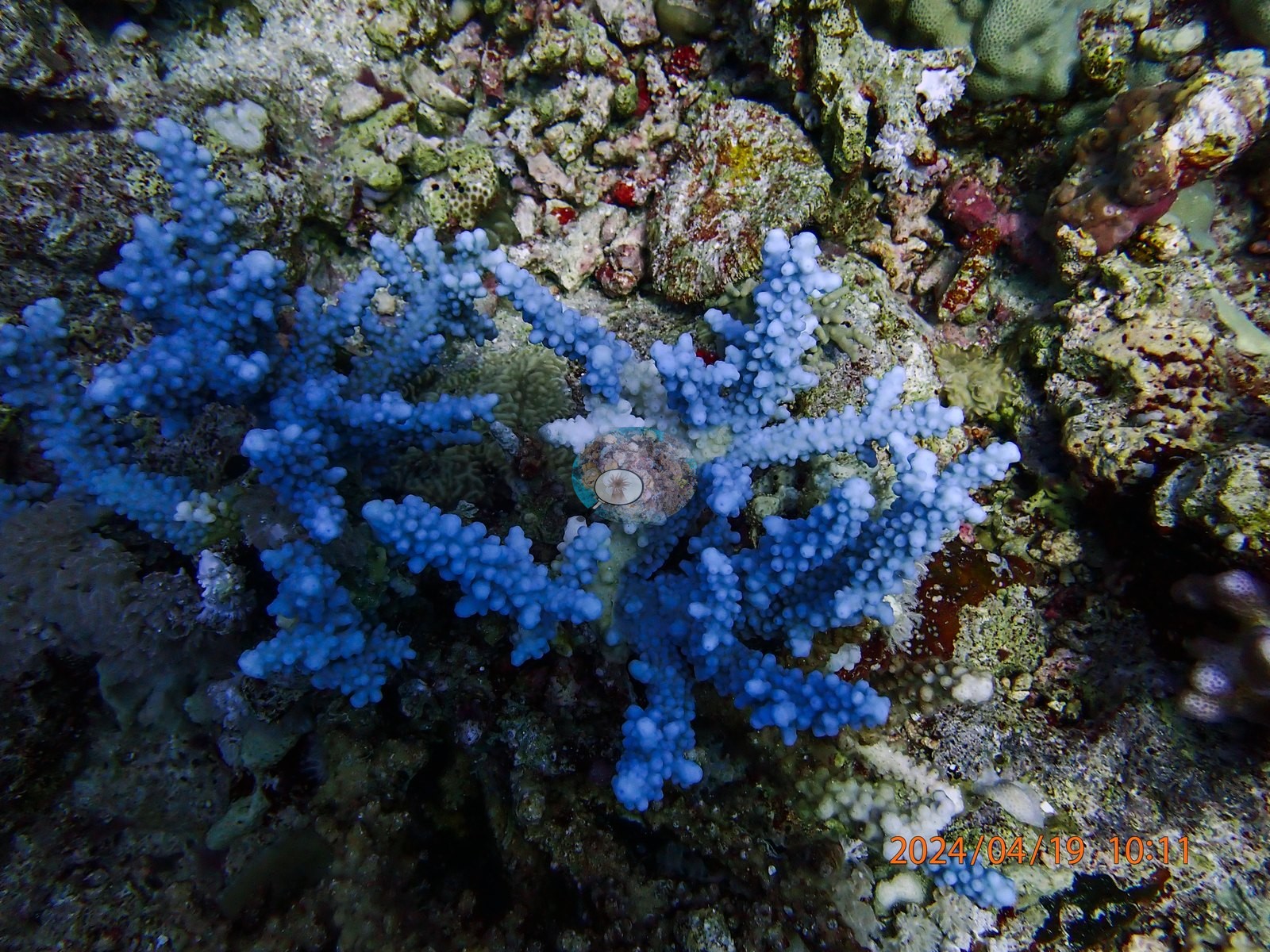
Al Madinah and Makkah (NOAA CRW virtual station)Abu Galawa is a long, isolated offshore reef where a bare rubble-and-pavement shoulder gives way to a coral-covered ridge of bushy Acropora, Porites, and soft corals, with a requiem shark and pairs of masked butterflyfish (a Red Sea endemic) among the fauna. This April 2024 visit had zero accumulated heat stress and water at 26.5°C, yet the published record shows 25% of coral tissue bleached, and individual stark-white branching colonies stand out among pigmented neighbors in the photographs.
أبو جلاوة شعاب طويلة معزولة بعيدة عن الشاطئ، يتحول فيها كتف عارٍ من الأنقاض والرصيف إلى حافة مكسوة بالمرجان من Acropora الكثيفة وPorites والمرجان اللين، ومن بين حيواناتها قرش من فصيلة Carcharhinidae (requiem shark) وأزواج من سمك الفراشة المقنّع (المستوطن في البحر الأحمر). جاءت هذه الزيارة في أبريل 2024 مع إجهاد حراري متراكم صفري والماء عند 26.5°C، ومع ذلك يُظهر السجل المنشور ابيضاض 25% من نسيج المرجان، وتبرز في الصور مستعمرات متفرعة منفردة بيضاء ساطعة بين جاراتها المصطبغة.
ترجمة هذا الملخص بالذكاء الاصطناعي؛ النص الإنجليزي هو المعتمد.
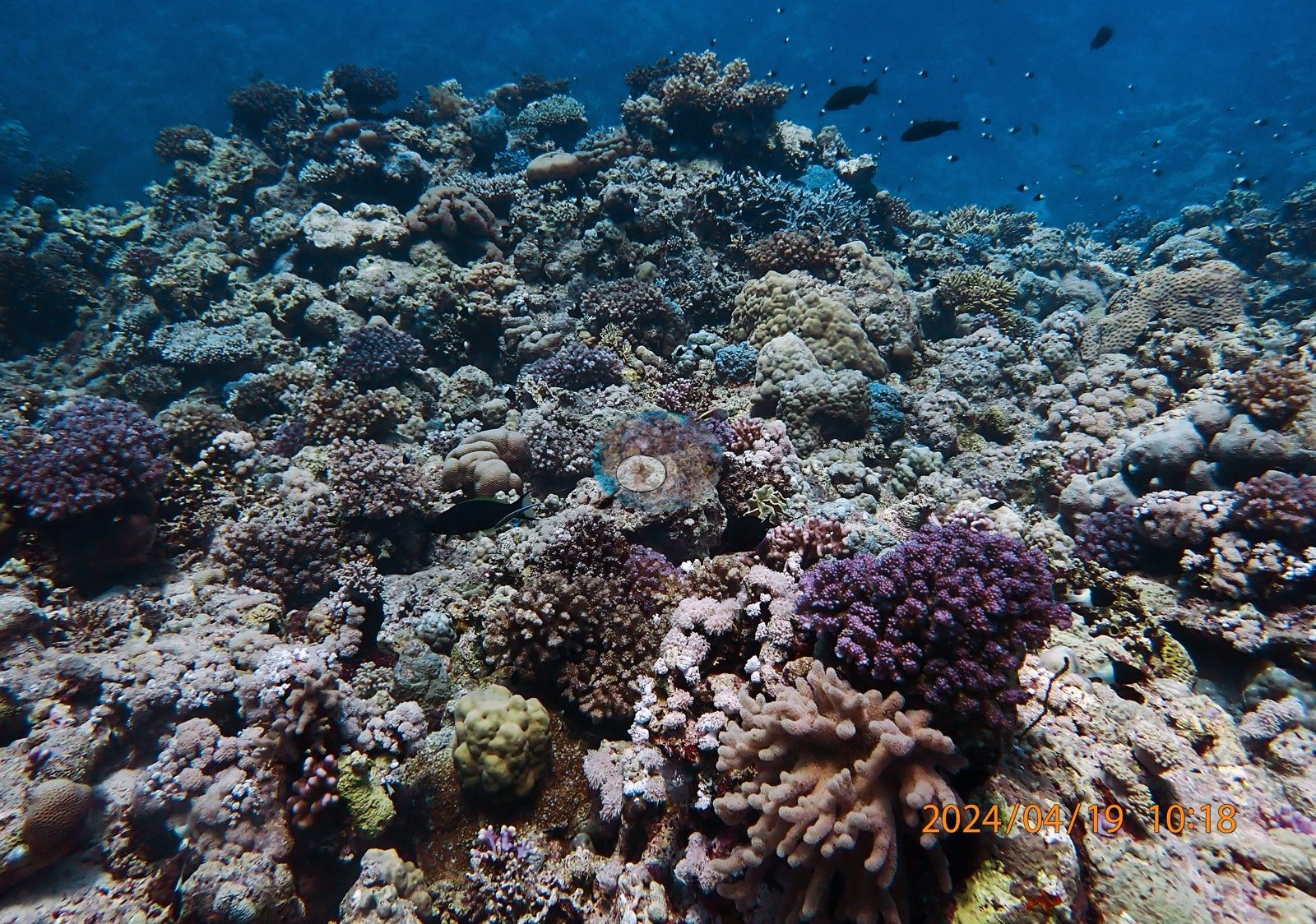
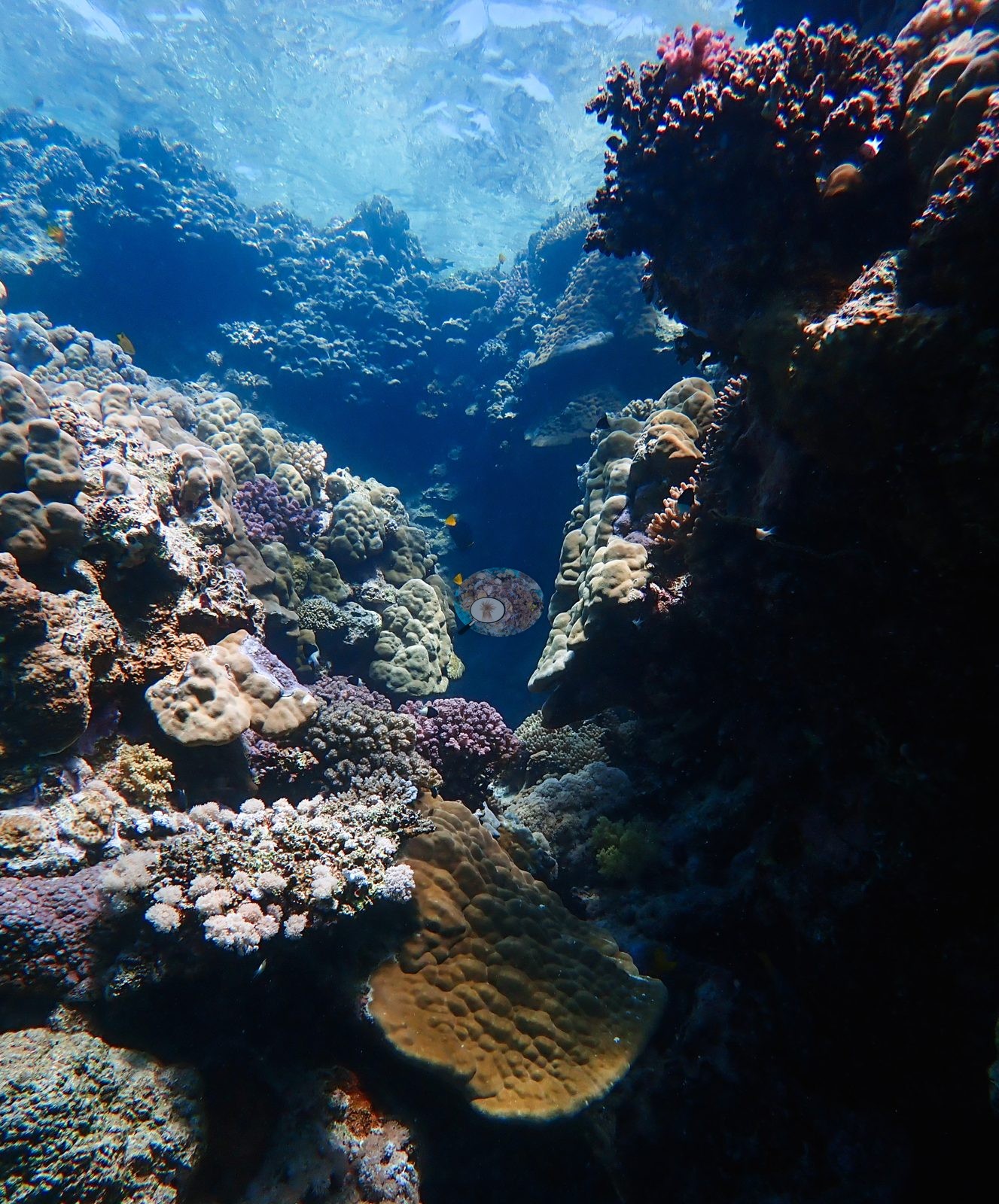
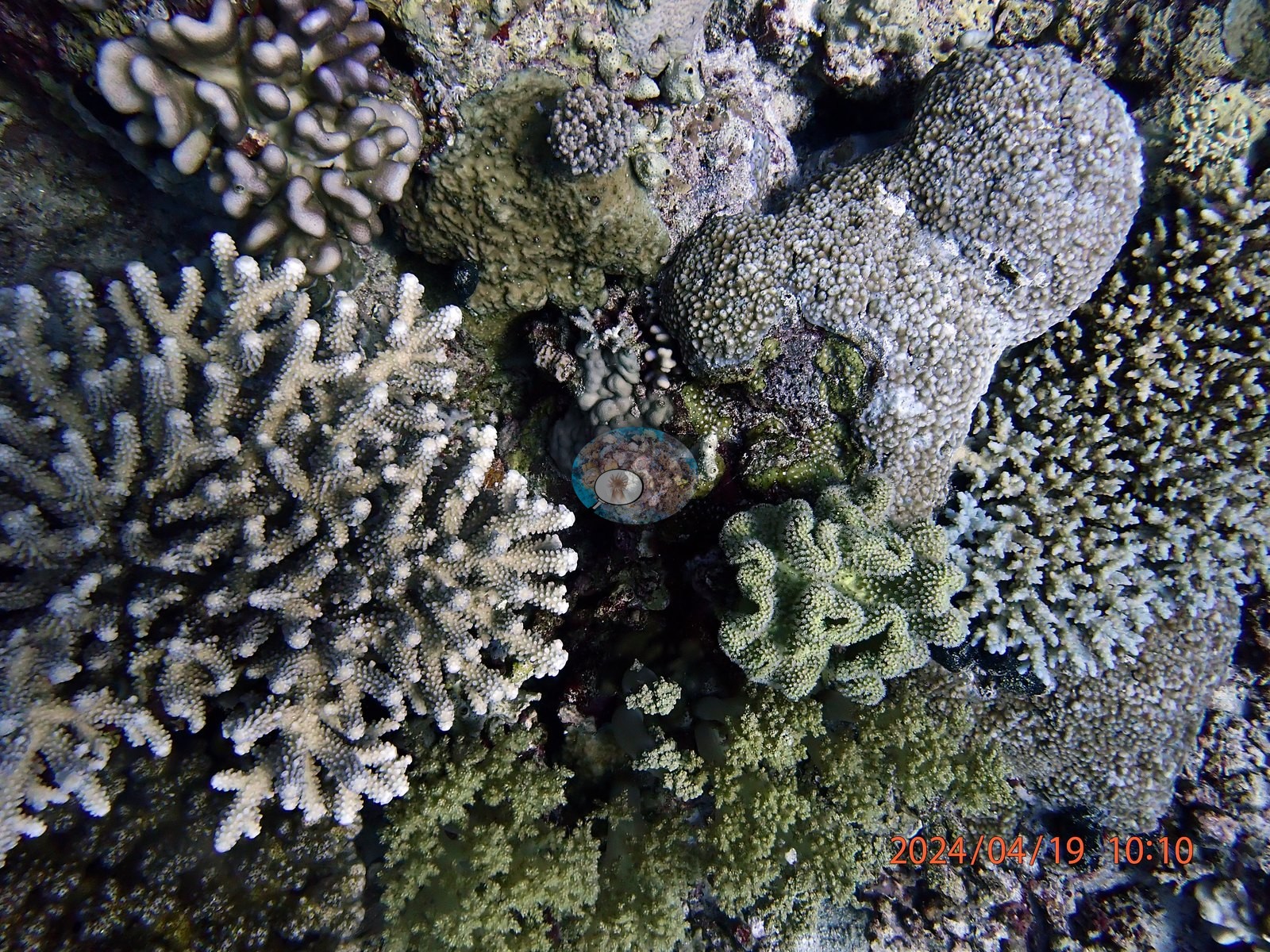
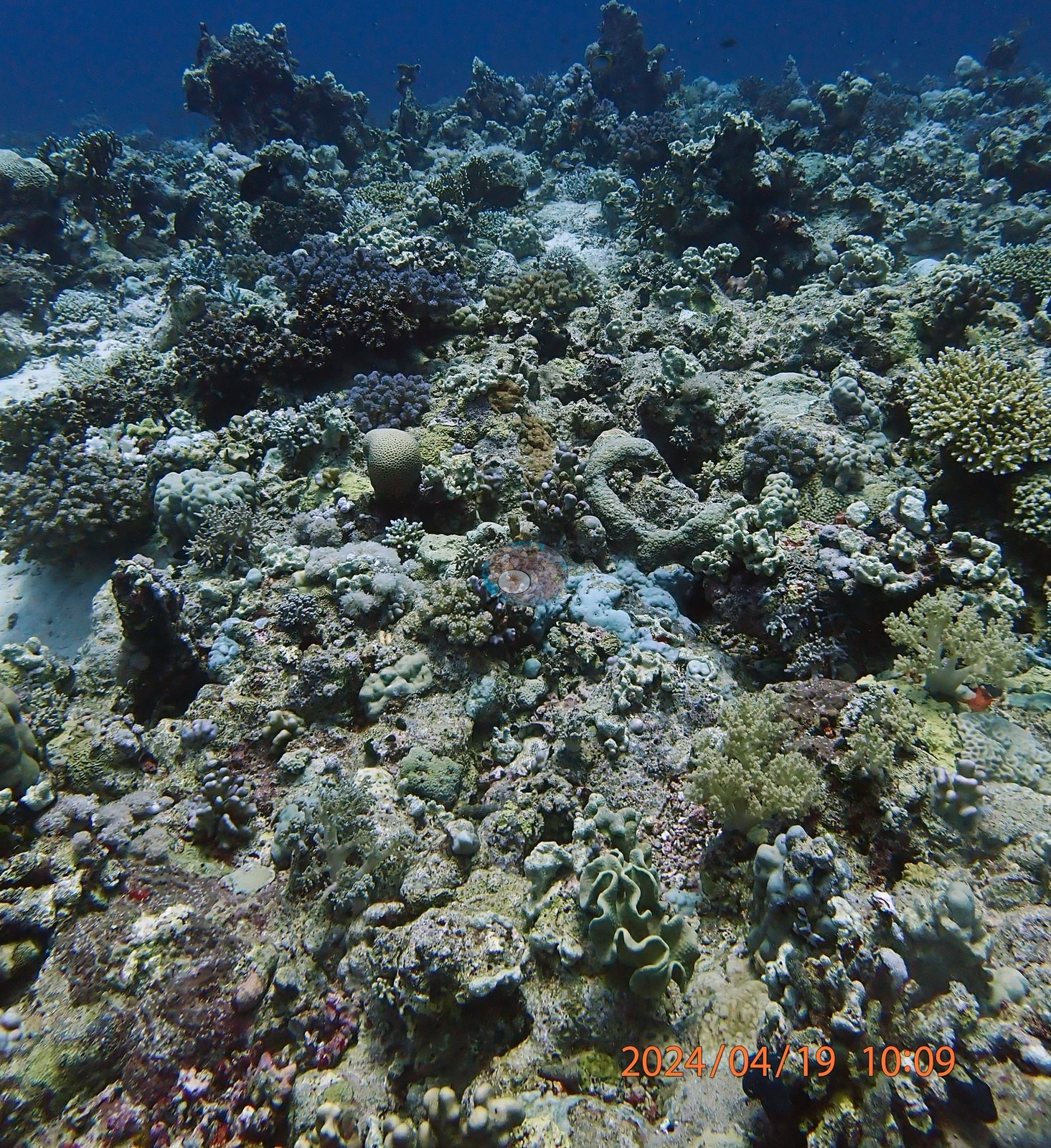
4 of the 44 photographs on this page are shown beside the text that discusses them under "Site description" below.
Site description
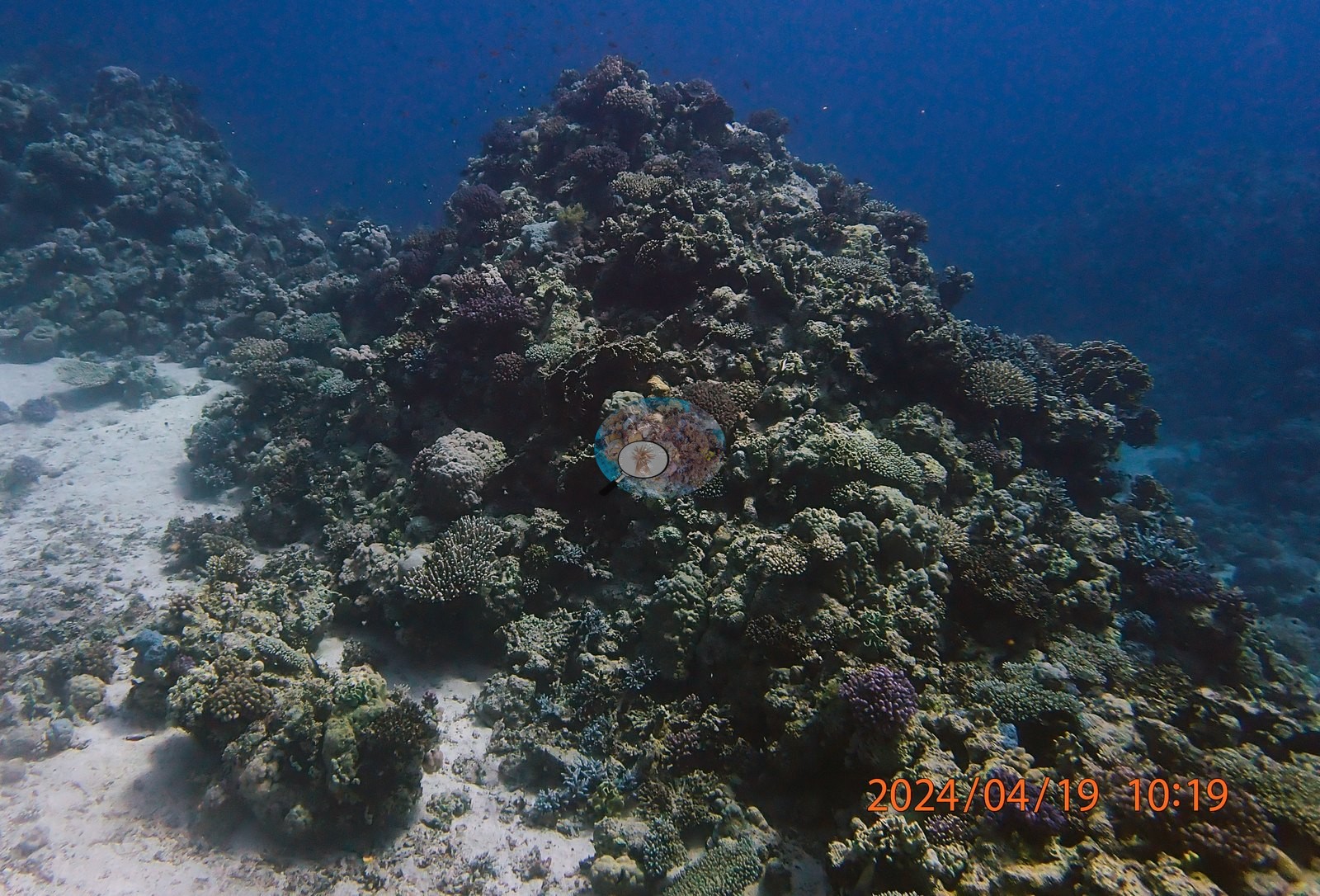
General benthic features
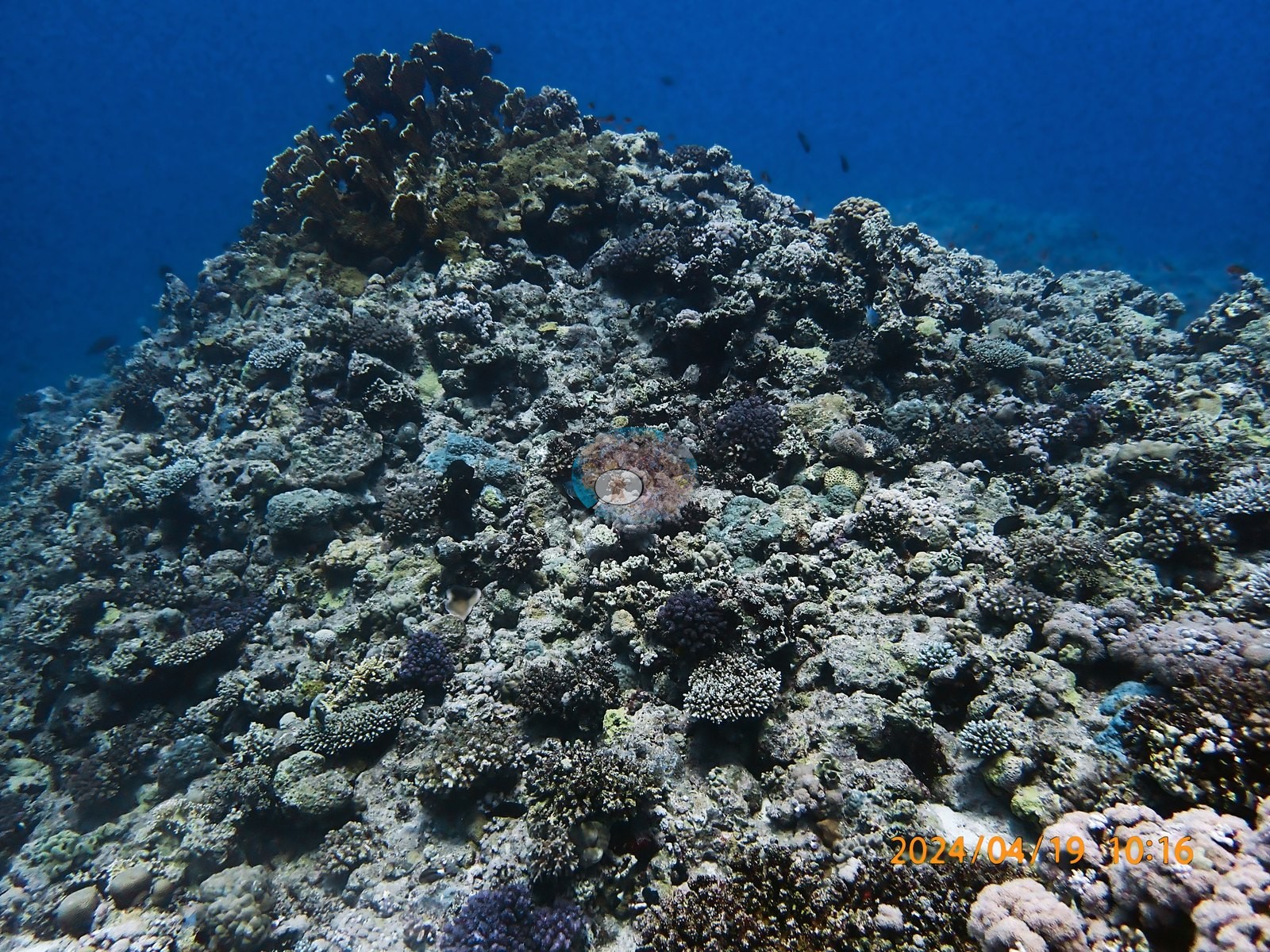
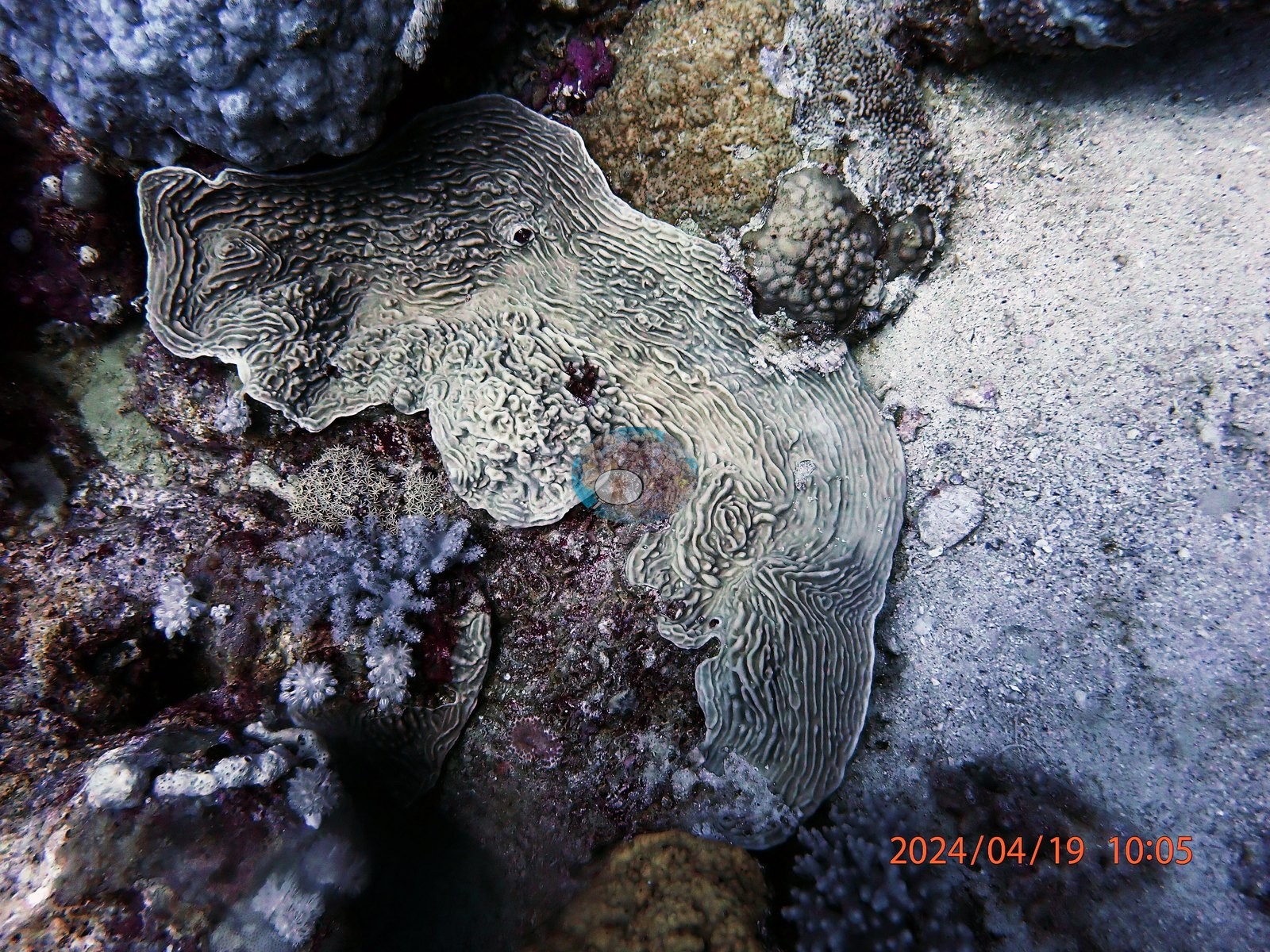
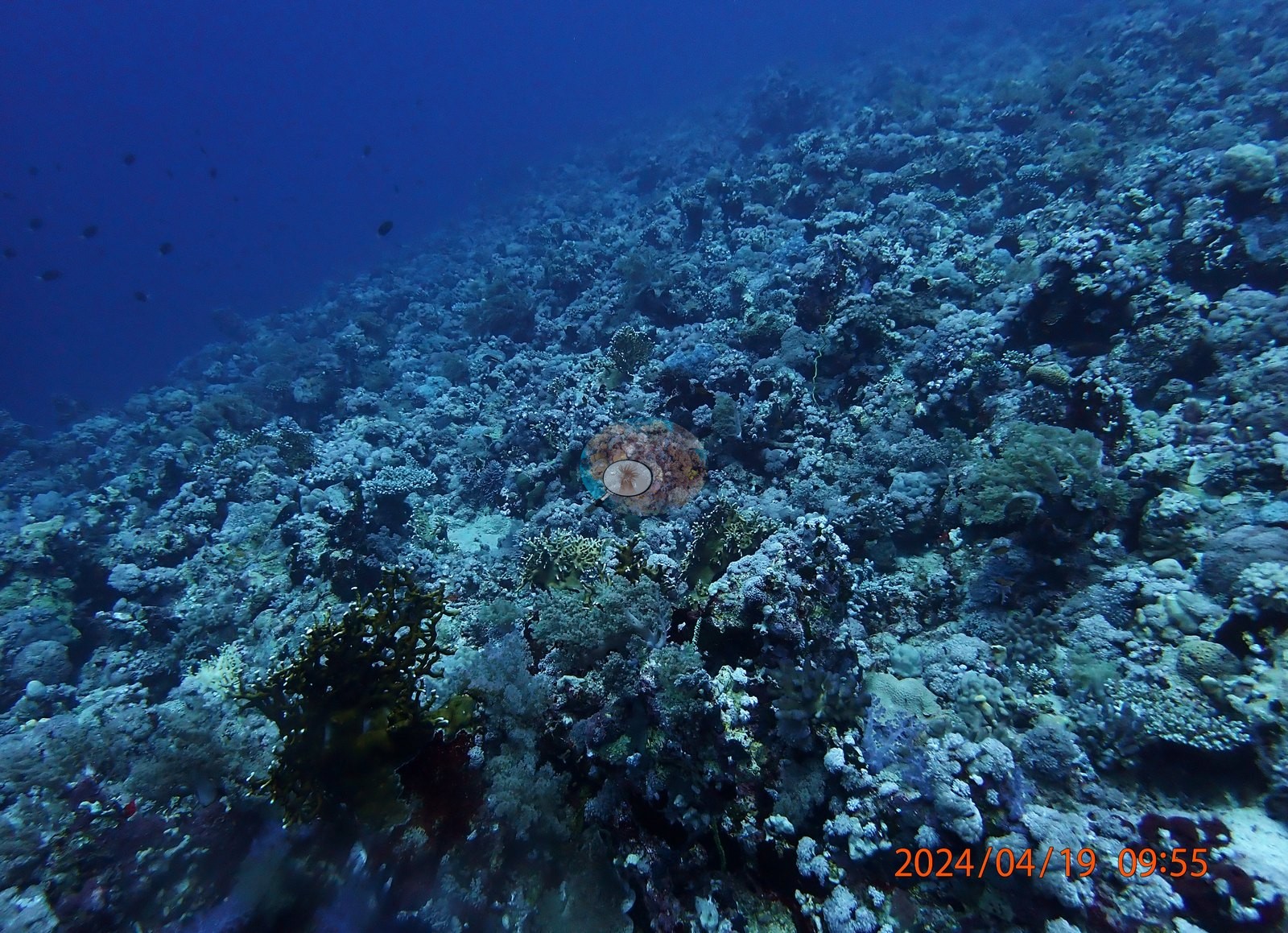
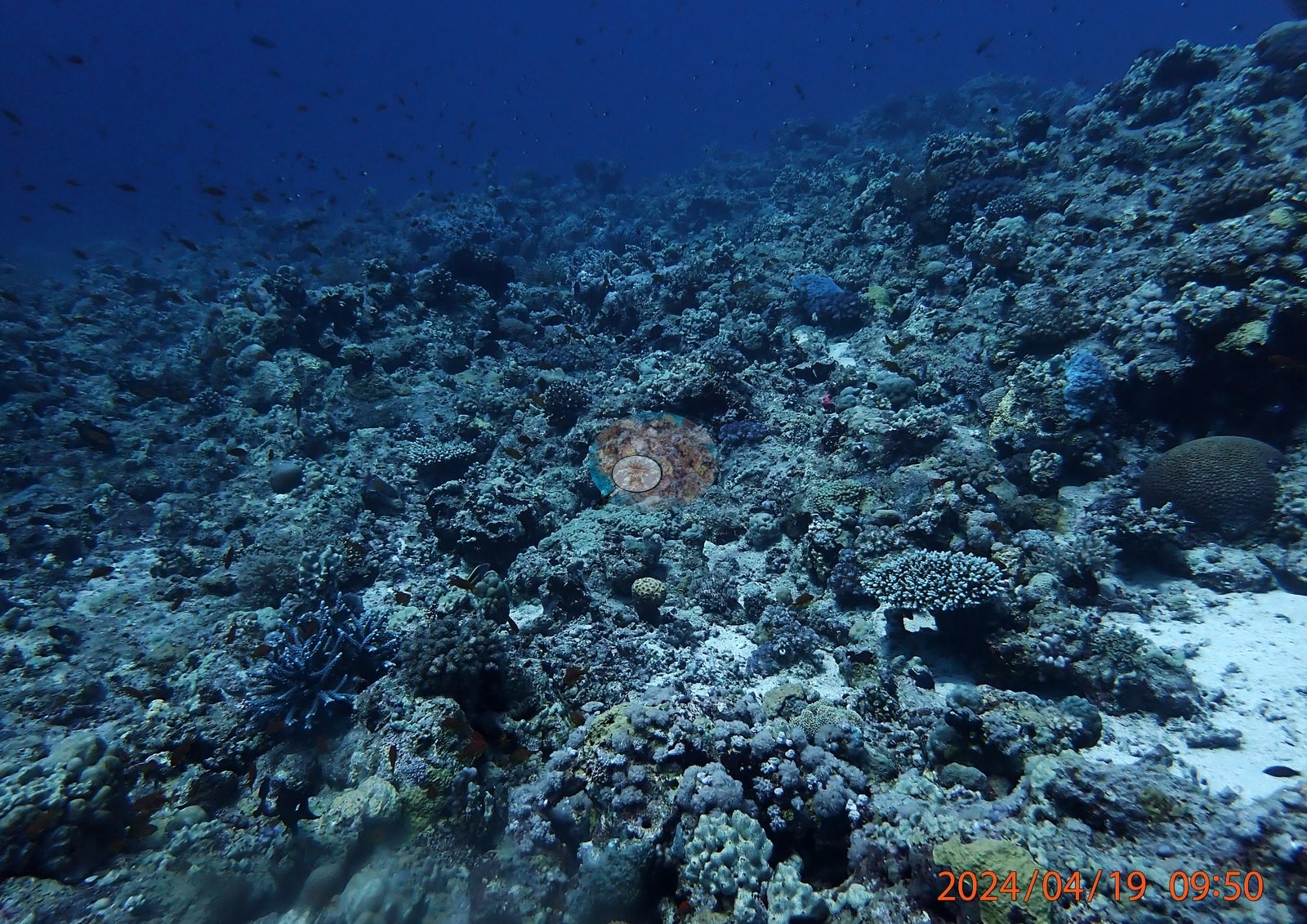
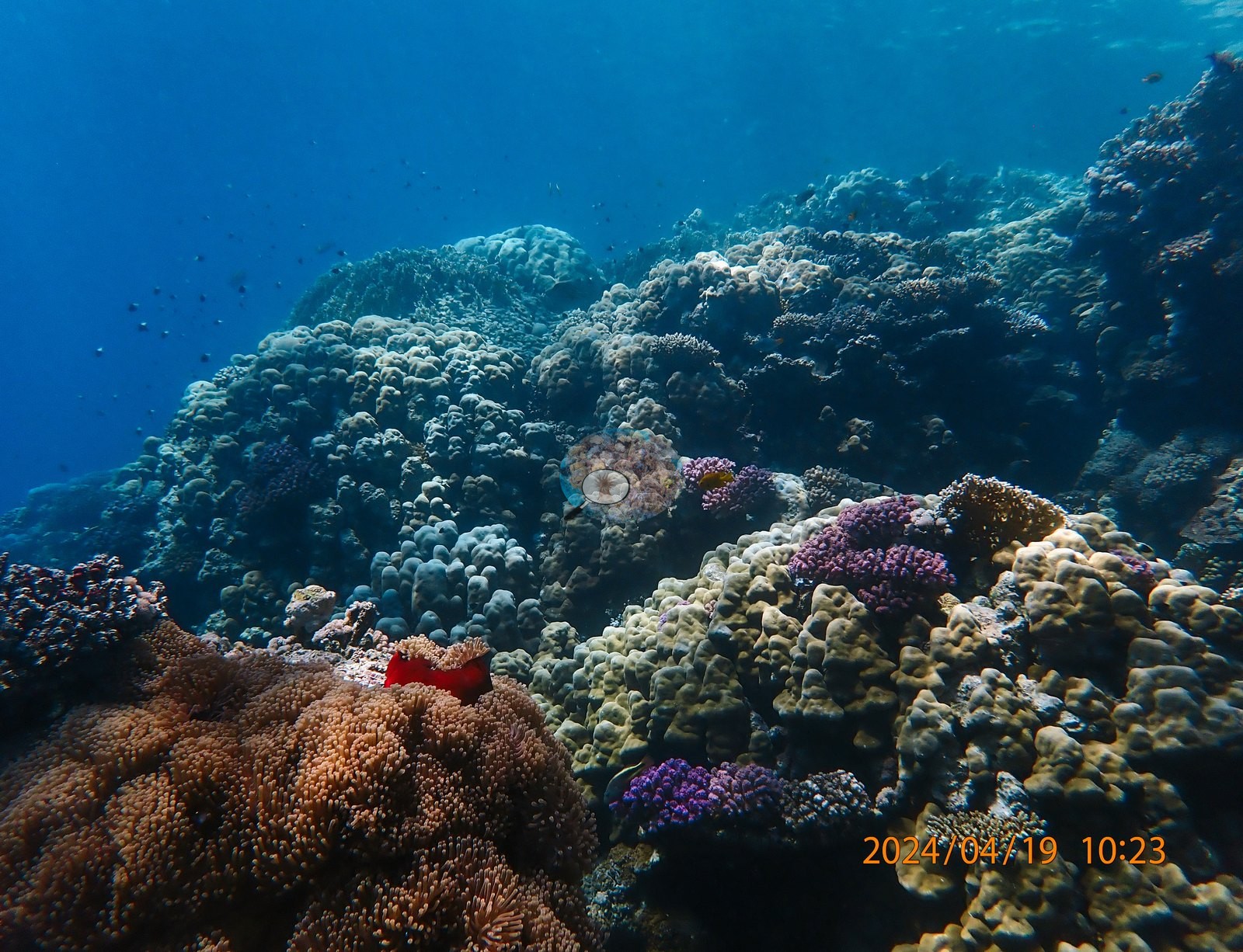
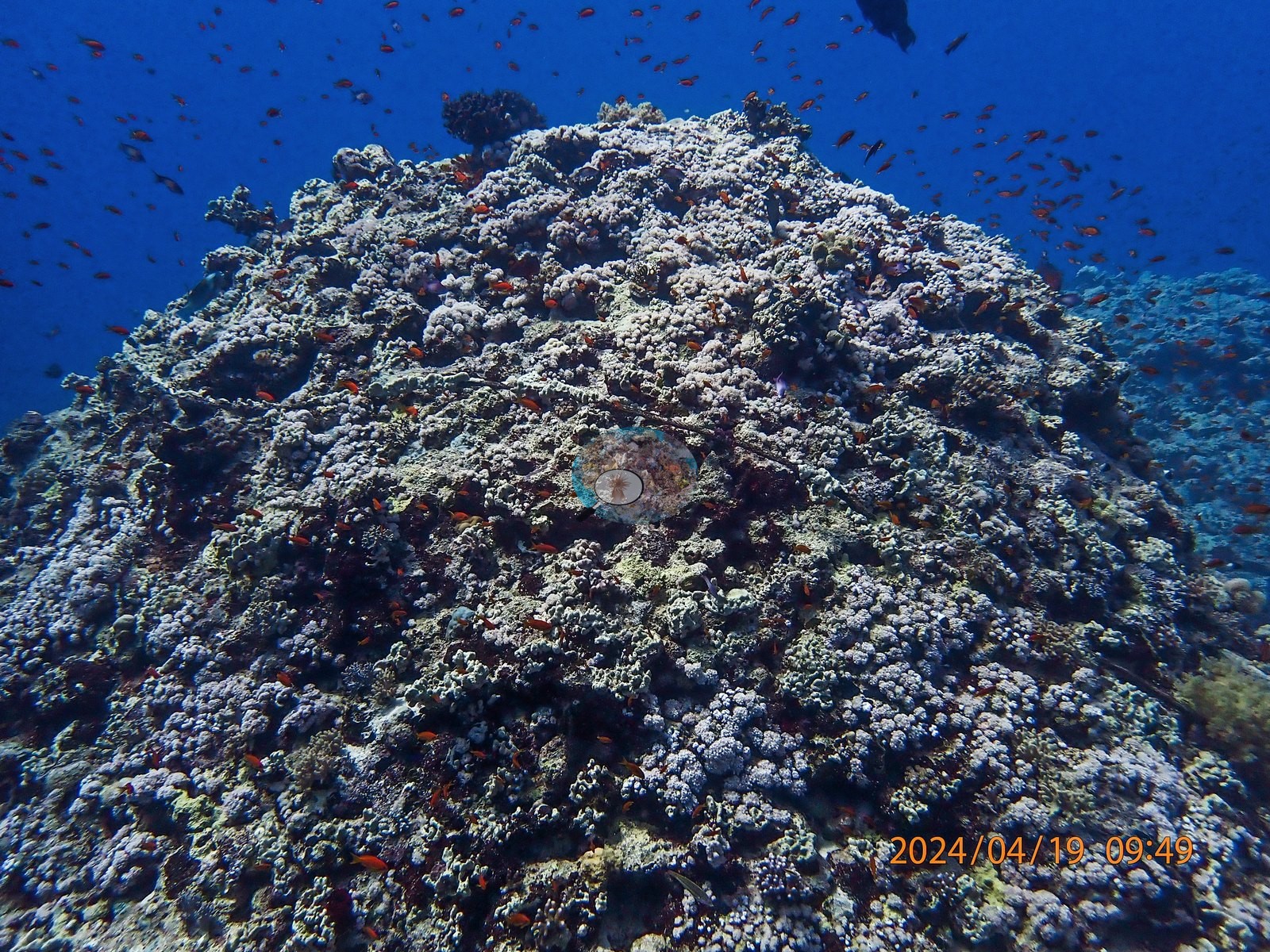
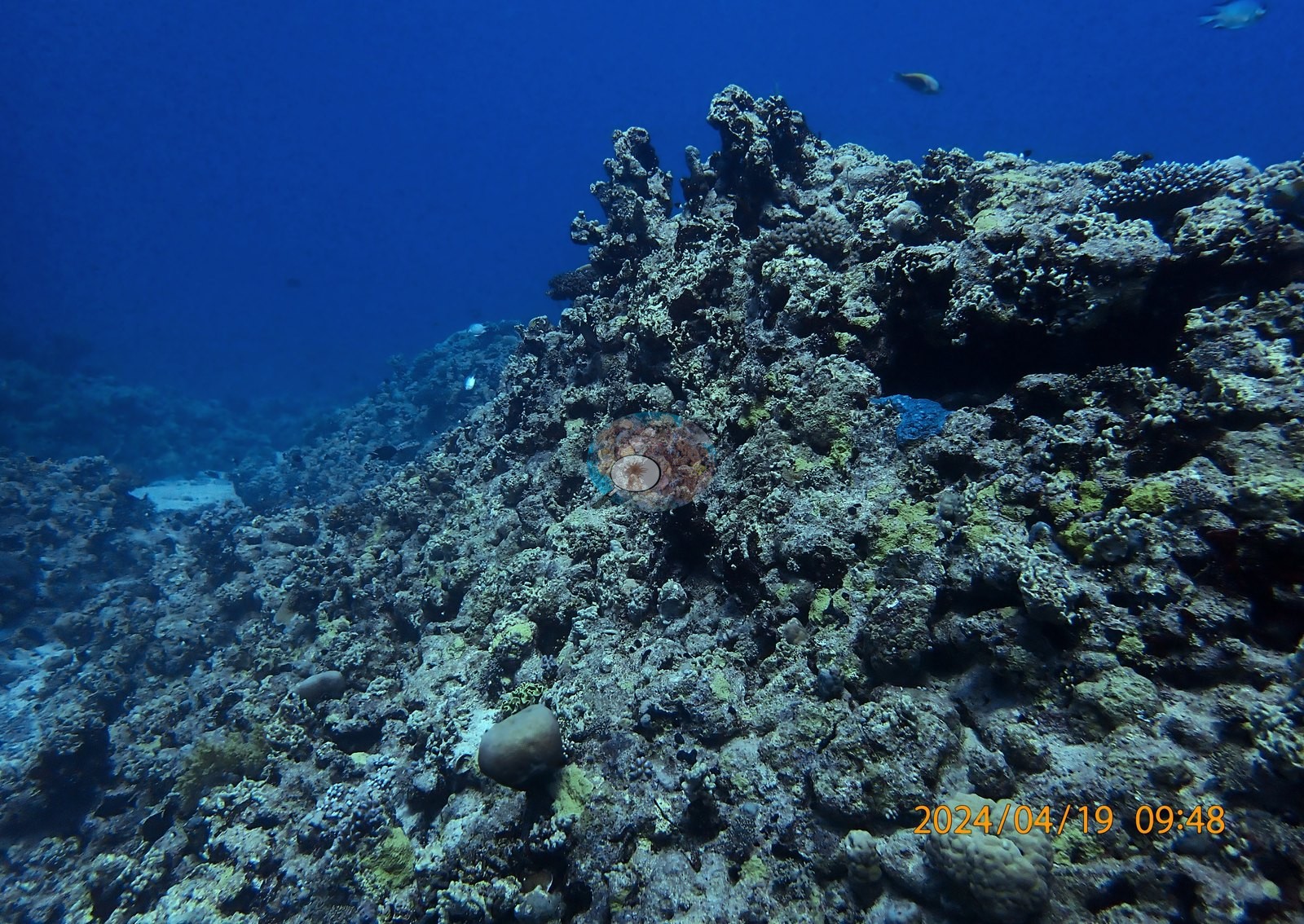
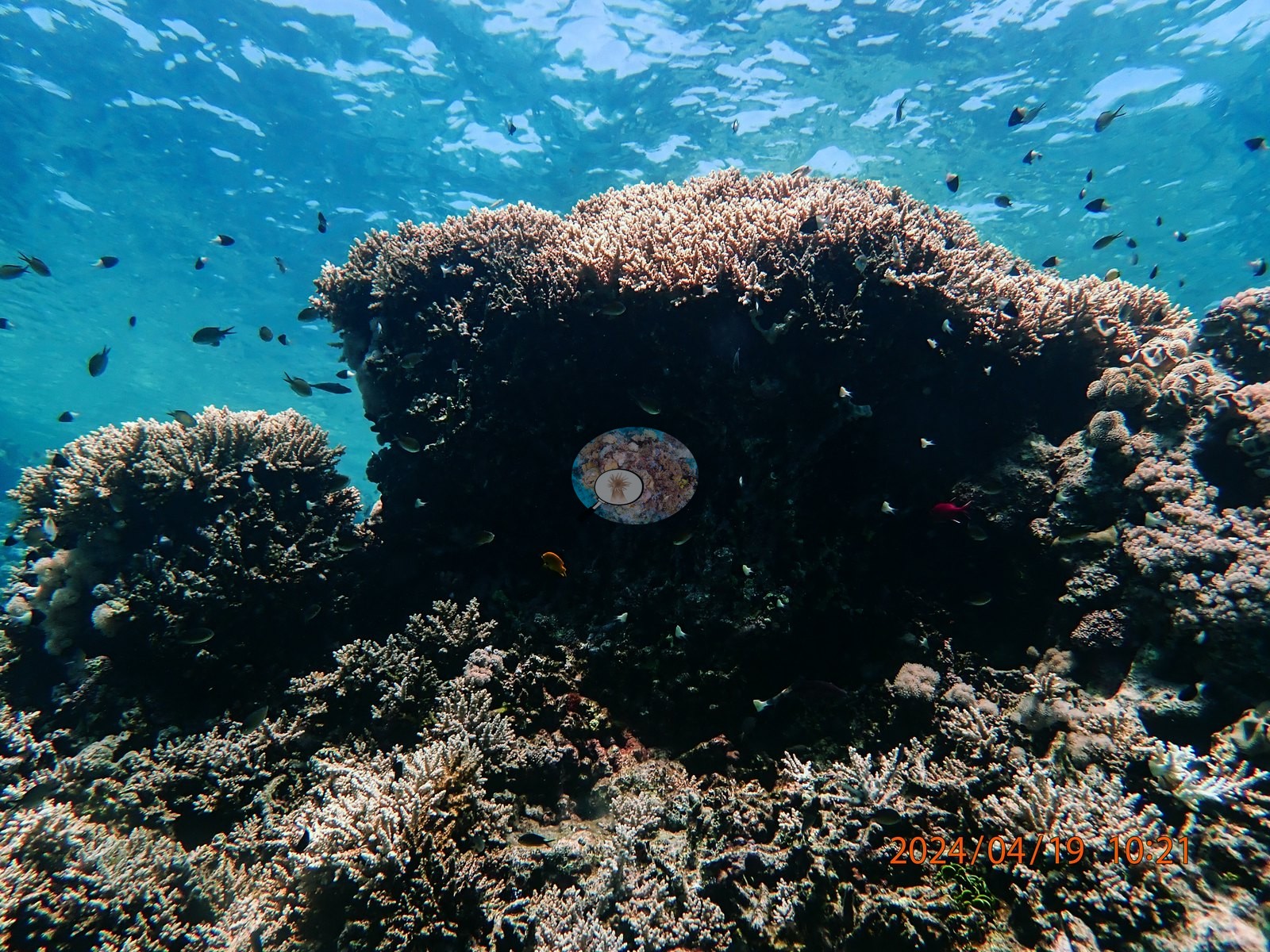
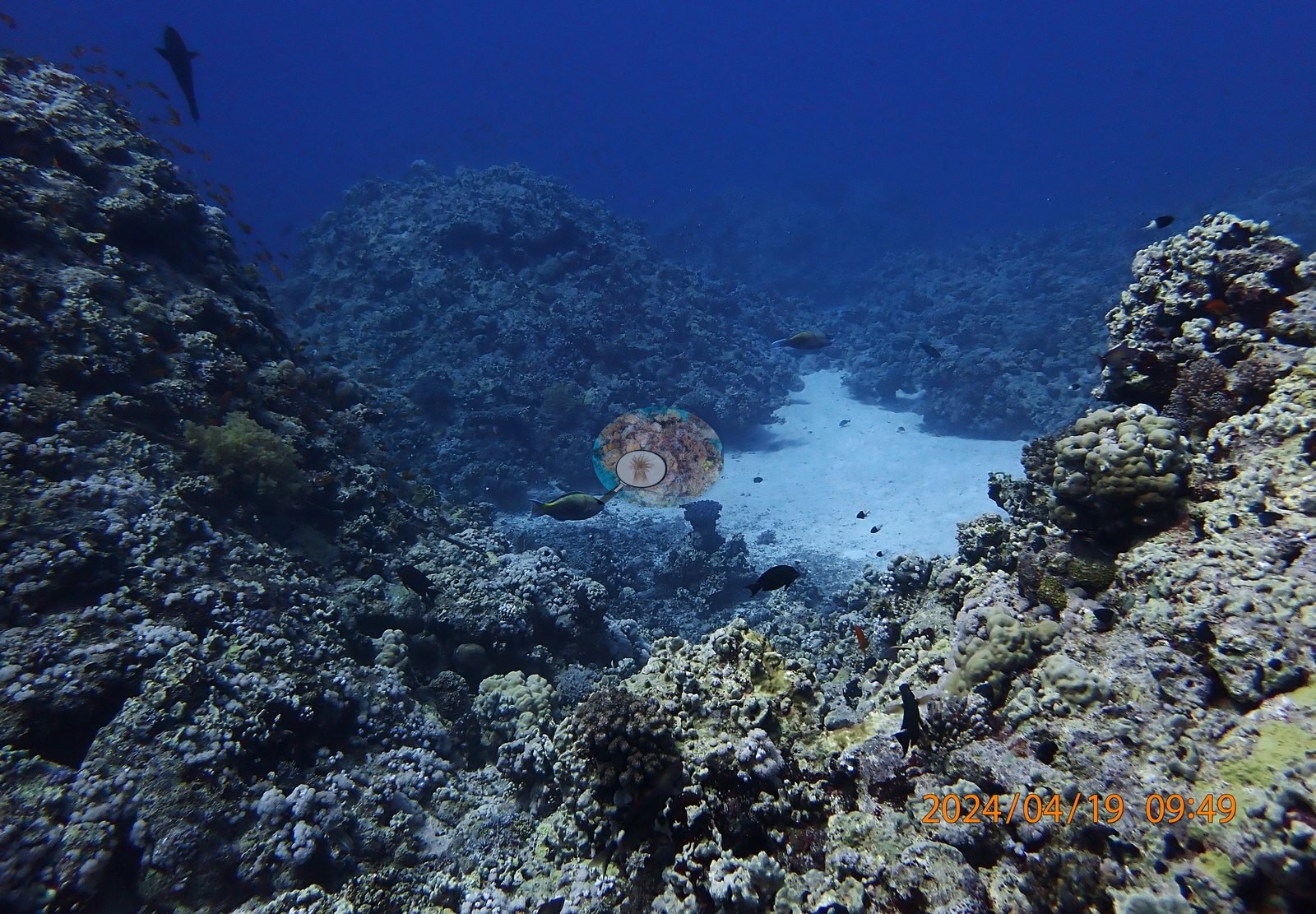
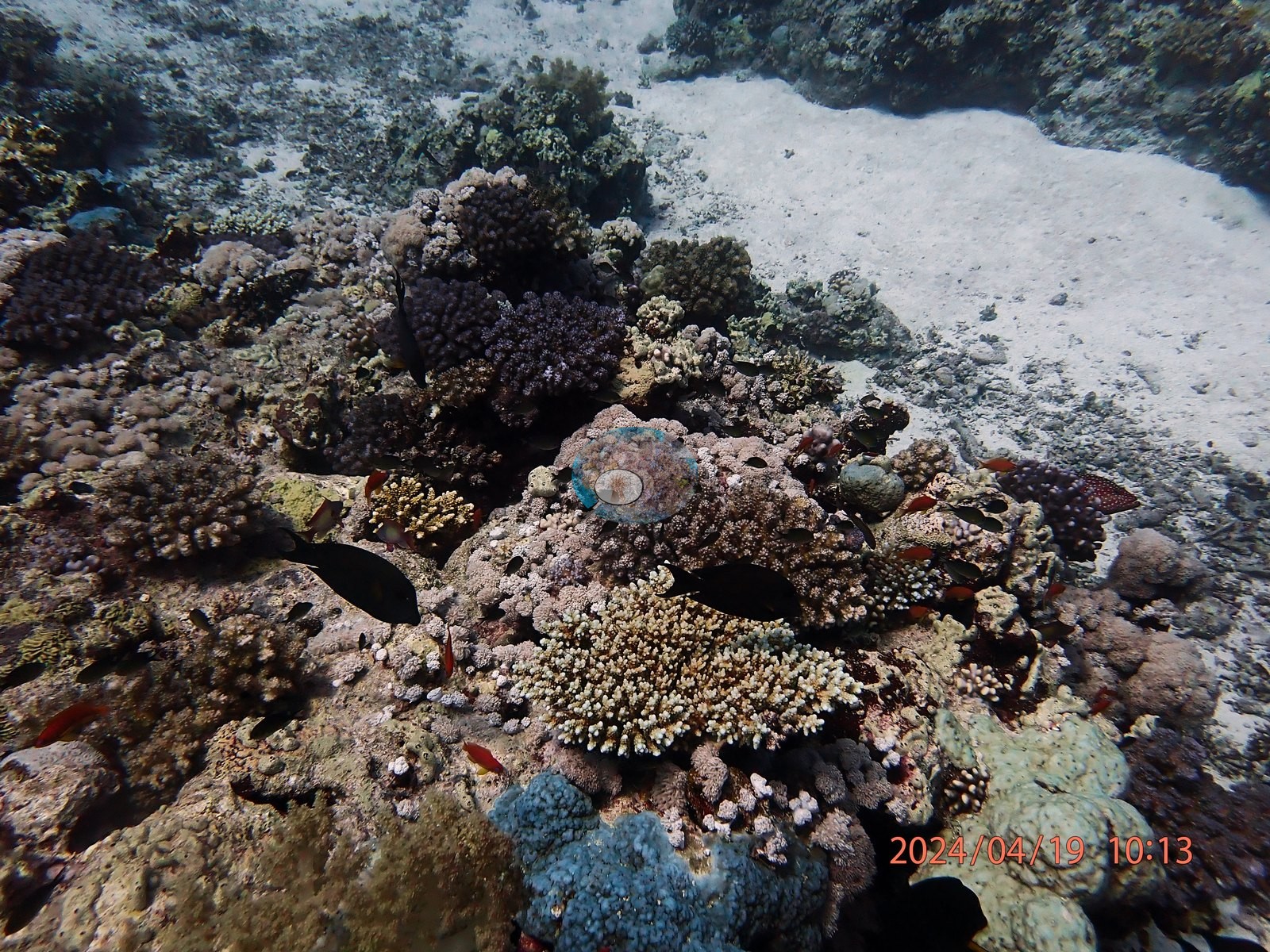
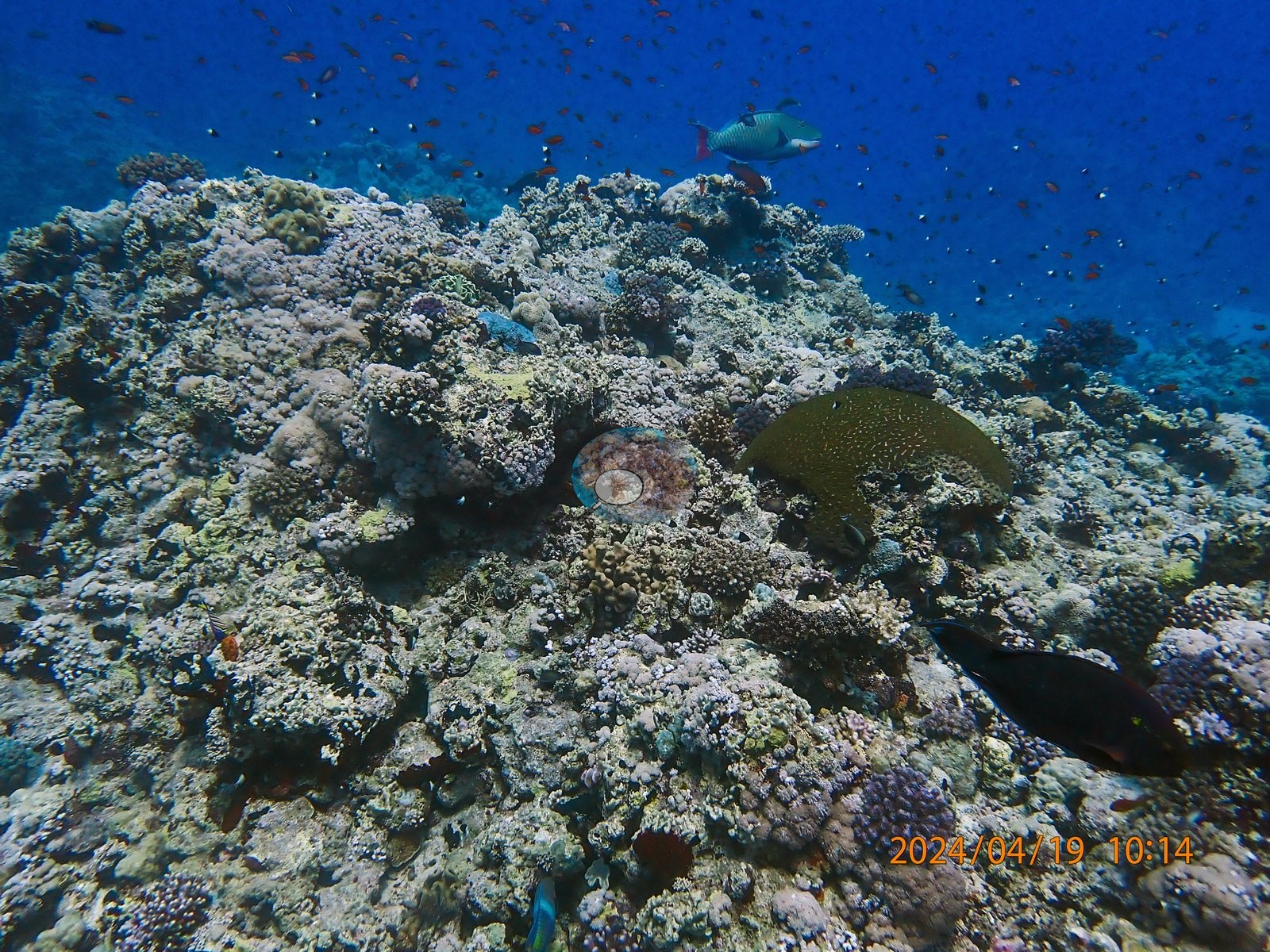
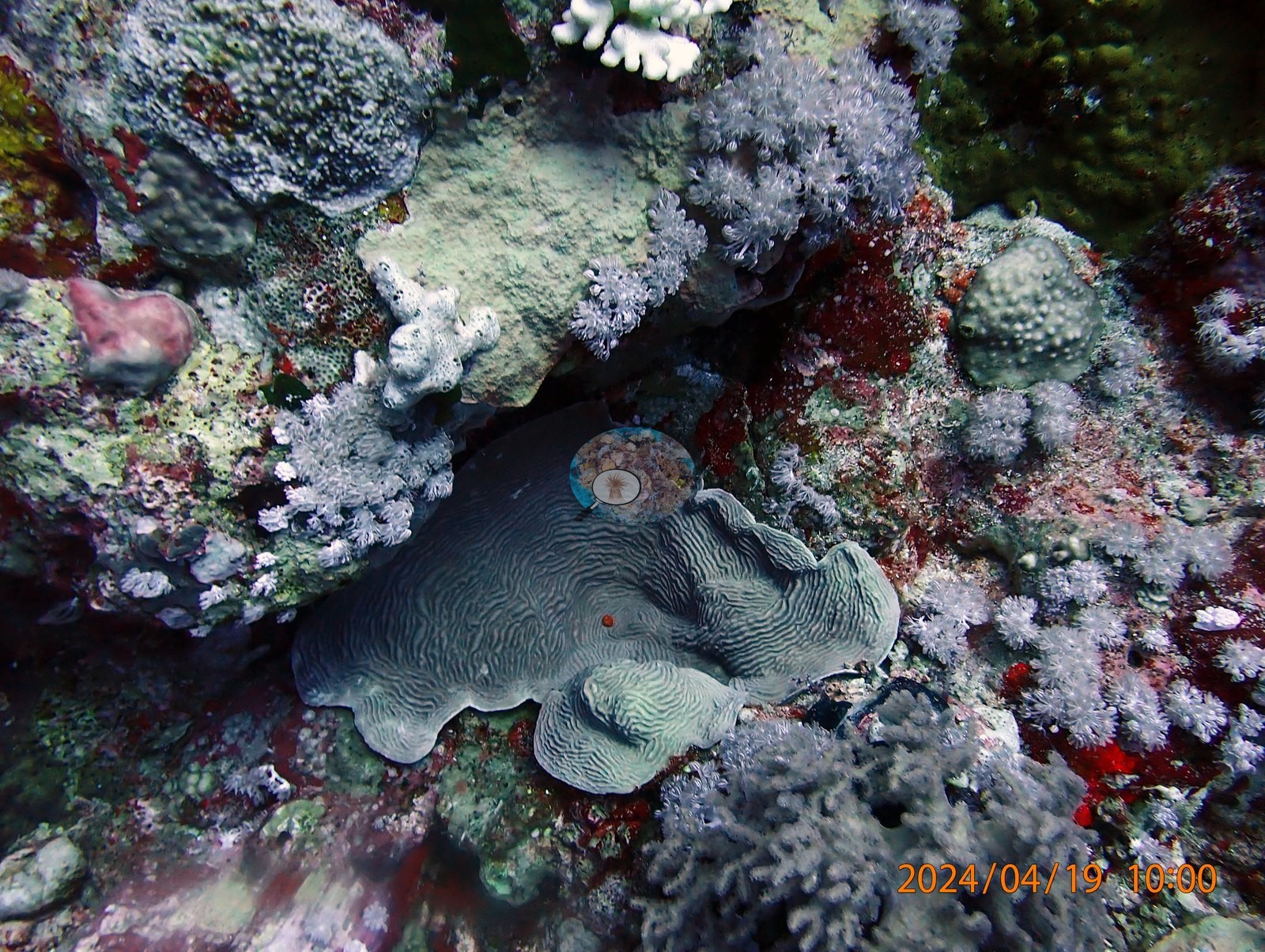
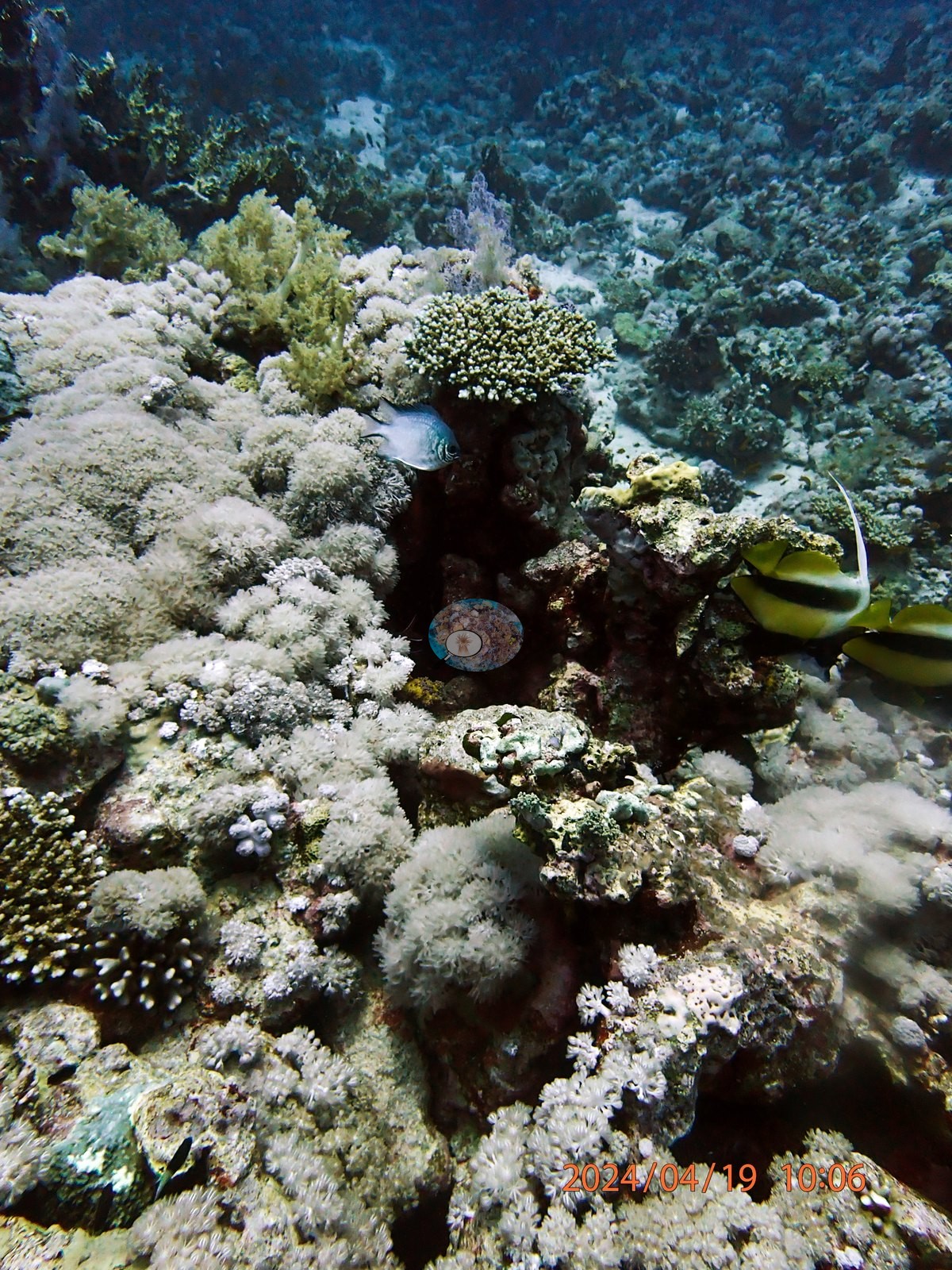
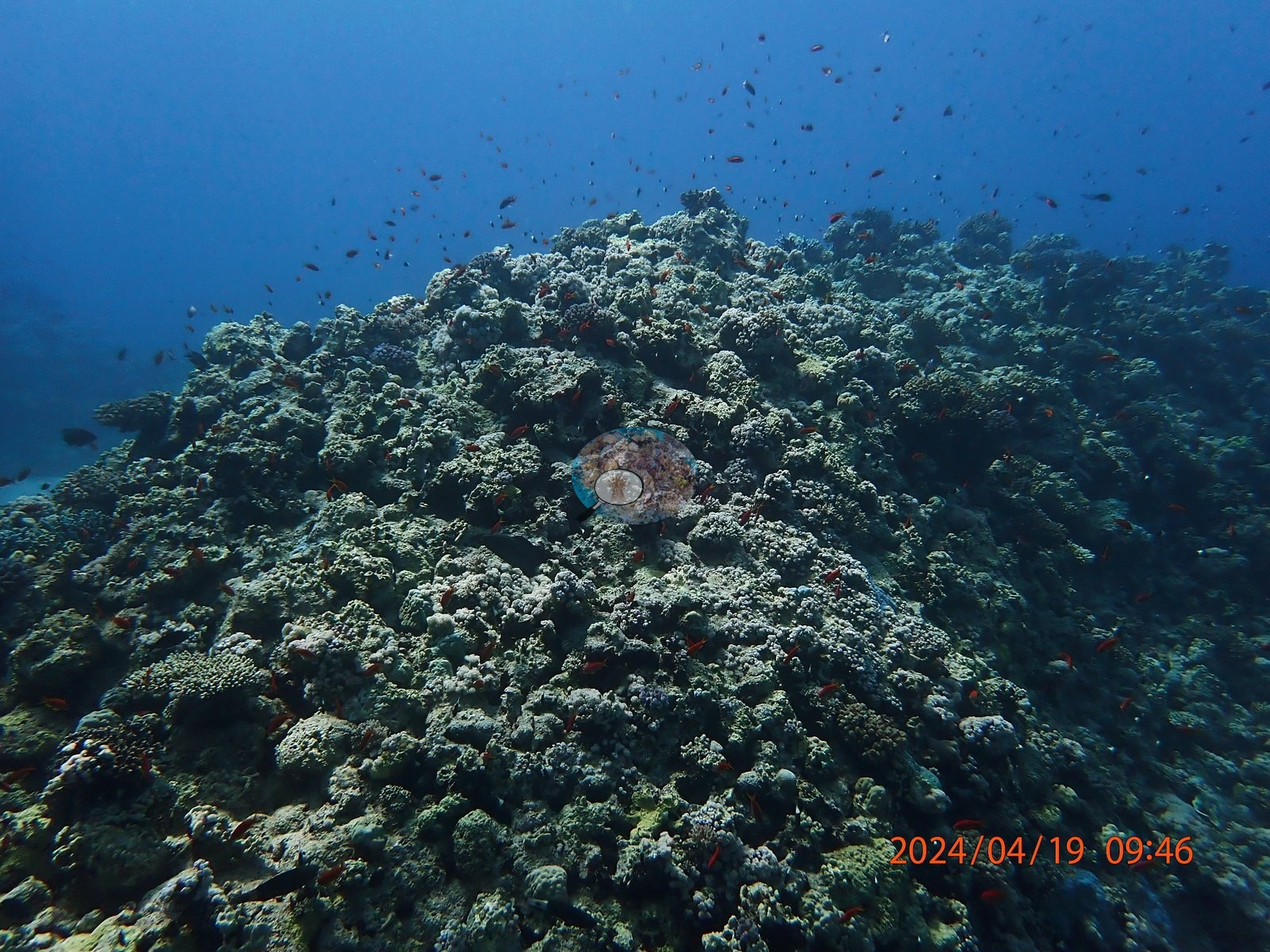
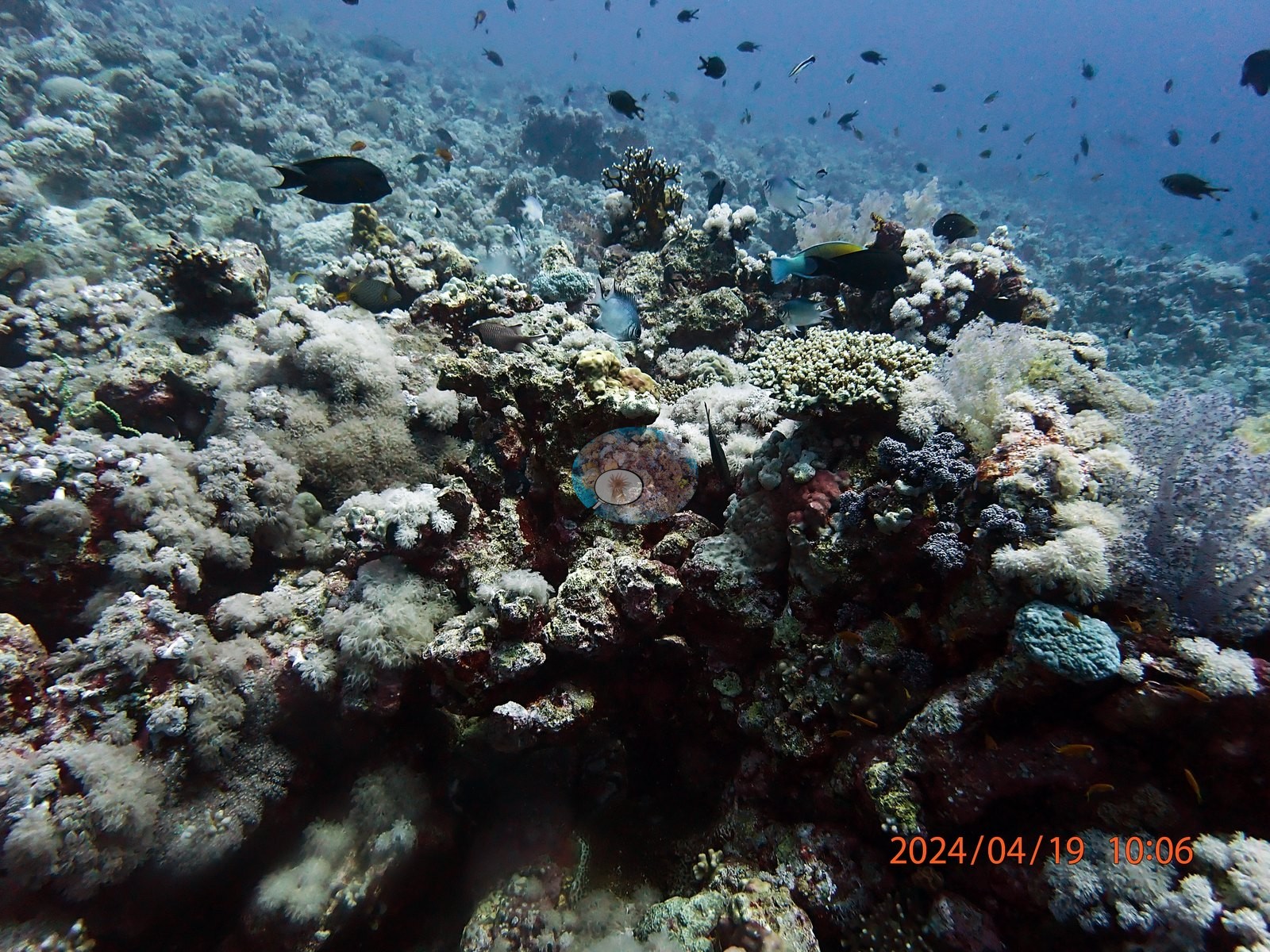
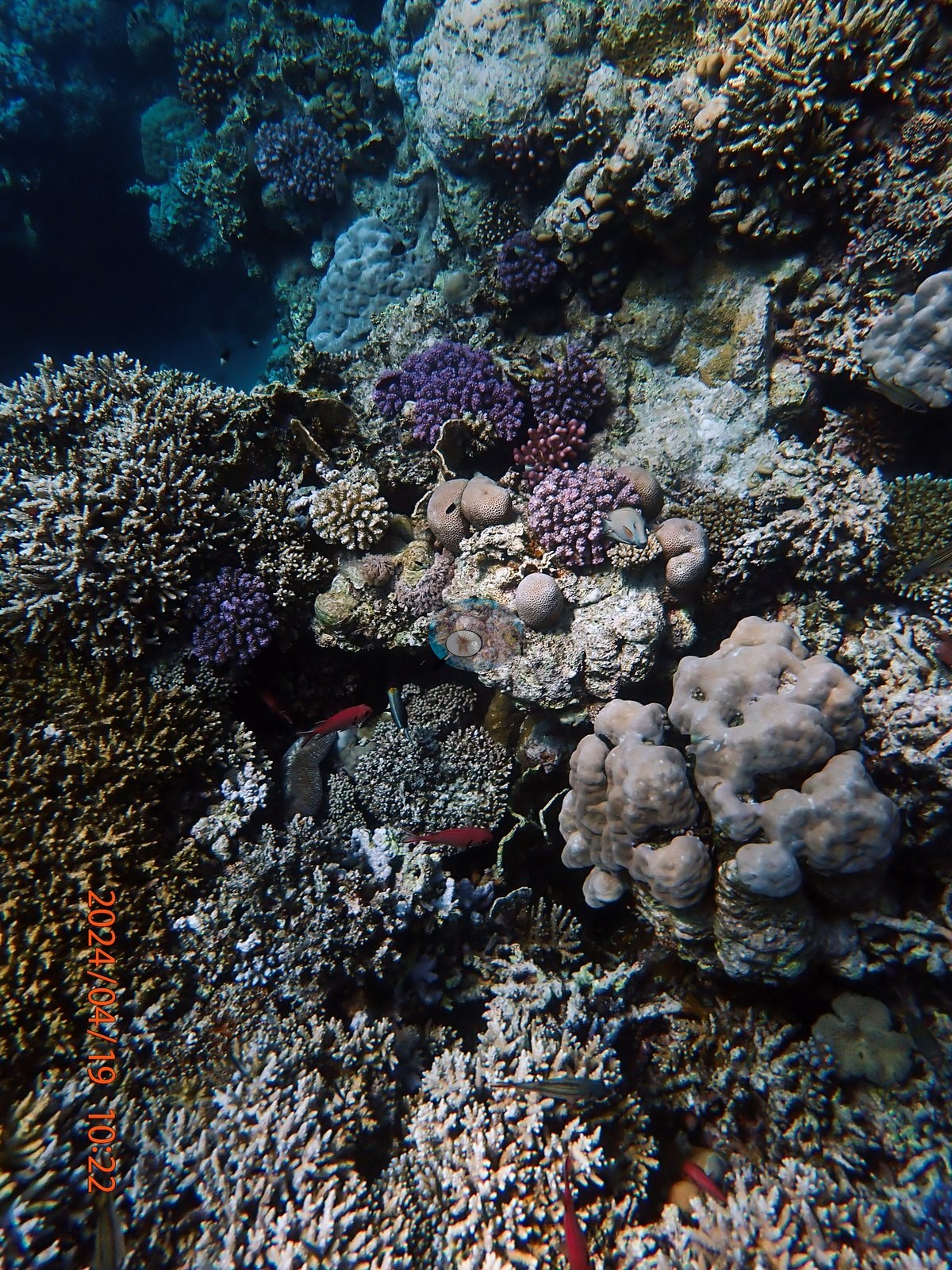
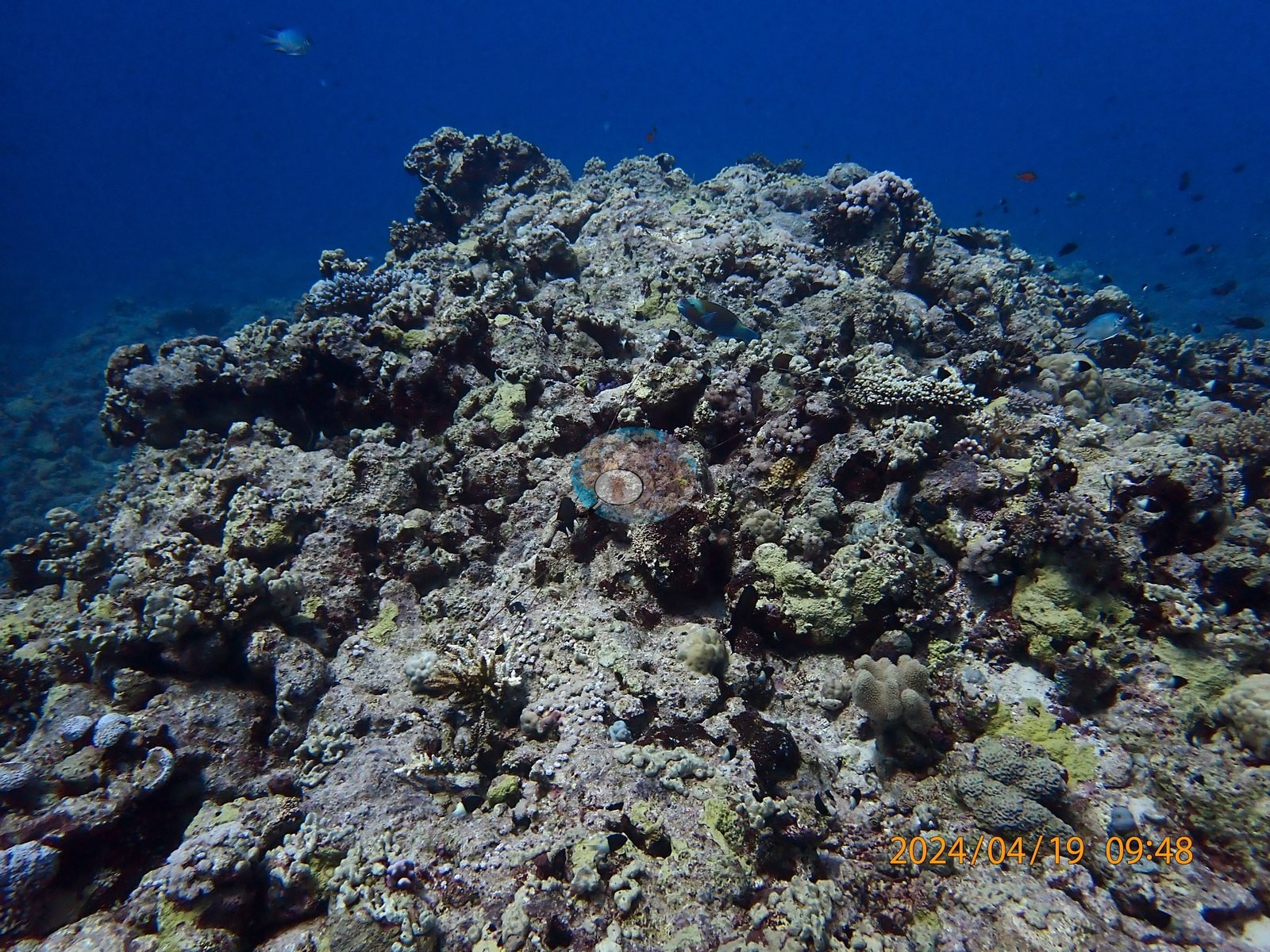
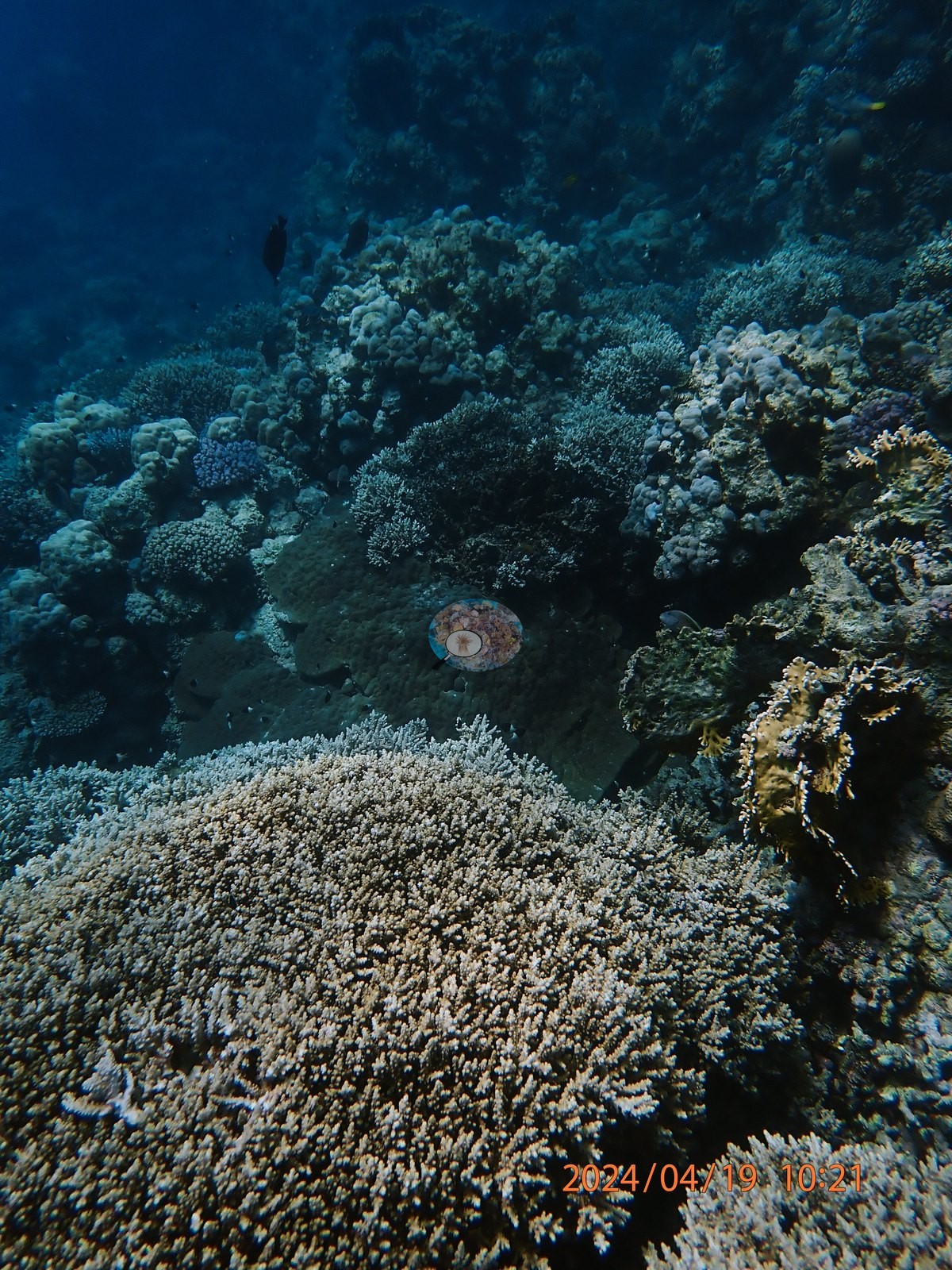
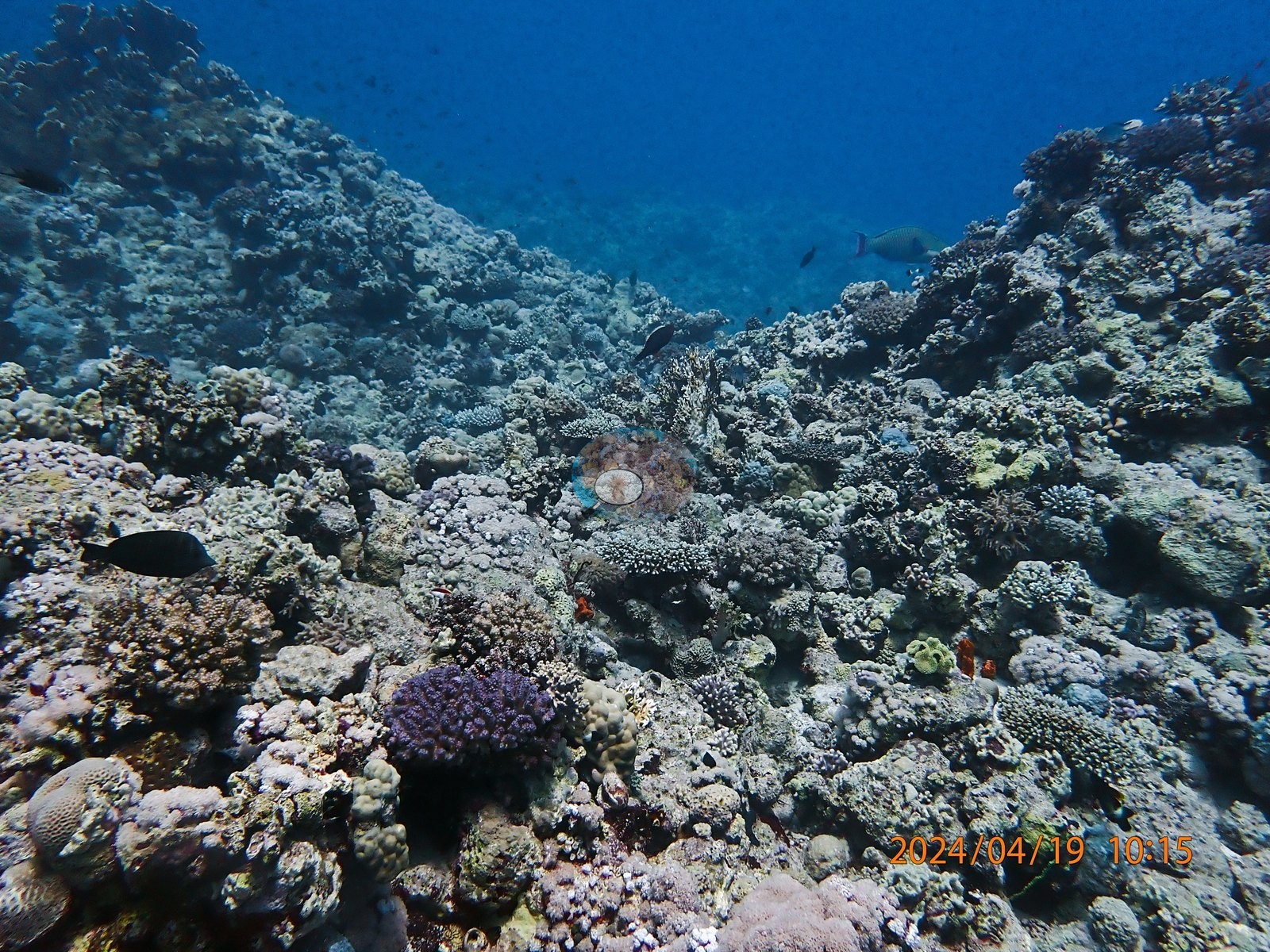
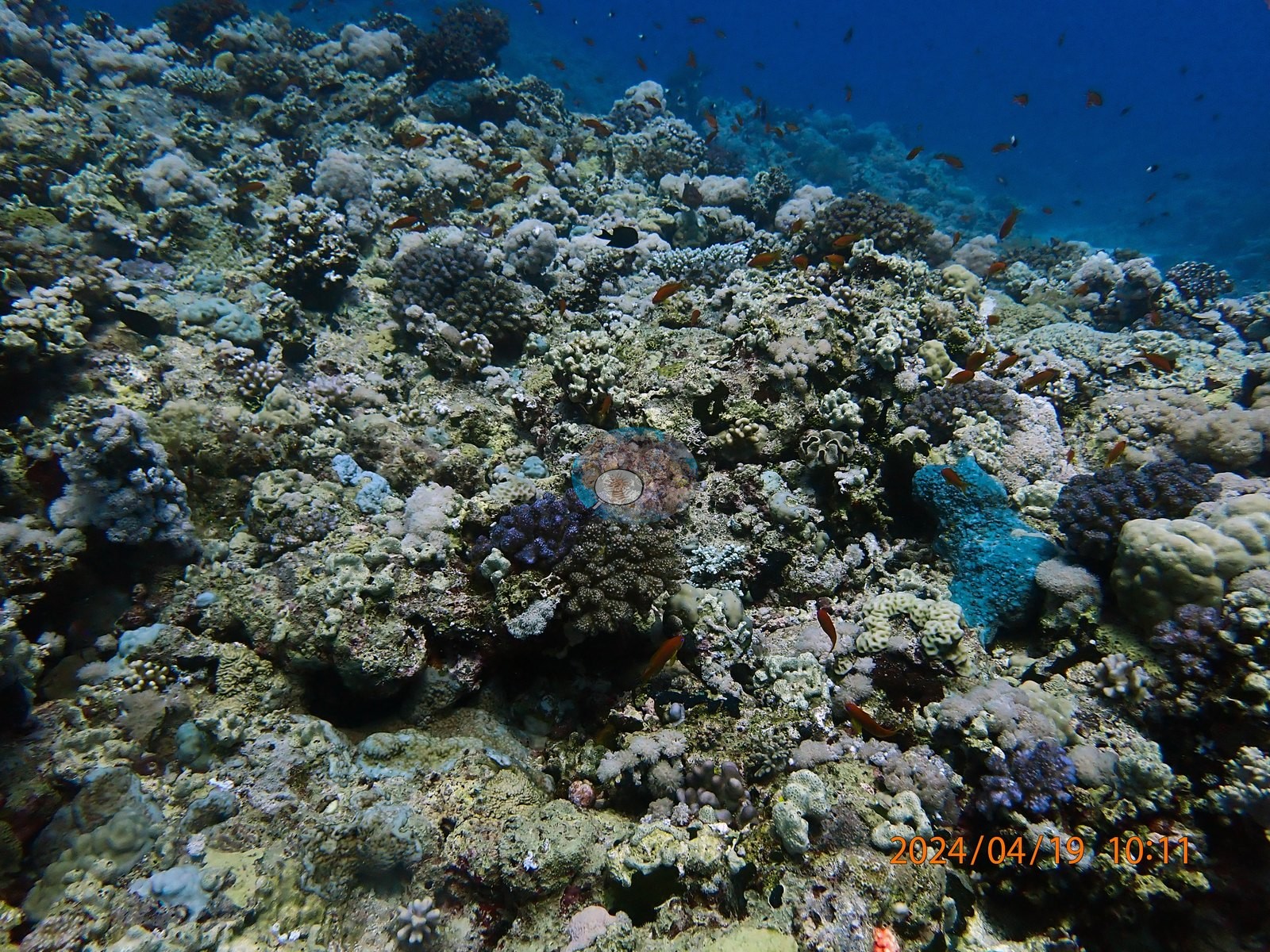
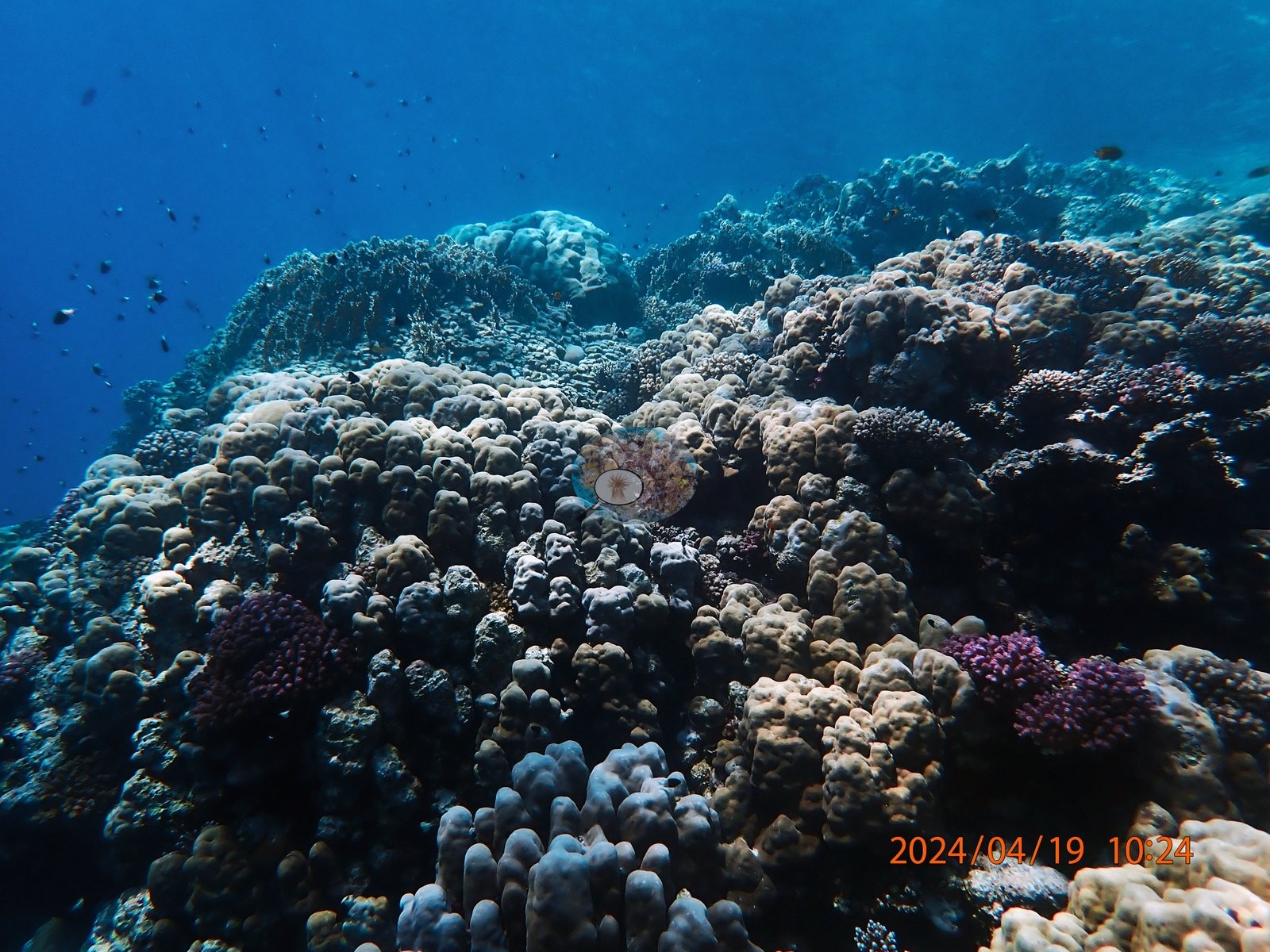
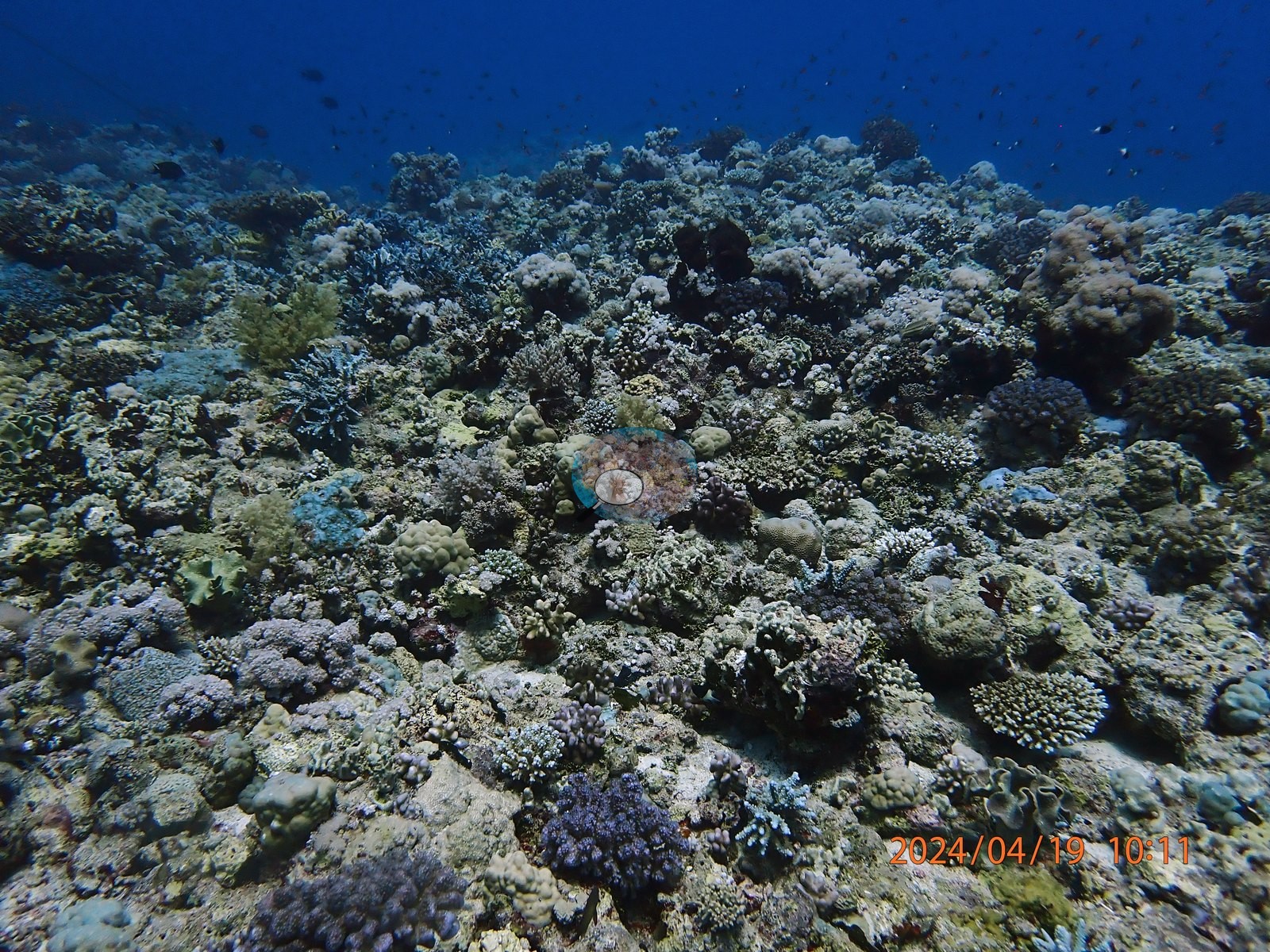
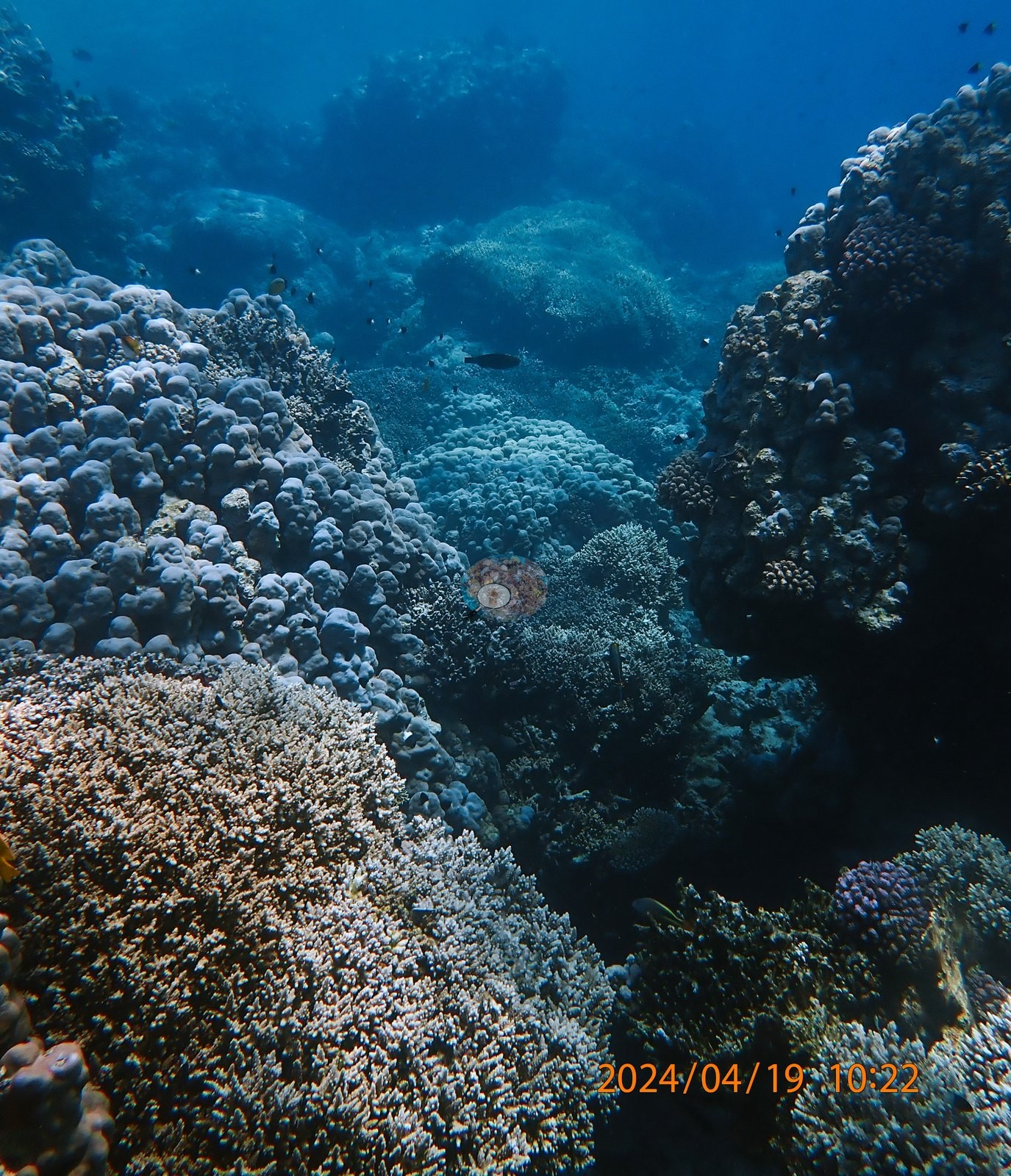
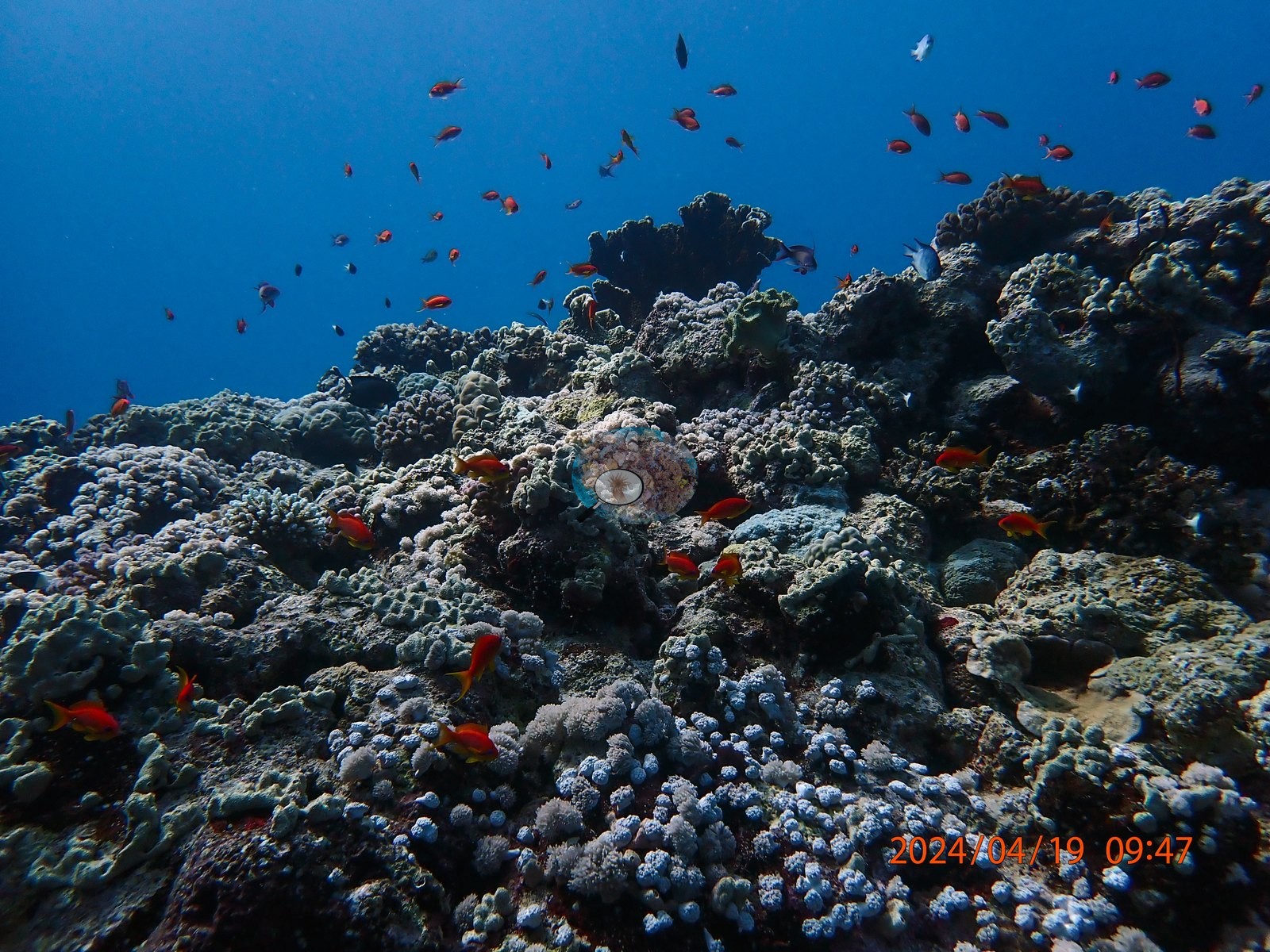
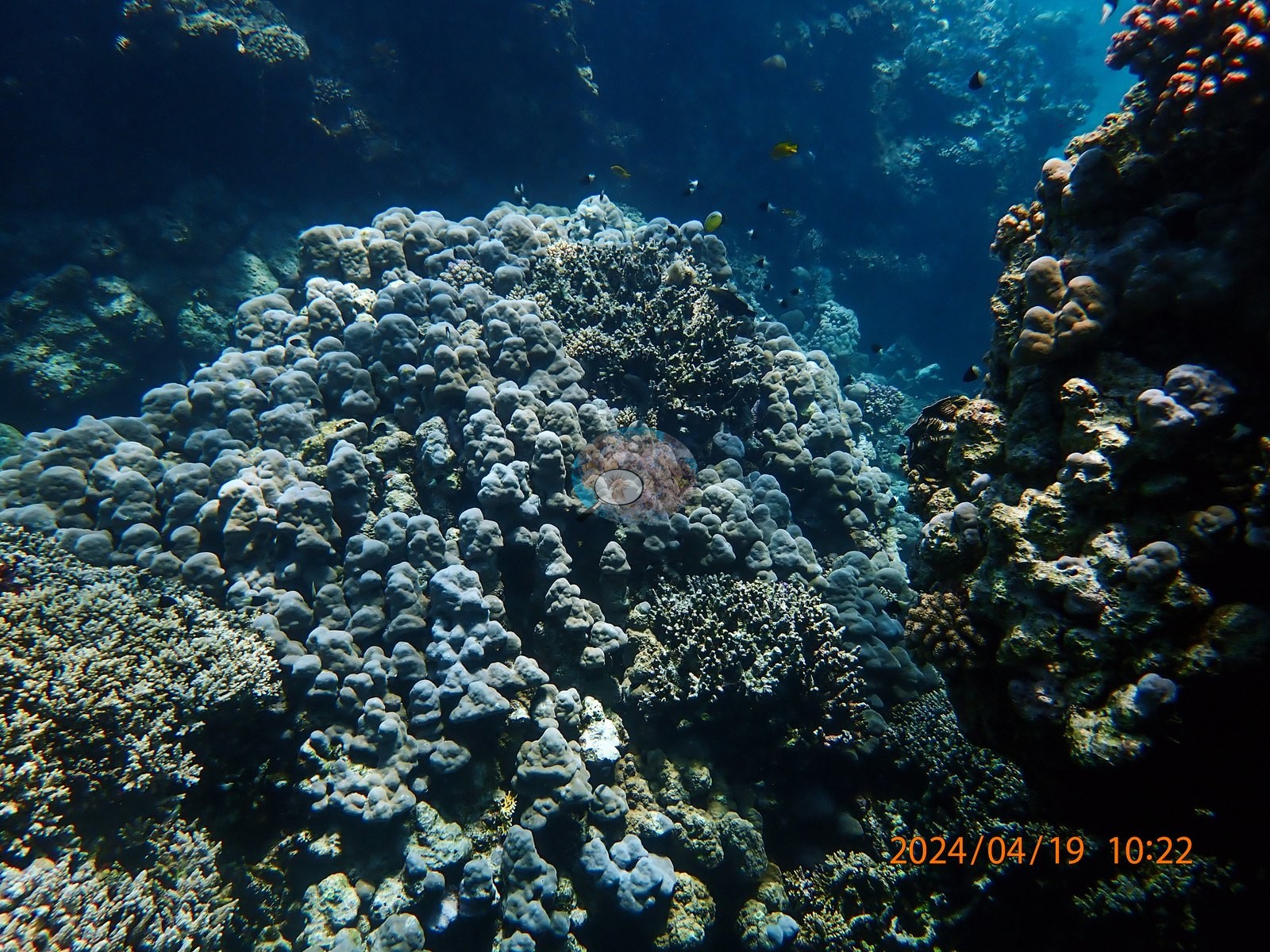
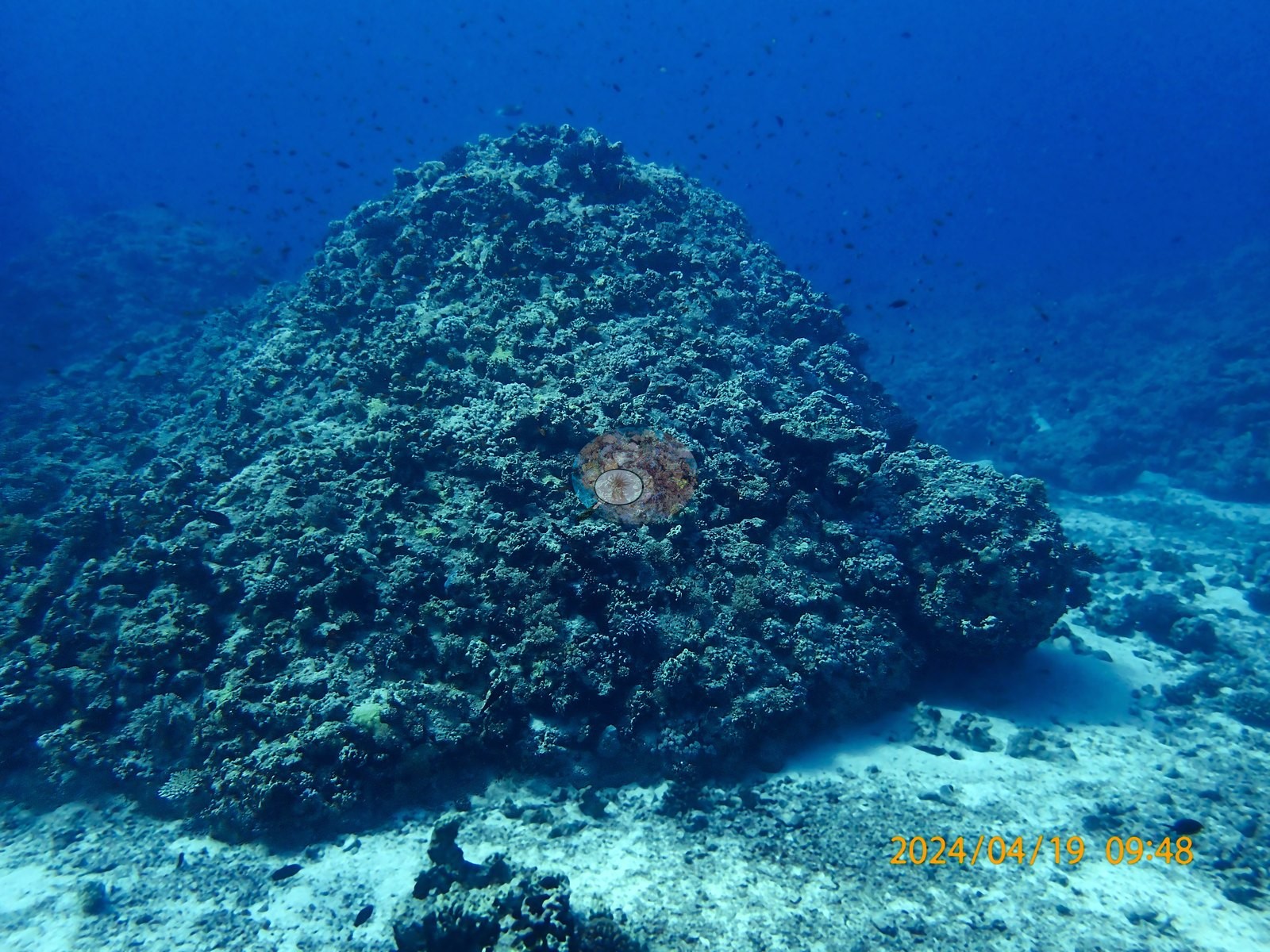
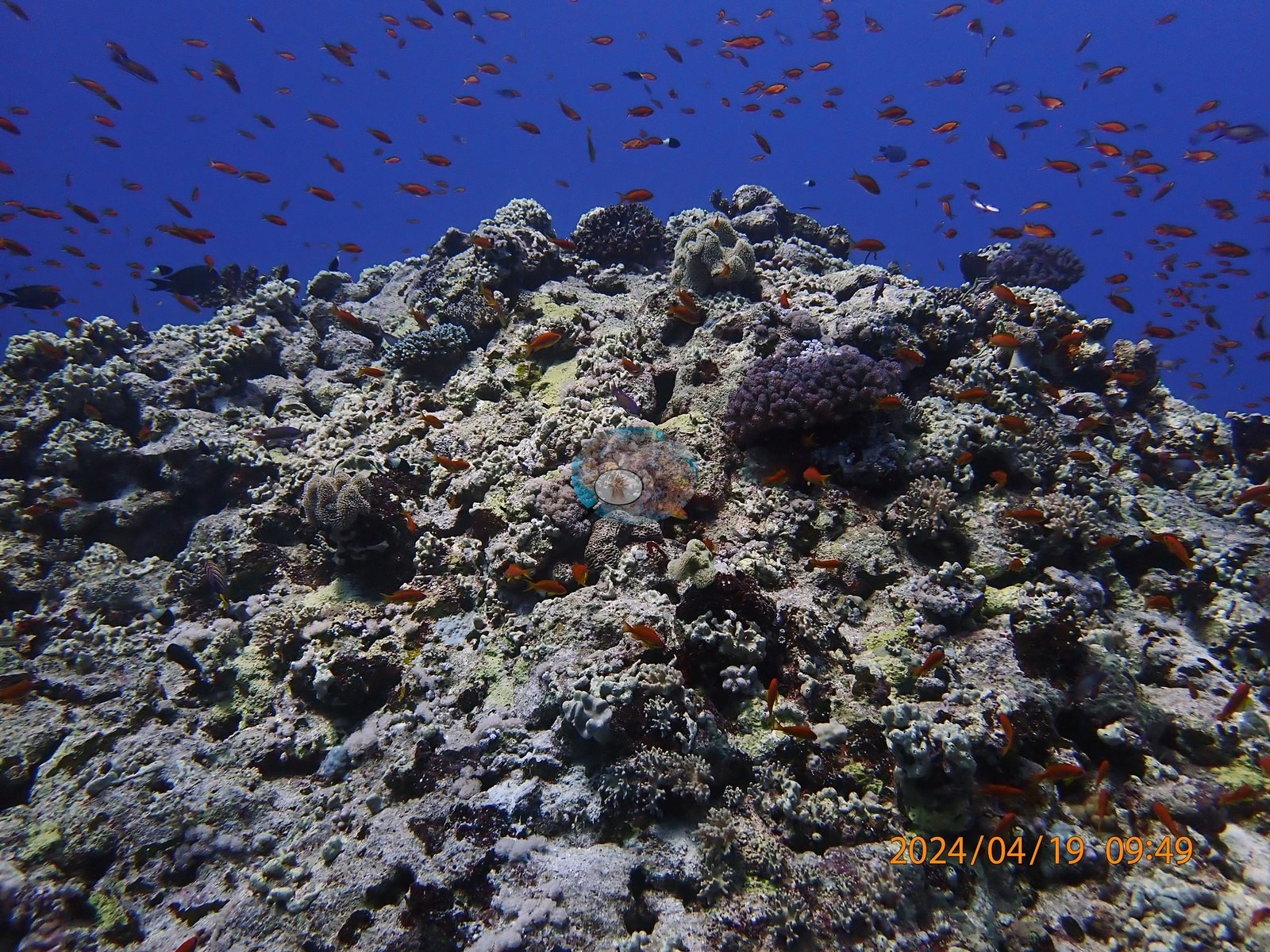
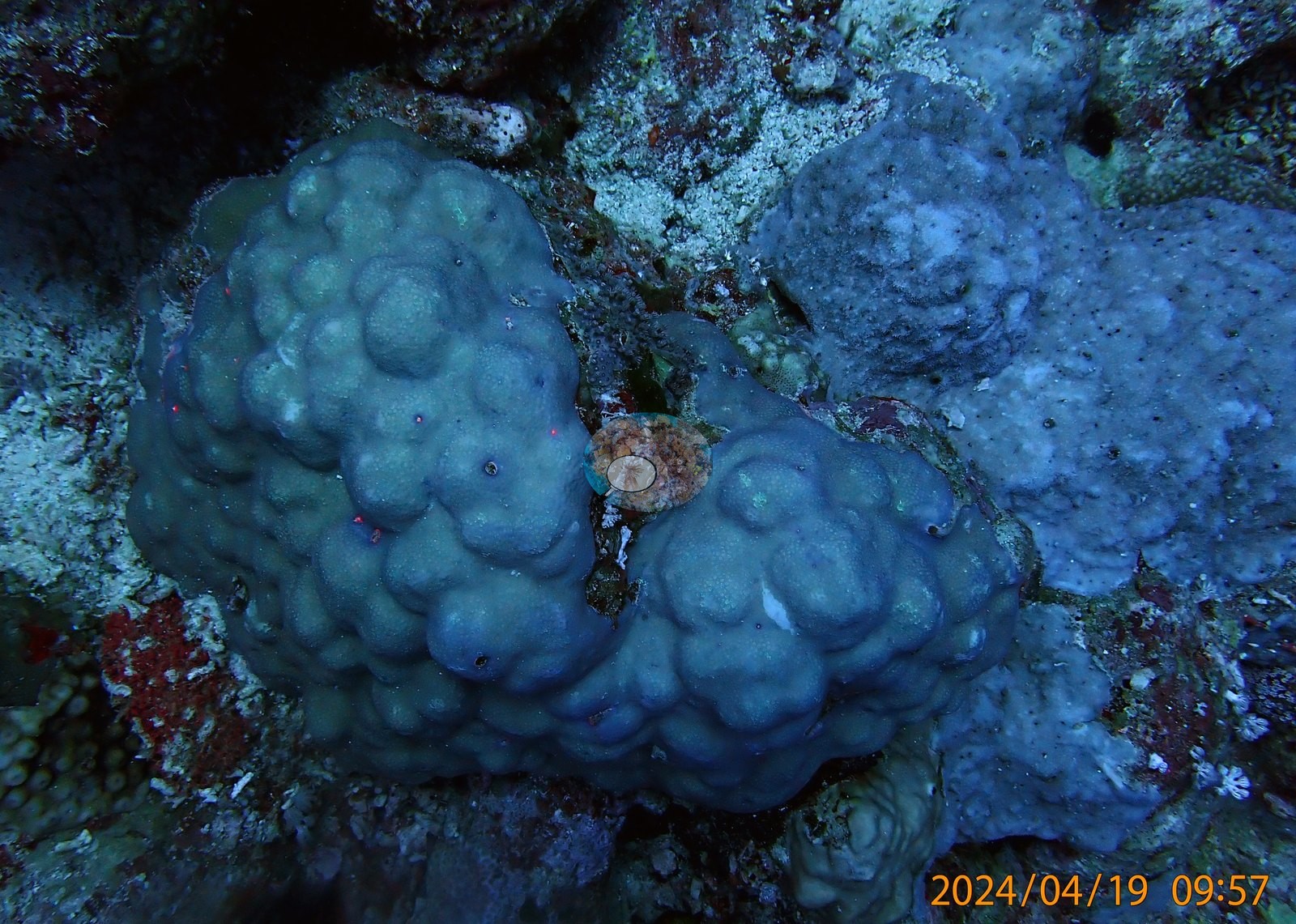
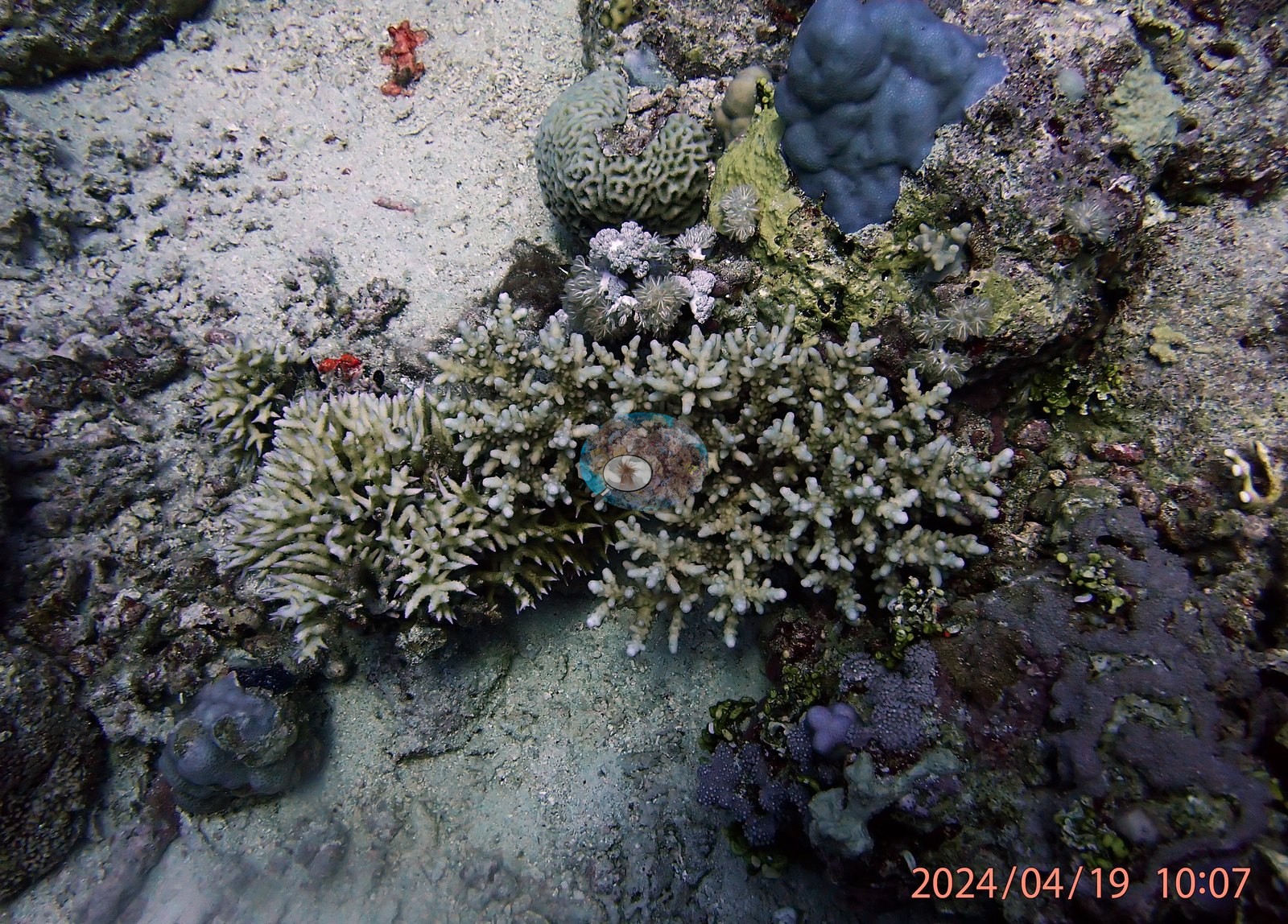
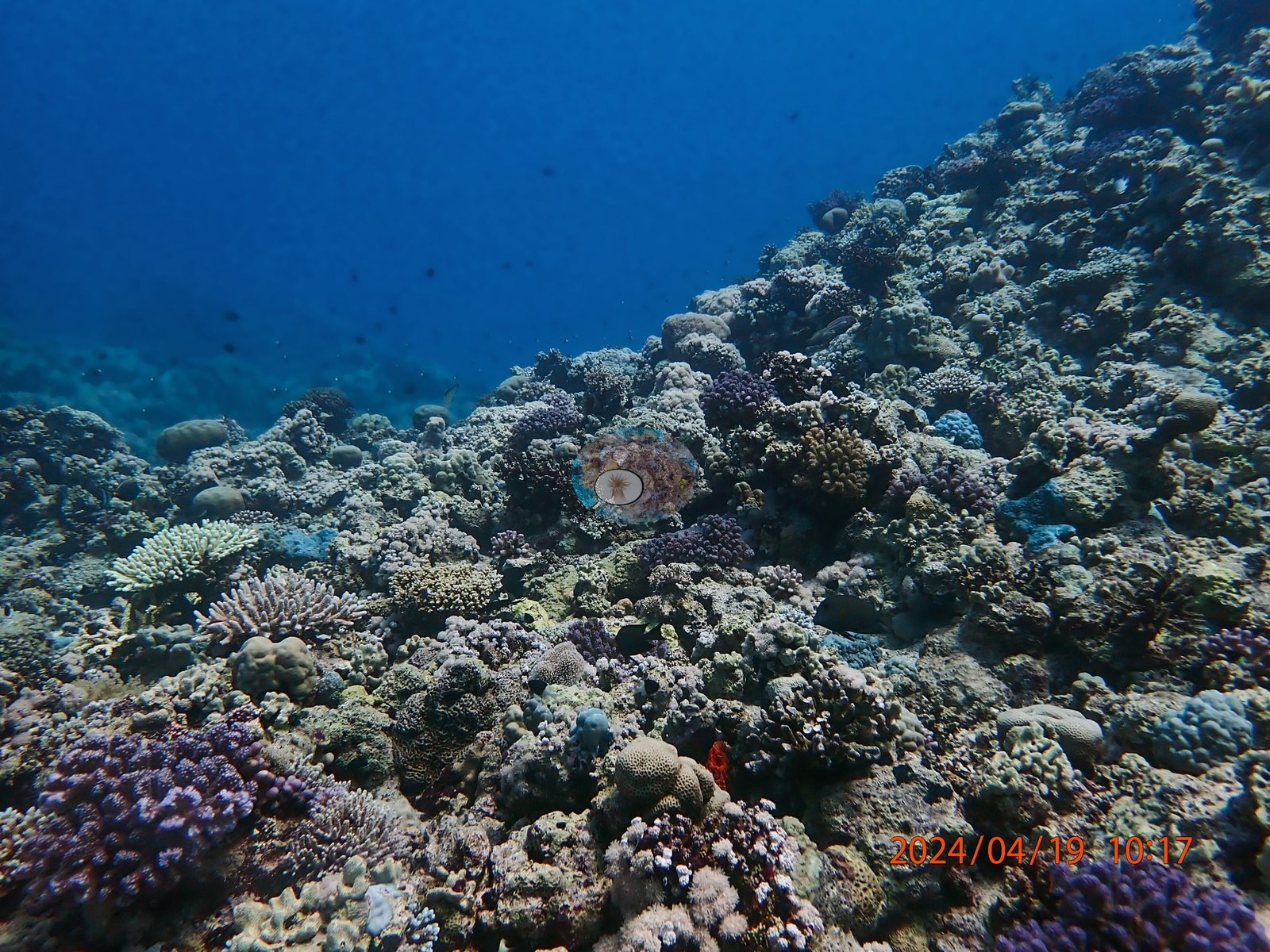
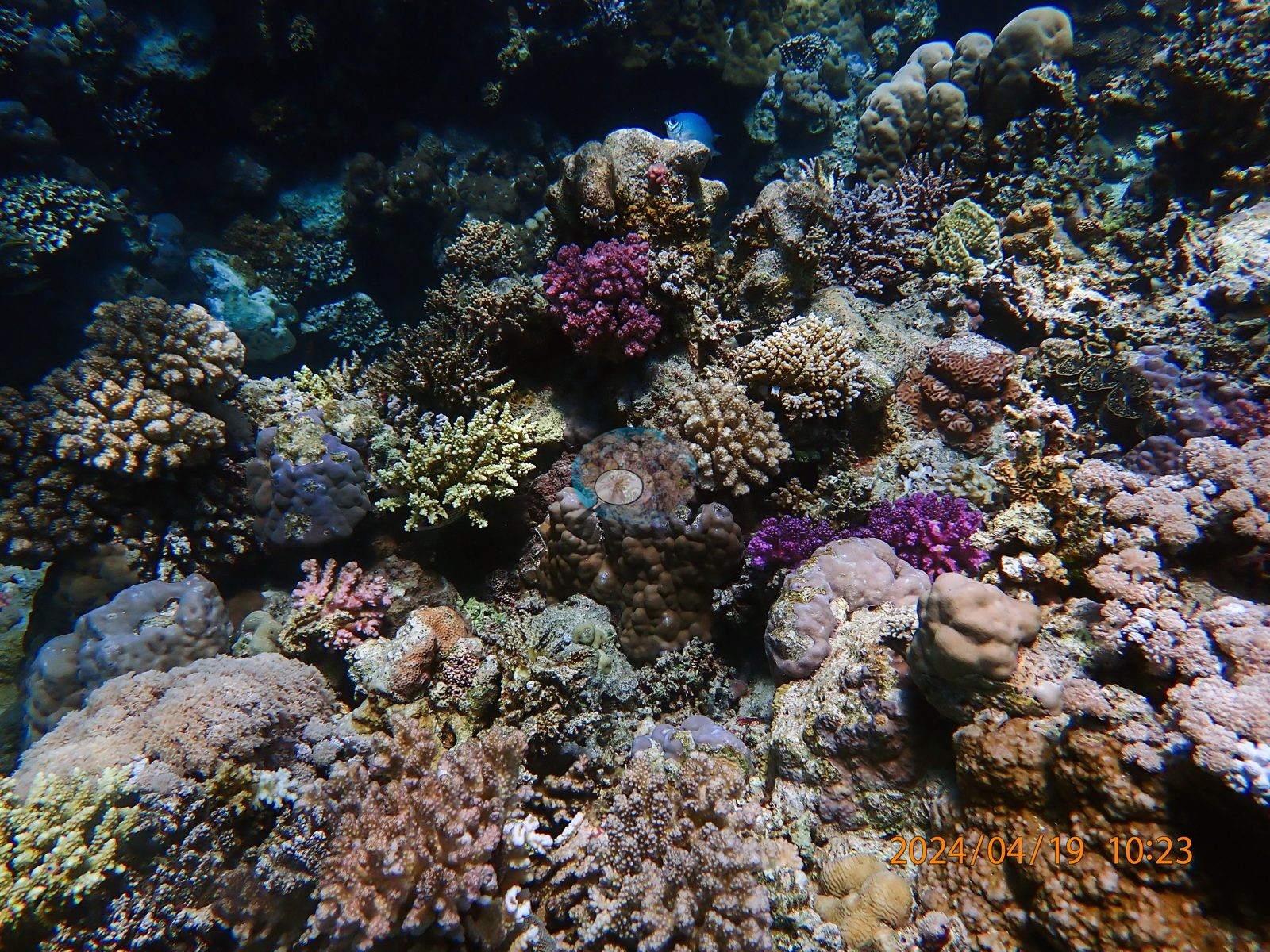
The reef is a long, isolated offshore reef with a broad rubble-and-pavement shoulder giving onto a coral-covered ridge that drops into blue water. The shoulder is dominated by dark, algal-filmed, and coralline-crusted framework with scattered small colonies — those are the near-zero frames. The ridge itself carries the coral: bushy and corymbose Acropora, knobby Porites, small pocilloporids, cream-tan arborescent soft corals (Litophyton/Nephthea-type) with polyps extended, and encrusting growth, with anthias and damselfish streaming over it (e.g., Image 2, Image 3).
Coral cover
- Reference: Mayfield (2025)
- Data file: (Mayfield, 2025-appendix A)
- CoralNet submission package (accession #5546)
- 18% ± 15% SD across 138 photographs.
Stressors
On the 19 April 2024 dive, the record shows no accumulated heat stress, water at 26.5°C, and yet 25% of coral tissue bleached.
Fish and other fauna
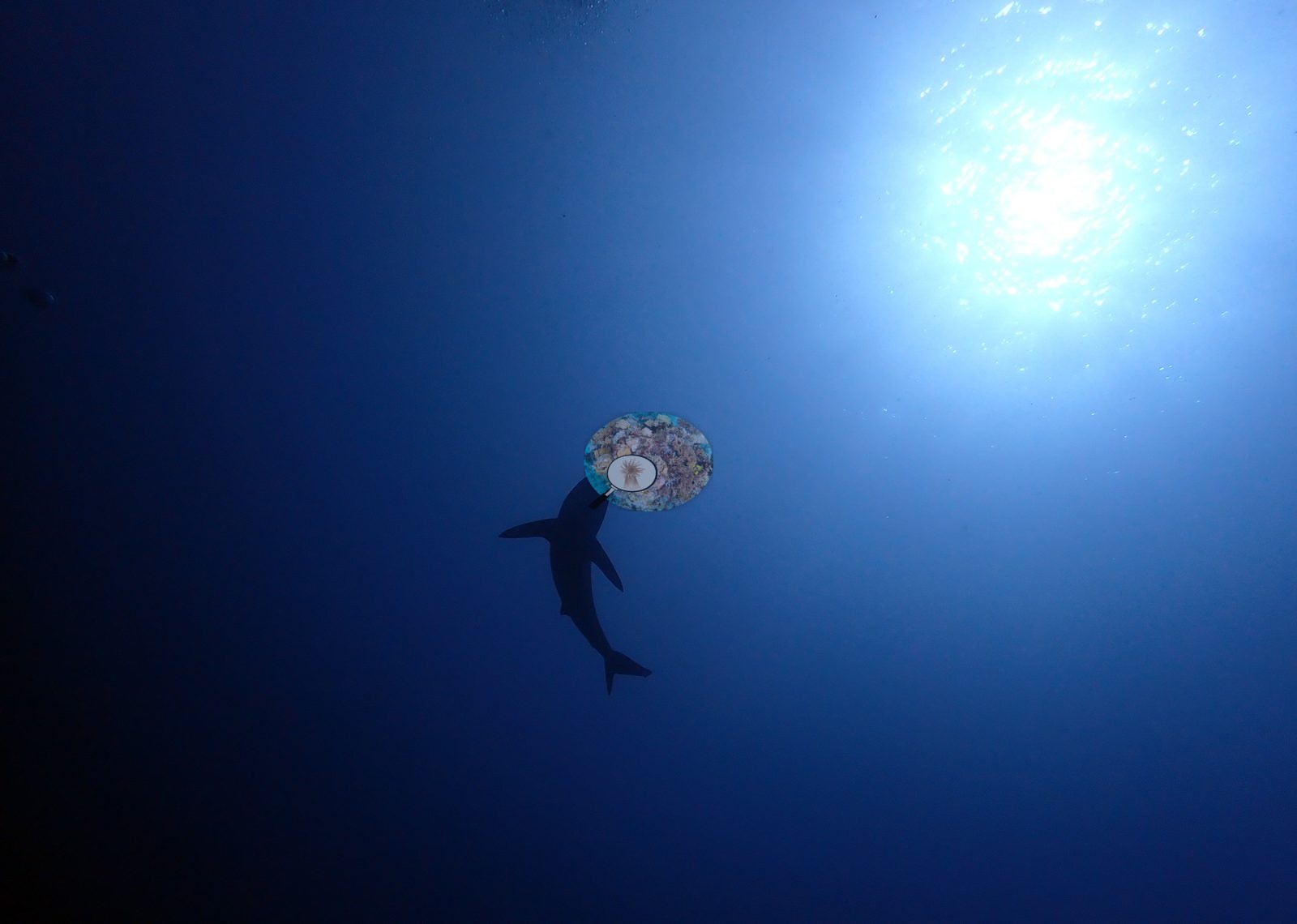
The site's set-piece is above the reef, not on it: a requiem shark passing in open blue, silhouetted against the surface (e.g., Image 1).
Pairs of masked butterflyfish (Chaetodon semilarvatus), a Red Sea endemic, work the deeper slope.
Comparisons with other data
Apart from our own published survey shown here, we found no other surveys at this site as of 2026. If you would like to share yours, please email us.
Dive record
A spring dive on 19 April 2024 with Umluj Dive Center, the first of a two-dive day that finished at Mr. Umluj. Anderson dived it again on 8 November 2024, to 32.4 m for 59 minutes, and logged too much macroalgae at depth and few big fish. Anderson had also swum the site on 7 October 2023 (logged as "Abua Galawa (Seven Sisters)", no photographs because the camera had been destroyed the day before) and noted swaths of fleshy green algae and patchy bleaching.
Other notes
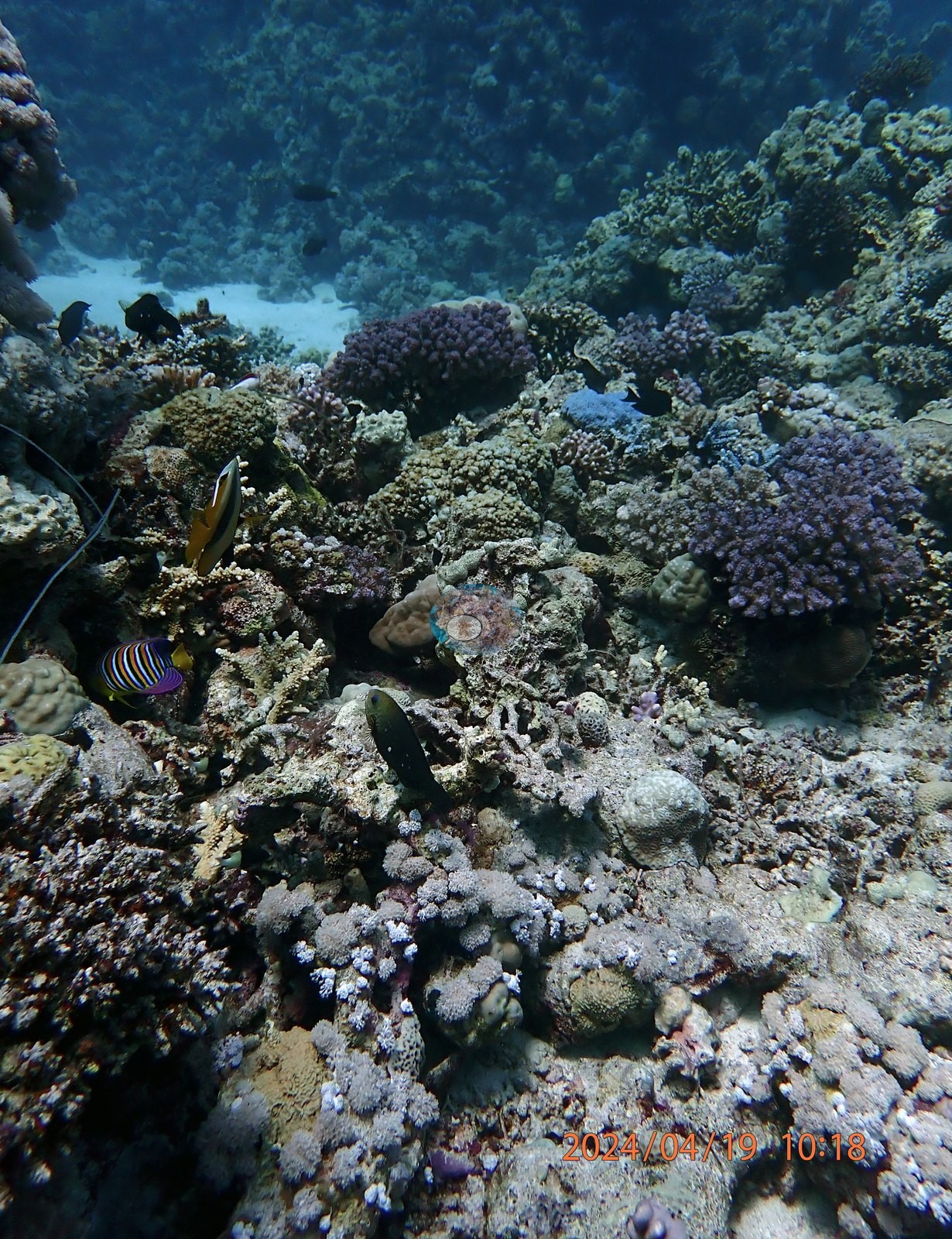
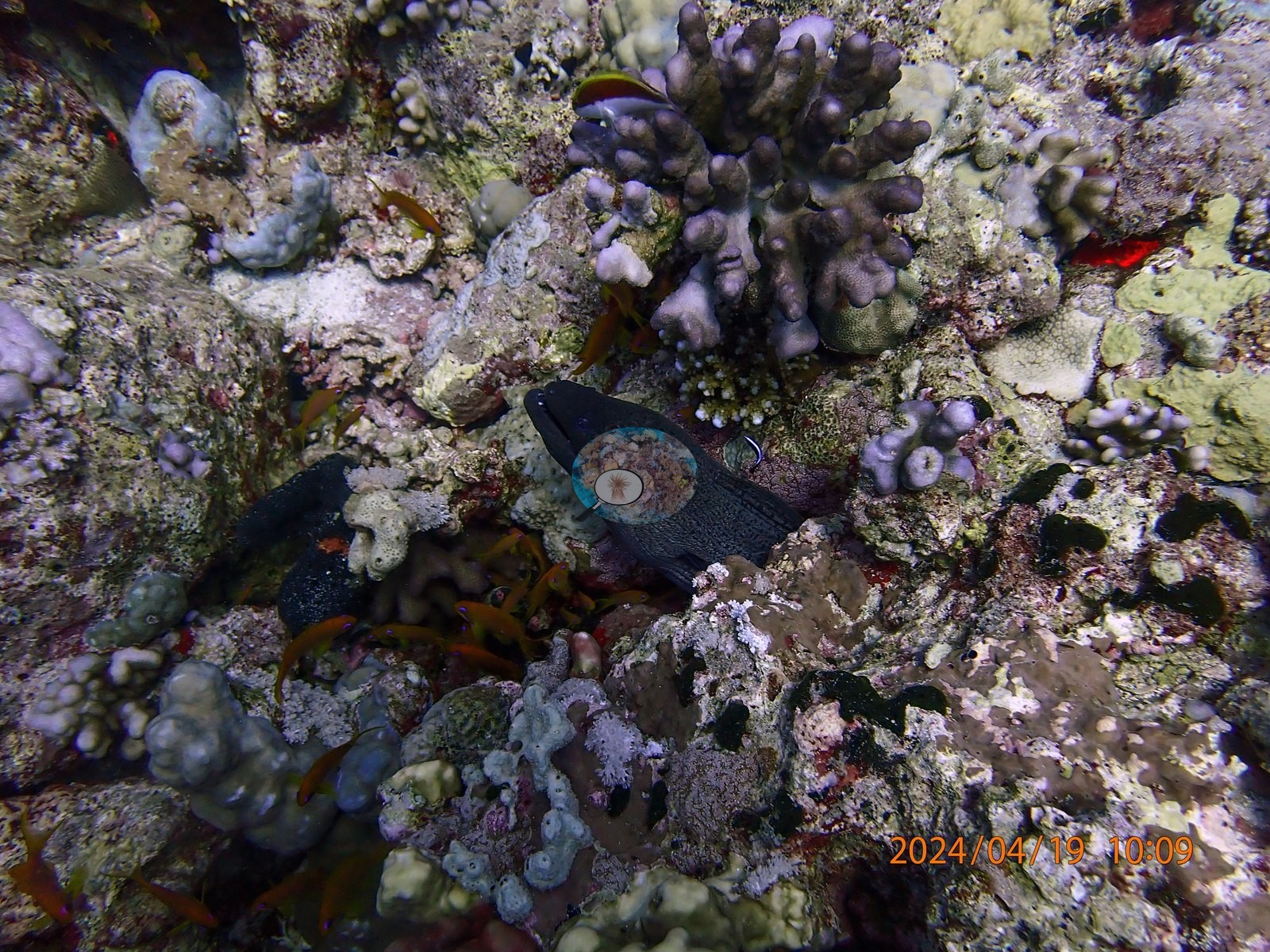
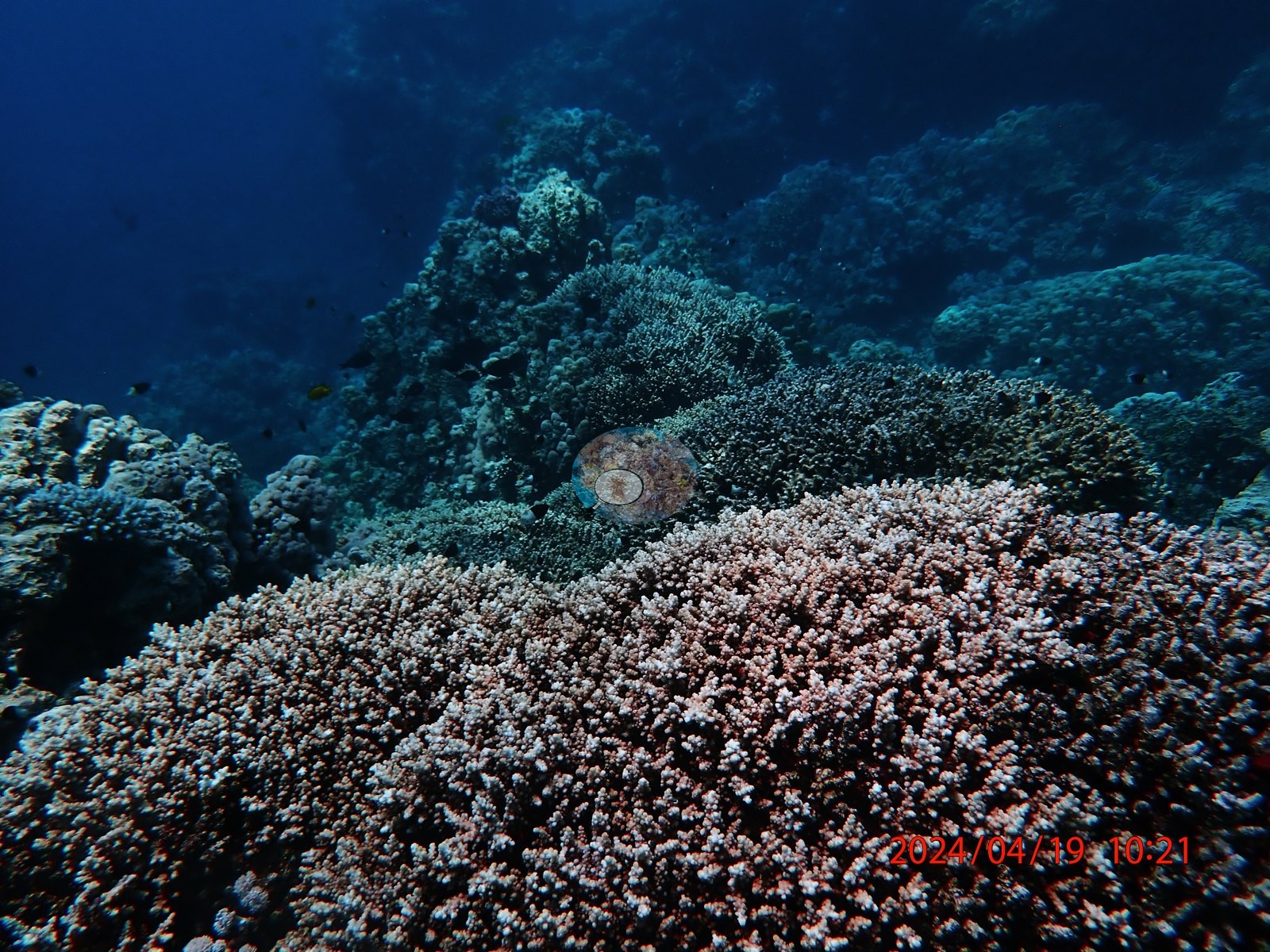
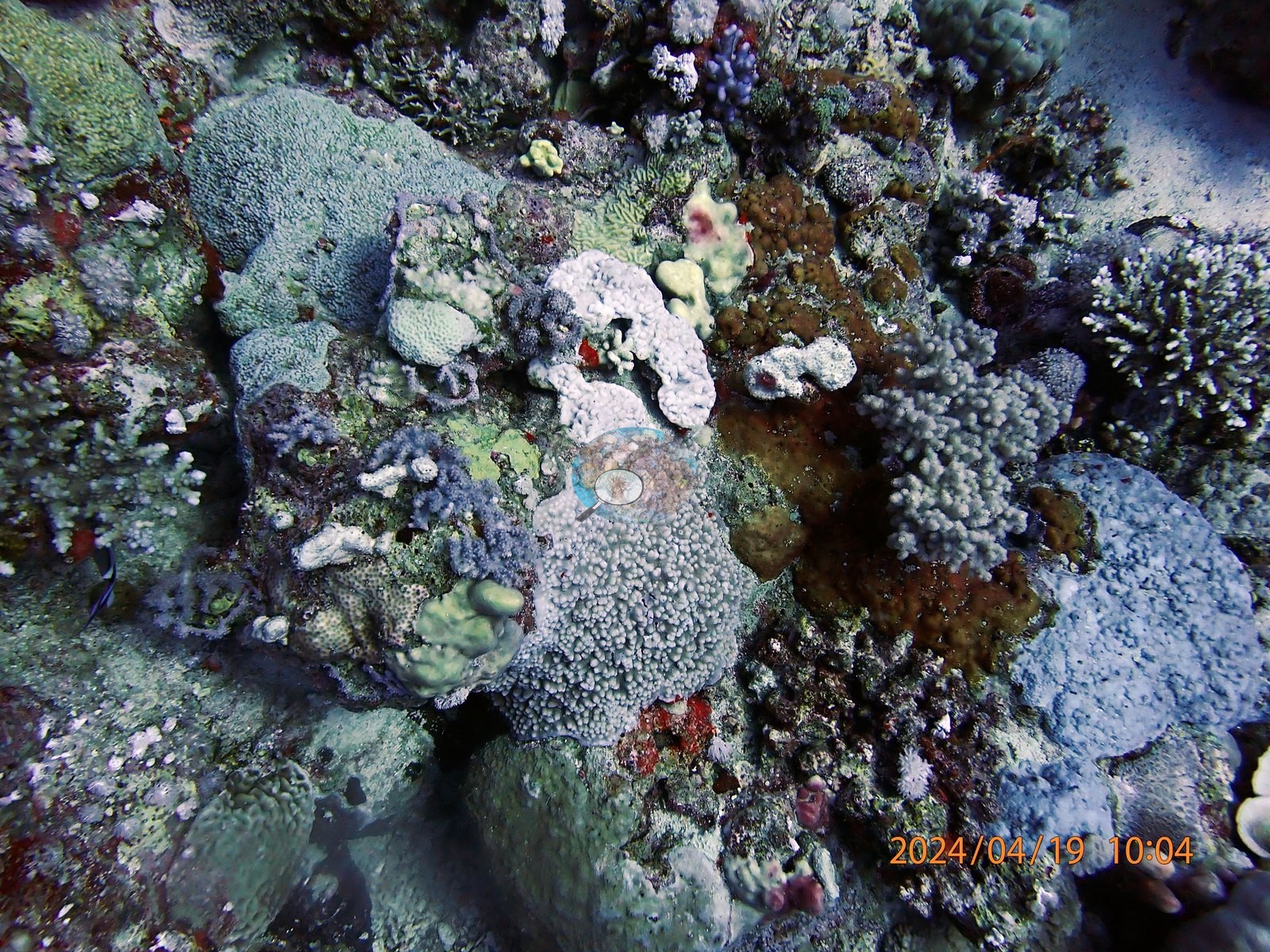
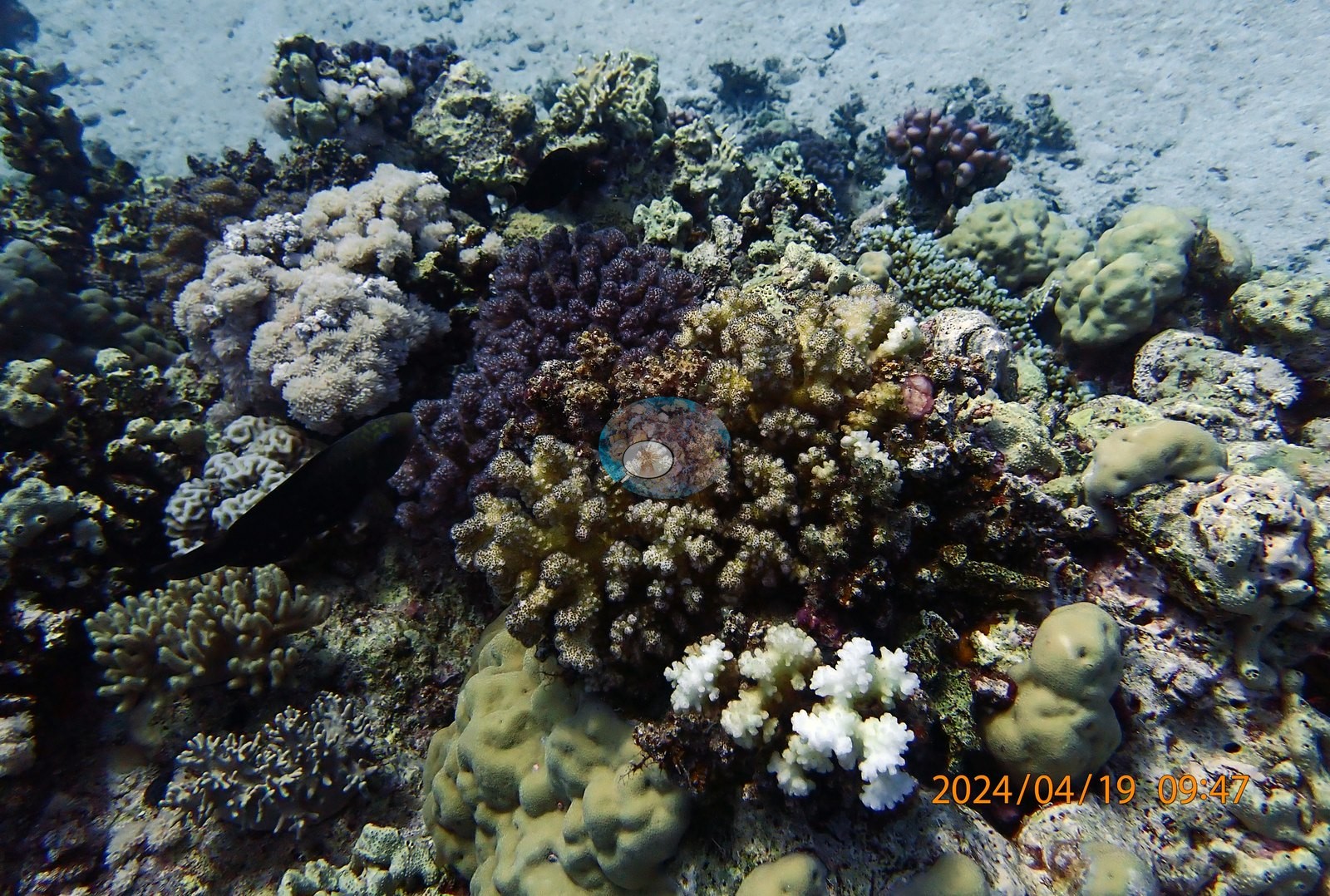
The photographs are un-strobed natural-light frames and many colonies read washed-out; even so, individual stark-white branching colonies stand out against pigmented neighbors, consistent with the published 25% (e.g., Image 26); another of Anderson's frames (not shown) shows a bleached pocilloporid.
CV model comparison
More info
The reference is this dive site's own published CoralNet point count by the author (Mayfield 2025, Environments 12:248, Appendix A; most frames annotated by CoralNet's AI, trained and checked by the author). The computer-vision rows are this site's own values: Claude is a blind point count of all of the site's edited photographs, and CoralSCOP is the site's finished survey of its edited photographs. They are on different frame sets from the published count, a row under 30 frames is indicative only, and no computer-vision method yet estimates coral cover accurately on new images.| Method | Hard coral cover (%) | Photos (n) ± SE |
|---|---|---|
| Published point count (CoralNet-assisted) | 18.1 | |
| CoralSCOP edited | 31.0 | n = 138 |
| Claude (edited photos) | 21.7 | n = 135 · SE 1.7 |
The two computer-vision methods differ by 9.3 pp (21.7–31.0%) and read 3.6–12.9 pp above the published point count (18.1%); the headline is the published point count because it is the site's published value (CoralNet-assisted: most frames were annotated by CoralNet's AI, trained and checked by the author).
See a more detailed, stand-alone version of this table.
Data & links
All images from Coral Reef Diagnostics. Data are from Coral Reef Diagnostics.
© Coral Reef Diagnostics.