
Saudi Red Sea - Abu Ejeiah (Thuwal)
Part of the regional summaries: Saudi Arabia - Jeddah / KAUST (Thuwal) / Rabigh, Saudi Arabia, and Red Sea
2024-02-23
2024-07-26
2024-10-04
More info
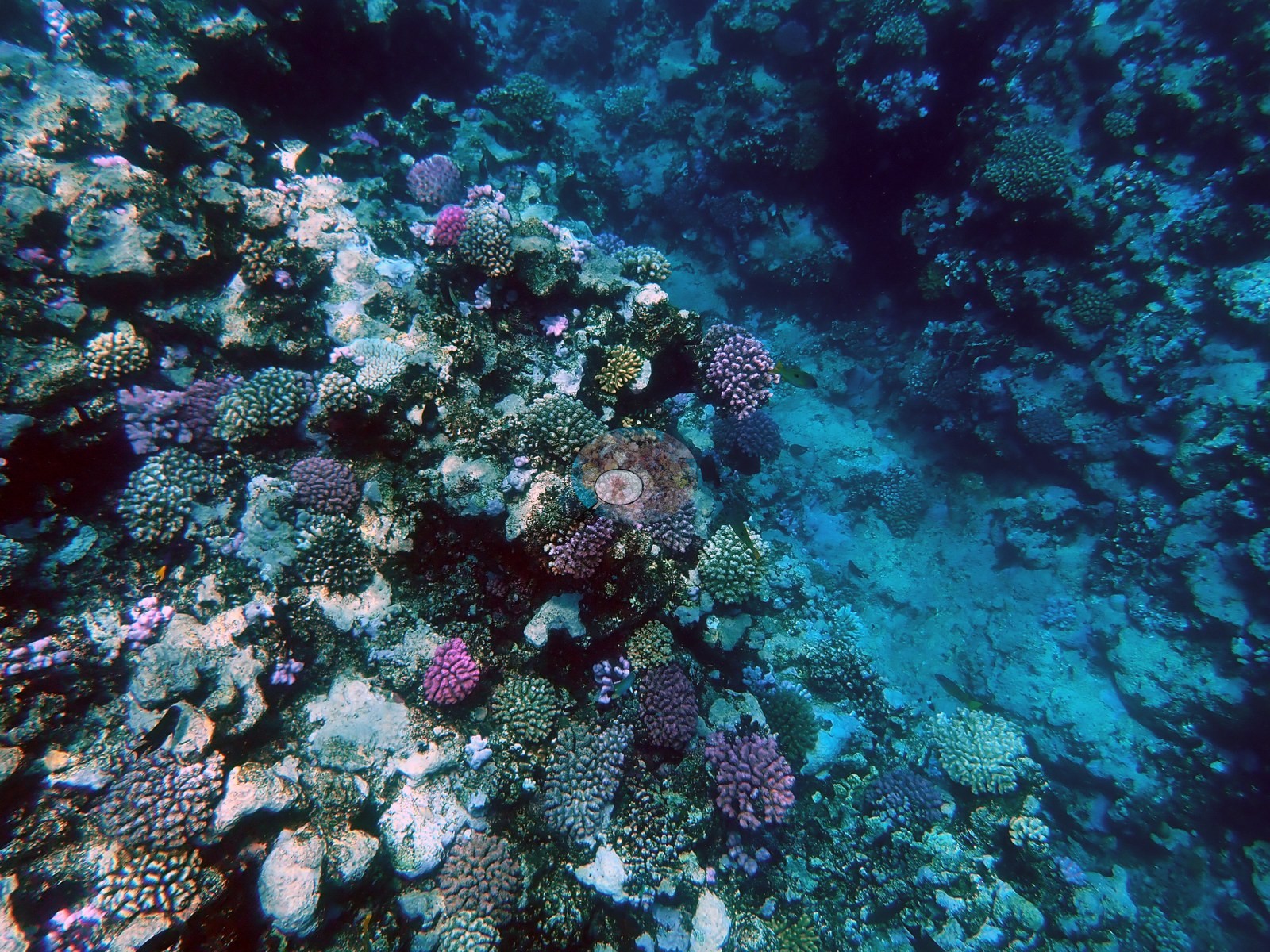
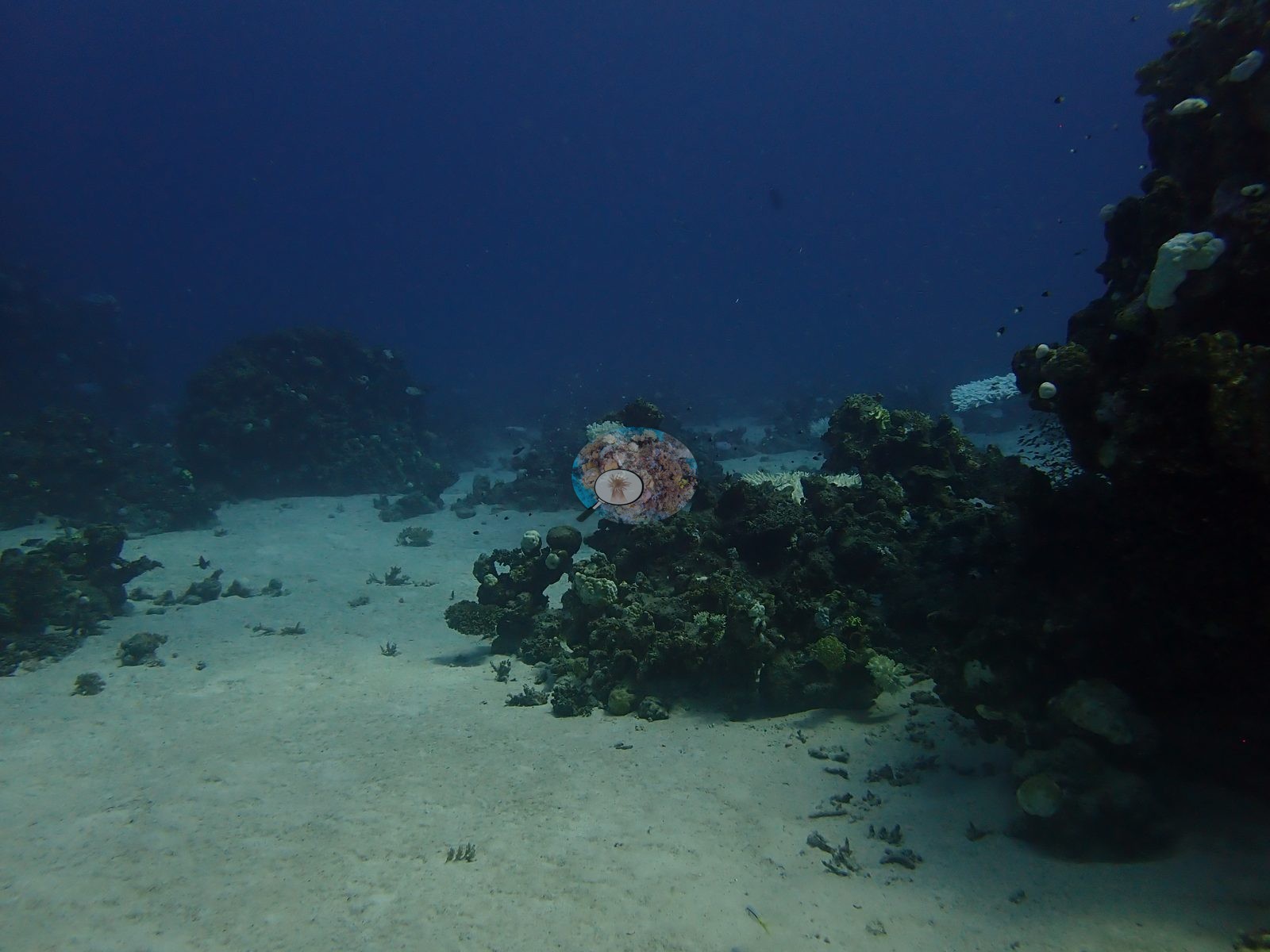
Makkah-Madine Saudi Arabia (NOAA CRW virtual station) · Northern and Central Red Sea ecoregion mean=12.2°C-heating weeksAbu Ejeiah is a steep offshore Thuwal reef surveyed repeatedly through the 2023-24 Red Sea bleaching event, its coral concentrated in dense pocilloporid and small-Acropora clusters on ridges separated by wide aprons of bare rubble and pavement - a mosaic that keeps published cover modest (15.2%). The site's condition swung sharply across visits: busy, fish-rich frames in September 2023 and February 2024 gave way to a near-bare rubble plain by July 2024, and the paper reports bleaching ranging from 12.7% to 69.5% of coral tissue across the four visits.
أبو أجيعة هو شعبة مرجانية بحرية شديدة الانحدار قبالة سواحل ثول (Thuwal)، جرى مسحها مرارًا خلال حدث ابيضاض البحر الأحمر 2023 و2024، حيث يتركز مرجانها في تجمعات كثيفة من الشعاب من نوع Pocilloporid وأنواع Acropora الصغيرة على السلاسل الصخرية التي تفصلها مساحات واسعة من الركام العاري والأرضية الصخرية المسطحة - وهي فسيفساء تُبقي نسبة التغطية المنشورة متواضعة (15.2%).
ترجمة هذا الملخص بالذكاء الاصطناعي؛ النص الإنجليزي هو المعتمد. Translated from the site’s shorter map summary.
One independent survey station shown with the program’s logo — click one to see how far it is from this site.
8 of these 9 photographs are shown beside the text that discusses them under "Site description" below.
Site description
Setting
A steep offshore fringing reef in the Thuwal complex, worked repeatedly between September 2023 and October 2024 with Coastline (KAUST) and photographed on three of those visits.
General benthic features
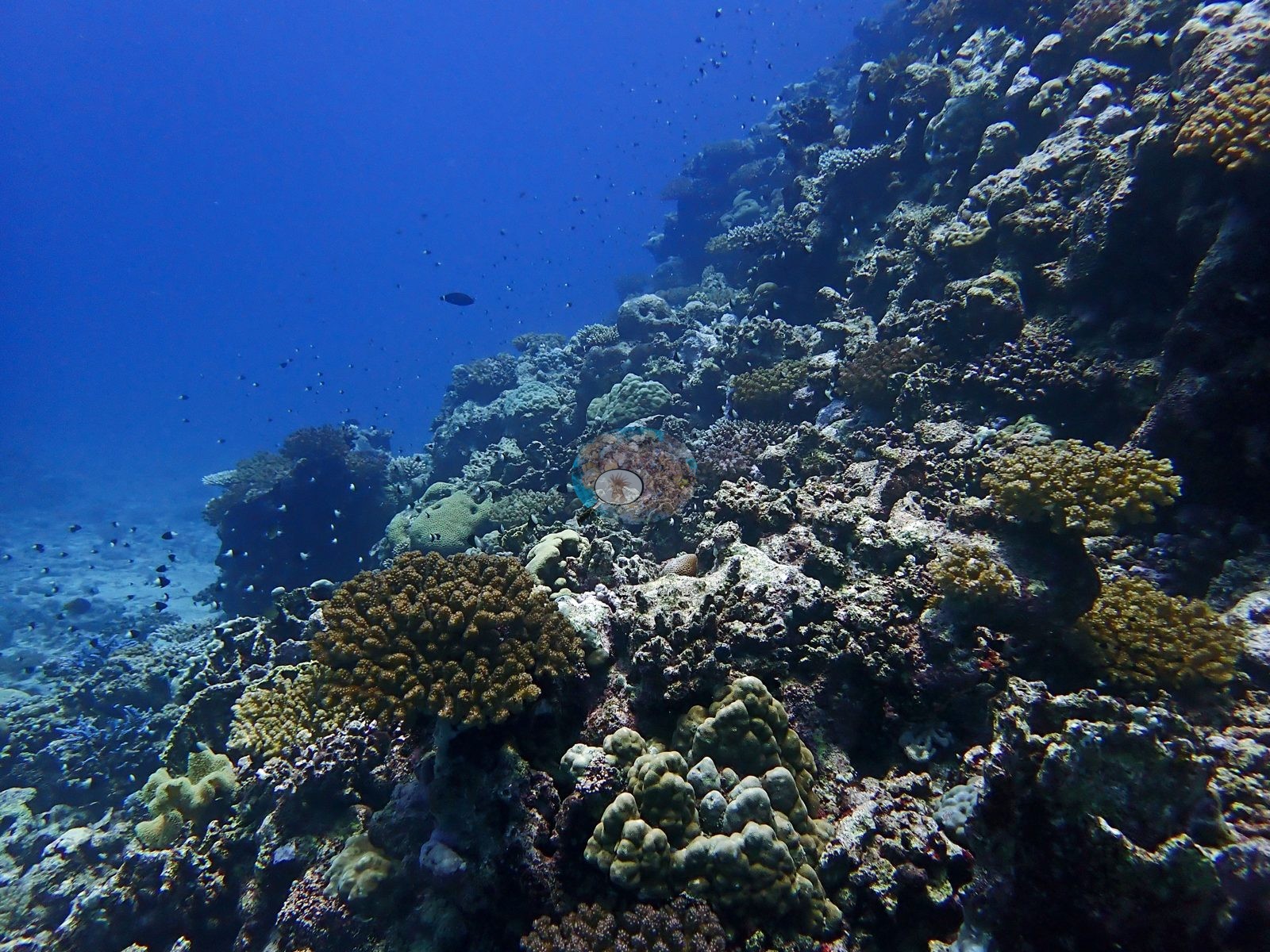
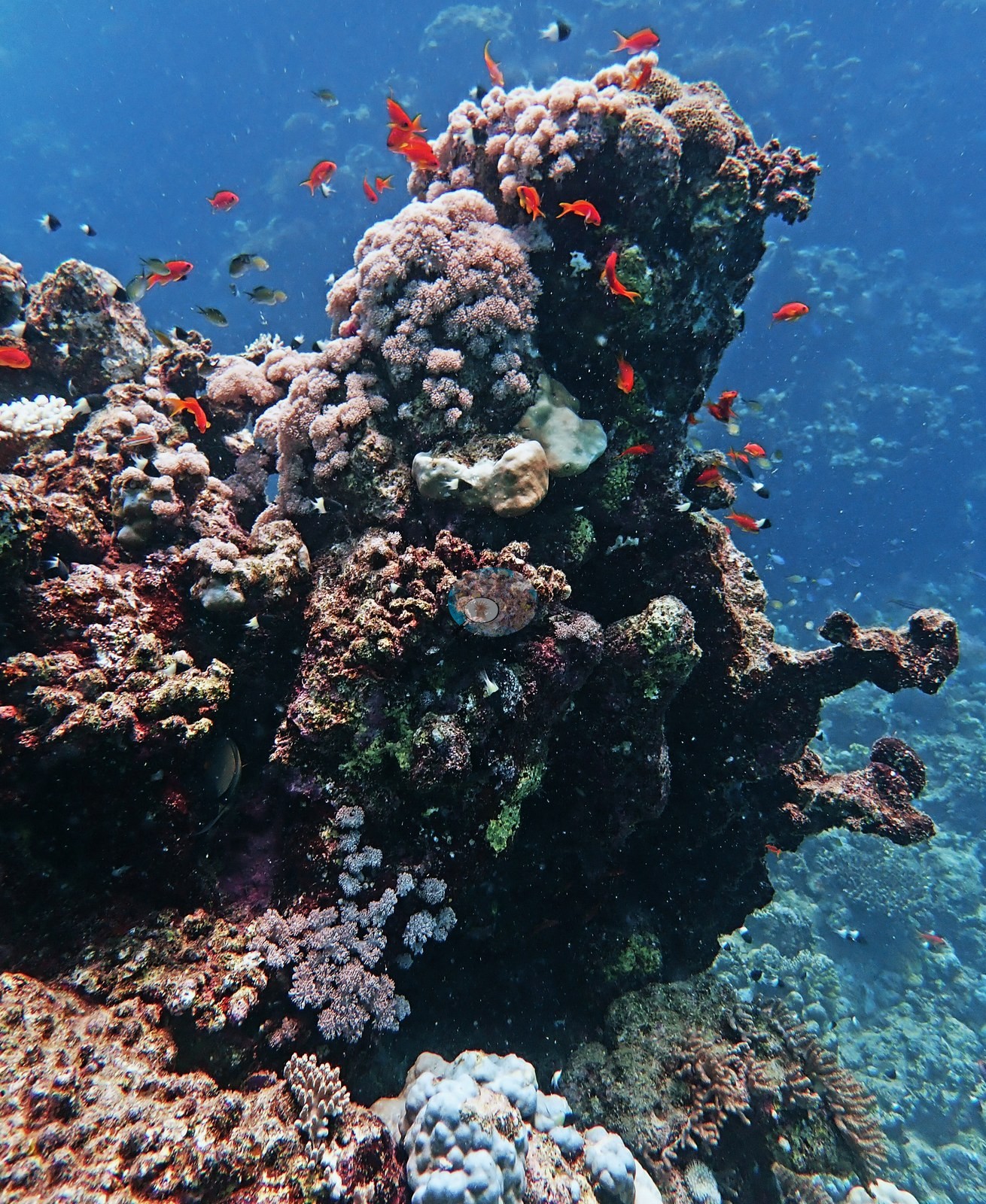
The reef itself is a consolidated limestone slope that drops steeply into blue water, and the photographs read as a mosaic rather than a continuous carpet: dense clusters of pocilloporids (Stylophora- and Pocillopora-type, several in the deep magenta and lavender color forms characteristic of the central Red Sea) and small corymbose Acropora sit on ridges and buttresses, separated by wide aprons of coralline-crusted pavement and coral rubble that carry almost nothing (e.g., Image 1, Image 7, Image 8, Image 9).
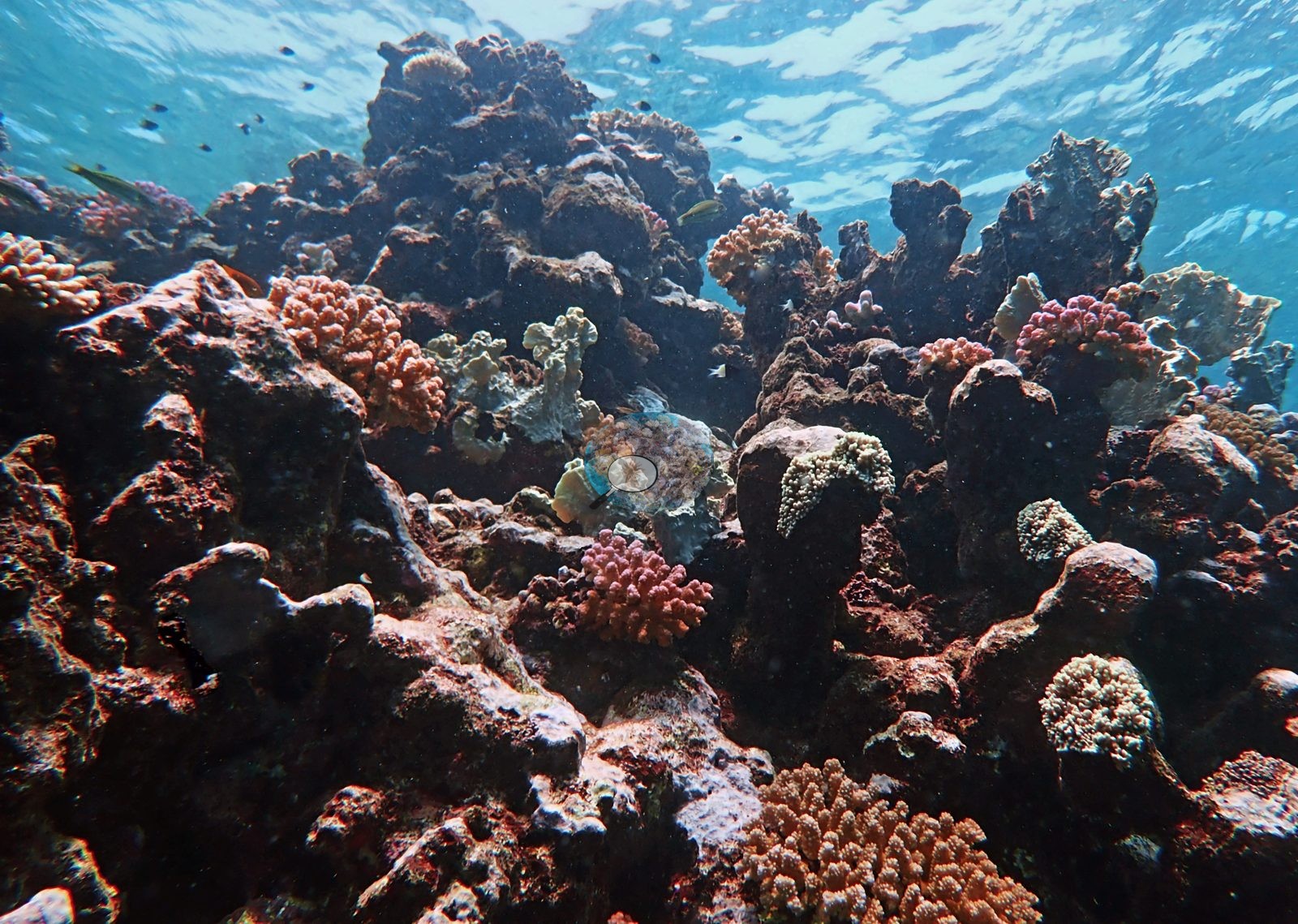
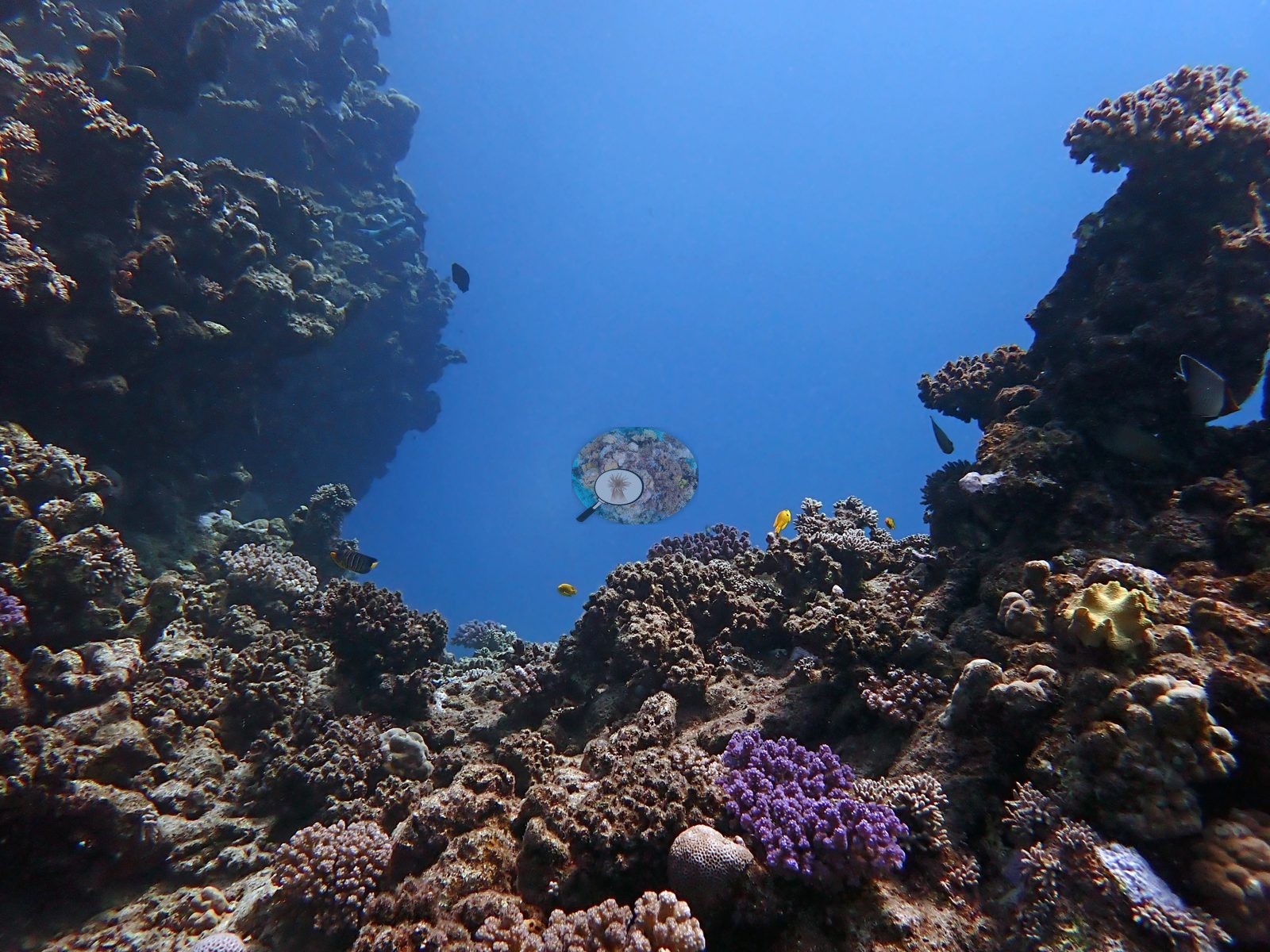
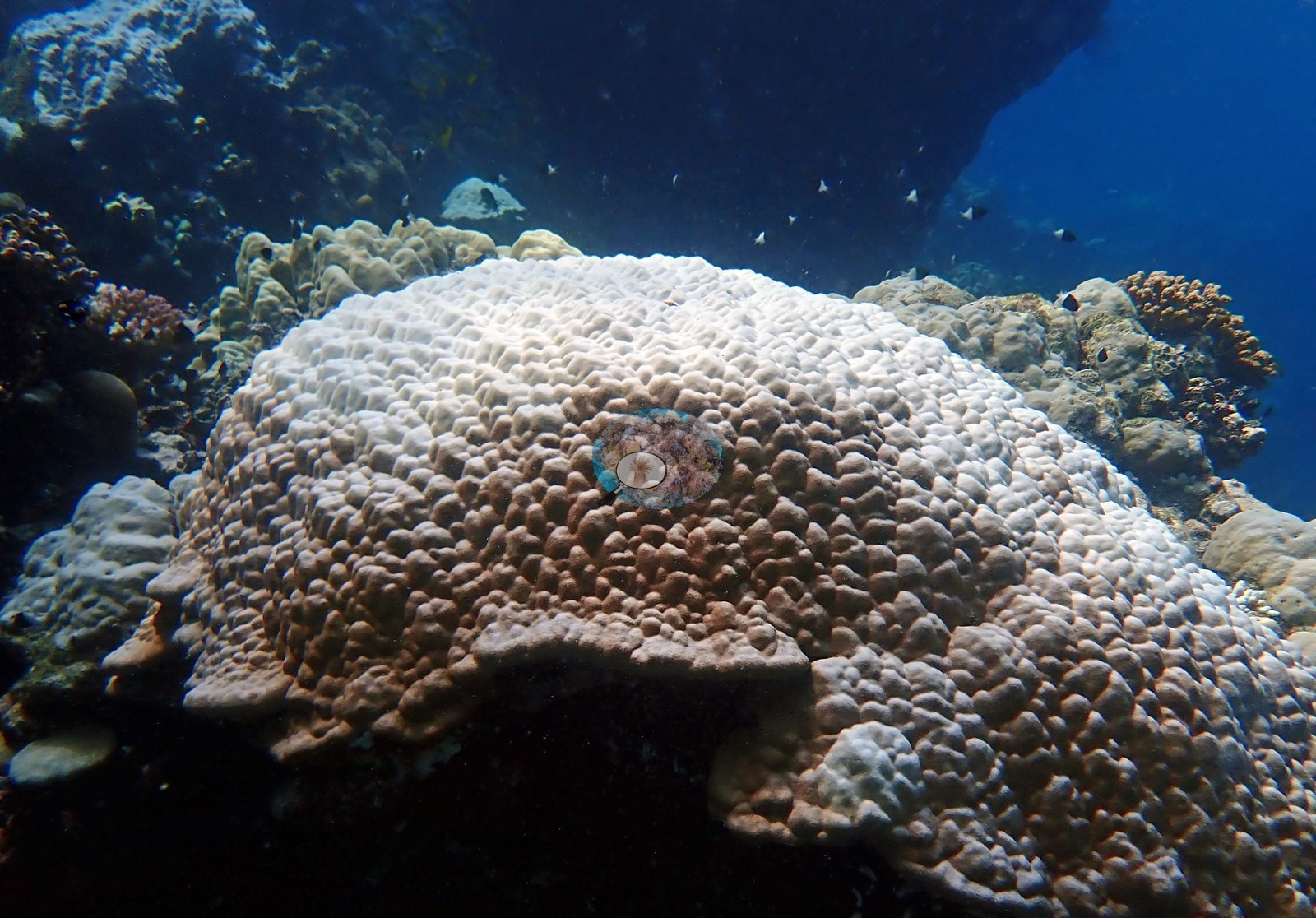
Massive corals are the other structural element — cream-and-olive Porites boulders, encrusting-to-columnar Goniastrea and other faviids, Astreopora-type domes, and small fungiids wedged into the pavement (e.g., Image 3, Image 4, Image 5).
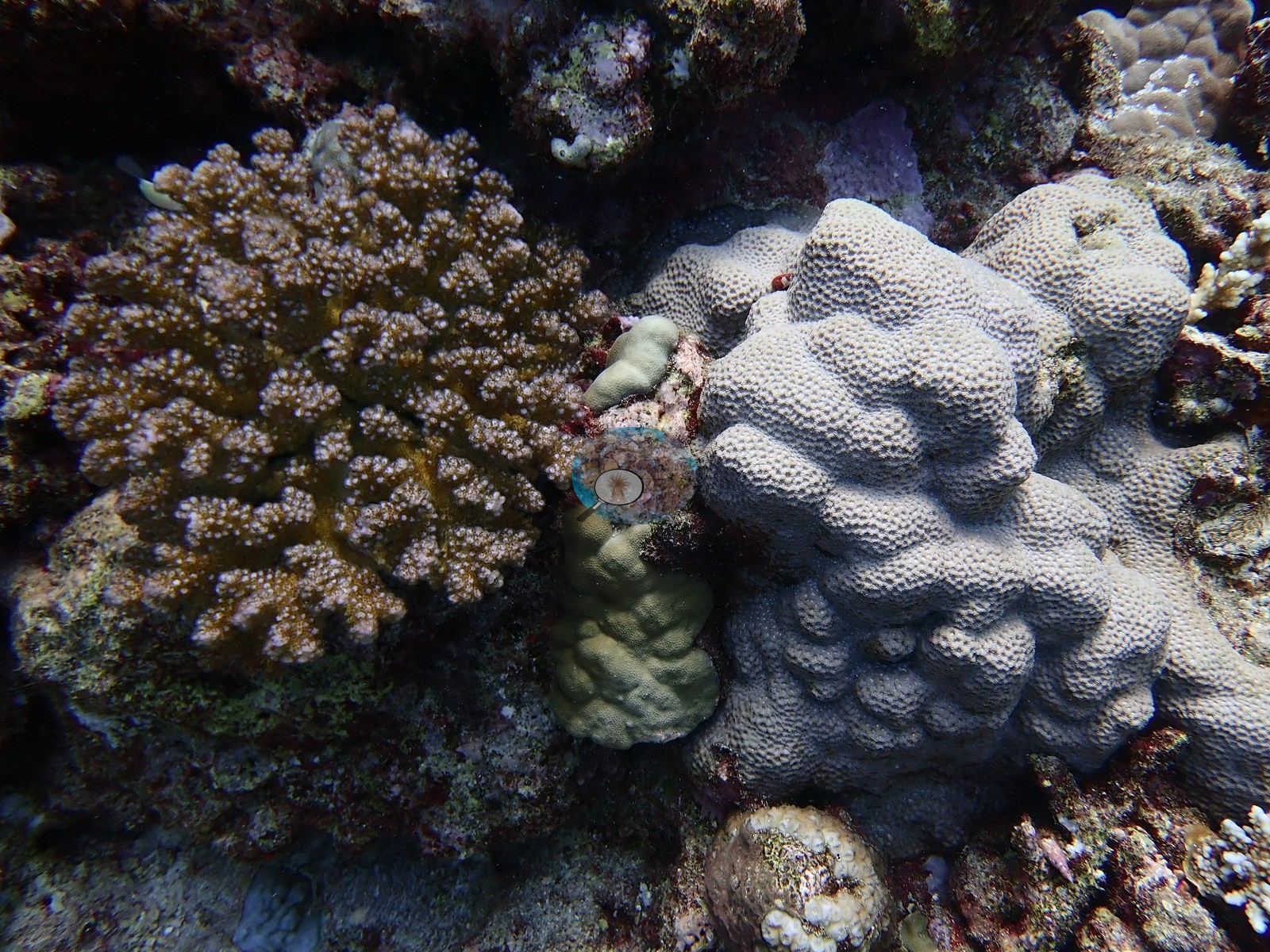
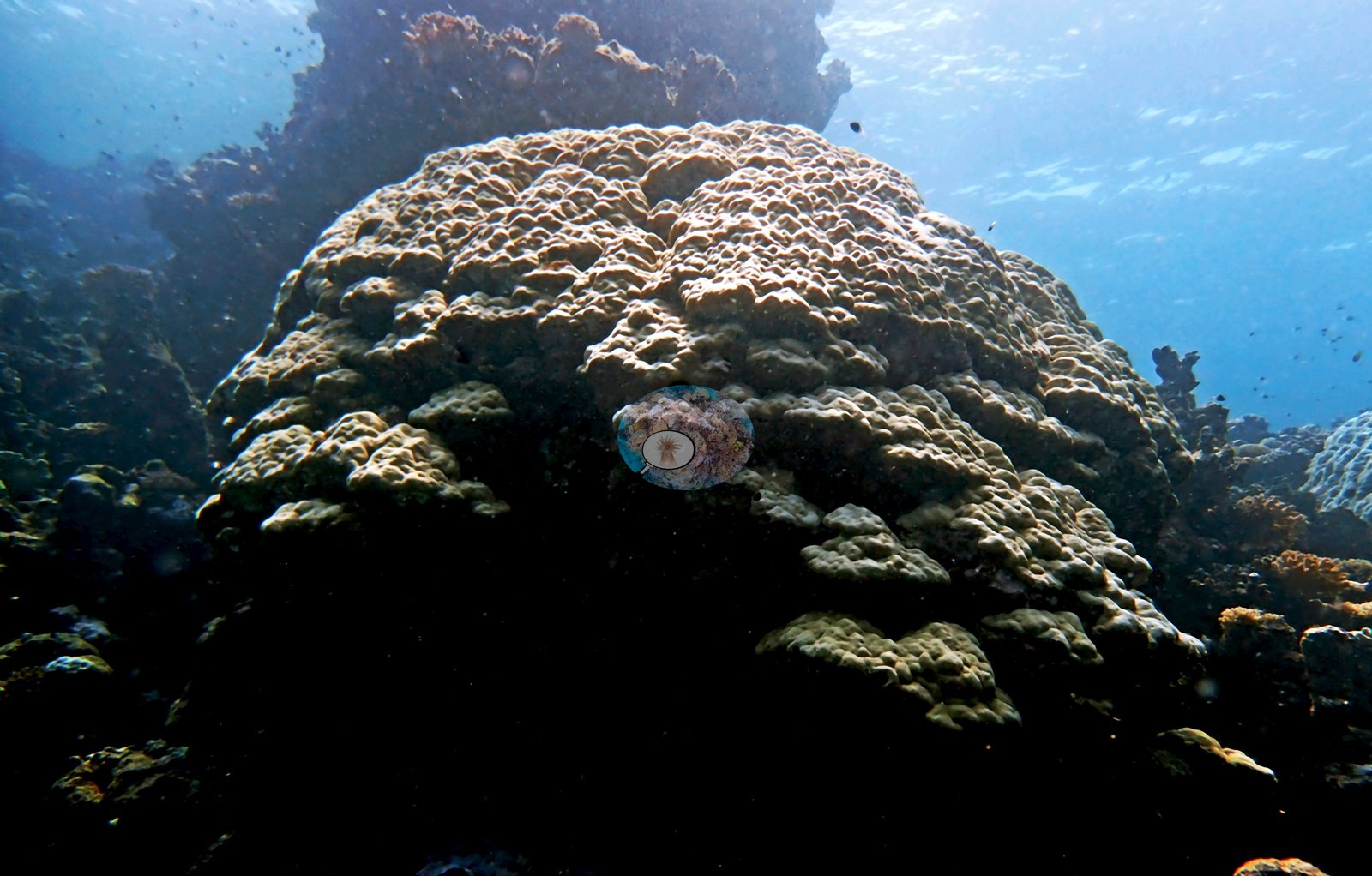
Soft coral is present but minor, mostly xeniid and low leathery colonies. The July 2024 frames are the outlier: one wide-angle looks straight down a near-continuous rubble plain, algal-filmed and colonized by encrusting coralline, with essentially no upright live coral in the frame.
Coral cover
Coral cover is 15.2% ± 14 across 417 photographs — a manual CoralNet point count published in Mayfield, A.B. (2025) Environments 12:248 — Red Sea 2023-24 bleaching; CoralNet point annotation, Appendix A, quoted here exactly as the site record carries it. This is a diver-annotated point count from Anderson's own paper, not a computer vision output, and it is not re-derived here.
Stressors
Condition is the reason this site is in the published bleaching series — see notables and flags.
Fish and other fauna
September 2023 and February 2024 show a busy, fish-rich slope with schooling anthias and chromis pouring over the ridge, a blue-fin trevally (Caranx melampygus) hunting the base, and dolphins and a manta named in the file list from the same days (e.g., Image 2).
Comparisons with other data
No independent survey was made at this exact site; the nearest ones are listed in the table below.
Dive record
The three visits are visibly different.
Survey summary
Abu Ejeiah: surveyed 4 times, Sep 2023–Oct 2024; bleaching ranged from 12.7% to 69.5% of coral tissue across visits (CoralNet point counts; Mayfield 2025, Environments 12:248). Surveyed in partnership with Coastline (KAUST).
CV model comparison
More info
The reference row is this dive site's own published value (Mayfield 2025, Appendix A, 417 photos); the other rows are AREA-level (Thuwal) comparisons, not run on this site's frames. ⚠ The comparison rows are REGIONS, not dive sites: the paper's main tables report cover by region, and this site's own value comes from its Appendix A. ⚠ The manual column and the CV columns are on DIFFERENT FRAME SETS. The published cover spans the region's full photo set (173–2,567 frames, most of them CoralNet robot-labeled); the CV arms ran only on the hand-scored reference subset, which is 6 frames at Thuwal, 274 at Jeddah and 173 at Rabigh. Read Thuwal's model columns as indicative only. CoralNet is n/a by design: the reference set IS the hand-scored set, so those frames carry no independent robot label to compare against. DINOv3 is restricted to frames it never saw, and reads roughly double the published cover at every Red Sea region. ⚠ 'unassigned region' is not a place: 135 frames carry no region label in the CoralNet metadata and map to no published row. It has no manual value and is excluded from the pooled reference. CoralNet automated point classifier: n/a — the reference set IS the hand-scored set; these frames carry no independent CoralNet robot label to compare against CoralSCOP (SAM-based mask-sum), unedited photos: pending — CoralSCOP run: 370/747 images scored at build time CoralSCOP (SAM-based mask-sum), edited photos: pending — CoralSCOP run: 370/747 images scored at build time| Method | Hard-coral cover (%) |
|---|---|
| Manual (published) | 15.2 |
| In-house DINOv3 | 47.5 |
| Claude | 23.9 |
Dive history
| Date | Time in | Max depth (m) | Bottom time (min) |
|---|---|---|---|
| 2023-09-02 | 11:00 | 13.5 | 55 |
| 2024-02-23 | 10:44 | 18.6 | 53 |
Independent surveys nearby
| Agency / program | Year(s) | Stations / distance | Link |
|---|---|---|---|
| Khalil et al. (2017) | 2013 | 1 station, 1.05 km | Records ↓ |
| Monroe et al. (2018) | 2015 | 1 station, 1.31 km | Records ↓ |
 Dr. Coral (CRD)
Within 5 km, 2 independent survey stations recorded hard coral cover in 3 surveys between 2013 and 2015. The most recent nearby survey is from 2015, so these values predate recent heat stress. This site's own estimate (15%) sits 11.1 points below the range of these surveys (26–40%); the methods differ, so the comparison is context, not a like-for-like test.
Collected by other programs using different methods, so these are context for the figures above, not a like-for-like comparison. Where a station was surveyed more than once the range is shown. Station names are not dive-site names.
| Agency | Site / location | Date | Hard coral cover (%) | Distance | Link |
|---|---|---|---|---|---|
| Khalil et al. (2017) | — | 2013 | 26% (2 surveys) | 1.05 km | HeatCRD database |
| Monroe et al. (2018) | Al Fahal (Midshelf 1), Thuwal, central Saudi Red Sea | 2015 | 40% | 1.31 km | — |
Data & links
- CoralNet image repository for this region ↗
- HeatCRD database ↗
- (reference) ↗
- Photo portfolio ↗
- Photo portfolio ↗
- Coral Reef Diagnostics country page ↗
All images from Coral Reef Diagnostics. Data are from Coral Reef Diagnostics and the organizations named in the data-sources table above.
© Coral Reef Diagnostics.
References
- Khalil MT, Bouwmeester J, Berumen ML (2017). Spatial variation in coral reef fish and benthic communities in the central Saudi Arabian Red Sea. PeerJ 5:e3410. DOI
- Mayfield AB (2025). Using Tourist Diver Photos to Assess the Effects of Marine Heatwaves on Central Red Sea Coral Reefs. Environments 12:248. PDF
- Monroe AA, Ziegler M, Roik A, Röthig T, Hardenstine RS, Emms MA, et al. (2018). In situ observations of coral bleaching in the central Saudi Arabian Red Sea during the 2015/2016 global coral bleaching event. PLOS ONE 13:e0195814. PDF