
Philippines - Coron: Taiei Maru (wreck), Busuanga
Part of the regional summaries: Philippines - Palawan and Philippines
More info
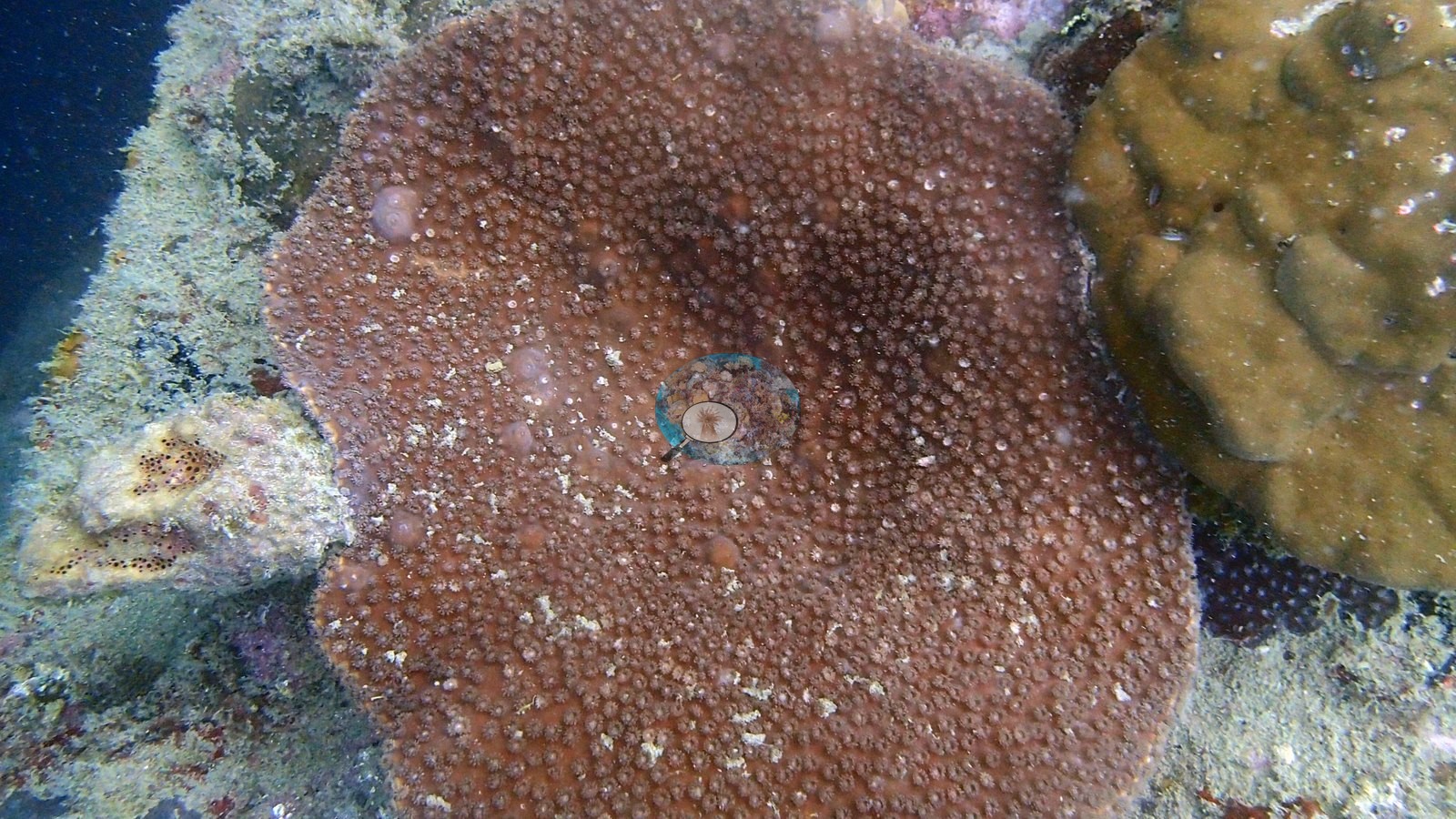
Western Philippines (NOAA CRW virtual station)The Taiei Maru wreck (a WWII Japanese auxiliary, listed earlier on this map as Okikawa Maru, Anderson's dive-log label; the trip itinerary and photo folder name it Taiei Maru) has coral colonizing its hull — orange-pink and olive-green massives, a Plerogyra cluster, an intact table coral on a beam — amid poor visibility. One frame shows a sea turtle from behind. This is wreck habitat, so no coral-cover figure is given: low coral cover on a hull is expected and does not indicate reef decline.
Tinutubuan ng koral ang katawan ng lumubog na barkong Taiei Maru (isang Japanese auxiliary noong WWII, na dating nakalista sa mapang ito bilang Okikawa Maru, ang label sa dive log ni Anderson; Taiei Maru ang tawag dito ng itinerary ng biyahe at ng folder ng mga larawan) — mga kulay kahel-rosas at olive-green na malalaking (massive) koral, isang kumpol ng Plerogyra, at isang buo pang table coral sa isang biga — sa gitna ng malabong tubig. Isang larawan ang nagpapakita ng pawikan mula sa likuran. Tirahang lumubog na barko ito, kaya walang ibinibigay na bilang ng saklaw ng koral: inaasahan ang mababang saklaw ng koral sa katawan ng barko at hindi ito senyales ng paghina ng bahura.
Salin ng buod na ito gamit ang AI; ang Ingles ang opisyal na bersyon.
One other CRD dive site with its own page within 5 km shown in orange — click a marker to open its page.
16 of the 17 photographs on this page are shown beside the text that discusses them under "Site description" below.
Site description
Setting
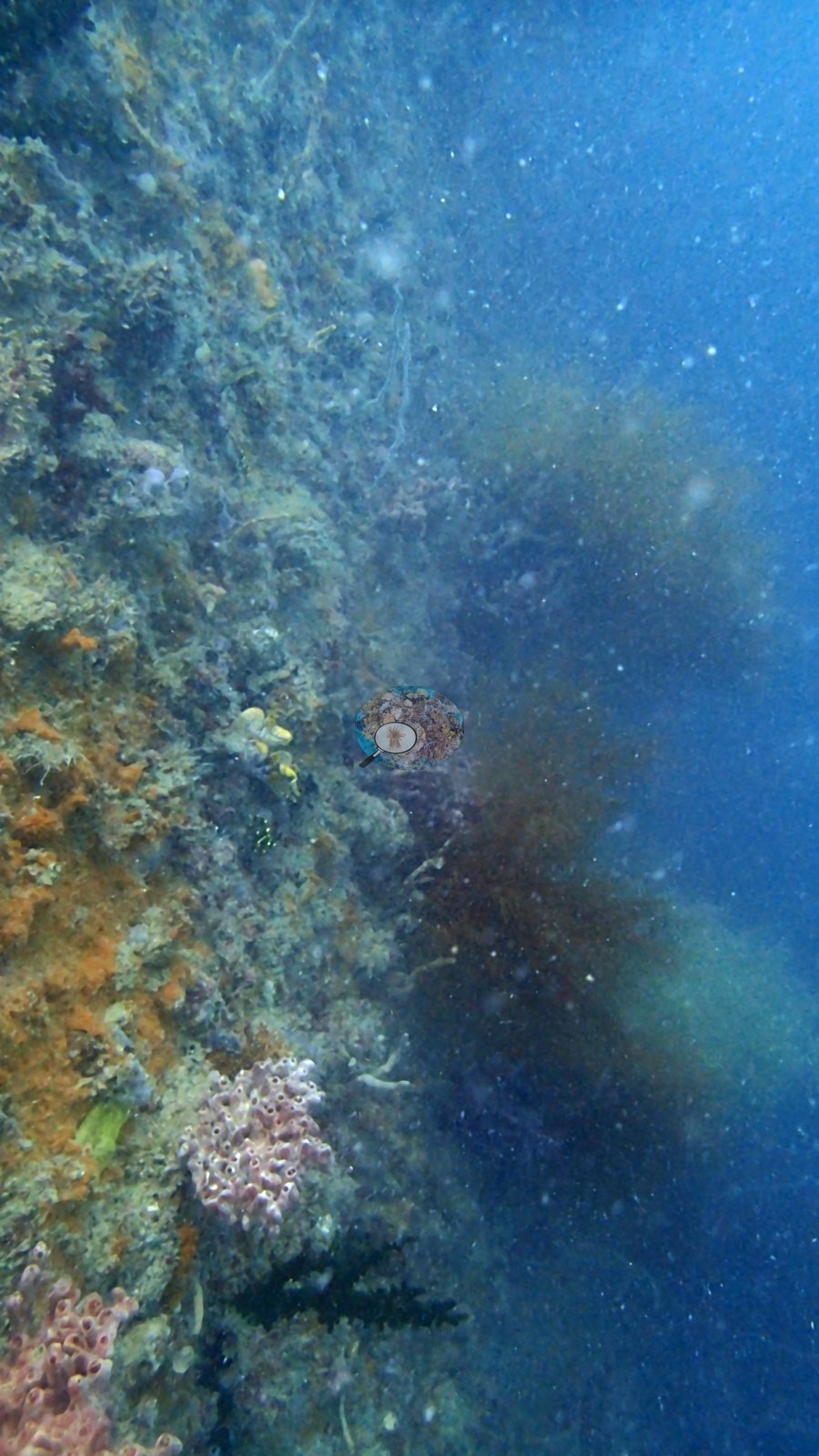
Visibility was poor, as Anderson noted (e.g., Image 6, Image 14).
General benthic features
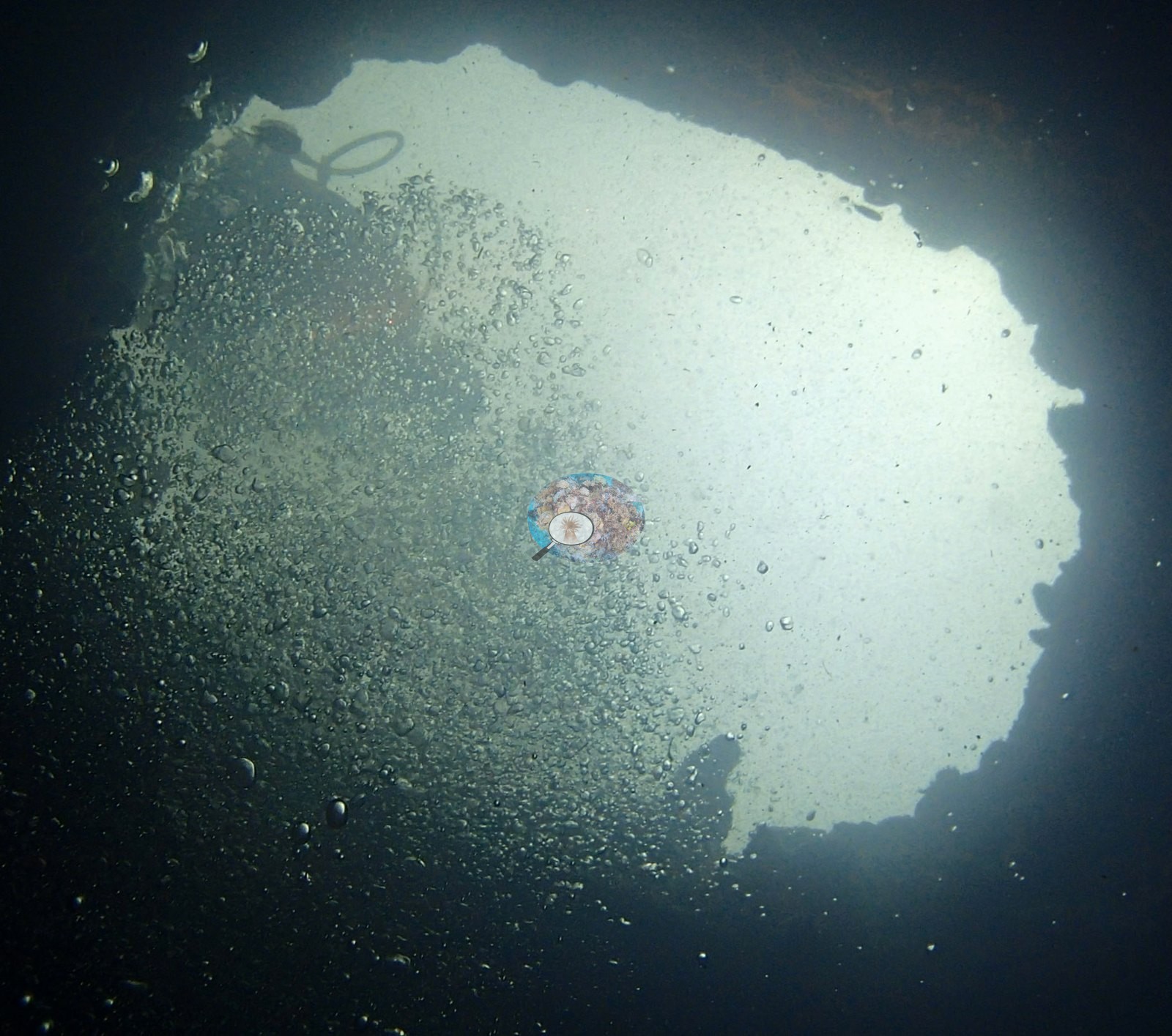
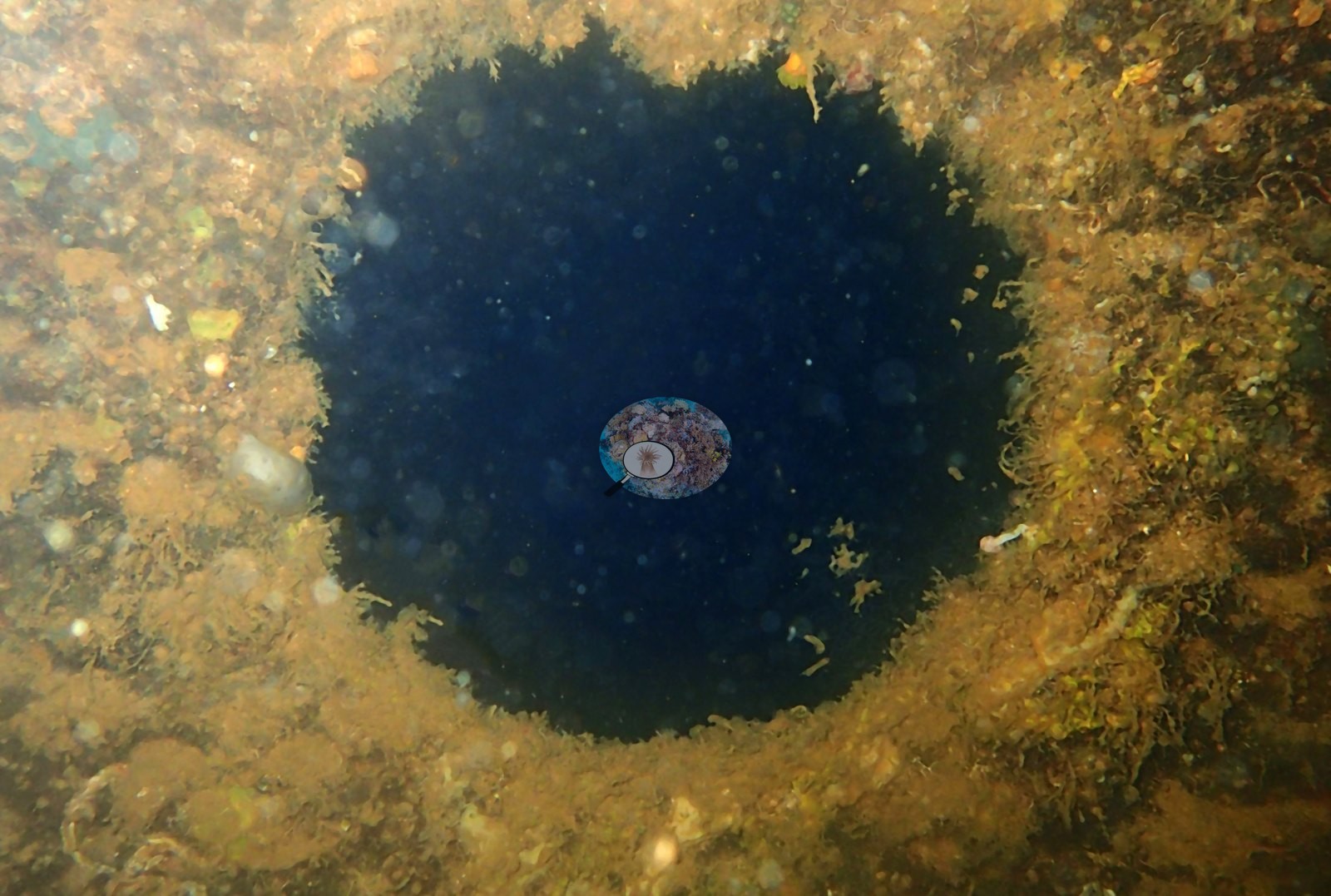
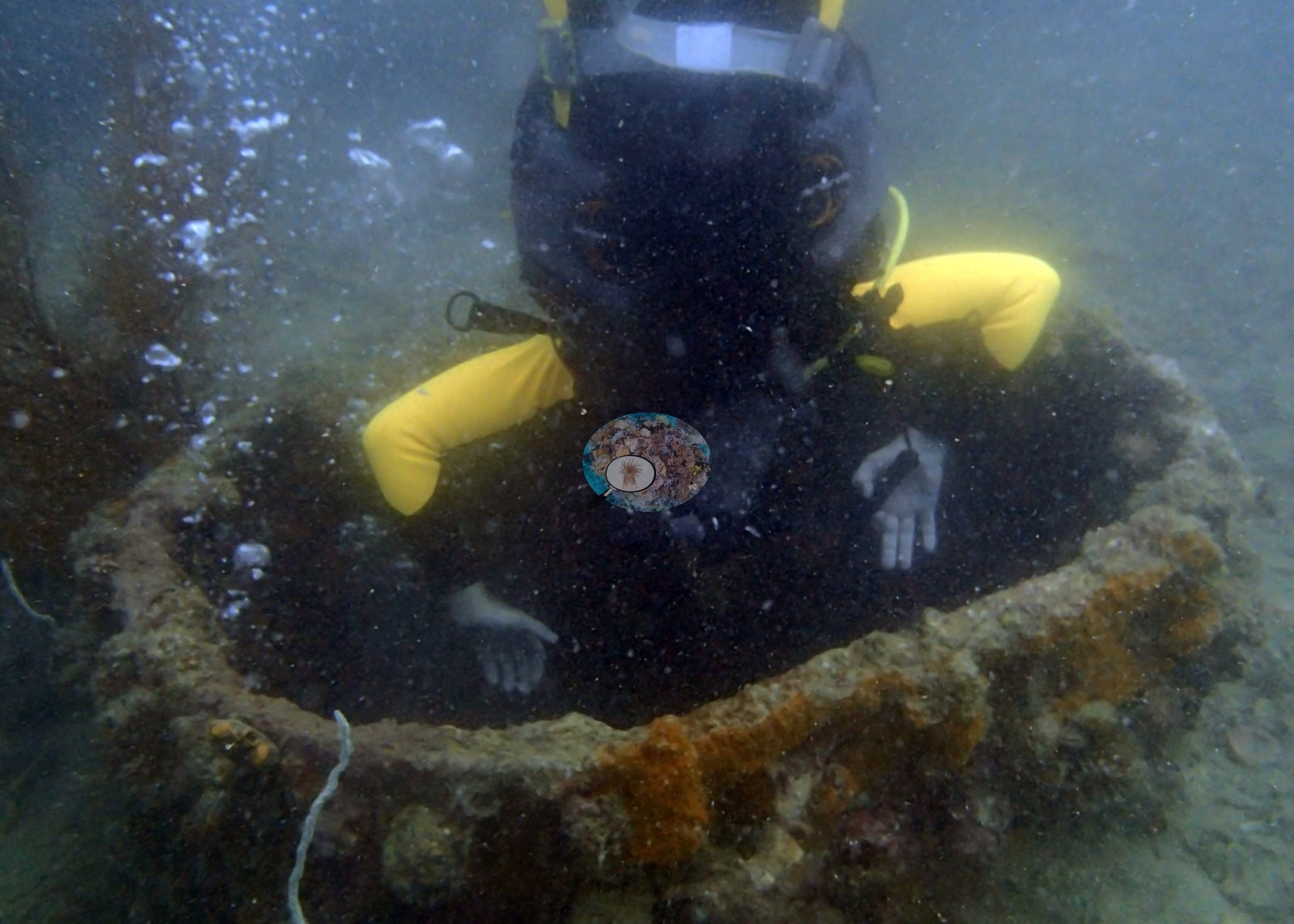
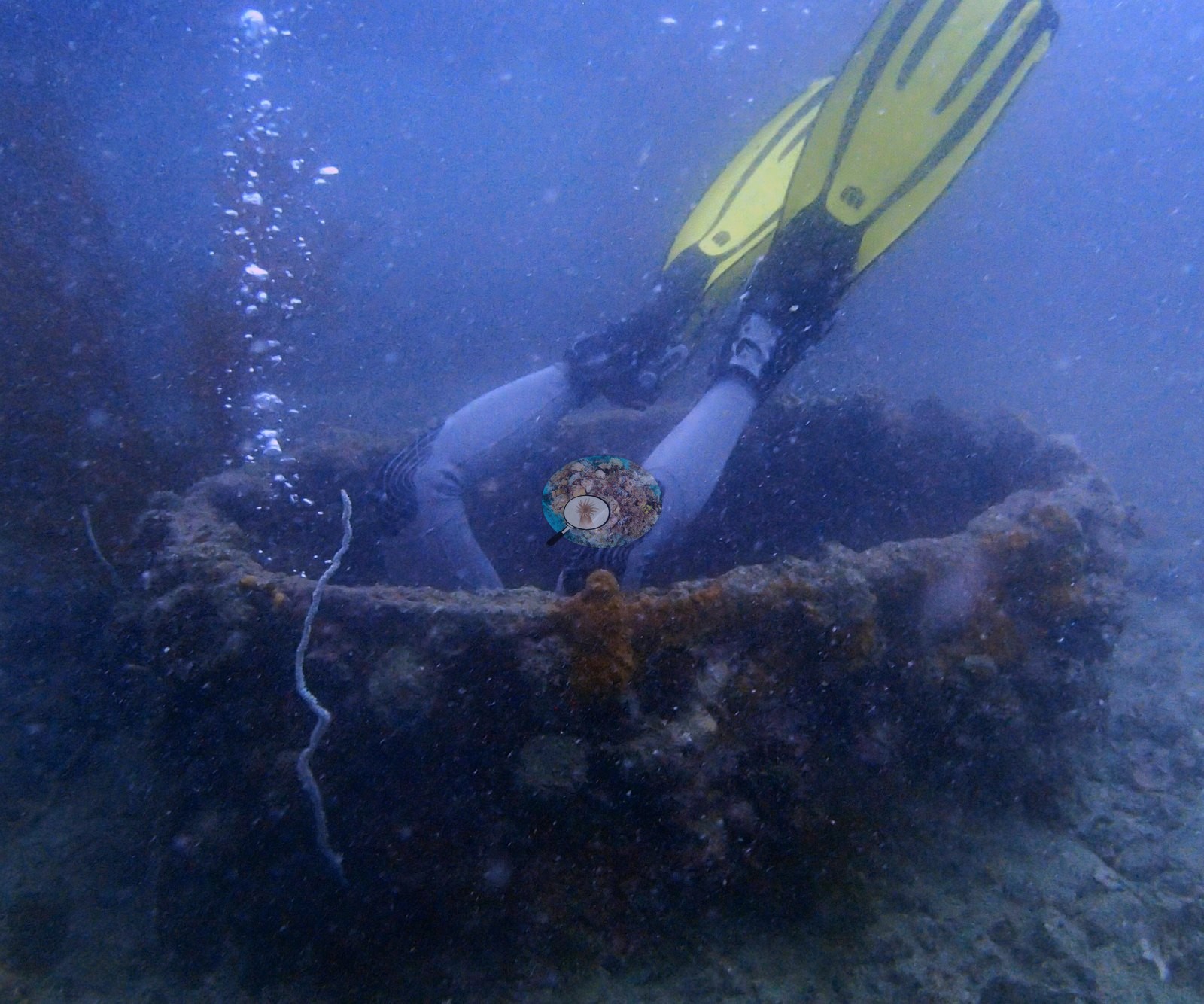
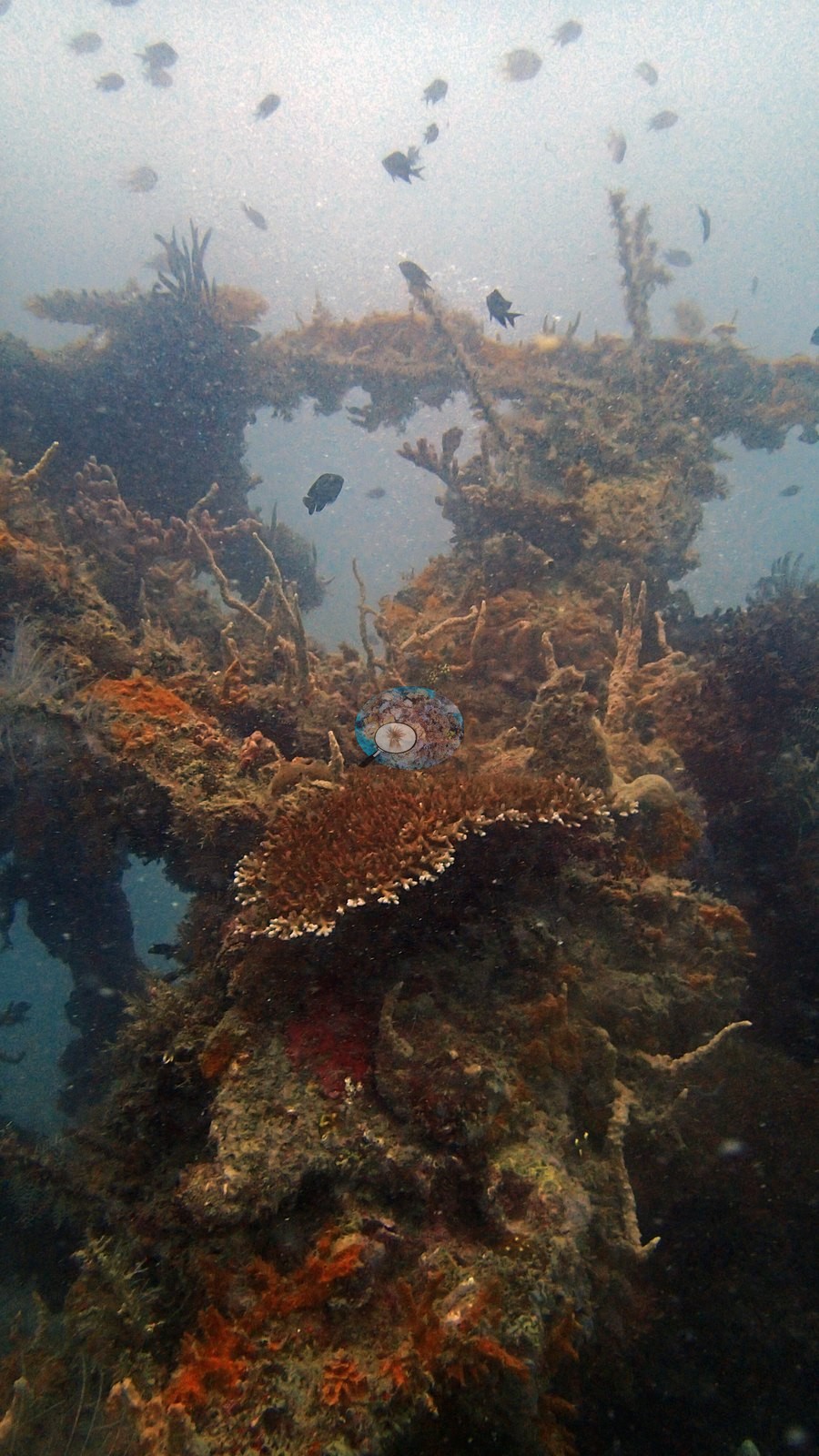
The sequence is encrusted hull plating and beams draped in orange and red sponges, hydroids, and soft corals, a well-photographed porthole, and swim-throughs framing blue water (e.g., Image 2, Image 7, Image 8, Image 10, Image 16), with divers entering and exiting a circular deck hatch (e.g., Image 1, Image 15).
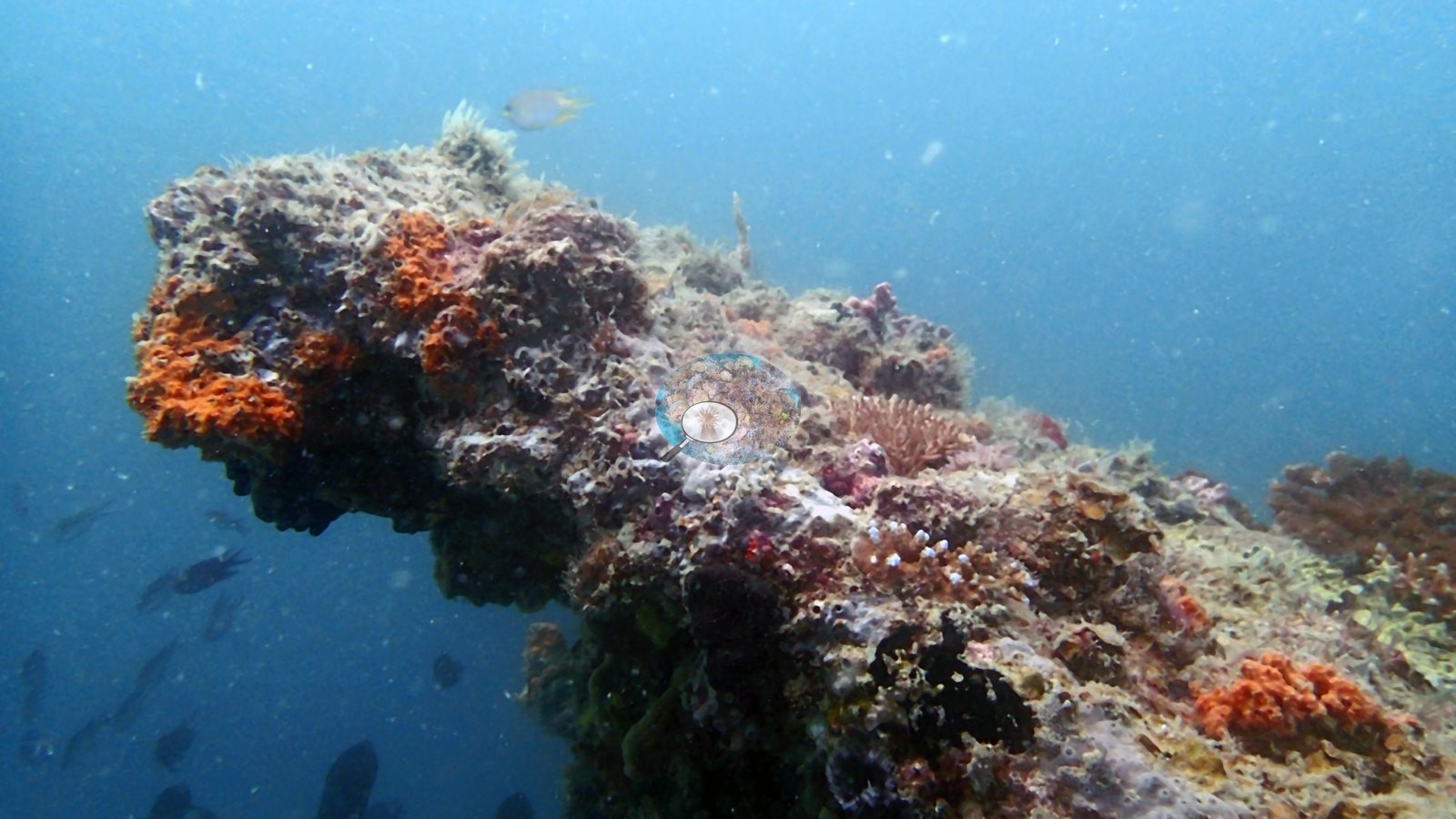
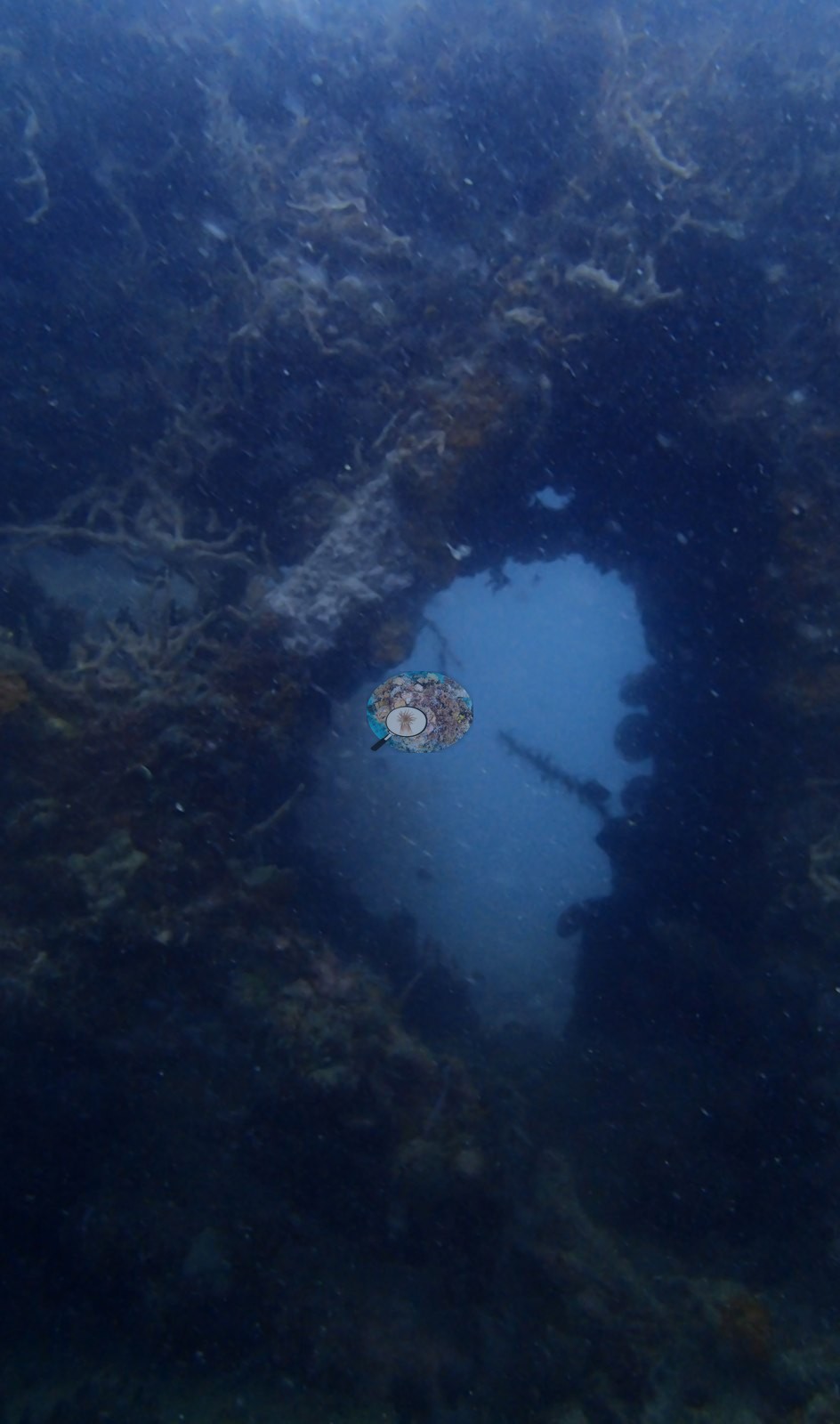
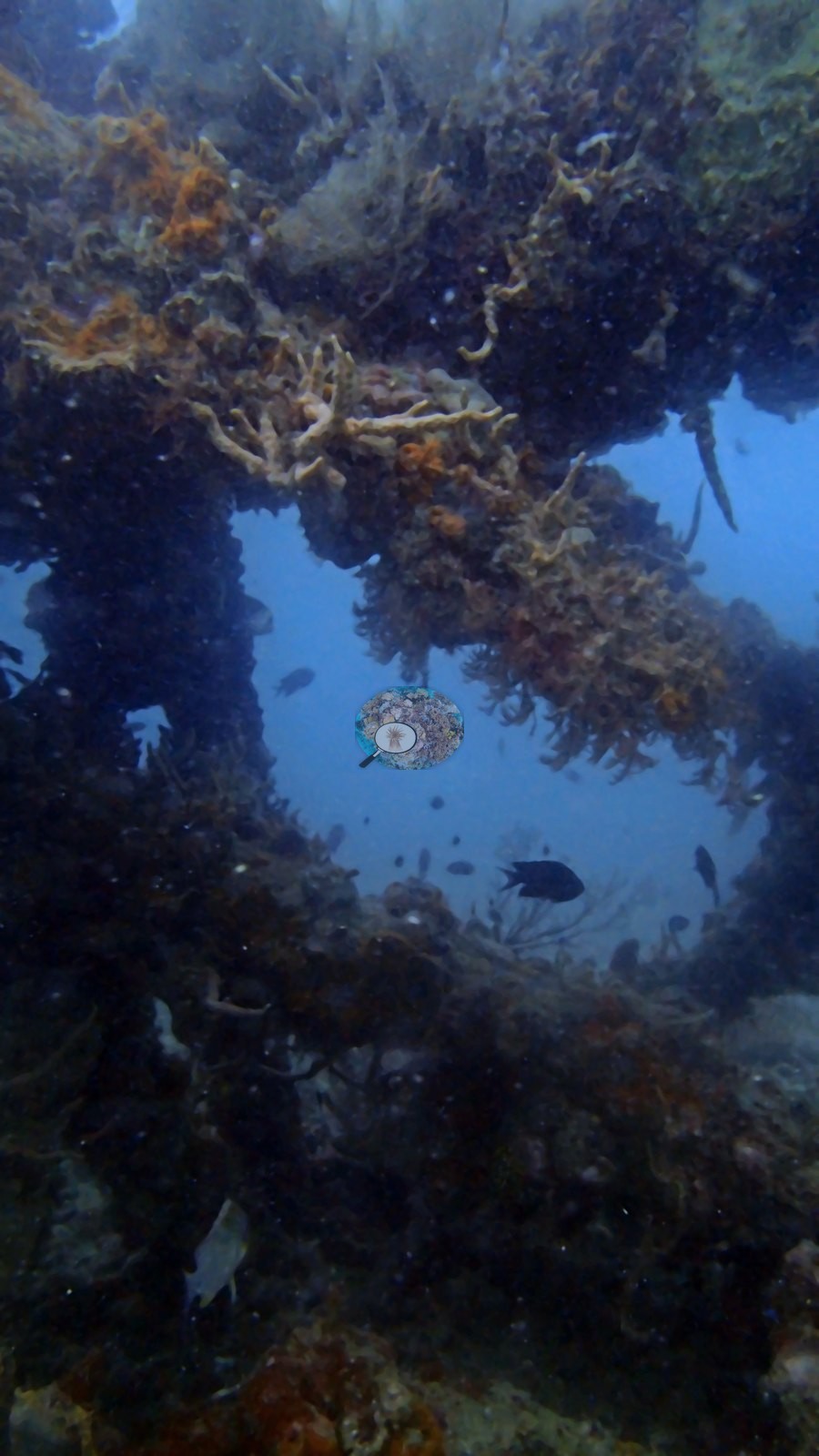
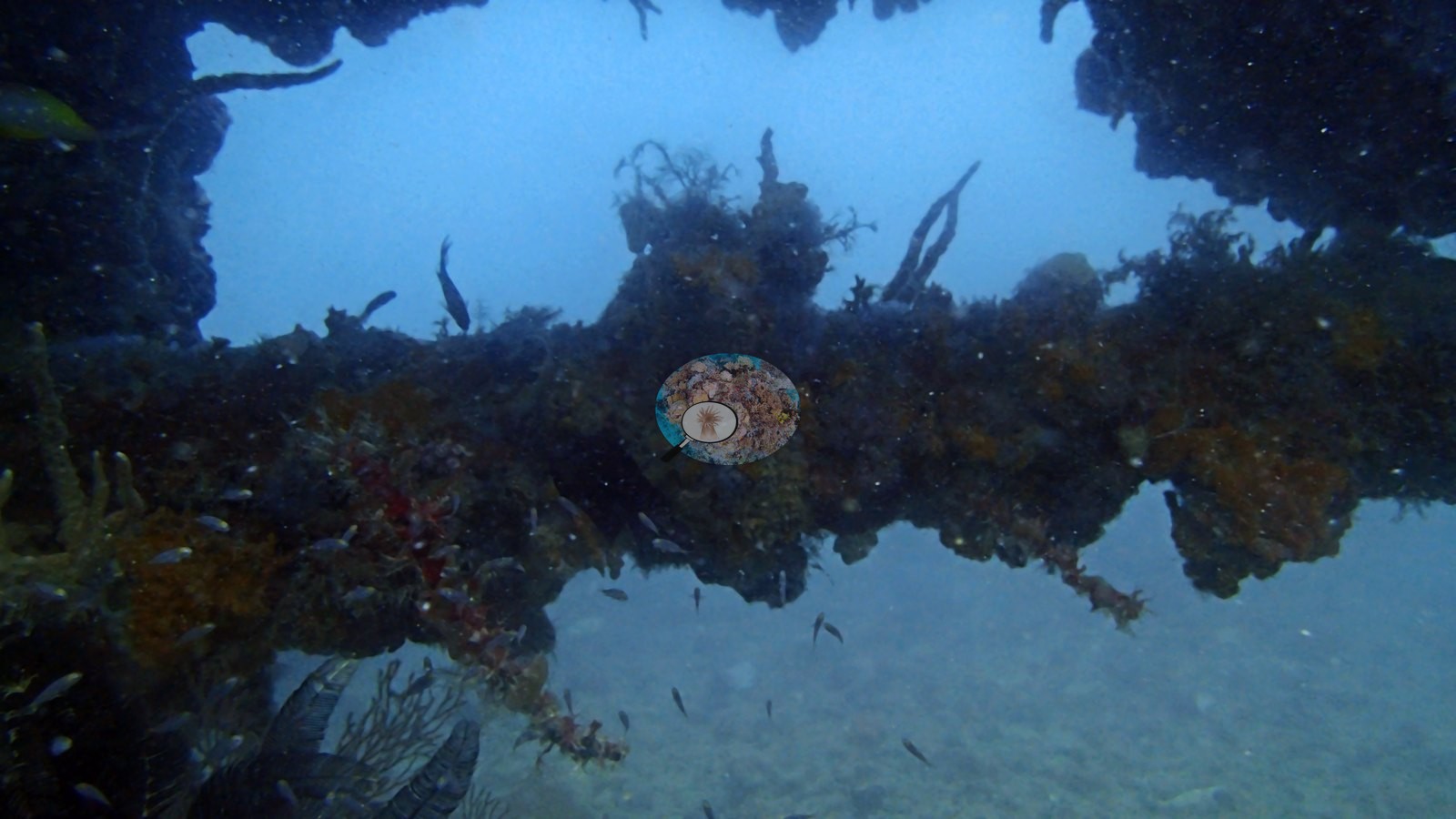
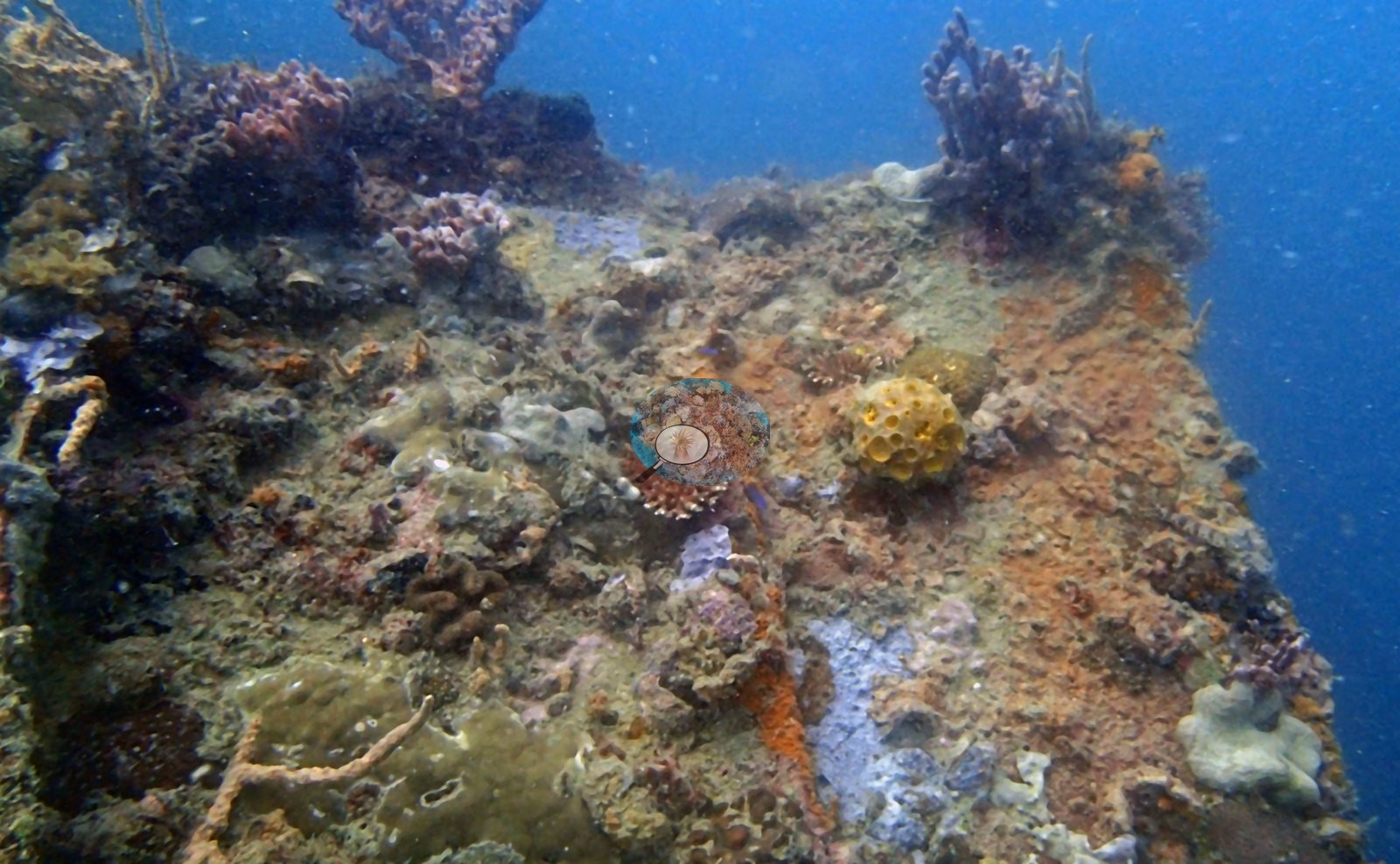
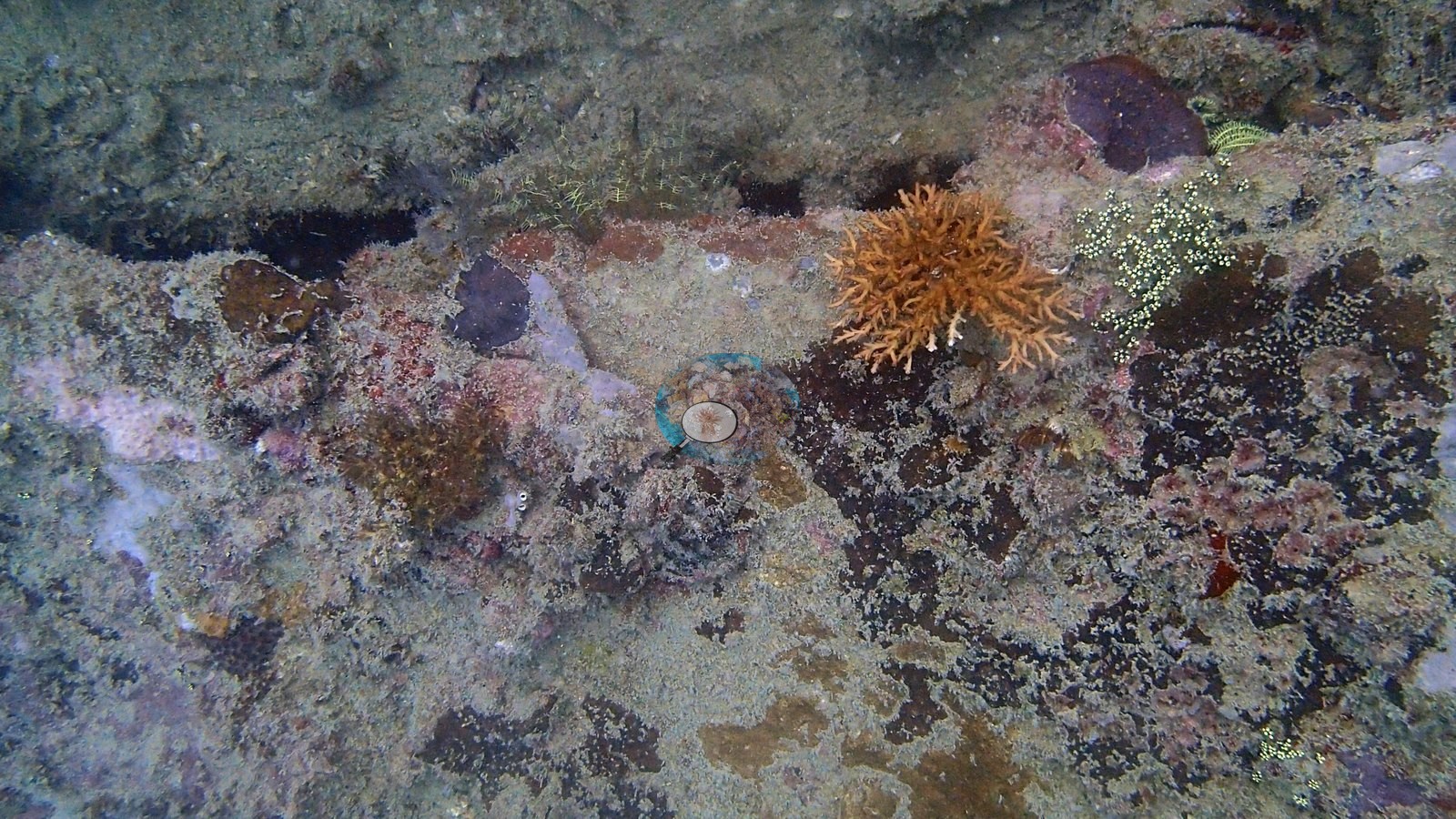
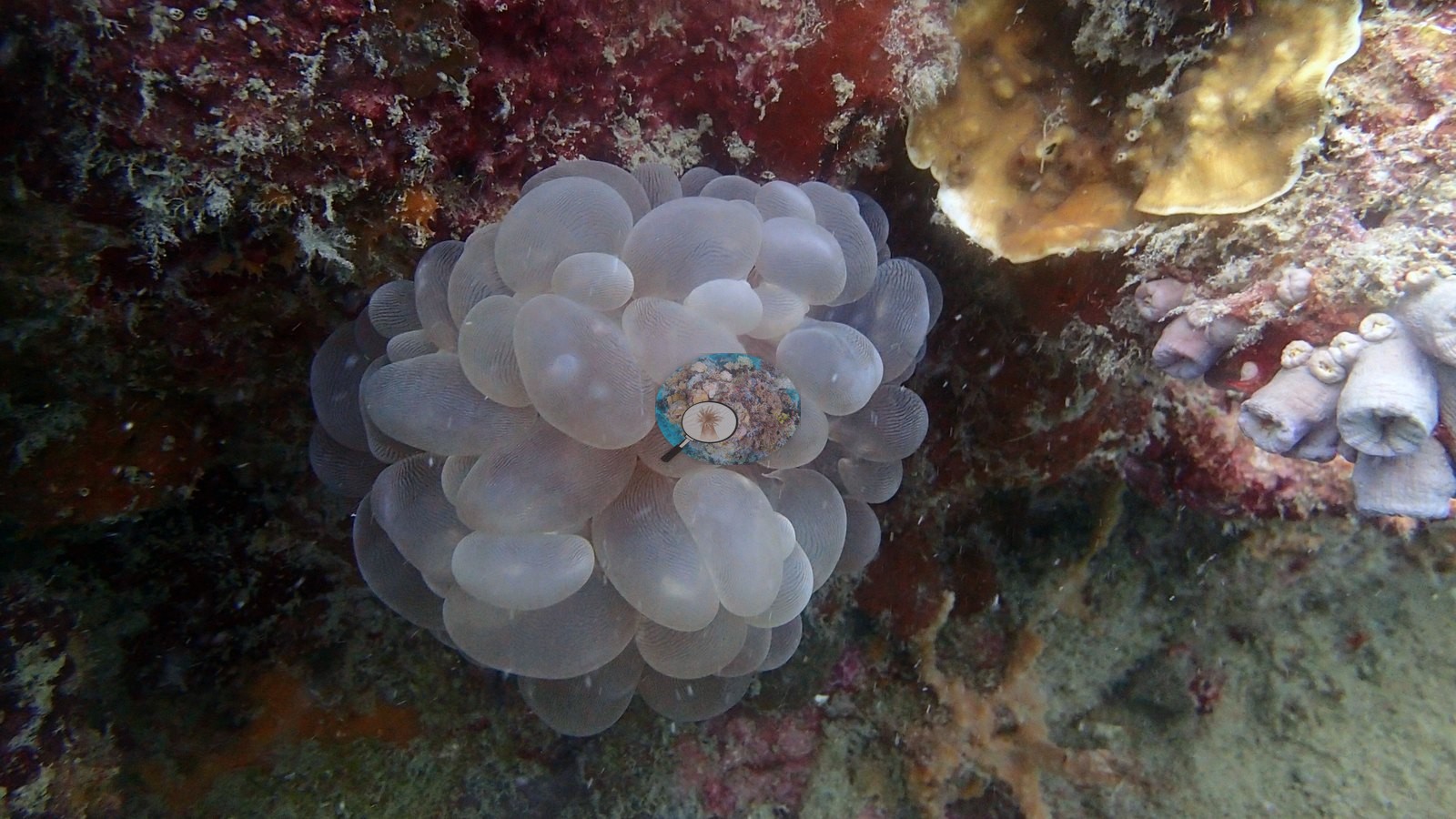
Coral has colonized the metal: a large orange-pink massive with polyps extended beside an olive-green lobed massive; Plerogyra bubble coral in a gray-lavender cluster identified by Anderson, against crimson sponge and lilac ascidians; an intact table coral on a beam; a yellow cup-coral colony on flat plating; and smaller encrusting growth over the ironwork (e.g., Image 3, Image 4, Image 5, Image 9, Image 13).
Coral cover
- Coral cover on a hull is not the same quantity as cover on a reef — the denominator is manufactured surface, much of it vertical, overhung, or interior — and no computer-vision method was built for it.
- No coral-cover figure is given for this wreck: on a shipwreck the camera sees manufactured surface, so a cover value would index hull colonization rather than reef cover, and low coral cover is expected here.
Stressors
A pale staghorn coral in one frame is bare skeleton. No crown-of-thorns starfish (COTS) or other corallivores were evident.
Fish and other fauna
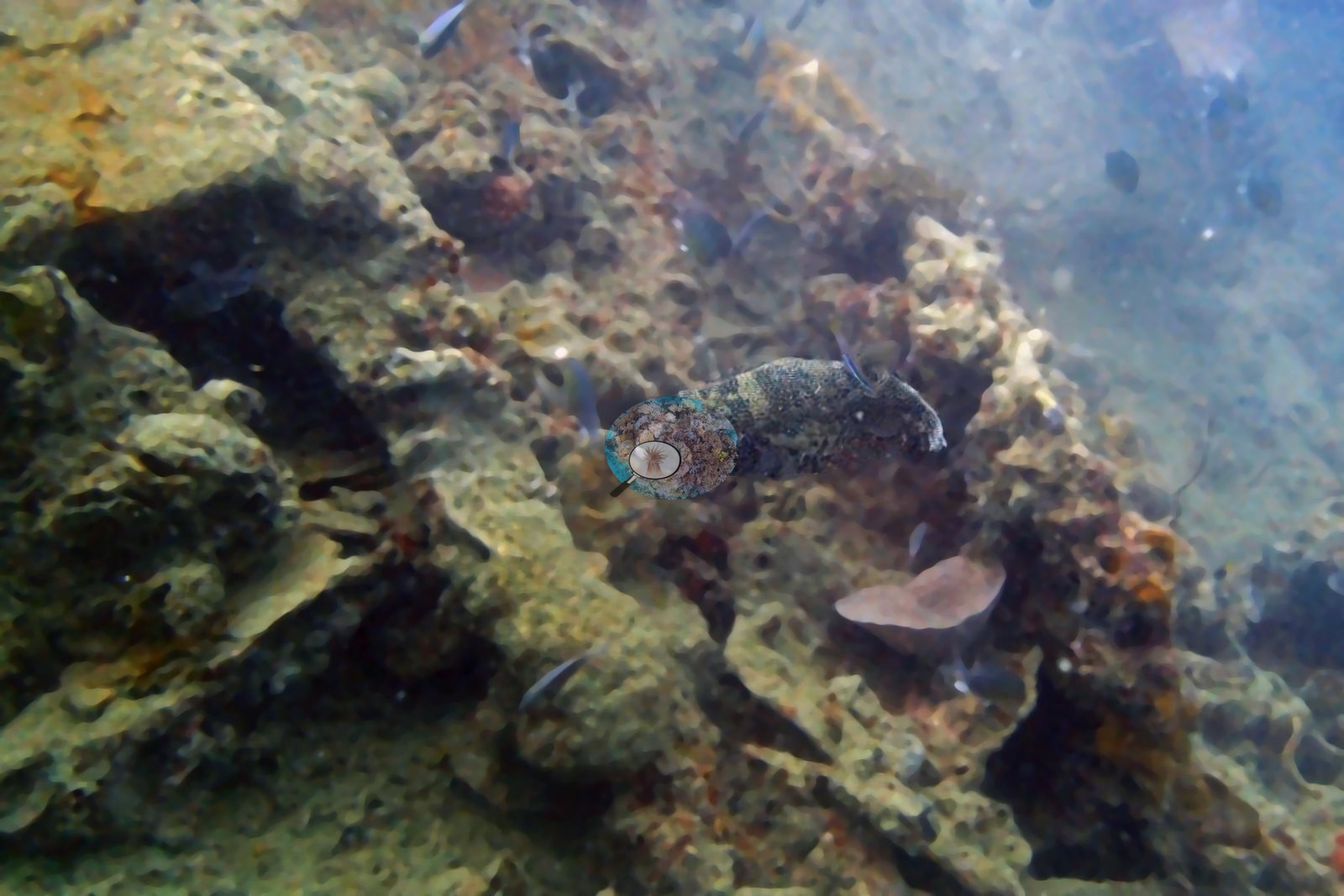
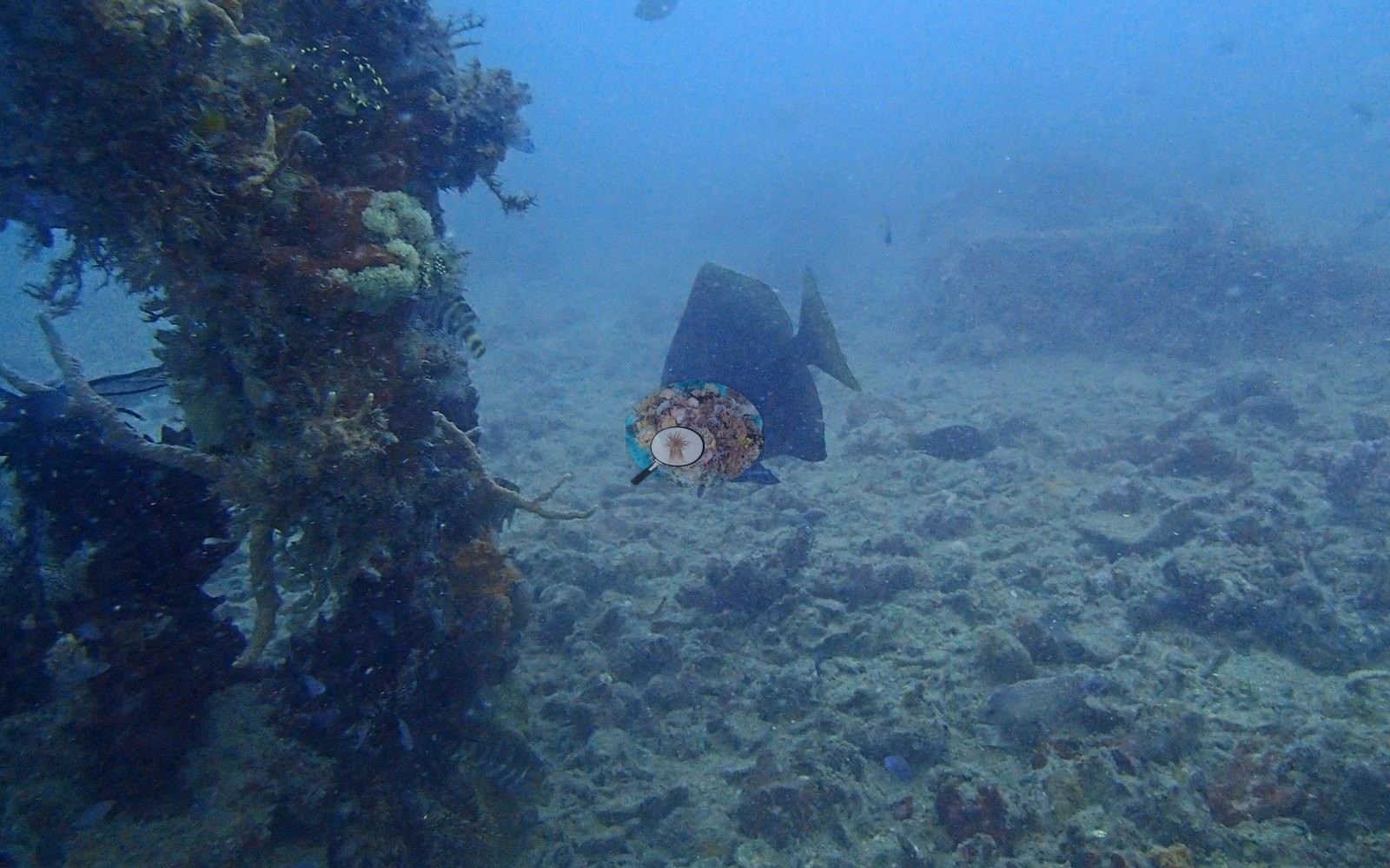
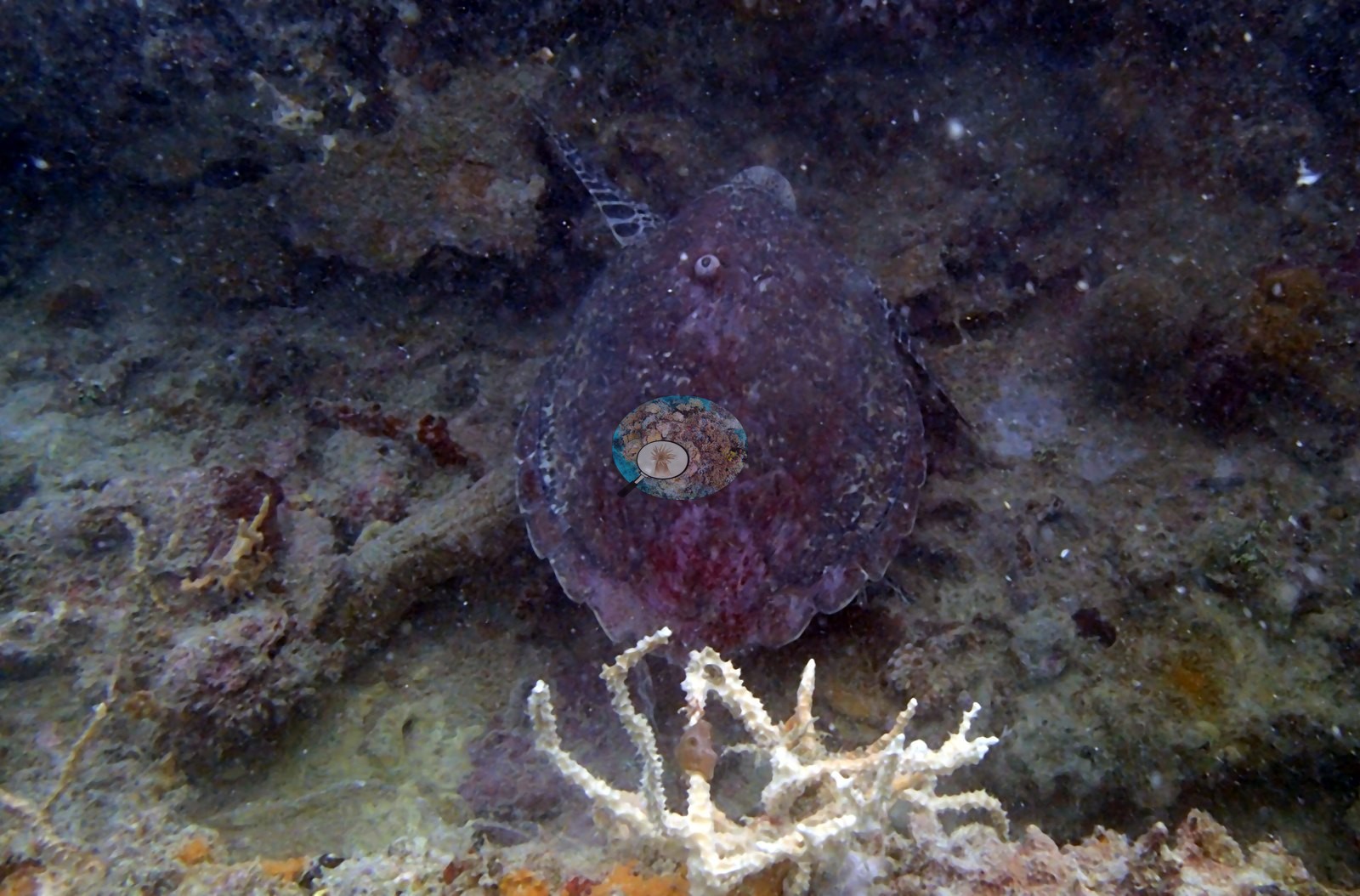
A batfish (Platax) patrols the wreck above a broad rubble plain, and another frame, of an animal Anderson identified as a turtle, shows a sea turtle seen from behind, scaled rear flippers and scalloped carapace margin (e.g., Image 12, Image 17).
Comparisons with other data
We found no other surveys at this site as of 2026. If you would like to share yours, please email us.
Dive record
The second Busuanga wreck of 27 January 2017, to a maximum of 25.3 m; all 17 available frames were reviewed.
Other notes
This site was once listed as Okikawa Maru, but the trip itinerary lists the day as Akikushima, Taiei Maru, and Coral Gardens; the Taiei Maru is another Japanese auxiliary sunk in Coron Bay in September 1944. The overriding caveat: this is a steel wreck.
CV model comparison
More info
The rows below are computer-vision comparisons on this dive's photographs; on a wreck they index colonization of manufactured surface, not reef cover, so low values are expected and do not indicate reef decline.| Method | Hard coral cover (%) | Photos (n) ± SE |
|---|---|---|
| In-house DINOv3 | 12.0* | n = 14 · SE 2.3 |
| CoralSCOP edited | 19.5* | n = 14 · SE 5.8 |
| Claude (edited photos) | 3.4* | n = 14 · SE 2.5 |
| Coralscapes v2 (low confidence, never averaged) | 11.7* |
The three computer-vision methods disagree by 16.1 pp (3.4–19.5%).
*Based on only 14 reef-habitat photos; this estimate is less certain.
See a more detailed, stand-alone version of this table.
Data & links
All images from Coral Reef Diagnostics. Data are from Coral Reef Diagnostics.
© Coral Reef Diagnostics.