
Philippines - Coron: Taiei Maru (oil tanker wreck), Busuanga
Part of the regional summaries: Philippines - Palawan and Philippines
More info
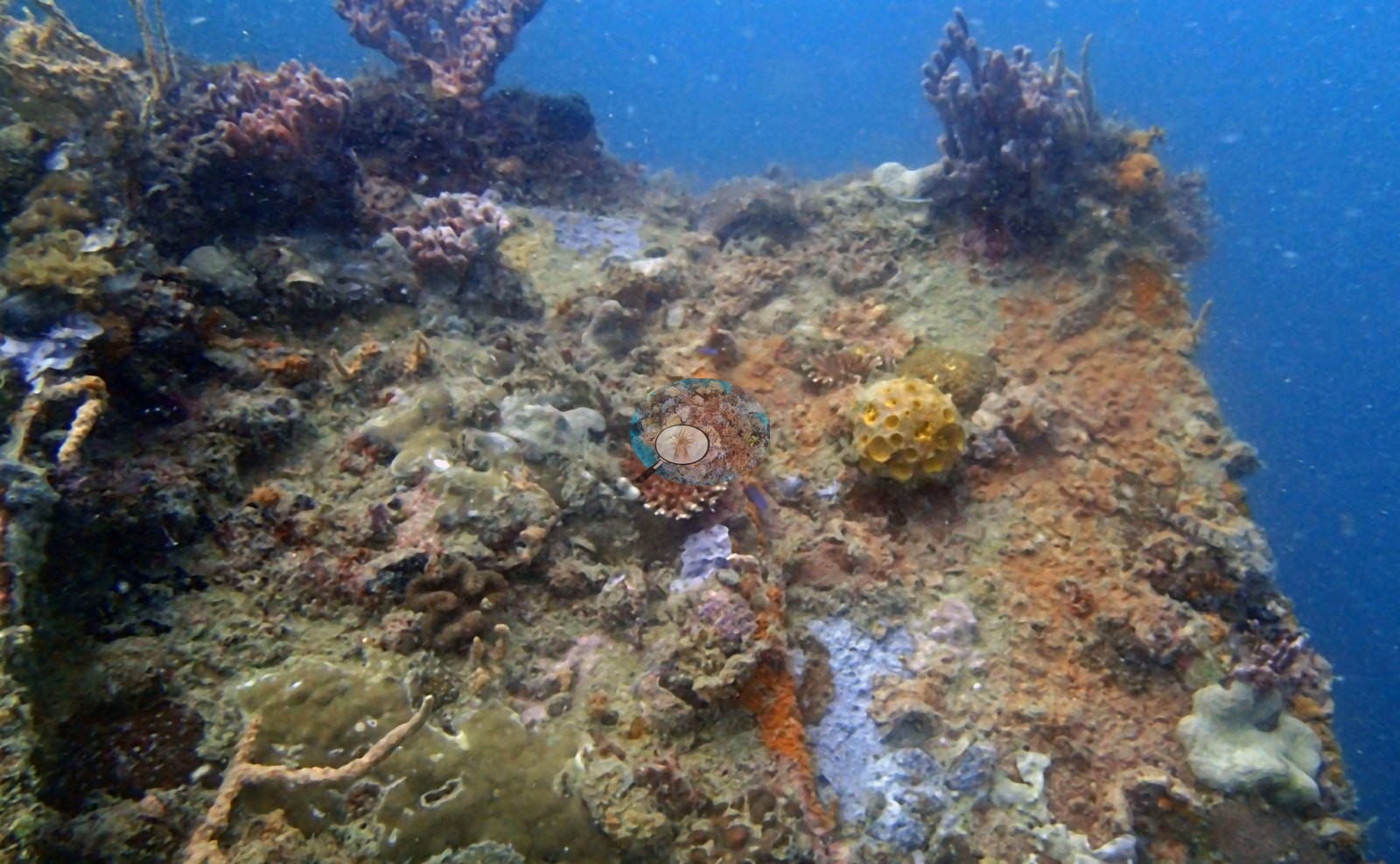
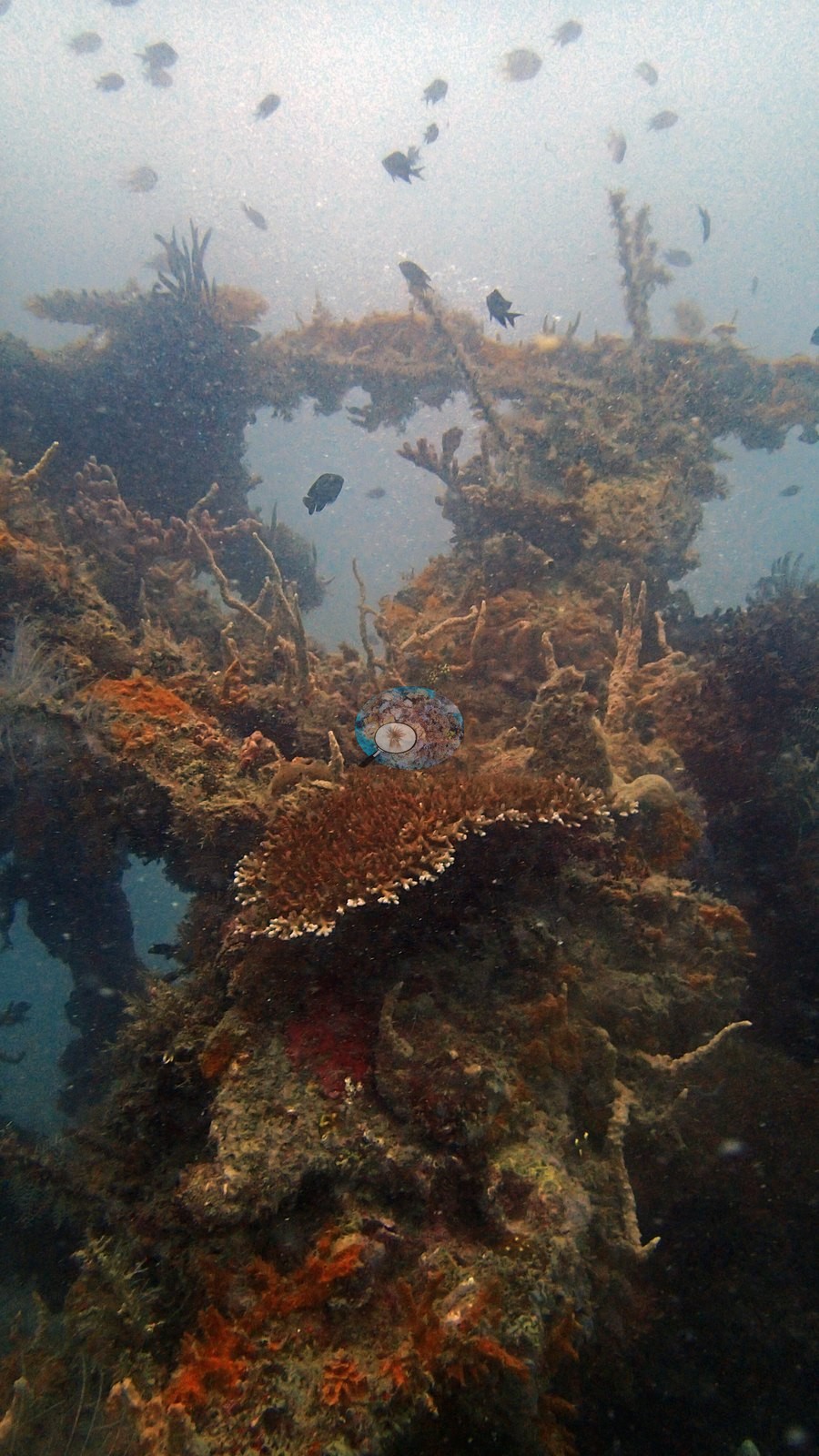
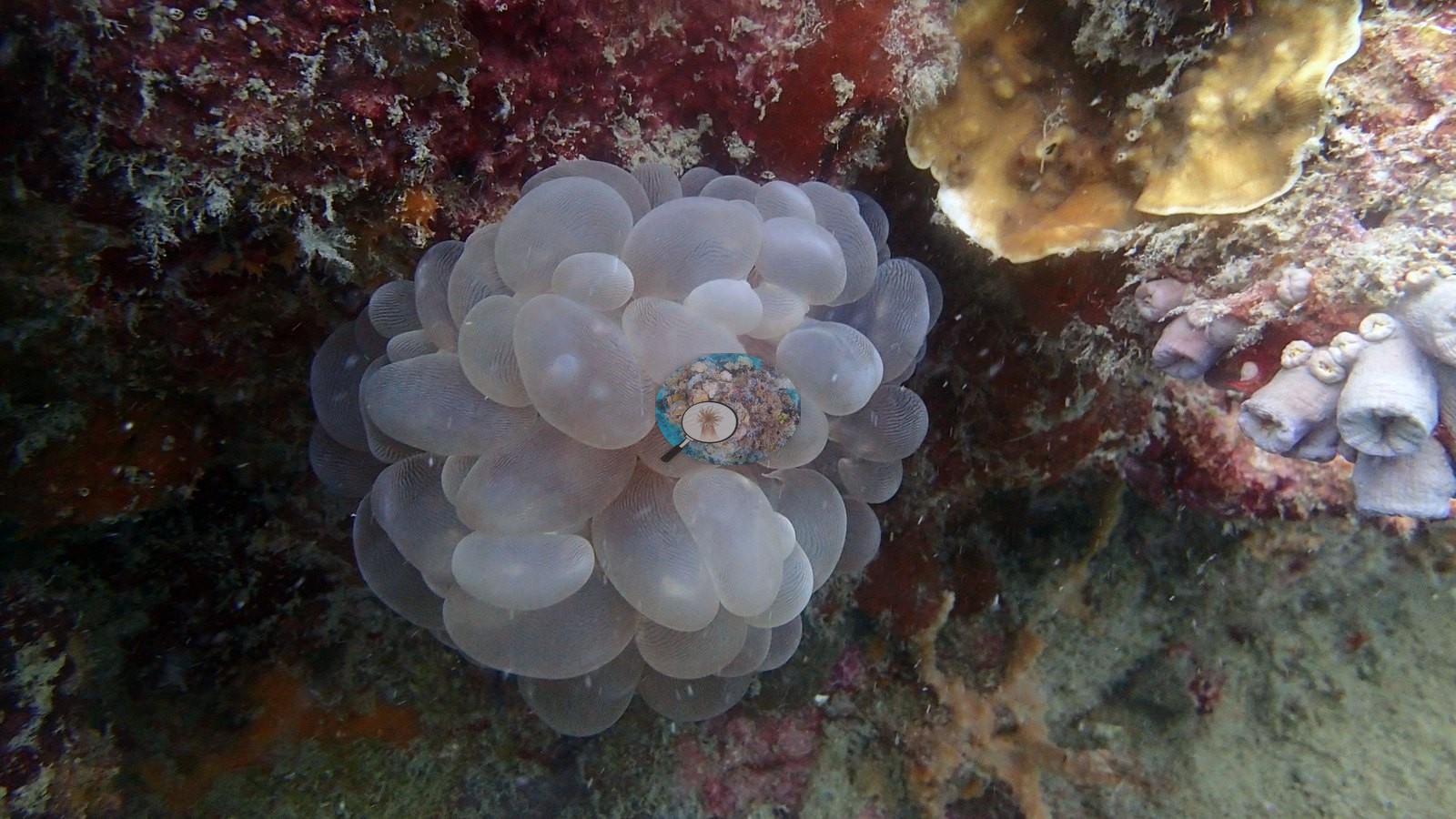
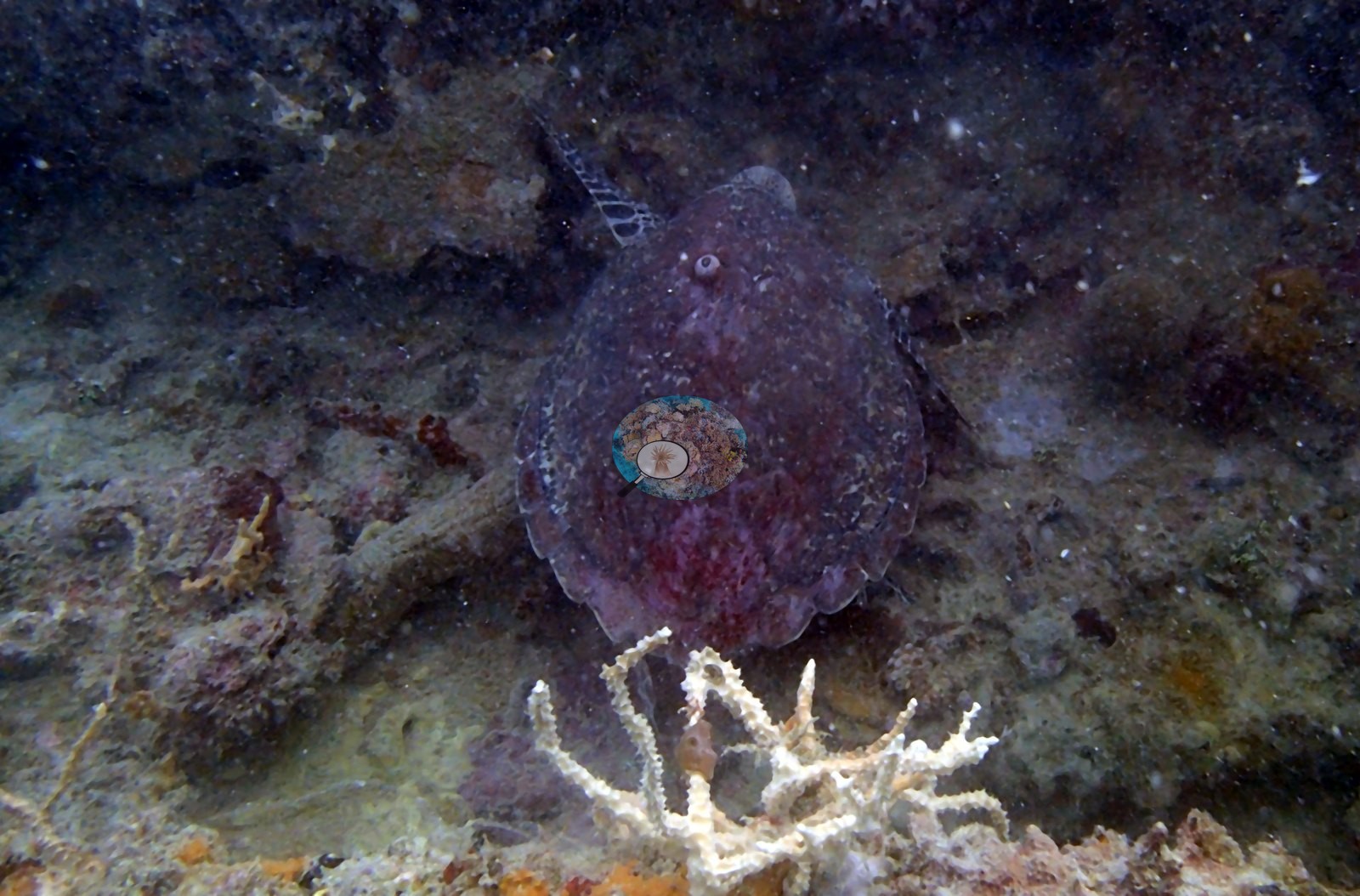
Western Philippines (NOAA CRW virtual station) · Palawan/North Borneo ecoregion mean=4.0°C-heating weeksThe Taiei Maru wreck (a WWII auxiliary, misidentified for years as the Okikawa Maru) has coral colonizing its hull - orange-pink and olive-green massives, a Plerogyra cluster, an intact Acropora table on a beam - amid poor visibility. One frame logged as a turtle looks more like a resting ray or flatfish. Cover on a wreck isn't the same as reef cover; the photo-derived estimate is roughly 12-18%.
One other CRD dive site within 5 km shown in orange — click a marker to open its page.
15 of these 17 photographs are shown beside the text that discusses them under "Site description" below.
Site description
Setting
Visibility was poor and he labeled a frame accordingly (e.g., Image 6, Image 14).
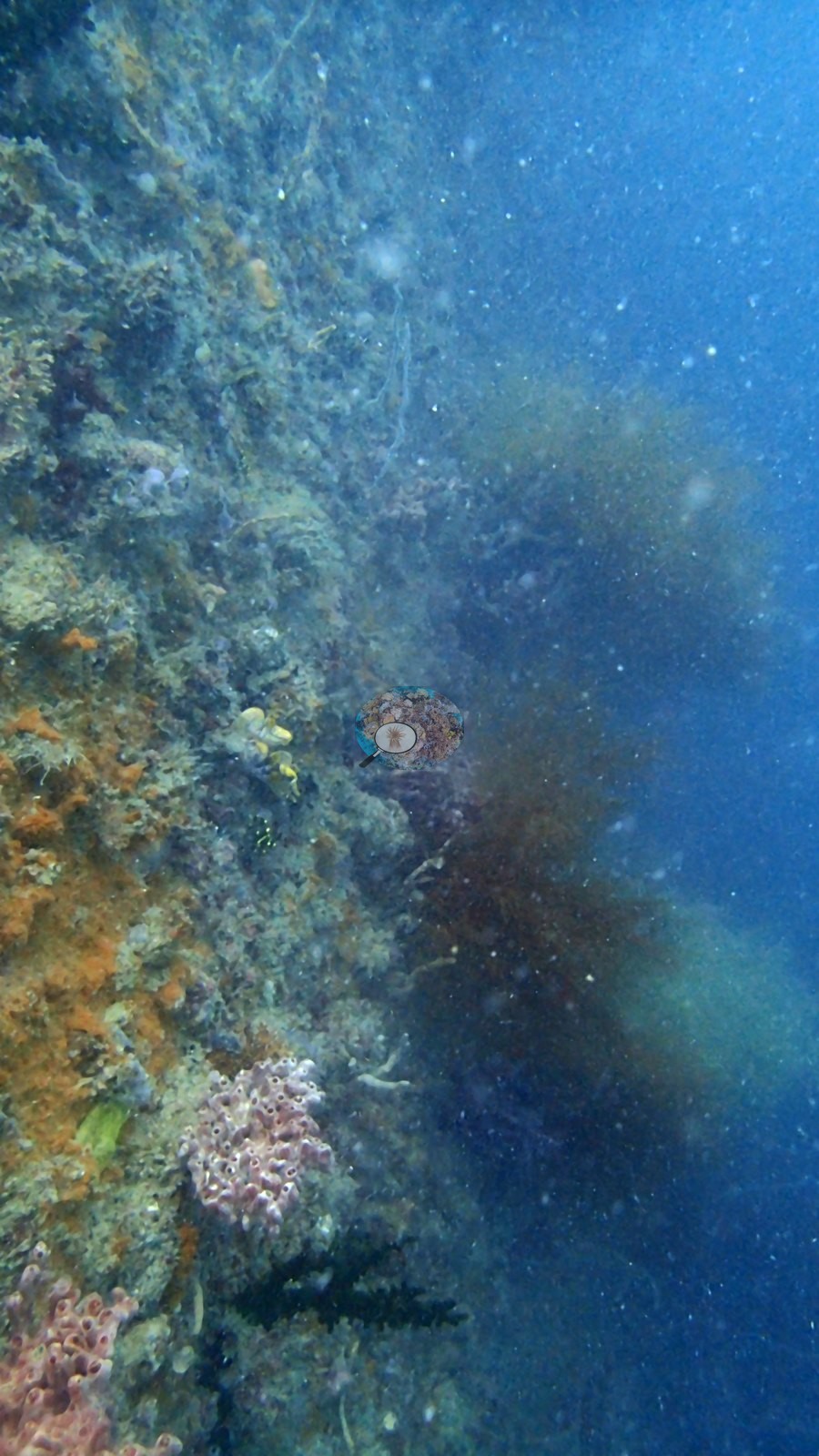
General benthic features
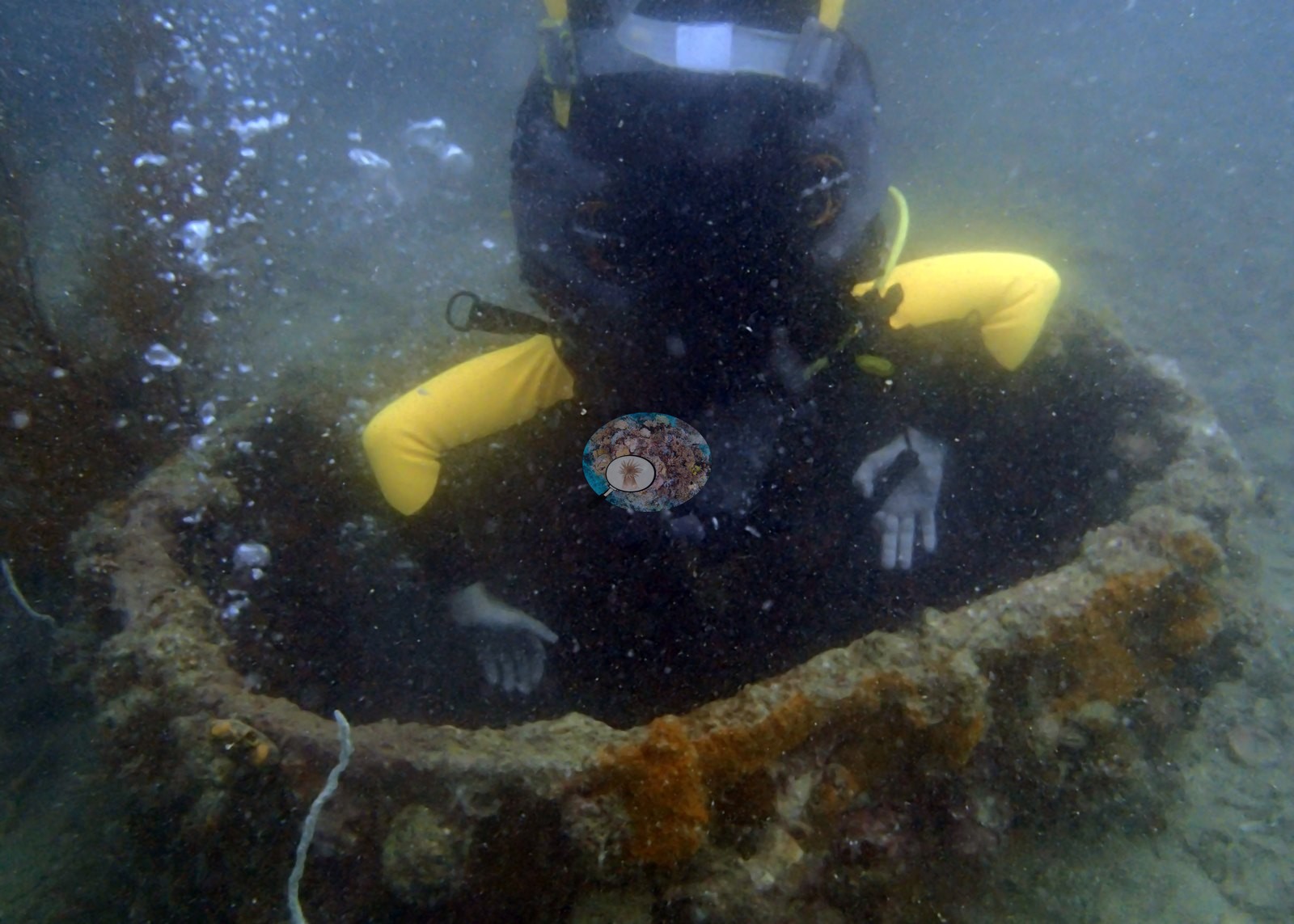
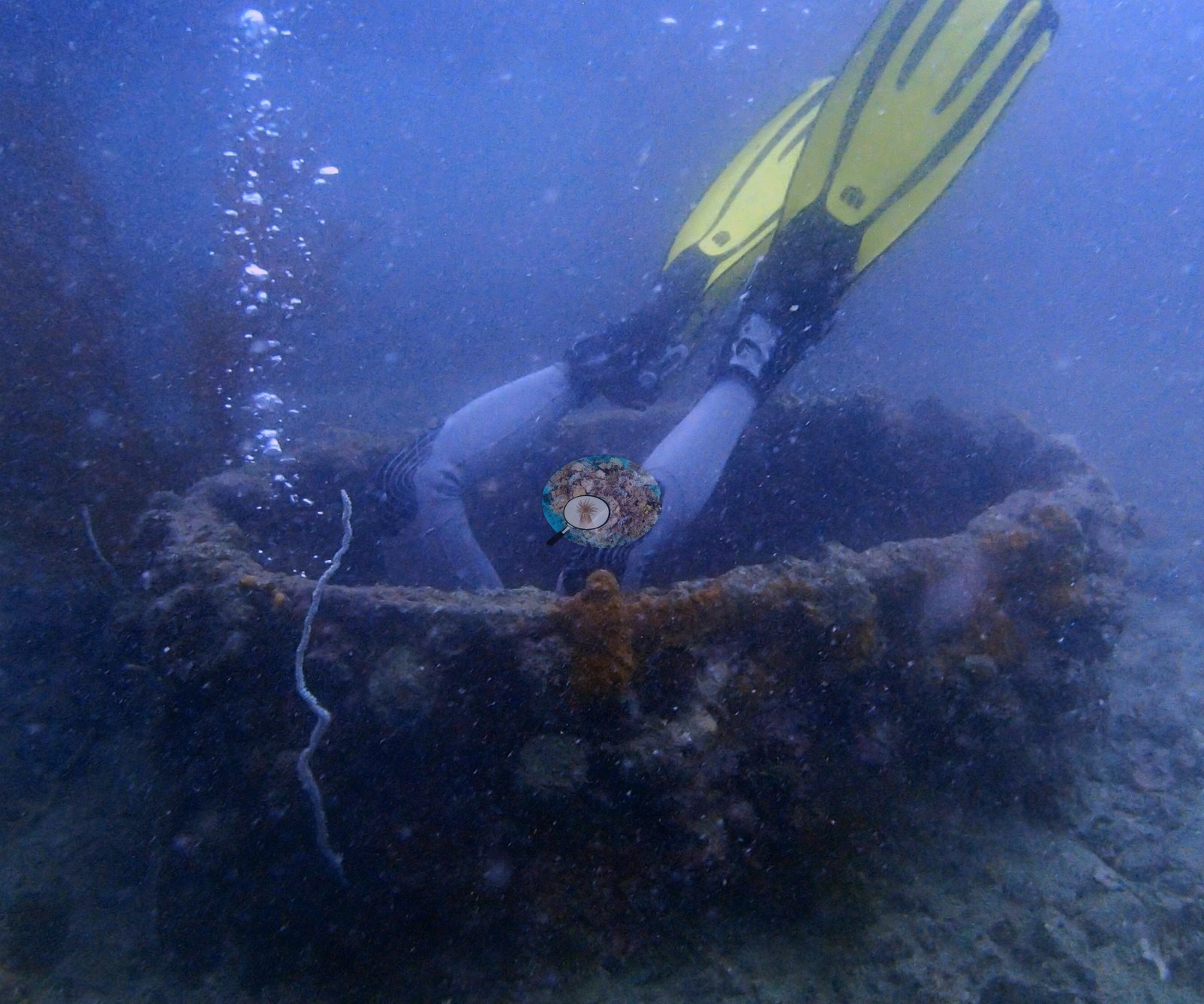
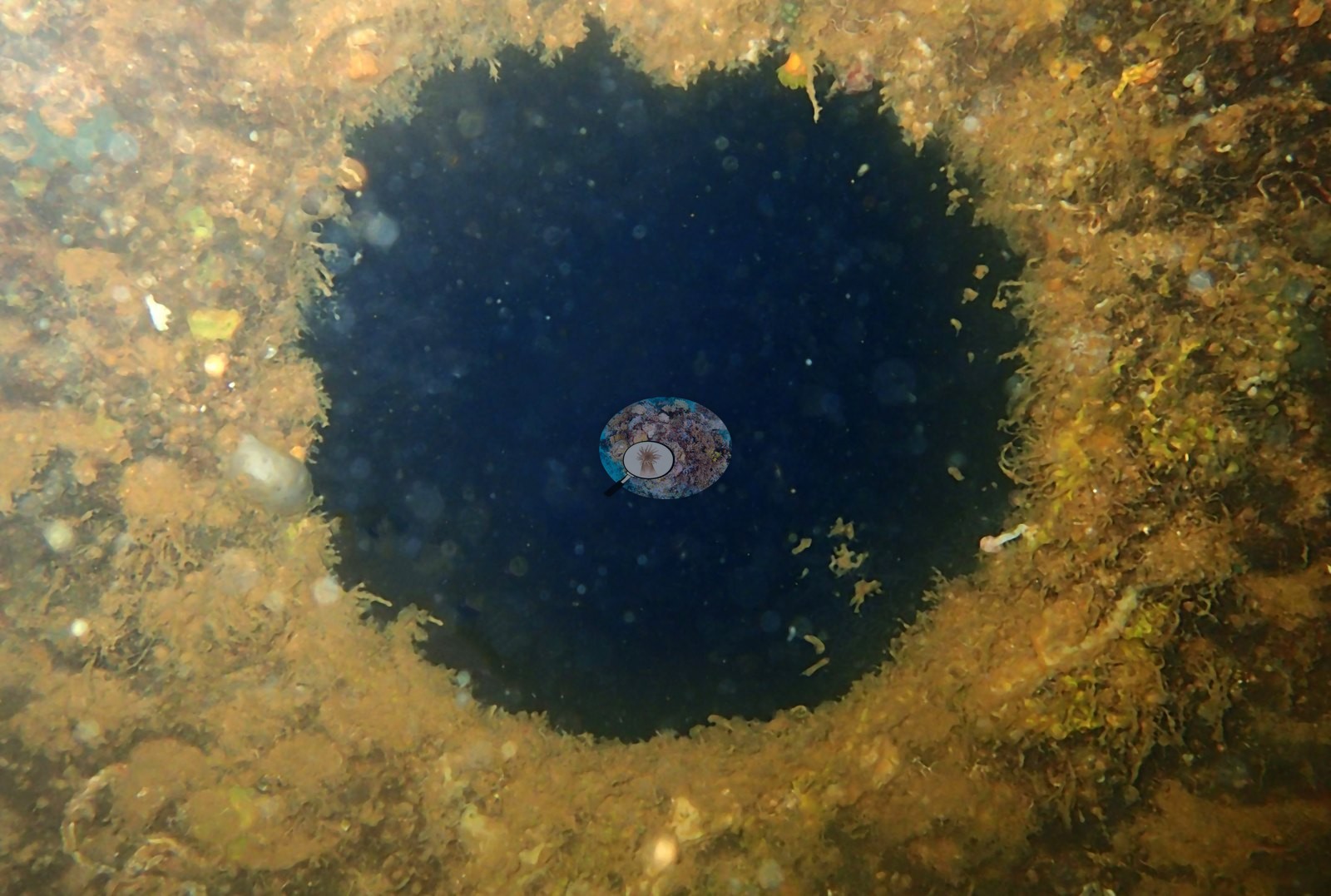
The sequence is encrusted hull plating and beams draped in orange and red sponges, hydroids, and soft corals, a well-photographed porthole, swim-throughs framing blue water, and divers entering and exiting a circular deck hatch (e.g., Image 2, Image 7, Image 8, Image 10, Image 16).
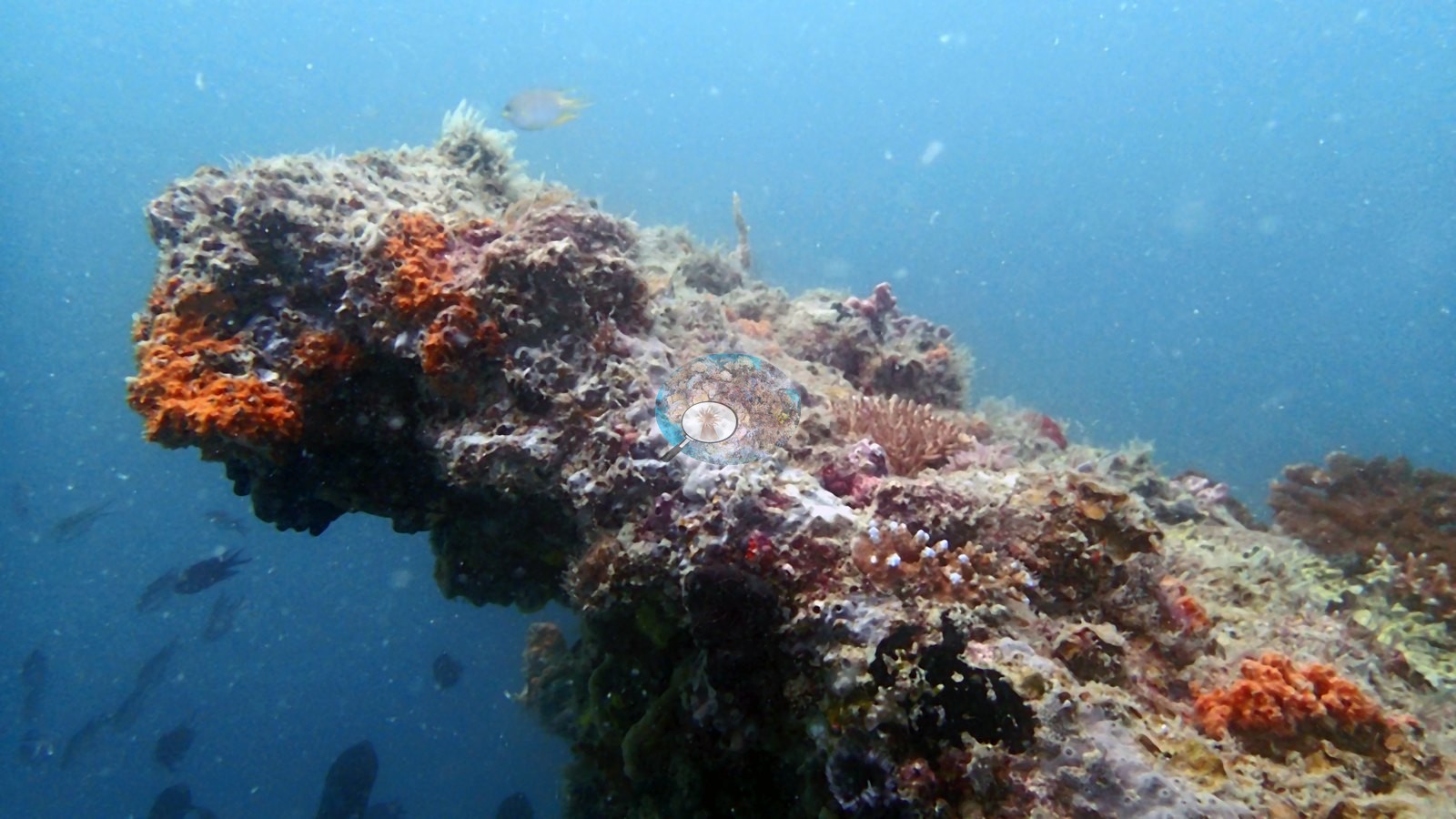
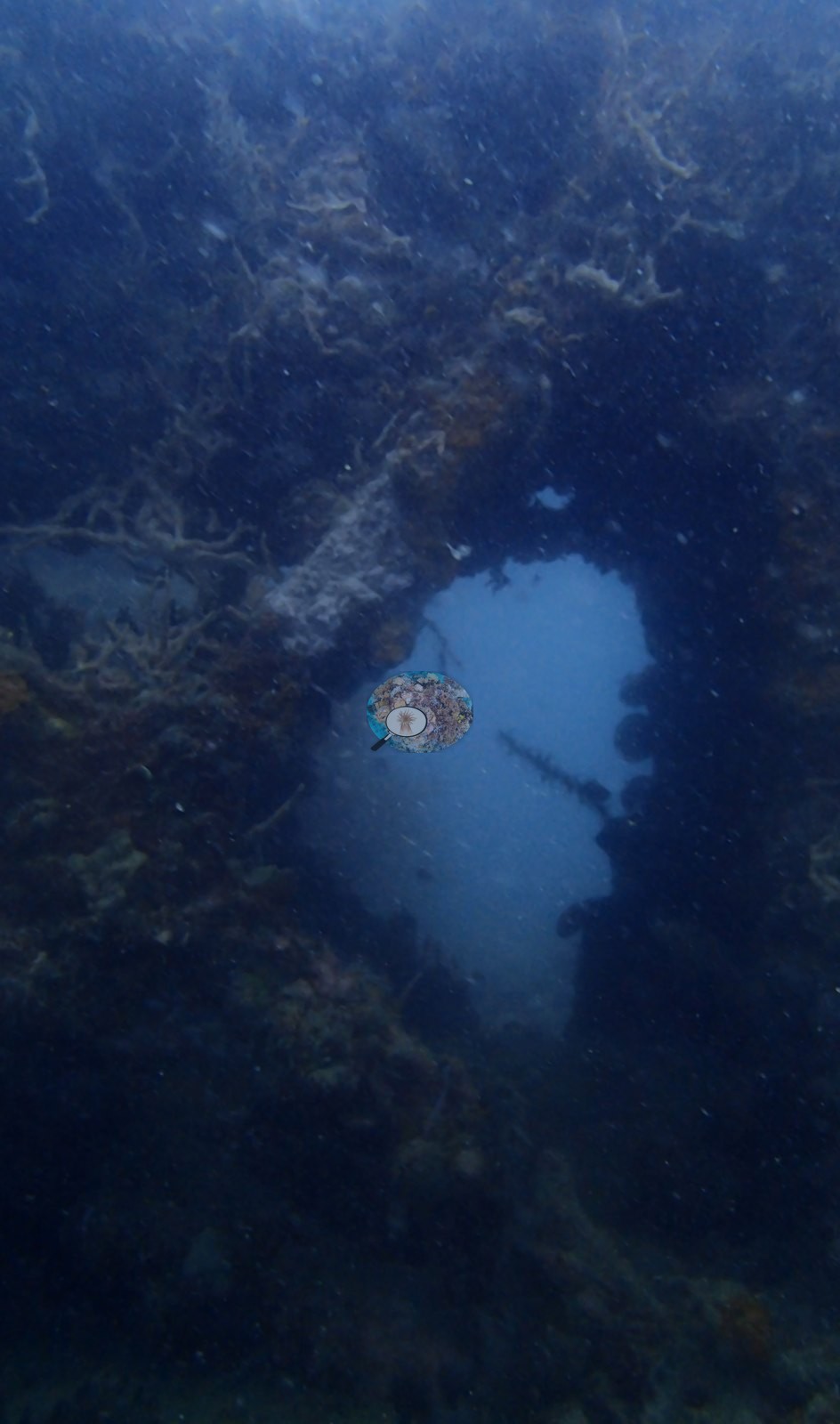
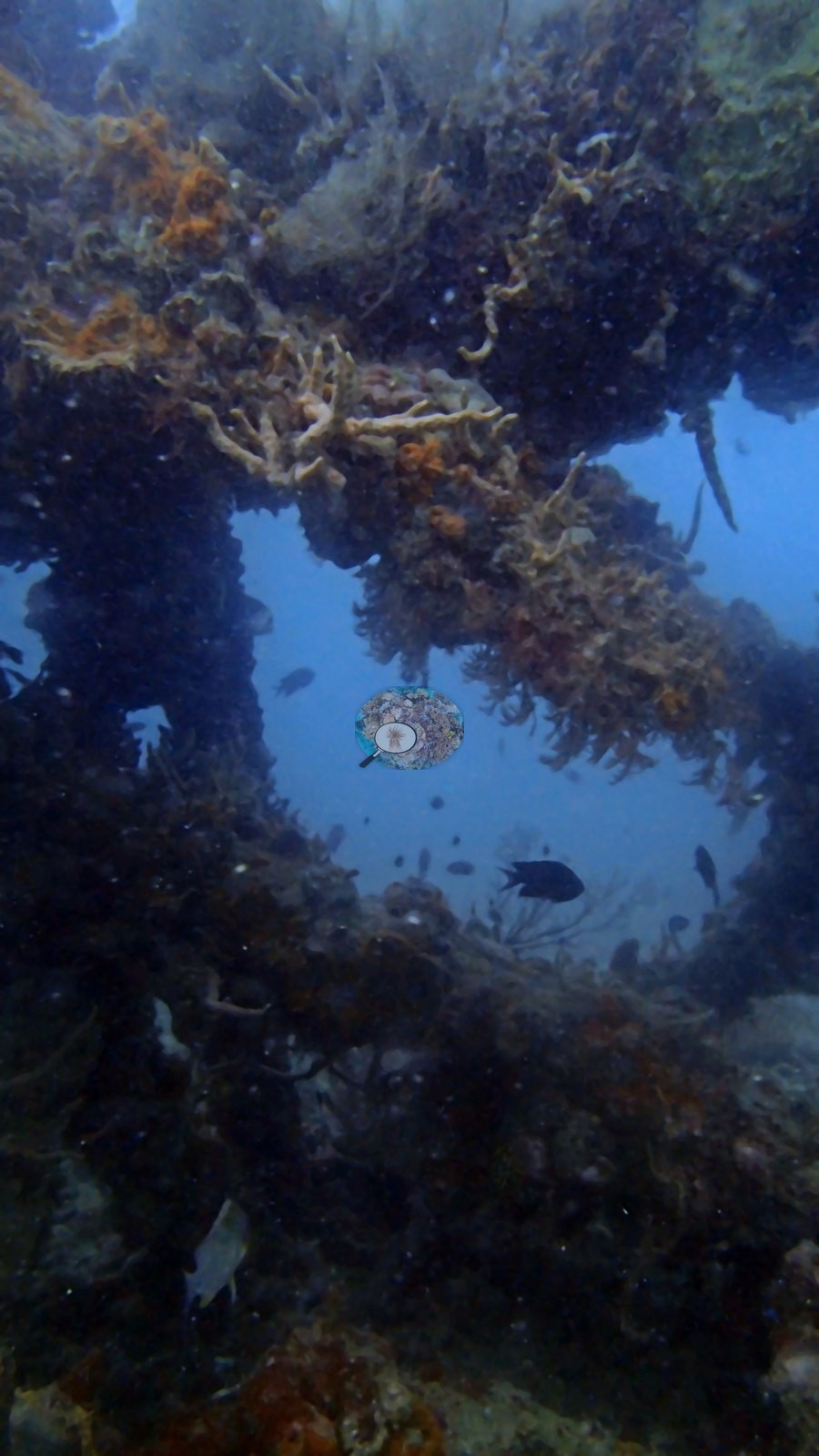
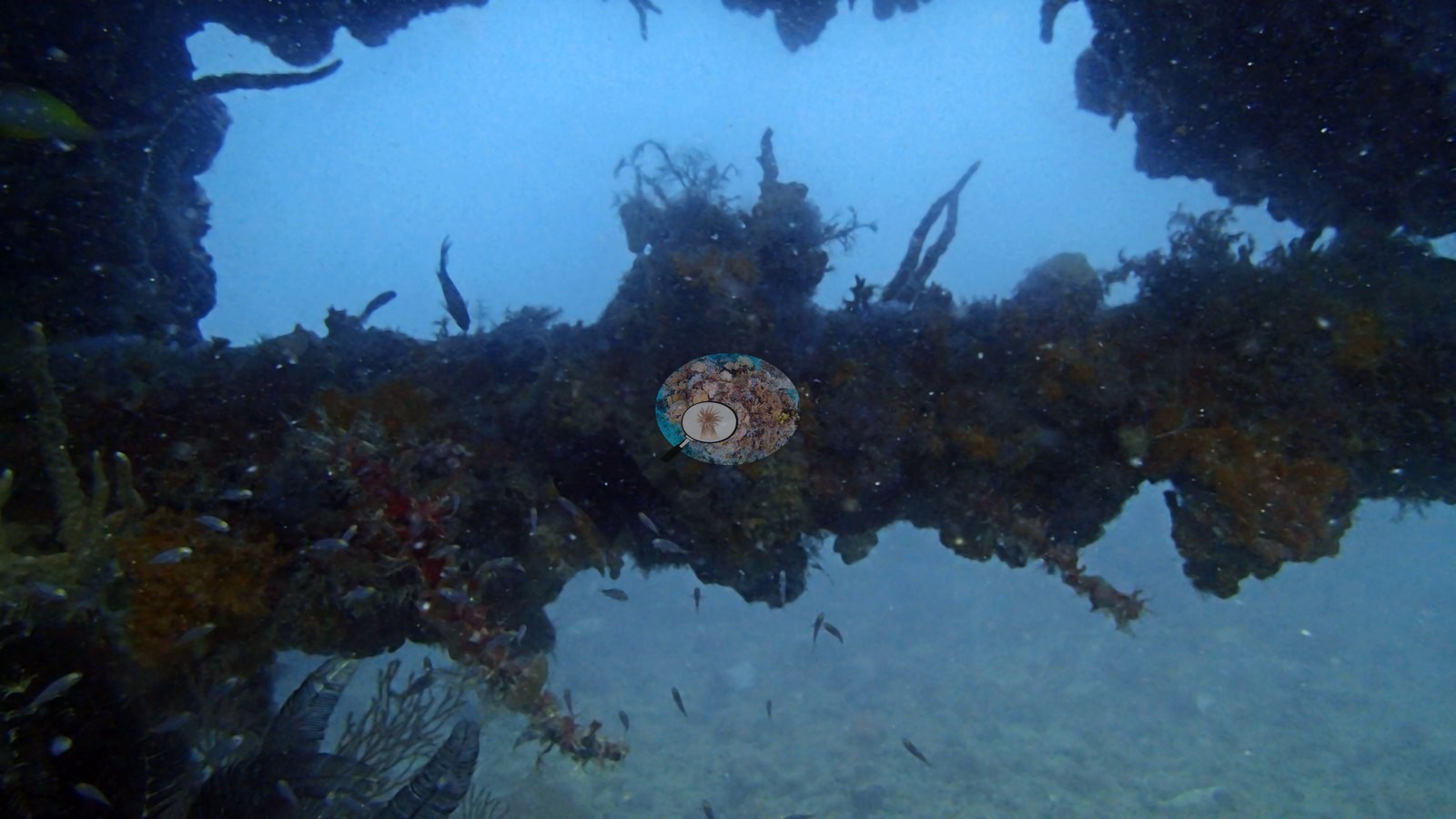
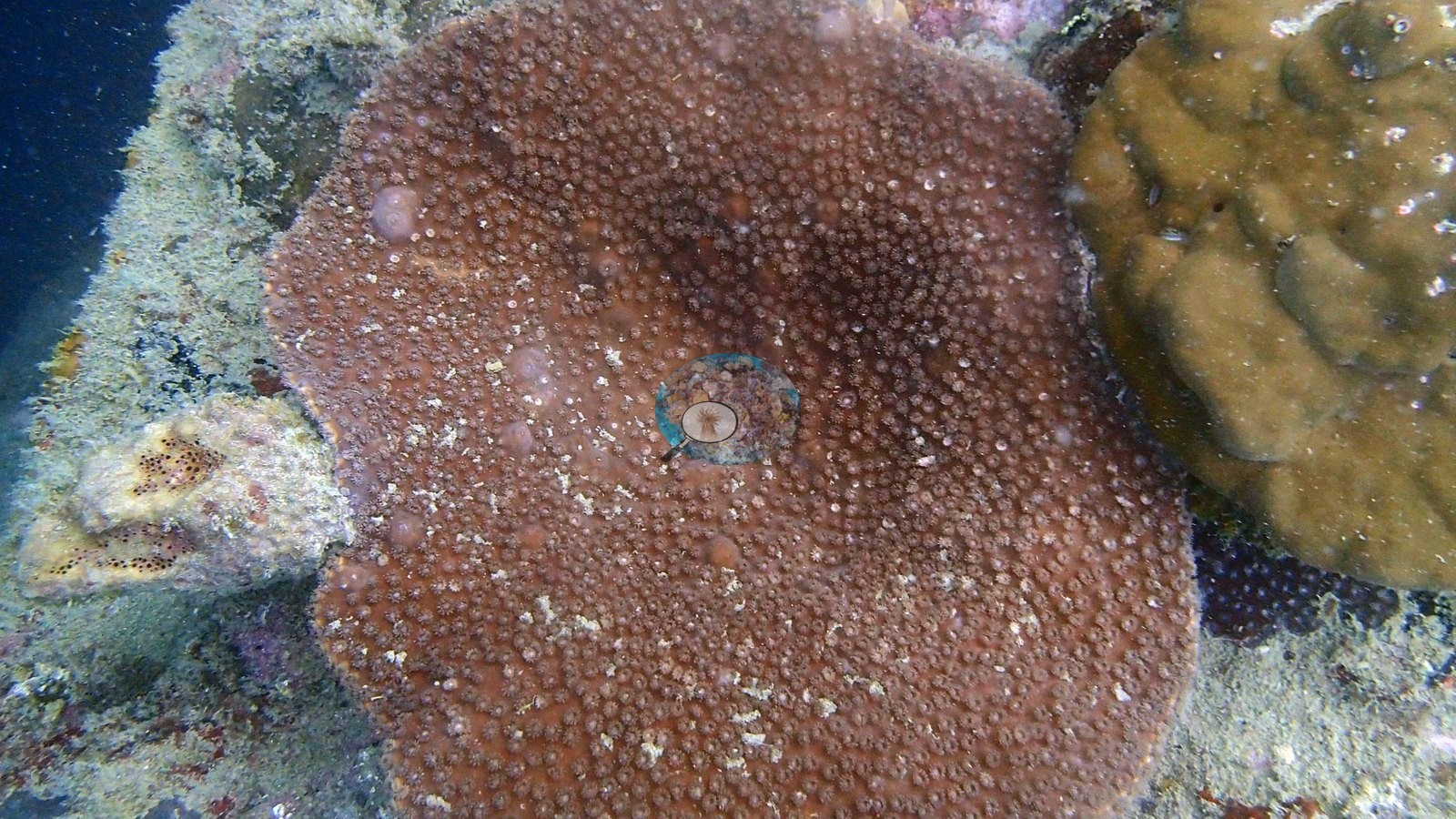
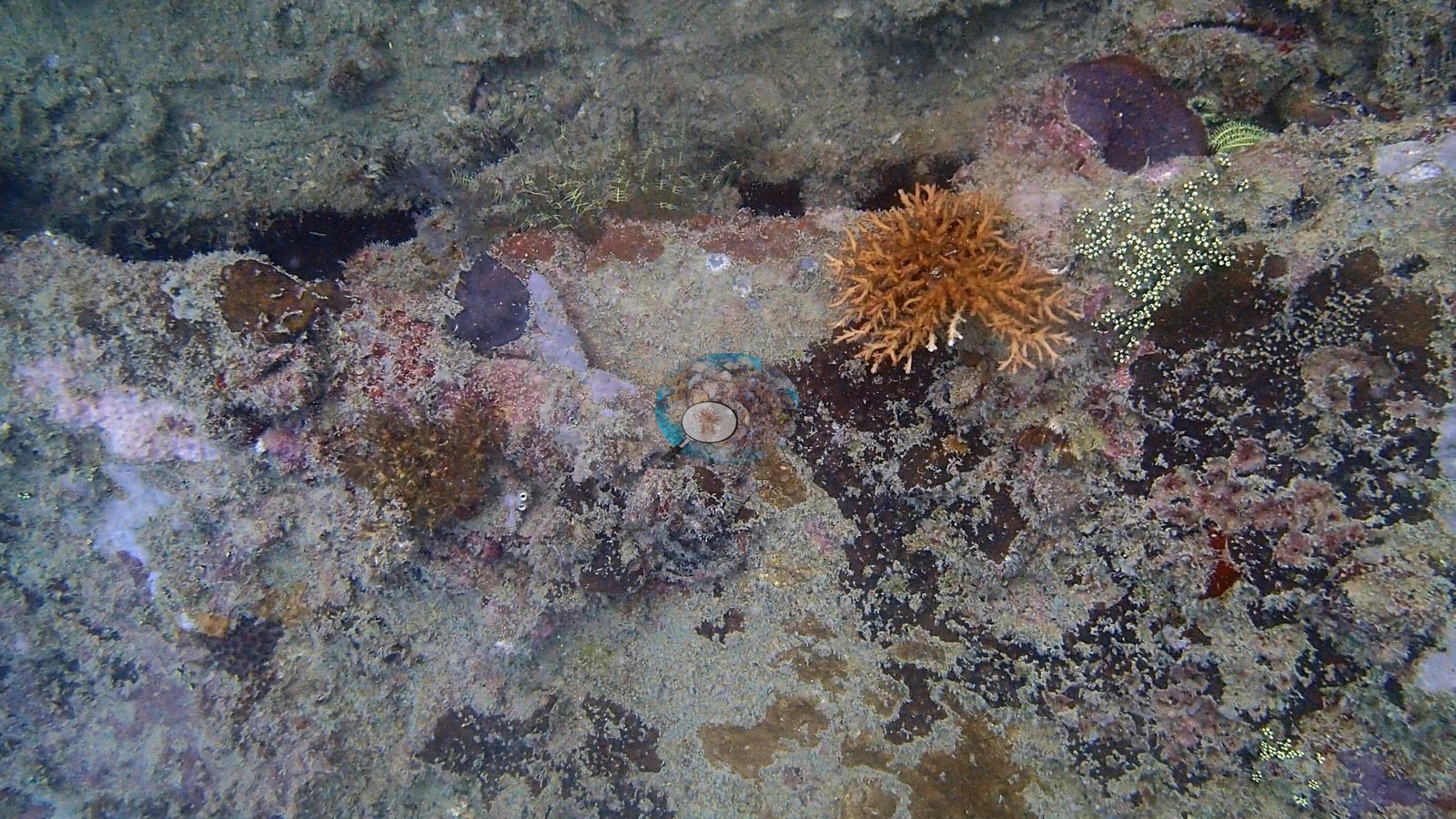
Coral has colonized the metal: a large orange-pink massive with polyps extended beside an olive-green lobed massive; Plerogyra bubble coral in a gray-lavender cluster identified by Anderson, against crimson sponge and lilac ascidians; an intact tabulate Acropora table on a beam; a yellow cup-coral colony on flat plating; and smaller encrusting growth over the ironwork (e.g., Image 3, Image 4, Image 5, Image 9, Image 13).
Coral cover
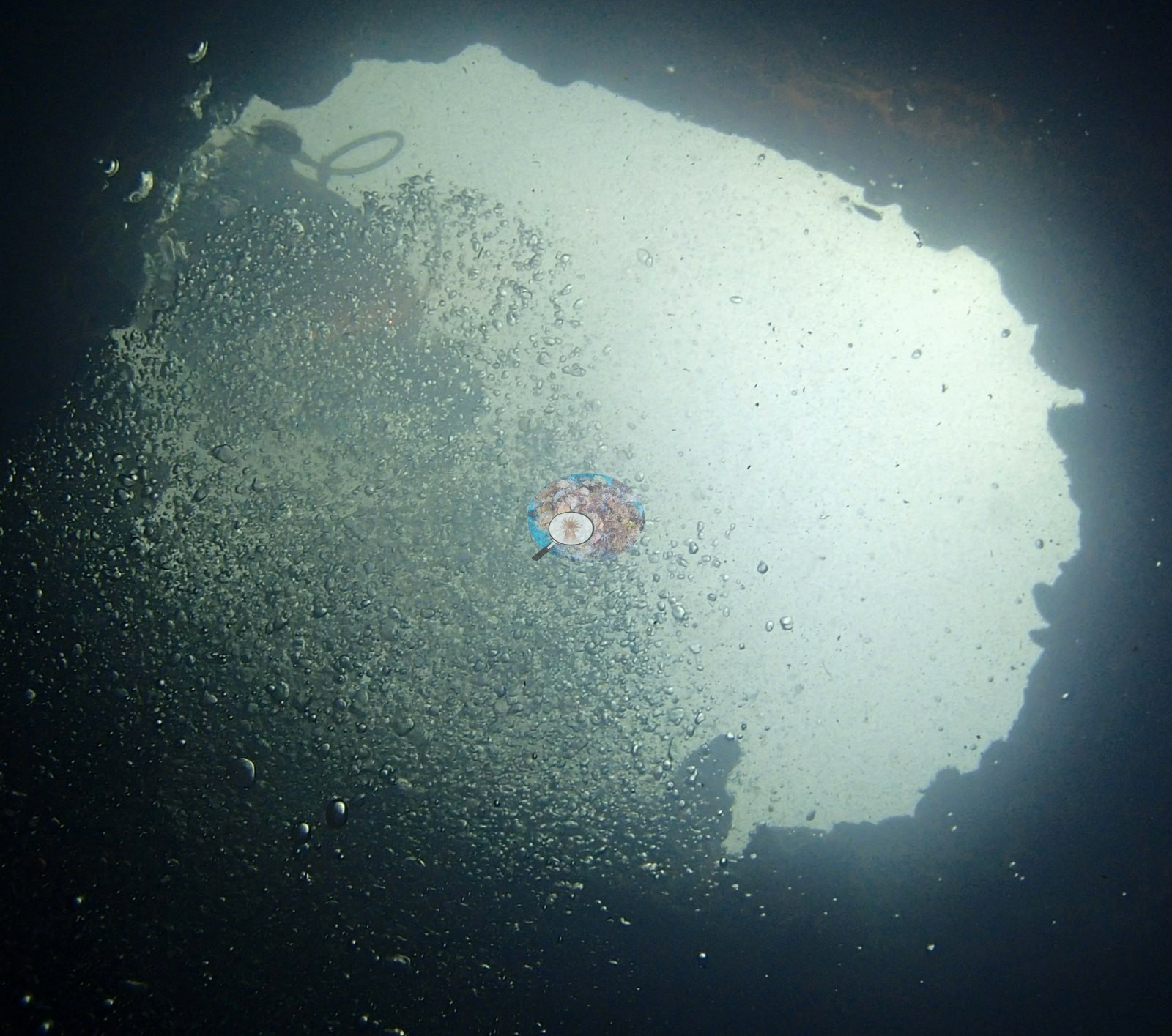
Coral cover on a hull is not the same quantity as cover on a reef - the denominator is manufactured surface, much of it vertical, overhung, or interior - and neither model was built for it. Read the figures as an index of what the camera saw on a shipwreck, never as reef cover. Cover comes from two computer vision methods, neither preferred. DINOv3 point classification gives 11.6% hard coral from all 17 frames and 340 points, on a very tight interval, 11-12%. CoralSCOP computer vision gives 17.8%, the figure published here, across all 17 frames. The spread is 6.2 points and the honest range is 12-18% - and it runs opposite to Coral Gardens, DINOv3 lower here and higher there, evidence that neither measures a stable quantity. The frames show where CoralSCOP's extra six points come from: a frame of a single bubble-coral colony scores 56.8% against DINOv3's 10.9%, and a frame of a real porthole ringed with turf and hydroids scores 32.1% against 11.1%. The two models fail differently. CoralSCOP computer vision reads high on low-cover reefs, a median=1.68x a co-located Reef Check diver survey and 4.6x at worst, and masks any discrete coral-shaped object, corroded steel and portholes included. DINOv3 is strong in-domain (6-class macro-F1 0.62, hard coral recall 0.82) but collapses off-domain: cross-domain point accuracy 0.17-0.25, ceiling near 35-50%; it returned 16.5% on a photograph of exhaled bubbles and daylight (e.g., Image 11).
Coral cover: 15% — photo-derived, and the two methods broadly agree (12% vs 18%). This site's figure is the mean of two independent computer vision passes over Anderson's own frames: a DINOv3 calibrated point classifier reads 11.6% and a CoralSCOP computer vision reads 17.8%, a spread of 6.2 percentage points. The map publishes the mean so sites can be sorted against one another, but the honest statement of what is known here is the 12–18% range: the two products have different denominators and should not be treated as one measurement.
Stressors
A pale staghorn Acropora in that frame is bare skeleton. No crown-of-thorns starfish (COTS) or other corallivores evident.
Fish and other fauna
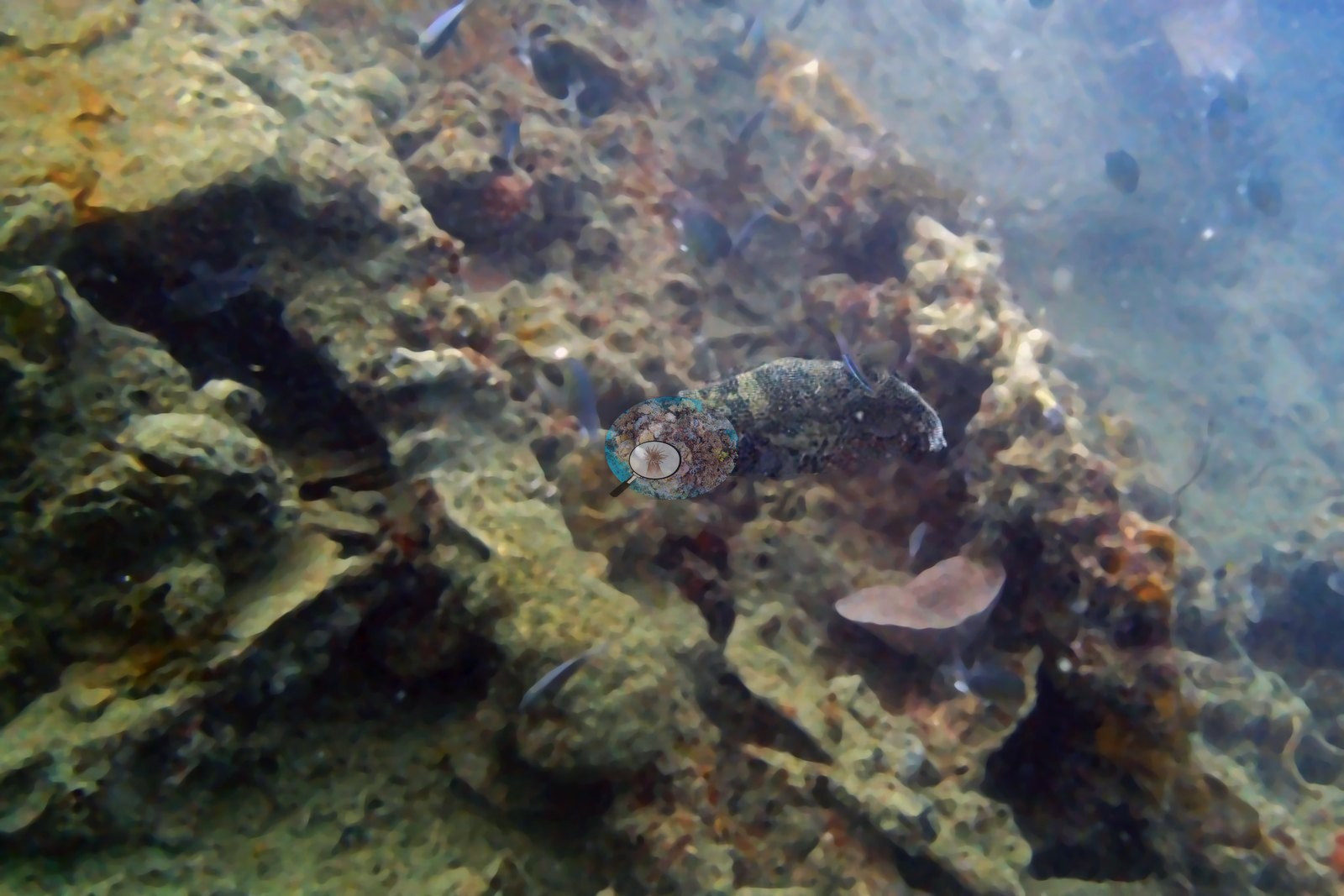
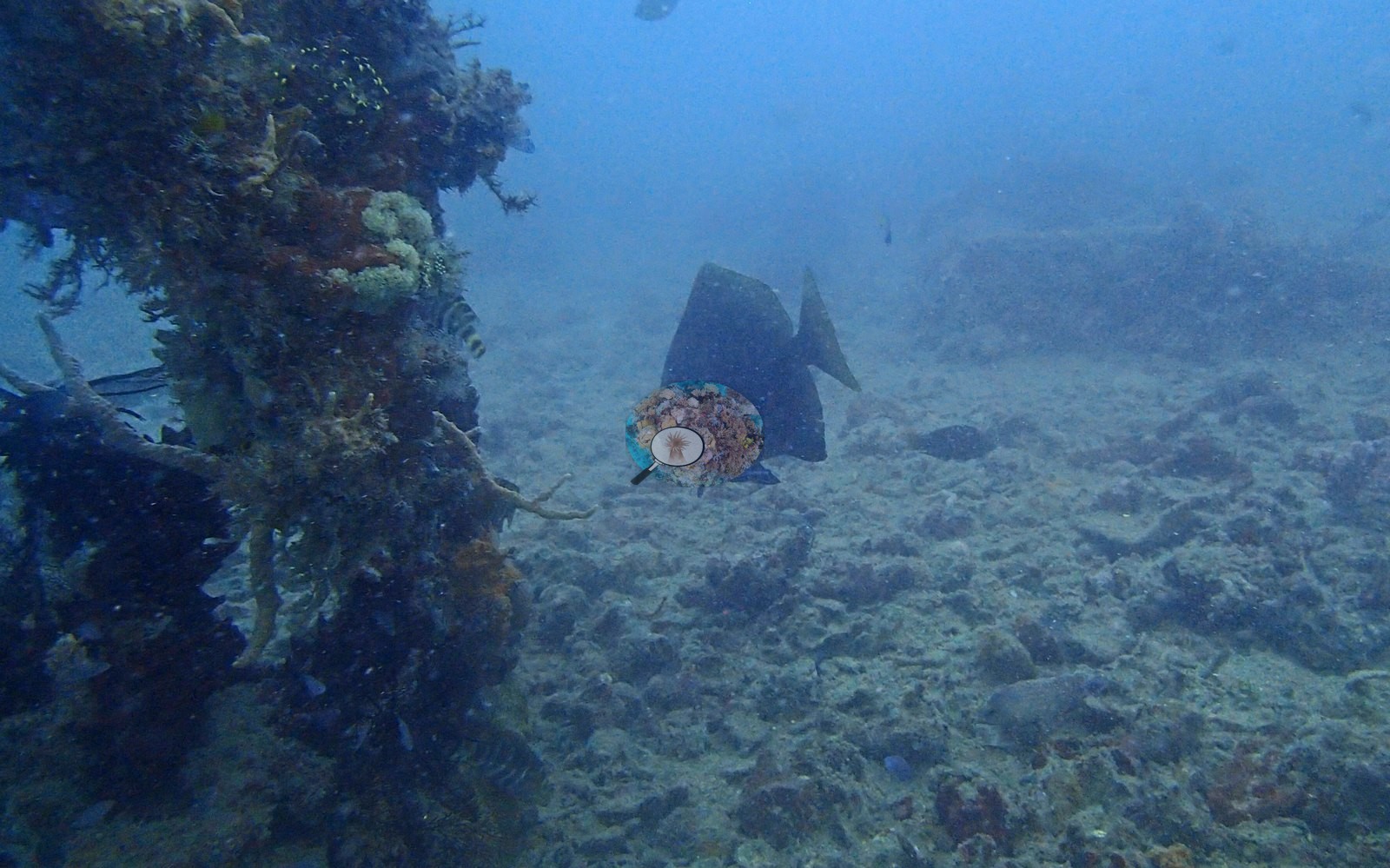
A batfish (Platax) patrols the wreck above a broad rubble plain, and the frame Anderson filed as a turtle shows a rounded, mottled maroon animal with a dorsal eye and spiracle, more consistent with a resting ray or flatfish - flagged for a closer check (e.g., Image 12, Image 17).
Comparisons with other data
No prior survey data from this site. If you would like to share yours, please email us.
Dive record
The second Busuanga wreck of 27 January 2017, shallower and brighter than the Akikushima at a maximum 25.3 m; all 17 available frames were reviewed.
Other notes
A naming conflict has been resolved: this site was once listed as Okikawa Maru, but the trip itinerary lists the day as Akikushima, Taiei Maru, and Coral Gardens, the photo folder is Taiei Maru, and Anderson confirmed the change - another Japanese auxiliary sunk in Coron Bay in September 1944. The overriding caveat: this is a steel wreck.
CV model comparison
More info
As of September 2026 no computer-vision method estimates coral cover accurately on new images, so treat this as indicative rather than a measurement; it is revised as the methods improve.More info
The published figure is the mean of the two methods.| Method | Hard-coral cover (%) |
|---|---|
| In-house DINOv3 | 11.6 |
| CoralSCOP | 17.8 |
| Mean (± SD) | 14.7 ± 4.4 |
| Range | 11.6–17.8 |
Mean ± SD and range are across the computer-vision methods shown.
Data & links
All images from Coral Reef Diagnostics. Data are from Coral Reef Diagnostics and Reef Check Foundation.
© Coral Reef Diagnostics.