
Philippines - Coron: Akitsushima (seaplane tender wreck), Busuanga
Part of the regional summaries: Philippines - Palawan and Philippines
More info
Western Philippines (NOAA CRW virtual station)A deep penetration dive on the WWII seaplane tender Akitsushima, more about wreck structure than reef, though Euphyllia, foliose corals, and soft-coral rosettes have colonized the hull and seabed nearby. Visibility was poor throughout. Low coral cover is expected on a wreck, and too few of the photos were usable for a cover figure.
Isang malalim na penetration dive sa seaplane tender na Akitsushima mula sa WWII, na higit na tungkol sa estruktura ng lumubog na barko kaysa sa bahura, bagaman tinubuan na ng Euphyllia, mga foliose na koral, at mga rosette ng malambot na koral ang katawan ng barko at ang kalapit na sahig ng dagat. Malabo ang tubig sa buong sisid. Inaasahan ang mababang saklaw ng koral sa isang lumubog na barko, at masyadong kaunti ang magagamit na larawan para makapagbigay ng bilang ng saklaw.
Salin ng buod na ito gamit ang AI; ang Ingles ang opisyal na bersyon.
Two other CRD dive sites with their own pages within 5 km shown in orange — click a marker to open its page.
Site description
Setting
Anderson's verdict on the Coron wrecks: the visibility was too bad to do them justice.
General benthic features
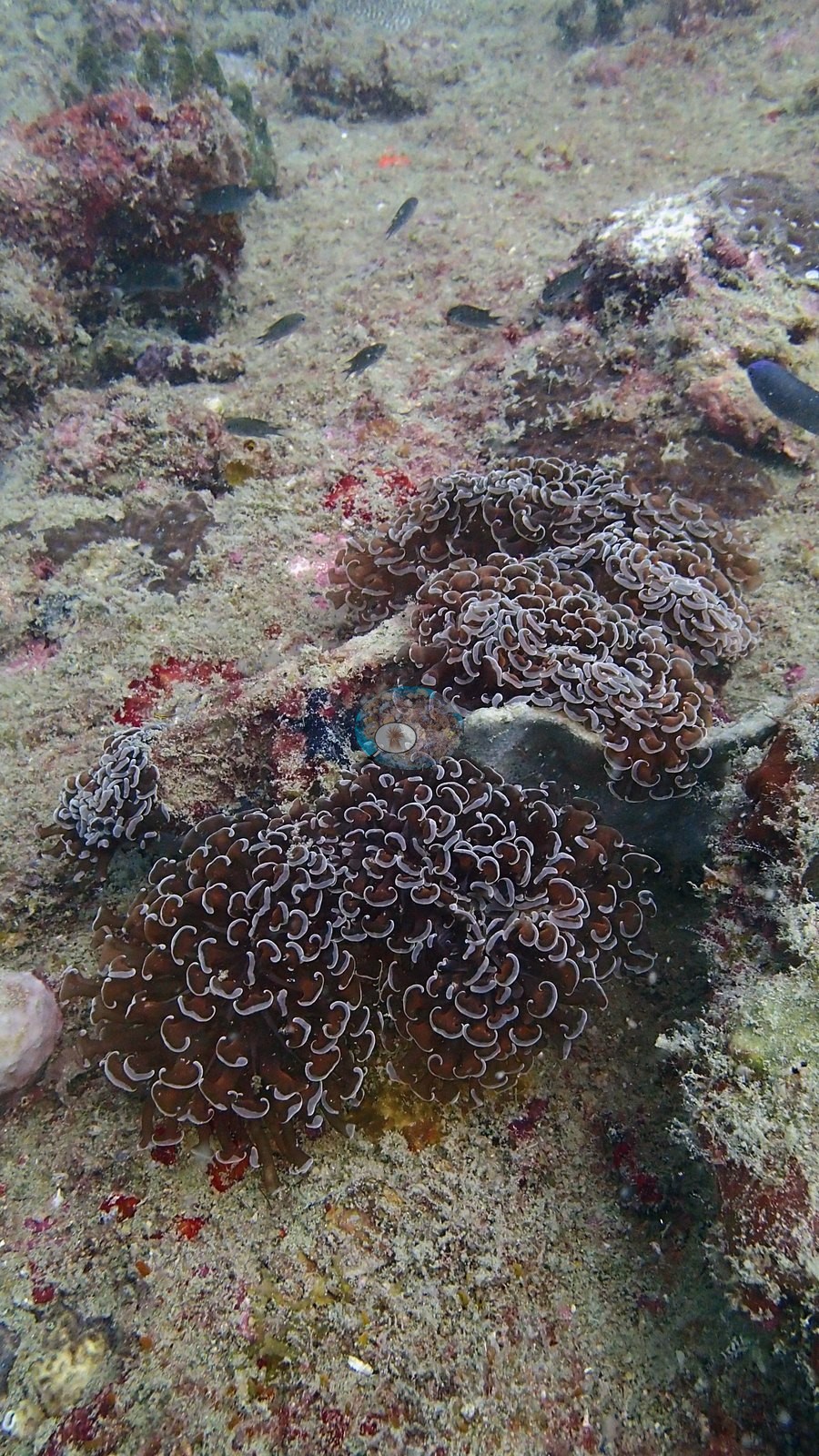
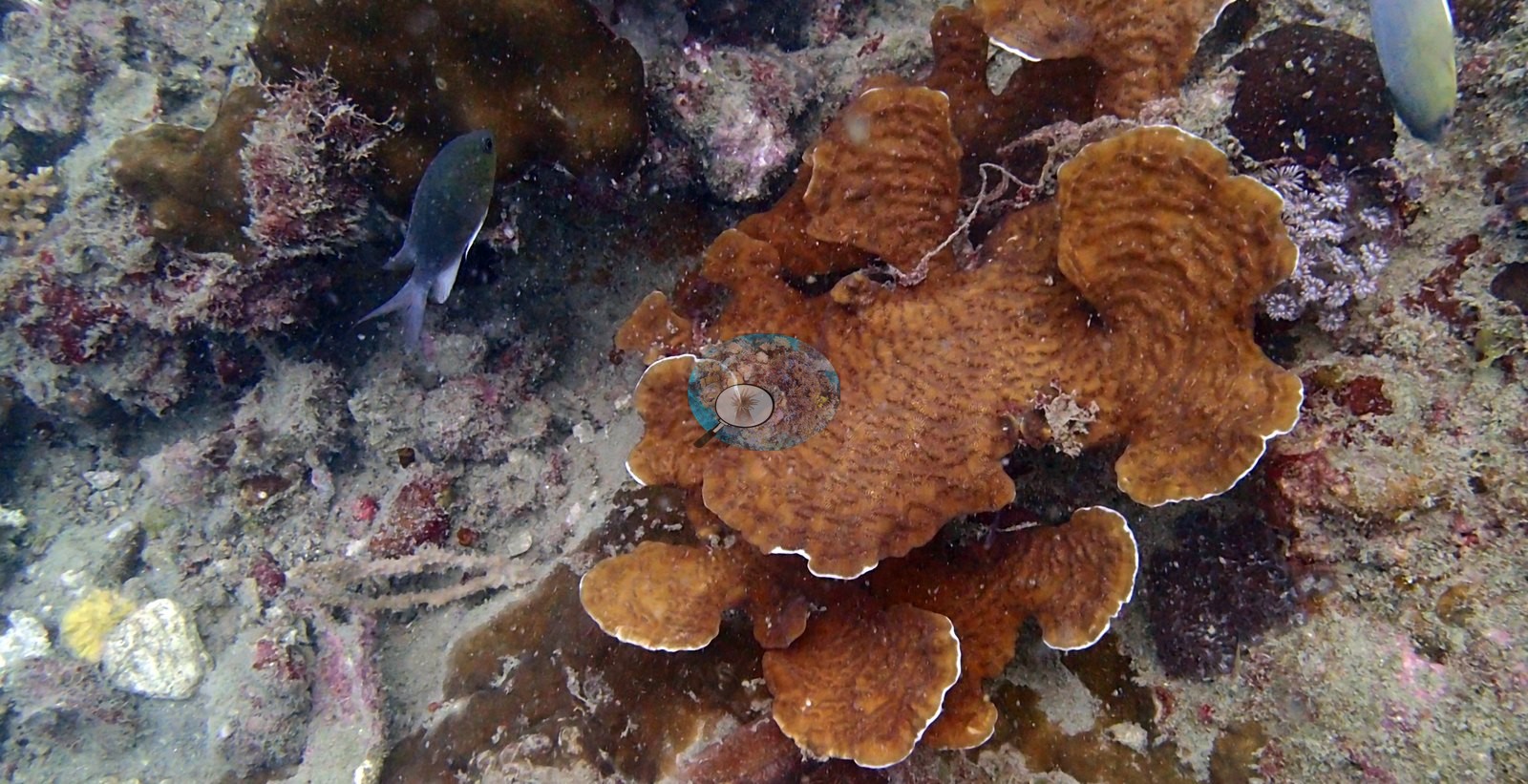
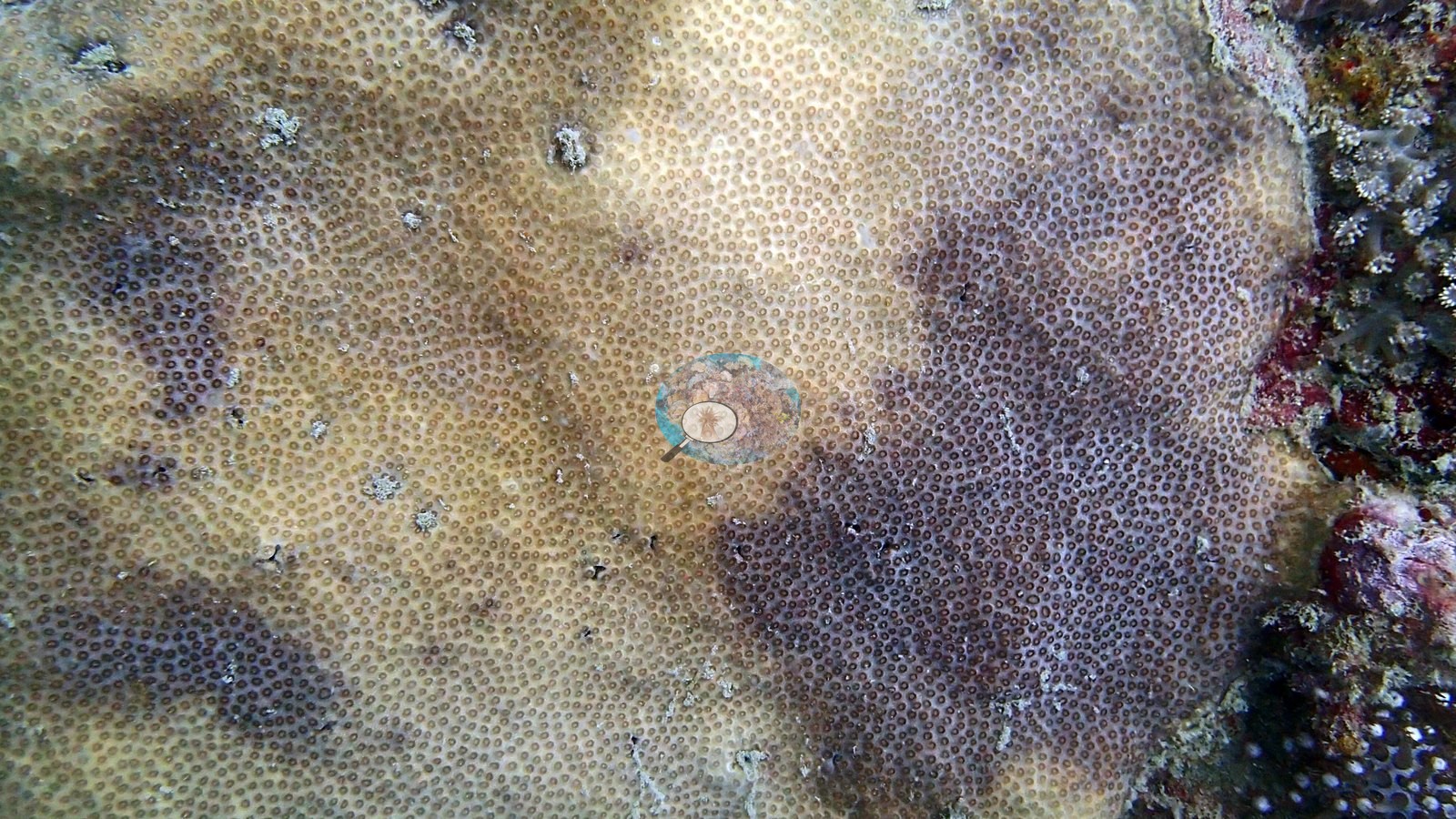
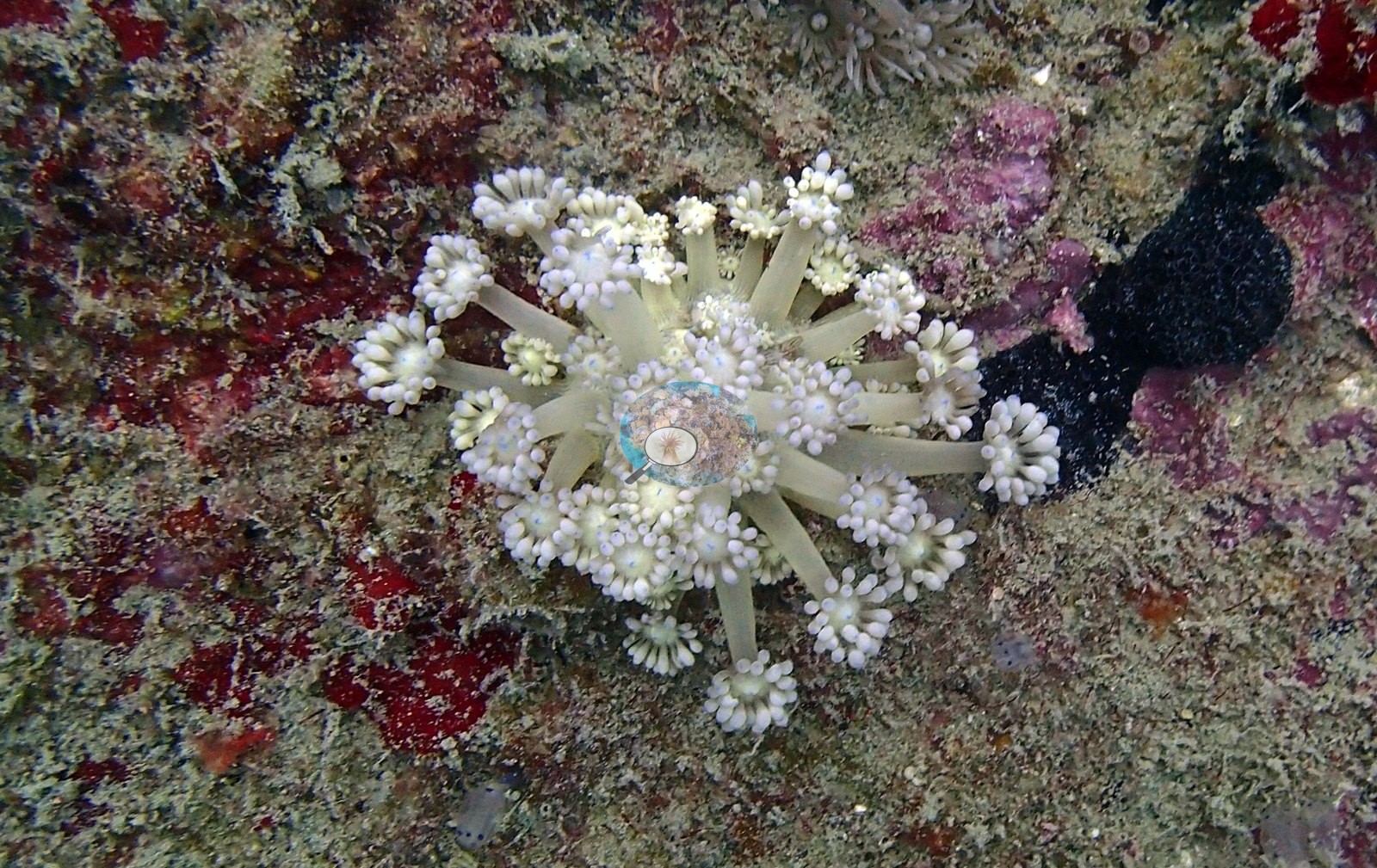
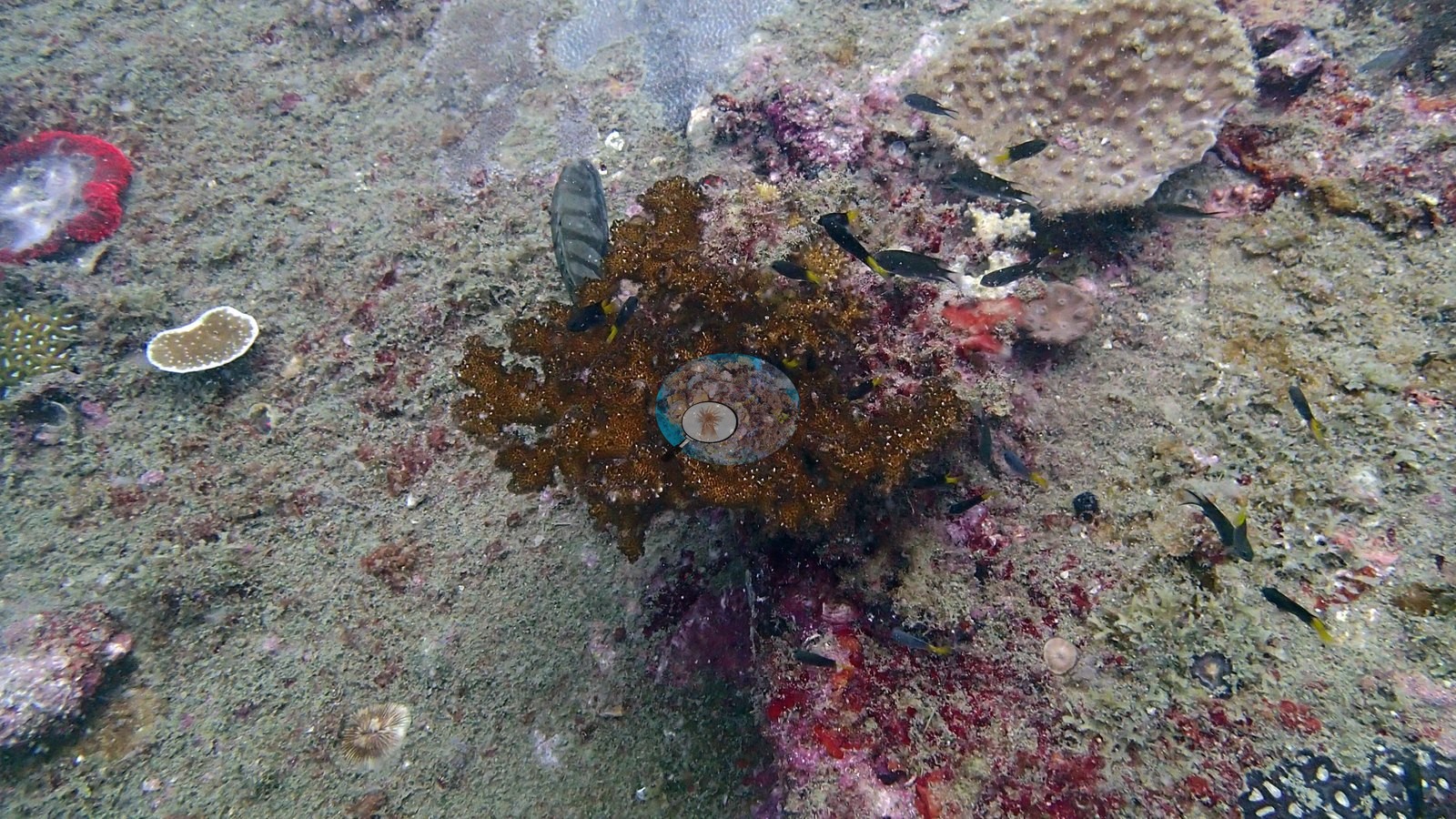
What grows on the hull and the seabed beside it is nonetheless recognizable: Euphyllia, identified by Anderson, two anchor-tipped heads on sediment-veneered rubble; a brown foliose colony with clean white growing margins and fine concentric ridging; a large encrusting colony mottled cream and violet filling a close-range frame; a cluster of pale soft coral with polyps fully extended in a flat rosette; and small massive, branching, and encrusting corals scattered across the plating, among red and pink coralline crusts, red sponge, and damselfish (e.g., Image 1, Image 5, Image 6, Image 7, Image 11).
Coral cover
- No coral-cover figure is given for this dive: only four of the frames show enough of the hull or the seabed to score, too few to estimate cover.
- This is a steel wreck, and coral cover on a hull is not the same quantity as cover on a reef: the denominator is manufactured surface, much of it vertical, overhung, or interior.
- On a wreck, low coral cover is expected: it reflects wreck habitat, not reef decline.
Stressors
No crown-of-thorns starfish (COTS) or other corallivores were evident.
Fish and other fauna
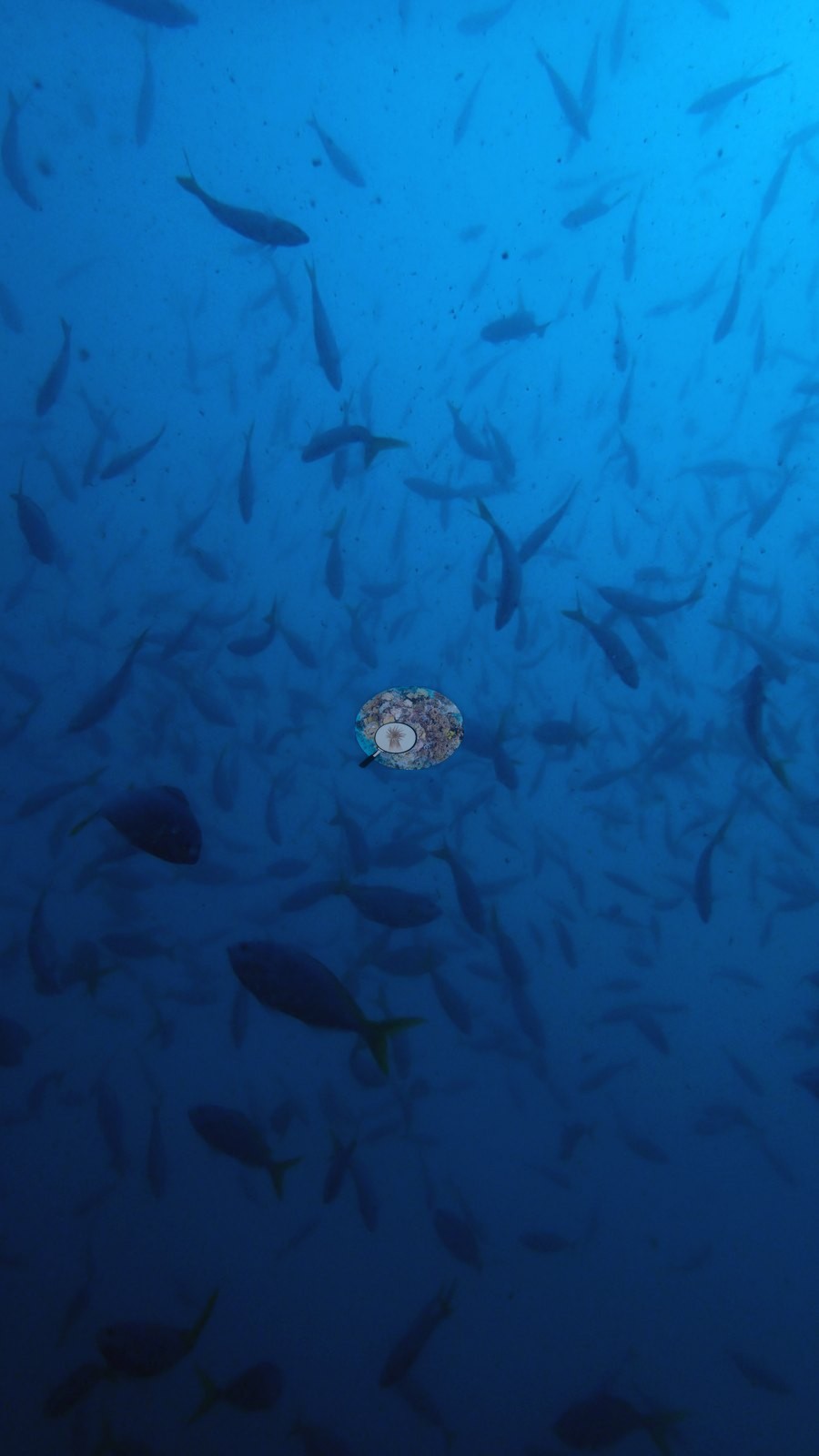
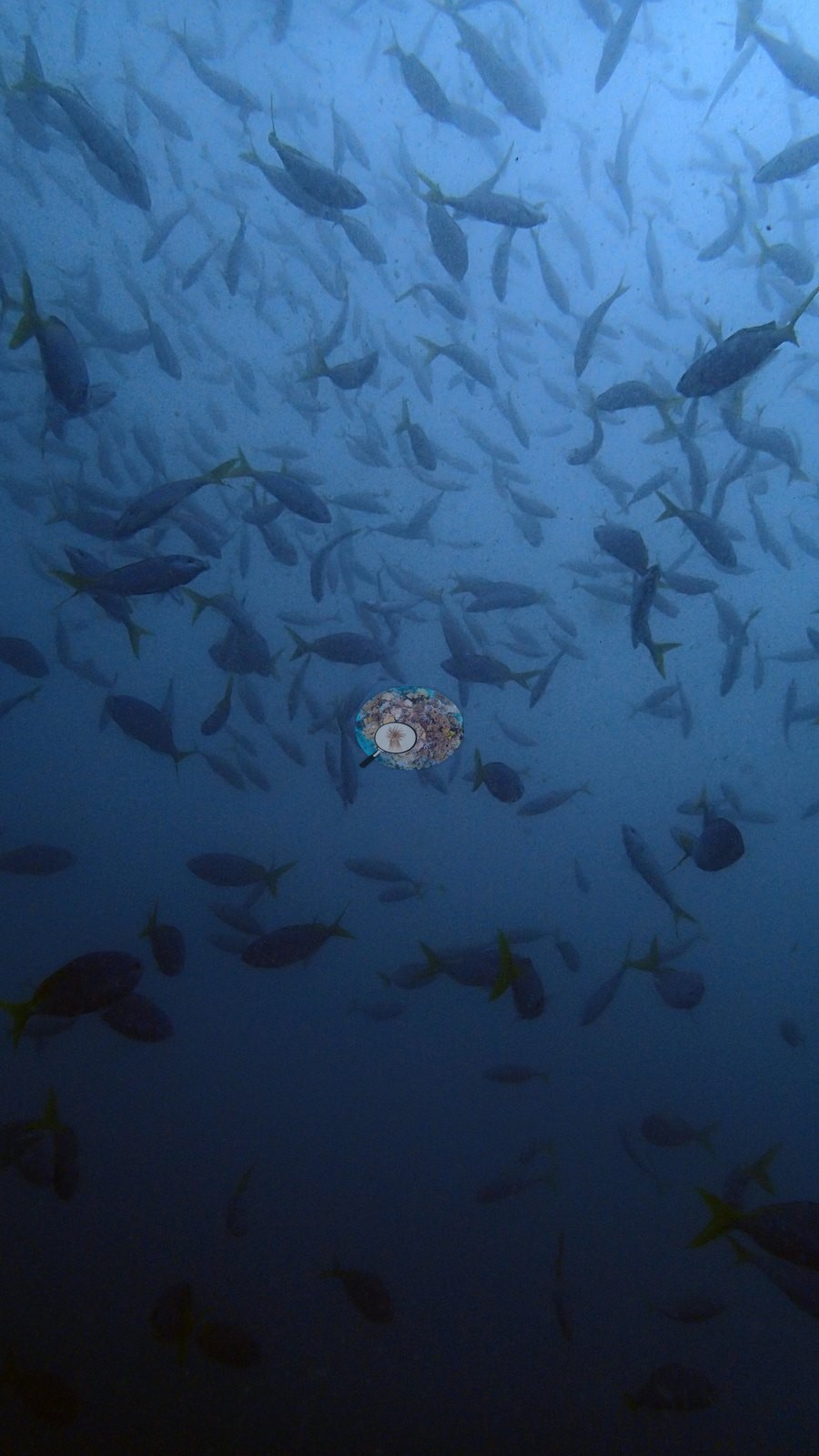
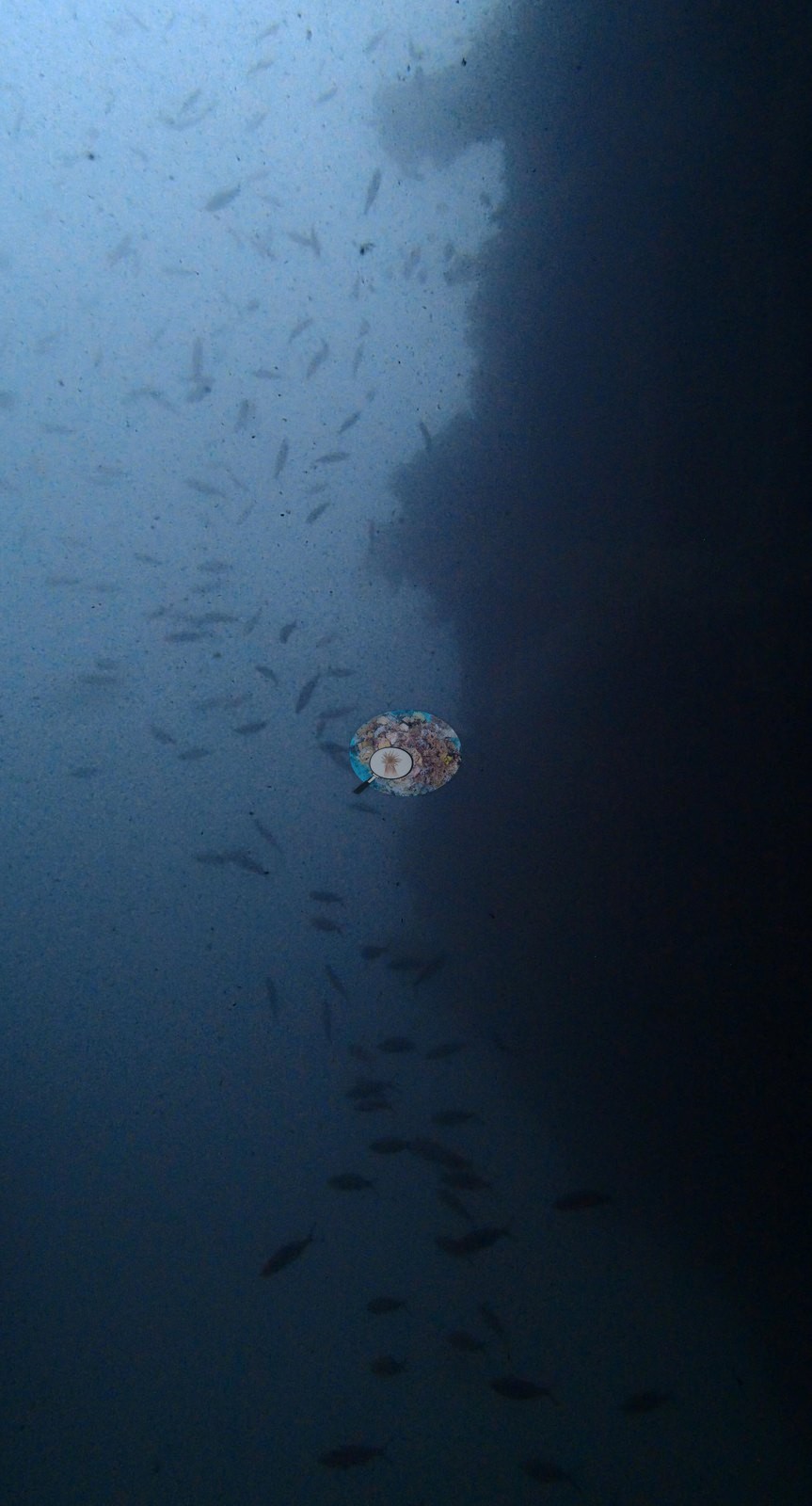
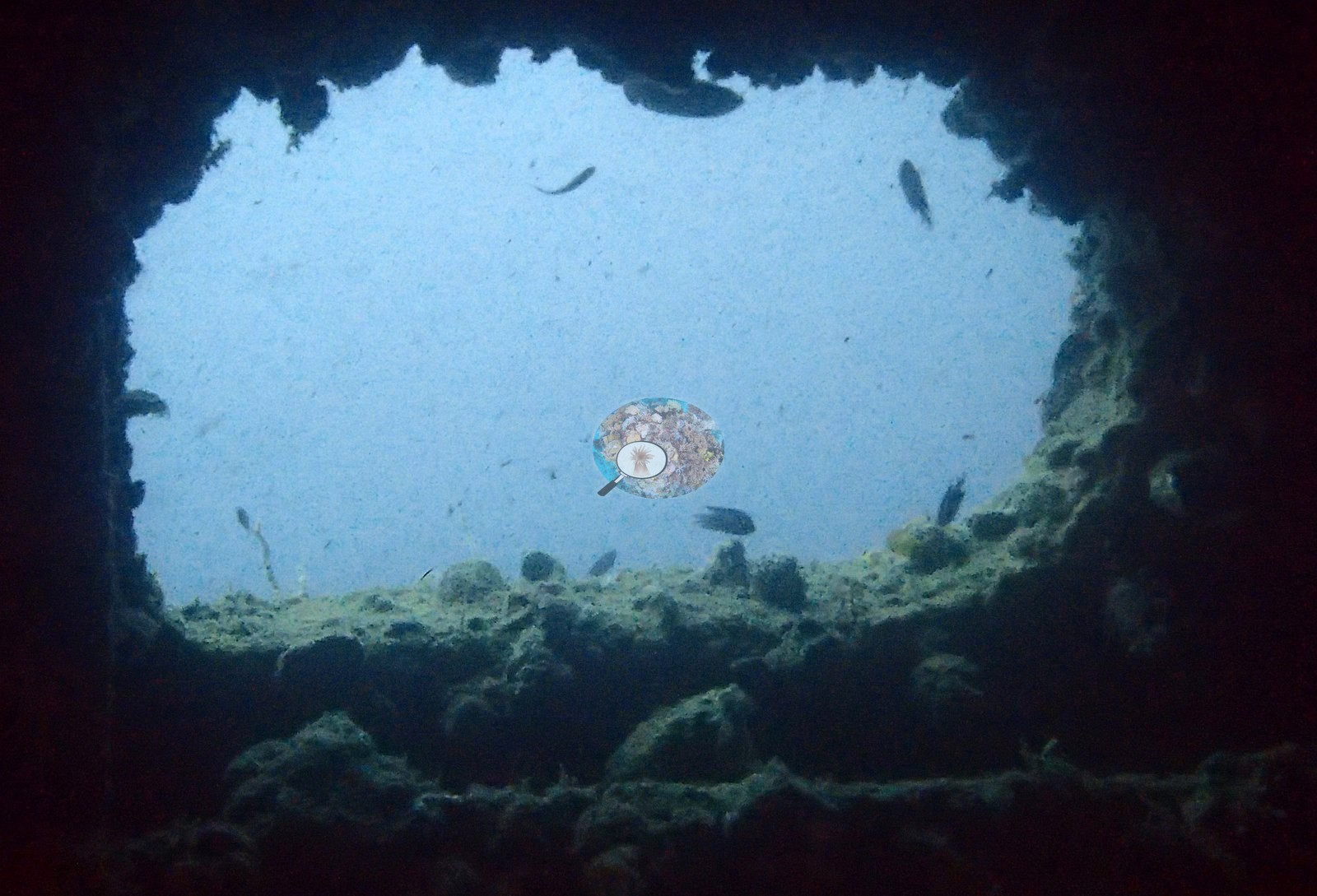
Schools of small fish hang above the wreck and along its flanks (e.g., Image 2, Image 8, Image 9).
Comparisons with other data
We found no other surveys at this site as of 2026. If you would like to share yours, please email us.
Dive record
The first of three dives off Busuanga on 27 January 2017, on the wreck of the Japanese seaplane tender Akitsushima (spelled Akikushima in Anderson's log and photo folder), sunk in September 1944 and lying deep — the log records a maximum of 34.4 m.
Other notes
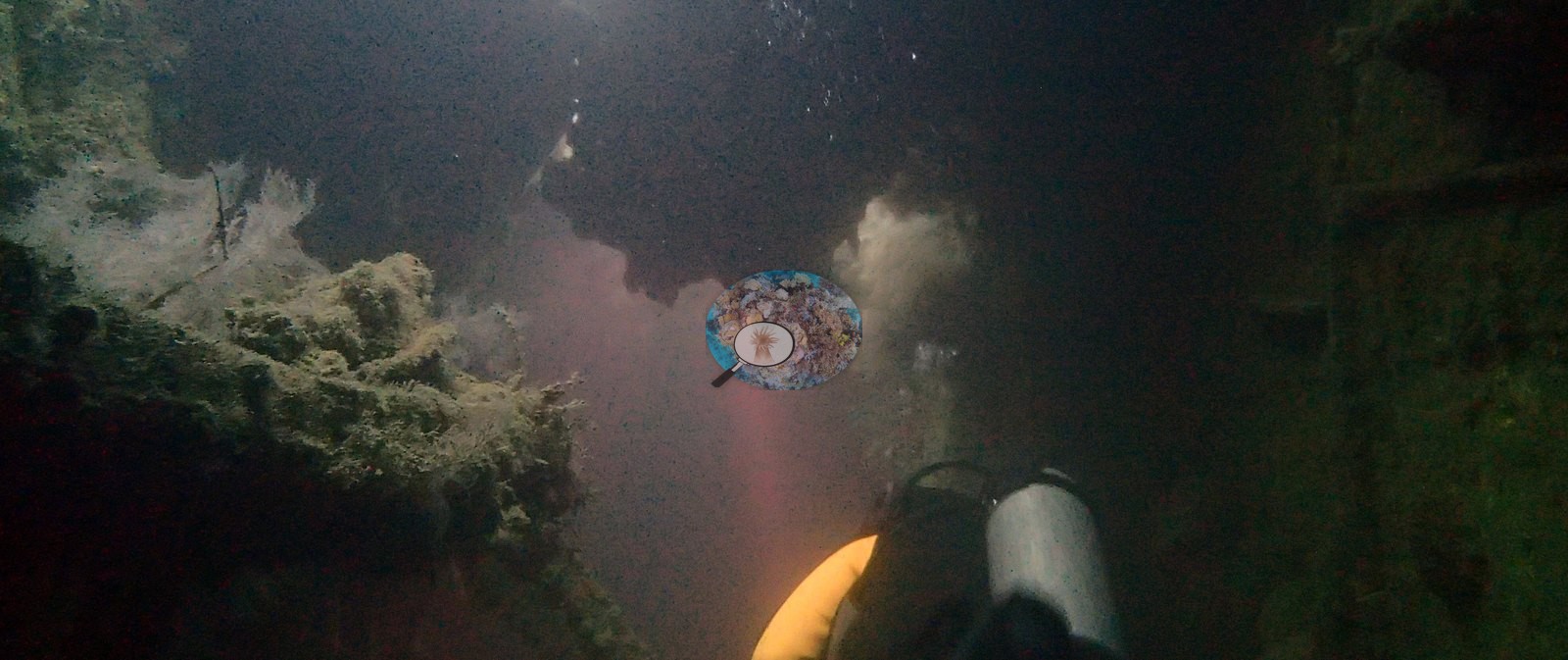
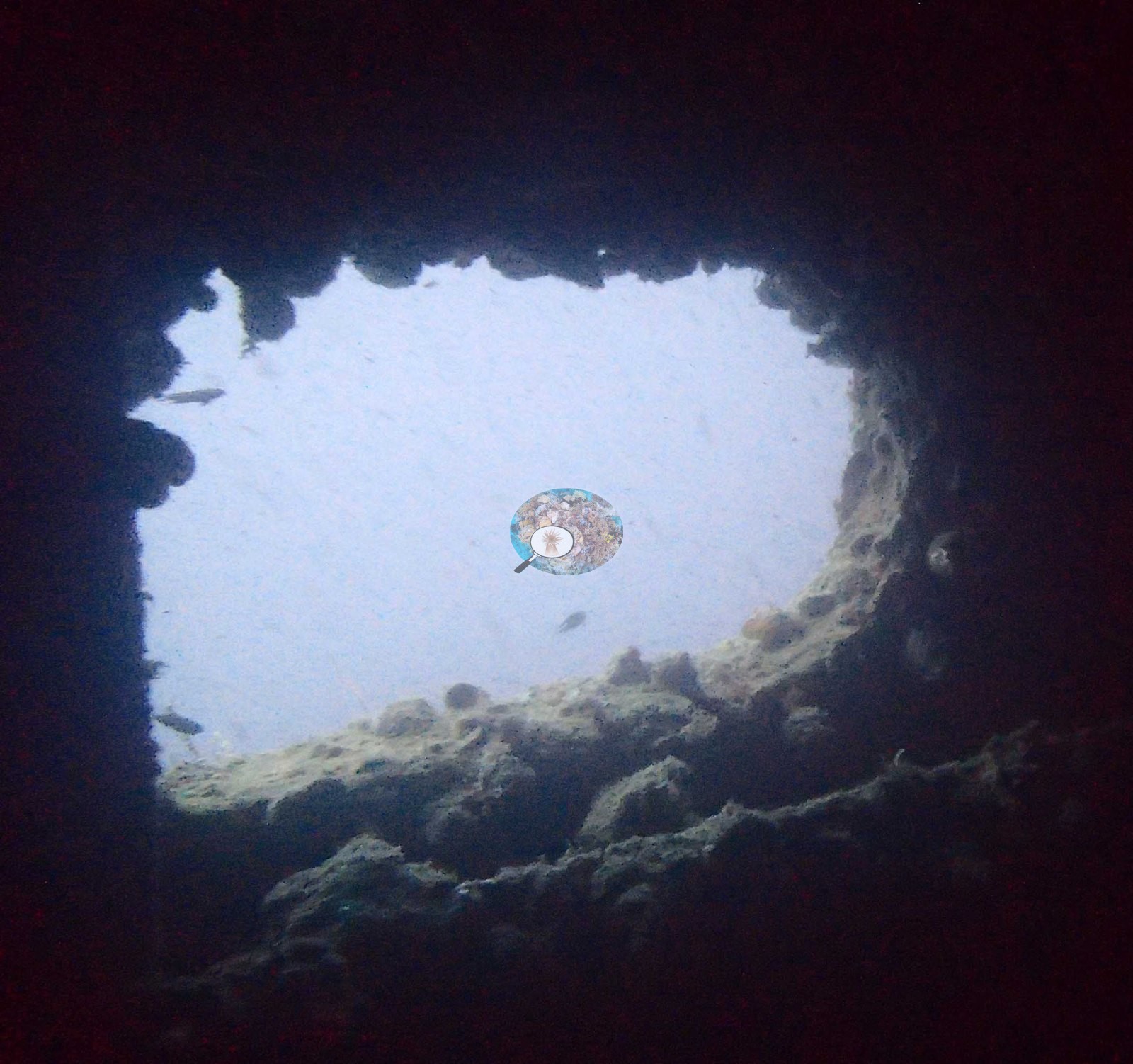
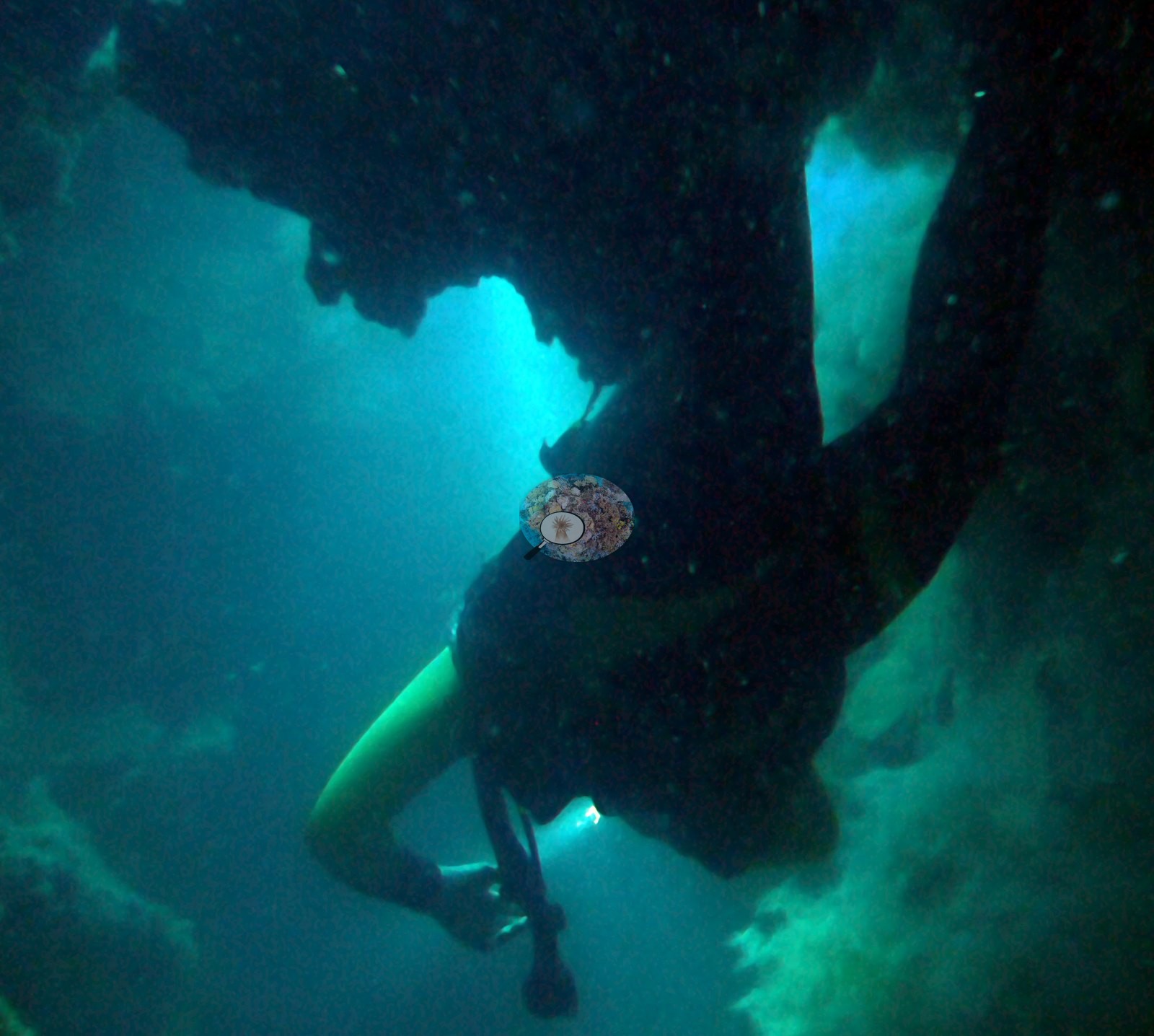
All 12 available frames were reviewed. Anderson's frames tell the story: dark water at depth, the inside of the wreck, and views peering out. These are photographs of penetration and structure, not of reef: torchlit interiors with silt hanging in the beam (e.g., Image 3), hull openings blown out into bright blue rectangles seen from within (e.g., Image 10, Image 12), a diver silhouetted against them (e.g., Image 4).
Data & links
All images from Coral Reef Diagnostics. Data are from Coral Reef Diagnostics.
© Coral Reef Diagnostics.