
Philippines - Coron: Akikushima (seaplane tender wreck), Busuanga
Part of the regional summaries: Philippines - Palawan and Philippines
More info
Western Philippines (NOAA CRW virtual station) · Palawan/North Borneo ecoregion mean=4.0°C-heating weeksA deep penetration dive on the WWII seaplane tender Akikushima, more about wreck structure than reef, though Euphyllia, foliose corals, and soft-coral rosettes have colonized the hull and seabed nearby. Visibility was poor throughout. Coral growing on a wreck isn't directly comparable to reef cover; the photo-derived estimate is around 20%.
One other CRD dive site within 5 km shown in orange — click a marker to open its page.
9 of these 12 photographs are shown beside the text that discusses them under "Site description" below.
Site description
Setting
Anderson's verdict on the Coron wrecks: the visibility was too bad to do them justice.
General benthic features
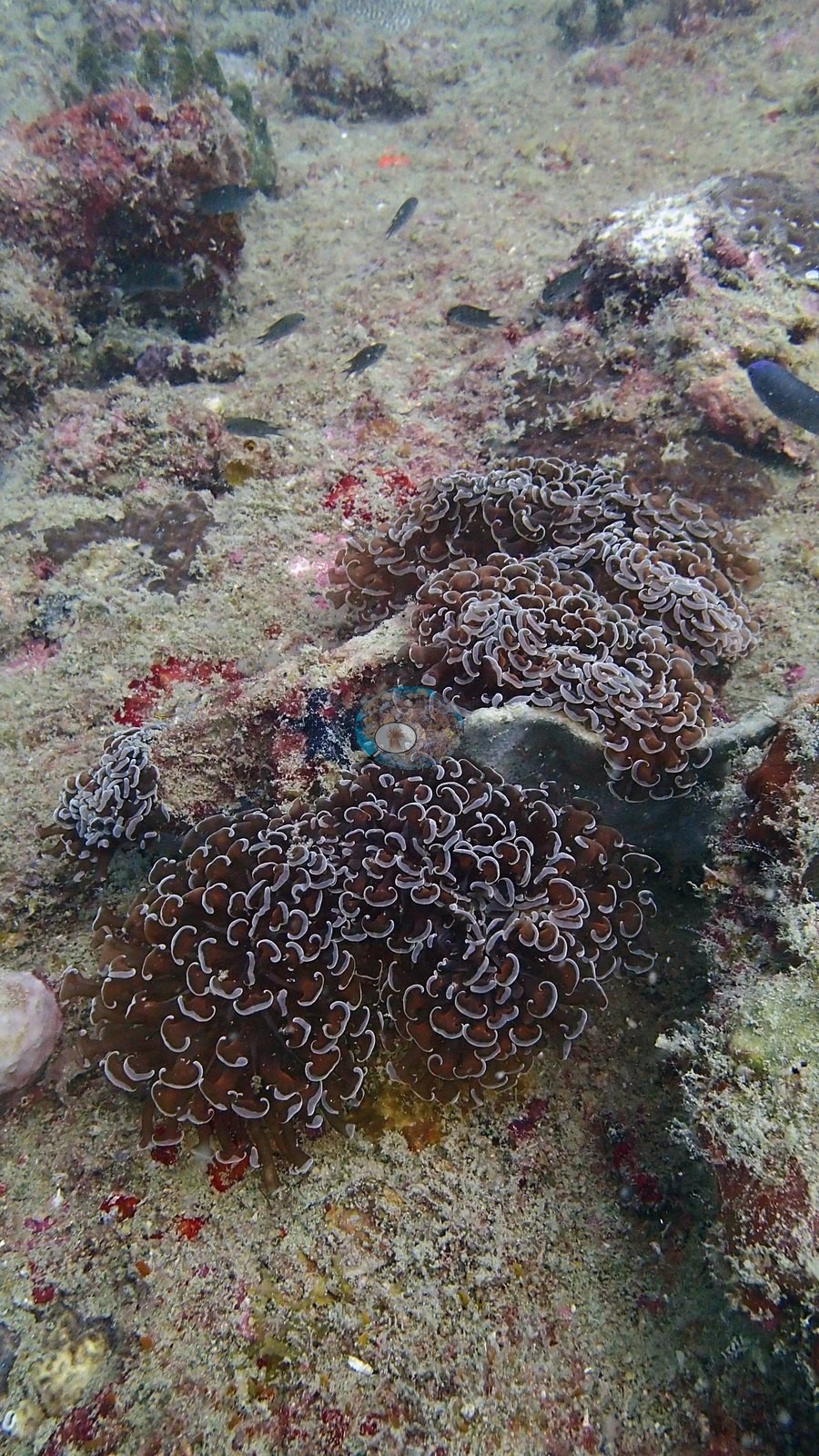
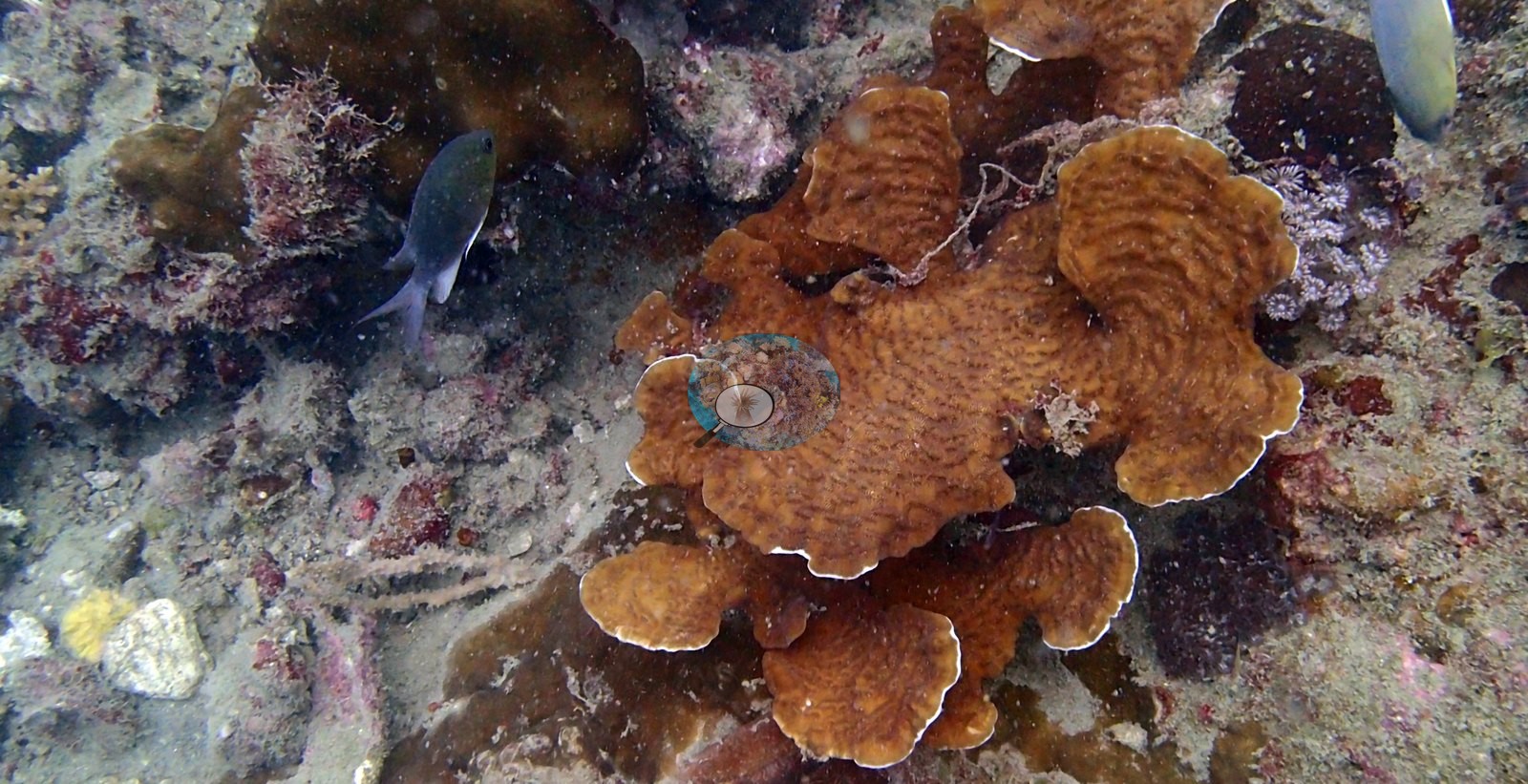
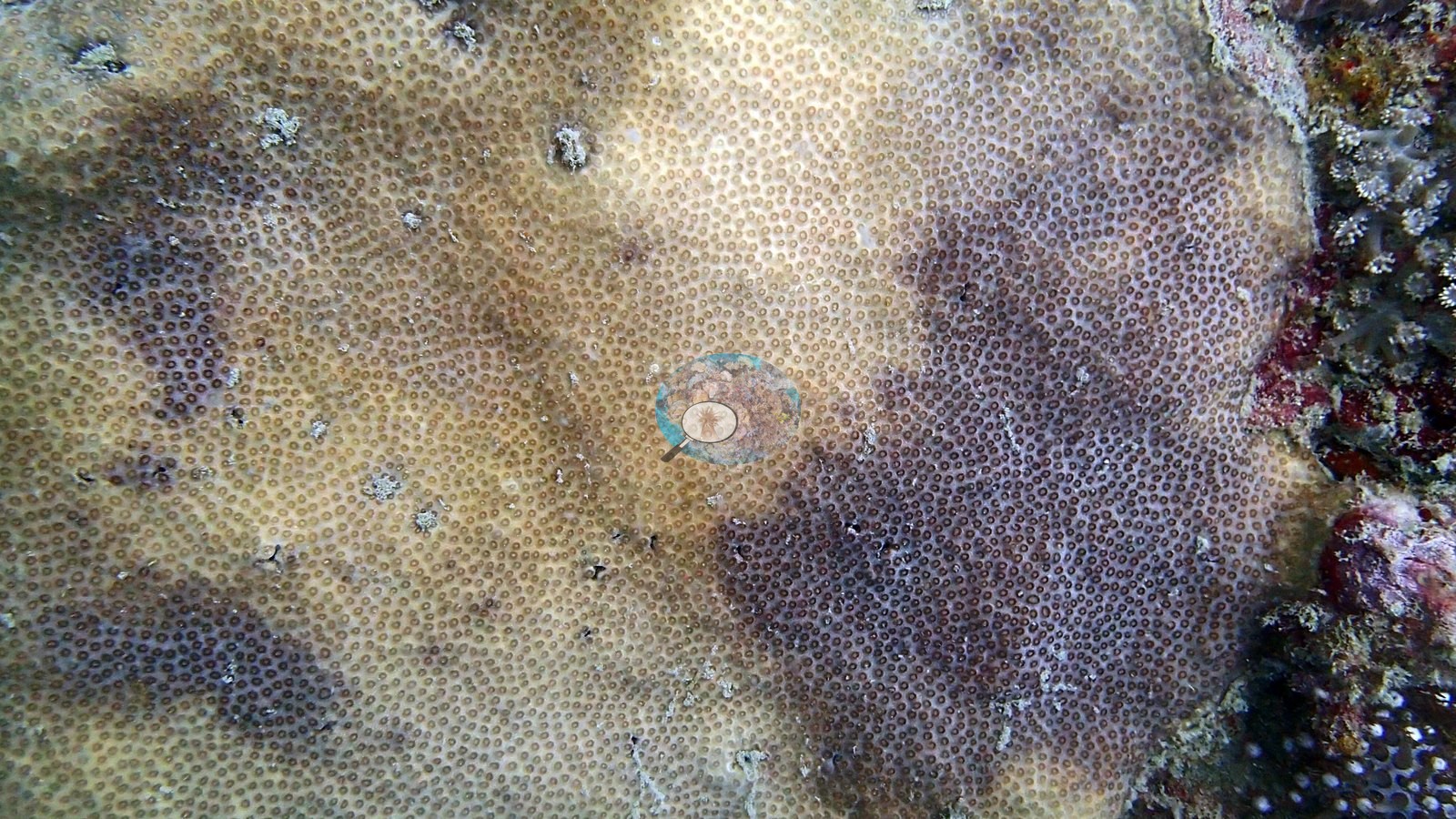
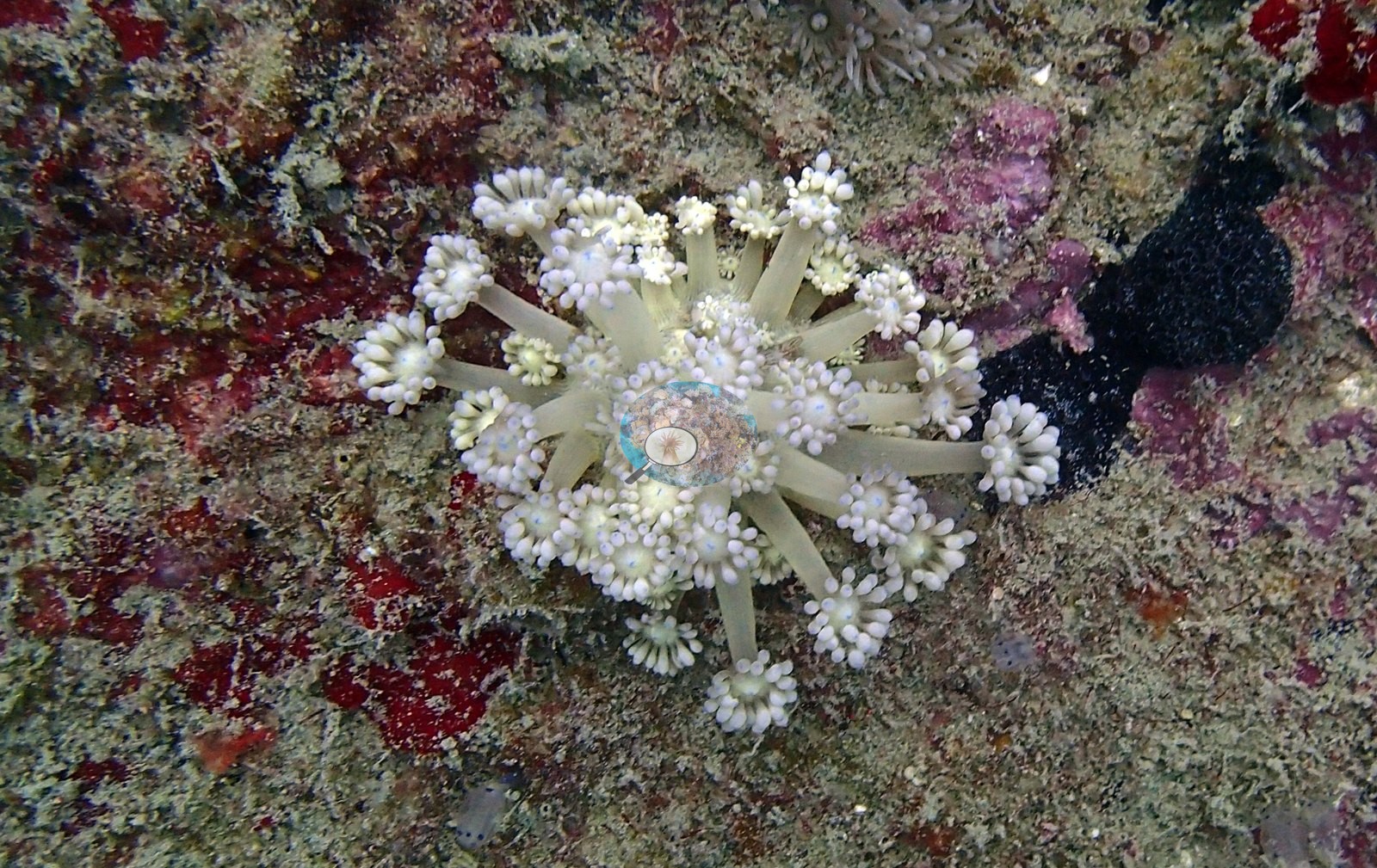
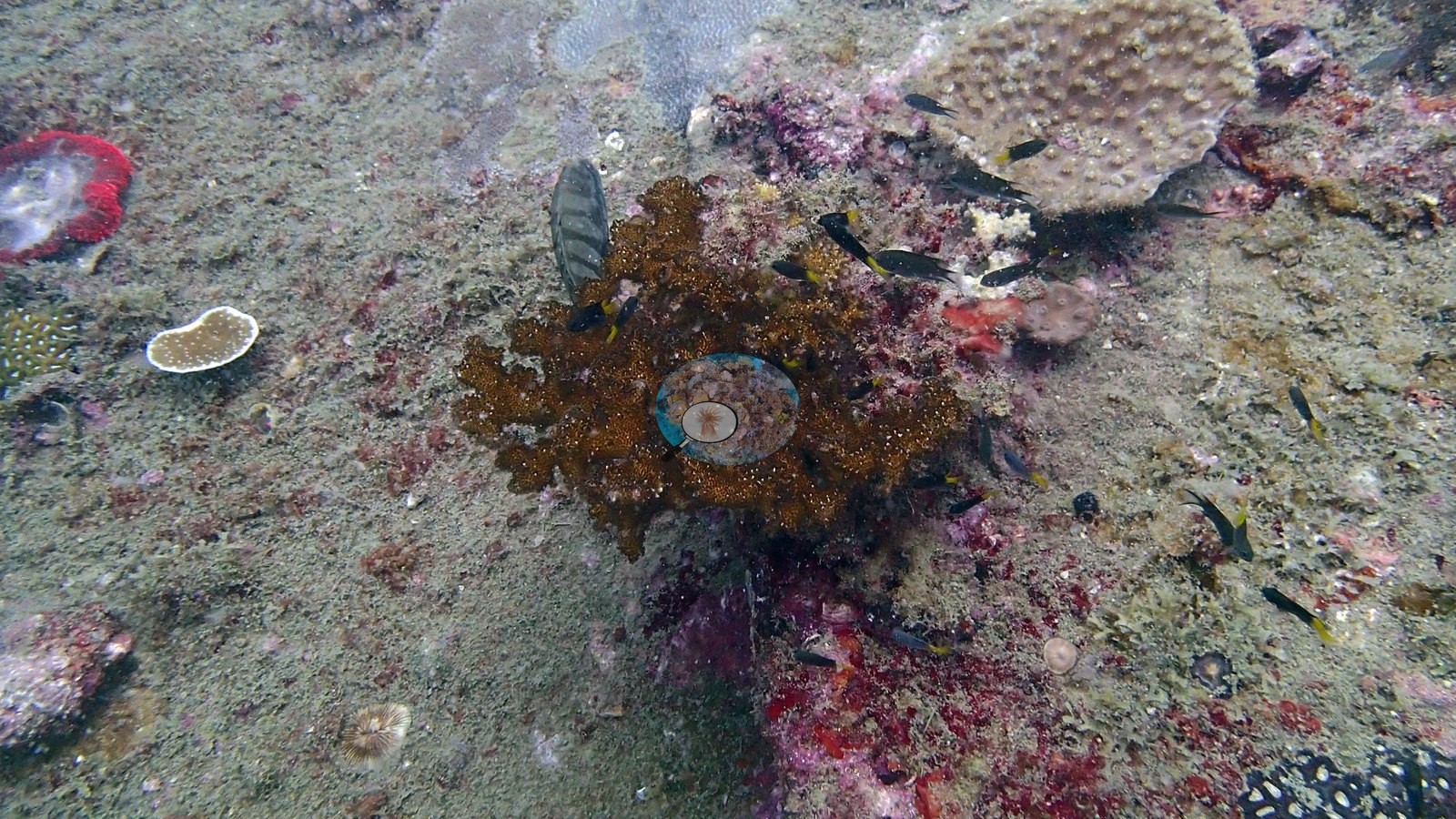
What grows on the hull and the seabed beside it is nonetheless recognizable: Euphyllia, identified by Anderson himself, two anchor-tipped heads on sediment-veneered rubble; a brown foliose colony with clean white growing margins and fine concentric ridging; a large encrusting colony mottled cream and violet filling a close-range frame; a cluster of pale soft coral with polyps fully extended in a flat rosette; and small massive, branching, and encrusting corals scattered across the plating, among red and pink coralline crusts, red sponge, and damselfish (e.g., Image 1, Image 5, Image 6, Image 7, Image 11).
Coral cover
The first thing to say about the cover figures: this is a steel wreck. Coral cover on a hull is not the same quantity as cover on a reef: the denominator is manufactured surface, much of it vertical, overhung, or interior, and neither model was built for it. Read them as an index of what the camera saw on a shipwreck, never as reef cover. Cover comes from two computer vision methods, neither preferred. DINOv3 point classification gives 19.9% hard coral from all 12 frames and 240 points, on a wide interval, 17-37%. CoralSCOP computer vision gives 16.3% over the 11 frames it could segment; it produced no masks on one further frame. The spread is 3.6 points, the honest range=16–20%, but that agreement is an accident of averaging: frame by frame they disagree violently and in opposite directions. CoralSCOP's highest frame, at 46.4%, is a torchlit interior holding a diver, a torch, and suspended silt, with no coral in it. DINOv3's highest, at 65.0%, is the one frame that genuinely is almost all living coral - and CoralSCOP scored it 0.0%, a 65-point gap, because a continuous close-up carpet gives a segmenter no colony edges. The two models fail differently. CoralSCOP computer vision reads high on low-cover reefs - a median=1.68x a co-located Reef Check diver survey, 4.6x at worst - and masks coral-shaped objects, corroded steel included; it scored inky depths, a hull silhouette against open water, 35.7%. DINOv3 is strong in-domain (6-class macro-F1 0.62, hard coral recall 0.82) but collapses off-domain: cross-domain point accuracy 0.17-0.25, ceiling near 35-50%; here it returned 4.5% and 8.9% on two frames of nothing but blue water and fish. Coral cover: 18% — photo-derived, and the two methods broadly agree (20% vs 16%). Two independent computer vision passes were run over Anderson's own frames: a DINOv3 calibrated point classifier reads 19.9% and a CoralSCOP computer vision reads 14.9%, a spread of 5.0 percentage points. The map publishes a single figure so sites can be sorted against one another, but the honest statement of what is known here is the 20–20% range: the two products have different denominators and should not be treated as one measurement. He is actively comparing CoralSCOP and DINOv3 against newer CV models and will swap in an updated figure here once a more reliable model is found.
Stressors
No crown-of-thorns starfish (COTS) or other corallivores evident.
Fish and other fauna
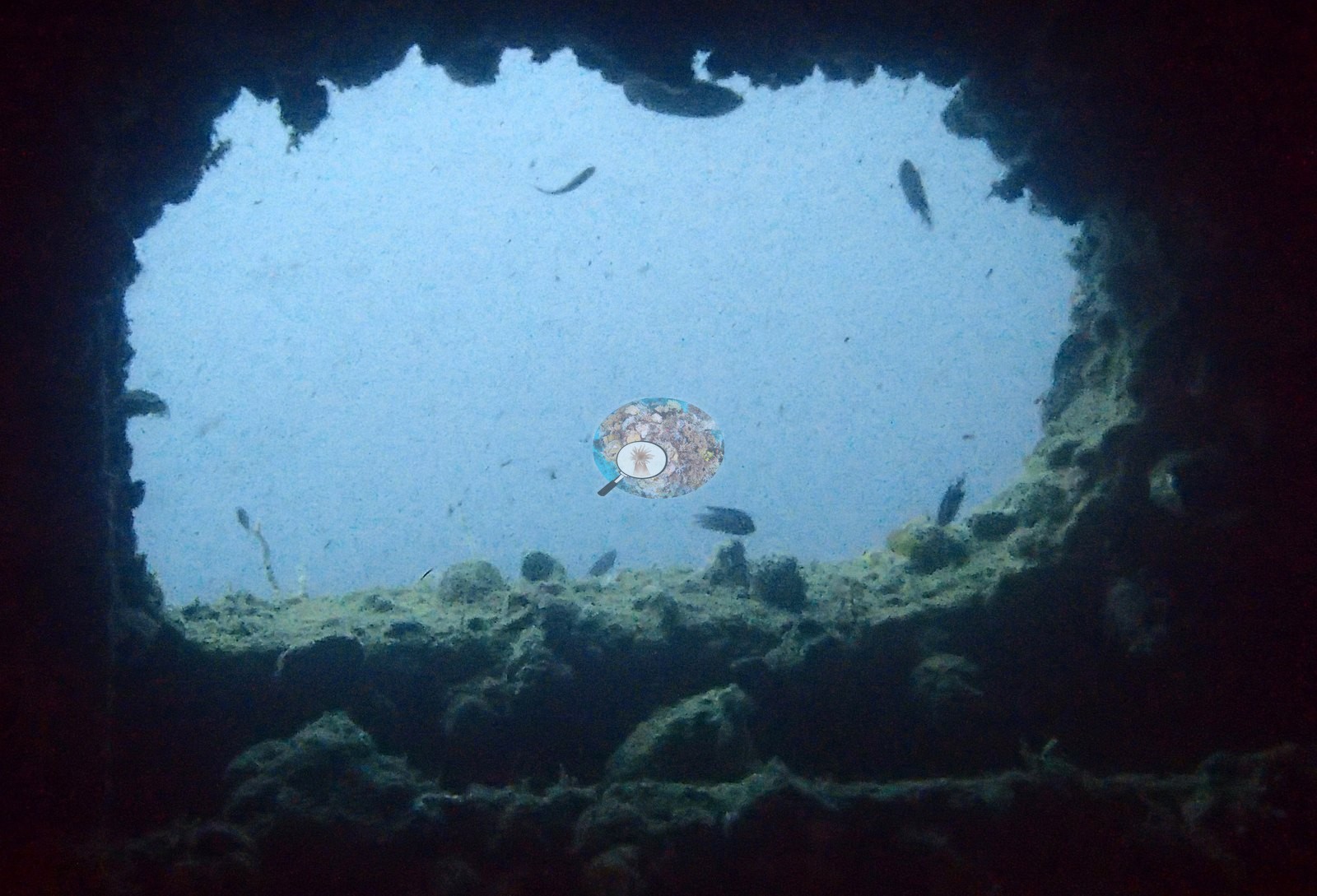
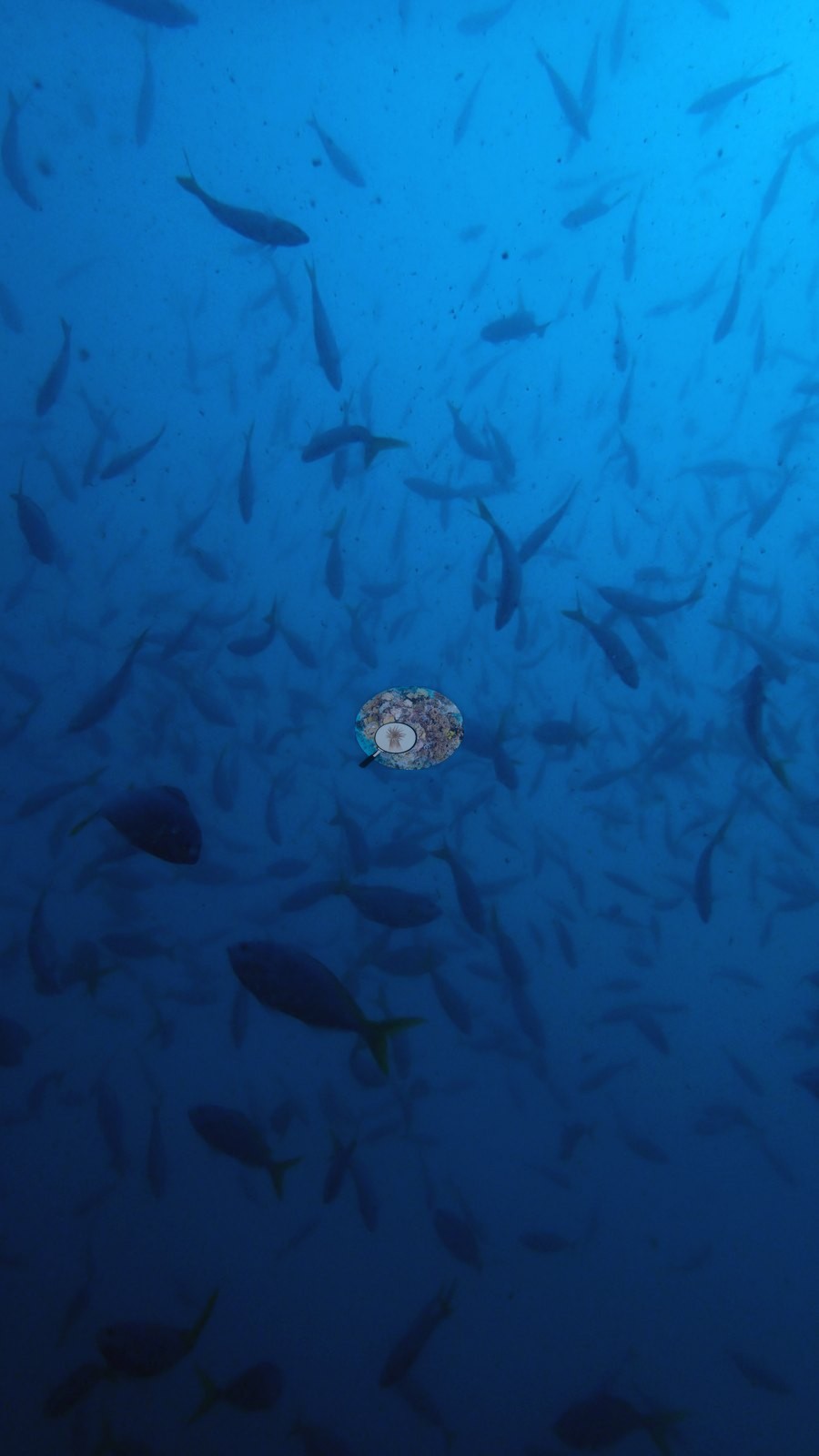
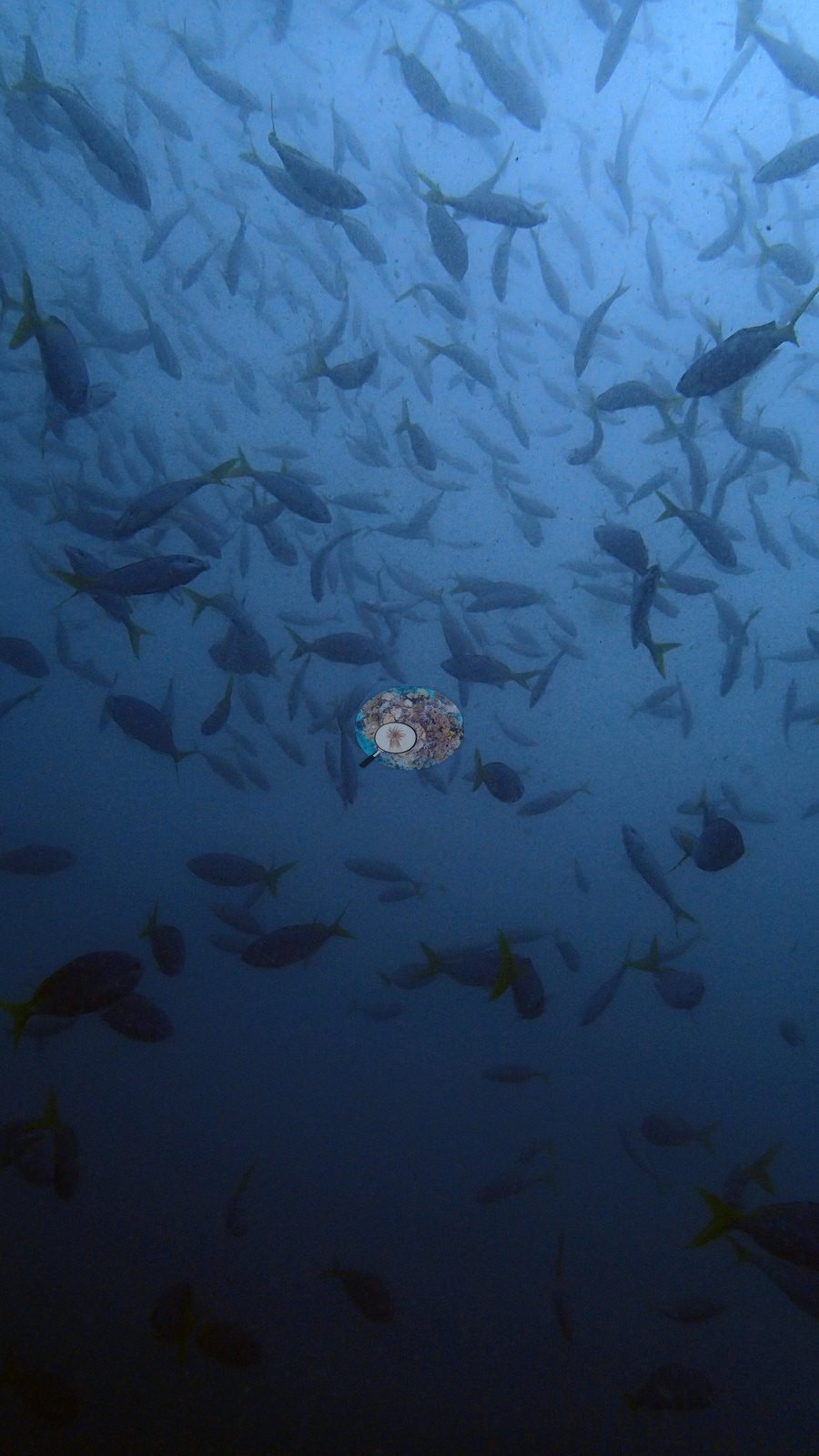
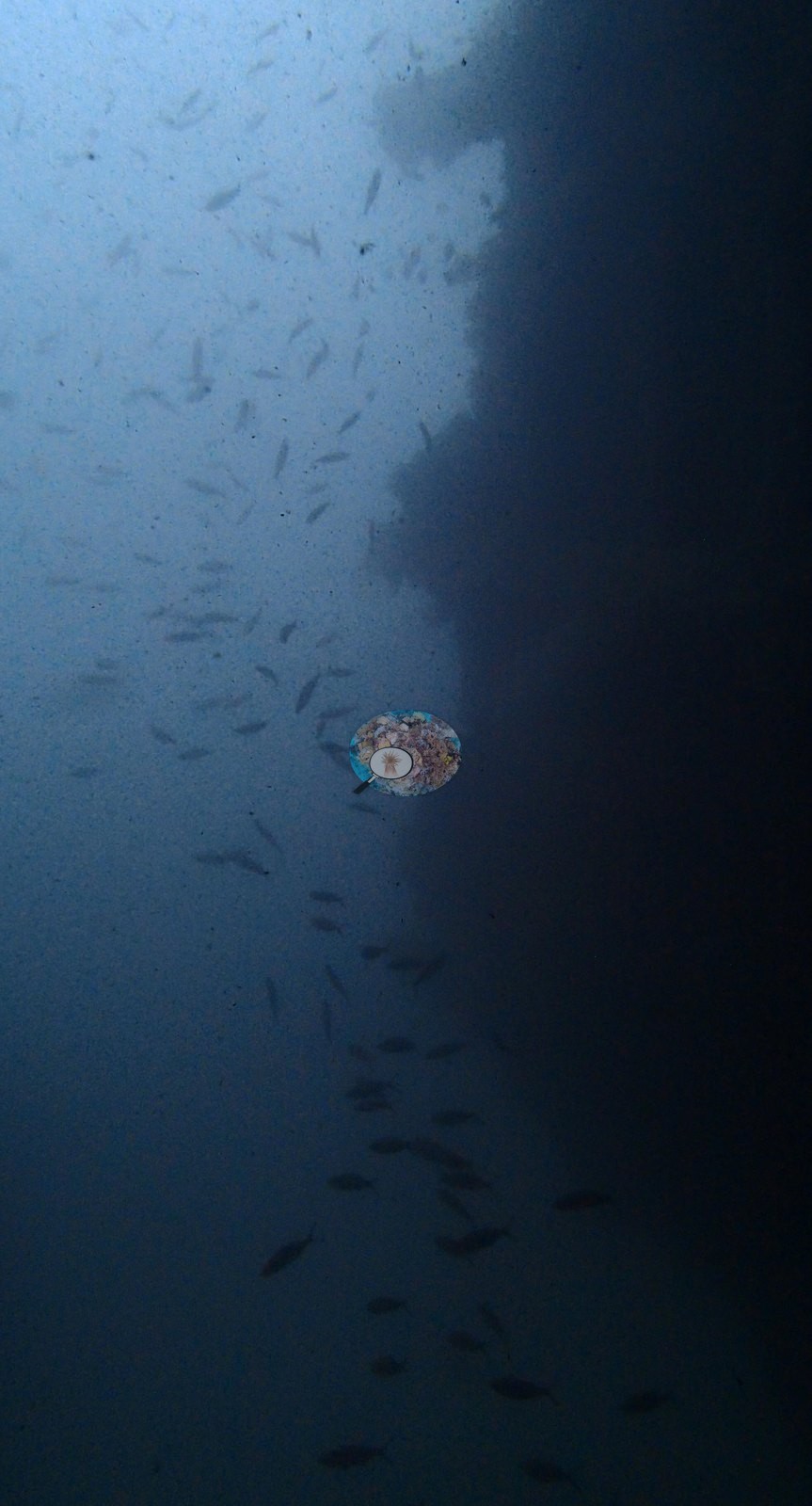
Schools of small fish hang above the wreck and along its flanks (e.g., Image 2, Image 8, Image 9).
Comparisons with other data
No prior survey data from this site. If you would like to share yours, please email us.
Dive record
The first of three dives off Busuanga on 27 January 2017, on the wreck of the Japanese seaplane tender Akikushima, sunk in September 1944 and lying deep - the log records a maximum of 34.4 m.
Other notes
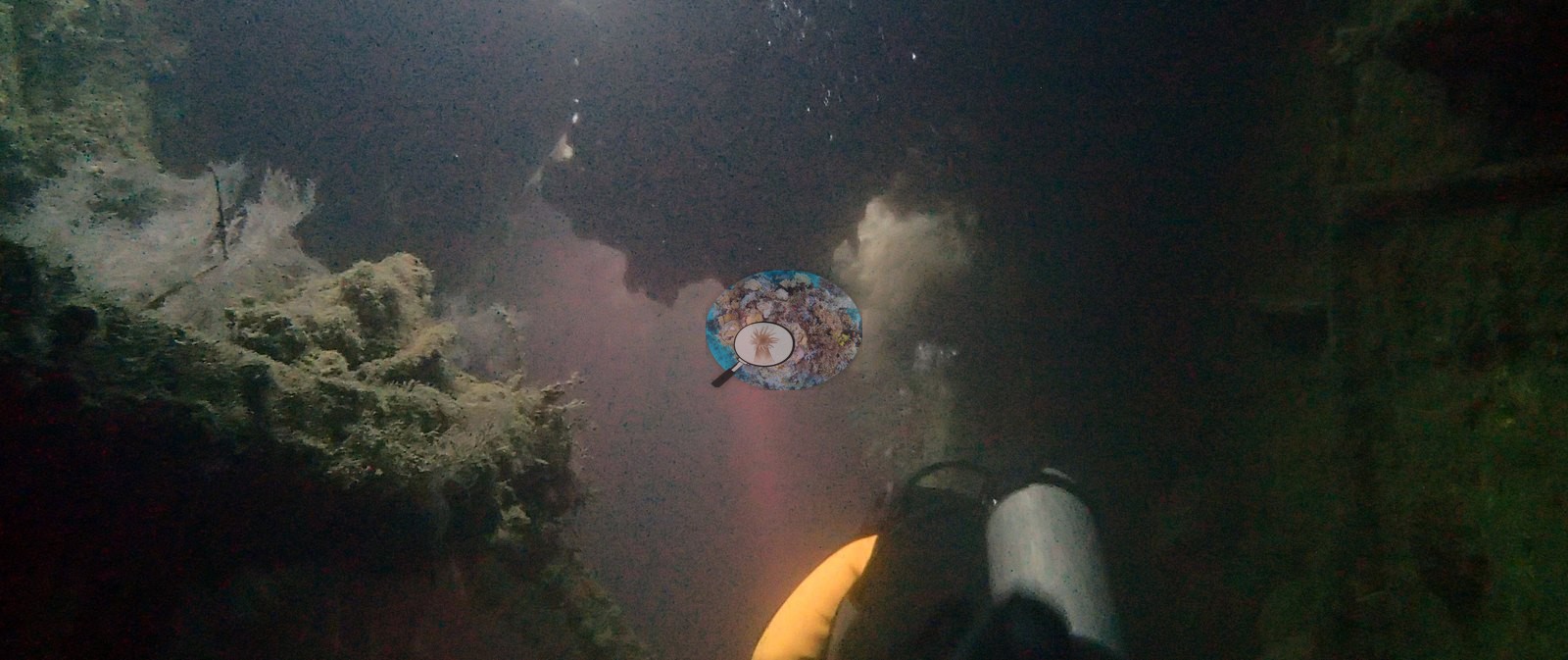
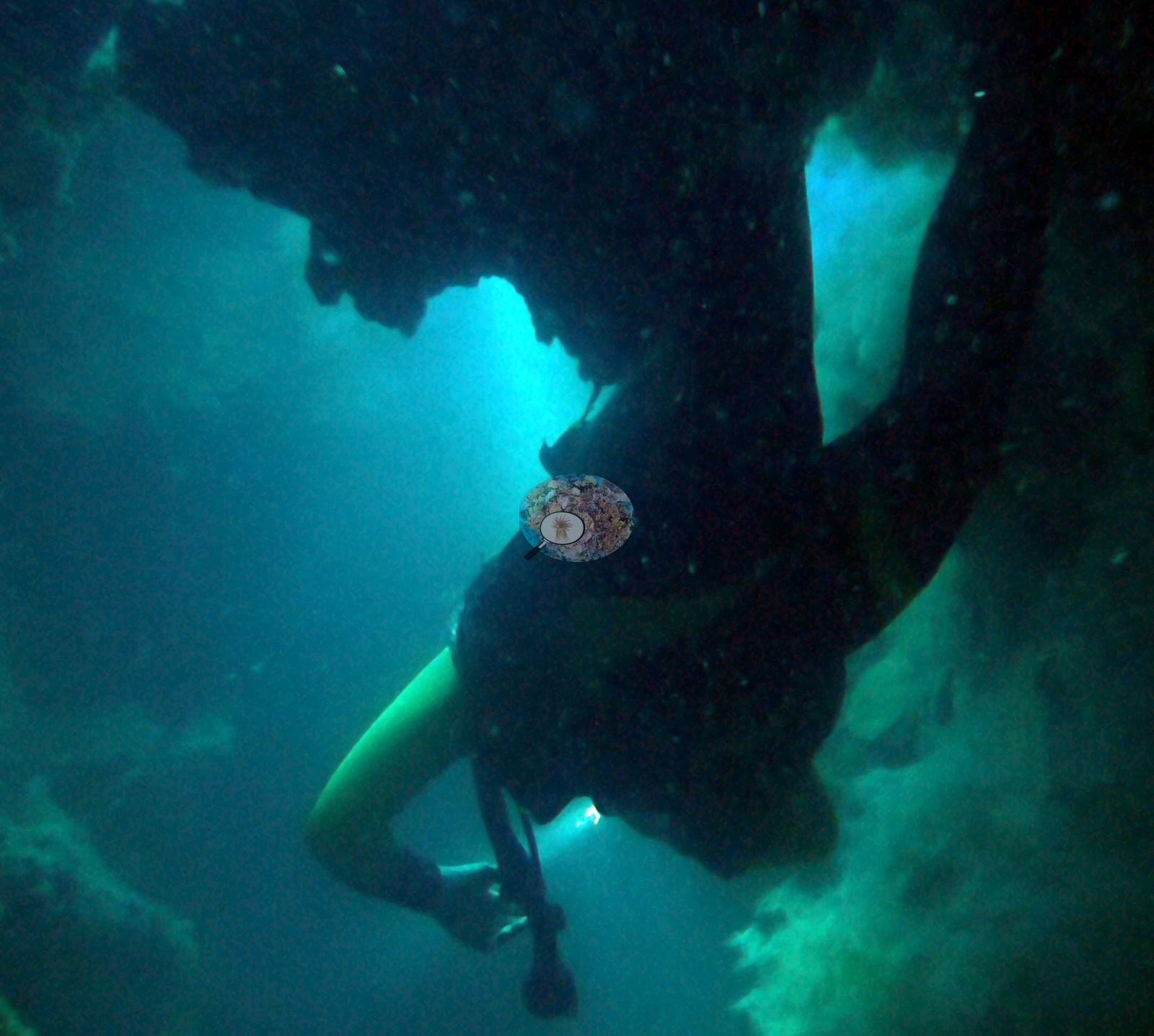
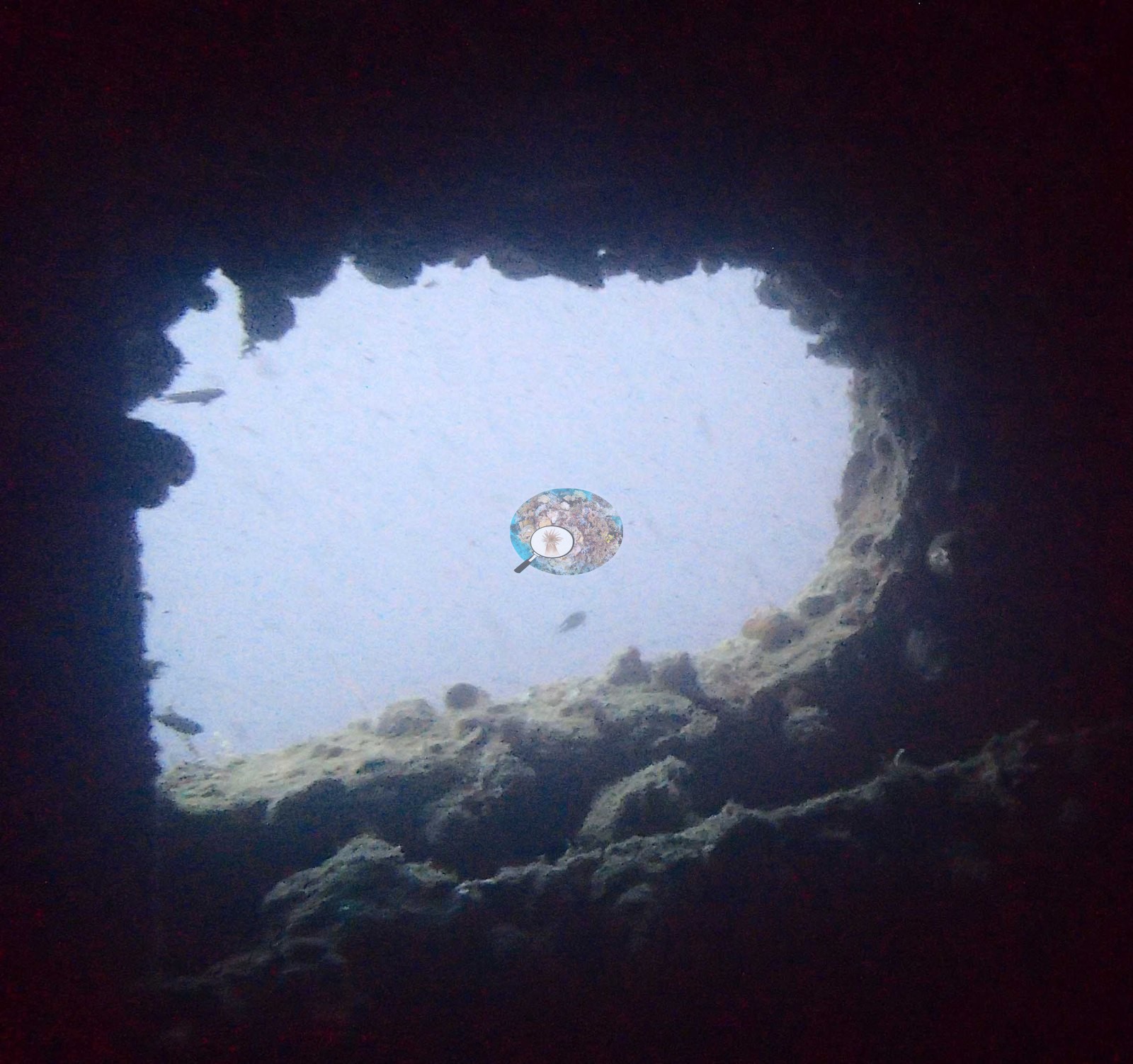
All 12 available frames were reviewed. Anderson's filenames tell the story: inky depths, inside the wreck, peering out. These are photographs of penetration and structure, not of reef: torchlit interiors with silt hanging in the beam, hull openings blown out into bright blue rectangles seen from within, a diver silhouetted against them (e.g., Image 10).
CV model comparison
More info
As of September 2026 no computer-vision method estimates coral cover accurately on new images, so treat this as indicative rather than a measurement; it is revised as the methods improve.More info
The published figure is the mean of the two methods.| Method | Hard-coral cover (%) |
|---|---|
| In-house DINOv3 | 19.9 |
| CoralSCOP | 16.3 |
| Mean (± SD) | 18.1 ± 2.5 |
| Range | 16.3–19.9 |
Mean ± SD and range are across the computer-vision methods shown.
Data & links
All images from Coral Reef Diagnostics. Data are from Coral Reef Diagnostics and Reef Check Foundation.
© Coral Reef Diagnostics.