
Indonesia - Halmahera: Tanjung Naraka
Part of the regional summaries: Indonesia - Halmahera and Indonesia - Maluku
More info
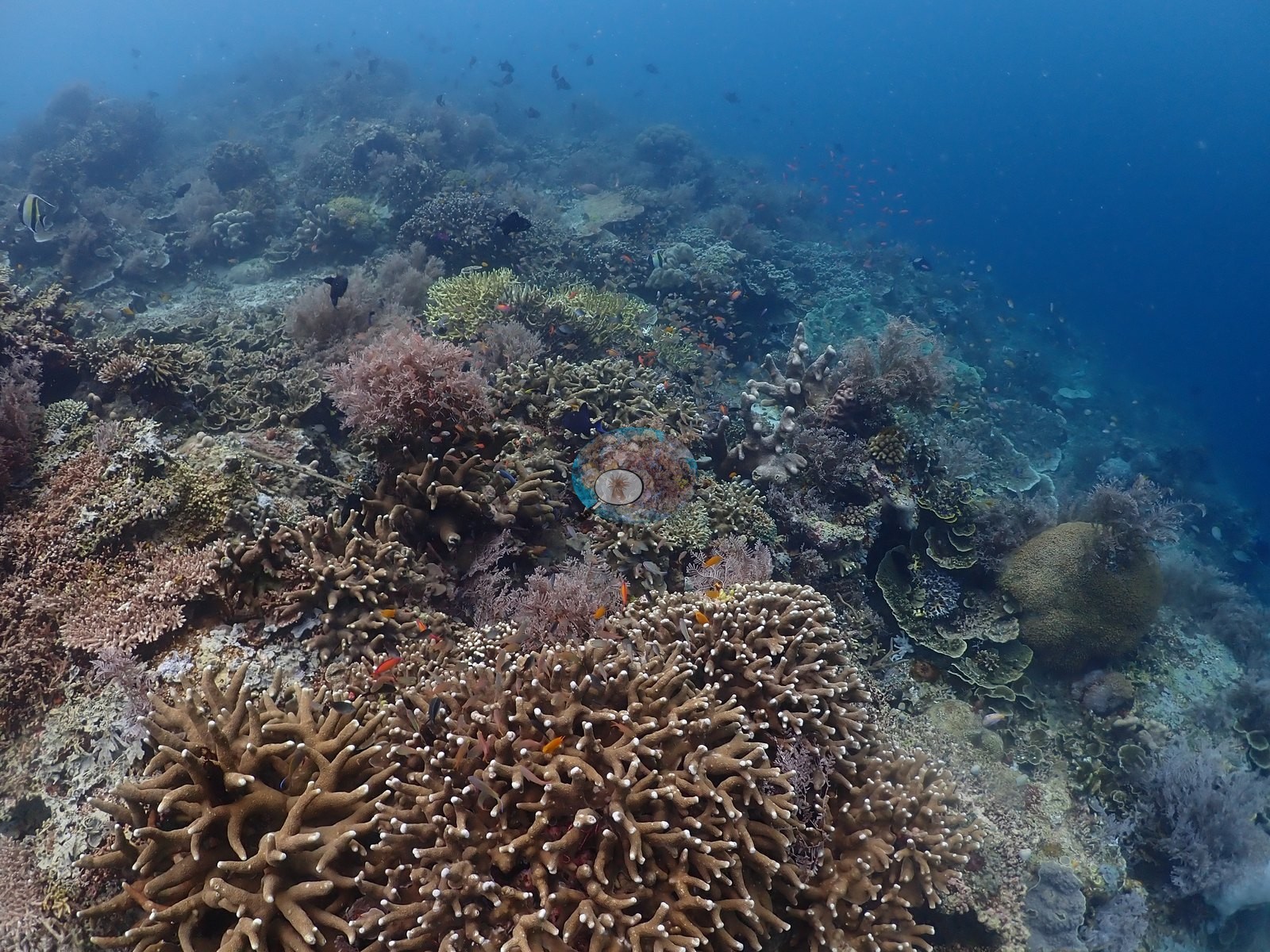
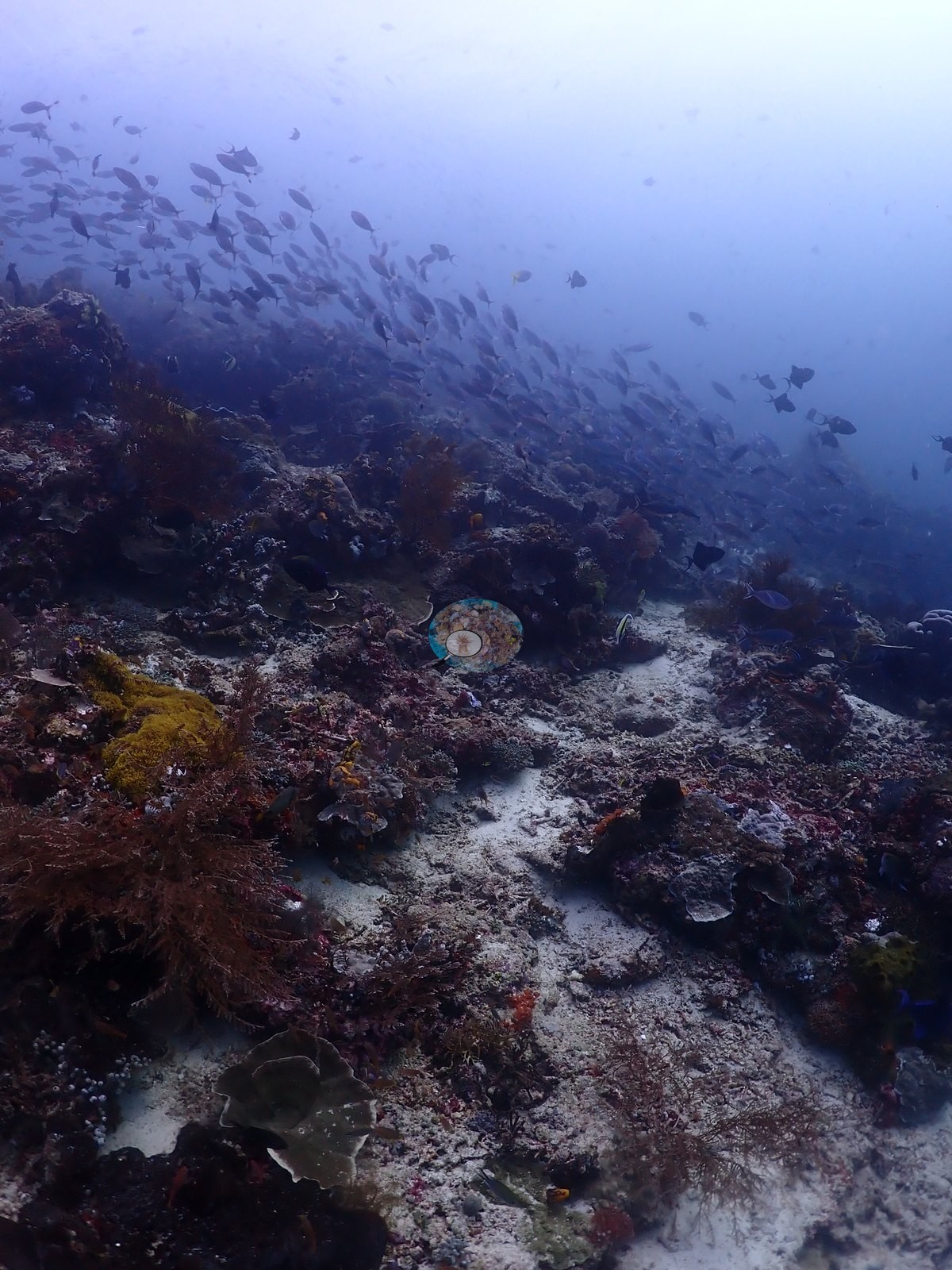
North Maluku (NOAA CRW virtual station)Tanjung Naraka's headline was in the water column - the biggest school of devil rays Anderson has seen, plus bumphead parrotfish and blacktips - over a reef mixing bright Acropora thickets, a heavy soft-coral component, and broad aprons of old, colonized coral rubble reflecting past rather than recent damage. A blind Claude computer-vision point count puts coral cover around 30%.
Sorotan utama Tanjung Naraka ada di kolom air — gerombolan pari setan terbesar yang pernah dilihat Anderson, ditambah ikan kakatua berbonggol dan hiu sirip hitam — di atas terumbu yang memadukan rumpun Acropora cerah, komponen karang lunak yang kuat, dan hamparan luas pecahan karang tua yang telah ditumbuhi, mencerminkan kerusakan masa lalu alih-alih kerusakan baru. Penghitungan titik buta visi komputer Claude memperkirakan tutupan karang sekitar 30%.
Terjemahan ringkasan ini oleh AI; versi bahasa Inggris yang berlaku.
24 of these 53 photographs are shown beside the text that discusses them under "Site description" below.
Site description
General benthic features
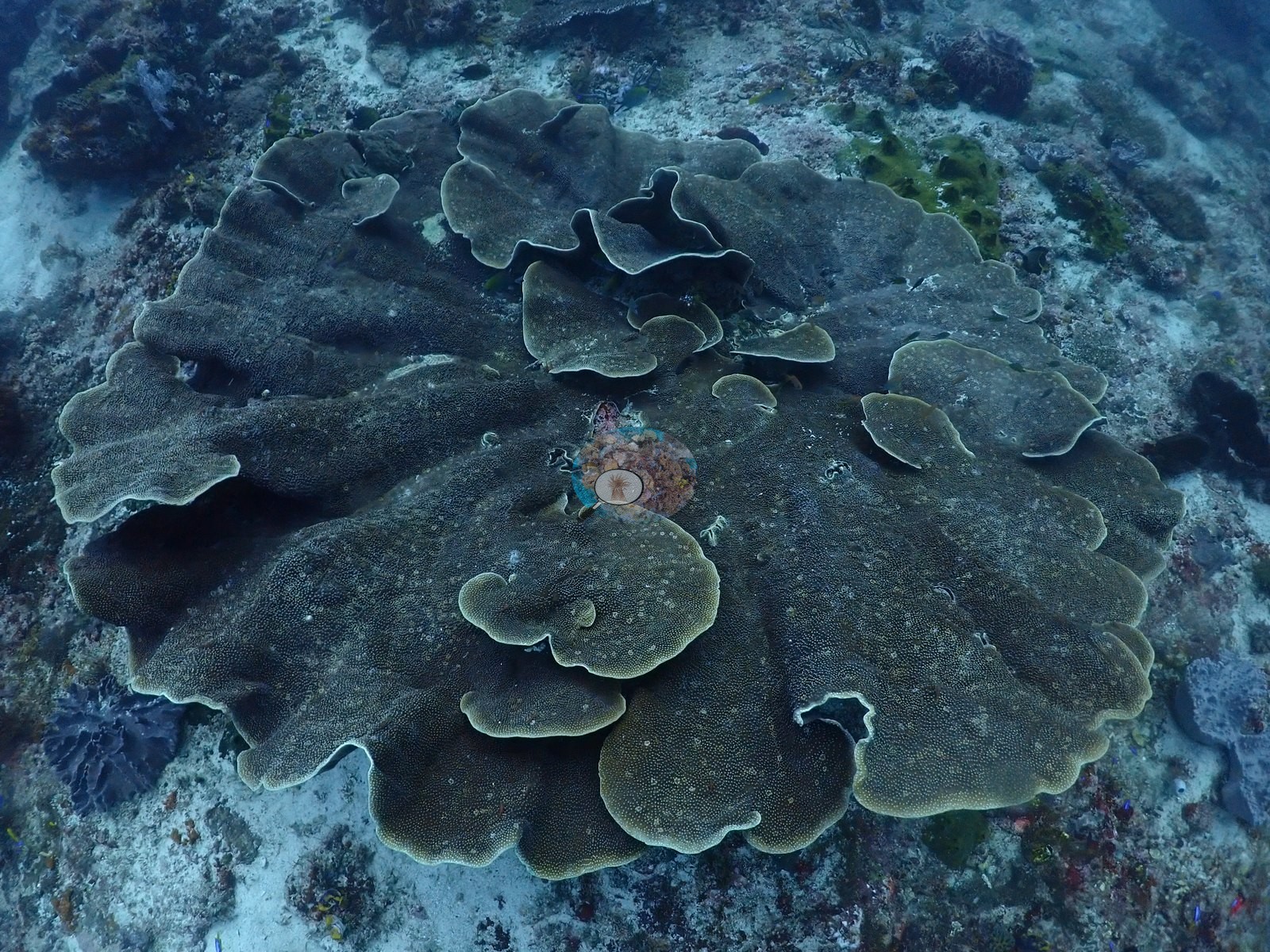
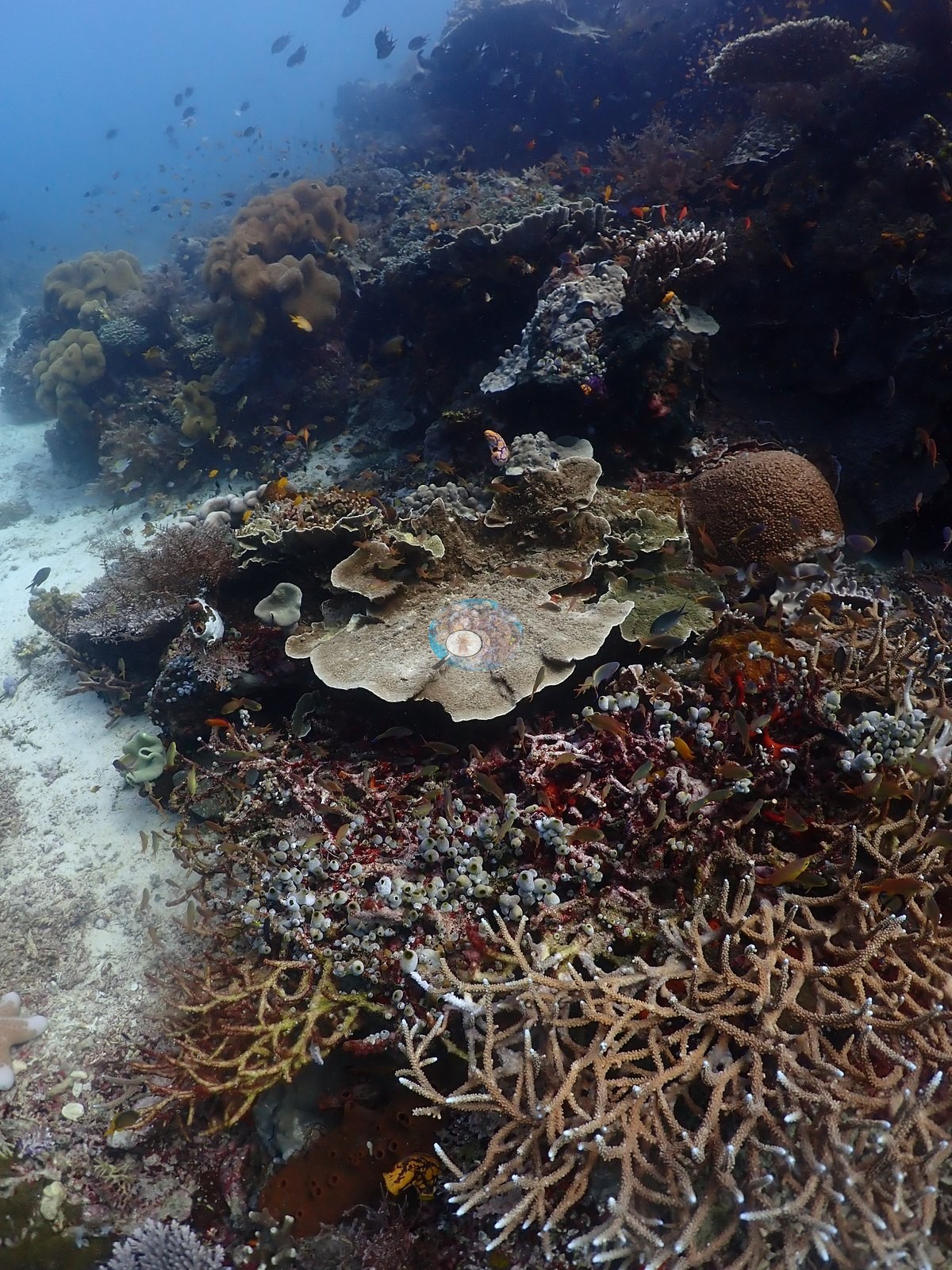
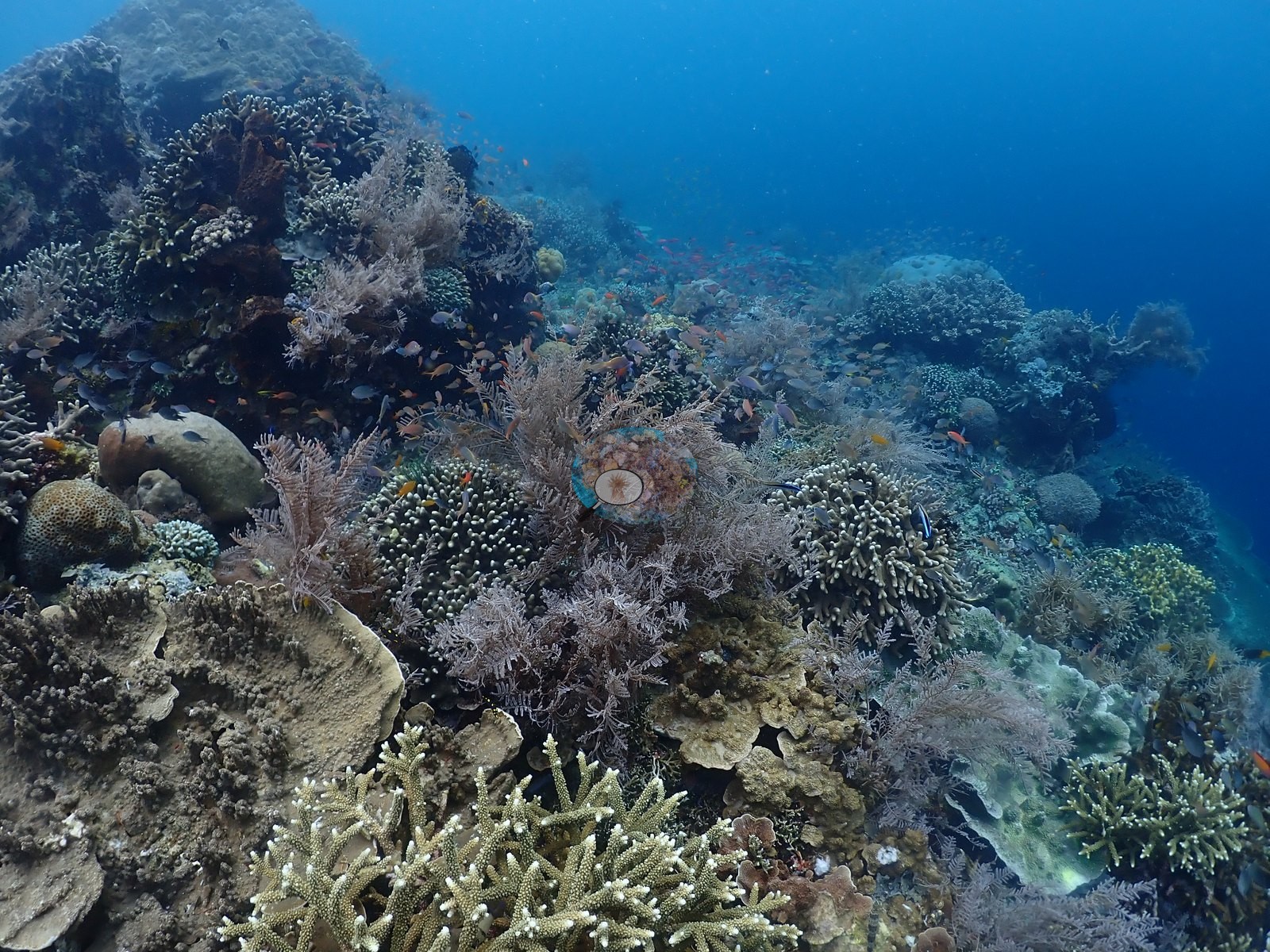
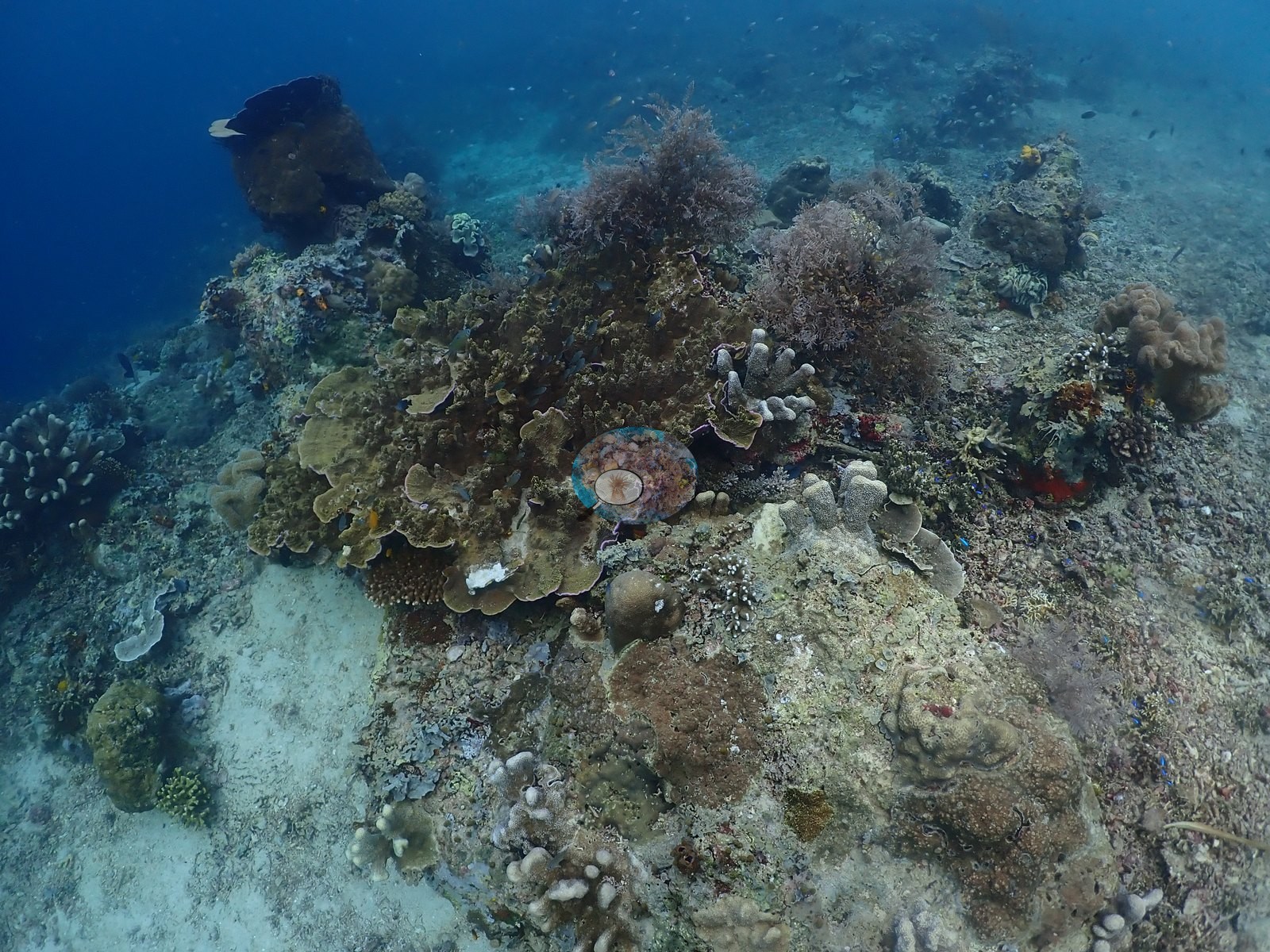
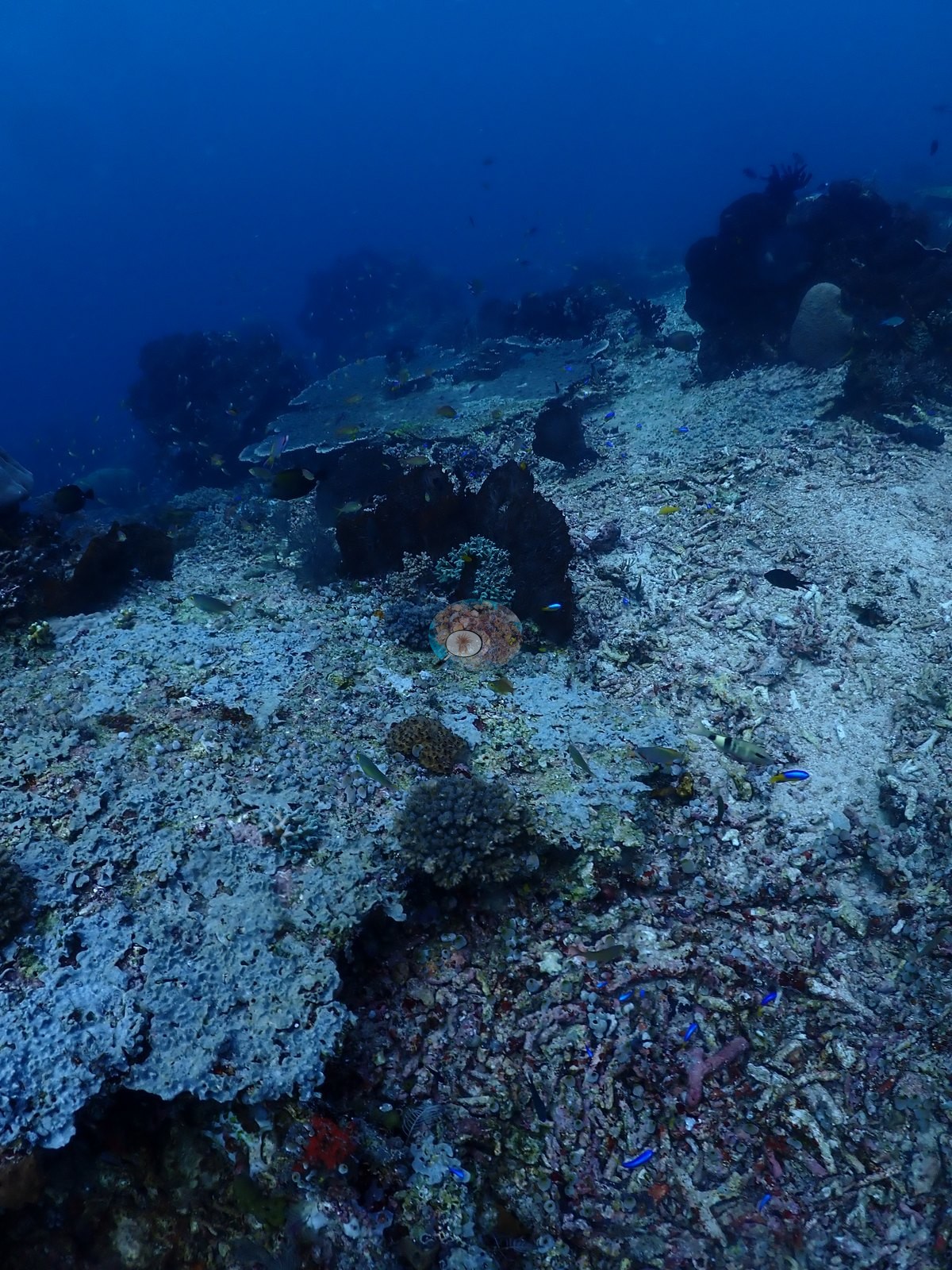
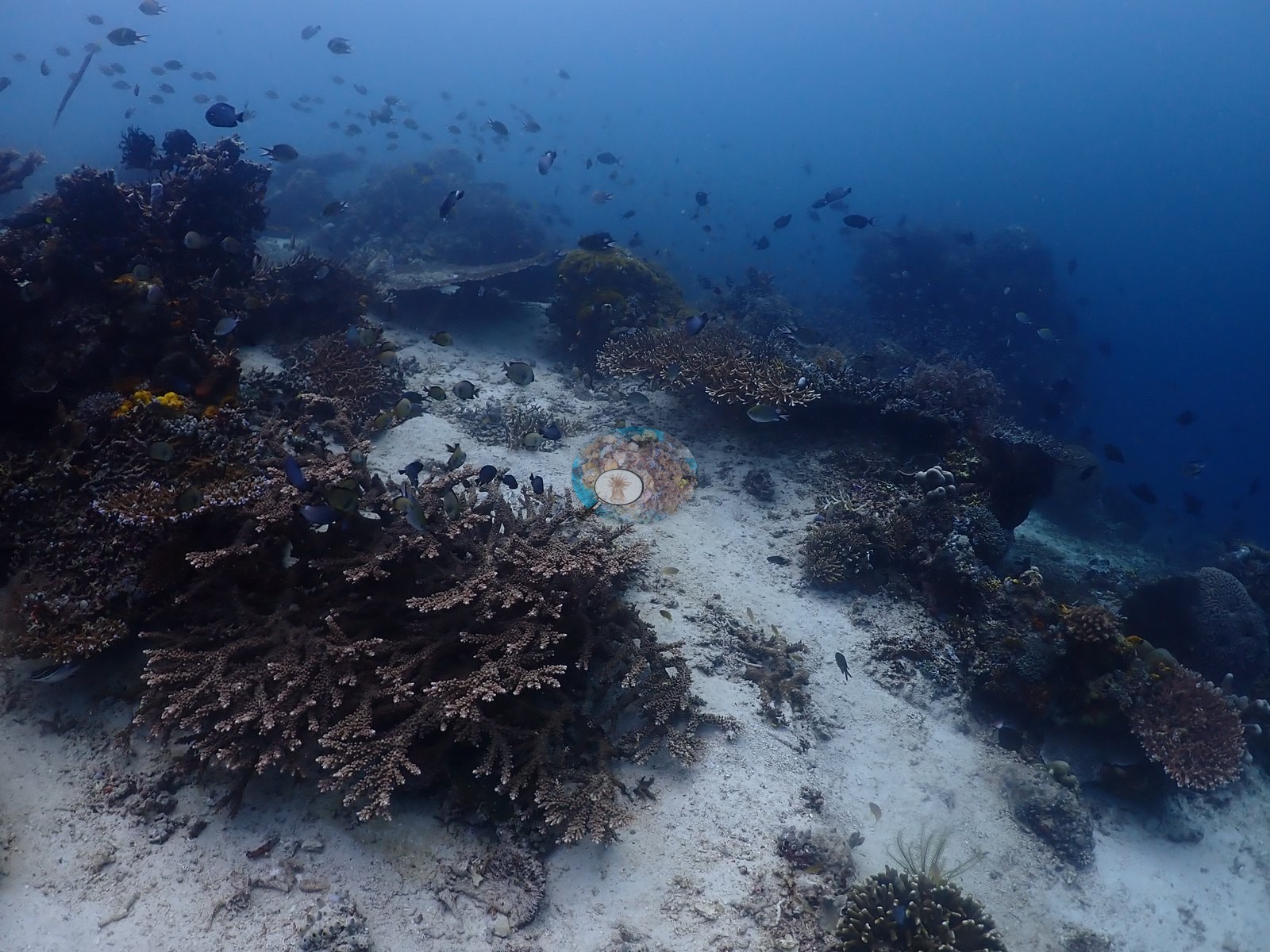
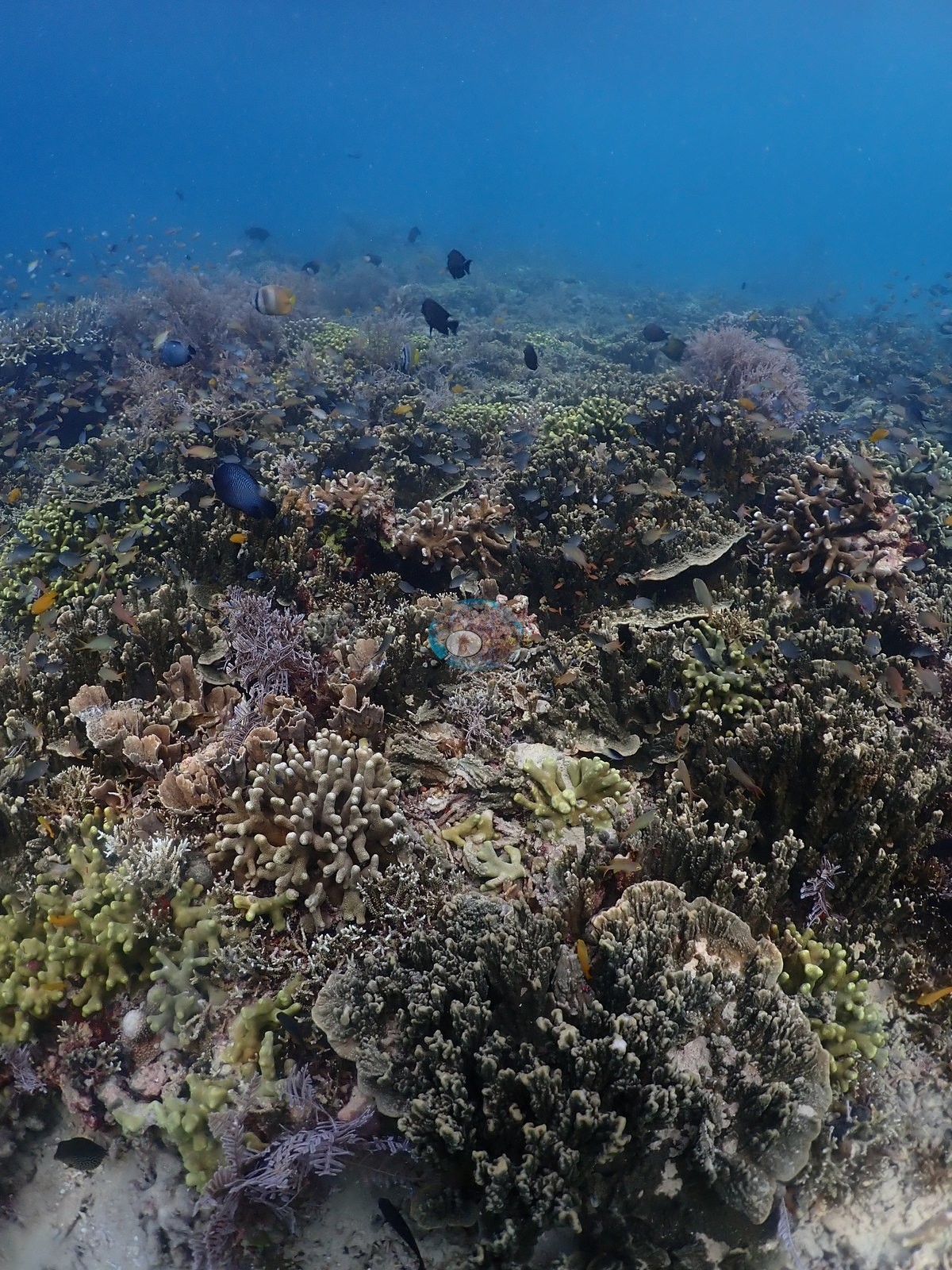
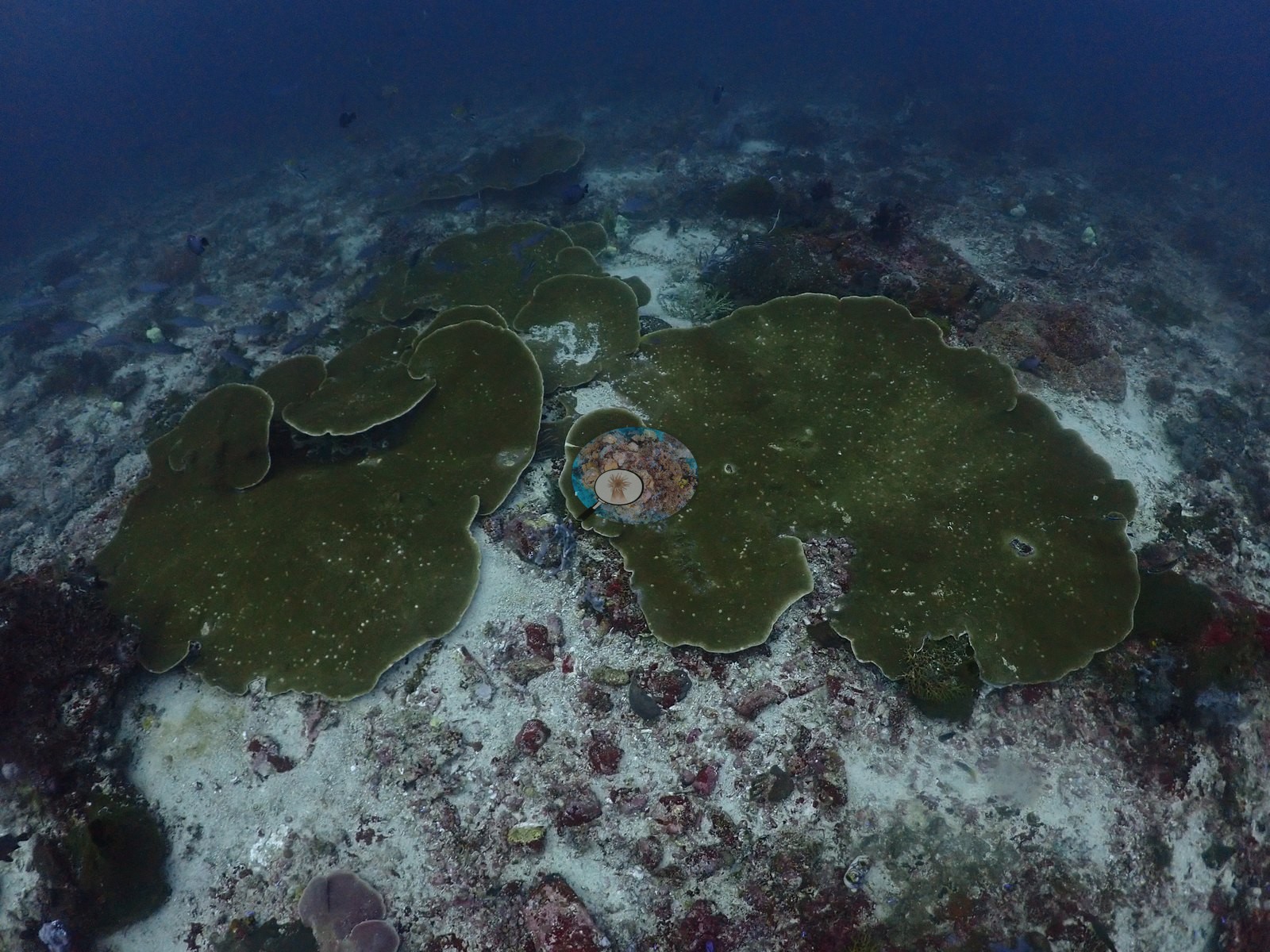
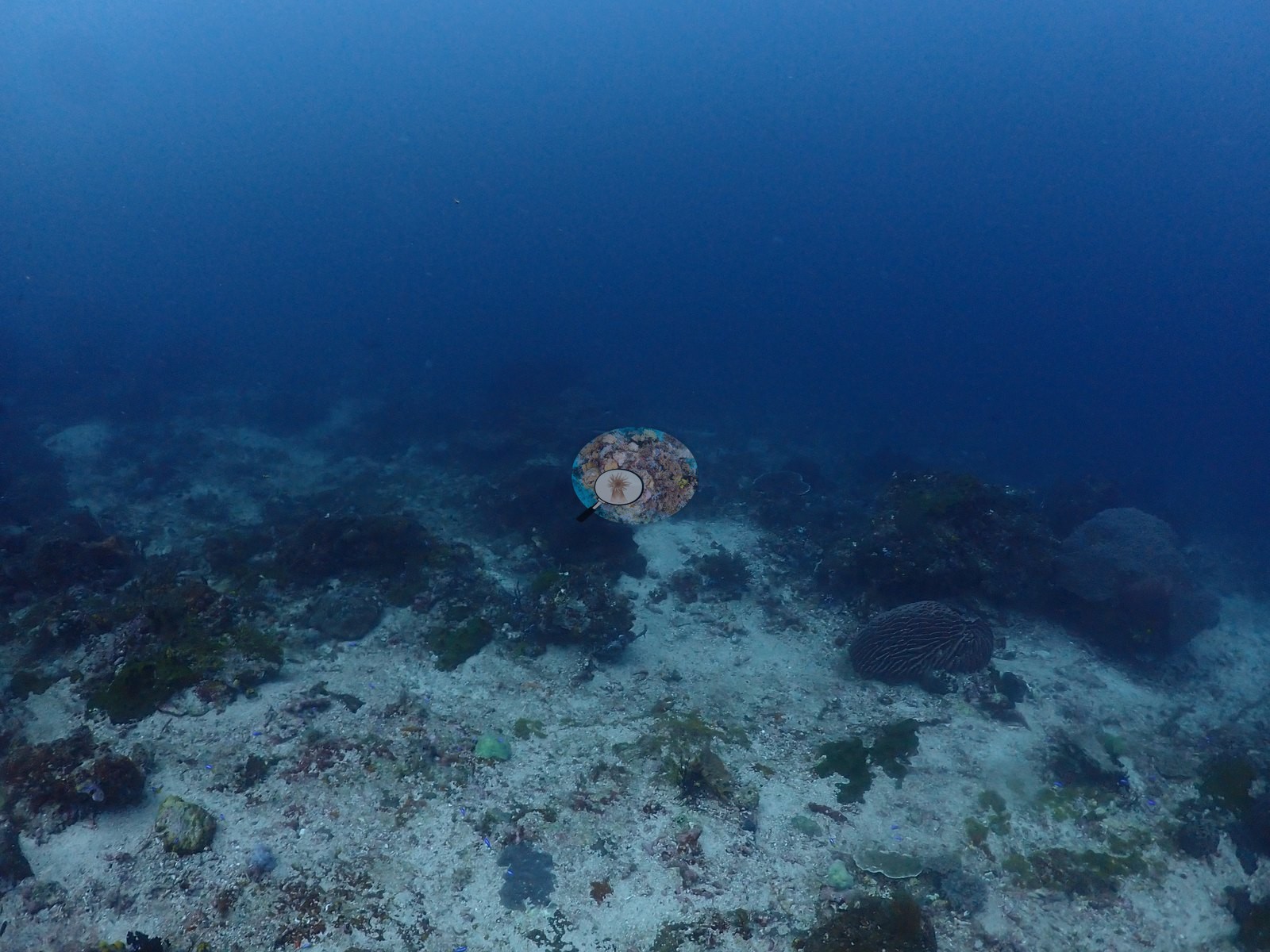
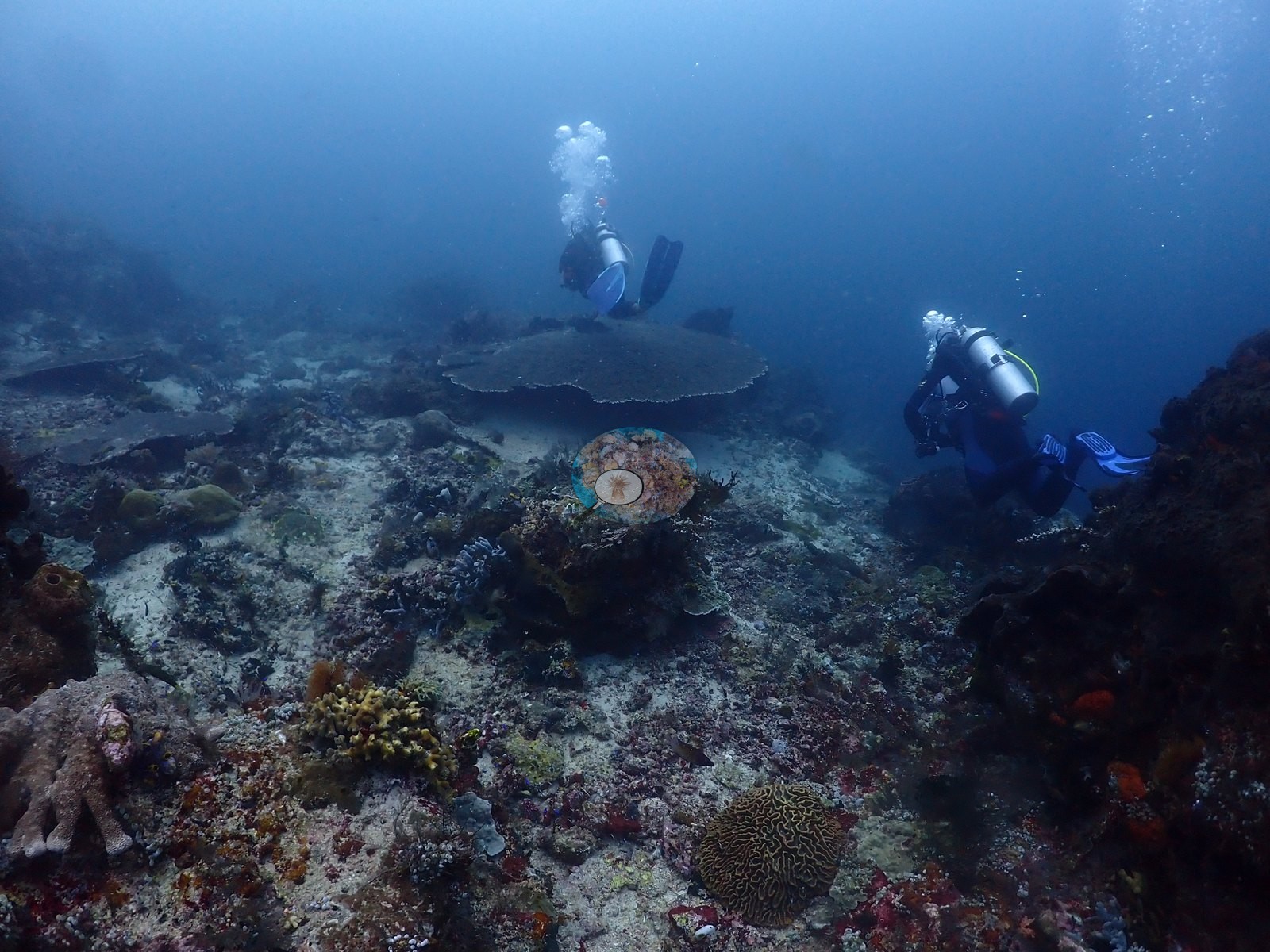
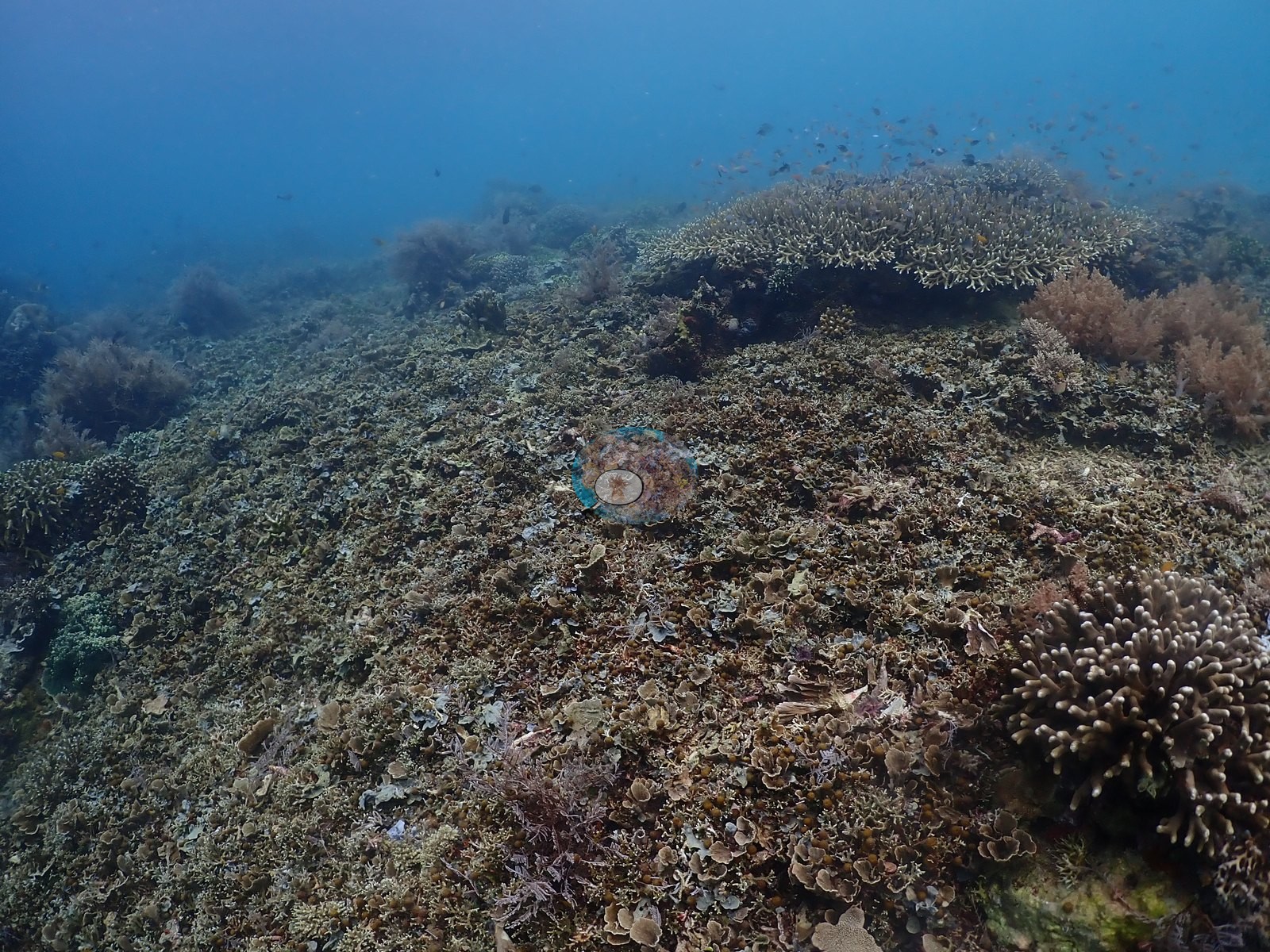
The deep end is a broad, pale sand-and-rubble apron in dim blue light, with isolated table Acropora plates standing clear of the substrate, scattered massive Porites and green-brown foliose plating bommies (Turbinaria/Pachyseris-type) marking the transition upslope; these are the low-cover frames (e.g., Image 1, Image 6, Image 18, Image 19, Image 21, Image 26).
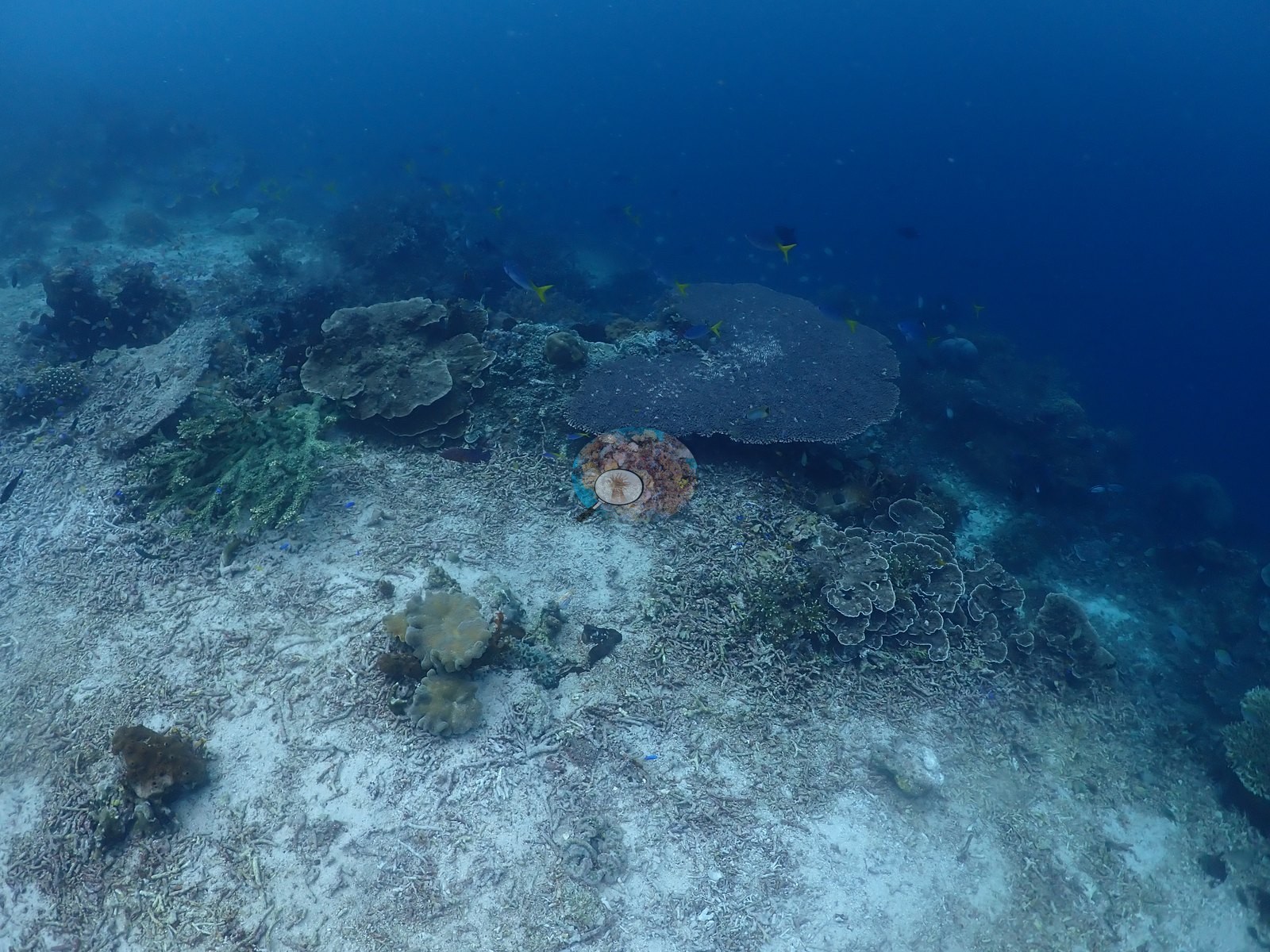
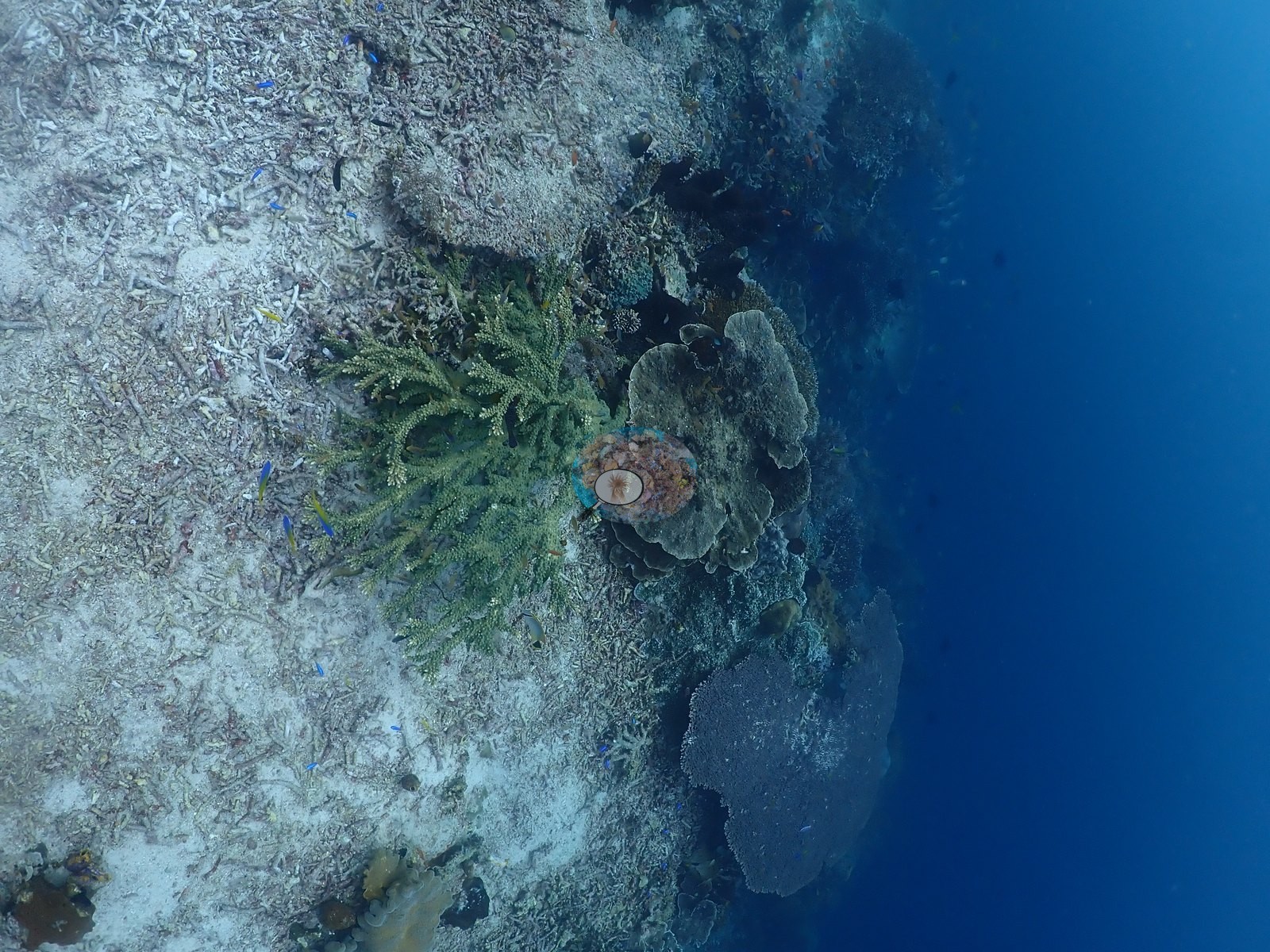
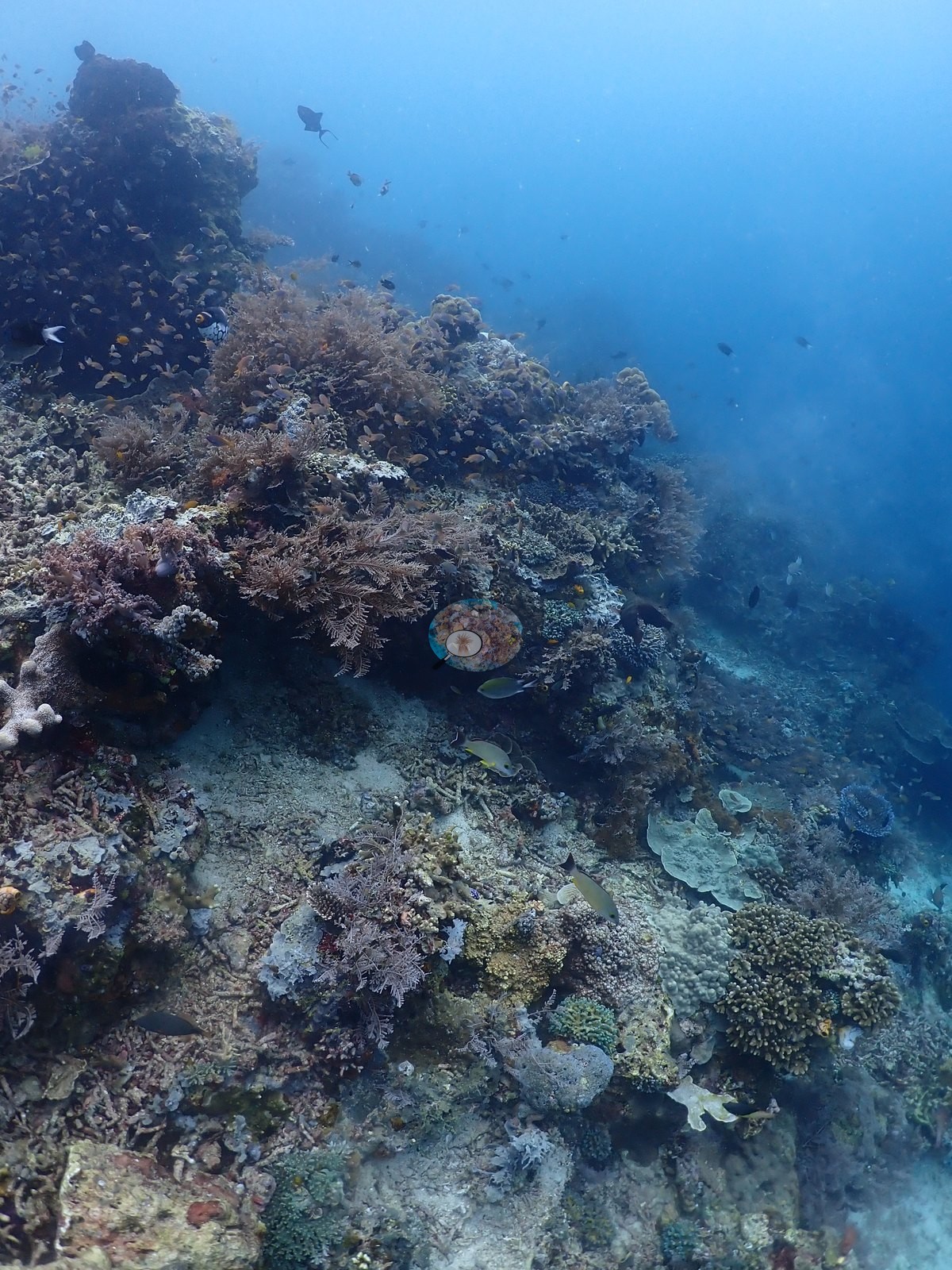
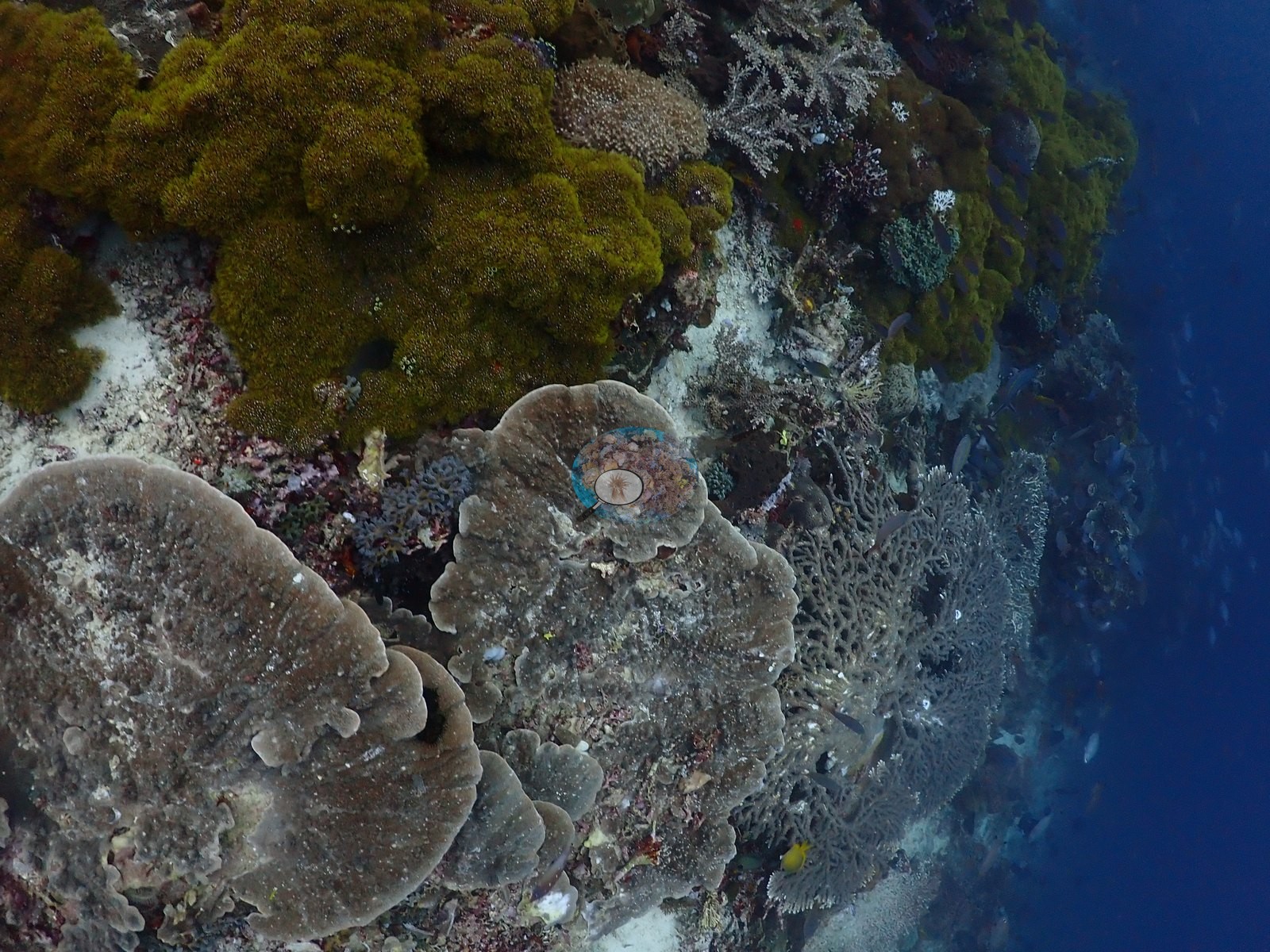
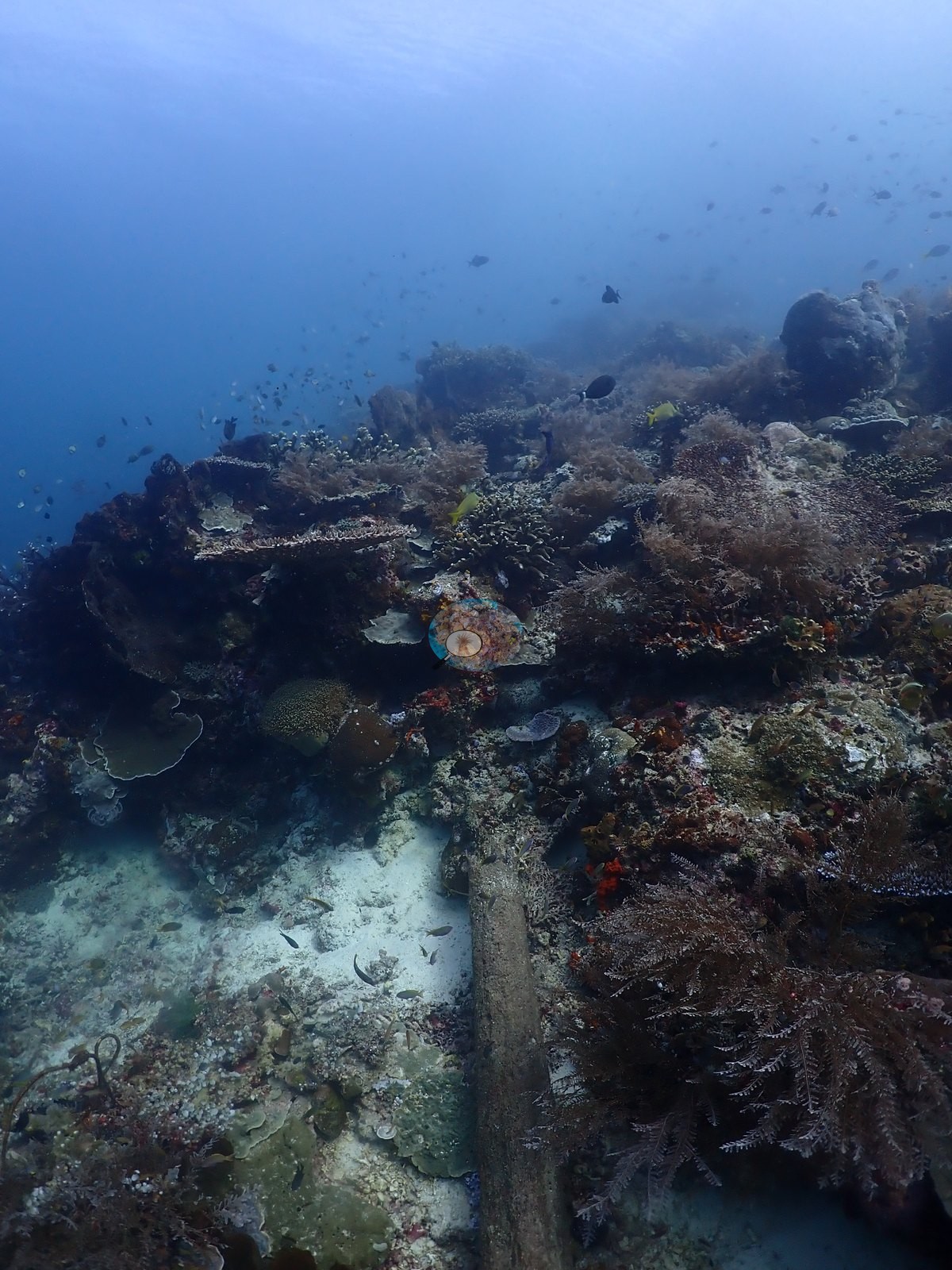
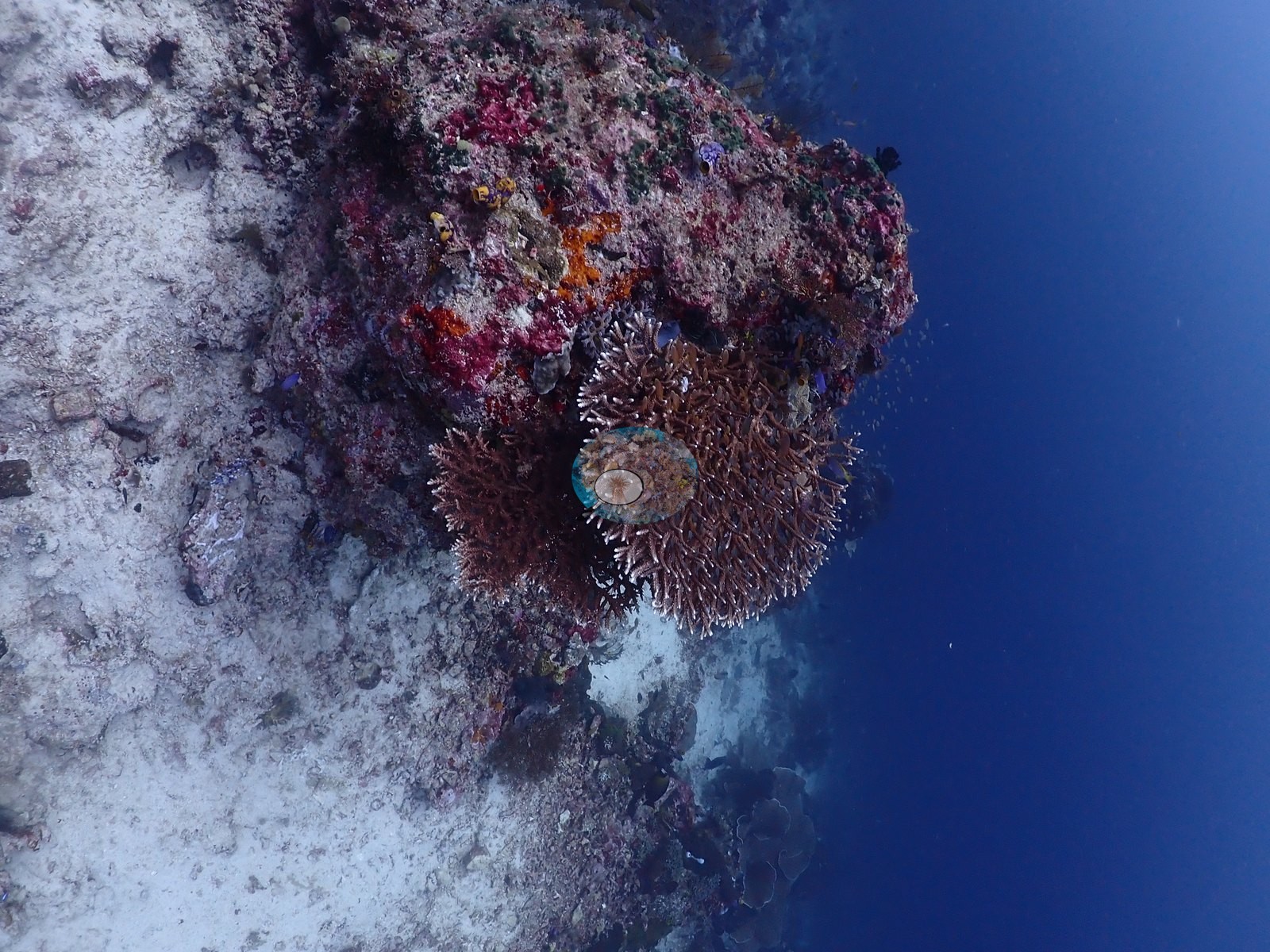
A steep section drops away into blue with CCA- and sponge-crusted rock and tabulate Acropora perched on the lip (e.g., Image 29, Image 37).
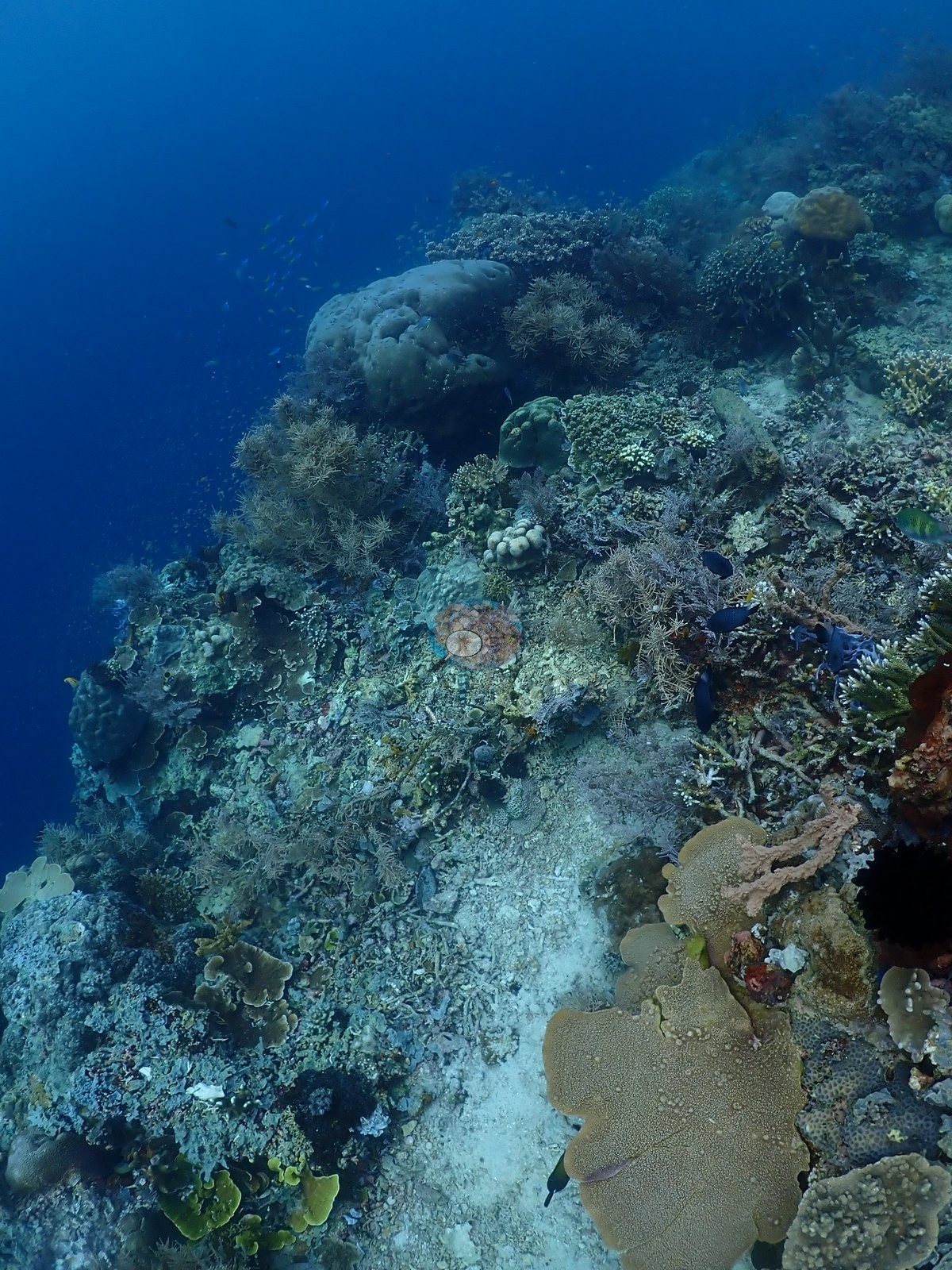
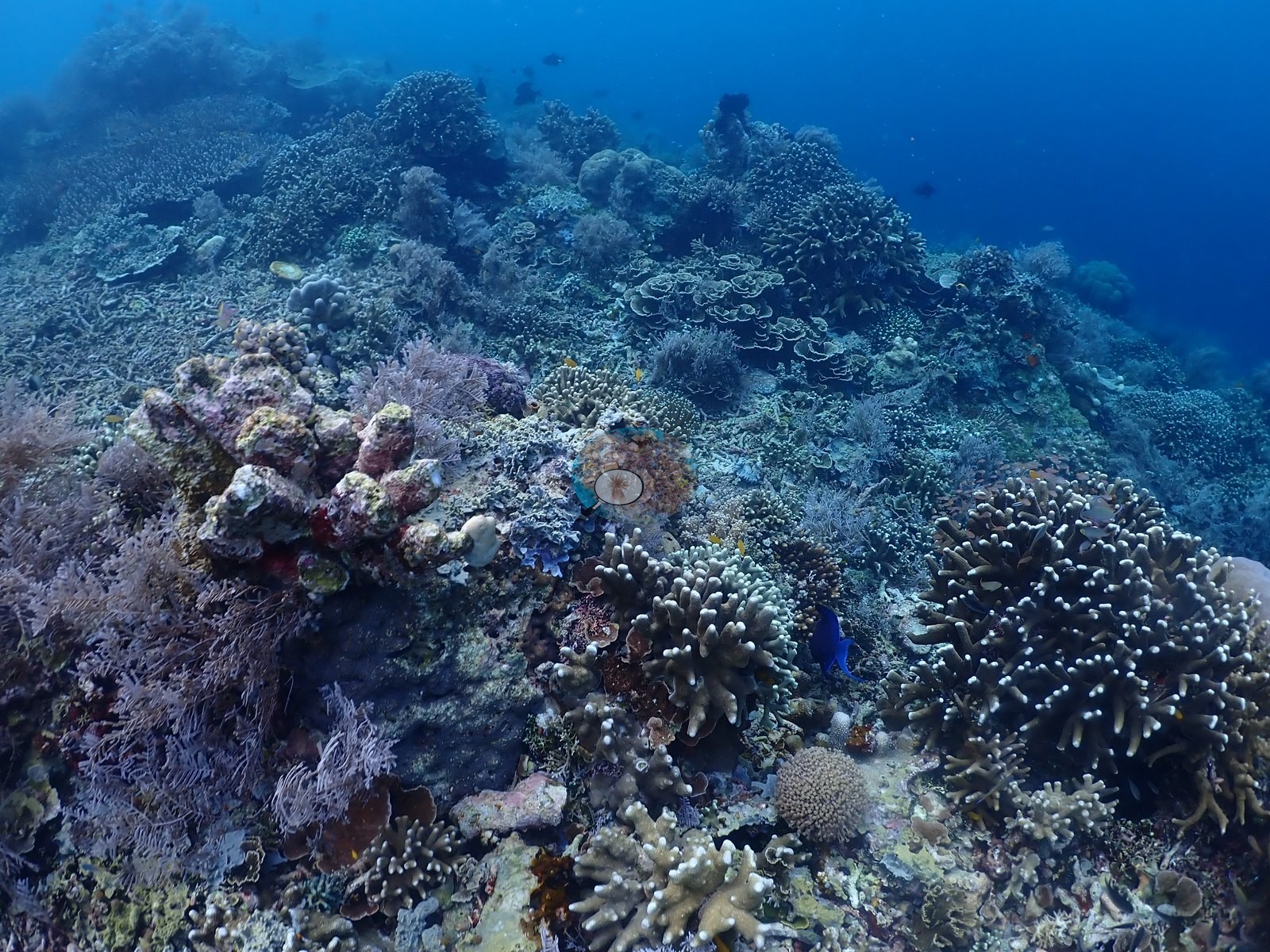
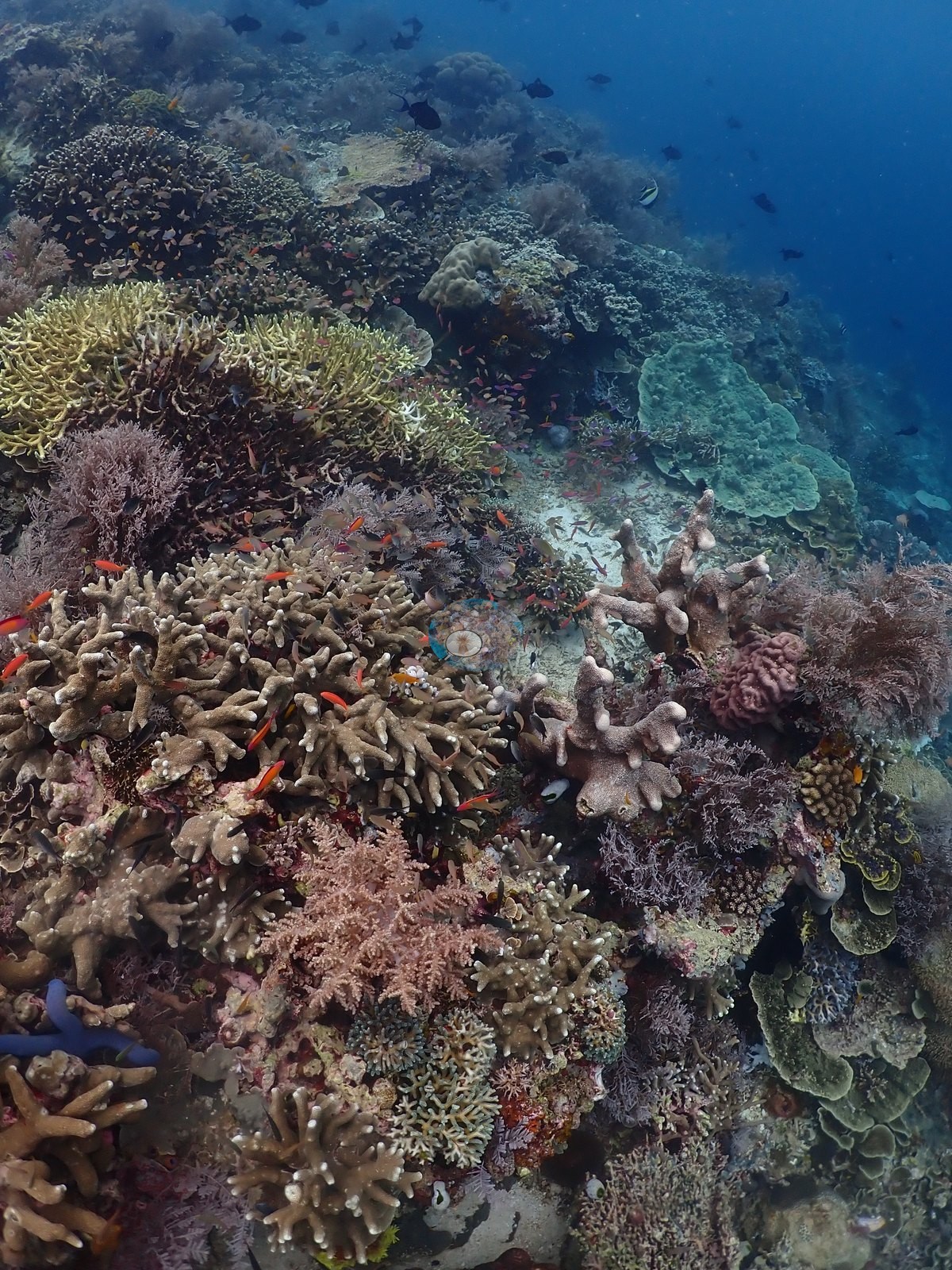
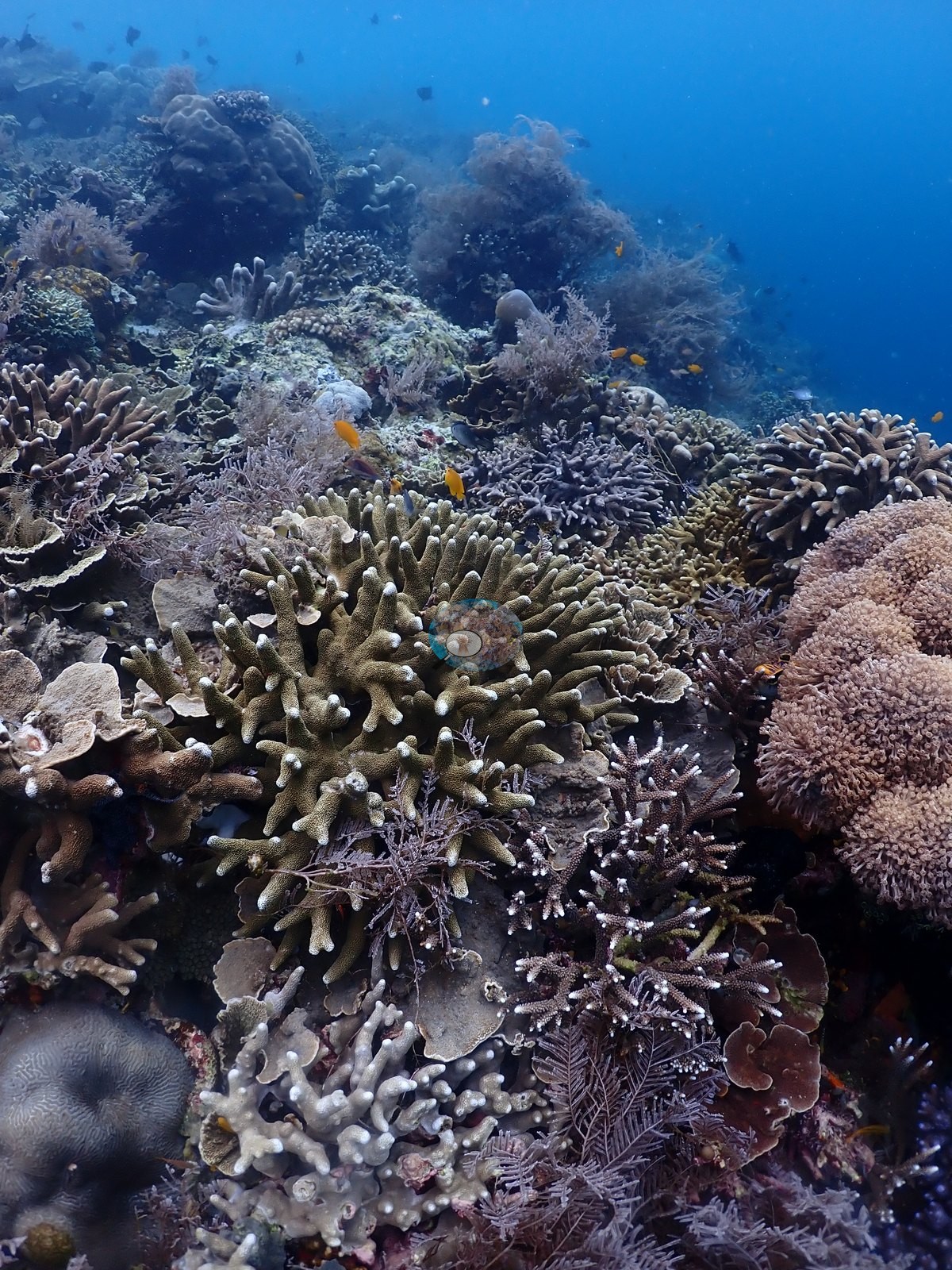
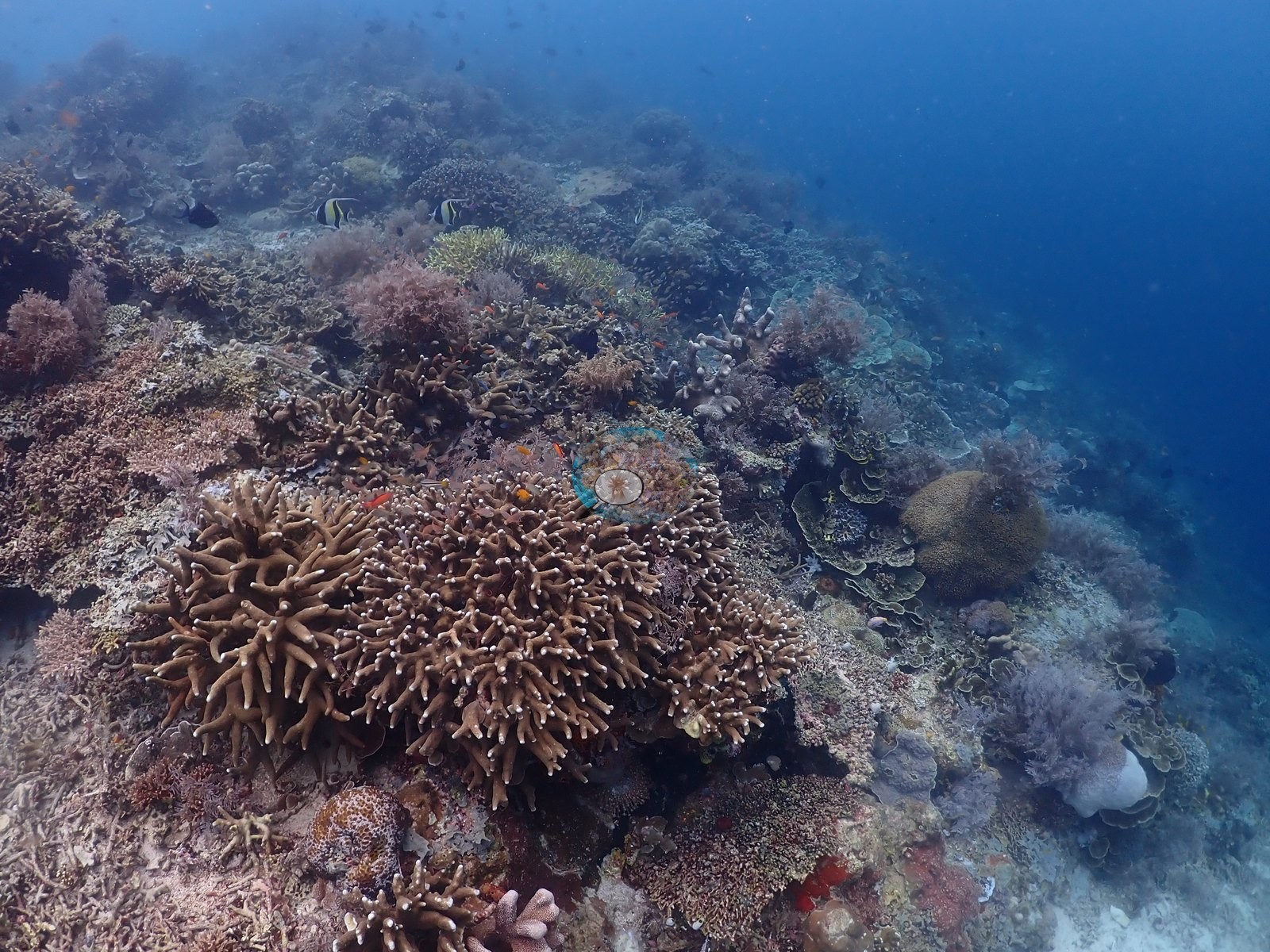
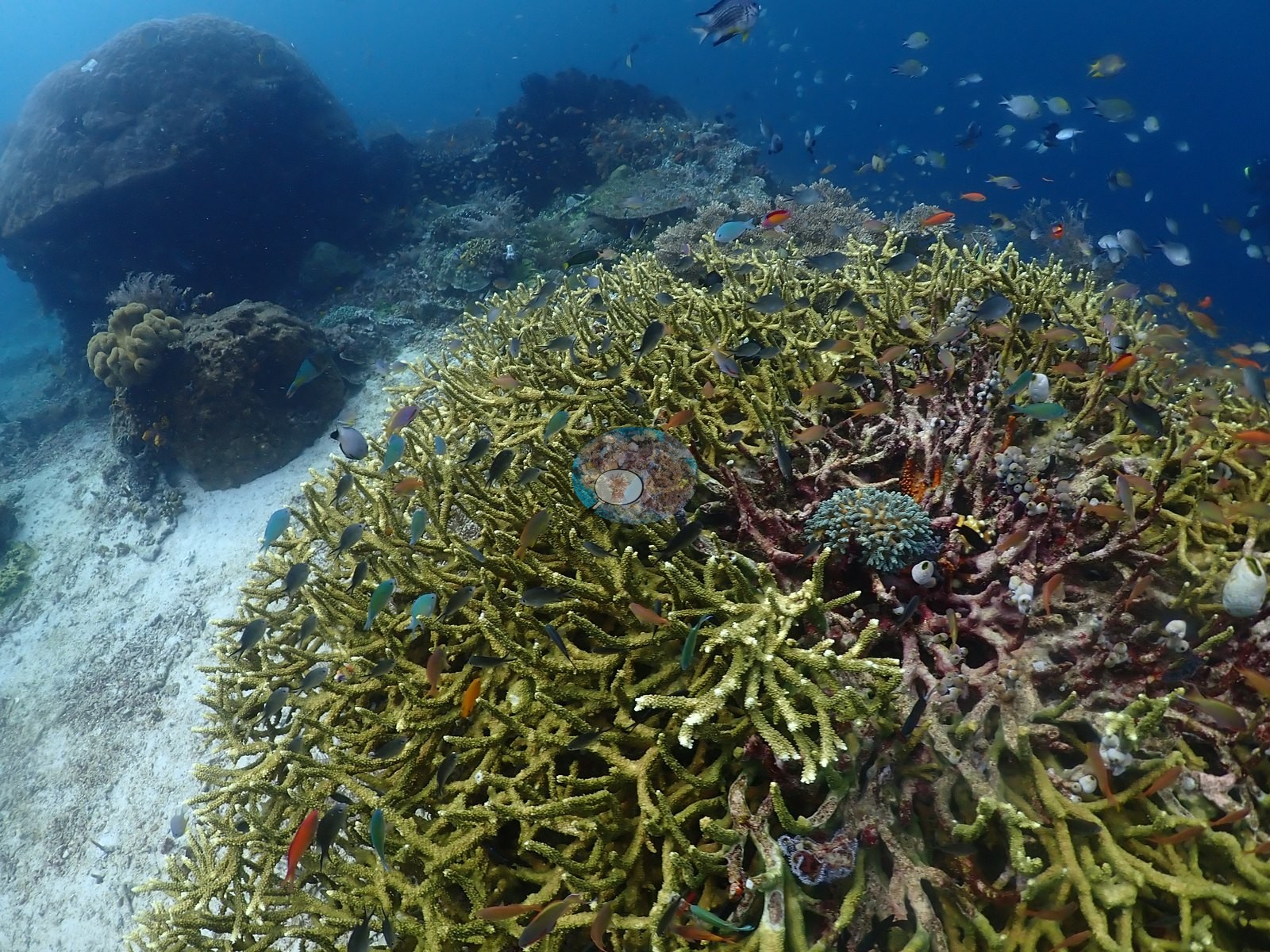
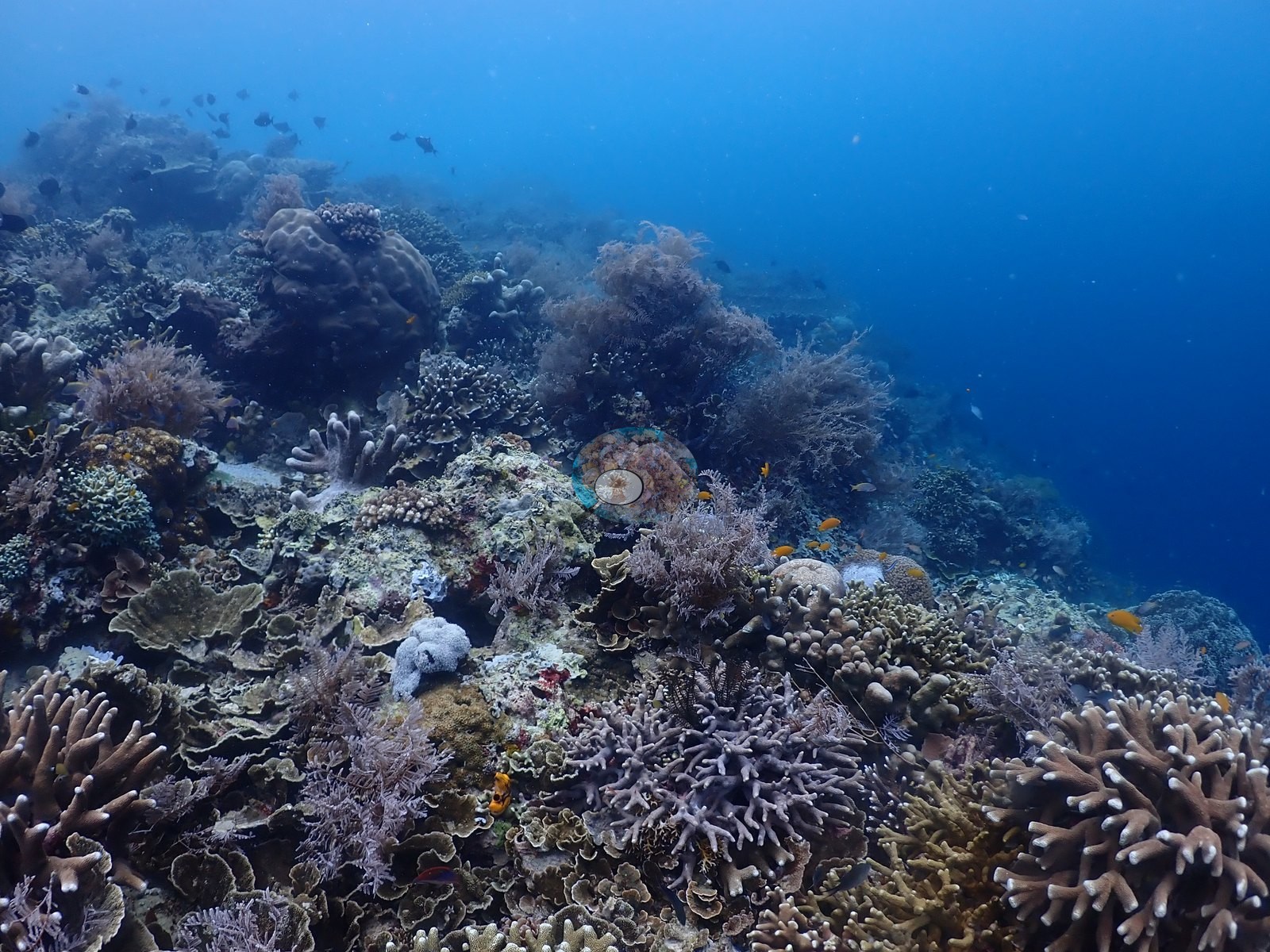
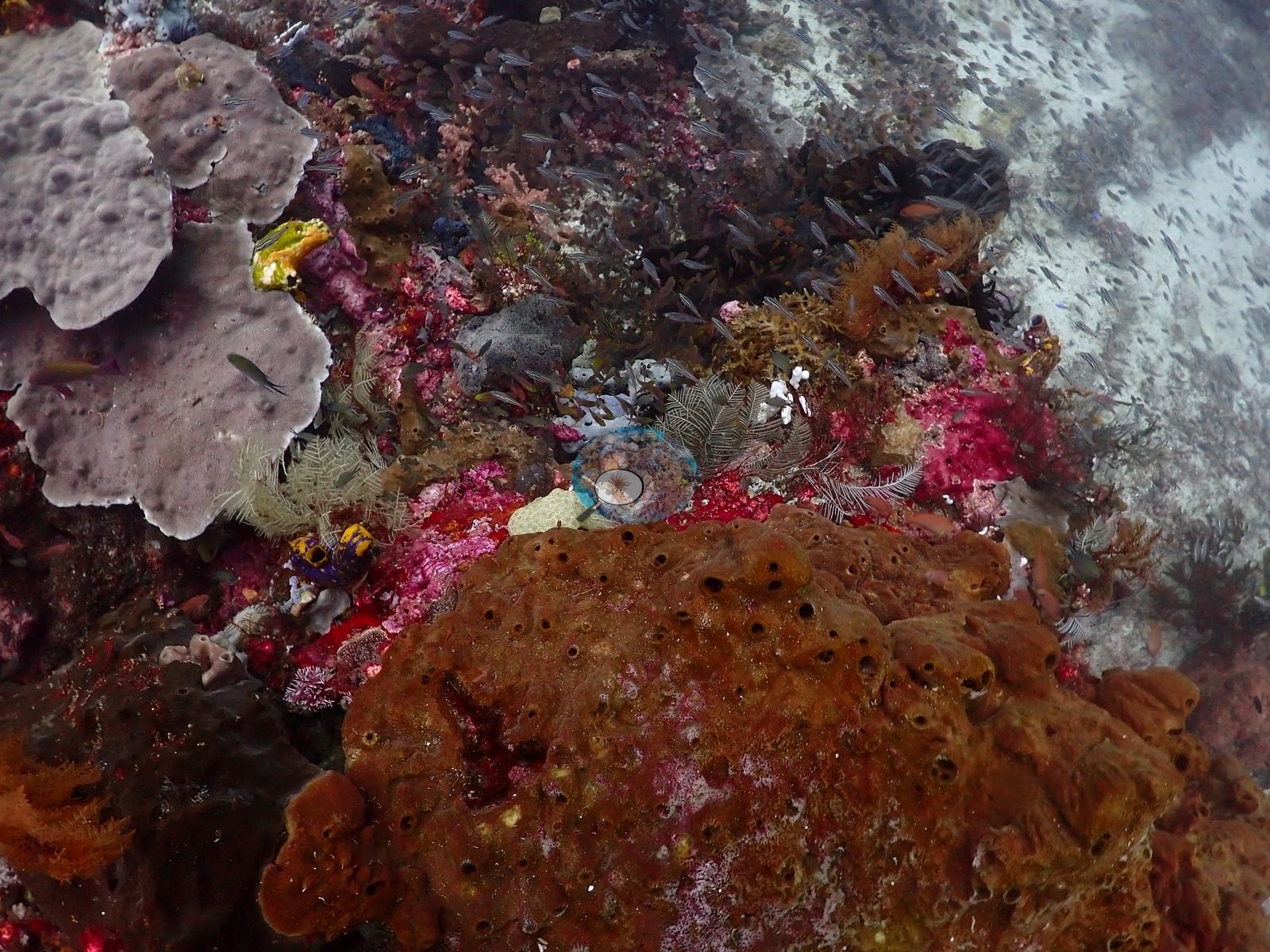
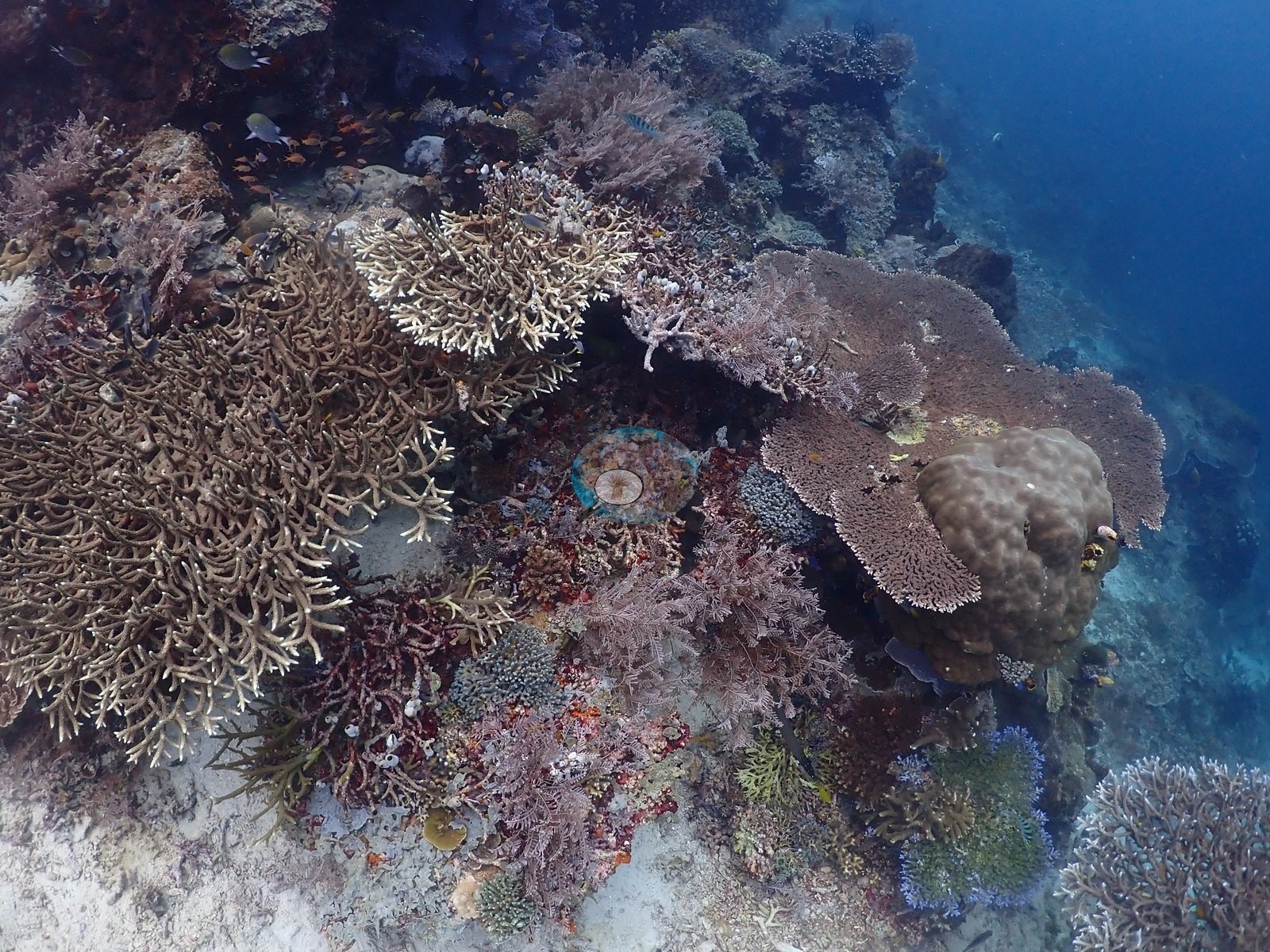
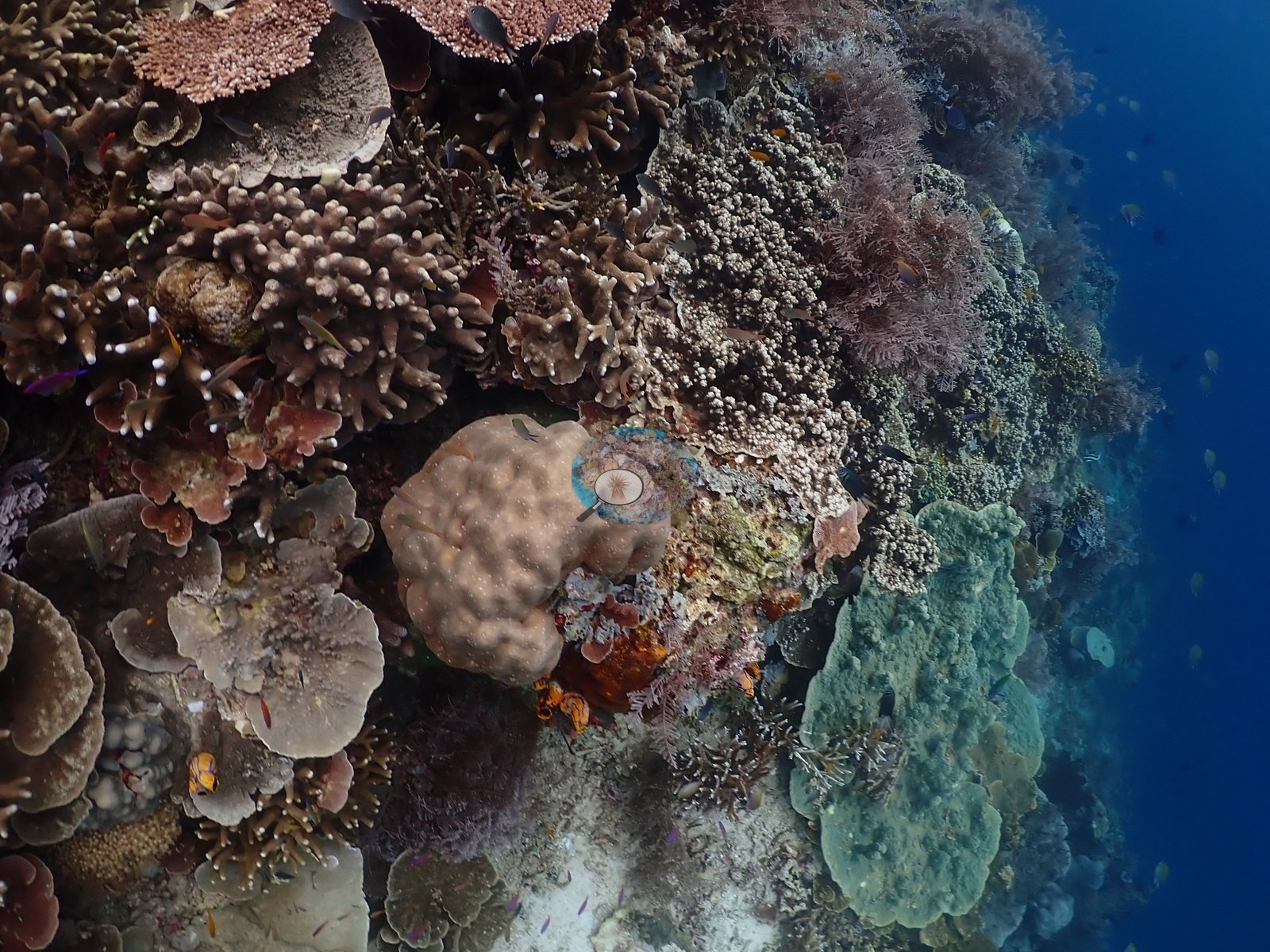
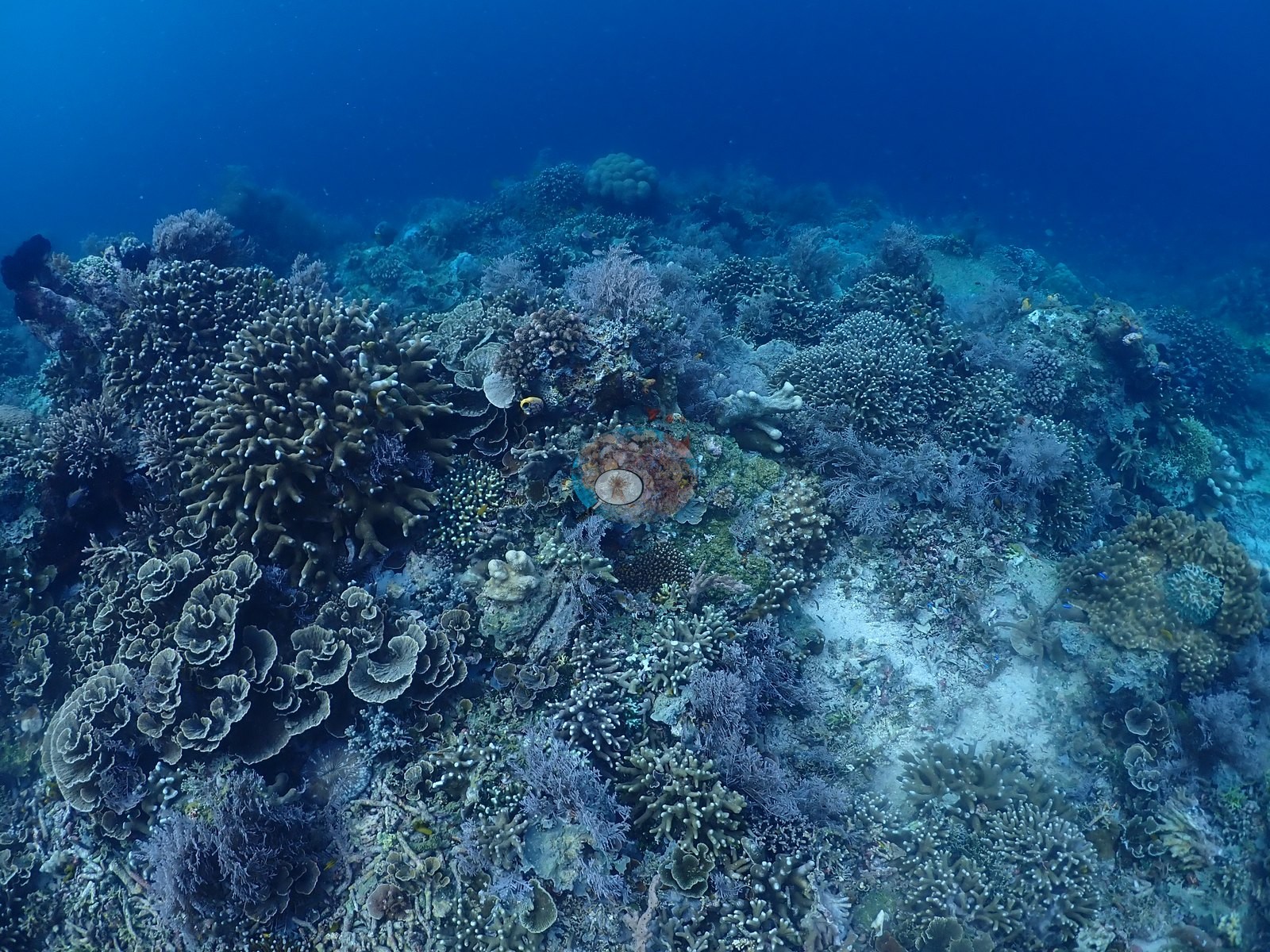
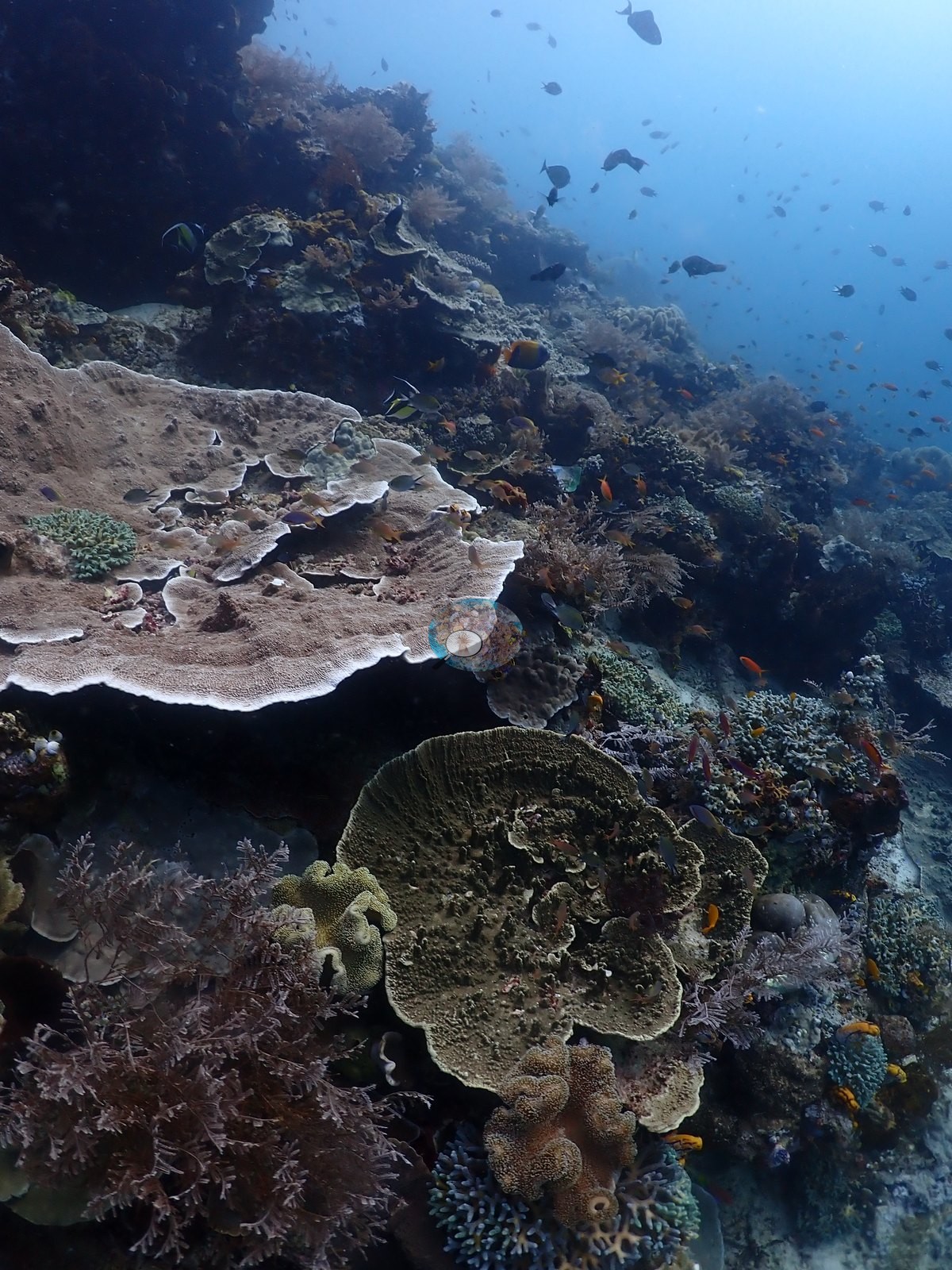
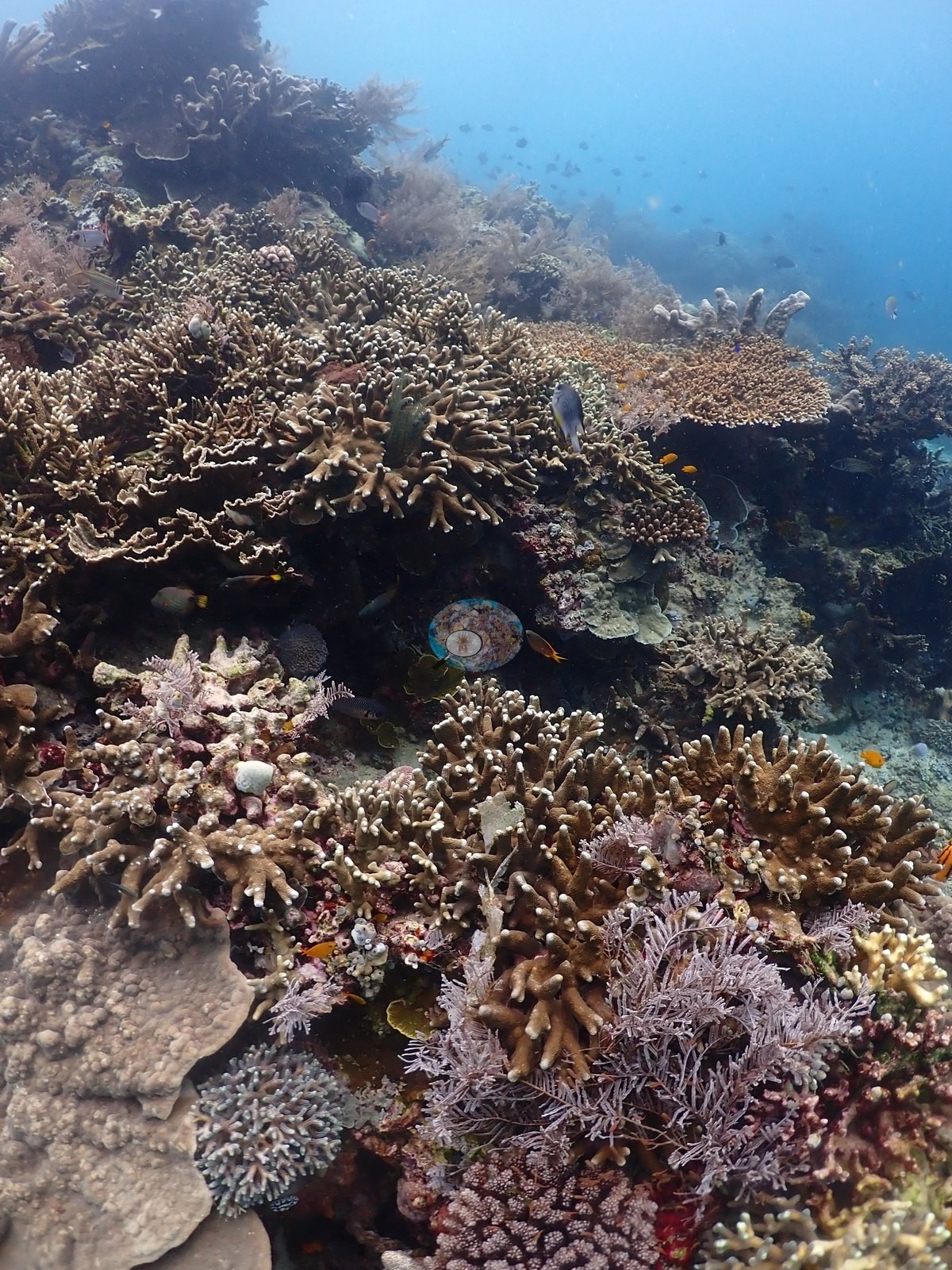
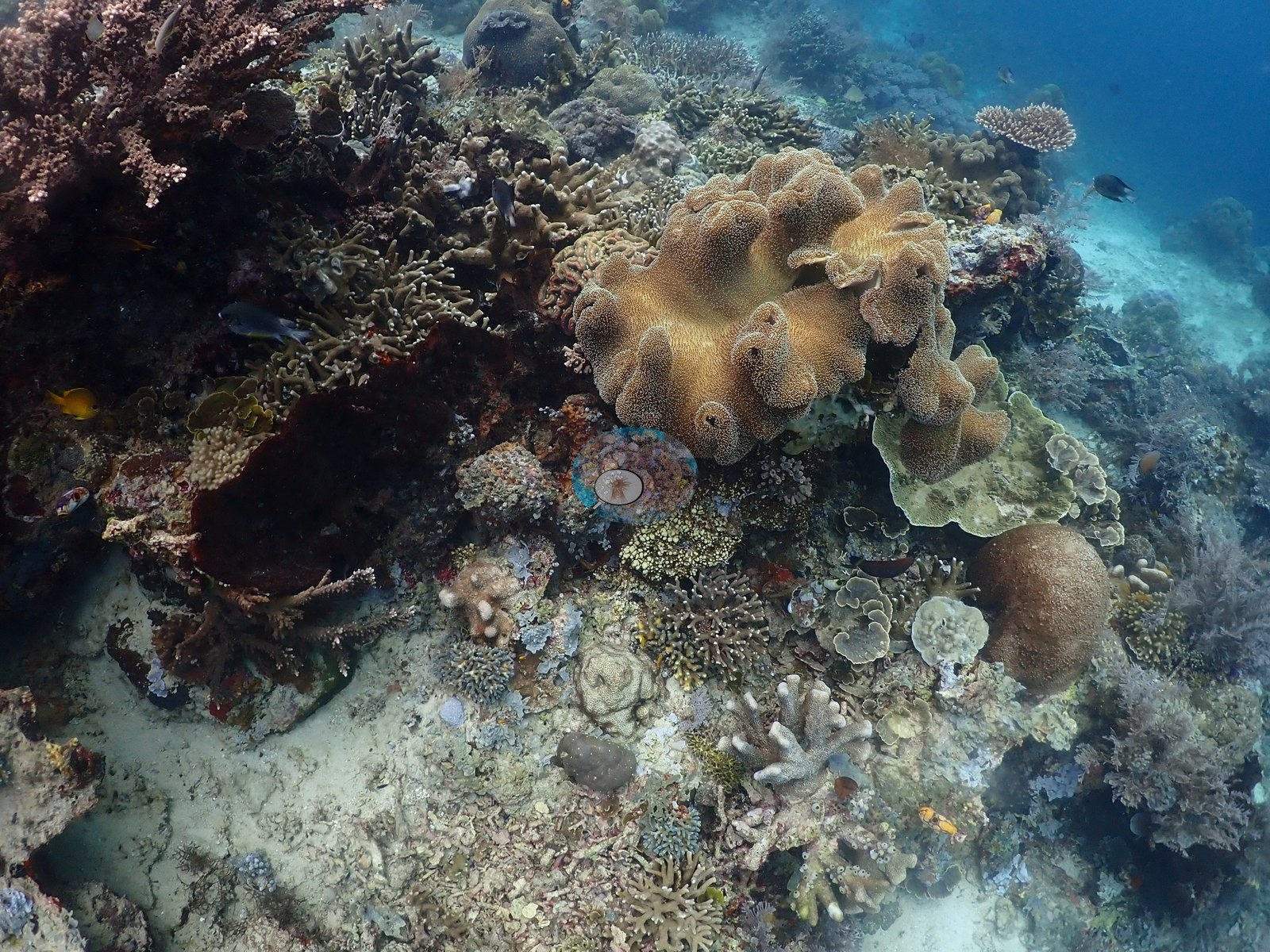
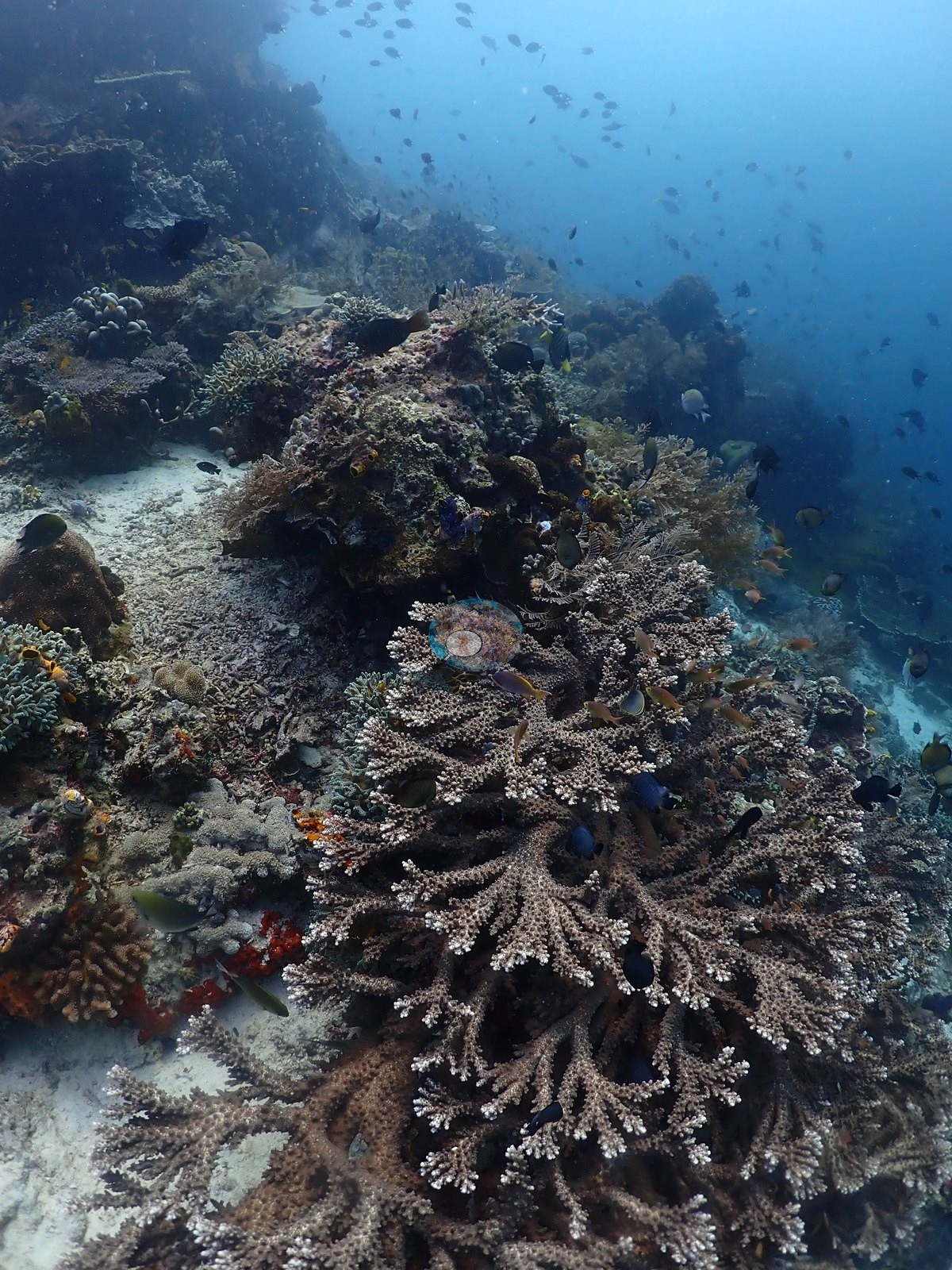
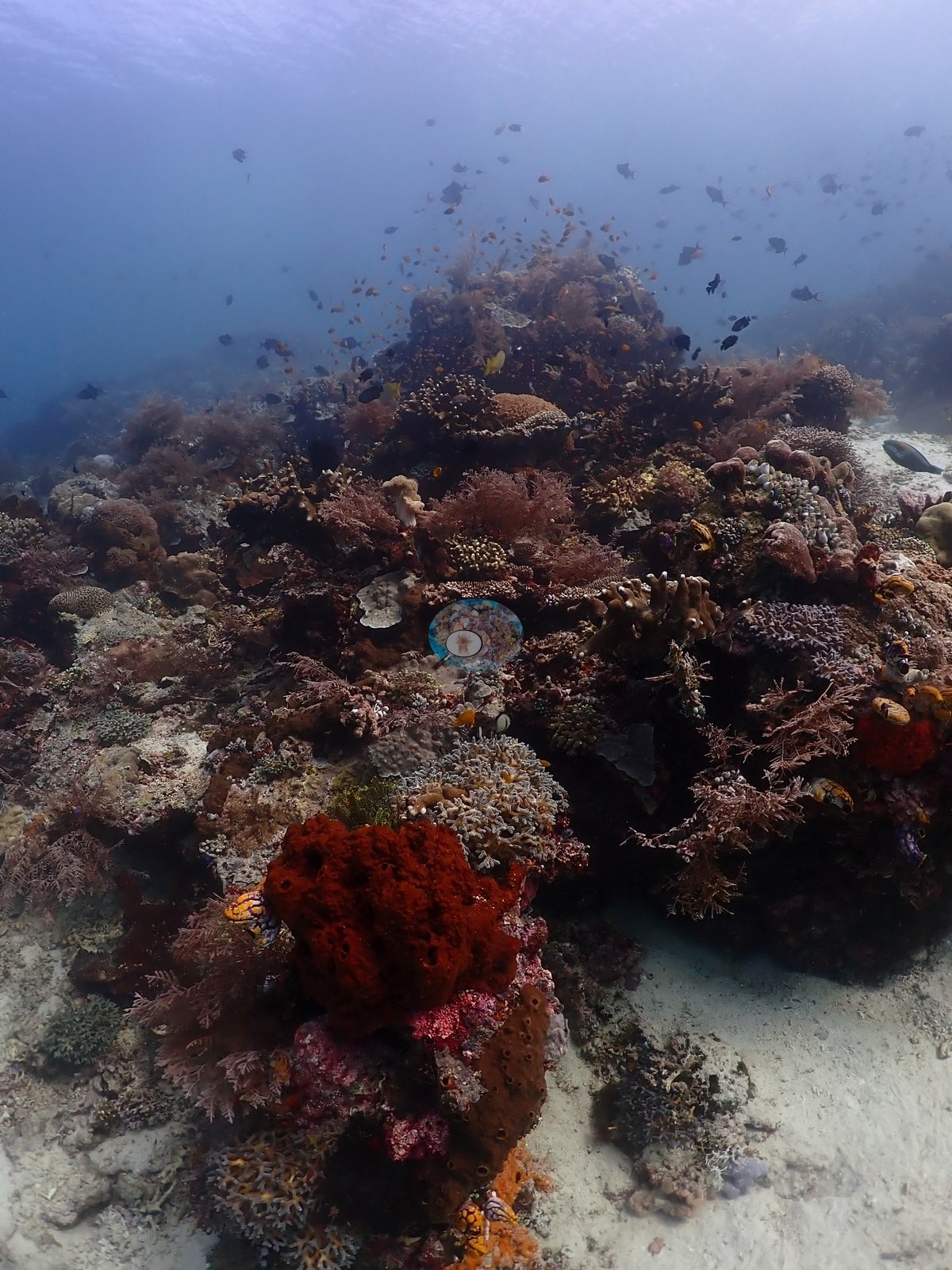
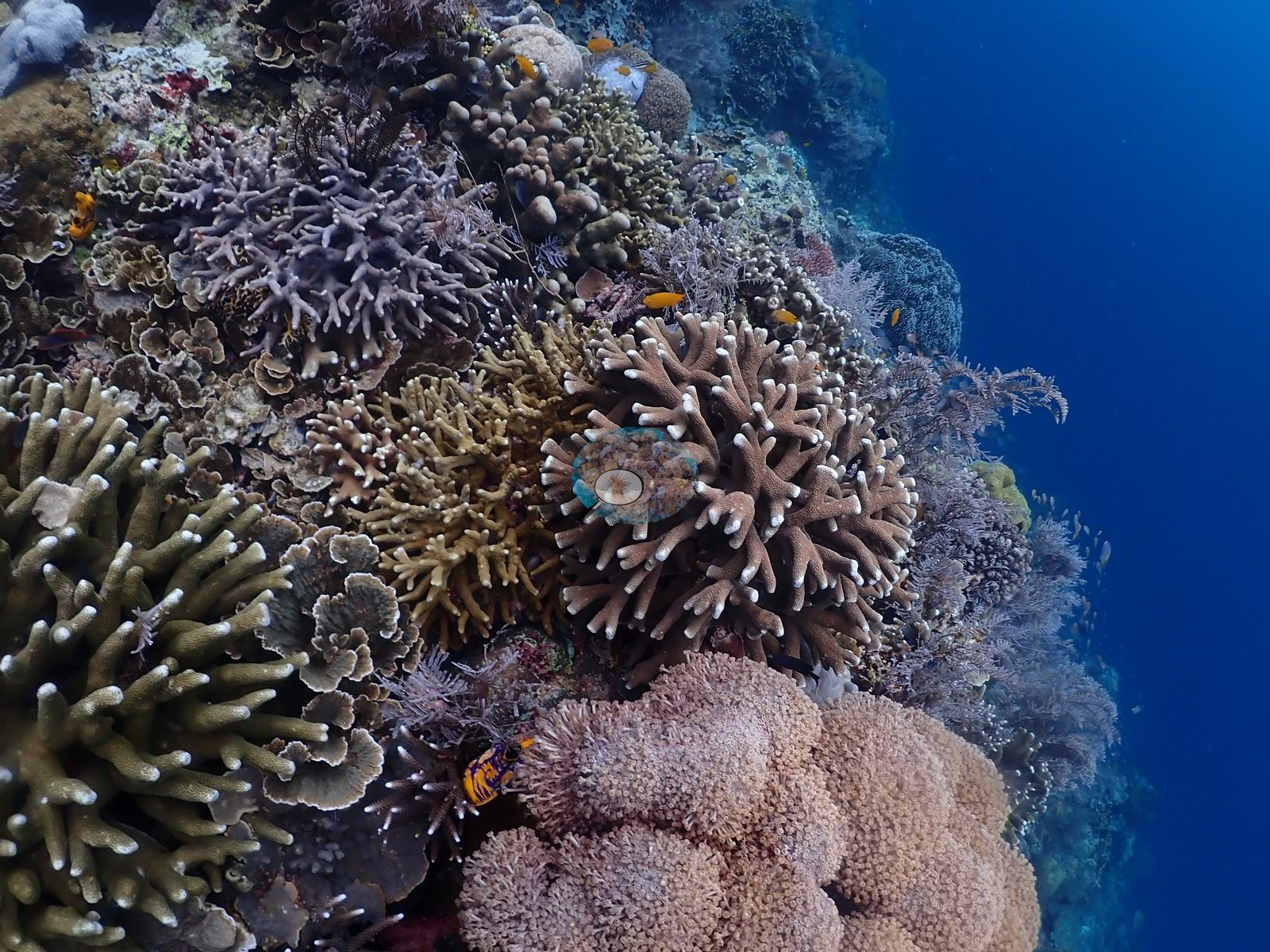
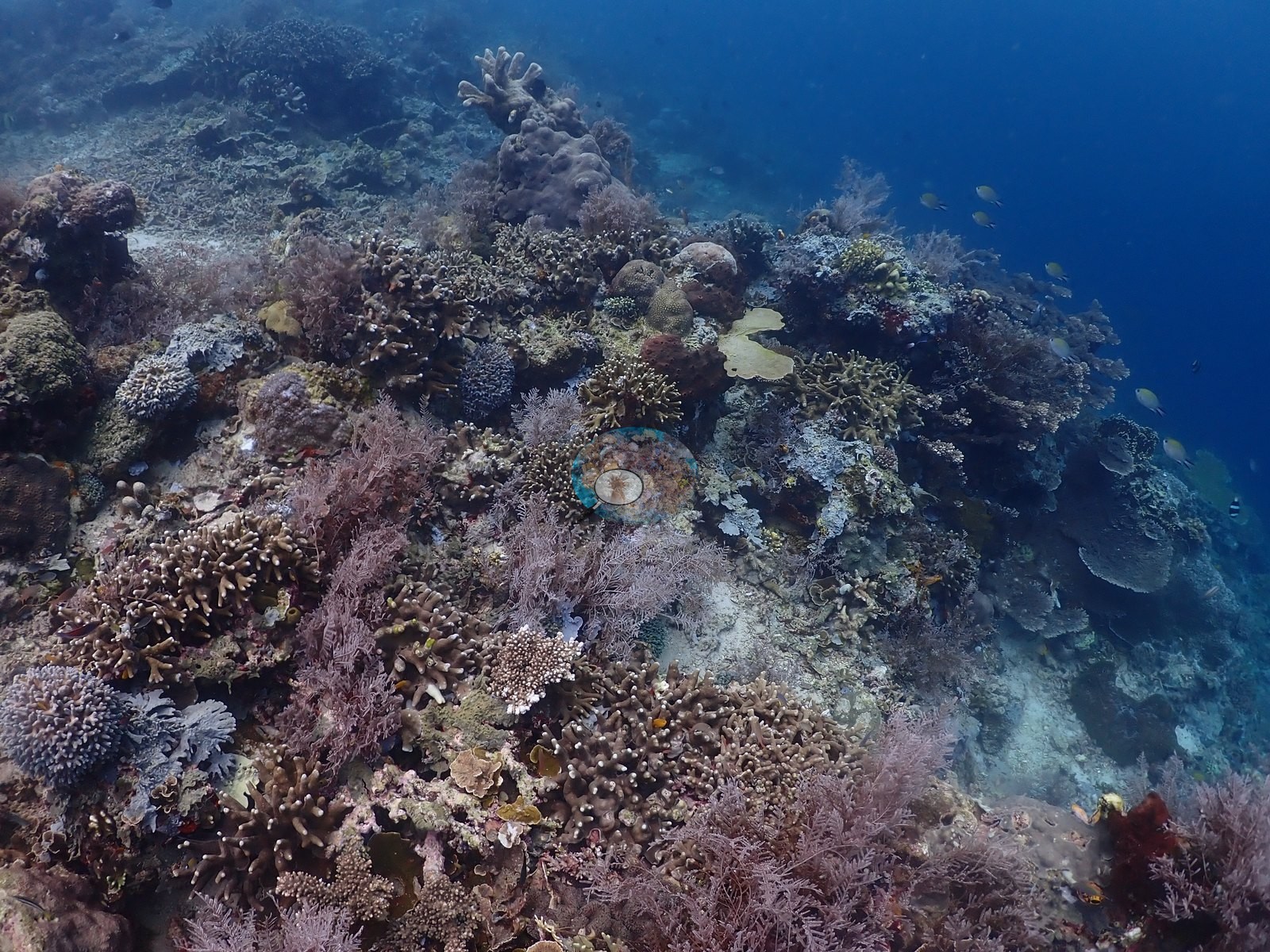
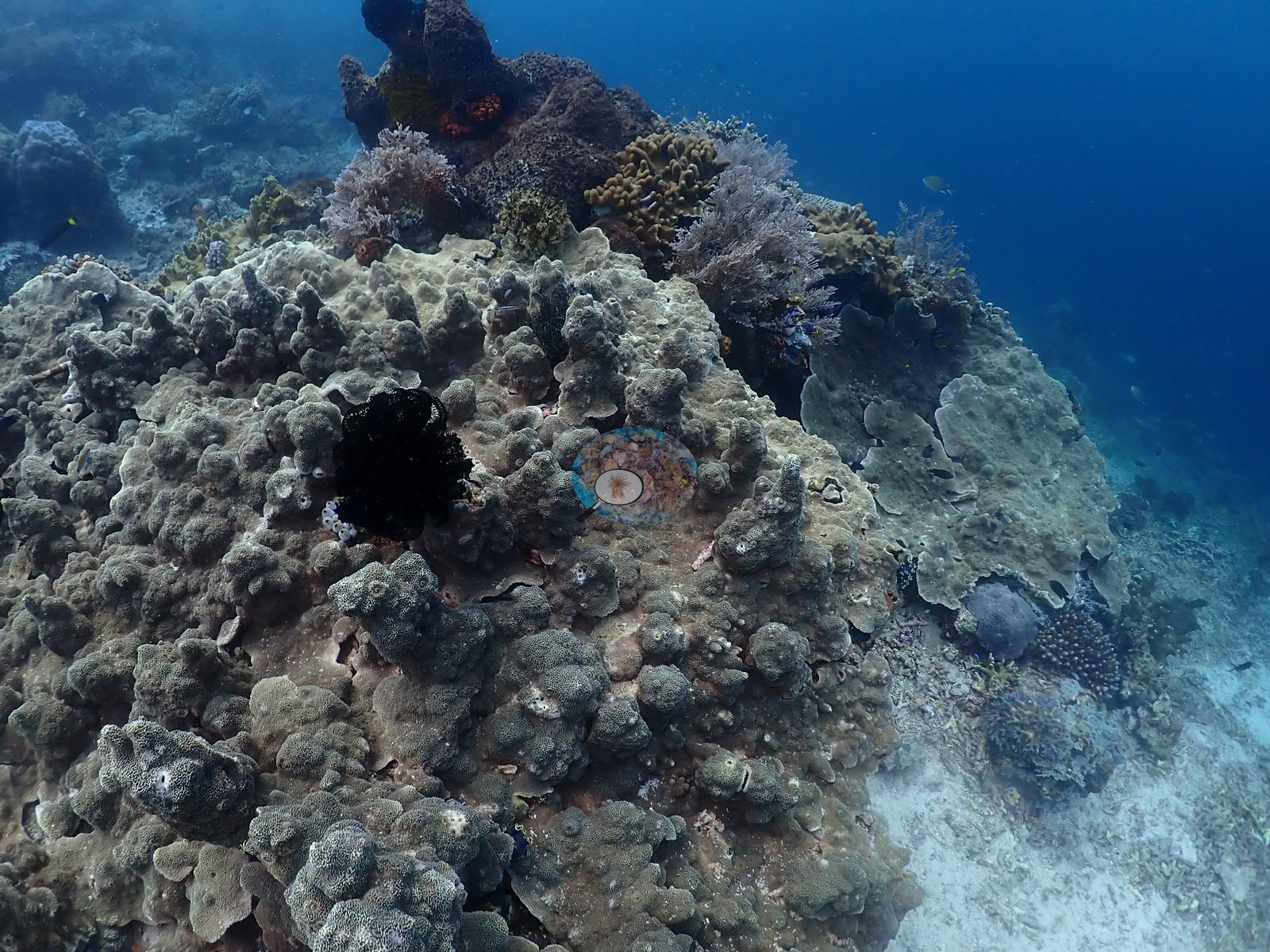
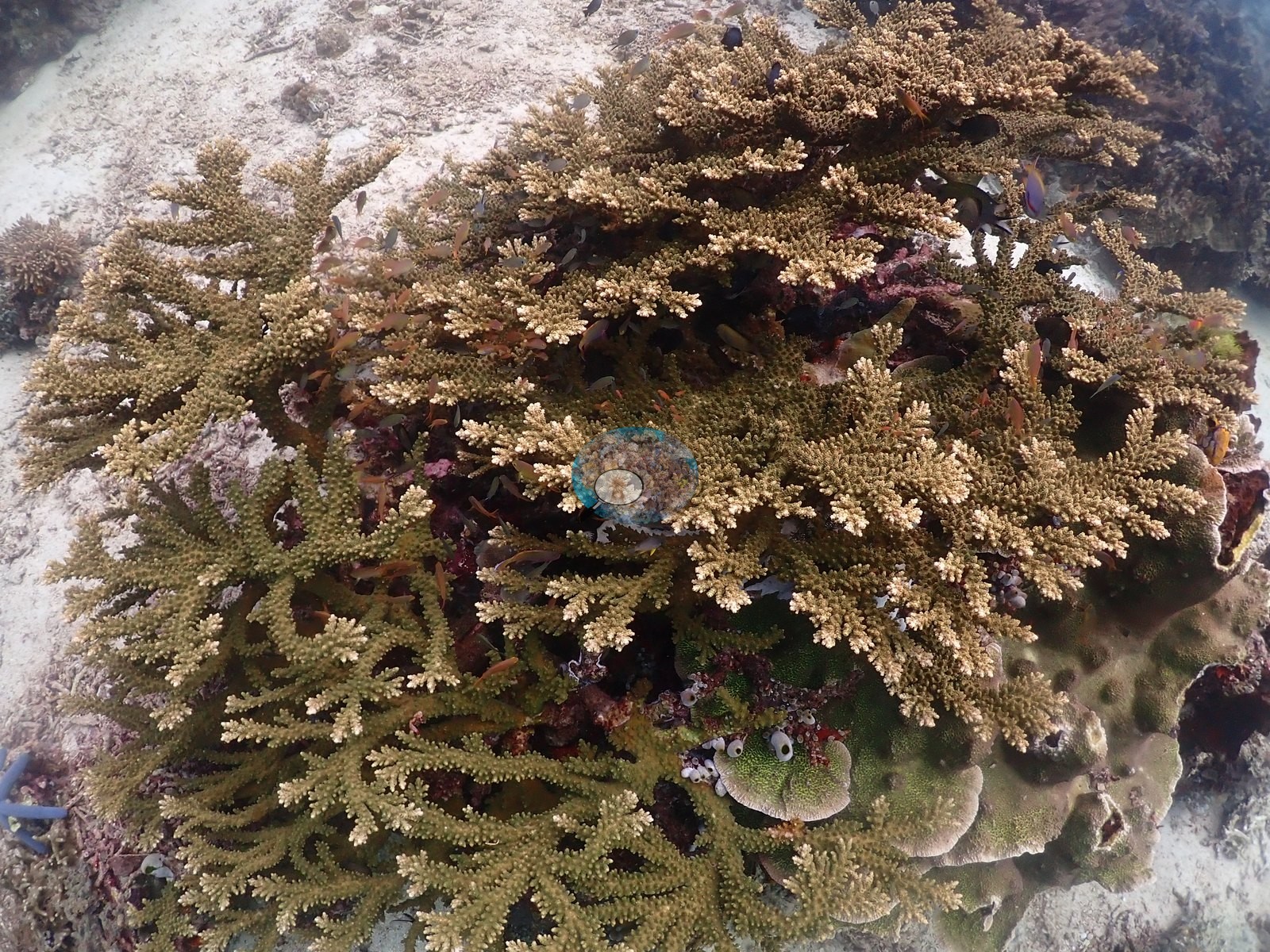
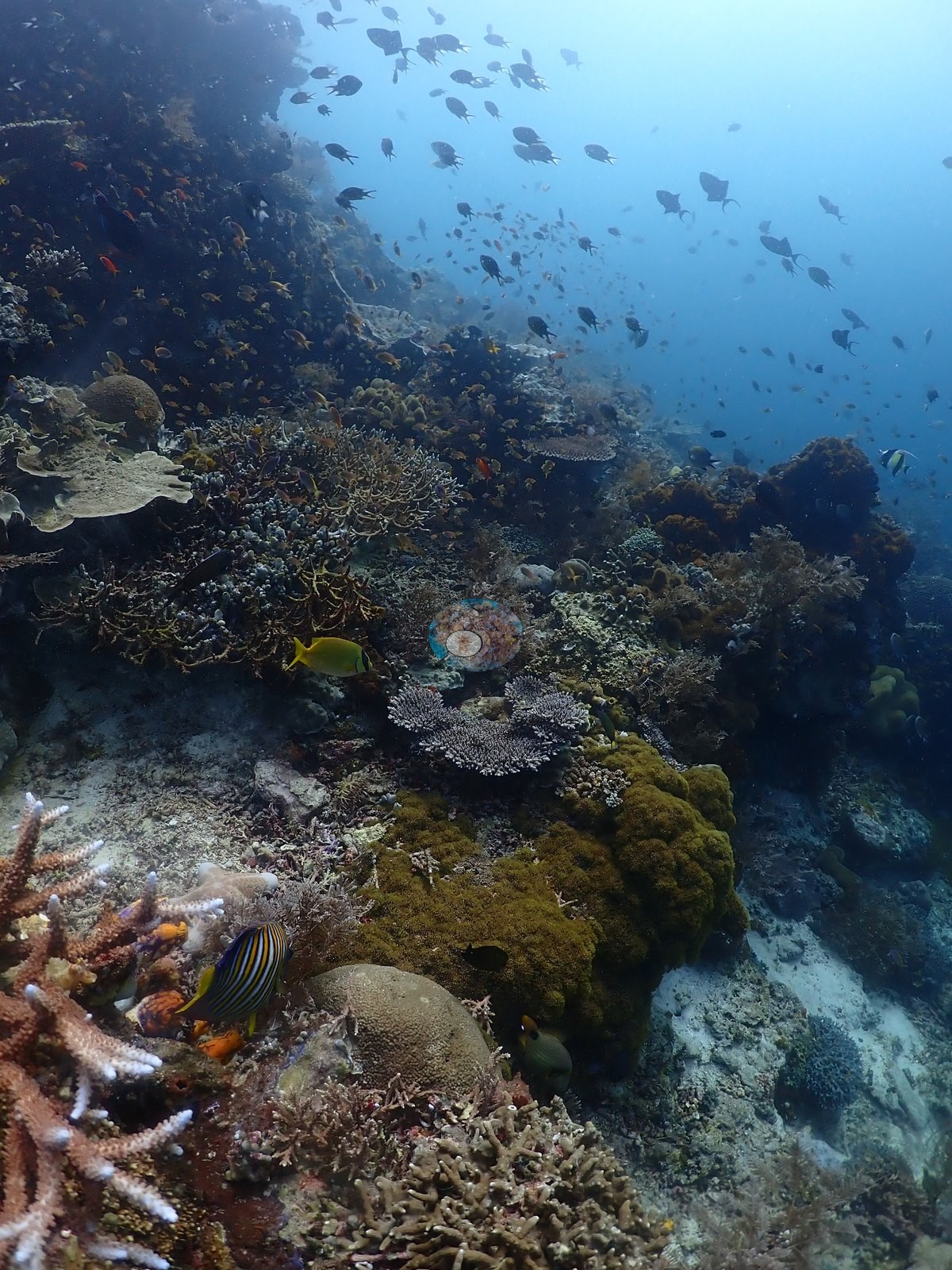
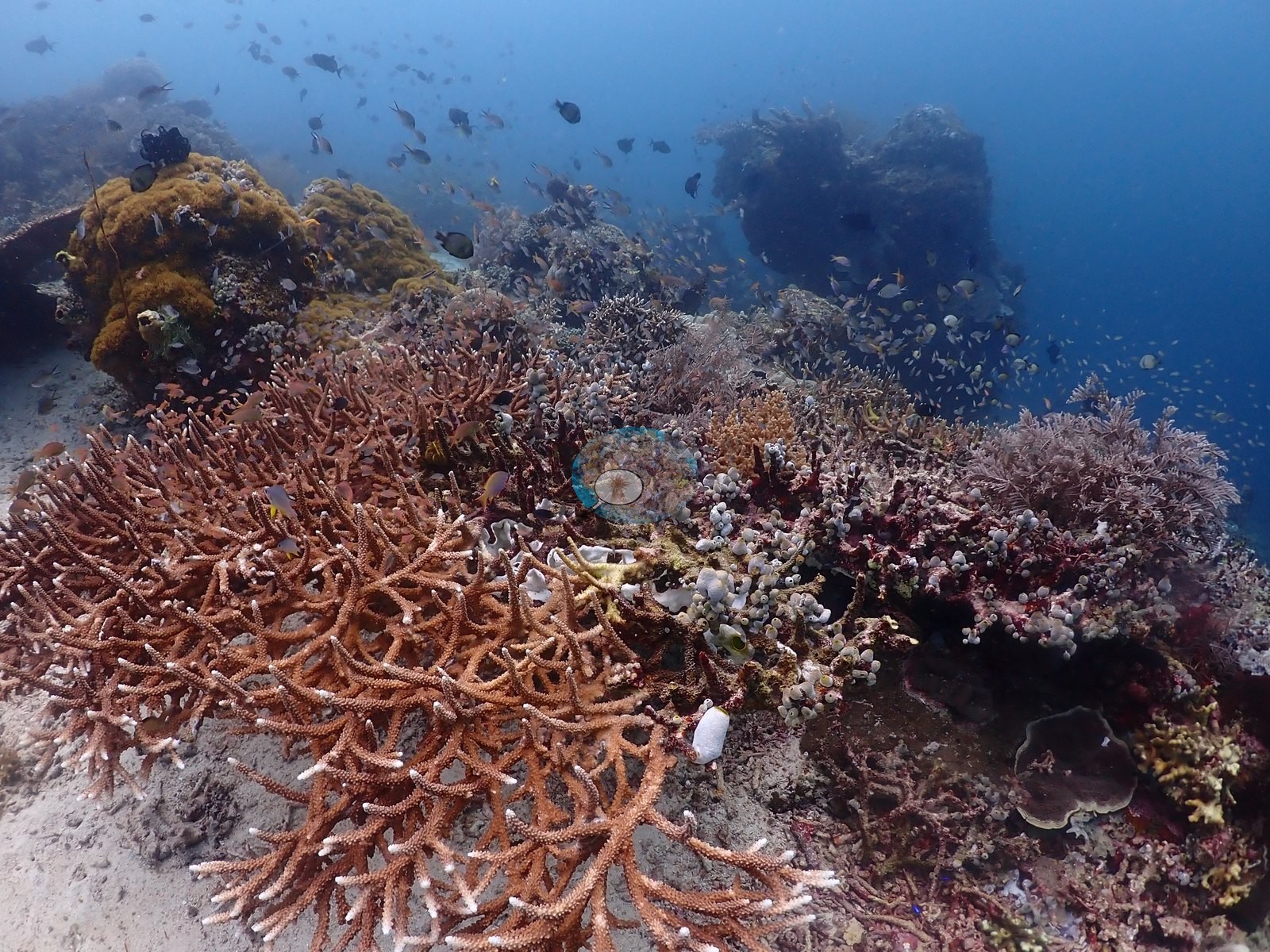
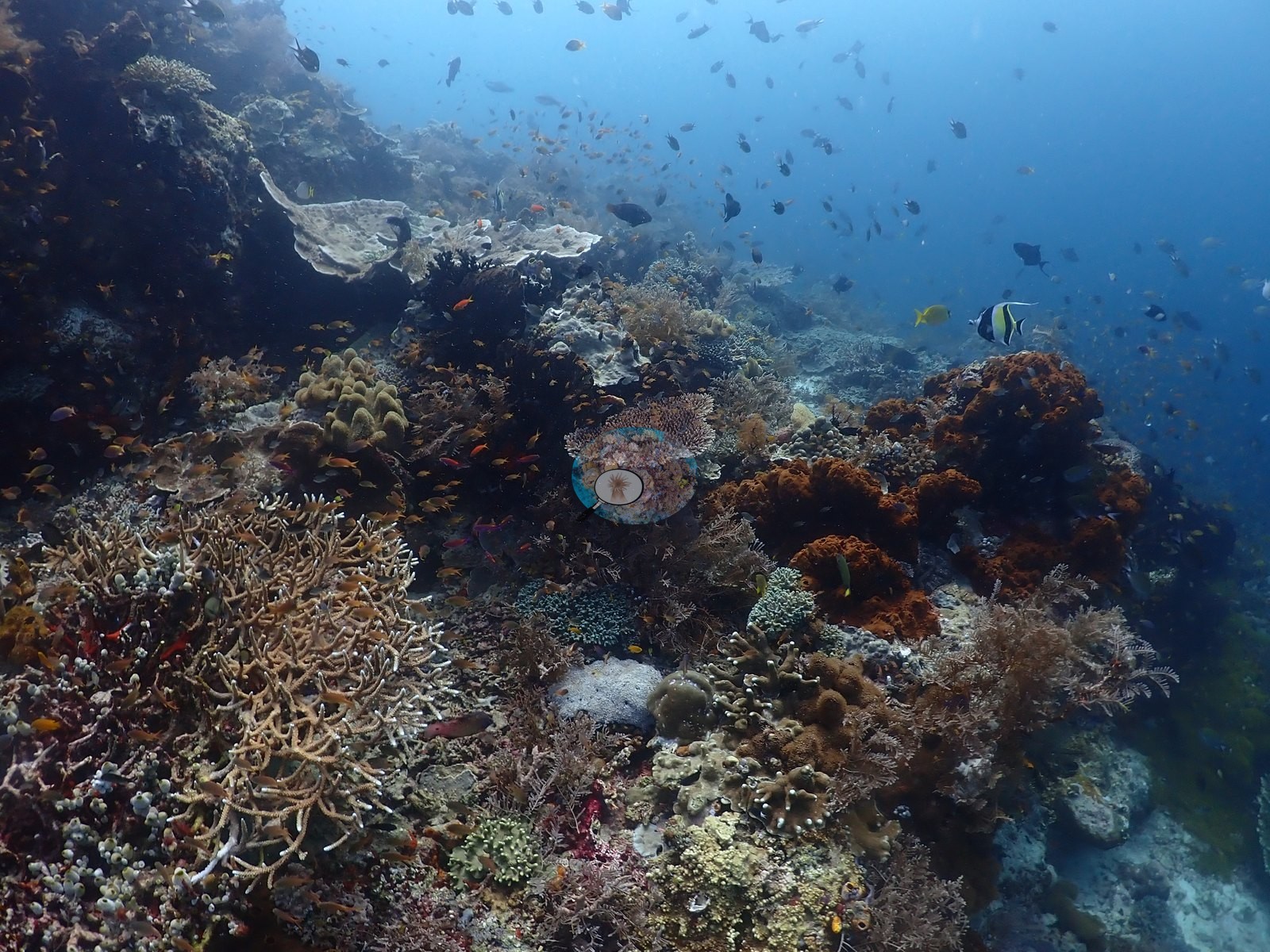
The mid-slope and crest carry the coral: bright yellow-green branching Acropora thickets standing over open sand, tabulate plates, digitate Porites cylindrica-type, Pocillopora, Platygyra, and Diploastrea-type massives, foliose Montipora and Turbinaria, and an unusually heavy soft-coral component — mauve, pink, and orange Dendronephthya bushes with tan Sarcophyton and Sinularia leathers — that fills the densest frames (e.g., Image 2, Image 4, Image 9, Image 33, Image 35, Image 3, Image 41, Image 44, Image 46).
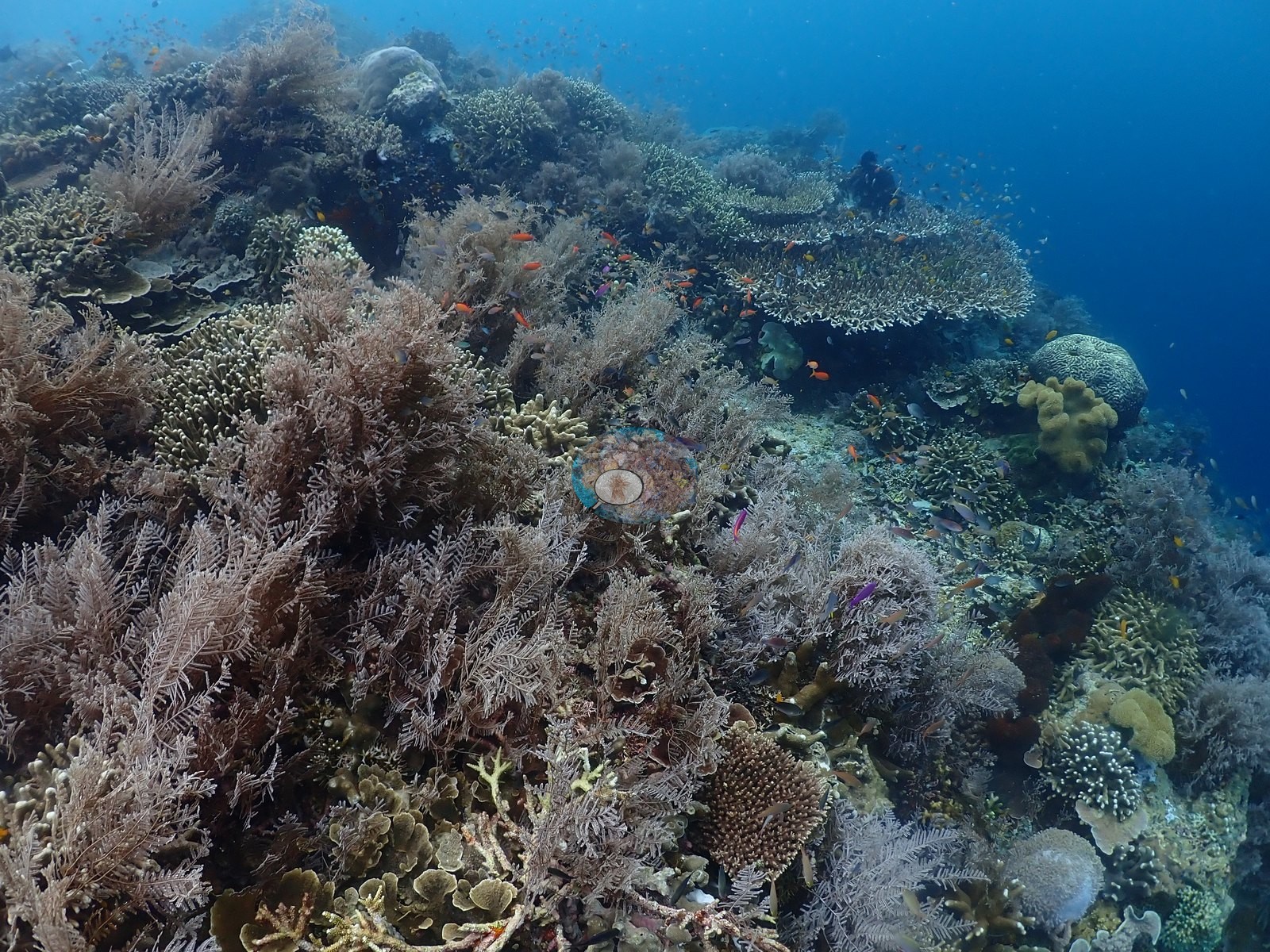
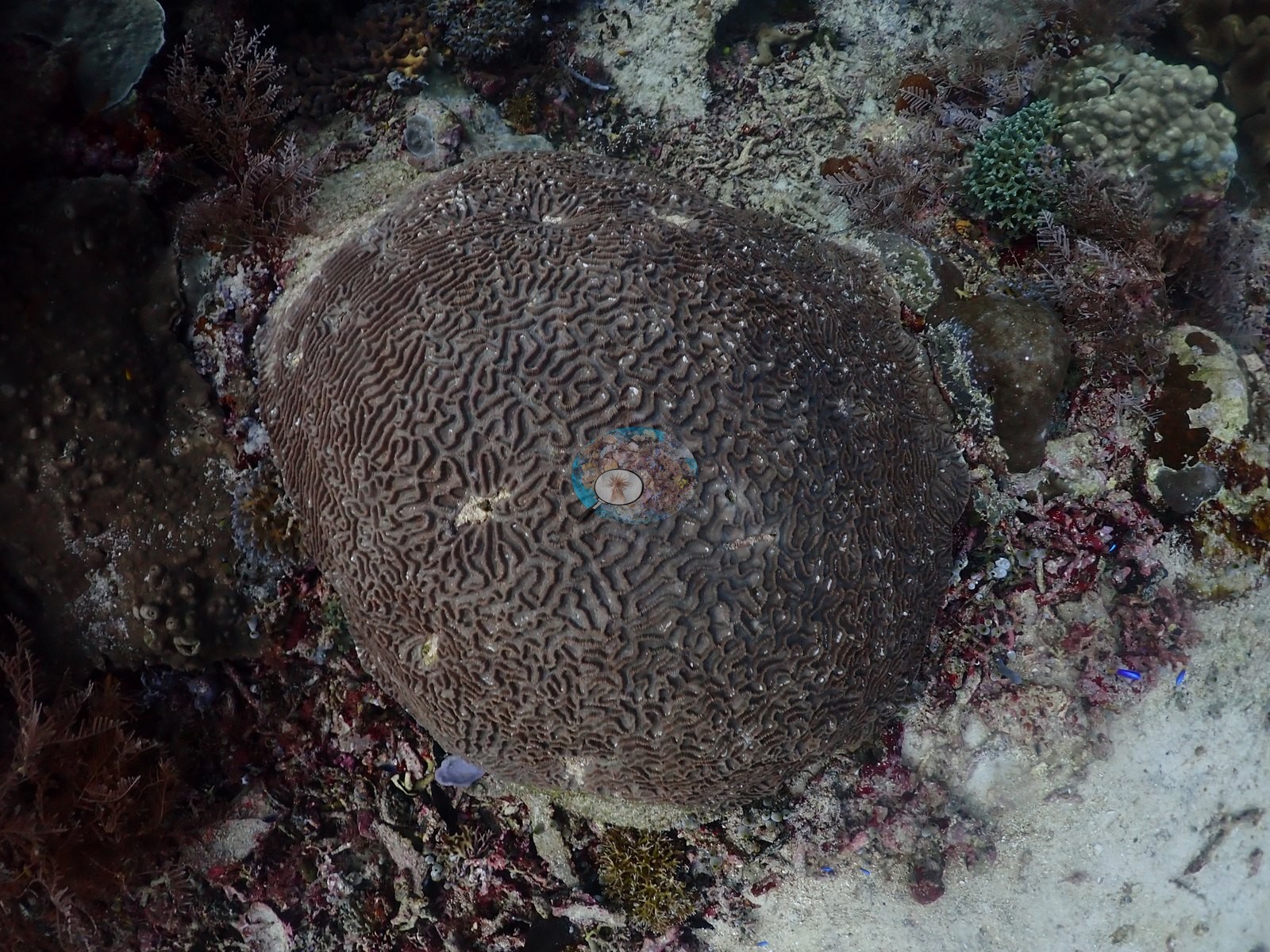
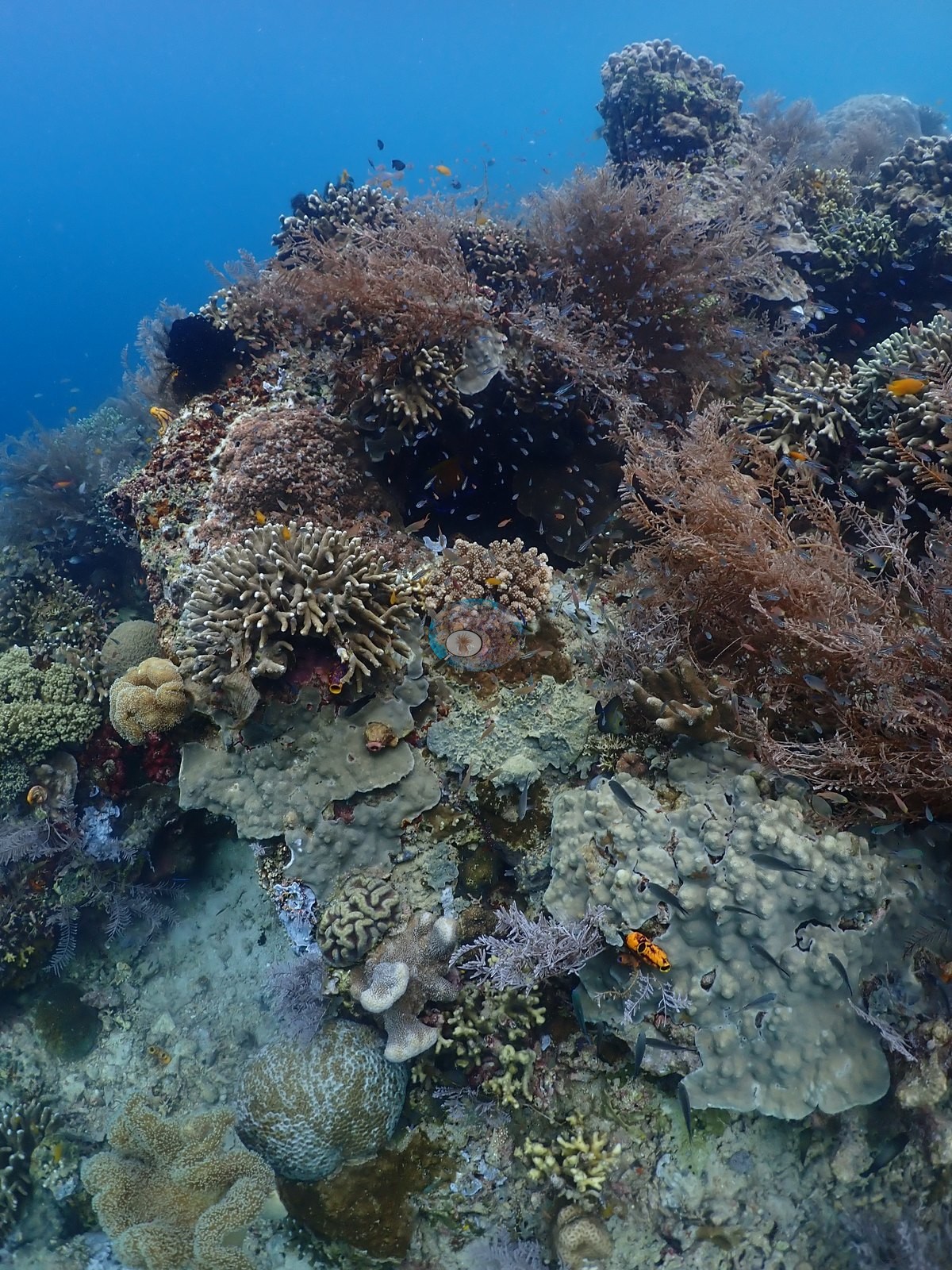
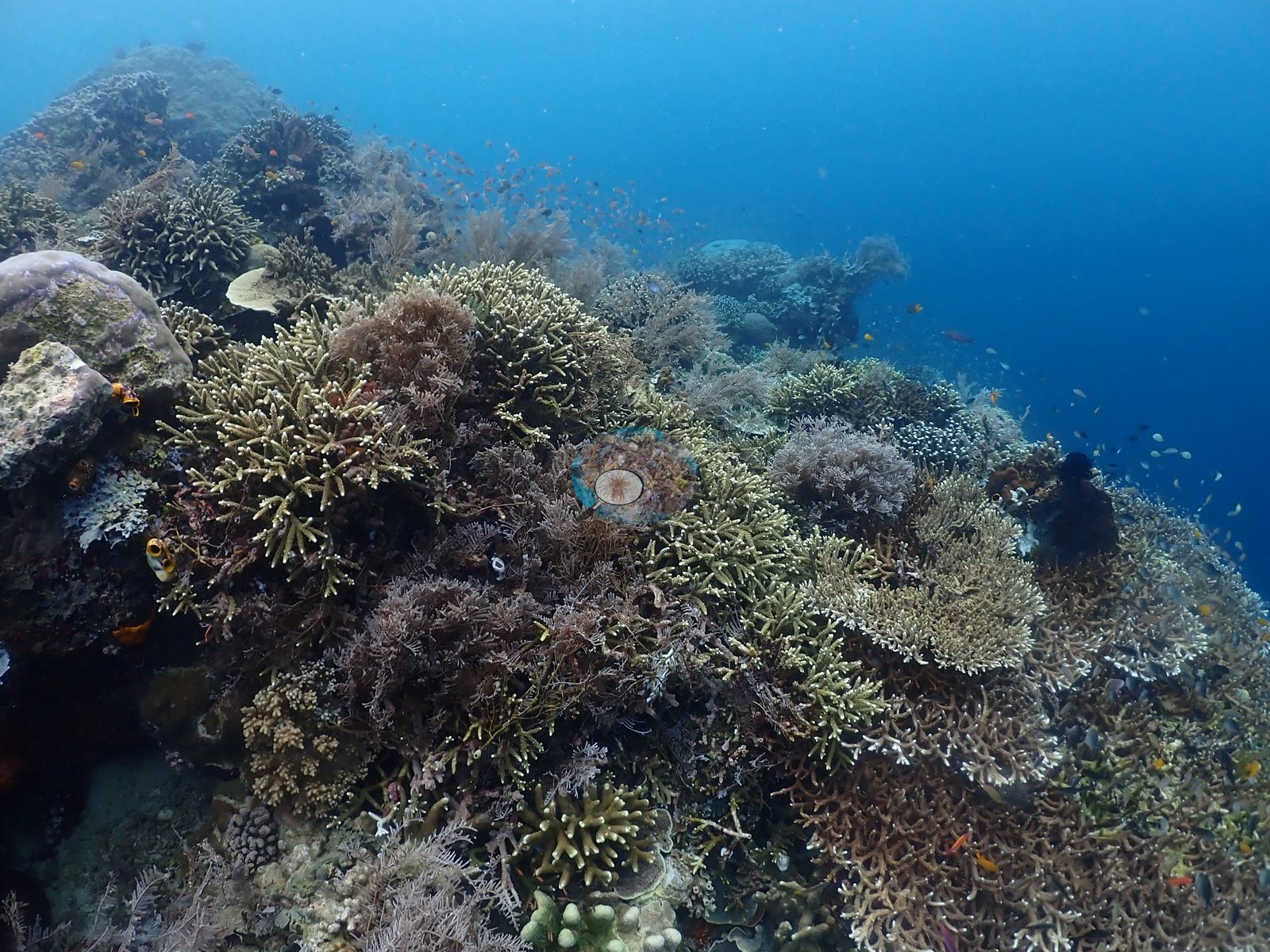
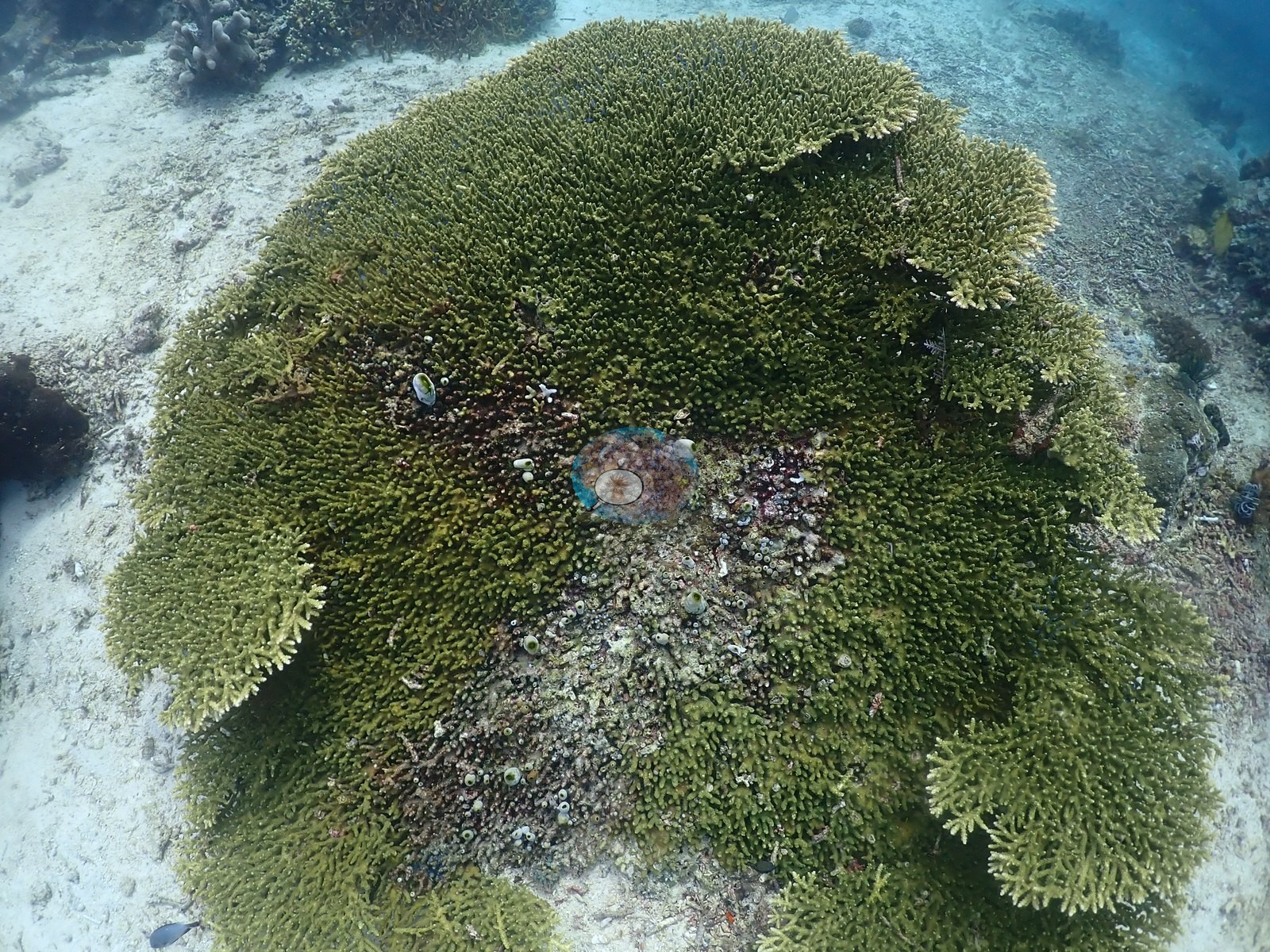
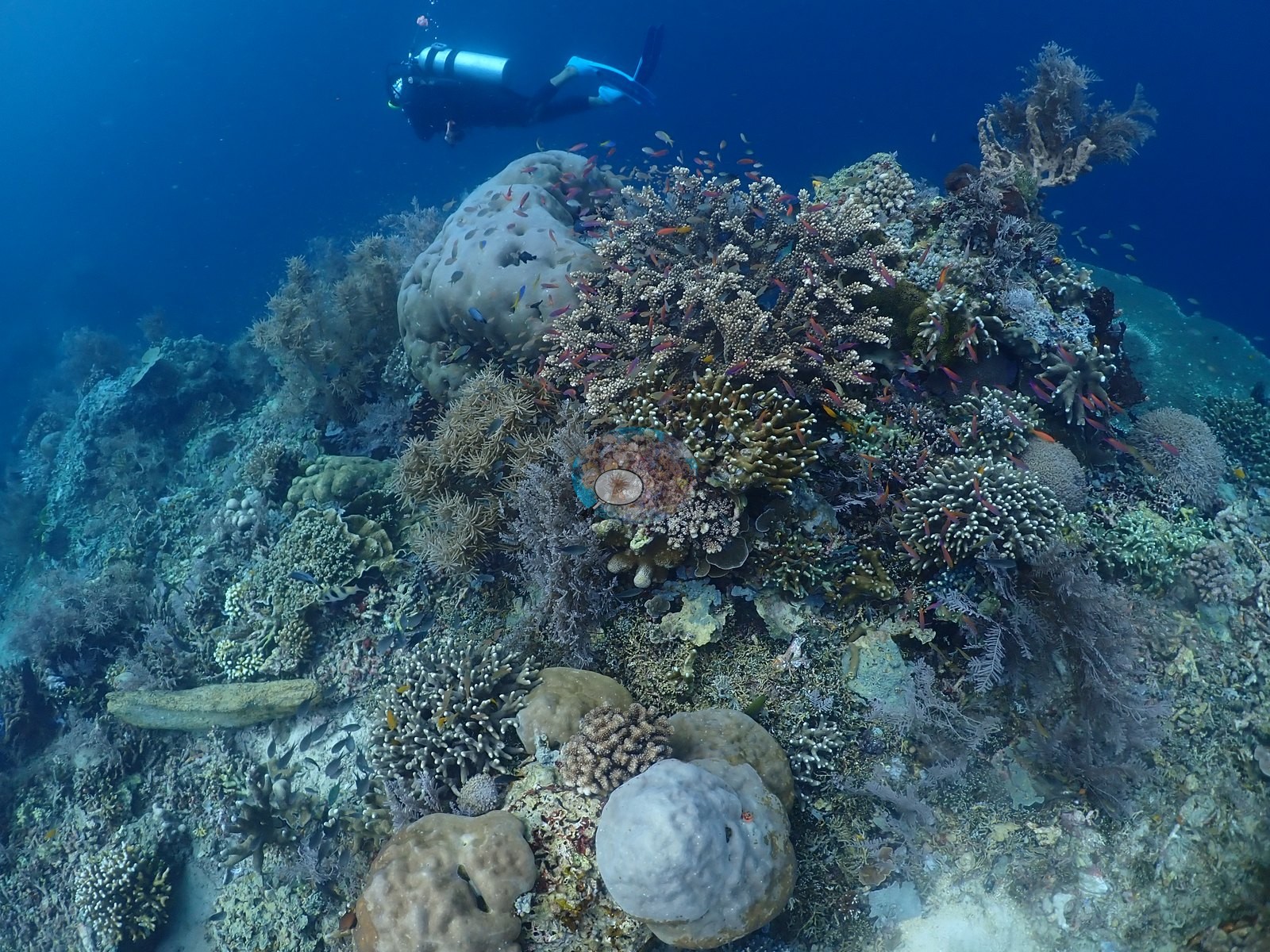
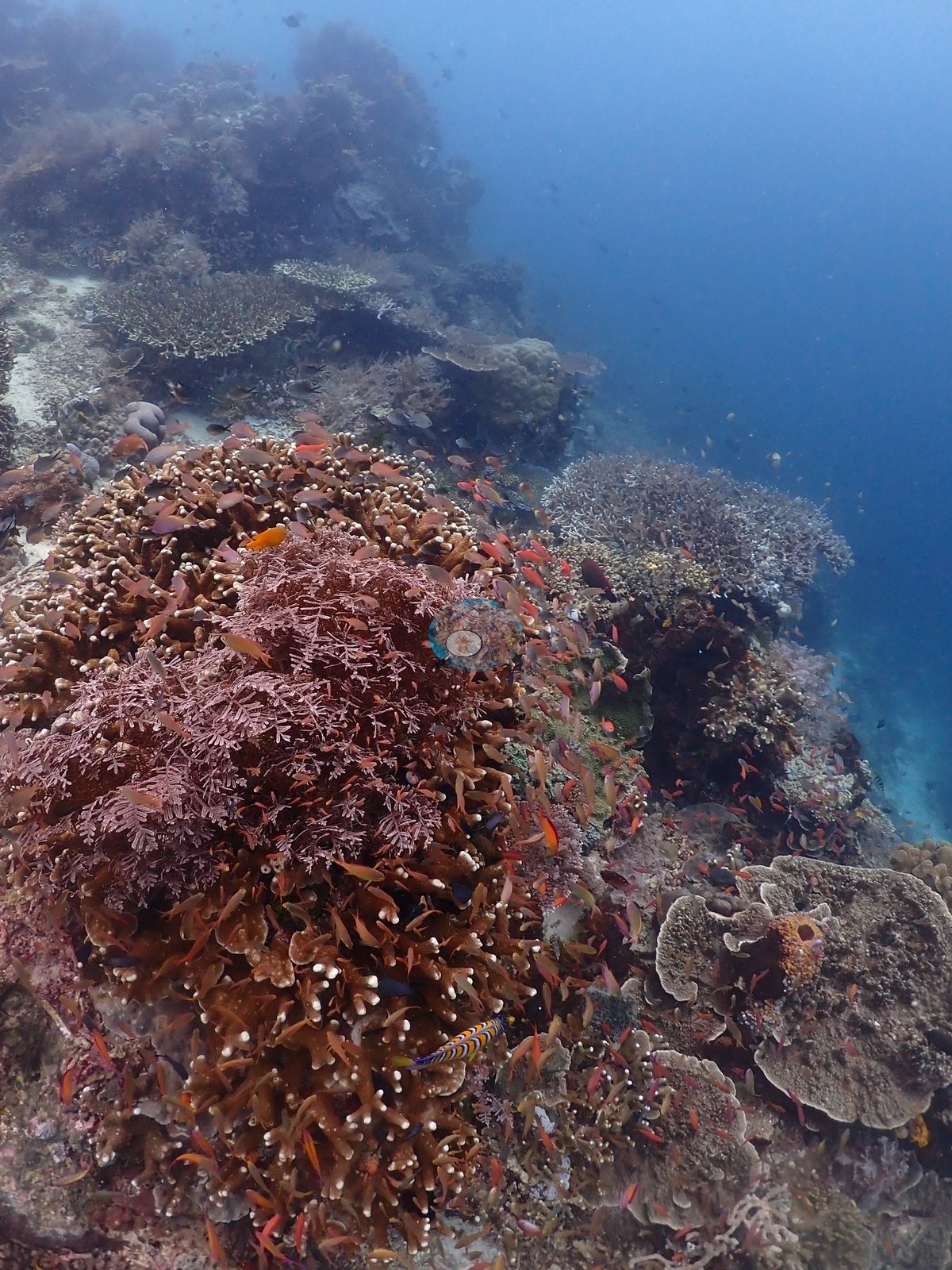
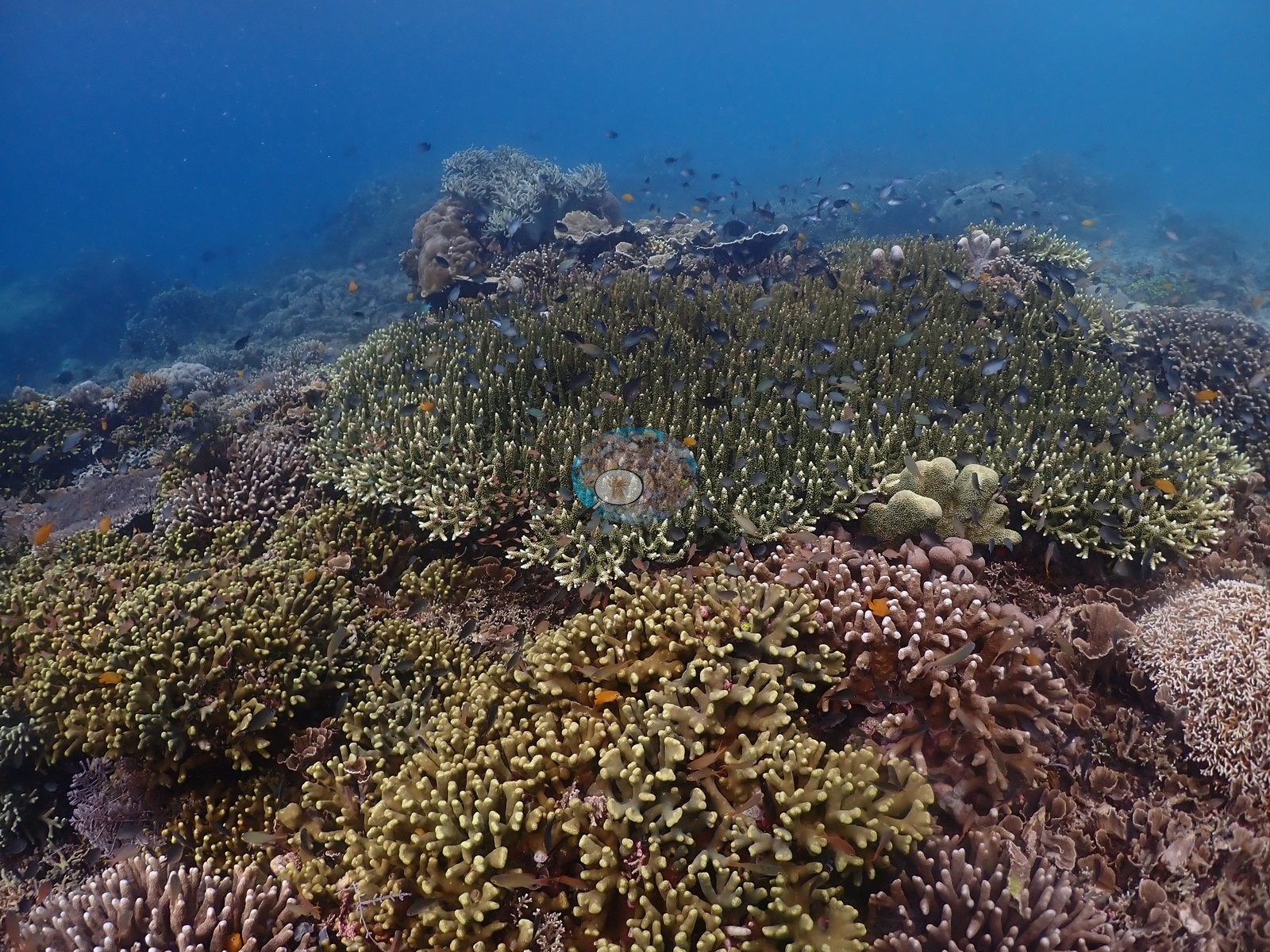
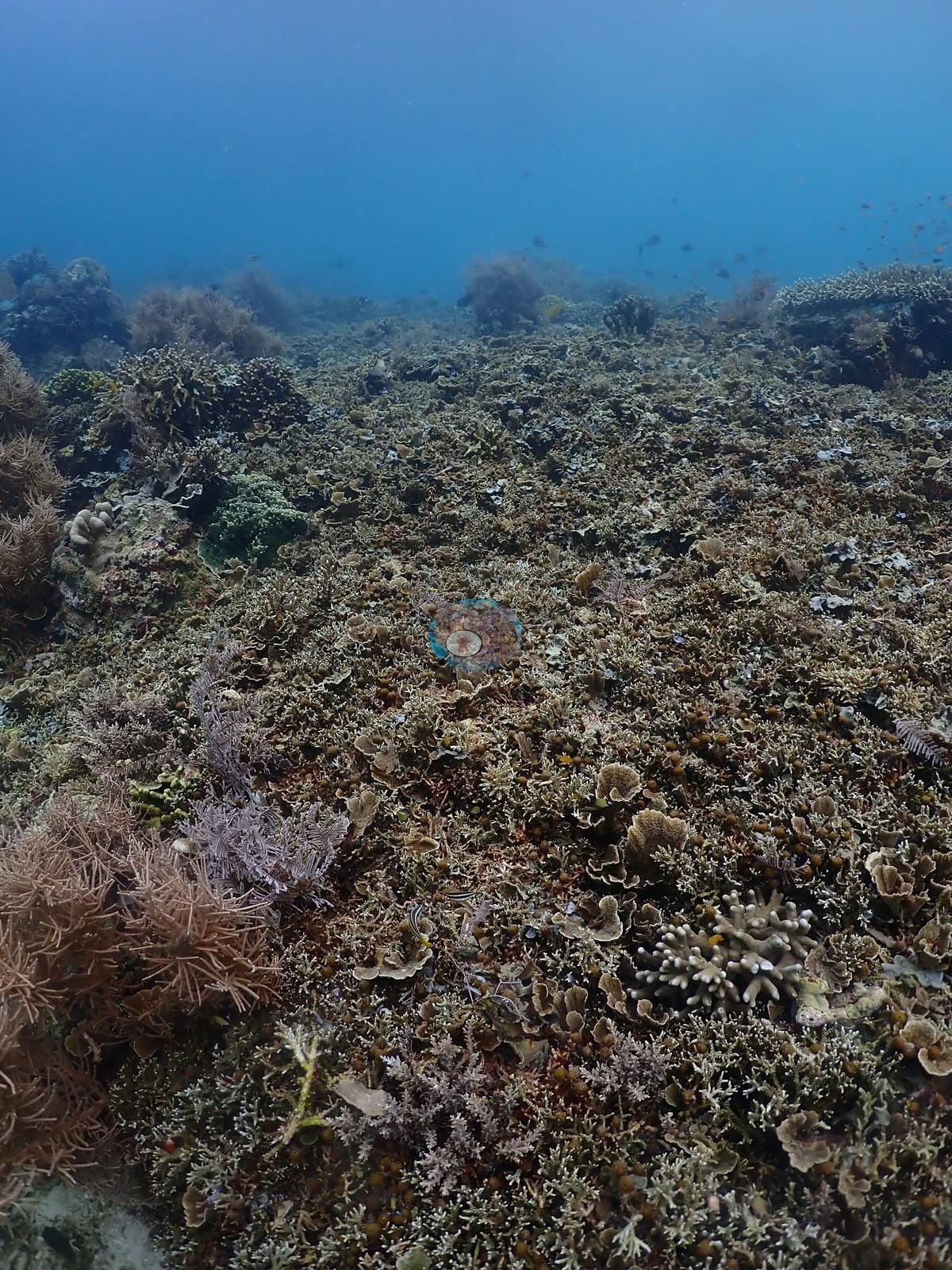
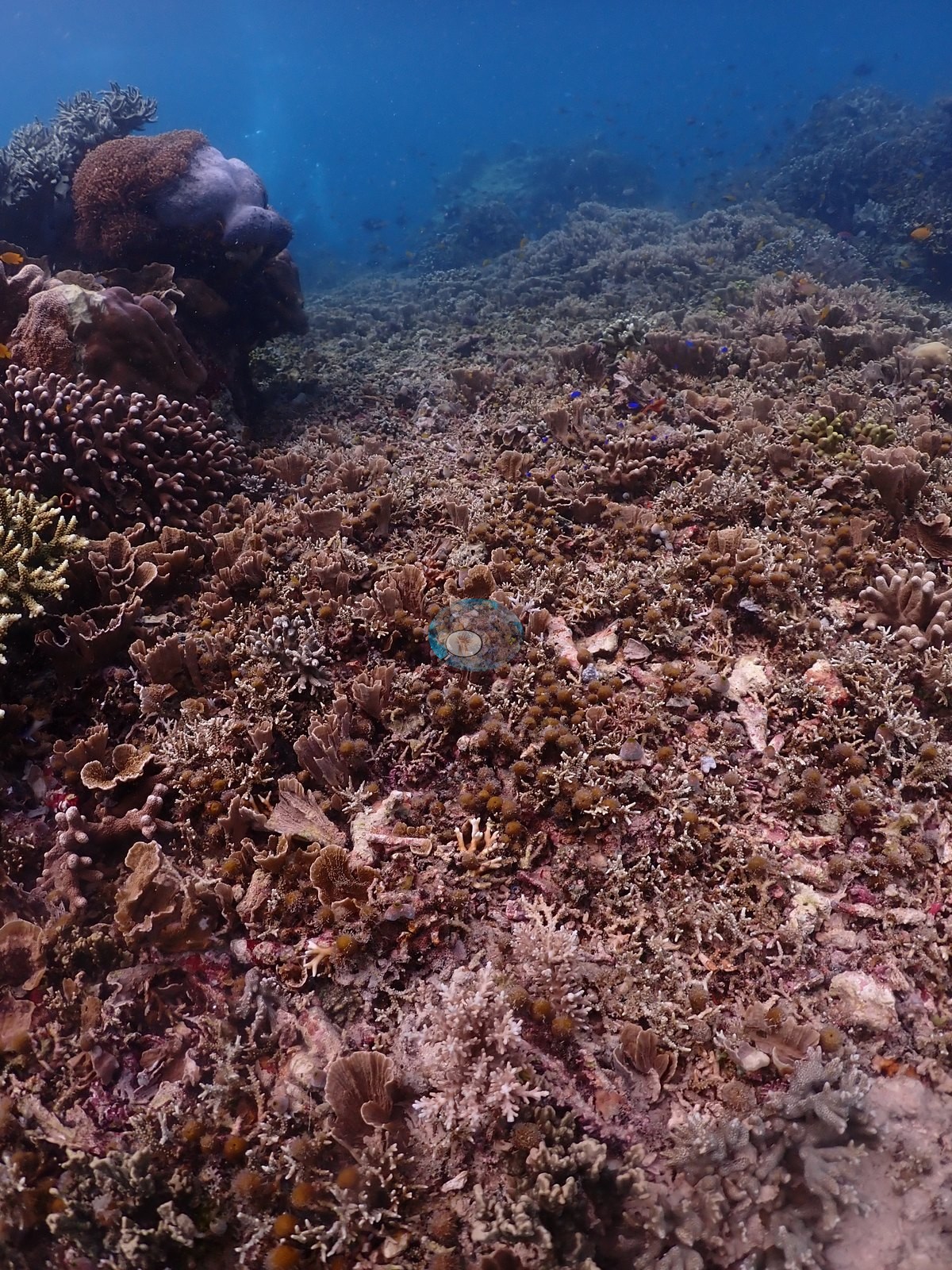
A conspicuous feature of the site is the extent of consolidated coral rubble: several frames show broad aprons of broken, well-settled branching-coral fragments with only sparse small colonies re-establishing across them, and one frame is almost entirely rubble (e.g., Image 5, Image 15, Image 40).
Coral cover
Coral cover: 30% — a blind Claude computer-vision point count of 136 of Anderson's unedited photographs (20 points per photo; water, fish, and obstructions excluded). Other computer-vision methods are listed in the method table.
Stressors
It is old, colonized damage rather than anything fresh.
Fish and other fauna
Anderson's field note is all about what was in the water column rather than on the bottom: "biggest school of devil rays I've seen, bumphead parrotfish, blacktips." Fish were dense — anthias, chromis, damselfishes, surgeonfish, and moorish idols over the coral, with schooling fish off the headland in the murkier deep frames — but the devil rays, bumphead parrotfish, and blacktips from the dive log are not resolved in the frames examined (e.g., Image 36, Image 43, Image 47, Image 52).
Comparisons with other data
No prior survey data from this site. If you would like to share yours, please email us.
Dive record
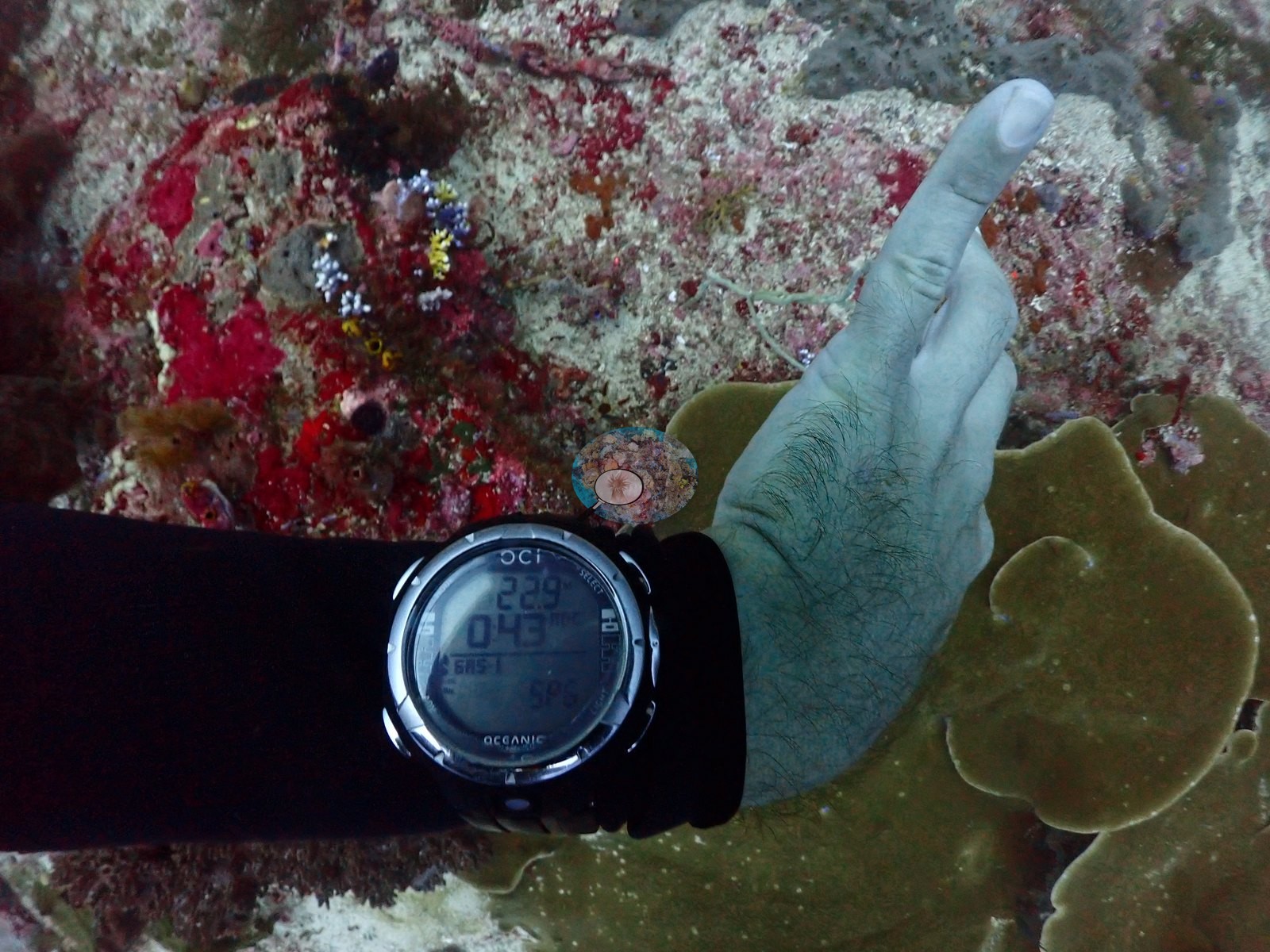
A headland dive on 2026-08-12 worked to 24.2 m in the coolest water of the crossing, 24–25°C.
CV model comparison
More info
DINOv3 and CoralSCOP were run on the same photos and are listed for comparison. Coralscapes v2 and v1 were also run but are not shown: Anderson does not consider Coralscapes reliable for these photos. No diver transect exists for this trip, so agreement between the rows is not accuracy, and as of September 2026 no computer-vision method estimates coral cover accurately on new images; treat every row as indicative.| Method | Hard-coral cover (%) |
|---|---|
| In-house DINOv3 | 30.1 |
| CoralSCOP unedited | 35.3 |
| Claude | 29.6 |
Data & links
All images from Coral Reef Diagnostics. Data are from Coral Reef Diagnostics.
© Coral Reef Diagnostics.