
Indonesia - Halmahera: Tanjung Dehebra
Part of the regional summaries: Indonesia - Halmahera and Indonesia - Maluku
More info
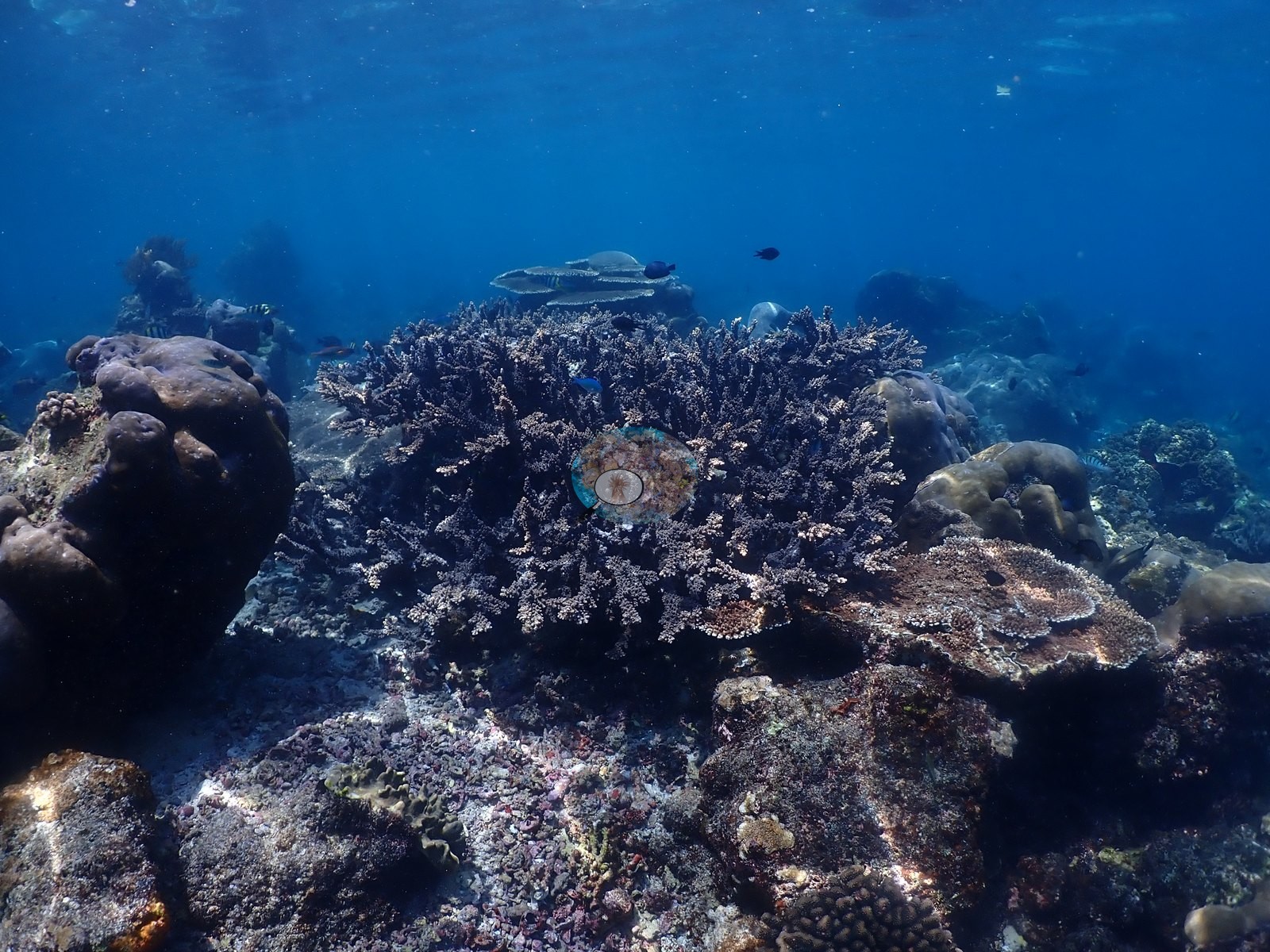
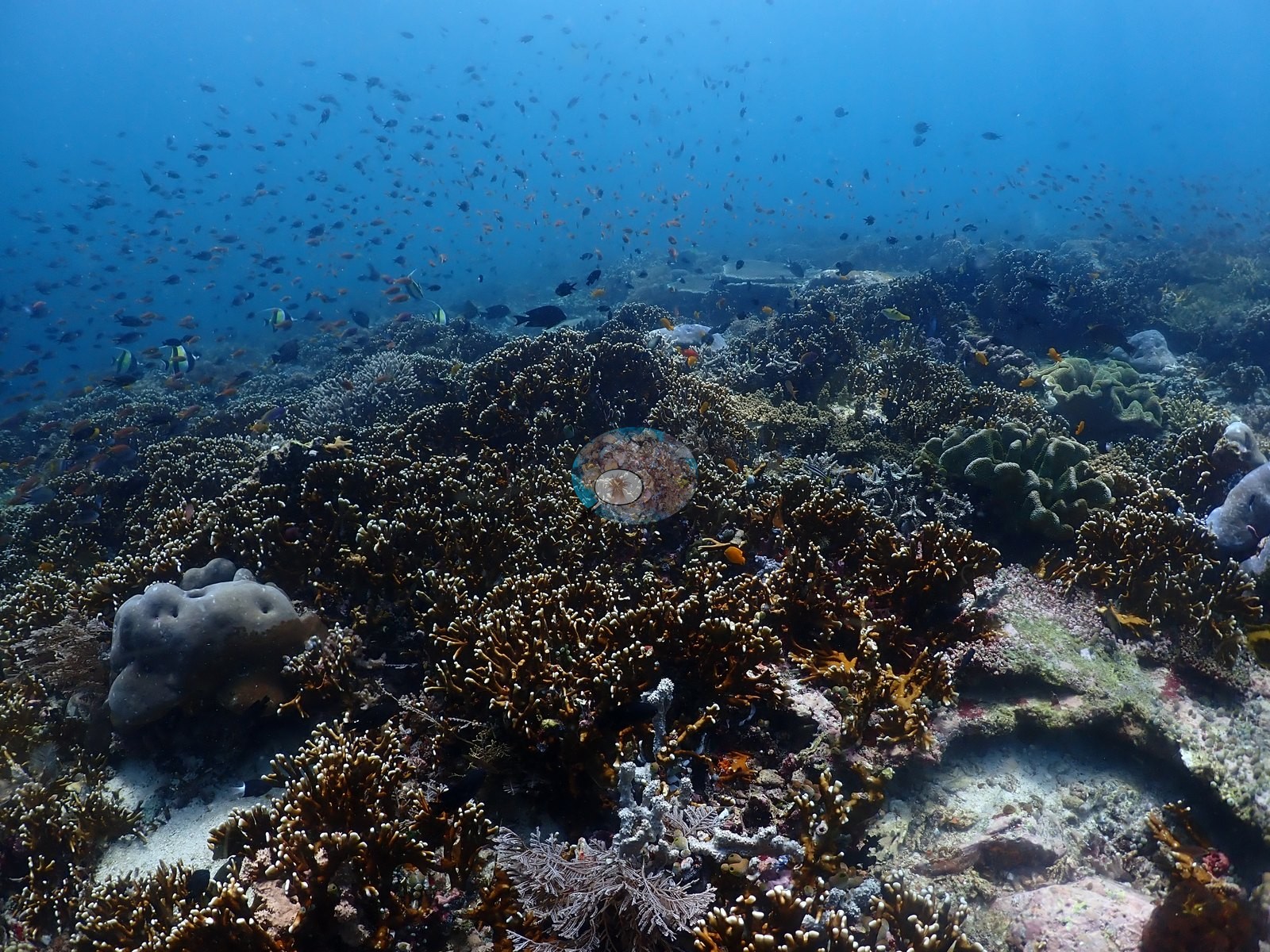
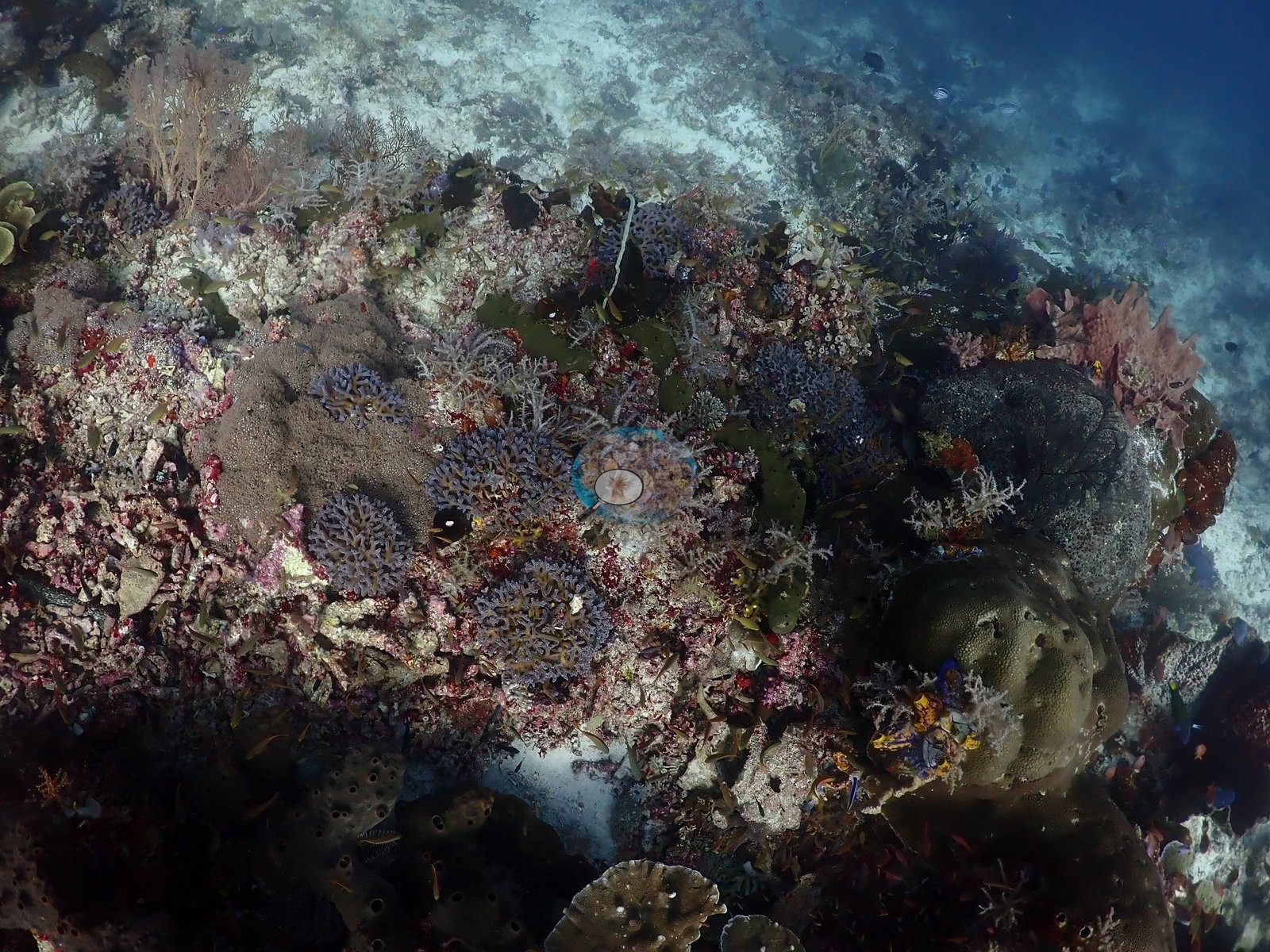
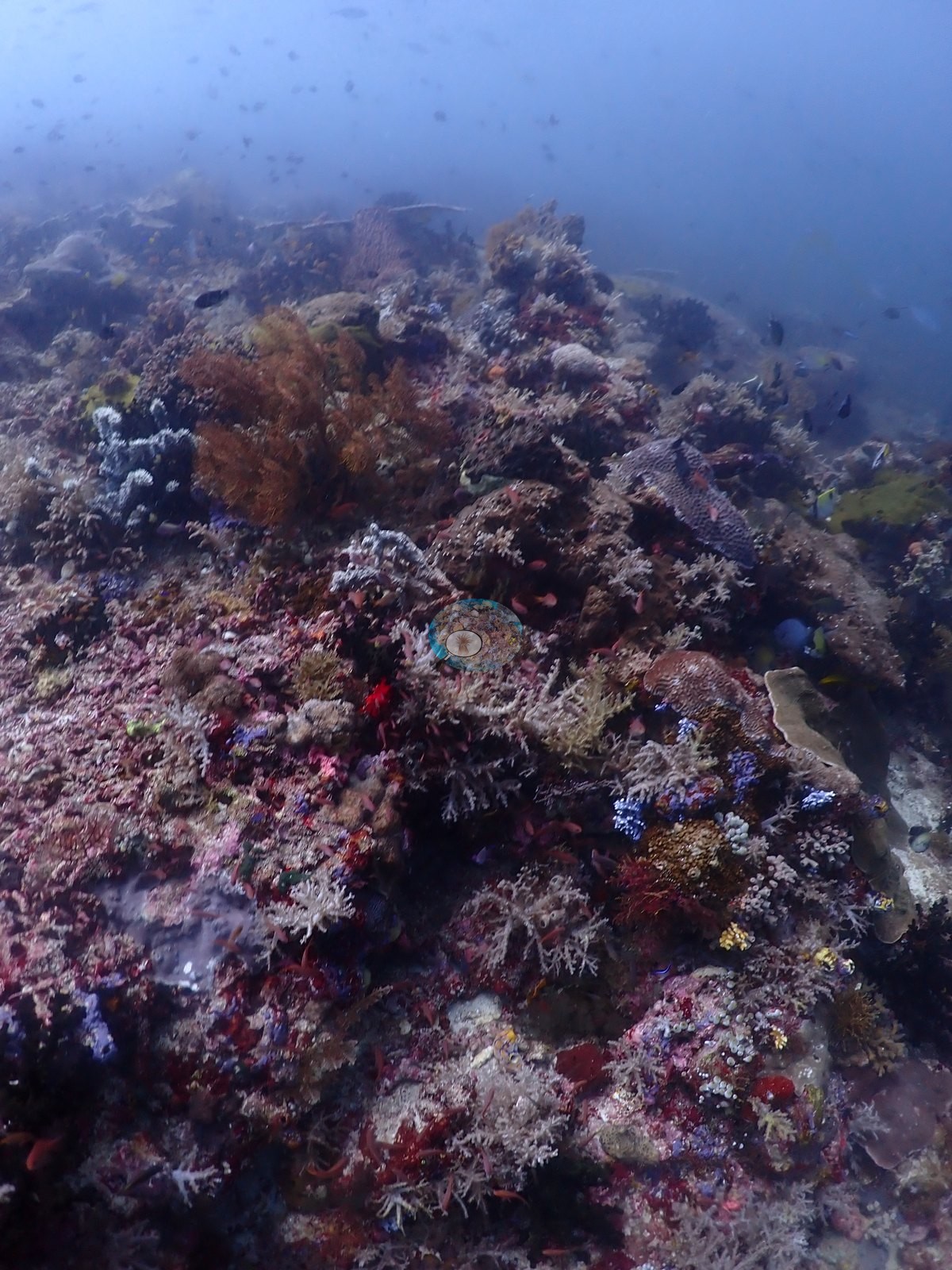
North Maluku (NOAA CRW virtual station)Tanjung Dehebra was, by Anderson's own account, the worst-visibility dive of the trip - heavy plankton haze and strong current - yet the reef itself reads as consistently developed, built on large tabulate and foliose plate corals and Porites boulder clusters. One small isolated white branching colony is flagged as possible bleaching or partial mortality, not a wider pattern. A blind Claude computer-vision point count puts coral cover around 25%.
Menurut penuturan Anderson sendiri, Tanjung Dehebra adalah penyelaman dengan jarak pandang terburuk sepanjang perjalanan — kabut plankton yang tebal dan arus yang kuat — namun terumbunya sendiri terbaca berkembang secara konsisten, terbangun di atas karang lembaran tabulat dan foliaseus yang besar serta gugusan bongkahan Porites. Satu koloni bercabang putih kecil yang terpisah dicatat sebagai kemungkinan pemutihan atau kematian sebagian, bukan pola yang lebih luas. Penghitungan titik buta visi komputer Claude memperkirakan tutupan karang sekitar 25%.
Terjemahan ringkasan ini oleh AI; versi bahasa Inggris yang berlaku.
35 of these 52 photographs are shown beside the text that discusses them under "Site description" below.
Site description
Setting
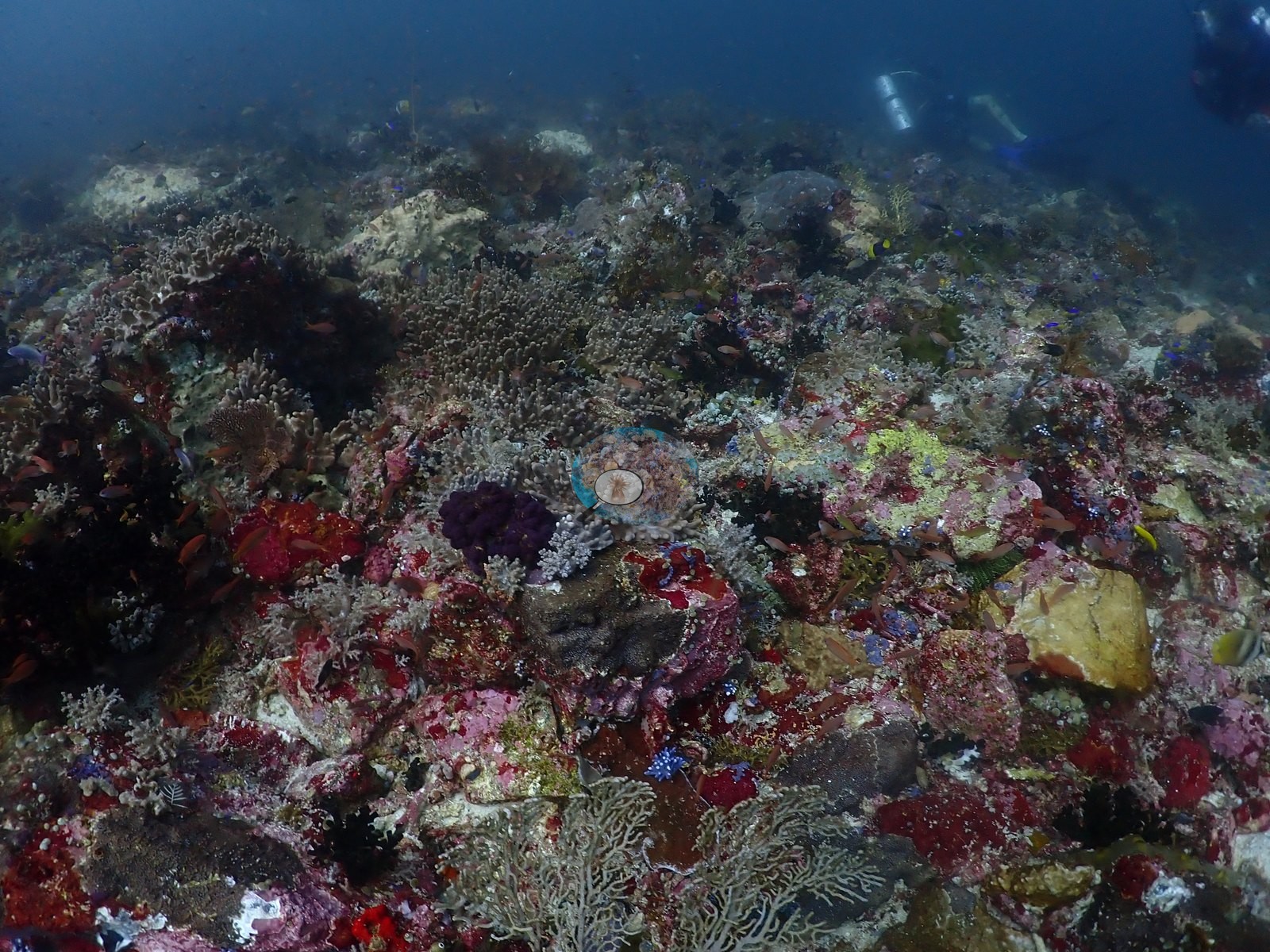
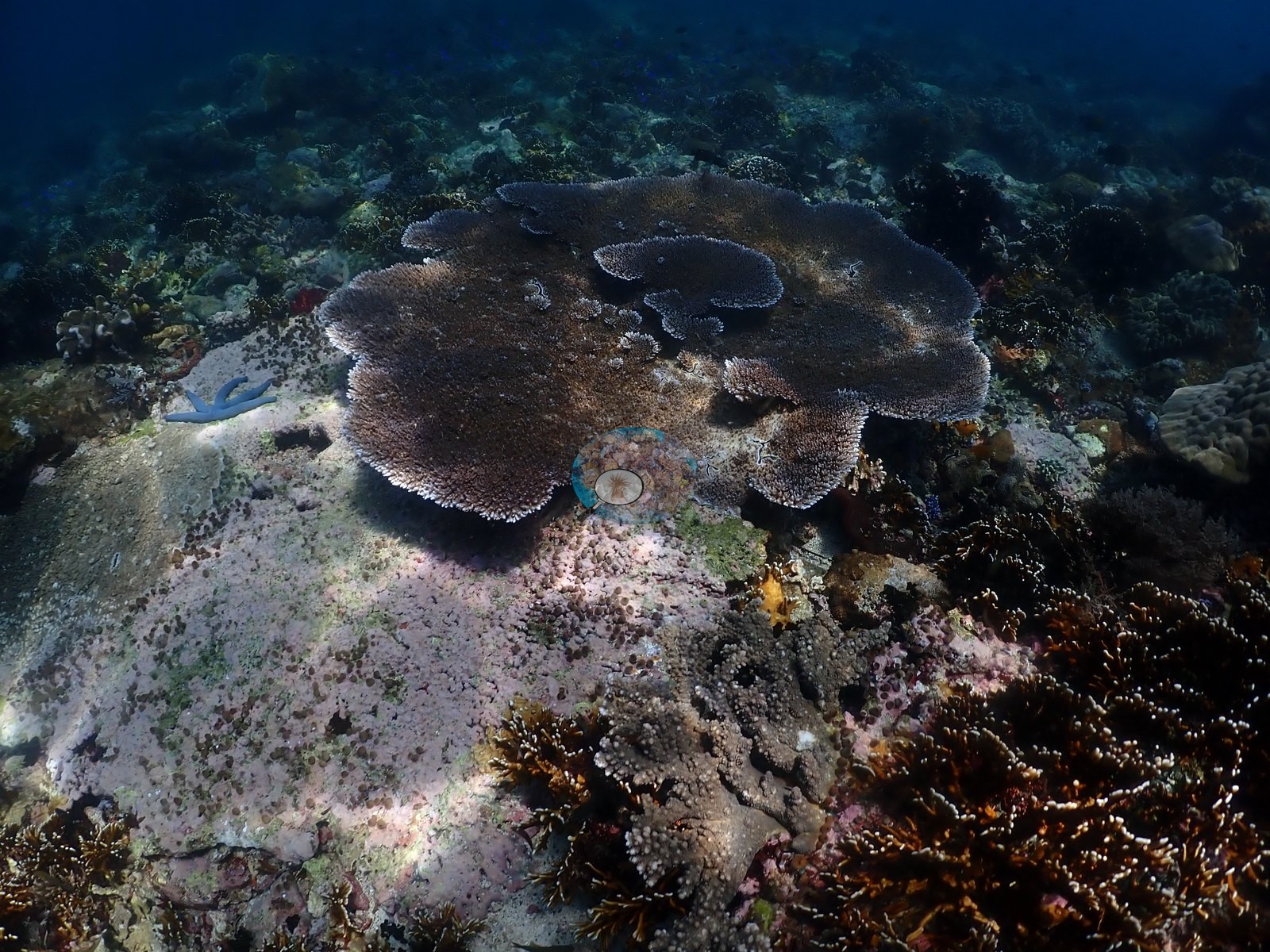
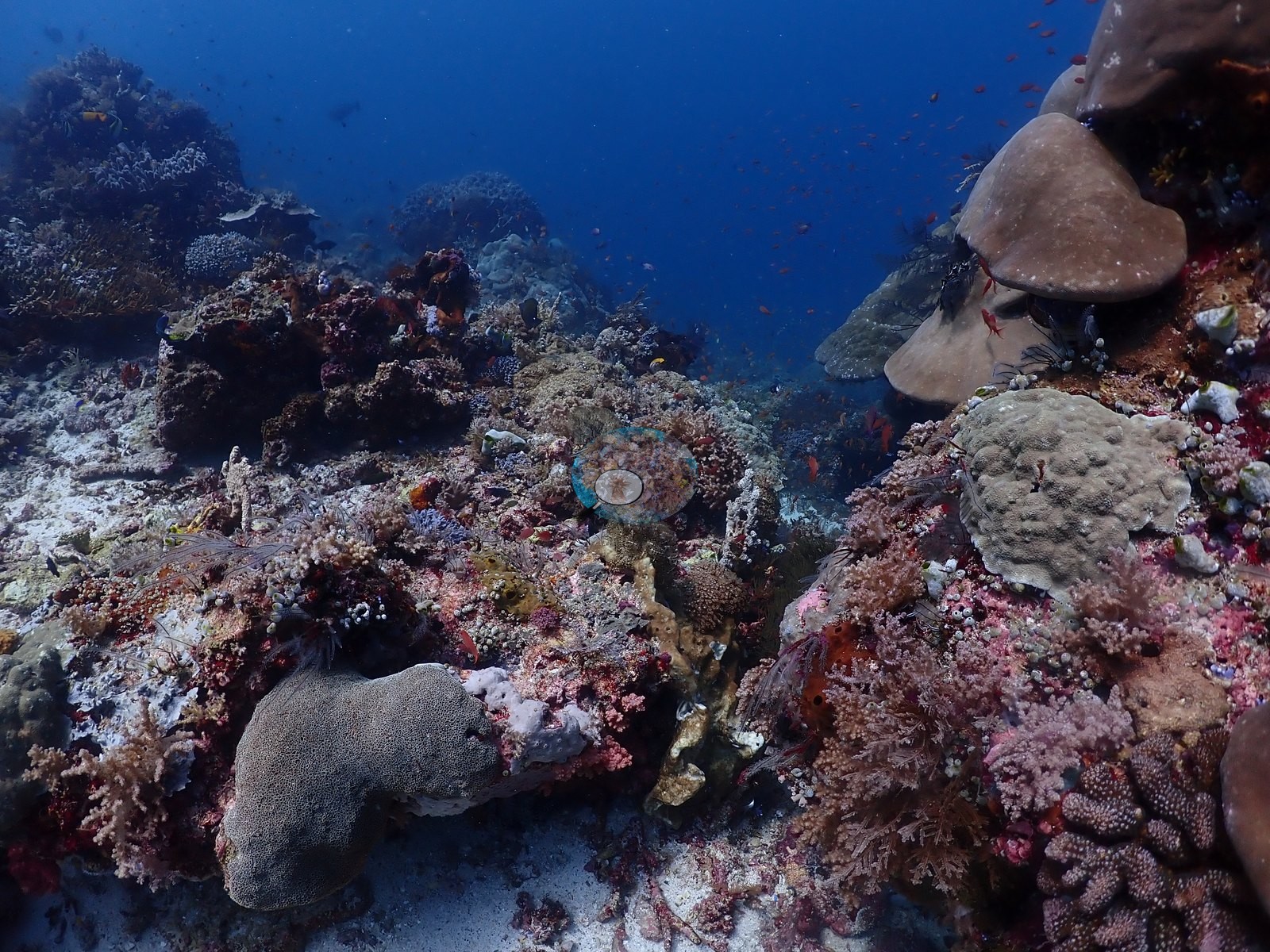
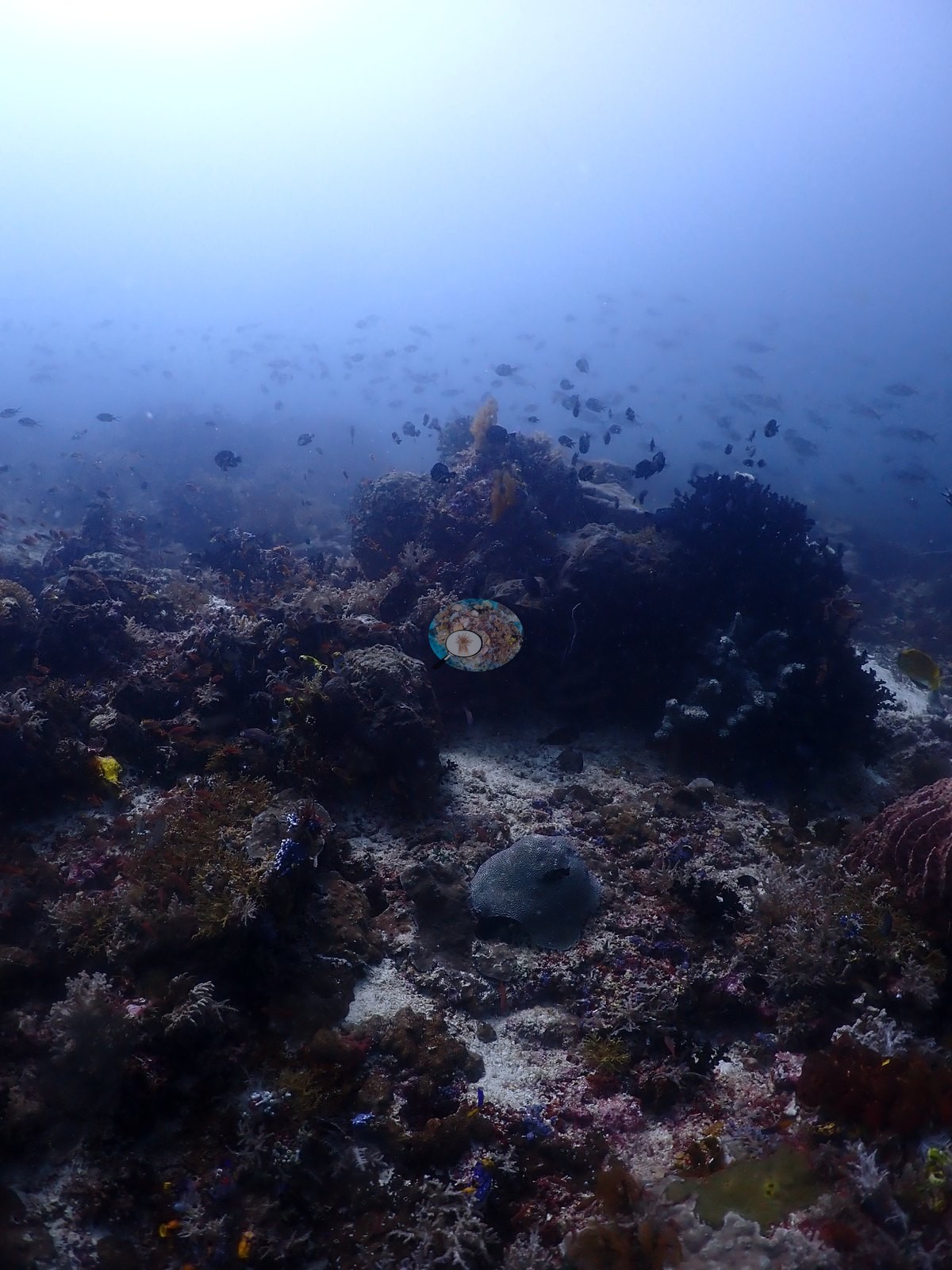
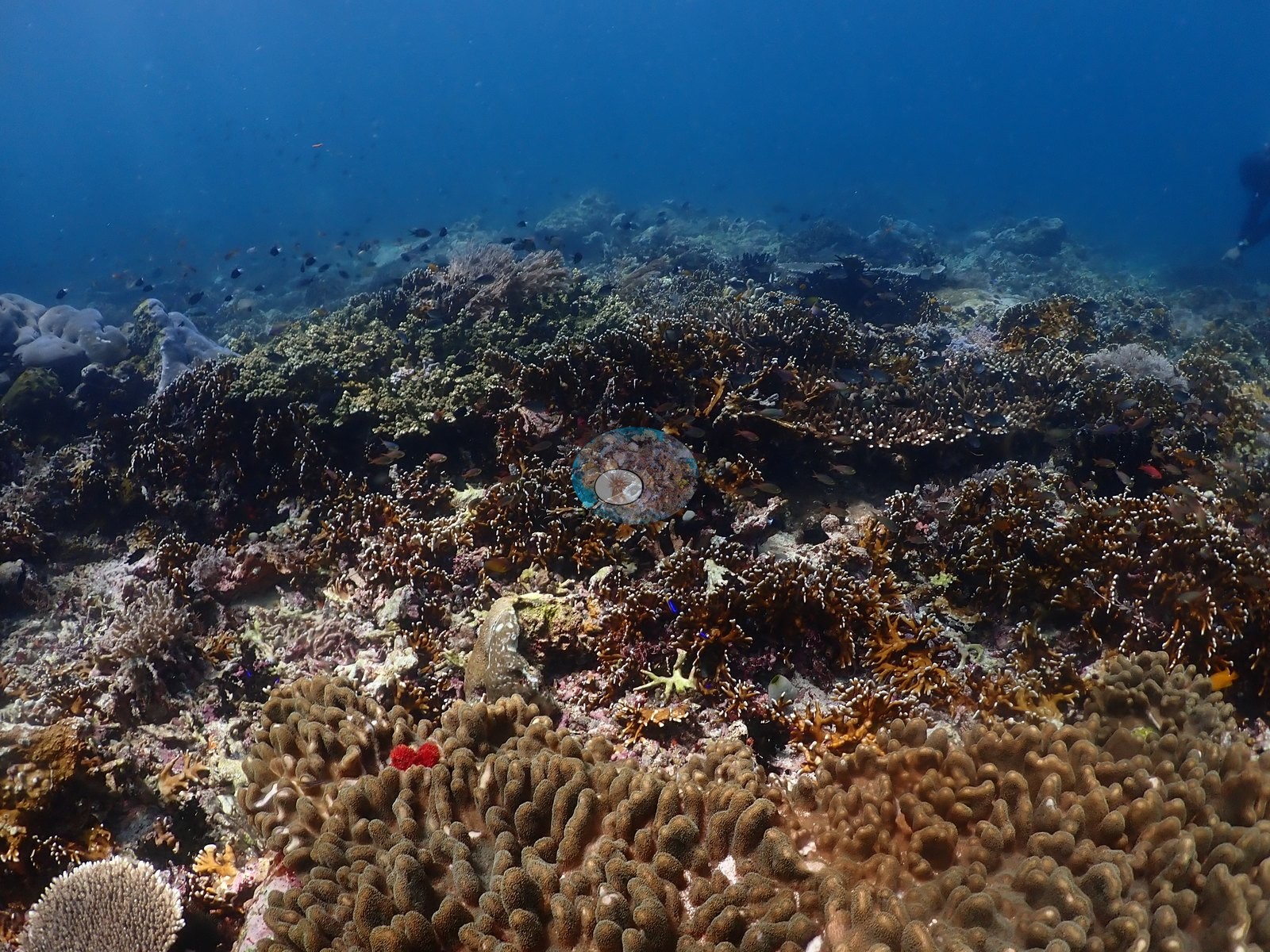
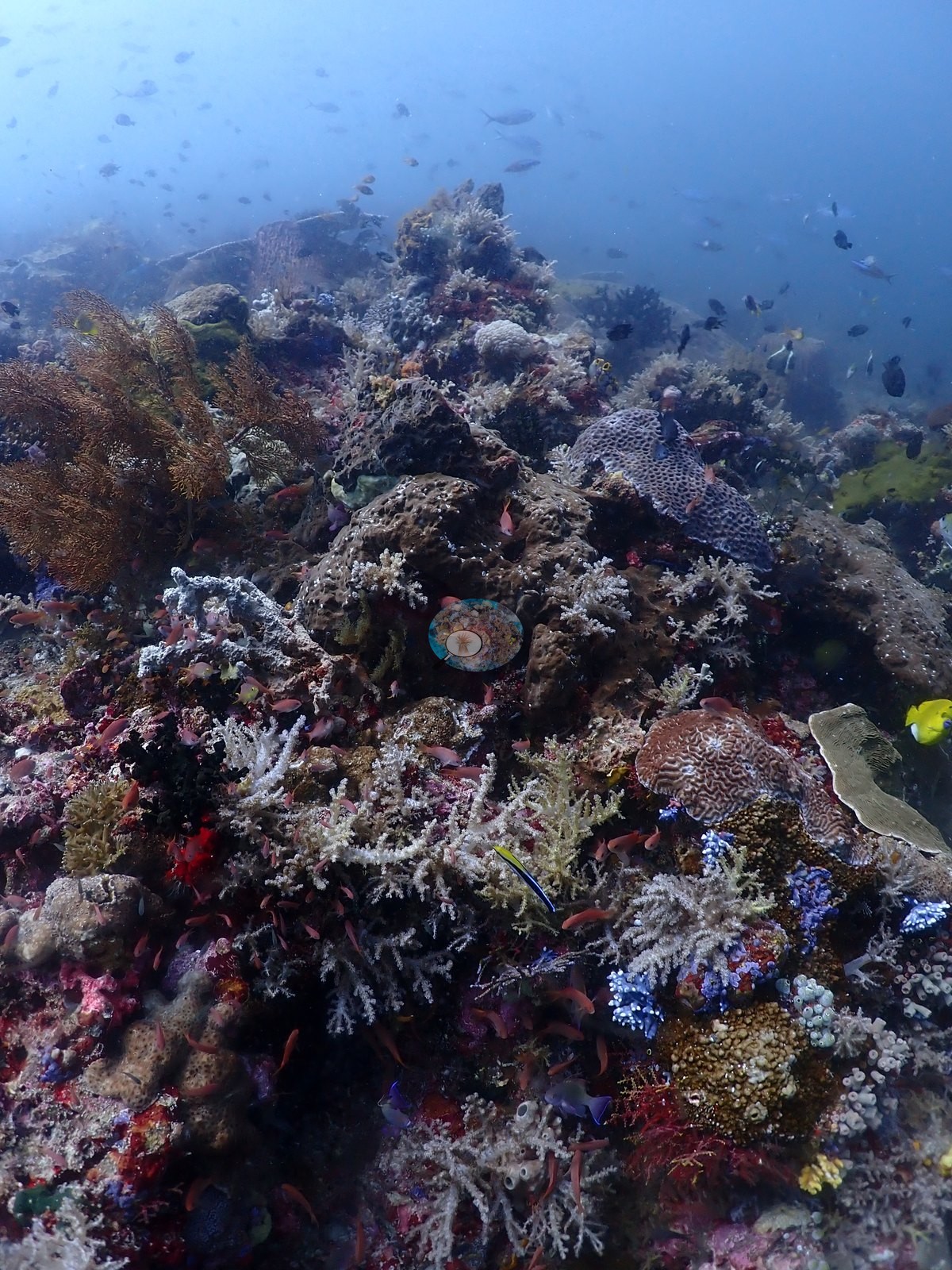
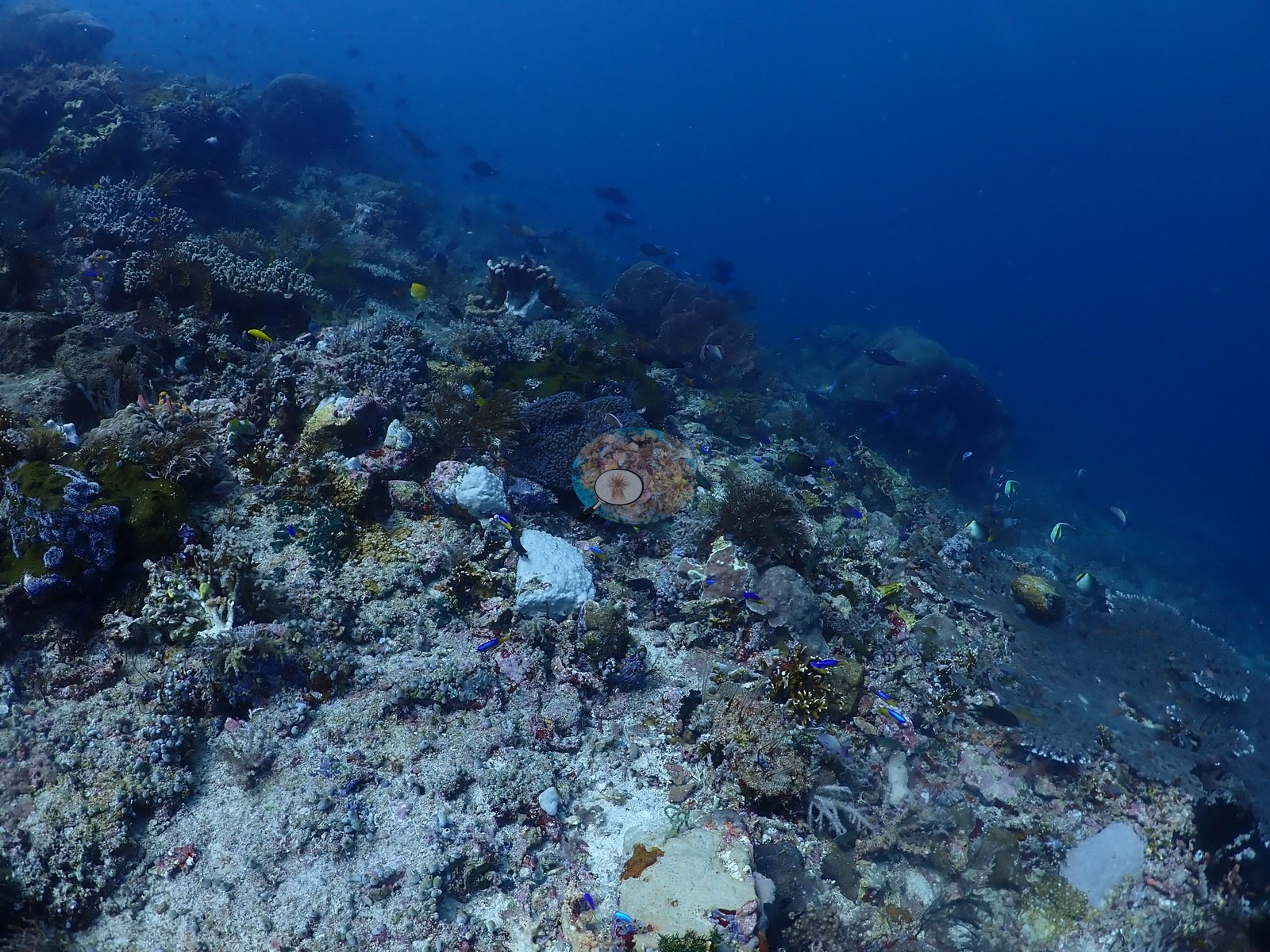
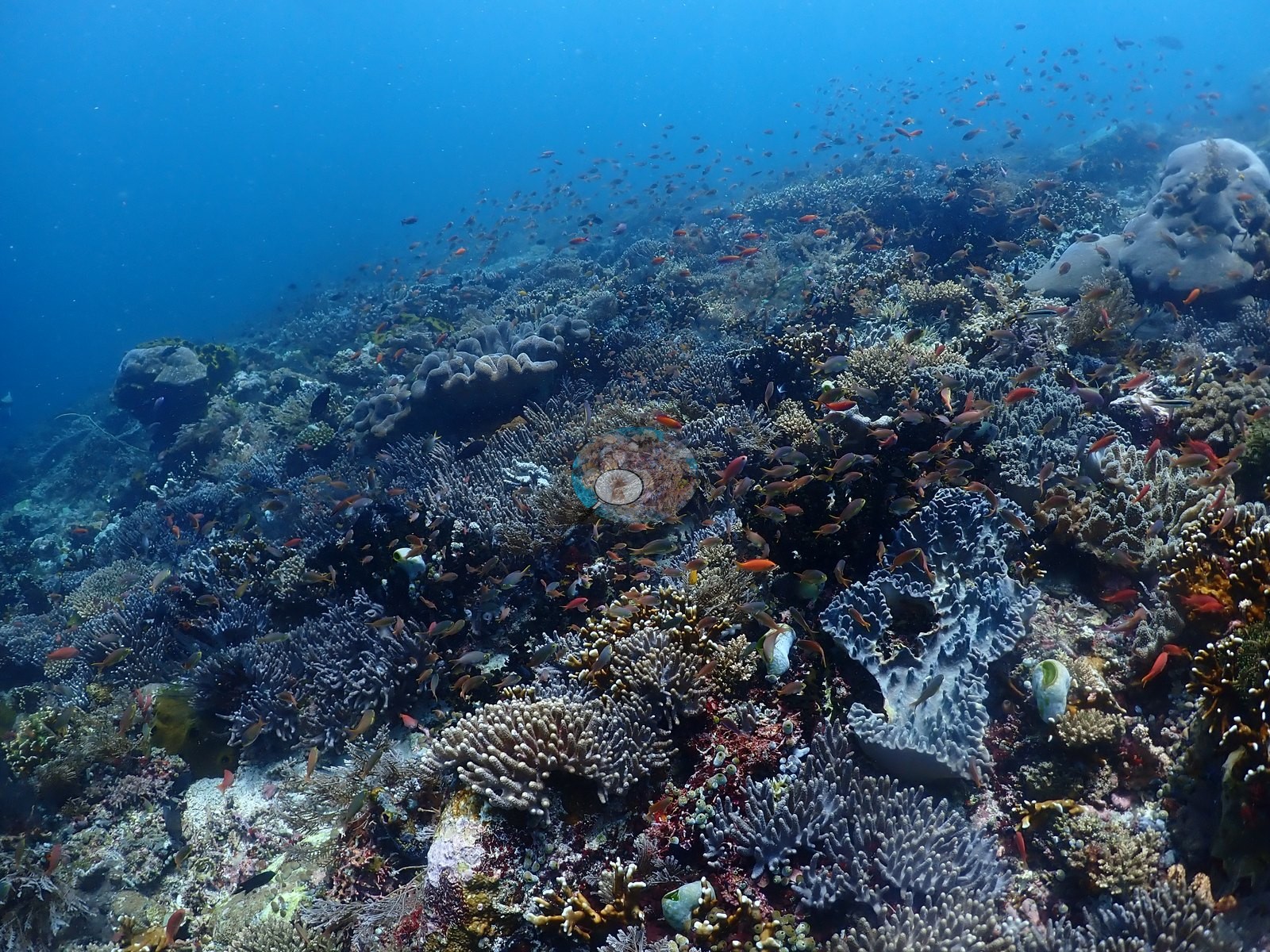
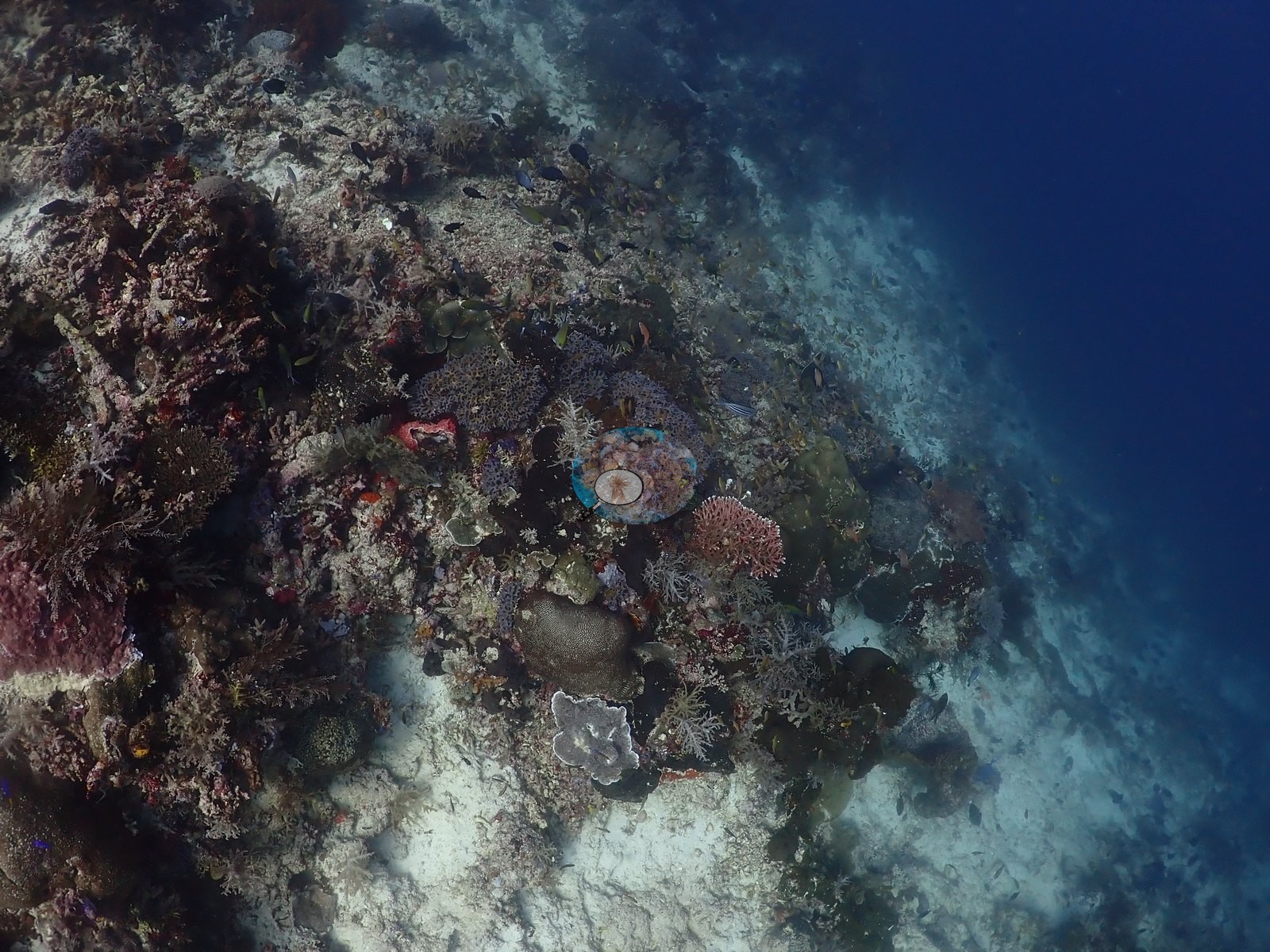
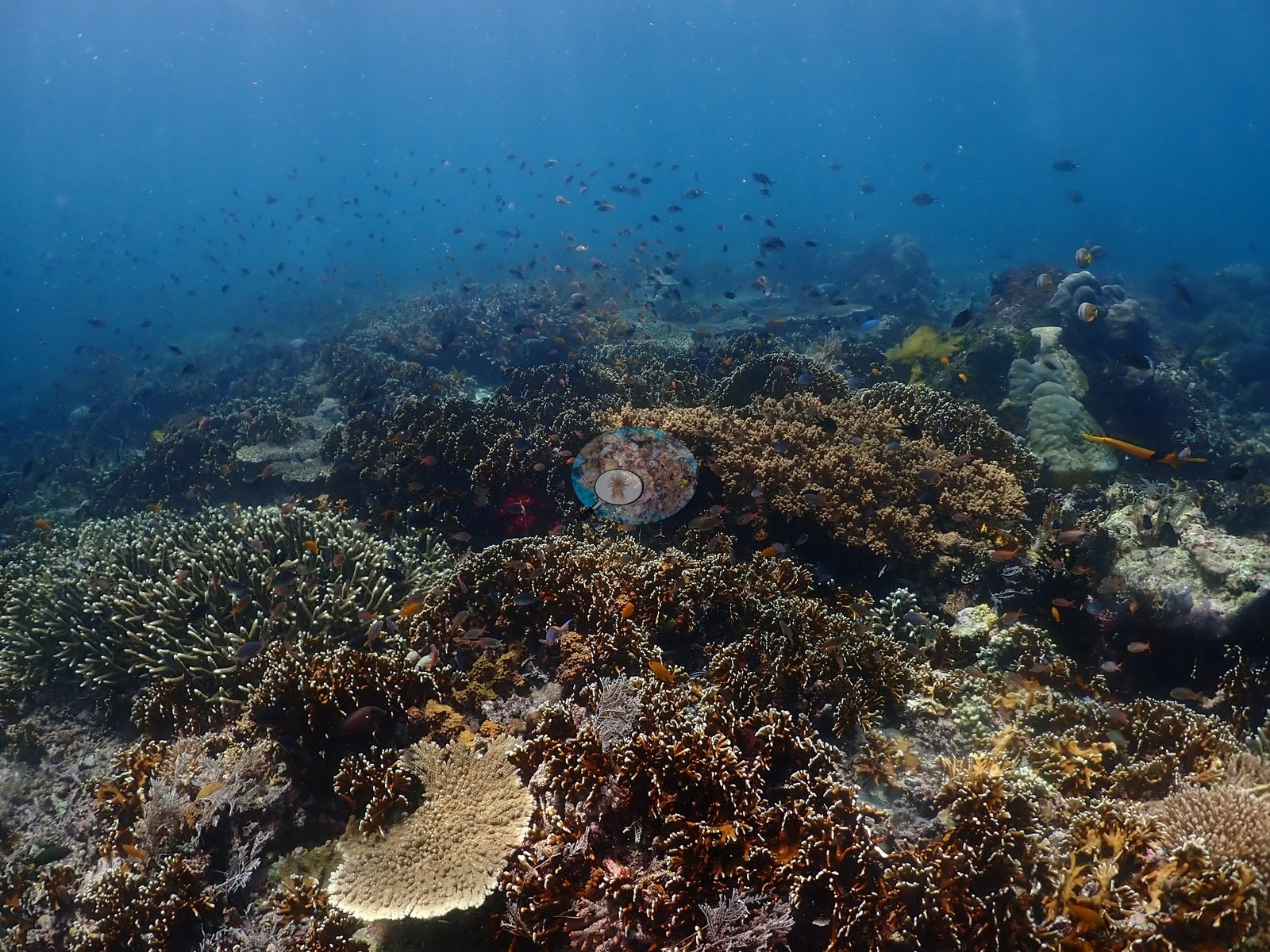
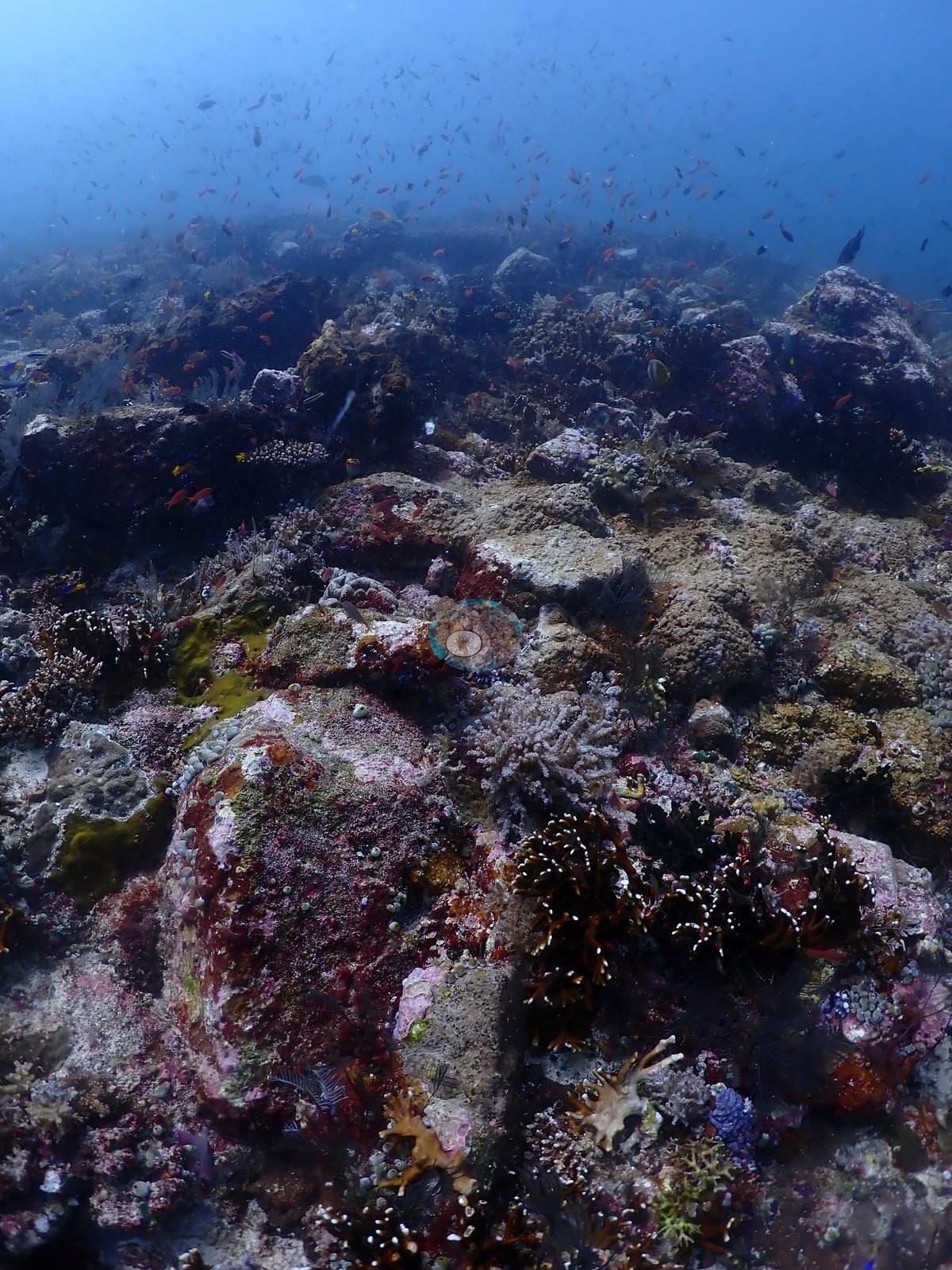
Tanjung Dehebra (Halmahera dive 14) was, by Anderson's own account, the worst-visibility dive of the trip — brown plankton haze and strong current — and nearly every one of the 103 frames carries visible particulate backscatter confirming it.
General benthic features
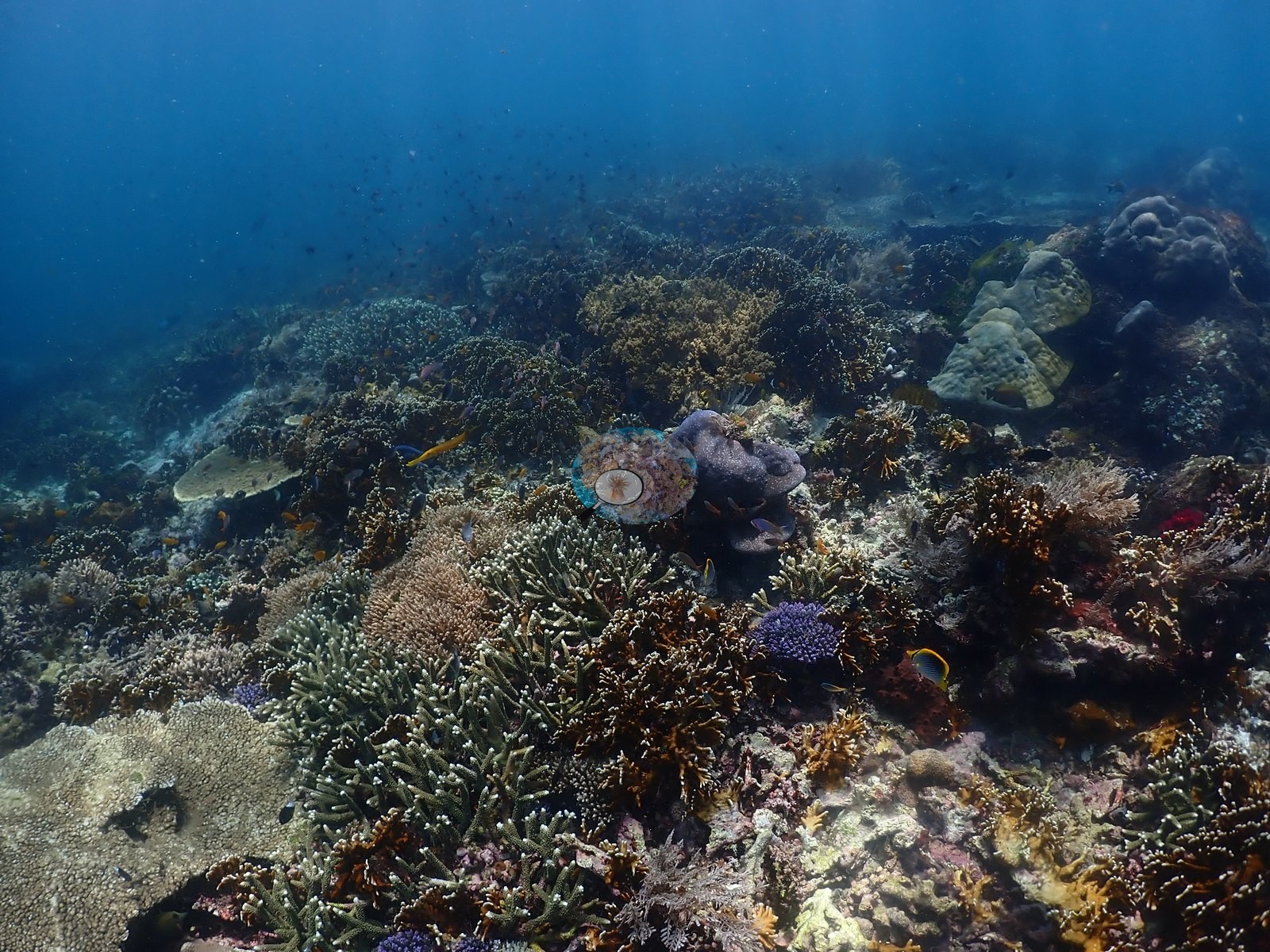
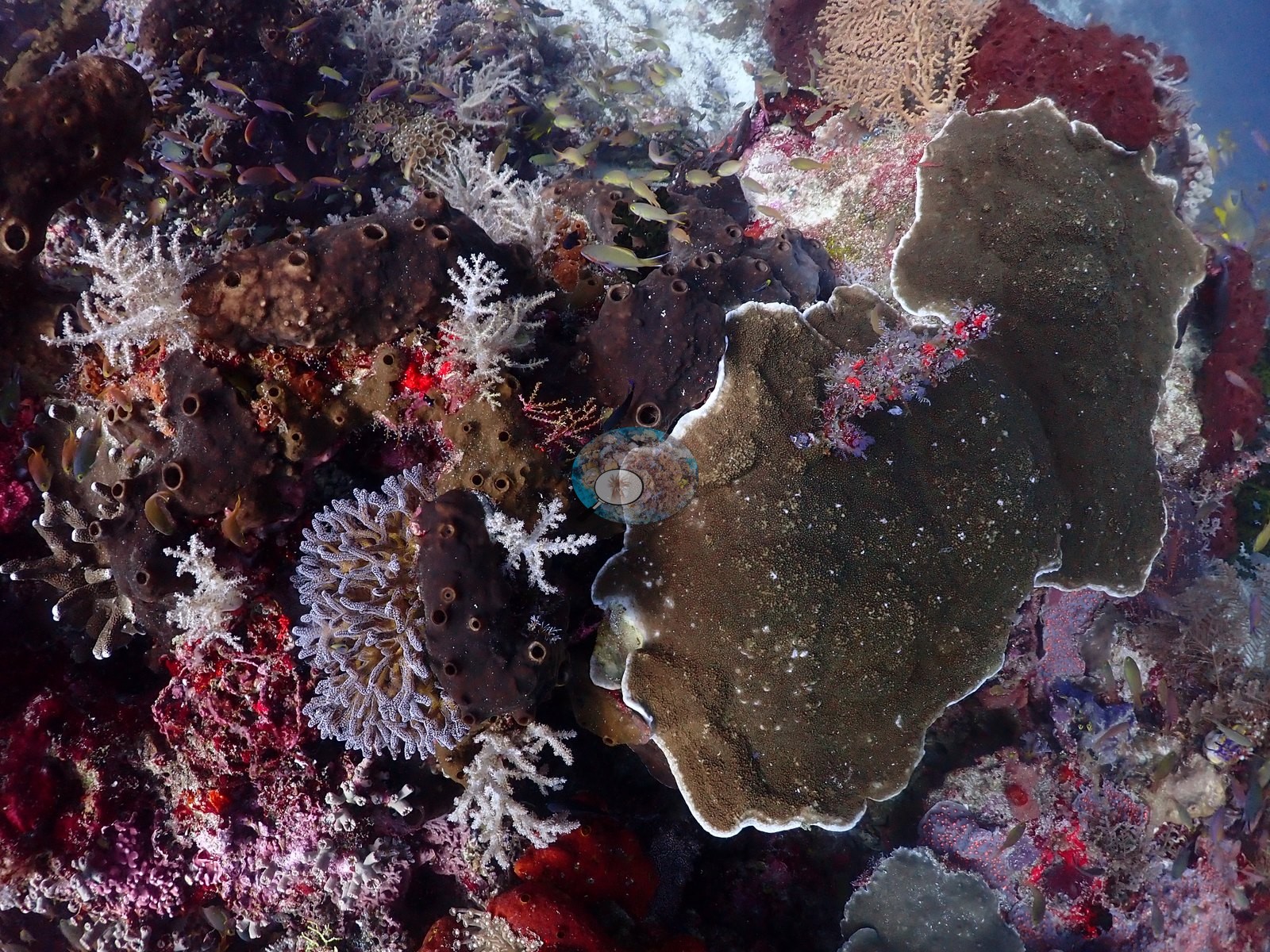
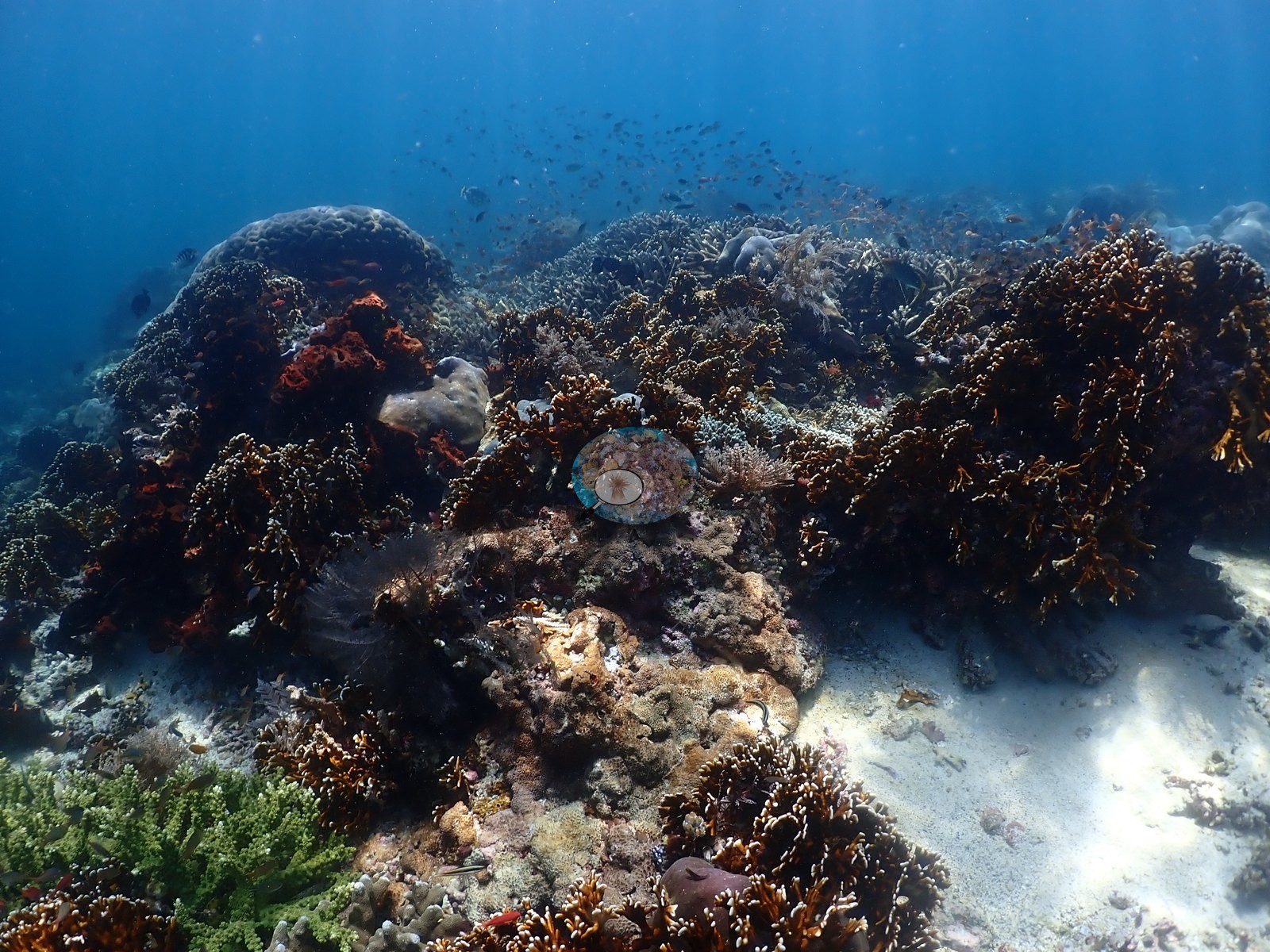
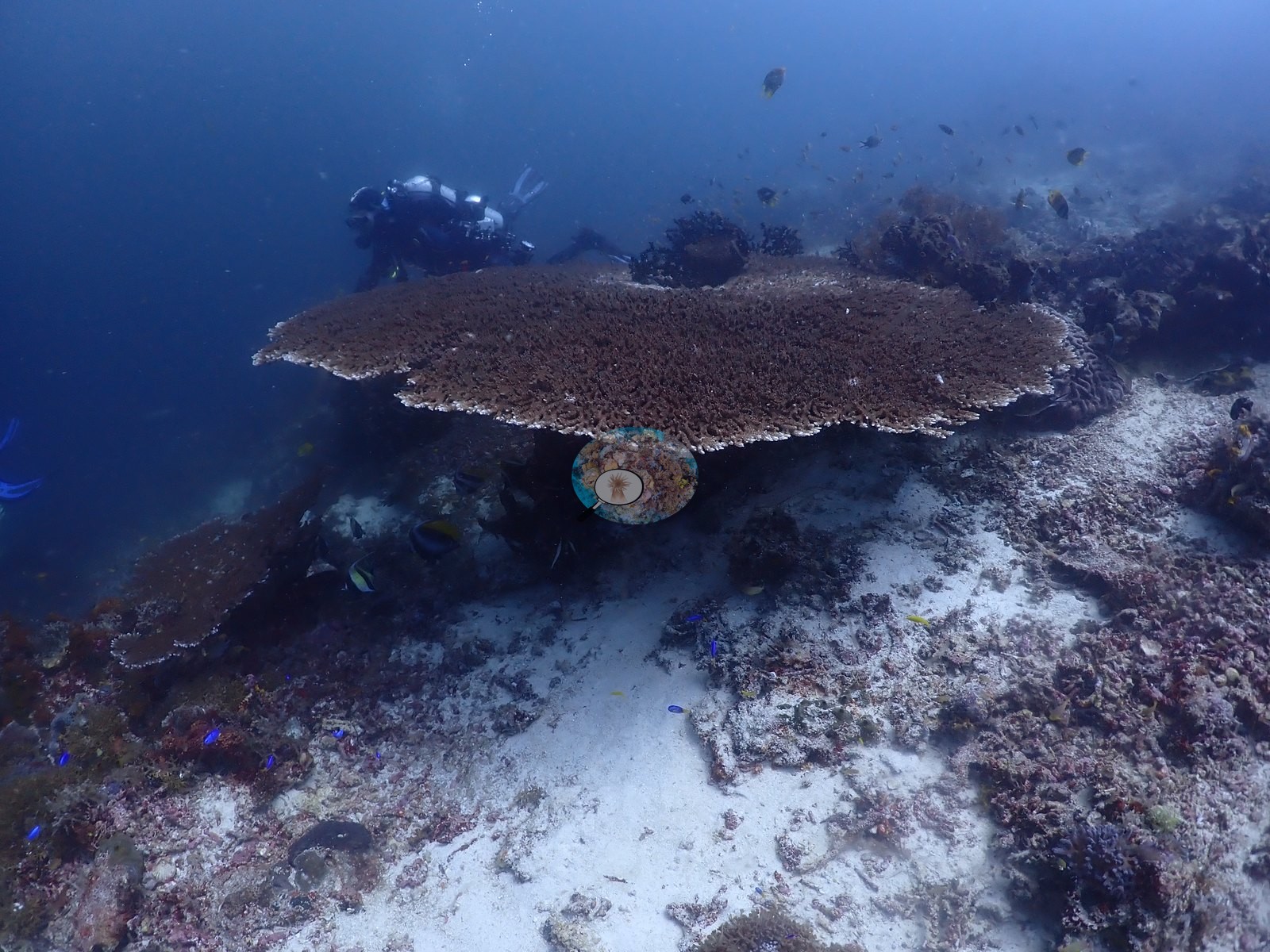
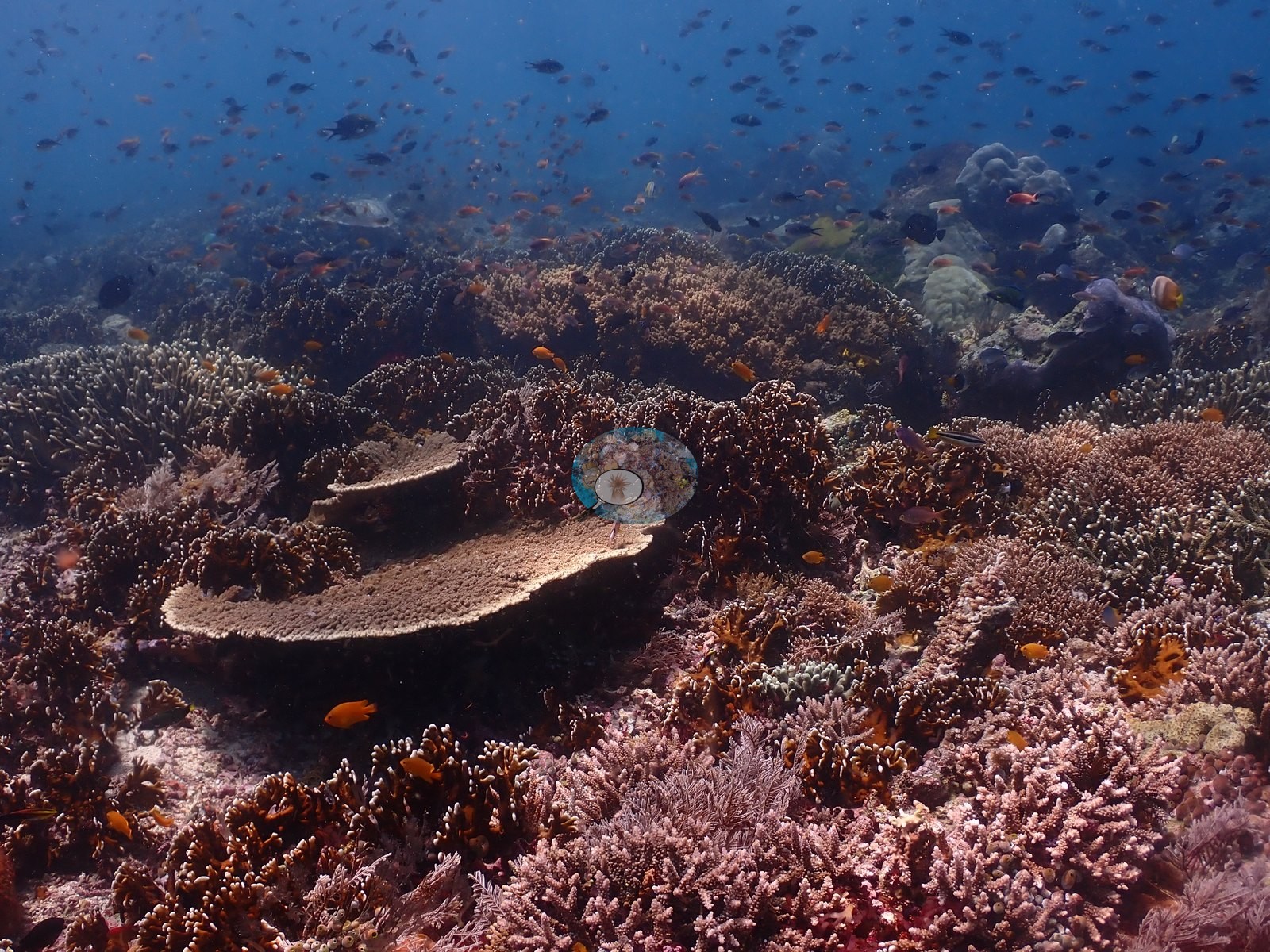
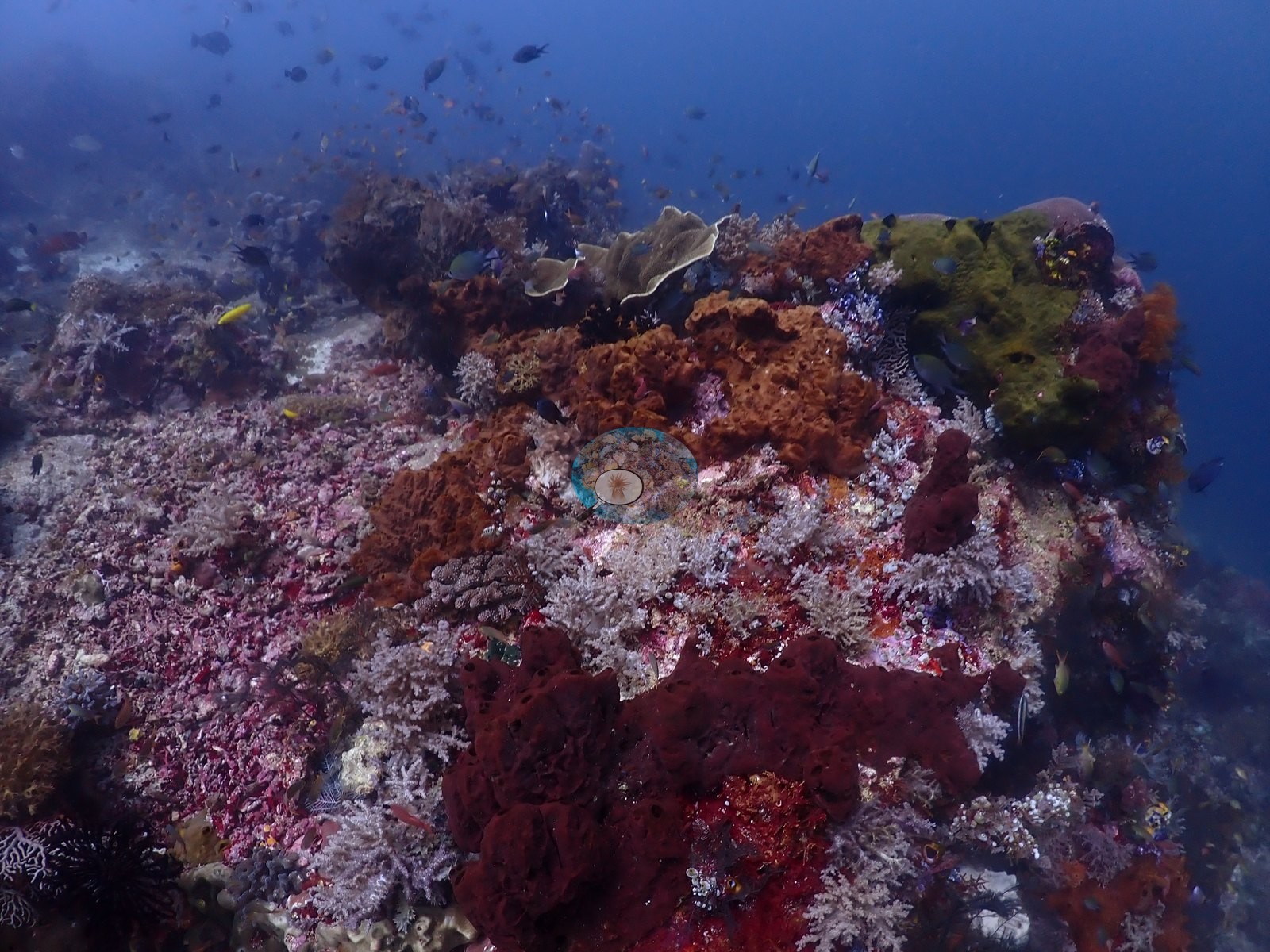
Growth is dominated by large tabulate and foliose plate corals, gray-tan to salmon discs from 0.5 to well over a meter across, recurring through the entire dive and frequently the largest single subject in frame (e.g., Image 10, Image 17, Image 21, Image 25, Image 28, Image 33, Image 47, Image 50).
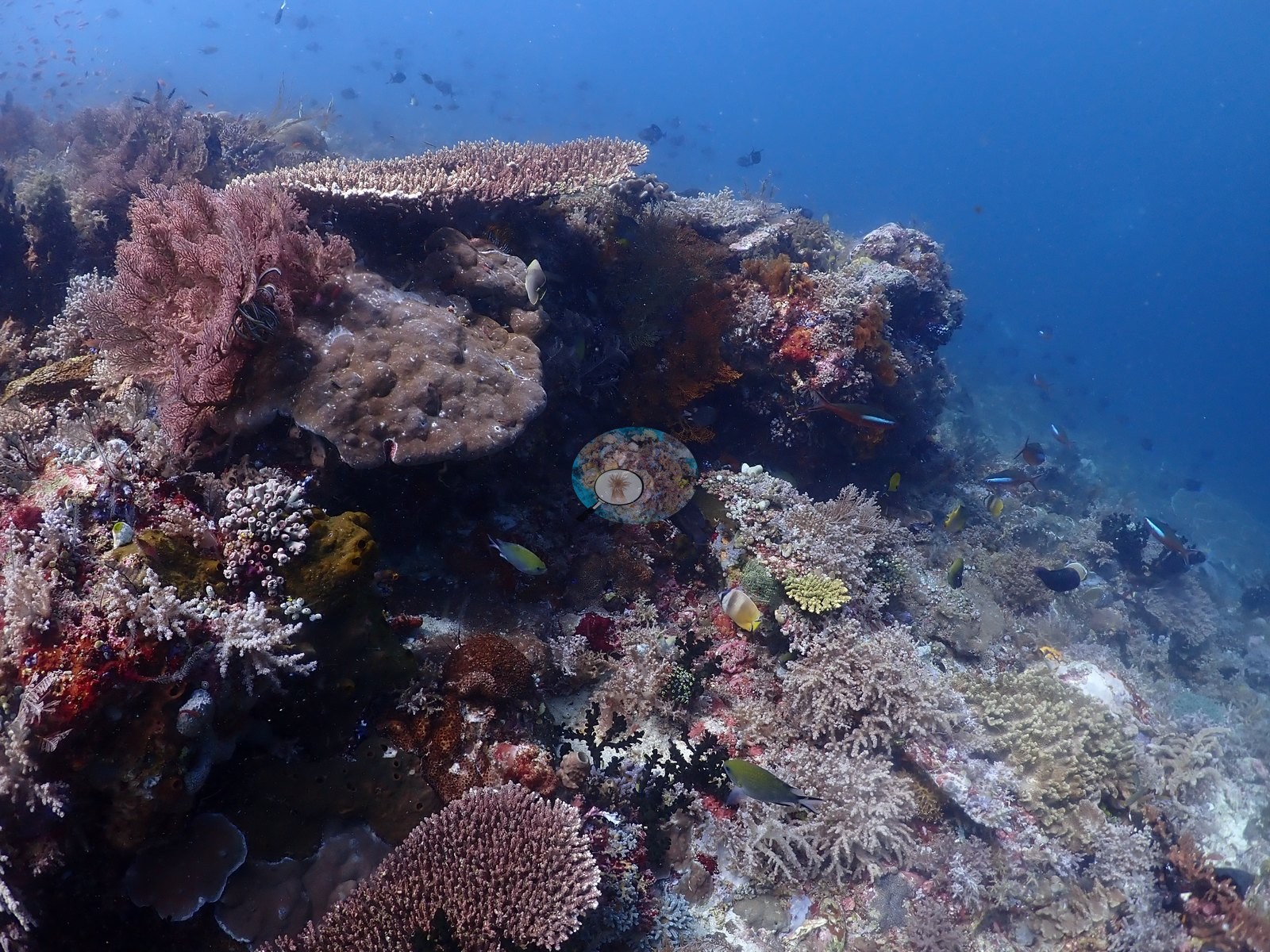
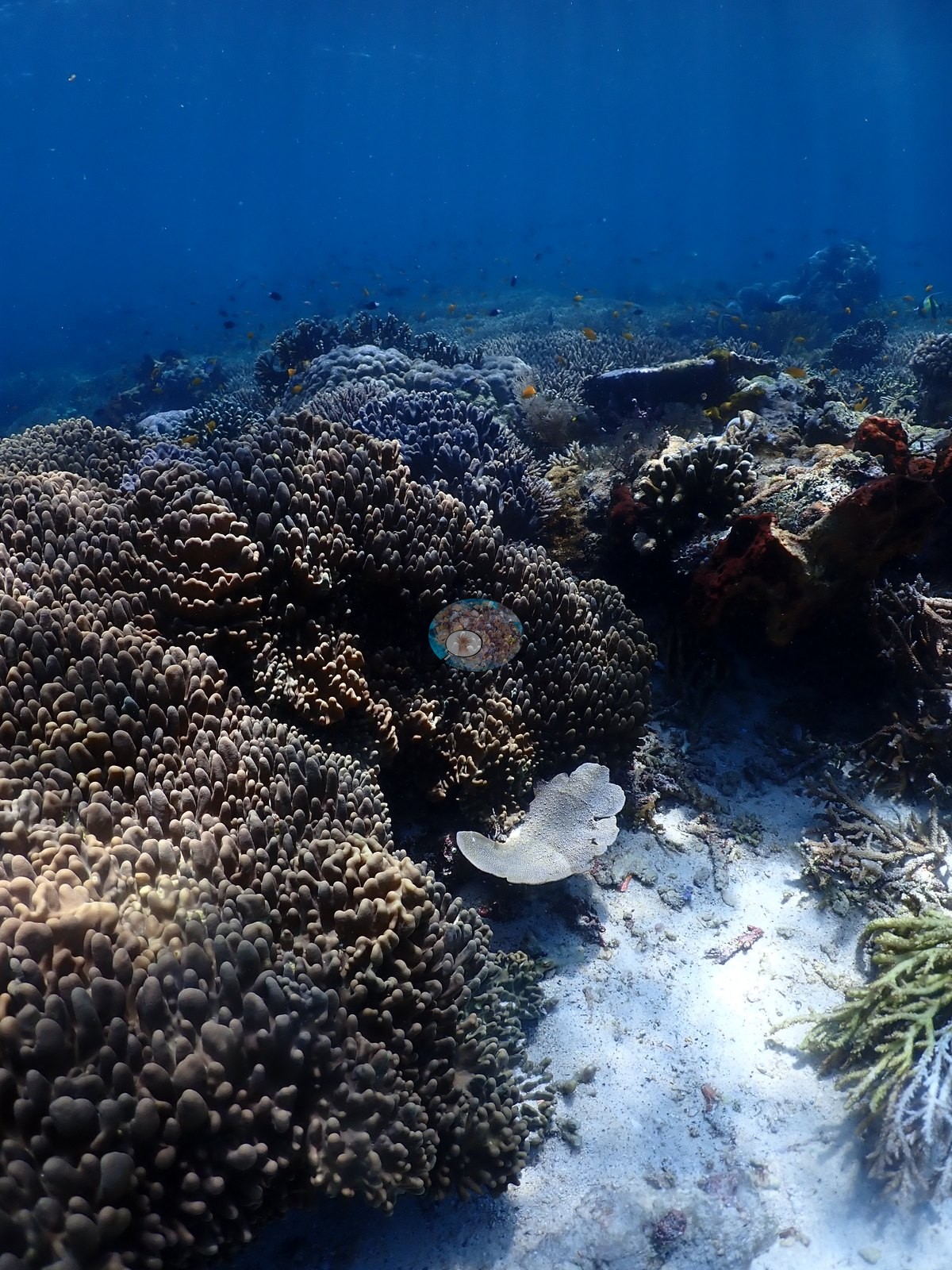
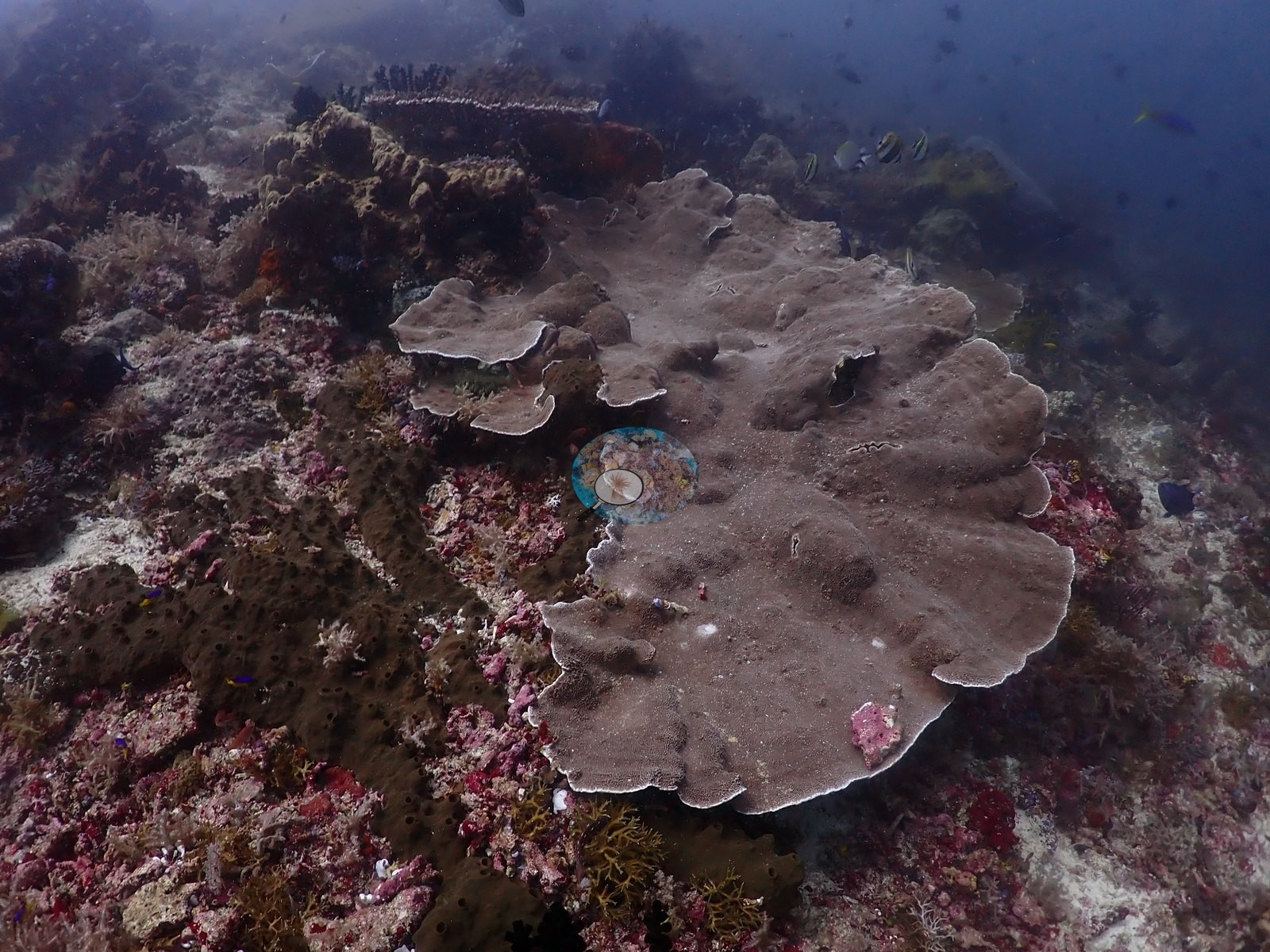
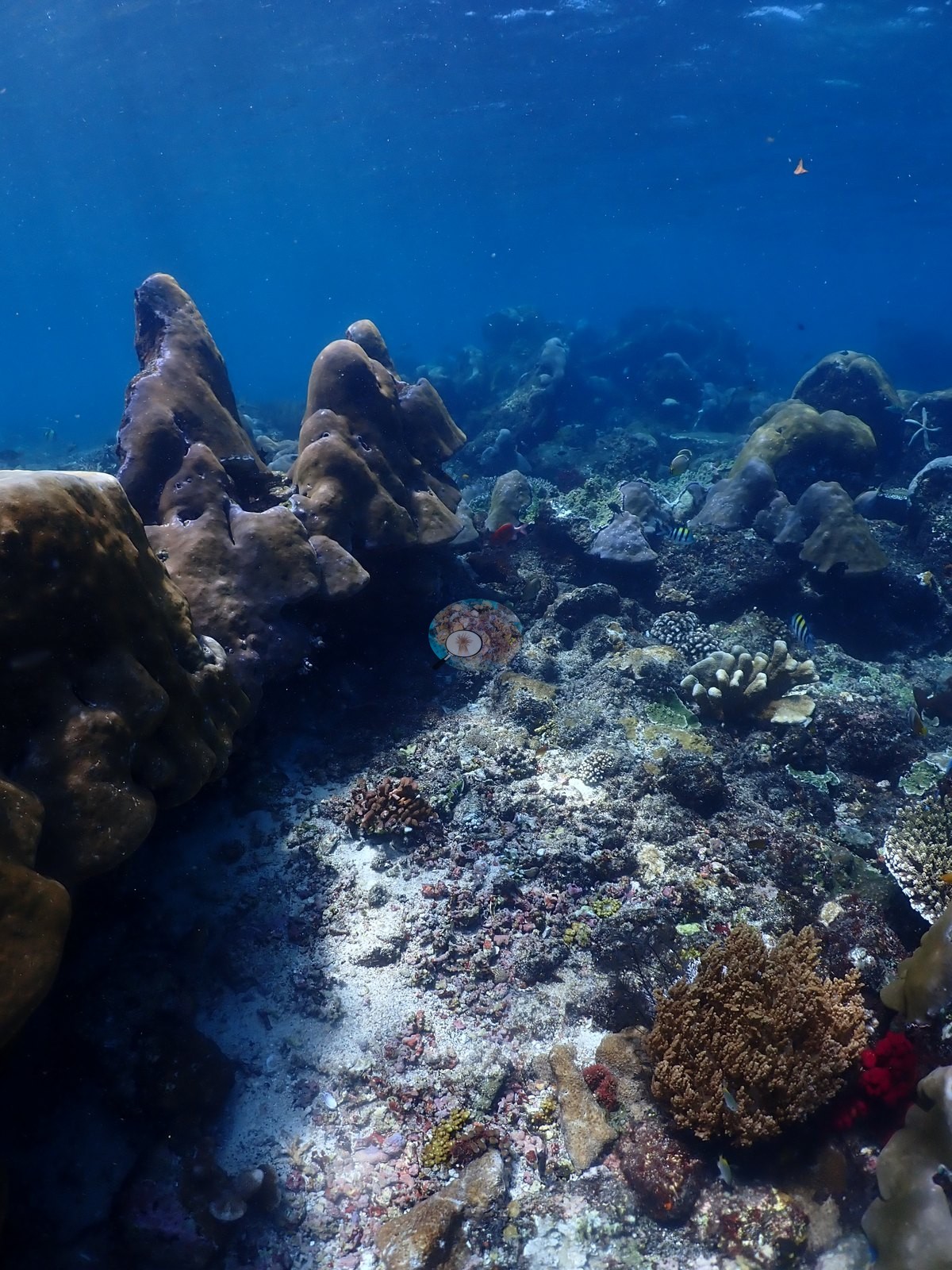
Massive brown-tan boulder colonies consistent with Porites stand in clusters mid-dive (e.g., Image 13, Image 34, Image 37, Image 38, Image 43, Image 48, Image 53, Image 55).
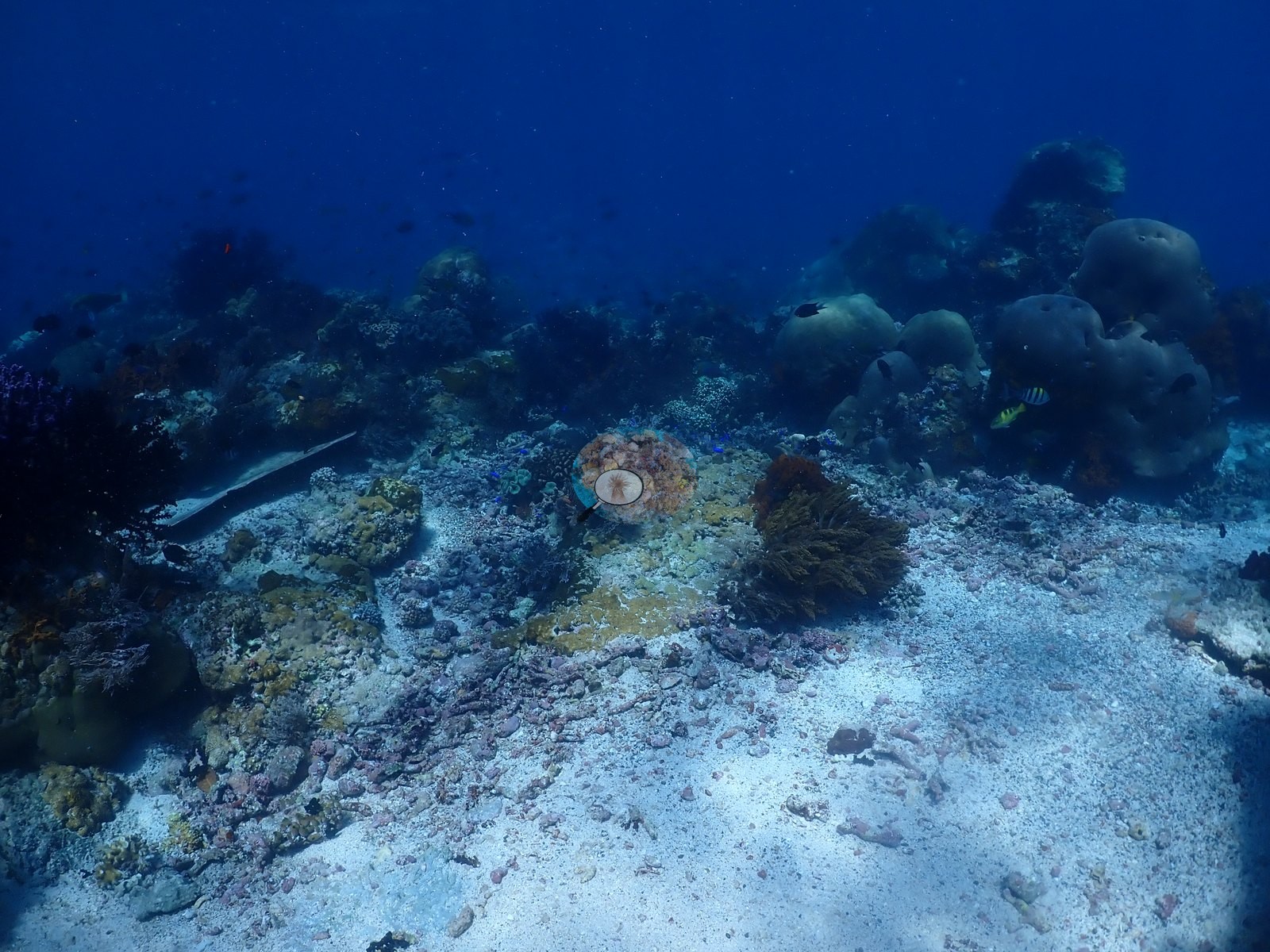
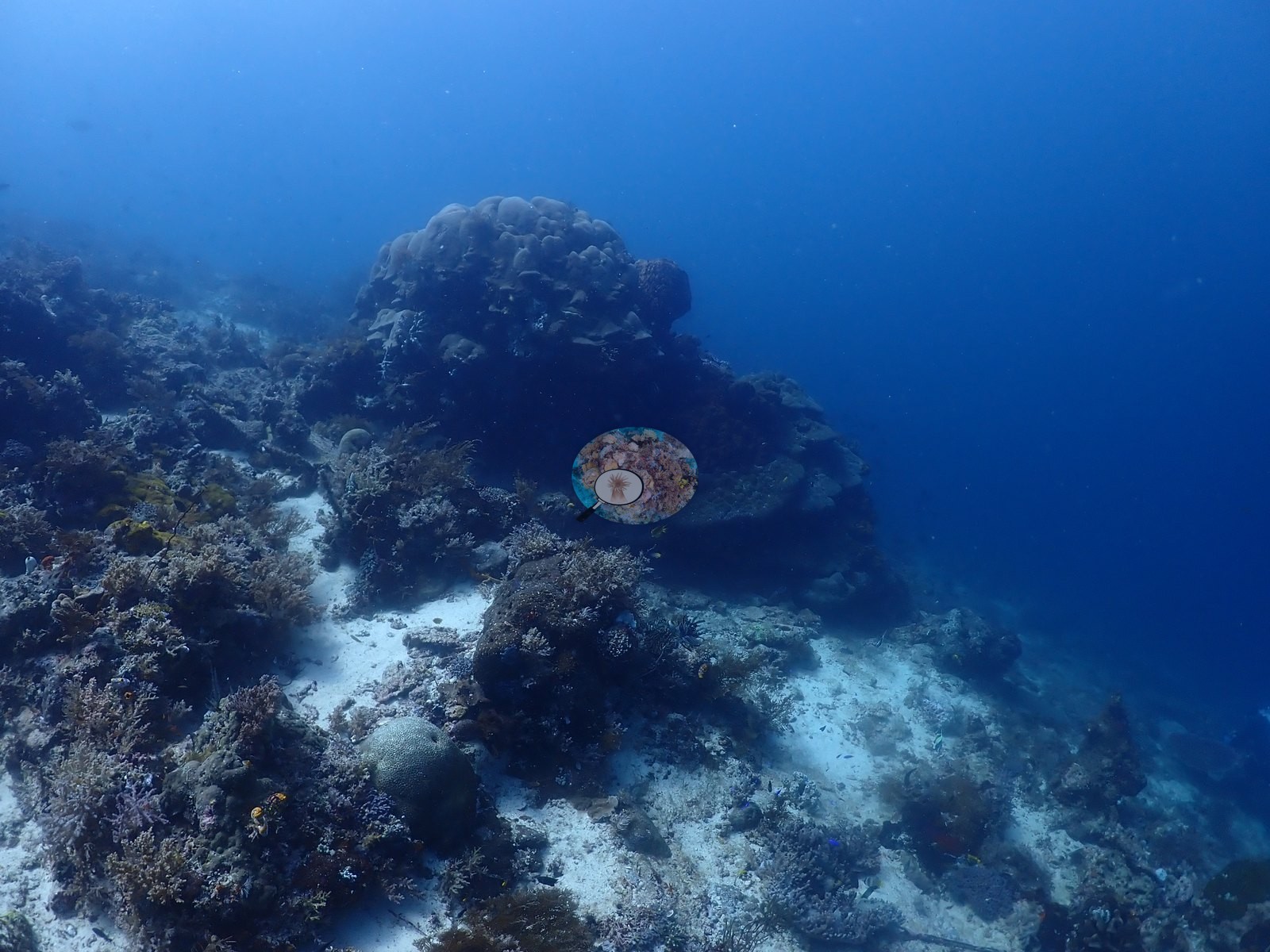
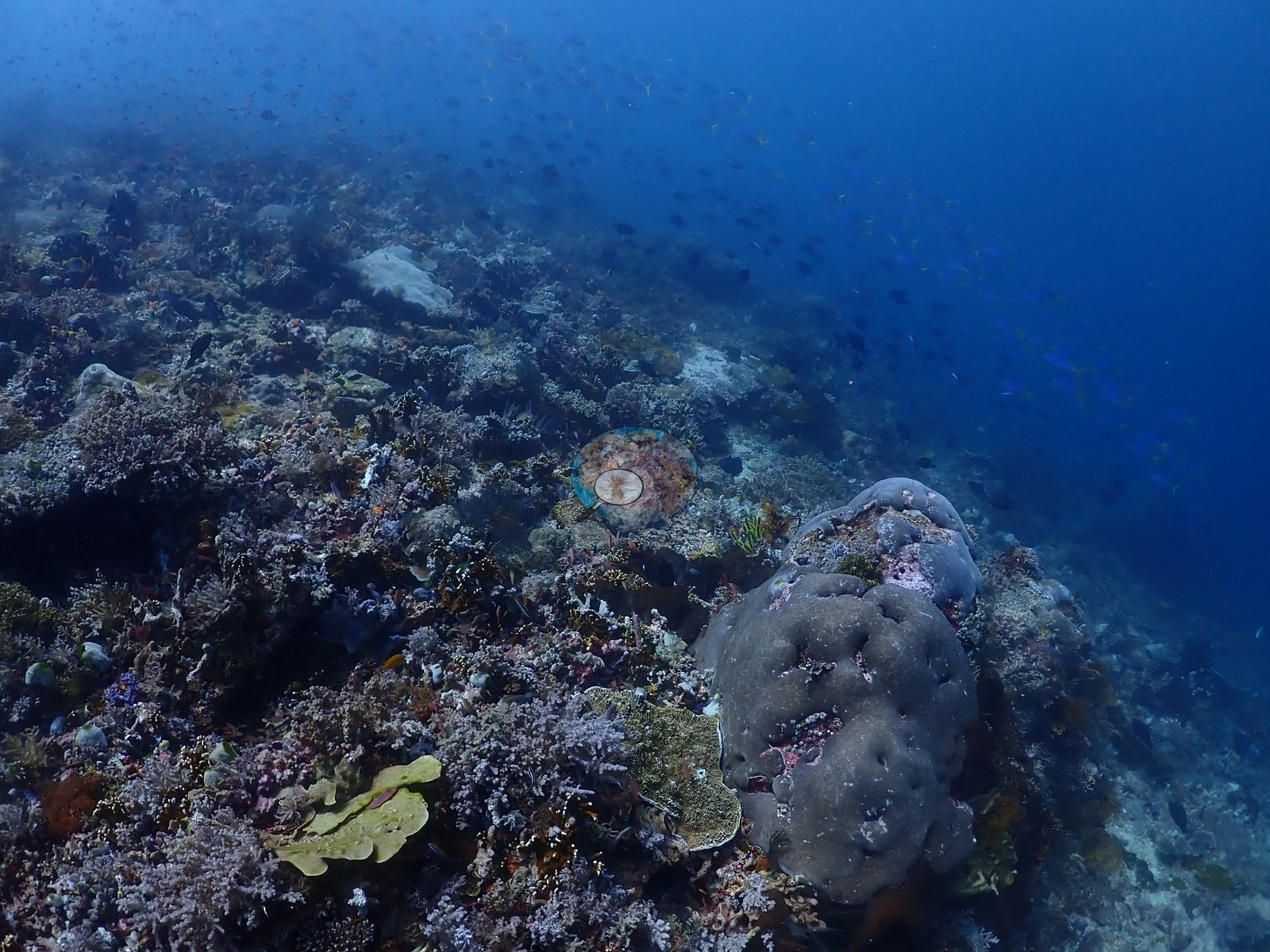
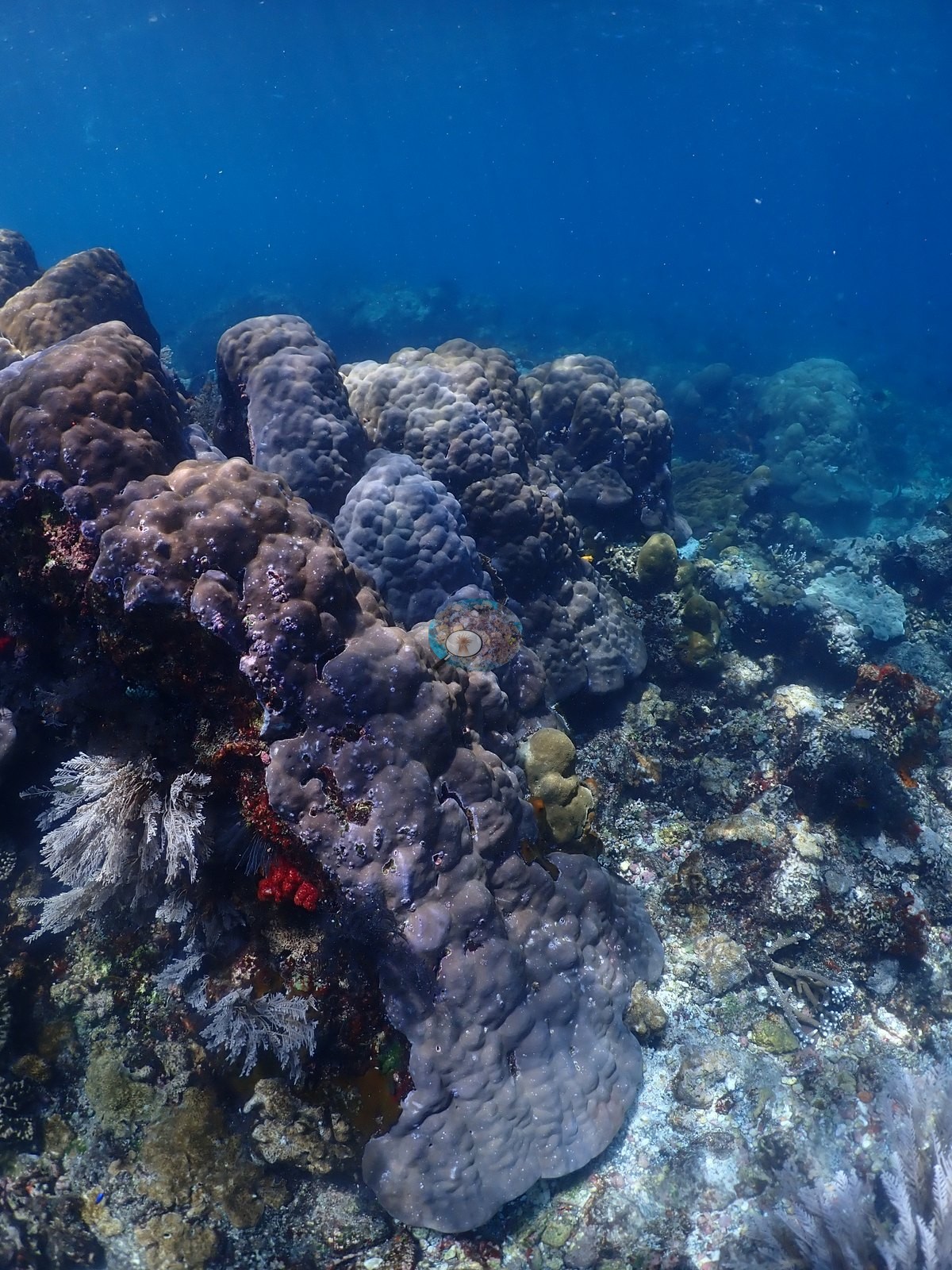
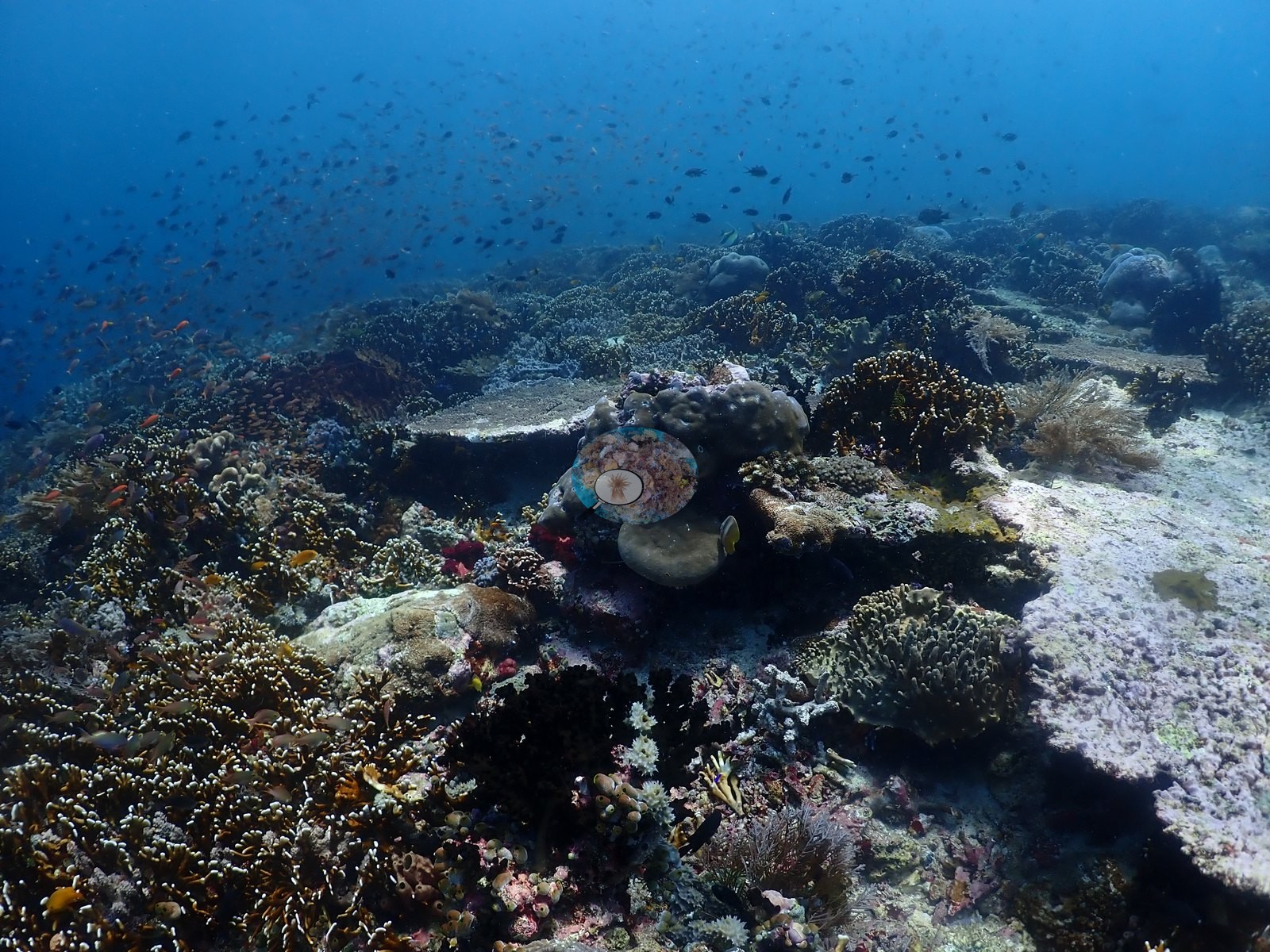
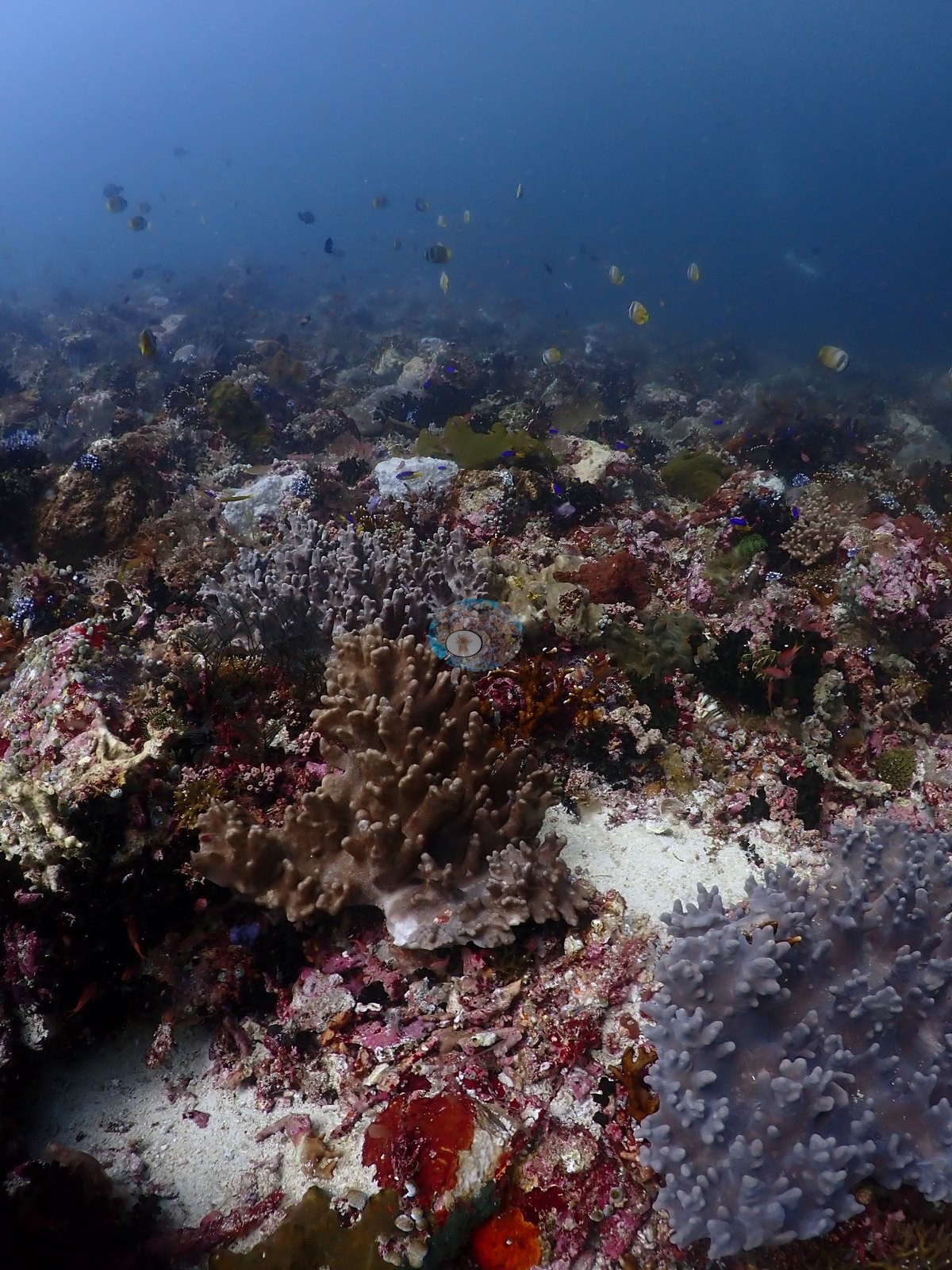
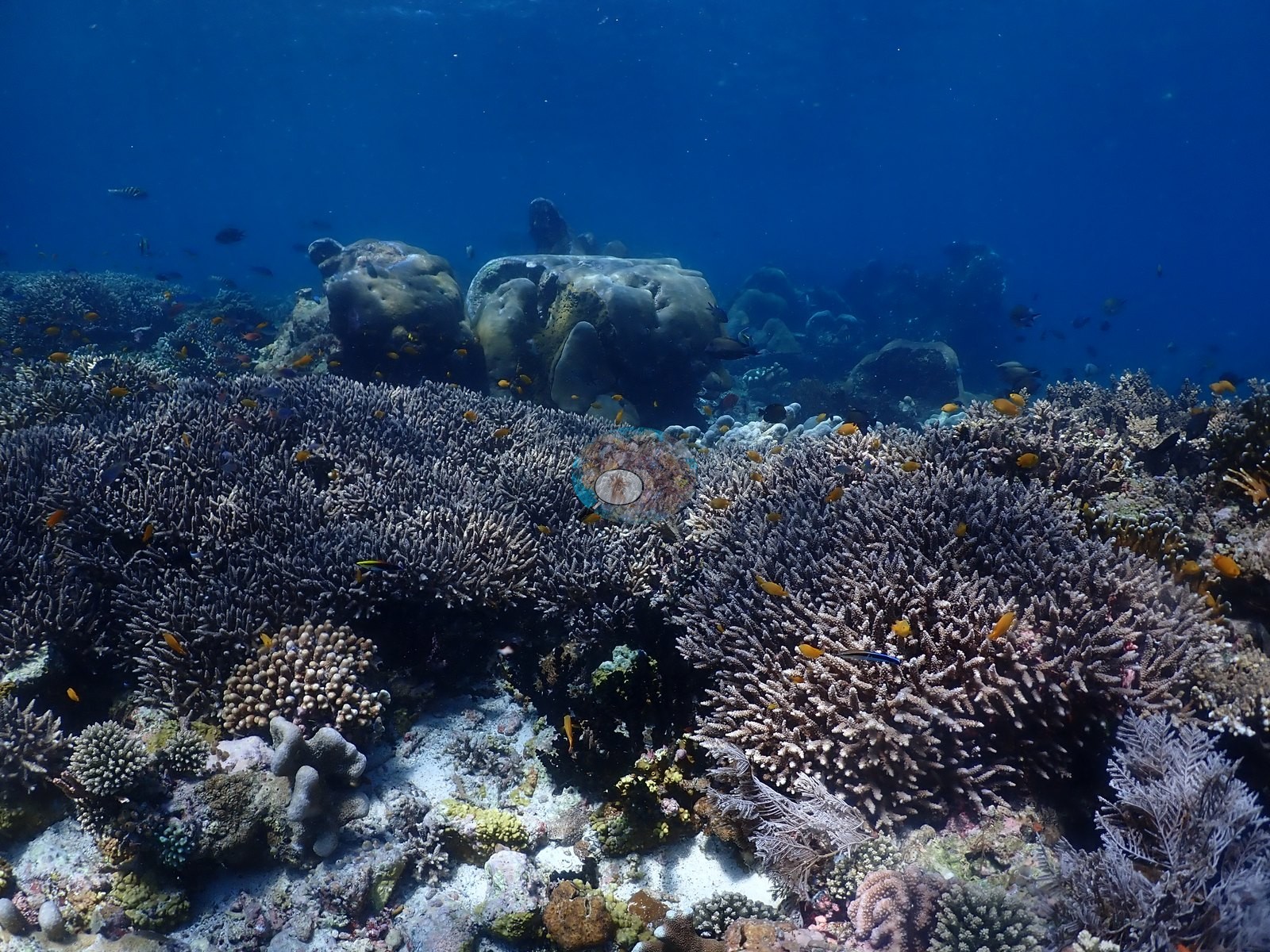
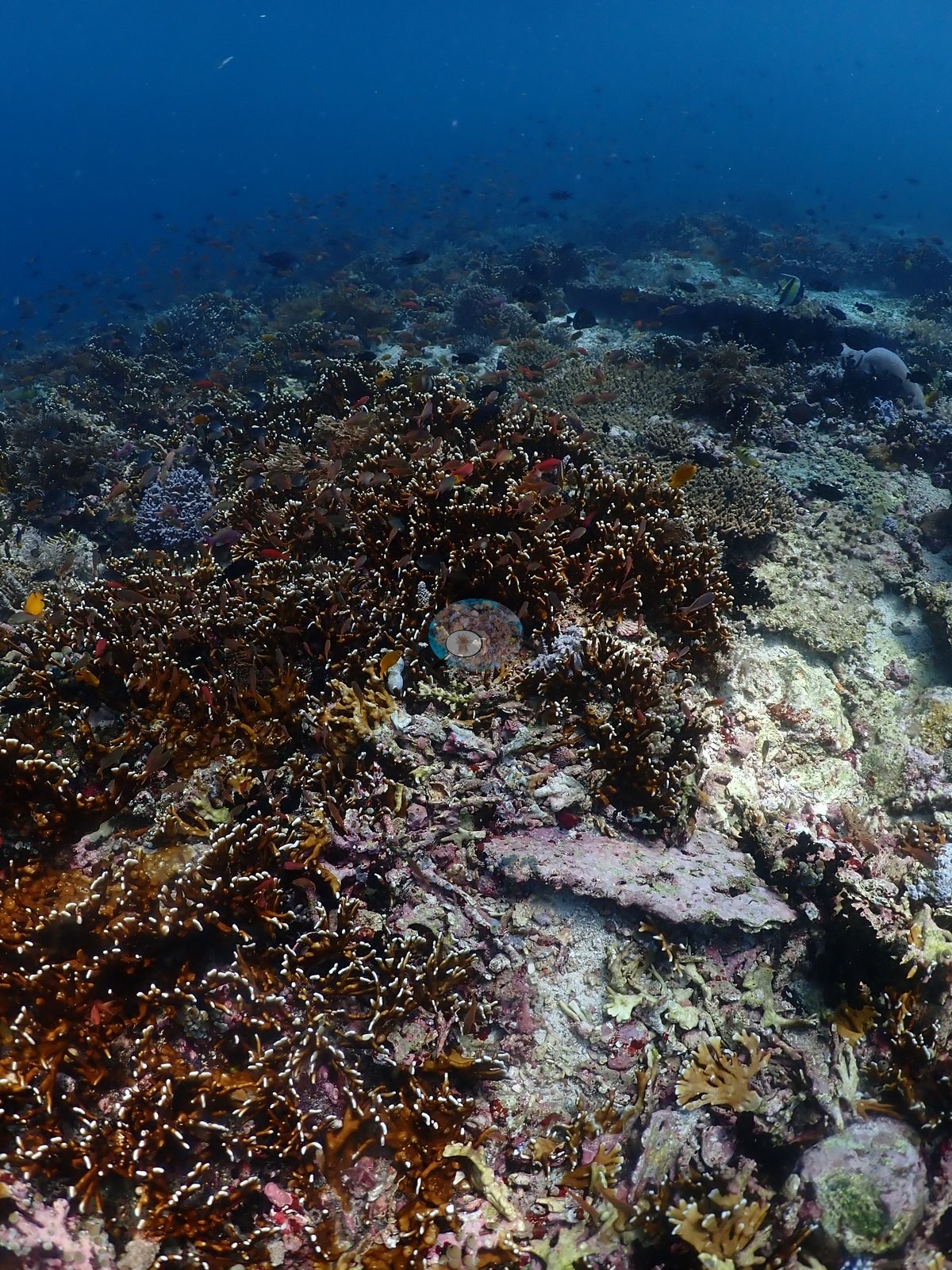
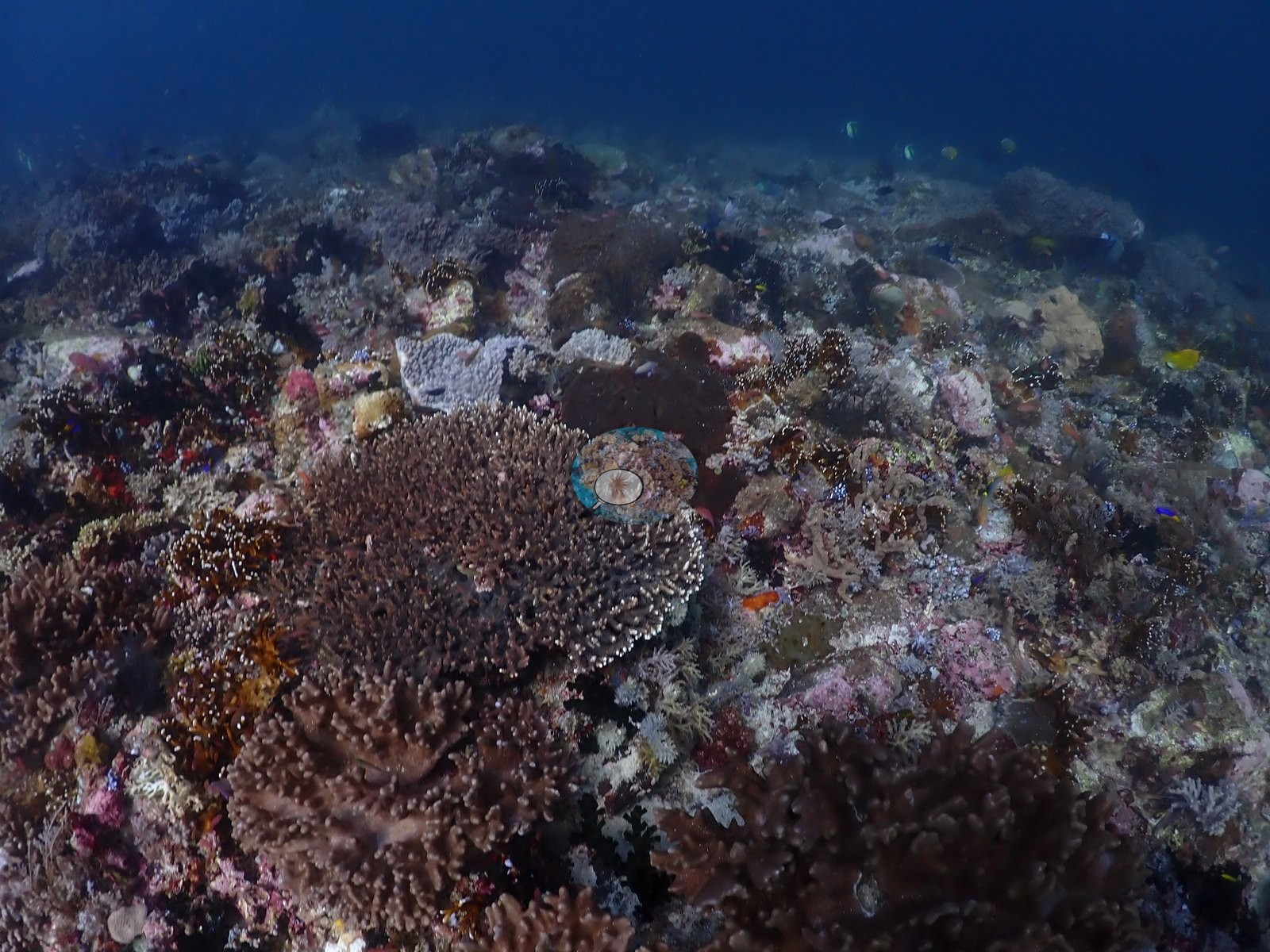
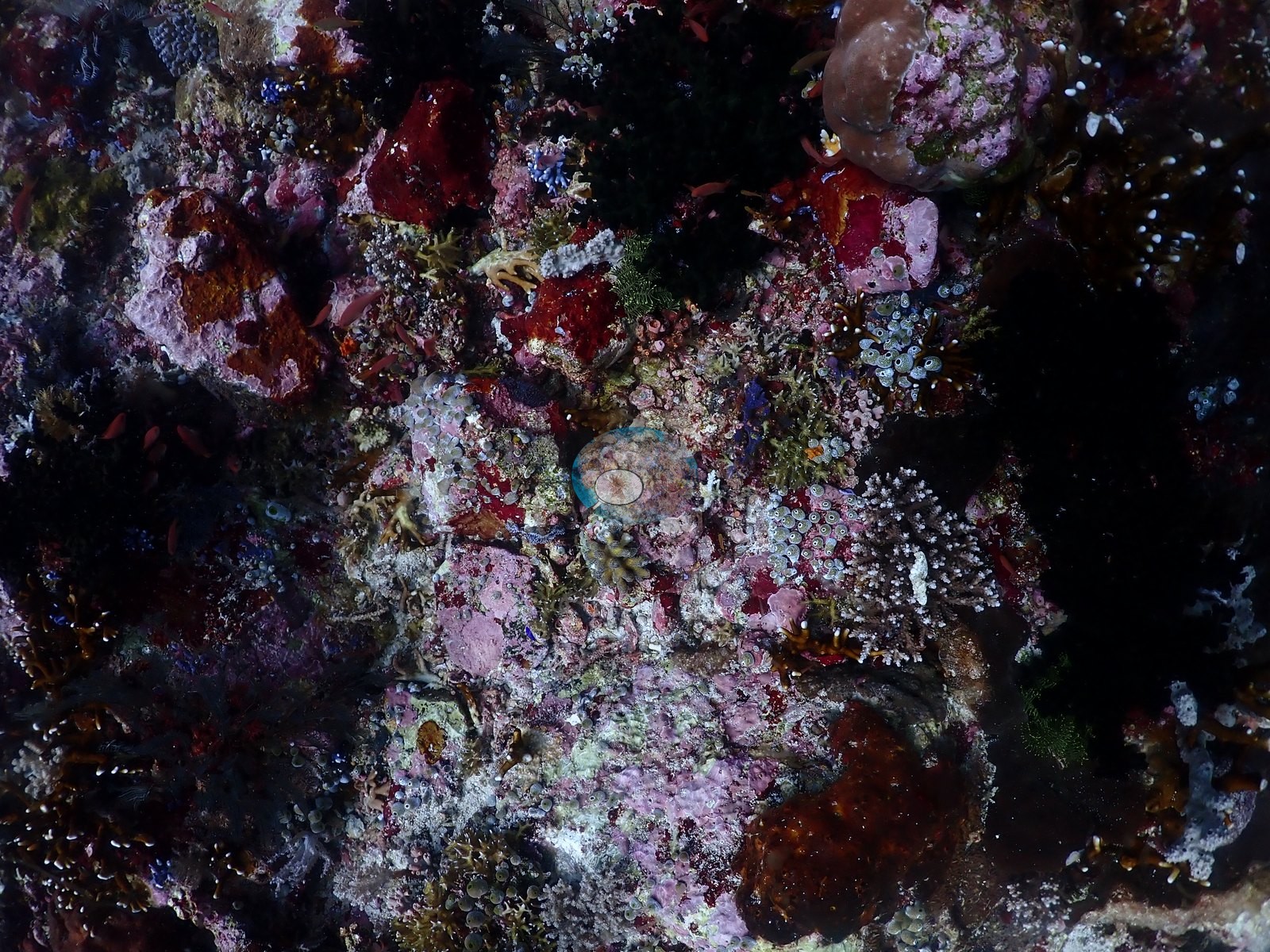
Dense corymbose and staghorn Acropora thickets punctuate the plate-and-boulder matrix at several points, reading among the dive's highest single-frame covers (e.g., Image 4, Image 5, Image 15, Image 31, Image 35, Image 40).
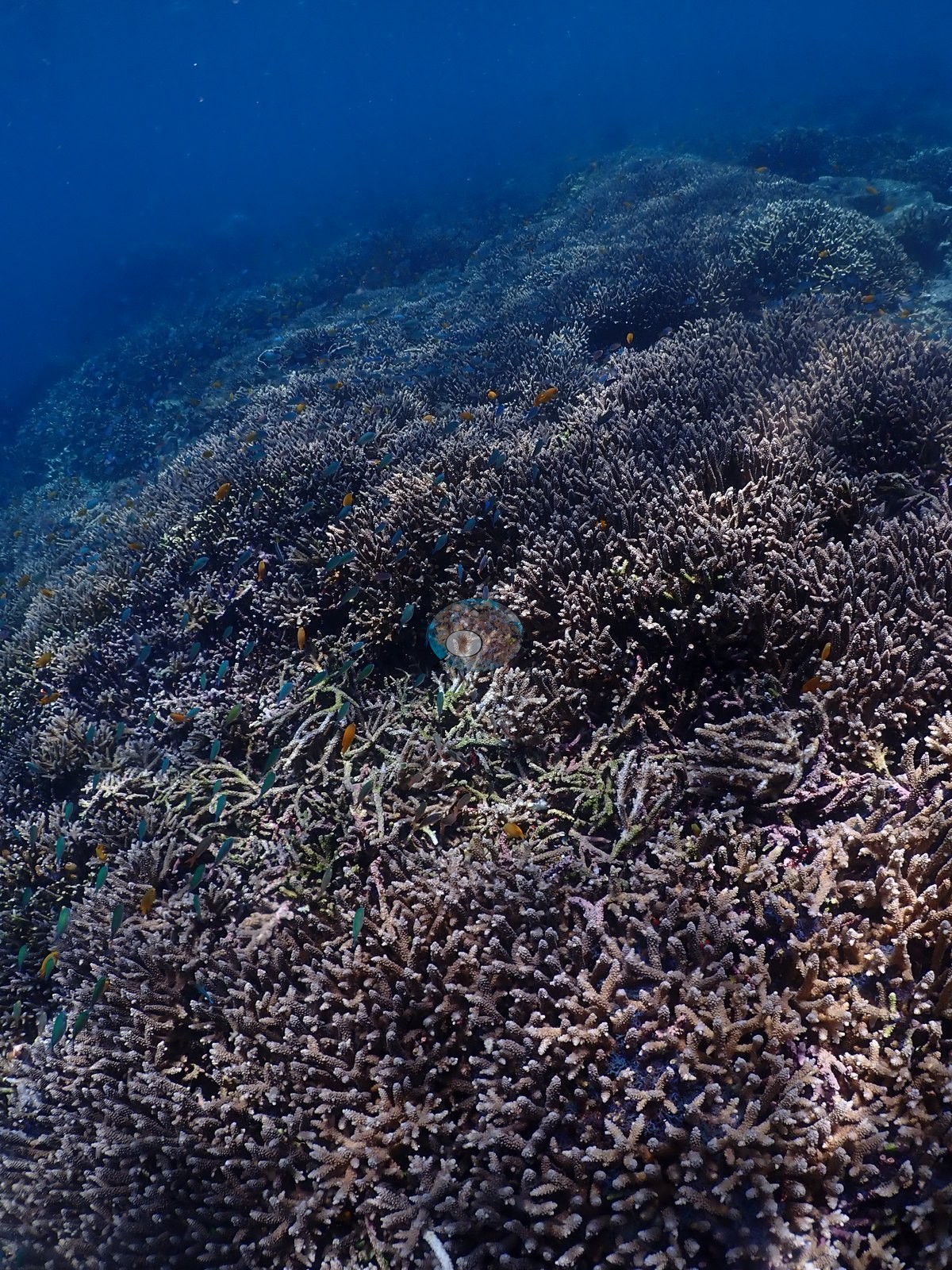
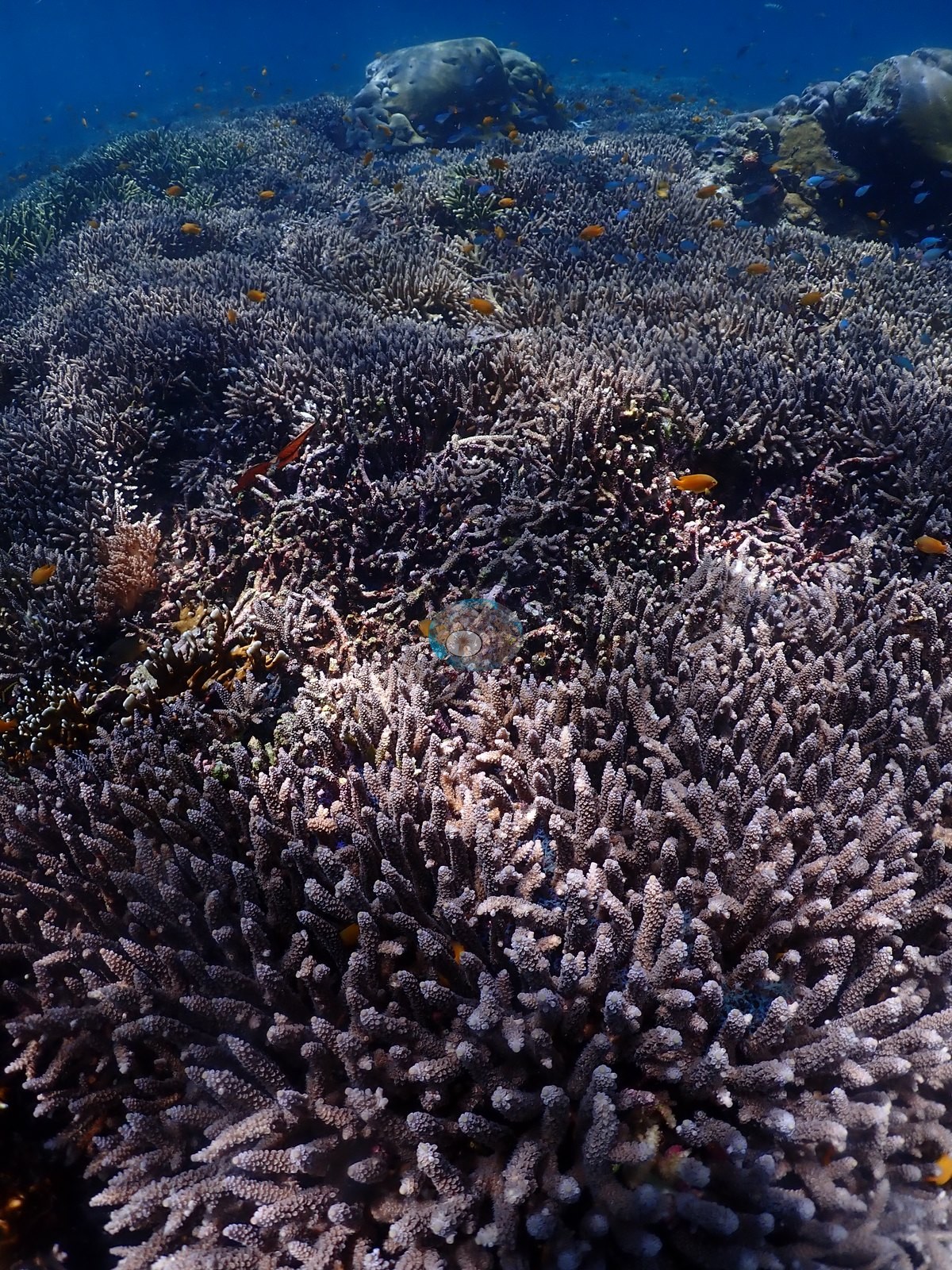
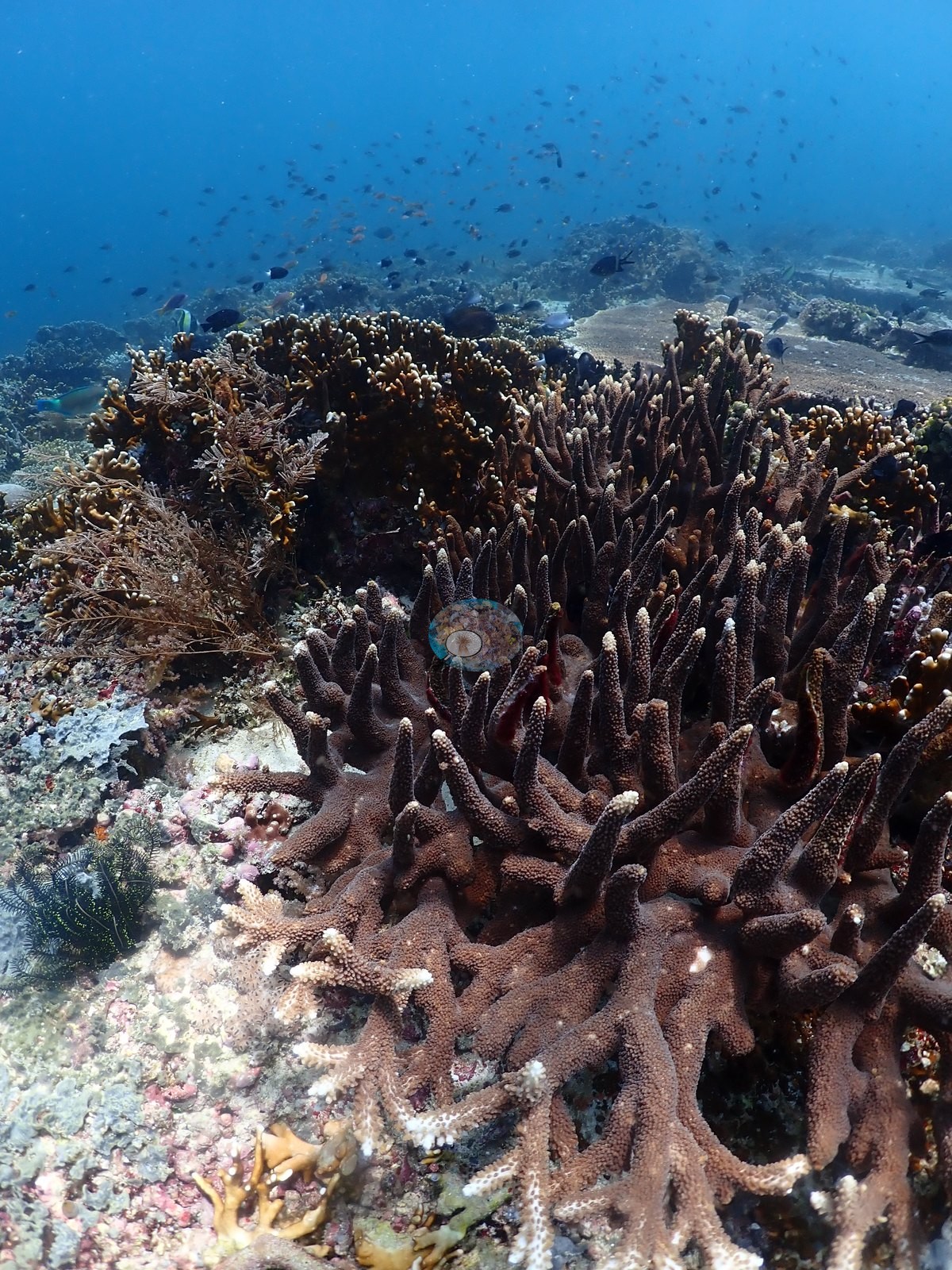
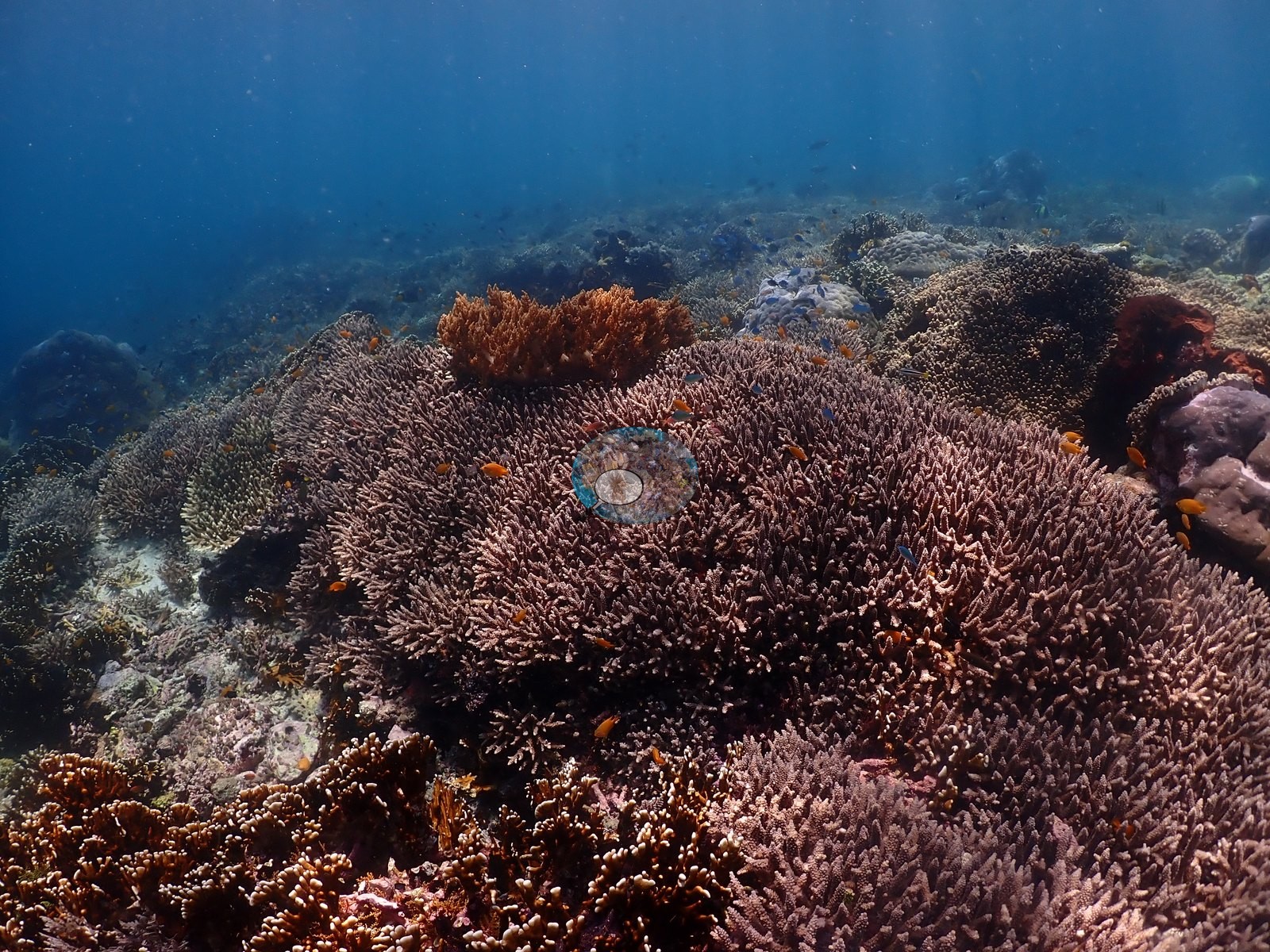
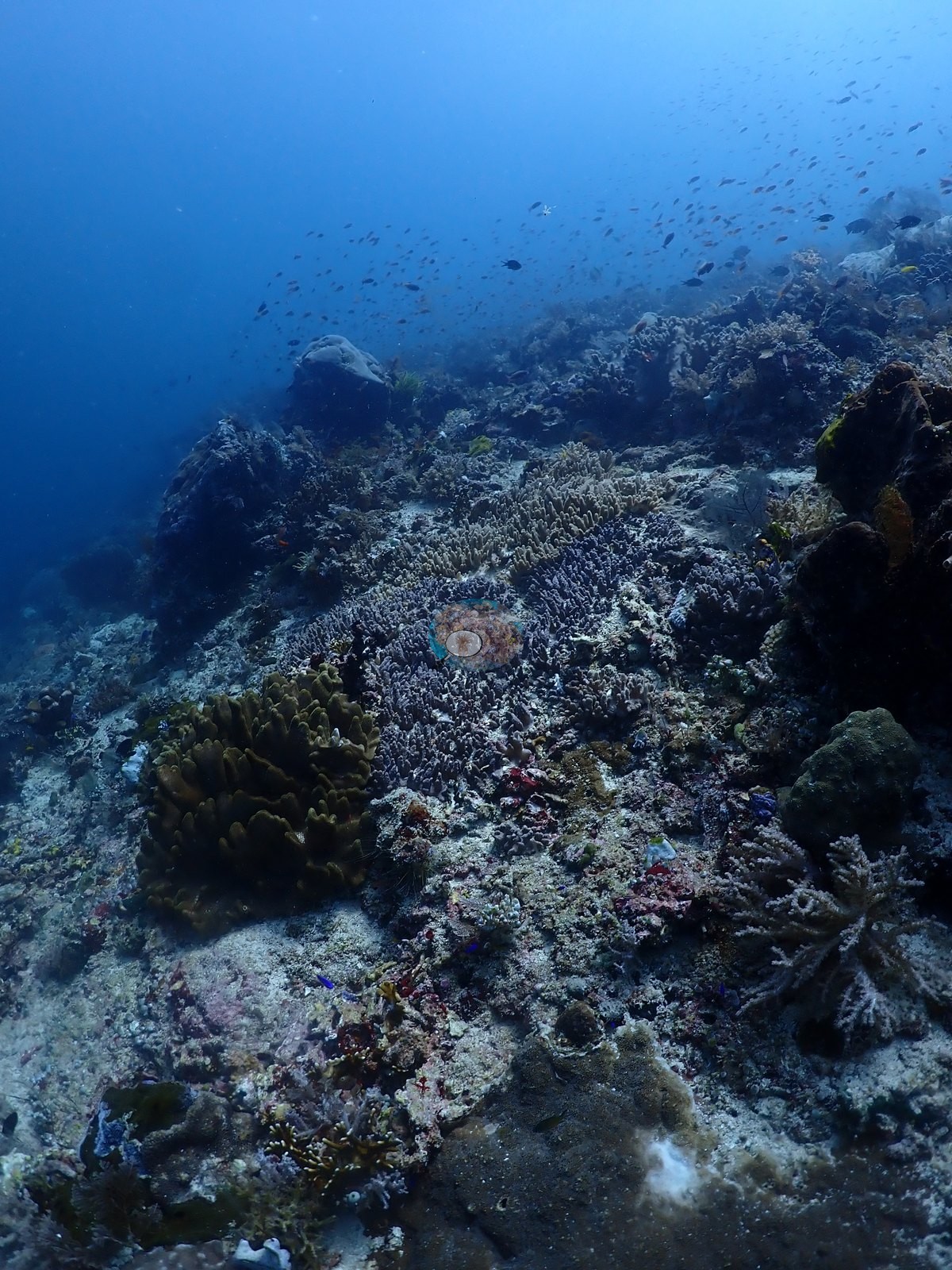
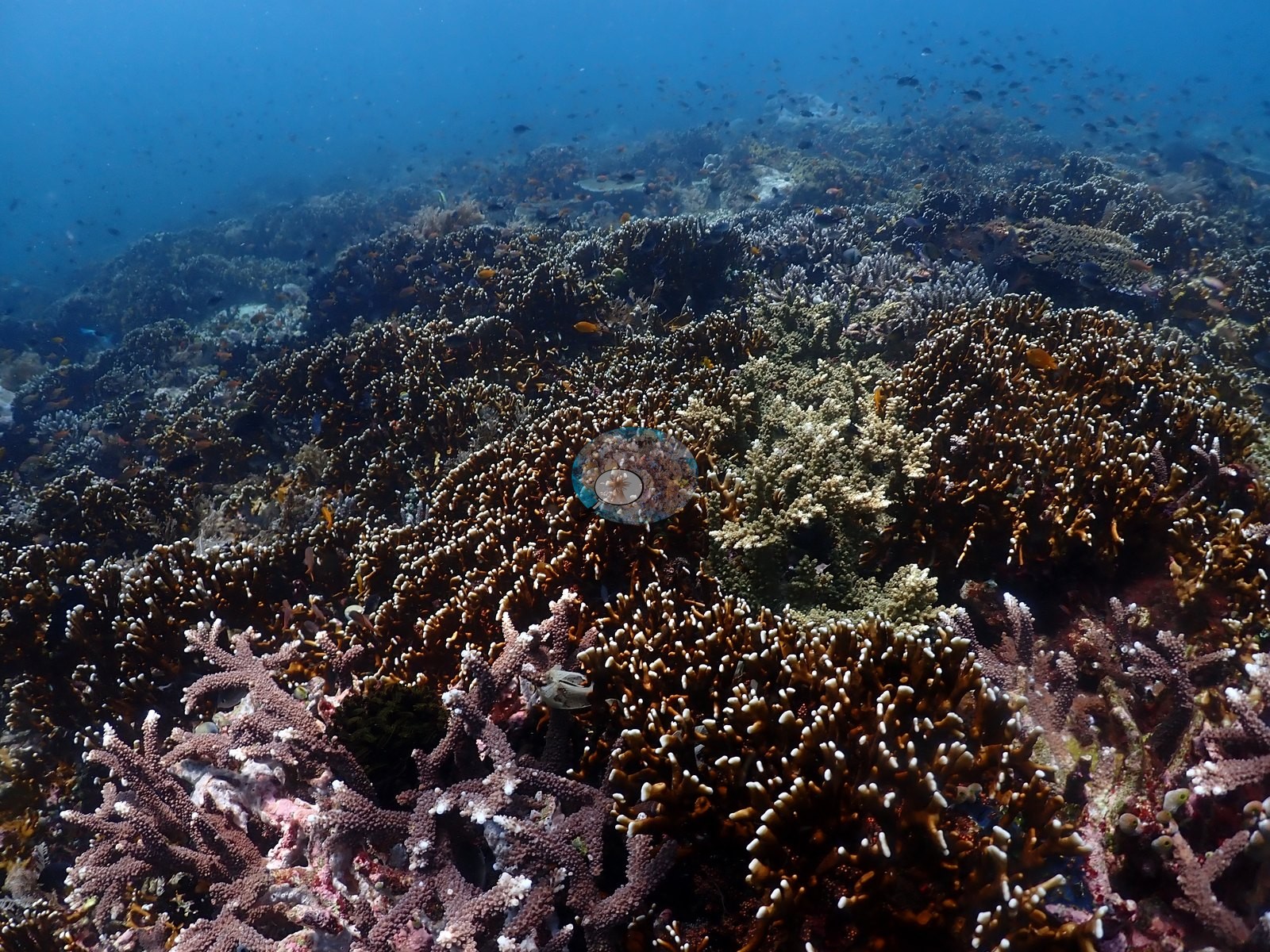
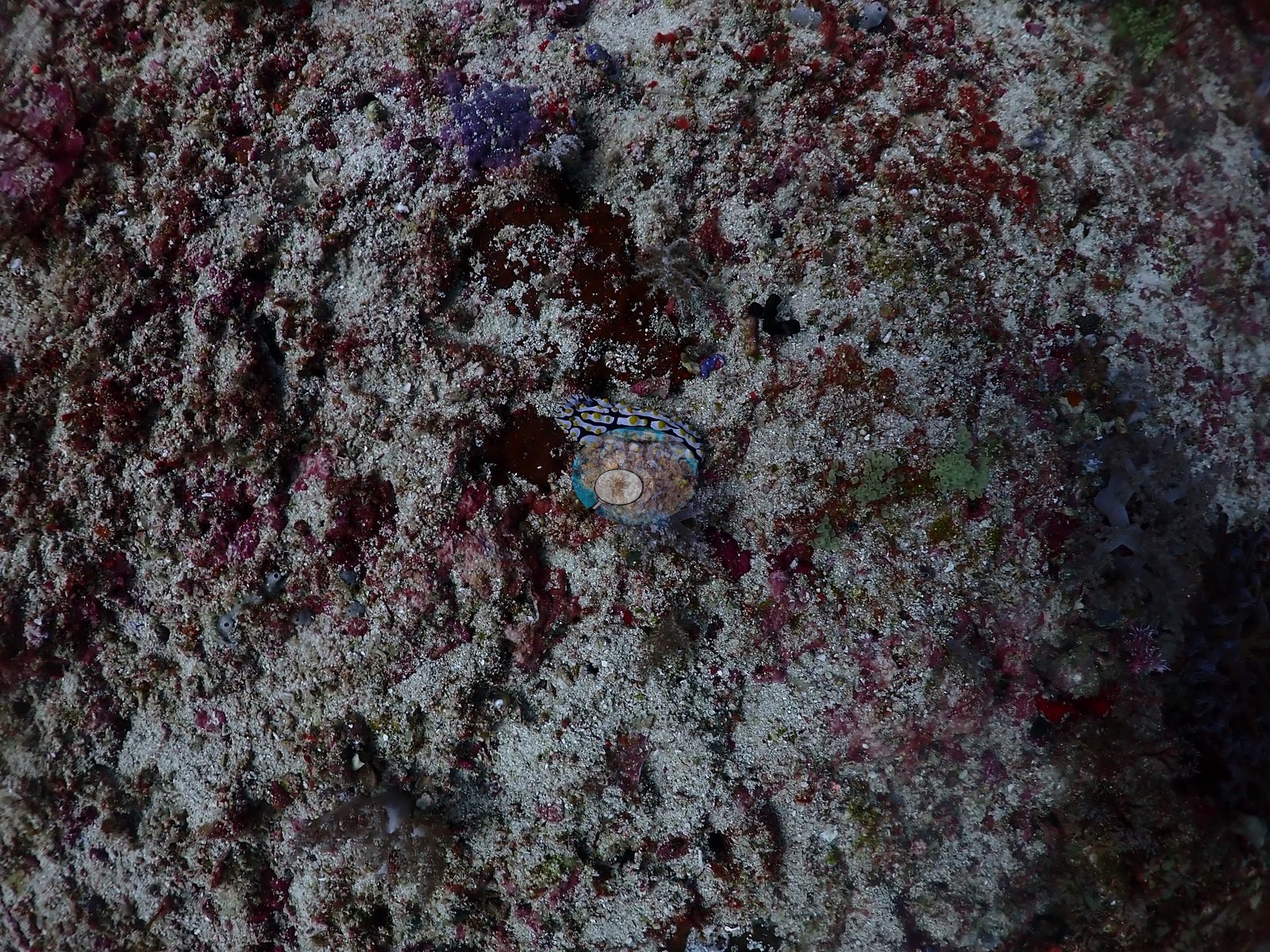
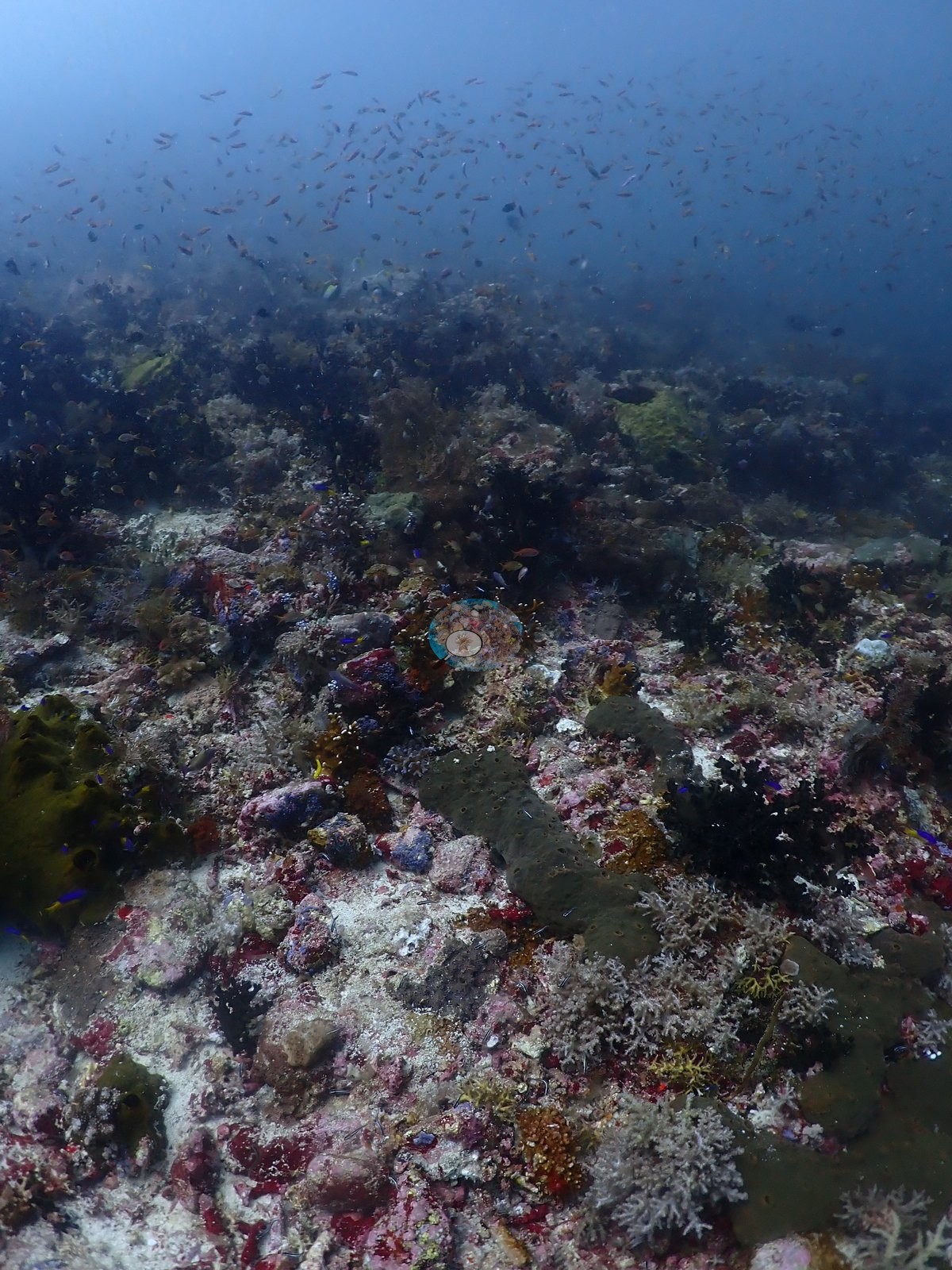
Crustose coralline pink pavement and encrusting orange-red and dark maroon sponges cover much of the remaining substrate, and a pair of frames show massive gray boulder-sponge/coral heads with feather-star crinoids perched on them (e.g., Image 9, Image 14, Image 16, Image 26).
Coral cover
Coral cover: 25% — a blind Claude computer-vision point count of 103 of Anderson's unedited photographs (20 points per photo; water, fish, and obstructions excluded). Other computer-vision methods are listed in the method table.
Stressors
Condition: one small, isolated stark-white branching colony sits atop a larger brown massive, distinct enough from its neighbors to flag as possible bleaching or recent partial mortality on a single small colony, but nothing resembling it recurs elsewhere in the dive (e.g., Image 29).
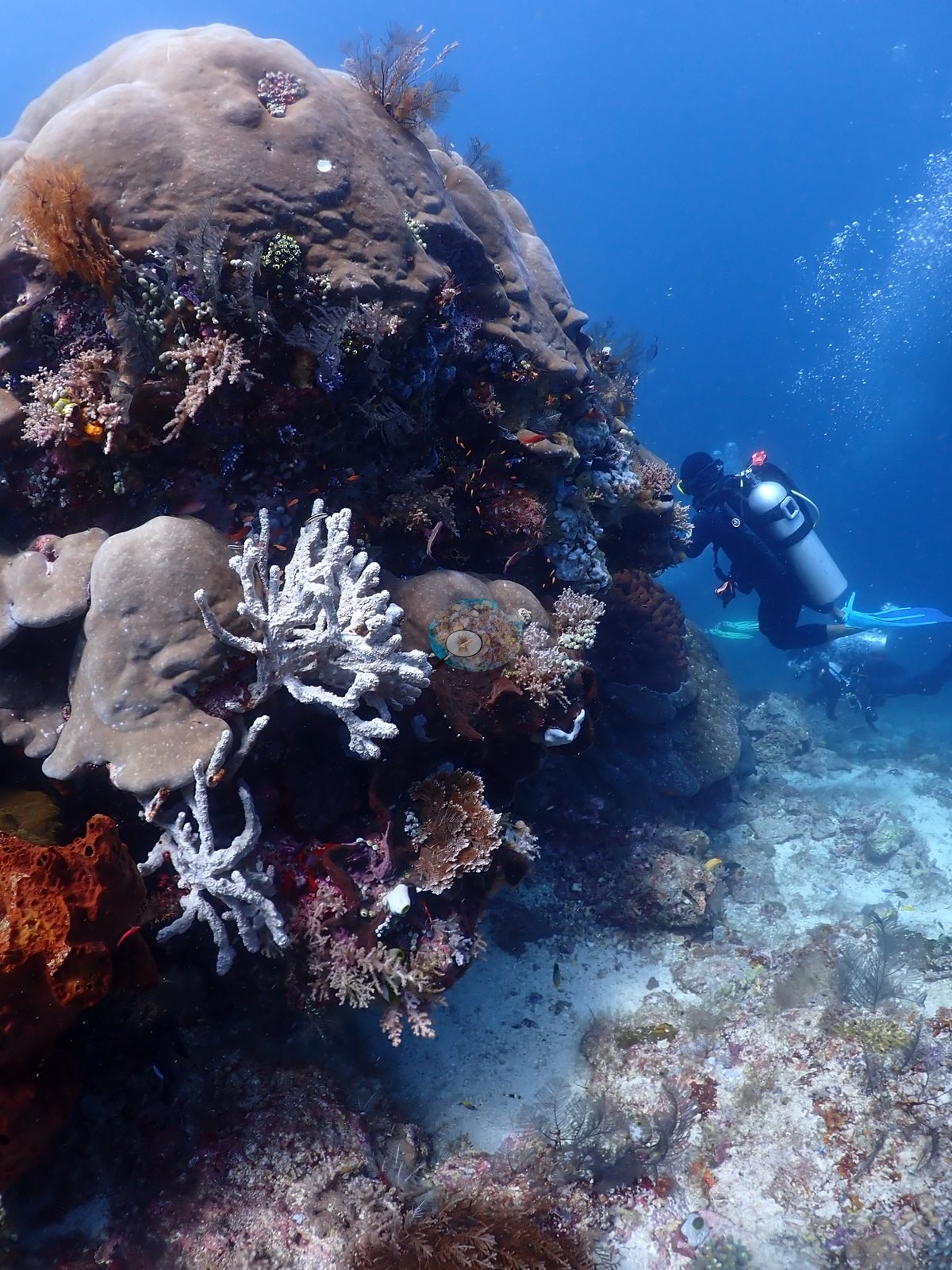
No disease, crown-of-thorns, or predation was seen in any frame.
Fish and other fauna
The log-noted three turtles were not resolved in these 103 surviving frames, most likely obscured by the poor visibility rather than absent.
Comparisons with other data
No prior survey data from this site. If you would like to share yours, please email us.
Other notes
Divers appear repeatedly giving scale on the wall and over the plate fields (e.g., Image 2, Image 3, Image 12, Image 19, Image 23, Image 30, Image 46, Image 49).
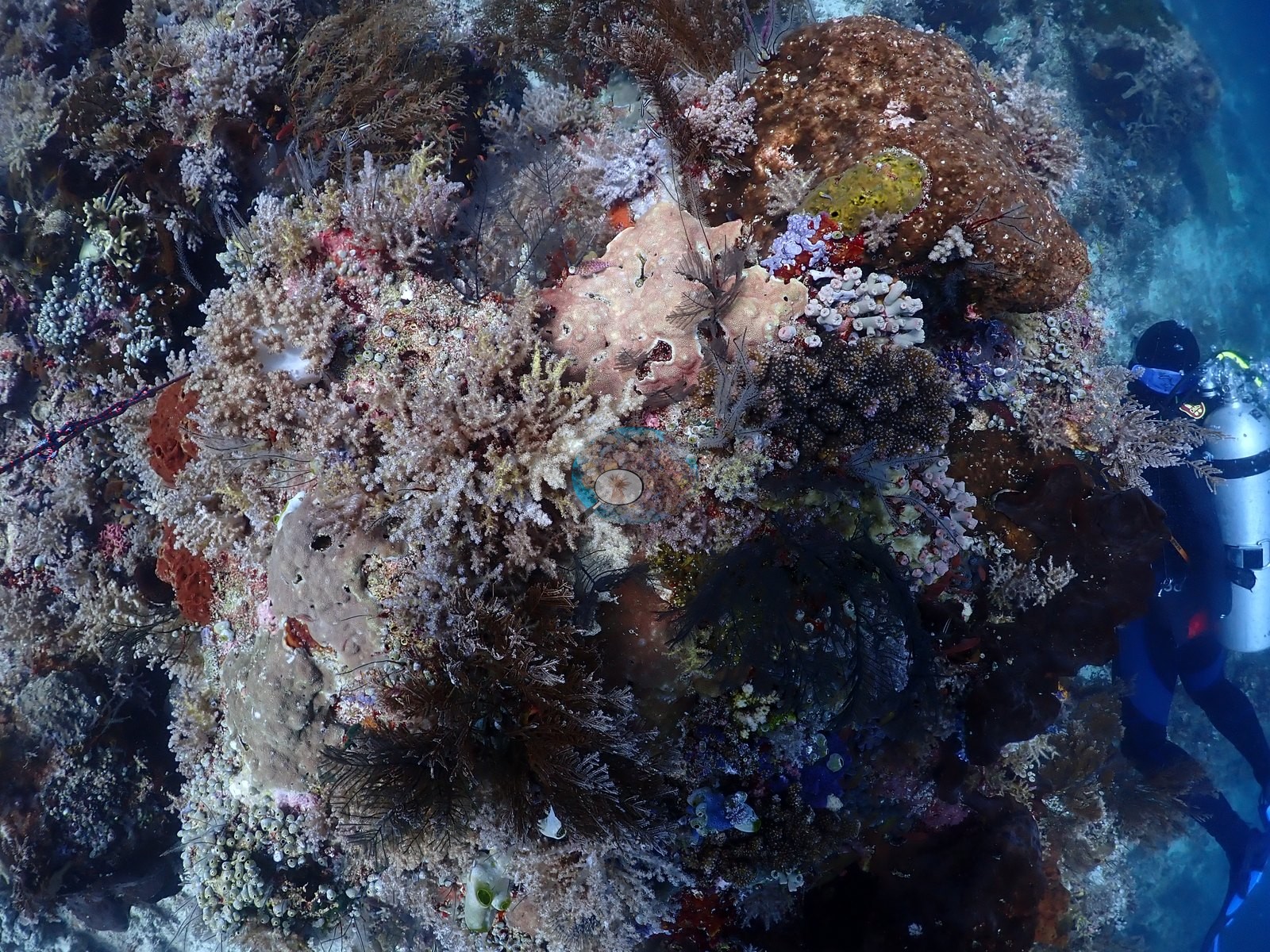
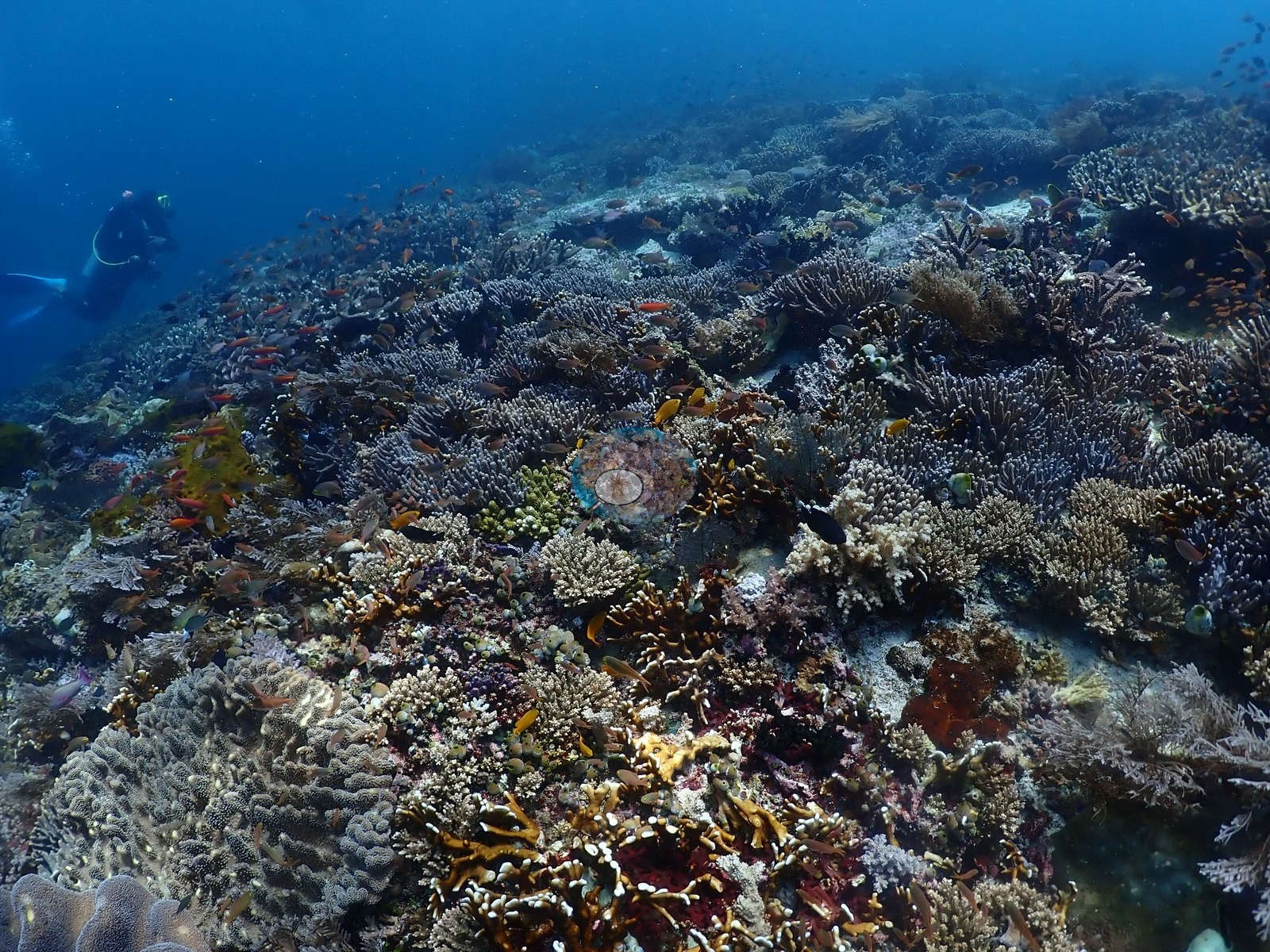
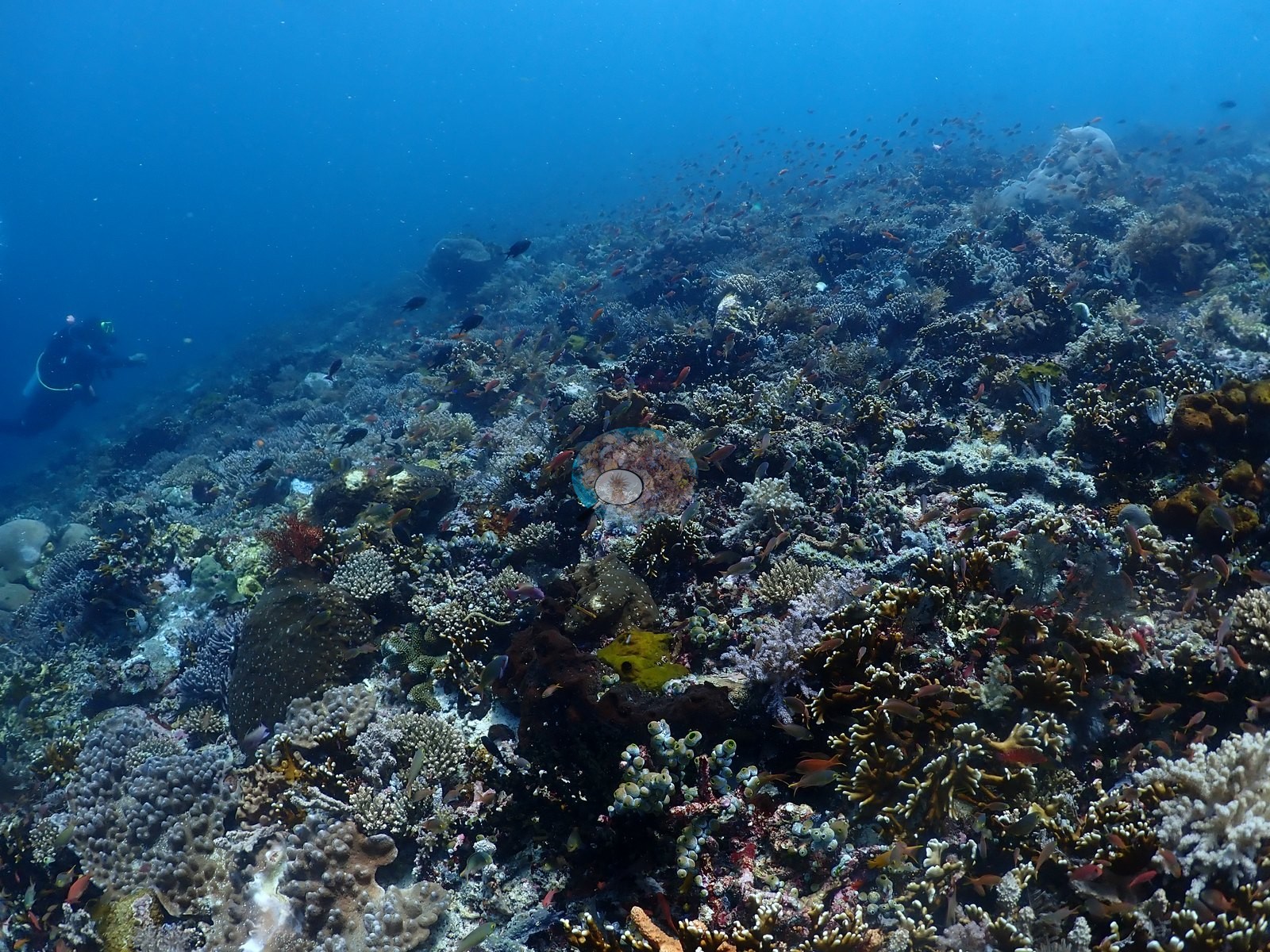
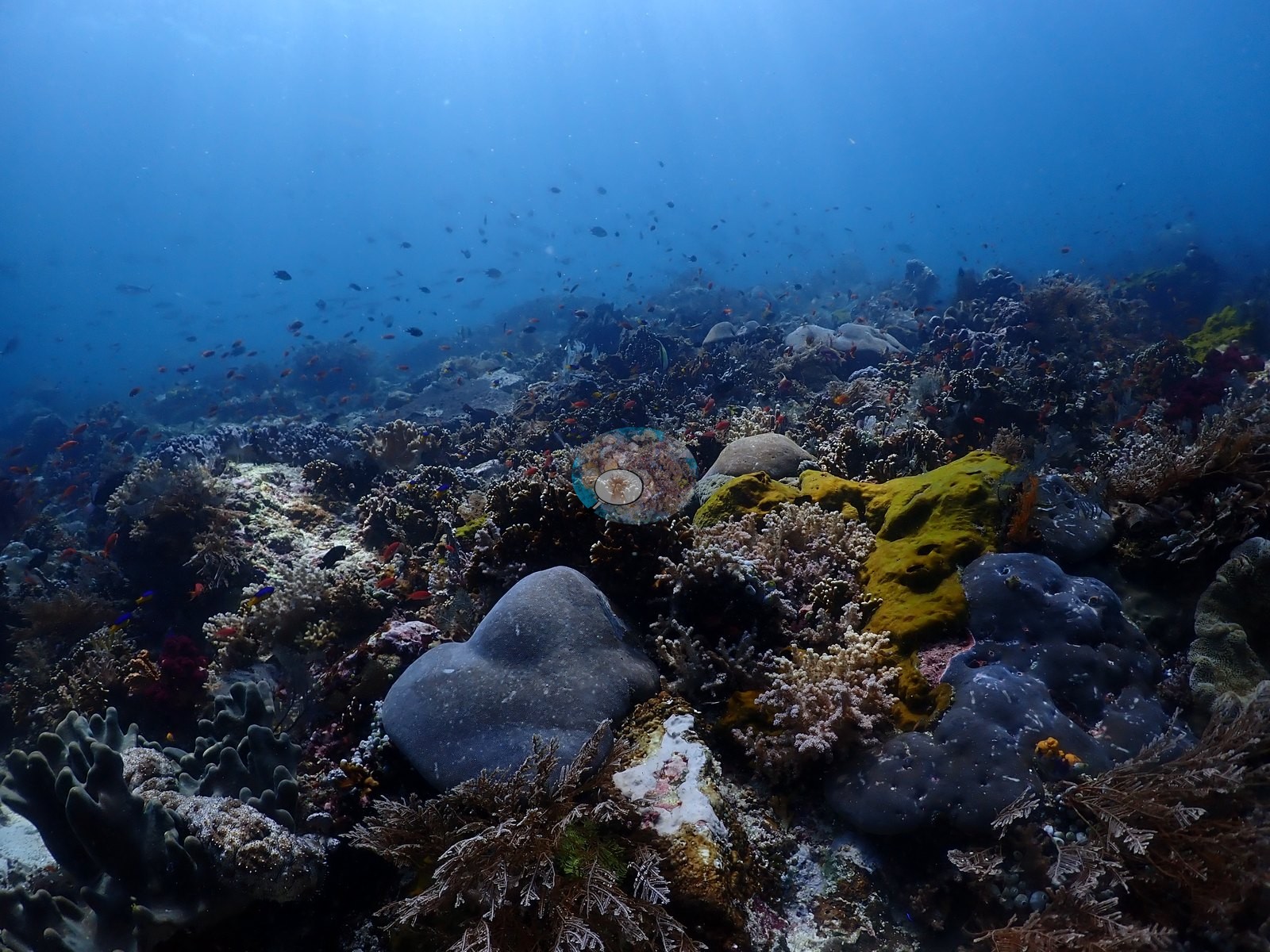
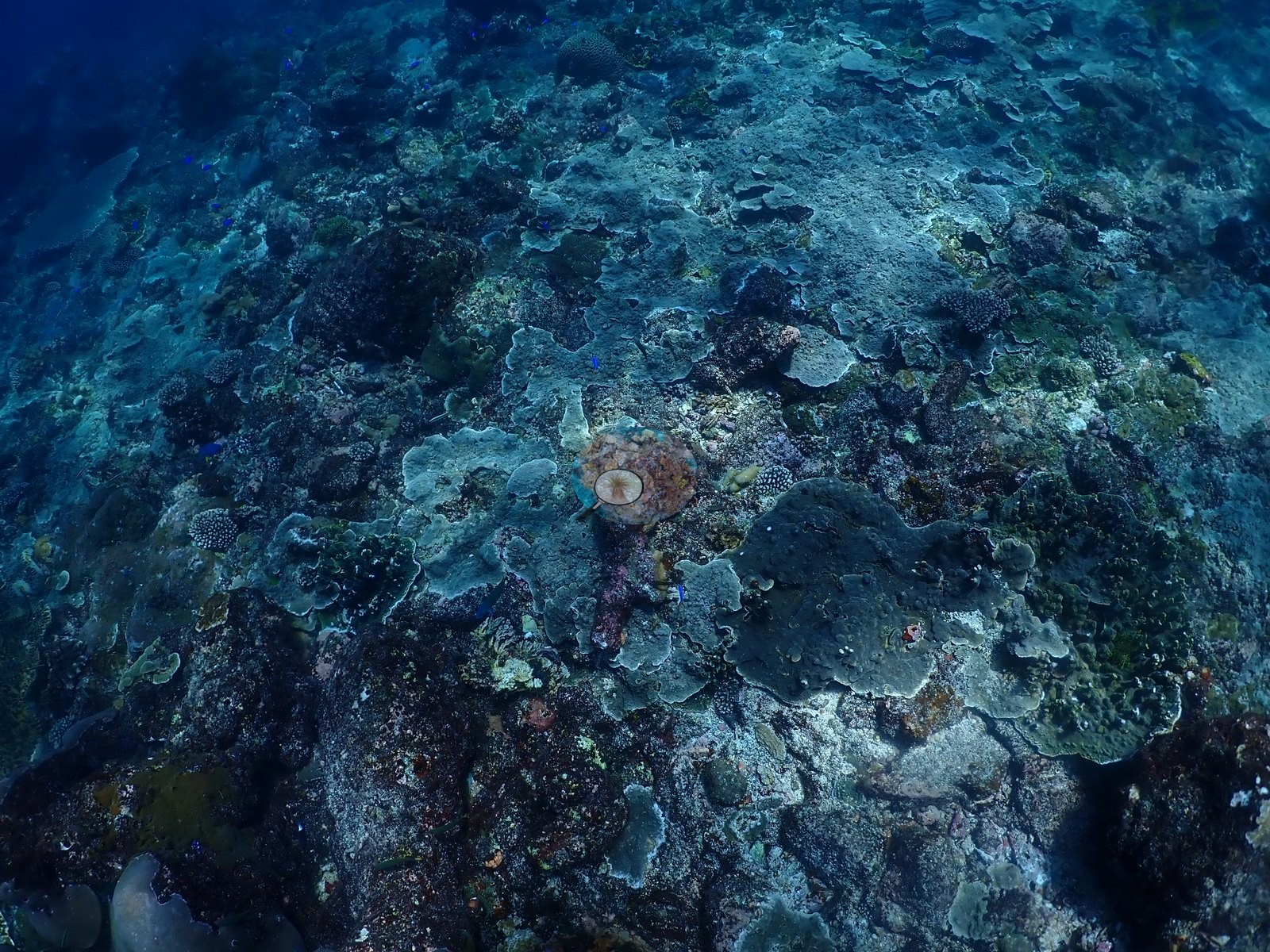
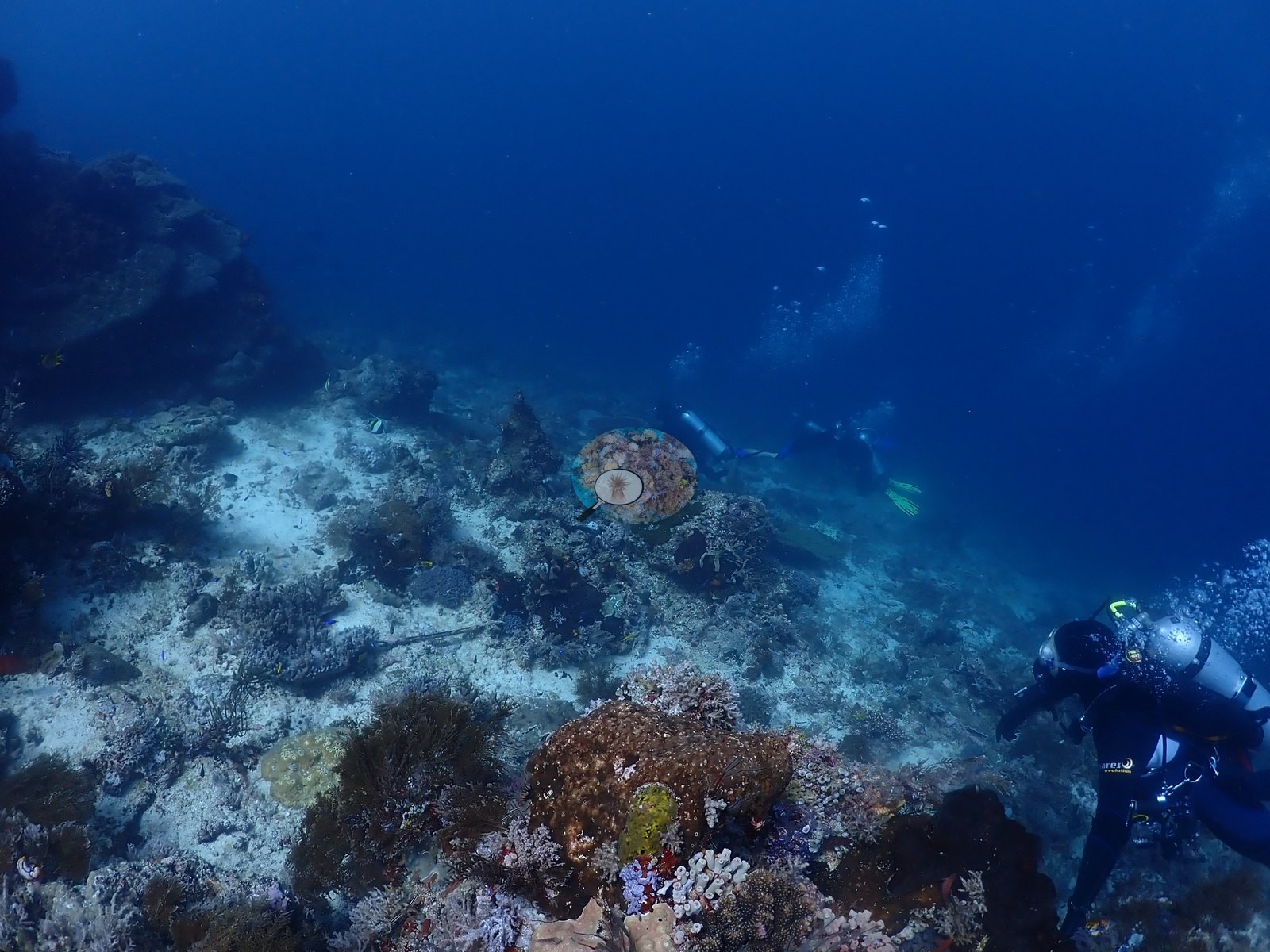
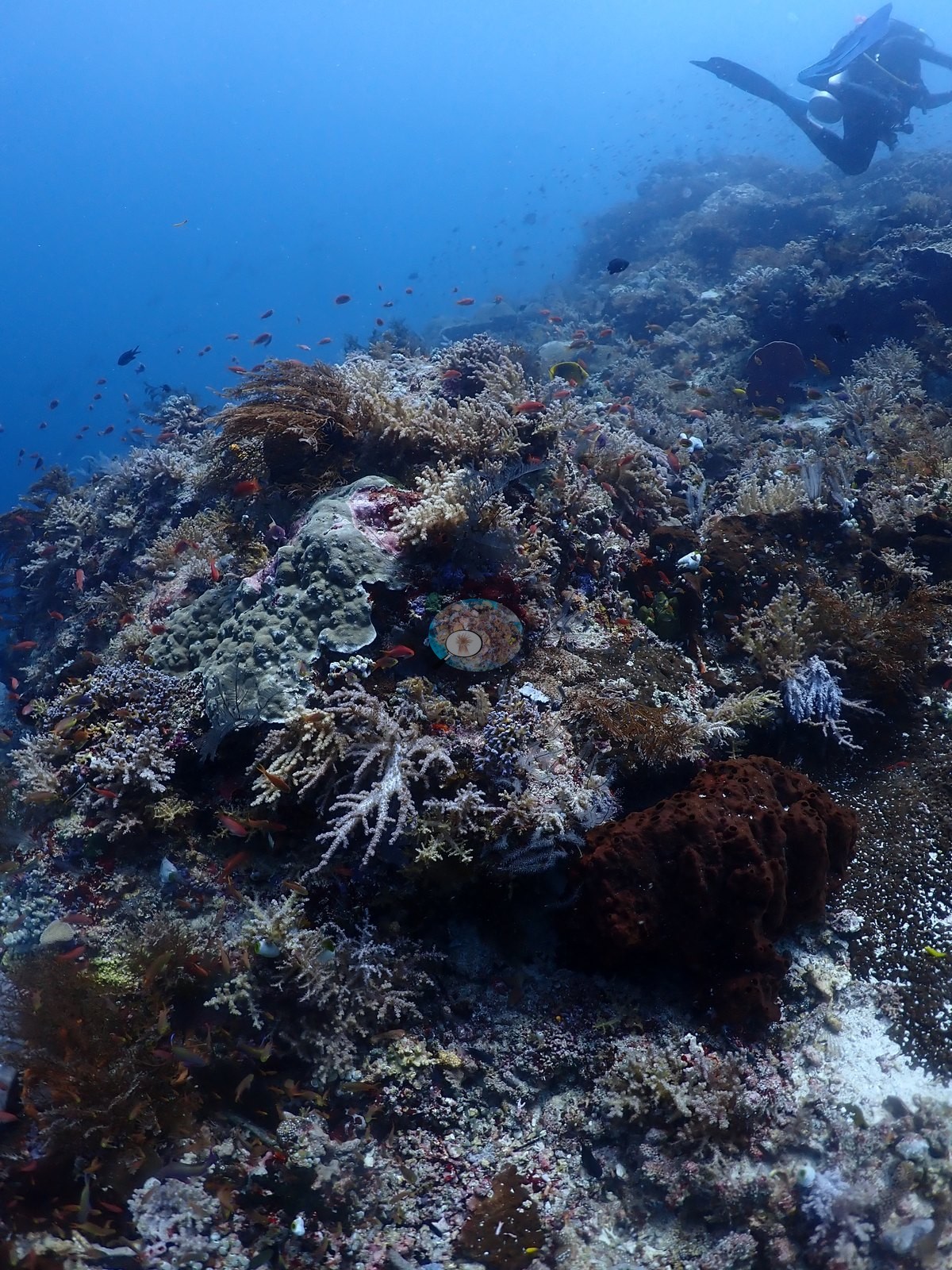
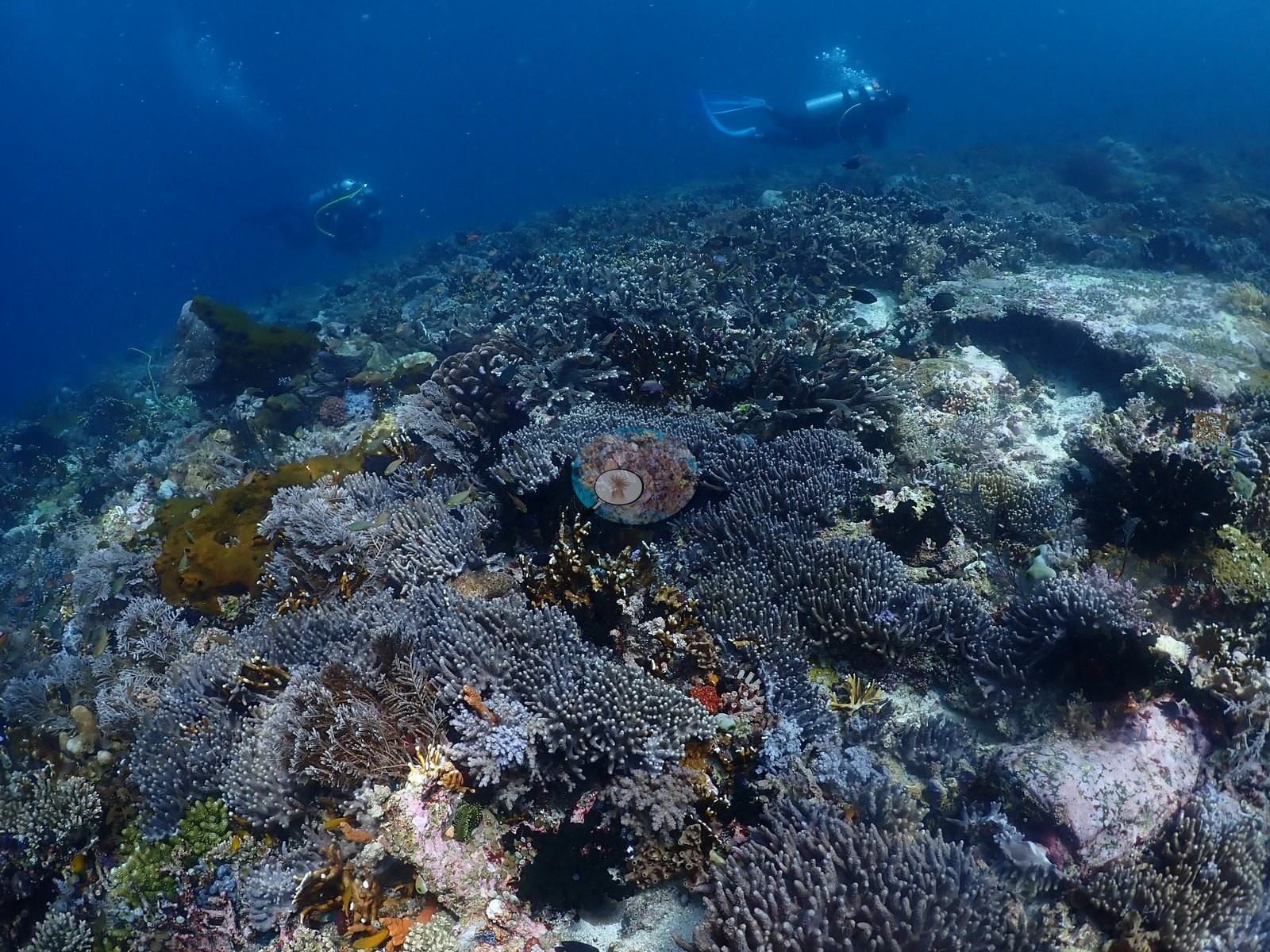
Anderson's field note: “easily the worst viz of the trip, maybe 2-3 m, brown plankton, strong currents, three turtles”
CV model comparison
More info
DINOv3 and CoralSCOP were run on the same photos and are listed for comparison. Coralscapes v2 and v1 were also run but are not shown: Anderson does not consider Coralscapes reliable for these photos. No diver transect exists for this trip, so agreement between the rows is not accuracy, and as of September 2026 no computer-vision method estimates coral cover accurately on new images; treat every row as indicative.| Method | Hard-coral cover (%) |
|---|---|
| In-house DINOv3 | 27.7 |
| CoralSCOP unedited | 34.3 |
| Claude | 25.0 |
Data & links
All images from Coral Reef Diagnostics. Data are from Coral Reef Diagnostics.
© Coral Reef Diagnostics.