
Indonesia - Halmahera: Pulau Sebatang
Part of the regional summaries: Indonesia - Halmahera and Indonesia - Maluku
More info
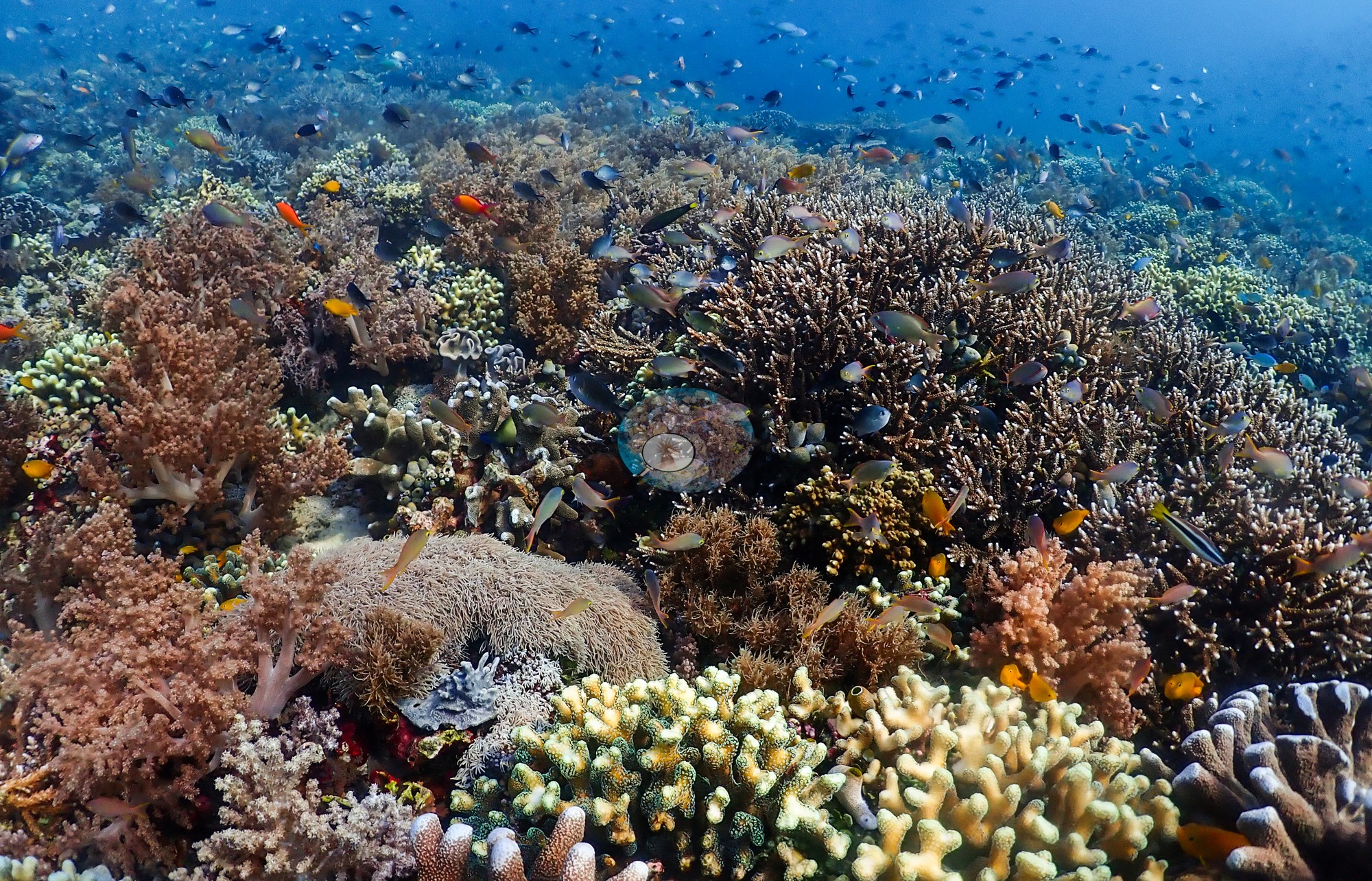
North Maluku (NOAA CRW virtual station)Pulau Sebatang lives up to Anderson's log note as among the best coral dives he's ever done, especially in the shallows, where an essentially continuous Acropora field of tables, staghorn, and corymbose colonies runs unbroken to the surface. No bleaching, crown-of-thorns starfish (COTS), or disease observed. A blind Claude computer-vision point count puts coral cover around 41%.
Pulau Sebatang sepadan dengan catatan Anderson sebagai salah satu penyelaman karang terbaik yang pernah ia lakukan, terutama di perairan dangkal, tempat hamparan Acropora yang pada dasarnya menyambung — berupa meja, cabang, dan koloni korimbosa — membentang tanpa putus hingga ke permukaan. Tidak teramati pemutihan, bintang laut mahkota duri, maupun penyakit. Penghitungan titik buta visi komputer Claude memperkirakan tutupan karang sekitar 41%.
Terjemahan ringkasan ini oleh AI; versi bahasa Inggris yang berlaku.
Eight other CRD dive sites within 5 km shown in orange — click a marker to open its page.
38 of these 54 photographs are shown beside the text that discusses them under "Site description" below.
Site description
General benthic features
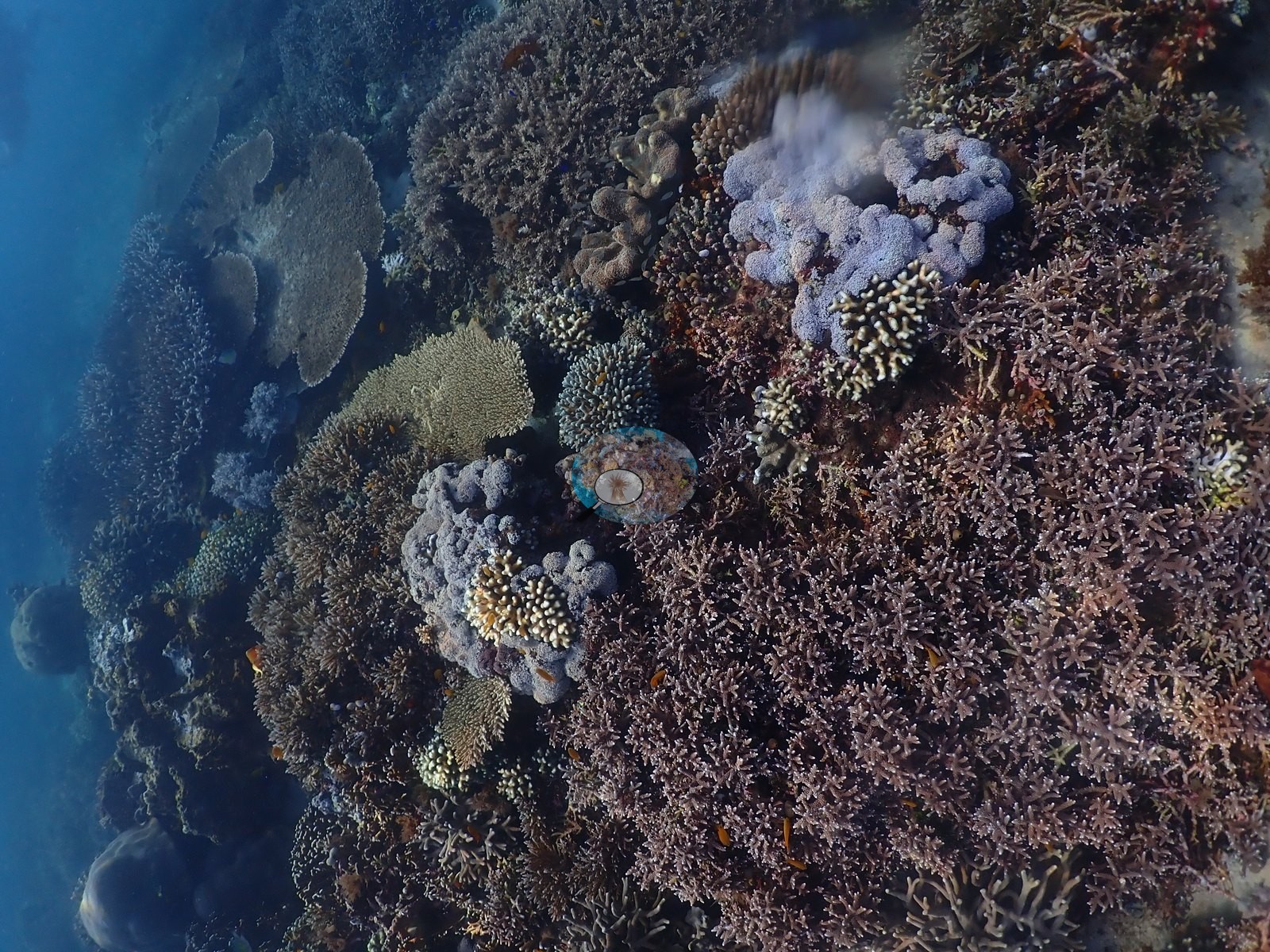
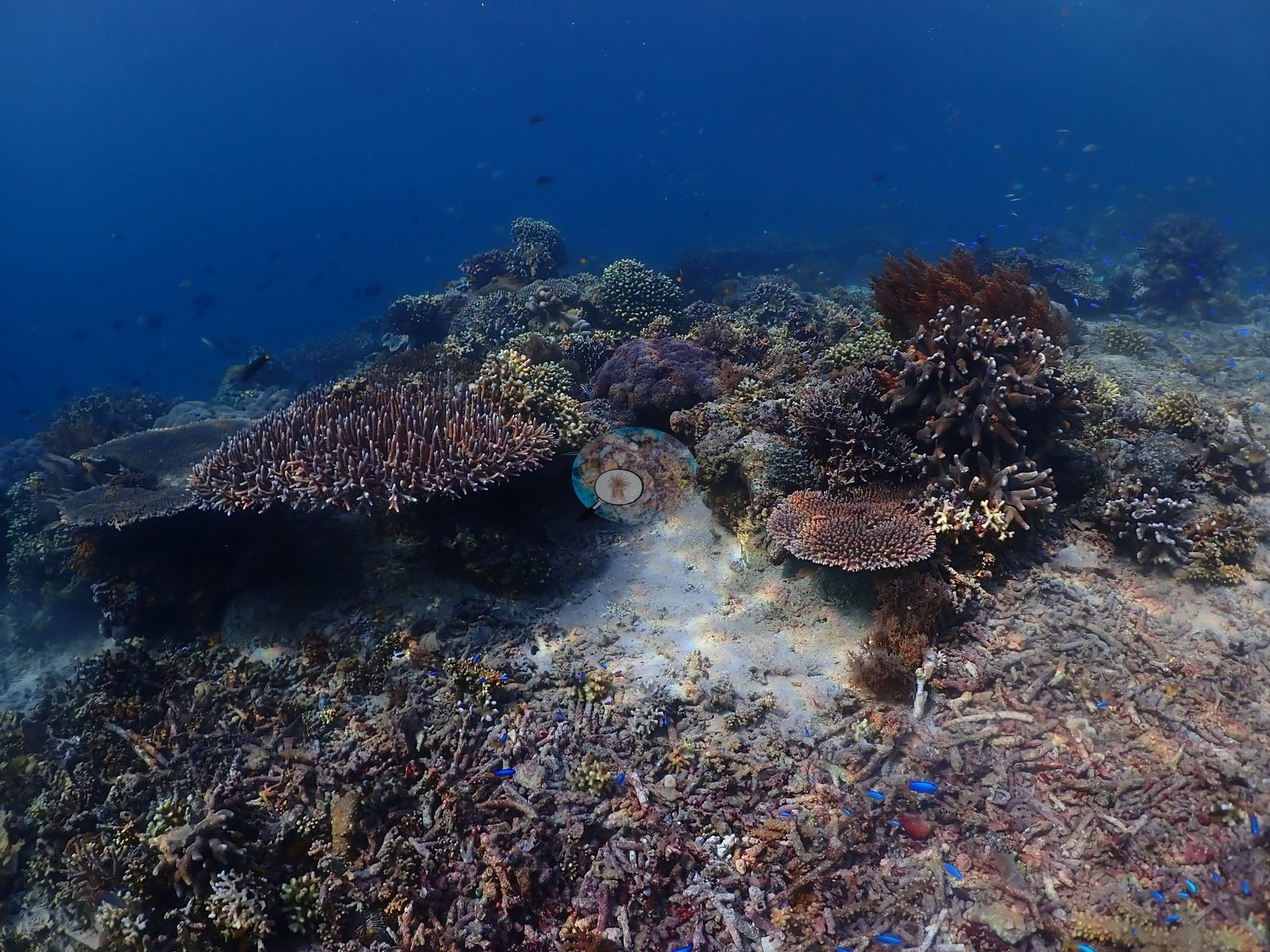
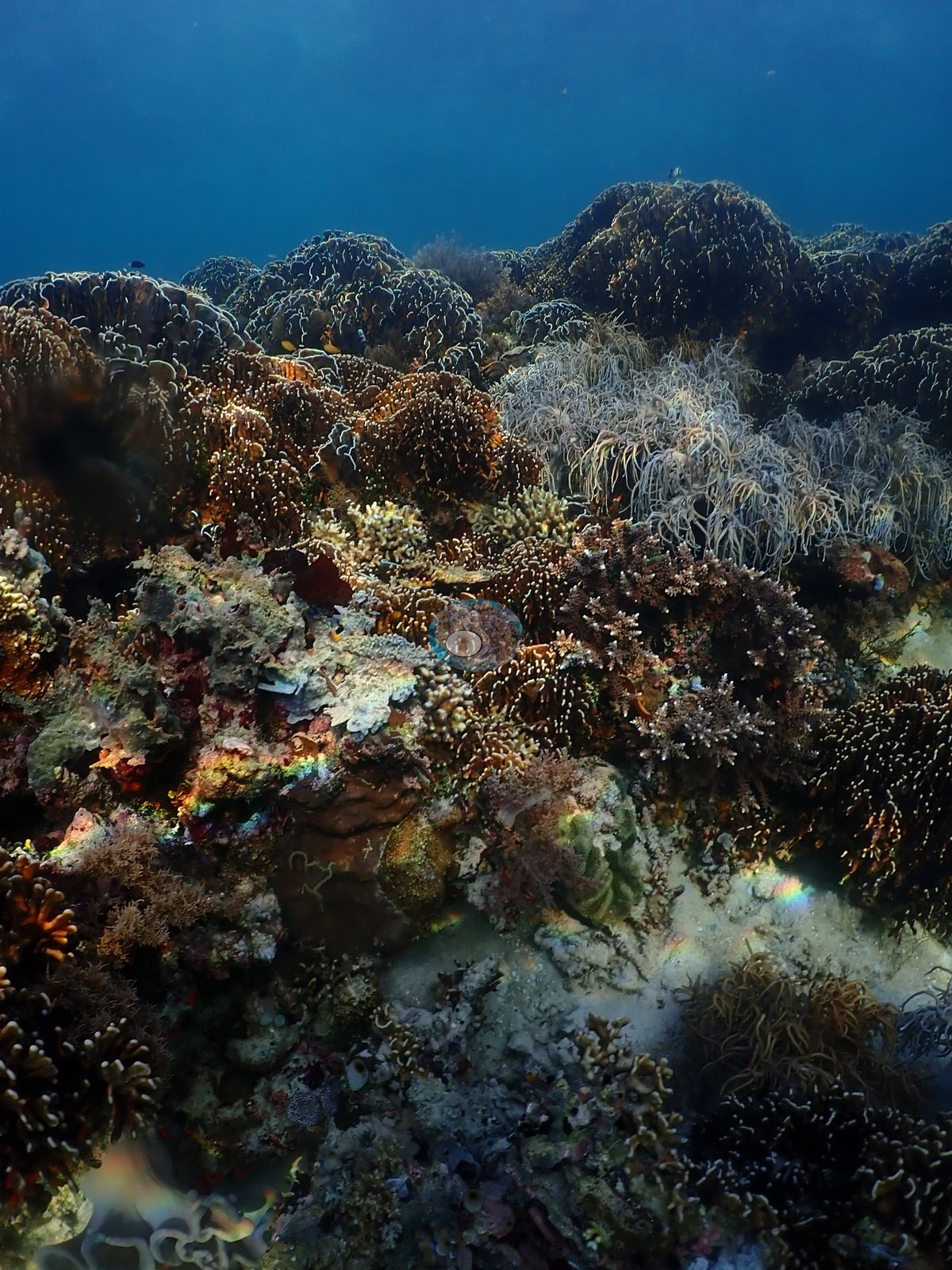
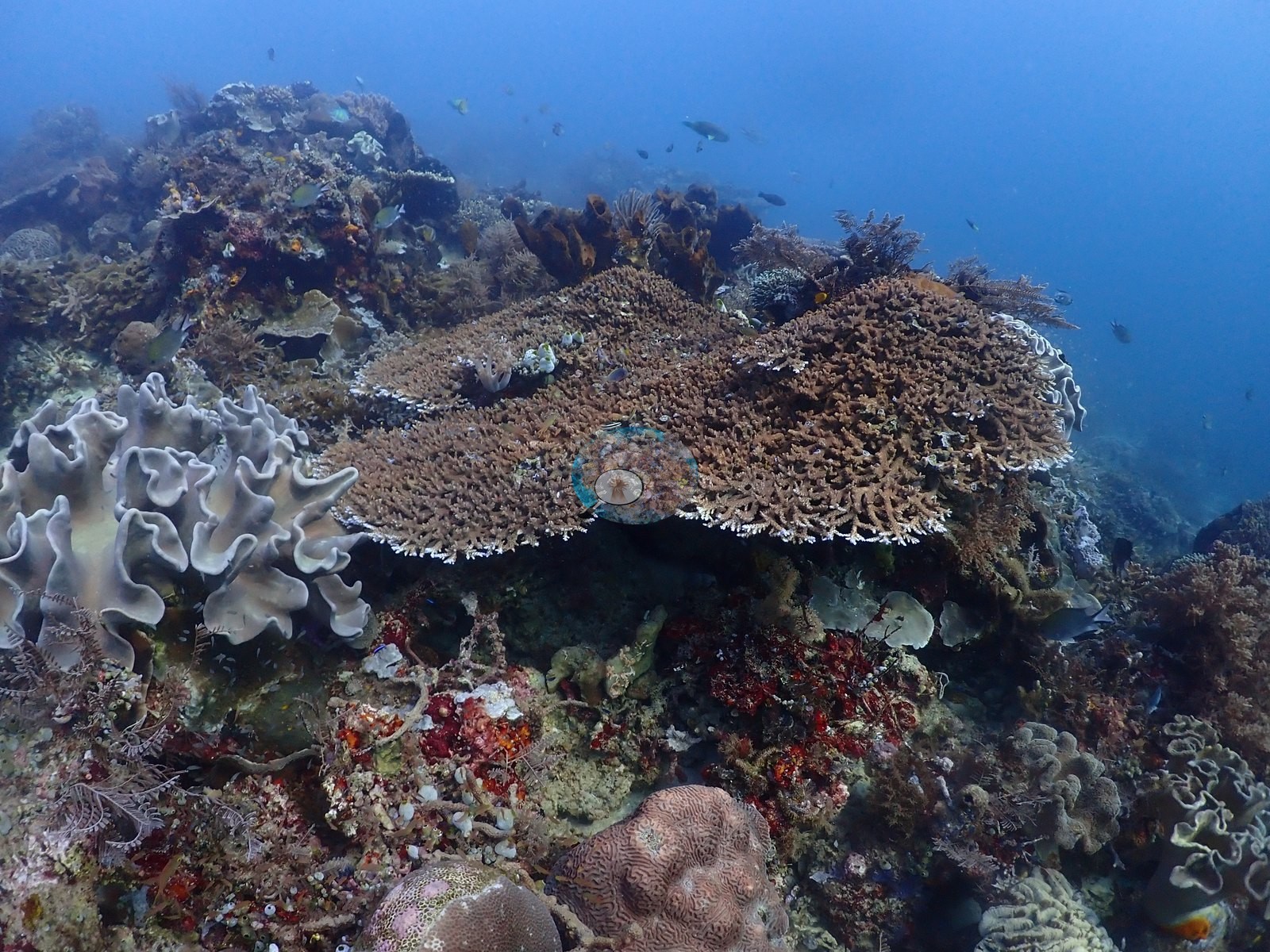
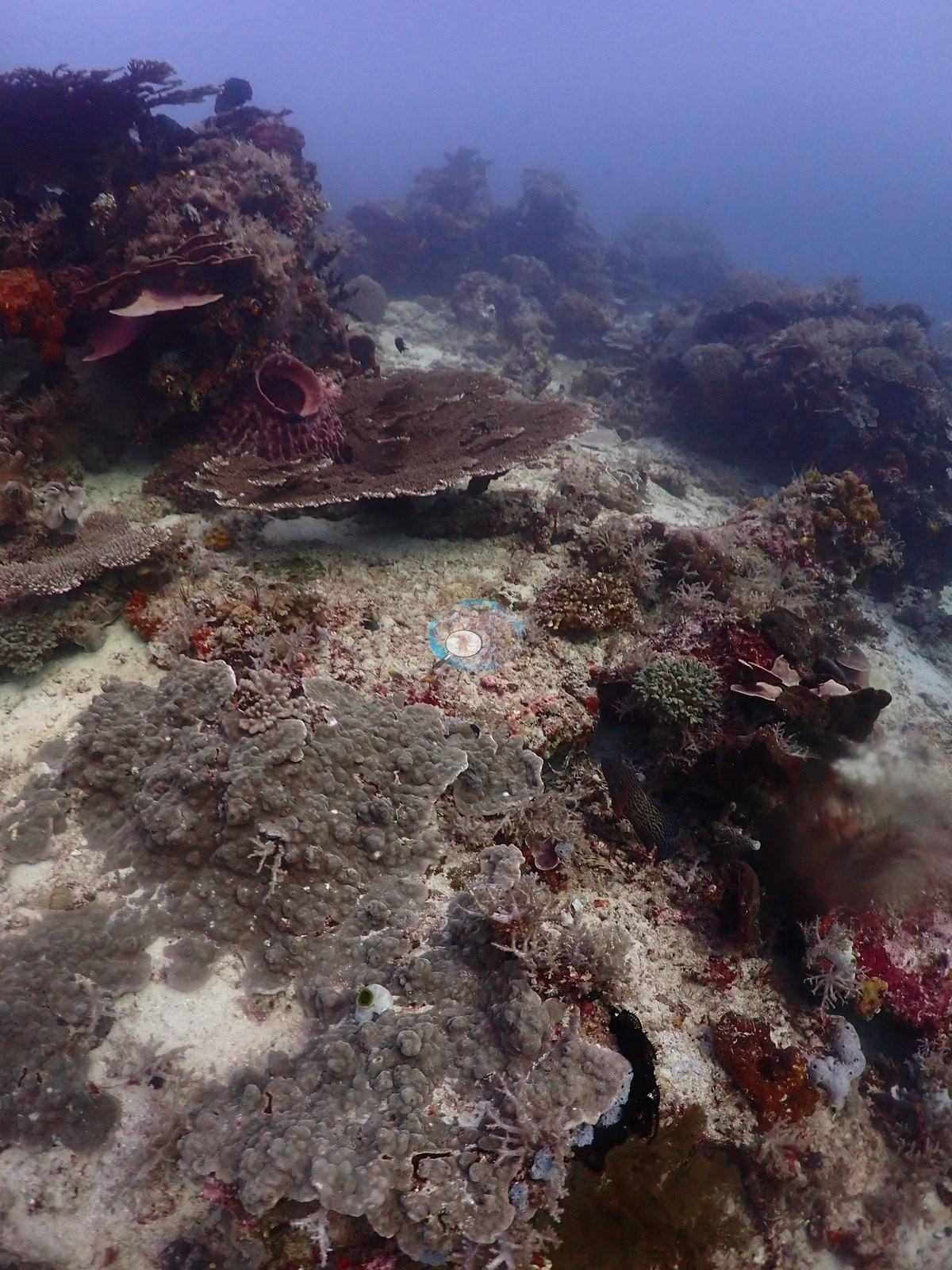
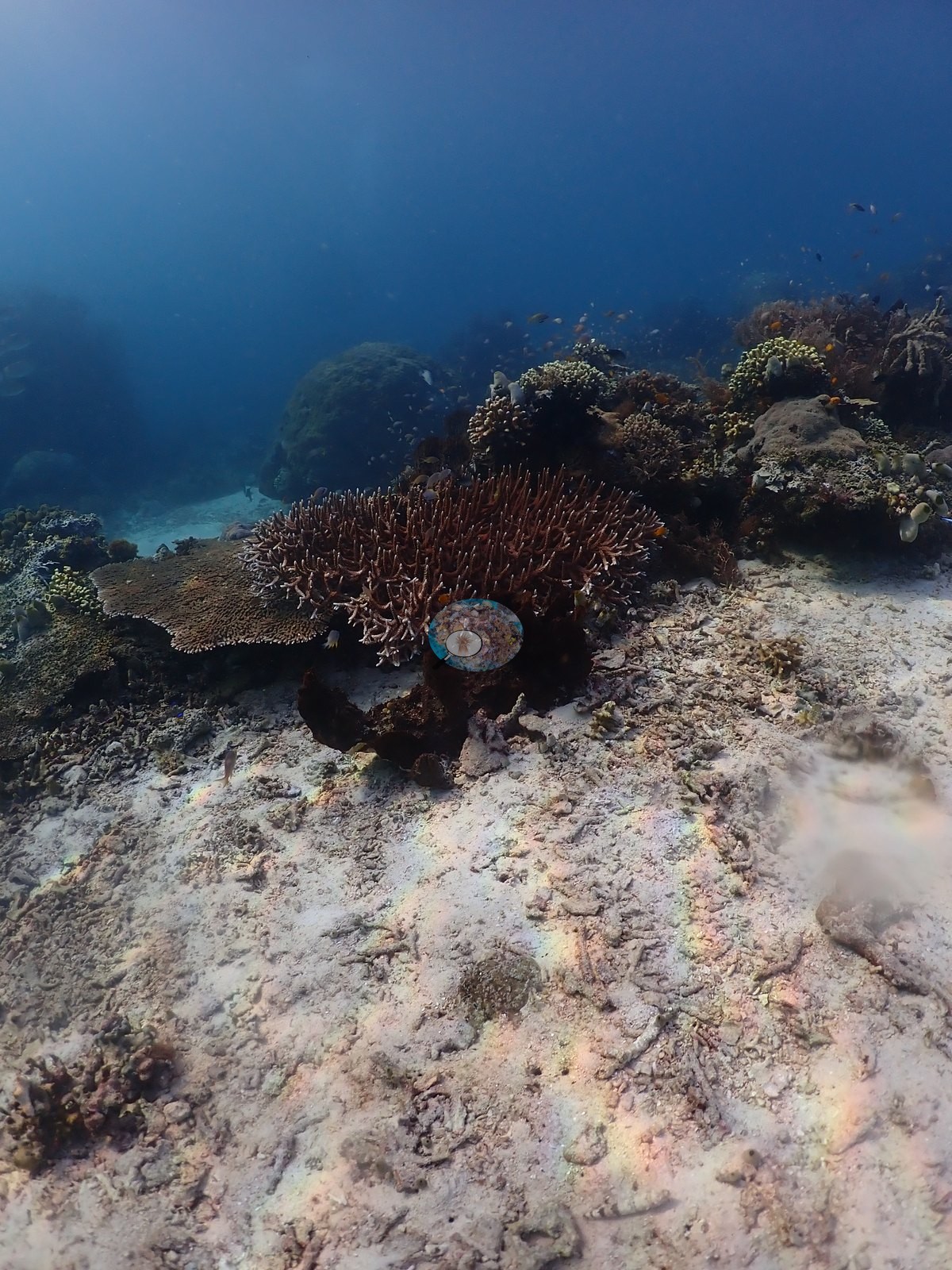
Anderson's field note is unequivocal: "amongst best coral dives I've ever done, especially in the shallows", and the shallow frames are the ones that carry the claim. The habitats. The dive descends onto a deep sand-and-bommie plain at 30–35 m: open pale sediment carrying isolated giant table Acropora, broad lavender and gray laminar Montipora/Turbinaria-type plates, and low bommies of Sarcophyton and Lobophytum leathers — the frames that produce the near-zero values (e.g., Image 13, Image 17, Image 33, Image 40, Image 43).
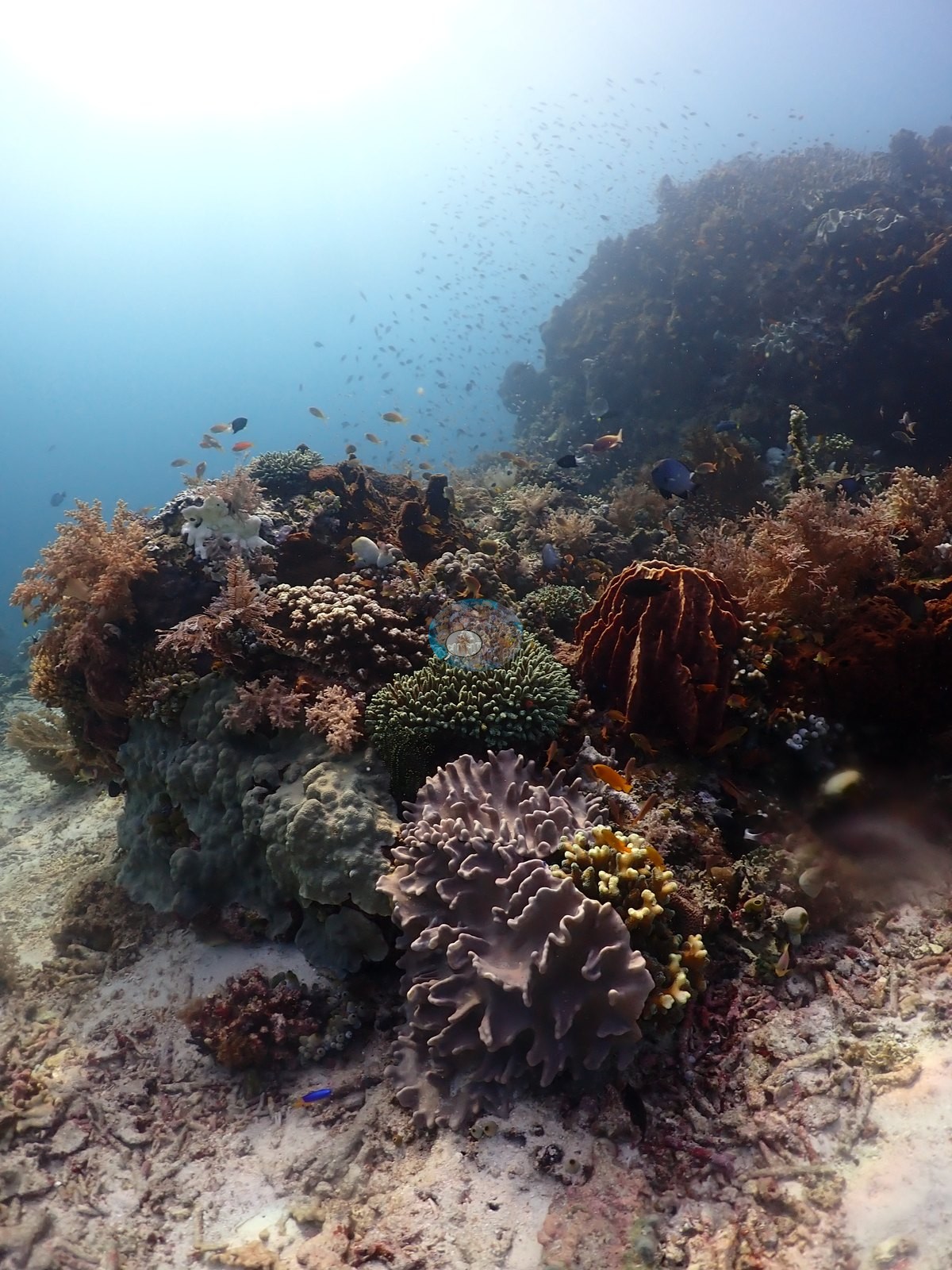
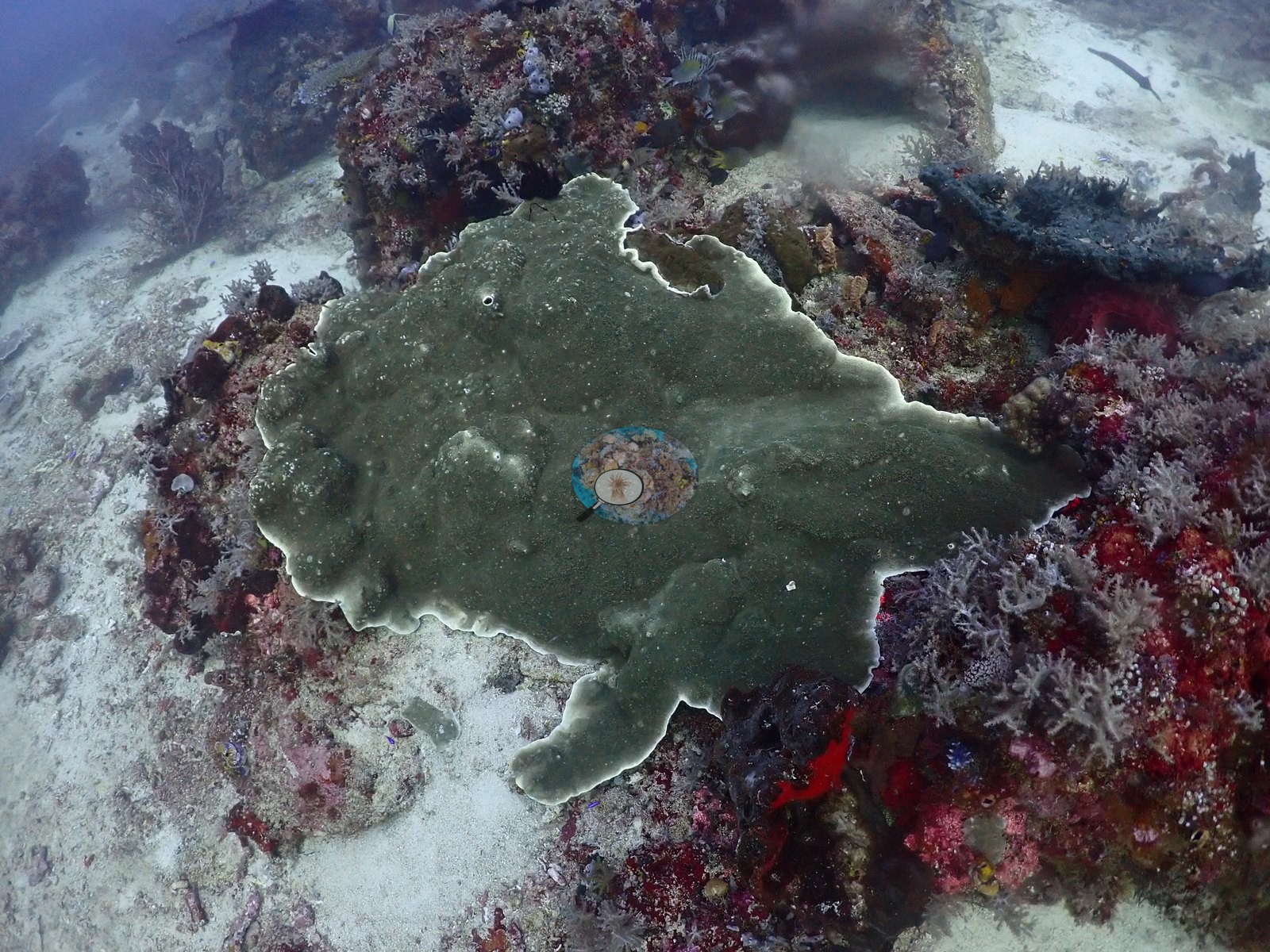
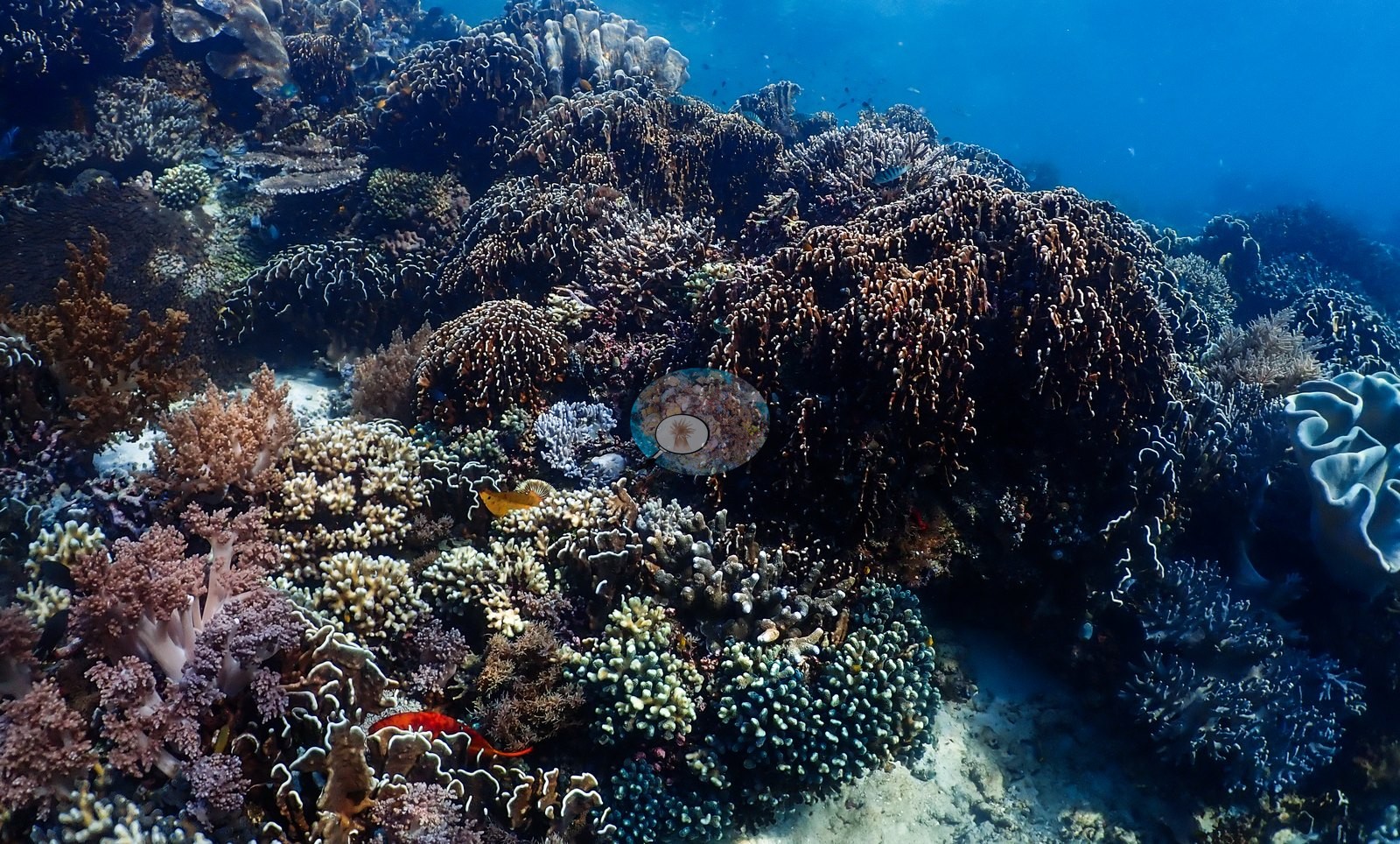
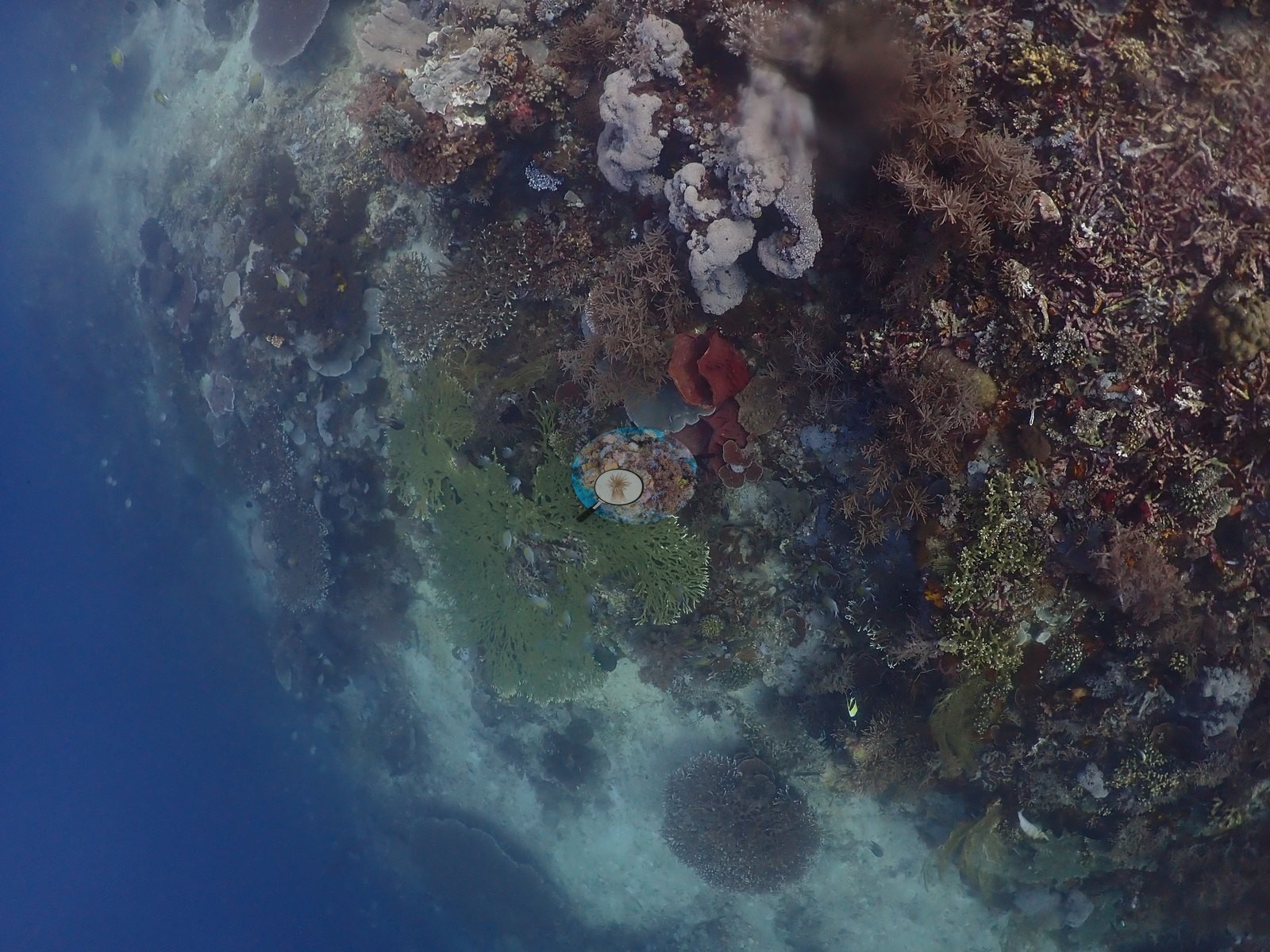
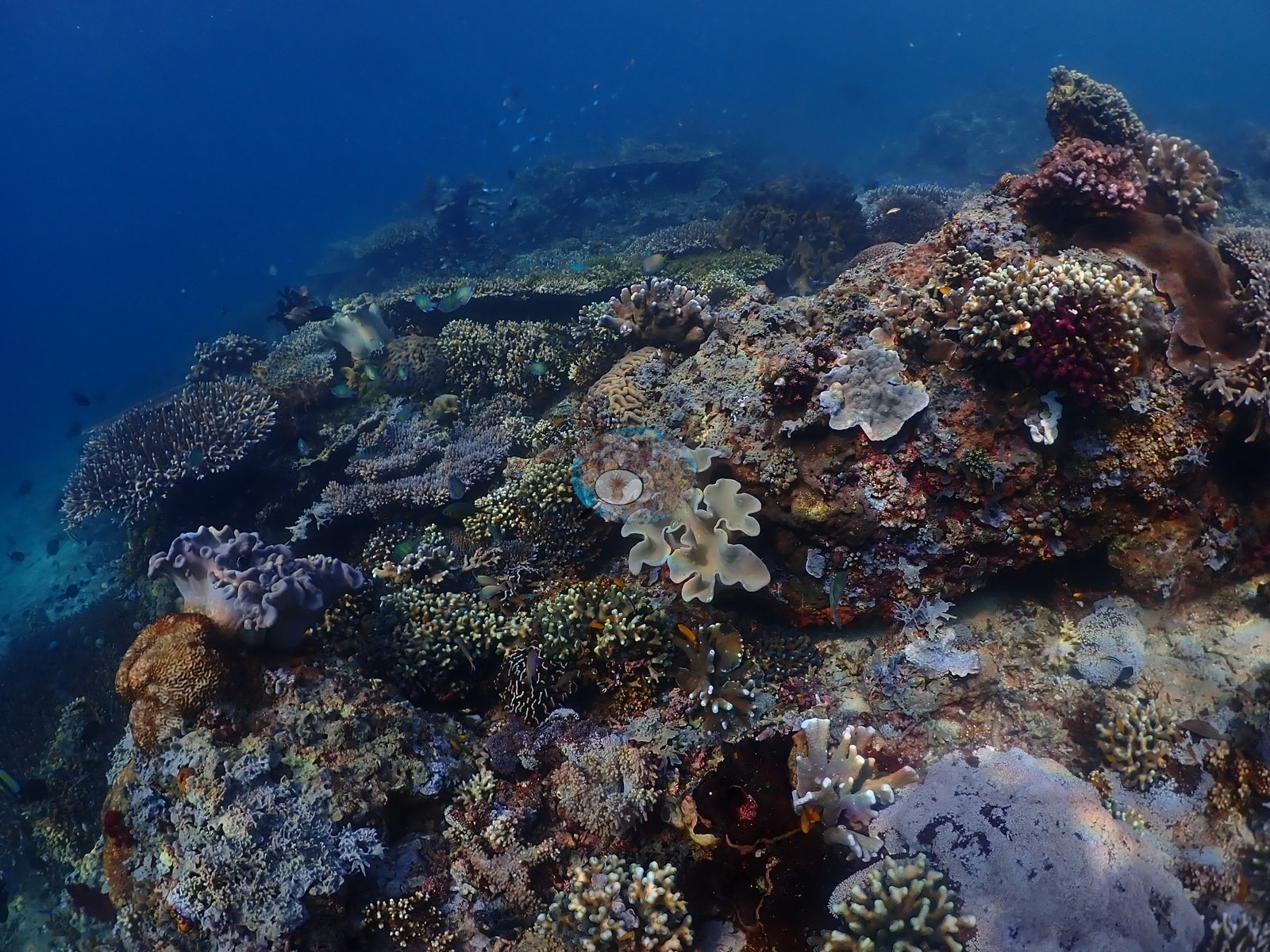
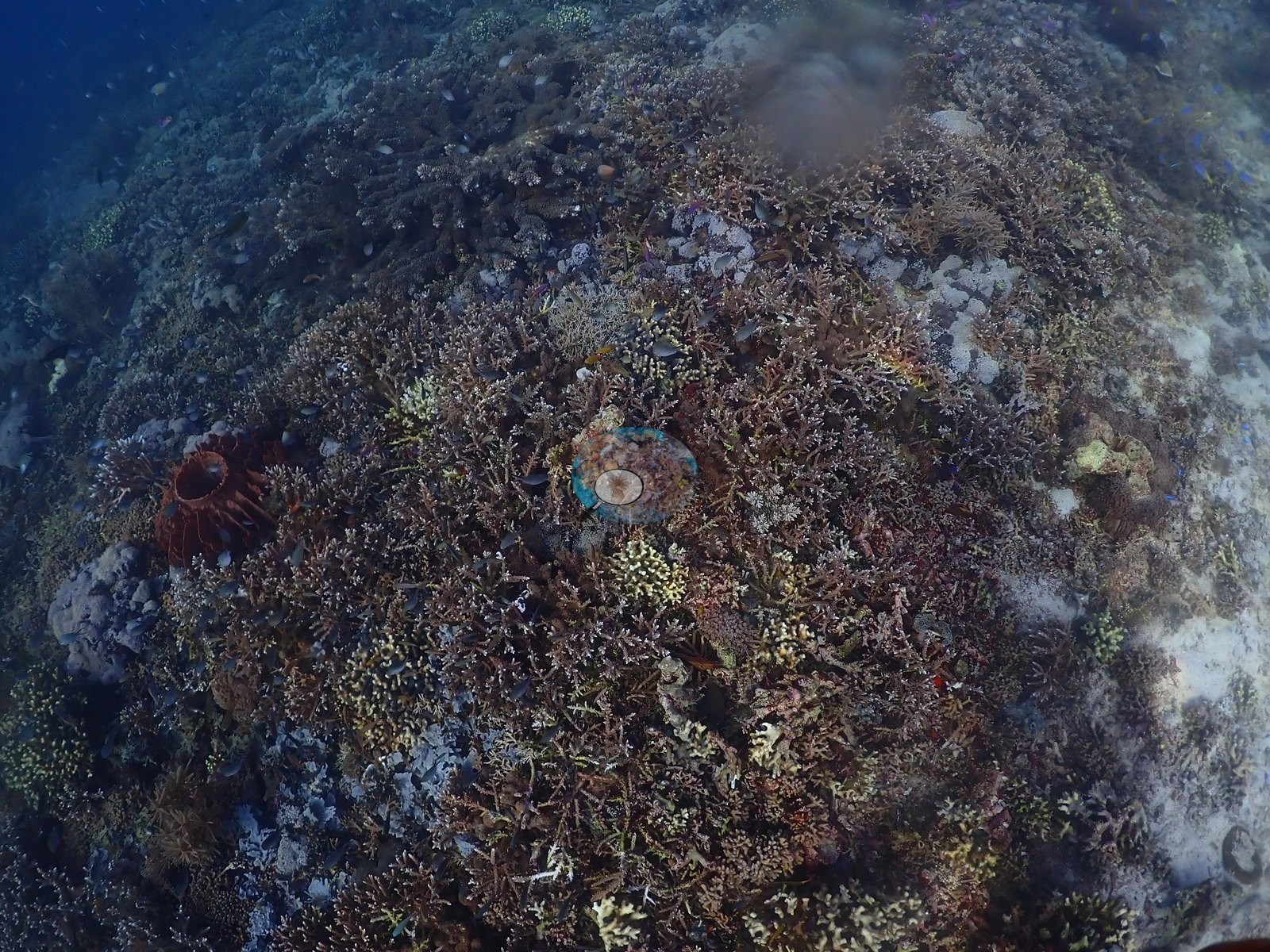
The mid-slope is a mixed garden of foliose plates, Sinularia and Sarcophyton leather corals, cabbage-like Pachyseris/Merulina, massive Porites and Diploastrea-type heads, orange and crimson barrel and encrusting sponges, and bushy red-brown growths consistent with fleshy macroalgae or fine soft coral (e.g., Image 1, Image 5, Image 8, Image 9, Image 11, Image 15, Image 16, Image 21, Image 29, Image 41).
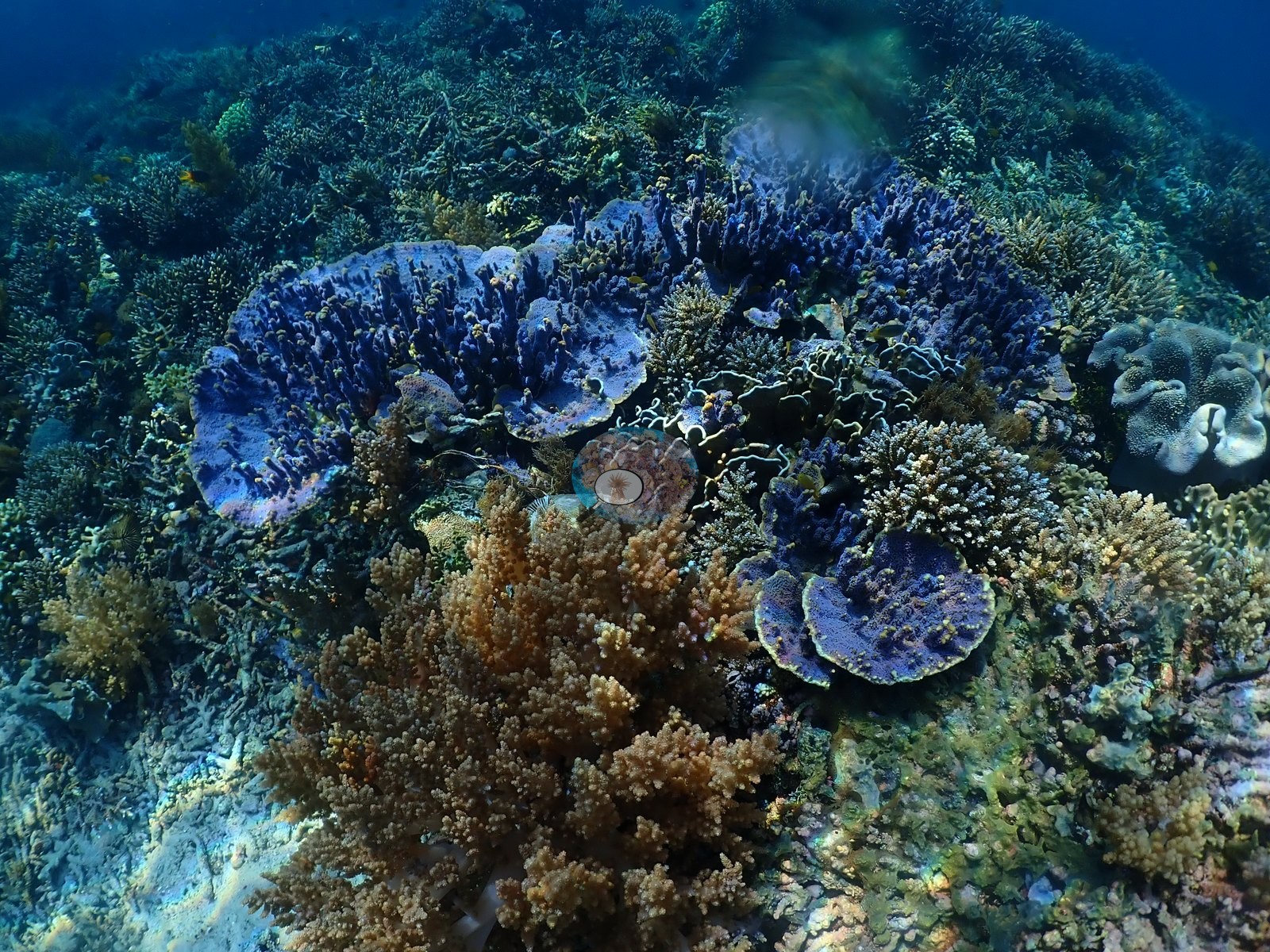
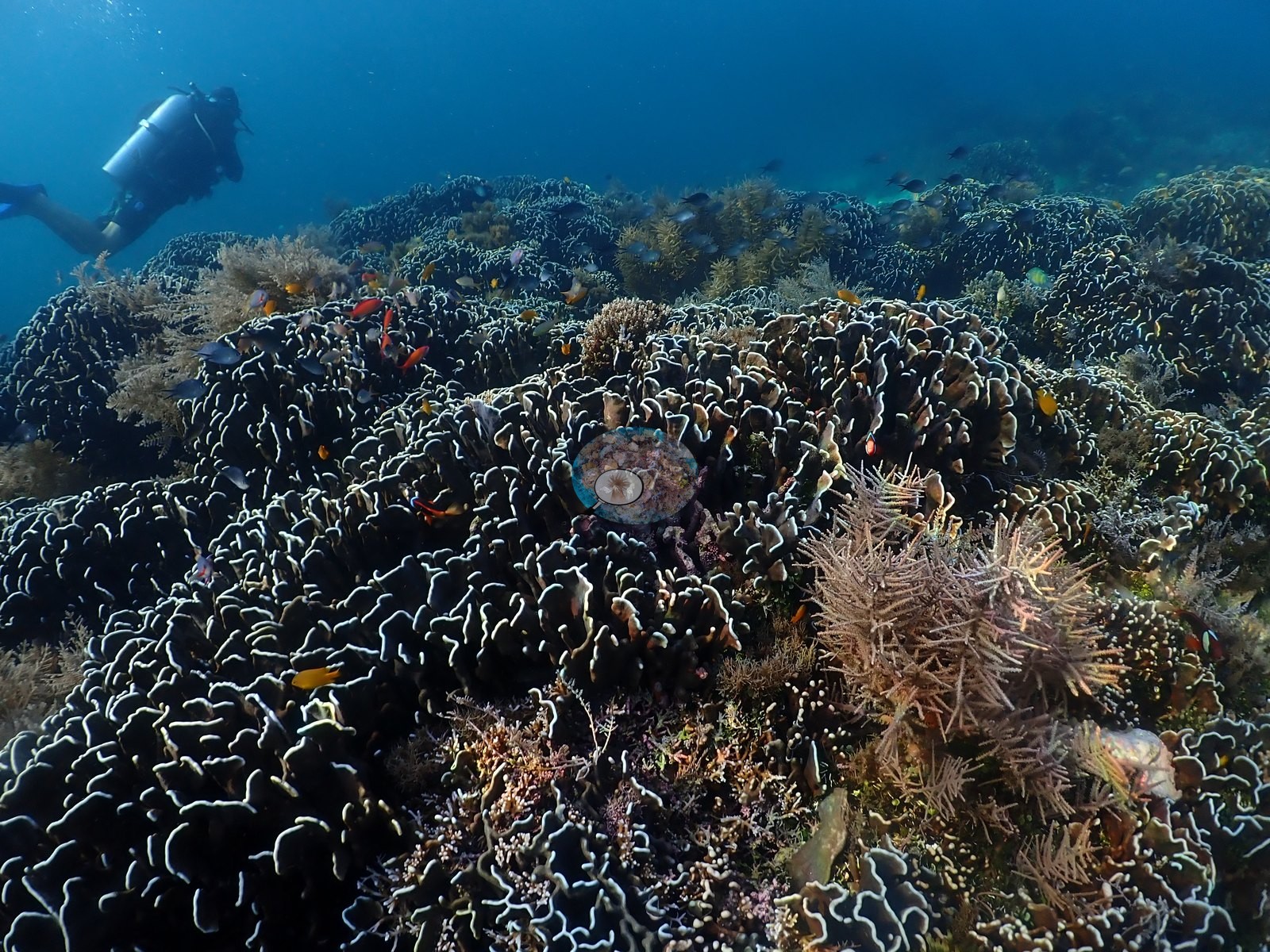
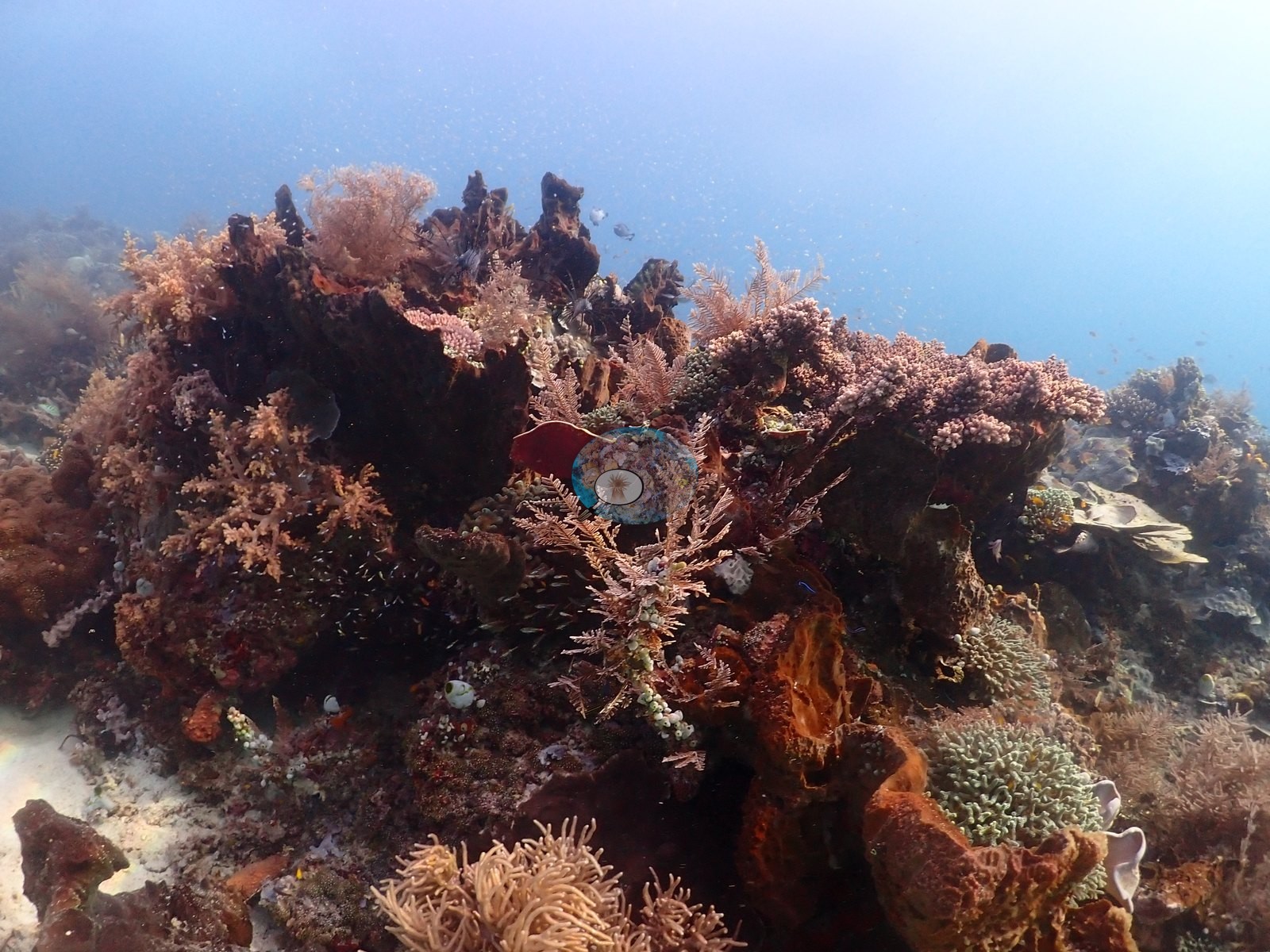
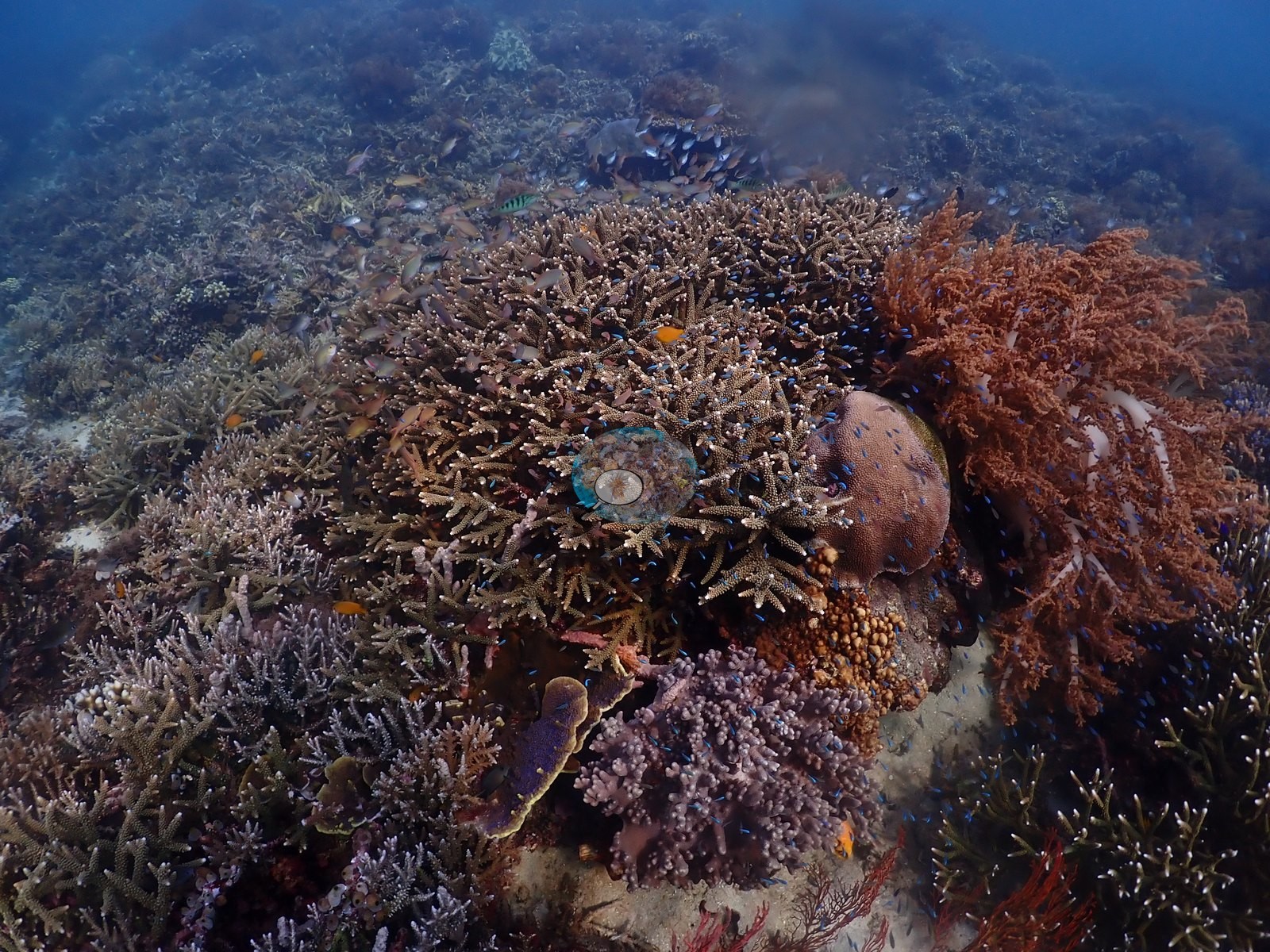
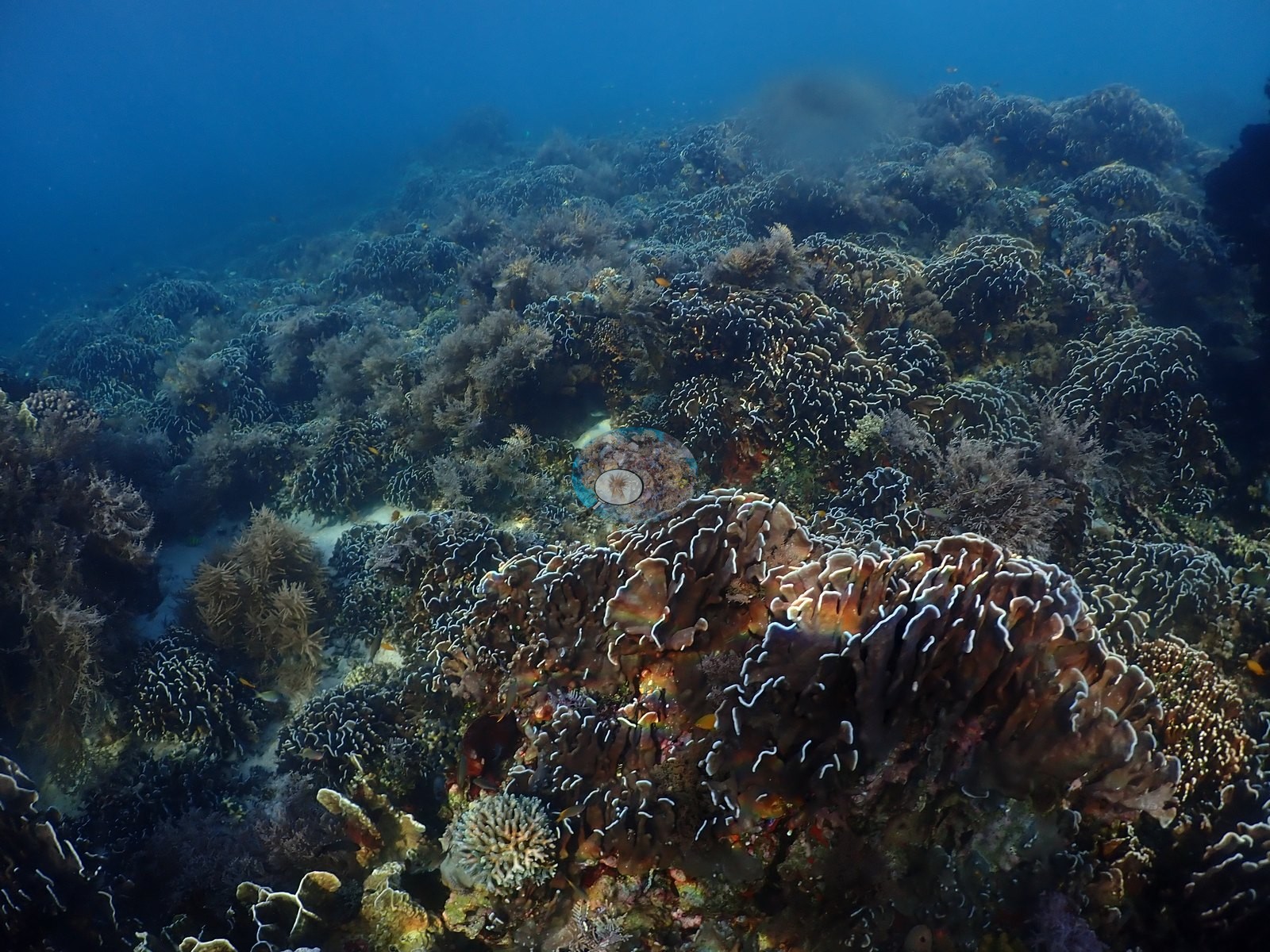
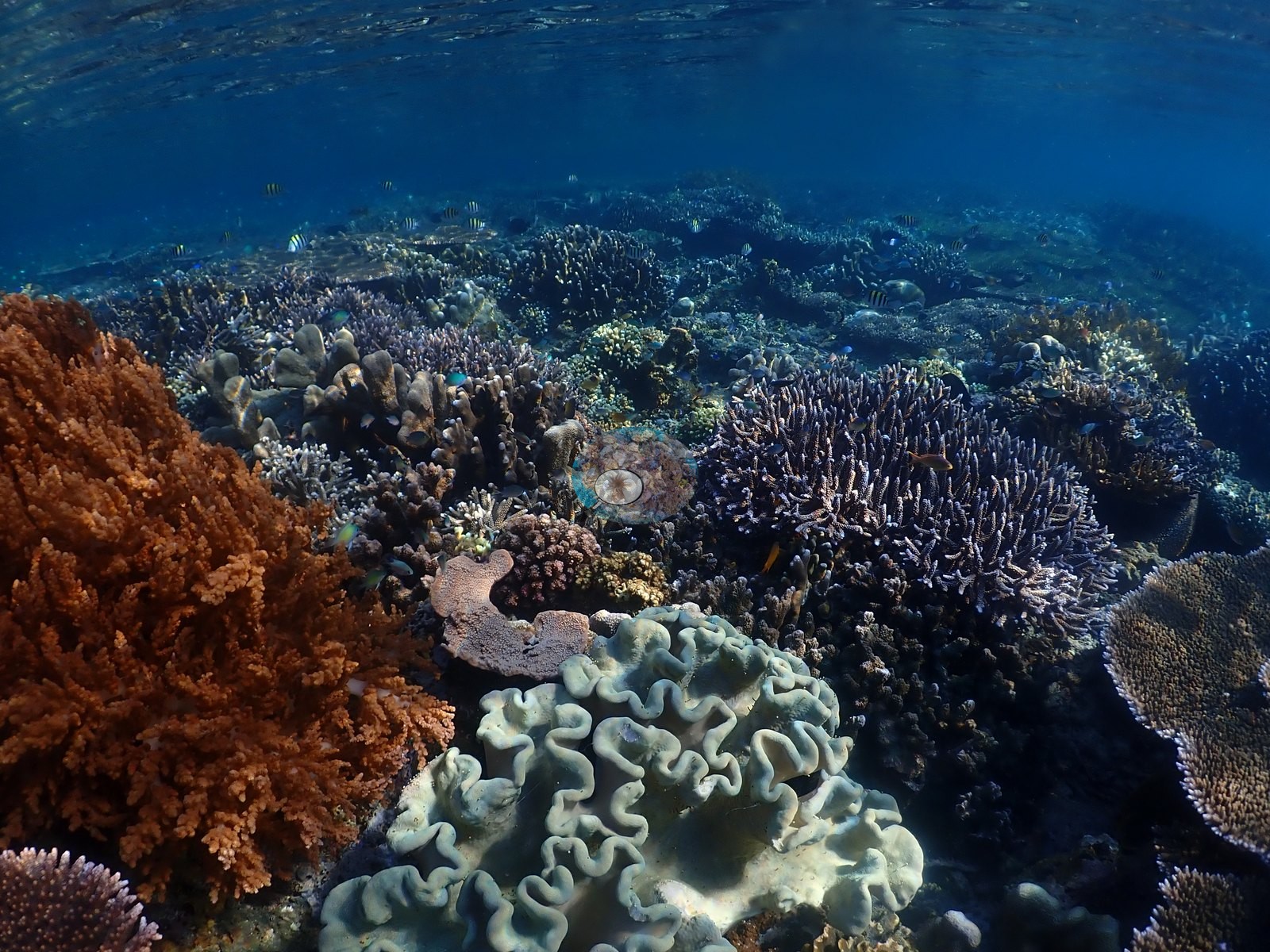
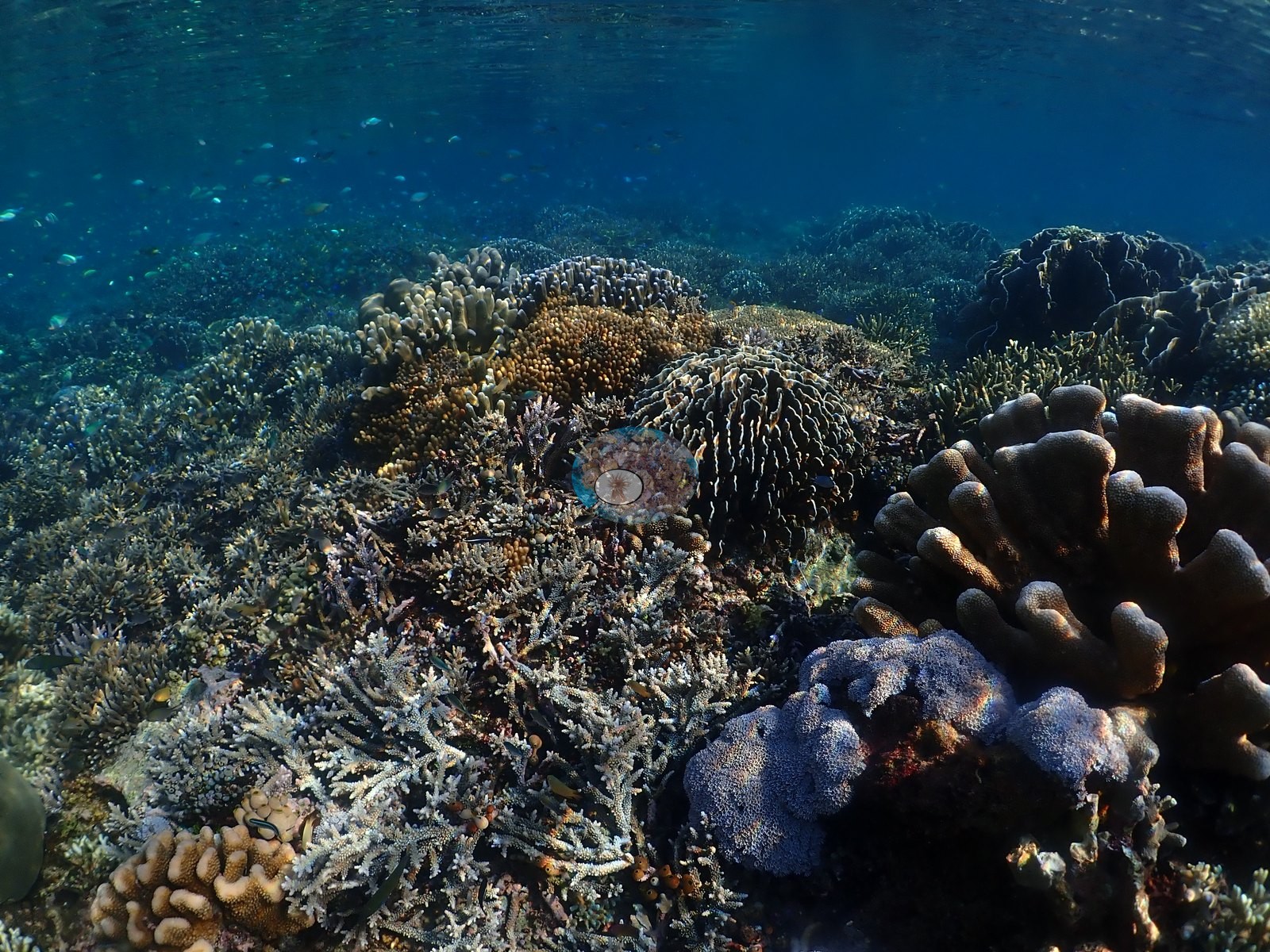
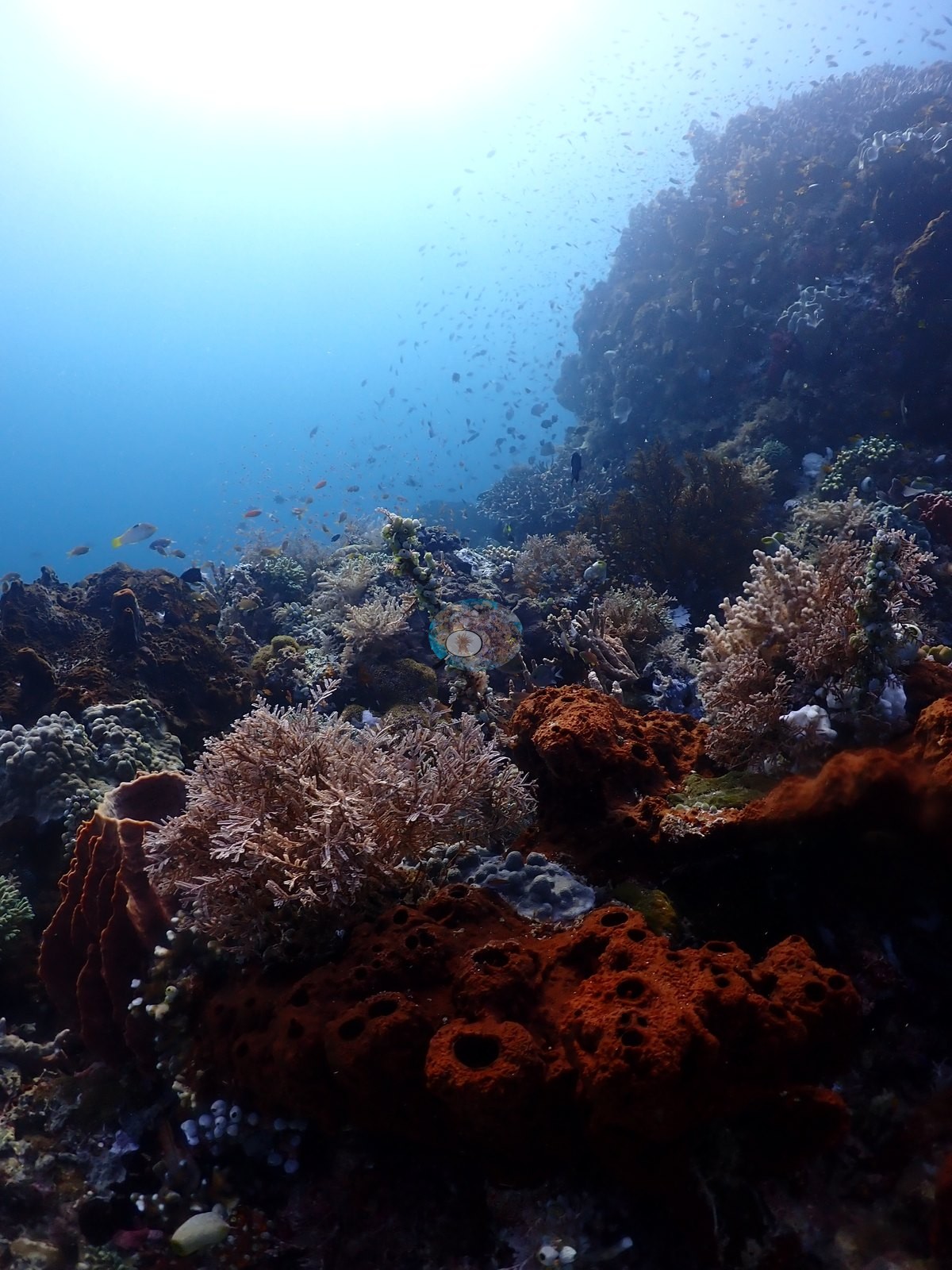
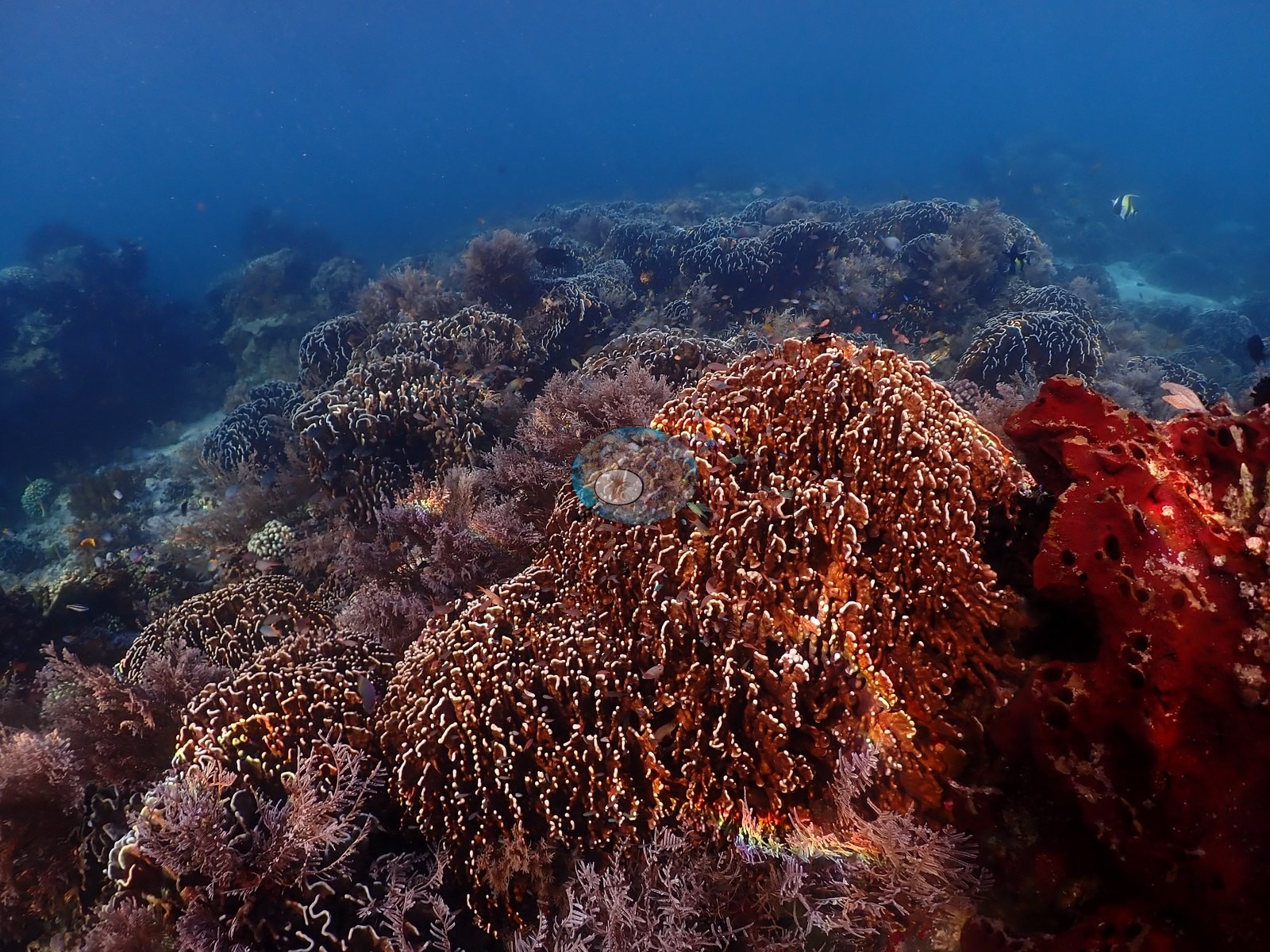
Broad olive-green polyp mats consistent with Briareum-type soft coral or Goniopora carpet whole sections of the mid-slope pavement (e.g., Image 3, Image 32).
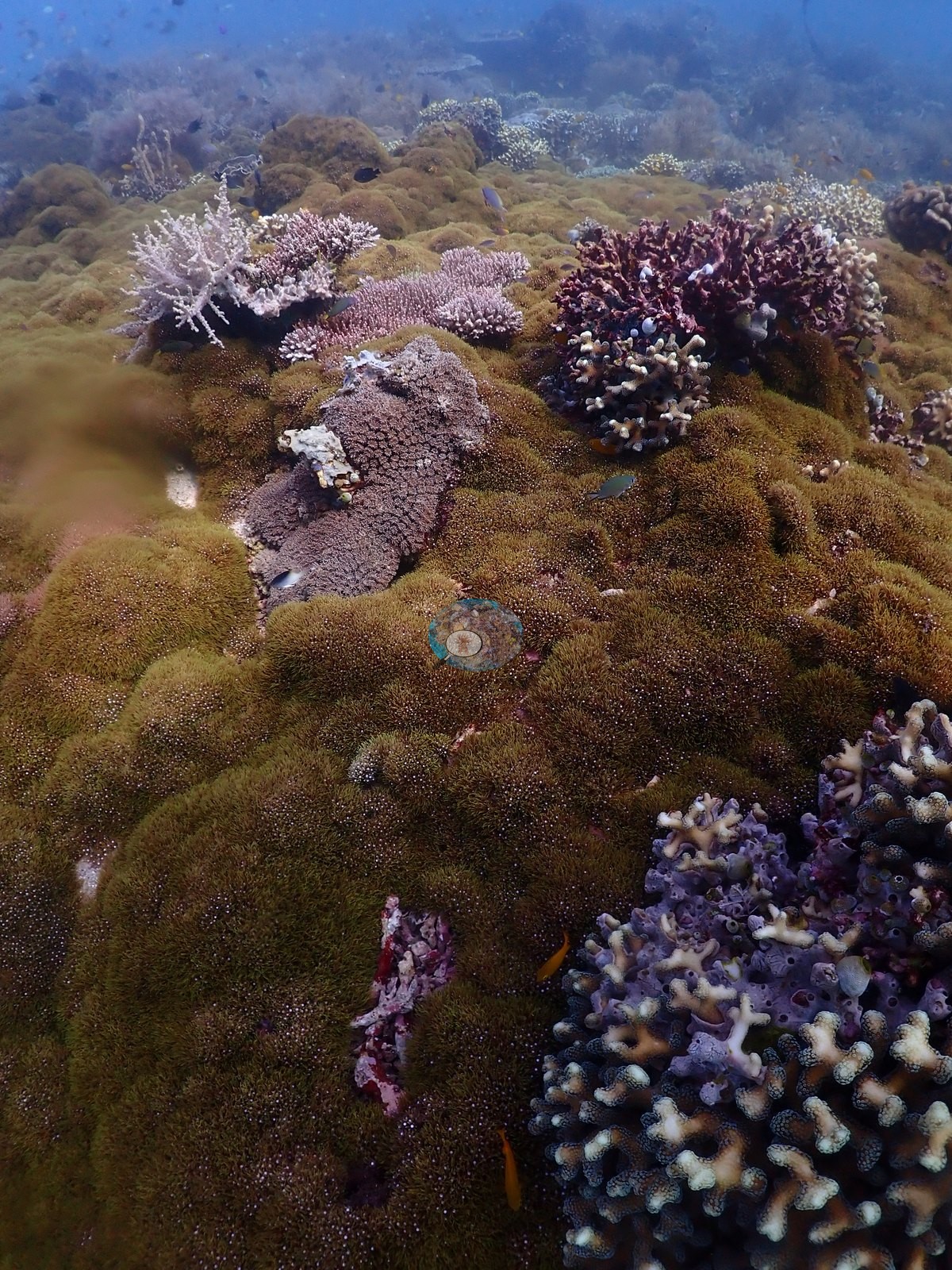
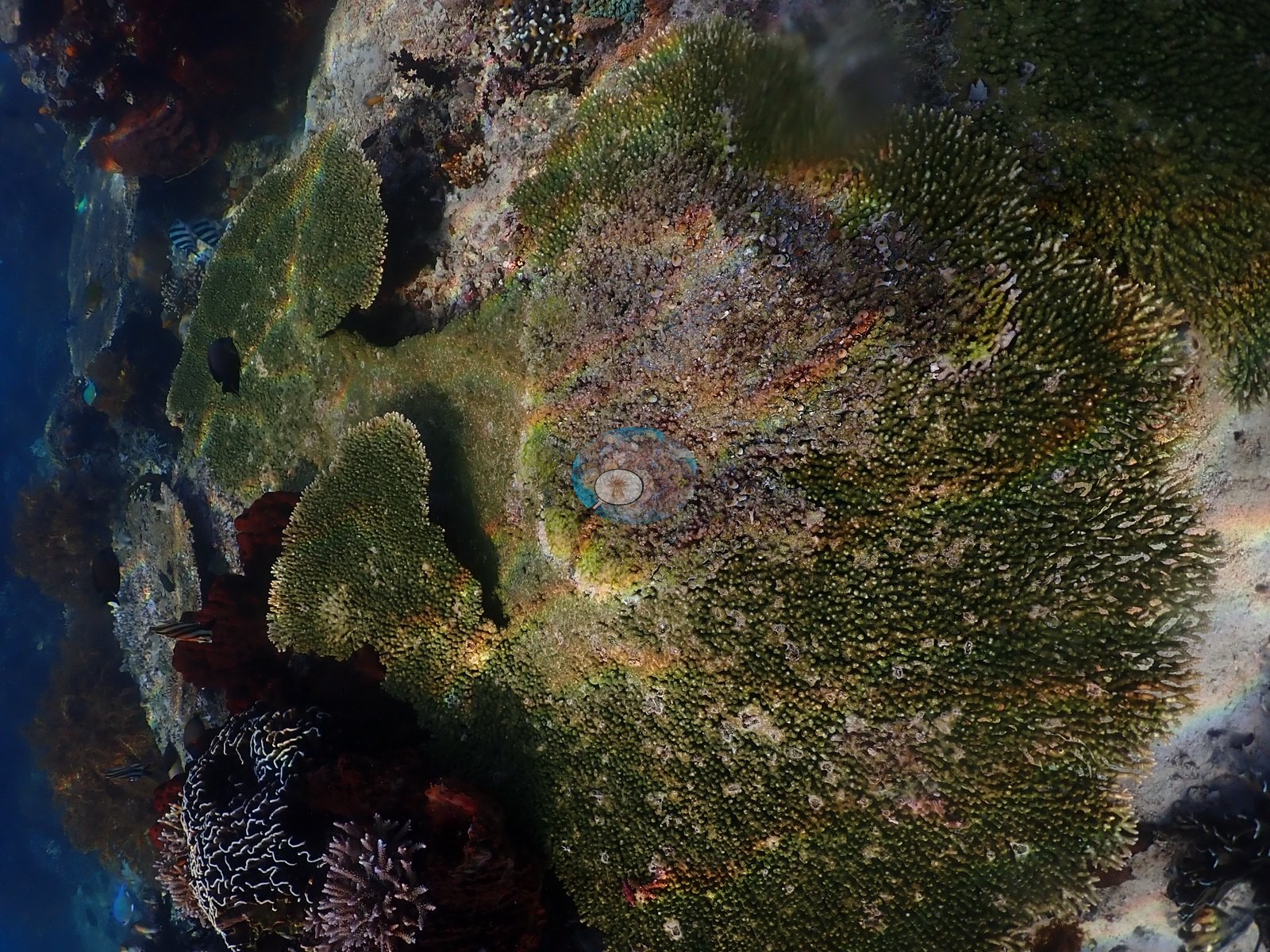
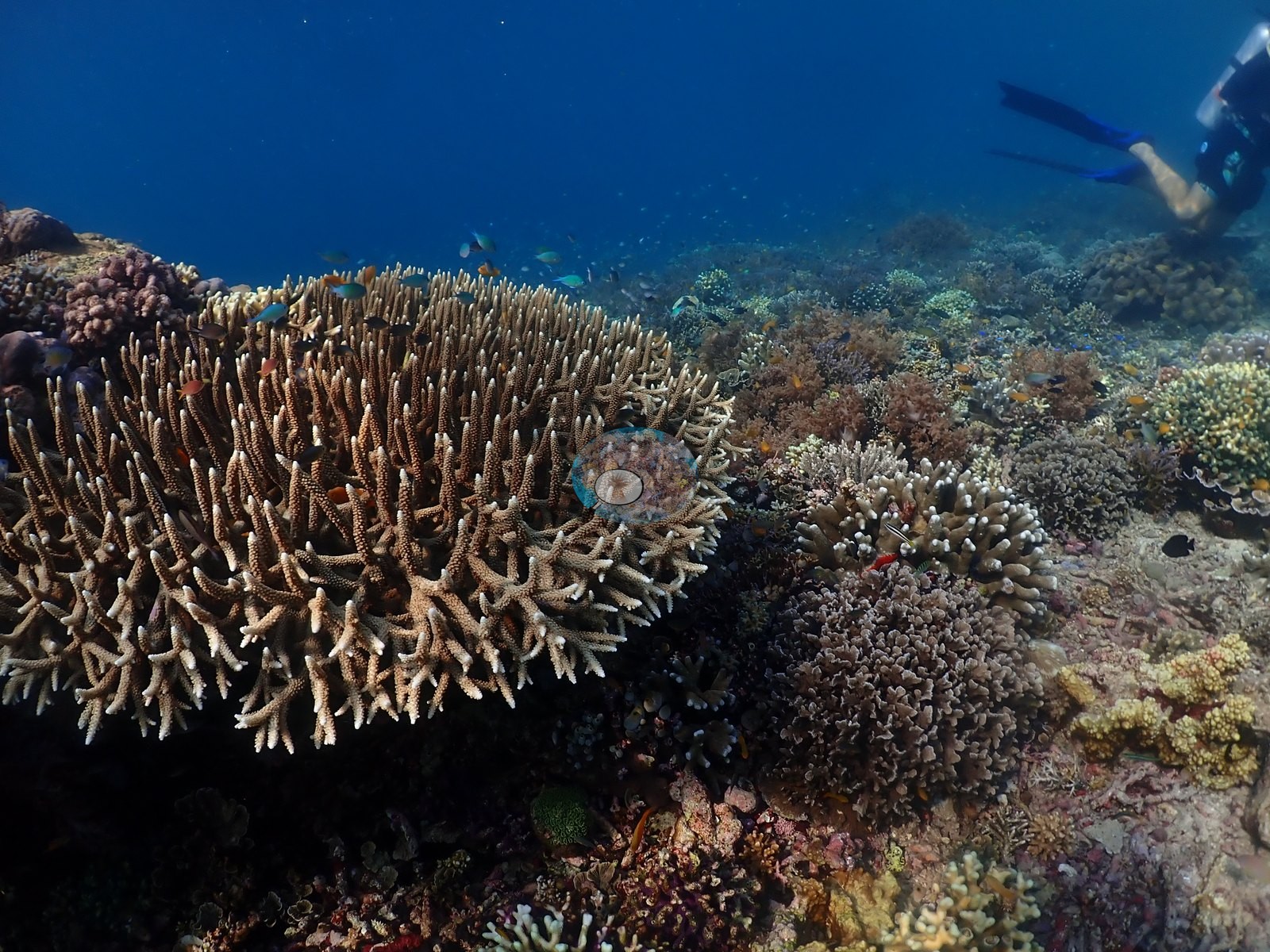
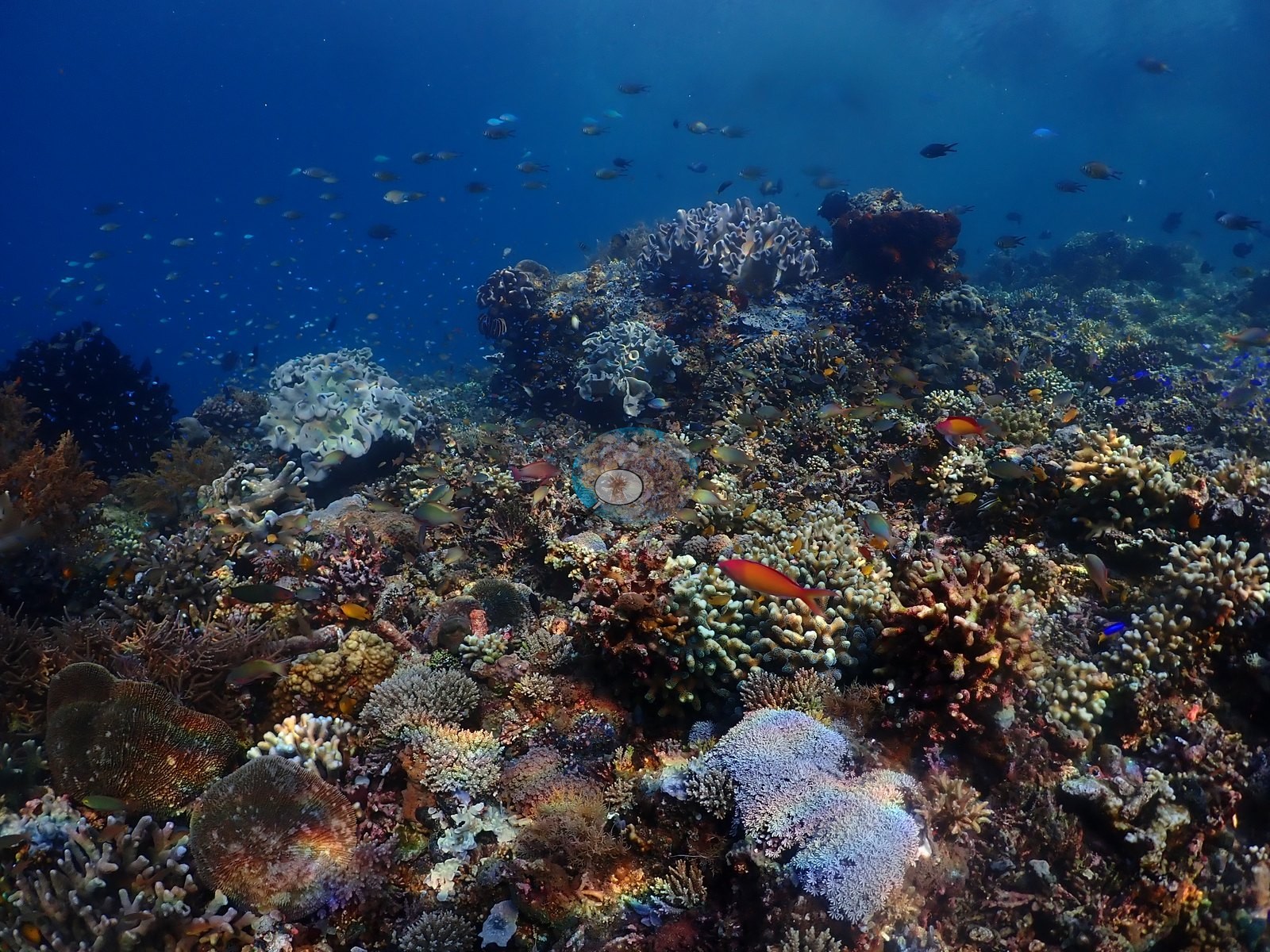
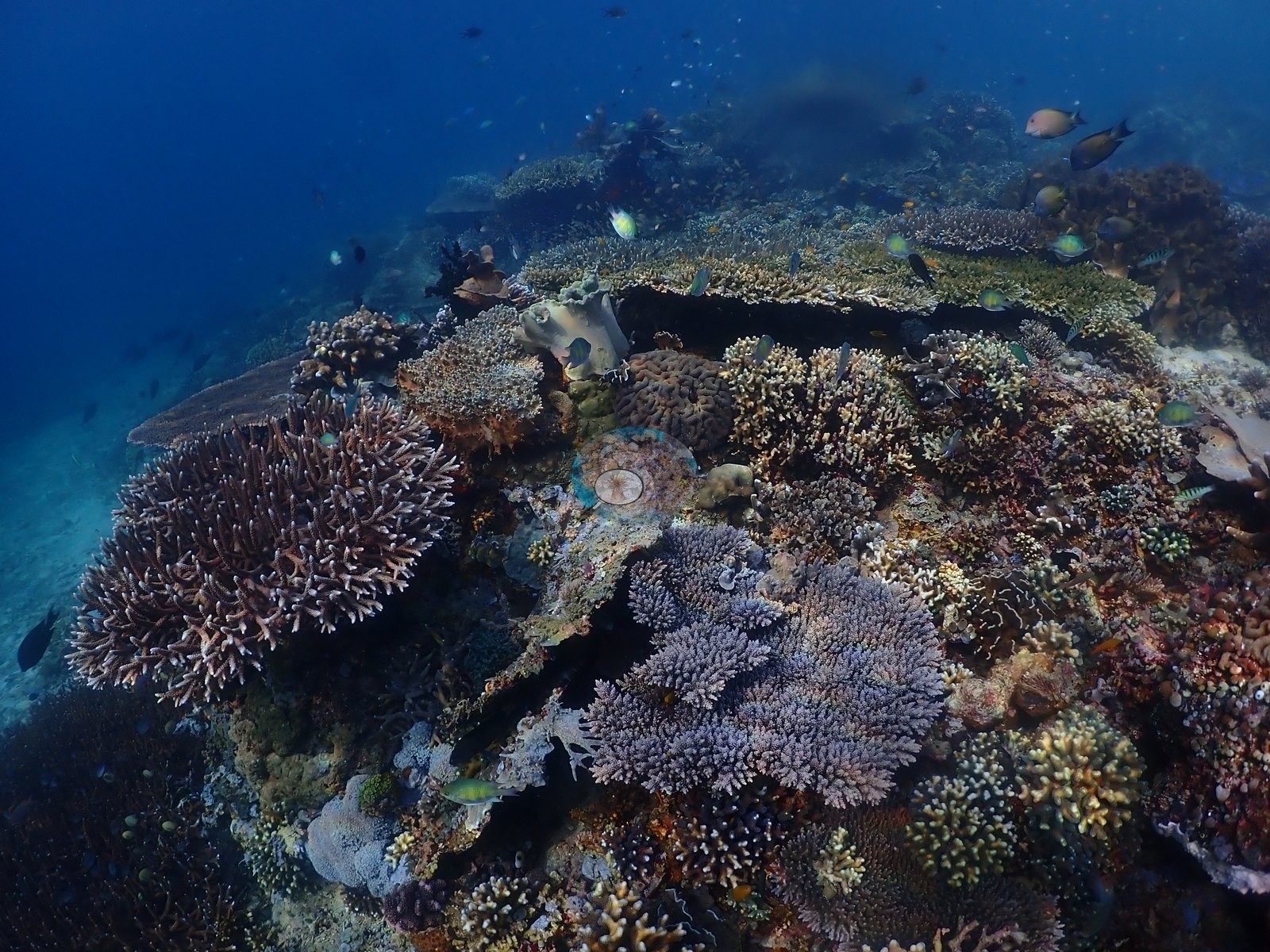
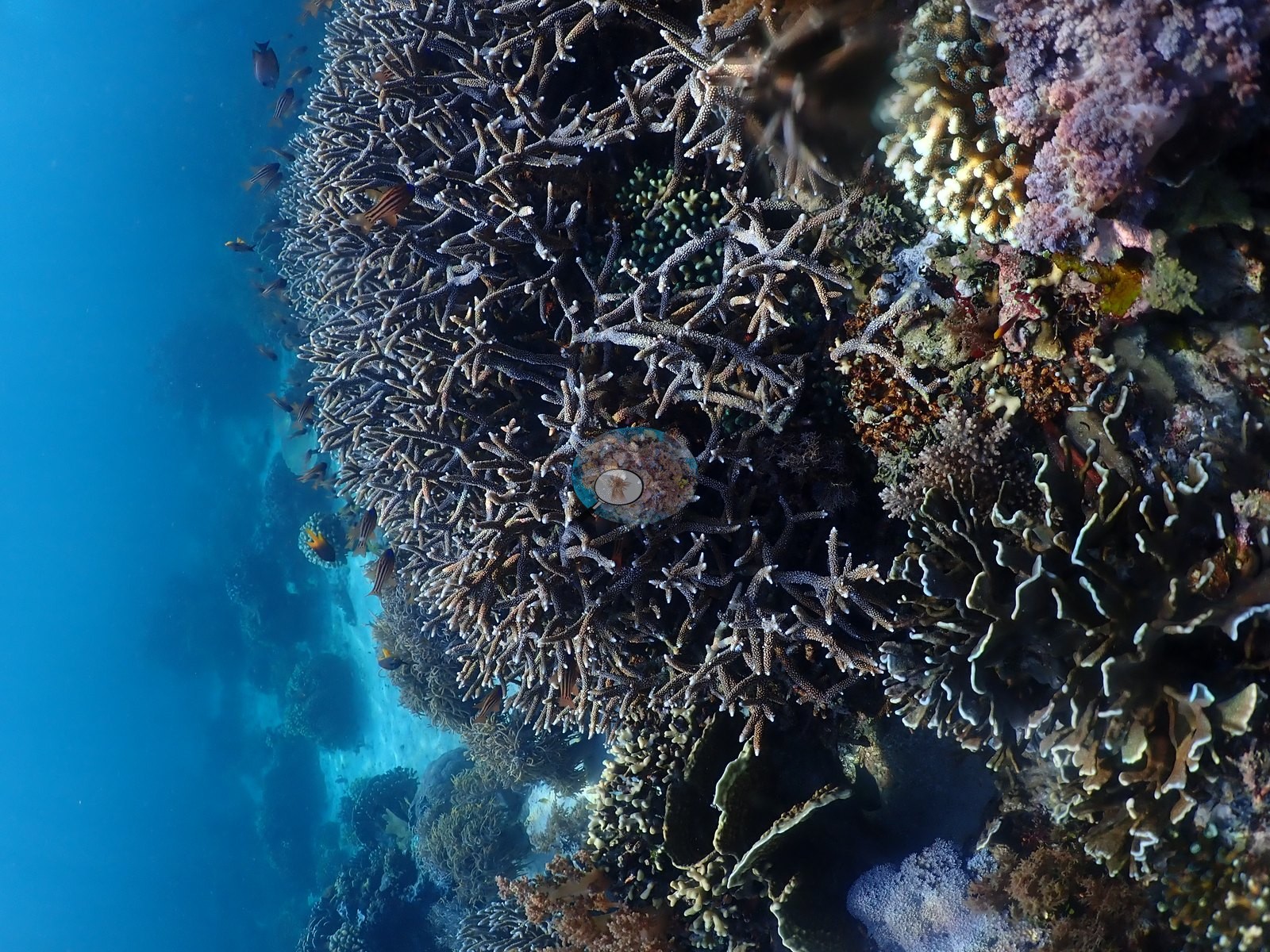
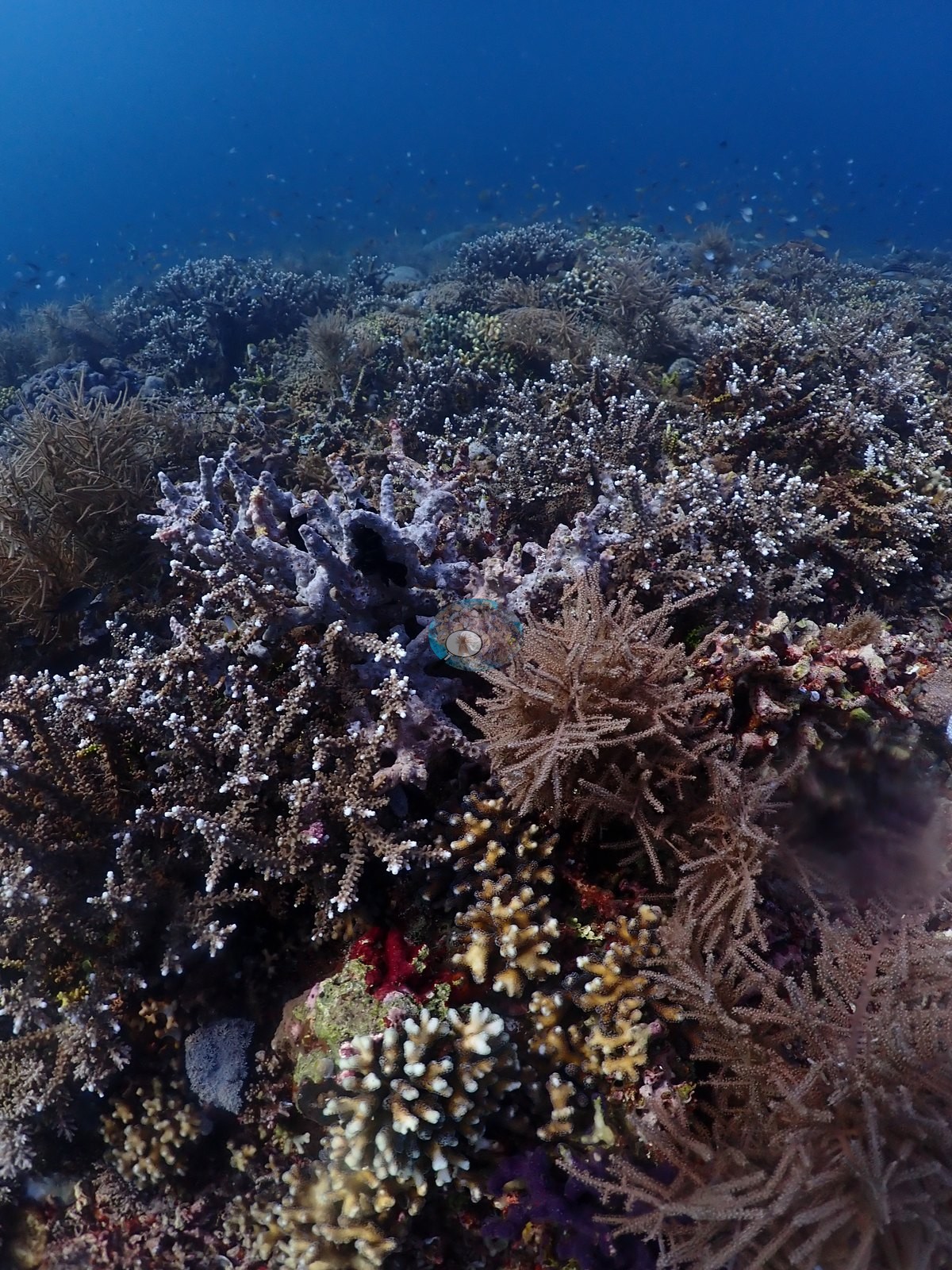
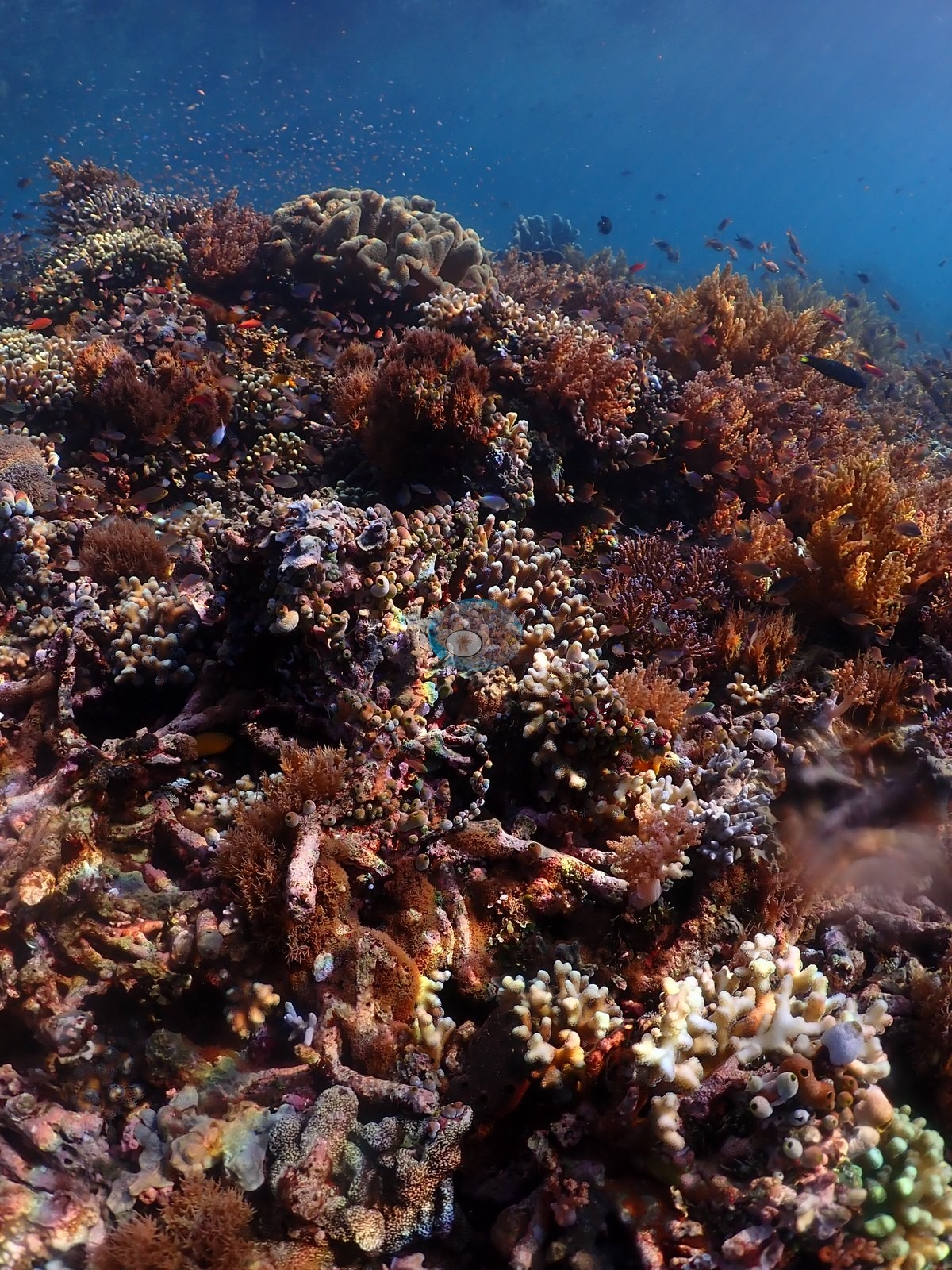
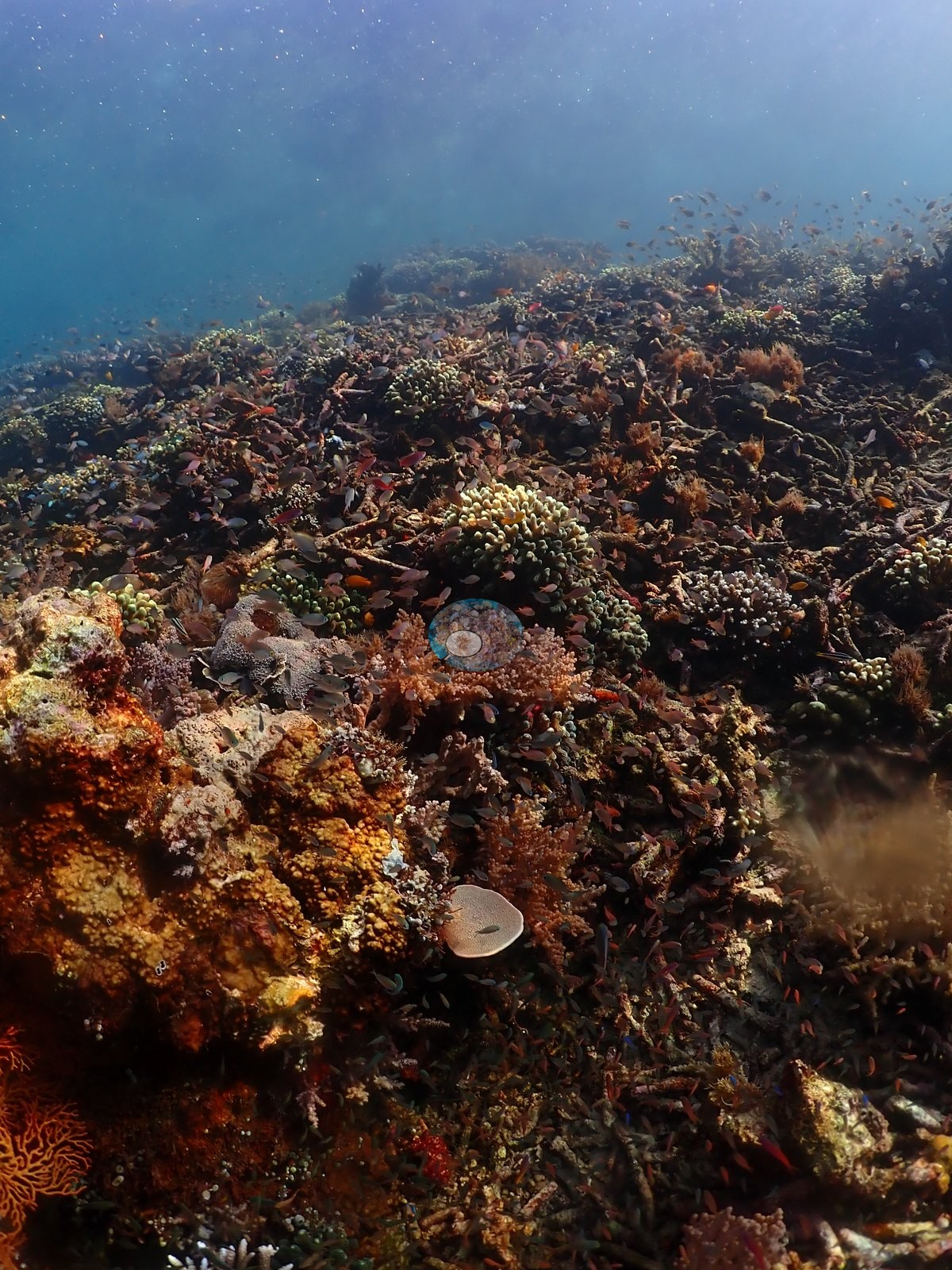
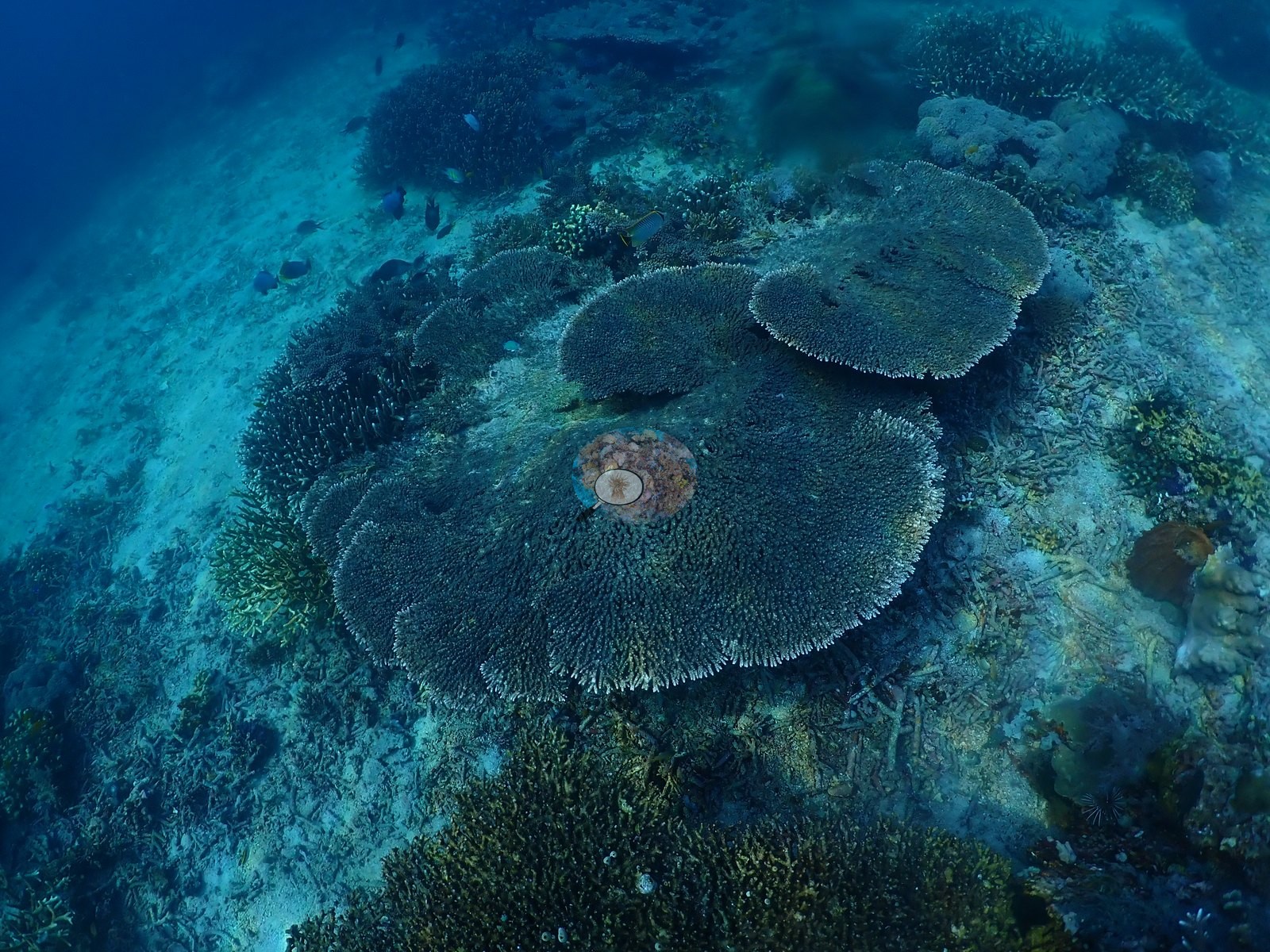
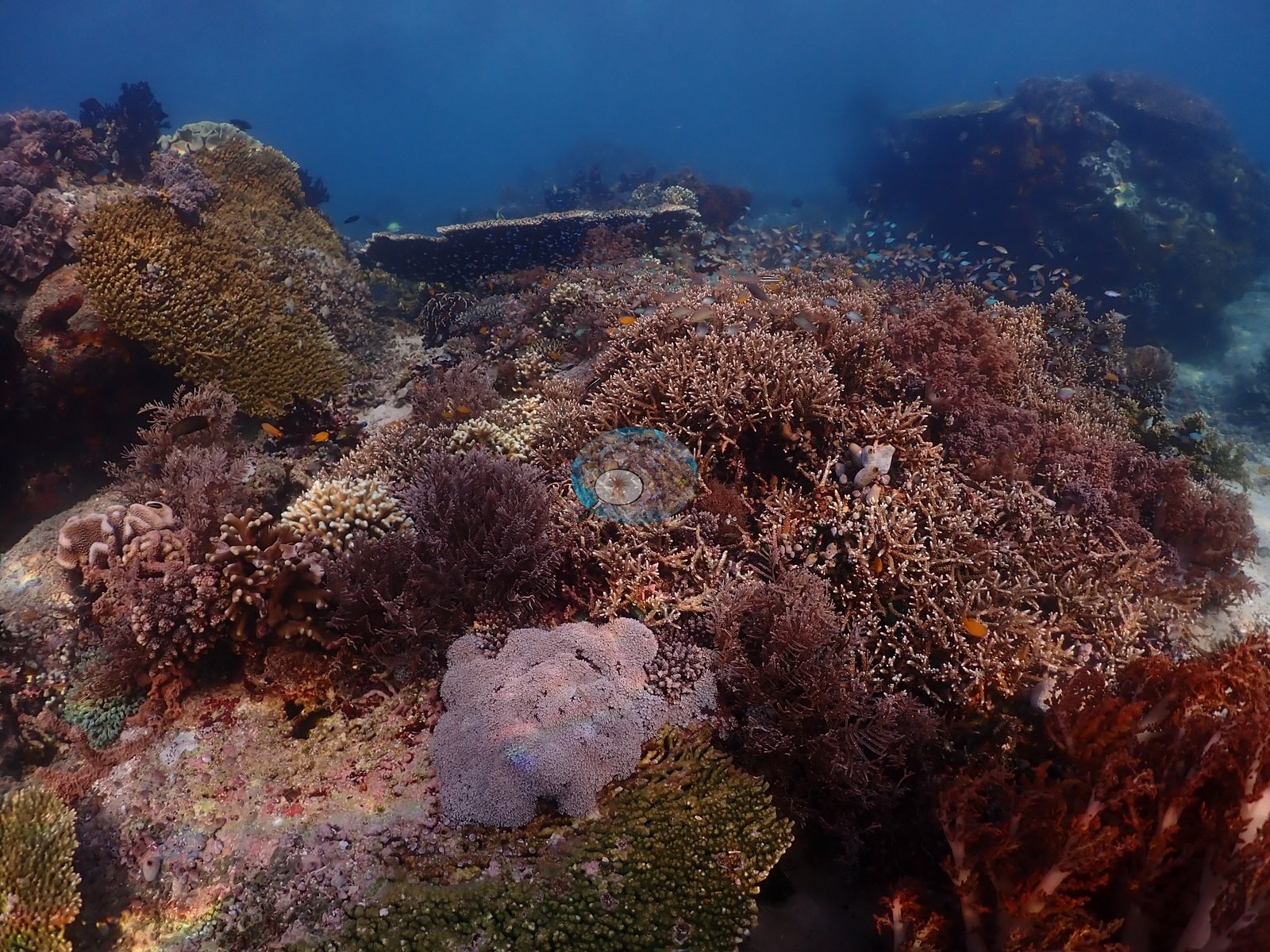
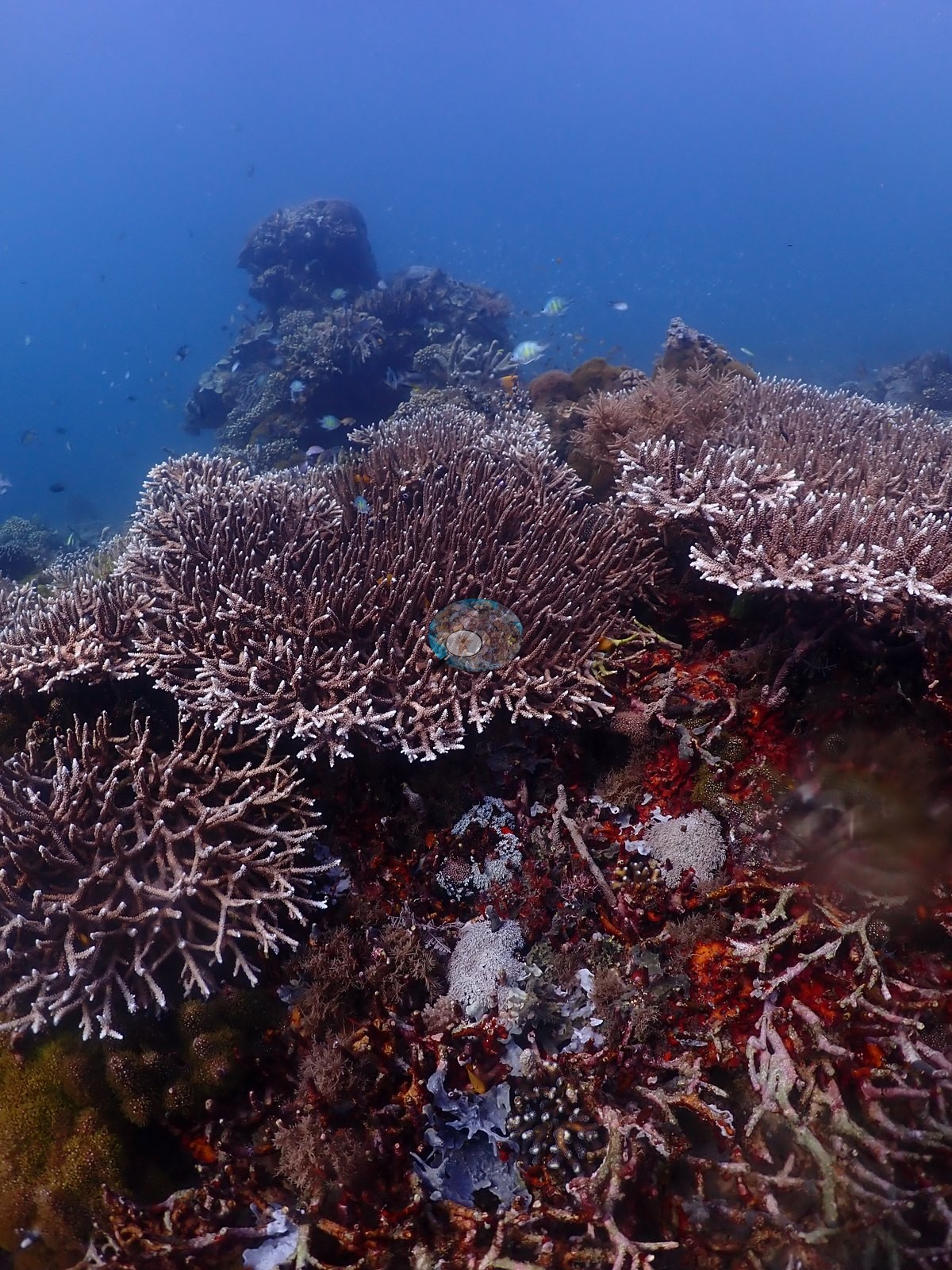
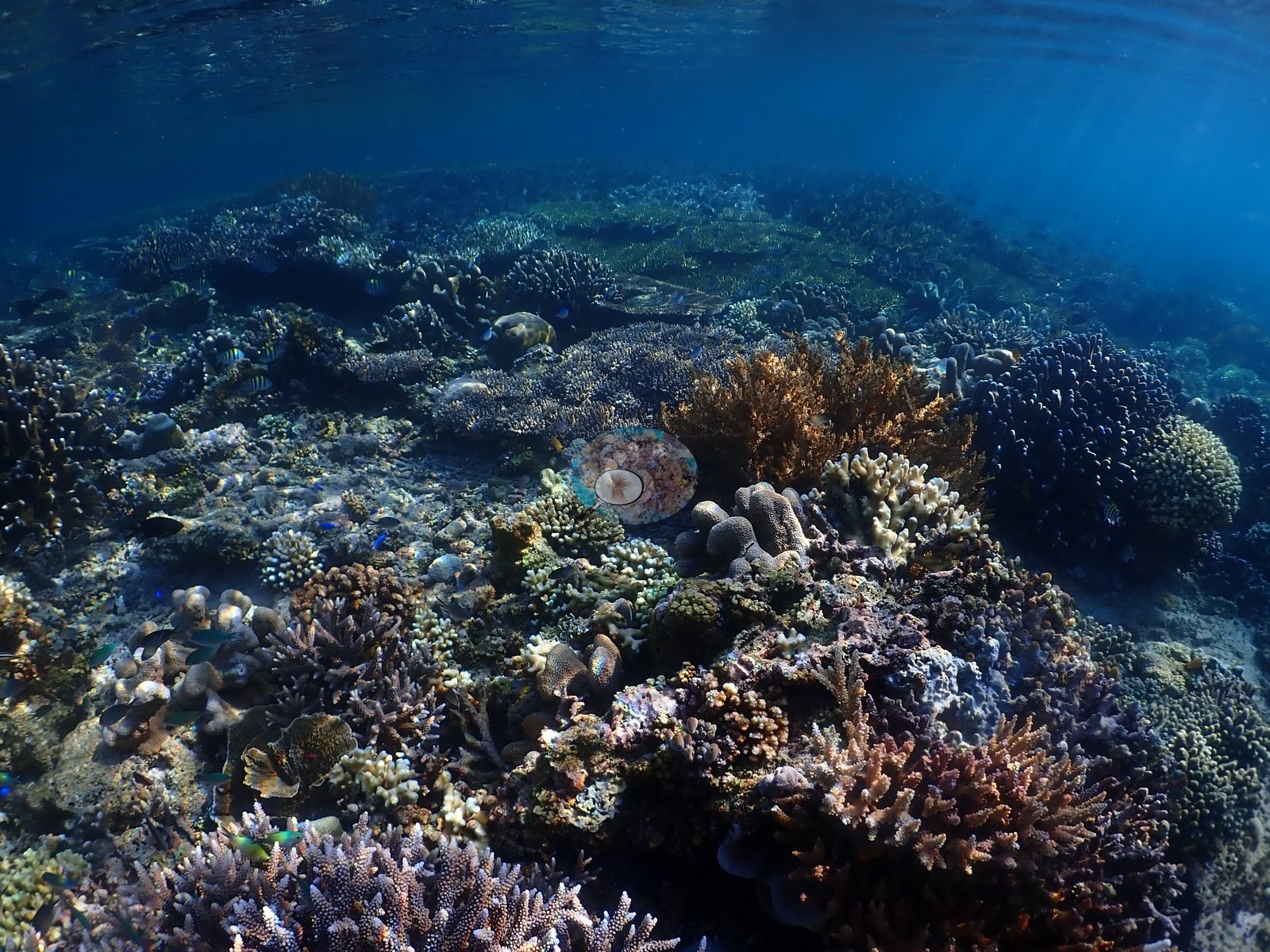
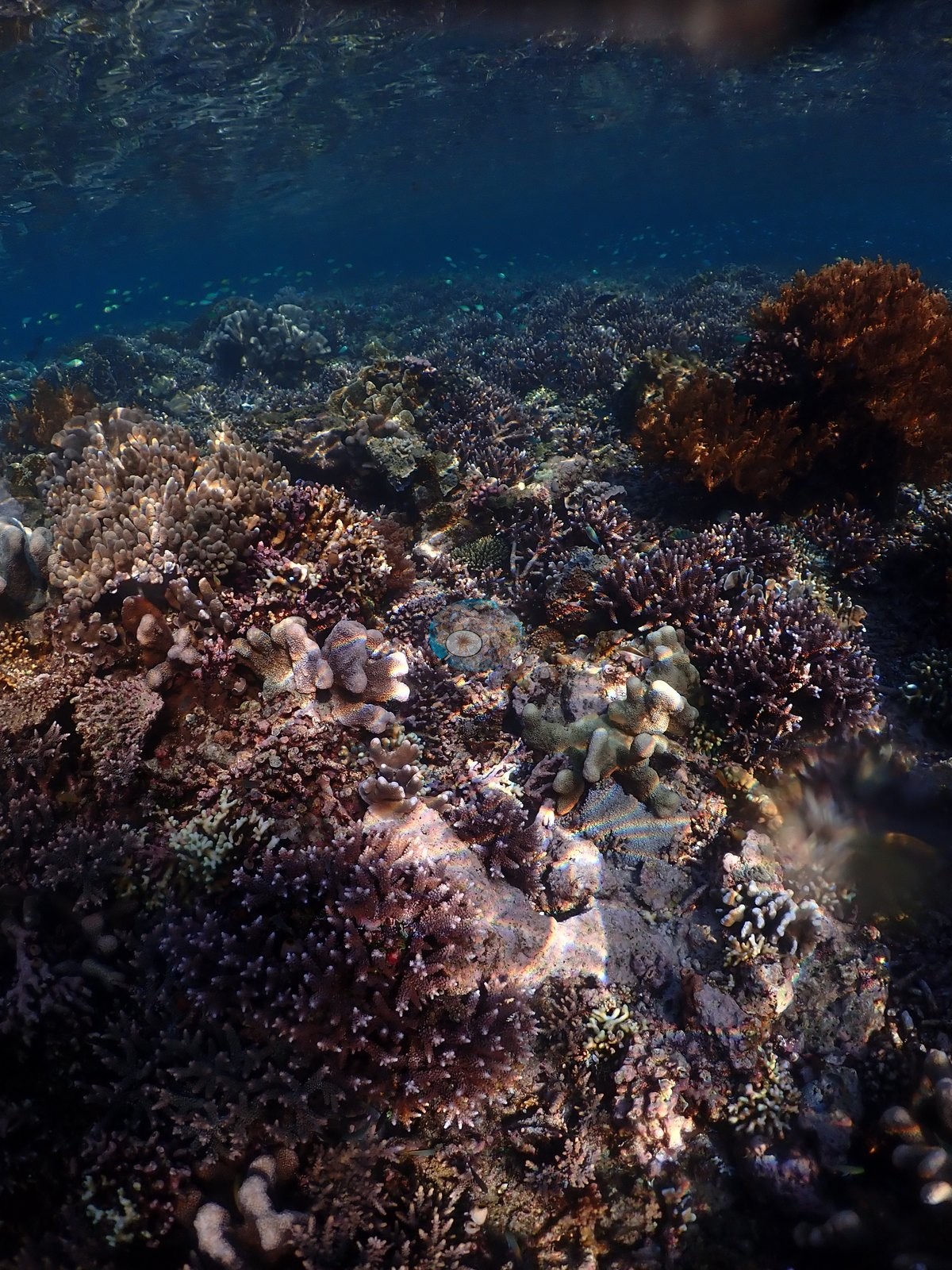
The upper slope and reef crest are the site's signature: an essentially continuous Acropora field, tables, staghorn, corymbose, and digitate colonies packed edge to edge in mauve, lilac, orange-brown, cream, and olive, with Hydnophora, Pocillopora, Stylophora, Millepora-type fire coral, and Seriatopora filling every gap and clouds of blue-green chromis and anthias over it (e.g., Image 4, Image 7, Image 10, Image 14, Image 19, Image 20, Image 22, Image 23, Image 24, Image 26, Image 27, Image 28, Image 30, Image 46, Image 47, Image 48, Image 50, Image 51, Image 53).
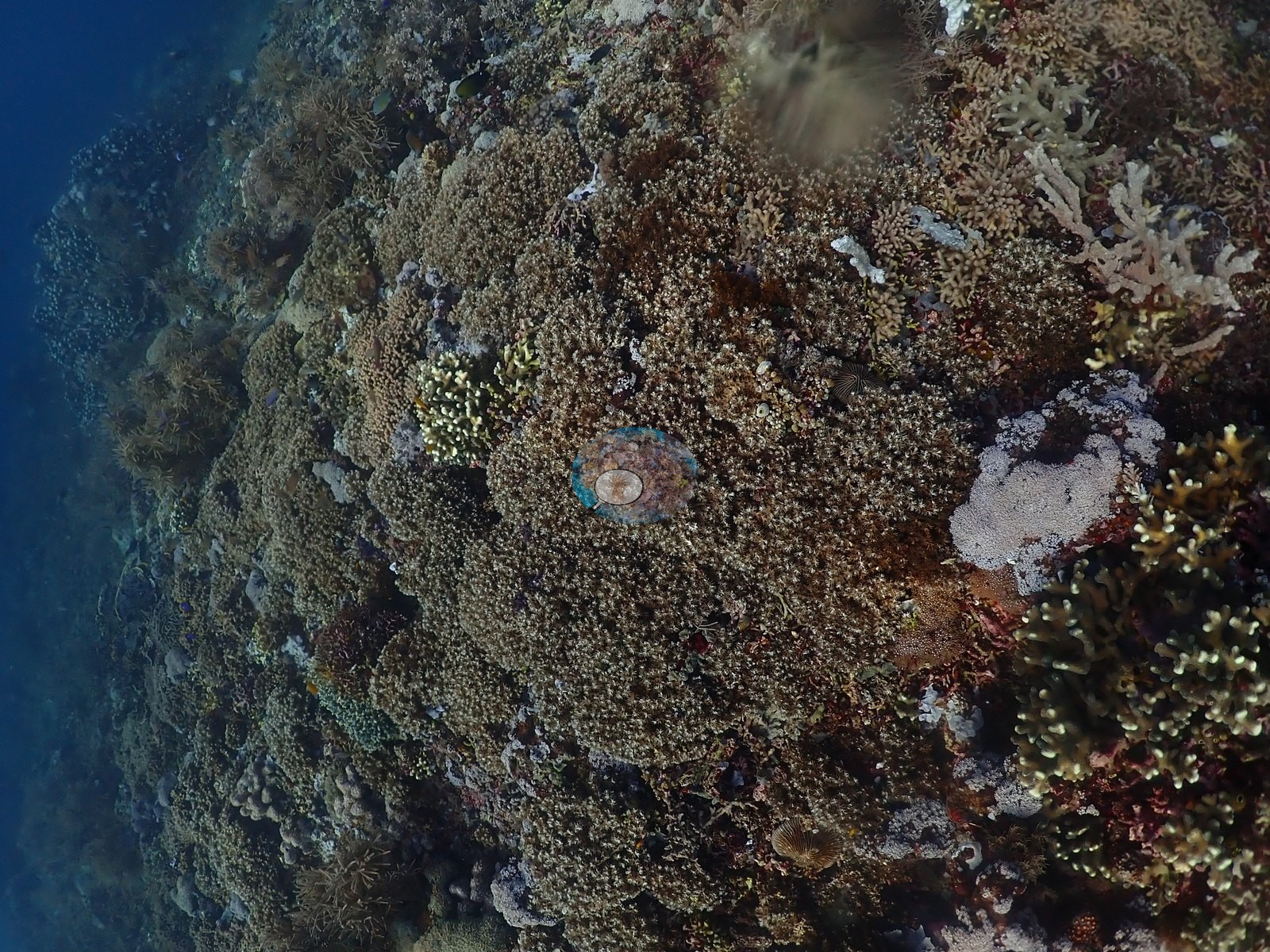
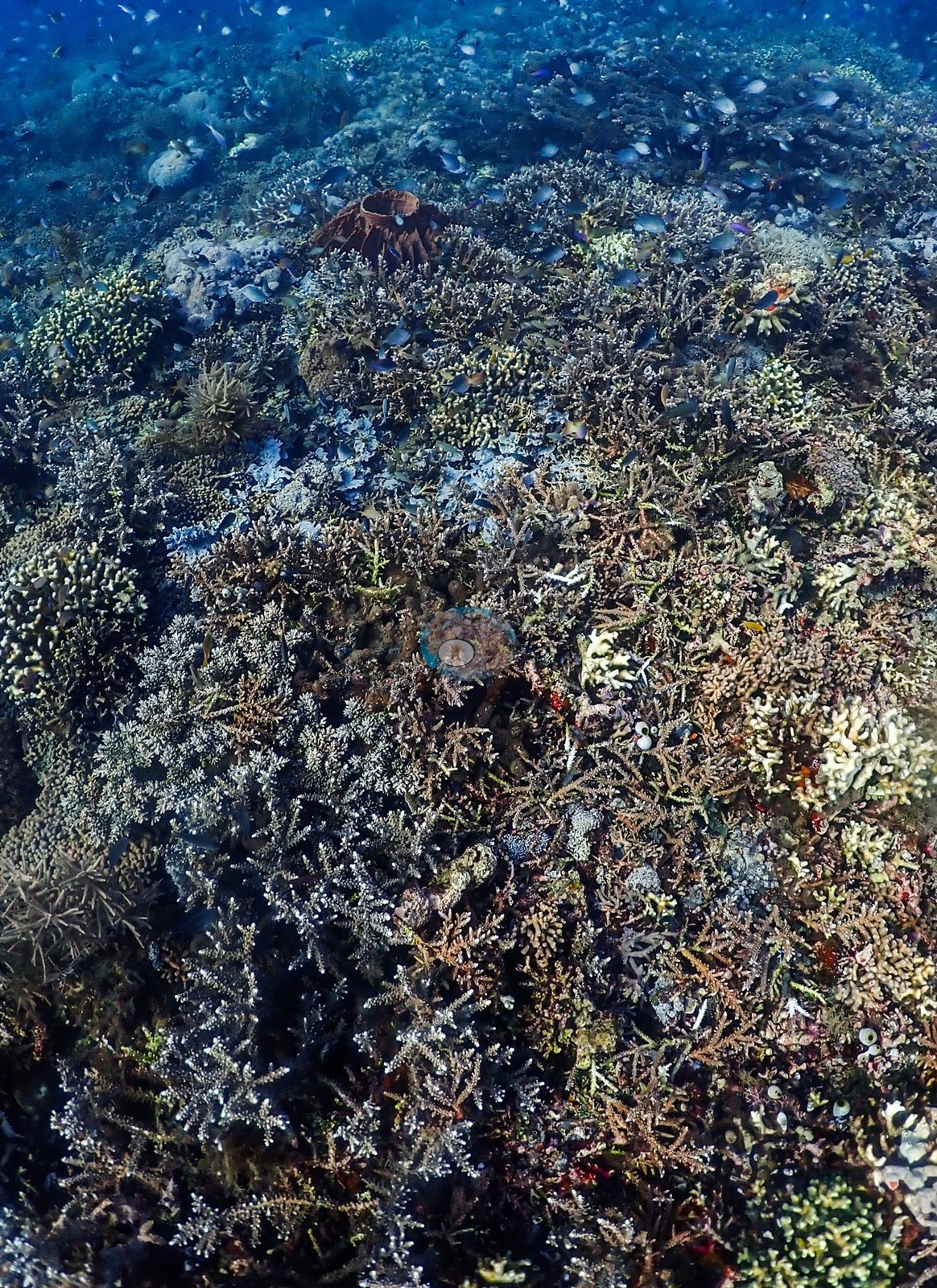
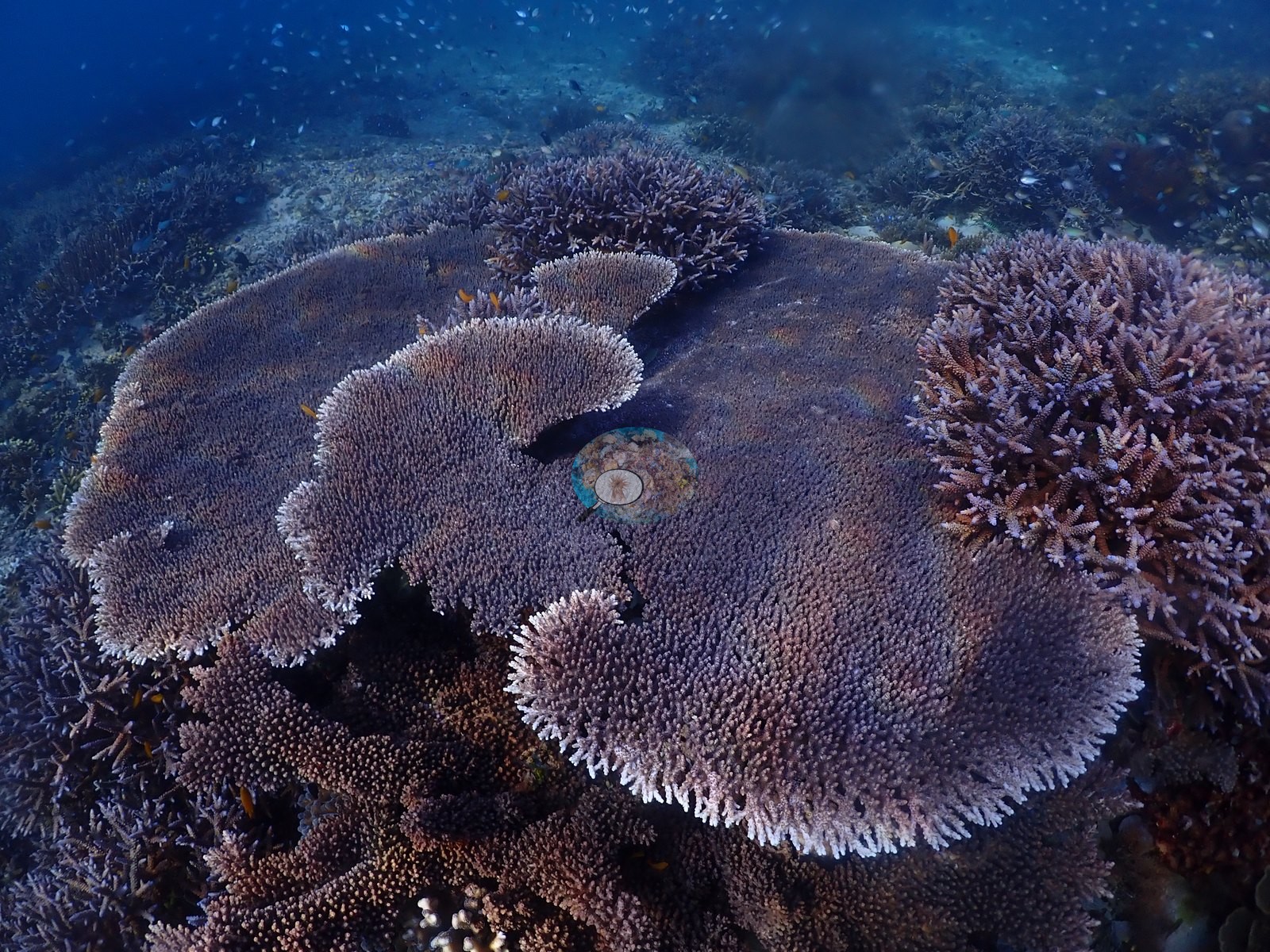
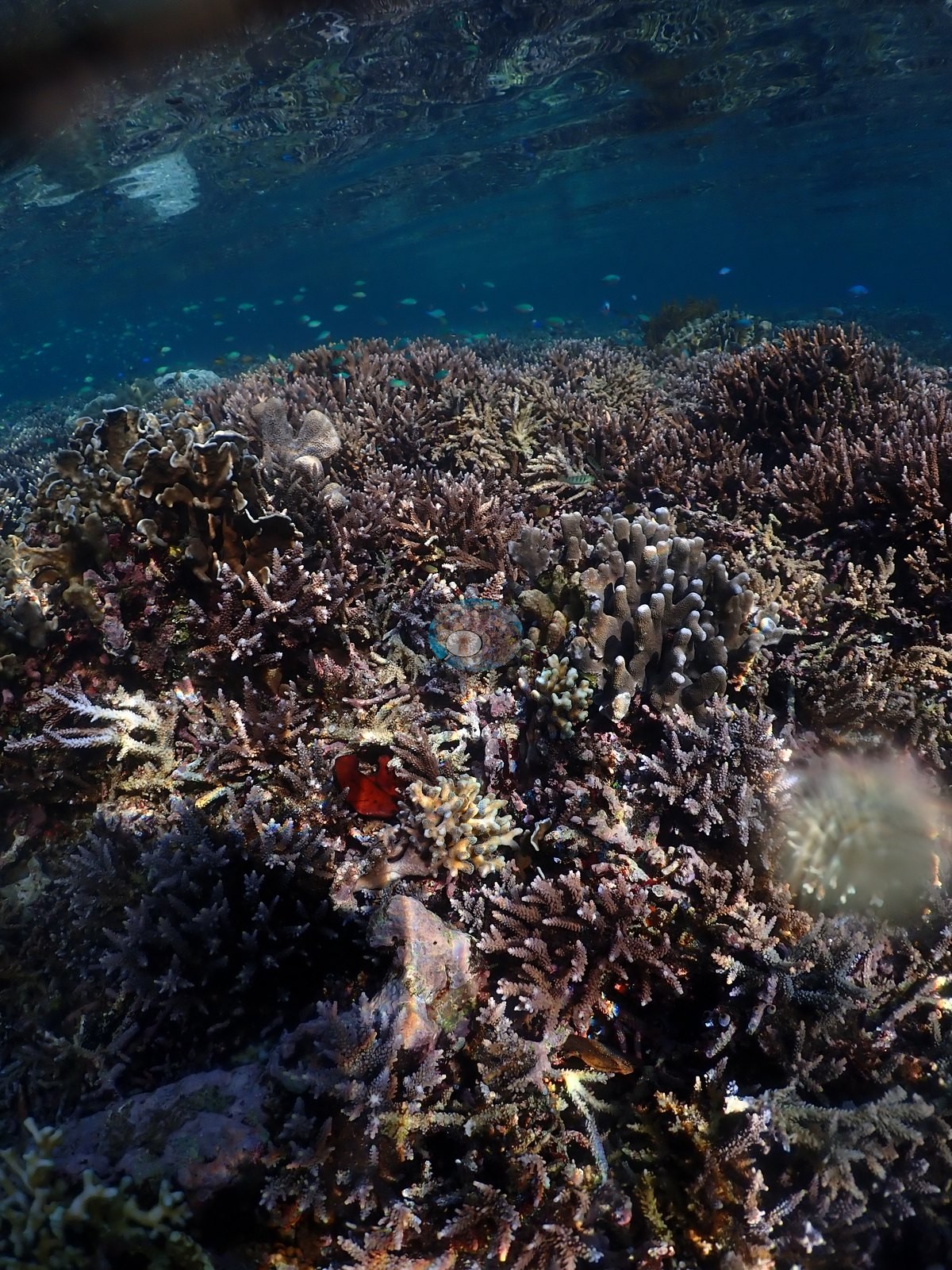
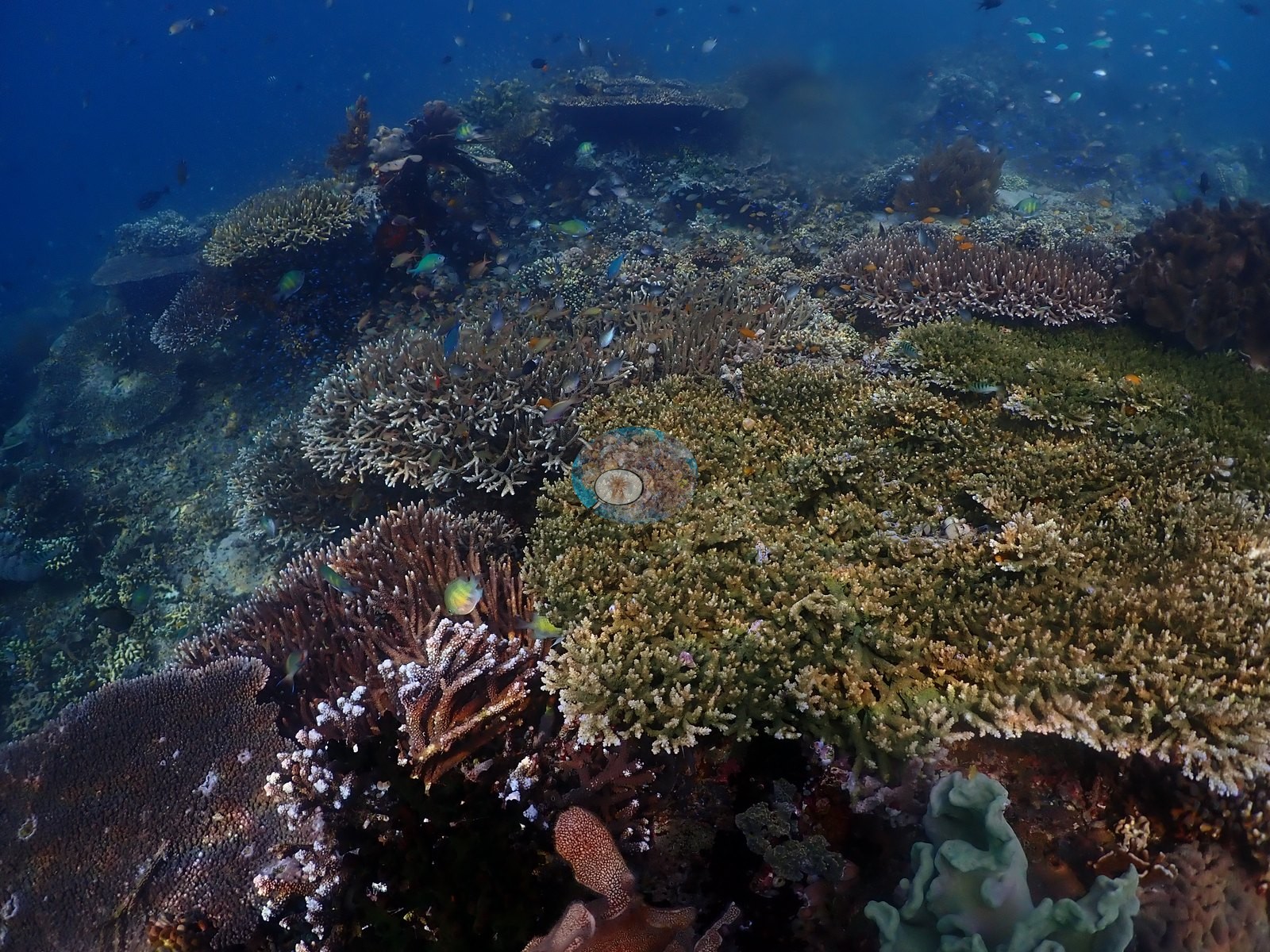
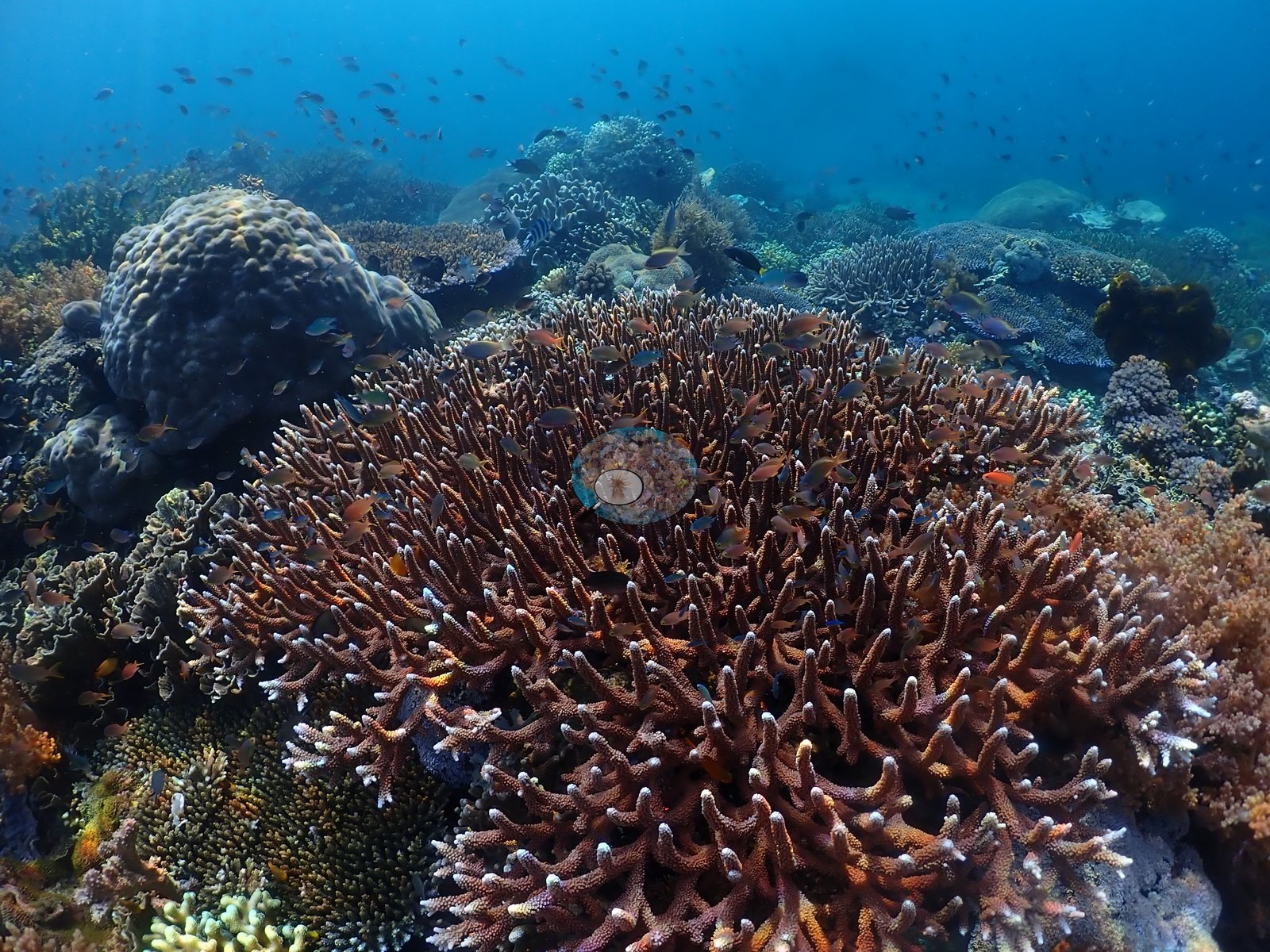
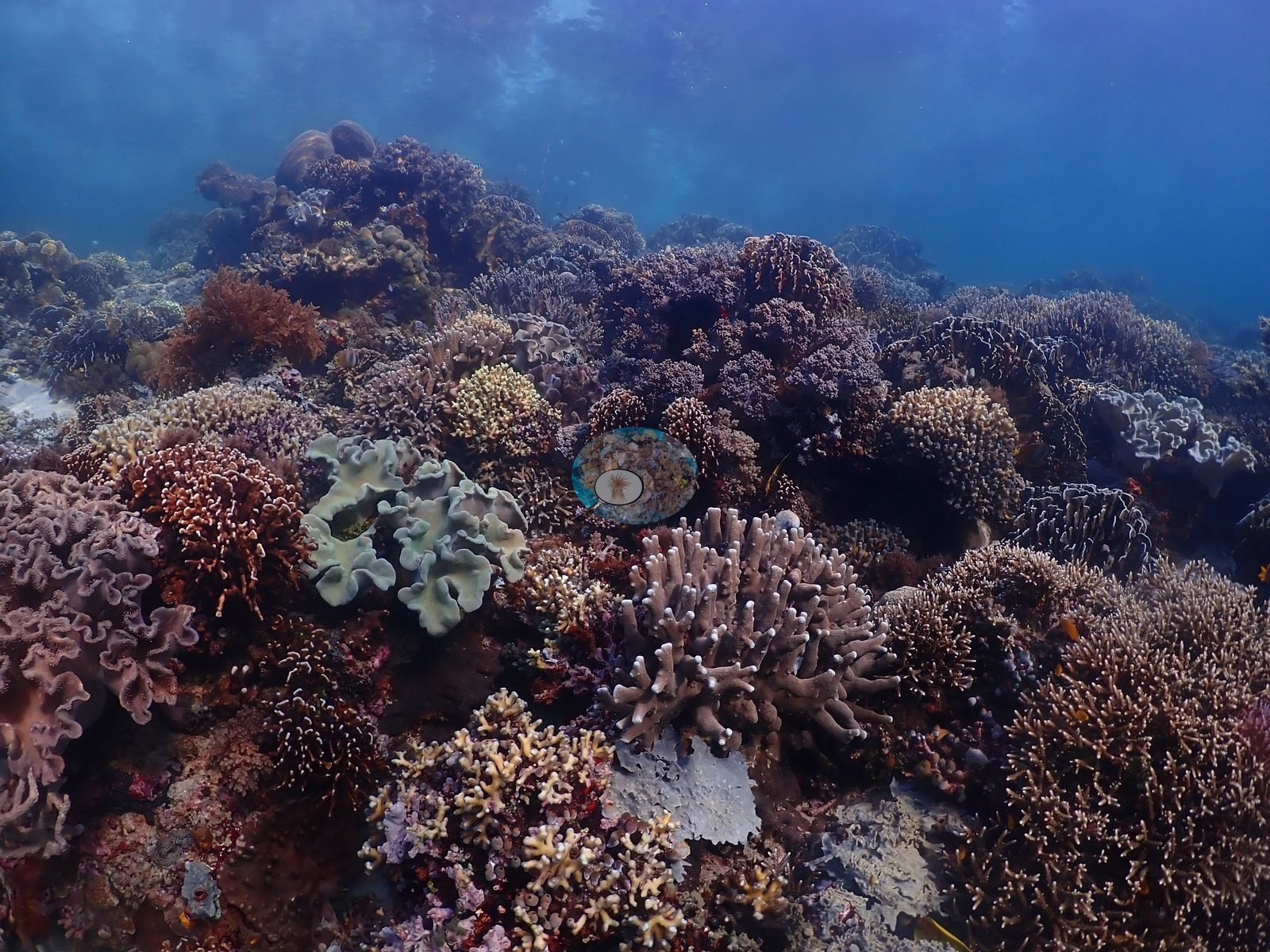
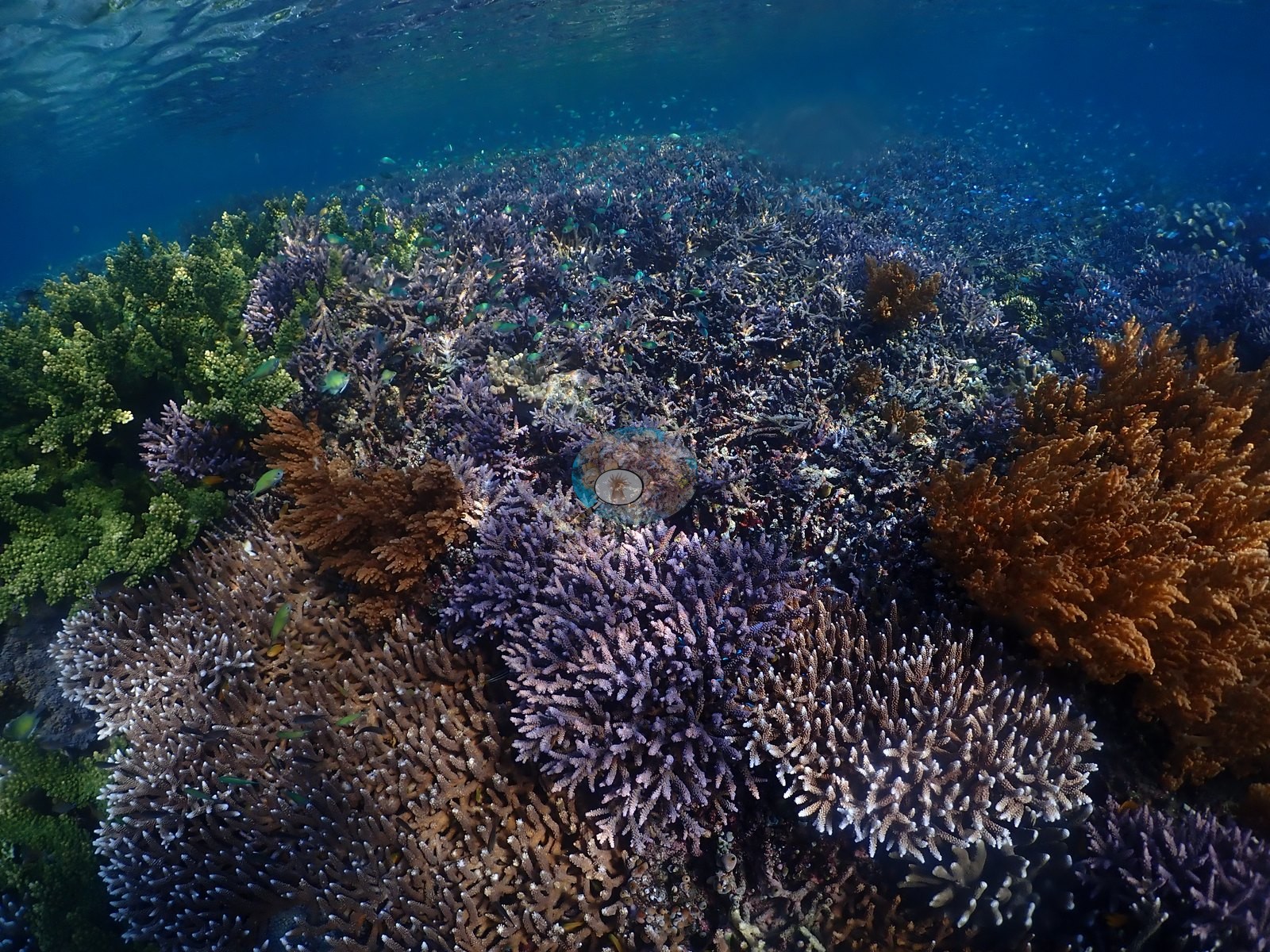
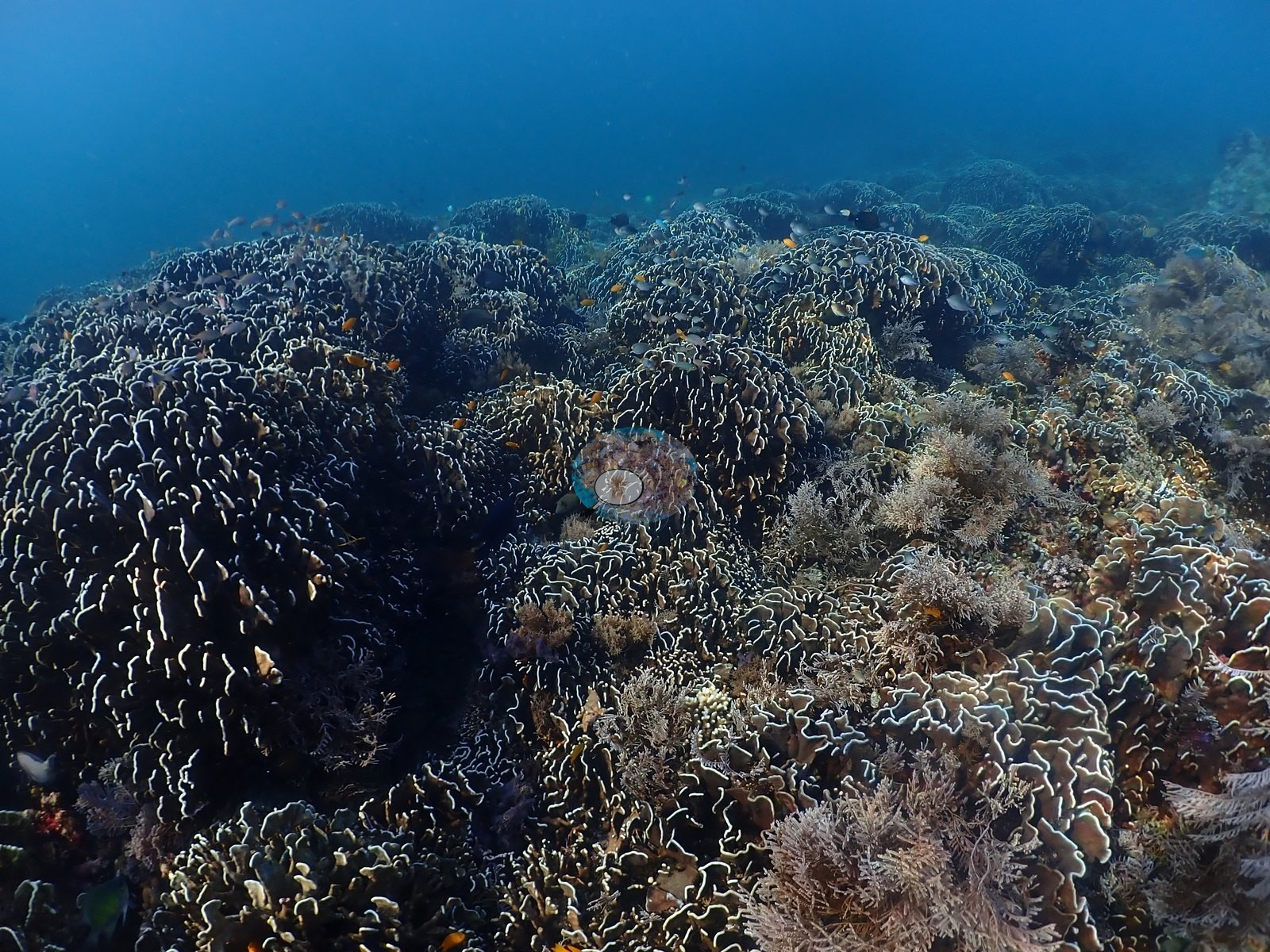
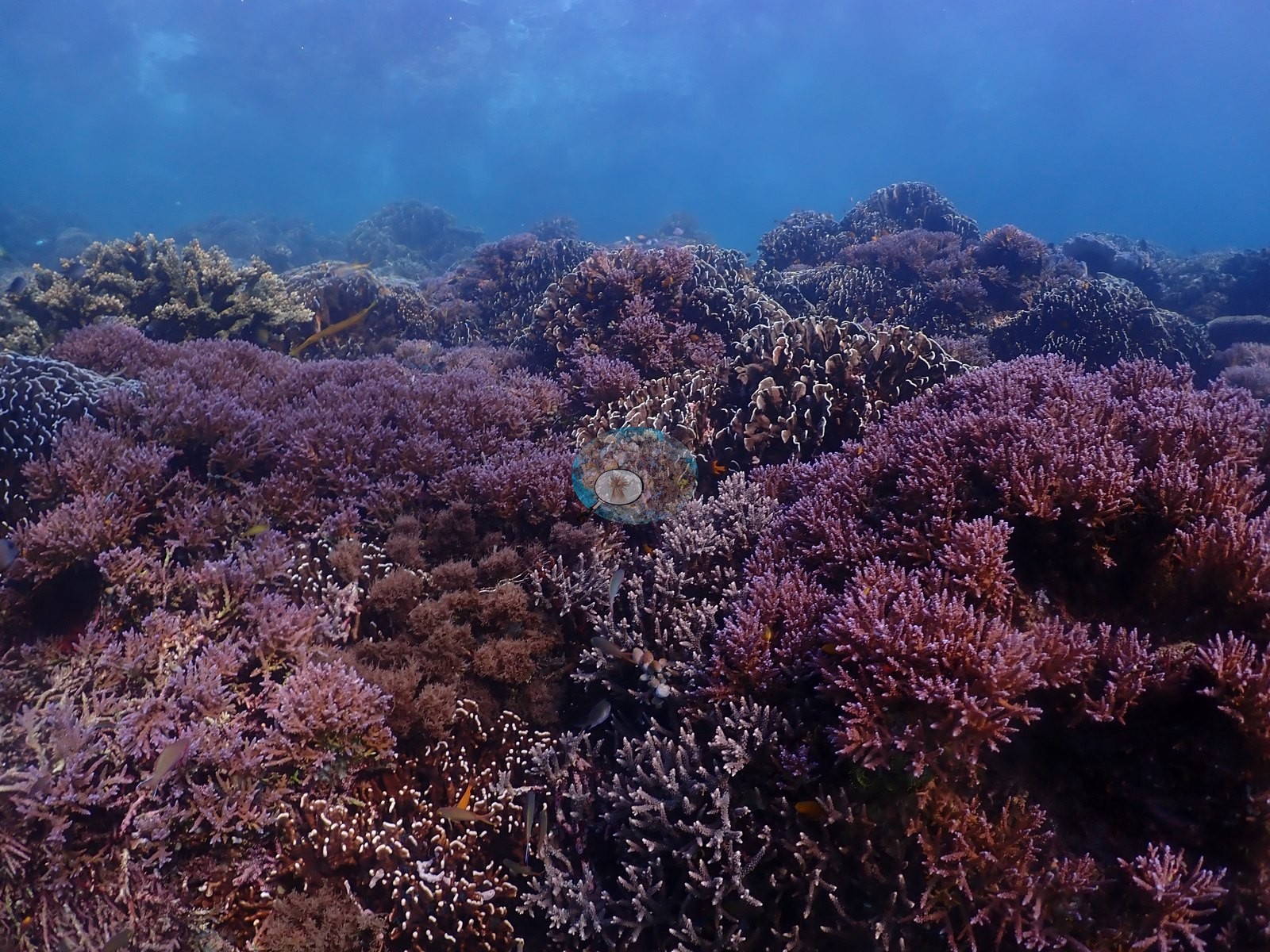
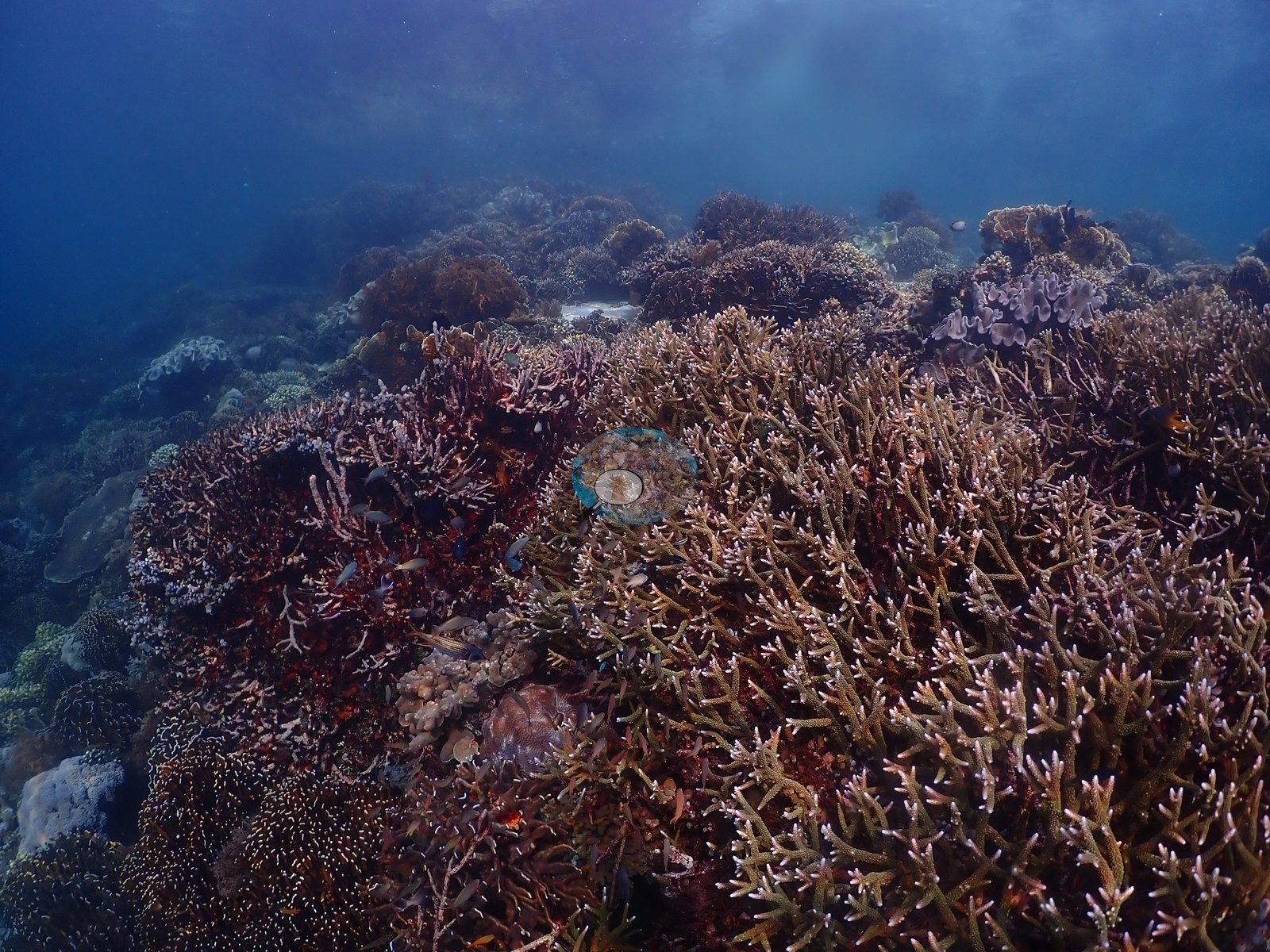
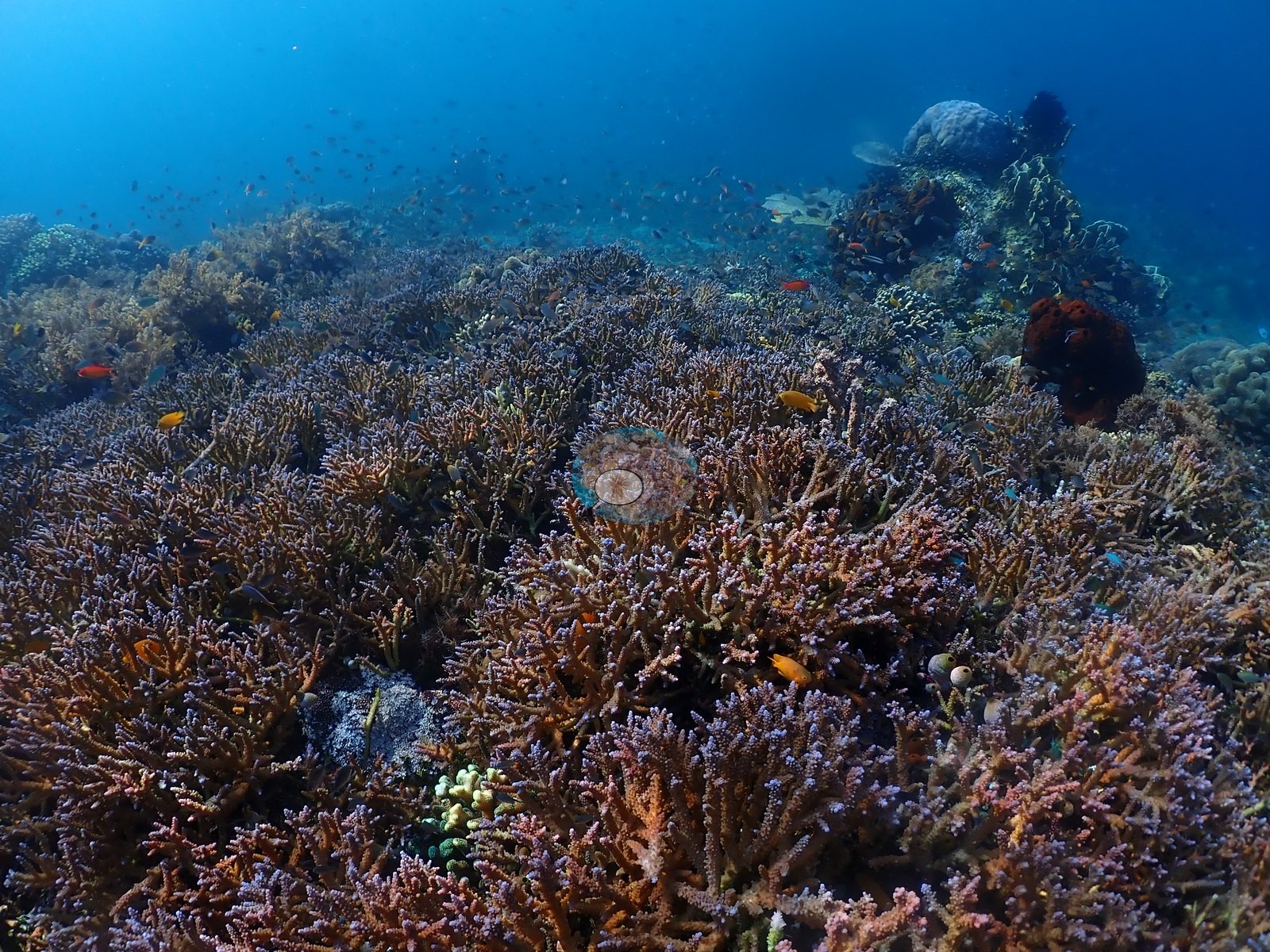
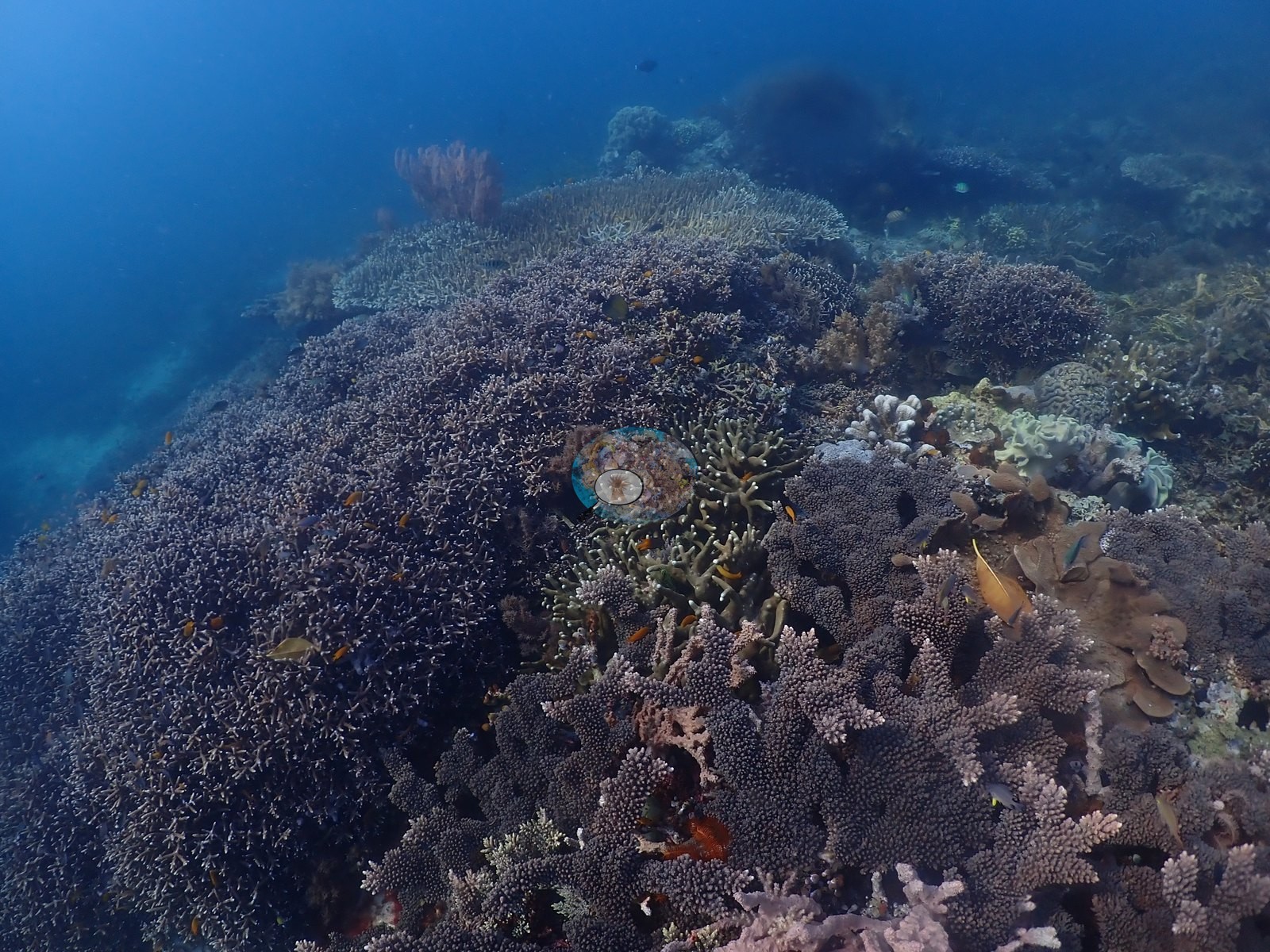
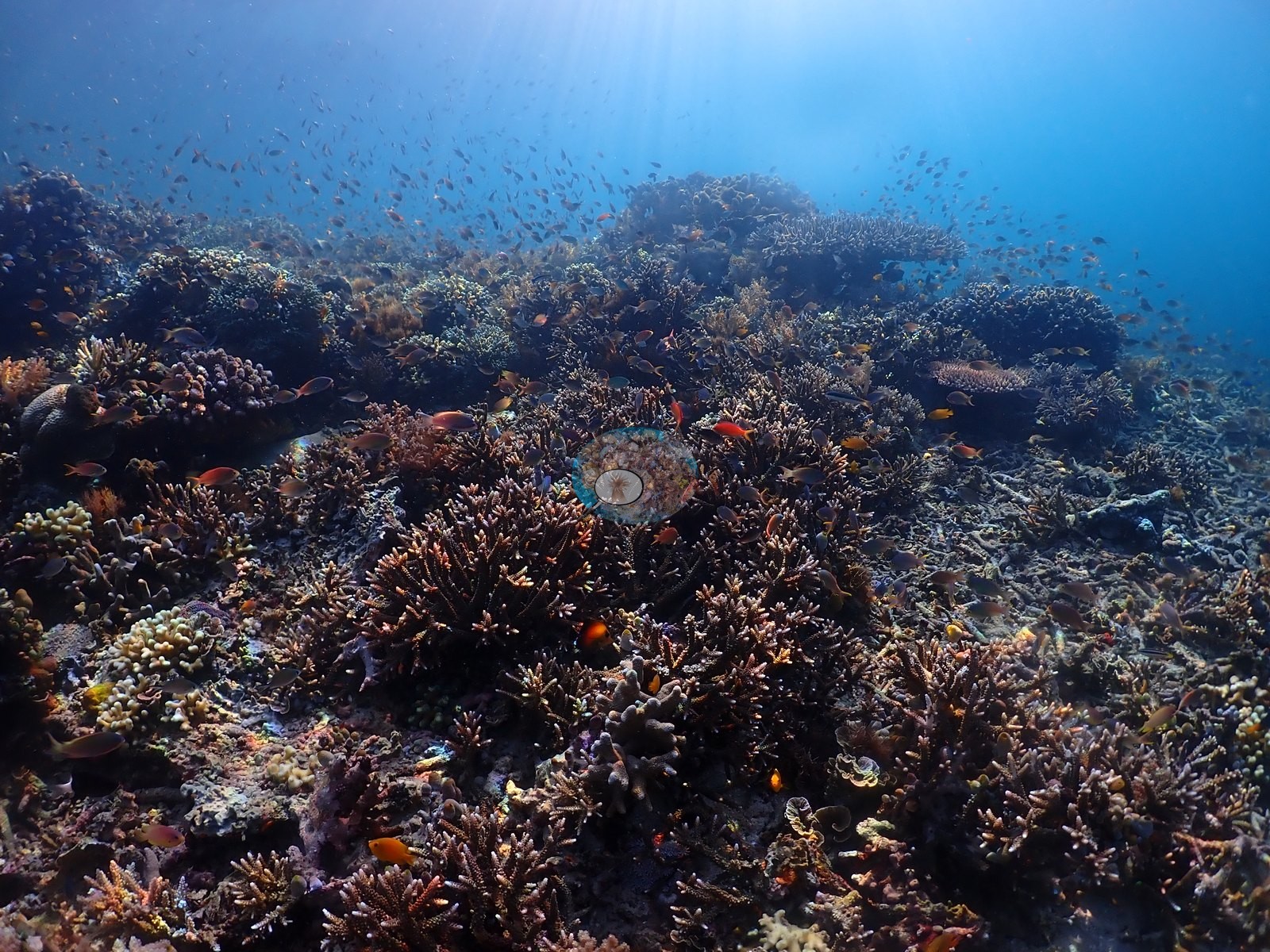
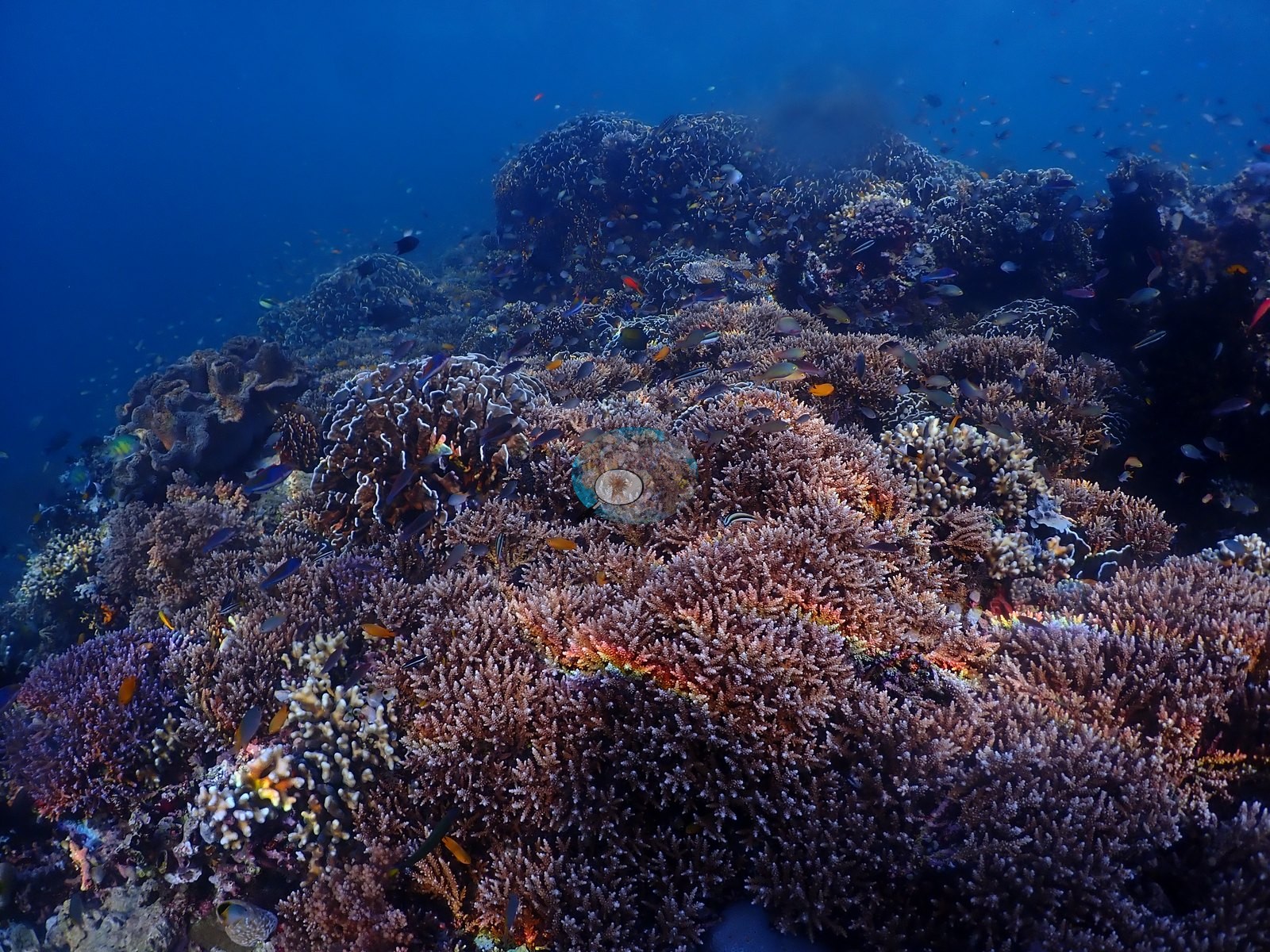
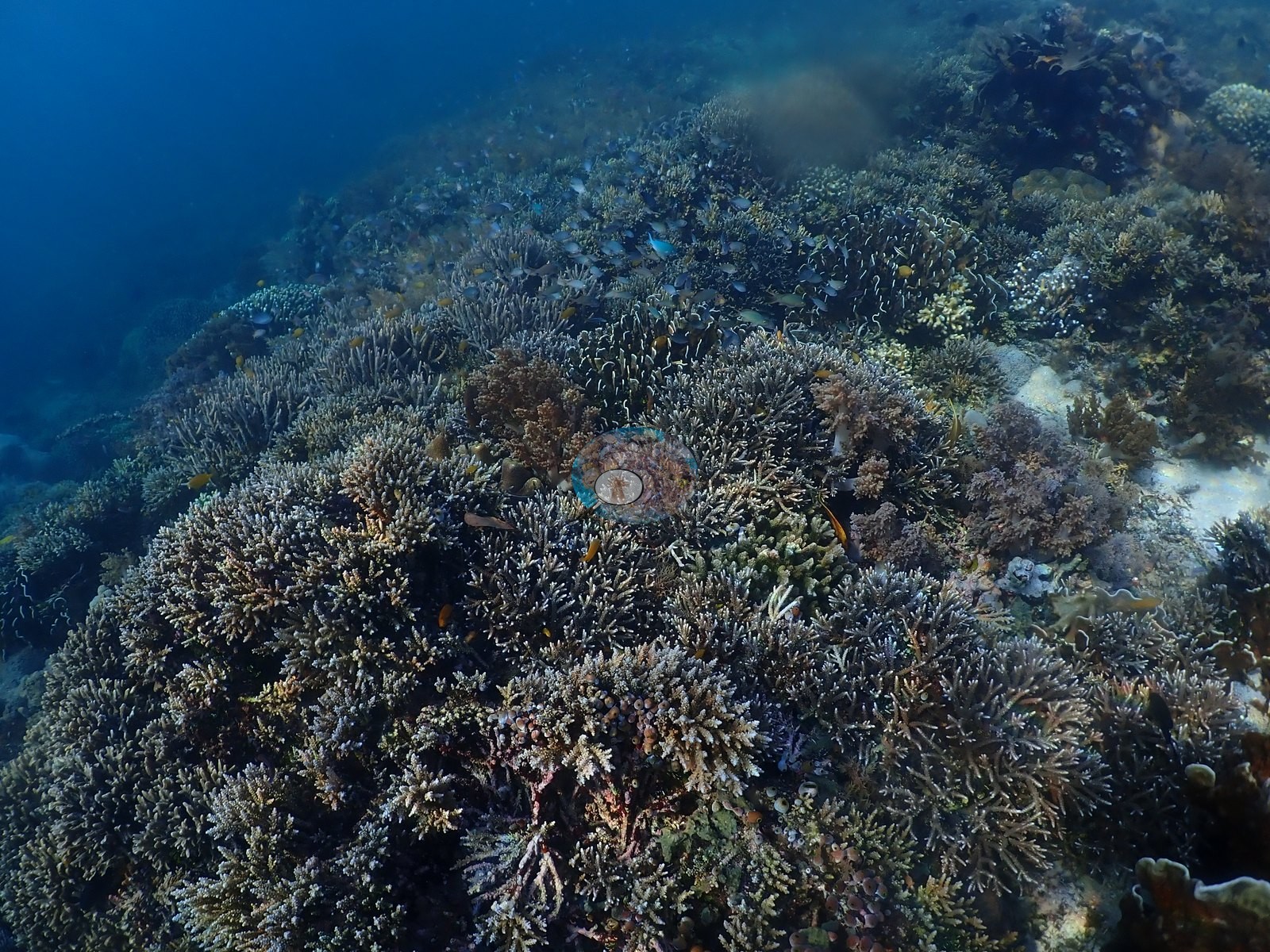
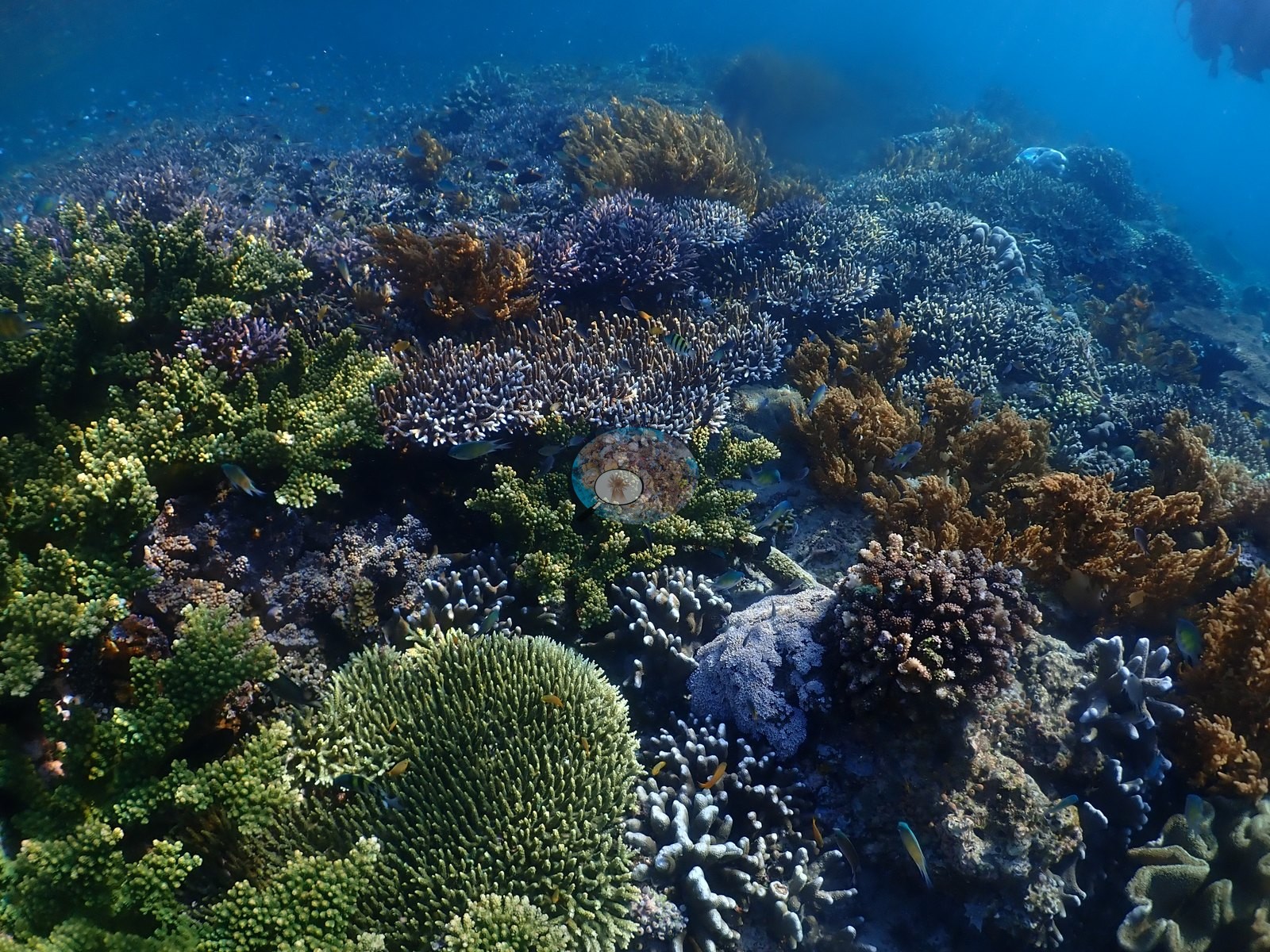
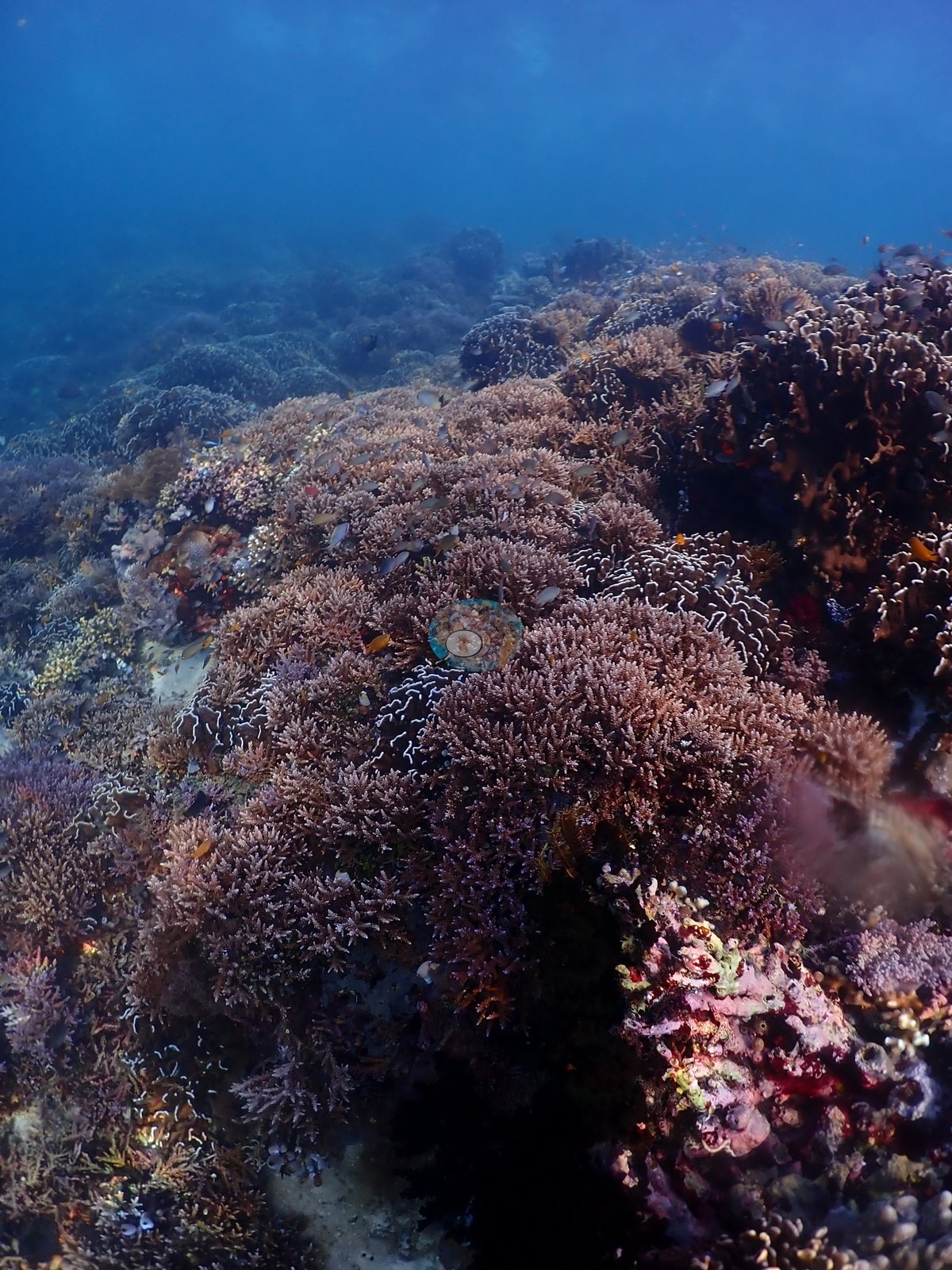
In the shallowest frames the surface is visible in the top of the picture and the coral runs unbroken to the edge of the field of view (e.g., Image 12, Image 54).
Coral cover
Coral cover. Coral cover: 41% — a blind Claude computer-vision point count of 265 of Anderson's unedited photographs (20 points per photo; water, fish, and obstructions excluded). Other computer-vision methods are listed in the method table.
Stressors
Condition. No unambiguously bleached colony was identified. A few colonies read conspicuously paler than their neighbors — a cream-white anastomosing colony in one frame and two thin white branching colonies in another — but at depth, without strobe, naturally pale coloration, bleached-alive tissue, and recently dead skeleton cannot be separated in the photograph, and neither frame shows a cluster. No crown-of-thorns, no Drupella aggregations, no disease lesions, and no rubble or standing dead thicket were recorded in the frames reviewed.
Fish and other fauna
Fauna. Dense blue-green chromis, anthias, damselfish, wrasse, and parrotfish over the shallows; feather stars and a red crinoid or anemone on the crest; nothing larger resolved in the sampled stills.
Comparisons with other data
No prior survey data from this site. If you would like to share yours, please email us.
Dive record
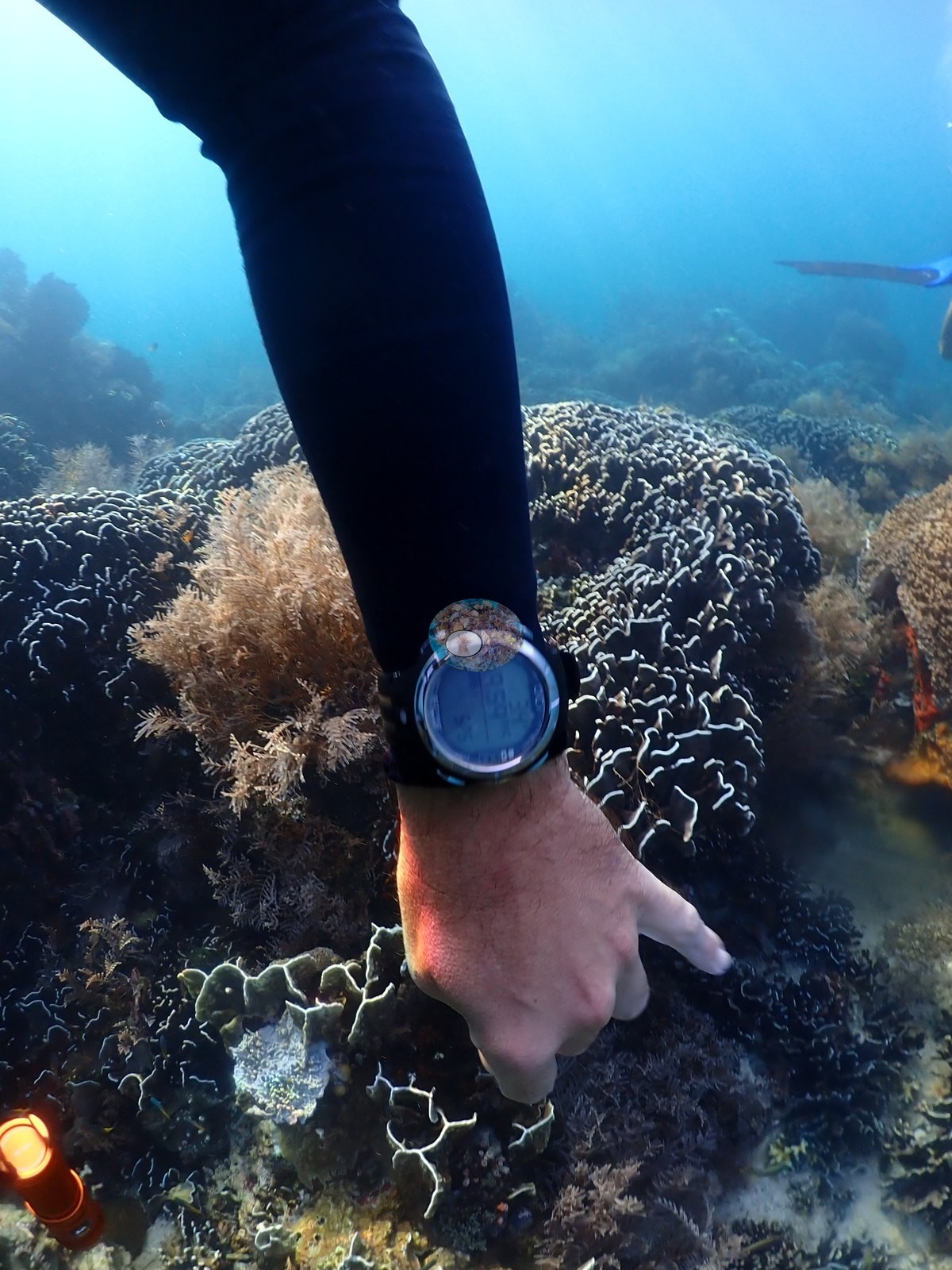
Pulau Sebatang was dived on 10 August 2026 during the Halmahera crossing aboard the liveaboard Ambai (Wallacea Dive Cruises), reaching 35.1 m at 25–26°C.
Other notes
Anderson's field note is unequivocal: "among best coral dives I've ever done, especially in the shallows", and the shallow frames are the ones that carry the claim.
CV model comparison
More info
DINOv3 and CoralSCOP were run on the same photos and are listed for comparison. Coralscapes v2 and v1 were also run but are not shown: Anderson does not consider Coralscapes reliable for these photos. No diver transect exists for this trip, so agreement between the rows is not accuracy, and as of September 2026 no computer-vision method estimates coral cover accurately on new images; treat every row as indicative.| Method | Hard-coral cover (%) |
|---|---|
| In-house DINOv3 | 33.5 |
| CoralSCOP unedited | 36.2 |
| Claude | 41.1 |
Data & links
All images from Coral Reef Diagnostics. Data are from Coral Reef Diagnostics.
© Coral Reef Diagnostics.