
Indonesia - Halmahera: Proco
Part of the regional summaries: Indonesia - Halmahera and Indonesia - Maluku
More info
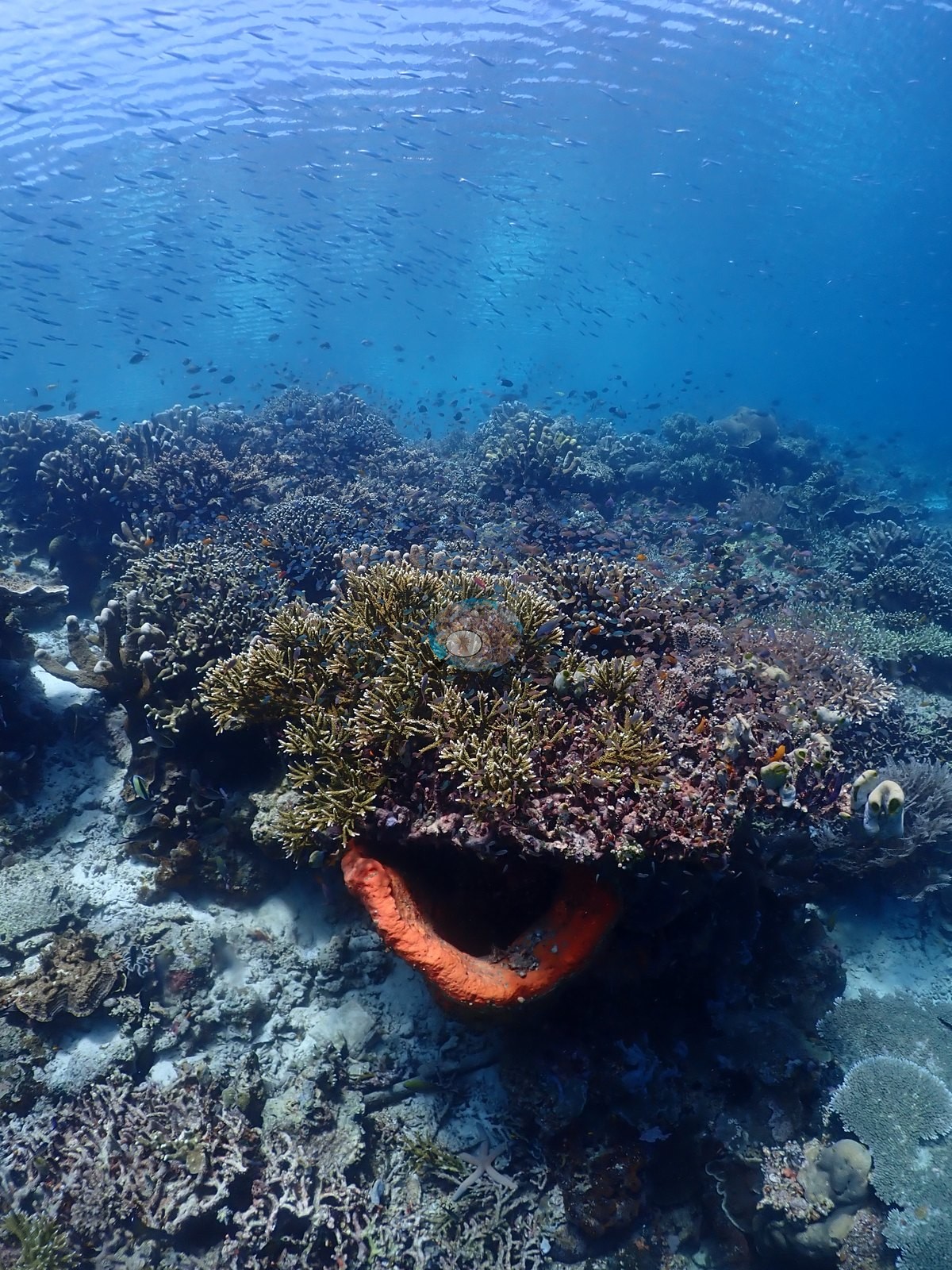
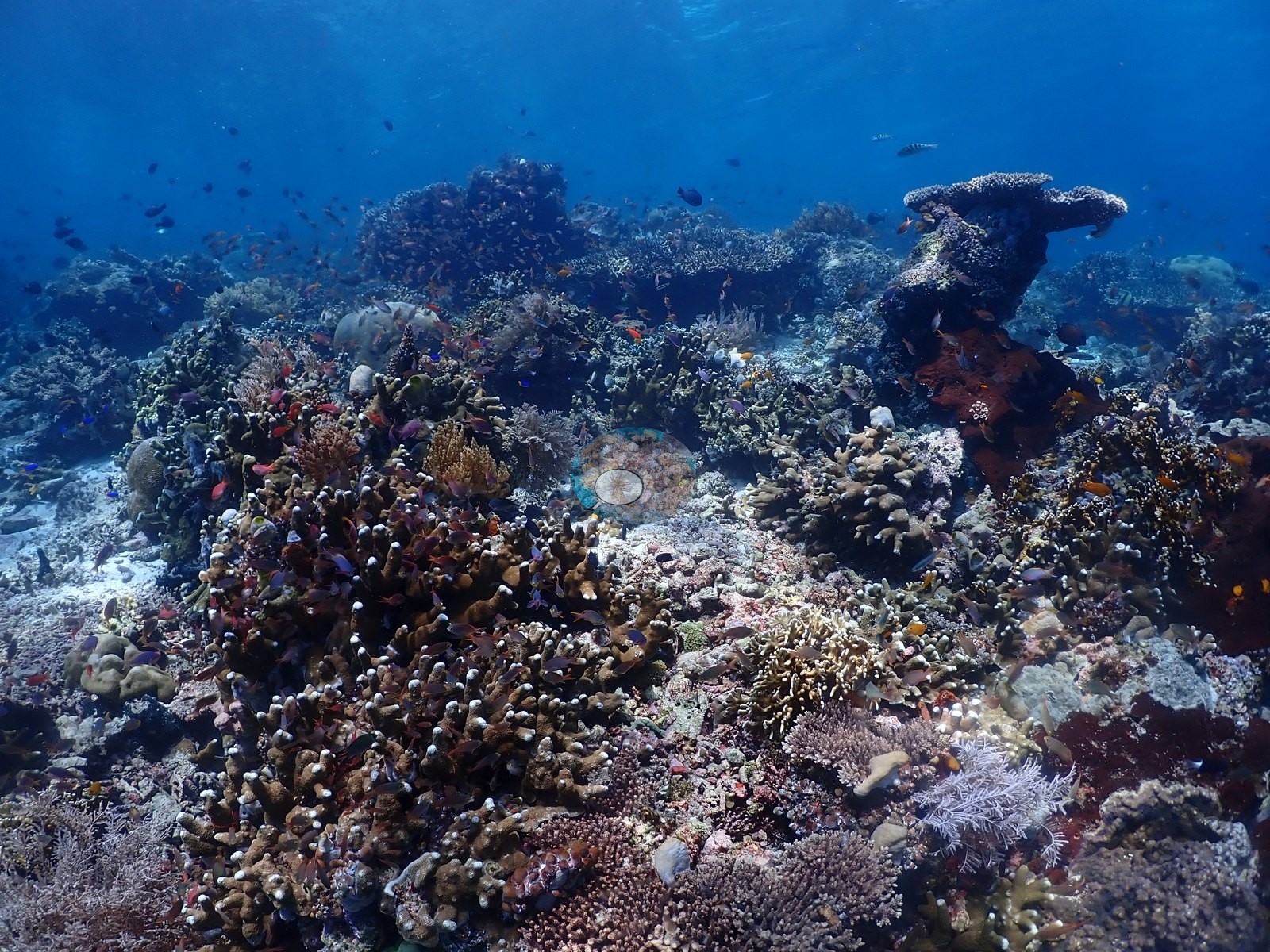
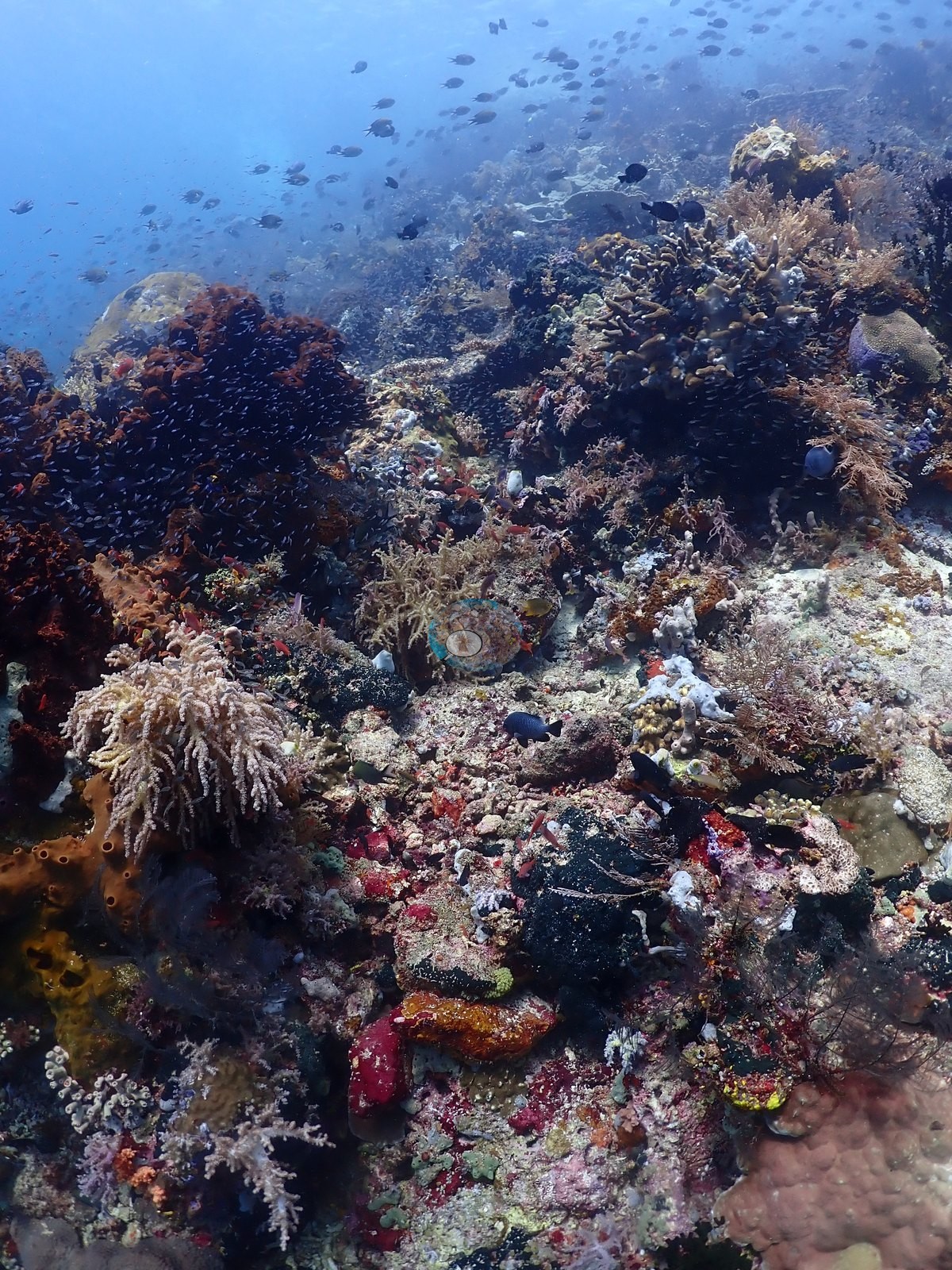
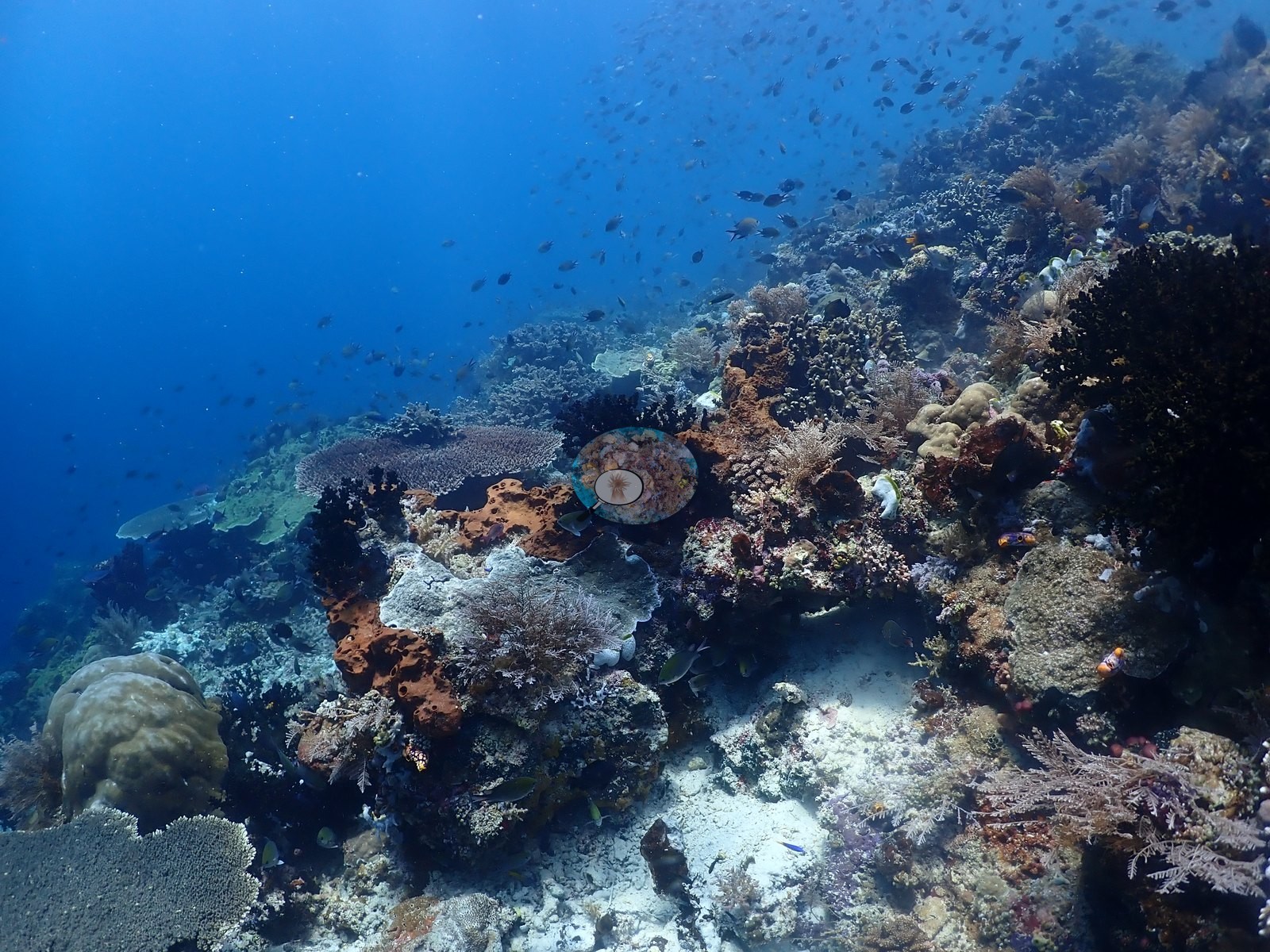
North Maluku (NOAA CRW virtual station)Proco is a shallow, sunlit, richly coral-covered reef - Anderson stayed at 2-3 m for most of the dive for the light and the sheer diversity of scleractinians on display, from tabulate Acropora to meandroid brains to fire coral. A blind Claude computer-vision point count puts coral cover around 32%.
Proco adalah terumbu dangkal yang disinari matahari dan kaya tutupan karang — Anderson bertahan pada kedalaman 2-3 m selama sebagian besar penyelaman demi cahayanya dan keragaman skleraktinia yang terpampang, dari Acropora tabulat hingga karang otak meandroid dan karang api. Penghitungan titik buta visi komputer Claude memperkirakan tutupan karang sekitar 32%.
Terjemahan ringkasan ini oleh AI; versi bahasa Inggris yang berlaku.
Two other CRD dive sites within 5 km shown in orange — click a marker to open its page.
38 of these 54 photographs are shown beside the text that discusses them under "Site description" below.
Site description
Setting
A shallow, sunlit dive on 2026-08-13 at 26–27°C.
General benthic features
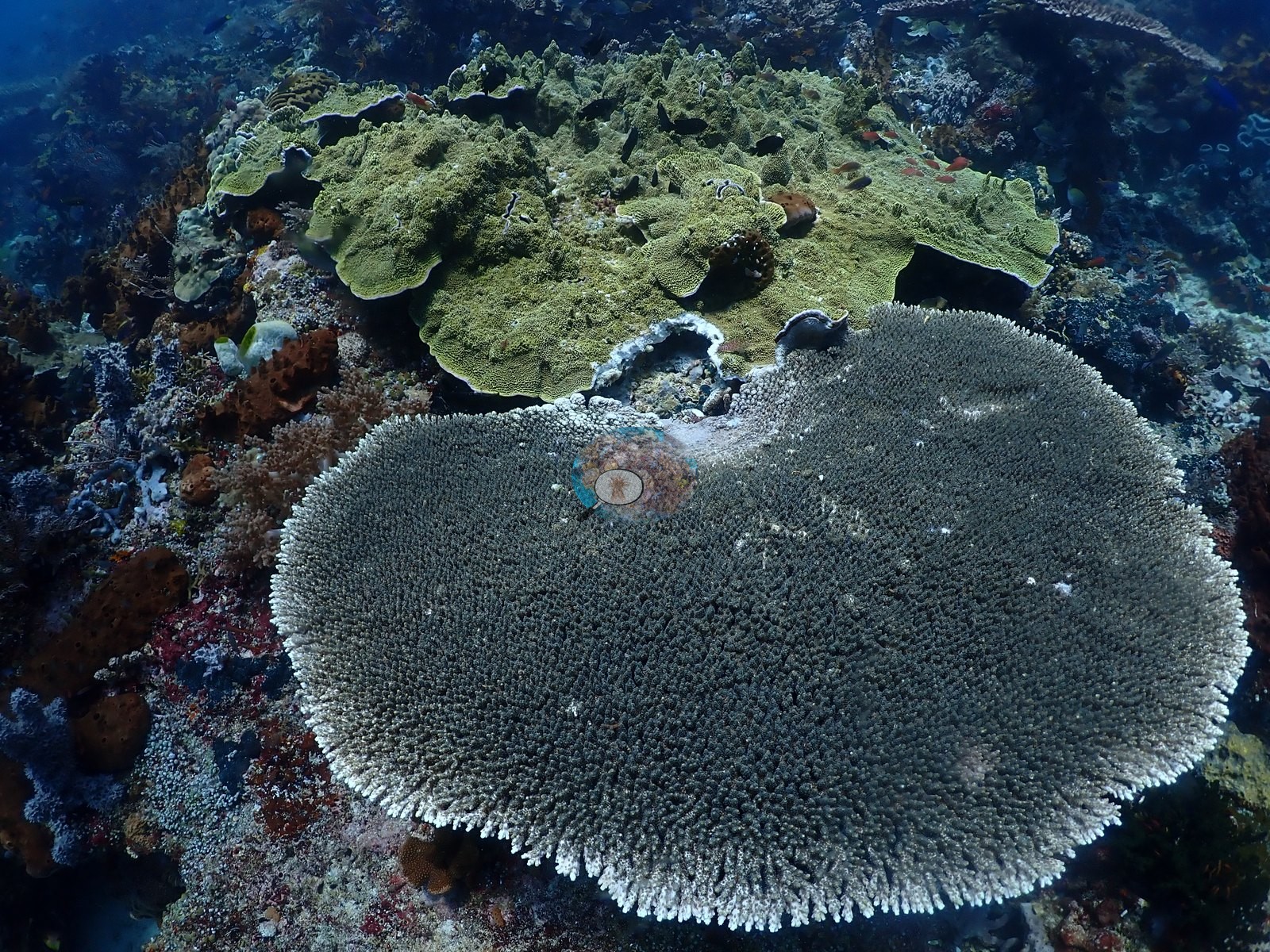
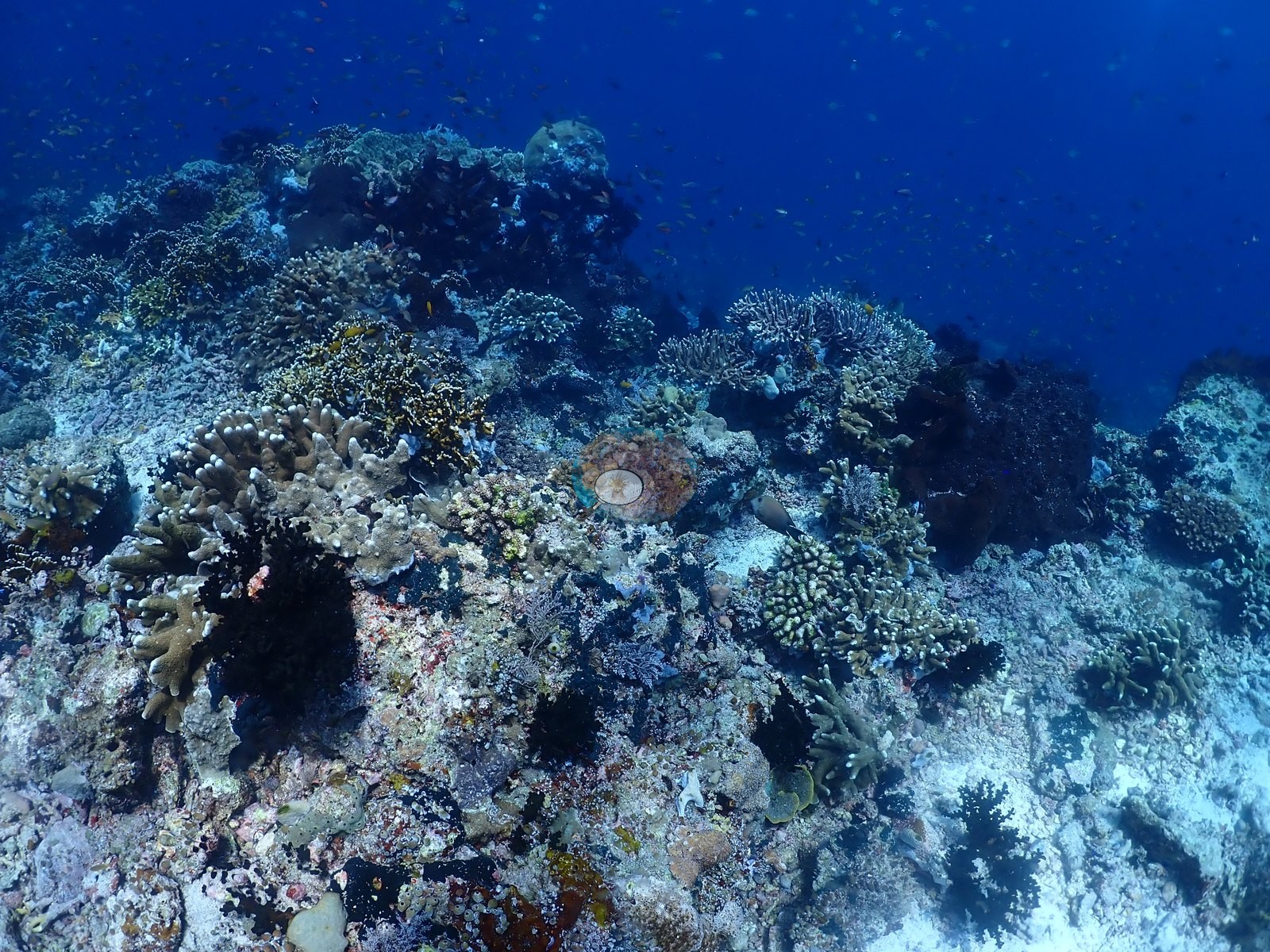
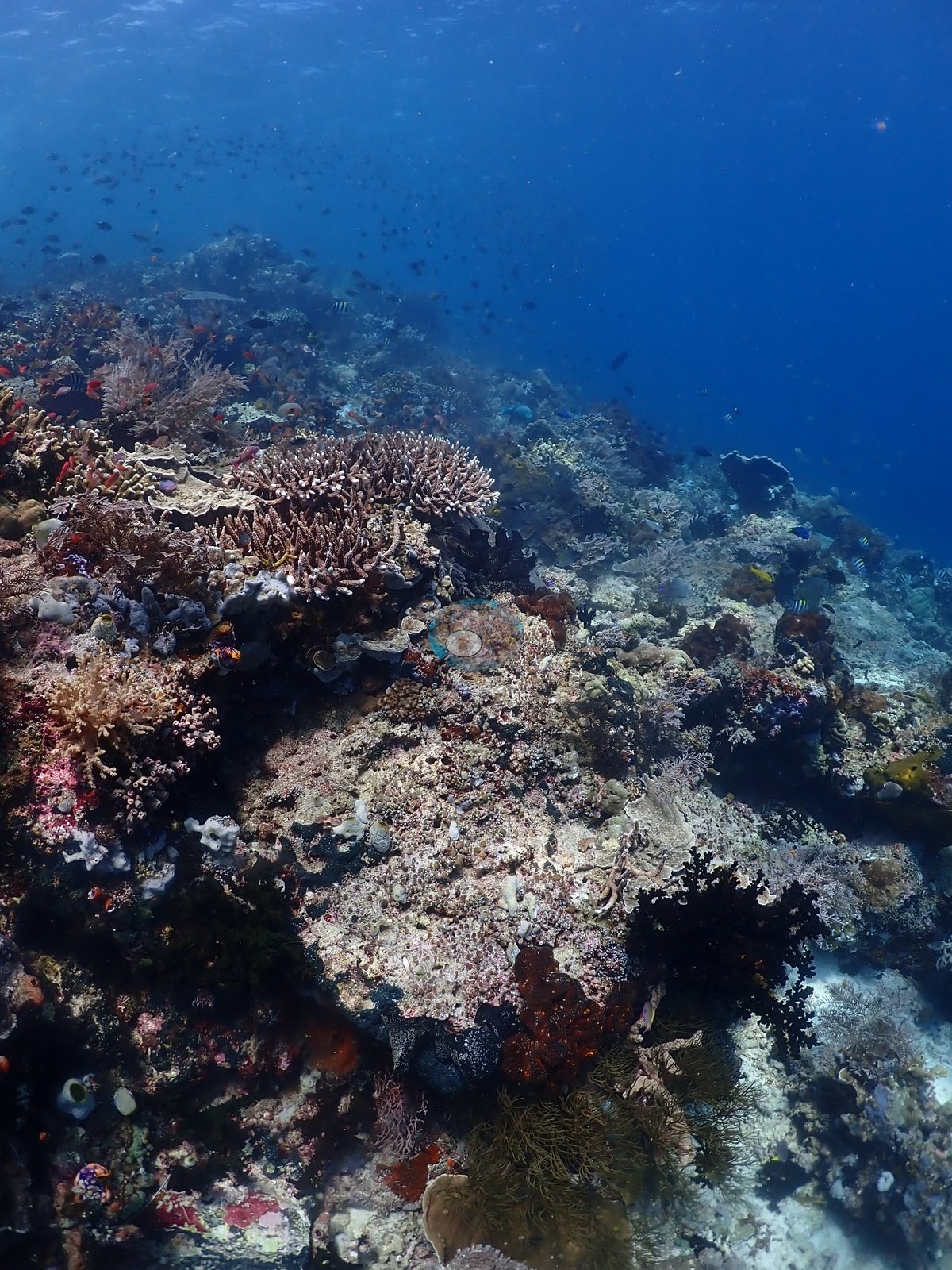
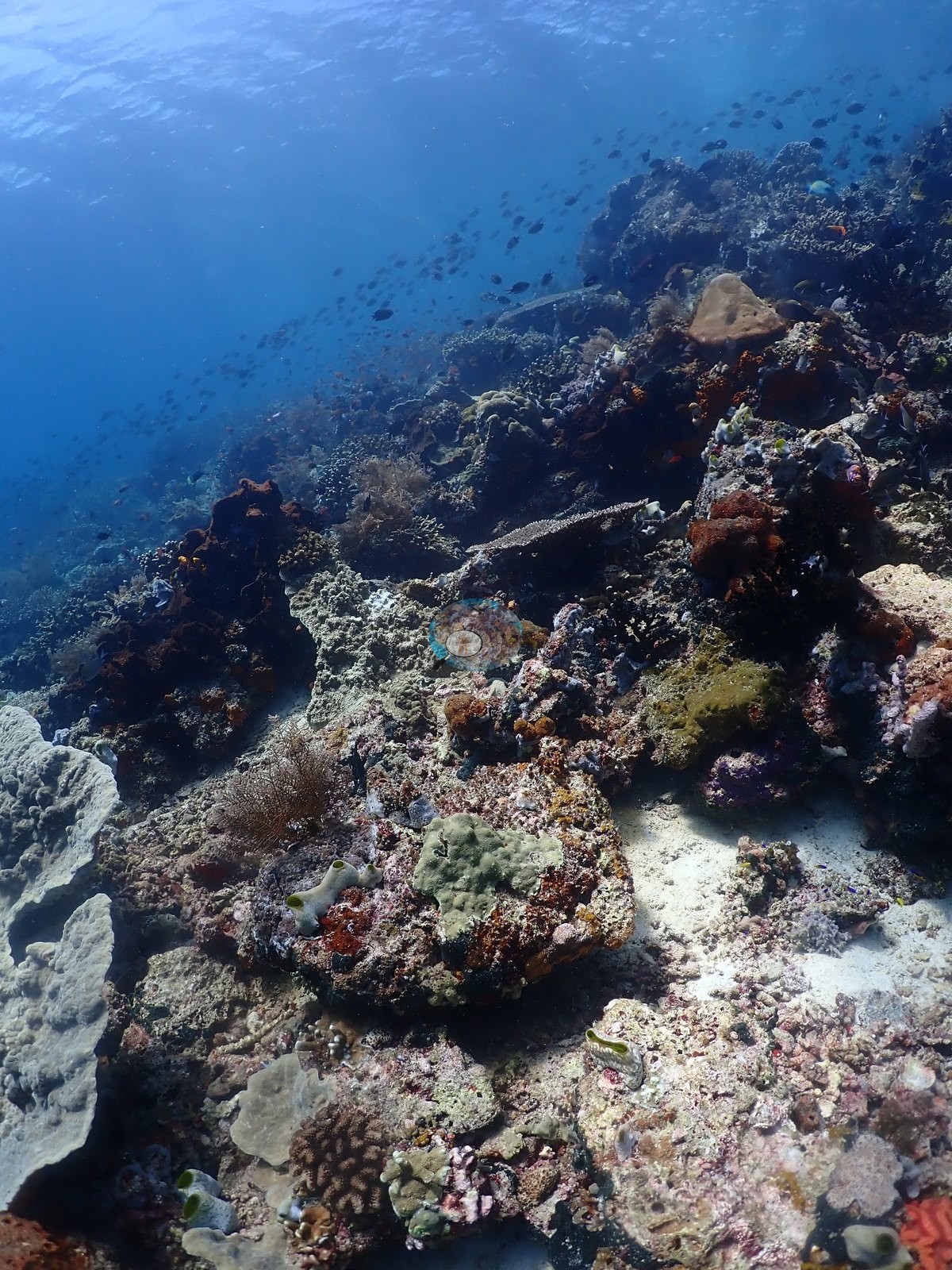
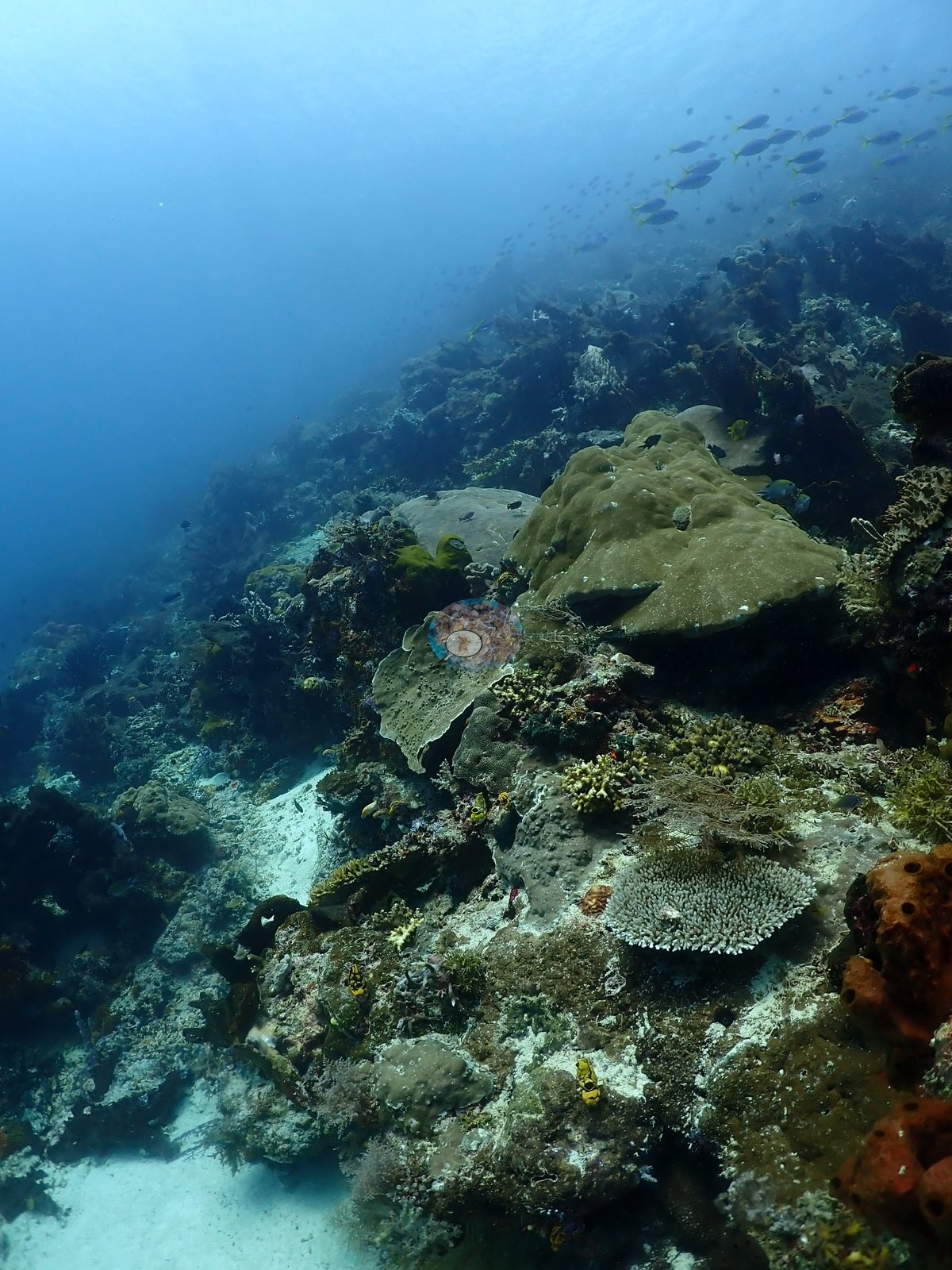
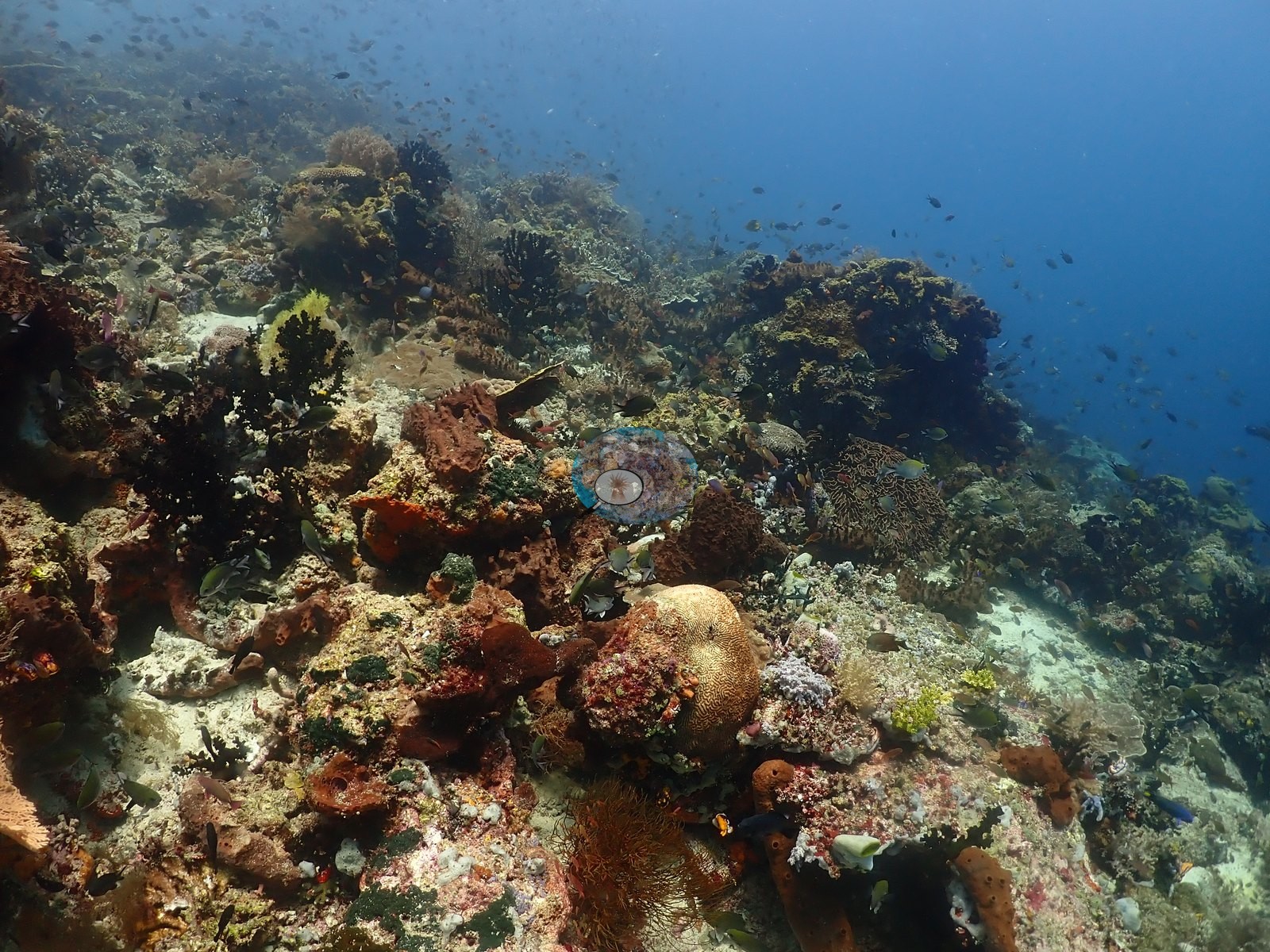
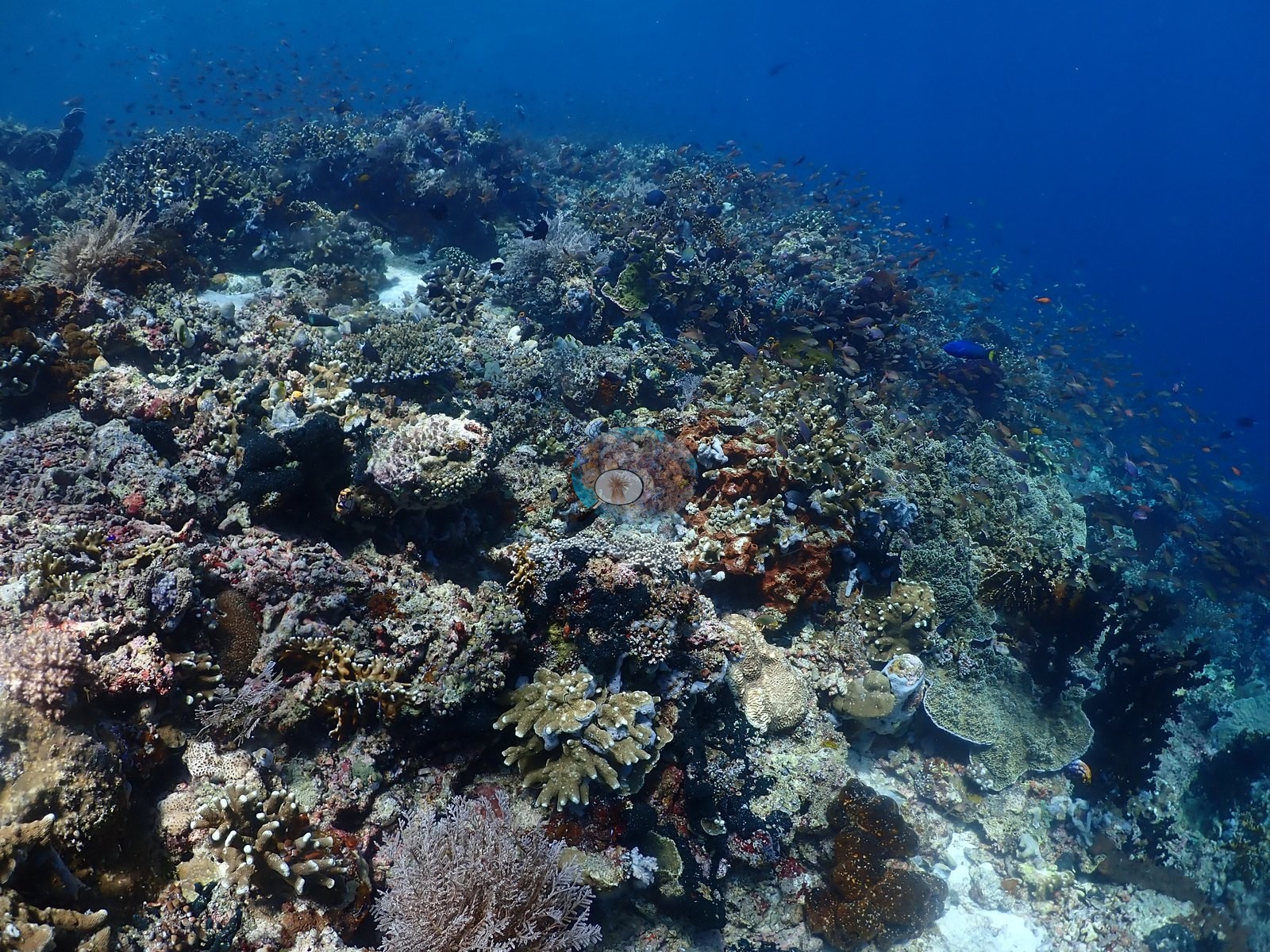
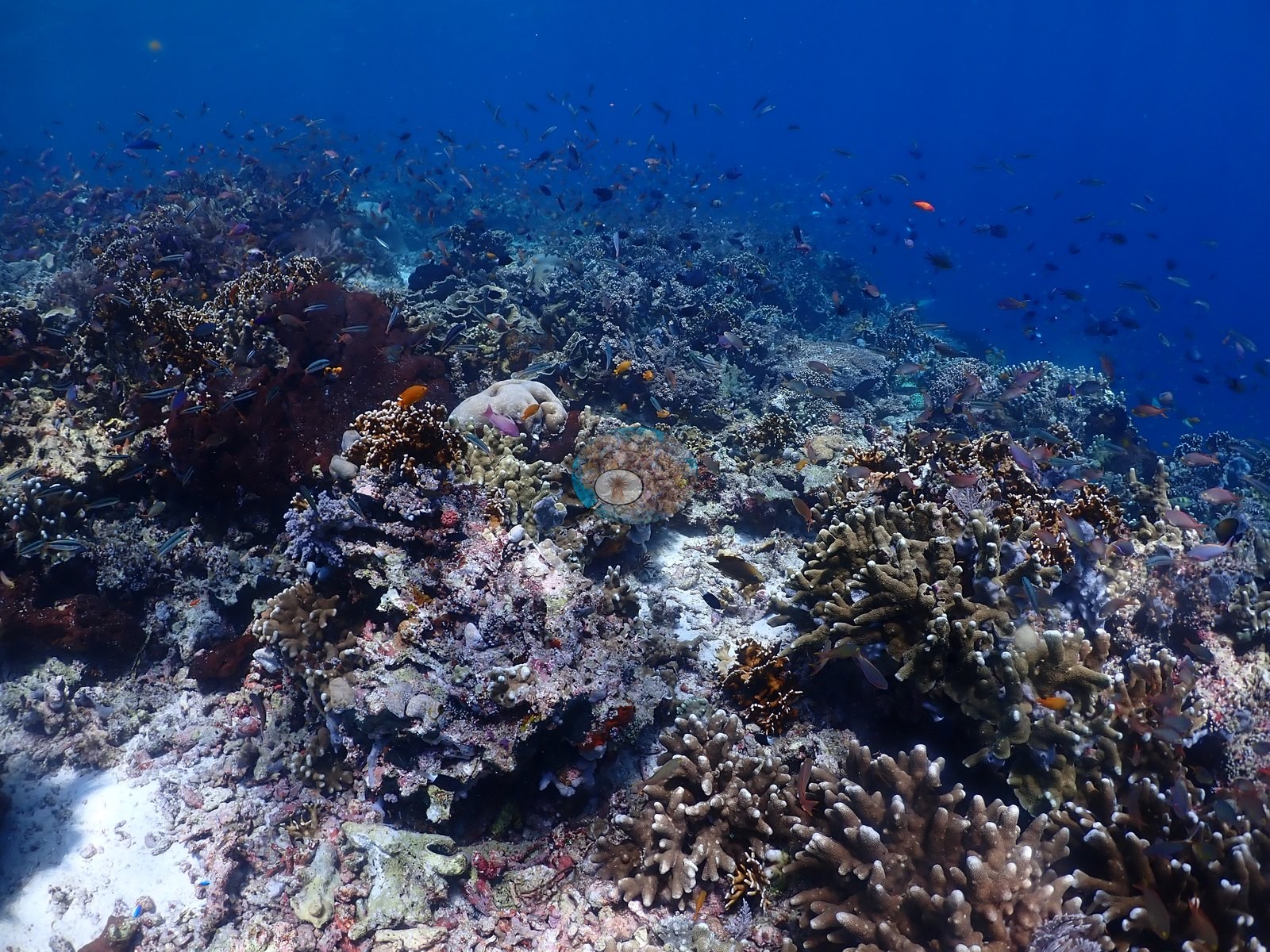
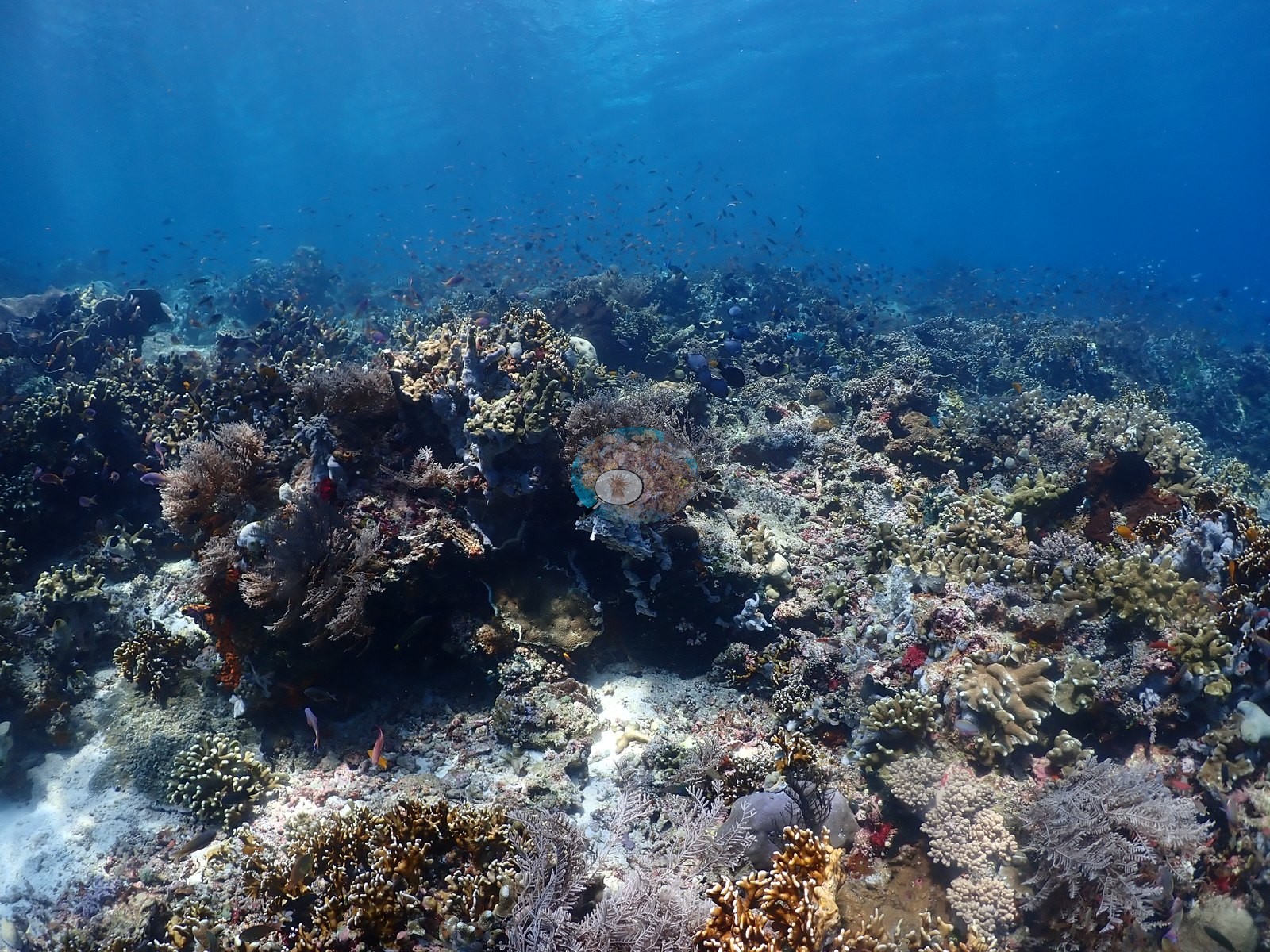
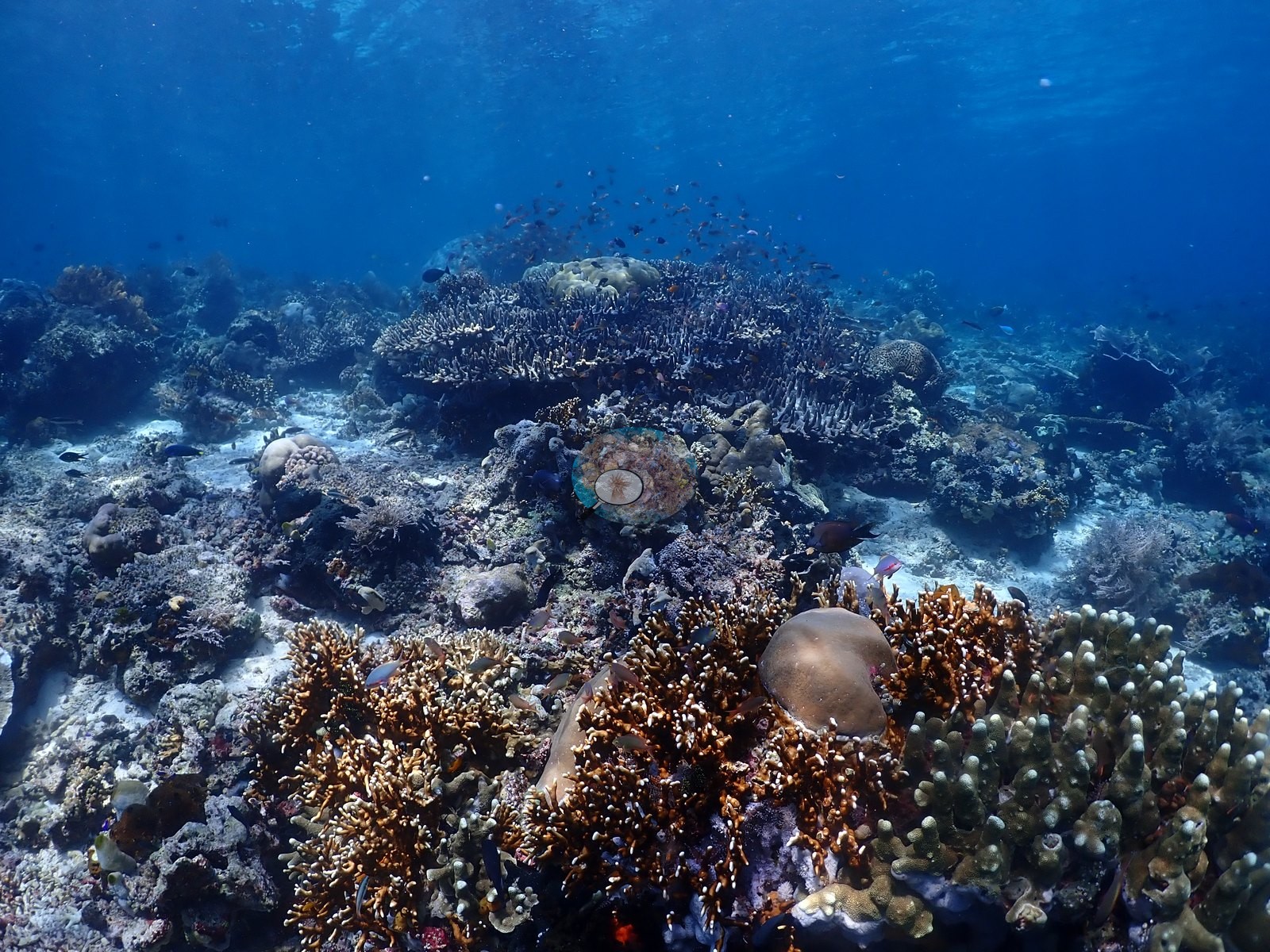
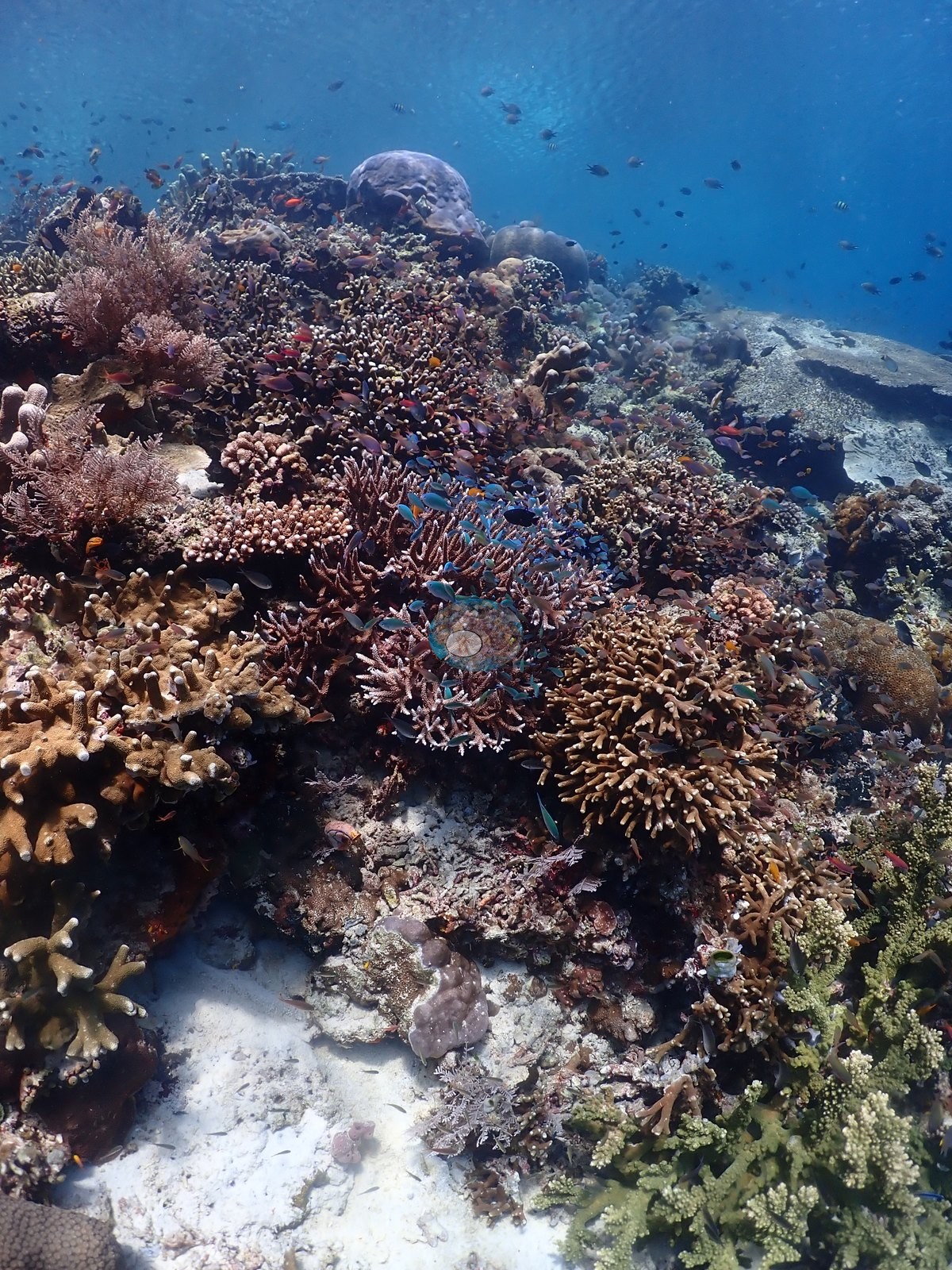
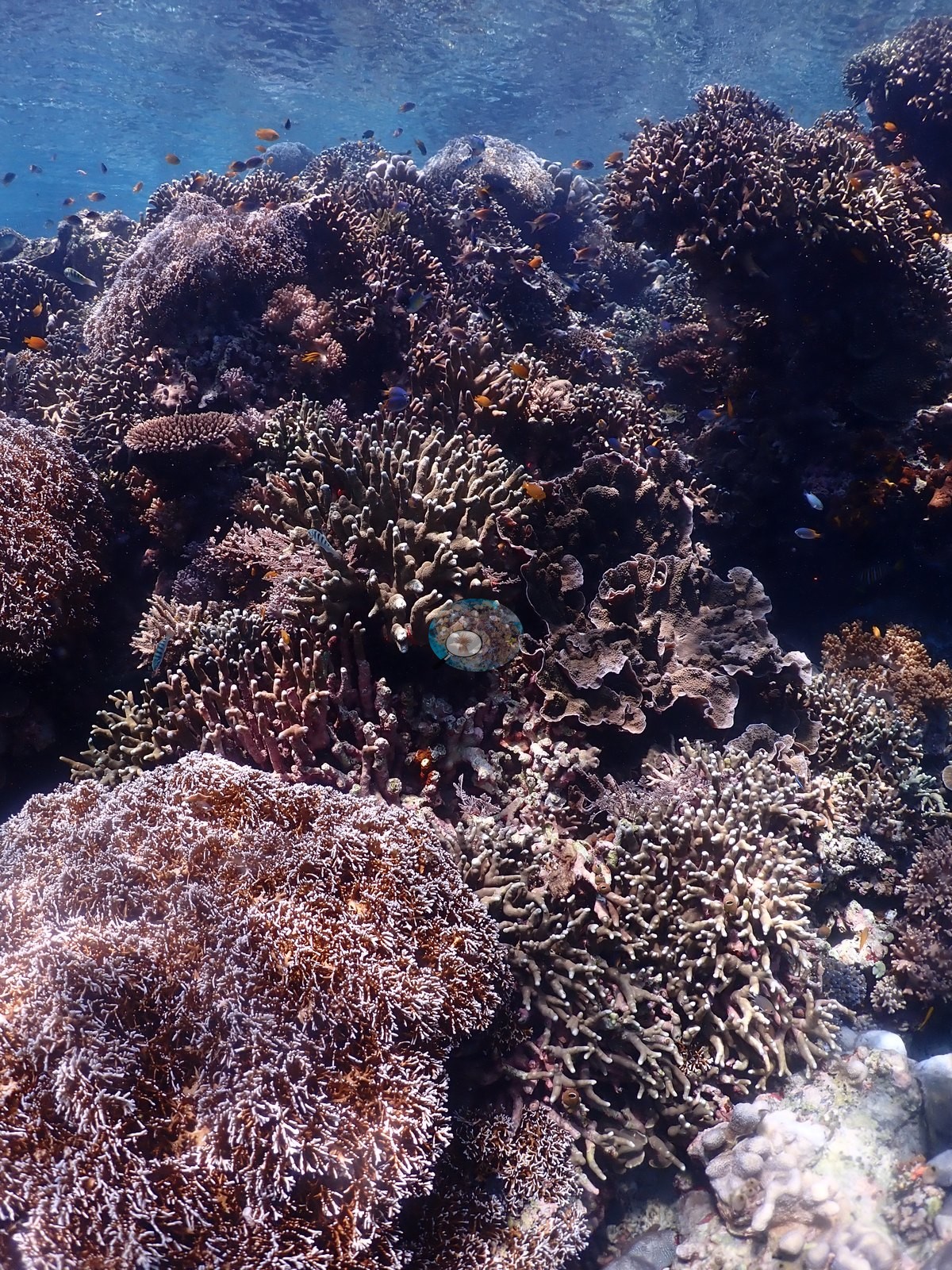
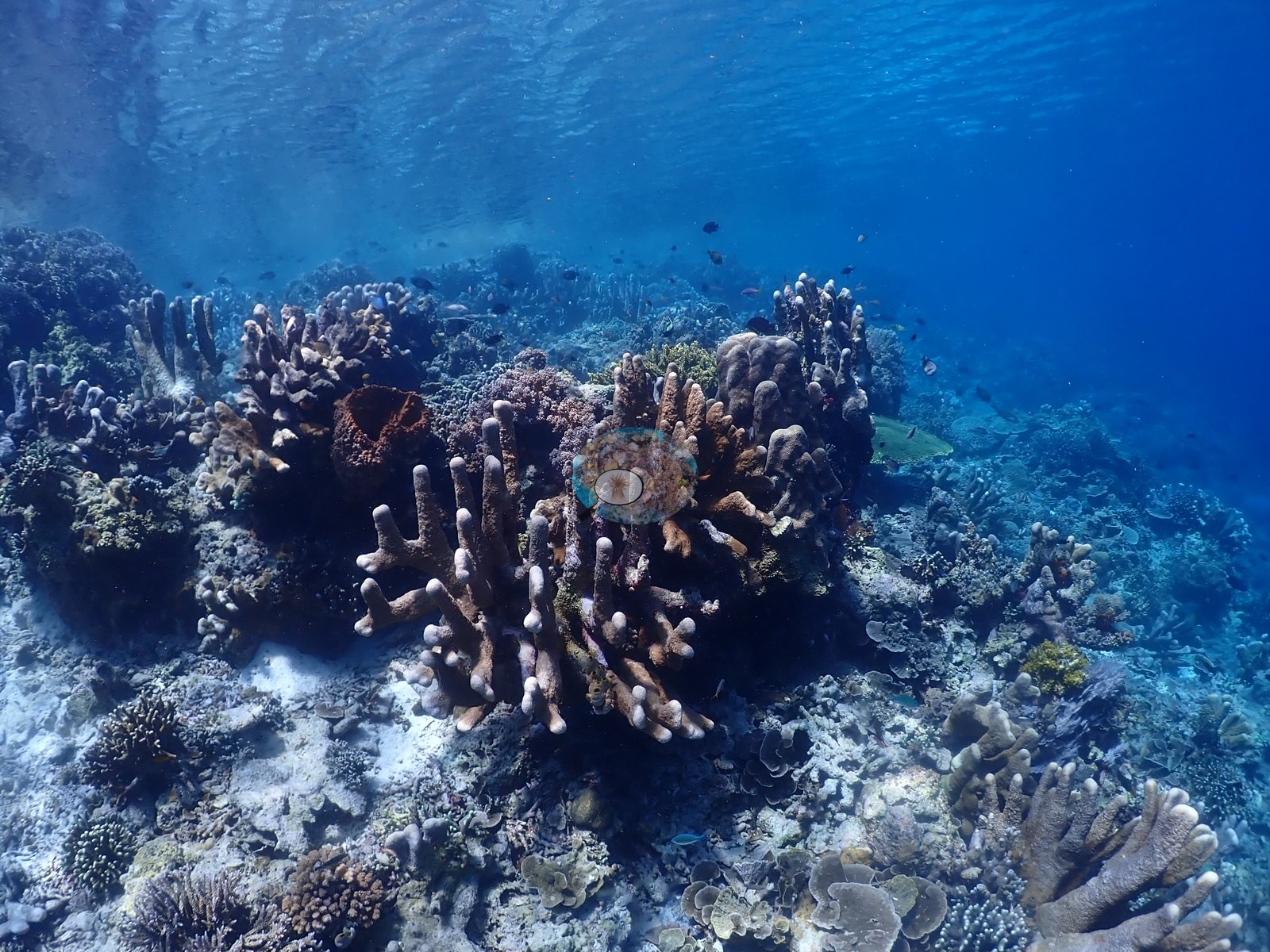
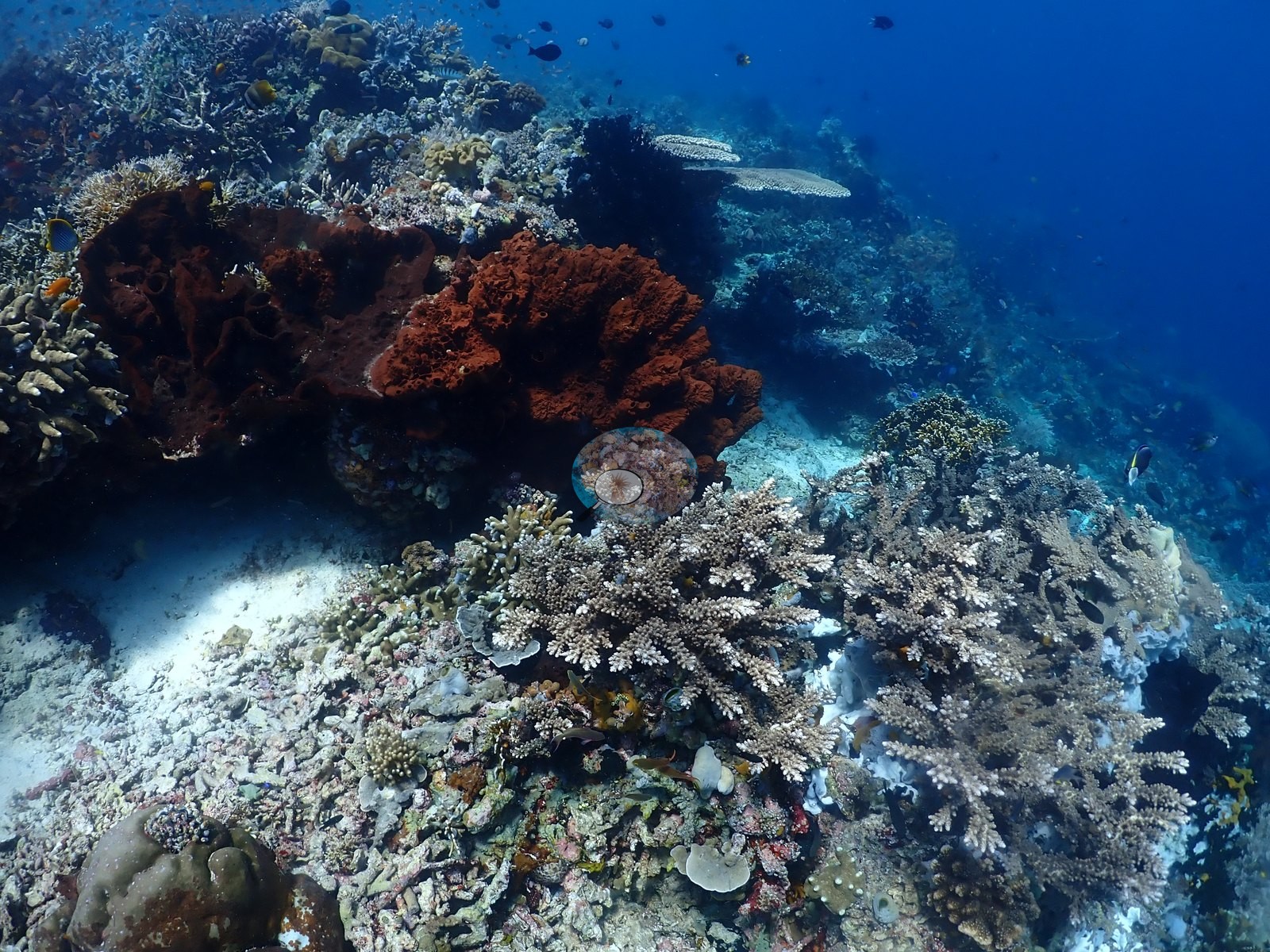
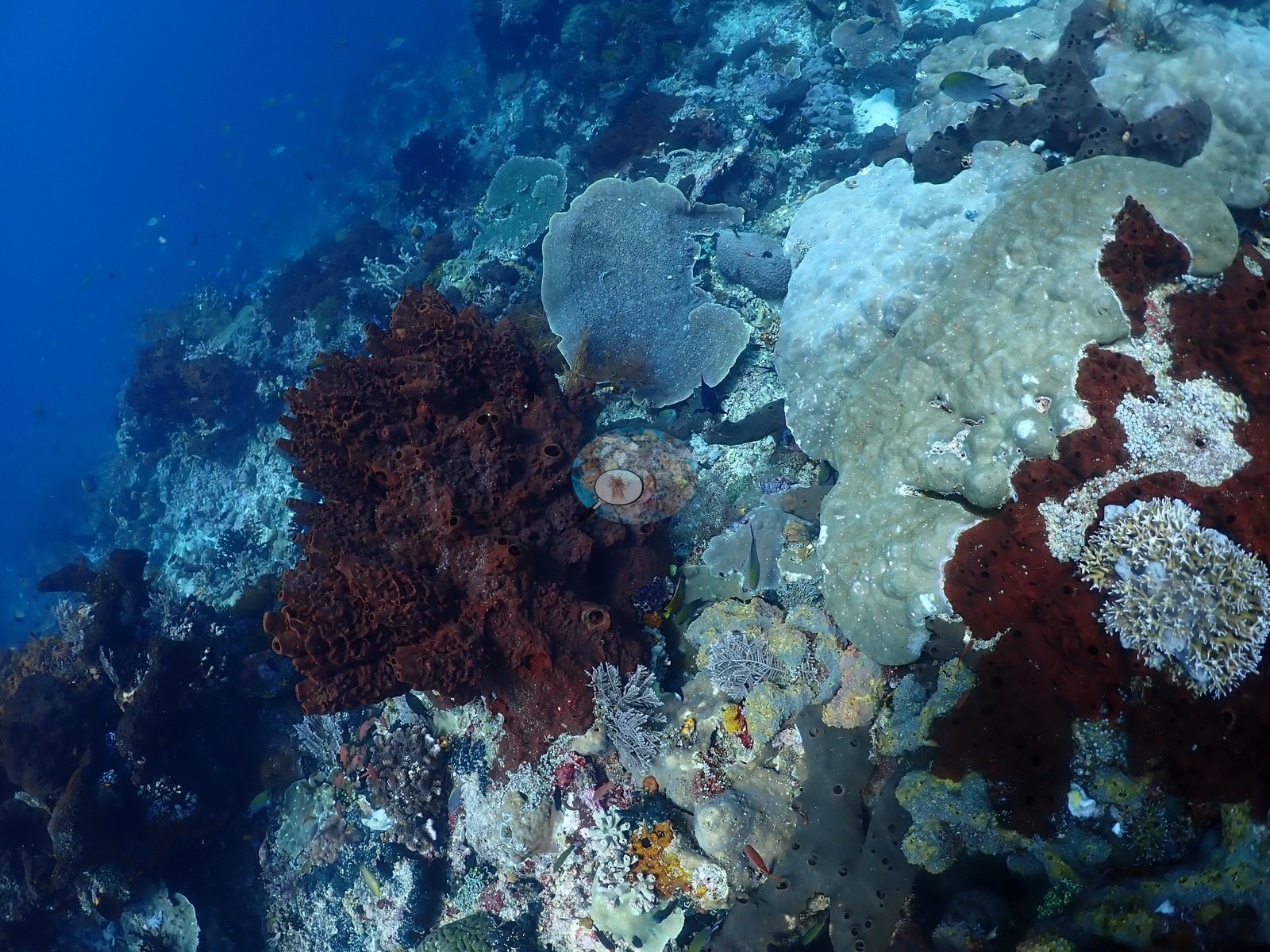
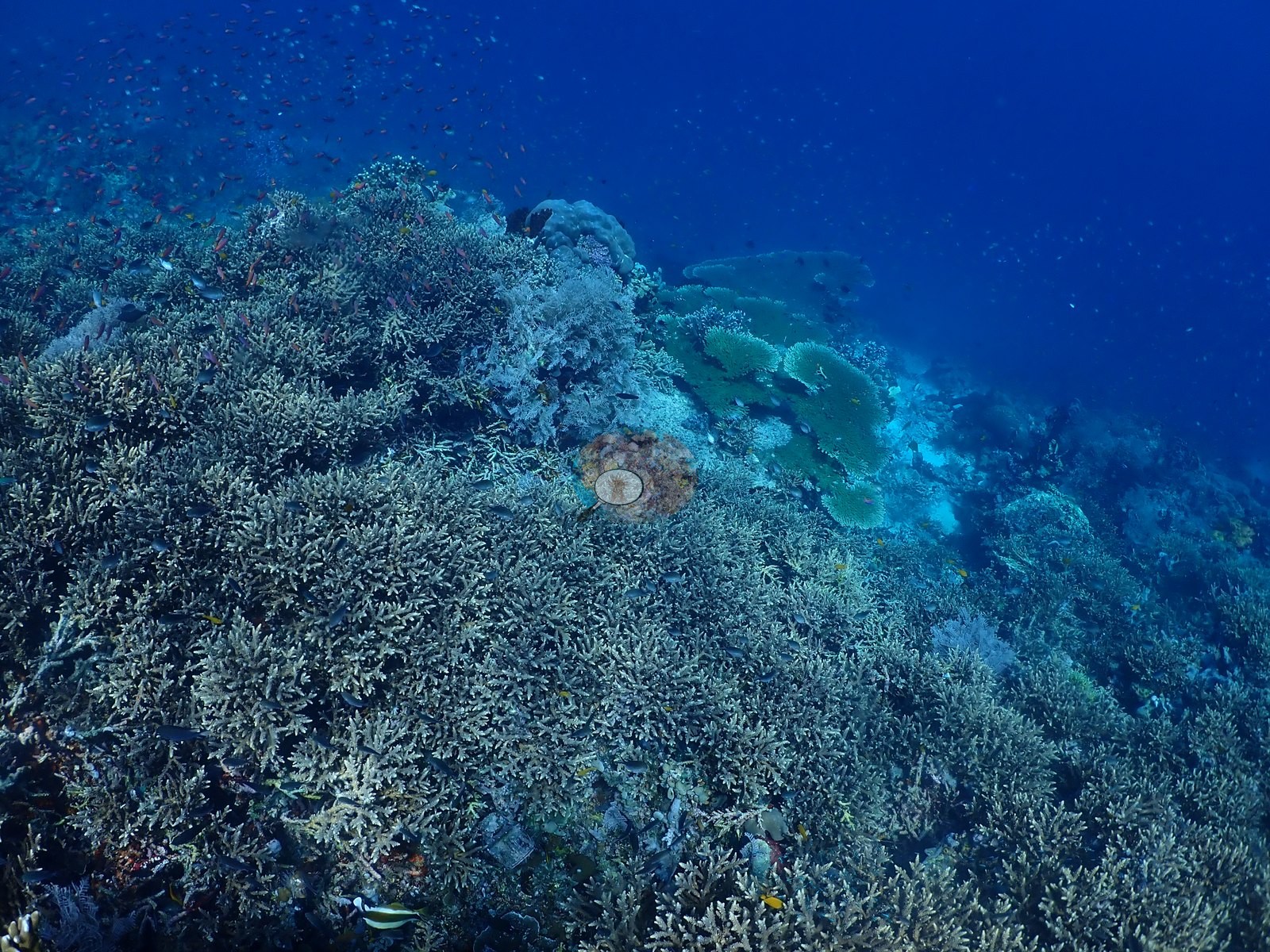
The dominant impression is diversity of growth form. Single frames carry corymbose and digitate Acropora in salmon, mauve, olive, and pale green, tabulate Acropora plates up to a meter or more across with crisp white growth margins, columnar and digitate Porites with rounded pale tips, gray massive Porites domes, meandroid Symphyllia- and Lobophyllia-type brains, foliose Turbinaria and Montipora whorls, Pocillopora, Millepora-type fire coral, and free-living fungiids, all within a few meters of one another (e.g., Image 1, Image 2, Image 4, Image 6, Image 8, Image 18, Image 20, Image 23, Image 25, Image 28, Image 30, Image 31, Image 32, Image 33, Image 41, Image 42, Image 46, Image 52, Image 53, Image 54).
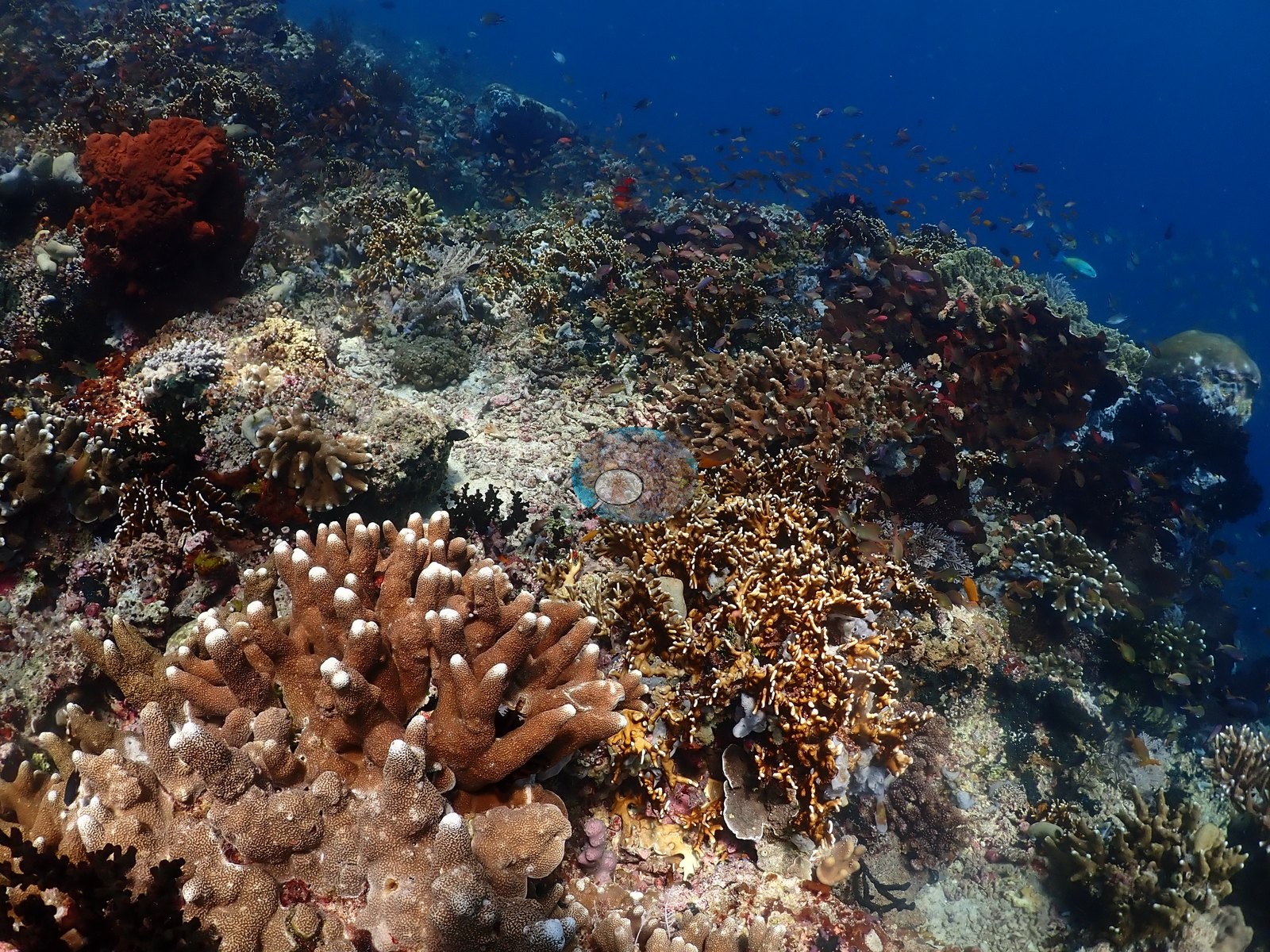
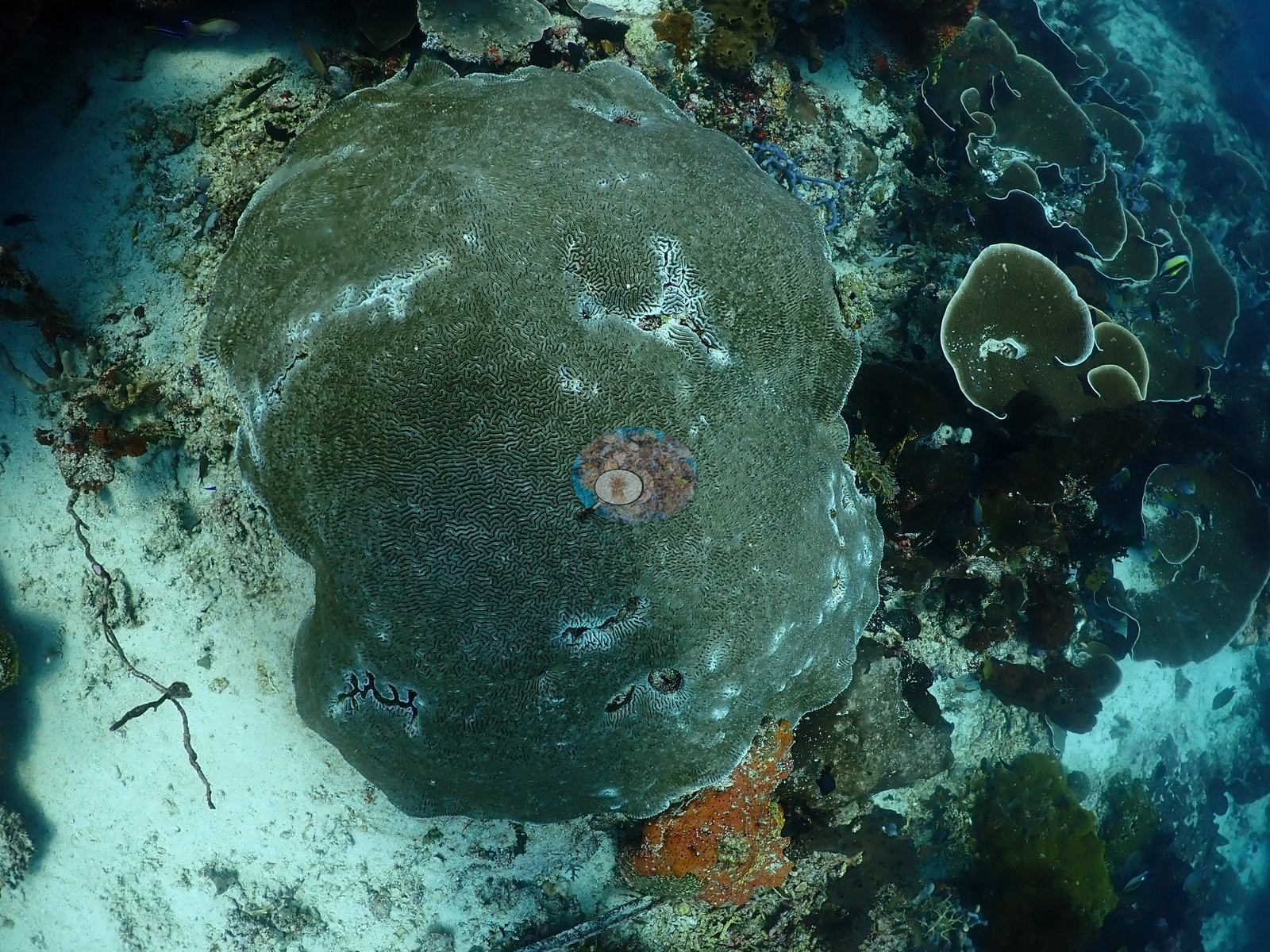
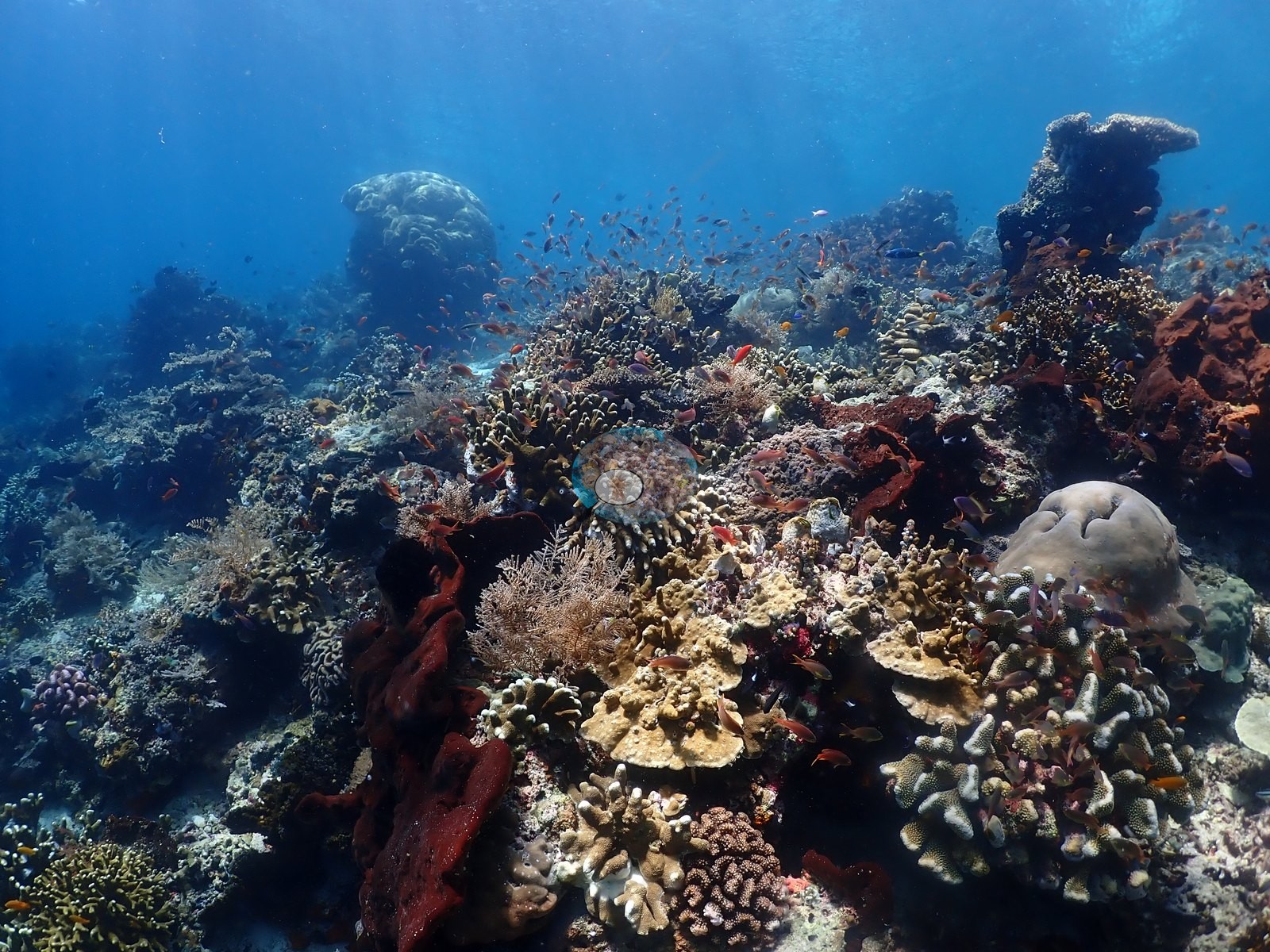
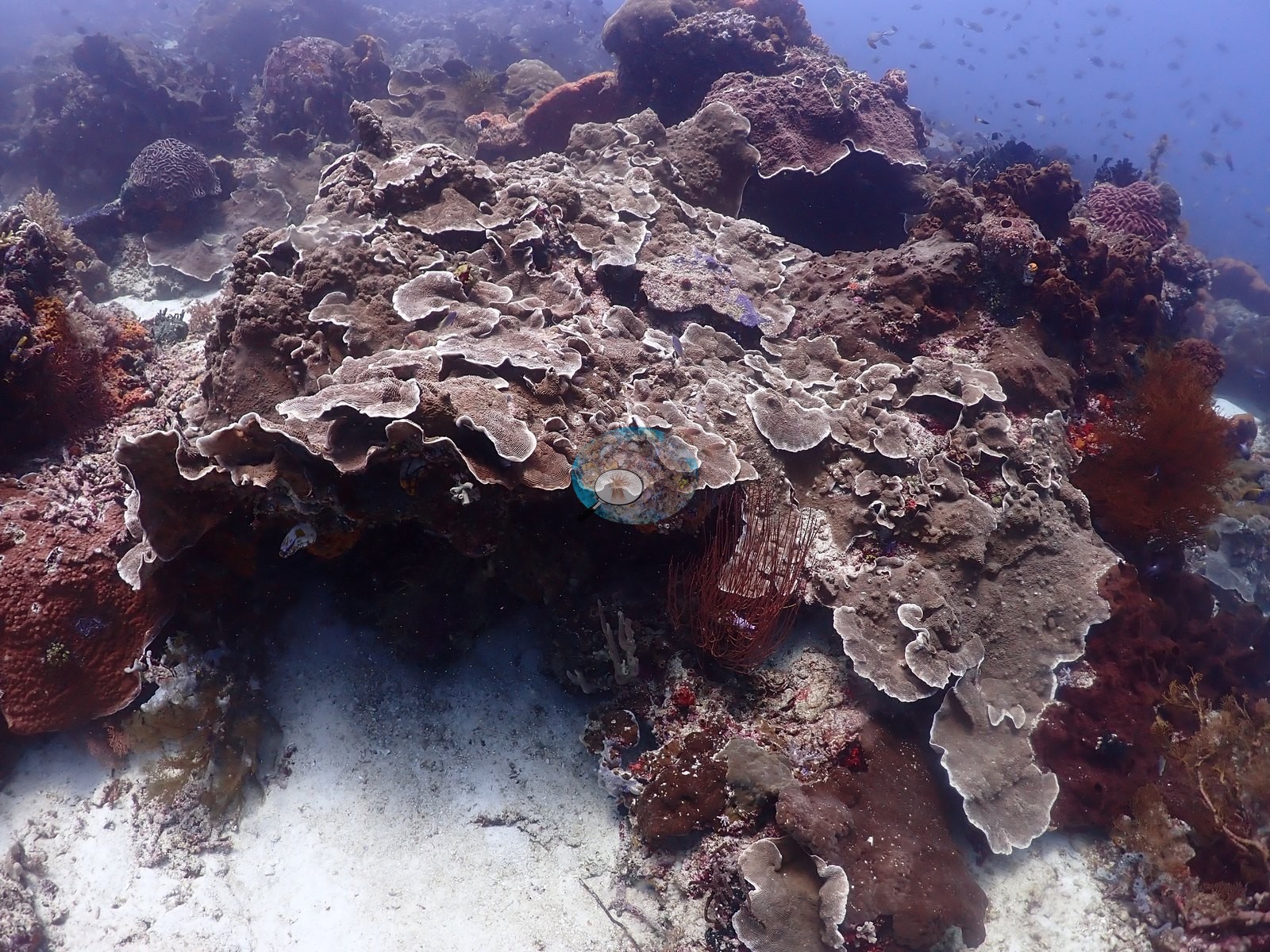
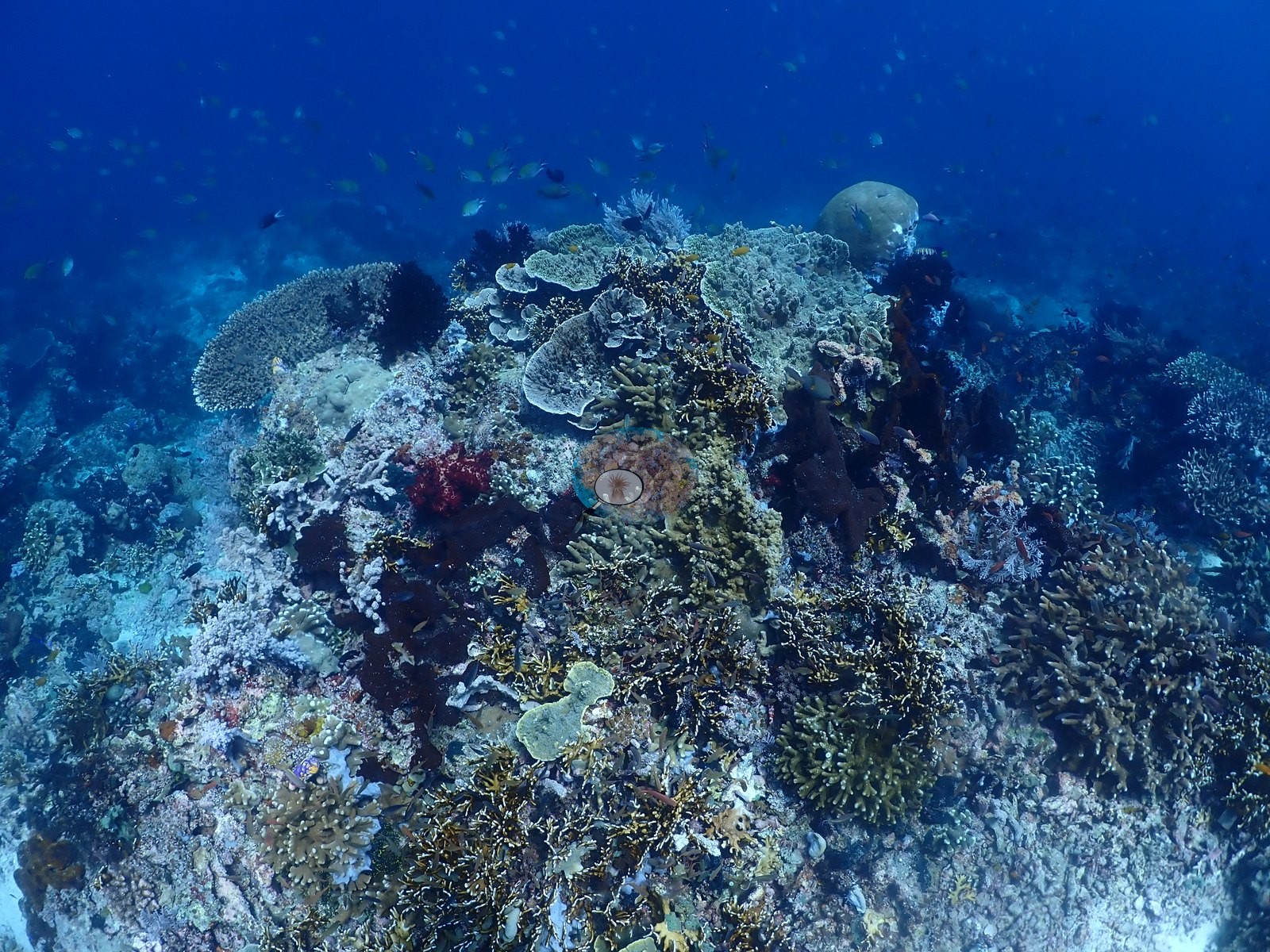
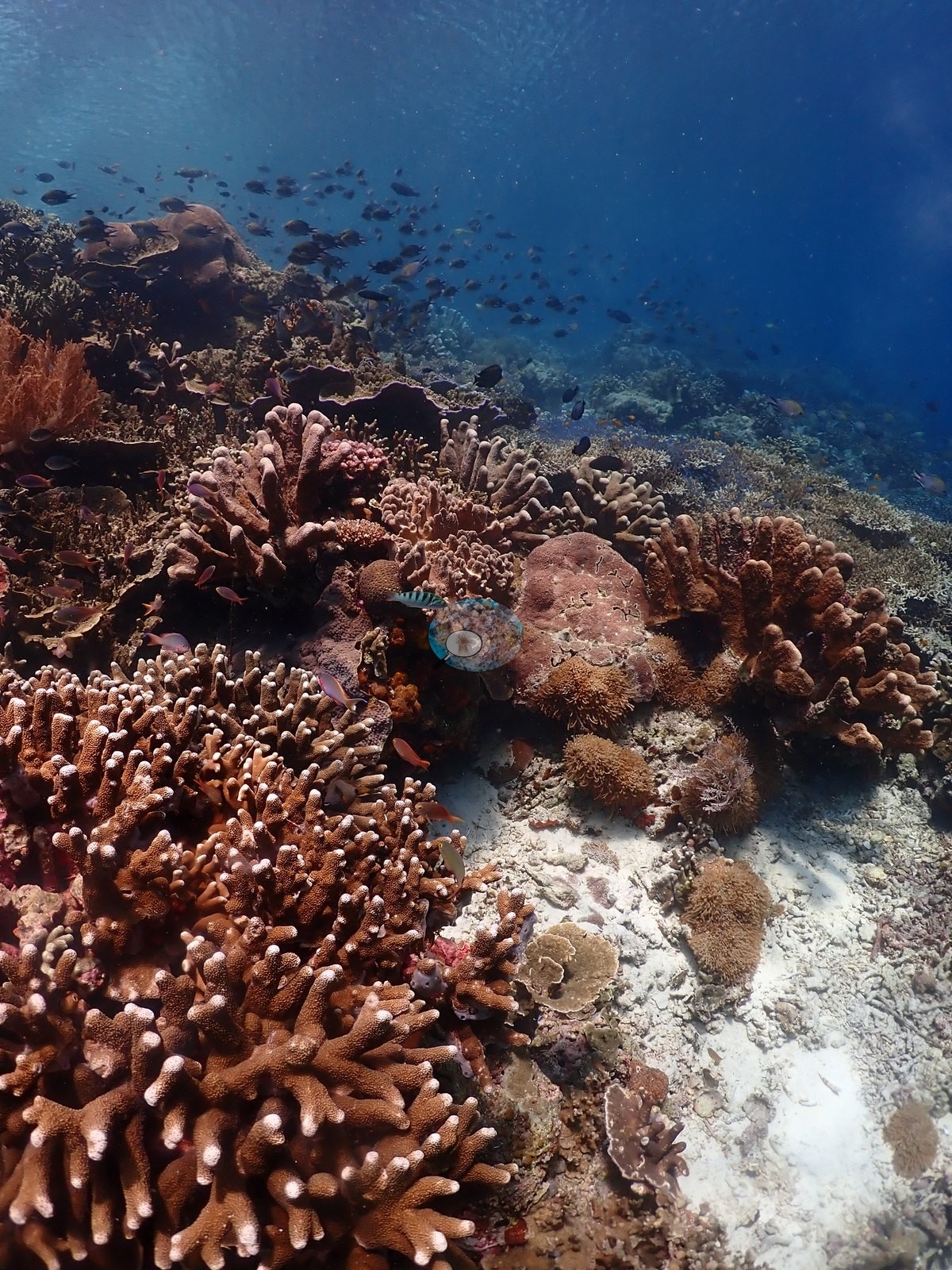
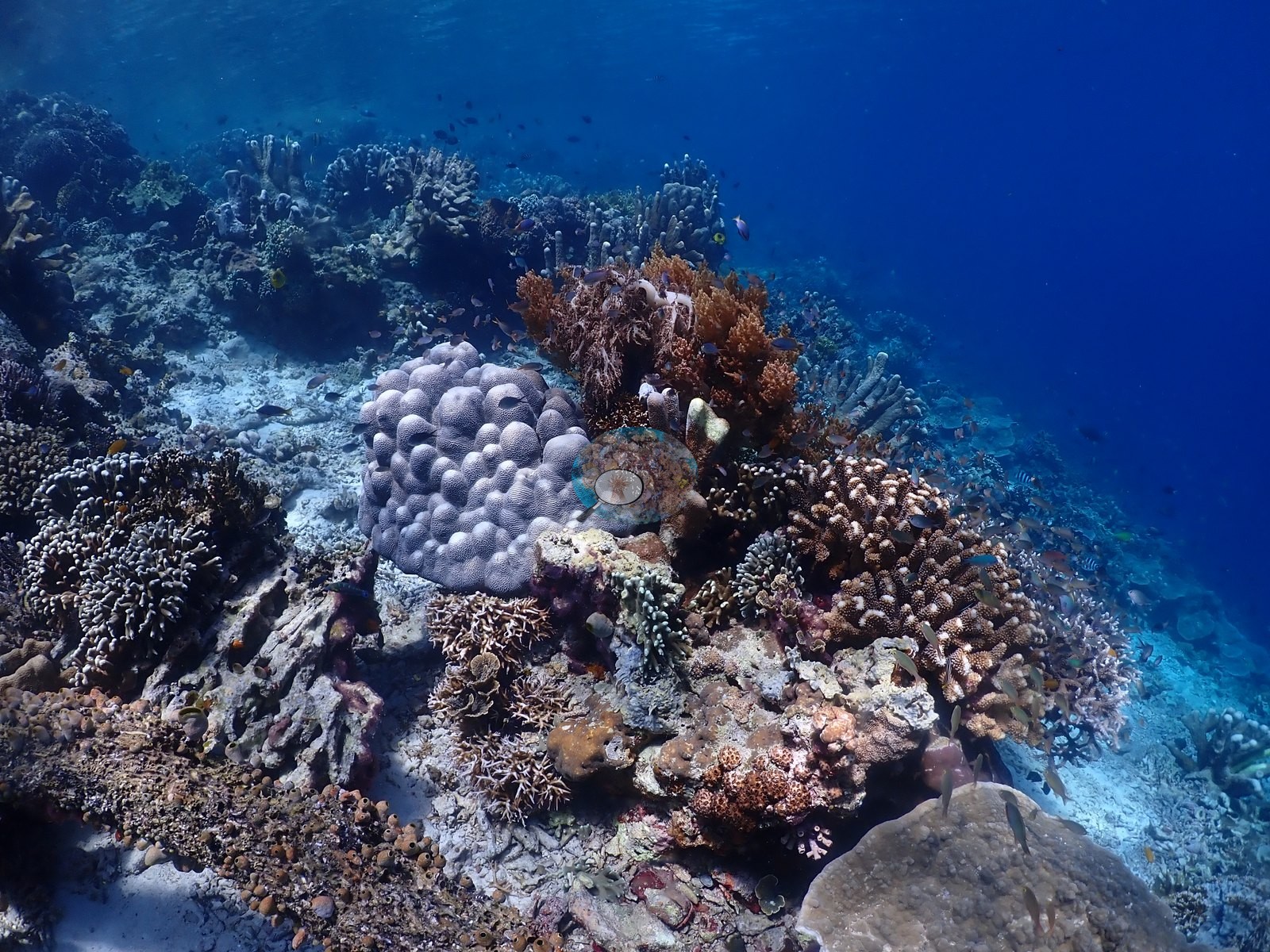
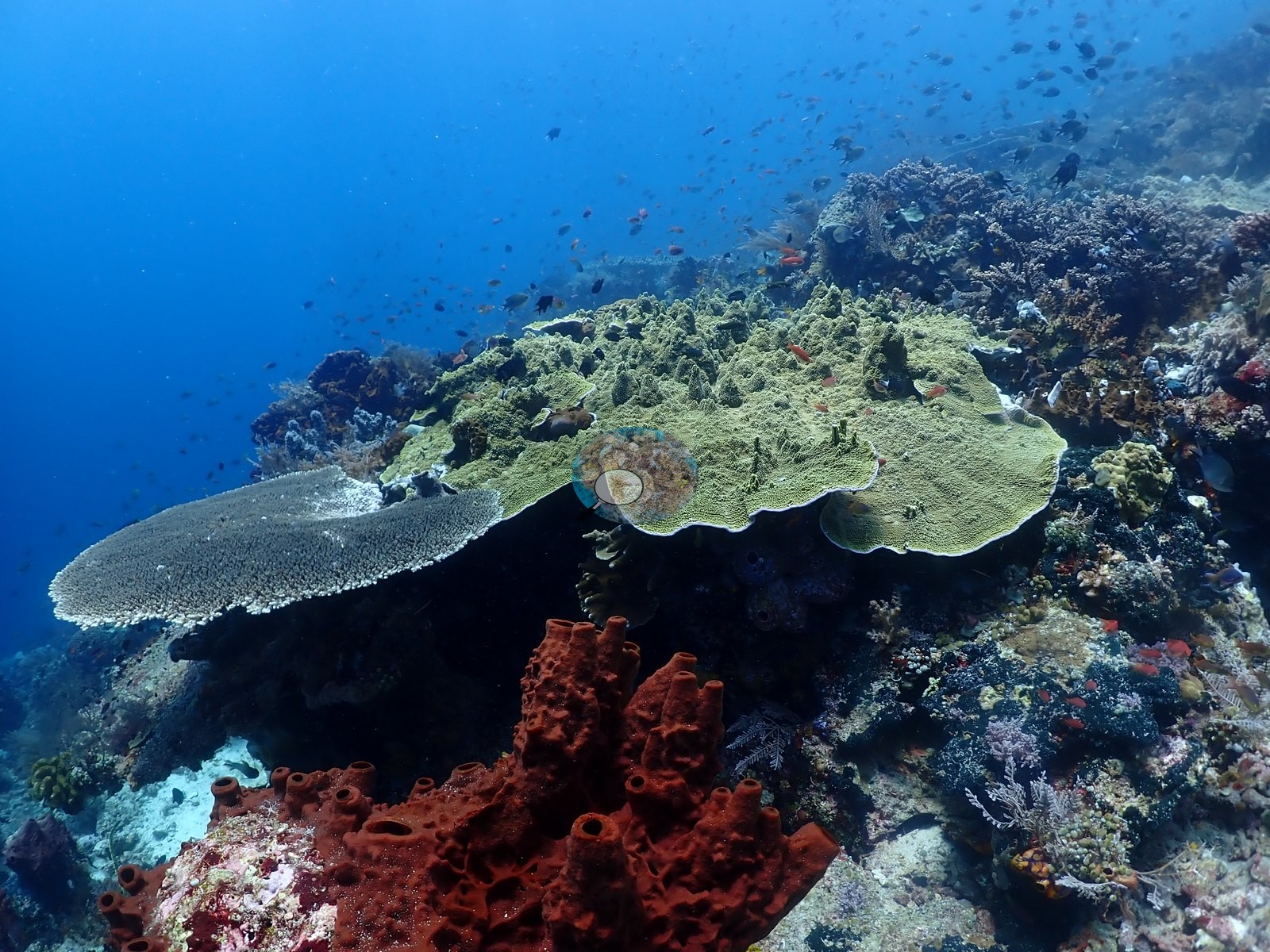
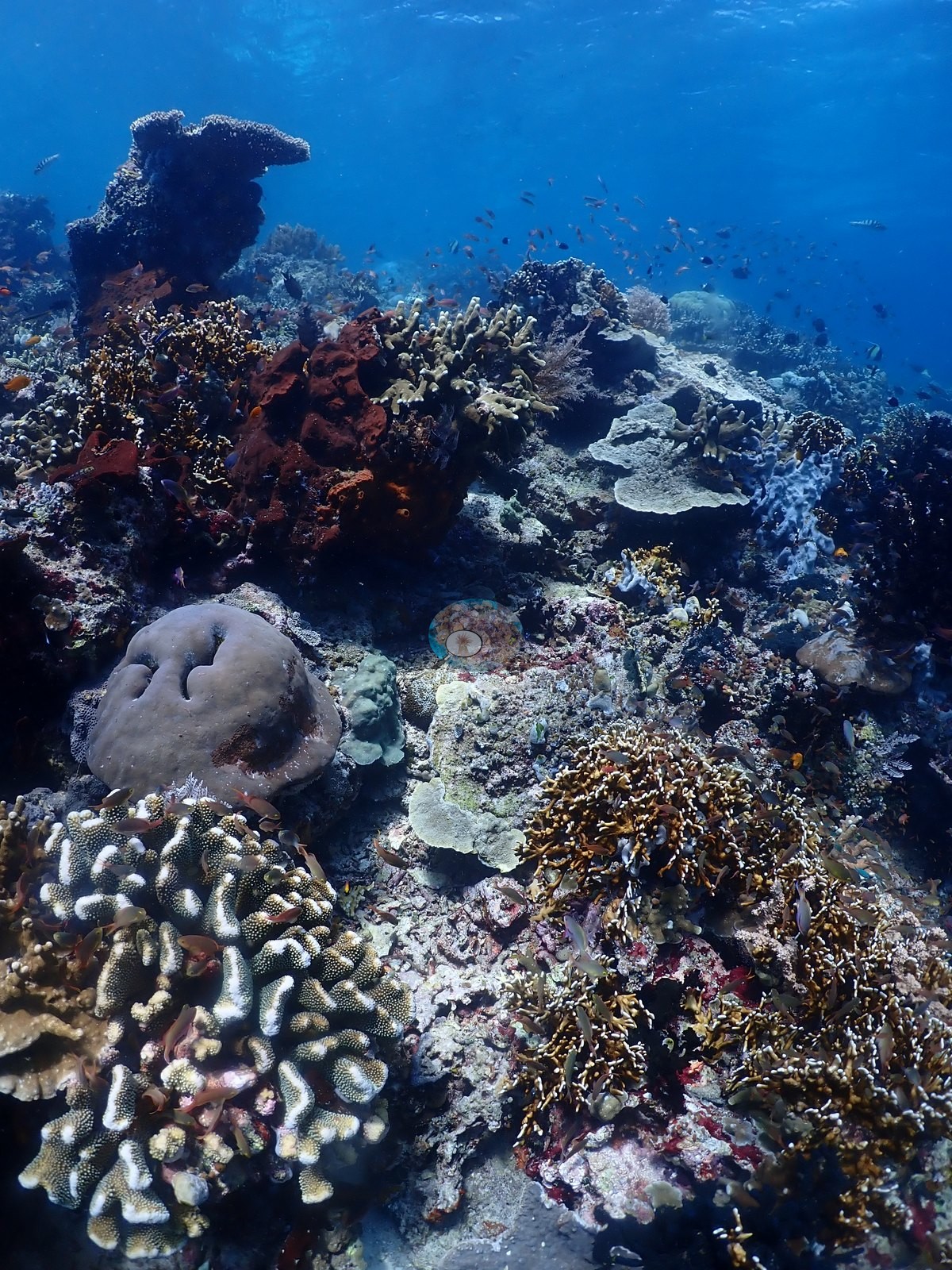
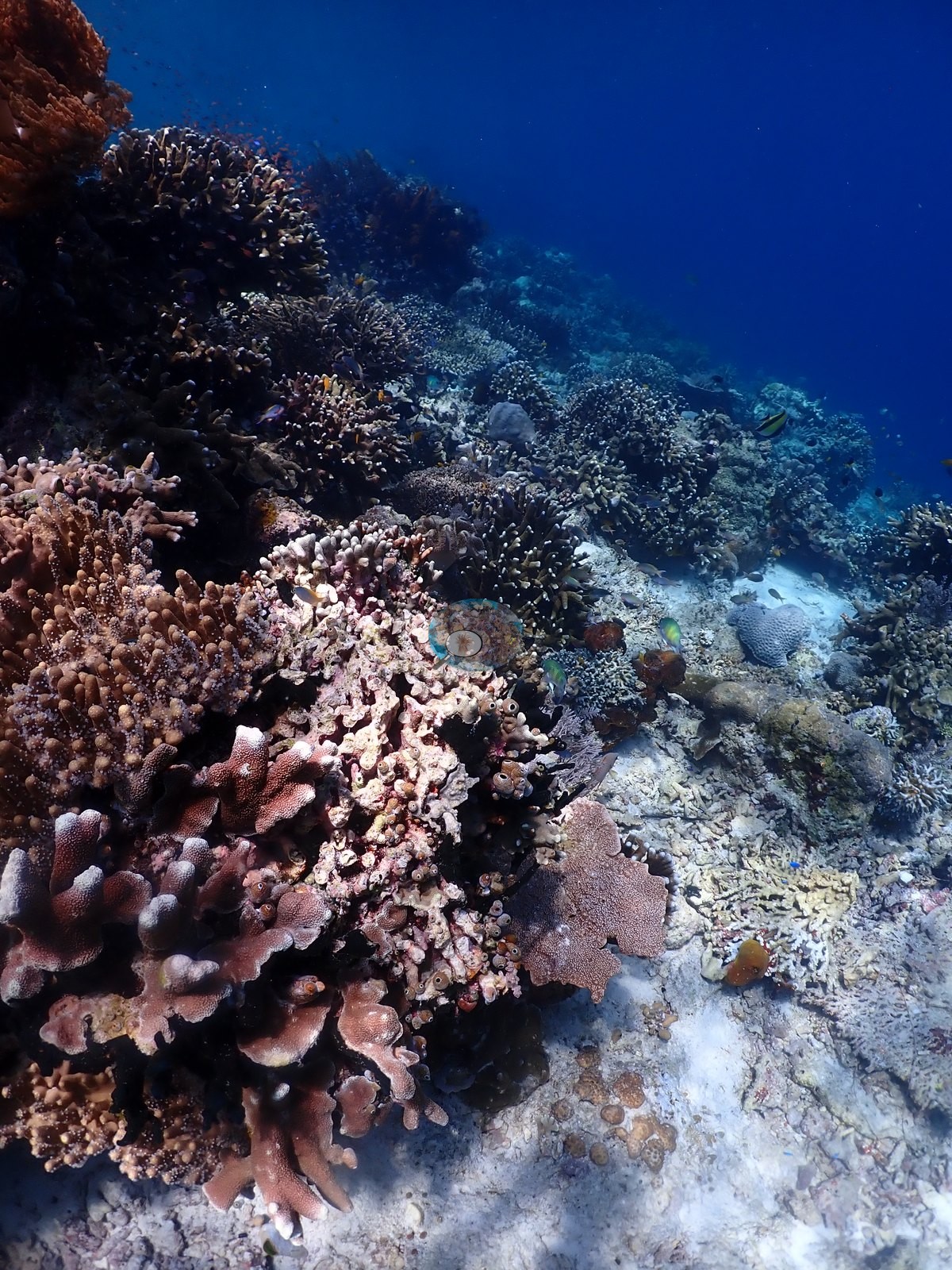
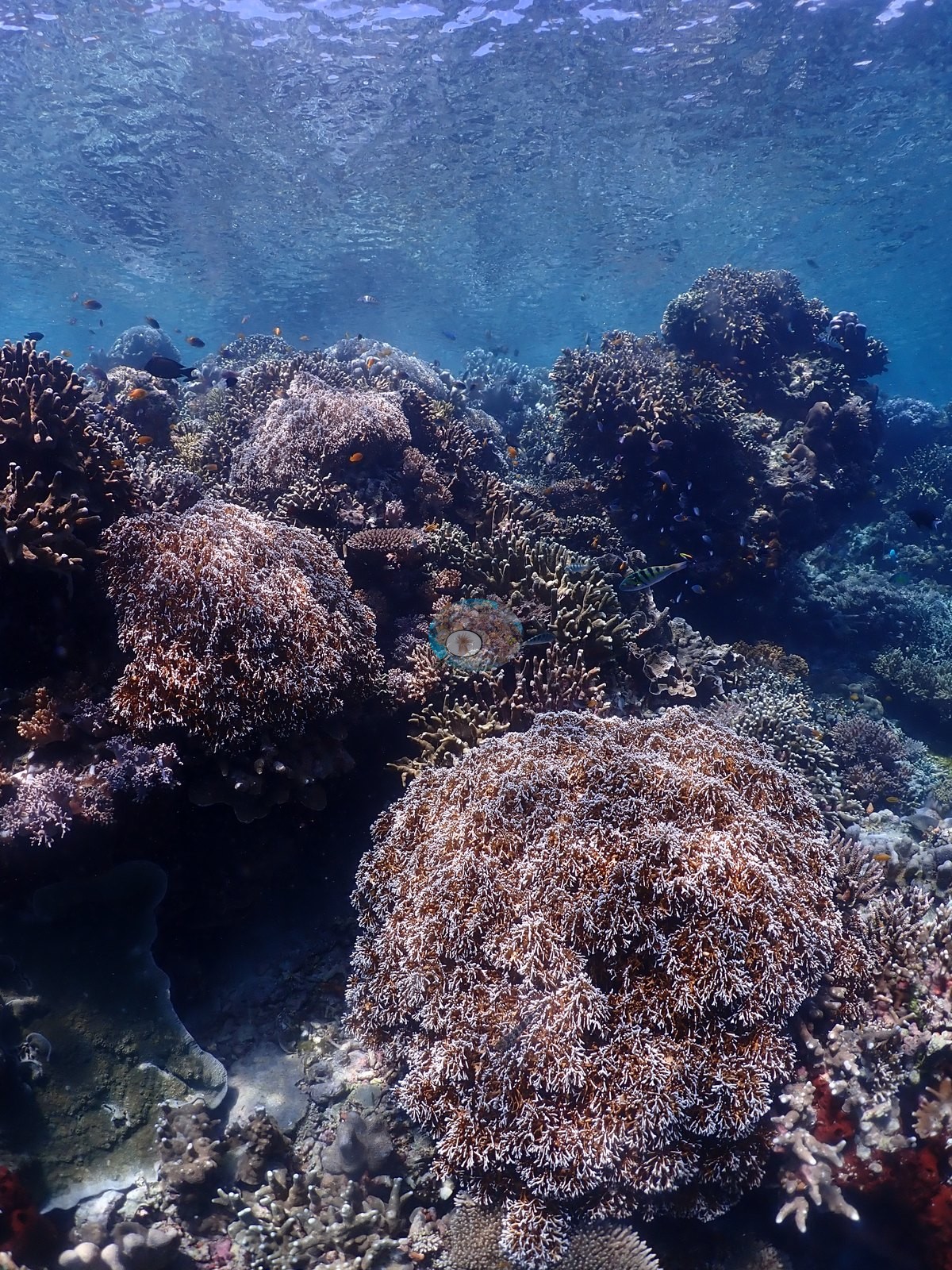
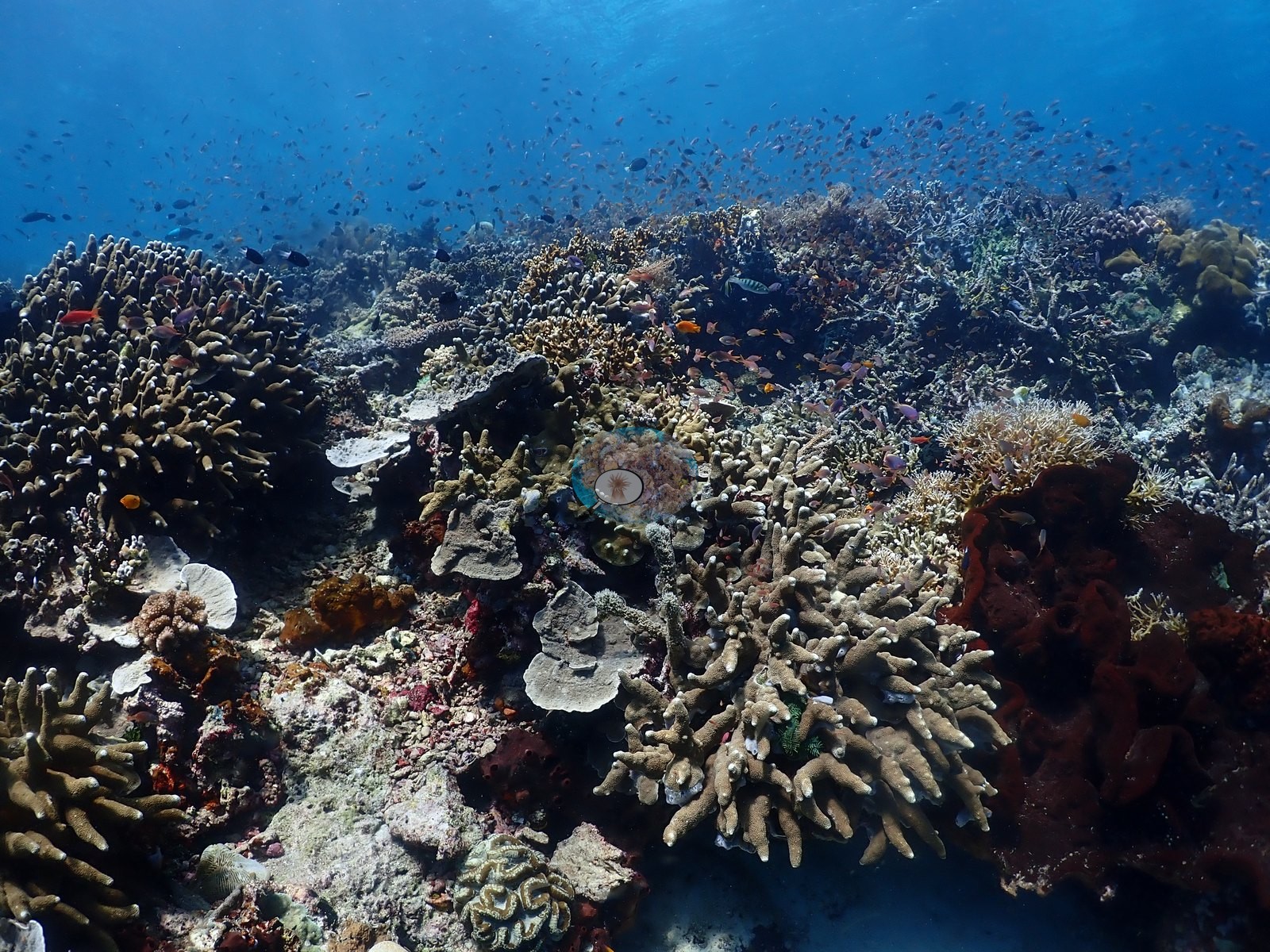
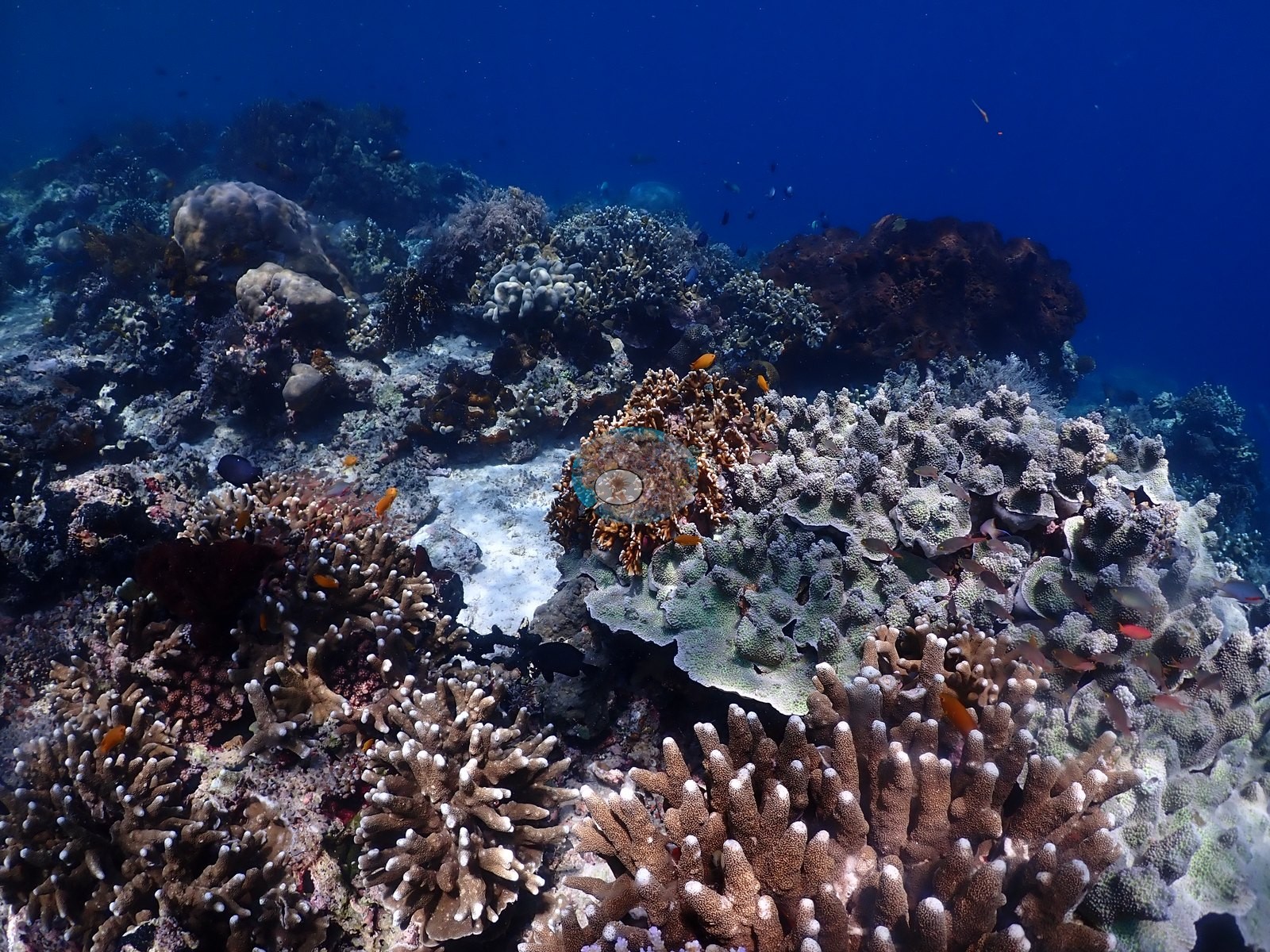
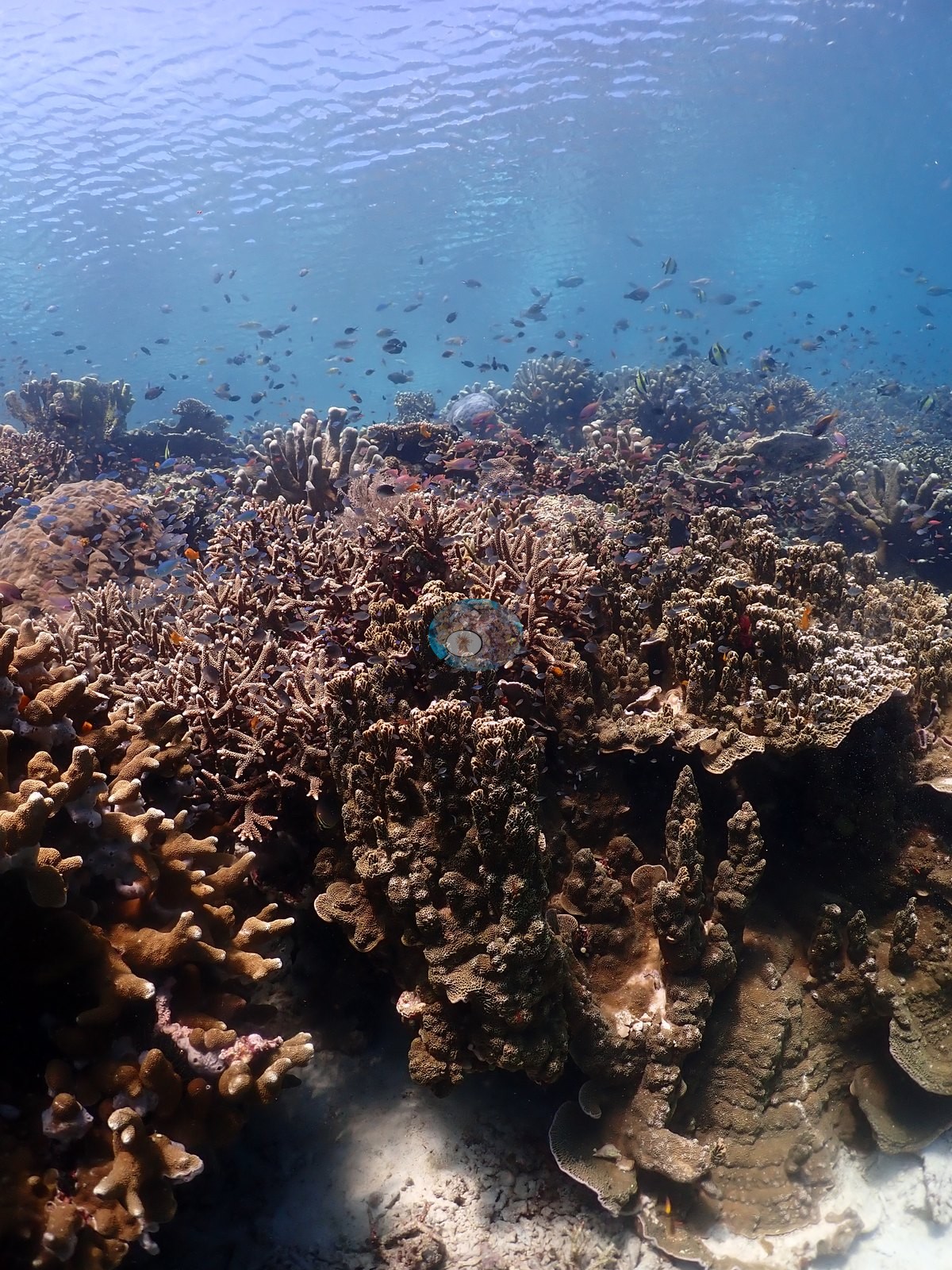
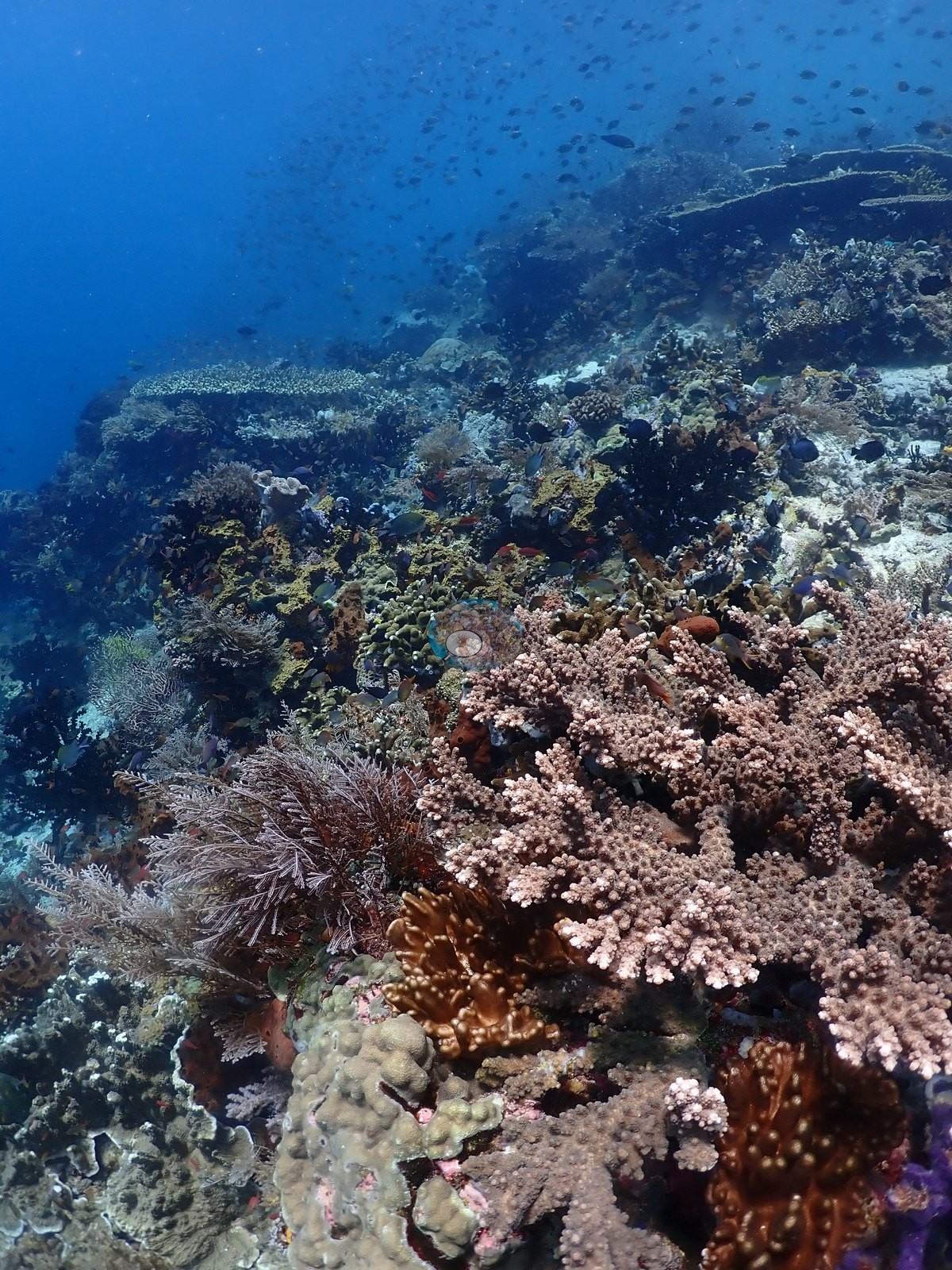
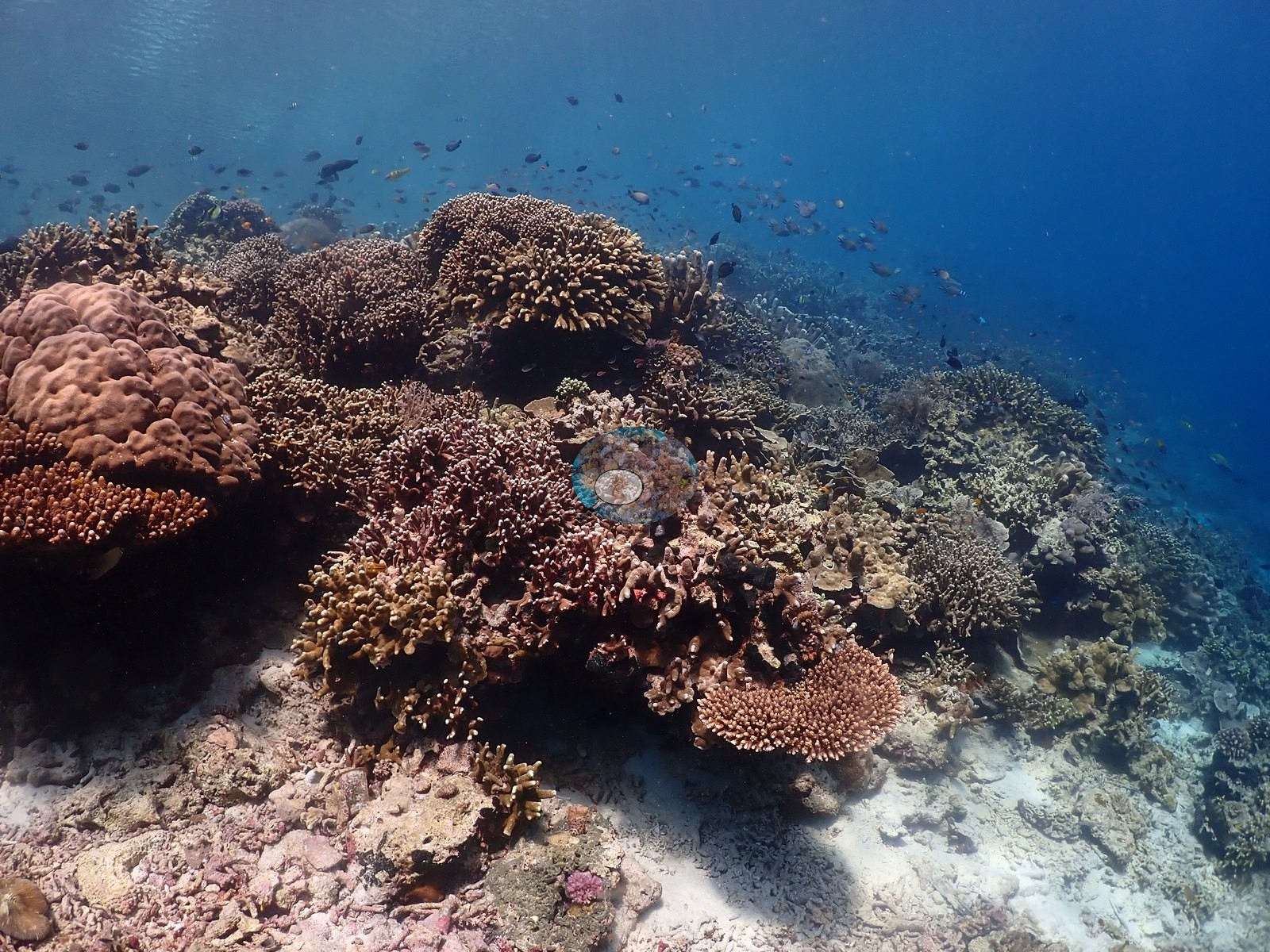
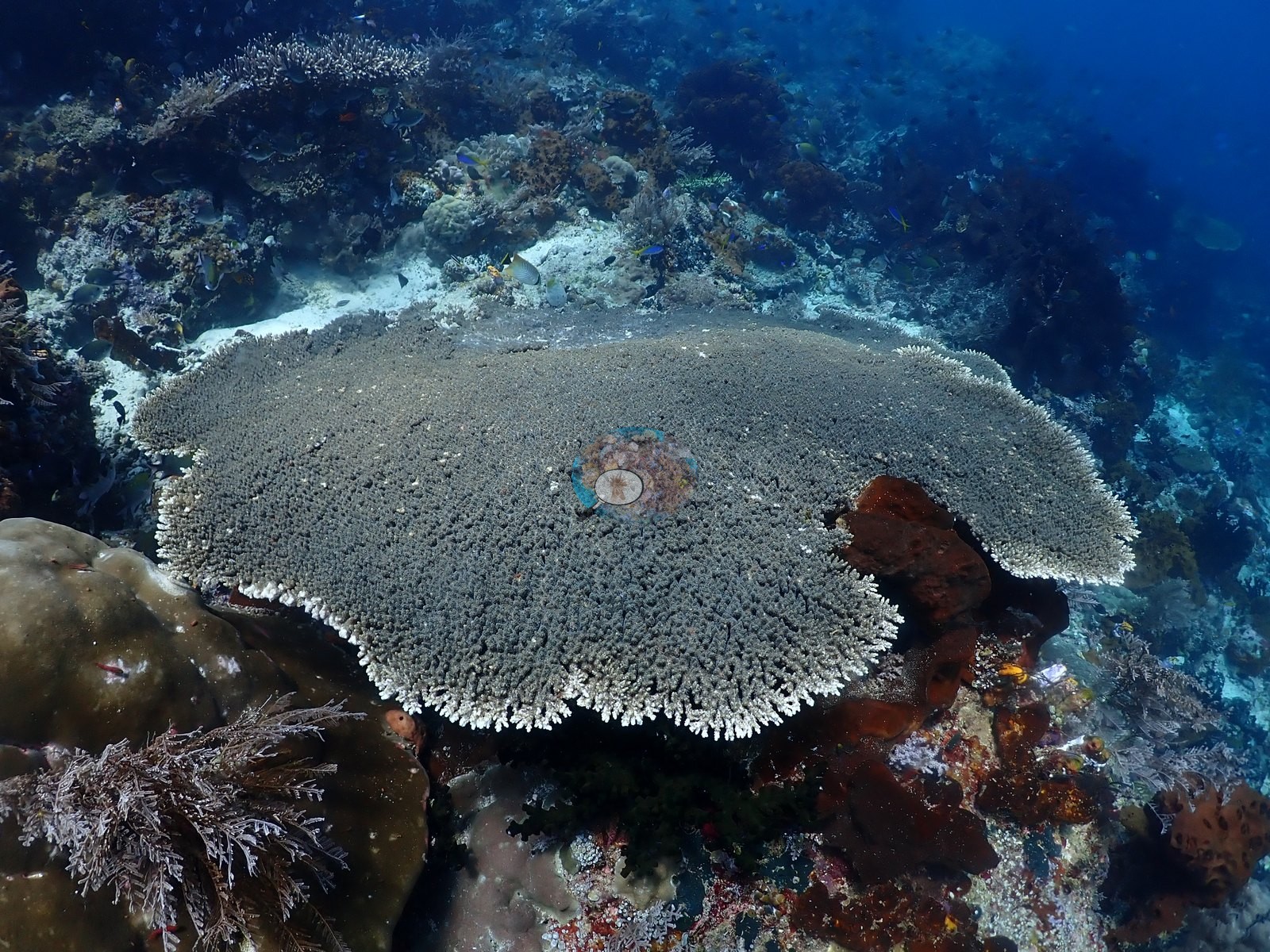
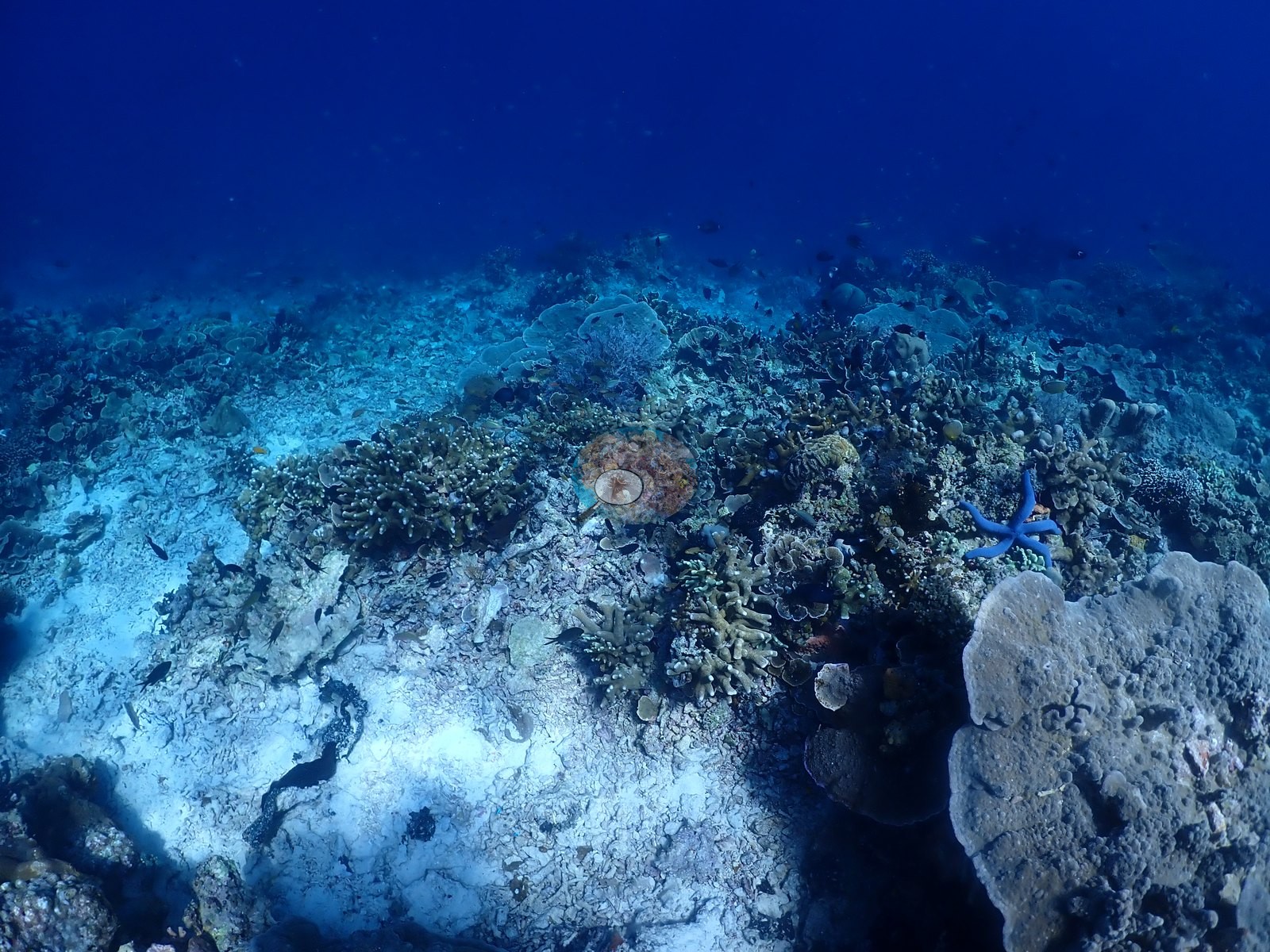
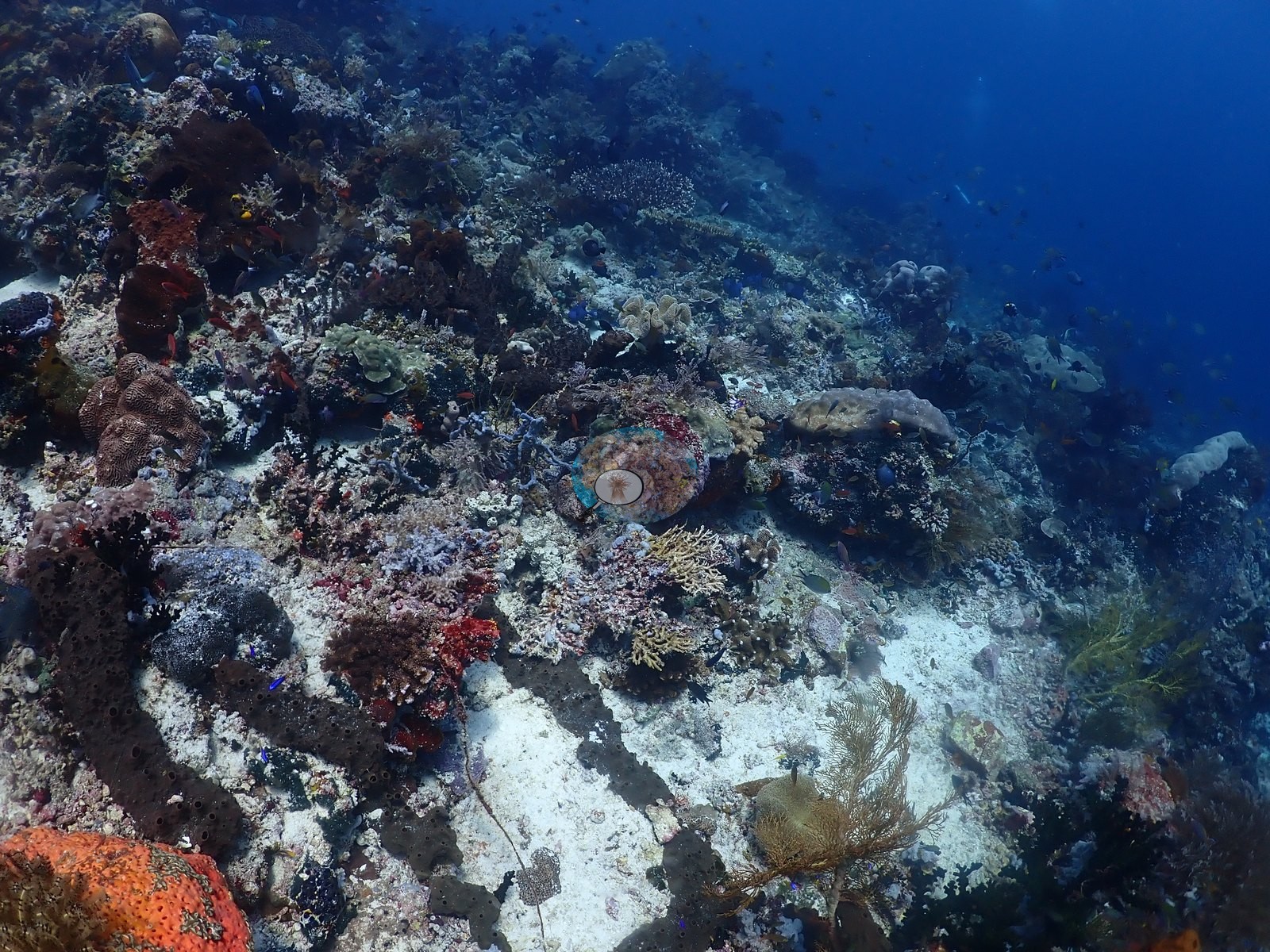
The invertebrate background is unusually colorful: large scarlet, crimson, and orange barrel and encrusting sponges, brown and red gorgonian sea fans, purple and mauve soft corals, black-coral bushes off the drop-off, tunicates, and a blue Linckia sea star (e.g., Image 9, Image 11, Image 15, Image 16, Image 19, Image 21, Image 24, Image 29, Image 40, Image 44, Image 47, Image 49, Image 50, Image 51).
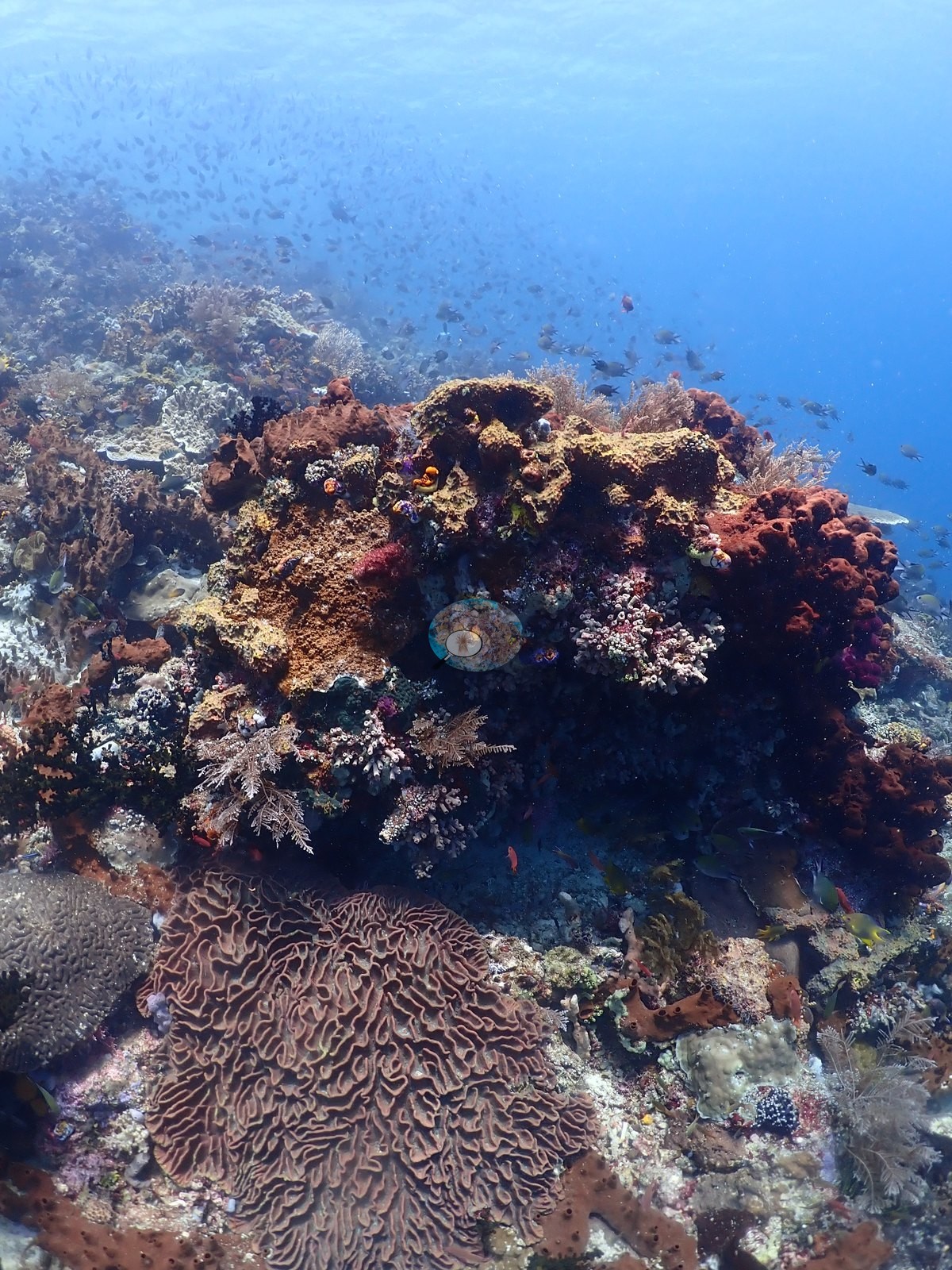
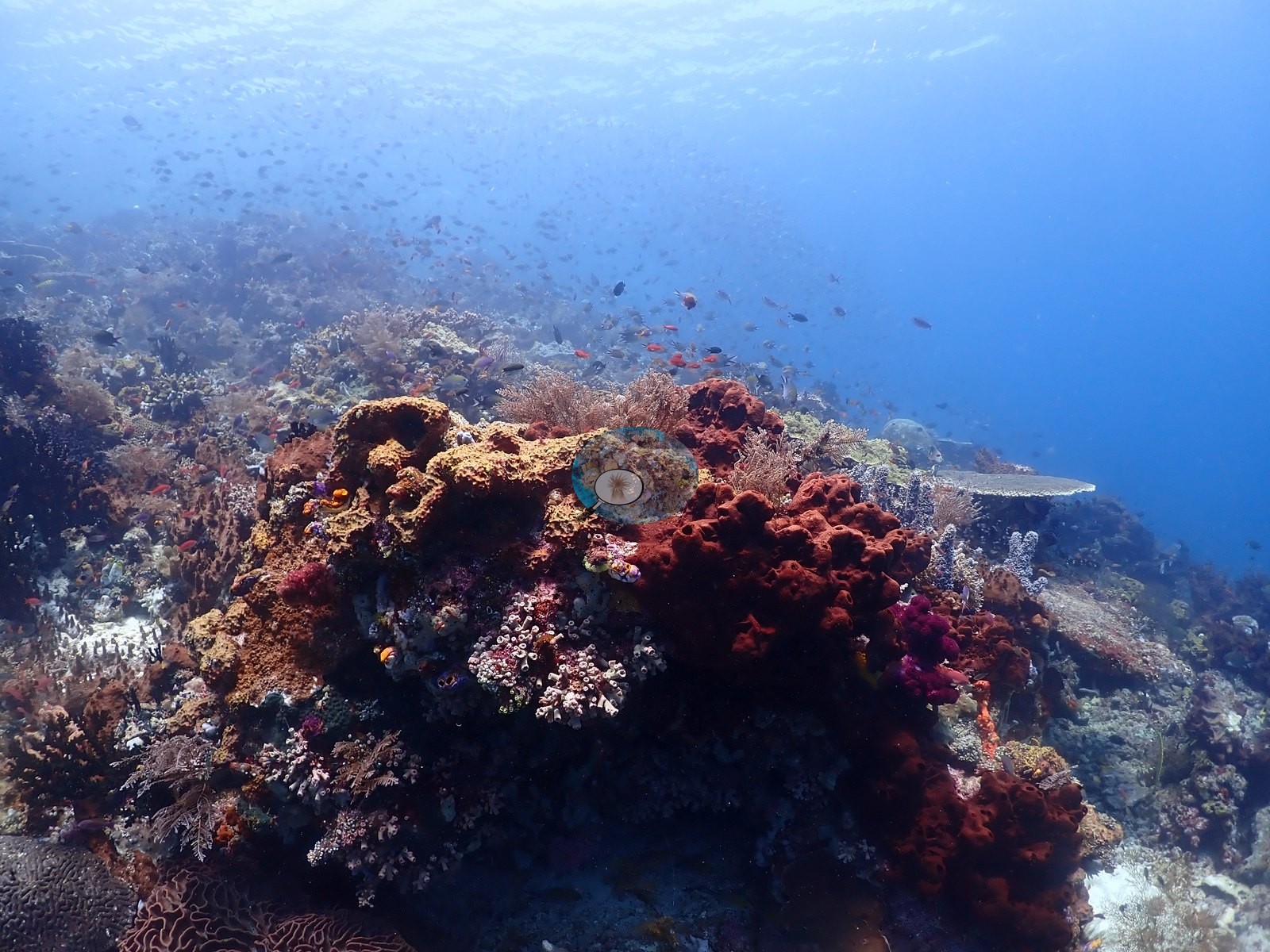
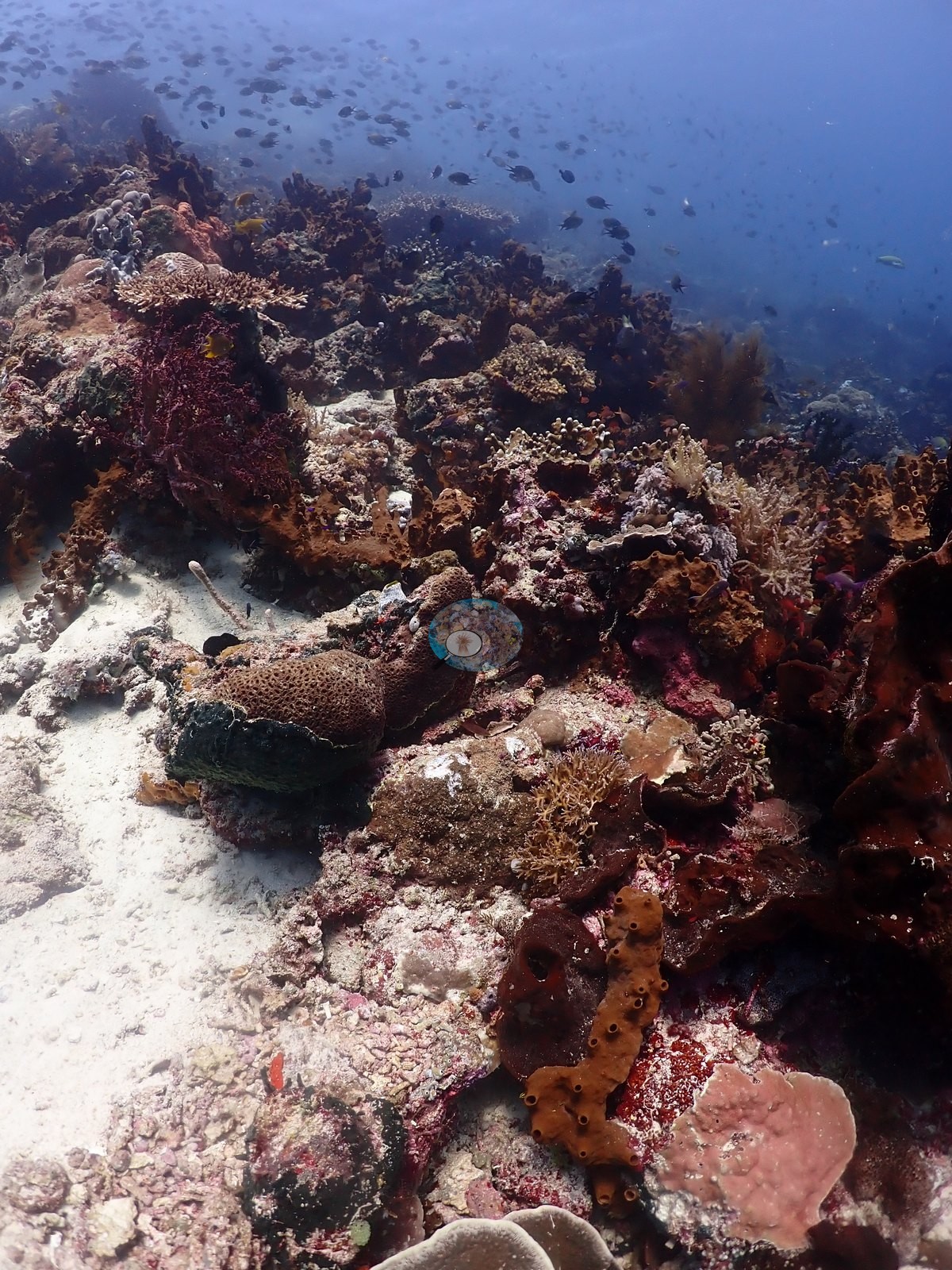
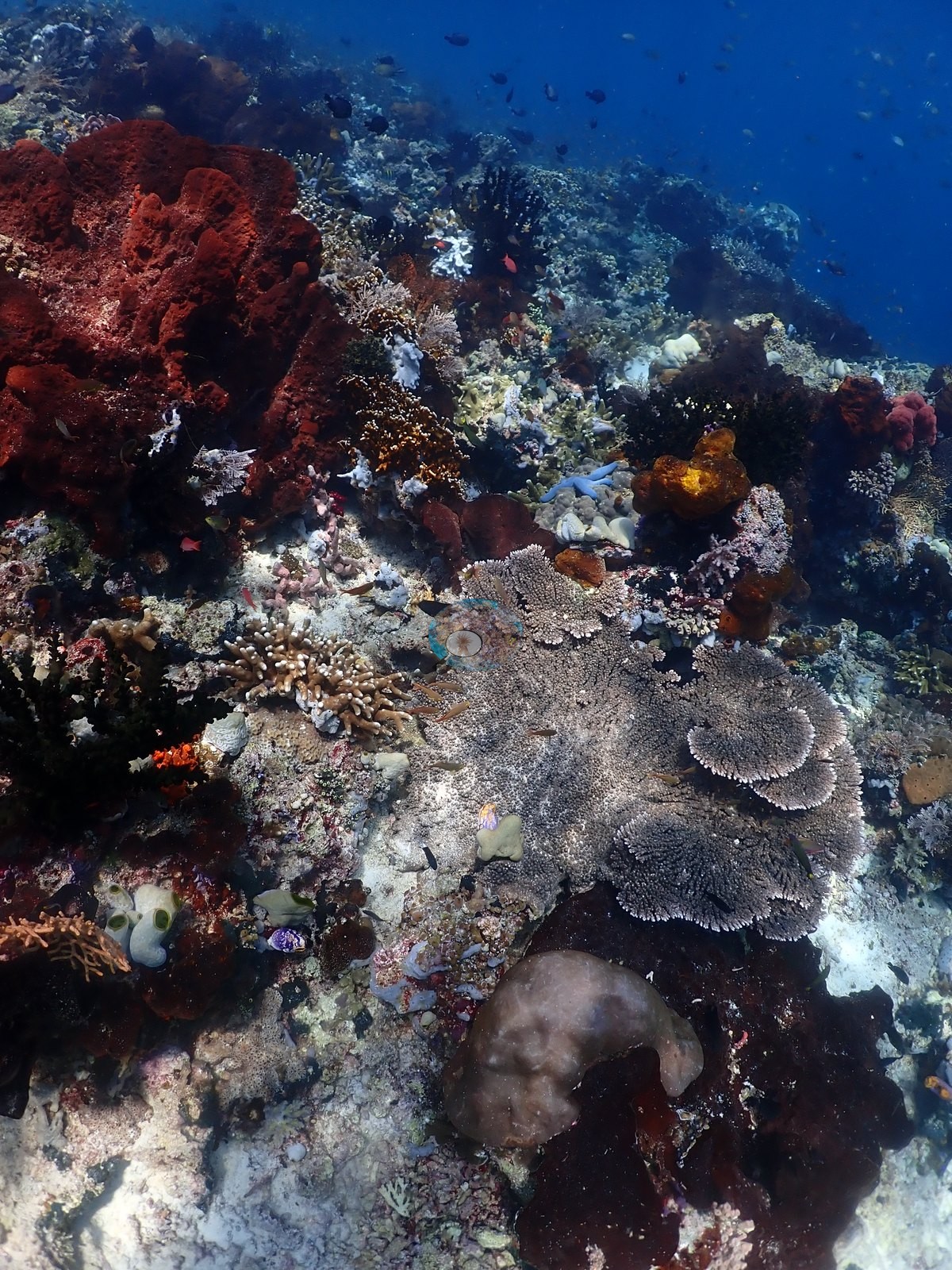
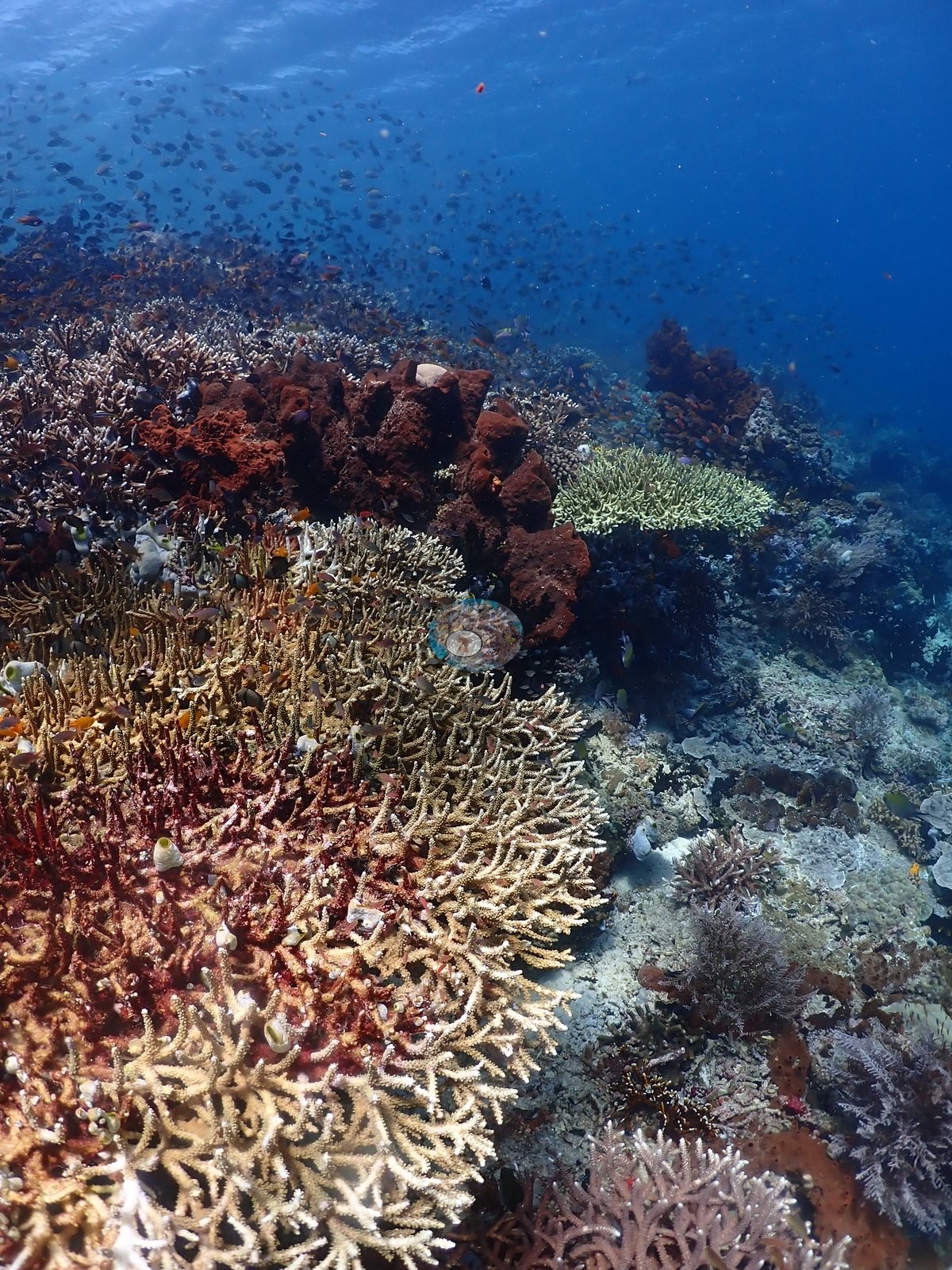
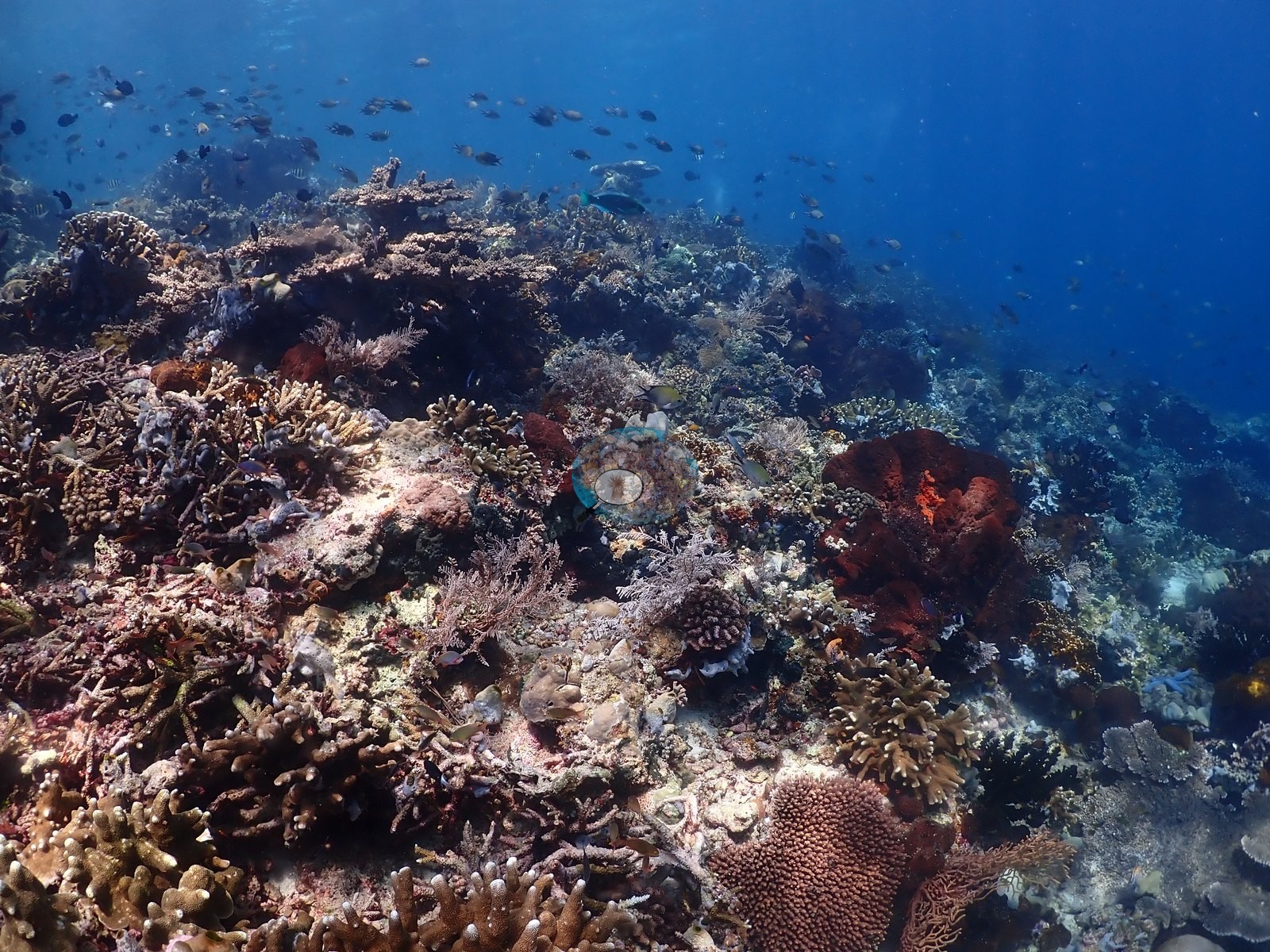
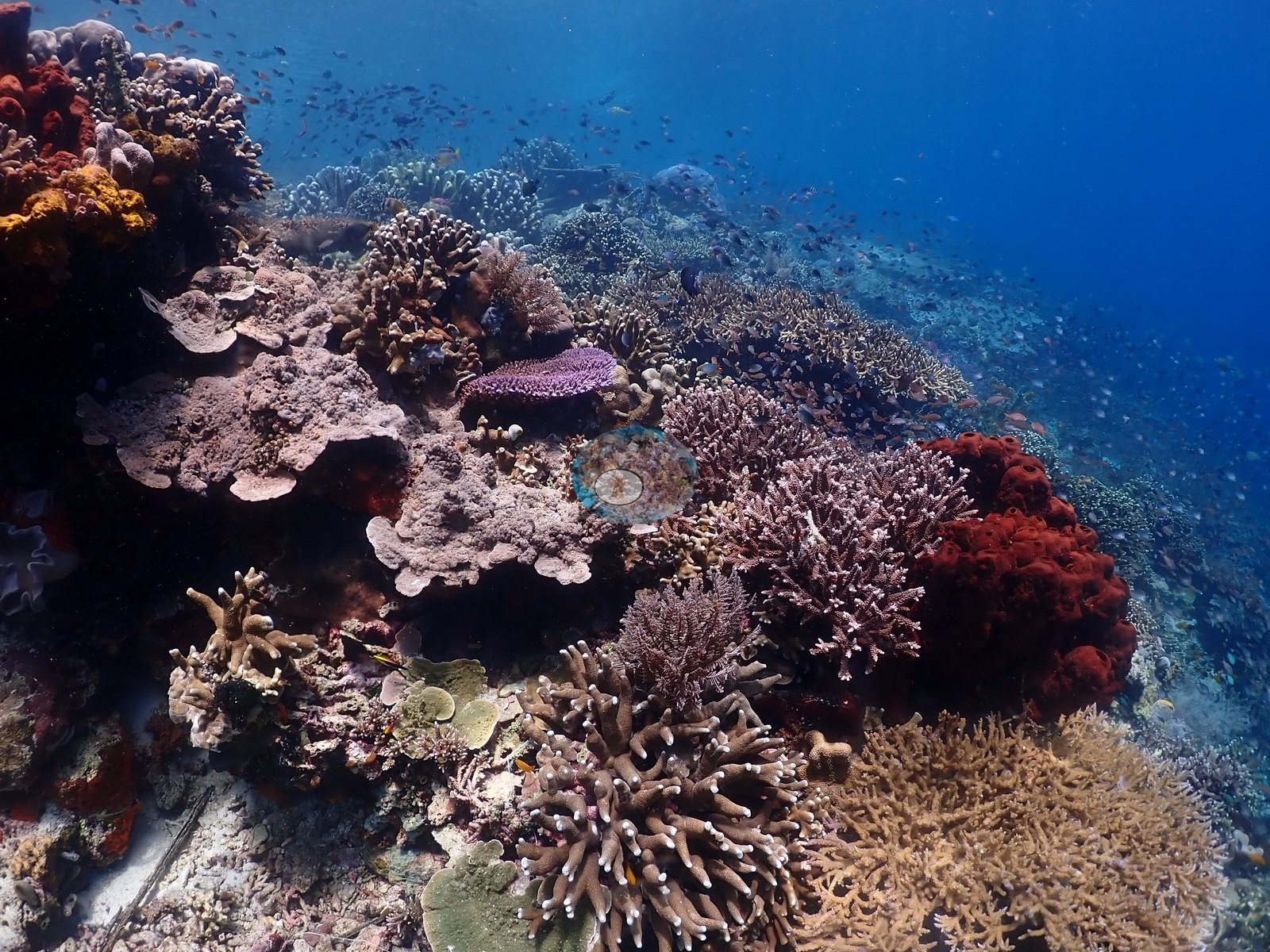
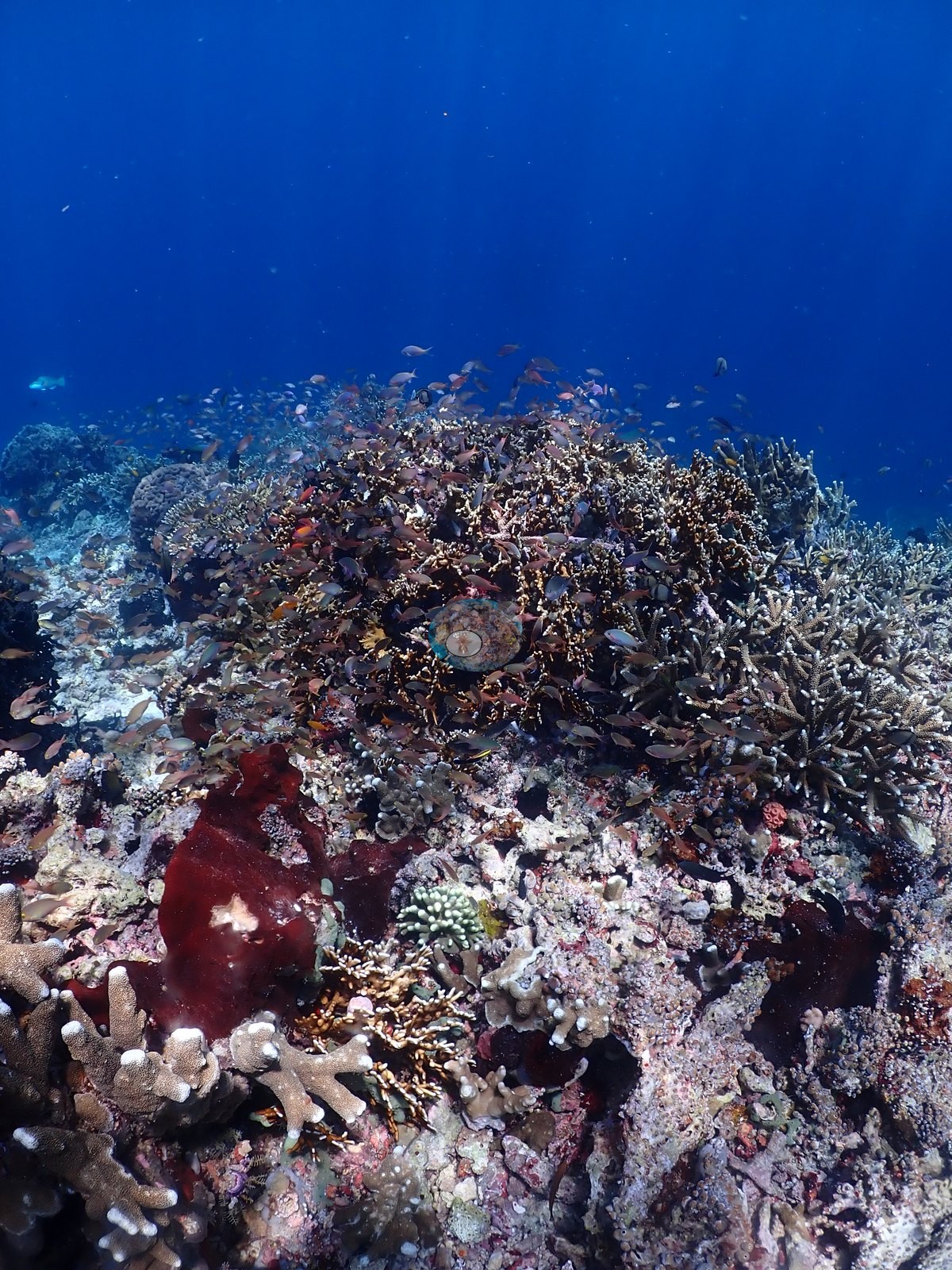
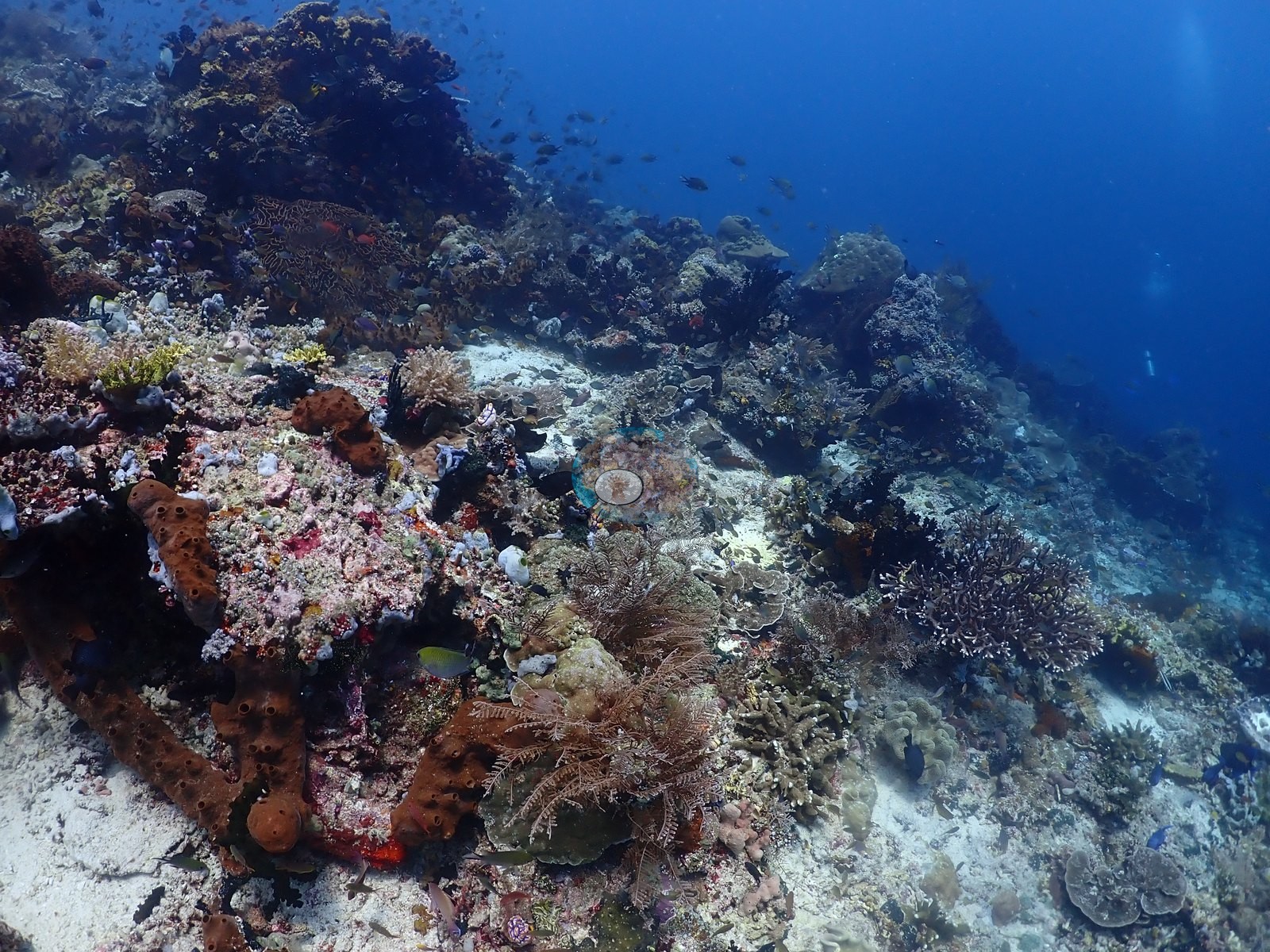
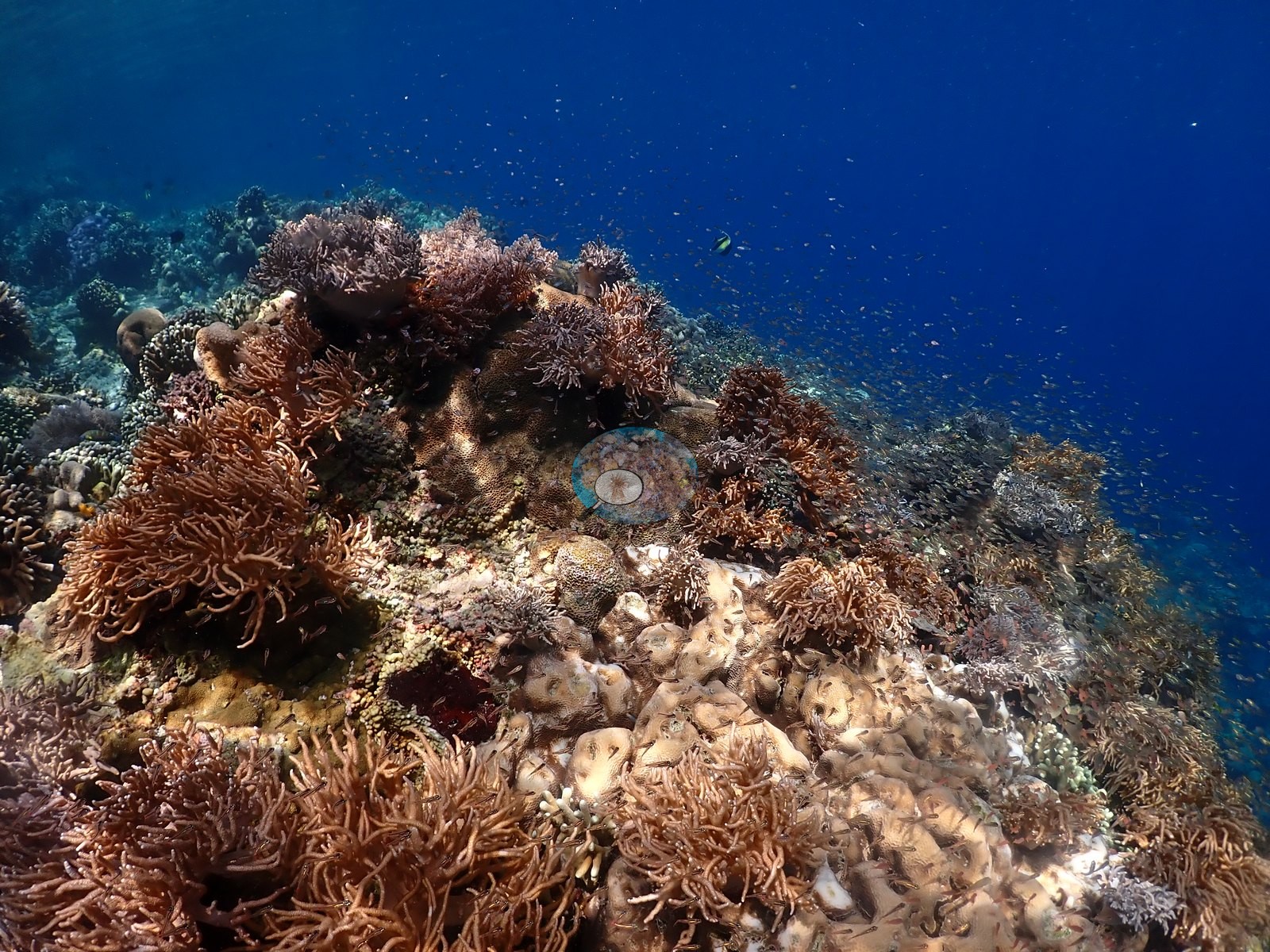
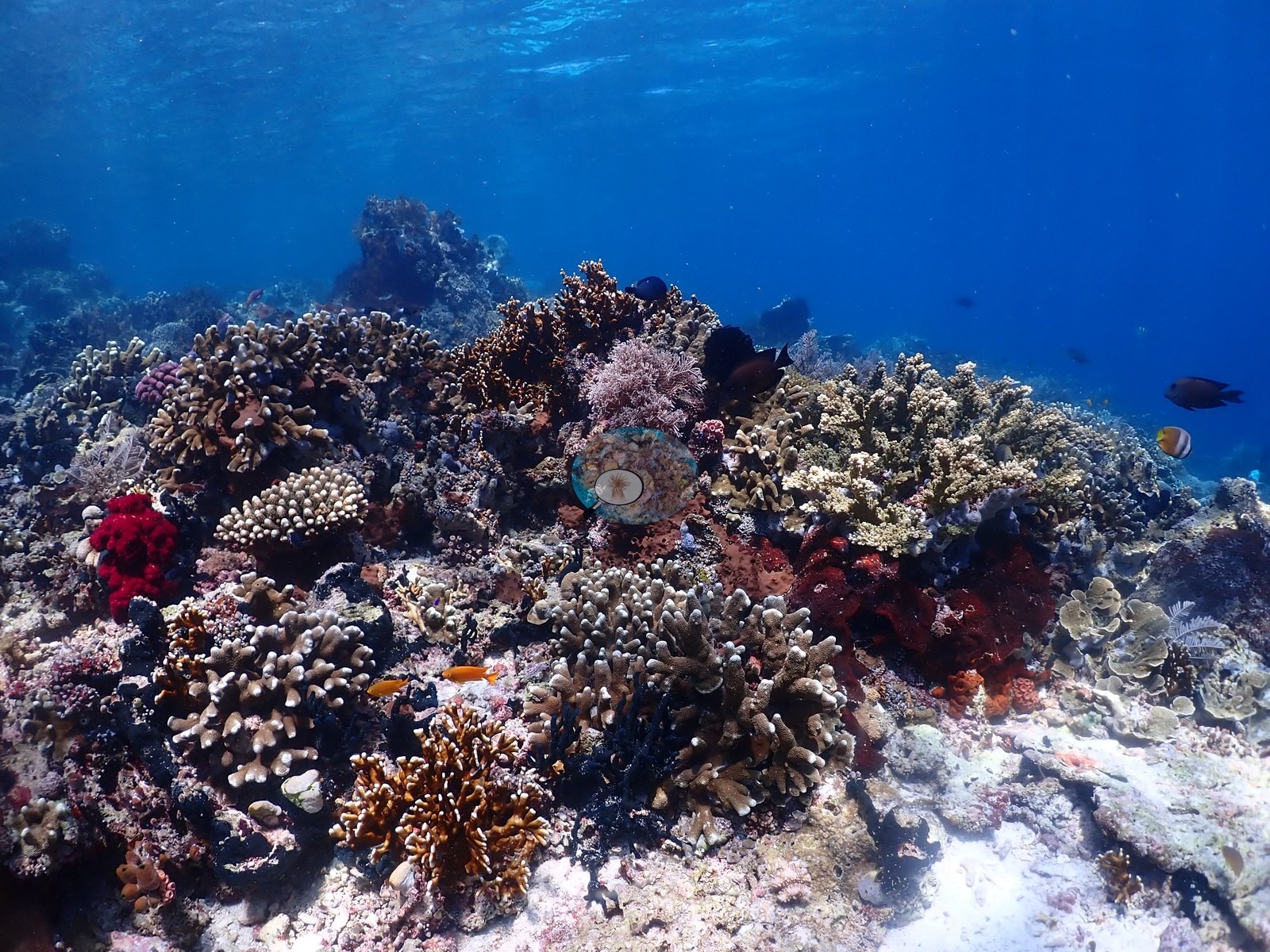
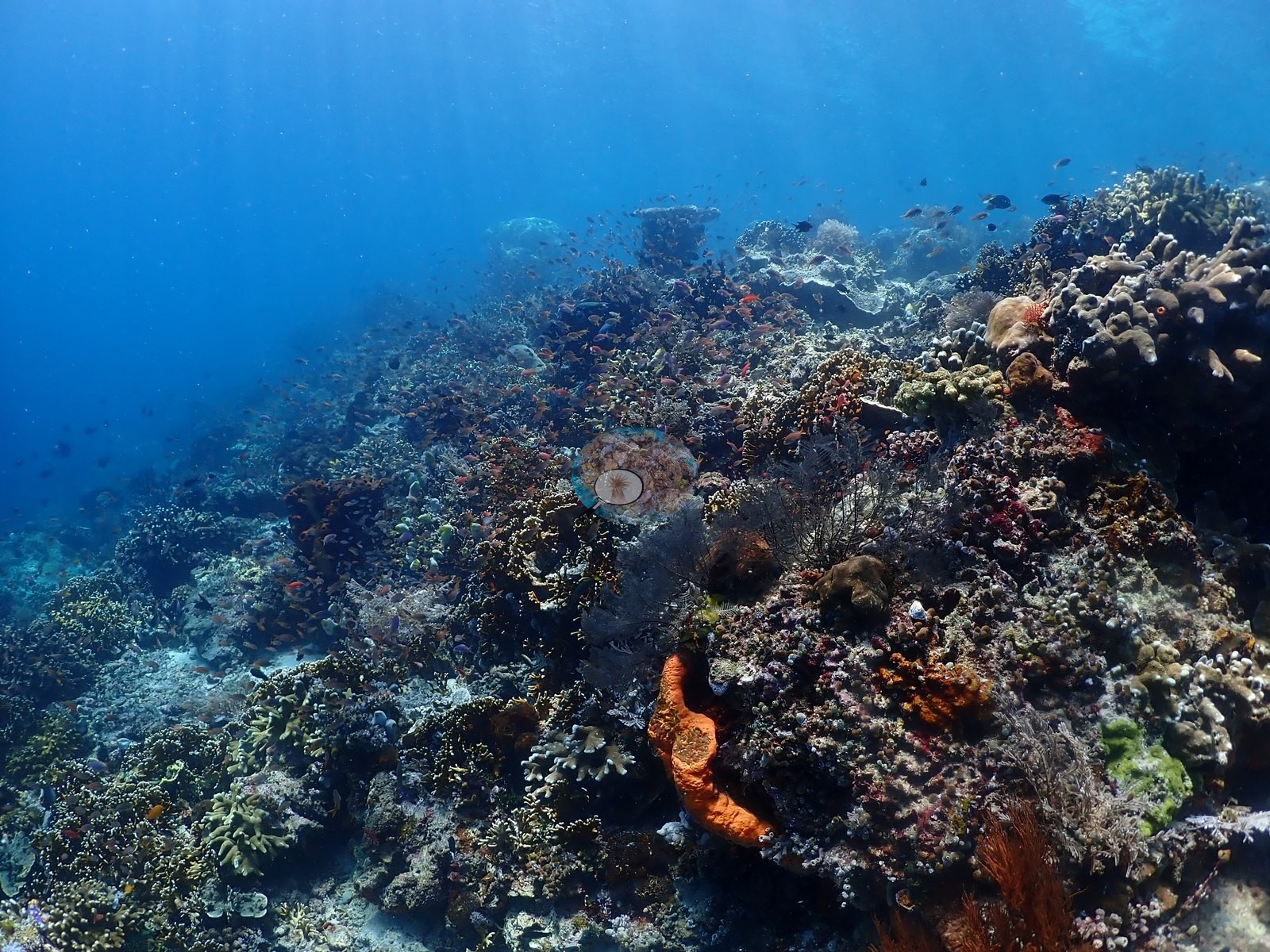
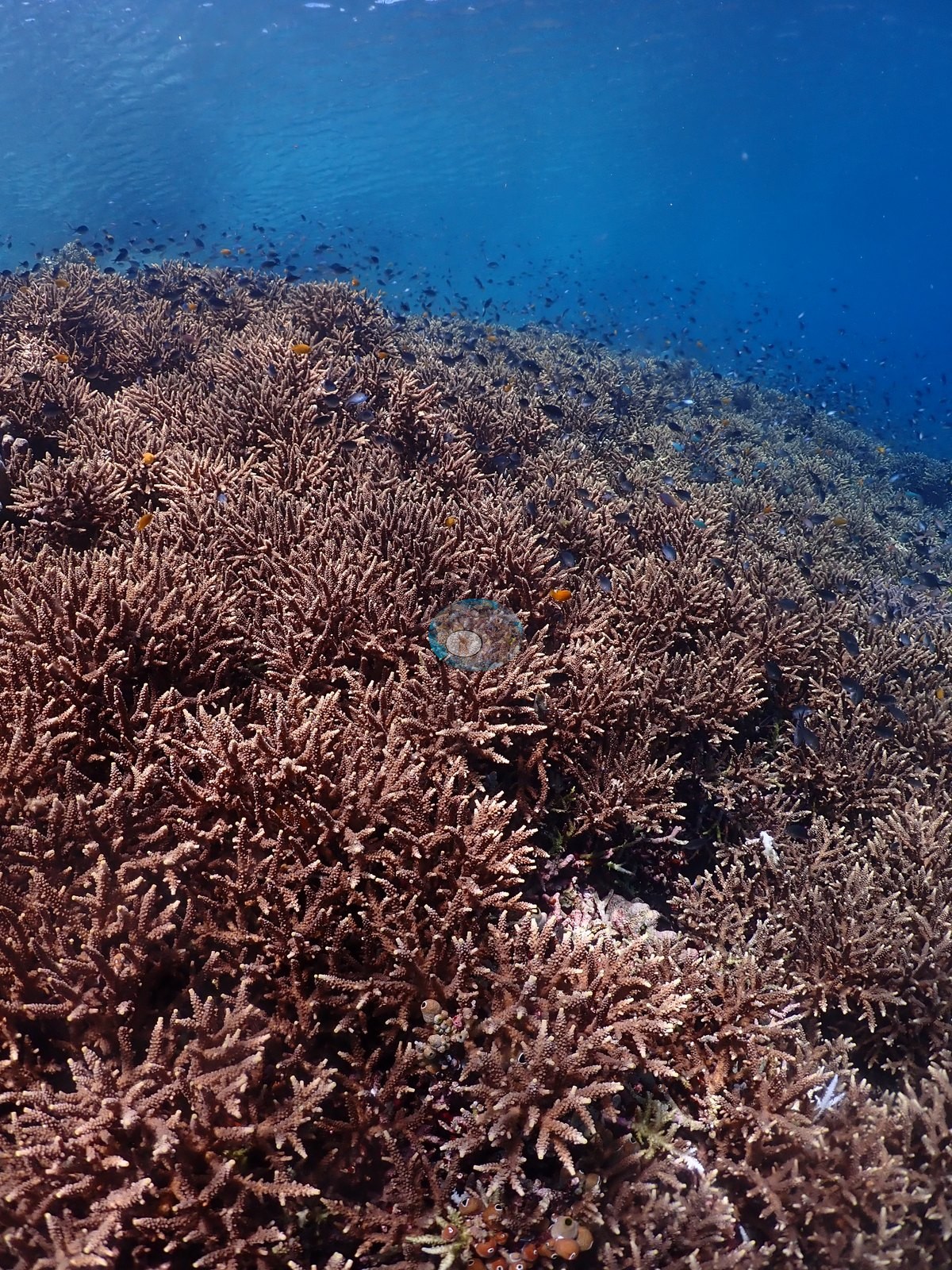
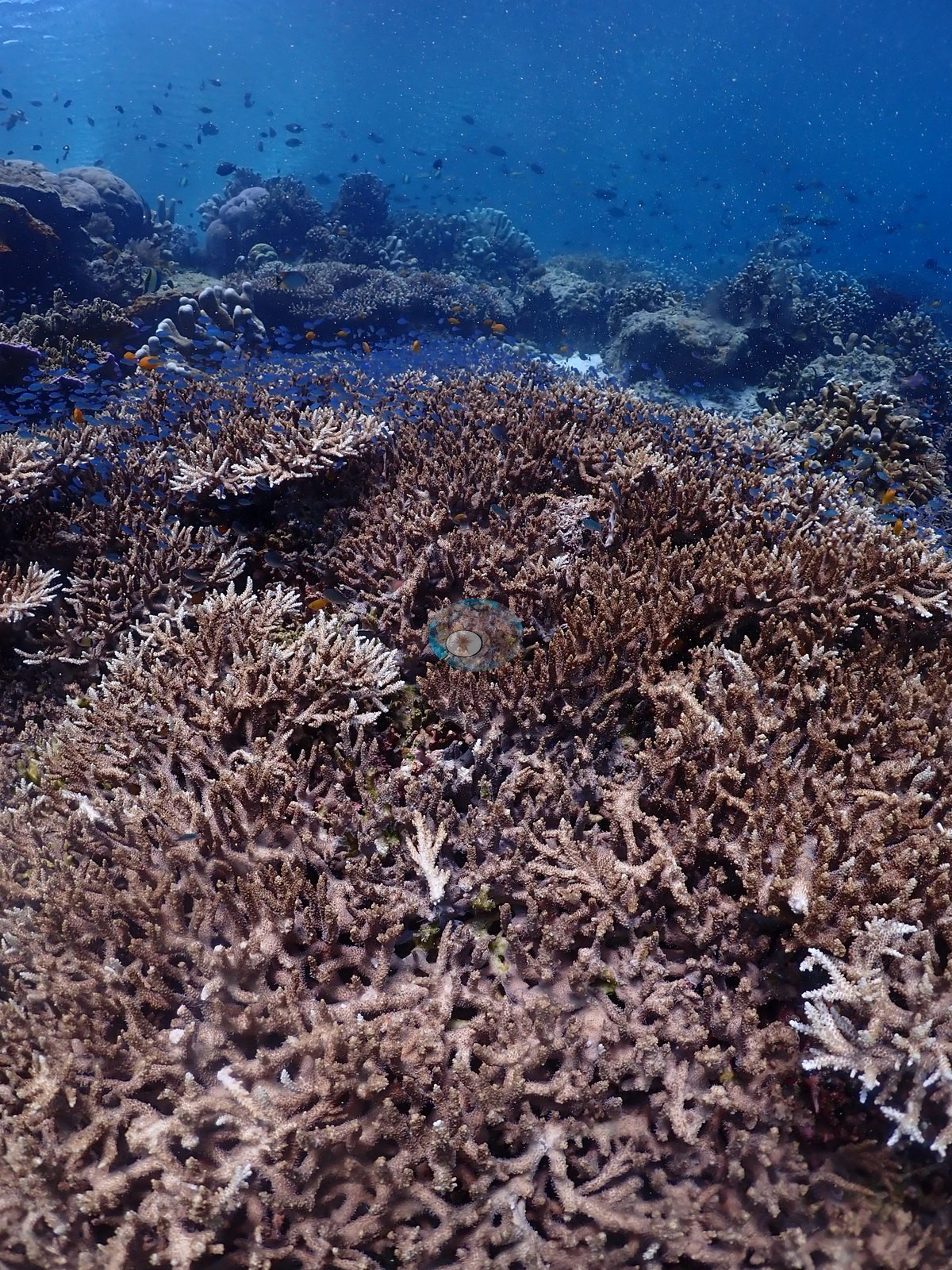
Toward the drop-off the mixed assemblage gives way to broad, near-continuous pale gray staghorn Acropora thickets blanketing the slope into blue water (e.g., Image 5, Image 12, Image 22).
Coral cover
Coral cover: 32% — a blind Claude computer-vision point count of 227 of Anderson's unedited photographs (20 points per photo; water, fish, and obstructions excluded). Other computer-vision methods are listed in the method table.
Fish and other fauna
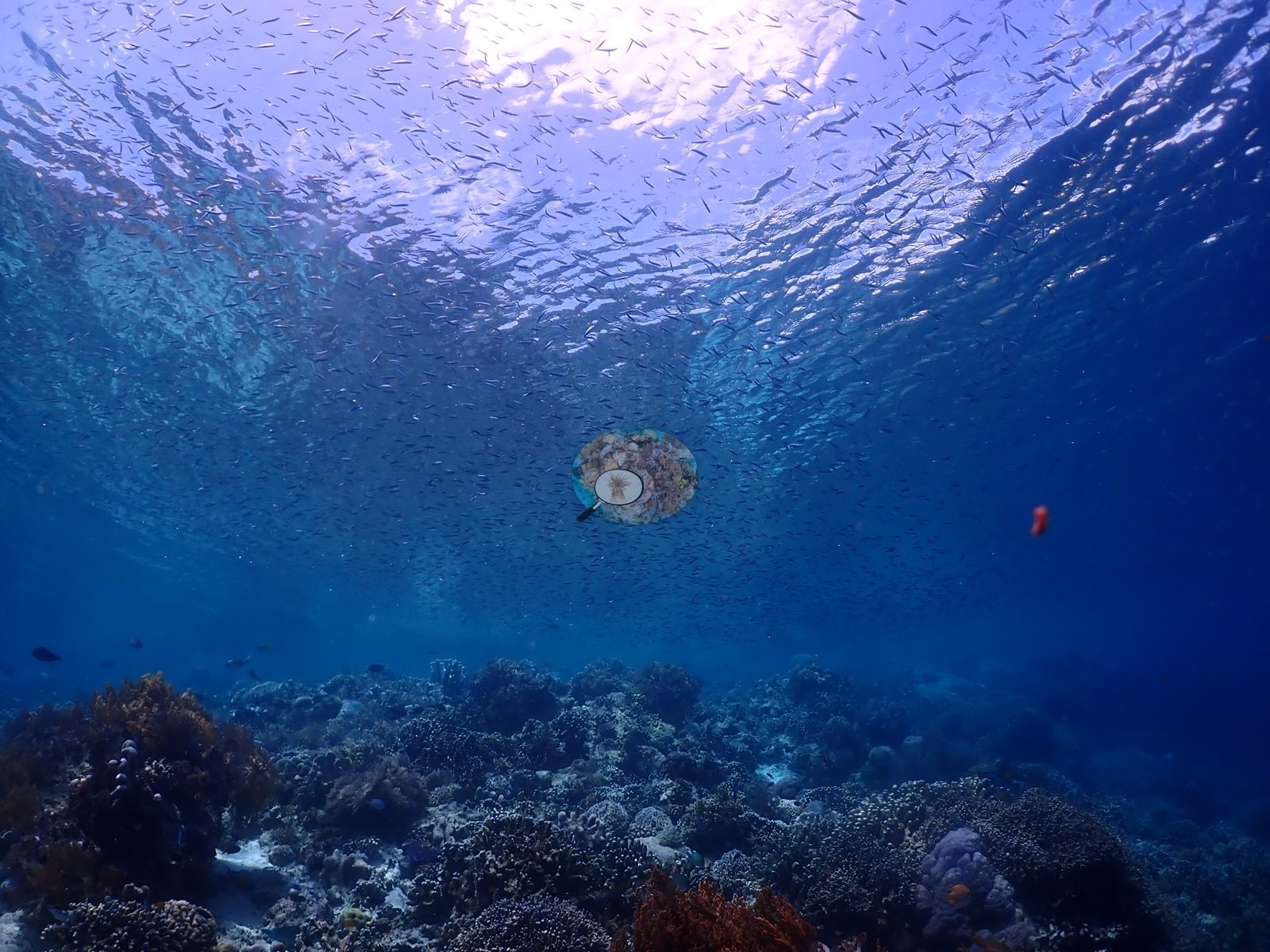
Fish were dense throughout: anthias, chromis, fusiliers, glassfish under the sponge overhangs, and butterflyfish over the crest.
Comparisons with other data
No prior survey data from this site. If you would like to share yours, please email us.
Other notes
The profile reached 26.9 m, but Anderson's field note explains why the imagery is overwhelmingly bright and shallow: "stayed at 2–3 m for most of the dive since light was better and there were so many beautiful scleractinians."
Anderson's field note: “stayed at 2-3 m for most of the dive since light was better and there were so many beautiful scleractinians” (e.g., Image 17)
CV model comparison
More info
DINOv3 and CoralSCOP were run on the same photos and are listed for comparison. Coralscapes v2 and v1 were also run but are not shown: Anderson does not consider Coralscapes reliable for these photos. No diver transect exists for this trip, so agreement between the rows is not accuracy, and as of September 2026 no computer-vision method estimates coral cover accurately on new images; treat every row as indicative.| Method | Hard-coral cover (%) |
|---|---|
| In-house DINOv3 | 31.9 |
| CoralSCOP unedited | 33.8 |
| Claude | 32.0 |
Data & links
All images from Coral Reef Diagnostics. Data are from Coral Reef Diagnostics.
© Coral Reef Diagnostics.