
Indonesia - Halmahera: Pretty Shallow
Part of the regional summaries: Indonesia - Halmahera and Indonesia - Maluku
More info
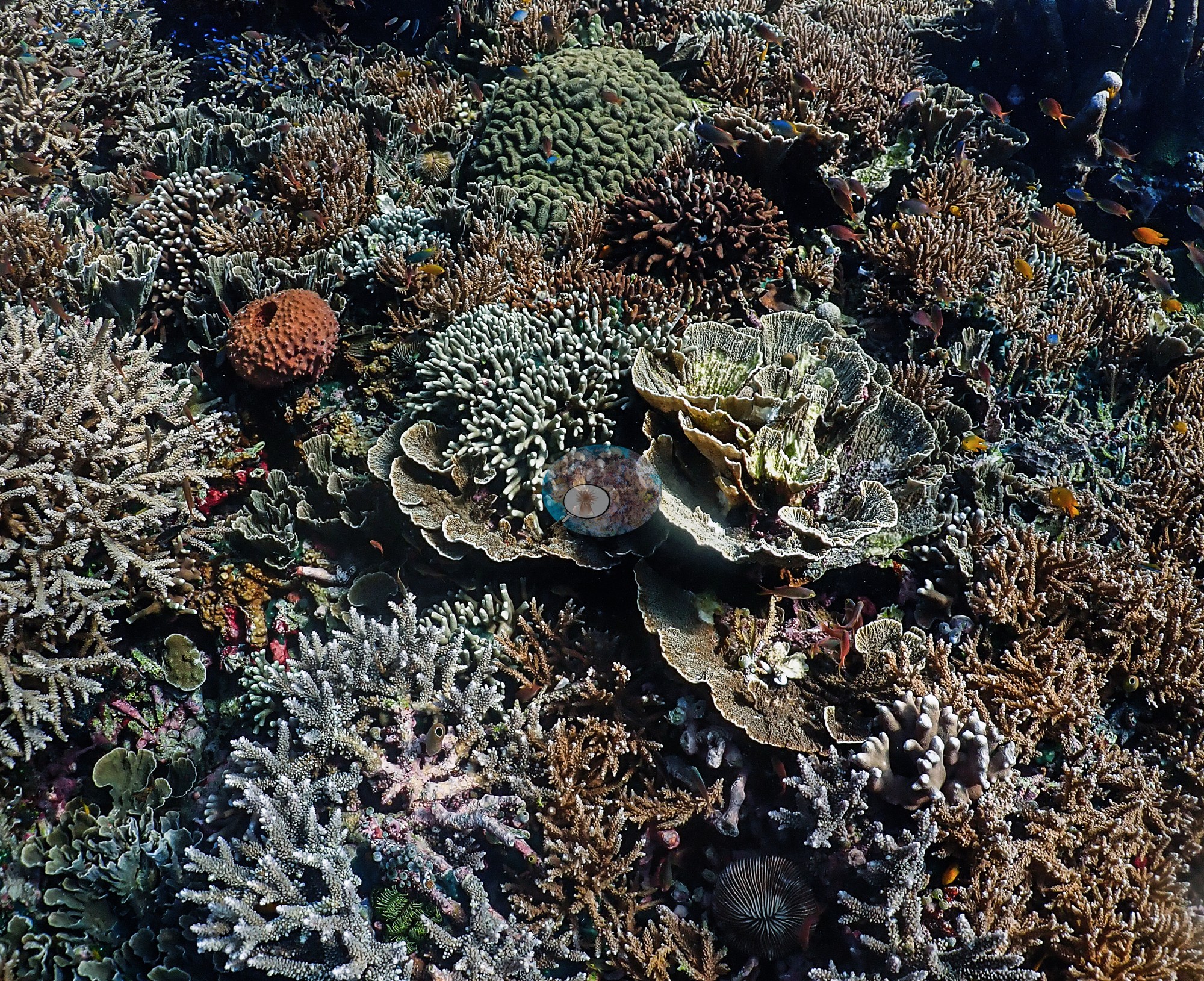
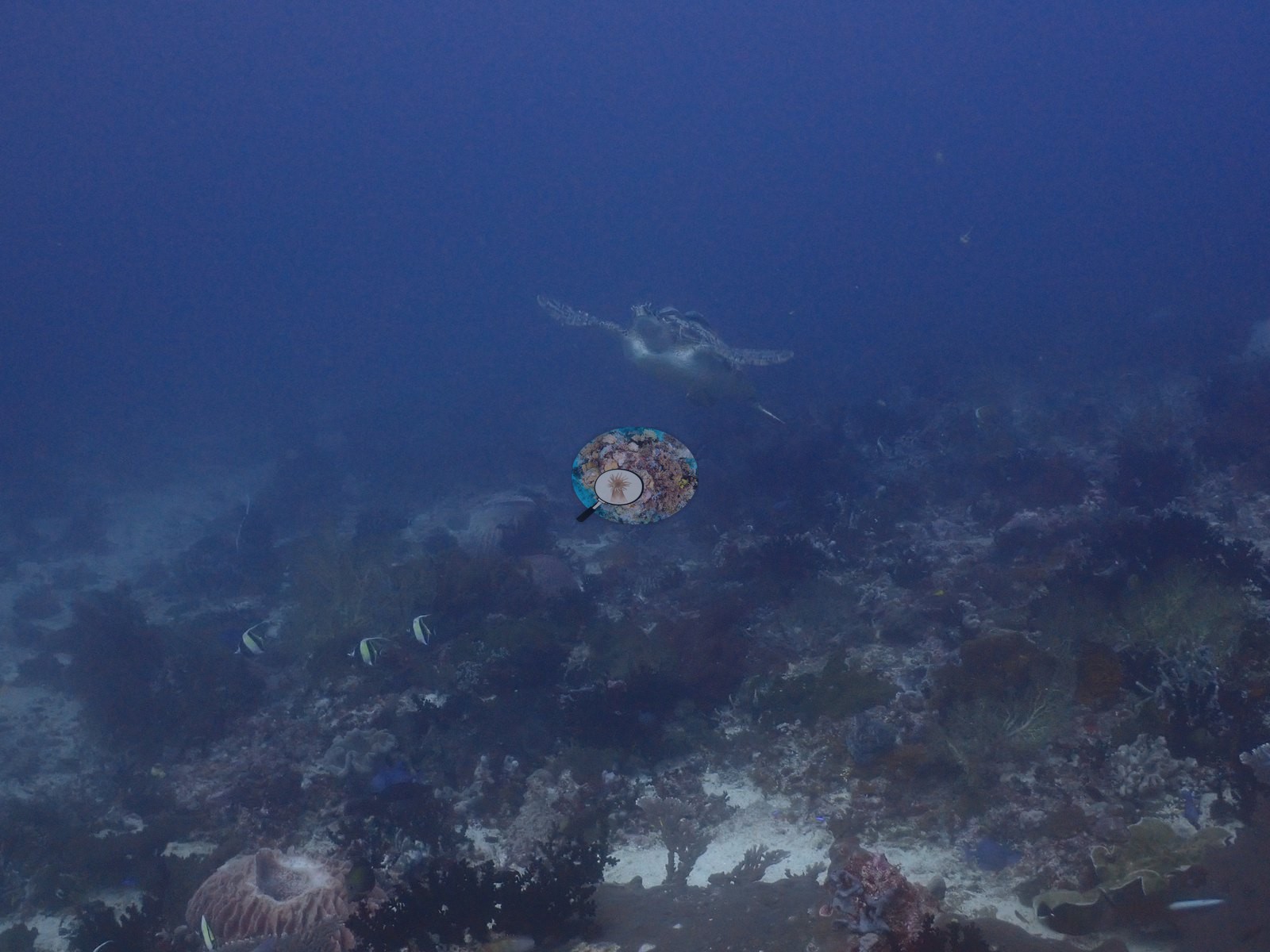
North Maluku (NOAA CRW virtual station)Pretty Shallow is built on massive and foliose coral rather than branching thickets - large Porites/Diploastrea domes and dense foliose plate clusters alongside staghorn Acropora stands - and produced a clear sighting of a huge, apparently pregnant turtle resting in open water. No bleaching, disease, or crown-of-thorns starfish (COTS) observed. A blind Claude computer-vision point count puts coral cover around 32%.
Pretty Shallow terbangun di atas karang masif dan foliaseus alih-alih rumpun bercabang — kubah Porites/Diploastrea besar dan gugusan karang lembaran yang rapat di samping rumpun Acropora bercabang — dan menghasilkan perjumpaan jelas dengan seekor penyu besar yang tampaknya sedang bunting, beristirahat di perairan terbuka. Tidak teramati pemutihan, penyakit, maupun bintang laut mahkota duri. Penghitungan titik buta visi komputer Claude memperkirakan tutupan karang sekitar 32%.
Terjemahan ringkasan ini oleh AI; versi bahasa Inggris yang berlaku.
Eight other CRD dive sites within 5 km shown in orange — click a marker to open its page.
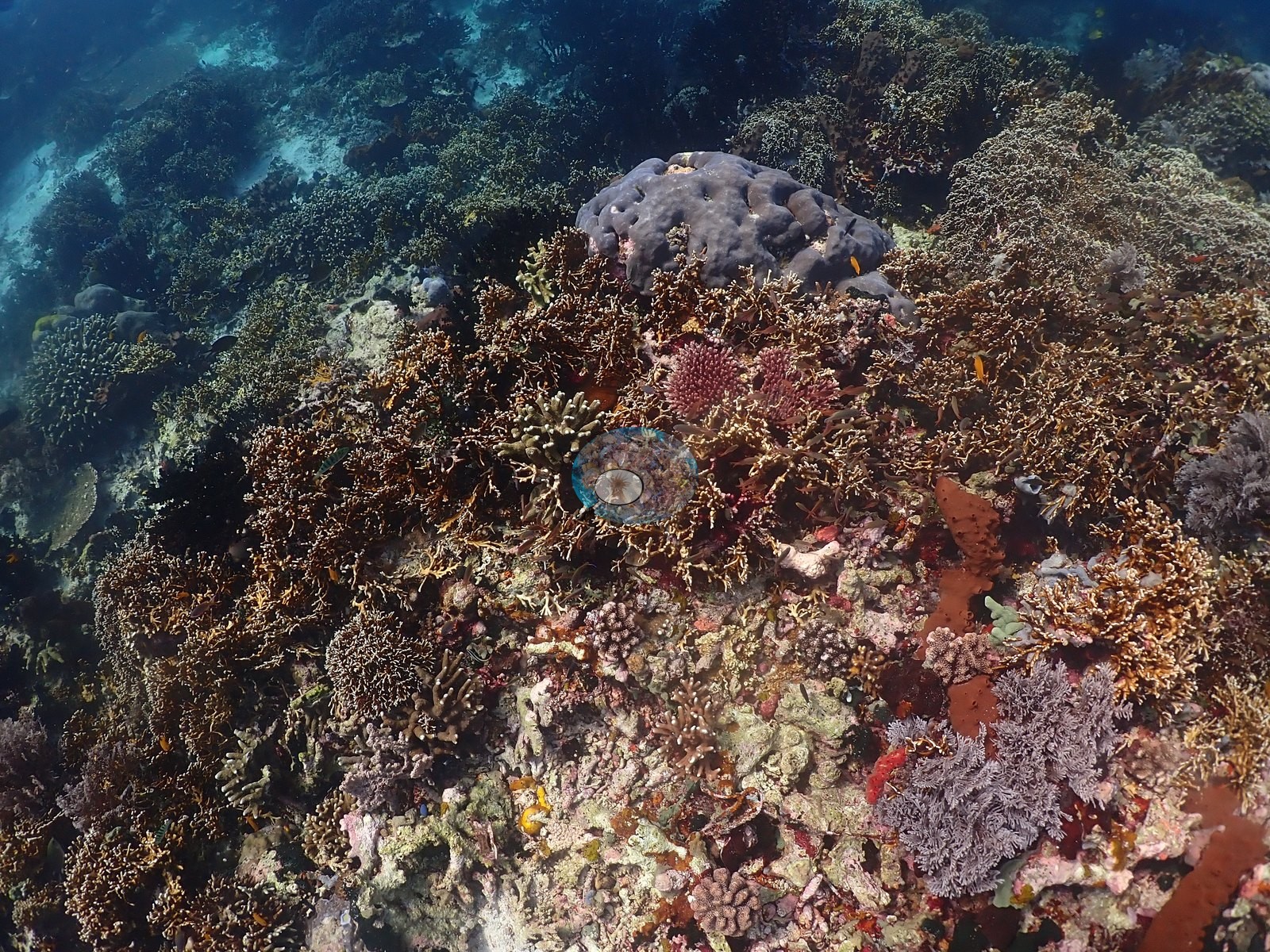
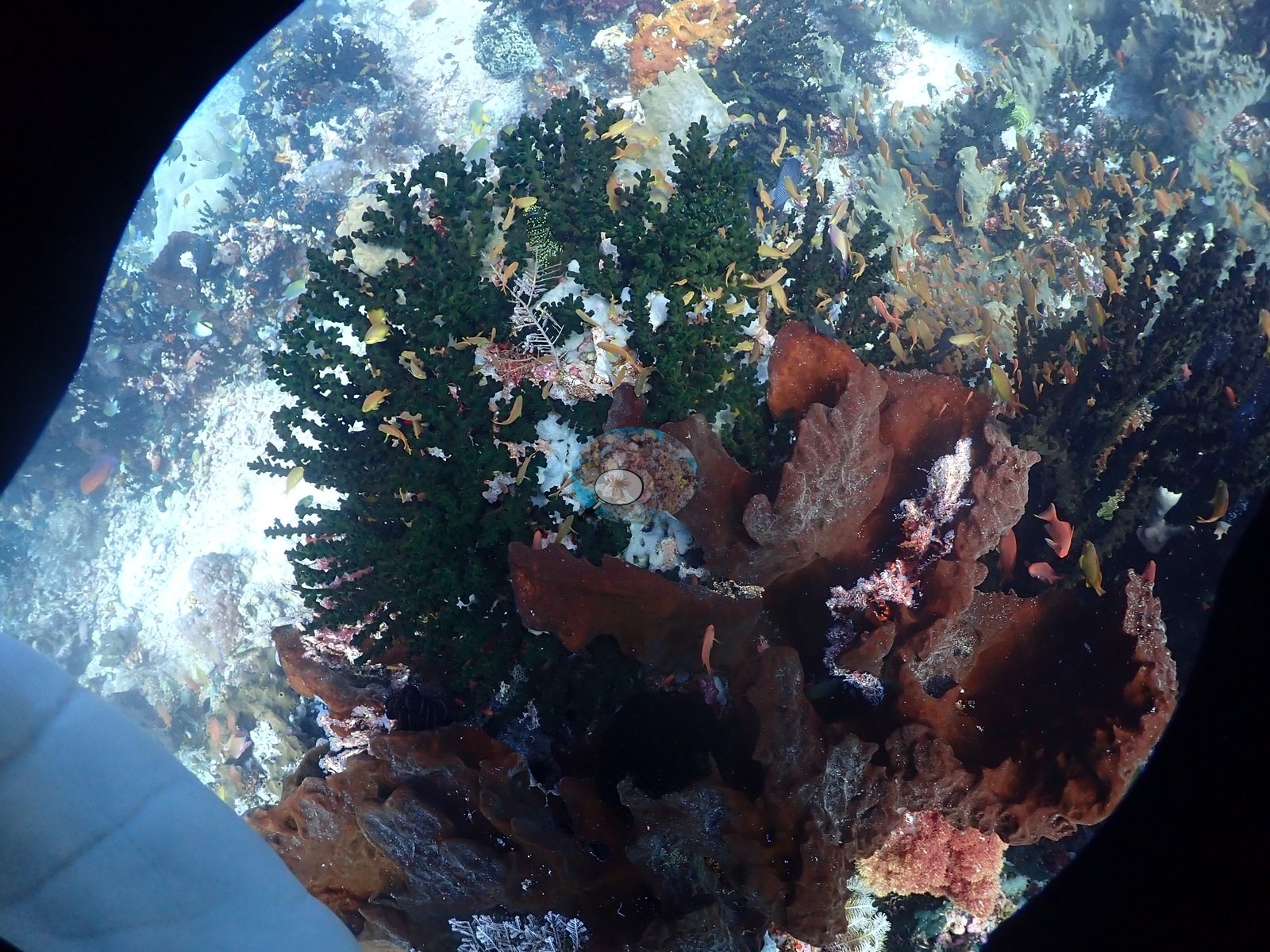
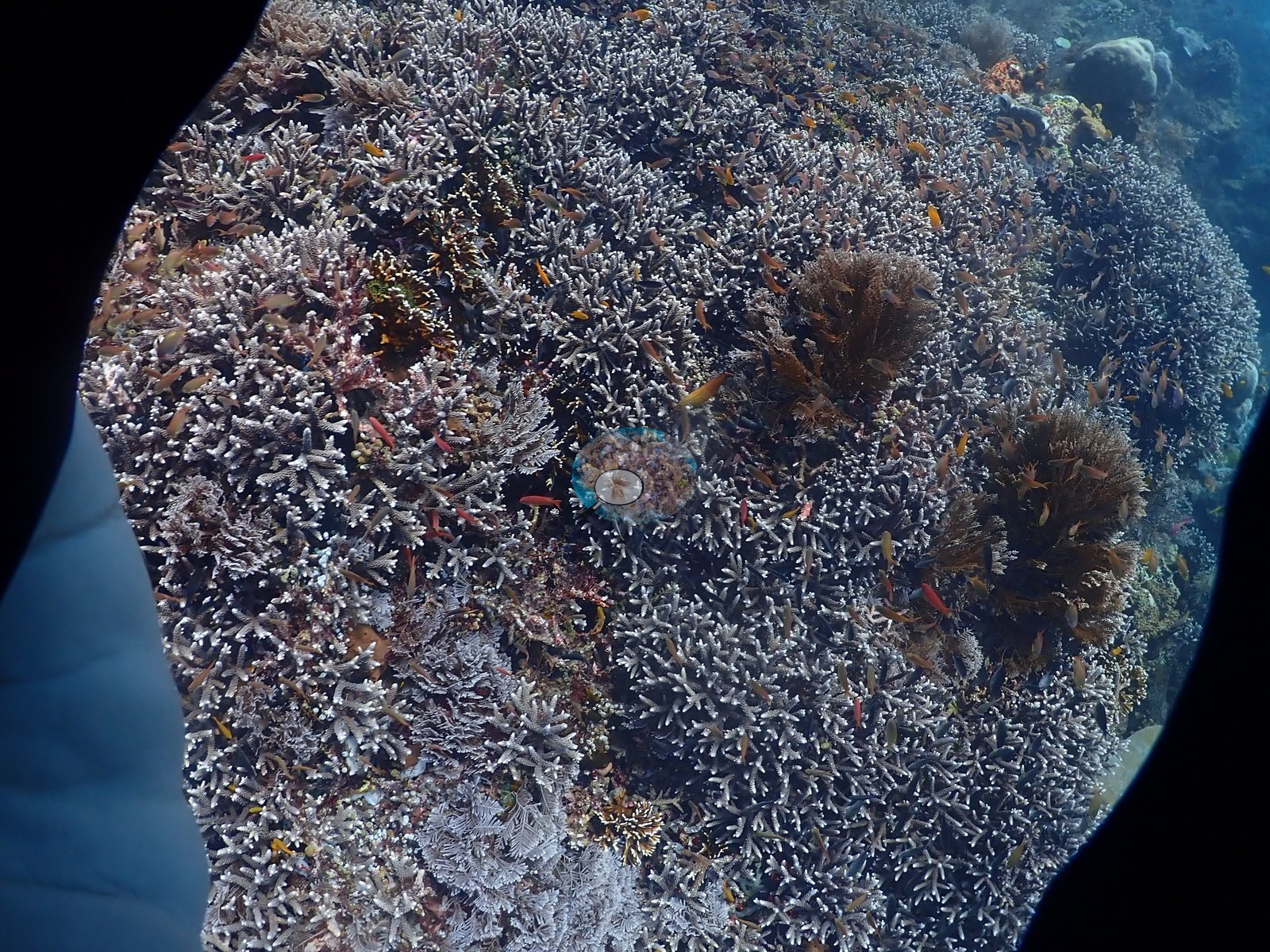
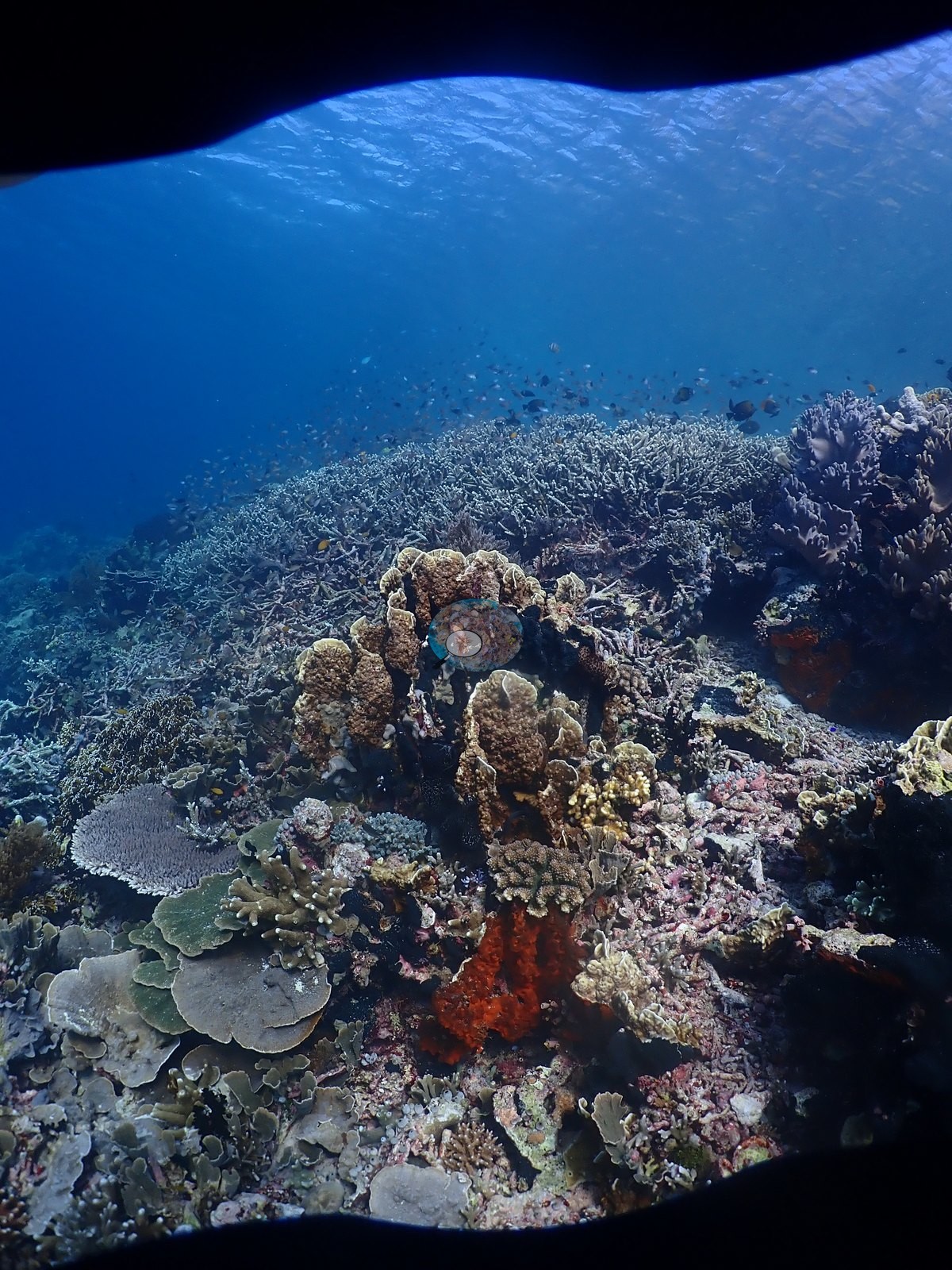
31 of these 53 photographs are shown beside the text that discusses them under "Site description" below.
Site description
Setting
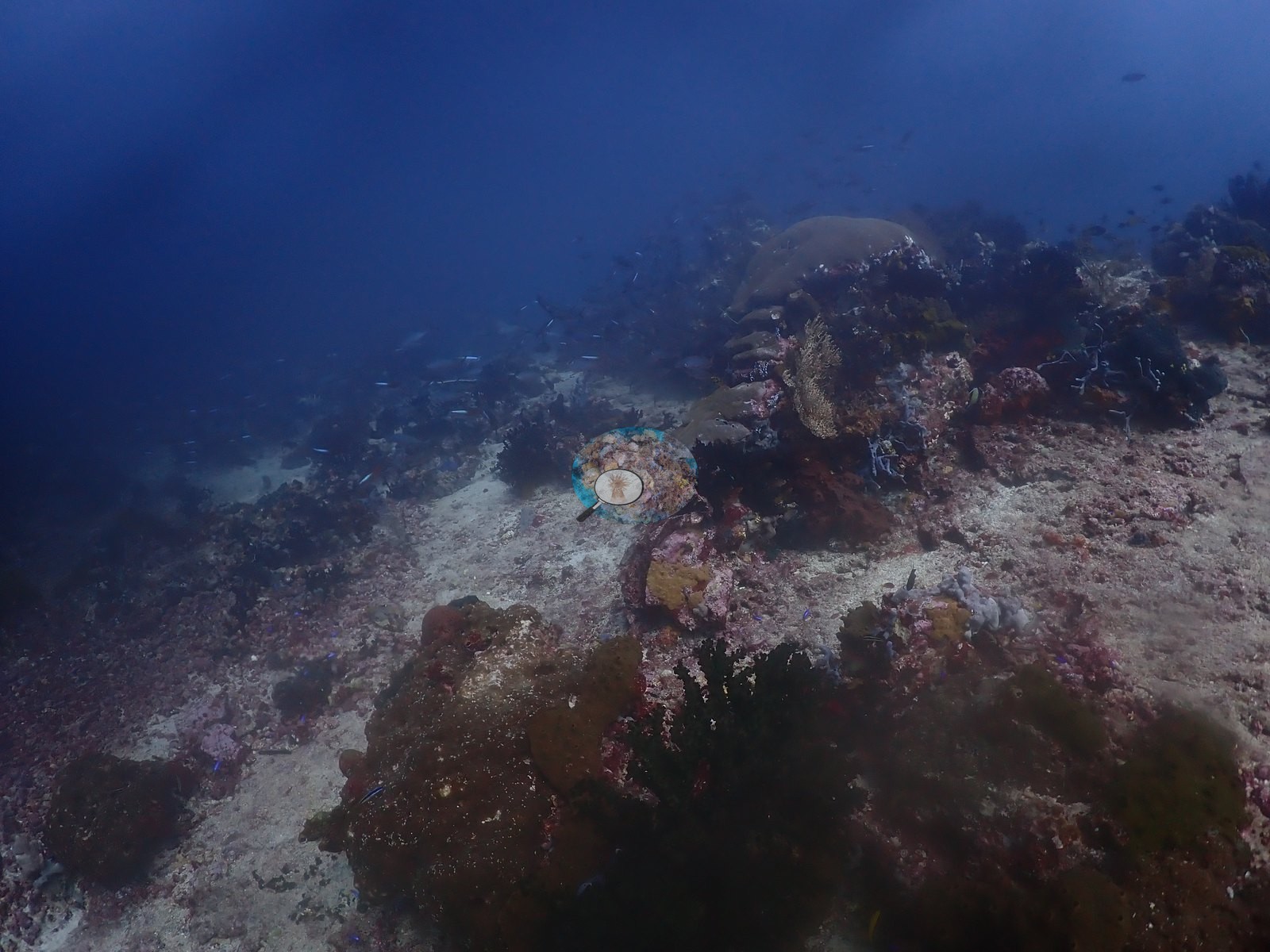
Several frames in the second half show mild haze/backscatter but nothing approaching the visibility problems of other Halmahera dives (e.g., Image 29, Image 30, Image 51).
General benthic features
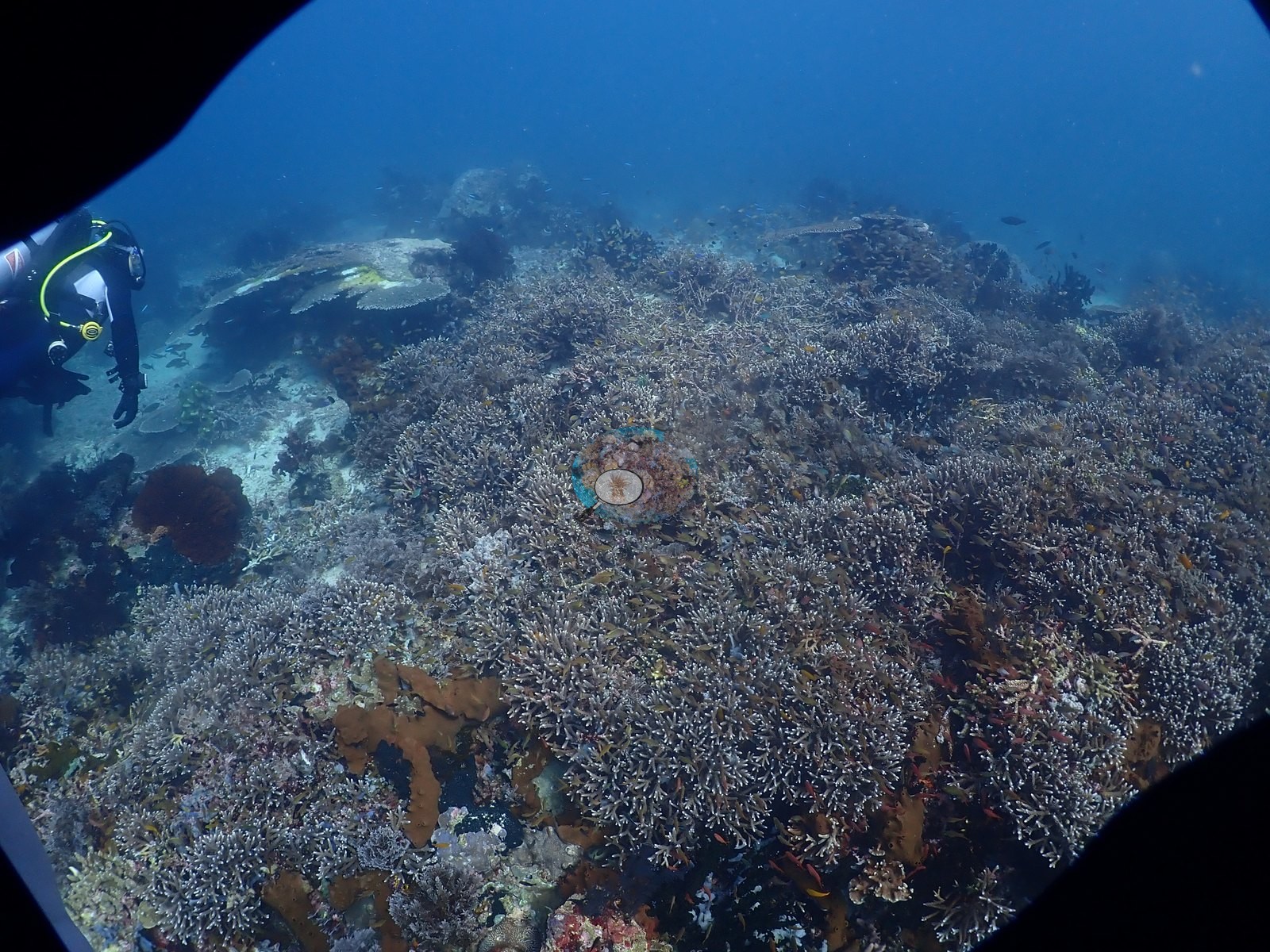
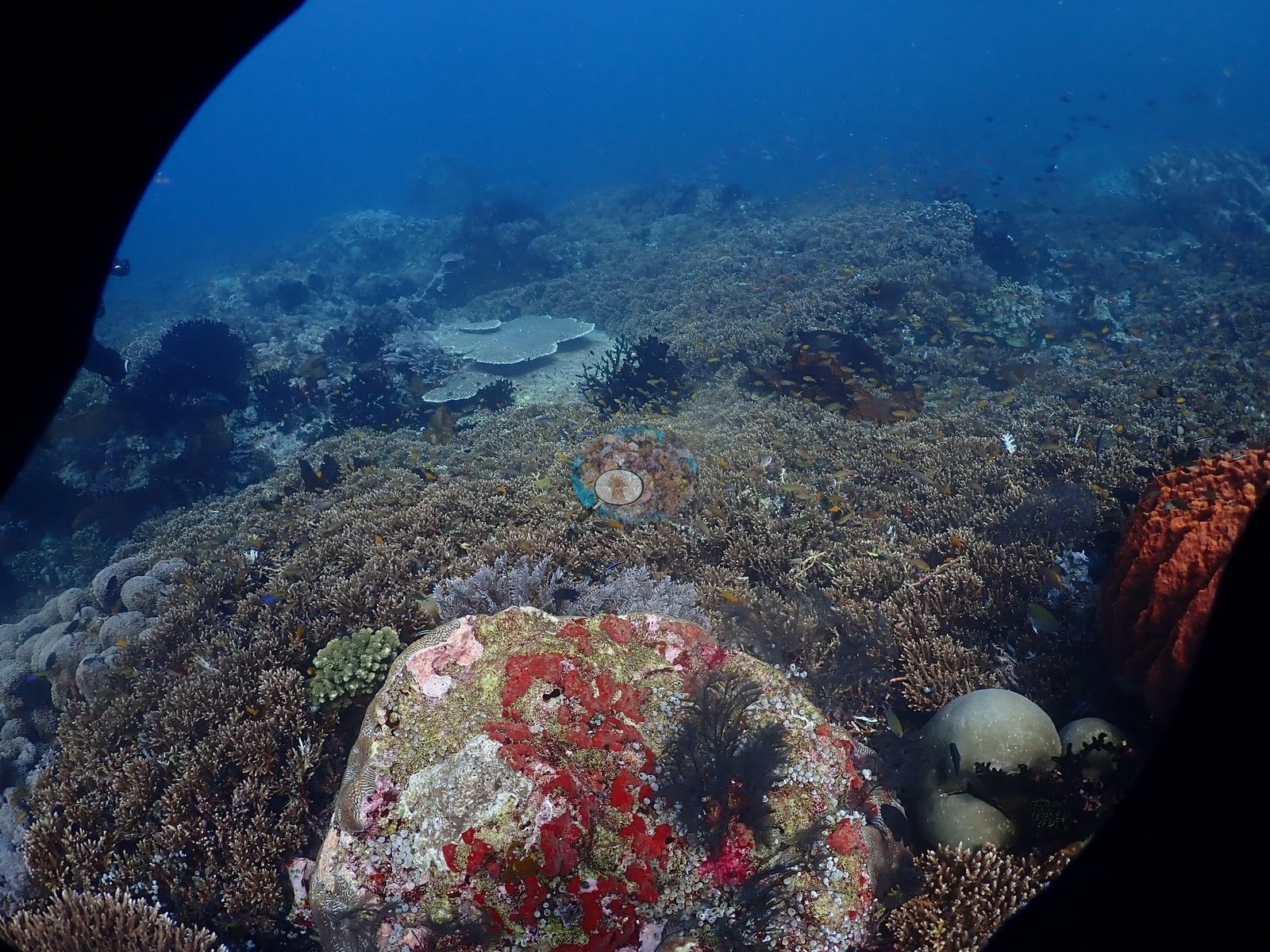
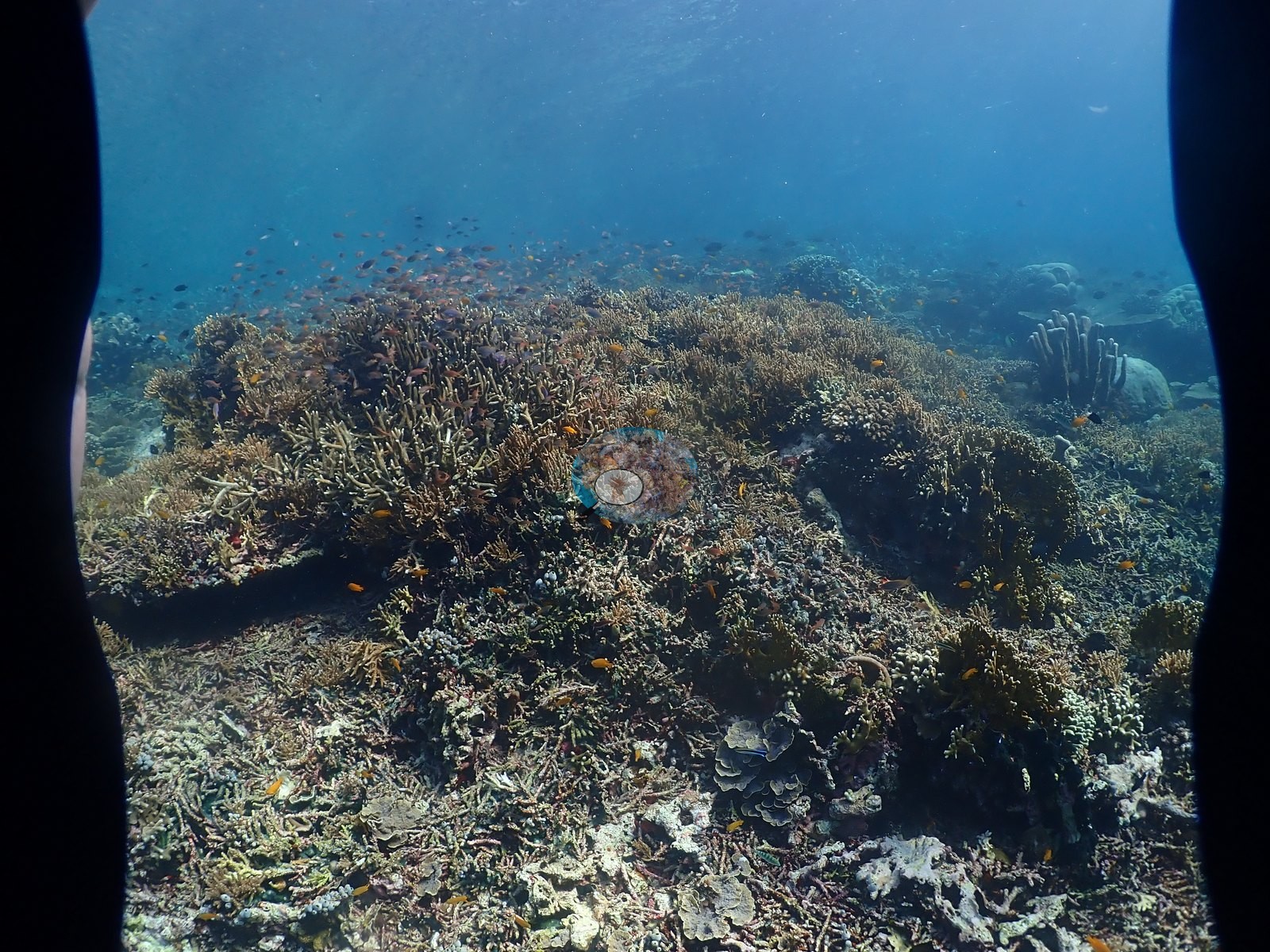
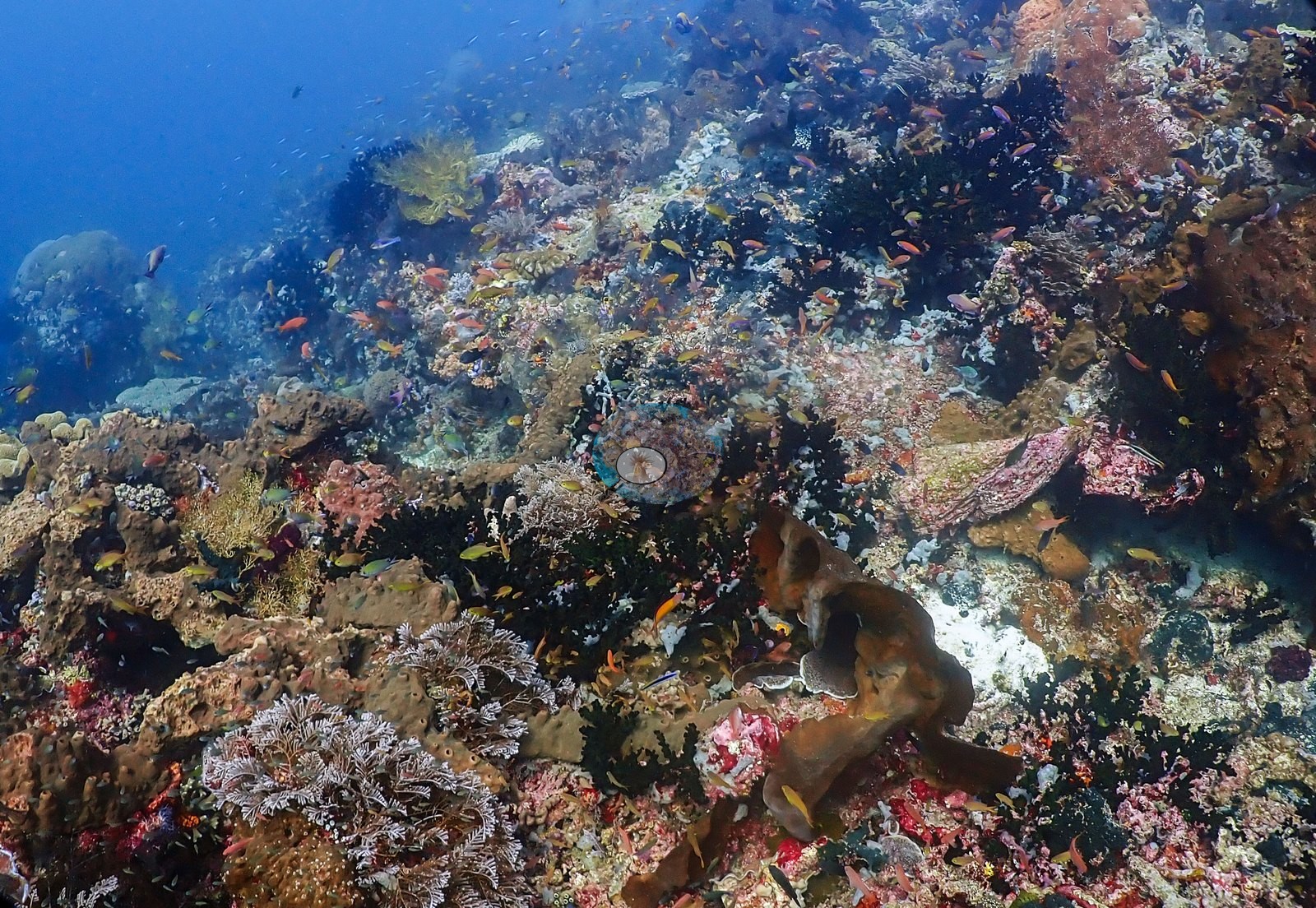
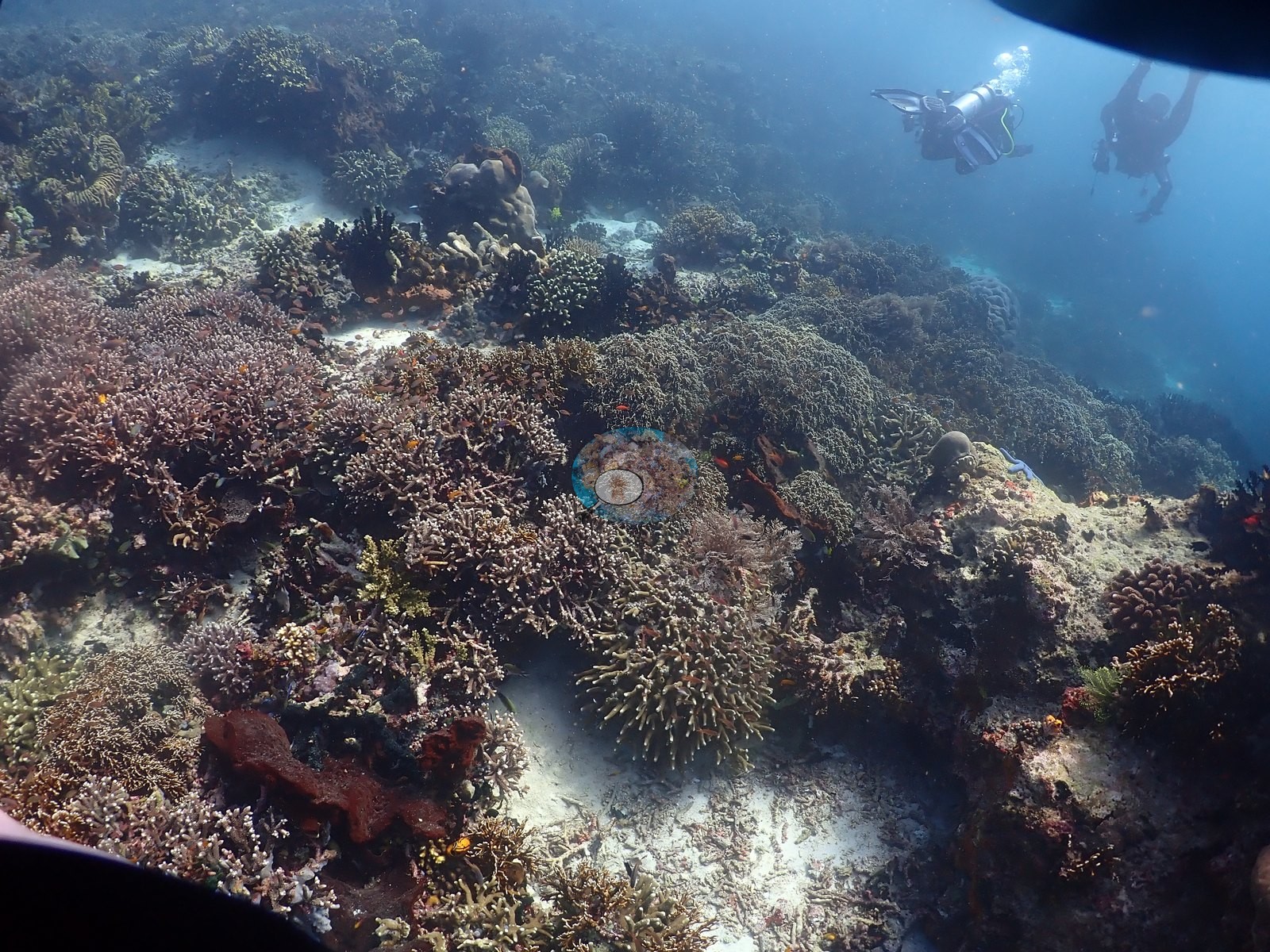
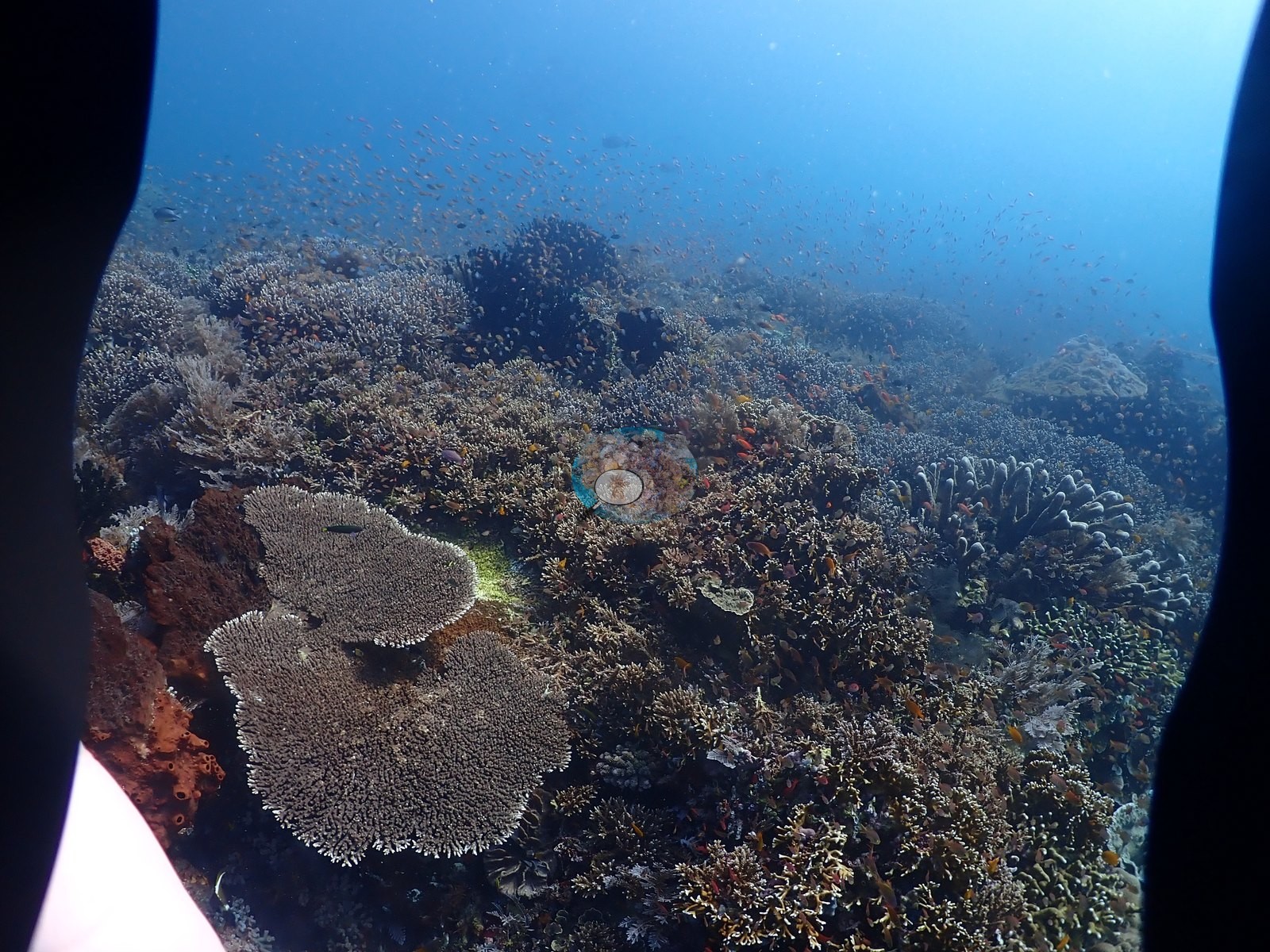
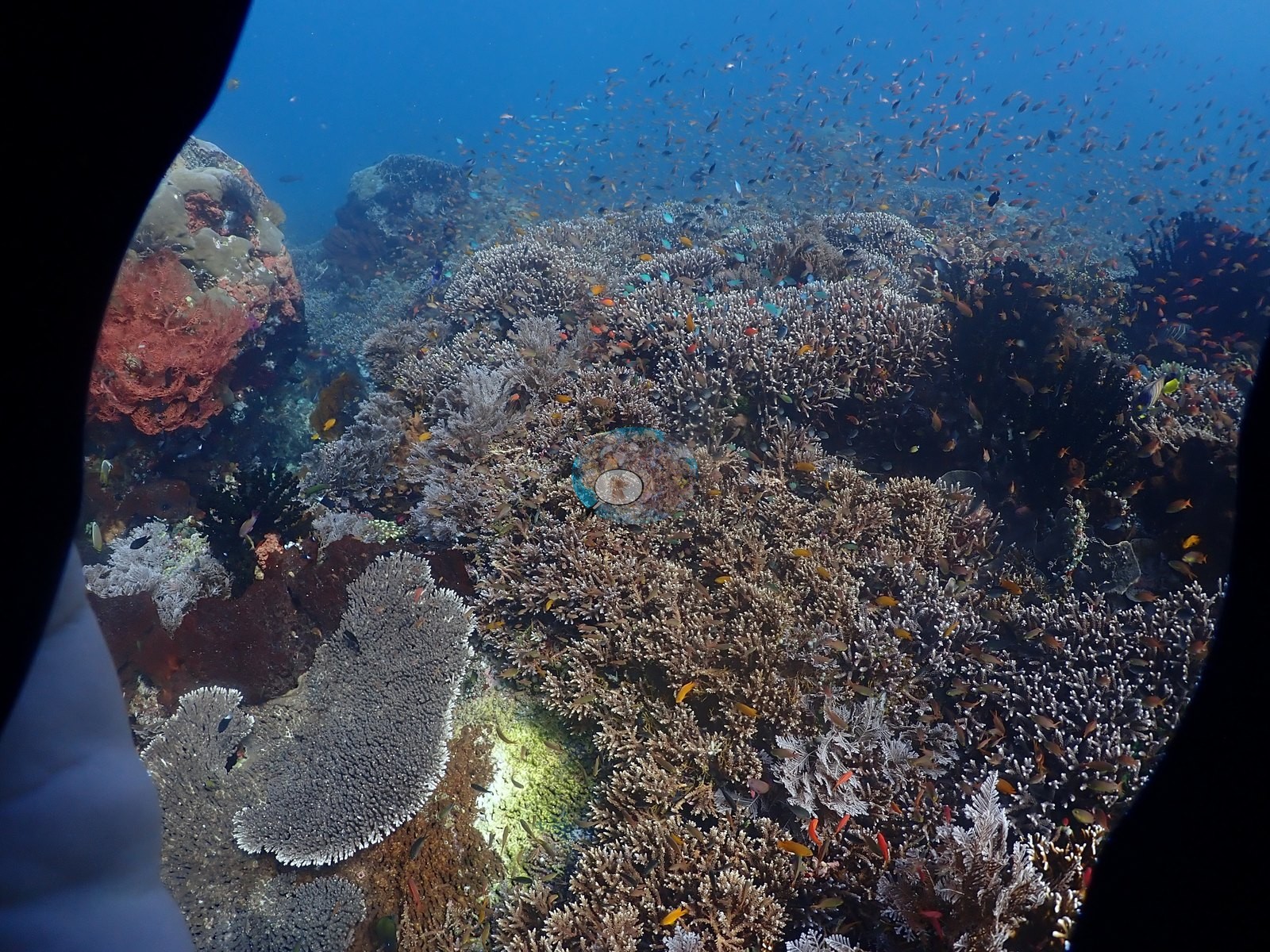
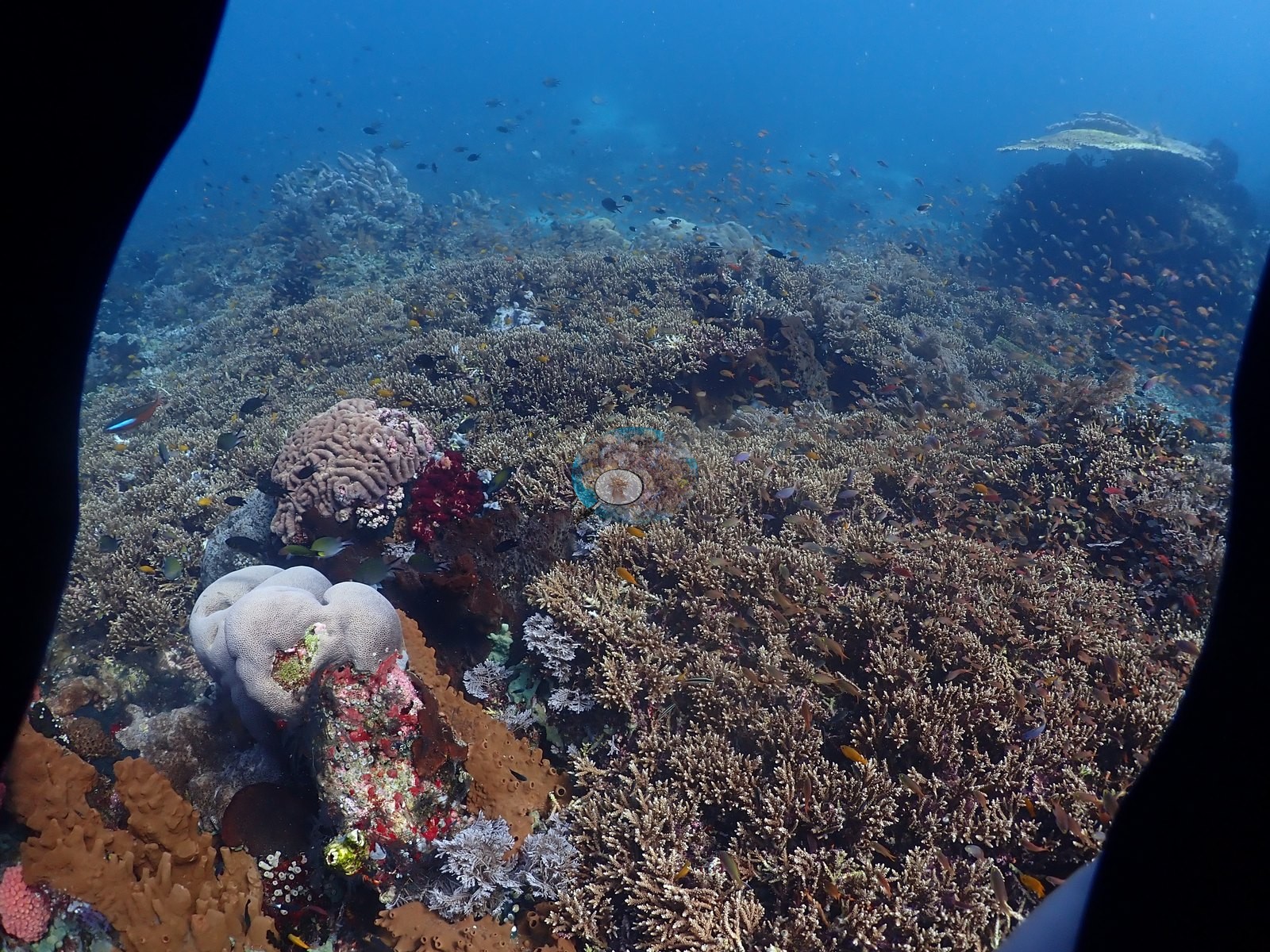
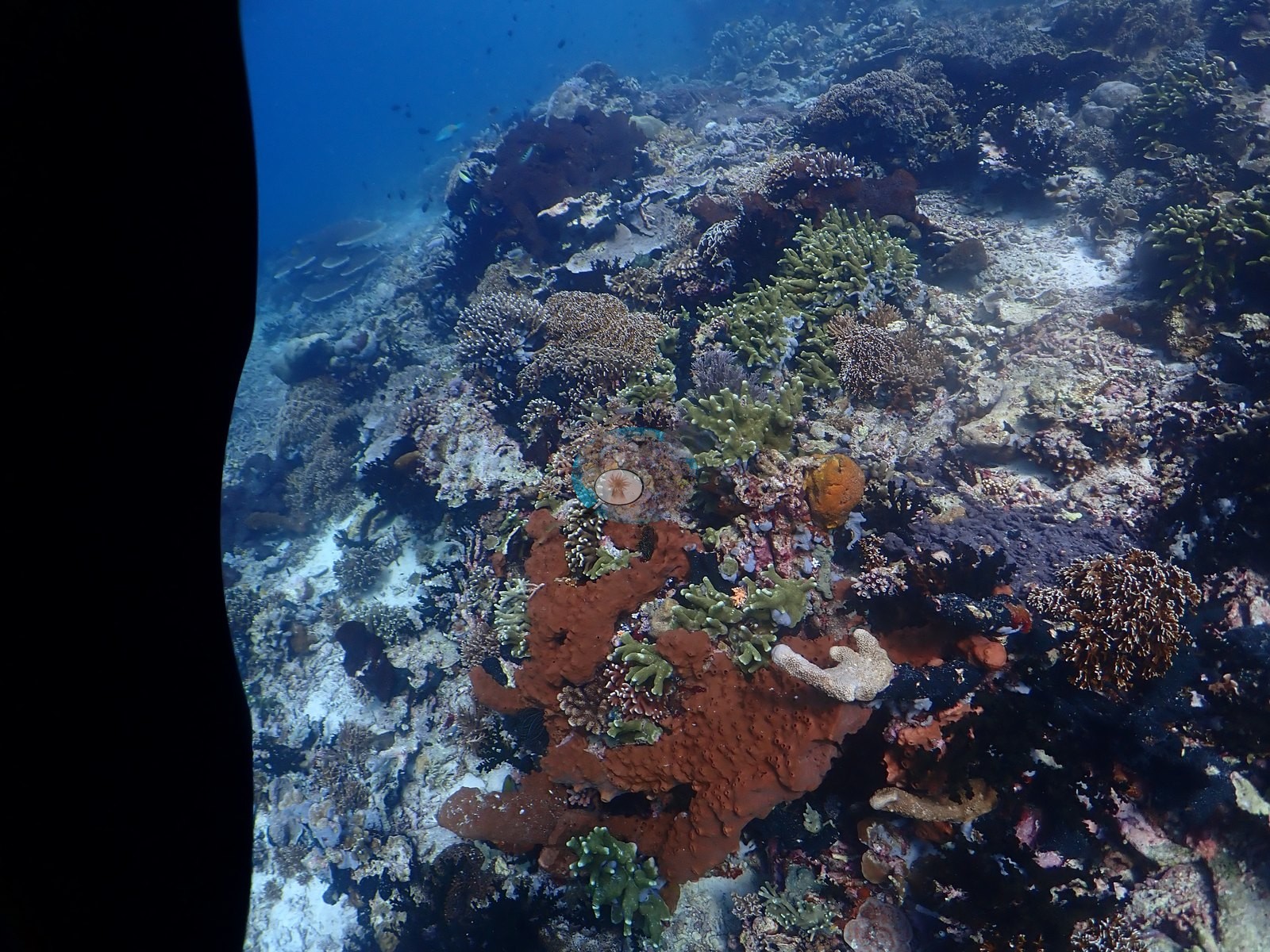
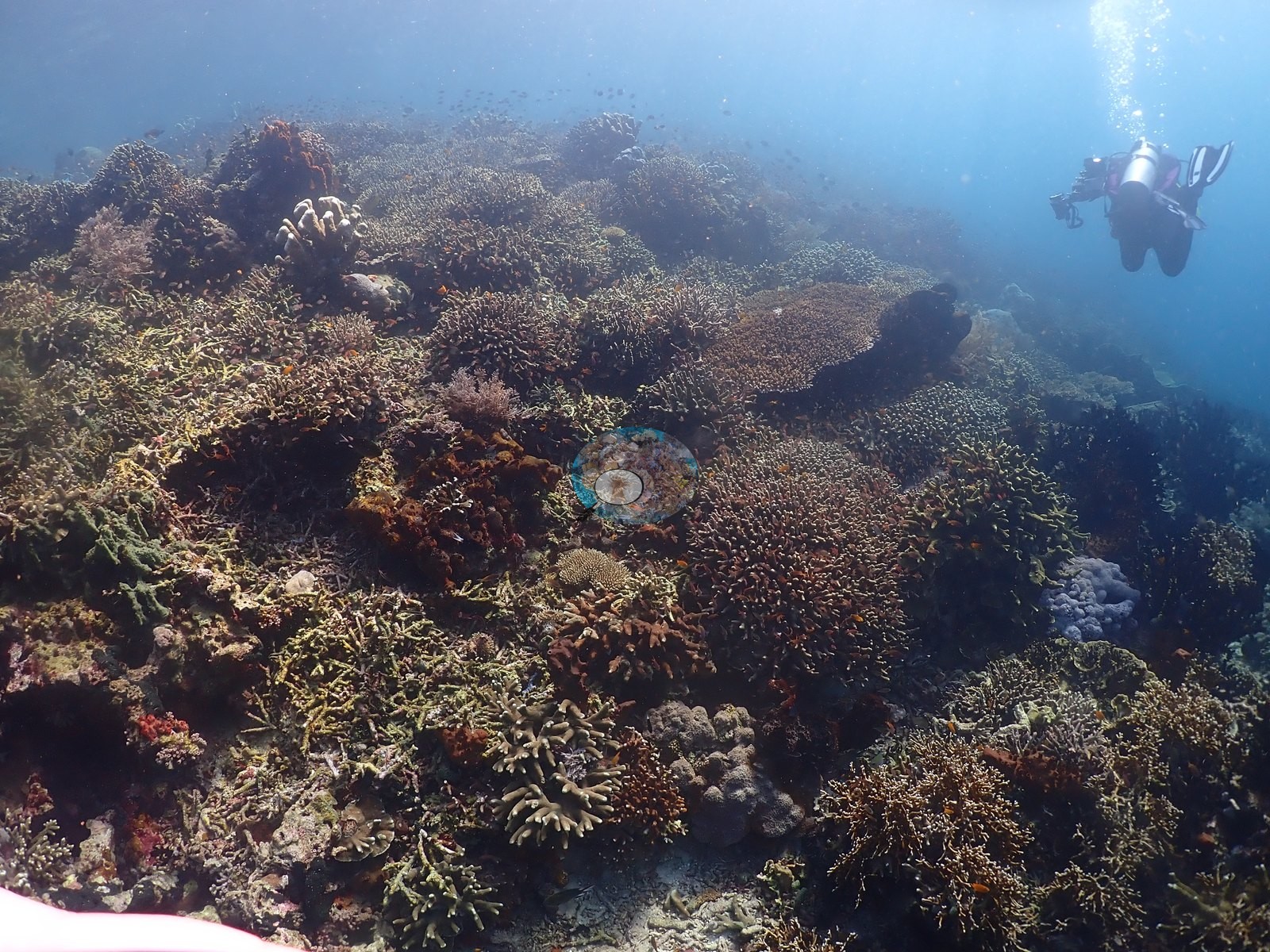
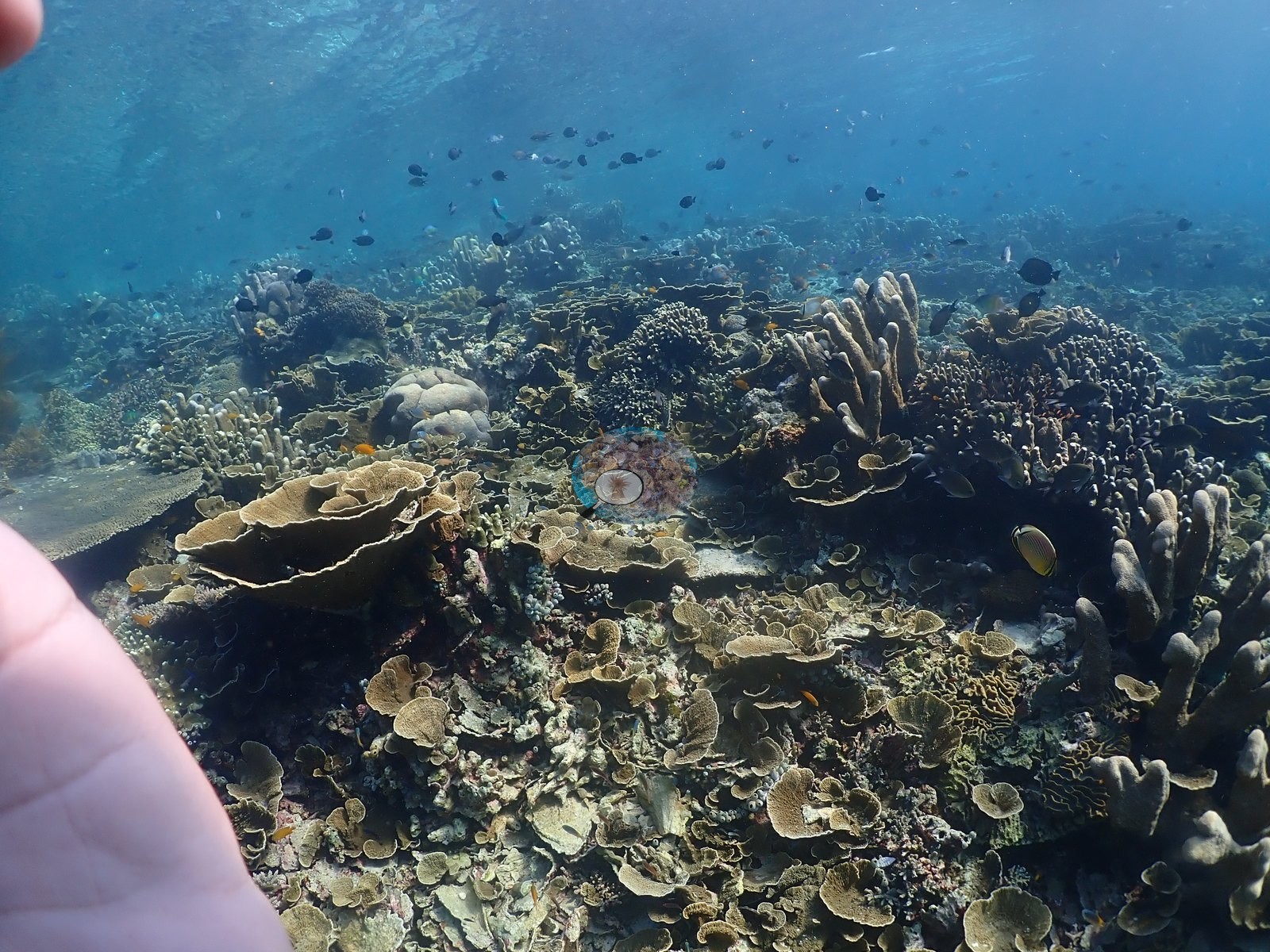
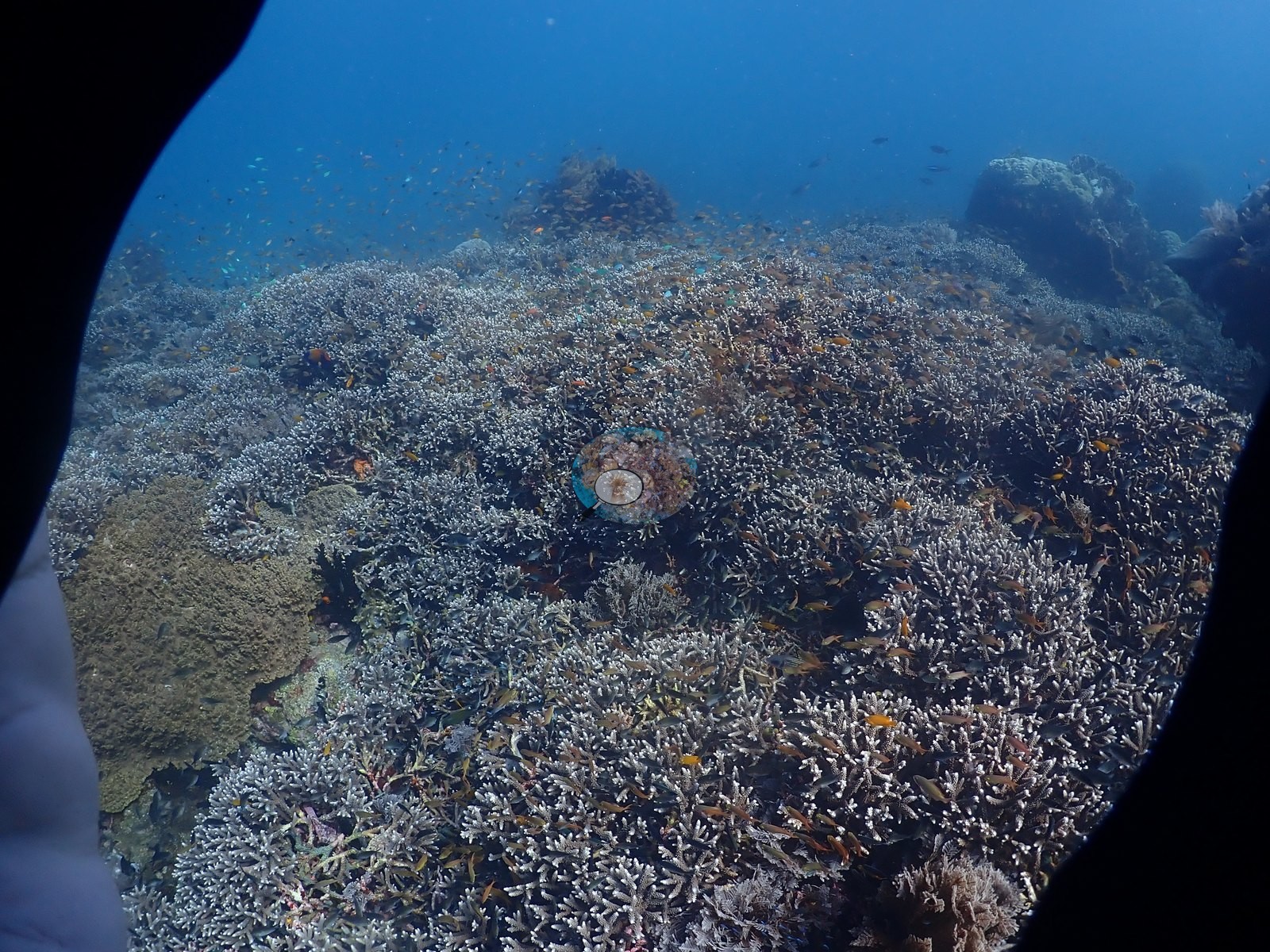
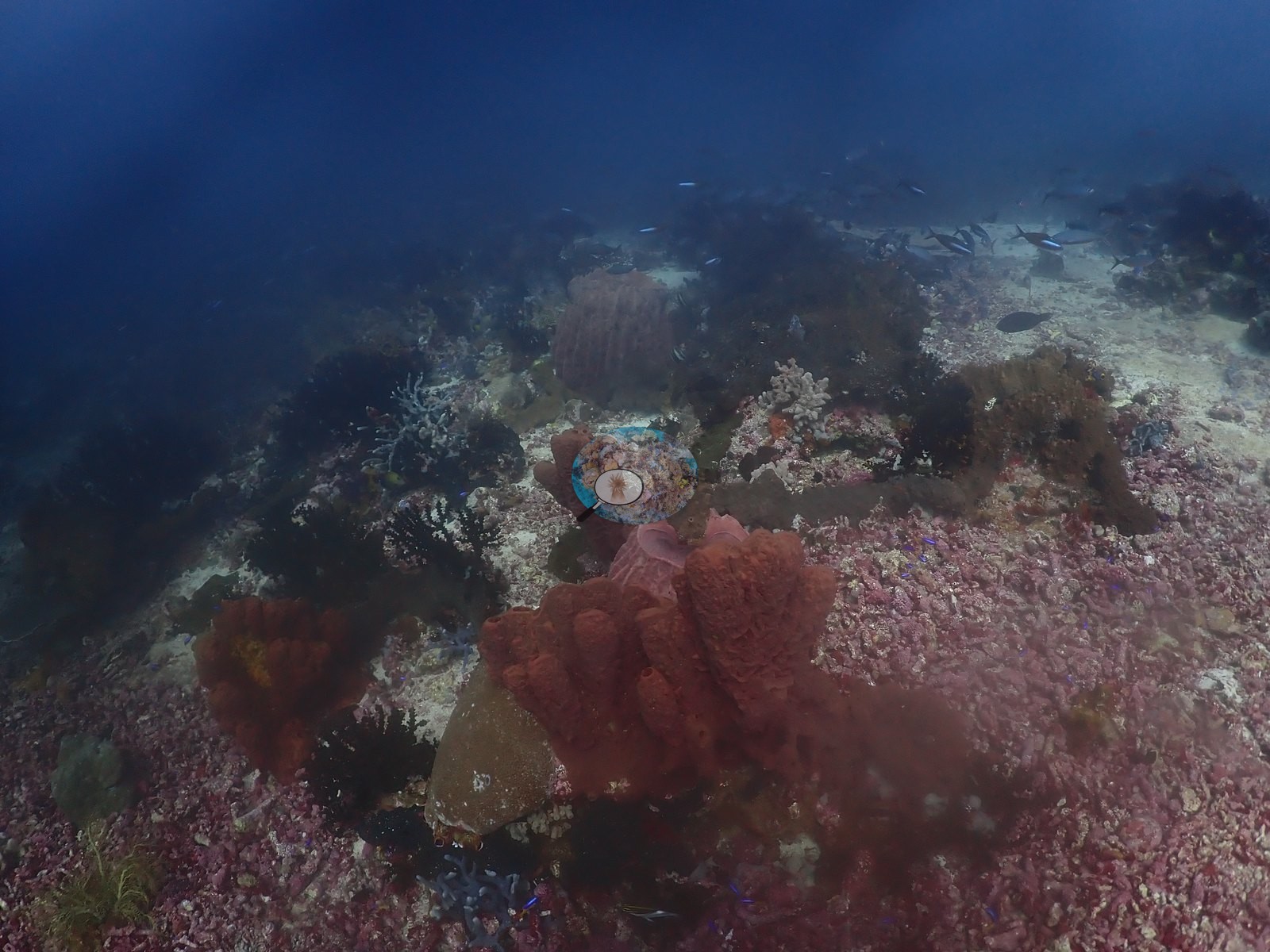
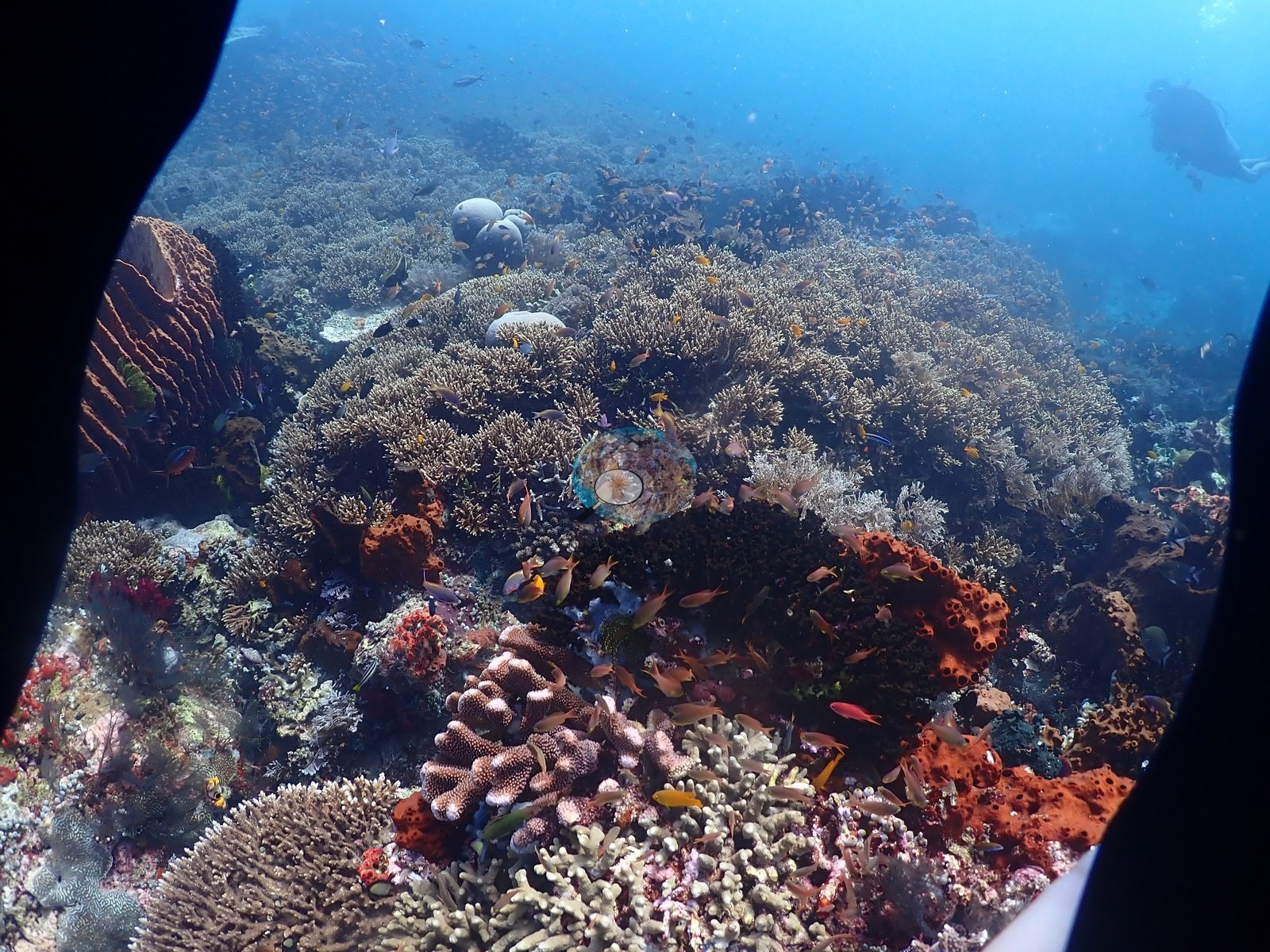
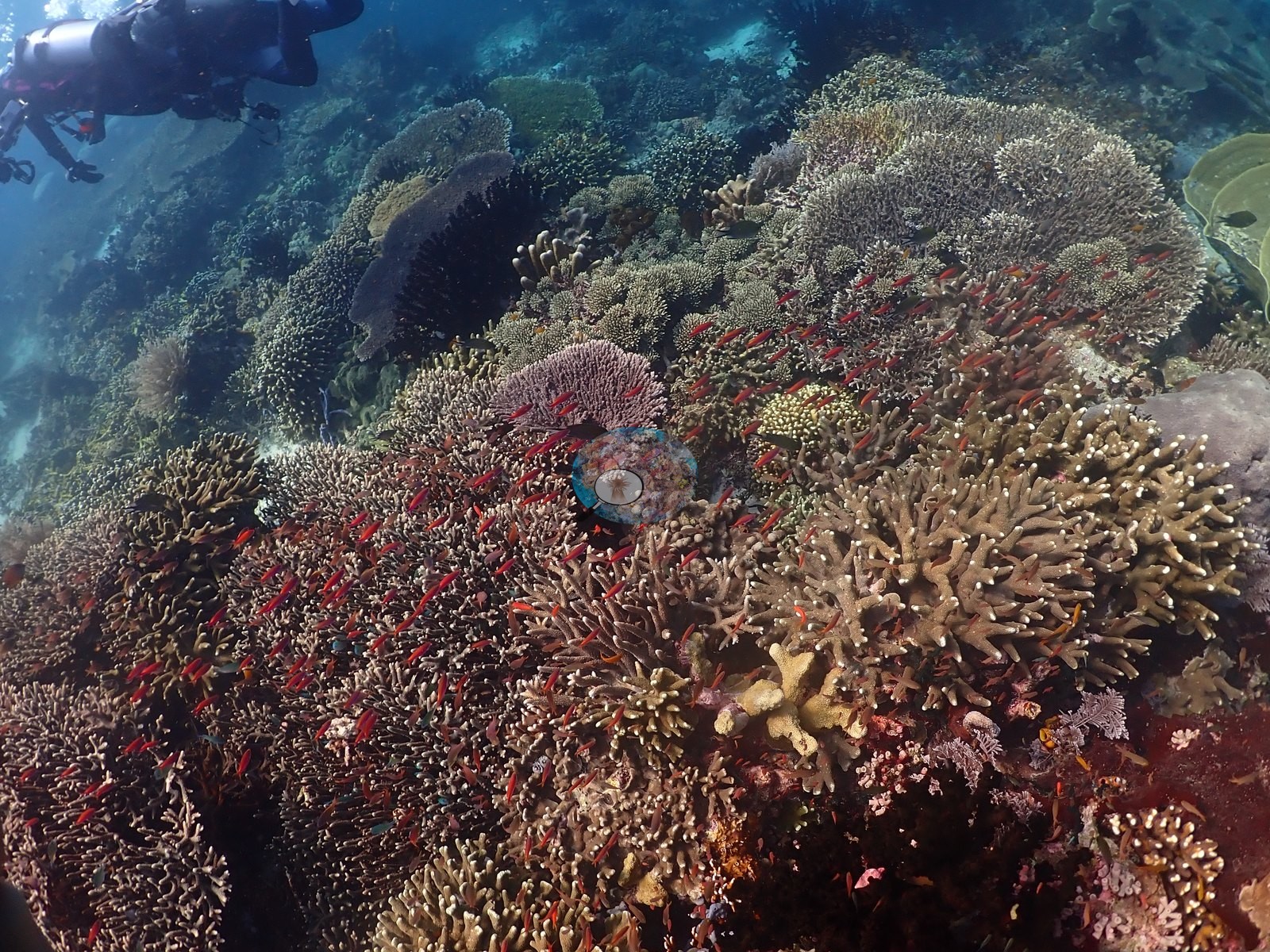
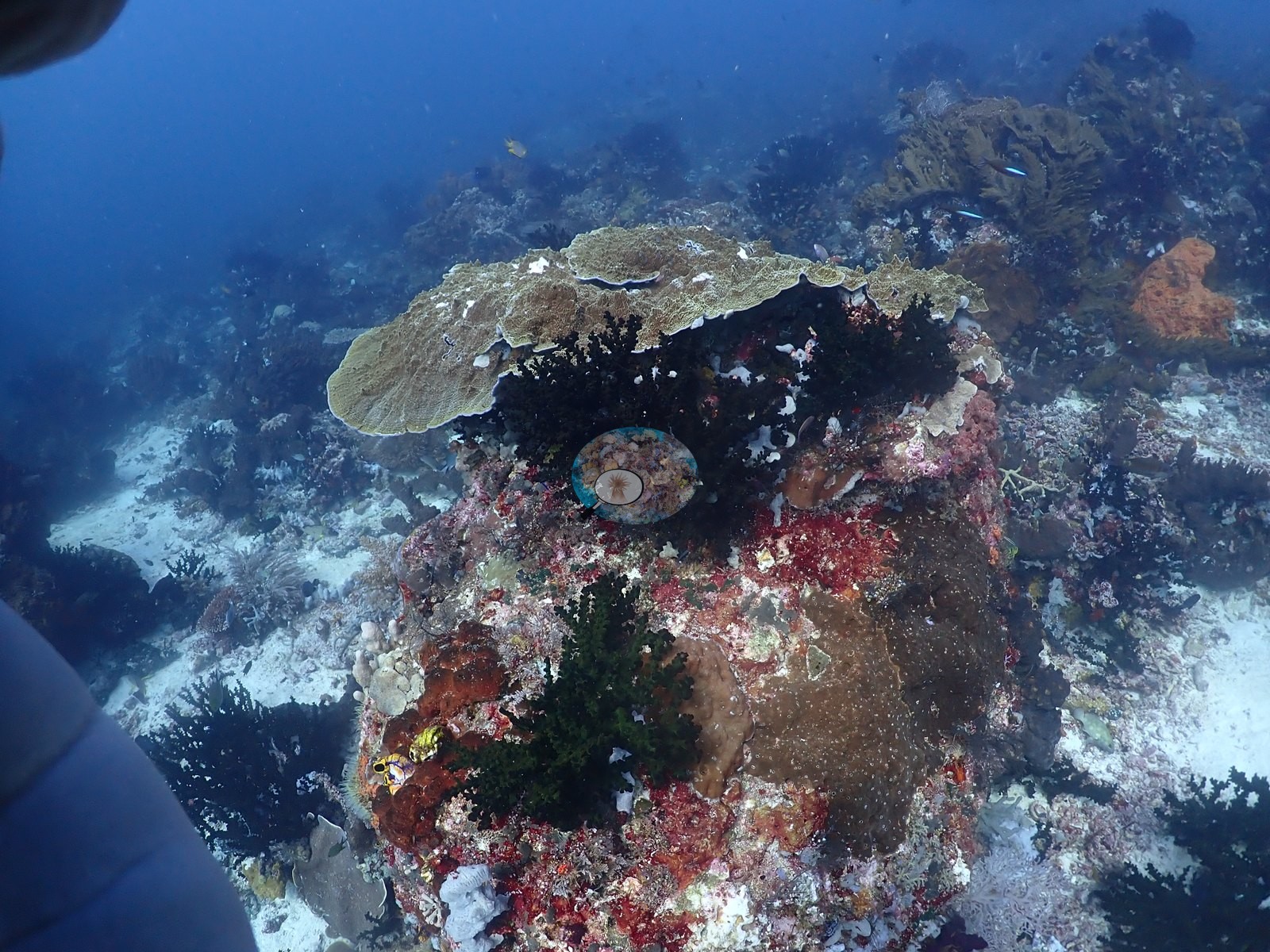
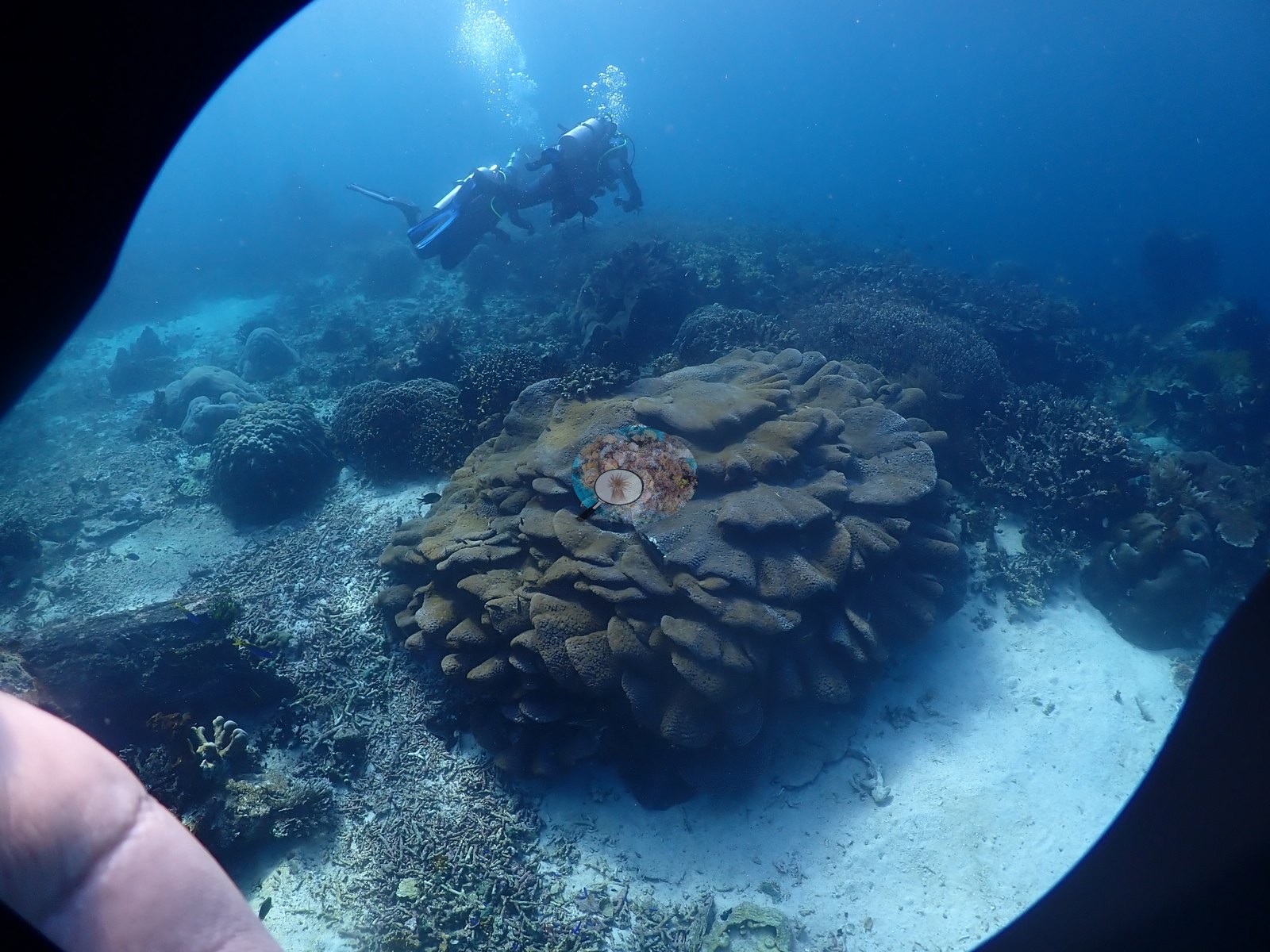
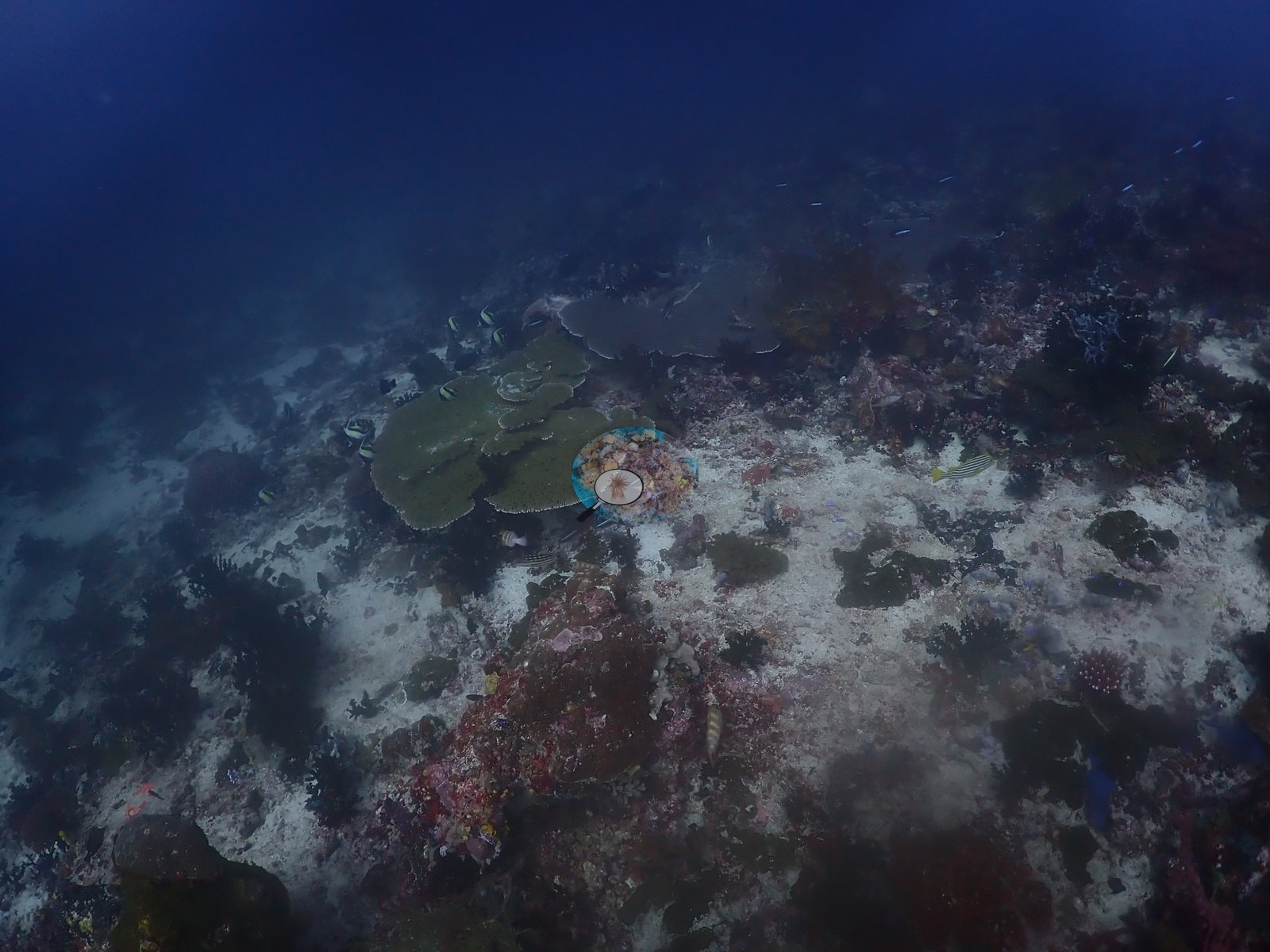
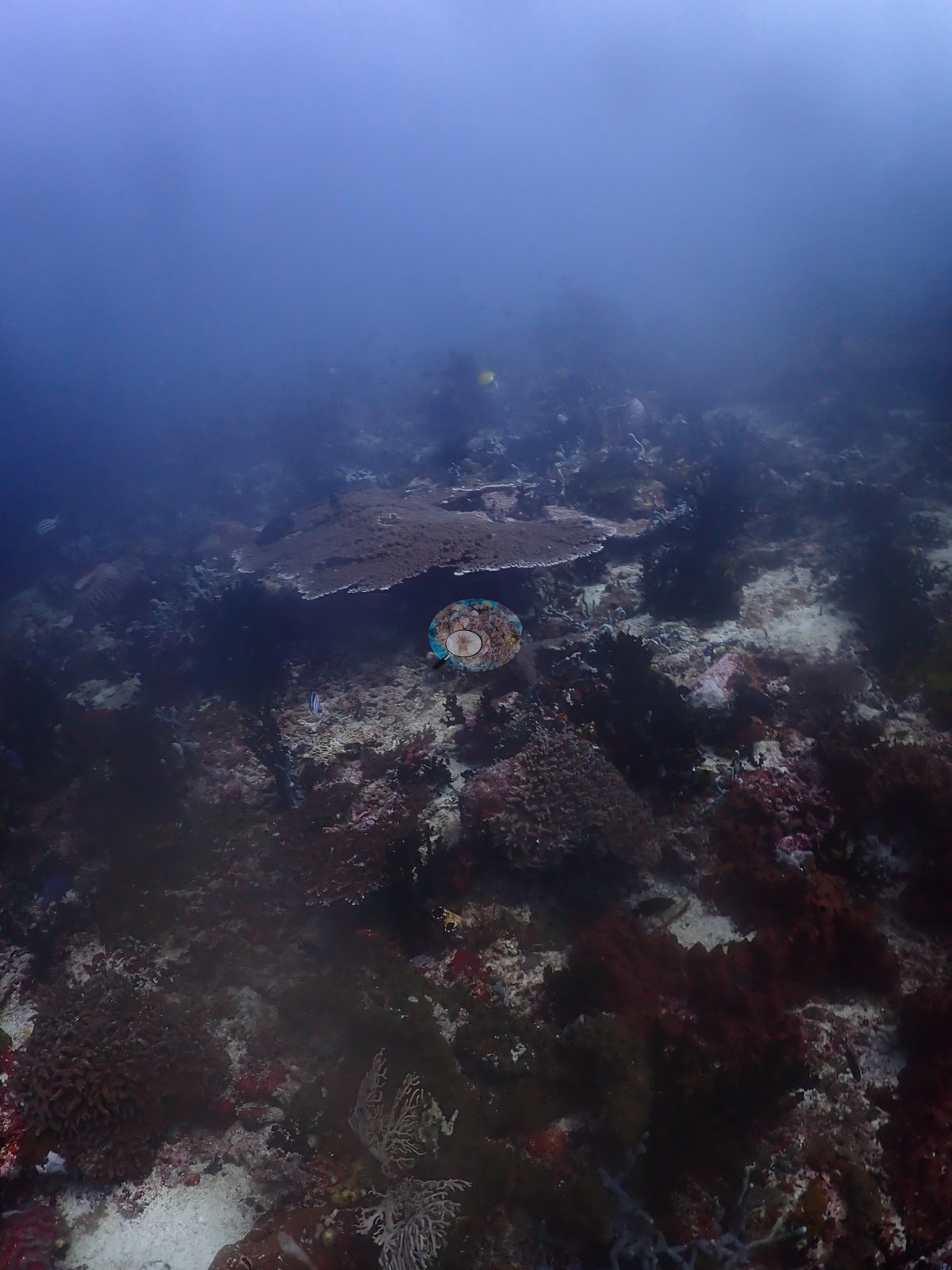
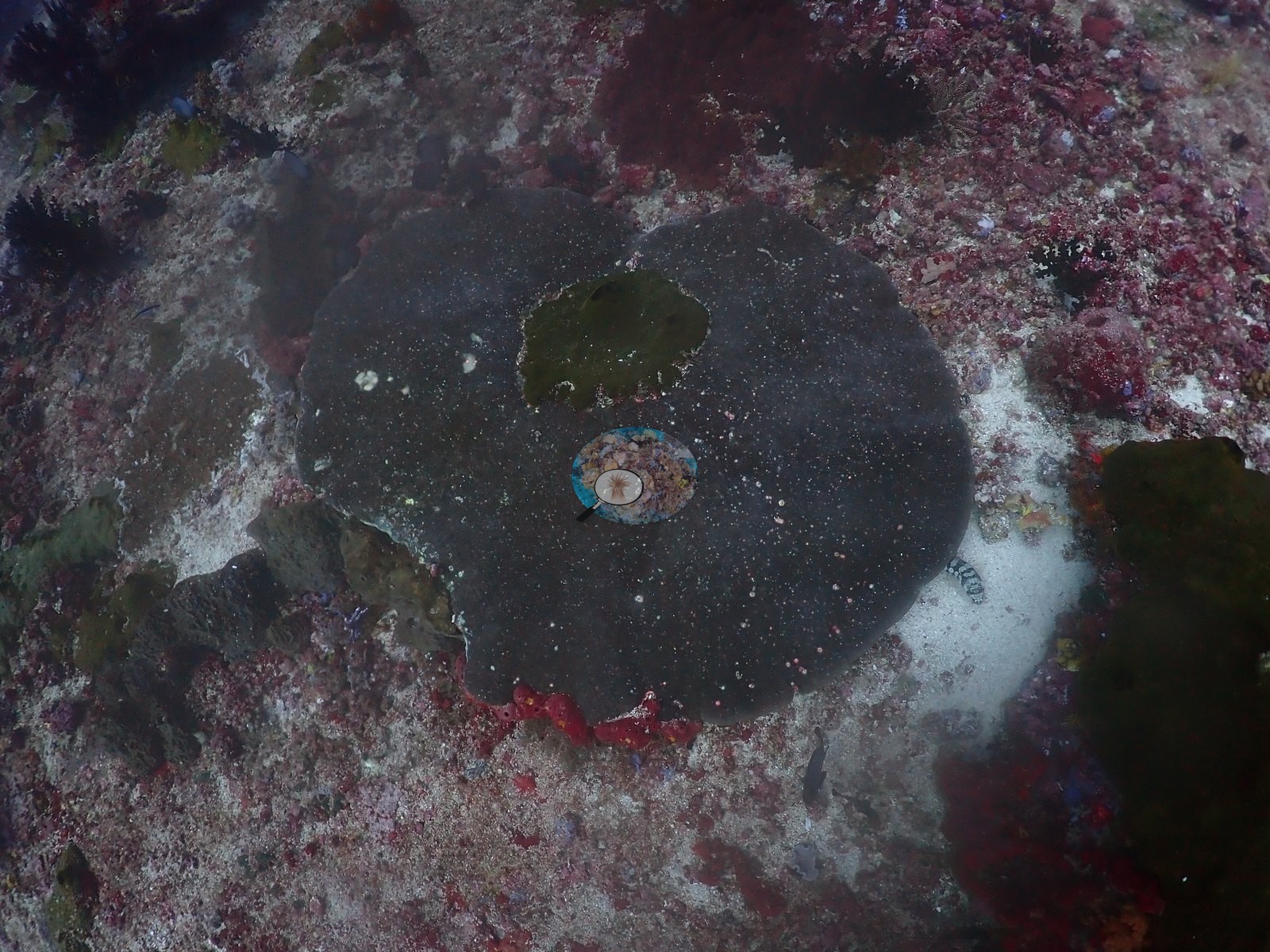
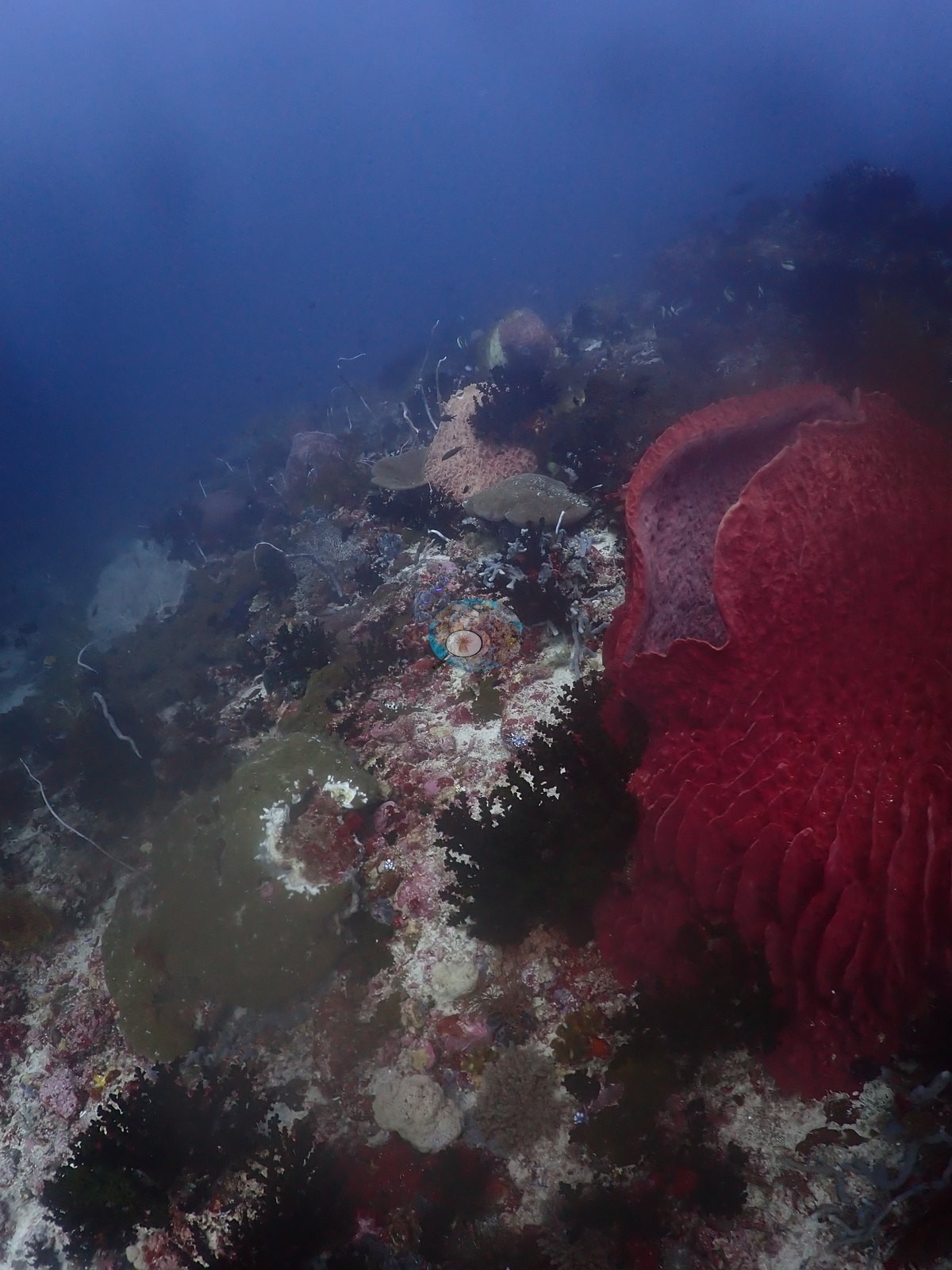
Pretty Shallow (Halmahera dive 8) lives up to its name in a shallow, well-lit reef built on massive and foliose growth forms rather than branching thickets, with a wide cover spread (Claude: 32% ± 23, range=0–82.4%) driven by the contrast between large bare-sand-fringed massives and dense coral clusters (e.g., Image 12, Image 20, Image 21, Image 27).
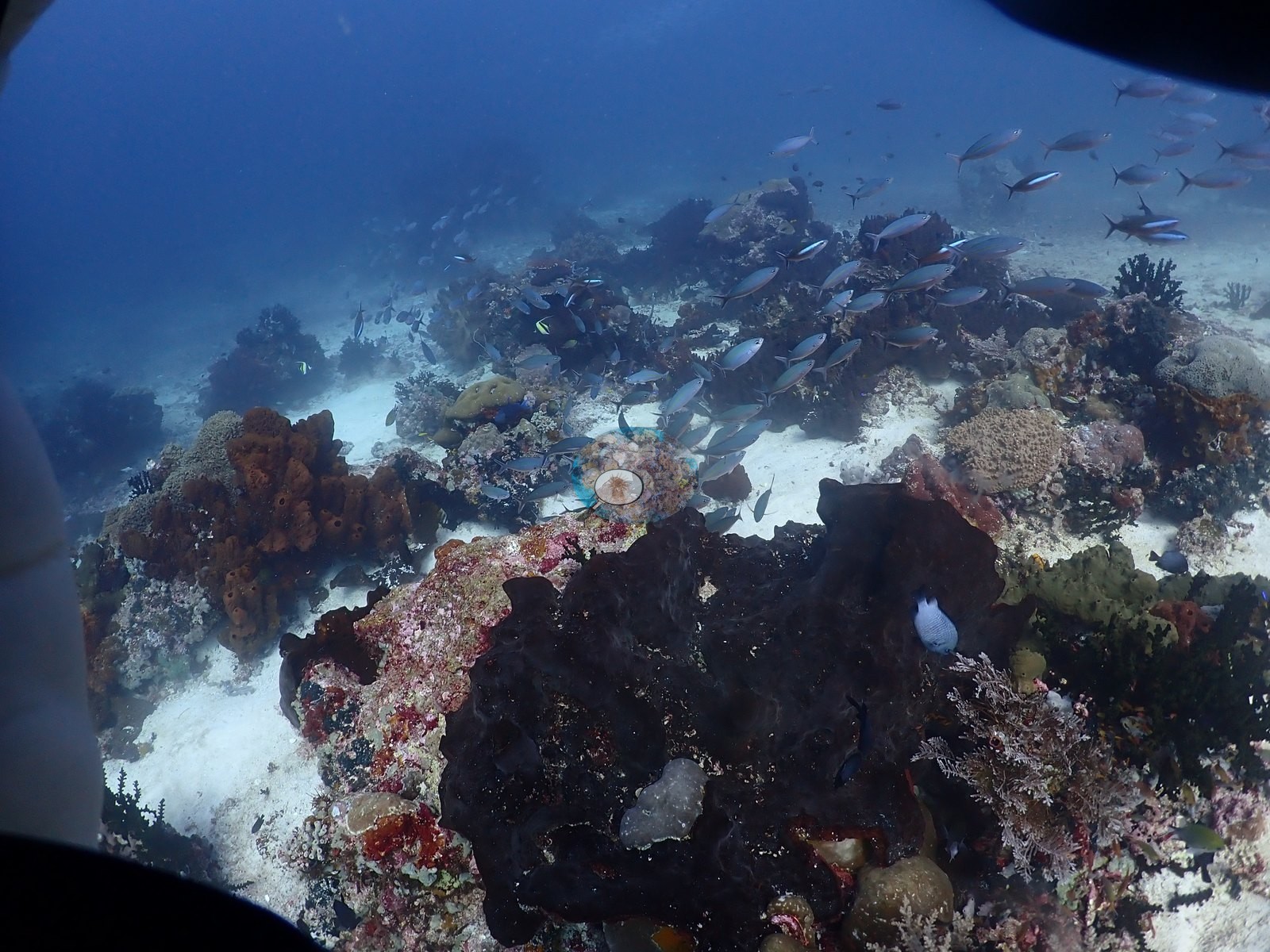
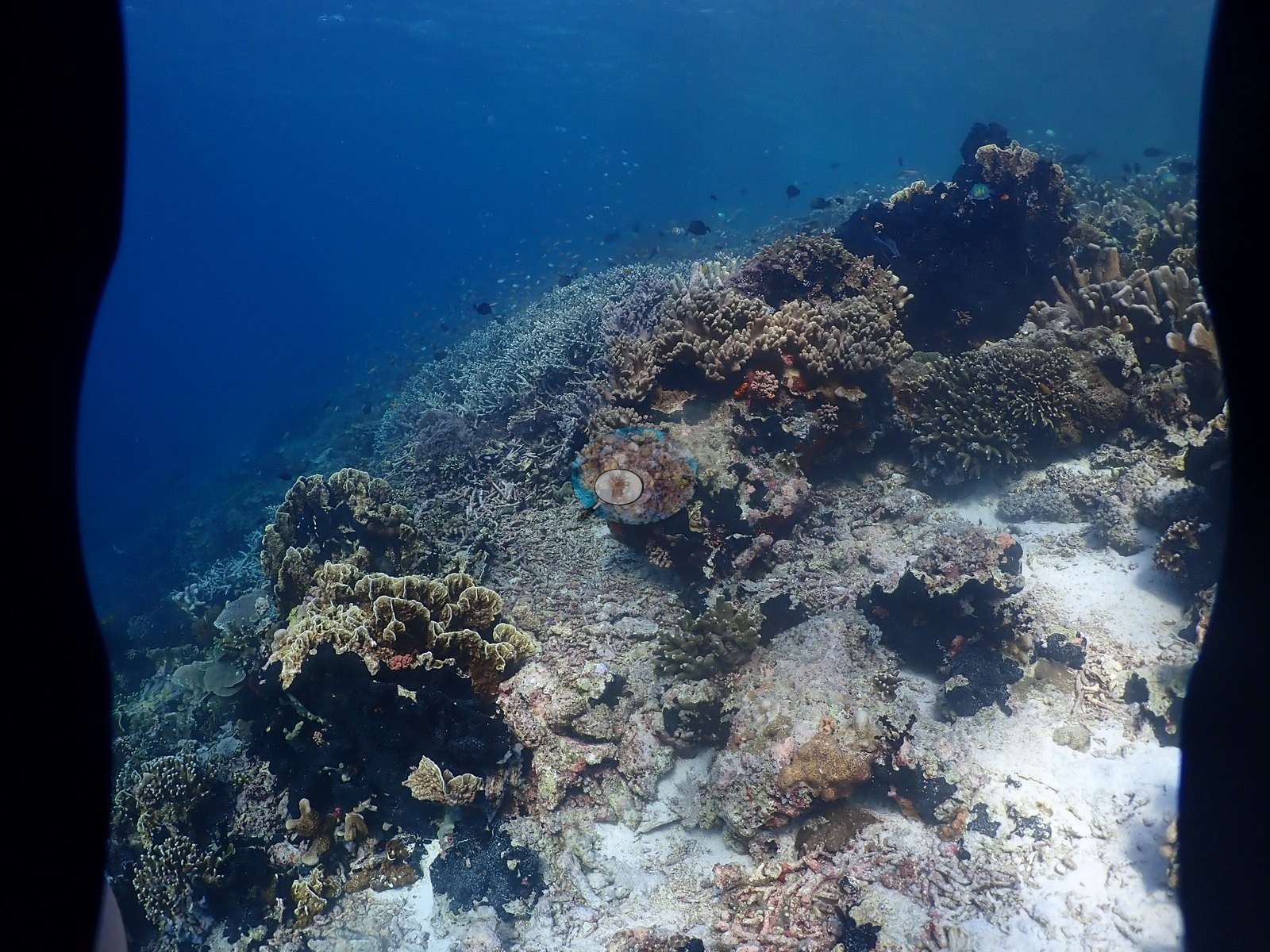
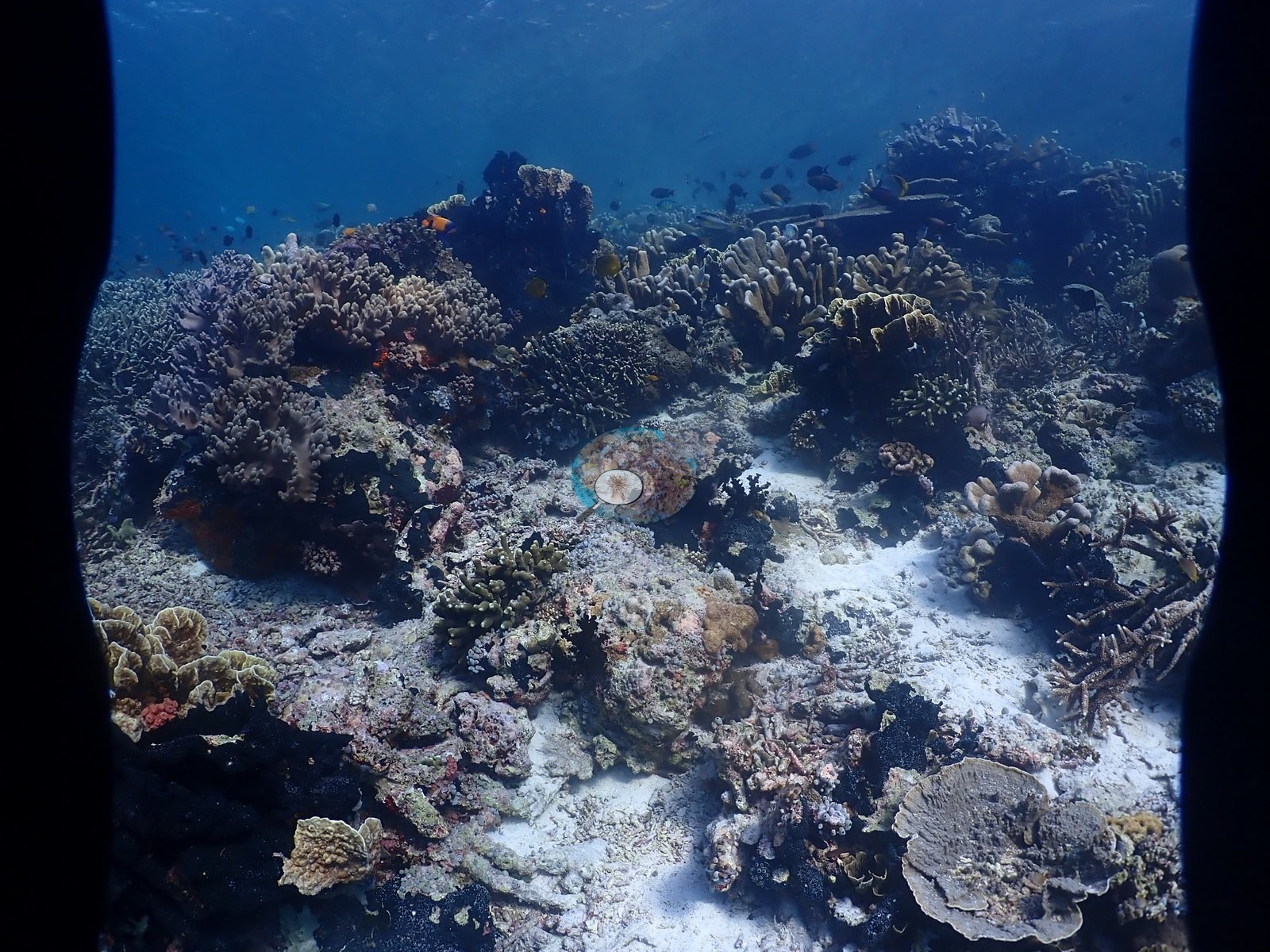
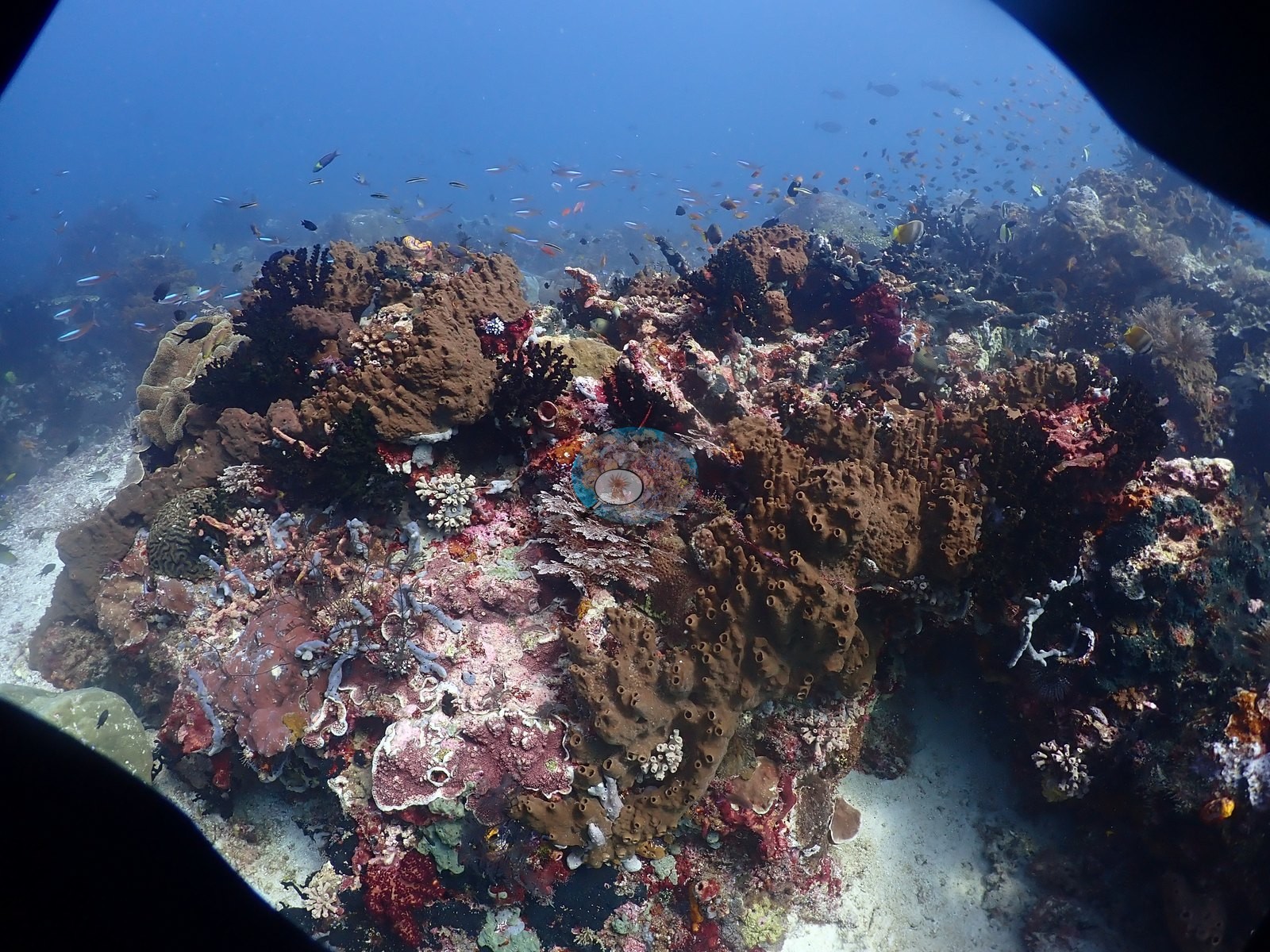
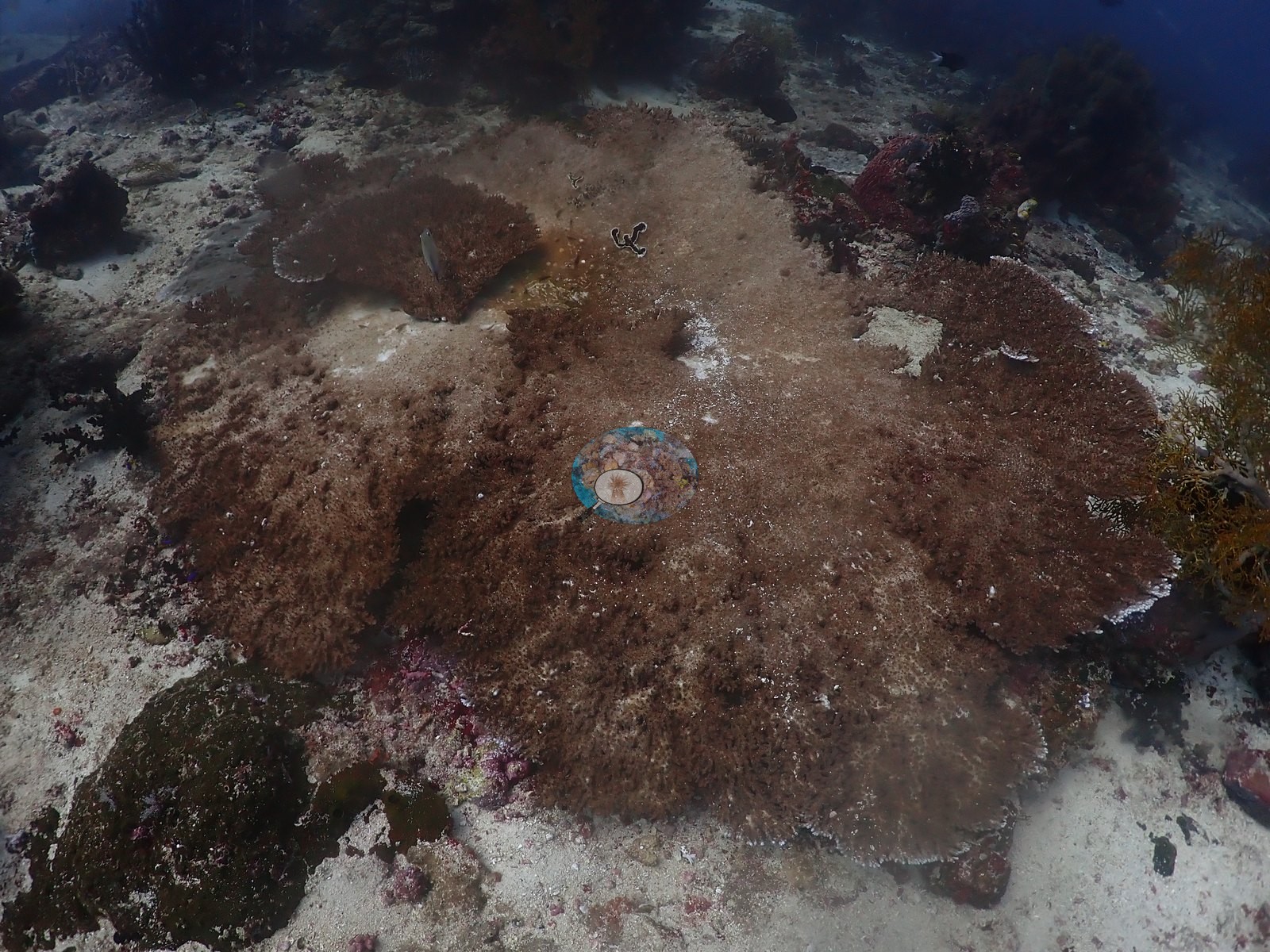
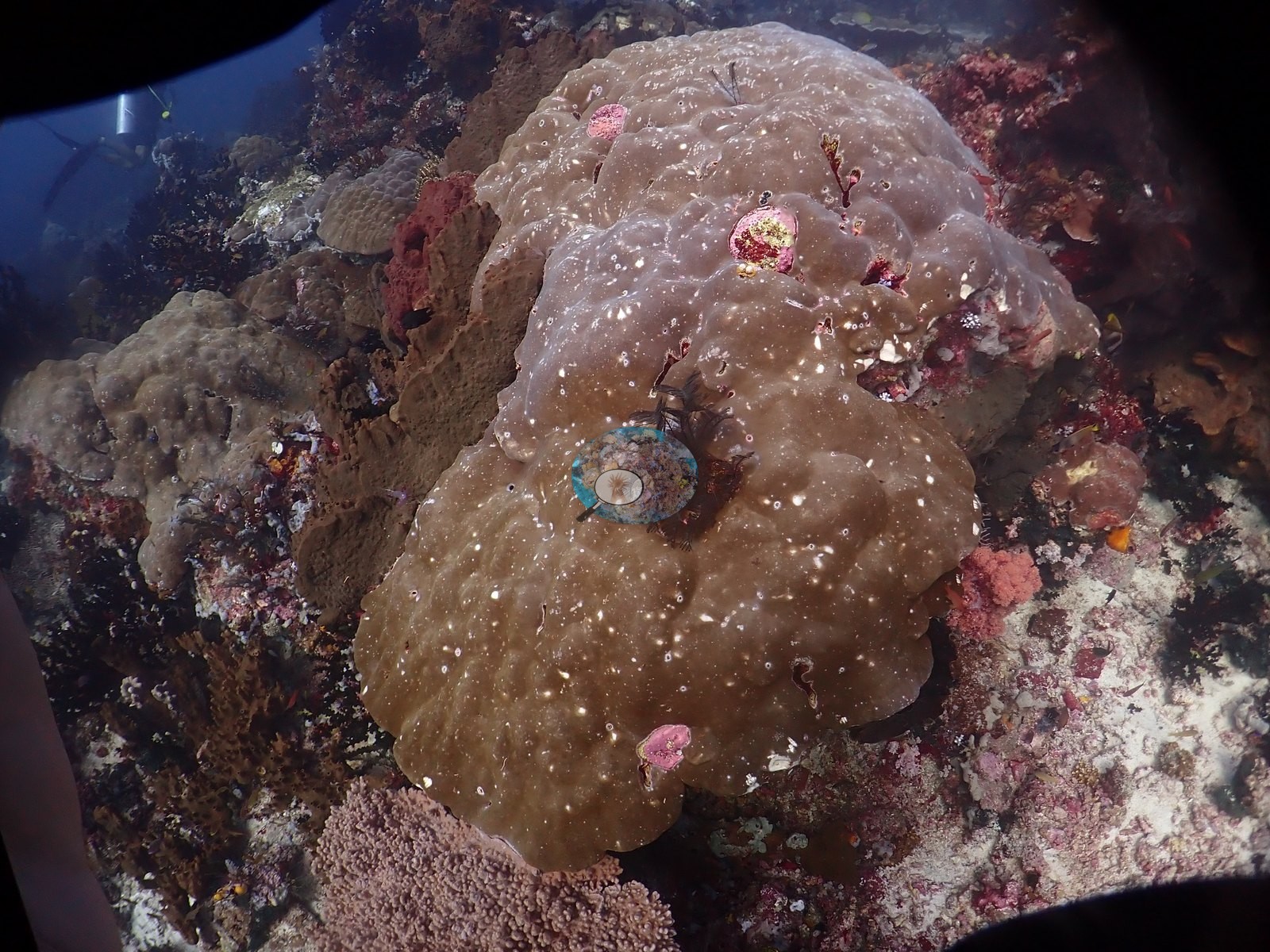
Massive and plate corals dominate the frame count: large smooth brown, olive, and maroon domes and boulders consistent with Porites/Diploastrea recur throughout, and extensive ruffled brown-tan foliose plates (Turbinaria/Pachyseris-type) form dense overlapping clusters at several points (e.g., Image 5, Image 13, Image 33, Image 34, Image 37, Image 38, Image 40, Image 43, Image 47, Image 48, Image 53, Image 54).
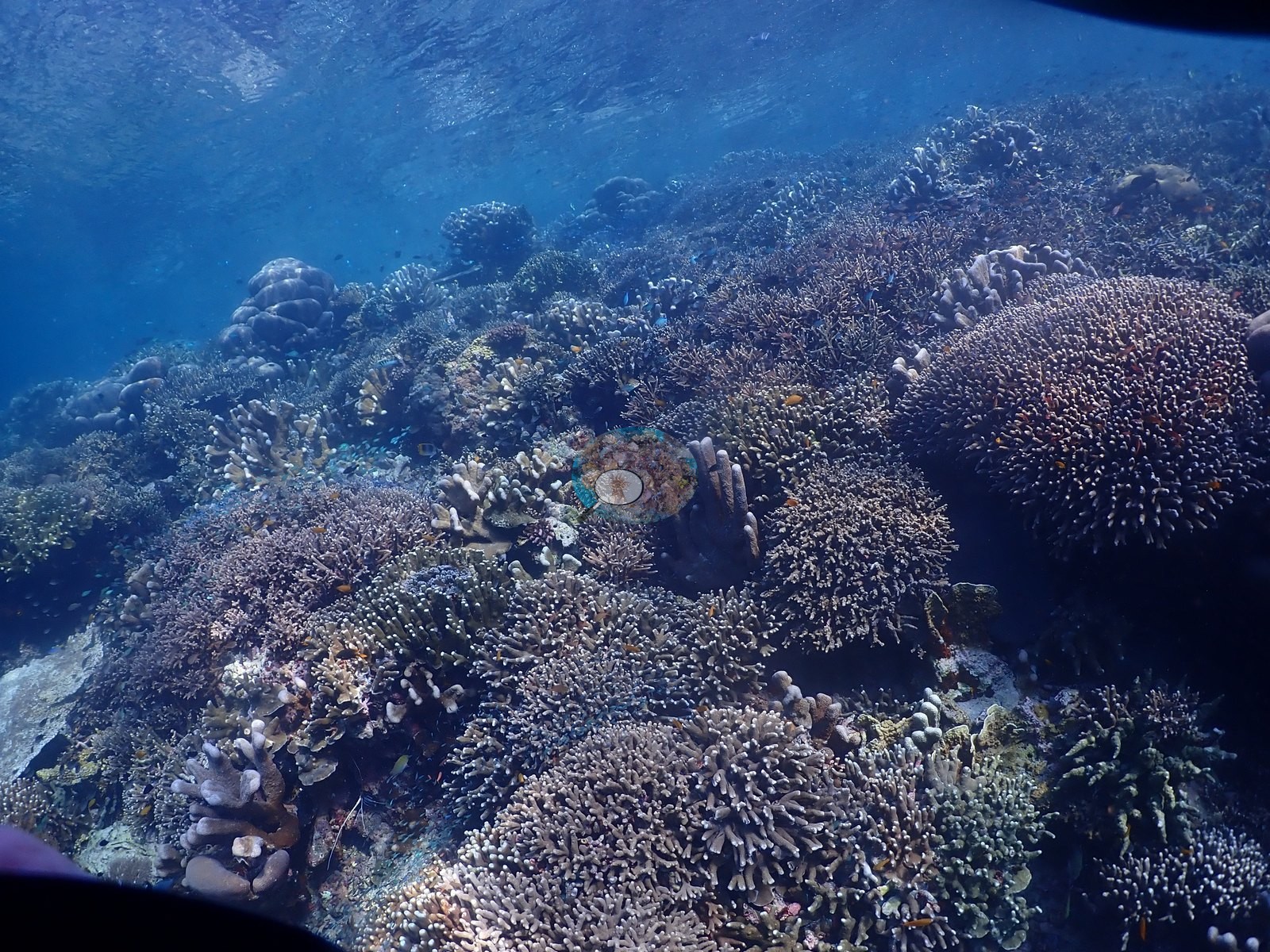
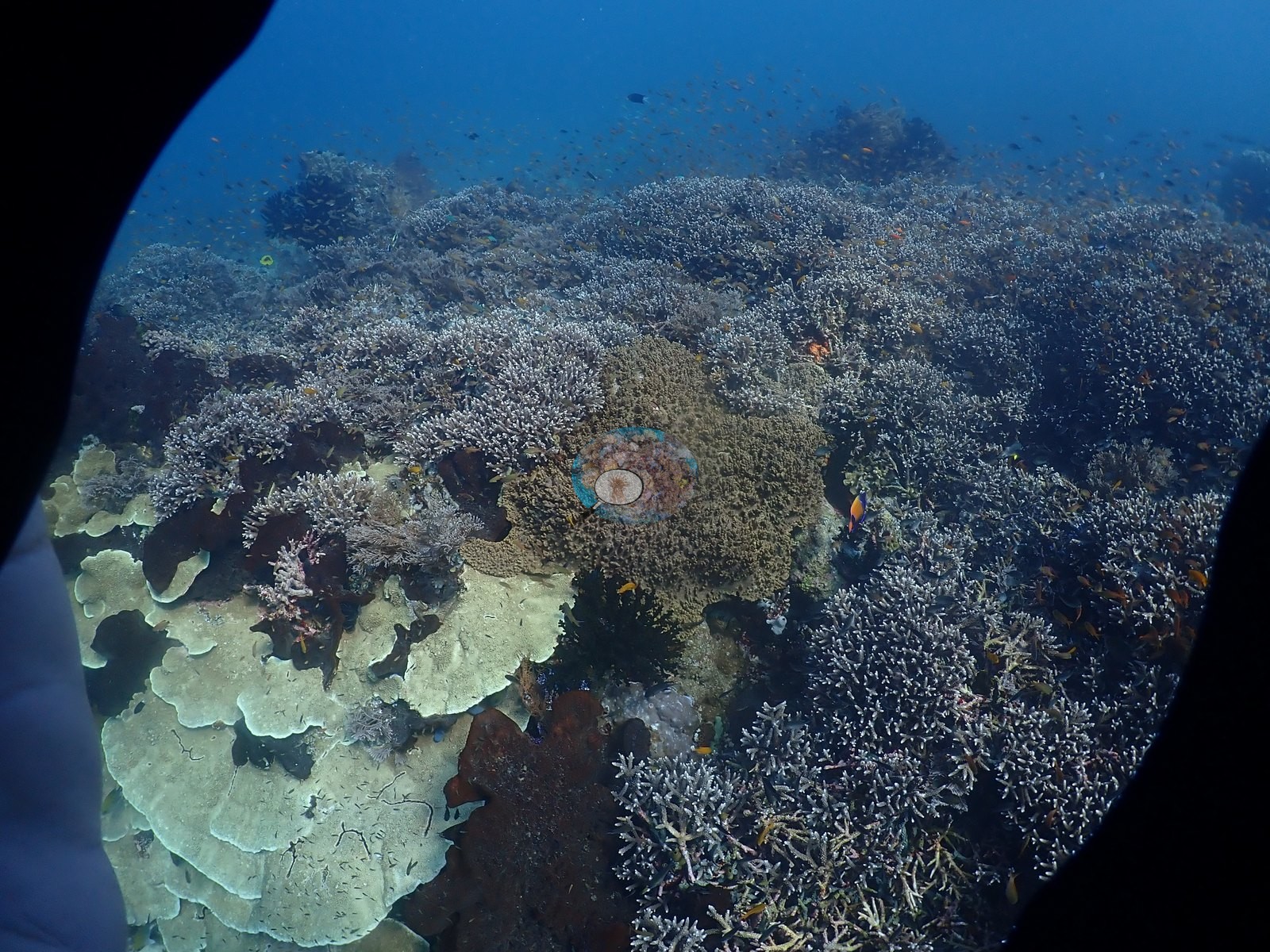
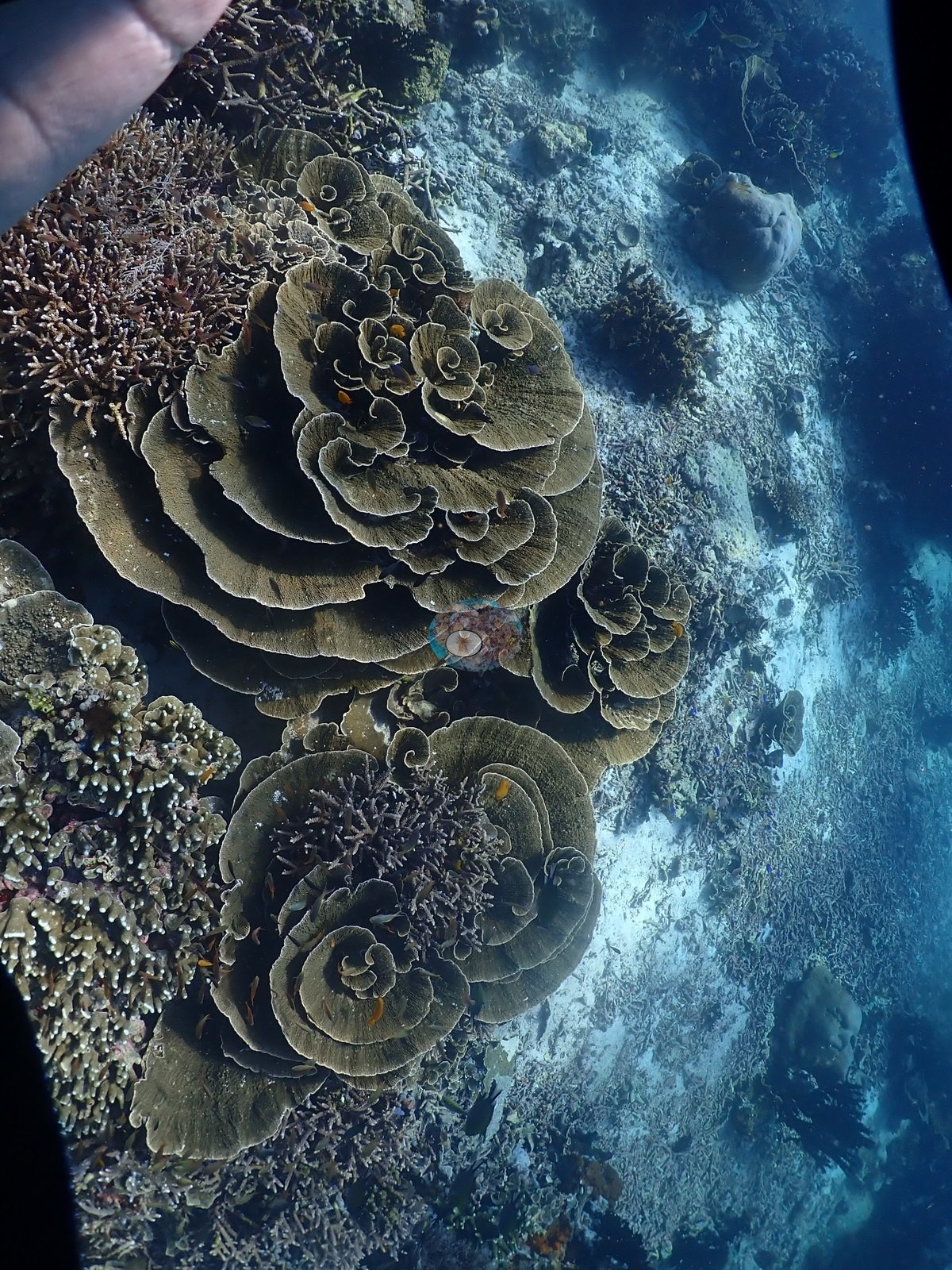
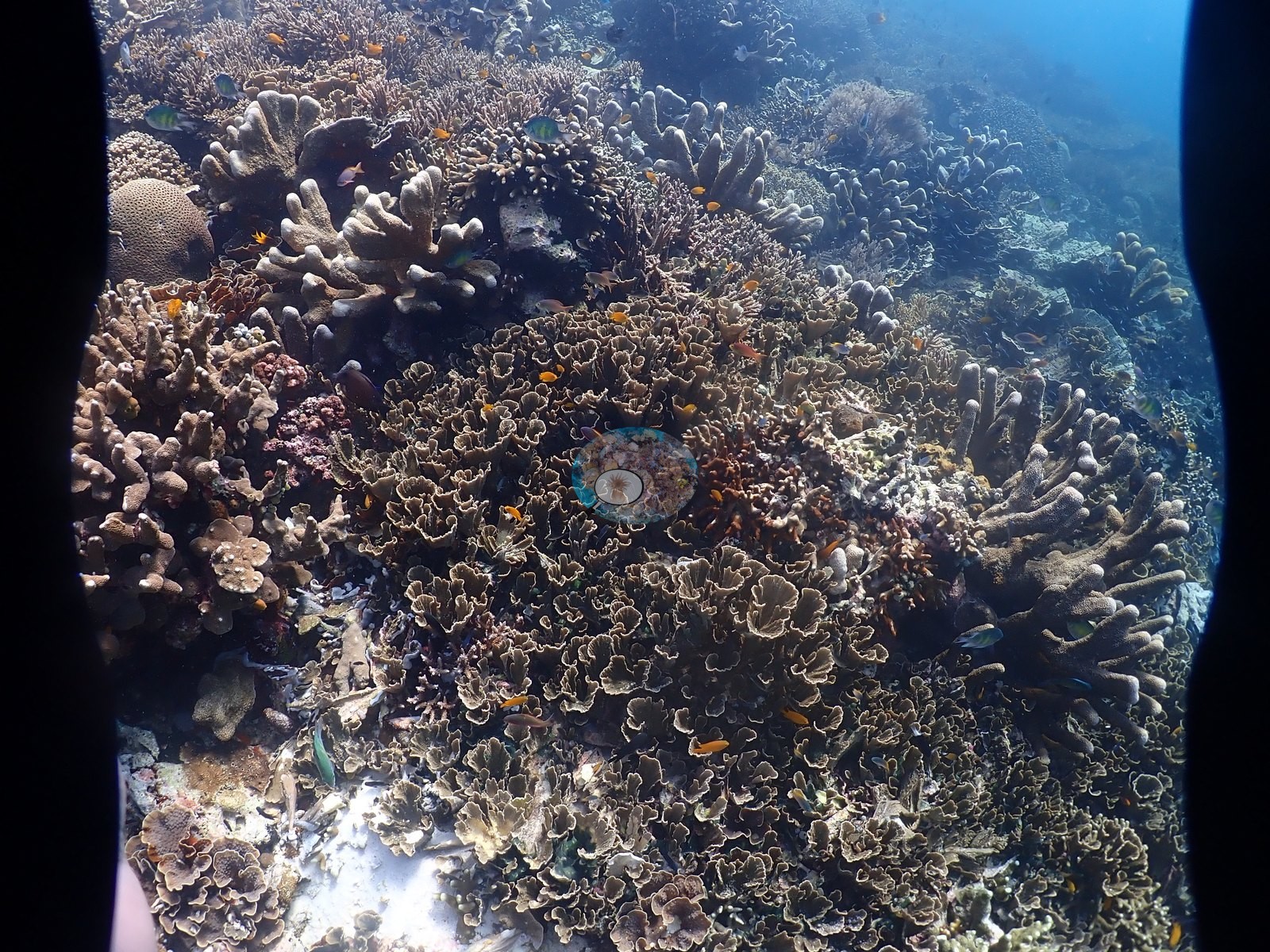
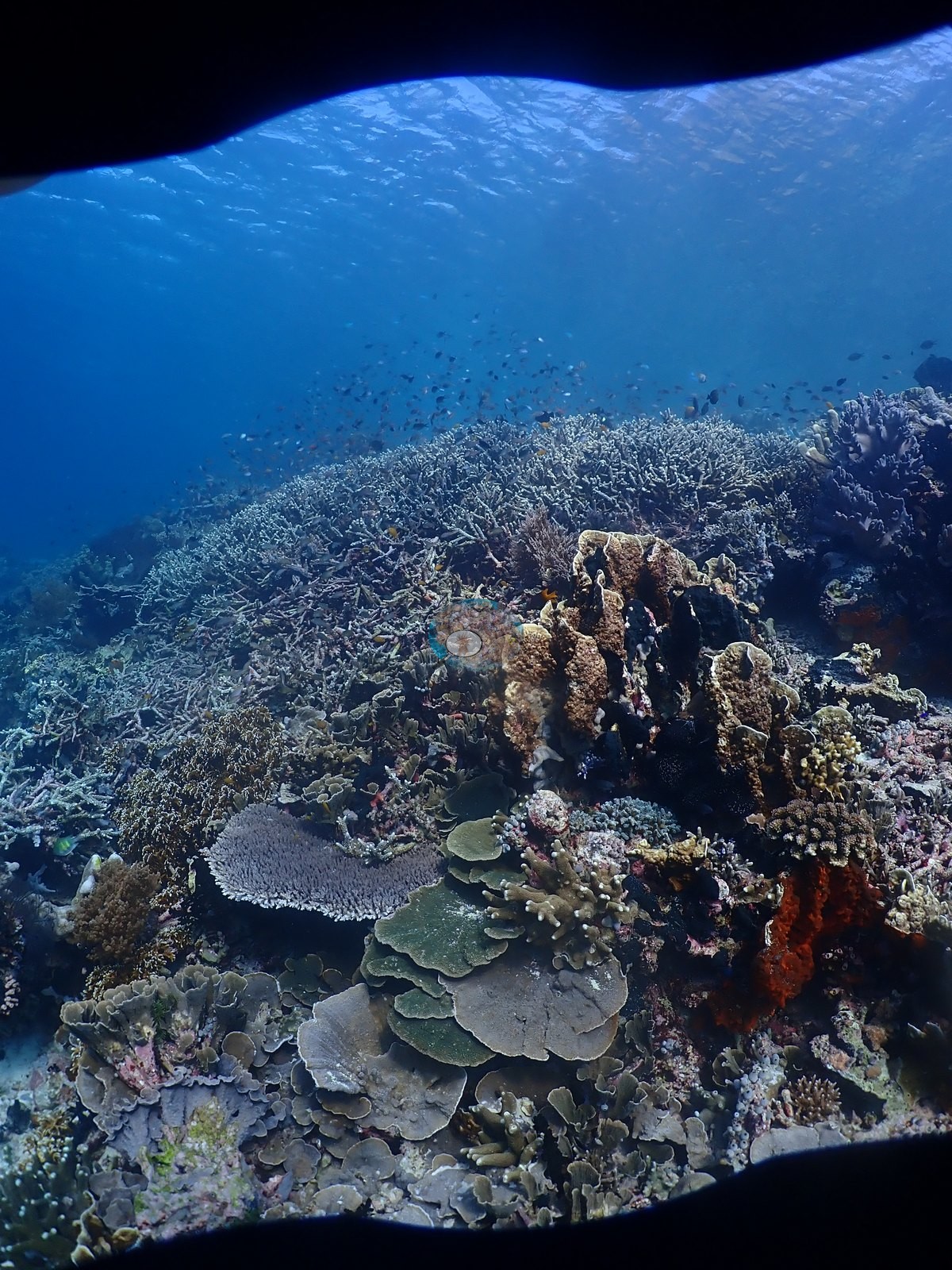
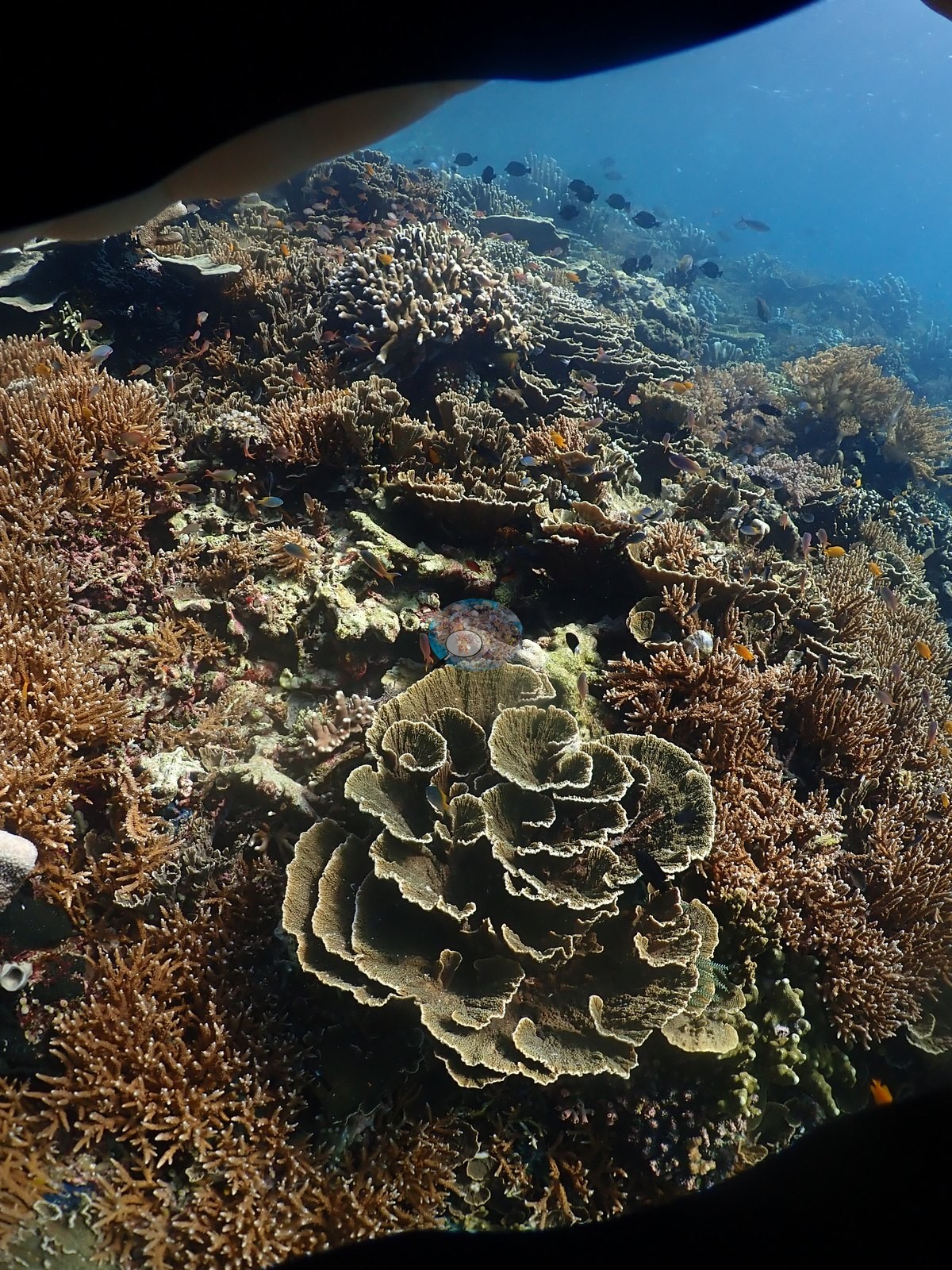
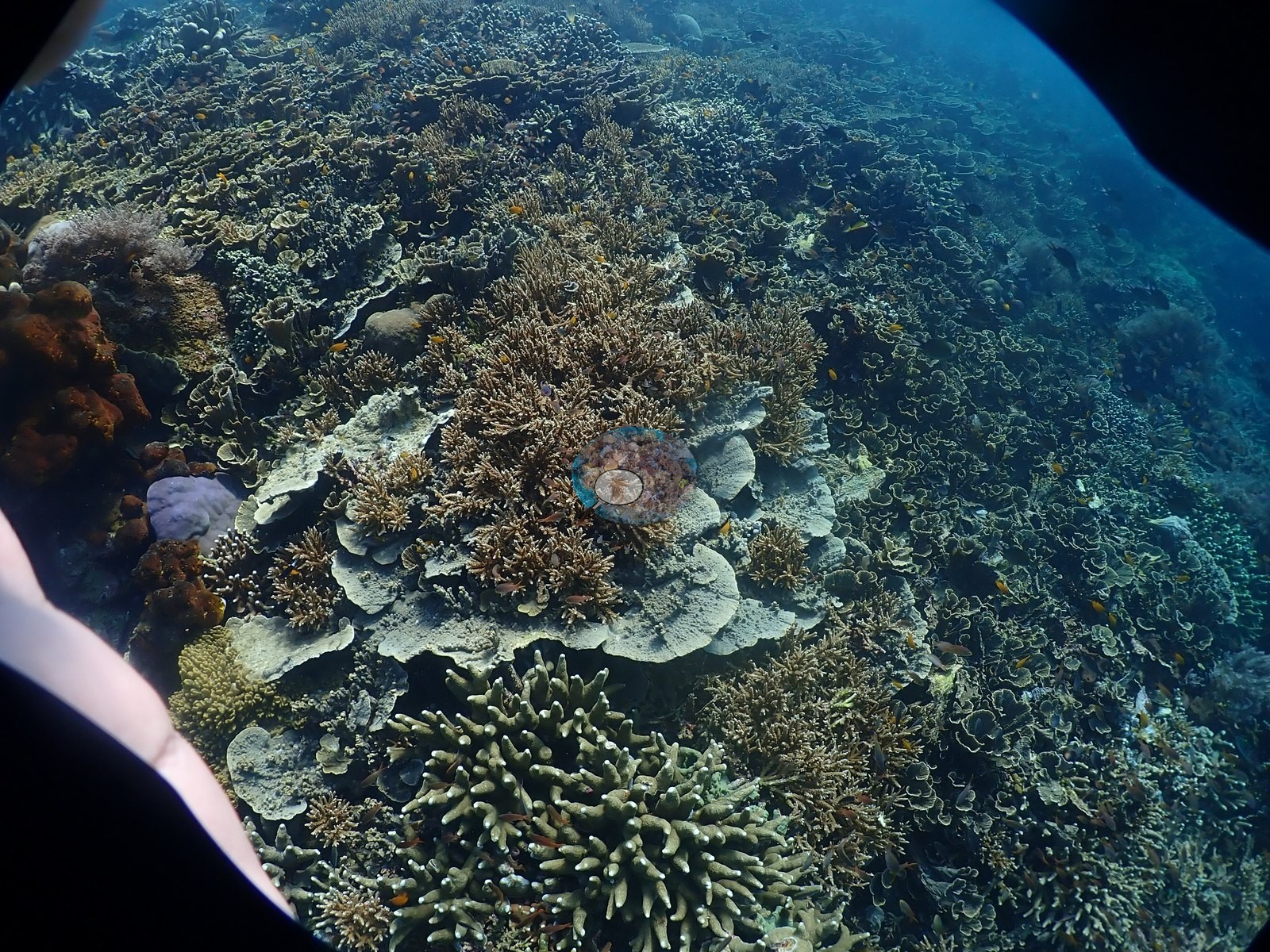
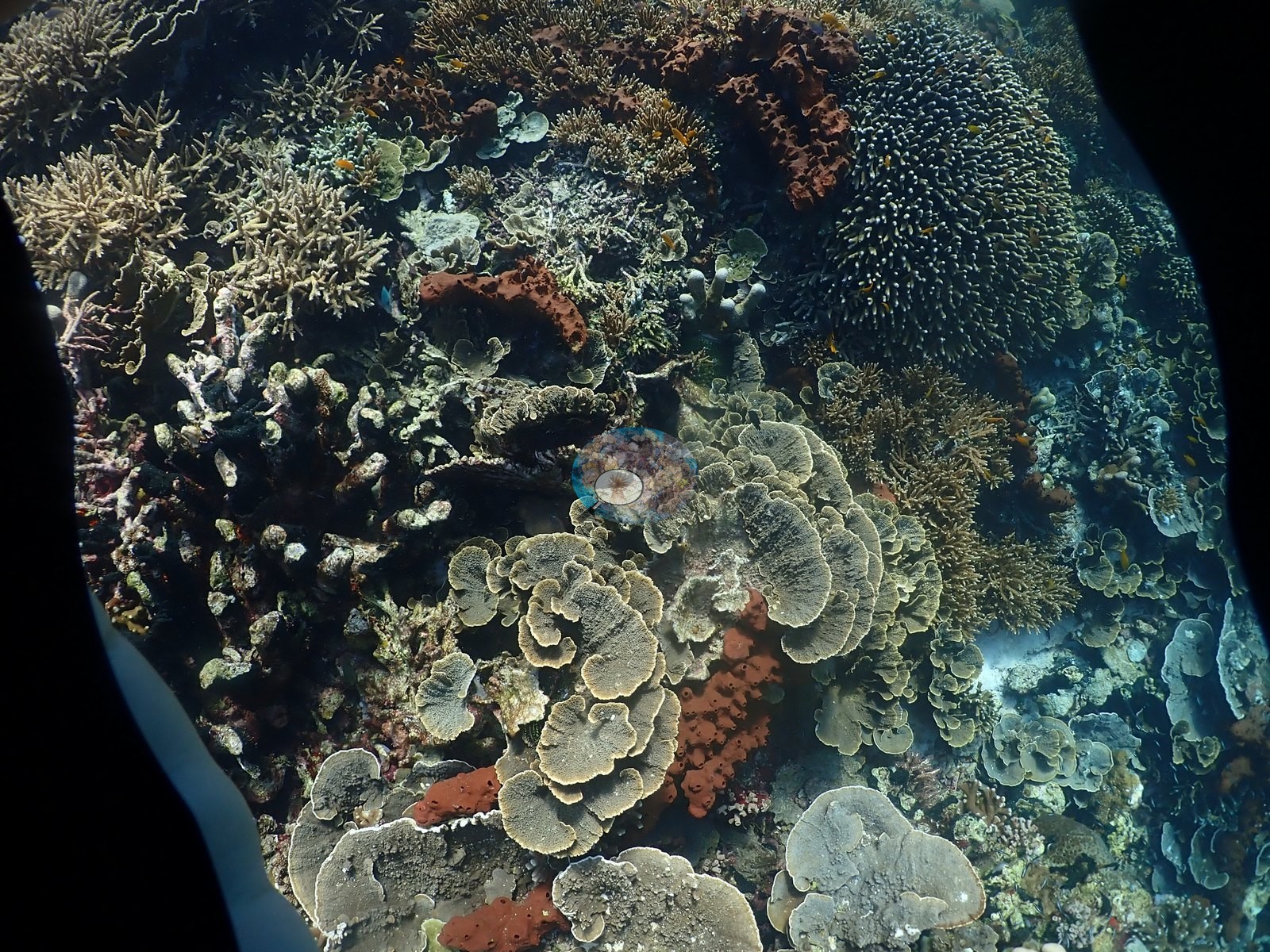
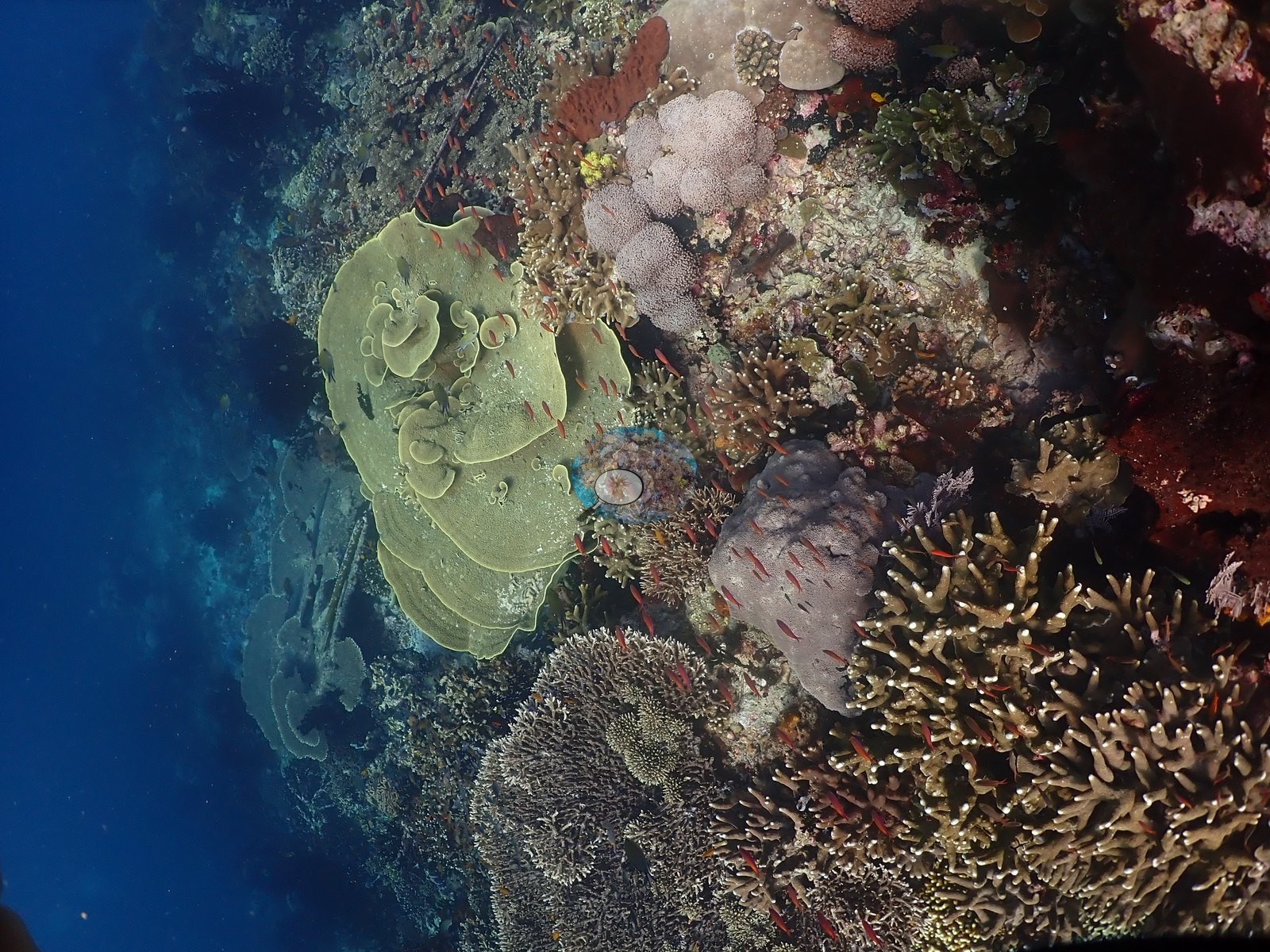
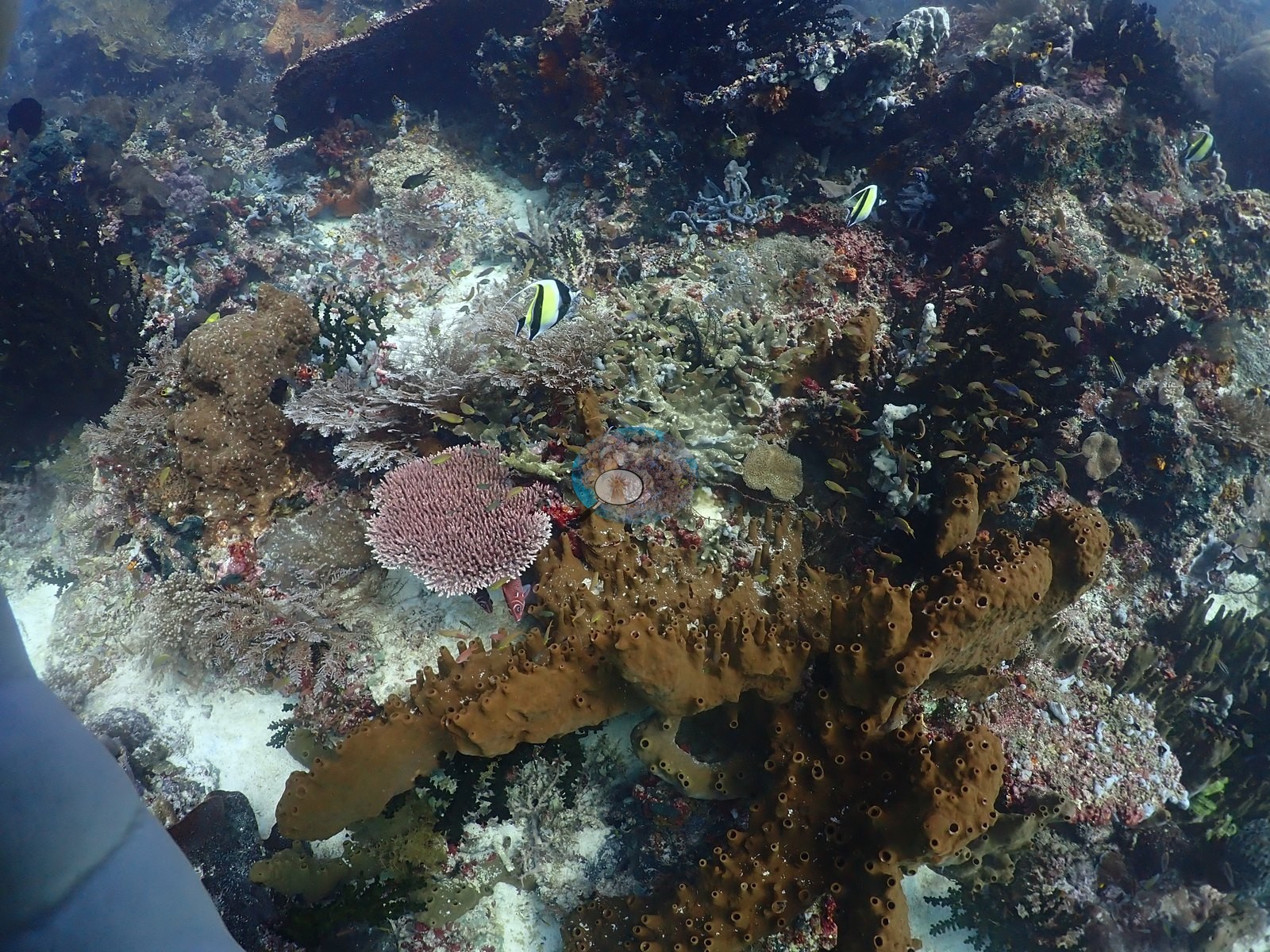
Dense staghorn/finger Acropora thickets in mauve, salmon-pink, and cream fill much of the mid-dive stretch, several frames hosting swarms of small red-orange anthias or damsels hovering directly over the branches (e.g., Image 4, Image 9, Image 14, Image 15, Image 25, Image 28, Image 31, Image 42, Image 45, Image 55).
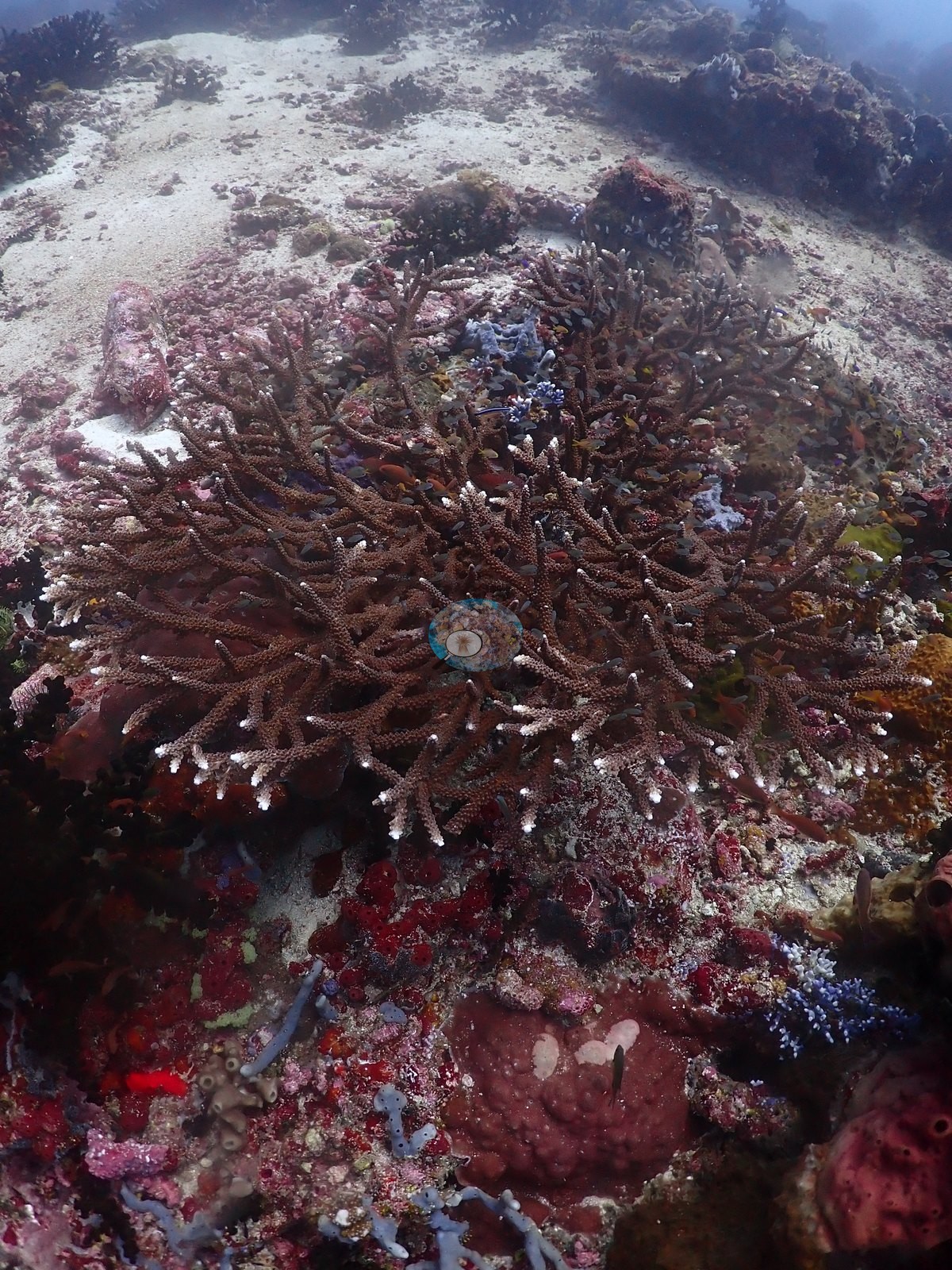
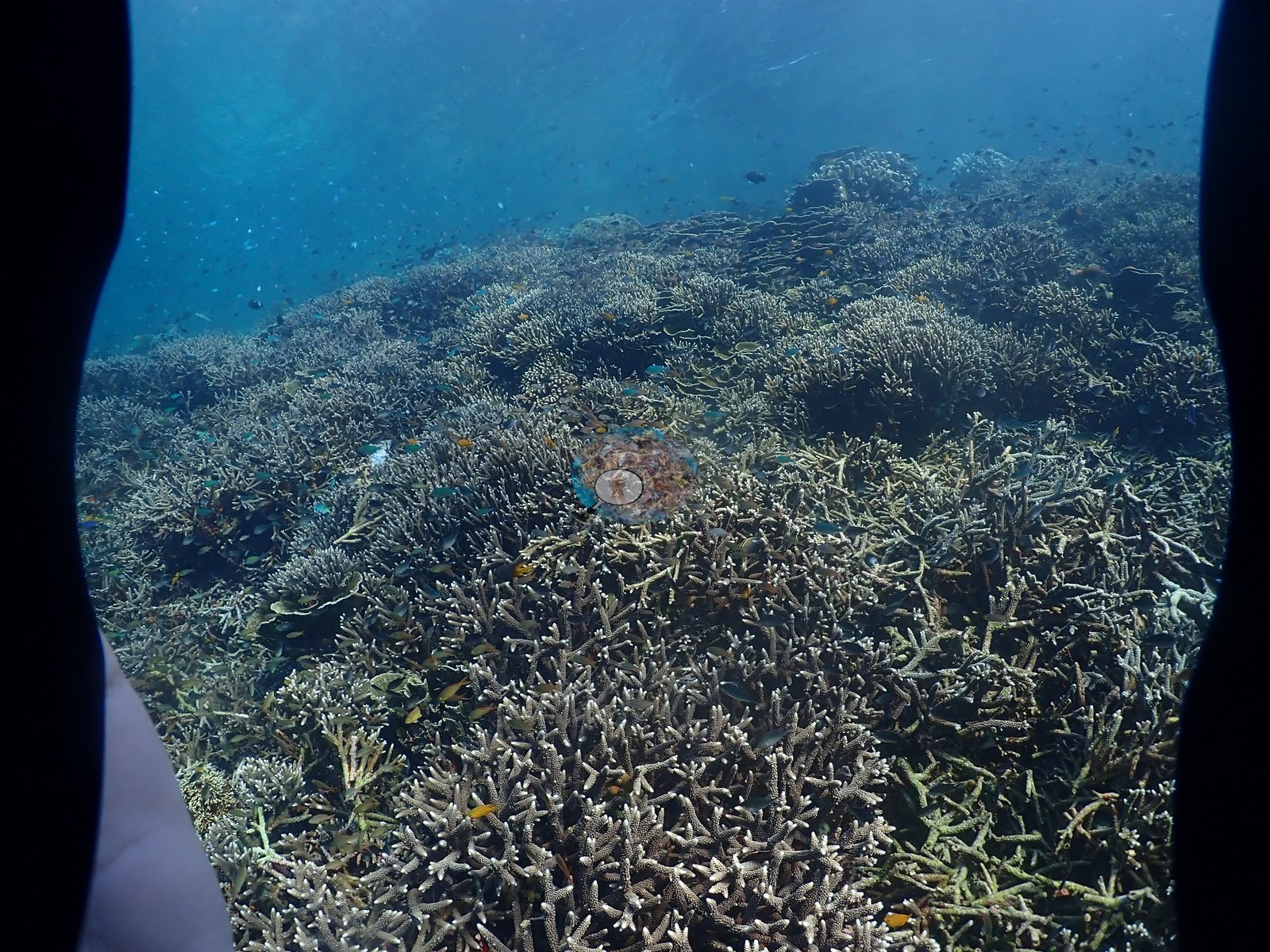
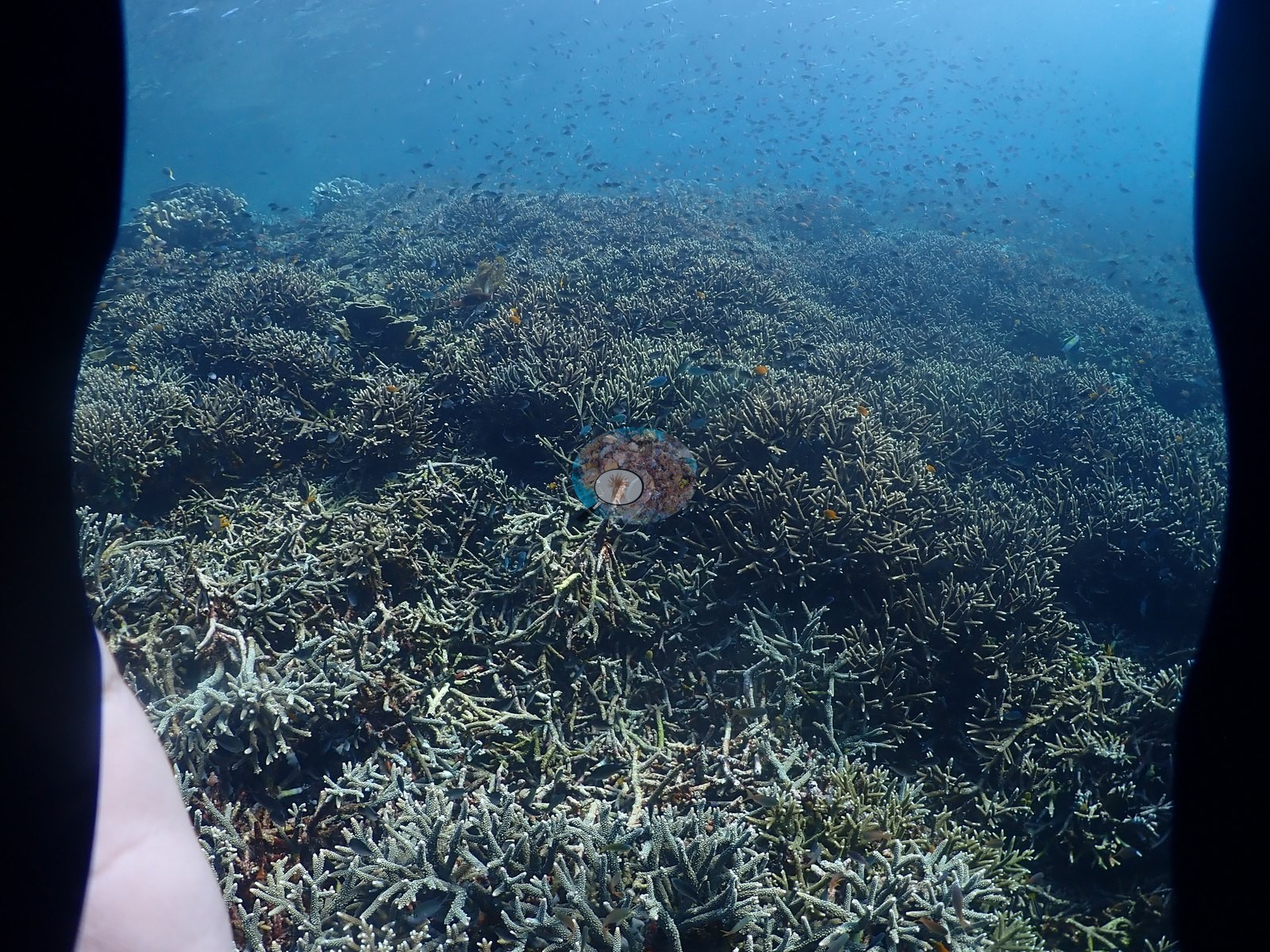
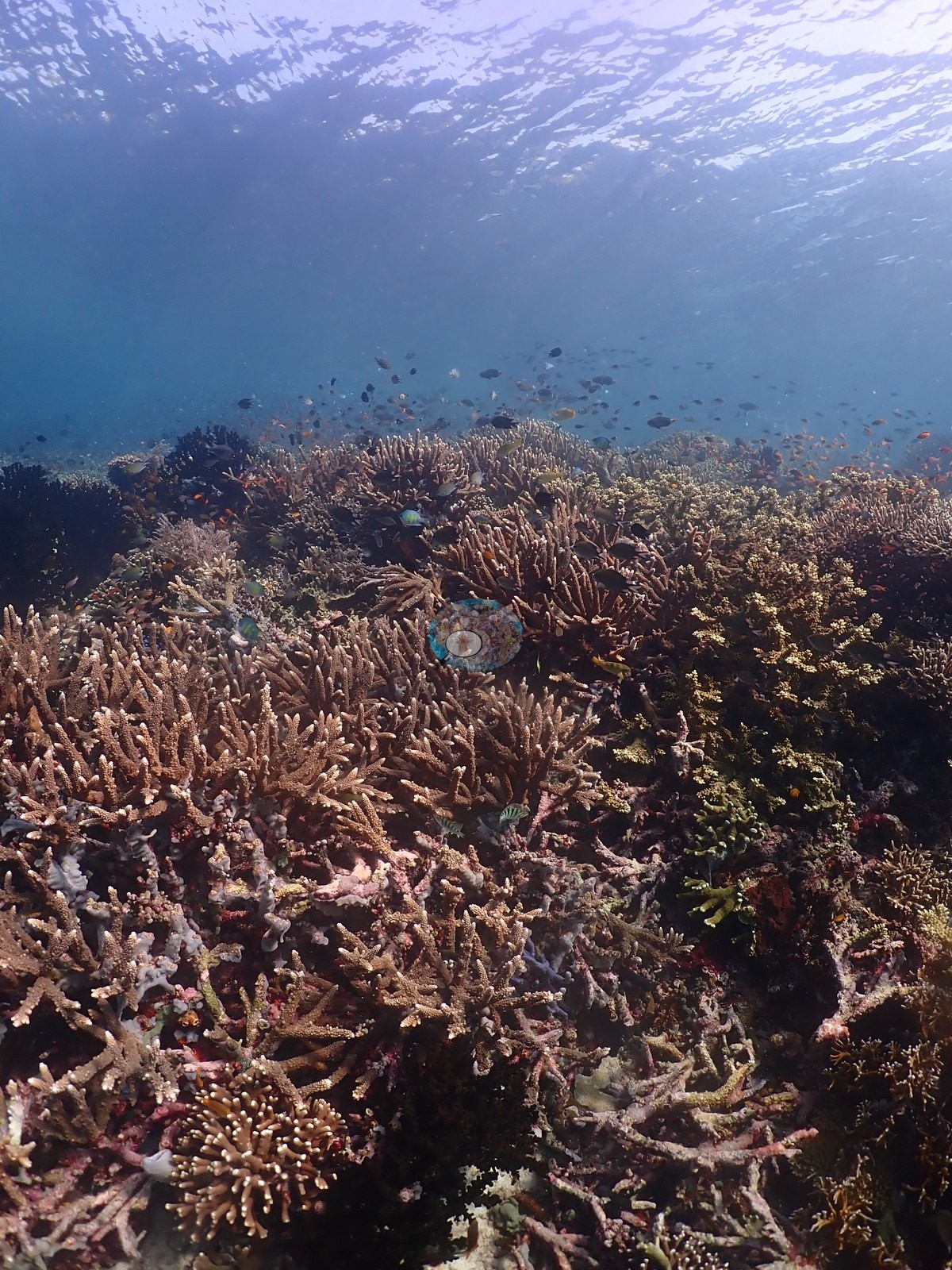
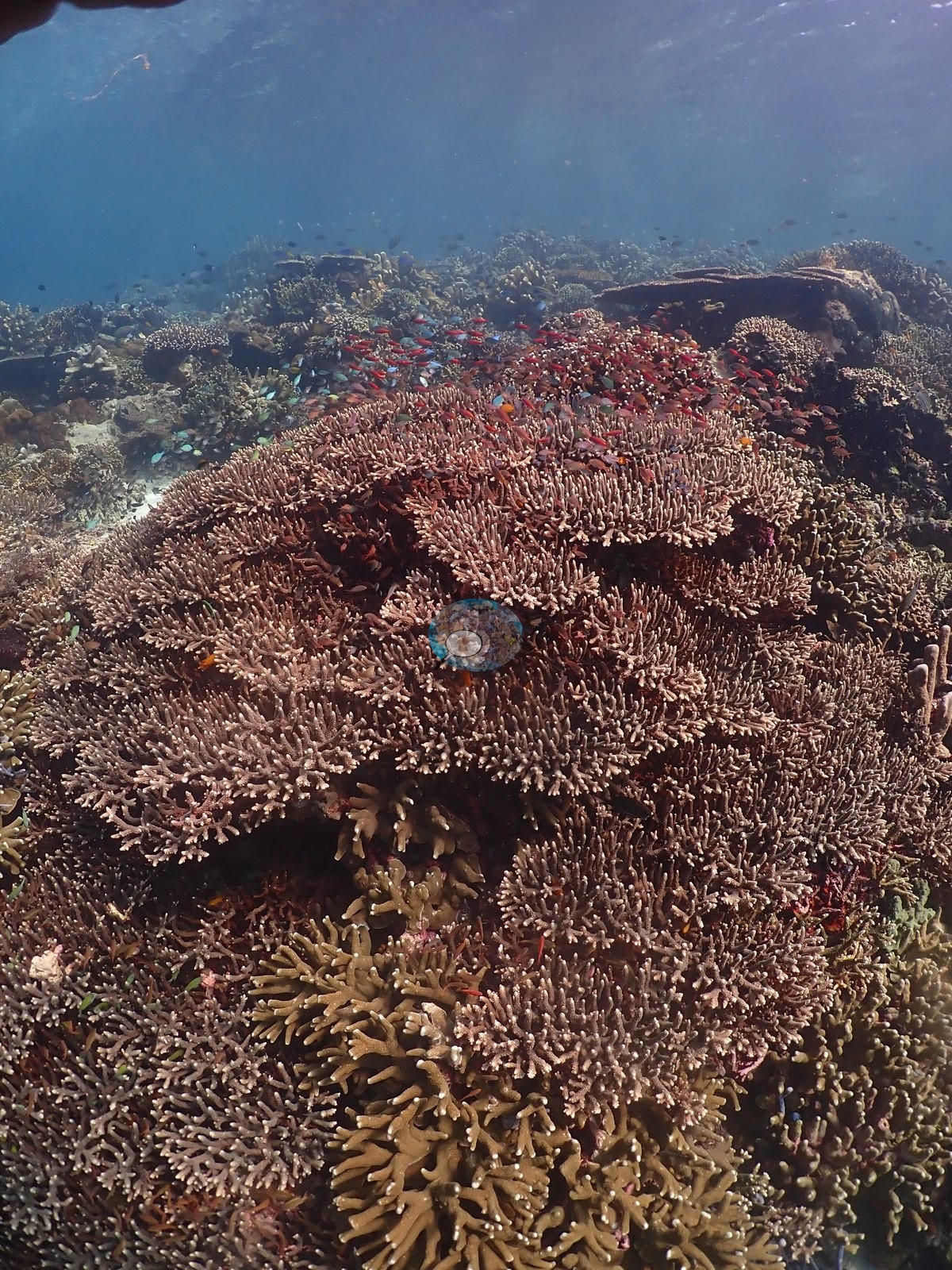
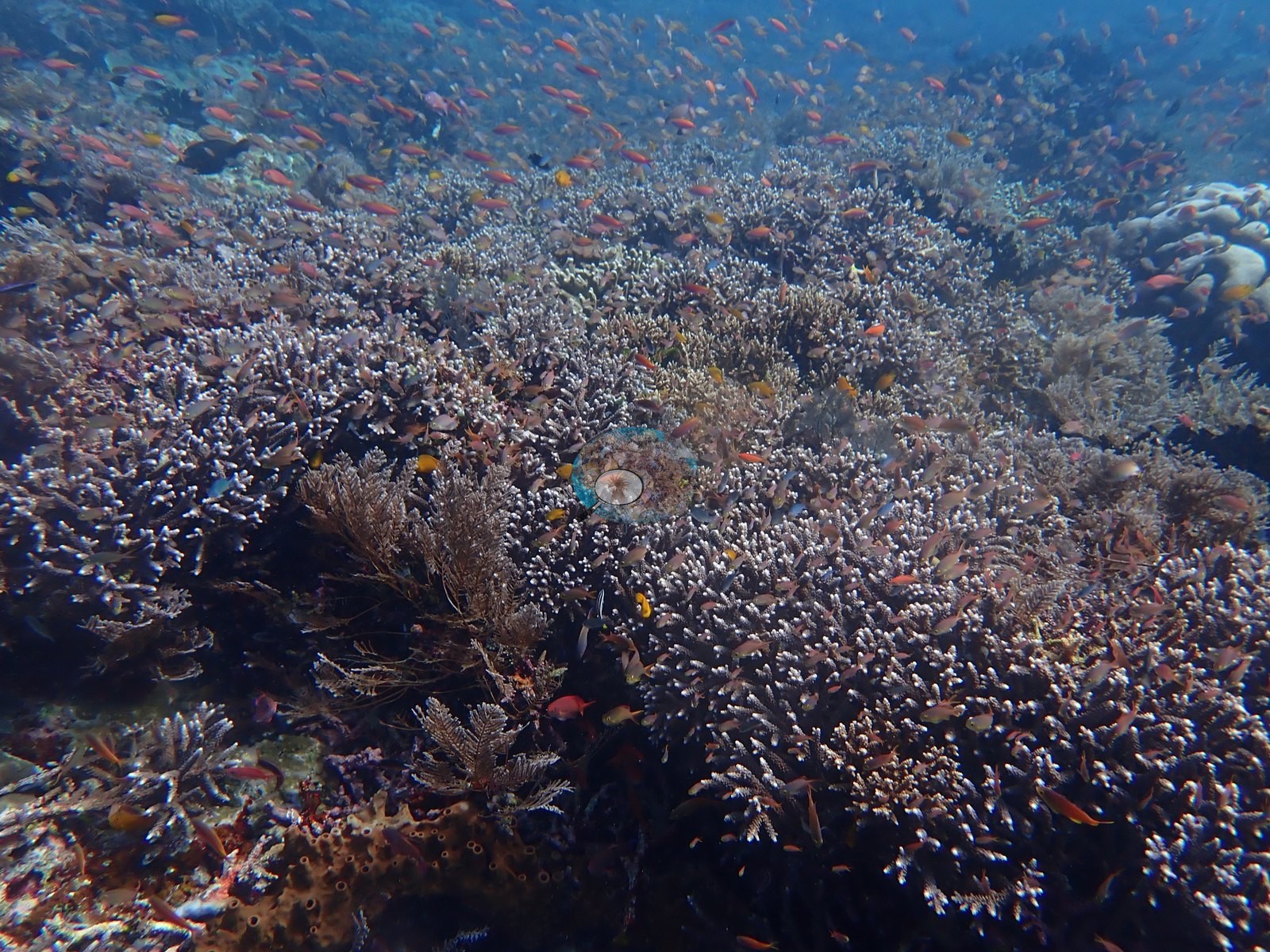
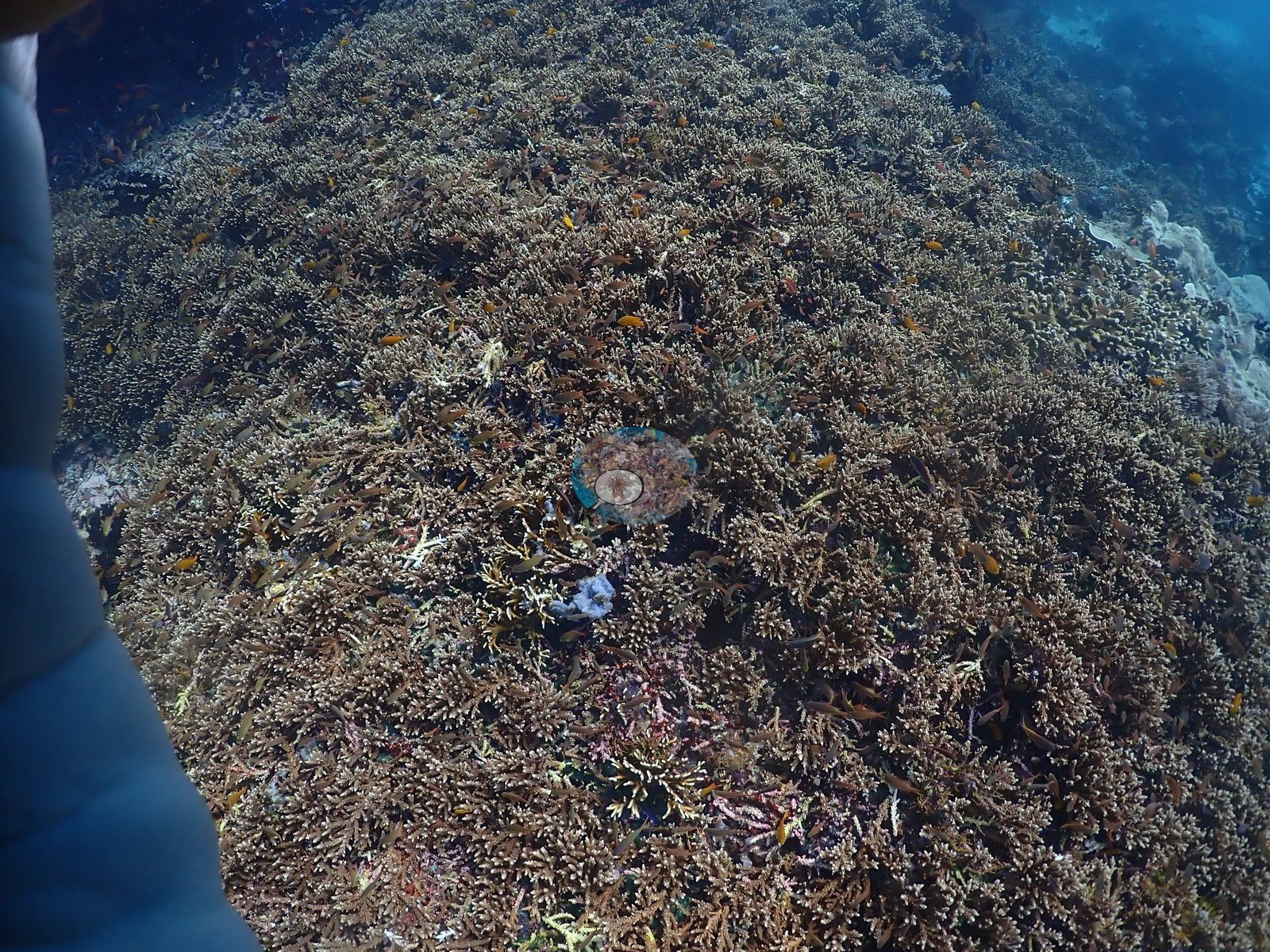
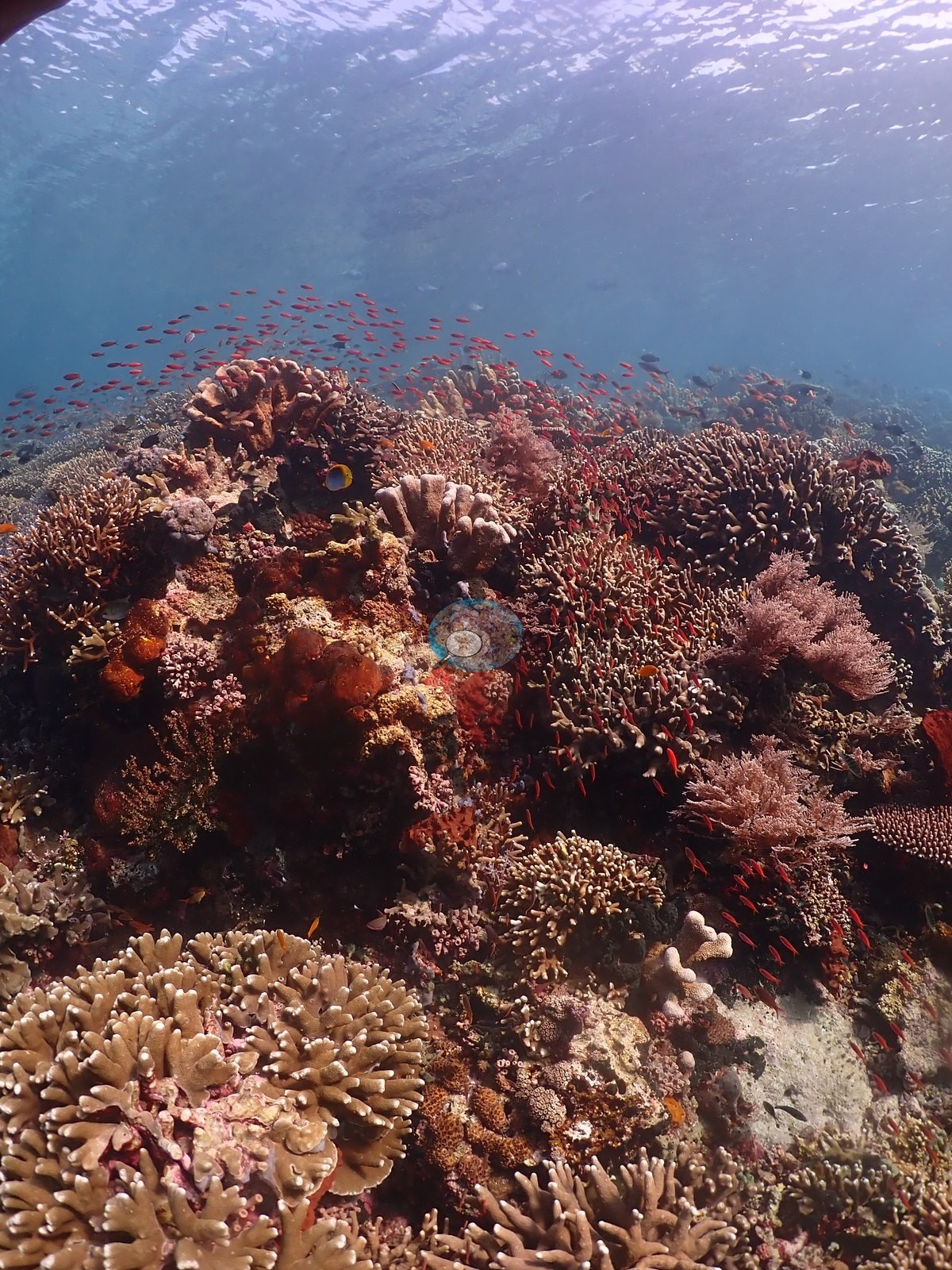
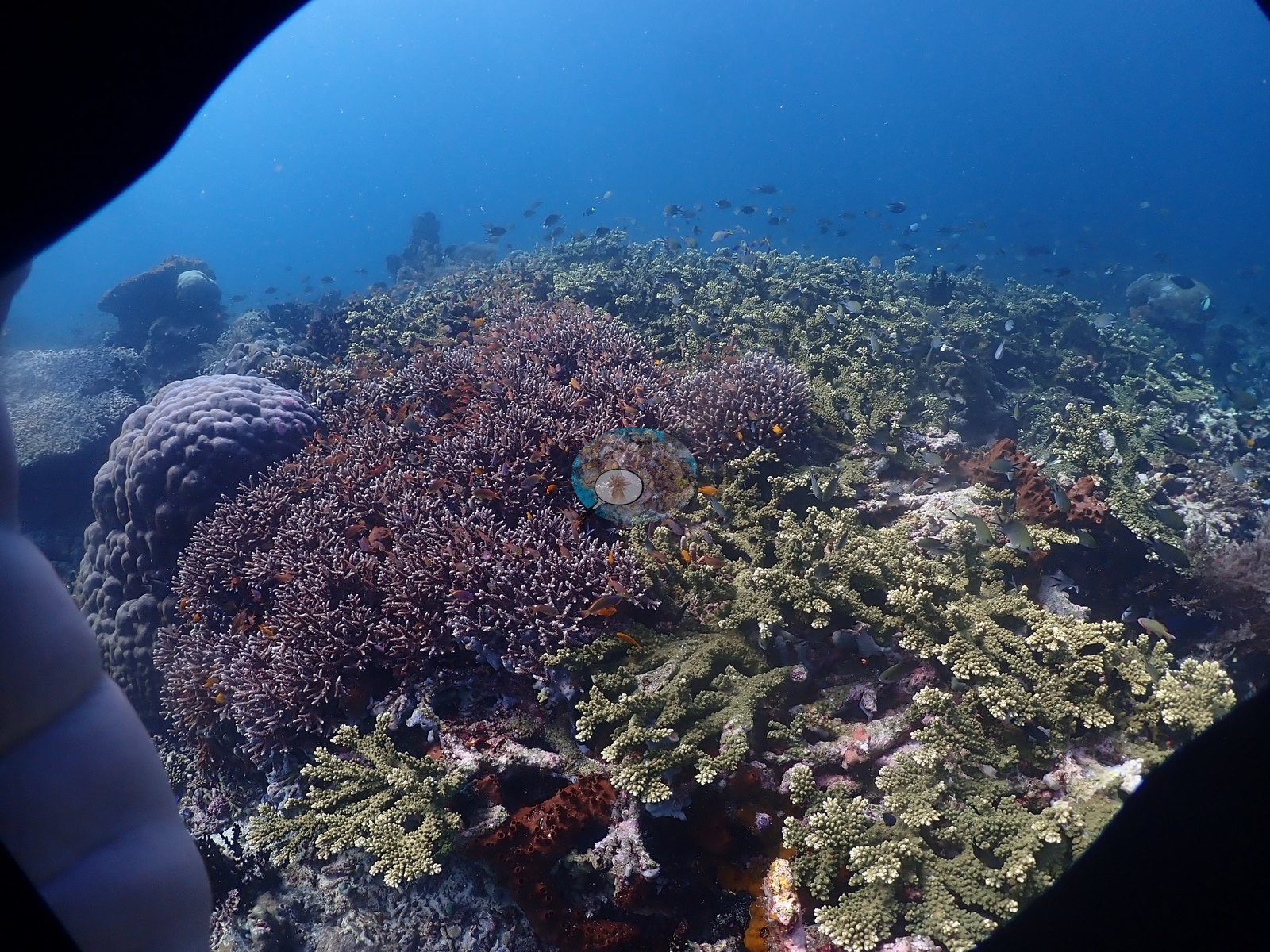
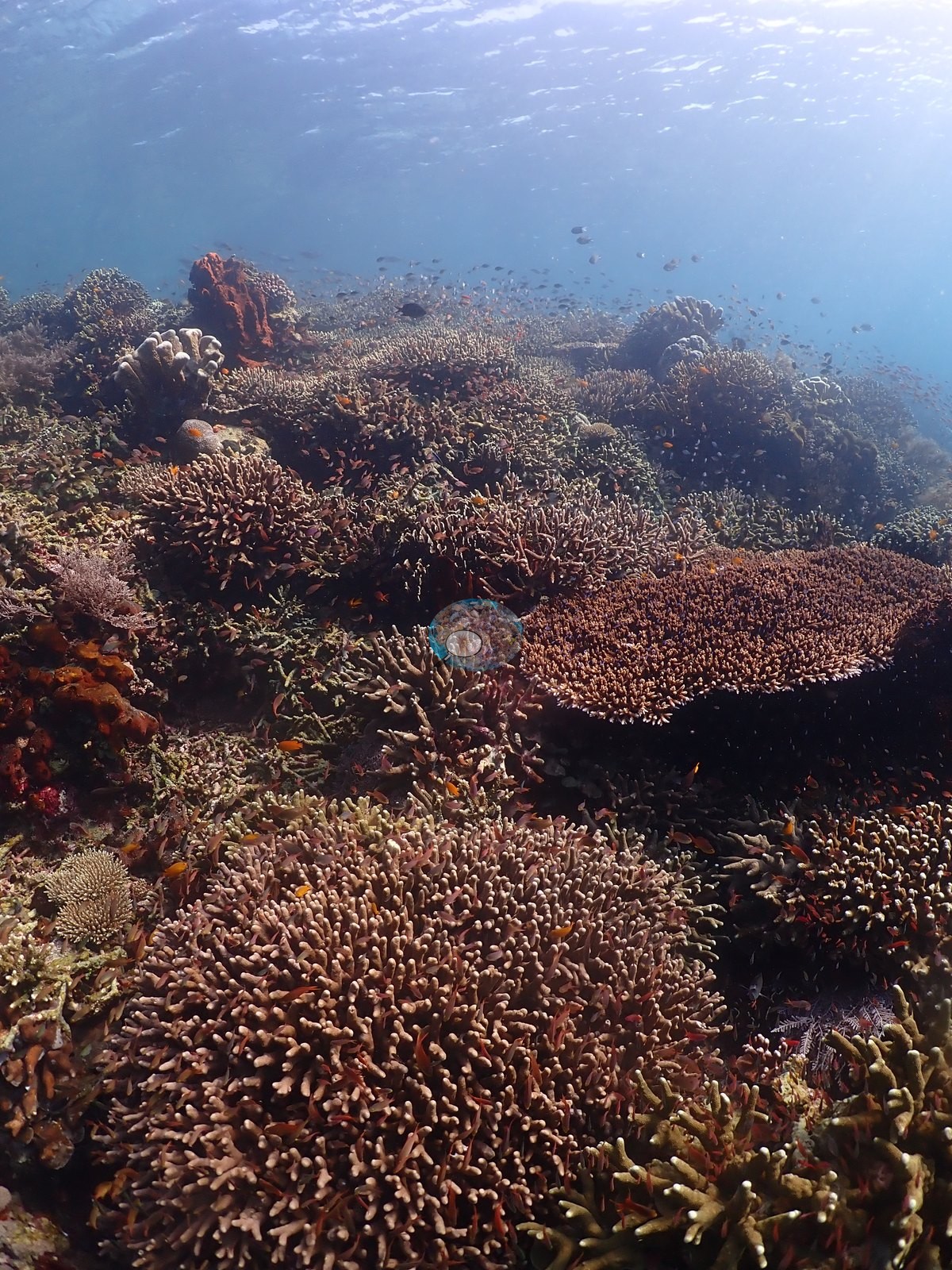
A striking magenta/dark-red carpet or barrel sponge and a large pale anemone with cream-tipped tentacles both appear in close-up (e.g., Image 19).
Coral cover
Coral cover: 32% — a blind Claude computer-vision point count of 105 of Anderson's unedited photographs (20 points per photo; water, fish, and obstructions excluded). Other computer-vision methods are listed in the method table.
Stressors
Condition: no bleaching, disease, crown-of-thorns, or predation was observed in any of the 105 frames reviewed; pigmentation throughout (browns, olives, maroons, salmon, mauve) is normal for the growth forms present.
Fish and other fauna
The log-noted huge, pregnant turtle is clearly resolved, resting on the reef in open blue water across five consecutive frames near the end of the dive — unmistakably large-bodied (e.g., Image 52).
Comparisons with other data
No prior survey data from this site. If you would like to share yours, please email us.
Other notes
Divers appear occasionally for scale.
CV model comparison
More info
DINOv3 and CoralSCOP were run on the same photos and are listed for comparison. Coralscapes v2 and v1 were also run but are not shown: Anderson does not consider Coralscapes reliable for these photos. No diver transect exists for this trip, so agreement between the rows is not accuracy, and as of September 2026 no computer-vision method estimates coral cover accurately on new images; treat every row as indicative.| Method | Hard-coral cover (%) |
|---|---|
| In-house DINOv3 | 32.0 |
| CoralSCOP unedited | 30.2 |
| Claude | 32.3 |
Data & links
All images from Coral Reef Diagnostics. Data are from Coral Reef Diagnostics.
© Coral Reef Diagnostics.