
Indonesia - Halmahera: Pantai Falajawa
Part of the regional summaries: Indonesia - Halmahera and Indonesia - Maluku
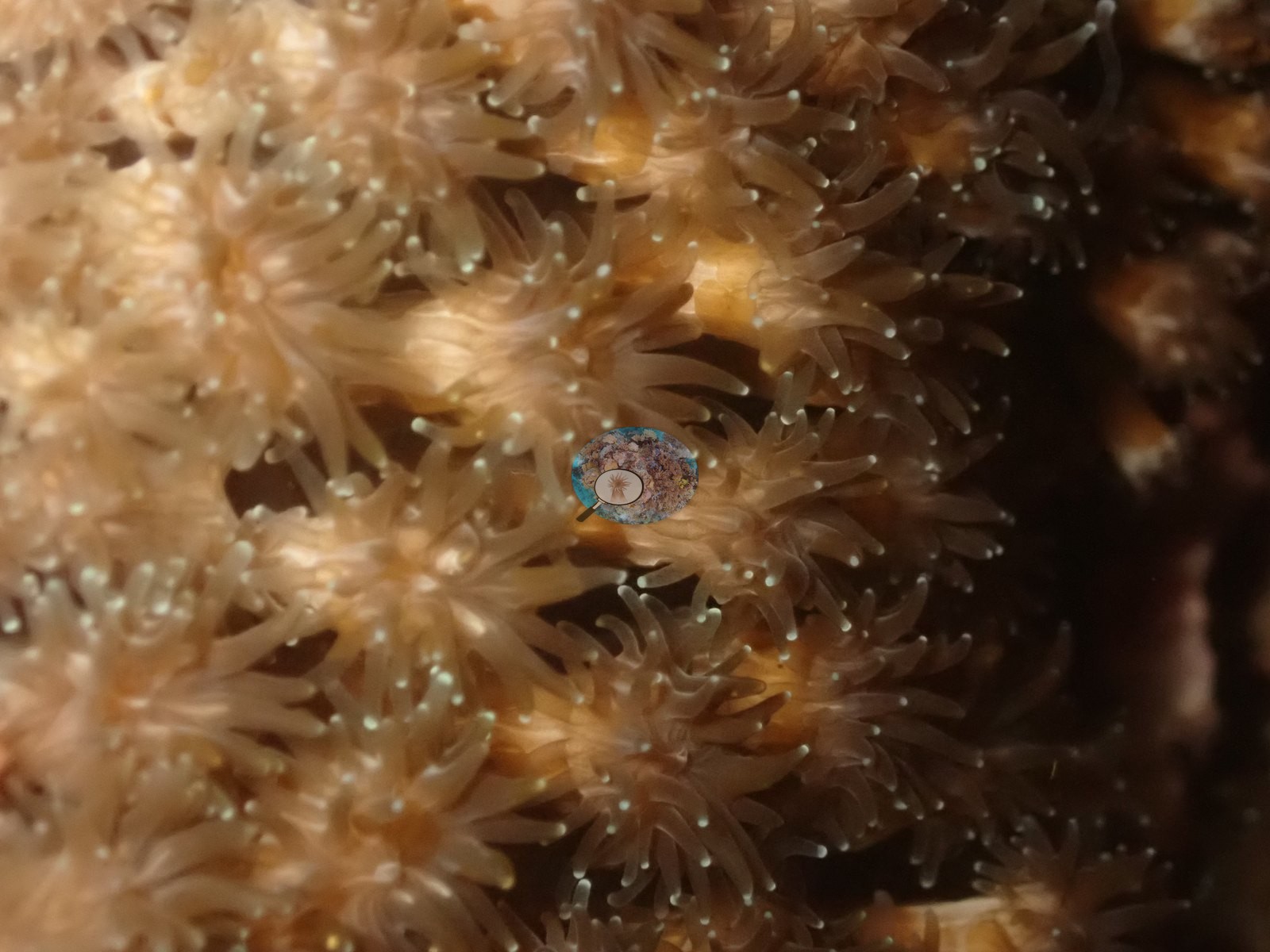
More info
North Maluku (NOAA CRW virtual station)A Ternate town-waterfront night dive dominated by walking sharks - at least two Hemiscyllium halmahera individuals foraging across rubble and calcareous algae beds in roughly a quarter of all frames - alongside a Spanish dancer, several nudibranch species, and a camouflaged octopus.
Penyelaman malam di tepi kota Ternate yang didominasi hiu berjalan — sedikitnya dua ekor Hemiscyllium halmahera yang mencari makan di hamparan pecahan karang dan alga berkapur, muncul pada kira-kira seperempat dari seluruh bingkai — bersama seekor nudibranch penari Spanyol, beberapa jenis nudibranch lain, dan seekor gurita yang menyamar.
Terjemahan ringkasan ini oleh AI; versi bahasa Inggris yang berlaku.
One independent survey station shown with the program’s logo — click one to see how far it is from this site.
36 of these 41 photographs are shown beside the text that discusses them under "Site description" below.
Site description
Setting
A shore night dive on the Ternate town waterfront, worked as macro.
General benthic features
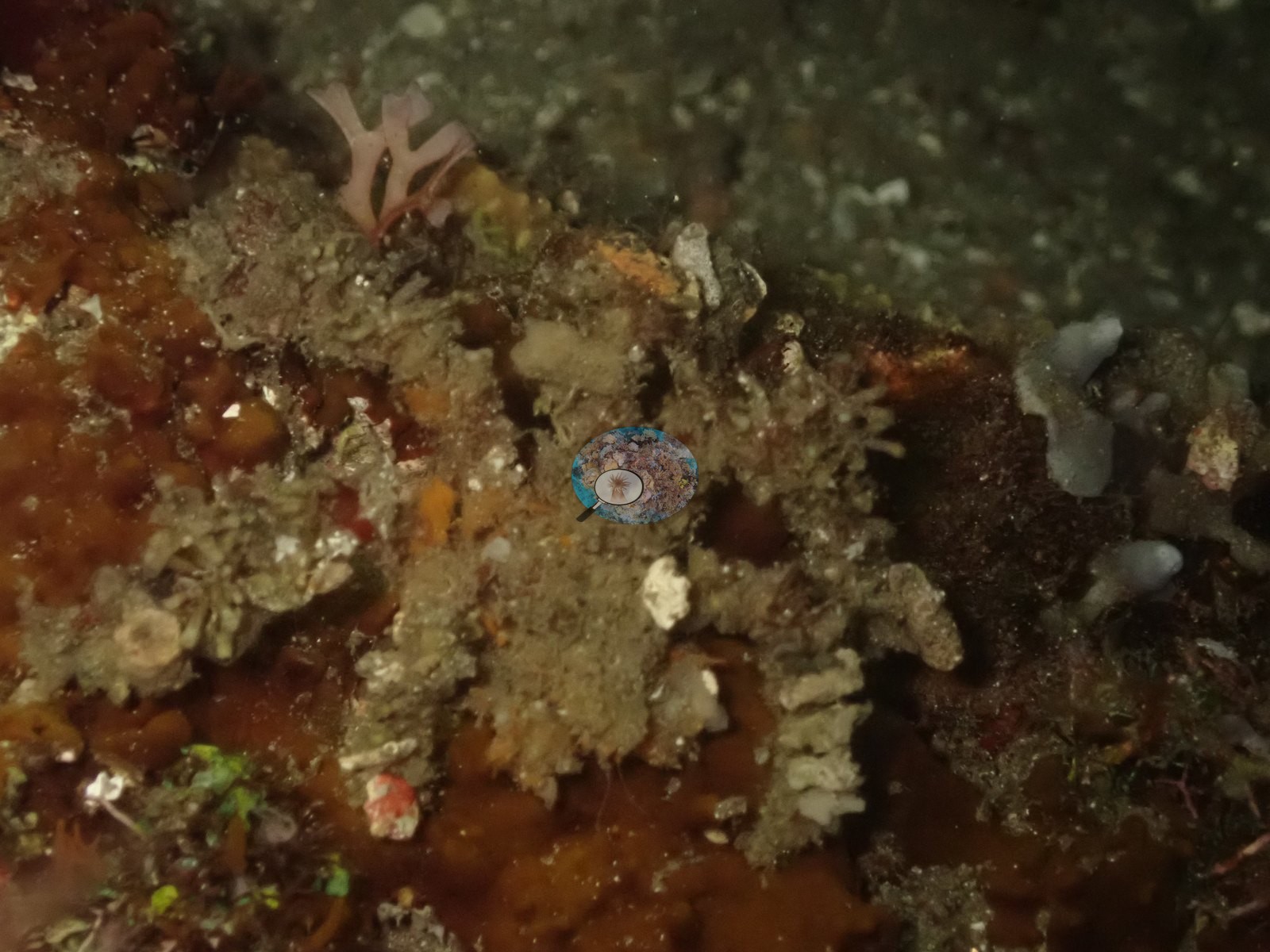
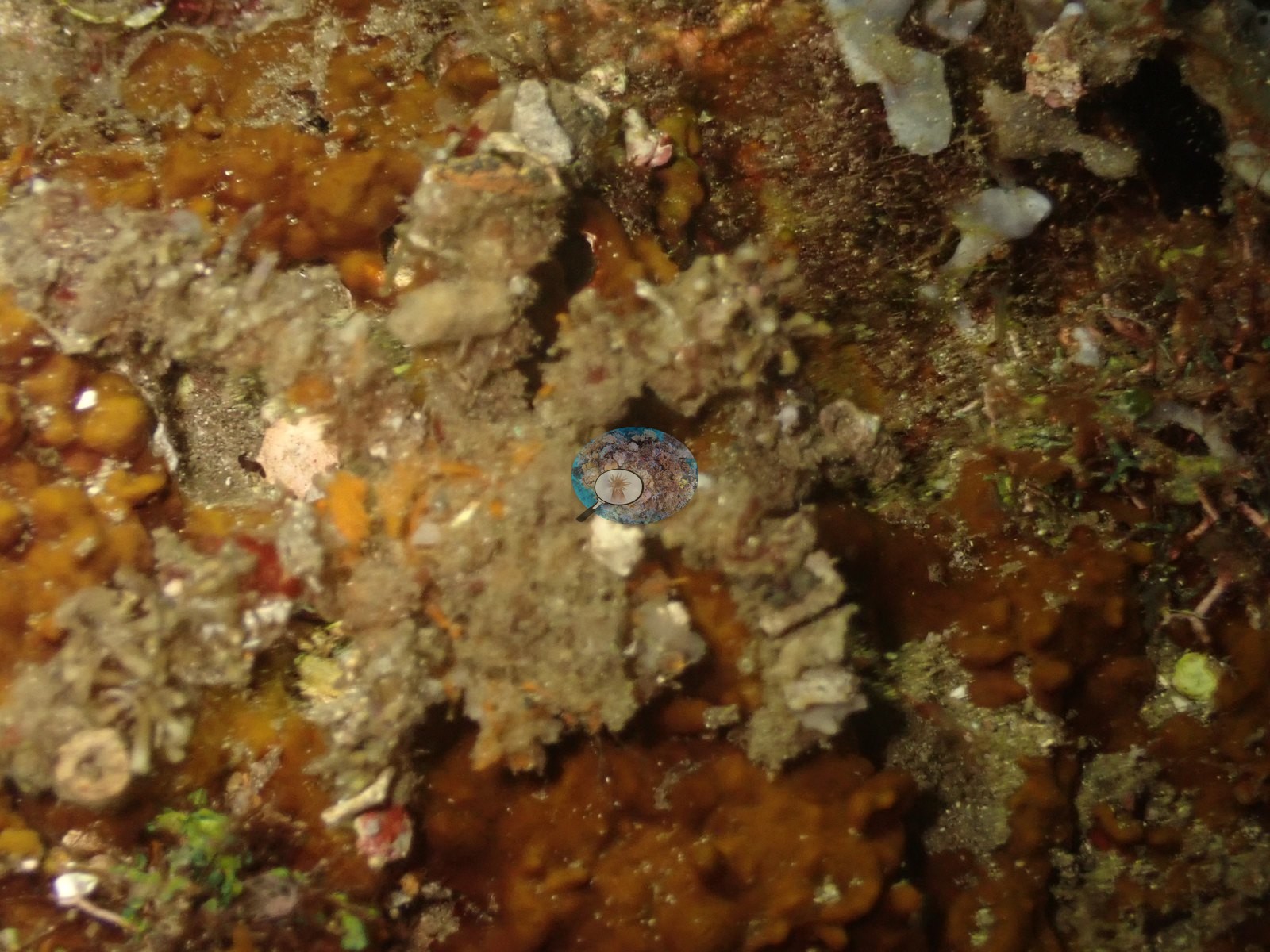
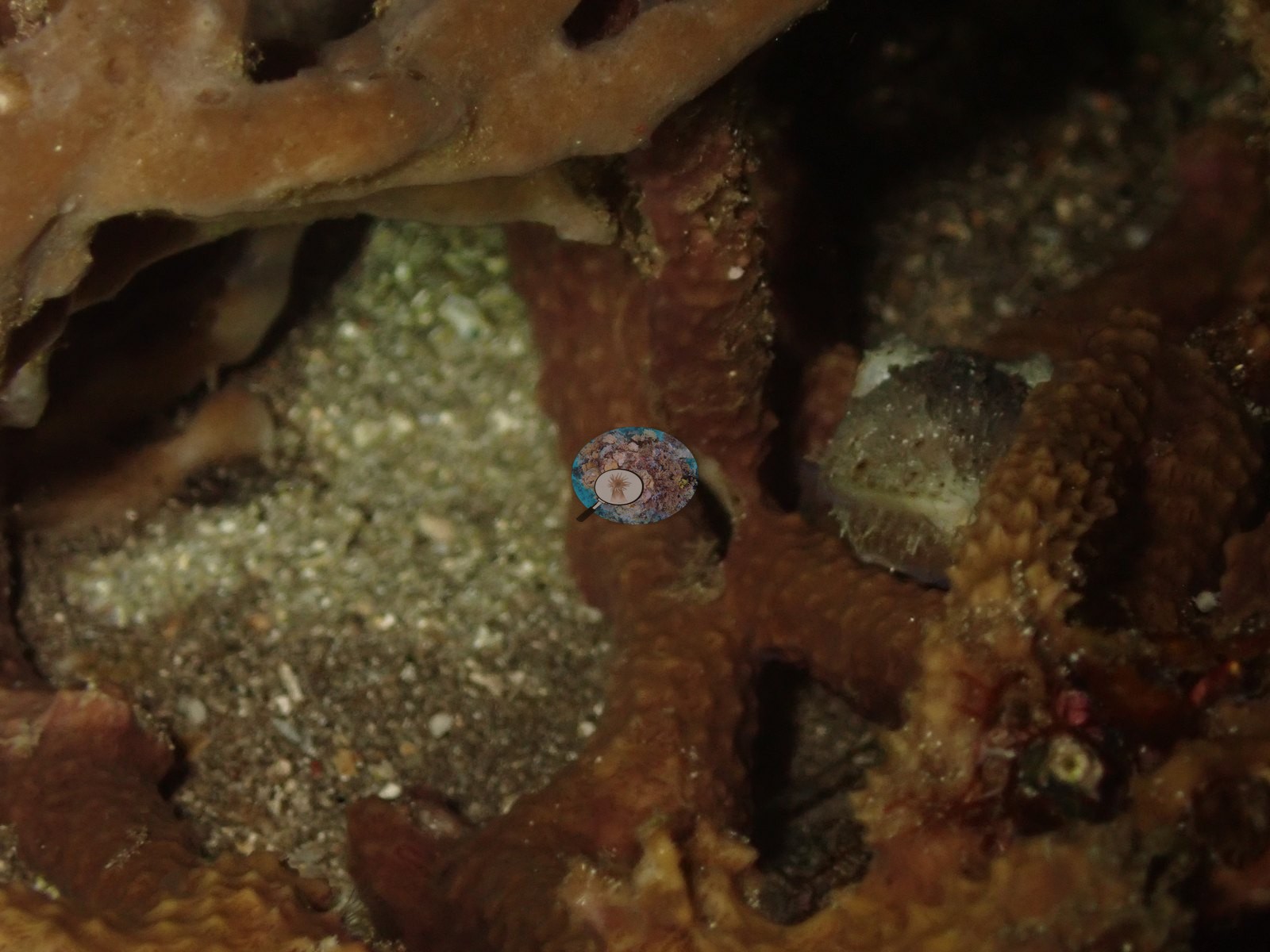
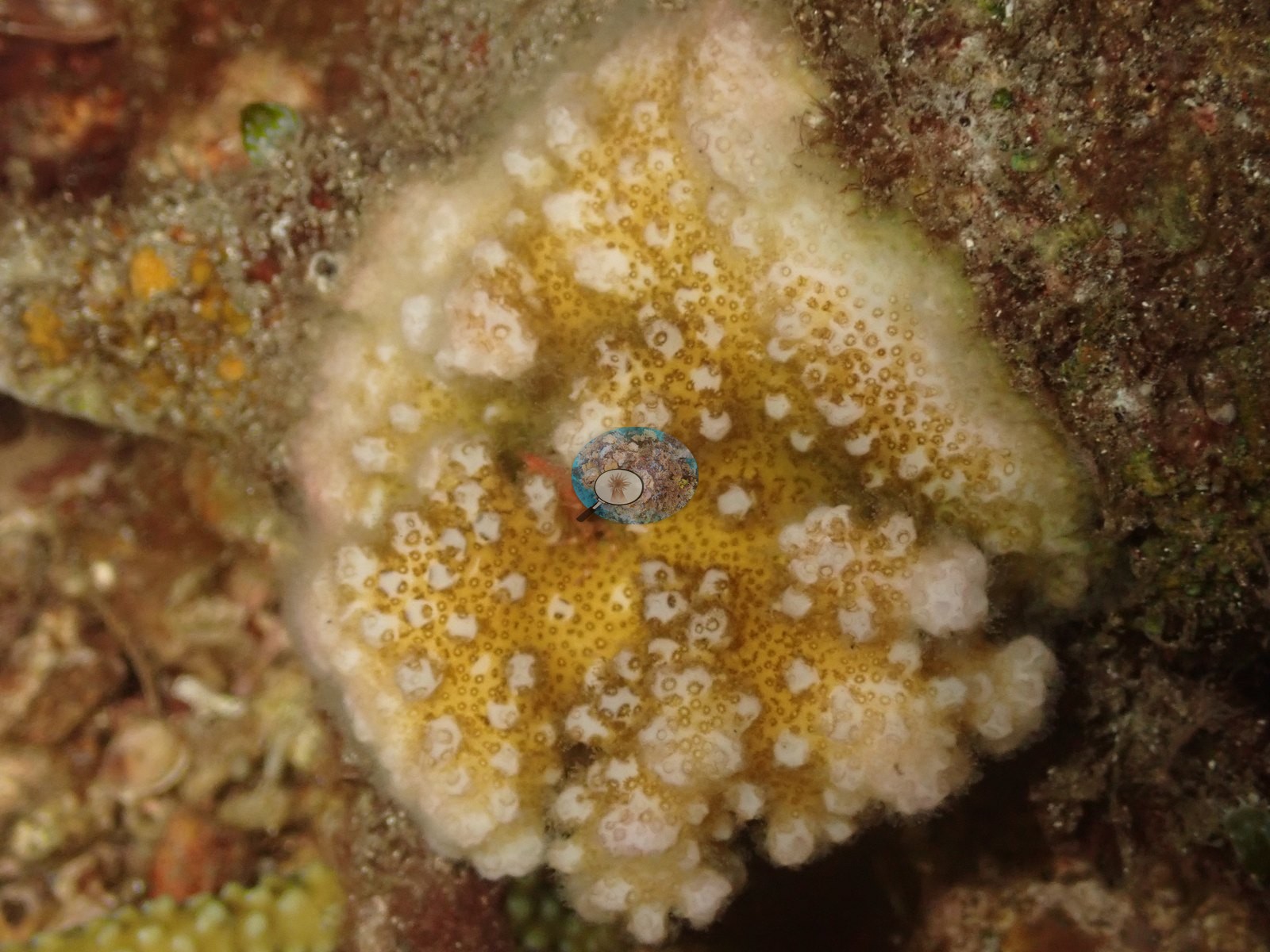
The substrate is low-relief rubble, sand, and turf-covered pavement, with extensive beds of fine branching calcareous algae (Halimeda/Amphiroa-type), encrusting orange and yellow sponges, and scattered branching hard coral (e.g., Image 12, Image 32, Image 40, Image 44, Image 45).
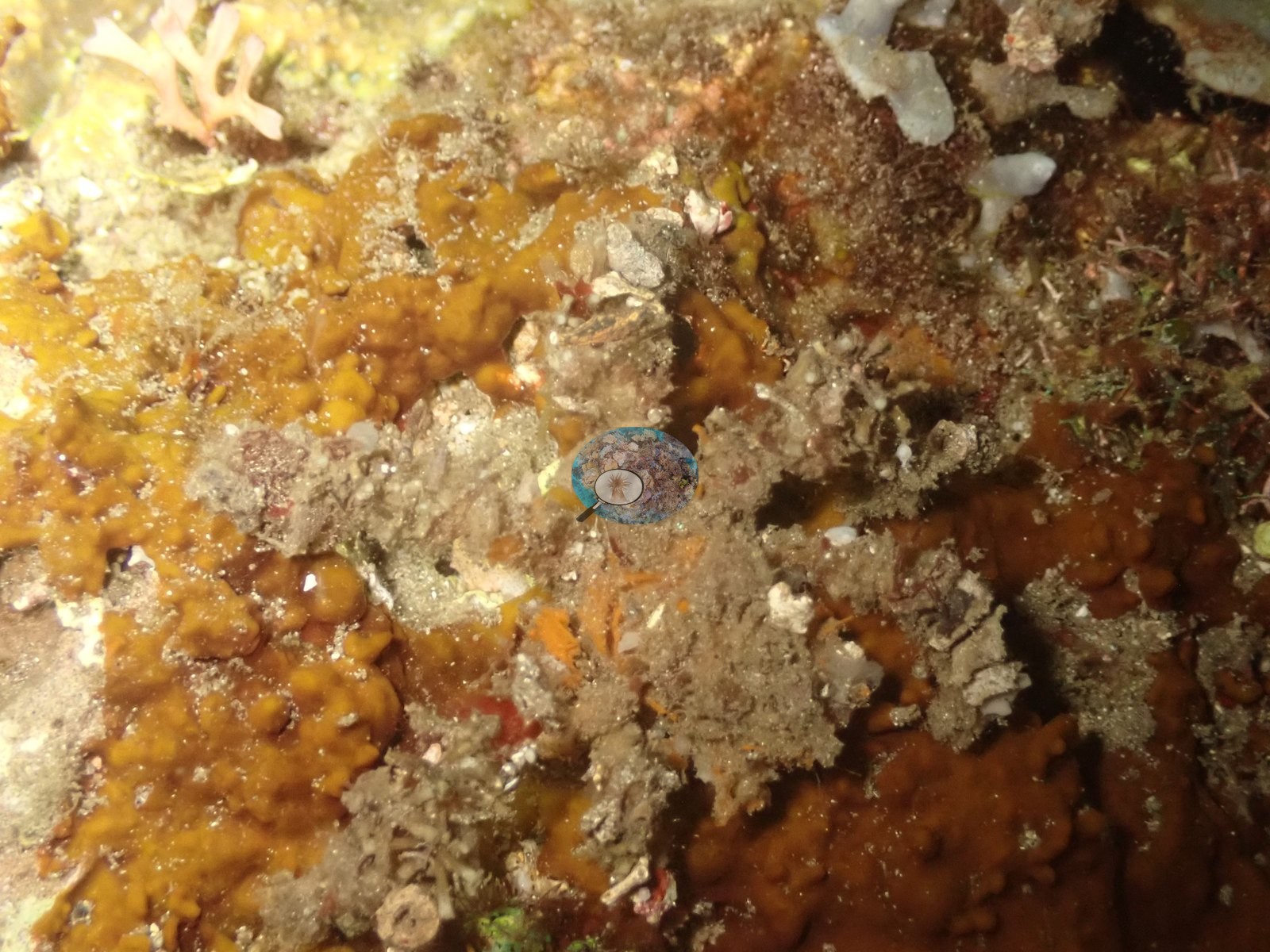
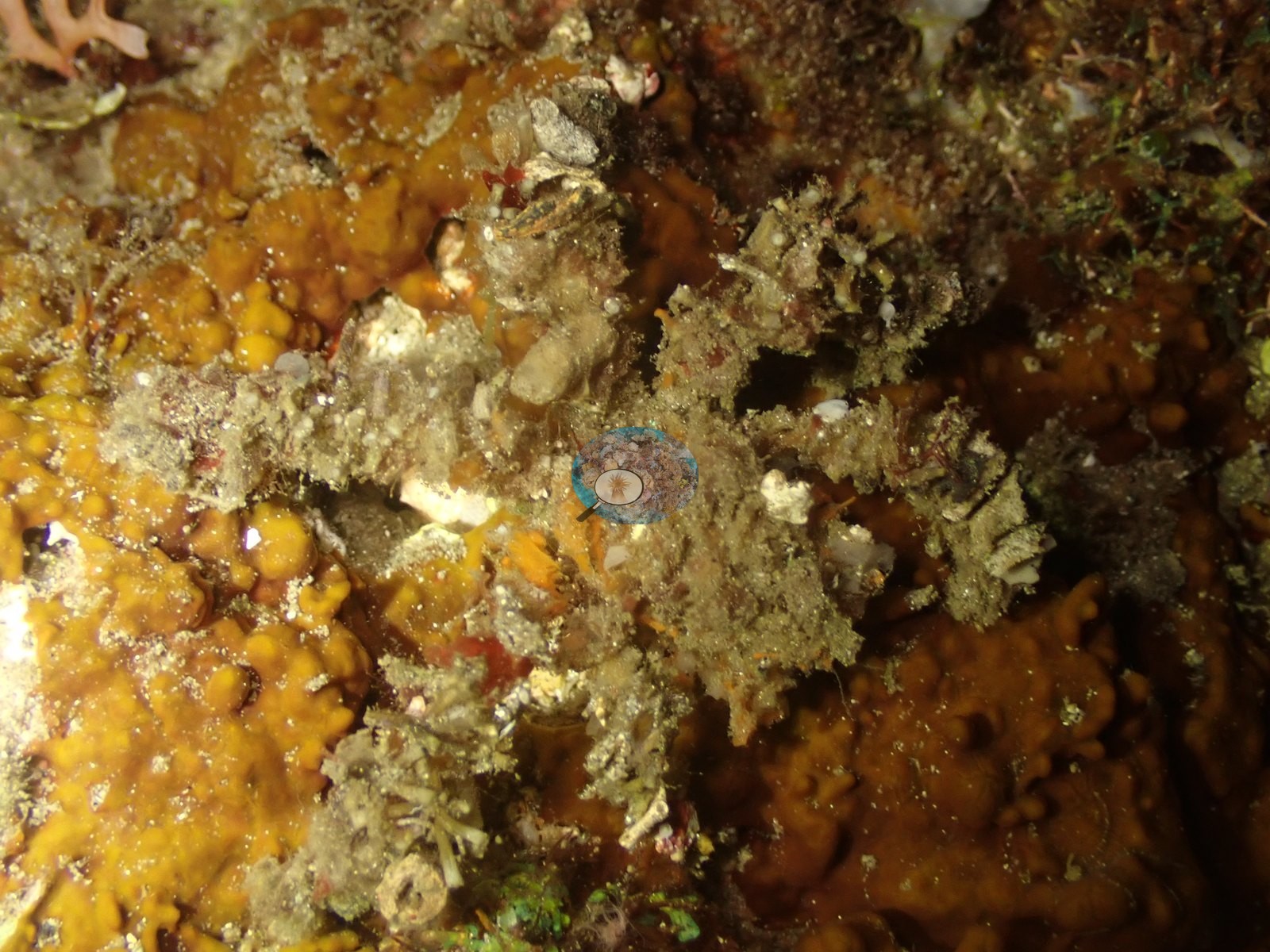
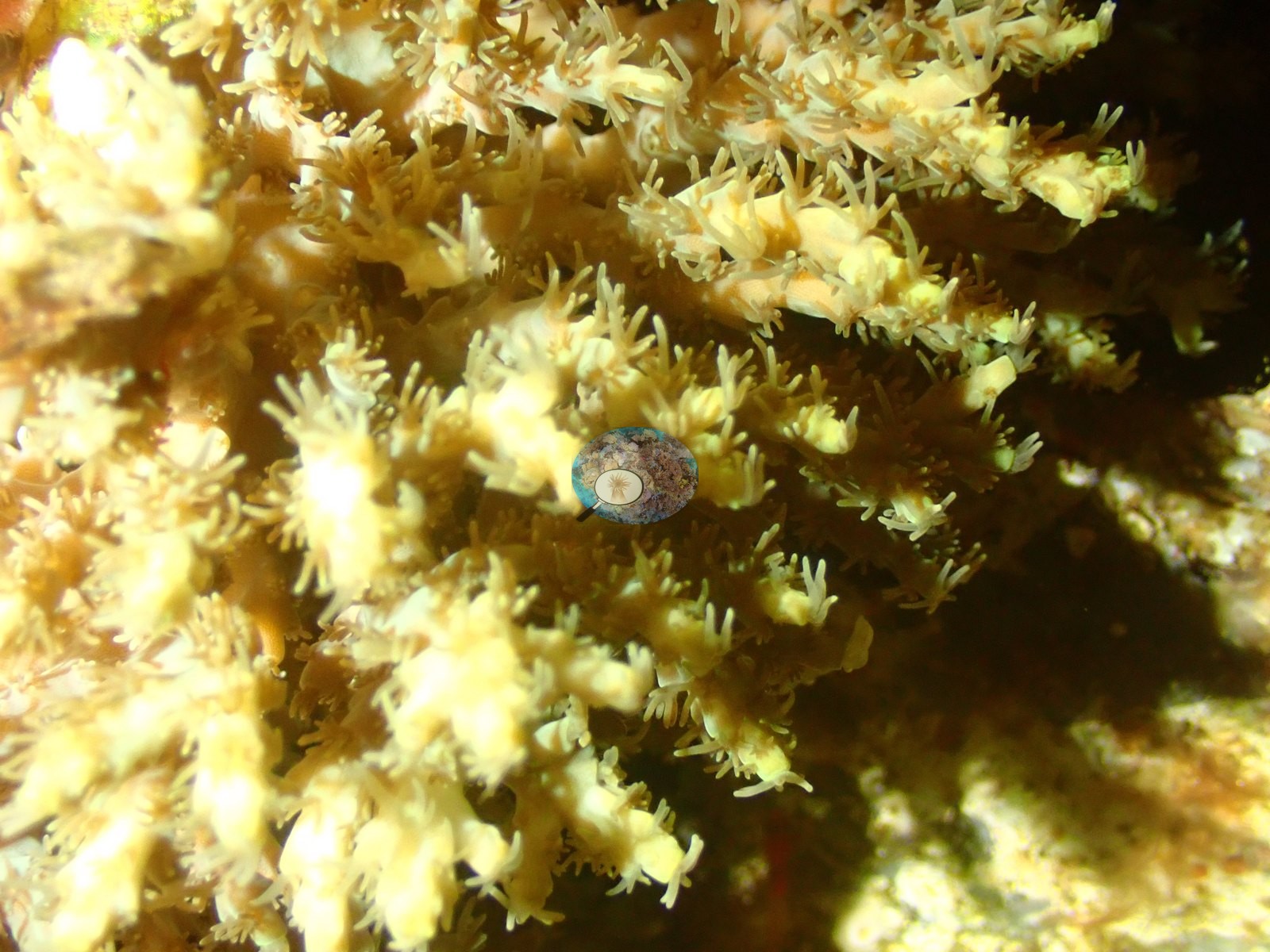
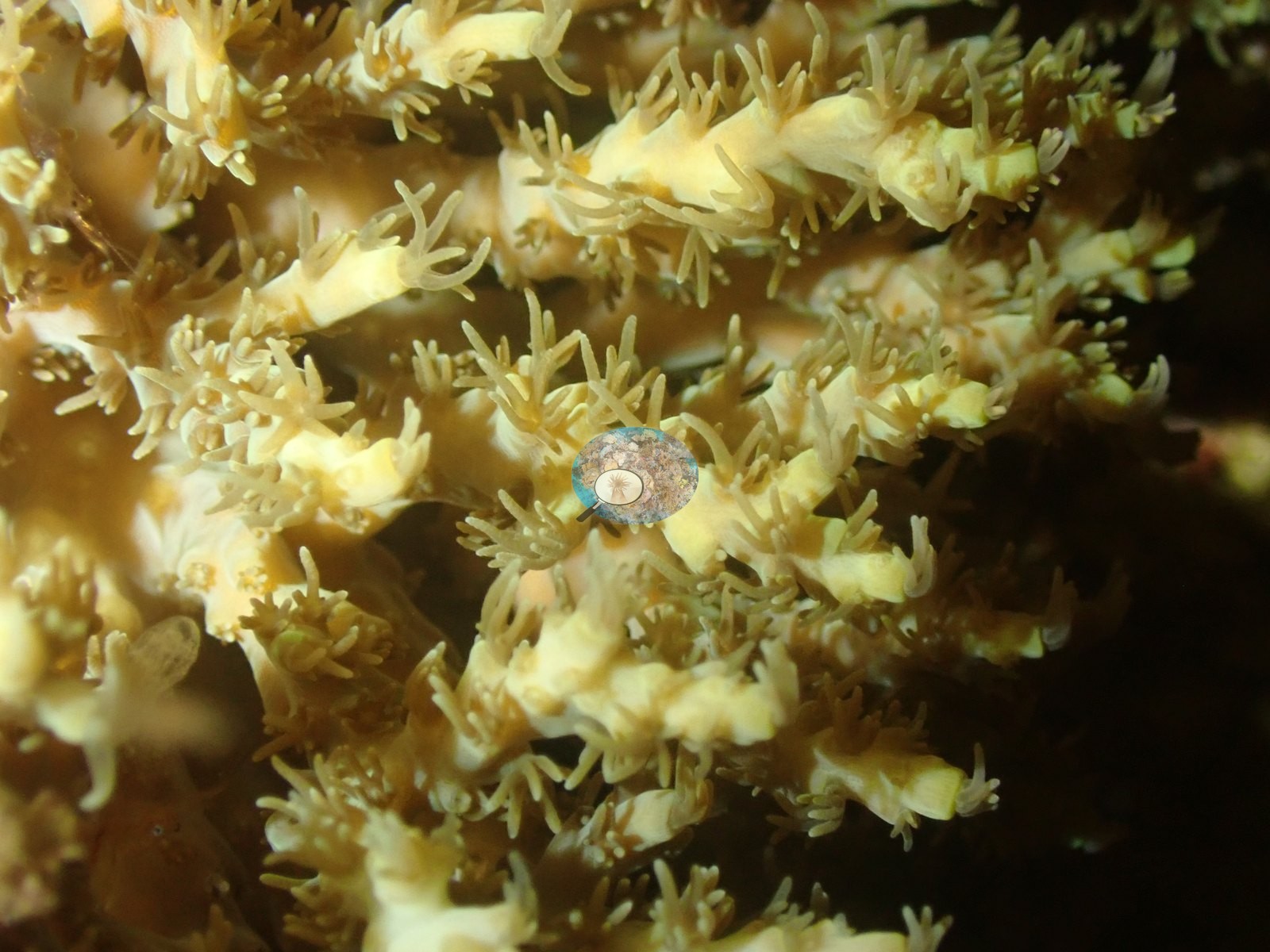
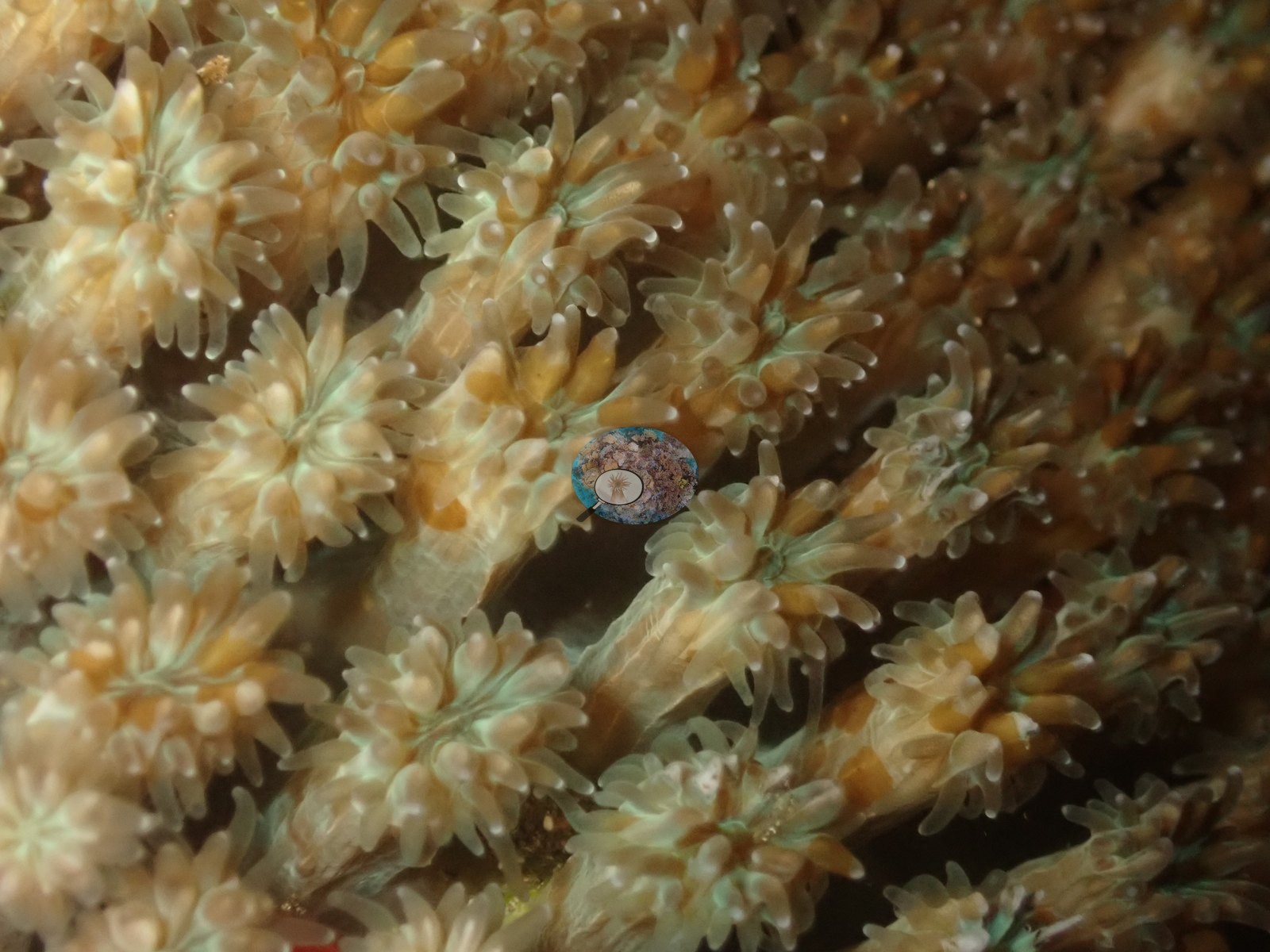
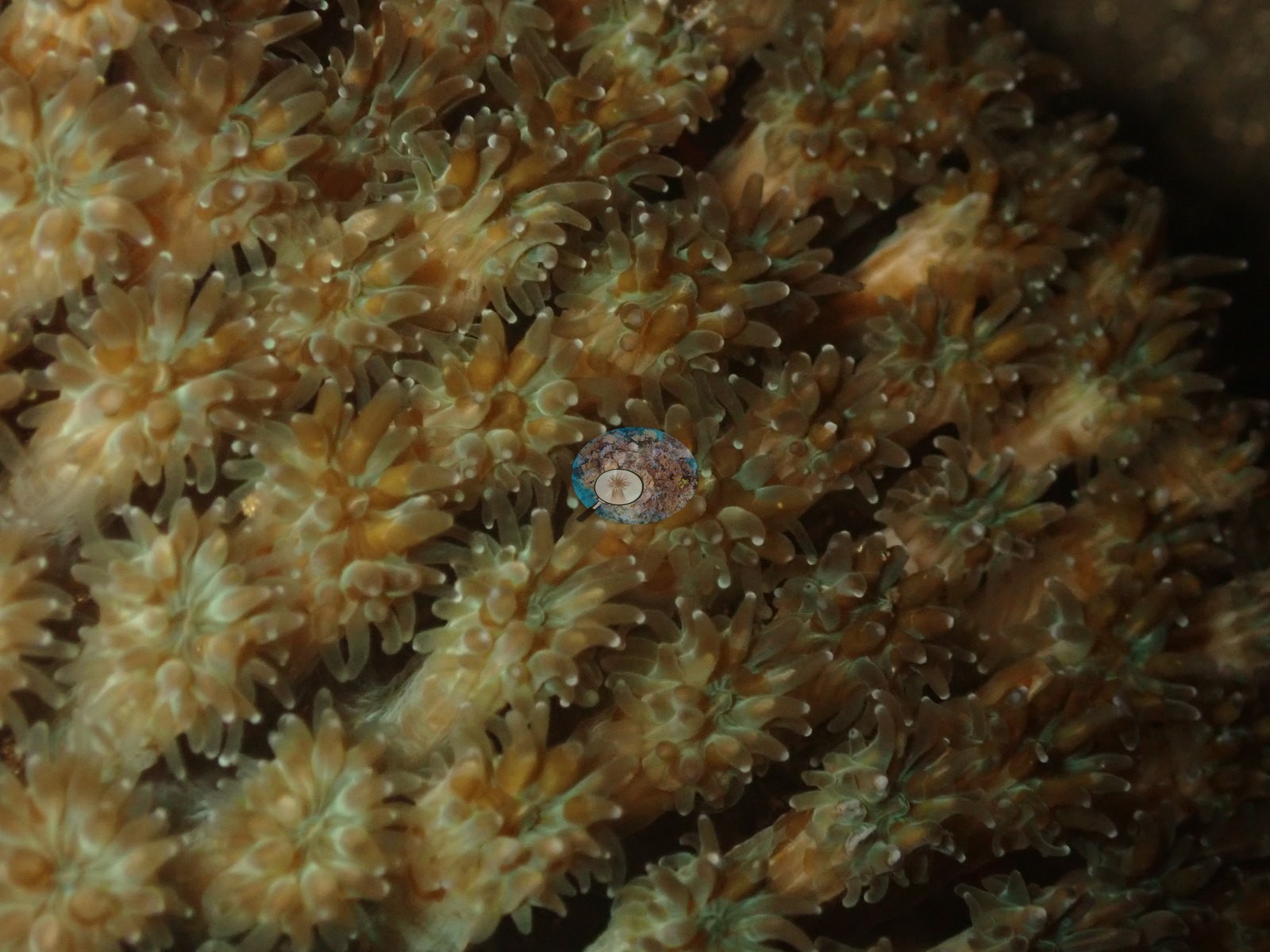
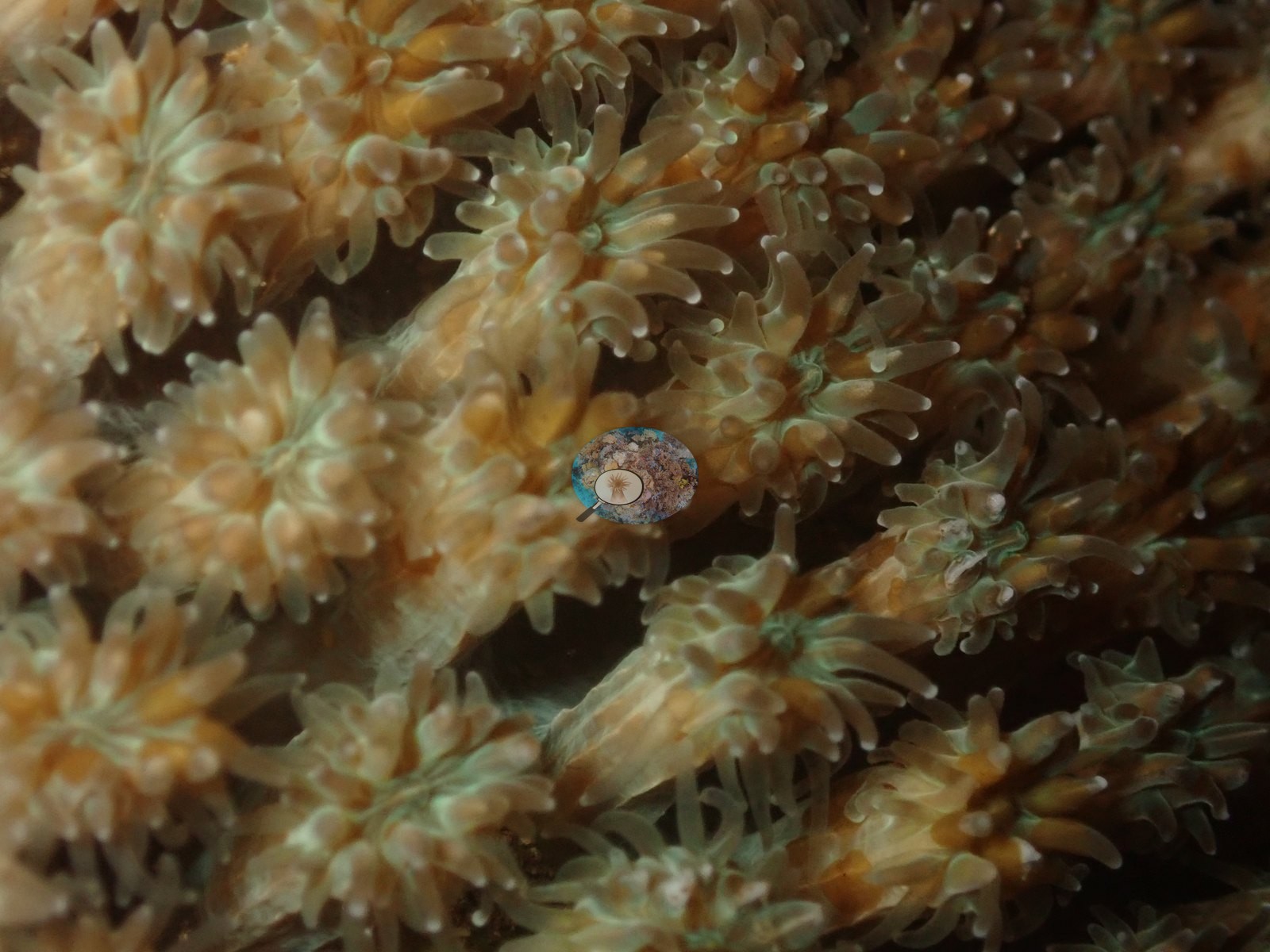
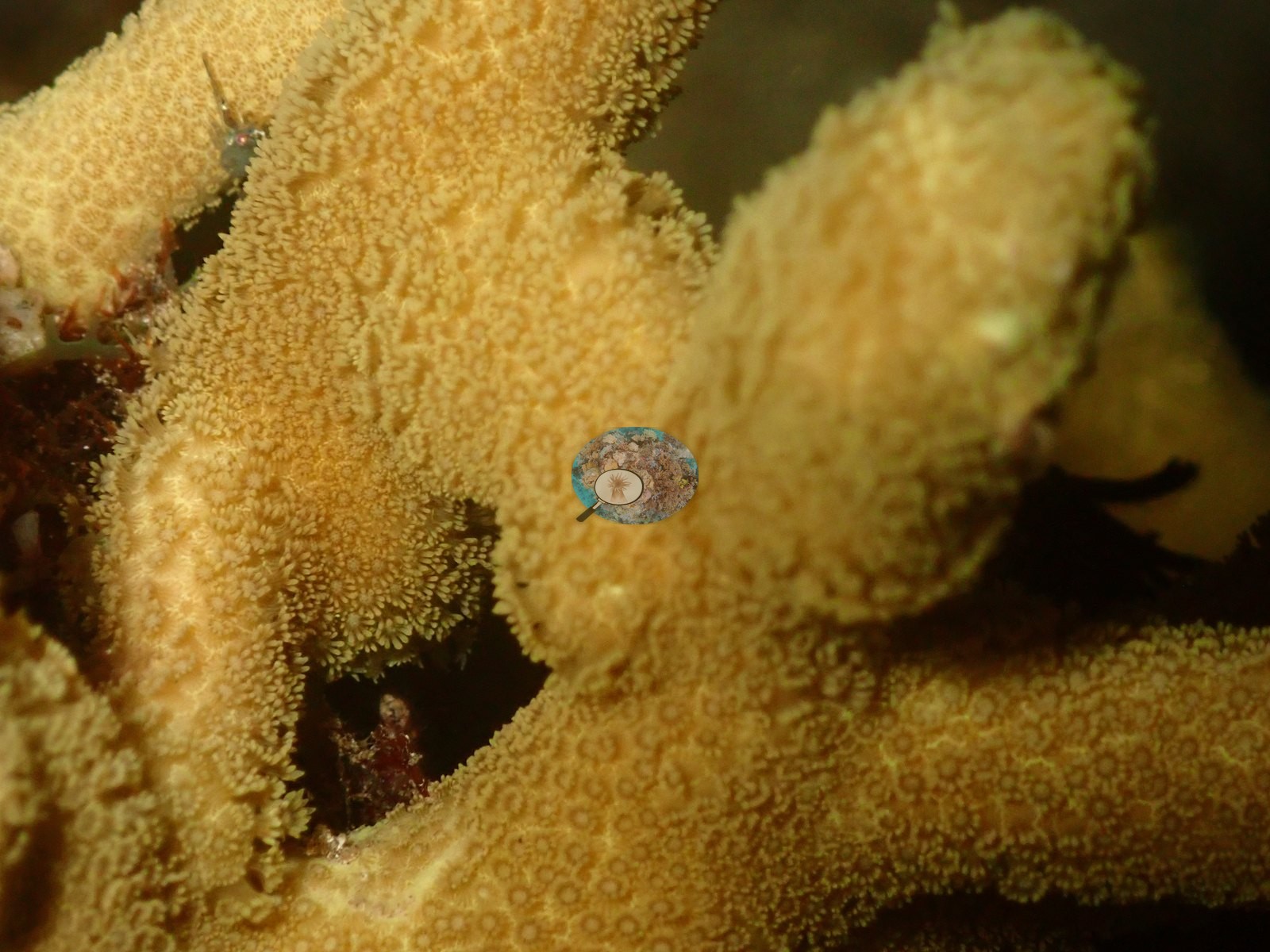
Corals were shot at polyp level with tentacles fully extended for night feeding — branching Acropora, columnar Porites/Montipora, and a colony of large flower-like polyps consistent with Goniopora or Galaxea (e.g., Image 6, Image 10, Image 11, Image 16, Image 25, Image 29, Image 36, Image 46).
Coral cover
Coral cover has not been estimated for this site: this was a night dive, and night frames are not scored for cover.
Fish and other fauna
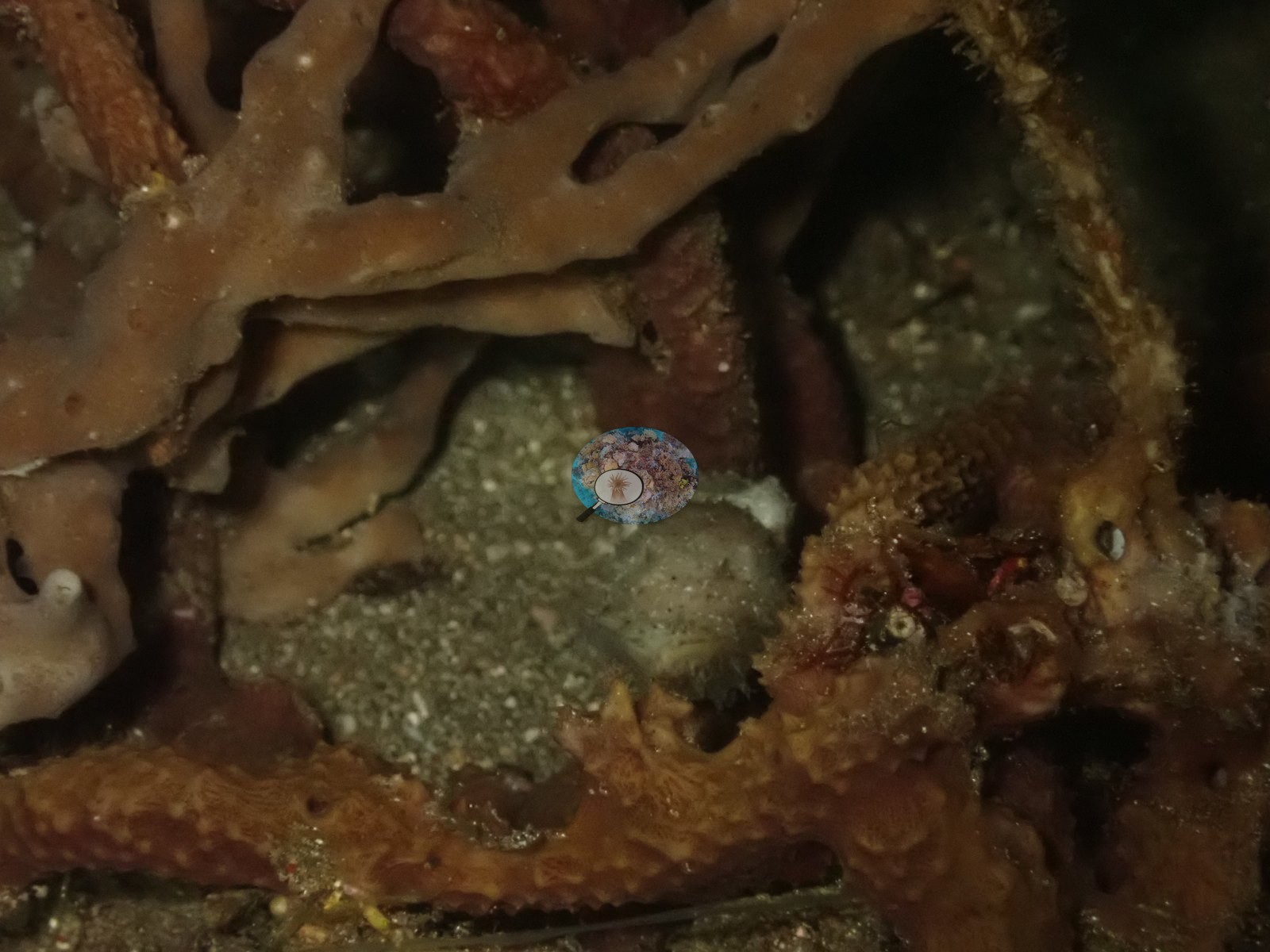
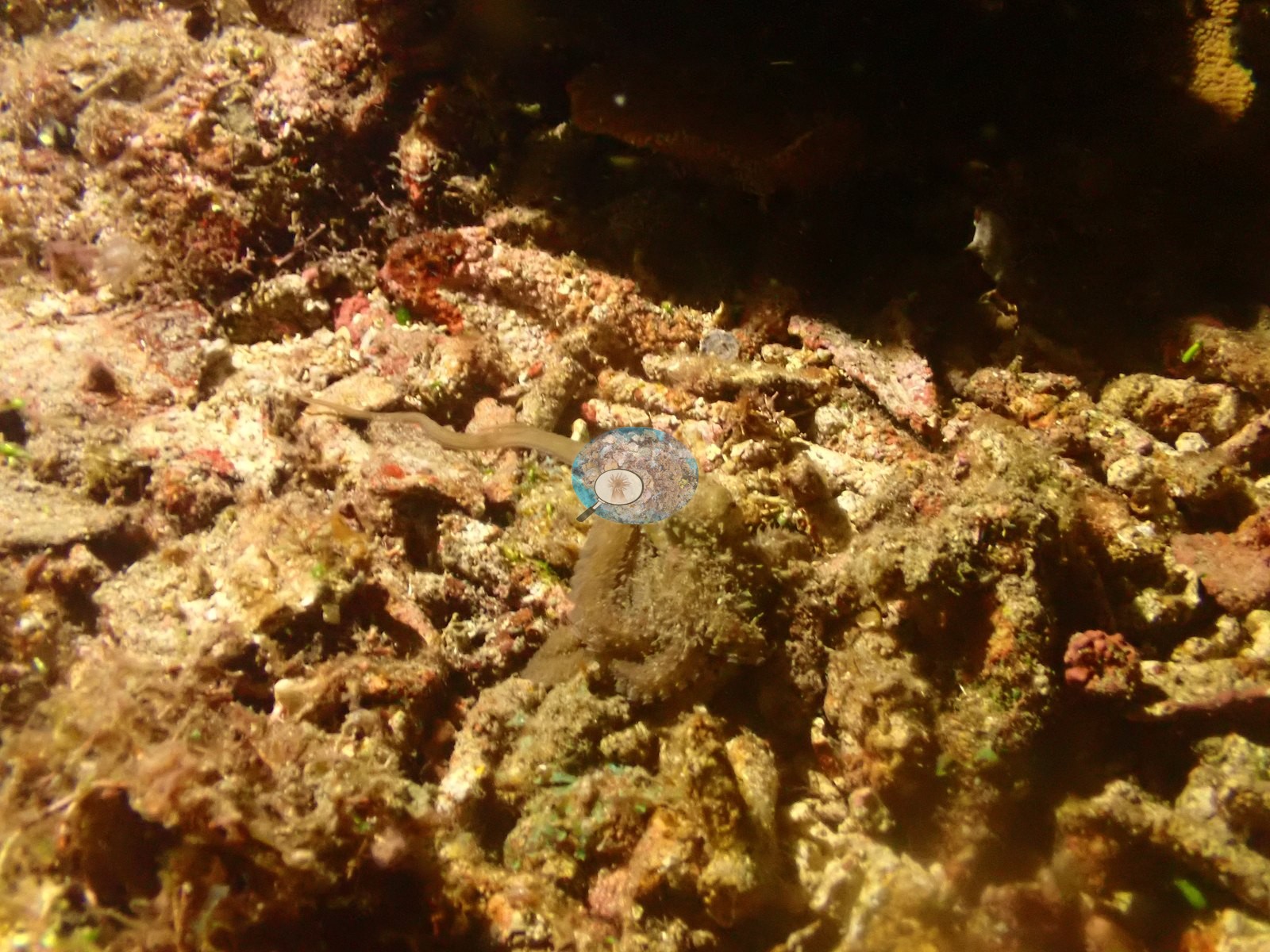
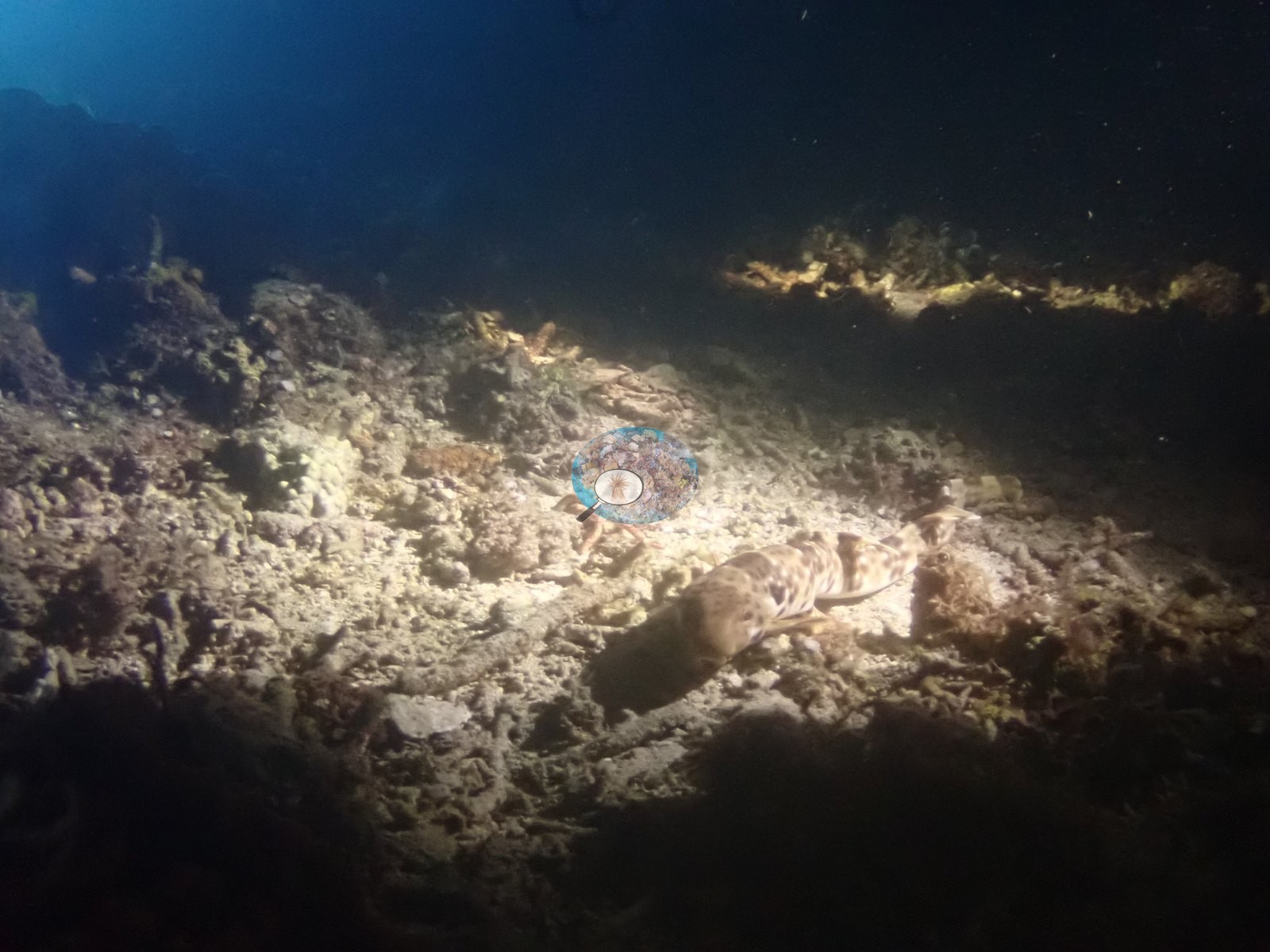
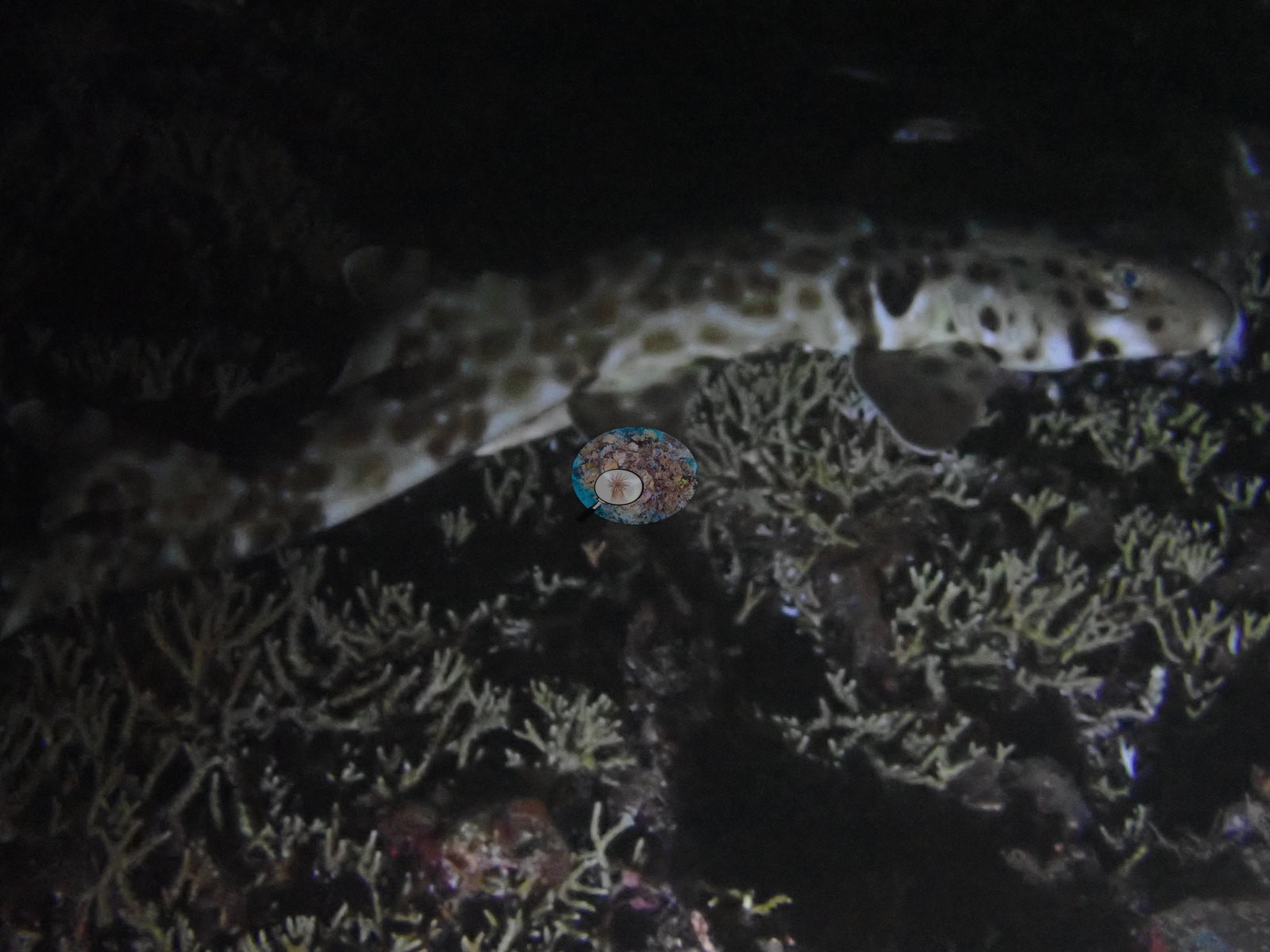
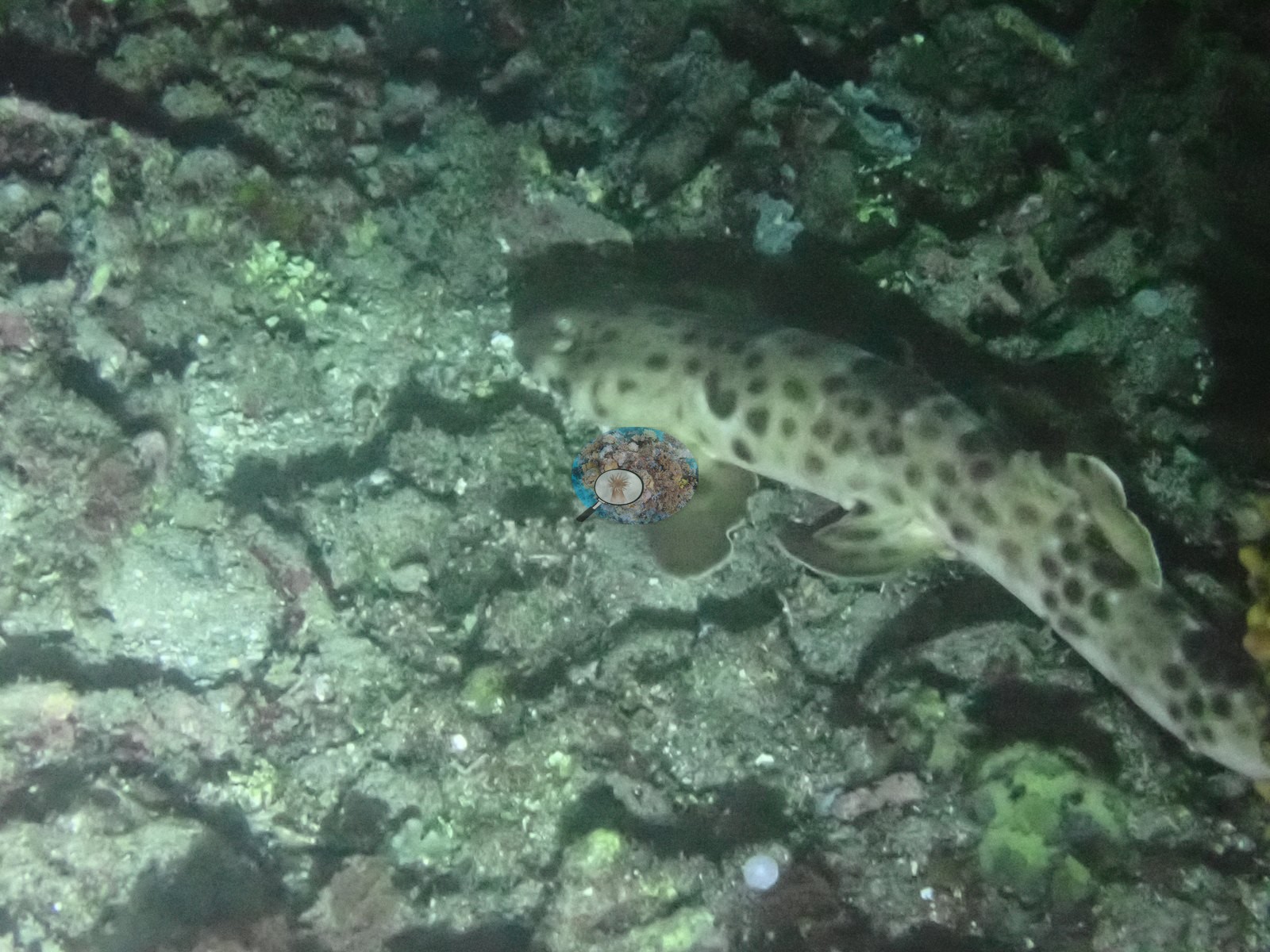
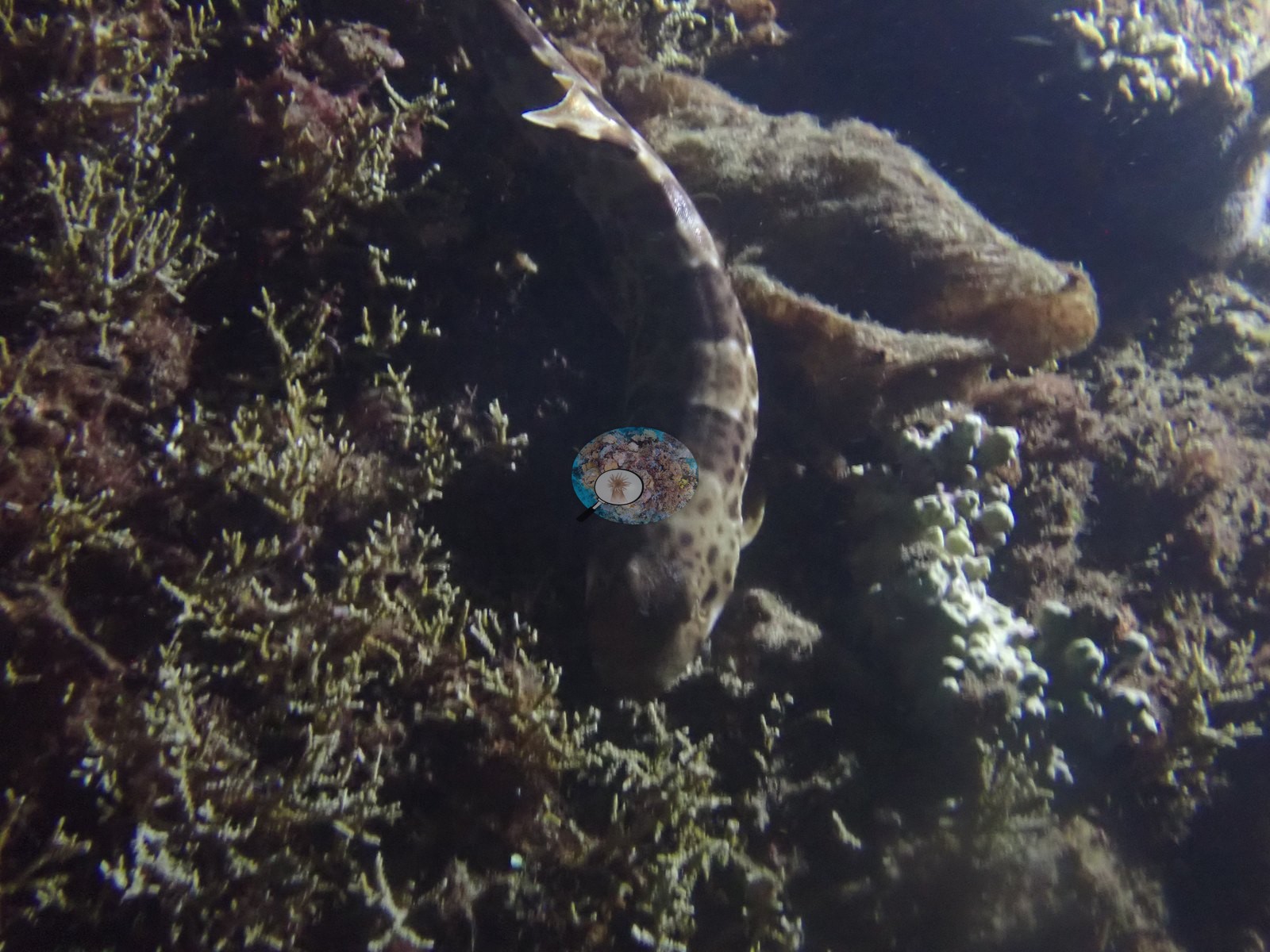
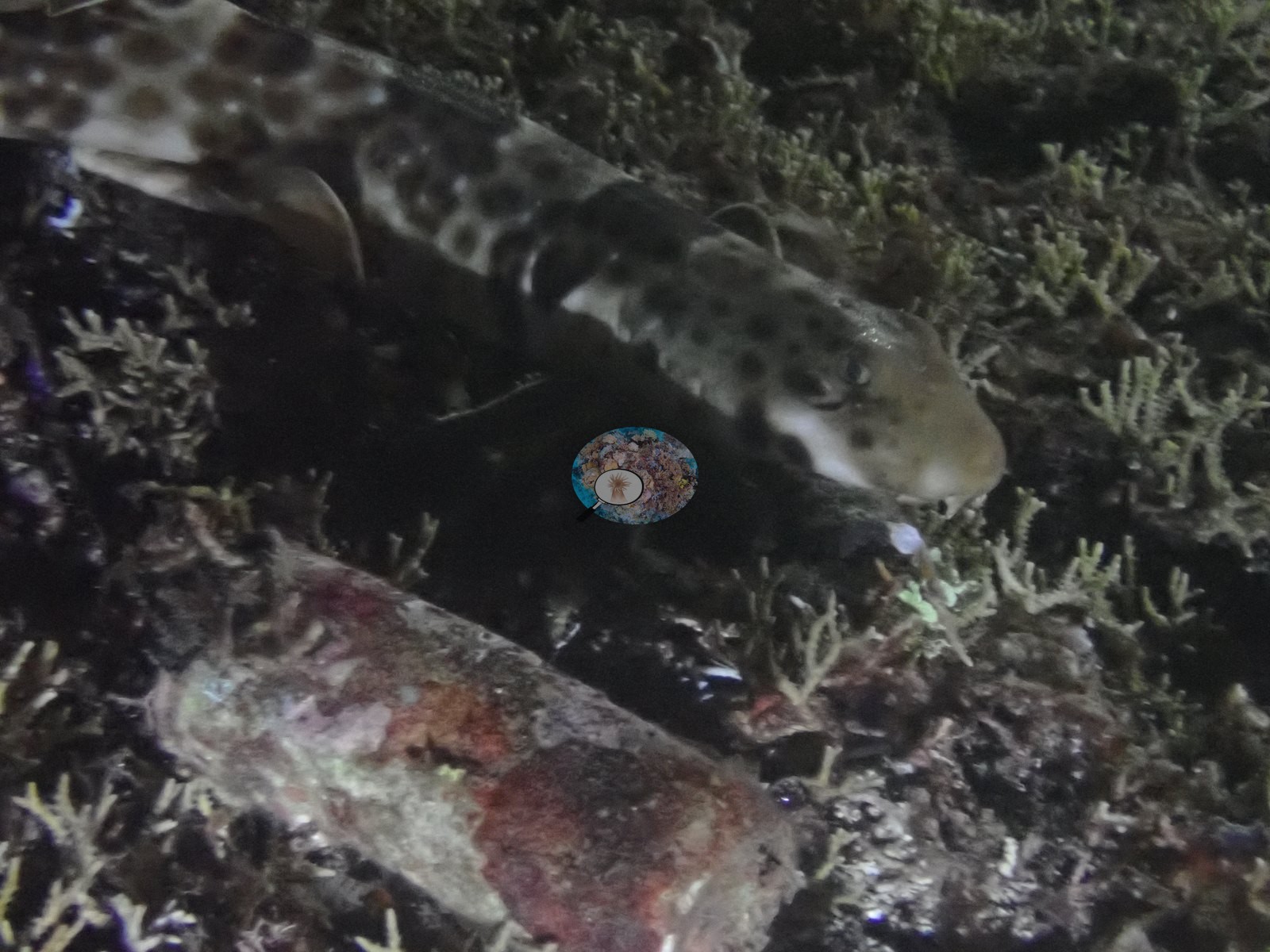
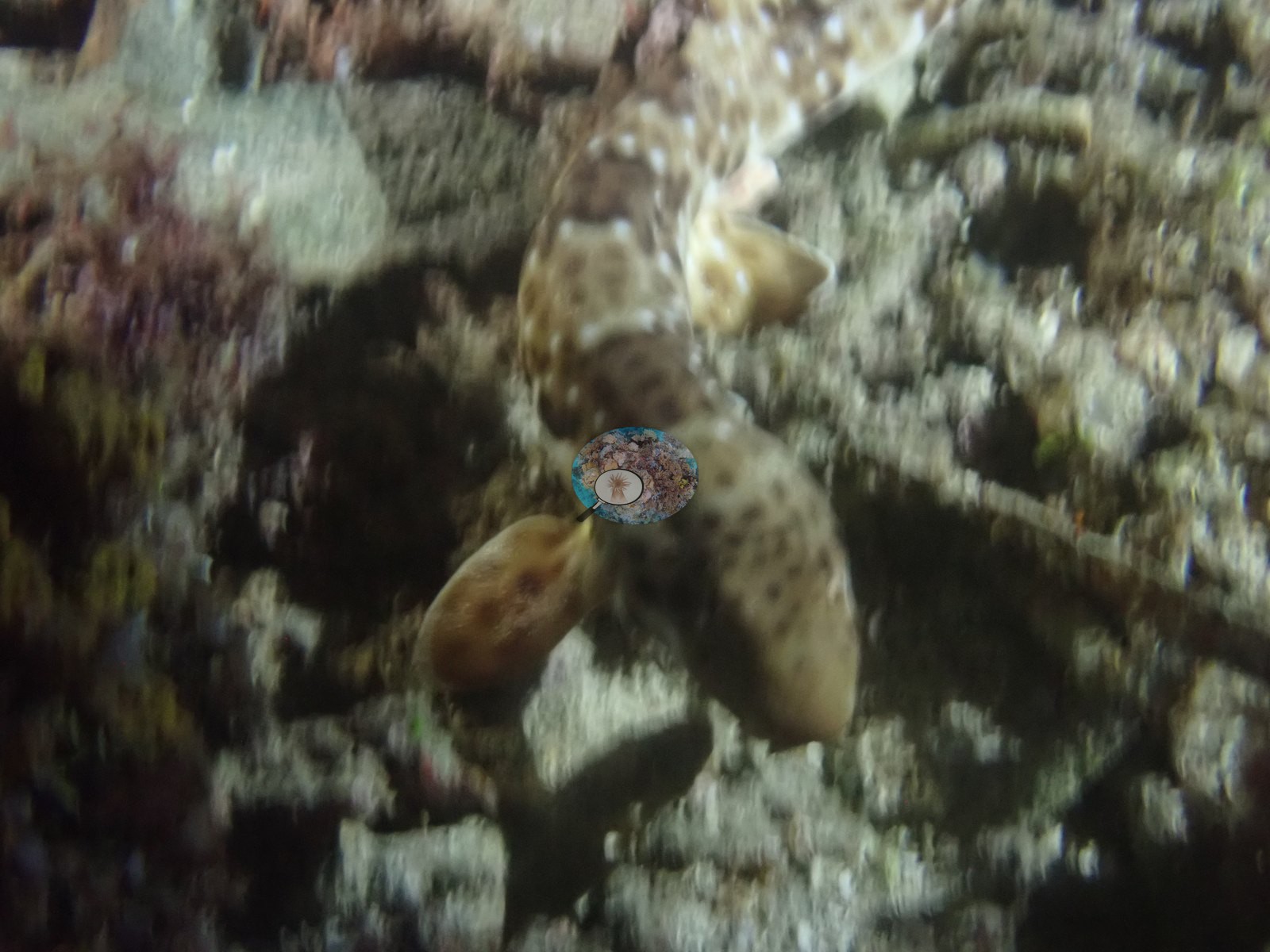
The dive is dominated by walking sharks. Hemiscyllium — almost certainly the local endemic H. halmahera — appears in roughly a quarter of all frames (10 of 42), foraging across rubble and repeatedly resting on and moving through the calcareous algal beds (e.g., Image 4, Image 7, Image 18, Image 20, Image 31, Image 33, Image 34, Image 37, Image 38).
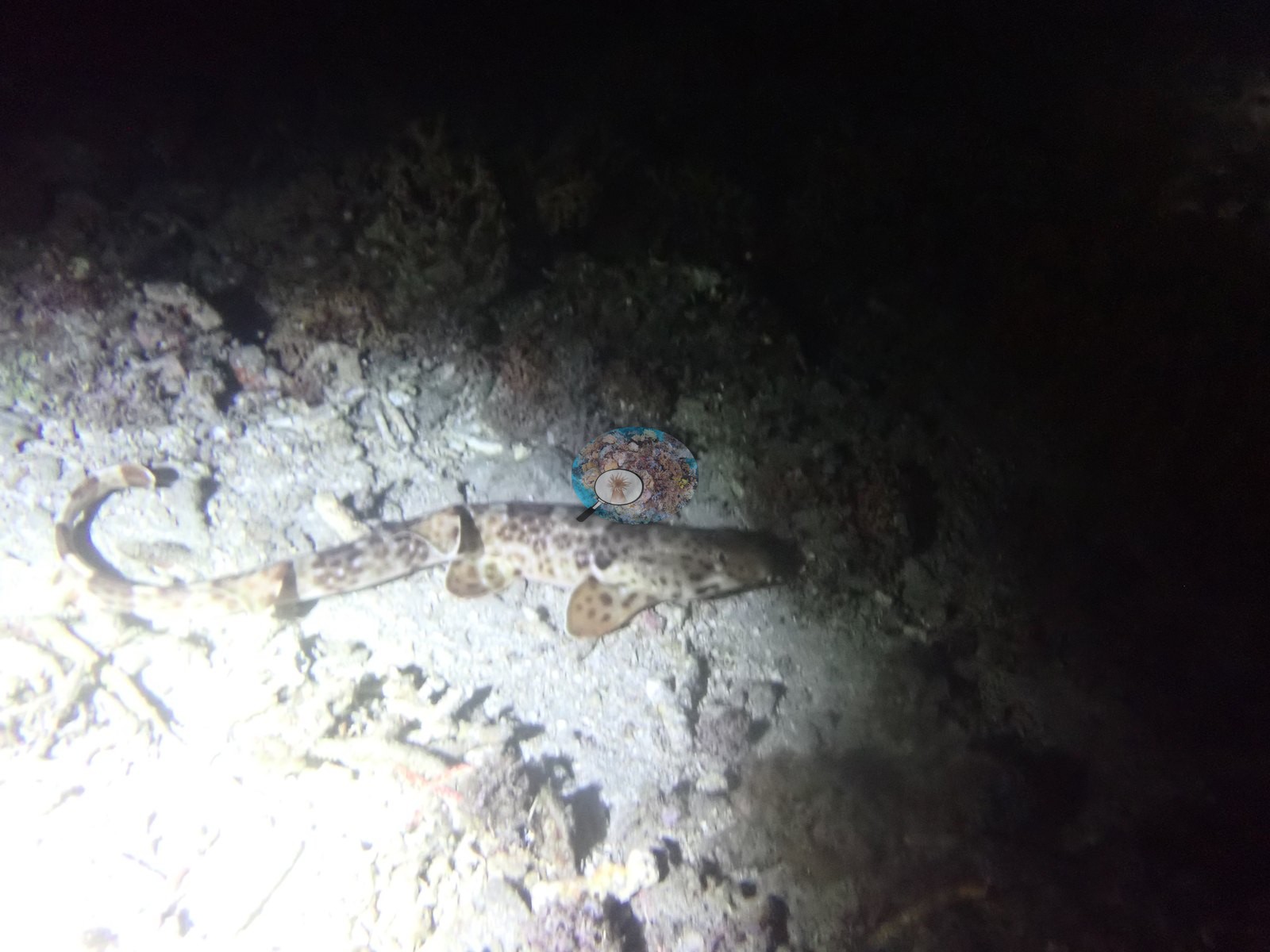
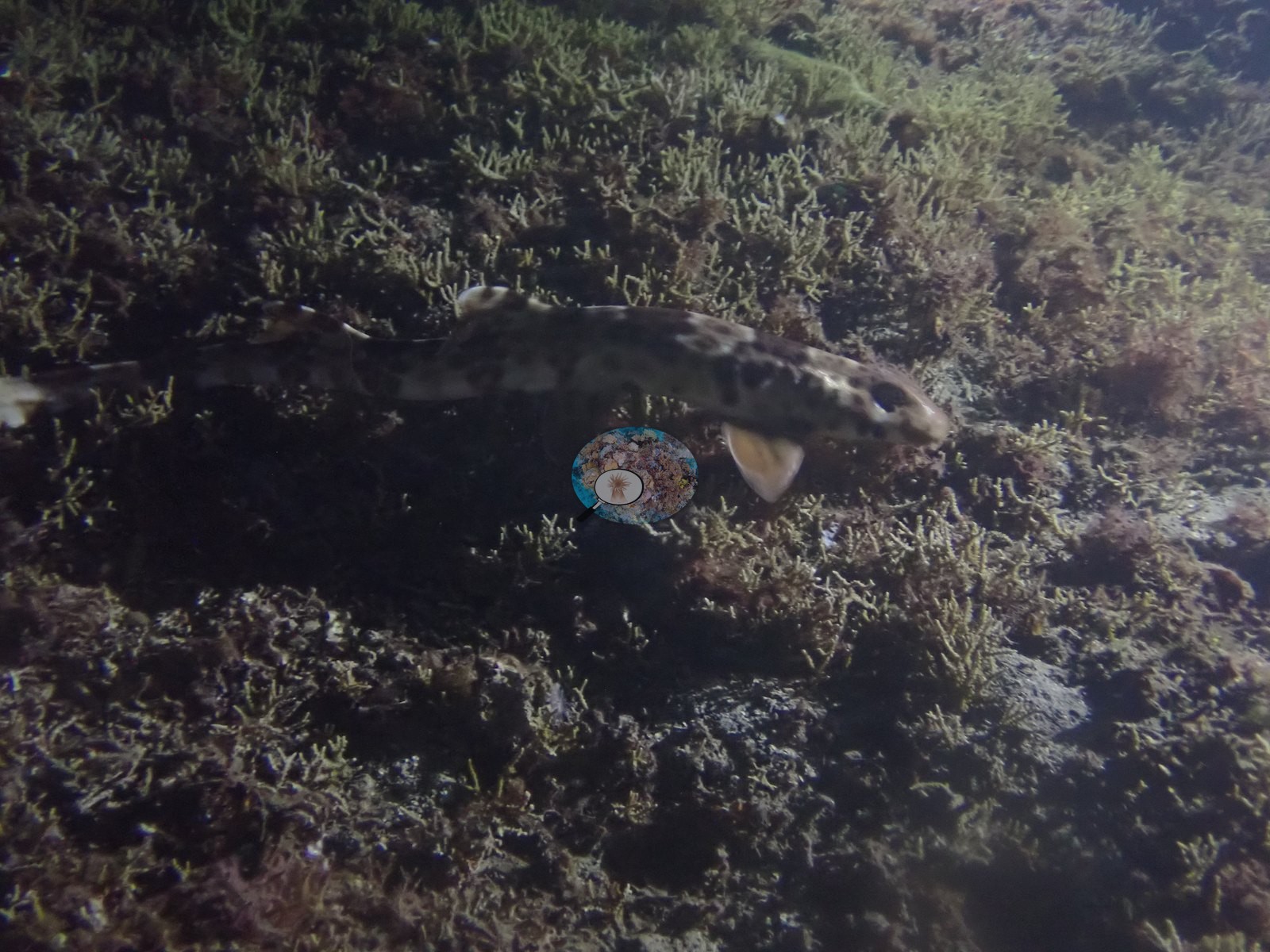
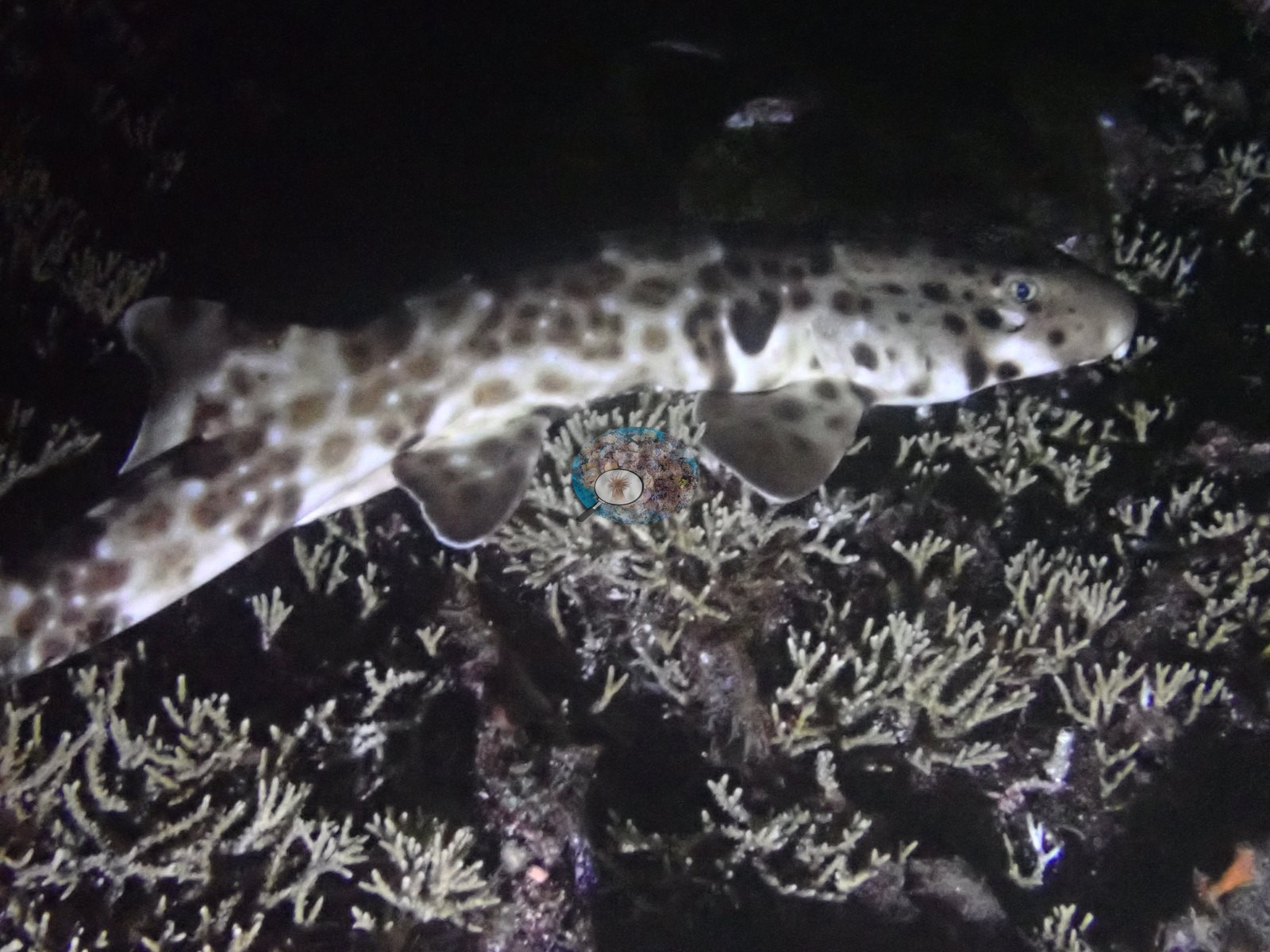
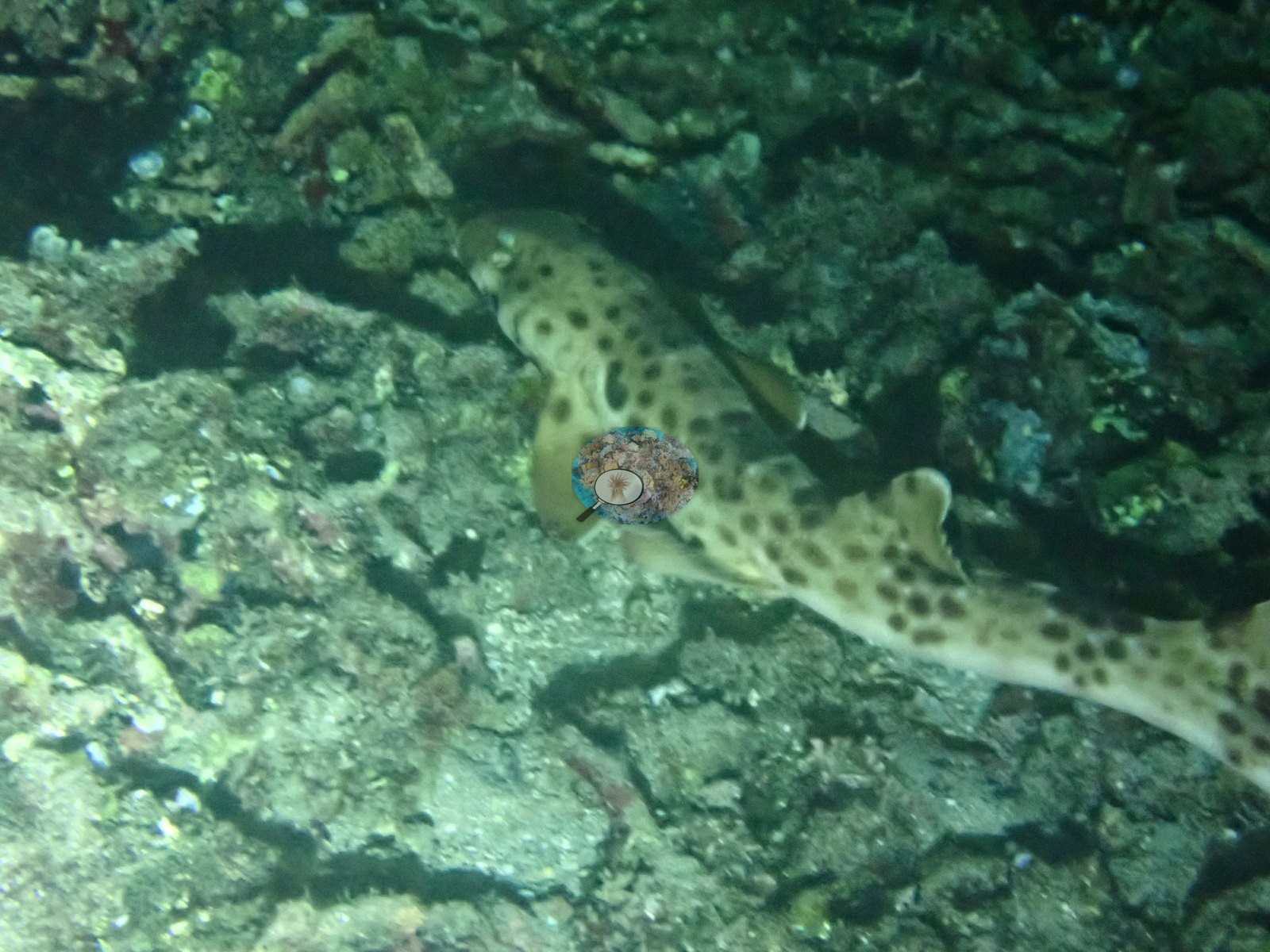
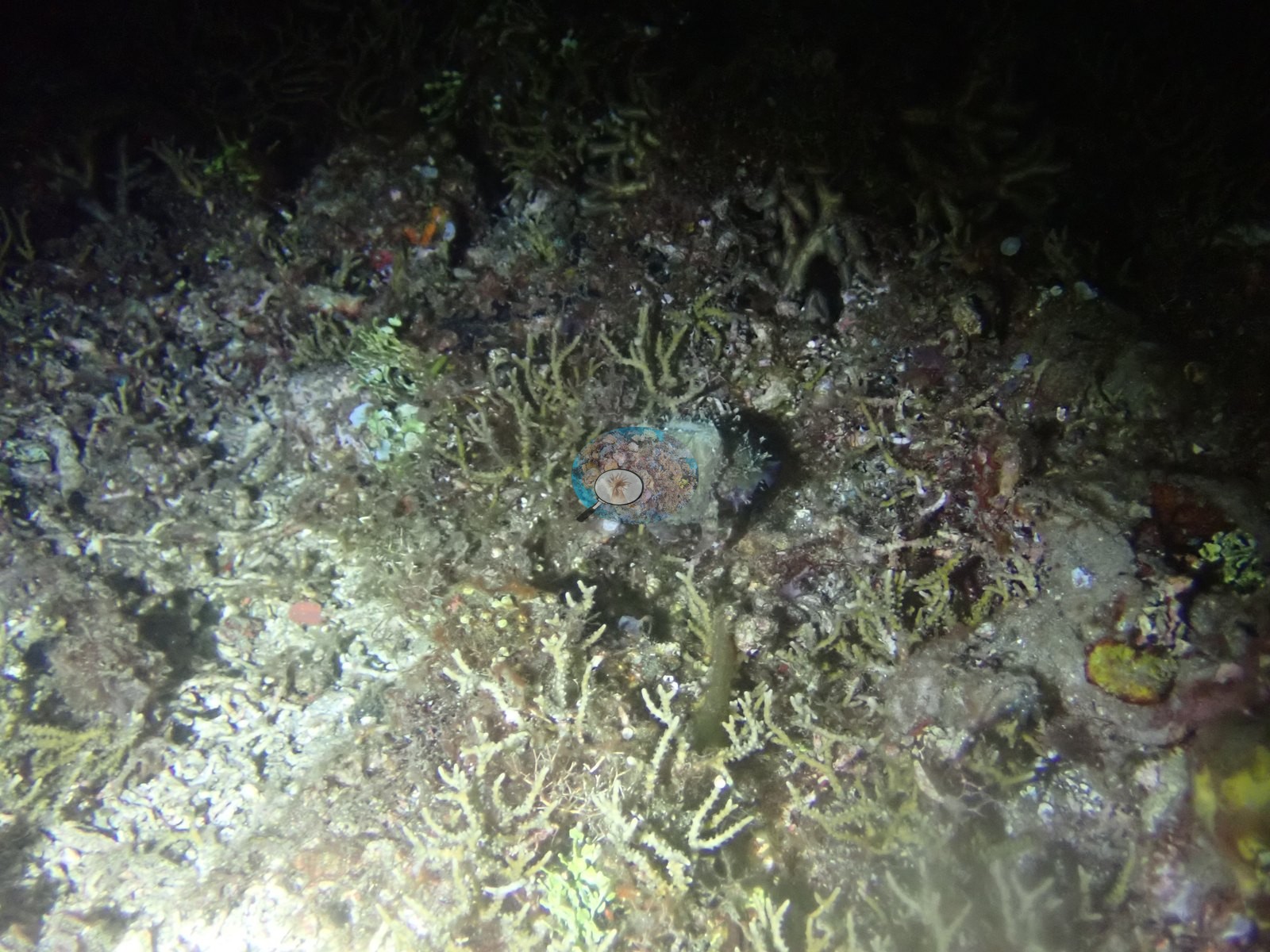
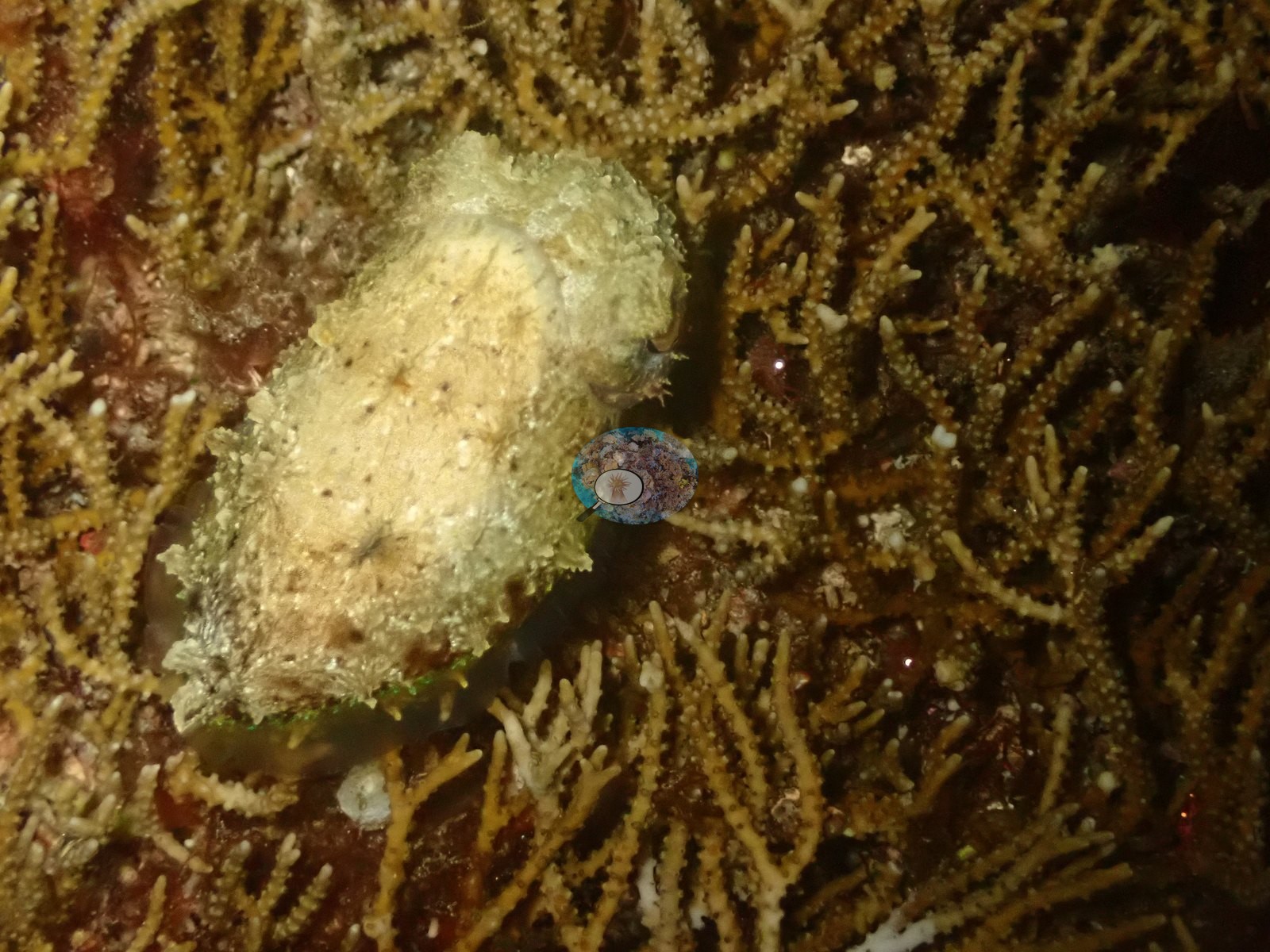
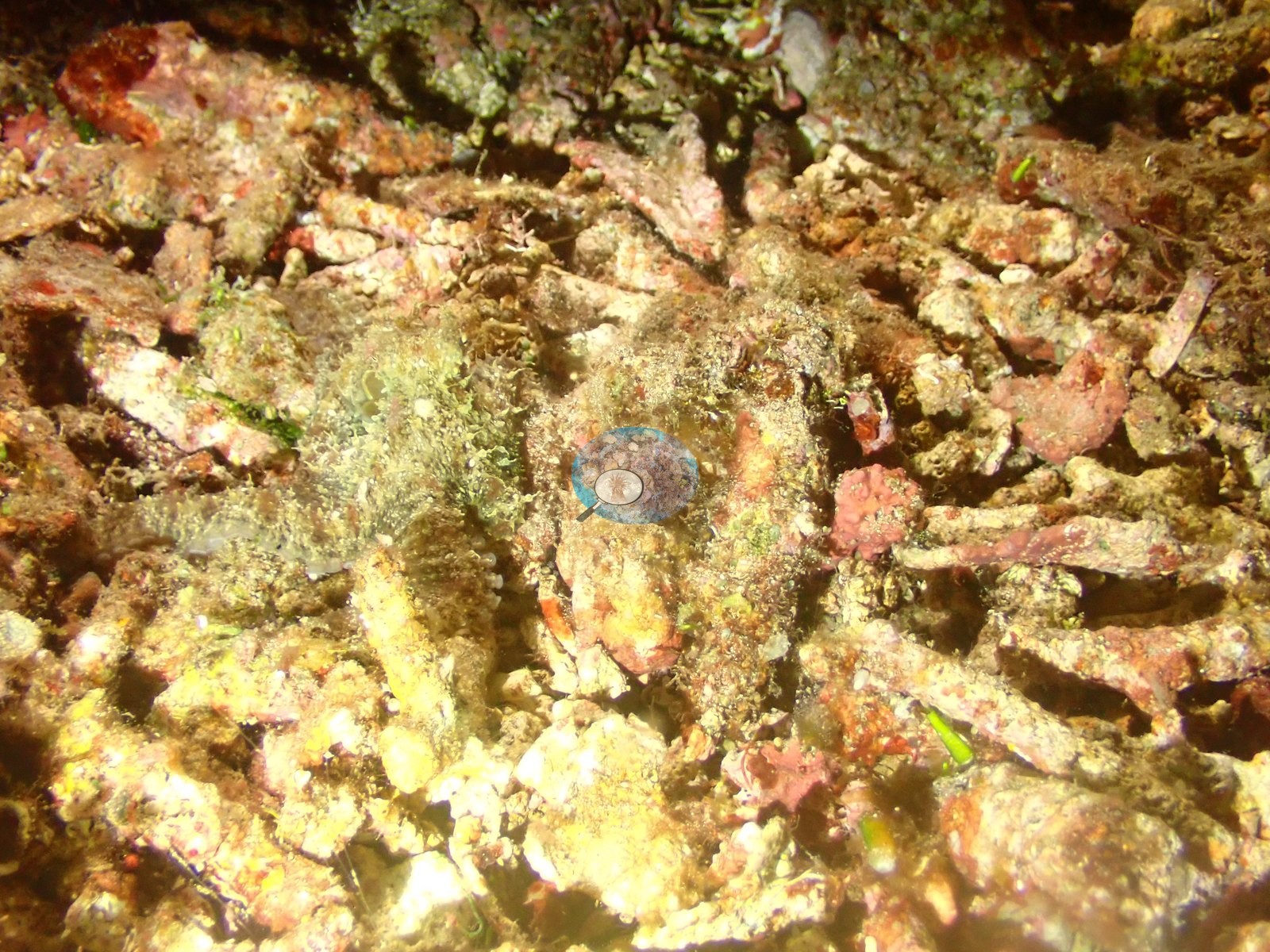
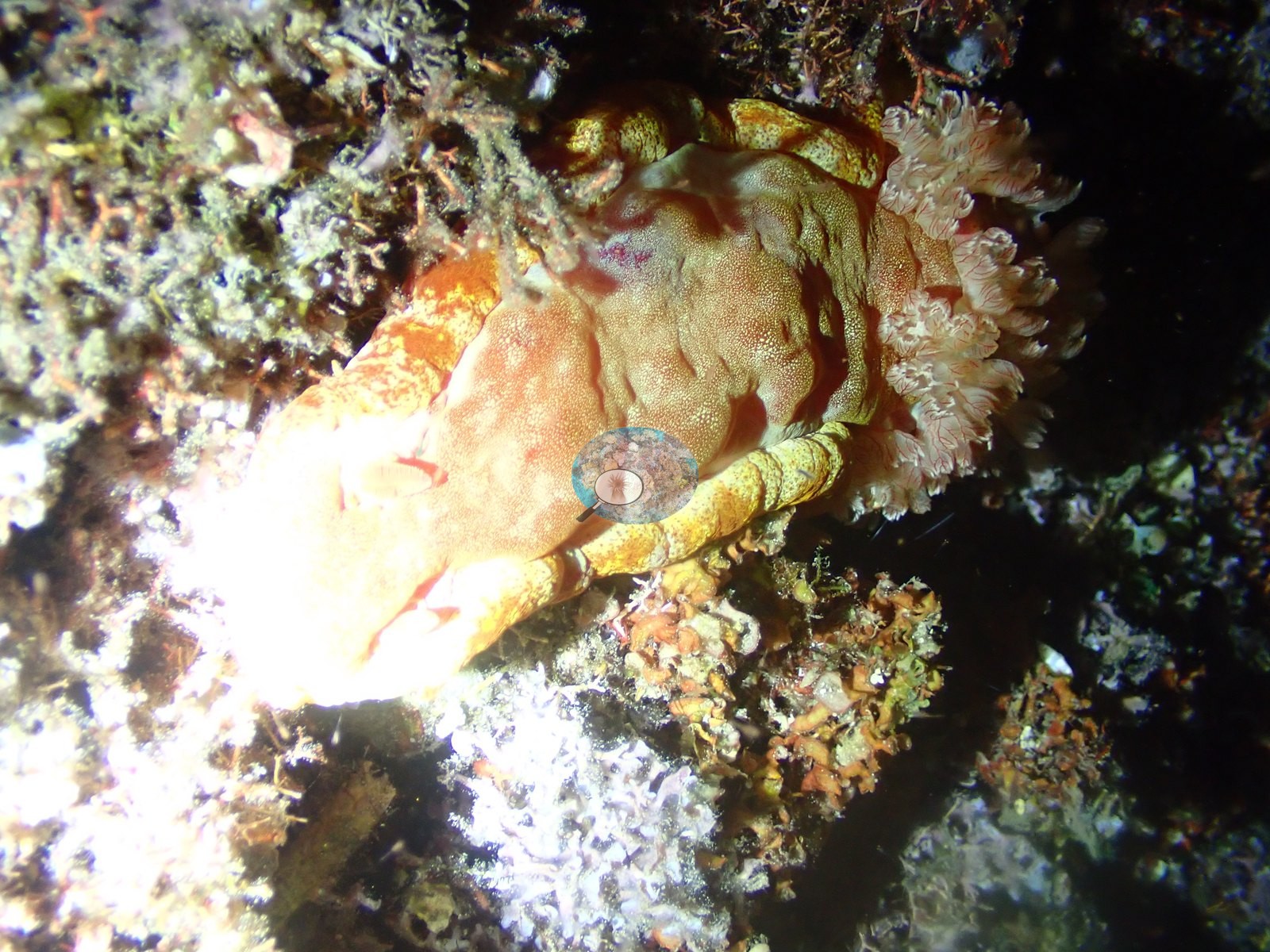
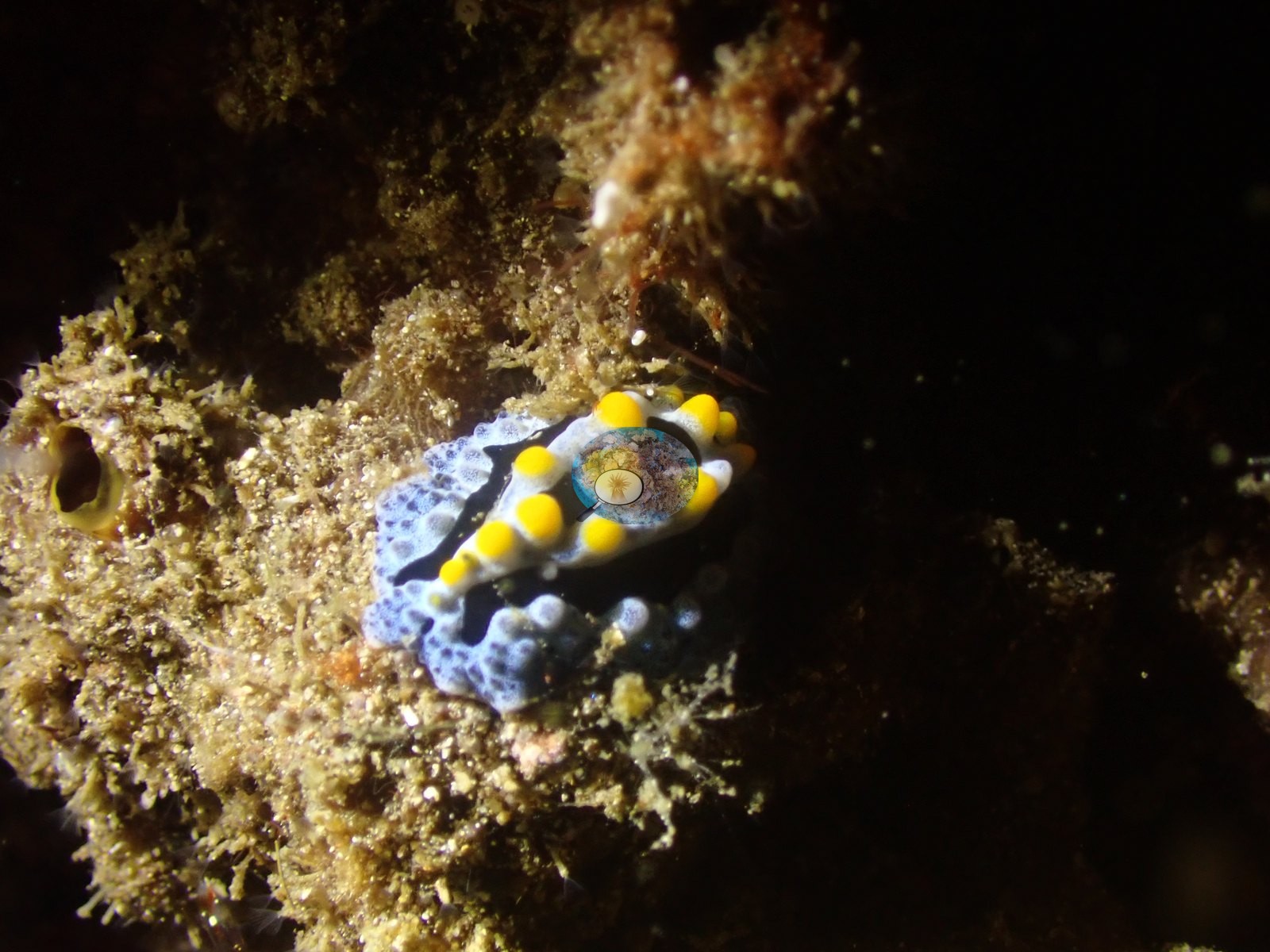
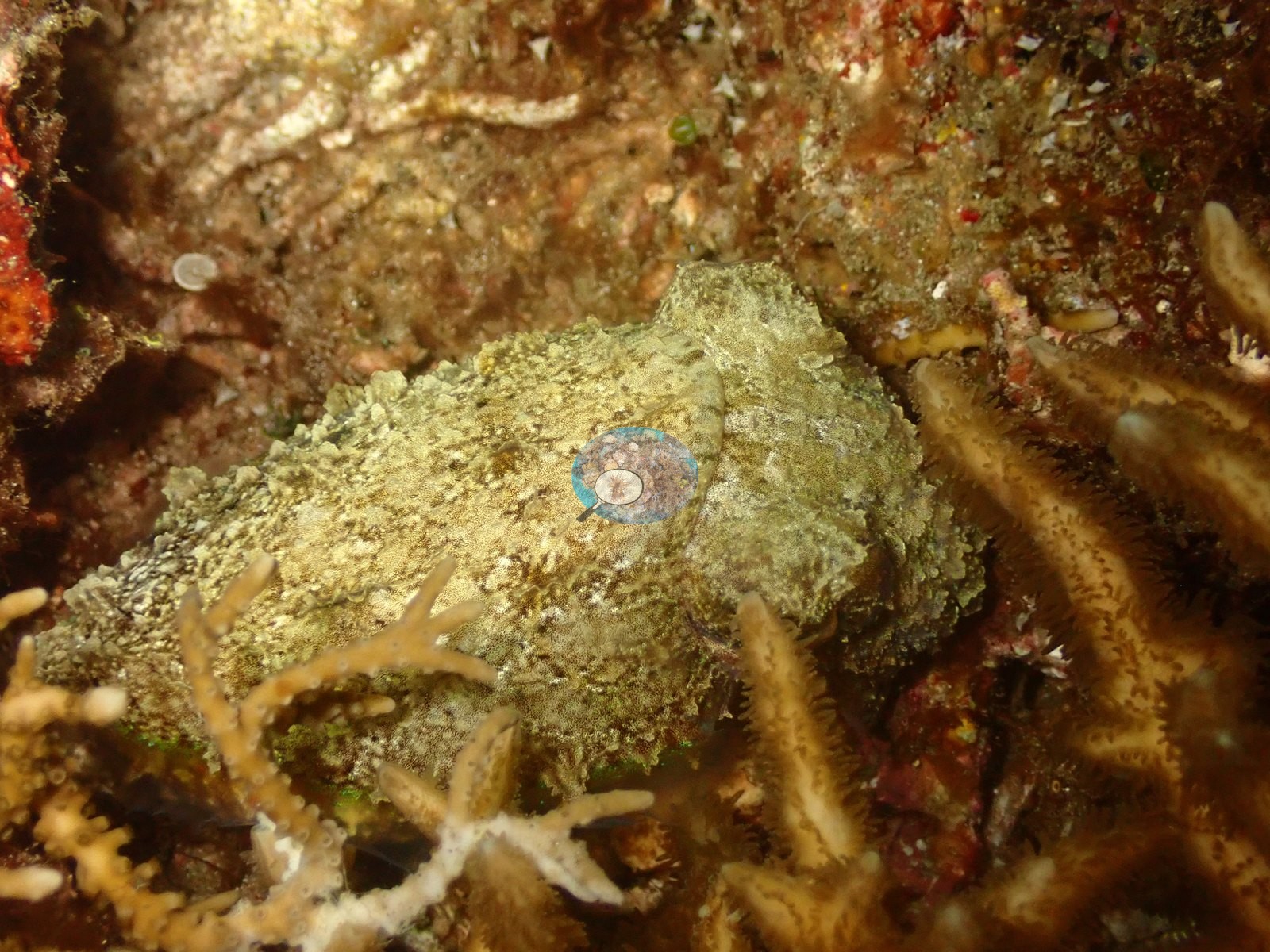
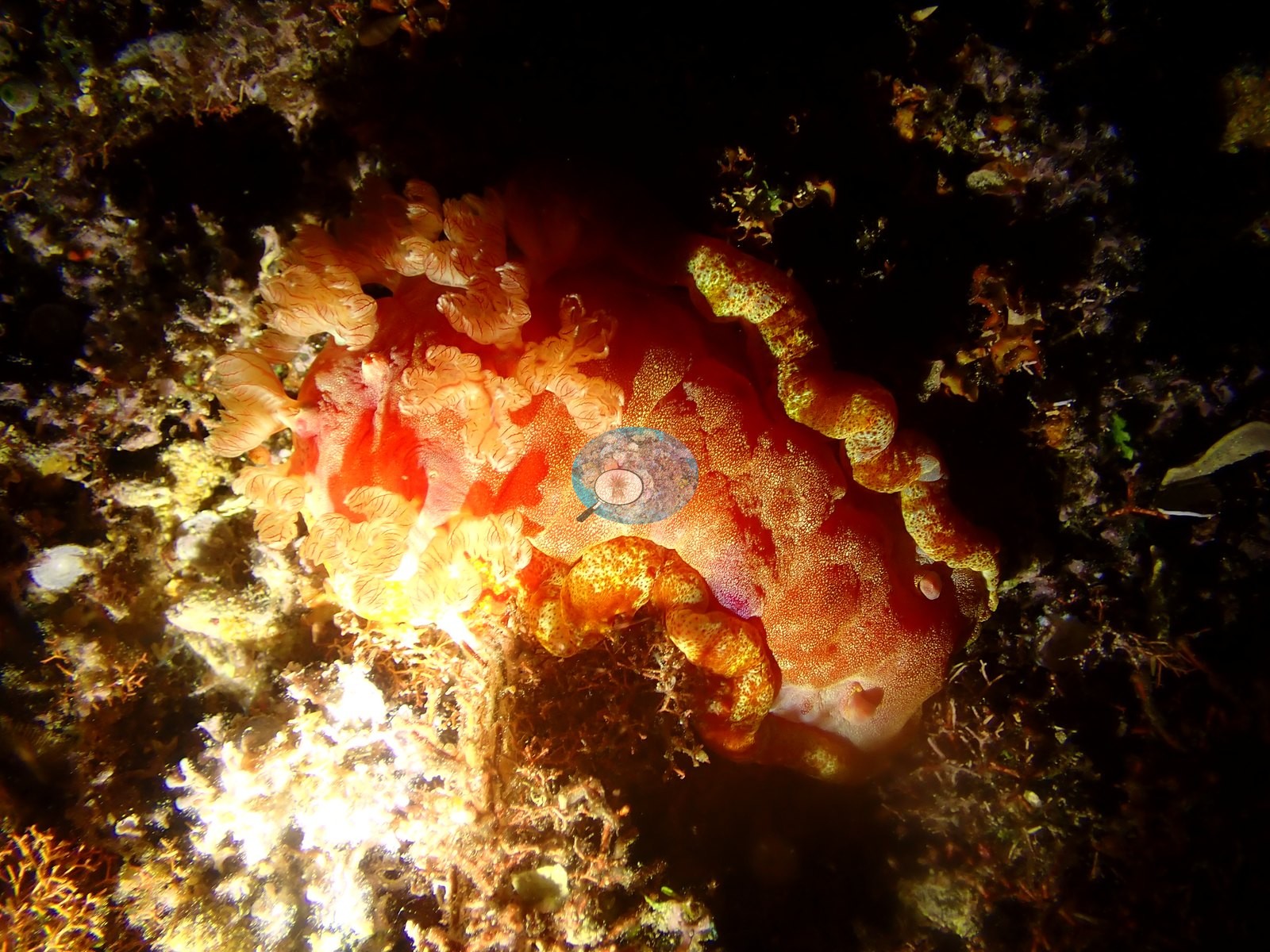
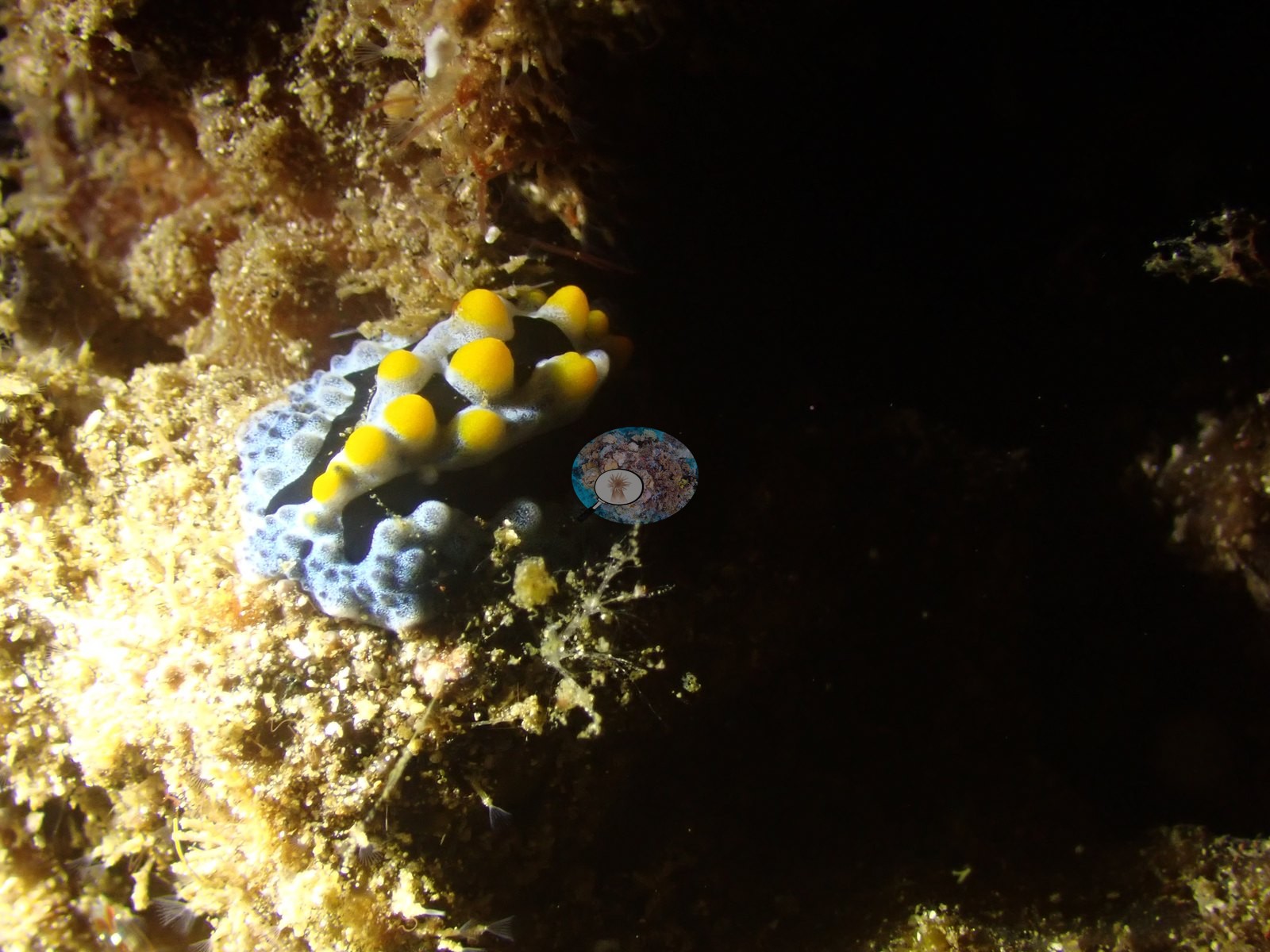
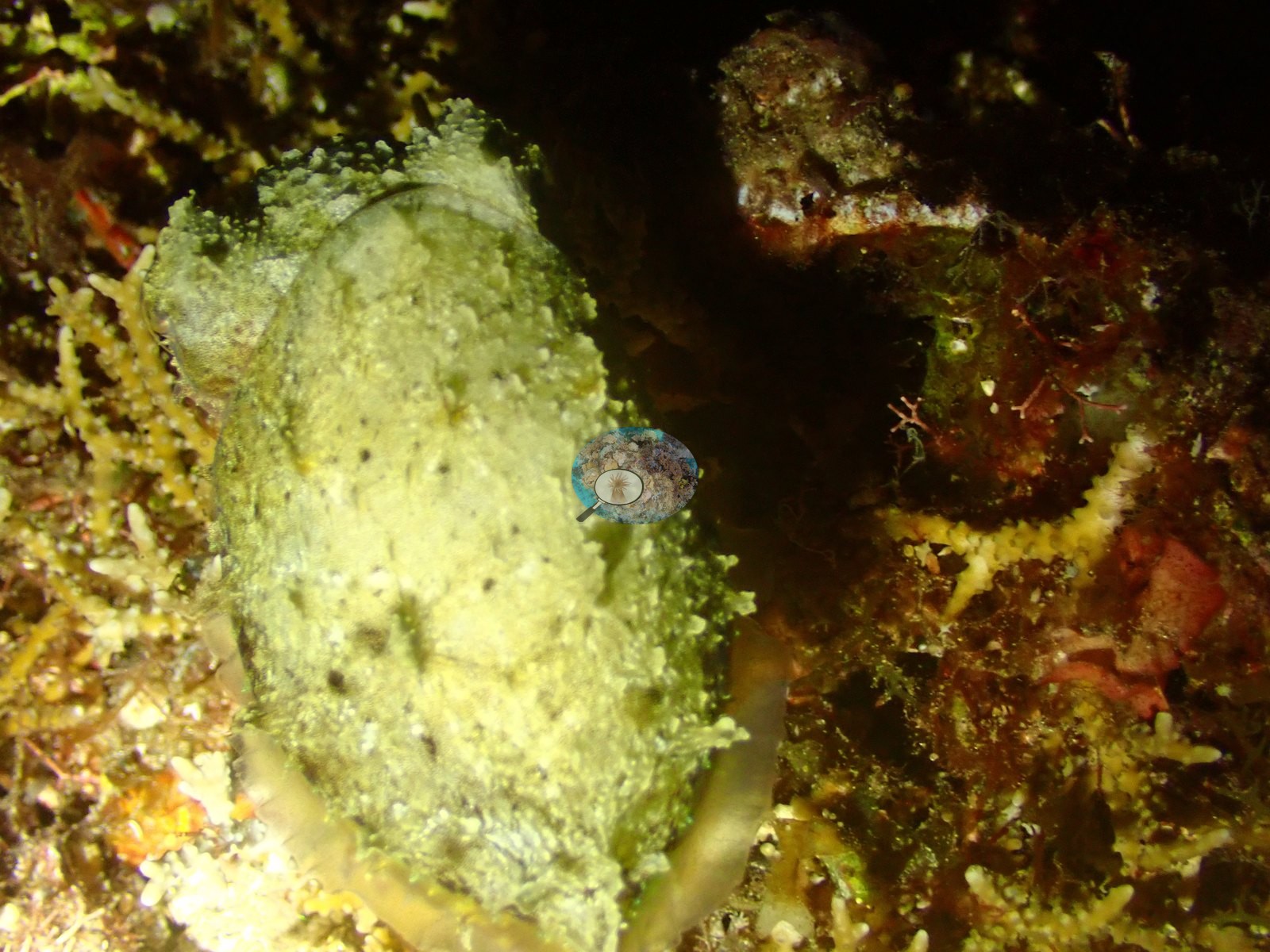
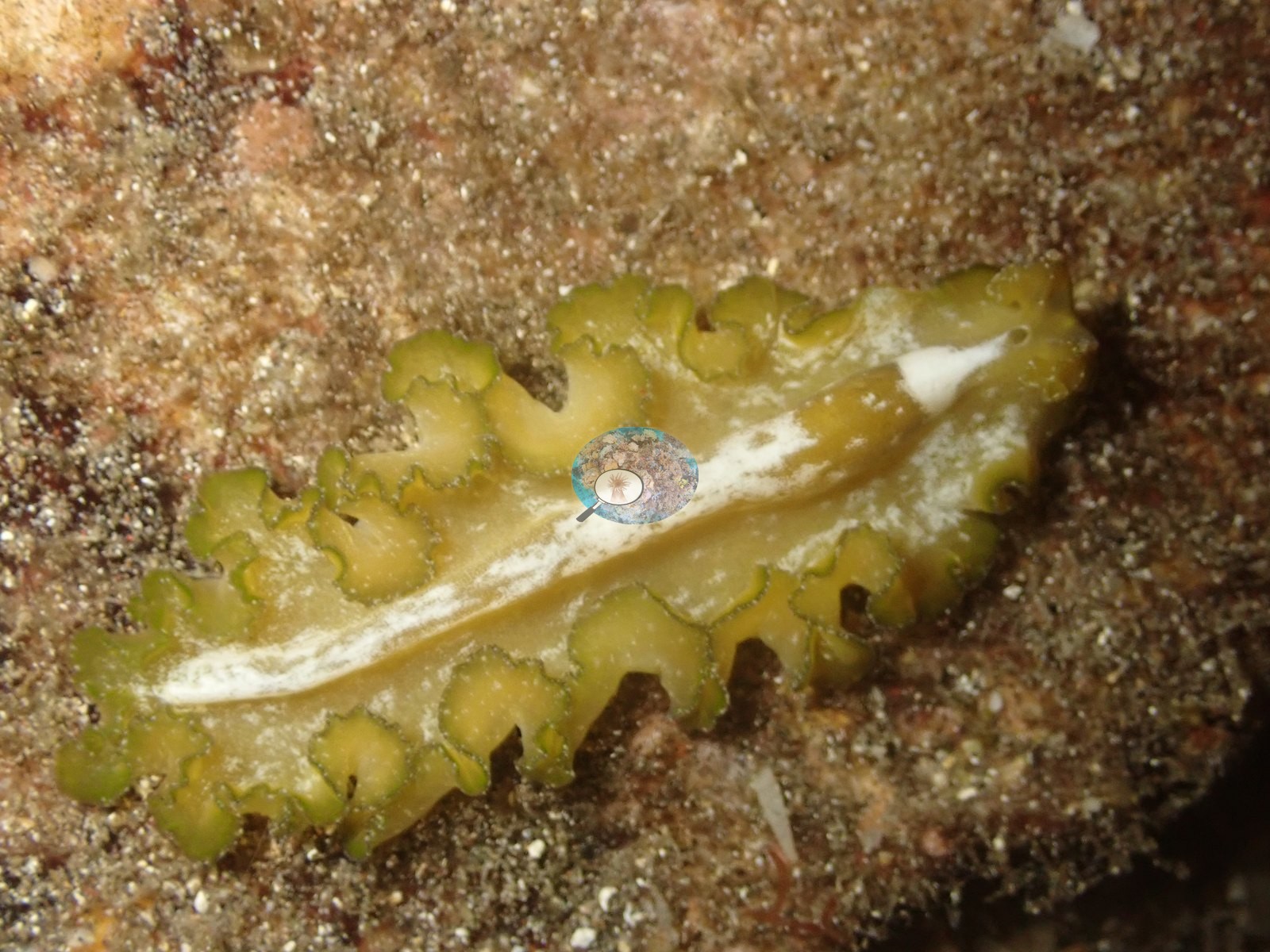
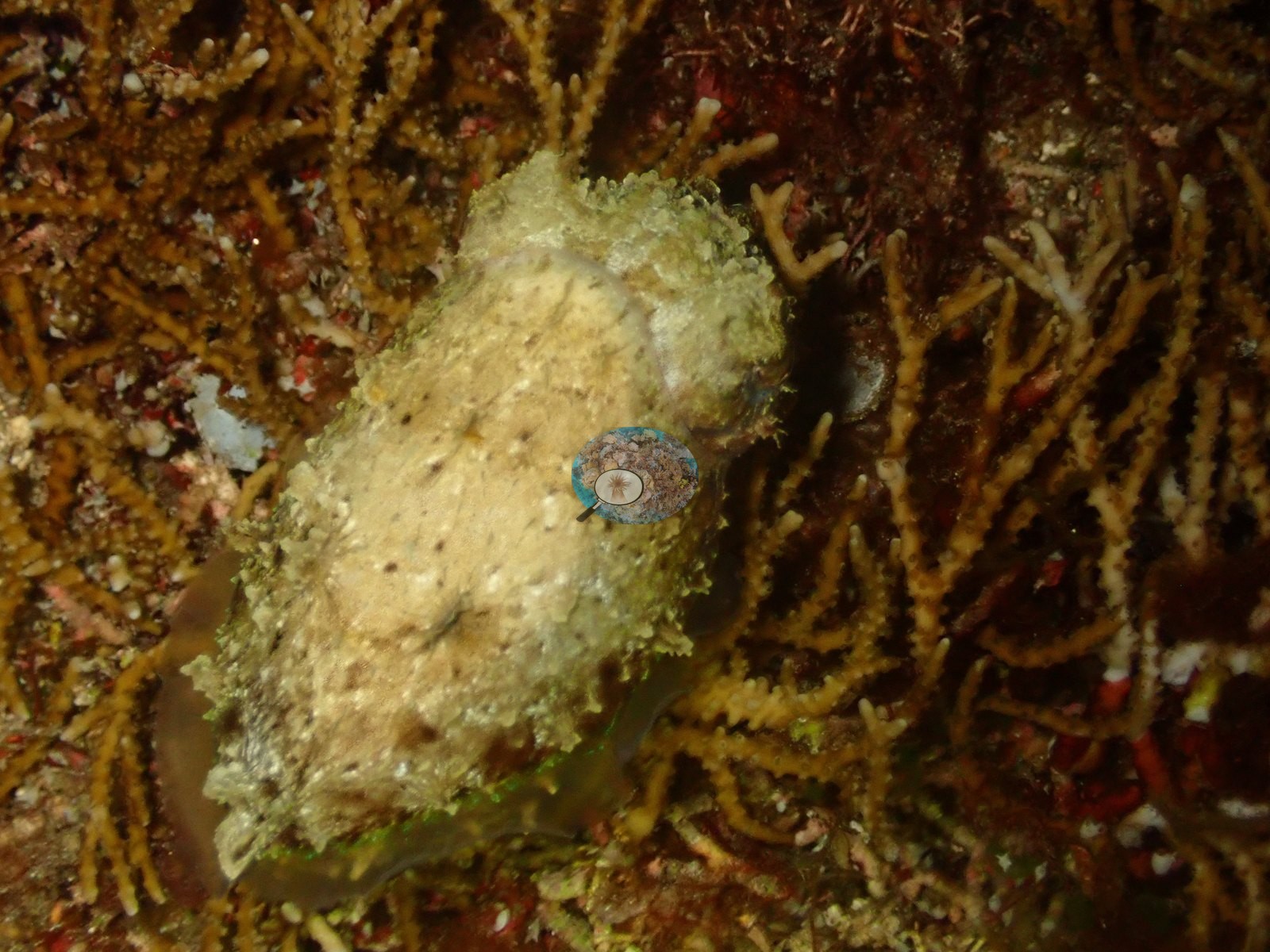
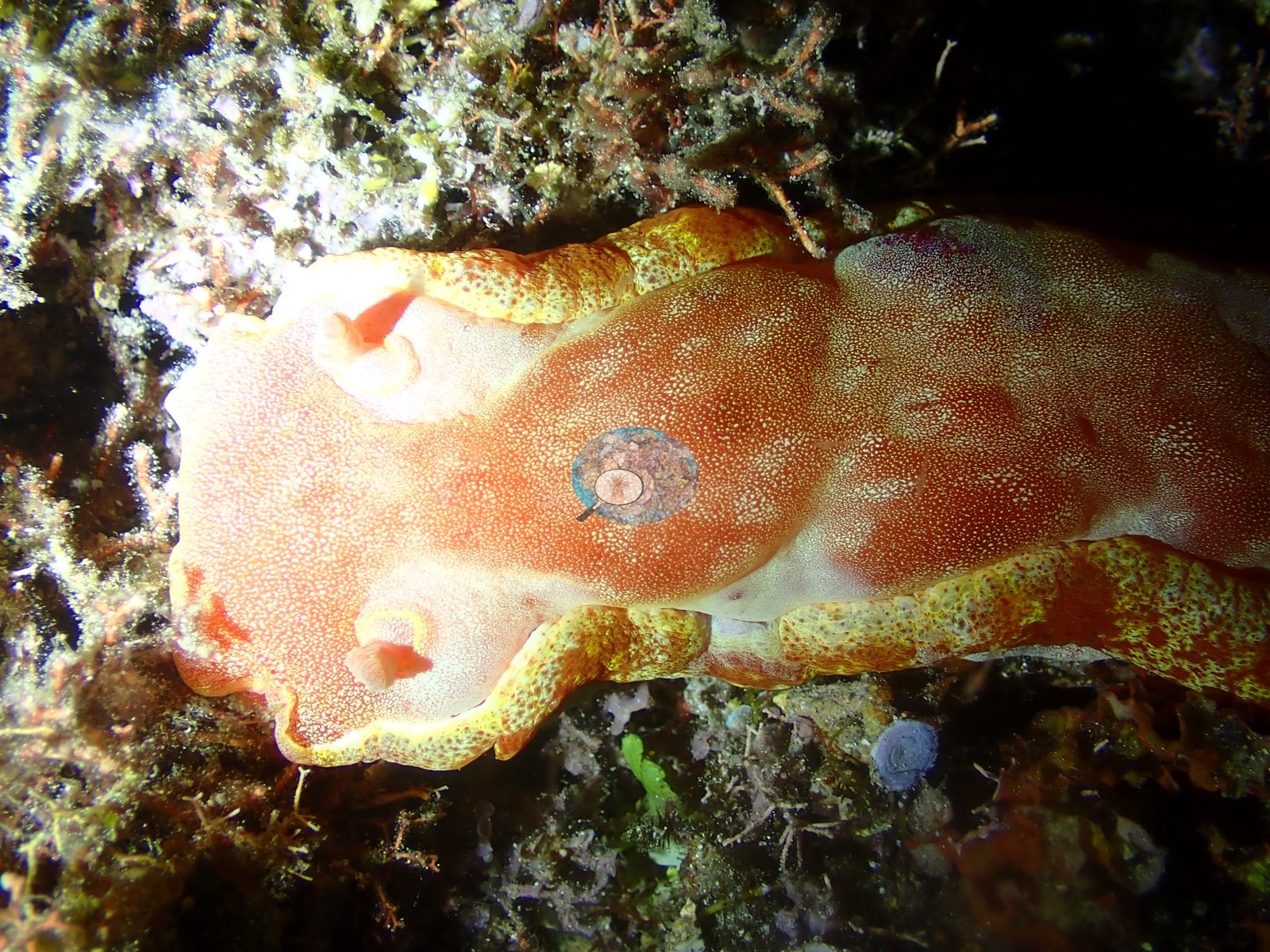
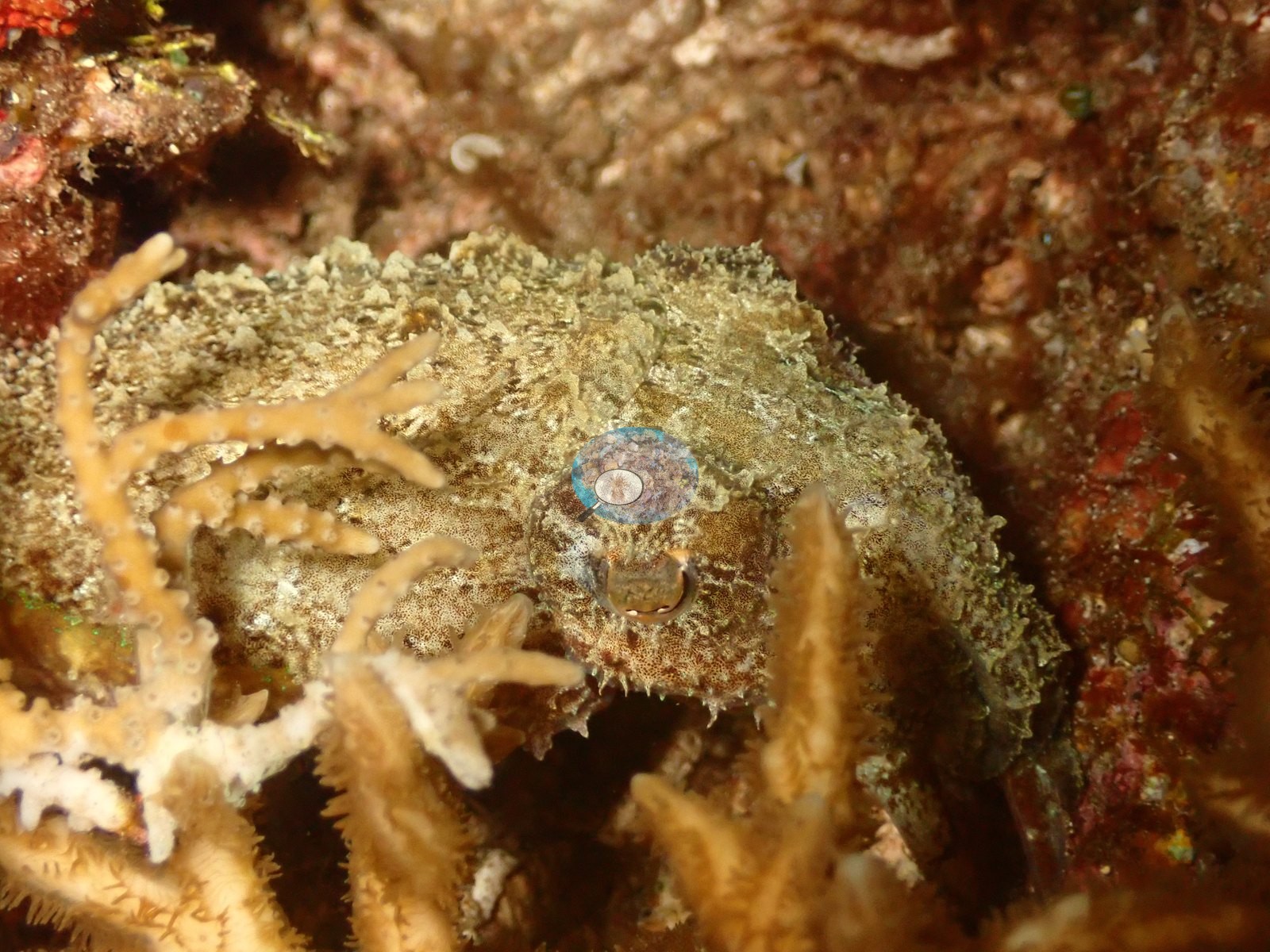
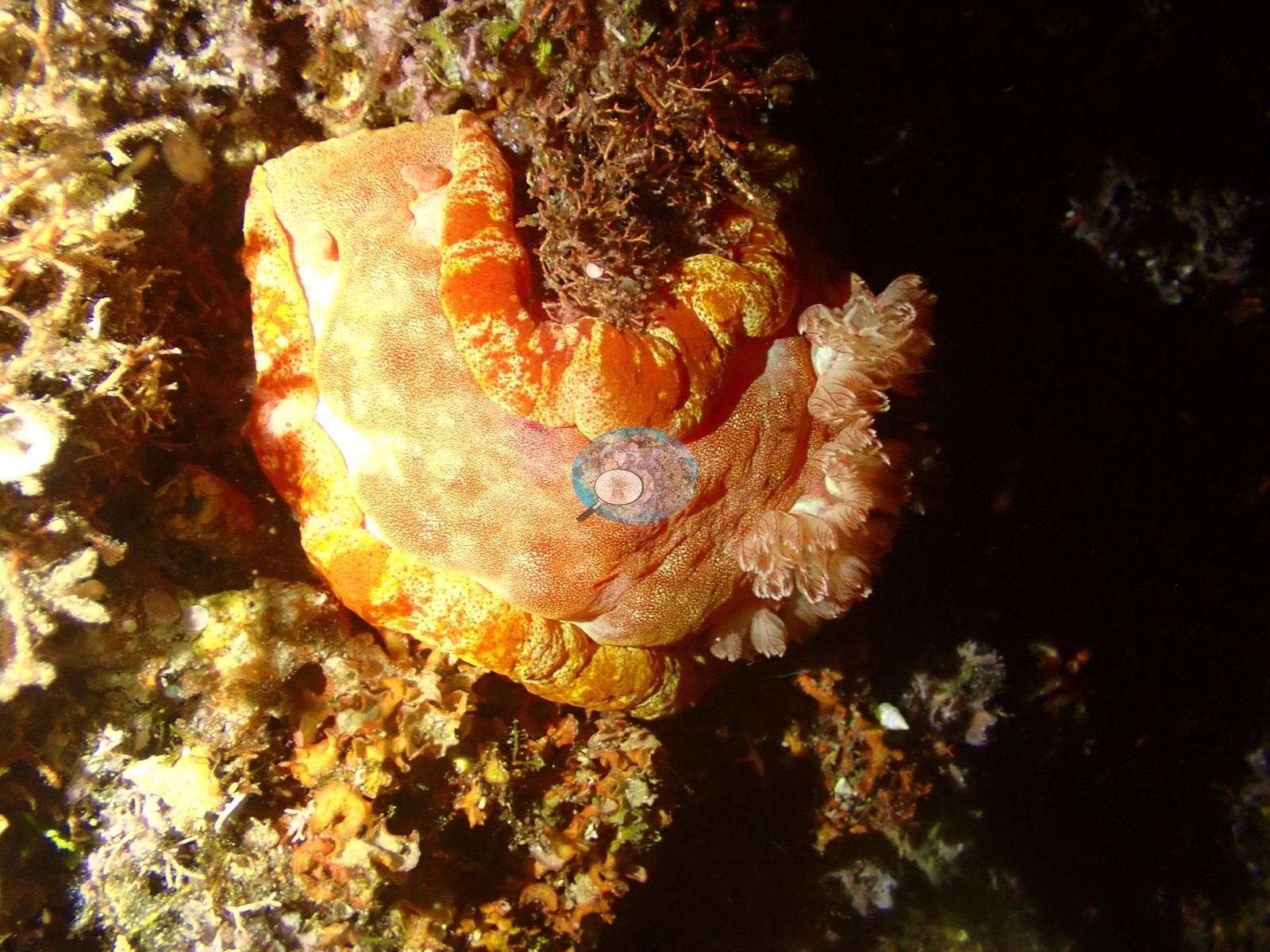
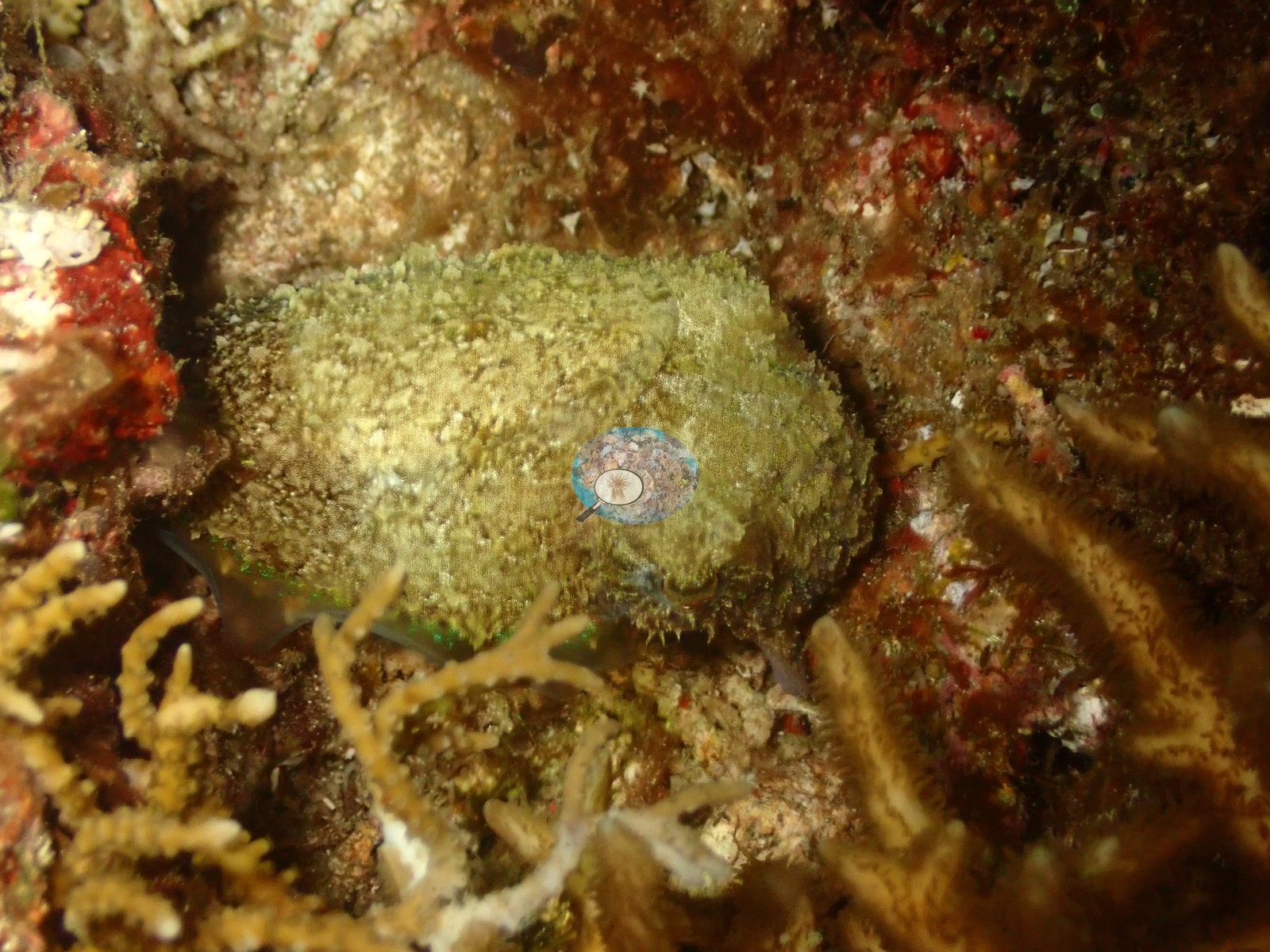
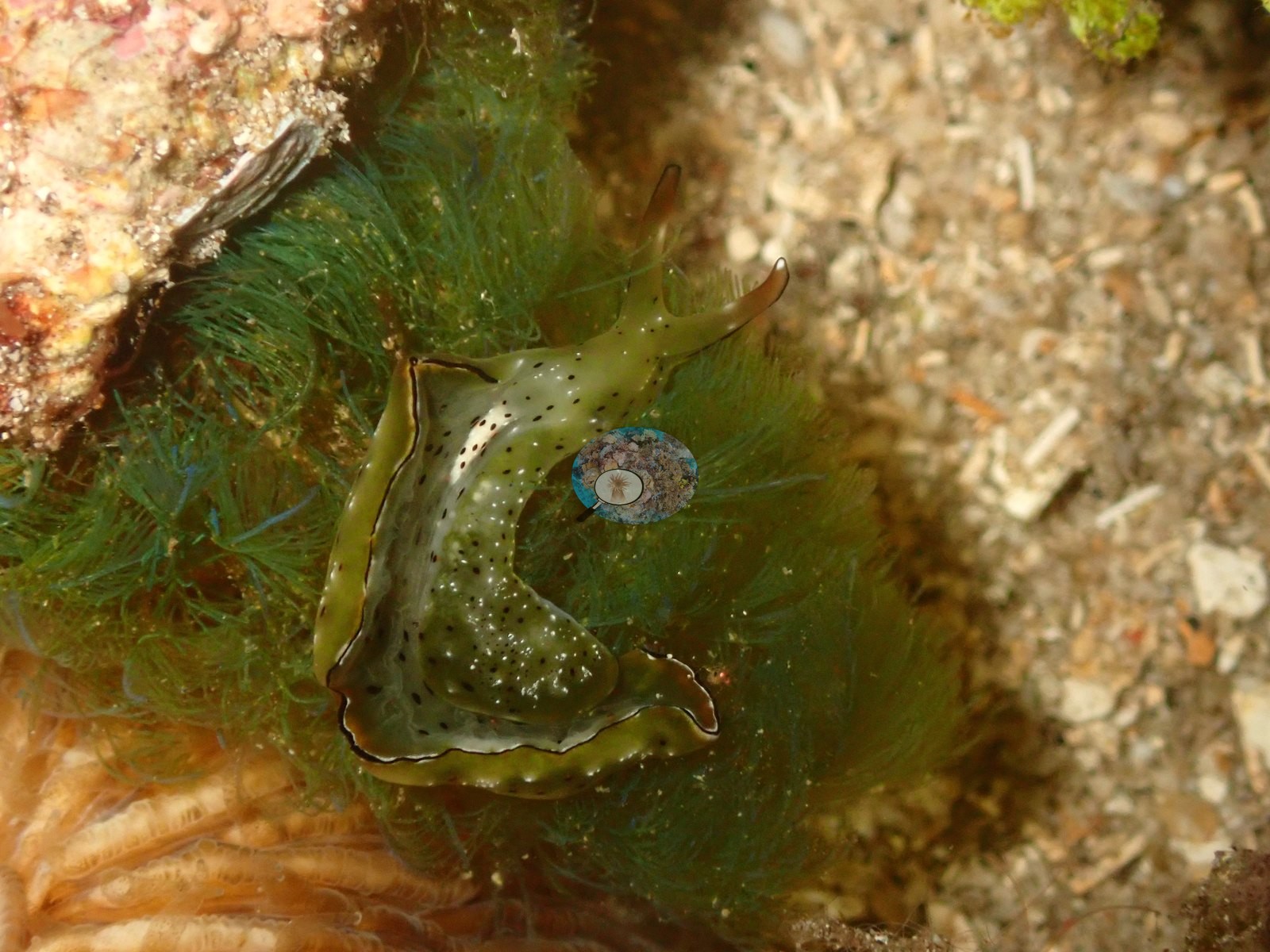
At least two individuals. The other subjects, in order of frame count: a camouflaged octopus (6 frames, eye and arms resolved once it shifted position), a large Spanish dancer, Hexabranchus sanguineus (5 frames, mantle margins and gill plume), Phyllidia ocellata (pale blue-white ground, black bands, yellow-tipped tubercles), a pale speckled sea slug with a dark mantle margin grazing a bed of green filamentous algae (sacoglossan, Elysia/Plakobranchus-type, or a Chelidonura), and an olive-and-cream polyclad flatworm on open sand (e.g., Image 1, Image 2, Image 5, Image 15, Image 17, Image 19, Image 21, Image 22, Image 23, Image 24, Image 26, Image 30, Image 35, Image 39).
Comparisons with other data
No independent survey was made at this exact site; the nearest ones are listed in the table below.
Independent surveys nearby
Within 5 km, 1 independent survey station recorded hard coral cover in 2021. Surveys since 2021 average 35% (range 35%, n=2).
Collected by other programs using different methods (MERMAID is a data platform: each MERMAID row names the organization that did the survey, and its method is in the row's hover text. *Conducted by citizen scientists), so these are context for the figures above, not a like-for-like comparison. Where a station was surveyed more than once the range is shown. Station names are not dive-site names.
| Agency | Site / location | Date | Hard coral cover (%) | Distance | Link |
|---|---|---|---|---|---|
| MERMAID project “Nukila”* | Nukila | 2021 | 35% (2 surveys) | 1.43 km | Ngolo K. 2021. Nukila. MERMAID |
| not named in MERMAID | project not stated | 2023 | — | — | Ramli M. 2023. maitara selatan |
Data & links
All images from Coral Reef Diagnostics. Data on this page are from the organizations named in the data-sources table above, not Coral Reef Diagnostics; Coral Reef Diagnostics has no survey of its own at this site.
© Coral Reef Diagnostics.