
Indonesia - Halmahera: Kusu Drift (round 2)
Part of the regional summaries: Indonesia - Halmahera and Indonesia - Maluku
More info
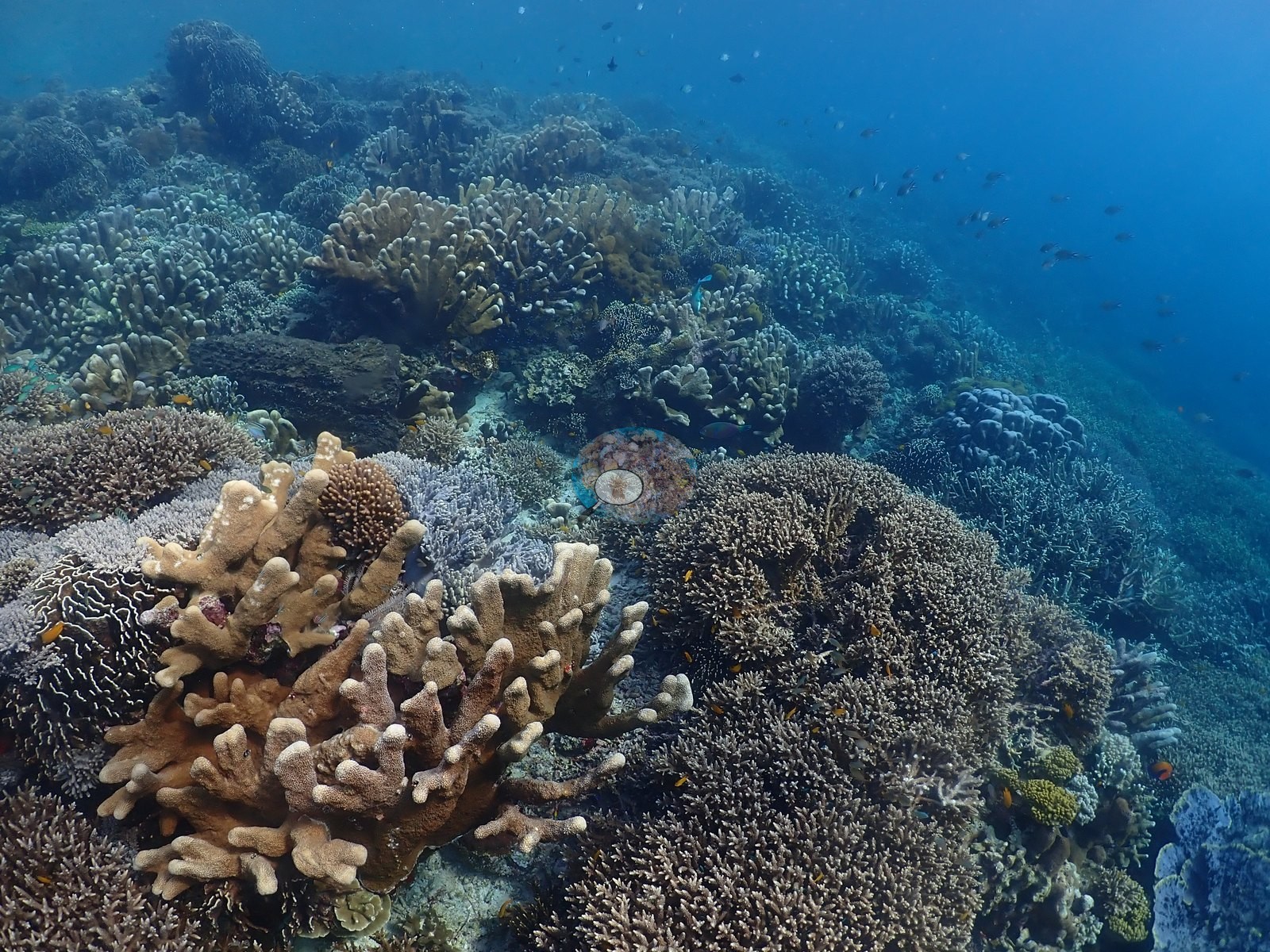
North Maluku (NOAA CRW virtual station)Kusu Drift's second dive opens in the same hazy, low-visibility water that plagued the earlier flooded-camera dive, but develops into one of the most colorful and densely built reef stretches of the trip - vivid salmon and magenta staghorn Acropora fields and stacked tabulate tables. One pale cauliflower-form colony is flagged as possibly bleached or a natural pale morph, not part of a wider pattern. A blind Claude computer-vision point count puts coral cover around 43%.
Penyelaman kedua Kusu Drift dibuka di air berkabut dan berjarak pandang rendah yang sama seperti penyelaman sebelumnya dengan kamera kemasukan air, tetapi berkembang menjadi salah satu bentangan terumbu paling berwarna dan paling rapat sepanjang perjalanan — hamparan Acropora bercabang berwarna salmon dan magenta yang cerah serta meja tabulat yang bersusun. Satu koloni pucat berbentuk kembang kol dicatat sebagai kemungkinan memutih atau memang bermorf pucat alami, bukan bagian dari pola yang lebih luas.
Terjemahan ringkasan ini oleh AI; versi bahasa Inggris yang berlaku. Translated from the site’s shorter map summary.
Eight other CRD dive sites within 5 km shown in orange — click a marker to open its page.
18 of these 52 photographs are shown beside the text that discusses them under "Site description" below.
Site description
Setting
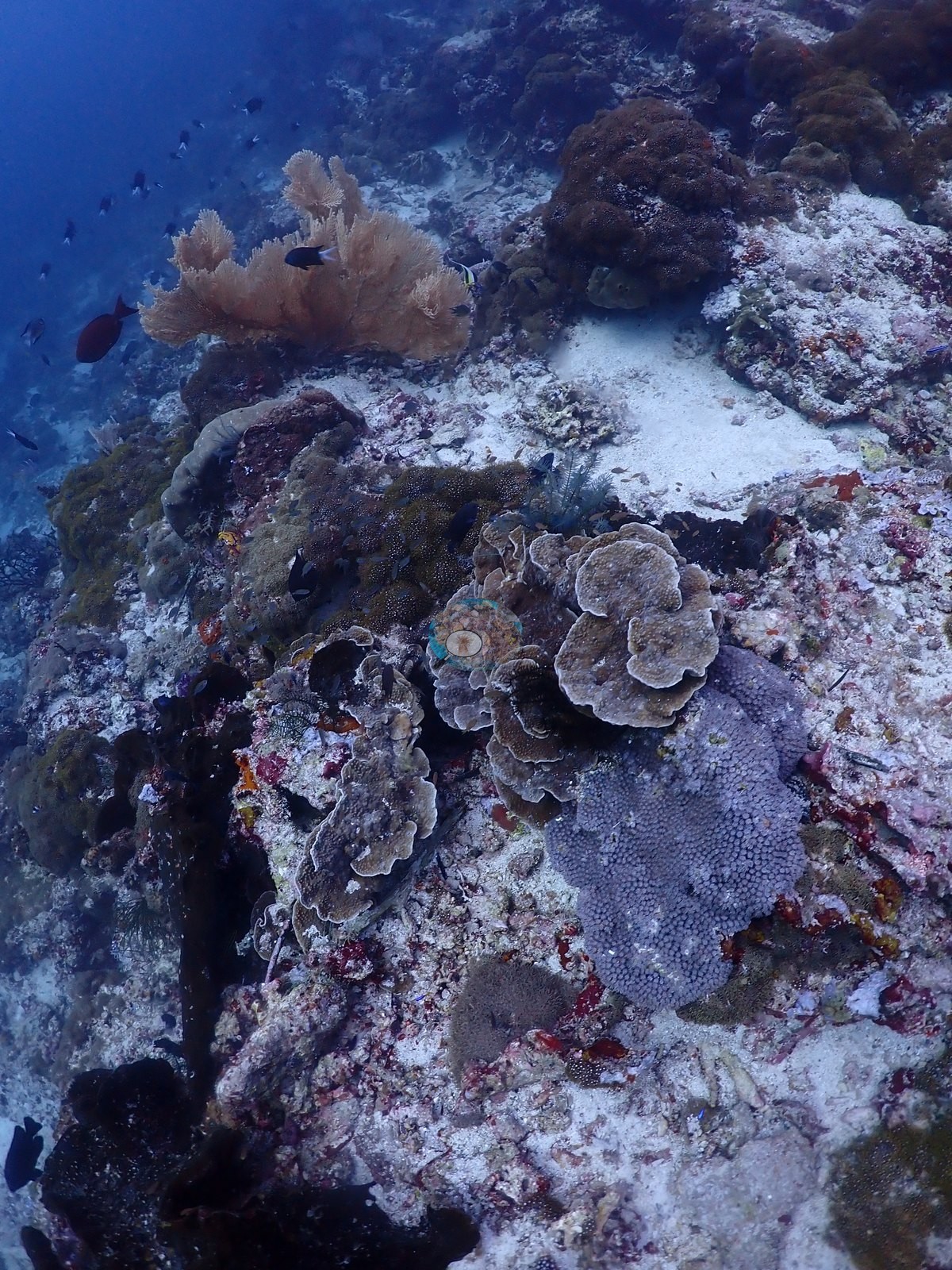
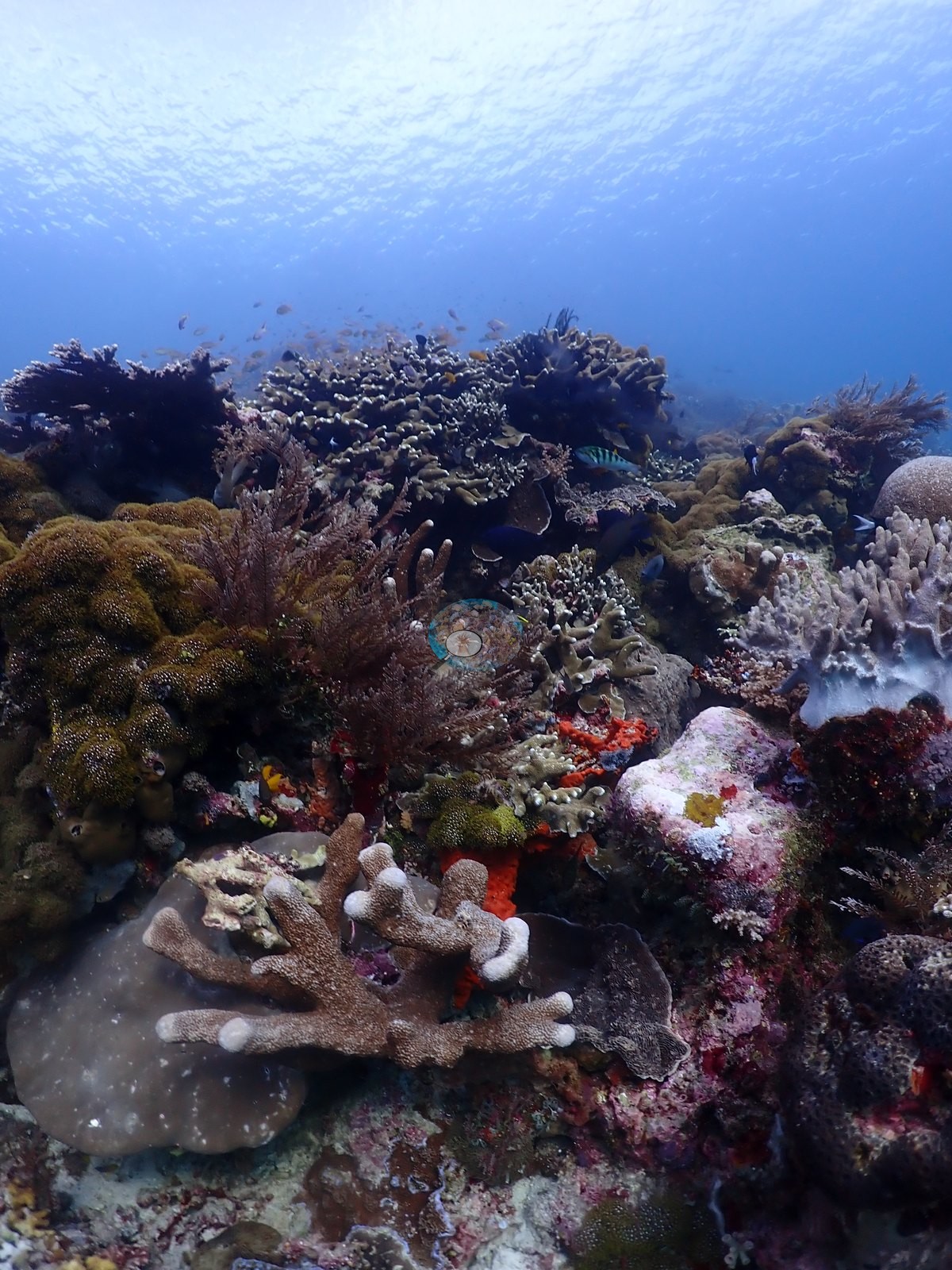
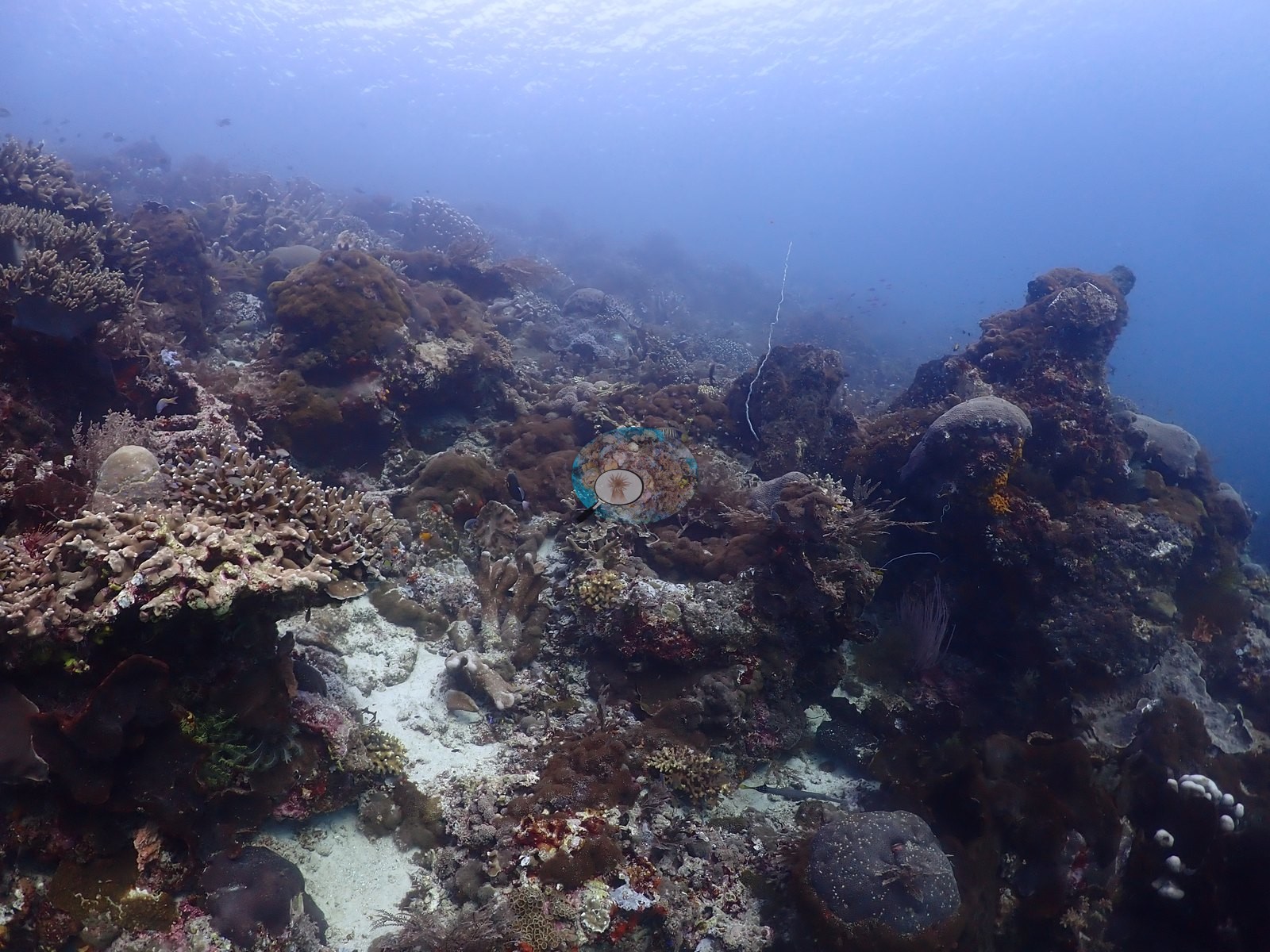
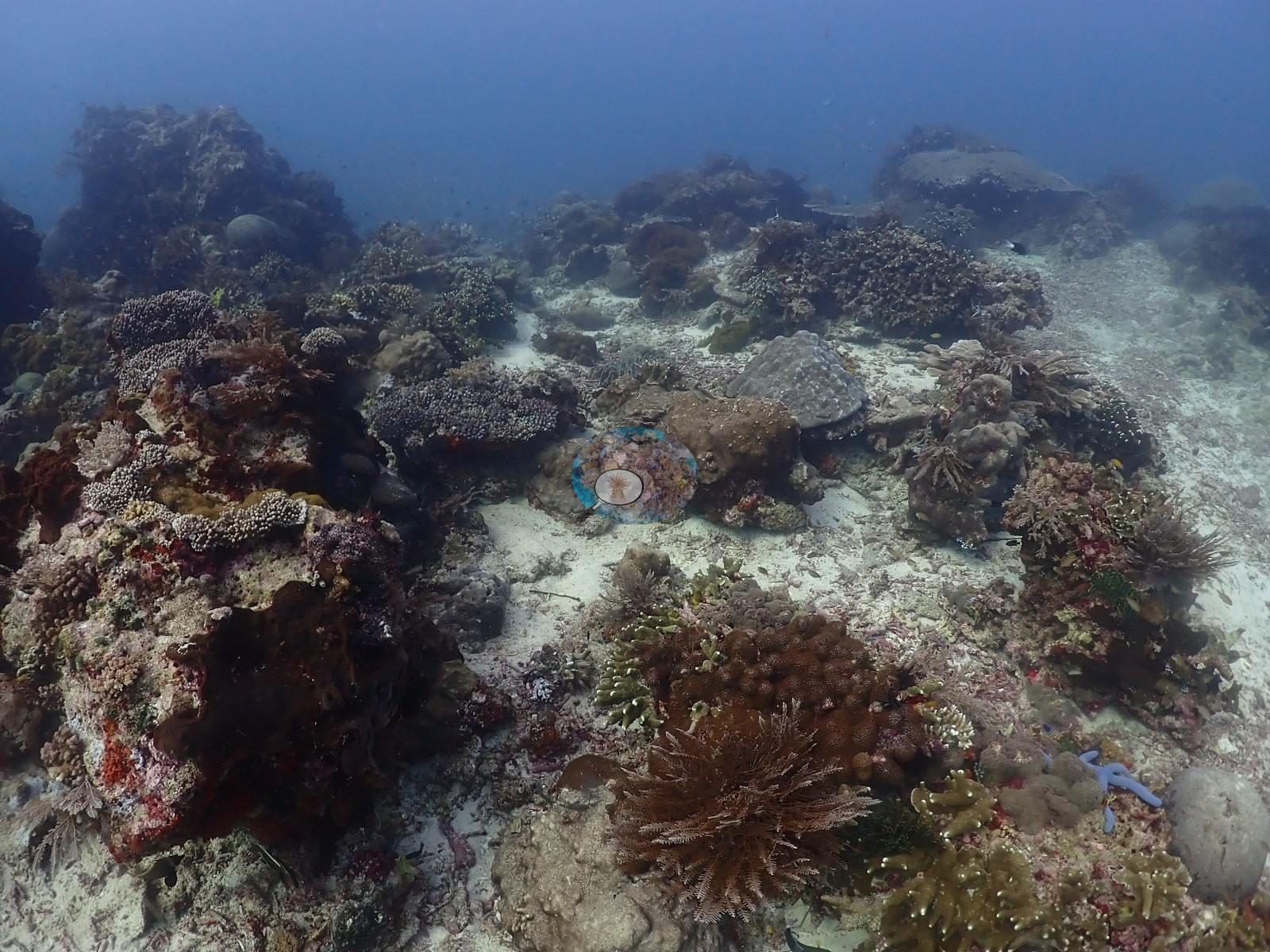
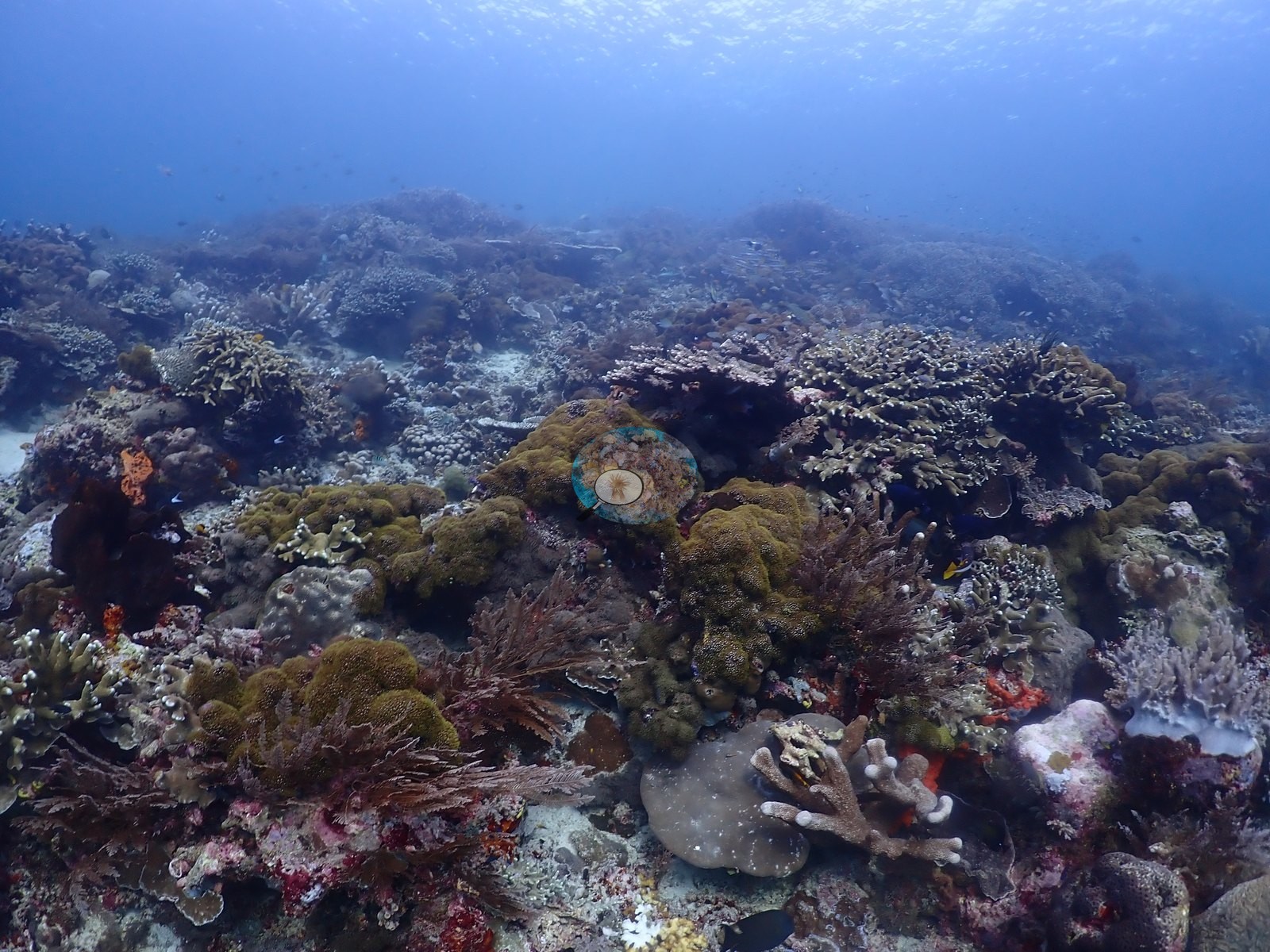
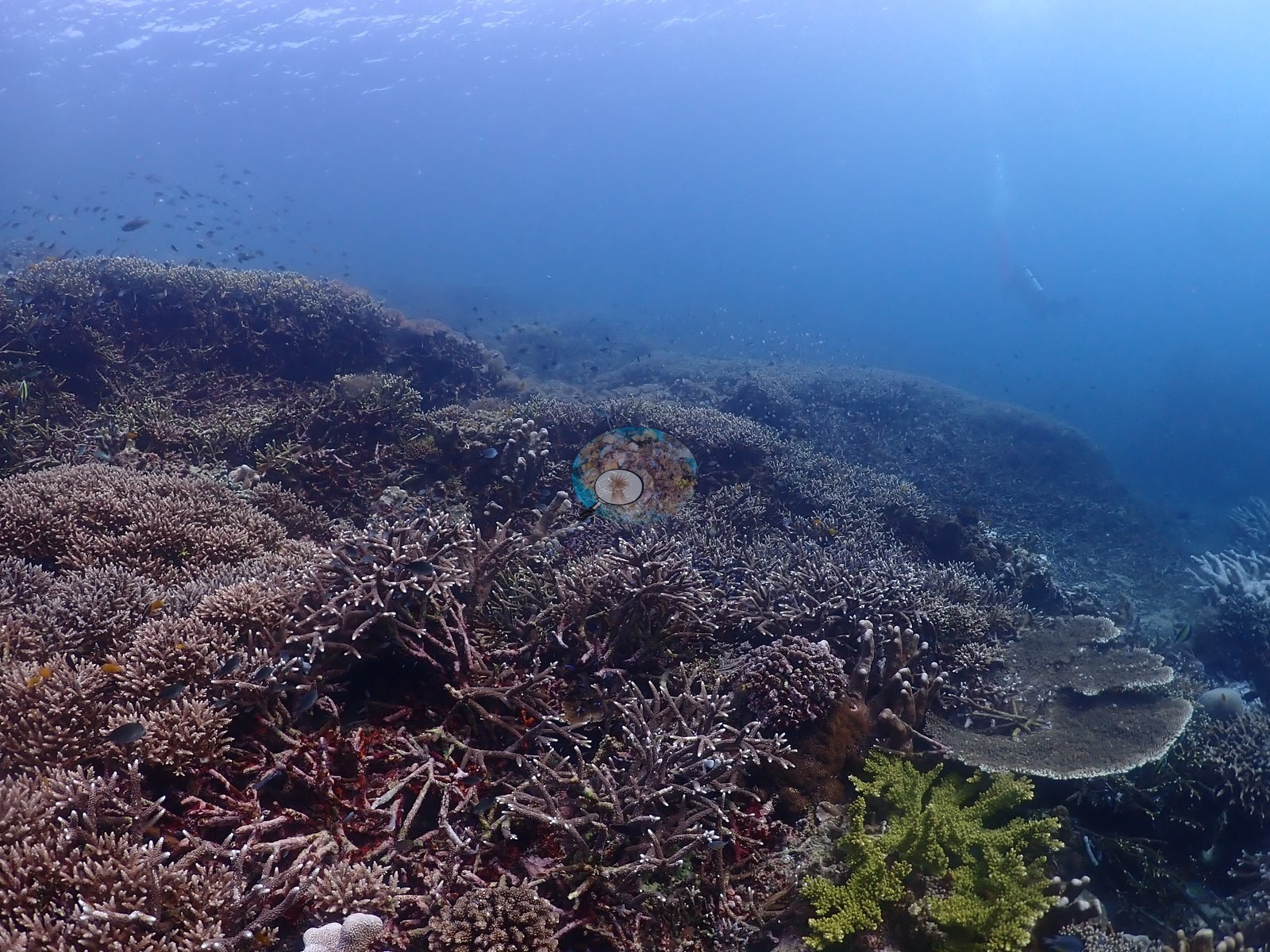
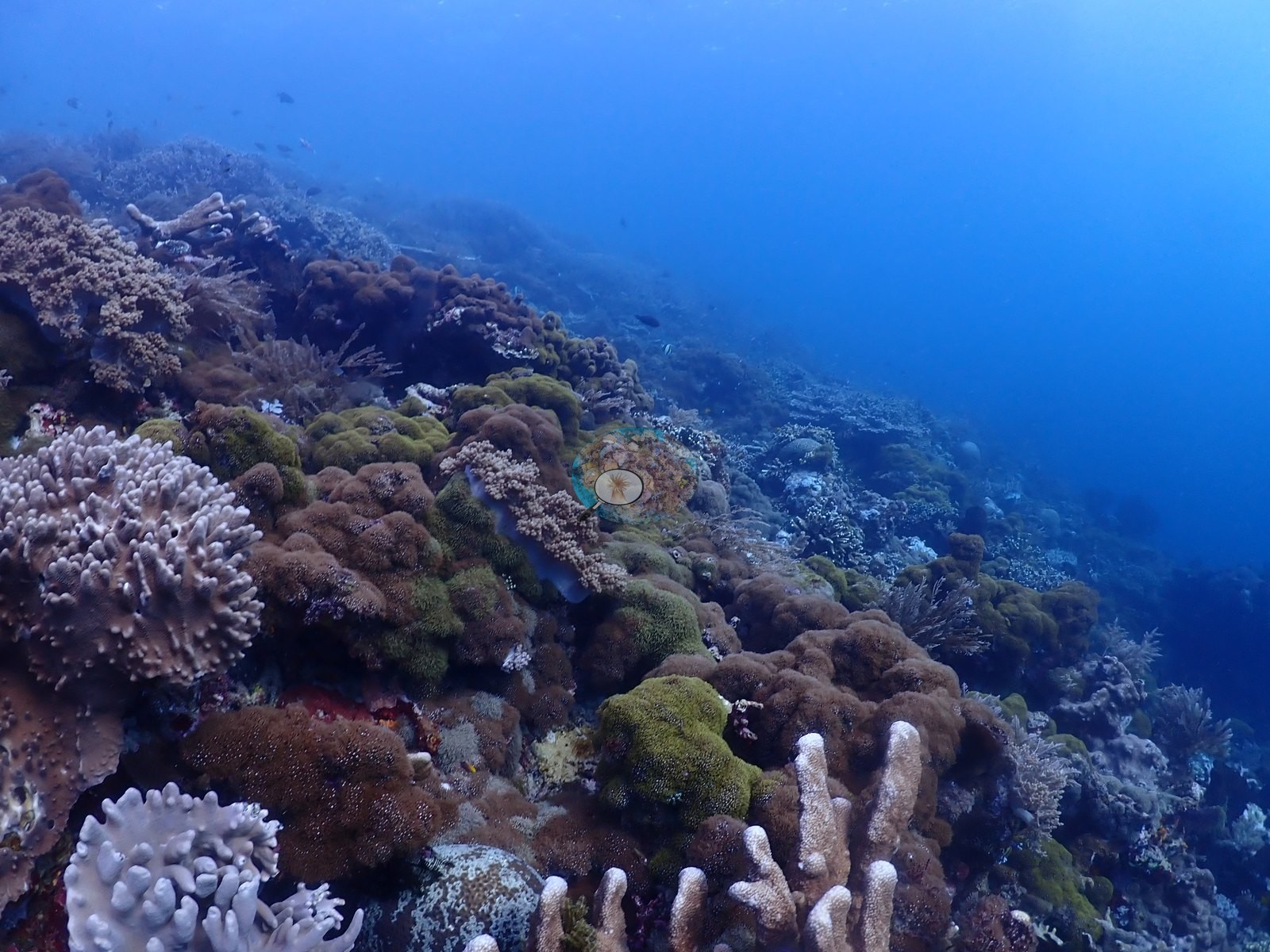
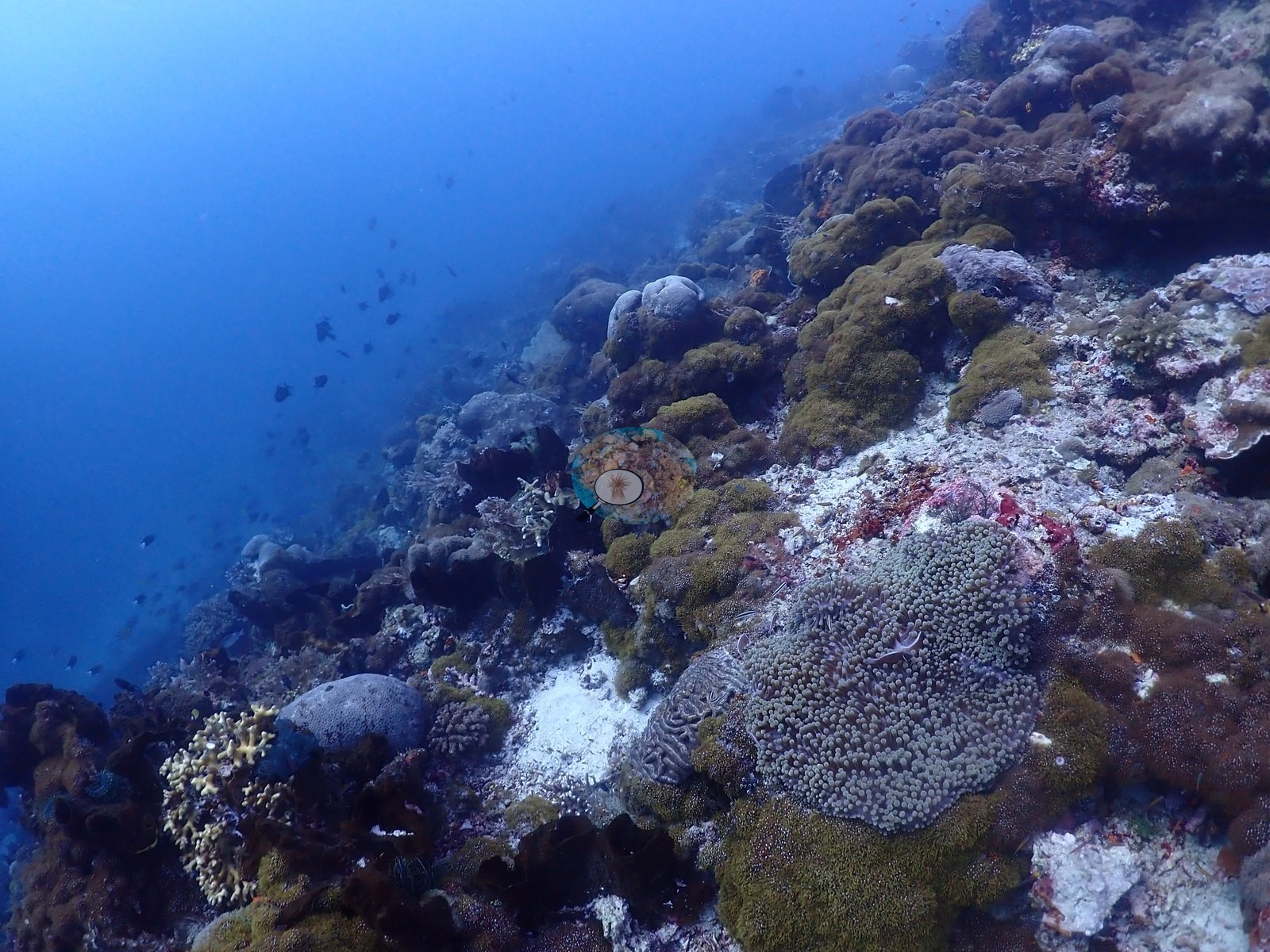
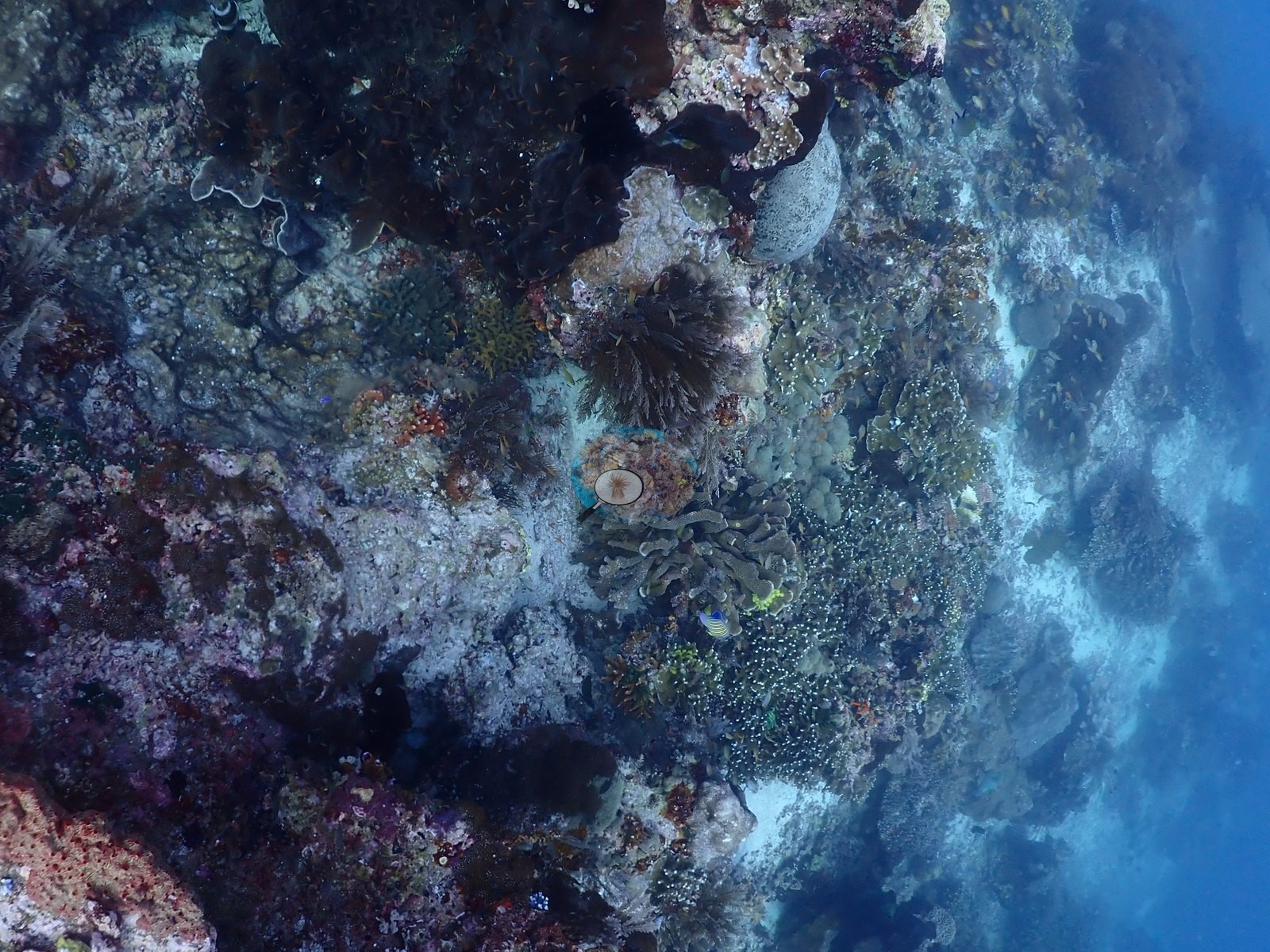
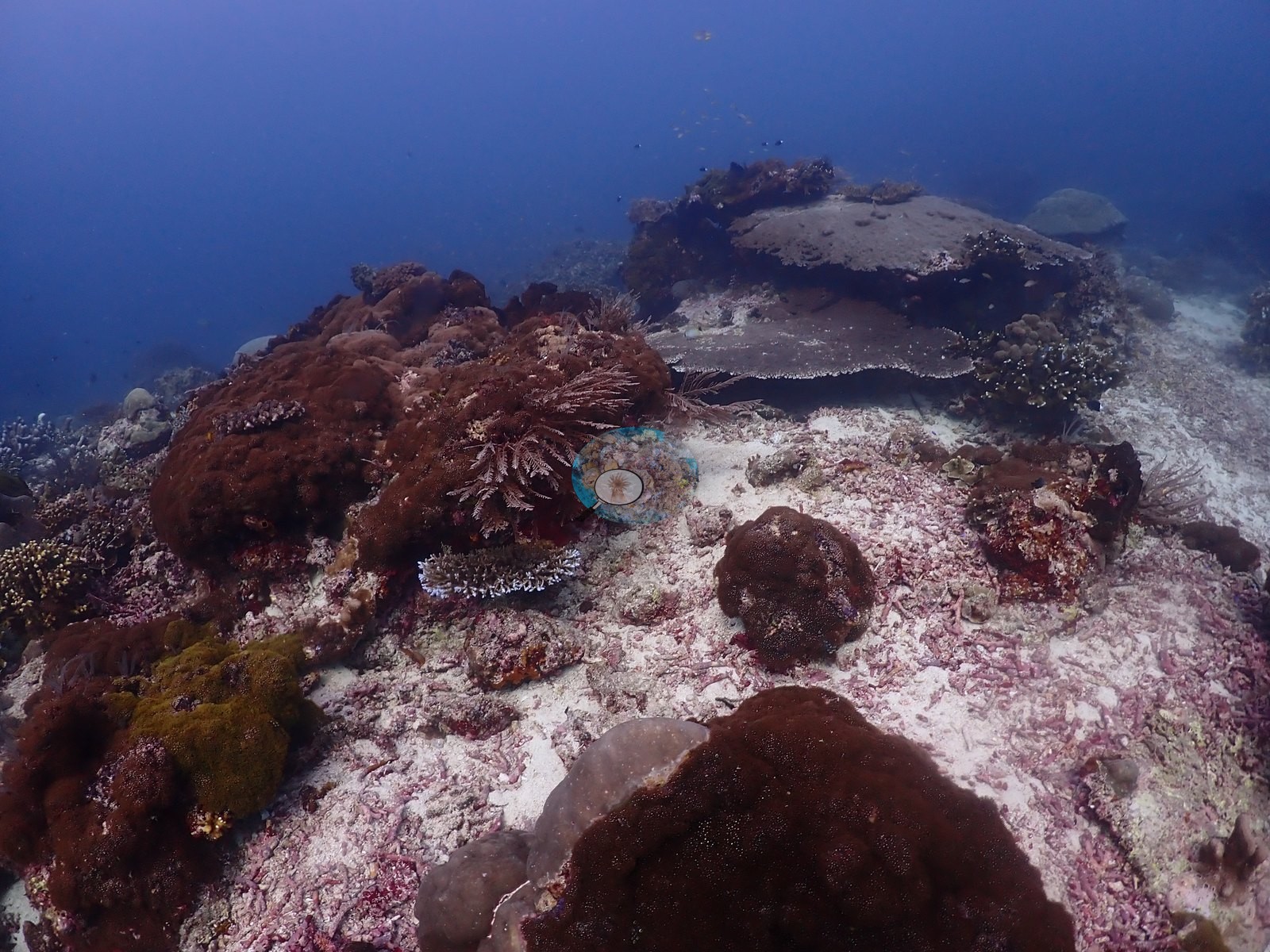
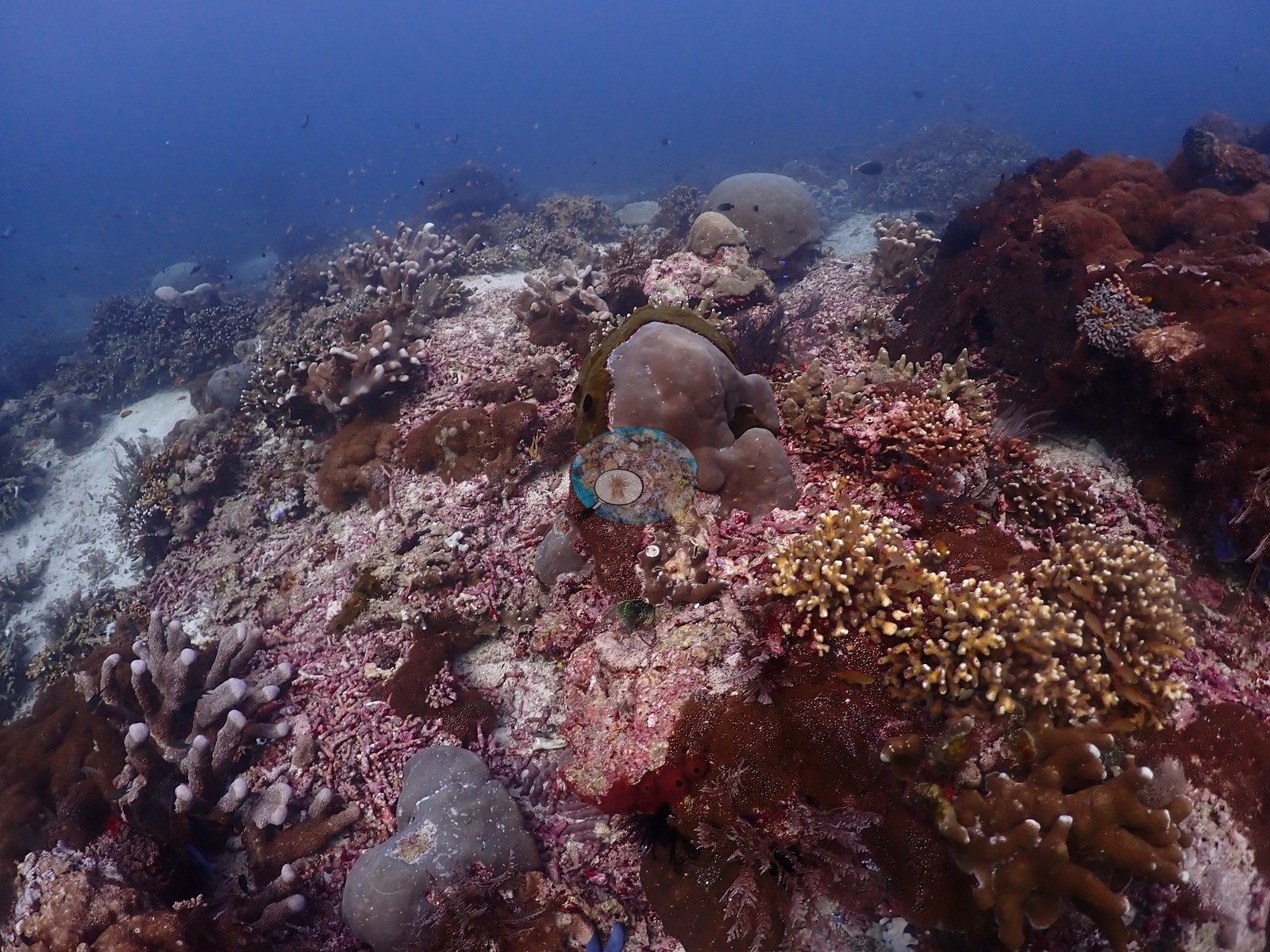
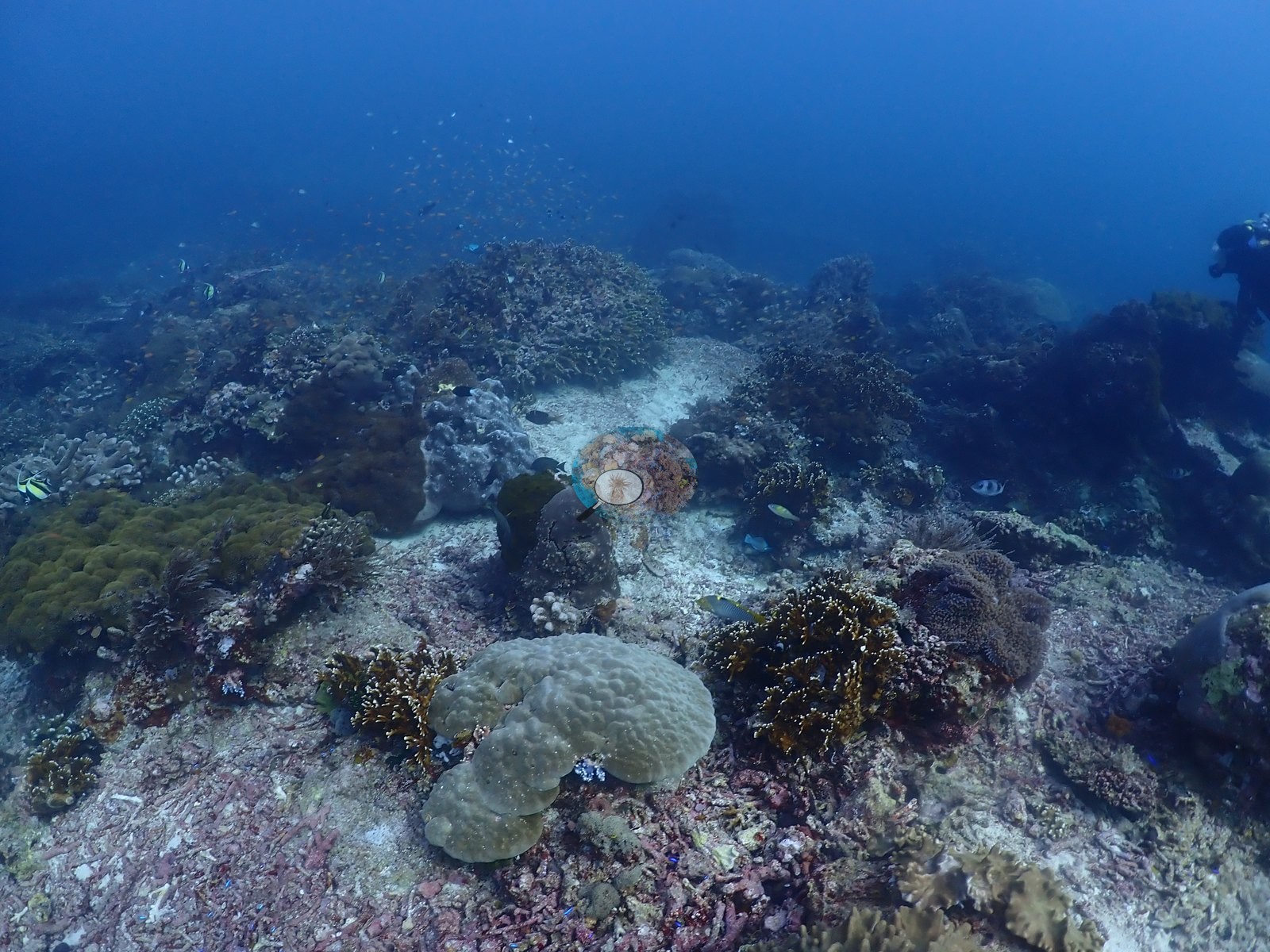
Kusu Drift, round 2 (Halmahera dive 16), opens in hazy, low-visibility water on a coralline-pink and sponge-encrusted wall with divers and a rope/line visible, and cover in this deep stretch is patchy and low (e.g., Image 2, Image 11, Image 43, Image 47, Image 53).
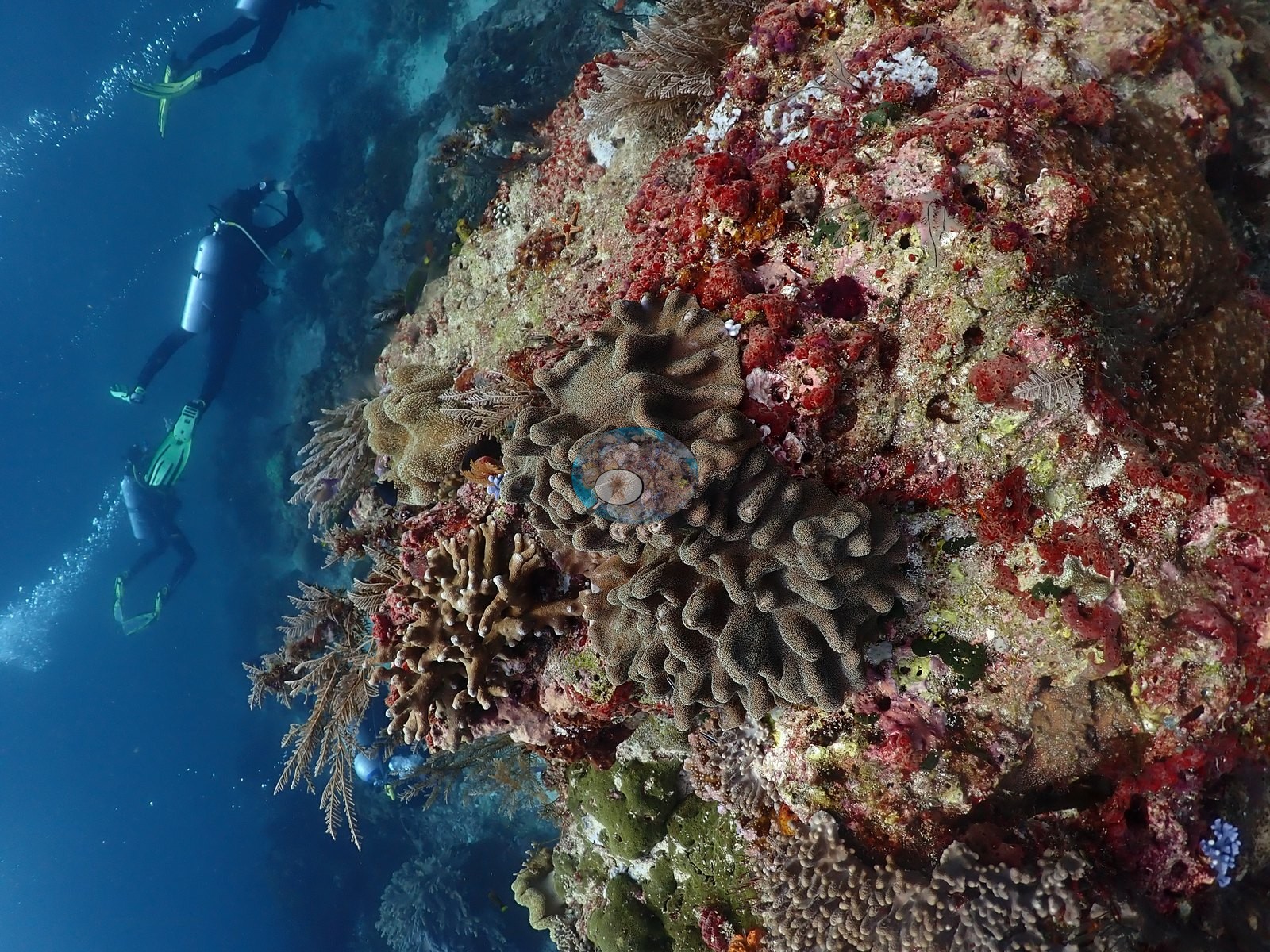
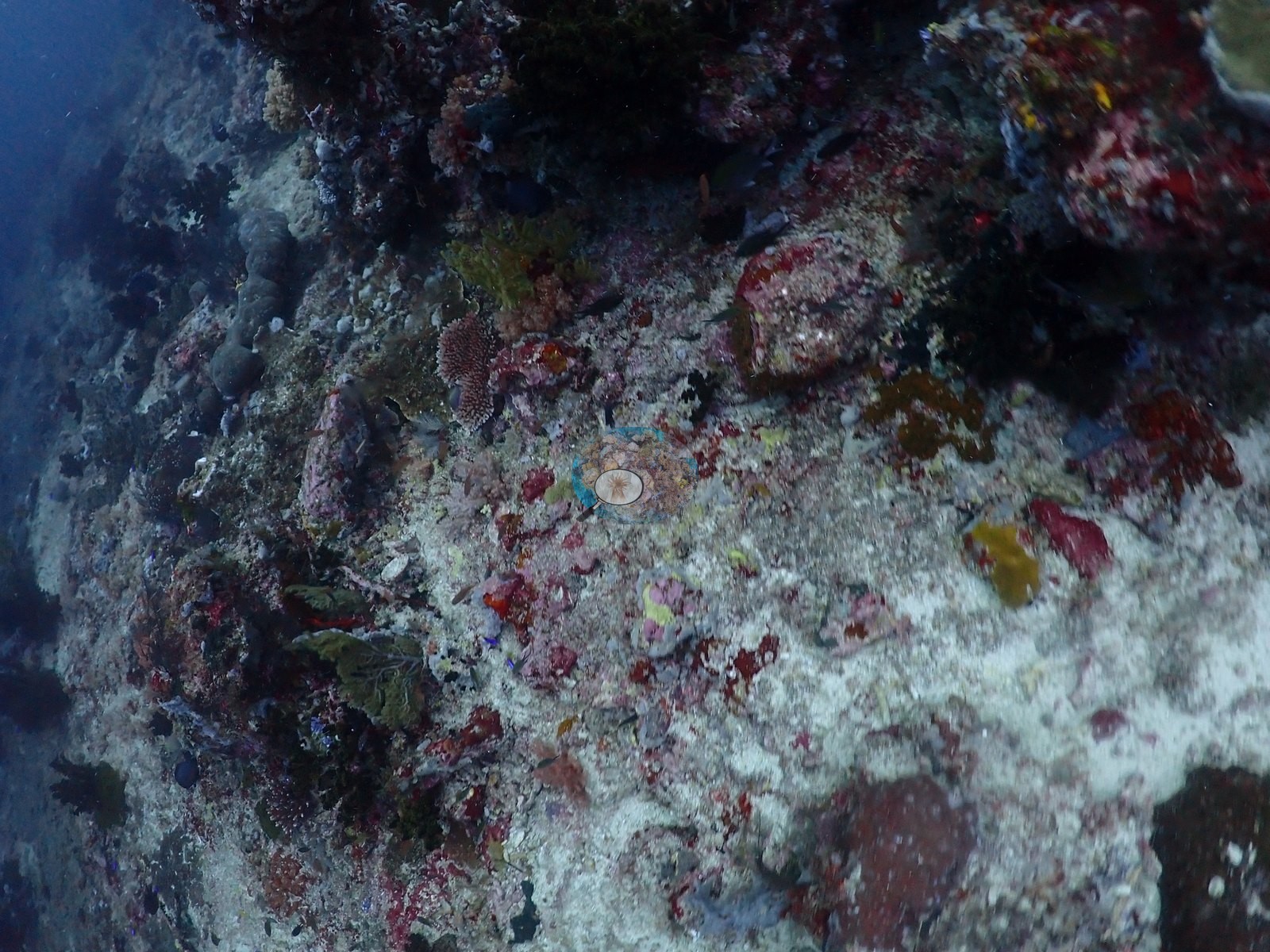
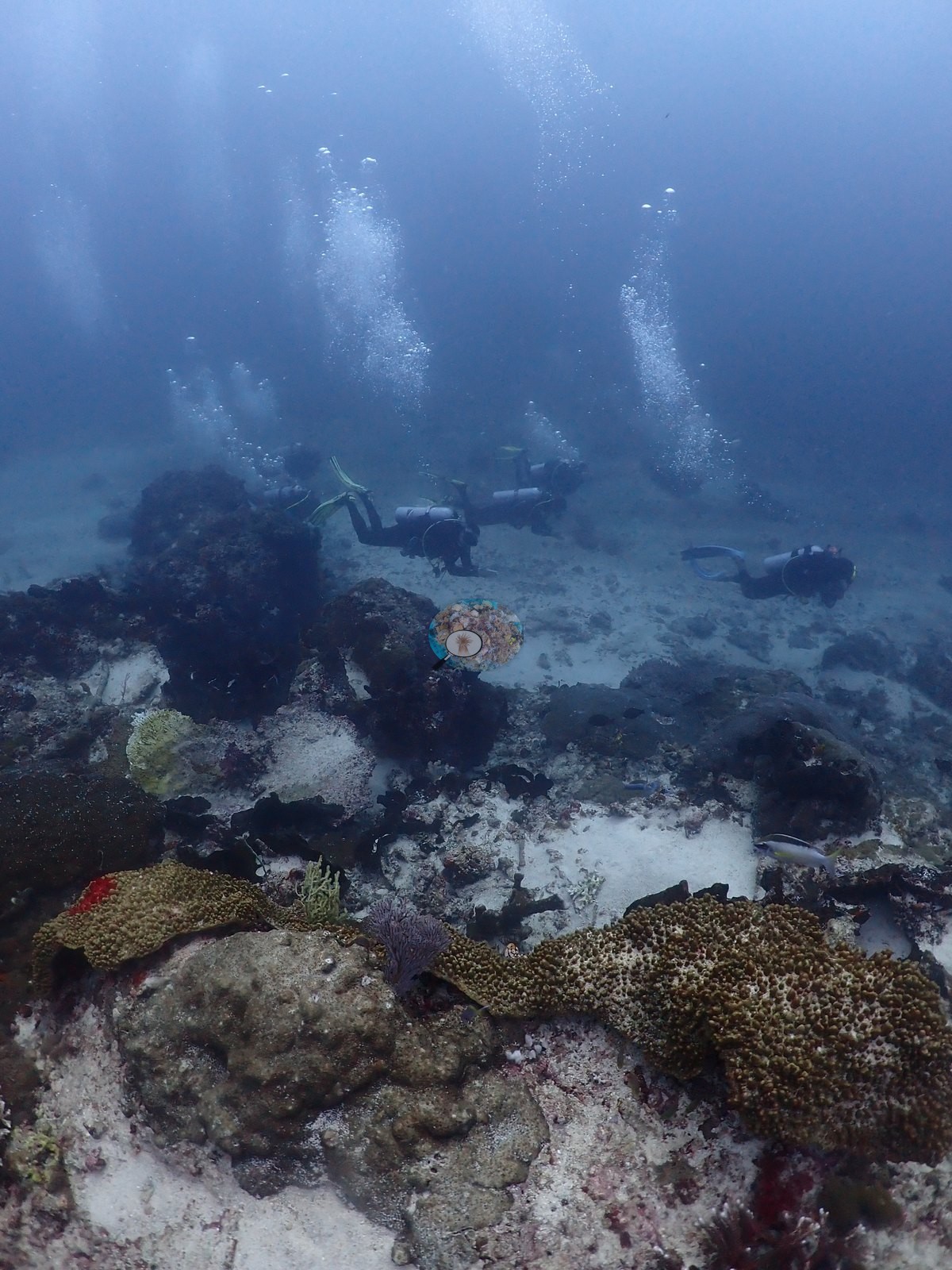
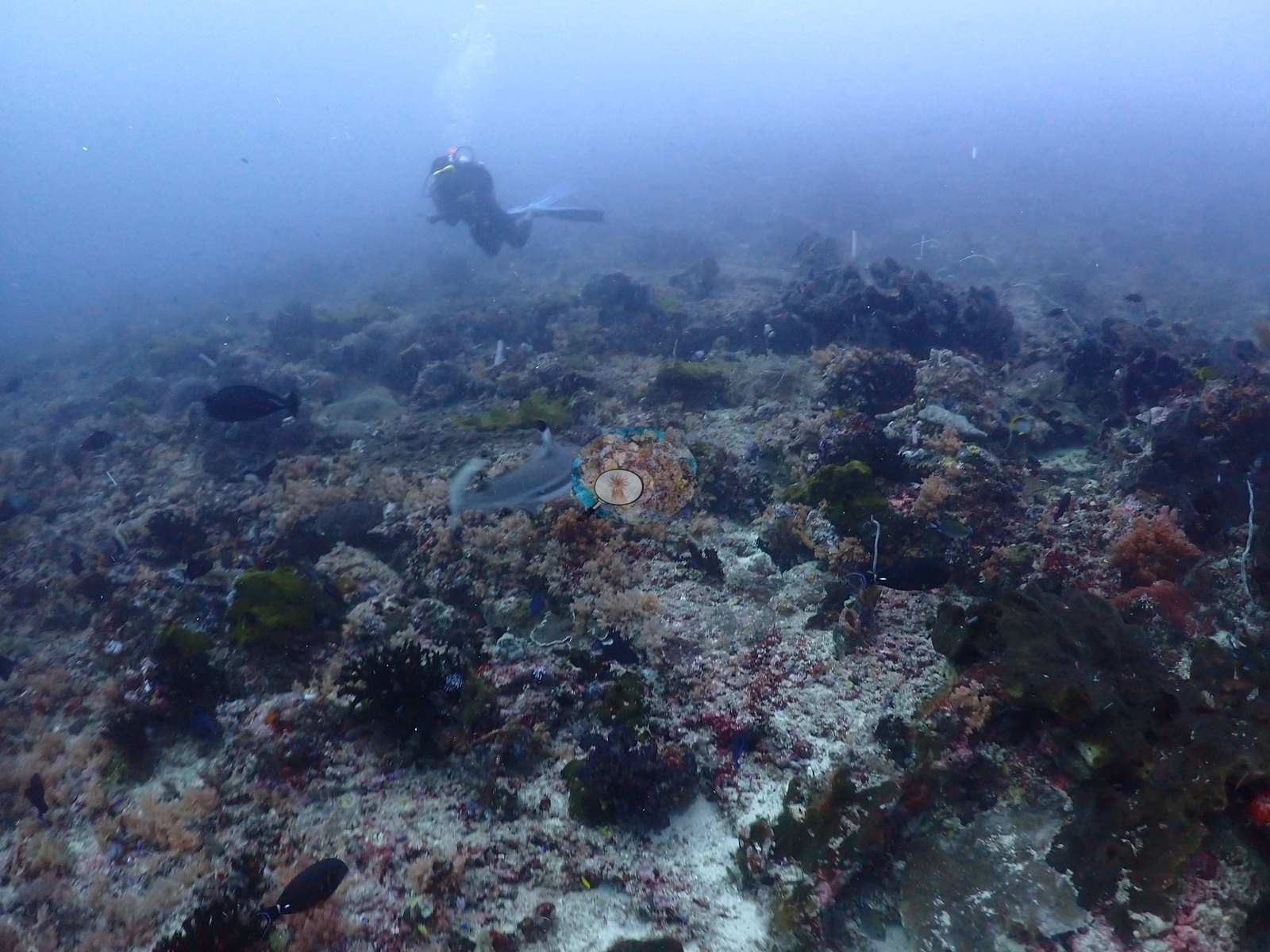
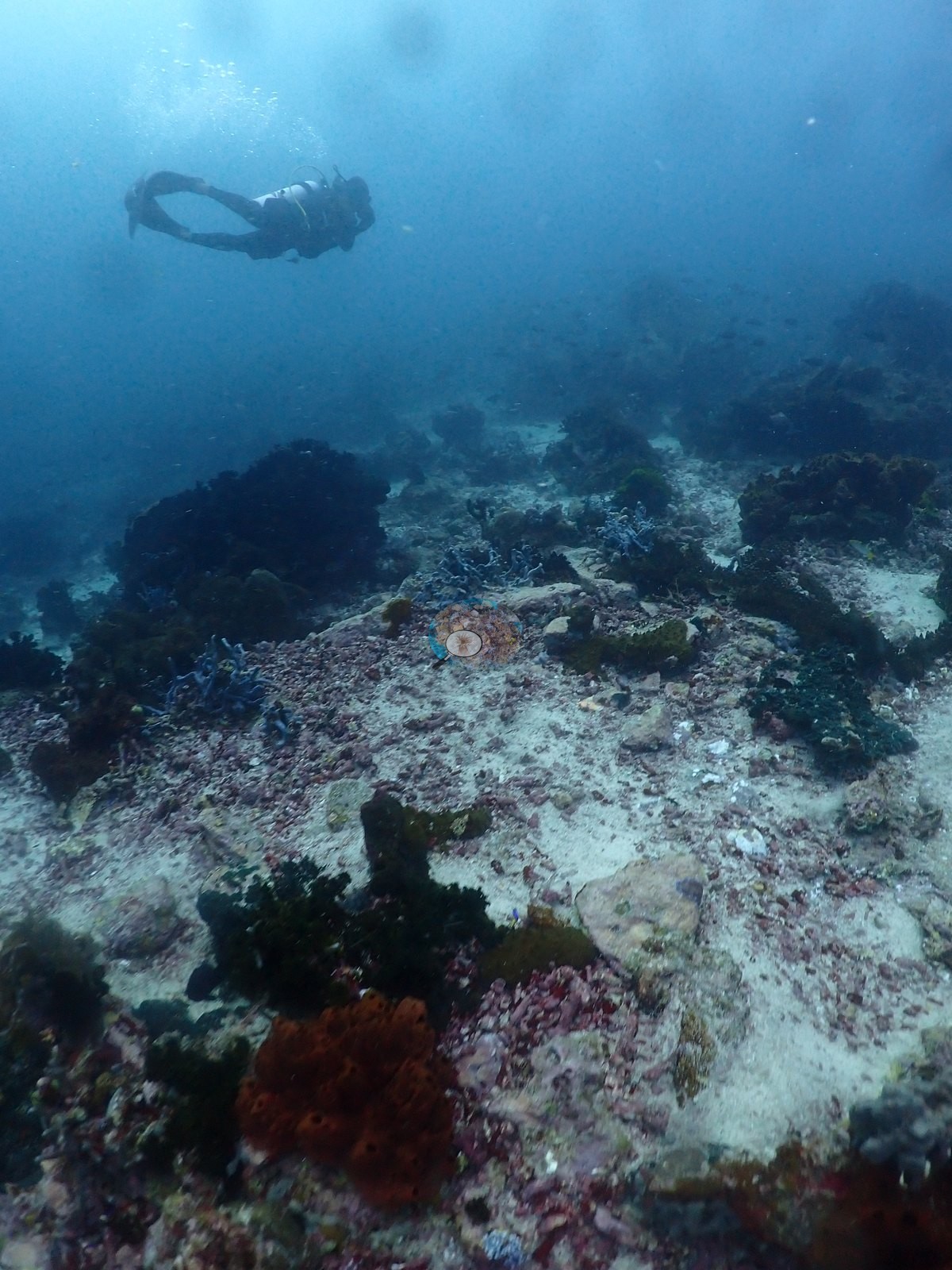
Anderson's field note: “absolutely ripping currents for about 20 minutes straight, ended up in beautiful shallows”
General benthic features
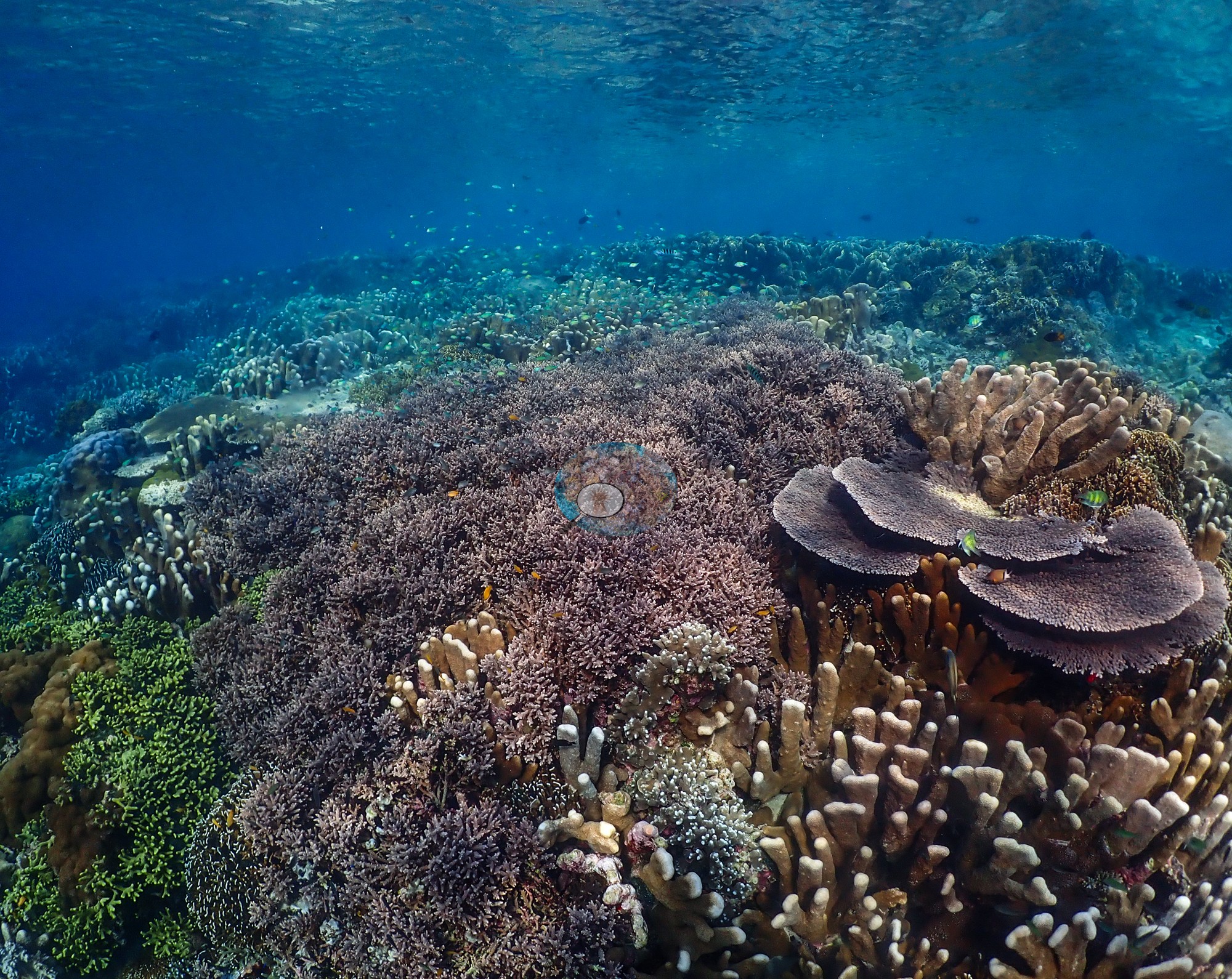
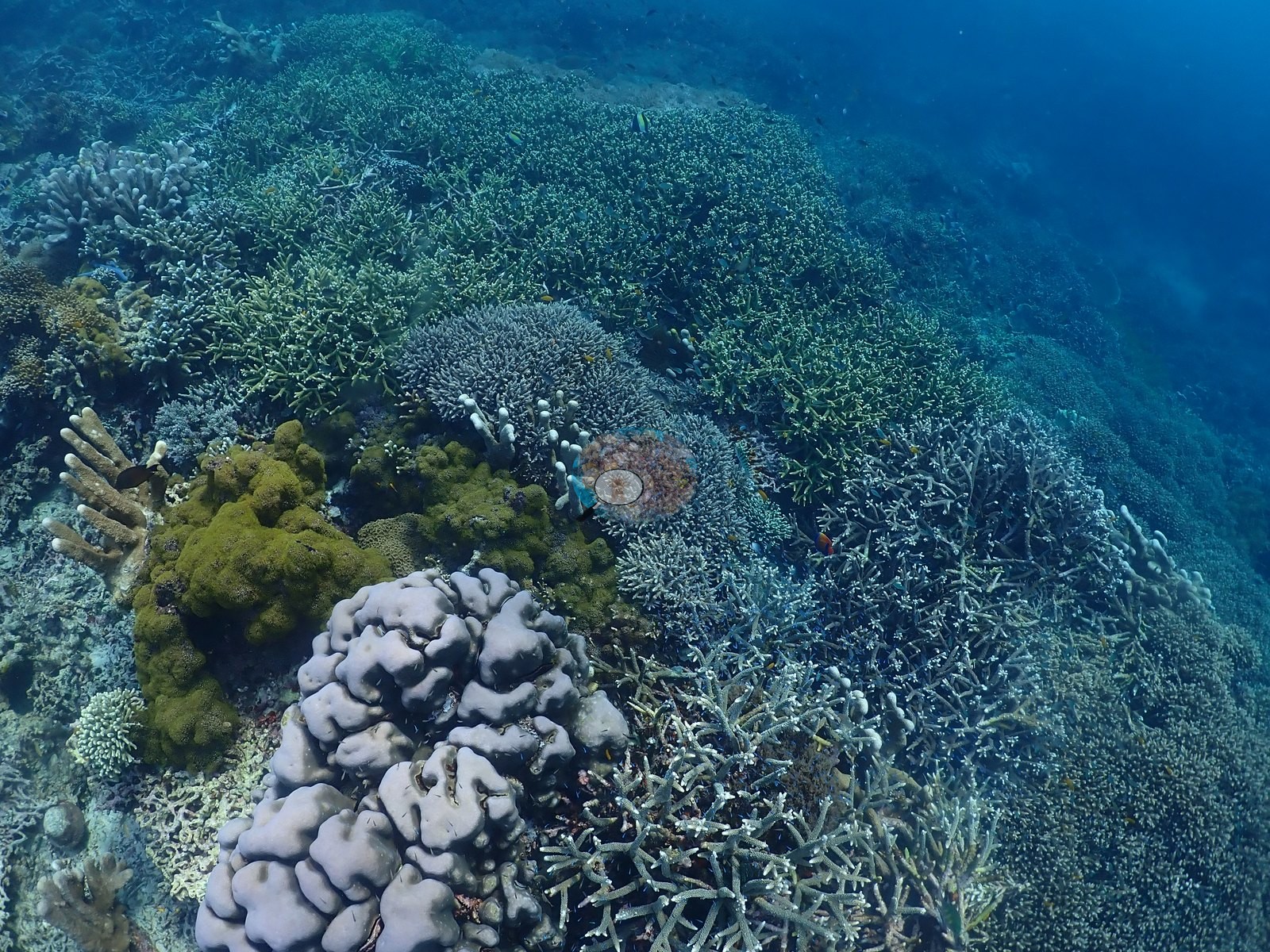
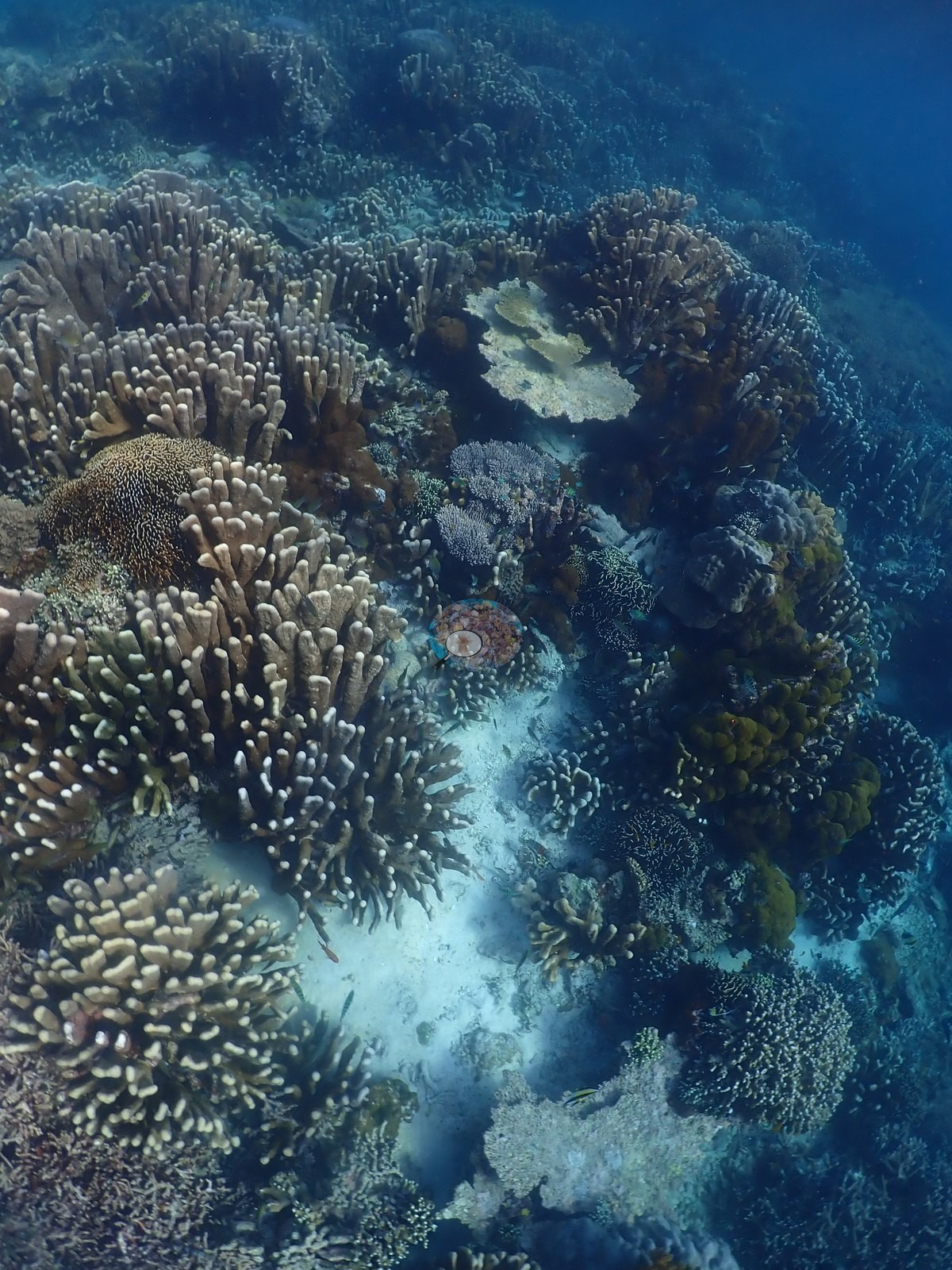
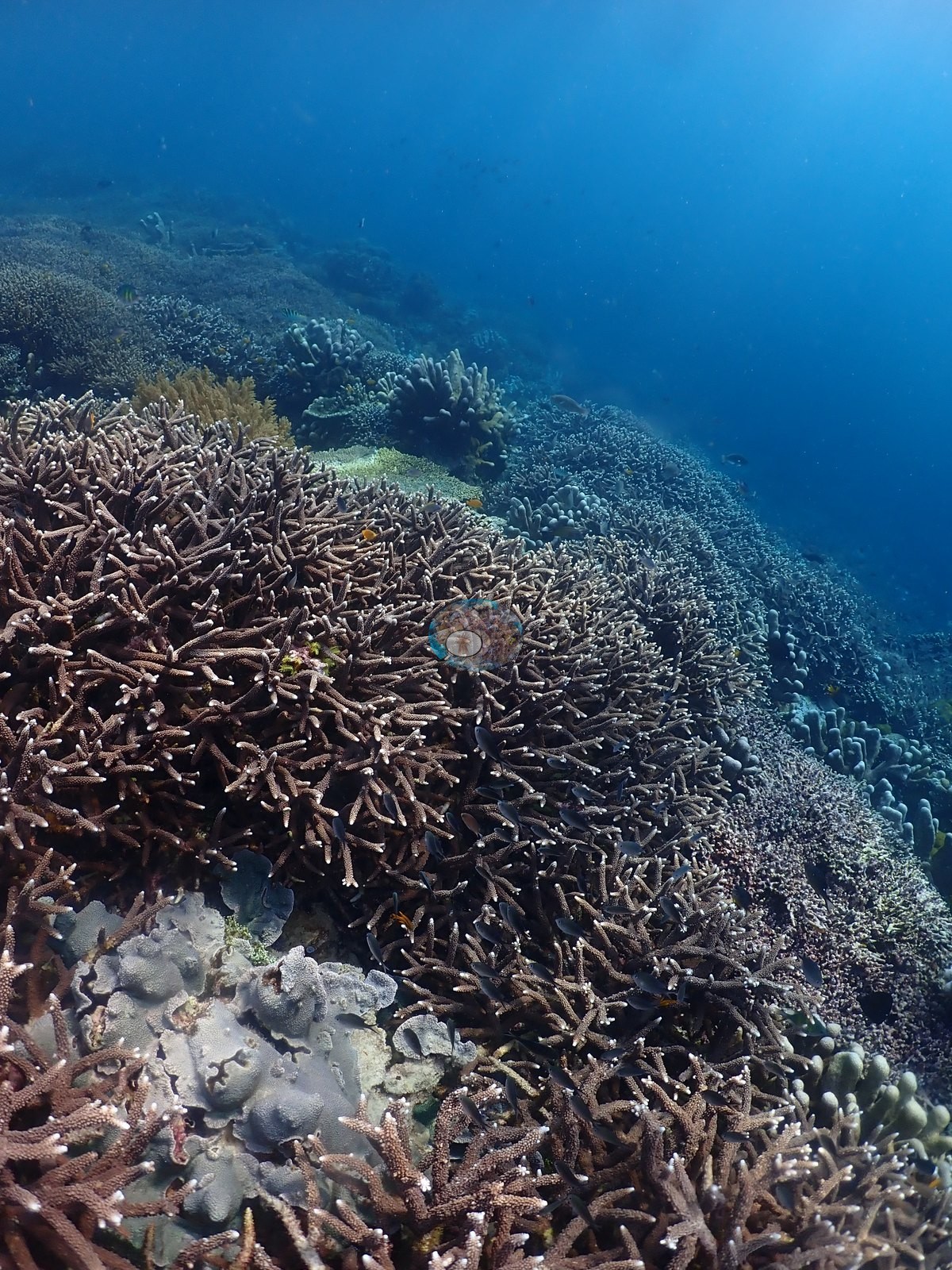
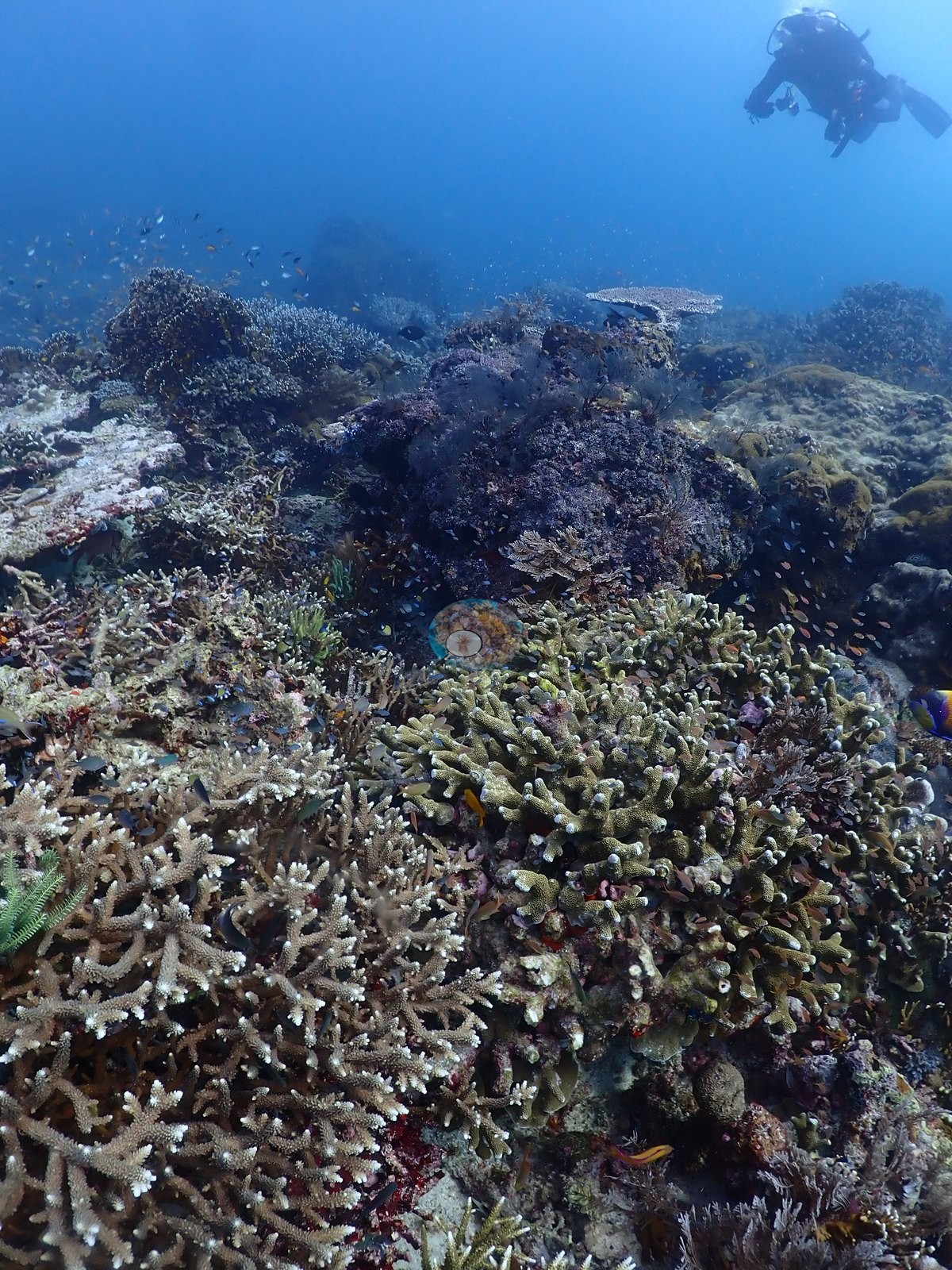
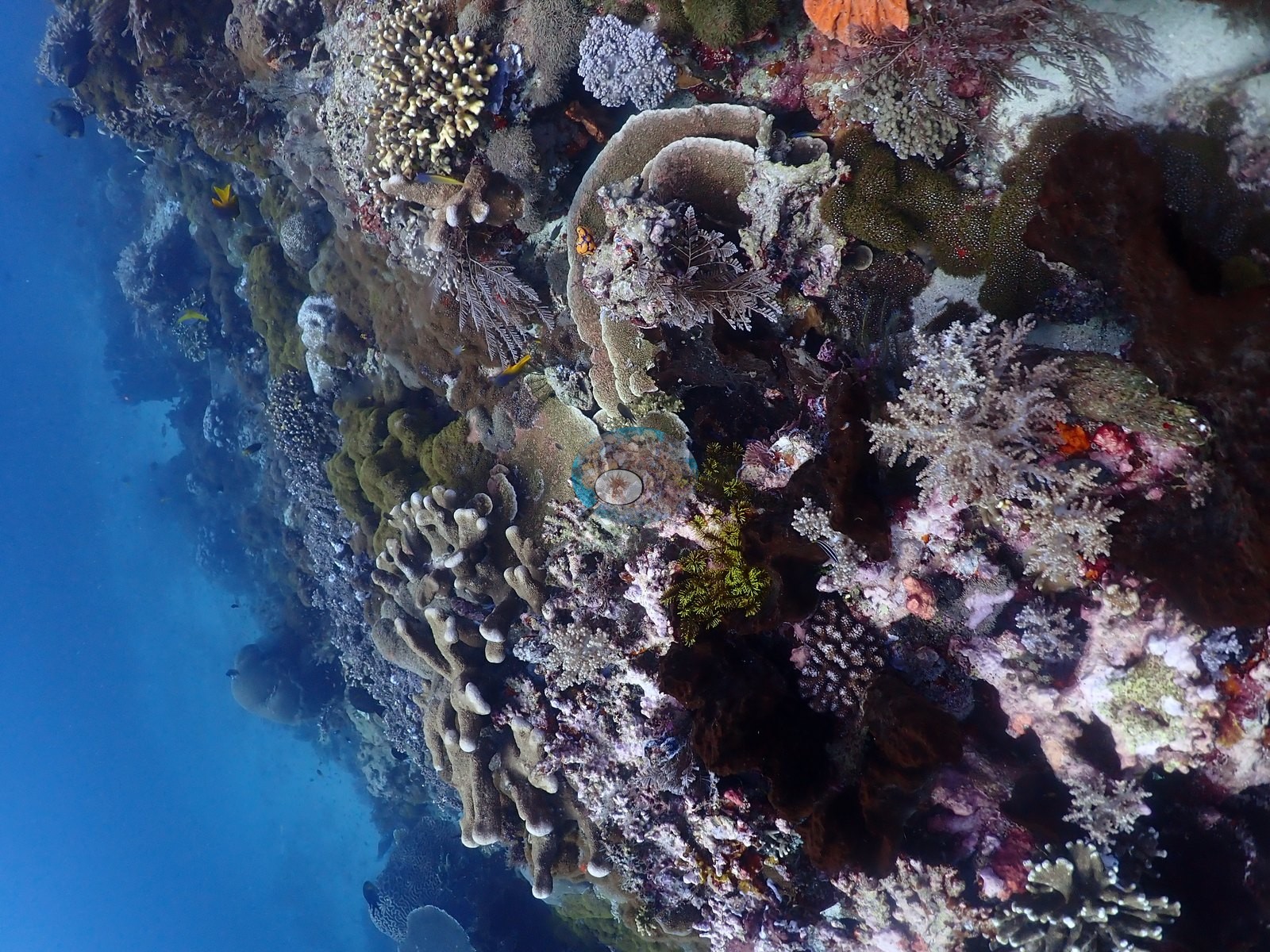
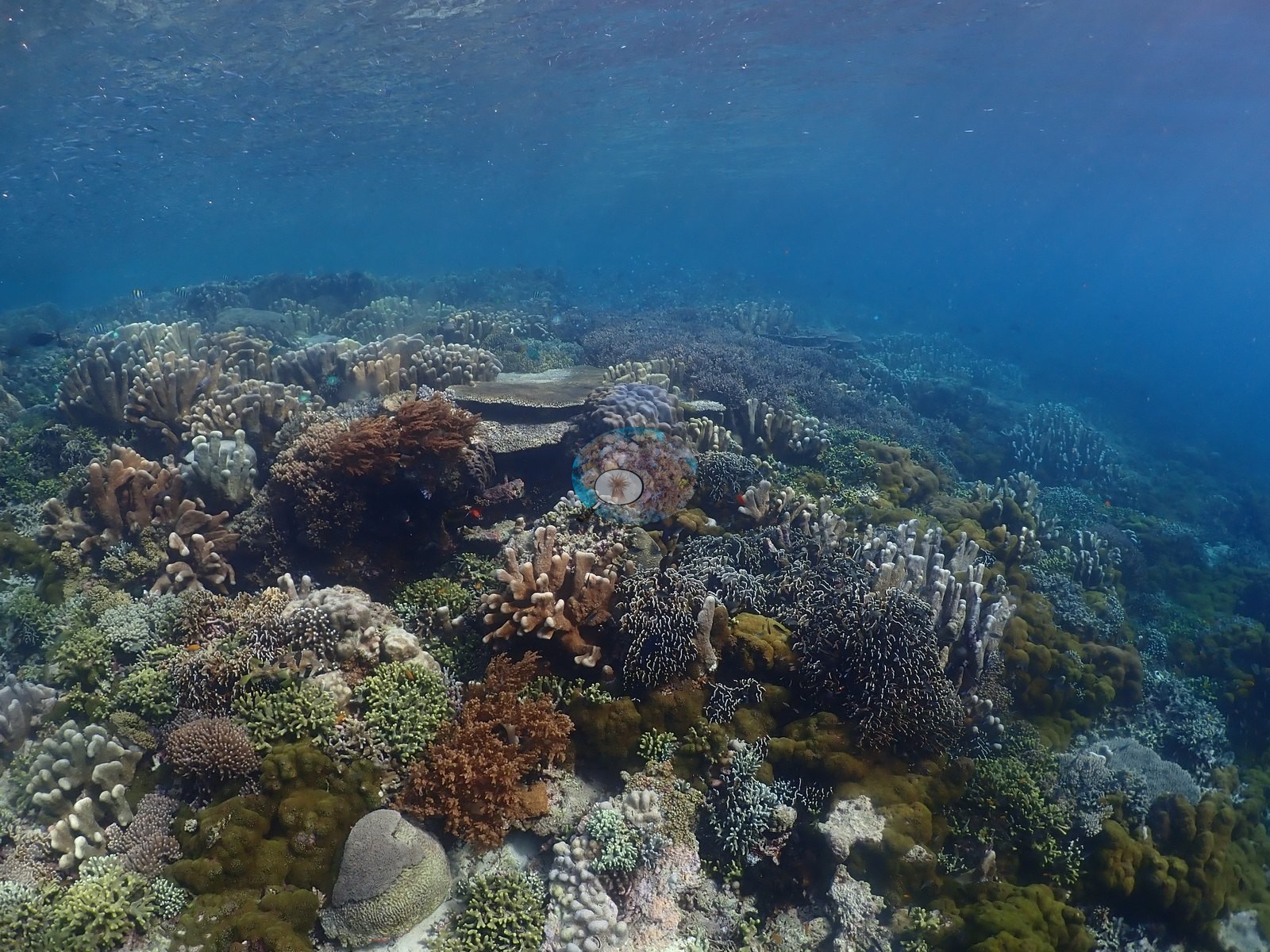
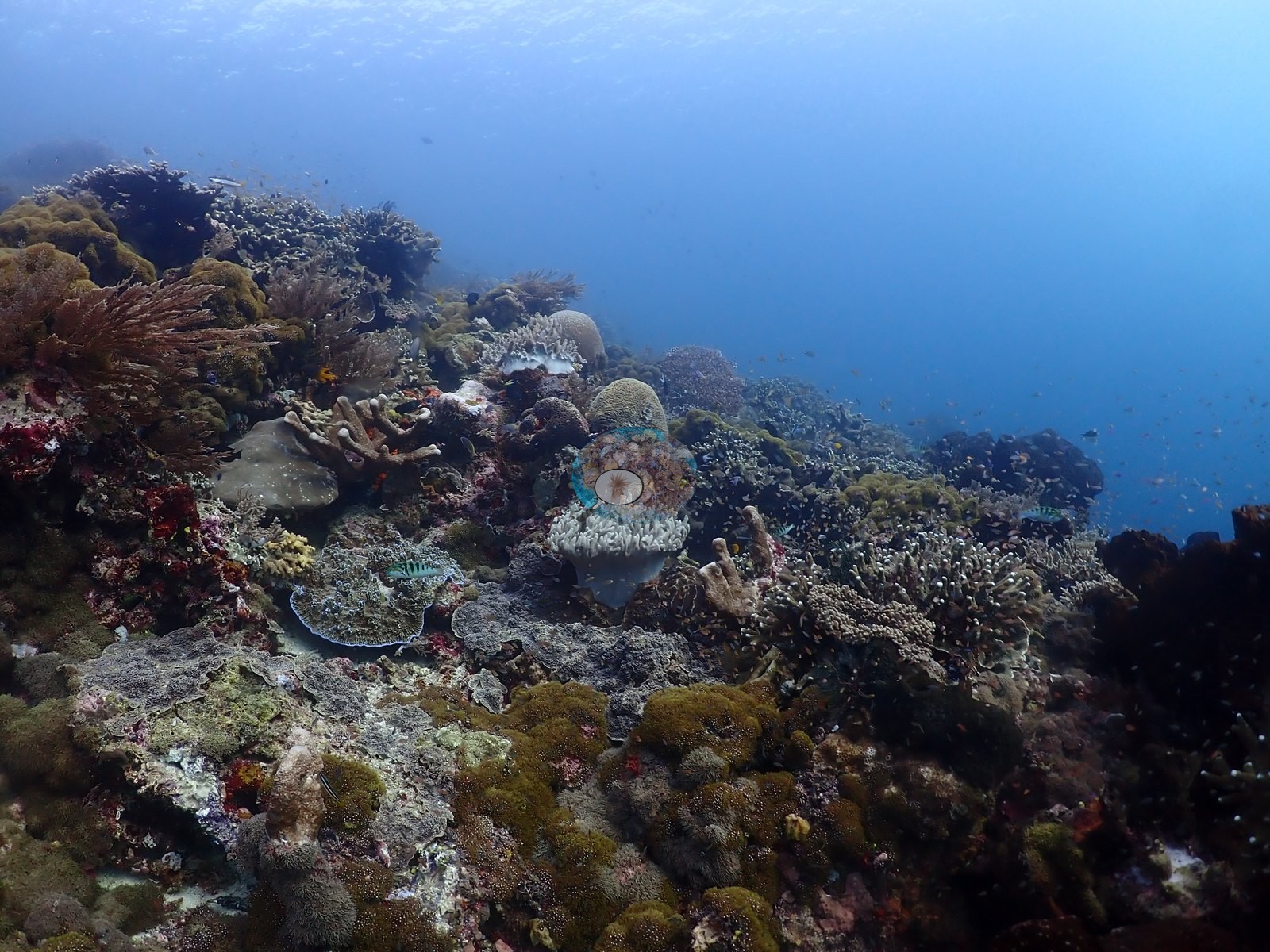
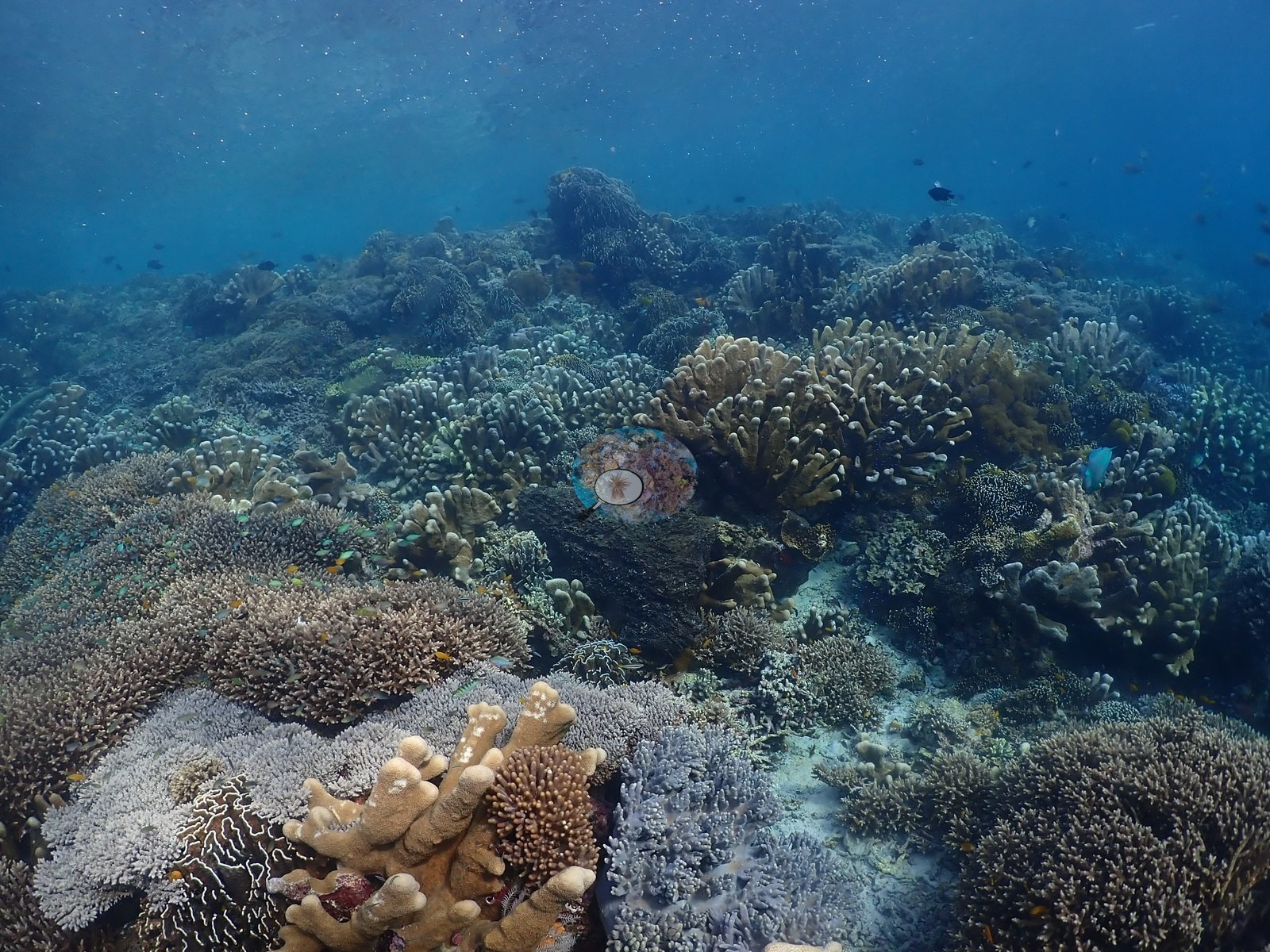
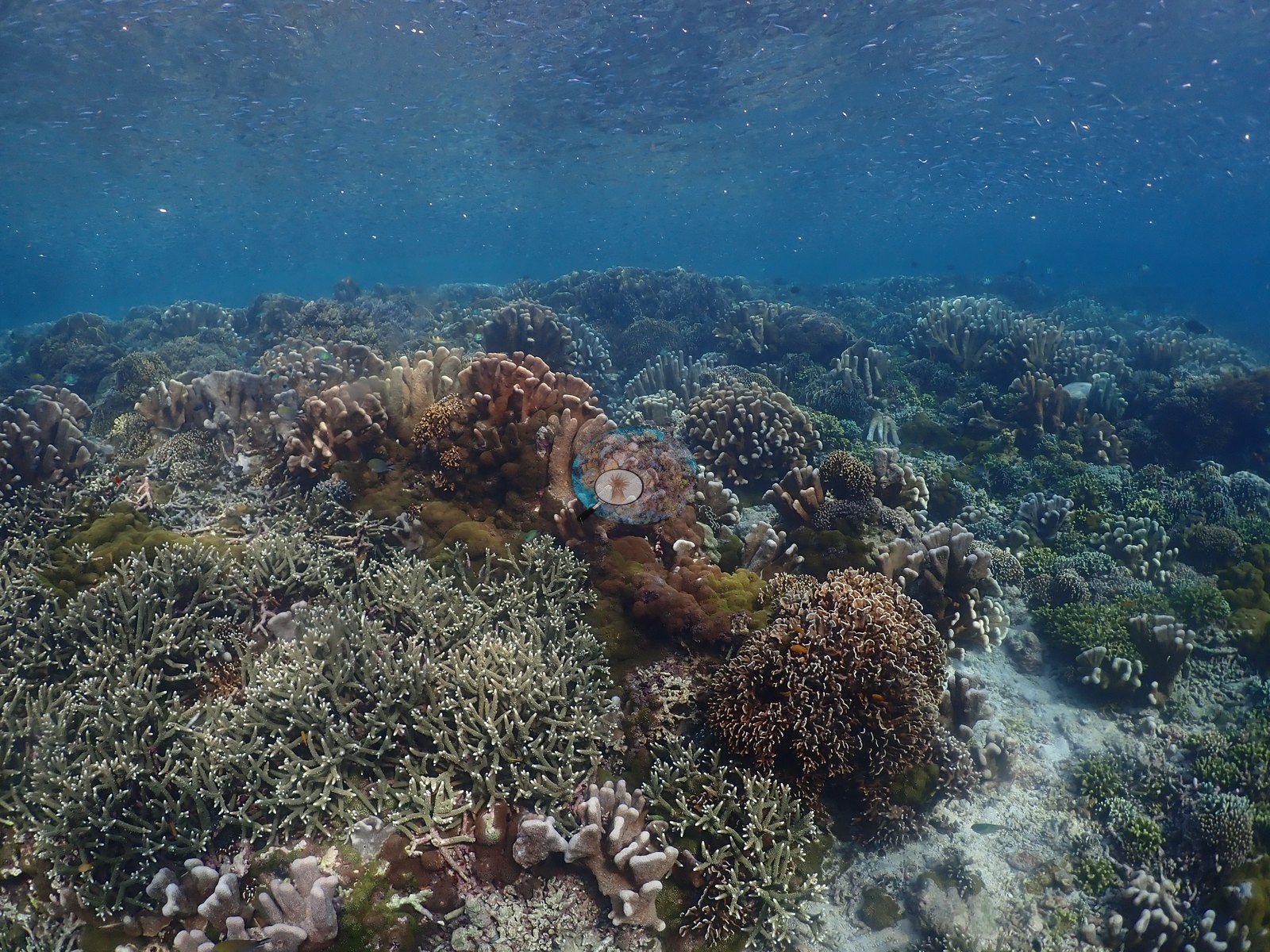
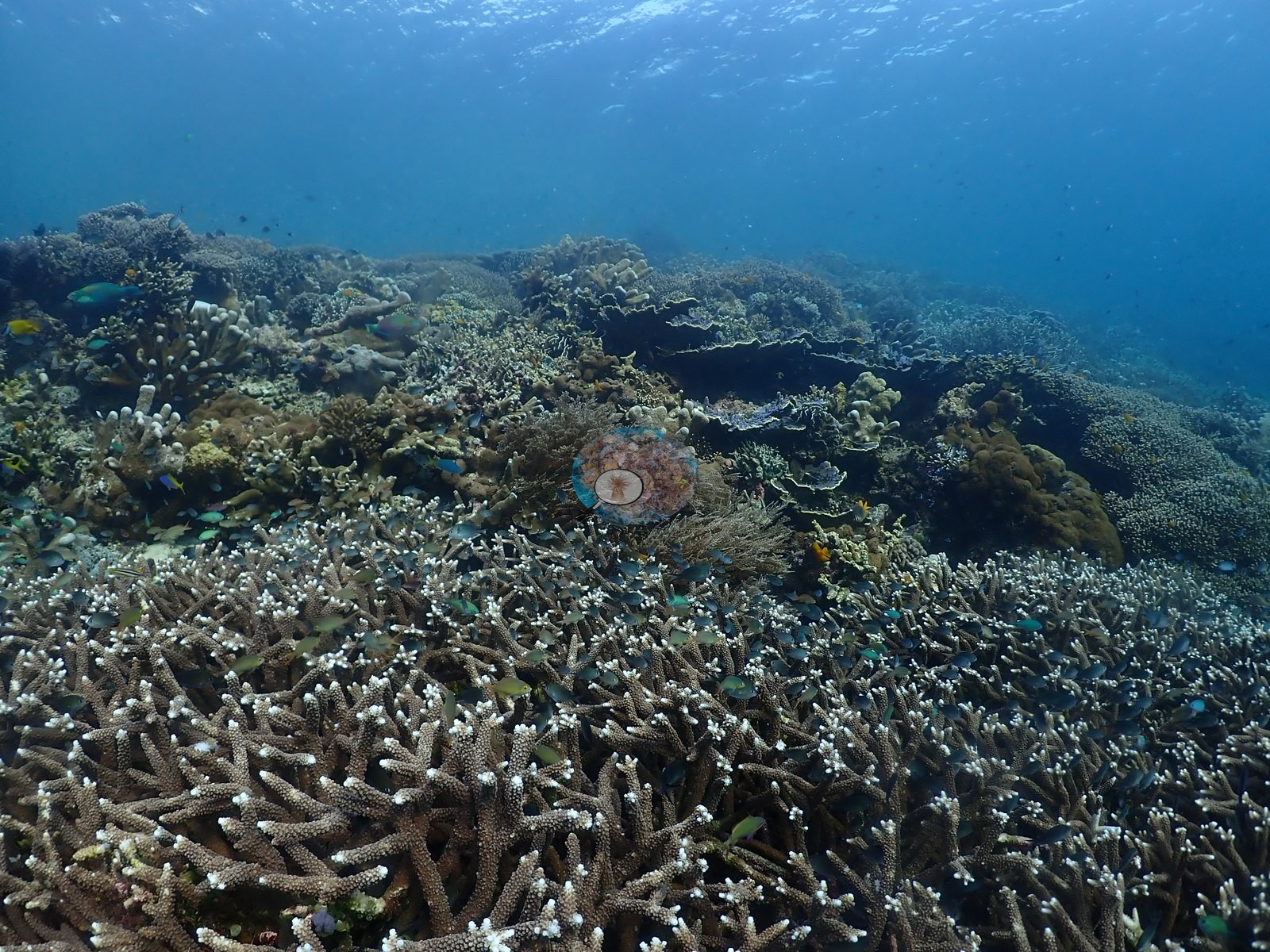
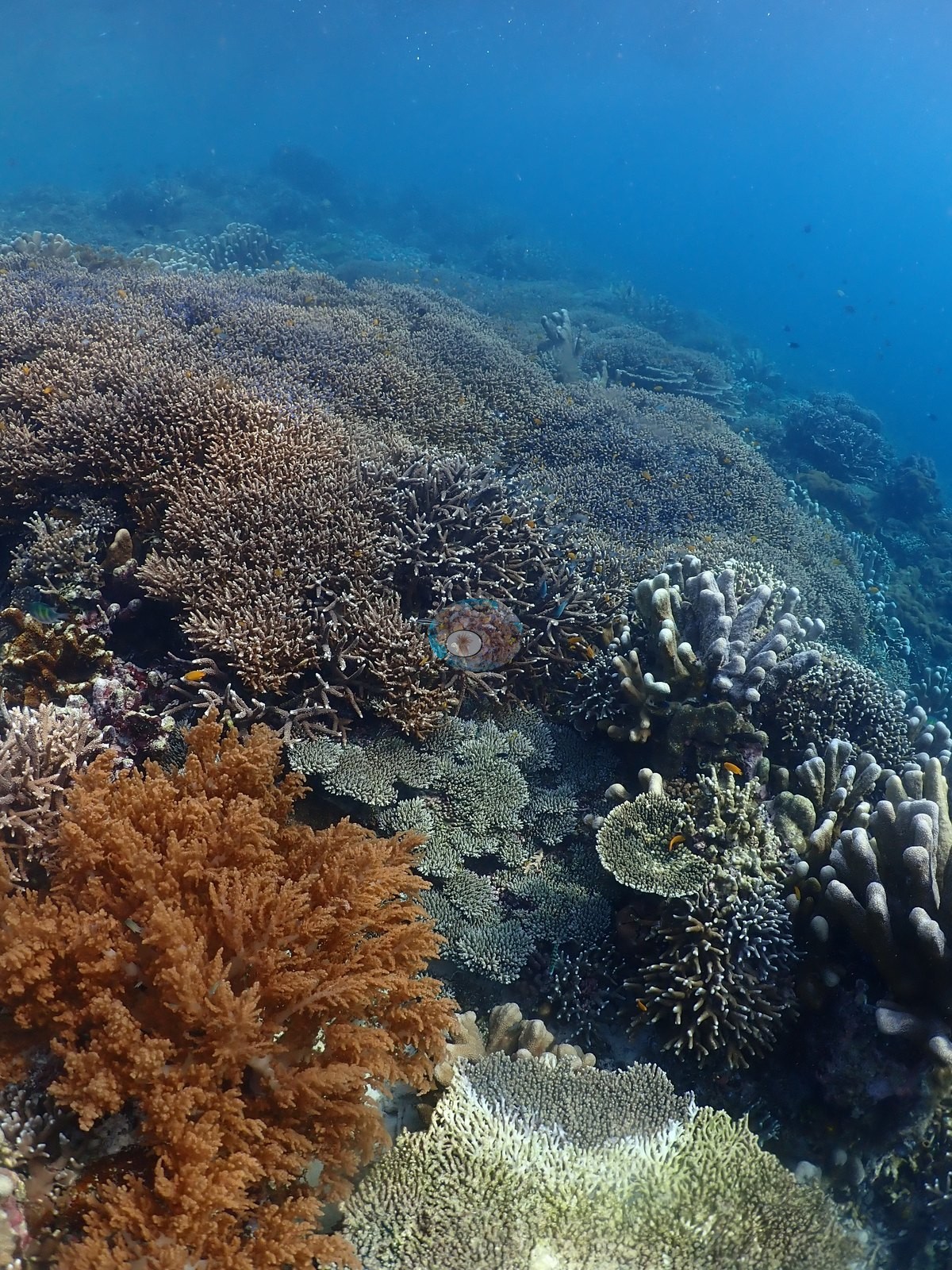
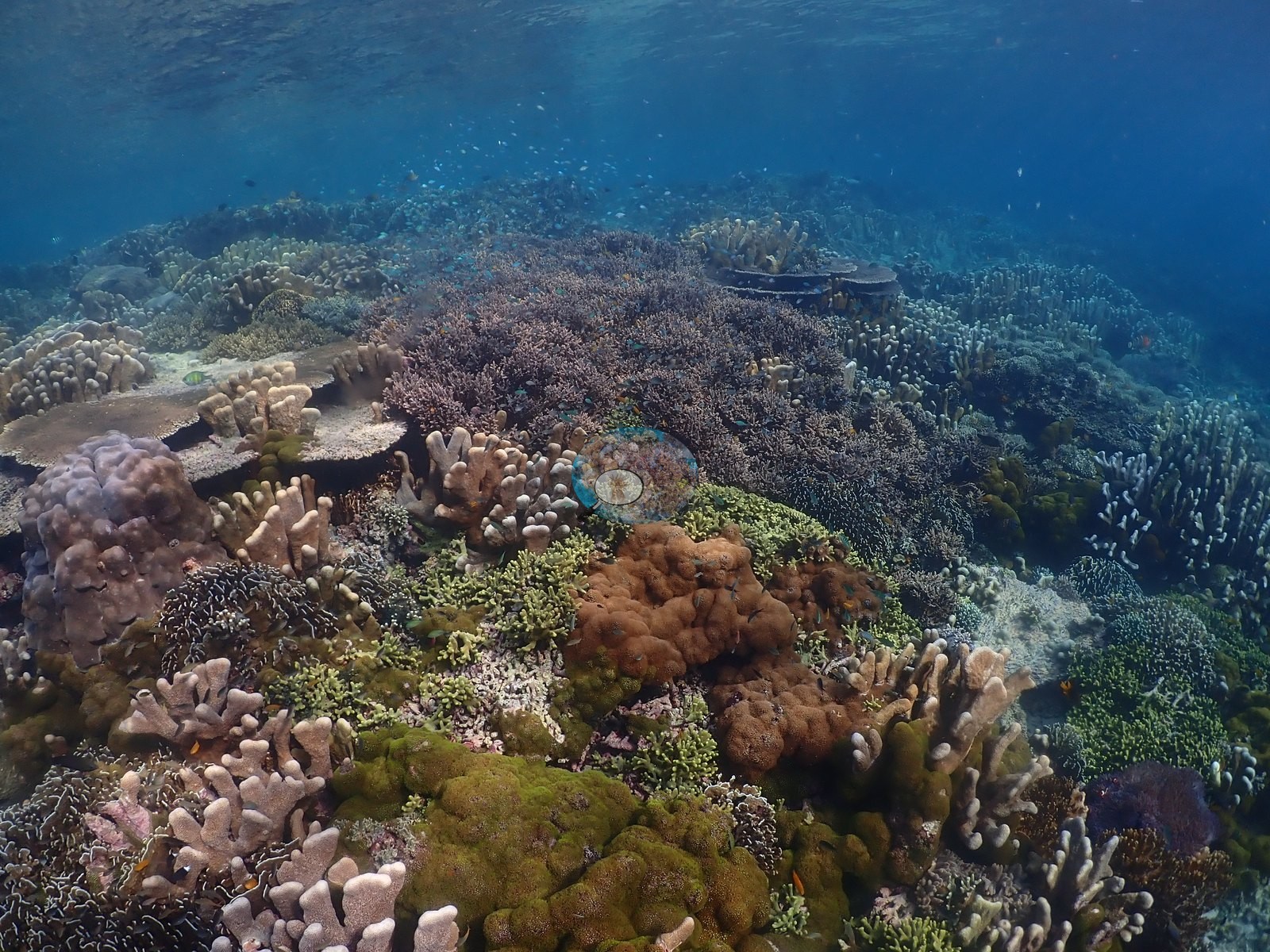
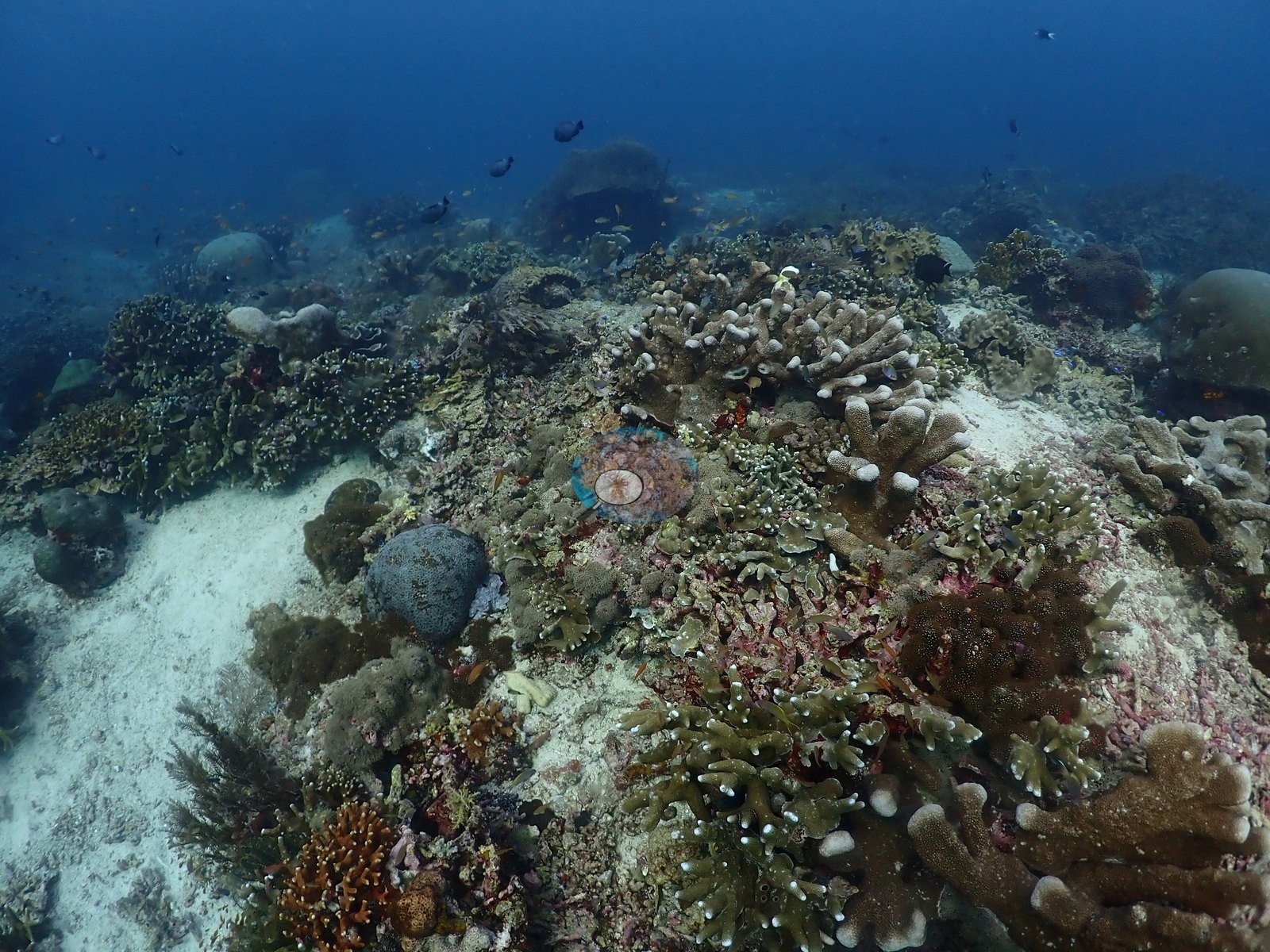
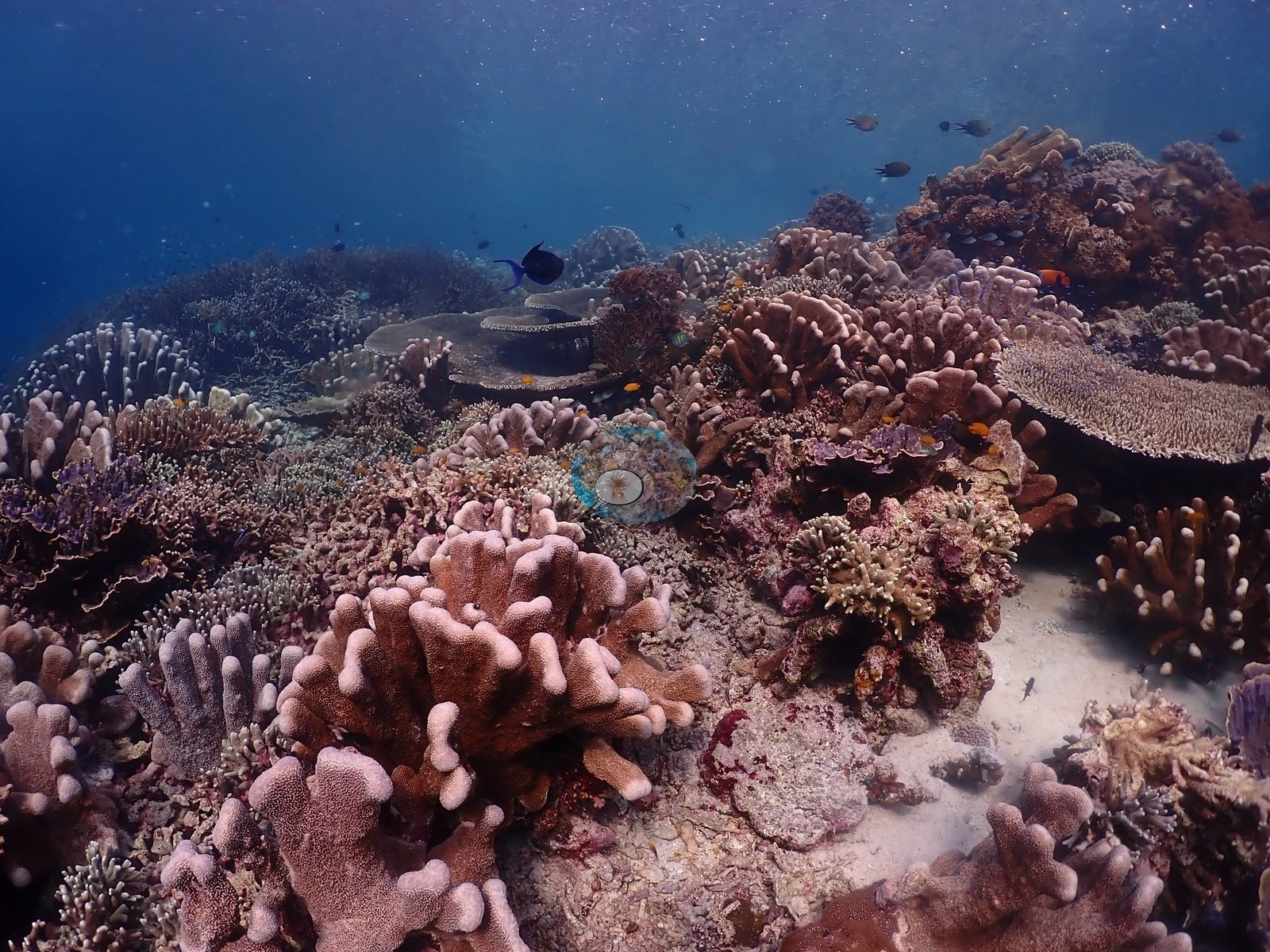
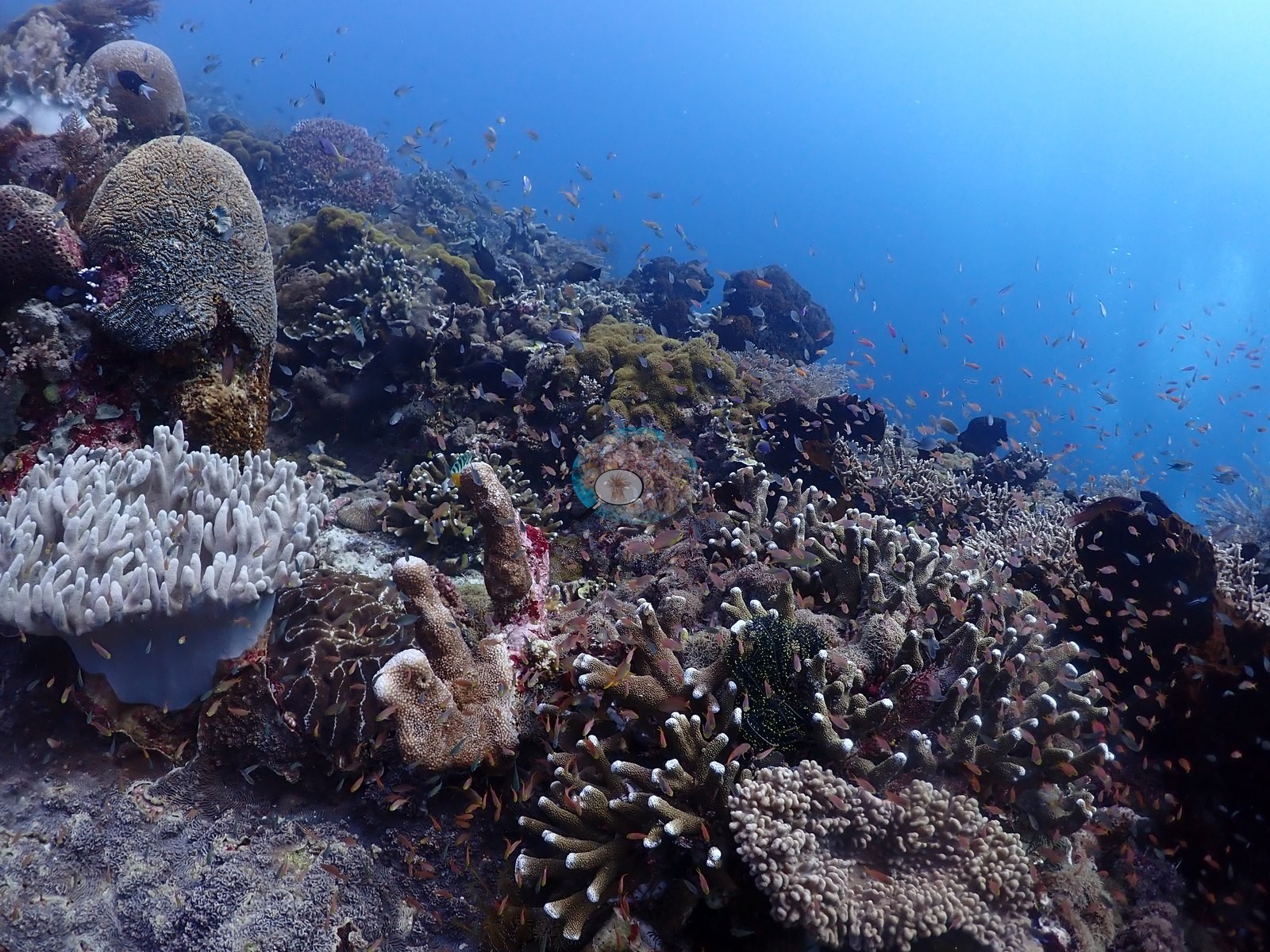
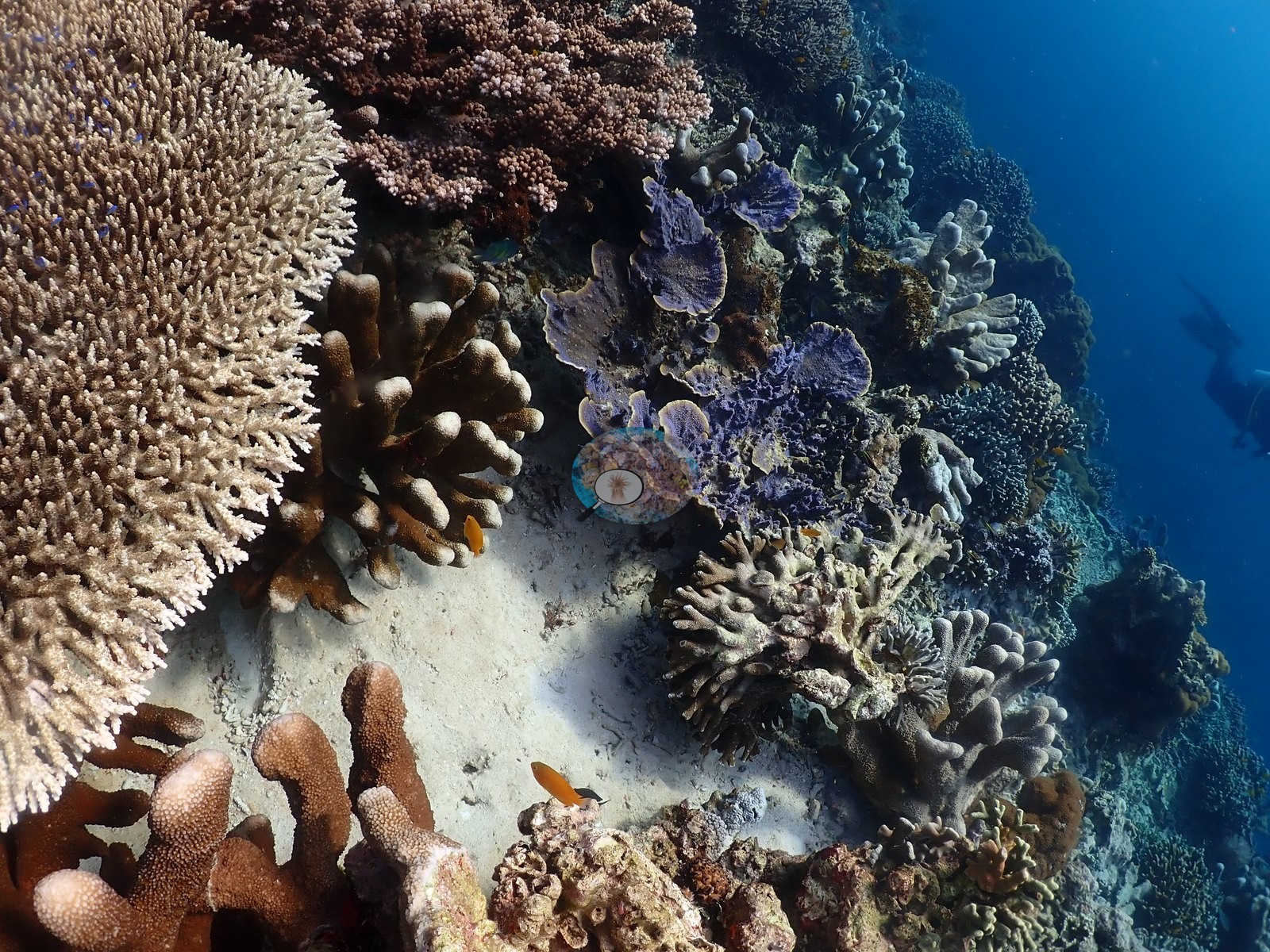
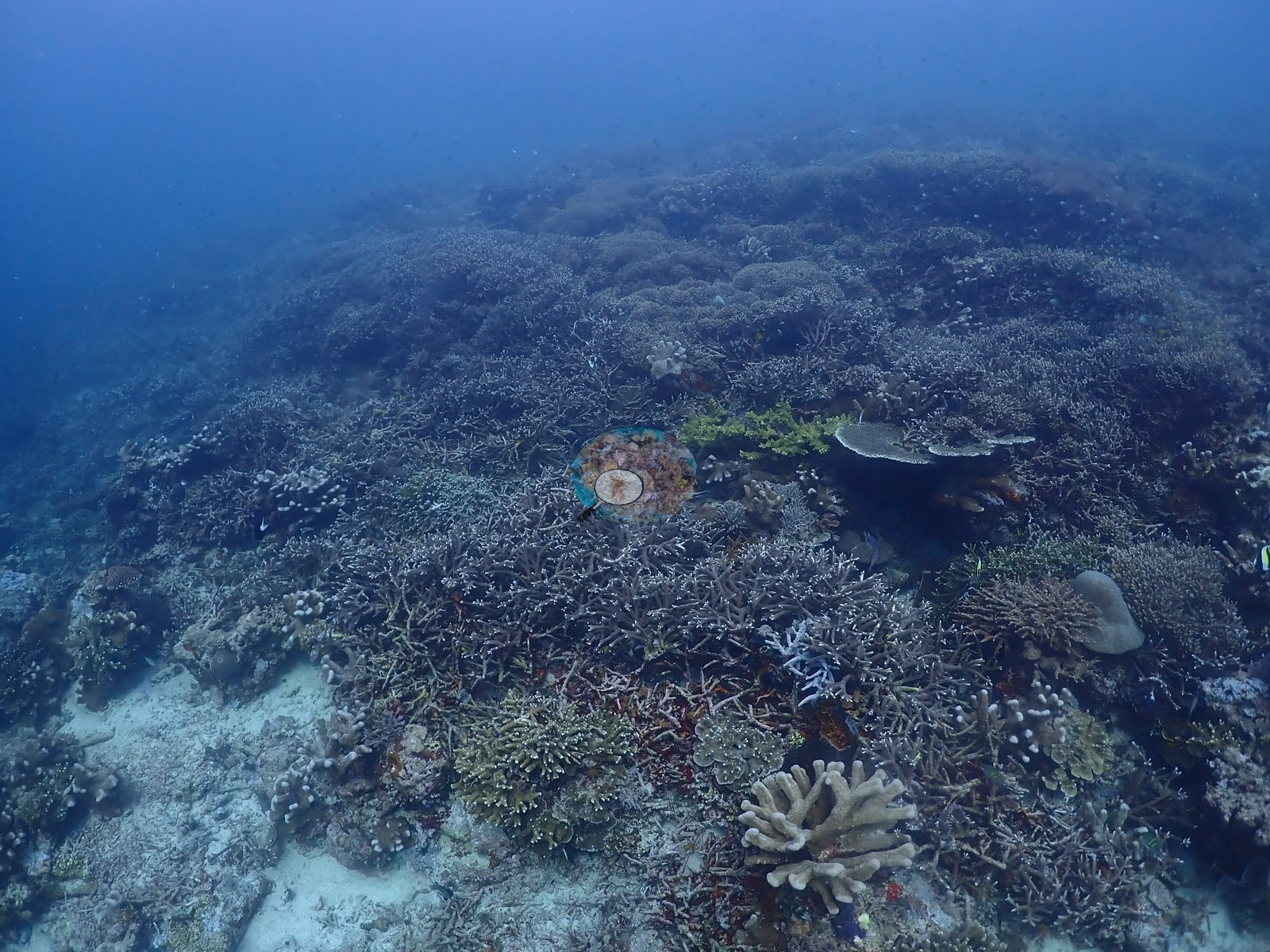
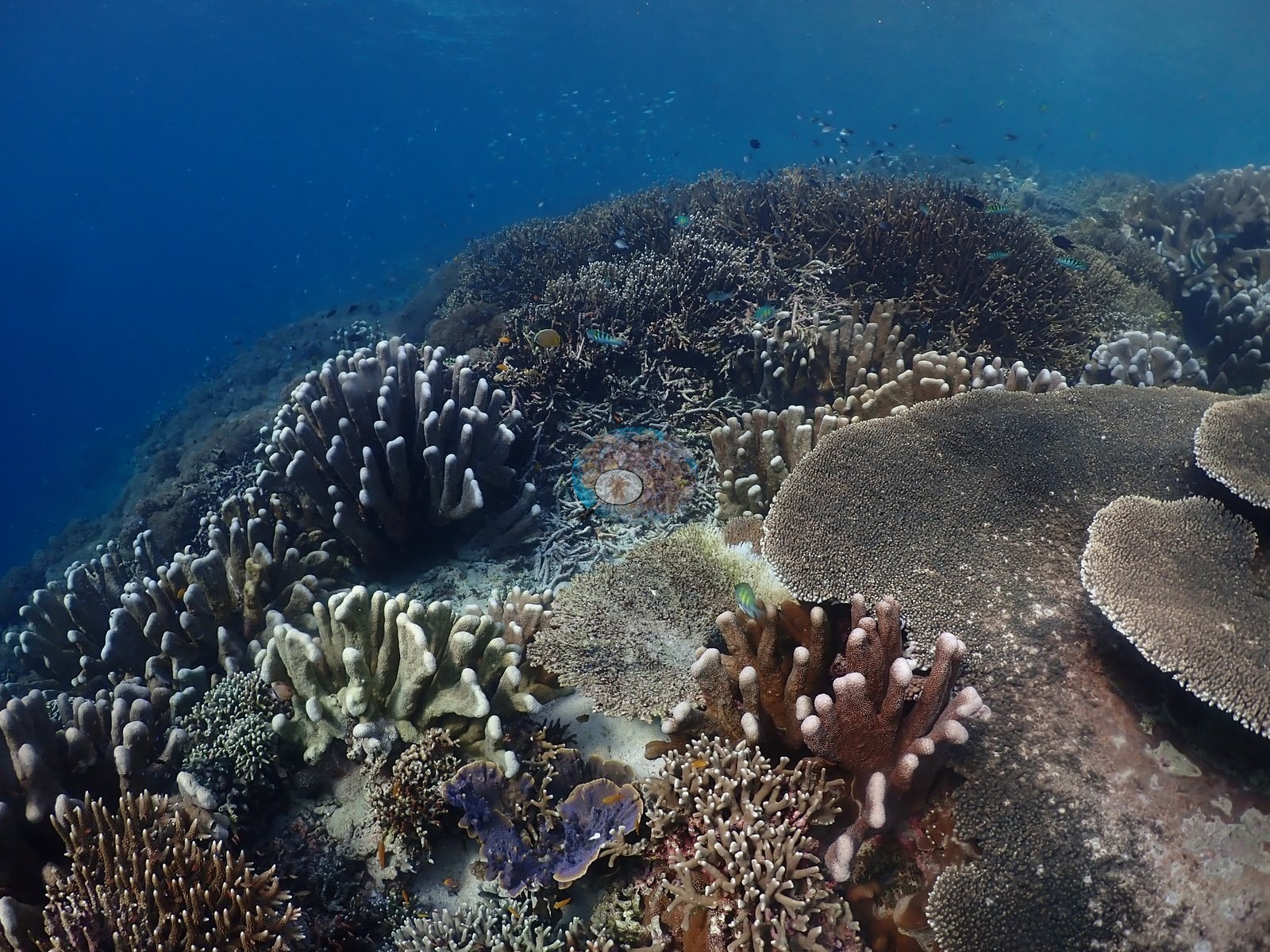
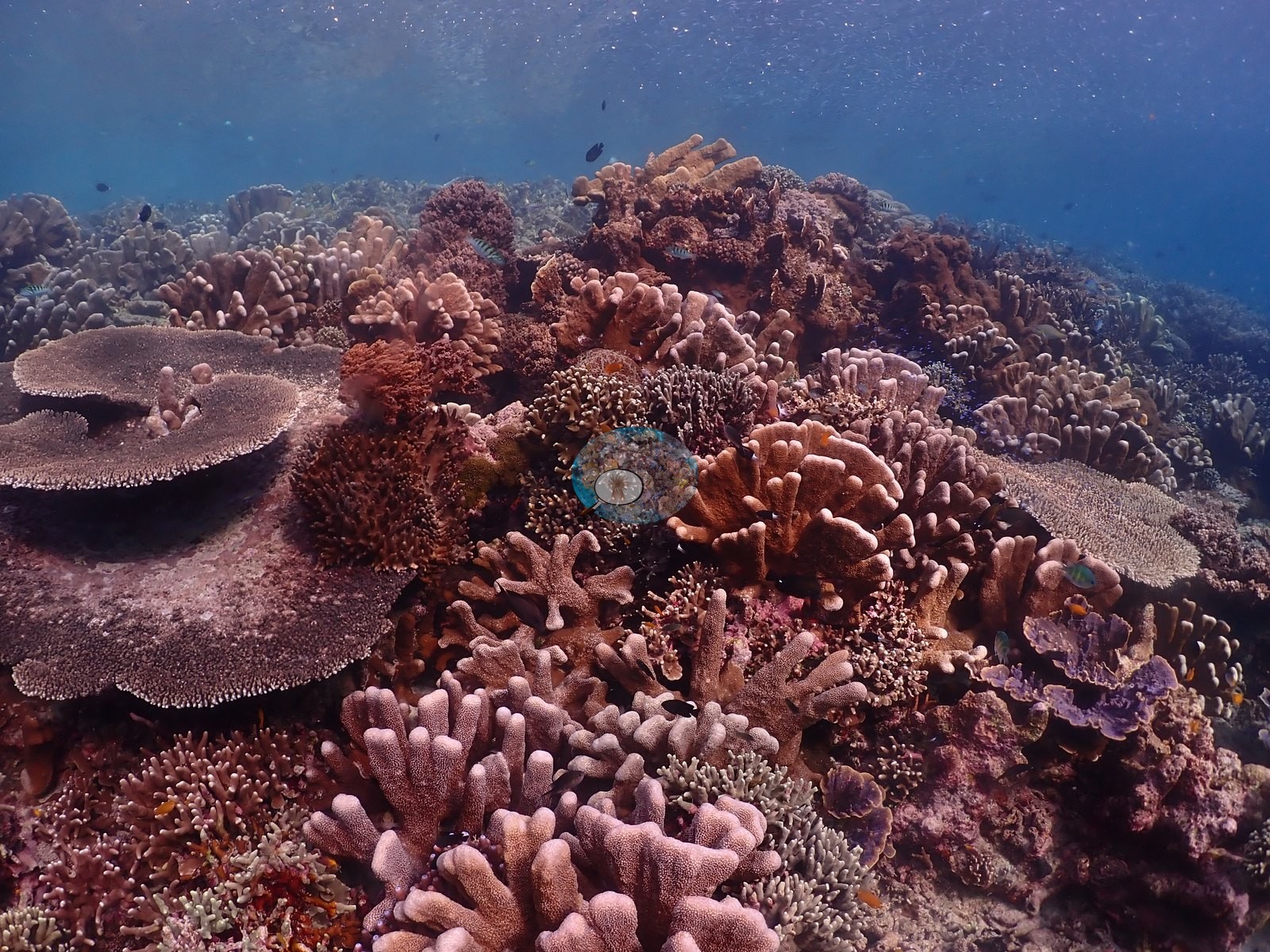
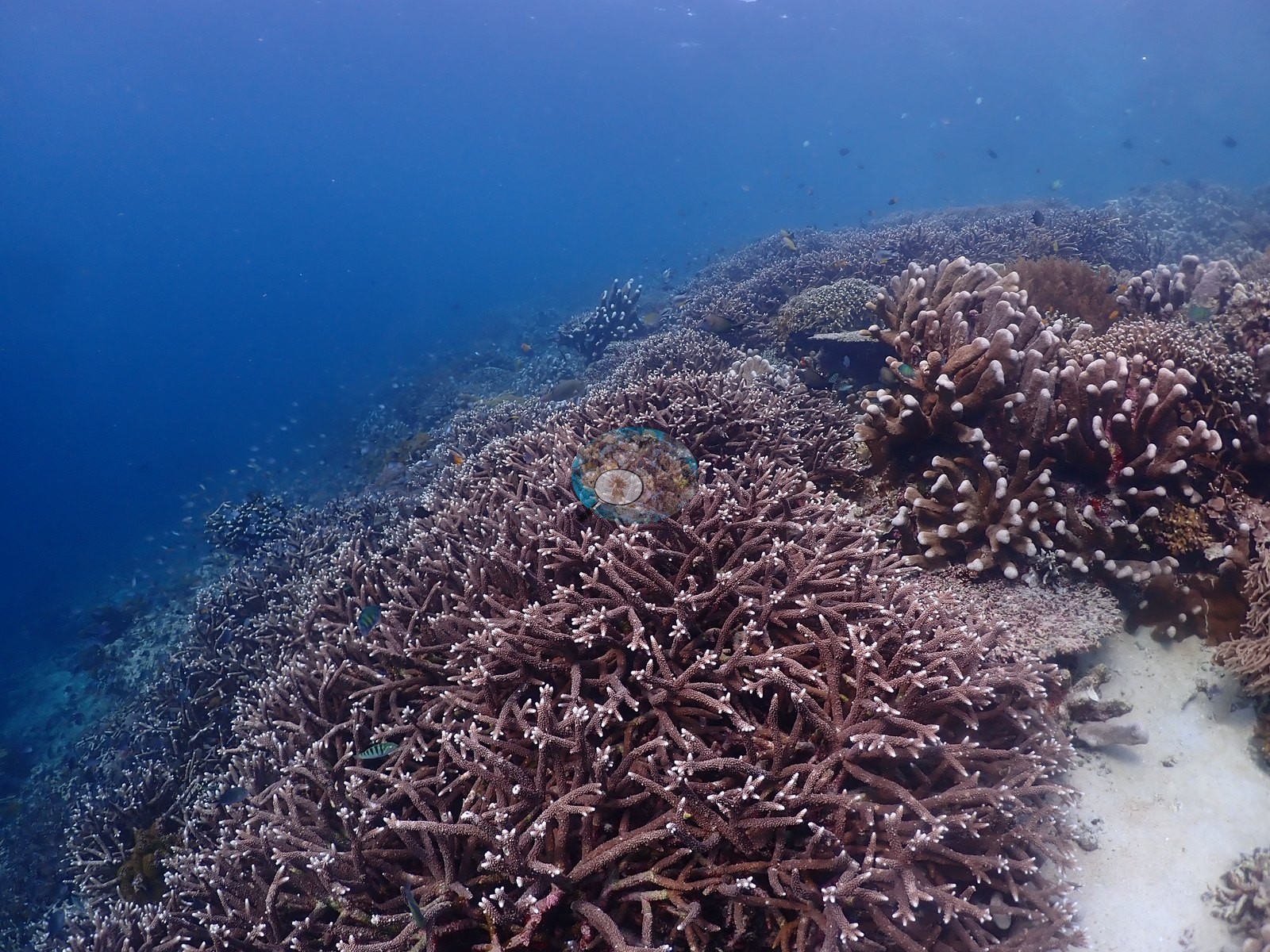
After the opening stretch the reef develops steadily into one of the most colorful and densely built reef stretches reviewed in Halmahera: extensive fields of fine-branching staghorn Acropora in vivid salmon-pink, magenta, and pale lavender run near-continuous across dozens of frames (e.g., Image 3, Image 13, Image 19, Image 24, Image 34, Image 42, Image 51, Image 52).
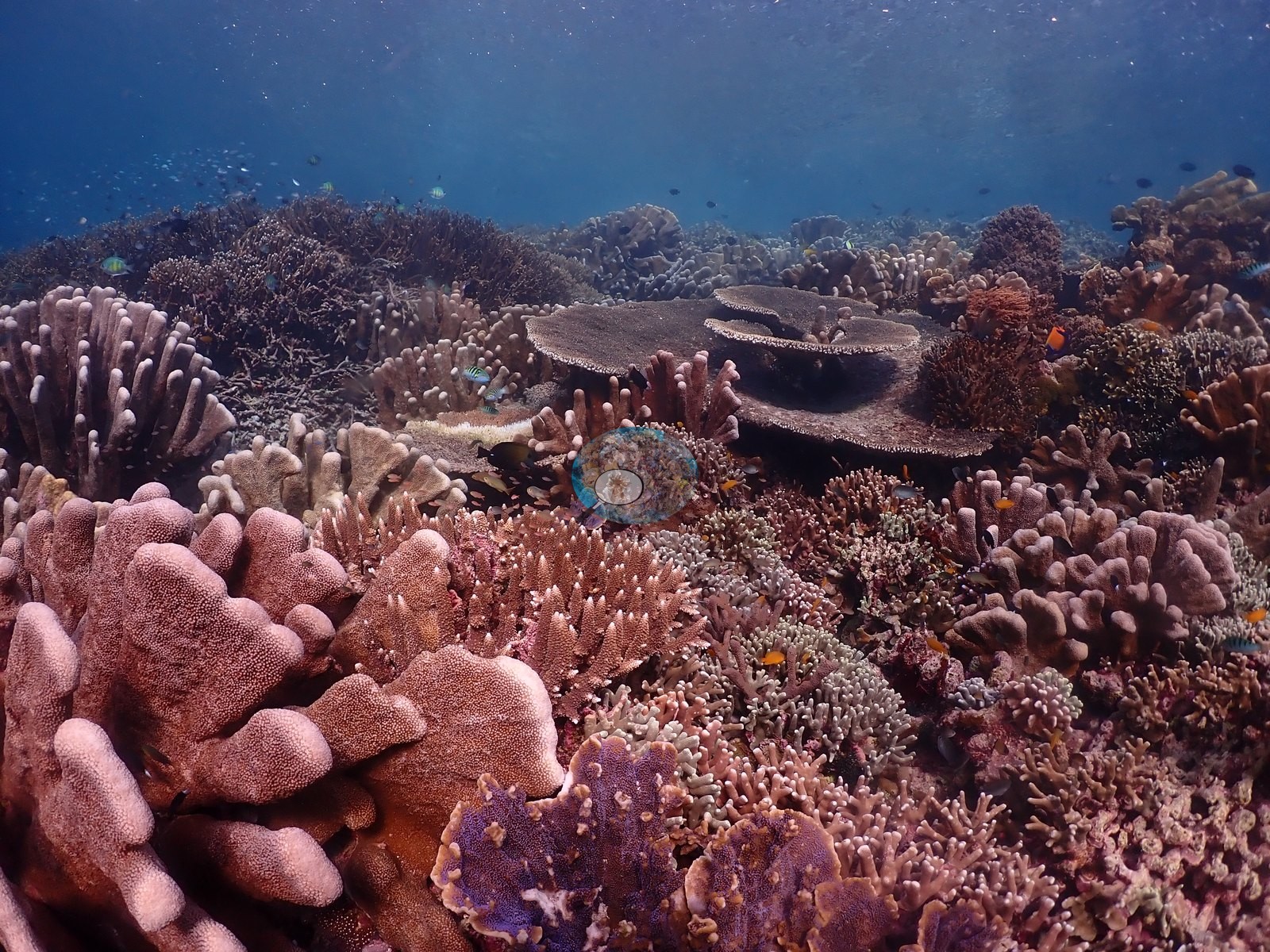
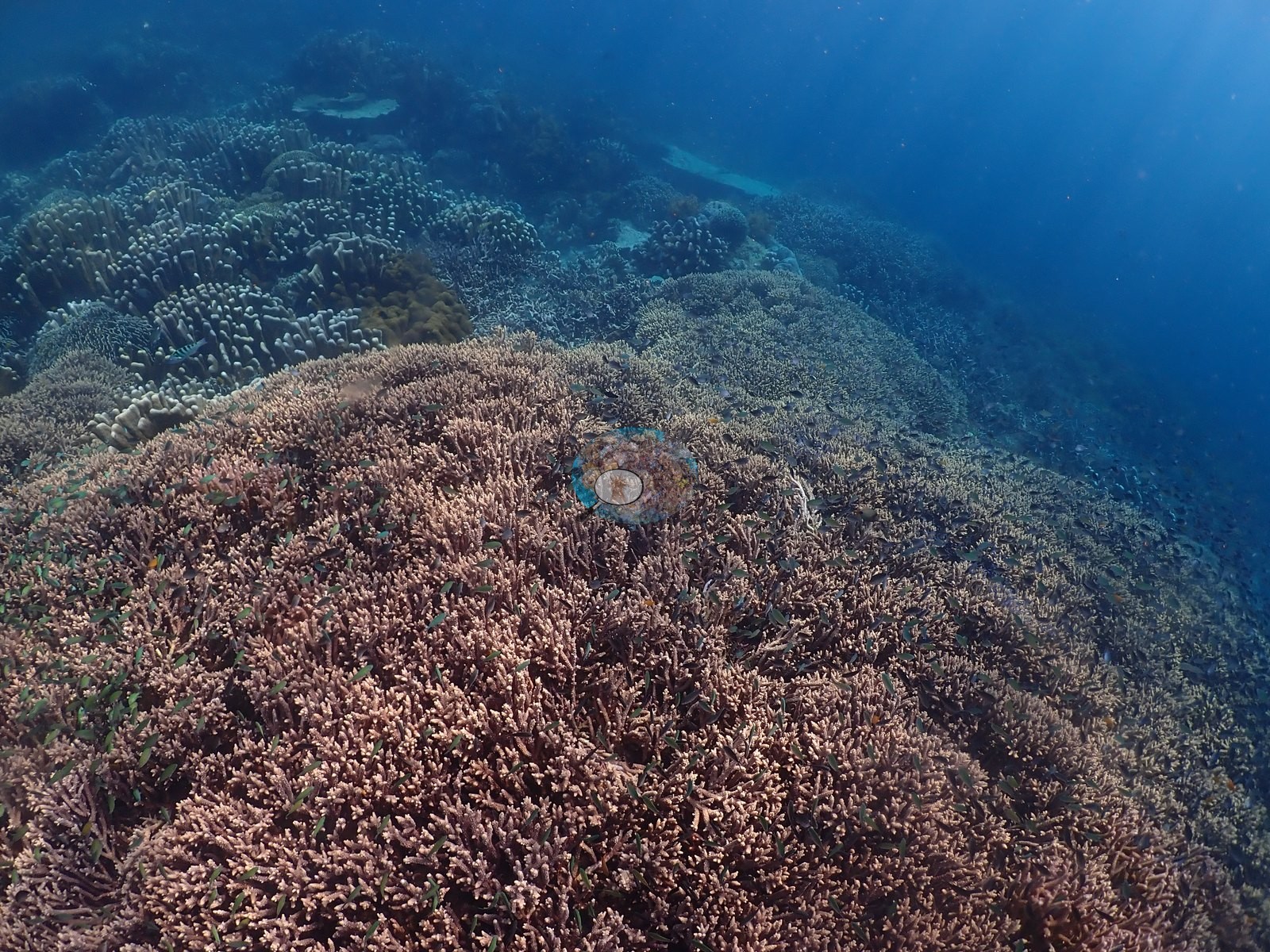
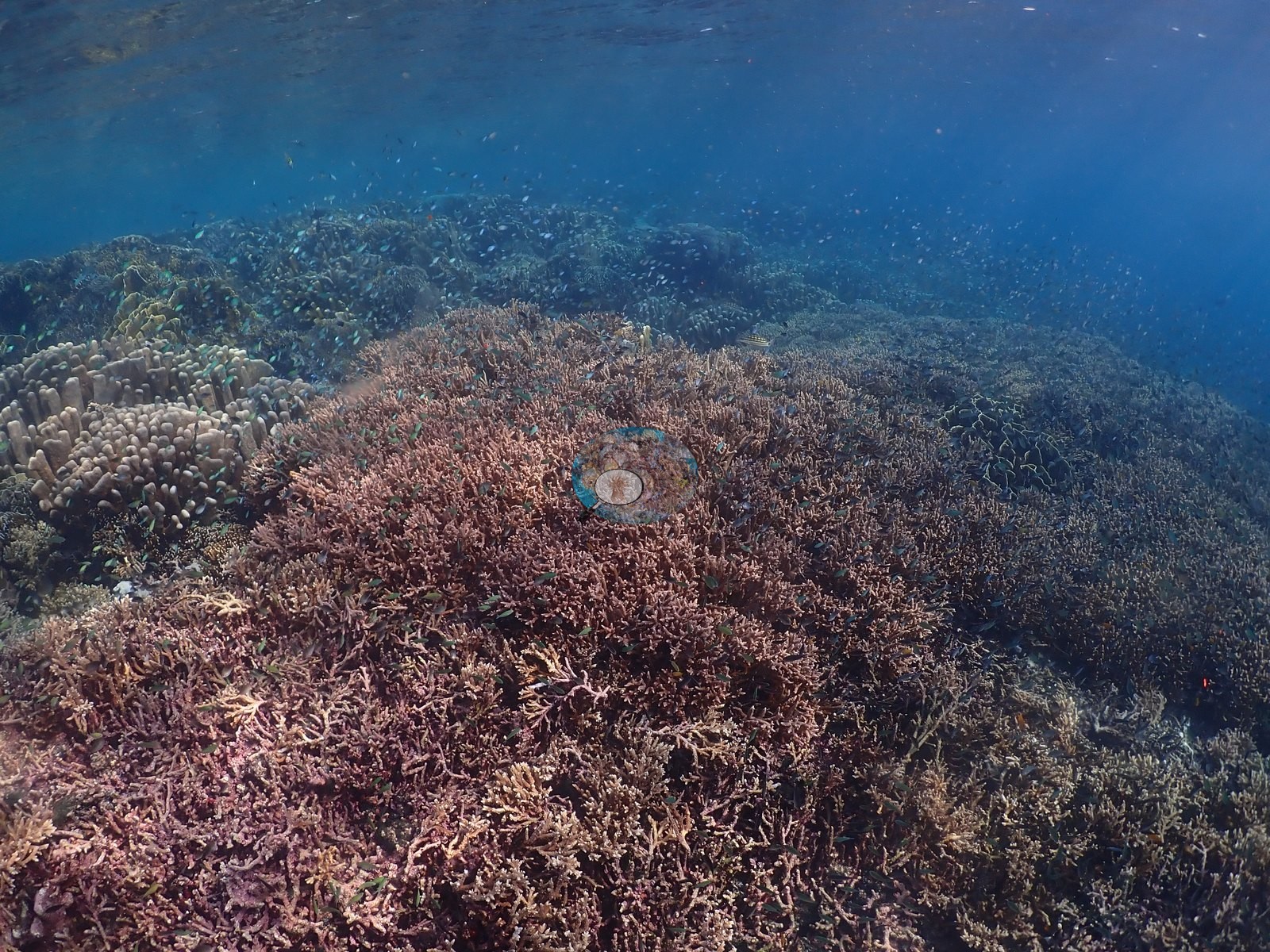
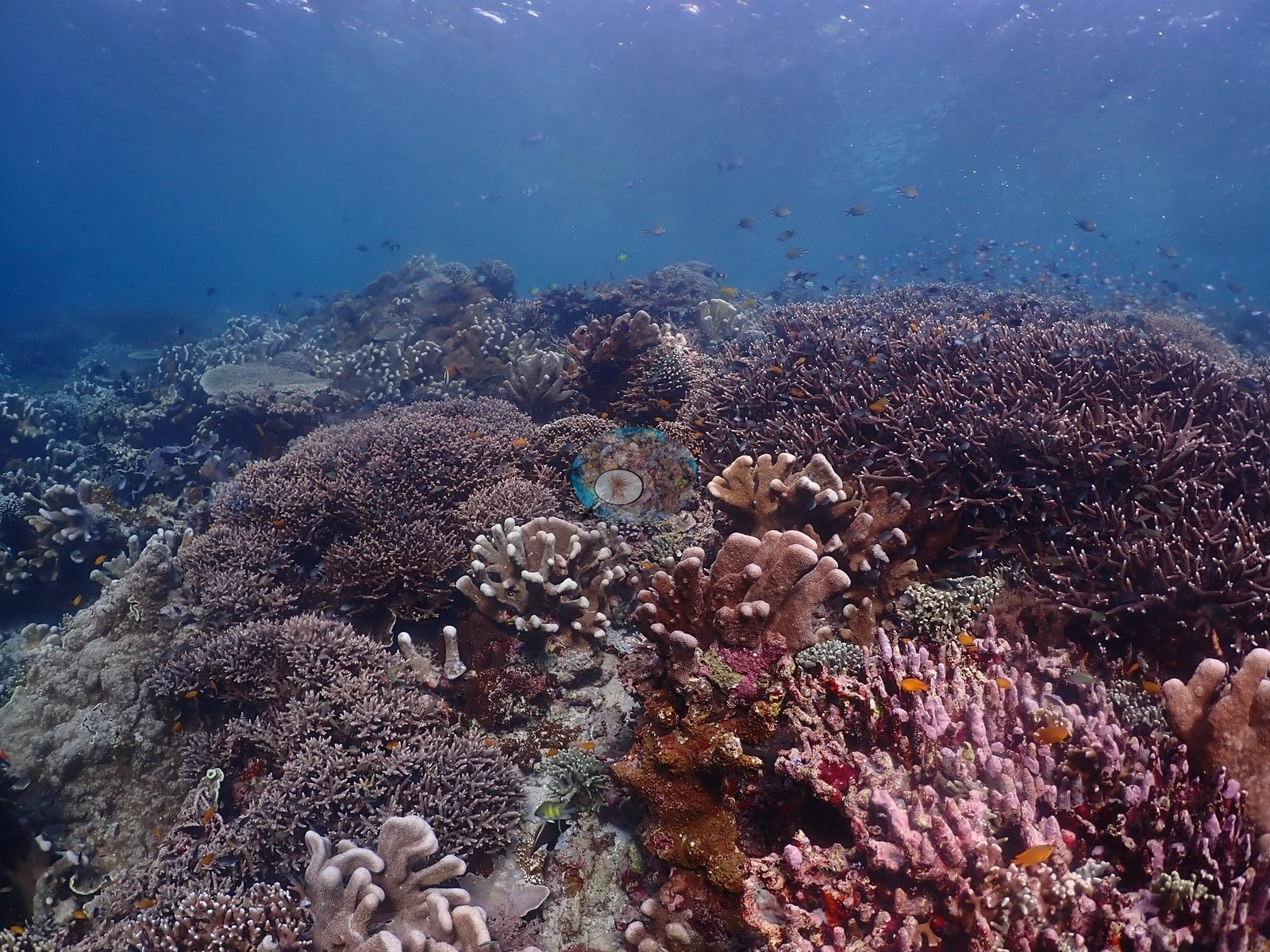
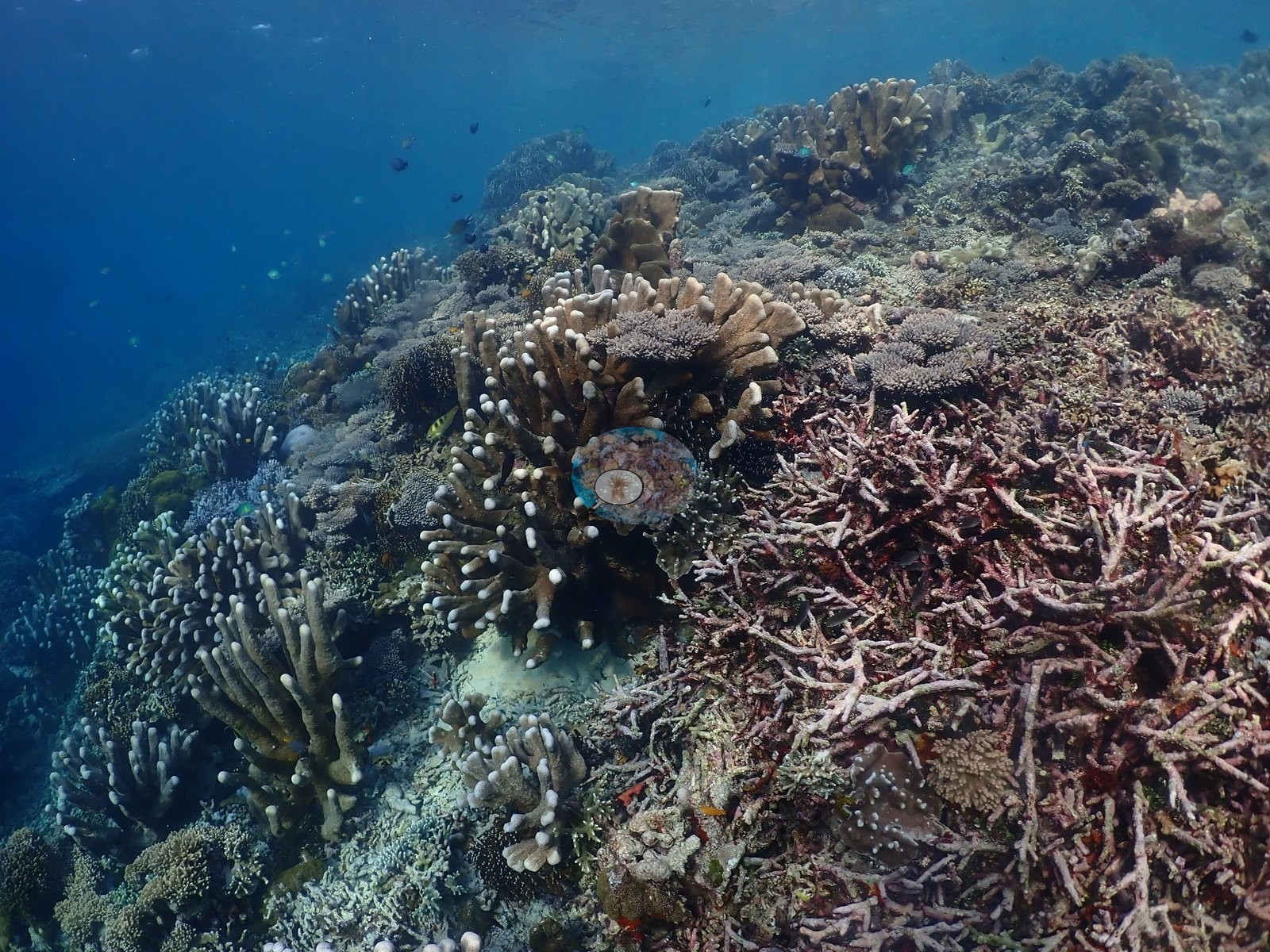
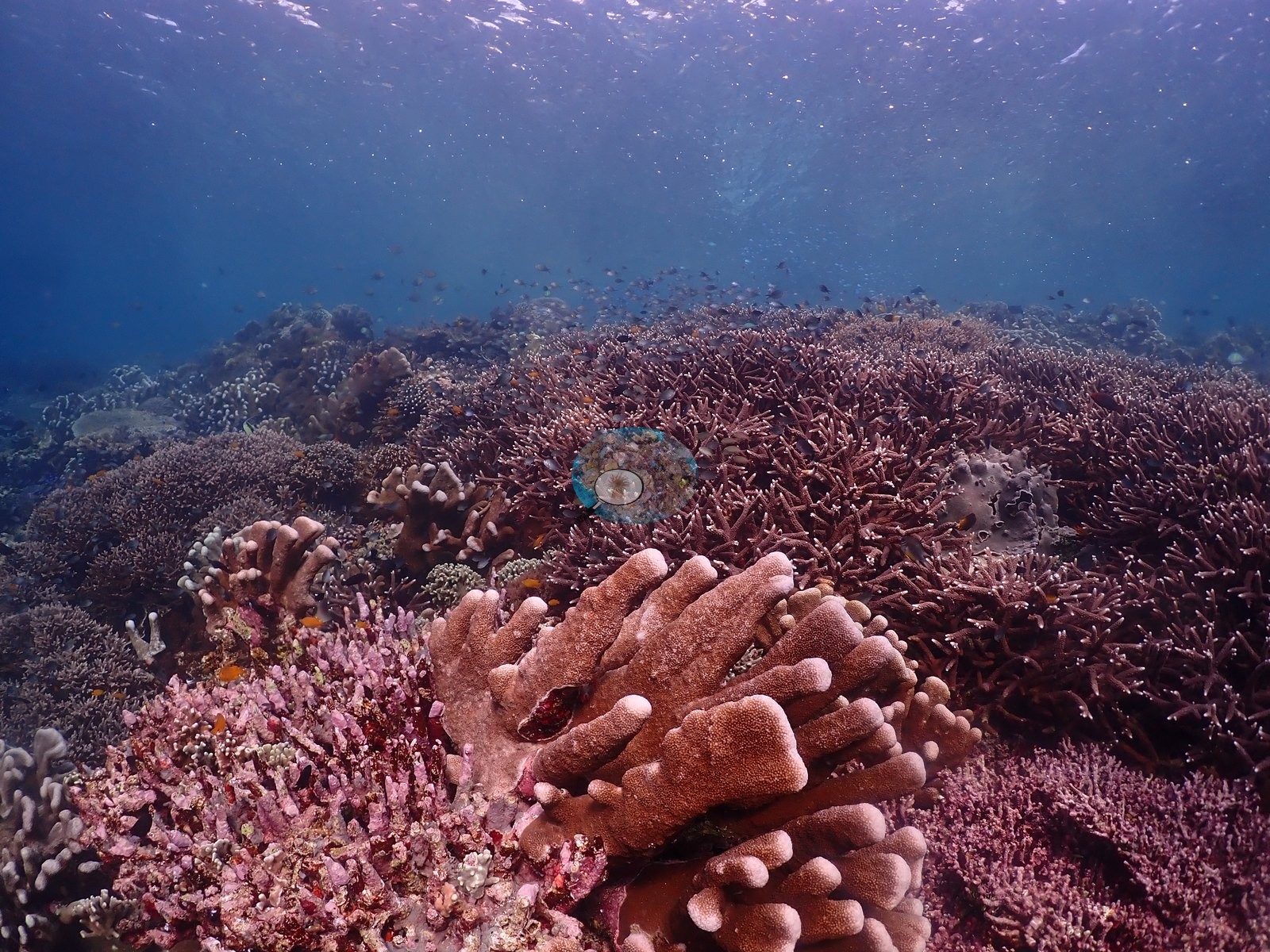
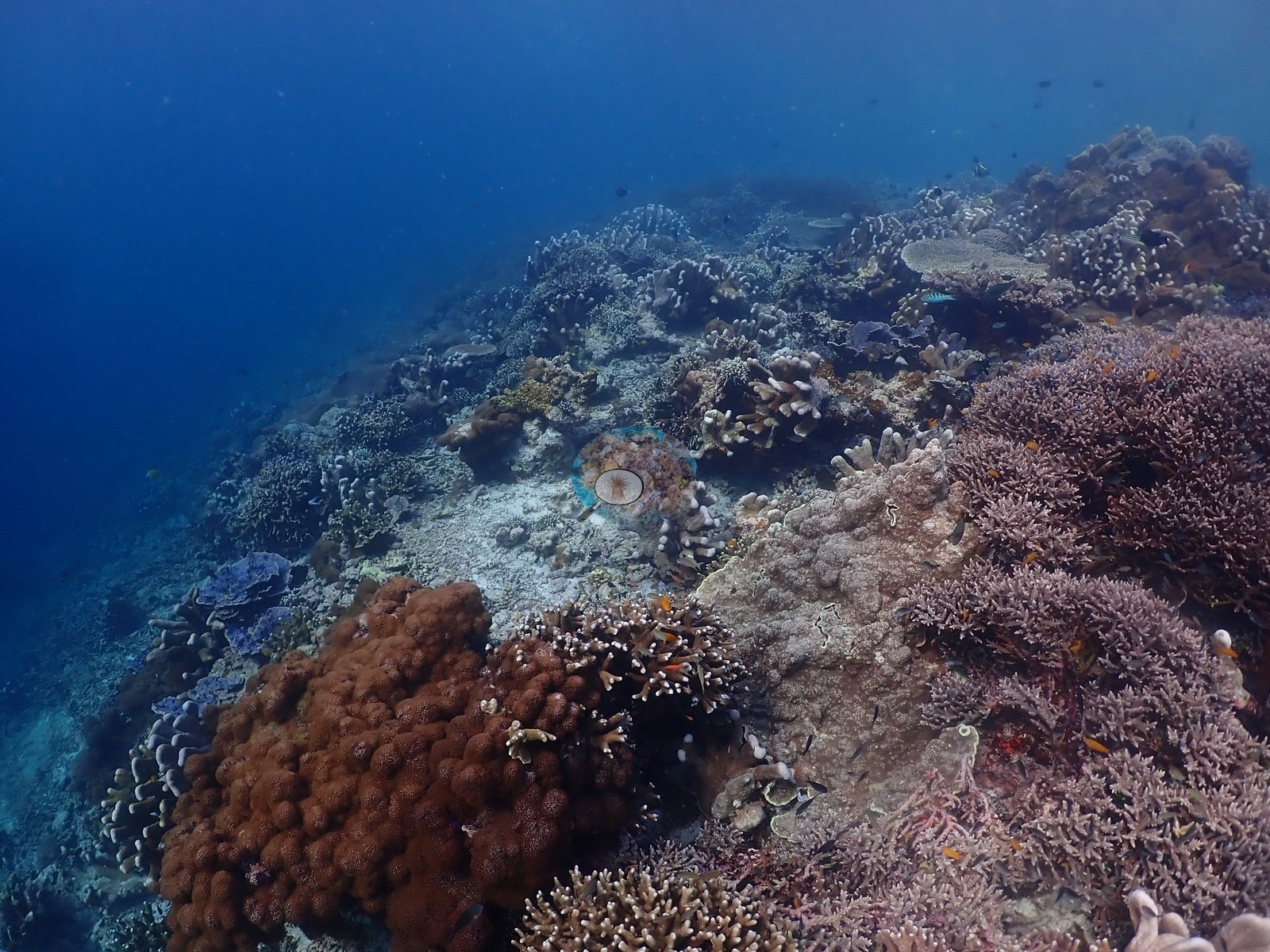
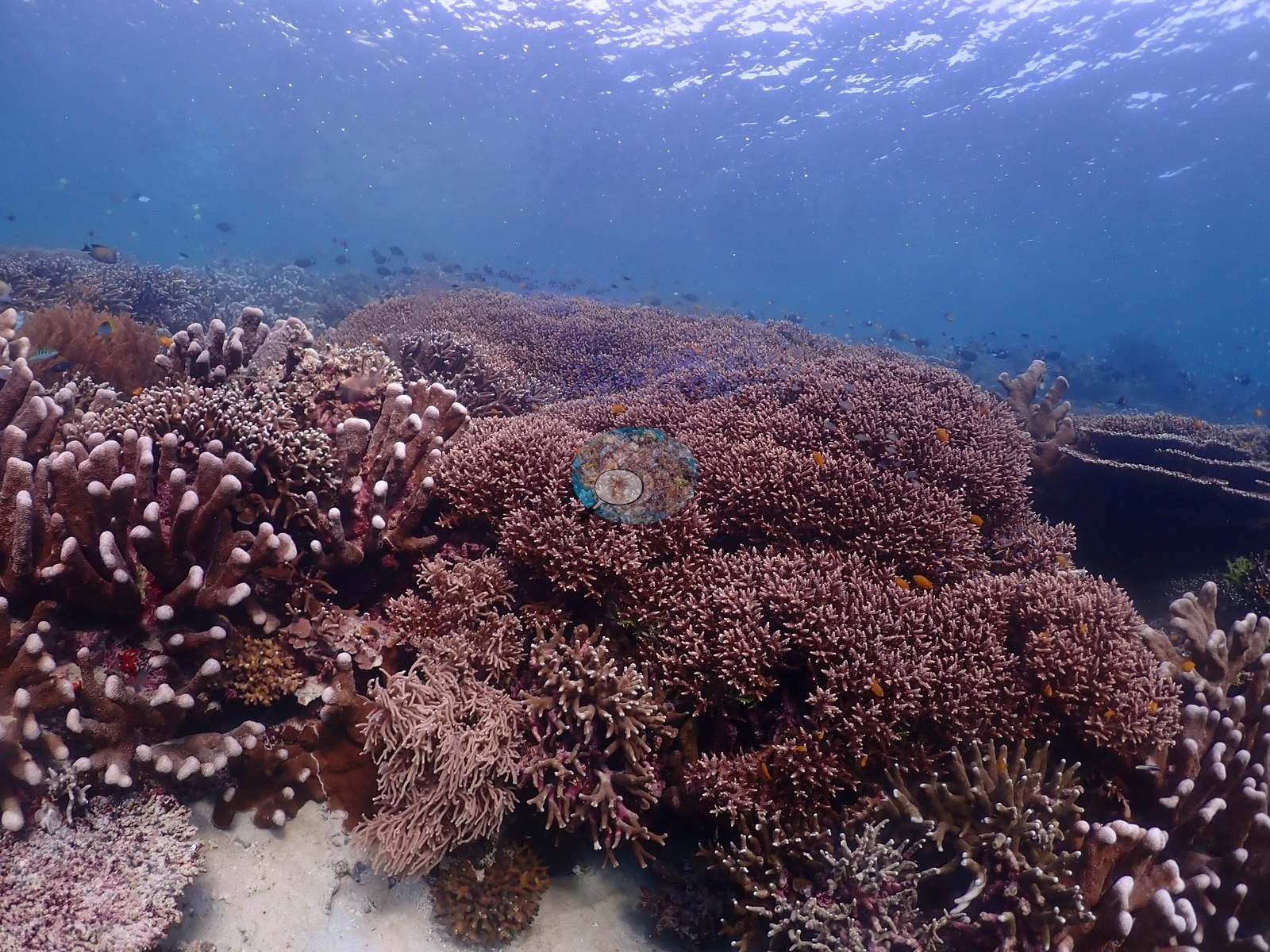
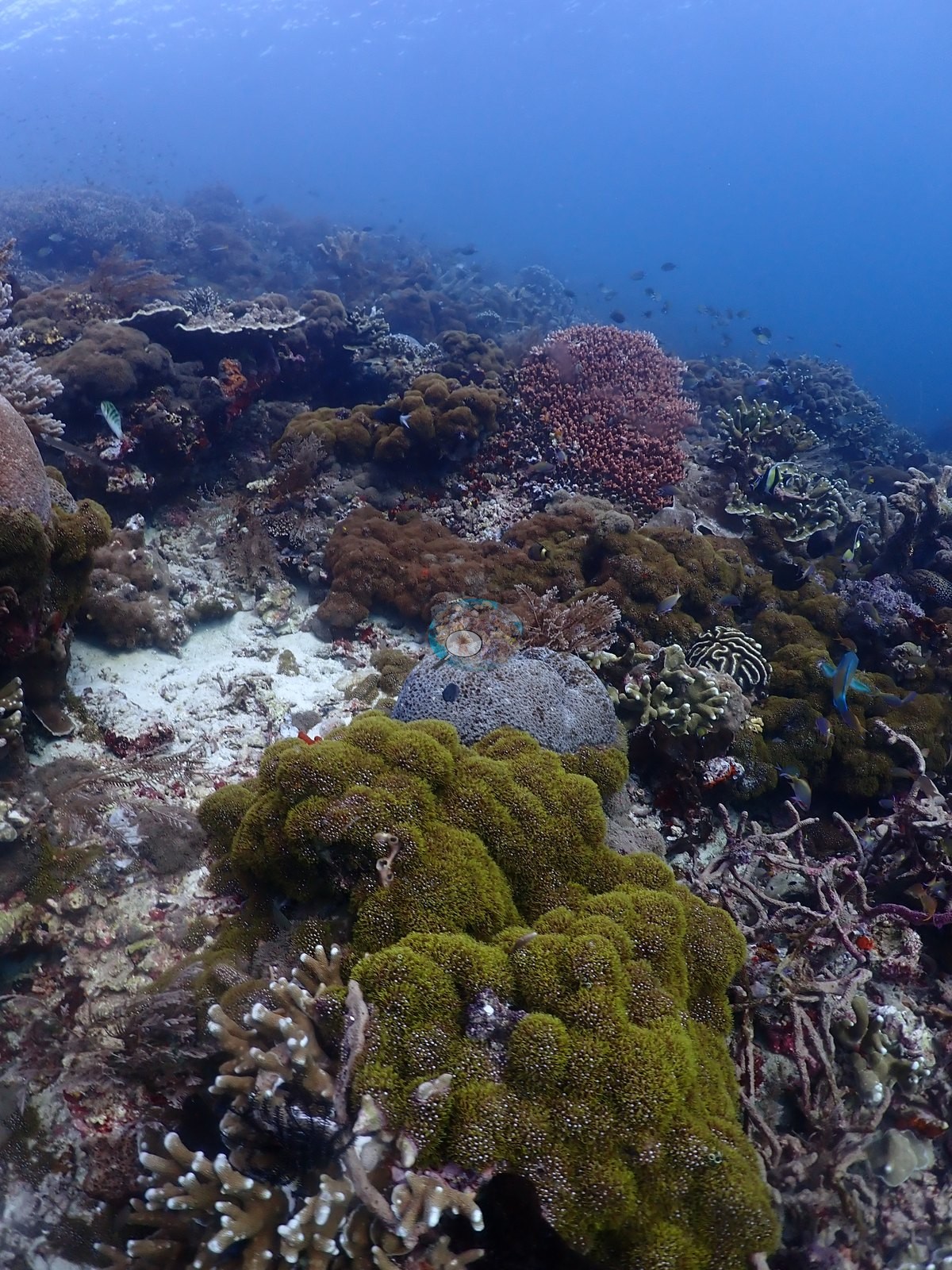
Large overlapping tabulate Acropora tables recur through the second half of the dive, often stacked several deep, alongside massive tan-brown Porites-type domes and boulders threaded through the branching fields (e.g., Image 6, Image 3, Image 20, Image 32, Image 5, Image 54).
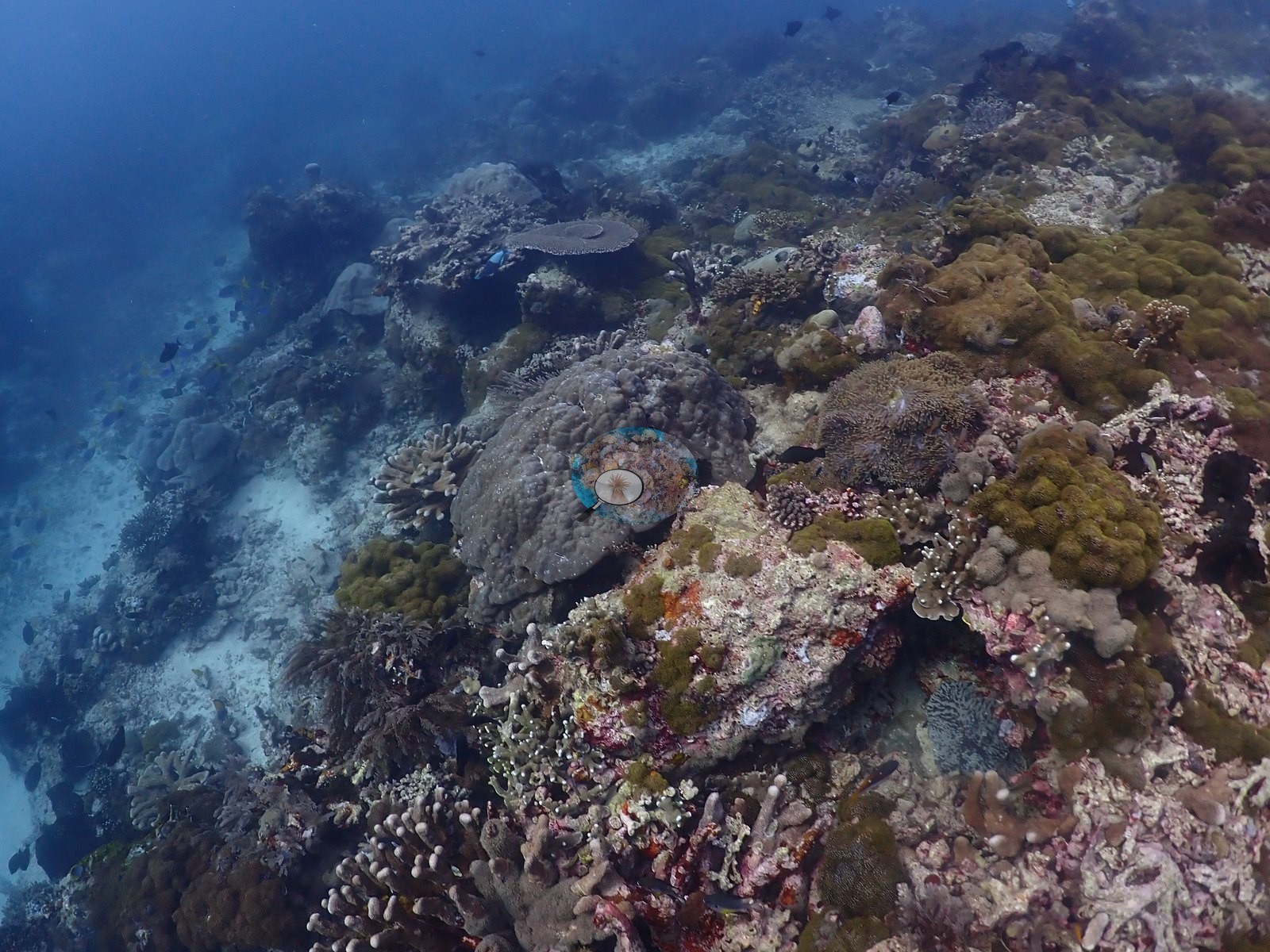
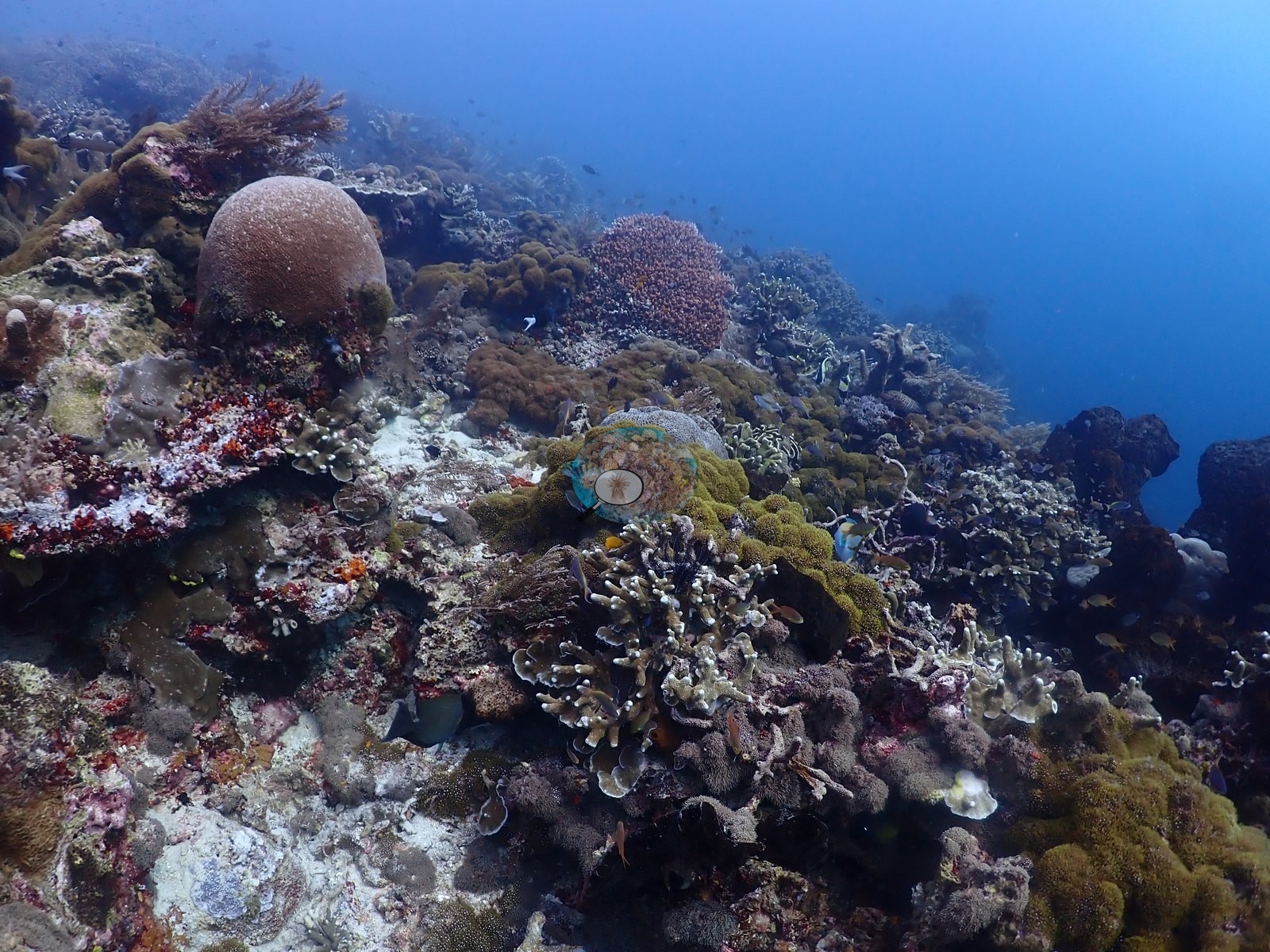
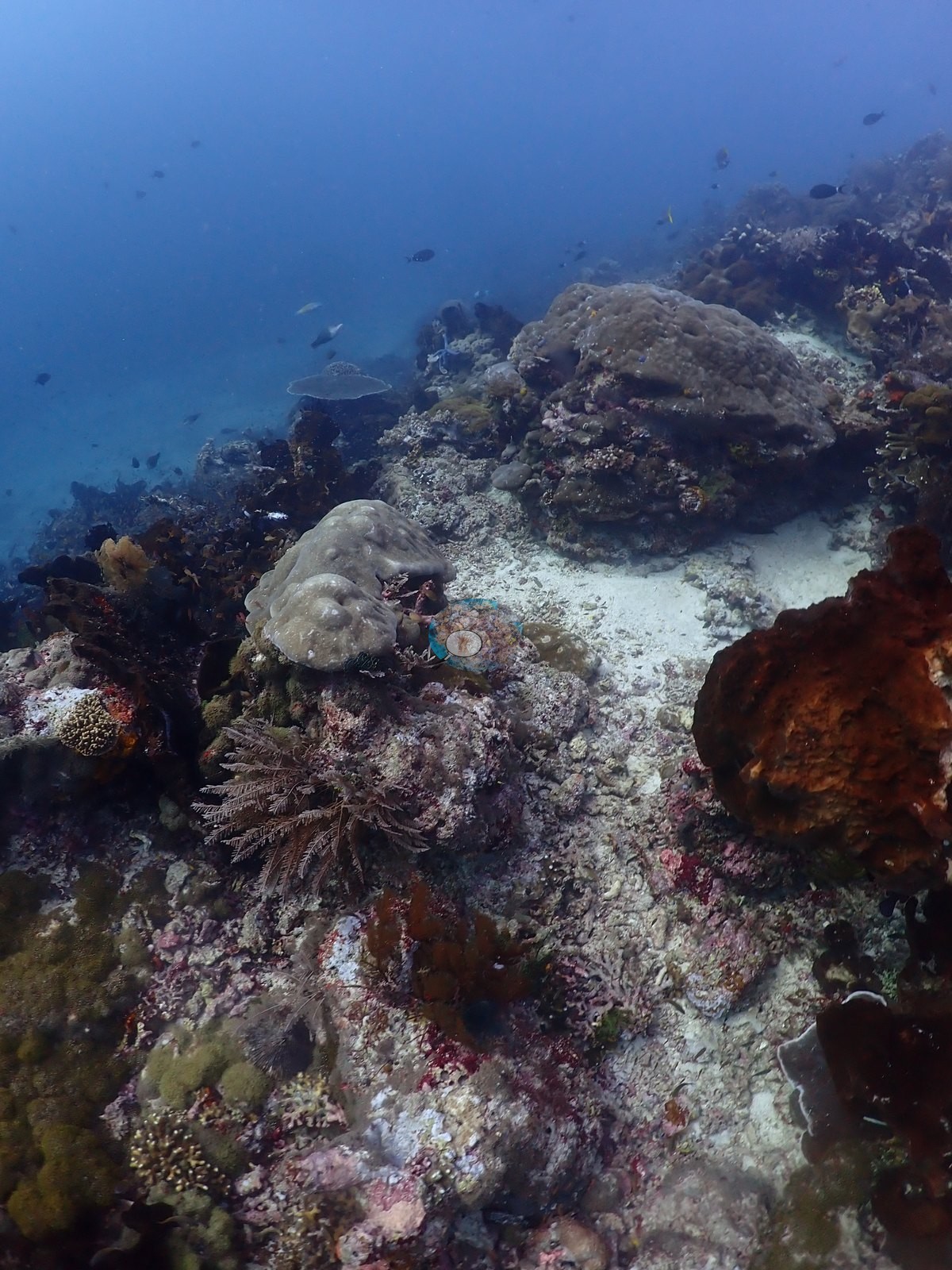
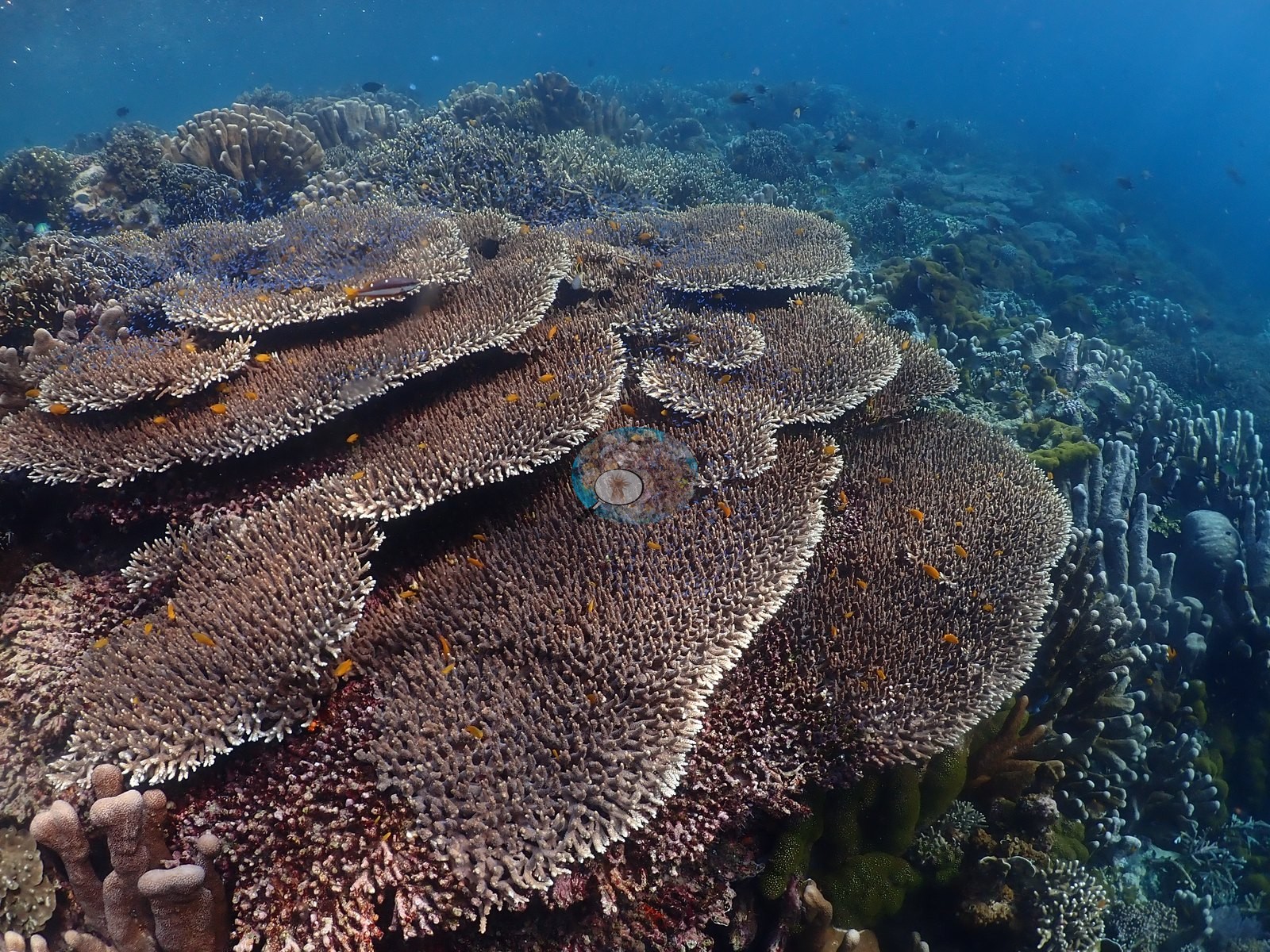
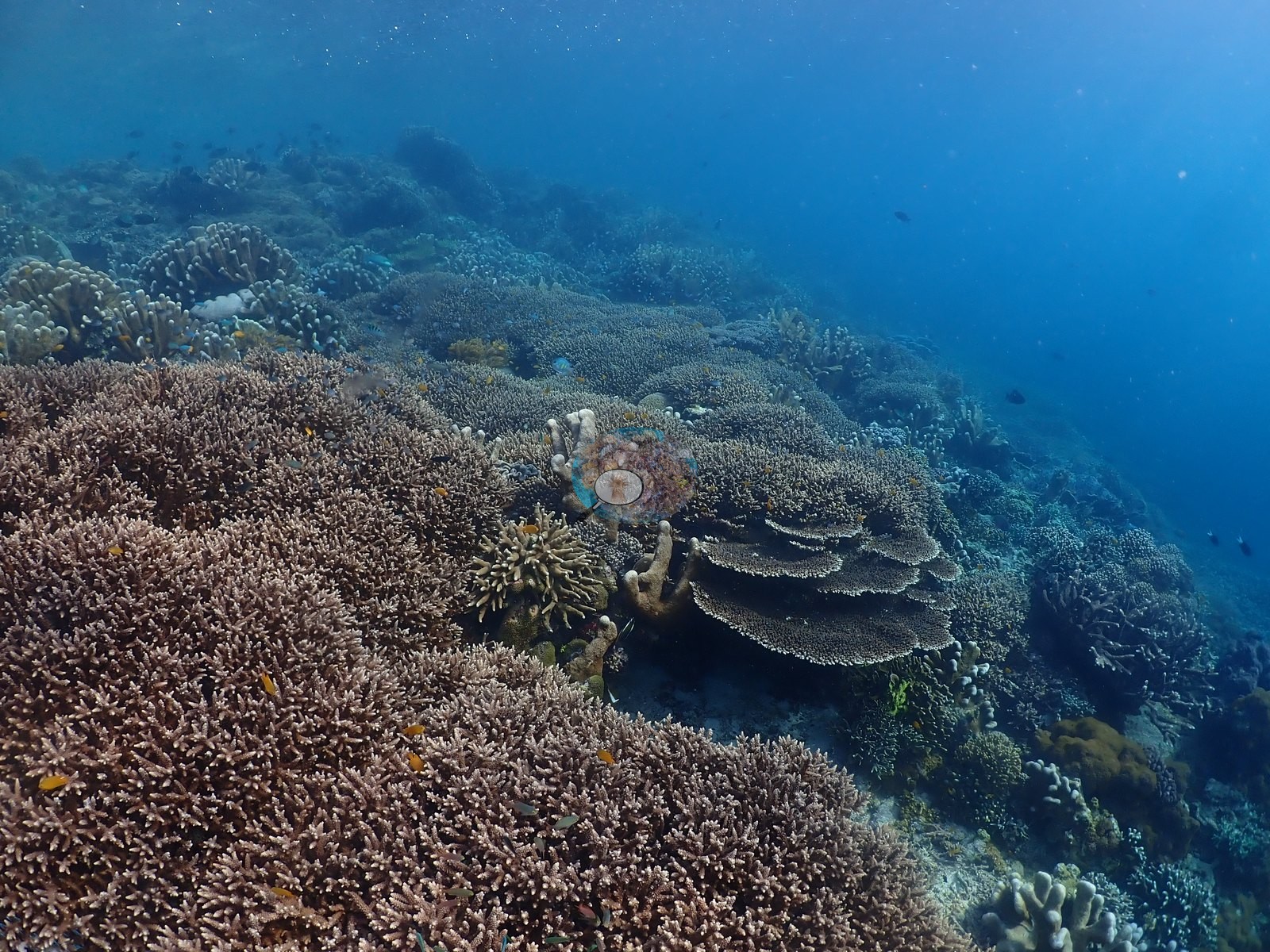
Gorgonian fans, a soft coral/anemone-like cream rosette, and scattered fish (chromis, damsels, an eel-shaped fish crossing sand) round out the fauna.
Coral cover
Coral cover: 43% — a blind Claude computer-vision point count of 105 of Anderson's unedited photographs (20 points per photo; water, fish, and obstructions excluded). Other computer-vision methods are listed in the method table.
Stressors
Condition: one pale-white cauliflower-form colony sits among normally pigmented tan-green neighbors in one frame — isolated and hedged as possible partial bleaching or a natural pale morph, not part of a wider pattern. No disease, crown-of-thorns, or predation was seen in any of the 105 frames reviewed.
Comparisons with other data
No prior survey data from this site. If you would like to share yours, please email us.
CV model comparison
More info
DINOv3 and CoralSCOP were run on the same photos and are listed for comparison. Coralscapes v2 and v1 were also run but are not shown: Anderson does not consider Coralscapes reliable for these photos. No diver transect exists for this trip, so agreement between the rows is not accuracy, and as of September 2026 no computer-vision method estimates coral cover accurately on new images; treat every row as indicative.| Method | Hard-coral cover (%) |
|---|---|
| In-house DINOv3 | 31.8 |
| CoralSCOP unedited | 37.9 |
| Claude | 43.0 |
Data & links
All images from Coral Reef Diagnostics. Data are from Coral Reef Diagnostics.
© Coral Reef Diagnostics.