
Indonesia - Halmahera: Jerot
Part of the regional summaries: Indonesia - Halmahera and Indonesia - Maluku
More info
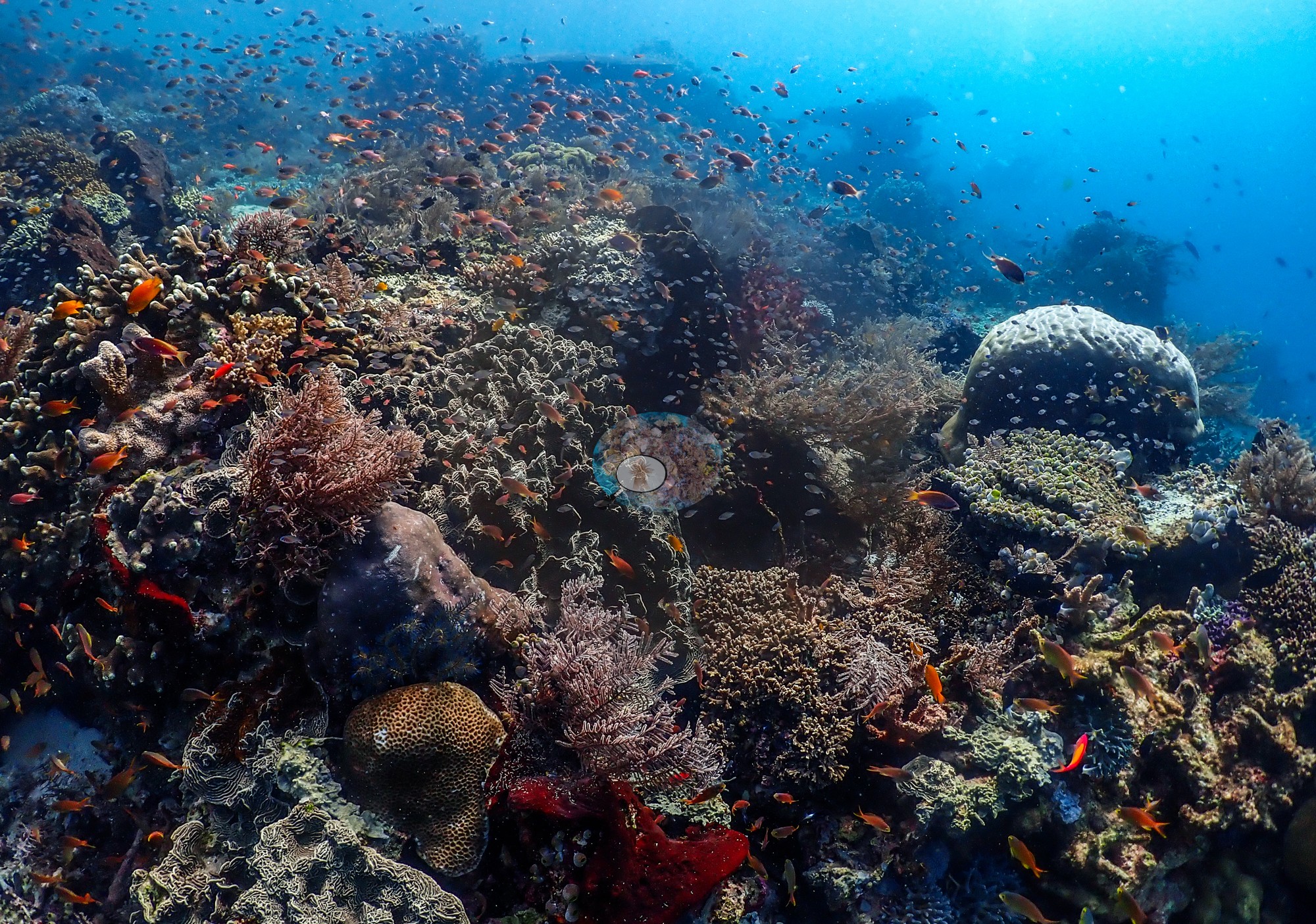
North Maluku (NOAA CRW virtual station)Jerot was dived in unusually cold water that had Anderson wondering in his log whether this is an upwelling site, and the reef runs a clean depth gradient - sparse knolls on a deep sand plain giving way to a high-cover shallow crest of Acropora, Pocillopora, and leather corals. A blind Claude computer-vision point count puts coral cover around 23%.
Jerot diselami dalam air yang luar biasa dingin, yang membuat Anderson menuliskan pertanyaan dalam catatannya apakah ini lokasi upwelling; terumbunya memperlihatkan gradien kedalaman yang jelas — gundukan-gundukan renggang di dataran pasir dalam yang memberi jalan kepada tubir dangkal bertutupan tinggi berisi Acropora, Pocillopora, dan karang kulit. Penghitungan titik buta visi komputer Claude memperkirakan tutupan karang sekitar 23%.
Terjemahan ringkasan ini oleh AI; versi bahasa Inggris yang berlaku.
Two other CRD dive sites within 5 km shown in orange — click a marker to open its page.
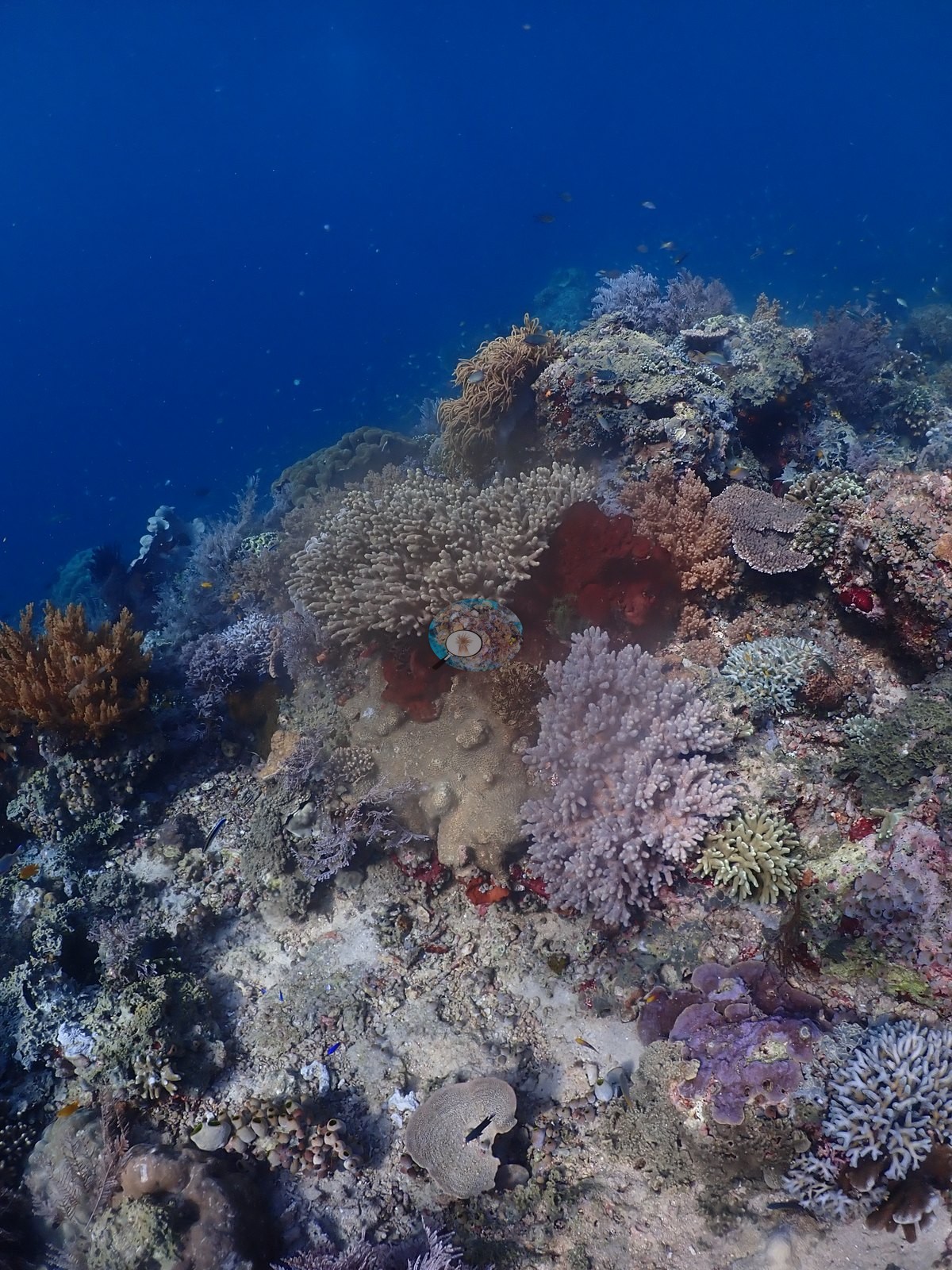
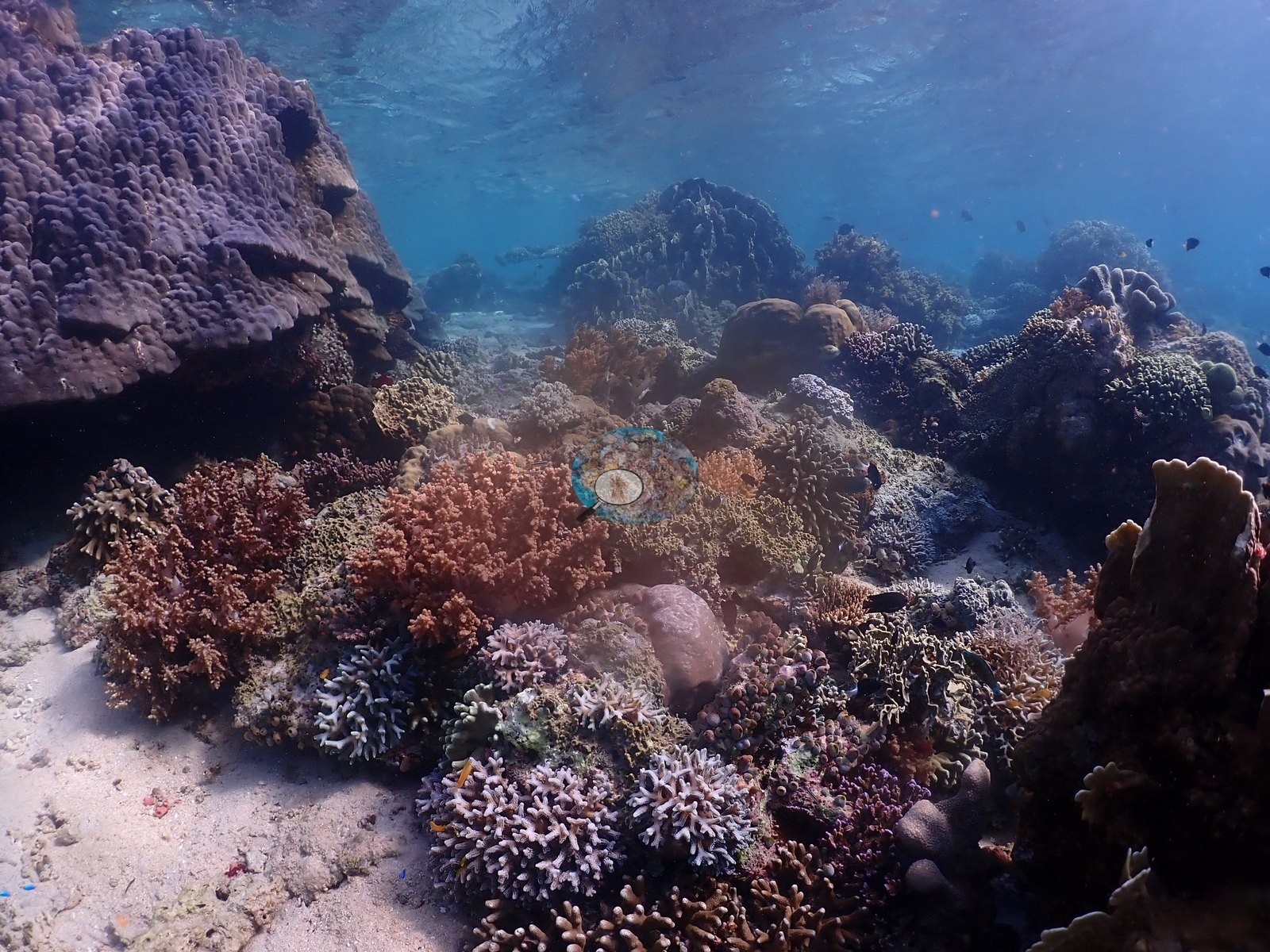
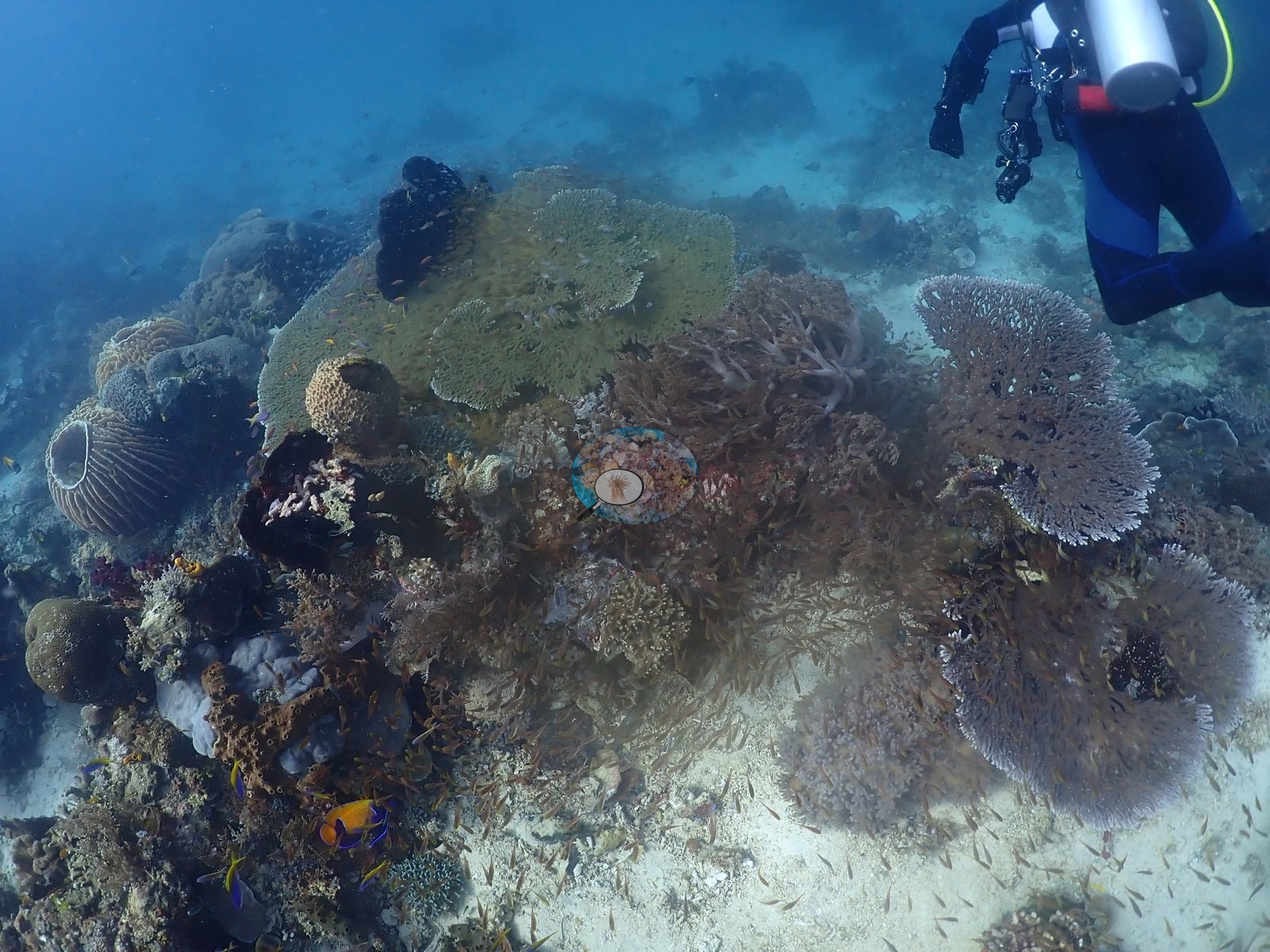
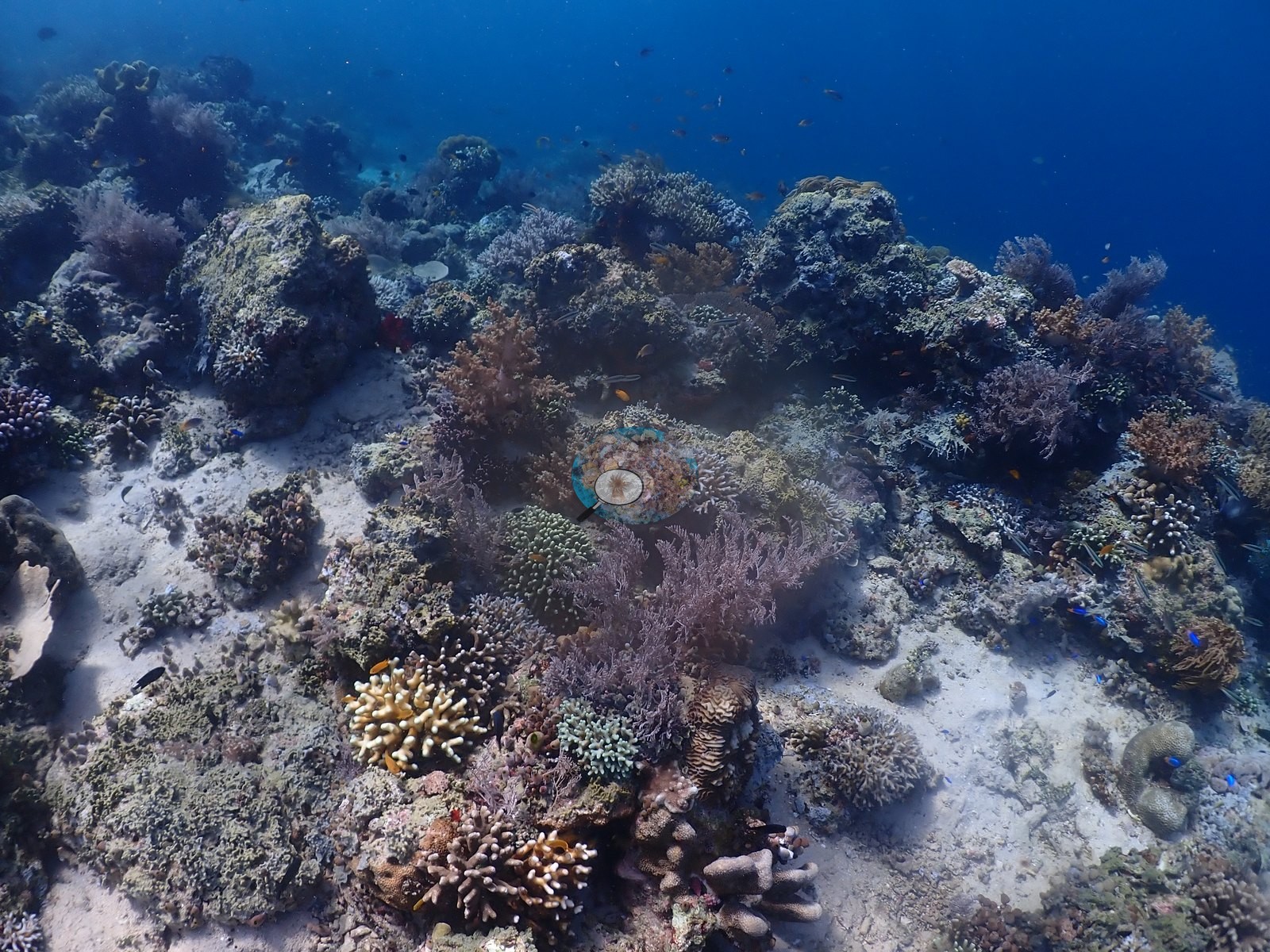
39 of these 53 photographs are shown beside the text that discusses them under "Site description" below.
Site description
Setting
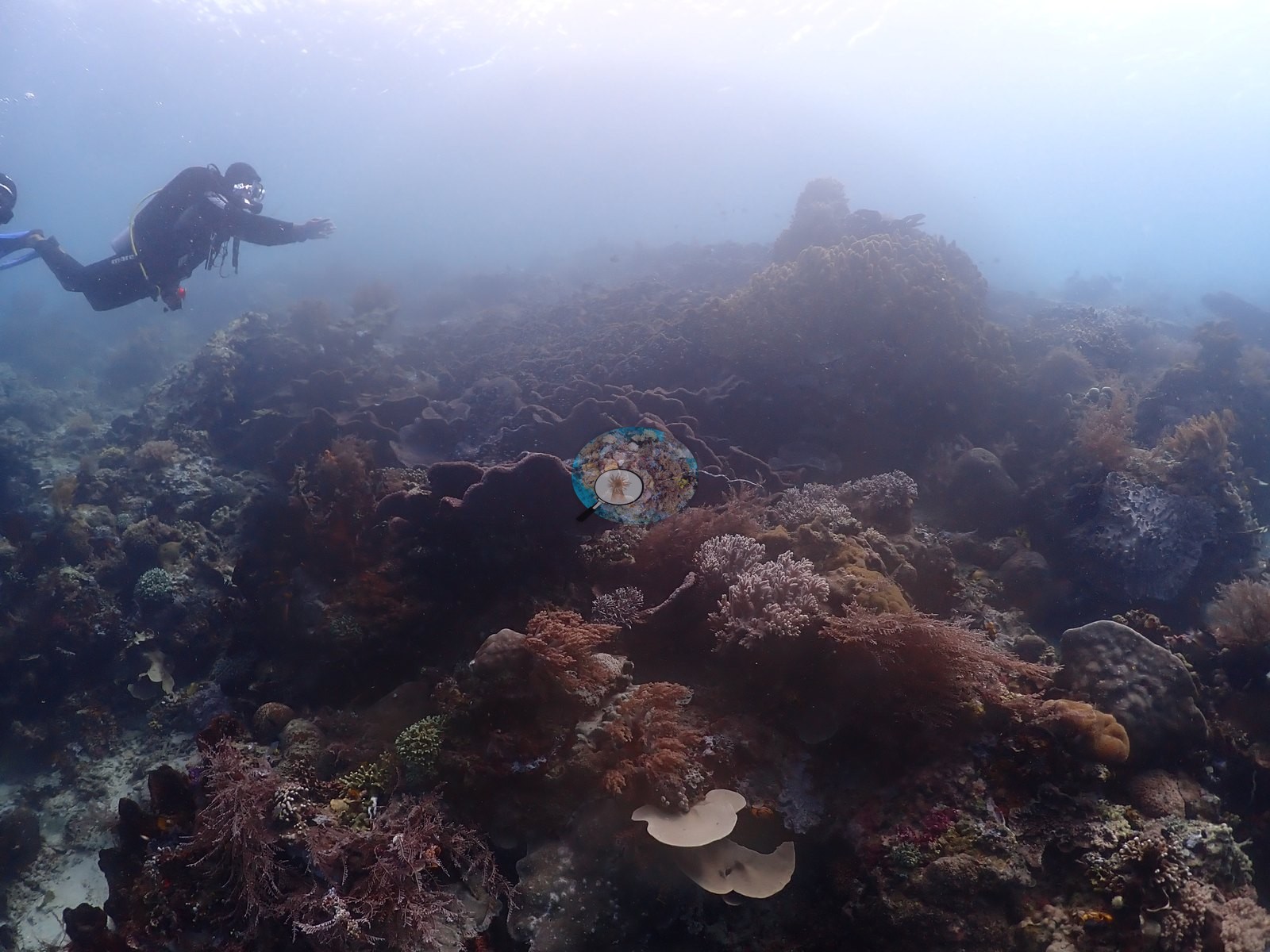
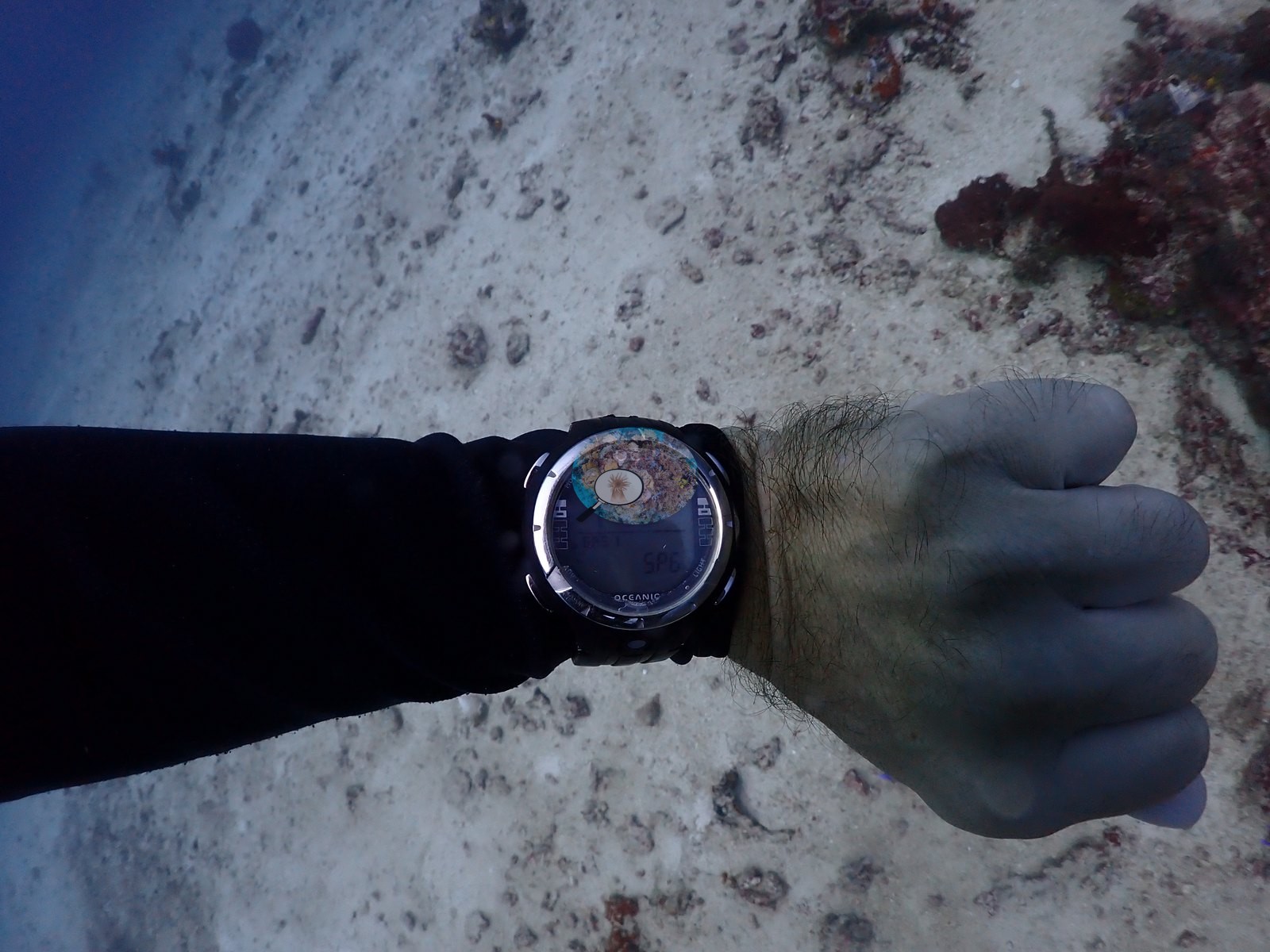
Jerot is a single continuous slope worked from a deep sand floor up onto a sunlit reef crest, and the imagery is organized almost perfectly by depth. Anderson's field note for the dive reads “super cold, weird thermoclines. Is this actually an upwelling area?” — the log records 22–25°C on a 22.1 m dive, several degrees below the 26–27°C logged elsewhere on this crossing, so the note is doing real work rather than describing a passing chill.
General benthic features
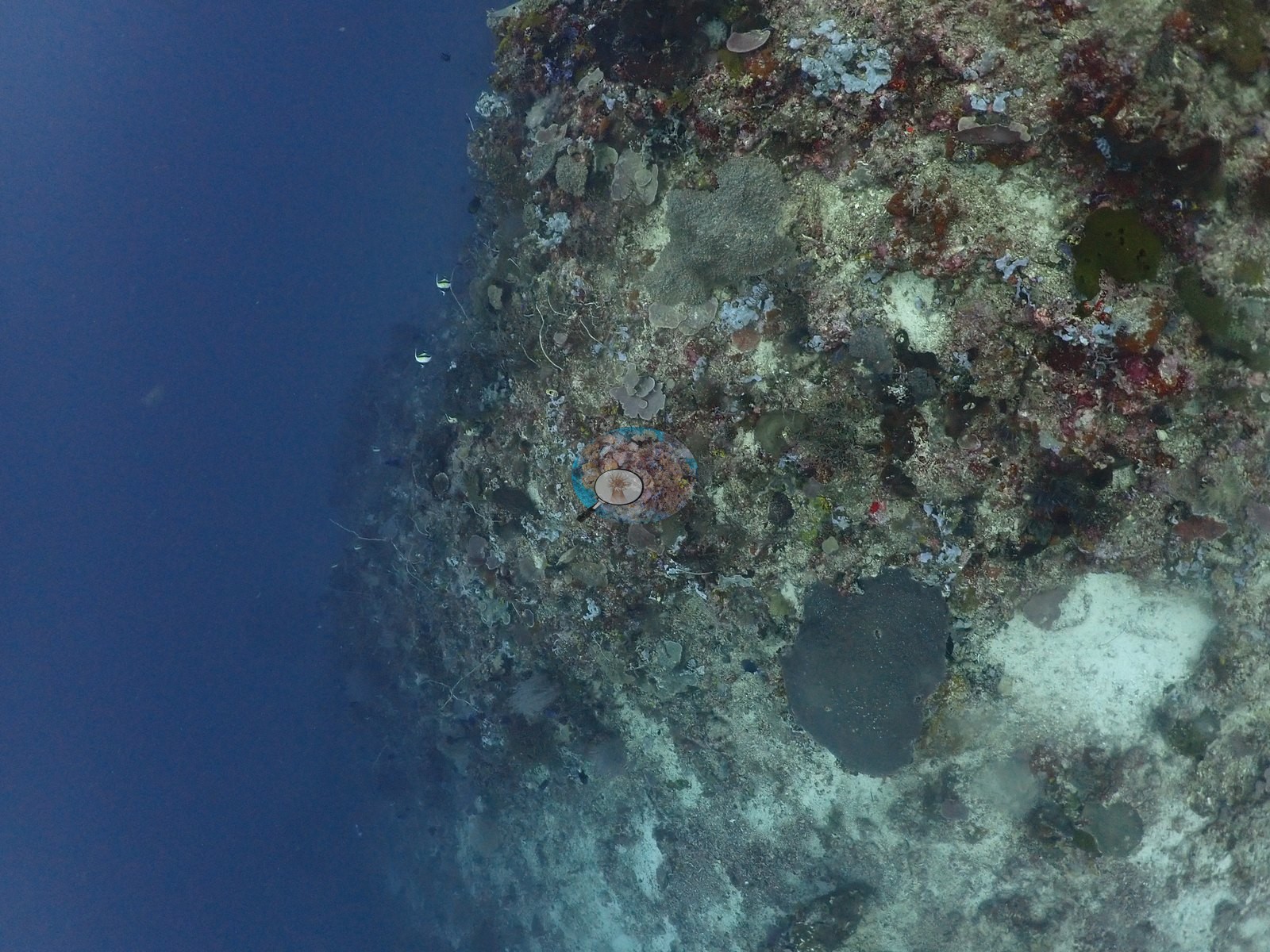
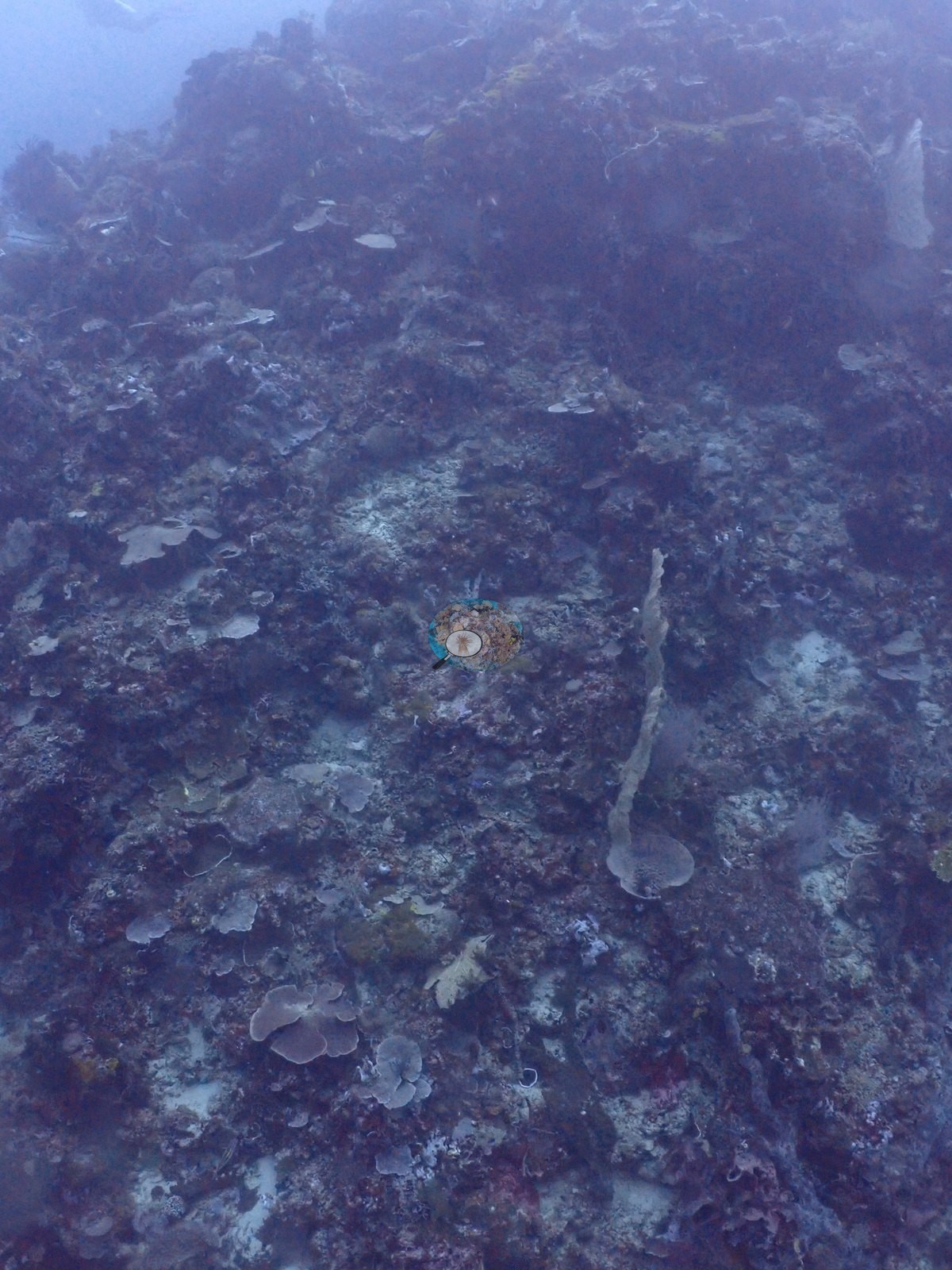
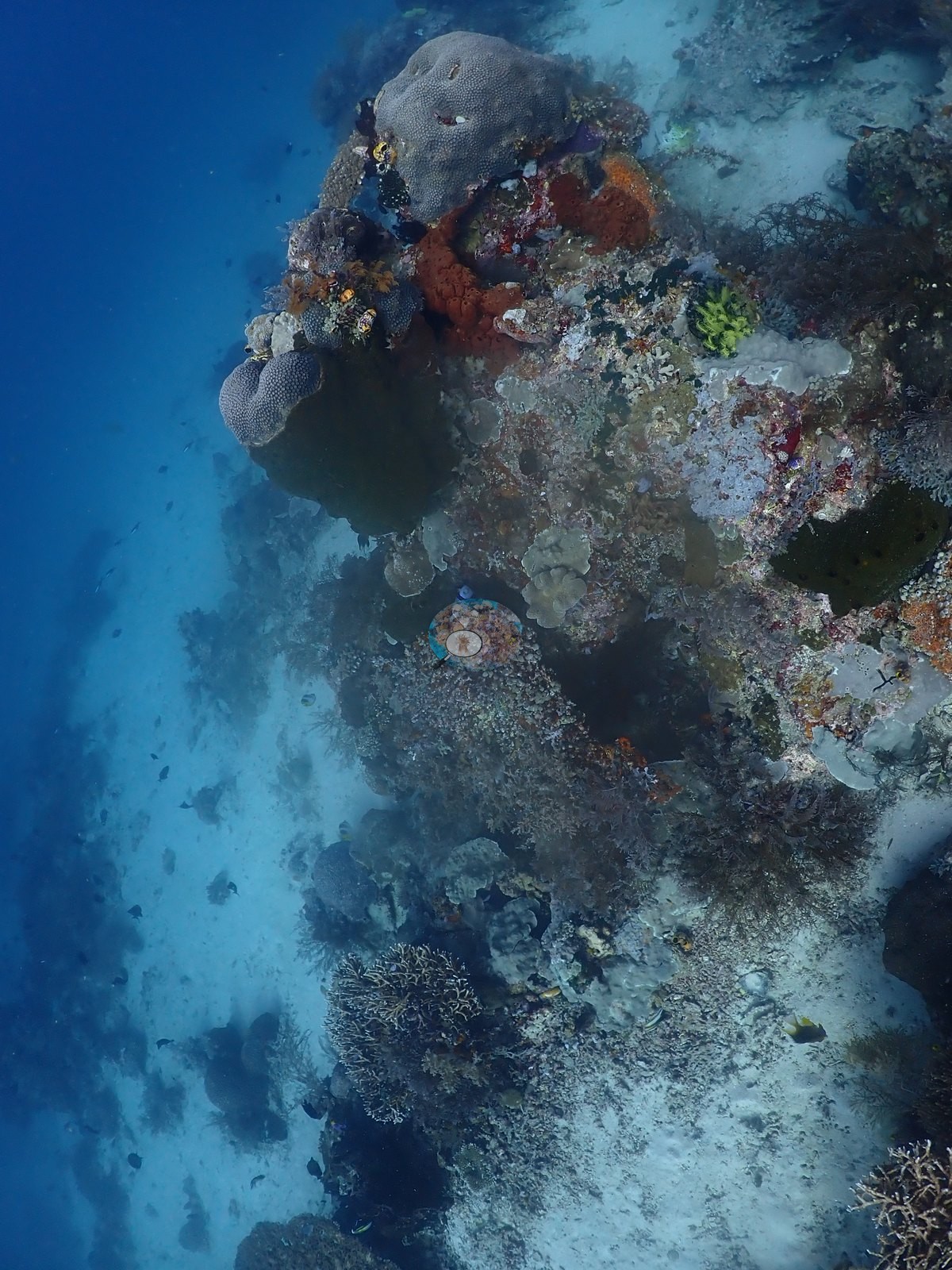
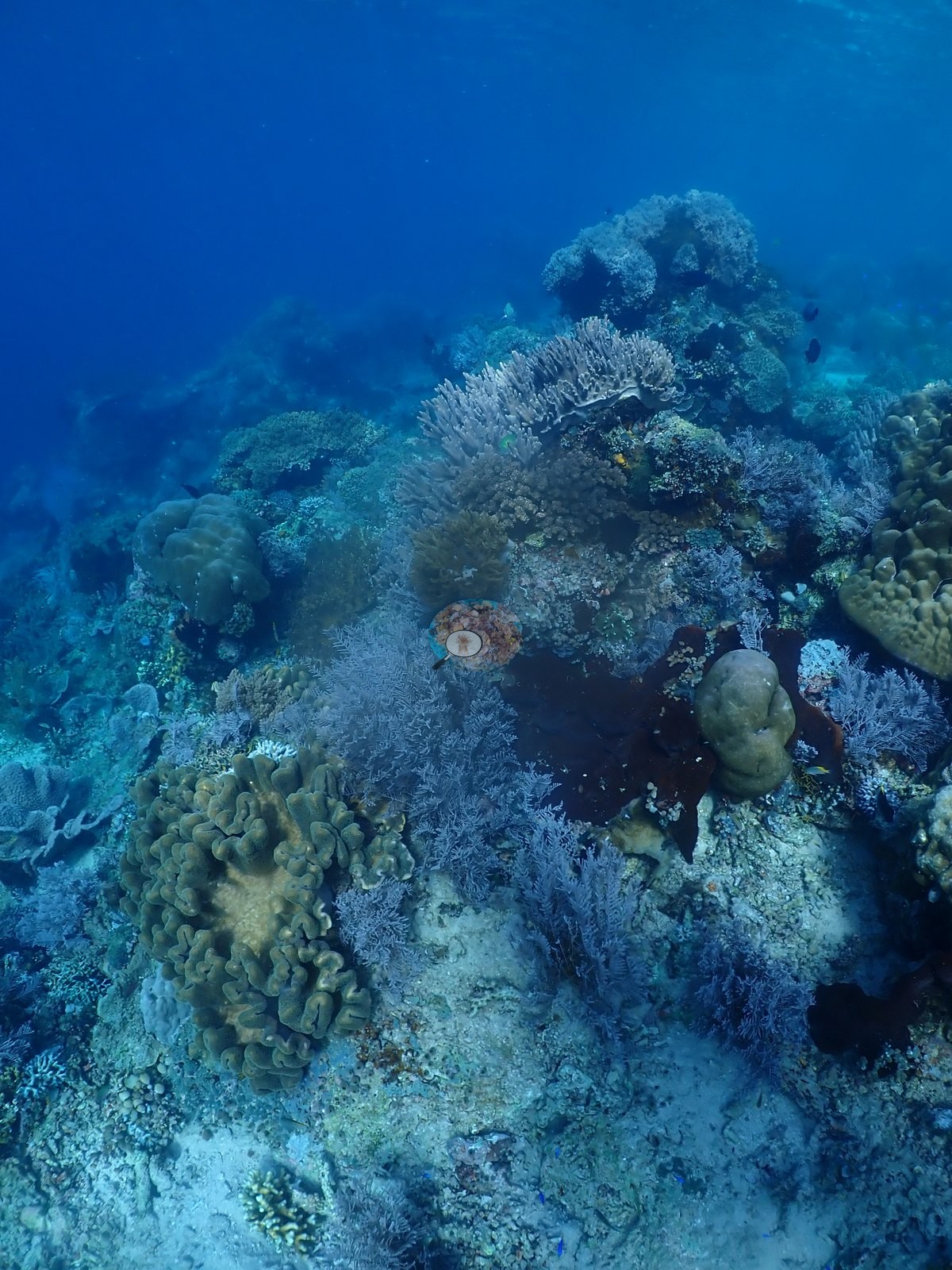
The deep base is a pale sand-and-rubble plain over crustose-coralline pavement, carrying isolated knolls with wide bare gaps between them; these supply most of the low-cover frames (e.g., Image 6, Image 13, Image 15, Image 17, Image 23, Image 33, Image 34, Image 41).
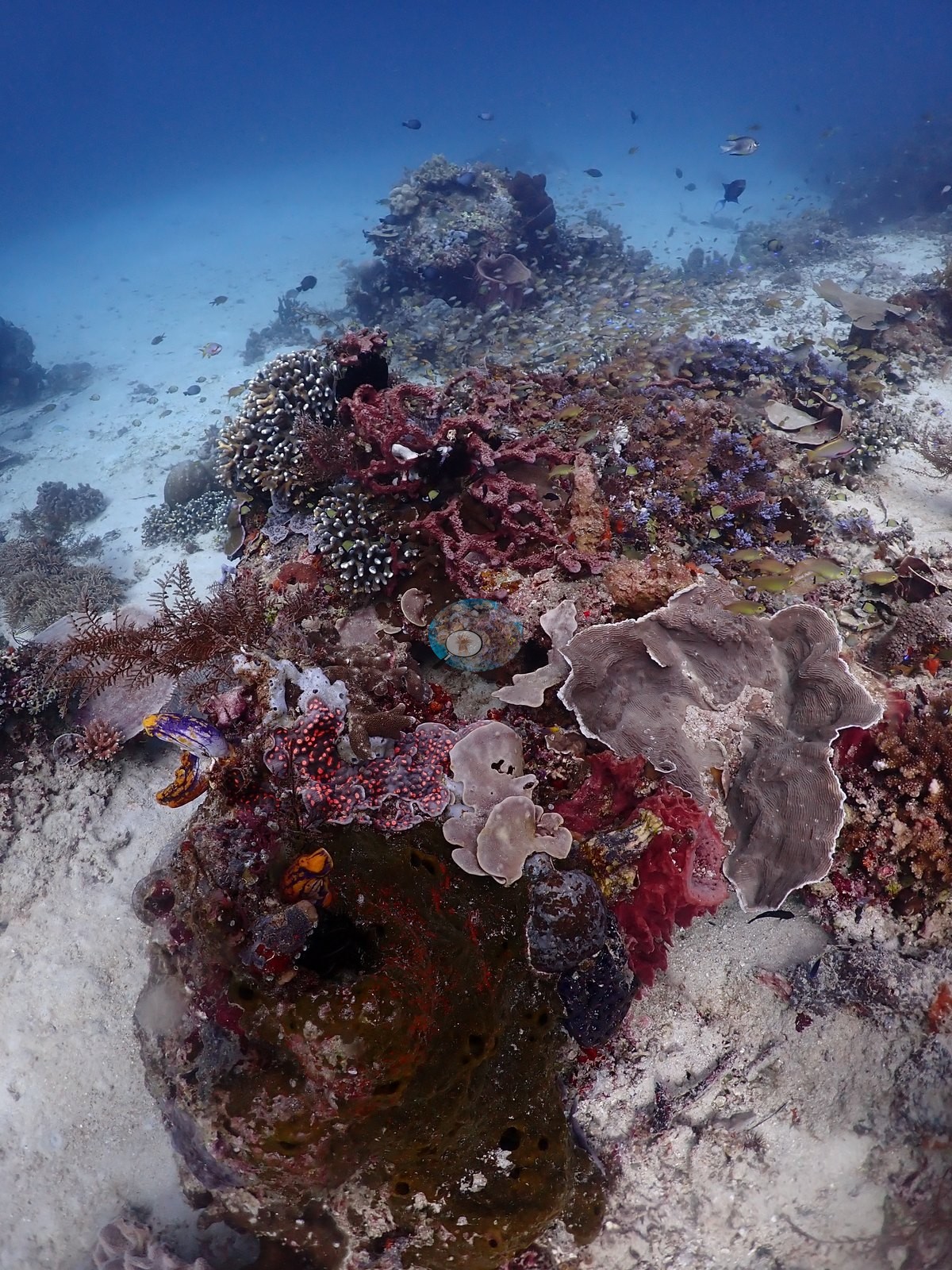
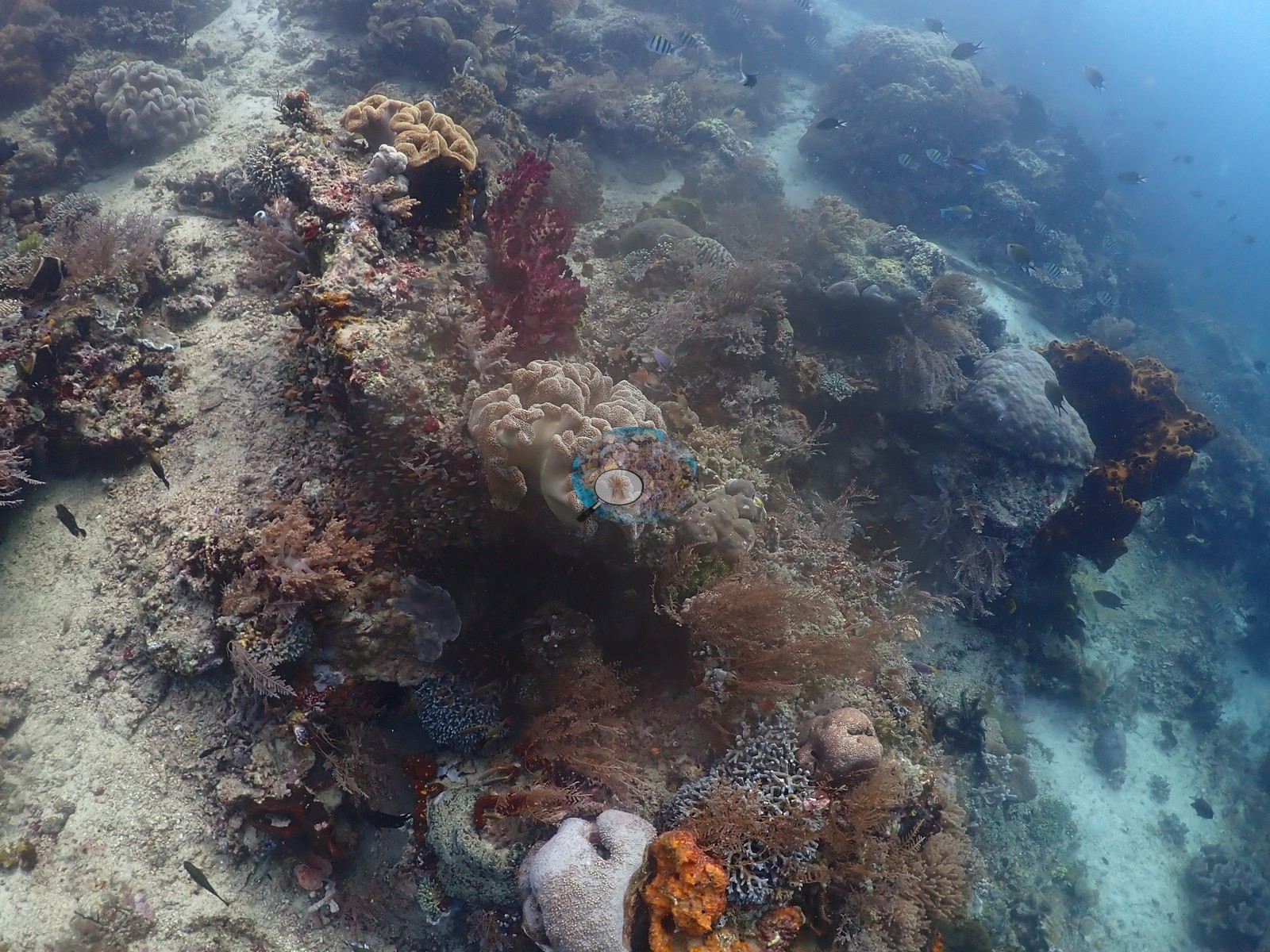
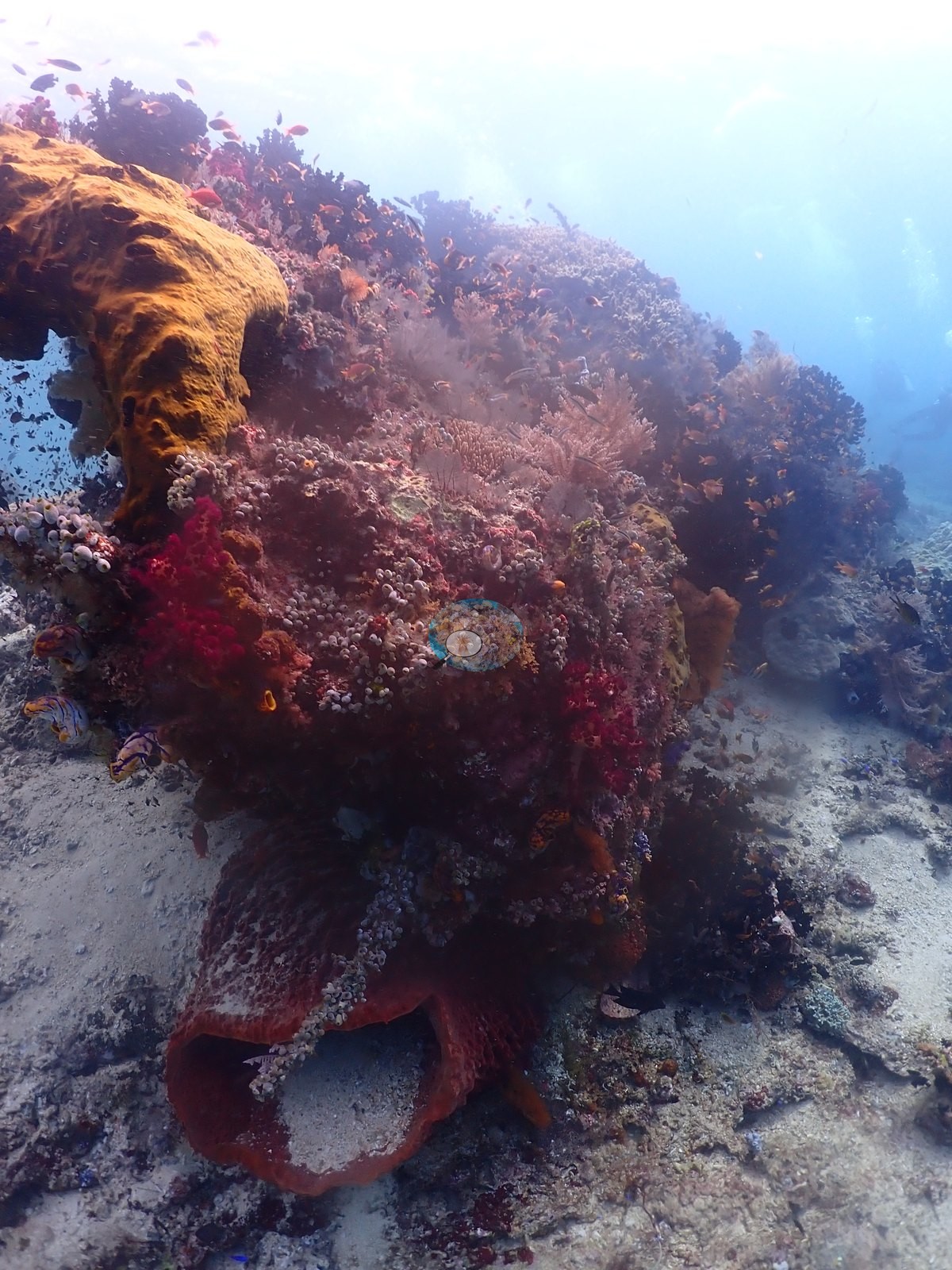
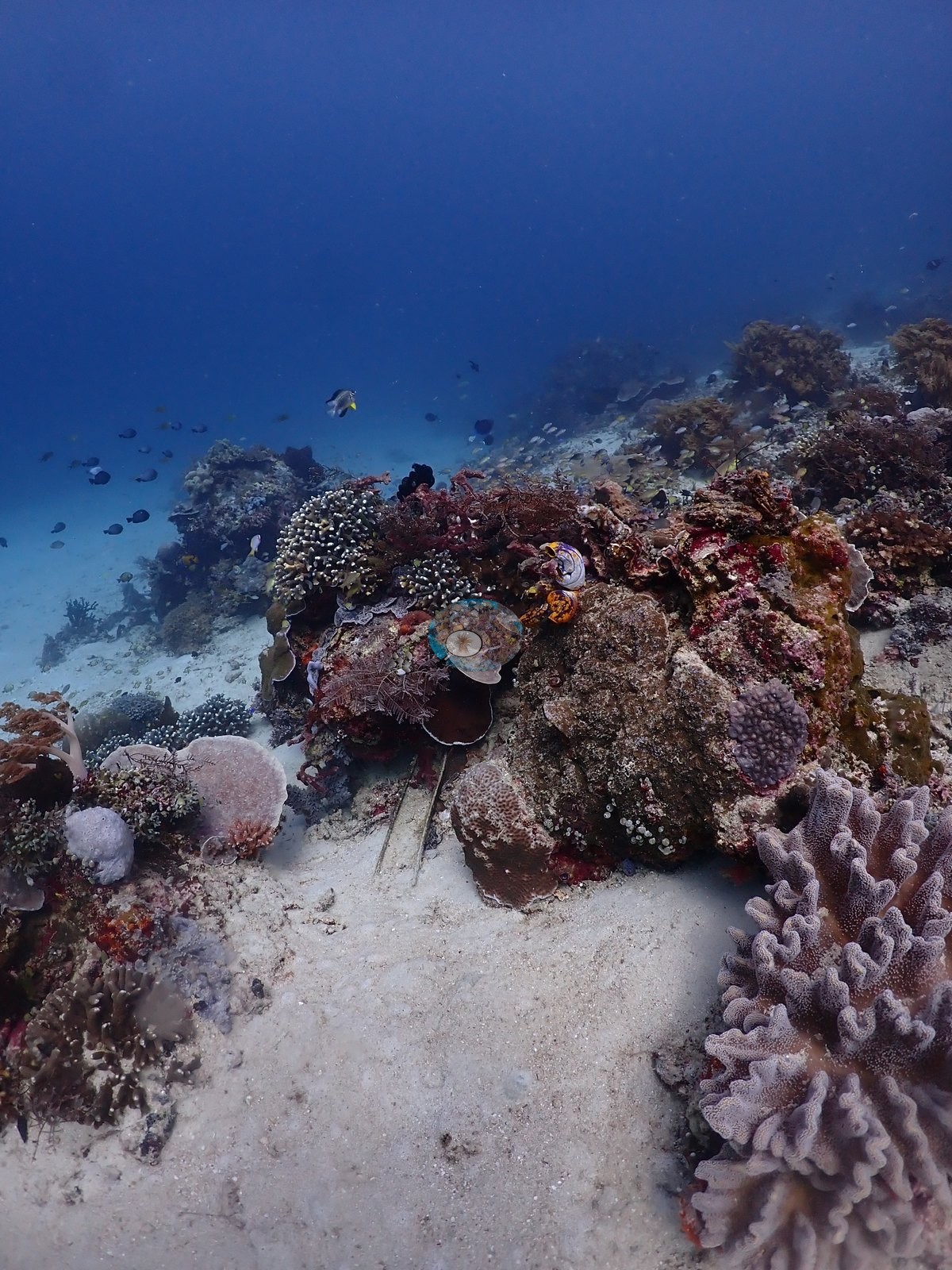
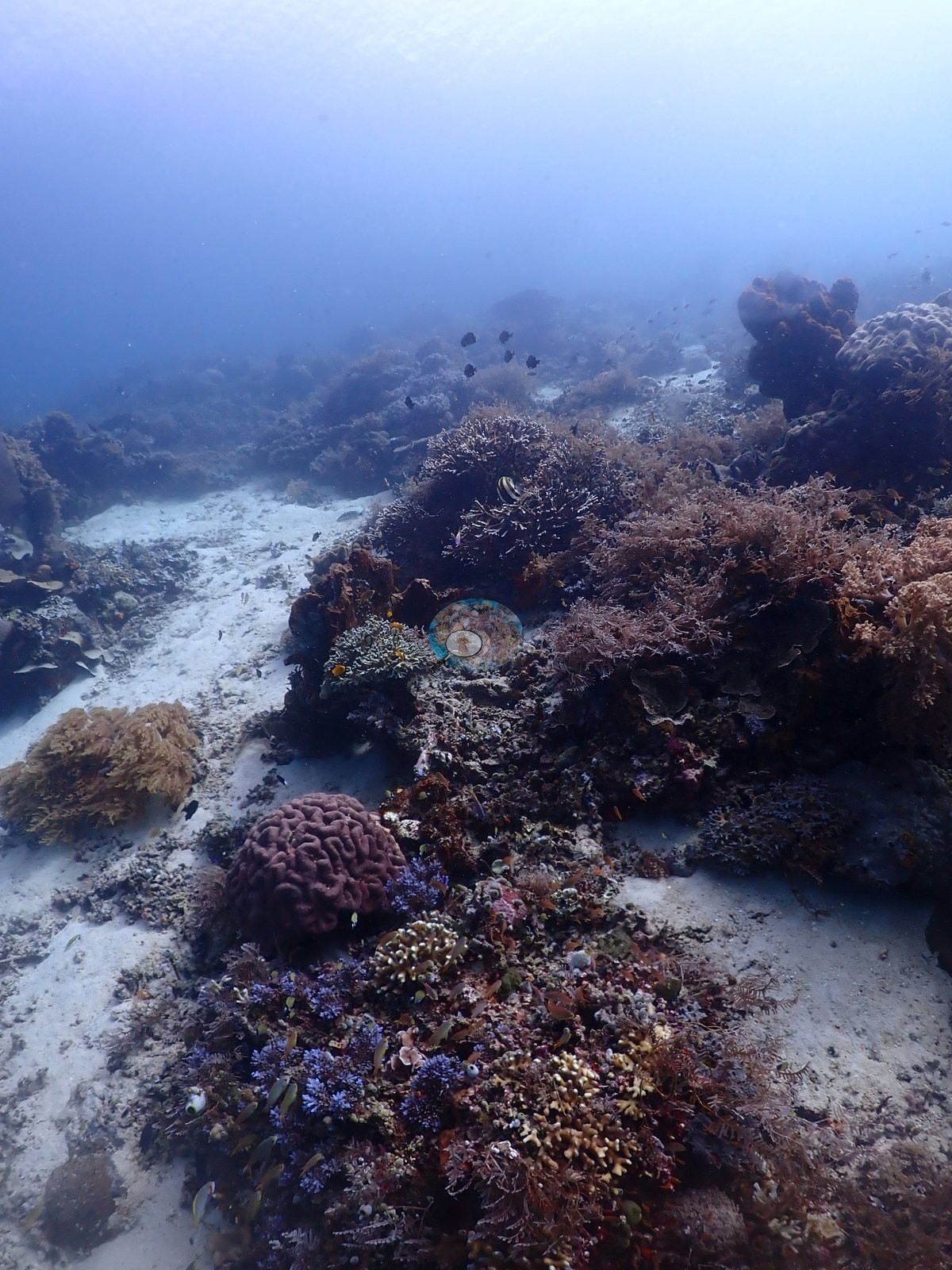
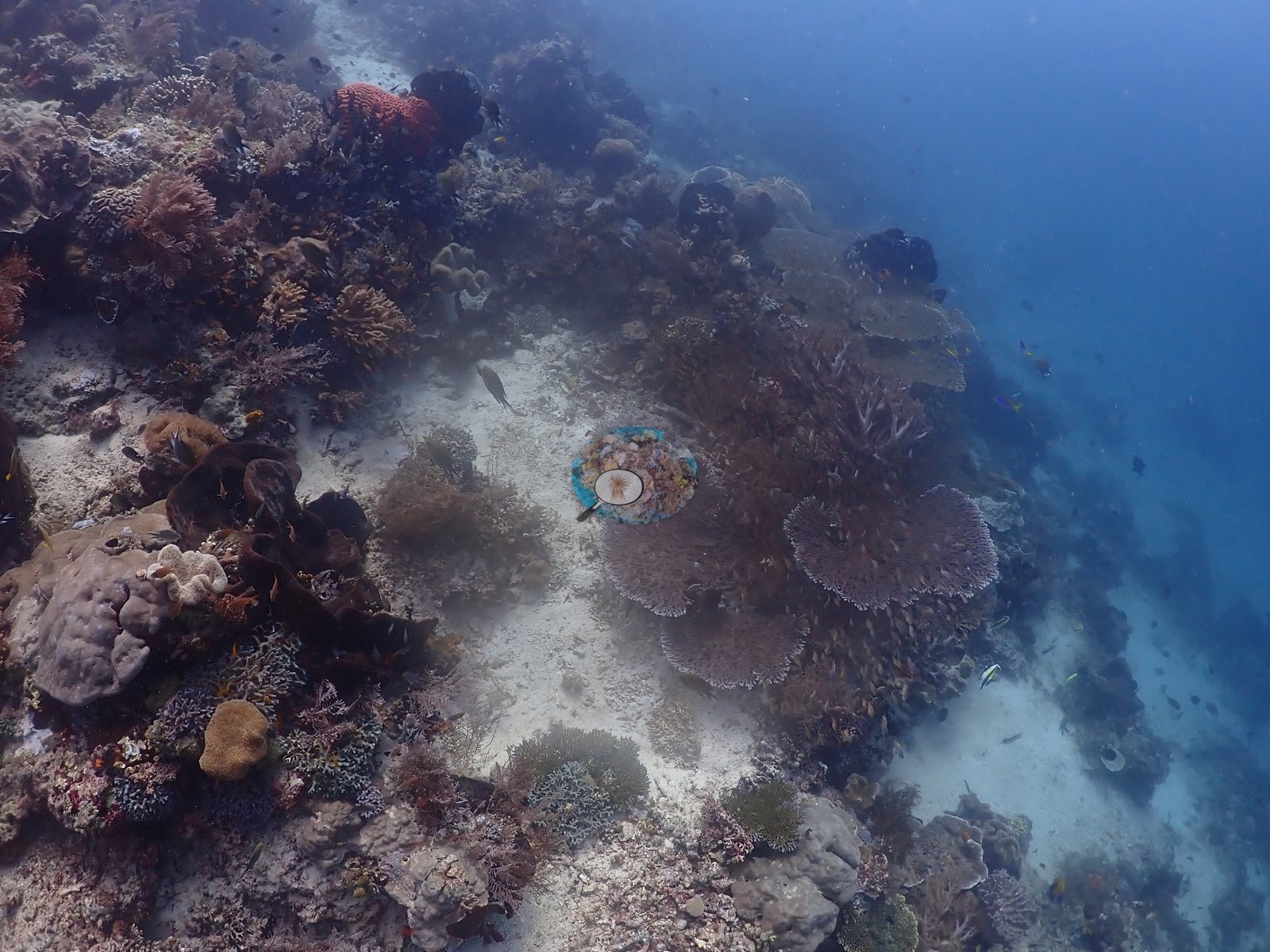
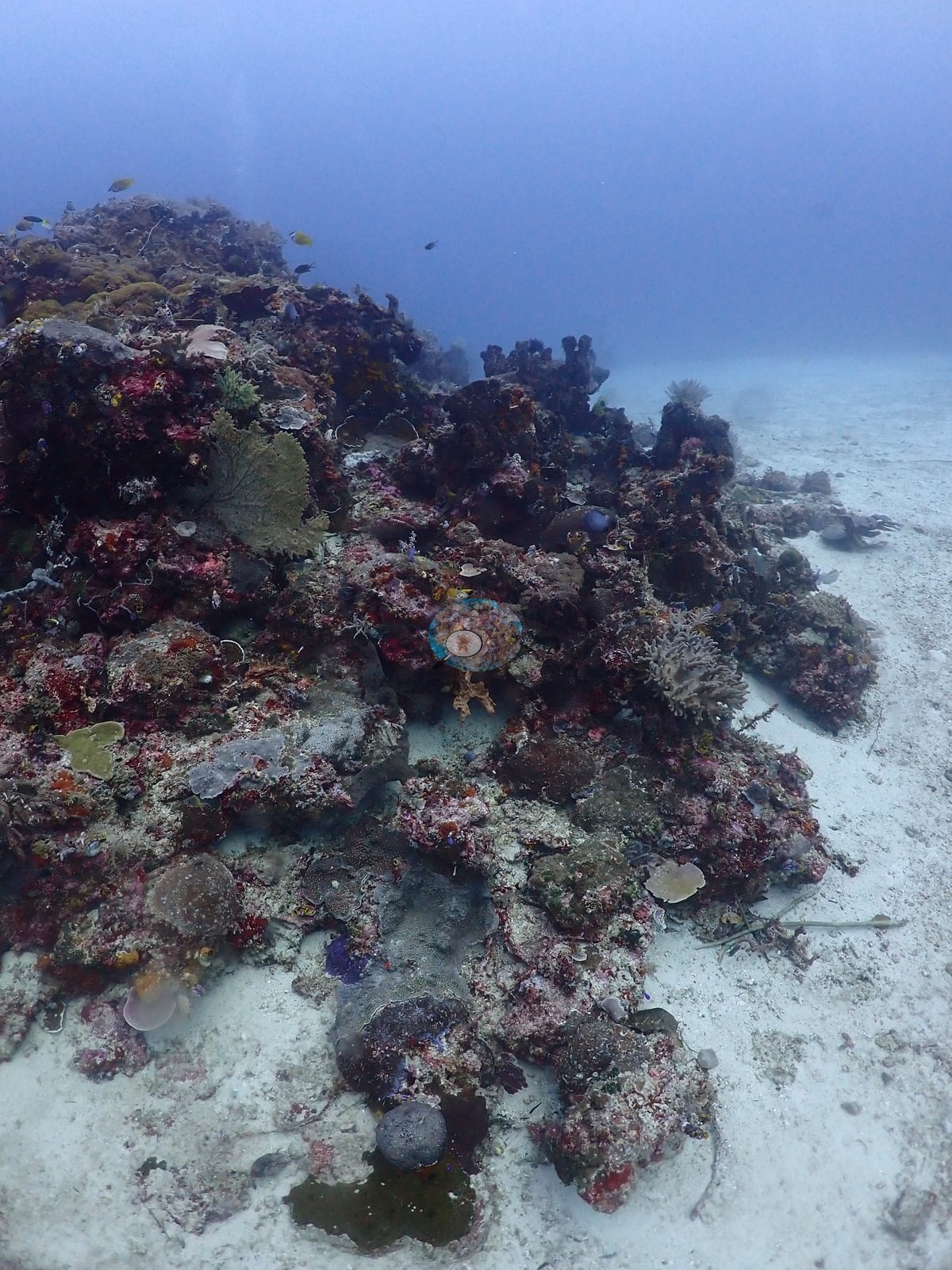
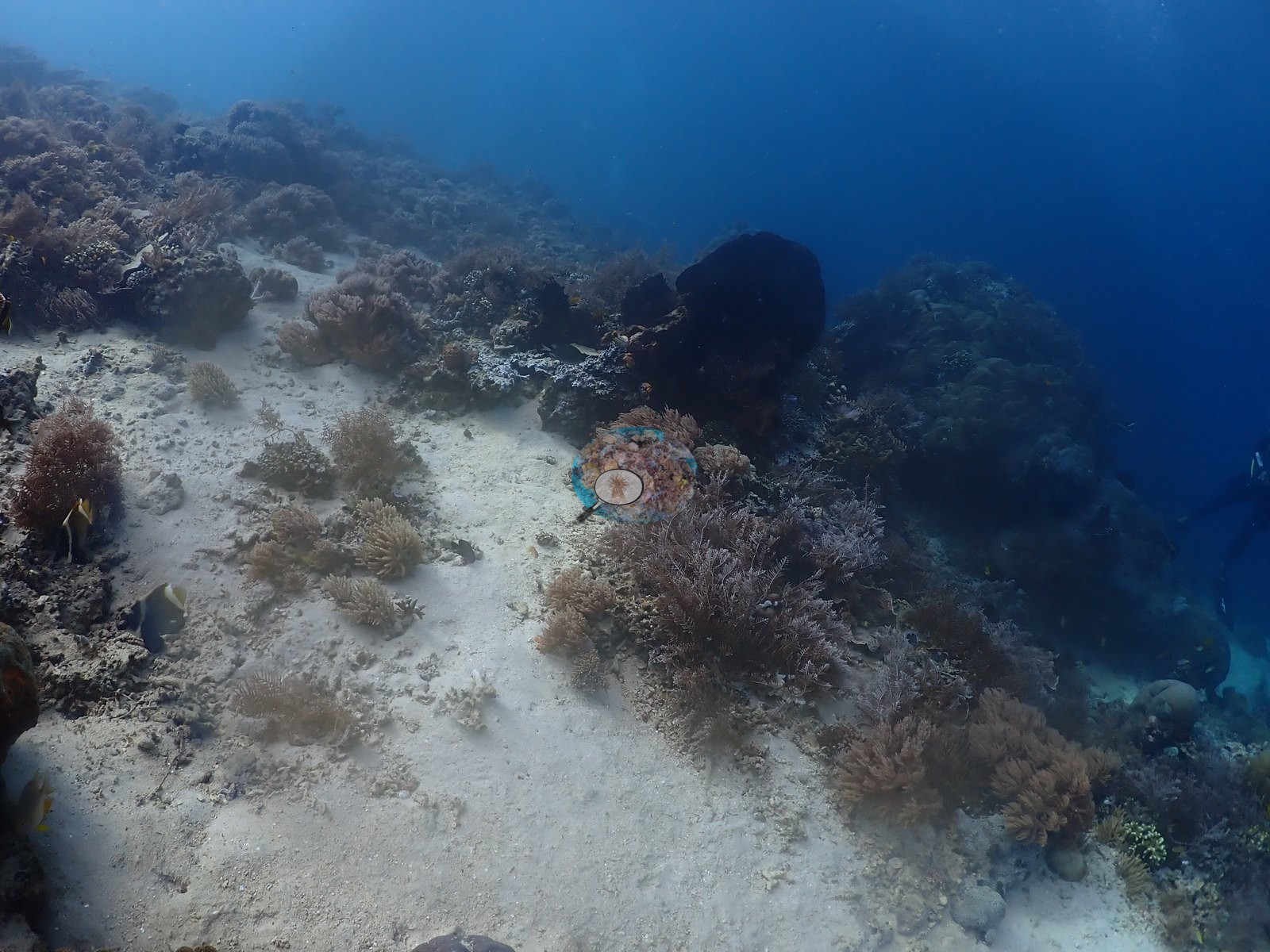
Growth there is a mix of broad laminar plates (Turbinaria- and Echinophyllia-type), green and cream tabulate Acropora sitting free on sand, foliose Montipora thickets with pale margins, maroon and violet encrusting sponges, barrel sponges (Xestospongia-type), and orange and lilac gorgonian fans (e.g., Image 1, Image 3, Image 8, Image 10, Image 14, Image 28, Image 31).
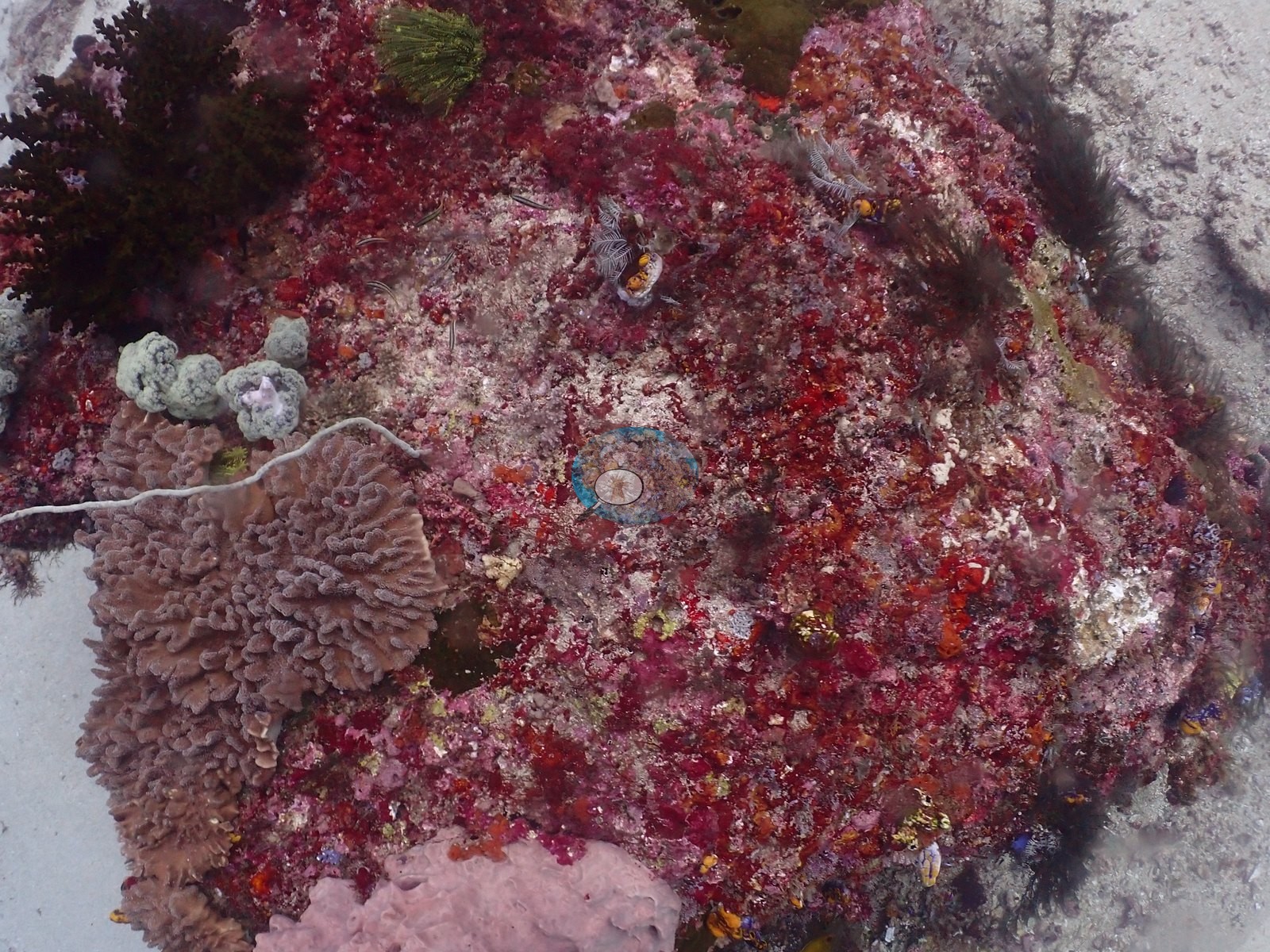
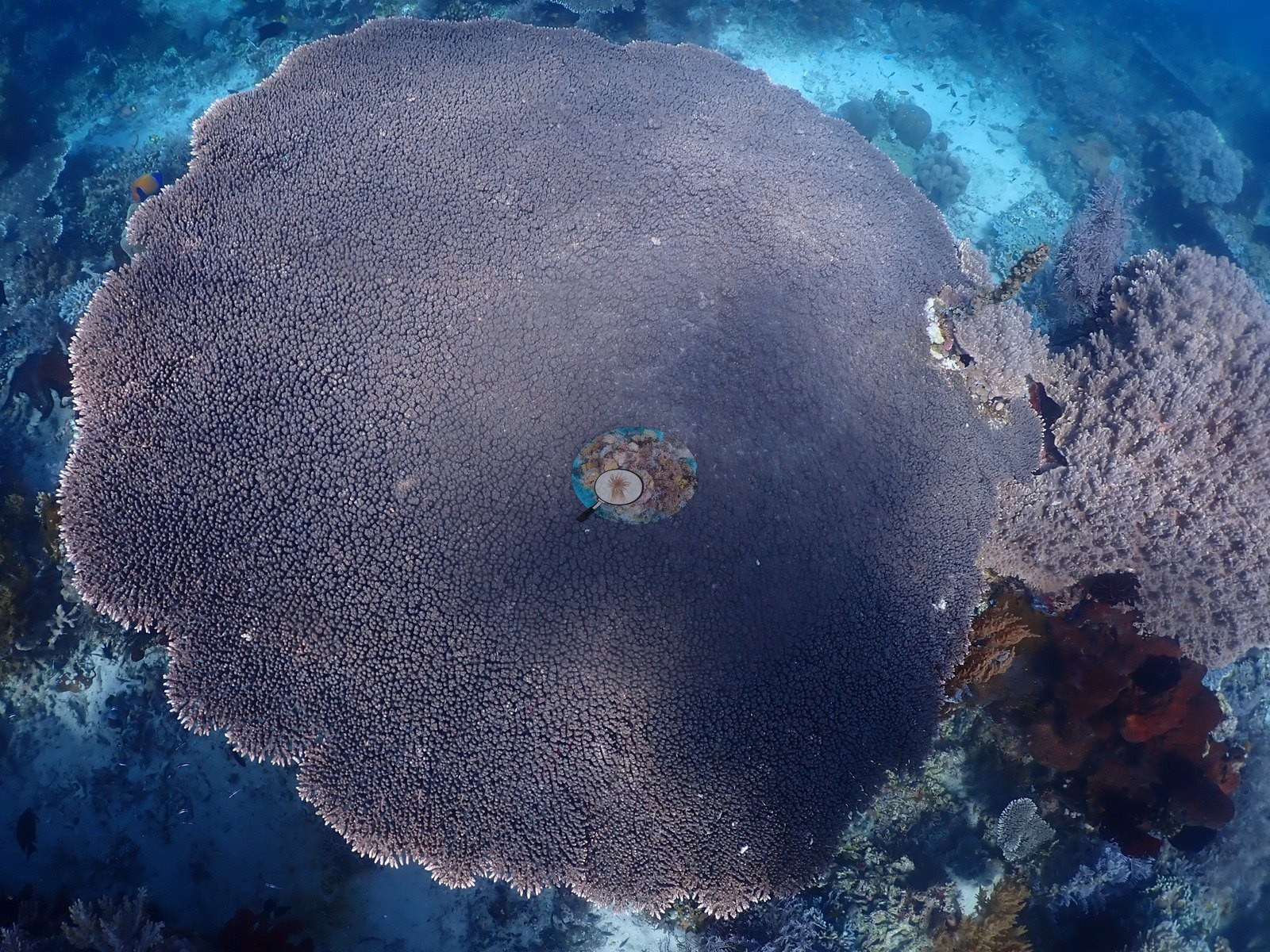
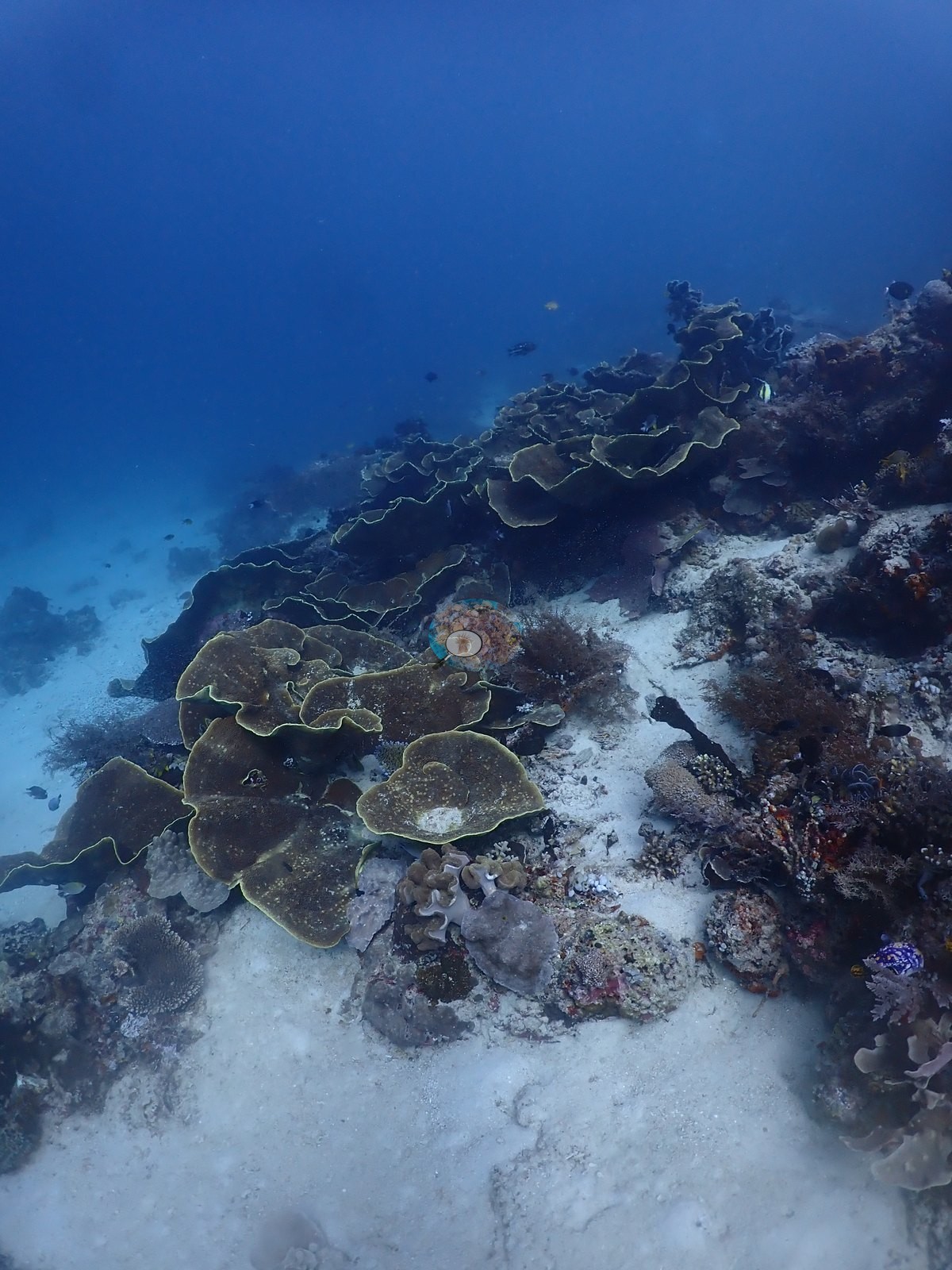
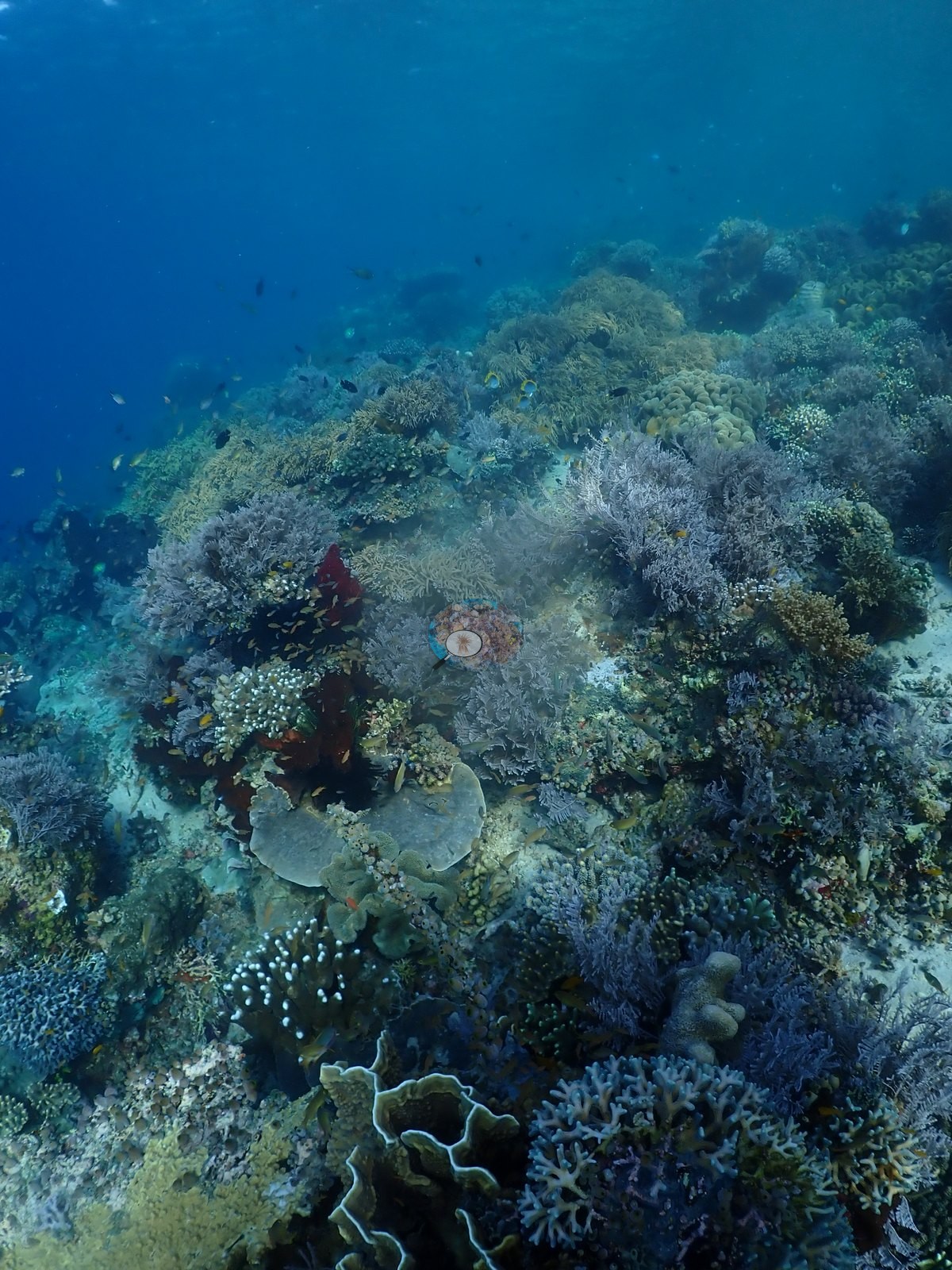
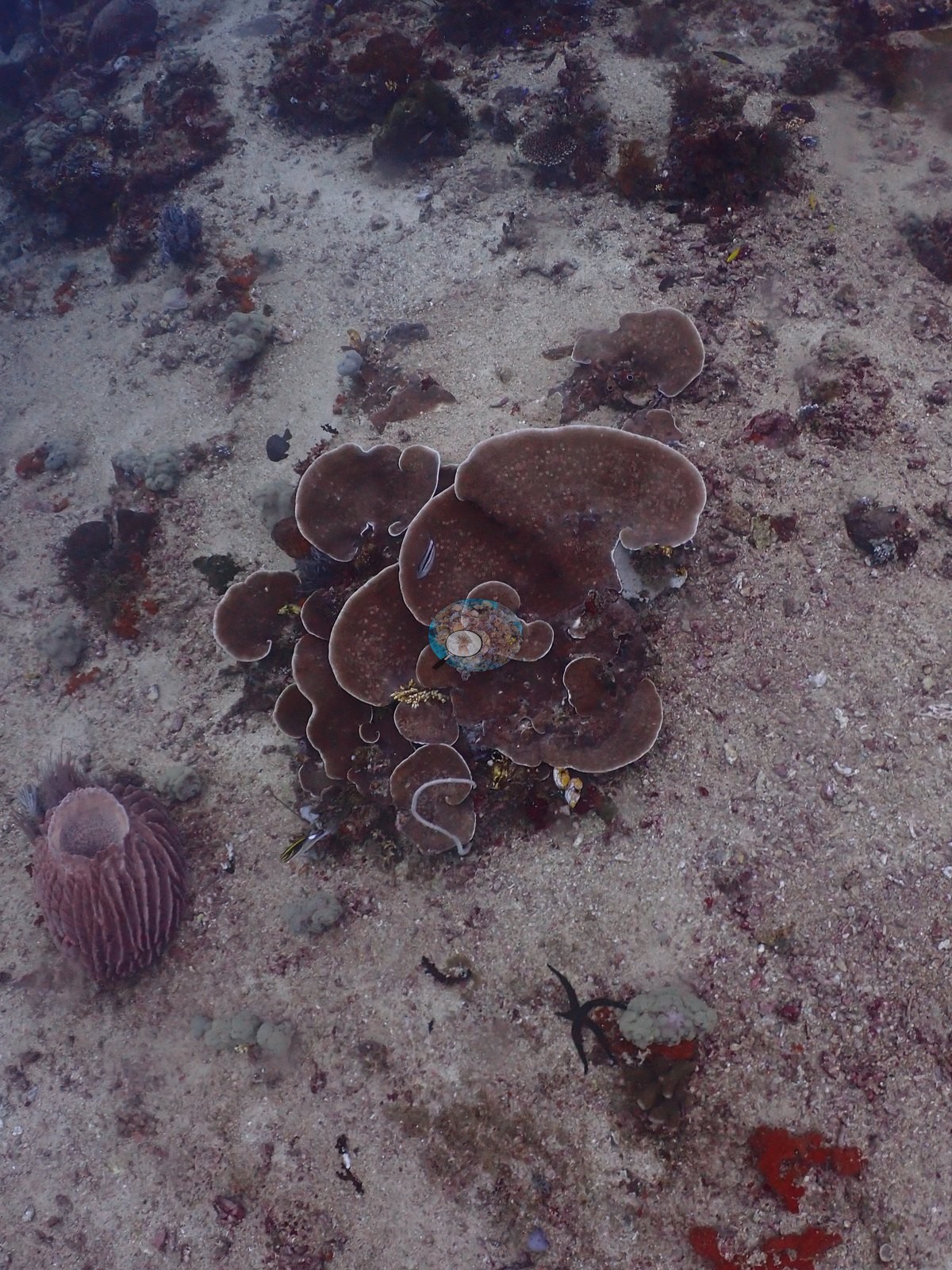
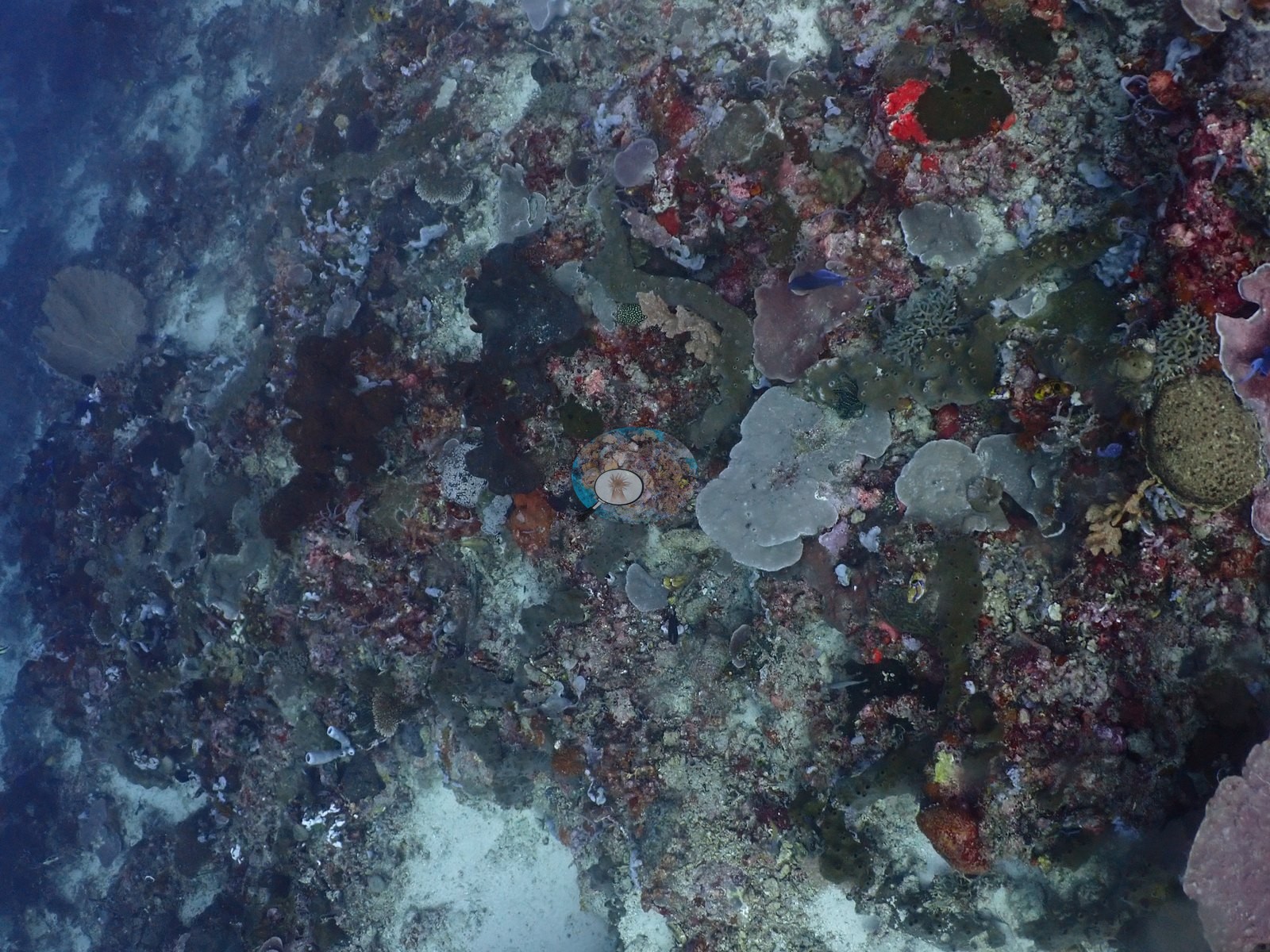
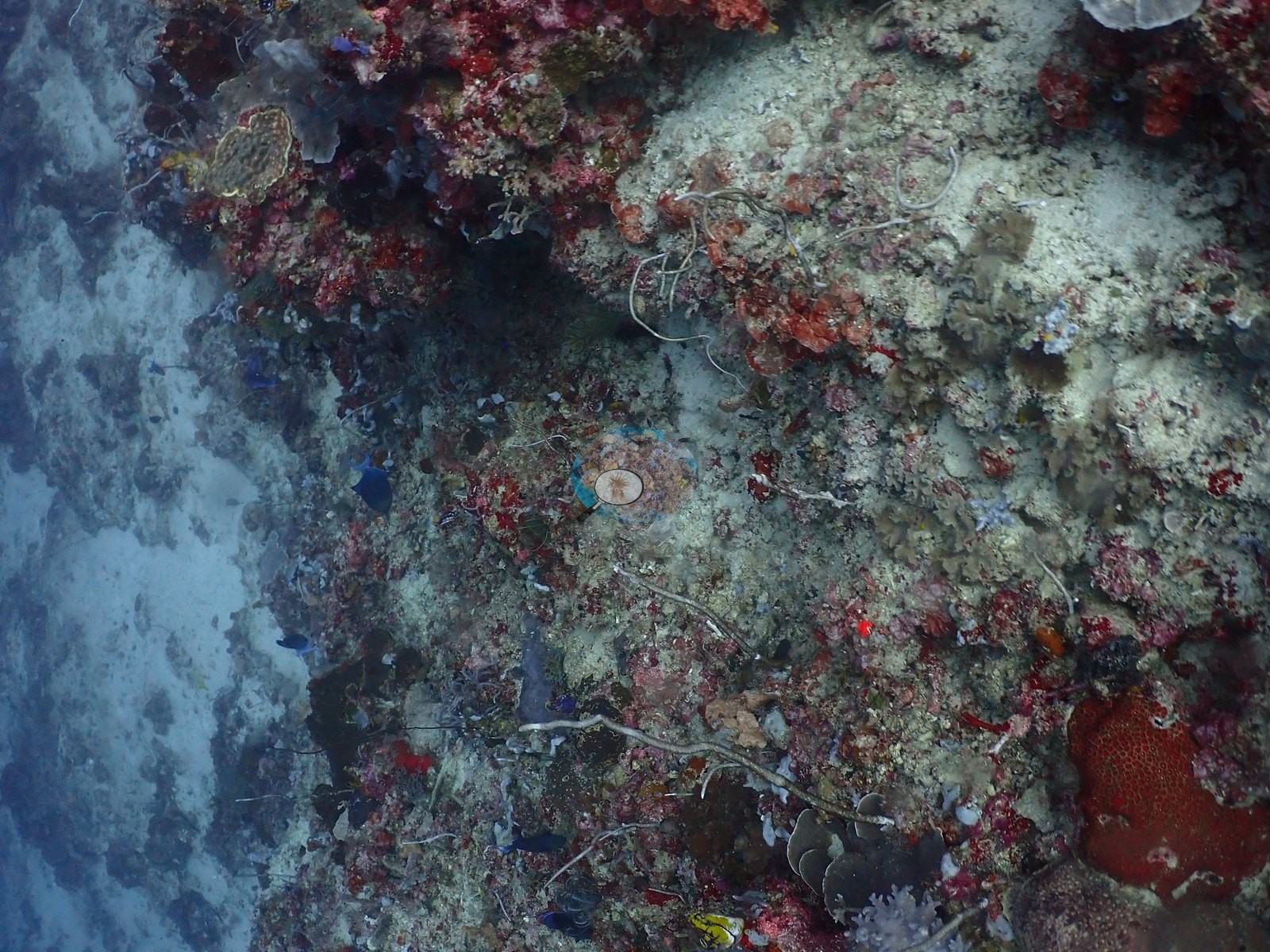
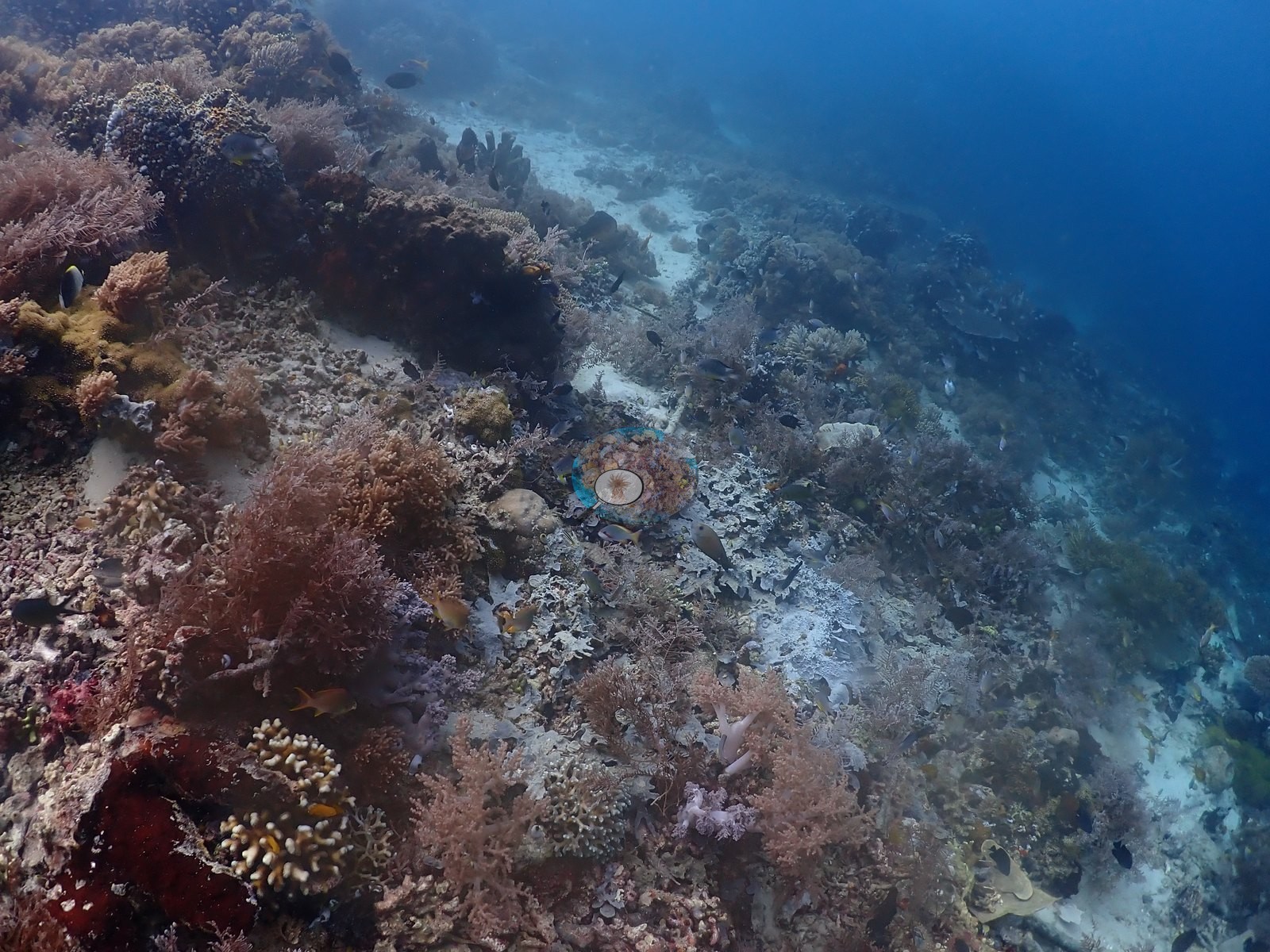
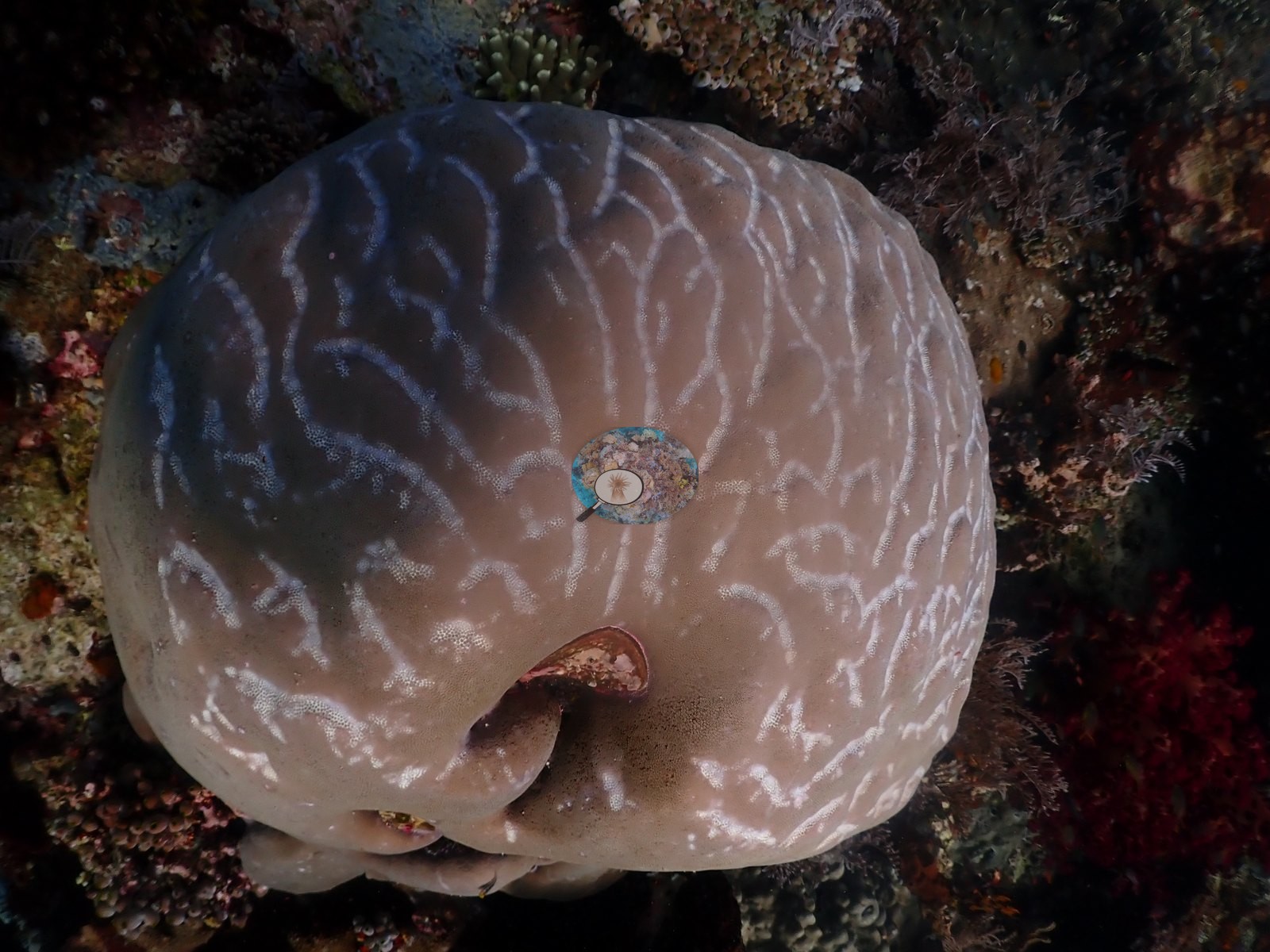
The mid-slope lifts into a very different reef: large intact Acropora tables up to a couple of meters across, Pocillopora and digitate Acropora heads, big domed massives including textbook Diploastrea heliopora with its white meandering wall pattern and smooth lobate Porites, and dense crimson and salmon Dendronephthya soft coral (e.g., Image 9, Image 27, Image 29, Image 30, Image 37).
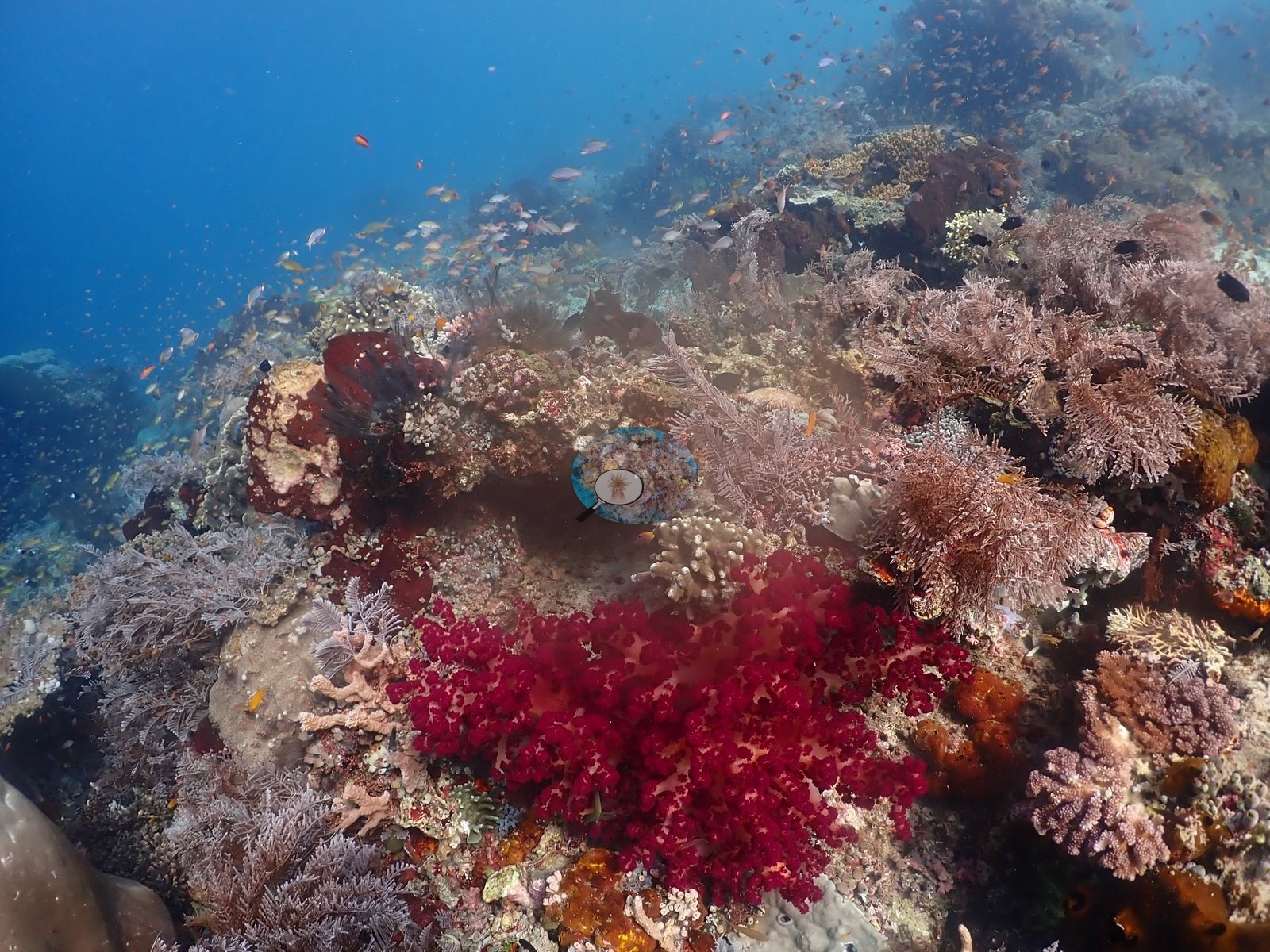
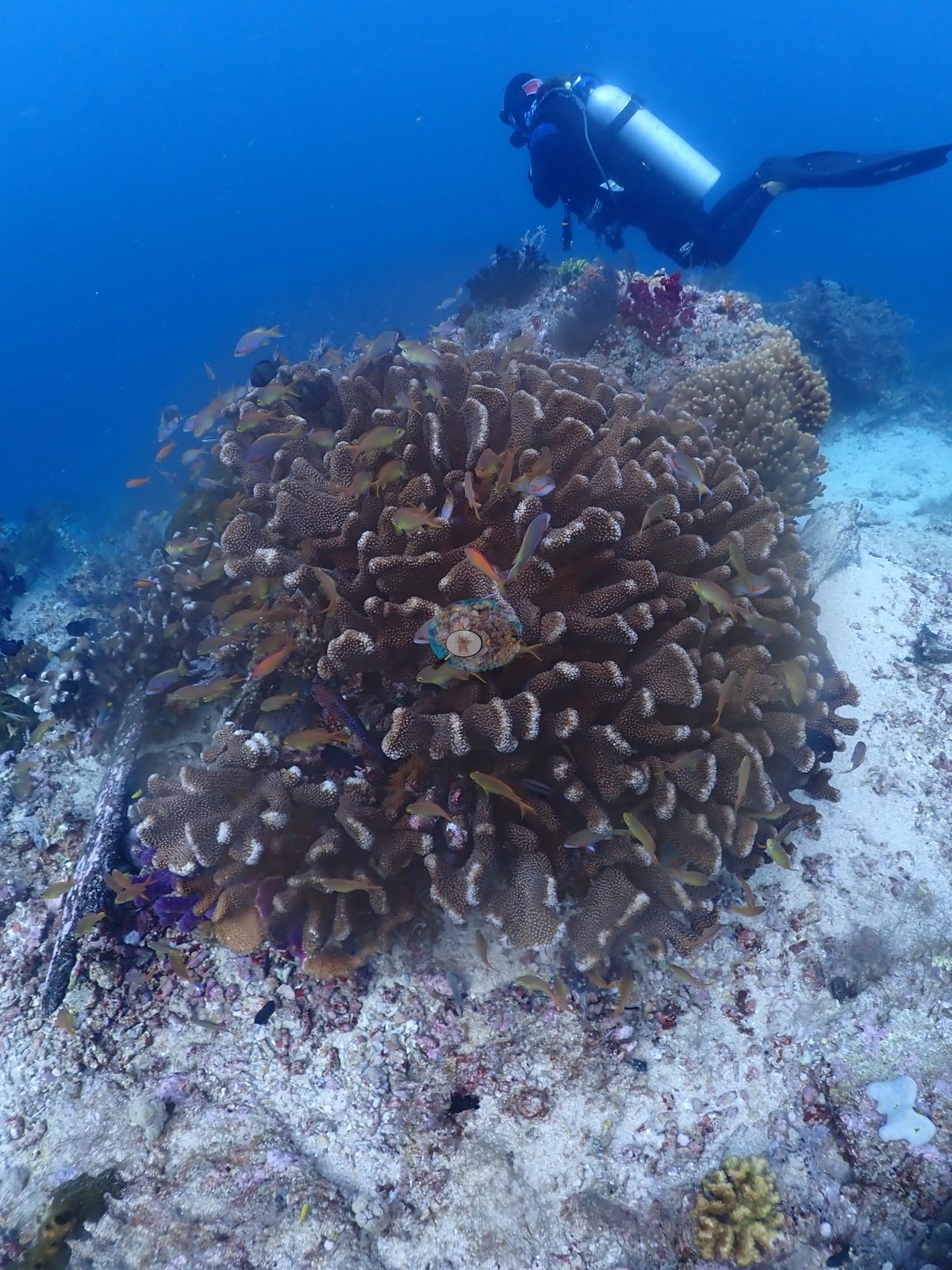
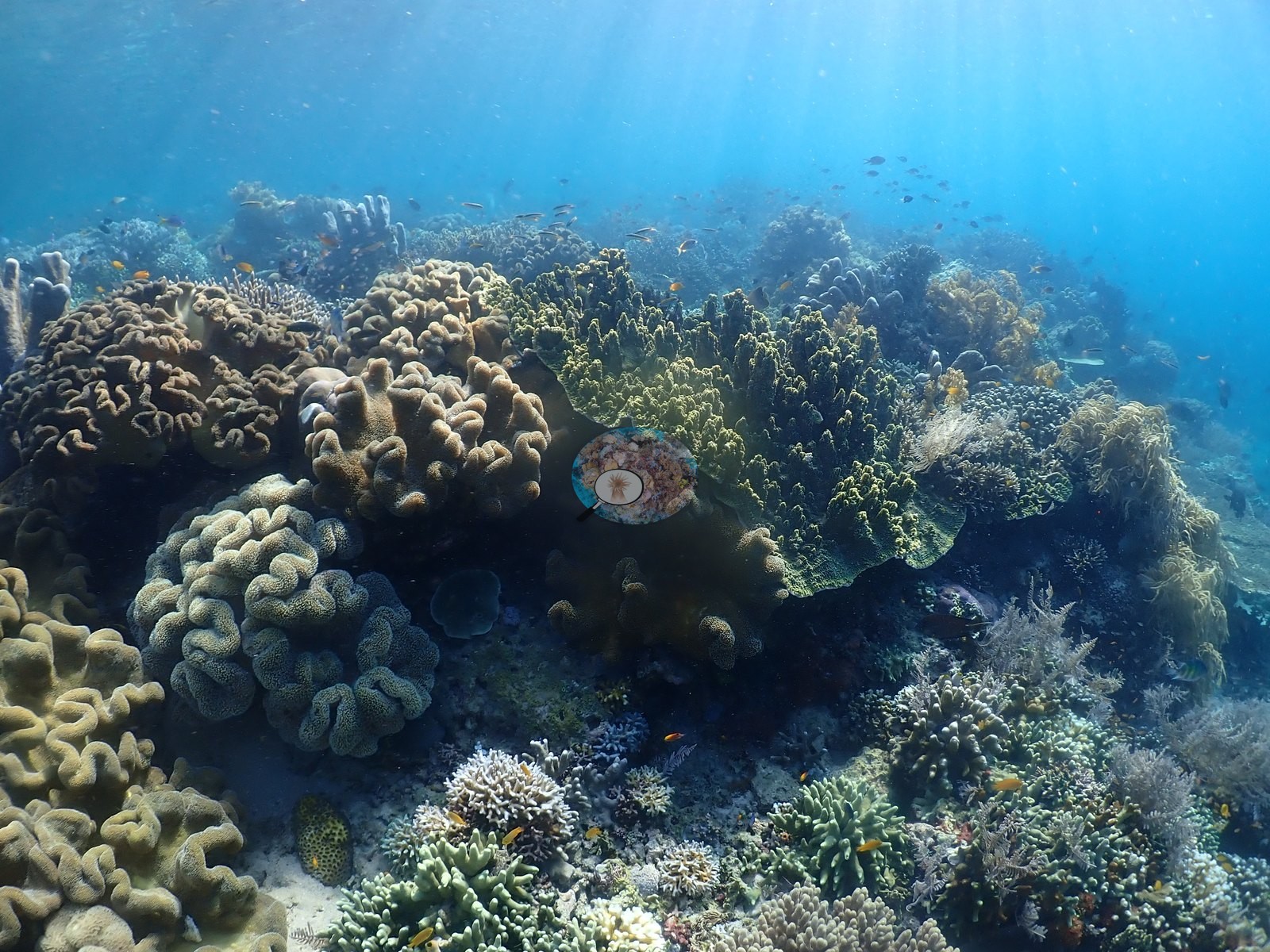
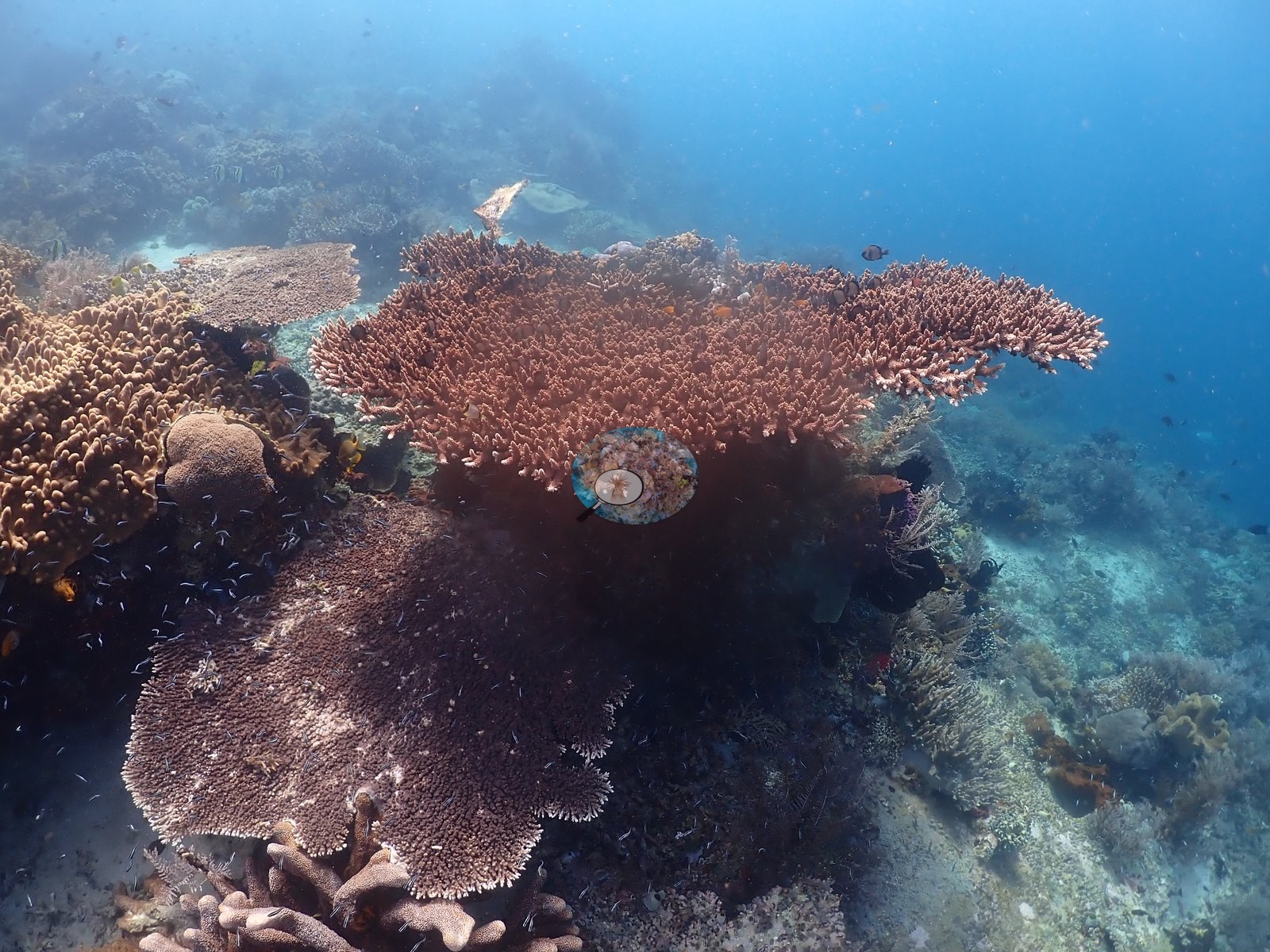
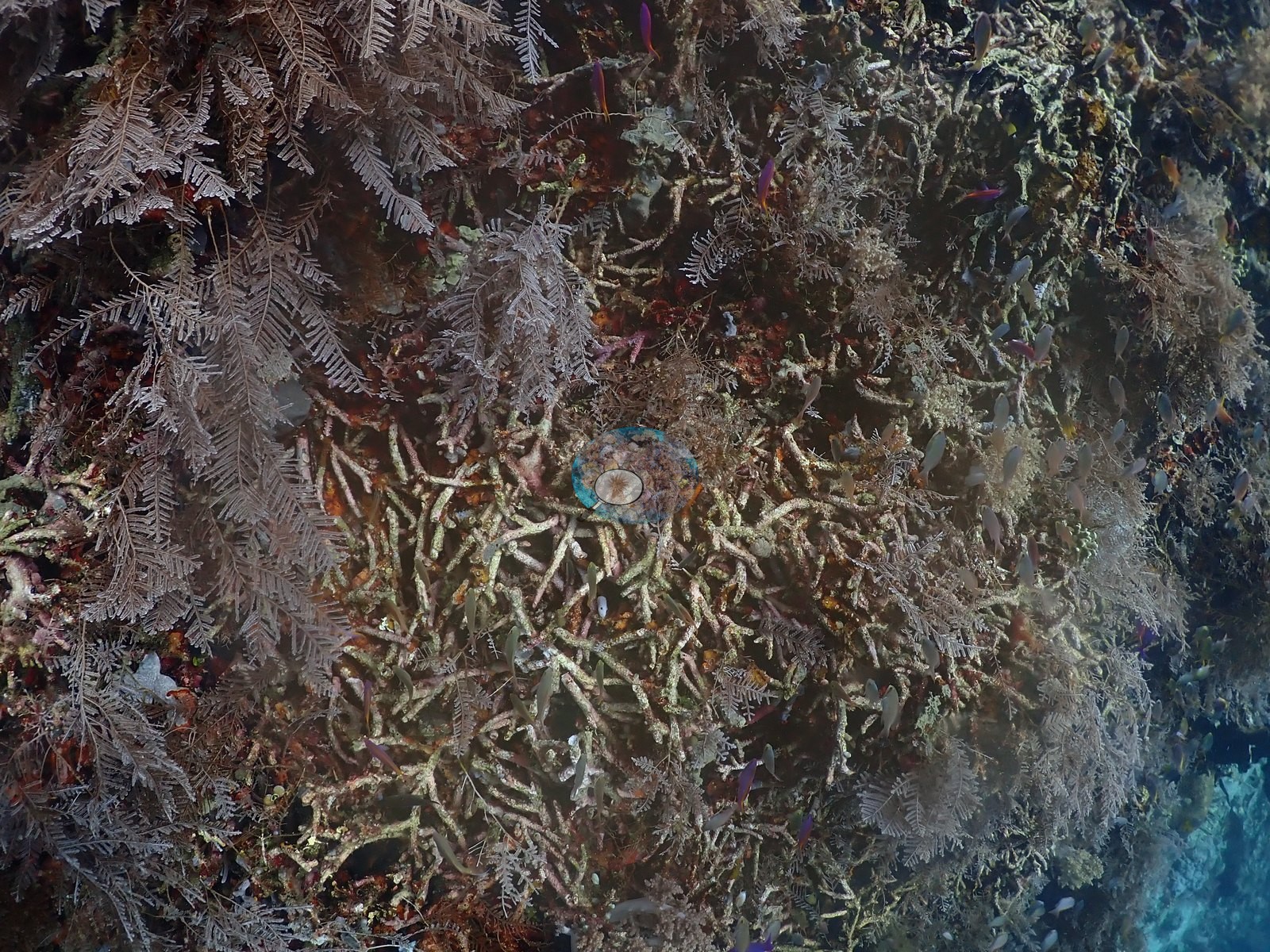
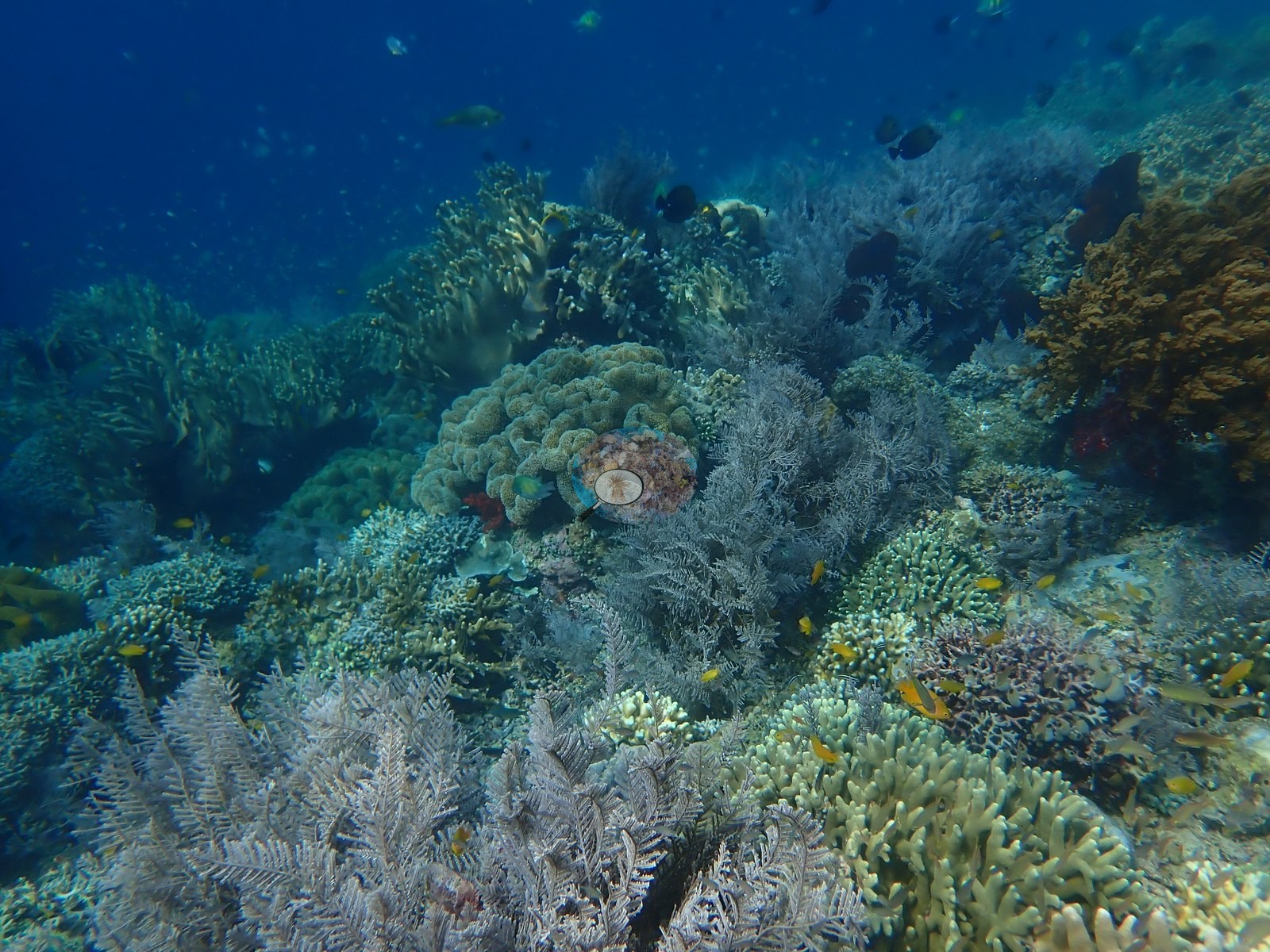
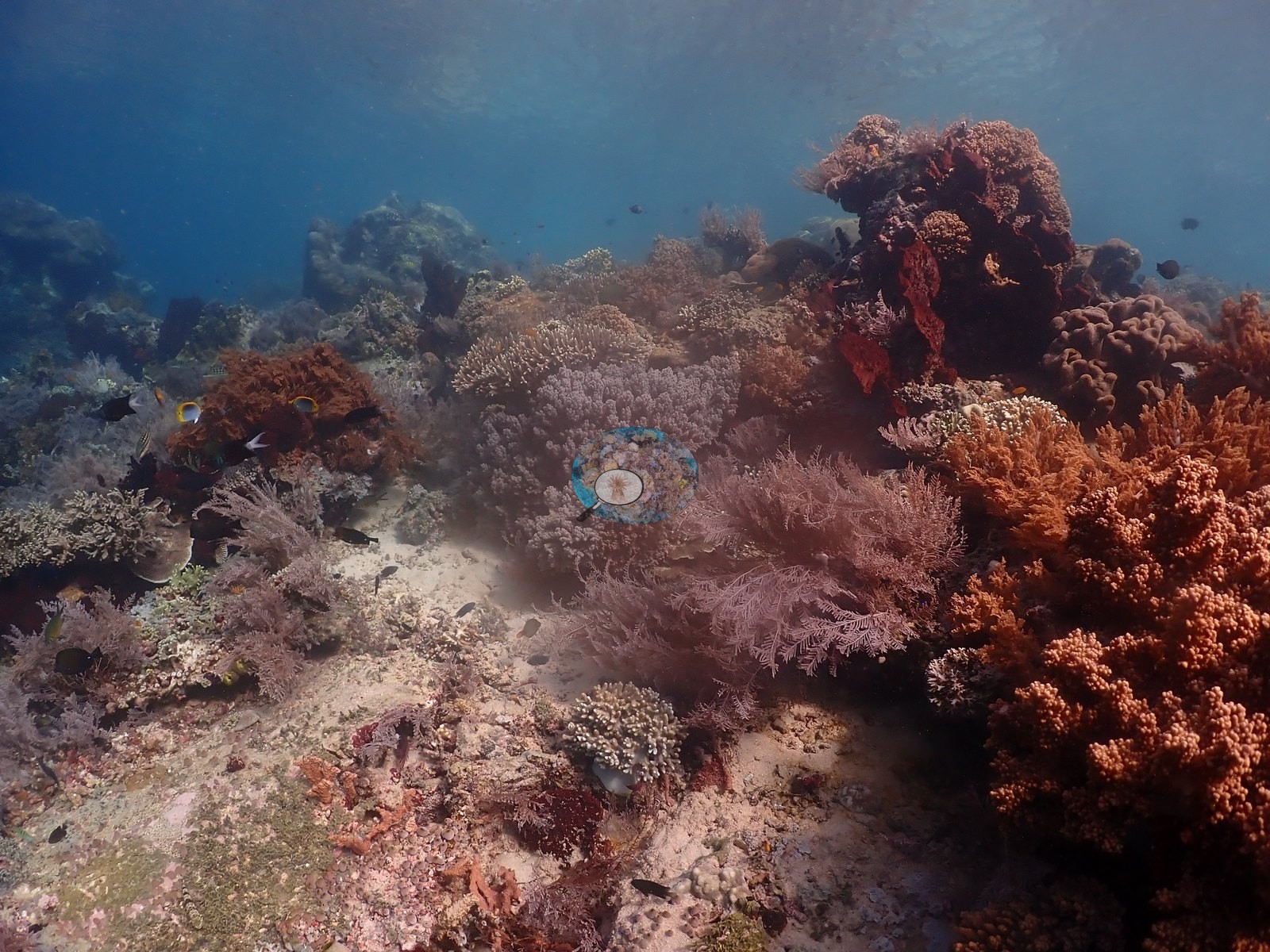
The crest and reef flat (the last stretch of the dive) is the high-cover half of the site: near-continuous Acropora, Pocillopora, and Seriatopora thickets over pavement, mixed with Sarcophyton and Lobophytum leather corals, feathery Xenia-type pulsing soft coral, and encrusting Montipora, with anthias, damsels, and anemonefish over almost every frame (e.g., Image 4, Image 5, Image 16, Image 20, Image 21, Image 24, Image 25, Image 32, Image 35, Image 38, Image 42, Image 45, Image 48, Image 49, Image 50, Image 51, Image 52, Image 54, Image 55).
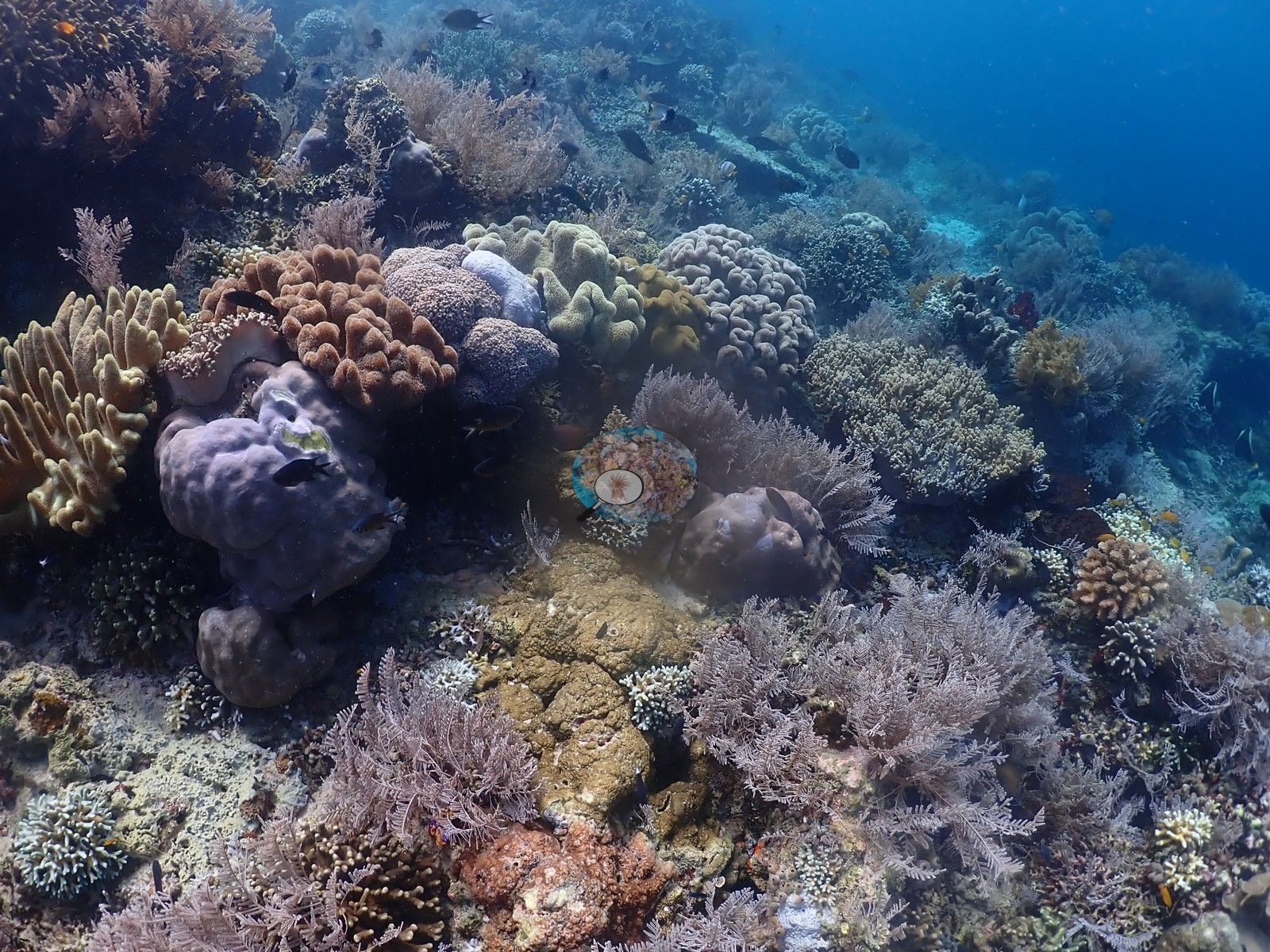
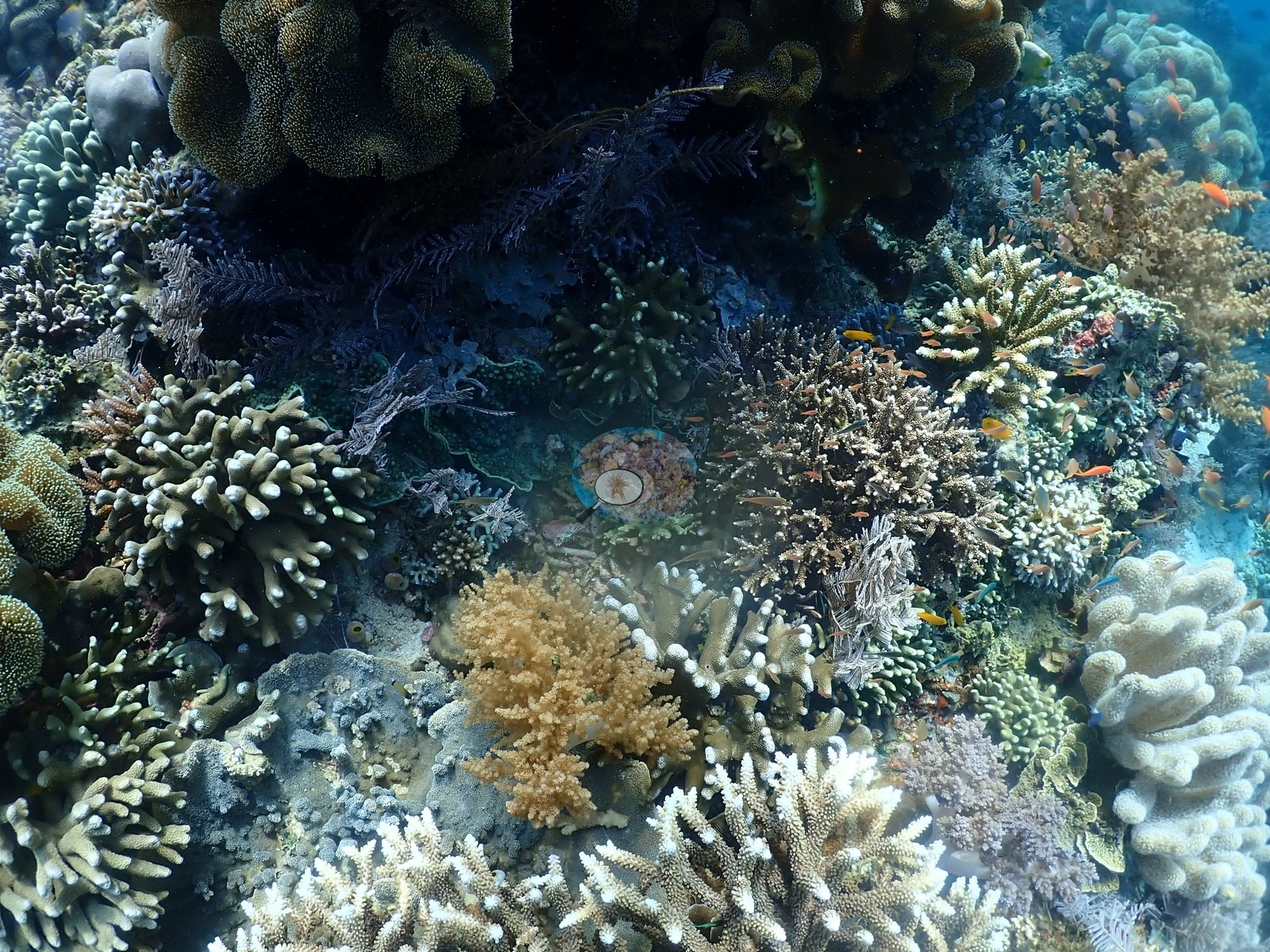
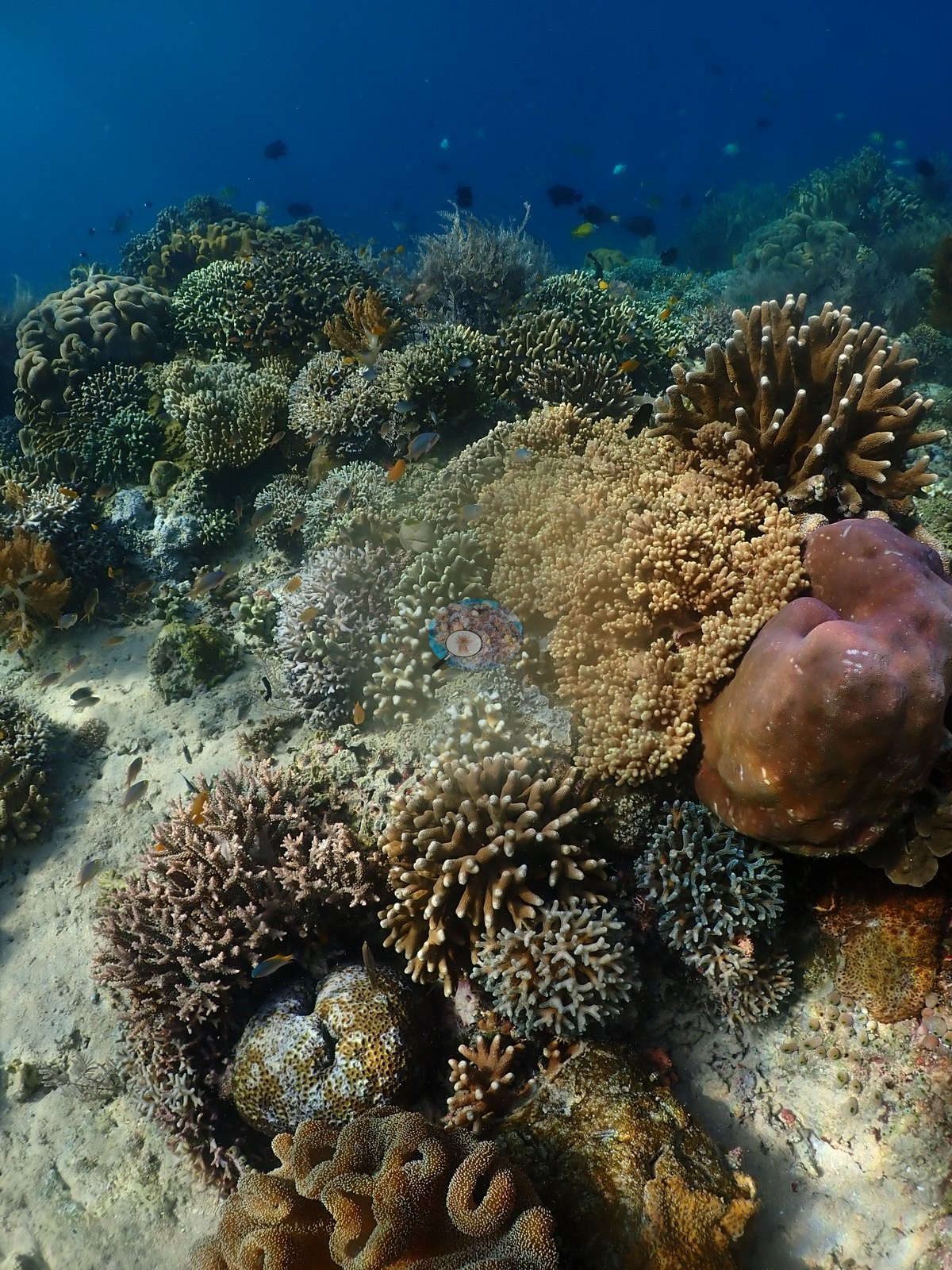
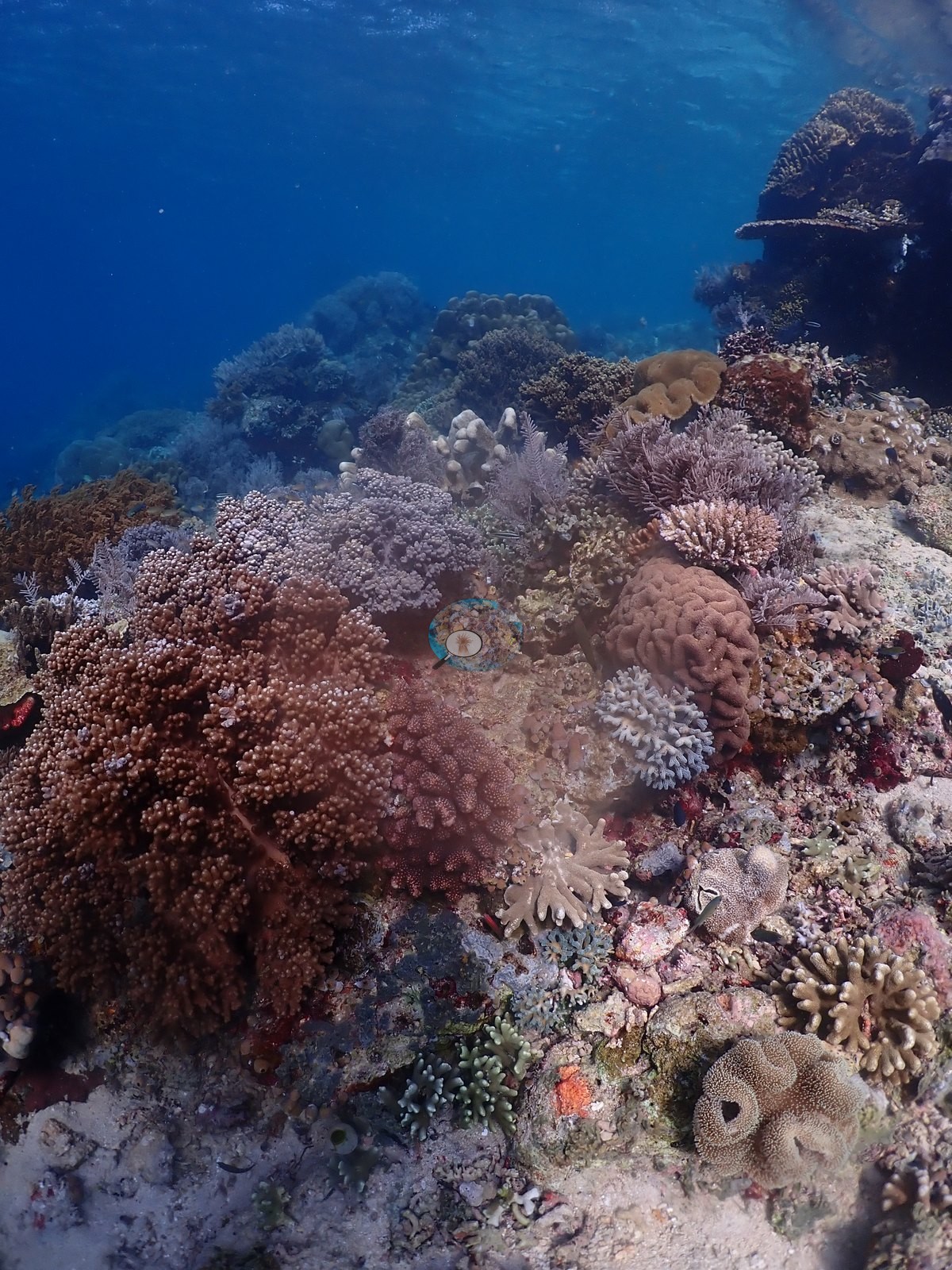
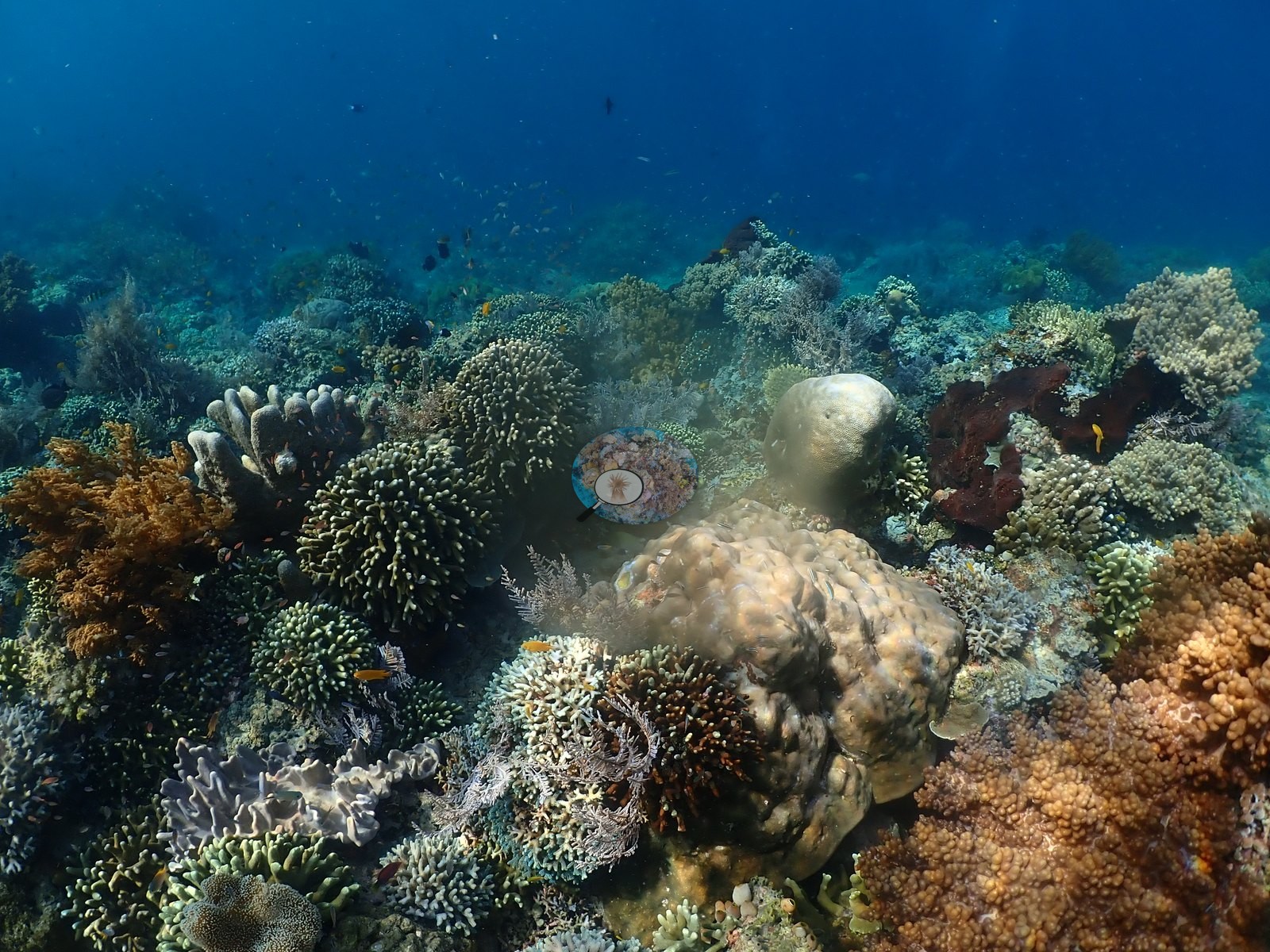
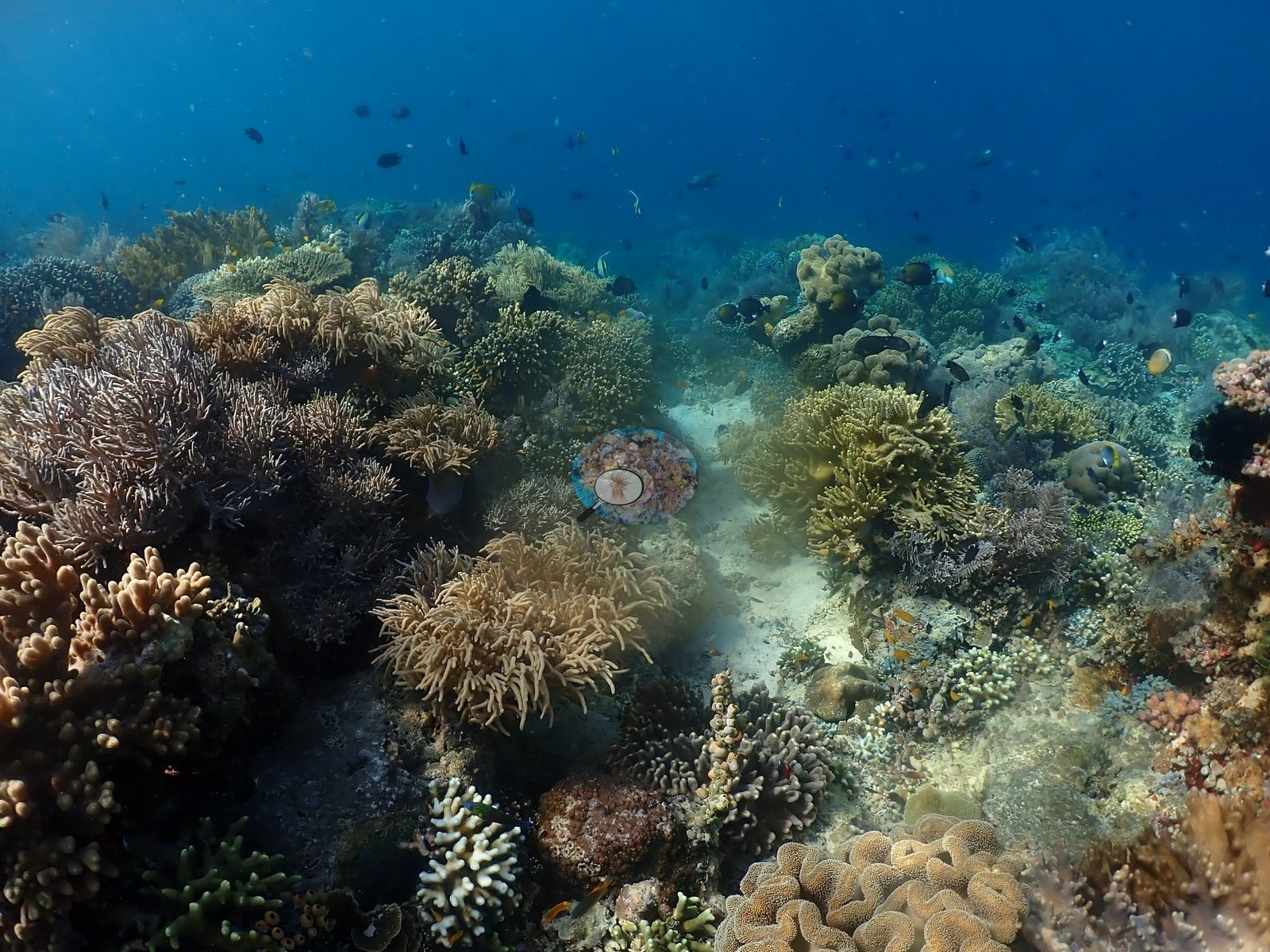
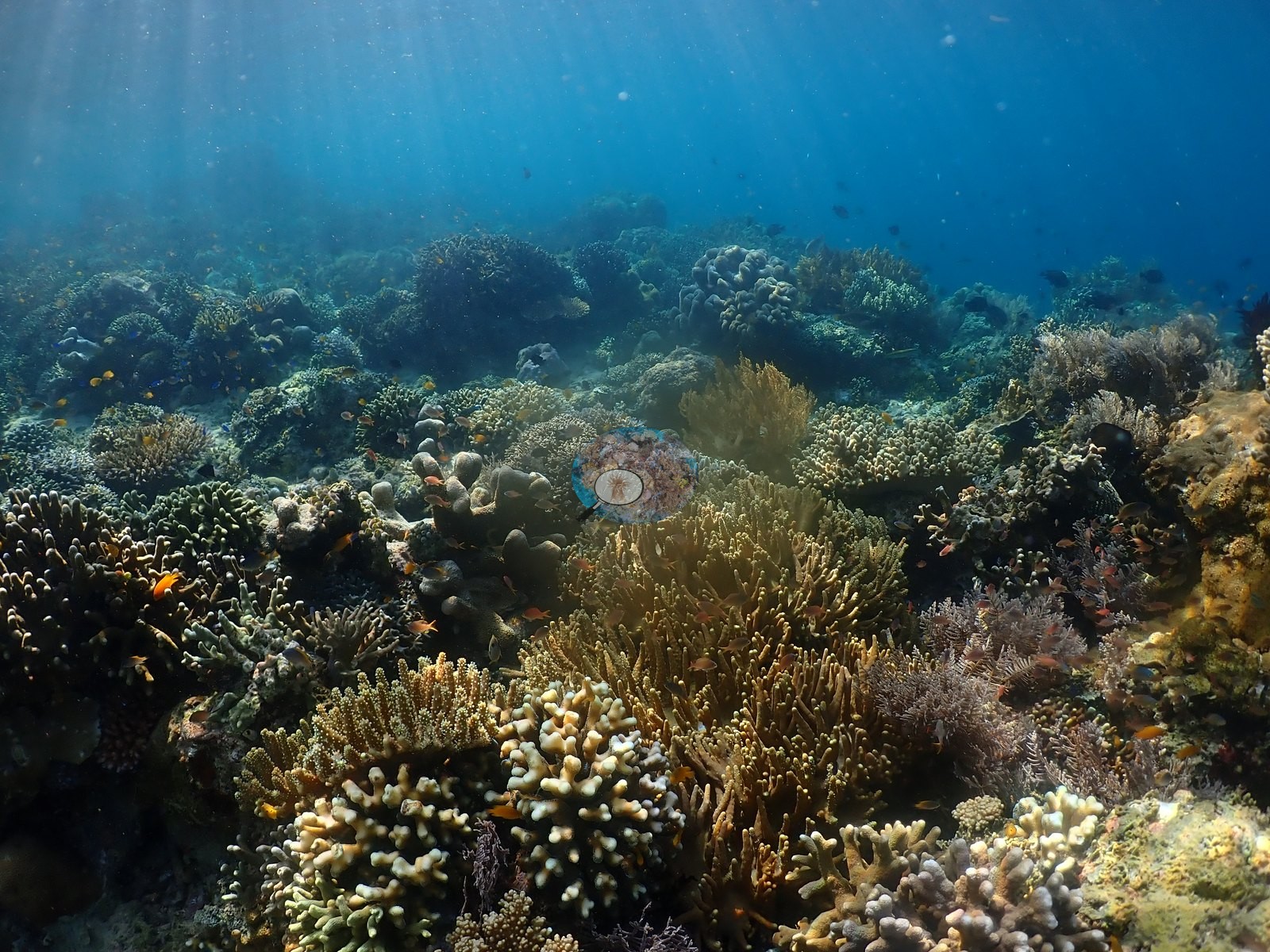
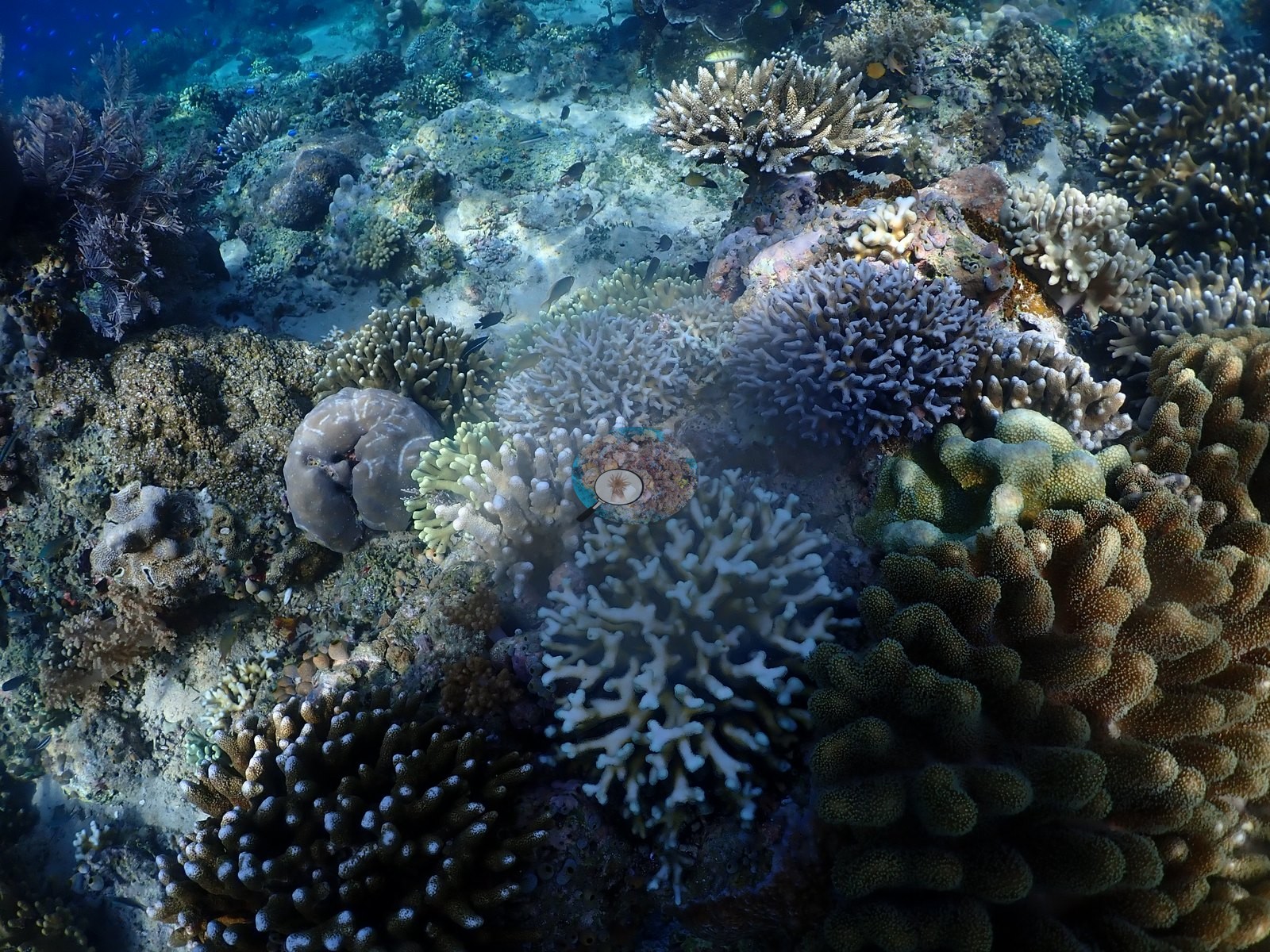
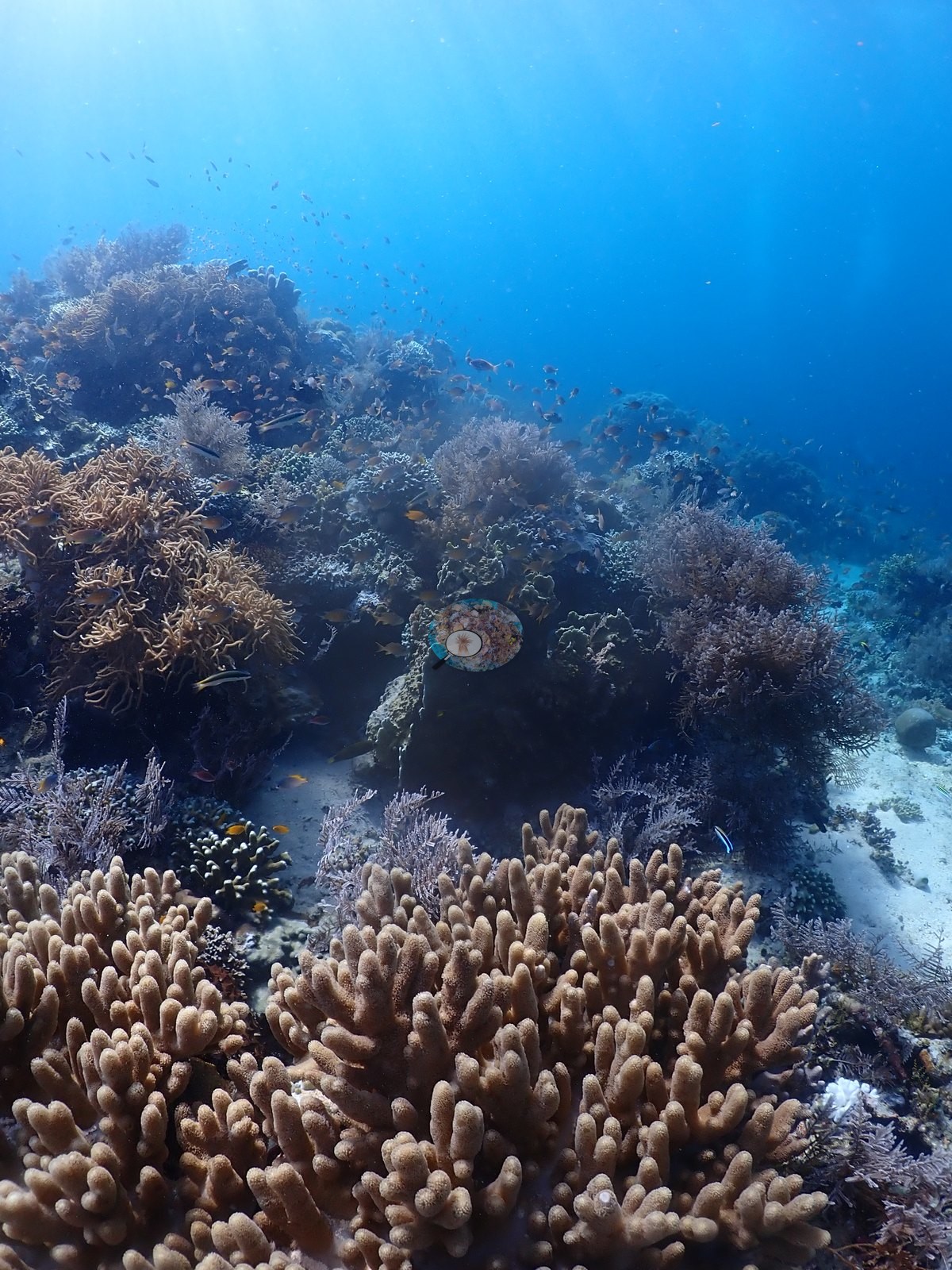
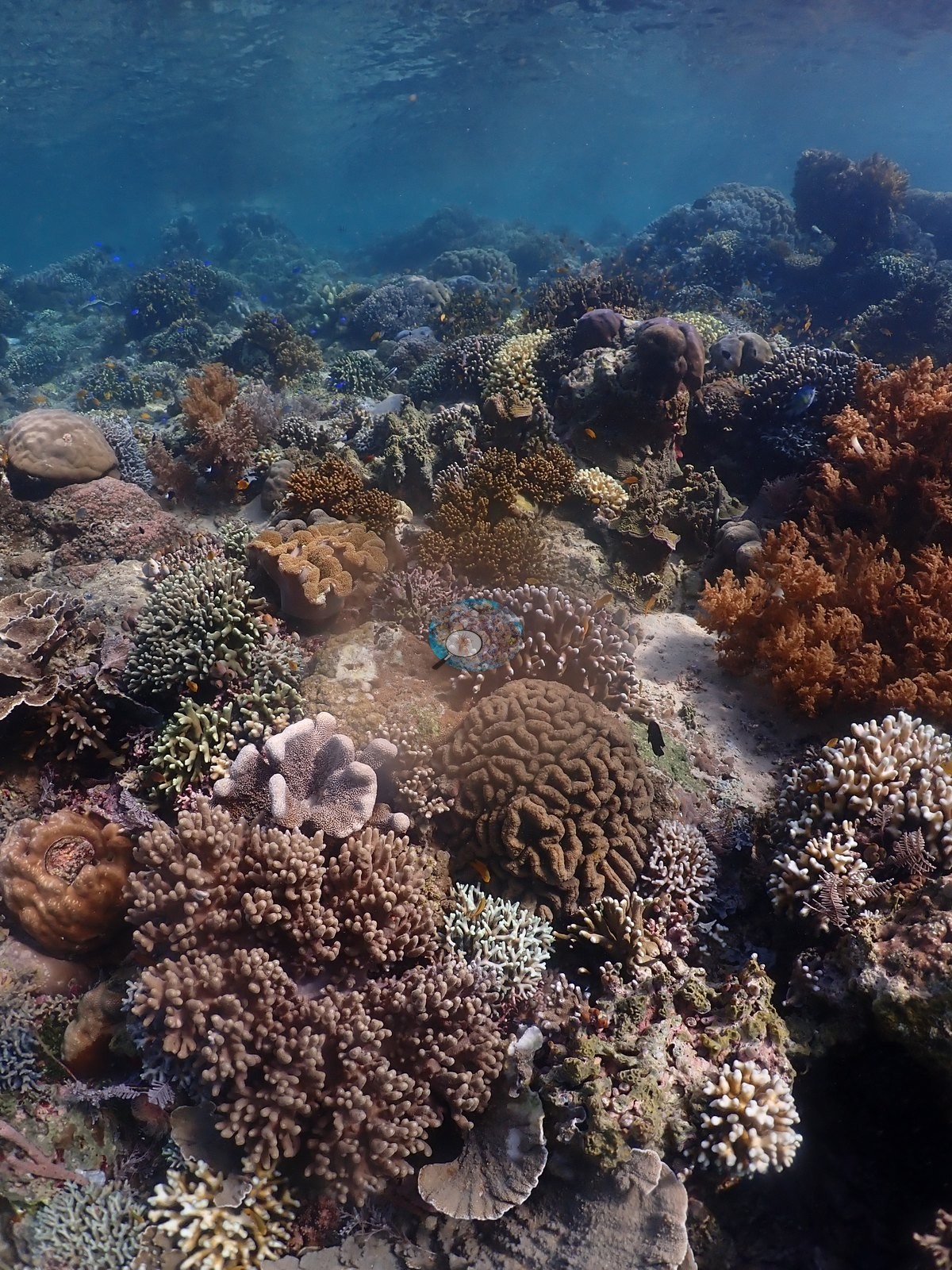
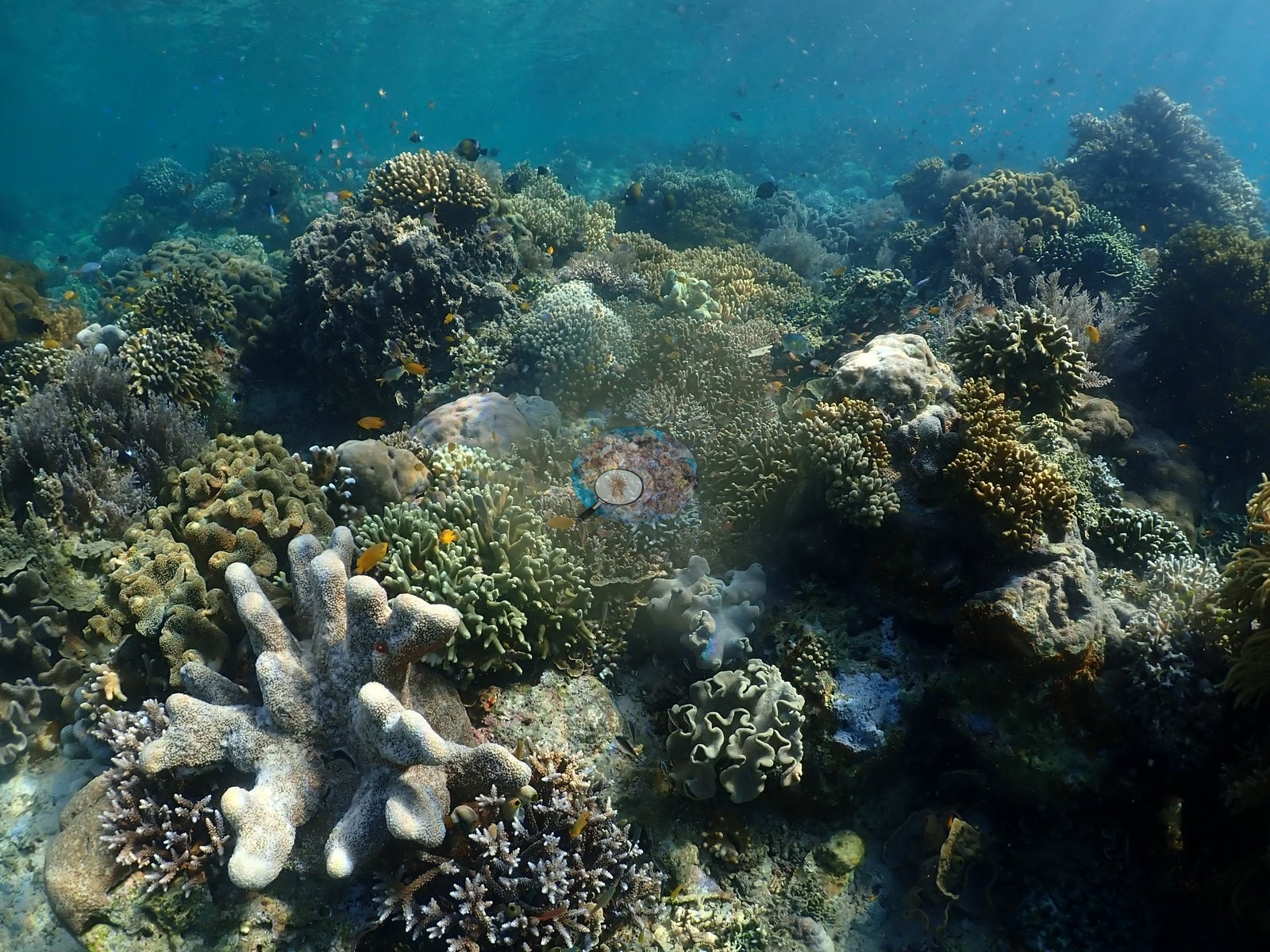
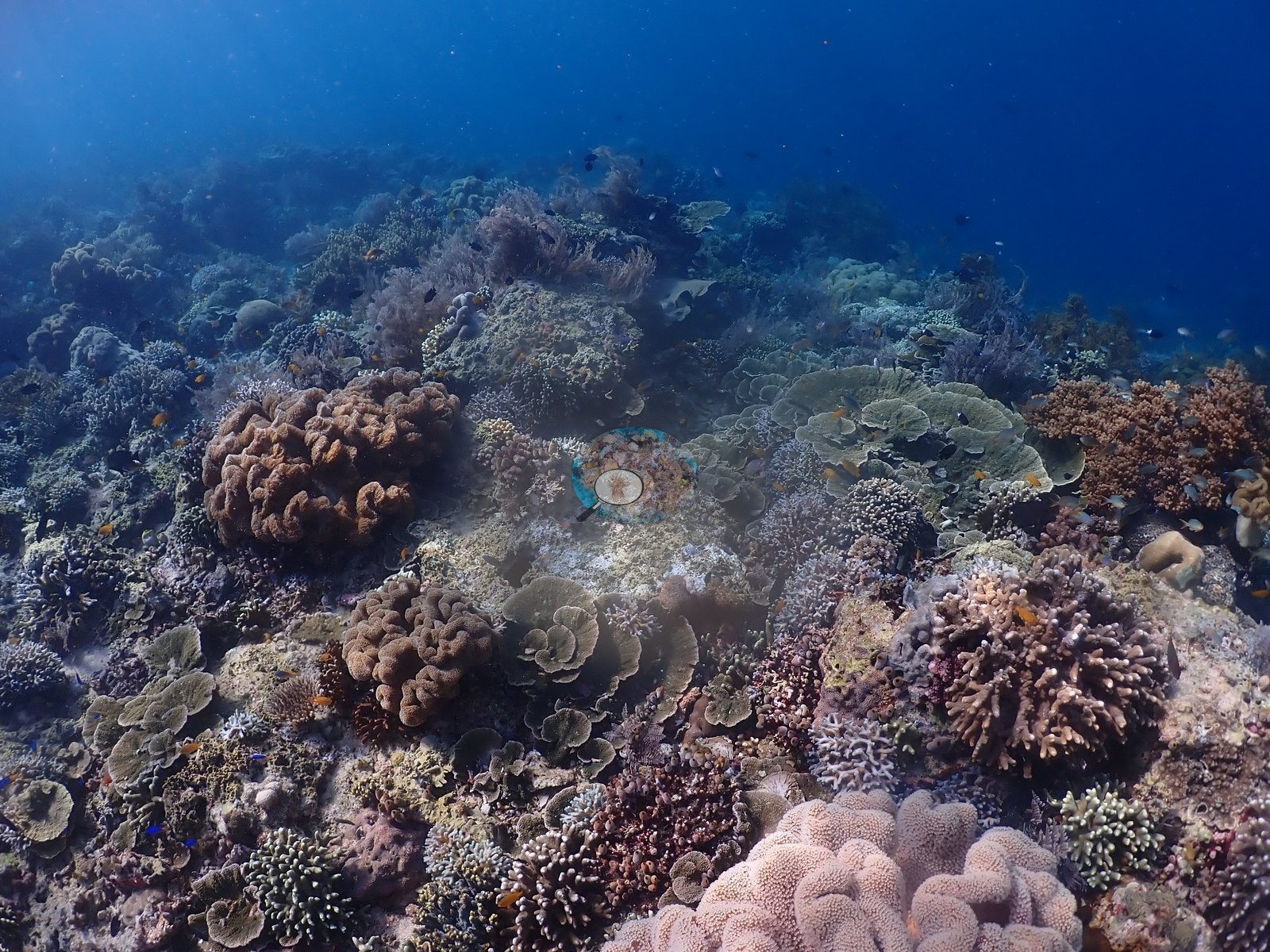
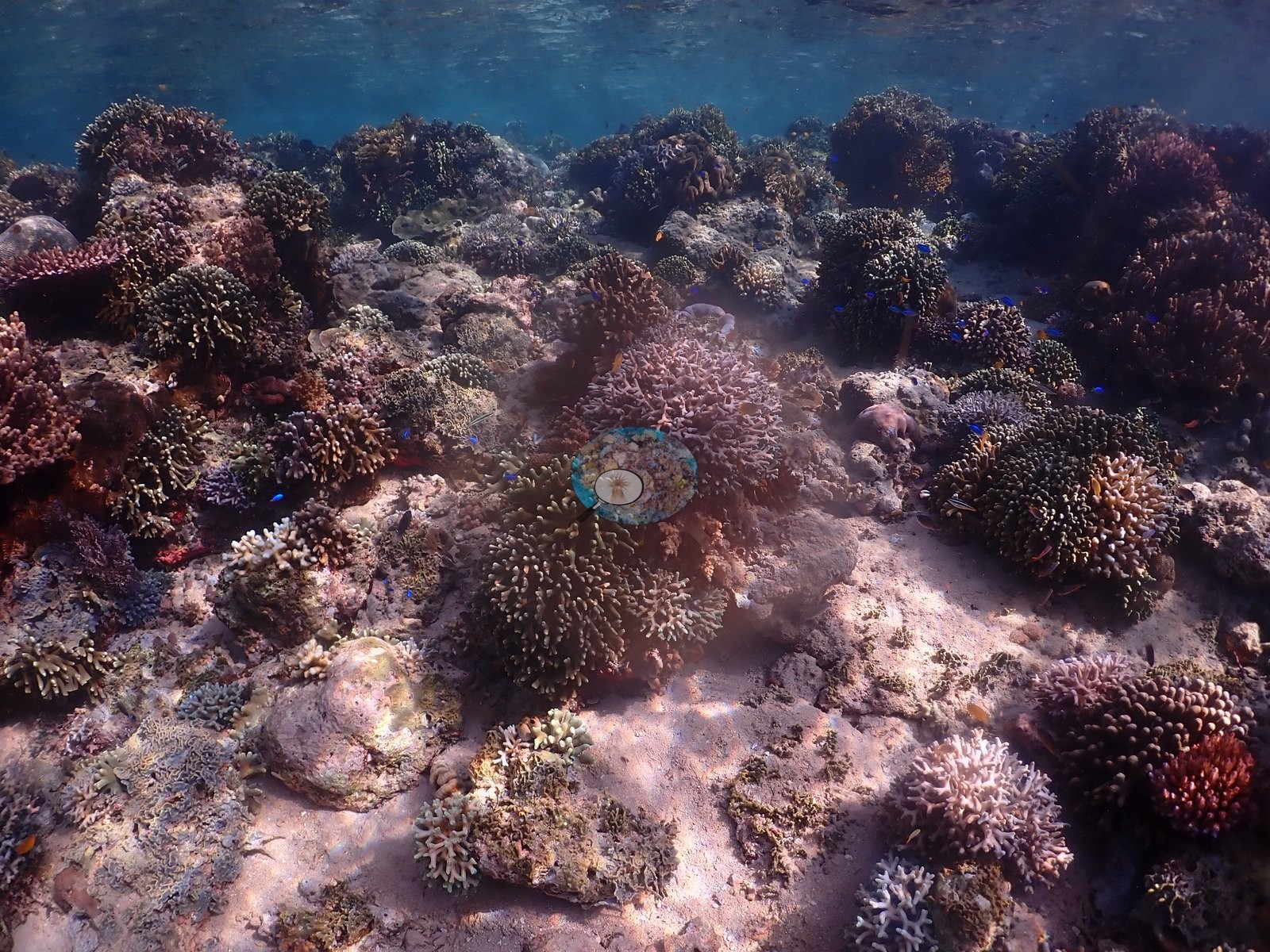
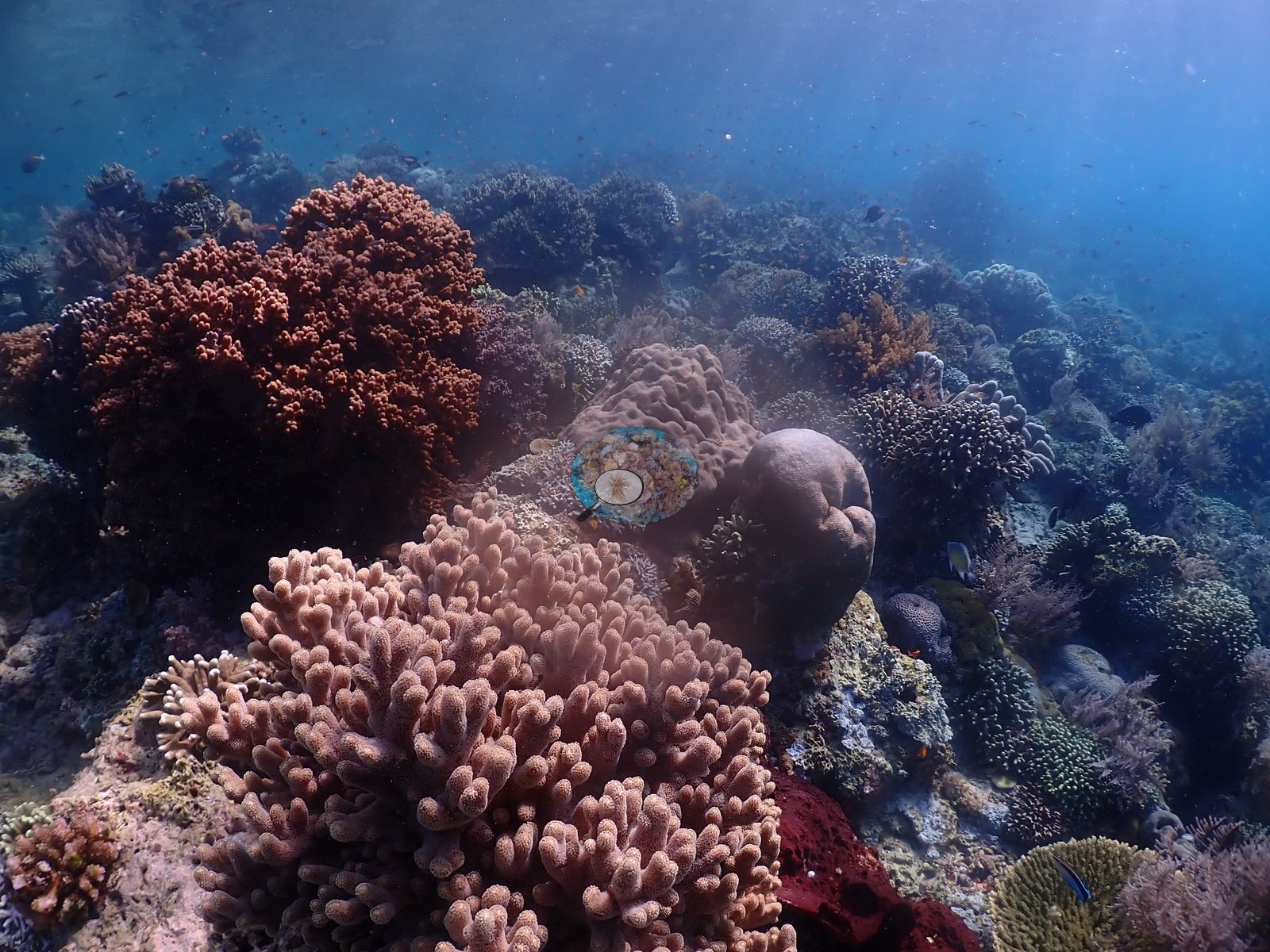
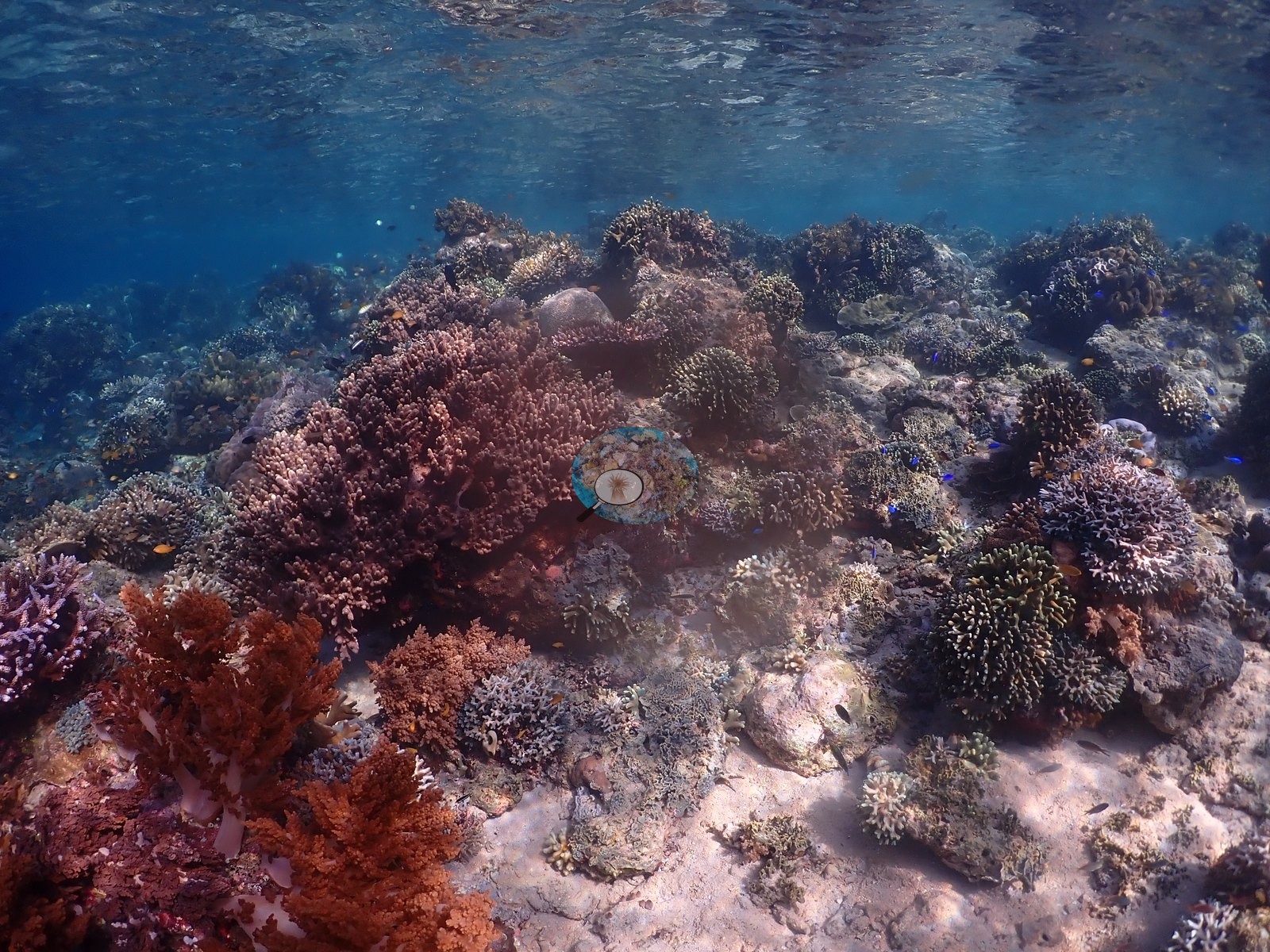
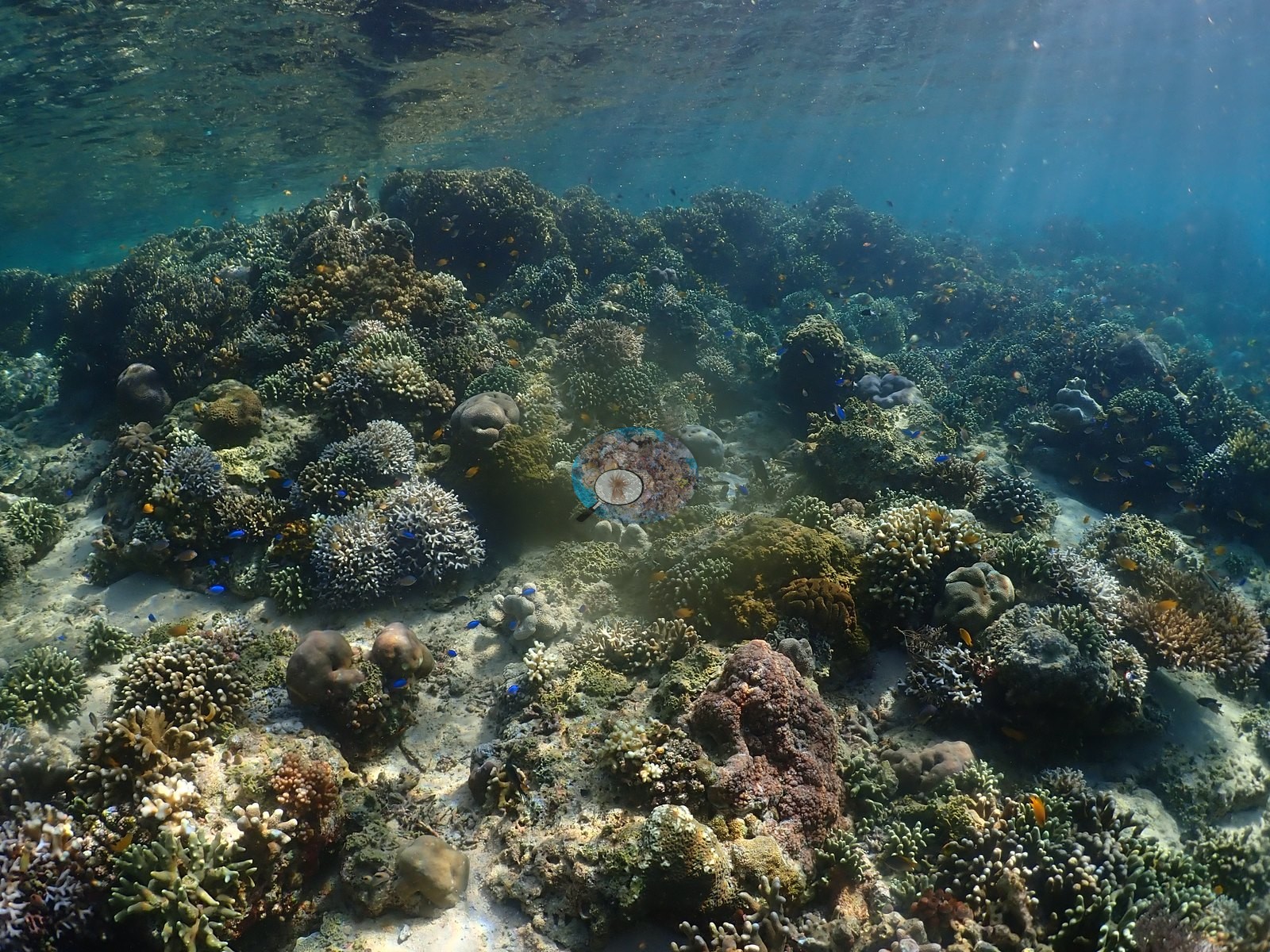
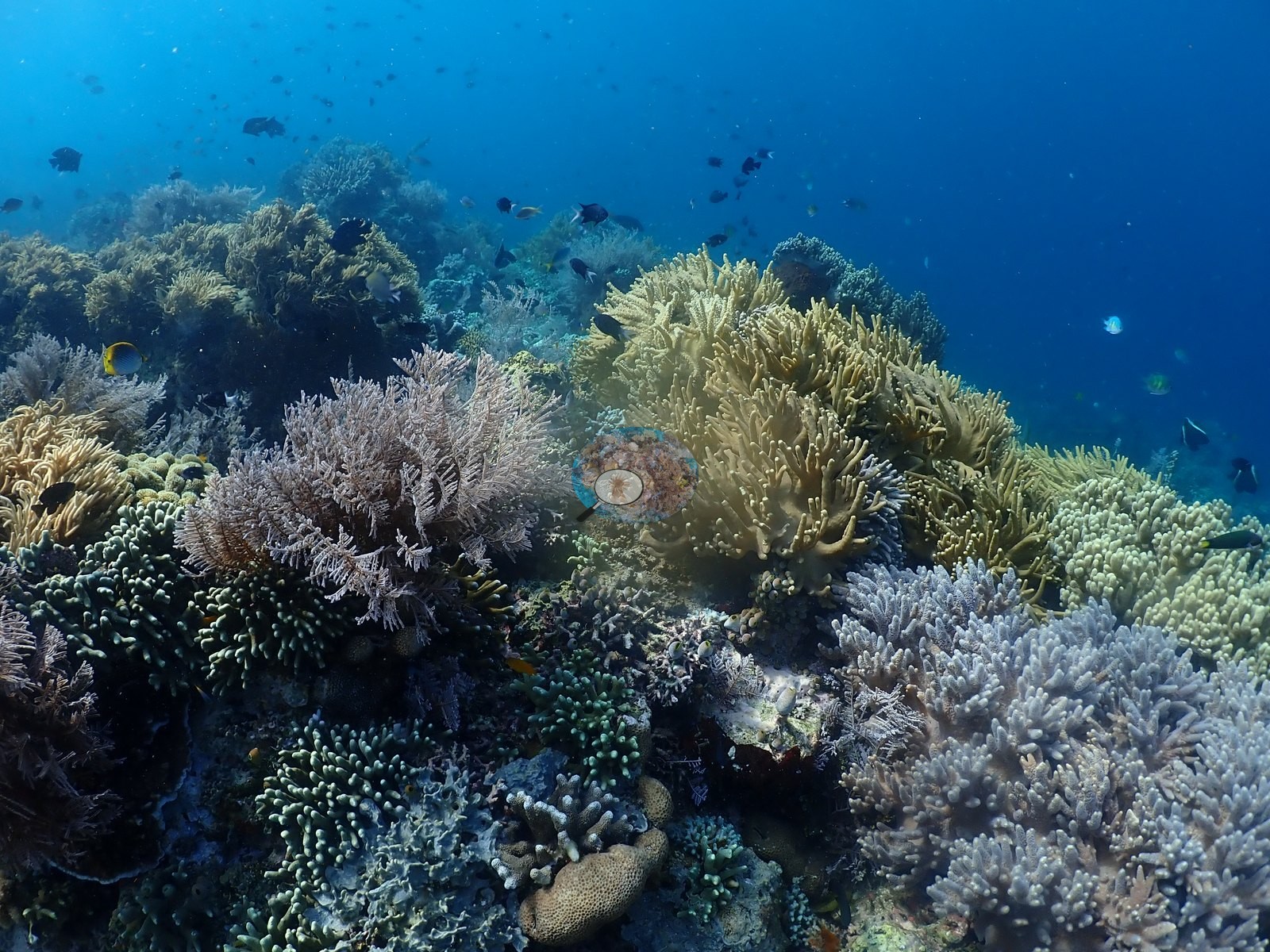
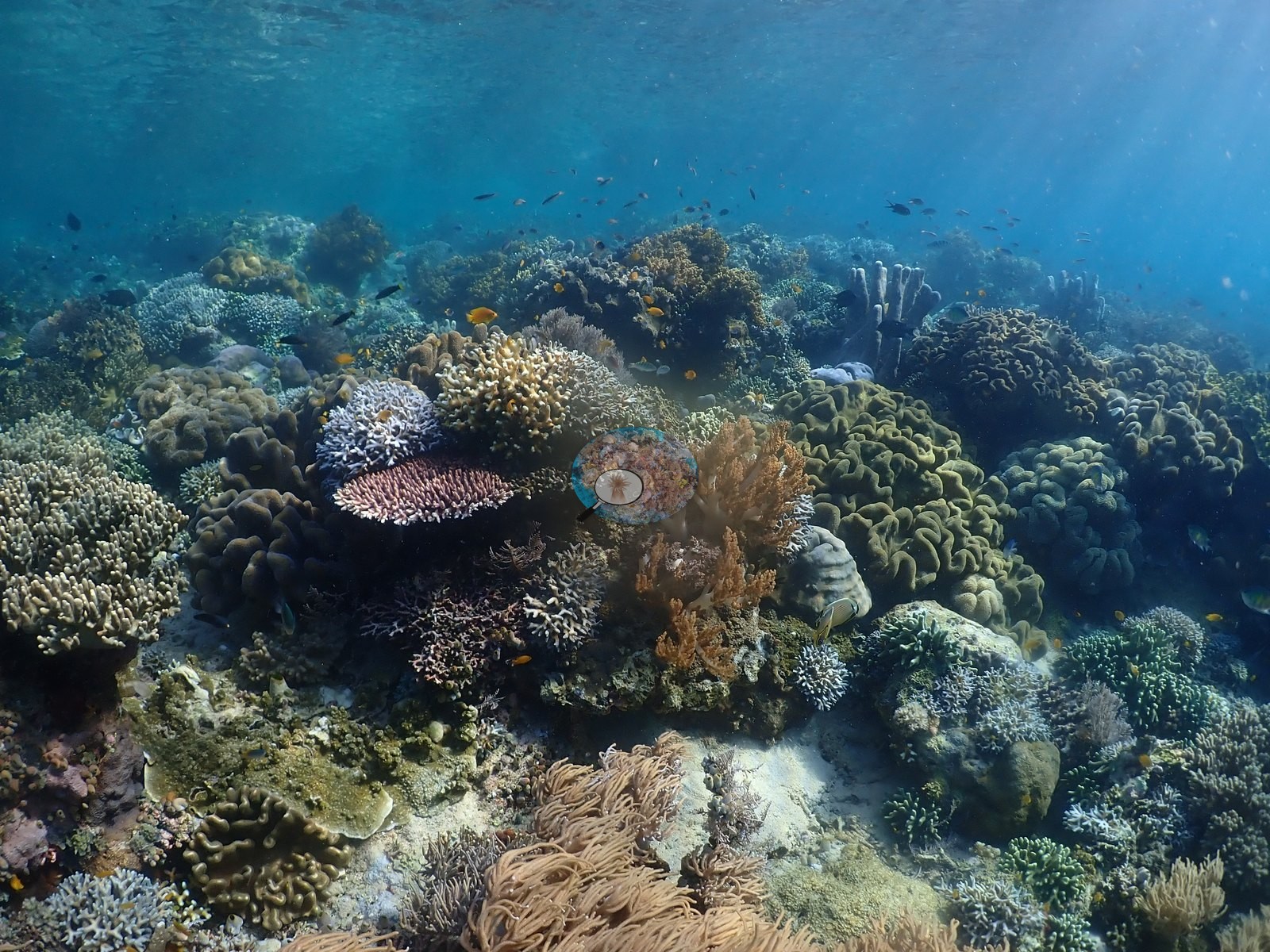
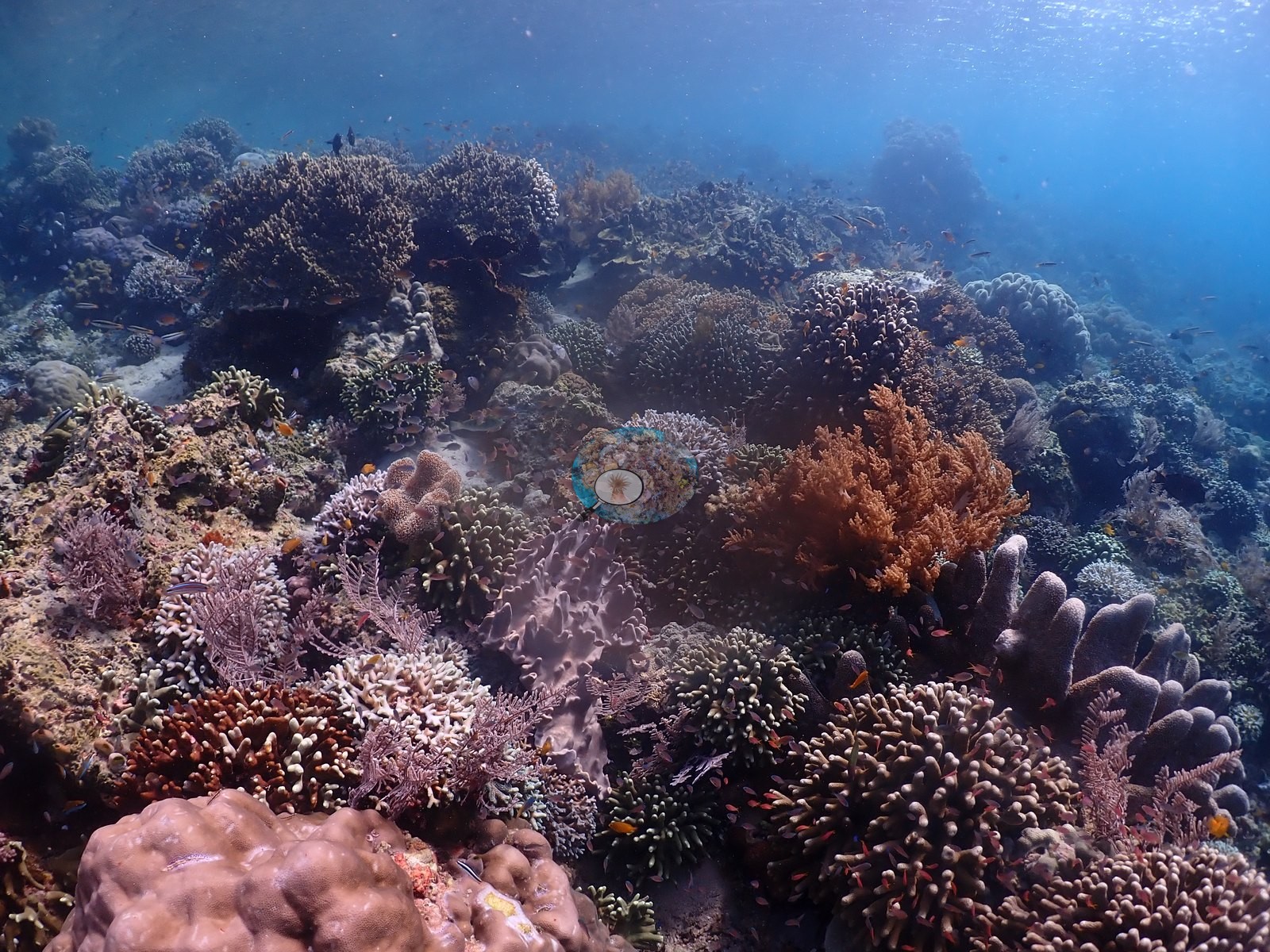
Cover is highest in this shallow band.
Coral cover
Coral cover: 23% — a blind Claude computer-vision point count of 172 of Anderson's unedited photographs (20 points per photo; water, fish, and obstructions excluded). Other computer-vision methods are listed in the method table.
Comparisons with other data
No prior survey data from this site. If you would like to share yours, please email us.
CV model comparison
More info
DINOv3 and CoralSCOP were run on the same photos and are listed for comparison. Coralscapes v2 and v1 were also run but are not shown: Anderson does not consider Coralscapes reliable for these photos. No diver transect exists for this trip, so agreement between the rows is not accuracy, and as of September 2026 no computer-vision method estimates coral cover accurately on new images; treat every row as indicative.| Method | Hard-coral cover (%) |
|---|---|
| In-house DINOv3 | 27.5 |
| CoralSCOP unedited | 41.6 |
| Claude | 22.9 |
Data & links
All images from Coral Reef Diagnostics. Data are from Coral Reef Diagnostics.
© Coral Reef Diagnostics.