
Indonesia - Halmahera: Ferry Jetty
Part of the regional summaries: Indonesia - Halmahera and Indonesia - Maluku
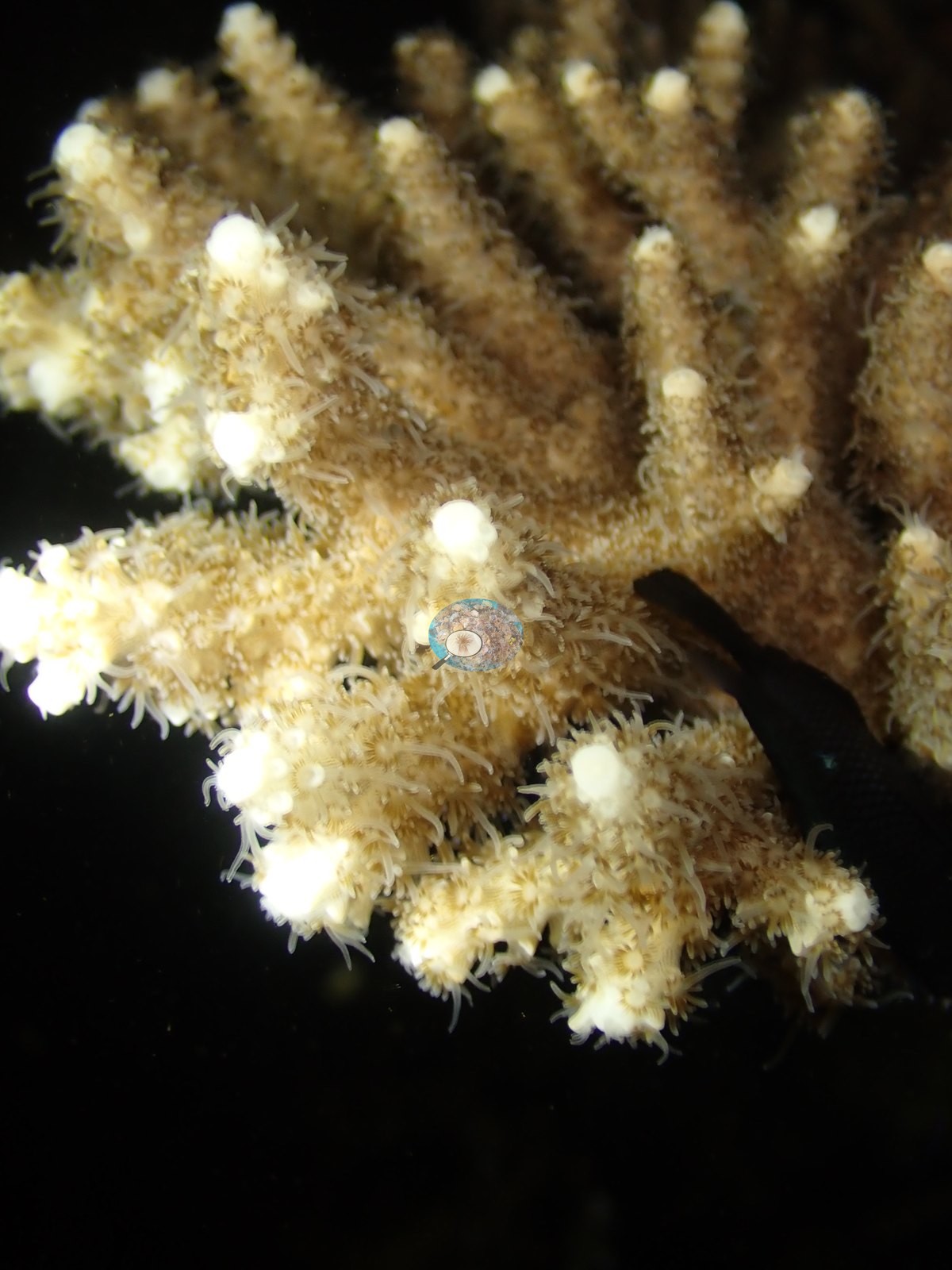
More info
North Maluku, Indonesia (NOAA CRW virtual station)A night macro dive under the ferry jetty at Maliang Island, its pilings carrying a dense filter-feeder community — cup corals among them — rather than reef framework. Highlights include banded pipefish, nudibranchs, and a cleaner shrimp; the low, scattered coral here reflects the jetty-and-sand habitat, not degradation.
Penyelaman makro malam hari di bawah dermaga feri di Pulau Maliang, tiang-tiangnya menampung komunitas hewan penyaring yang rapat — di antaranya karang cangkir — alih-alih kerangka terumbu. Sorotannya mencakup ikan pipa belang, nudibranch, dan udang pembersih; karang yang rendah dan tersebar di sini mencerminkan habitat dermaga dan pasir, bukan degradasi.
Terjemahan ringkasan ini oleh AI; versi bahasa Inggris yang berlaku.
34 of the 37 photographs on this page are shown beside the text that discusses them under "Site description" below.
Site description
Setting
A night macro dive under a jetty (Halmahera dive 5, ferry jetty, Maliang Island), worked at a maximum of 15.4 m in 26-27°C water.
General benthic features
The pilings and adjacent rubble-and-sand slope carry a dense, low-relief filter-feeder community rather than reef framework (e.g., Image 20).
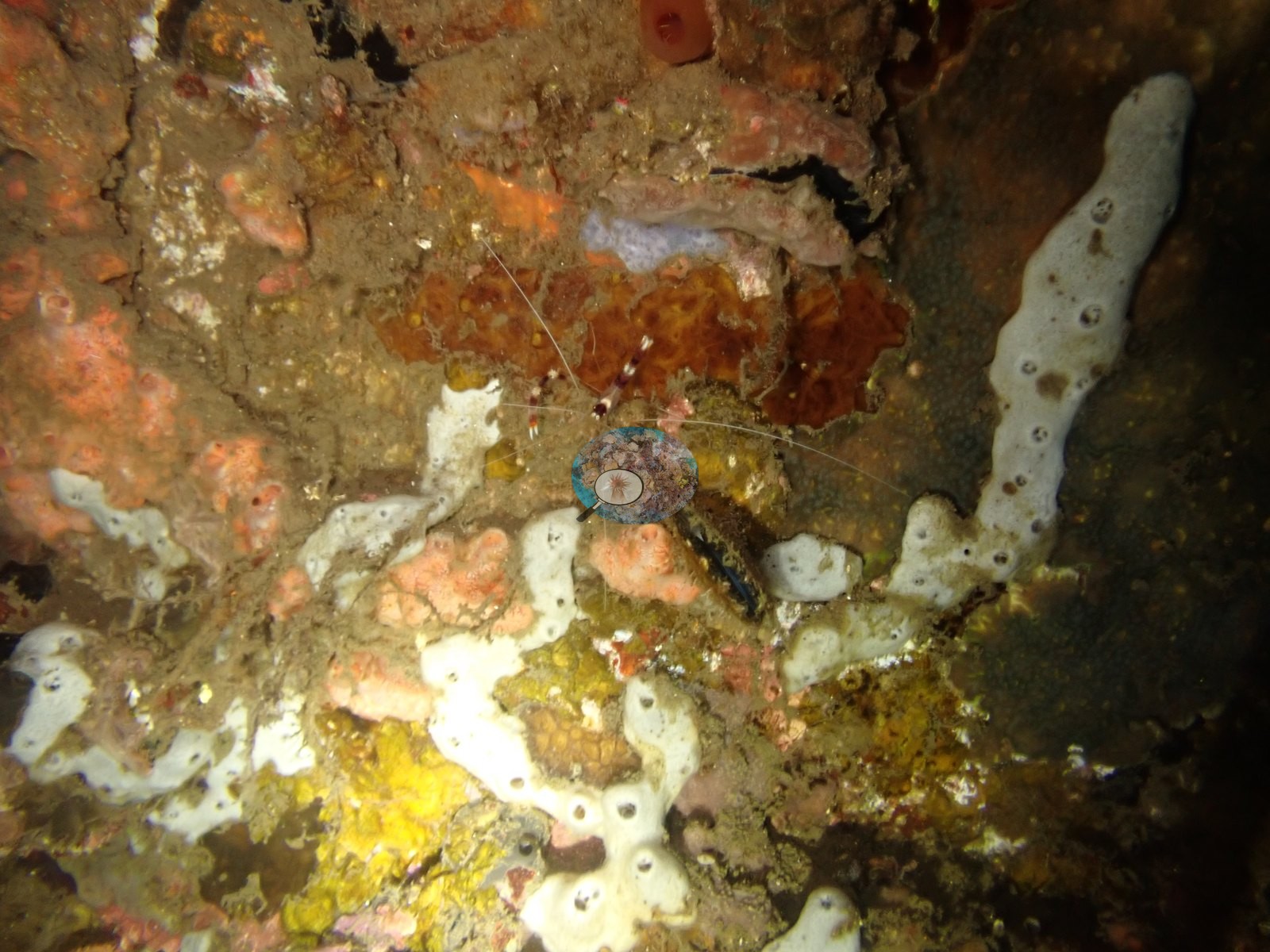
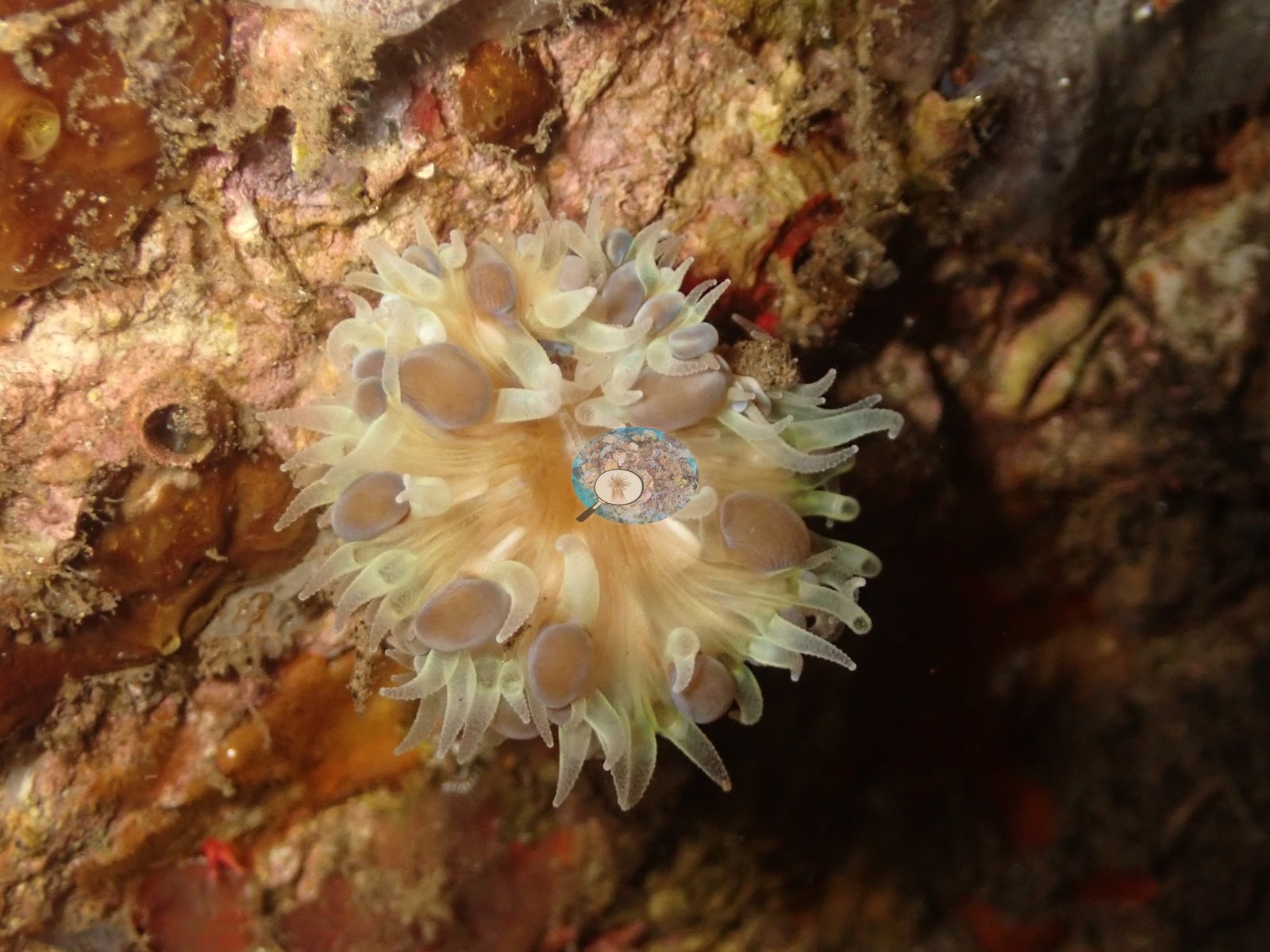
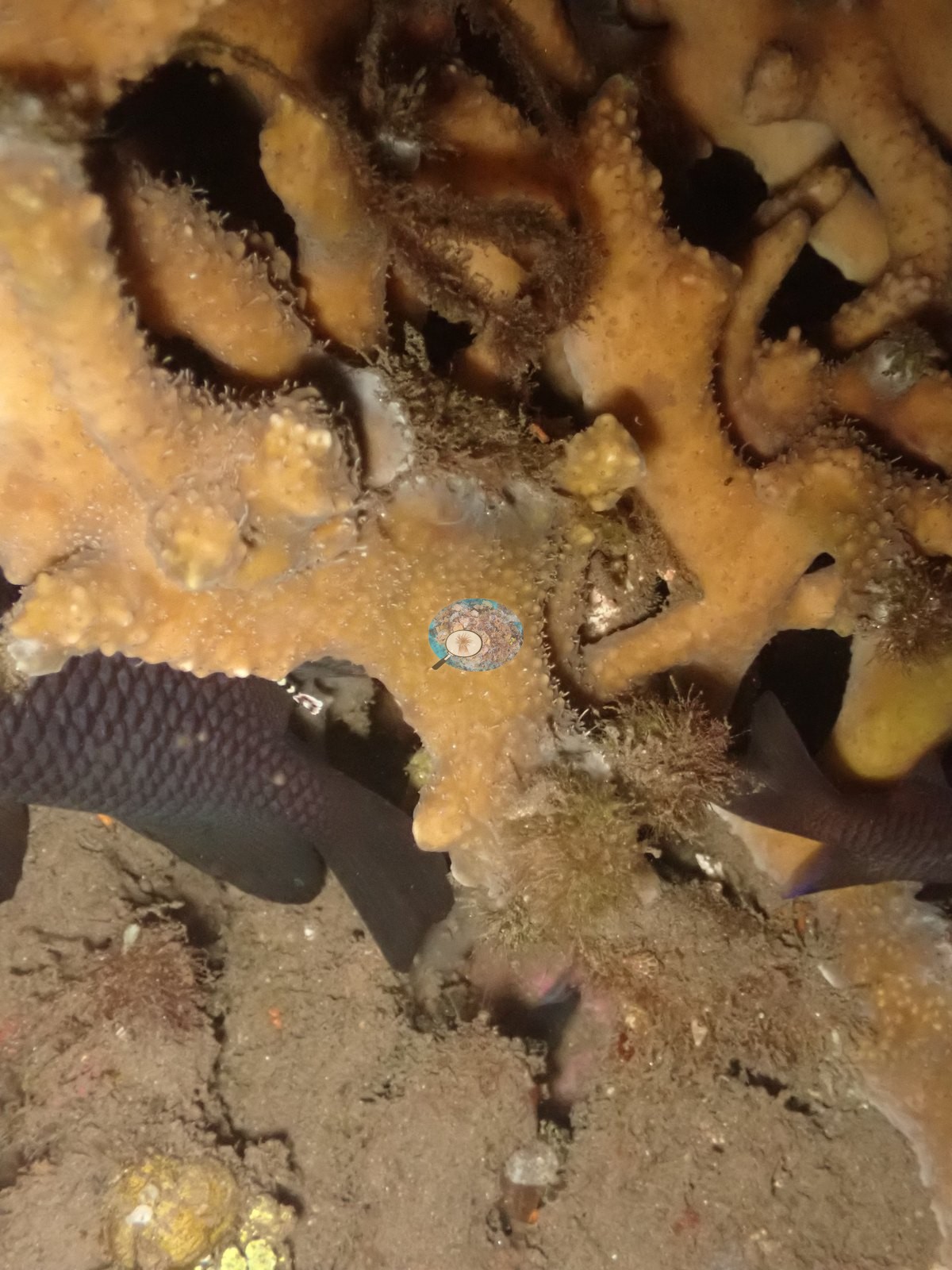
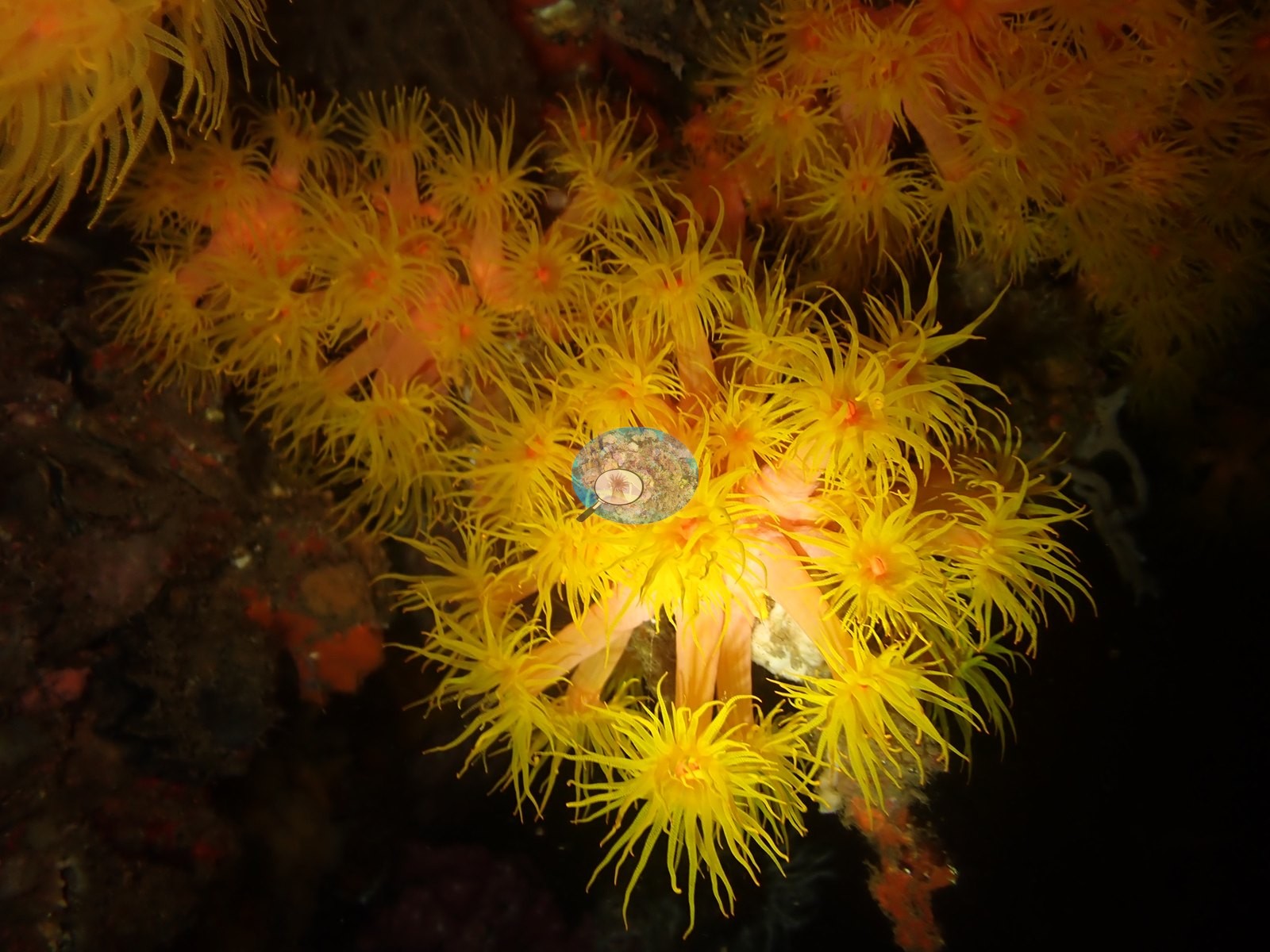
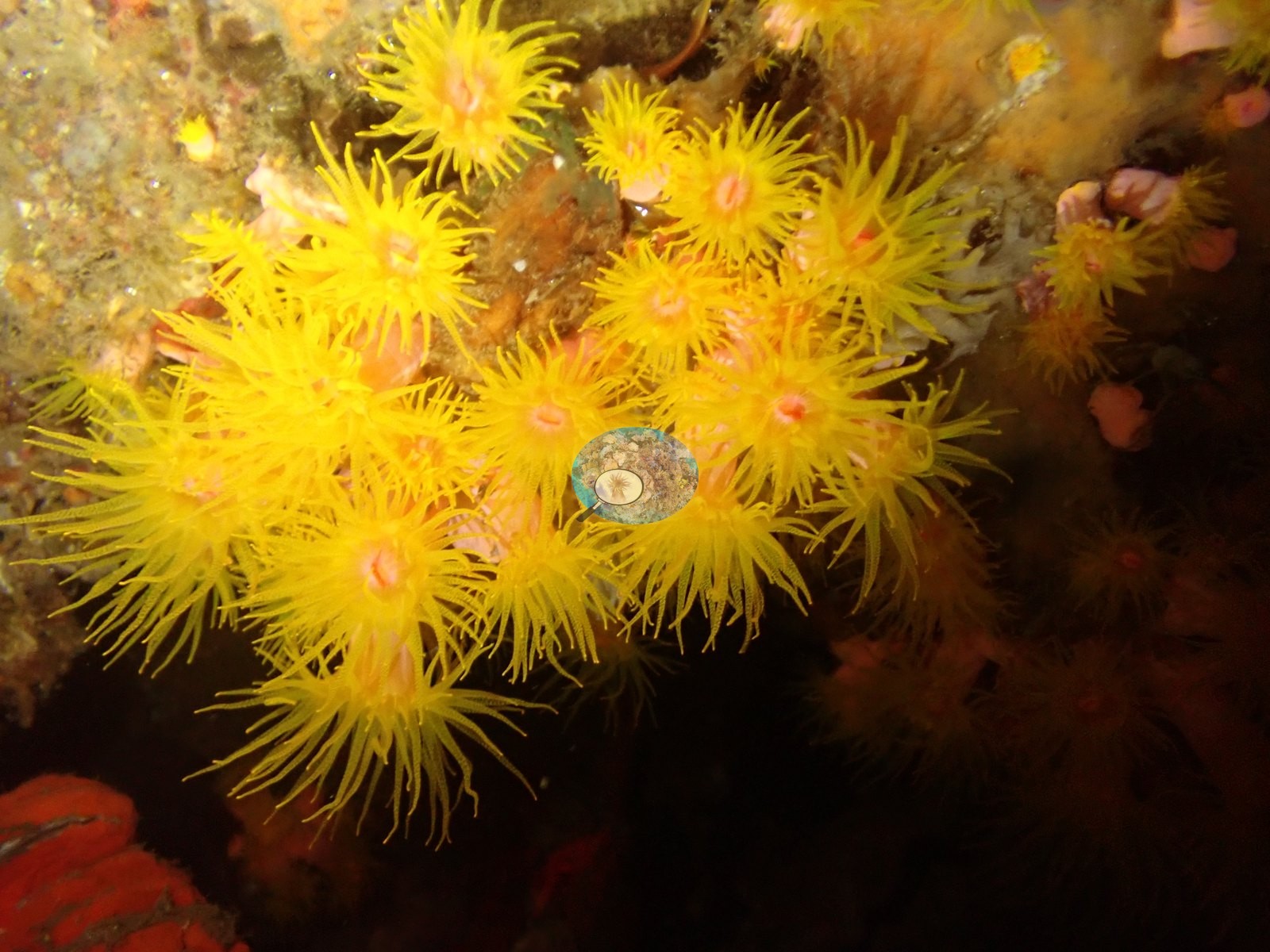
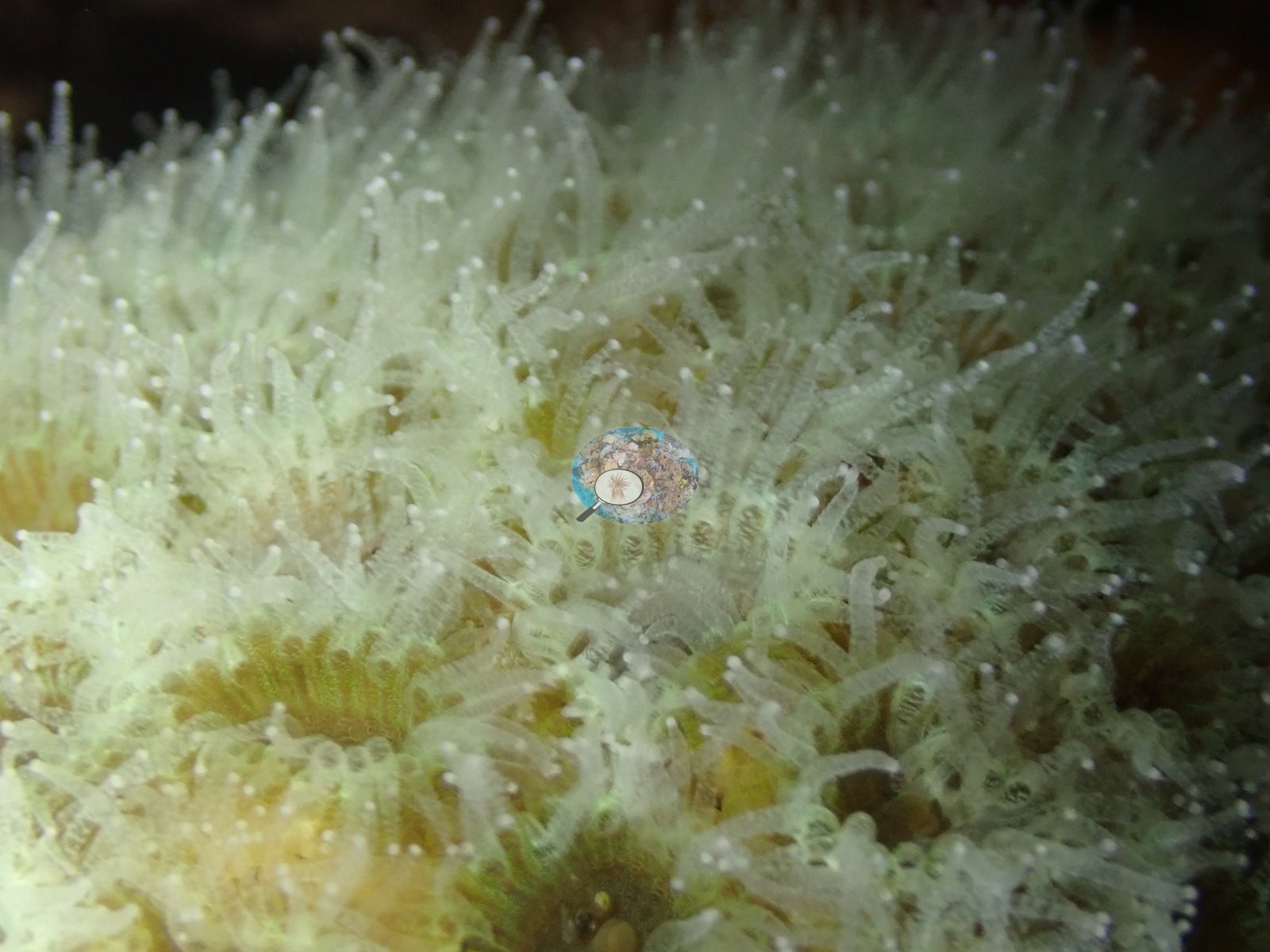
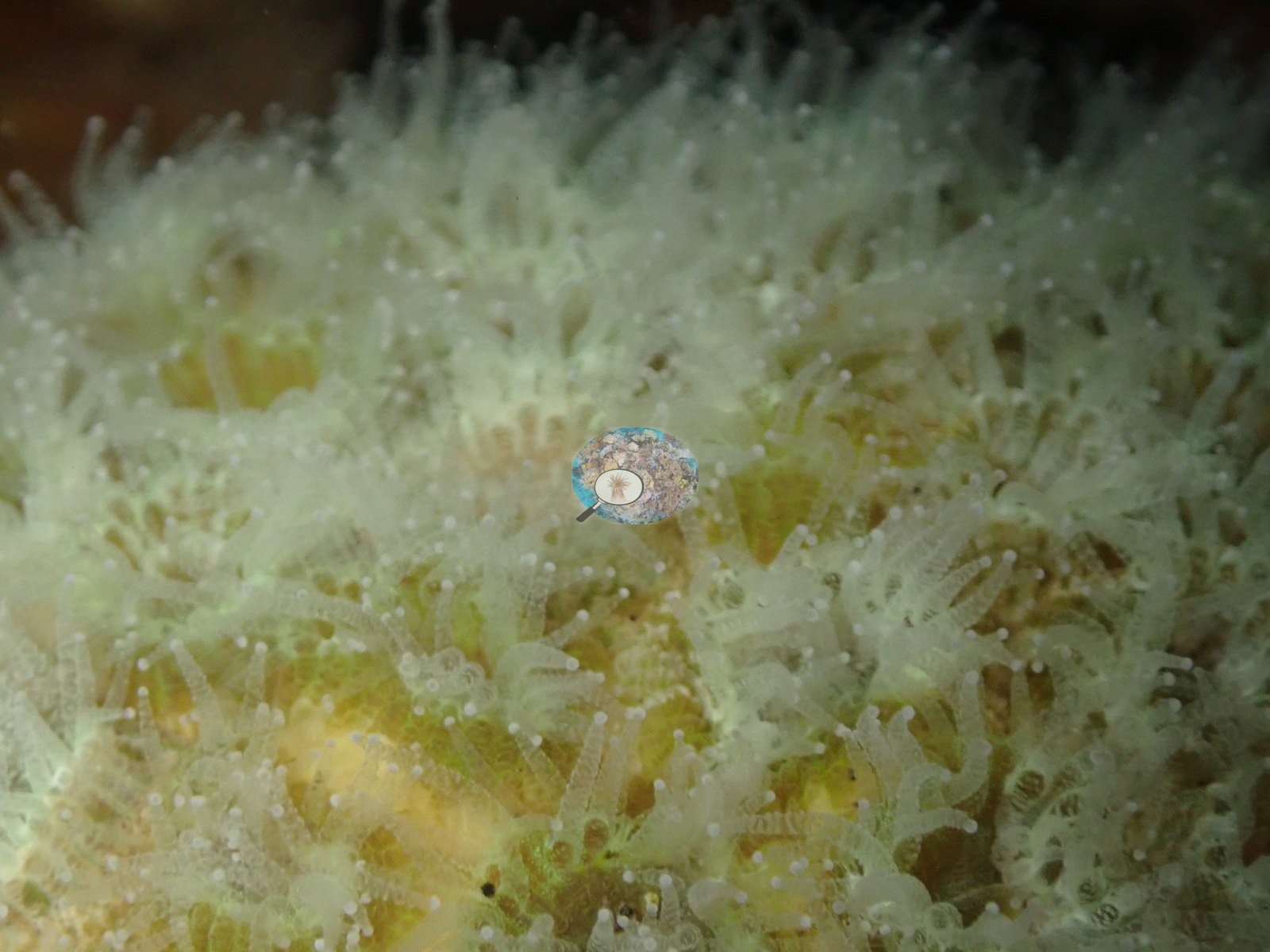
Hard coral is present but scattered and mostly small-polyped, all shot with polyps extended for night feeding: pale cream branching cup coral with white-tipped polyps, orange branching Tubastraea-type cup coral, and dense clusters of bright yellow cup-coral polyps opened in mats (e.g., Image 11, Image 14, Image 28, Image 32, Image 38, Image 42).
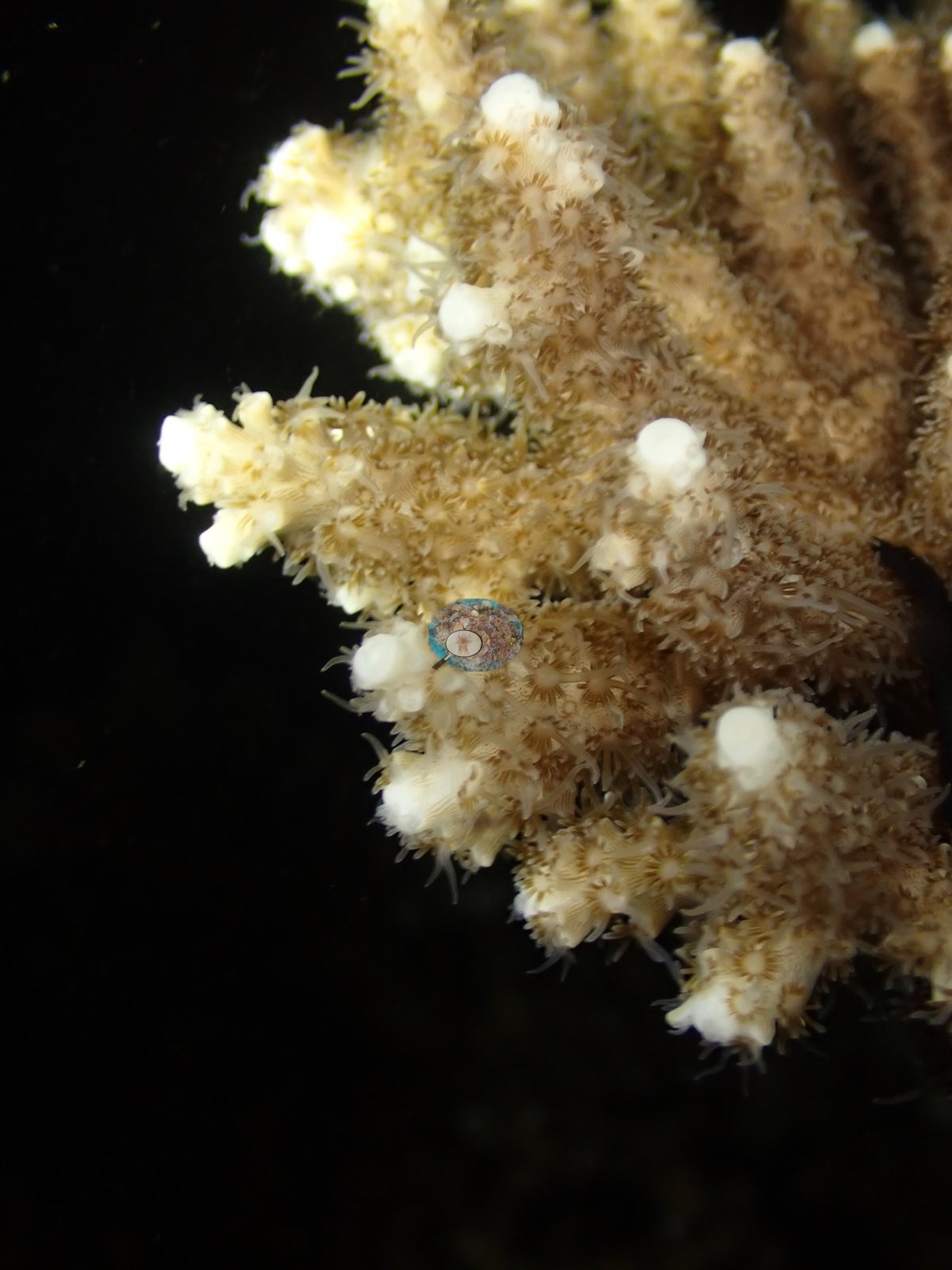
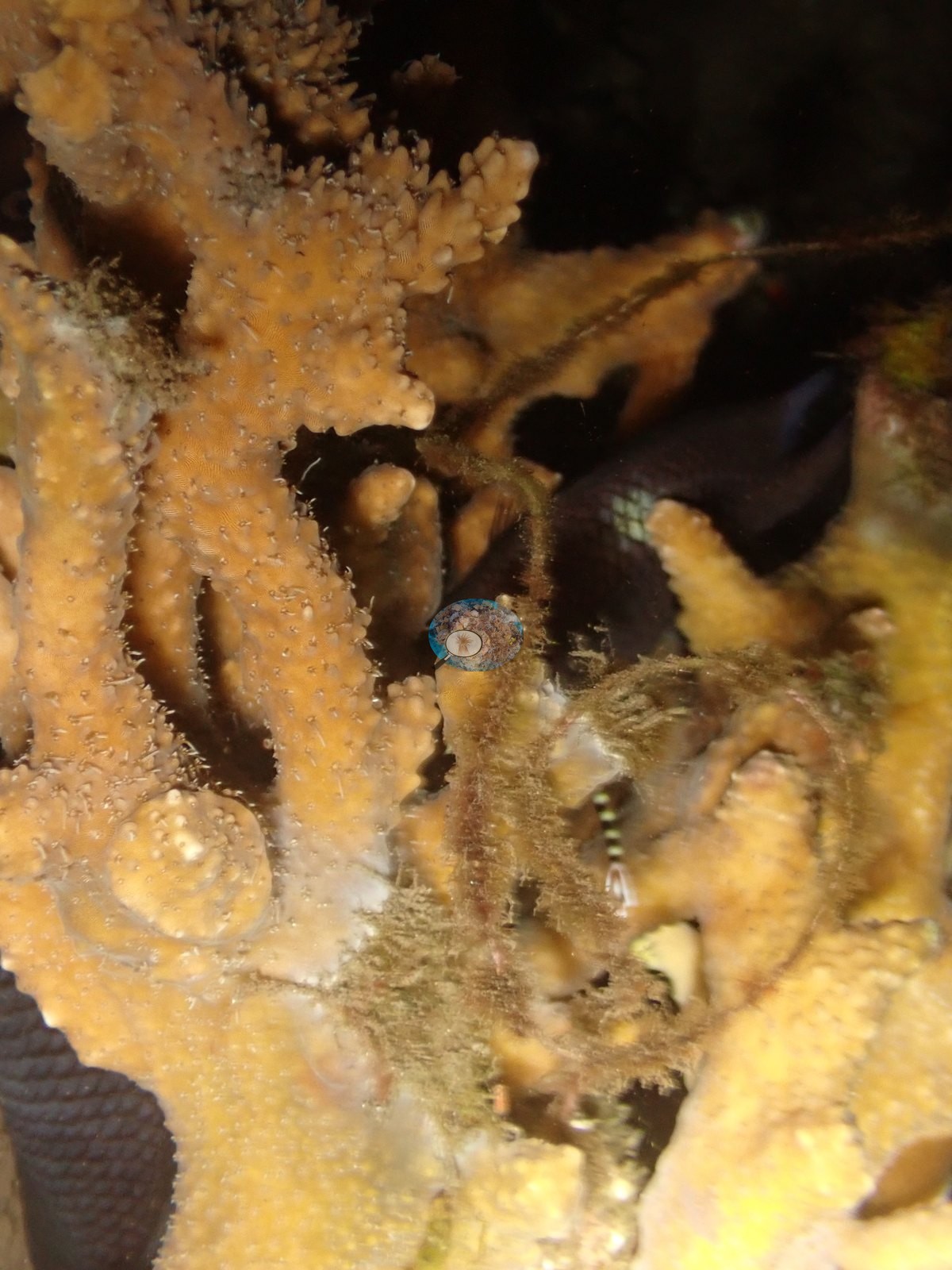
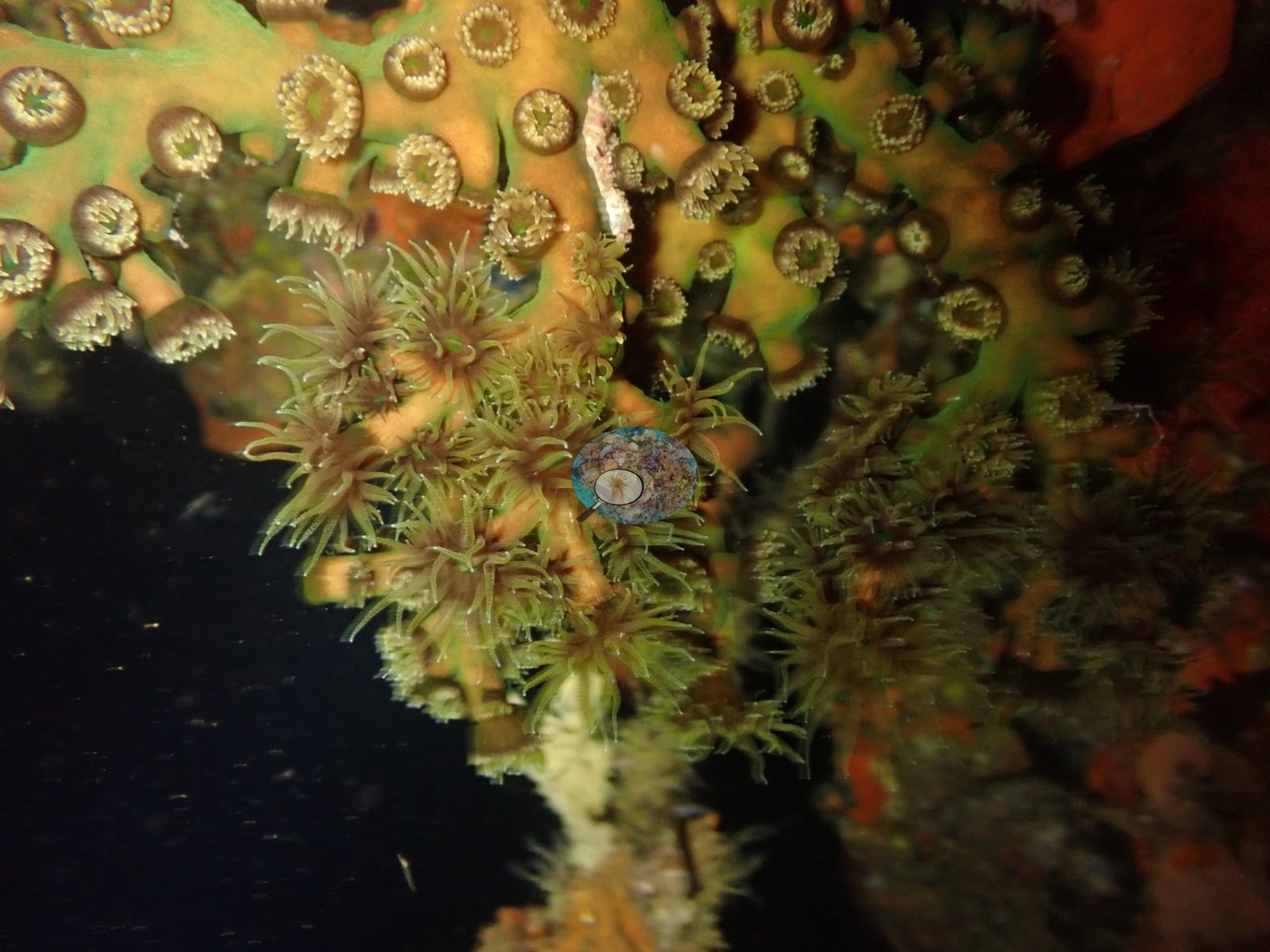
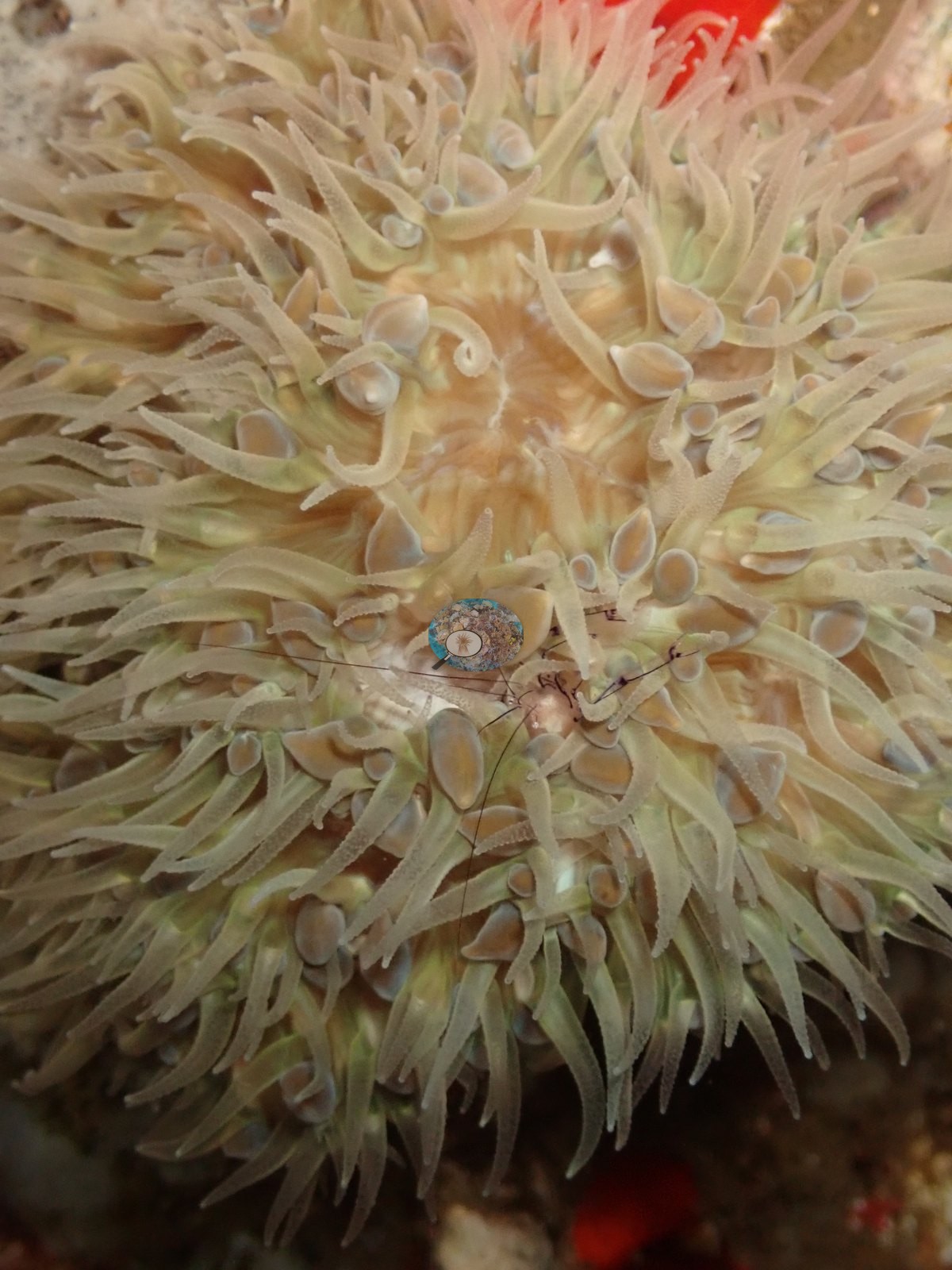
A pale cream-green anemone or zoanthid mat with short, densely packed tentacles recurs across four frames, and a single anemone fills one frame (e.g., Image 8, Image 16, Image 24).
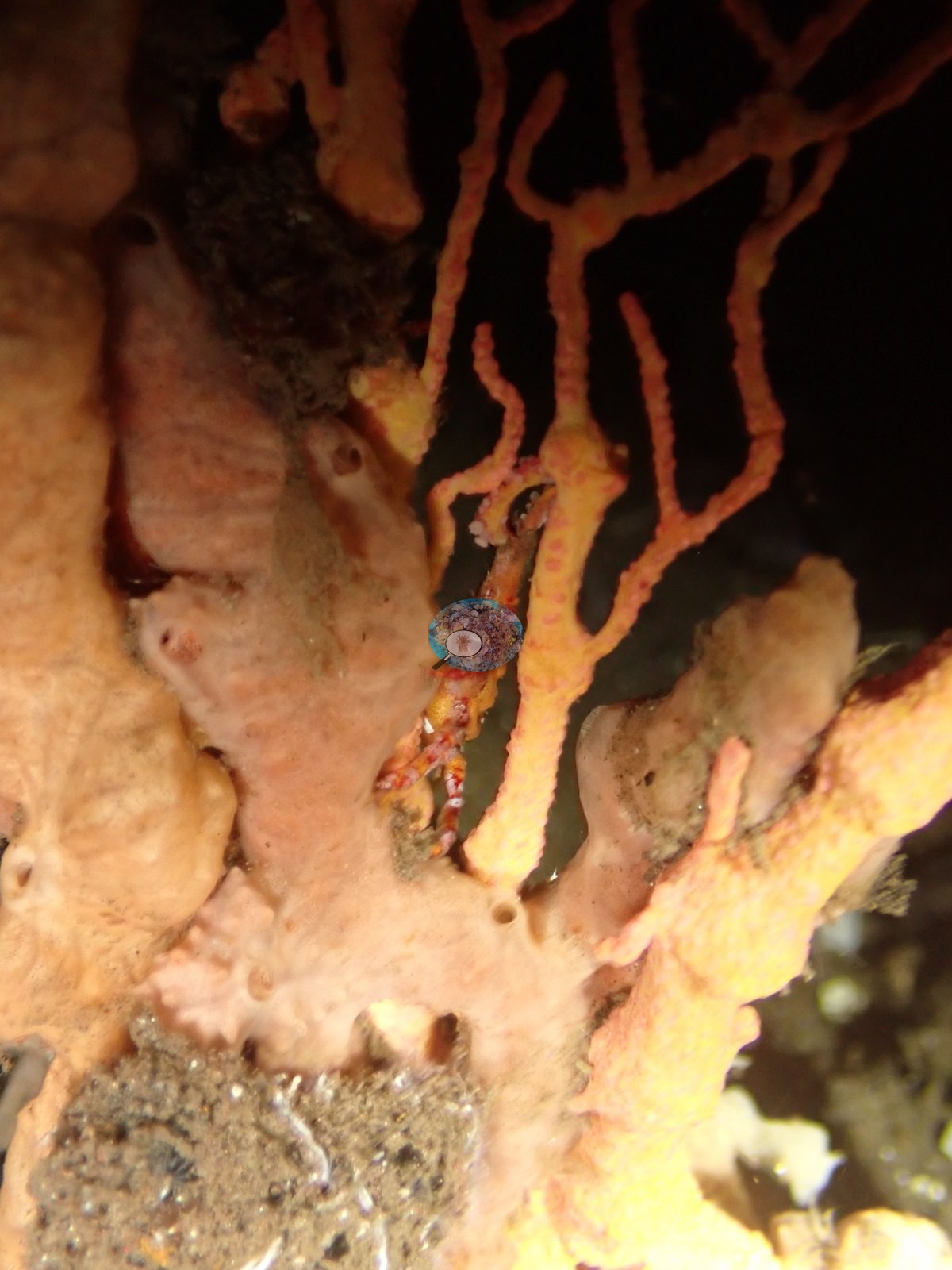
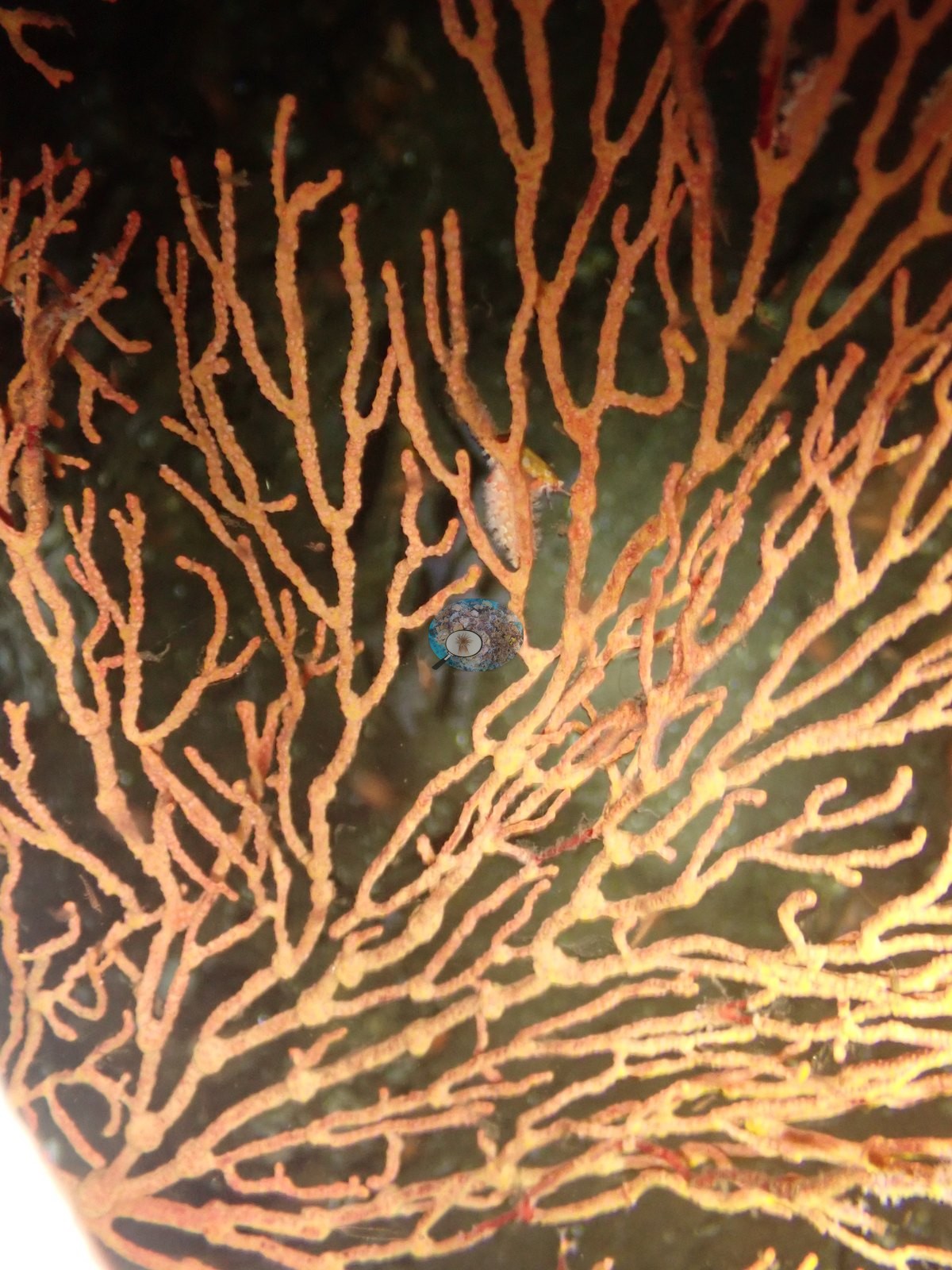
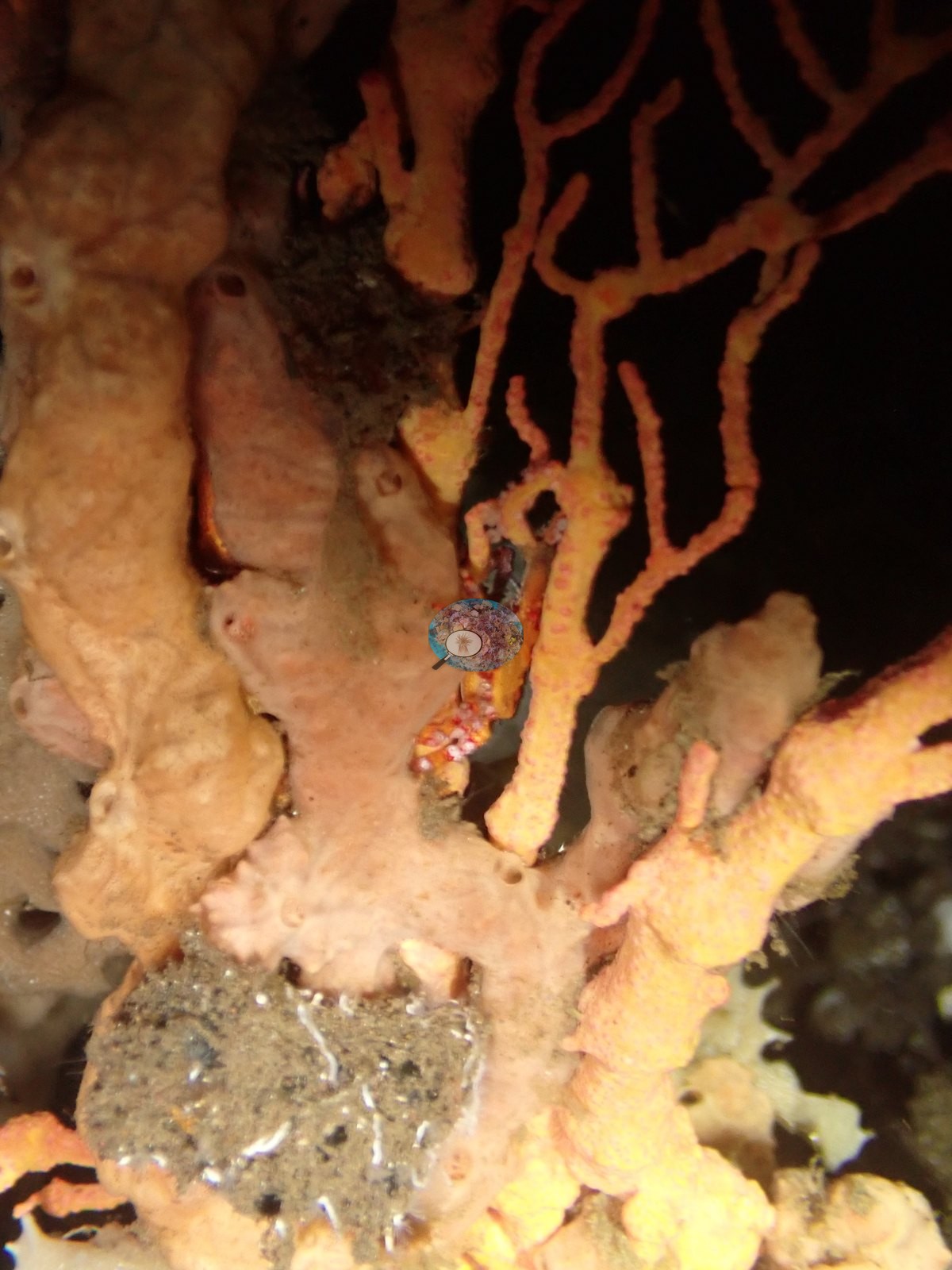
Orange sea-fan/gorgonian branches are shot close-up twice (e.g., Image 36, Image 39).
Coral cover
- Coral cover has not been estimated for this site: this was a night dive, and night frames are not scored for cover.
Stressors
No bleaching, disease, crown-of-thorns, or predation was seen in any frame; the low, scattered hard coral cover here reflects habitat (jetty pilings and sand, not a reef) rather than condition.
Fish and other fauna
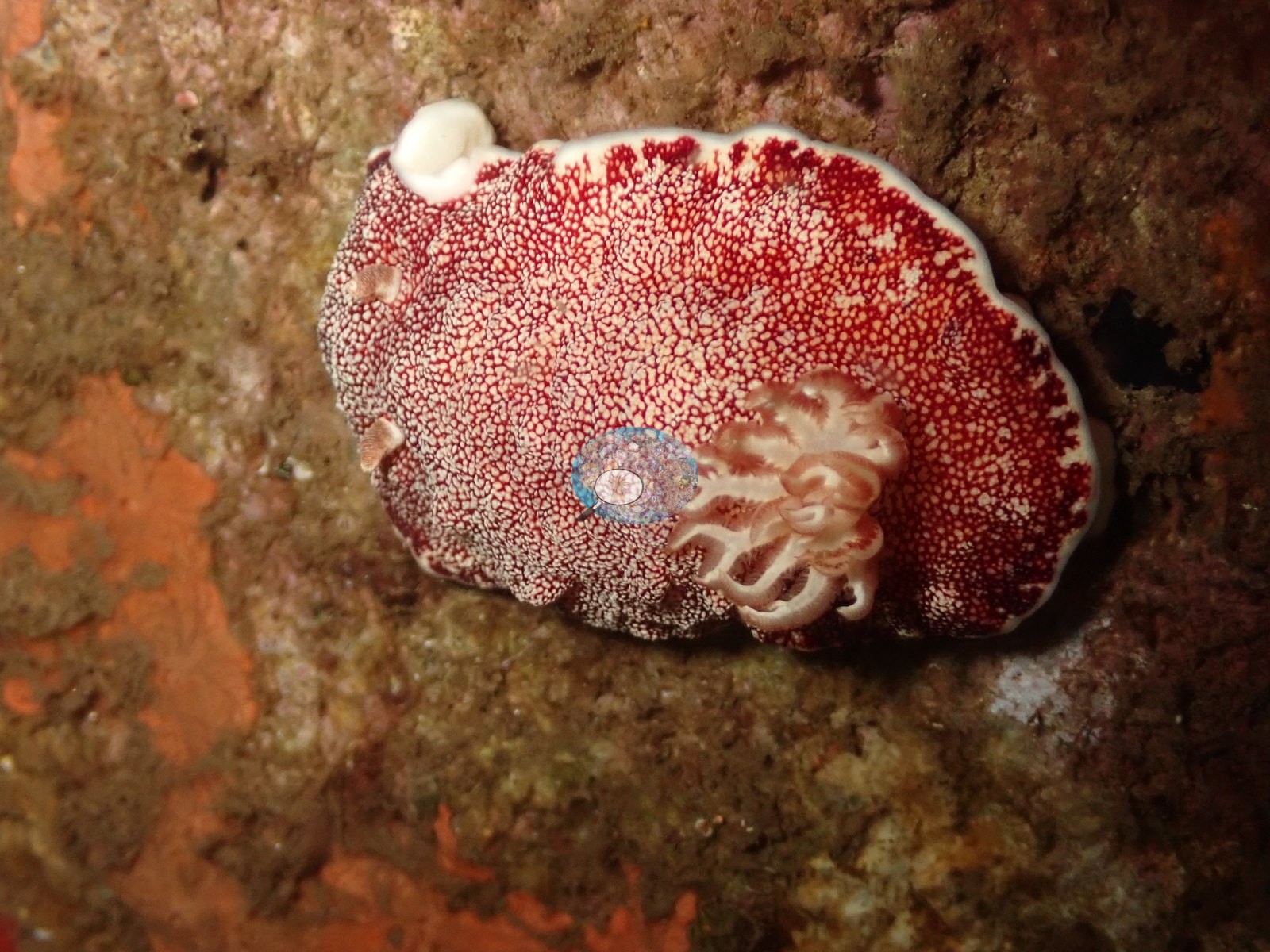
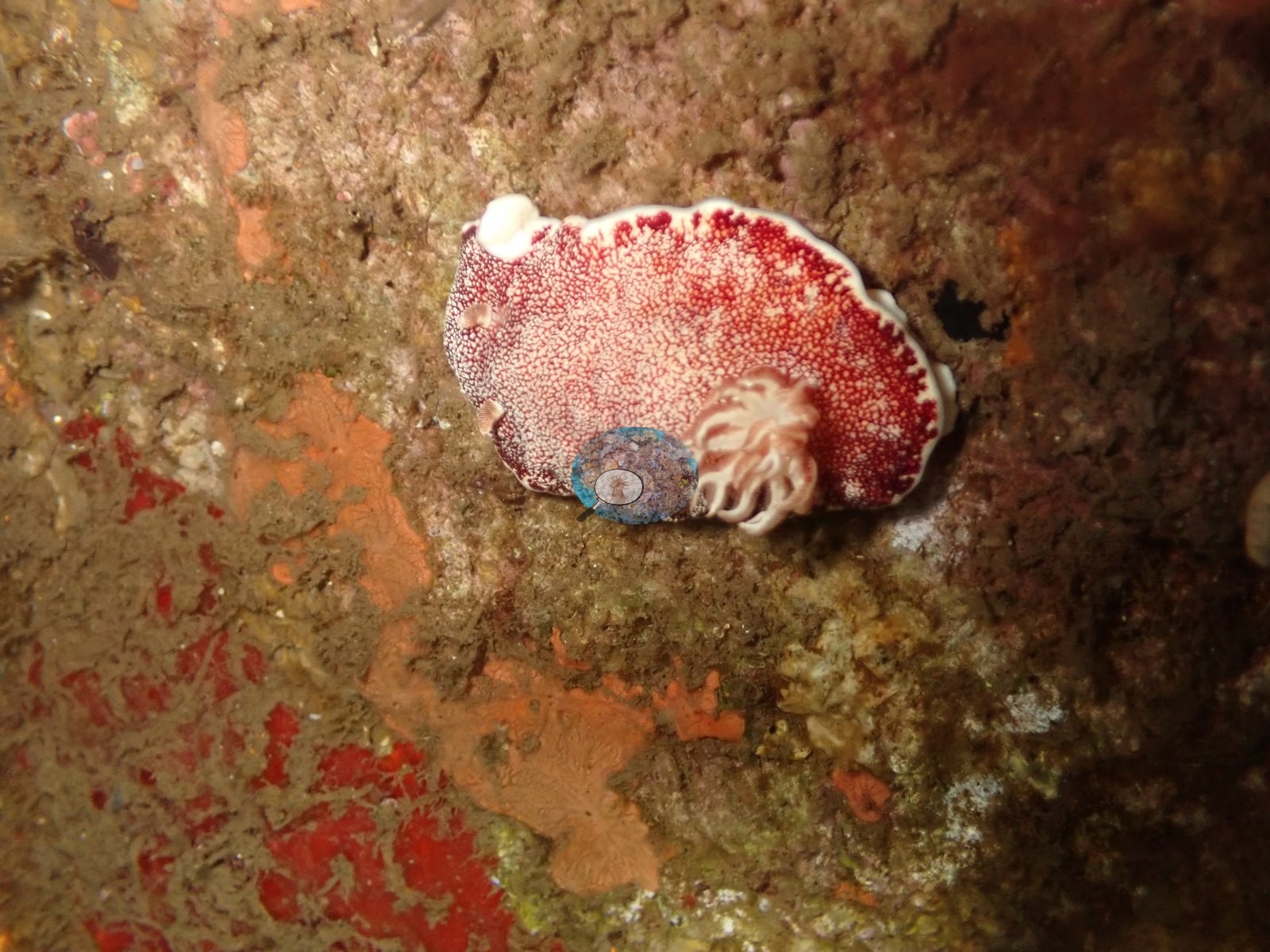
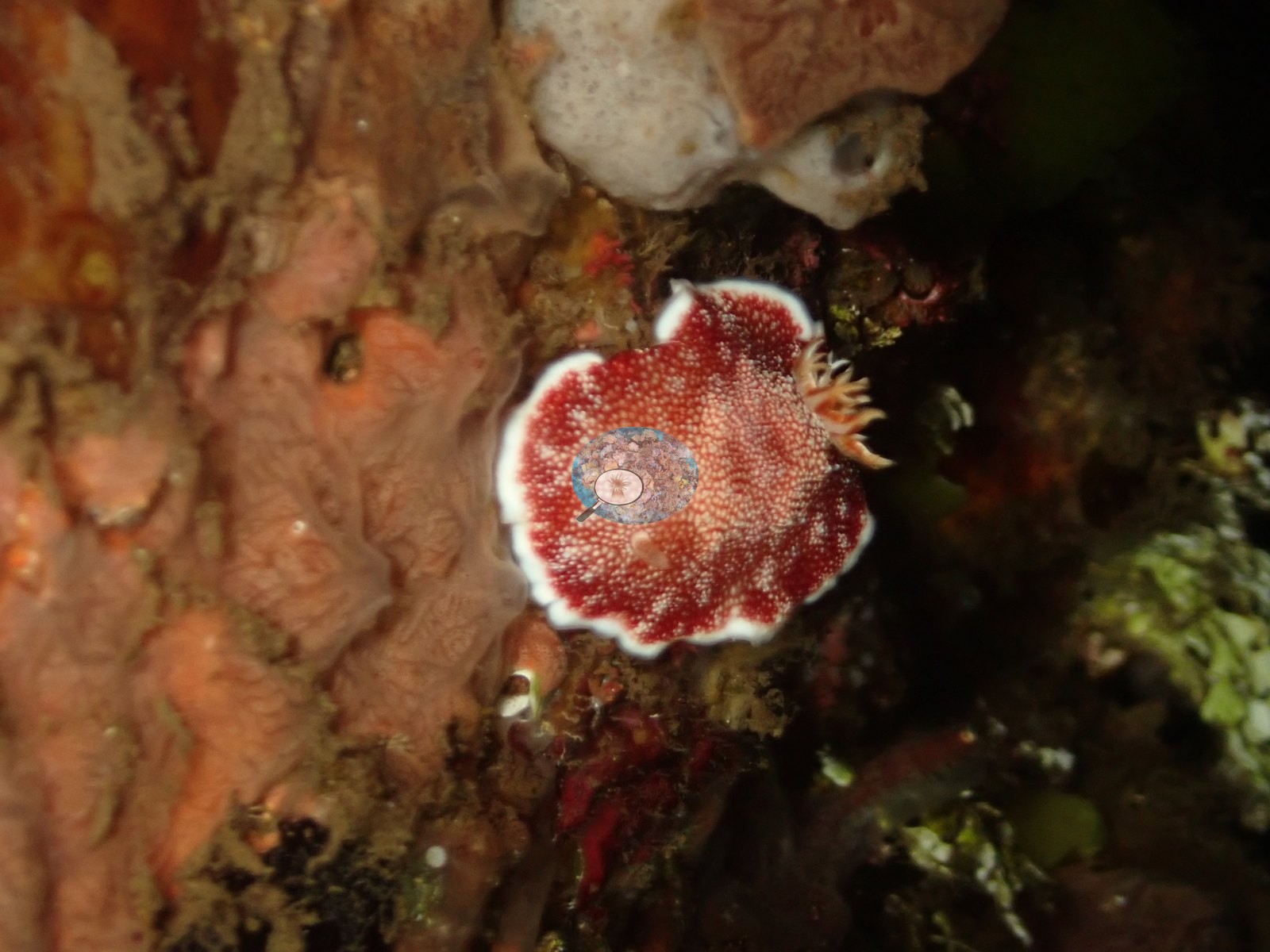
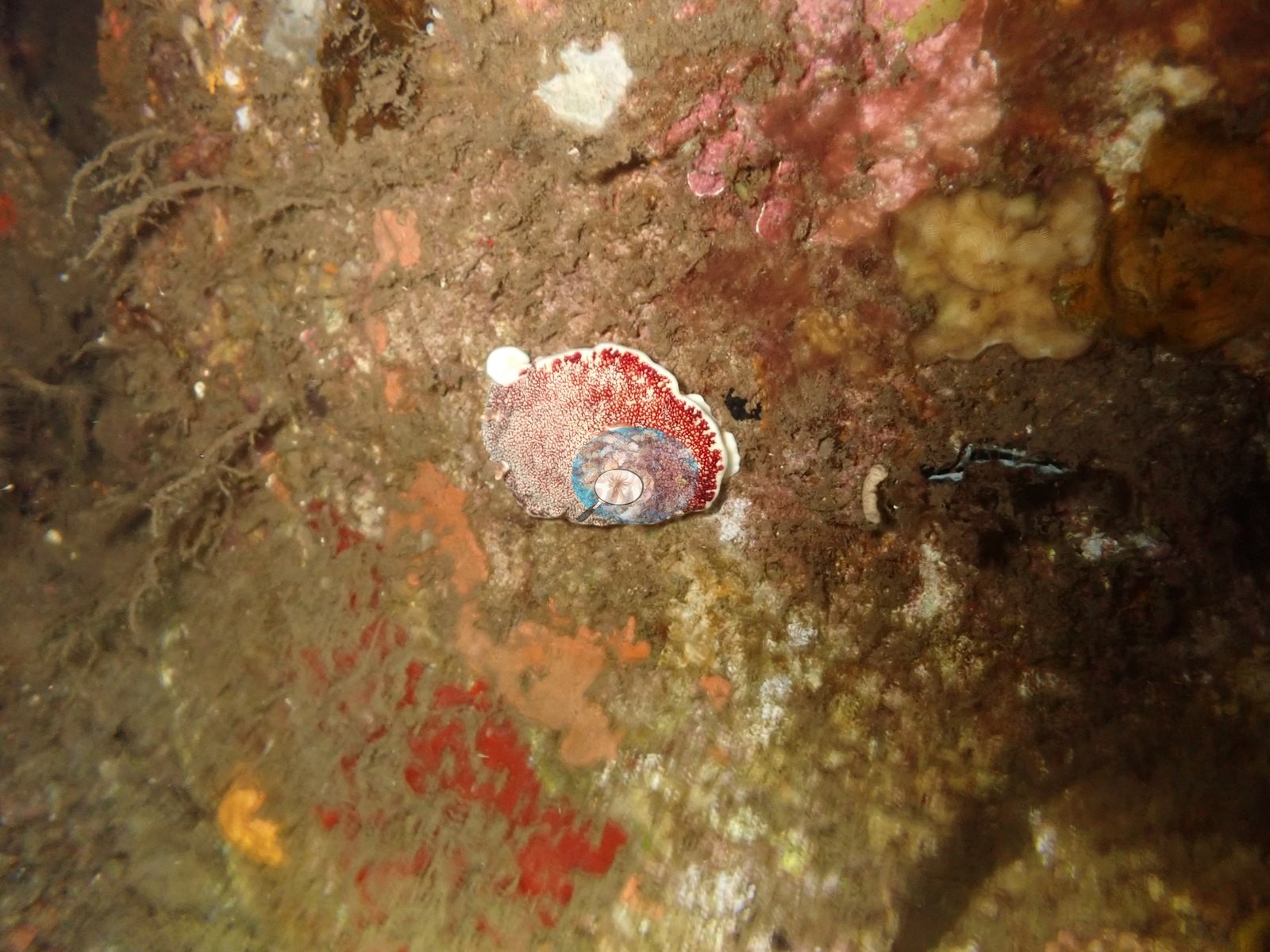
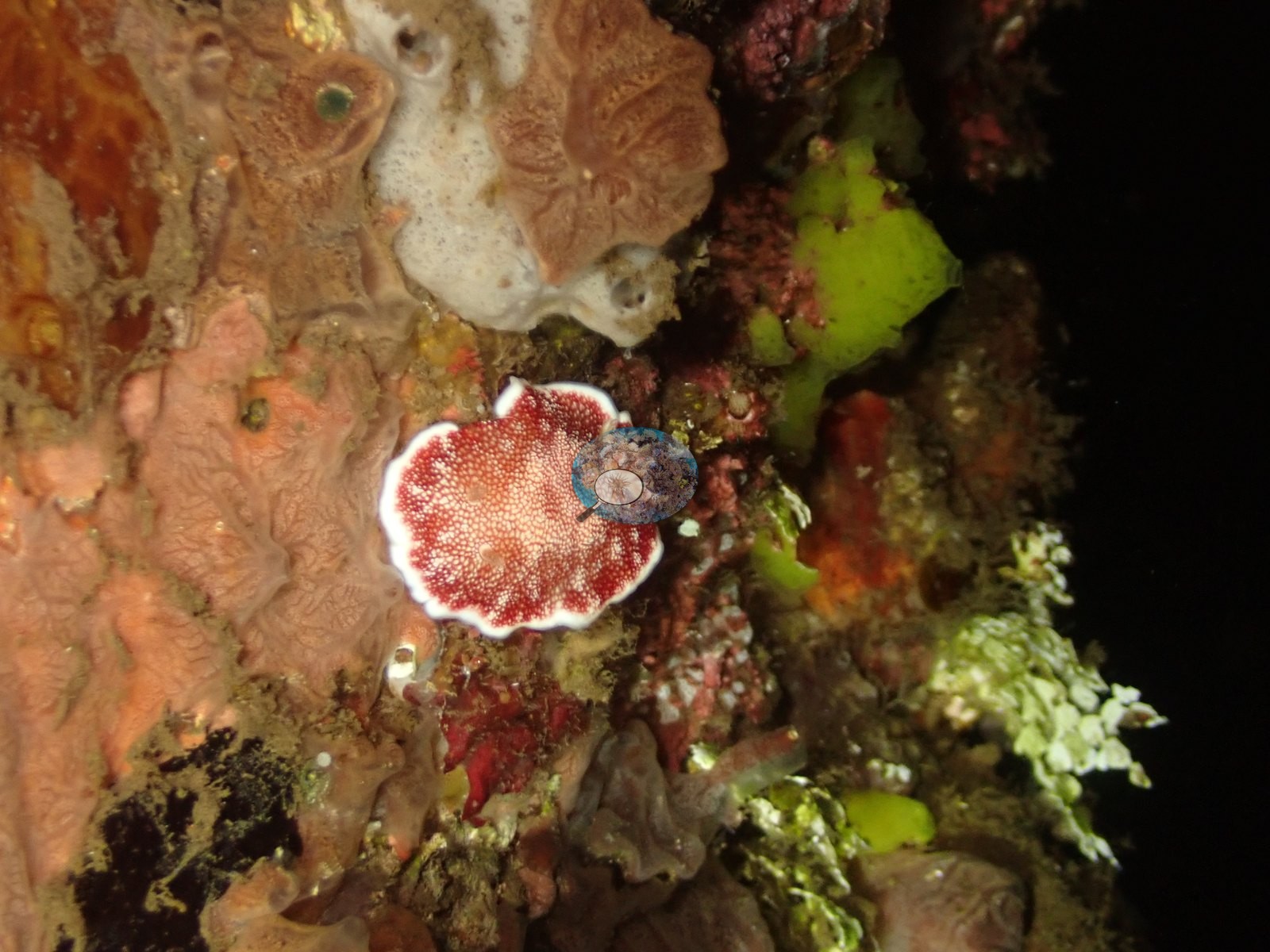
Fauna carries the dive, consistent with the log note. Red-and-white nudibranchs with an exposed branchial plume, consistent with Chromodoris/Rostanga-type, appear in at least four frames; a pale aeolid nudibranch with translucent cerata appears once (e.g., Image 1, Image 21, Image 25, Image 43, Image 45).
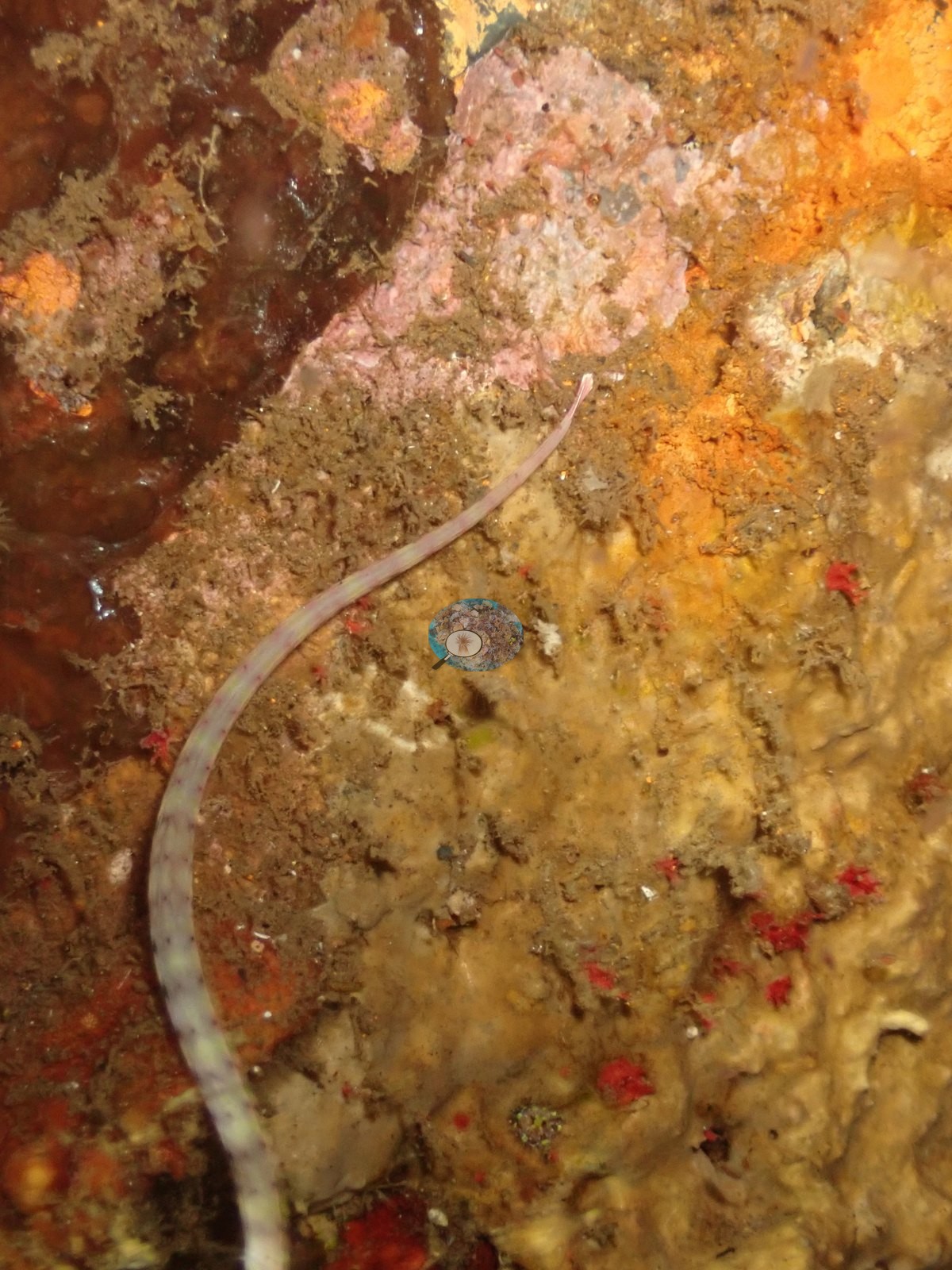
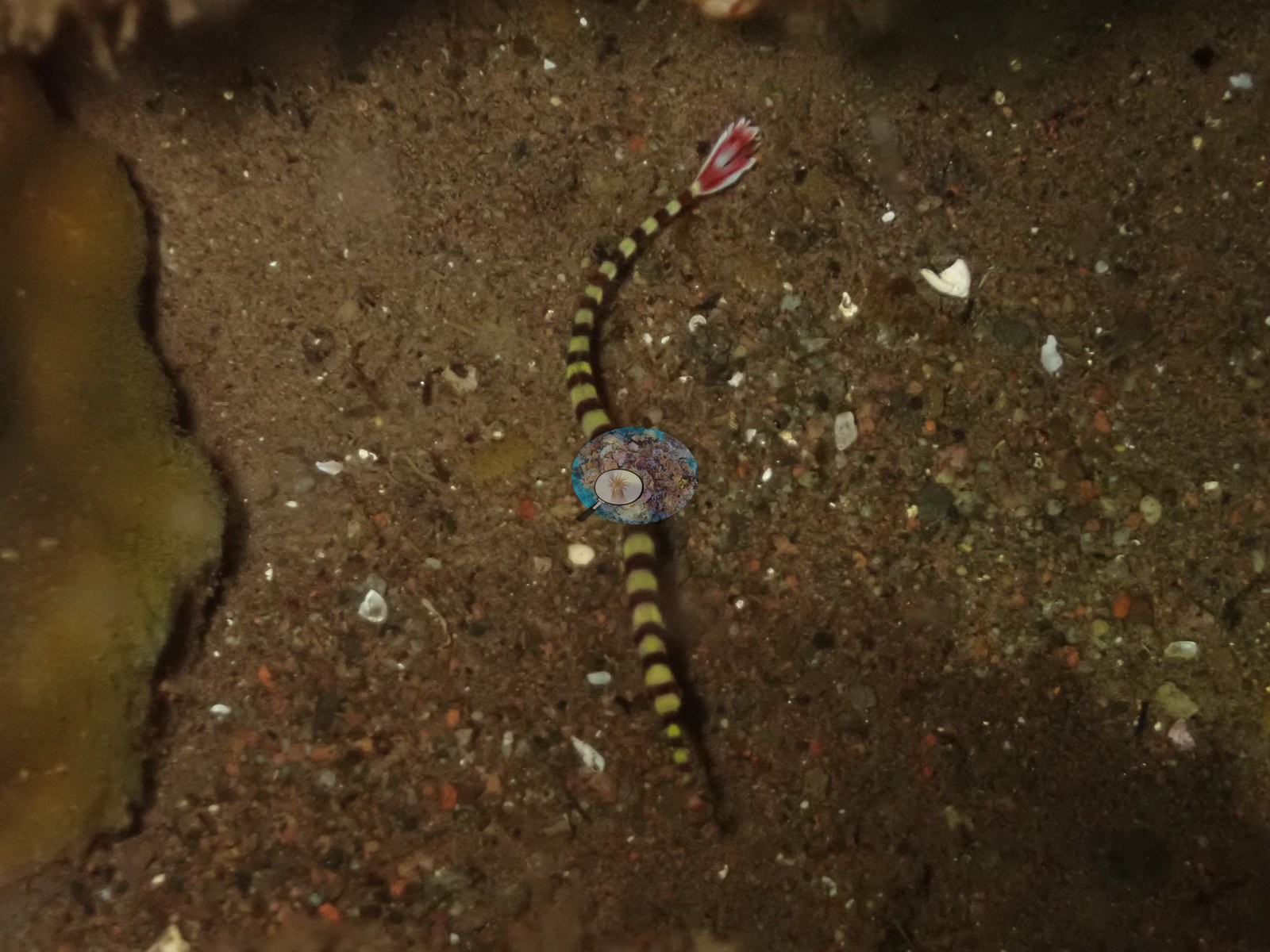
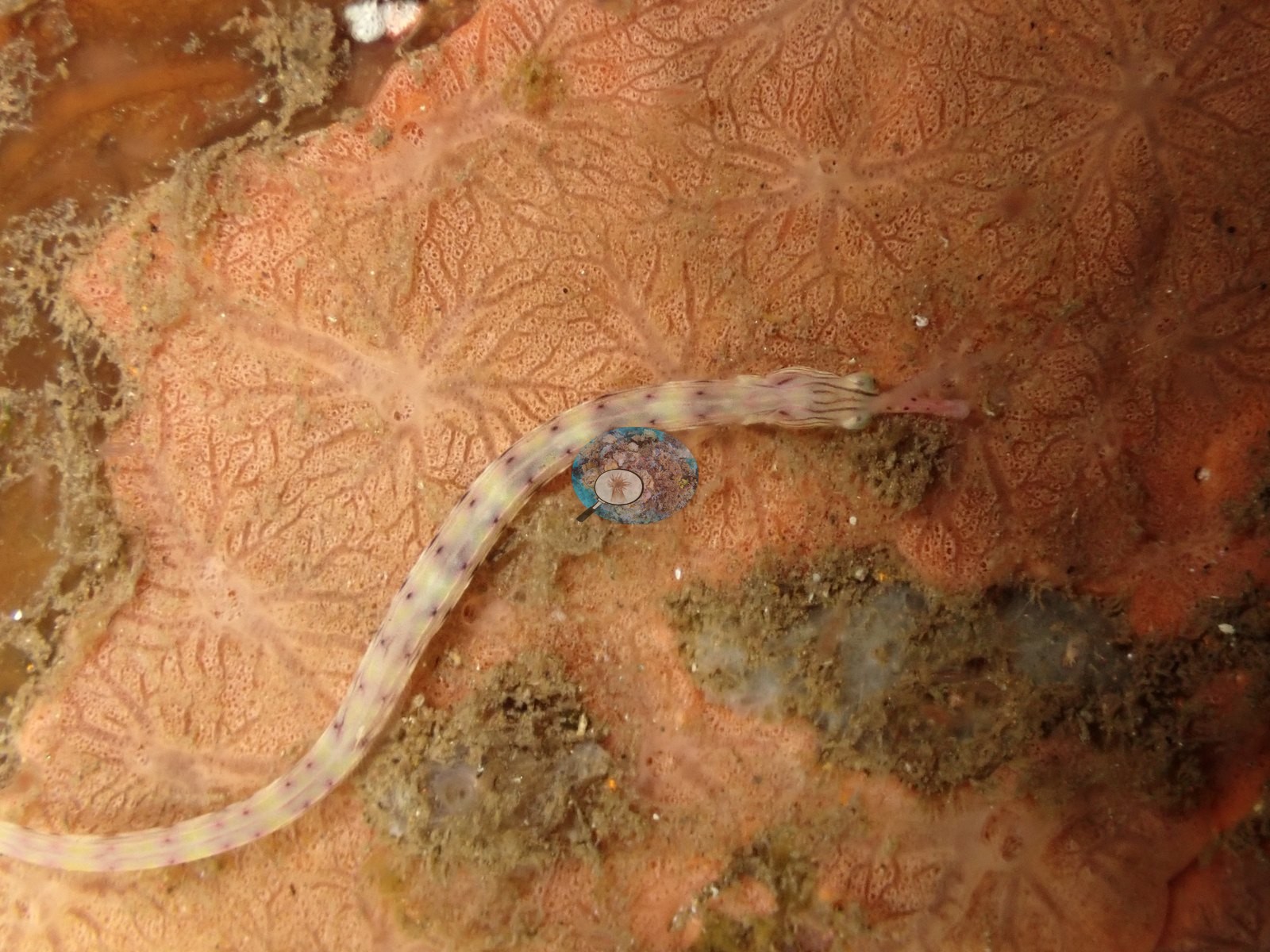
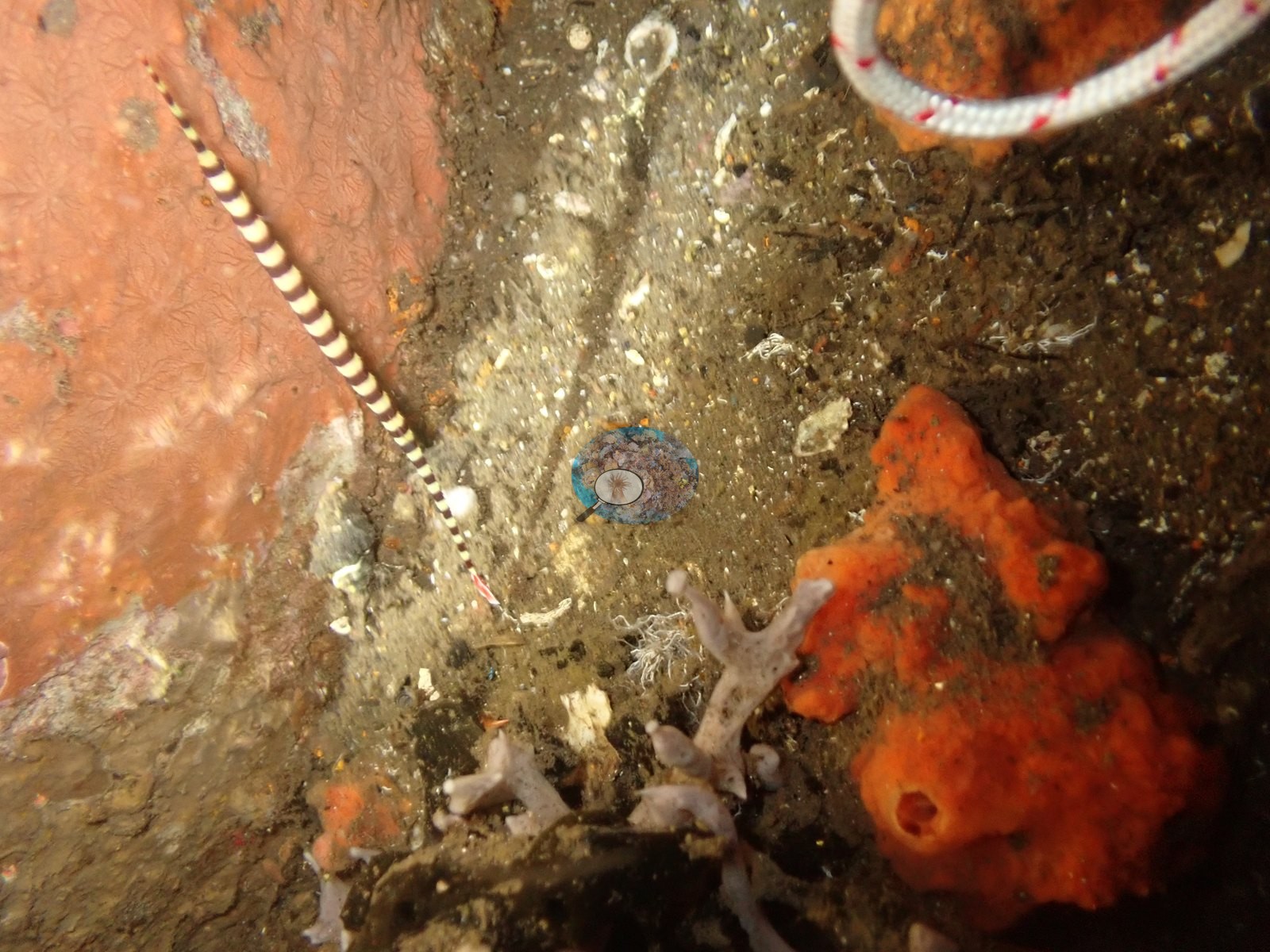
Banded pipefish, pale with dark banding, cross open sand or coral pavement in at least six frames — possibly the same individual re-encountered along the pilings (e.g., Image 4, Image 7, Image 12, Image 17, Image 19, Image 26, Image 27, Image 37).
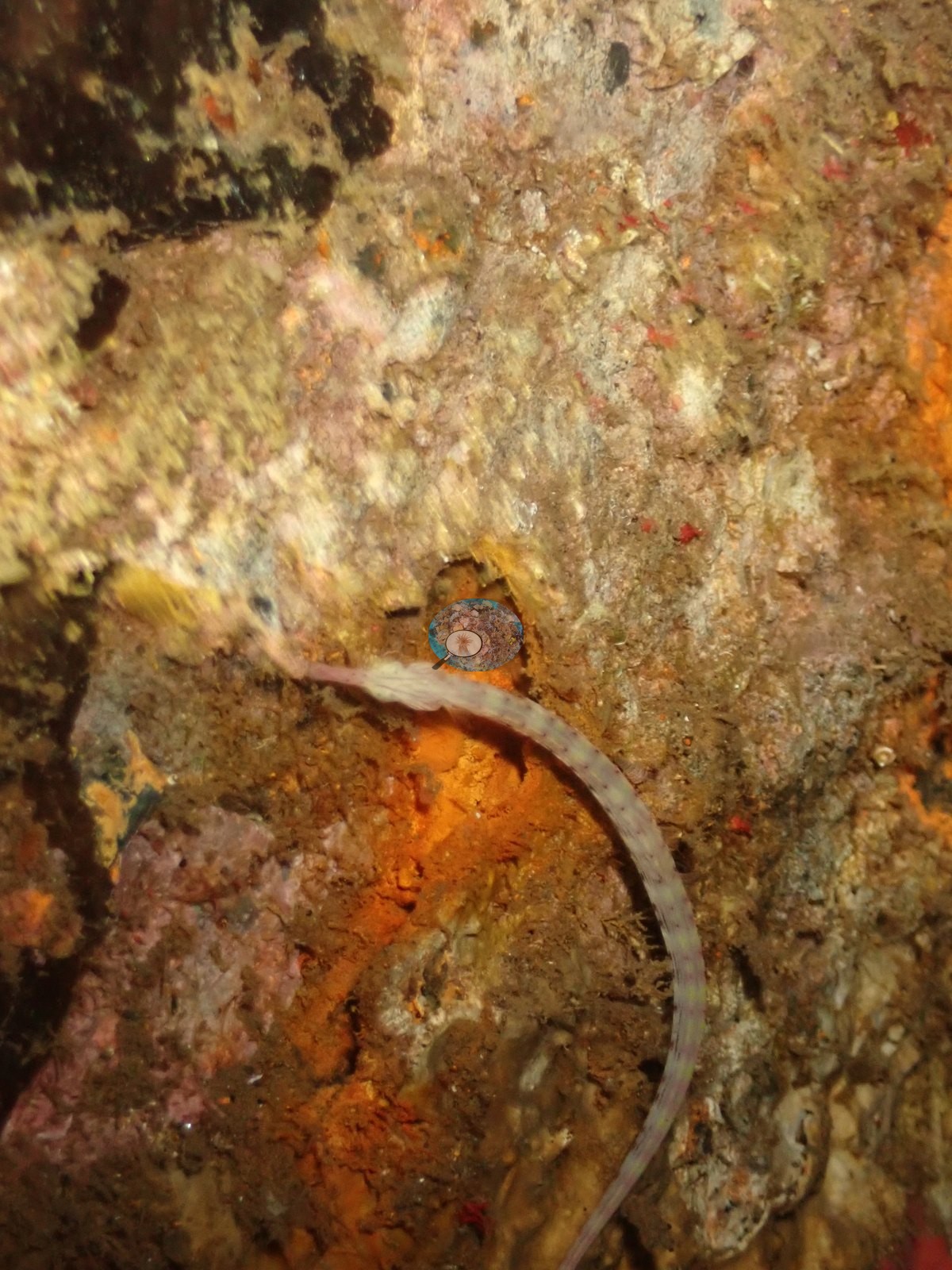
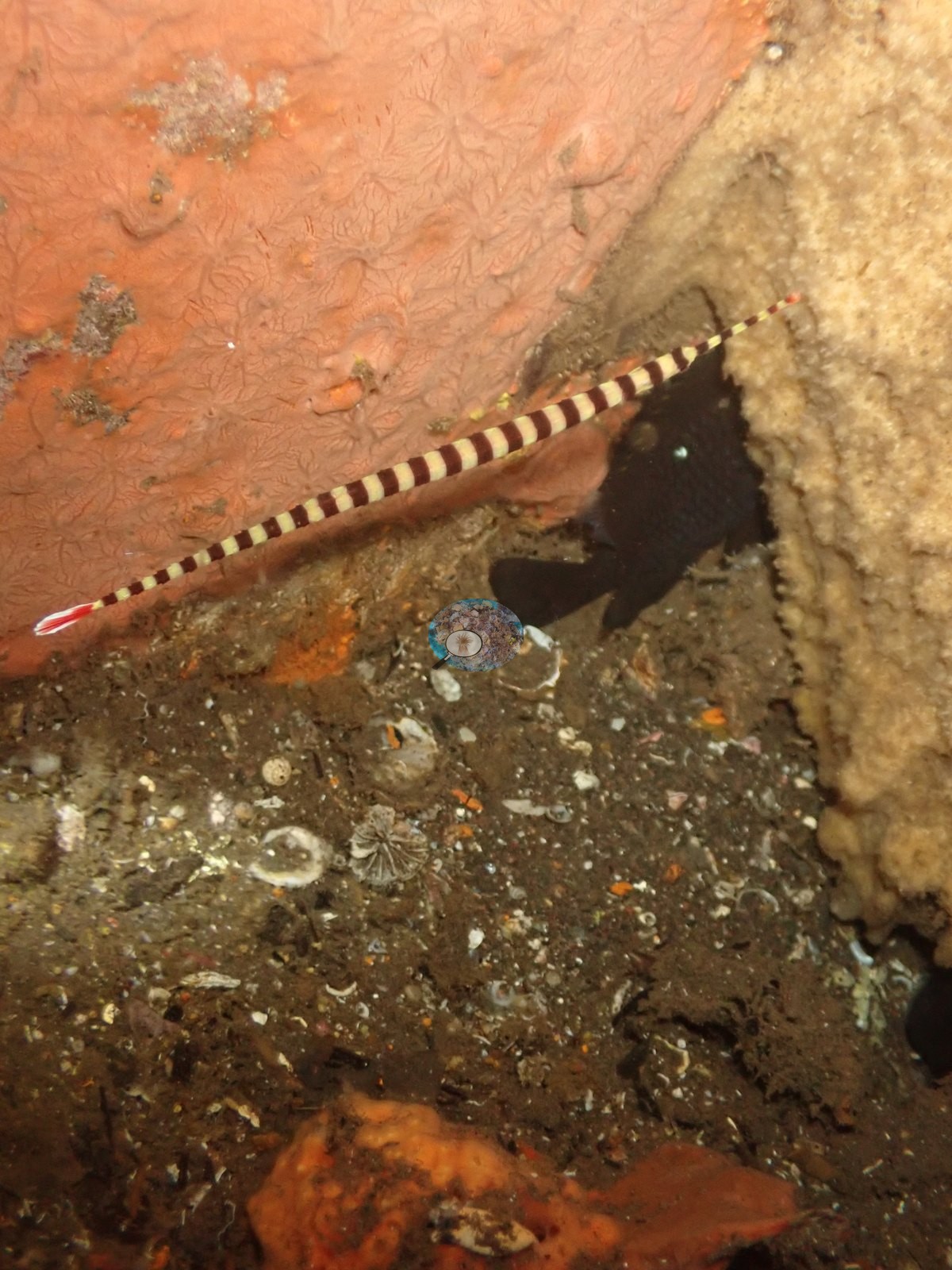
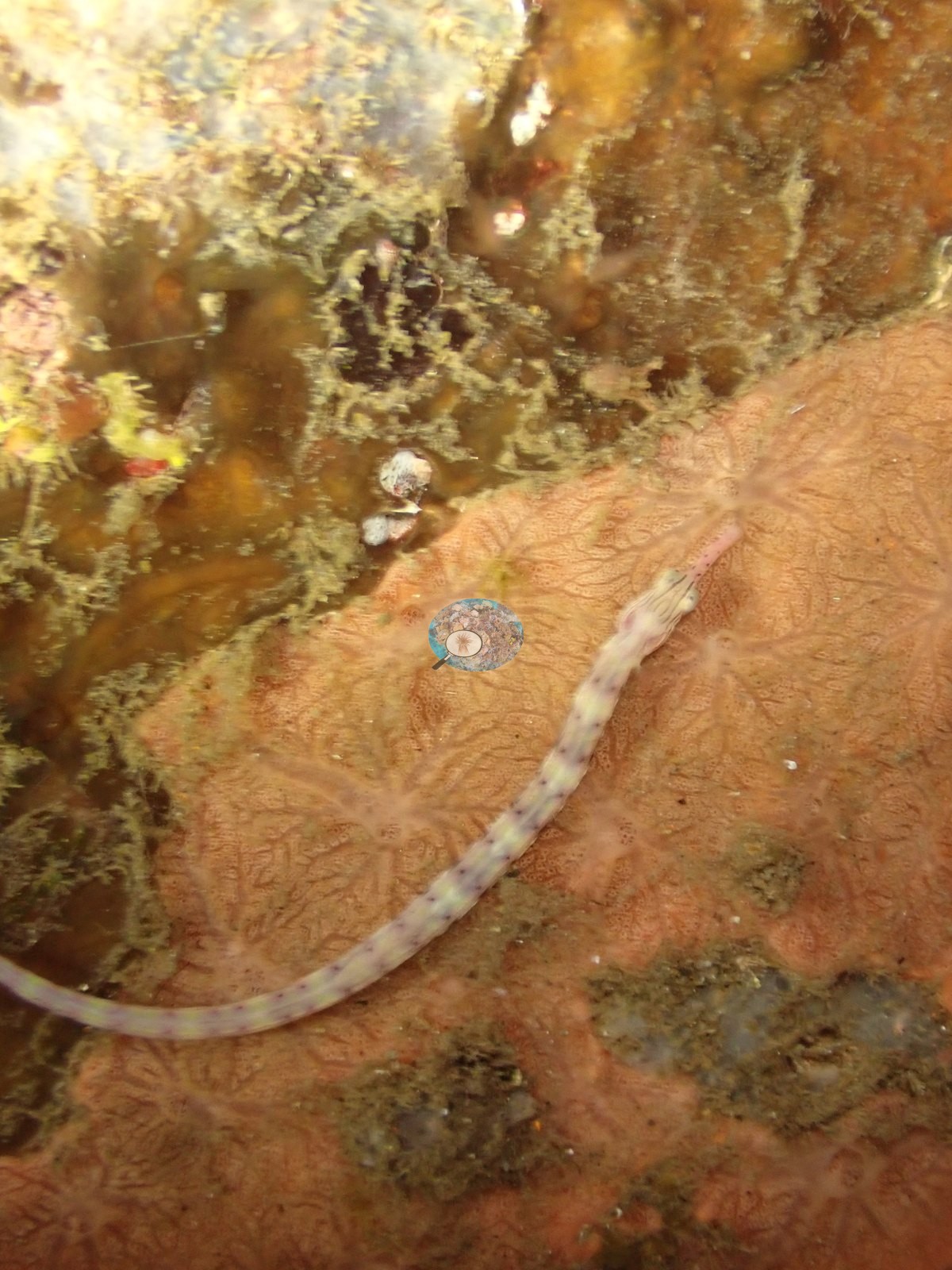
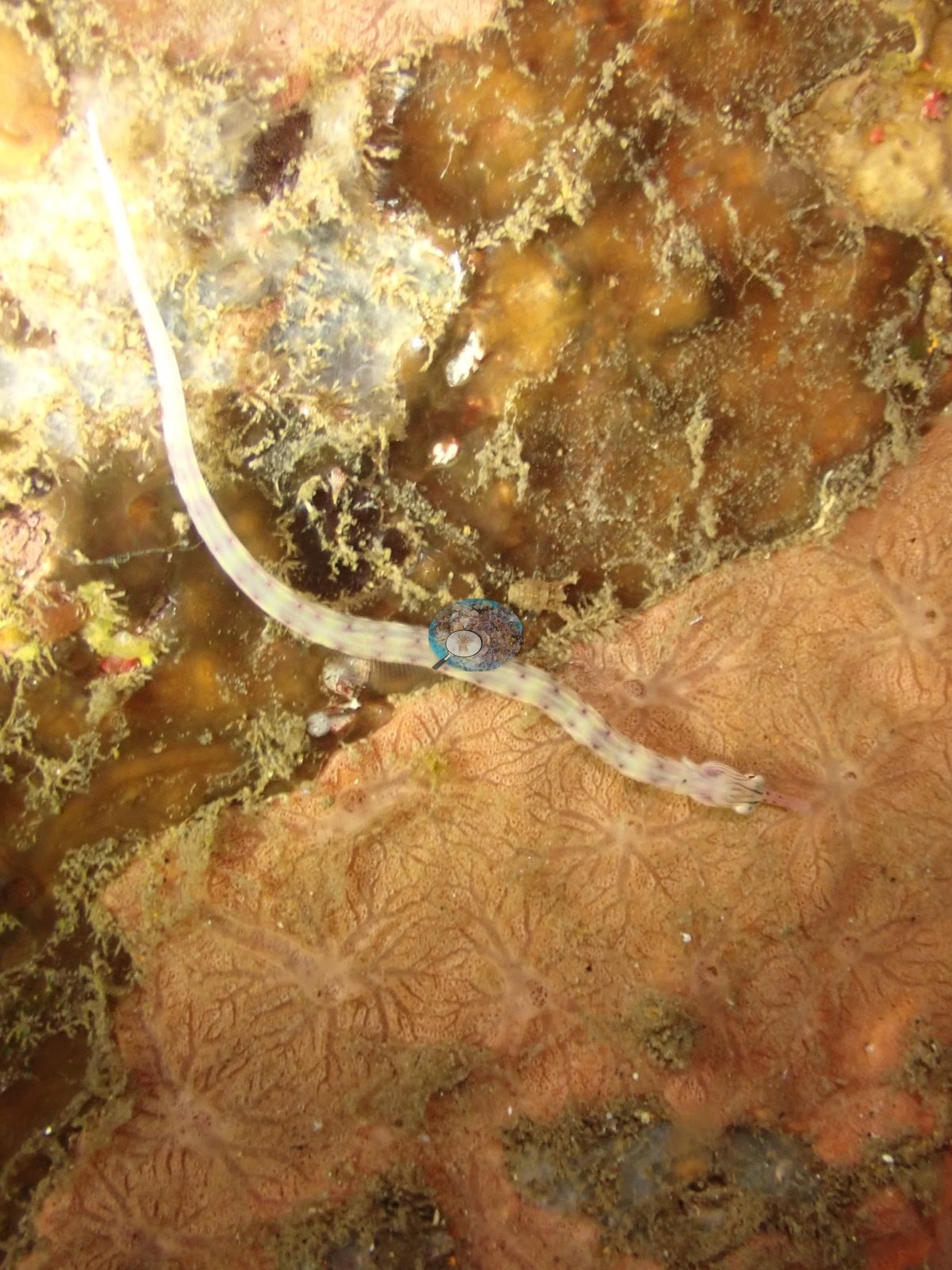
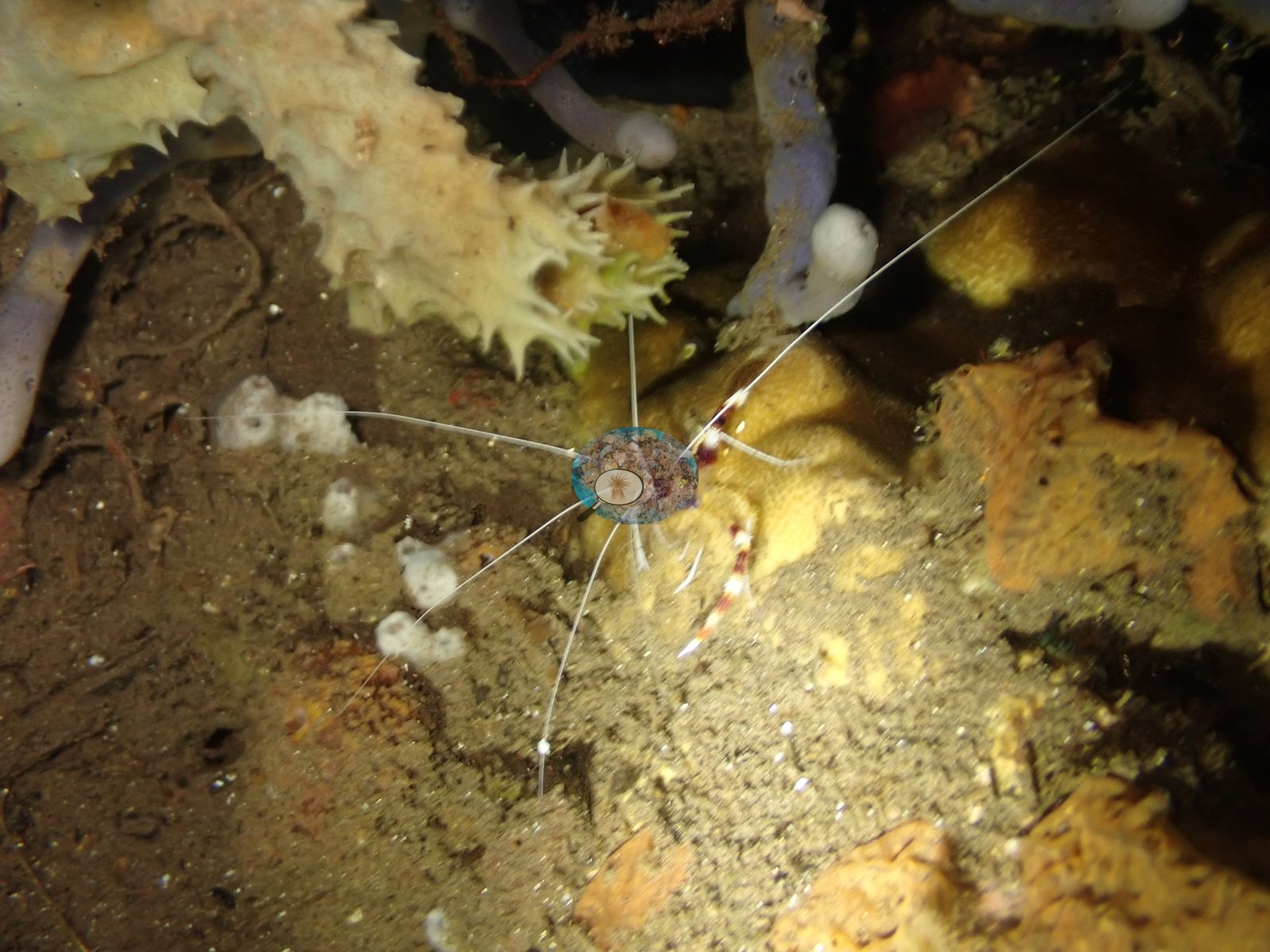
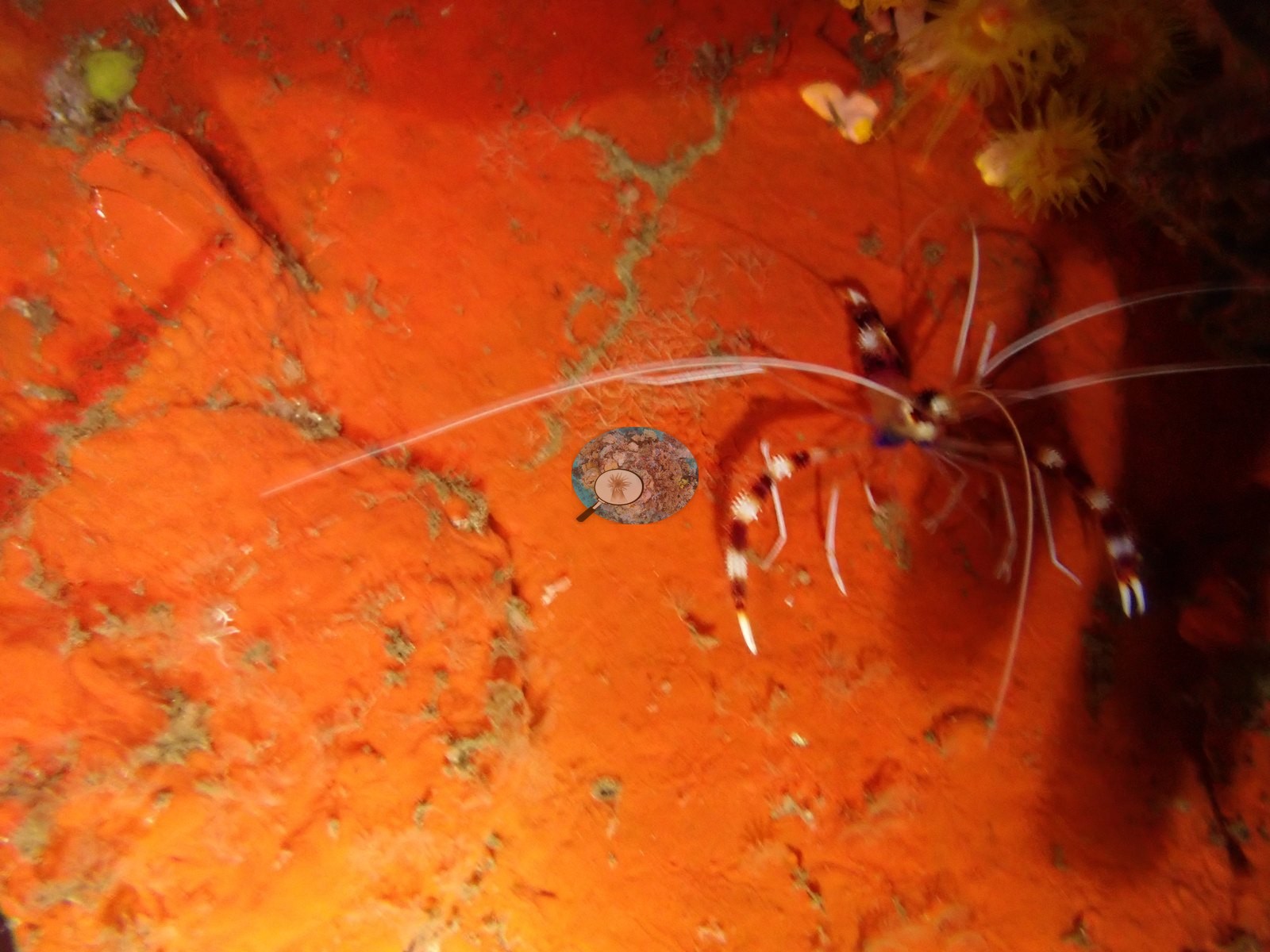
A white-bodied shrimp with long white antennae stands on the sediment (e.g., Image 10), and a red-and-white banded shrimp sits on orange sponge (e.g., Image 29).
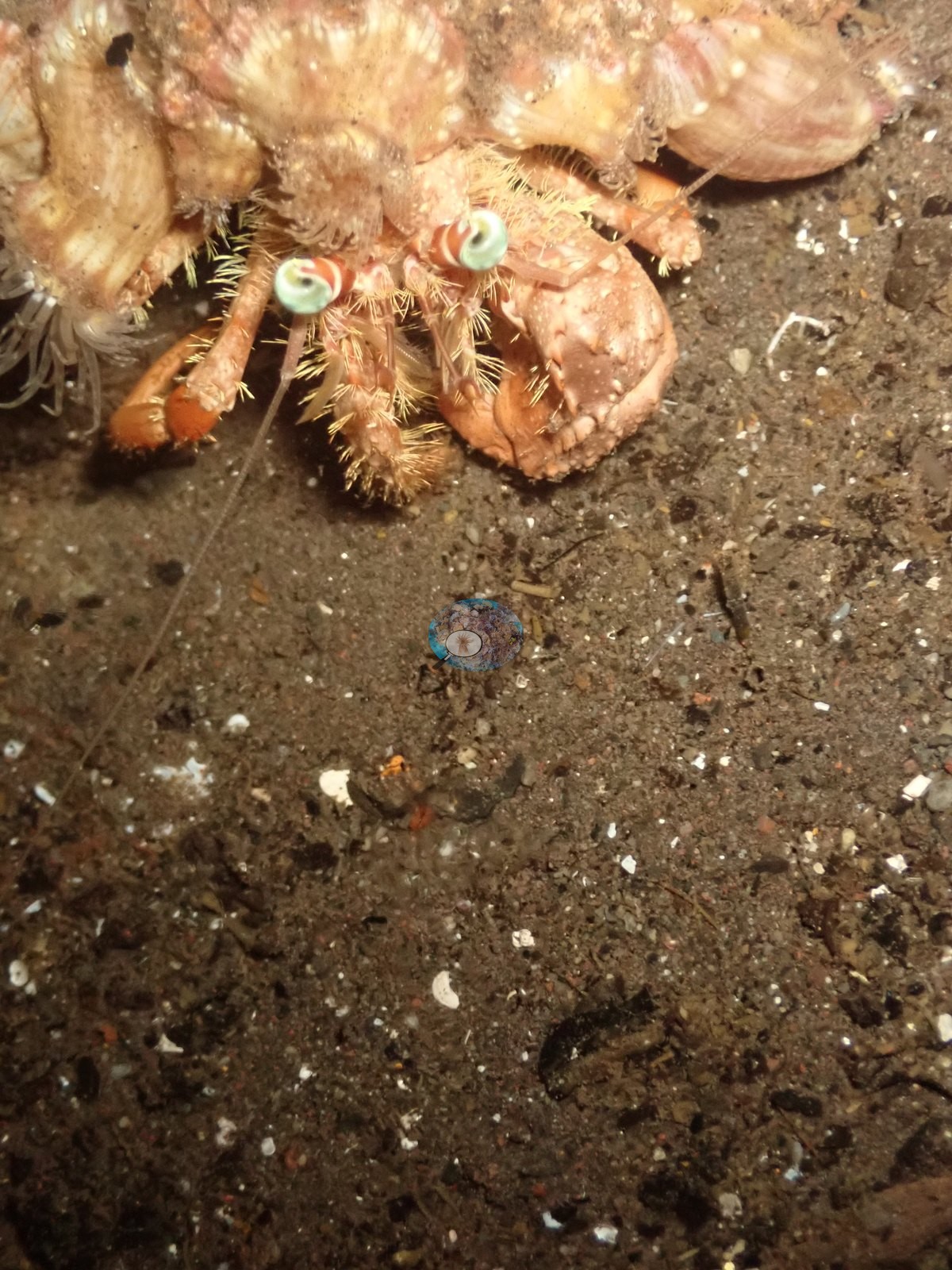
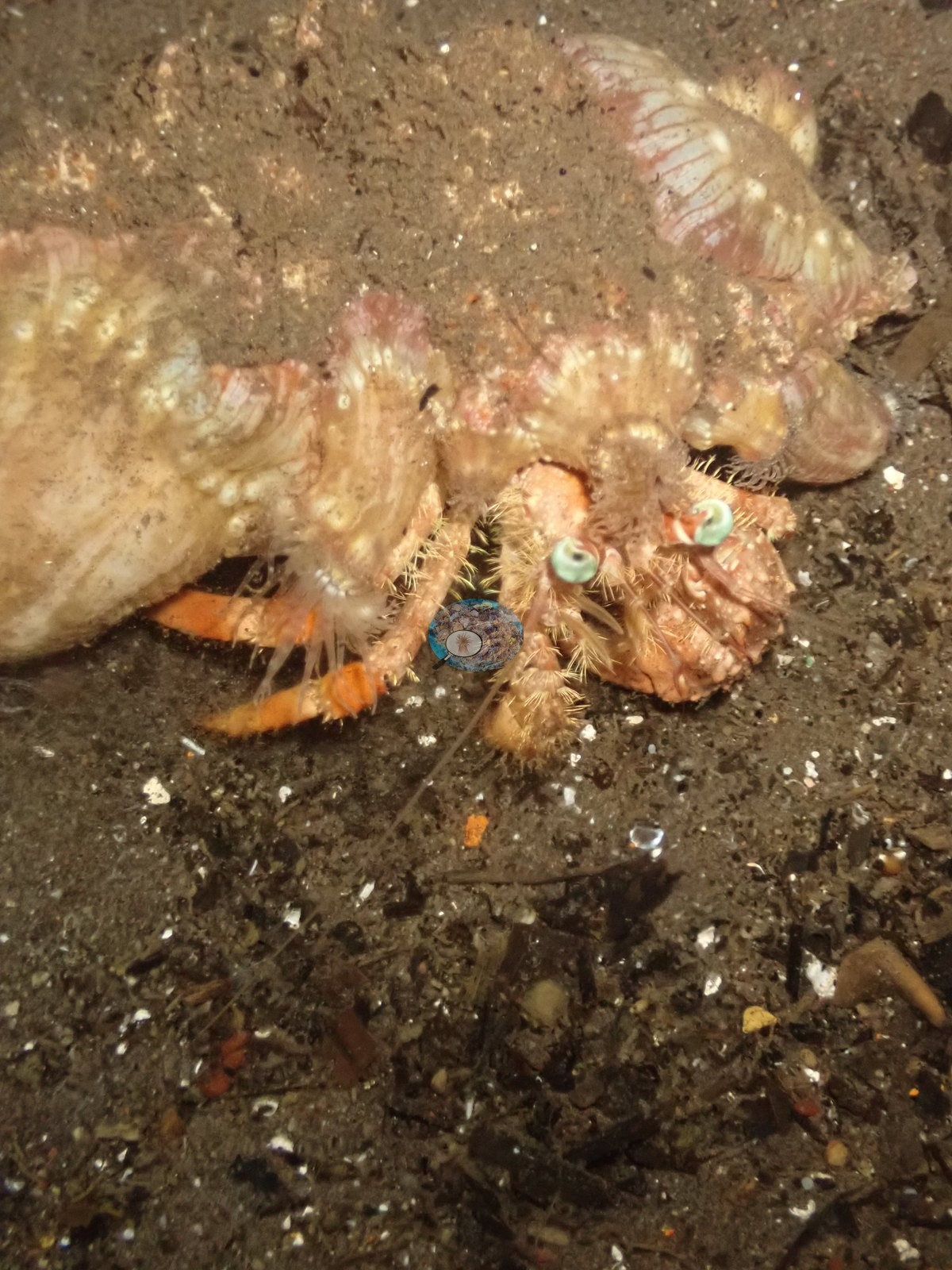
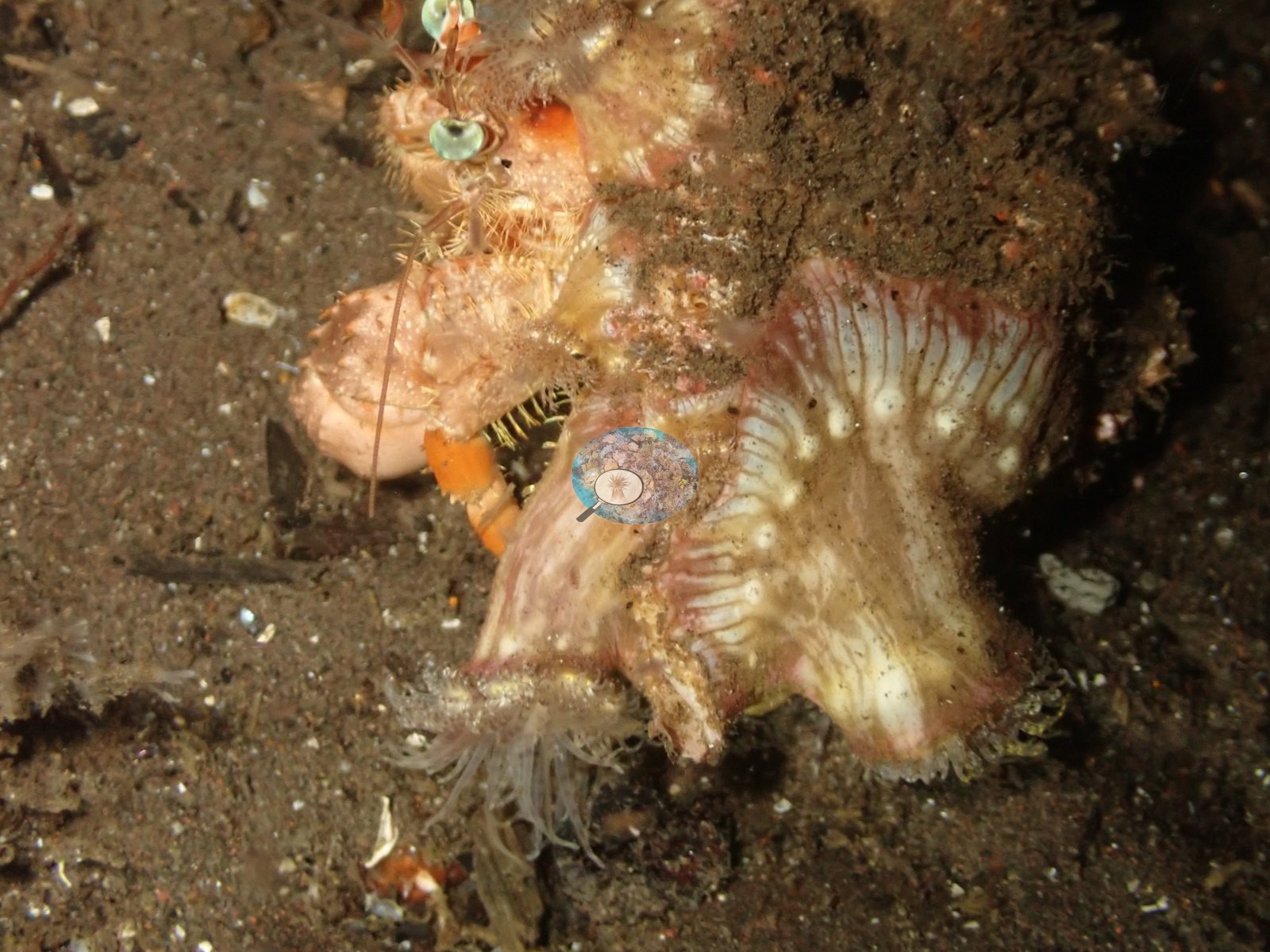
A hairy, orange-clawed decapod with turquoise eyestalks — consistent with a hermit crab or squat lobster rather than a crab proper — sits against shell/rubble in three frames (e.g., Image 5, Image 9, Image 31).
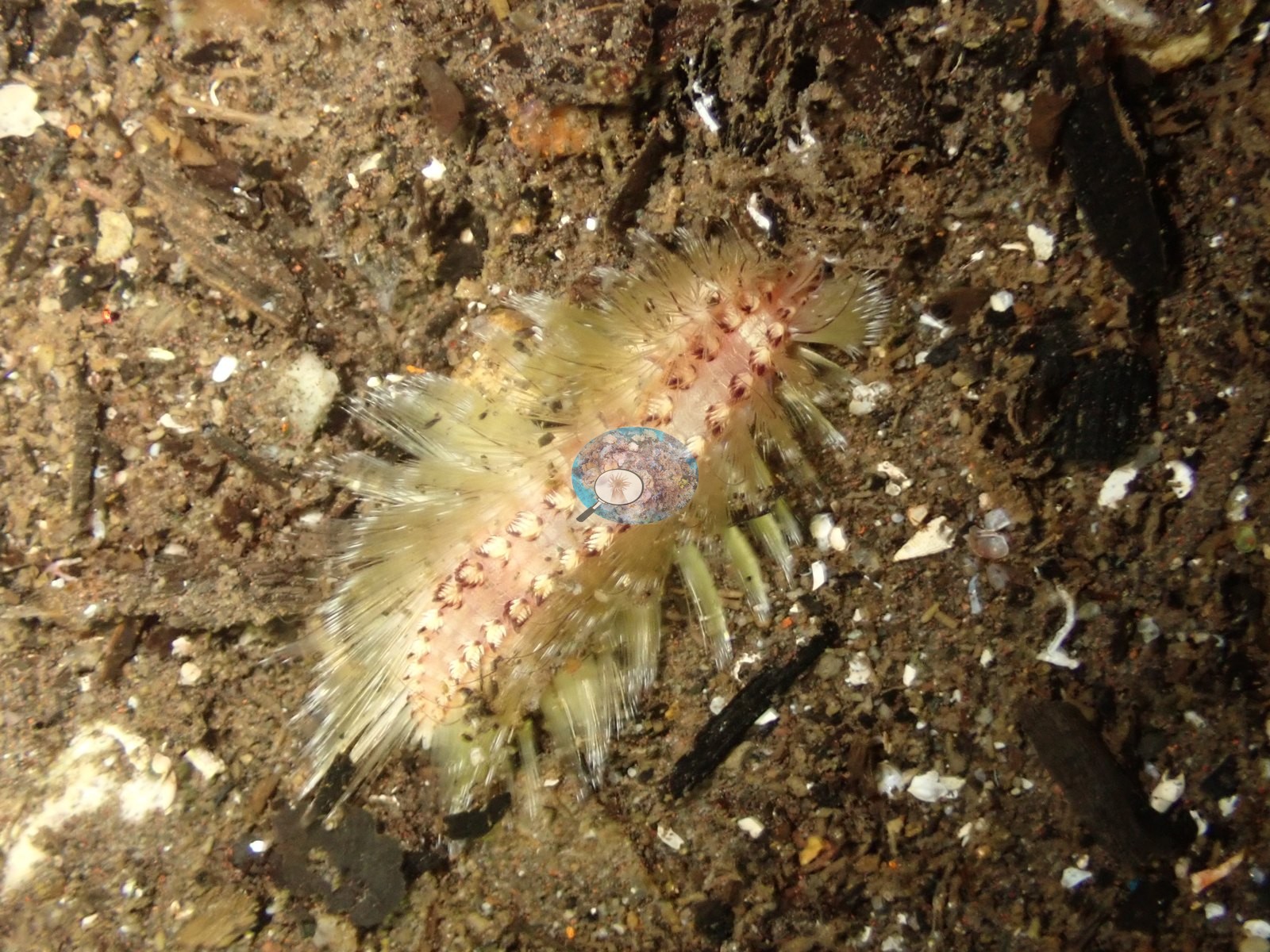
A spiny bristleworm crosses open sand in one frame (e.g., Image 40).
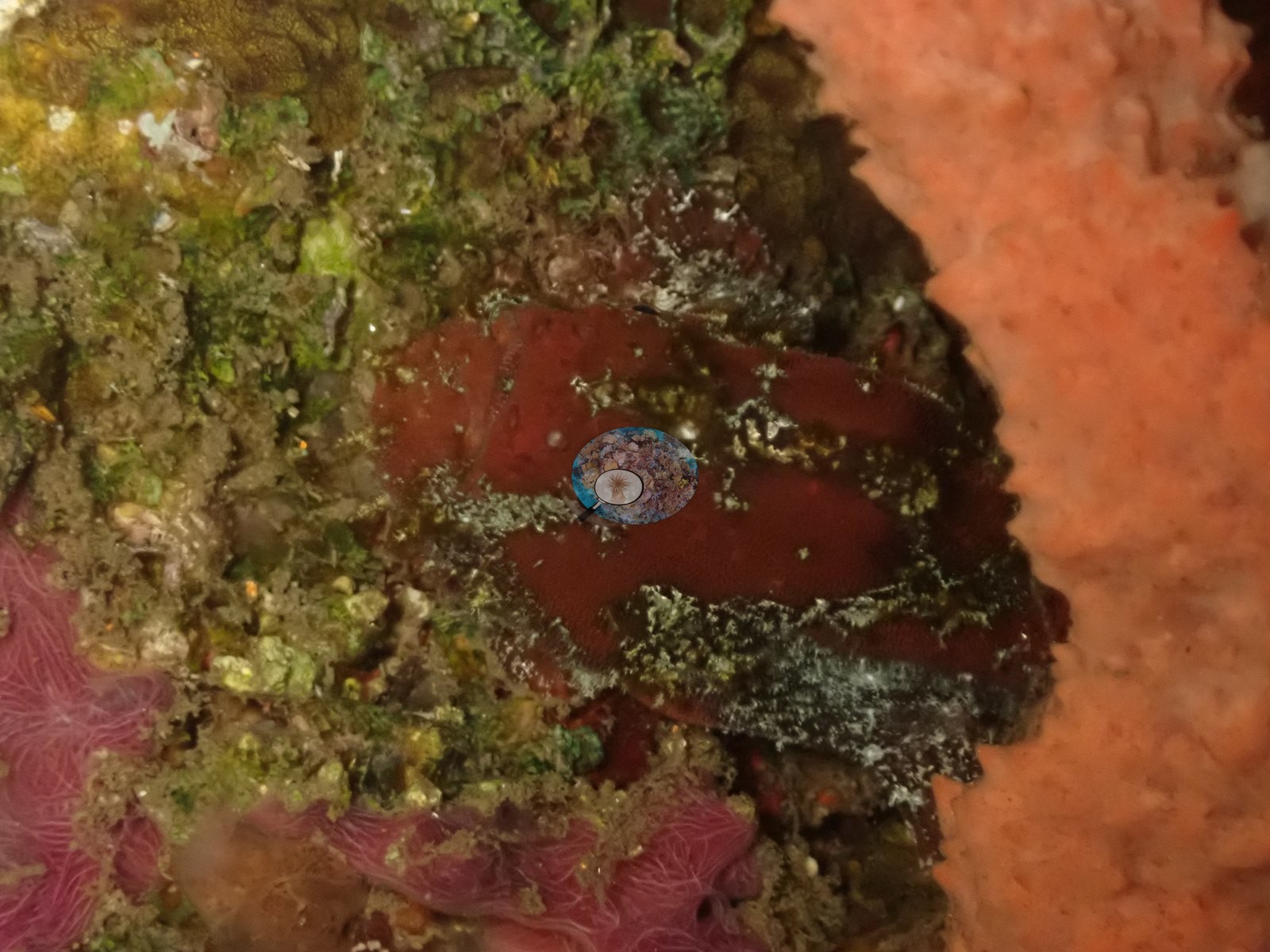
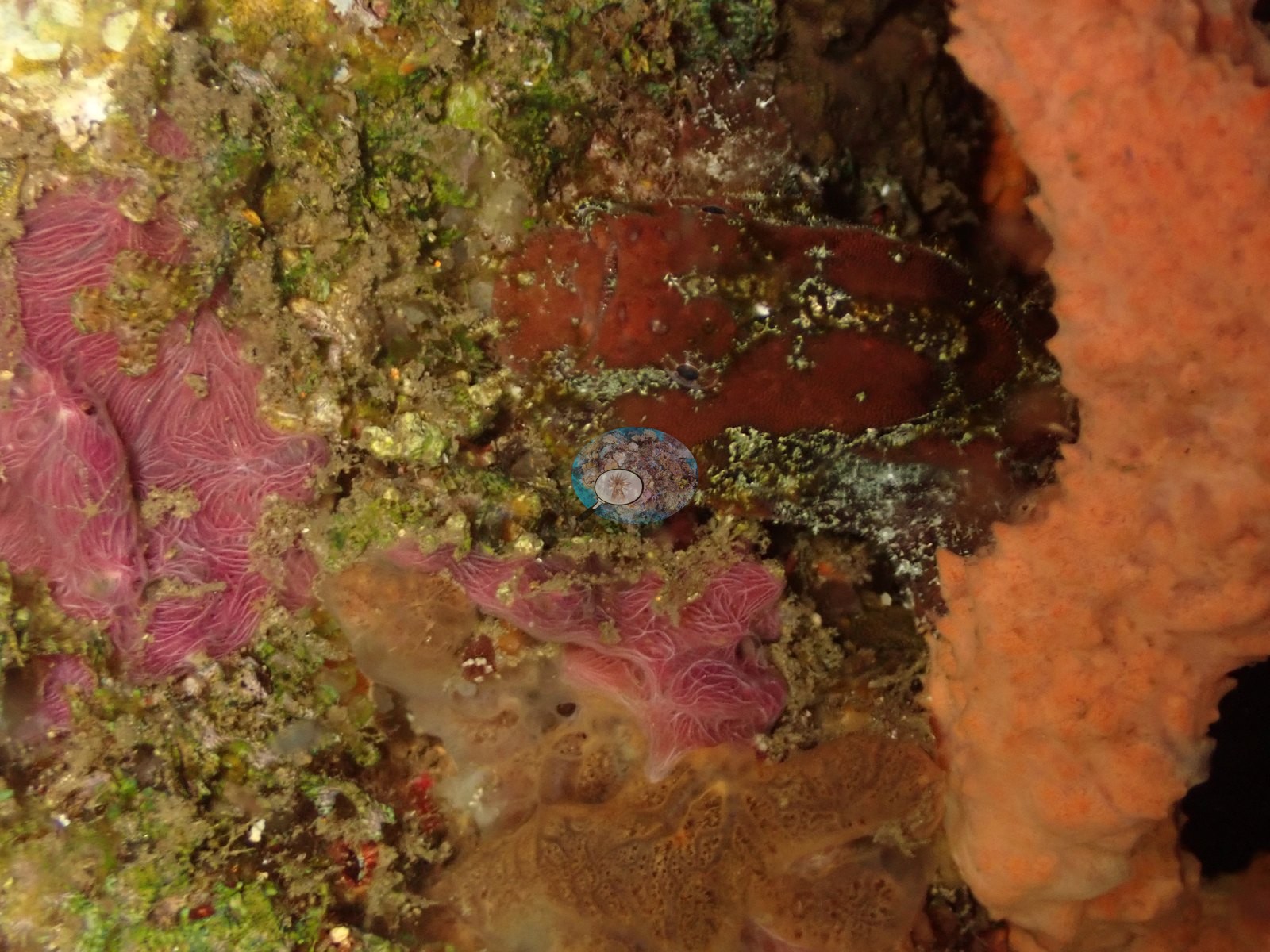
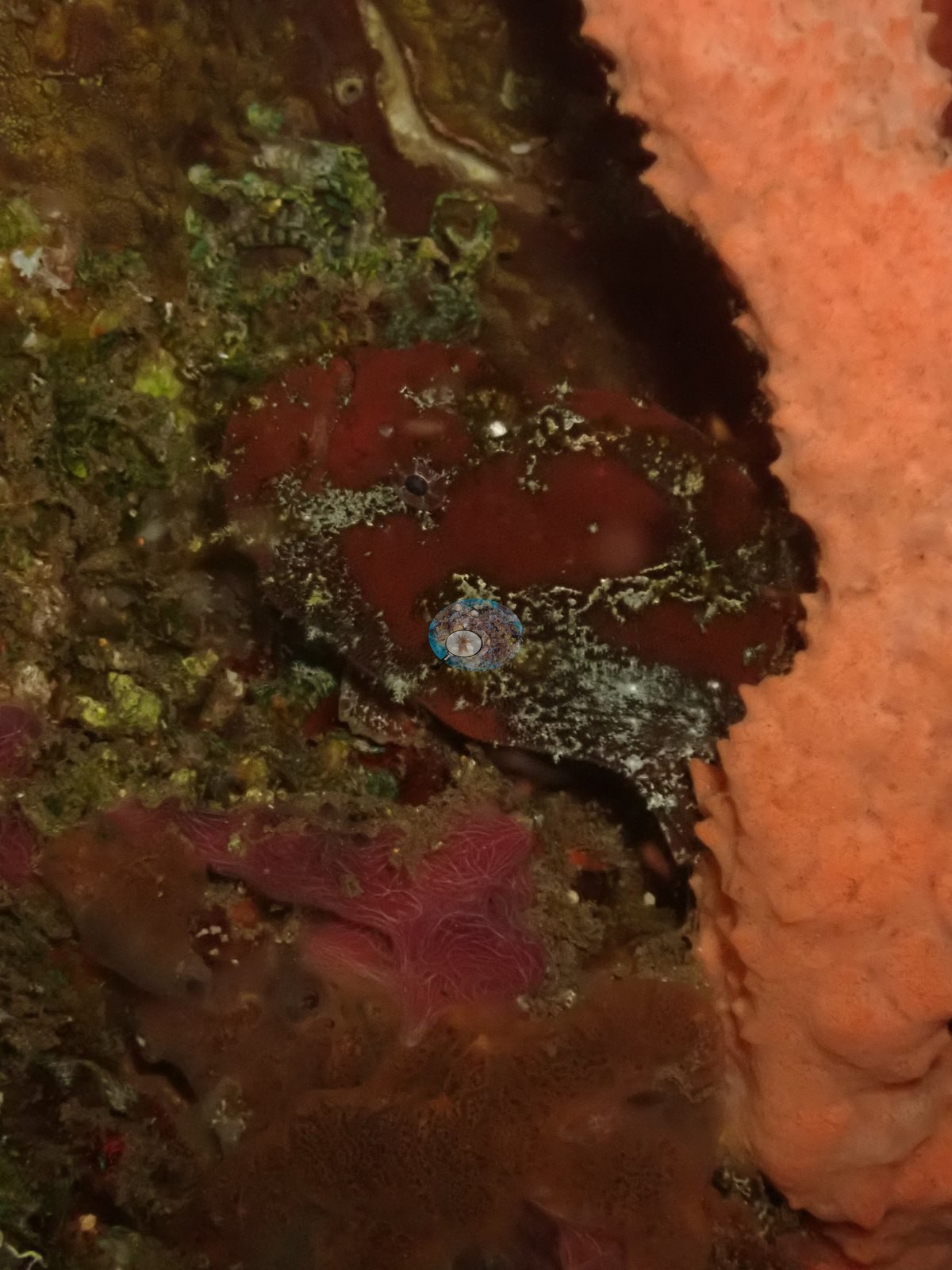
A frogfish (Anderson's log) sat beside an orange sponge in a crevice (e.g., Image 2, Image 3, Image 13); the log note's ghost pipefish was not confidently resolved in these 40 surviving frames and is not claimed.
Comparisons with other data
We found no other surveys at this site as of 2026. If you would like to share yours, please email us.
Other notes
Anderson's field note: “frogfish, ghost pipefish, shrimp, nudibranch, under a pier”
Data & links
All images from Coral Reef Diagnostics.
© Coral Reef Diagnostics.