
Indonesia - Halmahera: Cimitero
Part of the regional summaries: Indonesia - Halmahera and Indonesia - Maluku
More info
North Maluku (NOAA CRW virtual station)Cimitero (the Cemetery night dive) lives up to its name: the substrate is old, long-consolidated coral rubble armored in crustose coralline algae, with live coral only as isolated small colonies. The dive's real subject is nocturnal fauna - at least two ornate ghost pipefish, six distinct nudibranch forms, hunting eels, and sexy shrimp in a tube anemone. No coral-cover figure applies to this night macro dive.
Cimitero (penyelaman malam Cemetery) sepadan dengan namanya: substratnya berupa pecahan karang tua yang telah lama memadat dan berlapis alga koralin, dengan karang hidup hanya berupa koloni kecil yang terpisah-pisah. Subjek sesungguhnya penyelaman ini adalah fauna nokturnal — sedikitnya dua ekor ikan pipa hantu berhias, enam bentuk nudibranch yang berbeda, belut yang sedang berburu, dan udang seksi pada anemon tabung. Tidak ada angka tutupan karang yang berlaku untuk penyelaman makro malam ini.
Terjemahan ringkasan ini oleh AI; versi bahasa Inggris yang berlaku.
Eight other CRD dive sites within 5 km shown in orange — click a marker to open its page.
41 of these 51 photographs are shown beside the text that discusses them under "Site description" below.
Site description
General benthic features
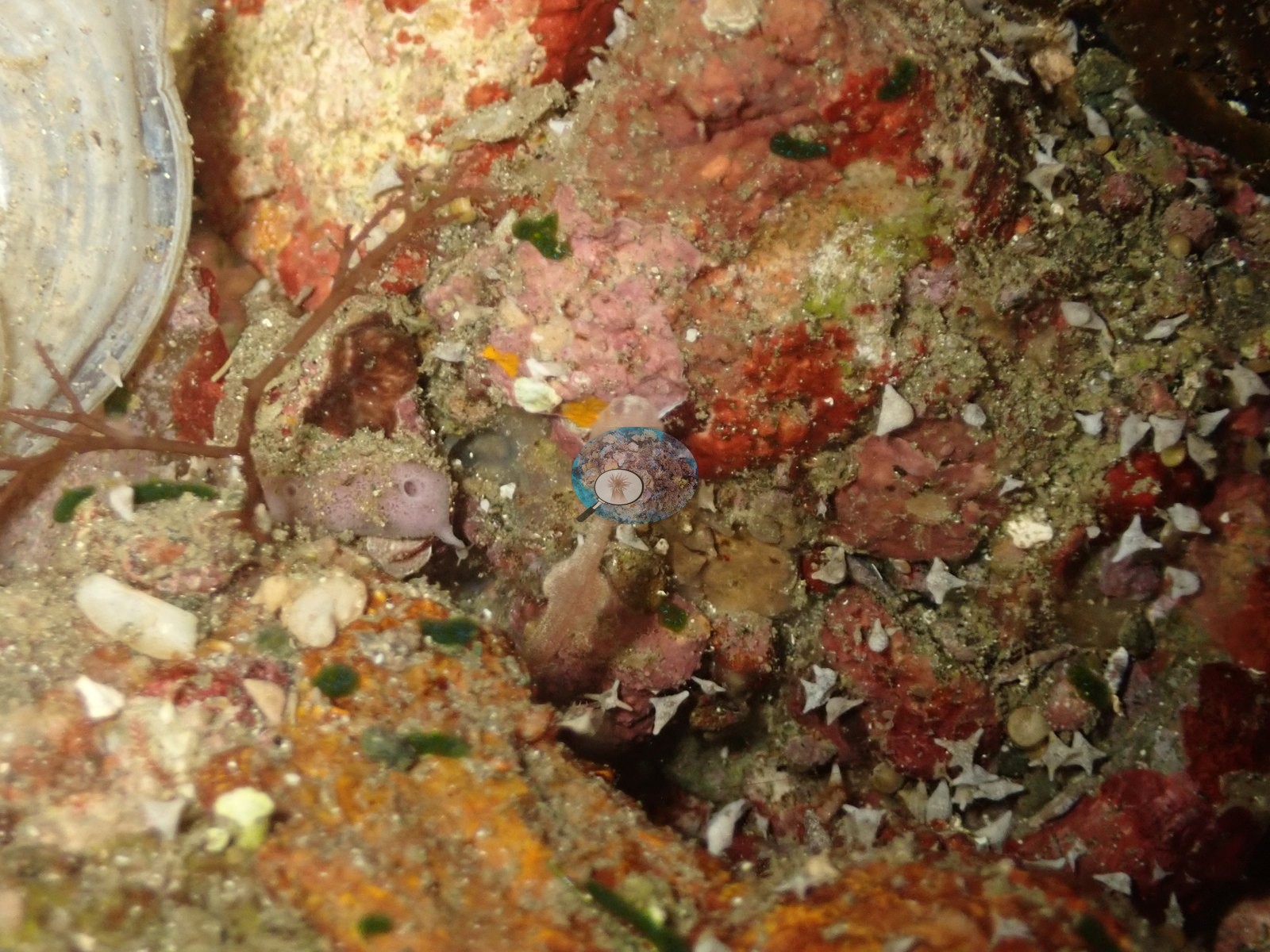
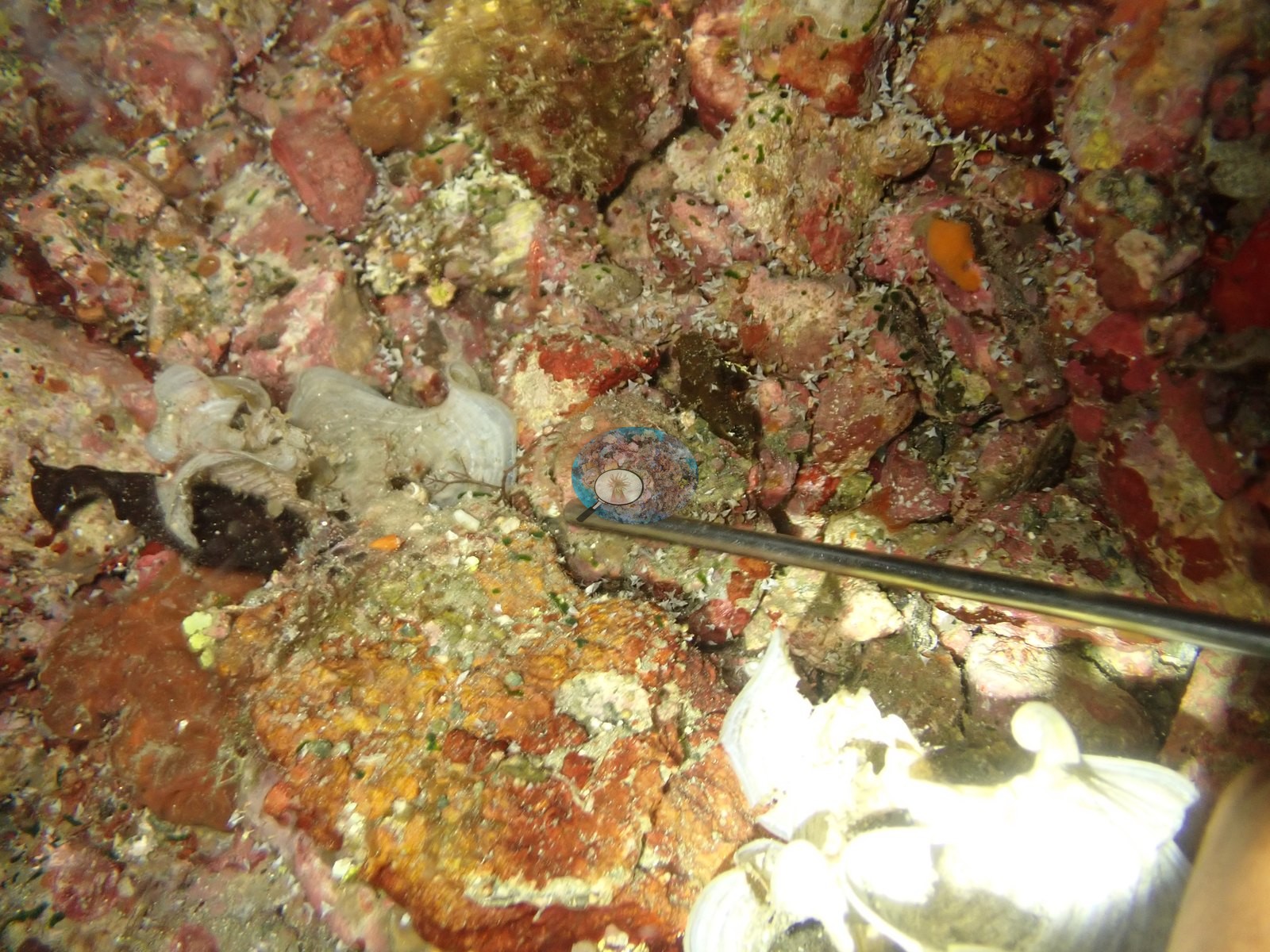
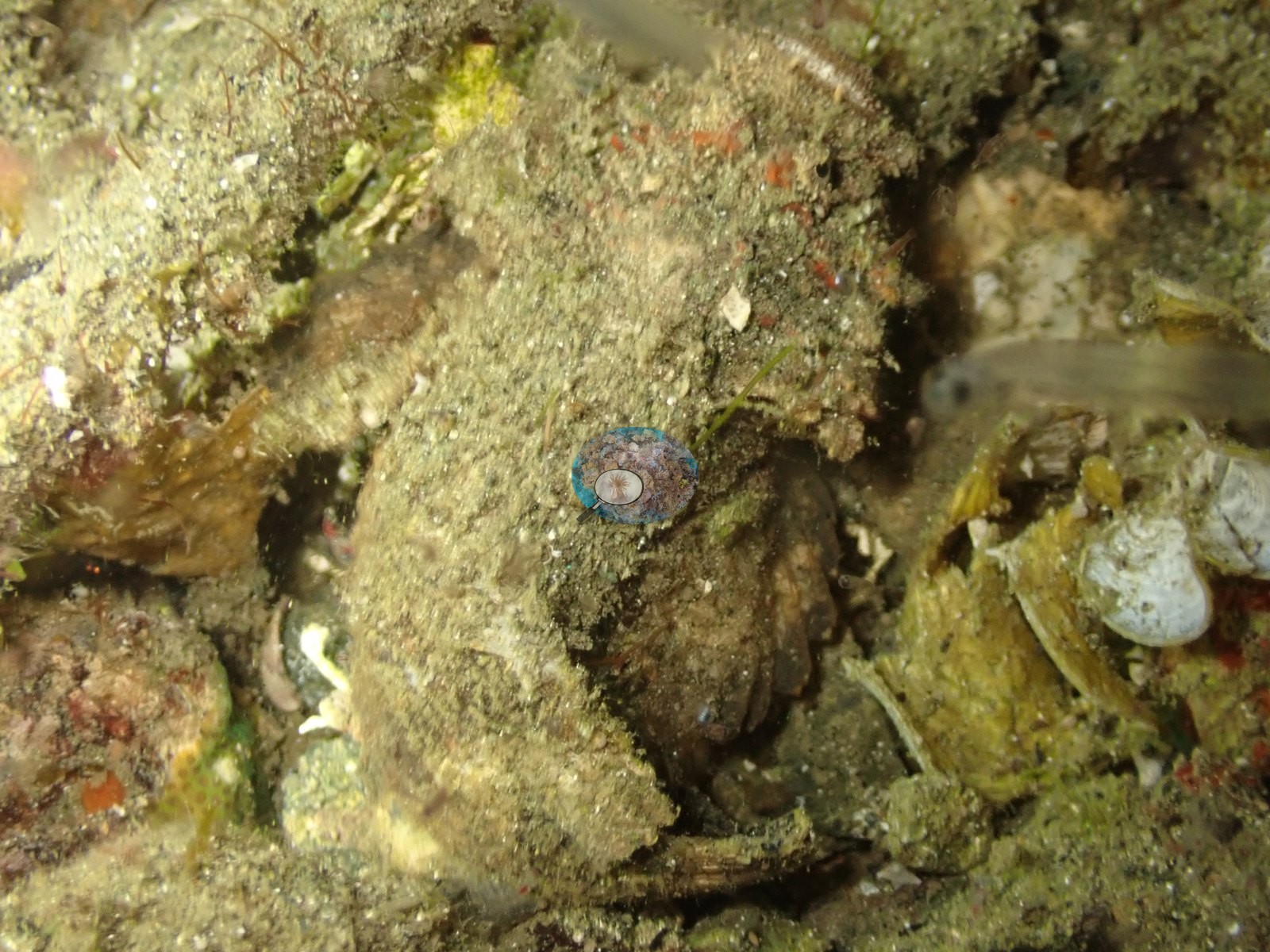
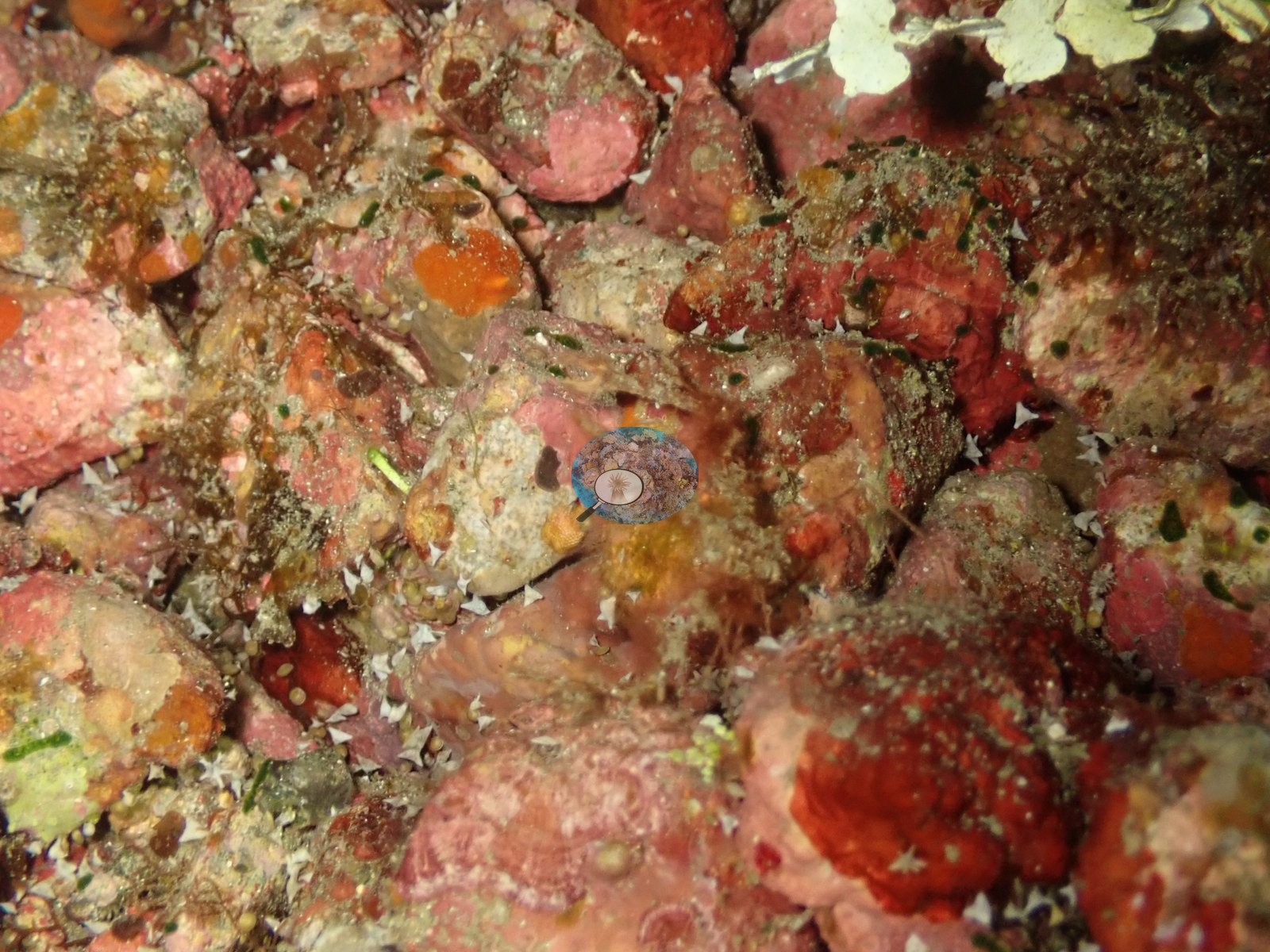
What the strobe does show is the substrate at close range and the animals that come out after dark. The bottom in nearly every wide-ish frame is old coral rubble — broken branch and plate fragments, thoroughly consolidated and armored in rose, magenta, and blood-red crustose coralline algae, peppered with hundreds of small white star- and antler-shaped growths a few millimeters across, scattered green algal buttons, amber foliose brown algae, and patches of orange and scarlet encrusting sponge (e.g., Image 11, Image 13, Image 16, Image 17, Image 41).
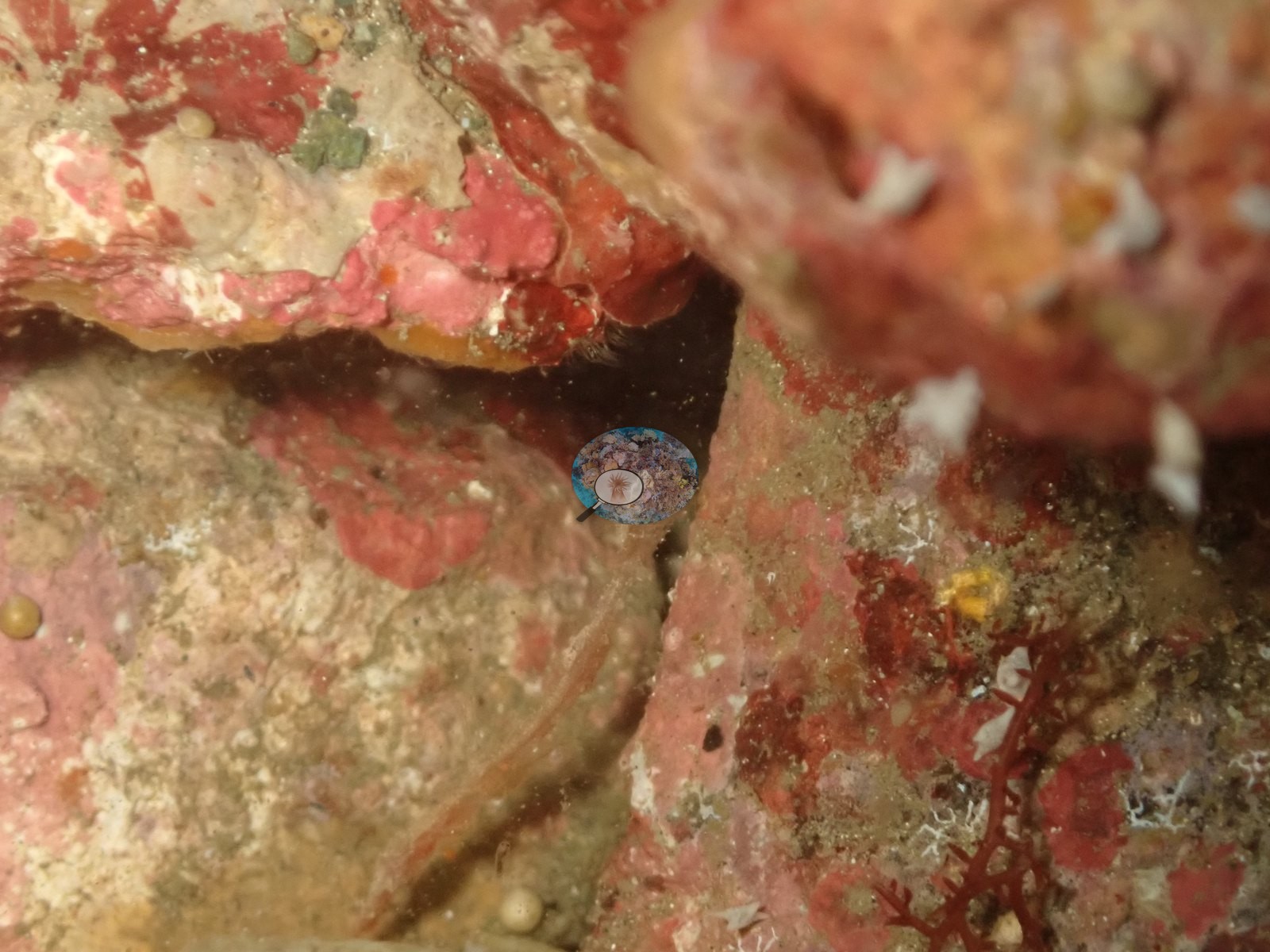
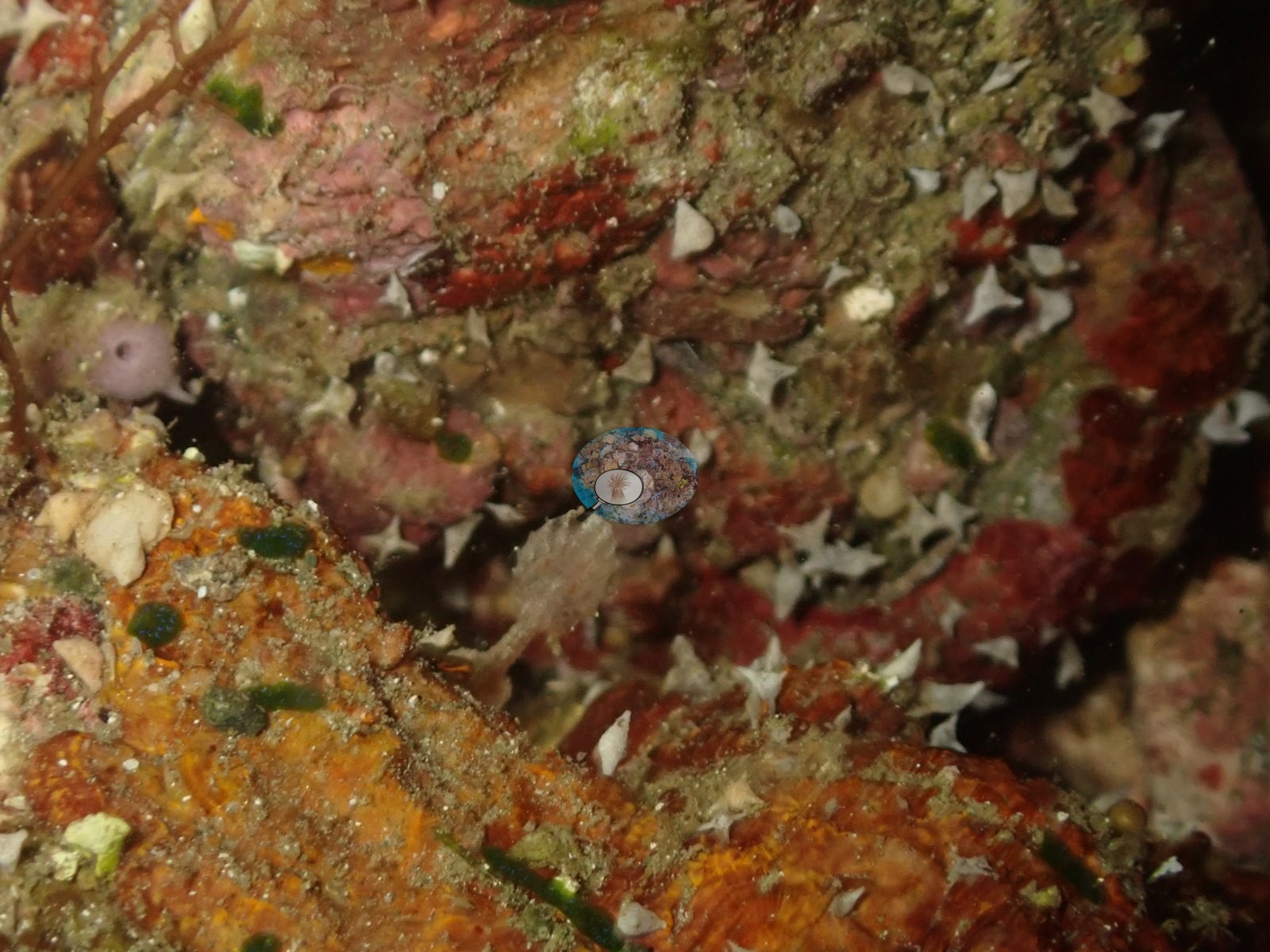
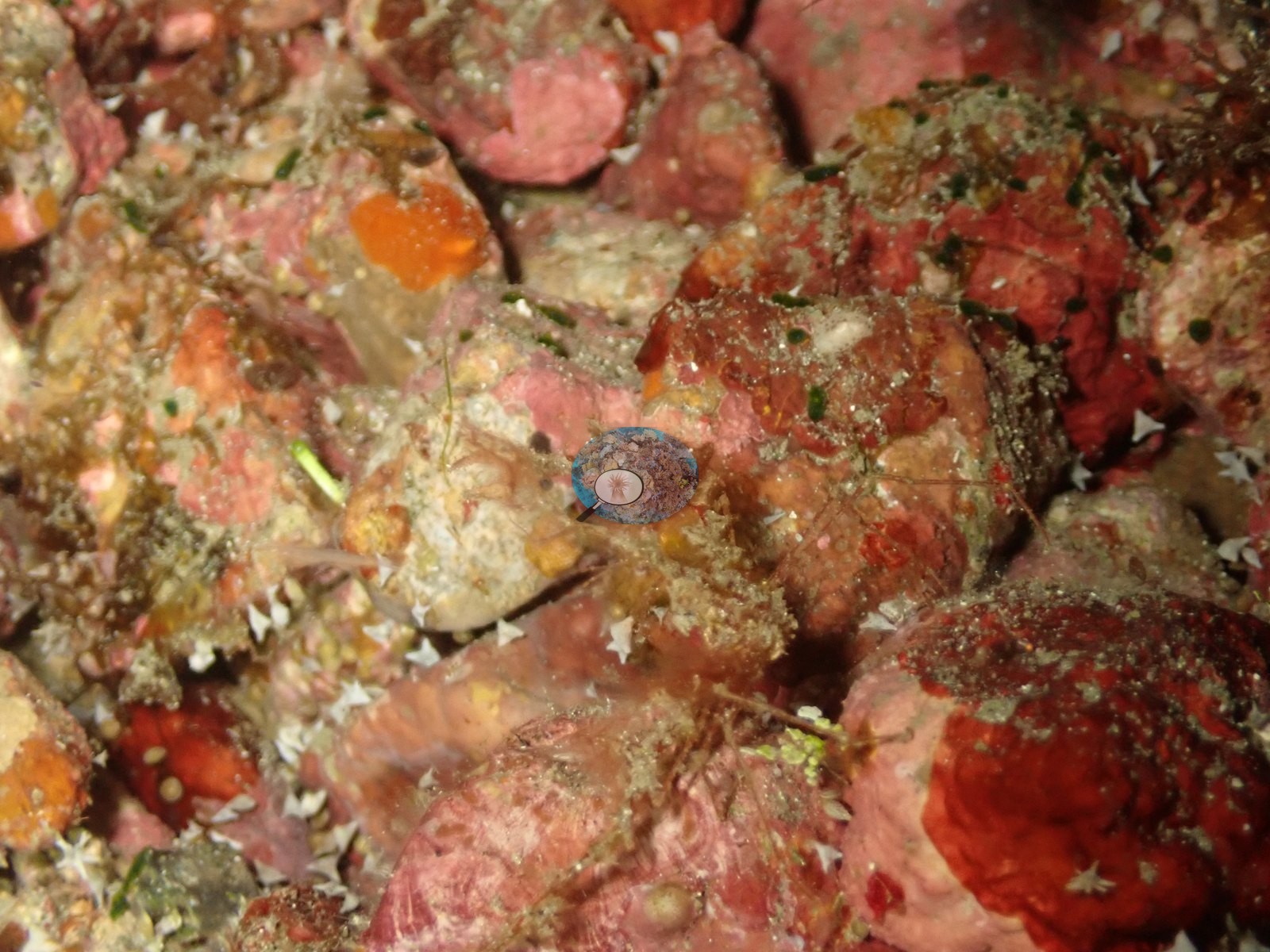
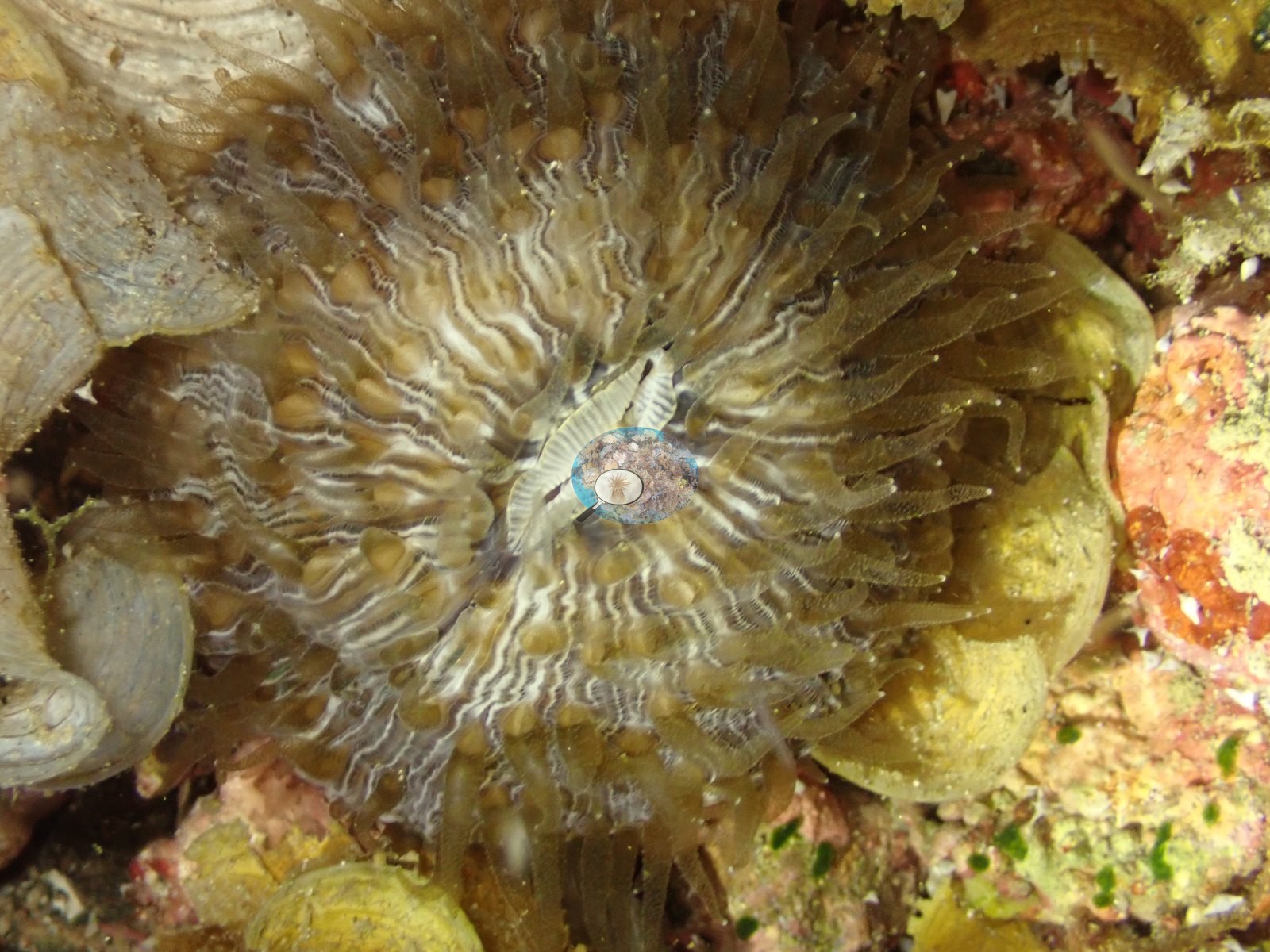
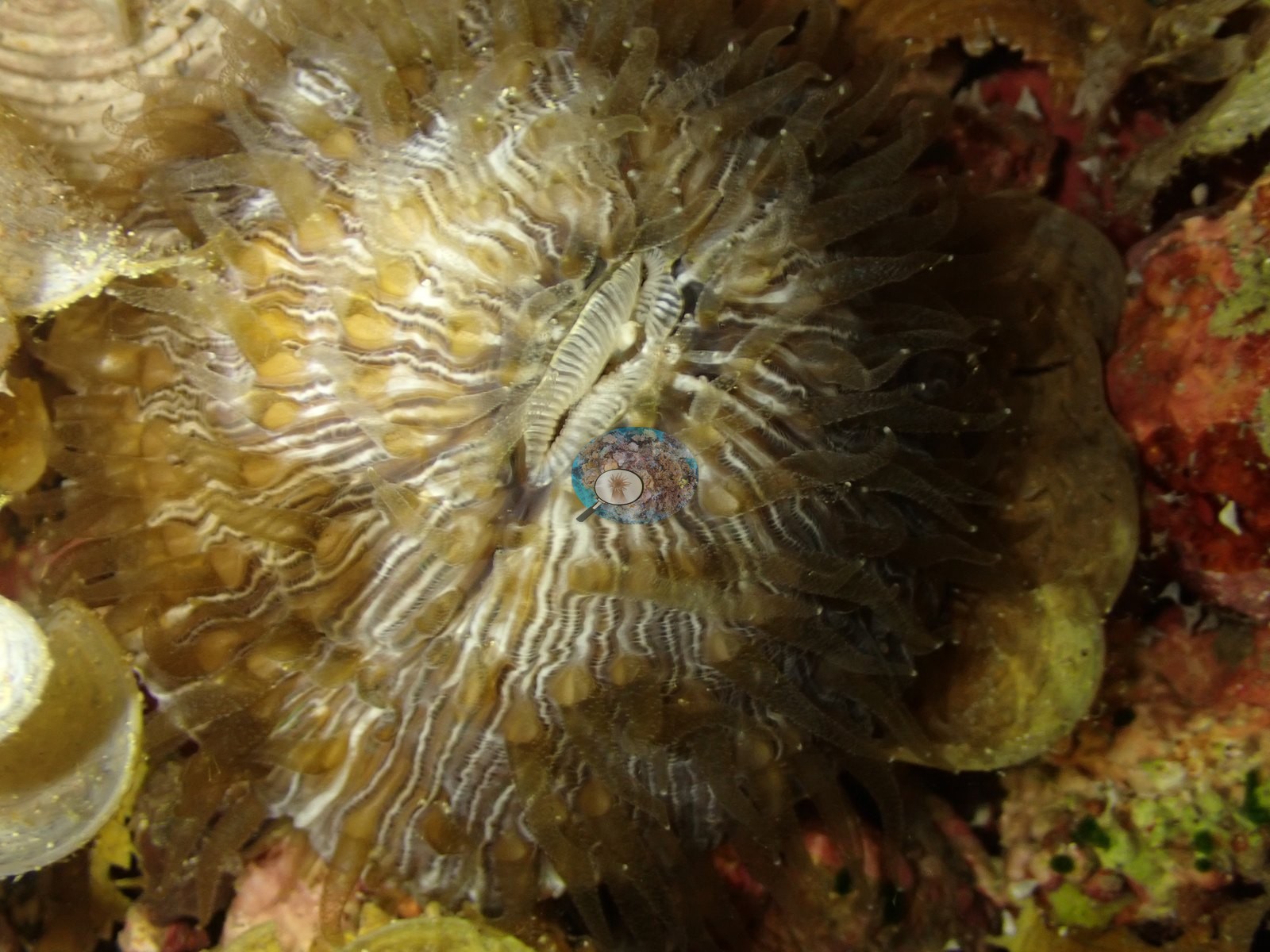
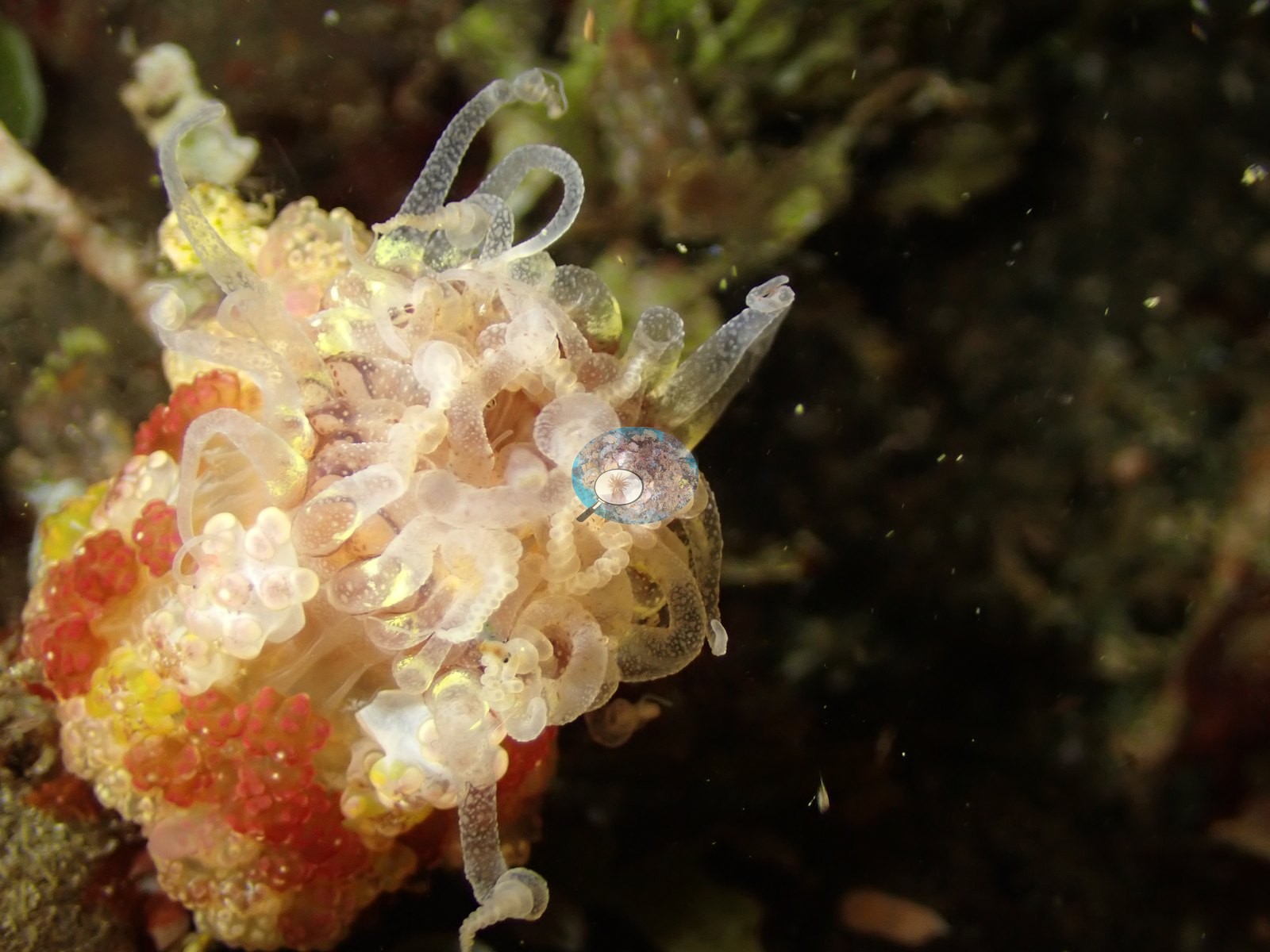
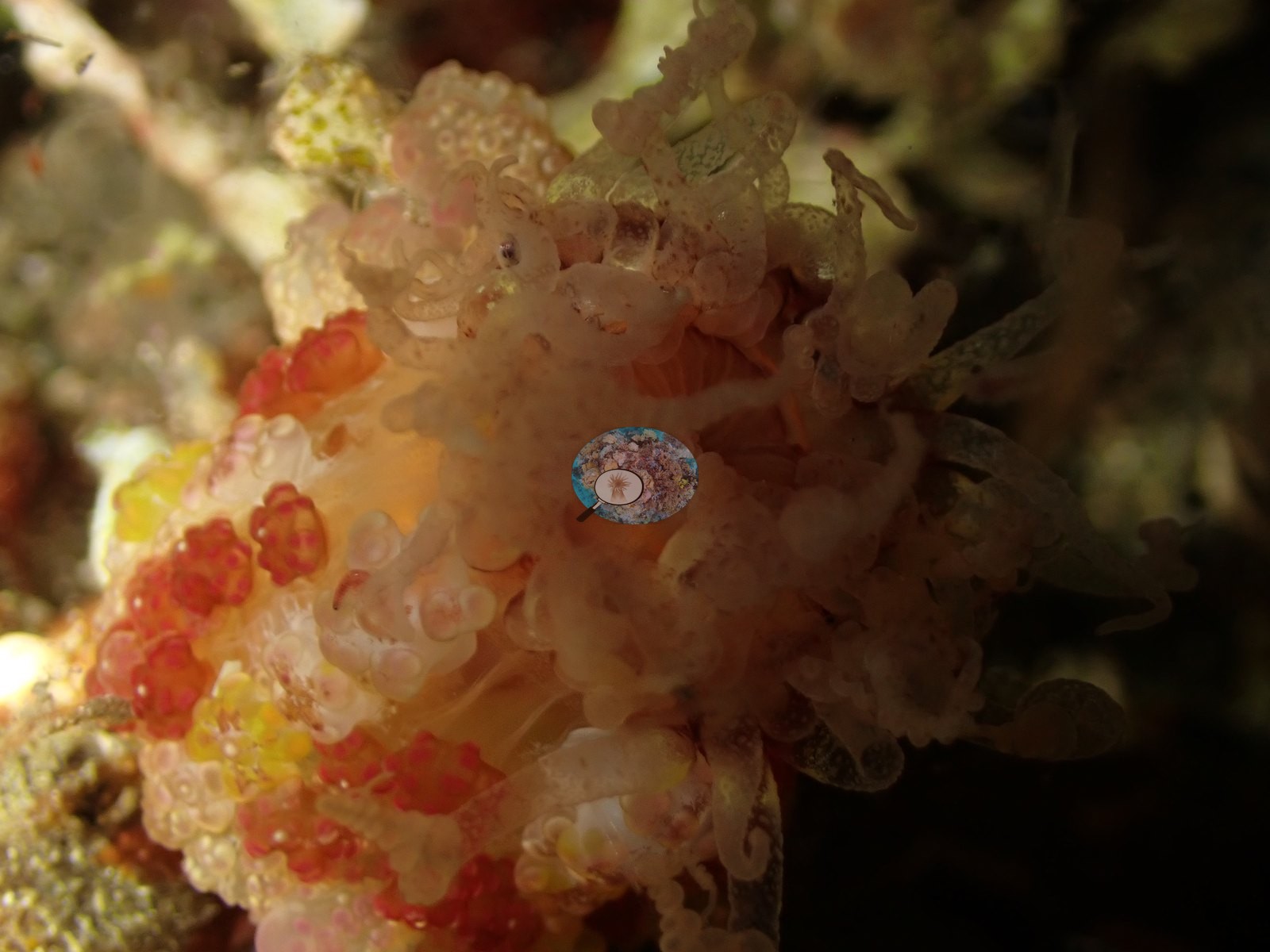
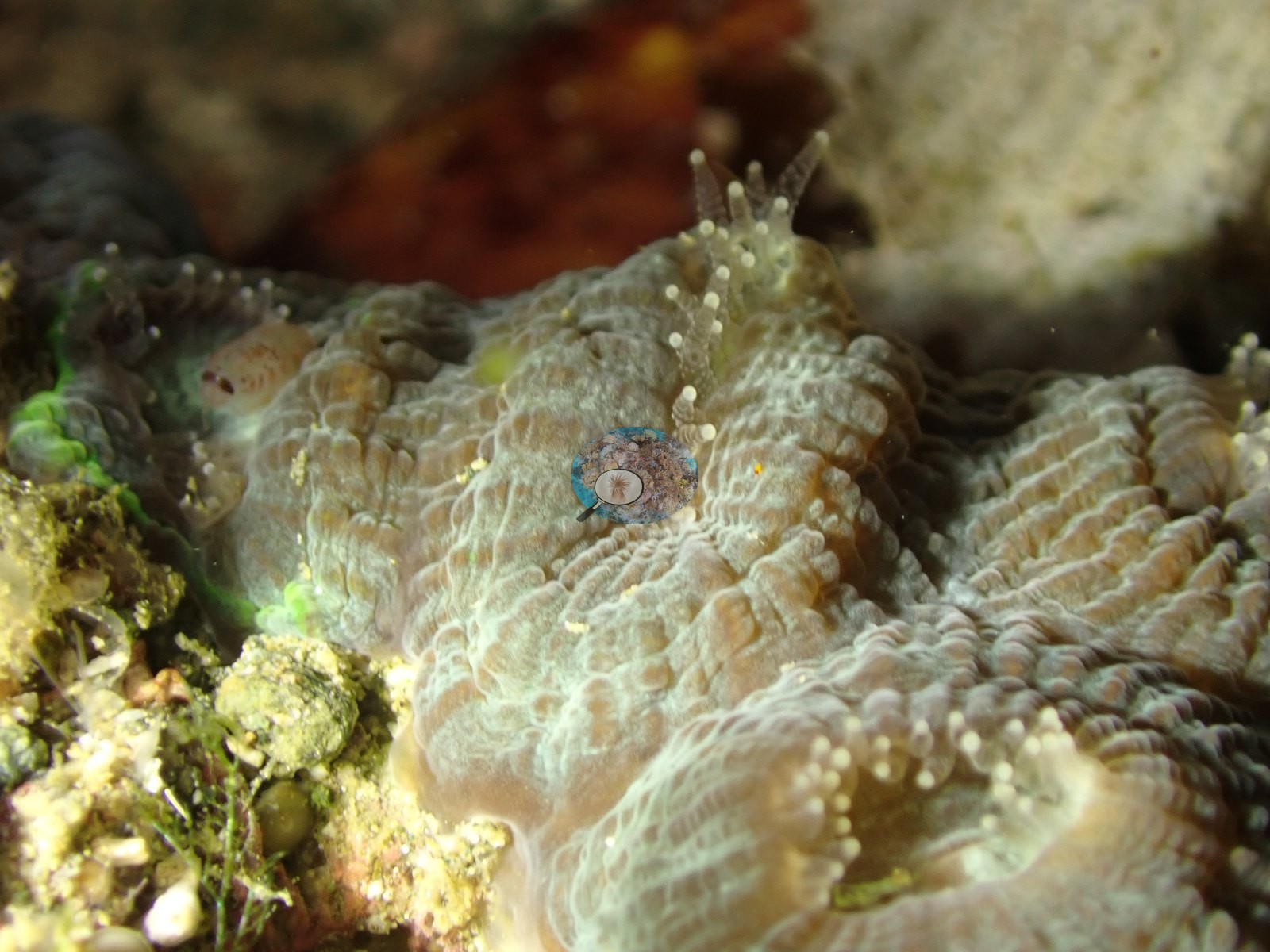
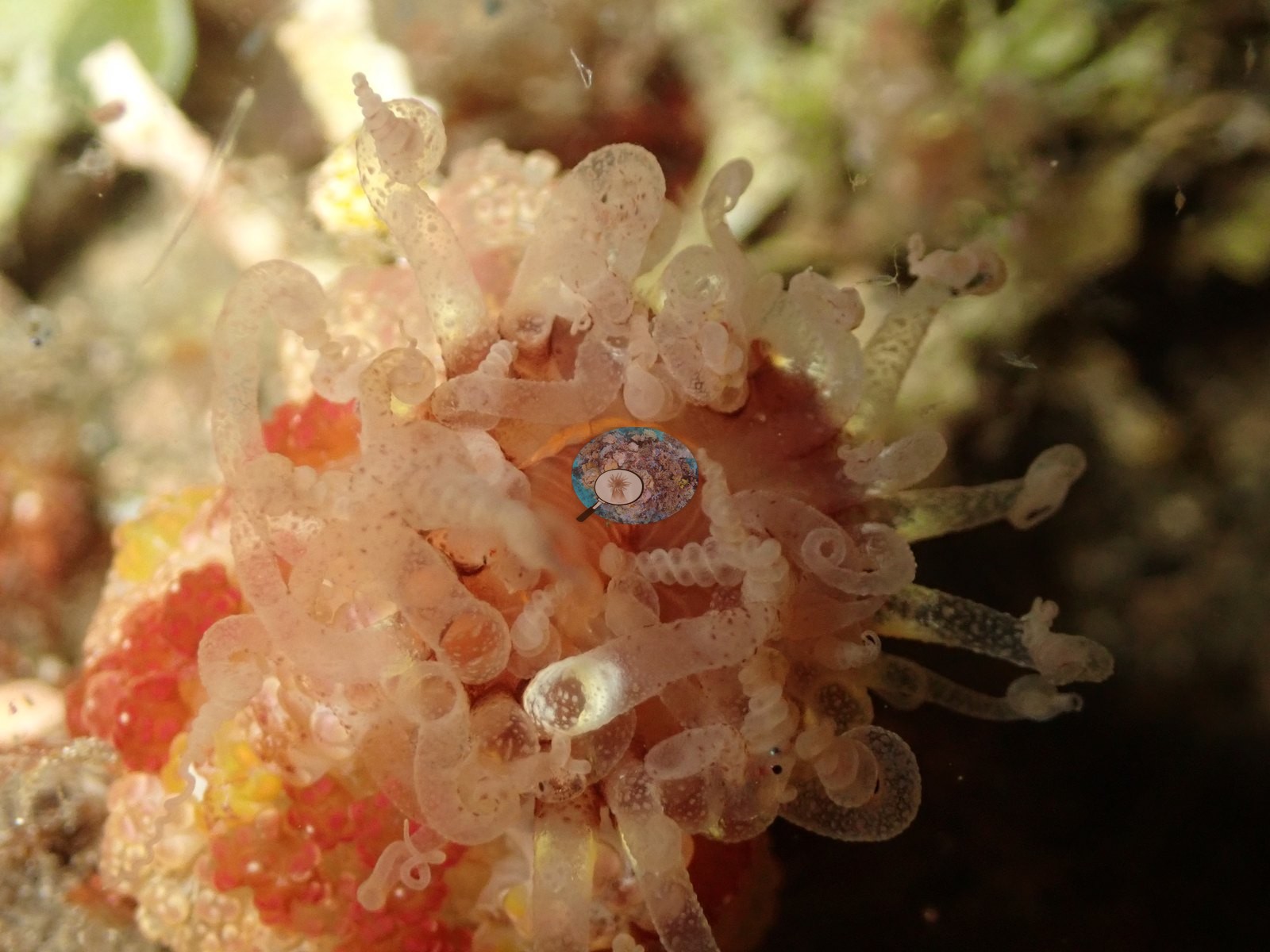
Live hard coral appears only as isolated small colonies set into that matrix: a healthy golden-brown massive Porites, a yellow-brown foliose colony, a gray-green meandroid brain coral, and a free-living fungiid. Corals feeding after dark are recorded too: a colony of Galaxea-type polyps with green-tipped tentacles fully extended and white mesenterial filaments streaming out of the corallites; a free-living mushroom coral (Fungiidae) with its brown, white-tipped tentacles expanded around a slit mouth; a massive brain coral with knob-tipped tentacles out over a margin that fluoresces bright green; and a nocturnally expanded corallimorph or anemone whose orange, radially grooved oral disc is ringed by translucent club-tipped tentacles (e.g., Image 15, Image 27, Image 34, Image 42, Image 47, Image 53).
Coral cover
No coral-cover figure is reported for this site, and that is correct rather than a gap. Anderson's standing rule for night dives is to analyze the photographs and leave cover alone: night macro frames are chosen for a subject a few centimeters across, lit by a strobe that falls off within a meter, so they cannot be read as a sample of the reef. There is no computer vision collection for this site and no cover value, published or estimated.
Stressors
None of the rubble is fresh — there is no white breakage anywhere — so it records an old, long-since-colonized mortality rather than anything recent, and its cause cannot be read from photographs.
Fish and other fauna
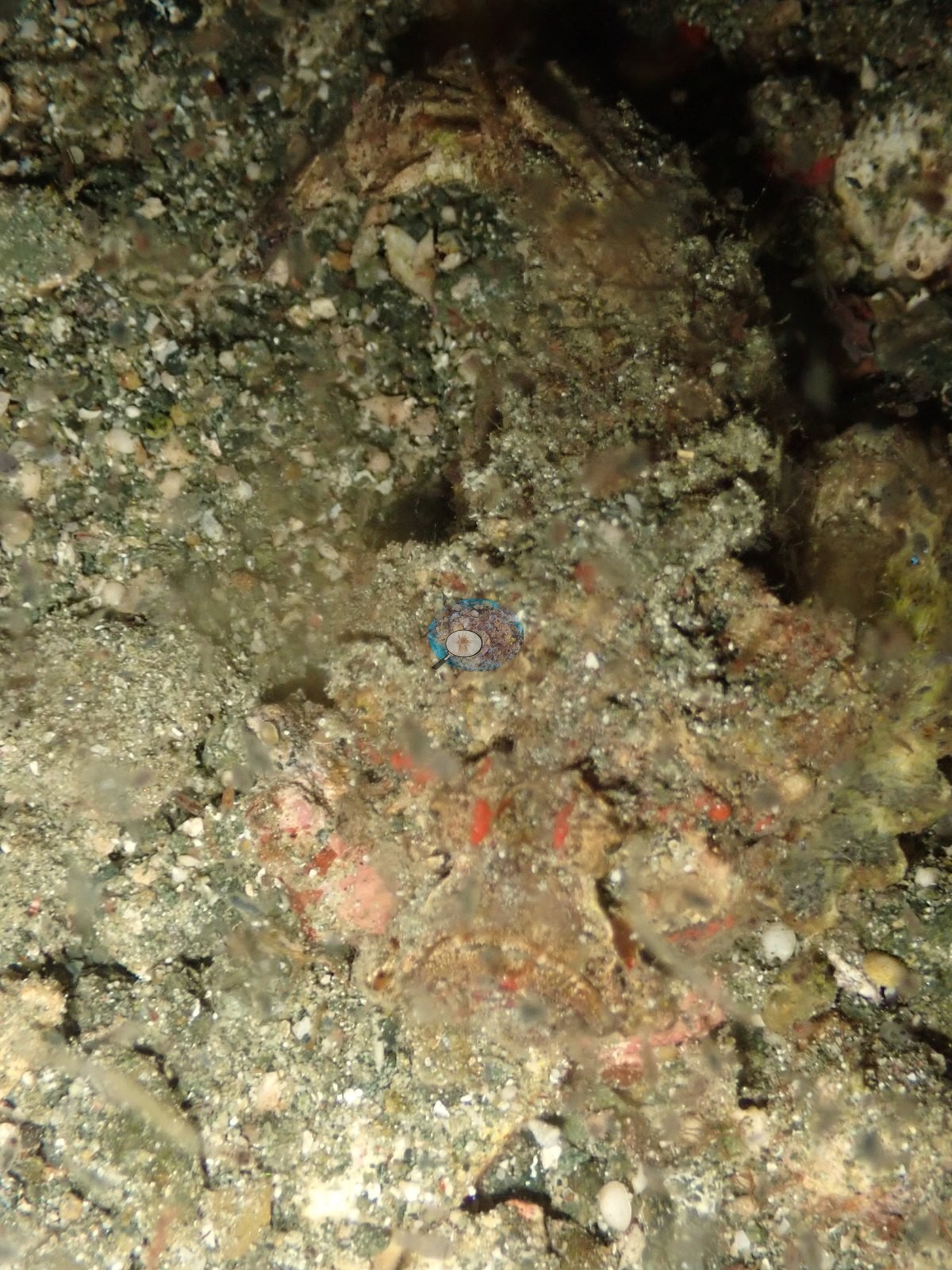
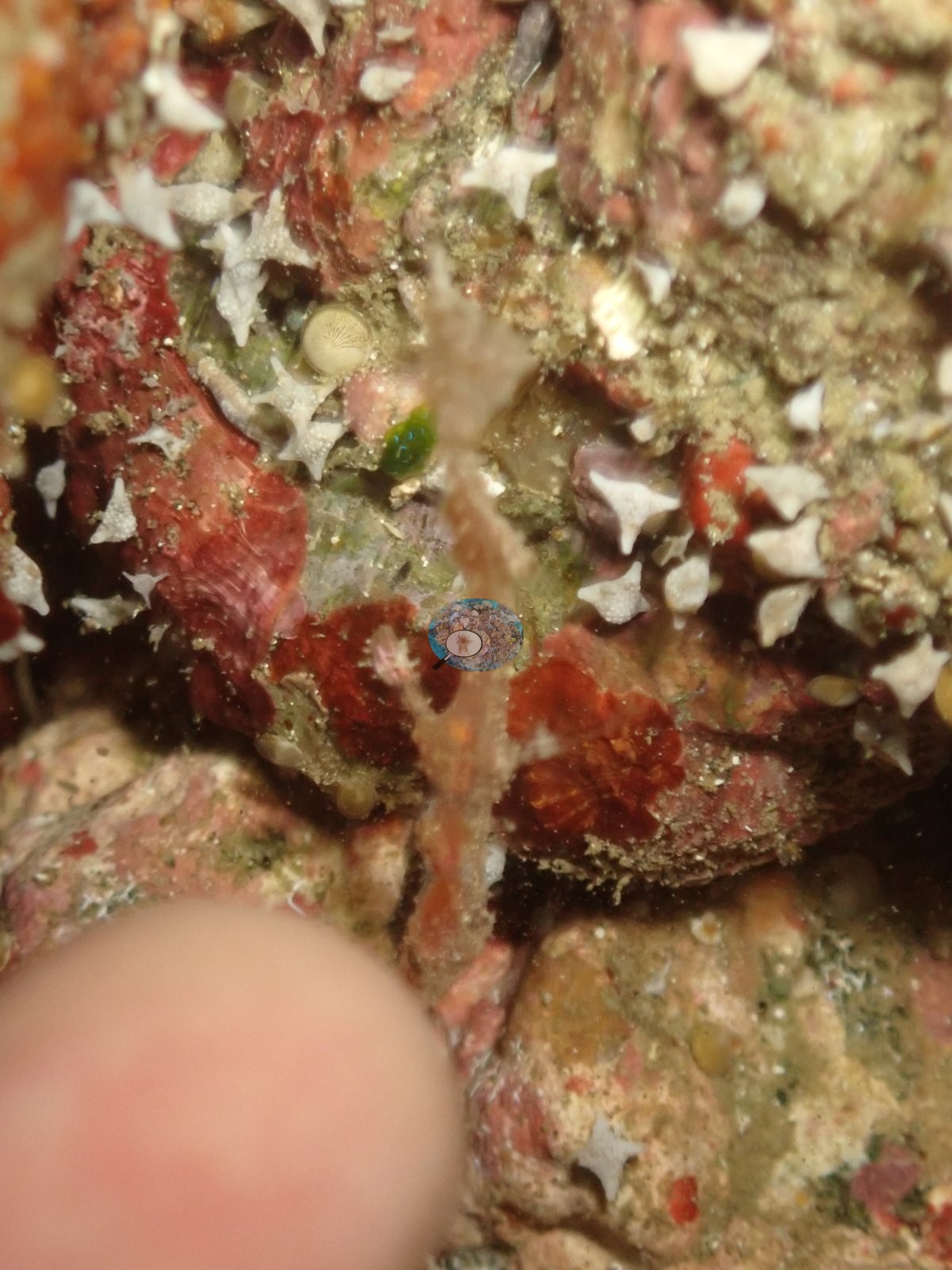
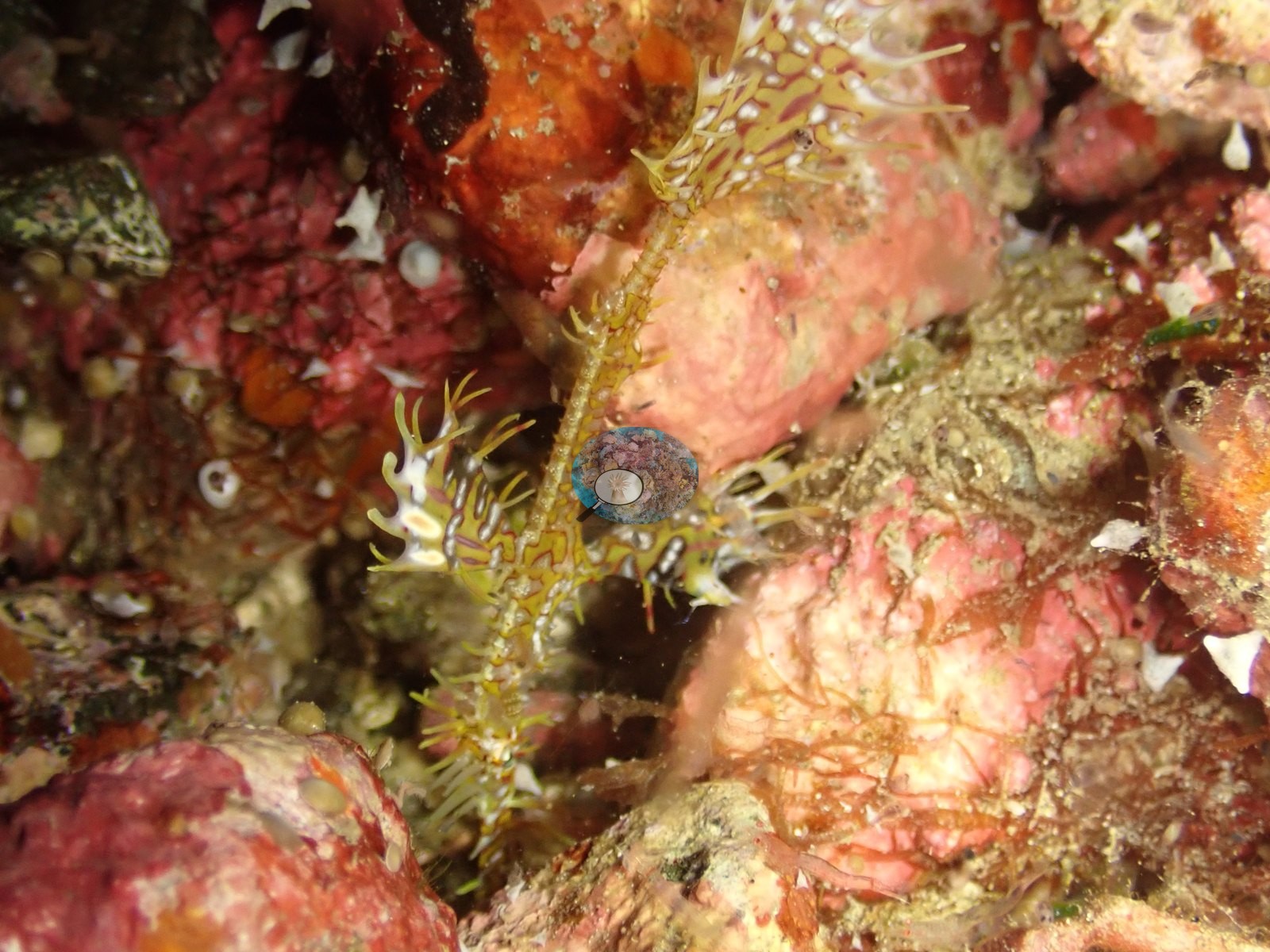
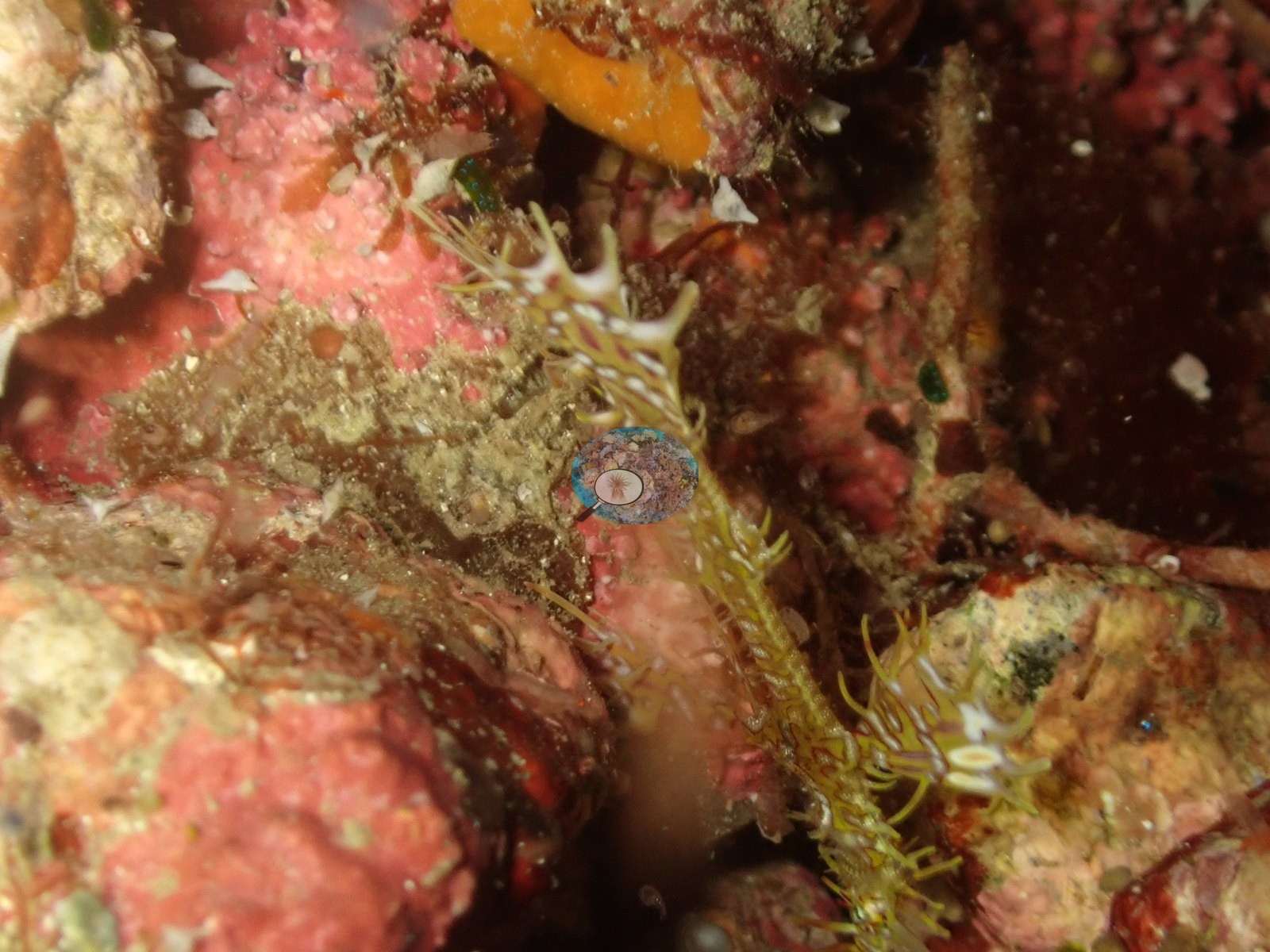
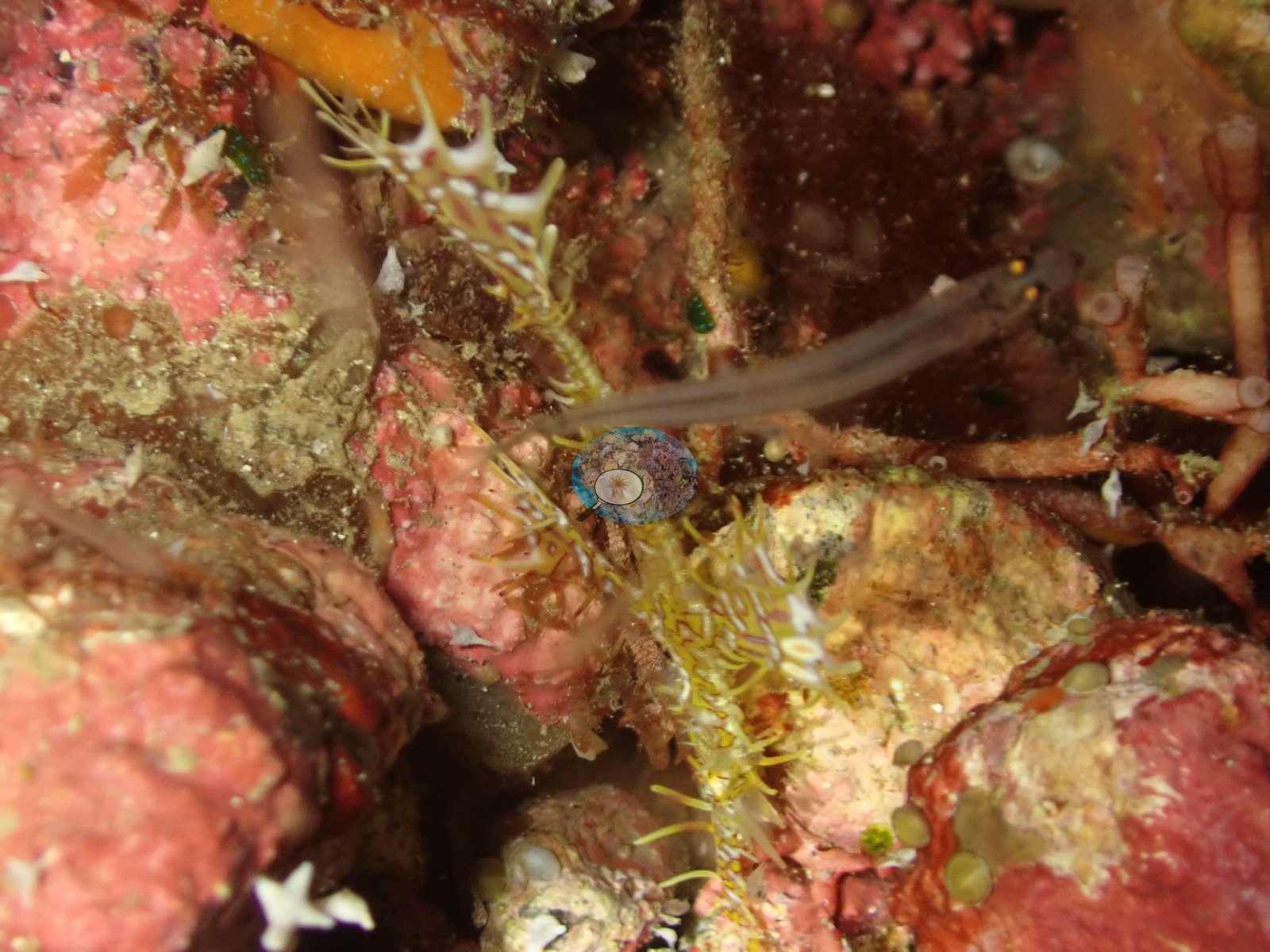
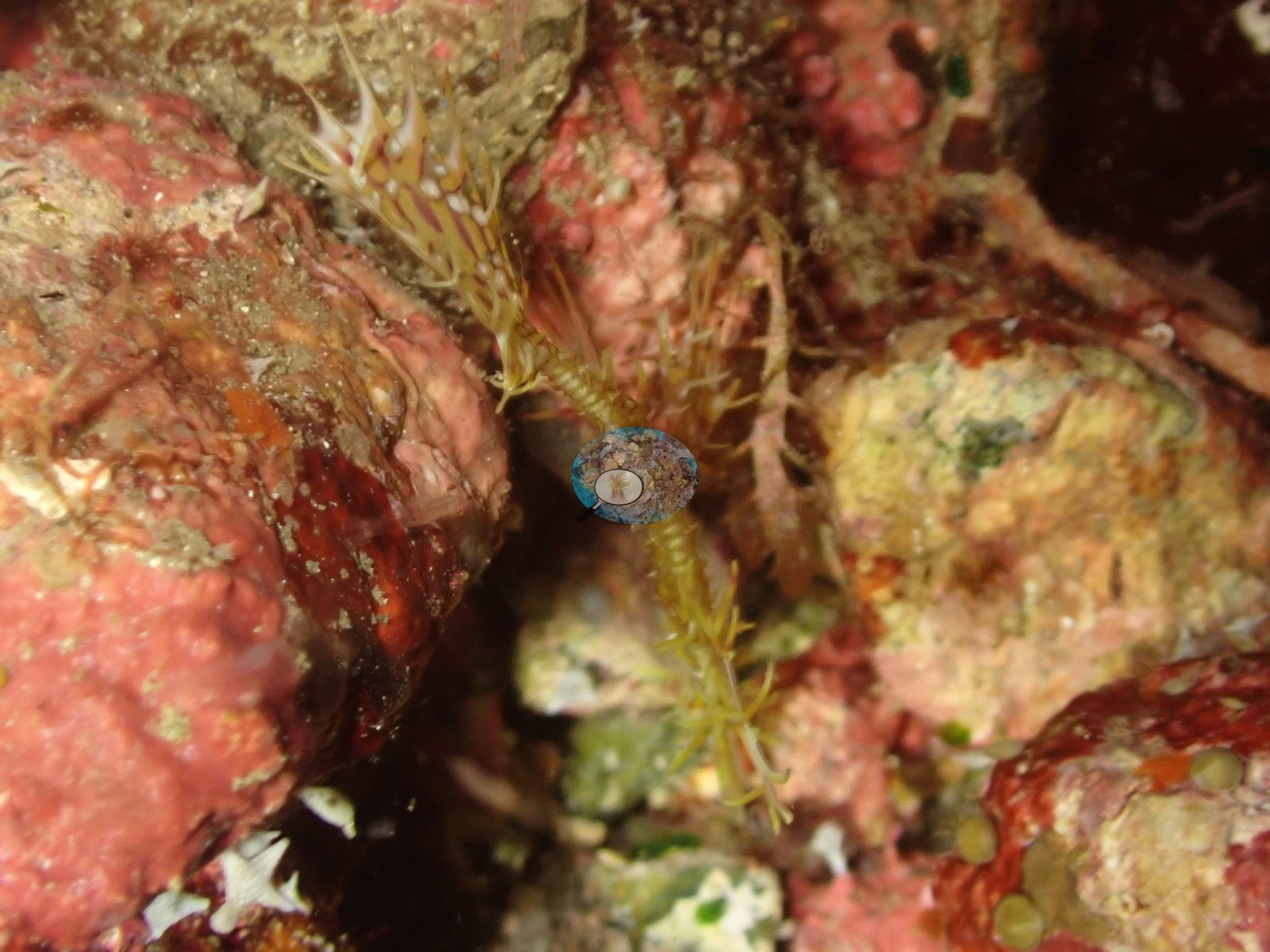
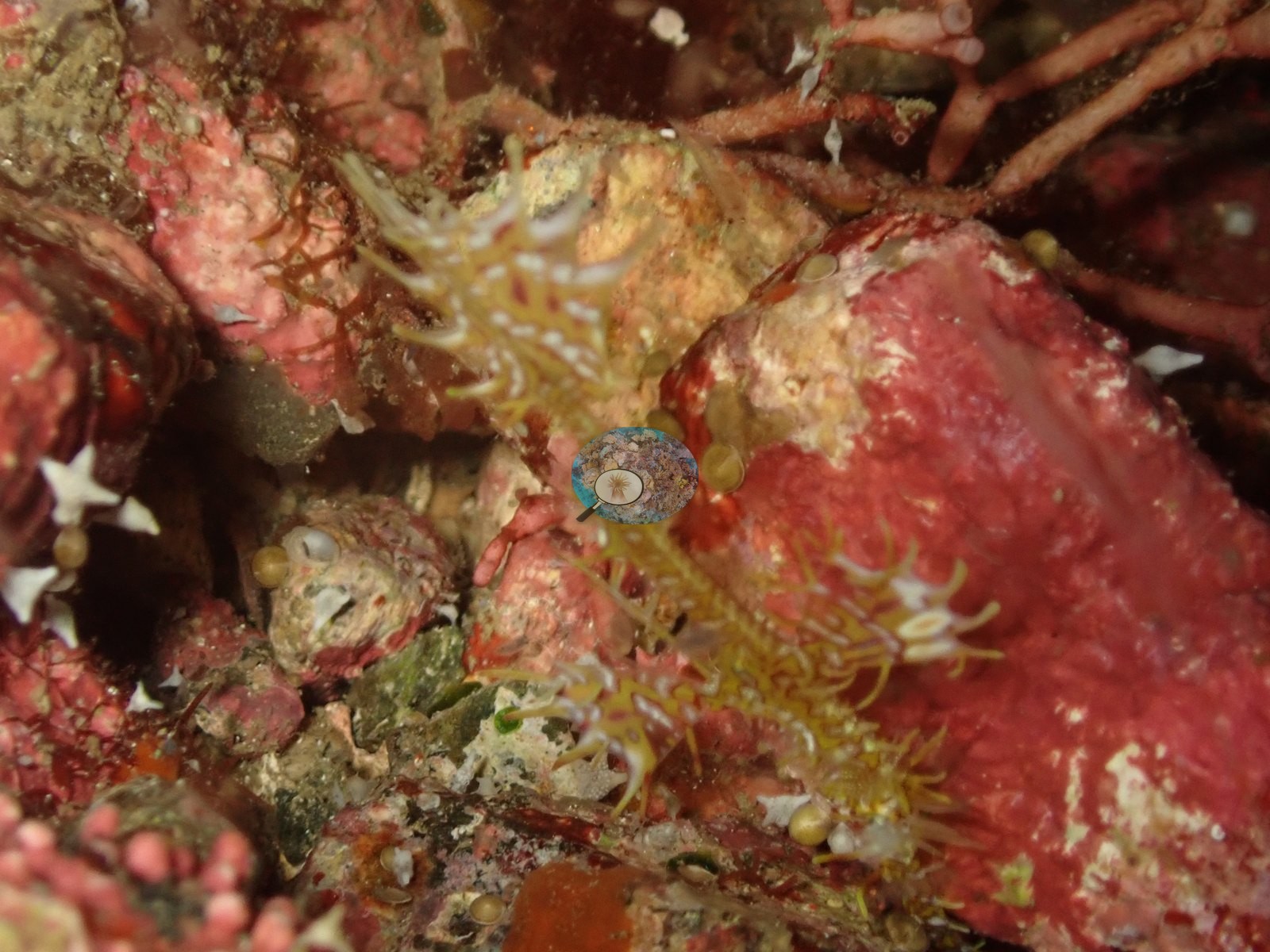
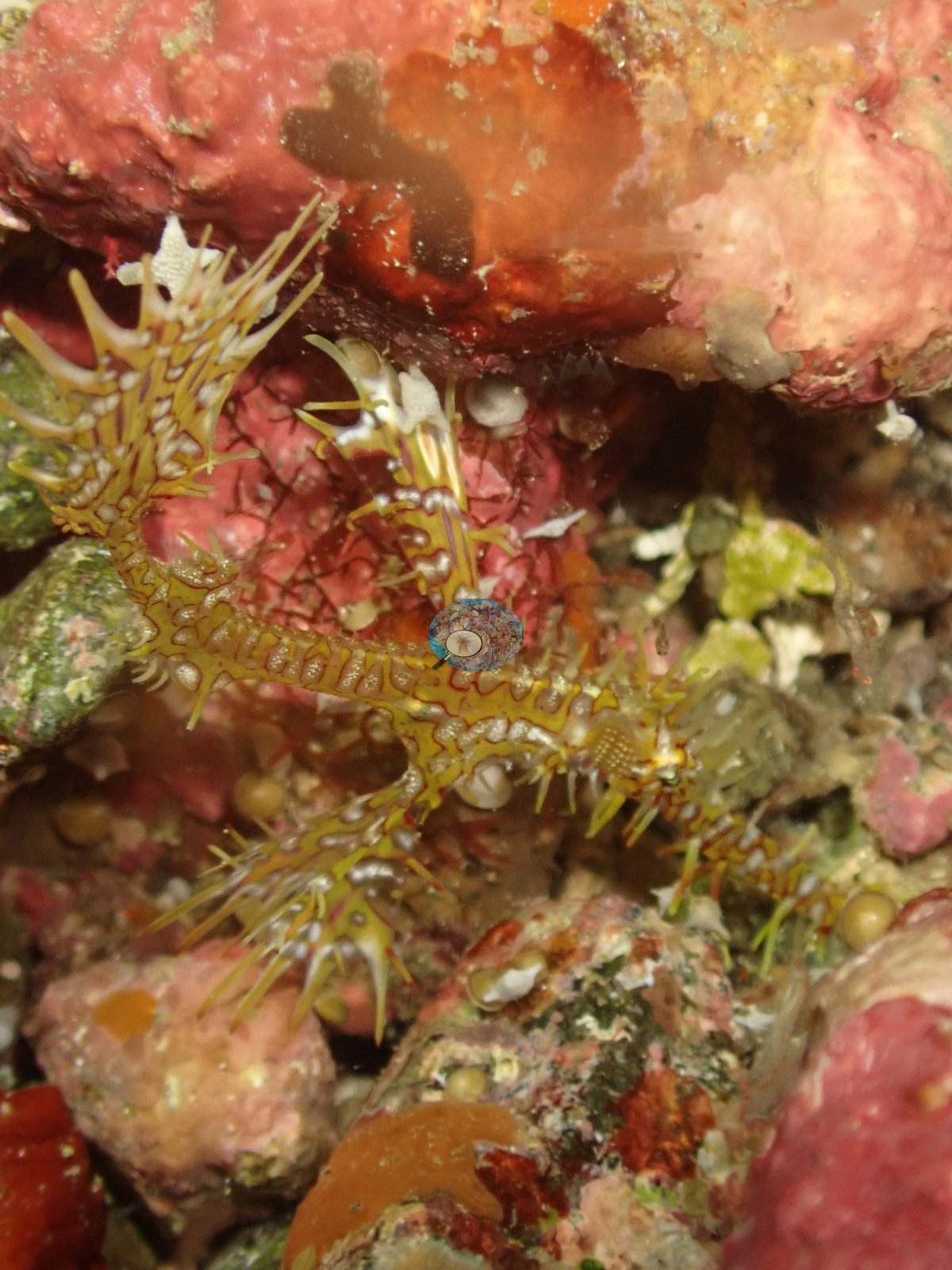
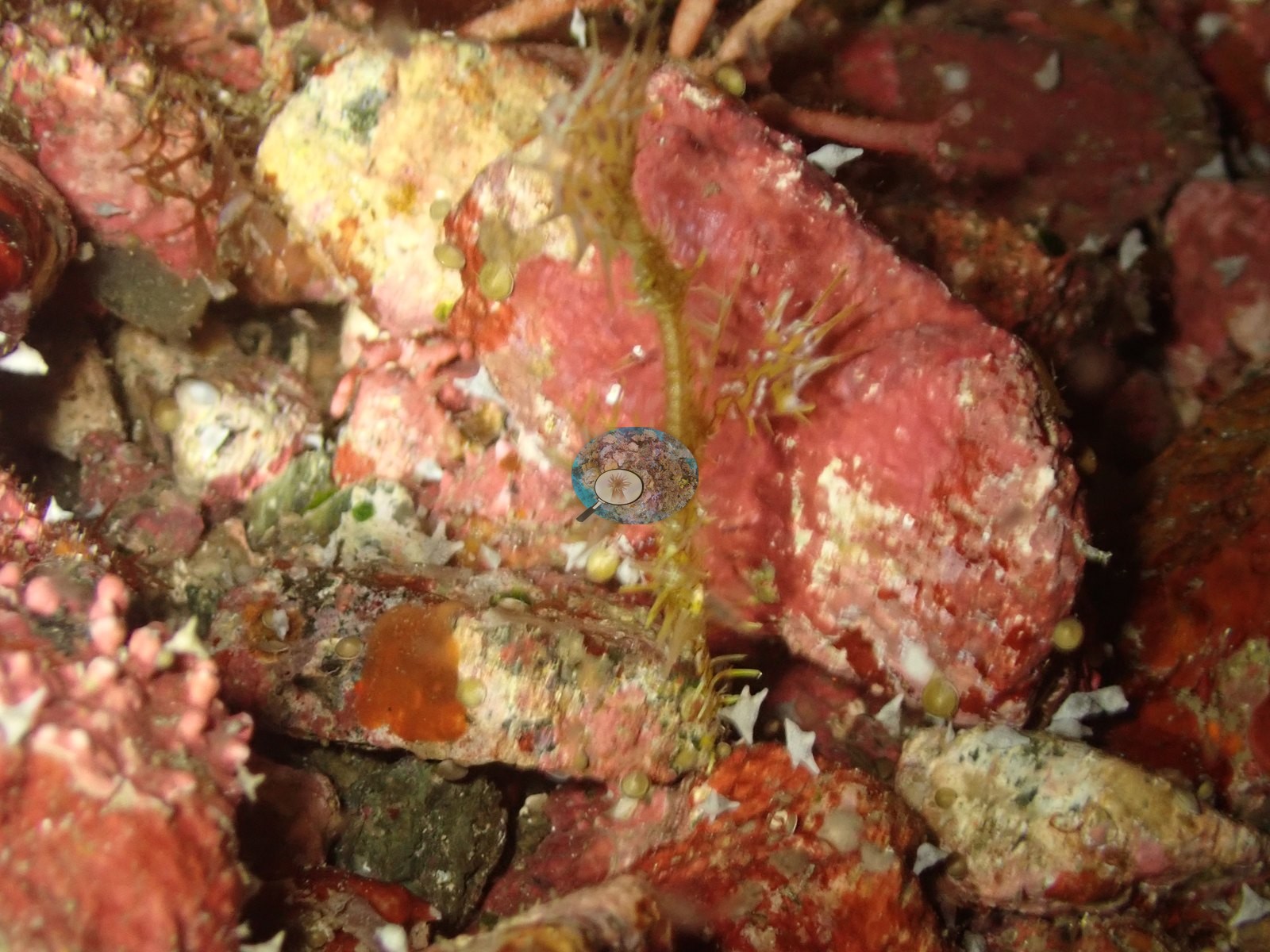
The night fauna is the point of the dive. The clear headline is a series on ornate (harlequin) ghost pipefish, Solenostomus paradoxus — at least two individuals, yellow and spined and hanging head-down over pink coralline rubble, worked across eight frames (e.g., Image 2, Image 8, Image 24, Image 25, Image 51, Image 52, Image 55).
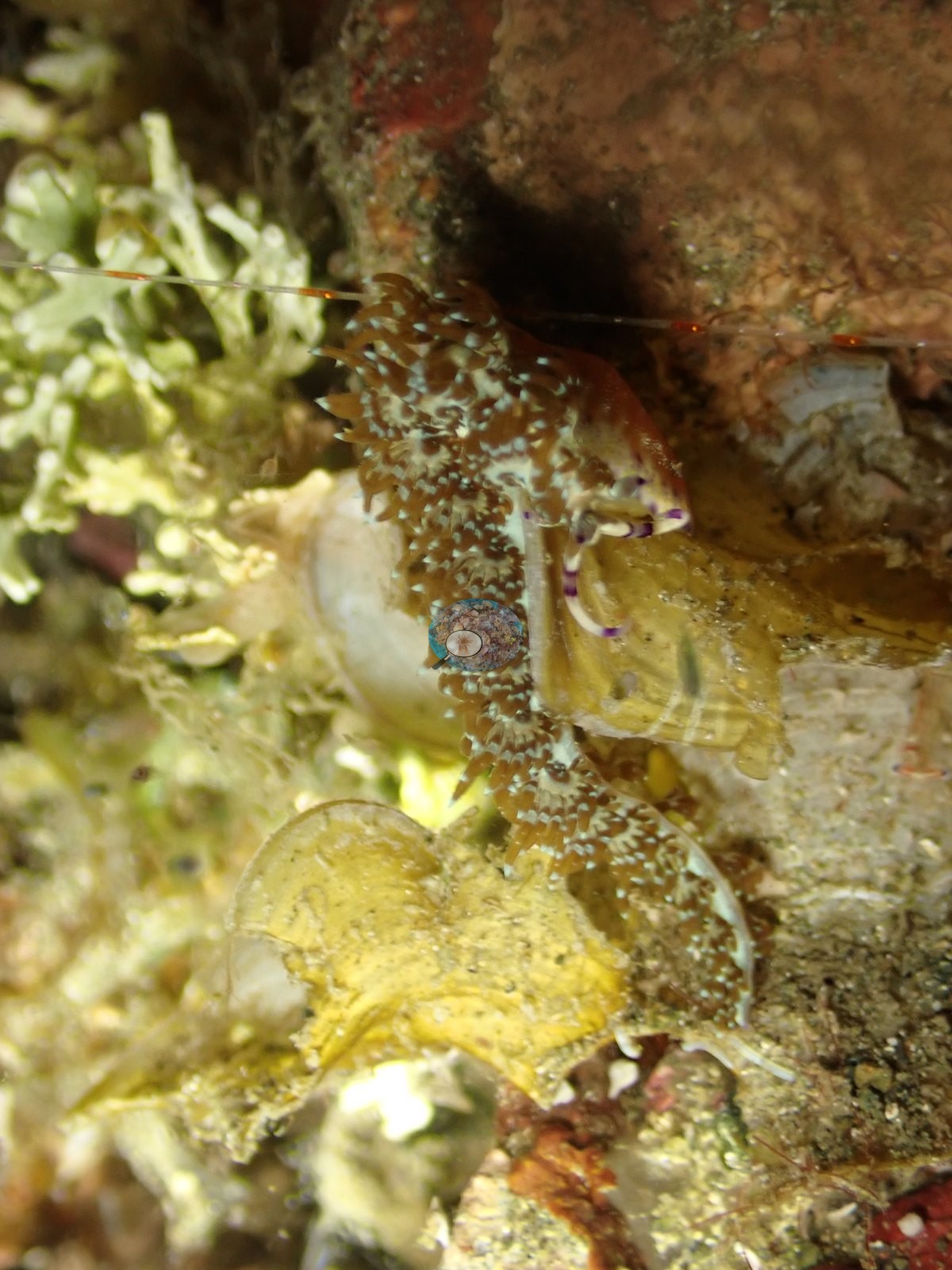
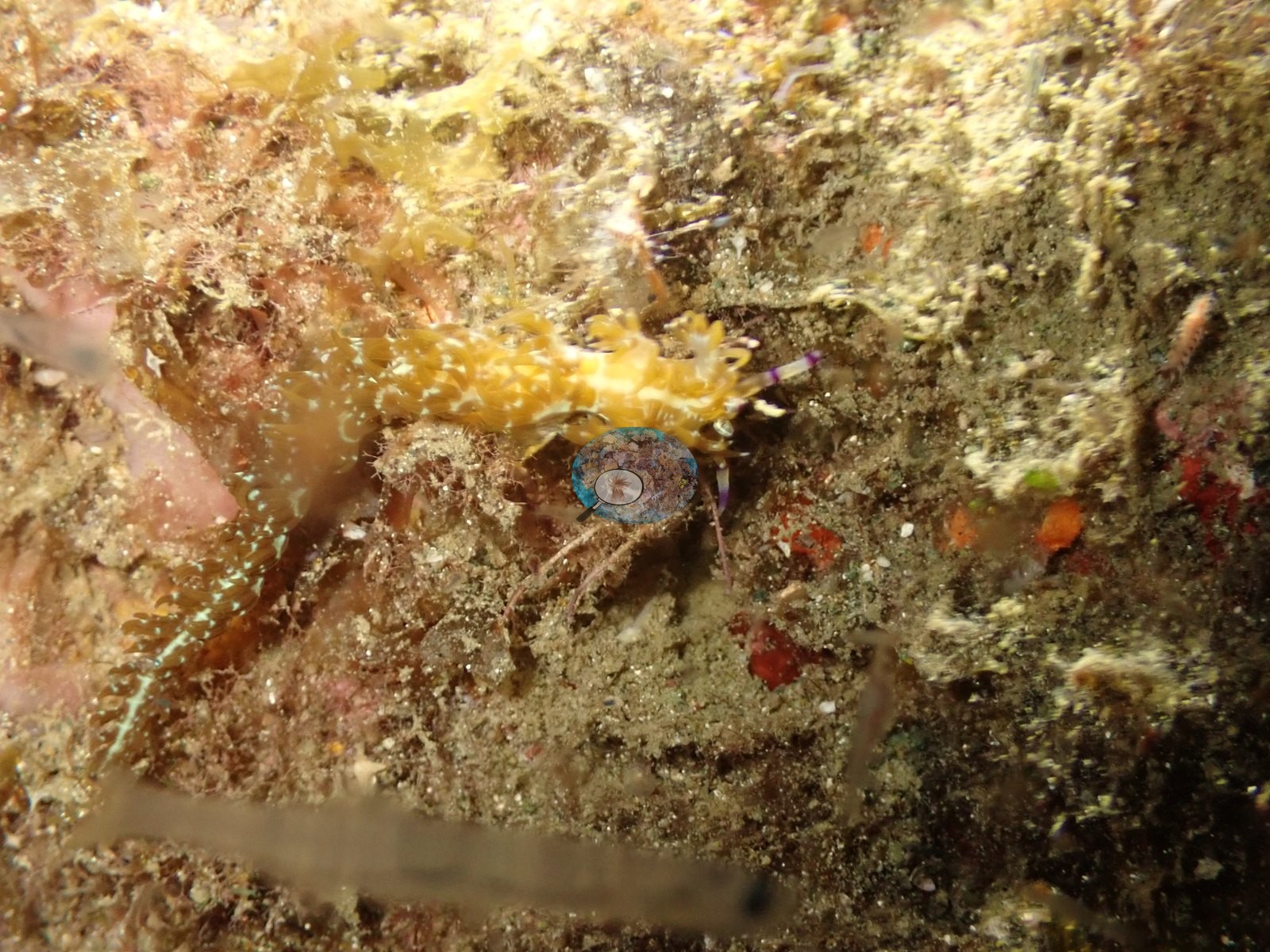
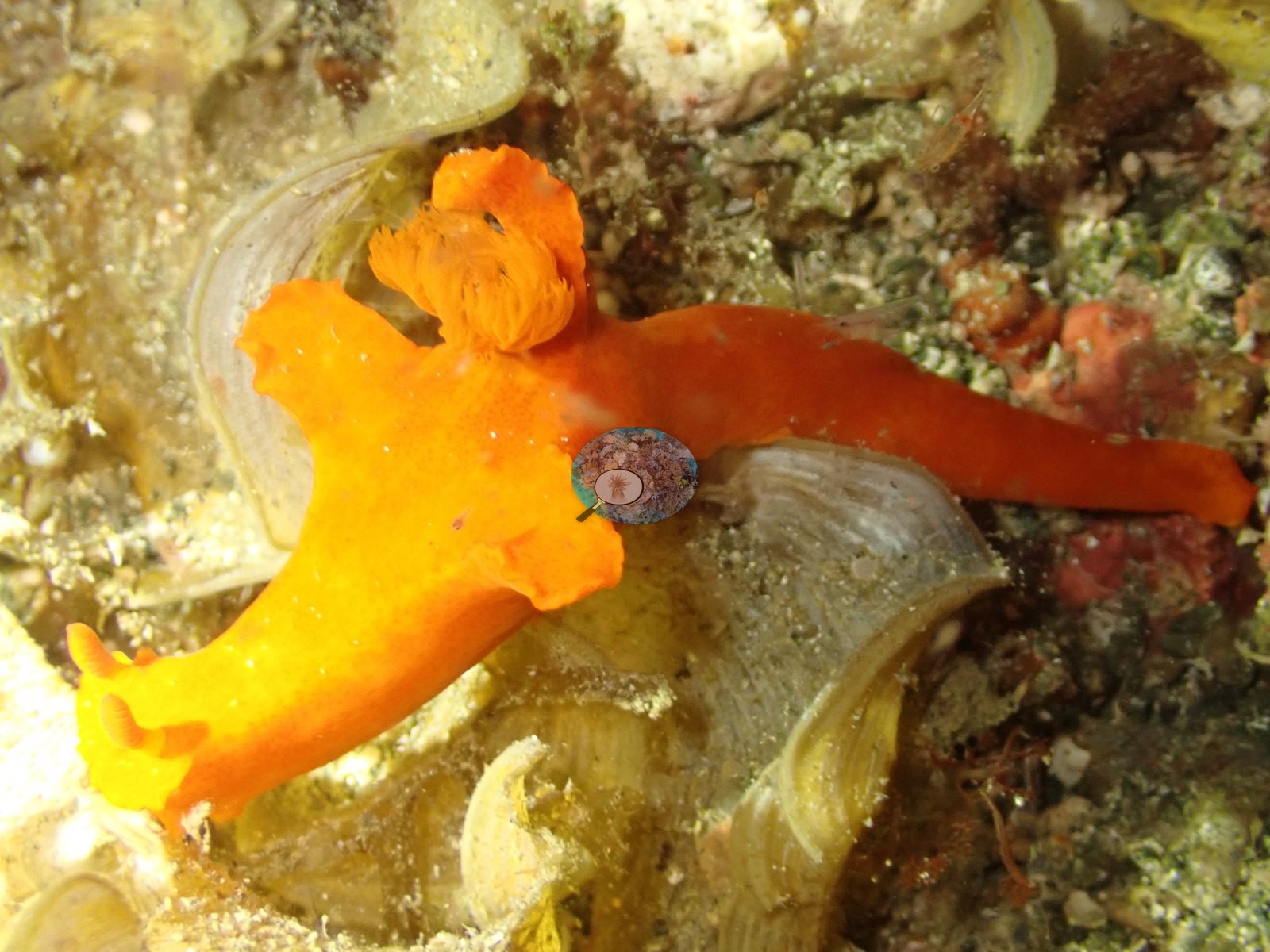
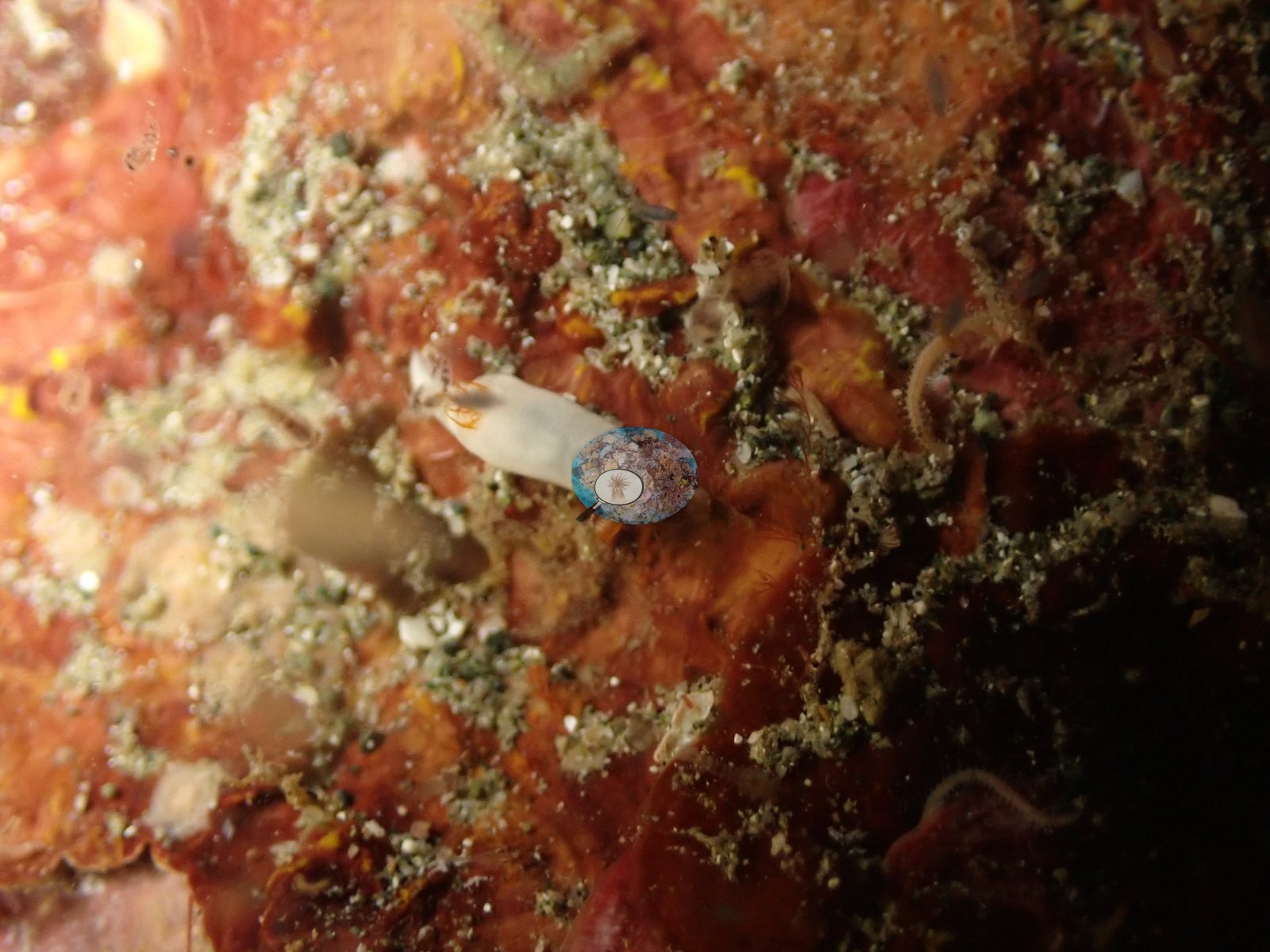
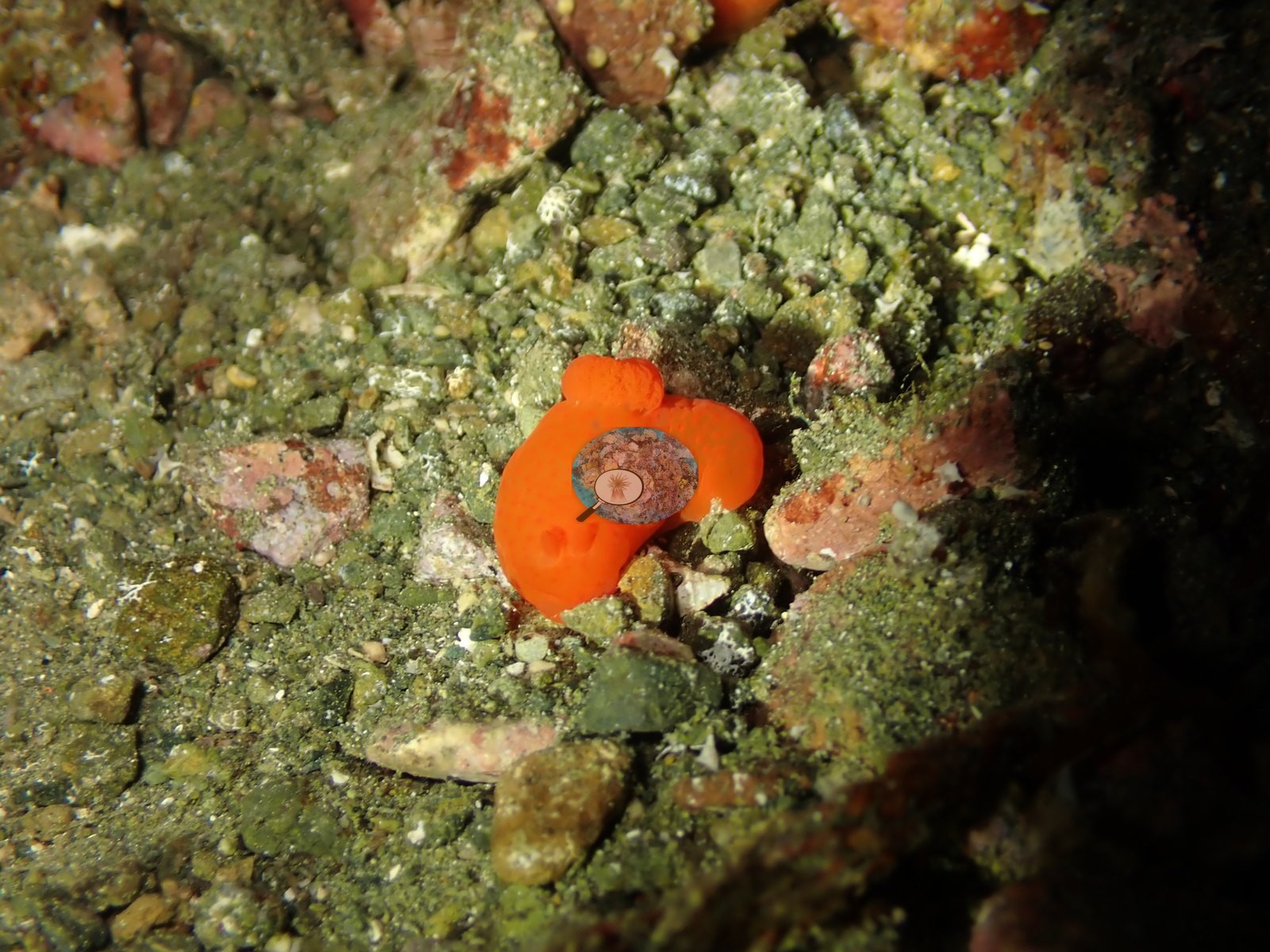
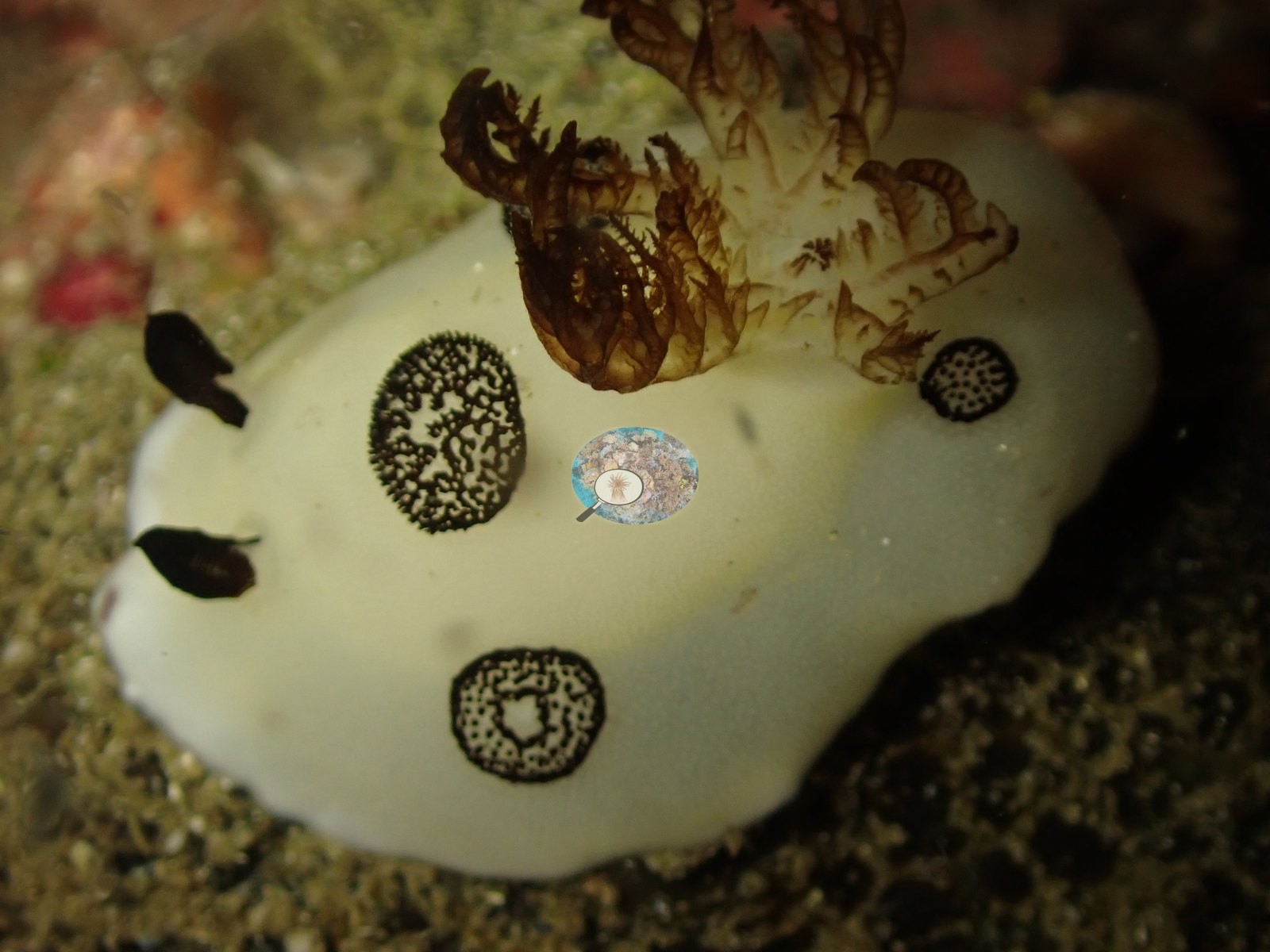
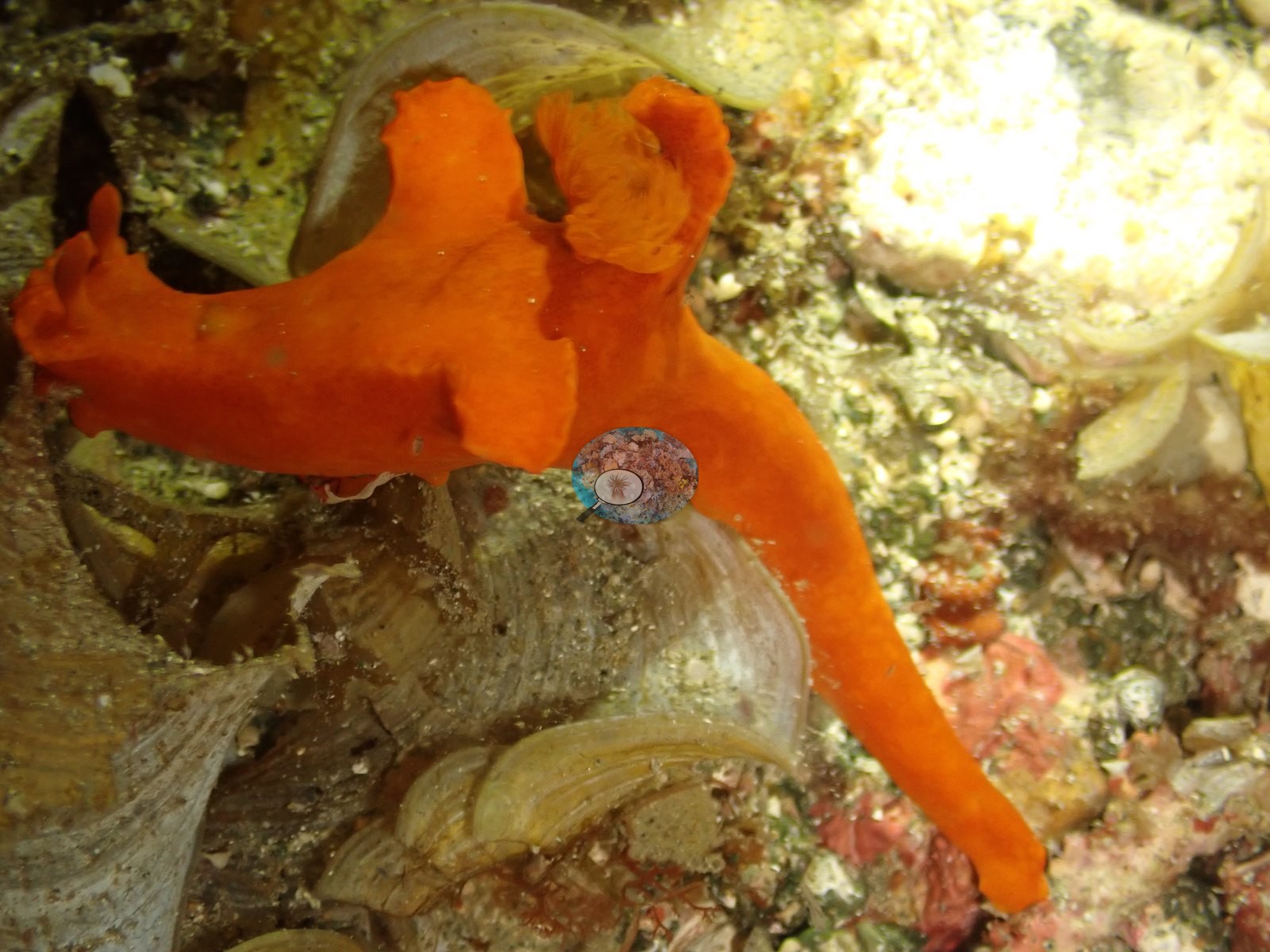
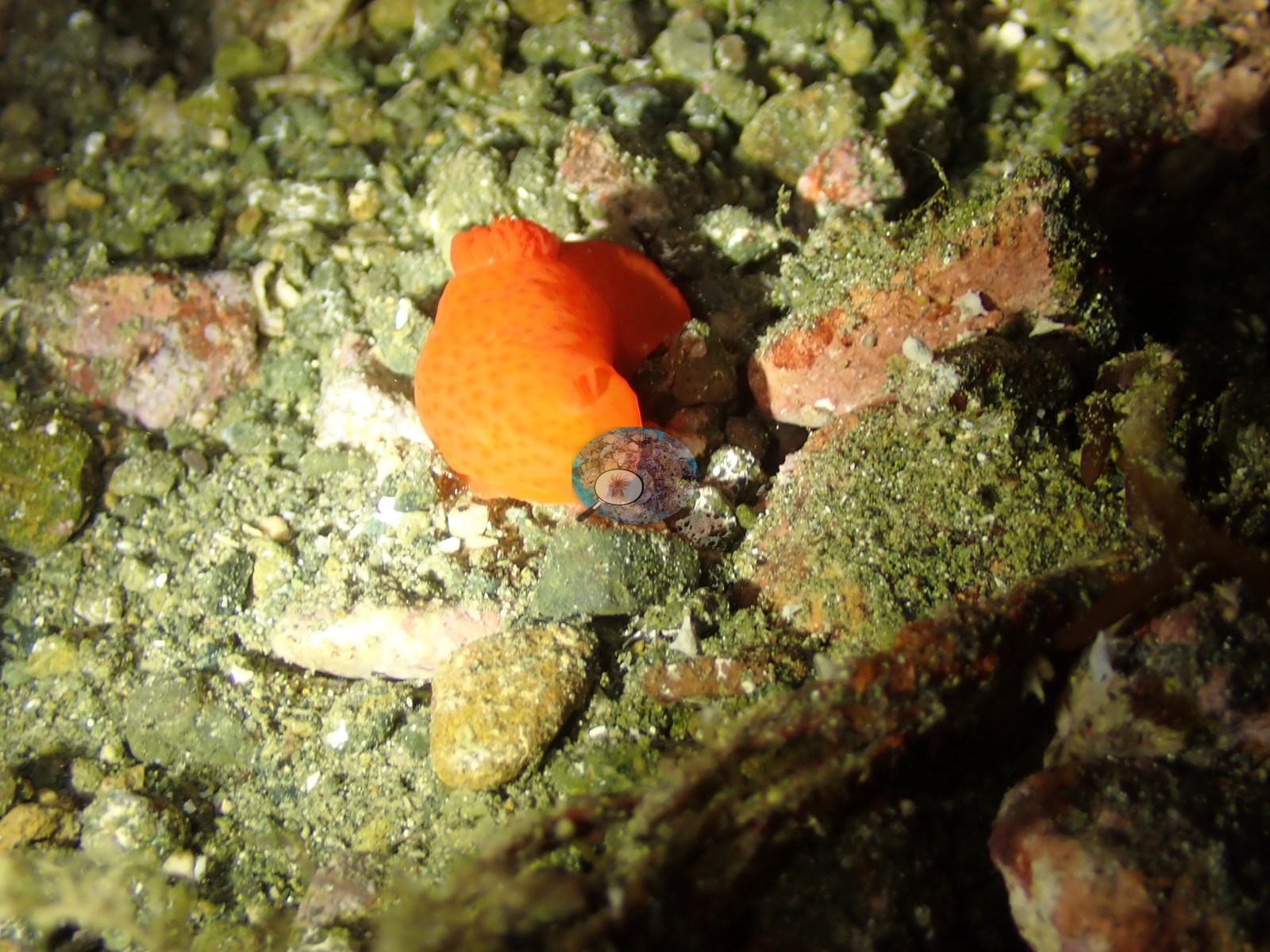
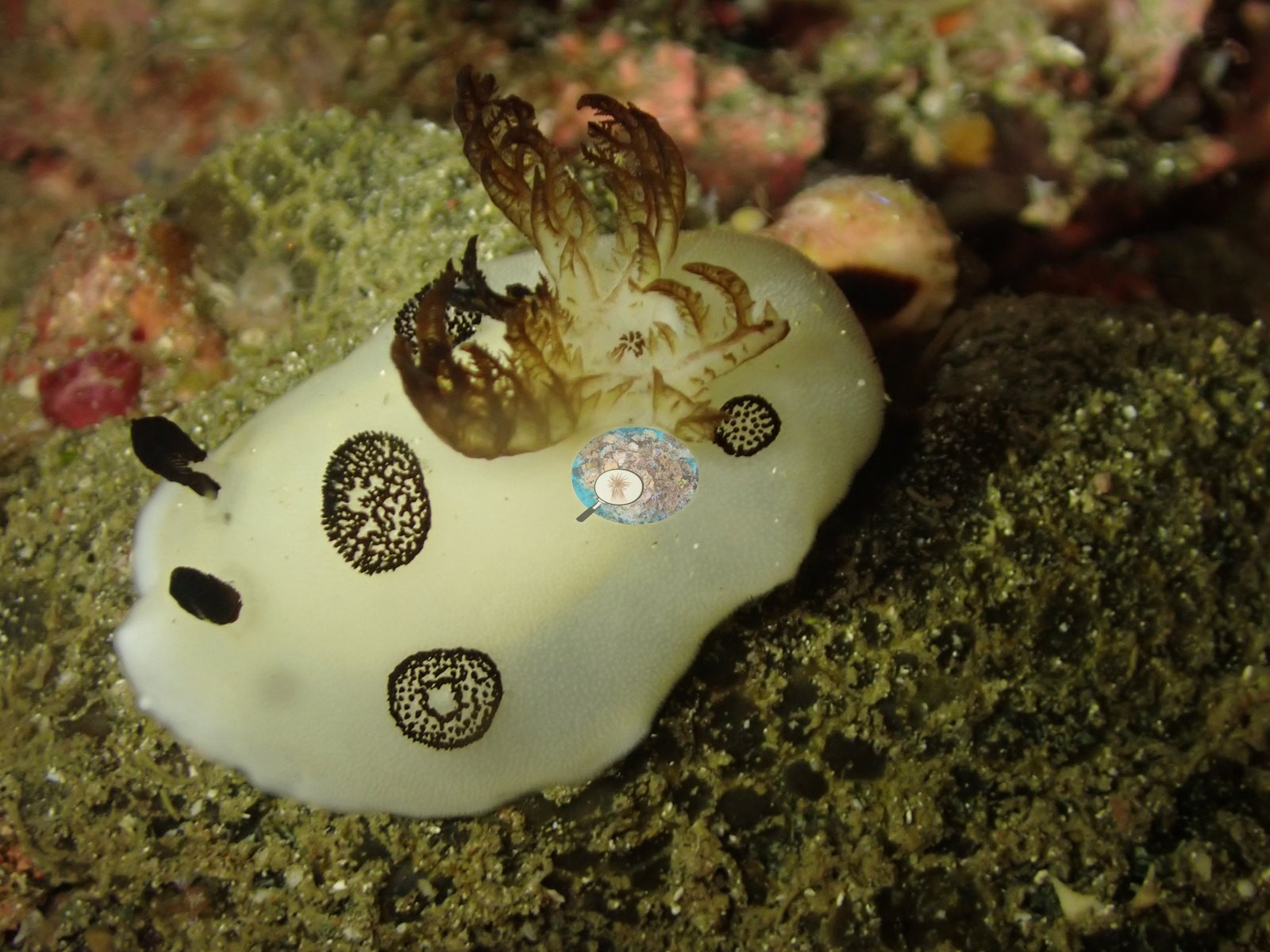
Sea slugs are the other theme, and they run to at least six distinct forms: a big white dorid with black-ringed reticulate spots and a brown-and-cream branched gill; a plain vermilion dorid with a flared mantle lobe and long tapering tail; two more compact scarlet dorids on open rubble; a small white one flecked orange; and an aeolid carrying dense brown cerata tipped pale blue over violet-banded head appendages, matching the blue dragon Pteraeolidia (e.g., Image 7, Image 21, Image 26, Image 28, Image 30, Image 43, Image 44).
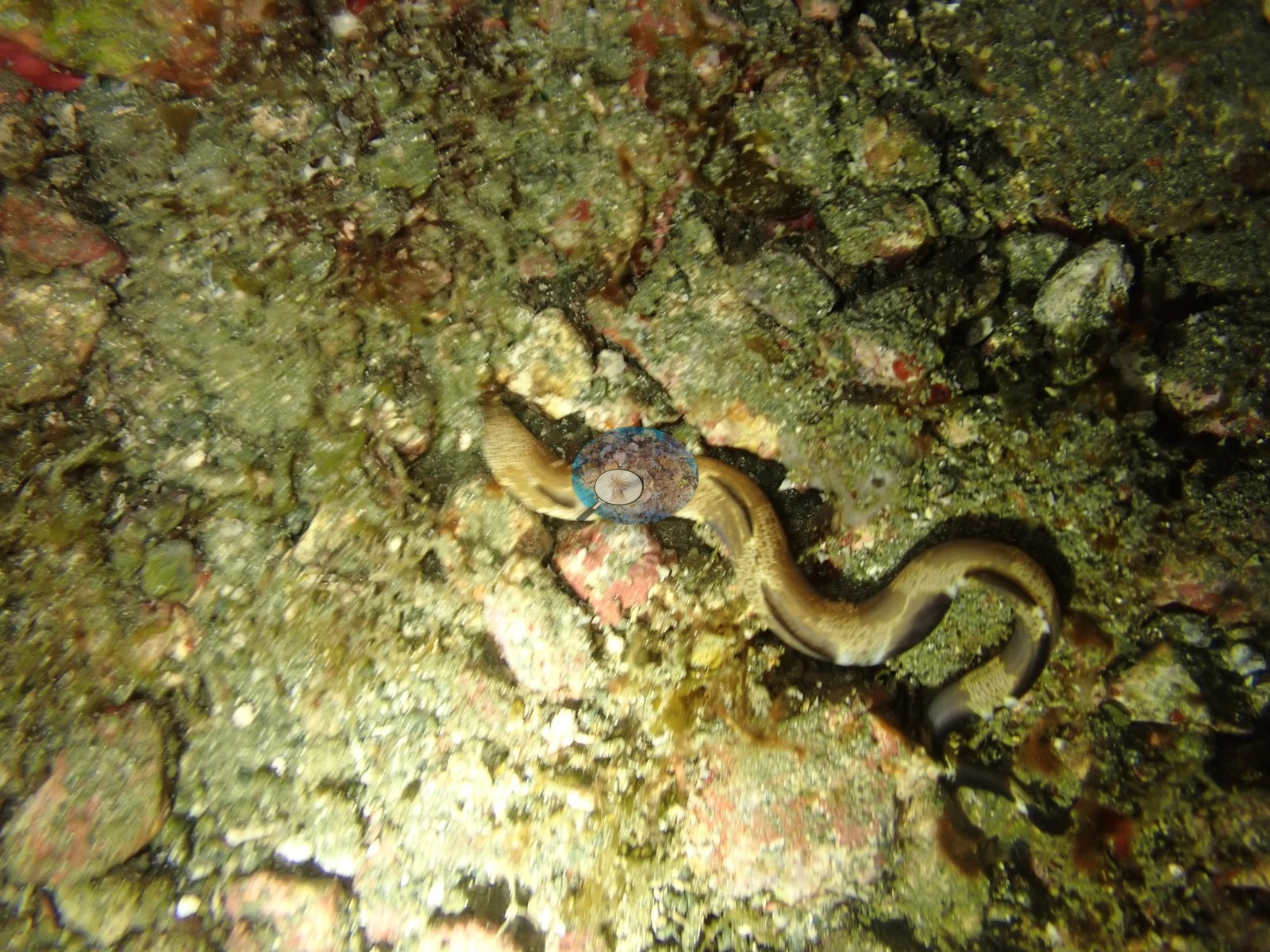
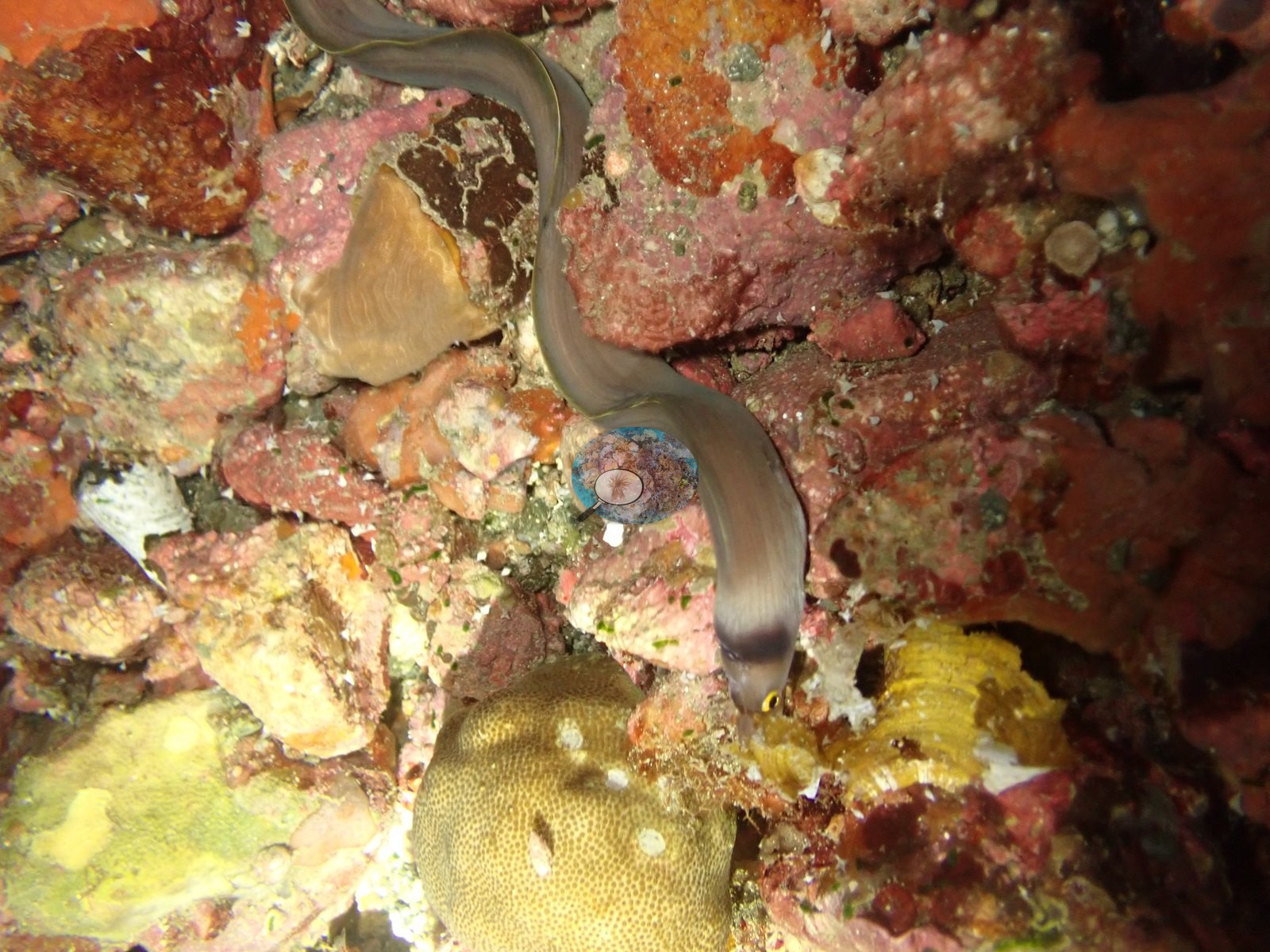
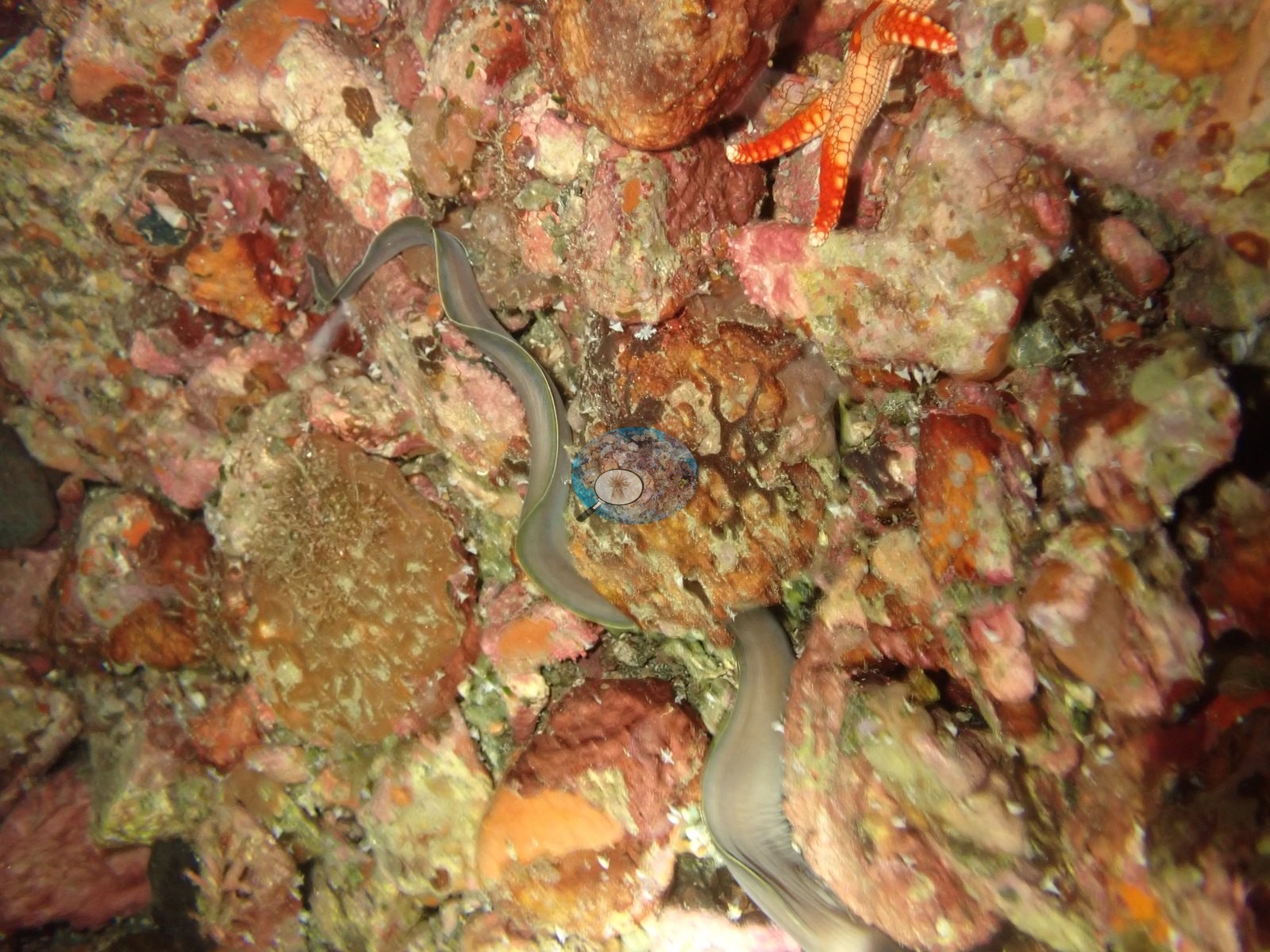
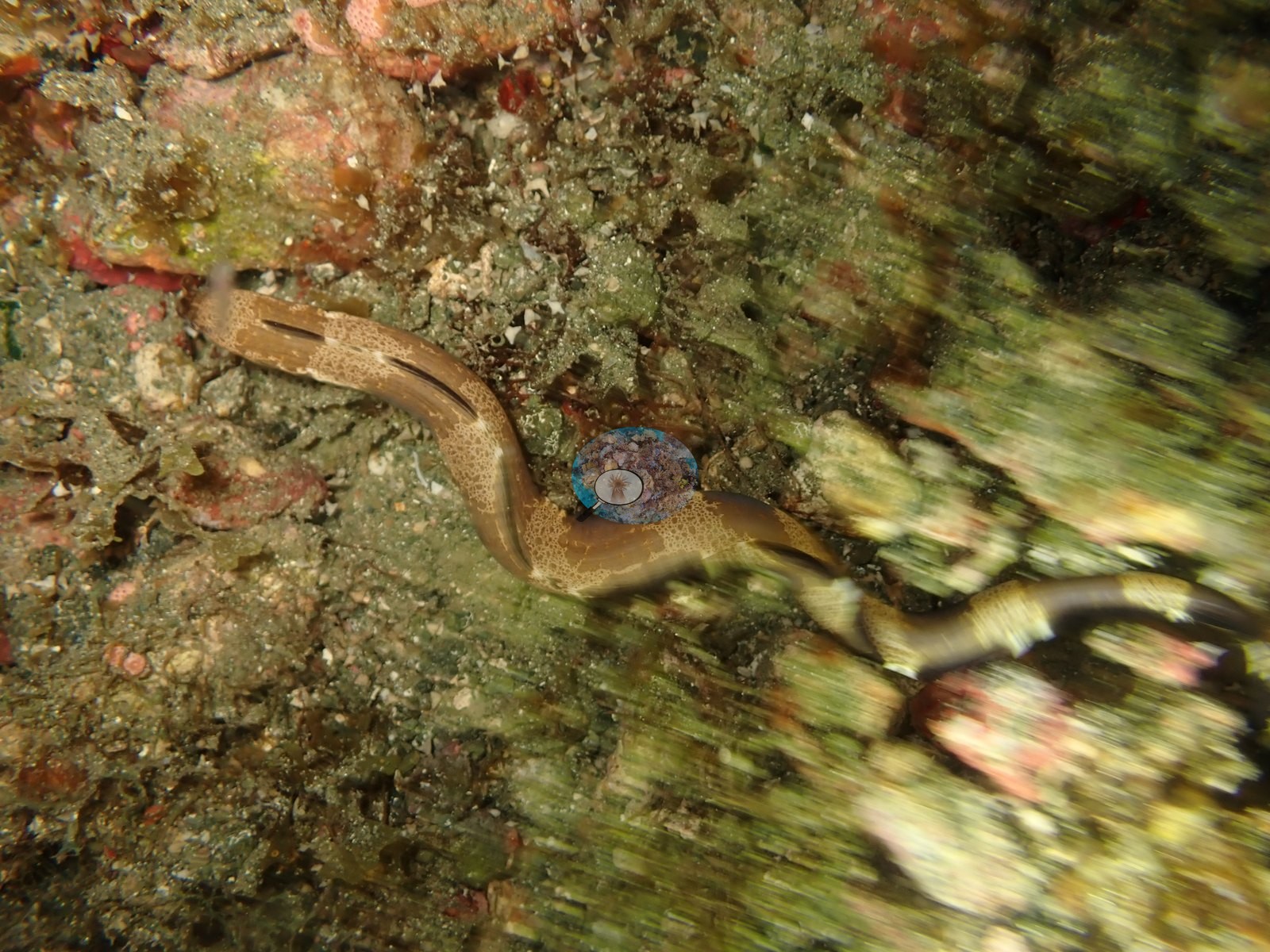
Eels are out and hunting: one slender gray-brown eel is caught free-swimming across the rubble in two frames, and a second, cream-reticulated with a dark banded tail, crawls the bottom in another two (e.g., Image 22, Image 33, Image 37, Image 40).
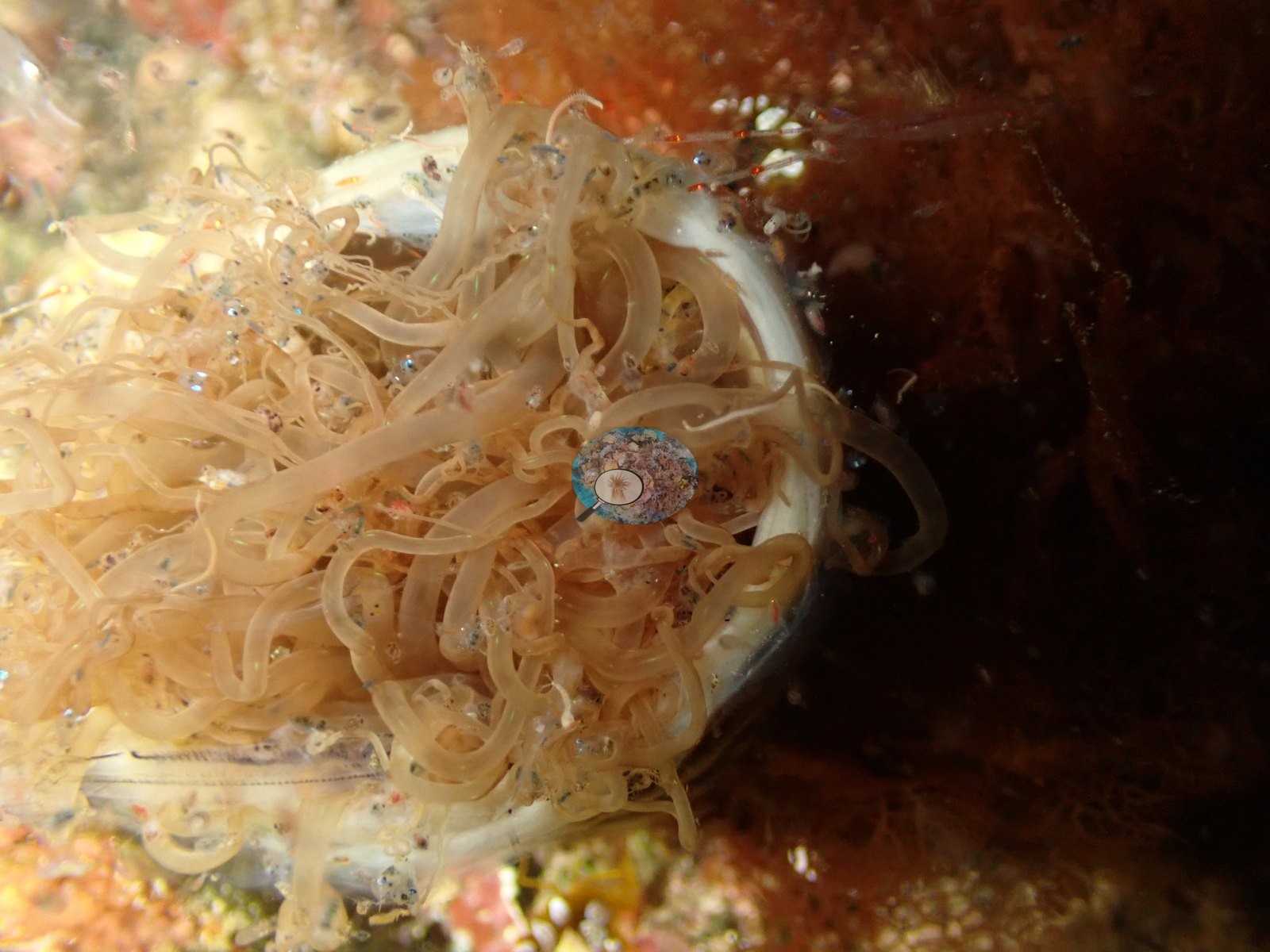
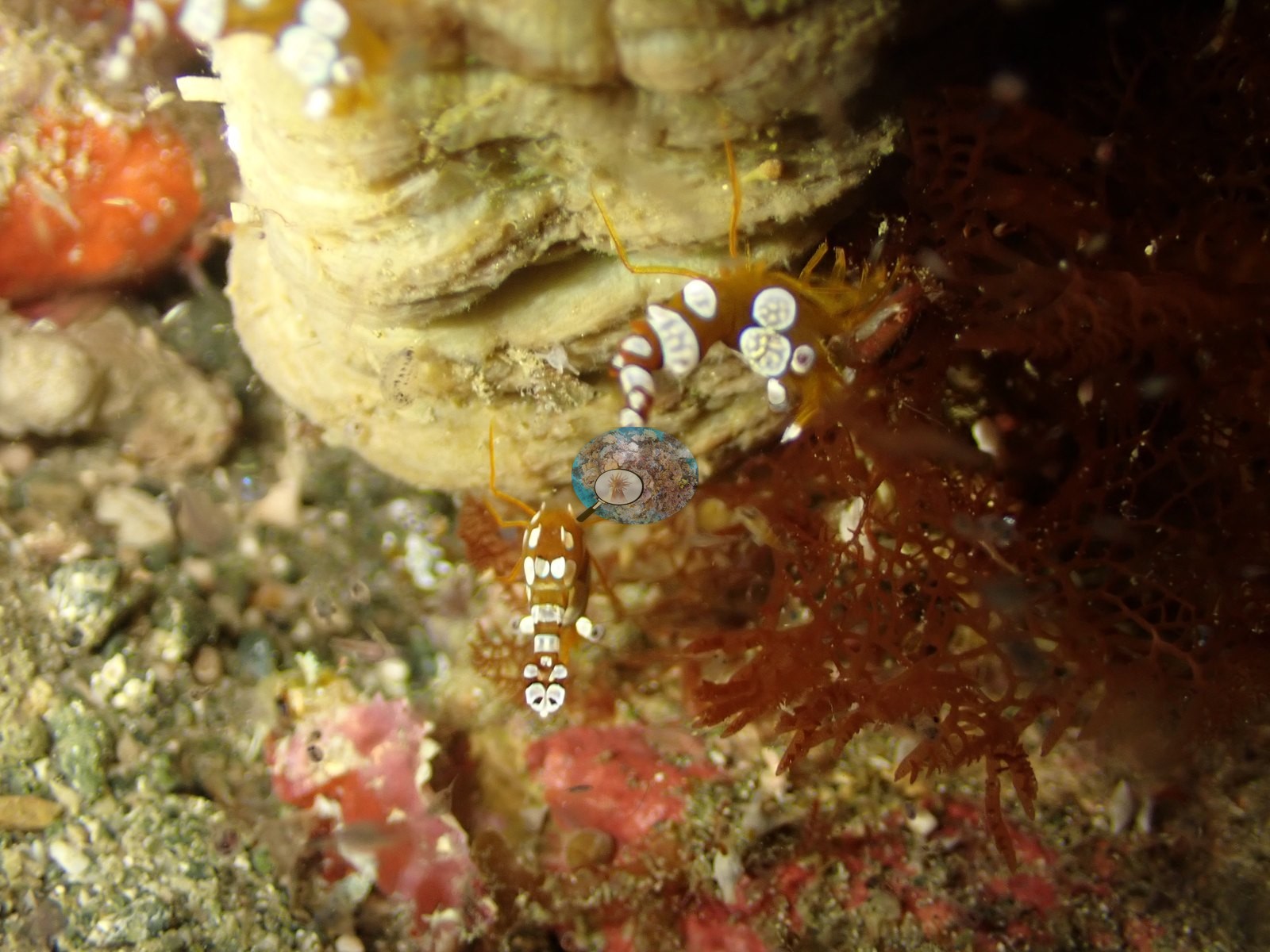
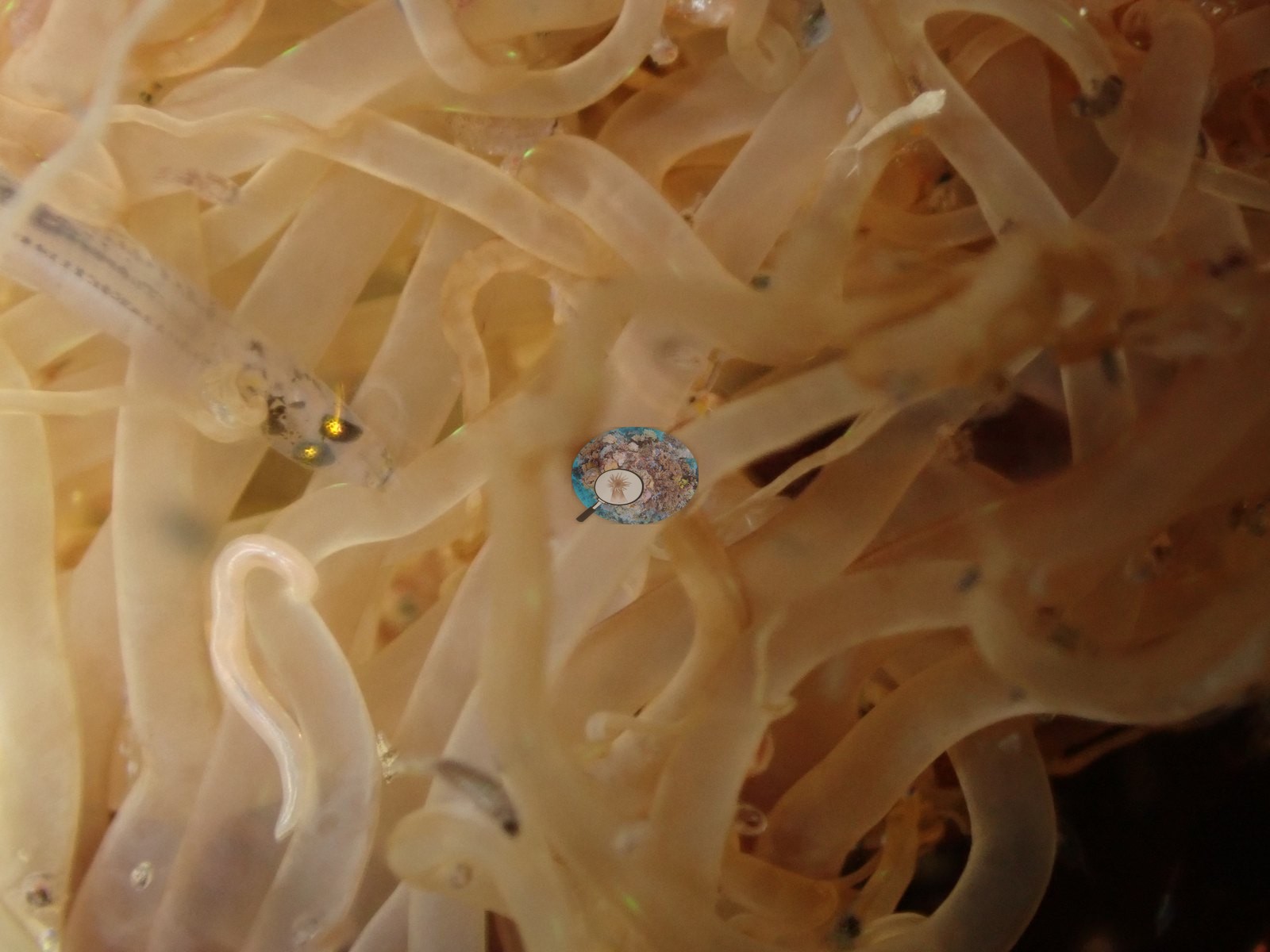
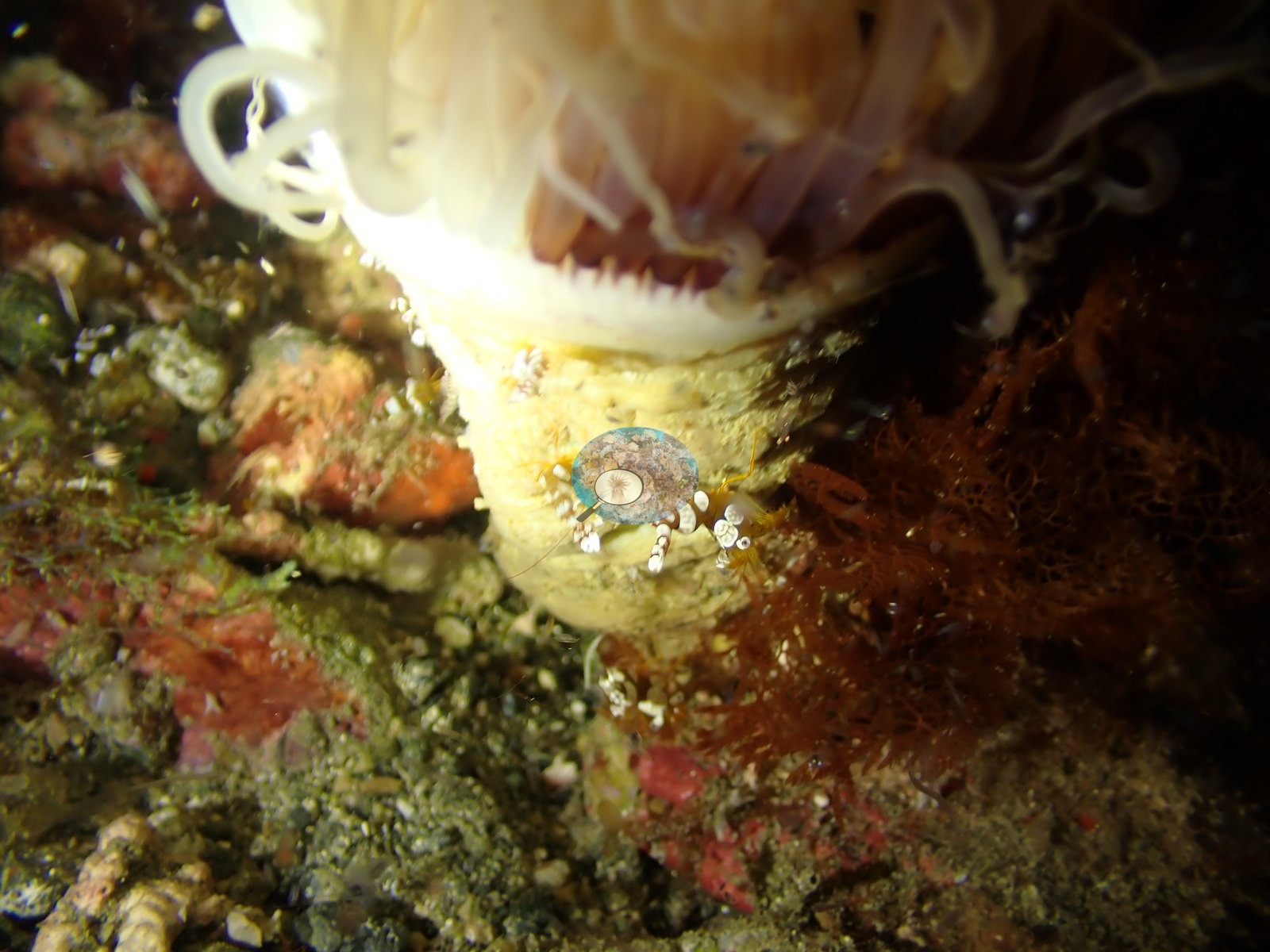
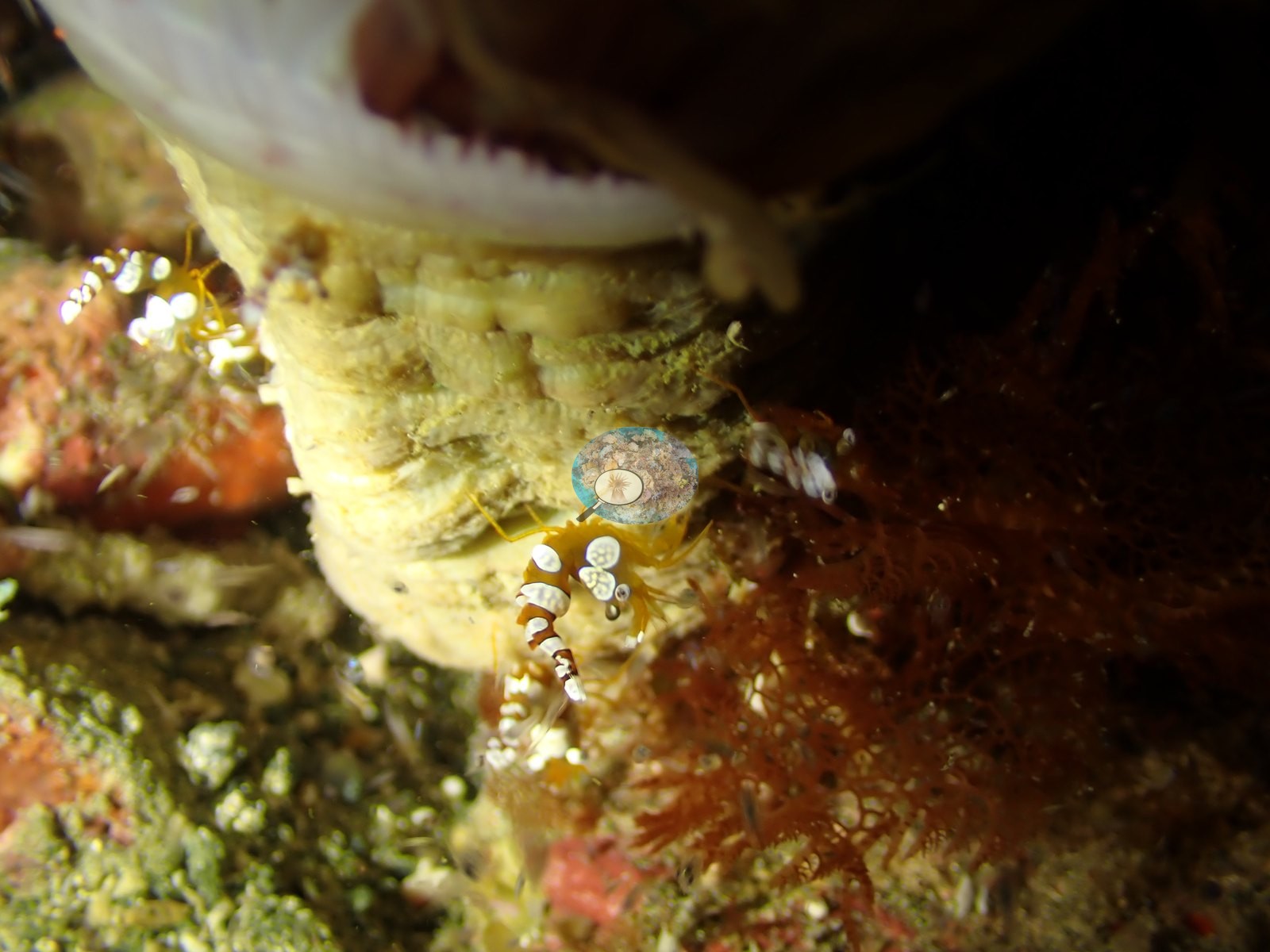
A tube-dwelling anemone spreads a dense crown of long translucent tentacles that shelters a pair of squat anemone shrimp (Thor amboinensis, the "sexy shrimp", banded brown and white with saddle spots) on its column and at least two tiny transparent juvenile fish among the tentacles themselves (e.g., Image 10, Image 19, Image 36, Image 49, Image 50).
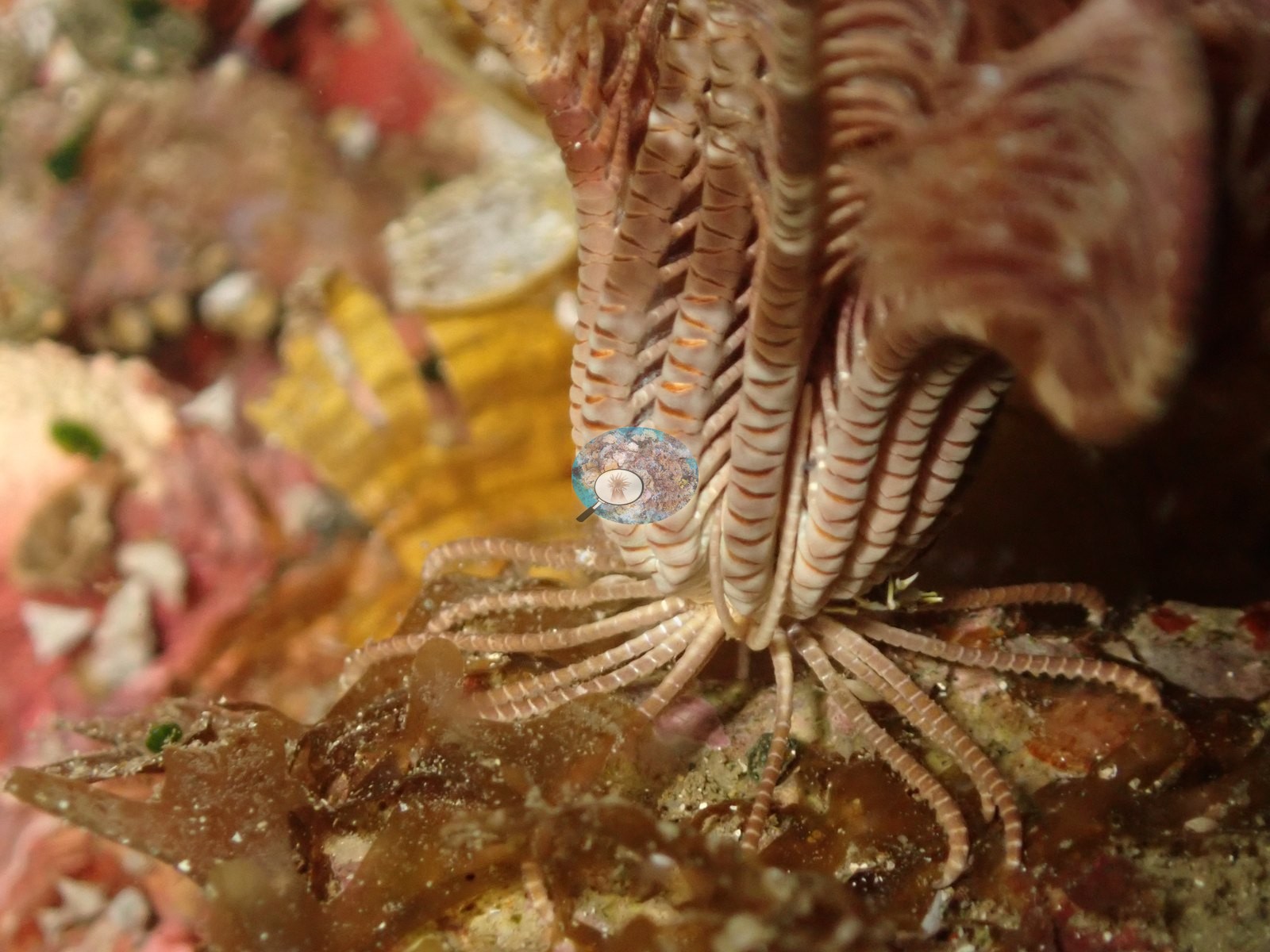
Feather stars are fully unfurled and feeding, a red-and-white banded brittle star works the rubble, a translucent shrimp and a spidery long-legged crab sit wedged between fragments, and a small benthic pipefish, a cardinalfish, and a couple of gobies fill out the fish list (e.g., Image 12).
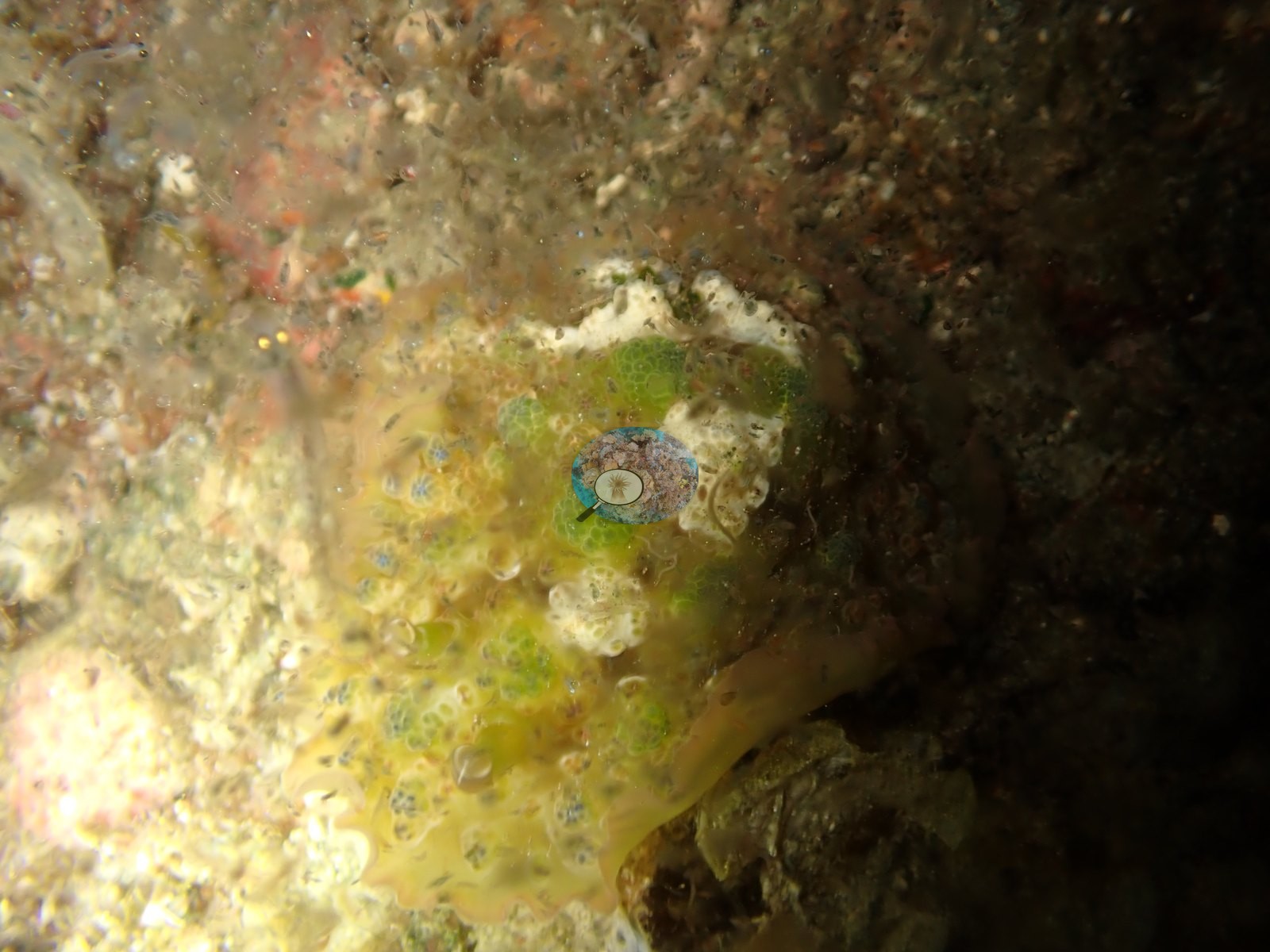
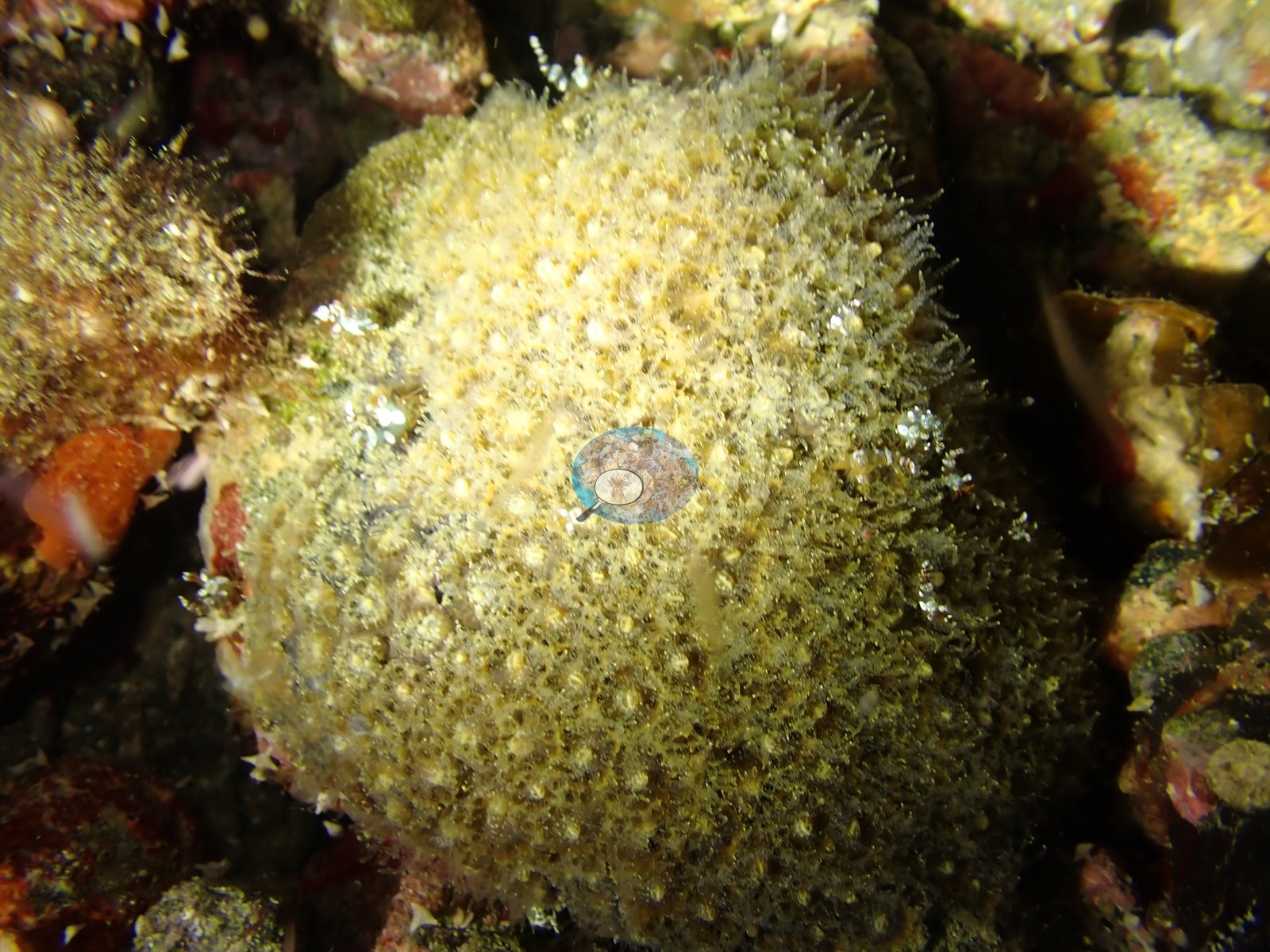
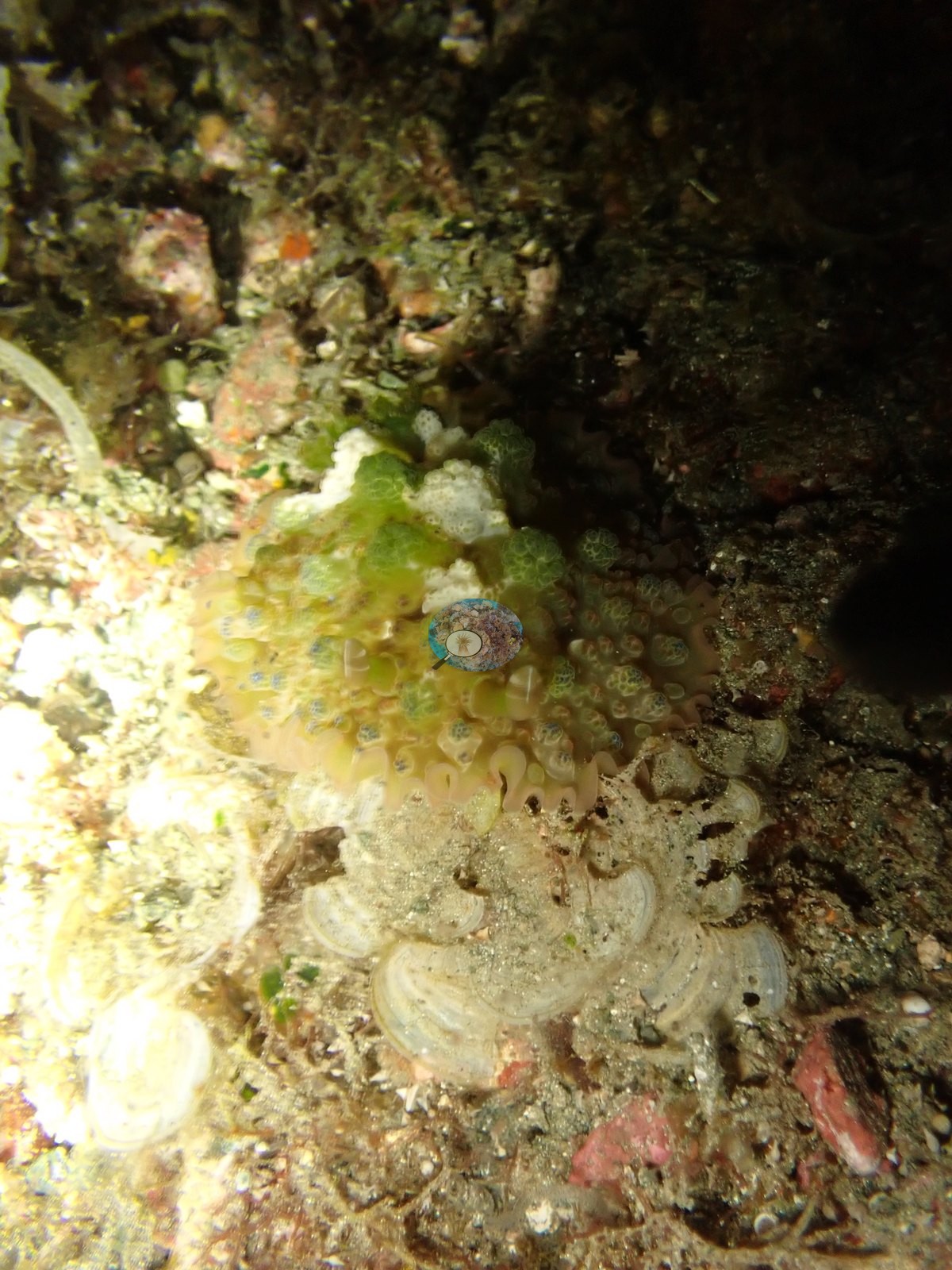
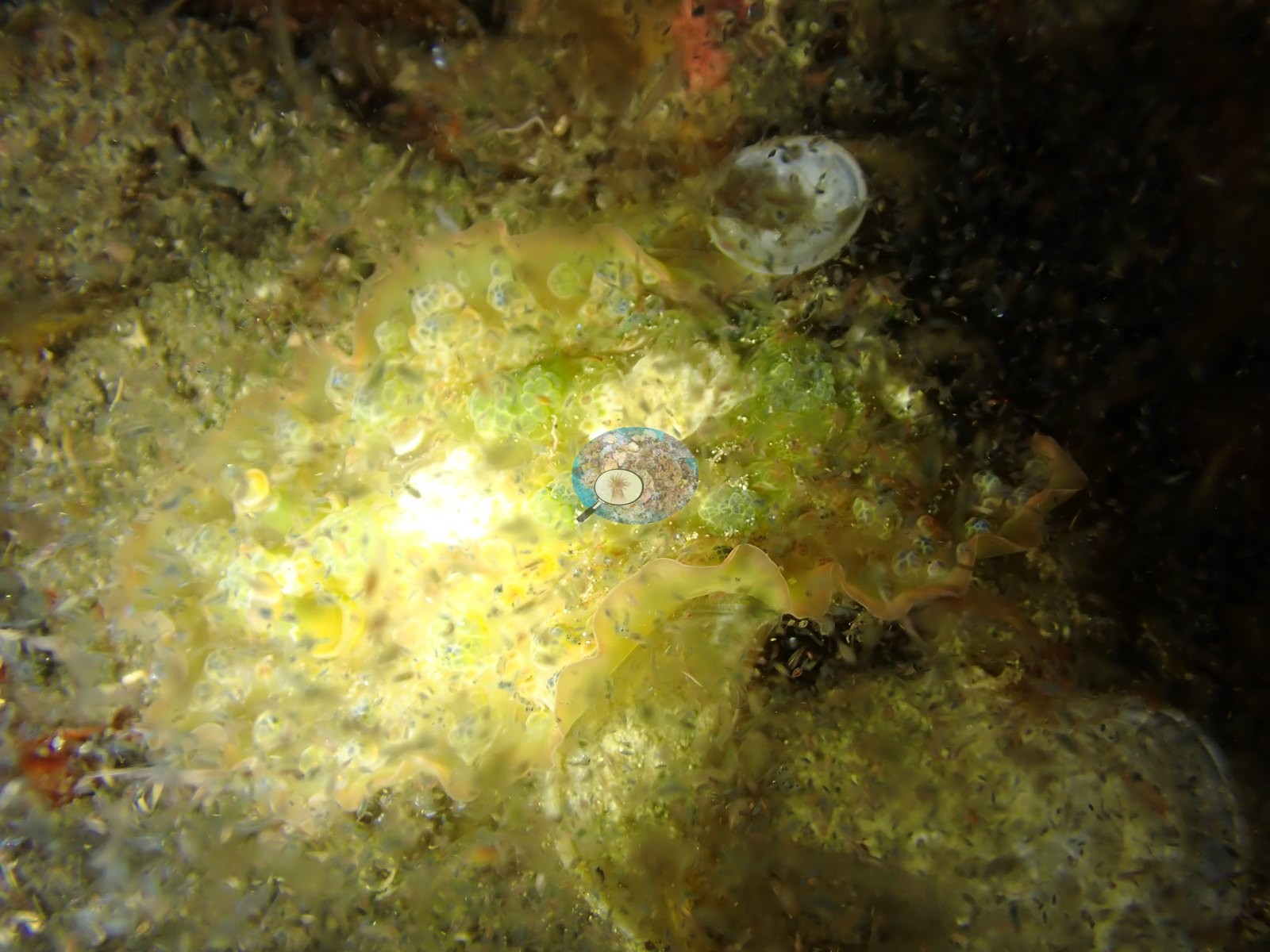
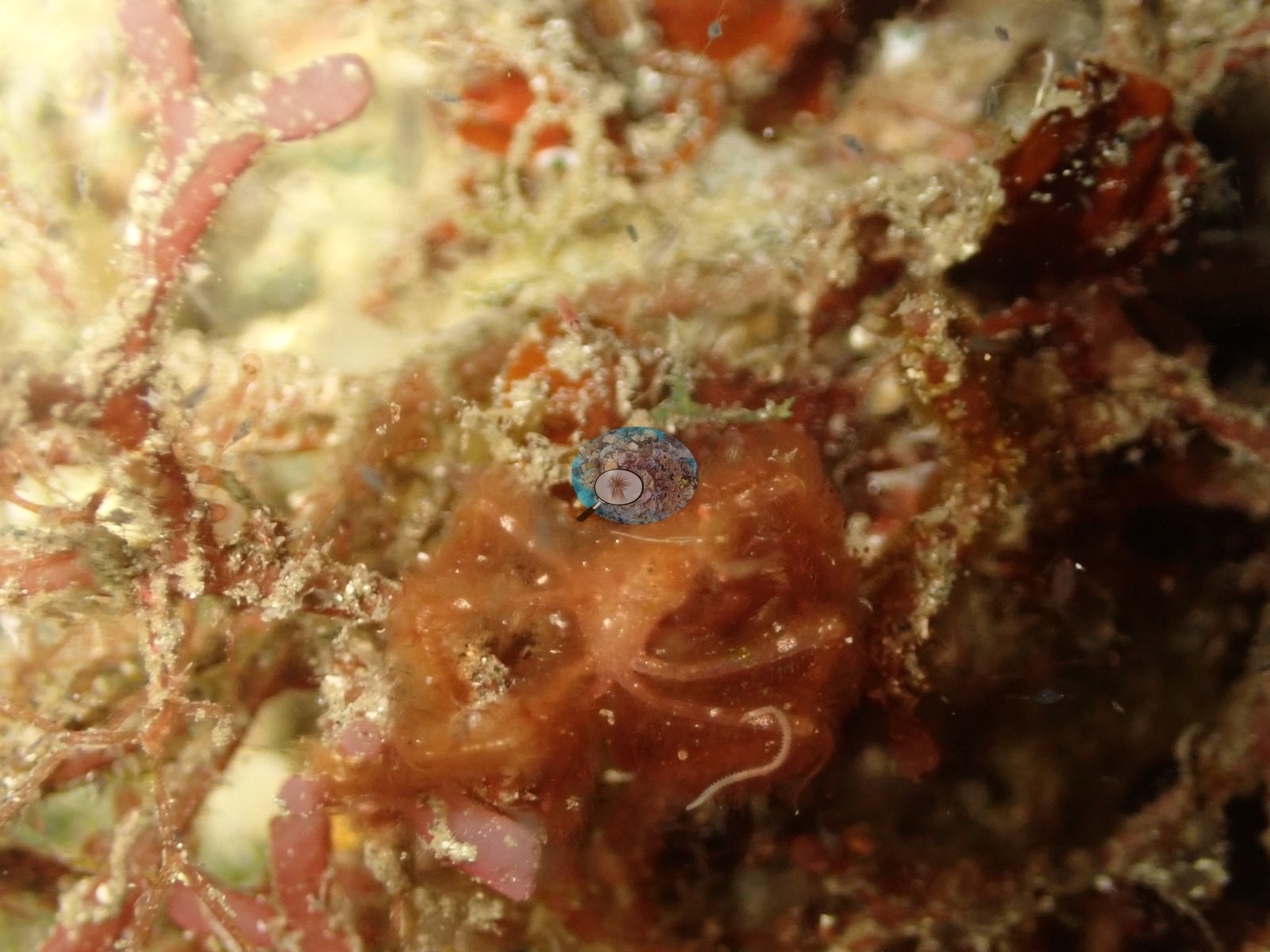
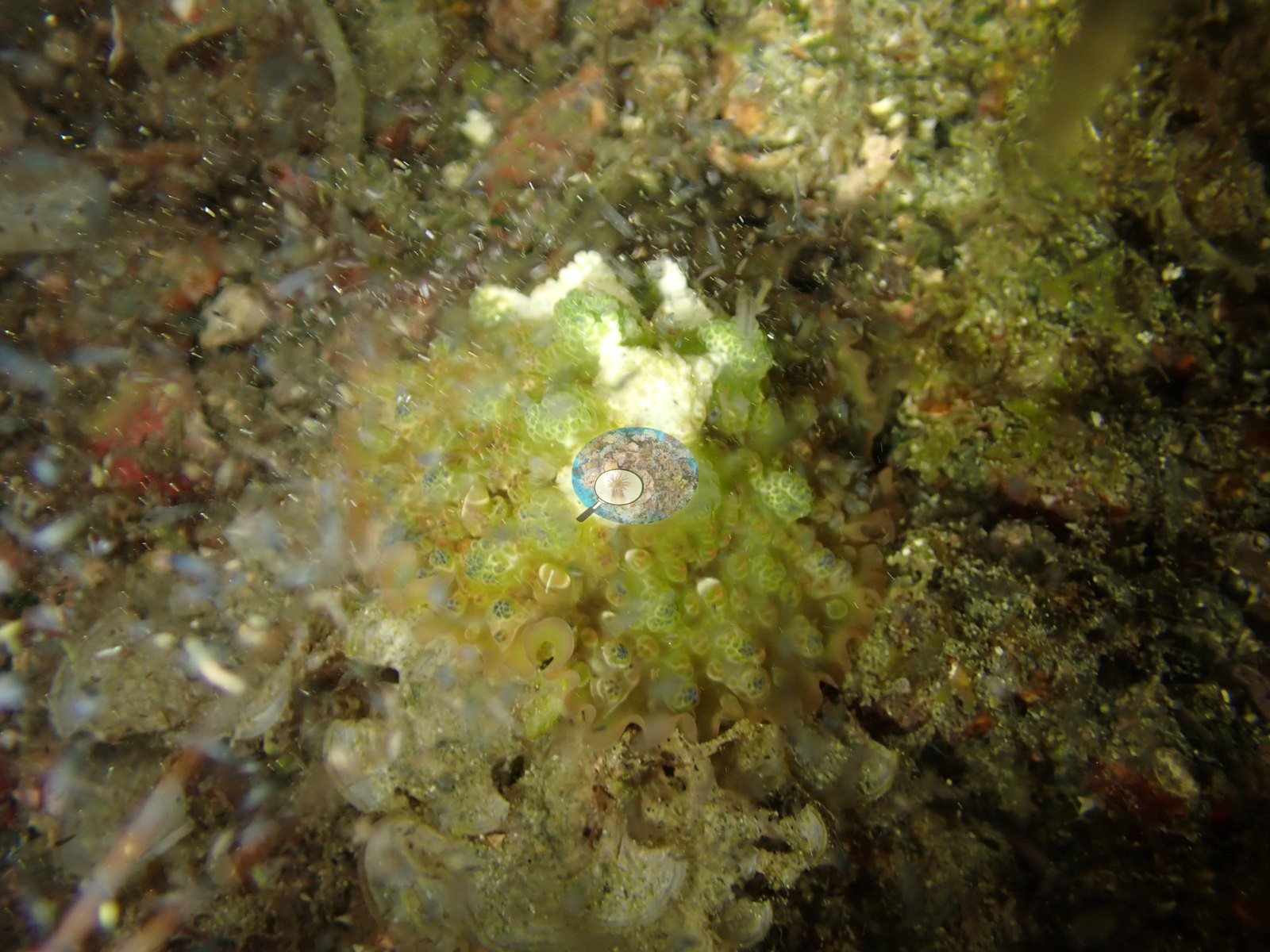
Two subjects Anderson clearly framed on purpose stay unresolved: a red-brown mass tucked into red algae, which could be a small frogfish or a decorator crab and cannot be called either from the frame, and a broad yellow-green sheet covered in dense papillae carrying blue-green granules, which reads as a colonial ascidian or a solar-powered sea slug (e.g., Image 4, Image 29, Image 31, Image 32).
The squid of the field note is not in the stills.
Comparisons with other data
No prior survey data from this site. If you would like to share yours, please email us.
Dive record
Cimitero — logged in Anderson's photo archive as the "Cemetary night dive", dive 4 of 2026-08-11 during the August 2026 Halmahera crossing aboard the liveaboard Ambai (Wallacea Dive Cruises). Maximum depth 21.8 m, water 25–26°C. Anderson's own field note reads: "night much dive with plentiful nudibranch, squid, frogfish, eels" — and the photographs bear that out on the molluscs and the eels.
Other notes
The two names are the same dive. "Cimitero" is simply Italian for cemetery, the folder is titled "Cemetary night dive" (Anderson's spelling), the folder date and the camera's own file numbering both read 2026-08-11, and that is the single date carried on this site. The imagery settles it independently: all 82 frames reviewed are strobe-lit against black water with no ambient daylight anywhere in the set, spanning a 43-minute window on the camera clock, and the habitat they show is a graveyard of dead coral — exactly what a site named for a cemetery ought to look like (e.g., Image 5, Image 48).
Data & links
All images from Coral Reef Diagnostics.
© Coral Reef Diagnostics.