
Indonesia - Halmahera: Batu Mangga
Part of the regional summaries: Indonesia - Halmahera and Indonesia - Maluku
More info
North Maluku (NOAA CRW virtual station)Batu Mangga was dived in persistently hazy, sediment-laden water that Anderson speculated might help cool the corals - his own hypothesis, not a measurement. The site is a filter-feeder wall first and coral reef second, with broad foliose plate fields and a shallow terrace of staghorn Acropora running to the visibility limit. No confirmed bleaching, crown-of-thorns starfish (COTS), or disease. A blind Claude computer-vision point count puts coral cover around 21%.
Batu Mangga diselami dalam air yang terus-menerus berkabut dan sarat sedimen, yang menurut dugaan Anderson mungkin membantu mendinginkan karangnya — hipotesisnya sendiri, bukan hasil pengukuran. Lokasi ini pertama-tama adalah dinding penyaring makanan dan baru kemudian terumbu karang, dengan hamparan luas karang lembaran dan teras dangkal berisi Acropora bercabang yang membentang hingga batas jarak pandang. Tidak ada pemutihan, bintang laut mahkota duri, maupun penyakit yang terkonfirmasi.
Terjemahan ringkasan ini oleh AI; versi bahasa Inggris yang berlaku. Translated from the site’s shorter map summary.
Eight other CRD dive sites within 5 km shown in orange — click a marker to open its page.
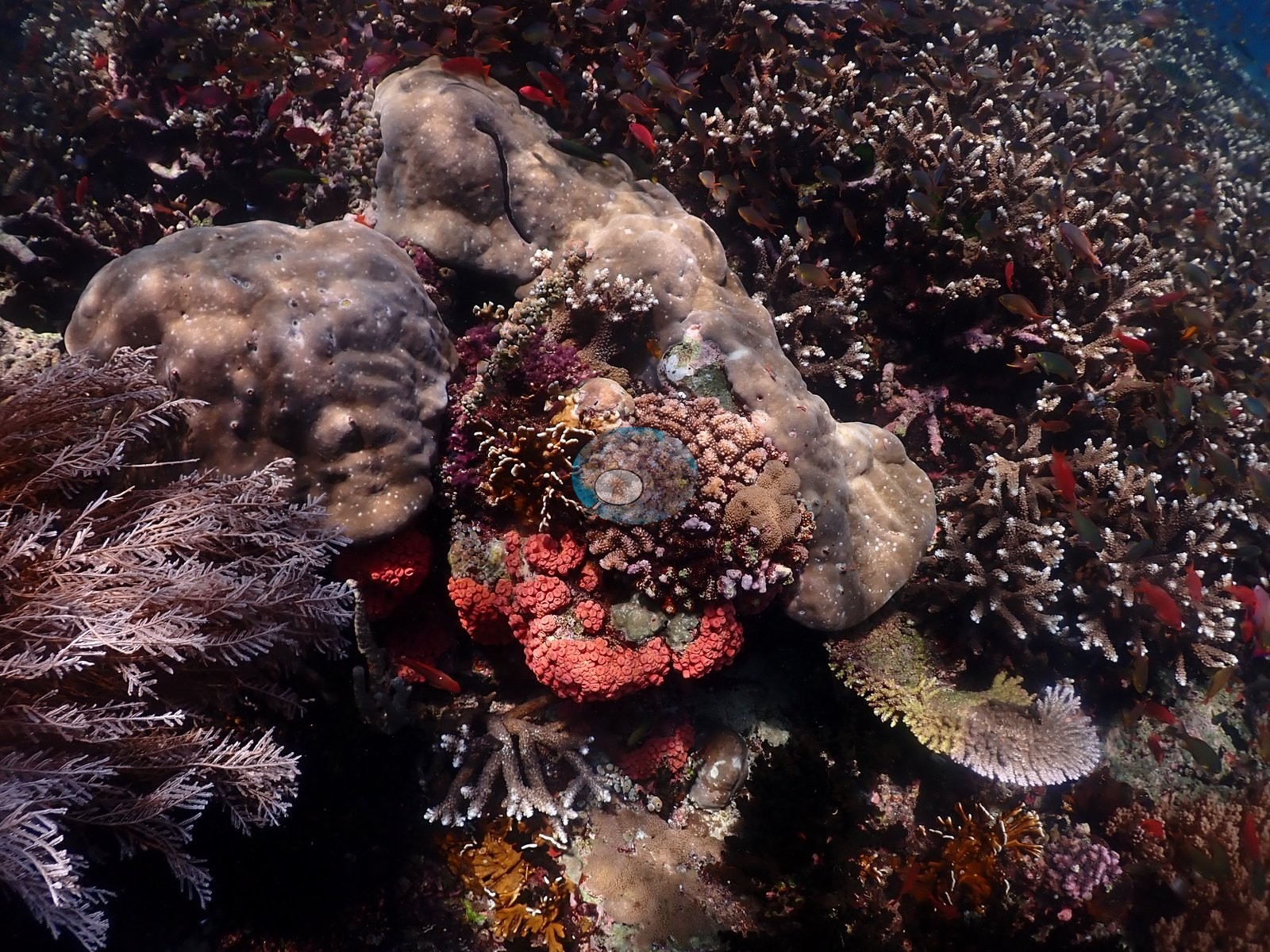
45 of these 55 photographs are shown beside the text that discusses them under "Site description" below.
Site description
Setting
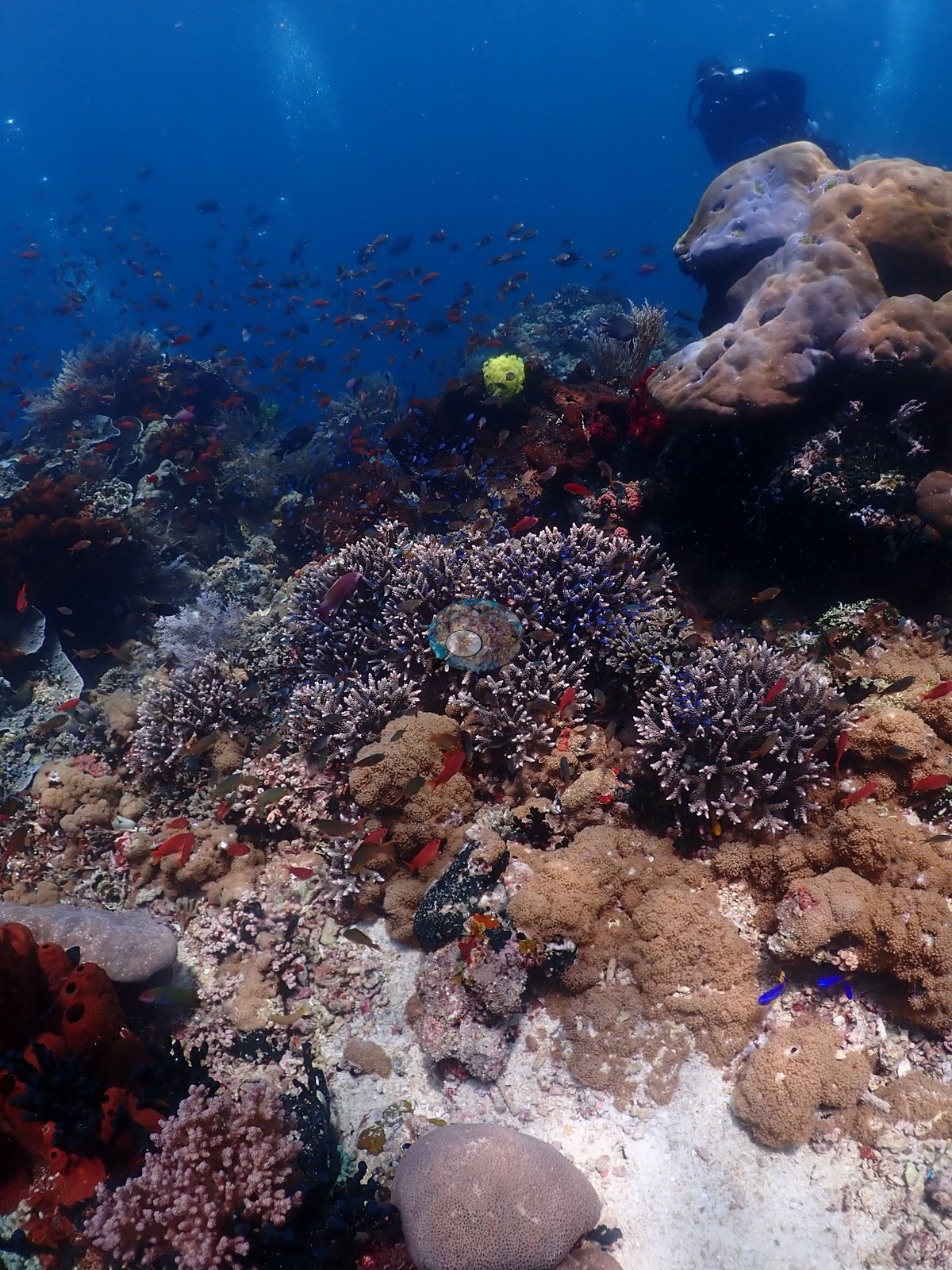
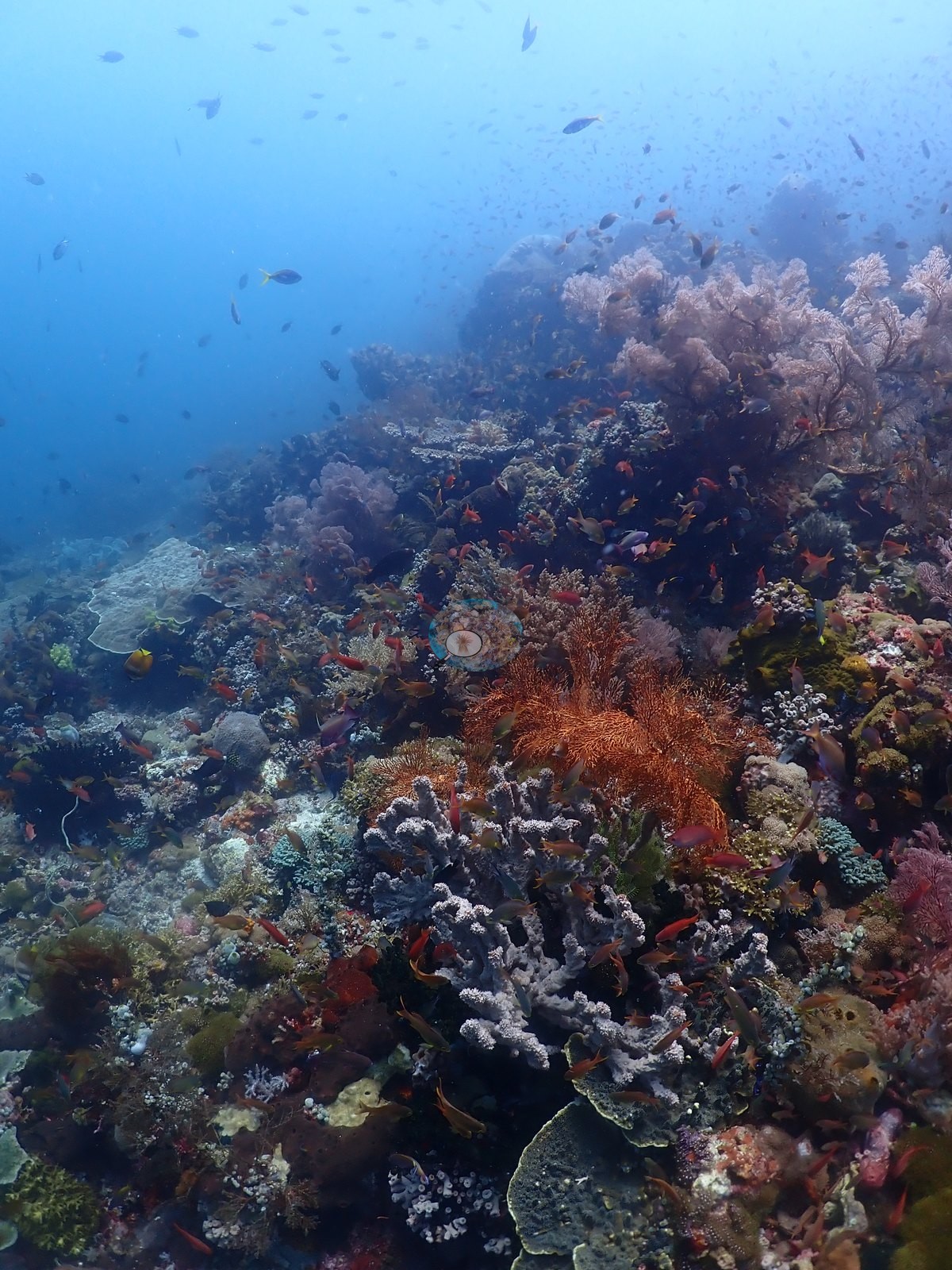
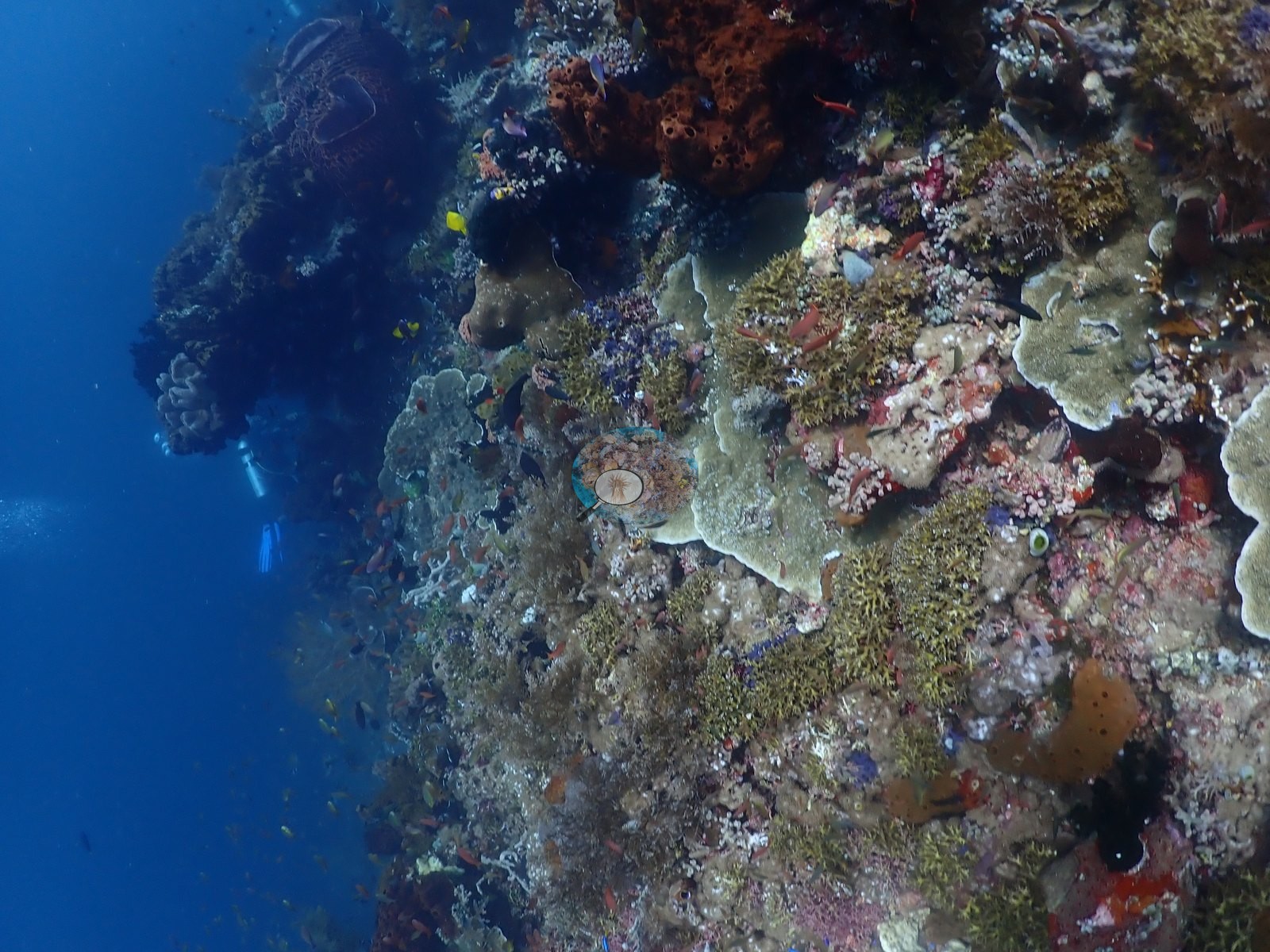
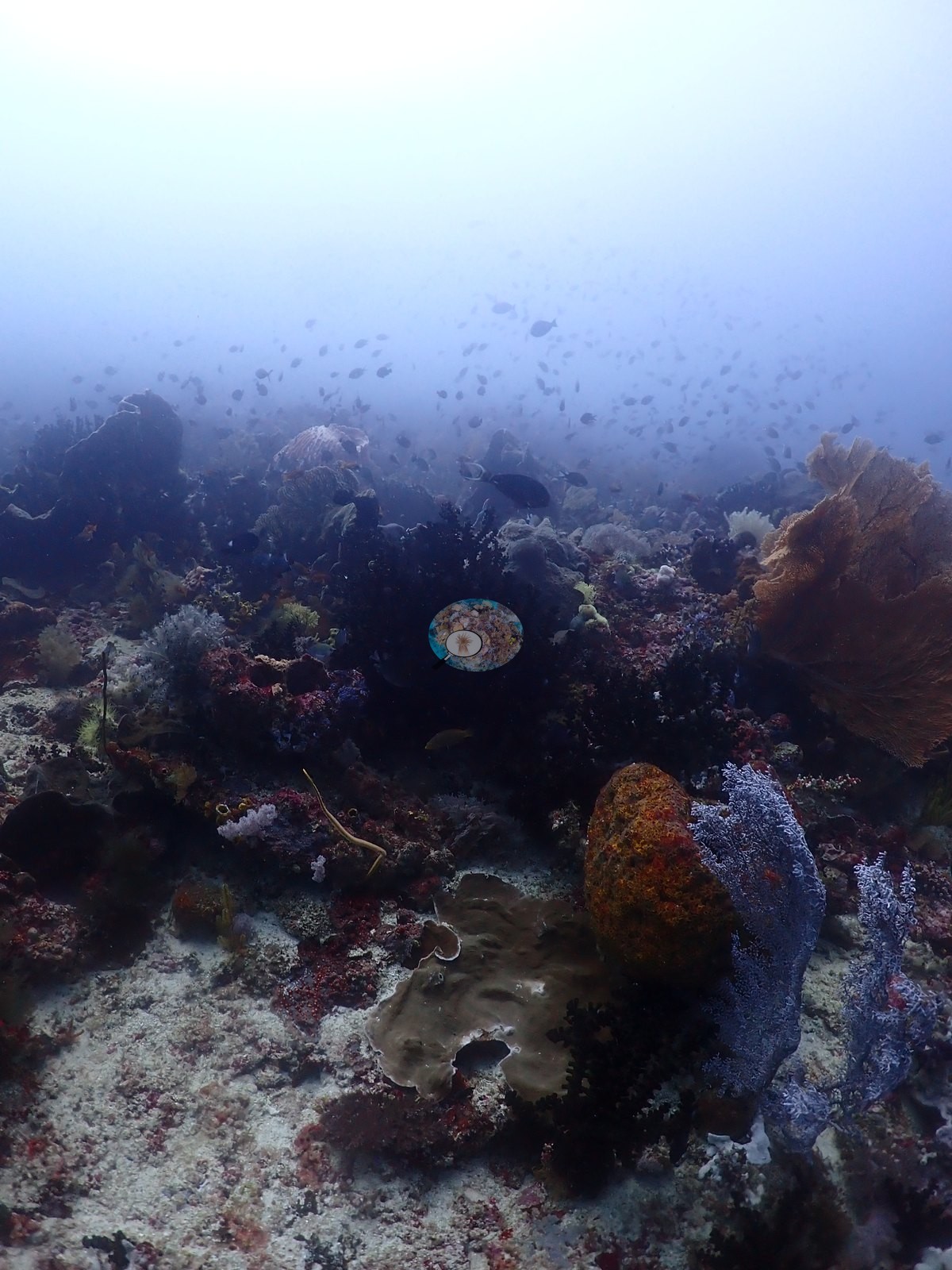
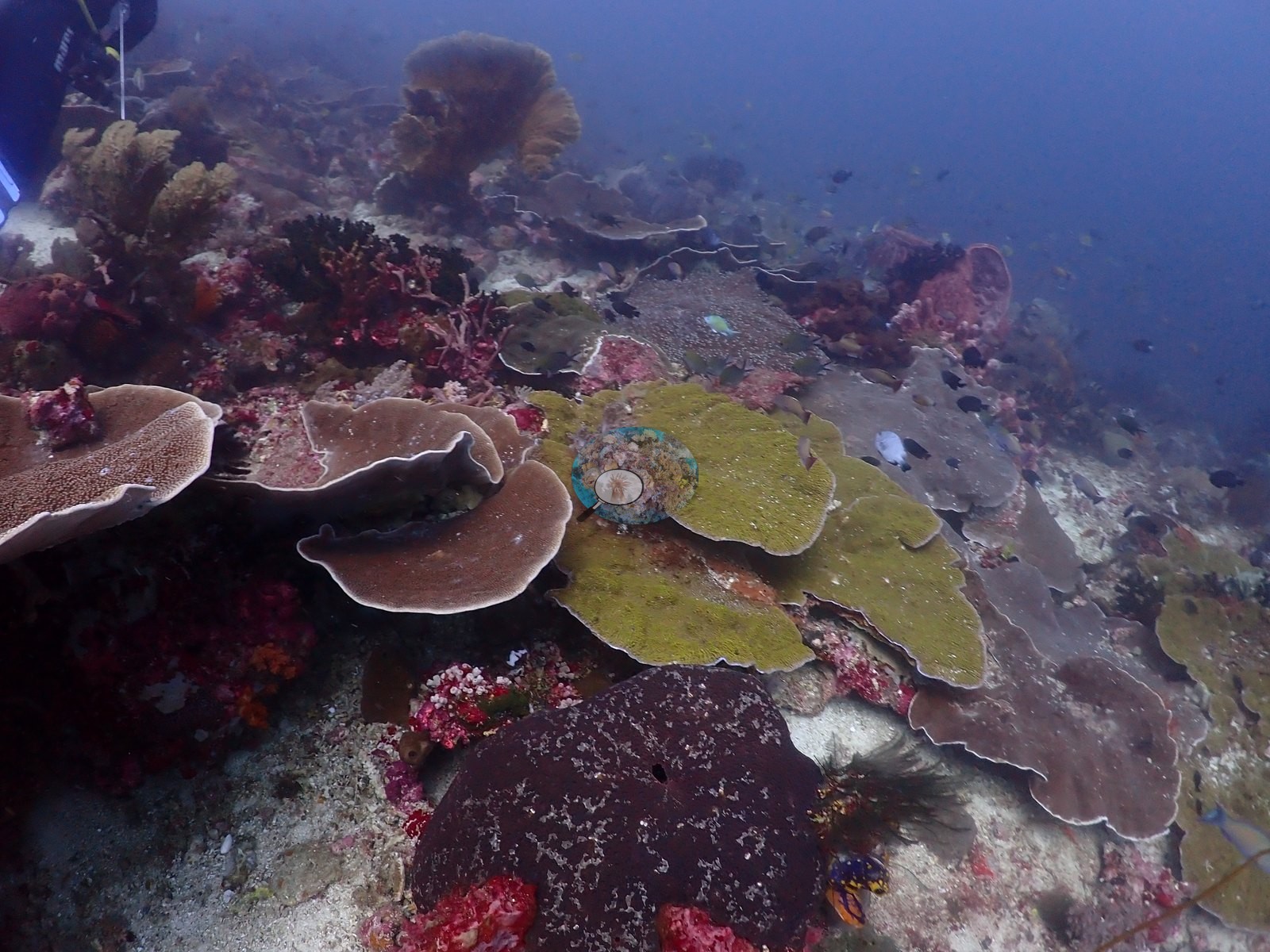
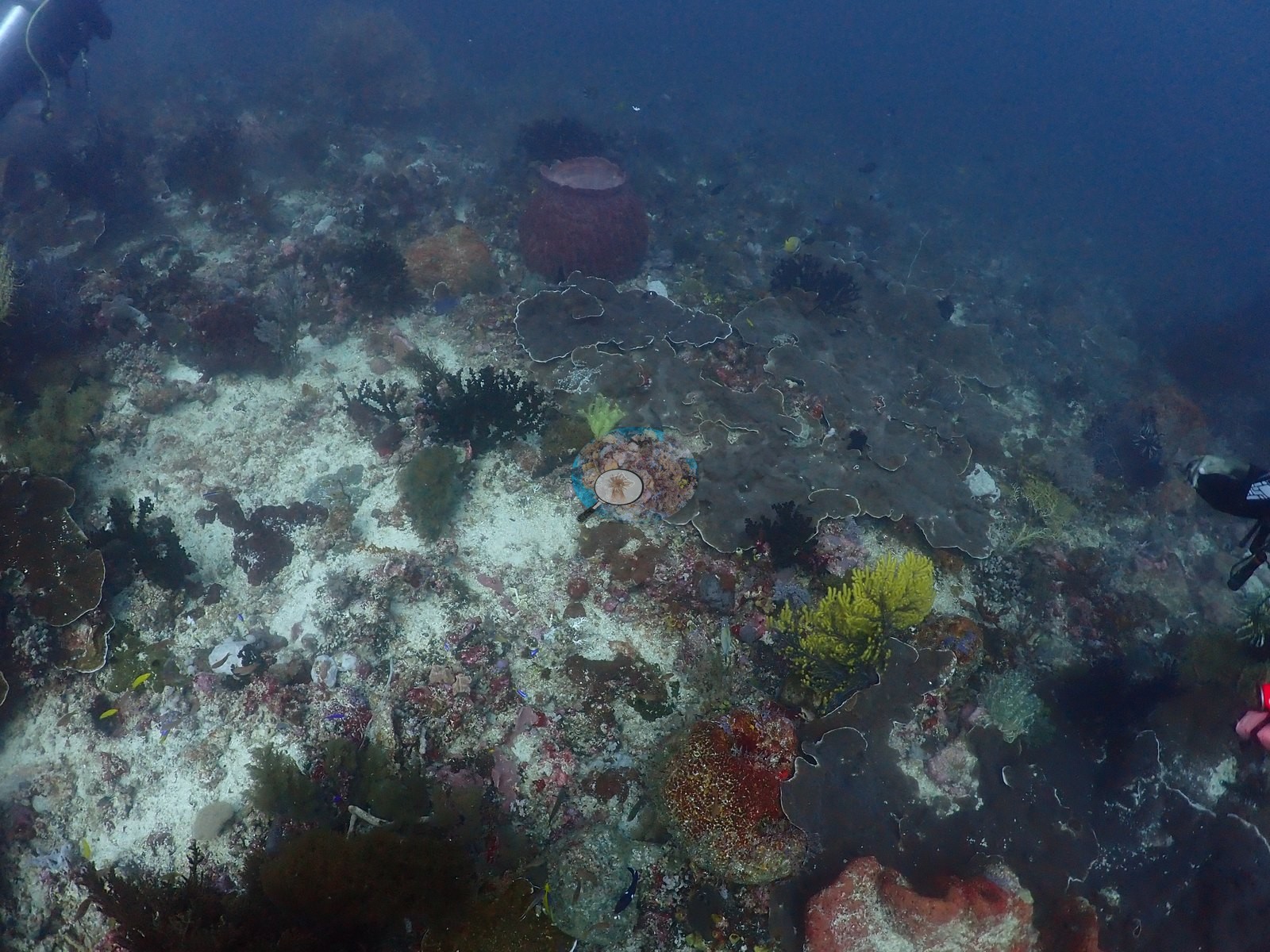
Anderson's field note is about the water rather than the reef: "sites have been generally low visibility due to suspended sediments, might be helping cool off corals" — his own hypothesis, not a measurement, and the photographs certainly bear out the first half of it. Nearly every wide frame is hazy, with a milky green-blue cast and heavy backscatter beyond three or four meters (e.g., Image 10, Image 37, Image 42, Image 51, Image 53).
General benthic features
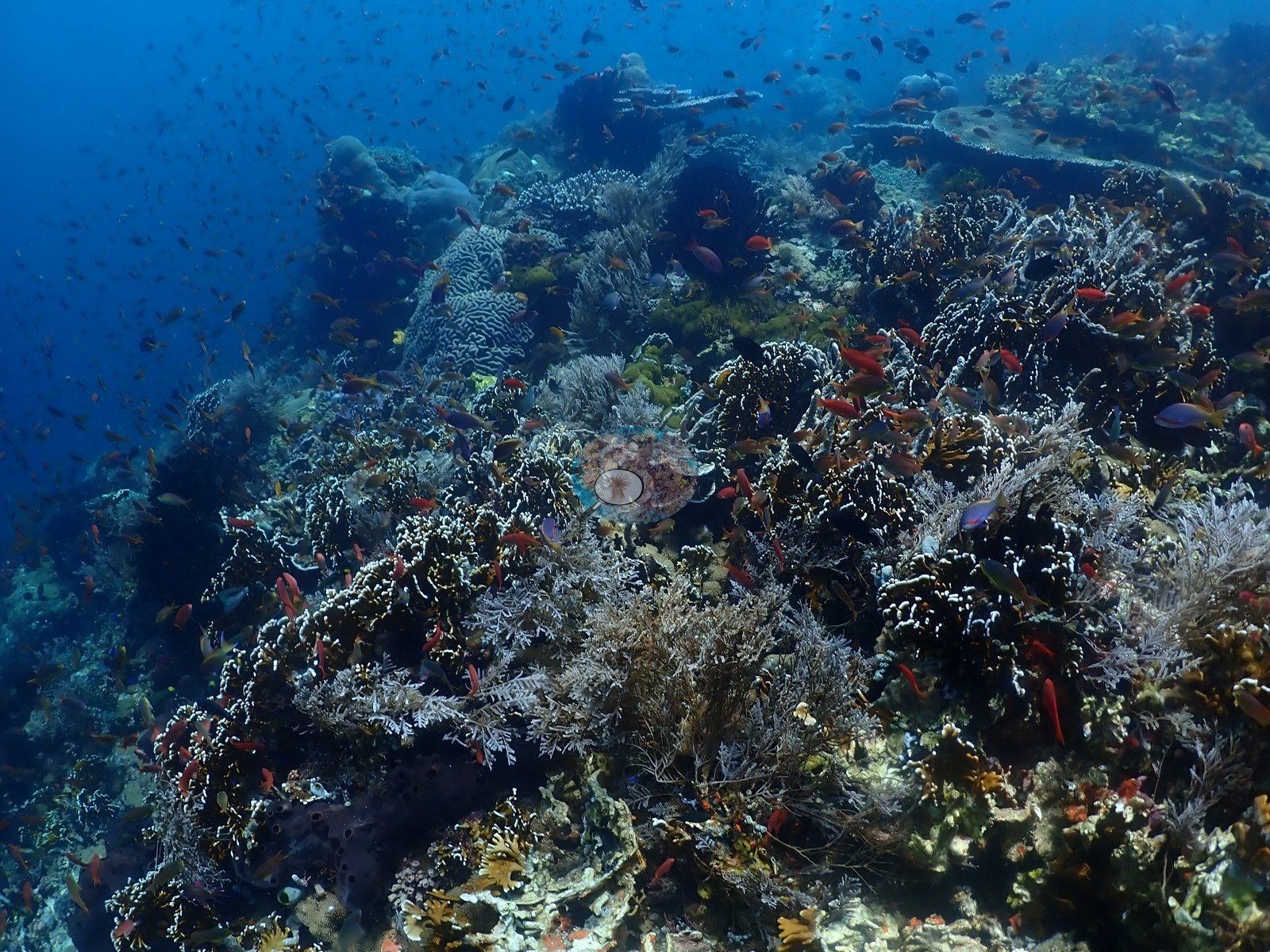
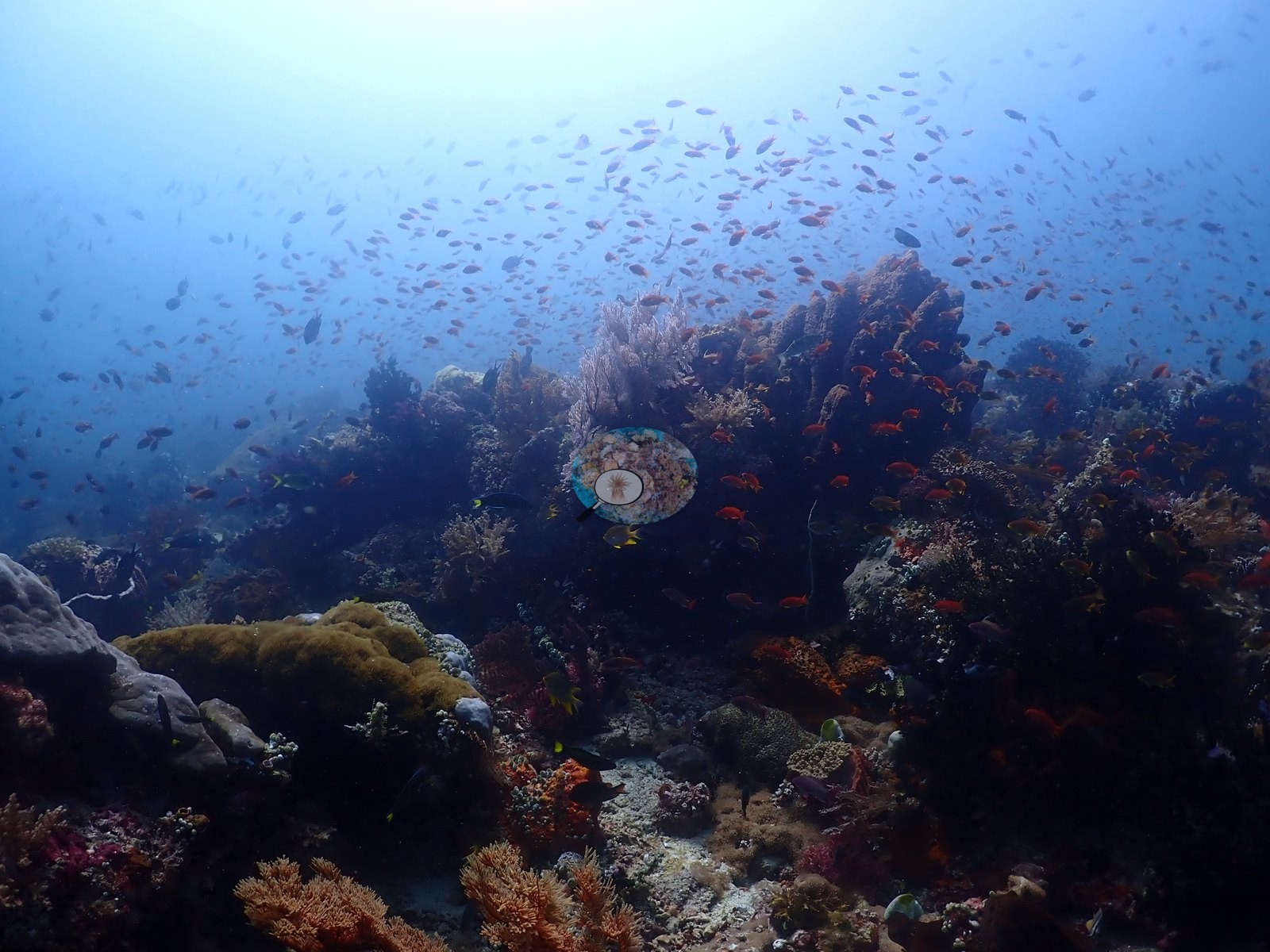
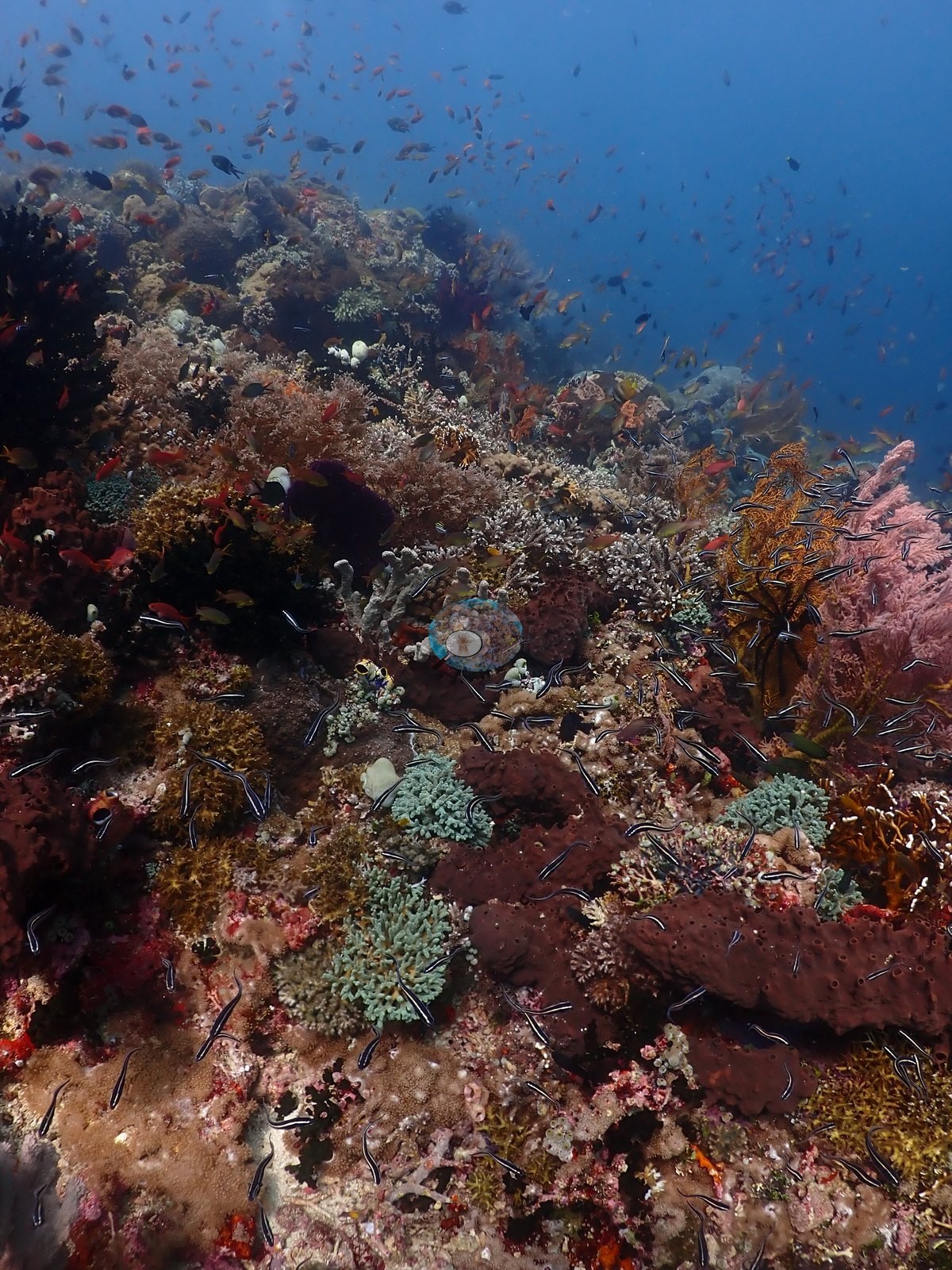
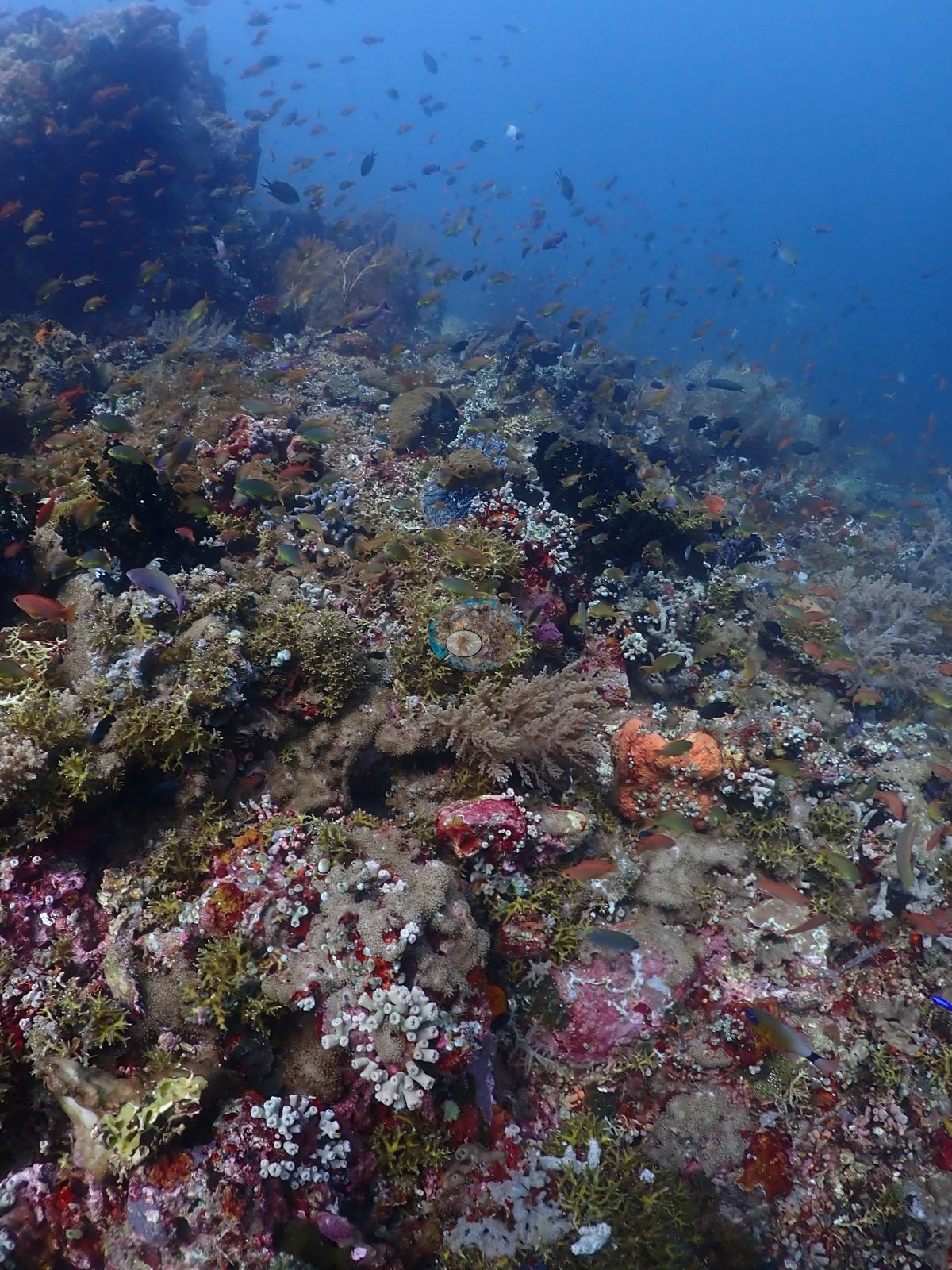
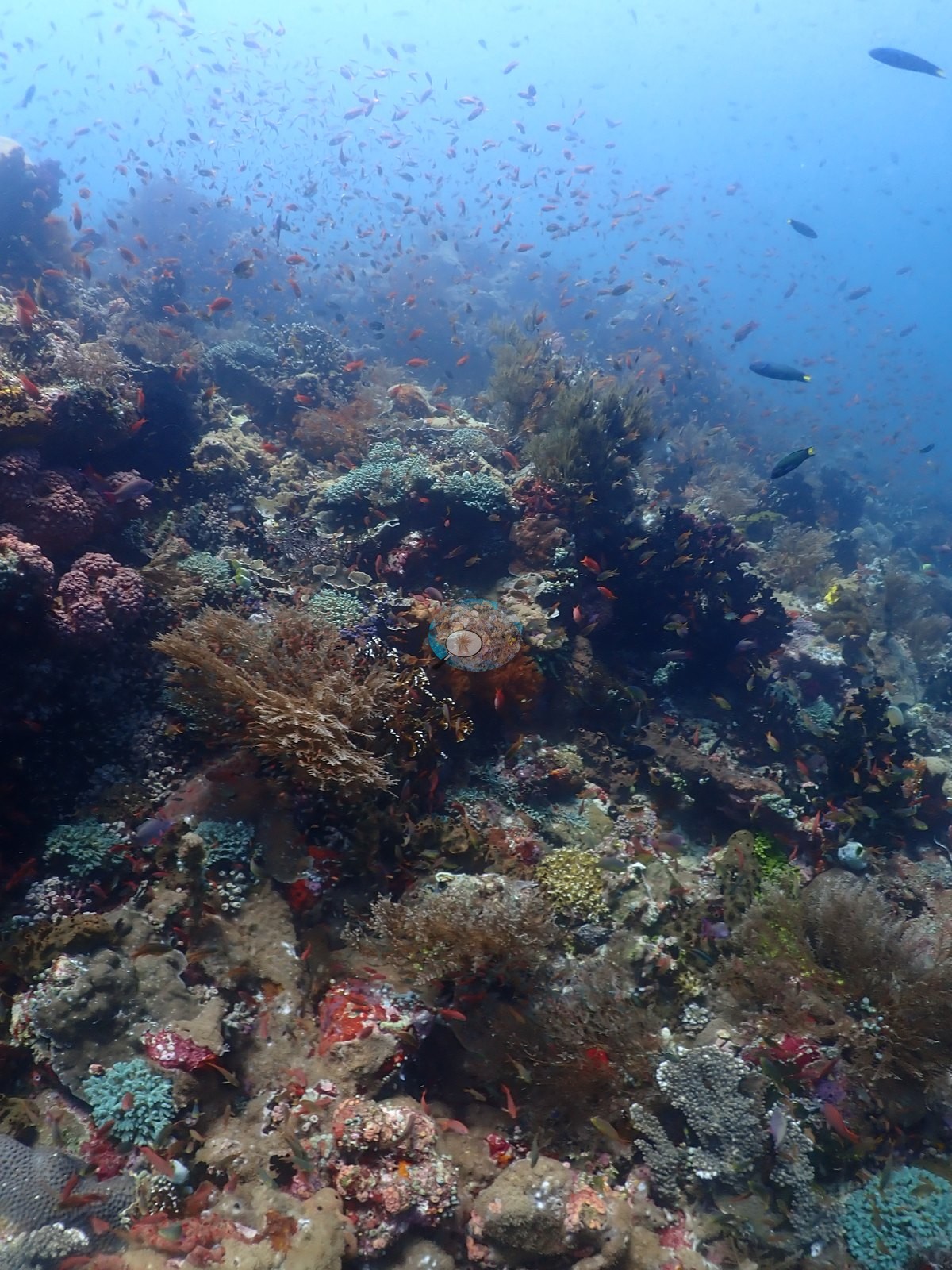
The habitats. This is a filter-feeder wall first and a coral reef second (e.g., Image 9, Image 20, Image 32, Image 54).
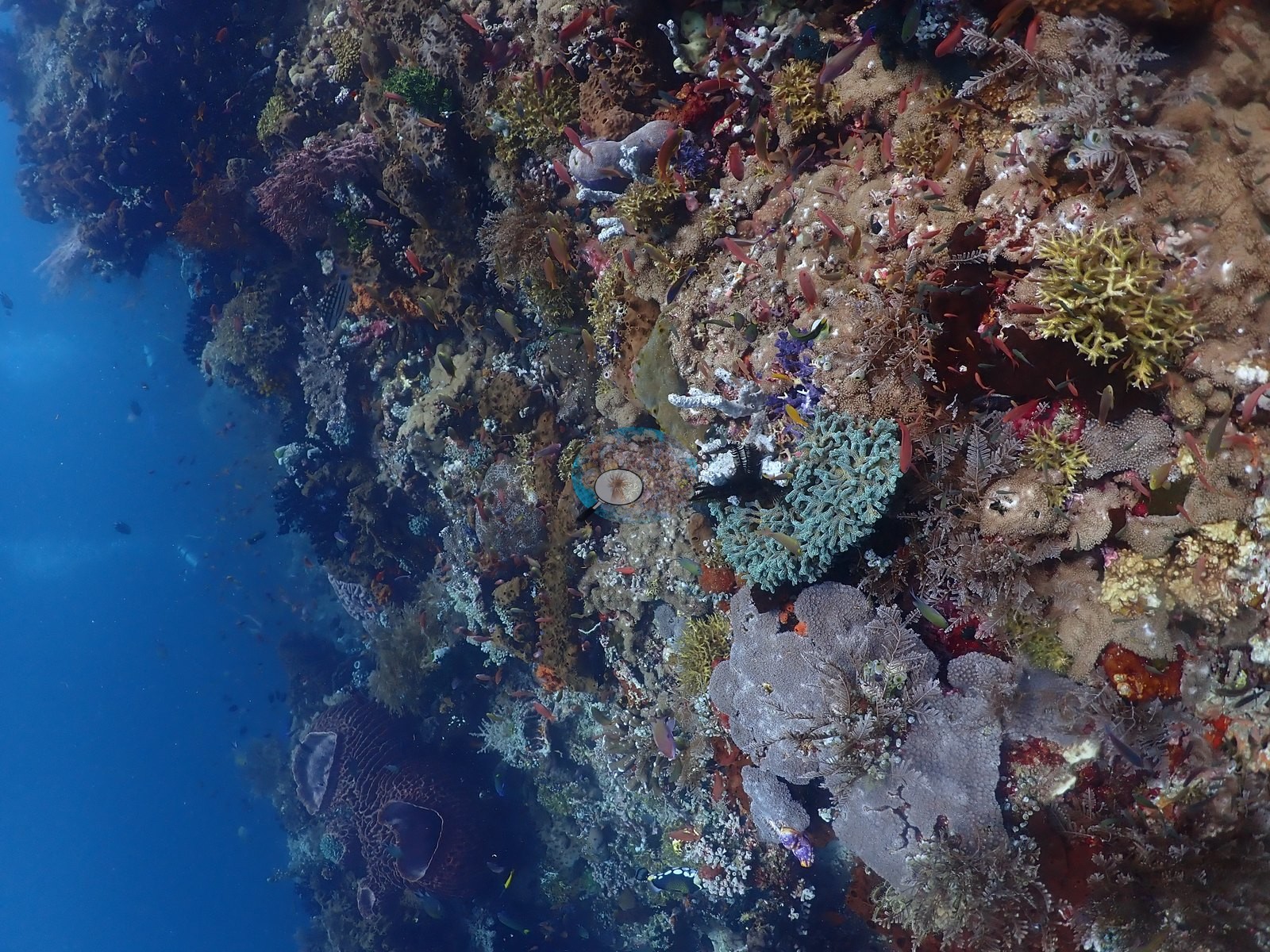
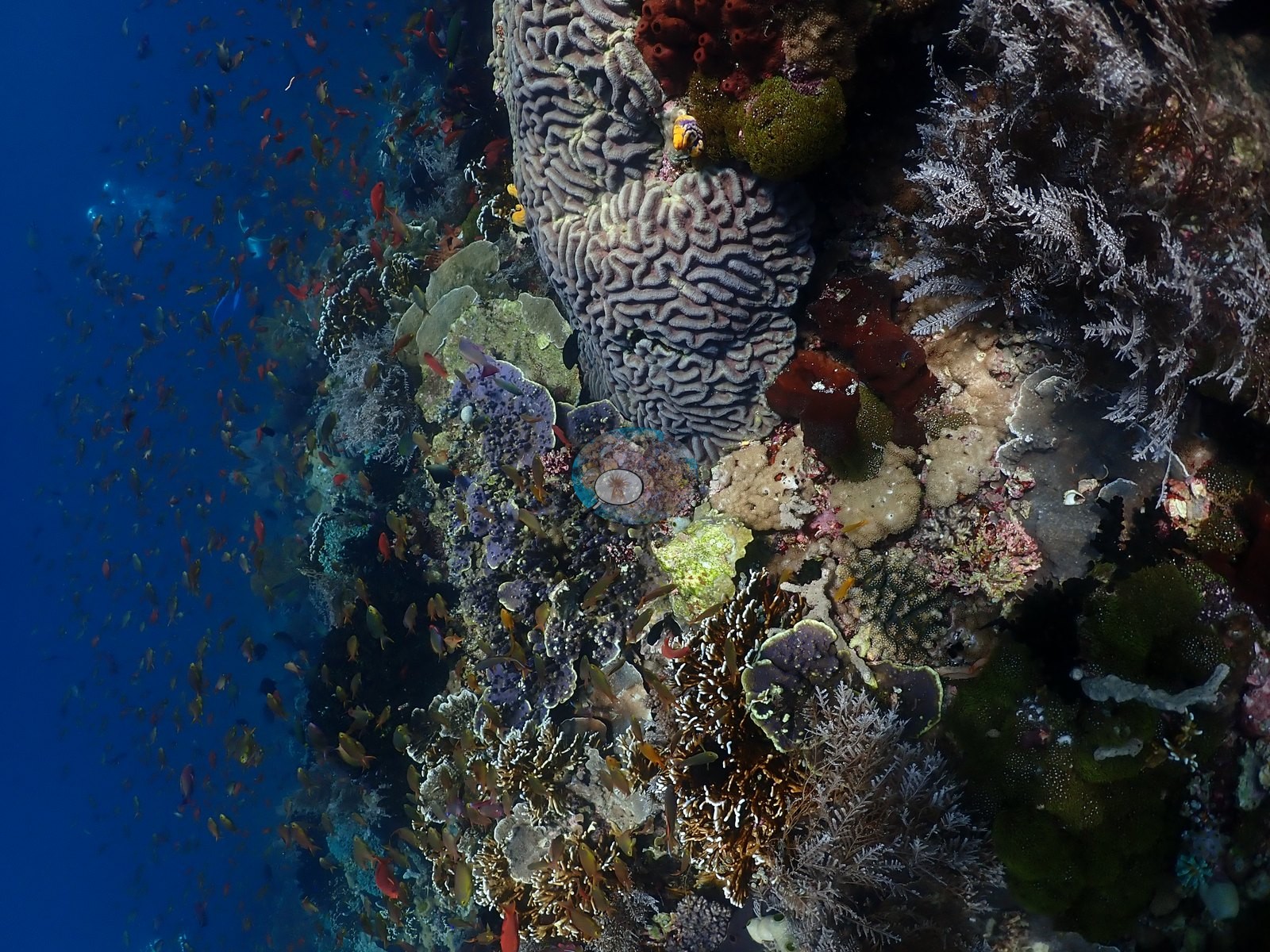
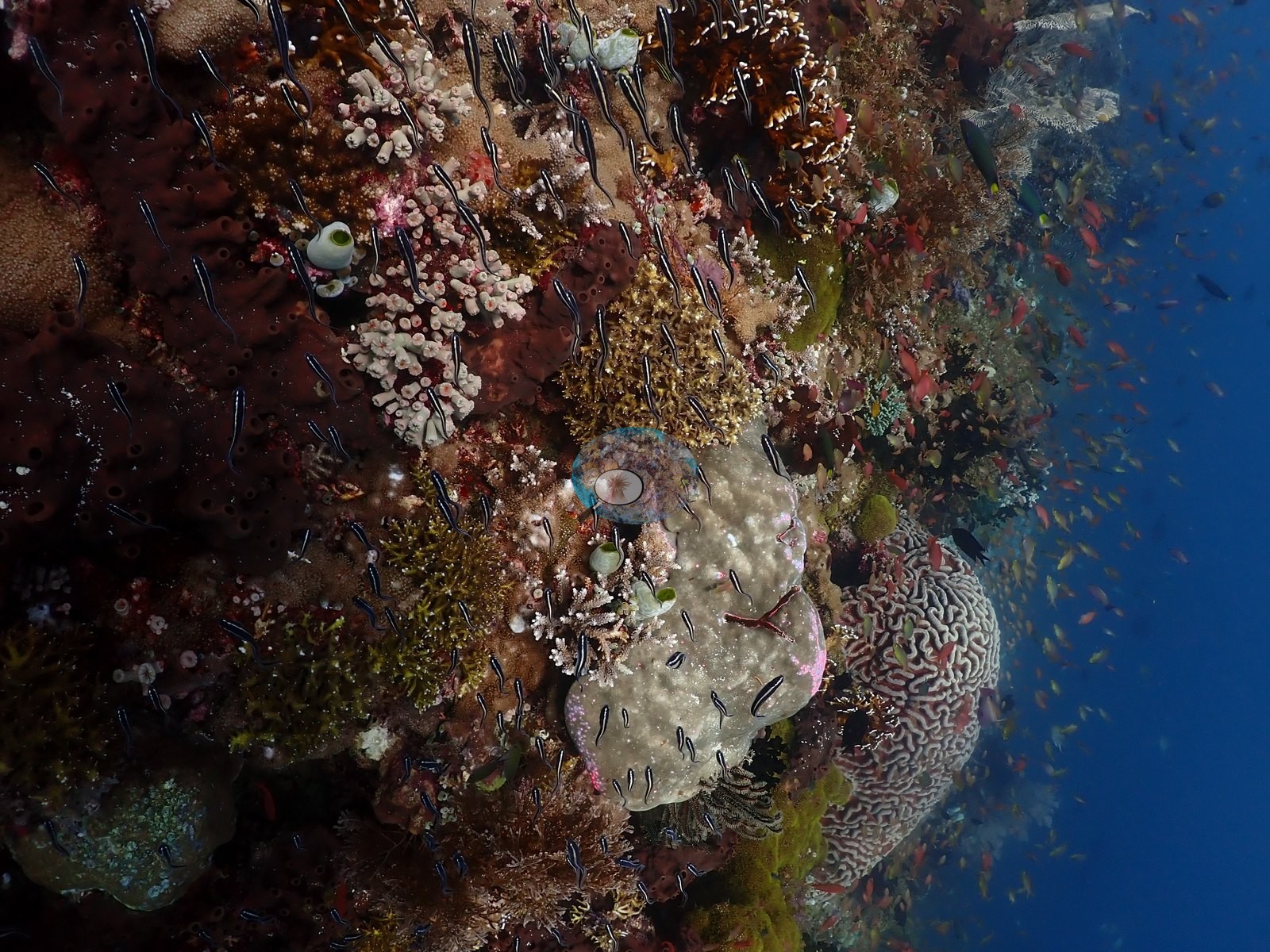
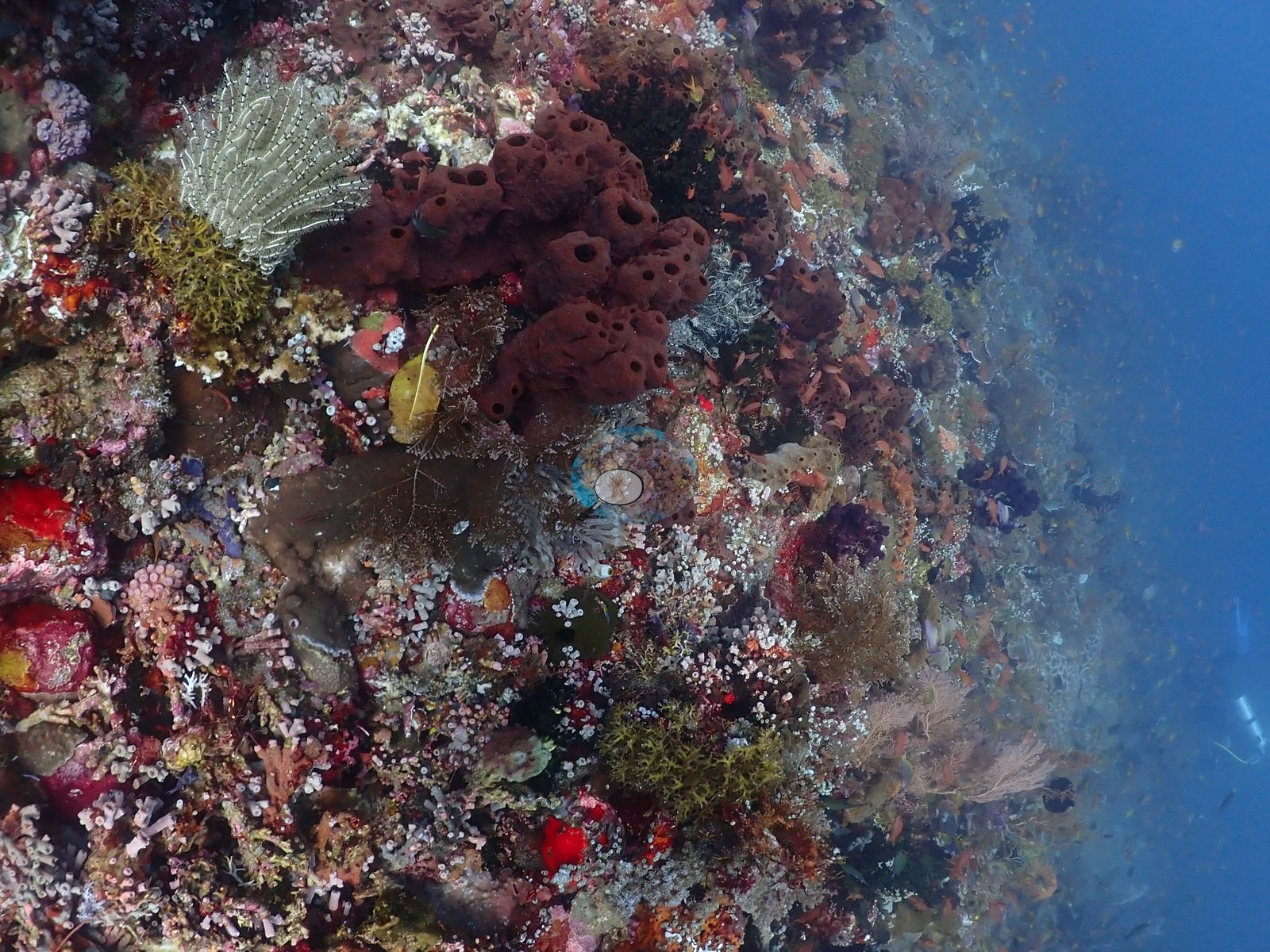
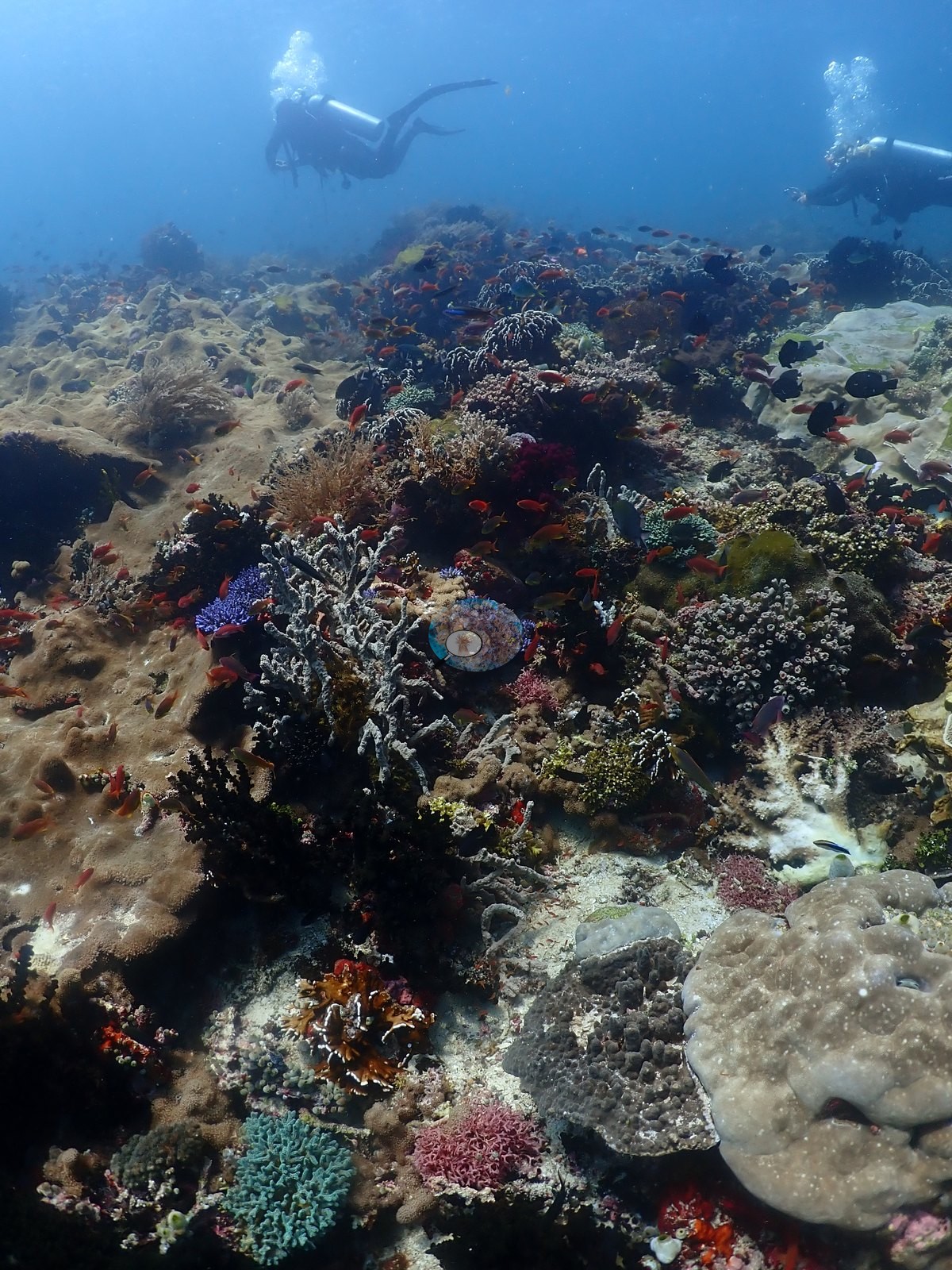
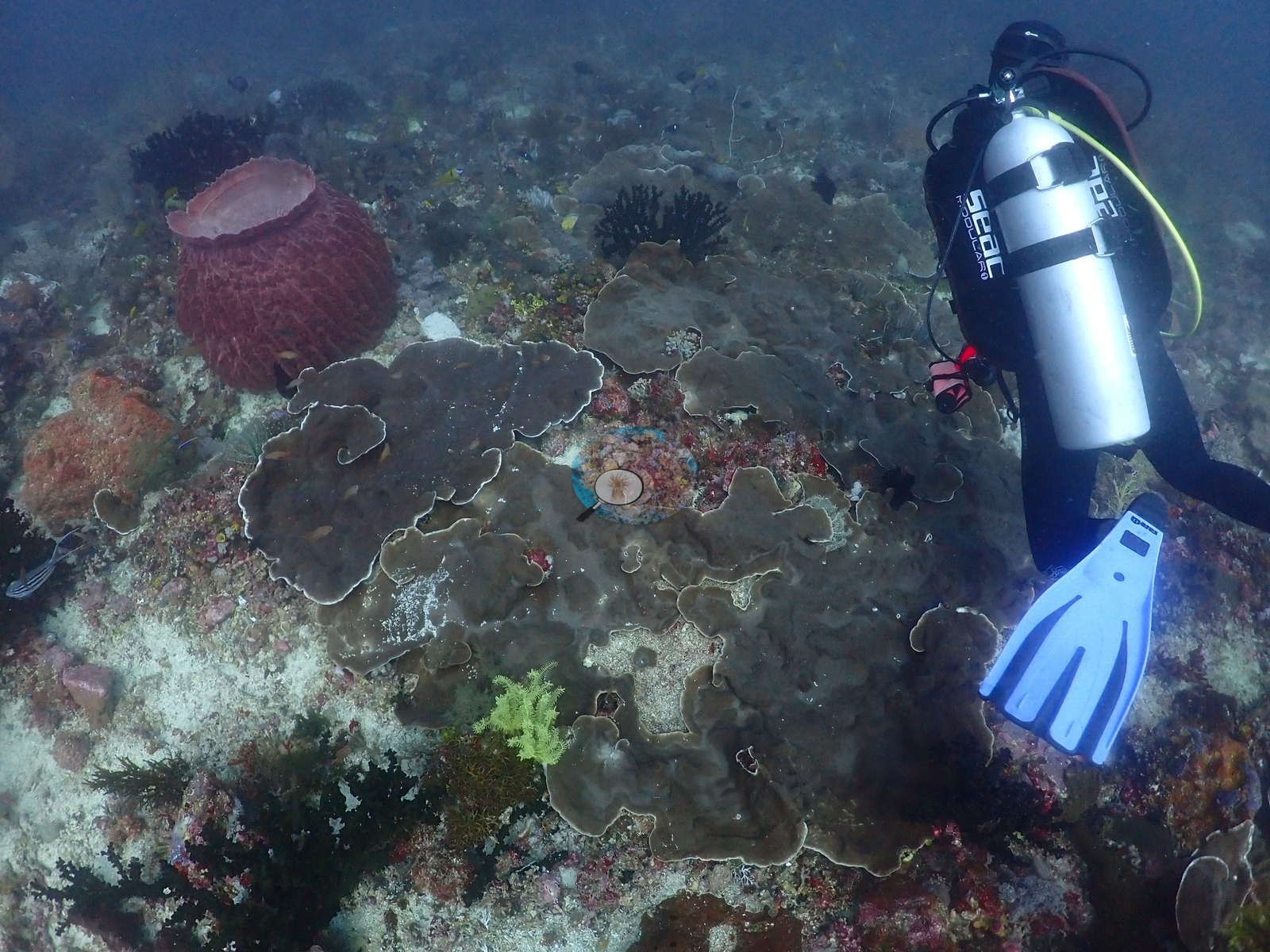
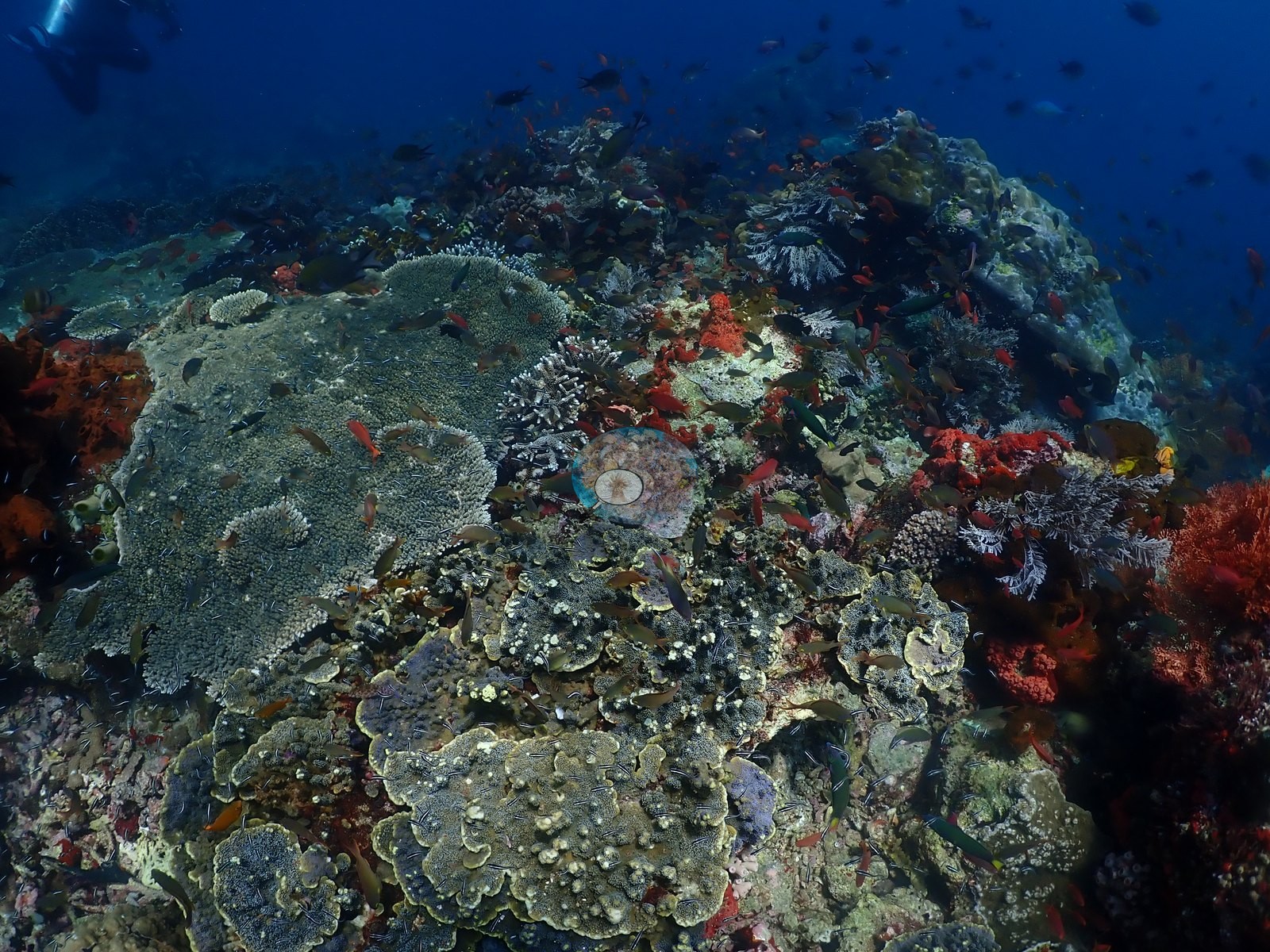
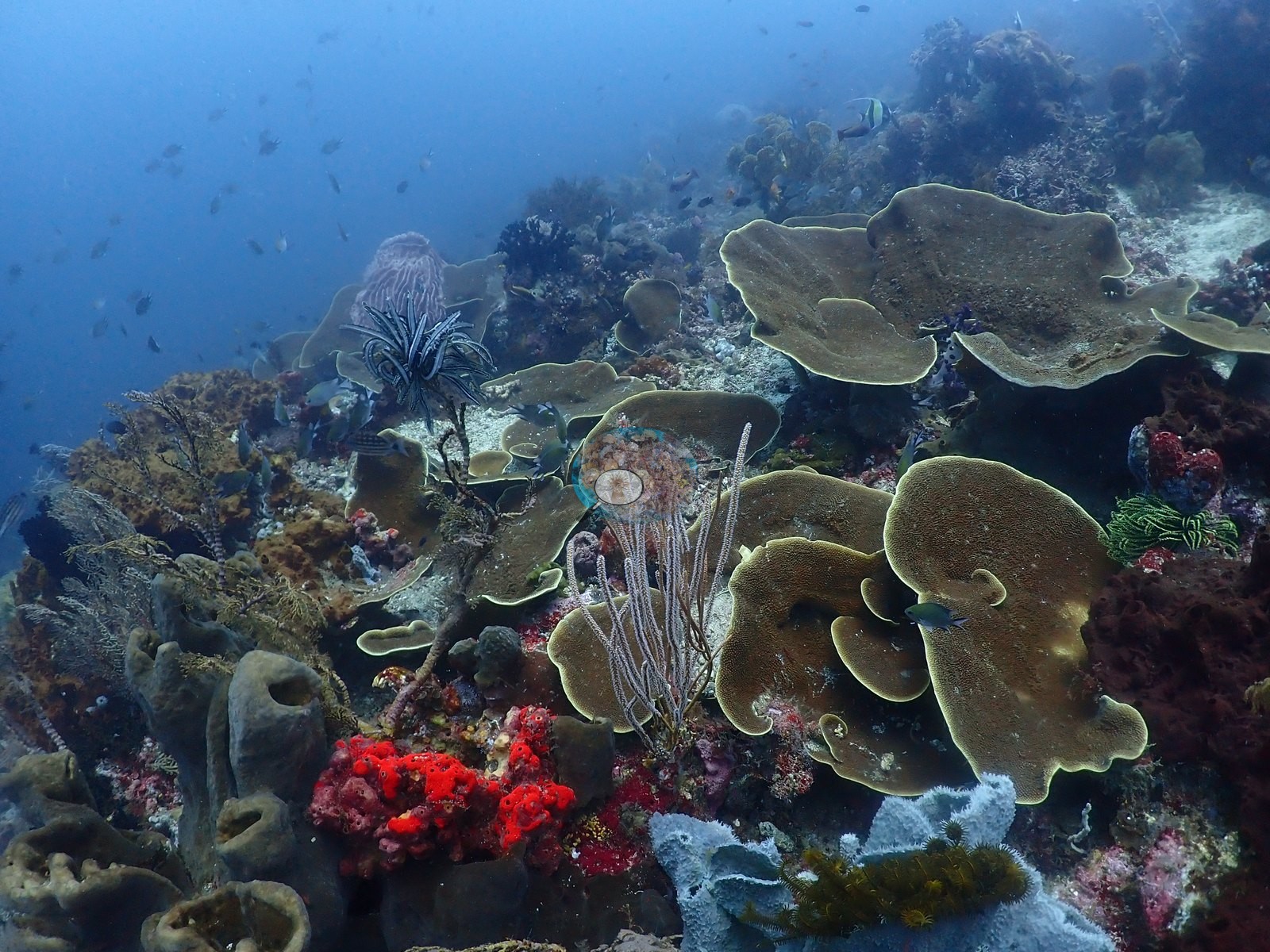
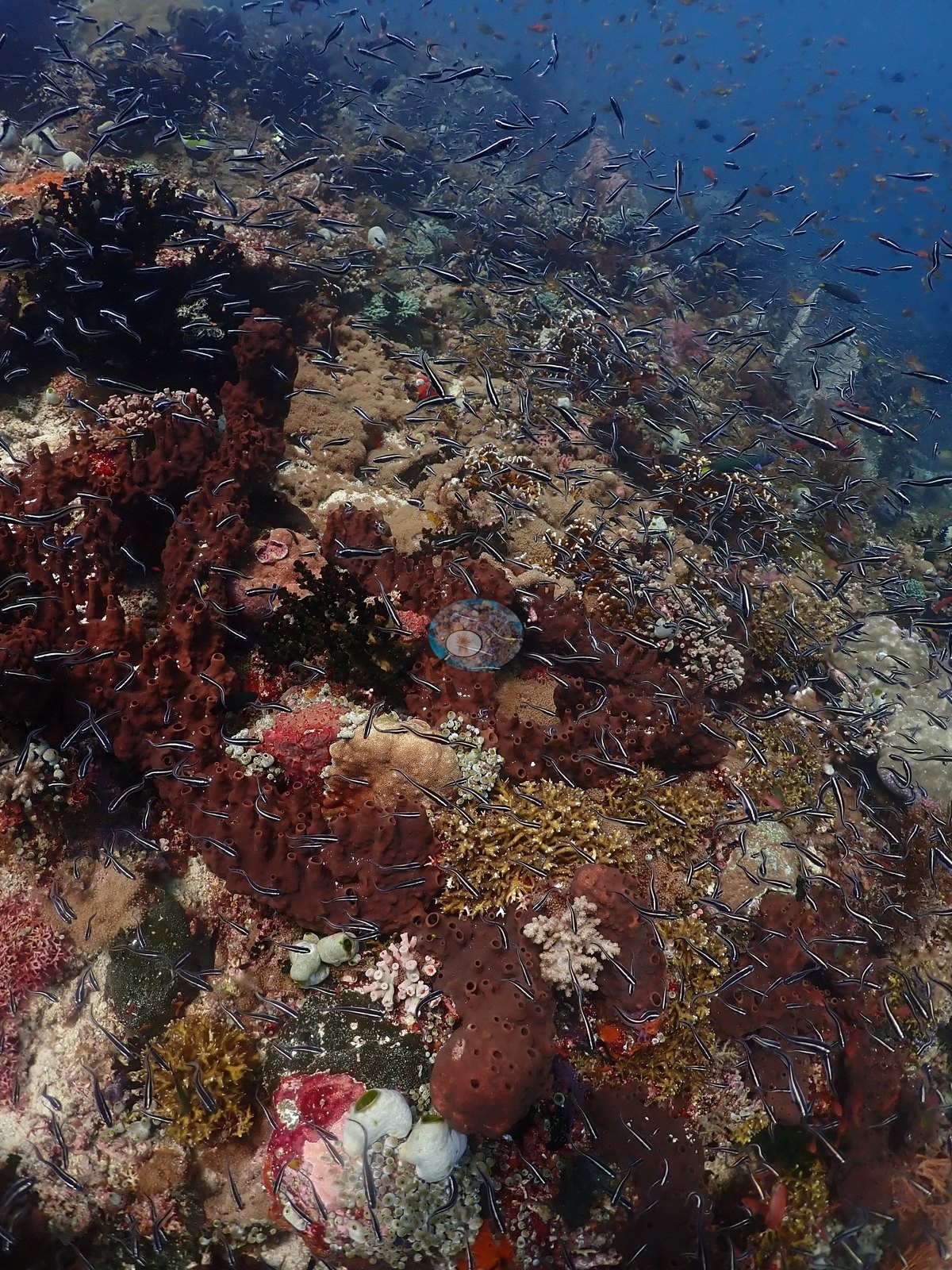
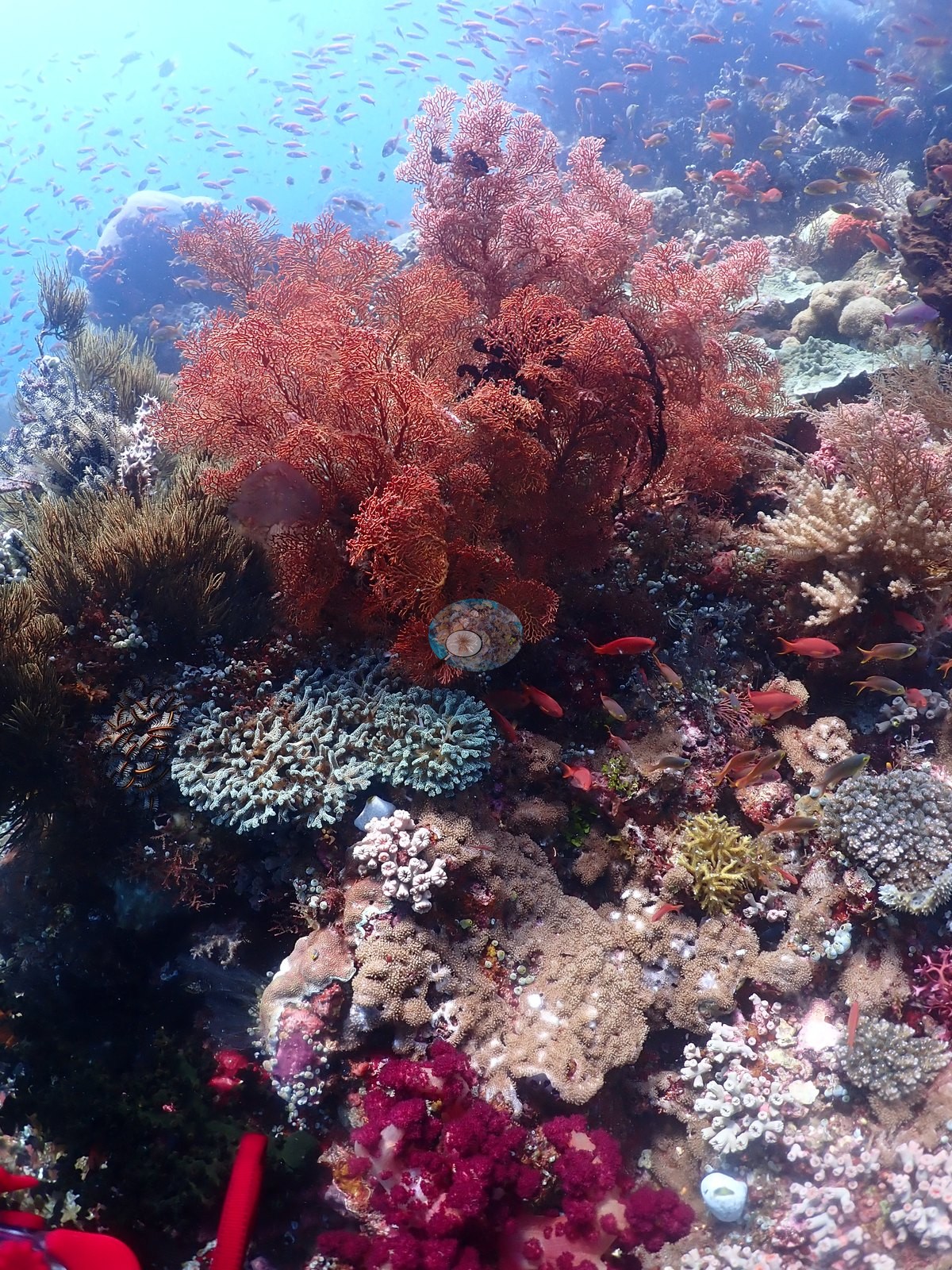
The slope and its overhangs are upholstered in sponges of every form and color — maroon, crimson, ochre, violet, mustard-yellow, and pale green encrusting sheets, red barrel sponges, tan, and pink tube clusters — interleaved with purple and lilac gorgonian fans, jet-black bushy antipatharian colonies, cream and orange arborescent soft corals, colonial ascidians, and yellow, orange, and white feather stars, all under a permanent red curtain of anthias (e.g., Image 12, Image 15, Image 19, Image 30, Image 38, Image 41, Image 47).
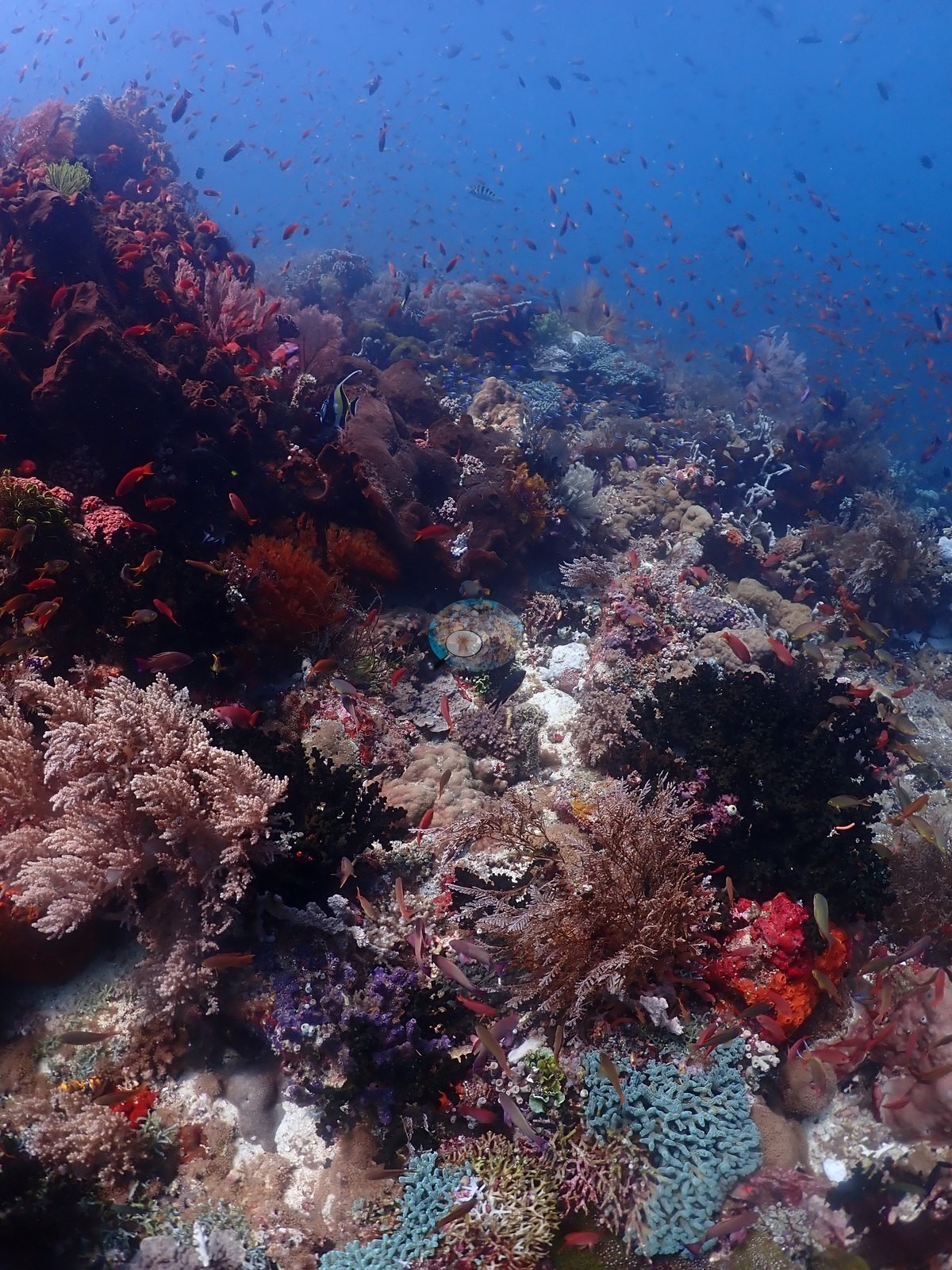
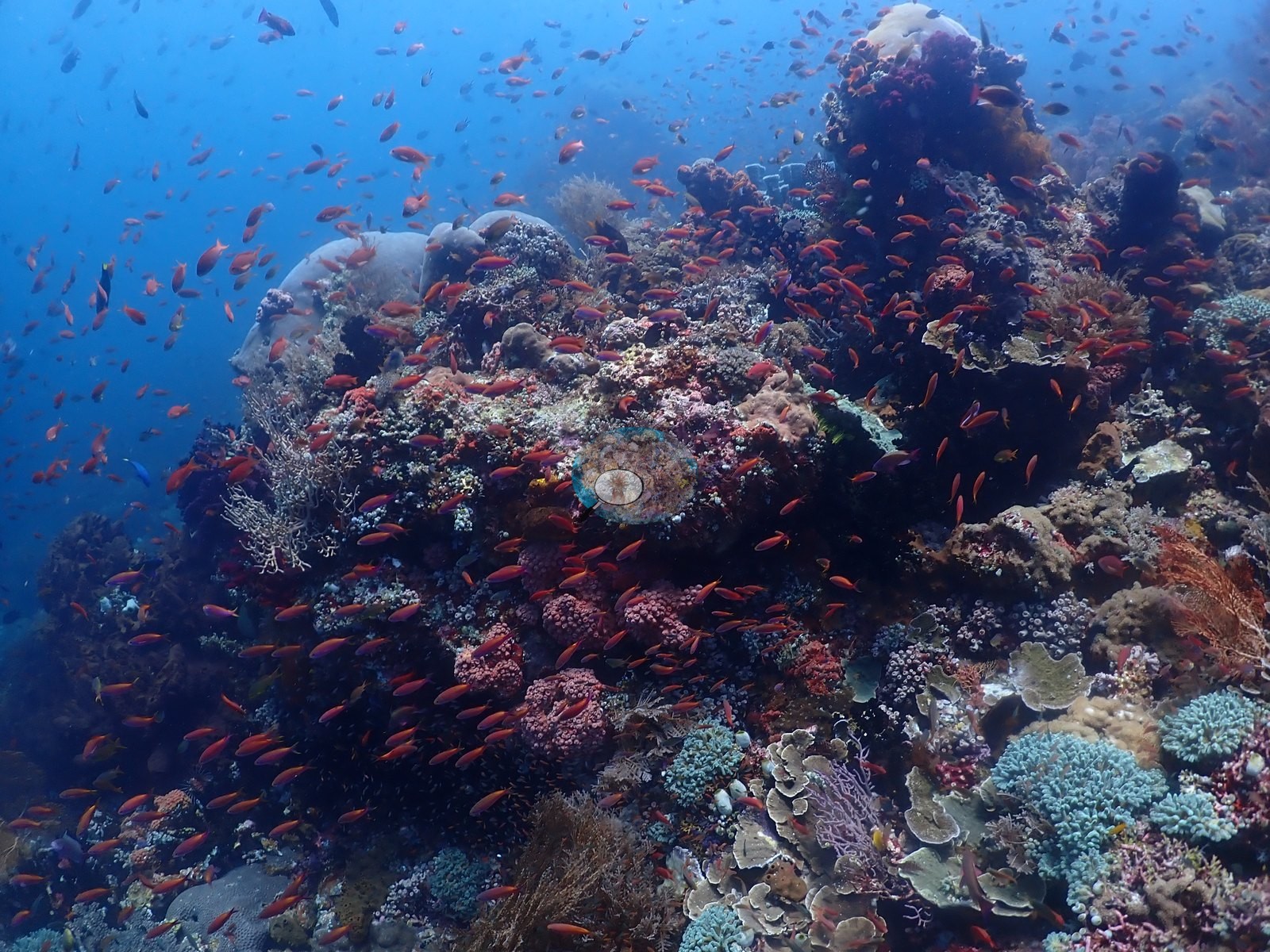
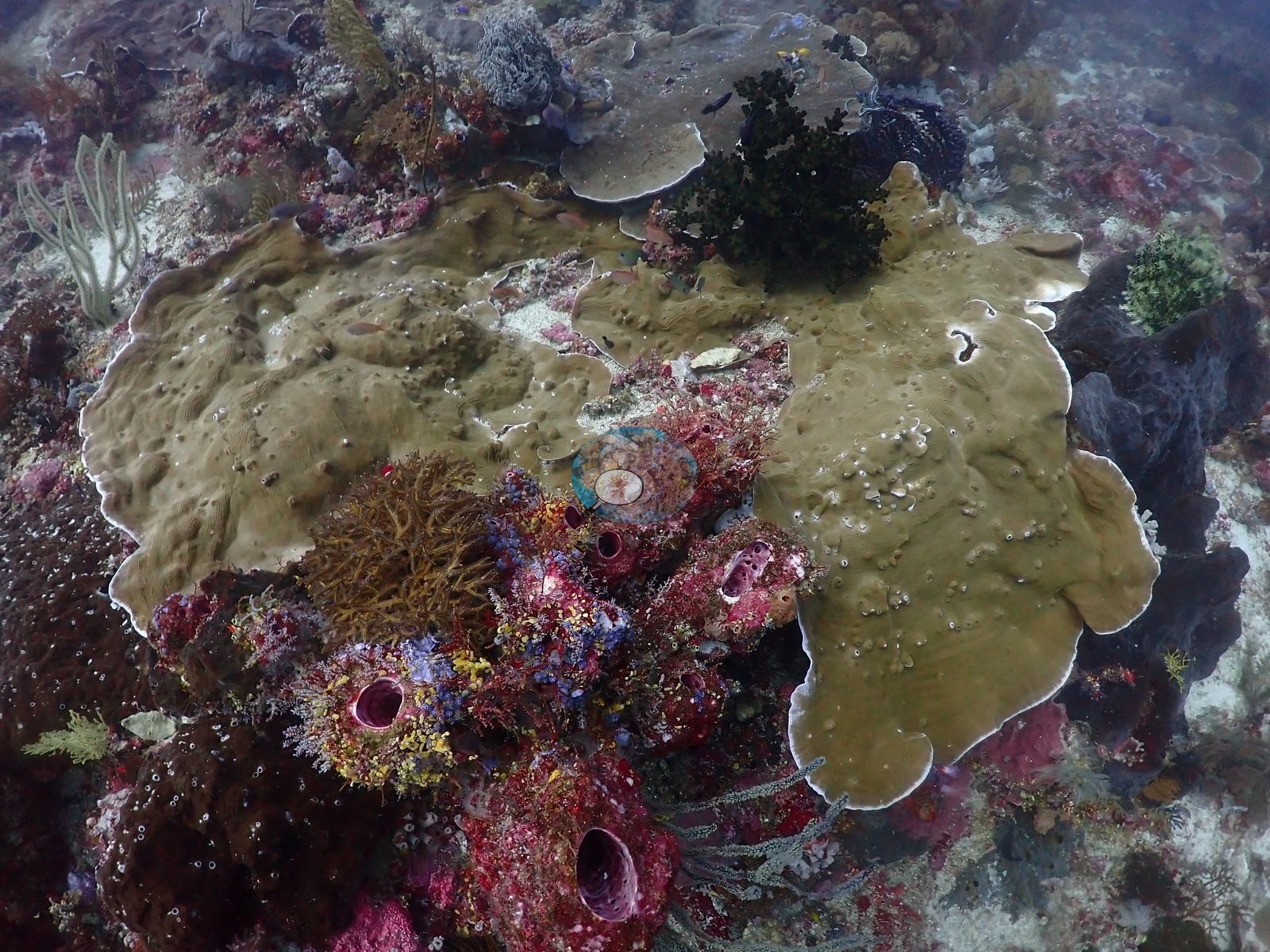
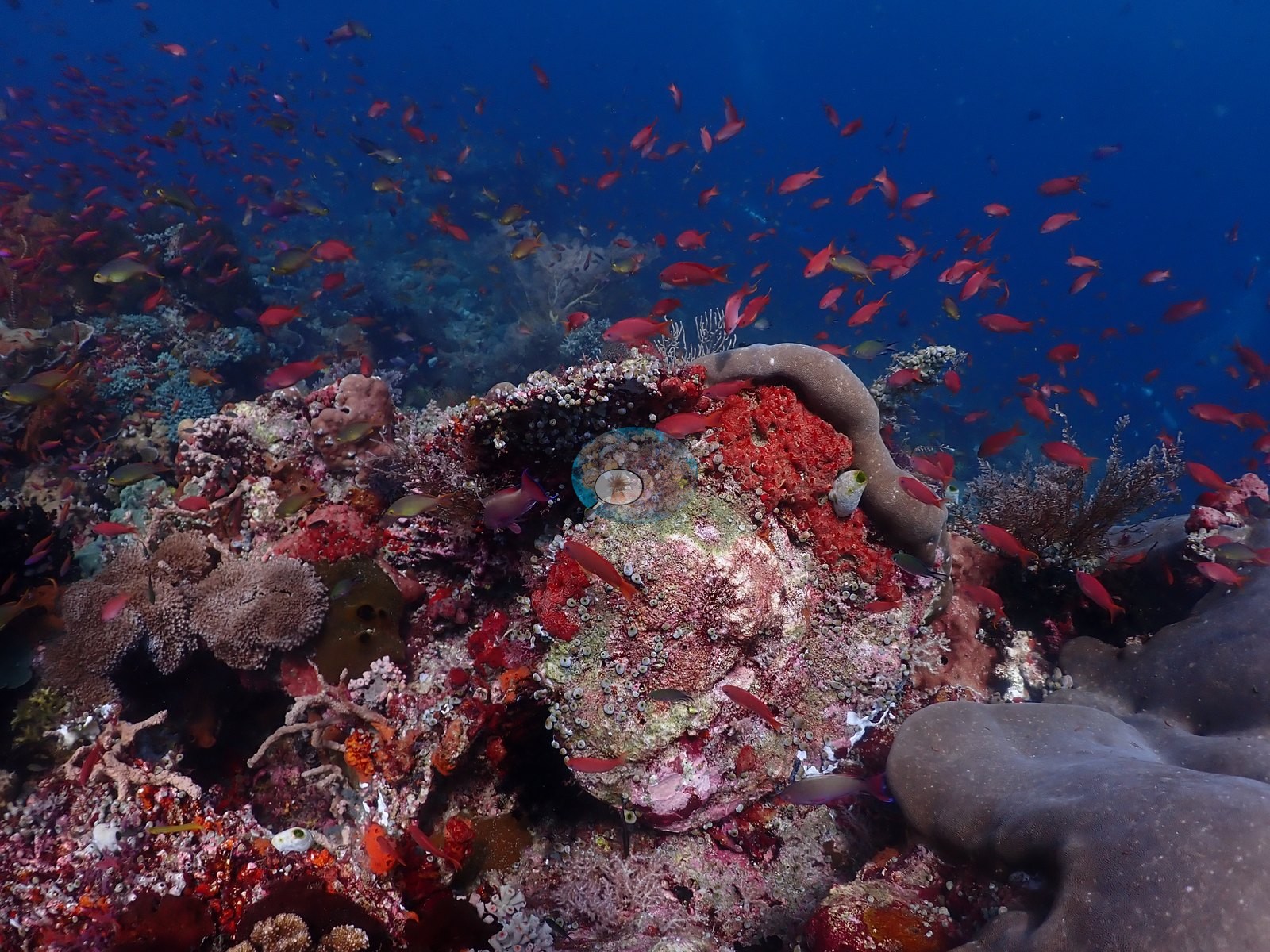
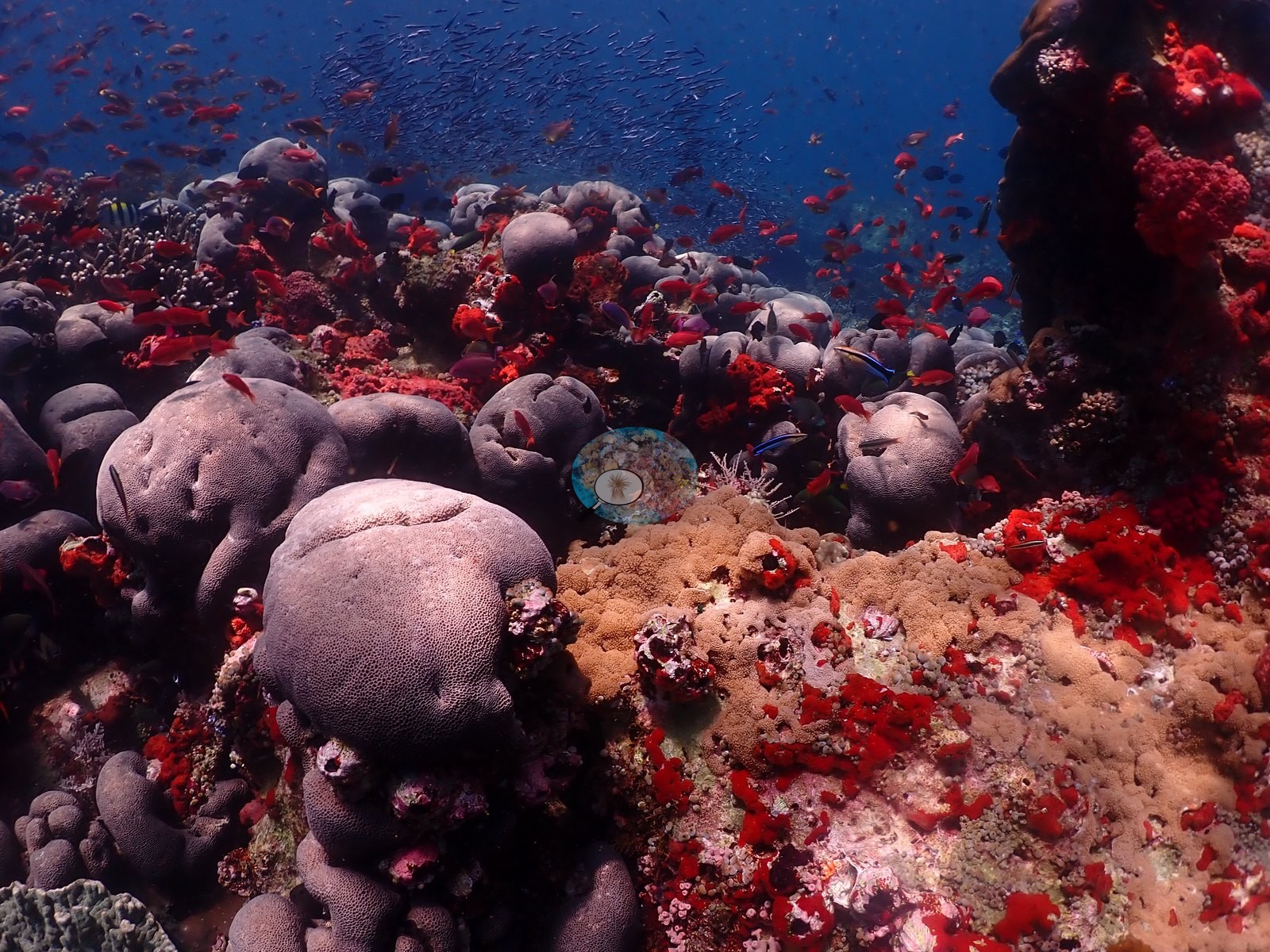
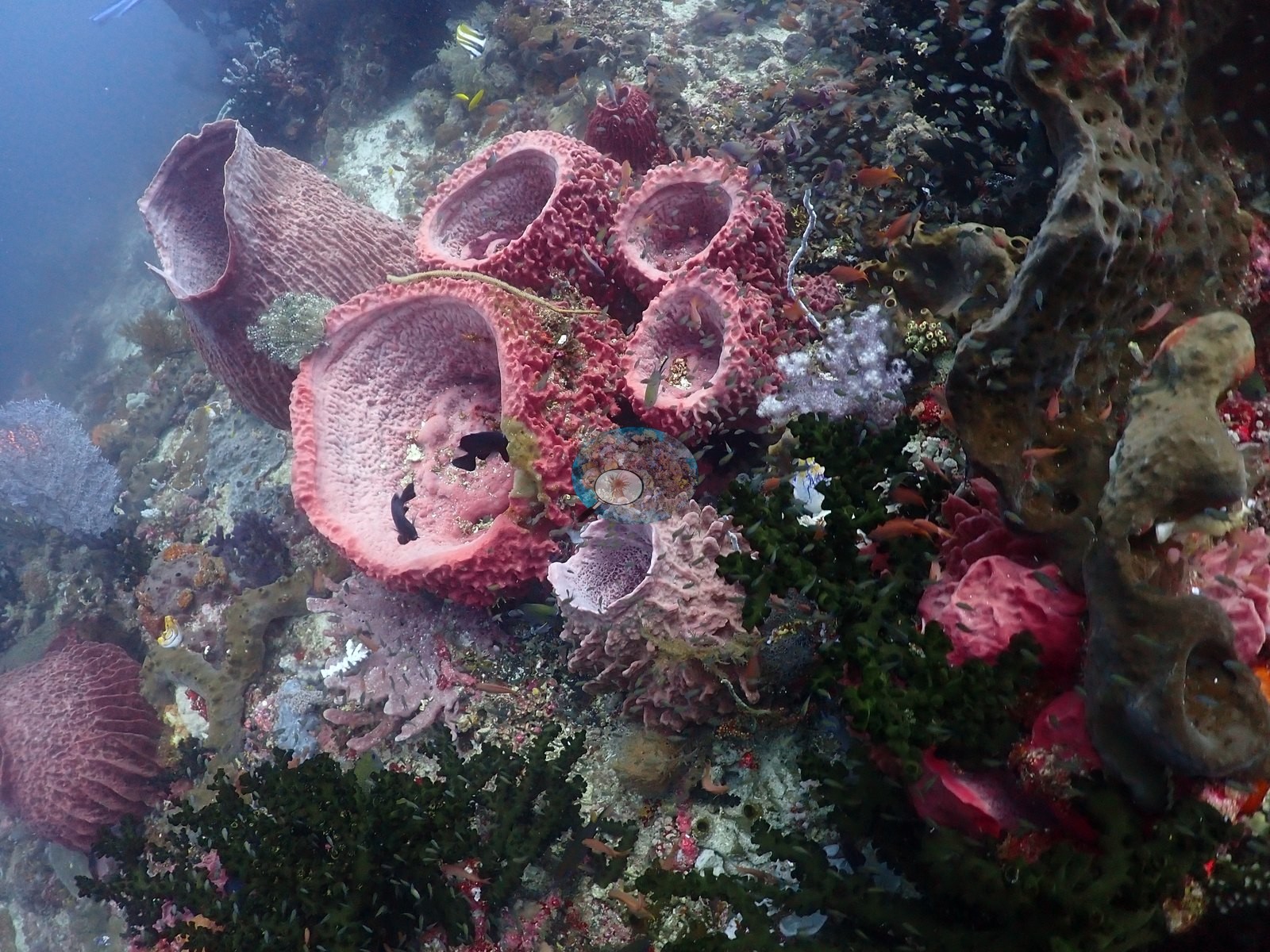
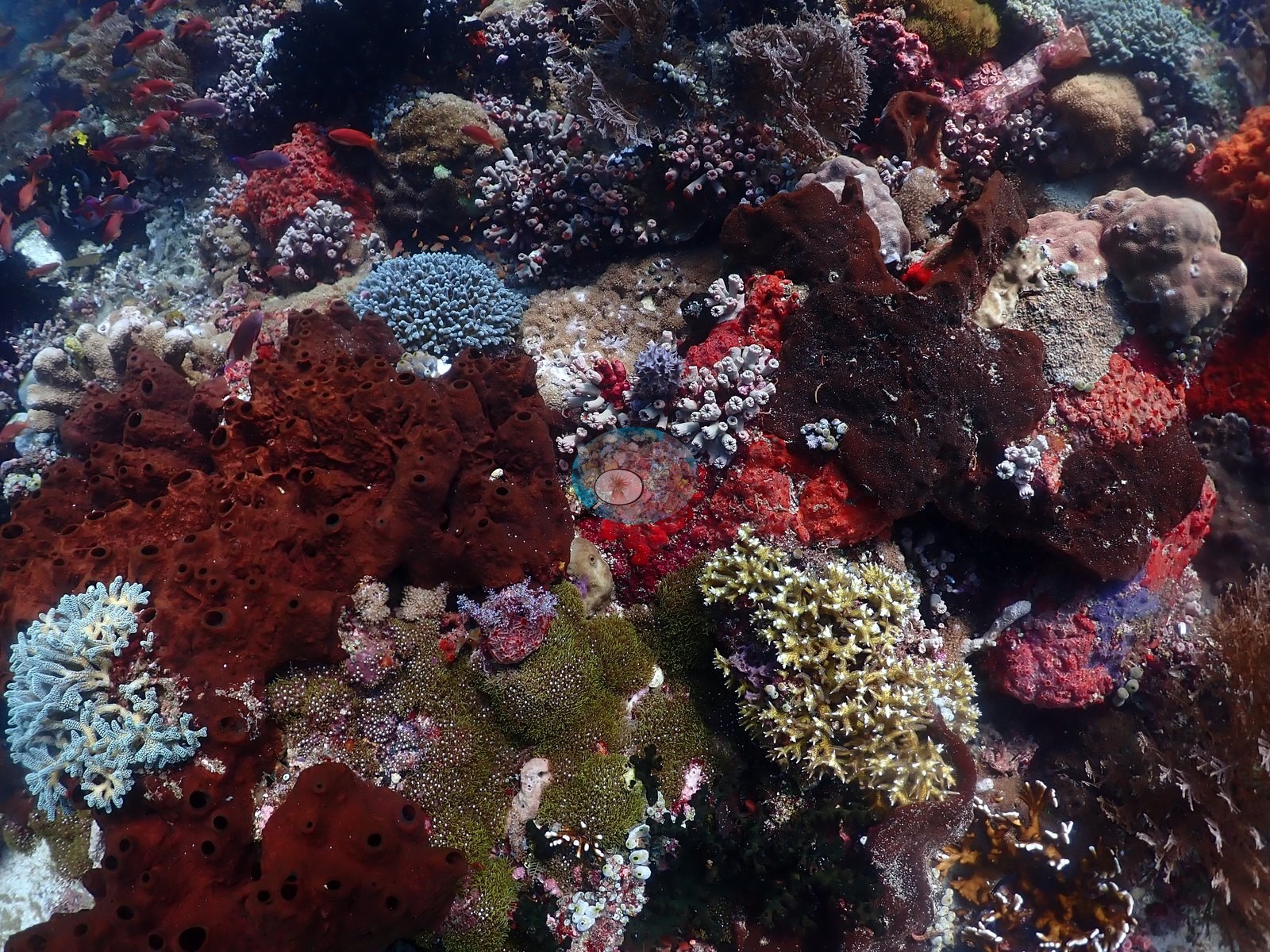
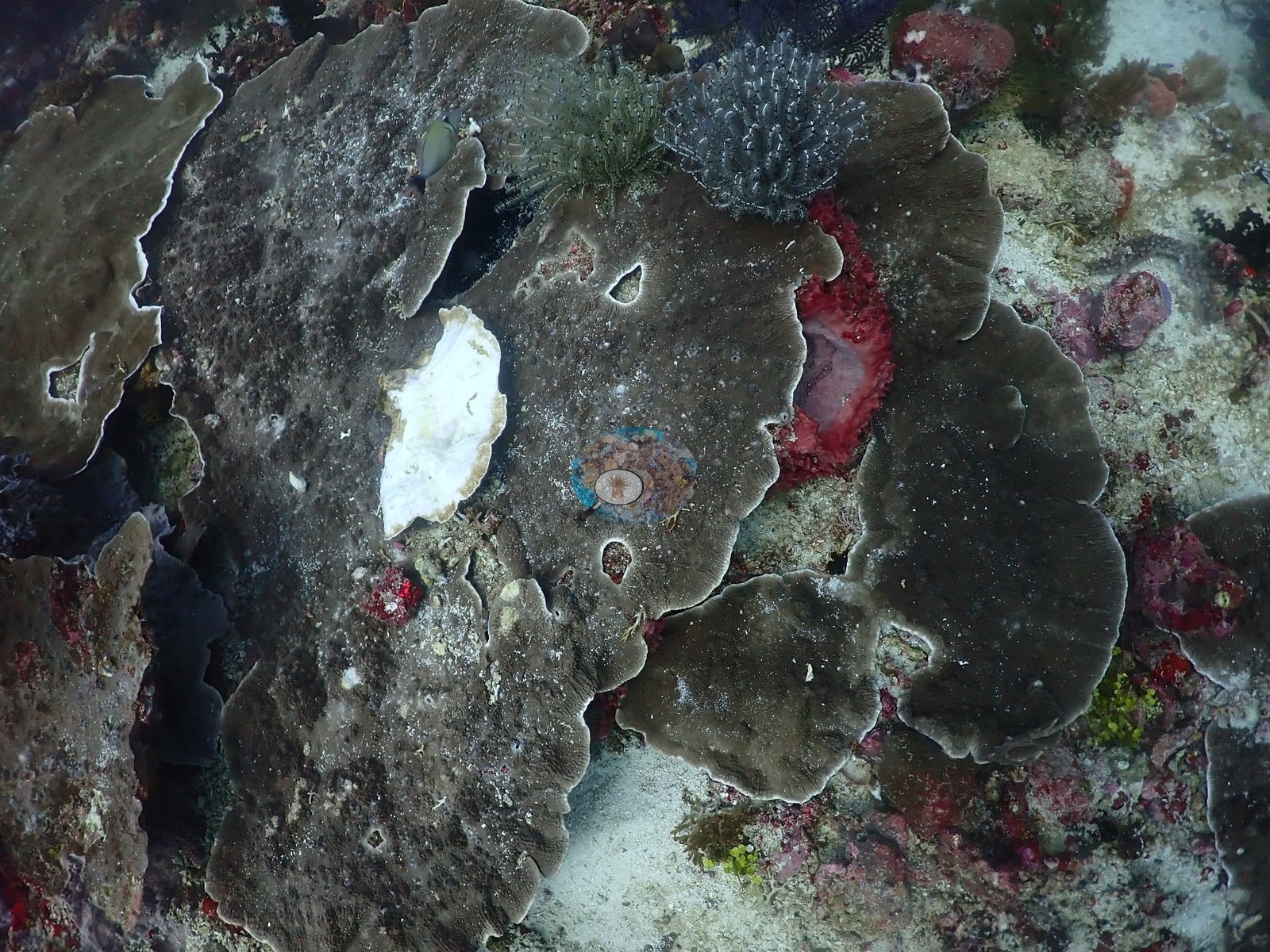
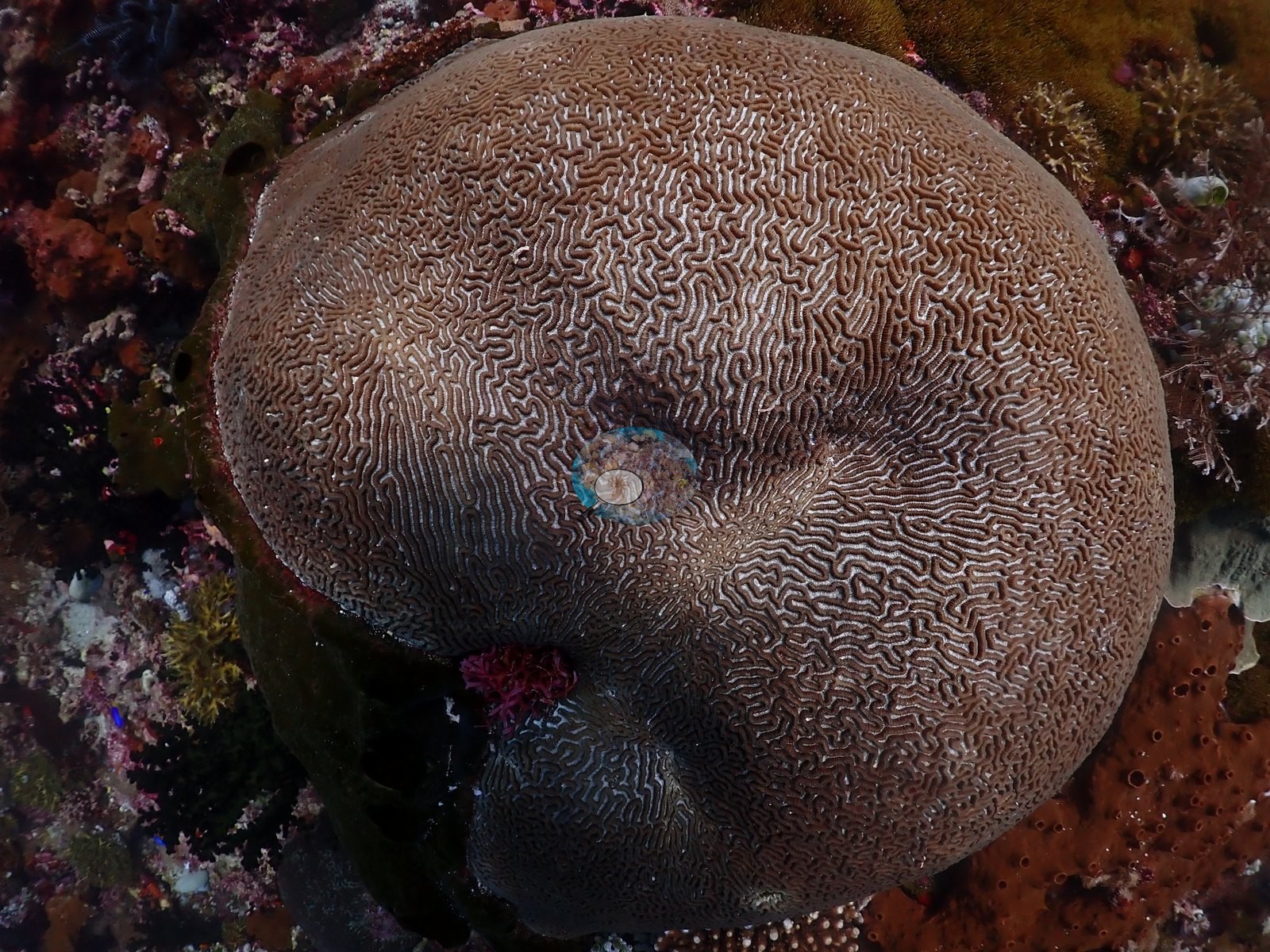
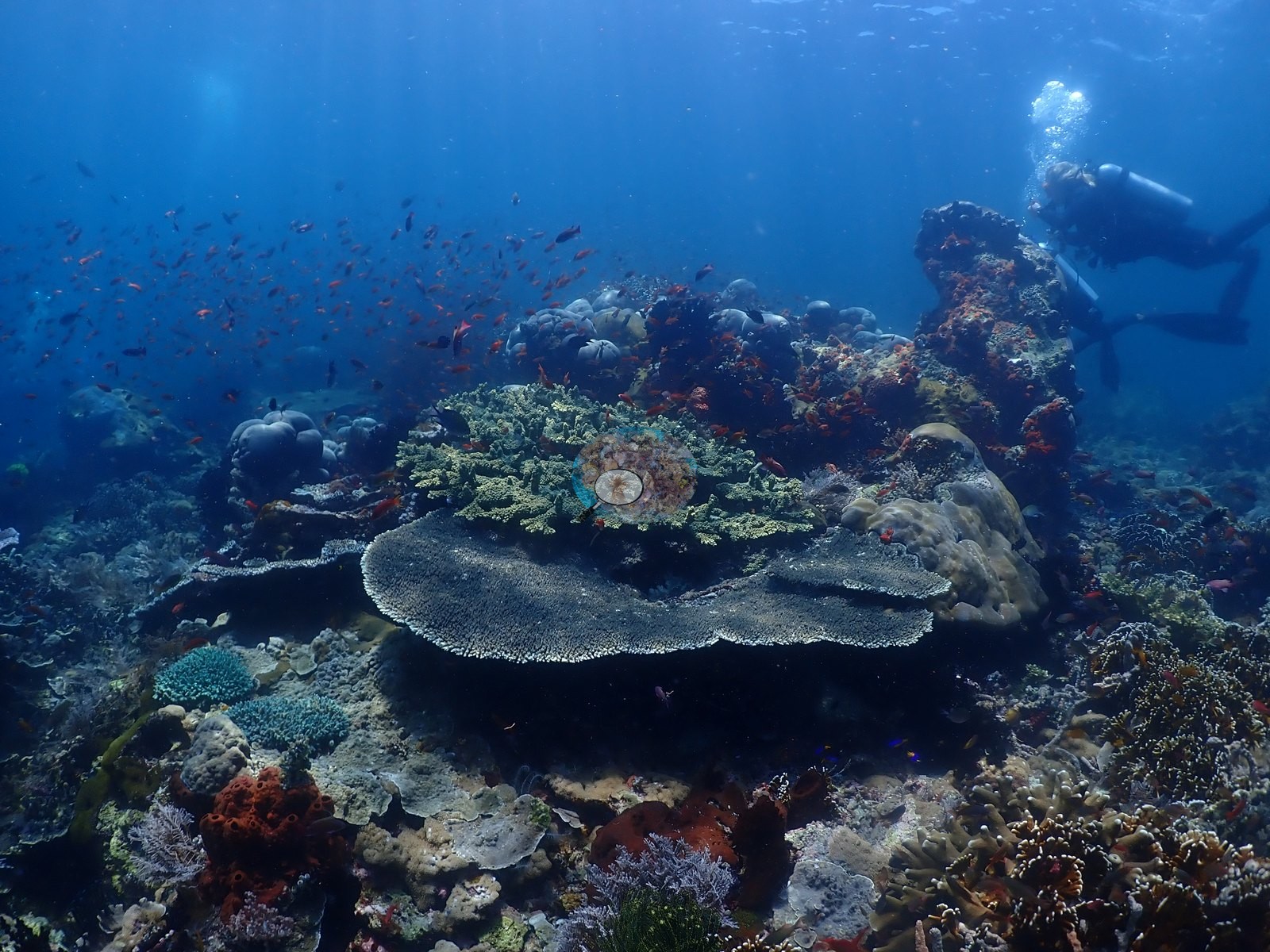
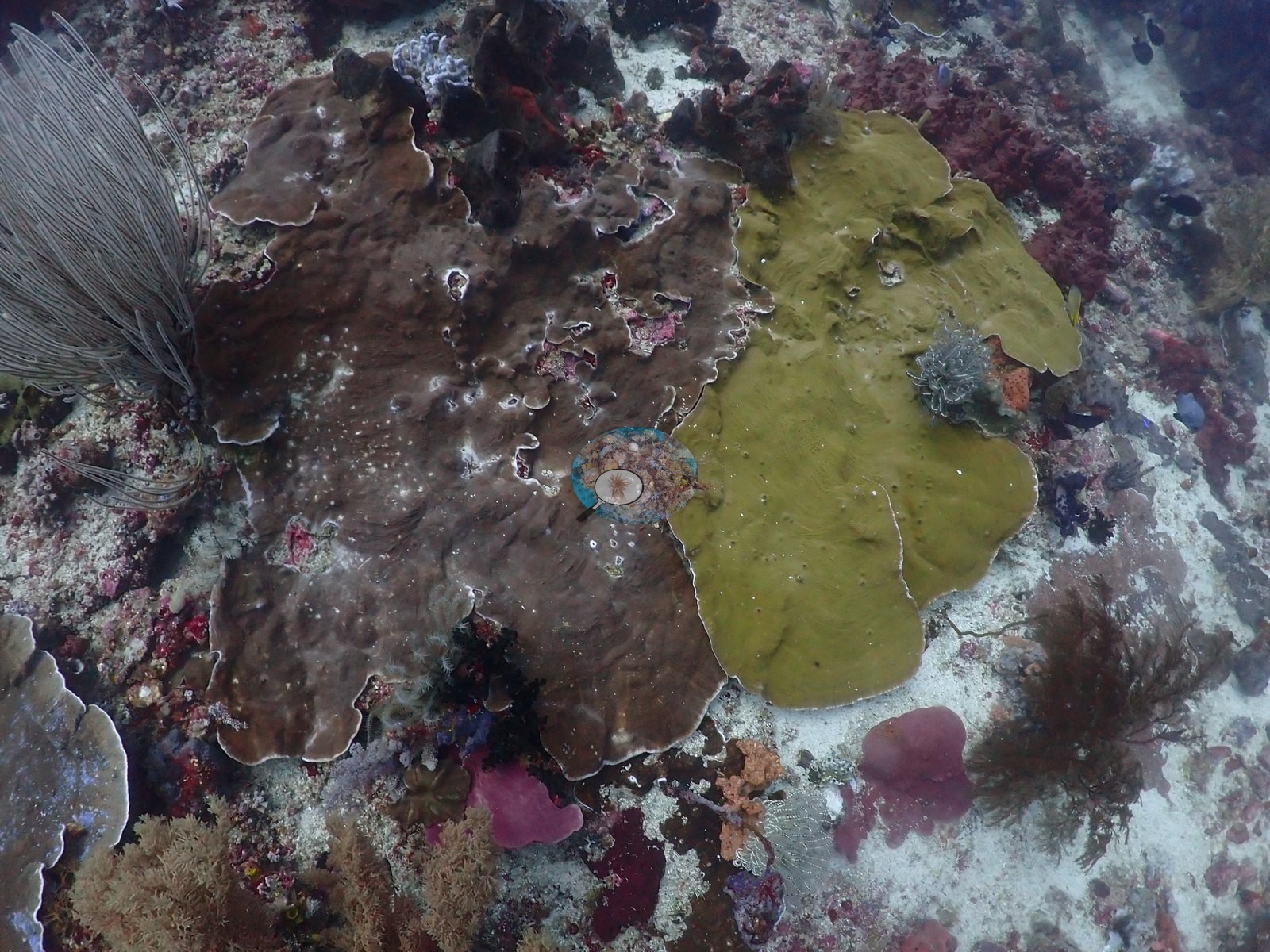
Hard coral on this stretch is mostly broad foliose and laminar plates: meter-scale brown and olive whorled plates consistent with Turbinaria, Montipora, and Pachyseris, some laid out flat across the pavement in overlapping sheets, plus massive Porites and Diploastrea domes, a scarlet meandroid brain coral, and large gray-lavender tabulate Acropora (e.g., Image 2, Image 3, Image 6, Image 8, Image 13, Image 16, Image 17, Image 18, Image 22, Image 23, Image 24, Image 25, Image 26, Image 28, Image 39, Image 43, Image 46, Image 48, Image 49).
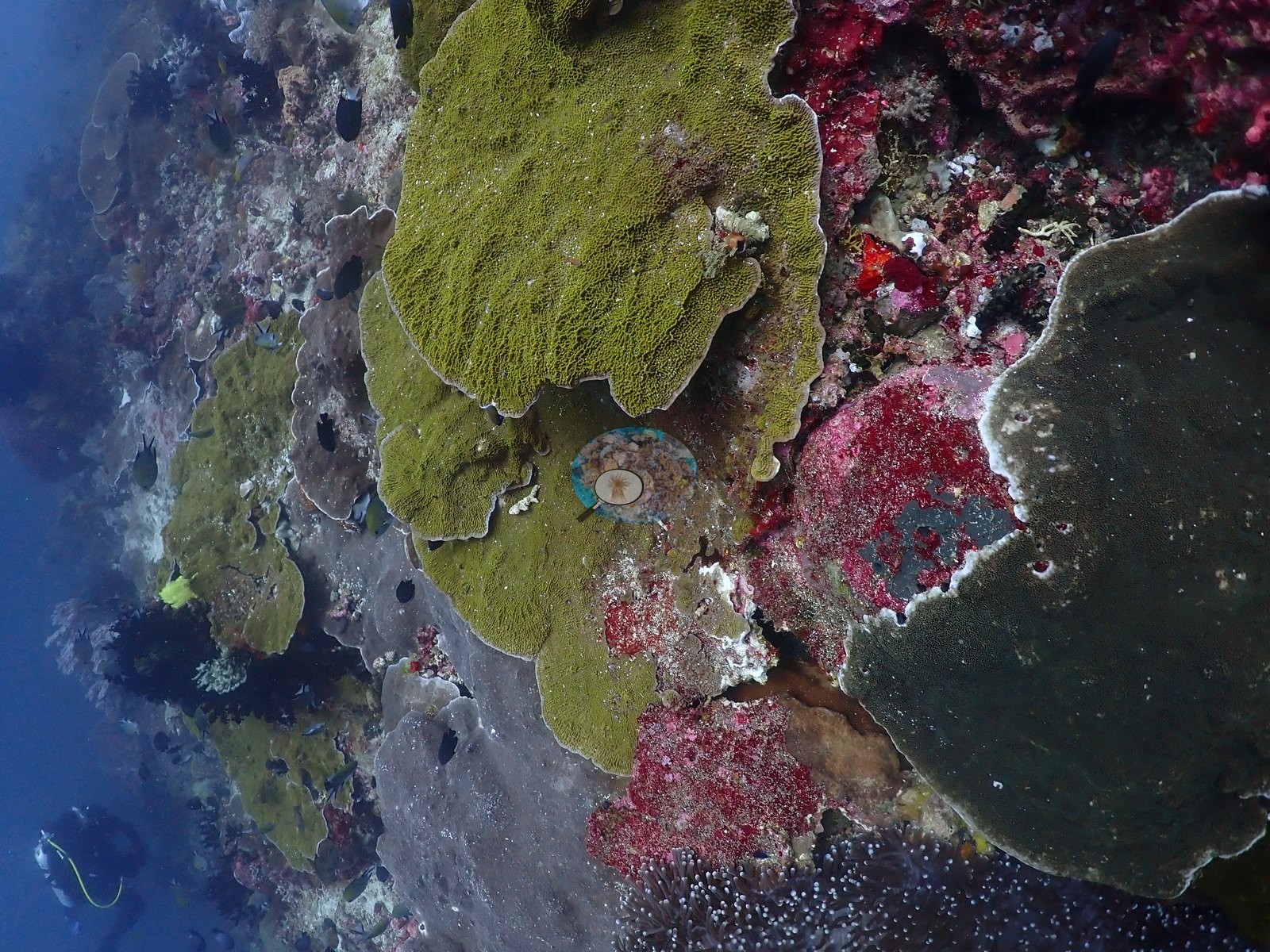
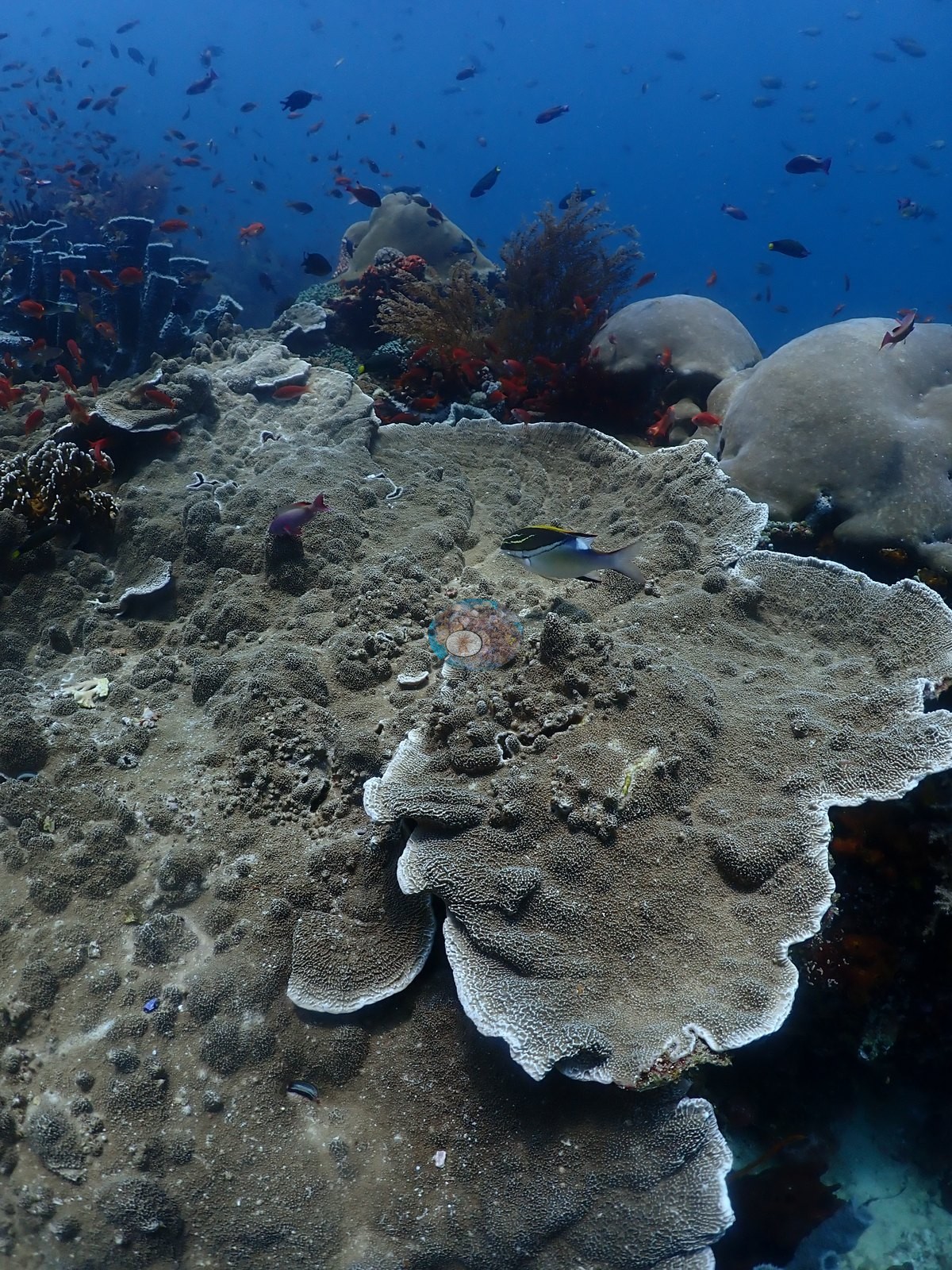
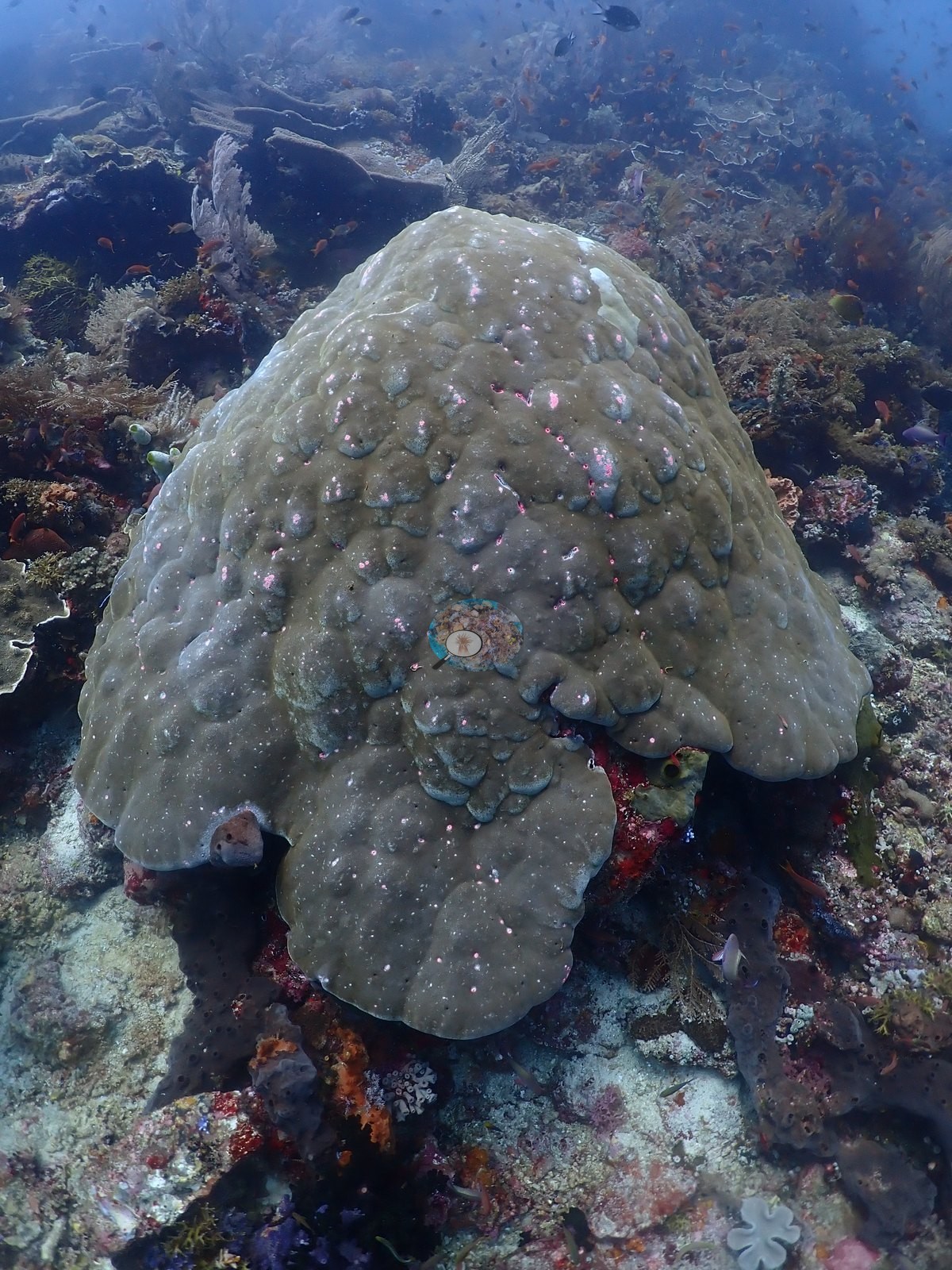
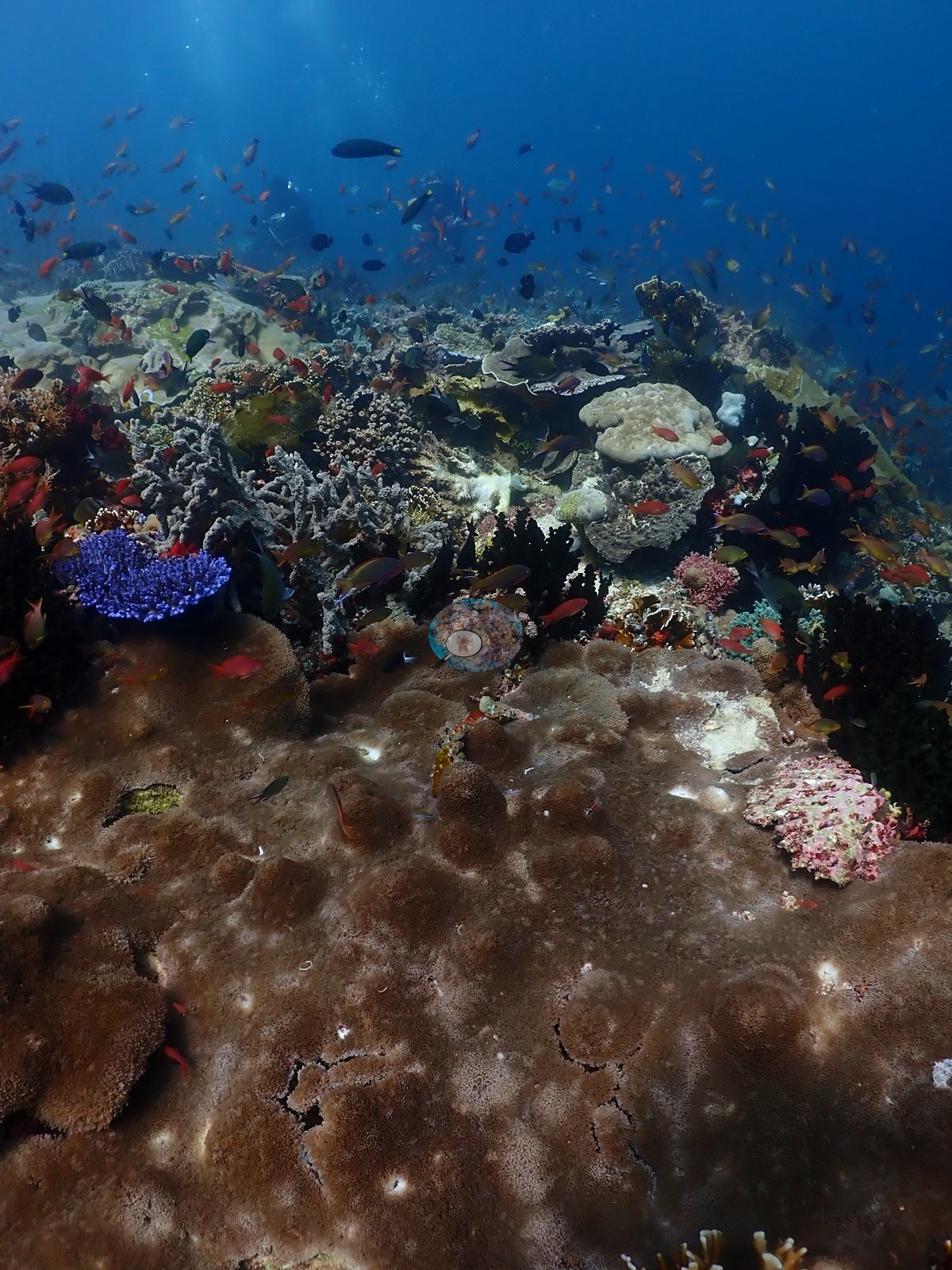
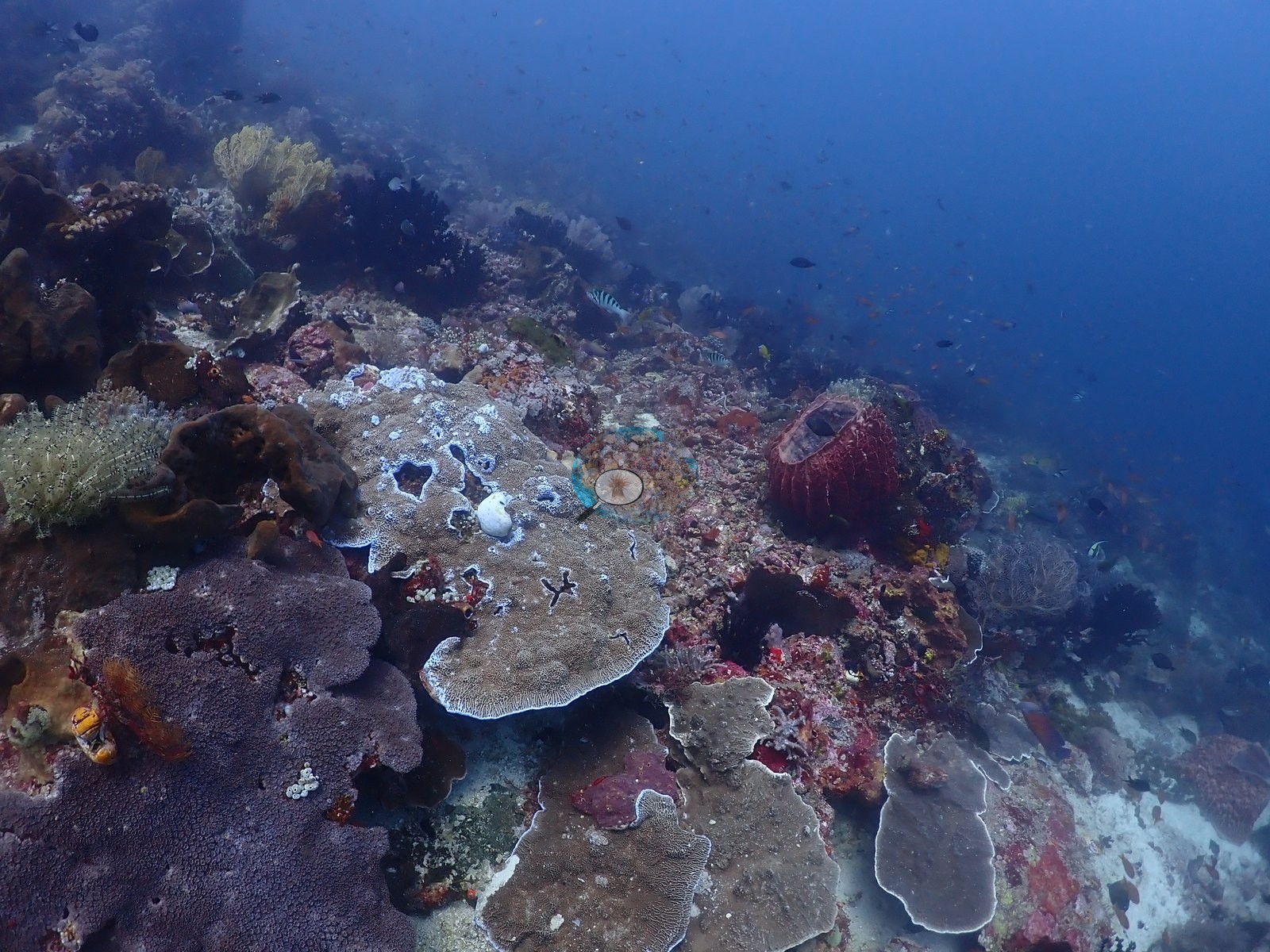
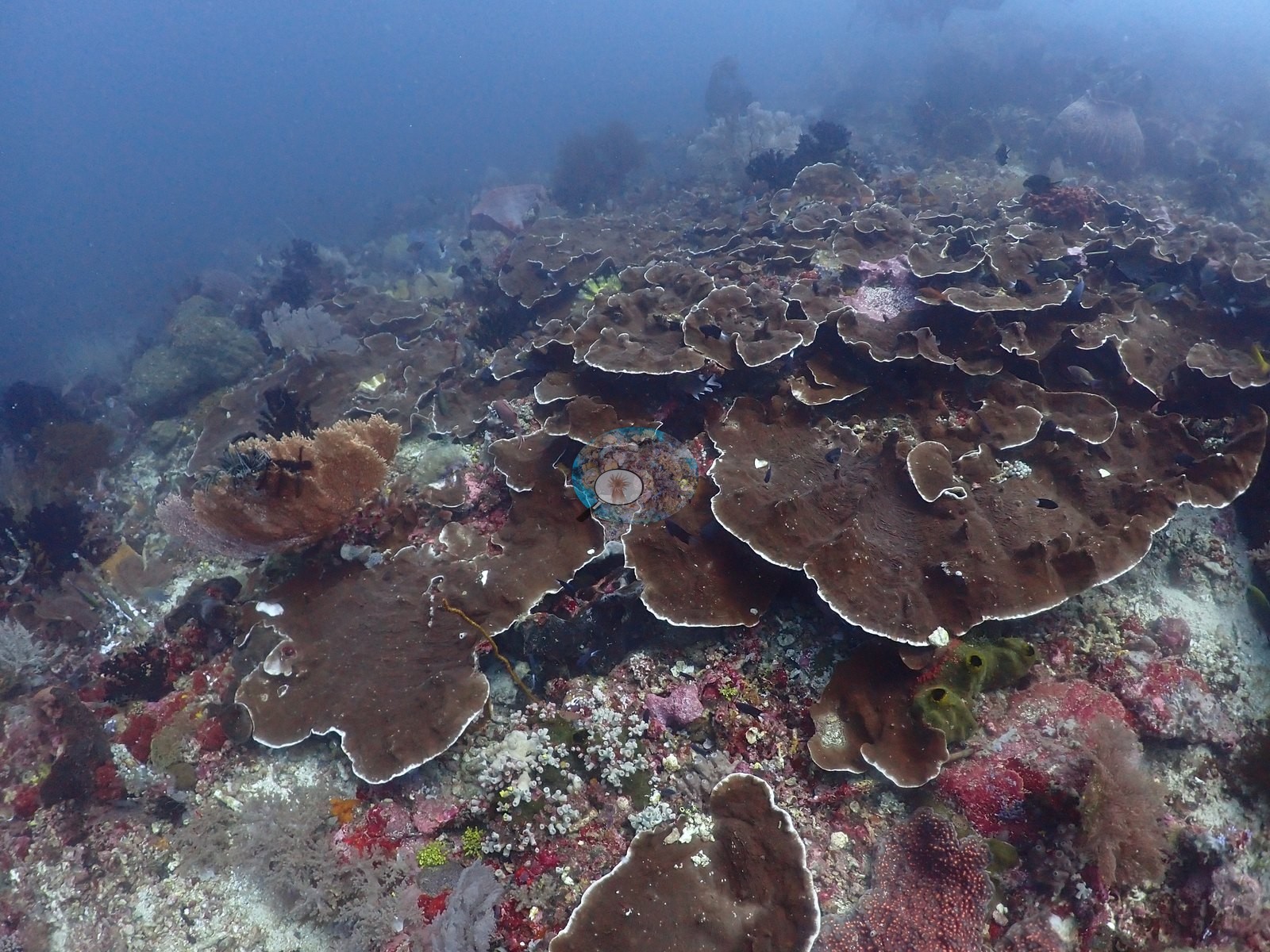
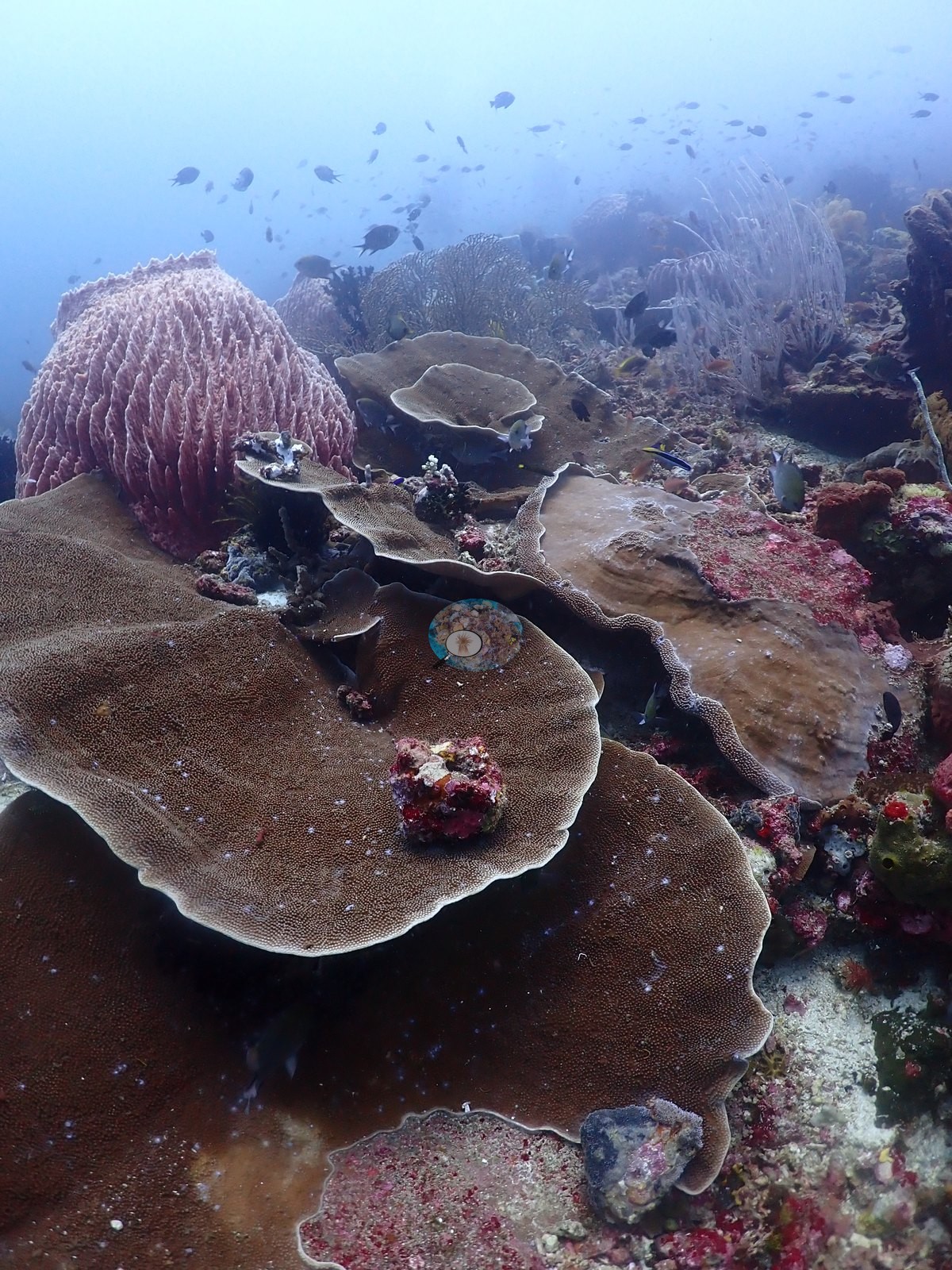
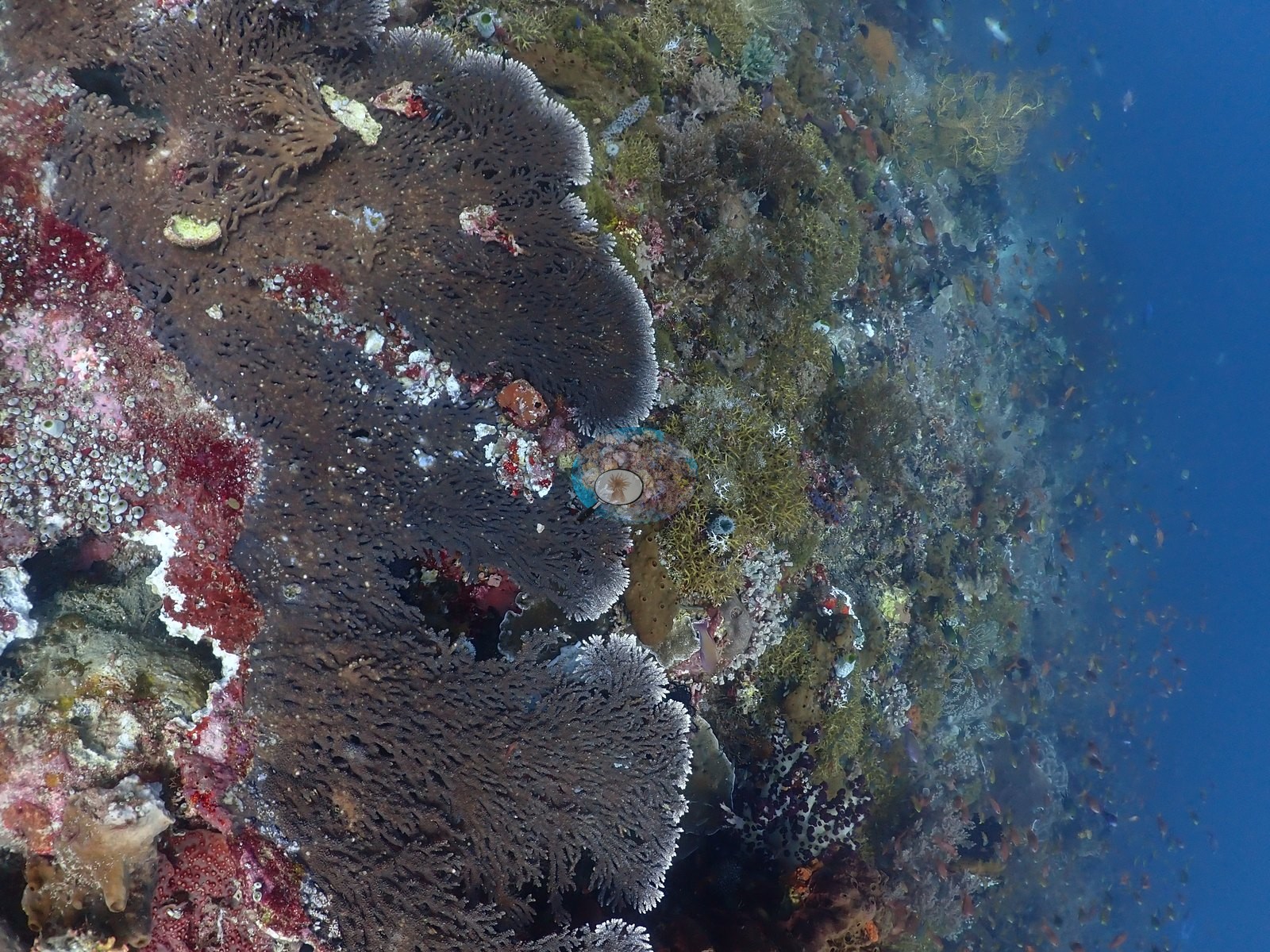
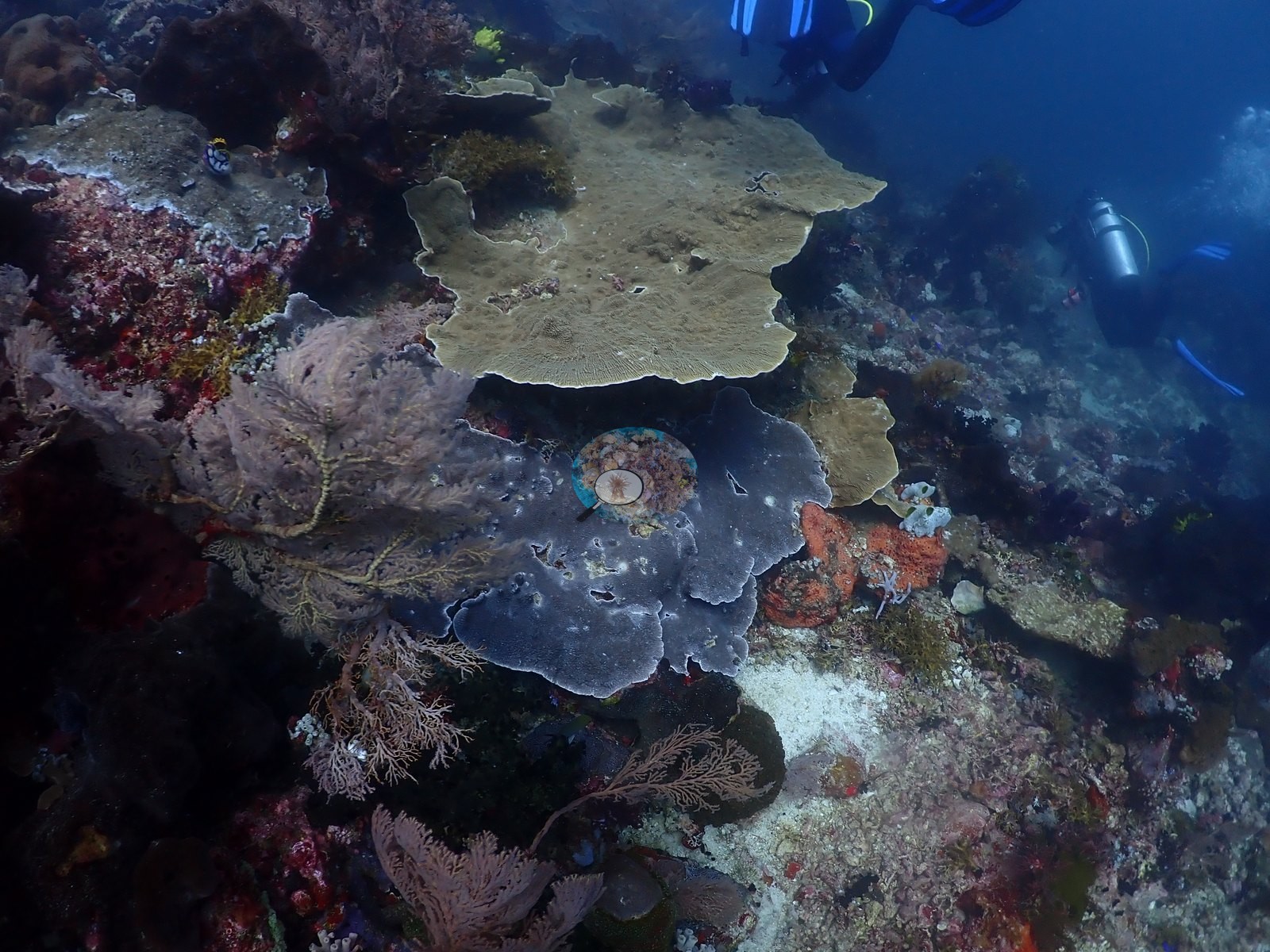
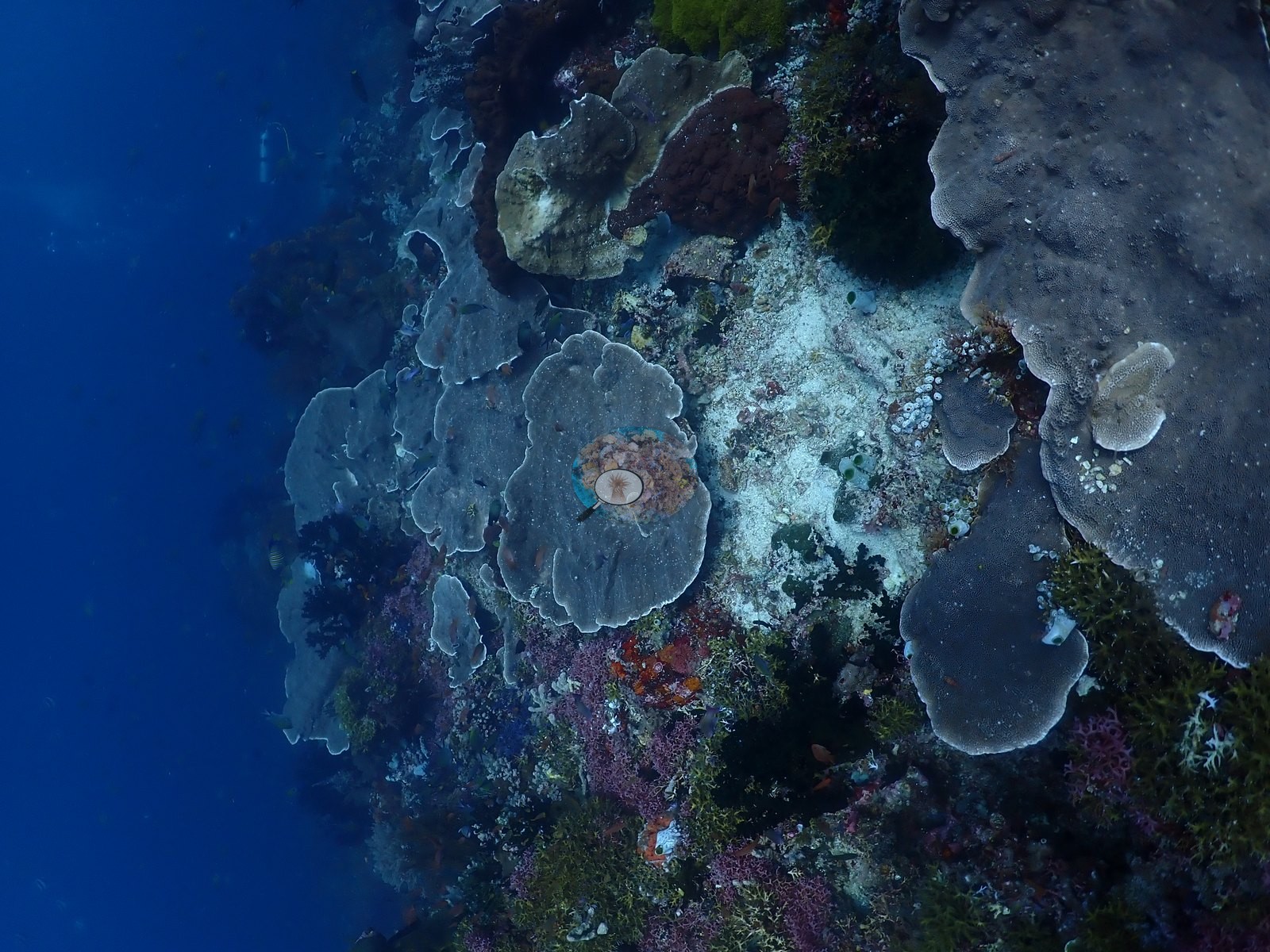
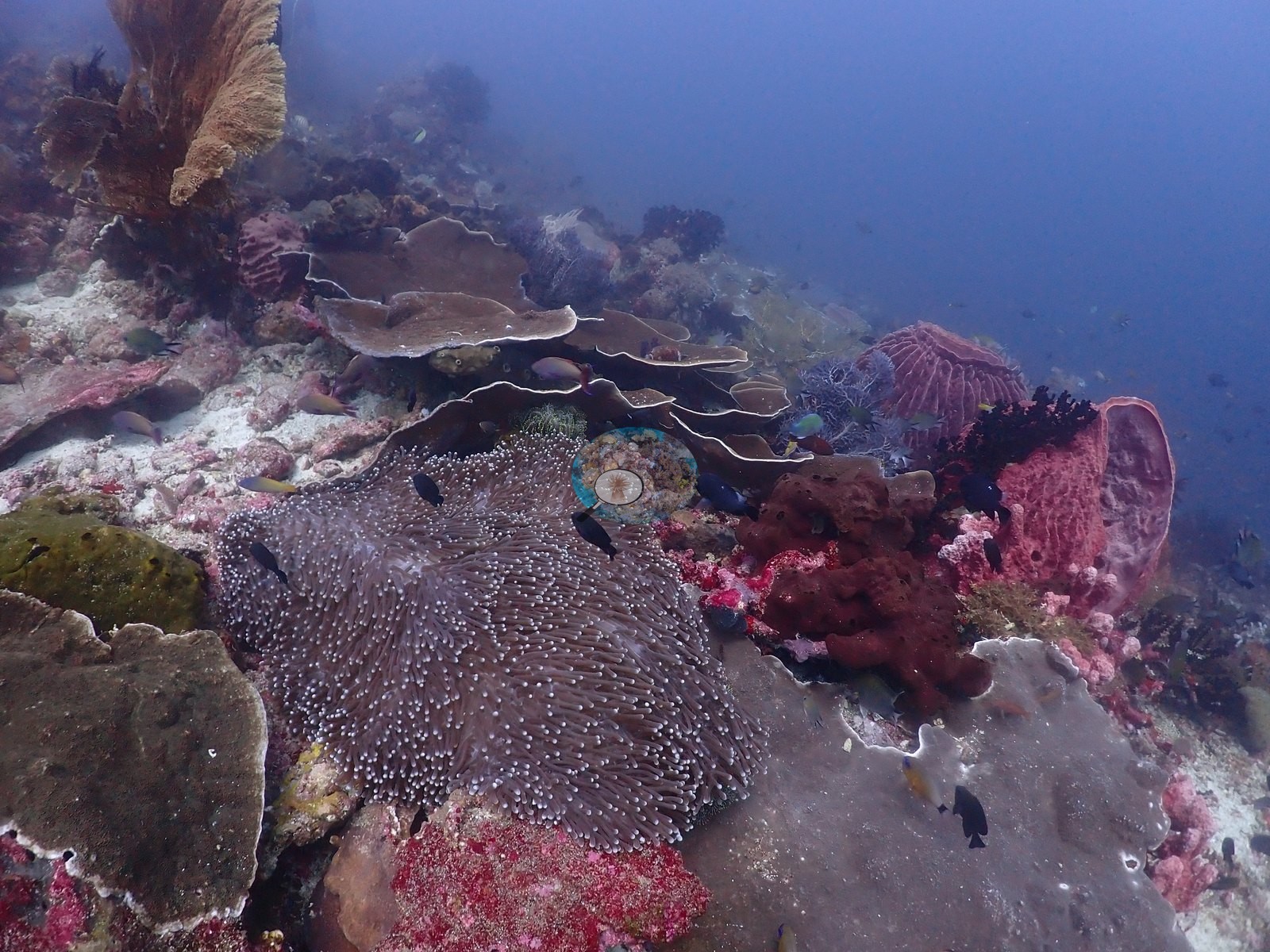
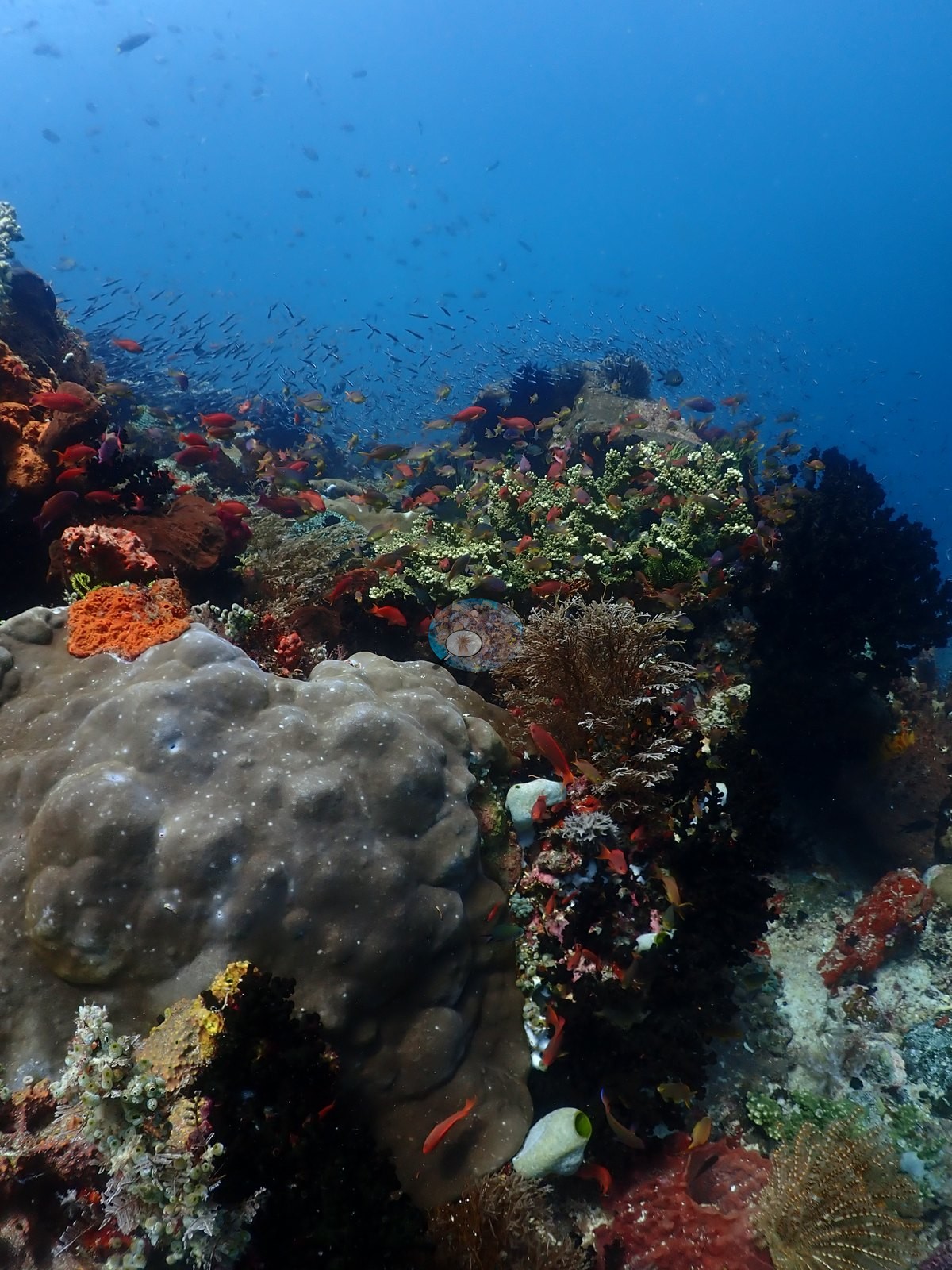
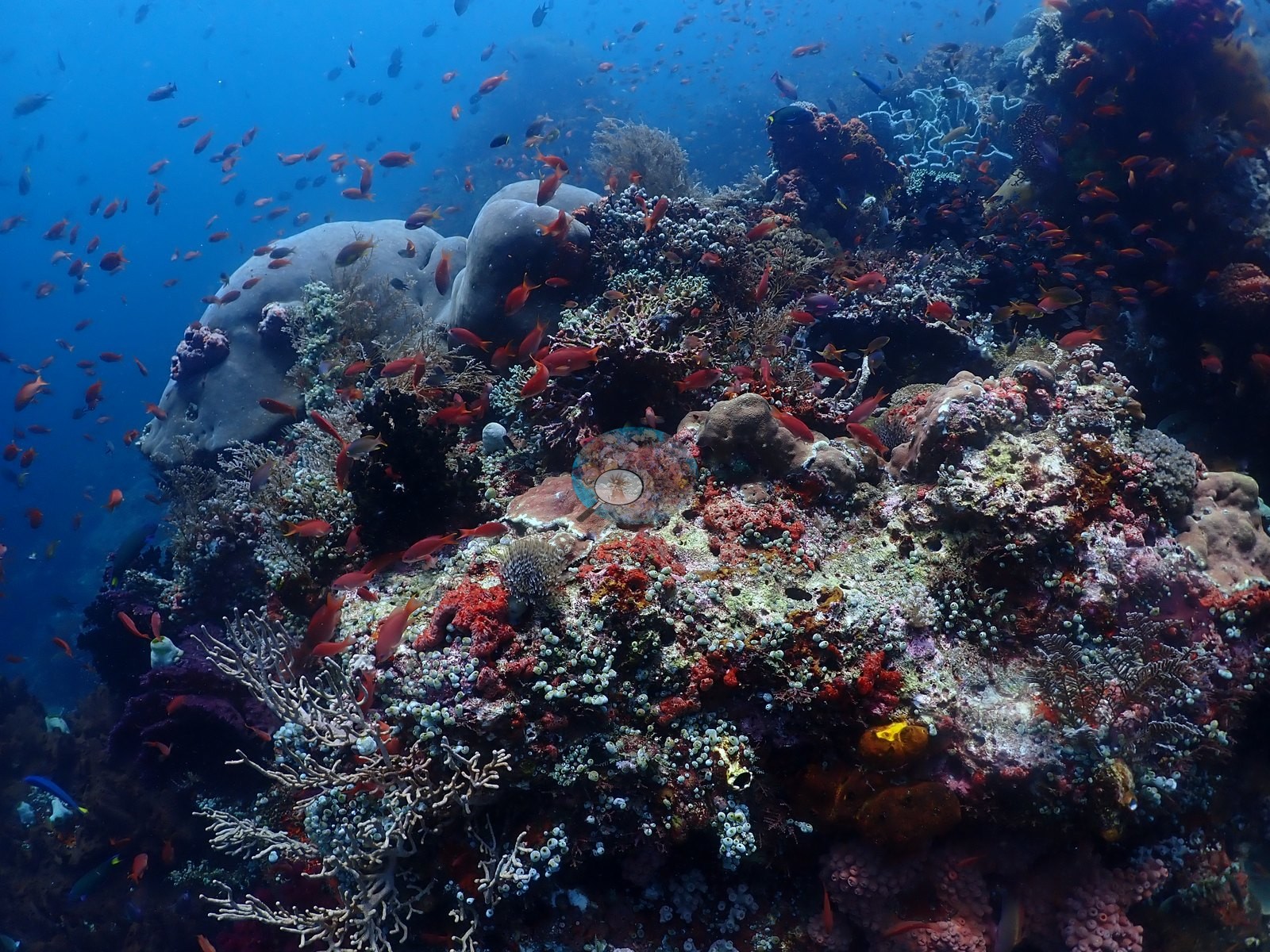
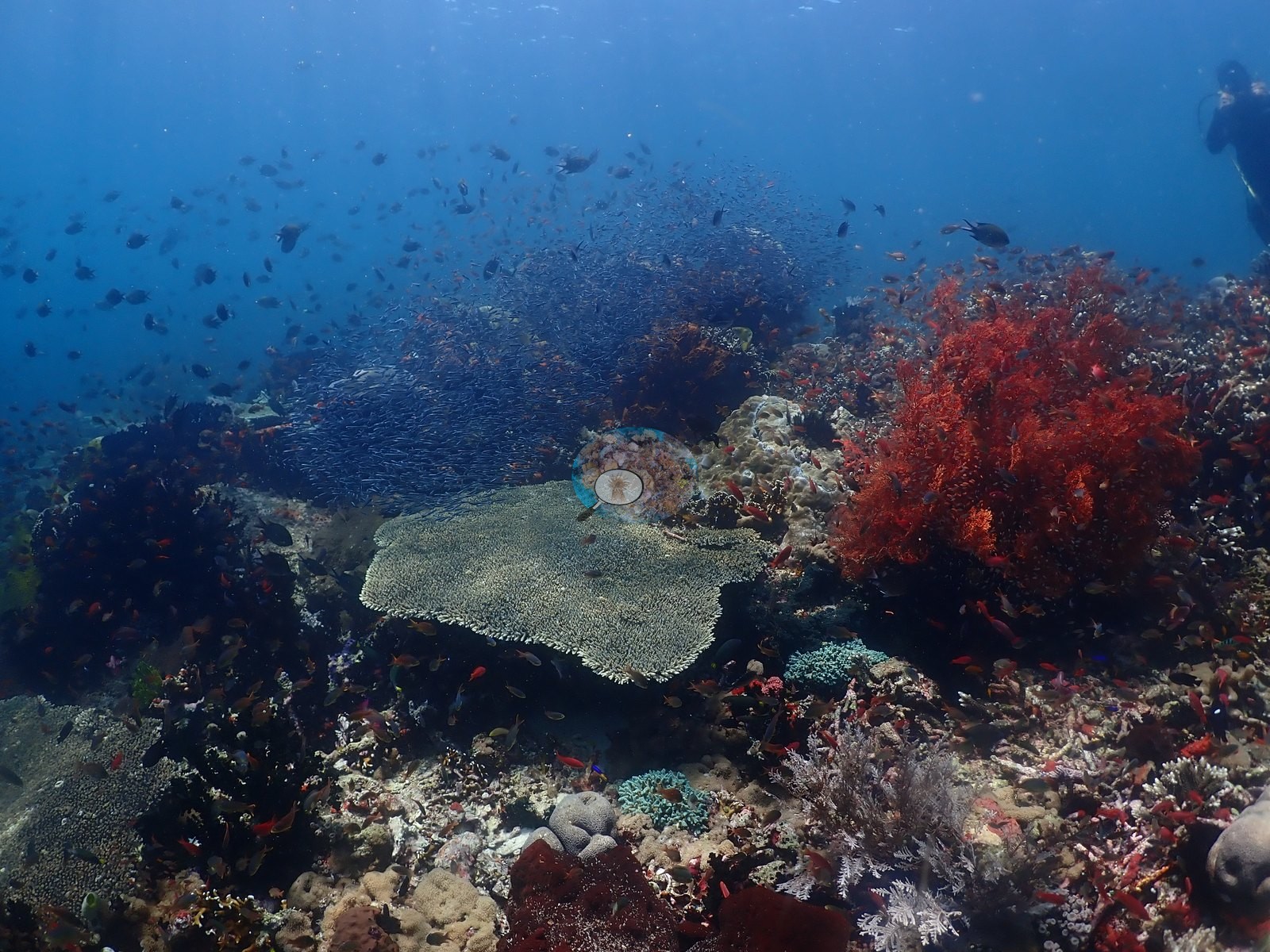
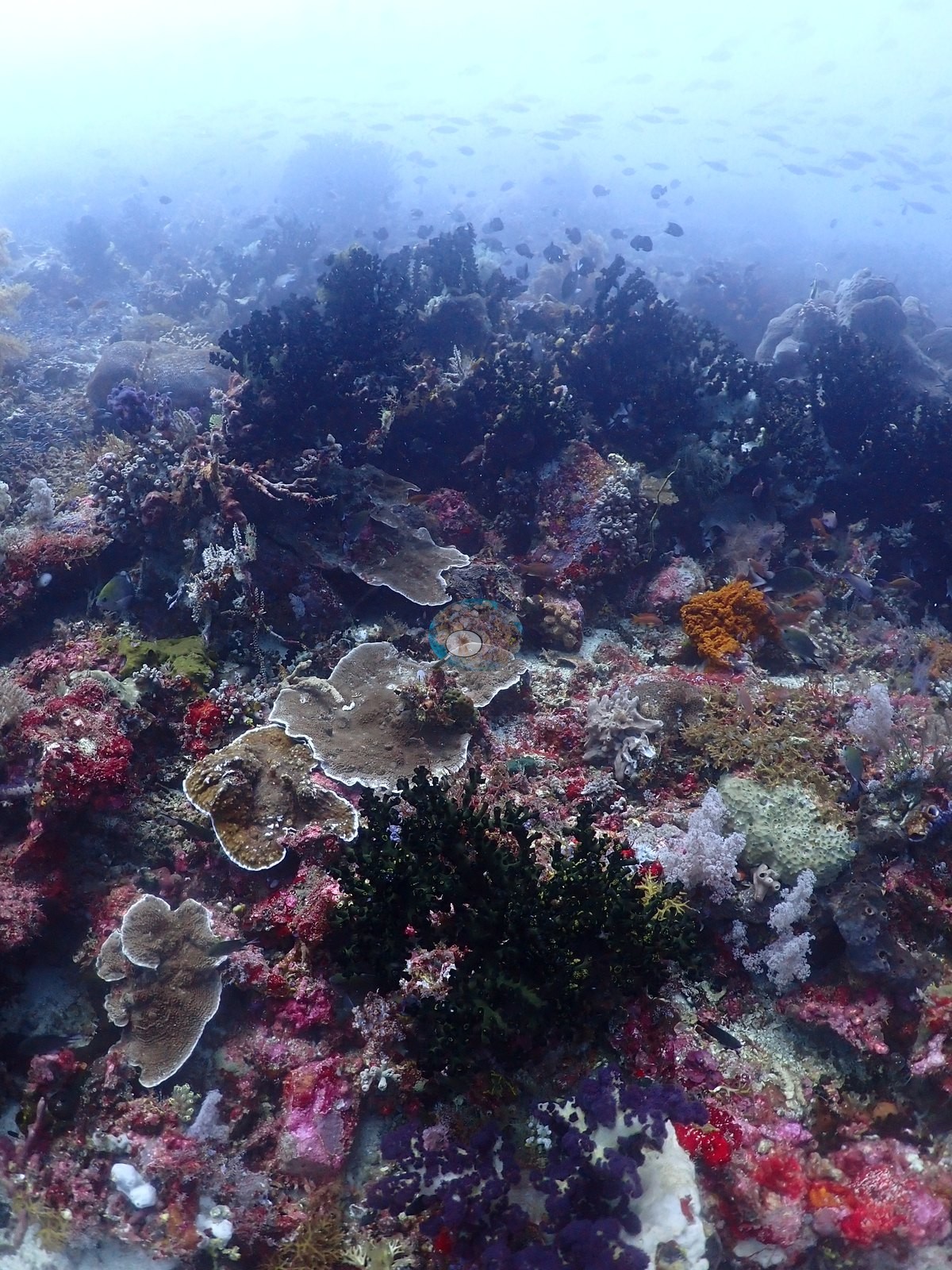
A rubble-and-sand pavement between bommies gives the low-cover frames, and the deepest, haziest frames are near-empty blue water over distant reef (e.g., Image 21, Image 40).
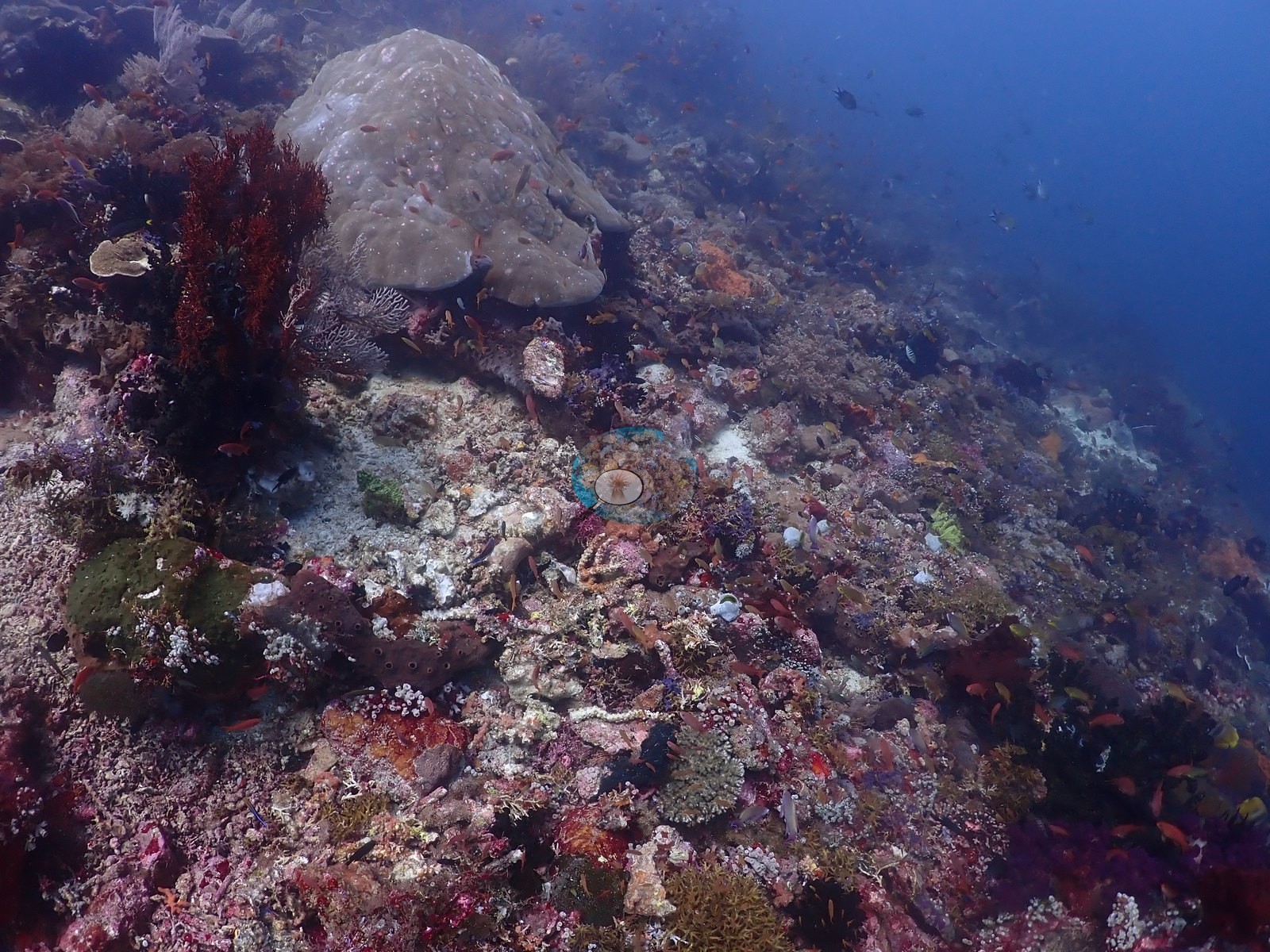
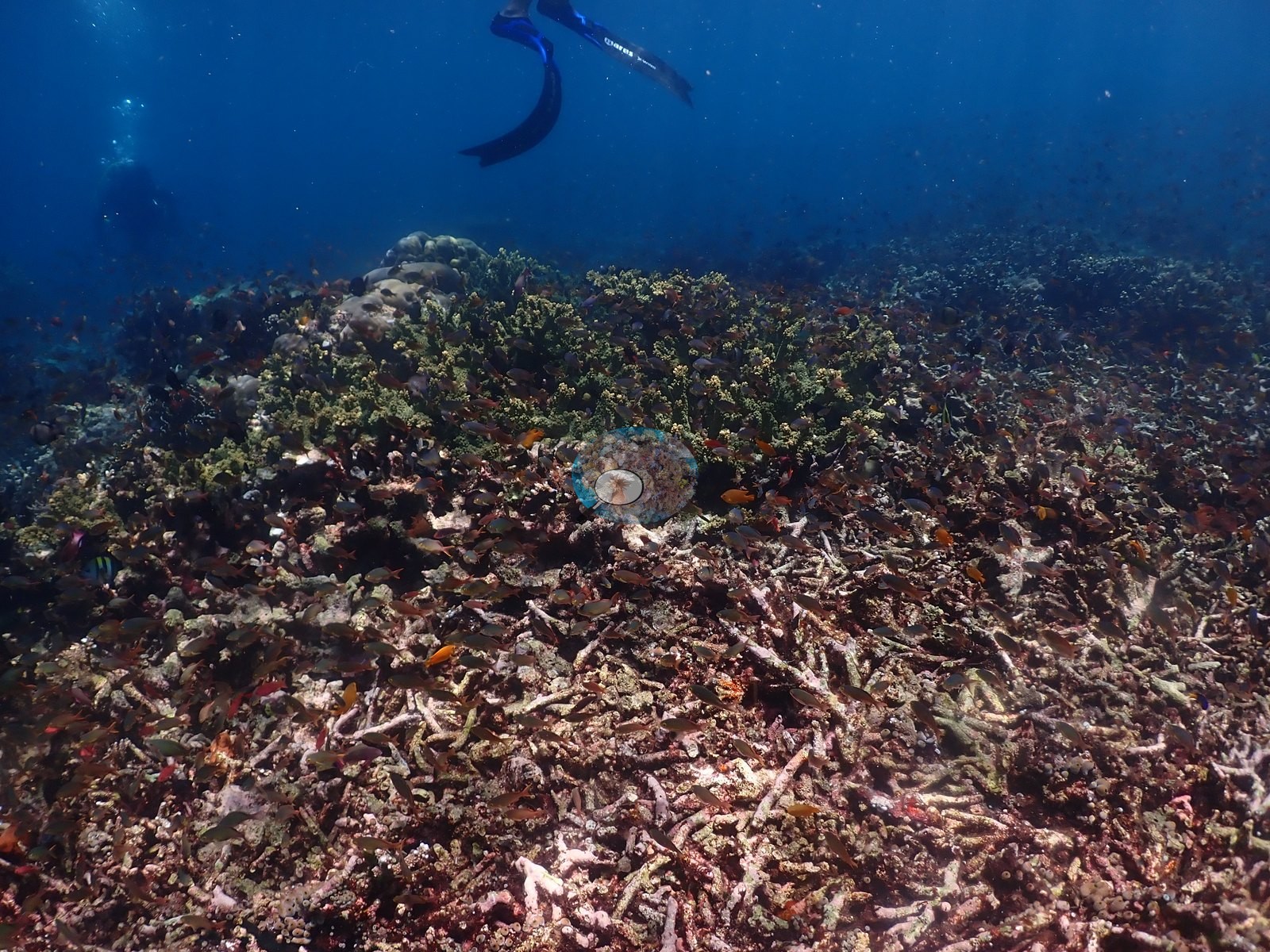
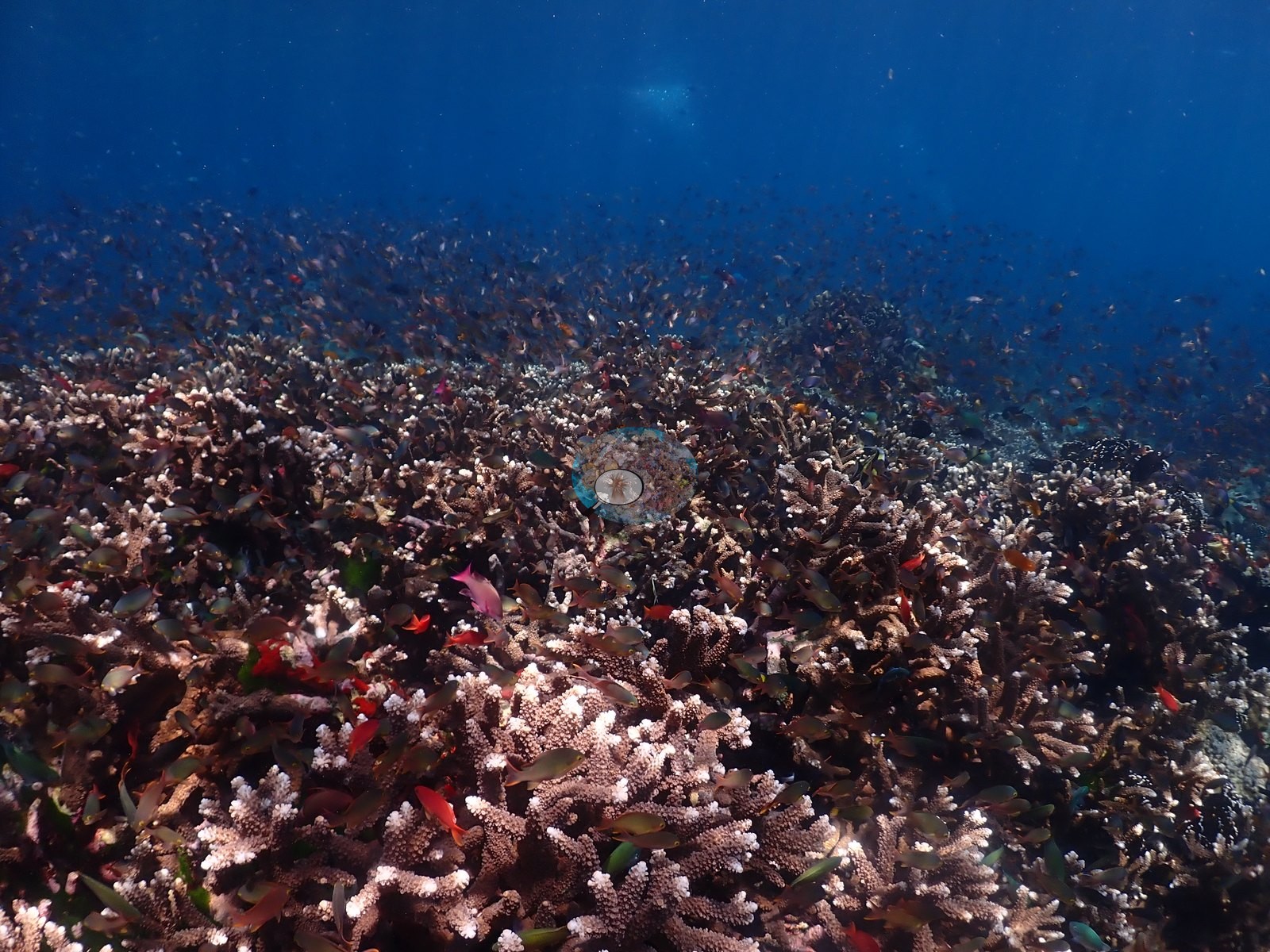
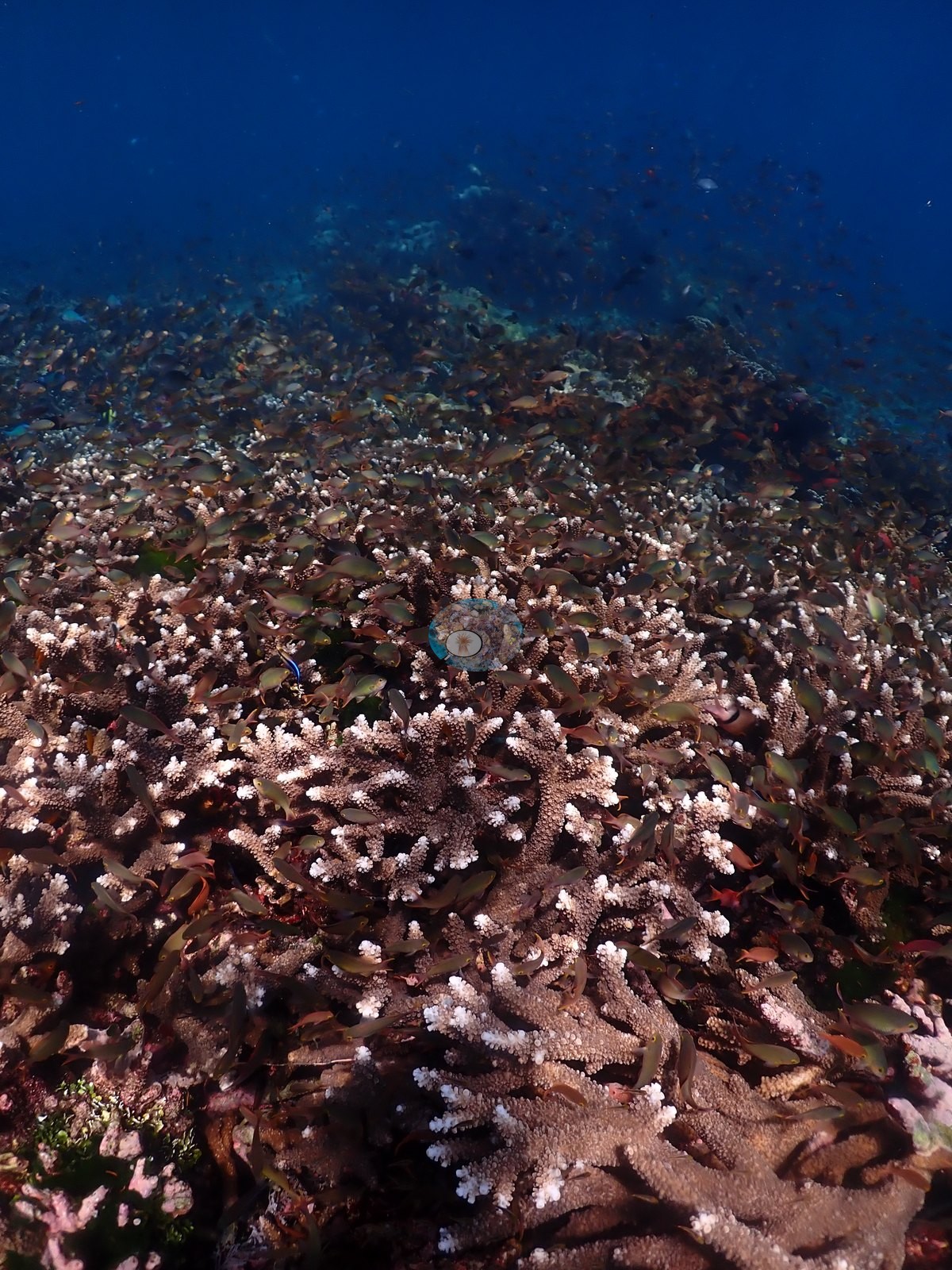
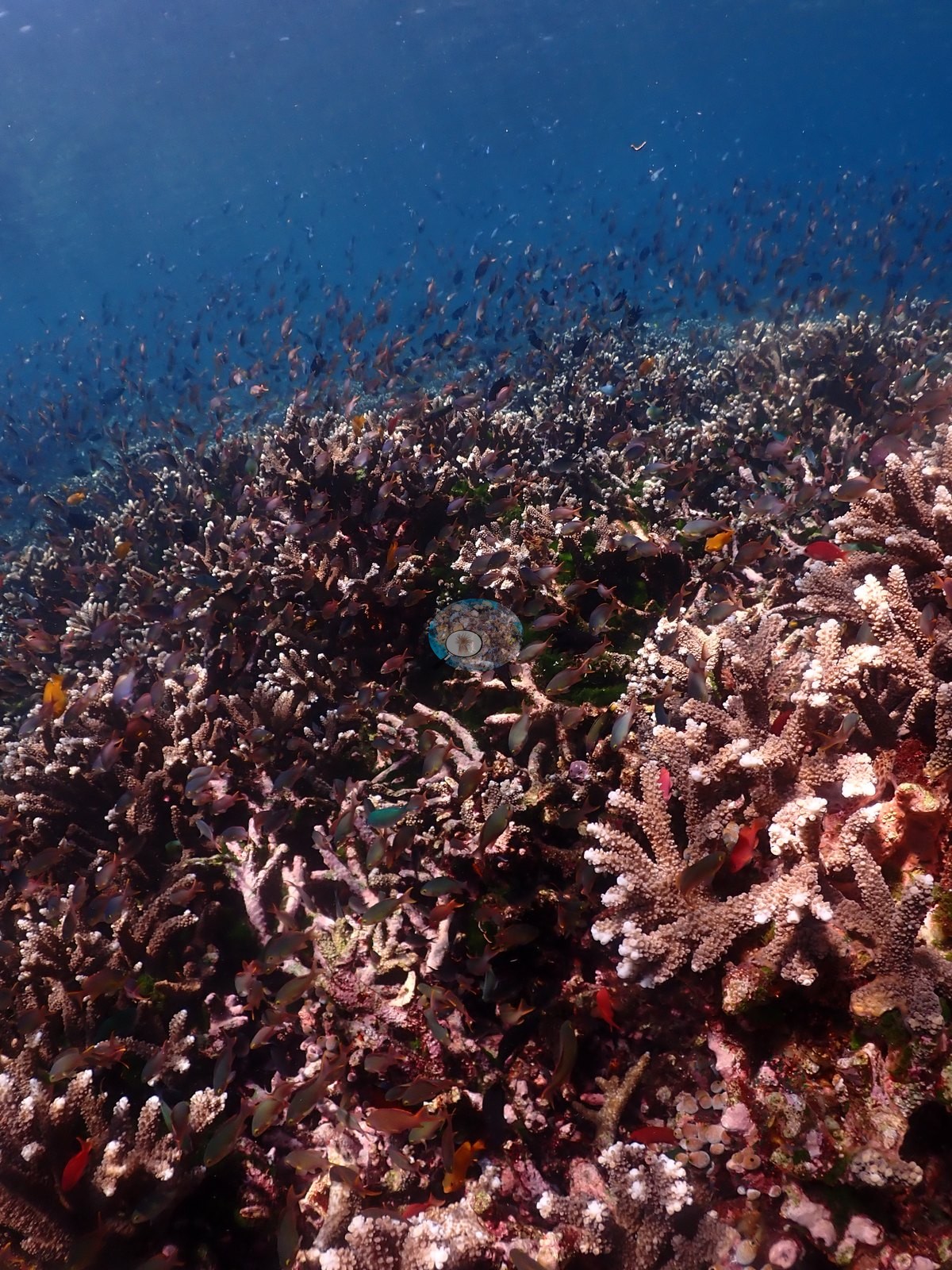
The shallow terrace is a different reef again: a broad, near-continuous field of tan and rose-brown staghorn Acropora with white growth tips, running to the limit of visibility under a dense cloud of damselfish (e.g., Image 29, Image 35, Image 55).
Coral cover
Coral cover: 21% — a blind Claude computer-vision point count of 236 of Anderson's unedited photographs (20 points per photo; water, fish, and obstructions excluded). Other computer-vision methods are listed in the method table.
Stressors
Condition. No confirmed bleaching. One large tabulate Acropora reads distinctly whiter than its neighbors, pale bluish-white with no brown pigment, in a frame where the surrounding anthias are fully colored — but naturally pale gray-lavender table morphs are common here (a second, normally pigmented table in another frame is only a little darker), so this is logged as unresolved rather than as bleaching. No crown-of-thorns, no Drupella aggregations, and no active disease lesions were recorded. Some plate margins carry small pale patches already being colonized by crustose coralline algae — healed minor injury, not an advancing front (e.g., Image 1).
Fish and other fauna
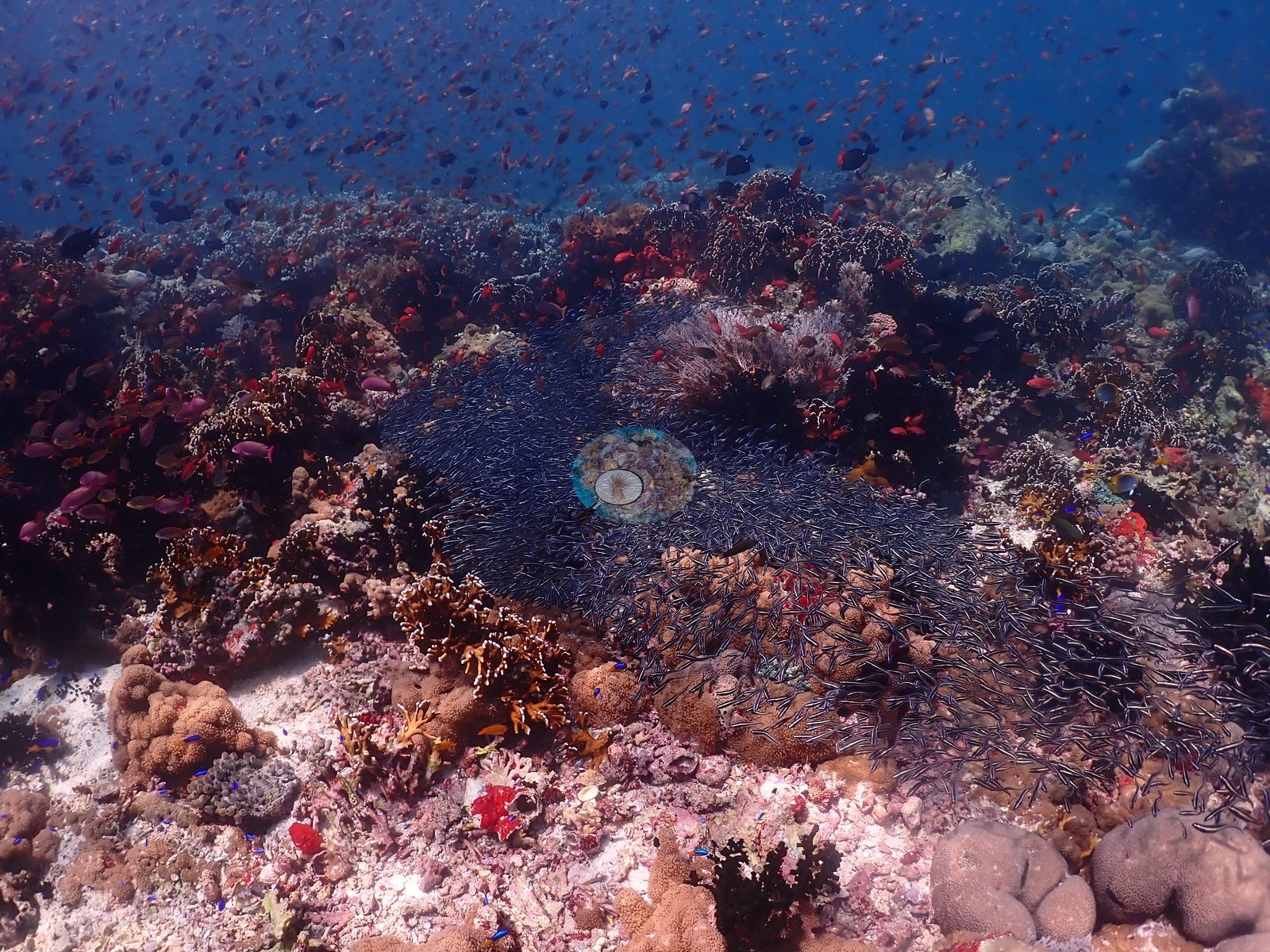
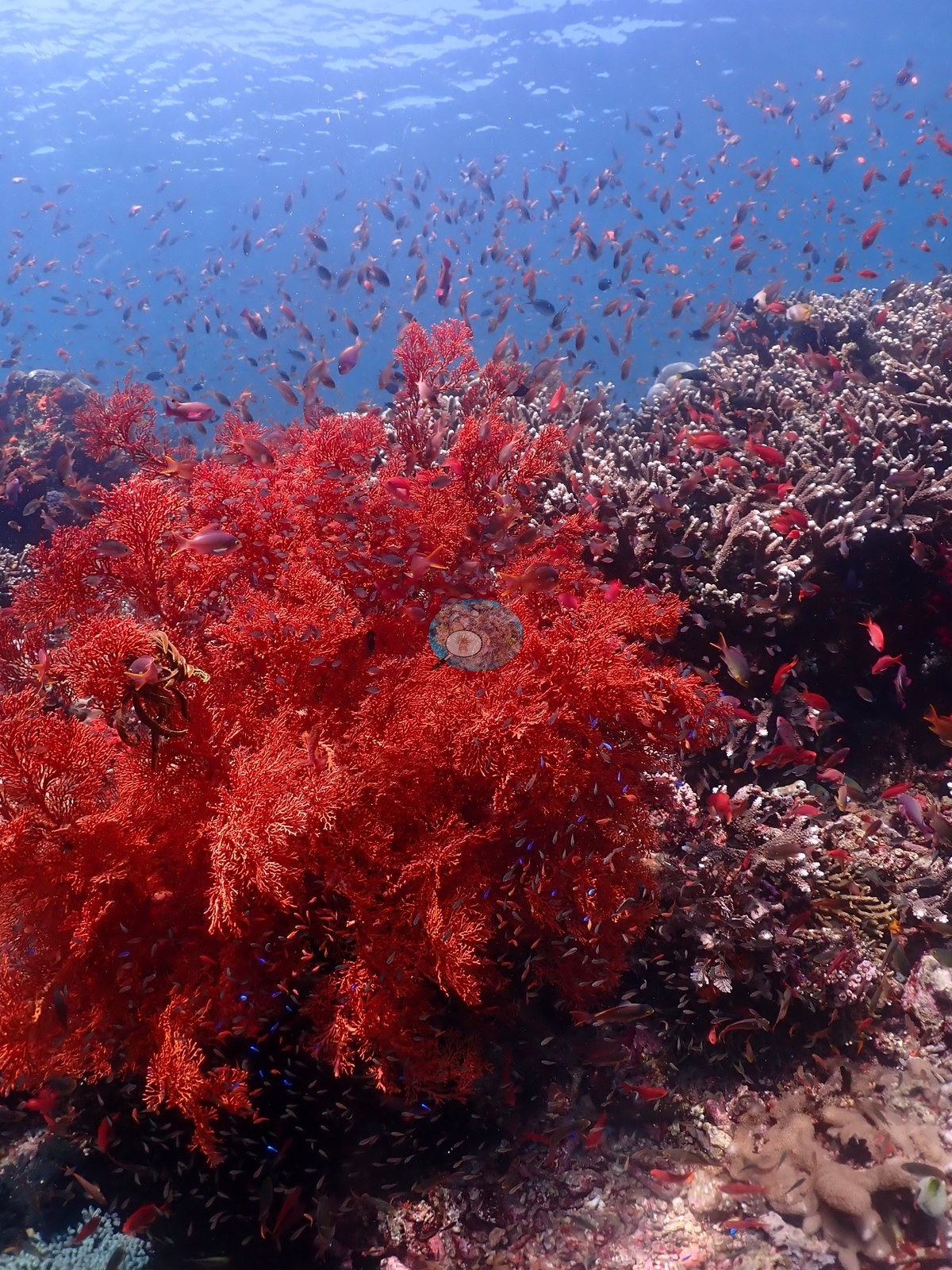
Fauna. A dense swarm of black-and-white striped eel-like fish, consistent with juvenile striped catfish (Plotosus lineatus) or convict blennies (Pholidichthys leucotaenia), covered whole sections of the reef in two frames; a huge scarlet Dendronephthya soft coral stood over the slope; anemonefish in a bubble-tip anemone; anthias, fusiliers, damselfish, silversides, wrasse, and butterflyfish throughout (e.g., Image 4, Image 5, Image 11, Image 44).
Comparisons with other data
No prior survey data from this site. If you would like to share yours, please email us.
Dive record
Batu Mangga was dived on 11 August 2026 during the Halmahera crossing aboard the liveaboard Ambai (Wallacea Dive Cruises), reaching 29.1 m at 25–26°C.
CV model comparison
More info
DINOv3 and CoralSCOP were run on the same photos and are listed for comparison. Coralscapes v2 and v1 were also run but are not shown: Anderson does not consider Coralscapes reliable for these photos. No diver transect exists for this trip, so agreement between the rows is not accuracy, and as of September 2026 no computer-vision method estimates coral cover accurately on new images; treat every row as indicative.| Method | Hard-coral cover (%) |
|---|---|
| In-house DINOv3 | 35.8 |
| CoralSCOP unedited | 32.9 |
| Claude | 20.9 |
Data & links
All images from Coral Reef Diagnostics. Data are from Coral Reef Diagnostics.
© Coral Reef Diagnostics.