
Indonesia - Ambon: Rhino City (Laha)
Part of the regional summaries: Indonesia - Ambon and Indonesia - Maluku
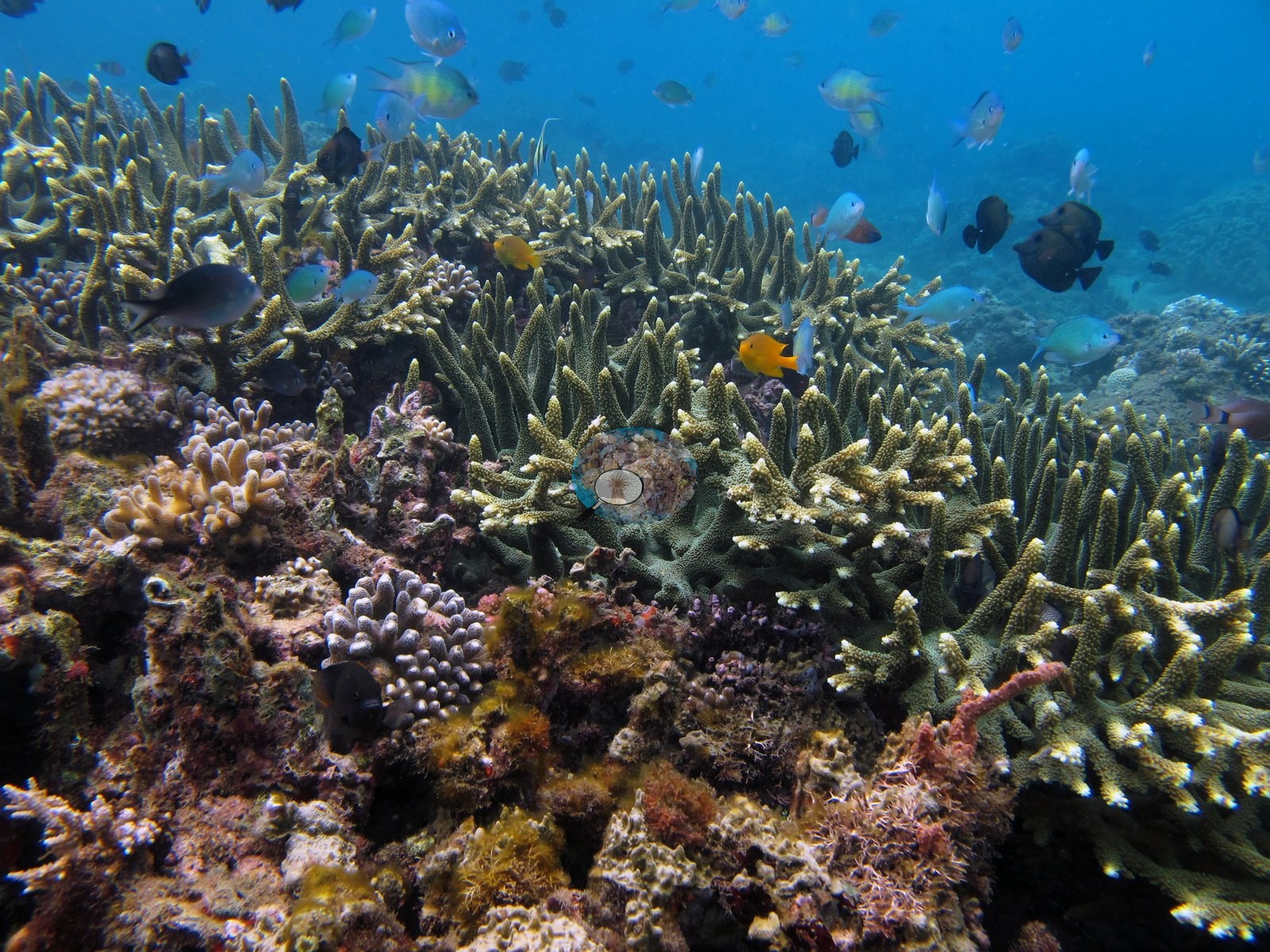
More info
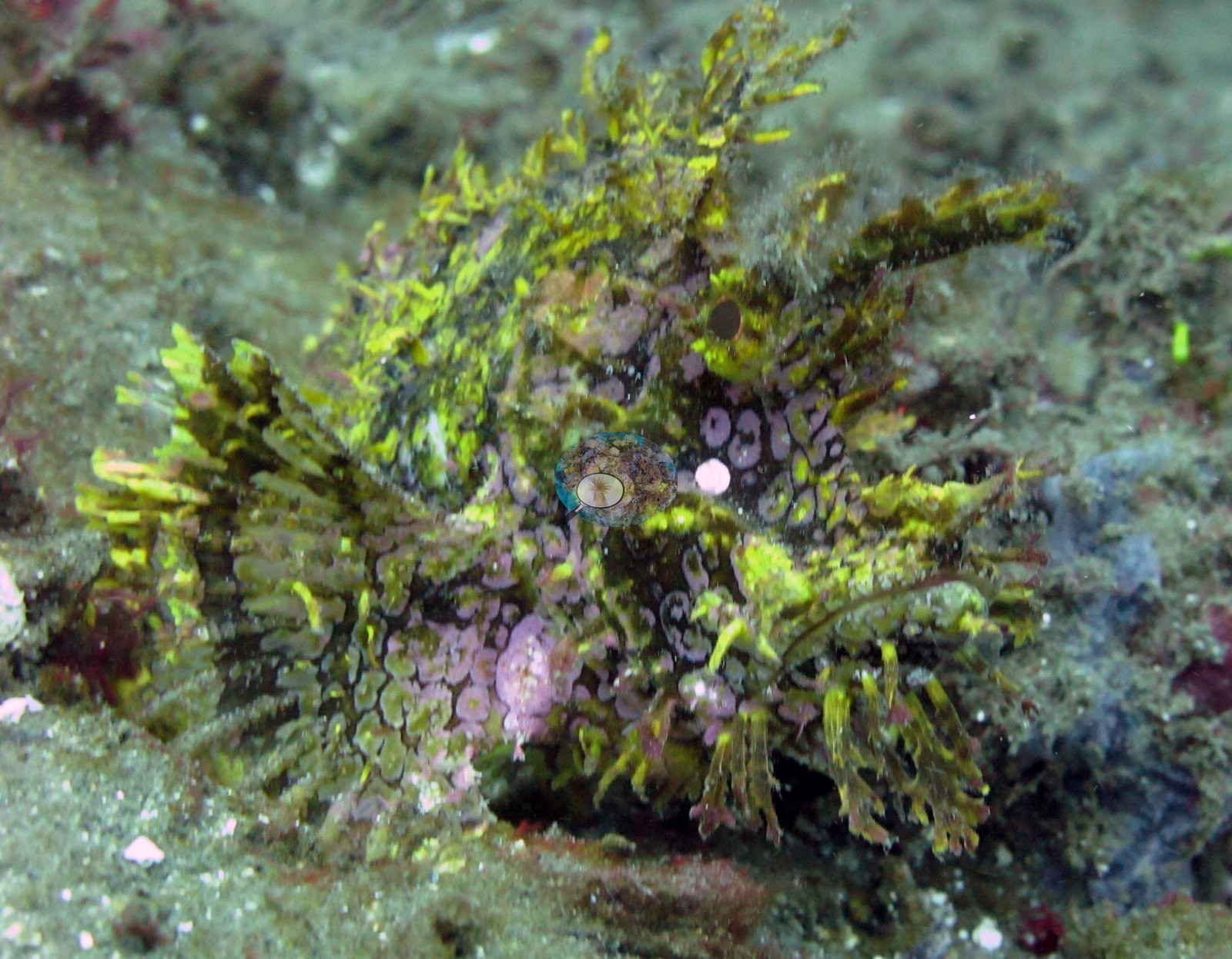
Maluku (NOAA CRW virtual station) · Banda Sea ecoregion mean=7.3°C-heating weeksRhino City splits into sparse sandy muck and a genuinely dense, healthy staghorn and table Acropora reef flat, with the trip's best critter showing - a true Rhinopias weedy scorpionfish, a likely dark-morph ornate ghost pipefish, and a blue ribbon eel caught in a threat display. No disease or crown-of-thorns starfish (COTS) observed. A photo-derived index puts cover around 33%.
Rhino City terbagi menjadi muck berpasir yang jarang dan rataan terumbu Acropora bercabang dan bermeja yang benar-benar rapat dan sehat, dengan penampilan biota terbaik sepanjang perjalanan — seekor Rhinopias sejati (ikan lepu berumbai), ikan pipa hantu berhias yang kemungkinan bermorf gelap, dan belut pita biru yang tertangkap sedang memperagakan ancaman. Tidak teramati penyakit maupun bintang laut mahkota duri. Indeks turunan-foto memperkirakan tutupan sekitar 33%.
Terjemahan ringkasan ini oleh AI; versi bahasa Inggris yang berlaku.
Two other CRD dive sites within 5 km shown in orange — click a marker to open its page.
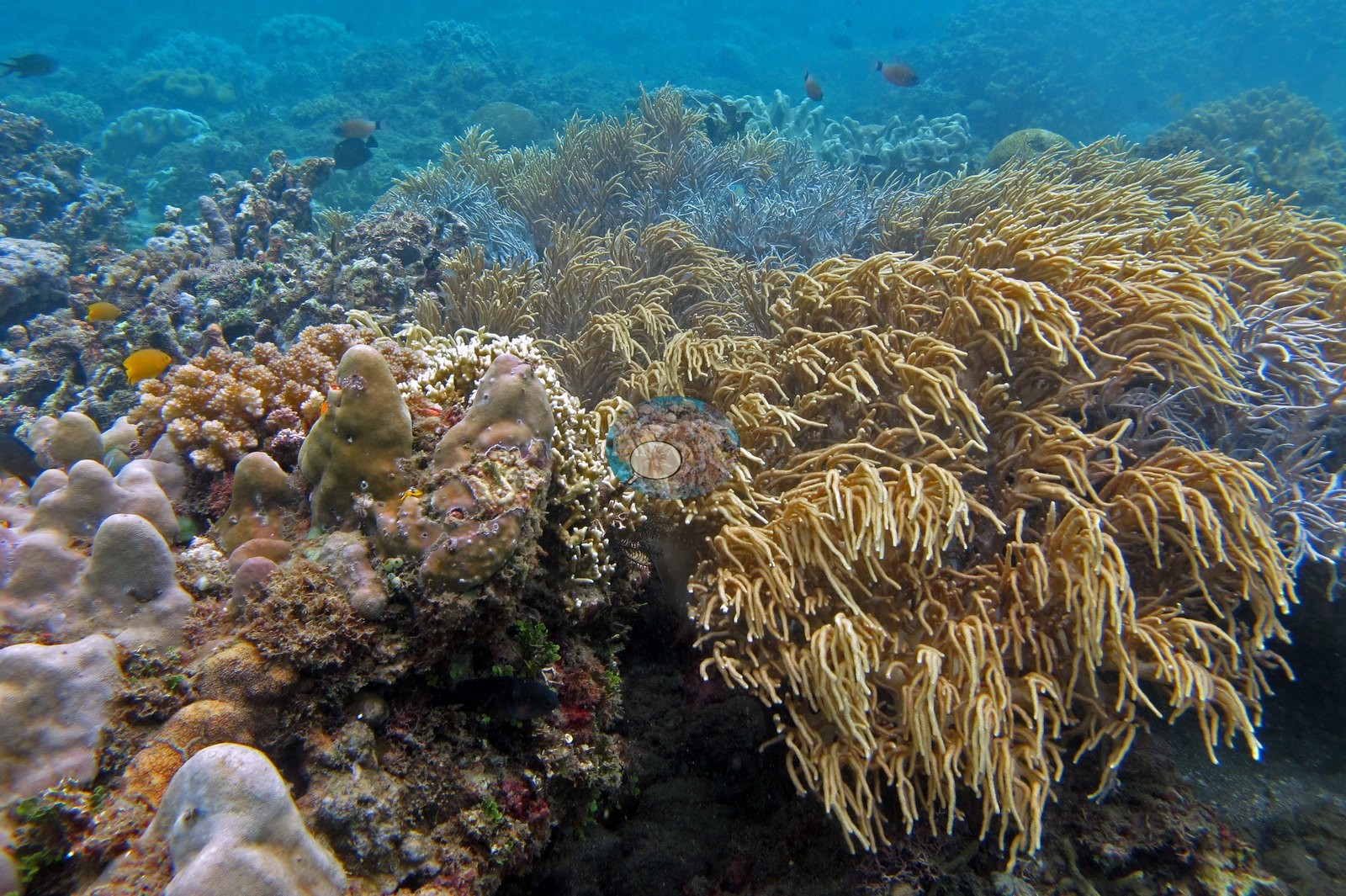
3 of these 50 photographs are shown beside the text that discusses them under "Site description" below.
Site description
Setting
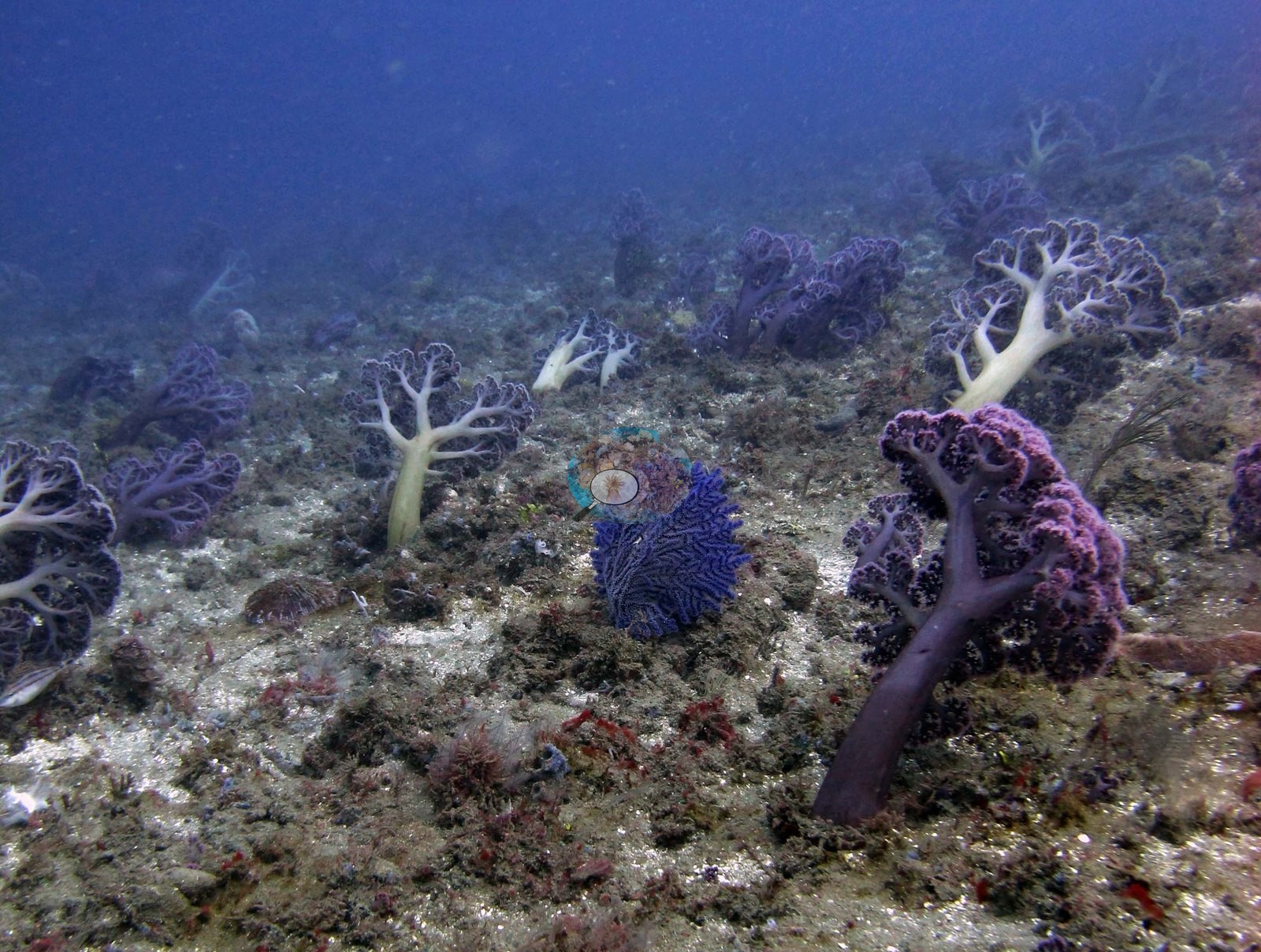
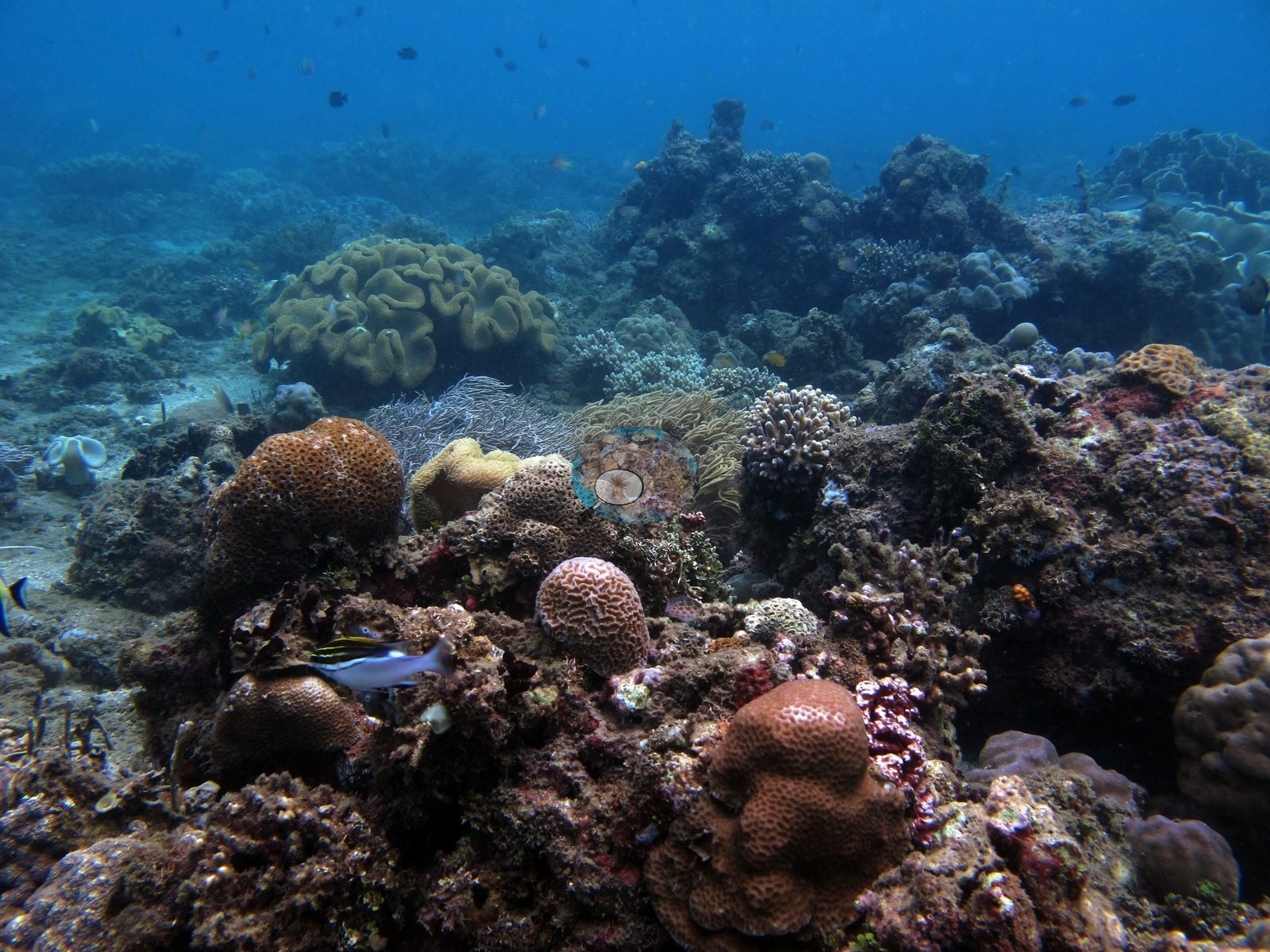
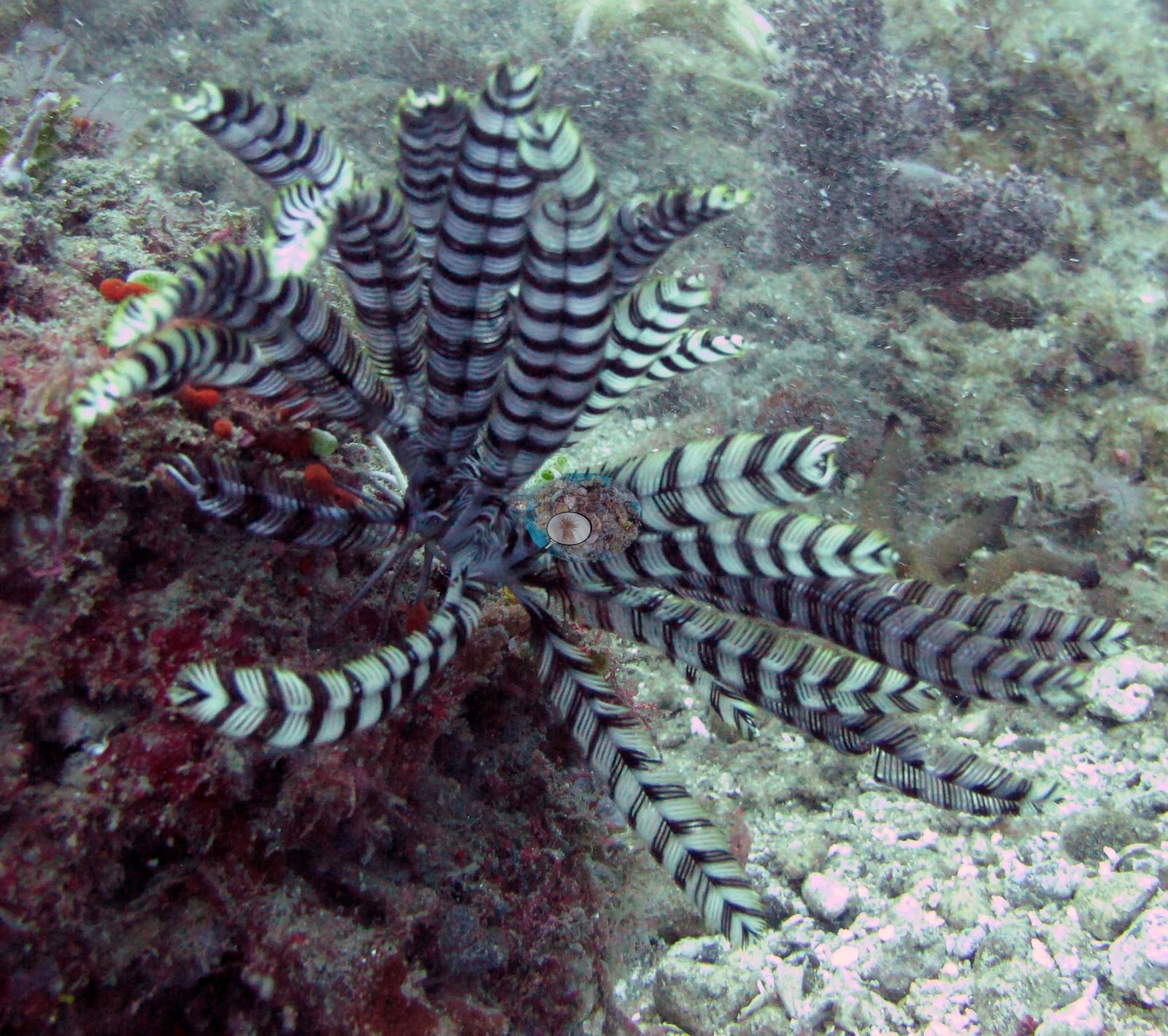
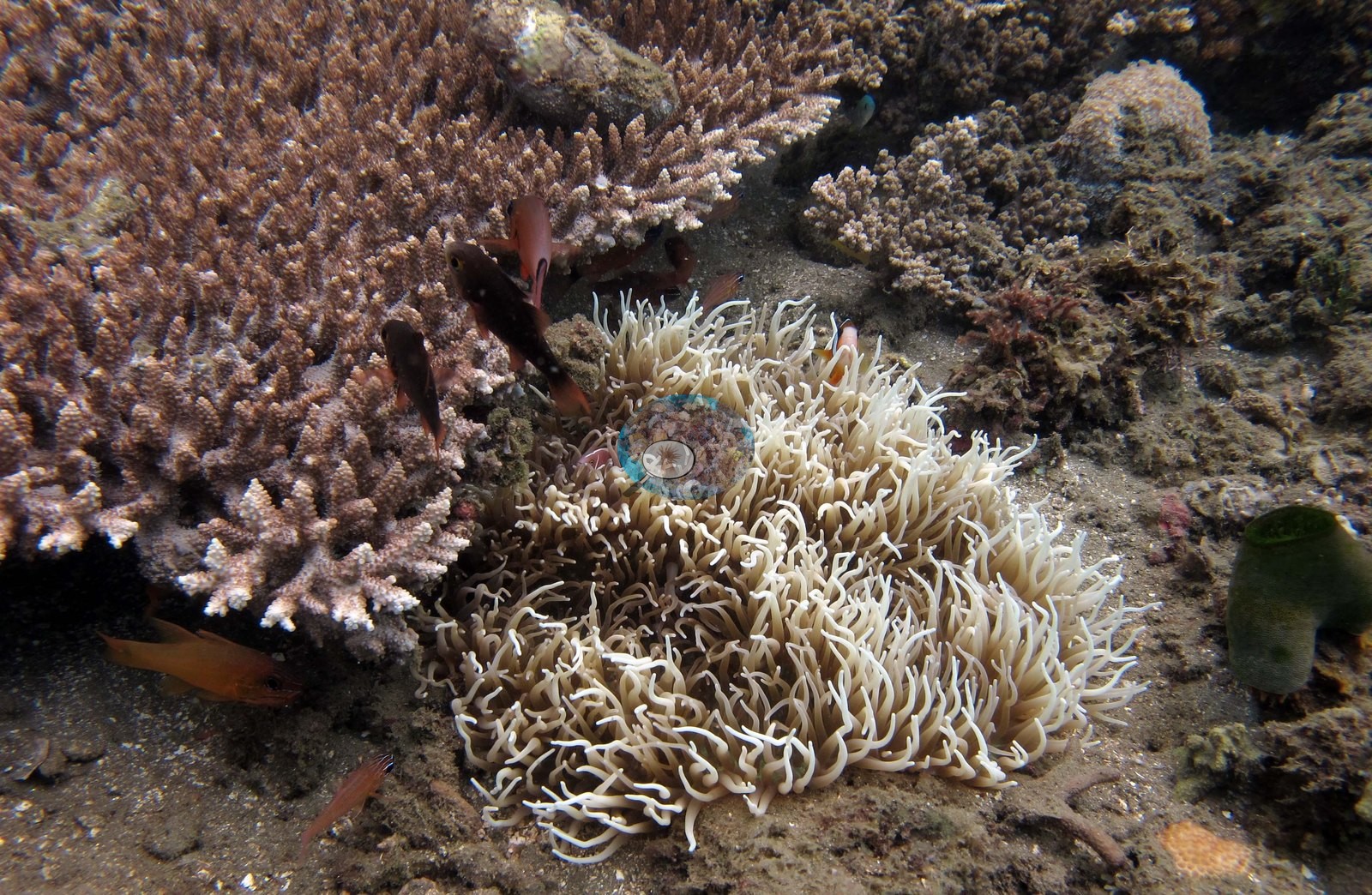
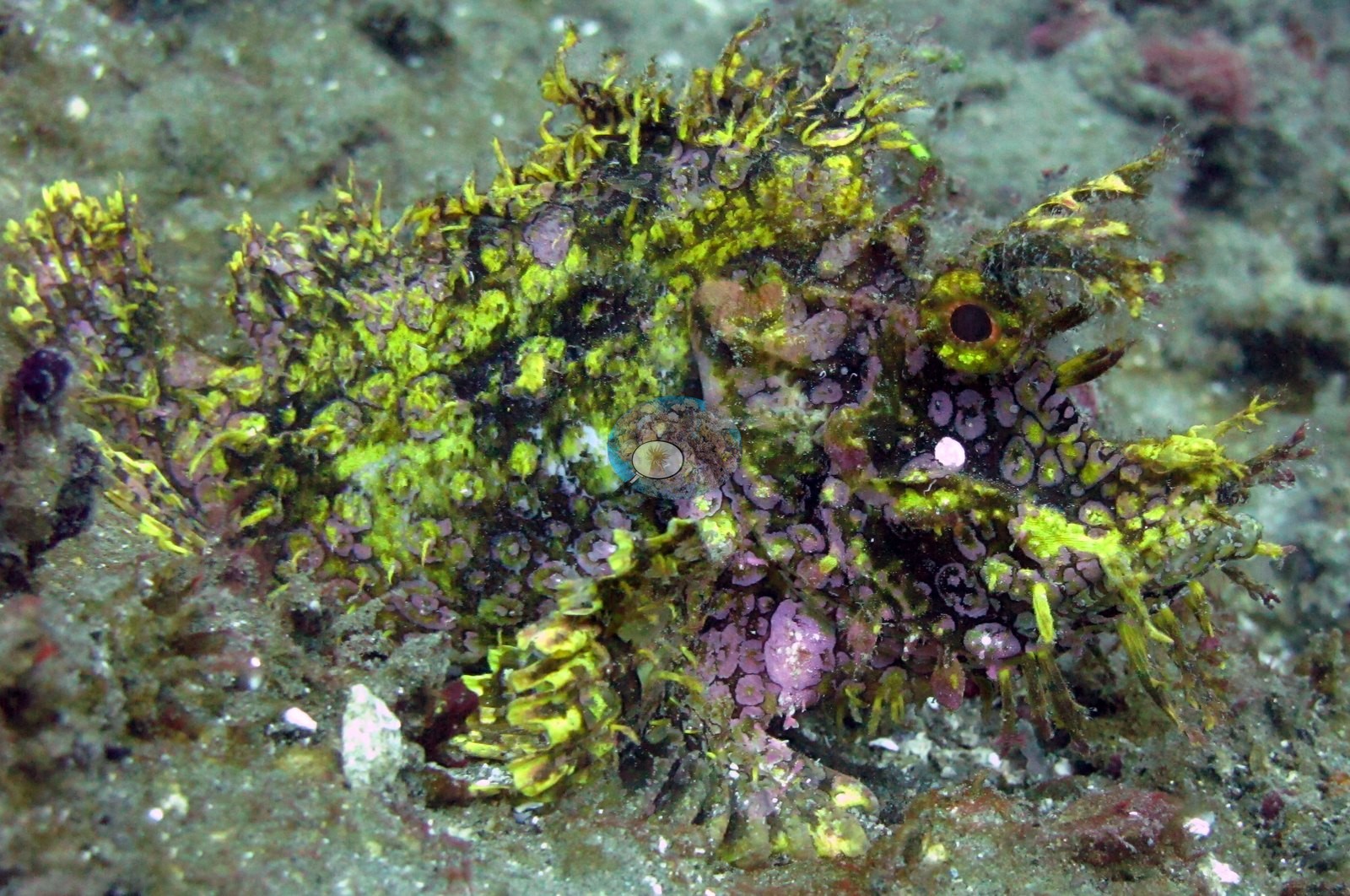
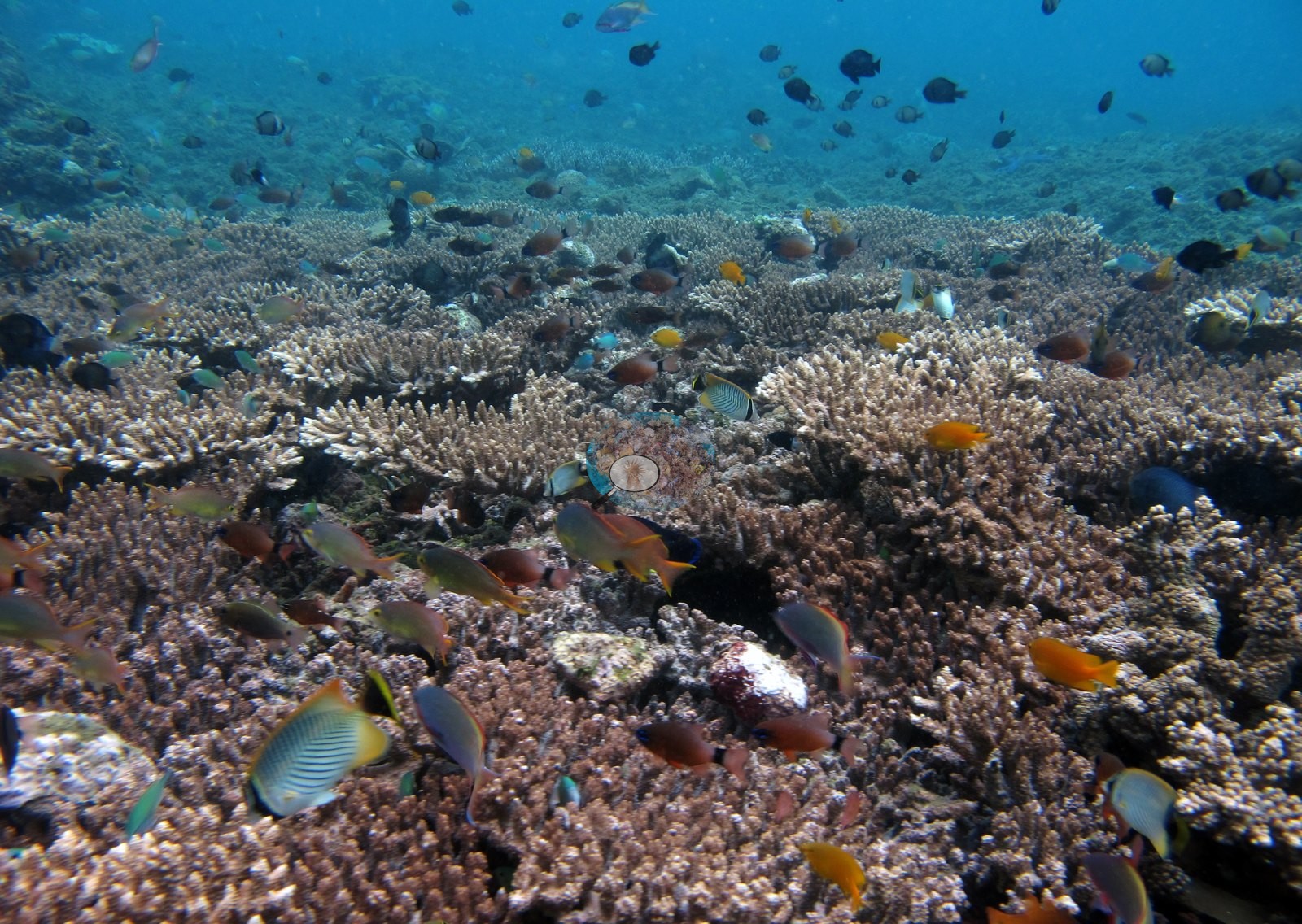
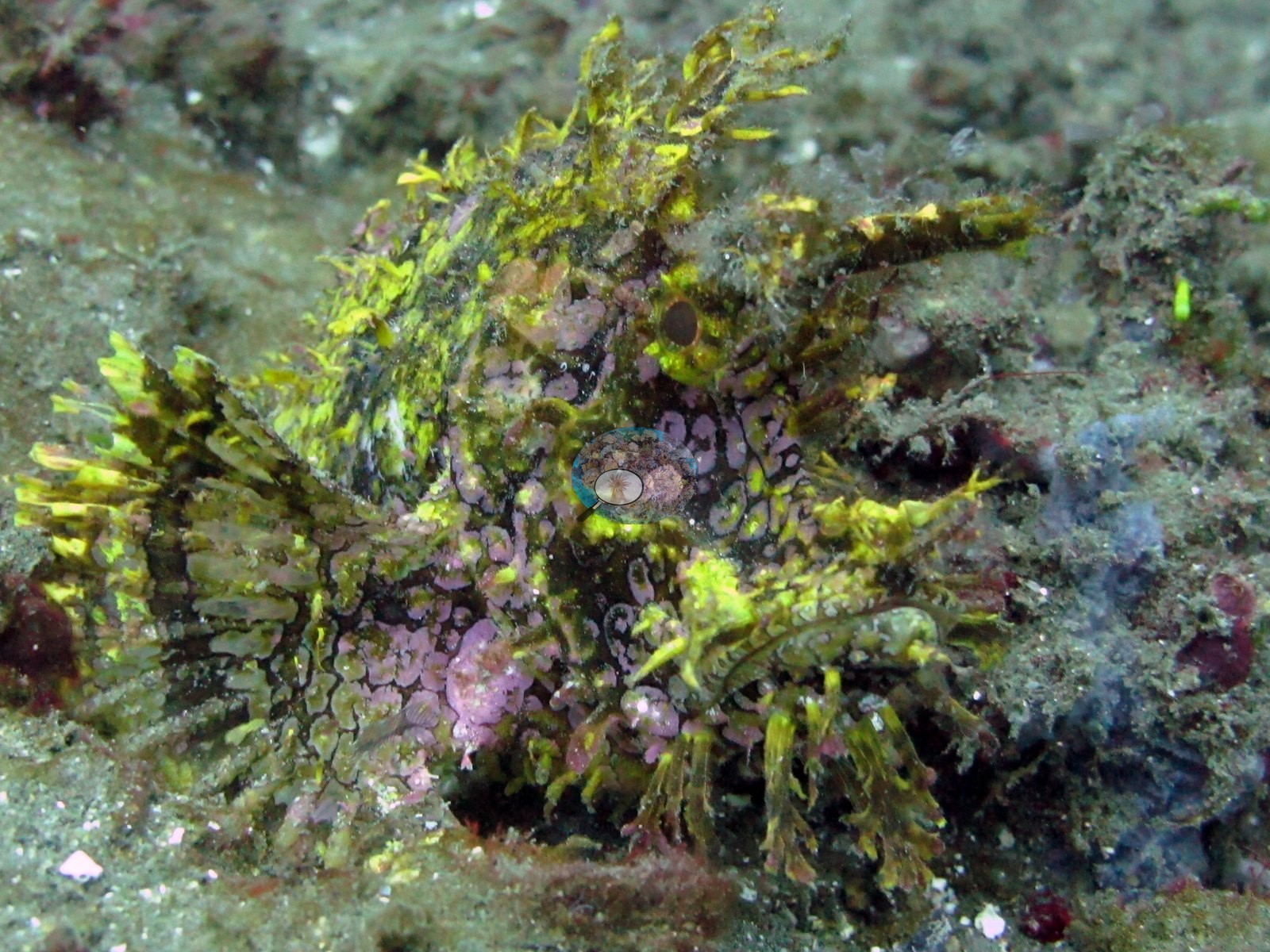
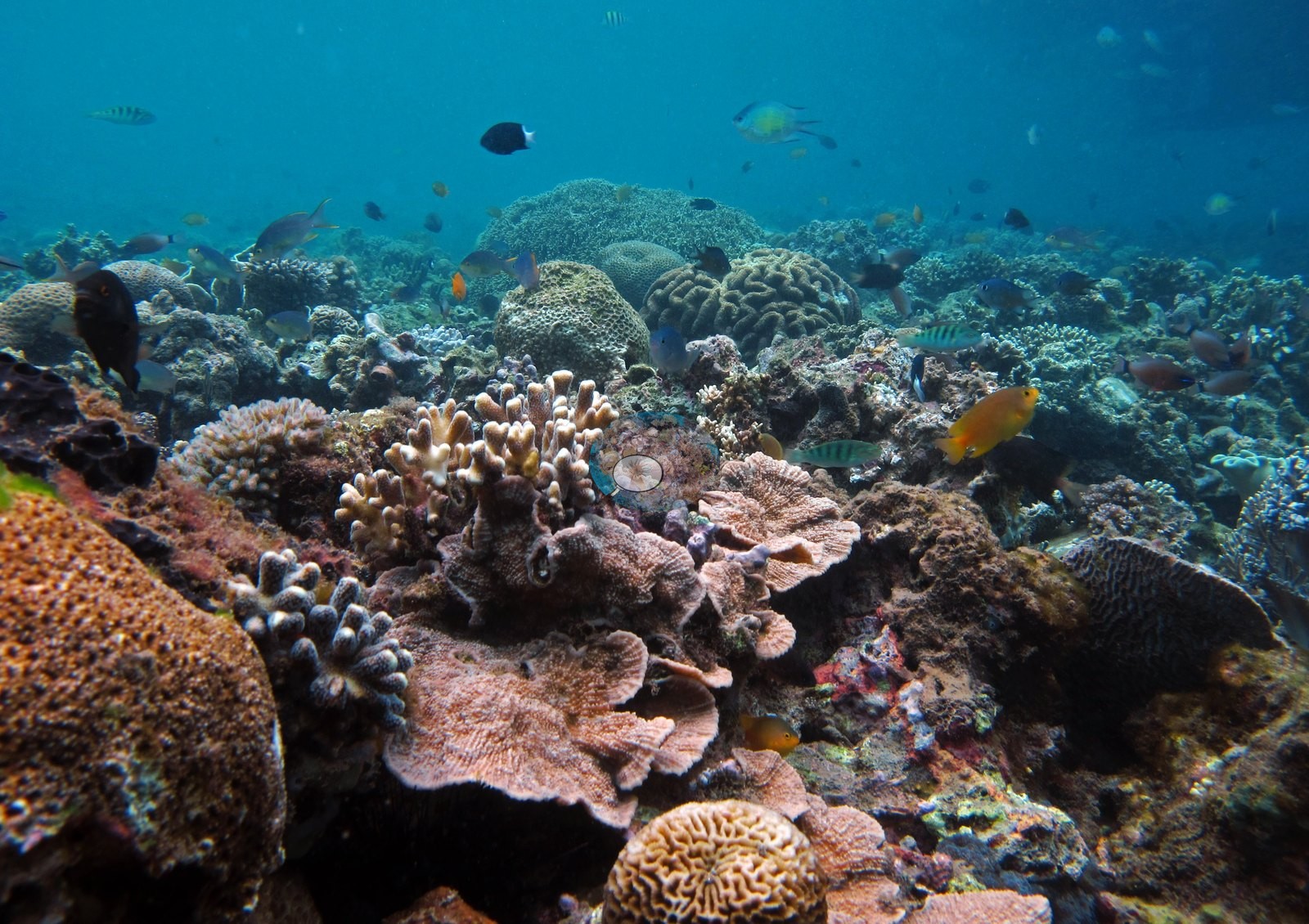
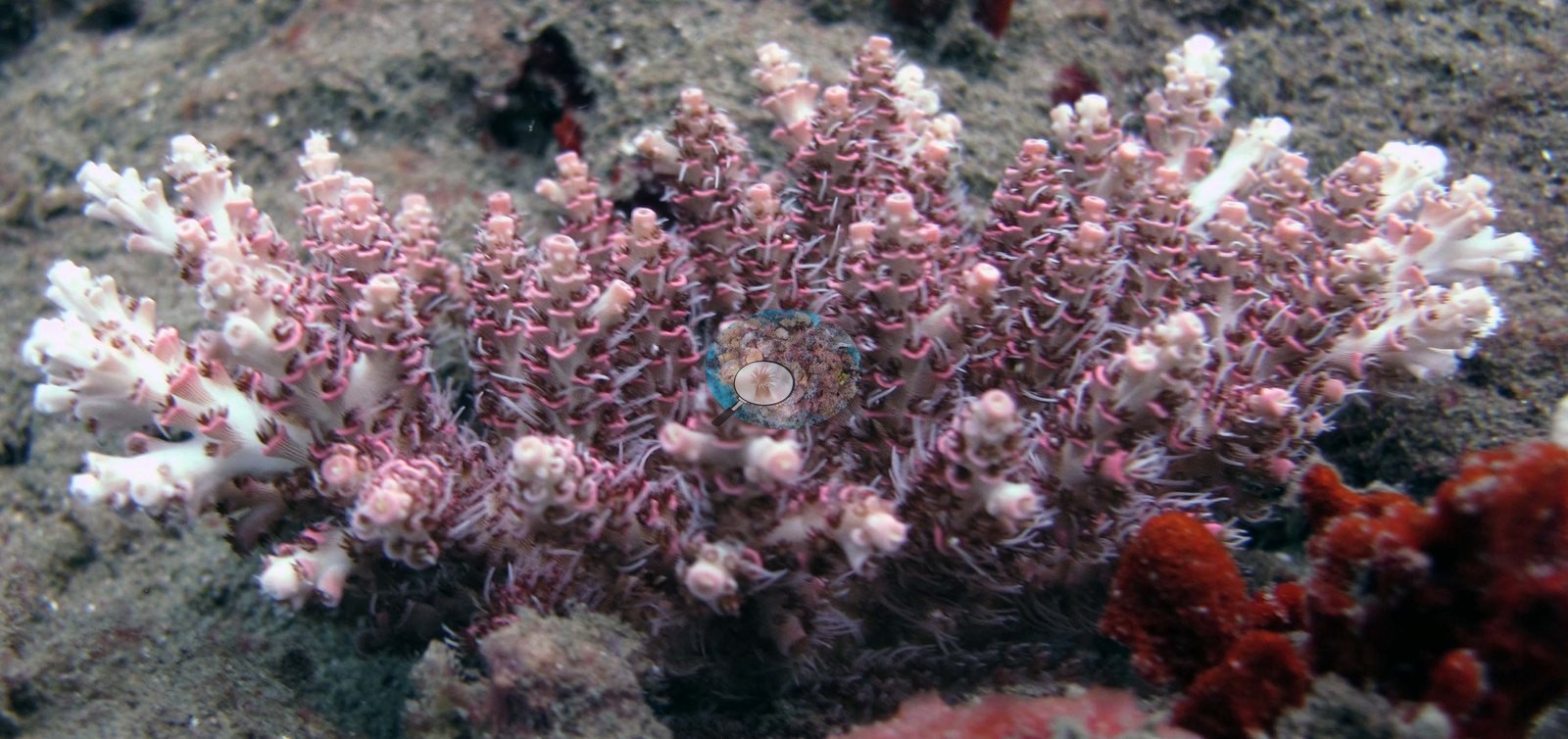
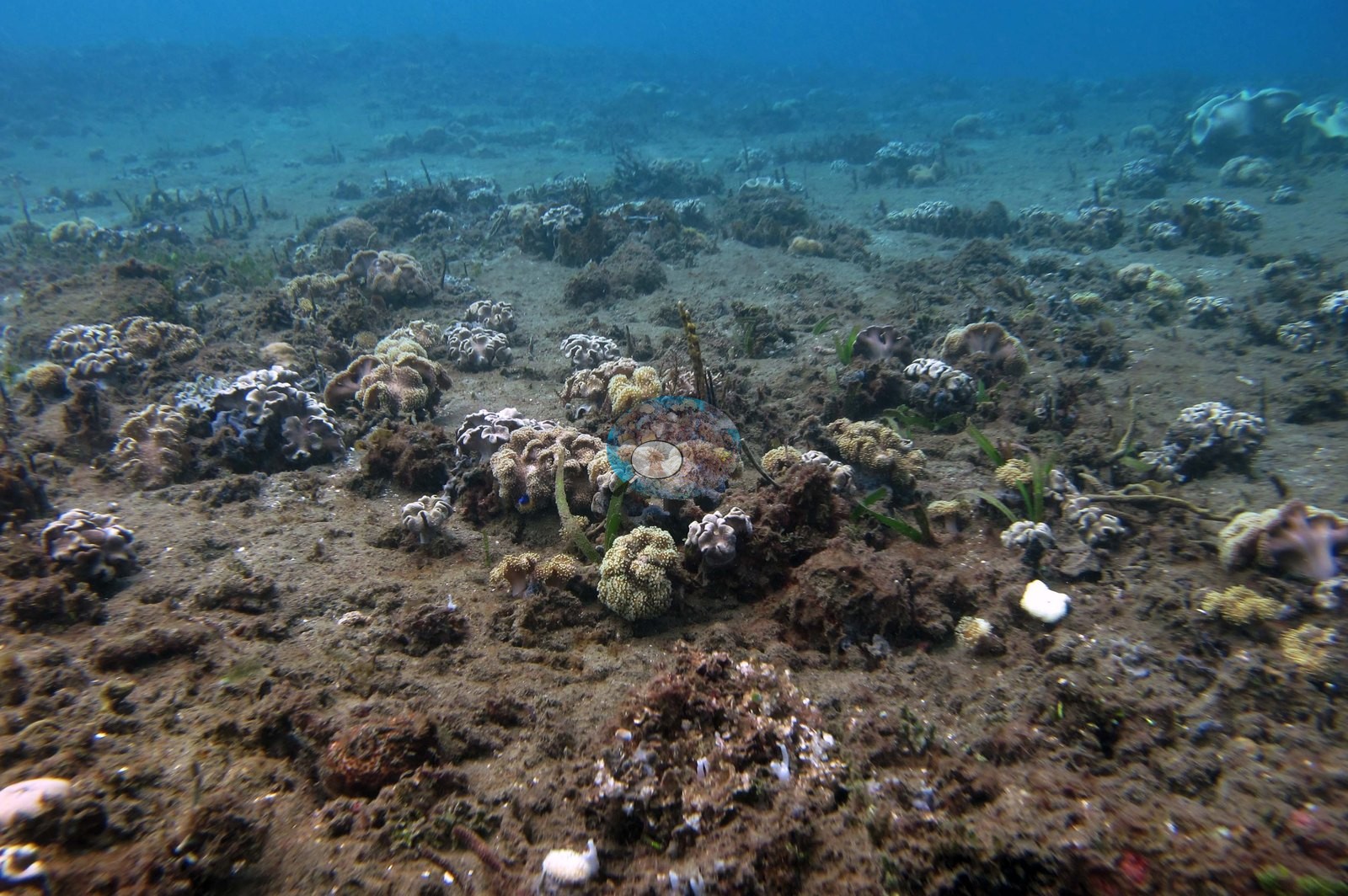
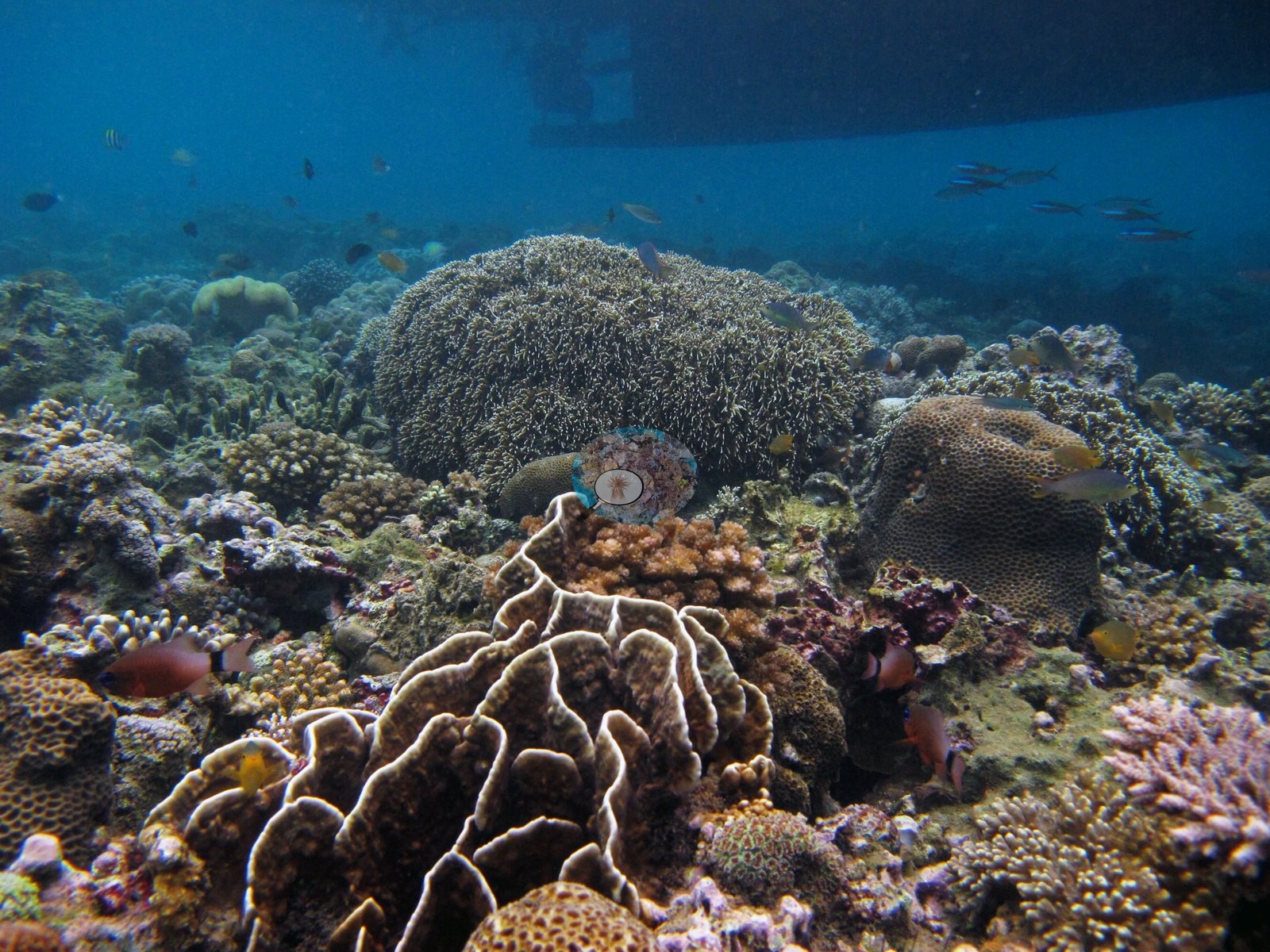
The second Laha muck dive of 2018-04-22, and the trip's best critter showing. Visibility ran moderate-to-good, clearer over the reef-flat than the sandy muck (e.g., Image 1).
General benthic features
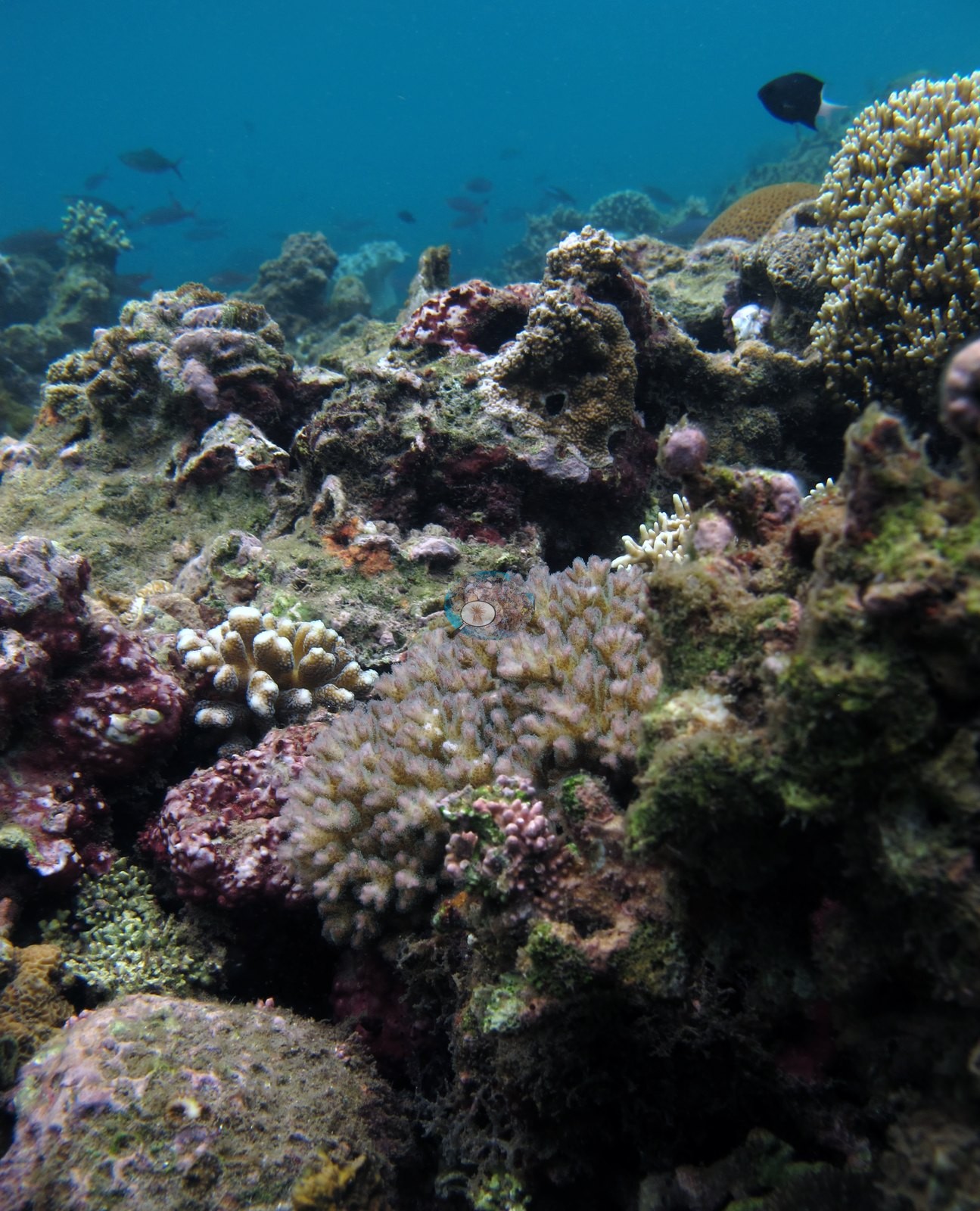
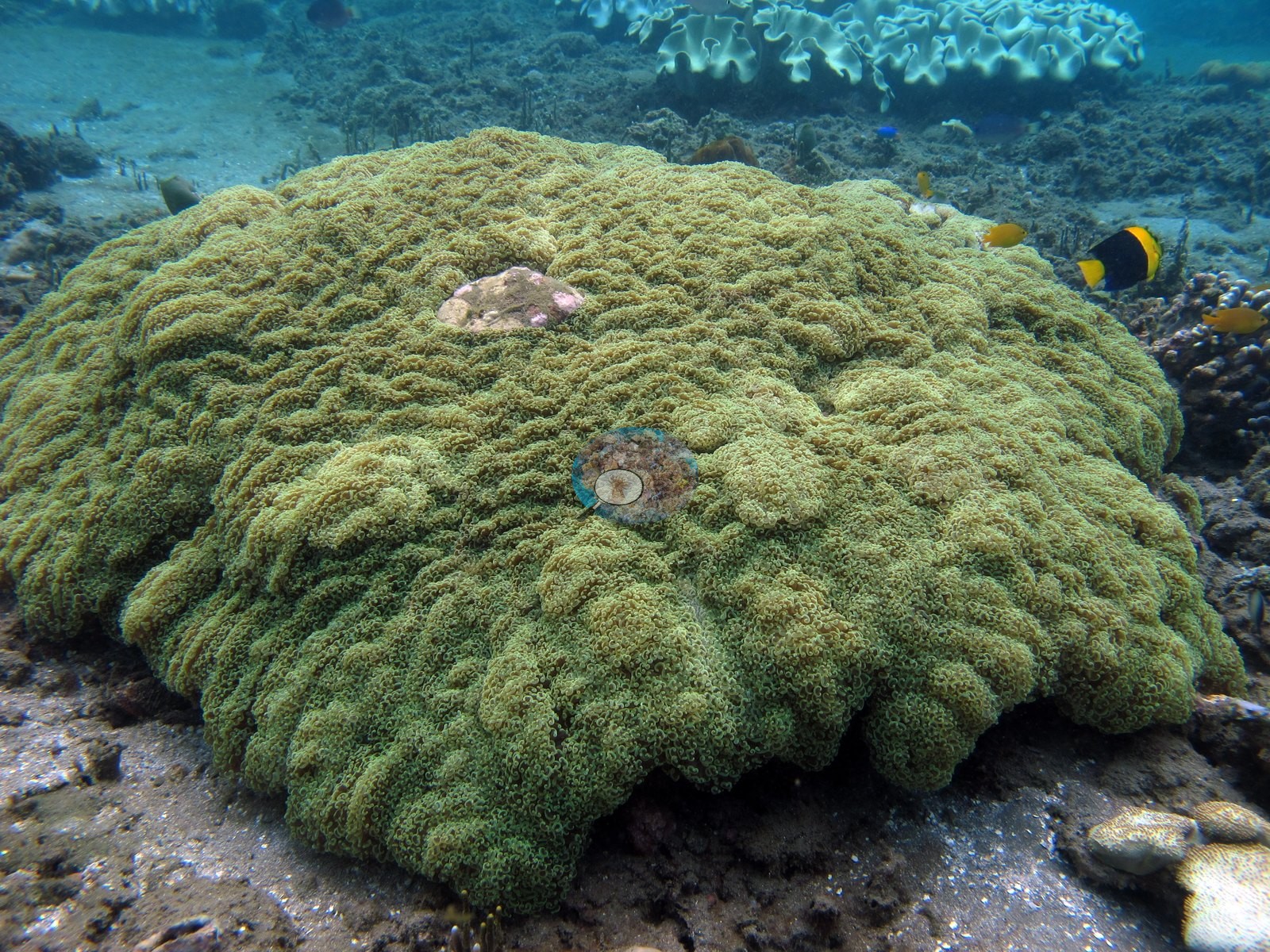
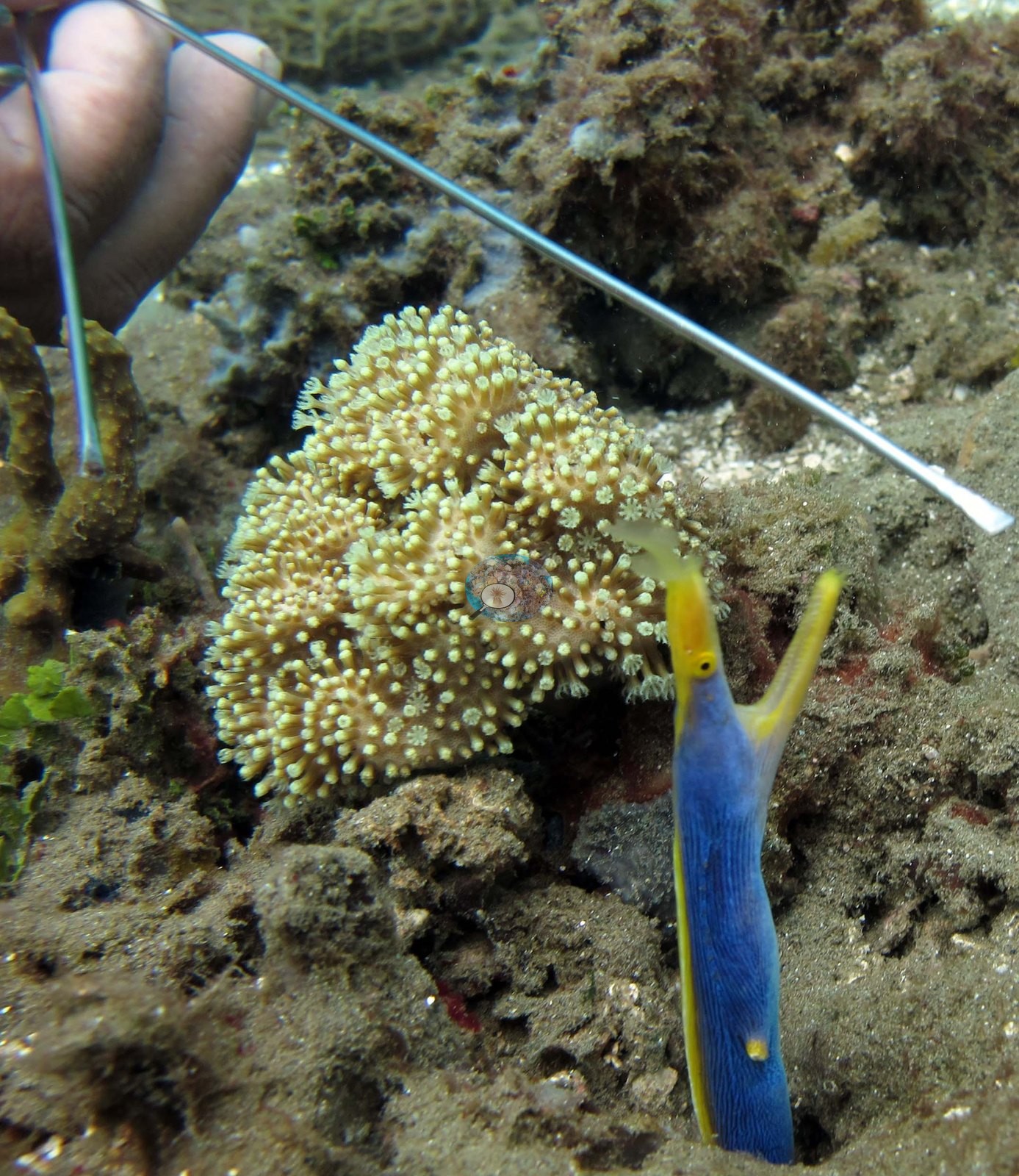
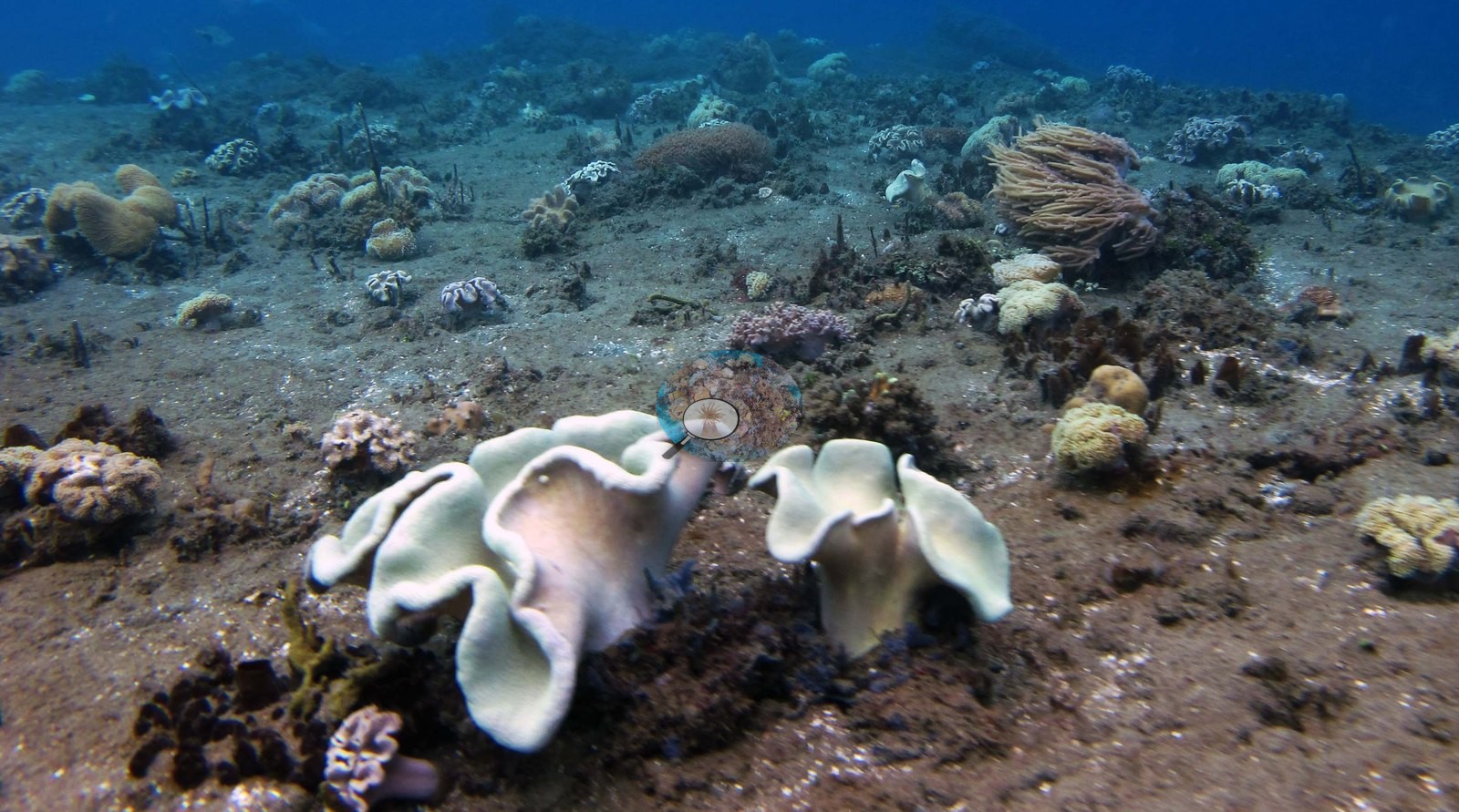
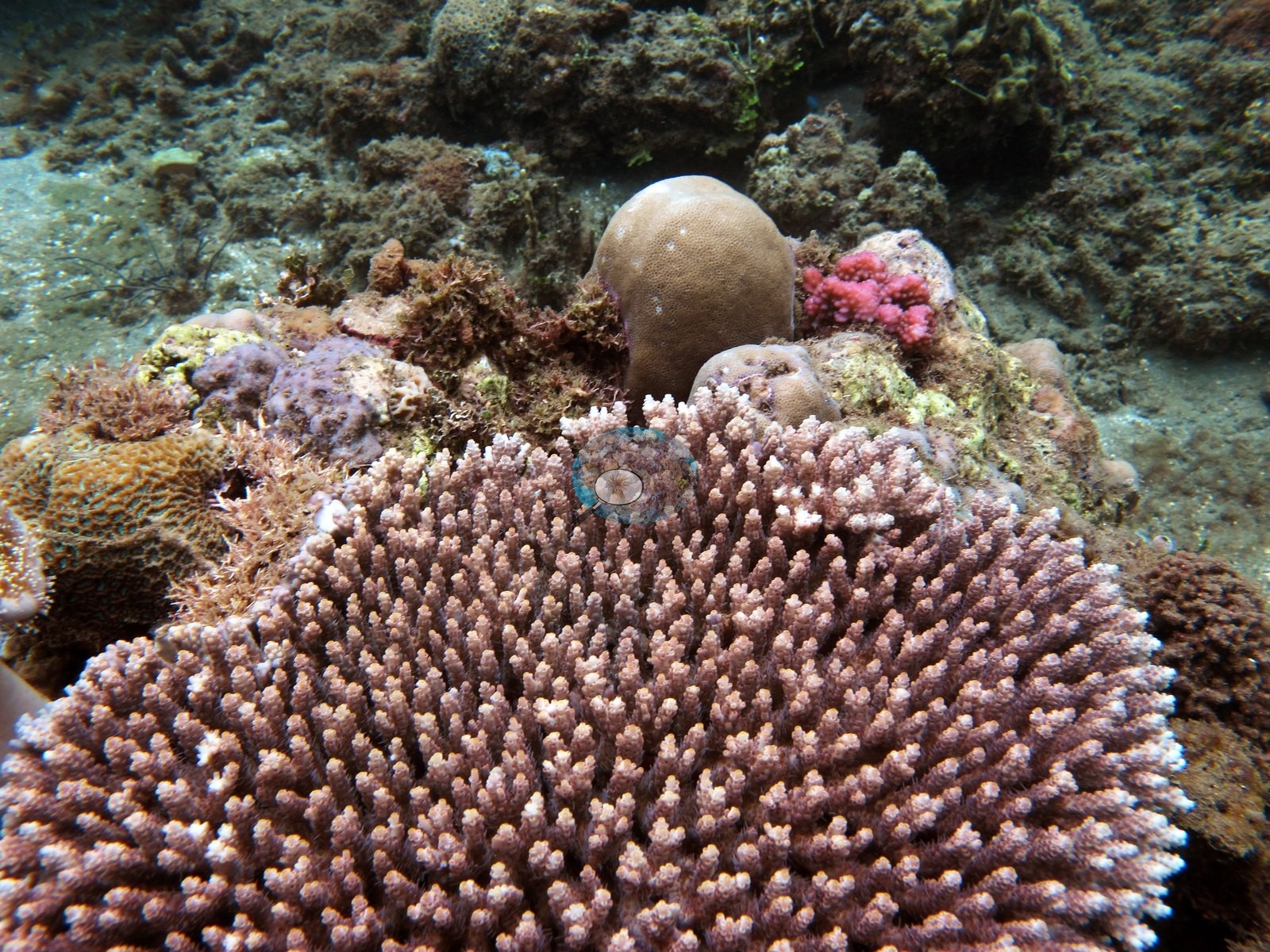
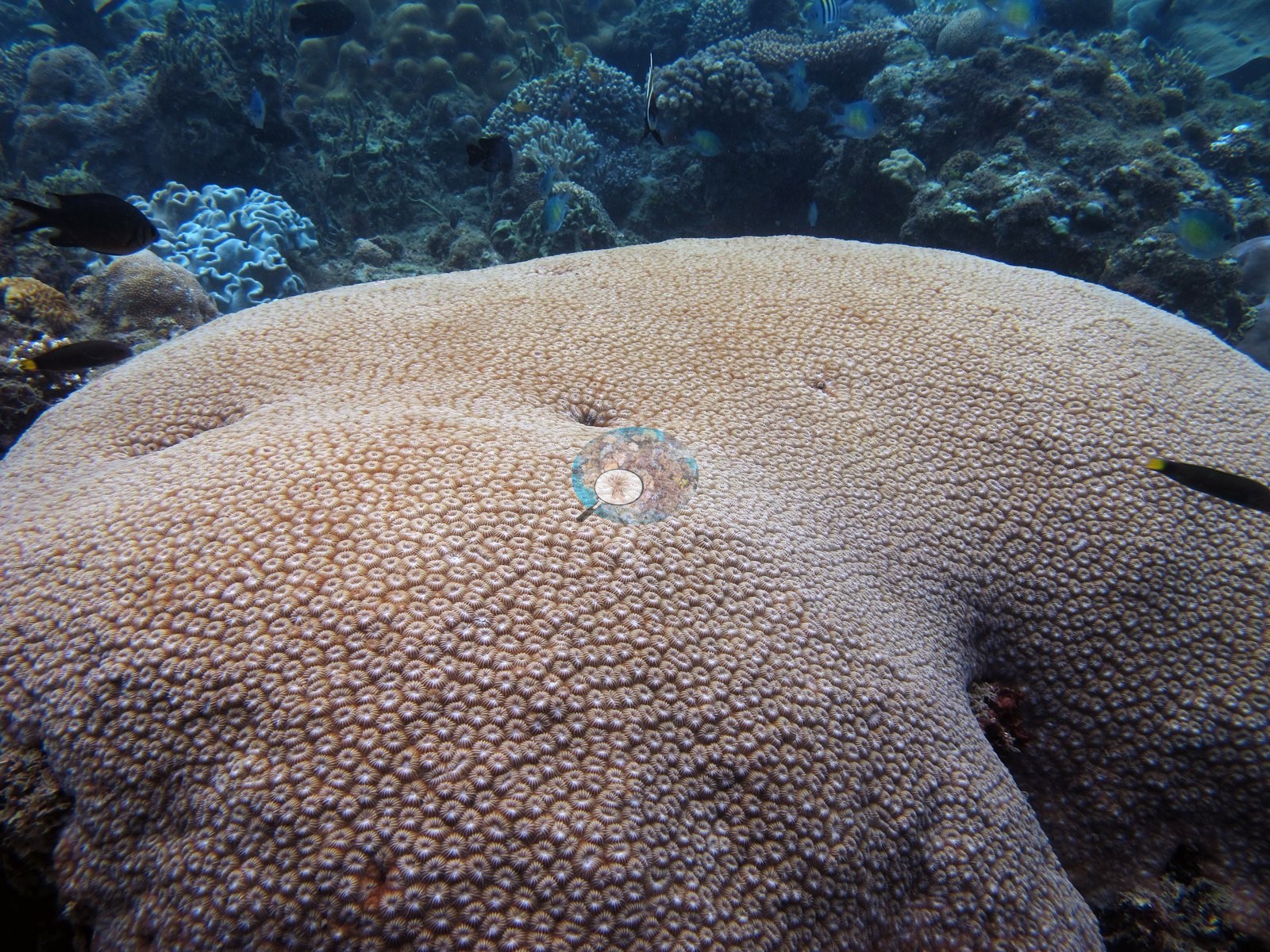
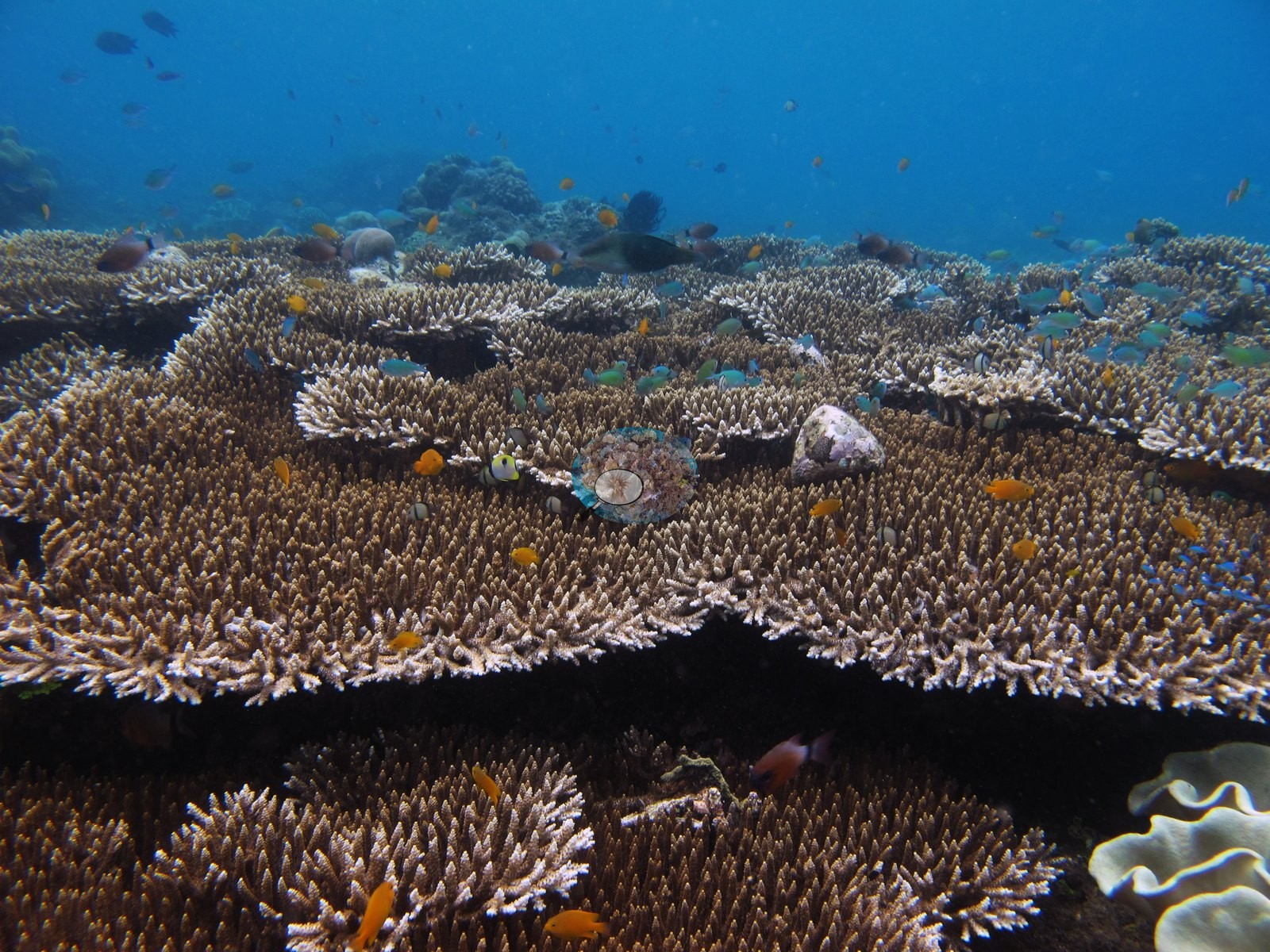
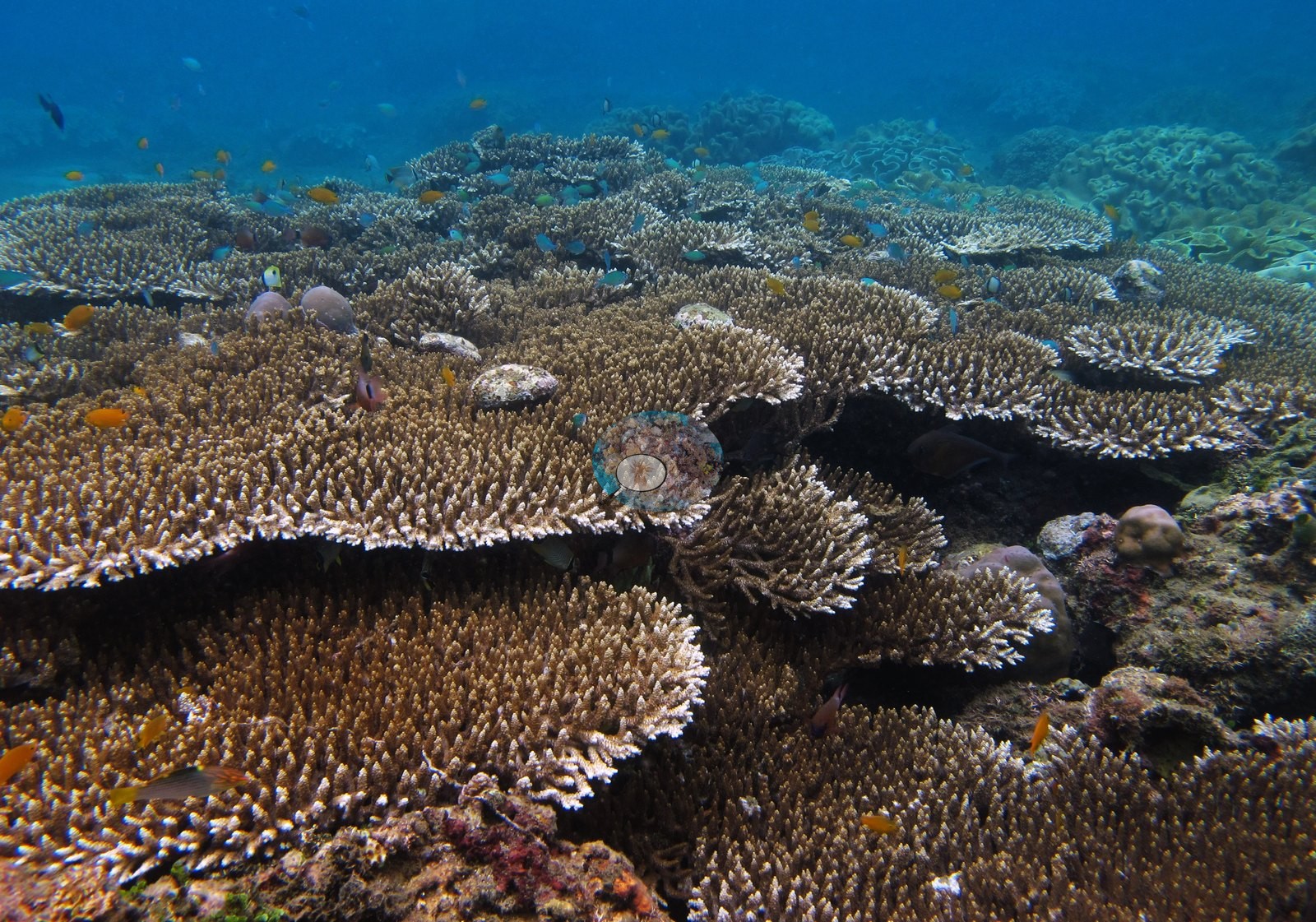
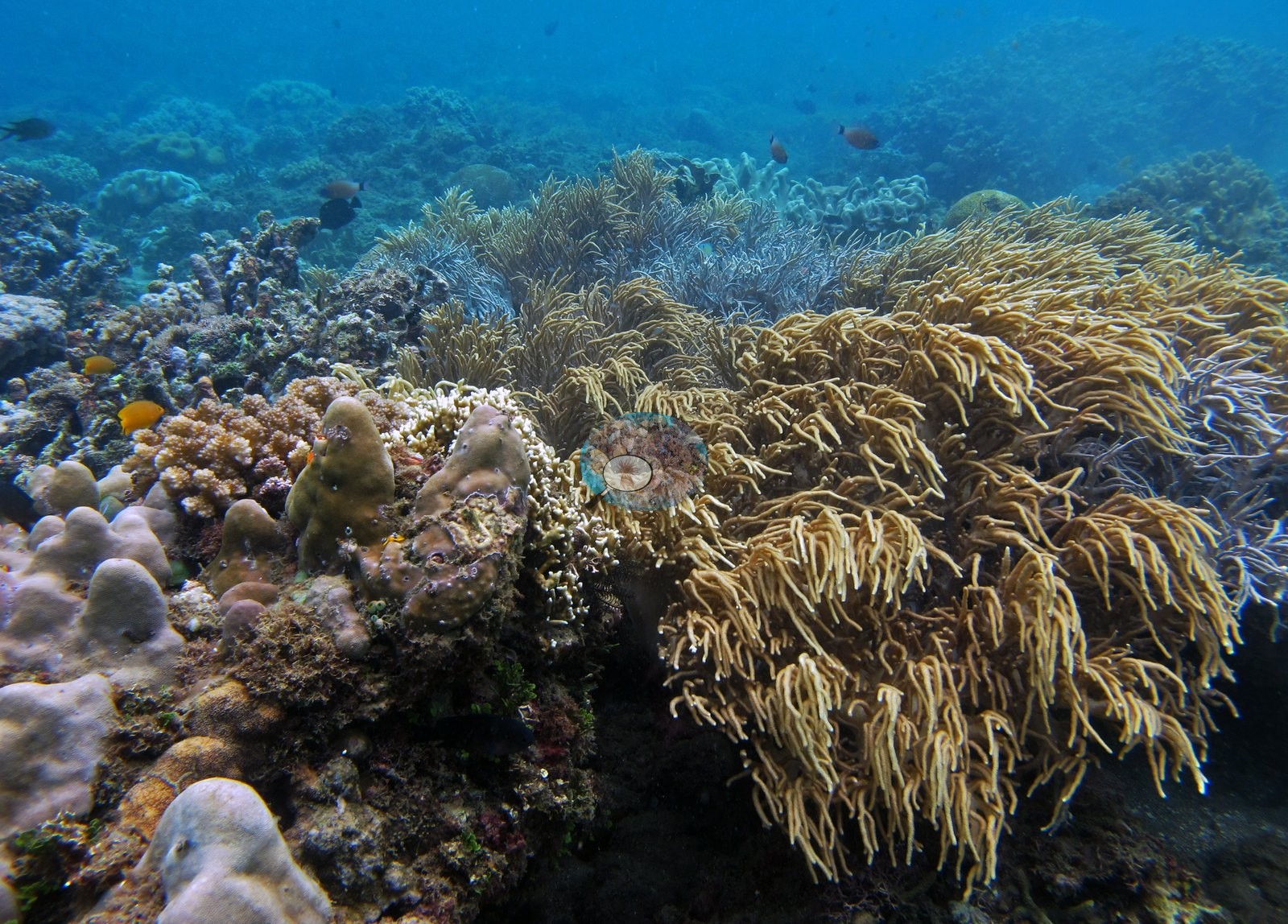
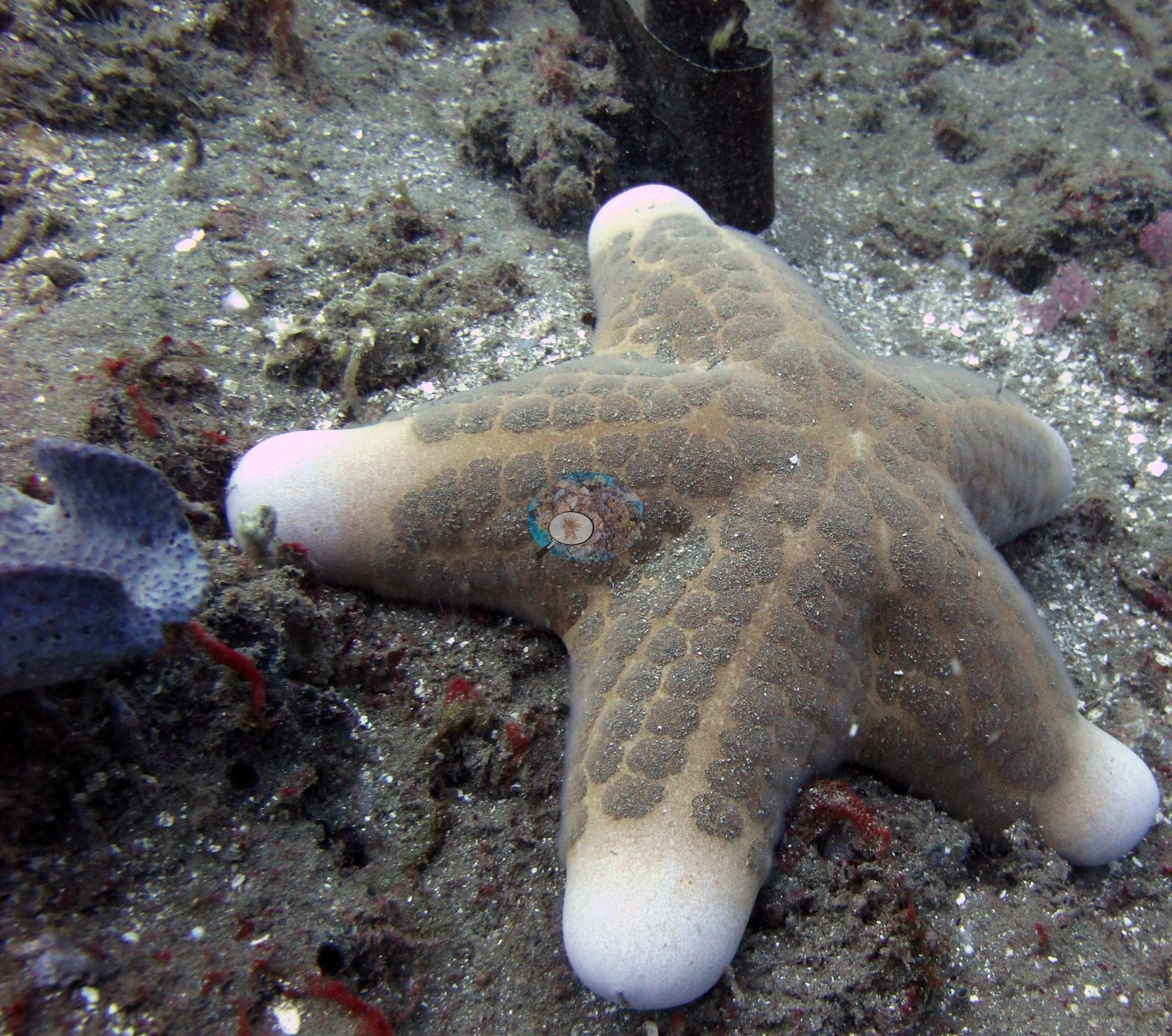
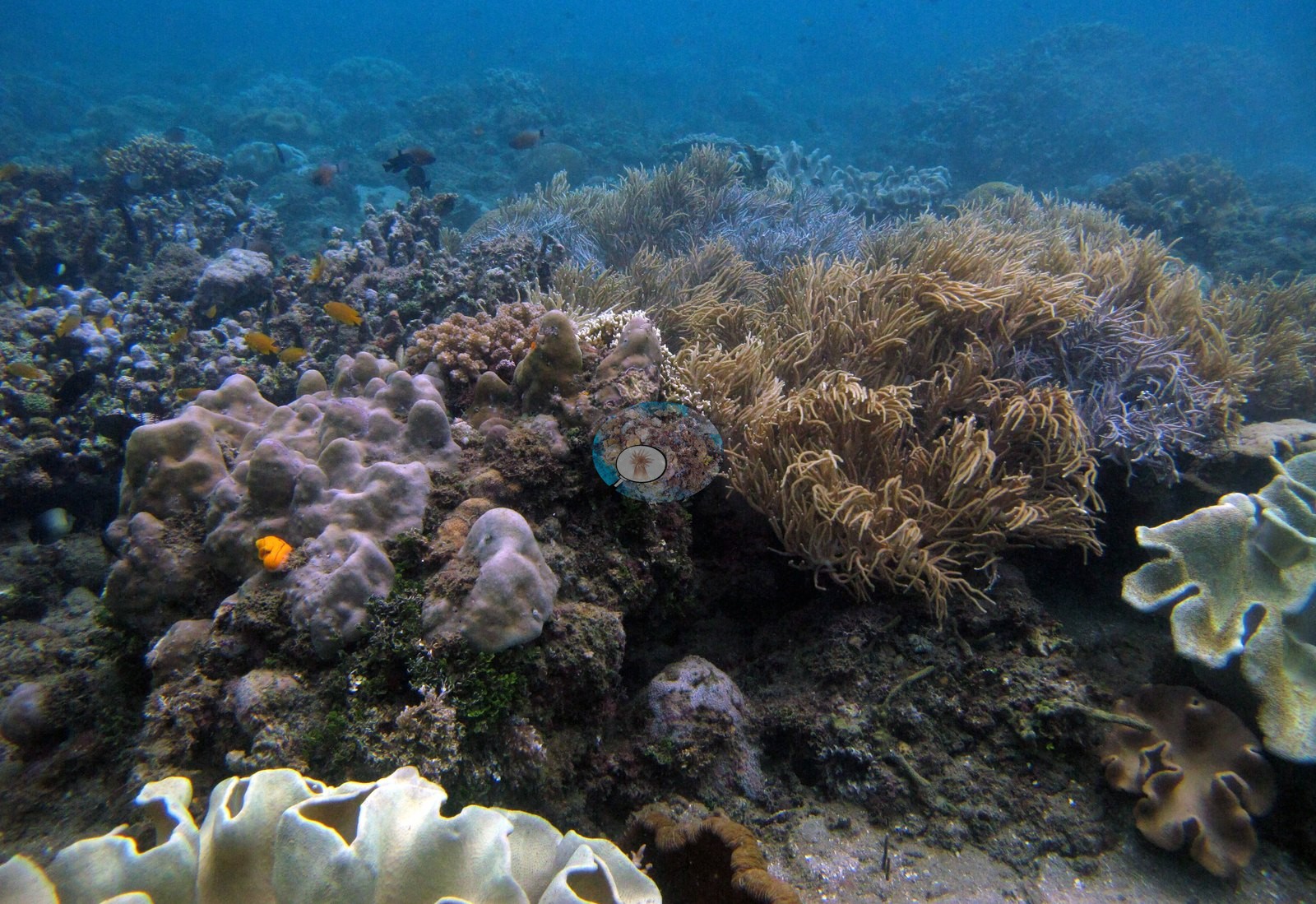
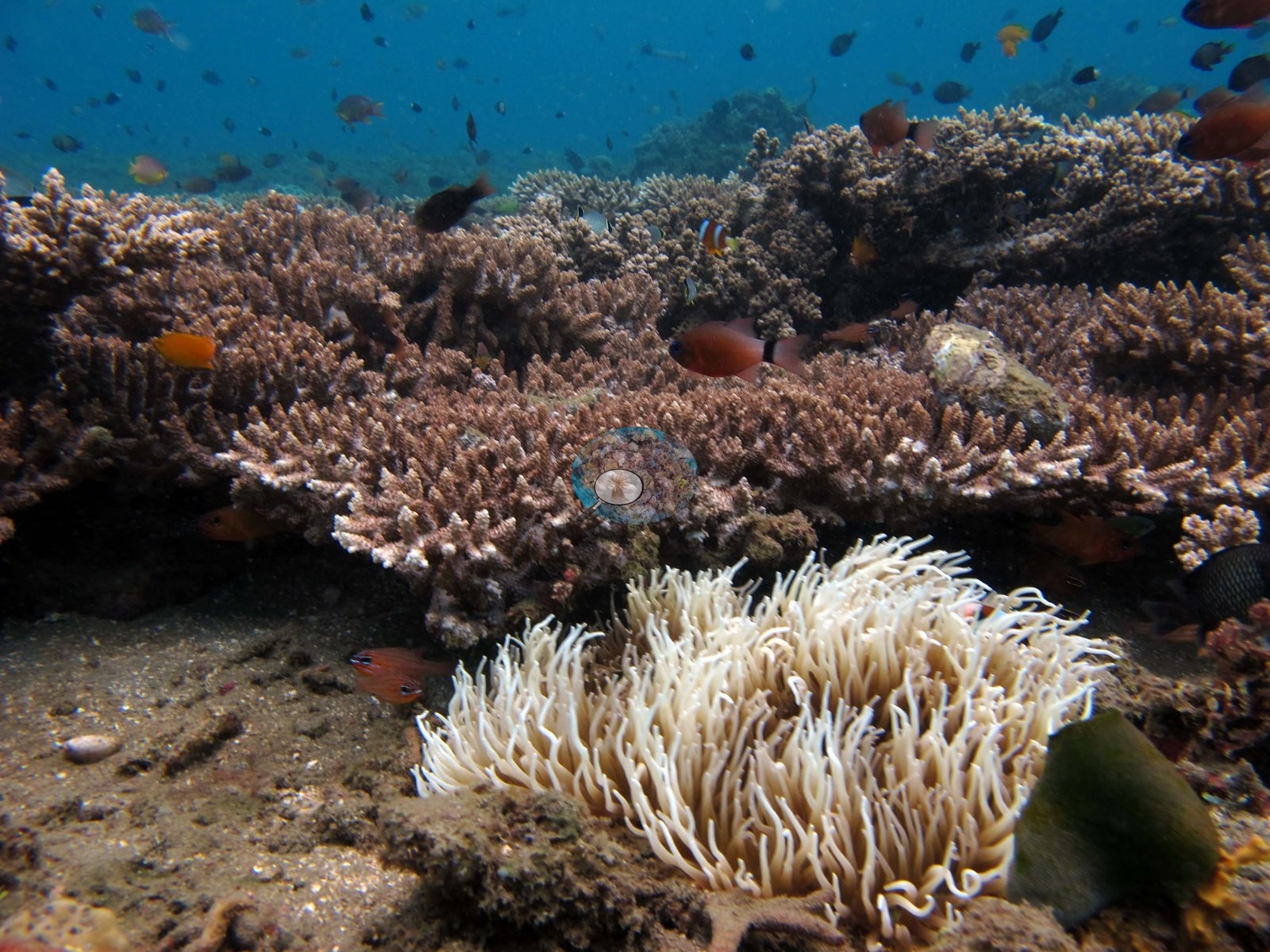
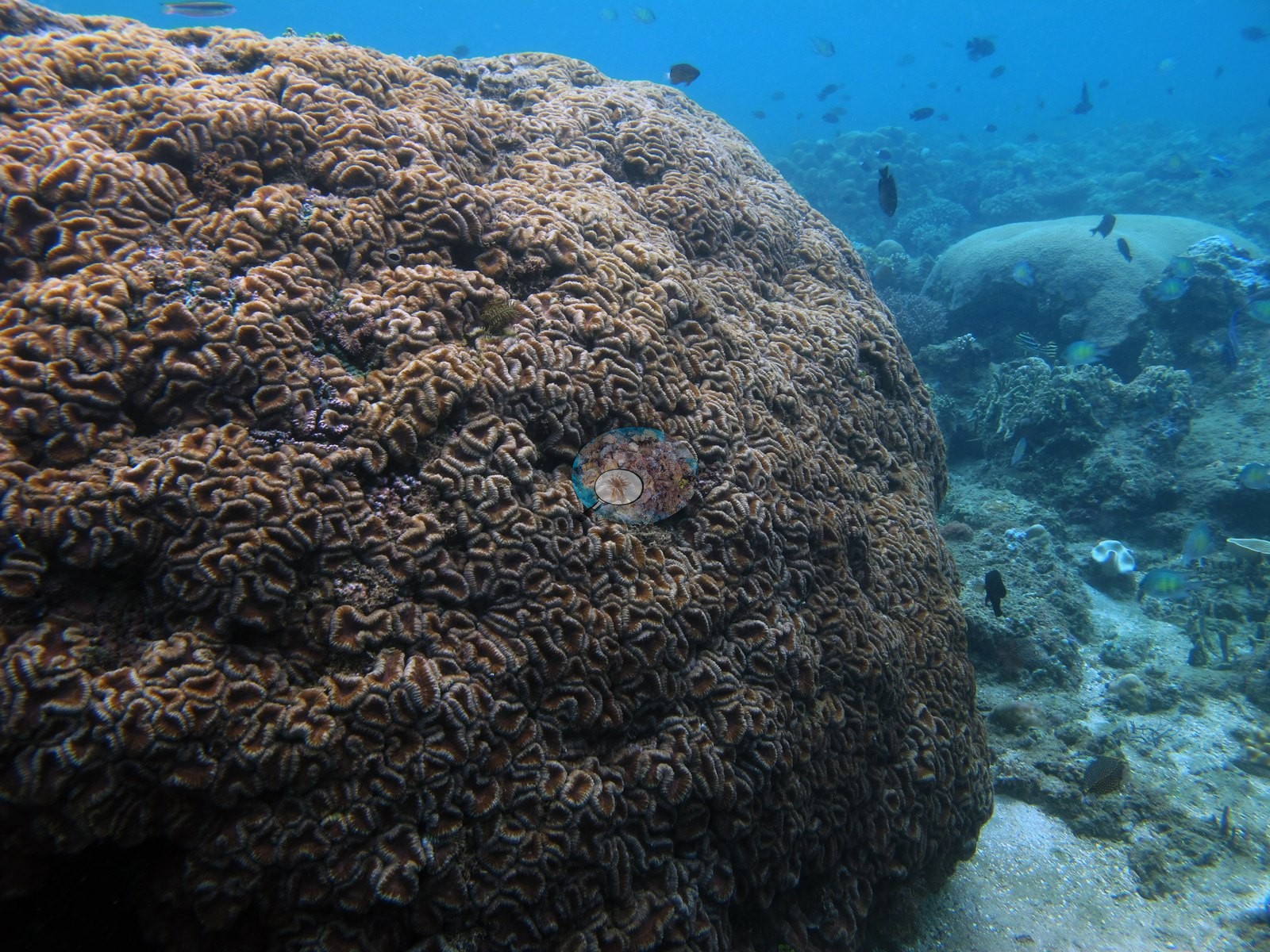
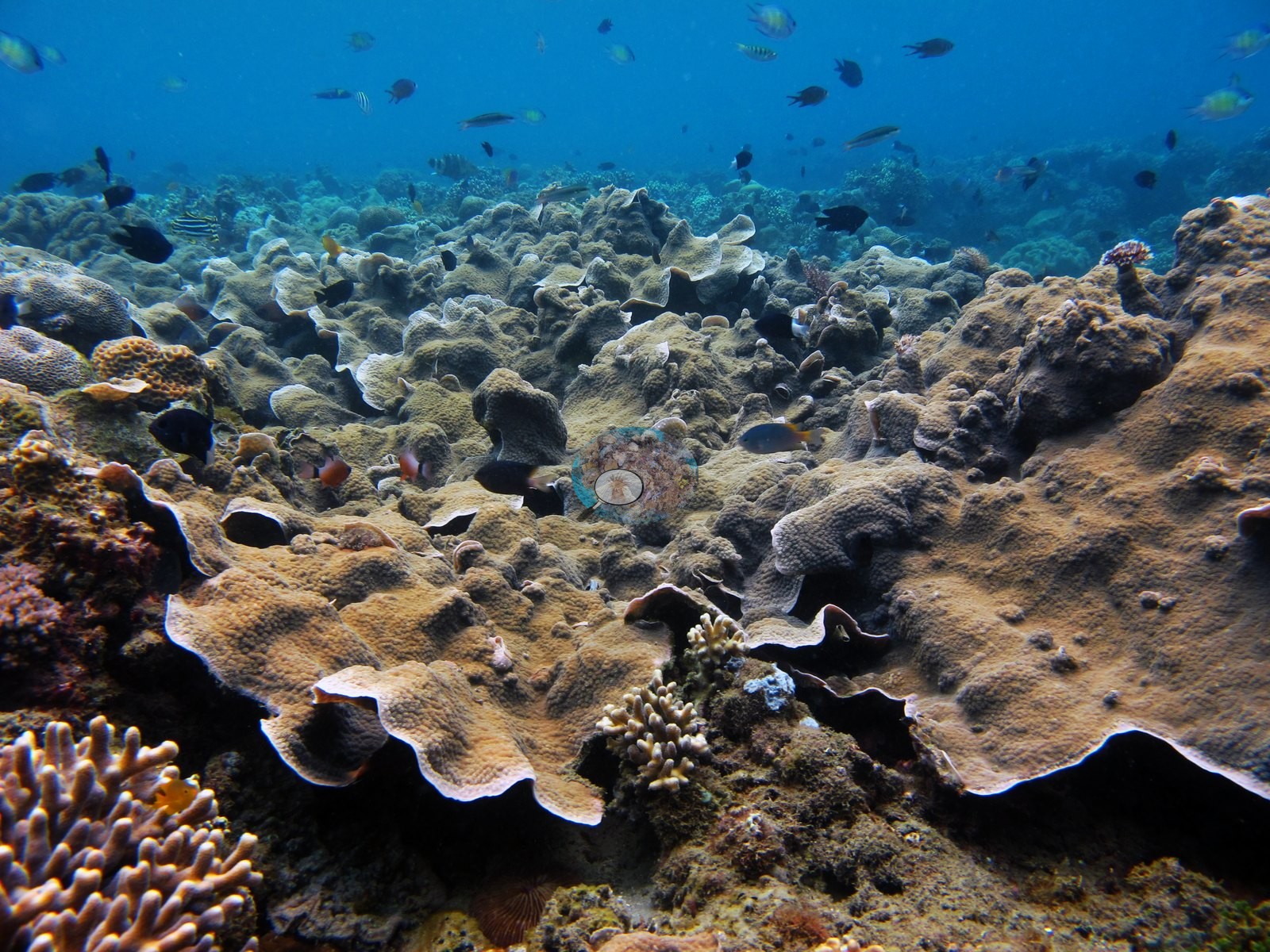
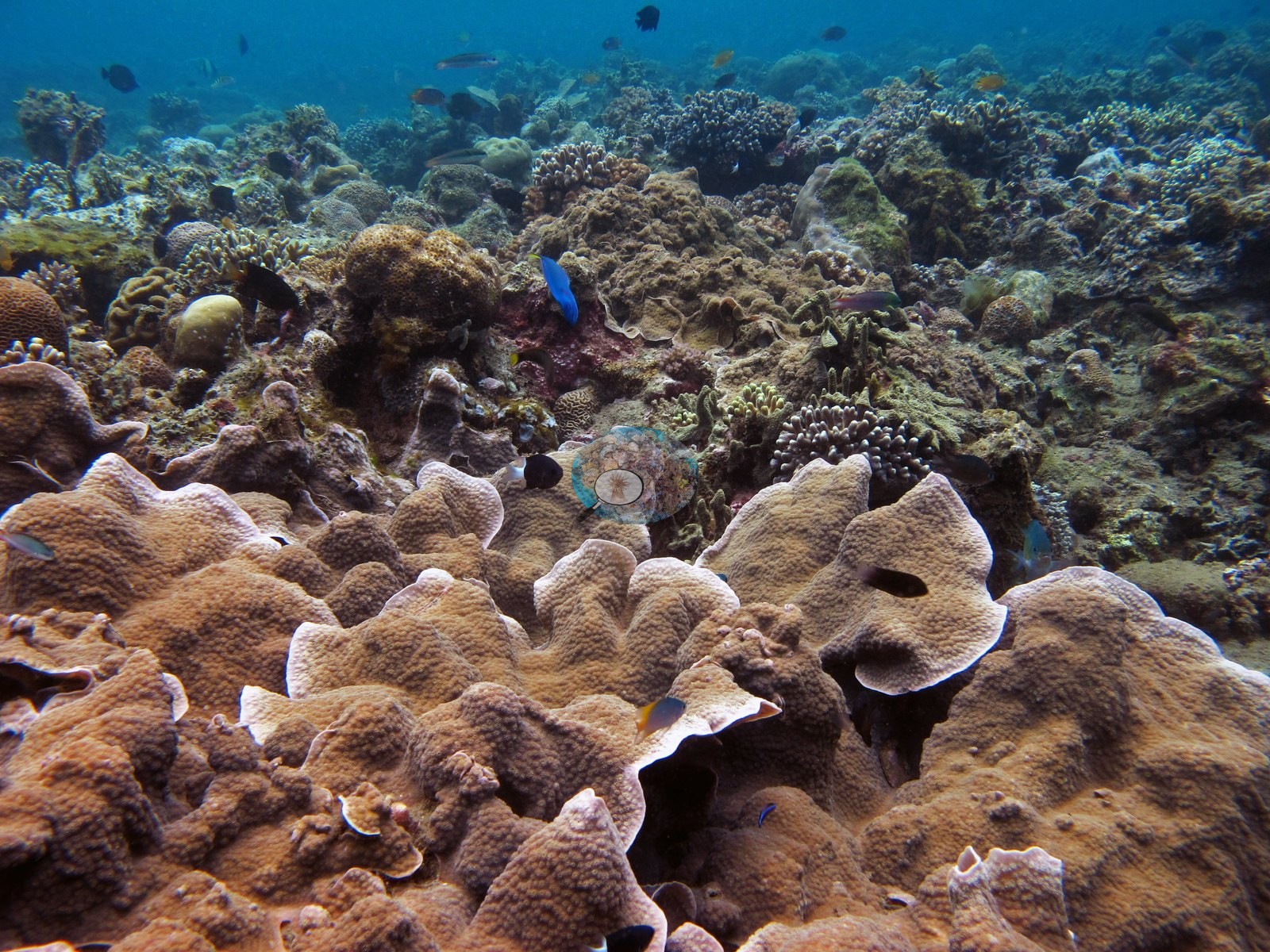
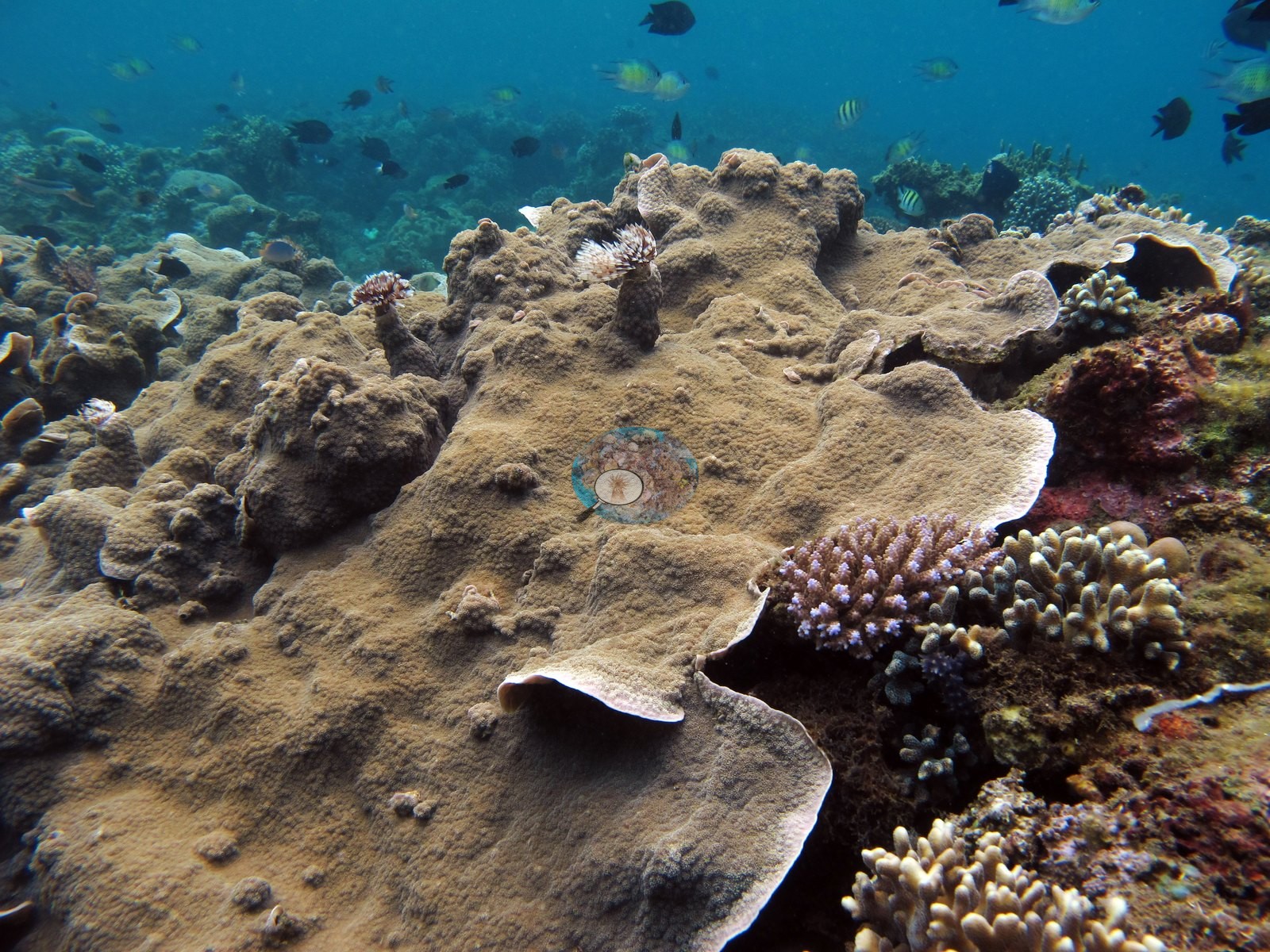
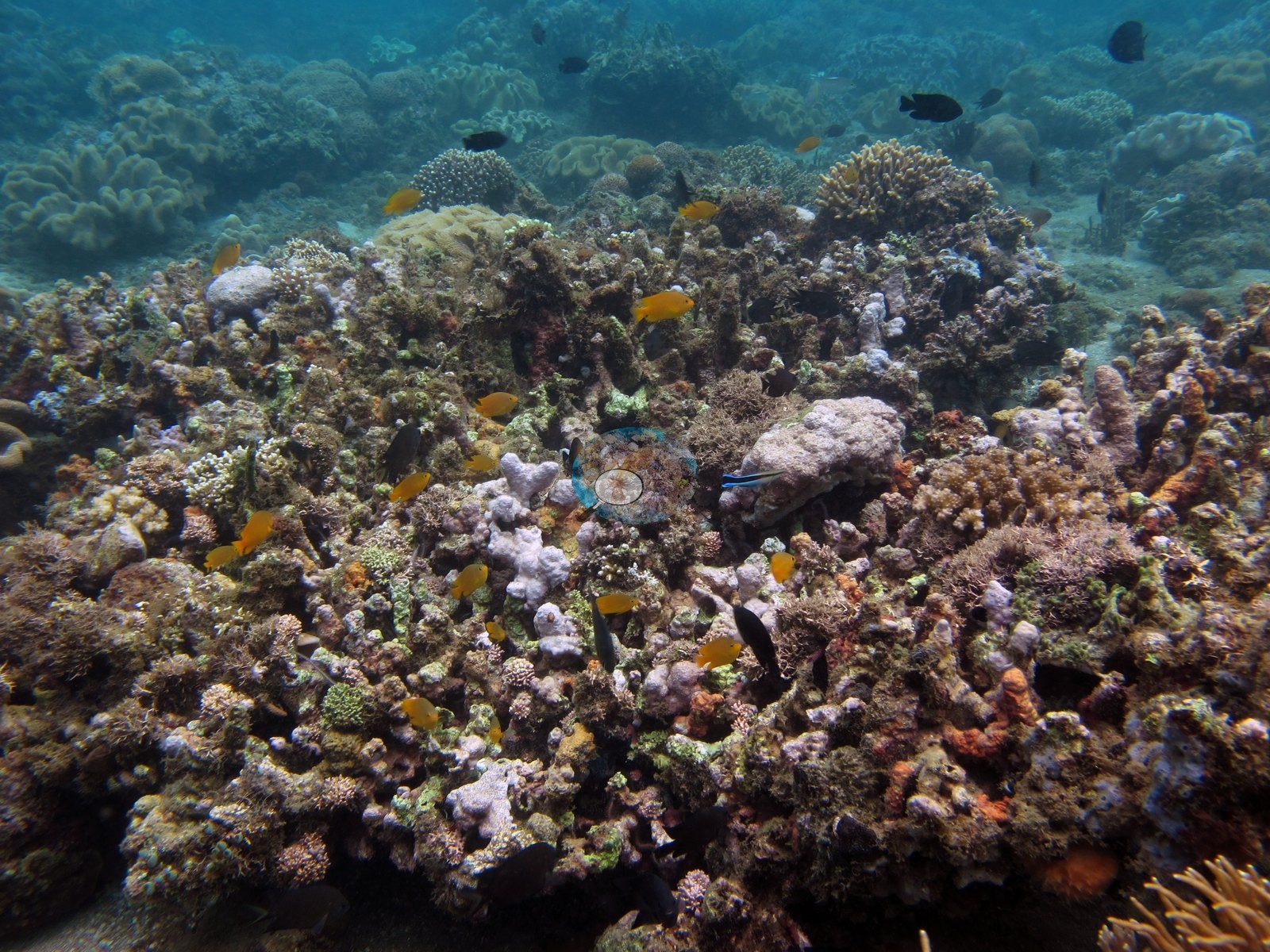
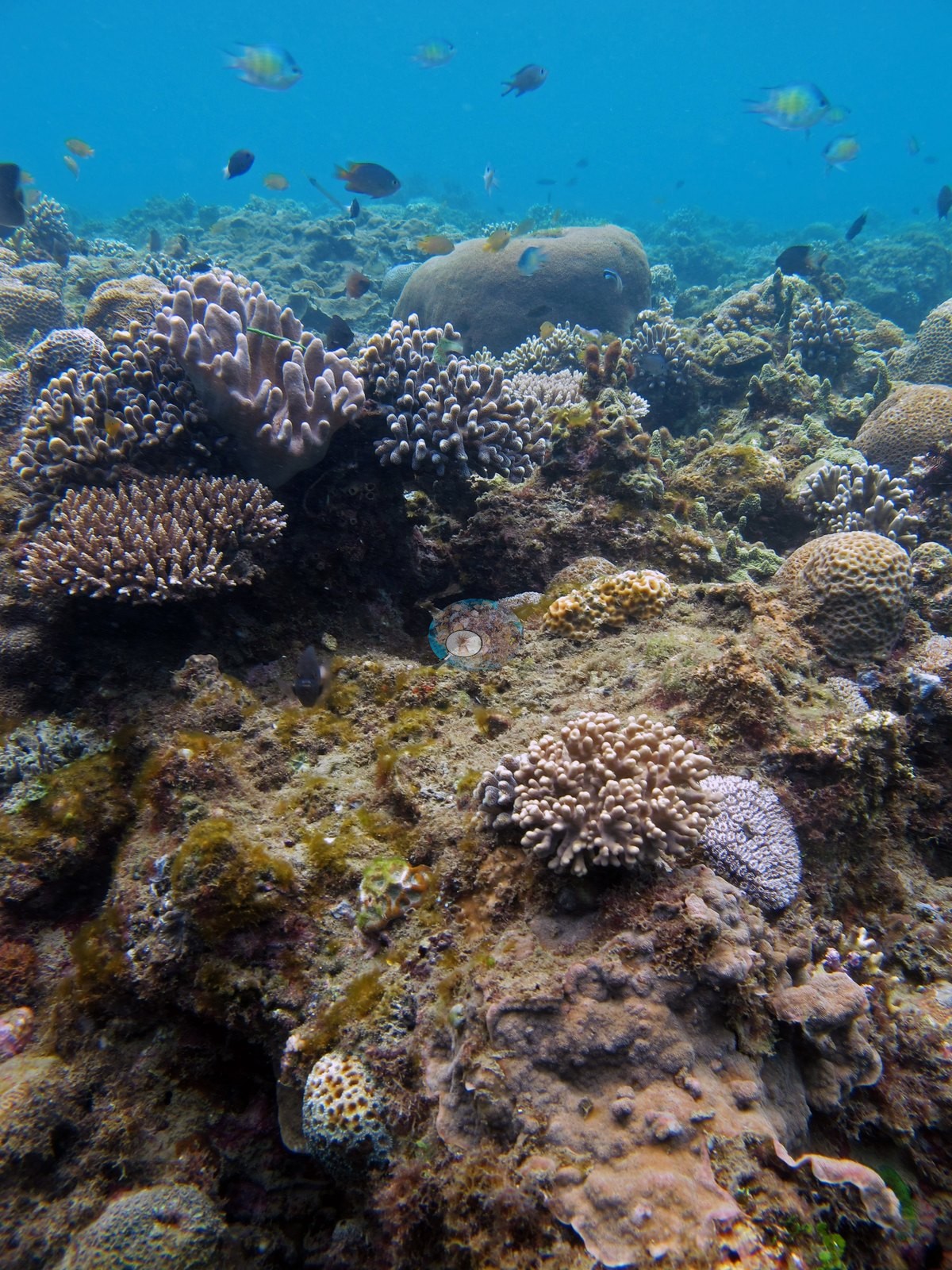
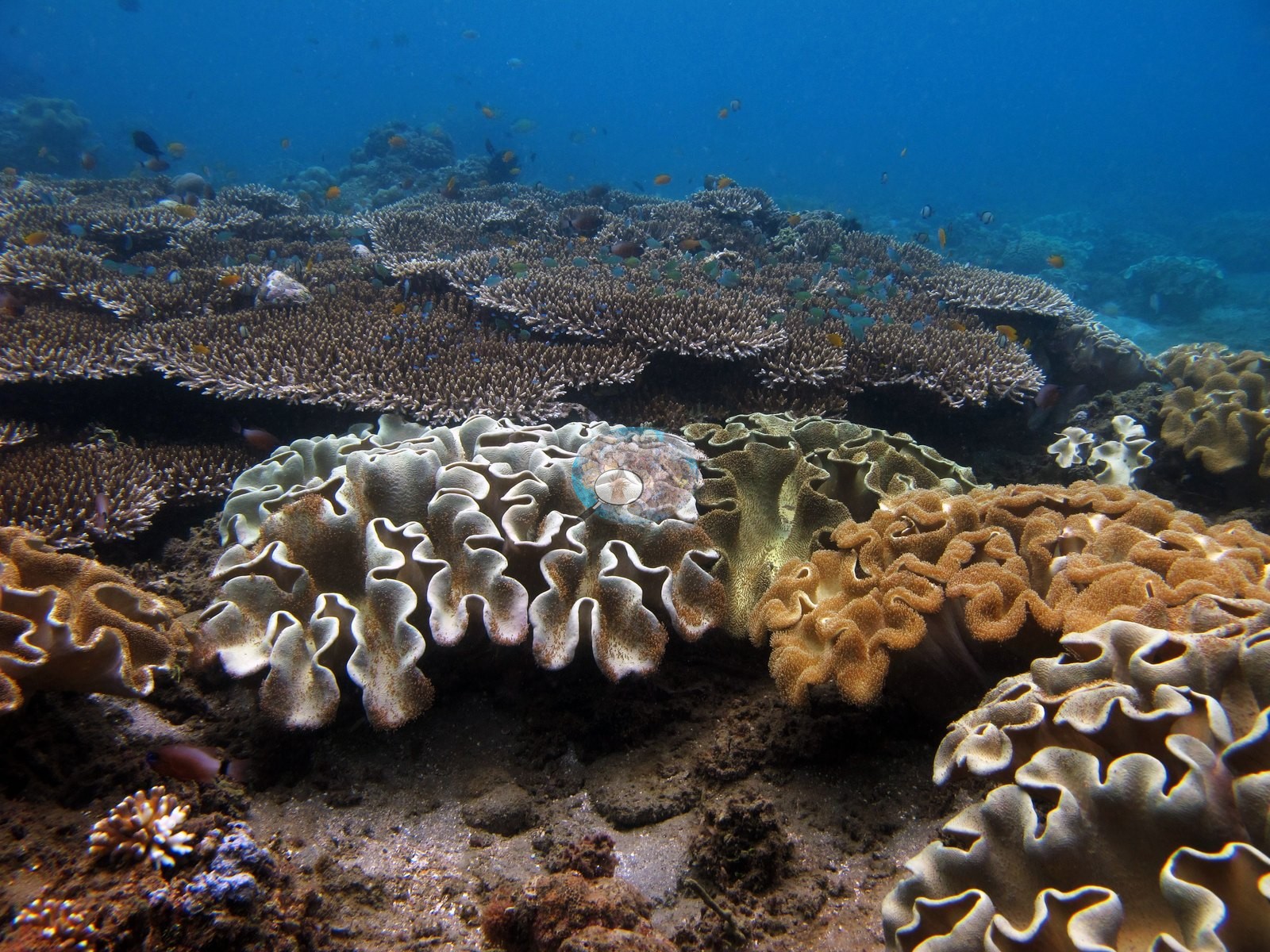
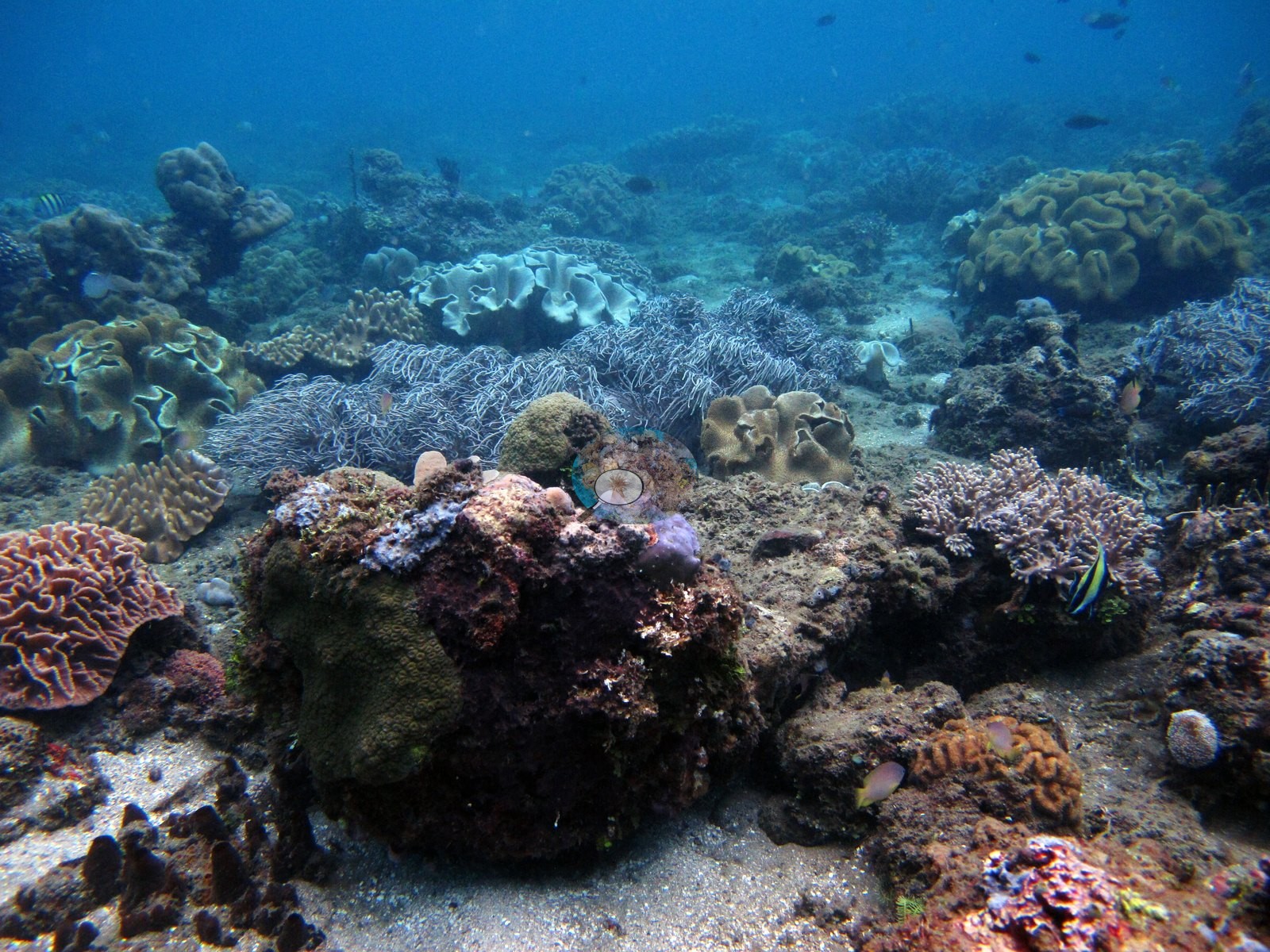
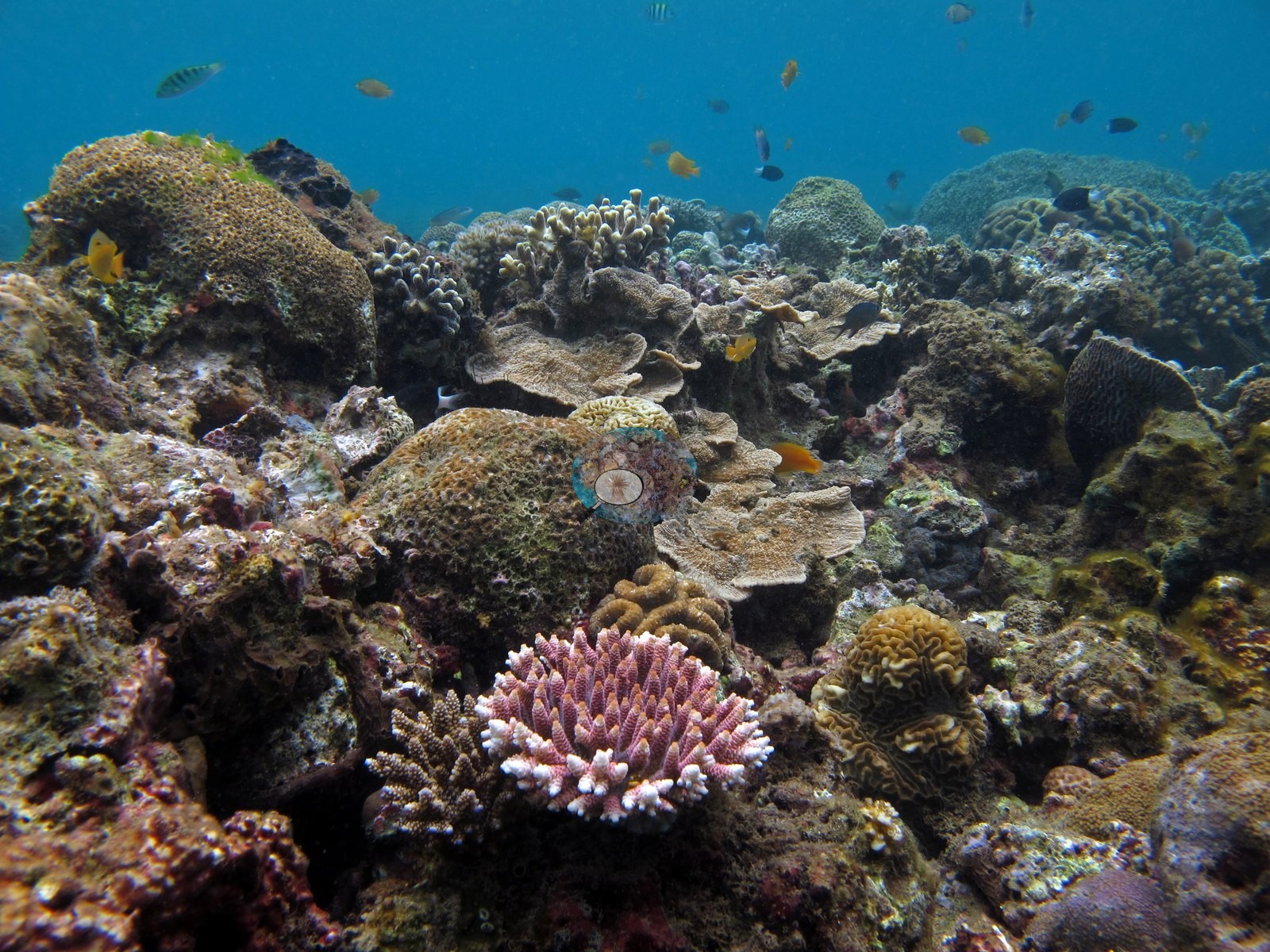
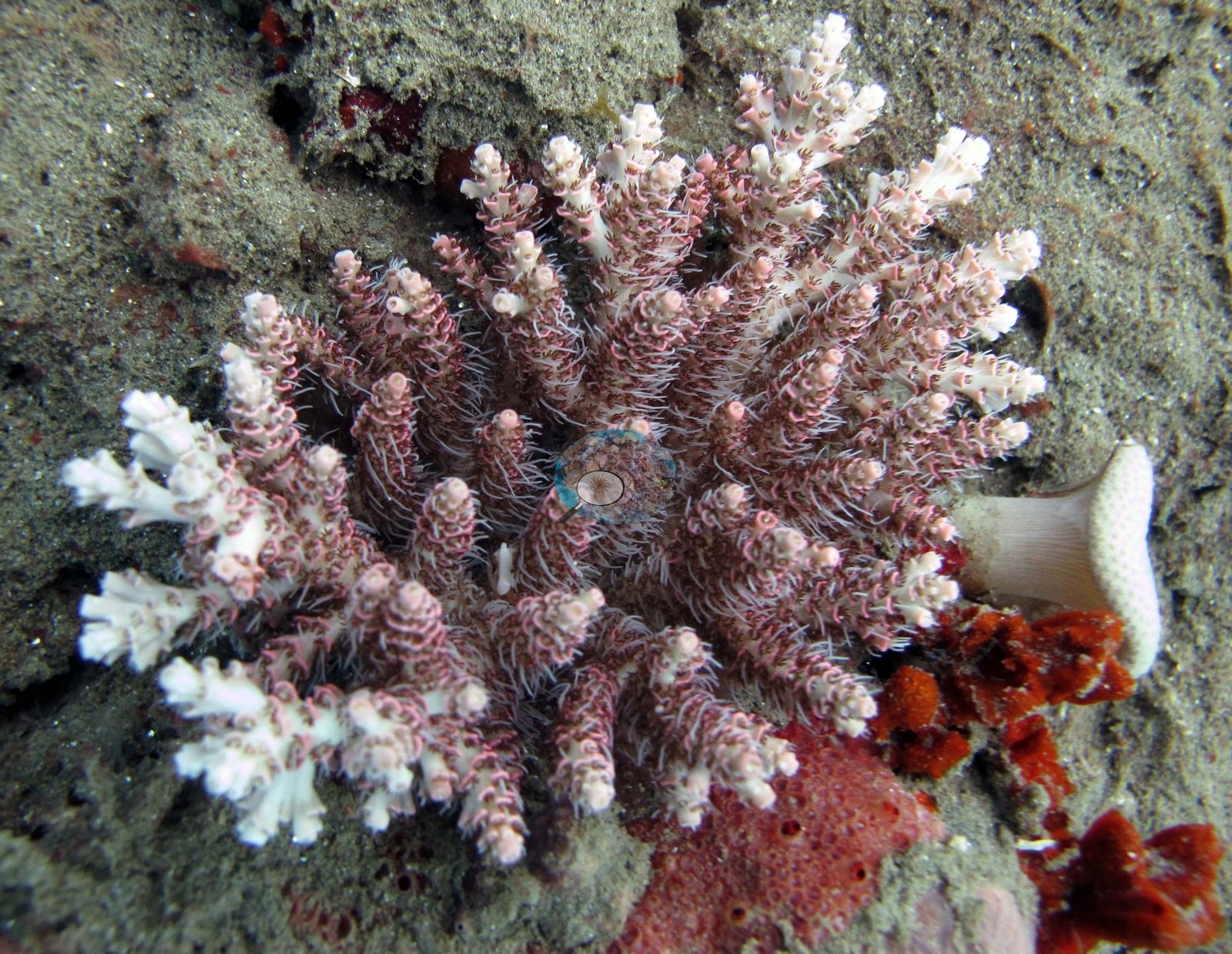
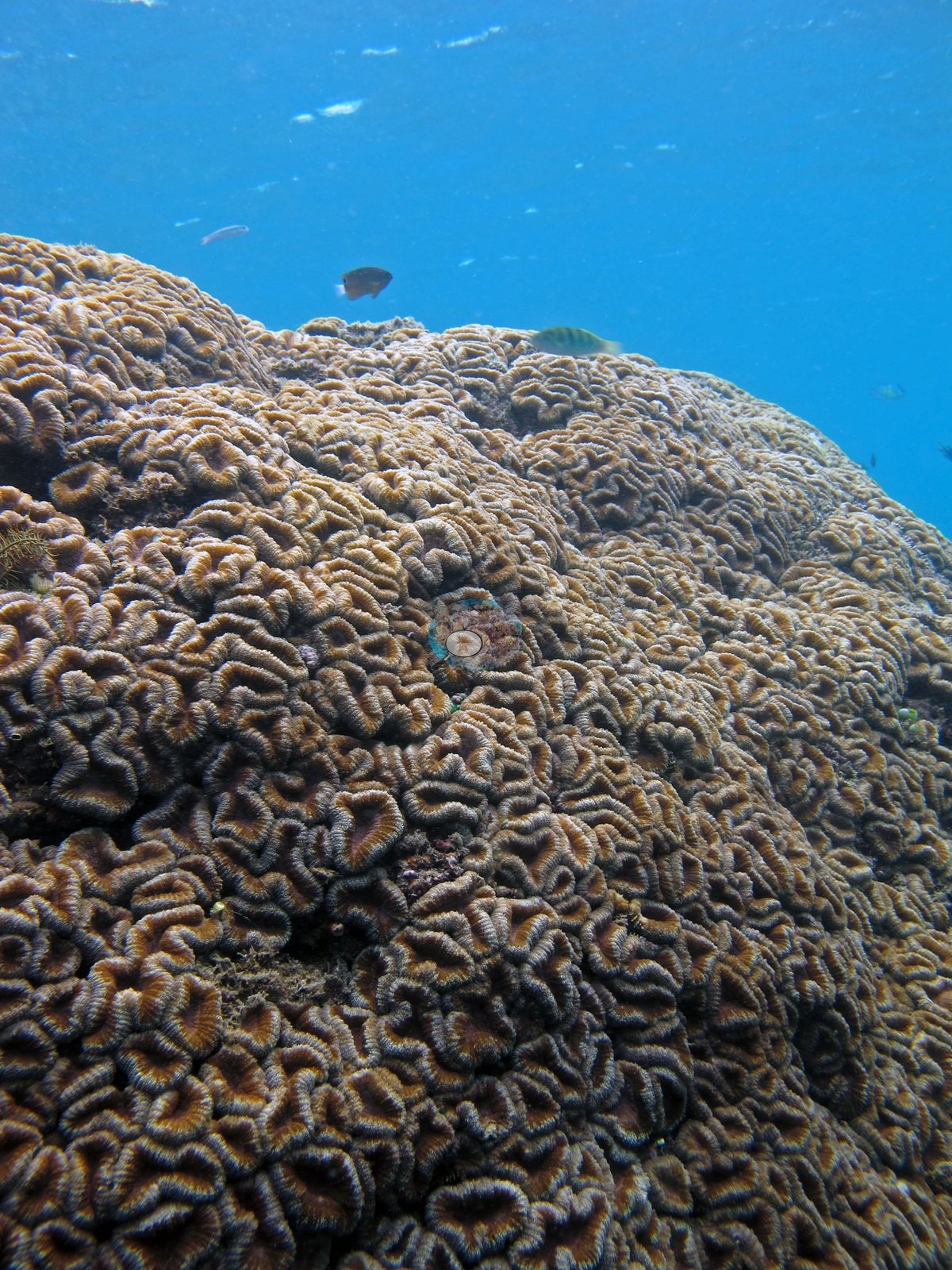
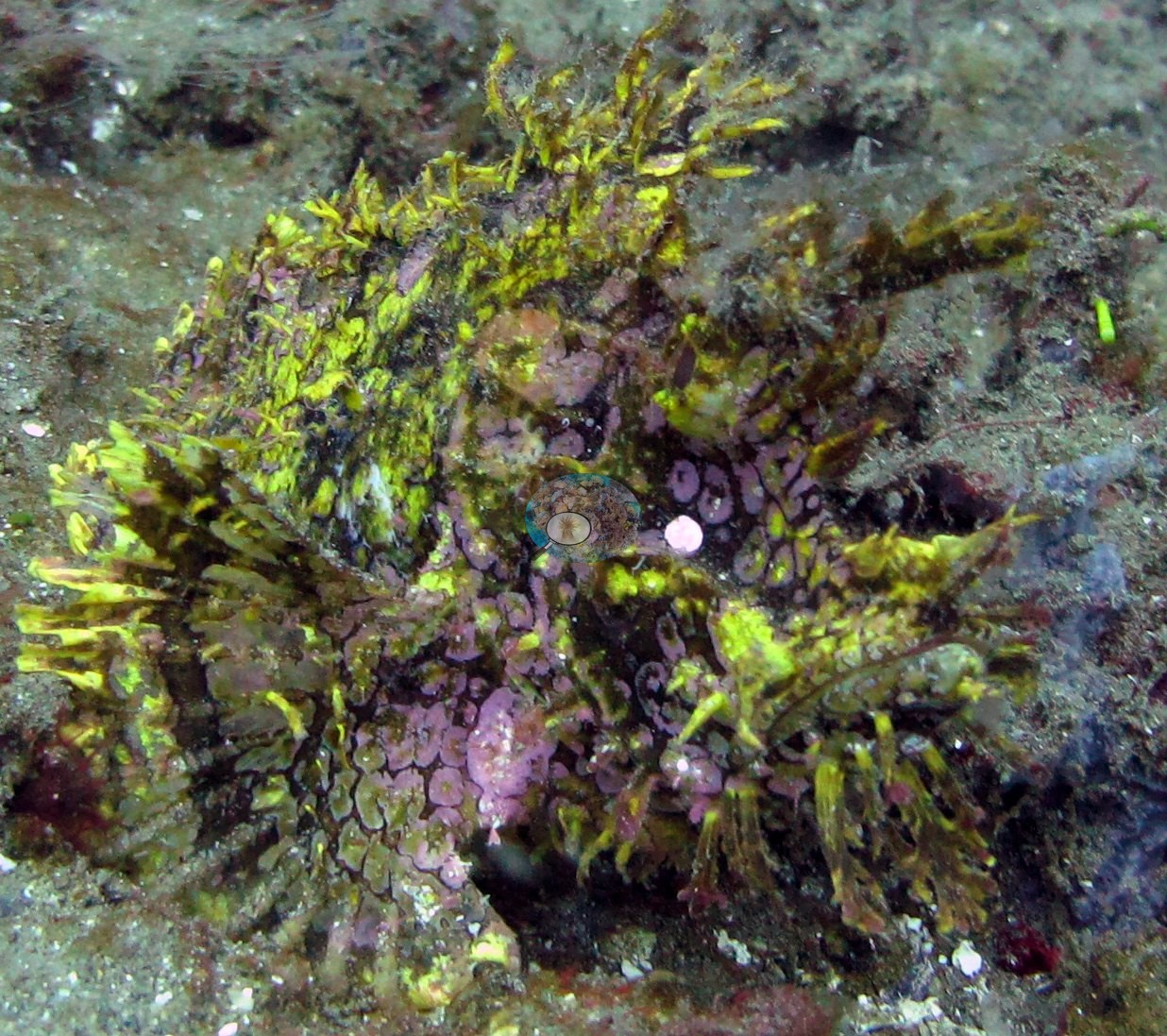
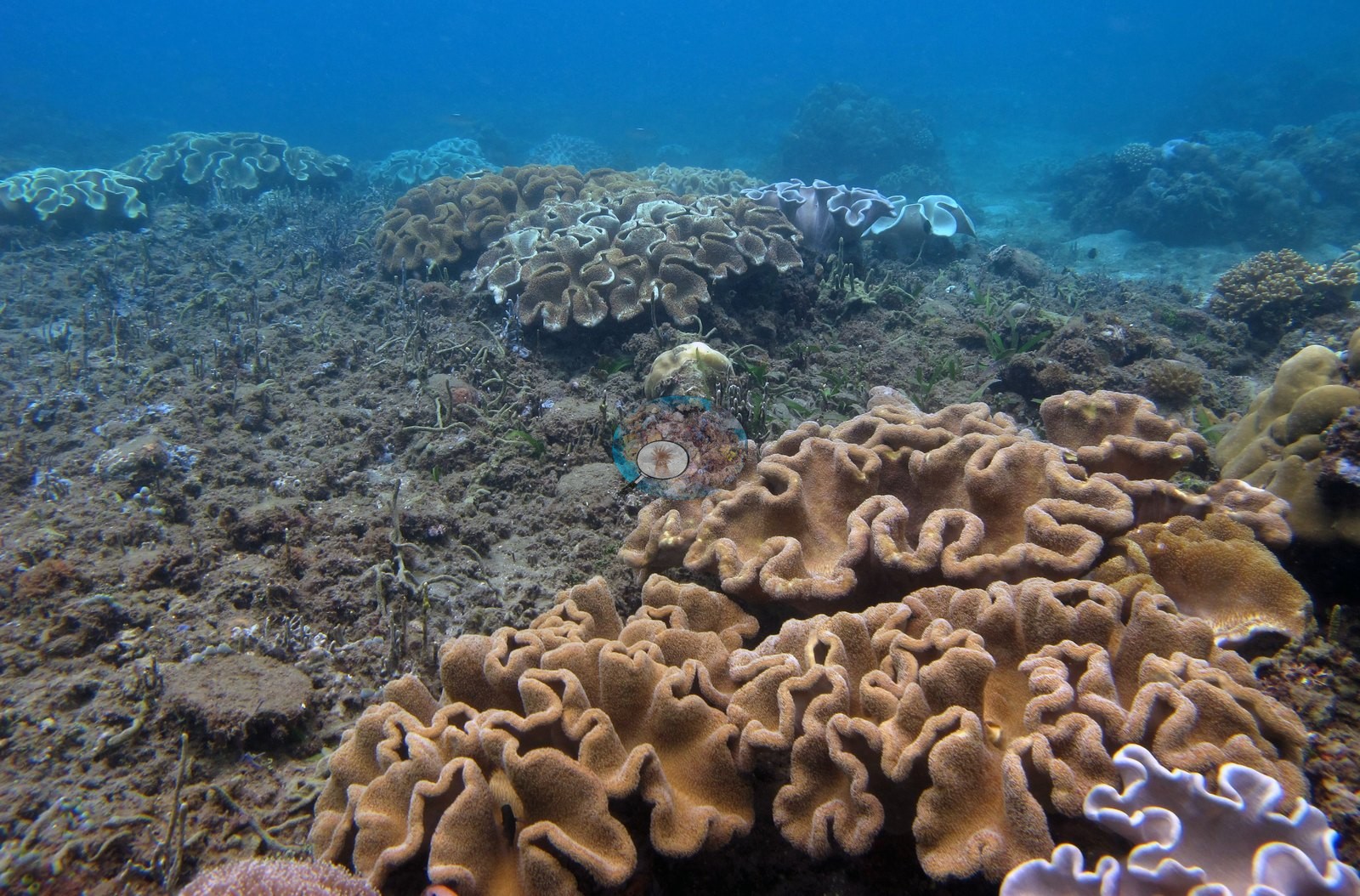
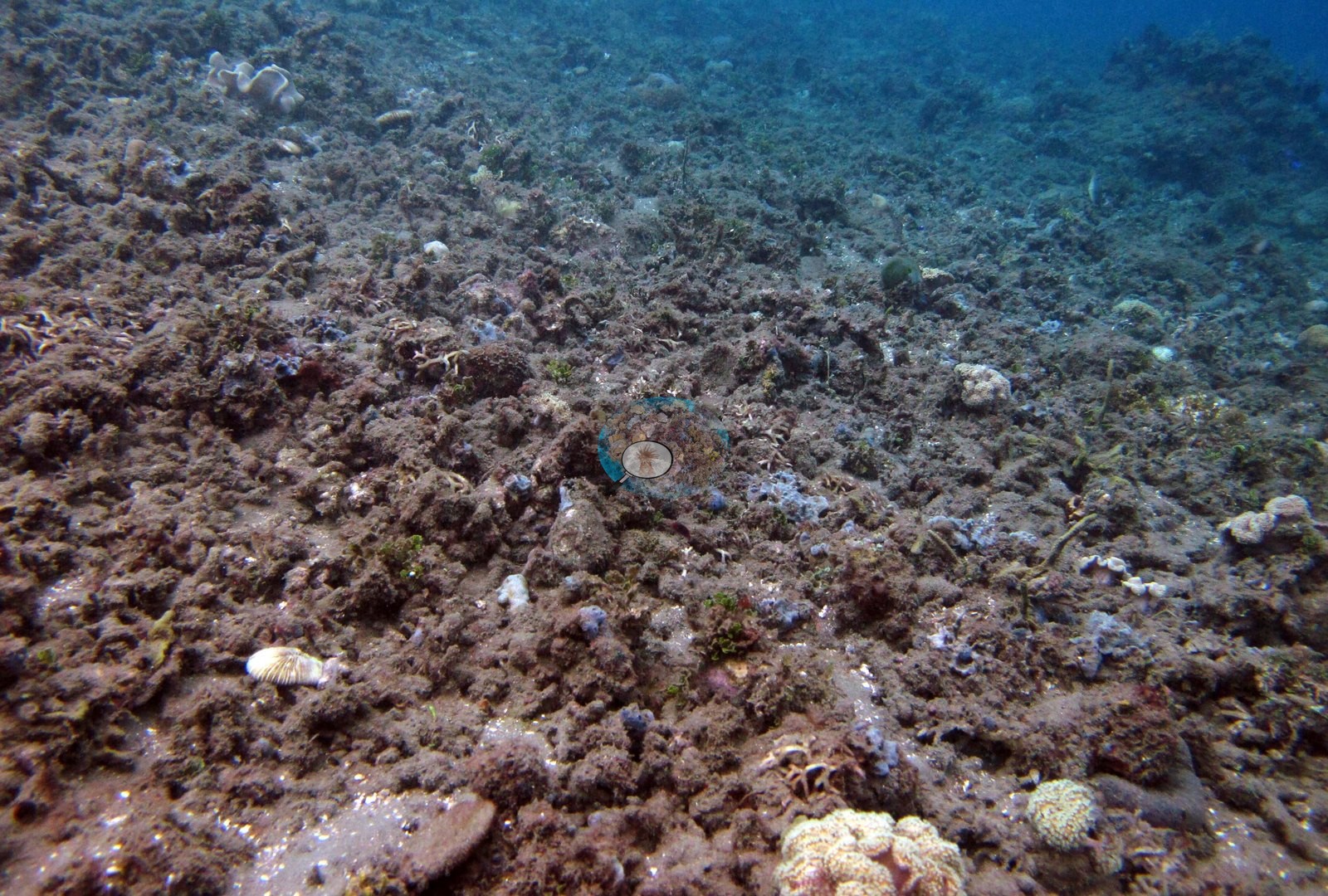
Rhino City splits into two zones: sandy muck carrying isolated soft-coral "trees" and gorgonian fans in cream, blue-gray, and purple, and a genuinely dense, healthy reef-flat section of thick Acropora staghorn/table thickets swarming with damsels and anthias (e.g., Image 2, Image 3).
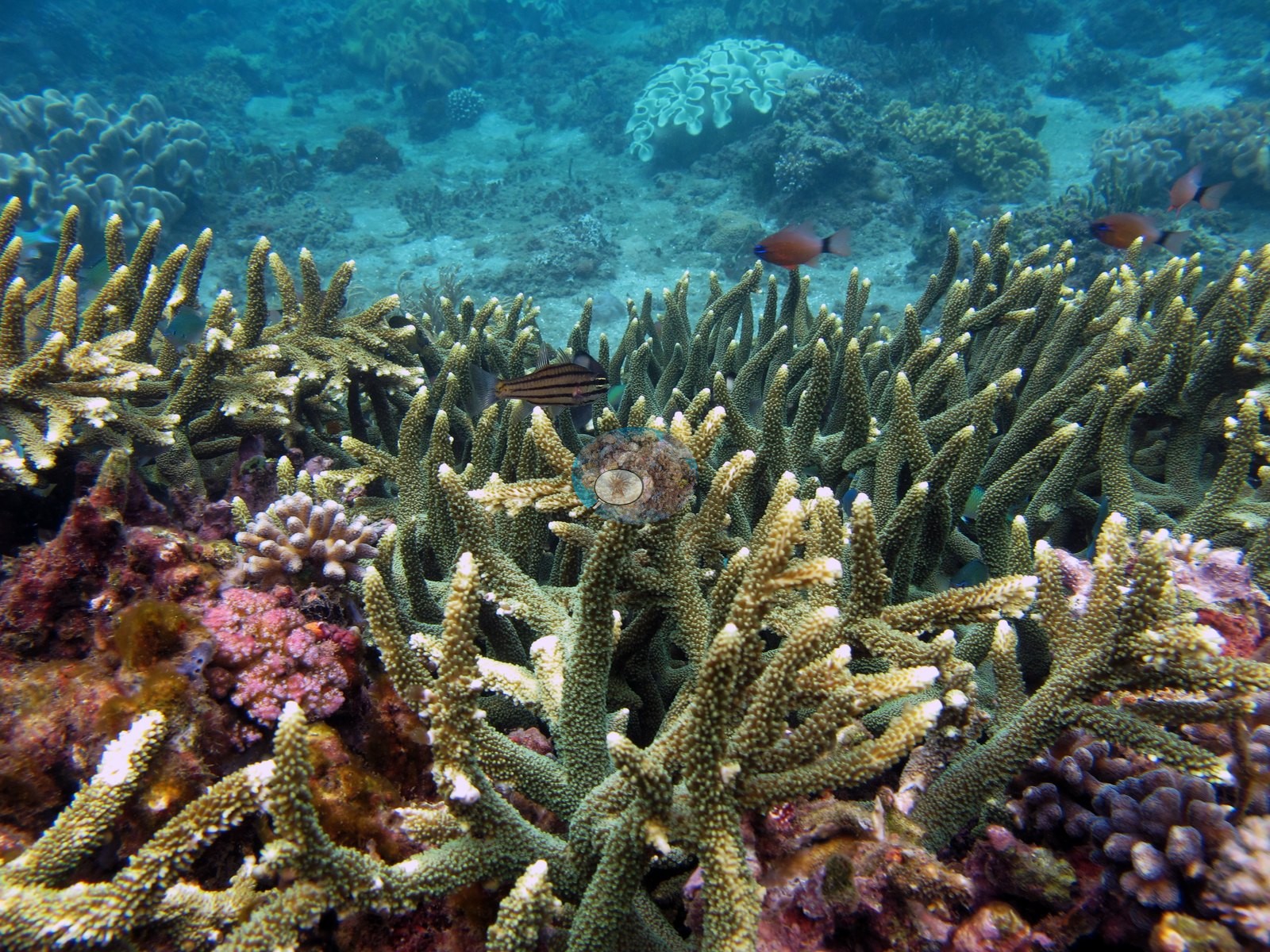
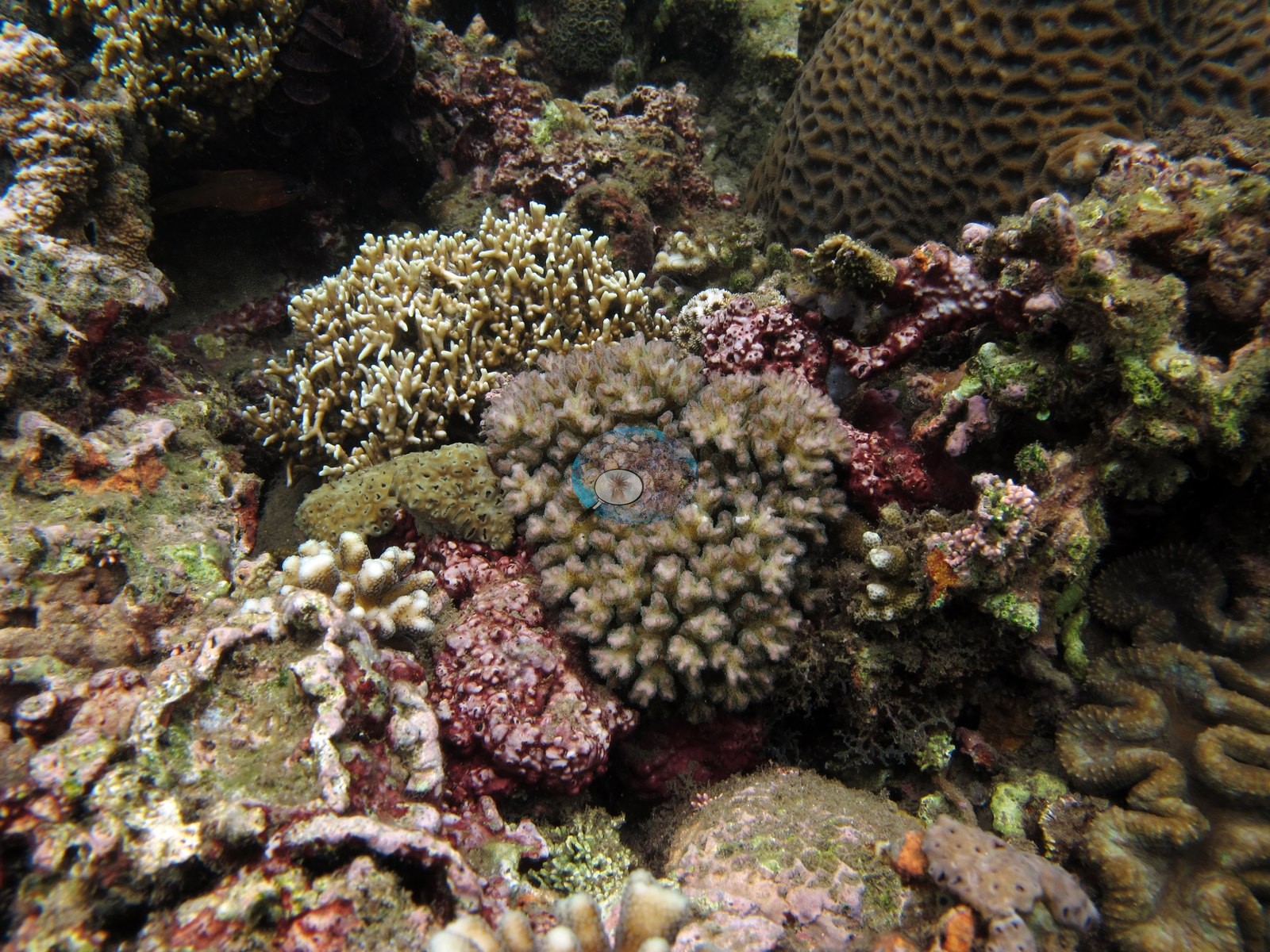
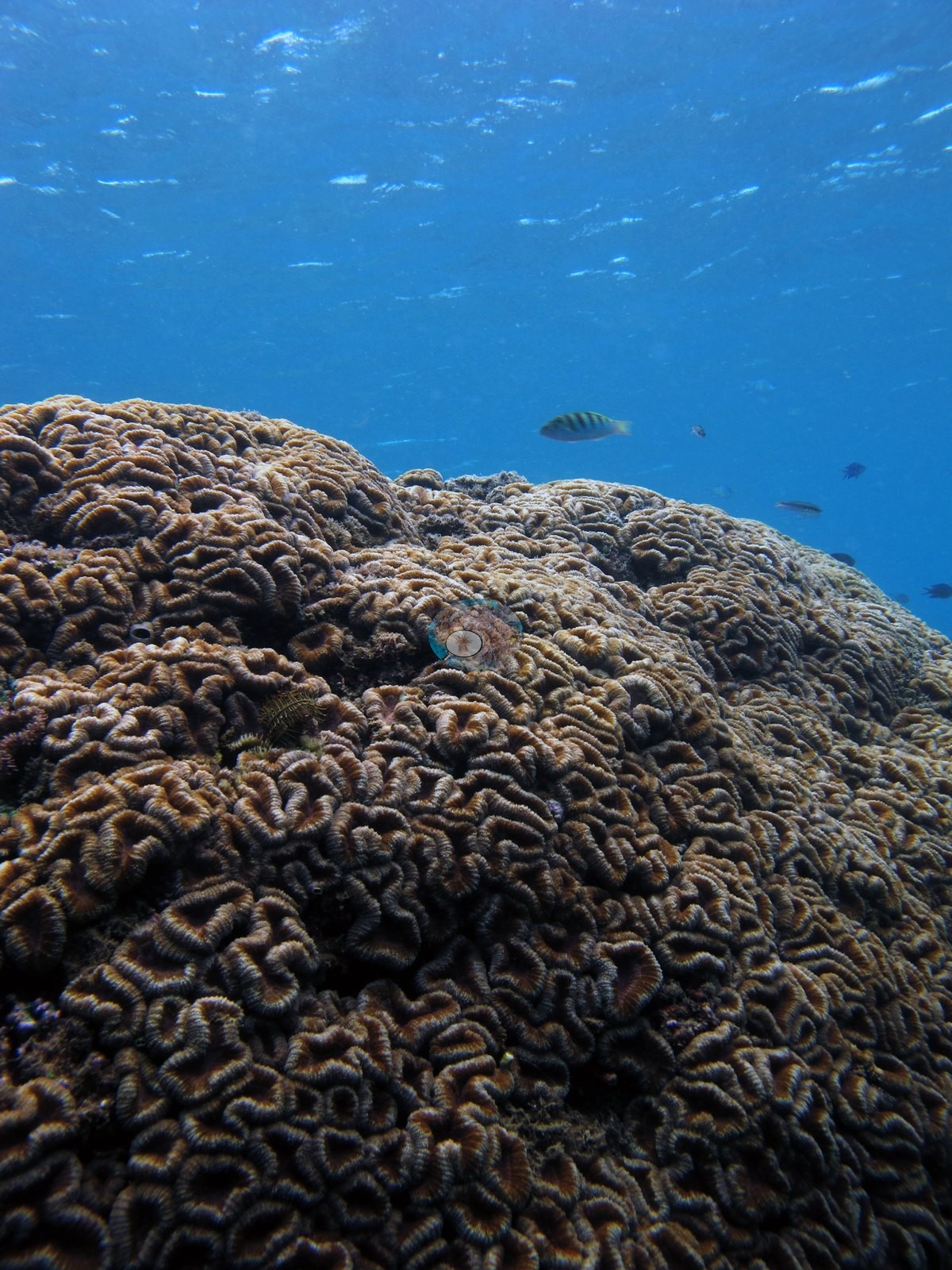
Confirmed genera include a large Diploastrea heliopora, Pocillopora acuta, massive Porites, Favites/Platygyra brain corals, leather corals, and a large frilly gray-white Turbinaria.
Coral cover
Coral cover — completed photographic analysis. CoralSCOP produced usable masks for 65 of 66 photographs (one ghost-pipefish macro frame failed), with a mean computer vision estimate of 33.3% (SD 21; median=31.3%; range=0.9–80%). The result accords with the image set's broad habitat split—locally dense Acropora tables and thickets in the shallows, then much sparser sand/rubble muck with isolated soft corals—but it is not a randomized benthic survey. Because selected reef vistas and macro portraits have different sampling footprints and the run has no independent point-count or second image method, 33.3% is retained as a flagged photographic index rather than published as transect-equivalent site cover. Coral cover: 33% — a single-method photographic index. The figure is a CoralSCOP computer vision over Anderson's own photographs (65 frames), with no second method to cross-check it. CoralSCOP sums retained mask fractions with overlaps possible and segments coral-shaped objects rather than living tissue, so it scores standing dead skeleton as coral and does not measure cover the way a transect does; against in situ transects it reads high.
Stressors
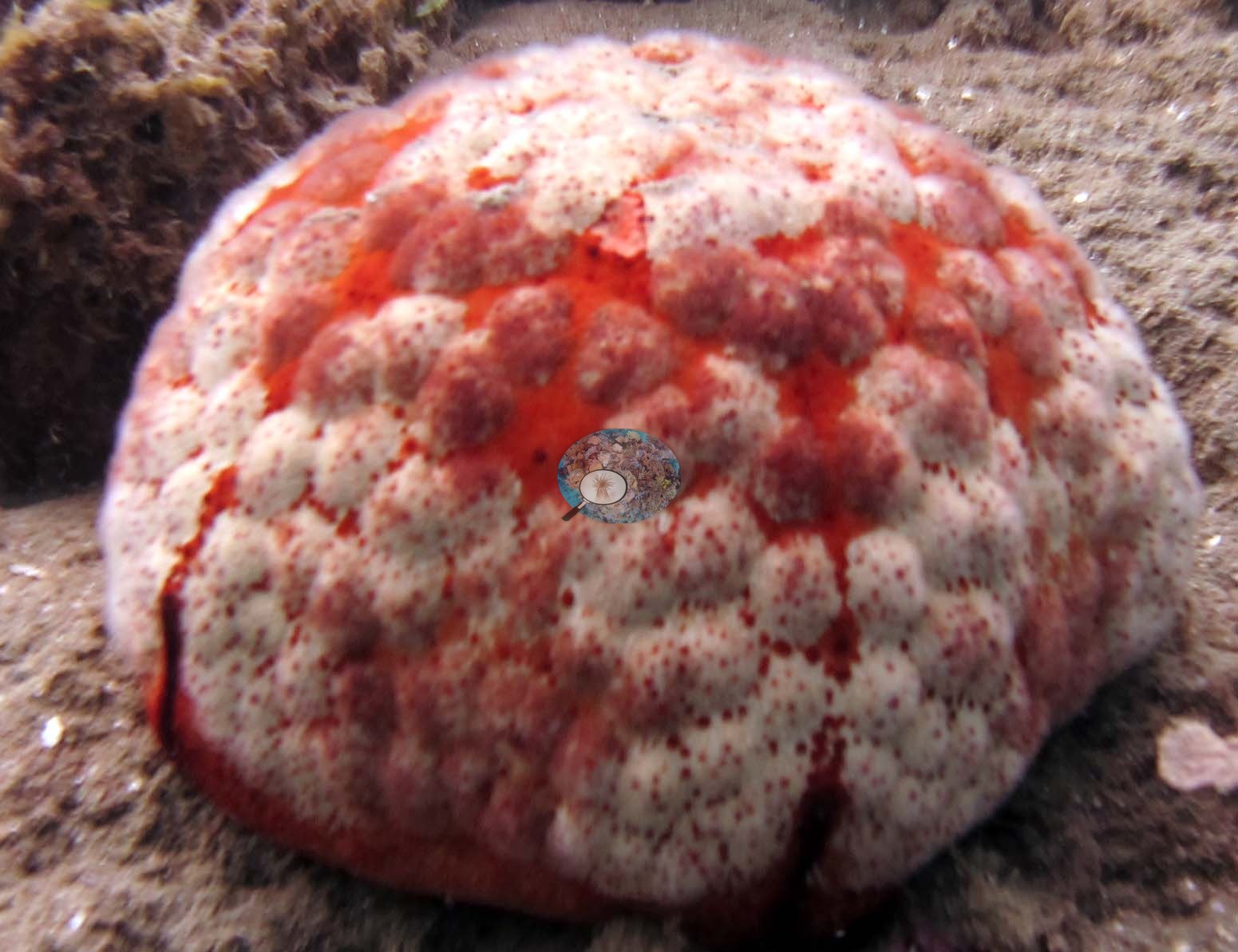
No crown-of-thorns or disease observed; a Culcita cushion star is present but distinct from Acanthaster. One colony shows a sharp two-tone red/cream polyp pattern with fully extended, healthy polyps -- reads as natural pigmentation rather than bleaching, though it's a genuinely striking pattern worth a second look if higher-resolution originals turn up.
Fish and other fauna
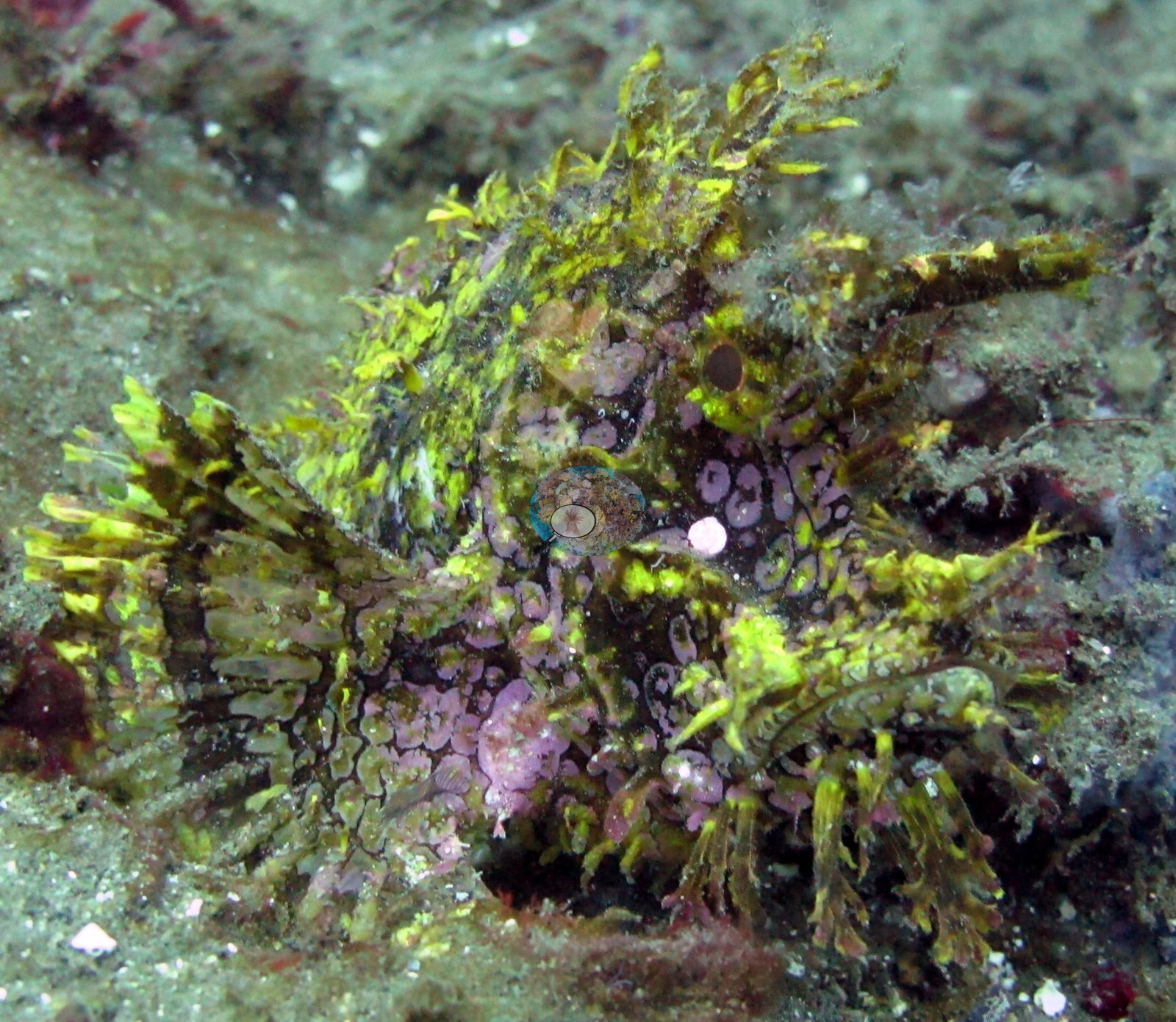
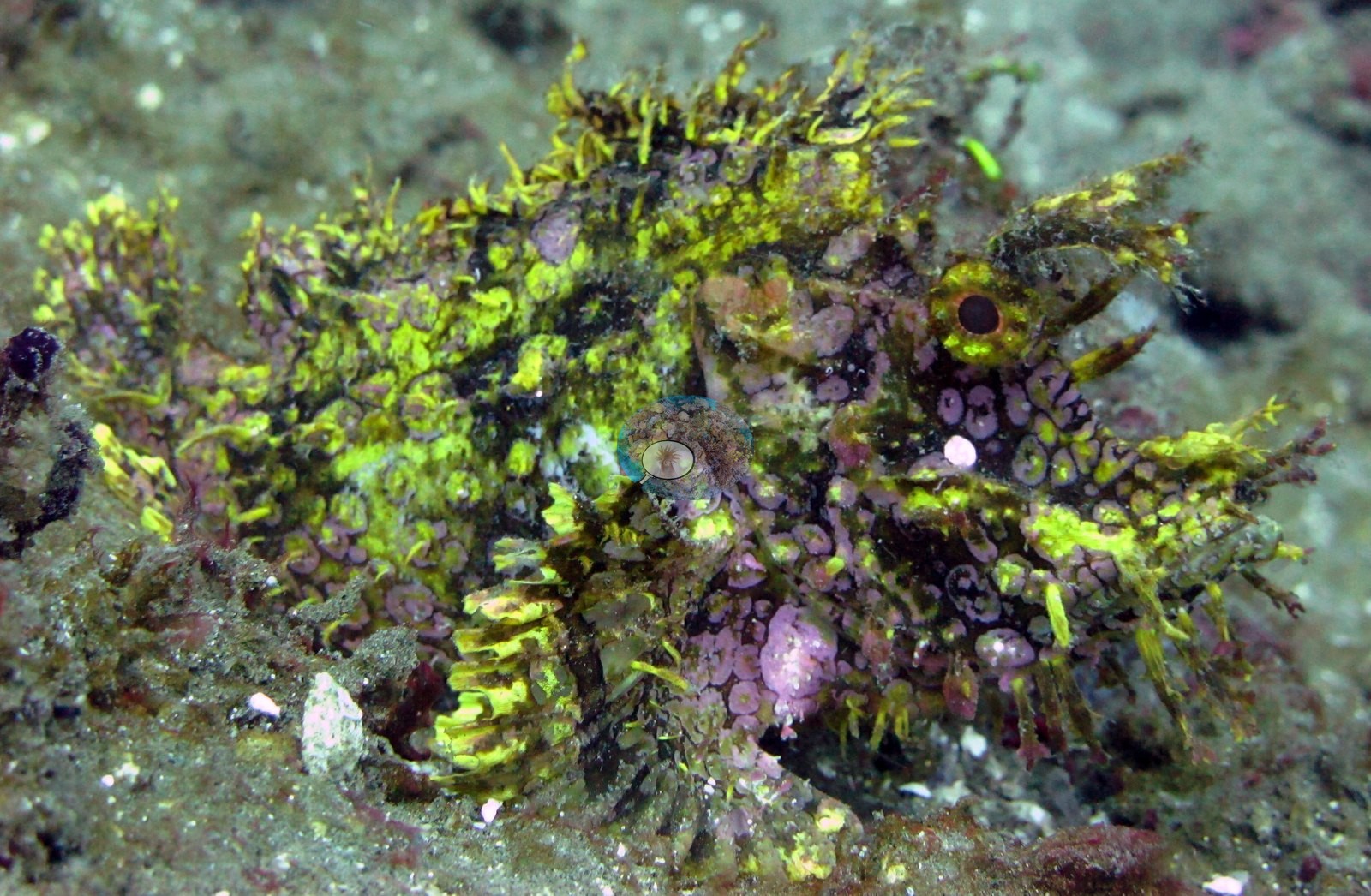
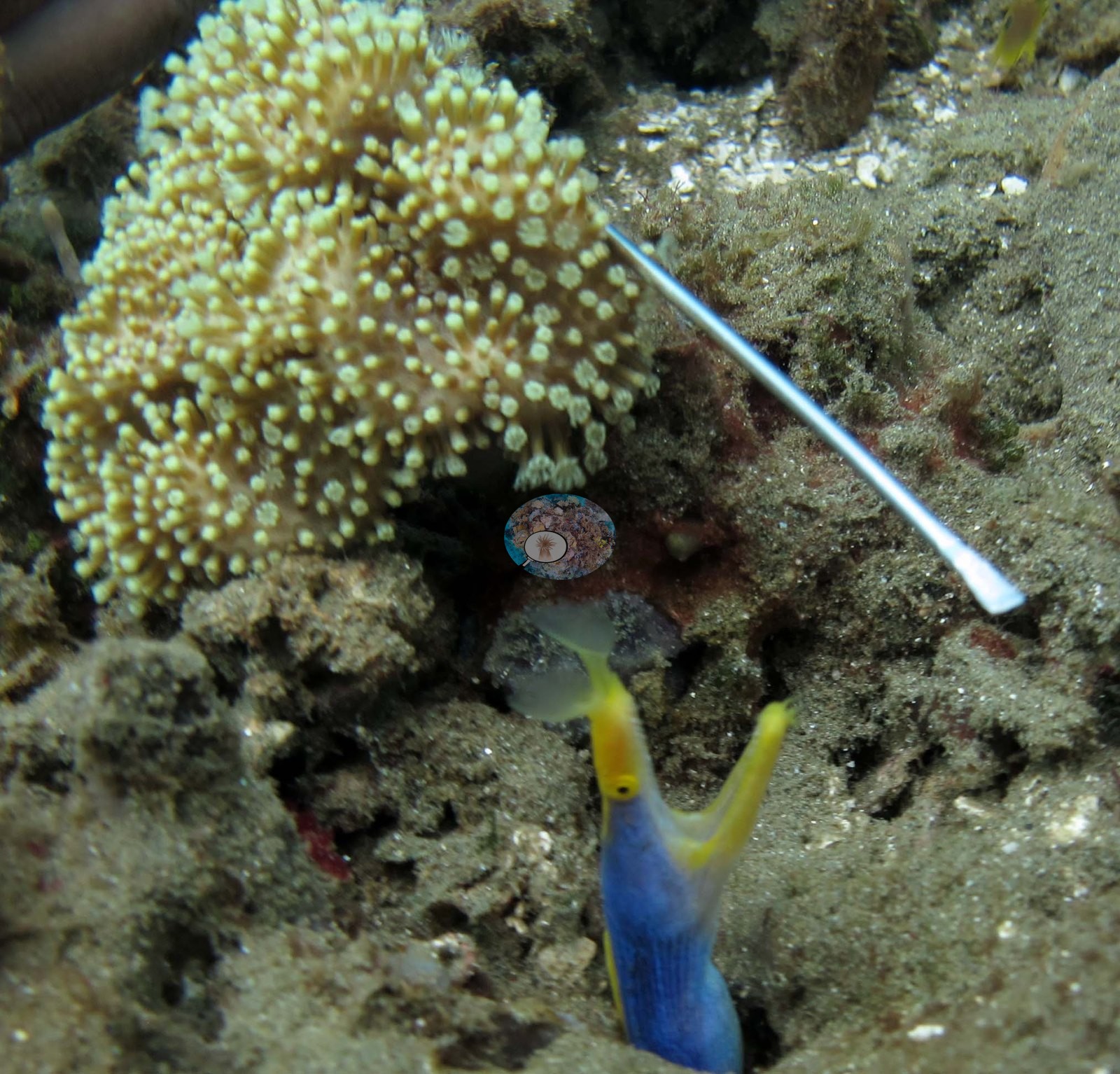
The standout find is a genuine Rhinopias (weedy scorpionfish) -- heavily camouflaged, filamentous green/purple skin, motionless on sand, caught in three separate frames -- alongside a likely dark-morph ornate ghost pipefish and a blue-phase ribbon eel photographed both calm and in an open-mouthed threat display near a diver's hand. A banded black-and-white crinoid and a well-camouflaged purple crab round out the macro life.
Comparisons with other data
No prior survey data from this site. If you would like to share yours, please email us.
Coral cover: method notes
Data & links
All images from Coral Reef Diagnostics. Data are from Coral Reef Diagnostics.
© Coral Reef Diagnostics.