
Indonesia - Ambon: Laha-2
Part of the regional summaries: Indonesia - Ambon and Indonesia - Maluku
More info
Maluku (NOAA CRW virtual station) · Banda Sea ecoregion mean=7.3°C-heating weeksLaha-2 is overwhelmingly sand-silt and shell rubble with almost no coral structure, but an outstanding critter dive - harlequin shrimp, an octopus wearing bivalve-shell armor, four frogfish, two seahorses, and multiple morays. Glass bottles, monofilament line, and PVC debris are woven into the substrate the animals are using as habitat. With almost no live coral present, no reliable cover figure applies here.
Yang ketiga dan paling berlumpur di antara penyelaman Laha, 2018-04-22 — dasarnya didominasi pasir dan lumpur yang dipenuhi tumpukan cangkang mati dan pecahan karang, dengan struktur terumbu yang nyaris tidak utuh. Tutupan karang 24% (indeks CoralSCOP atas 42 bingkai; batas atas, bukan transek).
Terjemahan ringkasan ini oleh AI; versi bahasa Inggris yang berlaku. Translated from the site’s shorter map summary.
Two other CRD dive sites within 5 km shown in orange — click a marker to open its page.
4 of these 40 photographs are shown beside the text that discusses them under "Site description" below.
Site description
Setting
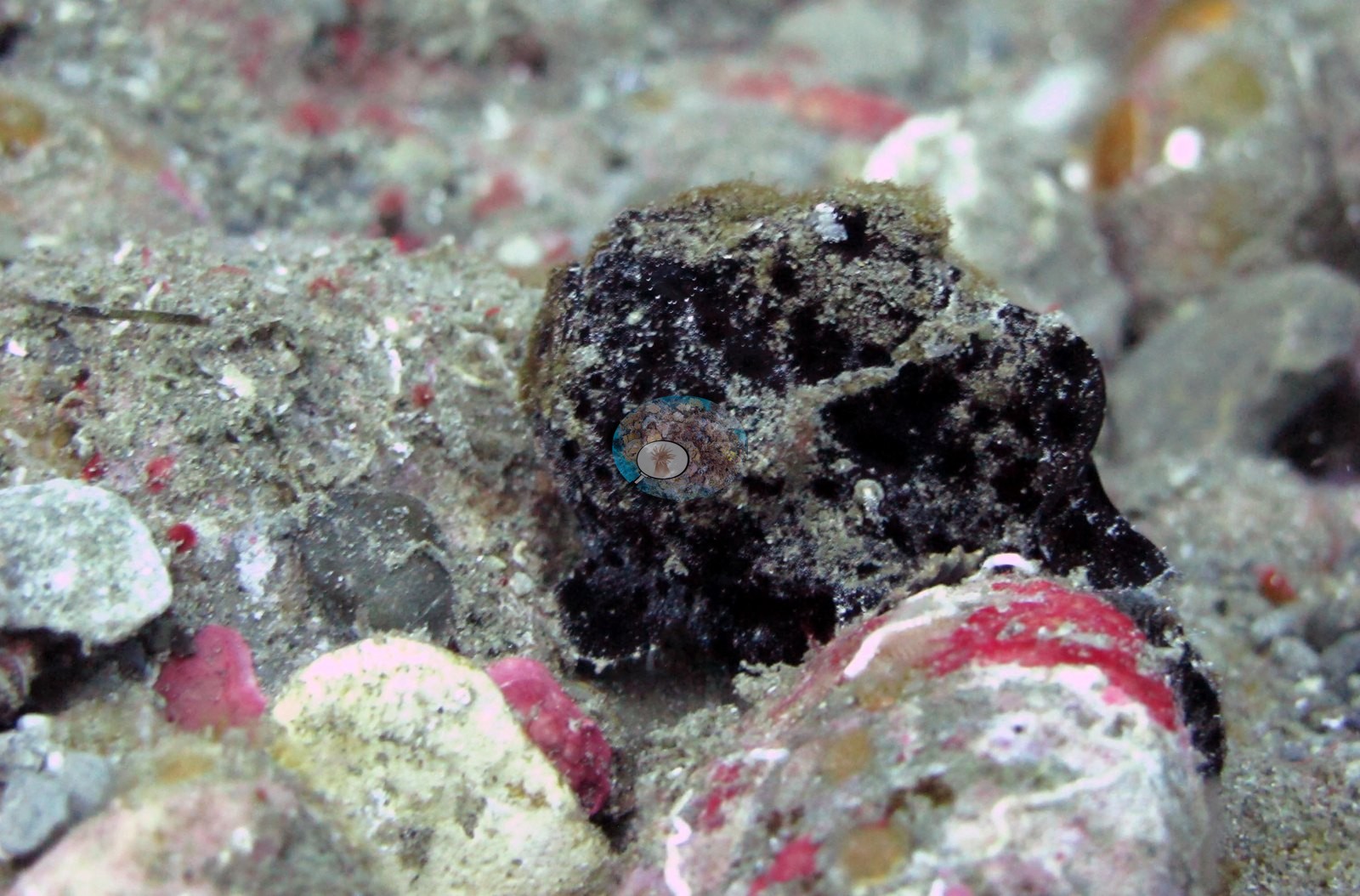
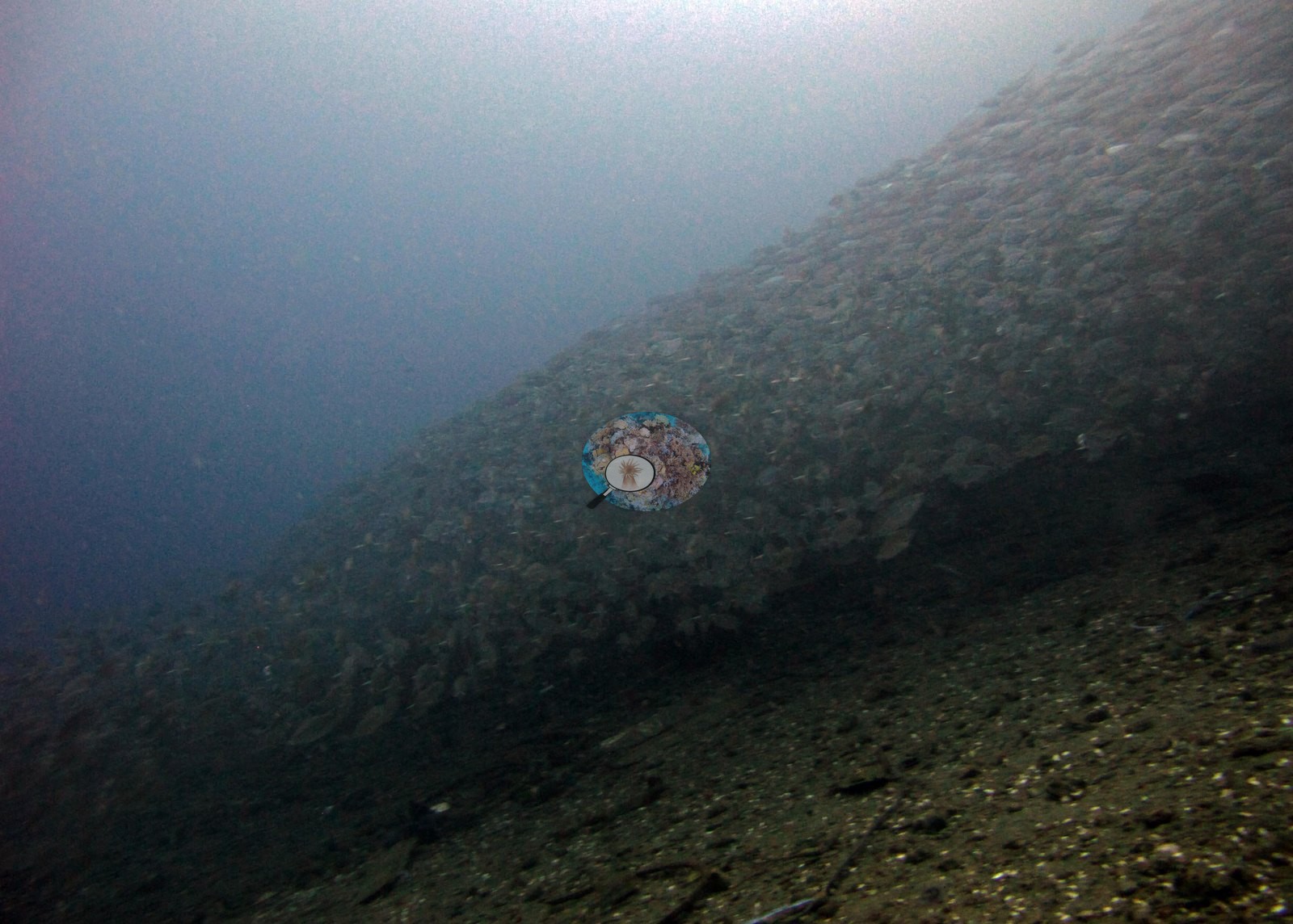
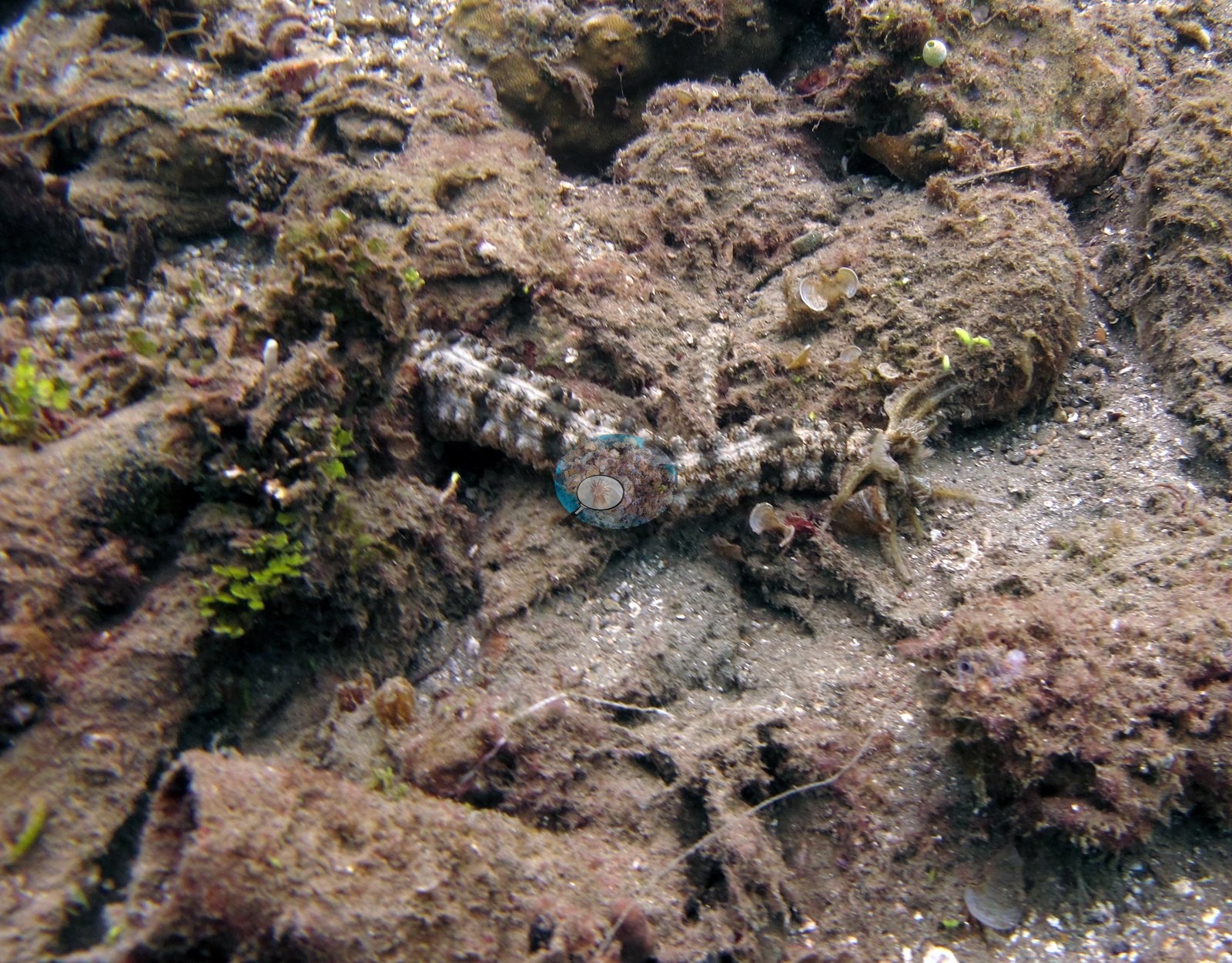
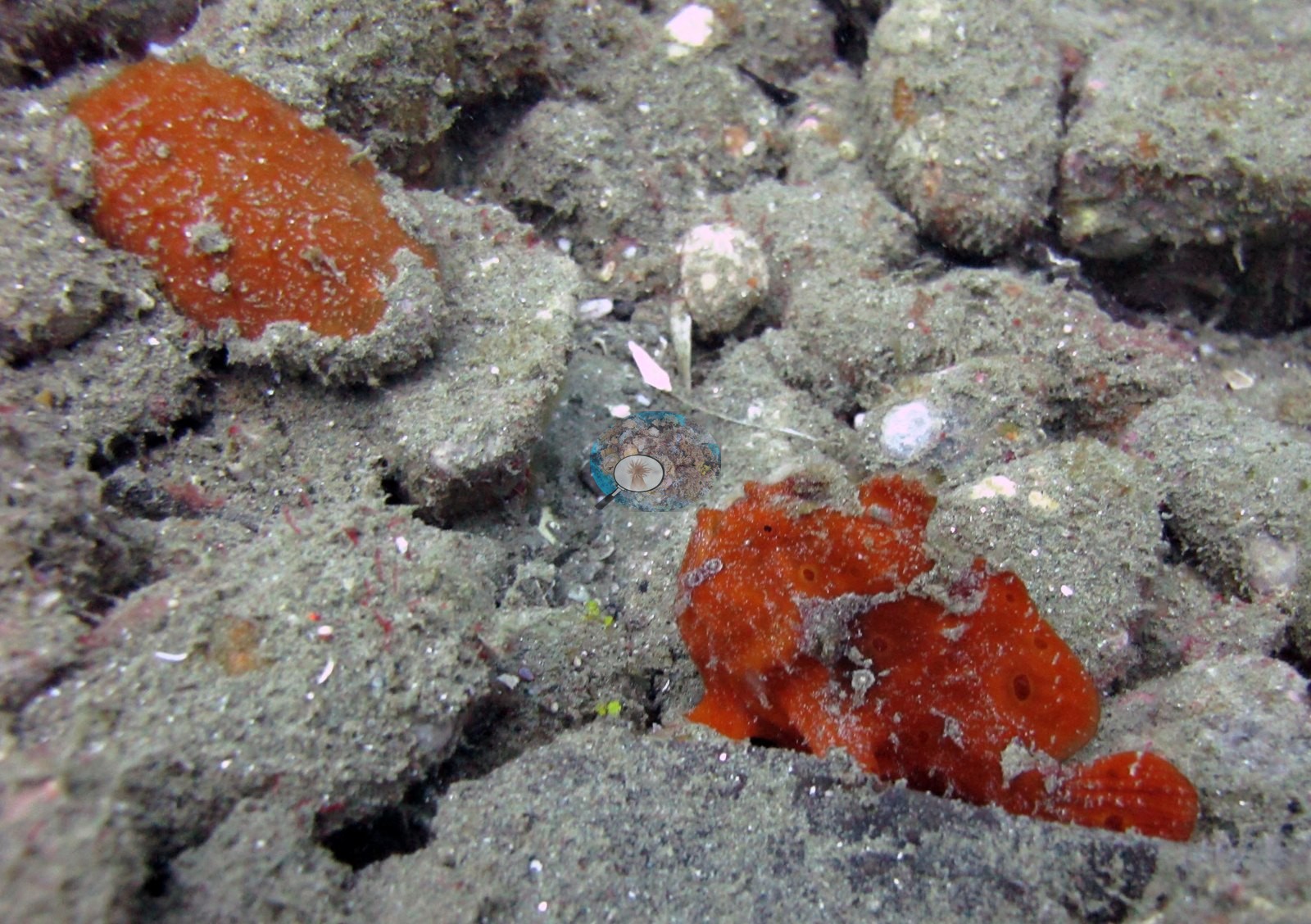
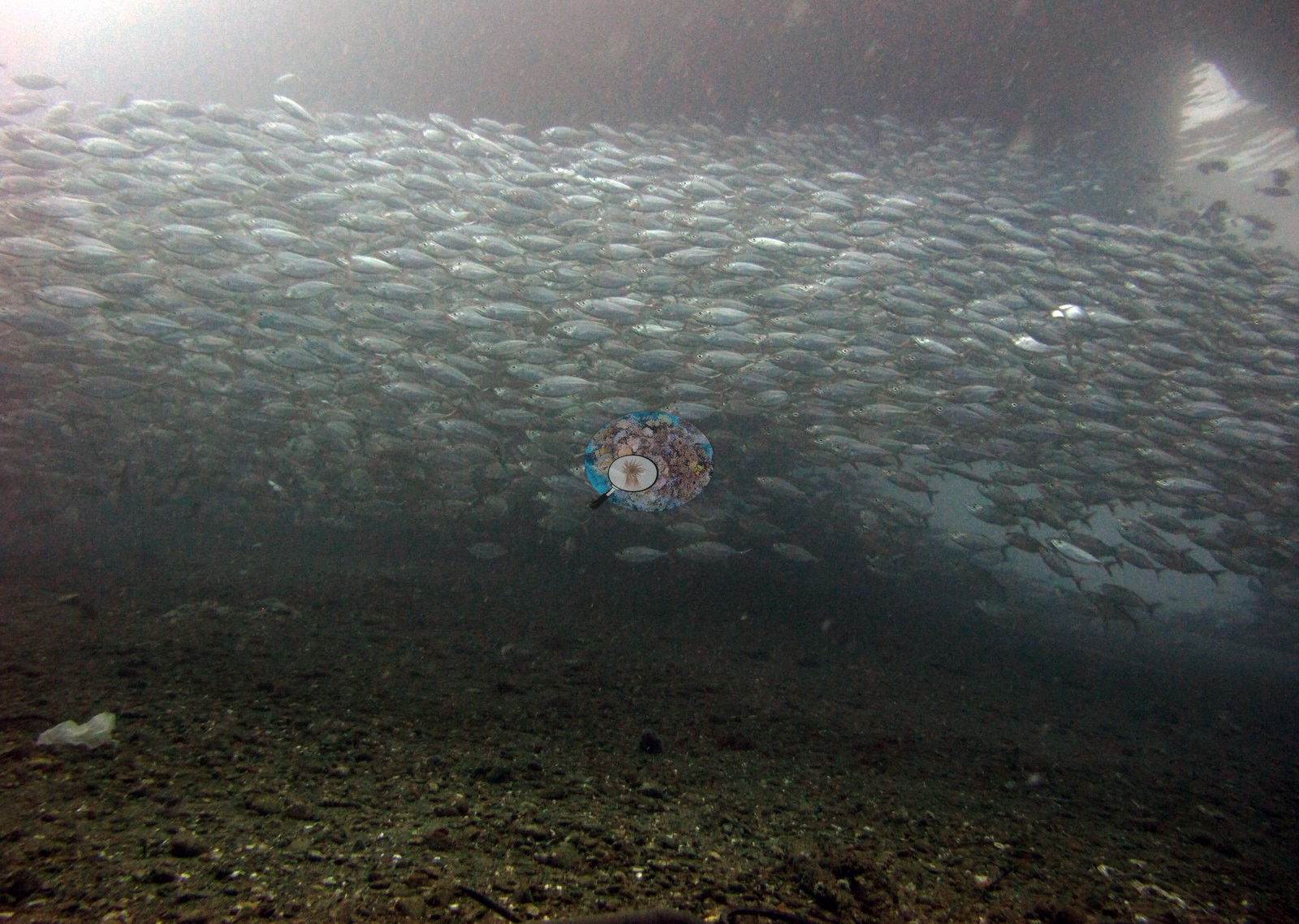
The third and muckiest of the Laha dives, 2018-04-22 -- overwhelmingly sand-silt bottom littered with dead shell middens and rubble, with almost no coherent reef structure (e.g., Image 4).
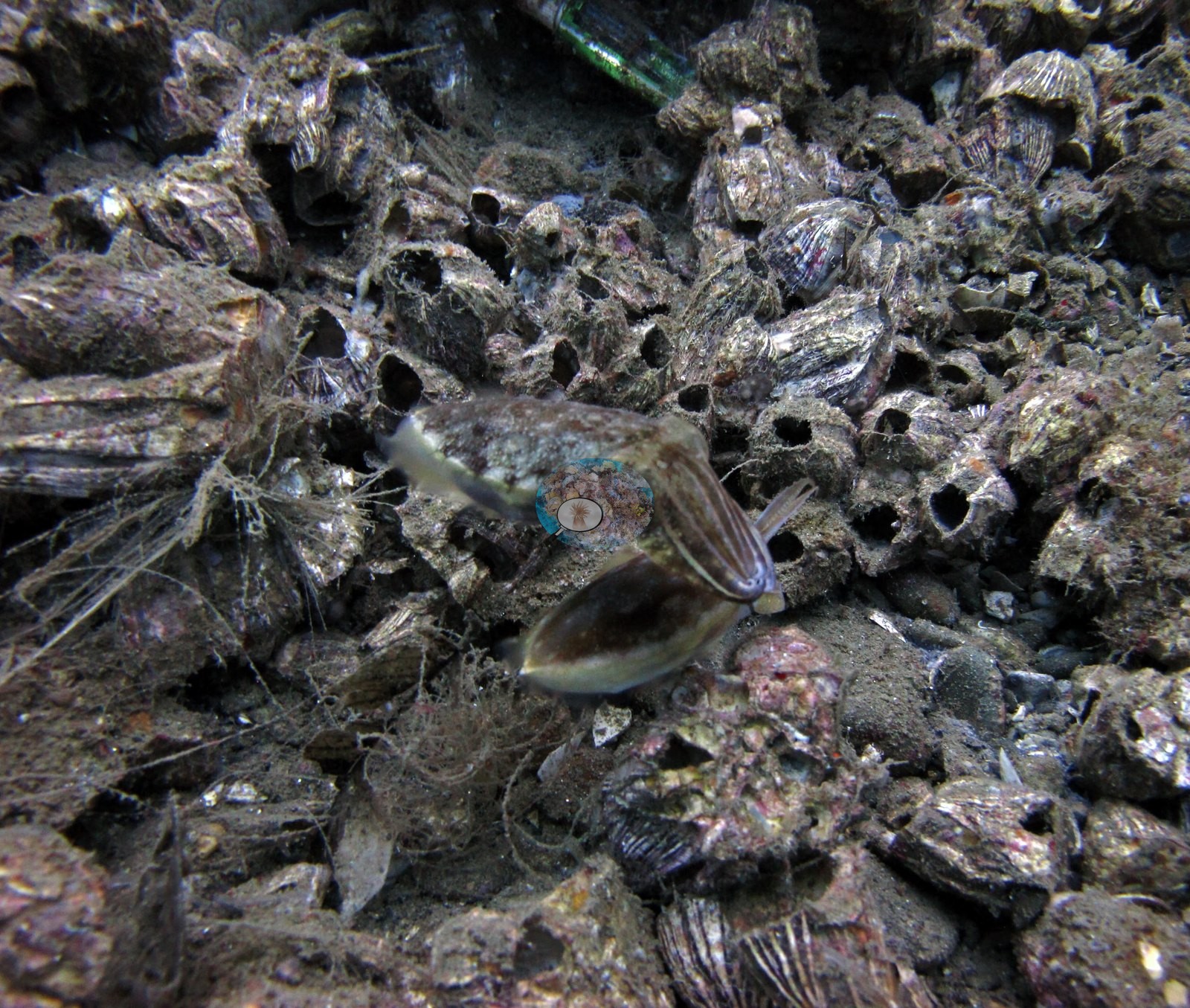
Visibility ran mediocre and greenish, typical of a nutrient-rich muck site -- workable for macro, poor for wide shots.
General benthic features
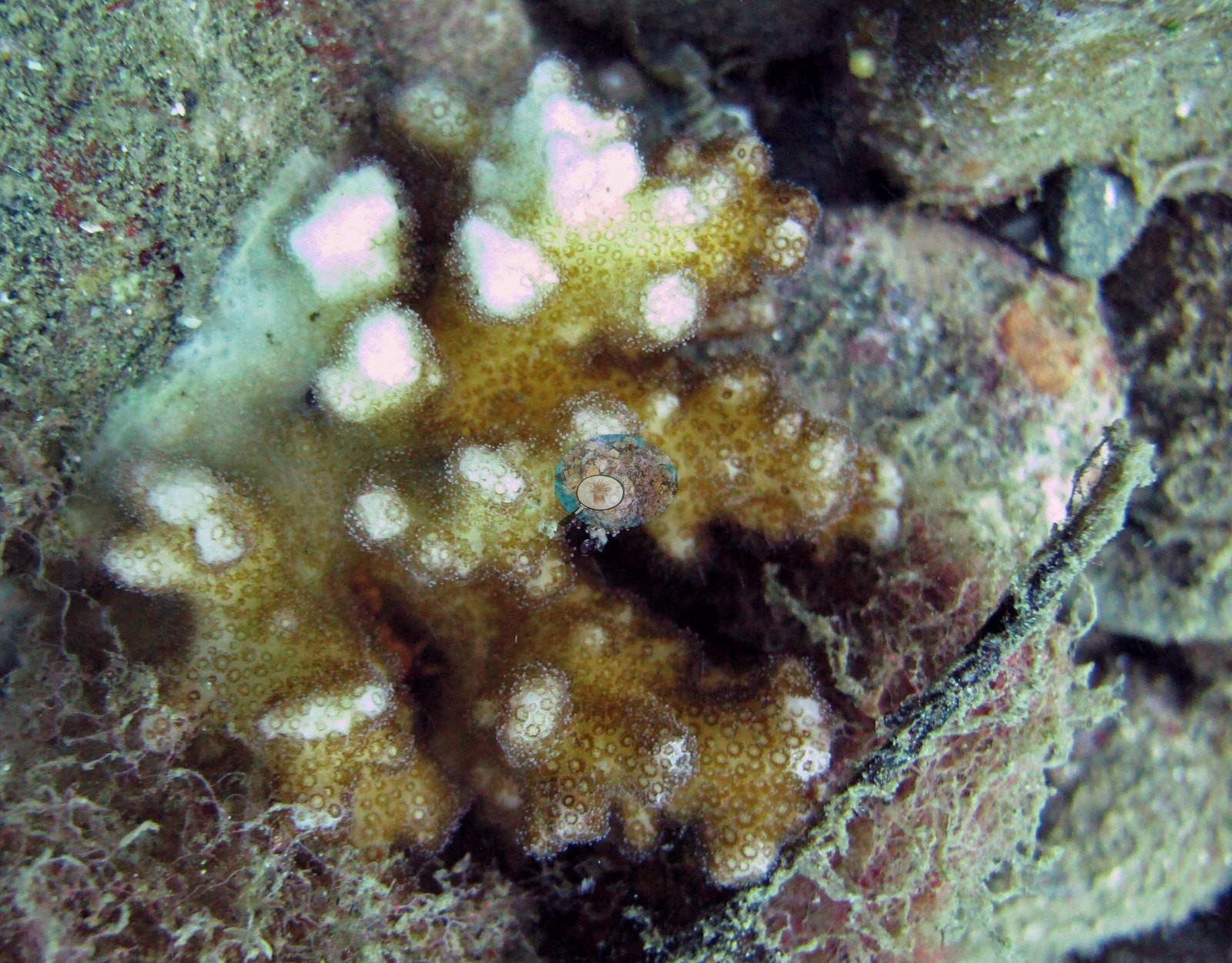
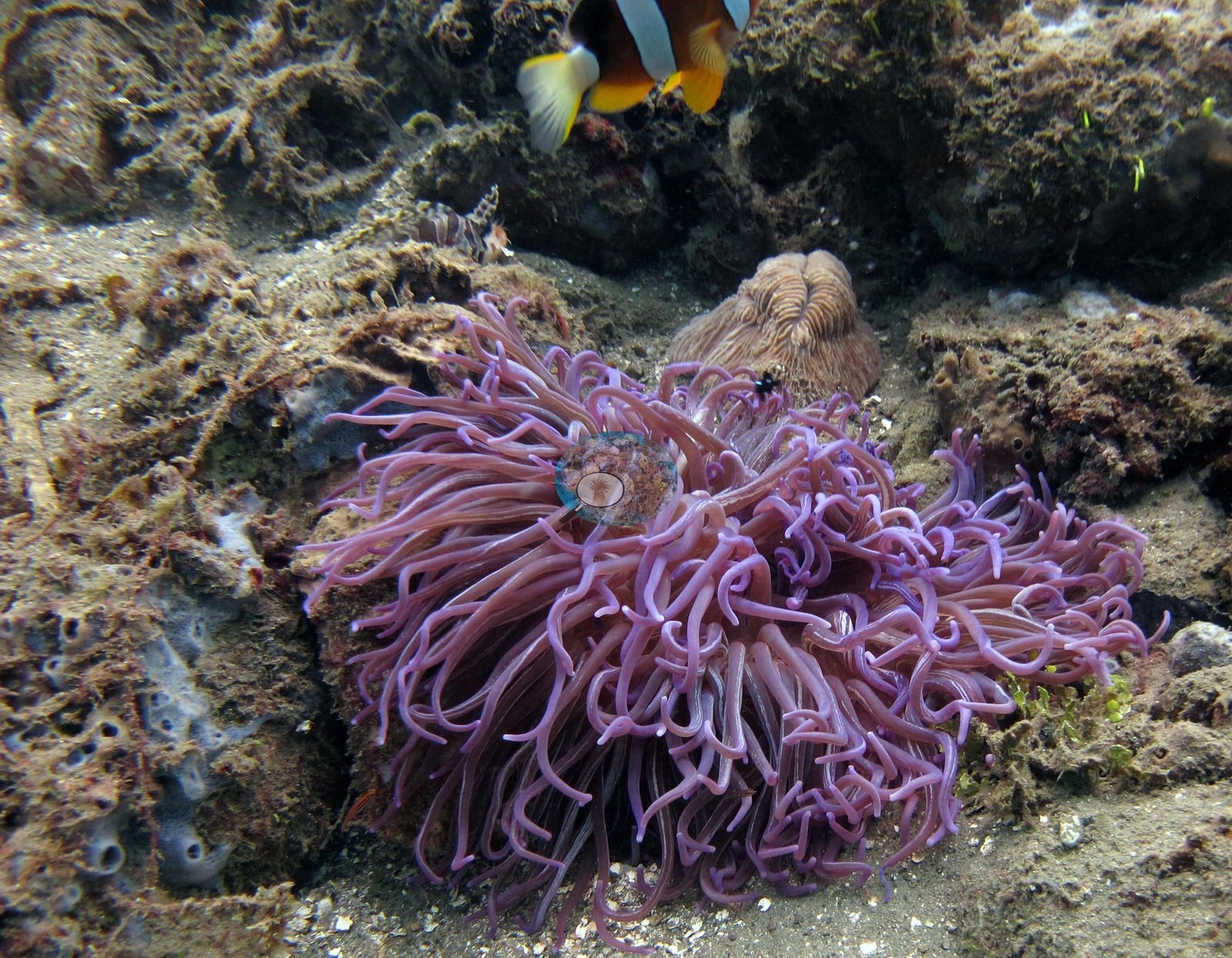
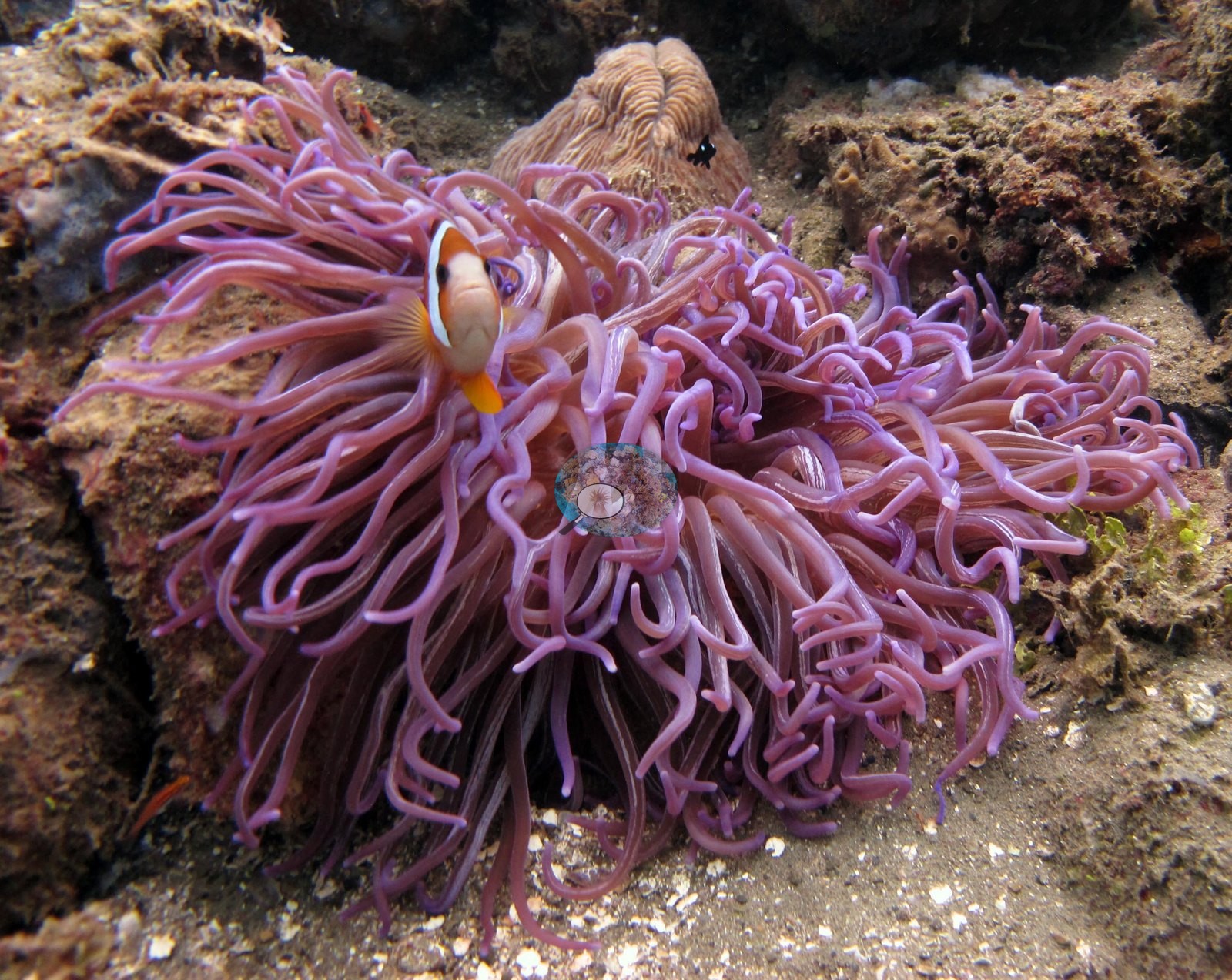
Only two frames show coral at all (a small encrusting colony with healthy tan/orange, white-rimmed polyps, and a coral base beside a host anemone); this is a critter dive, not a coral survey, and the description here is scoped accordingly.
Coral cover
Coral cover — completed analysis, result rejected. CoralSCOP processed all 42 photographs and returned a raw mean computer vision estimate of 23.8% (SD 19; median=19.7%; range=0.0–65%). Full image-by-image review shows that this is not coral cover: the collection is overwhelmingly fish schools, cephalopods, frogfish, morays, anemones, sponges, shell rubble, and debris, with almost no hard coral in view. The model repeatedly segmented those non-coral subjects as coral. The 23.8% output is recorded here as a transparent failed-model result but is rejected for ecological interpretation; this site's coral-cover status remains not collected, which is more accurate than publishing a precise but false number. This CoralSCOP estimate is a placeholder while Anderson searches for a stronger coral-cover model; expect it to be updated if he finds one. Coral cover: 24% — a single-method photographic index. The figure is a CoralSCOP computer vision over Anderson's own photographs (42 frames), with no second method to cross-check it. CoralSCOP sums retained mask fractions with overlaps possible and segments coral-shaped objects rather than living tissue, so it scores standing dead skeleton as coral and does not measure cover the way a transect does; against in situ transects it reads high.
Stressors
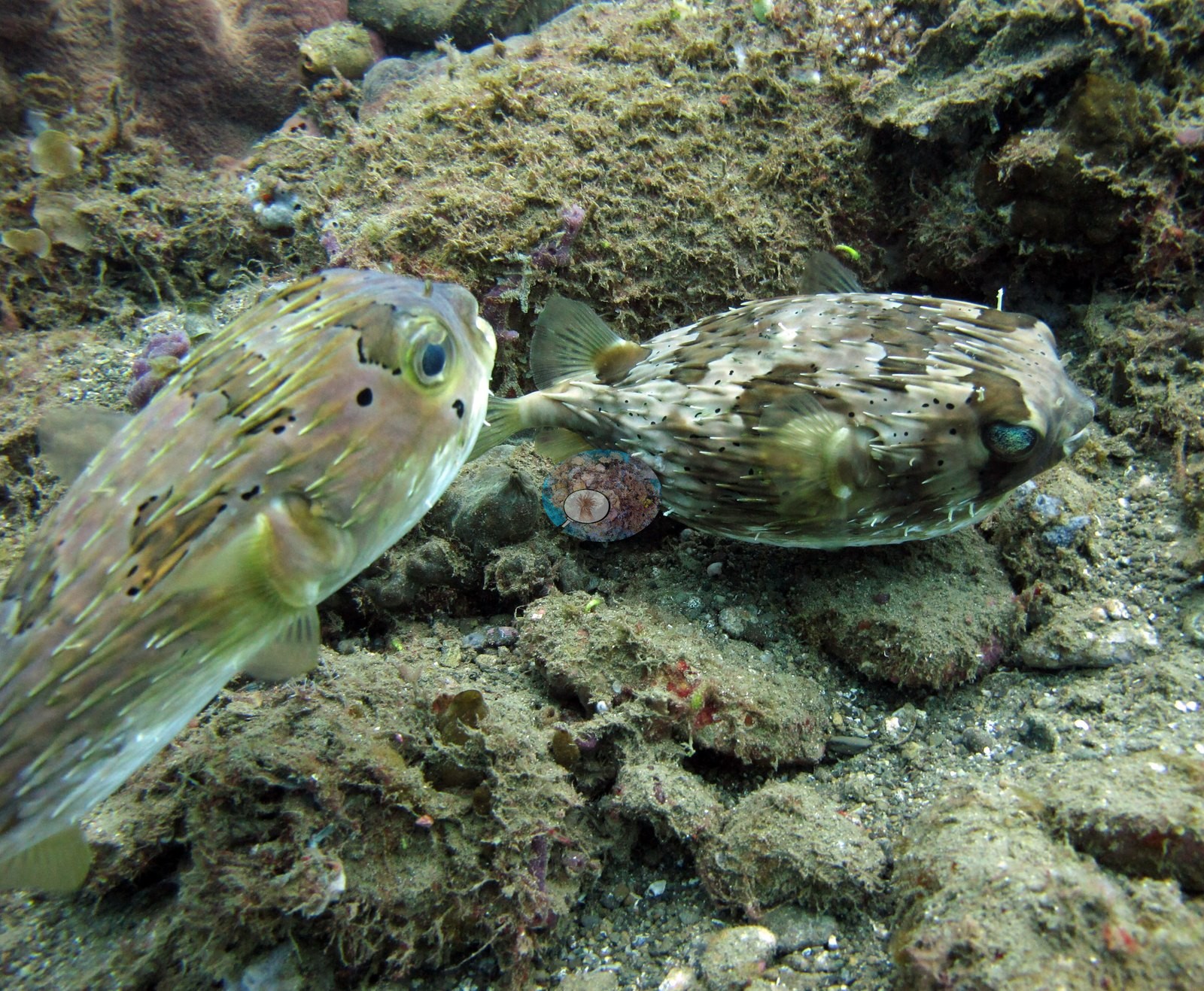
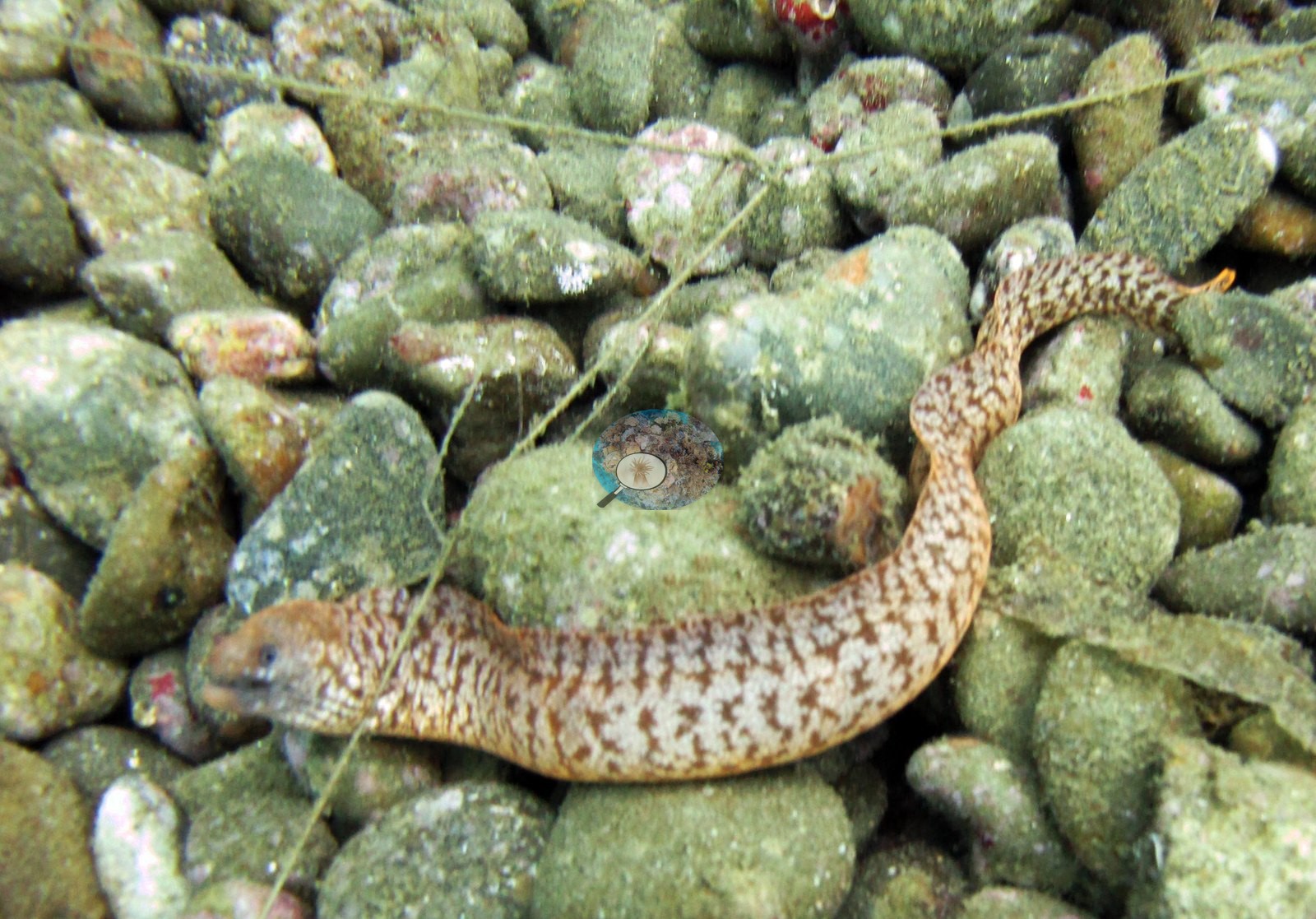
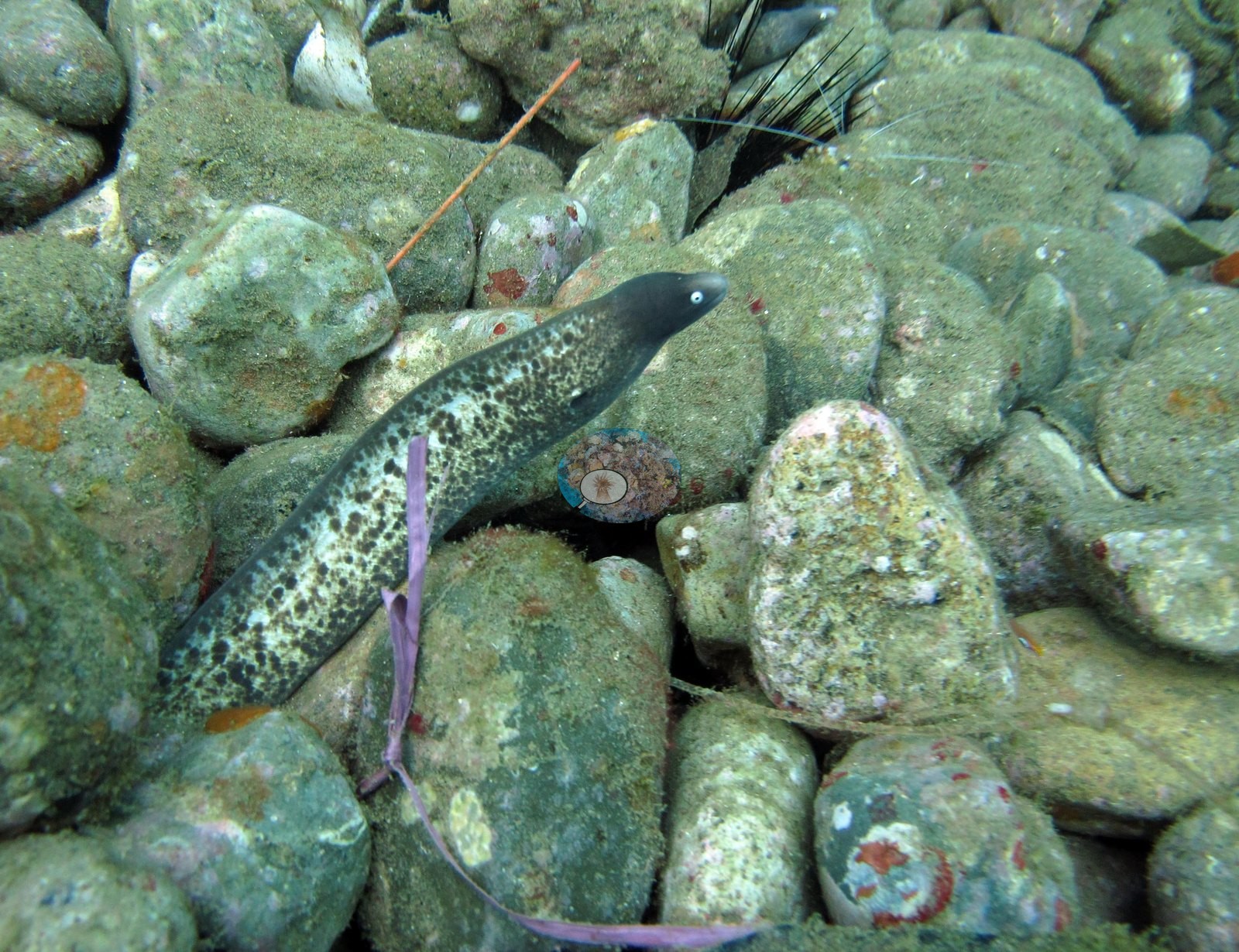
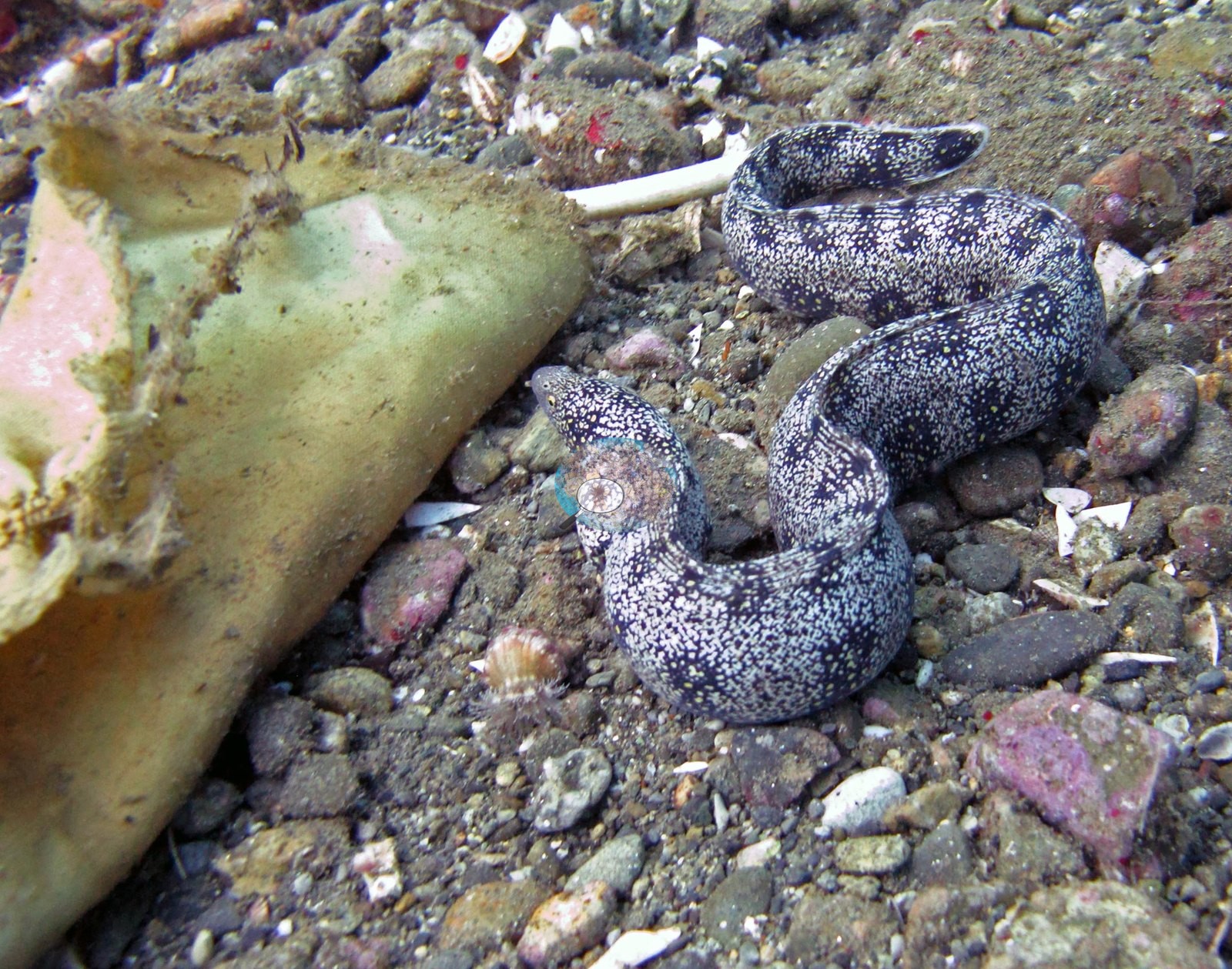
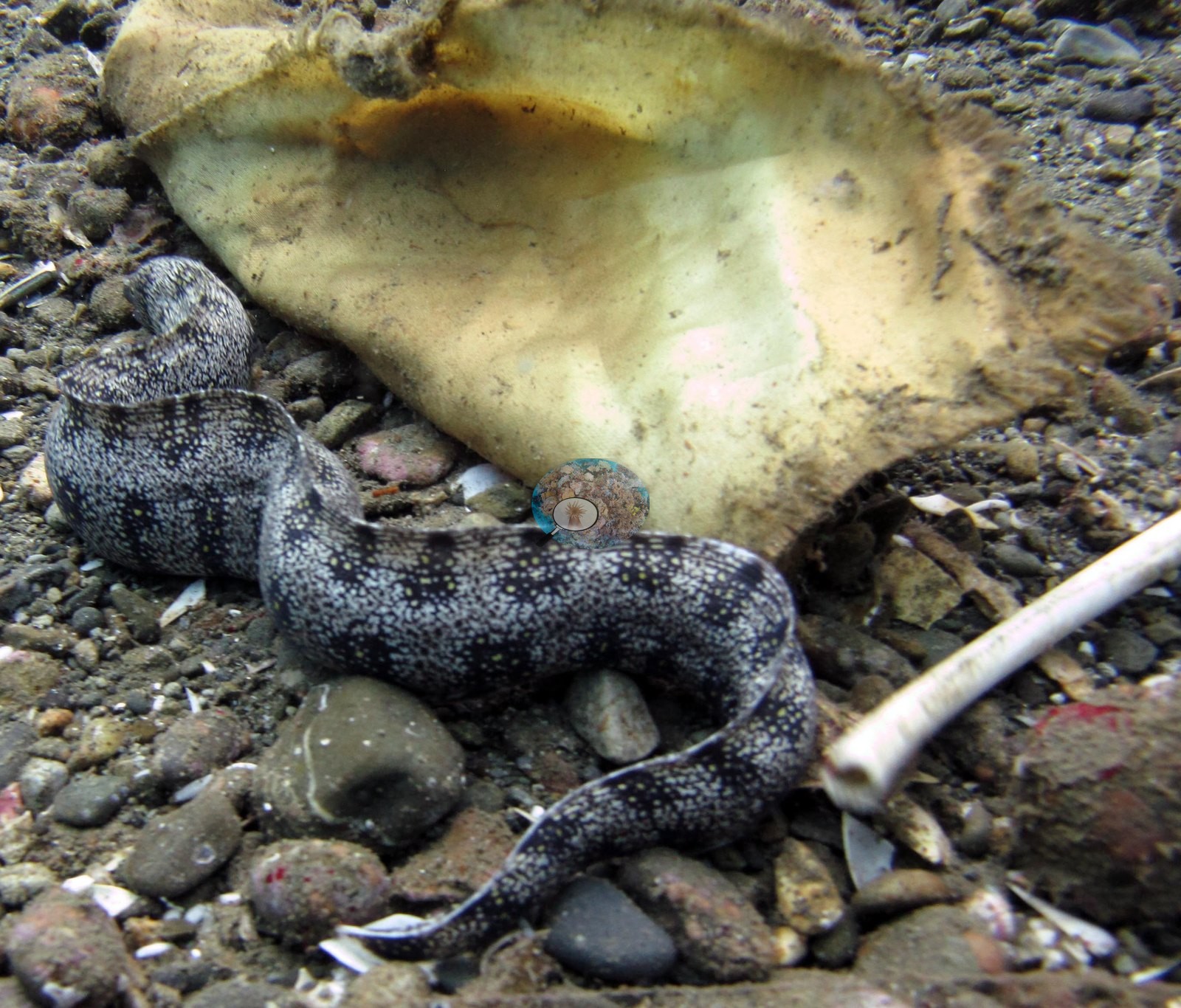
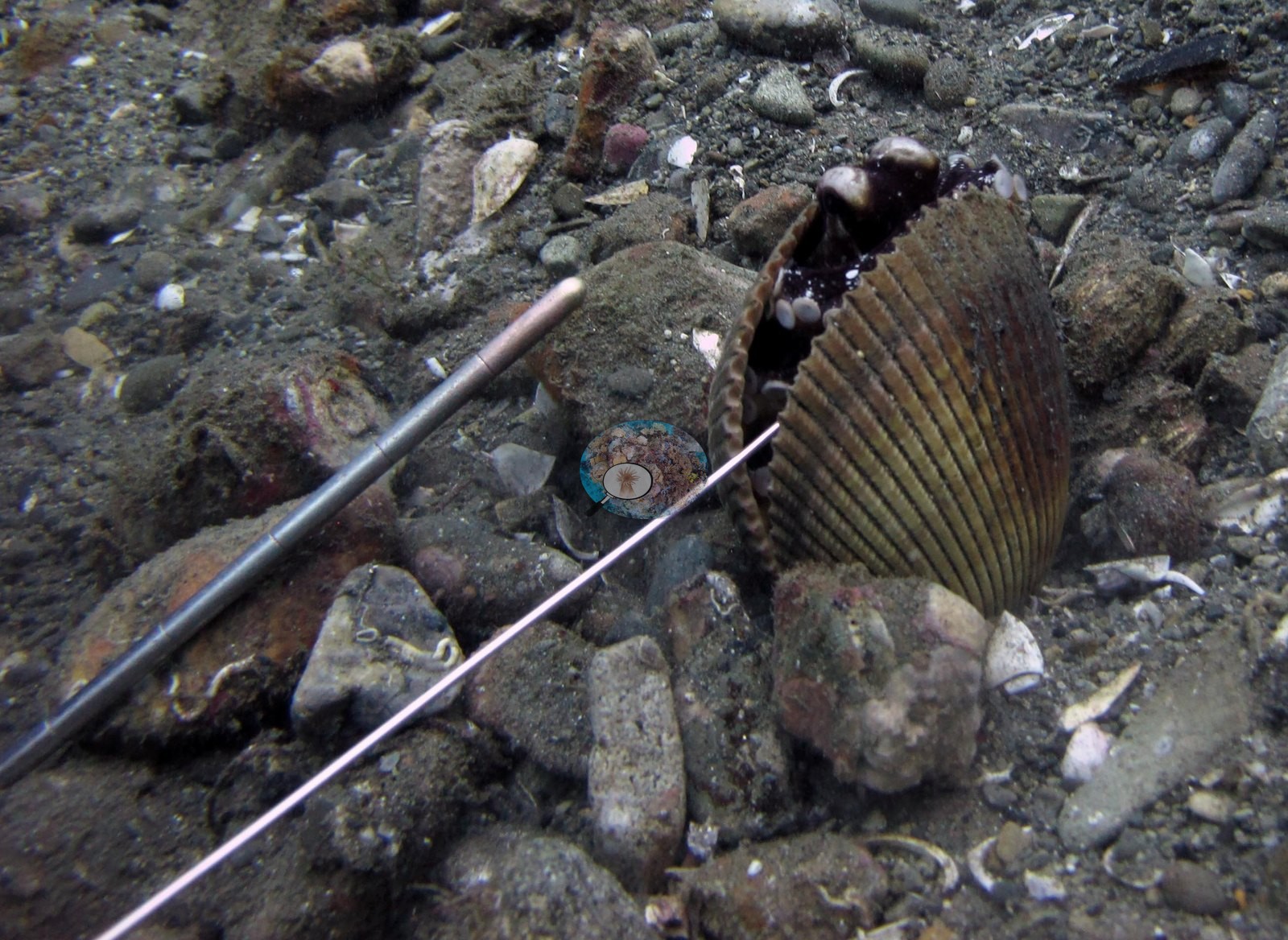
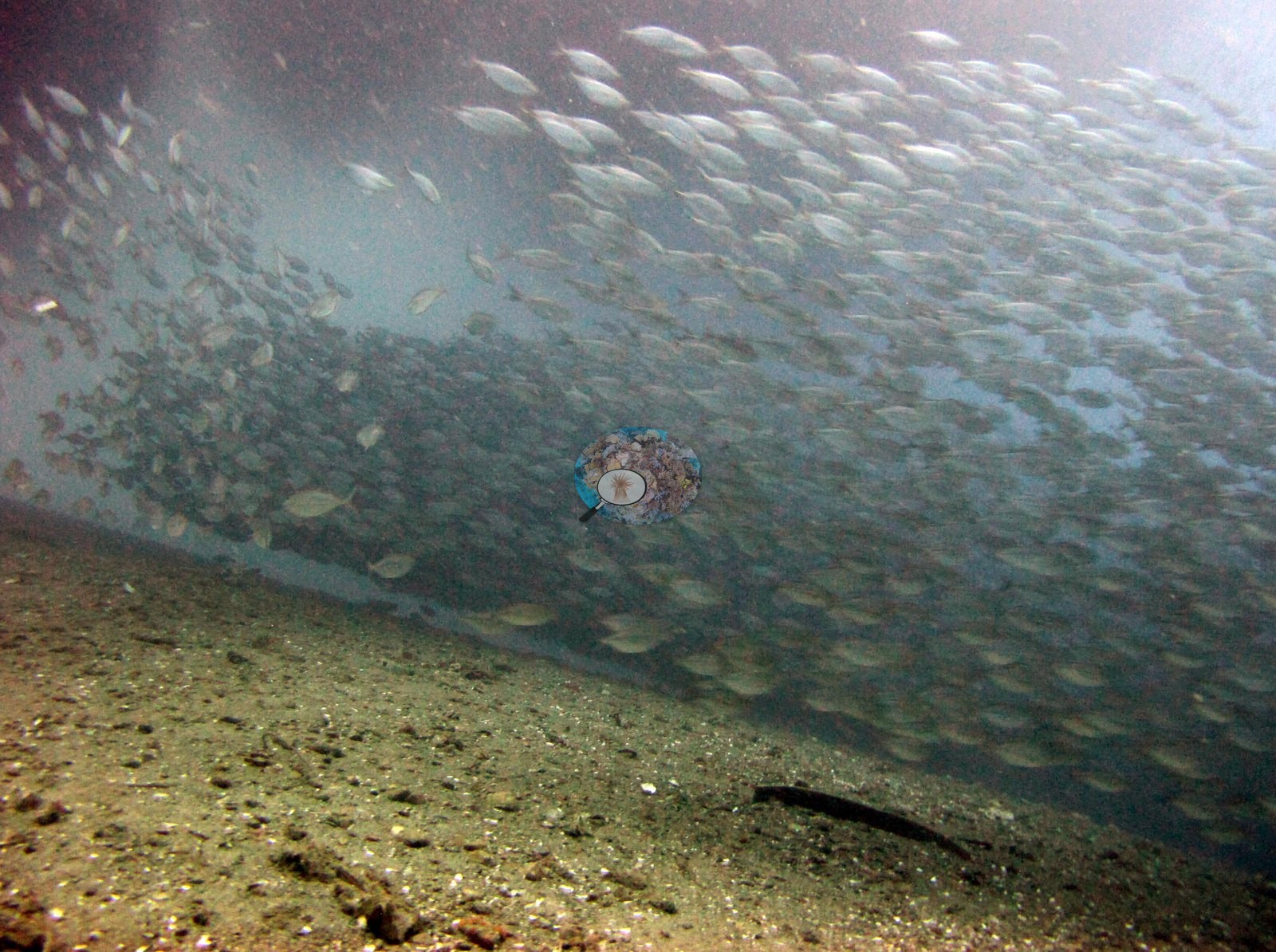
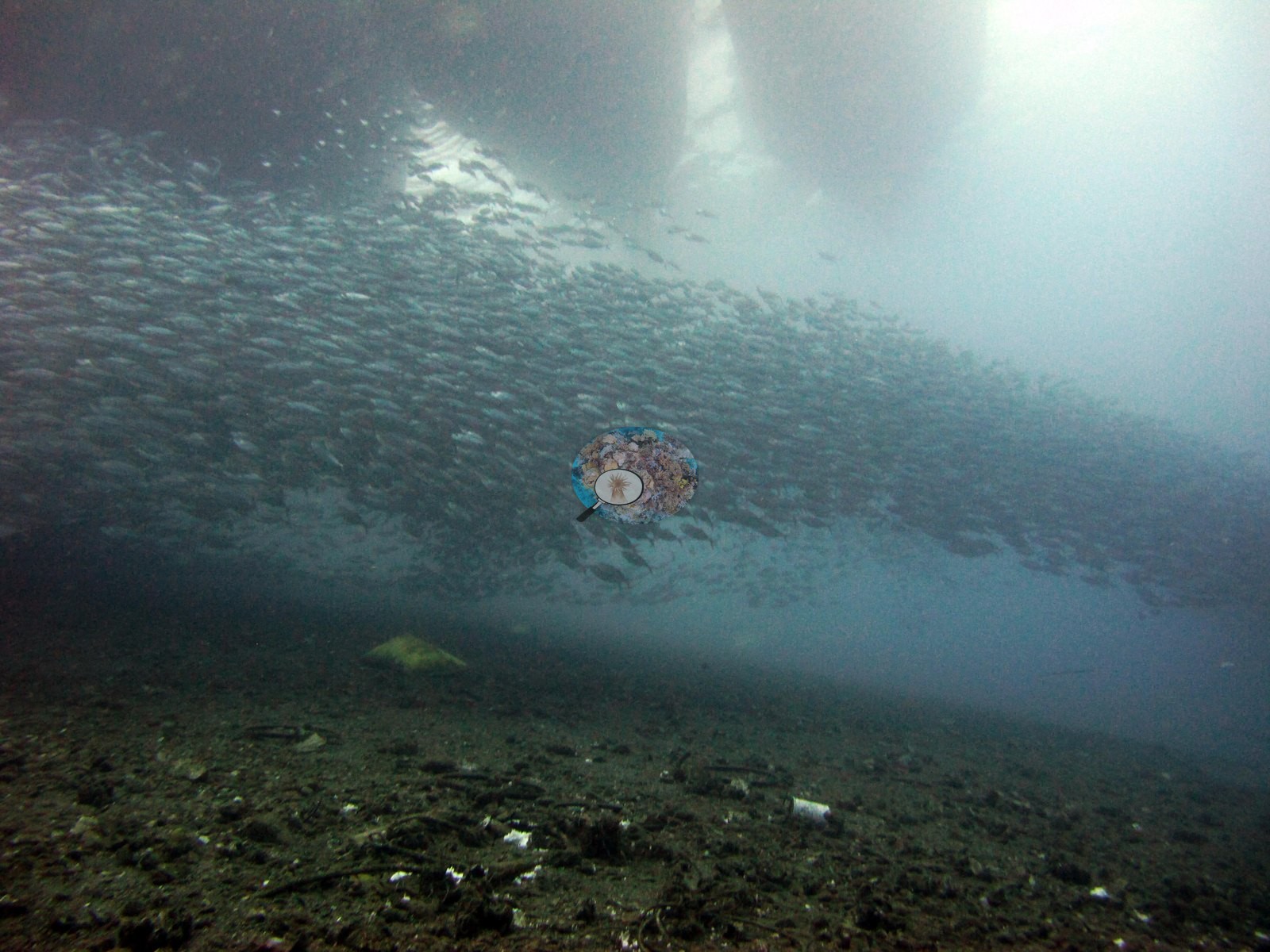
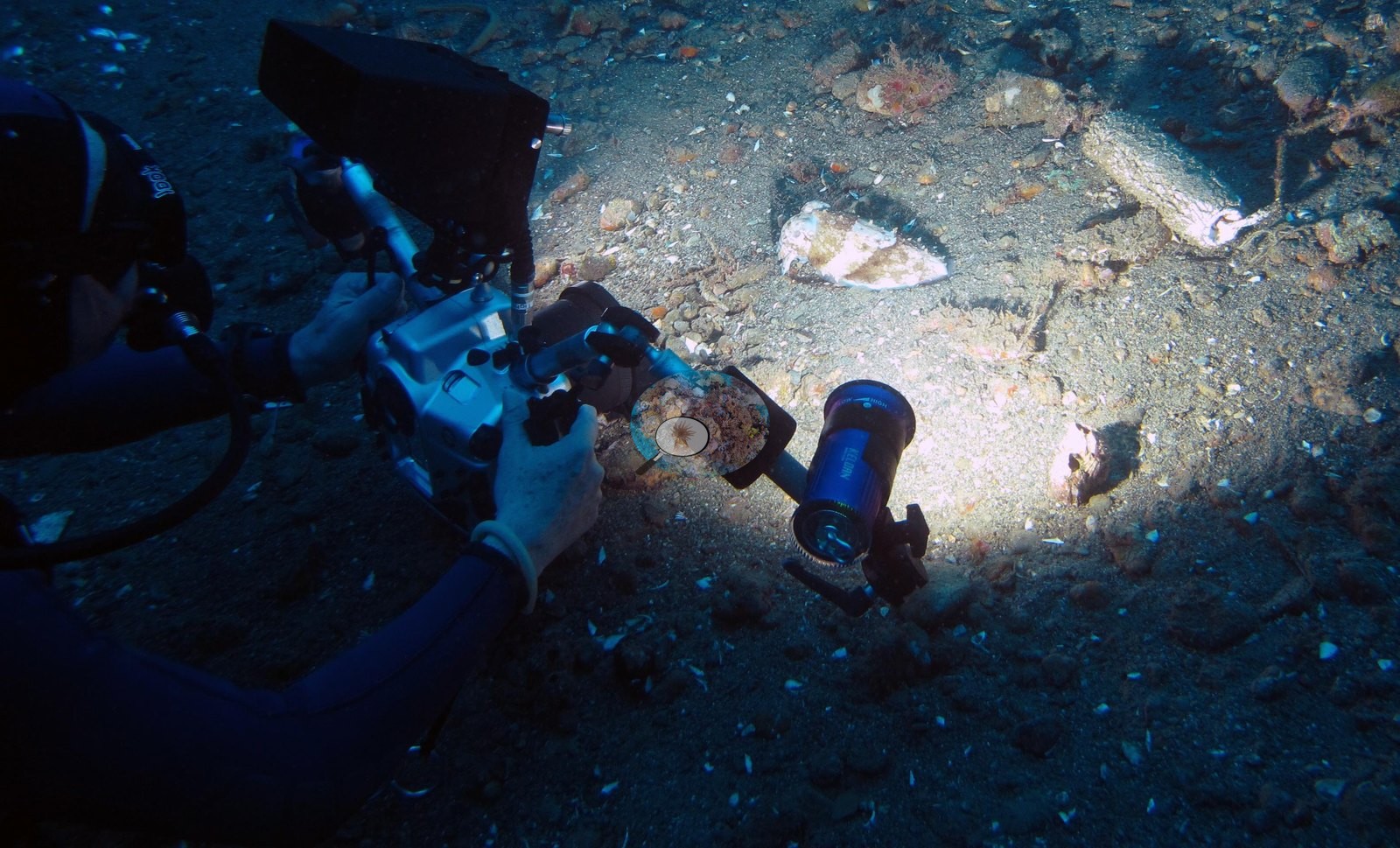
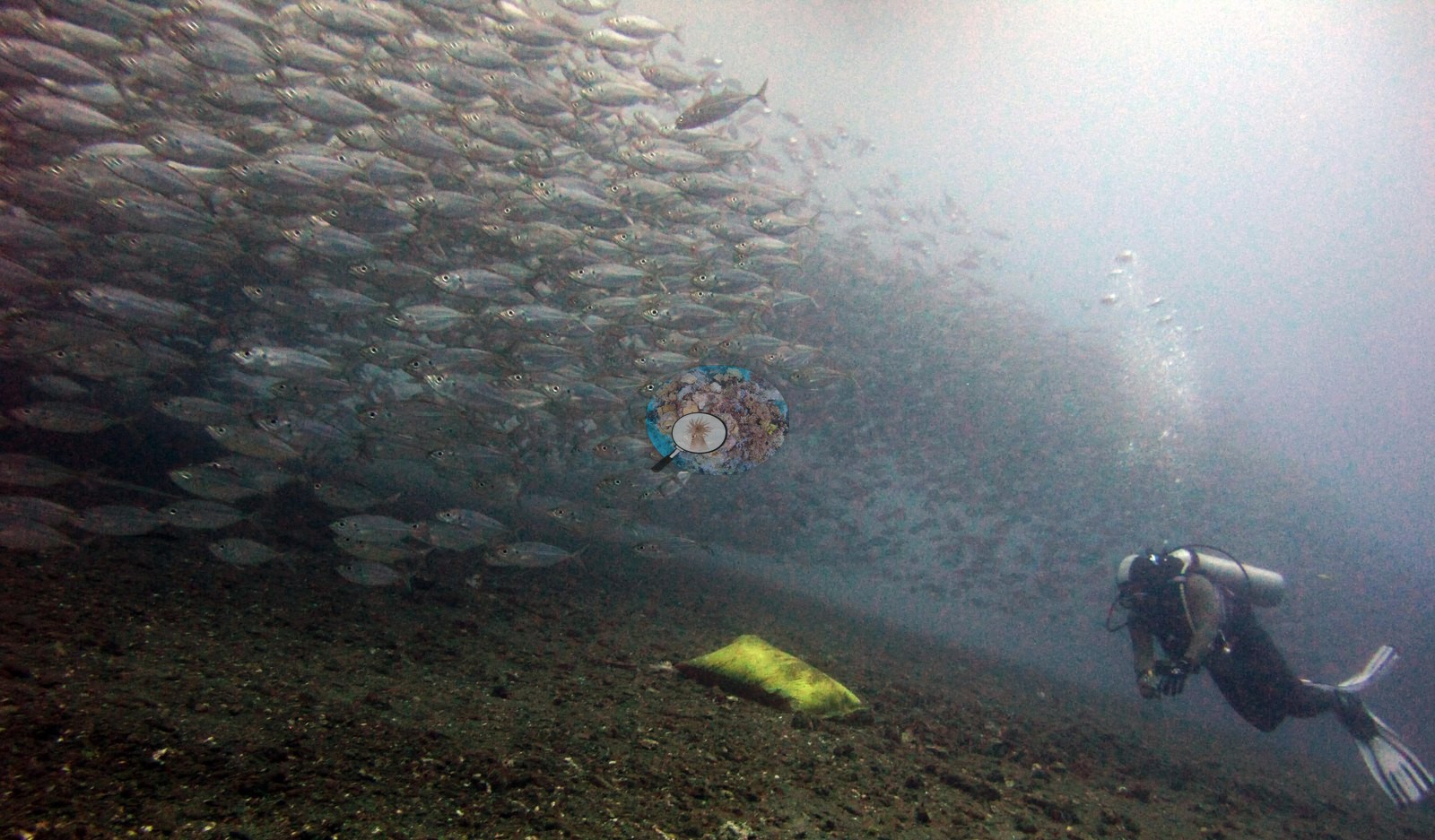
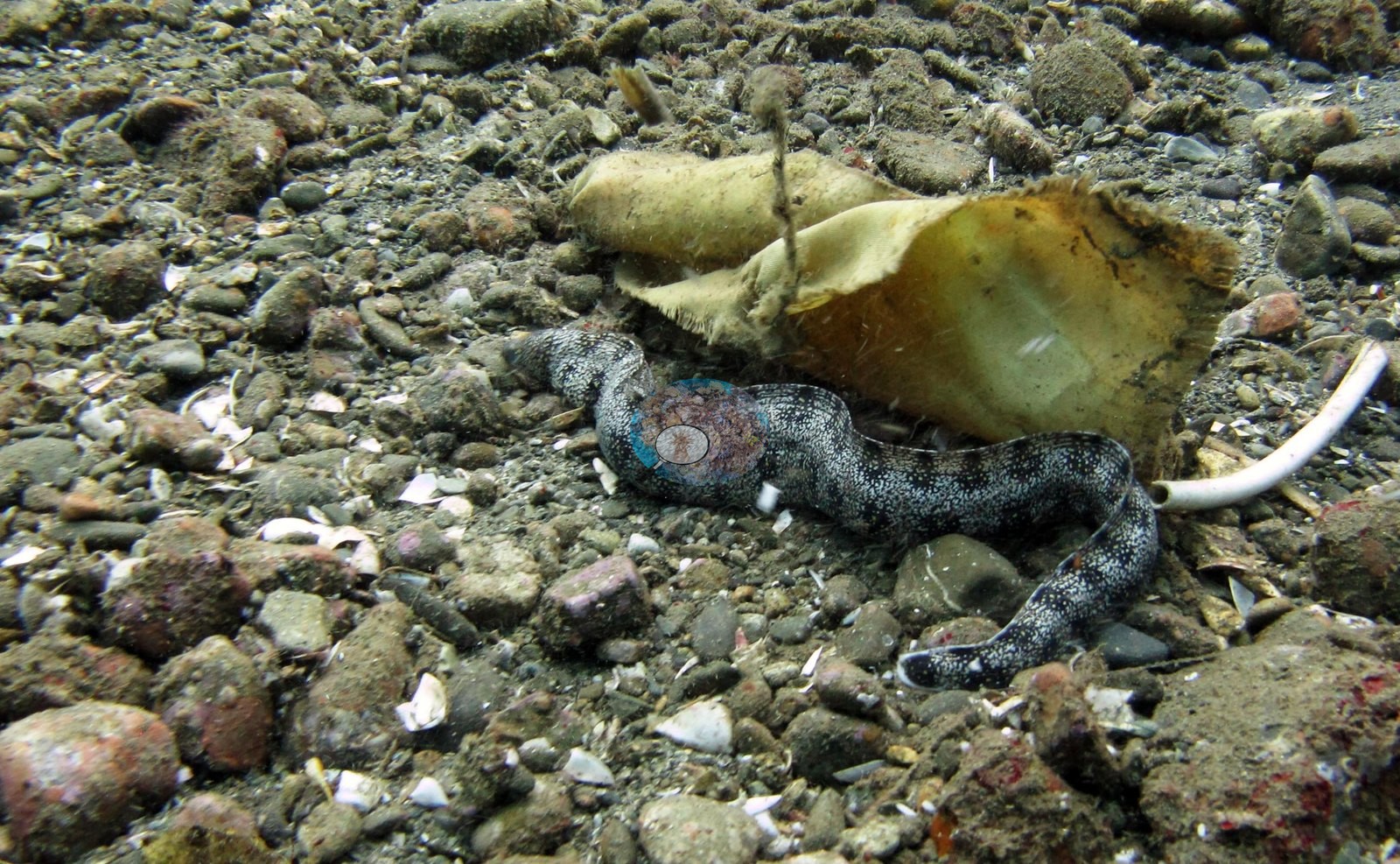
Human-impact flag. A glass bottle and jar sit embedded in the shell rubble near the cuttlefish, tangled monofilament fishing line runs through several frames, and a PVC pipe fragment and fabric scrap lie beside one of the moray shots -- debris is woven into the substrate the critters are using as habitat, not an isolated piece of litter (e.g., Image 2, Image 3).
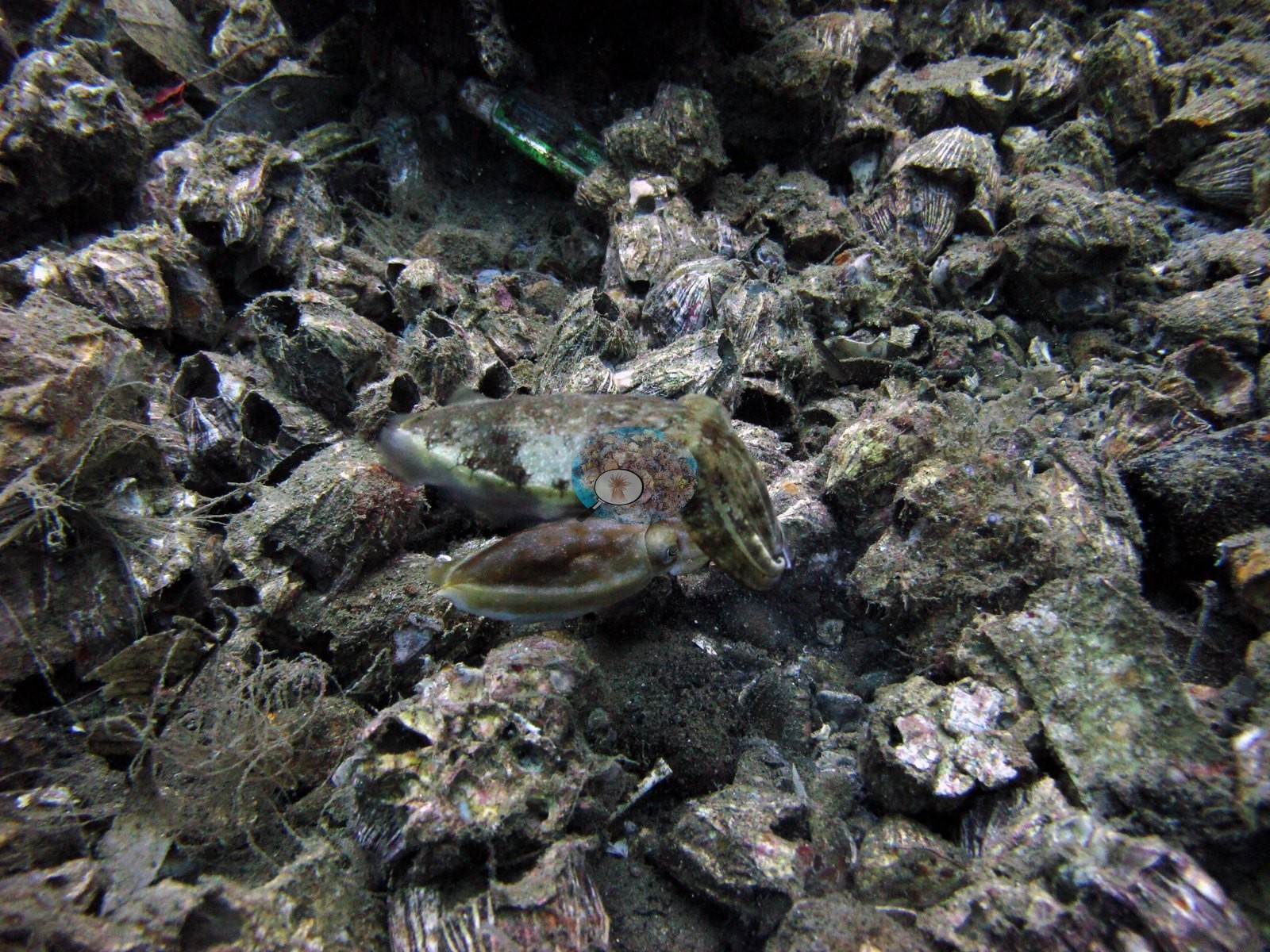
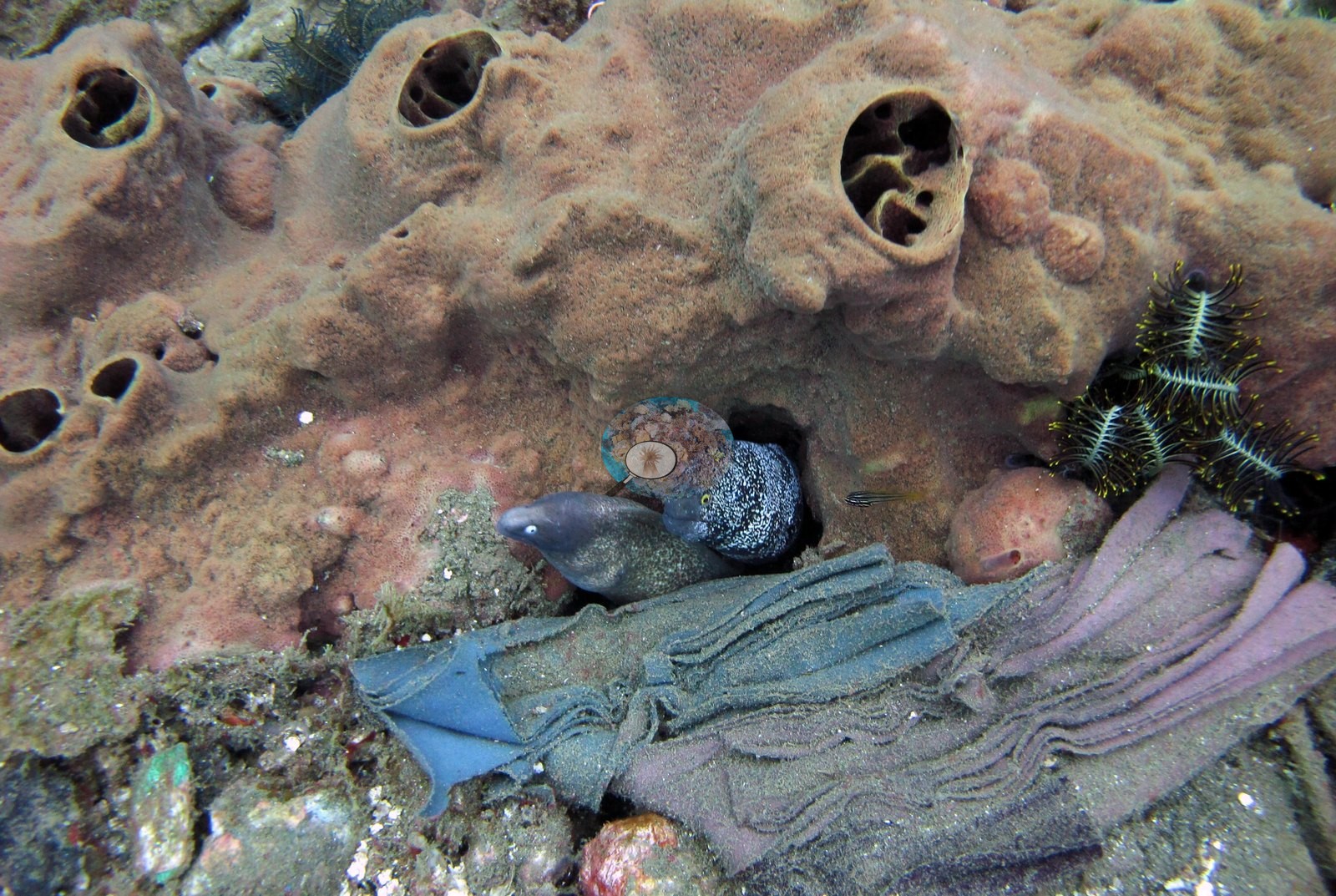
No bleaching, disease, or crown-of-thorns observed, though with almost no live coral present this has limited scope.
Fish and other fauna
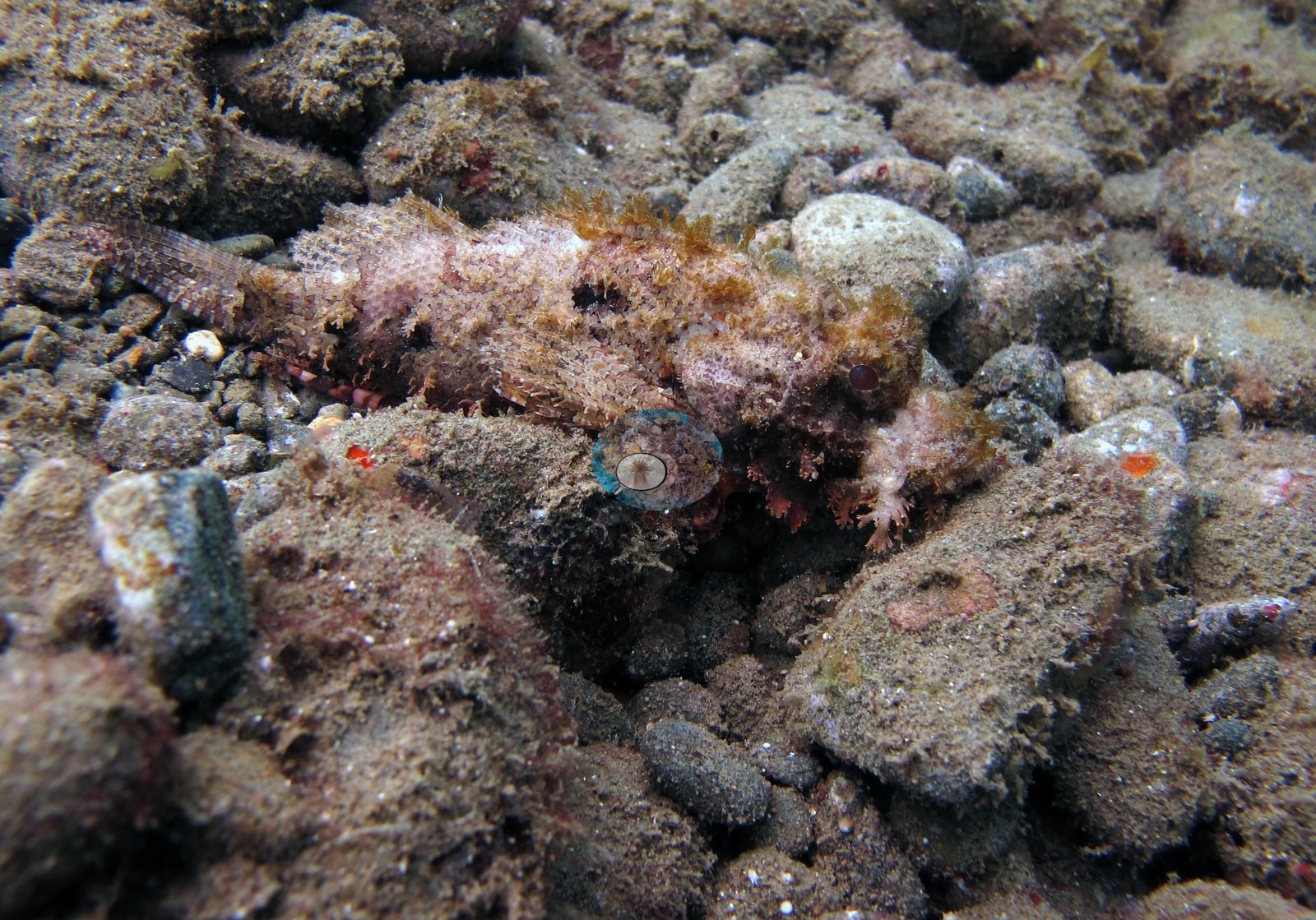
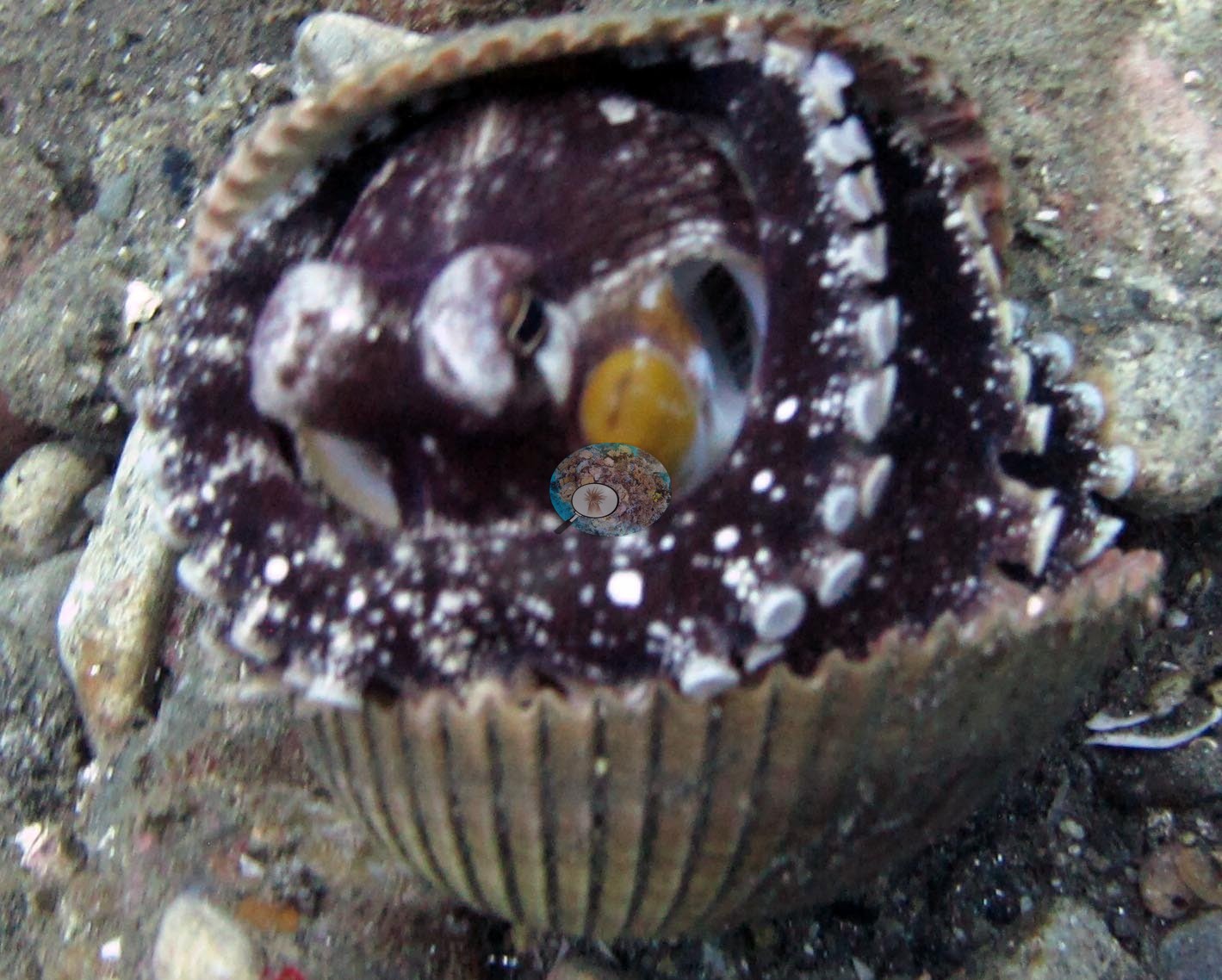
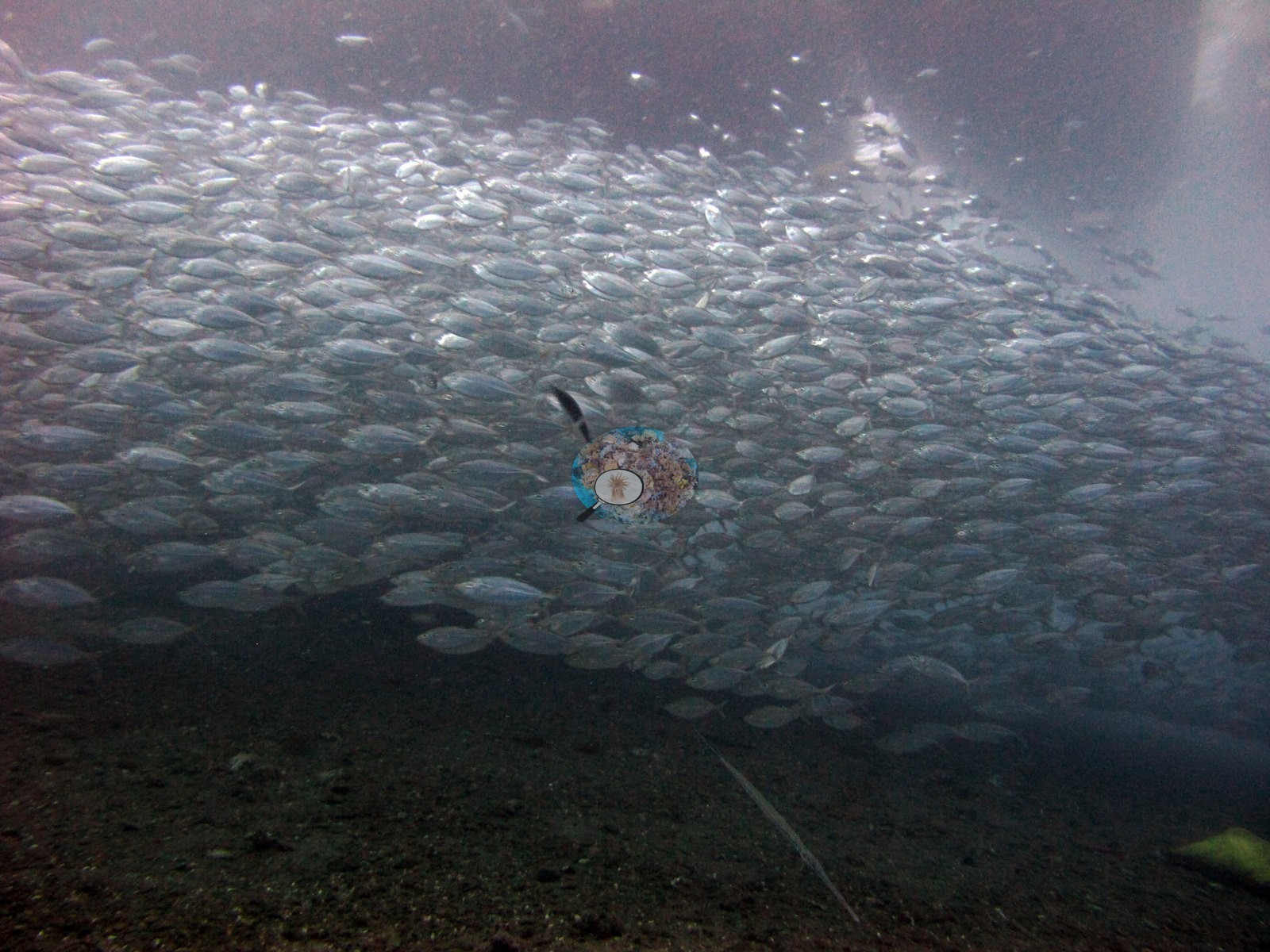
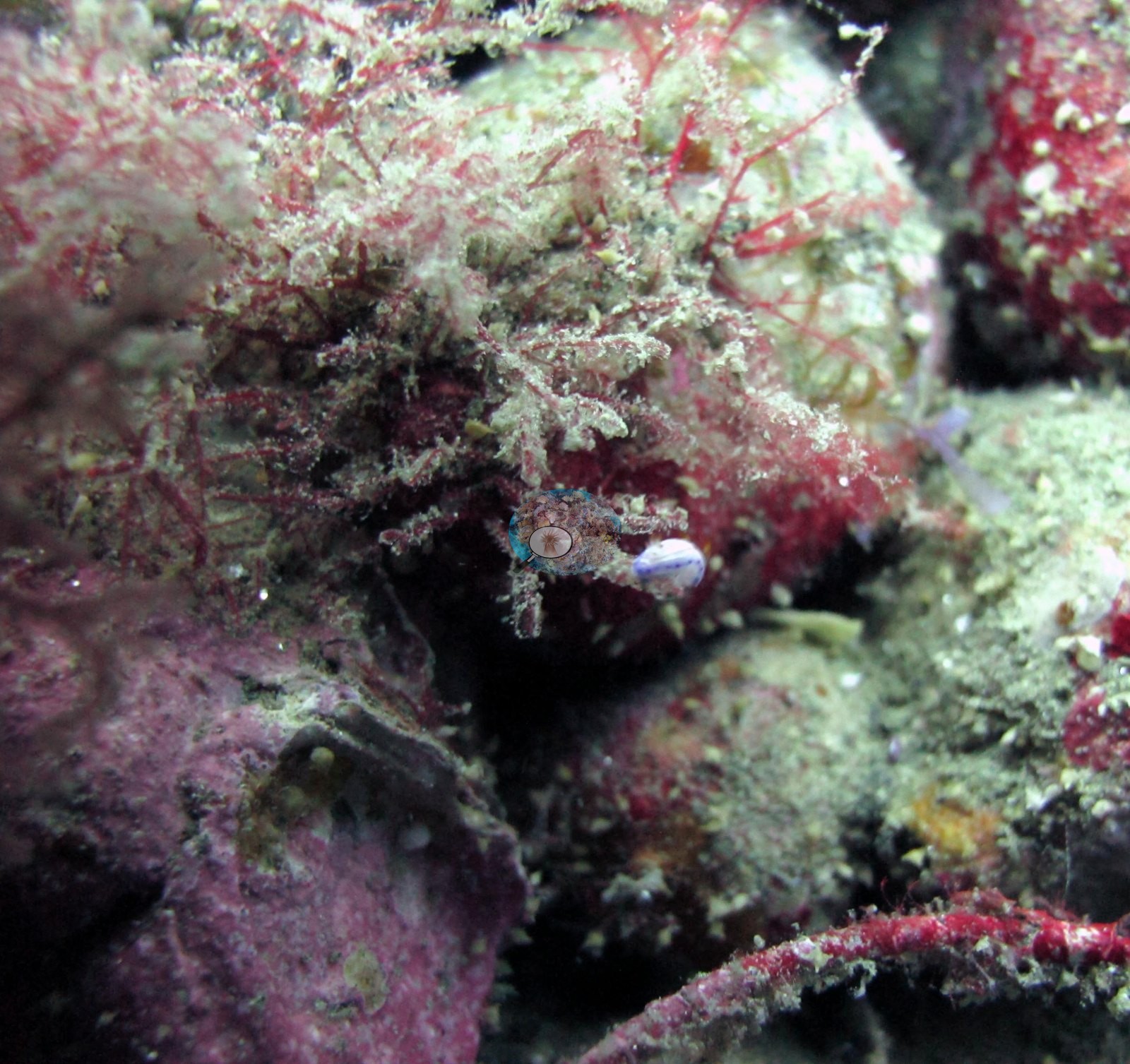
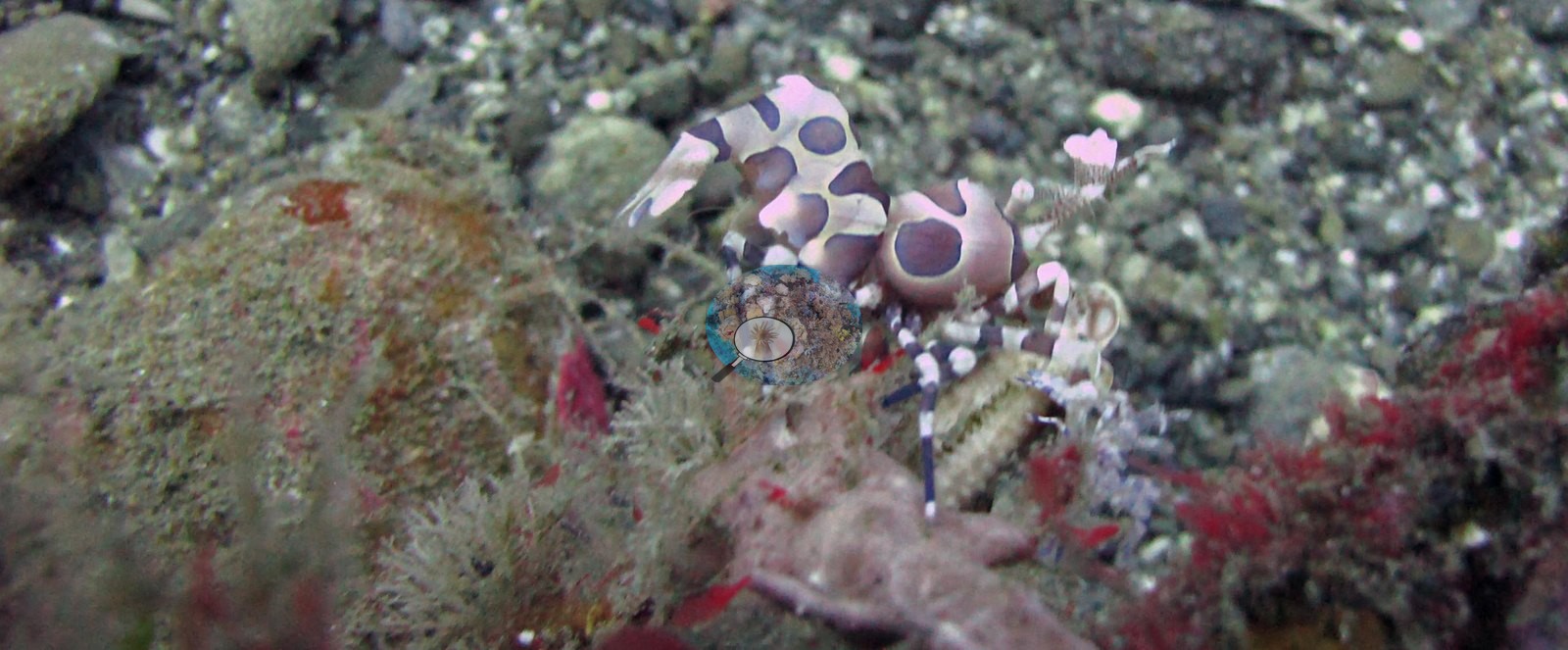
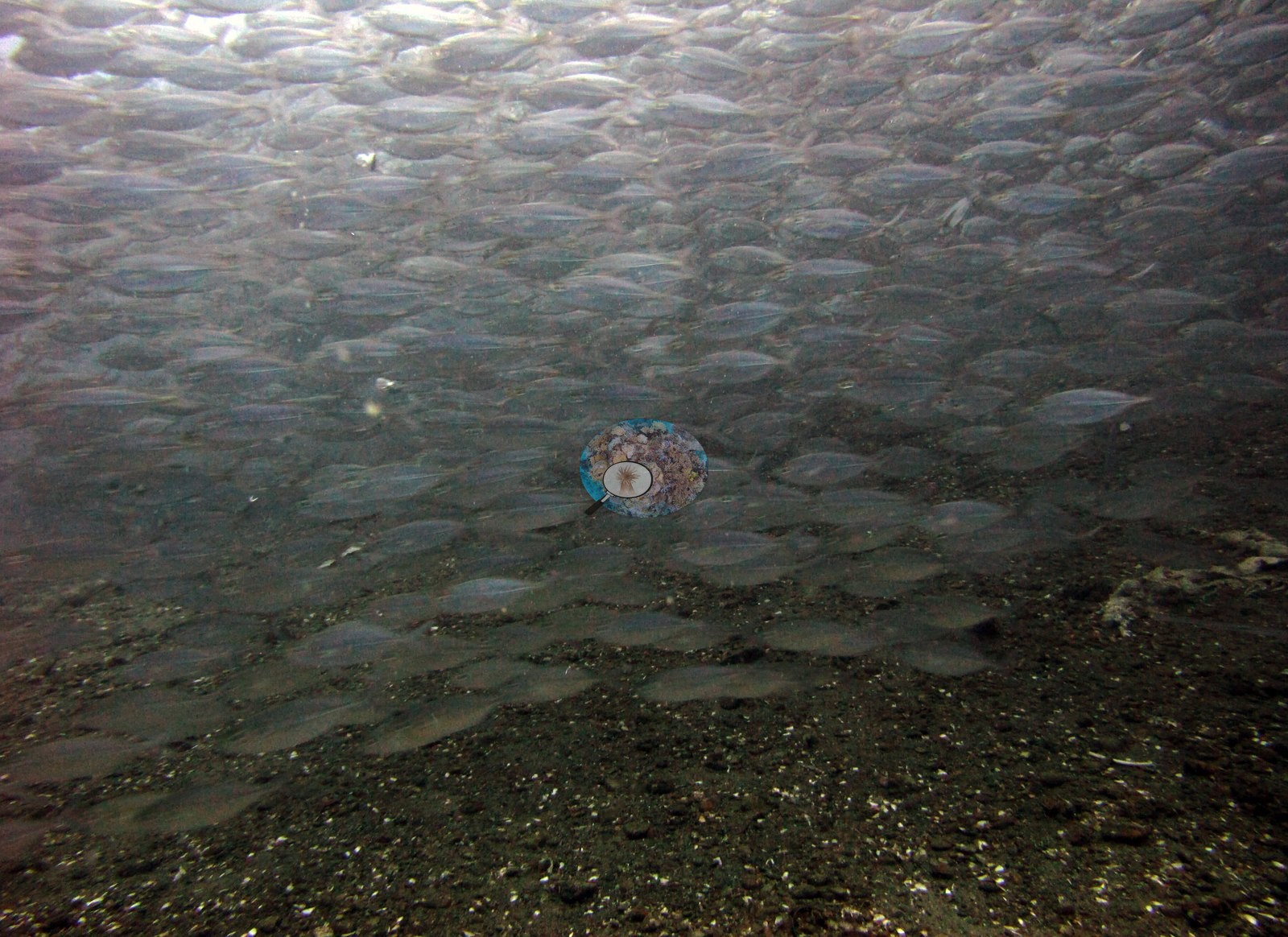
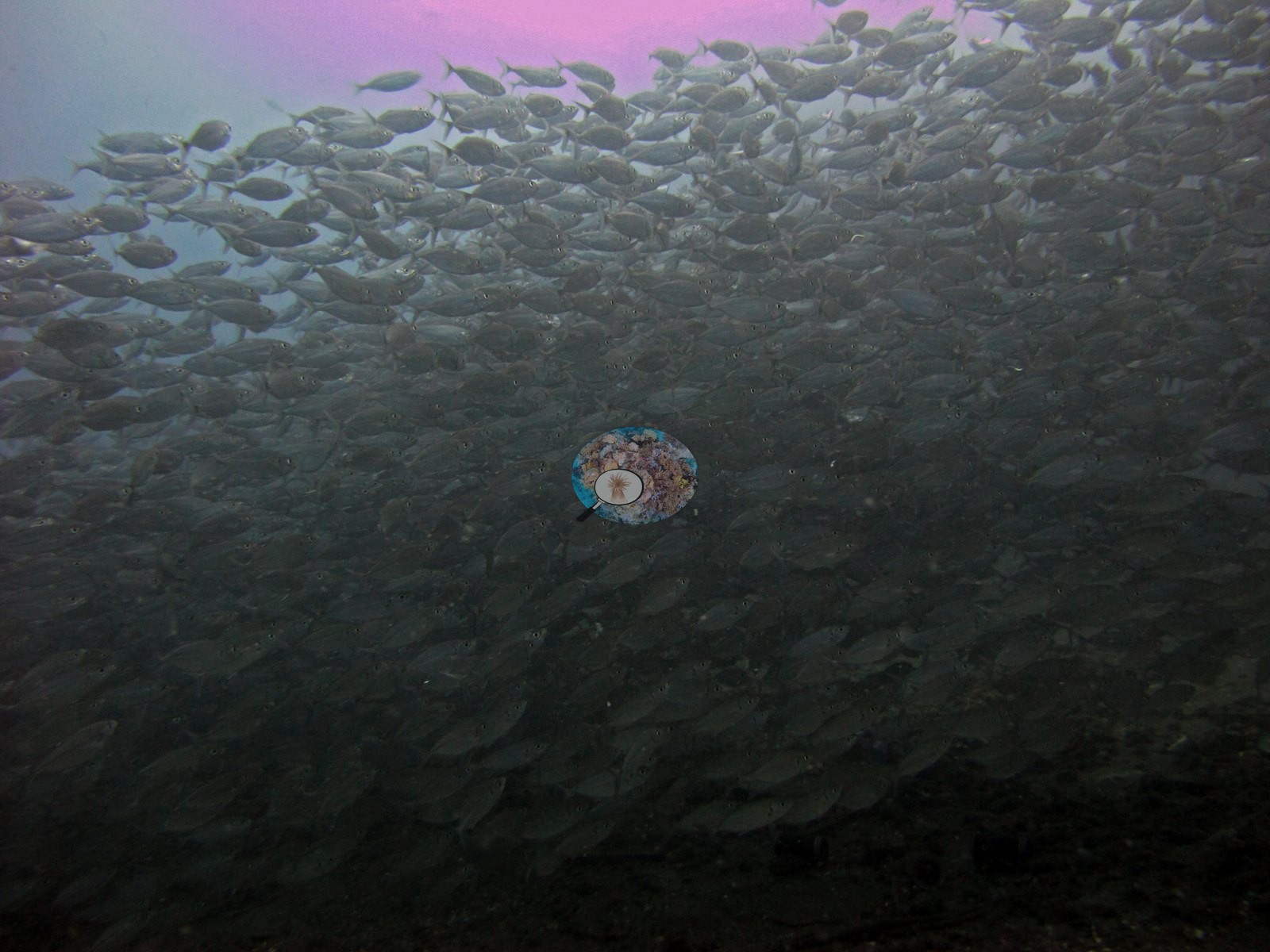
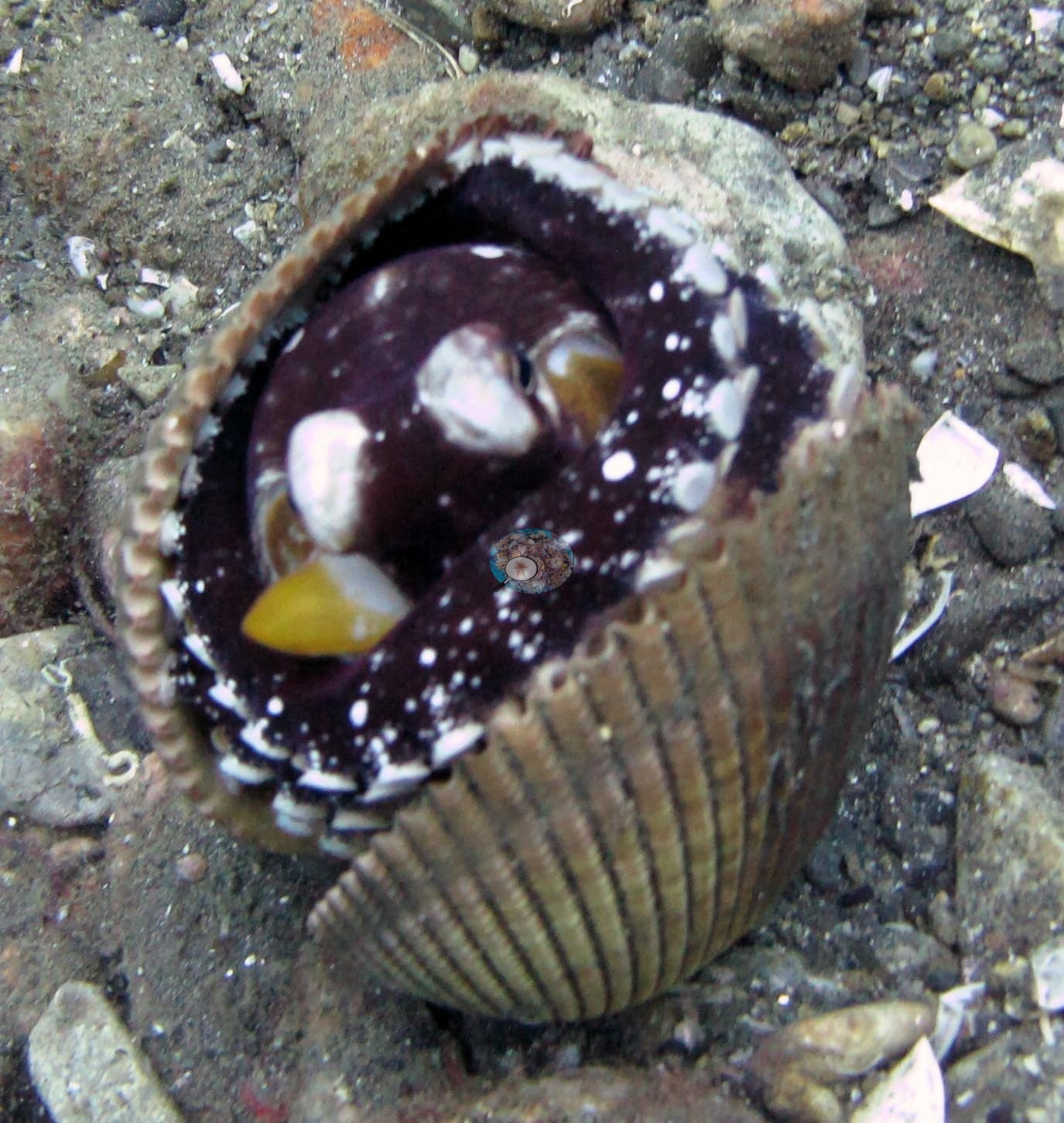
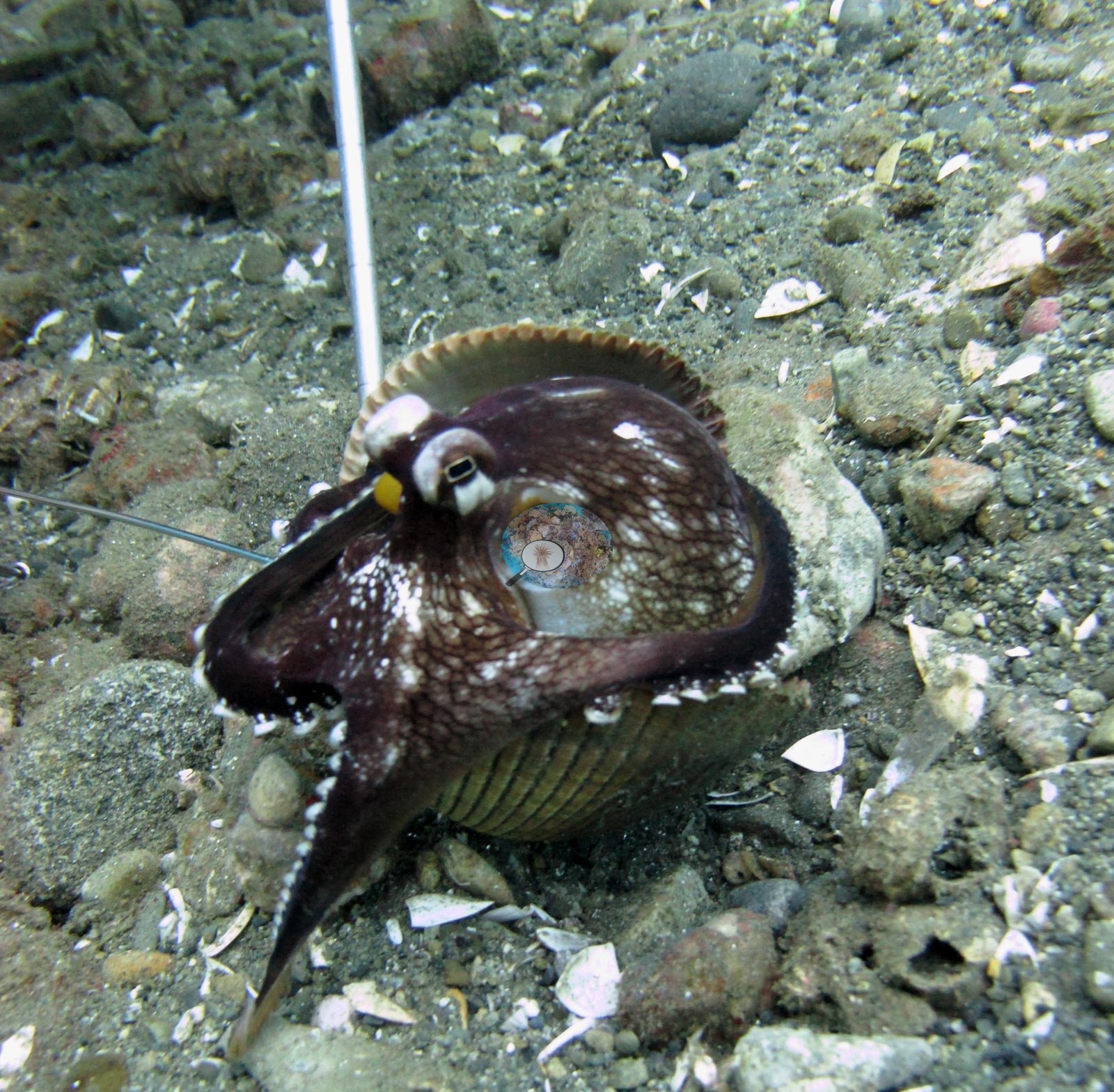
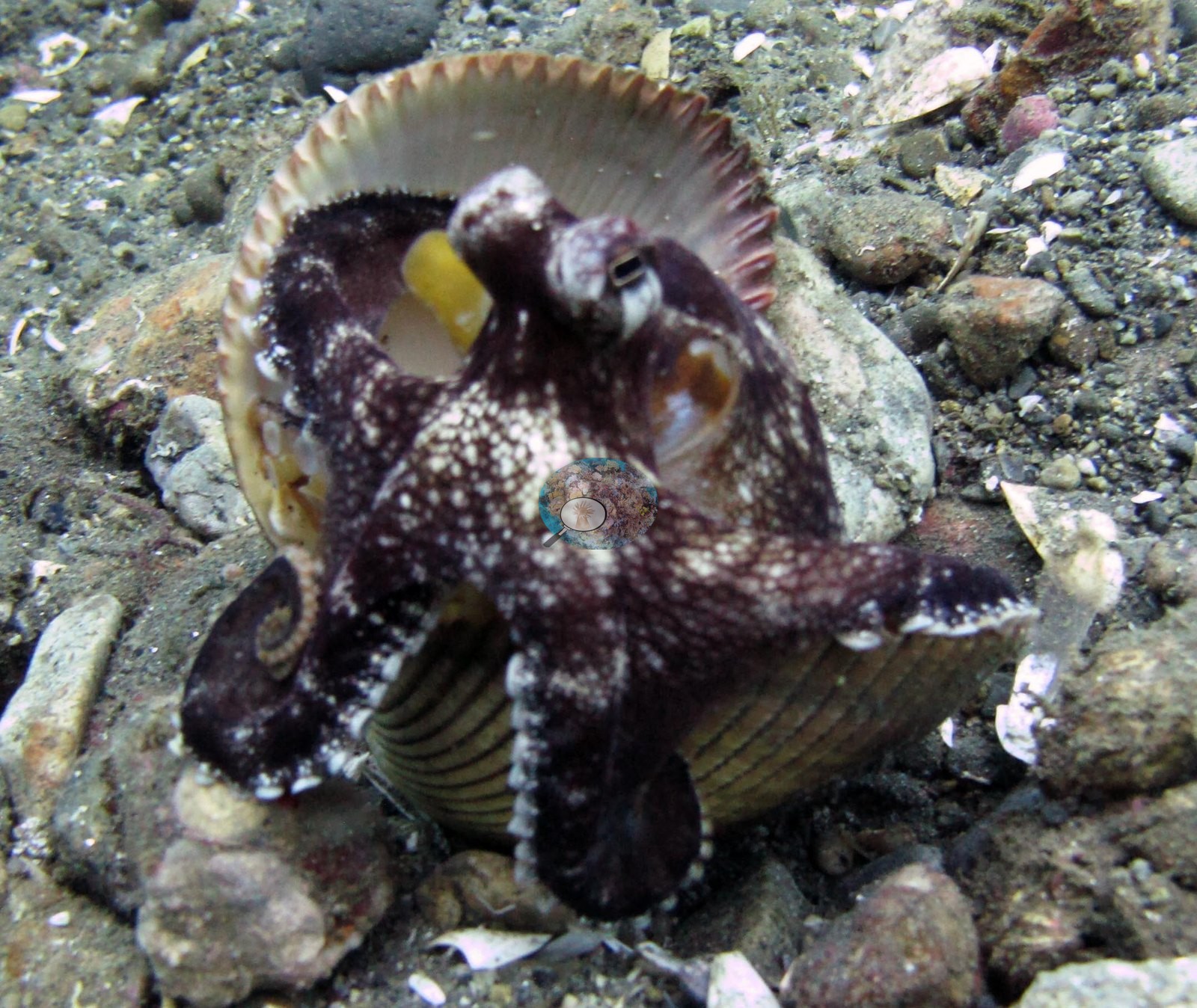
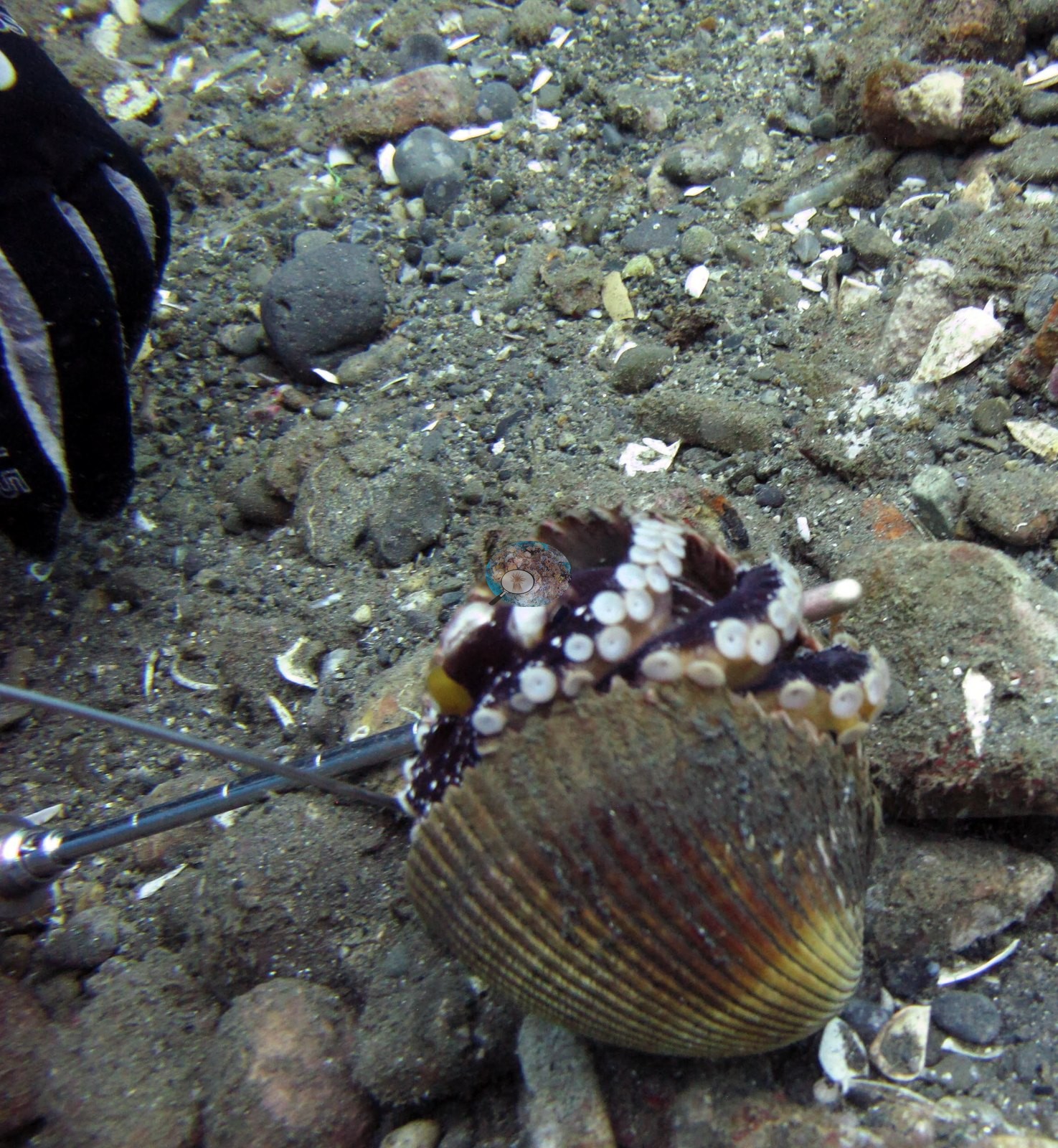
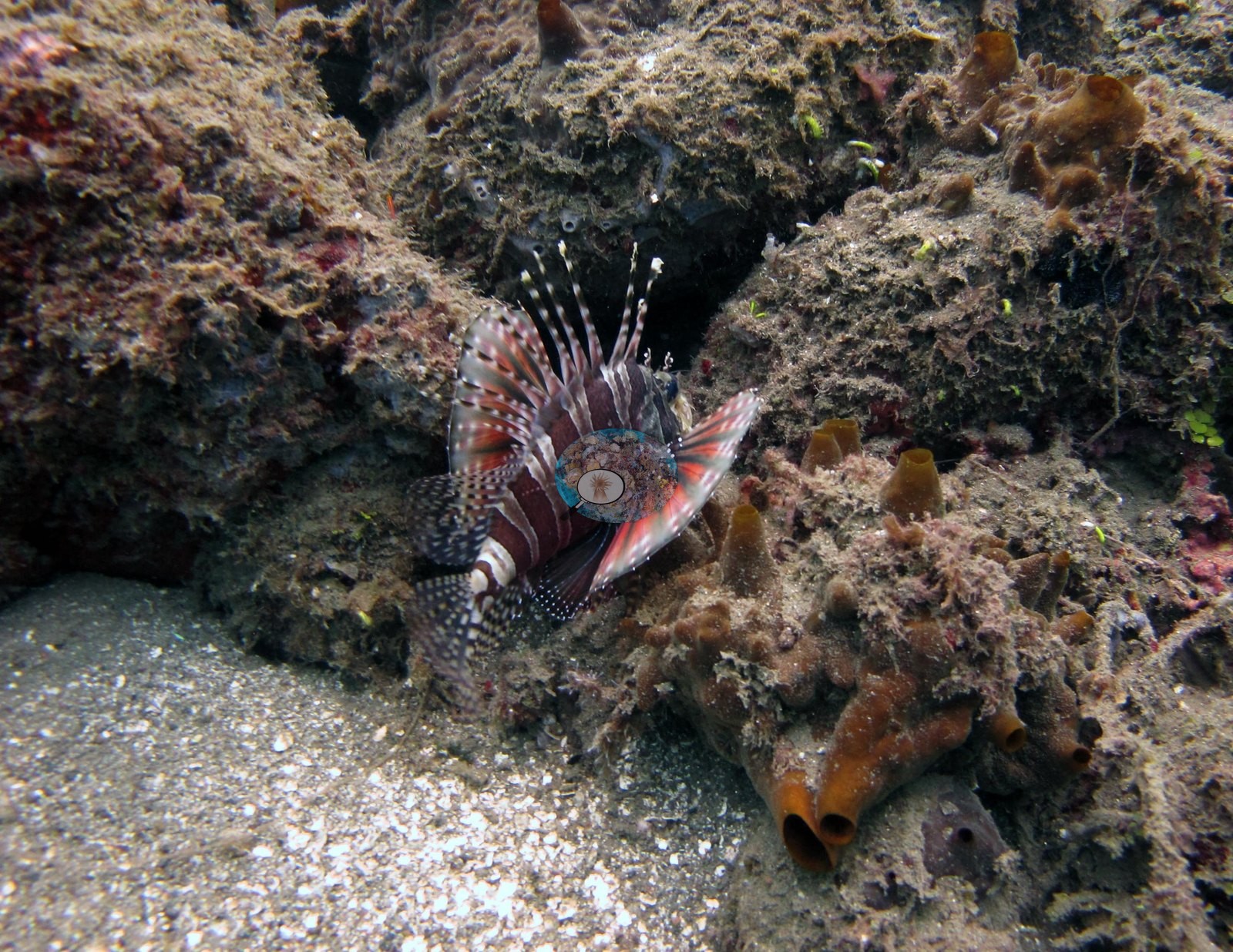
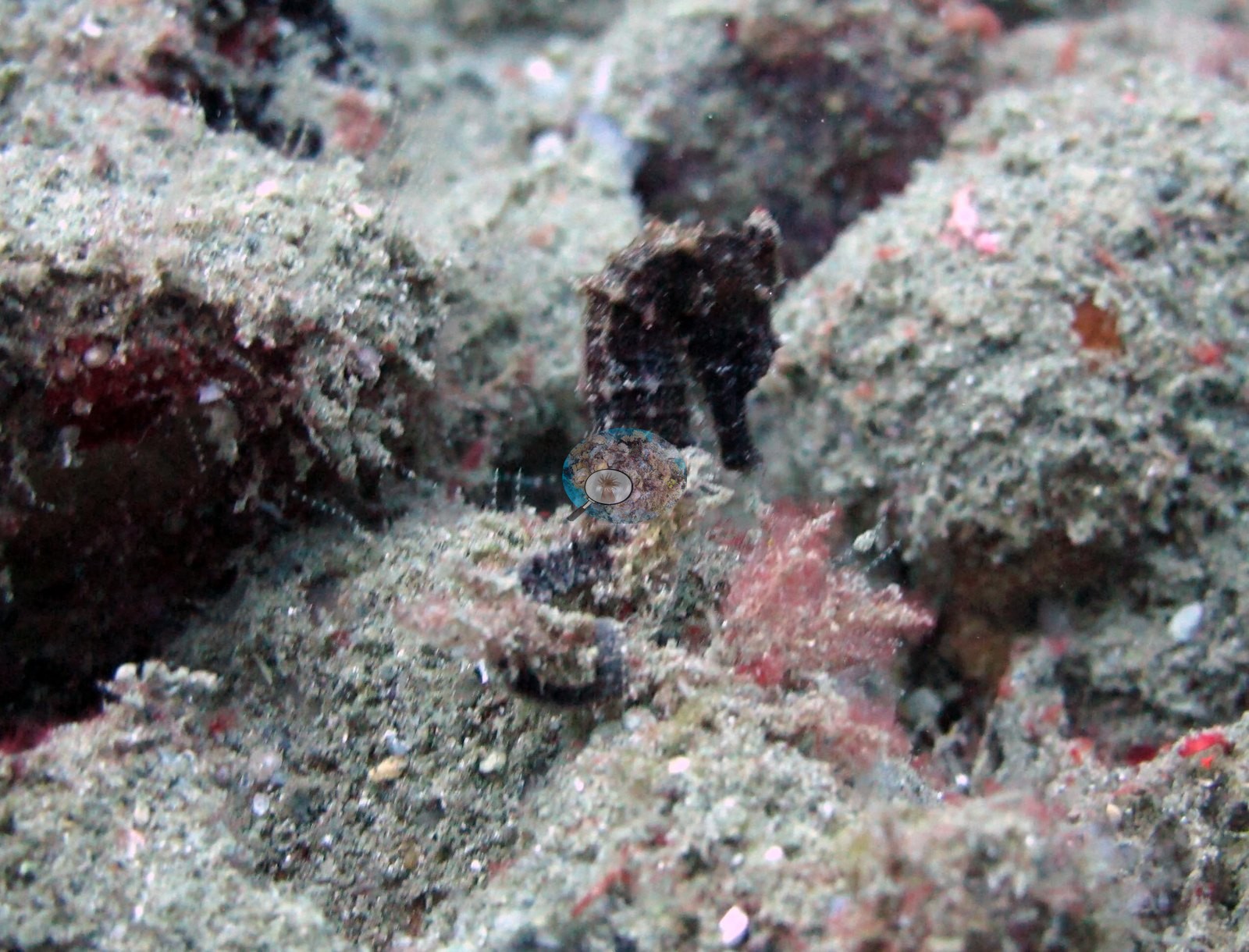
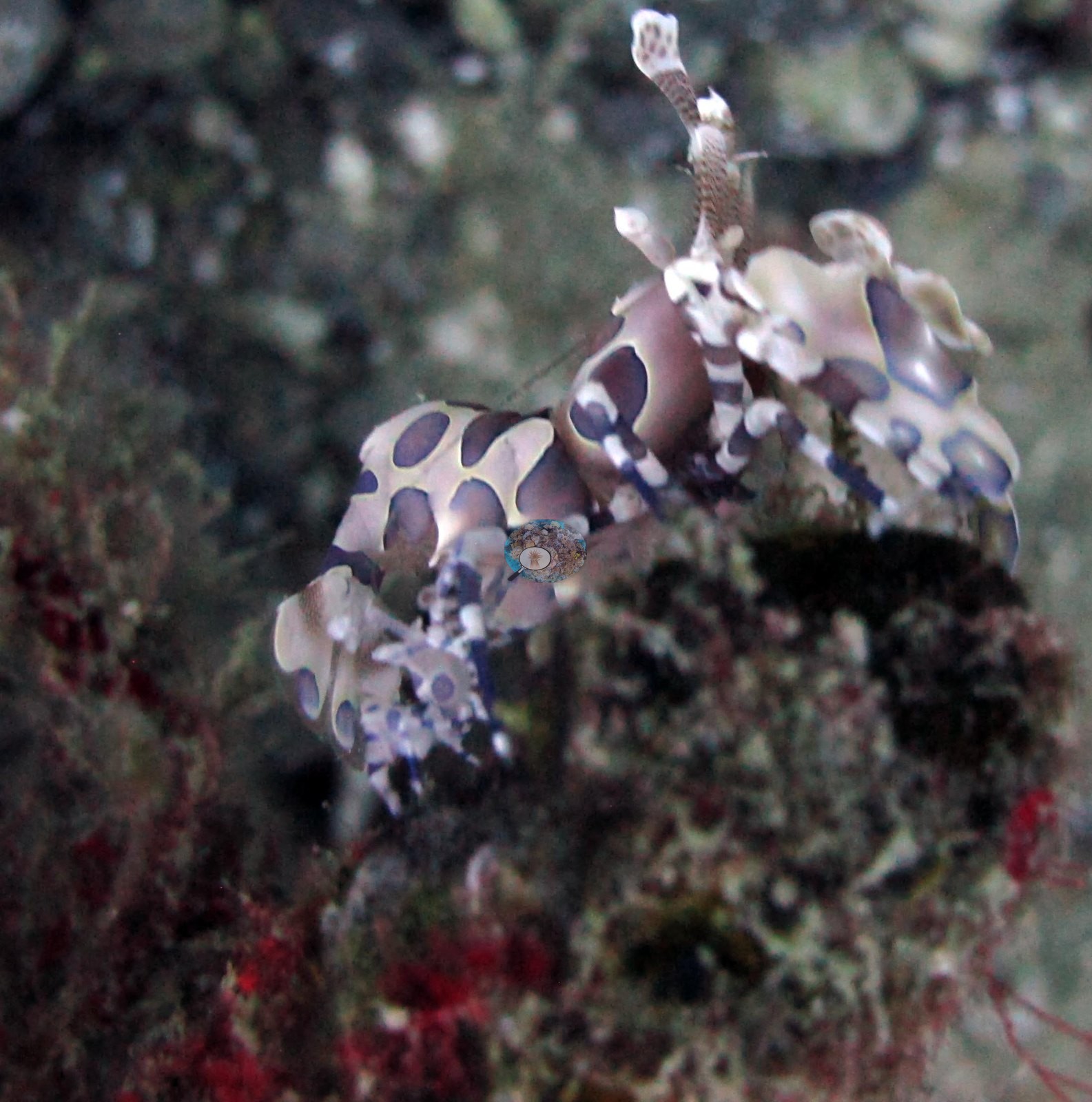
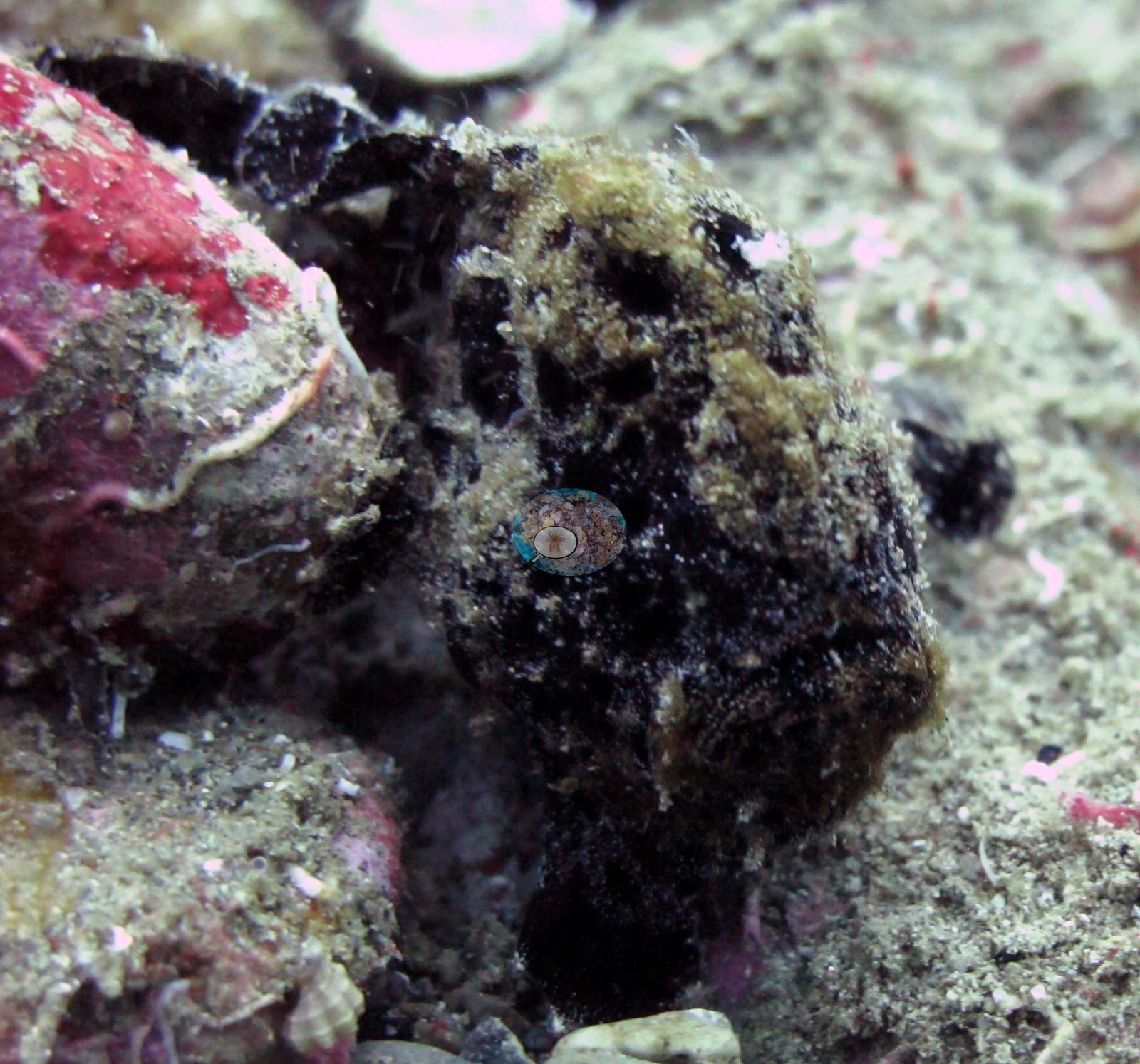
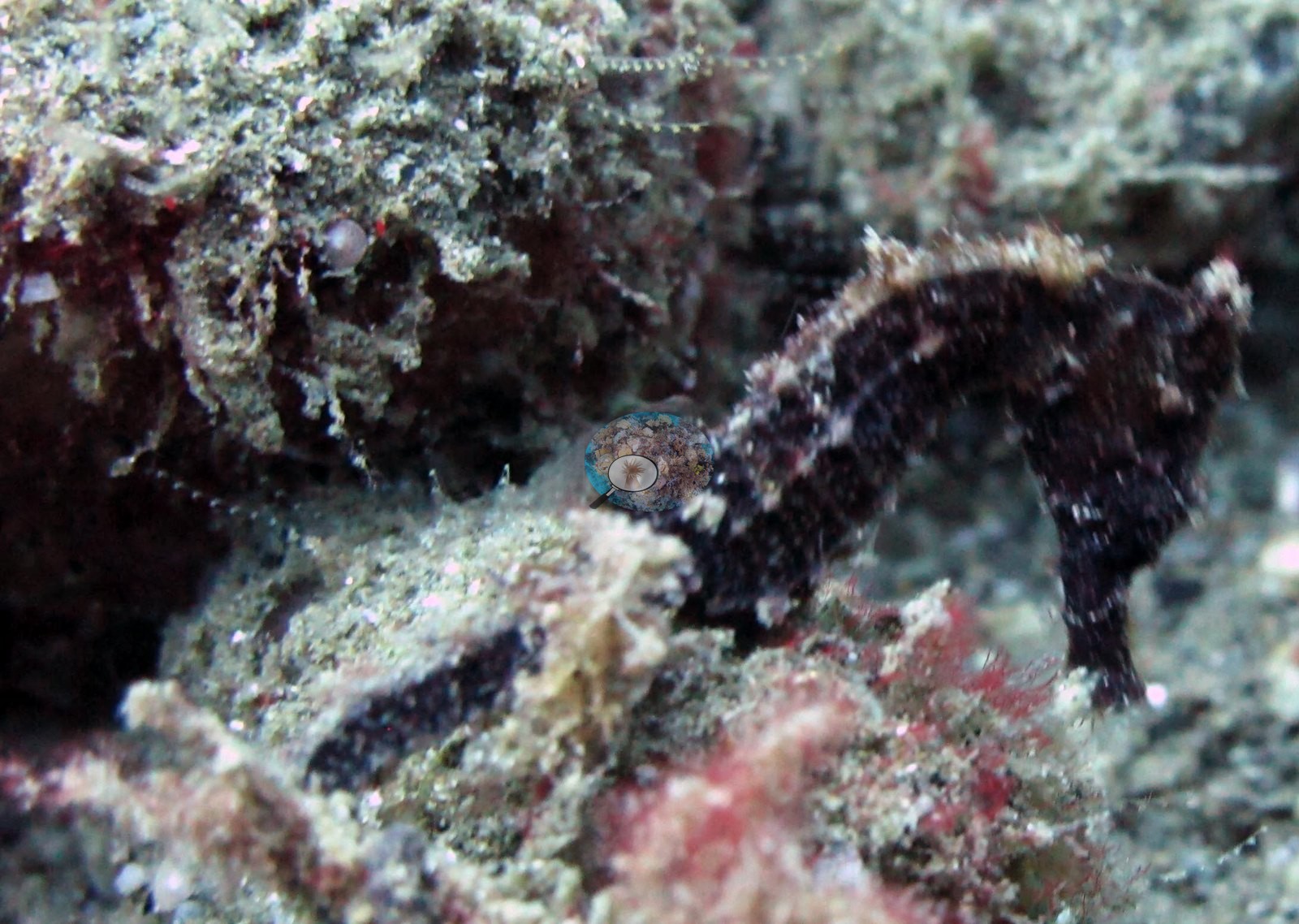
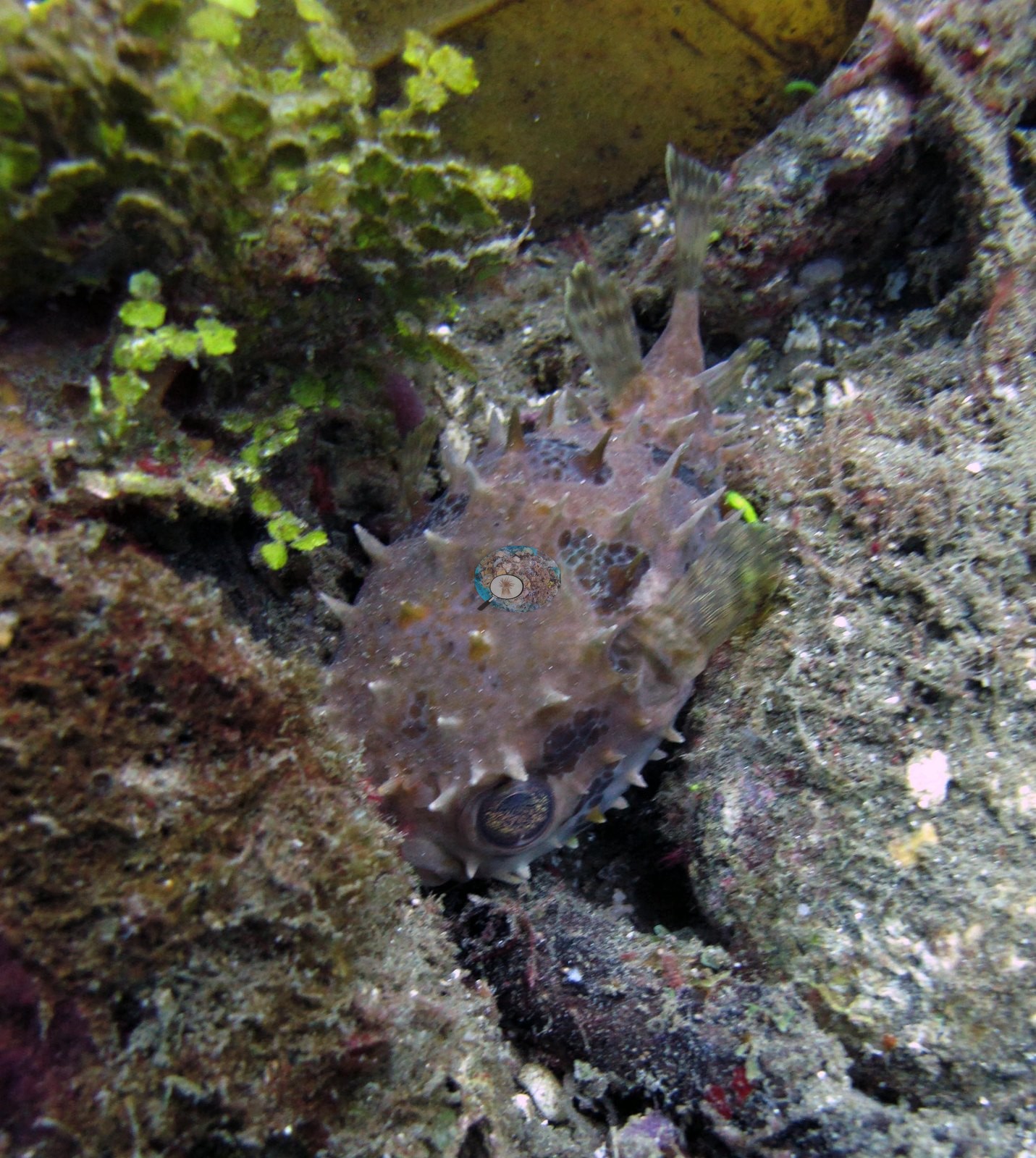
The macro life is excellent: harlequin shrimp, a shell-carrying octopus using bivalve halves as portable armor, resting cuttlefish (including one strobe-lit shot), at least four frogfish in different colors, two seahorses, four-plus moray eels (including a striking black-and-white speckled morph), a lionfish among tube sponges, a well-camouflaged scorpionfish, and two large bait-ball schools (e.g., Image 5).
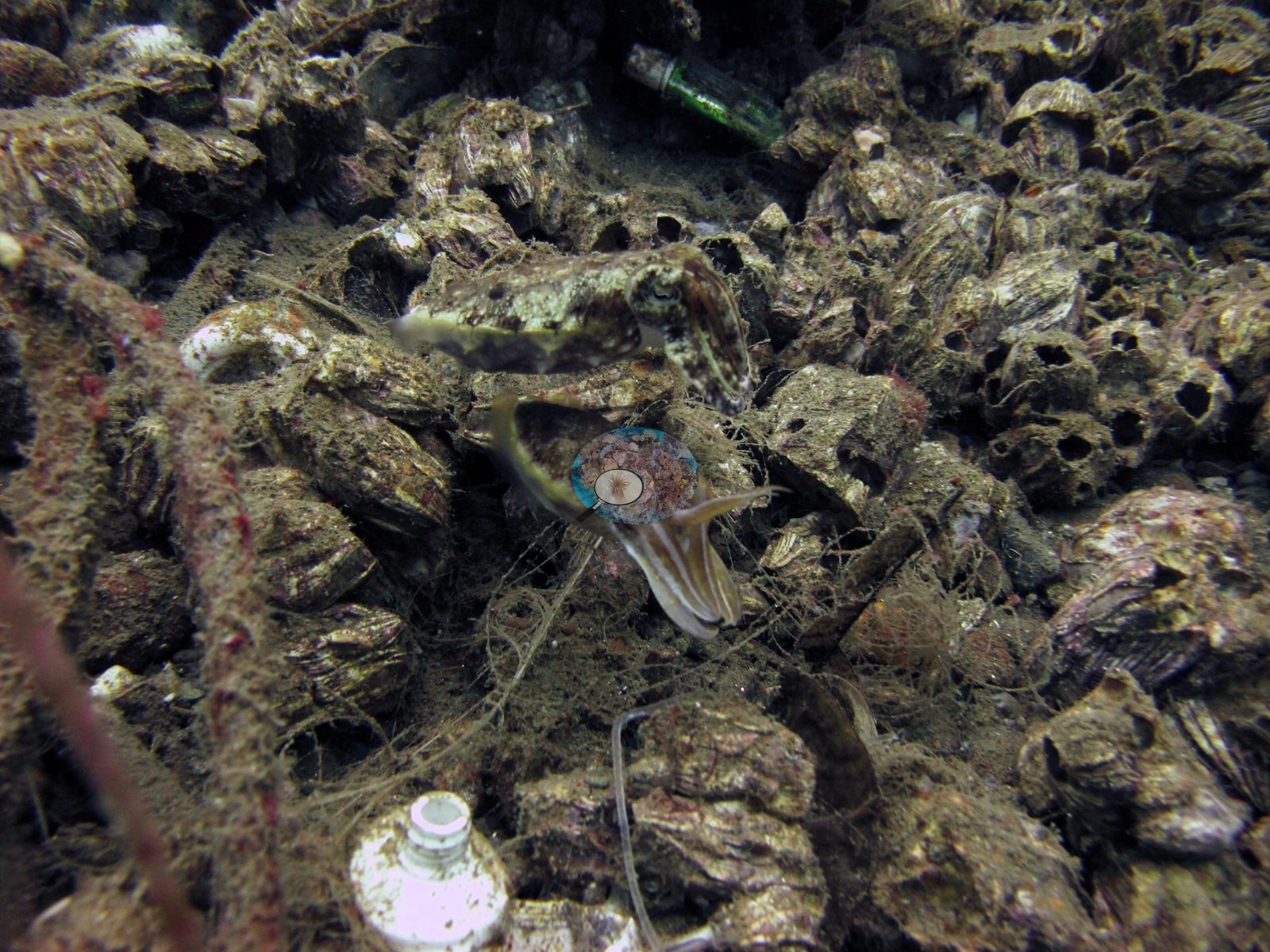
Comparisons with other data
No prior survey data from this site. If you would like to share yours, please email us.
Coral cover: method notes
Data & links
All images from Coral Reef Diagnostics. Data are from Coral Reef Diagnostics.
© Coral Reef Diagnostics.