
Indonesia - Ambon: Air Manis (Laha)
Part of the regional summaries: Indonesia - Ambon and Indonesia - Maluku
More info
Maluku (NOAA CRW virtual station) · Banda Sea ecoregion mean=7.3°C-heating weeksAir Manis is a muck site with raised coral bommies carrying surprisingly dense, near-total Acropora and Porites cover against bare sand between them, but at least five frames show an active monofilament gillnet draped across the bommies with fish trapped in it - clear evidence of fishing gear smothering part of the reef. A photo-derived index puts cover around 31%.
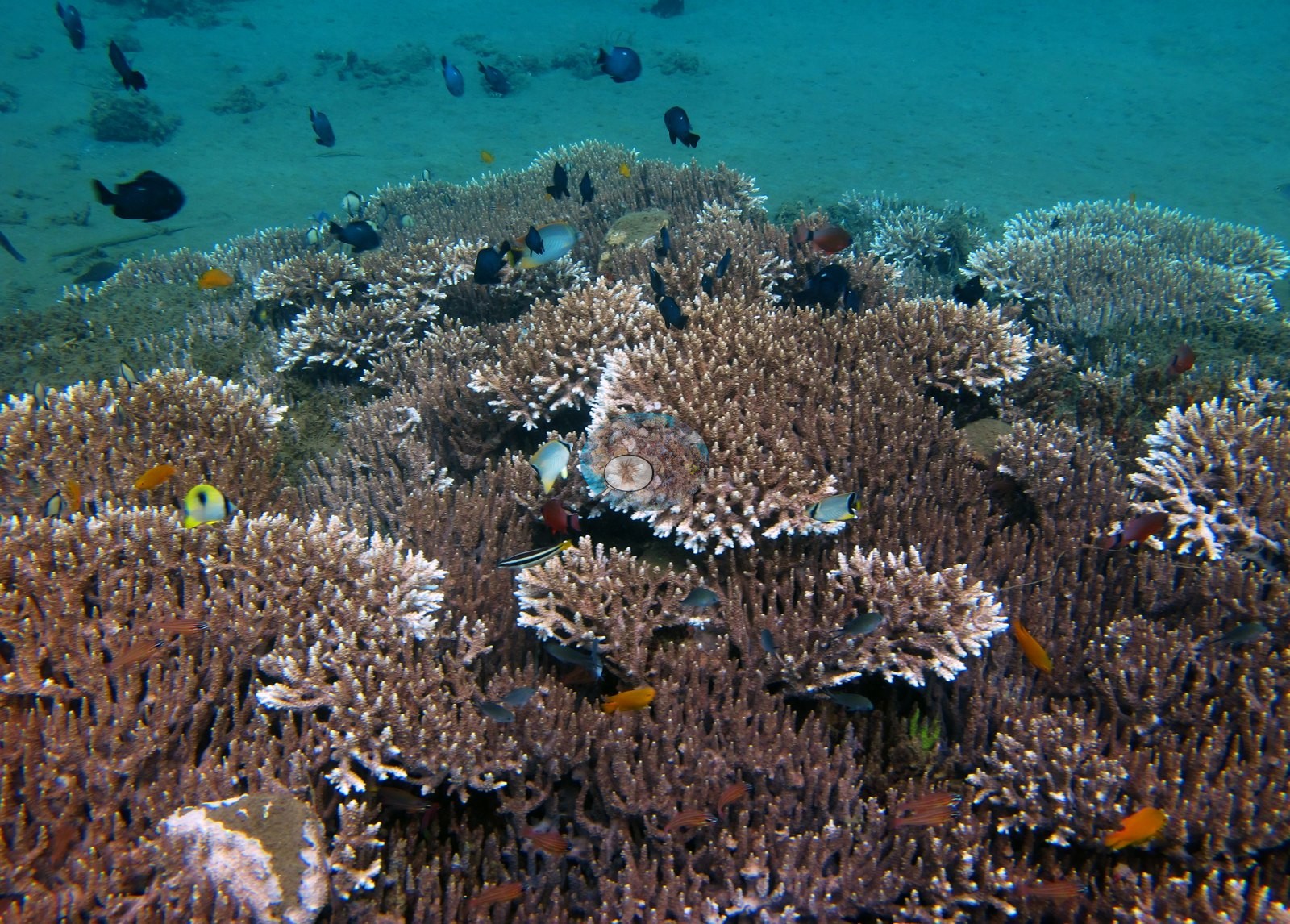
Yang pertama dari tiga penyelaman muck dekat Laha di pesisir selatan Ambon, 2018-04-22. Air Manis bertopografi muck bercampur terumbu bercak: dasar pasir/lumpur/pecahan karang yang diselingi gundukan karang menonjol dan punggungan rendah dengan tutupan hidup yang mengejutkan rapatnya — hamparan Acropora/Porites nyaris 100% di puncak gundukan berlawanan dengan pasir kosong di antaranya. Tutupan karang 31% (indeks CoralSCOP atas 72 bingkai; batas atas, bukan transek).
Terjemahan ringkasan ini oleh AI; versi bahasa Inggris yang berlaku. Translated from the site’s shorter map summary.
Two other CRD dive sites within 5 km shown in orange — click a marker to open its page.
5 of these 50 photographs are shown beside the text that discusses them under "Site description" below.
Site description
Setting
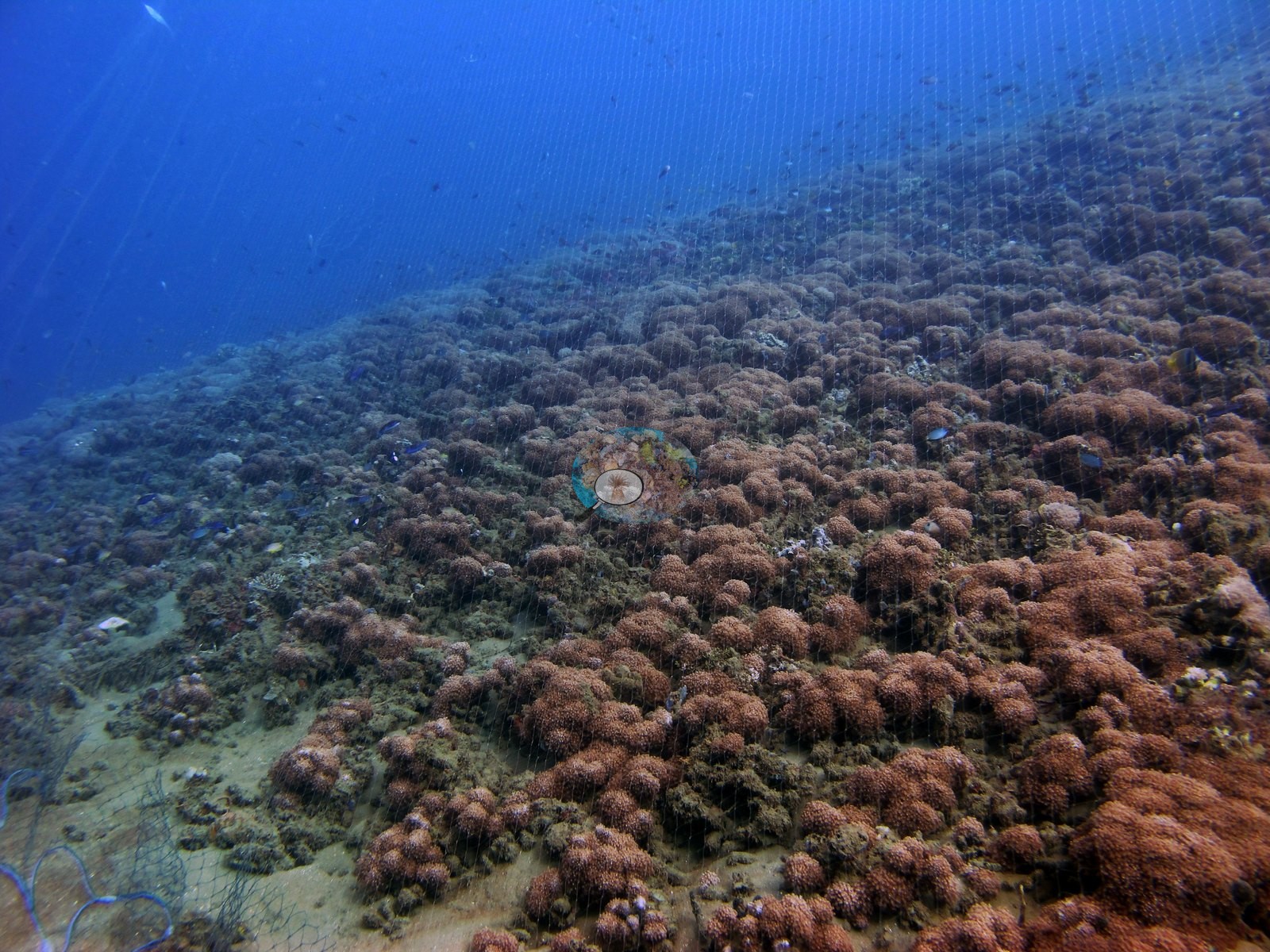
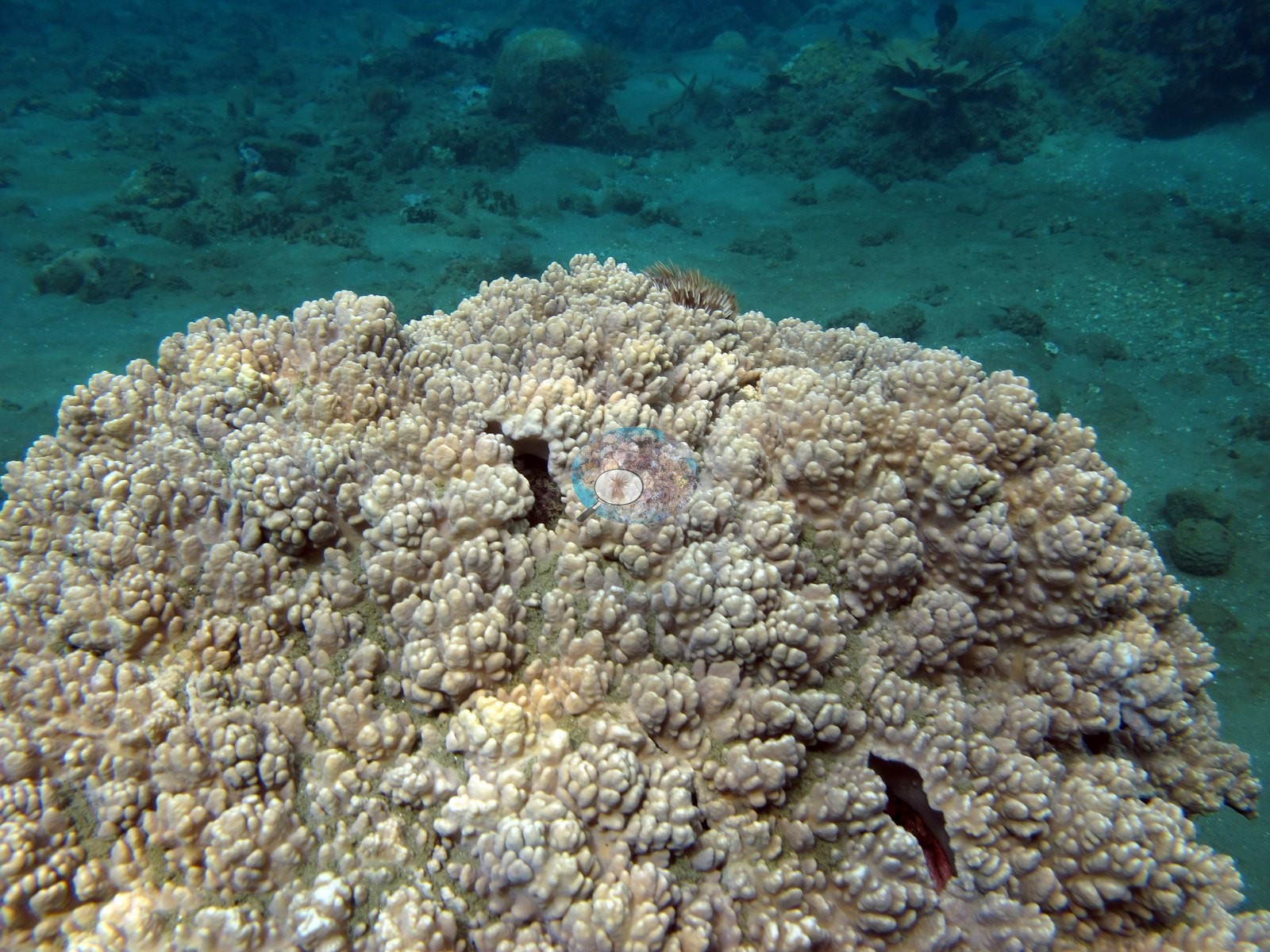
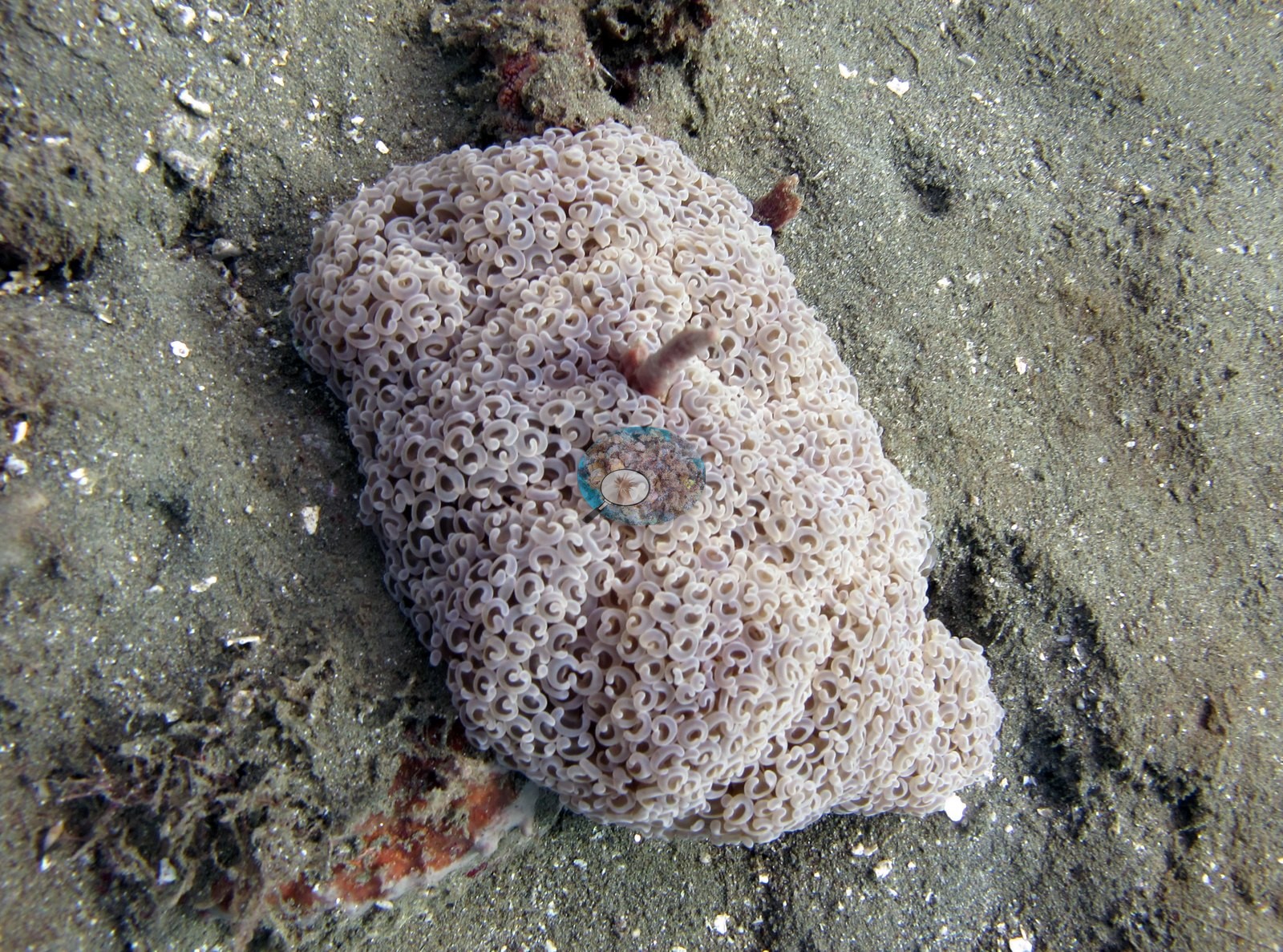
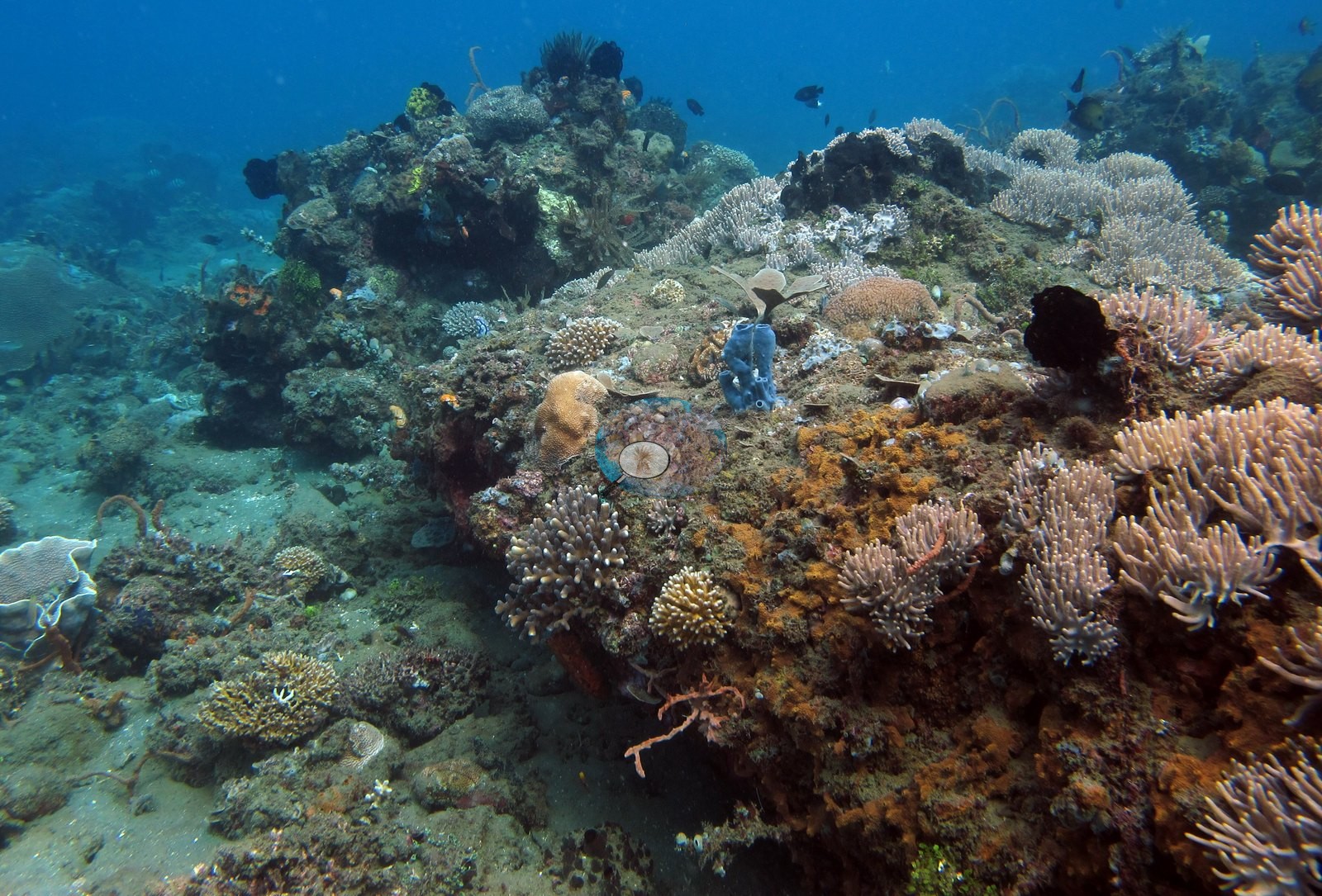
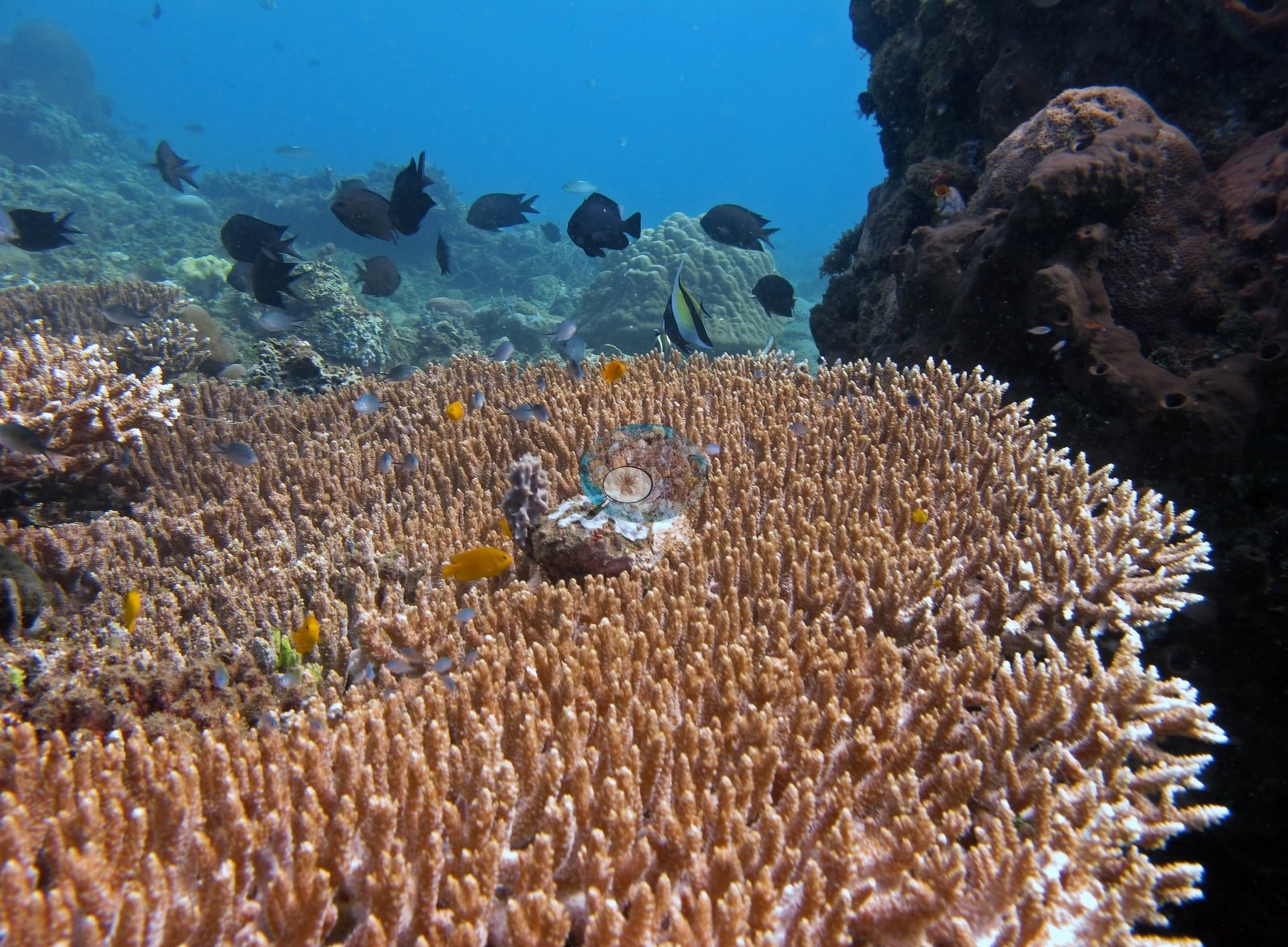
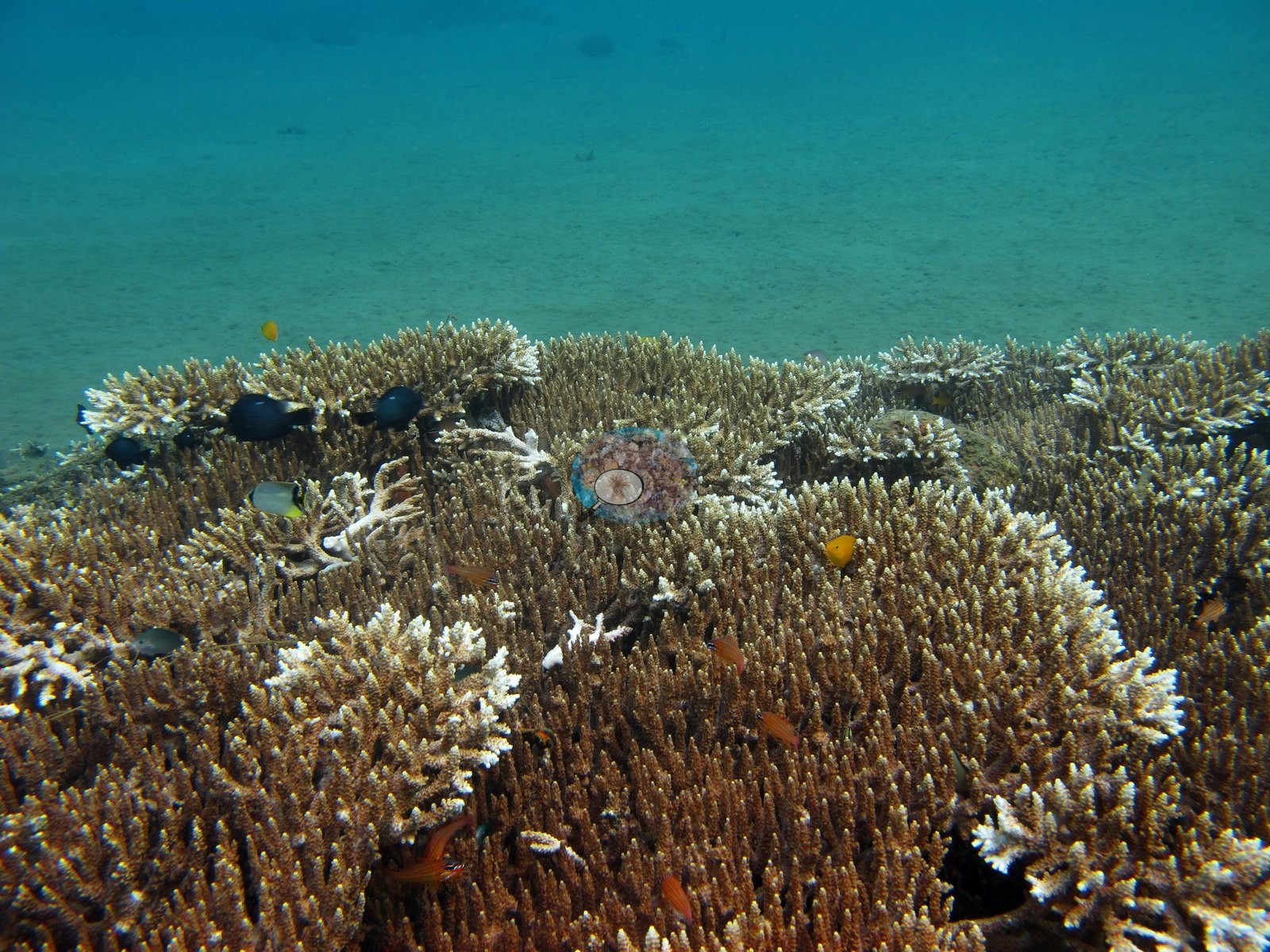
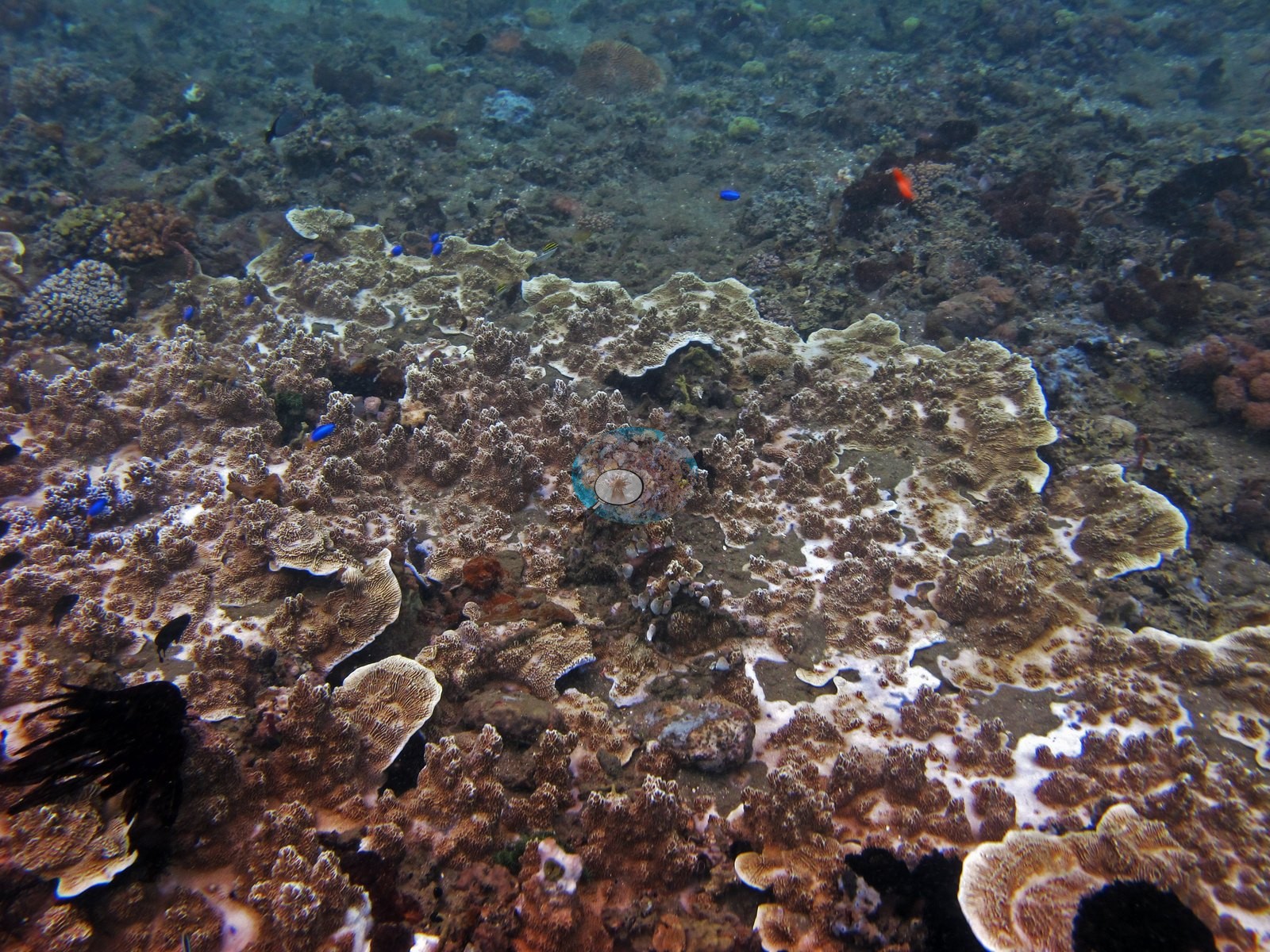
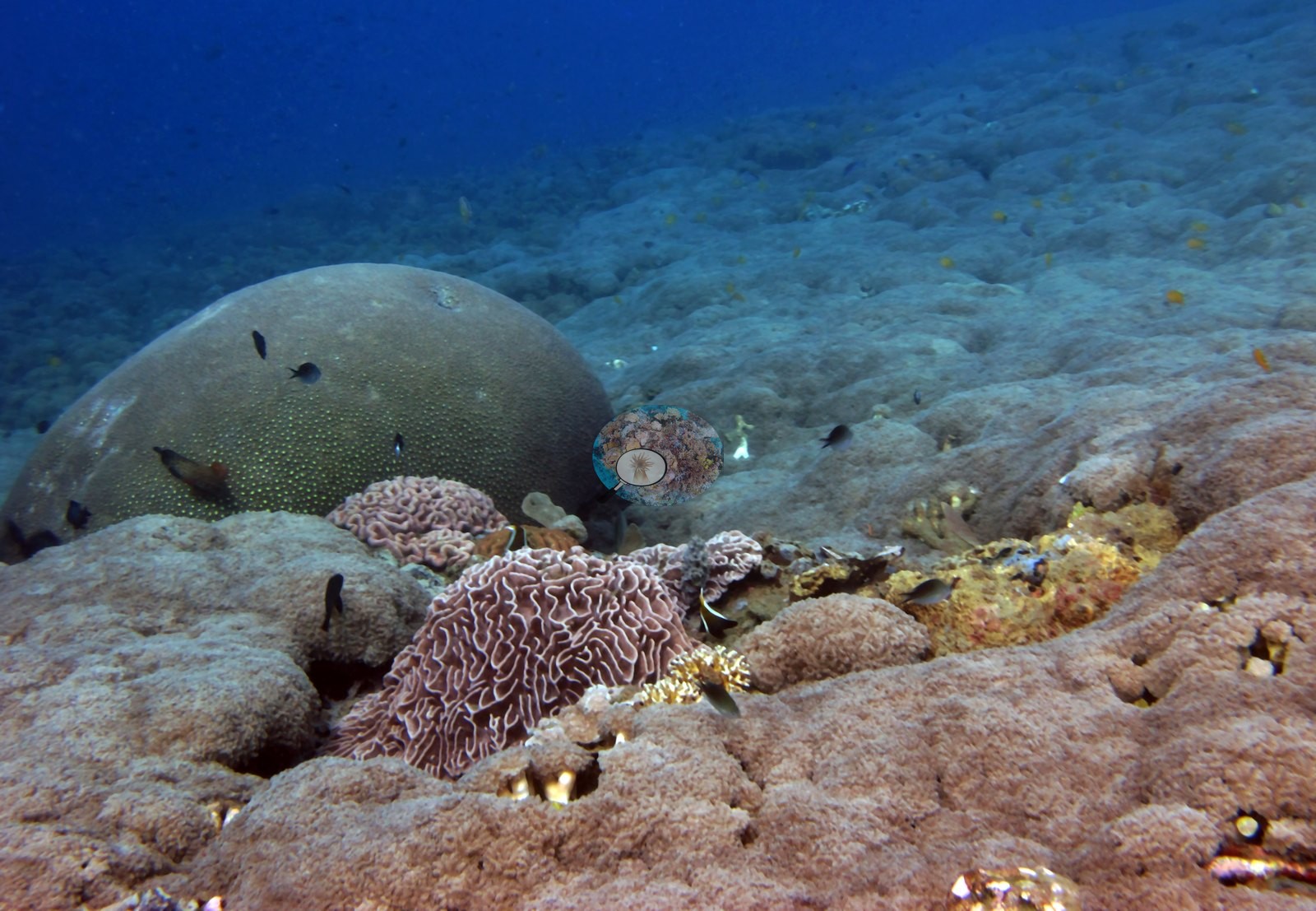
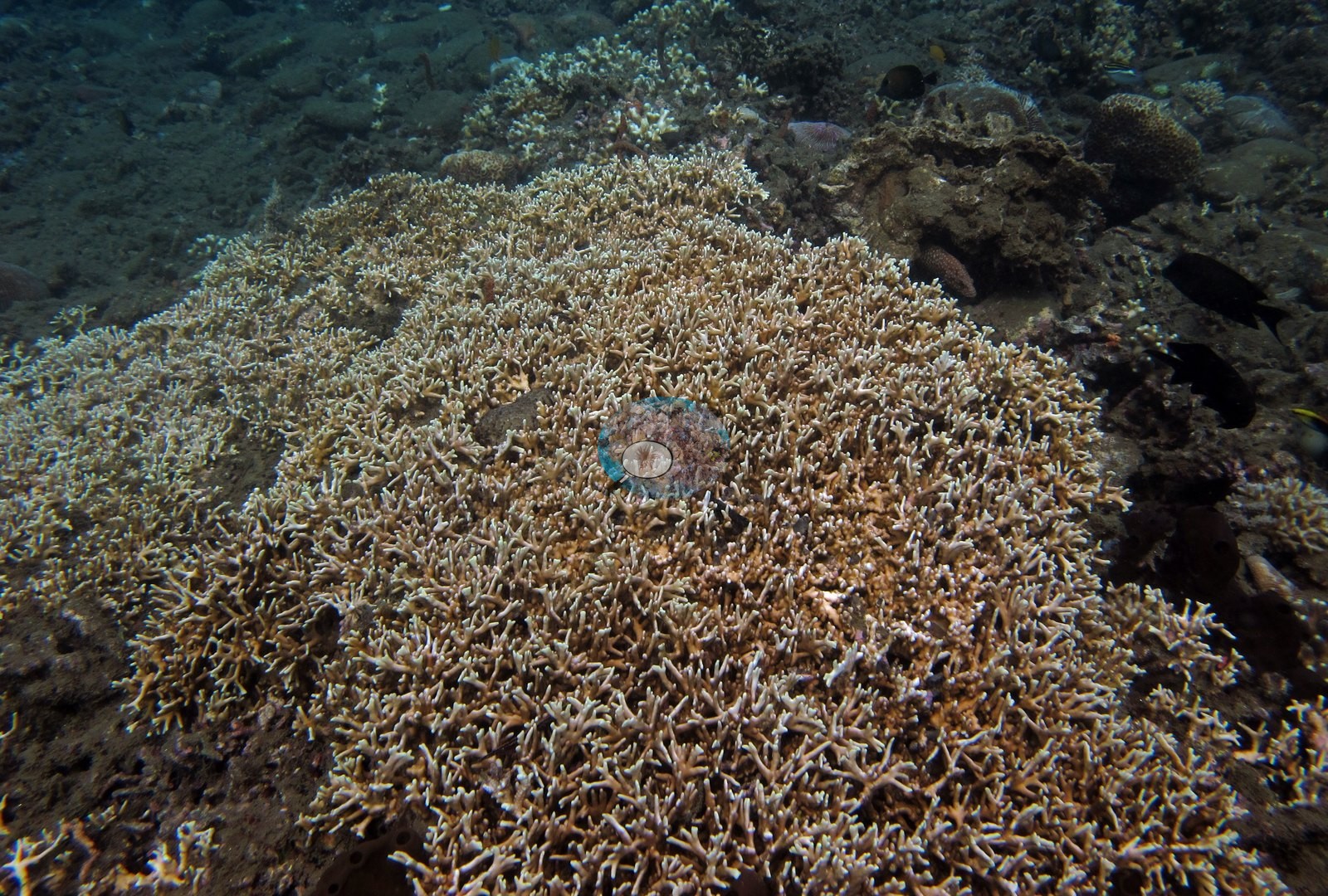
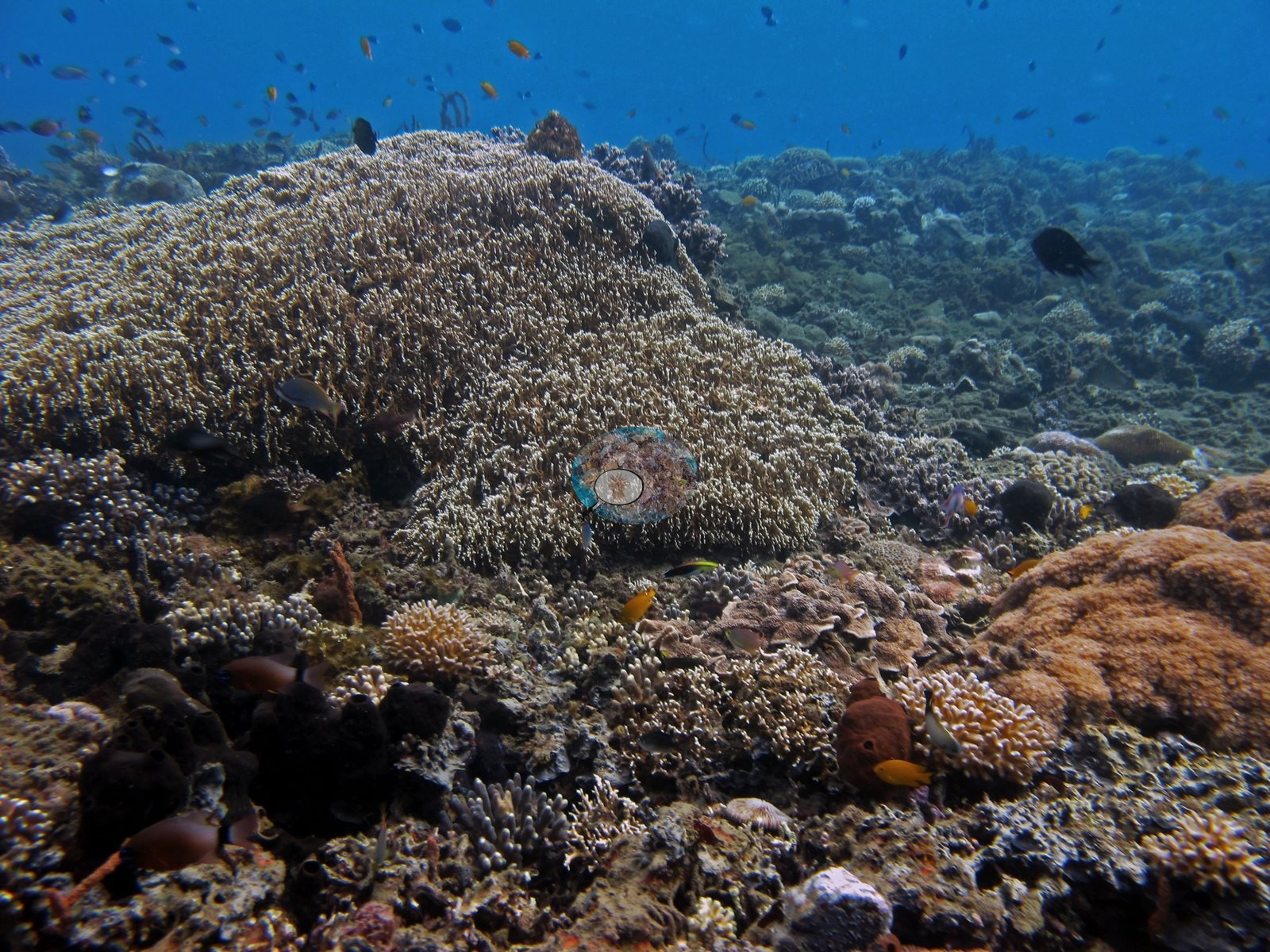
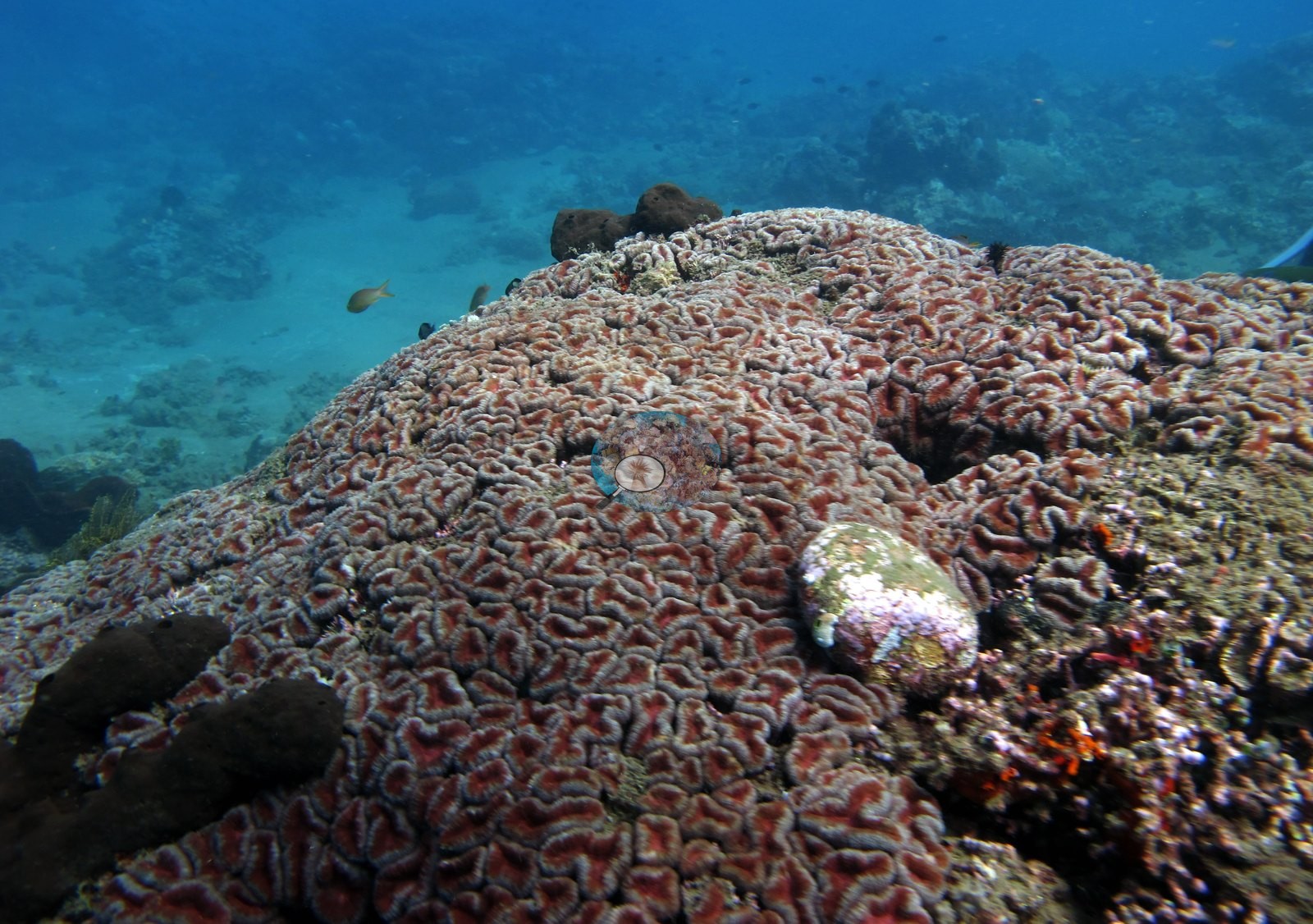
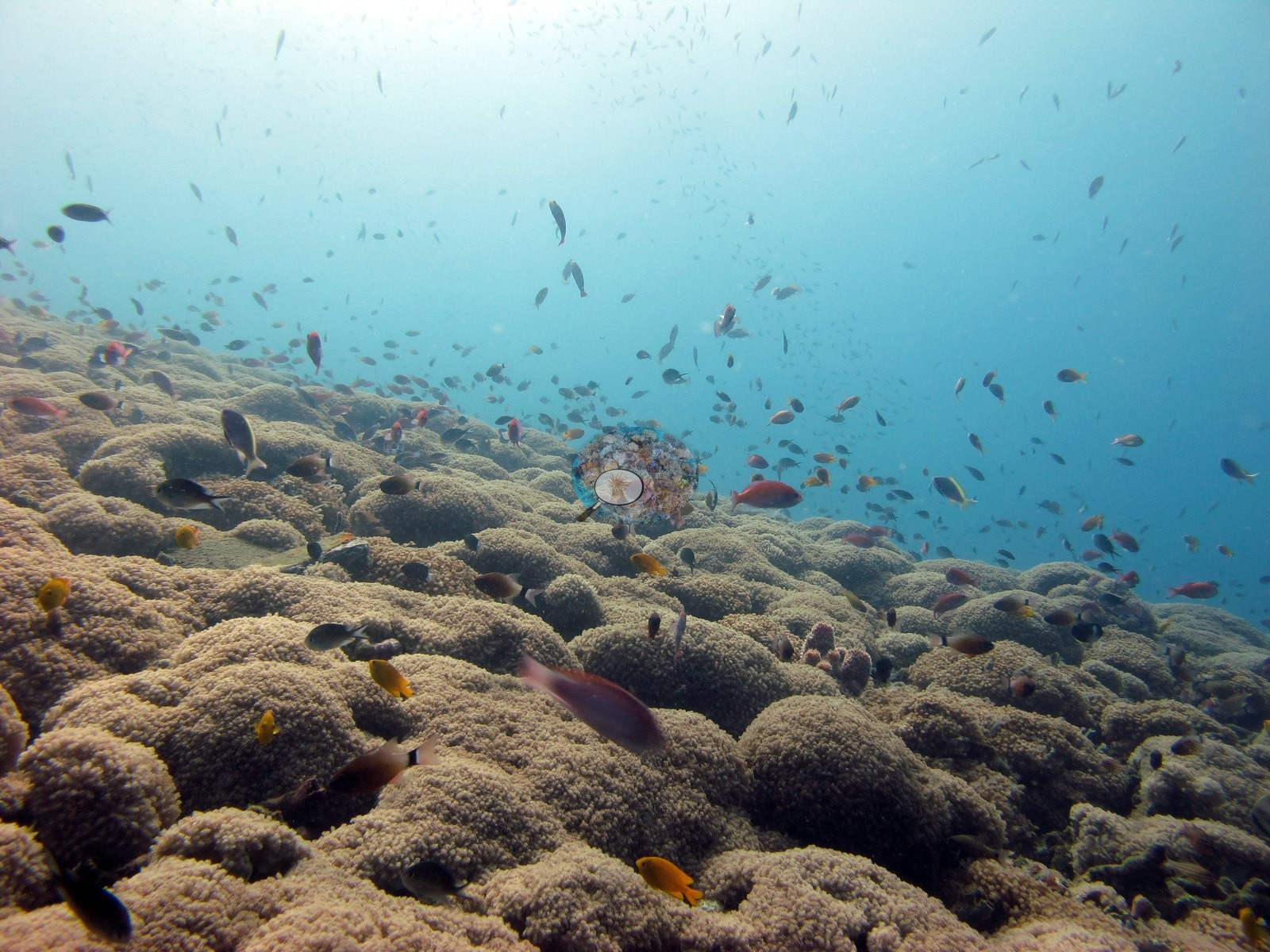
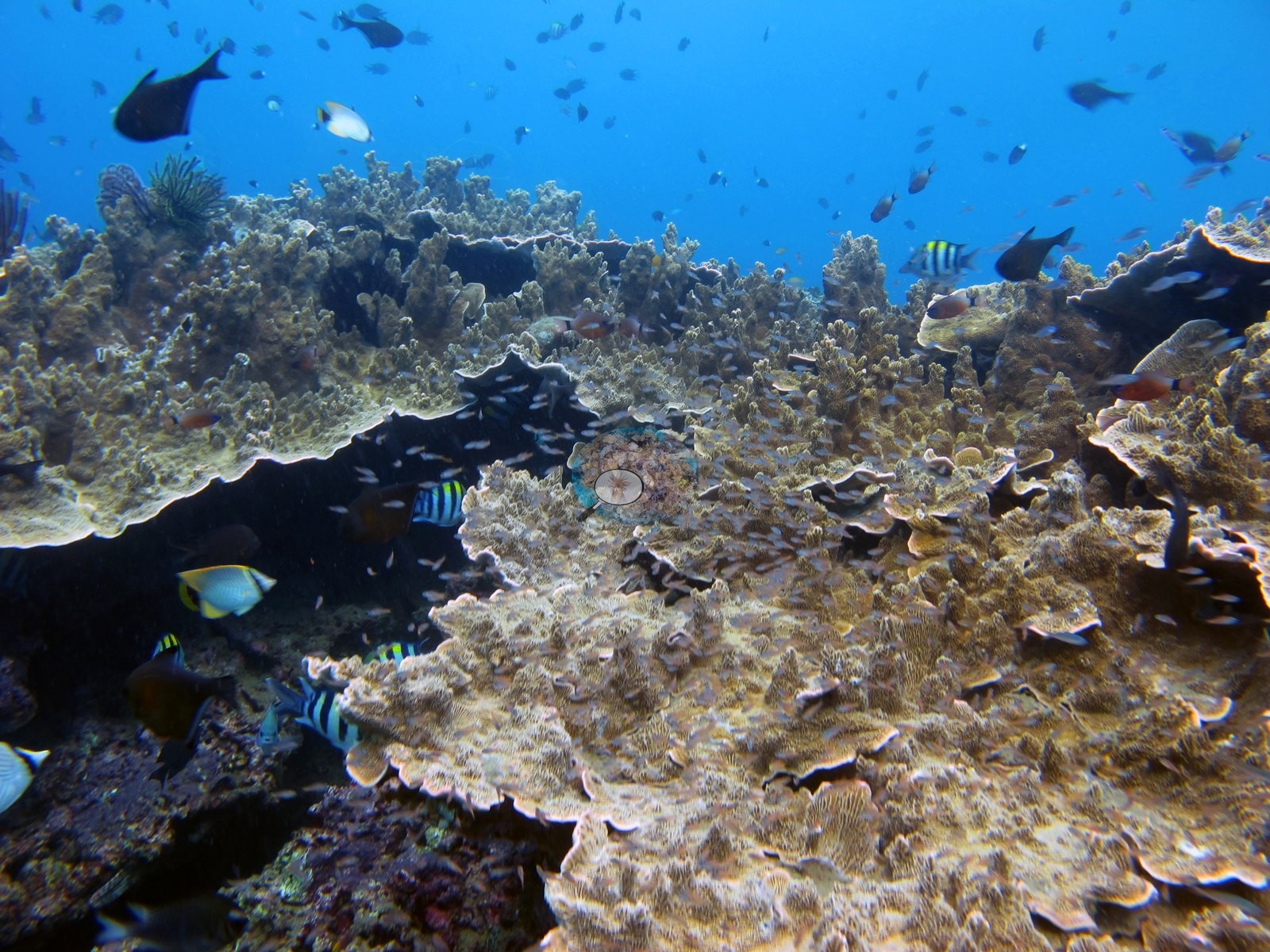
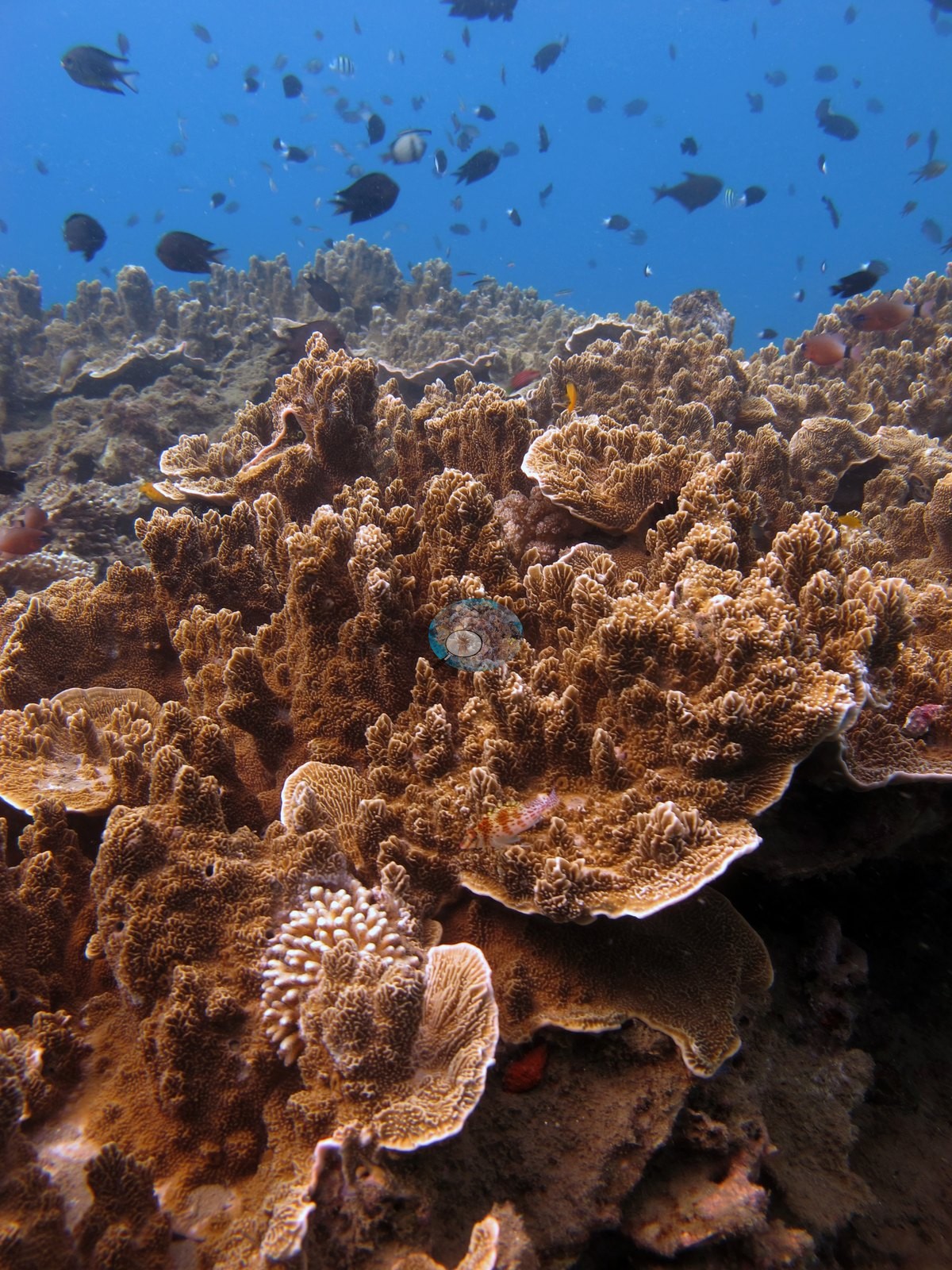
Air Manis is muck-with-patch-reef topography: a sand/silt/rubble bottom interspersed with raised coral bommies and low ridges carrying surprisingly dense live cover -- near-100% Acropora/Porites carpets on the bommie tops against bare sand between them (e.g., Image 1).
Visibility ran moderate-to-good over the bommies, hazier and greener over the flatter muck.
General benthic features
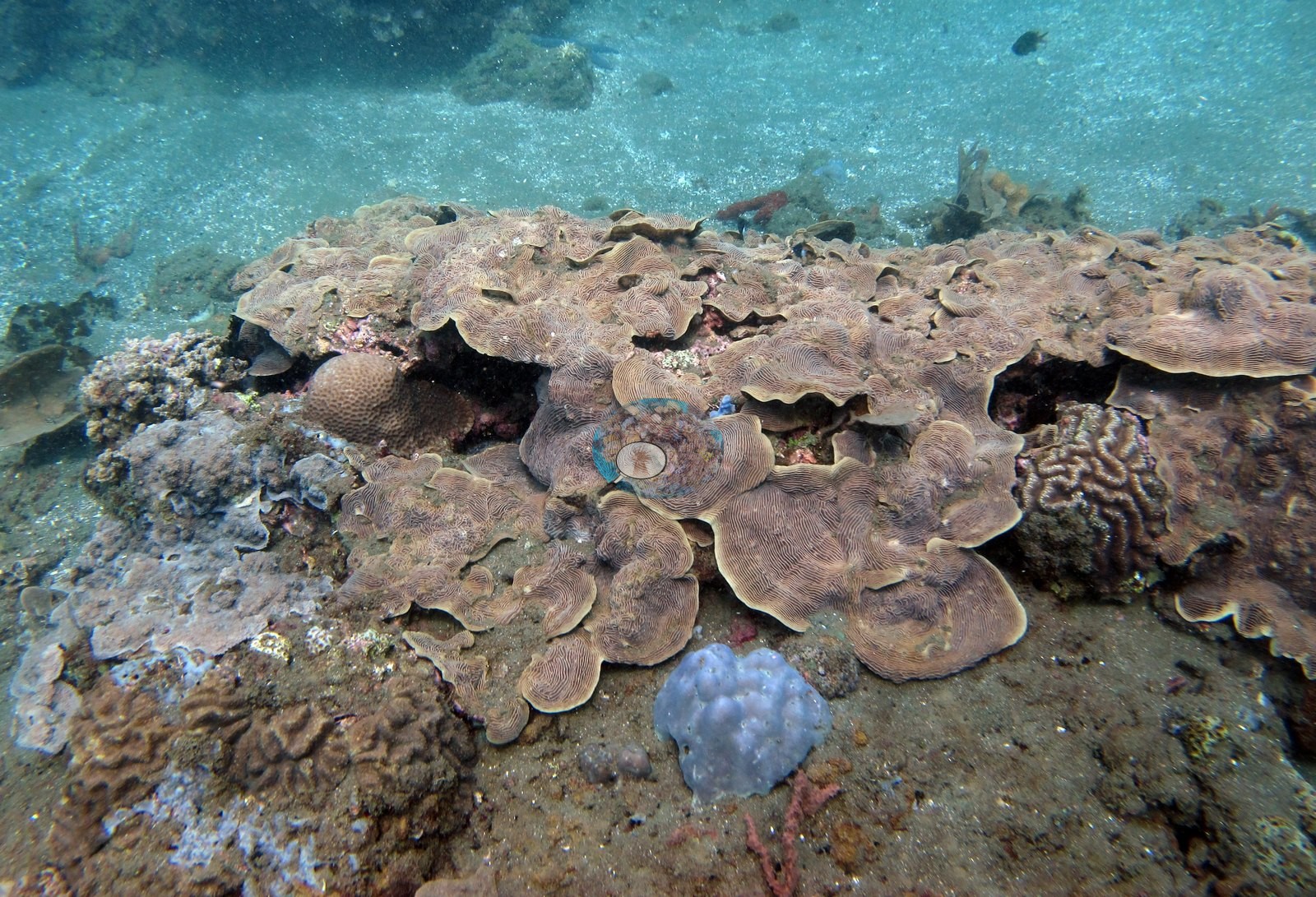
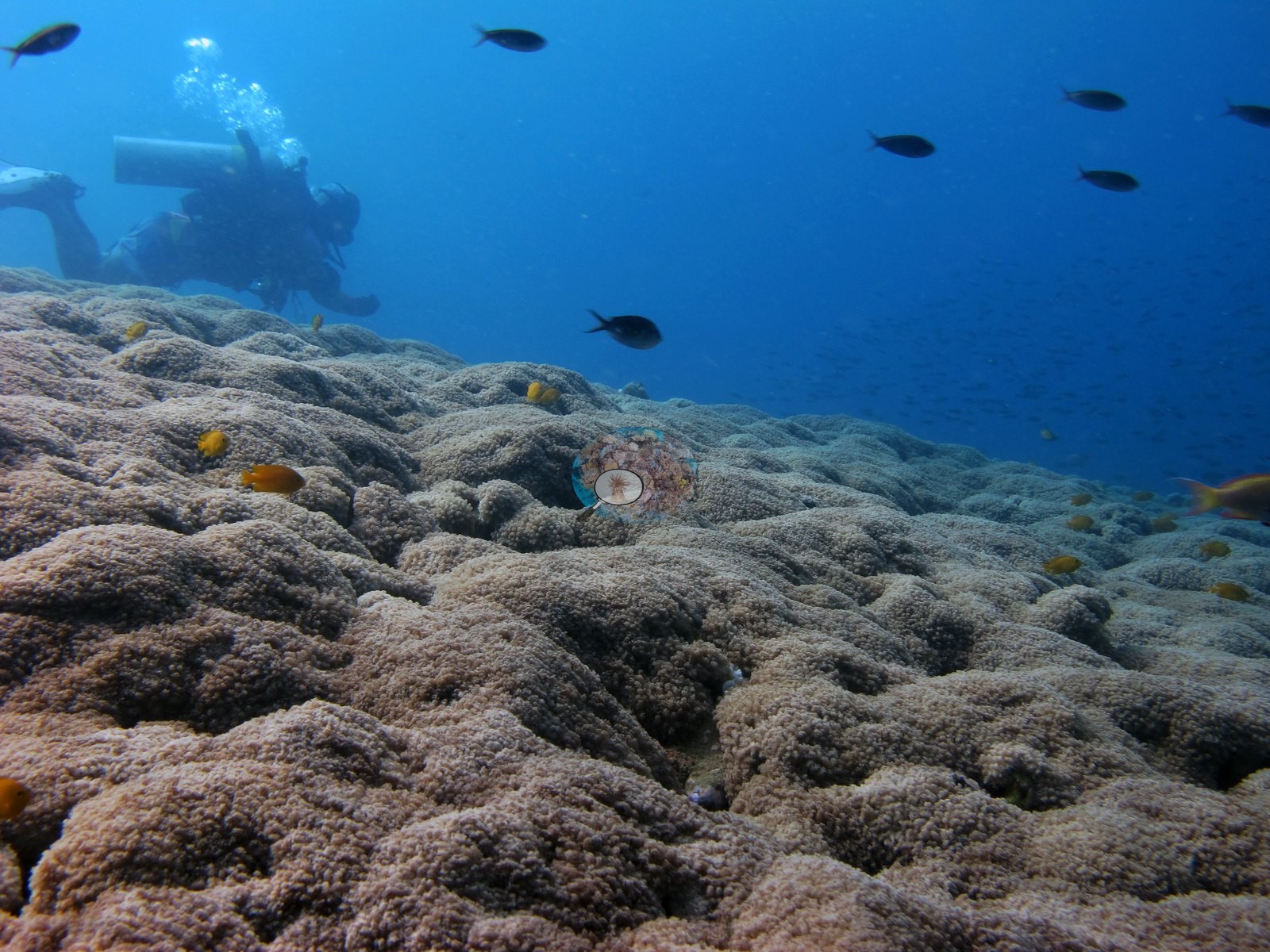
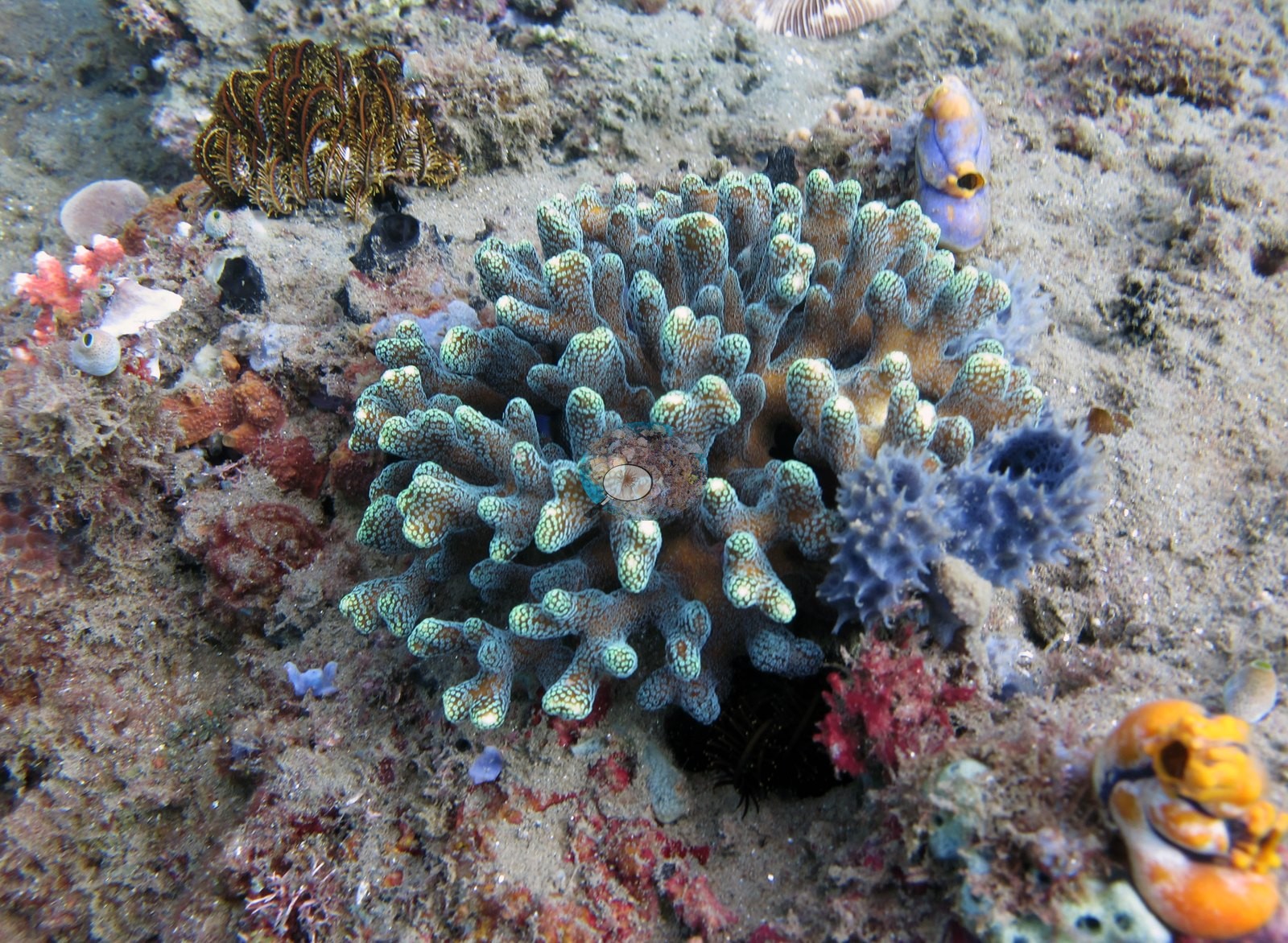
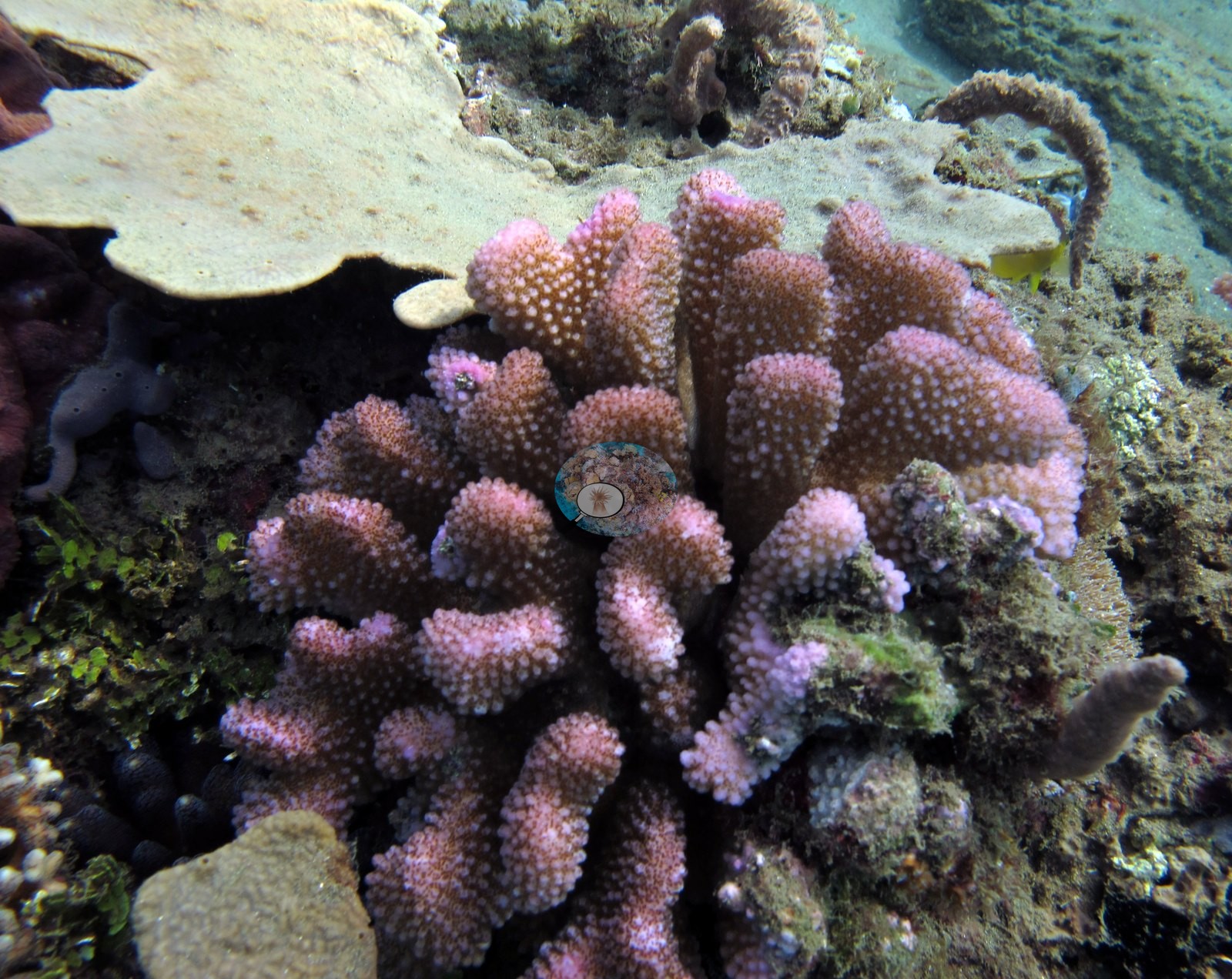
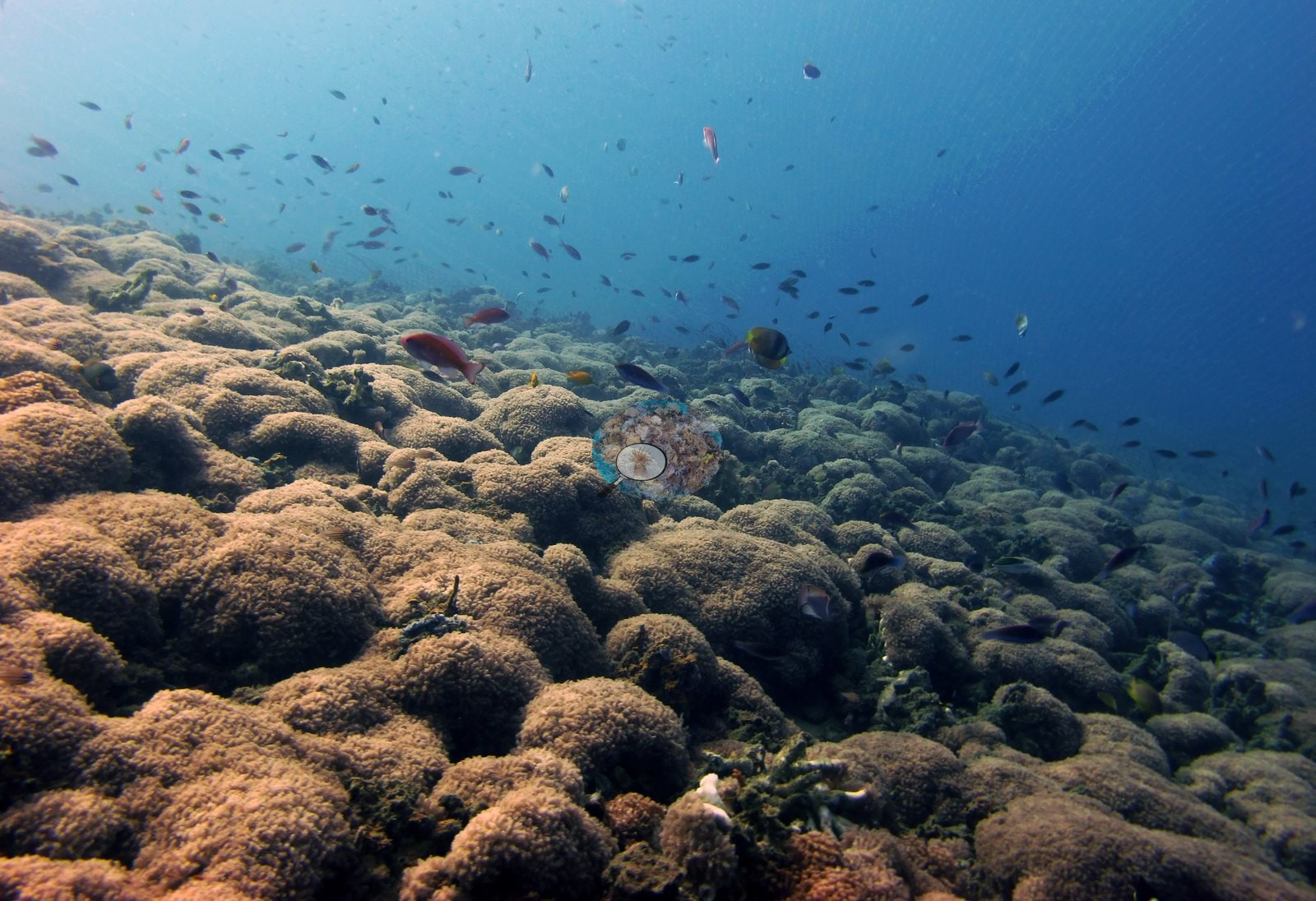
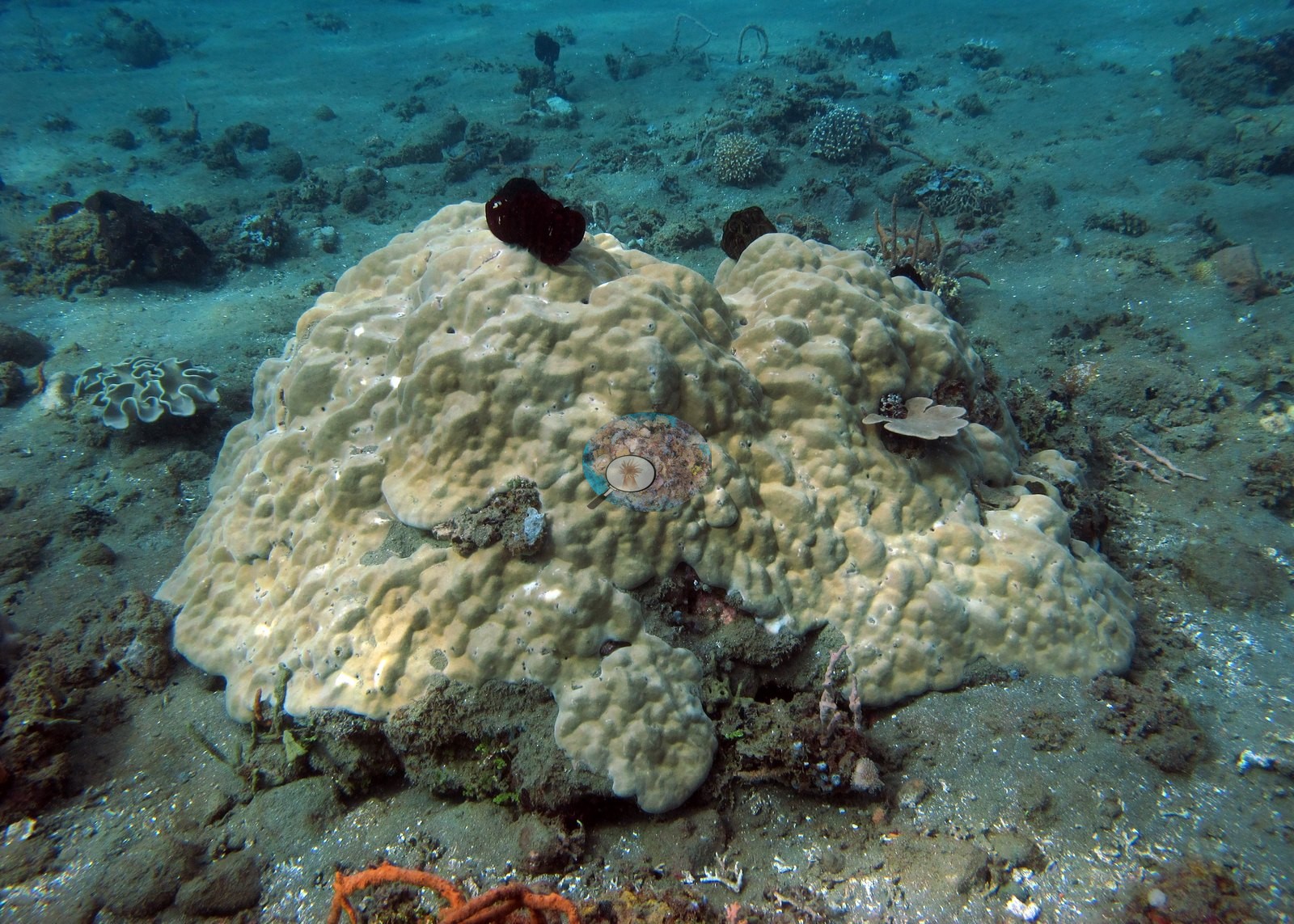
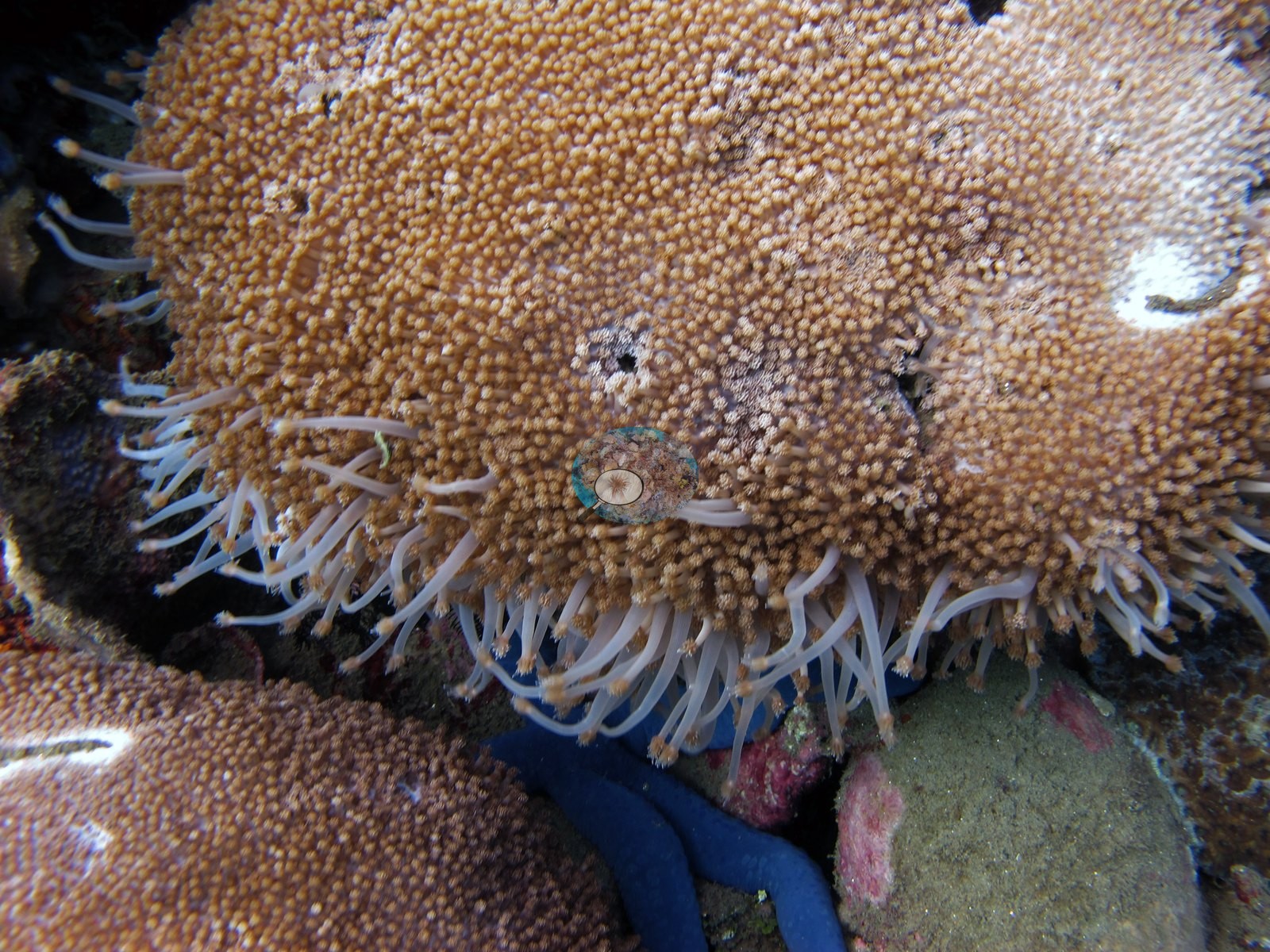
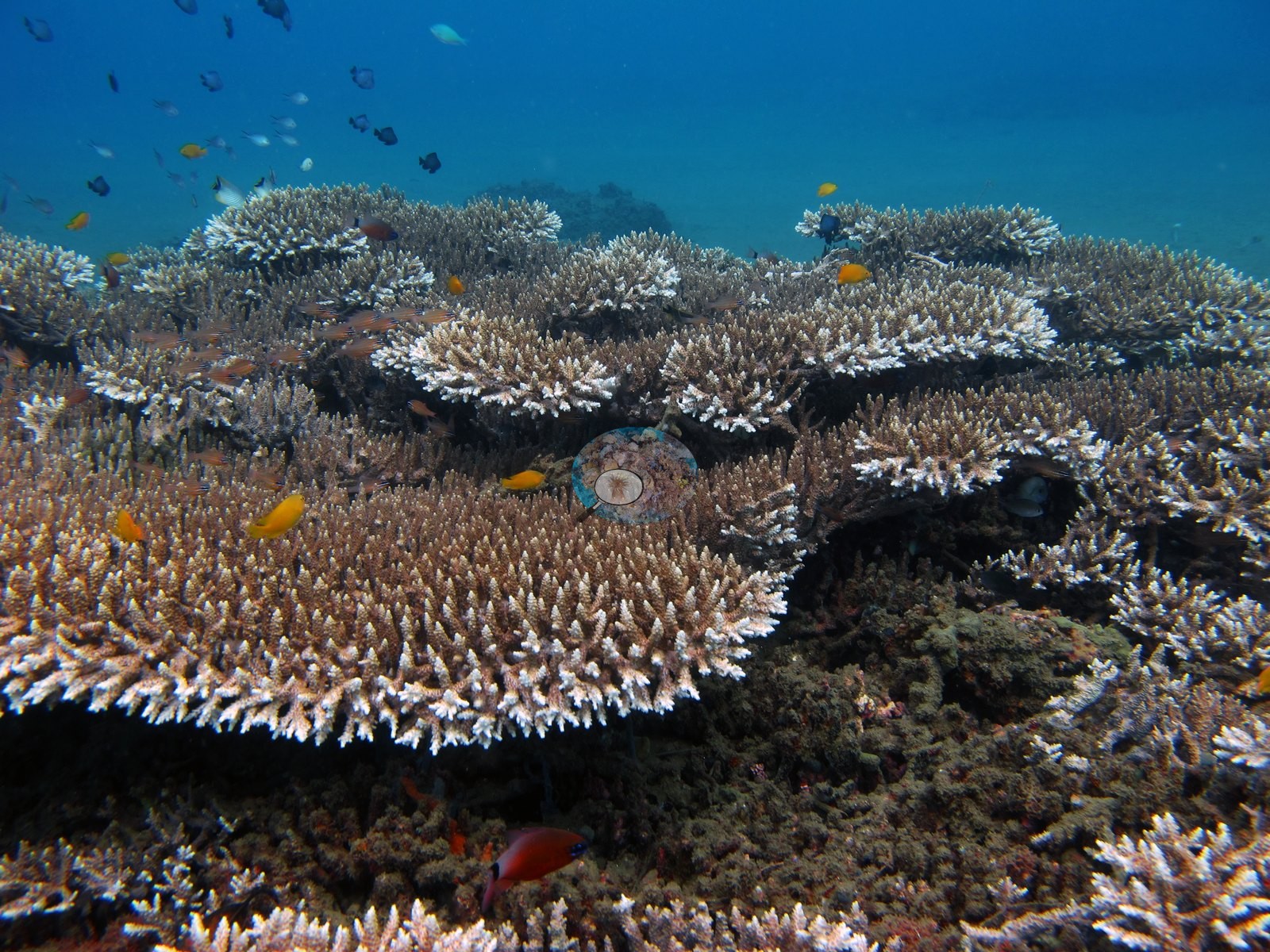
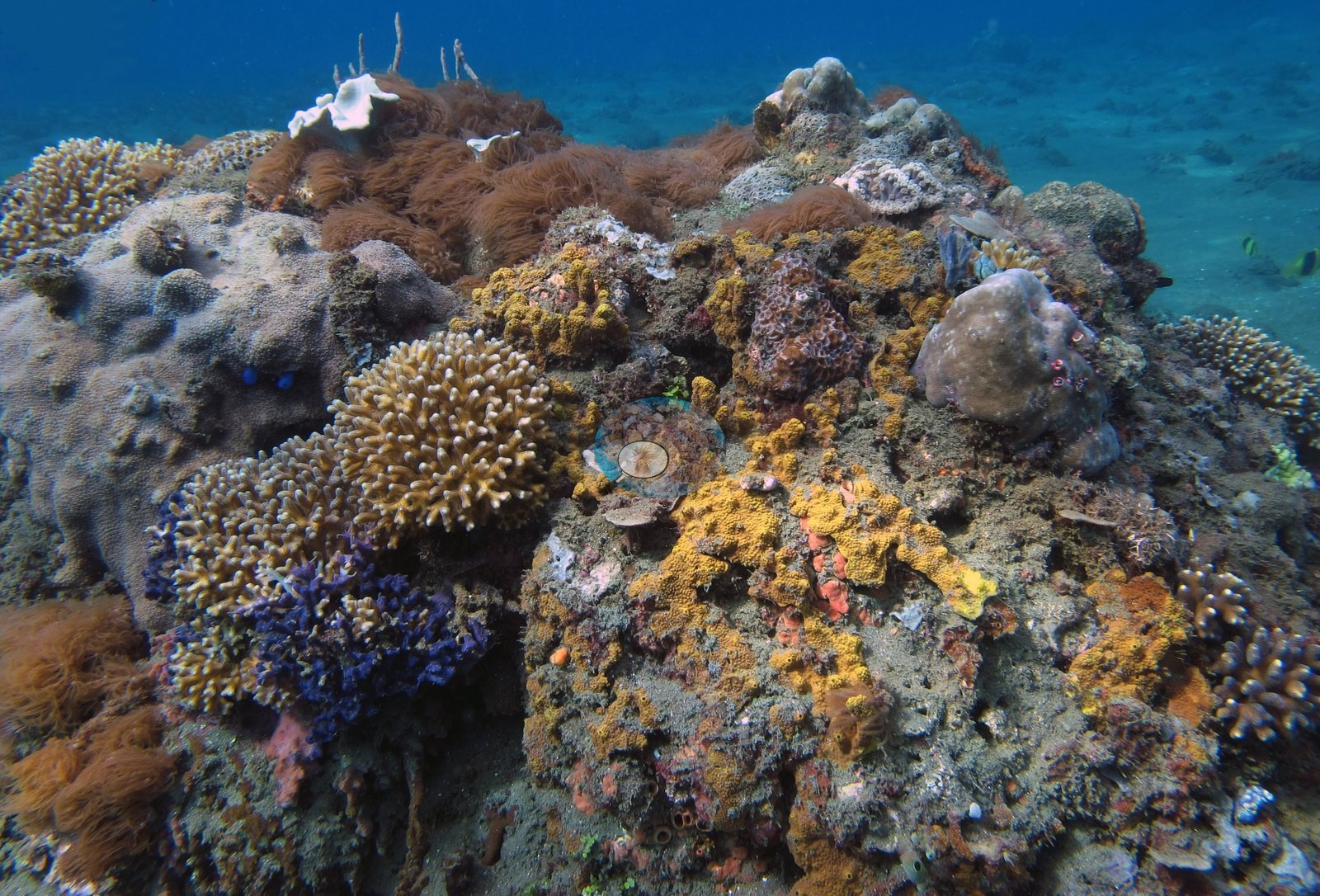
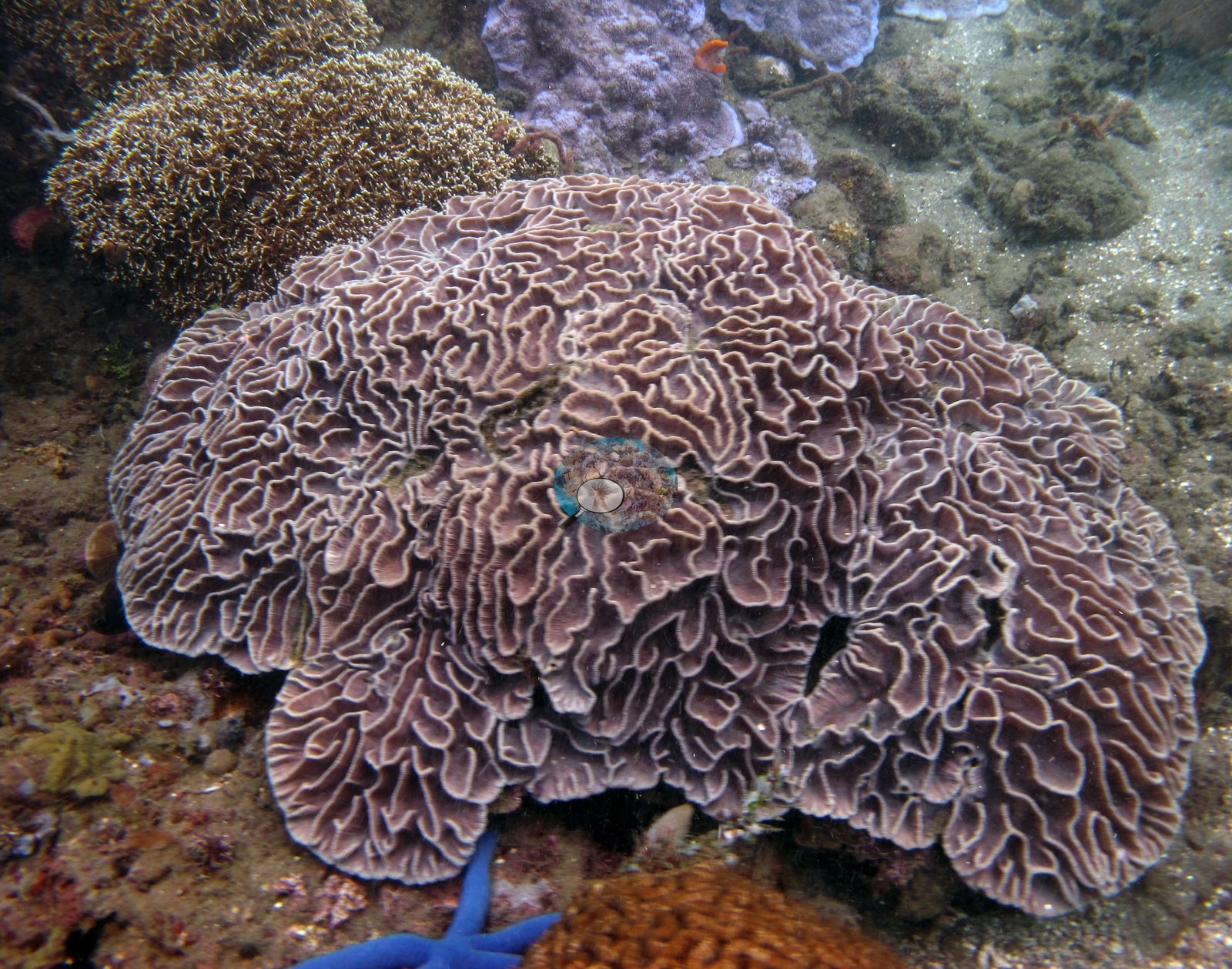
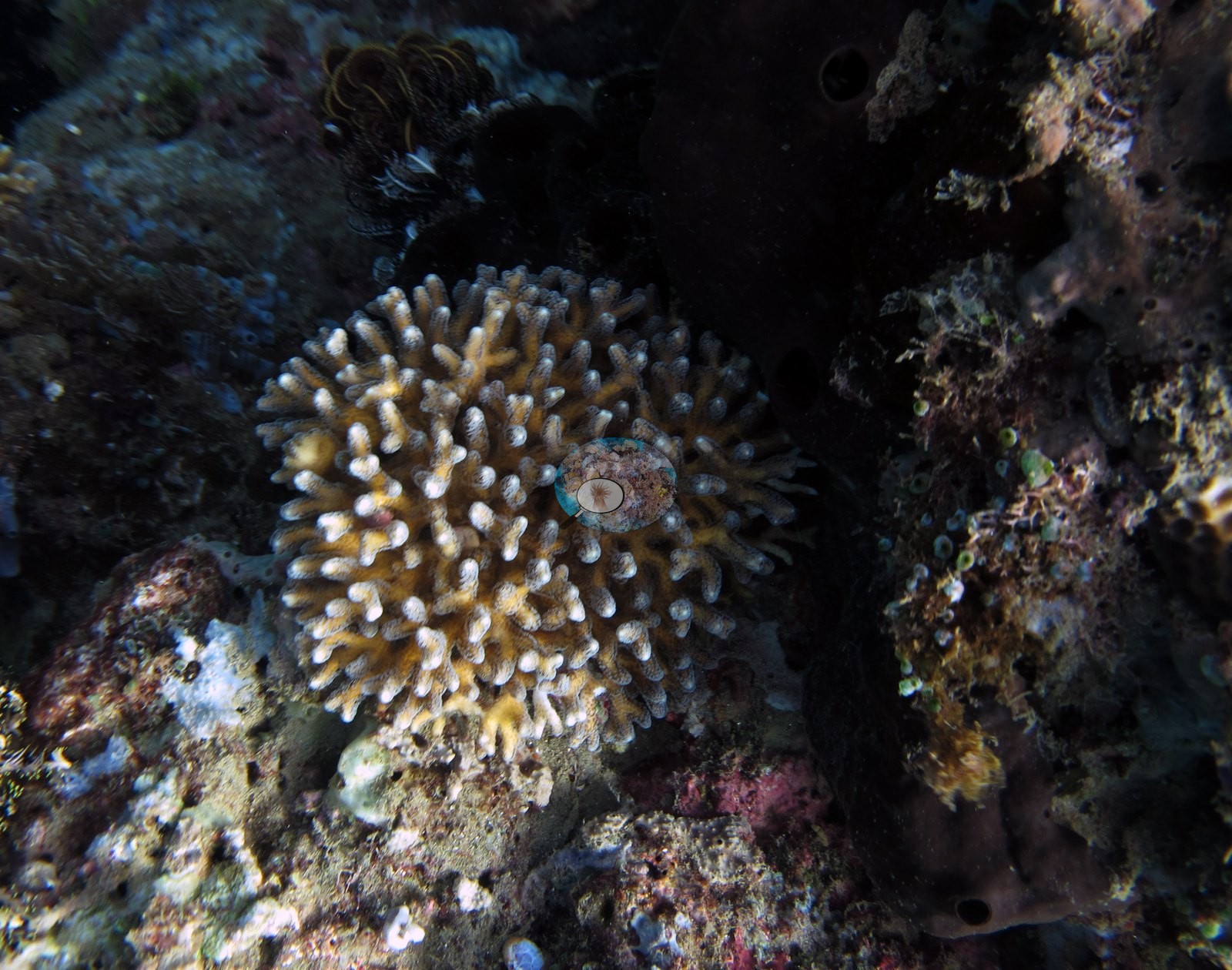
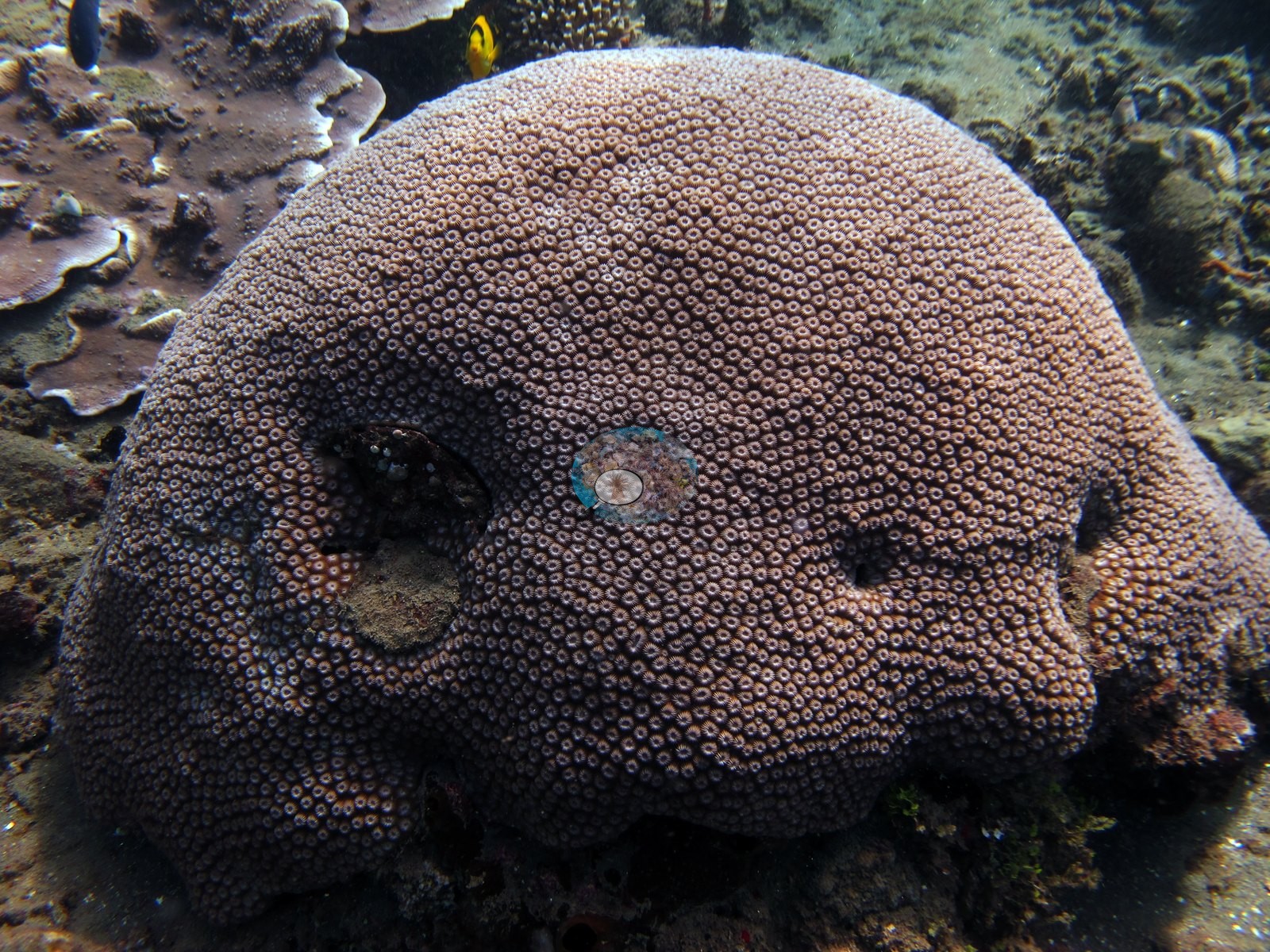
Genera confirmed include table and staghorn Acropora, Montipora, Euphyllia, Seriatopora caliendrum, a fluorescent-green Stylophora, Pocillopora meandrina, large Porites domes, brain corals (Platygyra/Symphyllia), fire coral (Millepora), and soft leather corals (e.g., Image 2).
Coral cover
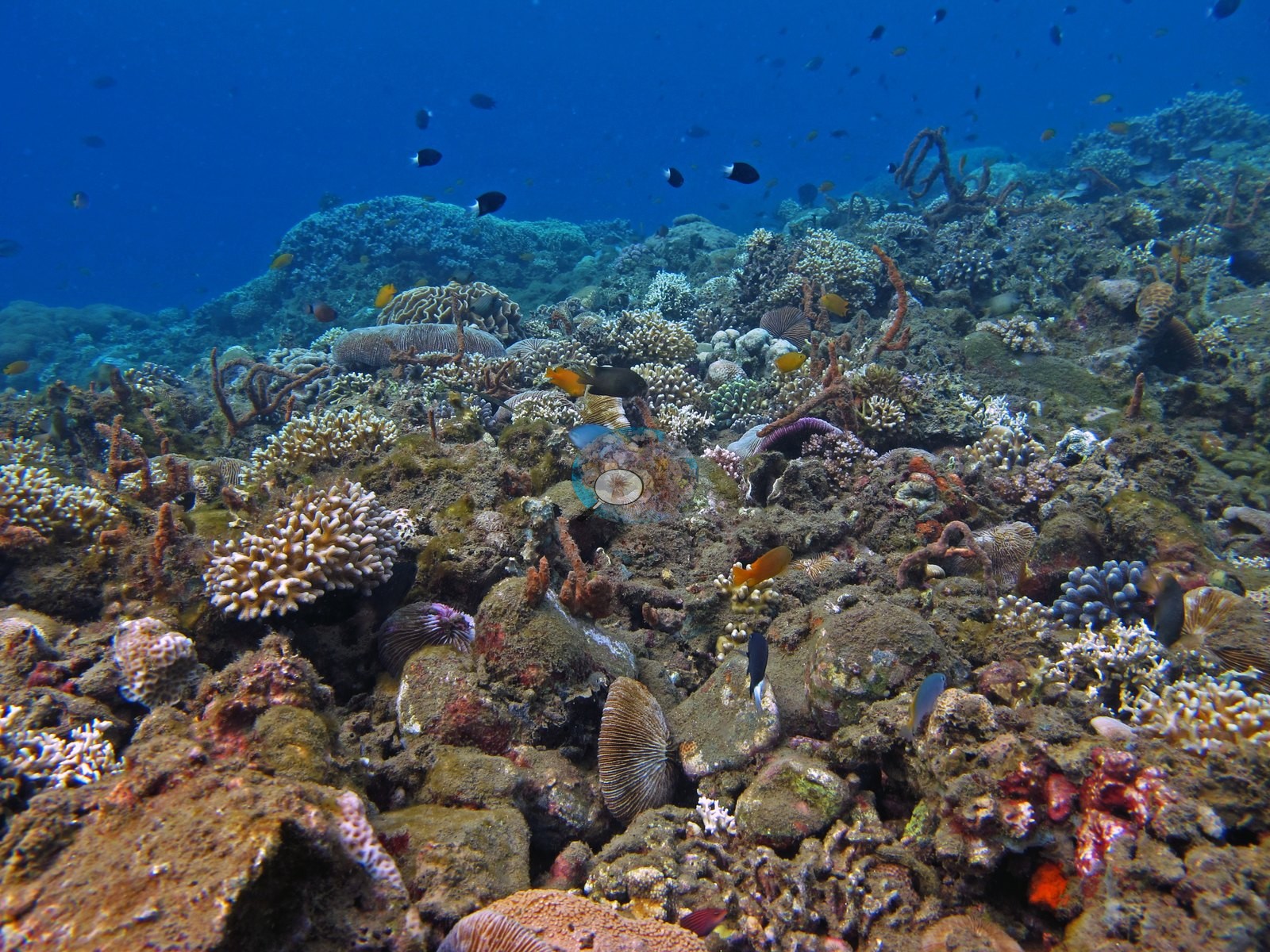
Coral cover — completed photographic analysis. CoralSCOP processed all 72 photographs and returned a mean computer vision estimate of 30.6% (SD 23; median=25.7%). That number is not literal site-wide benthic cover: these are selected dive photographs mixing wide reef scenes, coral portraits, and fishing-impact documentation, and individual outputs range from 0.8% on a visibly coral-covered scene to 126.7% on a close-up. The impossible value above 100% confirms overlapping masks, while the very low values on obvious coral carpets show under-segmentation. The 30.6% result is therefore retained as a flagged photographic index consistent with the visibly patchy habitat—not published as transect-equivalent coral cover—until an independent point-count or second image method is available. Coral cover: 31% — a single-method photographic index. The figure is a CoralSCOP computer vision over Anderson's own photographs (72 frames), with no second method to cross-check it. CoralSCOP sums retained mask fractions with overlaps possible and segments coral-shaped objects rather than living tissue, so it scores standing dead skeleton as coral and does not measure cover the way a transect does; against in situ transects it reads high. One frame in this set scored 126.7%, which is impossible as a cover value and is a mask-overlap artifact of the method — a caution about the index, not about the reef.
Stressors
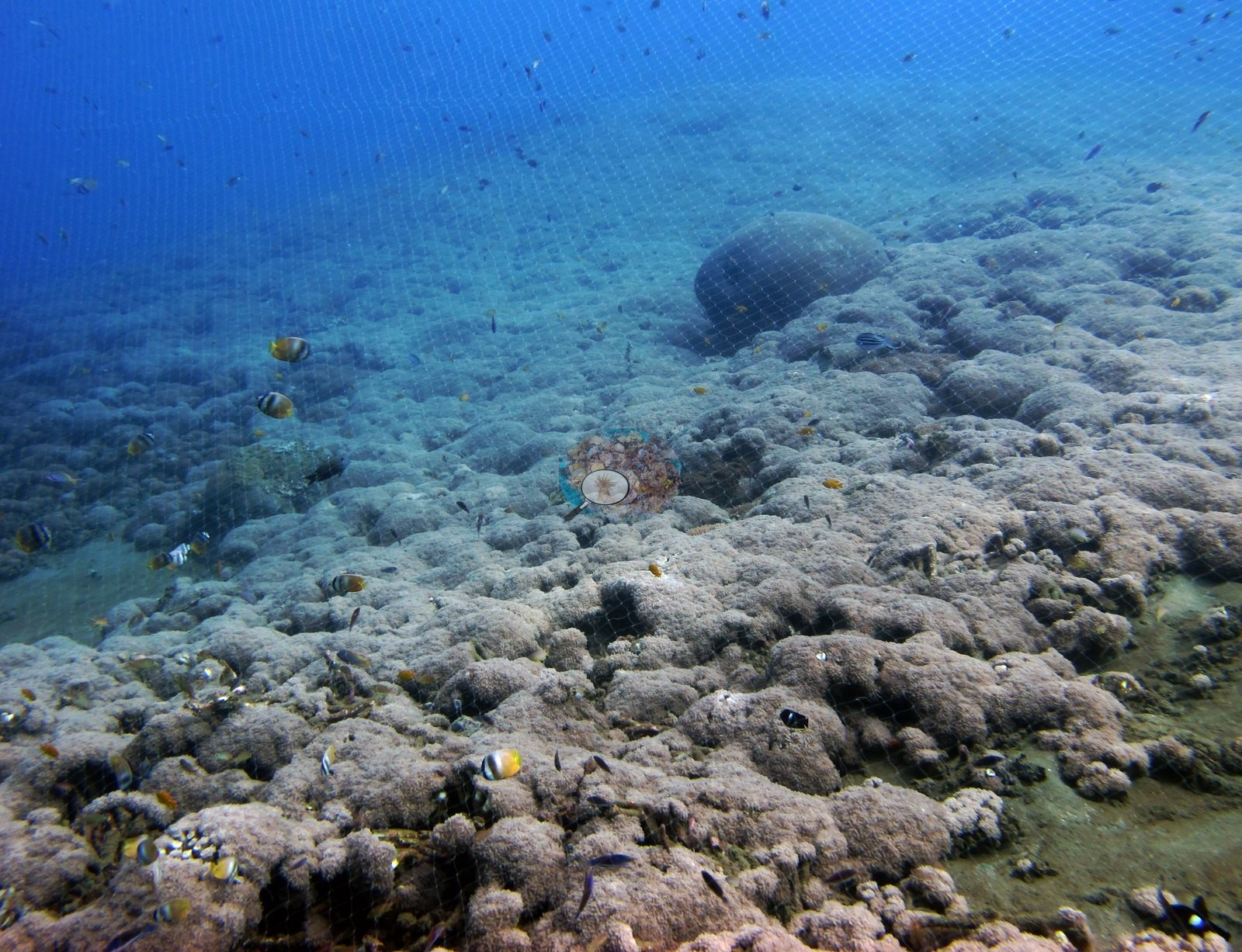
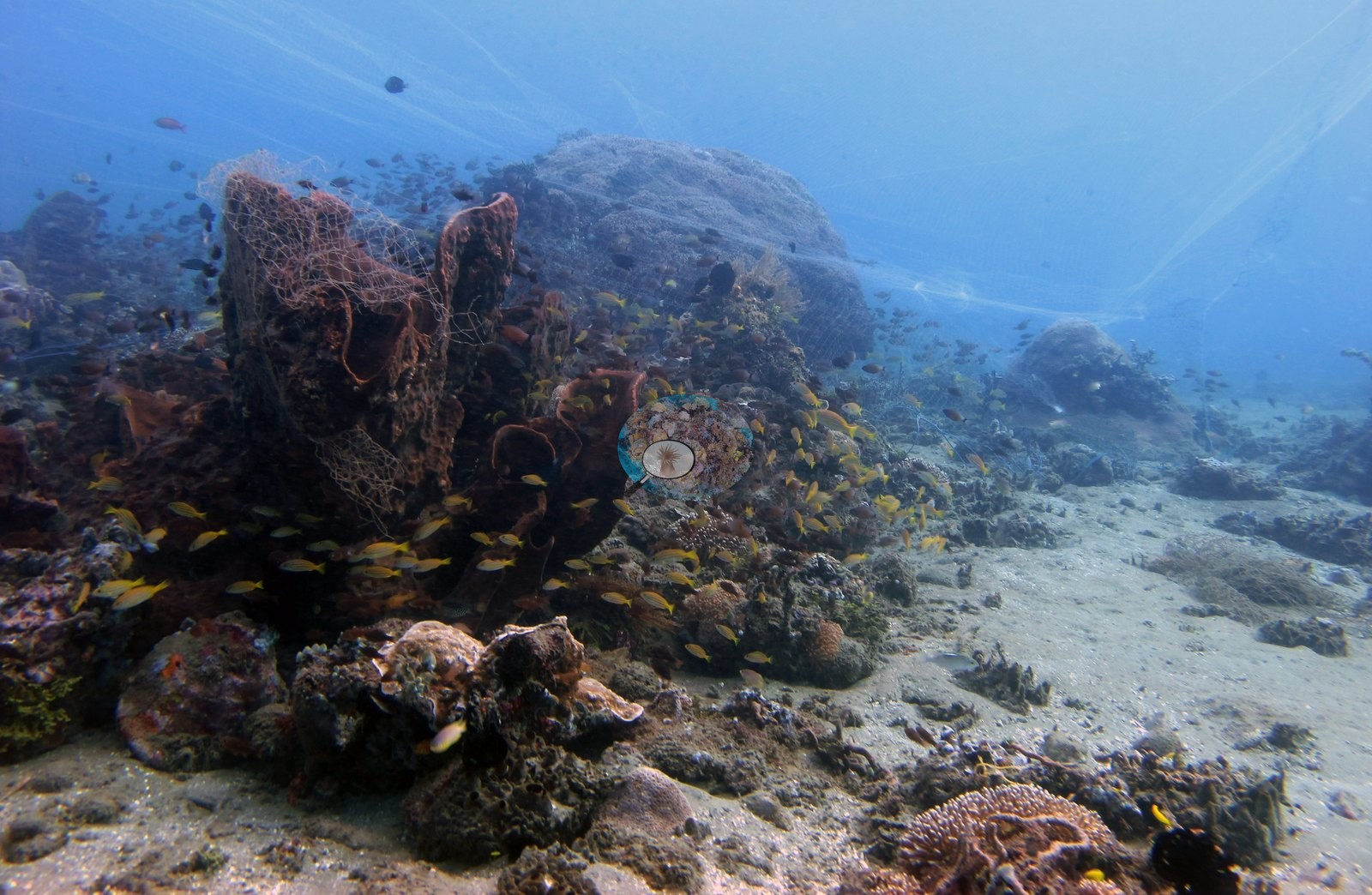
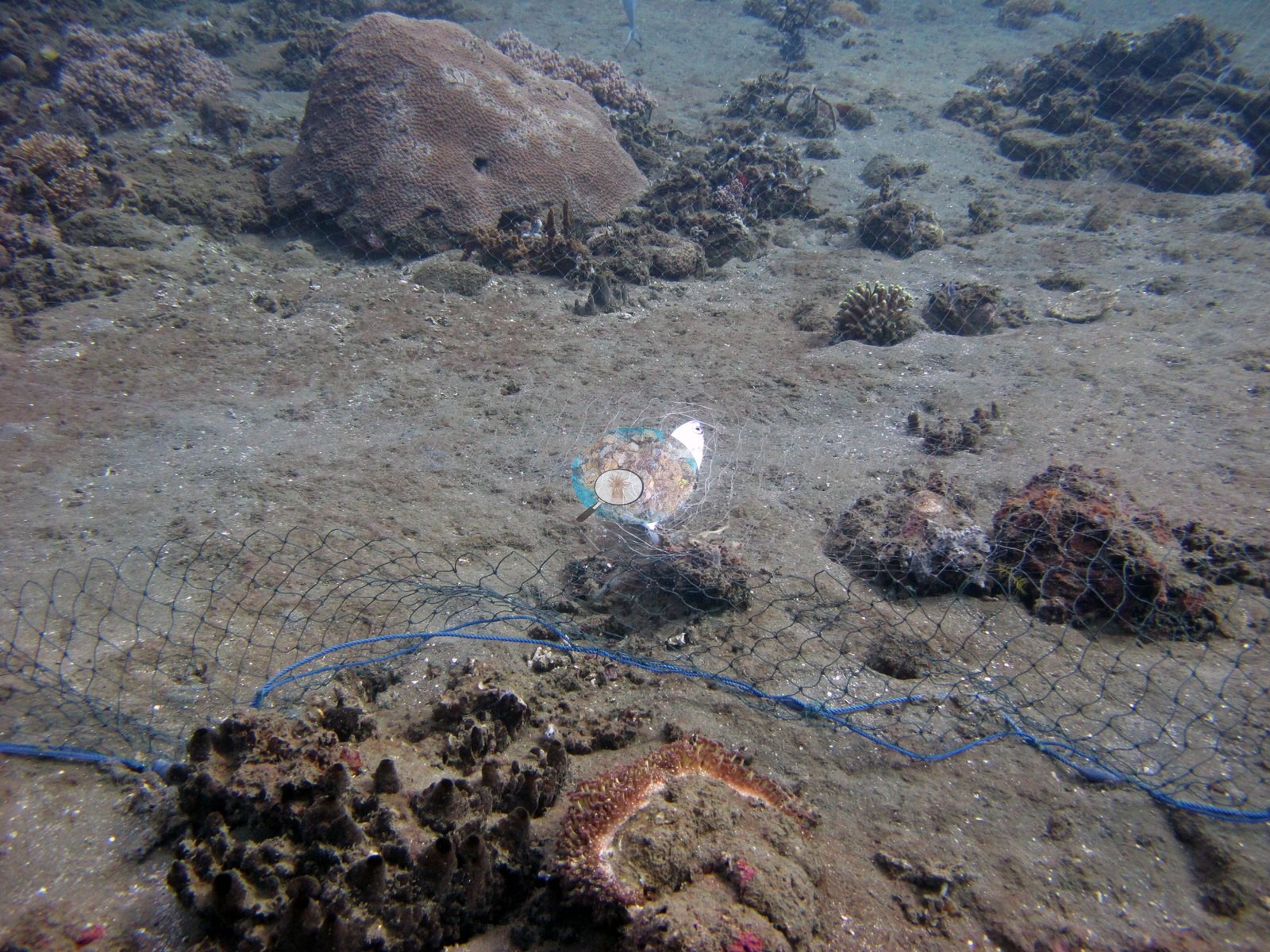
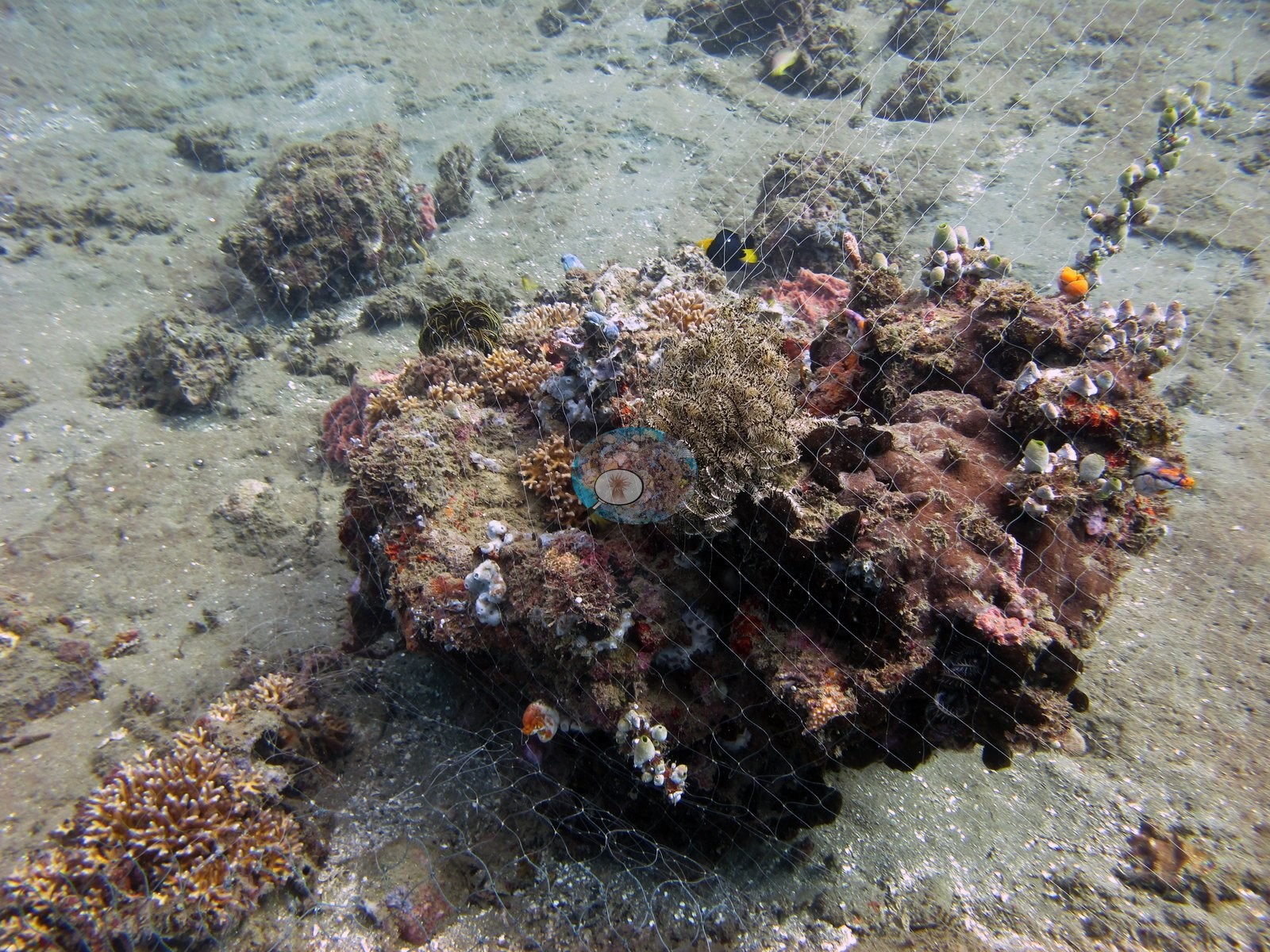
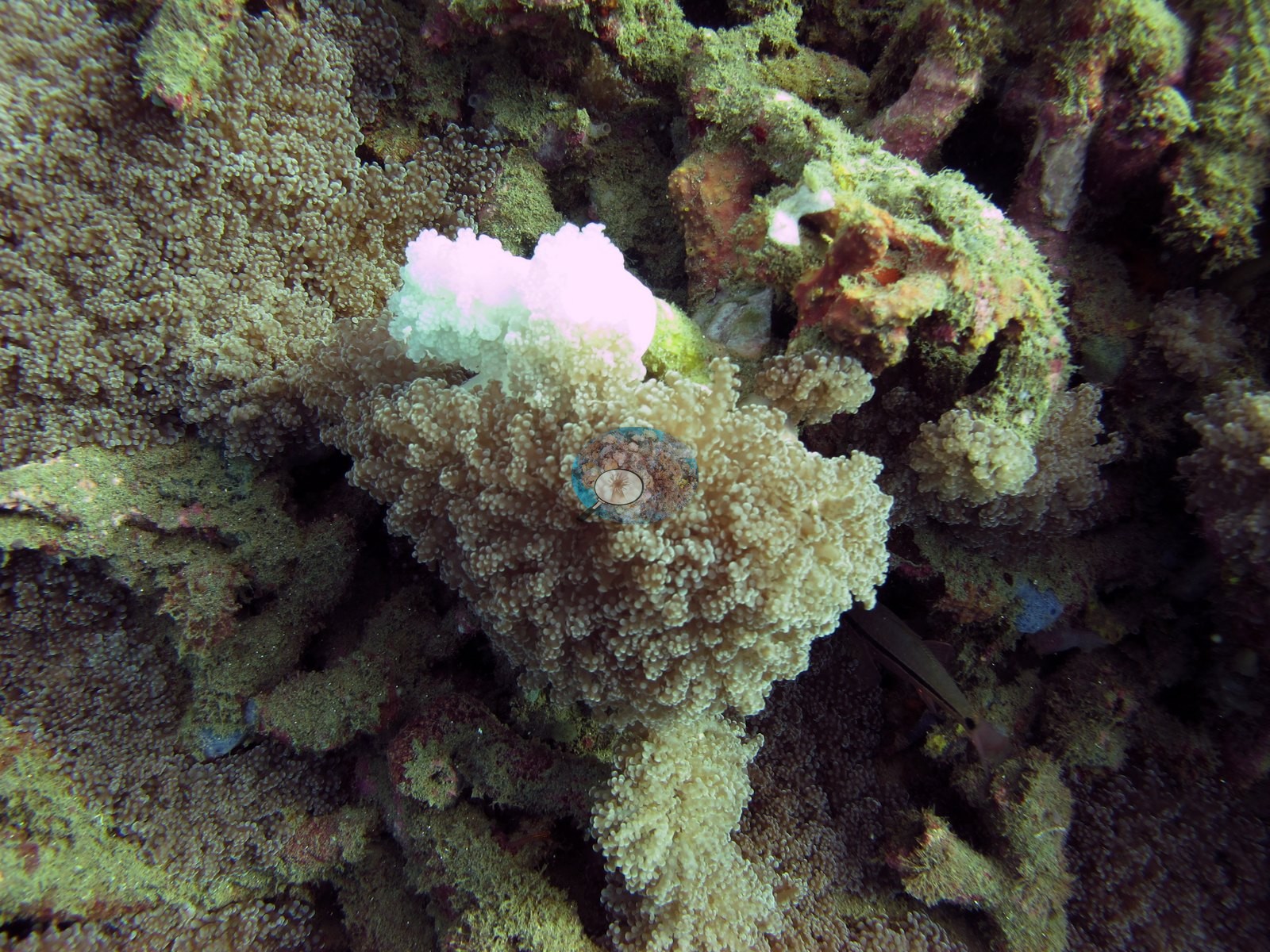
Human-impact flag. At least five frames show a fine monofilament gillnet draped across coral bommies and the water column, with small fish visibly trapped in it -- clear evidence of active or recently set fishing gear smothering part of the reef. One soft (leather) coral colony shows a single lobe sharply bleached bright white against otherwise healthy tan-olive tissue -- a localized, single-colony partial bleaching event, not reef-wide. No crown-of-thorns or disease seen.
Fish and other fauna
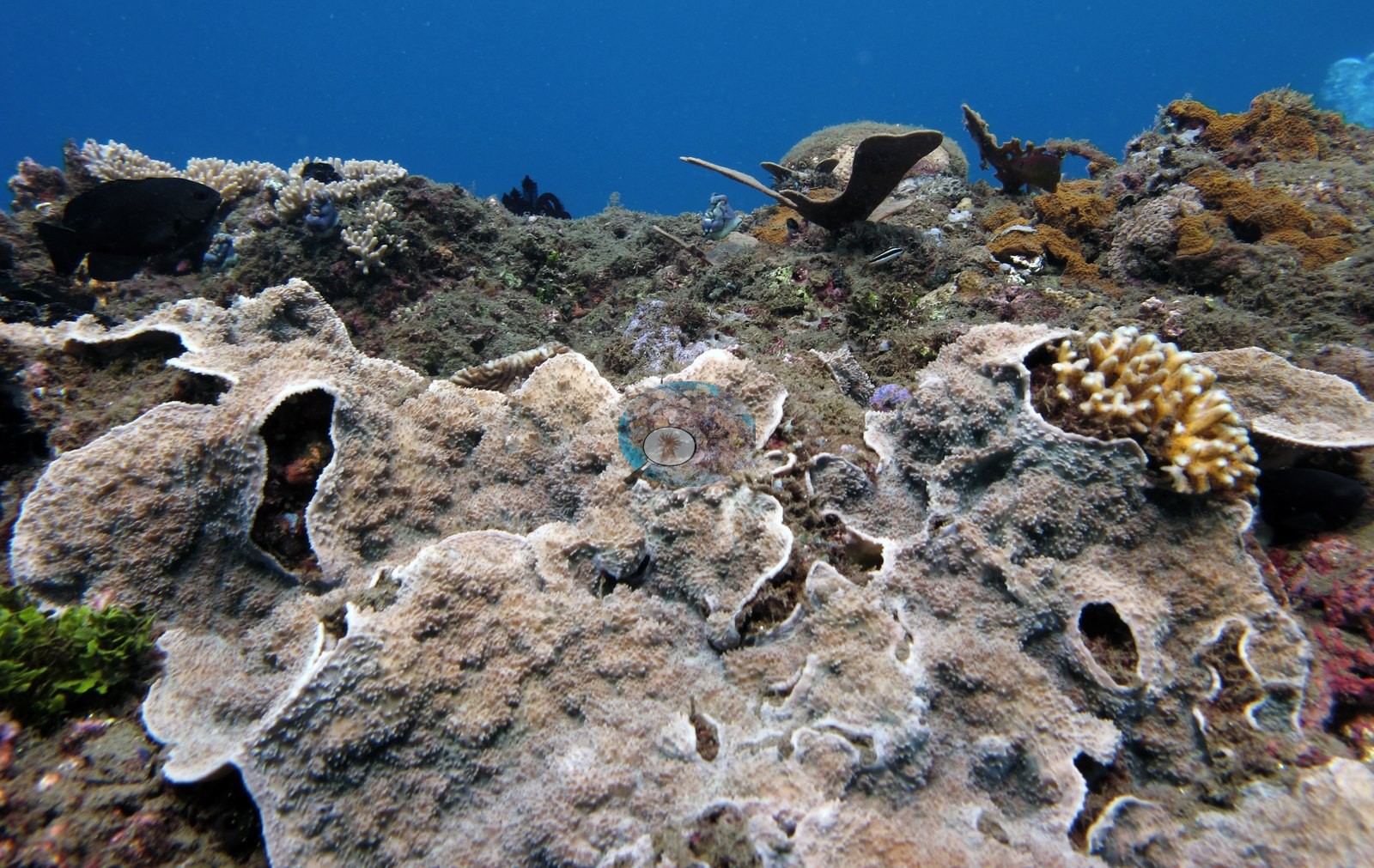
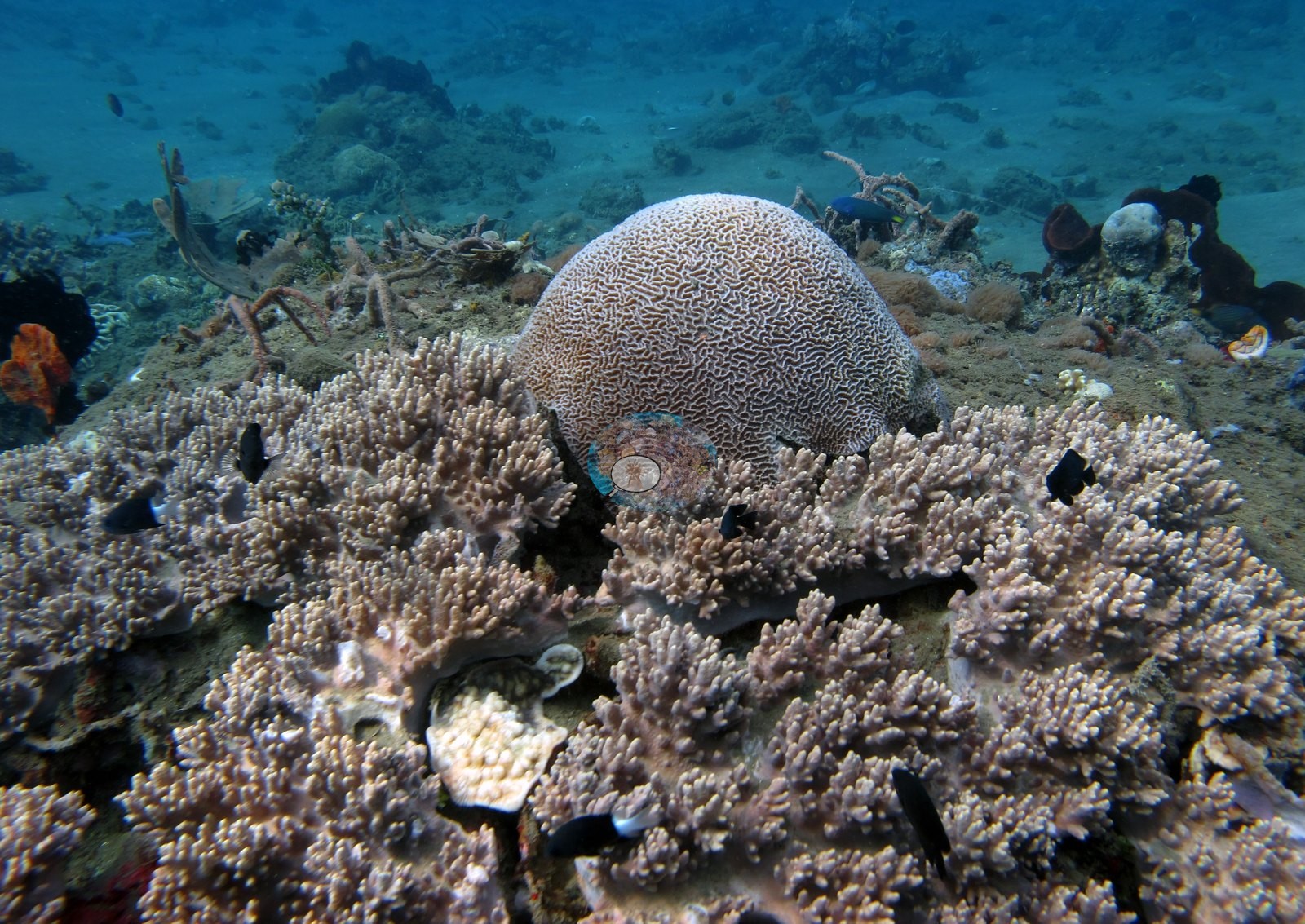
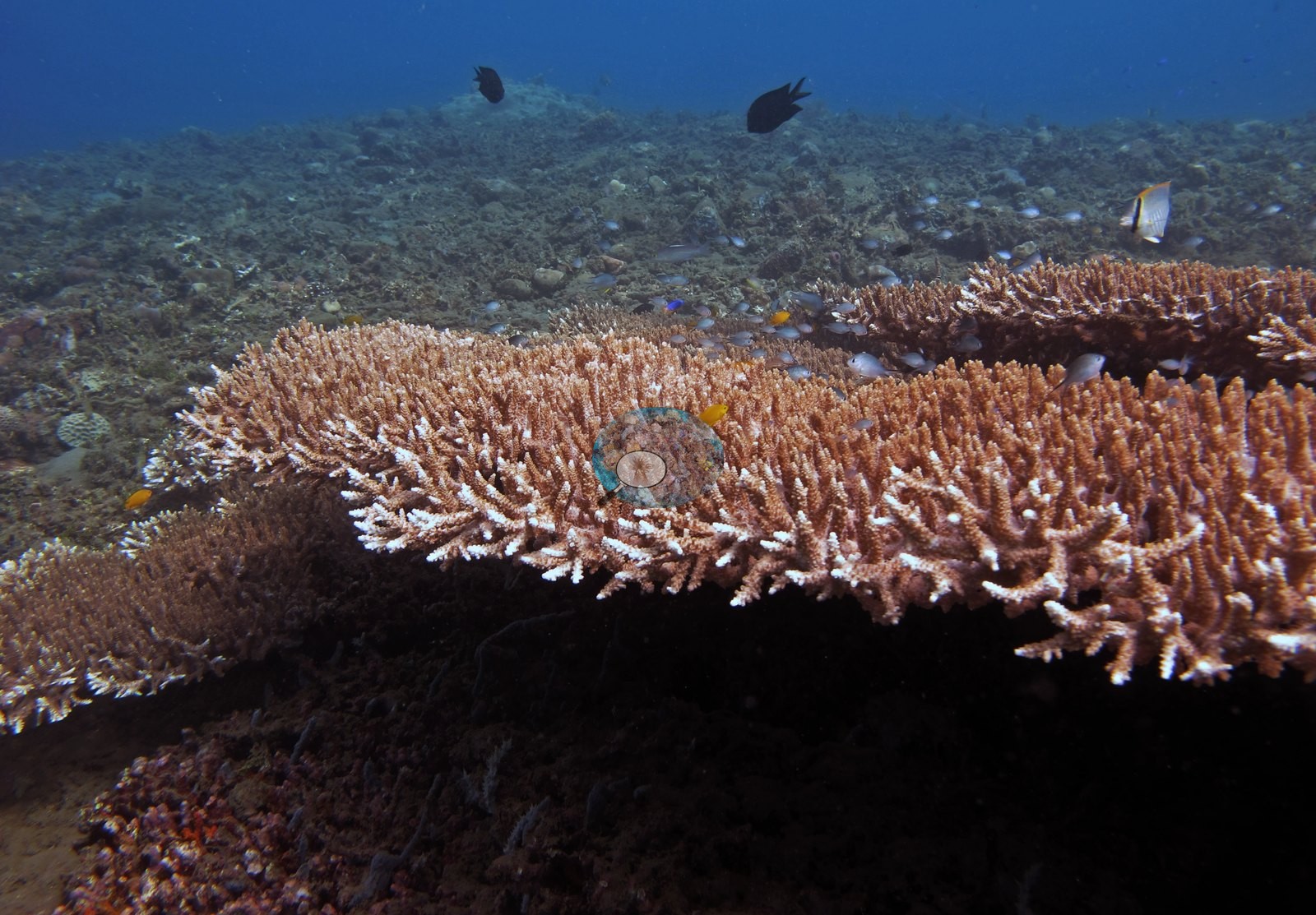
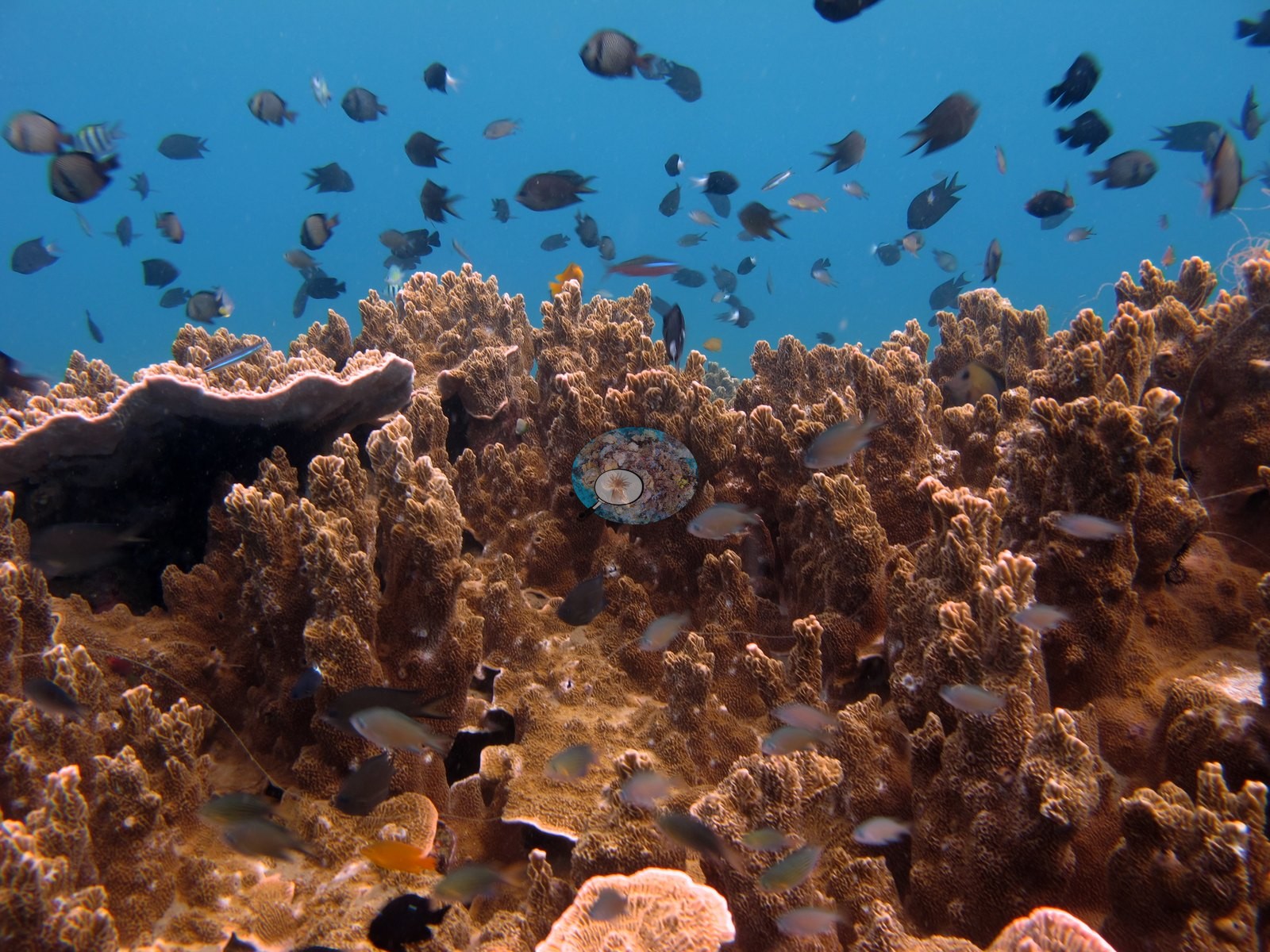
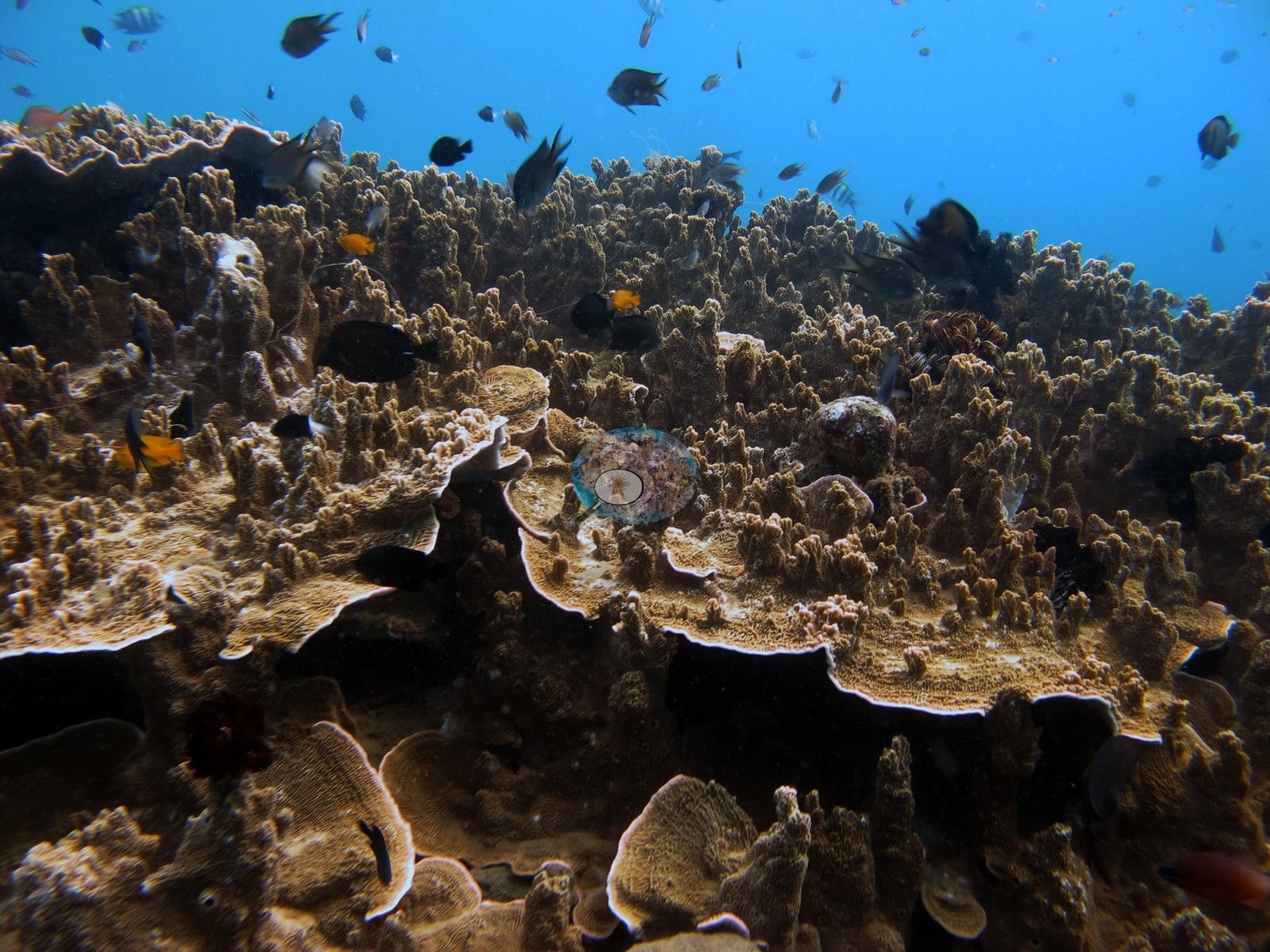
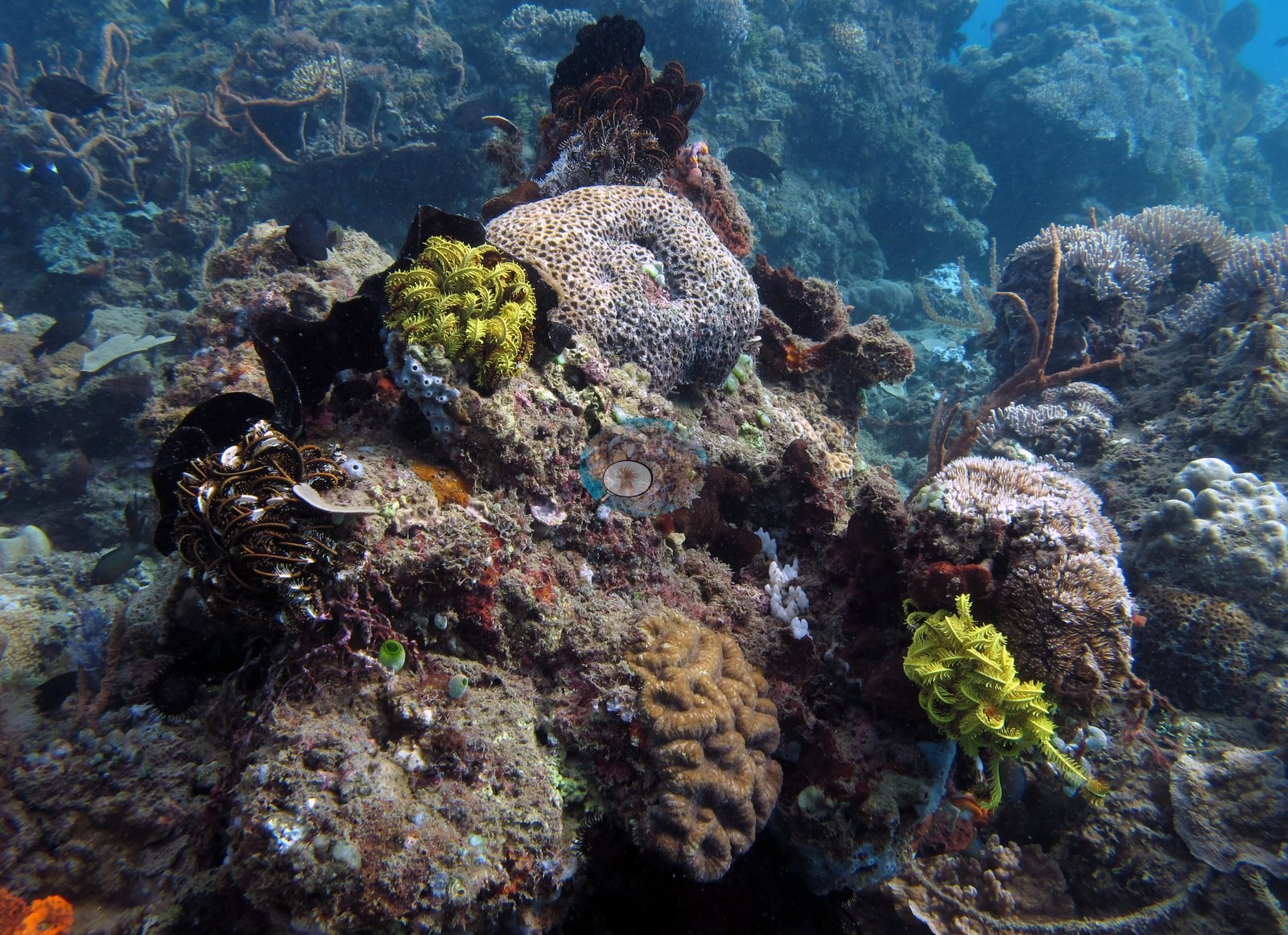
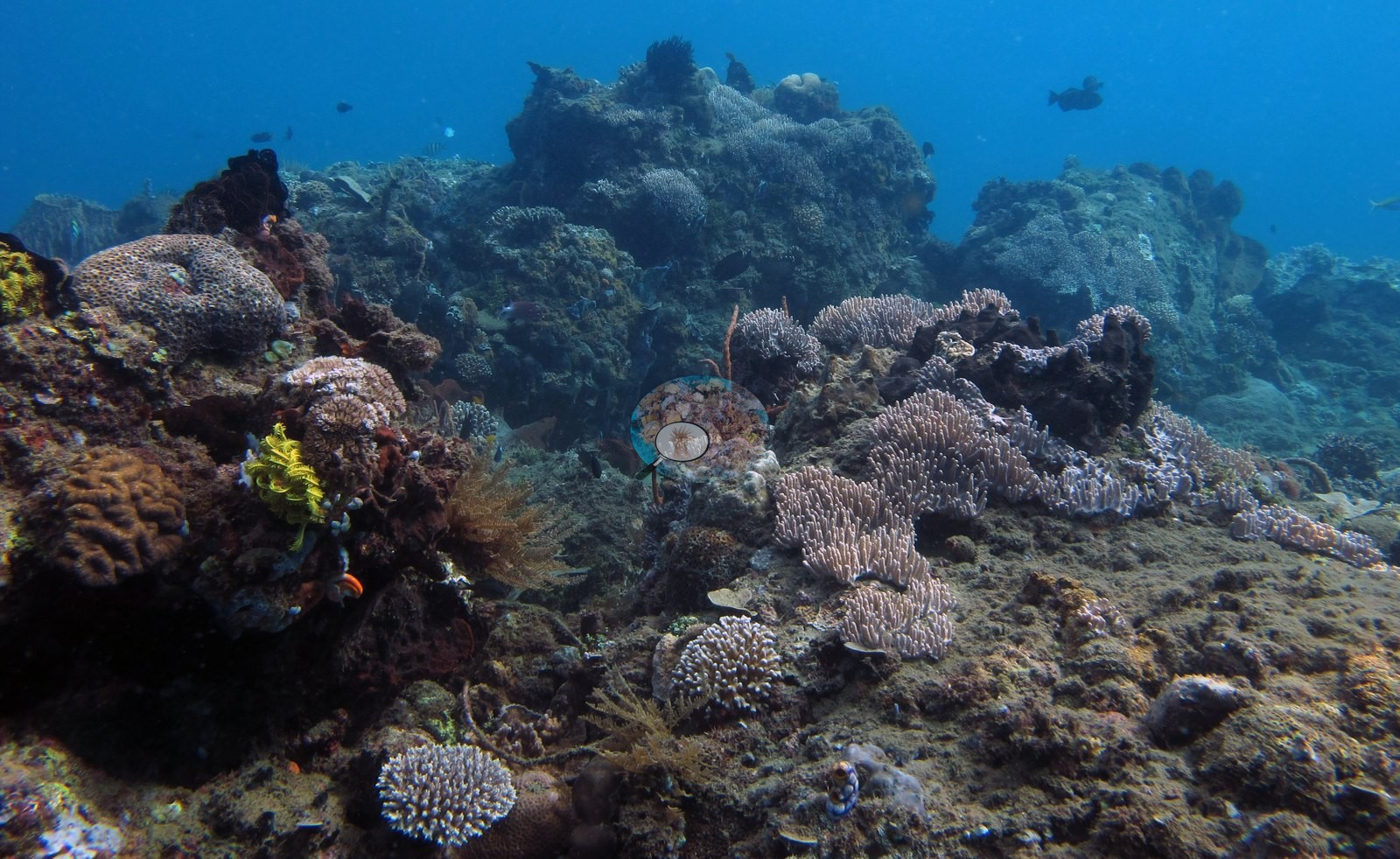
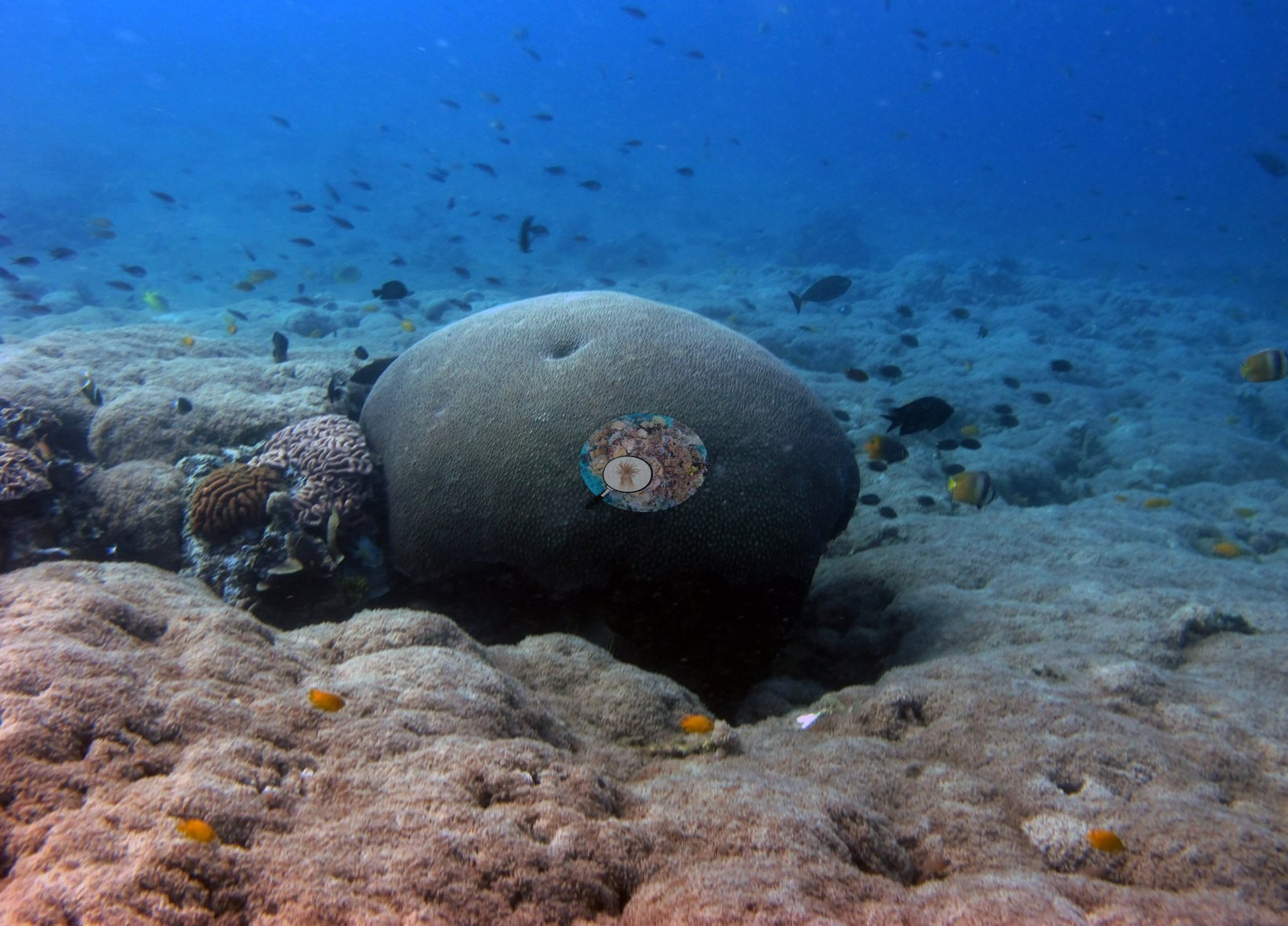
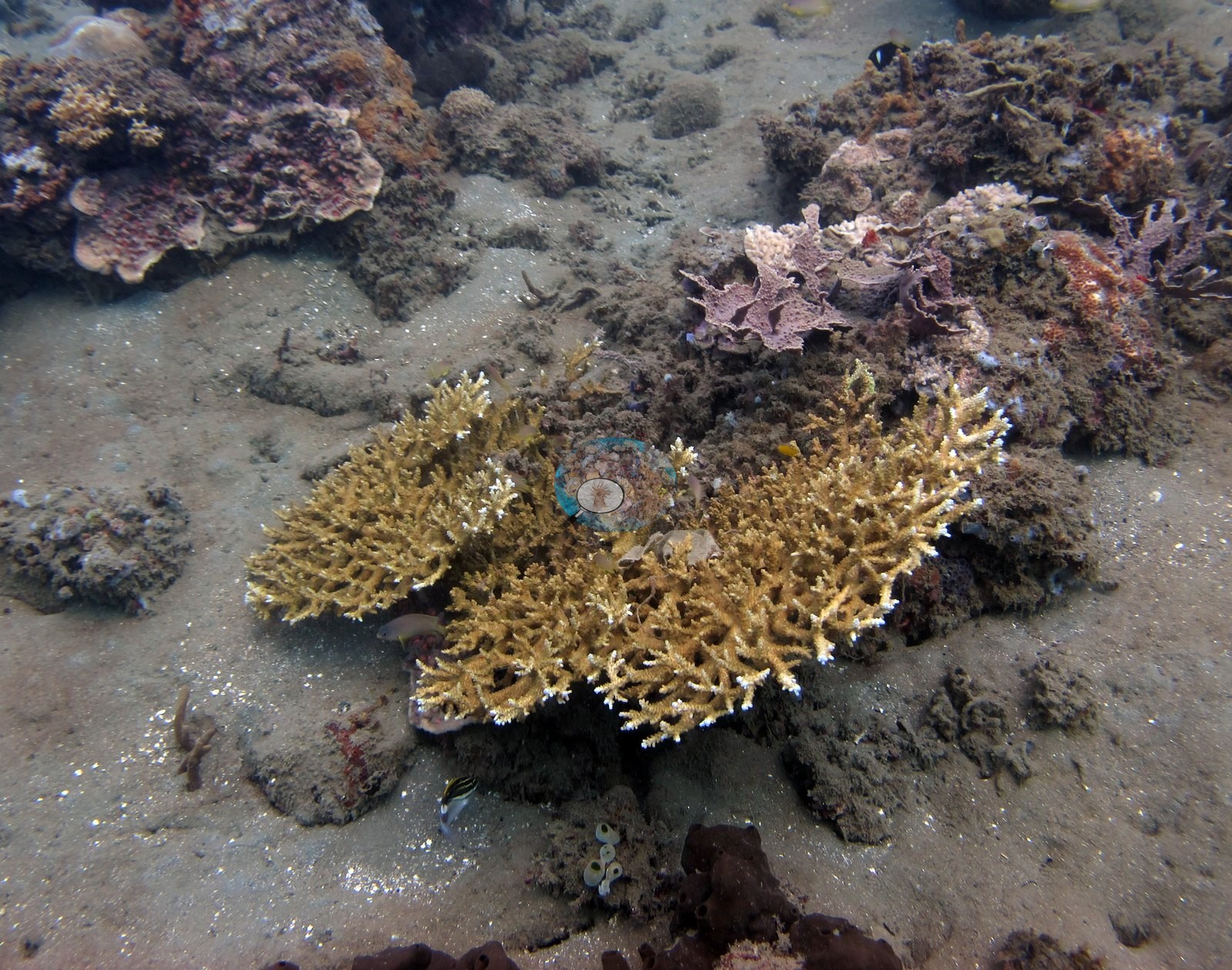
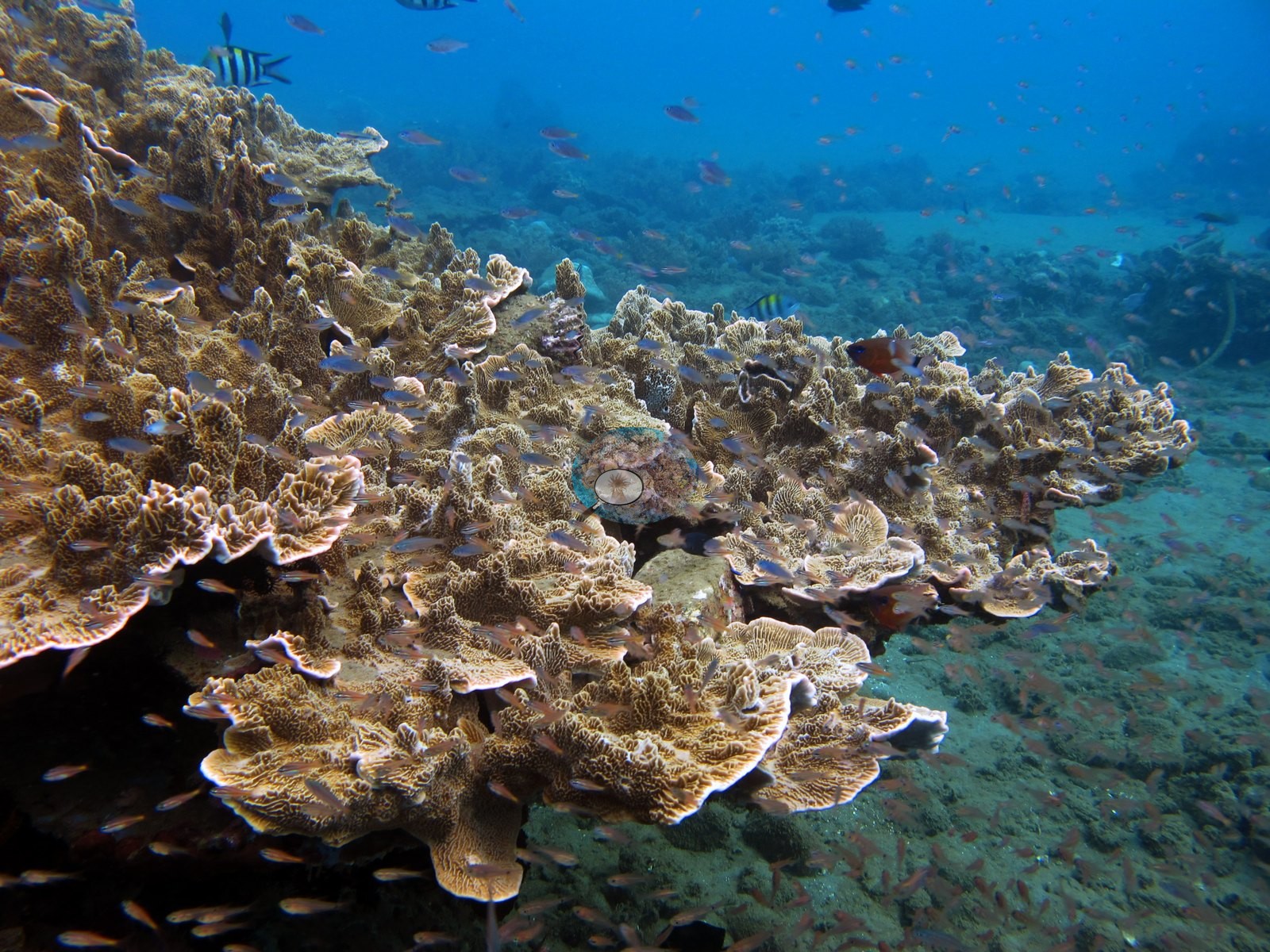
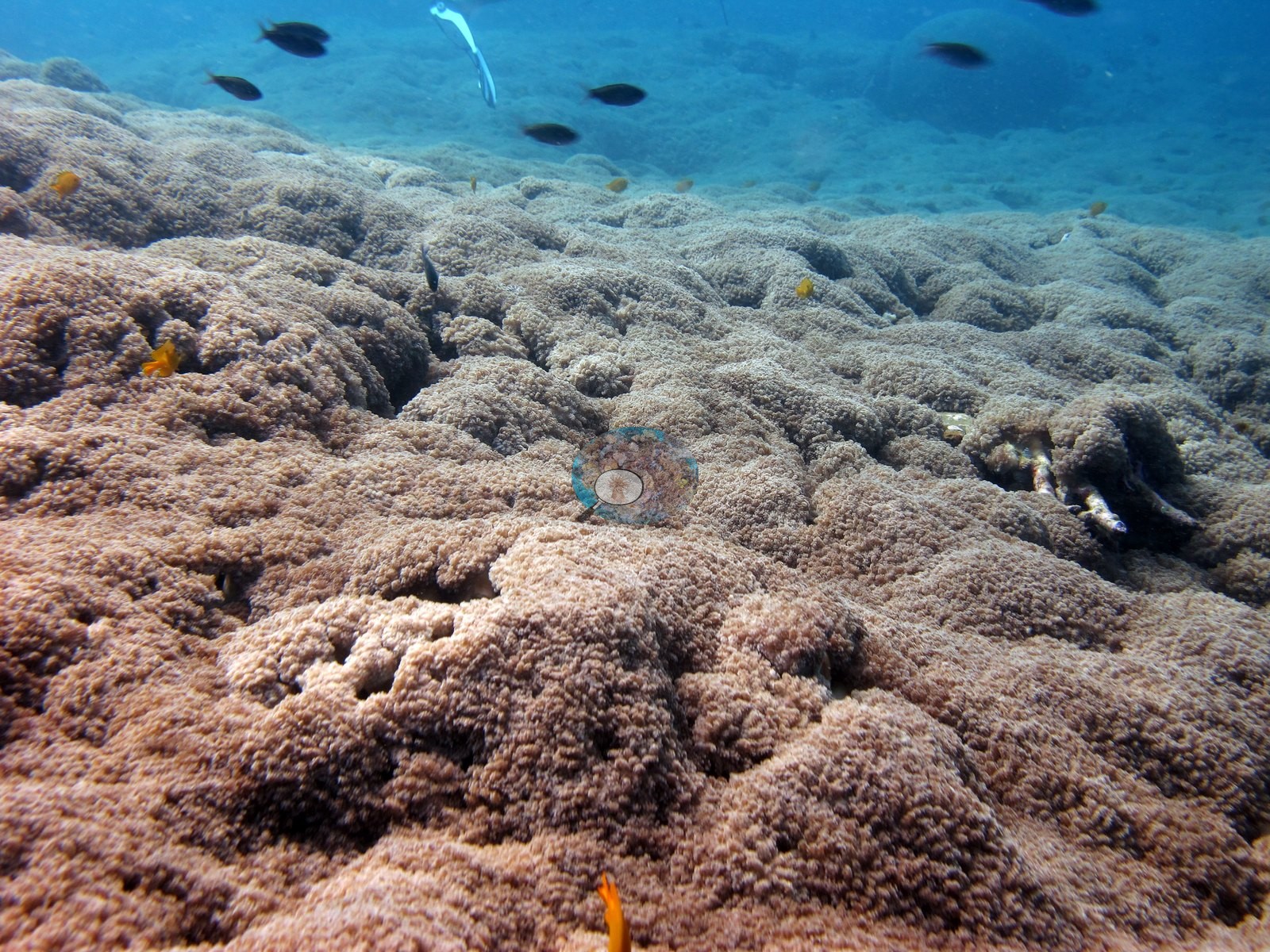
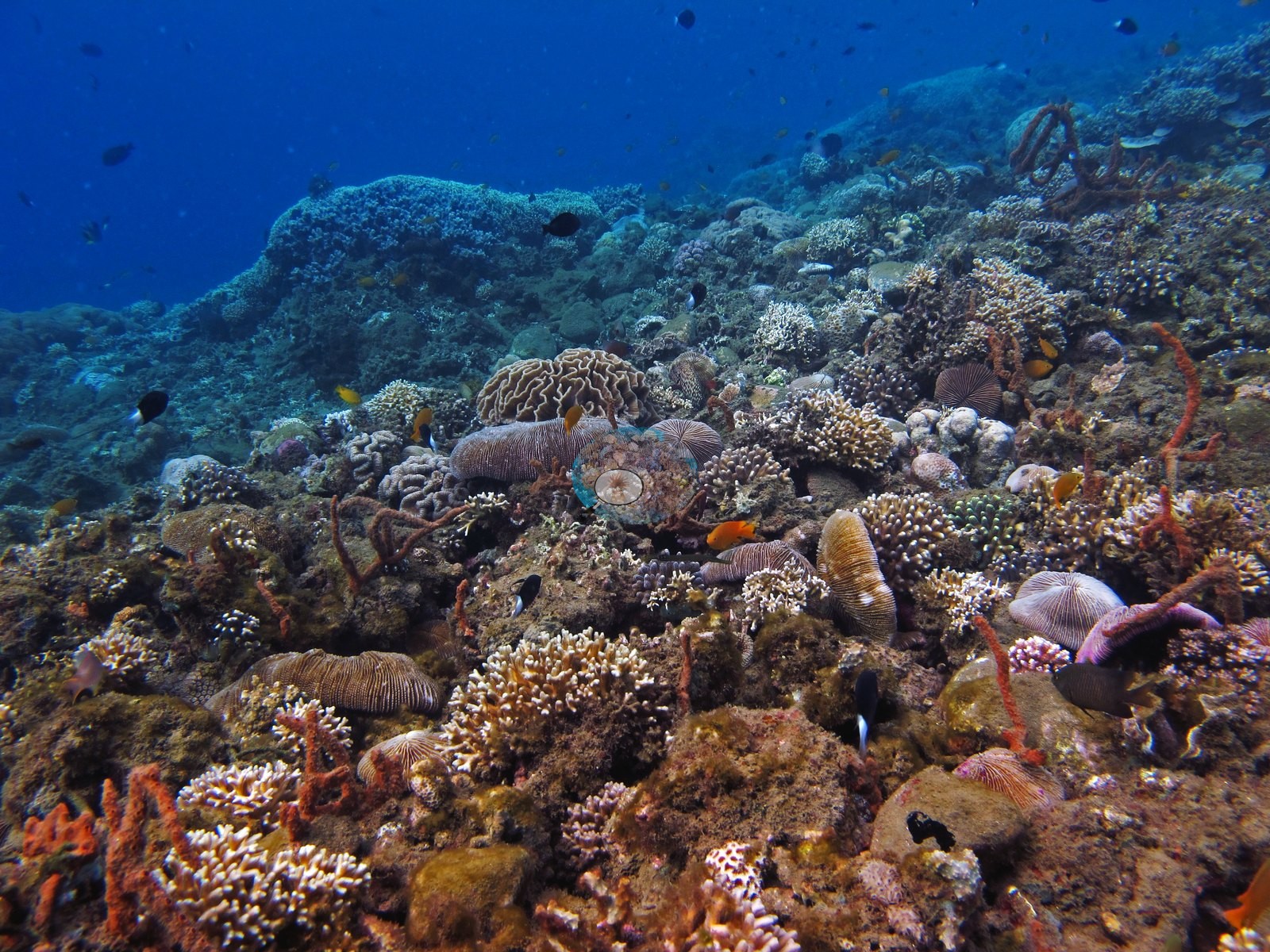
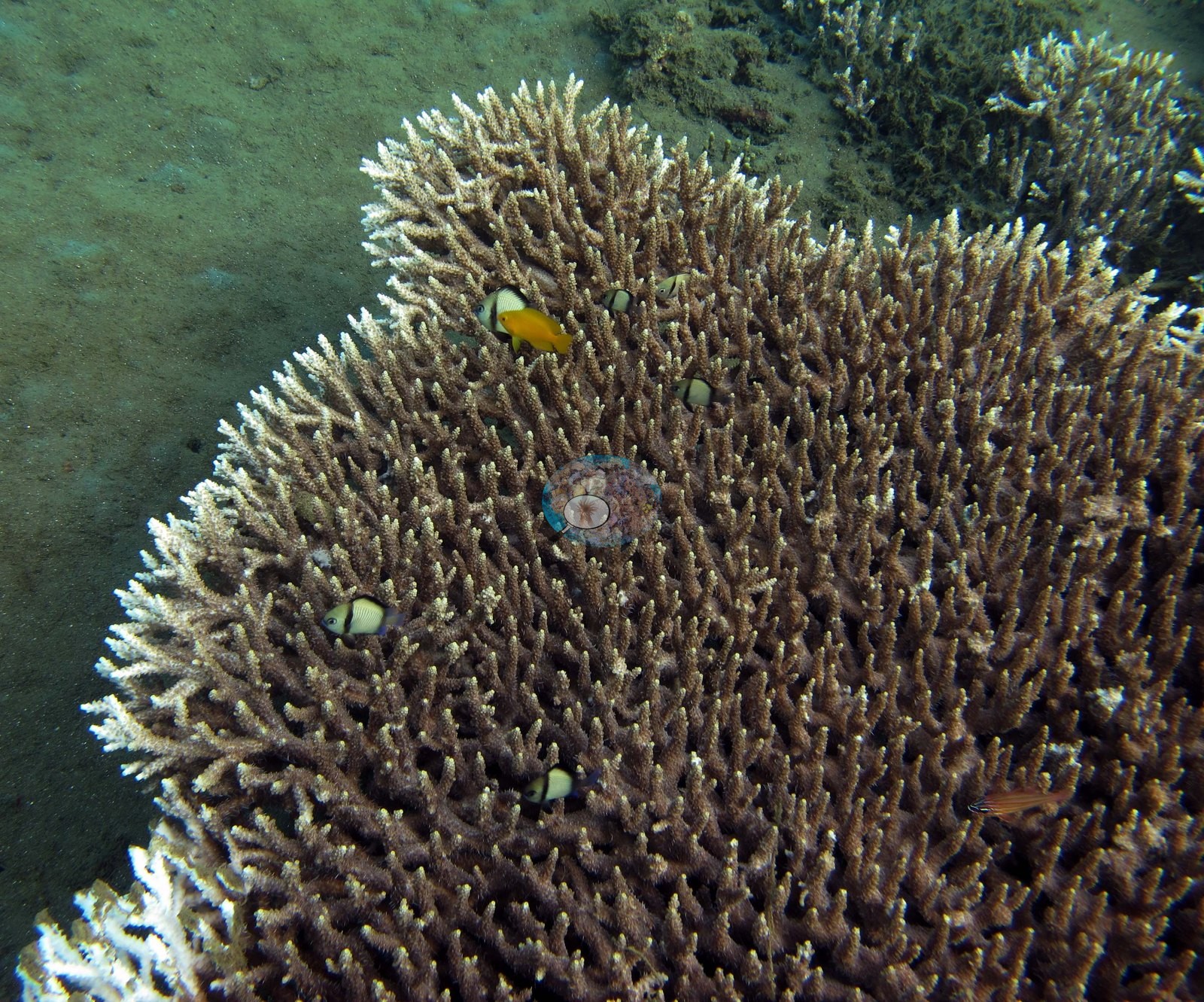
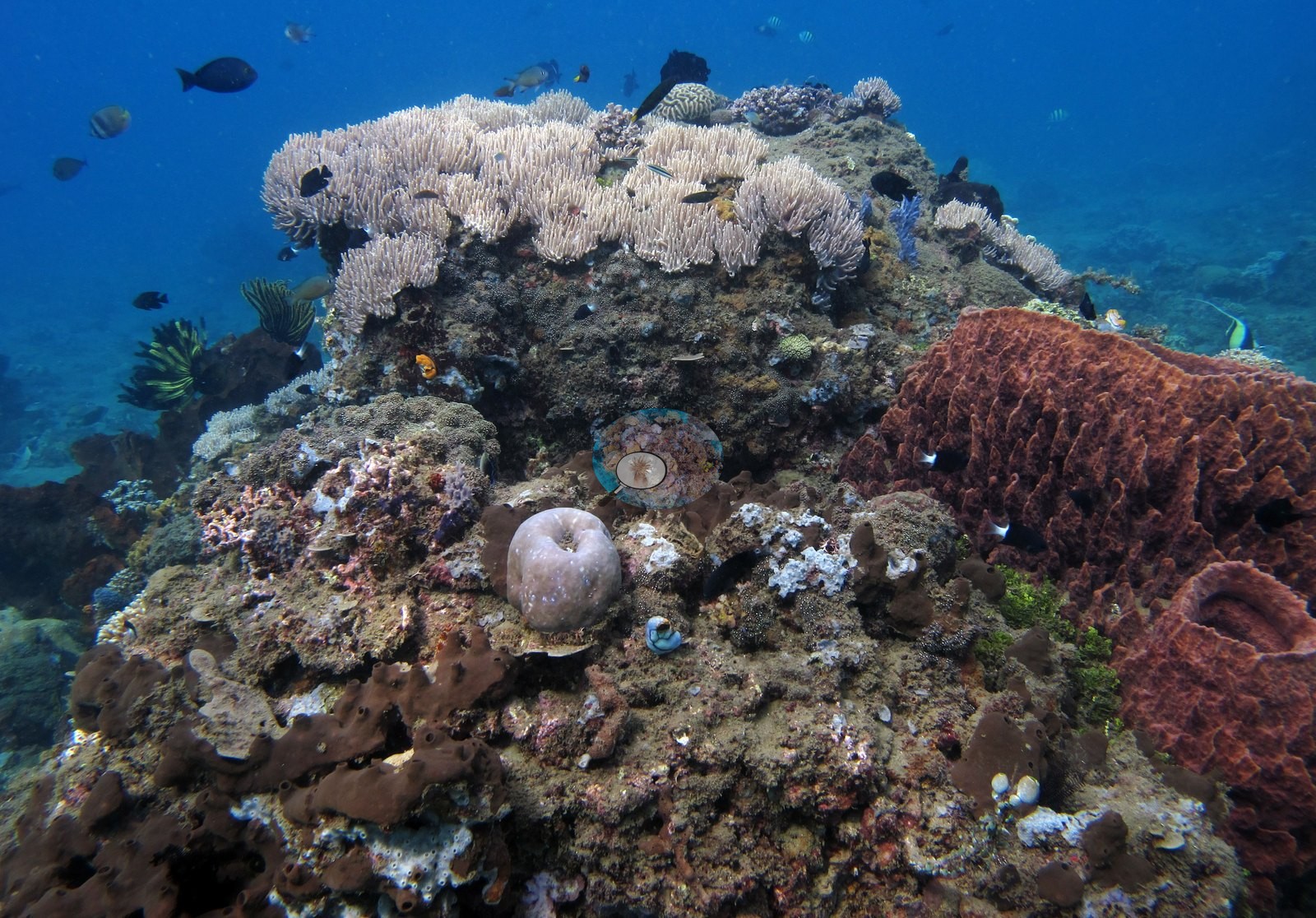
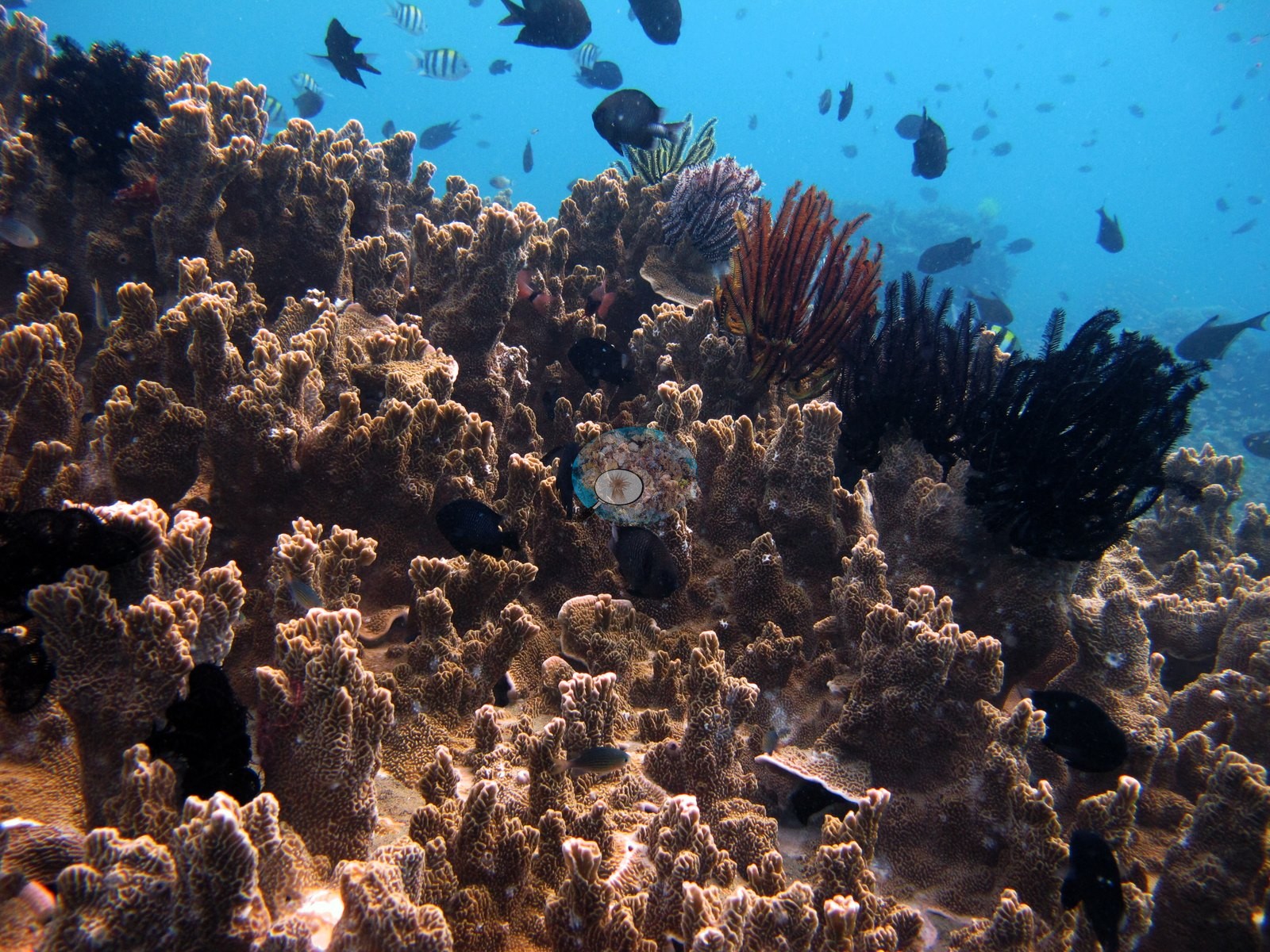
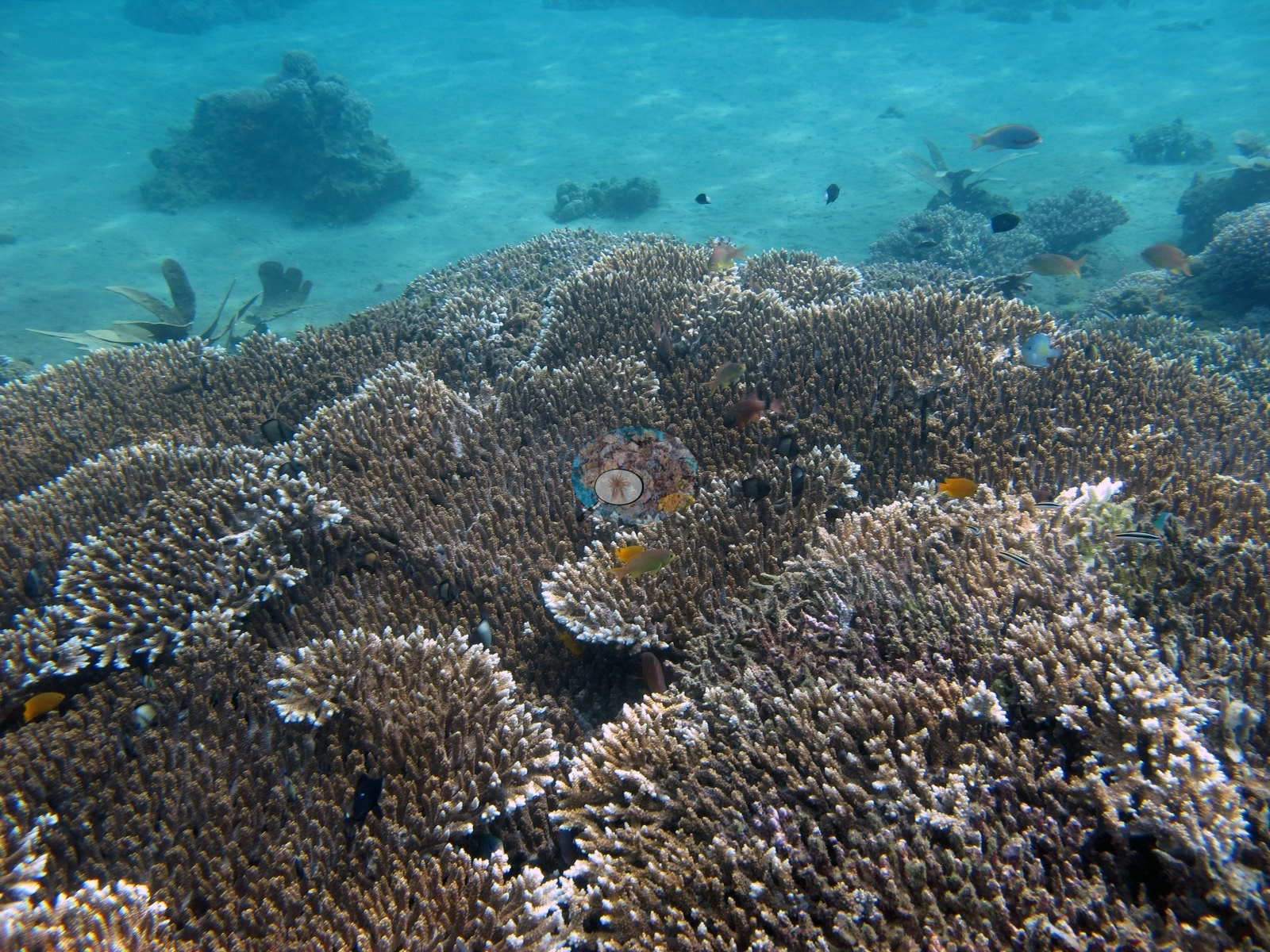
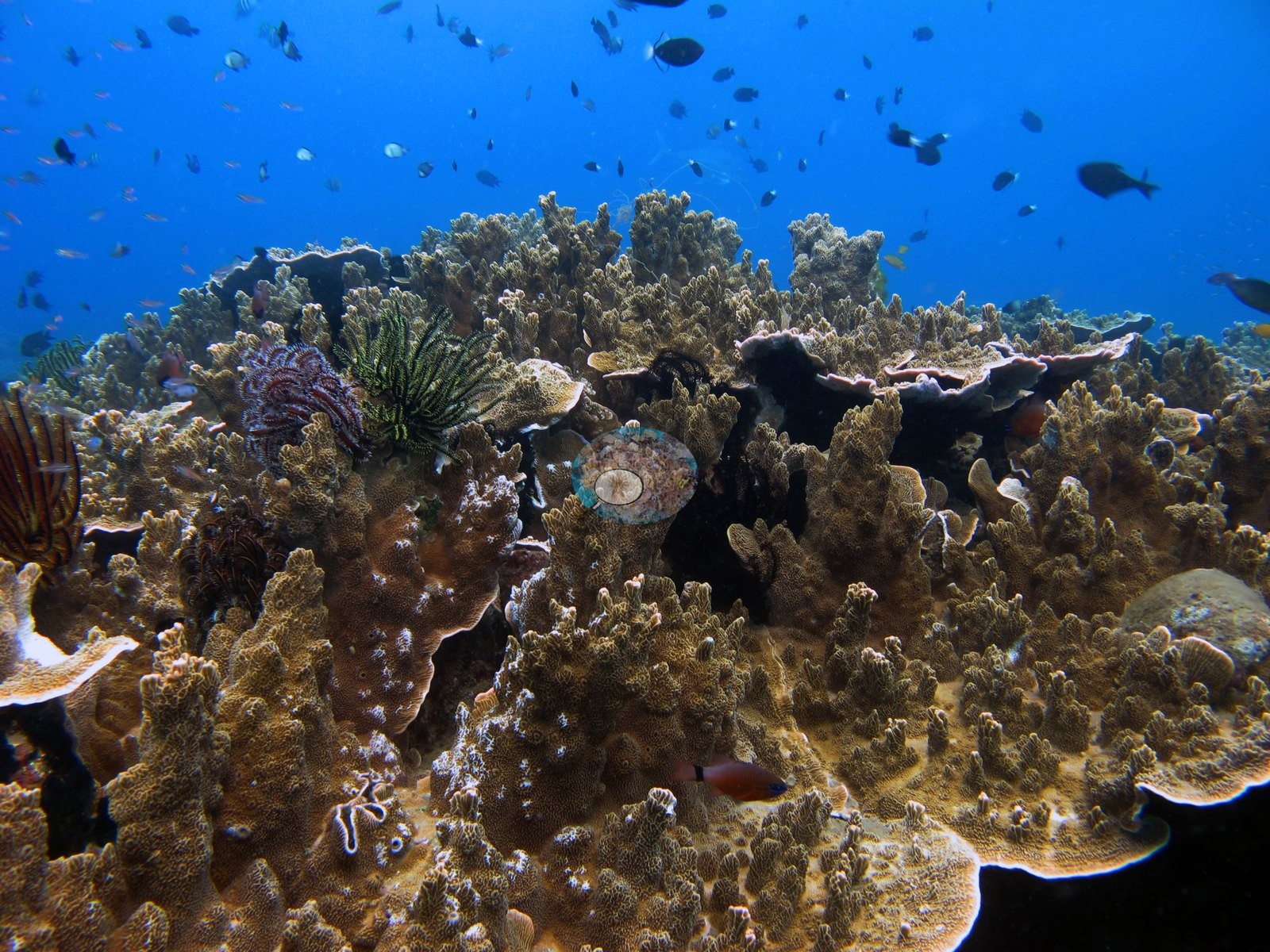
Dense schools of chromis and fusiliers swarm the bommies alongside anthias, butterflyfish, a moray, and abundant crinoids; a Culcita cushion star (not a crown-of-thorns) turns up on the sand (e.g., Image 3, Image 4, Image 5).
Comparisons with other data
No prior survey data from this site. If you would like to share yours, please email us.
Dive record
The first of three muck dives near Laha on Ambon's south coast, 2018-04-22.
Coral cover: method notes
Data & links
All images from Coral Reef Diagnostics. Data are from Coral Reef Diagnostics.
© Coral Reef Diagnostics.