
Part of the regional summaries: Tonga - Ha'apai and Tonga
More info
Southern Tonga (NOAA CRW virtual station)A submerged offshore patch reef with spurs 20-30 m wide and hundreds of meters long, topped with bottlebrush and staghorn Acropora, with some very large Porites in the channels and many meter-wide Turbinaria plates. About 10% of the deeper staghorn was dead or mostly dead under thick turf and damselfish, and thickets at the base of the slope were about 30% dead. Surveyed on the Living Oceans Foundation's Global Reef Expedition.
Ko ha kiʻi hakau ʻi tahi kuo melemo (submerged offshore patch reef) mo e ngaahi spurs ʻoku 20-30 m hono fālahi pea loloa ʻaki ʻa e mita ʻe ngaahi teau, ʻoku ʻi honau funga ʻa e Acropora fakapulumu (bottlebrush) mo e staghorn, mo ha Porites lalahi ʻaupito ʻe niʻihi ʻi he ngaahi hala vai pea mo e ngaahi papa Turbinaria lahi ʻoku mita ʻe taha hono fālahi. Naʻe mate pe meimei mate ʻa e meimei 10% ʻo e staghorn loloto ange ʻi lalo ʻi he limu nounou (turf) matolu mo e damselfish, pea ko e ngaahi vao ʻi he takele ʻo e tafaʻaki naʻe meimei 30% mate.
AI translation of this summary; the English is authoritative. (low confidence)
CTD-cast midpoint of 25.7–25.8°C
More info
Anderson's dive computer read 23.9°C (a single reading, probably a dive mean).5 of the 17 photographs on this page are shown beside the text that discusses them under "Site description" below.
Site description
Setting
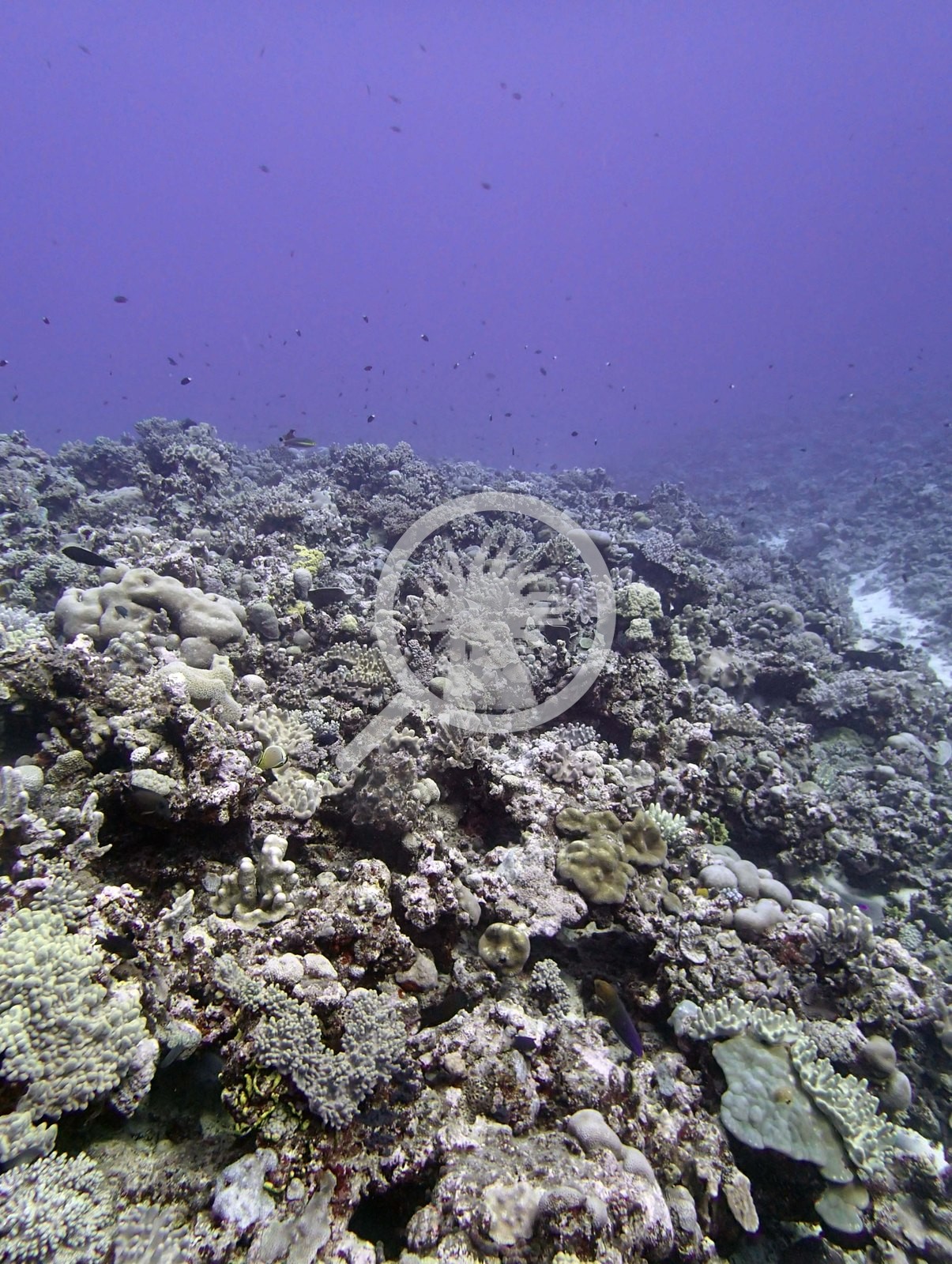
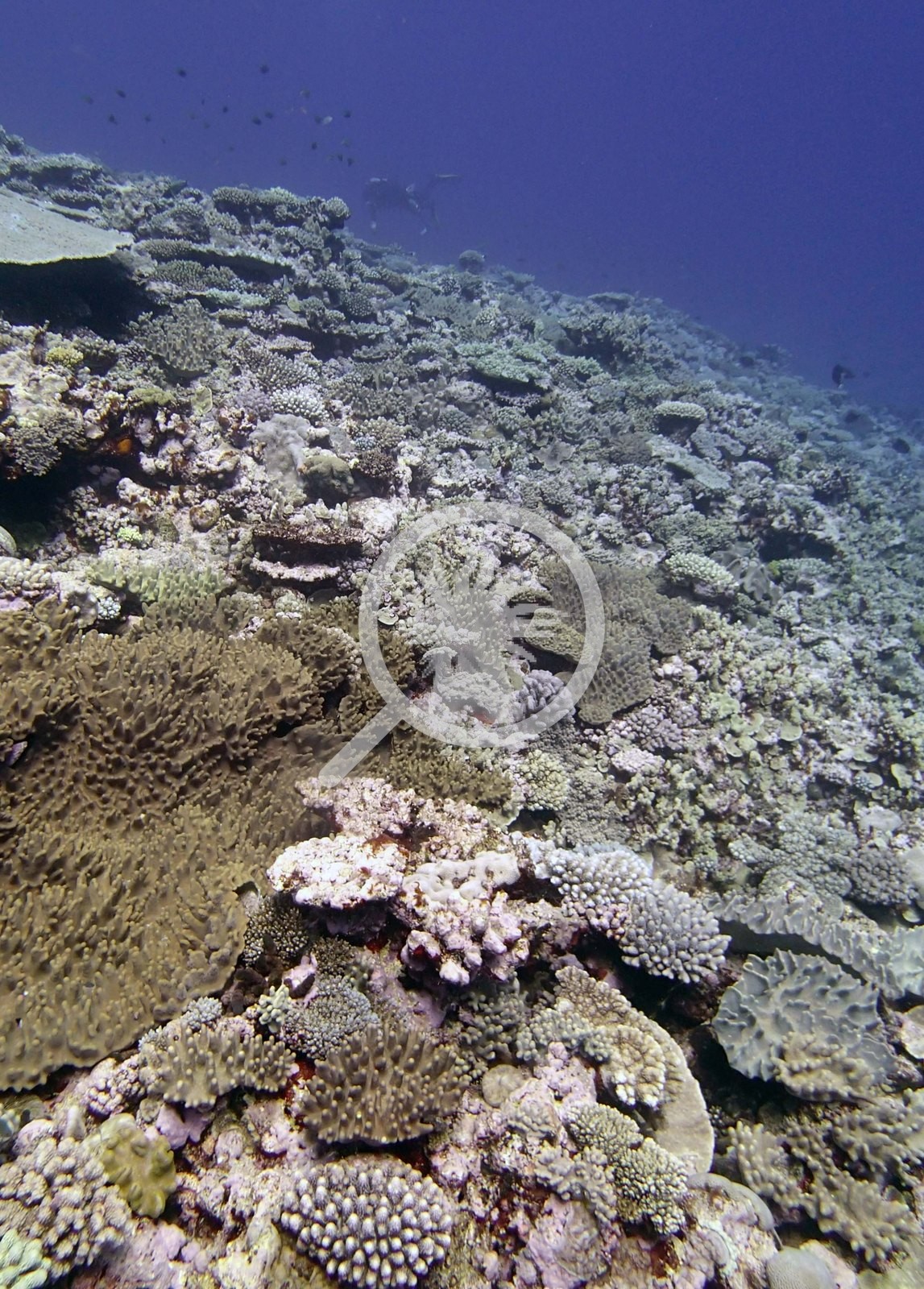
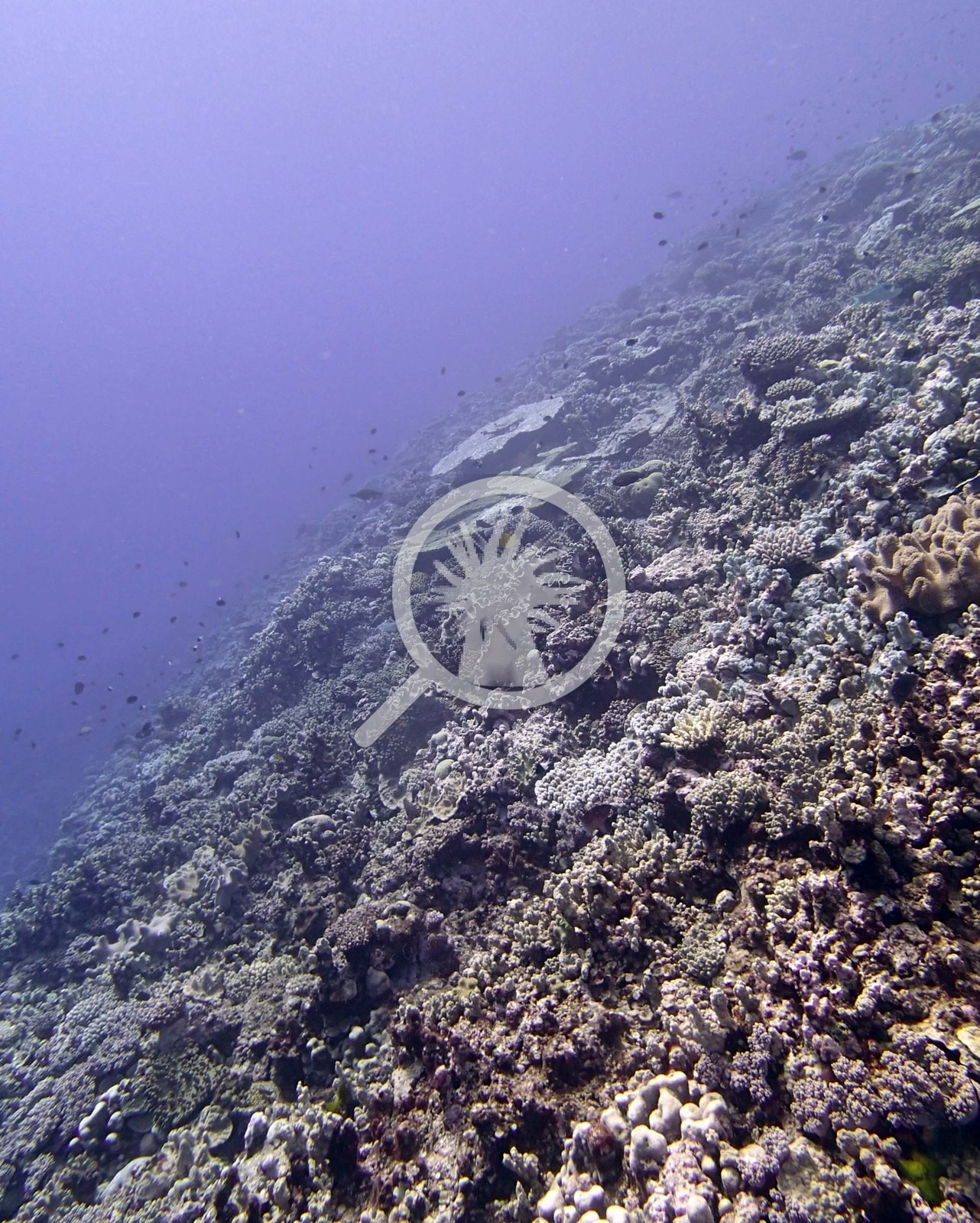
Lagoonal patch reef. Located offshore, a submerged patch reef that comes to 3-4 m from the surface. In shallows are a number of very long, wide spurs, 20 – 30 m wide and hundreds of meters long that extend from 7-8 m to 15 m in sand/rubble channels. At the edge of these they slope steeply from 12-15 m to 25 m, ending in sand with scattered small coral bommies (< 1 m) that continues to slope slowly to deep water.
General benthic features
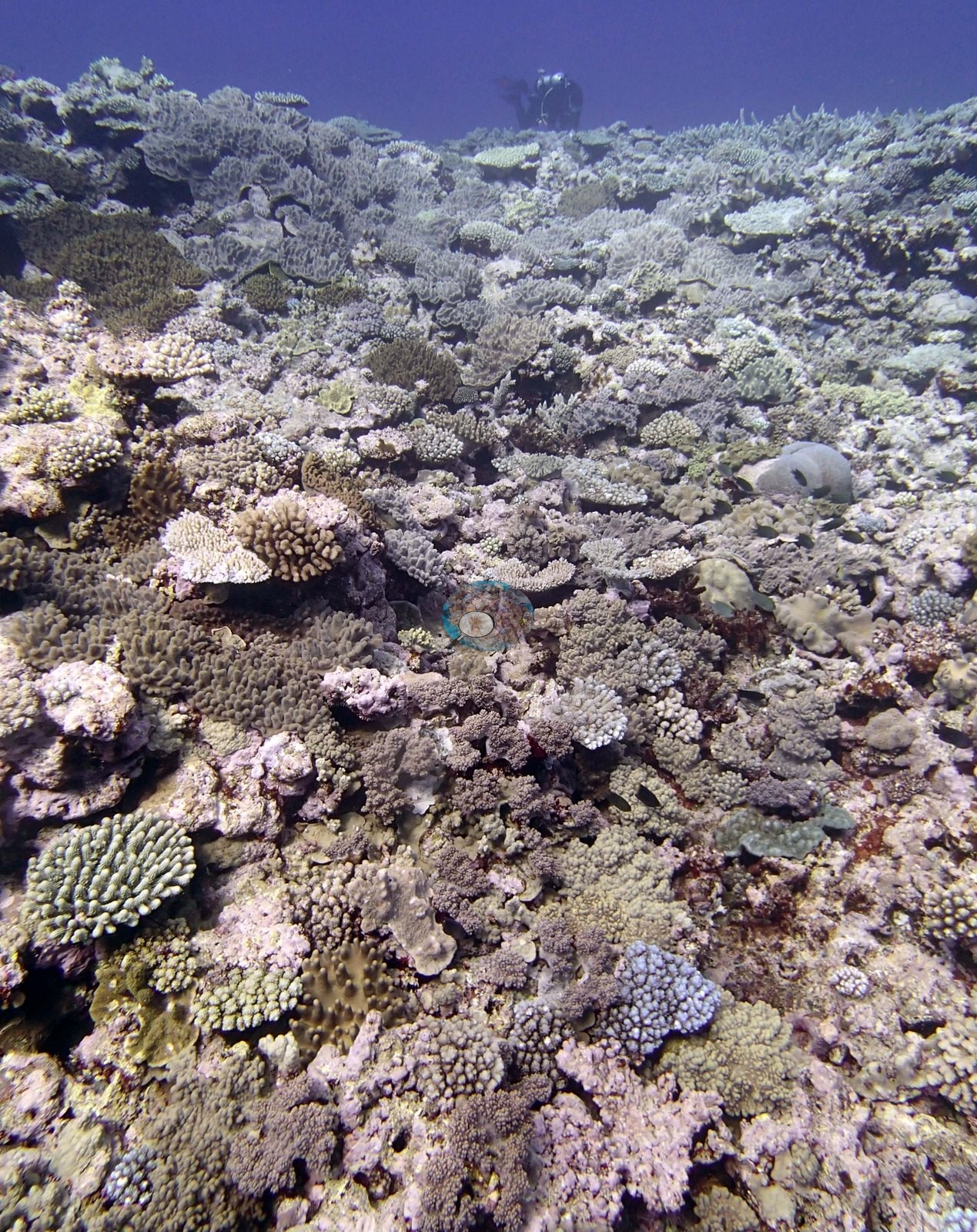
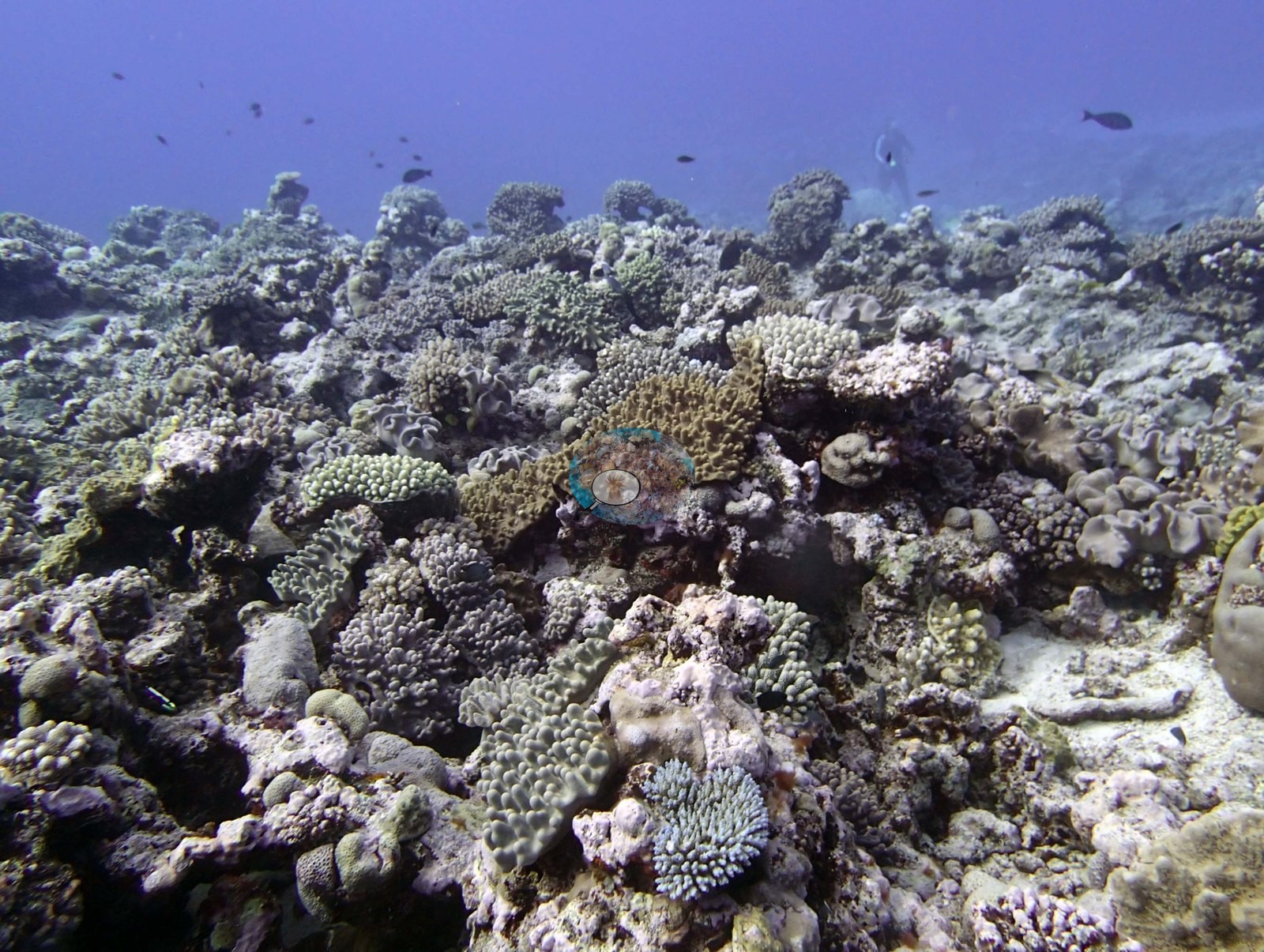
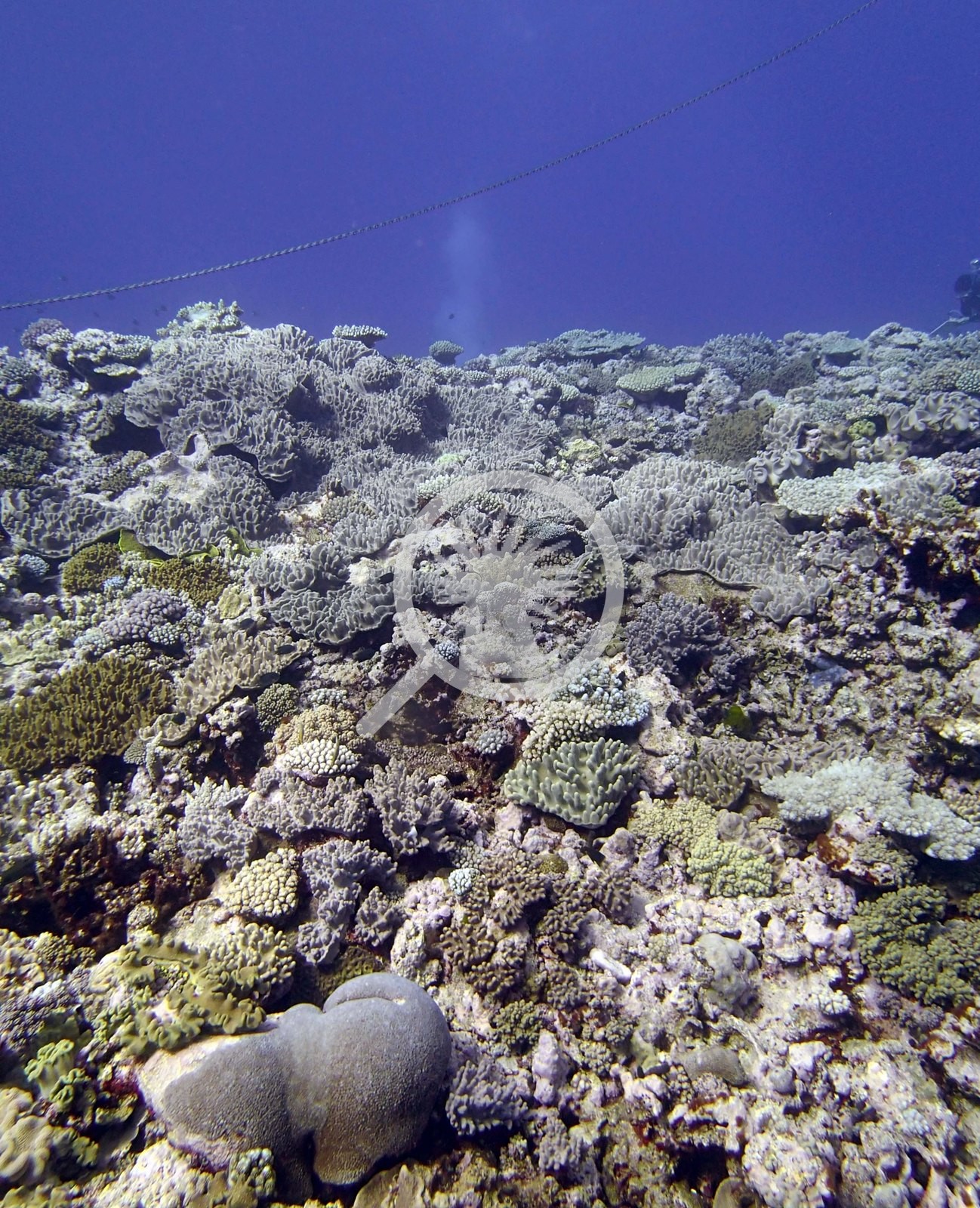
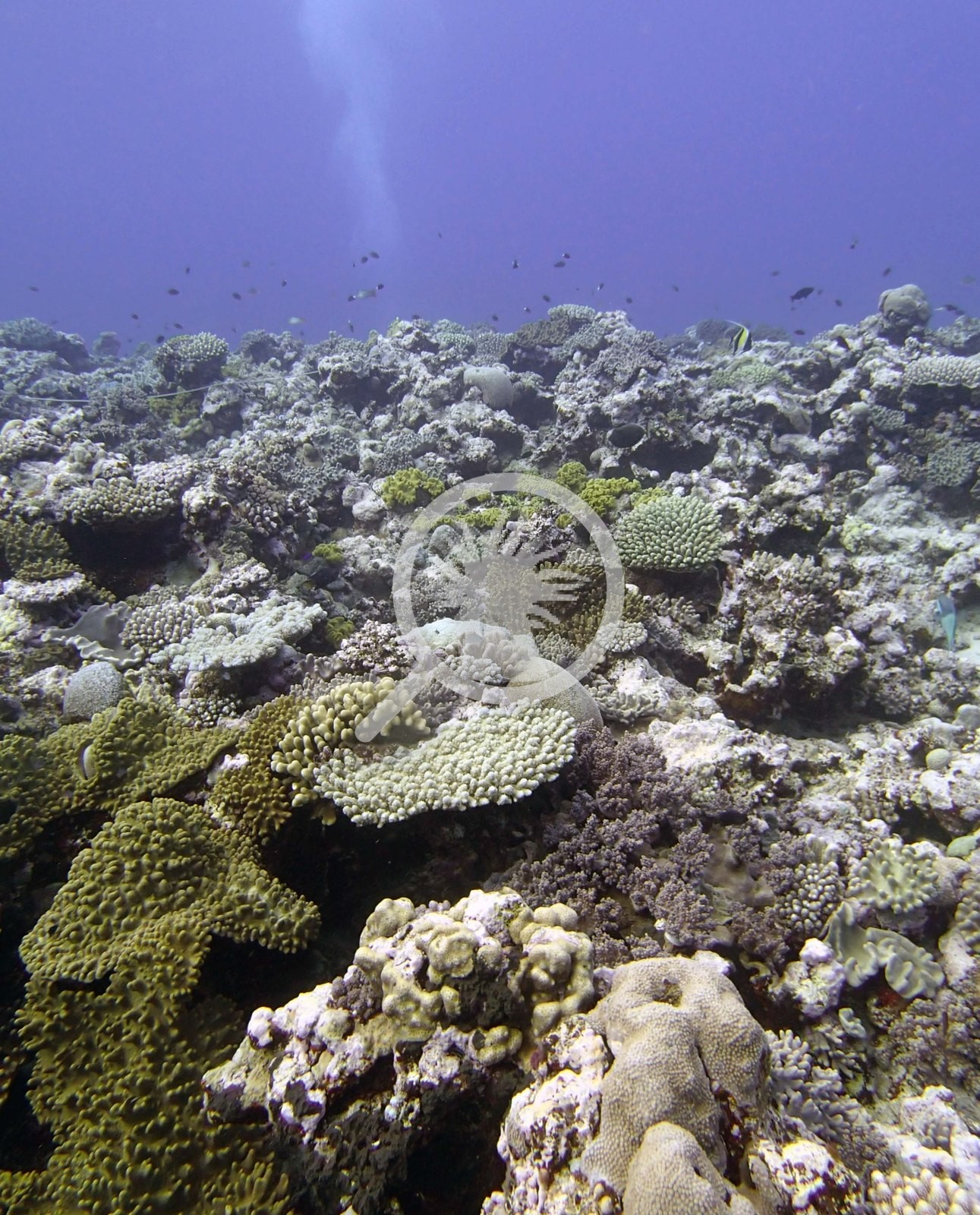
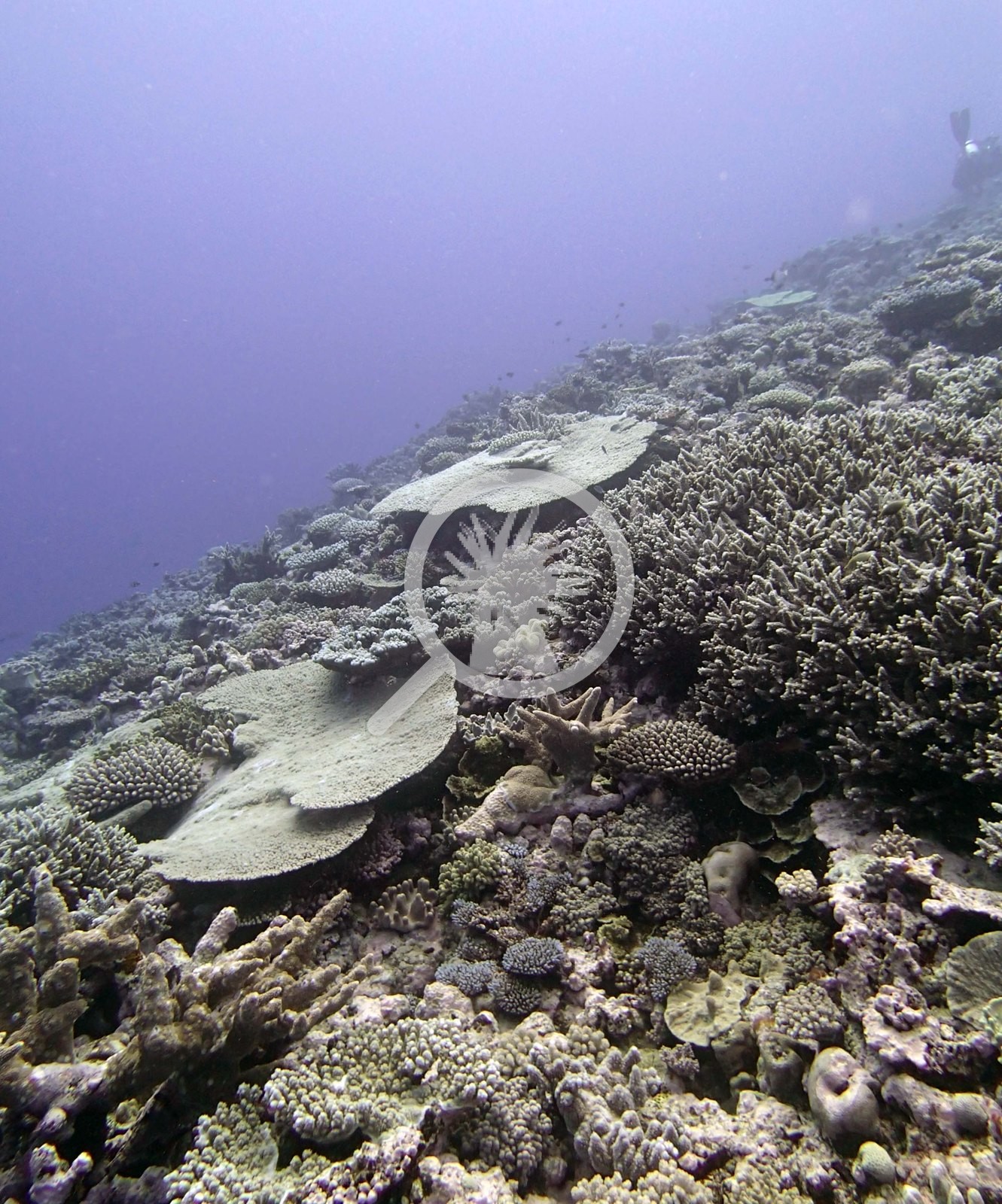
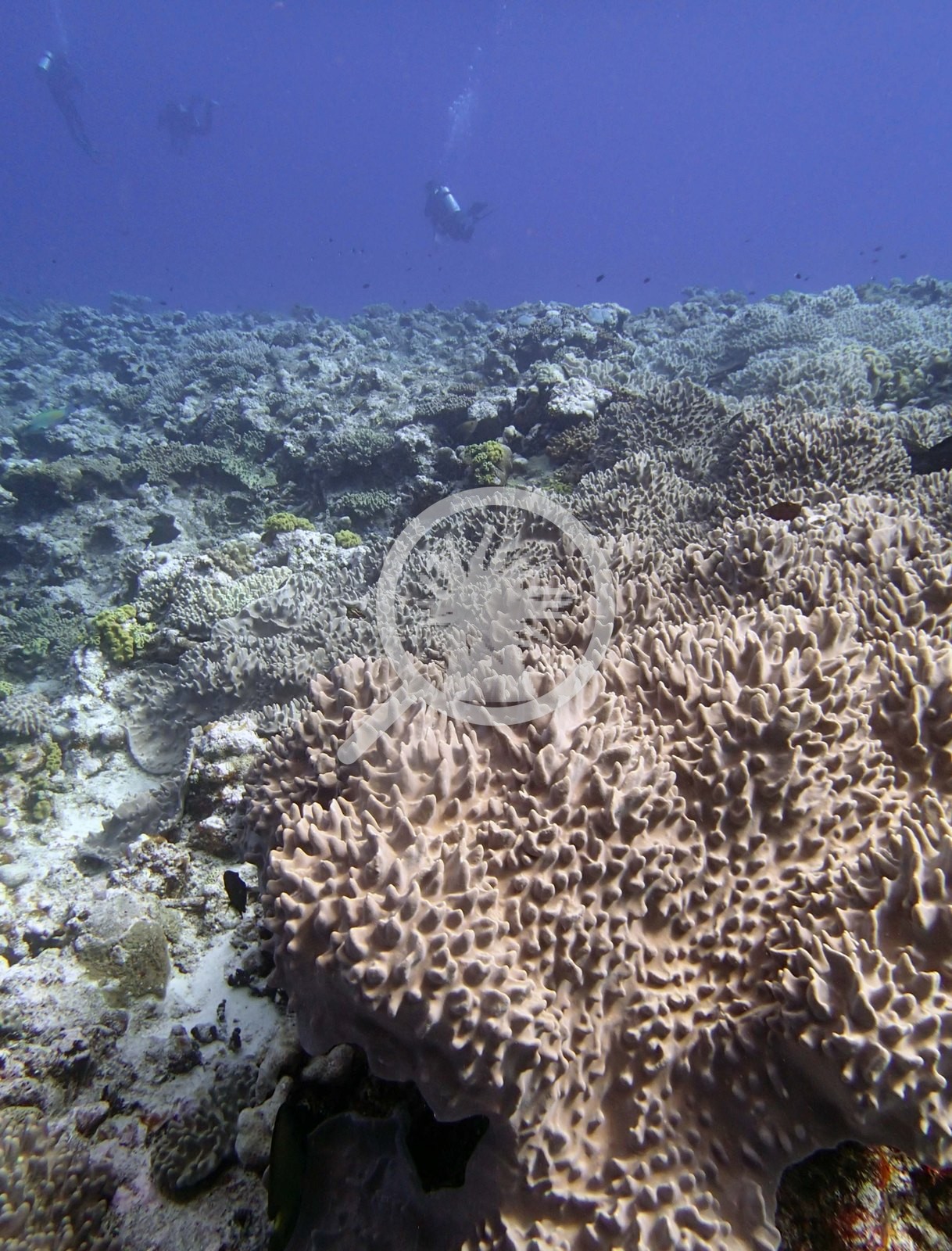
The tops of the spurs are dominated by bottlebrush, staghorn, digitate, and small table acroporids, staghorn coral, Goniastrea, Favia, Platygyra, Astreopora, most 20-40 cm, with 20-30% live cover (e.g., Image 2, Image 3).
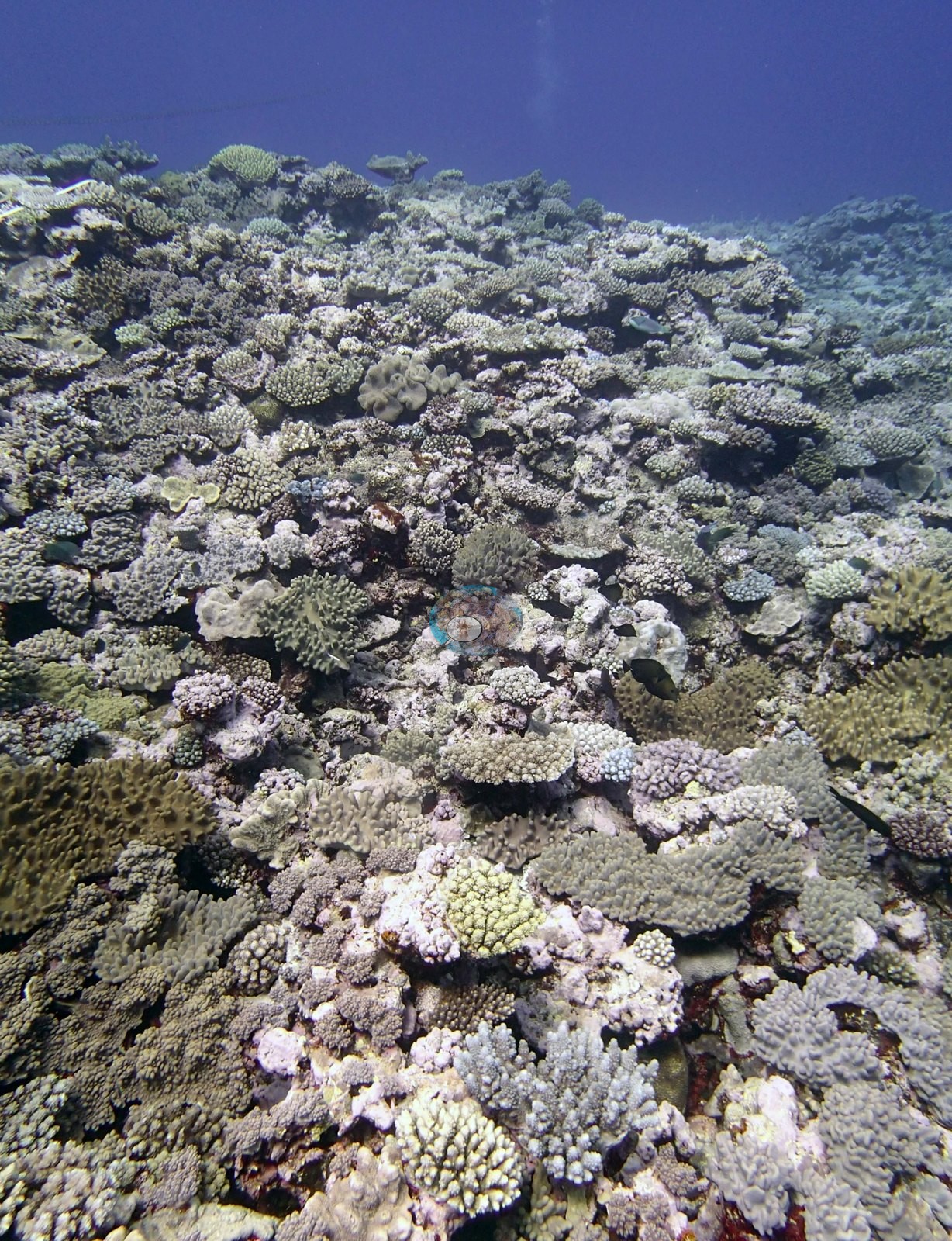
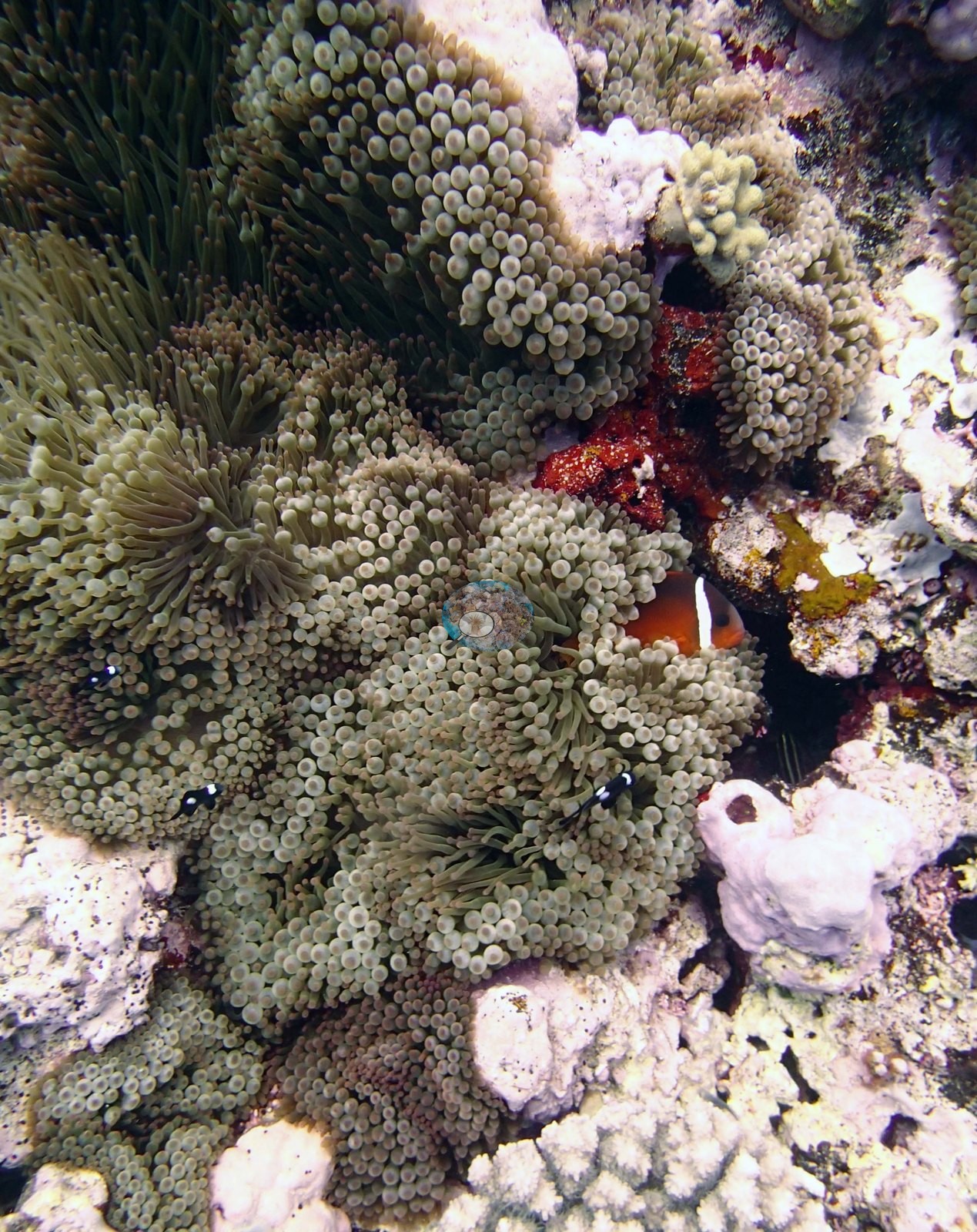
The spurs away from the edge have more Goniastrea, medium to large columnar Favia stelligera, scattered larger Porites (1-2 m) with some very large (2-3 m) colonies in the channels between the spurs, and a high number of 1-2 m plates of Turbinaria, most with partial mortality. This is mixed with Pocillopora, Coscinaraea, Lobophyllia, Montastrea, Acanthastrea, and many other taxa. There are also numerous medium Pavona clavus colonies. Soft coral ranges from 5.0–20% at 5-10 m depth, 25-30% at 10-15 m, and virtually disappears over the edge. The sides of the slope from 12-20 m are dominated by 30-40 cm Goniastrea, 20-30 cm pillars of Isopora, Porites, Montipora, Favia stelligera, Coscinaraea, and Pocillopora with many other species. At the base of the slope are 10-20 m long thickets of staghorn with about 30% dead coral and damselfish. The slope has 5.0–10% cover encrusting and submassive black sponge, 5.0–10% Lobophyllia, 20-30% Peyssonnelia, patches up to 0.5 m of Tydemania, and 30% turf which increases in deeper areas (20-25 m) to 60%. The sand flat extending away from the reef has 0.5-2 m boulders plus some larger areas of framework up to 10 m long that is 30-100 cm above the sediment. It has 10-30% live coral, mostly small colonies including Goniastrea, Lobophyllia, Hydnophora, Pocillopora, small acroporids, Favia, and Favites and many other species with 50-60% turf algae.
Coral cover
- Reference: Khaled bin Sultan Living Oceans Foundation, Global Reef Expedition (in situ transect)
- Coral cover 31% (the expedition's in situ transects).
- Transect mean 31 ± 3.9% SE (n = 8 transects; Living Oceans Foundation per-transect benthic data); the headline above is this all-transect mean.
Stressors
10% of the staghorns from 15-25 m depth are dead or mostly dead with thick turf algae and damselfish. The 2013 survey notes for this site record three Culcita cushion stars and corallivorous snails on several Acropora and Pocillopora (Khaled bin Sultan Living Oceans Foundation expedition site notes, 2013; regional summary in Bruckner 2014). A large table colony, 1.5-2 m across, is pale cream-white with a whiter center among gray-brown and olive neighbors: possible bleaching (one frame, Image 19).
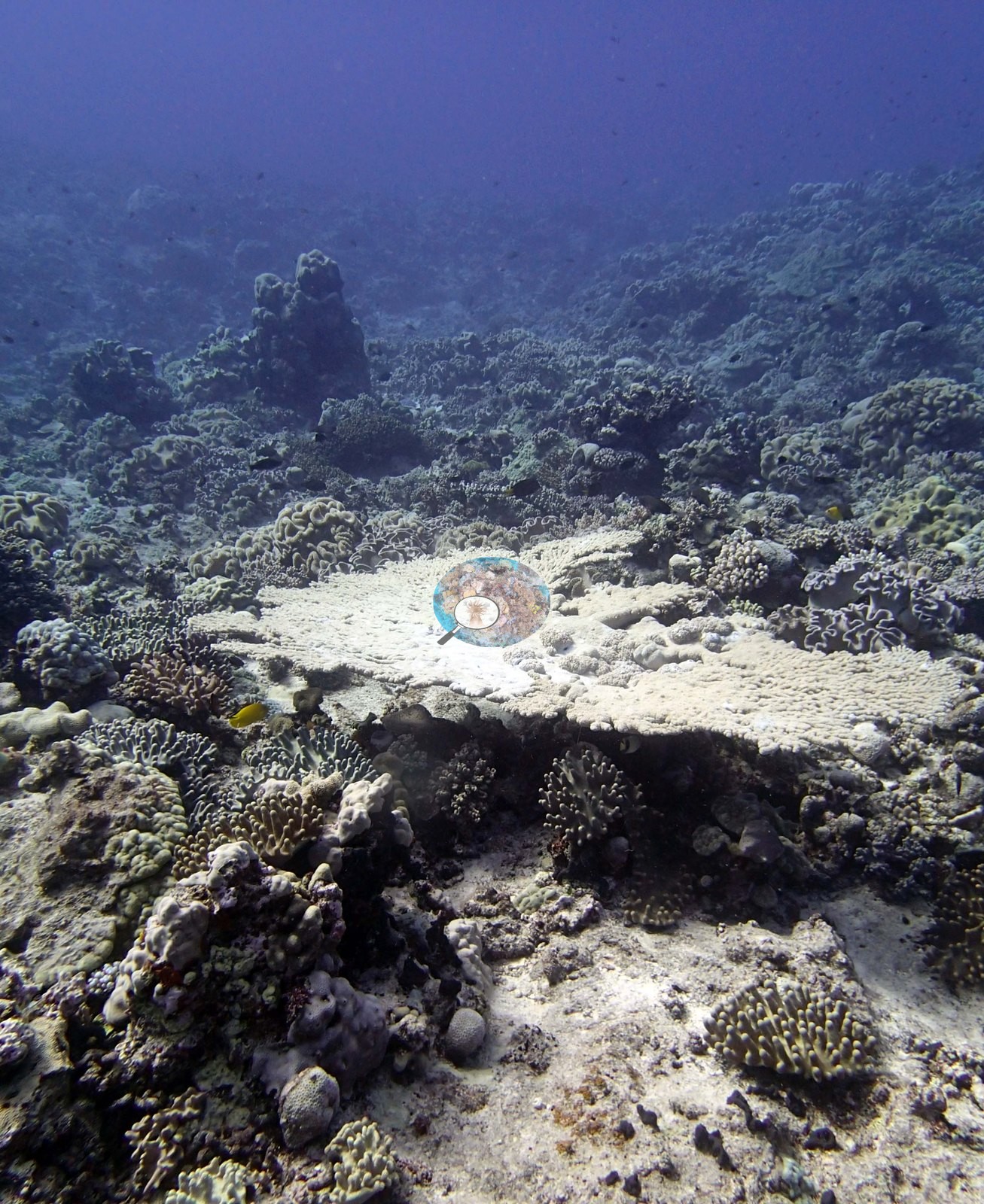
The Living Oceans Foundation transects here recorded 5.4% cyanobacteria and no recently dead coral.
Fish and other fauna
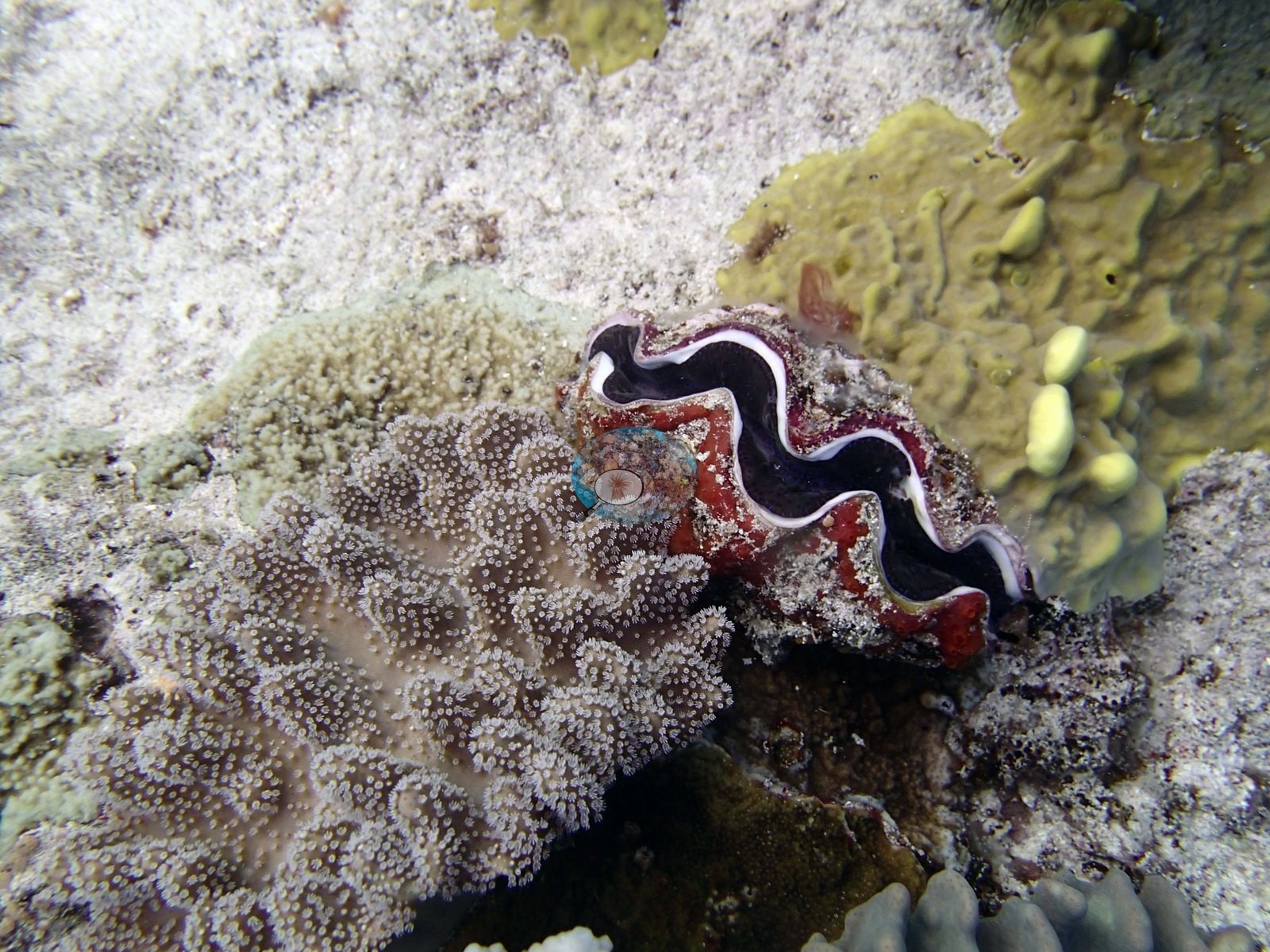
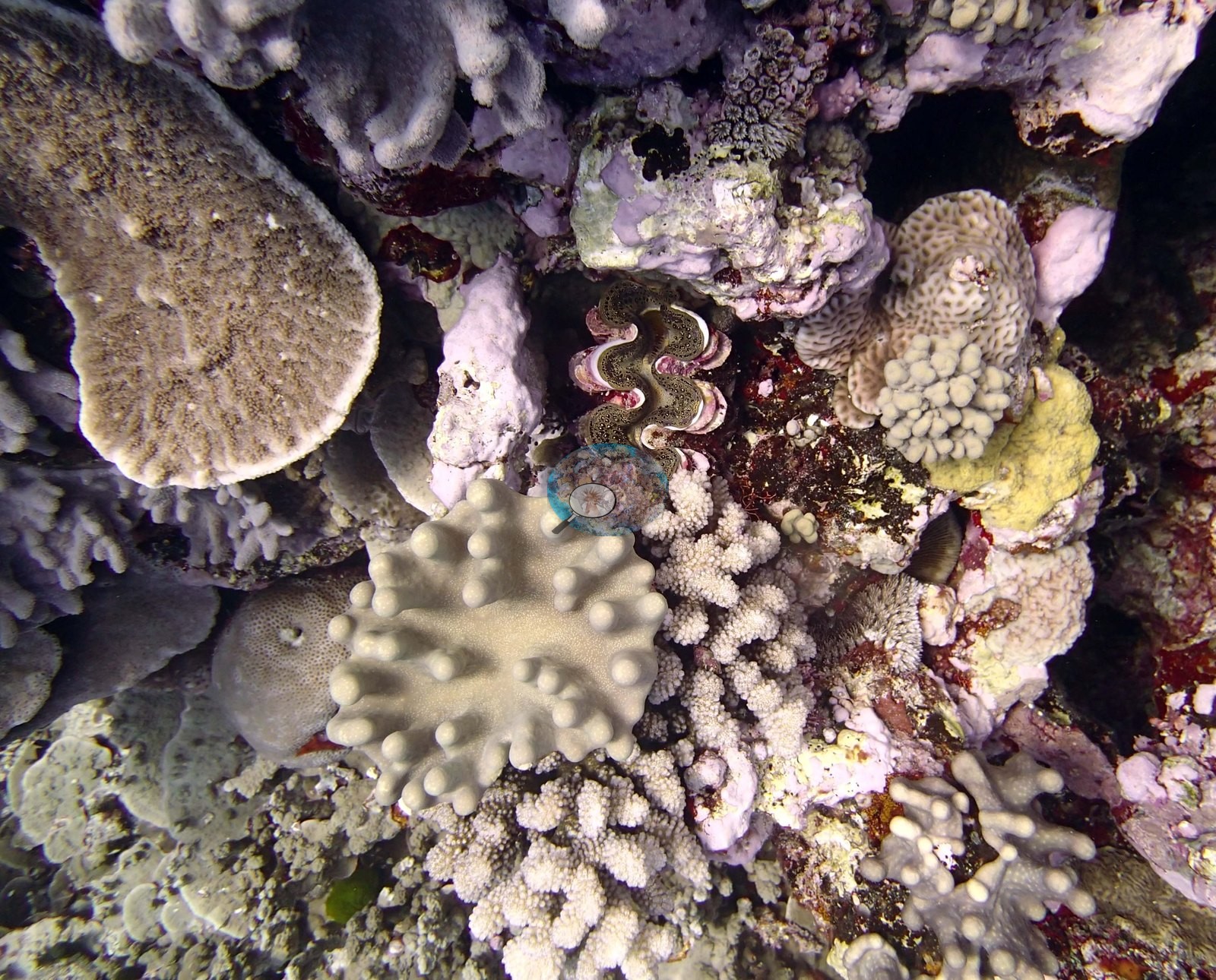
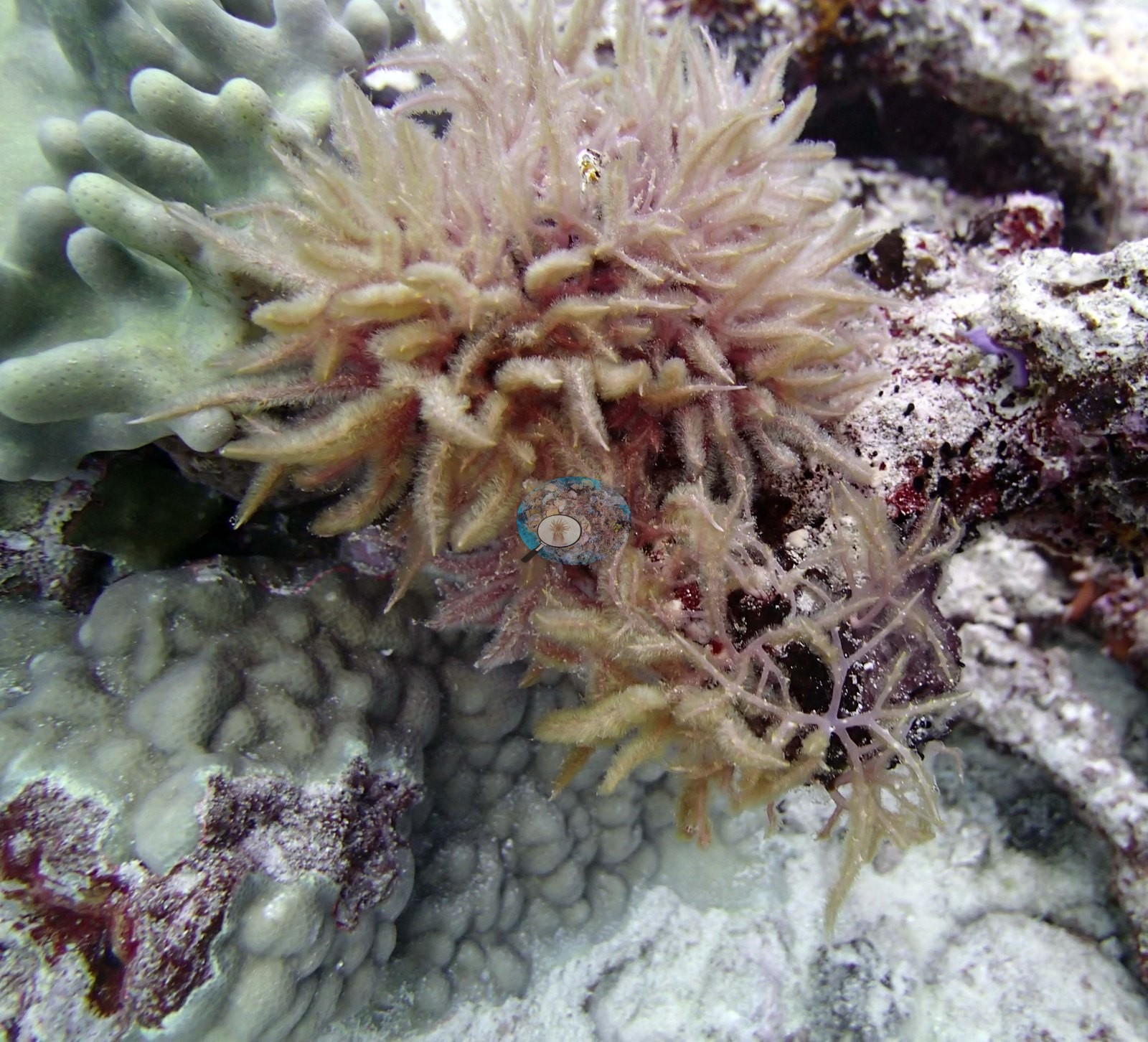
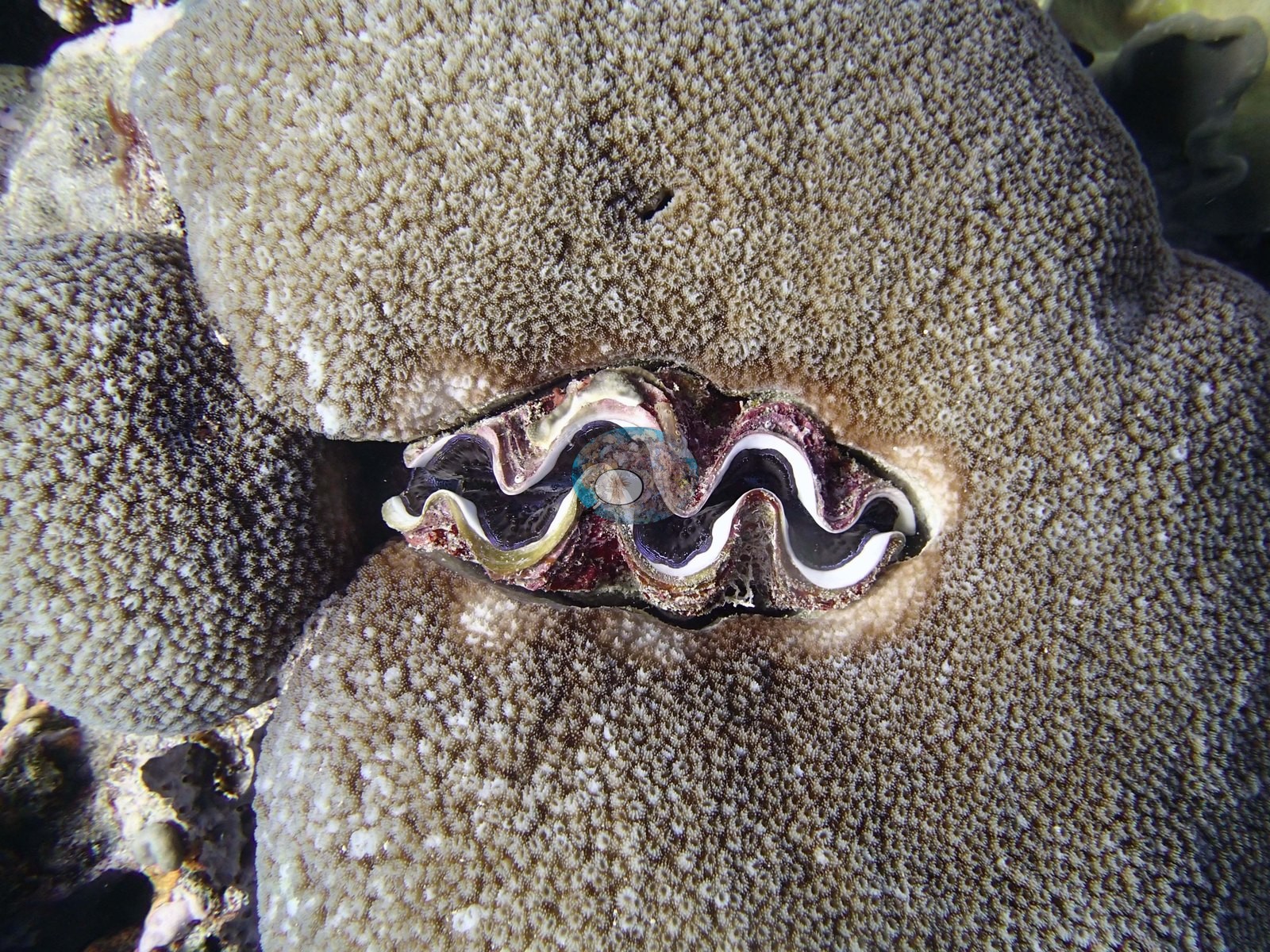
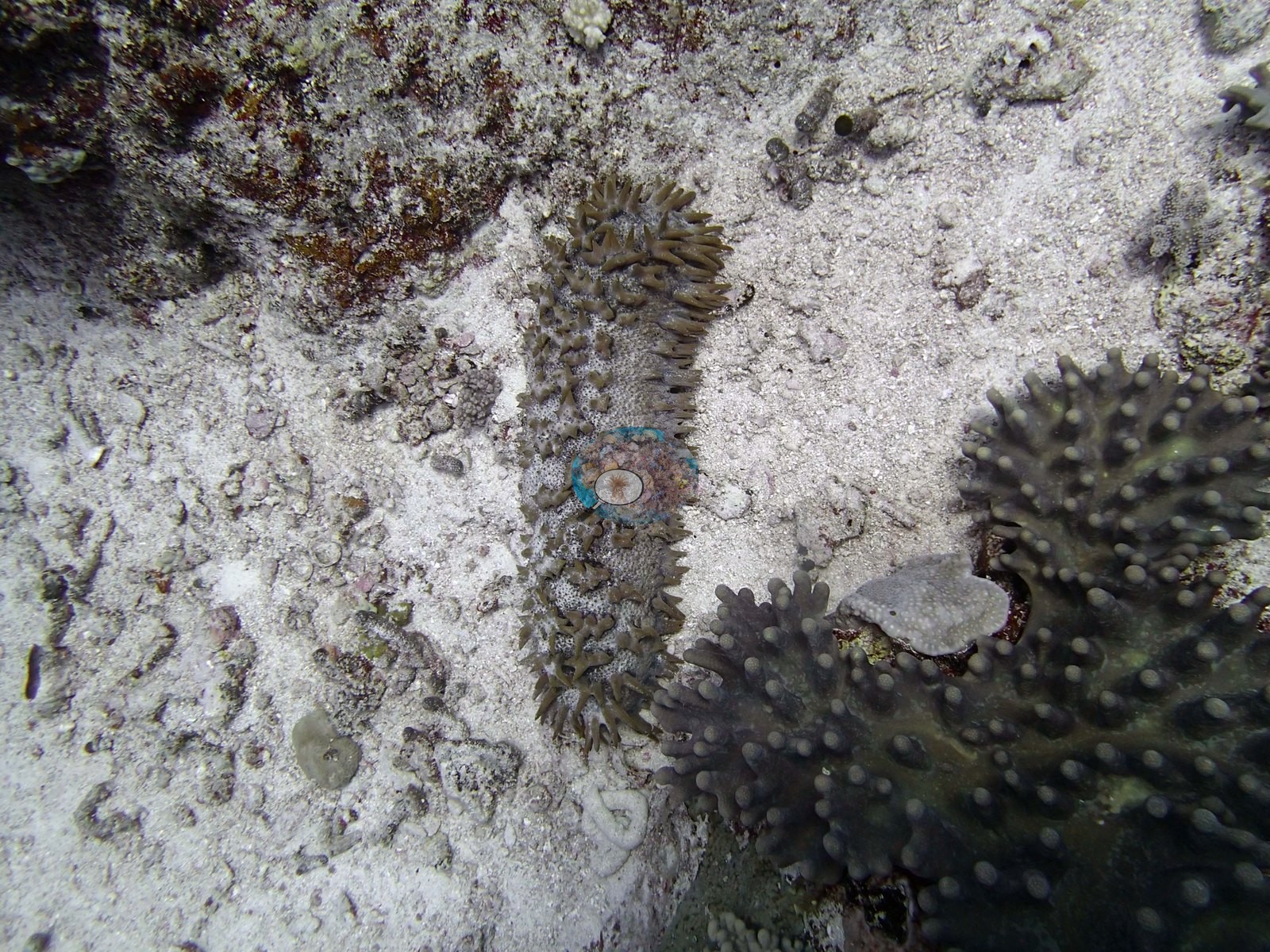
A giant clam sits set into a massive colony (e.g., Image 4), and a pineapple sea cucumber lies on sand beside a soft coral (e.g., Image 5).
Comparisons with other data
Apart from the Living Oceans Foundation survey shown here, we found no other surveys at this site as of 2026. If you would like to share yours, please email us.
Dive record
TOHA27 (Ha'apai): surveyed 20 Sep 2013 during the Khaled bin Sultan Living Oceans Foundation Global Reef Expedition.
CV model comparison
More info
The photo row below is a methods comparison only: it is never averaged with the transect and never used as the headline. It compares site means only: the photos come from the same survey dive as the transect but not from the same points.| Method | Hard coral cover (%) | Photos (n) ± SE |
|---|---|---|
| Transect mean (all transects) | 30.8 | |
| CoralSCOP unedited | 39.2* | n = 13 · SE 3.6 |
| Claude (edited photos) | 25.1* | n = 13 · SE 6.6 |
The two computer-vision methods disagree by 14.1 pp (25.1–39.2%) and read on both sides of the in-water transect (30.8%); the headline is the in-water transect because a diver transect is independent of the photographs.
*Based on only 13 reef-habitat photos; this estimate is less certain.
See a more detailed, stand-alone version of this table.
Data & links
- Download benthic survey data (CSV) ↗
- Download all LOF-GRE data (933 sites) ↗
- Photo portfolio ↗
- Coral Reef Diagnostics region page ↗
All images from Coral Reef Diagnostics. Data are from the Khaled bin Sultan Living Oceans Foundation Global Reef Expedition and Coral Reef Diagnostics.
 © Coral Reef Diagnostics.