
Part of the regional summaries: Tonga - Ha'apai and Tonga
More info
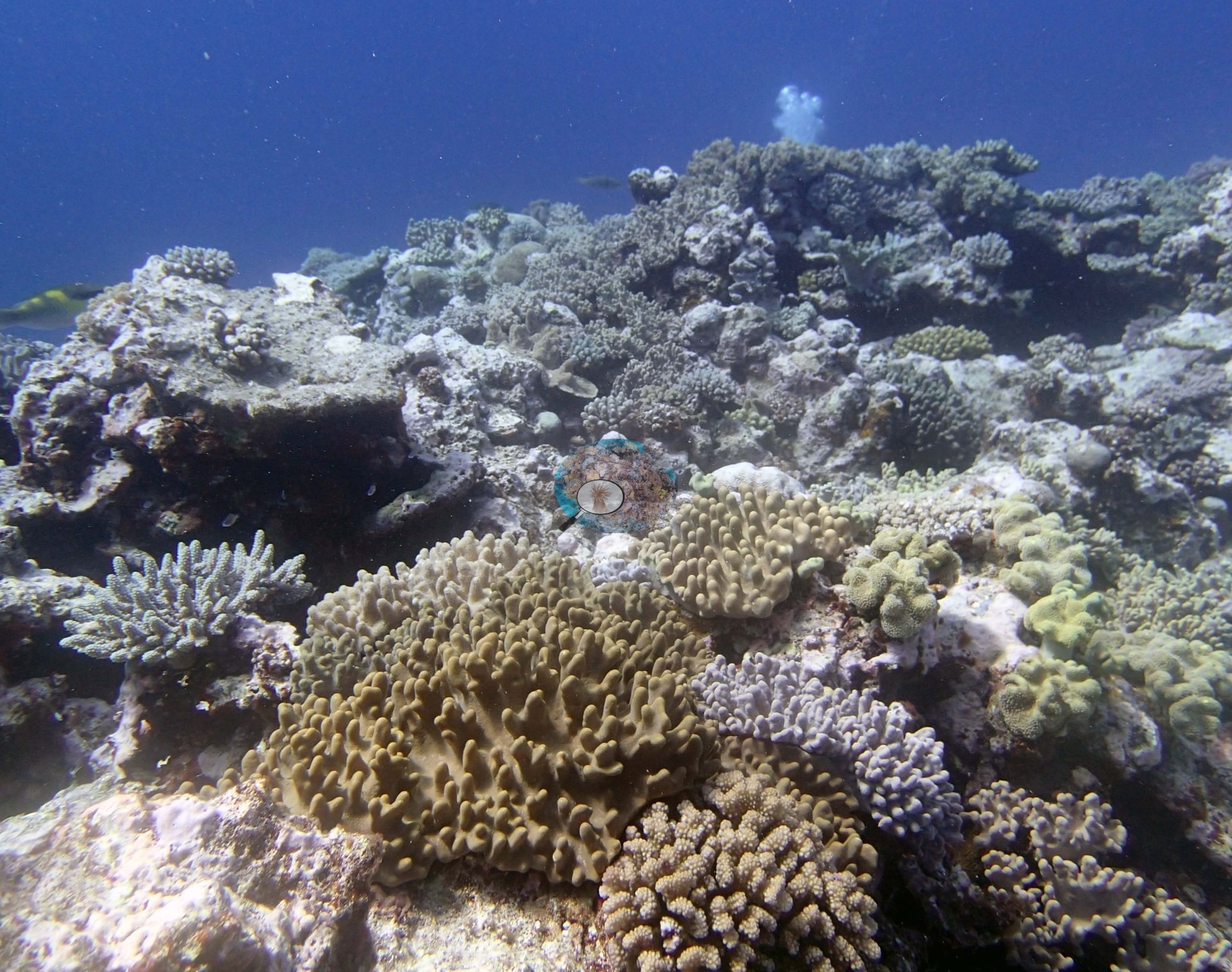
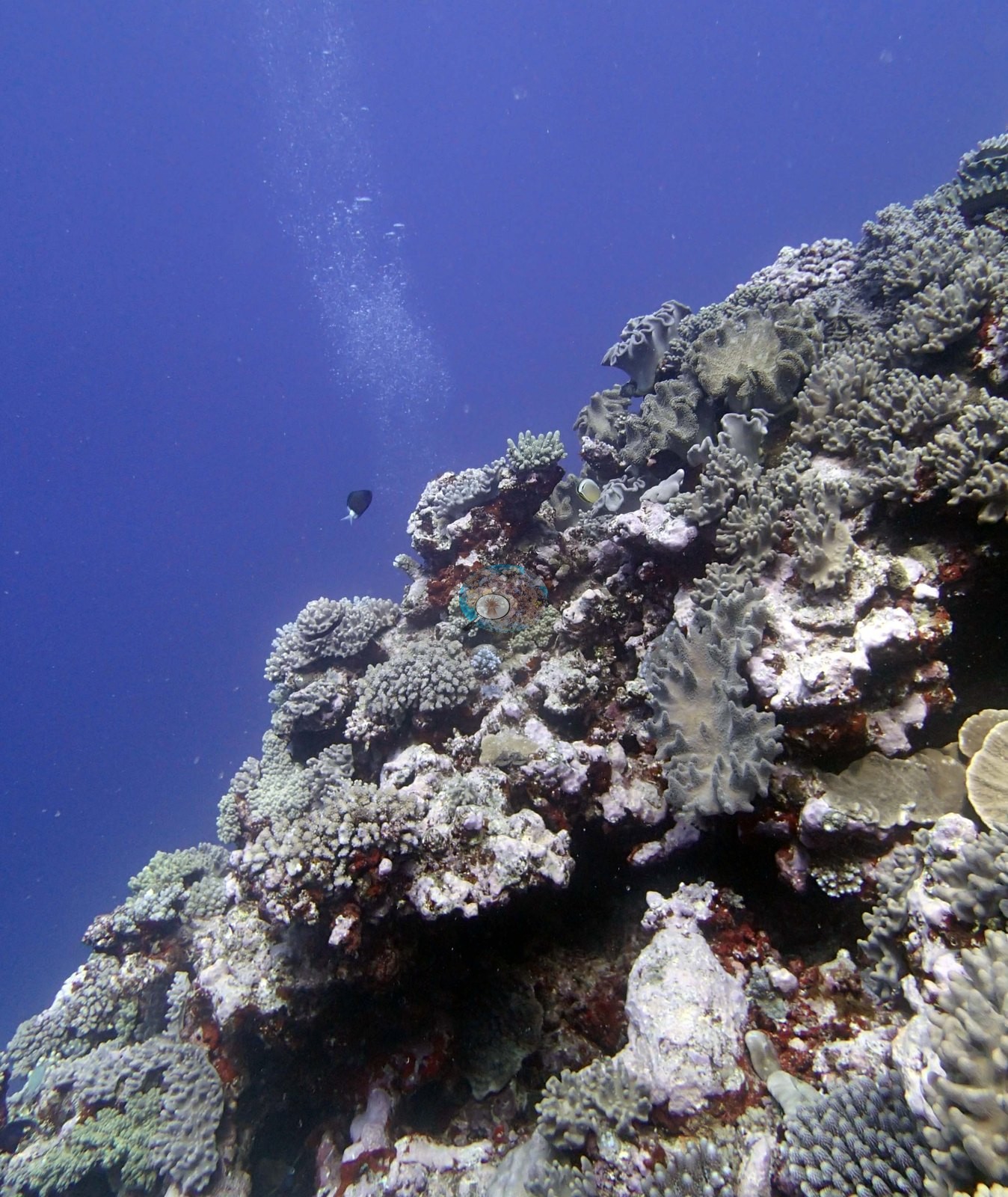
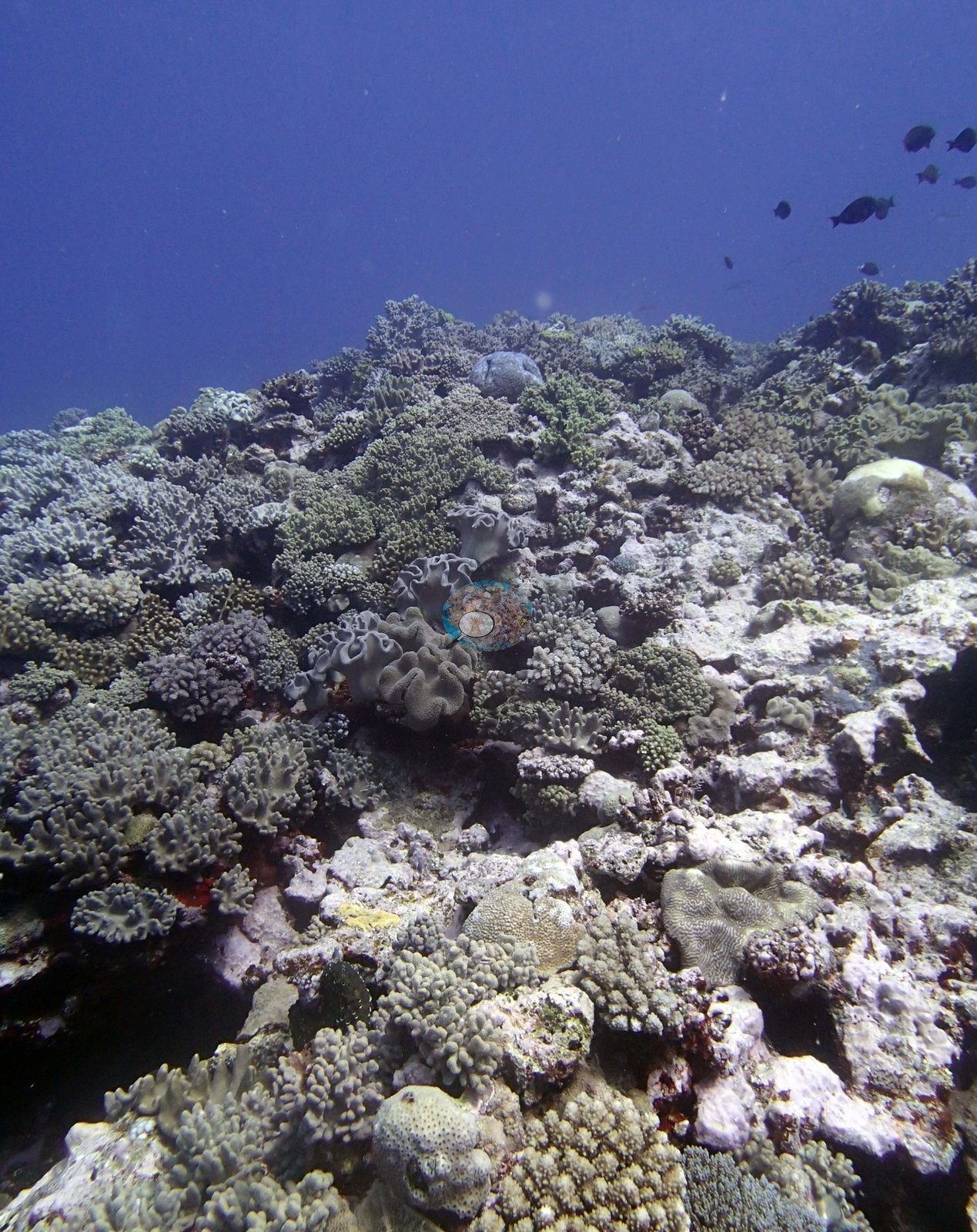
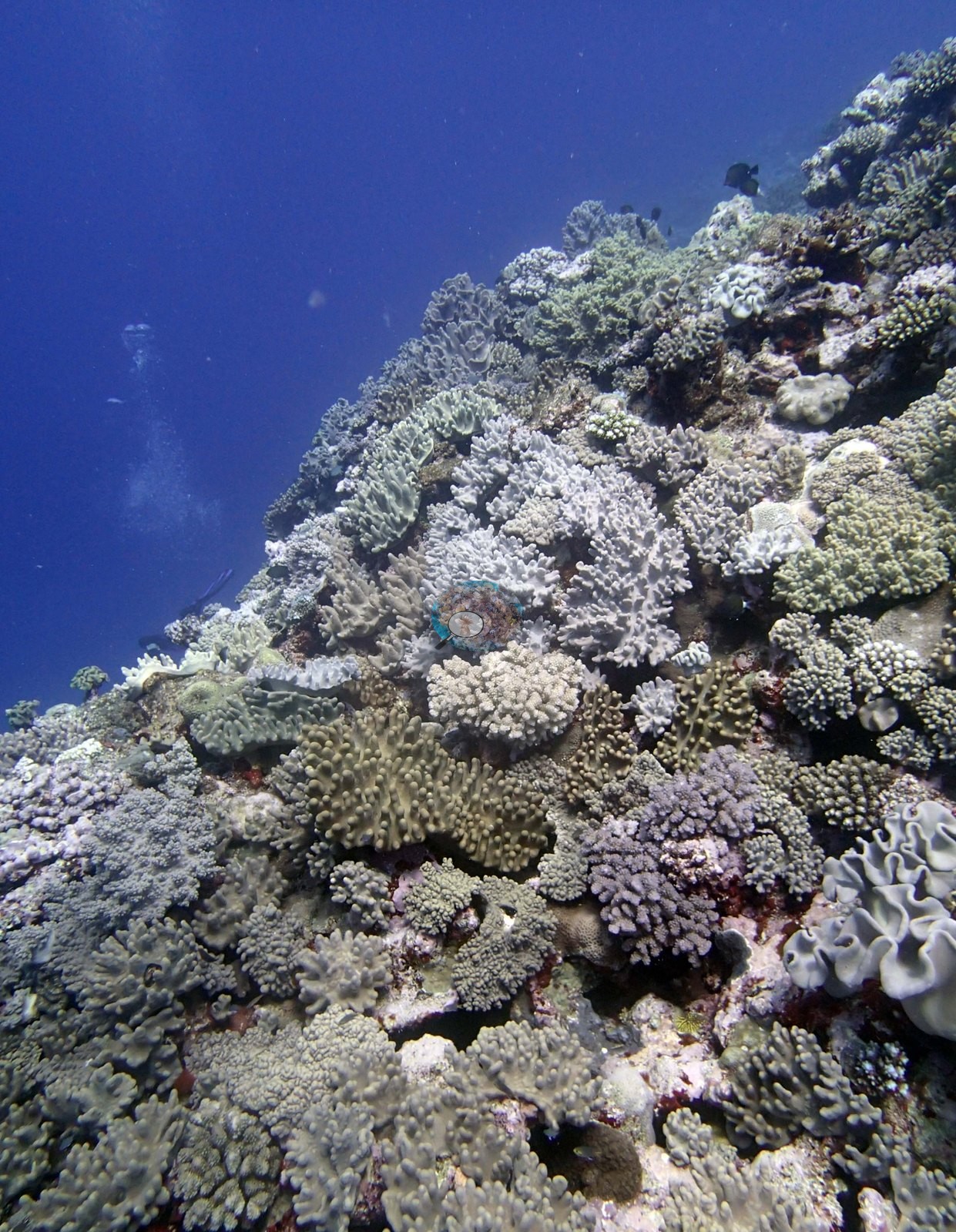
Southern Tonga (NOAA CRW virtual station)Spur tops in Ha'apai where gray-green, cream, and mustard-yellow soft corals grow intergrown with a near-continuous carpet of small branching, digitate, and encrusting stony corals and a few small tables, beneath blocky, undercut ledges. The photographs show no visible bleaching, though the survey noted an orange coralline-algal disease at this site. Surveyed on the Living Oceans Foundation's Global Reef Expedition.
Ko e ngaahi funga ʻo e spurs ʻi Haʻapai ʻoku tupu fefiofiofi ai ʻa e feo molū (soft corals) lanu efuefu-mata, kulimi, mo e engeenga-mastati (mustard-yellow) mo ha takafi meimei hokohoko ʻo e kiʻi feo fefeka fakavaʻavaʻa (branching), fakatuhu (digitate), mo piki (encrusting), mo ha kiʻi tēpile siʻi, ʻi lalo ʻi ha ngaahi tafungofunga fakapoloka (blocky) kuo keli ʻi lalo (undercut ledges). ʻOku ʻikai hā ha hinehina (bleaching) ʻi he ngaahi tā, neongo naʻe fakatokangaʻi ʻe he savea ha mahaki lanu moli ʻo e limu feo (orange coralline-algal disease) ʻi he potu ni.
AI translation of this summary; the English is authoritative. (low confidence)
CTD-cast midpoint of 24.1–24.7°C
1 of the 8 photographs on this page is shown beside the text that discusses them under "Site description" below.
Site description
Setting
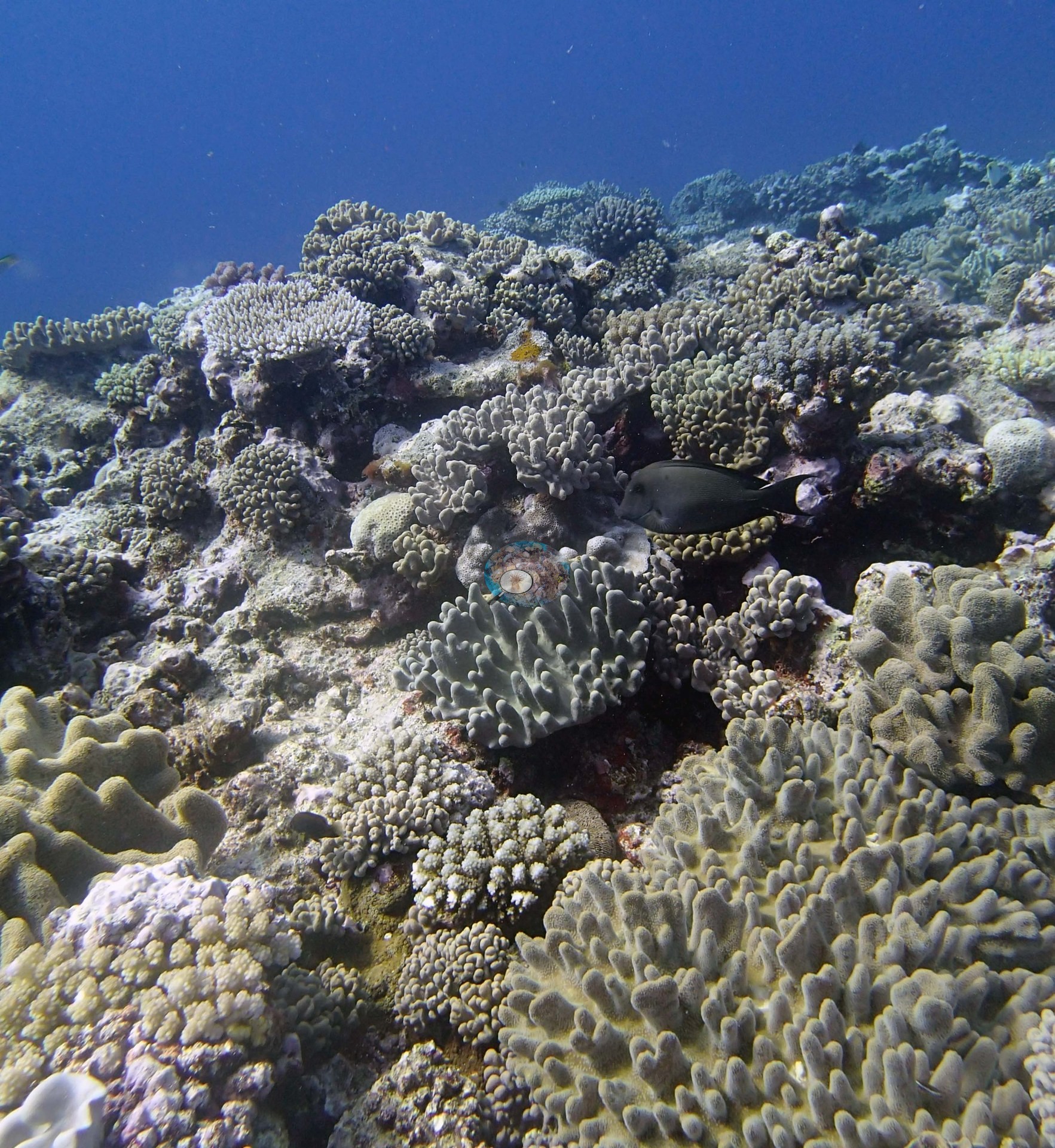
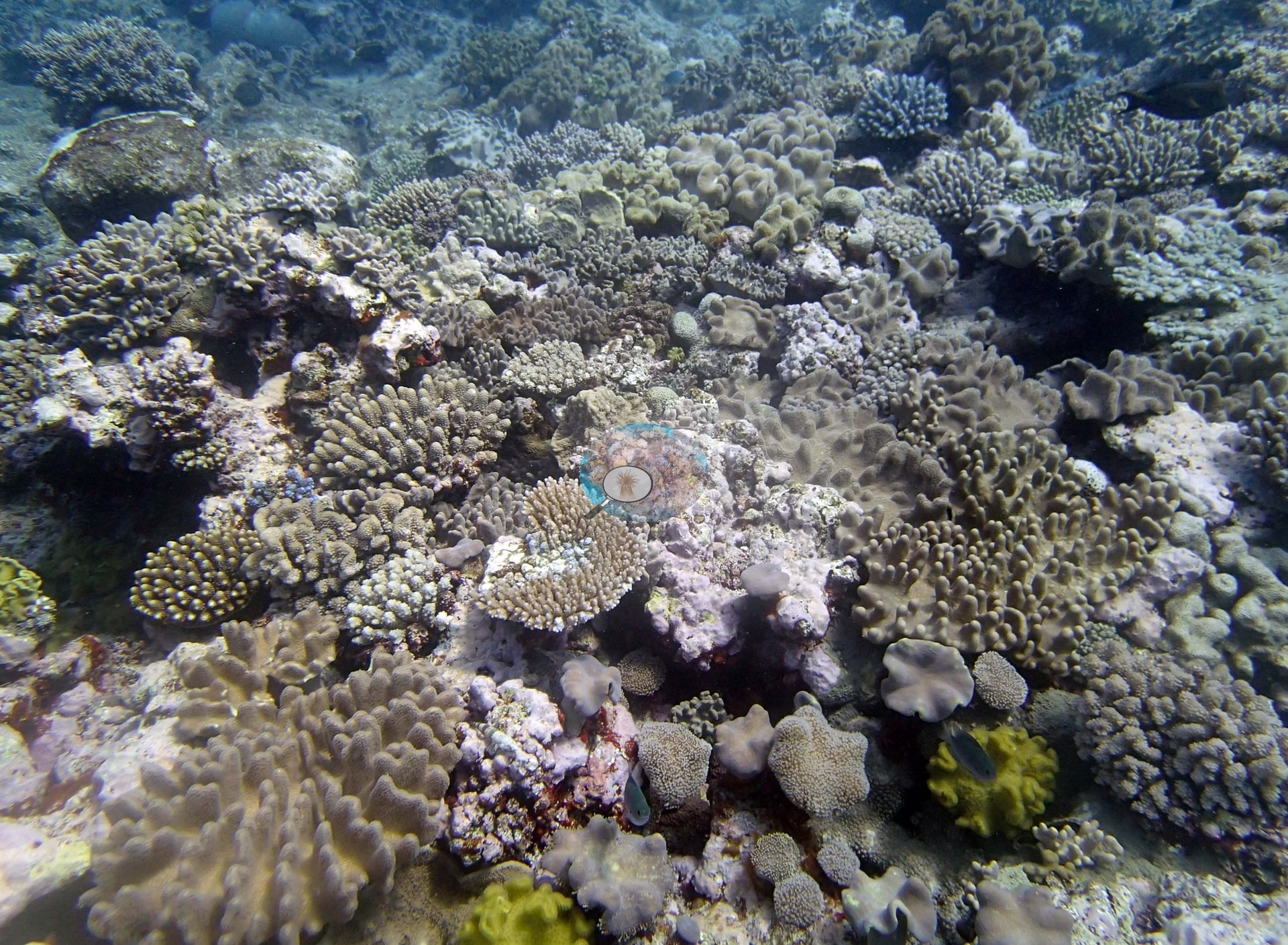
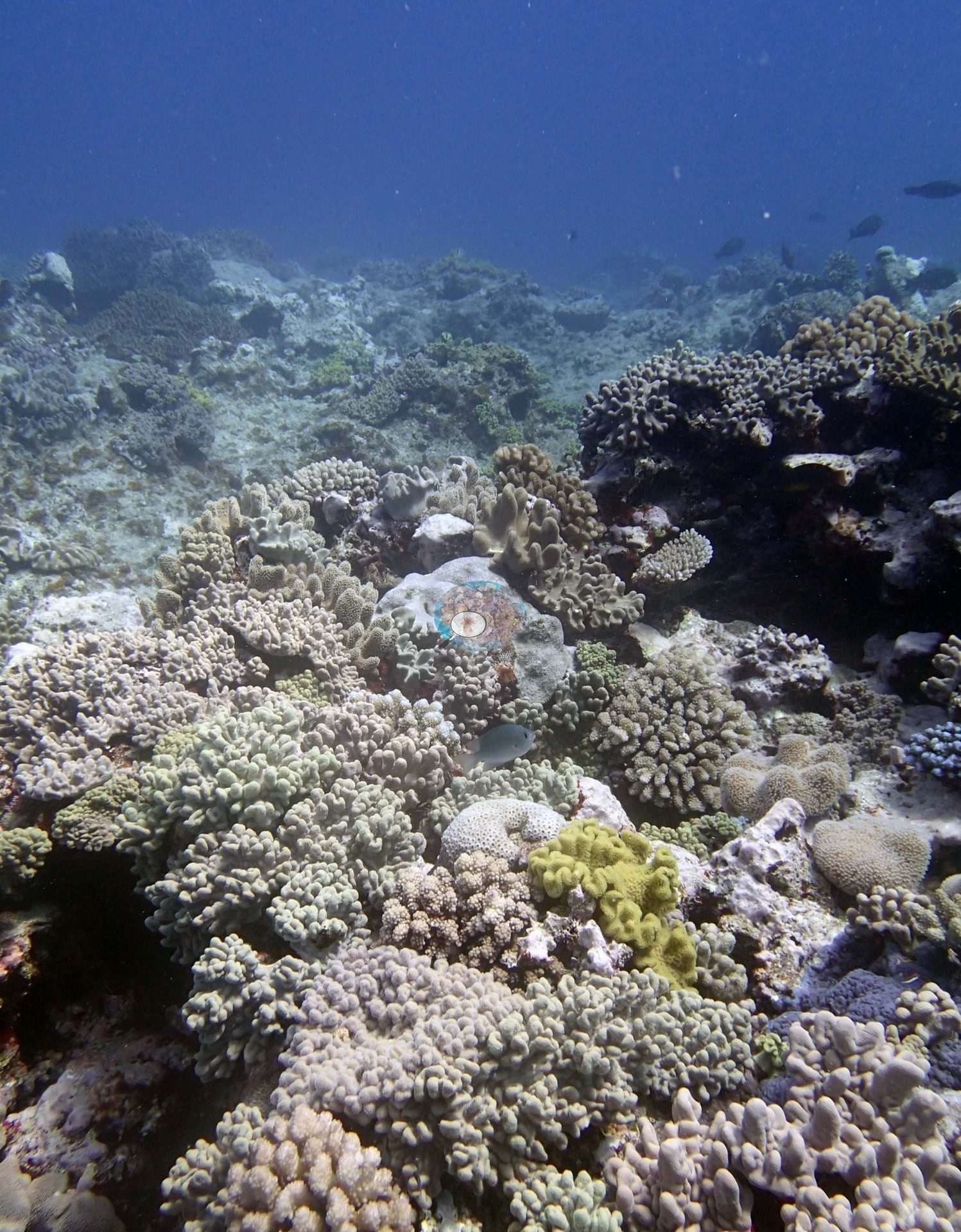
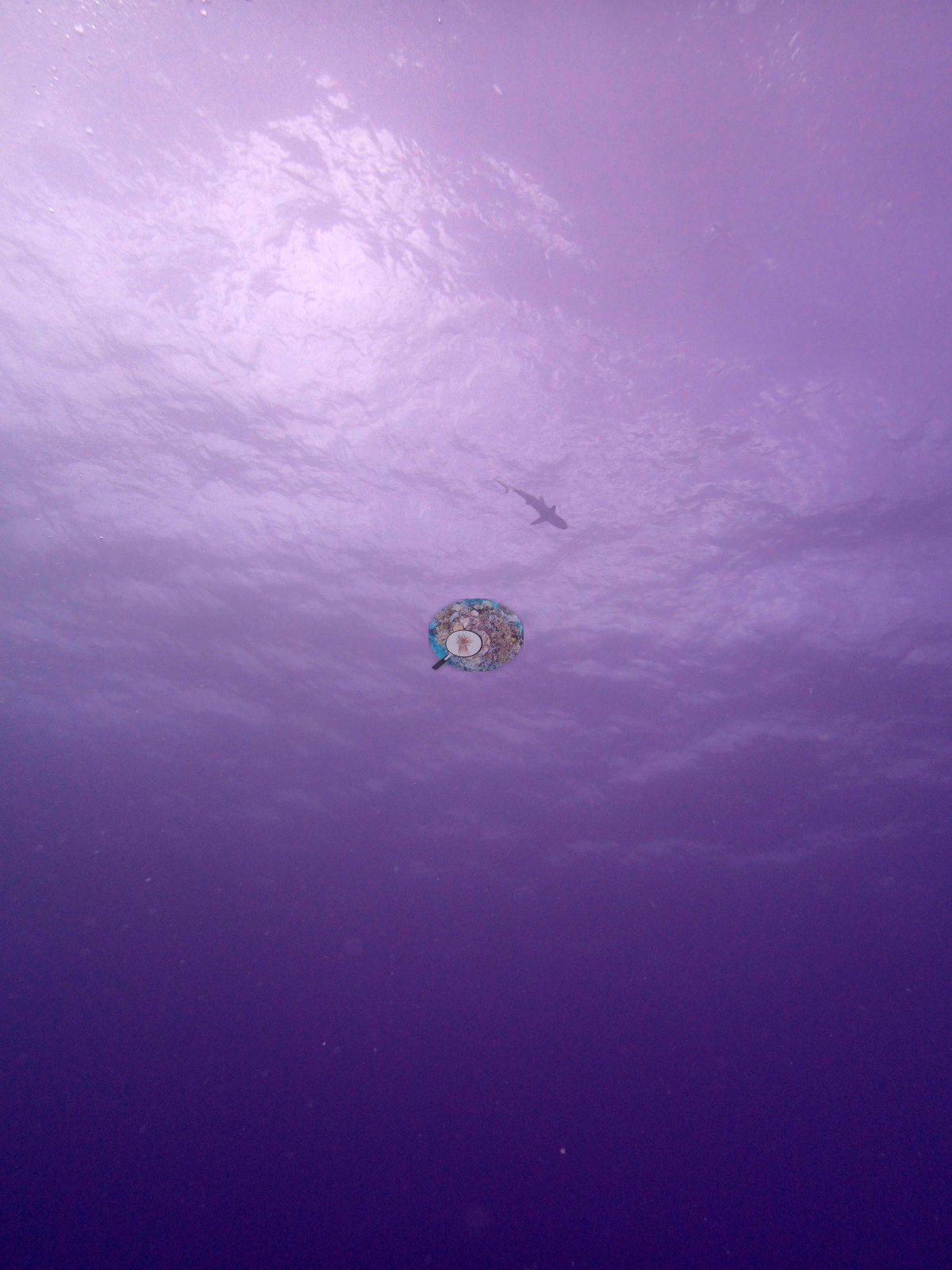
Six of the eight wide frames are usable reef views — two looking up the flank of a spur toward its crest, two across the reef top, one taken from 11 m, and one with off color balance; a seventh is a distant gray reef shark in open blue water and carries no benthic information.
General benthic features
Across the usable frames the bottom is close-packed and complex: fleshy octocorals are conspicuous — lobate and digitate leather corals, several mustard-yellow, one of them identified by Anderson as Sinularia — but they are intergrown with, rather than dominant over, a near-continuous carpet of small branching, digitate, and encrusting stony corals, low tan foliose and encrusting colonies, and a few small tables. Colony sizes are consistently small; nothing in these frames resolves as a large plate or a meter-scale massive, and the frames carry no scale bar, so measured colony dimensions cannot be read from them. One frame shows the framework itself as a blocky, undercut ledge with dark shaded recesses and red-maroon coralline crusts beneath the overhang, diver bubbles rising into clear blue water above (e.g., Image 1).
Coral cover
- Reference: Khaled bin Sultan Living Oceans Foundation, Global Reef Expedition (in situ transect)
- Coral cover 23%, from LOF-GRE in situ transects (the mean of all of this station's own transects in the expedition's per-transect benthic data) — a diver transect measurement, not a photographic or computer-vision estimate; the photographs here are qualitative only. Coral Health Index 2.15/5 (Mayfield & Dempsey 2025, Discover Oceans formula).
- Transect mean 23 ± 4.5% SE (n = 5 transects; Living Oceans Foundation per-transect benthic data); the headline above is this all-transect mean.
Stressors
No bleaching, disease lesion, or predation scar can be resolved with confidence at these ranges, and several frames carry strong color casts that make pale-looking tissue unreliable as a condition signal; the photographs cannot settle the site's condition, its depth zonation, or the deeper-slope community the surveyors described. The 2013 survey notes for this site record a disease on crustose coralline algae (orange) (Khaled bin Sultan Living Oceans Foundation expedition site notes, 2013). The Living Oceans Foundation transects here recorded 0.6% cyanobacteria and no recently dead coral.
Fish and other fauna
Fish are present without being abundant in frame — a surgeonfish or two over the reef top, small planktivores in the distance — and the shark frame records a large predator in the water column.
Comparisons with other data
Apart from the Living Oceans Foundation survey shown here, we found no other surveys at this site as of 2026. If you would like to share yours, please email us.
Other notes
Photo review of 8 habitat frames plus 11 sampled-colony close-ups (Ha'apai, 15 Sep 2013). The account on this page is written from the habitat frames only; the colony images are treated purely as a record of what was sampled. Two Pocillopora colonies were sampled at this site (colonies 29 and 30), both labeled P. acuta in Anderson's own field records; the 11 close-ups are repeat macro, scale, and setting shots of only those two colonies and describe the colonies, not the reef.
Survey team's site notes: Tall spurs that are very wide and separated by wide sand/rubble channels. The sides and seaward end of these has a near vertical drop from 12 m – 30 m. Corals are concentrated on vertical and near vertical surfaces and include Leptoseris (2 spp.), Pachyseris, Montipora, Mycedium, Echinopora, and Echinophyllia and Merulina plates with some smaller submassive and branching corals. On more horizontal surfaces the reef is dominated by Goniastrea, small Galaxea, table acroporids (small), encrusting Favites, Favia stelligera, and Pocillopora. Coral cover from 20-30 m declines from 5.0% to 2.0%. The reef slopes steeply to 25 m then there is a very gentle sloping hardground that continues to 35 m. At 25 and 30 m there is low cover and 5-10 cm relief. Approx 70% of the benthos is covered in turf.
Data & links
- Download benthic survey data (CSV) ↗
- Download all LOF-GRE data (933 sites) ↗
- Photo portfolio ↗
- Coral Reef Diagnostics region page ↗
All images from Coral Reef Diagnostics. Data are from the Khaled bin Sultan Living Oceans Foundation Global Reef Expedition and Coral Reef Diagnostics.
 © Coral Reef Diagnostics.