
Part of the regional summaries: Tonga - Ha'apai and Tonga
More info
Southern Tonga (NOAA CRW virtual station)A Ha'apai reef of very large seaward mounds, with coral thickest at 12-20 m and dropping to almost nothing by 30 m, and an undercut ledge hung with orange cup corals and soft corals. Ten of the 17 photographs are of one enormous blotched stingray on the sand flat, and more than 20 sea cucumbers were counted on a single dive. Surveyed on the Living Oceans Foundation's Global Reef Expedition.
Ko ha hakau ʻi Haʻapai ʻo e ngaahi puke lalahi ʻaupito ʻi he tafaʻaki ki tahi, ʻoku matolu taha ai ʻa e feo ʻi he 12-20 m pea ʻoku meimei ʻikai ha feo ʻi he 30 m, mo ha tafungofunga kuo keli ʻi lalo (undercut ledge) ʻoku tautau ai ʻa e ngaahi feo ipu lanu moli (orange cup corals) mo e feo molū (soft corals). Ko e tā ʻe hongofulu ʻi he tā ʻe 17 ko e ʻuhi pē ʻe taha lahi ʻaupito (stingray) ʻoku pulepule ʻi he tafaʻaki ʻoneʻone, pea naʻe lau ha loli (sea cucumbers) ʻe laka hake ʻi he 20 ʻi ha uku pē ʻe taha.
AI translation of this summary; the English is authoritative. (low confidence)
CTD-cast midpoint of 24.0–24.1°C
16 of the 17 photographs on this page are shown beside the text that discusses them under "Site description" below.
Site description
General benthic features
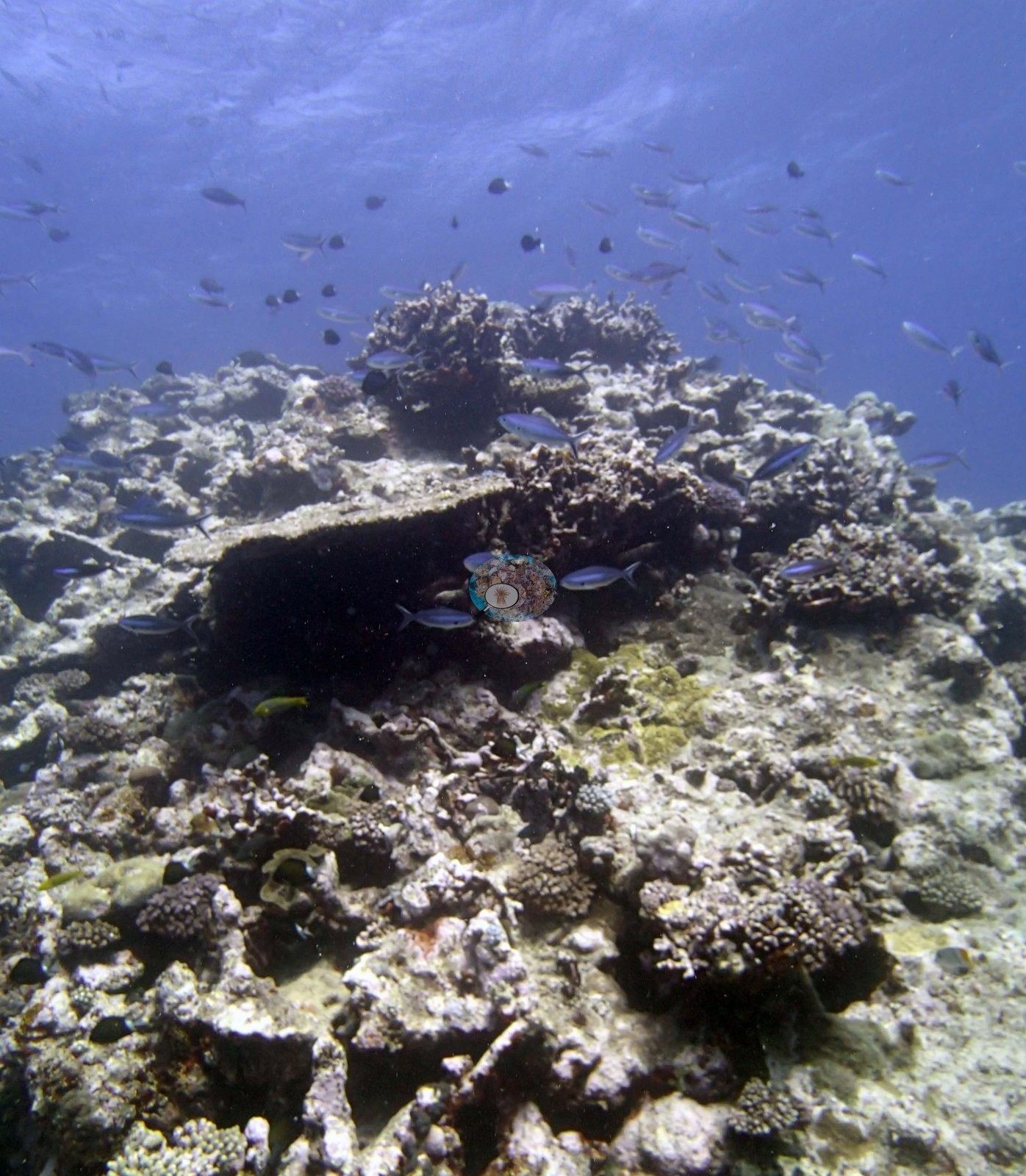
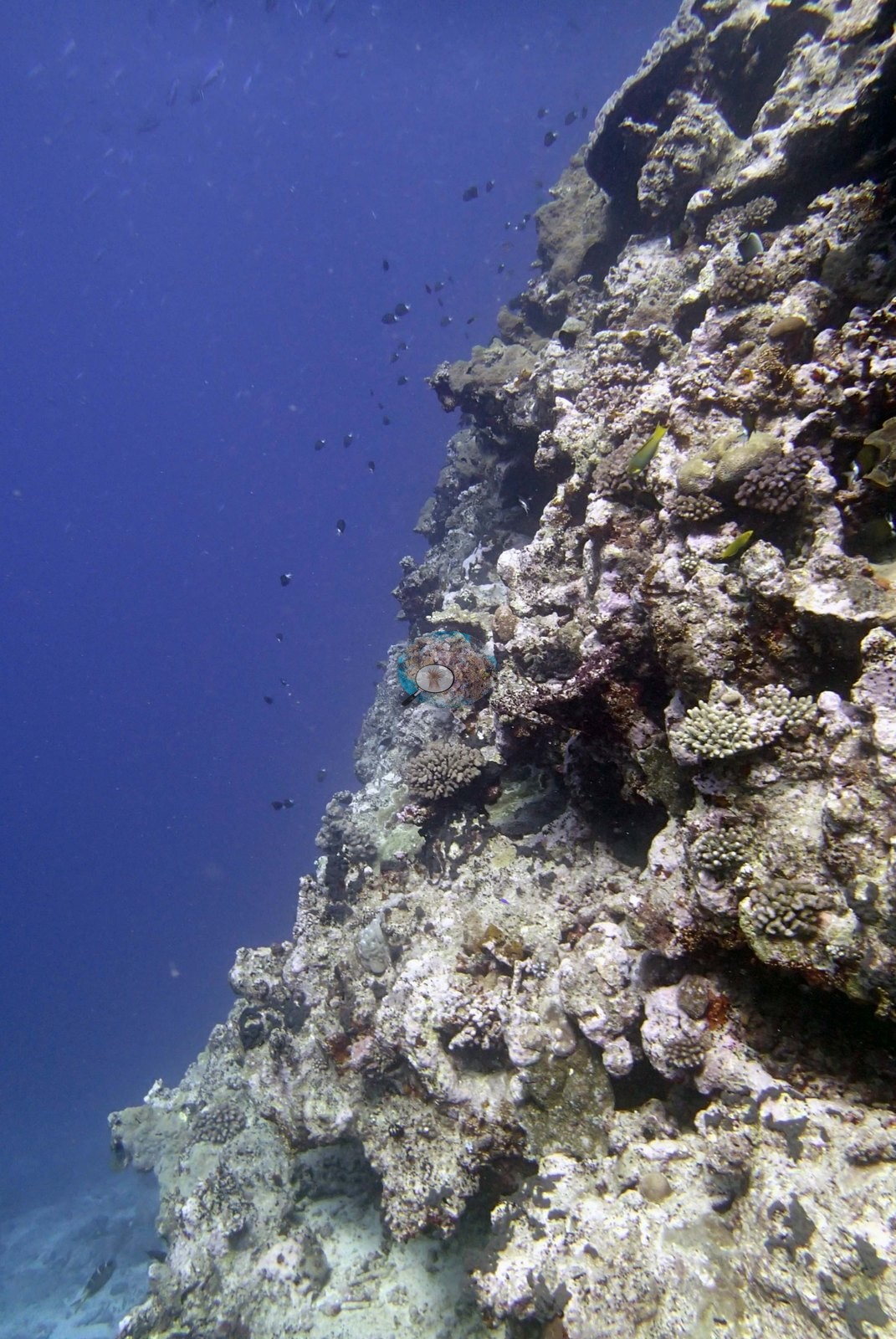
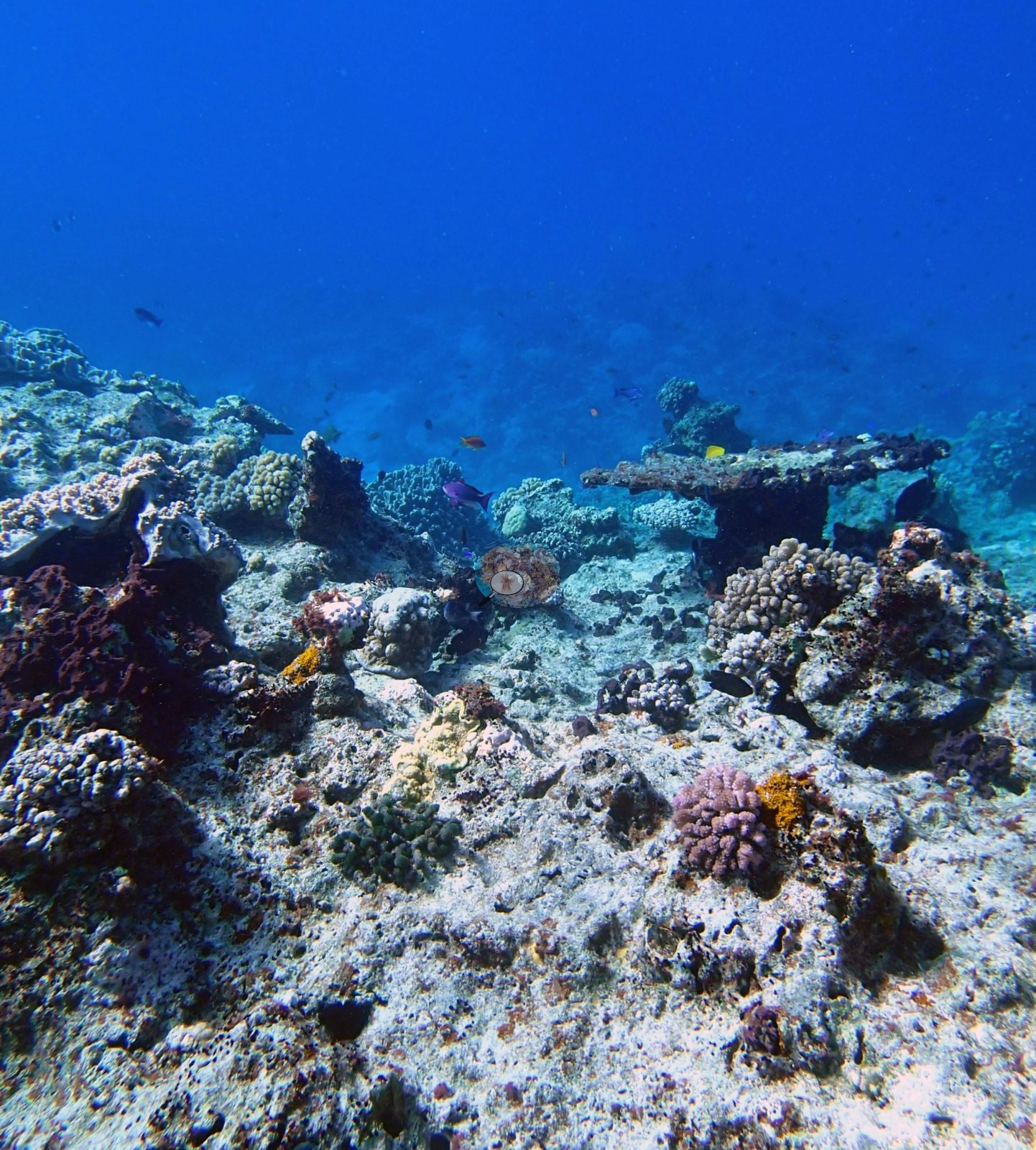
The genuinely reef-scale frames are few but consistent with each other. Image 13 looks across a shallow, wave-worn reef top under a purple surface: broad pale coralline-crusted pavement and rubble, one large dark undercut plate or block in the middle distance, and small brown branching and yellow-green encrusting colonies scattered thinly across it, with a loose school of blue-and-yellow fusiliers streaming overhead. Image 14 is a steeper shoulder dropping into blue with the same crusted, thinly colonized character.
One frame, in which Anderson noted a soft-coral carpet (e.g., Image 17), is crowded: a large tan colony of densely packed short columns and nodules rising off a plate fills the foreground, with a second similar colony beside it, dark encrusting patches on the pavement behind, and green and cream colonies further up the slope into very clear blue water.
The foreground growth form is distinctive, but no genus is asserted beyond Anderson's field label.
Coral cover
- Reference: Khaled bin Sultan Living Oceans Foundation, Global Reef Expedition (in situ transect)
- Coral cover 23%, from LOF-GRE in situ transects (the mean of all of this station's own transects in the expedition's per-transect benthic data) — a diver transect measurement, not a photographic or computer vision estimate.
- Transect mean 23 ± 4.4% SE (n = 5 transects; Living Oceans Foundation per-transect benthic data); the headline above is this all-transect mean.
Stressors
Across all 17 frames no bleaching, disease lesions, or predation scars are visible, though the small number of usable reef frames and the color casts on two of them mean this set cannot settle much about condition at this site. The Living Oceans Foundation transects here recorded 0.6% cyanobacteria and no recently dead coral; they carry no bleaching, disease, or crown-of-thorns field.
Fish and other fauna
The station's 17-frame photo set is dominated by a single animal: ten of the seventeen are the same large blotched stingray, on the sand and rubble flat, being approached and photographed by a colleague with a strobe rig (e.g., Image 2, Image 3, Image 4, Image 5, Image 6, Image 7, Image 8, Image 9, Image 10, Image 12).
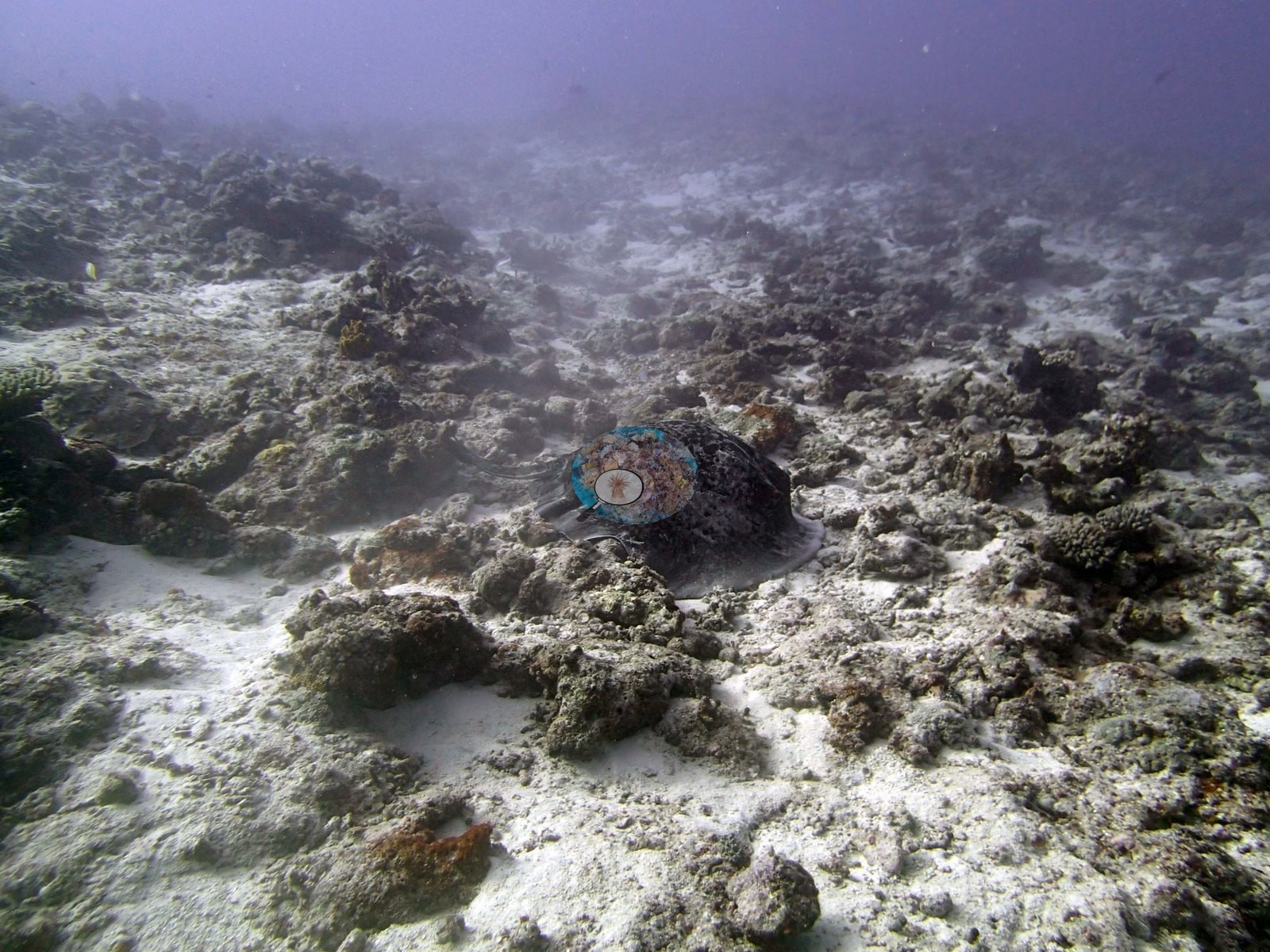
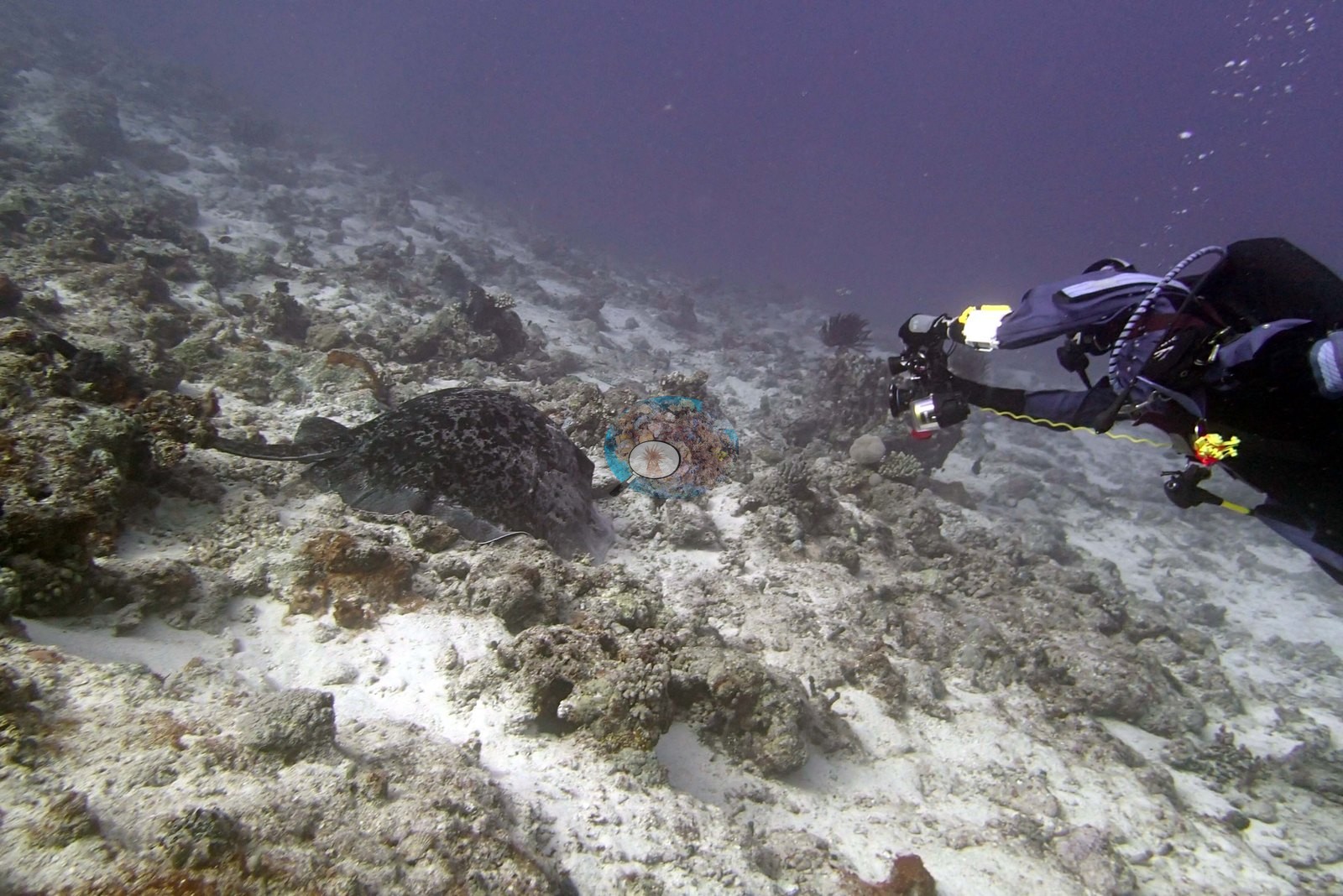
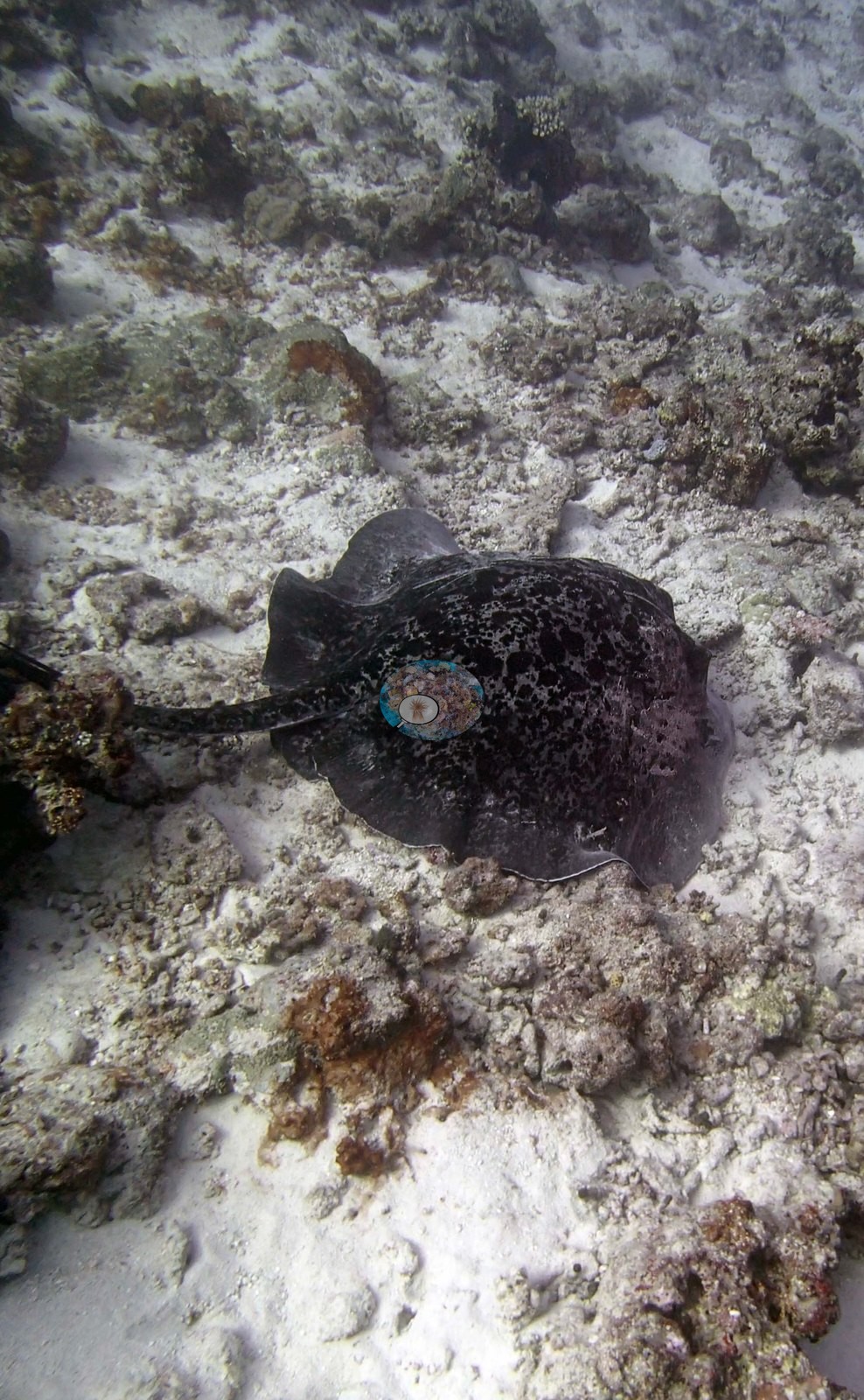
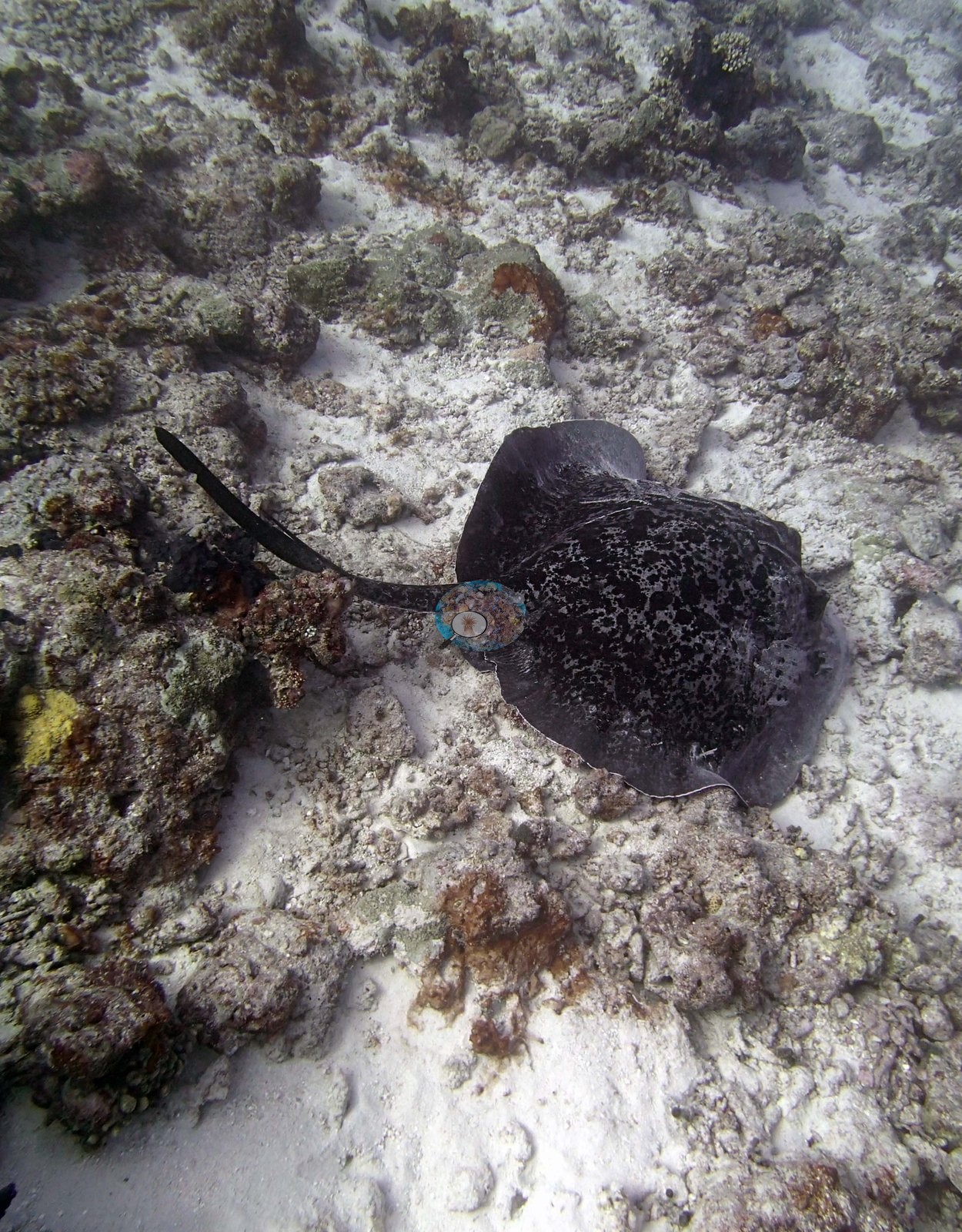
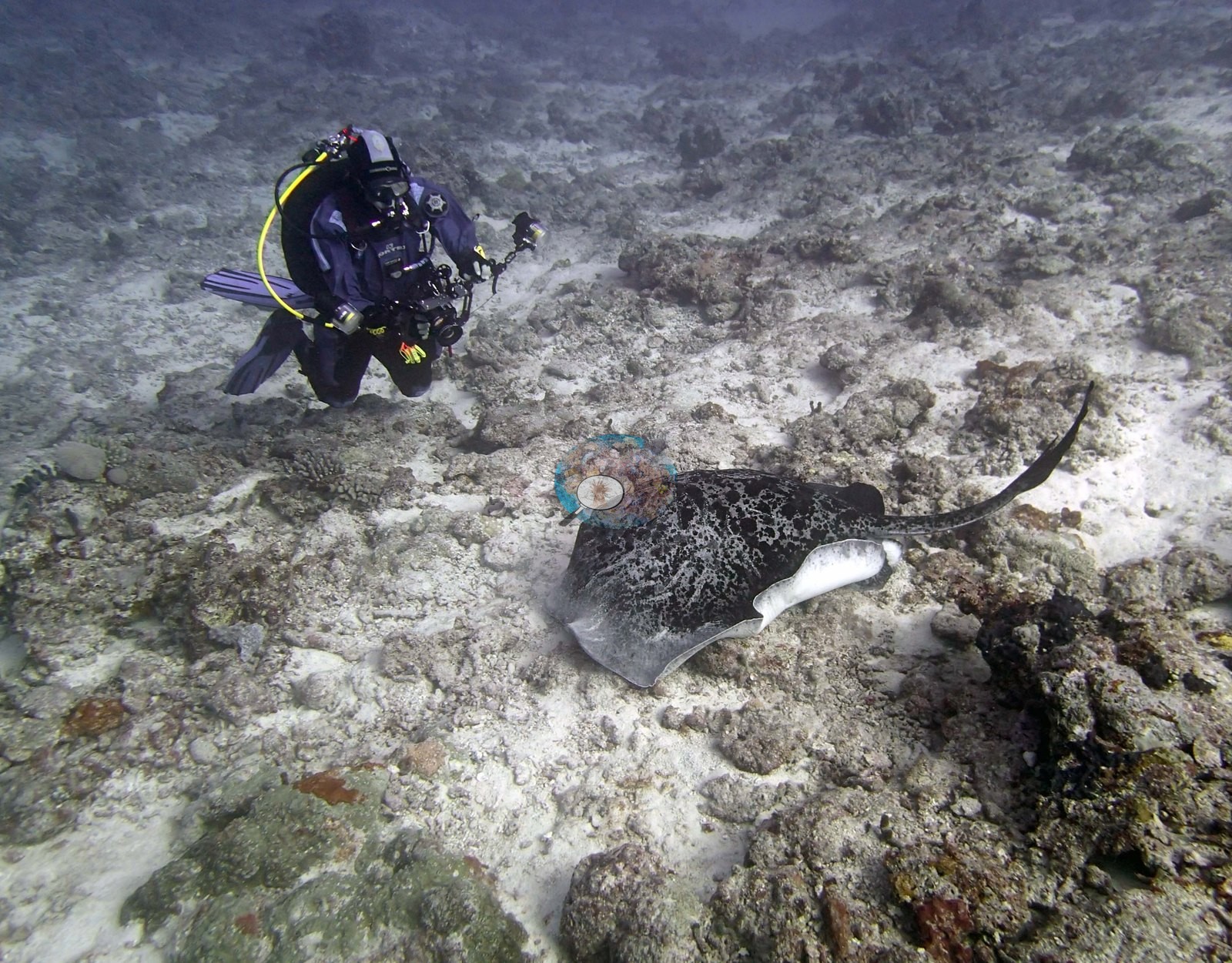
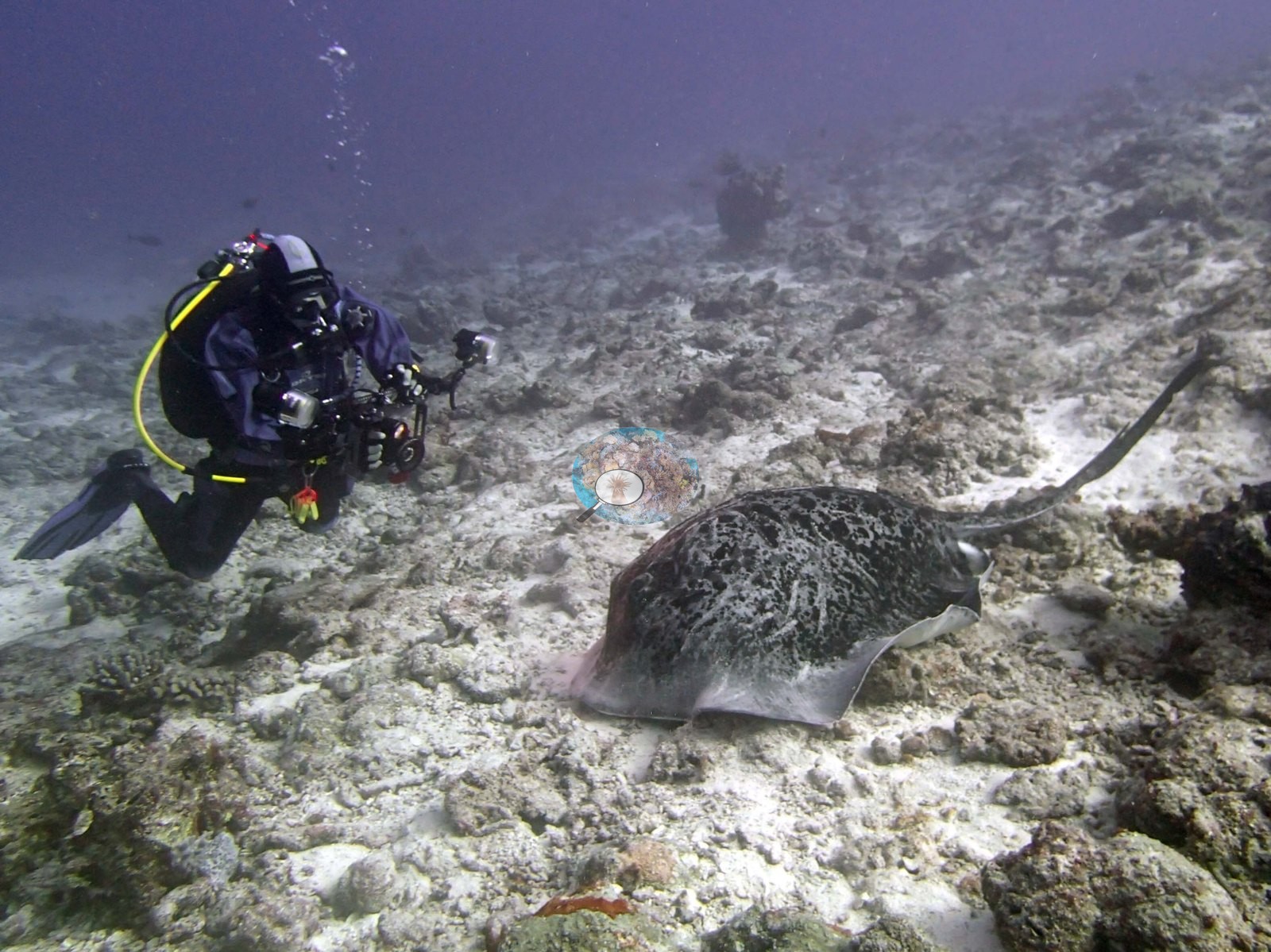
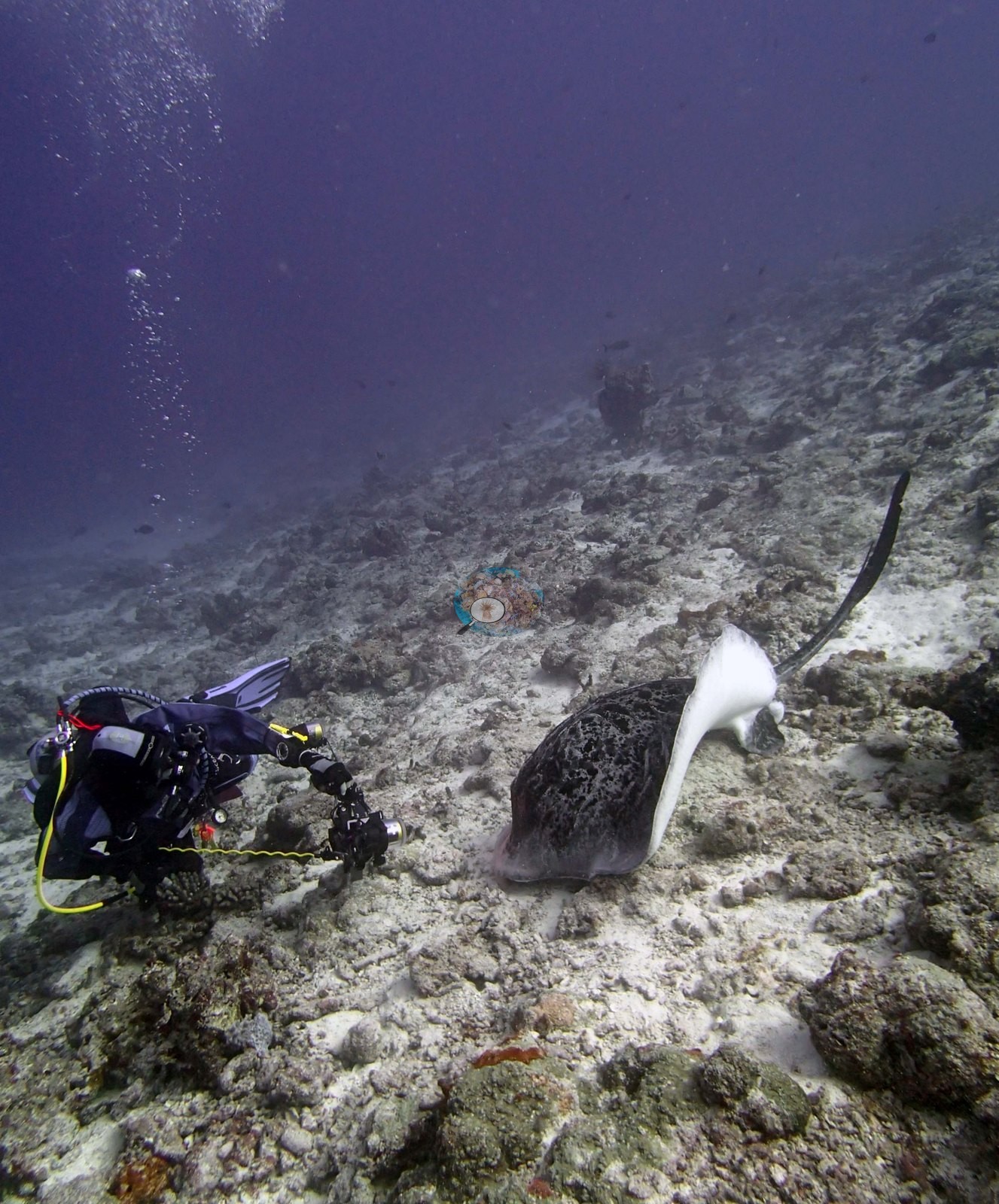
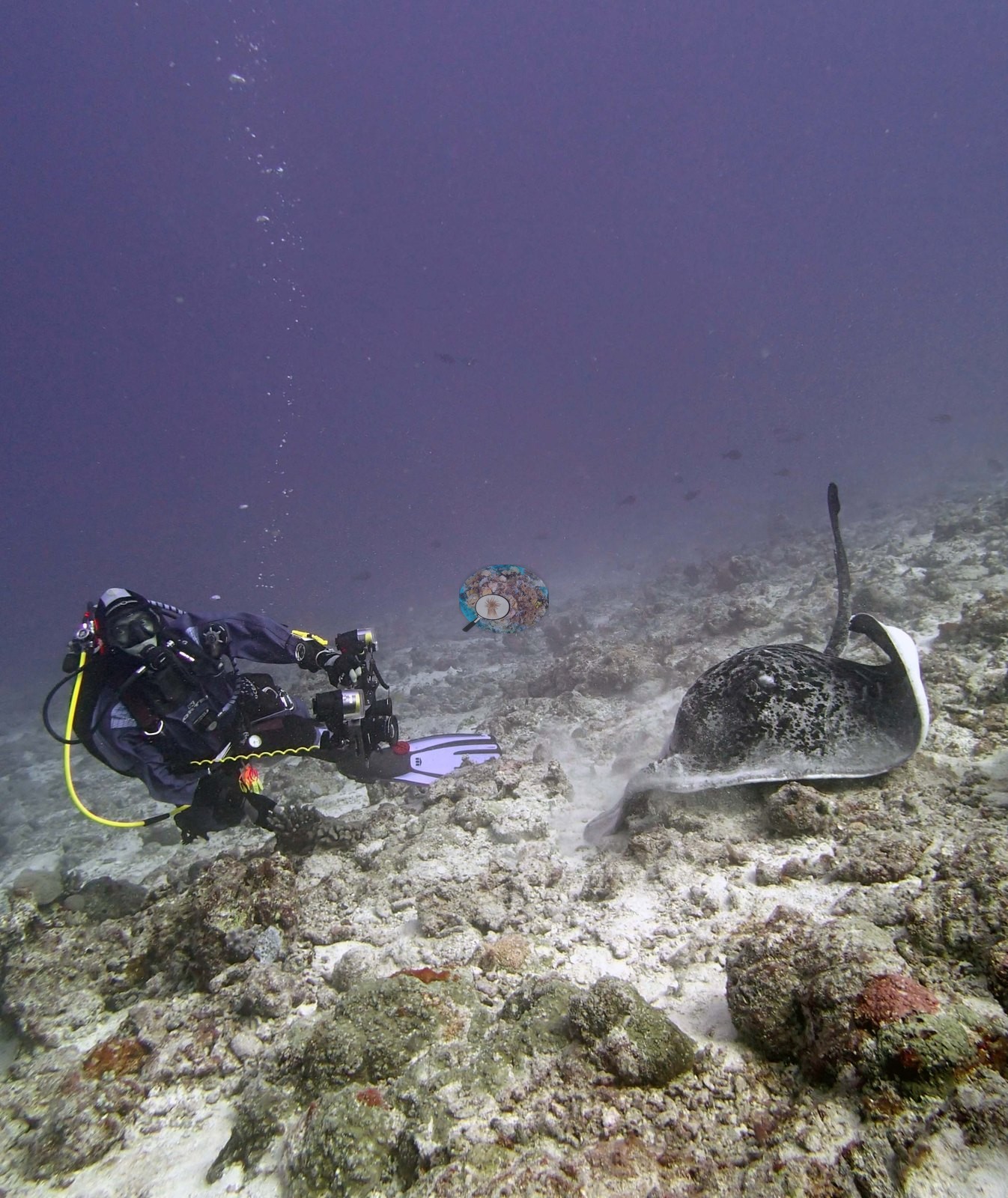
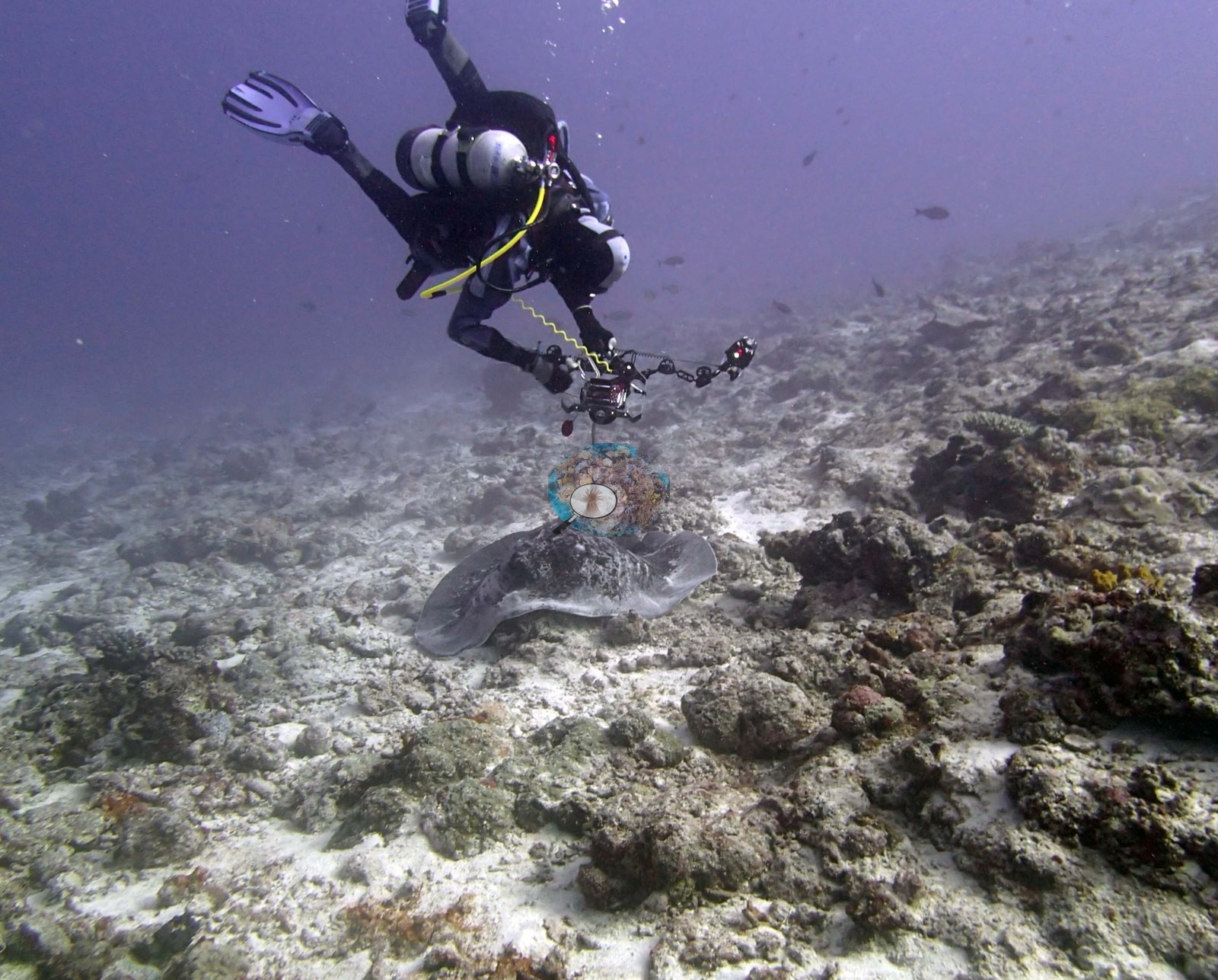
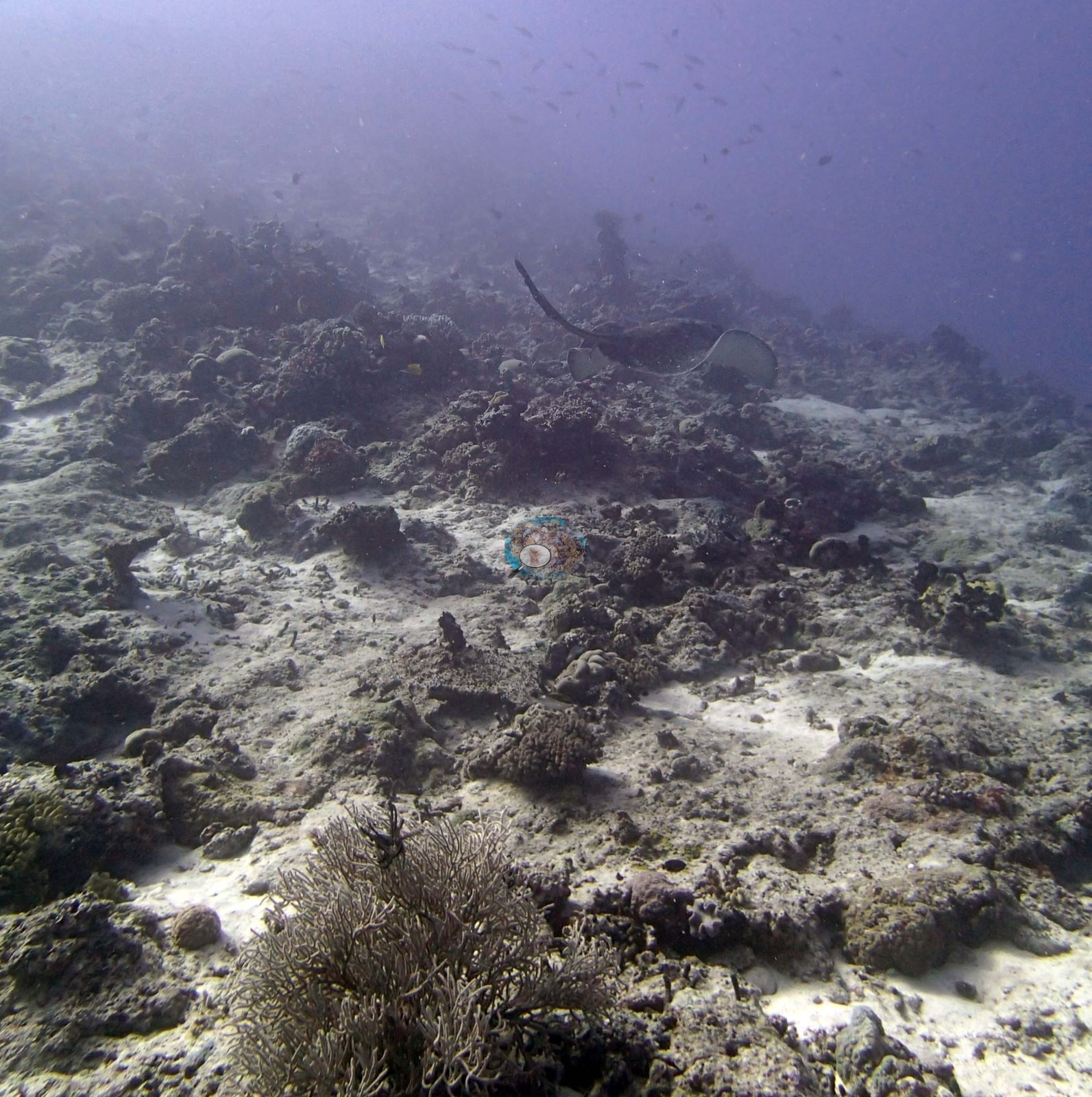
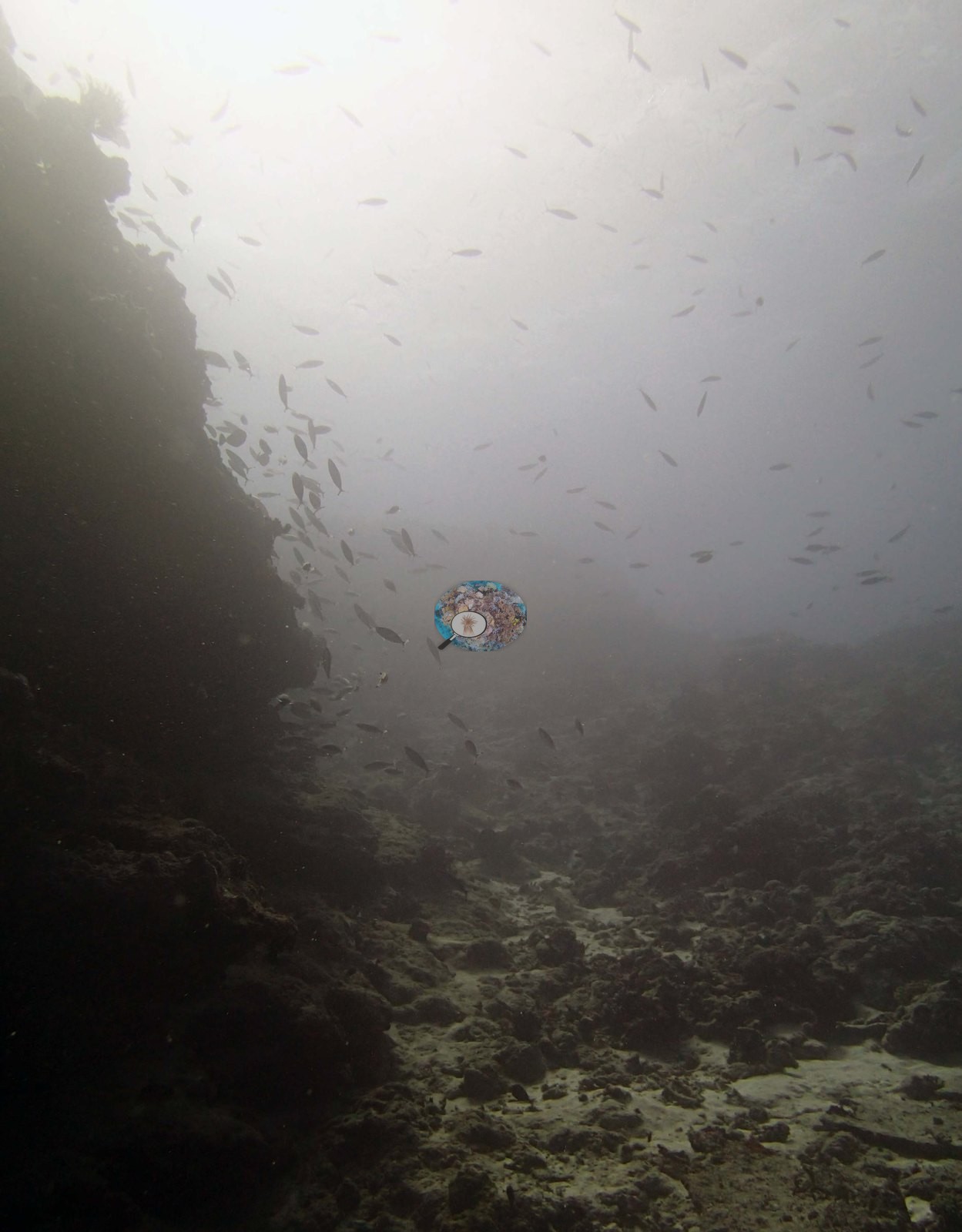
The ray is enormous, as Anderson noted (e.g., Image 4), roughly the width of the diver photographing it. These are fauna and diver frames over open sand and carry no reef-cover information. Image 11 is a silhouette shot: a dense cloud of small planktivores hanging over a reef shoulder against bright surface light.
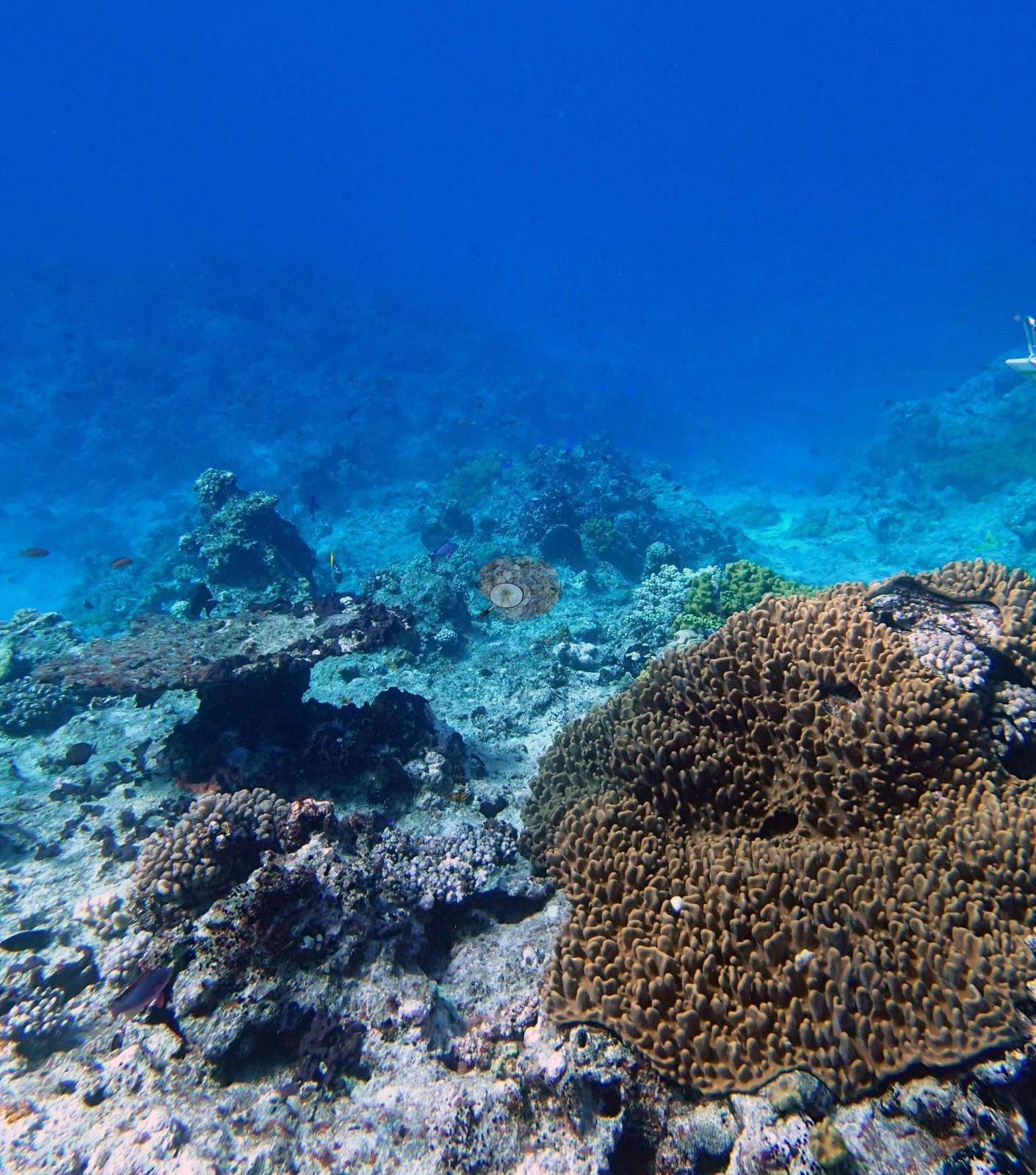
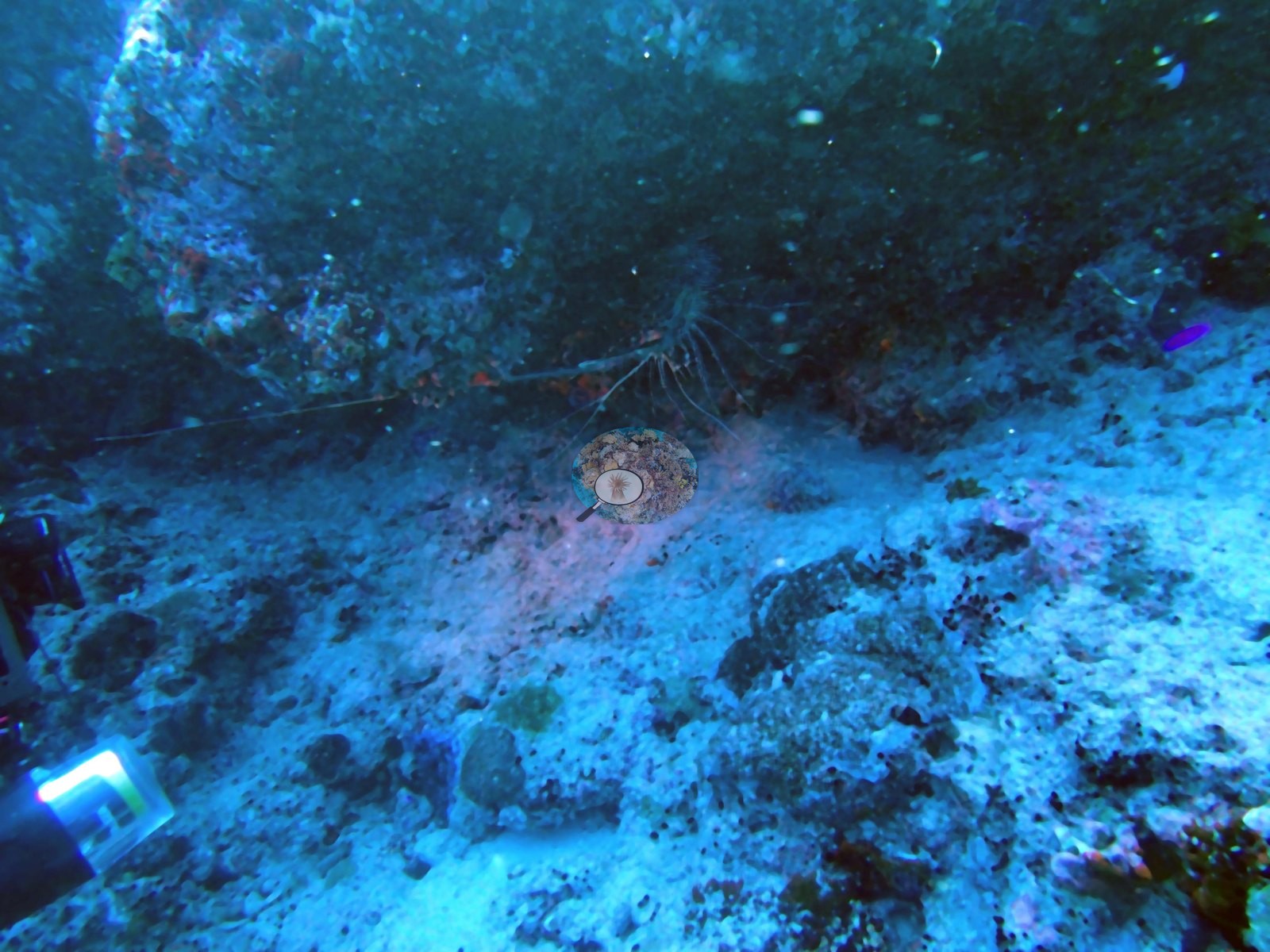
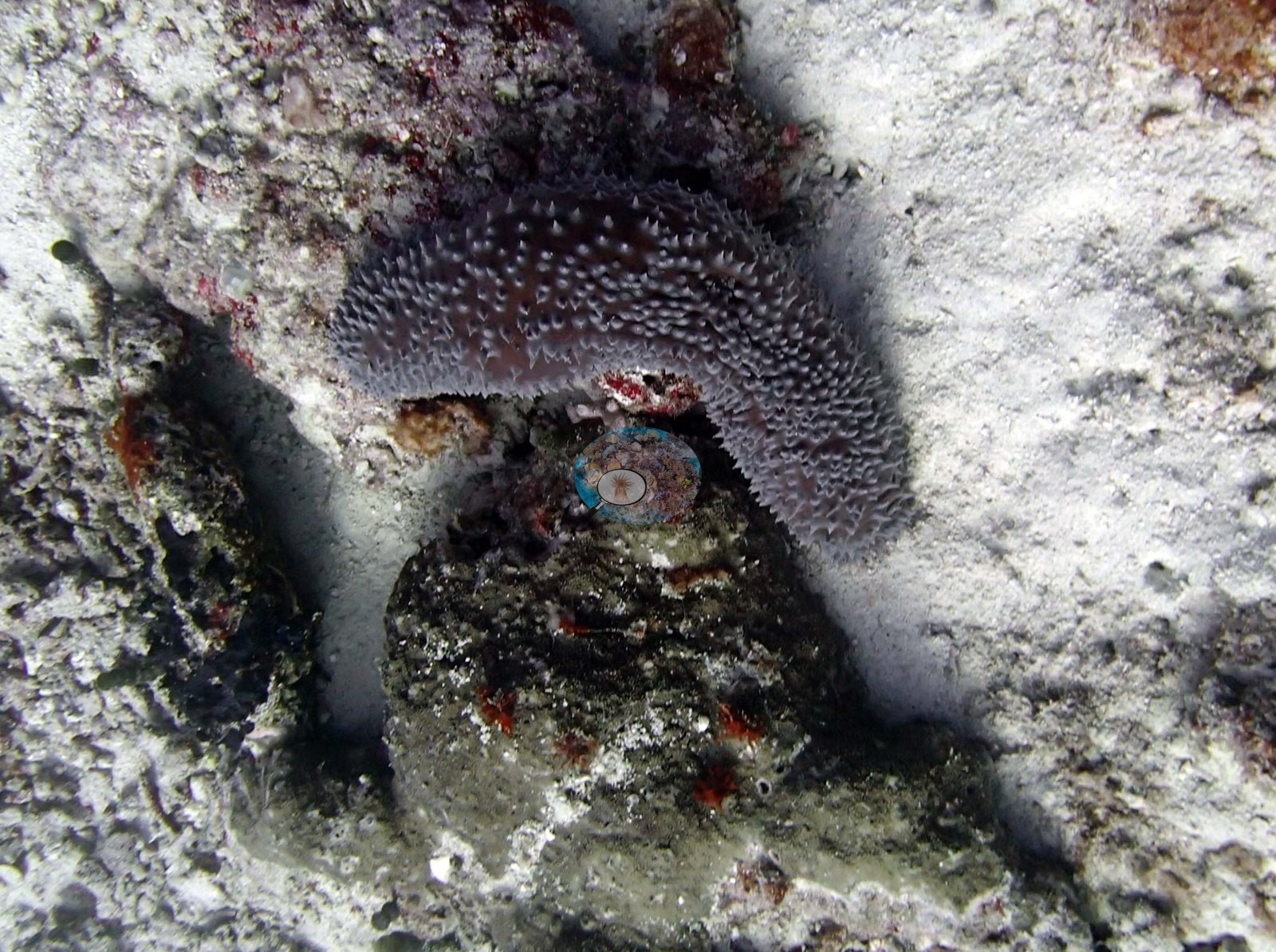
One frame shows an invertebrate. Image 1 is a spiky sea cucumber on rock — consistent with the high sea-cucumber counts recorded on this dive — and Image 16 is heavily blue-cast and unusable for color or cover work.
Comparisons with other data
Apart from the Living Oceans Foundation survey shown here, we found no other surveys at this site as of 2026. If you would like to share yours, please email us.
Other notes
Survey team's site notes: The reef has a series of very large mounds that extend seaward. The shoreward mound comes up to 3 m, slopes steeply to 18 m, then a second mound extends up to 6-8 m depth. This outer mound slope moderately on the sides and seaward edge from 8 m to 15-23 m then more steeply to 28 m. The other reef had an undercut ledge with Tubastraea and some soft corals. At the base of the mound is rubble and small corals in sand which continue to slope seaward very gradually. Soft coral declined from 10% cover in shallows to 2.0% deeper. Coral cover was low shallow (5.0%) at its maximum from 12-20 m (20-30%) and the declined steeply below 23 m to < 5.0% at 25 m and 1.0% at 30 m. Goniastrea and Montipora were dominant at mid depths. Turf algae was low in shallow, but much higher at 20 m (50%) with up to 5.0–10% cover macroalgae (Tydemania) in deeper areas and a thin layer of sediment covered deeper reef surfaces. The reef had a fairly high abundance of sea cucumbers (counted more than 20 on 1 dive).
Data & links
- Download benthic survey data (CSV) ↗
- Download all LOF-GRE data (933 sites) ↗
- Photo portfolio ↗
- Coral Reef Diagnostics region page ↗
All images from Coral Reef Diagnostics. Data are from the Khaled bin Sultan Living Oceans Foundation Global Reef Expedition and Coral Reef Diagnostics.
 © Coral Reef Diagnostics.